EP3266884B1 - Quasipartikel zum sintern und verfahren zur herstellung davon - Google Patents
Quasipartikel zum sintern und verfahren zur herstellung davon Download PDFInfo
- Publication number
- EP3266884B1 EP3266884B1 EP15875382.2A EP15875382A EP3266884B1 EP 3266884 B1 EP3266884 B1 EP 3266884B1 EP 15875382 A EP15875382 A EP 15875382A EP 3266884 B1 EP3266884 B1 EP 3266884B1
- Authority
- EP
- European Patent Office
- Prior art keywords
- raw material
- iron ore
- alkali metal
- mass
- based raw
- Prior art date
- Legal status (The legal status is an assumption and is not a legal conclusion. Google has not performed a legal analysis and makes no representation as to the accuracy of the status listed.)
- Active
Links
Images



Classifications
-
- C—CHEMISTRY; METALLURGY
- C22—METALLURGY; FERROUS OR NON-FERROUS ALLOYS; TREATMENT OF ALLOYS OR NON-FERROUS METALS
- C22B—PRODUCTION AND REFINING OF METALS; PRETREATMENT OF RAW MATERIALS
- C22B1/00—Preliminary treatment of ores or scrap
- C22B1/14—Agglomerating; Briquetting; Binding; Granulating
- C22B1/24—Binding; Briquetting ; Granulating
- C22B1/242—Binding; Briquetting ; Granulating with binders
- C22B1/243—Binding; Briquetting ; Granulating with binders inorganic
-
- C—CHEMISTRY; METALLURGY
- C22—METALLURGY; FERROUS OR NON-FERROUS ALLOYS; TREATMENT OF ALLOYS OR NON-FERROUS METALS
- C22B—PRODUCTION AND REFINING OF METALS; PRETREATMENT OF RAW MATERIALS
- C22B1/00—Preliminary treatment of ores or scrap
- C22B1/14—Agglomerating; Briquetting; Binding; Granulating
- C22B1/16—Sintering; Agglomerating
Definitions
- This disclosure relates to quasiparticles for sintering that are used as raw material for sintering to be placed on a palette of, e.g. a downward suction-type Dwight Lloyd sintering machine, for the purpose of producing sintered ore for blast furnaces, and to a method of producing the same.
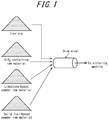
- sintered ore that is used as raw material for blast furnaces is produced by a sintering raw material processing method as follows. Firstly, for example, as illustrated in FIG. 1 , iron ore with a particle size of 10 mm or less, SiO 2 -containing raw material with a particle size of 10 mm or less that is formed of silica stone, serpentinite, nickel slag, or the like, limestone-based raw material that contains powder CaO, and powder coke or solid fuel-based raw material such as anthracite as heat source, are placed in a drum mixer with addition of a suitable amount of water, then mixed and granulated to form granulated products called quasiparticles.
- a sintering raw material processing method as follows. Firstly, for example, as illustrated in FIG. 1 , iron ore with a particle size of 10 mm or less, SiO 2 -containing raw material with a particle size of 10 mm or less that is formed of silica stone, serpentinite, nickel slag, or the like
- Such mixed raw materials formed of the granulated products are charged on a palette of a Dwight Lloyd sintering machine to a suitable thickness, e.g. 500 mm to 700 mm, solid fuel in the surface layer is ignited, and after the ignition solid fuel is combusted while air is drawn downwardly. Consequently the mixed sintering raw materials are sintered by the heat of combustion, and sinter cake is formed.
- the sinter cake is crushed into uniformly-sized particles to obtain sintered ore with a particle size equal to or larger than a predetermined size.
- Other sintered ore with a smaller particle size is return ore, which is reusable as sintering raw material.
- JIS M8713 JIS M8713
- JIS-RI gas utilization rate in a blast furnace
- FIG. 3 there is a negative correlation between gas utilization rate and fuel ratio in a blast furnace.
- fuel ratio coal + coke consumption kg / day / pig iron production t / day
- tensile strength was measured by subjecting disk-shaped ore test pieces to splitting tensile test (radial compression test or Brazilian test). As can be seen from Table 1, hematite (He) shows high reducibility and calcium ferrite (CF) has high tensile strength.
- a sintering structure that is suitable for sintered ore is obtained by, as schematically illustrated in FIG. 4 , forming calcium ferrite (CF), which is high in strength, on the surface of a lump and forming hematite (He), which is high in reducibility, inside the lump. It is preferable for such sintering structure to minimize the formation of FeO-containing calcium silicate (CS) low in reducibility and strength.
- CS FeO-containing calcium silicate
- a sintered ore structure obtained by sintering such quasiparticles will include a mixture of four types of mineral structures: hematite (He), calcium ferrite (CF), calcium silicate (CS) containing FeO, and magnetite (Mg).
- CaO reside in close proximity to SiO 2 or SiO 2 -based raw material in the iron-based raw material, which fact inevitably generates a large amount of FeO-containing calcium silicate (CS). Consequently, a structure that is formed mainly of calcium ferrite (CF) and hematite (He) may not always be provided.
- CF calcium ferrite
- He hematite
- WO2001092588A (PTL 2) describes that by using as raw material such quasiparticles that does not require any large-scale apparatus as pretreatment for producing sintered ore and that have a layered structure in which iron ore raw material is separated from limestone-based raw material and solid fuel-based raw material, it becomes possible to produce sintered ore having the structure such that calcium ferrite (CF) with high strength is selectively formed on the surface of the sintered ore and hematite (He) with high reducibility is selectively formed on the inside of the sintered ore, and the sintered ore thus obtained exhibits improved cold strength and improved reducibility.
- CF calcium ferrite
- He hematite
- US 2005/0050995 A1 discloses a method for manufacturing a sintering material including iron ore, a SiO 2 -containing material, a limestone base powdery material and a solid fuel type powdery material.
- DE 100 25 224 A1 discloses a process for producing sintered ore in which a small amount of a water-soluble compound (a sintering aid) is added to iron ore powder.
- US 3,975,183 discloses the use of alkali metal silicates to reduce particulate emissions in sintering operations.
- US 4,082,540 discloses the use of finely divided coke concentrated within a predetermined range in an outer shell layer of agglomerated particles as a material for sintering to emit a lesser amount of nitrogen oxide during sintering.
- the quasiparticle for sintering comprises a high-alkaline iron ore having an alkali metal content of 0.05 mass% or more.
- the alkali metal include lithium, sodium, potassium, rubidium, and cesium; among these, sodium and potassium are suitably used as the iron ore raw material for sintered ore.
- quasiparticles for sintering used to produce sintered ore with excellent reducibility and high cold strength
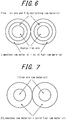
- quasiparticles for sintering contain at least iron ore raw material, limestone-based raw material, and solid fuel-based raw material, and have a basic structure, as illustrated in FIG. 7 , such that the iron ore raw material is contained as core 1, and layer 2 formed of the limestone-based raw material and solid fuel-based raw material is coated on the circumference of core 1.
- such quasiparticles can be produced by containing iron ore raw material as core 1 in a state in which core 1 is separated from limestone-based raw material and does not contain limestone.
- Layer 2 which is formed of limestone-based raw material and solid fuel-based raw material and which covers the surface of core 1, enables a calcium ferrite (CF)-based melt to be formed during a sintering process at the interface between limestone-based raw material and iron ore so that the CF covers the circumference of the iron ore, thereby providing sufficient cold strength.
- the sintered ore that is obtained by using the above quasiparticles for sintering as sintering raw material has calcium ferrite (CF) with high strength on the surface and hematite (He) with high reducibility on the inside.
- layer 2 may be a mixed layer of limestone-based raw material and solid fuel-based raw material, or a lamination of a limestone-based raw material layer (inside) and a solid fuel-based raw material layer (outside). In either case, limestone contents in layer 2 allow calcium ferrite (CF) with high strength to be formed on the surface of the sintered ore.
- CF calcium ferrite
- the iron ore raw material of core 1 it is important for the iron ore raw material of core 1 to contain iron ore having an alkali metal content of 0.05 mass% or more (also referred to hereinafter as "high-alkaline iron ore").
- high-alkaline iron ore iron ore having an alkali metal content of 0.05 mass% or more
- a catalytic effect can be obtained via an alkali metal, and close arrangement of calcium ferrite can be achieved, thereby further improving reducibility of sintered ore. It is difficult to obtain the above effect if the alkali metal content of the high-alkaline iron ore is less than 0.05 mass%.
- the alkali metal content of the high-alkaline iron ore having an alkali metal content of 0.05 mass% or more is 0.30 mass% or less.
- the proportion of the alkali metal obtained in the sintering machine increases even when the mix proportion is small, and the amount of the alkali metal in the blast furnace increases accordingly. This may cause accumulation of the alkali metal in the furnace, and formation of layers of alkali metals and adhesion to the furnace wall, thereby disturbing proper blast furnace operations.
- the dispersibility of the alkali metal in the sintered ore may also decrease, thereby reducing the above effect.
- the mix proportion of the high-alkaline iron ore is preferably 20 mass% to 60 mass%.
- a mix proportion of less than 20 mass% is less effective for improving reducibility
- a mix proportion of more than 60 mass% increases the proportion of the alkali metal in the sintered ore obtained in the sintering machine, which may result in an increase in alkali contents in the blast furnace, accumulation of the alkali metal in the furnace, and formation of alkali metal layers and adhesion to the furnace wall, which may adversely affect blast furnace operations.
- the reduction-disintegration index of the sintered ore may excessively increase, thereby deteriorating permeability in the blast furnace and resulting in an increased coke ratio.
- the remaining part of the iron ore raw material other than the high-alkaline iron ore is iron ore having an alkali metal content of less than 0.05 mass% (also referred to hereinafter as "general iron ore").
- SiO 2 raw material may optionally be added to the iron ore raw material.
- the iron ore raw material preferably forms core 1 such that the core takes any of Forms I to III below.
- the above action can be provided by the alkali metal.
- Each form has the following characteristics.
- Form I Mixed layer of general iron ore and high-alkaline iron ore
- a mixed layer of general iron ore and high-alkaline iron ore enables an alkali metal to be uniformly dispersed within the sintered ore.
- the strength of the sintered ore may also mitigate formation of a brittle zone, thereby ensuring cold strength.
- Form II Lamination of a first layer formed of general iron ore and a second layer formed of high-alkaline iron ore covering the surface of the first layer
- Form III Lamination of a first layer formed of high-alkaline iron ore and a second layer formed of general iron ore covering the surface of the first layer
- the high-alkaline iron ore has a mean particle size of 2 mm or more, and the general iron ore has a mean particle size of less than 2 mm.
- a mean particle size refers to an arithmetic mean of the weight ratio and the representative particle size of the iron ore when classified by particle size using a sieve.
- the high-alkaline iron ore preferably has a mean particle size of 2 mm or more for the following reason.
- the mean particle size of the high-alkaline iron ore is advantageous for producing sintered ore that has a low reduction-disintegration index.
- the general iron ore preferably has a mean particle size of less than 2 mm for the following reason.
- FIG. 8 illustrates an exemplary granulation flow (process A) for producing a desirable quasiparticle structure according to the disclosure.
- process A the aforementioned high-alkaline iron ore 1a and general iron ore 1b, and optionally SiO 2 -containing raw material 1c are charged from the mixer inlet of a drum mixer 4.
- limestone-based raw material 2a and solid fuel-based raw material 2b are added to the drum mixer 4 from the mixer outlet of the drum mixer 4 and granulated therein, and quasiparticles for sintering, in the form of Form I above, can be obtained with limestone-based raw material 2a and solid fuel-based raw material 2b adhered to the circumference of a core with mixture of the high-alkaline iron ore 1a and the general iron ore 1b.
- FIG. 9 illustrates an exemplary granulation flow (process B) for producing quasiparticles according to the disclosure.
- process B the following materials are subjected to pre-granulation using a granulator 3: high-alkaline iron ore and general iron ore, e.g.
- high-alkaline iron ore 1a that has an alkali metal content of approximately 0.05 mass% to 1.0 mass% and a mean particle size of 2 mm or more, and general iron ore 1b that has an alkali metal content of less than 0.05 mass% and a mean particle size of less than 2 mm; and, optionally, fine SiO 2 -containing raw material 1c (such as iron ore, silica stone, serpentinite, and Ni slag) that has a SiO 2 content of approximately 0.5 % to 5.0 % and a mean particle size of less than 2 mm, e.g. approximately 0.1 mm to 1.0 mm.
- fine SiO 2 -containing raw material 1c such as iron ore, silica stone, serpentinite, and Ni slag
- a first layer is formed by the general iron ore 1b and optionally added SiO 2 , and the high-alkaline iron ore 1a is caused to be adhered, as a second layer, to the circumference of the first layer.
- the layering order of the high-alkaline iron ore 1a and the general iron ore 1b can be altered. That is, opposite to the above, the high-alkaline iron ore 1a and optionally added SiO 2 may be formed as a first layer, and a second layer may be formed by adhering the general iron ore 1b to the circumference of the first layer.
- limestone-based raw material 2a alone, or limestone-based raw material 2a and solid fuel-based raw material 2b as heat source are further added to, and mixed and granulated in the drum mixer 4 to thereby obtain quasiparticles for sintering in Form II or III, as described above, such that limestone-based raw material 2a and solid fuel-based raw material 2b are adhered to the circumference of each core of the iron ore raw material that comprises a first layer formed of high-alkaline iron ore 1a and a second layer formed of general iron ore 1b adhered to the circumference of the first layer.
- heat source such as coke and anthracite
- FIG. 10 illustrates an exemplary granulation flow (process C) for producing another desirable quasiparticle structure according to the disclosure.
- a plurality of (in this example, two) drum mixers are provided, and the aforementioned high-alkaline iron ore 1a and general iron ore 1b, and optionally SiO 2 -containing raw material 1c are charged from the inlet of the drum mixer 4 and granulated therein, limestone-based raw material 2a alone, or limestone-based raw material 2a and solid fuel-based raw material 2b are added from the inlet of the final stage drum mixer 4' located at the position pointed to by broken arrow, or from the outlet located at the position pointed to by solid arrow, and granulated.
- solid fuel-based raw material 2b may be added subsequently, and the limestone-based raw material 2a and the solid fuel-based raw material 2b may be granulated layer-by-layer. Note that if the limestone-based raw material 2a and the solid fuel-based raw material 2b have a mean particle size of 0.5 mm or less, preferably 0.25 mm or less, they can adhere to each other more easily, enabling the solid fuel-based raw material 2b to cover the surface of the limestone-based raw material 2a.
- iron ore raw material including high-alkaline iron ore may be formed as a core, and limestone-based raw material and solid fuel-based raw material as heat source may be adhered to the circumference of the core, so that the resulting quasiparticle can be coated and granulated with more than one layer.
- This configuration enables delaying the reaction between CaO and SiO 2 during a sintering process of sintering raw material formed of quasiparticles, mitigating the formation of calcium silicate (CS) with low cold strength, and causing calcium ferrite (CF) with high strength to be selectively formed on the surface of the lump and hematite (He) with high reducibility to be selectively formed on the inside of the lump.
- CS calcium silicate
- CF calcium ferrite
- He hematite
- Sintering raw materials were formulated as illustrated in Table 2, and quasiparticles for sintering were granulated by Process A or B in FIG. 8 or 9 according to the disclosure.
- the quasiparticles were transported to a Dwight Lloyd sintering machine and charged on a palette.
- an operation was also conducted in which quasiparticles were granulated by the process of simultaneously mixing iron ore raw material, SiO 2 -containing raw material, limestone-based raw material, and coke powder, and the quasiparticles were transported to the Dwight Lloyd sintering machine and charged on the palette.
- sintering was performed on the palette, and measurement was made of the reducibility (JIS-RI), reduction-disintegration index (RDI), and sintering strength (TI) of the resulting sintered ore.
- the measurement results are shown in Table 3.
- the reducibility JIS-RI was measured in conformance with JIS M8713.
- the reduction-disintegration index (RDI) was measured in accordance with JIS M8720.
- the sintering strength was determined by measuring the tumble strength (tumbler strength TI) of sintered ore products in accordance with JIS M8712.
- SiO 2 -containing raw material silica sand Limestone-based poentrée raw material: limestone, quick lime
- Solid fuel-based powder raw material coke, anthracite
- Nos. 6 to 15 and 19 to 28 in which limestone-based raw material and coke powder were coated on the circumference of each core formed of iron ore raw material according to the present disclosure, were all improved in reducibility (JIS-RI) over Nos. 1, 3, and 5, in which iron ore raw material, SiO 2 -containing raw material, limestone-based raw material, and coke powder were mixed simultaneously.
- Nos. 6 to 15 and 19 to 28 differ from Nos. 2 and 4, in which limestone -based raw material and coke powder were also coated on the circumference of each core formed of iron ore raw material, in that Nos. 6 to 15 and 19 to 28 contained high-alkaline iron ore in each core formed of the iron ore raw material . This difference contributes to improved reducibility.
- Nos. 16 to 18 do not form part of the invention.
Landscapes
- Chemical & Material Sciences (AREA)
- Engineering & Computer Science (AREA)
- Manufacturing & Machinery (AREA)
- Geochemistry & Mineralogy (AREA)
- Geology (AREA)
- General Life Sciences & Earth Sciences (AREA)
- Life Sciences & Earth Sciences (AREA)
- Environmental & Geological Engineering (AREA)
- Materials Engineering (AREA)
- Mechanical Engineering (AREA)
- Metallurgy (AREA)
- Organic Chemistry (AREA)
- Inorganic Chemistry (AREA)
- Manufacture And Refinement Of Metals (AREA)
Claims (13)
- Quasiteilchen zum Sintern, das wenigstens Eisenerz-Rohmaterial, Rohmaterial auf Basis von Kalkstein sowie Rohmaterial auf Basis von Festbrennstoff umfasst, die jeweils zum Herstellen von gesintertem Erz für Hochöfen verwendet werden,wobei das Eisenerz-Rohmaterial einen Kern des Quasiteilchens bildet und das Rohmaterial auf Basis von Kalkstein sowie das Rohmaterial auf Basis von Festbrennstoff als Beschichtung auf den Umfang des Kerns aufgebracht sind, undder aus dem Eisenerz-Rohmaterial gebildete Kern hochalkalisches Eisenerz mit einem Alkalimetall-Gehalt von 0,05 Masse-% oder mehr und allgemeines Eisenerz mit einem Alkalimetall-Gehalt von weniger als 0,05 Masse-% enthält,wobei das Eisenerz-Rohmaterial das hochalkalische Eisenerz mit einem Alkalimetall-Gehalt von 0,05 Masse-% oder mehr in einer Menge von 20 Masse-% oder mehr enthält.
- Quasiteilchen zum Sintern nach Anspruch 1, wobei der aus dem Eisenerz-Rohmaterial gebildete Kern umfasst:eine erste Schicht, die aus allgemeinem Eisenerz mit einem Alkalimetall-Gehalt von weniger als 0,05 Masse-% besteht; undeine zweite Schicht, die aus dem hochalkalischen Eisenerz mit einem Alkalimetall-Gehalt von 0,05 Masse-% oder mehr gebildet wird und die die Oberfläche der ersten Schicht bedeckt.
- Quasiteilchen zum Sintern nach Anspruch 1, wobei der aus dem Eisenerz-Rohmaterial gebildete Kern umfasst:eine erste Schicht, die aus dem hochalkalischen Eisenerz mit einem Alkalimetall-Gehalt von 0,05 Masse-% oder mehr gebildet wird; undeine zweite Schicht, die aus dem allgemeinen Eisenerz mit einem Alkalimetall-Gehalt von weniger als 0,05 Masse-% oder mehr gebildet wird und die die Oberfläche der ersten Schicht bedeckt.
- Quasiteilchen zum Sintern nach einem der Ansprüche 1 bis 3, wobei das hochalkalische Eisenerz mit einem Alkalimetall-Gehalt von 0,05 Masse-% oder mehr eine mittlere Teilchengröße von 2 mm oder mehr hat und das allgemeine Eisenerz mit einem Alkalimetall-Gehalt von weniger als 0,05 Masse-% eine mittlere Teilchengröße von weniger als 2 mm hat.
- Quasiteilchen zum Sintern nach einem der Ansprüche 1 bis 4, wobei der Alkalimetall-Gehalt des hochalkalischen Eisenerzes mit einem Alkalimetall-Gehalt von 0,05 Masse-% oder mehr 0,30 Masse-% oder weniger beträgt.
- Quasiteilchen zum Sintern nach einem der Ansprüche 1 bis 5, wobei das Rohmaterial auf Basis von Kalkstein und das Rohmaterial auf Basis von Festbrennstoff Schicht für Schicht auf den Umfang des Kerns aufgebracht werden.
- Quasiteilchen zum Sintern nach einem der Ansprüche 1 bis 6, wobei eine gemischte Schicht aus dem Rohmaterial auf Basis von Kalkstein und dem Rohmaterial auf Basis von Festbrennstoff als Beschichtung auf den Umfang des Kerns aufgebracht wird.
- Verfahren zum Herstellen eines Quasiteilchens zum Sintern, wobei das Verfahren umfasst:beim Mischen und Granulieren wenigstens von Eisenerz-Rohmaterial, Rohmaterial auf Basis von Kalkstein sowie Rohmaterial auf Basis von Festbrennstoff, die jeweils zum Herstellen von gesintertem Erz für Hochöfen verwendet werden,Mischen und Granulieren des Eisenerz-Rohmaterials, das hochalkalisches Eisenerz mit einem Alkalimetall-Gehalt von 0,05 Masse-% oder mehr und allgemeines Eisenerz mit einem Alkalimetall-Gehalt von weniger als 0,05 Masse-% enthält, um ein granuliertes Teilchen zu gewinnen Veranlassen, dass das Rohmaterial auf Basis von Kalkstein und das Rohmaterial auf Basis von Festbrennstoff an dem granulierten Teilchen haften, und anschließend Durchführen von Granulation,wobei das Eisenerz-Rohmaterial das hochalkalische Eisenerz mit einem Alkalimetall-Gehalt von 0,05 Masse-% oder mehr in einer Menge von 20 Masse-% oder mehr enthält.
- Verfahren zum Herstellen eines Quasiteilchens zum Sintern nach Anspruch 8, wobei das Verfahren umfasst:beim Mischen und Granulieren wenigstens von Eisenerz-Rohmaterial, Rohmaterial auf Basis von Kalkstein sowie Rohmaterial auf Basis von Festbrennstoff, die jeweils zum Herstellen von gesintertem Erz für Hochöfen verwendet werden,Mischen und Granulieren von allgemeinem Eisenerz mit einem Alkalimetall-Gehalt von weniger als 0,05 Masse-% und SiO2-haltigem Rohmaterial, um eine erste Schicht auszubilden;Veranlassen, dass hochalkalisches Eisenerz mit einem Alkalimetall-Gehalt von 0,05 Masse-% oder mehr an der Oberfläche der ersten Schicht haftet, und anschließend Durchführen von Granulation, um eine zweite Schicht auszubilden; undVeranlassen, dass das Rohmaterial auf Basis von Kalkstein und das Rohmaterial auf Basis von Festbrennstoff an der Oberfläche der zweiten Schicht haften, und anschließend Durchführen von Granulation.
- Verfahren zum Herstellen eines Quasiteilchens zum Sintern nach Anspruch 8, wobei das Verfahren umfasst:beim Mischen und Granulieren wenigstens von Eisenerz-Rohmaterial, Rohmaterial auf Basis von Kalkstein sowie Rohmaterial auf Basis von Festbrennstoff, die jeweils zum Herstellen von gesintertem Erz für Hochöfen verwendet werden,Mischen und Granulieren von hochalkalischem Eisenerz mit einem Alkalimetall-Gehalt von 0,05 Masse-% oder mehr, um eine erste Schicht auszubilden;Veranlassen, dass allgemeines Eisenerz mit einem Alkalimetall-Gehalt von weniger als 0,05 Masse-% an der Oberfläche der ersten Schicht haftet, und anschließend Durchführen von Granulation, um eine zweite Schicht auszubilden; undVeranlassen, dass das Rohmaterial auf Basis von Kalkstein und das Rohmaterial auf Basis von Festbrennstoff an der Oberfläche der zweiten Schicht haften, und anschließend Durchführen von Granulation.
- Verfahren zum Herstellen eines Quasiteilchens zum Sintern nach einem der Ansprüche 8 bis 10, wobei das hochalkalische Eisenerz mit einem Alkalimetall-Gehalt von 0,05 Masse-% oder mehr eine mittlere Teilchengröße von 2 mm oder mehr hat und das allgemeine Eisenerz mit einem Alkalimetall-Gehalt von weniger als 0,05 Masse-% eine mittlere Teilchengröße von weniger als 2 mm hat.
- Verfahren zum Herstellen eines Quasiteilchens zum Sintern nach einem der Ansprüche 8 bis 11, wobei gemischtes Pulver aus dem Rohmaterial auf Basis von Kalkstein und dem Rohmaterial auf Basis von Festbrennstoff zum Haften gebracht wird und anschließend Granulation durchgeführt wird.
- Verfahren zum Herstellen eines Quasiteilchens zum Sintern nach einem der Ansprüche 8 bis 11, wobei nach dem Haften des Rohmaterials auf Basis von Kalkstein das Rohmaterial auf Basis von Festbrennstoff an einer äußeren Fläche einer Schicht des Rohmaterials auf Basis von Kalkstein zum Haften gebracht wird und anschließend Granulation durchgeführt wird.
Applications Claiming Priority (1)
| Application Number | Priority Date | Filing Date | Title |
|---|---|---|---|
| PCT/JP2015/001243 WO2016108256A1 (ja) | 2015-03-06 | 2015-03-06 | 焼結用擬似粒子およびその製造方法 |
Publications (3)
| Publication Number | Publication Date |
|---|---|
| EP3266884A1 EP3266884A1 (de) | 2018-01-10 |
| EP3266884A4 EP3266884A4 (de) | 2018-04-18 |
| EP3266884B1 true EP3266884B1 (de) | 2021-10-20 |
Family
ID=56284412
Family Applications (1)
| Application Number | Title | Priority Date | Filing Date |
|---|---|---|---|
| EP15875382.2A Active EP3266884B1 (de) | 2015-03-06 | 2015-03-06 | Quasipartikel zum sintern und verfahren zur herstellung davon |
Country Status (6)
| Country | Link |
|---|---|
| EP (1) | EP3266884B1 (de) |
| JP (1) | JP6187712B2 (de) |
| KR (1) | KR101987568B1 (de) |
| CN (1) | CN107406905B (de) |
| BR (1) | BR112017019129B1 (de) |
| WO (1) | WO2016108256A1 (de) |
Families Citing this family (4)
| Publication number | Priority date | Publication date | Assignee | Title |
|---|---|---|---|---|
| JP7047645B2 (ja) * | 2018-07-19 | 2022-04-05 | 日本製鉄株式会社 | 焼結鉱の製造方法 |
| CN110804449B (zh) * | 2019-11-20 | 2020-10-27 | 四川大学 | 铁酸钙与非焦煤共焦化制备焦炭的方法 |
| CN113005284B (zh) * | 2021-01-27 | 2022-08-23 | 日照钢铁控股集团有限公司 | 一种含钛海砂在烧结矿生产中的应用方法 |
| CN114350940A (zh) * | 2021-12-25 | 2022-04-15 | 深圳市考拉生态科技有限公司 | 一种还原弱磁性铁矿生产碱性铁精矿的方法 |
Family Cites Families (11)
| Publication number | Priority date | Publication date | Assignee | Title |
|---|---|---|---|---|
| US4082540A (en) * | 1974-12-30 | 1978-04-04 | Nippon Steel Corporation | Material for sintering emitting a lesser amount of nitrogen oxide and a method for manufacturing the same |
| US3975183A (en) * | 1975-03-20 | 1976-08-17 | Nalco Chemical Company | Use of alkali metal silicates to reduce particulate emissions in sintering operations |
| JPS63149331A (ja) | 1986-12-15 | 1988-06-22 | Nkk Corp | 焼成塊成鉱の製造方法 |
| JP4084906B2 (ja) * | 1999-05-21 | 2008-04-30 | 株式会社神戸製鋼所 | 焼結鉱の製造方法およびその焼結鉱 |
| US6683598B1 (en) | 1999-09-01 | 2004-01-27 | Microsoft Corporation | Mouse optical sampling scheme |
| KR100569518B1 (ko) * | 2000-05-29 | 2006-04-07 | 제이에프이 스틸 가부시키가이샤 | 소결용 의사입자원료 및 그 제조방법 |
| JP3822115B2 (ja) * | 2001-02-22 | 2006-09-13 | 新日本製鐵株式会社 | 製鉄用造粒処理剤およびこれを用いた造粒処理方法 |
| JP4048850B2 (ja) * | 2001-08-28 | 2008-02-20 | Jfeスチール株式会社 | 冶金用コークスの製造方法 |
| CN1276982C (zh) * | 2002-12-17 | 2006-09-27 | 杰富意钢铁株式会社 | 烧结用原料的制造方法及其制造装置 |
| KR100794954B1 (ko) * | 2003-10-09 | 2008-01-15 | 제이에프이 스틸 가부시키가이샤 | 소결광의 제조 방법, 소결용 원료의 제조 방법, 조립 입자,및 소결광 |
| KR101228599B1 (ko) * | 2010-04-27 | 2013-02-07 | 오미혜 | 금속 소결용 첨가제 조성물 |
-
2015
- 2015-03-06 CN CN201580077348.3A patent/CN107406905B/zh active Active
- 2015-03-06 BR BR112017019129-6A patent/BR112017019129B1/pt active IP Right Grant
- 2015-03-06 JP JP2016567293A patent/JP6187712B2/ja active Active
- 2015-03-06 WO PCT/JP2015/001243 patent/WO2016108256A1/ja not_active Ceased
- 2015-03-06 EP EP15875382.2A patent/EP3266884B1/de active Active
- 2015-03-06 KR KR1020177024159A patent/KR101987568B1/ko active Active
Non-Patent Citations (1)
| Title |
|---|
| None * |
Also Published As
| Publication number | Publication date |
|---|---|
| BR112017019129A2 (pt) | 2018-05-02 |
| WO2016108256A1 (ja) | 2016-07-07 |
| KR101987568B1 (ko) | 2019-06-10 |
| CN107406905B (zh) | 2019-11-19 |
| JP6187712B2 (ja) | 2017-08-30 |
| WO2016108256A8 (ja) | 2017-06-08 |
| EP3266884A4 (de) | 2018-04-18 |
| KR20170107560A (ko) | 2017-09-25 |
| CN107406905A (zh) | 2017-11-28 |
| JPWO2016108256A1 (ja) | 2017-06-15 |
| BR112017019129B1 (pt) | 2021-07-27 |
| EP3266884A1 (de) | 2018-01-10 |
Similar Documents
| Publication | Publication Date | Title |
|---|---|---|
| CN105331805B (zh) | 制备高铁锰矿复合烧结矿的方法 | |
| JP3656632B2 (ja) | 焼結用擬似粒子原料および焼結用擬似粒子原料の製造方法 | |
| CN103614548B (zh) | 一种赤铁精矿粉生产烧结矿的方法 | |
| CN105219951B (zh) | 一种高品位烧结矿的烧结方法 | |
| JPWO2001092588A1 (ja) | 焼結用擬似粒子原料およびその製造方法 | |
| RU2676378C1 (ru) | Способ получения восстановленного железа | |
| EP3266884A1 (de) | Quasipartikel zum sintern und verfahren zur herstellung davon | |
| JP2015193930A (ja) | 焼結鉱の製造方法 | |
| JP6102463B2 (ja) | 焼結鉱の製造方法 | |
| CN104204243B (zh) | 烧结矿用原料粉的调整方法和烧结矿用原料粉 | |
| JP3755452B2 (ja) | 焼結用原料の製造方法 | |
| CN110527826B (zh) | 一种烧结过程抑制钙钛矿生成的烧结方法 | |
| CN103924064B (zh) | 一种烧结矿的制作方法 | |
| JP5168802B2 (ja) | 焼結鉱の製造方法 | |
| JP4228678B2 (ja) | 焼結用原料の製造方法 | |
| JP2005171388A (ja) | 焼結用擬似粒子原料、高炉用焼結鉱および焼結用擬似粒子原料の製造方法 | |
| JP2002020819A (ja) | 焼結原料の事前処理方法 | |
| JP4725230B2 (ja) | 焼結鉱の製造方法 | |
| JP4599736B2 (ja) | 焼結原料の造粒方法 | |
| JP3945323B2 (ja) | 焼結原料の造粒方法 | |
| JP2002332526A (ja) | 焼結原料の事前処理方法 | |
| JPS6260826A (ja) | 焼結原料の事前処理法 | |
| CN120758735A (zh) | 一种配加钢渣生产的熔剂性球团矿及制备方法 | |
| JP4635559B2 (ja) | 焼結用原料の製造方法 | |
| JPS58213837A (ja) | クロム鉱石の焼結法 |
Legal Events
| Date | Code | Title | Description |
|---|---|---|---|
| STAA | Information on the status of an ep patent application or granted ep patent |
Free format text: STATUS: THE INTERNATIONAL PUBLICATION HAS BEEN MADE |
|
| PUAI | Public reference made under article 153(3) epc to a published international application that has entered the european phase |
Free format text: ORIGINAL CODE: 0009012 |
|
| STAA | Information on the status of an ep patent application or granted ep patent |
Free format text: STATUS: REQUEST FOR EXAMINATION WAS MADE |
|
| 17P | Request for examination filed |
Effective date: 20171005 |
|
| AK | Designated contracting states |
Kind code of ref document: A1 Designated state(s): AL AT BE BG CH CY CZ DE DK EE ES FI FR GB GR HR HU IE IS IT LI LT LU LV MC MK MT NL NO PL PT RO RS SE SI SK SM TR |
|
| AX | Request for extension of the european patent |
Extension state: BA ME |
|
| A4 | Supplementary search report drawn up and despatched |
Effective date: 20180319 |
|
| RIC1 | Information provided on ipc code assigned before grant |
Ipc: C22B 1/243 20060101ALI20180313BHEP Ipc: C22B 1/16 20060101AFI20180313BHEP |
|
| DAV | Request for validation of the european patent (deleted) | ||
| DAX | Request for extension of the european patent (deleted) | ||
| STAA | Information on the status of an ep patent application or granted ep patent |
Free format text: STATUS: EXAMINATION IS IN PROGRESS |
|
| 17Q | First examination report despatched |
Effective date: 20191018 |
|
| GRAP | Despatch of communication of intention to grant a patent |
Free format text: ORIGINAL CODE: EPIDOSNIGR1 |
|
| STAA | Information on the status of an ep patent application or granted ep patent |
Free format text: STATUS: GRANT OF PATENT IS INTENDED |
|
| INTG | Intention to grant announced |
Effective date: 20210302 |
|
| GRAJ | Information related to disapproval of communication of intention to grant by the applicant or resumption of examination proceedings by the epo deleted |
Free format text: ORIGINAL CODE: EPIDOSDIGR1 |
|
| STAA | Information on the status of an ep patent application or granted ep patent |
Free format text: STATUS: EXAMINATION IS IN PROGRESS |
|
| GRAP | Despatch of communication of intention to grant a patent |
Free format text: ORIGINAL CODE: EPIDOSNIGR1 |
|
| STAA | Information on the status of an ep patent application or granted ep patent |
Free format text: STATUS: GRANT OF PATENT IS INTENDED |
|
| INTC | Intention to grant announced (deleted) | ||
| INTG | Intention to grant announced |
Effective date: 20210601 |
|
| GRAS | Grant fee paid |
Free format text: ORIGINAL CODE: EPIDOSNIGR3 |
|
| GRAA | (expected) grant |
Free format text: ORIGINAL CODE: 0009210 |
|
| STAA | Information on the status of an ep patent application or granted ep patent |
Free format text: STATUS: THE PATENT HAS BEEN GRANTED |
|
| AK | Designated contracting states |
Kind code of ref document: B1 Designated state(s): AL AT BE BG CH CY CZ DE DK EE ES FI FR GB GR HR HU IE IS IT LI LT LU LV MC MK MT NL NO PL PT RO RS SE SI SK SM TR |
|
| REG | Reference to a national code |
Ref country code: GB Ref legal event code: FG4D |
|
| REG | Reference to a national code |
Ref country code: CH Ref legal event code: EP |
|
| REG | Reference to a national code |
Ref country code: IE Ref legal event code: FG4D |
|
| REG | Reference to a national code |
Ref country code: DE Ref legal event code: R096 Ref document number: 602015074360 Country of ref document: DE |
|
| REG | Reference to a national code |
Ref country code: AT Ref legal event code: REF Ref document number: 1440022 Country of ref document: AT Kind code of ref document: T Effective date: 20211115 |
|
| REG | Reference to a national code |
Ref country code: LT Ref legal event code: MG9D |
|
| REG | Reference to a national code |
Ref country code: NL Ref legal event code: MP Effective date: 20211020 |
|
| REG | Reference to a national code |
Ref country code: AT Ref legal event code: MK05 Ref document number: 1440022 Country of ref document: AT Kind code of ref document: T Effective date: 20211020 |
|
| PG25 | Lapsed in a contracting state [announced via postgrant information from national office to epo] |
Ref country code: RS Free format text: LAPSE BECAUSE OF FAILURE TO SUBMIT A TRANSLATION OF THE DESCRIPTION OR TO PAY THE FEE WITHIN THE PRESCRIBED TIME-LIMIT Effective date: 20211020 Ref country code: LT Free format text: LAPSE BECAUSE OF FAILURE TO SUBMIT A TRANSLATION OF THE DESCRIPTION OR TO PAY THE FEE WITHIN THE PRESCRIBED TIME-LIMIT Effective date: 20211020 Ref country code: FI Free format text: LAPSE BECAUSE OF FAILURE TO SUBMIT A TRANSLATION OF THE DESCRIPTION OR TO PAY THE FEE WITHIN THE PRESCRIBED TIME-LIMIT Effective date: 20211020 Ref country code: BG Free format text: LAPSE BECAUSE OF FAILURE TO SUBMIT A TRANSLATION OF THE DESCRIPTION OR TO PAY THE FEE WITHIN THE PRESCRIBED TIME-LIMIT Effective date: 20220120 Ref country code: AT Free format text: LAPSE BECAUSE OF FAILURE TO SUBMIT A TRANSLATION OF THE DESCRIPTION OR TO PAY THE FEE WITHIN THE PRESCRIBED TIME-LIMIT Effective date: 20211020 |
|
| PG25 | Lapsed in a contracting state [announced via postgrant information from national office to epo] |
Ref country code: IS Free format text: LAPSE BECAUSE OF FAILURE TO SUBMIT A TRANSLATION OF THE DESCRIPTION OR TO PAY THE FEE WITHIN THE PRESCRIBED TIME-LIMIT Effective date: 20220220 Ref country code: SE Free format text: LAPSE BECAUSE OF FAILURE TO SUBMIT A TRANSLATION OF THE DESCRIPTION OR TO PAY THE FEE WITHIN THE PRESCRIBED TIME-LIMIT Effective date: 20211020 Ref country code: PT Free format text: LAPSE BECAUSE OF FAILURE TO SUBMIT A TRANSLATION OF THE DESCRIPTION OR TO PAY THE FEE WITHIN THE PRESCRIBED TIME-LIMIT Effective date: 20220221 Ref country code: PL Free format text: LAPSE BECAUSE OF FAILURE TO SUBMIT A TRANSLATION OF THE DESCRIPTION OR TO PAY THE FEE WITHIN THE PRESCRIBED TIME-LIMIT Effective date: 20211020 Ref country code: NO Free format text: LAPSE BECAUSE OF FAILURE TO SUBMIT A TRANSLATION OF THE DESCRIPTION OR TO PAY THE FEE WITHIN THE PRESCRIBED TIME-LIMIT Effective date: 20220120 Ref country code: NL Free format text: LAPSE BECAUSE OF FAILURE TO SUBMIT A TRANSLATION OF THE DESCRIPTION OR TO PAY THE FEE WITHIN THE PRESCRIBED TIME-LIMIT Effective date: 20211020 Ref country code: LV Free format text: LAPSE BECAUSE OF FAILURE TO SUBMIT A TRANSLATION OF THE DESCRIPTION OR TO PAY THE FEE WITHIN THE PRESCRIBED TIME-LIMIT Effective date: 20211020 Ref country code: HR Free format text: LAPSE BECAUSE OF FAILURE TO SUBMIT A TRANSLATION OF THE DESCRIPTION OR TO PAY THE FEE WITHIN THE PRESCRIBED TIME-LIMIT Effective date: 20211020 Ref country code: GR Free format text: LAPSE BECAUSE OF FAILURE TO SUBMIT A TRANSLATION OF THE DESCRIPTION OR TO PAY THE FEE WITHIN THE PRESCRIBED TIME-LIMIT Effective date: 20220121 Ref country code: ES Free format text: LAPSE BECAUSE OF FAILURE TO SUBMIT A TRANSLATION OF THE DESCRIPTION OR TO PAY THE FEE WITHIN THE PRESCRIBED TIME-LIMIT Effective date: 20211020 |
|
| REG | Reference to a national code |
Ref country code: DE Ref legal event code: R097 Ref document number: 602015074360 Country of ref document: DE |
|
| PG25 | Lapsed in a contracting state [announced via postgrant information from national office to epo] |
Ref country code: SM Free format text: LAPSE BECAUSE OF FAILURE TO SUBMIT A TRANSLATION OF THE DESCRIPTION OR TO PAY THE FEE WITHIN THE PRESCRIBED TIME-LIMIT Effective date: 20211020 Ref country code: SK Free format text: LAPSE BECAUSE OF FAILURE TO SUBMIT A TRANSLATION OF THE DESCRIPTION OR TO PAY THE FEE WITHIN THE PRESCRIBED TIME-LIMIT Effective date: 20211020 Ref country code: RO Free format text: LAPSE BECAUSE OF FAILURE TO SUBMIT A TRANSLATION OF THE DESCRIPTION OR TO PAY THE FEE WITHIN THE PRESCRIBED TIME-LIMIT Effective date: 20211020 Ref country code: EE Free format text: LAPSE BECAUSE OF FAILURE TO SUBMIT A TRANSLATION OF THE DESCRIPTION OR TO PAY THE FEE WITHIN THE PRESCRIBED TIME-LIMIT Effective date: 20211020 Ref country code: DK Free format text: LAPSE BECAUSE OF FAILURE TO SUBMIT A TRANSLATION OF THE DESCRIPTION OR TO PAY THE FEE WITHIN THE PRESCRIBED TIME-LIMIT Effective date: 20211020 Ref country code: CZ Free format text: LAPSE BECAUSE OF FAILURE TO SUBMIT A TRANSLATION OF THE DESCRIPTION OR TO PAY THE FEE WITHIN THE PRESCRIBED TIME-LIMIT Effective date: 20211020 |
|
| PLBE | No opposition filed within time limit |
Free format text: ORIGINAL CODE: 0009261 |
|
| STAA | Information on the status of an ep patent application or granted ep patent |
Free format text: STATUS: NO OPPOSITION FILED WITHIN TIME LIMIT |
|
| 26N | No opposition filed |
Effective date: 20220721 |
|
| REG | Reference to a national code |
Ref country code: DE Ref legal event code: R119 Ref document number: 602015074360 Country of ref document: DE |
|
| PG25 | Lapsed in a contracting state [announced via postgrant information from national office to epo] |
Ref country code: MC Free format text: LAPSE BECAUSE OF FAILURE TO SUBMIT A TRANSLATION OF THE DESCRIPTION OR TO PAY THE FEE WITHIN THE PRESCRIBED TIME-LIMIT Effective date: 20211020 Ref country code: AL Free format text: LAPSE BECAUSE OF FAILURE TO SUBMIT A TRANSLATION OF THE DESCRIPTION OR TO PAY THE FEE WITHIN THE PRESCRIBED TIME-LIMIT Effective date: 20211020 |
|
| REG | Reference to a national code |
Ref country code: CH Ref legal event code: PL |
|
| PG25 | Lapsed in a contracting state [announced via postgrant information from national office to epo] |
Ref country code: SI Free format text: LAPSE BECAUSE OF FAILURE TO SUBMIT A TRANSLATION OF THE DESCRIPTION OR TO PAY THE FEE WITHIN THE PRESCRIBED TIME-LIMIT Effective date: 20211020 |
|
| REG | Reference to a national code |
Ref country code: BE Ref legal event code: MM Effective date: 20220331 |
|
| PG25 | Lapsed in a contracting state [announced via postgrant information from national office to epo] |
Ref country code: LU Free format text: LAPSE BECAUSE OF NON-PAYMENT OF DUE FEES Effective date: 20220306 Ref country code: LI Free format text: LAPSE BECAUSE OF NON-PAYMENT OF DUE FEES Effective date: 20220331 Ref country code: IE Free format text: LAPSE BECAUSE OF NON-PAYMENT OF DUE FEES Effective date: 20220306 Ref country code: FR Free format text: LAPSE BECAUSE OF NON-PAYMENT OF DUE FEES Effective date: 20220331 Ref country code: DE Free format text: LAPSE BECAUSE OF NON-PAYMENT OF DUE FEES Effective date: 20221001 Ref country code: CH Free format text: LAPSE BECAUSE OF NON-PAYMENT OF DUE FEES Effective date: 20220331 |
|
| PG25 | Lapsed in a contracting state [announced via postgrant information from national office to epo] |
Ref country code: BE Free format text: LAPSE BECAUSE OF NON-PAYMENT OF DUE FEES Effective date: 20220331 |
|
| PG25 | Lapsed in a contracting state [announced via postgrant information from national office to epo] |
Ref country code: IT Free format text: LAPSE BECAUSE OF FAILURE TO SUBMIT A TRANSLATION OF THE DESCRIPTION OR TO PAY THE FEE WITHIN THE PRESCRIBED TIME-LIMIT Effective date: 20211020 |
|
| PG25 | Lapsed in a contracting state [announced via postgrant information from national office to epo] |
Ref country code: HU Free format text: LAPSE BECAUSE OF FAILURE TO SUBMIT A TRANSLATION OF THE DESCRIPTION OR TO PAY THE FEE WITHIN THE PRESCRIBED TIME-LIMIT; INVALID AB INITIO Effective date: 20150306 |
|
| PG25 | Lapsed in a contracting state [announced via postgrant information from national office to epo] |
Ref country code: MK Free format text: LAPSE BECAUSE OF FAILURE TO SUBMIT A TRANSLATION OF THE DESCRIPTION OR TO PAY THE FEE WITHIN THE PRESCRIBED TIME-LIMIT Effective date: 20211020 Ref country code: CY Free format text: LAPSE BECAUSE OF FAILURE TO SUBMIT A TRANSLATION OF THE DESCRIPTION OR TO PAY THE FEE WITHIN THE PRESCRIBED TIME-LIMIT Effective date: 20211020 |
|
| PG25 | Lapsed in a contracting state [announced via postgrant information from national office to epo] |
Ref country code: MT Free format text: LAPSE BECAUSE OF FAILURE TO SUBMIT A TRANSLATION OF THE DESCRIPTION OR TO PAY THE FEE WITHIN THE PRESCRIBED TIME-LIMIT Effective date: 20211020 |
|
| PG25 | Lapsed in a contracting state [announced via postgrant information from national office to epo] |
Ref country code: TR Free format text: LAPSE BECAUSE OF FAILURE TO SUBMIT A TRANSLATION OF THE DESCRIPTION OR TO PAY THE FEE WITHIN THE PRESCRIBED TIME-LIMIT Effective date: 20211020 |
|
| PGFP | Annual fee paid to national office [announced via postgrant information from national office to epo] |
Ref country code: GB Payment date: 20260202 Year of fee payment: 12 |