EP3265224B1 - Hybridionenaustauschmaterial verfahren zur herstellung davon - Google Patents
Hybridionenaustauschmaterial verfahren zur herstellung davon Download PDFInfo
- Publication number
- EP3265224B1 EP3265224B1 EP16759281.5A EP16759281A EP3265224B1 EP 3265224 B1 EP3265224 B1 EP 3265224B1 EP 16759281 A EP16759281 A EP 16759281A EP 3265224 B1 EP3265224 B1 EP 3265224B1
- Authority
- EP
- European Patent Office
- Prior art keywords
- exchange material
- solution
- mixed oxide
- aluminum
- pores
- Prior art date
- Legal status (The legal status is an assumption and is not a legal conclusion. Google has not performed a legal analysis and makes no representation as to the accuracy of the status listed.)
- Active
Links
Images



Classifications
-
- B—PERFORMING OPERATIONS; TRANSPORTING
- B01—PHYSICAL OR CHEMICAL PROCESSES OR APPARATUS IN GENERAL
- B01J—CHEMICAL OR PHYSICAL PROCESSES, e.g. CATALYSIS OR COLLOID CHEMISTRY; THEIR RELEVANT APPARATUS
- B01J41/00—Anion exchange; Use of material as anion exchangers; Treatment of material for improving the anion exchange properties
- B01J41/08—Use of material as anion exchangers; Treatment of material for improving the anion exchange properties
- B01J41/10—Inorganic material
-
- B—PERFORMING OPERATIONS; TRANSPORTING
- B01—PHYSICAL OR CHEMICAL PROCESSES OR APPARATUS IN GENERAL
- B01J—CHEMICAL OR PHYSICAL PROCESSES, e.g. CATALYSIS OR COLLOID CHEMISTRY; THEIR RELEVANT APPARATUS
- B01J20/00—Solid sorbent compositions or filter aid compositions; Sorbents for chromatography; Processes for preparing, regenerating or reactivating thereof
- B01J20/02—Solid sorbent compositions or filter aid compositions; Sorbents for chromatography; Processes for preparing, regenerating or reactivating thereof comprising inorganic material
- B01J20/06—Solid sorbent compositions or filter aid compositions; Sorbents for chromatography; Processes for preparing, regenerating or reactivating thereof comprising inorganic material comprising oxides or hydroxides of metals not provided for in group B01J20/04
- B01J20/08—Solid sorbent compositions or filter aid compositions; Sorbents for chromatography; Processes for preparing, regenerating or reactivating thereof comprising inorganic material comprising oxides or hydroxides of metals not provided for in group B01J20/04 comprising aluminium oxide or hydroxide; comprising bauxite
-
- B—PERFORMING OPERATIONS; TRANSPORTING
- B01—PHYSICAL OR CHEMICAL PROCESSES OR APPARATUS IN GENERAL
- B01J—CHEMICAL OR PHYSICAL PROCESSES, e.g. CATALYSIS OR COLLOID CHEMISTRY; THEIR RELEVANT APPARATUS
- B01J20/00—Solid sorbent compositions or filter aid compositions; Sorbents for chromatography; Processes for preparing, regenerating or reactivating thereof
- B01J20/02—Solid sorbent compositions or filter aid compositions; Sorbents for chromatography; Processes for preparing, regenerating or reactivating thereof comprising inorganic material
- B01J20/20—Solid sorbent compositions or filter aid compositions; Sorbents for chromatography; Processes for preparing, regenerating or reactivating thereof comprising inorganic material comprising free carbon; comprising carbon obtained by carbonising processes
-
- B—PERFORMING OPERATIONS; TRANSPORTING
- B01—PHYSICAL OR CHEMICAL PROCESSES OR APPARATUS IN GENERAL
- B01J—CHEMICAL OR PHYSICAL PROCESSES, e.g. CATALYSIS OR COLLOID CHEMISTRY; THEIR RELEVANT APPARATUS
- B01J20/00—Solid sorbent compositions or filter aid compositions; Sorbents for chromatography; Processes for preparing, regenerating or reactivating thereof
- B01J20/28—Solid sorbent compositions or filter aid compositions; Sorbents for chromatography; Processes for preparing, regenerating or reactivating thereof characterised by their form or physical properties
- B01J20/28054—Solid sorbent compositions or filter aid compositions; Sorbents for chromatography; Processes for preparing, regenerating or reactivating thereof characterised by their form or physical properties characterised by their surface properties or porosity
- B01J20/28057—Surface area, e.g. B.E.T specific surface area
-
- B—PERFORMING OPERATIONS; TRANSPORTING
- B01—PHYSICAL OR CHEMICAL PROCESSES OR APPARATUS IN GENERAL
- B01J—CHEMICAL OR PHYSICAL PROCESSES, e.g. CATALYSIS OR COLLOID CHEMISTRY; THEIR RELEVANT APPARATUS
- B01J20/00—Solid sorbent compositions or filter aid compositions; Sorbents for chromatography; Processes for preparing, regenerating or reactivating thereof
- B01J20/28—Solid sorbent compositions or filter aid compositions; Sorbents for chromatography; Processes for preparing, regenerating or reactivating thereof characterised by their form or physical properties
- B01J20/28054—Solid sorbent compositions or filter aid compositions; Sorbents for chromatography; Processes for preparing, regenerating or reactivating thereof characterised by their form or physical properties characterised by their surface properties or porosity
- B01J20/28069—Pore volume, e.g. total pore volume, mesopore volume, micropore volume
-
- B—PERFORMING OPERATIONS; TRANSPORTING
- B01—PHYSICAL OR CHEMICAL PROCESSES OR APPARATUS IN GENERAL
- B01J—CHEMICAL OR PHYSICAL PROCESSES, e.g. CATALYSIS OR COLLOID CHEMISTRY; THEIR RELEVANT APPARATUS
- B01J20/00—Solid sorbent compositions or filter aid compositions; Sorbents for chromatography; Processes for preparing, regenerating or reactivating thereof
- B01J20/30—Processes for preparing, regenerating, or reactivating
- B01J20/32—Impregnating or coating ; Solid sorbent compositions obtained from processes involving impregnating or coating
- B01J20/3231—Impregnating or coating ; Solid sorbent compositions obtained from processes involving impregnating or coating characterised by the coating or impregnating layer
- B01J20/3234—Inorganic material layers
- B01J20/3236—Inorganic material layers containing metal, other than zeolites, e.g. oxides, hydroxides, sulphides or salts
-
- B—PERFORMING OPERATIONS; TRANSPORTING
- B05—SPRAYING OR ATOMISING IN GENERAL; APPLYING FLUENT MATERIALS TO SURFACES, IN GENERAL
- B05D—PROCESSES FOR APPLYING FLUENT MATERIALS TO SURFACES, IN GENERAL
- B05D1/00—Processes for applying liquids or other fluent materials
- B05D1/02—Processes for applying liquids or other fluent materials performed by spraying
- B05D1/12—Applying particulate materials
-
- C—CHEMISTRY; METALLURGY
- C02—TREATMENT OF WATER, WASTE WATER, SEWAGE, OR SLUDGE
- C02F—TREATMENT OF WATER, WASTE WATER, SEWAGE, OR SLUDGE
- C02F1/00—Treatment of water, waste water, or sewage
- C02F1/28—Treatment of water, waste water, or sewage by sorption
- C02F1/288—Treatment of water, waste water, or sewage by sorption using composite sorbents, e.g. coated, impregnated, multi-layered
-
- C—CHEMISTRY; METALLURGY
- C02—TREATMENT OF WATER, WASTE WATER, SEWAGE, OR SLUDGE
- C02F—TREATMENT OF WATER, WASTE WATER, SEWAGE, OR SLUDGE
- C02F1/00—Treatment of water, waste water, or sewage
- C02F1/28—Treatment of water, waste water, or sewage by sorption
- C02F1/281—Treatment of water, waste water, or sewage by sorption using inorganic sorbents
-
- C—CHEMISTRY; METALLURGY
- C02—TREATMENT OF WATER, WASTE WATER, SEWAGE, OR SLUDGE
- C02F—TREATMENT OF WATER, WASTE WATER, SEWAGE, OR SLUDGE
- C02F1/00—Treatment of water, waste water, or sewage
- C02F1/28—Treatment of water, waste water, or sewage by sorption
- C02F1/283—Treatment of water, waste water, or sewage by sorption using coal, charred products, or inorganic mixtures containing them
-
- C—CHEMISTRY; METALLURGY
- C02—TREATMENT OF WATER, WASTE WATER, SEWAGE, OR SLUDGE
- C02F—TREATMENT OF WATER, WASTE WATER, SEWAGE, OR SLUDGE
- C02F1/00—Treatment of water, waste water, or sewage
- C02F1/42—Treatment of water, waste water, or sewage by ion-exchange
-
- C—CHEMISTRY; METALLURGY
- C02—TREATMENT OF WATER, WASTE WATER, SEWAGE, OR SLUDGE
- C02F—TREATMENT OF WATER, WASTE WATER, SEWAGE, OR SLUDGE
- C02F1/00—Treatment of water, waste water, or sewage
- C02F1/42—Treatment of water, waste water, or sewage by ion-exchange
- C02F2001/422—Treatment of water, waste water, or sewage by ion-exchange using anionic exchangers
-
- C—CHEMISTRY; METALLURGY
- C02—TREATMENT OF WATER, WASTE WATER, SEWAGE, OR SLUDGE
- C02F—TREATMENT OF WATER, WASTE WATER, SEWAGE, OR SLUDGE
- C02F2101/00—Nature of the contaminant
- C02F2101/10—Inorganic compounds
- C02F2101/103—Arsenic compounds
-
- C—CHEMISTRY; METALLURGY
- C02—TREATMENT OF WATER, WASTE WATER, SEWAGE, OR SLUDGE
- C02F—TREATMENT OF WATER, WASTE WATER, SEWAGE, OR SLUDGE
- C02F2101/00—Nature of the contaminant
- C02F2101/10—Inorganic compounds
- C02F2101/105—Phosphorus compounds
-
- C—CHEMISTRY; METALLURGY
- C02—TREATMENT OF WATER, WASTE WATER, SEWAGE, OR SLUDGE
- C02F—TREATMENT OF WATER, WASTE WATER, SEWAGE, OR SLUDGE
- C02F2101/00—Nature of the contaminant
- C02F2101/10—Inorganic compounds
- C02F2101/12—Halogens or halogen-containing compounds
- C02F2101/14—Fluorine or fluorine-containing compounds
-
- C—CHEMISTRY; METALLURGY
- C02—TREATMENT OF WATER, WASTE WATER, SEWAGE, OR SLUDGE
- C02F—TREATMENT OF WATER, WASTE WATER, SEWAGE, OR SLUDGE
- C02F2103/00—Nature of the water, waste water, sewage or sludge to be treated
- C02F2103/32—Nature of the water, waste water, sewage or sludge to be treated from the food or foodstuff industry, e.g. brewery waste waters
Definitions
- This invention relates to high capacity hybrid ion exchange material and its method for preparing with enhanced ability to selectively remove molecular (organics) and anionic (fluoride ion and oxyanions of phosphorus and arsenic) species from drinking water, industrial streams, and wastes, for applications predominantly in the medical and food industries.
- Activated carbon has been widely used in different water treatment applications for decades.
- activated carbon is present in home water purification systems due to the ability to remove efficiently volatile organic compounds, pesticides, chlorine, odor, and bad taste.
- Adsorption performance of activated carbon, capacity, and selectivity depend on various factors. The most critical parameters include: a) surface area that can vary from 600 m 2 /g up to 2000 m 2 /g; b) total pore volume that can vary from 0.5 cm 3 /g up to 1.5 cm 3 /g; and, c) pore size distribution.
- Microporous activated carbons with pore size less than 2 nm exhibit high affinity towards small organic molecules, and volatile organic compounds such as chloroform; however, due to size exclusive mechanisms they do not adsorb larger organic compounds.
- Mesoporous activated carbons with pore size from 2 nm to 50 nm exhibit a high affinity towards large organic molecules such as pesticides and herbicides, as well as to colloidal particles, including colloidal particles of lead.
- a positively charged surface of activated carbons affords weak anion exchangers that are able to adsorb some anions, including oxyanions of arsenic.
- Anion exchange capacity of activated carbons is extremely small in comparison with polyvalent metal (Fe, Ti, Zr, etc.) hydrous oxides used for selective removal of As, P, V, Sb, Cr, Se, etc., anions from different aqueous streams (see, e.g., C.B. Amphlett, Inorganic Ion Exchangers, Elsevier, New York (1964 )).
- anion exchange properties of composite materials depend on the type of impregnated oxide chosen, and as a rule capacity increases up to a certain point with an increase of inorganic oxide content; however, the correlation between the amount of dopant oxide and capacity is not universal, as in many cases capacity is a function of a specific metal oxide phase/structure formed in the pores and it can vary significantly for similar loadings of the same polyvalent metal oxide. Moreover, as the active metal oxide component is deposited in the pores of activated carbon carrier, the high values of loading result in blocking the activated carbon pores, thus reducing its efficiency for removal of organic molecules. In other words, an attempt to increase ion exchange capacity of composite adsorbent above a maximum point is accompanied by a decrease in capacity towards organics.
- JP 2007 029903 A discloses a method for preparing an adsorbent of arsenic comprising a step of mixing and stirring an activated carbon, a solution of an iron compound, and a solution of an aluminum compound for a specified time period; a step of removing therefrom the excessive solutions; and a step of adding thereto an alkaline solution.
- US 2007/0210004 A1 describes an adsorbent carbon supported activated alumina (CSAA). It is more efficient compared to carbon in terms of its sorption capacity towards F - and is therefore useful for the efficient removal of fluoride ions from water.
- CSAA adsorbent carbon supported activated alumina
- a hybrid ion exchange material can comprise: an activated carbon carrier; mixed oxide including alumina; and doping polyvalent metal oxide including titanium, zirconium, tin, cerium, lanthanum, iron, or manganese, or any combination thereof; wherein the mixed oxide or the doping polyvalent metal oxide or both are configured to selectively adsorb organic molecules, fluoride ion, or oxyanions of phosphorus and arsenic.
- the alumina based mixed oxide is preferably impregnated or deposited in the pores of the activated carbon carrier, and may be in octahedral, pentahedral, or tetrahedral coordination, or a combination thereof.
- the amount of pentahedrally coordinated alumina is from about 10% to about 30% and an amount of tetrahedrally coordinated alumina is from about 5% up to about 15%.
- the content of the mixed oxide in adsorbent is preferably about 5 wt% to about 30 wt%, and more preferably about 10 wt% to about 20 wt%.
- the content of the alumina in the mixed oxide is preferably about 20 wt% to about 80 wt%, and more preferably about 50 wt% to about 80 wt%.
- the activated carbon carrier includes activated carbon may be in granular, powder, or shaped carbon block form.
- the hybrid ion exchange material does not lose 40% or more of ion exchange capacity after calcination at about 450°C for 2 hours.
- the ion exchange material's sorption capacity for the fluoride ion is from about 10 mg of fluoride per gram of ion exchange material to about 25 mg F/gram of ion exchange material.
- the ion exchange material's sorption capacity for the PO 4 ion is from hemo-dialysate solution at a pH level in the range of approximately 5-6 of at least 50 mg PO 4 per gram of ion exchange material.
- the ion exchange material's sorption capacity for the arsenate ion is from about 10 mg AsO 4 per gram of ion exchange material to about 25 mg AsO 4 per gram of ion exchange material at a pH level in the range of about 7 to 8.
- the hybrid ion exchange material includes a capacity approximately 80%, or equal to that of the individual metal hydrous oxide used for selective sorption of fluoride ion and oxyanions of arsenic and phosphorus.
- the alumina based mixed oxide may be impregnated or deposited in the pores of the activated carbon carrier as nano-size particles.
- the activated carbon carrier includes a surface area in the range of 700-2000 m 2 /g, and a pore volume in the range of 0.6-1.6 cm 3 /g.
- a method for preparing a hybrid ion-exchange material comprises: (a) providing powder or granules of a porous active carbon support; (b) spraying an aqueous solution of aluminum-containing mixed oxide precursor onto the granules or powder of porous active carbon support; (c) drying impregnated support; (d) contacting the granules or powder of impregnated active carbon support with a solution of a base reagent at a pH sufficient to neutralize acidic aluminum-containing mixed oxide precursor in the support pores with formation of nano-sized hydrous mixed oxide in the pores; (e) washing the hybrid ion-exchange material with water to remove occluded electrolytes; and, (f) drying the hybrid ion-exchange material to an LOD approximately less than 10%.
- the aluminum-containing mixed oxide precursor includes a water soluble compound including aluminum sulfate, aluminum chloride, aluminum nitrate, or combinations thereof.
- the method further includes depositing a polyvalent metal compound comprising water soluble nitrates, chlorides, sulfates of titanium, zirconium, tin, cerium, lanthanum, iron, manganese, or combination of thereof.
- the granules or powder of impregnated active carbon support may be treated with a base solution including alkali hydroxides, ammonium hydroxide, alkali carbonates, ammonium carbonate, or combinations thereof, at a pH level approximately in the range of 4-10.
- the powder or granules of a porous active carbon support are preliminarily dried to evacuate physically adsorbed water from the pores.
- the step of spraying the aqueous solution of aluminum-containing mixed oxide precursor onto the granules or powder of porous active carbon support is performed in amount sufficient to fill open pores of the support up to 90% of their volume.
- the step of drying impregnated support is performed until removal of 40% to 60% of added water is attained.
- the deficiencies of the prior art can be overcome by the adsorbent of the present invention.
- the present invention is directed to a hybrid ion exchange material exhibiting high affinity and capacity towards organic molecules and simultaneously towards fluoride ion and oxyanions of phosphorus and arsenic in a broad pH range and in the presence of large excess competitive ions with capacity close to (not less than 80%) or equal to that of the individual metal hydrous oxide used for selective sorption of fluoride ion and oxyanions of arsenic and phosphorus.
- a hybrid ion exchange material consists of activated carbon support impregnated with nano-sized mixed oxide comprising alumina, existing in tetra-, penta- and octahedral coordination at specific ratio, and doping oxides of polyvalent metals chosen from the group of elements titanium, zirconium, tin, cerium, lanthanum, iron, manganese, or any combination of thereof.
- a hybrid ion exchange material can be in granular, powder, or shaped (e.g., extruded carbon block) form with an approximate surface area of 700-2000 m 2 /g and an approximate pore volume of 0.6-1.6 cm 3 /g.
- hybrid ion exchange material contains from about 5 wt% up to about 30 wt% of mixed oxide and, preferably, from about 10 wt% up to about 20 wt% of mixed oxide.
- mixed oxide adsorbent contains from about 20 wt% up to about 80 wt% of alumina, preferably from 50 wt% up to about 80 wt% of alumina.
- Another feature of the invention is that aluminum in the mixed oxide exists in octahedral, pentahedral, and tetrahedral coordination and the amount of pentahedrally coordinated aluminum is from about 10% to about 30%, and tetrahedrally coordinated aluminum is from about 5% up to about 15%.
- the unexpected result of the present invention is a strong synergism between mixed oxide and activated carbon support, resulting in anion exchange capacity of the composite media towards fluoride ion and oxyanions of phosphorus and arsenic not less than 80-100% of the capacity of the individual polyvalent metal hydrous oxides used for impregnation when tested under similar conditions.
- Hybrid ion exchange material has a capacity on fluoride ion from about 10 mg F/gram of ion exchange material up to about 25 mg F/gram of ion exchange material at a pH range from about 7 to 6.
- Hybrid ion exchange material has a capacity on arsenate ion from about 10 mg AsO 4 per gram of ion exchange material up to about 25 mg AsO 4 per gram of ion exchange material at a pH range from about 7 to 8.
- Hybrid ion exchange material has a capacity on PO 4 ion from hemo-dialysate solution at a pH range from about 5 to 6 for at least 50 mg PO 4 per gram of ion exchange material.
- hybrid ion exchange material of the invention is thermally stable media that shows ion exchange capacity decrease less than 40% after calcination at 450°C for 2 hours.
- a water soluble compound that includes aluminum sulfate, aluminum chloride, aluminum nitrate, and combinations thereof
- a polyvalent metal compound is used that includes water soluble nitrates, chlorides, sulfates of titanium, zirconium, tin, cerium, lanthanum, iron, manganese, or combinations of thereof.
- Alumina content in the mixed oxide precursor solution is generally from about 20 wt% up to about 80 wt%, and preferably from 50 wt% up to about 80 wt%.
- granules or powder of impregnated active carbon support are treated with base solution chosen from alkali hydroxides, ammonium hydroxide, alkali carbonates, ammonium carbonate, and combinations thereof, at a pH level that is preferably in the range of 4-10.
- the preparation of the activated carbon support includes drying 100 g of wood based powder carbon (preferably having a surface area of 1600 m 2 /g, pore volume 1.1 cm 3 /g, fraction 45-150 ⁇ m) at 150°C for several hours to evacuate physically adsorbed water from carrier pores.
- the preparation of 100 mL of mixed oxide precursor solution involves mixing 56.25 g of Al(NO 3 )3 ⁇ 9H 2 O, 33.9 g of a 15.0 wt% (as TiO 2 ) titanyl sulfate solution, and 25 g of deionized water.
- One hundred grams of dry activated carbon powder is then placed into a 500 mL glass beaker equipped with a mechanical mixer, and the prepared 100 mL of mixed oxide precursor is sprayed onto it during constant mixing. After addition of the entire precursor solution, the active carbon remains as "free flowing" powder with a dry appearance.
- Impregnated activated carbon having total weight of approximately 215 g is placed into an electric oven at 100°C and dried until its weight decreases to 185 g. This operation results in a removal of about 50% of water present in the carbon pores.
- the thermally treated impregnated activated carbon is then transferred in small portions, approximately 25-30 g each, to a 1 L glass beaker equipped with mechanical mixer, and containing 500 mL of a 1 M NaHCO 3 solution.
- the pH of the reaction mixture is kept in the range of approximately 7.2 - 7.8 by adding, if necessary, a 25% NaOH solution.
- the total mixed oxides loading into the activated carbon is 11 wt% (determined by ashing the product at 1100°C in air for 6 hours).
- the mixed oxide loaded into activated carbon pores contains 60 wt% Al 2 O 3 and 40 wt% TiO 2 .
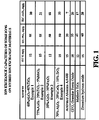
- Surface area of the hybrid ion exchange material is on the order of 1380 m 2 /g and the total pore volume is approximately 0.95 cm 3 /g. Ion exchange properties of material are summarized in the table shown in Fig. 1 .
- the preparation of the activated carbon support includes drying 100 g of wood based powder carbon (preferably having a surface area of 1600 m 2 /g, pore volume 1.1 cm 3 /g, fraction 45-150 ⁇ m) at 150°C for several hours to evacuate physically adsorbed water from carrier pores.
- the preparation of 100 mL mixed oxide precursor solution involves mixing 70.0 g of Al(NO 3 )3*9H 2 O, 16.9 g of a 15.0 wt% (as TiO 2 ) titanyl sulfate solution, and 1.75 g of MnSO 4* H 2 O and 20 g of deionized water.
- Impregnated activated carbon having total weight of approximately 209 g is placed into an electric oven at 100°C and dried until its weight decreases to 185 g. This operation results in a removal of about 50% of water present in the carbon pores.
- the thermally treated impregnated activated carbon is then transferred in small portions, approximately 25-30 g each, to a 1 L glass beaker equipped with a mechanical mixer, and containing 500 mL of a 1 M NaHCO 3 solution.
- the pH of the reaction mixture is kept in the range of approximately 7.2-7.8 by adding, if necessary, a 25% NaOH solution.
- the reaction system When all carbon powder is added to the neutralizing solution, the reaction system remains under mixing for 1 hour to complete neutralization process, and form seeds of nano-sized aluminum based mixed oxides in the pores of the support.
- Neutralized carbon is then separated from solution via filter and washed with deionized water to remove excess occluded electrolytes. The washed product is then dried in electric oven at 100°C to establish an LOD of about 5%.
- Total mixed oxides loading into activated carbon is 11 wt% (determined by ashing product at 1100°C in air for 6 hours).
- Mixed oxide loaded into activated carbon pores contains 75 wt% Al 2 O 3 , 20 wt% TiO 2 , and 5 wt% MnO 2 .
- Surface area of the hybrid ion exchange material is 1350 m 2 /g and its total pore volume is 0.95 cm 3 /g.
- the ion exchange properties of material are summarized in the table shown in Fig. 1 .
- the preparation of 100 mL mixed oxide precursor solution comprises mixing 66.15 g of Al(NO 3 )3*9H 2 O, 18.22 g of FeCl 3 and 25 g of deionized water.
- the type of activated carbon, preparation of activated carbon support, and doping process are similar to that described in Example 1.
- the total mixed oxides loading into activated carbon is approximately 15.5 wt%.
- the mixed oxide loaded into activated carbon pores contains 50 wt% Al 2 O 3 and 50 wt% Fe 2 O 3 .
- the surface area of hybrid ion exchange material is 1220 m 2 /g and its total pore volume is 0.90 cm 3 /g.
- the ion exchange properties of material are summarized in the table in Fig. 1 .
- the preparation of 100 mL mixed oxide precursor solution comprises mixing 77.2 g of Al(NO 3 )3 ⁇ 9H 2 O, 10 g of a 30% Ce(NO 3 )3 (on CeO 2 ) solution, 6 g of a 25% zirconyl nitrate (on ZrO 2 ) solution, and 15 g of deionized water.
- the type of activated carbon, preparation of activated carbon support, and doping process is similar to that described in Example 1.
- the total mixed oxides loading into activated carbon is 13 wt%.
- the mixed oxide loaded into activated carbon pores contains 70 wt% Al 2 O 3 , 20 wt% CeO 2 , and 10 wt% ZrO 2 .
- the surface area of hybrid ion exchange material is 1320 m 2 /g and its total pore volume is 0.95 cm 3 /g.
- the ion exchange properties of material are summarized in the table in Fig. 1 .
- Adsorption experiments have been carried out under batch conditions with a contact time of 18 hours.
- the following test solutions have been used in the adsorption experiments:
- GFO Granular Ferric Oxide
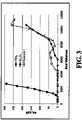
- Comparative testing was performed of arsenate ion removal on aluminum hydrous oxide, titanium hydrous oxide (MetSorb ® ) and the hybrid ion exchanger from Example 1 under column conditions. Sorption has been carried out from 2 mM NaHCO 3 solution containing 300 ppb As(V) at a pH level of 8.3, and a flow rate of 100 BV/hr. The column contained 1.00 g of media.
- Fig. 3 depicts the comparative testing results of As removal (ppb) for various bed volumes of Example 1, TiO 2 , and Al 2 O 3 .
- Fig. 4 depicts the comparative testing results of As (ppb) for various bed volumes of Example 1, TiO 2 , and Al 2 O 3 .
- Fig. 4 depicts the comparative testing results of Fluoride removal (ppb) for various bed volumes of Example 1, TiO 2 , and Al 2 O 3 .
- the effect of thermal treatment on AsO 4 and Fluoride ion uptake on mixed oxide of Example 1 is shown in the table of Fig. 5 .
- the arsenic test solution contained 3.7 ppm AsO 4 at a pH level of 8.
- the fluoride test solution contained 10 ppm F in tap water at a pH level of 7.5.
- the contact time was approximately 18 hours.
Landscapes
- Chemical & Material Sciences (AREA)
- Organic Chemistry (AREA)
- Chemical Kinetics & Catalysis (AREA)
- Analytical Chemistry (AREA)
- Inorganic Chemistry (AREA)
- Environmental & Geological Engineering (AREA)
- Water Supply & Treatment (AREA)
- Engineering & Computer Science (AREA)
- Hydrology & Water Resources (AREA)
- Life Sciences & Earth Sciences (AREA)
- Solid-Sorbent Or Filter-Aiding Compositions (AREA)
- Water Treatment By Sorption (AREA)
- Treatment Of Water By Ion Exchange (AREA)
Claims (4)
- Verfahren zur Herstellung eines hybriden lonenaustauschermaterials, wobei das Verfahren folgendes aufweist:a. Vorsehen von Pulver oder Granulat eines porösen Aktivkohleträgers, das vorgetrocknet wurde, um physikalisch adsorbiertes Wasser aus den Poren zu entfernen;b. Aufsprühen einer wässrigen Lösung eines aluminiumhaltigen Mischoxidvorläufers auf das Granulat oder Pulver eines porösen Aktivkohleträgers in einer Menge, die ausreicht, um offene Poren des Trägers bis zu 90 % ihres Volumens zu füllen,wobei in der Lösung des aluminiumhaltigen Mischoxid-Vorläufers eine wasserlösliche Verbindung, die Aluminiumsulfat, Aluminiumchlorid, Aluminiumnitrat oder Kombinationen davon aufweist, und eine mehrwertige Metallverbindung, die wasserlösliche Nitrate, Chloride, Sulfate von Titan, Zirkonium, Zinn, Cer, Lanthan, Eisen, Mangan oder Kombinationen davon aufweist, verwendet wird,wobei der Aluminiumoxidgehalt in der Lösung des aluminiumhaltigen Mischoxidvorläufers von etwa 20 Gew.-% bis zu etwa 80 Gew.-% beträgt;c. Trocknen des so imprägnierten Aktivkohleträgers bis zur Entfernung von 40 bis 60 % des zugesetzten Wassers;d. Inkontaktbringen von Granulat oder Pulver eines imprägnierten Aktivkohleträgers mit einer Lösung eines basischen Reagenz bei einem pH-Wert, der ausreicht, um einen sauren aluminiumhaltigen Mischoxidvorläufer in den Trägerporen zu neutralisieren, unter Bildung von wässrigem Mischoxid der Elemente in Nanogröße in den Poren,
wobei die Lösung eines basischen Reagenzes ausgewählt ist aus Alkalihydroxiden, Ammoniumhydroxid, Alkalicarbonaten, Ammoniumcarbonat und Kombinationen davon;e. Waschen des hybriden Ionenaustauschermaterials mit Wasser, um eingeschlossene Elektrolyte zu entfernen; undf. Trocknen des hybriden Ionenaustauschermaterials mittels eines Wäge-Trocknungsverfahren (Loss-on-Drying-Methode (LOD)), bis das hybride lonenaustauschermaterial eine LOD von weniger als 10 % aufweist. - Verfahren nach Anspruch 1, wobei der Aluminiumoxidgehalt in der Mischoxidvorläuferlösung 50 Gew.-% bis 80 Gew.-% beträgt.
- Verfahren nach Anspruch 1, wobei die Lösung eines basischen Reagenzes ausgewählt ist aus Alkalihydroxiden, Ammoniumhydroxid, Alkalicarbonaten, Ammoniumcarbonat und Kombinationen davon, bei einem pH-Wert im Bereich von 4-10.
- Hybrides lonenaustauschermaterial, erhältlich durch ein Verfahren nach einem der Ansprüche 1 bis 3.
Applications Claiming Priority (2)
| Application Number | Priority Date | Filing Date | Title |
|---|---|---|---|
| US14/637,786 US9901918B2 (en) | 2015-03-04 | 2015-03-04 | Hybrid ion exchange material and method for making the same |
| PCT/US2016/019279 WO2016140843A1 (en) | 2015-03-04 | 2016-02-24 | "hybrid ion exchange material and method for making the same" |
Publications (3)
| Publication Number | Publication Date |
|---|---|
| EP3265224A1 EP3265224A1 (de) | 2018-01-10 |
| EP3265224A4 EP3265224A4 (de) | 2019-01-09 |
| EP3265224B1 true EP3265224B1 (de) | 2022-12-28 |
Family
ID=56849049
Family Applications (1)
| Application Number | Title | Priority Date | Filing Date |
|---|---|---|---|
| EP16759281.5A Active EP3265224B1 (de) | 2015-03-04 | 2016-02-24 | Hybridionenaustauschmaterial verfahren zur herstellung davon |
Country Status (9)
| Country | Link |
|---|---|
| US (2) | US9901918B2 (de) |
| EP (1) | EP3265224B1 (de) |
| JP (2) | JP6641286B2 (de) |
| KR (2) | KR101868868B1 (de) |
| CN (1) | CN107107023B (de) |
| AR (2) | AR103837A1 (de) |
| MX (1) | MX390992B (de) |
| TW (1) | TWI602614B (de) |
| WO (1) | WO2016140843A1 (de) |
Cited By (1)
| Publication number | Priority date | Publication date | Assignee | Title |
|---|---|---|---|---|
| US11904297B1 (en) | 2023-01-11 | 2024-02-20 | Iliad Ip Company, Llc | Process for manufacturing lithium selective adsorption/separation media |
Families Citing this family (7)
| Publication number | Priority date | Publication date | Assignee | Title |
|---|---|---|---|---|
| CR20200529A (es) | 2018-06-07 | 2022-04-04 | Graver Tech Llc | Medios filtrantes para la eliminación de partículas, iones y materiales biológicos, y descolorización en un proceso de purificación de azucár, y su uso |
| US10759681B2 (en) | 2018-06-28 | 2020-09-01 | Board Of Trustees Of The University Of Arkansas | Water purification compositions and the method of producing the same |
| CN109173988A (zh) * | 2018-08-20 | 2019-01-11 | 扬州大学 | 磁性复合活性炭、制备方法及其在有机废水处理中的应用 |
| CN109173991A (zh) * | 2018-09-17 | 2019-01-11 | 榆林学院 | 一种处理含氟废水的载镧-铝杏壳活性炭制备方法 |
| KR102520535B1 (ko) * | 2018-12-24 | 2023-04-11 | 안형일 | 미네랄을 포함하는 사료 첨가 조성물 |
| CN114105313B (zh) * | 2021-12-09 | 2023-07-21 | 苏州中晟环境修复有限公司 | 一种以固定化微生物技术结合生物炭联合处理富营养化水体的方法 |
| CN115722195B (zh) * | 2022-12-05 | 2023-12-12 | 广东邦普循环科技有限公司 | 氟离子吸附剂的制备方法 |
Family Cites Families (30)
| Publication number | Priority date | Publication date | Assignee | Title |
|---|---|---|---|---|
| JPS53106682A (en) | 1977-03-01 | 1978-09-16 | Hitachi Ltd | Supporting method for hydrated metal oxide on carrier |
| US4692431A (en) | 1985-12-16 | 1987-09-08 | The Dow Chemical Company | Hydrous oxide activated charcoal |
| US5401481A (en) | 1986-11-10 | 1995-03-28 | Board Of Regents, The University Of Texas System | Processes for removing acid components from gas streams |
| ATE142905T1 (de) | 1989-05-16 | 1996-10-15 | Engelhard Corp | Verfahren zur herstellung einer säureaktivierten bleicherde |
| US5008226A (en) * | 1989-05-16 | 1991-04-16 | Engelhard Corporation | Process for making acid activated bleaching earth using high susceptibility source clay and novel bleaching earth product |
| US5277931A (en) | 1992-08-21 | 1994-01-11 | Engelhard Corporation | Composite ion-exchange material, preparation and use thereof |
| US5234876A (en) | 1992-10-20 | 1993-08-10 | Corning Incorporated | Thermally stable chromium-exchanged zeolites and method of making same |
| US5948265A (en) | 1996-07-05 | 1999-09-07 | Tosoh Corporation | Ion-exchanger, process for production thereof, and process for removal of multiply charged anions employing the ion-exchanger |
| JP3800900B2 (ja) * | 1999-09-09 | 2006-07-26 | 三菱電機株式会社 | 冷凍冷蔵庫、冷凍冷蔵庫の運転方法 |
| US7572380B2 (en) | 2001-06-08 | 2009-08-11 | The Penn State Research Foundation | Method for oxyanion removal from ground water |
| US6914034B2 (en) | 2001-08-27 | 2005-07-05 | Calgon Carbon Corporation | Adsorbents for removing heavy metals and methods for producing and using the same |
| US7429551B2 (en) | 2001-08-27 | 2008-09-30 | Calgon Carbon Corporation | Adsorbents for removing heavy metals |
| DE10210786A1 (de) * | 2002-03-12 | 2003-10-02 | Bayer Ag | Mischungen aus Adsorbermaterialien |
| JP4681384B2 (ja) | 2005-07-28 | 2011-05-11 | 株式会社アステック | 砒素吸着剤の製造方法及び砒素吸着剤 |
| US7378372B2 (en) | 2005-10-11 | 2008-05-27 | Layne Christensen Company | Filter and sorbent for removal of contaminants from a fluid |
| EP1968897A2 (de) | 2005-12-29 | 2008-09-17 | Micronose Technologies, Inc. | Verfahren und zusammensetzungen zur entfernung von arsen und schwermetallen aus wasser |
| AU2007217870B2 (en) * | 2006-02-16 | 2011-07-21 | Brigham Young University | Preparation of uniform nanoparticles of ultra-high purity metal oxides, mixed metal oxides, metals, and metal alloys |
| US8242051B2 (en) | 2006-03-10 | 2012-08-14 | Council Of Scientific & Industrial Research | Carbon supported activated alumina absorbent useful for the removal of fluoride ions from water and a process for the preparation thereof |
| SI2319804T1 (sl) | 2006-12-14 | 2015-01-30 | Novartis Ag | Fosfatni adsorbent na osnovi Ĺľelezo(III)-ogljikovega hidrata |
| JP5099348B2 (ja) * | 2008-04-21 | 2012-12-19 | 戸田工業株式会社 | 吸着剤 |
| US7786038B2 (en) | 2008-04-29 | 2010-08-31 | Research Center for Eco-Enviromental Sciences, Chinese Academy of Sciences | Composite metal oxide adsorbent for fluoride removal |
| US8511319B2 (en) | 2008-11-20 | 2013-08-20 | R. J. Reynolds Tobacco Company | Adsorbent material impregnated with metal oxide component |
| EP2243547A1 (de) * | 2009-04-20 | 2010-10-27 | Fortum OYJ | Neuartiges Sorptionsmittel, Verfahren zu dessen Herstellung und dessen Verwendung |
| CN102059093B (zh) * | 2009-11-18 | 2012-10-10 | 中国科学院生态环境研究中心 | 砷氟共除纳米复合吸附剂 |
| US8178065B2 (en) | 2010-03-16 | 2012-05-15 | The National Titanium Dioxide Co. Ltd. (Cristal) | Photocatalyst comprising TiO2 and activated carbon made from date pits |
| CN102600790A (zh) * | 2011-01-20 | 2012-07-25 | 中国科学院金属研究所 | 一种纳米水合氧化铈基除砷材料及其制备方法与除砷应用 |
| US9296626B2 (en) | 2011-01-21 | 2016-03-29 | Kyungpook National University Industry-Academic Cooperation Foundation | Method for producing an organic-inorganic hybrid sorbent by impregnating an oxide into nanopores of activated carbon and use thereof in water treatment |
| WO2013103607A1 (en) * | 2012-01-04 | 2013-07-11 | Fresenius Medical Care Holdings, Inc. | Method and system of enhancing removal of toxic anions and organic solutes in sorbent dialysis |
| US9809466B2 (en) * | 2012-05-29 | 2017-11-07 | Indian Institute Of Technology Kanpur | Bi-metal nanoadsorbents and methods for their preparation and use |
| JP2018008596A (ja) * | 2016-07-13 | 2018-01-18 | 日本精機株式会社 | 車両用表示装置 |
-
2015
- 2015-03-04 US US14/637,786 patent/US9901918B2/en active Active
-
2016
- 2016-02-24 EP EP16759281.5A patent/EP3265224B1/de active Active
- 2016-02-24 KR KR1020167031985A patent/KR101868868B1/ko not_active Expired - Fee Related
- 2016-02-24 MX MX2016011277A patent/MX390992B/es unknown
- 2016-02-24 KR KR1020187010213A patent/KR101937284B1/ko not_active Expired - Fee Related
- 2016-02-24 WO PCT/US2016/019279 patent/WO2016140843A1/en not_active Ceased
- 2016-02-24 JP JP2016555359A patent/JP6641286B2/ja not_active Expired - Fee Related
- 2016-02-24 CN CN201680004673.1A patent/CN107107023B/zh not_active Expired - Fee Related
- 2016-02-26 TW TW105105776A patent/TWI602614B/zh not_active IP Right Cessation
- 2016-03-03 AR ARP160100557A patent/AR103837A1/es active IP Right Grant
-
2018
- 2018-01-12 US US15/869,410 patent/US10081012B2/en active Active
- 2018-07-05 JP JP2018128003A patent/JP6625167B2/ja not_active Expired - Fee Related
-
2021
- 2021-05-03 AR ARP210101200A patent/AR122464A2/es active IP Right Grant
Non-Patent Citations (1)
| Title |
|---|
| B. SAHA ET AL: "SORPTION OF TRACE HEAVY METALS BY THIOL CONTAINING CHELATING RESINS", SOLVENT EXTRACTION AND ION EXCHANGE., vol. 18, no. 1, 1 January 2000 (2000-01-01), US, pages 133 - 167, XP055321471, ISSN: 0736-6299, DOI: 10.1080/07366290008934676 * |
Cited By (1)
| Publication number | Priority date | Publication date | Assignee | Title |
|---|---|---|---|---|
| US11904297B1 (en) | 2023-01-11 | 2024-02-20 | Iliad Ip Company, Llc | Process for manufacturing lithium selective adsorption/separation media |
Also Published As
| Publication number | Publication date |
|---|---|
| MX2016011277A (es) | 2017-04-27 |
| MX390992B (es) | 2025-03-21 |
| KR101937284B1 (ko) | 2019-04-09 |
| EP3265224A4 (de) | 2019-01-09 |
| US20160256865A1 (en) | 2016-09-08 |
| AR122464A2 (es) | 2022-09-14 |
| EP3265224A1 (de) | 2018-01-10 |
| US10081012B2 (en) | 2018-09-25 |
| CN107107023B (zh) | 2020-12-25 |
| US9901918B2 (en) | 2018-02-27 |
| WO2016140843A1 (en) | 2016-09-09 |
| CN107107023A (zh) | 2017-08-29 |
| JP2018167269A (ja) | 2018-11-01 |
| JP2017511248A (ja) | 2017-04-20 |
| JP6641286B2 (ja) | 2020-02-05 |
| JP6625167B2 (ja) | 2019-12-25 |
| US20180133708A1 (en) | 2018-05-17 |
| KR20180039767A (ko) | 2018-04-18 |
| AR103837A1 (es) | 2017-06-07 |
| TW201634120A (zh) | 2016-10-01 |
| KR20170032220A (ko) | 2017-03-22 |
| KR101868868B1 (ko) | 2018-07-20 |
| TWI602614B (zh) | 2017-10-21 |
Similar Documents
| Publication | Publication Date | Title |
|---|---|---|
| EP3265224B1 (de) | Hybridionenaustauschmaterial verfahren zur herstellung davon | |
| Sun et al. | Elaborate design of polymeric nanocomposites with Mg (ii)-buffering nanochannels for highly efficient and selective removal of heavy metals from water: case study for Cu (ii) | |
| Velazquez-Jimenez et al. | Zirconium–carbon hybrid sorbent for removal of fluoride from water: oxalic acid mediated Zr (IV) assembly and adsorption mechanism | |
| Chen et al. | Application of metal oxide heterostructures in arsenic removal from contaminated water | |
| Cai et al. | Efficient defluoridation of water using reusable nanocrystalline layered double hydroxides impregnated polystyrene anion exchanger | |
| Zongliang et al. | Adsorption of arsenate and arsenite from aqueous solutions by cerium-loaded cation exchange resin | |
| Deng et al. | Mn–Ce oxide as a high-capacity adsorbent for fluoride removal from water | |
| TWI453165B (zh) | 水處理組成物的製造方法 | |
| US5277931A (en) | Composite ion-exchange material, preparation and use thereof | |
| WO2018046286A1 (en) | Adsorbent comprising layered double hydroxide and activated carbon | |
| Huang et al. | In situ decoration of La (OH) 3 on polyethyleneimine-linked dendritic mesoporous silica nanospheres targeting at efficient and simultaneous removal of phosphate and Congo red | |
| Prabhu et al. | Synthesis of sucrose-derived porous carbon-doped ZrxLa1-xOOH materials and their superior performance for the simultaneous immobilization of arsenite and fluoride from binary systems | |
| Alotaibi et al. | Iron supported on bioinspired green silica for water remediation | |
| KR20140127800A (ko) | 정수용 다층 유기-형판화된-베마이트-나노구조물 | |
| KR20170133656A (ko) | 철-아연 복합금속산화물을 포함하는 산성가스 제거용 활성탄 흡착제 및 이의 제조방법 | |
| Li et al. | One-step synthesis of mesoporous two-line ferrihydrite for effective elimination of arsenic contaminants from natural water | |
| Bayode et al. | One‐Pot Synthesis of ZnO‐Activated Eggshell@ kaolinite: Sorbents for Phosphate Capture in Water | |
| CN113842874A (zh) | 一种改性膨润土及其制备方法与应用 | |
| JP6835319B2 (ja) | 吸着材担持体 | |
| US8664150B2 (en) | Methods of producing adsorption media including a metal oxide | |
| Nilchi et al. | Removal of arsenic from aqueous solutions by an adsorption process with titania–silica binary oxide nanoparticle loaded polyacrylonitrile polymer | |
| KR20180105620A (ko) | 철-아연 복합금속산화물을 포함하는 산성가스 제거용 활성탄 흡착제 및 이의 제조방법 | |
| Cheng et al. | Solid Brønsted acidity boosts adsorption reactivity of nano-adsorbent for water decontamination | |
| Zhang et al. | Highly efficient removal of phosphate using a novel Fe-La binary (hydro) oxide as adsorbent: behavior and mechanism | |
| CN116532095A (zh) | 一种基于氧化物种子的载zif-67树脂复合吸附剂、制备方法及应用 |
Legal Events
| Date | Code | Title | Description |
|---|---|---|---|
| STAA | Information on the status of an ep patent application or granted ep patent |
Free format text: STATUS: THE INTERNATIONAL PUBLICATION HAS BEEN MADE |
|
| PUAI | Public reference made under article 153(3) epc to a published international application that has entered the european phase |
Free format text: ORIGINAL CODE: 0009012 |
|
| STAA | Information on the status of an ep patent application or granted ep patent |
Free format text: STATUS: REQUEST FOR EXAMINATION WAS MADE |
|
| 17P | Request for examination filed |
Effective date: 20161115 |
|
| AK | Designated contracting states |
Kind code of ref document: A1 Designated state(s): AL AT BE BG CH CY CZ DE DK EE ES FI FR GB GR HR HU IE IS IT LI LT LU LV MC MK MT NL NO PL PT RO RS SE SI SK SM TR |
|
| AX | Request for extension of the european patent |
Extension state: BA ME |
|
| DAV | Request for validation of the european patent (deleted) | ||
| DAX | Request for extension of the european patent (deleted) | ||
| RIC1 | Information provided on ipc code assigned before grant |
Ipc: C02F 1/28 20060101ALI20180727BHEP Ipc: B01J 20/32 20060101ALI20180727BHEP Ipc: B01J 20/28 20060101ALI20180727BHEP Ipc: B01J 20/20 20060101ALI20180727BHEP Ipc: B01J 20/08 20060101AFI20180727BHEP |
|
| A4 | Supplementary search report drawn up and despatched |
Effective date: 20181206 |
|
| RIC1 | Information provided on ipc code assigned before grant |
Ipc: B01J 20/20 20060101ALI20181130BHEP Ipc: B01J 20/28 20060101ALI20181130BHEP Ipc: C02F 1/28 20060101ALI20181130BHEP Ipc: B01J 20/32 20060101ALI20181130BHEP Ipc: C02F 1/42 20060101ALI20181130BHEP Ipc: B01J 20/08 20060101AFI20181130BHEP |
|
| STAA | Information on the status of an ep patent application or granted ep patent |
Free format text: STATUS: EXAMINATION IS IN PROGRESS |
|
| 17Q | First examination report despatched |
Effective date: 20200924 |
|
| REG | Reference to a national code |
Ref country code: DE Ref legal event code: R079 Ref document number: 602016077131 Country of ref document: DE Free format text: PREVIOUS MAIN CLASS: B01J0020040000 Ipc: B01J0020080000 |
|
| RIC1 | Information provided on ipc code assigned before grant |
Ipc: C02F 101/14 20060101ALI20220610BHEP Ipc: C02F 101/10 20060101ALI20220610BHEP Ipc: C02F 1/42 20060101ALI20220610BHEP Ipc: C02F 1/28 20060101ALI20220610BHEP Ipc: B01J 20/32 20060101ALI20220610BHEP Ipc: B01J 20/28 20060101ALI20220610BHEP Ipc: B01J 20/20 20060101ALI20220610BHEP Ipc: B01J 20/08 20060101AFI20220610BHEP |
|
| GRAP | Despatch of communication of intention to grant a patent |
Free format text: ORIGINAL CODE: EPIDOSNIGR1 |
|
| STAA | Information on the status of an ep patent application or granted ep patent |
Free format text: STATUS: GRANT OF PATENT IS INTENDED |
|
| INTG | Intention to grant announced |
Effective date: 20220725 |
|
| GRAS | Grant fee paid |
Free format text: ORIGINAL CODE: EPIDOSNIGR3 |
|
| GRAA | (expected) grant |
Free format text: ORIGINAL CODE: 0009210 |
|
| STAA | Information on the status of an ep patent application or granted ep patent |
Free format text: STATUS: THE PATENT HAS BEEN GRANTED |
|
| AK | Designated contracting states |
Kind code of ref document: B1 Designated state(s): AL AT BE BG CH CY CZ DE DK EE ES FI FR GB GR HR HU IE IS IT LI LT LU LV MC MK MT NL NO PL PT RO RS SE SI SK SM TR |
|
| REG | Reference to a national code |
Ref country code: GB Ref legal event code: FG4D |
|
| REG | Reference to a national code |
Ref country code: CH Ref legal event code: EP |
|
| REG | Reference to a national code |
Ref country code: DE Ref legal event code: R096 Ref document number: 602016077131 Country of ref document: DE |
|
| REG | Reference to a national code |
Ref country code: AT Ref legal event code: REF Ref document number: 1540106 Country of ref document: AT Kind code of ref document: T Effective date: 20230115 |
|
| REG | Reference to a national code |
Ref country code: IE Ref legal event code: FG4D |
|
| REG | Reference to a national code |
Ref country code: LT Ref legal event code: MG9D |
|
| PG25 | Lapsed in a contracting state [announced via postgrant information from national office to epo] |
Ref country code: SE Free format text: LAPSE BECAUSE OF FAILURE TO SUBMIT A TRANSLATION OF THE DESCRIPTION OR TO PAY THE FEE WITHIN THE PRESCRIBED TIME-LIMIT Effective date: 20221228 Ref country code: NO Free format text: LAPSE BECAUSE OF FAILURE TO SUBMIT A TRANSLATION OF THE DESCRIPTION OR TO PAY THE FEE WITHIN THE PRESCRIBED TIME-LIMIT Effective date: 20230328 Ref country code: LT Free format text: LAPSE BECAUSE OF FAILURE TO SUBMIT A TRANSLATION OF THE DESCRIPTION OR TO PAY THE FEE WITHIN THE PRESCRIBED TIME-LIMIT Effective date: 20221228 Ref country code: FI Free format text: LAPSE BECAUSE OF FAILURE TO SUBMIT A TRANSLATION OF THE DESCRIPTION OR TO PAY THE FEE WITHIN THE PRESCRIBED TIME-LIMIT Effective date: 20221228 |
|
| REG | Reference to a national code |
Ref country code: NL Ref legal event code: MP Effective date: 20221228 |
|
| REG | Reference to a national code |
Ref country code: AT Ref legal event code: MK05 Ref document number: 1540106 Country of ref document: AT Kind code of ref document: T Effective date: 20221228 |
|
| PG25 | Lapsed in a contracting state [announced via postgrant information from national office to epo] |
Ref country code: RS Free format text: LAPSE BECAUSE OF FAILURE TO SUBMIT A TRANSLATION OF THE DESCRIPTION OR TO PAY THE FEE WITHIN THE PRESCRIBED TIME-LIMIT Effective date: 20221228 Ref country code: LV Free format text: LAPSE BECAUSE OF FAILURE TO SUBMIT A TRANSLATION OF THE DESCRIPTION OR TO PAY THE FEE WITHIN THE PRESCRIBED TIME-LIMIT Effective date: 20221228 Ref country code: HR Free format text: LAPSE BECAUSE OF FAILURE TO SUBMIT A TRANSLATION OF THE DESCRIPTION OR TO PAY THE FEE WITHIN THE PRESCRIBED TIME-LIMIT Effective date: 20221228 Ref country code: GR Free format text: LAPSE BECAUSE OF FAILURE TO SUBMIT A TRANSLATION OF THE DESCRIPTION OR TO PAY THE FEE WITHIN THE PRESCRIBED TIME-LIMIT Effective date: 20230329 |
|
| PG25 | Lapsed in a contracting state [announced via postgrant information from national office to epo] |
Ref country code: NL Free format text: LAPSE BECAUSE OF FAILURE TO SUBMIT A TRANSLATION OF THE DESCRIPTION OR TO PAY THE FEE WITHIN THE PRESCRIBED TIME-LIMIT Effective date: 20221228 |
|
| PG25 | Lapsed in a contracting state [announced via postgrant information from national office to epo] |
Ref country code: SM Free format text: LAPSE BECAUSE OF FAILURE TO SUBMIT A TRANSLATION OF THE DESCRIPTION OR TO PAY THE FEE WITHIN THE PRESCRIBED TIME-LIMIT Effective date: 20221228 Ref country code: RO Free format text: LAPSE BECAUSE OF FAILURE TO SUBMIT A TRANSLATION OF THE DESCRIPTION OR TO PAY THE FEE WITHIN THE PRESCRIBED TIME-LIMIT Effective date: 20221228 Ref country code: PT Free format text: LAPSE BECAUSE OF FAILURE TO SUBMIT A TRANSLATION OF THE DESCRIPTION OR TO PAY THE FEE WITHIN THE PRESCRIBED TIME-LIMIT Effective date: 20230428 Ref country code: ES Free format text: LAPSE BECAUSE OF FAILURE TO SUBMIT A TRANSLATION OF THE DESCRIPTION OR TO PAY THE FEE WITHIN THE PRESCRIBED TIME-LIMIT Effective date: 20221228 Ref country code: EE Free format text: LAPSE BECAUSE OF FAILURE TO SUBMIT A TRANSLATION OF THE DESCRIPTION OR TO PAY THE FEE WITHIN THE PRESCRIBED TIME-LIMIT Effective date: 20221228 Ref country code: CZ Free format text: LAPSE BECAUSE OF FAILURE TO SUBMIT A TRANSLATION OF THE DESCRIPTION OR TO PAY THE FEE WITHIN THE PRESCRIBED TIME-LIMIT Effective date: 20221228 Ref country code: AT Free format text: LAPSE BECAUSE OF FAILURE TO SUBMIT A TRANSLATION OF THE DESCRIPTION OR TO PAY THE FEE WITHIN THE PRESCRIBED TIME-LIMIT Effective date: 20221228 |
|
| PG25 | Lapsed in a contracting state [announced via postgrant information from national office to epo] |
Ref country code: SK Free format text: LAPSE BECAUSE OF FAILURE TO SUBMIT A TRANSLATION OF THE DESCRIPTION OR TO PAY THE FEE WITHIN THE PRESCRIBED TIME-LIMIT Effective date: 20221228 Ref country code: PL Free format text: LAPSE BECAUSE OF FAILURE TO SUBMIT A TRANSLATION OF THE DESCRIPTION OR TO PAY THE FEE WITHIN THE PRESCRIBED TIME-LIMIT Effective date: 20221228 Ref country code: IS Free format text: LAPSE BECAUSE OF FAILURE TO SUBMIT A TRANSLATION OF THE DESCRIPTION OR TO PAY THE FEE WITHIN THE PRESCRIBED TIME-LIMIT Effective date: 20230428 Ref country code: AL Free format text: LAPSE BECAUSE OF FAILURE TO SUBMIT A TRANSLATION OF THE DESCRIPTION OR TO PAY THE FEE WITHIN THE PRESCRIBED TIME-LIMIT Effective date: 20221228 |
|
| REG | Reference to a national code |
Ref country code: DE Ref legal event code: R119 Ref document number: 602016077131 Country of ref document: DE |
|
| PG25 | Lapsed in a contracting state [announced via postgrant information from national office to epo] |
Ref country code: MC Free format text: LAPSE BECAUSE OF FAILURE TO SUBMIT A TRANSLATION OF THE DESCRIPTION OR TO PAY THE FEE WITHIN THE PRESCRIBED TIME-LIMIT Effective date: 20221228 |
|
| REG | Reference to a national code |
Ref country code: CH Ref legal event code: PL |
|
| REG | Reference to a national code |
Ref country code: BE Ref legal event code: MM Effective date: 20230228 |
|
| PG25 | Lapsed in a contracting state [announced via postgrant information from national office to epo] |
Ref country code: LU Free format text: LAPSE BECAUSE OF NON-PAYMENT OF DUE FEES Effective date: 20230224 Ref country code: LI Free format text: LAPSE BECAUSE OF NON-PAYMENT OF DUE FEES Effective date: 20230228 Ref country code: DK Free format text: LAPSE BECAUSE OF FAILURE TO SUBMIT A TRANSLATION OF THE DESCRIPTION OR TO PAY THE FEE WITHIN THE PRESCRIBED TIME-LIMIT Effective date: 20221228 Ref country code: CH Free format text: LAPSE BECAUSE OF NON-PAYMENT OF DUE FEES Effective date: 20230228 |
|
| PLBE | No opposition filed within time limit |
Free format text: ORIGINAL CODE: 0009261 |
|
| STAA | Information on the status of an ep patent application or granted ep patent |
Free format text: STATUS: NO OPPOSITION FILED WITHIN TIME LIMIT |
|
| GBPC | Gb: european patent ceased through non-payment of renewal fee |
Effective date: 20230328 |
|
| 26N | No opposition filed |
Effective date: 20230929 |
|
| REG | Reference to a national code |
Ref country code: IE Ref legal event code: MM4A |
|
| PG25 | Lapsed in a contracting state [announced via postgrant information from national office to epo] |
Ref country code: GB Free format text: LAPSE BECAUSE OF NON-PAYMENT OF DUE FEES Effective date: 20230328 |
|
| PG25 | Lapsed in a contracting state [announced via postgrant information from national office to epo] |
Ref country code: SI Free format text: LAPSE BECAUSE OF FAILURE TO SUBMIT A TRANSLATION OF THE DESCRIPTION OR TO PAY THE FEE WITHIN THE PRESCRIBED TIME-LIMIT Effective date: 20221228 Ref country code: IE Free format text: LAPSE BECAUSE OF NON-PAYMENT OF DUE FEES Effective date: 20230224 Ref country code: GB Free format text: LAPSE BECAUSE OF NON-PAYMENT OF DUE FEES Effective date: 20230328 Ref country code: FR Free format text: LAPSE BECAUSE OF NON-PAYMENT OF DUE FEES Effective date: 20230228 Ref country code: DE Free format text: LAPSE BECAUSE OF NON-PAYMENT OF DUE FEES Effective date: 20230901 |
|
| PG25 | Lapsed in a contracting state [announced via postgrant information from national office to epo] |
Ref country code: BE Free format text: LAPSE BECAUSE OF NON-PAYMENT OF DUE FEES Effective date: 20230228 |
|
| PG25 | Lapsed in a contracting state [announced via postgrant information from national office to epo] |
Ref country code: IT Free format text: LAPSE BECAUSE OF FAILURE TO SUBMIT A TRANSLATION OF THE DESCRIPTION OR TO PAY THE FEE WITHIN THE PRESCRIBED TIME-LIMIT Effective date: 20221228 |
|
| PG25 | Lapsed in a contracting state [announced via postgrant information from national office to epo] |
Ref country code: BG Free format text: LAPSE BECAUSE OF FAILURE TO SUBMIT A TRANSLATION OF THE DESCRIPTION OR TO PAY THE FEE WITHIN THE PRESCRIBED TIME-LIMIT Effective date: 20221228 |
|
| PG25 | Lapsed in a contracting state [announced via postgrant information from national office to epo] |
Ref country code: BG Free format text: LAPSE BECAUSE OF FAILURE TO SUBMIT A TRANSLATION OF THE DESCRIPTION OR TO PAY THE FEE WITHIN THE PRESCRIBED TIME-LIMIT Effective date: 20221228 |
|
| PG25 | Lapsed in a contracting state [announced via postgrant information from national office to epo] |
Ref country code: CY Free format text: LAPSE BECAUSE OF FAILURE TO SUBMIT A TRANSLATION OF THE DESCRIPTION OR TO PAY THE FEE WITHIN THE PRESCRIBED TIME-LIMIT; INVALID AB INITIO Effective date: 20160224 |
|
| PG25 | Lapsed in a contracting state [announced via postgrant information from national office to epo] |
Ref country code: HU Free format text: LAPSE BECAUSE OF FAILURE TO SUBMIT A TRANSLATION OF THE DESCRIPTION OR TO PAY THE FEE WITHIN THE PRESCRIBED TIME-LIMIT; INVALID AB INITIO Effective date: 20160224 |
|
| PG25 | Lapsed in a contracting state [announced via postgrant information from national office to epo] |
Ref country code: TR Free format text: LAPSE BECAUSE OF FAILURE TO SUBMIT A TRANSLATION OF THE DESCRIPTION OR TO PAY THE FEE WITHIN THE PRESCRIBED TIME-LIMIT Effective date: 20221228 |