EP3257934B1 - Dibasische organische säure produzierender stamm und herstellung und verwendung davon - Google Patents
Dibasische organische säure produzierender stamm und herstellung und verwendung davon Download PDFInfo
- Publication number
- EP3257934B1 EP3257934B1 EP16748721.4A EP16748721A EP3257934B1 EP 3257934 B1 EP3257934 B1 EP 3257934B1 EP 16748721 A EP16748721 A EP 16748721A EP 3257934 B1 EP3257934 B1 EP 3257934B1
- Authority
- EP
- European Patent Office
- Prior art keywords
- acid
- organic acid
- strain
- seq
- dibasic organic
- Prior art date
- Legal status (The legal status is an assumption and is not a legal conclusion. Google has not performed a legal analysis and makes no representation as to the accuracy of the status listed.)
- Active
Links
Images


Classifications
-
- C—CHEMISTRY; METALLURGY
- C12—BIOCHEMISTRY; BEER; SPIRITS; WINE; VINEGAR; MICROBIOLOGY; ENZYMOLOGY; MUTATION OR GENETIC ENGINEERING
- C12P—FERMENTATION OR ENZYME-USING PROCESSES TO SYNTHESISE A DESIRED CHEMICAL COMPOUND OR COMPOSITION OR TO SEPARATE OPTICAL ISOMERS FROM A RACEMIC MIXTURE
- C12P7/00—Preparation of oxygen-containing organic compounds
- C12P7/40—Preparation of oxygen-containing organic compounds containing a carboxyl group including Peroxycarboxylic acids
- C12P7/44—Polycarboxylic acids
- C12P7/46—Dicarboxylic acids having four or less carbon atoms, e.g. fumaric acid, maleic acid
-
- C—CHEMISTRY; METALLURGY
- C07—ORGANIC CHEMISTRY
- C07K—PEPTIDES
- C07K14/00—Peptides having more than 20 amino acids; Gastrins; Somatostatins; Melanotropins; Derivatives thereof
- C07K14/37—Peptides having more than 20 amino acids; Gastrins; Somatostatins; Melanotropins; Derivatives thereof from fungi
-
- C—CHEMISTRY; METALLURGY
- C12—BIOCHEMISTRY; BEER; SPIRITS; WINE; VINEGAR; MICROBIOLOGY; ENZYMOLOGY; MUTATION OR GENETIC ENGINEERING
- C12N—MICROORGANISMS OR ENZYMES; COMPOSITIONS THEREOF; PROPAGATING, PRESERVING, OR MAINTAINING MICROORGANISMS; MUTATION OR GENETIC ENGINEERING; CULTURE MEDIA
- C12N15/00—Mutation or genetic engineering; DNA or RNA concerning genetic engineering, vectors, e.g. plasmids, or their isolation, preparation or purification; Use of hosts therefor
- C12N15/09—Recombinant DNA-technology
- C12N15/11—DNA or RNA fragments; Modified forms thereof; Non-coding nucleic acids having a biological activity
- C12N15/52—Genes encoding for enzymes or proenzymes
-
- C—CHEMISTRY; METALLURGY
- C12—BIOCHEMISTRY; BEER; SPIRITS; WINE; VINEGAR; MICROBIOLOGY; ENZYMOLOGY; MUTATION OR GENETIC ENGINEERING
- C12N—MICROORGANISMS OR ENZYMES; COMPOSITIONS THEREOF; PROPAGATING, PRESERVING, OR MAINTAINING MICROORGANISMS; MUTATION OR GENETIC ENGINEERING; CULTURE MEDIA
- C12N15/00—Mutation or genetic engineering; DNA or RNA concerning genetic engineering, vectors, e.g. plasmids, or their isolation, preparation or purification; Use of hosts therefor
- C12N15/09—Recombinant DNA-technology
- C12N15/63—Introduction of foreign genetic material using vectors; Vectors; Use of hosts therefor; Regulation of expression
- C12N15/79—Vectors or expression systems specially adapted for eukaryotic hosts
- C12N15/80—Vectors or expression systems specially adapted for eukaryotic hosts for fungi
-
- C—CHEMISTRY; METALLURGY
- C12—BIOCHEMISTRY; BEER; SPIRITS; WINE; VINEGAR; MICROBIOLOGY; ENZYMOLOGY; MUTATION OR GENETIC ENGINEERING
- C12N—MICROORGANISMS OR ENZYMES; COMPOSITIONS THEREOF; PROPAGATING, PRESERVING, OR MAINTAINING MICROORGANISMS; MUTATION OR GENETIC ENGINEERING; CULTURE MEDIA
- C12N9/00—Enzymes; Proenzymes; Compositions thereof; Processes for preparing, activating, inhibiting, separating or purifying enzymes
-
- C—CHEMISTRY; METALLURGY
- C12—BIOCHEMISTRY; BEER; SPIRITS; WINE; VINEGAR; MICROBIOLOGY; ENZYMOLOGY; MUTATION OR GENETIC ENGINEERING
- C12N—MICROORGANISMS OR ENZYMES; COMPOSITIONS THEREOF; PROPAGATING, PRESERVING, OR MAINTAINING MICROORGANISMS; MUTATION OR GENETIC ENGINEERING; CULTURE MEDIA
- C12N9/00—Enzymes; Proenzymes; Compositions thereof; Processes for preparing, activating, inhibiting, separating or purifying enzymes
- C12N9/0004—Oxidoreductases (1.)
- C12N9/0006—Oxidoreductases (1.) acting on CH-OH groups as donors (1.1)
-
- C—CHEMISTRY; METALLURGY
- C12—BIOCHEMISTRY; BEER; SPIRITS; WINE; VINEGAR; MICROBIOLOGY; ENZYMOLOGY; MUTATION OR GENETIC ENGINEERING
- C12N—MICROORGANISMS OR ENZYMES; COMPOSITIONS THEREOF; PROPAGATING, PRESERVING, OR MAINTAINING MICROORGANISMS; MUTATION OR GENETIC ENGINEERING; CULTURE MEDIA
- C12N9/00—Enzymes; Proenzymes; Compositions thereof; Processes for preparing, activating, inhibiting, separating or purifying enzymes
- C12N9/10—Transferases (2.)
-
- C—CHEMISTRY; METALLURGY
- C12—BIOCHEMISTRY; BEER; SPIRITS; WINE; VINEGAR; MICROBIOLOGY; ENZYMOLOGY; MUTATION OR GENETIC ENGINEERING
- C12N—MICROORGANISMS OR ENZYMES; COMPOSITIONS THEREOF; PROPAGATING, PRESERVING, OR MAINTAINING MICROORGANISMS; MUTATION OR GENETIC ENGINEERING; CULTURE MEDIA
- C12N9/00—Enzymes; Proenzymes; Compositions thereof; Processes for preparing, activating, inhibiting, separating or purifying enzymes
- C12N9/10—Transferases (2.)
- C12N9/1096—Transferases (2.) transferring nitrogenous groups (2.6)
-
- C—CHEMISTRY; METALLURGY
- C12—BIOCHEMISTRY; BEER; SPIRITS; WINE; VINEGAR; MICROBIOLOGY; ENZYMOLOGY; MUTATION OR GENETIC ENGINEERING
- C12N—MICROORGANISMS OR ENZYMES; COMPOSITIONS THEREOF; PROPAGATING, PRESERVING, OR MAINTAINING MICROORGANISMS; MUTATION OR GENETIC ENGINEERING; CULTURE MEDIA
- C12N9/00—Enzymes; Proenzymes; Compositions thereof; Processes for preparing, activating, inhibiting, separating or purifying enzymes
- C12N9/93—Ligases (6)
-
- C—CHEMISTRY; METALLURGY
- C12—BIOCHEMISTRY; BEER; SPIRITS; WINE; VINEGAR; MICROBIOLOGY; ENZYMOLOGY; MUTATION OR GENETIC ENGINEERING
- C12P—FERMENTATION OR ENZYME-USING PROCESSES TO SYNTHESISE A DESIRED CHEMICAL COMPOUND OR COMPOSITION OR TO SEPARATE OPTICAL ISOMERS FROM A RACEMIC MIXTURE
- C12P7/00—Preparation of oxygen-containing organic compounds
- C12P7/40—Preparation of oxygen-containing organic compounds containing a carboxyl group including Peroxycarboxylic acids
- C12P7/44—Polycarboxylic acids
-
- C—CHEMISTRY; METALLURGY
- C12—BIOCHEMISTRY; BEER; SPIRITS; WINE; VINEGAR; MICROBIOLOGY; ENZYMOLOGY; MUTATION OR GENETIC ENGINEERING
- C12P—FERMENTATION OR ENZYME-USING PROCESSES TO SYNTHESISE A DESIRED CHEMICAL COMPOUND OR COMPOSITION OR TO SEPARATE OPTICAL ISOMERS FROM A RACEMIC MIXTURE
- C12P7/00—Preparation of oxygen-containing organic compounds
- C12P7/40—Preparation of oxygen-containing organic compounds containing a carboxyl group including Peroxycarboxylic acids
- C12P7/44—Polycarboxylic acids
- C12P7/50—Polycarboxylic acids having keto groups, e.g. 2-ketoglutaric acid
-
- C—CHEMISTRY; METALLURGY
- C12—BIOCHEMISTRY; BEER; SPIRITS; WINE; VINEGAR; MICROBIOLOGY; ENZYMOLOGY; MUTATION OR GENETIC ENGINEERING
- C12Y—ENZYMES
- C12Y101/00—Oxidoreductases acting on the CH-OH group of donors (1.1)
- C12Y101/01—Oxidoreductases acting on the CH-OH group of donors (1.1) with NAD+ or NADP+ as acceptor (1.1.1)
- C12Y101/01037—Malate dehydrogenase (1.1.1.37)
-
- C—CHEMISTRY; METALLURGY
- C12—BIOCHEMISTRY; BEER; SPIRITS; WINE; VINEGAR; MICROBIOLOGY; ENZYMOLOGY; MUTATION OR GENETIC ENGINEERING
- C12Y—ENZYMES
- C12Y206/00—Transferases transferring nitrogenous groups (2.6)
- C12Y206/01—Transaminases (2.6.1)
- C12Y206/01001—Aspartate transaminase (2.6.1.1), i.e. aspartate-aminotransferase
-
- C—CHEMISTRY; METALLURGY
- C12—BIOCHEMISTRY; BEER; SPIRITS; WINE; VINEGAR; MICROBIOLOGY; ENZYMOLOGY; MUTATION OR GENETIC ENGINEERING
- C12Y—ENZYMES
- C12Y602/00—Ligases forming carbon-sulfur bonds (6.2)
- C12Y602/01—Acid-Thiol Ligases (6.2.1)
- C12Y602/01004—Succinate-CoA ligase (GDP-forming) (6.2.1.4)
-
- C—CHEMISTRY; METALLURGY
- C12—BIOCHEMISTRY; BEER; SPIRITS; WINE; VINEGAR; MICROBIOLOGY; ENZYMOLOGY; MUTATION OR GENETIC ENGINEERING
- C12Y—ENZYMES
- C12Y604/00—Ligases forming carbon-carbon bonds (6.4)
- C12Y604/01—Ligases forming carbon-carbon bonds (6.4.1)
- C12Y604/01001—Pyruvate carboxylase (6.4.1.1)
-
- C—CHEMISTRY; METALLURGY
- C12—BIOCHEMISTRY; BEER; SPIRITS; WINE; VINEGAR; MICROBIOLOGY; ENZYMOLOGY; MUTATION OR GENETIC ENGINEERING
- C12N—MICROORGANISMS OR ENZYMES; COMPOSITIONS THEREOF; PROPAGATING, PRESERVING, OR MAINTAINING MICROORGANISMS; MUTATION OR GENETIC ENGINEERING; CULTURE MEDIA
- C12N1/00—Microorganisms; Compositions thereof; Processes of propagating, maintaining or preserving microorganisms or compositions thereof; Processes of preparing or isolating a composition containing a microorganism; Culture media therefor
- C12N1/14—Fungi; Culture media therefor
- C12N1/145—Fungi isolates
-
- C—CHEMISTRY; METALLURGY
- C12—BIOCHEMISTRY; BEER; SPIRITS; WINE; VINEGAR; MICROBIOLOGY; ENZYMOLOGY; MUTATION OR GENETIC ENGINEERING
- C12R—INDEXING SCHEME ASSOCIATED WITH SUBCLASSES C12C - C12Q, RELATING TO MICROORGANISMS
- C12R2001/00—Microorganisms ; Processes using microorganisms
- C12R2001/645—Fungi ; Processes using fungi
Definitions
- the present invention relates to the field of biotechnology and bioengineering.
- the present invention relates to a new engineered Myceliophthora strain producing the dibasic organic acids malic acid, succinic acid or fumaric acid, and a method for preparing the dibasic organic acid by using the same.
- biomass pretreatment the common process for biomass utilization is divided into three steps: biomass pretreatment, enzymatic hydrolysis and fermentation, wherein the pretreatment still requires high energy consumption and high pollution processes such as high temperature, high pressure, or acid and alkali treatment.
- high energy consumption such as high temperature, high pressure, or acid and alkali treatment.
- the yield of cellulolytic enzymes production has reached above the level of 100g/L, but the application of cellulase in enzymolysis costs too much, and takes a large proportion in the whole process costs, which does not meet the basic requirements of industrial production in large scale.
- the production process of biomass-based products is greener, more sustainable, and more in line with the trend of modern industrial development, but its production costs are much higher than that of petroleum-based products.
- the development of bio-refining industry is seriously restricted with the economic factors..
- DL-malic acid the product of malic acid as an example of organic dicarboxylic acid
- chemical catalytic synthesis based on petroleum-based materials
- L-malic acid needs to be obtained through optical resolution.
- the production of single optically active L-malic acid by microbial fermentation draws great concerns and attention.
- WO 2012/061653 discloses biofuel and chemical production by recombinant microorganisms via fermentation of proteinaceous biomass.
- Database exession number G2Q746 of Uniprod discloses a sequence of an Aspartate Aminotransferase.
- WO 2011/163270 discloses methods for improved C4-dicarboxylic acid production in filamentous fungi.
- WO 2014/121724 discloses a 5-aminolevulinic acid high-yield bacterial strain, preparation method and use thereof.
- the invention provides a new engineered Myceliophthora strain for synthesizing the dibasic organic acids malic acid, succinic acid or fumaric acid in high yield, and an application thereof for a method for preparing said dibasic organic acids.
- the dibasic organic acid is malic acid.
- the producing capacity of the dibasic organic acid is industrial grade.
- each corresponding positive and/or negative regulator gene of dibasic organic acid synthesis has at least 92%, preferably at least 95%, preferably at least 98%, 99% of homology.
- the term "significantly improve" means that compared to the original strain, the engineered strain provides a yield of dibasic organic acid fermentation at least more than 10 g/L, preferably at least 10-50 g/L; more preferably at least 50-300 g/L of the based on the volumn of the fermentation liquid; and/or
- the aspartate aminotransferase is as set forth by SEQ ID NO.: 4.
- the glutamate aspartate transporter is as set forth by SEQ ID NO.: 6.
- the malate dehydrogenase is as set forth by SEQ ID NO.: 10.
- the glucose transporter is as set forth by SEQ ID NO.: 96.
- succinyl-CoA synthase is as set forth by SEQ ID NO.: 2.
- the malic acid-alpha ketoglutarate transporter is as set forth by SEQ ID NO.: 8.
- an exogenous positive regulator gene for synthesizing the dibasic organic acid is introduced into the engineered strain, and the negative regulator gene of which for synthesizing the dibasic organic acid is simultaneously down regulated.
- the expression product of the positive regulator gene also comprises one or more polypeptides or their derivative peptides selected from the group consisting of C4-dicarboxylic acid transporter, pyruvate carboxylase, malate dehydrogenase, glucose transporter and the combinations thereof.
- the engineering strains are obtained by the following methods: introducing a positive regulatory gene for synthesizing the dibasic organic acid into an original strain (preferably introducing an exogenous positive regulatory gene) or up-regulating the expression of a positive regulatory gene for synthesizing the dibasic organic acid in an original strain; or down-regulating the expression of a negitive regulatory gene for synthesizing the dibasic organic acid in an original strain.
- polypeptides or the derived polypeptides thereof are selected from the group consisting of
- a polynucleotide sequence encoding the polypeptide or its derived polypeptide comprises:
- the expression of the positive regulator gene is improved by at least 50%, preferably at least 60%, 70%, 80%, 90%, or 100%.
- the expression of the negitive regulator gene is decreased by at least 50%, preferably at least 60%, 70%, 80%, 90%, or 100%.
- a method for preparing a dibasic organic acid comprising steps of:
- the glycan comprises cellulose, crystalline cellulose, hemicellulose, starch or combinations thereof.
- the culture temperature of the engineered strain is 40-55 °C, preferably 45-53 °C, more preferably 48-50 °C.
- a method for preparing the engineered strain of the first aspect of the invention, and/or giving a capacity to a Myceliophthora strain or enhancing the capacity of a Myceliophthora strain for producing a dibasic organic acid comprising steps of: introducing or up-regulating the expression of a positive regulatory gene for synthesizing the dibasic organic acid (preferably introducing an exogenous positive regulatory gene) in an original strain; and/or down-regulating the expression of a negitive regulatory gene for synthesizing the dibasic organic acid in an original strain, thereby preparing an engineered strain of the first aspect of the invention and/or allowing Myceliophthora strain to synthesize the dibasic organic acid.
- the method comprises steps of:
- the combination comprises at least the sequences of SEQ ID NO.: 4 and 6.
- the combination comprises at least the sequences of SEQ ID NO.: 6 and 10.
- the combination comprises at least the sequences of SEQ ID NO.: 4 and 10.
- dibasic organic acid producing regulatory genes which comprises at least two kinds of polynucleotides that encode the expression product in the combination of expression products as described above.
- a carrier comprising said combination and/or containing an inhibitor that inhibits the negative regulator gene of the dibasic organic acid production.
- the inhibitor is an interference RNA or antisense nucleic acid of the negative regulator gene (such as Succinyl-CoA synthase) of a dibasic organic acid production.
- the negative regulator gene such as Succinyl-CoA synthase
- sequence of the interfering RNA is as set forth by SEQ ID NO.: 74 or 75.
- the host cell is the engineered strain of the first aspect of the invention.
- the host cell is Myceliophthora thermophila.
- a use of the combination is disclosed for preparing the engineered strain of the first aspect of the invention, and/or giving a capacity to Myceliophthora strain or enhancing the capacity of Myceliophthora strain for producing dibasic organic acid.
- said "giving" or “enhancing” the capacity for producing dibasic organic acid refers to that after reconstruction the strain originally having no capability for producing and/or accumulating dibasic organic acid ability has a capacity for industrially producing dibasic organic acid, and/or the strain originally having poor capability for producing and/or accumulating dibasic organic acid has an enhanced capacity for industrially producing dibasic organic acid.
- an engineered strain with genetic modification for synthesizing the dibasic organic acid is provided, said engineered strain allows the dibasic organic acid to be obtained in a fermentation temperature of 40-60 °C by using glycan and/or biomass as a fermentation substrate,
- a dibasic acid may also comprise oxaloacetic acid, glutaric acid, or adipic acid.
- a substrate may also comprise monosaccharides, polysaccharides, or the combinations thereof.
- the engineered strain is artificially integrated with the positive regulatory gene for synthesizing the dibasic organic acid or up-regulates the expression of the positive regulatory gene for synthesizing the dibasic organic acid, and/or expreeses down-regulatedly the negitive regulatory gene of the dibasic organic acid synthesis, and compared with the original strain, the capacity of the engineered strain for producing dibasic organic acid is significantly improved.
- the glycan comprises cellulose, crystalline cellulose, hemicellulose, starch (preferably corn, cassava, wheat) or combinations thereof.
- the biomass comprises crop straw, forestry waste, papermaking industry waste, cotton textile industry waste, energy plant or part or all of its decomposition products; wherein the crop straw comprises corn straw, wheat straw, rice straw, sorghum straw, soybean straw, cotton straw, bagasse, or corncob; the forestry waste comprised branches, leaves, or sawdust; the papermaking industry waste comprises pulp slag, pulp waste; the cotton textile industry waste comprises wasten cotton and cotton textiles; the energy plants comprises sweet sorghum, switchgrass, miscanthus, reed or combinations thereof.
- the substrate only comprises glycans and/or biomass.
- the fermentation temperature is 40-55 °C, preferably 45-53 °C, more preferably 48-50 °C.
- the dibasic organic acid is malic acid.
- the producing capacity of the dibasic organic acid is industrial grade.
- a method for preparing a dibasic organic acid comprising steps of:
- the culture temperature of the engineered strain is 40-55 °C, preferably 45-52 °C, more preferably 48-50 °C.
- the substrate is cellulose, hemicellulose, starch, or biomass.
- the substrate further comprises monosaccharides, polysaccharides, or combinations thereof.
- the polysaccharide comprises sucrose, maltose, cellobiose, fibrous oligosaccharides, xylobiose, xylosaccharides or combinations thereof.
- the monosaccharide comprises glucose, xylose, arabinose, or combinations thereof.
- the producing capacity comprises, but is not limited to, the fermentation product concentration (titer), and/or conversion (yield), and/or the fermentation yield (productivity).
- genes having a function of positive regulation comprise aspartate aminotransferase, glutamic acid-aspartate transporter, malate dehydrogenase, C4-dicarboxylic acid transporter, pyruvate carboxylase, glucose transporter, or combinations thereof
- genes having a function of negative regulation comprise succinyl-CoA synthase, malic acid-alpha ketoglutarate transporter, or combinations thereof.
- the genetic modified engineered strain can effectively use monosaccharide, polysaccharide, glycans or mixed sugars, especially cheap polysaccharide (such as cellulose, etc.) to synthesize dibasic organic acid in high yield under high temperature conditions.
- the inventors also have confirmed by experiments that the regulatory function has relative strain species specificity. On this basis, the invention is completed.
- dibasic organic acid refers to organic acids in which each molecule can ionize two and only two hydrogen ions in water.
- the dibasic organic acid which can be used herein comprises C4-C6 dibasic organic acid, preferably C4-C5 dibasic organic acid, such as malic acid, succinic acid, fumaric acid, oxaloacetic acid, glutaric acid, or adipic acid.
- the dibasic organic acid of the invention comprises malic acid or succinic acid.
- L-malic acid is an important natural organic acid, and widely used in food, beverages, spices, healthcare, chemicals, plastics and other industries.
- L-malic acid can be used as an acidity regulator, a food preservative, a food deodoriant, or a pasta enhancer; and in the pharmaceutical industry, L-malic acid can be added in drug injections, preparations, tablets, or syrups for helping to improve the utilization rate of the medicine.
- L-malic acid In the daily chemical industry, it can be used as an ingredient of deodorants and detergents.
- Malic acid has an important position and plays an important role in the organic acid industry. In recent years, the demand for malic acid in the international market increases rapidly, and the market prospect is bright.
- the inventors have found that not only the malic acid (and even organic acid) fermentation in Myceliophthora can be enhanced through regulating multiple new genes, but also the organic acid producing capacity of strains (including Aspergillus (preferably Aspergillus oryzae, Aspergillus sojae, Aspergillus terreus, Aspergillus niger ), Rhizopus (preferably Rhizopus oryzae ), beside the Myceliophthora with accumulation ability) can be improved by genetic modification.
- Aspergillus preferably Aspergillus oryzae, Aspergillus sojae, Aspergillus terreus, Aspergillus niger
- Rhizopus preferably Rhizopus oryzae
- a capacity for producing organic acid herein refers to the industrialized capacity for producing organic acid, which is equivalent to the term of "industrial production level”, “industrialized potential”, “industrial producing capacity”, or “organic acid producing capacity”, which can be used interchangeably, and refers to the total volume of fermentation liquid, the fermentation yield is at least 10 g/L, preferably at least 15-40 g/L; more preferably, at least 50-300 g/L, and any integer and non-integer in this range, which is no longer listed one by one.
- the traditional dominant strain is aspergillus strain.
- some traditional dominant strains of organic acids include but not limited to: Citric acid- Aspergillus niger, Malic acid- Aspergillus flavus, Aspergillus oryzae, or Lactic acid-Rhizopus oryzae. But Myceliophthora does not belong to common strains which accumulating organic acids.
- the invention has shown that for strains (such as Neurospora crassa, Trichoderma reesei ) that have few accumulation of organic acids (usually no more than the grade of gram/liter) in natural conditions, the modification of the synthesizing rout of organic acids (such as malic acid) will not effectively improve their producing yield to industrial level (10 g/l or more), but in the case of strains that did not accumulate organic acids, i.e Myceliophthora strains ( Myceliophthora thermophila, Myceliophthora heterothallica ), the capacity for synthesizing organic acid (malic acid)was significantly improved (10 g/l or more) by genetic modification, which is very surprising.
- the term “substrate” refers to carbohydrates that can produce a dibasic organic acid in the presence of filamentous fungi, including monosaccharides, polysaccharides, glycans, biomass or a combination thereof, wherein the term “monosaccharide” includes but not limited to glucose, xylose, Arabia sugar or a combination thereof; "polysaccharide” includes but not limited to sucrose, cellobiose, cello-oligosaccharides, xylobiose, xylo-oligosaccharides or a combination thereof, wherein the "glycans” includes but not limited to cellulose (especially cellulose from biomass source), hemicellulose, or its combination; biomass includes but not limited to crop straw, forestry waste, paper-making industry waste, energy plant, or a combination thereof. Examples of preferred substrates are described below:
- Xylose is a five carbon pentose and is the main monosaccharide that makes up hemicellulose, therefore, xylose also widely exists in abandoned parts of agricultural products such as corn cob, straw, the skin of cotton boll and others. It can be obtained by hydrolysis from hemicellulose in biomass.
- Arabia sugar also called pectose
- Arabia sugar also called pectose
- Arabia sugar exists in the cereale such as cornmeal, corncob, rice, wheat etc. and in hemicelluloses and pectic substances in the cell walls of the plants such as beet, apple and others.
- Xylose and arabinose are the most important five carbon sugars obtained after the degradation or pretreatment of biomass. Microorganisms are usually difficult to be used, which is the difficulty in utilizing whole sugar of biomass.
- Sucrose, cellobiose and xylobiose are three important disaccharides.
- Sucrose is the main product of photosynthesis, and widely distributed in plants, especially in sugar beet, sugar cane and fruit, in which the content is extremely high.
- Sucrose is a disaccharide which is formed by dehydration condensation of one molecule of glucose and one molecule of fructose and widely used in the biological fermentation industry. It is the raw material of various products such as alcohol, citric acid, lactic acid, glycerol, alcohol, medicine and others.
- the cellulose is composed of cellobiose, which can be degraded from cellulose further hydrolyzed into two molecules of glucose.
- Xylobiose is a xylo-oligosaccharide formed by two xylose through beta-1,4-glycosidic bond, and is a linear disaccharide. It can be obtained by hydrolysis of hemicellulose and can further be decomposed into two xyloses.
- Cello-oligosaccharides and xylosaccharides are two important oligosaccharides.
- Cello-oligosaccharides usually refer to oligosaccharides produced by glucose through the linkage of beta-1, 4 glycosidic bonds.
- Xylosaccharides also known as xylo oligosaccharides, are oligosaccharides formed by 2-7 of D-xylose through the linkage of beta-1, 4-glycosidic bonds, and some may also contain arabinose, glucuronic acid and other side chains.
- Xylobioses, xylosaccharides, cello-oligosaccharides and cellobioses are the main products of cellulose and hemicellulose in plant cellulose (corn cob, bagasse, straw, etc.) through hydrolysis.
- Biomass mainly contains cellulose, hemicellulose and lignin. All kinds of crop and energy plant straws (corn straw, wheat straw, rice straw, sorghum straw, bagasse, miscanthus etc.), forestry wastes (sawdust, branches and leaves), papermaking industry waste and so on are important biomass resources. Under certain conditions, they can be degraded into glycans (such as xylan, glucan), oligosaccharides and monosaccharides which can be used by some microbial fermentation. Developing the use of available biomass hydrolysates or even the biomass after simple pretreatment as a carbon source to produce chemical products (ethanol, organic acids, etc.) through fermentation is an important research at home and abroad.
- glycans such as xylan, glucan
- the term "the dibasic organic acid synthesis regulatory gene” and “the polynucleotides that encode the polypeptides of the invention” can be used interchangeably, and includes “the positive regulatory gene and the negative regulator gene for synthesizing the dibasic organic acid”.
- positive regulatory gene for synthesizing the dibasic organic acid can be used interchangeably and refer to one or more positive genes capable of promoting or enhancing the synthesis of the dibasic organic acids in filamentous fungi (e.g., Myceliophthora, Aspergillus oryzae, Aspergillus sojae, Aspergillus terreus, etc.);
- negitive regulatory gene for synthesizing the dibasic organic acid and “the negative regulatory gene” refer to one or more negative genes capable of inhibiting or reducing the synthesis of the dibasic organic acids in filamentous fungi;
- introduction and “artificial integration” can be used interchangeably, and the introduced gene can be exogenous and endogenous; wherein, after genetic modification, the highly expressed or overexpressed positive regulator gene or the lowly expressed or knocked out negative regulator gene can make the modified strain has significantly improved capacity for producing dibasic organic acid compared with its original strain.
- the expression product of the positive regulatory gene comprises one or more polypeptides of the invention or their derived polypeptides selected from the group consiting of aspartate aminotransferase, glutamic acid-aspartate transporter, C4-dicarboxylic acid transporter, malate dehydrogenase, pyruvate carboxylase, and glucose transporter.
- the expression product of the negative regulatory gene includes one or more polypeptides of the invention or their derived polypeptides selected from the group consisting of succinyl-CoA synthase, and malic acid-alpha ketoglutarate transporter.
- polypeptides or their derived polypeptides are selected from the group consisting of
- the derived polypeptide comprises a variant of a sequence as set forth by SEQ ID NO., 2, 4, 6, 8, 10, 12, 14, 16, 20, 22 or 96 which can make the original strain have the capacity for synthesizing the dibasic organic acid.
- variants include (but not limited to): deletion, insertion and/or substitution of 1-3 (usually 1-2, preferably 1) of amino acids, and addition or deletion of one or more (usually less than 3, preferably less than 2, preferably less than 1) of amino acids at the C terminal and/or N terminal.
- deletion, insertion and/or substitution of 1-3 (usually 1-2, preferably 1) of amino acids, and addition or deletion of one or more (usually less than 3, preferably less than 2, preferably less than 1) of amino acids at the C terminal and/or N terminal are usually not altered by the substitution of amino acids with close or similar properties.
- the addition or deletion of one or several amino acids at the C terminal and/or N terminal will not usually alter the structure and function of the protein.
- fragments refer to polypeptides that substantially maintain the ability to allow the original strain have the capacity for sunthesizing the dibasic organic acid.
- the polypeptide fragments, derivatives or analogs of the invention may be (i) polypeptides having one or several conservative or non-conservative amino acid residues (preferably conservative amino acid residues) substituted, or (ii) polypeptides having substituent(s) in one or more amino acid residues, or (iii) polypeptides formed by fusing the polypeptide of the invention with another compound, such as a compound that extends the half-life of the polypeptide, or (iv) a polypeptide in which the additional amino acid sequence is fused to the polypeptide sequence (a fusion protein formed by fusion of a leader sequence, a secretory sequence, or a label sequence such as 6His).
- a preferred class of active derivatives refers to a polypeptide formed by up to 3, preferably up to 2, more preferably up to 1 of amino acid substuted with amino acids having close or similar property as compared to the amino acid residues of Formula I.
- These conserved variant polypeptides are preferably produced by the amino acid substitutions according to Table 1.
- a sequence of a polynucleotide encoding the polypeptide or its derived polypeptide (the polynucleotide of the invention) comprises:
- the full-length sequence of the polynucleotide or its fragment can usually be obtained by PCR amplification, recombination or artificially synthesis.
- a preferred method to obtain the polynucleotides of the invention generally has the following steps:
- engineered strain and “genetic modified strain” of the invention can be used interchangeably, referring to the engineered strain in which the positive regulatory gene for synthesizing the dibasic organic acid is introduced or the expression of the positive regulatory gene for synthesizing the dibasic organic acid is up-regulated, and/or the expression of the negitive regulatory gene for synthesizing the dibasic organic acid is down-regulated.
- the dibasic organic acid producing capacity of the the engineered strain of the invention is significantly improved, wherein the dibasic organic acid comprises malic acid, succinic acid, fumaric acid, oxaloacetic acid, glutaric acid or adipic acid.
- the original strain that can be modified to the engineered strain is usually filamentous fungi, especially filamentous fungi of Myceliophthora, such as Myceliophthora thermophila, Myceliophthora heterothallica, preferably Myceliophthora thermophila.
- the wild original strain usually does not have the capacity to synthesize the dibasic organic acid, or does not have the capacity for producing dibasic organic acid of an amount required in industry.
- an original strain in which a dibasic organic acid can be produced in the natural state, but will be rapidly converted into downstream metabolites i.e., no accumulation of a dibasic organic acid can be formed) is also within the scope of the original strain of the invention.
- the capacity for producing dibasic organic acid of the engineered strain of the invention is significantly improved, and the term “significantly improve” includes the strain that originally has no capacity for synthesizing the dibasic organic acid has that ability, or that ability is substantially increased compared with the original strain.
- the term “significantly improve” means that compared to the original strain the capacity for producing dibasic organic acid of the engineered strain is increased or improved by at least 10%; preferably at least 10-50%; more preferably at least 50%-500%.
- the original strain that can be modified into the engineered strain can also include Thielavia, preferably Thielavia terrestris; Aspergillus, preferably Aspergillus oryzae, Aspergillus flavus, Aspergillus sojae; and Rhizopus.
- the engineered strain of the invention can be prepared by the following methods:
- the negative regulatory gene of the invention can be knocked out or down regulated by genetic engineering means or substances that inhibit the expression and/or activity of the negative regulatory gene so as to obtain a new transgenic engineered bacterium.
- Such substances are known as "inhibitors” or " negative regulatory genes inhibitors".
- the inhibitors include antibodies inhibitory mRNA, antisense RNA, microRNA (miRNA), siRNA, shRNA to the negative regulatory genes,, and activity inhibitors of zinc finger transcription factors.
- a preferred inhibitor is a negative regulatory gene of siRNA, such as a sequence of SEQ ID NO.: 1. According to the sequence of SEQ ID NO.: 1, siRNAs that inhibiting its expression can be designed by conventional techniques in the art, and the preferred siRNAs are shown in SEQ ID NO.: 74 and 75.
- the disclosure also provides a combination of the polypeptides or their encoding polynucleotides.
- the experiment has proved that it can effectively improve the capacity of the strain for producing dibasic organic acid by using the combination of the invention to modify the original strain simultaneously.
- the combination of the regulatory gene expression products may include at least two polypeptides selected from the group consisting of
- the combination of the dibasic organic acid producing regulatory genes contains at least two polynucleotides, and the polynucleotides correspondingly encode the polypeptides in the combination of the expression products, respectively.
- a vector containing the gene combination and a host cell comprising the vector or the chromosome with the positive regulator gene for producing the dibasic organic acid intergrated and/or with the negative regulator gene for producing the negative regulator gene down-regulated.
- the chromosome of the host cell of the invention is artificially integrated with the polynucleotide that encodes the polypeptides of SEQ ID NO.: 4, 6, and/or 10; or the gene that encodes the polypeptides of SEQ ID NO.: 2 and/or 8 in the chromosome of the host cell is knocked out or weakened; and optionally the chromosome of the host cell is integrated with one or more polynucleotides selected from the polypeptides of SEQ ID NO.: 4, 6, 10, 12, 14, 16, 18, 20, 22, 26, and 96.
- Example 1 Overexpressing C4-dicarboxylic acid transporter encoding gene mae in Myceliophthora thermophila to allow Myceliophthora thermophila to obtain a capacity for producing malic acid
- Pan52-TB-Intron Liu Q, Li J, Ying S, Wang J, Sun W, Tian C, Feng M. 2014. Unveiling equal importance of two 14-3-3 proteins for morphogenesis, conidiation, stress tolerance and virulence of an insect pathogen. Environ Microbiol. doi: 10.1111/1462-2920.12634 ) was used as the skeleton to construct the expression vector, wherein the plasmid pCSN44 (available from fungal genetics stock center) was used as a template and Hygromycin phosphotransferase coding gene (hph) was PCR amplified under the regulatory of TrpC promoter according to the guidance of primers. The sequences of the primers are as follows:
- the hph.PCR reaction system is: 5 ⁇ phusion HF buffer 10 ⁇ L, 10mM dNTPs 1 ⁇ L, GLT-F 2.5 ⁇ L, GLT-R 2.5 ⁇ L, cDNA 1 ⁇ L, Phusion DNA polymerase 0.5 ⁇ L, water 32.5 ⁇ L.
- the PCR reaction conditions are as follows: 98 °C for 30s at first, then 98 °C for 10s, 65 °C for 30s, 72 °C for 1.5 min, 34 cycles, 72 °C for 10 min, and 4 °C for 10min at last.
- the gene was digested by Xbal and Hindlll and ligated into the linearized vector pAN52-TB-Intron, which was digested by the same enzymes.
- the ligation product was digested with restriction endonuclease and subjected to sequencing.
- the sequence result shows that the nucleotide sequence of hph is shown as SEQ ID NO.: 27, which indicates that the recombinant expression plasmid carrying hph gene with correct sequence and insertion cite was obtained and named as pAN52-hph.
- C4-dicarboxylic acid transporter encoding gene mae (XM_001820829.2, SEQ ID NO.: 11) was obtained by PCR amplication taking Aspergillus oryzae DSM1863 (DSMZ, purchased from German Microorganism and Cell Culture Co., Ltd.) as the template under the guidance of primers, and the gene was digested by BgIII and then ligated into linearized vector pAN52-hph which was digested by BgIII and EcoRV, the ligation product was digested with restriction endonuclease, and a vector carring mae gene was obtained and named as pAN52-hph-mae. and the sequences of the primers are as follows:
- a promoter of 1.4kb upstream of translation extension factor encoding reading frame (MYCTH_2298136) (named as Ptef promoter) was amplified by PCR and the sequence of SEQ ID NO.: 28 was amplified using primers, and the sequences of the primers are as follows:
- the gene was digested by Pacl and Spel and ligated into the linearized vector pAN52-hph-mae, which was digested by the same enzyme.
- the ligation product was digested with restriction endonuclease and verified to obtain a mae expression vector under the regulatory of promotor tef which and named as pAN52-mae.
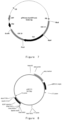
- the physical spectrum is shown in fiure 1.
- Myceliophthora thermophila ATCC42464 was cultured in MM slant medium [20mL of 50 ⁇ Vogel's salt, 20 g of sucrose, 15 g of agar, and 20 mL of histidine (50mg/mL) were adjusted to 1L and sterilized under high pressure.
- Mature spores of Myceliophthora thermophila was collected with sterilized water containing 0.05% Tween-80. The hyphae was filtered and obtained with the lense paper and then placed on MM plates with cellophane and cultured at 45 for 14h.
- the cellophane with mycelium was placed in 30 mL of lysate (formulation: 0.15 g of lyase, and 30 mL of solution A was added aseptically, the product was filtered for sterilization; solution A: 1.0361 g of potassium dihydrogen phosphate and 21.864 g of sorbitol were dissolved in 90 mL of deionized water. Potassium hydroxide was used to adjust the pH to 5.6, and the product was quantified to 100mL and sterilized at high temperature) and lysed at 28 °C for 2h and gently shaked every 20 min.
- solution B (0.735 g of calcium chloride, 18.22 g of sorbitol and 1mL of Tris-HCl 1M pH 7.5 was dissolved in 90mL of deionized water. Hydrochloric acid was used to adjusted the pH to 7.6, and the product was quantified to 100mL and sterilized at high temperature). The mixture was centrifuged at 4 °C under 2000 rpm for 10 min. The supernatant was discarded. A certain volume of solution B was added as 200 L/plasmid.
- the content of malic acid and succinic acid in the treated sample were determined by HPLC, wherein the detector was UV detector, the mobile phase was 5mM H 2 SO 4 , and the flow rate was 0.5 mL /min.
- the results showed that mae overexpression in Myceliophthora thermophila can significantly promote the malic acid production, in which the strains with a highest yield were named as JG141.
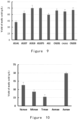
- the malic acid production was 42 g/L ( Figure 9 )
- the succinic acid production was 3.86 g/L for the corresponding carbon source.
- the experiments showed that after the genetic modification, the fermentation of malic acid could be carried out in Myceliophthora thermophila by using the carbon source including crystalline cellulose.
- Example 2 Overexpression of C4-dicarboxylic acid transporter encoding the genes of Myceliophthora thermophila from different origins can obtain recombinant microorganisms with significant increased capacity for producing malic acid.
- C4-dicarboxylic acid transporter from Aspergillus oryzae NRRL3488 (AO090023000318, mae, SEQ ID NO.: 12), C4-dicarboxylic acid transporter from Neurospora crassa (XP_958365, NCmae, SEQ ID NO.: 14), C4-dicarboxylic acid transporter from Trichoderma reesei (XP_006963989, Trmae, SEQ ID NO.: 16), C4-dicarboxylic acid transporter from Myceliophthora thermophila (XP_003663832, Mtmae, SEQ ID NO.: 18 ), C4-dicarboxylic acid transporter from Aspergillus niger NRRL599 (XM_001398094, Anmae, SEQ ID NO.: 20), C4-dicarboxylic acid transporter from Aspergillus sojae NBRC4239 (Asm
- a 1.0 kb upstream promoter of the translation elongation encoding frame tef (MYCTH_2298136) was amplified by PCR from the original strain of Myceliophthora thermophila ATCC 42464 as a template.
- the reaction system and conditions were shown in Step 1 of Example 1.
- the primers used for PCR amplification were:
- the recombinant plasmid was digested with BgIII and Spel and ligated into the linearized vector pAN52-TB-Intron, which was digested by the same enzyme.
- the ligation product was digested with restriction endonuclease and identified to obtain the recombinant vector, named as pAN52-TB-Ptef.
- the physical map was shown in Figure 2 .
- C4-dicarboxylic acid transporter Ncmae (SEQ ID NO.: 13) was obtained by PCR amplification using Neurospora crassa (purchased from FGSC) as a template, and the primers used for PCR amplification were as follows:
- C4-dicarboxylic acid transporter Mtmae (SEQ ID NO.: 17) was obtained by PCR amplification using Myceliophthora thermophila ATCC42464 (purchased from ATCC) as a template, and the primers used for PCR amplification were as follows:
- the PCR product of C4-dicarboxylic acid transporter gene fragments obtained through PCR amplification and analysis and the plasmid pAN52EF-Intron were digested by restriction endonuclease Spel and EcoRI. Then, they were ligated by T4 DNA ligase to obtain the expression plasmids, named as pAN52-Ptef-Ncmae, pAN52-Ptef-Trmae, pAN52-Ptef-Mtmae, pAN52-Ptef-Anmae, and pAN52-Ptef-Asmae respectively.
- the constructed gene expression vectors (pAN52-Ptef-Ncmae, pAN52-Ptef-Trmae, pAN52-Ptef-Mtmae, pAN52-Ptef-Anmae, pAN52-Ptef-Asmae) were integrated into the original strains of Myceliophthora thermophila strains genome and use glufosinate at a final concentration of 100 ⁇ g/mL as an antibiotic for screening.
- the method of the example was shown in step 2 in example 1.
- the transformat was verified using primer tef-2F and the downstream primer corresponding to gene cloning.
- PCR system and methods were shown in step 1.3 in example 1.
- C4-dicarboxylic acid transporter from Neurospora crassa, Myceliophthora thermophila, trichoderma reesei and Aspergillus sojae can be used to construct Myceliophthora thermophila strains for malic acid fermentation in industry.
- C4-dicarboxylic acid transporters from Aspergillus niger and Aspergillus oryzae have a high identity (about 90%)
- the transformants did not show the capacity of producing malic acid suitable for industrial application. It can be seen that even in the Aspergillus strain with an ability for accumulating malic acid, the proteins with high identity failed to enable other strains have better malic acid- producing capacity.
- Example 3 The C4-two carboxylic acid transport protein coding gene mae and pyruvate carboxylase gene pyc are simultaneously expressed in the Myceliophthora thermophila so as to strengthen the ability to produce malic acid
- the promoters of of aspergillus nidulans gpdA was amplified by PCR using the plasmid pAN52-TB-Intron as the template in the guidance of primers.
- the PCR conditions and system were described in step 1 of Example 1.
- the primer was shown as follows:
- the cellobioses hydrolase encoding gene cbh (MYCTH_109566) terminator (SEQ ID NO.: 85) was amplified by PCR using the primers and the original strain Myceliophthora thermophila genome as a template.
- the primers were shown as follows:
- the gpdA promoter and cbh terminator were ligated together by fusion PCR using the method of gene overlap extension (SOE), which was invented by Horton et al. 1989 ( Horton RM, Hunt HD, Ho SN, Pullen JK, Pease LR. 1989. Engineering hybrid genes without the useof restriction enzymes: gene splicing-by-overlap extension. Gene 77: 61-68 ).
- SOE gene overlap extension
- An_gpdA promoter and cbh terminator were digested by Hindlll to provide adhesive ends and then ligated into pAN52-mae which was digested with the same enzyme to give the recombinant vector: pAN52-mae-PgpdA-Tcbh.
- Pyruvate carboxylase encoding gene pyc (XM_001820829.2, SEQ ID NO.: 25) was amplified by PCR using Aspergillus oryzae DSM1863 cDNA as a template in the guidance of primer PYC-F (SEQ ID NO.: 57) and PYC-R (SEQ ID NO.: 58), then digested by PmeI and ligated into pAN52-mae-PgpdA-Tcbh which was digested with the same enzyme. The recombinant plasmid was verified by PCR with primers PYC-F and PYC-R, and then sequenced.
- the coexpression vector pAN52-mae-pyc containing mae and pyc was linearized by BgIII and then integrated into the genome of the original strain Myceliophthora thermophila, and the method was described in step 2 of example 1.
- the transformants were obtained and veirfied using peimers mae-F (SEQ ID NO.: 43) and mae-R (SEQ ID NO.: 44) (to verify mae was intergrated into the genome), PYC-F and PYC-R (to verify pyc was integrated into the genome).
- PCR system and conditions was shown in step 1.3 of example 1.
- the verified transformants were all inoculated into 250 mL Erlenmeyer flask with 50 mL of medium containing glucose, D-xylose, cellobiose, xylan, crystalline cellulose, sucrose, soluble starch, corncobs xylose slag and corncobs delignification as carbon sourse (the formulation was shown in step 3 of example 1) and cultured in an inoculated amount of 2.5 ⁇ 10 5 cells/mL at 45 °C in 150 rpm and sampled on the eighth day. After the sample was treated by the method as described in step 3.2 of example 1, the malic acid content in the fermentation broth was determined.
- Example 4 Overexpressing malate dehydrogenase encoding gene mdh in Myceliophthora thermophila transformant further enhanced its ability to produce malic acid.
- the promoter PtrpC (SEQ ID NO.: 86) of the tryptophan synthase-encoding gene from Aspergillus nidulans was amplified under the guidance of primers using pAN52-TB-Intron as a template.
- the primers were shown as follows:
- neomycin phosphotransferase encoding gene neo (GI: 339515868) was amplified by PCR using primers and plasmid pEGFP-N2 as a template.
- the reaction system and conditions were shown in Step 1 of Example 1.
- the primers were shown as follows:
- PtrpC and neo were digested by Xbal and Hindlll to obtain sticky ends and then ligated into pAN52-TN-Intron which was digested by the same enzymes to obtain the recombinant vector with Neo as the screening marker, and the product was named as pAN52-TN.
- the sequence of the promoter MtPgpdA at 1.5K upstream of 3-phosphoglyceraldehyde dehydrogenase-encoding gene of the original strain Myceliophthora thermophila was optimized to remove the restriction site, and the artificially synthesized sequence was shown as SEQ ID NO.: 69.
- MtPgpdA was amplified, then digested by BgIII and BamHI, and then ligated into the linearized vector pAN52-TN which was digested by the same enzyme enzymes, so as to obtain the recombinant plasmid containing gpdA promoter: pAN52-TN-MtPgpdA.
- the primers were shown as follows:
- the malate dehydrogenase encoding gene mdh (MYCTH_2315052) in Myceliophthora thermophila was amplified by PCR in the guidance of primers and using the original strain of Myceliophthora thermophila cDNA as template.
- the primers were shown as follows:
- the plasmid was ligated into linearized plasmid pAN52-TN-MtPgpdA which was digested by the same enzymes so as to obtain recombinant vector expressing mdh, named as pAN52-mdh, and the physical map of the expressing vector was shown in figure 4 .
- the mdh overexpression vector pAN52-mdh was linearized by Bgl II and then intergrated into the Myceliophthora thermophila JG207 strains genome. The final concentration was 100 ⁇ g/mL. G418 was used as the screening antibiotics. The method was shown in step 2 of example 1. The transformant was verified and ontained using primers MtPgpdA-F and MtMDH-R. The PCR system and methods were described in step 1.3 of example 1.
- Example 5 Inhibiting the expression of succinyl-CoA synthase by RNA interference to improve the fermentation level of malic acid
- the first interference sequence SCL-S1 (SEQ ID NO., 74) of the succinyl-CoA synthase encoding gene scl in Myceliophthora thermophila was amplified by PCR in the guidance of primers, and the primers were shown as follows:
- the second interference sequence SCL-S2(SEQ ID NO.: 75) of the succinyl-CoA synthase encoding gene scl in Myceliophthora thermophila was amplified by PCR in the guidance of primers.
- Two interference sequences of scl were digested with Clal/Pmel and BamHI respectively and then ligated into the linearized plasmids pAN52-TB-Psilent-A and pAN52-TB-Psilent-B which were digested with the same enzymes so as to obtain a binary vector of transcription element containing SCL gene interference sequence hairpin structure and screening marker bar gene: pAN52-SCLsilent-A and pAN52-SCLsilent-B.
- the physical maps were shown in Figure 5 and Figure 6 .
- the binary vector pAN52-SCLsilent-A and pAN52-SCLsilent-B of transcription element containing the hairpin structure of the SCL gene interference sequence and screening marker bar gene were integrated into the genome of the Myceliophthora thermophila JG207 strain respectively.
- the final concentration was 100 ⁇ g/ML and glufosinate was used as screening antibiotic.
- the method was described in Example 1, Step 2.
- the transformant was obtained and verified using primers Intron-F(AGCTGTTTACTCATTATTAC,SEQ ID NO.: 76) and SCL2-R(SEQ ID NO.: 34).
- the PCR system and methods were described in step 1.3 of example 1.
- This example illustrates that the transcription of the RNA interference sequence hairpin structure regulated by the time-controlled promoter interferred the translation of the key enzymes encoding genes in the TCA cycle, thereby reducing the tricarboxylic acid cycle and significantly improving the malic acid producing ability in the microorganism.
- the inventors used the single gene mutant of Neurospora crassa as a host to screen out the new key genes for producing malic acid in microorganism: aspartate aminotransferase, glutamic acid-aspartate transporter, Malic acid-alpha ketoglutarate transporter. In the following experiment, the inventors further verified these newly discovered genes which were related to the synthesis of dicarboxylic acid.
- Example 6 Regulating aspartate aminotransferase in Myceliophthora thermophila during the malic acid-aspartate shuttle pathway can significantly improve the ability of microorganisms to synthesize malic acid
- the nucleic acid sequence CI7941 (MYCTH_2314321) (SEQ ID NO.: 3) encoding aspartate aminotransferase was ontained by PCR amplification using Myceliophthora thermophila genome as a template with primer pairs designed according to aspartate aminotransferase searched in the published genome database information ( http://qenome.iqi.doe.qov/Spoth2/Spoth2.home.html ).
- the aspartate aminotransferase overexpression vector pAN52gpdA-CI7941 was intergrated into Myceliophthora thermophila AS2 strain (which was intergrated with Myceliophthora thermophila transformant of Asmae overexpression vector derived from Aspergillus sojae, see example 2) genome, with a final concentration of 100 ⁇ g/mL and using G418 as the screening antibiotic. The method was shown in step 2 of Example 1.
- Example 7 Regulating glutamic acid-aspartate transporter Myceliophthora thermophila during the malic acid-aspartate shuttle pathway can significantly improve the ability of microorganisms to synthesize malic acid
- the nucleic acid sequence CI1241(MYCTH_2300593)(SEQ ID NO.: 5) encoding aspartate aminotransferase was ontained by PCR amplification using Myceliophthora thermophila genome as a template with primer pairs designed according to glutamic acid-aspartate transporter searched in the published genome database information (http://genome.jgi.doe.gov/Spoth2/Spoth2.home.html), and the primer pairs were:
- nucleic acid sequence was digested with Spel and EcoRI, it was ligated into linearized vector pAN52-TN-MtPgpdA which was digested with the same enzymes to obtain the recombinant plasmid named as pAN52gpdA-CI1241.
- the glutamic acid-aspartate transporter overexpression vector pAN52gpdA-CI1241 was intergrated into Myceliophthora thermophila AS2 strain (which was intergrated with Myceliophthora thermophila transformant of Asmae overexpression vector from Aspergillus sojae, see example 2) genome, with a final concentration of 100 ⁇ g/mL and using G418 as the screening antibiotic. The method was shown in step 2 of Example 1.
- the malic acid content in the fermentation broth was determined.
- the results showed that overexpression of Aspergillus sojae Asme and Myceliophthora thermophila glutamic acid-aspartate transporter(CI1241) simultaneously can significantly promote the malic acid production in Myceliophthora thermophila.
- One of the strains was named as CN202, and on the eighth day the yield of malic acid was 66.9 g/L ( Figure 9 ), which was increased by 10% compared to the control strain AS2.
- Example 8 Gene deletion of Malic acid-alpha ketoglutarate transporter gene could improve the ability of Myceliophthora thermophila strain CN2 to produce malic acid
- the upstream and downstream homologous arm nucleic acid sequences of the gene encoding malic acid-alpha ketoglutarate transporter UL and DL were obntained by PCR amplification using Myceliophthora thermophila genome as template with the primer pairs designed according to the sequence of malic acid-alpha ketoglutarate transporter gene (MYCTH_2081554, SEQ ID NO.: 91) and its upstream and downstream homologous arm nucleic acid searched in the published genome database information (http://genome.jgi.doe.gov/ Spoth2/Spoth2.home.html), and the primer pairs were:
- UL and DL were sequenced by Beijing Liuhe Huada Gene Technology Co., Ltd. and analyzed by NCBI Blast.
- Sur gene fragment (GI:2547090) was amplified using plasmid pPK2surGFP as a template with the following primer pairs:
- PCR products and plasmid pPK2barGFP were digested with restriction endonuclease Xbal and EcoRI and then ligated by T4 DNA ligase to obtain plasmid pPK2sur-barGFP.
- the above upstream and downstream homologous arm fragments of malic acid-alpha ketoglutarate transporter gene were obtained through PCR amplification and sequencing analysis.
- the PCR product of the upstream homologous arm was dgested with restriction endonuclease Xbal and Hpal and the PCR product of the downstream homologous arm was dgested with PacI and EcoRI.
- the plasmid pPK2sur-barGFP was digested with the same enzymes and then ligated with the upstream and downstream homologous arms usig T4 DNA ligase to obtain the knock-out vector: pPK2sur-barGFP:: odc ( Figure 7 ).
- the transformant was verified by PCR with the primer CI4837-F2 located outside the upstream homologous arm at the 5' end of gene of malic acid-alpha ketoglutarate transporter in Myceliophthora thermophila and Sur-R2 within Sur gene, the primers were as follows:
- PCR results showed that CI4837-F2 and Sur-R were able to amplify fragments of 3KB size, which indicated that the Sur gene had been replaced malic acid-alpha ketoglutarate transportermalate encoding gene CI4837.
- the transformant genome was amplified using ORF amplified primers CI4837-F and CI4837-R of malic acid-alpha ketoglutarate transporter encoding gene doc, and the sequences of the primers were as follows:
- the formulation of the fermentation medium of malic acid was as follows: microcrystalline cellulose 7.5%, peptone 6.0 g/L, 0.15 g/L KH 2 PO 4 , 0.15 g/L K 2 HPO 4 , 0.10 g/L CaCl 2 ⁇ 2H 2 O, 0.10 g/L, MgSO 4 ⁇ 7H 2 O, 80.0 g/L calcium carbonate, 1 ml/L trace elements solution (5 g NaCl, 5 g FeSO4 ⁇ 7H 2 O, 1 g citric acid/L water).
- the glucose transporter encoding gene glt-1 (NCU01633, SEQ ID NO: 95) was amplified by PCR using cDNA under glucose condition from Neurospora crassa FGSC # 2489 (purchased from Fungal Genetics Stock Center) as a template and primers.
- the primers were shown as follows:
- the gene was digested with Spel and EcoRI and then ligated into the linearized plasmid pAN52-TB-MtPgpdA which was digested with the same enzymes, so as to obtain glt-1 expression vector, named as pAN52-glt.
- the glt-1 overexpression vector pAN52-glt was linearized by Bgl II and then intergrated into the Myceliophthora thermophila JG207 strains genome. The final concentration was 100 ⁇ g/mL. G418 was used as screening antibiotic. The method was shown in step 2 of example 1. The transformant was verified and obtained using primers MtPgpdA-F and GLT-R. The PCR system and methods were described in step 1.3 of example 1.
- the yeild of malic acid was 42g/L for glucose and 51g/L for cellulose.
- the yeild was increased by 45% and 75%, respectively.
- NCU07517 The sequence of nucleic acid encoding C4-dicarboxylic acid transporter gene Ncmae (NCU07517) (SEQ ID NO.: 13) was obtained by PCR amplification using Neurospora crassa genome as a template.
- the primers used for PCR amplification were NCU7517-F:GCTCTAGAATGGGCAGCCAGCCTCCCATGC (SEQ ID NO.: 79) and NCU7517-R:CCTTAATTAACTAATGATCCTCCACATCCTCA (SEQ ID NO.: 80).
- the sequence of nucleic acid encoding C4-dicarboxylic acid transporter gene mae (NCU07517) (SEQ ID NO.: 11) was obtained by PCR amplification using Aspergillus oryzae DSM1863 genome as a template.
- the primers used for PCR amplification were
- the PCR product of C4-dicarboxylic acid transporter gene fragments obtained through PCR amplification and analysis and the plasmid pMF272 were digested by restriction endonuclease Xbal and PacI (the physical spectrum was shown in figure 8 ). Then they were ligated by T4 DNA ligase to obtain the expression plasmid, named as pMF272-Nrmae and pMF272-mae respectively.
- Encoding reading frame mae (SEQ ID NO.: 11) of C4-dicarboxylic acid transporter gene was amplified by PCR from cDNA of Aspergillus DSM1863, and the primers were as follows:
- the PCR product was digested with restriction endonuclease Spel and Hpa I and ligated into the Spel and Hpa I digestion sites of plasmid pCY01 (containing hygromycin resistance gene, and on both sides of the polyclonal digestion site are promoters of elongation factor of Myceliophthora thermophila and terminators of Aspergillus trpC) to obtain plasmid pNEO-Amae.
- Plasmid pNEO-Amae was transformed into Trichoderma reesei QM6a by protoplast method, and the obtained transformants were QM6a-Amae.
- Example 12 Overexpression of mae and pyc in thermophilic fungi Myceliophthora heterothallica enables the strain have the ability to produce malic acid
- the vector pAN52-mar-pyc expressing mae and pyc (the construction of which was described in Step 1 of Example 1) was screened to obtain severeal positive transformants in the protoplast transformed strain M. heterothallica CBS202.75 with hygromycin gene hph as the selective marker.
- the positive transformants were subjected to malic acid fermentation with 7.5% microcrystalline cellulose Avicel as the substrate and the medium composition was found in Example 1, Step 3.
- M . heterothallica CBS202.75 as a reference, the yeild of malic acid on the eighth day of the fermentation had been increased up to 47.4 g/L.
- Example 13 Establishment of fermentation process to produce malic acid in recombinant Myceliophthora thermophila
- the composition of MM solid medium was 20 g sucrose, 20 mL 50 ⁇ Vogel's salt, and 15g agar.
- the composition of 50 ⁇ Vogel's salt (g/L) was: 125 g Na 3 citrate. 2H 2 O, 250 g KH 2 PO 4 , 100 g NH 4 NO 3 , 10 g MgSO 4 .7H 2 O, 0.1 g CaCl 2 . 2H 2 O, 5 mL trace element solution, 2.5 mL Biotin, and 755 mL water.
- composition of seed medium was 10 g glucose, 0.15 g K 2 HPO 4 , 0.15 g KH 2 PO 4 , 0.1 g MgSO 4 .7H 2 O, 0.1 g CaC12, 6 g Bacto, peptone, 1 mL trace element solution.
- composition of trace element solutions was: 5 g, Citric acid.1 ⁇ H 2 O, 5 g ZnSO 4 .7H 2 O, 1 g Fe(NH 4 ) 2 (SO 4 ) 2 .6H 2 O, 0.25 g CuSO 4 .5H 2 O, 0.05 g MnSO 4 .1 ⁇ H 2 O, 0.05 g, H 3 BO 3 , and 0.05 g Na 2 MoO 4 .2H 2 O.
- the composition of fermentation medium was: 75 g carbon source, 80 g CaCO 3 , 0.15 g K 2 HPO 4 , 0.15 g KH 2 PO 4 , 0.1 g MgSO 4 .7H 2 O, 0.1 g CaCl 2 , 6 g Bacto peptone, 0.5 mL Biotin, and 1 mL trace element solution.
- the composition of feeding medium (per liter) was 0.45 g K 2 HPO 4 , 0.45 g KH 2 PO 4 , 0.3 g MgSO 4 .7H 2 O, 0.3 g CaCl 2 , 18 g Bacto peptone, 1.5 mL Biotin, and 3 mL trace element solutions.
- Fermentation process fermentation temperature 45 °C, air flow rate 4 L/min, and the dissolved oxygen was control at 30%. In order to control the dissolved oxygen at 30%, the speed needed to be coupled with the dissolved oxygen, and kept at 200-800 rpm. During the fermentation process calcium carbonate was added to control pH at more than 6.
- the feeding medium was fed through simulated exponential feeding method with an average feeding rate of 8 mL/h.
- 60 g of carbon source was supplemented respectively.
- the fermentation cycle is 240 h-264 h and the yield of malic acid can be increased continuously.
- the method for producing malic acid by fermentation in recombinant Myceliophthora thermophila strains can be conducted with a variety of carbon sources as substrate and was consistent with the above methods.
- the yield of malic acid was 230 g/L with glucose as the carbon source.
- the yelid of malic acid was 168 g/L with Avicel as the carbon source.
- the yield of malic acid was 95 g/L with corn stalk as the carbon source.
- the separation and preparation of malic acid was generally divided into three steps: extraction of crude malic acid, refinement, and crystallization.
- the malic acid solution with high purity was reduced and concentrated at 70 °C. Then it was cooled down to 20 °C, and some crystal seeds were added and crystallization was conducted with slow stirring. After 3h, malic acid was crystallized.
- the malic acid crystals was dried under vacuum at a temperature controlled between 40 ⁇ 50 °C.
- Example 15 The transformation of wild strains with organic acid accumulation ability and the detection of their capacity for producing organic acid.
- vectors overexpressing malate dehydrogenase, aspartate aminotransferase and glutamic acid-aspartate transporter were constructed respectively and were used to transfer Aspergillus (including Aspergillus niger, Aspergillus sojae, Aspergillus oryzae ) possessing capacity for accumulating organic acid to obtian multiple transformants and glucose was used as the reaction substrate.
- Aspergillus including Aspergillus niger, Aspergillus sojae, Aspergillus oryzae
- glucose was used as the reaction substrate.
- the method was shown as the method for the combination of construction of each transformant described in the above examples. Their products and yields were identified.
- Table 3 Name of the engineered strain Characteristics of the engineered strain original strain PM101 overexpression of malate dehydrogenase Aspergillus oryzae PM 102 Overexpression of malate dehydrogenase+aspartate aminotransferase Aspergillus oryzae PJ103 overexpression of malate dehydrogenase aspergillus sojae TJ104 Overexpression of aspartate aminotransferase aspergillus sojae GJ105 Overexpression of glutamic acid-aspartate transporter aspergillus sojae GM106 Overexpression of glutamic acid-aspartate transporter Aspergillus oryzae
- the gene modification could significantly improve the acid-producing capacity of the strain which had an acummulation effect for dibasic acid in its original strain.
- the traditional dominant strains are Aspergillus strains (preferably Aspergillus niger-citric acid, itaconic acid-Aspergillus terreus, malic acid -Aspergillus flavus, Aspergillus oryzae ) and Rhizopus strains (Rhizopus oryzae-lactic acid), while Trichoderma and Neurospora strains do not belong to the strains that commonly accumulating organic acid.
- Aspergillus strains preferably Aspergillus niger-citric acid, itaconic acid-Aspergillus terreus, malic acid -Aspergillus flavus, Aspergillus oryzae
- Rhizopus strains Rhizopus oryzae-lactic acid
- the inventors have found that not only the malic acid (and even organic acid) fermentation in Myceliophthora can be enhanced through regulating multiple new genes, but also the organic acid-producing capacity of strains including Aspergillus (preferably Aspergillus oryzae, Aspergillus sojae ) and so on (beside Myceliophthora with accumulation ability of the organic acid) can be improved by genetic modification.
- Aspergillus preferably Aspergillus oryzae, Aspergillus sojae
- so on be improved by genetic modification.
- the inventors have established and optimized the high temperature fermentation process of Myceliophthora thermophila, including the fermentation feeding process by using solid biomass such as glucose and other soluble sugar fermentation process and cellulose and the like as the carbon source.
Landscapes
- Chemical & Material Sciences (AREA)
- Life Sciences & Earth Sciences (AREA)
- Health & Medical Sciences (AREA)
- Organic Chemistry (AREA)
- Engineering & Computer Science (AREA)
- Genetics & Genomics (AREA)
- Wood Science & Technology (AREA)
- Zoology (AREA)
- Bioinformatics & Cheminformatics (AREA)
- General Engineering & Computer Science (AREA)
- General Health & Medical Sciences (AREA)
- Biochemistry (AREA)
- Biotechnology (AREA)
- Microbiology (AREA)
- Biomedical Technology (AREA)
- Molecular Biology (AREA)
- Medicinal Chemistry (AREA)
- Chemical Kinetics & Catalysis (AREA)
- General Chemical & Material Sciences (AREA)
- Biophysics (AREA)
- Mycology (AREA)
- Physics & Mathematics (AREA)
- Plant Pathology (AREA)
- Gastroenterology & Hepatology (AREA)
- Proteomics, Peptides & Aminoacids (AREA)
- Botany (AREA)
- Tropical Medicine & Parasitology (AREA)
- Virology (AREA)
- Preparation Of Compounds By Using Micro-Organisms (AREA)
- Micro-Organisms Or Cultivation Processes Thereof (AREA)
- Organic Low-Molecular-Weight Compounds And Preparation Thereof (AREA)
Claims (14)
- Gentechnisch modifizierter Stamm zum Synthetisieren einer zweibasigen organischen Säure, wobei der gentechnisch modifizierte Stamm es ermöglicht, die zweibasige organische Säure bei einer Fermentationstemperatur von 40-60°C unter Verwendung von Glycan und/oder Biomasse als Fermentationssubstrat zu erhalten,wobei es sich bei dem ursprünglichen Stamm um Myceliophthora handelt;und die zweibasige organische Säure Äpfelsäure, Bernsteinsäure oder Fumarsäure umfasst.
- Gentechnisch modifizierter Stamm gemäß Anspruch 1, wobei der gentechnisch modifizierte Stamm mit einem positiven Regulator-Gen zum Synthetisieren einer zweibasigen organischen Säure eingeführt ist oder eine hochregulierte Expression eines positiven Regulator-Gens zum Synthetisieren einer zweibasigen organischen Säure aufweist und/oder eine herunterregulierte Expression eines negativen Regulator-Gens zum Synthetisieren einer zweibasigen organischen Säure aufweist und im Vergleich zu dem ursprünglichen, unmodifizierten Stamm die Fähigkeit zur Produktion der zweibasigen organischen Säure signifikant verbessert ist,
wobei der Ausdruck "signifikant verbessert" bedeutet, dass der gentechnisch modifizierte Stamm im Vergleich zu dem ursprünglichen Stamm die Kapazität zur Produktion der zweibasigen organischen Säure um wenigstens 10%, vorzugsweise wenigstens 10-50%, besonders bevorzugt wenigstens 50-500%, erhöht oder verbessert hat. - Gentechnisch modifizierter Stamm gemäß einem der Ansprüche 1-2, wobei die Fermentationstemperatur 40-55°C, vorzugsweise 45-53°C, vorzugsweise 48-50°C, beträgt.
- Gentechnisch modifizierter Stamm gemäß Anspruch 1, wobei der Myceliophthora-Stamm des gentechnisch modifizierten Stamms Myceliophthora thermophila oder Myceliophthora heterothallica, vorzugsweise Myceliophthora thermophila, umfasst.
- Gentechnisch modifizierter Stamm gemäß Anspruch 2, wobei der Ausdruck "signifikant verbessert" bedeutet, dass der gentechnisch modifizierte Stamm im Vergleich zu dem ursprünglichen Stamm eine Fermentationsausbeute der zweibasigen organischen Säure von wenigstens mehr als 10 g/l, vorzugsweise wenigstens 10-50 g/l, besonders bevorzugt wenigstens 50-300 g/l, liefert, bezogen auf das Volumen der Fermentationsflüssigkeit; und/oder
der Ausdruck "signifikant verbessert" bedeutet, dass der gentechnisch modifizierte Stamm im Vergleich zu dem Wildtypstamm die Kapazität zur Produktion der zweibasigen organischen Säure um wenigstens 10%, vorzugsweise wenigstens 10-50%, besonders bevorzugt wenigstens 50-500%, erhöht oder verbessert hat. - Gentechnisch modifizierter Stamm gemäß Anspruch 1, wobei das positive Regulator-Gen ein Expressionsprodukt codiert, bei dem es sich um ein Polypeptid handelt, das aus der Gruppe ausgewählt ist, die aus Aspartat-Aminotransferase, Glutaminsäure-Aspartat-Transporter und Glucose-Transporter besteht; und/oder
das negative Regulator-Gen ein Expressionsprodukt codiert, bei dem es sich um ein Polypeptid handelt, das aus der Gruppe ausgewählt ist, die aus Succinyl-CoA-Synthase und Äpfelsäure-alpha-Ketoglutarat-Transporter besteht. - Gentechnisch modifizierter Stamm gemäß Anspruch 6, wobeidie Aspartat-Aminotransferase so ist, wie es in SEQ ID Nr. 4 gezeigt ist;der Glutaminsäure-Aspartat-Transporter so ist, wie es in SEQ ID Nr. 6 gezeigt ist;der Glucose-Transporter so ist, wie es in SEQ ID Nr. 96 gezeigt ist;die Succinyl-CoA-Synthase so ist, wie es in SEQ ID Nr. 2 gezeigt ist; und der Äpfelsäure-alpha-Ketoglutarat-Transporter so ist, wie es in SEQ ID Nr. 8 gezeigt ist.
- Gentechnisch modifizierter Stamm gemäß Anspruch 1, wobei das Glycan Cellulose, kristalline Cellulose, Hemicellulose, Stärke oder Kombinationen davon umfasst.
- Gentechnisch modifizierter Stamm gemäß Anspruch 1, wobei die Biomasse Getreidestroh, Waldabfall, Papierindustrieabfall, Baumwolltextilindustrieabfall, Energiepflanzen oder einen Teil oder alle ihre Zersetzungsprodukte umfasst; wobei das Getreidestroh Maisstroh, Weizenstroh, Reisstroh, Sorghumstroh, Sojastroh, Baumwollstroh, Bagasse oder Maiskolben umfasst; der Waldabfall Äste, Blätter oder Sägespäne umfasst; der Papierindustrieabfall Zellstoffschlacke, Zellstoffabfall umfasst; der Baumwolltextilindustrieabfall Baumwollabfälle und Baumwolltextilien umfasst; die Energiepflanzen Zuckerhirse, Rutenhirse, Miscanthus, Schilf oder Kombinationen davon umfassen.
- Gentechnisch modifizierter Stamm gemäß Anspruch 1, wobei das Fermentationssubstrat nur Glycan und/oder Biomasse umfasst.
- Gentechnisch modifizierter Stamm gemäß einem der Ansprüche 1-10, wobei es sich bei der zweibasigen organischen Säure um Äpfelsäure handelt.
- Verfahren zur Herstellung einer zweibasigen organischen Säure, das die folgenden Schritte umfasst:(i) Bereitstellen eines gentechnisch modifizierten Stamms gemäß Anspruch 1;(ii) Kultivieren des gentechnisch modifizierten Stamms von (i) in Gegenwart eines Substrats, wodurch man ein Fermentationsprodukt erhält, das die zweibasige organische Säure enthält, wobei die Fermentationstemperatur 40-60°C beträgt;wobei das Substrat Glycan und/oder Biomasse umfasst unddie zweibasige organische Säure Äpfelsäure, Bernsteinsäure oder Fumarsäure umfasst; und gegebenenfalls(iii) Isolieren und Reinigen des in (ii) erhaltenen Fermentationsprodukts, wodurch man weiterhin die zweibasige organische Säure erhält.
- Verfahren gemäß Anspruch 12, wobei die Kulturtemperatur des gentechnisch modifizierten Stamms 40-55°C, vorzugsweise 45-52°C, besonders bevorzugt 48-50°C, beträgt.
- Verfahren gemäß Anspruch 12, wobei es sich bei dem Substrat um Cellulose, Hemicellulose, Stärke oder Biomasse handelt.
Applications Claiming Priority (4)
| Application Number | Priority Date | Filing Date | Title |
|---|---|---|---|
| CN201510081668.8A CN104844698B (zh) | 2014-02-16 | 2015-02-15 | 一种促进微生物细胞转运葡萄糖、木糖和阿拉伯糖的方法及其在生物基产品发酵中的应用 |
| CN201510127264.8A CN106148208B (zh) | 2015-03-23 | 2015-03-23 | 新的二元有机酸生产菌株及其制备和应用 |
| CN201510129876.0A CN106148209B (zh) | 2015-03-23 | 2015-03-23 | 新的二元有机酸生产菌株及其制备和应用 |
| PCT/CN2016/073573 WO2016127920A1 (zh) | 2015-02-15 | 2016-02-04 | 新的二元有机酸生产菌株及其制备和应用 |
Publications (4)
| Publication Number | Publication Date |
|---|---|
| EP3257934A1 EP3257934A1 (de) | 2017-12-20 |
| EP3257934A4 EP3257934A4 (de) | 2019-10-16 |
| EP3257934B1 true EP3257934B1 (de) | 2024-10-23 |
| EP3257934C0 EP3257934C0 (de) | 2024-10-23 |
Family
ID=56615040
Family Applications (1)
| Application Number | Title | Priority Date | Filing Date |
|---|---|---|---|
| EP16748721.4A Active EP3257934B1 (de) | 2015-02-15 | 2016-02-04 | Dibasische organische säure produzierender stamm und herstellung und verwendung davon |
Country Status (3)
| Country | Link |
|---|---|
| US (2) | US10781462B2 (de) |
| EP (1) | EP3257934B1 (de) |
| WO (1) | WO2016127920A1 (de) |
Families Citing this family (7)
| Publication number | Priority date | Publication date | Assignee | Title |
|---|---|---|---|---|
| CN108753802B (zh) * | 2018-05-22 | 2021-07-16 | 昆明理工大学 | 一个苹果酸脱氢酶基因cimdh1及其重组表达载体 |
| CN110684673B (zh) * | 2019-11-05 | 2022-02-15 | 南京师范大学 | L-苹果酸高产菌株及其应用 |
| CN113308442B (zh) * | 2021-04-28 | 2023-06-27 | 天津大学 | 重组酿酒酵母菌株及其构建方法 |
| CN114806899B (zh) * | 2022-04-14 | 2024-04-02 | 王玮 | 一种生产l-苹果酸的里氏木霉工程菌及其应用 |
| CN114806902B (zh) * | 2022-05-12 | 2024-04-02 | 王玮 | 一种获取非转基因的里氏木霉定向基因工程改良株的方法和应用 |
| CN118995780B (zh) * | 2024-10-23 | 2025-02-25 | 中国农业科学院北京畜牧兽医研究所 | 一种提高嗜热毁丝霉的纤维素降解能力的方法及工程菌株 |
| CN119265051A (zh) * | 2024-12-11 | 2025-01-07 | 中国农业科学院北京畜牧兽医研究所 | 混合糖利用能力提高的嗜热毁丝霉基因工程菌株及其应用 |
Family Cites Families (7)
| Publication number | Priority date | Publication date | Assignee | Title |
|---|---|---|---|---|
| CA2598792A1 (en) | 2005-03-02 | 2006-09-08 | Metanomics Gmbh | Process for the production of fine chemicals |
| CA2772695A1 (en) * | 2009-09-01 | 2011-03-10 | Novozymes, Inc. | Methods for improving malic acid production in filamentous fungi |
| US8497103B2 (en) * | 2010-06-21 | 2013-07-30 | Novozymes, Inc. | Methods for C4-dicarboxylic acid production in filamentous fungi |
| CN103314101B (zh) * | 2010-11-03 | 2016-05-18 | 加利福尼亚大学董事会 | 通过蛋白质生物质发酵的重组微生物的生物燃料和化学生产 |
| CN103981203B (zh) * | 2013-02-07 | 2018-01-12 | 中国科学院天津工业生物技术研究所 | 5‑氨基乙酰丙酸高产菌株及其制备方法和应用 |
| CN108192853B (zh) * | 2014-02-16 | 2022-04-05 | 中国科学院天津工业生物技术研究所 | 一种促进微生物细胞转运葡萄糖、木糖和阿拉伯糖的方法及其在生物基产品发酵中的应用 |
| US10570424B2 (en) * | 2014-04-11 | 2020-02-25 | String Bio Private Limited | Recombinant methanotrophic bacterium and a method of production of succinic acid from methane or biogas thereof |
-
2016
- 2016-02-04 EP EP16748721.4A patent/EP3257934B1/de active Active
- 2016-02-04 US US15/551,165 patent/US10781462B2/en active Active
- 2016-02-04 WO PCT/CN2016/073573 patent/WO2016127920A1/zh not_active Ceased
-
2020
- 2020-07-20 US US16/933,327 patent/US11390890B2/en active Active
Also Published As
| Publication number | Publication date |
|---|---|
| US10781462B2 (en) | 2020-09-22 |
| BR112017017262A2 (pt) | 2018-04-17 |
| US20180171369A1 (en) | 2018-06-21 |
| EP3257934A4 (de) | 2019-10-16 |
| US11390890B2 (en) | 2022-07-19 |
| US20200347415A1 (en) | 2020-11-05 |
| WO2016127920A1 (zh) | 2016-08-18 |
| EP3257934C0 (de) | 2024-10-23 |
| EP3257934A1 (de) | 2017-12-20 |
Similar Documents
| Publication | Publication Date | Title |
|---|---|---|
| US11390890B2 (en) | Dibasic organic acid producing strain and preparation and application of same | |
| CN106148209B (zh) | 新的二元有机酸生产菌株及其制备和应用 | |
| CN102272316B (zh) | 蔗糖作为底物用于发酵产生1,2-丙二醇的用途 | |
| JP2016154548A (ja) | 同時糖化発酵反応の効率を改善するための方法 | |
| EP3132046B1 (de) | Verfahren zur herstellung von 1,4-butandiol | |
| US8354260B2 (en) | Phanerochaete chrysosporium cellobiohydrolases and compositions comprising the same | |
| CN106148208B (zh) | 新的二元有机酸生产菌株及其制备和应用 | |
| Song et al. | Utilization of bamboo as biorefinery feedstock: Co-production of xylo-oligosaccharide with succinic acid and lactic acid | |
| CN112852859B (zh) | 一种提高丝状真菌有机酸合成能力的方法 | |
| CN103710326B (zh) | 一种β-葡萄糖苷酶及其应用 | |
| CN107709559A (zh) | 新型木聚糖酶 | |
| CN104812767B (zh) | 从槐糖脂生产槐糖的方法 | |
| CN106148369B (zh) | 高温碱性果胶酸裂解酶Pel-863及其编码基因和应用 | |
| EP3400306A1 (de) | Verfahren zur fermentation von zuckern | |
| JP2014504877A (ja) | セロデキストリンおよびβ‐D‐グルコースの高度発酵 | |
| BR112017017262B1 (pt) | Cepa de produção de ácido orgânico dibásico, e método para preparar o mesmo | |
| US10036051B2 (en) | Enhanced processive cellulases | |
| CN105586322A (zh) | 一种用于木质纤维素解聚作用的组合物及其解聚方法 | |
| KR20170132190A (ko) | 향상된 효소 제조를 위한 조성물 | |
| JP2015128422A (ja) | 1,2−プロパンジオールの発酵製造のための基質としてのスクロースの使用 | |
| RU2605635C1 (ru) | СПОСОБ ПОЛУЧЕНИЯ ФЕРМЕНТНОГО ПРЕПАРАТА С ЭНДОИНУЛИНАЗНОЙ И САХАРАЗНОЙ АКТИВНОСТЬЮ ПУТЕМ КУЛЬТИВИРОВАНИЯ РЕКОМБИНАНТНОГО ШТАММА МИЦЕЛИАЛЬНОГО ГРИБА PENICILLIUM CANESCENS Sopp INUA3 | |
| Dikkala et al. | Lactic acid | |
| US20140363868A1 (en) | Transgenic plants and methods of using same | |
| CN118931934A (zh) | 一种提高丝状真菌有机酸合成的方法及应用 | |
| CN120818510A (zh) | 一种木聚糖酶、其编码基因和制备方法与应用 |
Legal Events
| Date | Code | Title | Description |
|---|---|---|---|
| STAA | Information on the status of an ep patent application or granted ep patent |
Free format text: STATUS: THE INTERNATIONAL PUBLICATION HAS BEEN MADE |
|
| PUAI | Public reference made under article 153(3) epc to a published international application that has entered the european phase |
Free format text: ORIGINAL CODE: 0009012 |
|
| STAA | Information on the status of an ep patent application or granted ep patent |
Free format text: STATUS: REQUEST FOR EXAMINATION WAS MADE |
|
| 17P | Request for examination filed |
Effective date: 20170915 |
|
| AK | Designated contracting states |
Kind code of ref document: A1 Designated state(s): AL AT BE BG CH CY CZ DE DK EE ES FI FR GB GR HR HU IE IS IT LI LT LU LV MC MK MT NL NO PL PT RO RS SE SI SK SM TR |
|
| AX | Request for extension of the european patent |
Extension state: BA ME |
|
| DAV | Request for validation of the european patent (deleted) | ||
| DAX | Request for extension of the european patent (deleted) | ||
| RIC1 | Information provided on ipc code assigned before grant |
Ipc: C12R 1/645 20060101ALI20180917BHEP Ipc: C12P 7/44 20060101AFI20180917BHEP Ipc: C12N 15/80 20060101ALI20180917BHEP Ipc: C12N 1/15 20060101ALI20180917BHEP Ipc: C12N 9/00 20060101ALI20180917BHEP Ipc: C07K 14/37 20060101ALI20180917BHEP Ipc: C12P 7/50 20060101ALI20180917BHEP Ipc: C12N 15/52 20060101ALI20180917BHEP Ipc: C12P 7/46 20060101ALI20180917BHEP Ipc: C12N 9/10 20060101ALI20180917BHEP Ipc: C12N 9/04 20060101ALI20180917BHEP |
|
| RIC1 | Information provided on ipc code assigned before grant |
Ipc: C12N 1/15 20060101ALI20190820BHEP Ipc: C12P 7/50 20060101ALI20190820BHEP Ipc: C12R 1/645 20060101ALI20190820BHEP Ipc: C12N 9/10 20060101ALI20190820BHEP Ipc: C12N 15/80 20060101ALI20190820BHEP Ipc: C12P 7/46 20060101ALI20190820BHEP Ipc: C12N 15/52 20060101ALI20190820BHEP Ipc: C12N 9/04 20060101ALI20190820BHEP Ipc: C12P 7/44 20060101AFI20190820BHEP Ipc: C12N 9/00 20060101ALI20190820BHEP Ipc: C07K 14/37 20060101ALI20190820BHEP |
|
| A4 | Supplementary search report drawn up and despatched |
Effective date: 20190913 |
|
| STAA | Information on the status of an ep patent application or granted ep patent |
Free format text: STATUS: EXAMINATION IS IN PROGRESS |
|
| 17Q | First examination report despatched |
Effective date: 20211108 |
|
| GRAP | Despatch of communication of intention to grant a patent |
Free format text: ORIGINAL CODE: EPIDOSNIGR1 |
|
| STAA | Information on the status of an ep patent application or granted ep patent |
Free format text: STATUS: GRANT OF PATENT IS INTENDED |
|
| INTG | Intention to grant announced |
Effective date: 20240514 |
|
| GRAS | Grant fee paid |
Free format text: ORIGINAL CODE: EPIDOSNIGR3 |
|
| GRAA | (expected) grant |
Free format text: ORIGINAL CODE: 0009210 |
|
| STAA | Information on the status of an ep patent application or granted ep patent |
Free format text: STATUS: THE PATENT HAS BEEN GRANTED |
|
| AK | Designated contracting states |
Kind code of ref document: B1 Designated state(s): AL AT BE BG CH CY CZ DE DK EE ES FI FR GB GR HR HU IE IS IT LI LT LU LV MC MK MT NL NO PL PT RO RS SE SI SK SM TR |
|
| REG | Reference to a national code |
Ref country code: GB Ref legal event code: FG4D |
|
| REG | Reference to a national code |
Ref country code: CH Ref legal event code: EP |
|
| REG | Reference to a national code |
Ref country code: DE Ref legal event code: R096 Ref document number: 602016089945 Country of ref document: DE |
|
| REG | Reference to a national code |
Ref country code: IE Ref legal event code: FG4D |
|
| U01 | Request for unitary effect filed |
Effective date: 20241120 |
|
| U07 | Unitary effect registered |
Designated state(s): AT BE BG DE DK EE FI FR IT LT LU LV MT NL PT RO SE SI Effective date: 20241127 |
|
| U20 | Renewal fee for the european patent with unitary effect paid |
Year of fee payment: 10 Effective date: 20250221 |
|
| PG25 | Lapsed in a contracting state [announced via postgrant information from national office to epo] |
Ref country code: IS Free format text: LAPSE BECAUSE OF FAILURE TO SUBMIT A TRANSLATION OF THE DESCRIPTION OR TO PAY THE FEE WITHIN THE PRESCRIBED TIME-LIMIT Effective date: 20250223 Ref country code: HR Free format text: LAPSE BECAUSE OF FAILURE TO SUBMIT A TRANSLATION OF THE DESCRIPTION OR TO PAY THE FEE WITHIN THE PRESCRIBED TIME-LIMIT Effective date: 20241023 |
|
| PG25 | Lapsed in a contracting state [announced via postgrant information from national office to epo] |
Ref country code: ES Free format text: LAPSE BECAUSE OF FAILURE TO SUBMIT A TRANSLATION OF THE DESCRIPTION OR TO PAY THE FEE WITHIN THE PRESCRIBED TIME-LIMIT Effective date: 20241023 |
|
| PG25 | Lapsed in a contracting state [announced via postgrant information from national office to epo] |
Ref country code: NO Free format text: LAPSE BECAUSE OF FAILURE TO SUBMIT A TRANSLATION OF THE DESCRIPTION OR TO PAY THE FEE WITHIN THE PRESCRIBED TIME-LIMIT Effective date: 20250123 |
|
| PG25 | Lapsed in a contracting state [announced via postgrant information from national office to epo] |
Ref country code: GR Free format text: LAPSE BECAUSE OF FAILURE TO SUBMIT A TRANSLATION OF THE DESCRIPTION OR TO PAY THE FEE WITHIN THE PRESCRIBED TIME-LIMIT Effective date: 20250124 |
|
| PG25 | Lapsed in a contracting state [announced via postgrant information from national office to epo] |
Ref country code: PL Free format text: LAPSE BECAUSE OF FAILURE TO SUBMIT A TRANSLATION OF THE DESCRIPTION OR TO PAY THE FEE WITHIN THE PRESCRIBED TIME-LIMIT Effective date: 20241023 |
|
| PG25 | Lapsed in a contracting state [announced via postgrant information from national office to epo] |
Ref country code: RS Free format text: LAPSE BECAUSE OF FAILURE TO SUBMIT A TRANSLATION OF THE DESCRIPTION OR TO PAY THE FEE WITHIN THE PRESCRIBED TIME-LIMIT Effective date: 20250123 |
|
| PG25 | Lapsed in a contracting state [announced via postgrant information from national office to epo] |
Ref country code: SM Free format text: LAPSE BECAUSE OF FAILURE TO SUBMIT A TRANSLATION OF THE DESCRIPTION OR TO PAY THE FEE WITHIN THE PRESCRIBED TIME-LIMIT Effective date: 20241023 |
|
| PG25 | Lapsed in a contracting state [announced via postgrant information from national office to epo] |
Ref country code: SK Free format text: LAPSE BECAUSE OF FAILURE TO SUBMIT A TRANSLATION OF THE DESCRIPTION OR TO PAY THE FEE WITHIN THE PRESCRIBED TIME-LIMIT Effective date: 20241023 |
|
| PG25 | Lapsed in a contracting state [announced via postgrant information from national office to epo] |
Ref country code: CZ Free format text: LAPSE BECAUSE OF FAILURE TO SUBMIT A TRANSLATION OF THE DESCRIPTION OR TO PAY THE FEE WITHIN THE PRESCRIBED TIME-LIMIT Effective date: 20241023 |
|
| PLBE | No opposition filed within time limit |
Free format text: ORIGINAL CODE: 0009261 |
|
| STAA | Information on the status of an ep patent application or granted ep patent |
Free format text: STATUS: NO OPPOSITION FILED WITHIN TIME LIMIT |
|
| PG25 | Lapsed in a contracting state [announced via postgrant information from national office to epo] |
Ref country code: MC Free format text: LAPSE BECAUSE OF FAILURE TO SUBMIT A TRANSLATION OF THE DESCRIPTION OR TO PAY THE FEE WITHIN THE PRESCRIBED TIME-LIMIT Effective date: 20241023 |
|
| REG | Reference to a national code |
Ref country code: CH Ref legal event code: PL |
|
| 26N | No opposition filed |
Effective date: 20250724 |
|
| PG25 | Lapsed in a contracting state [announced via postgrant information from national office to epo] |
Ref country code: CH Free format text: LAPSE BECAUSE OF NON-PAYMENT OF DUE FEES Effective date: 20250228 |
|
| PG25 | Lapsed in a contracting state [announced via postgrant information from national office to epo] |
Ref country code: IE Free format text: LAPSE BECAUSE OF NON-PAYMENT OF DUE FEES Effective date: 20250204 |
|
| U20 | Renewal fee for the european patent with unitary effect paid |
Year of fee payment: 11 Effective date: 20260225 |
|
| PGFP | Annual fee paid to national office [announced via postgrant information from national office to epo] |
Ref country code: GB Payment date: 20260219 Year of fee payment: 11 |