EP3250608B1 - Single domain antibodies targeting cd1d - Google Patents
Single domain antibodies targeting cd1d Download PDFInfo
- Publication number
- EP3250608B1 EP3250608B1 EP16715360.0A EP16715360A EP3250608B1 EP 3250608 B1 EP3250608 B1 EP 3250608B1 EP 16715360 A EP16715360 A EP 16715360A EP 3250608 B1 EP3250608 B1 EP 3250608B1
- Authority
- EP
- European Patent Office
- Prior art keywords
- compound
- cd1d
- cells
- seq
- domain antibody
- Prior art date
- Legal status (The legal status is an assumption and is not a legal conclusion. Google has not performed a legal analysis and makes no representation as to the accuracy of the status listed.)
- Revoked
Links
Images


Classifications
-
- C—CHEMISTRY; METALLURGY
- C07—ORGANIC CHEMISTRY
- C07K—PEPTIDES
- C07K16/00—Immunoglobulins [IGs], e.g. monoclonal or polyclonal antibodies
- C07K16/18—Immunoglobulins [IGs], e.g. monoclonal or polyclonal antibodies against material from animals or humans
- C07K16/28—Immunoglobulins [IGs], e.g. monoclonal or polyclonal antibodies against material from animals or humans against receptors, cell surface antigens or cell surface determinants
- C07K16/2803—Immunoglobulins [IGs], e.g. monoclonal or polyclonal antibodies against material from animals or humans against receptors, cell surface antigens or cell surface determinants against the immunoglobulin superfamily
- C07K16/2809—Immunoglobulins [IGs], e.g. monoclonal or polyclonal antibodies against material from animals or humans against receptors, cell surface antigens or cell surface determinants against the immunoglobulin superfamily against the T-cell receptor (TcR)-CD3 complex
-
- A—HUMAN NECESSITIES
- A61—MEDICAL OR VETERINARY SCIENCE; HYGIENE
- A61P—SPECIFIC THERAPEUTIC ACTIVITY OF CHEMICAL COMPOUNDS OR MEDICINAL PREPARATIONS
- A61P1/00—Drugs for disorders of the alimentary tract or the digestive system
- A61P1/04—Drugs for disorders of the alimentary tract or the digestive system for ulcers, gastritis or reflux esophagitis, e.g. antacids, inhibitors of acid secretion, mucosal protectants
-
- A—HUMAN NECESSITIES
- A61—MEDICAL OR VETERINARY SCIENCE; HYGIENE
- A61P—SPECIFIC THERAPEUTIC ACTIVITY OF CHEMICAL COMPOUNDS OR MEDICINAL PREPARATIONS
- A61P1/00—Drugs for disorders of the alimentary tract or the digestive system
- A61P1/16—Drugs for disorders of the alimentary tract or the digestive system for liver or gallbladder disorders, e.g. hepatoprotective agents, cholagogues, litholytics
-
- A—HUMAN NECESSITIES
- A61—MEDICAL OR VETERINARY SCIENCE; HYGIENE
- A61P—SPECIFIC THERAPEUTIC ACTIVITY OF CHEMICAL COMPOUNDS OR MEDICINAL PREPARATIONS
- A61P11/00—Drugs for disorders of the respiratory system
- A61P11/06—Antiasthmatics
-
- A—HUMAN NECESSITIES
- A61—MEDICAL OR VETERINARY SCIENCE; HYGIENE
- A61P—SPECIFIC THERAPEUTIC ACTIVITY OF CHEMICAL COMPOUNDS OR MEDICINAL PREPARATIONS
- A61P17/00—Drugs for dermatological disorders
- A61P17/06—Antipsoriatics
-
- A—HUMAN NECESSITIES
- A61—MEDICAL OR VETERINARY SCIENCE; HYGIENE
- A61P—SPECIFIC THERAPEUTIC ACTIVITY OF CHEMICAL COMPOUNDS OR MEDICINAL PREPARATIONS
- A61P21/00—Drugs for disorders of the muscular or neuromuscular system
- A61P21/04—Drugs for disorders of the muscular or neuromuscular system for myasthenia gravis
-
- A—HUMAN NECESSITIES
- A61—MEDICAL OR VETERINARY SCIENCE; HYGIENE
- A61P—SPECIFIC THERAPEUTIC ACTIVITY OF CHEMICAL COMPOUNDS OR MEDICINAL PREPARATIONS
- A61P29/00—Non-central analgesic, antipyretic or antiinflammatory agents, e.g. antirheumatic agents; Non-steroidal antiinflammatory drugs [NSAID]
-
- A—HUMAN NECESSITIES
- A61—MEDICAL OR VETERINARY SCIENCE; HYGIENE
- A61P—SPECIFIC THERAPEUTIC ACTIVITY OF CHEMICAL COMPOUNDS OR MEDICINAL PREPARATIONS
- A61P31/00—Antiinfectives, i.e. antibiotics, antiseptics, chemotherapeutics
- A61P31/12—Antivirals
- A61P31/14—Antivirals for RNA viruses
- A61P31/18—Antivirals for RNA viruses for HIV
-
- A—HUMAN NECESSITIES
- A61—MEDICAL OR VETERINARY SCIENCE; HYGIENE
- A61P—SPECIFIC THERAPEUTIC ACTIVITY OF CHEMICAL COMPOUNDS OR MEDICINAL PREPARATIONS
- A61P33/00—Antiparasitic agents
- A61P33/02—Antiprotozoals, e.g. for leishmaniasis, trichomoniasis, toxoplasmosis
- A61P33/06—Antimalarials
-
- A—HUMAN NECESSITIES
- A61—MEDICAL OR VETERINARY SCIENCE; HYGIENE
- A61P—SPECIFIC THERAPEUTIC ACTIVITY OF CHEMICAL COMPOUNDS OR MEDICINAL PREPARATIONS
- A61P35/00—Antineoplastic agents
-
- A—HUMAN NECESSITIES
- A61—MEDICAL OR VETERINARY SCIENCE; HYGIENE
- A61P—SPECIFIC THERAPEUTIC ACTIVITY OF CHEMICAL COMPOUNDS OR MEDICINAL PREPARATIONS
- A61P37/00—Drugs for immunological or allergic disorders
-
- A—HUMAN NECESSITIES
- A61—MEDICAL OR VETERINARY SCIENCE; HYGIENE
- A61P—SPECIFIC THERAPEUTIC ACTIVITY OF CHEMICAL COMPOUNDS OR MEDICINAL PREPARATIONS
- A61P37/00—Drugs for immunological or allergic disorders
- A61P37/02—Immunomodulators
- A61P37/04—Immunostimulants
-
- A—HUMAN NECESSITIES
- A61—MEDICAL OR VETERINARY SCIENCE; HYGIENE
- A61P—SPECIFIC THERAPEUTIC ACTIVITY OF CHEMICAL COMPOUNDS OR MEDICINAL PREPARATIONS
- A61P9/00—Drugs for disorders of the cardiovascular system
- A61P9/10—Drugs for disorders of the cardiovascular system for treating ischaemic or atherosclerotic diseases, e.g. antianginal drugs, coronary vasodilators, drugs for myocardial infarction, retinopathy, cerebrovascula insufficiency, renal arteriosclerosis
-
- C—CHEMISTRY; METALLURGY
- C07—ORGANIC CHEMISTRY
- C07K—PEPTIDES
- C07K16/00—Immunoglobulins [IGs], e.g. monoclonal or polyclonal antibodies
- C07K16/18—Immunoglobulins [IGs], e.g. monoclonal or polyclonal antibodies against material from animals or humans
- C07K16/28—Immunoglobulins [IGs], e.g. monoclonal or polyclonal antibodies against material from animals or humans against receptors, cell surface antigens or cell surface determinants
- C07K16/2803—Immunoglobulins [IGs], e.g. monoclonal or polyclonal antibodies against material from animals or humans against receptors, cell surface antigens or cell surface determinants against the immunoglobulin superfamily
- C07K16/2833—Immunoglobulins [IGs], e.g. monoclonal or polyclonal antibodies against material from animals or humans against receptors, cell surface antigens or cell surface determinants against the immunoglobulin superfamily against MHC-molecules, e.g. HLA-molecules
-
- C—CHEMISTRY; METALLURGY
- C07—ORGANIC CHEMISTRY
- C07K—PEPTIDES
- C07K16/00—Immunoglobulins [IGs], e.g. monoclonal or polyclonal antibodies
- C07K16/18—Immunoglobulins [IGs], e.g. monoclonal or polyclonal antibodies against material from animals or humans
- C07K16/28—Immunoglobulins [IGs], e.g. monoclonal or polyclonal antibodies against material from animals or humans against receptors, cell surface antigens or cell surface determinants
- C07K16/30—Immunoglobulins [IGs], e.g. monoclonal or polyclonal antibodies against material from animals or humans against receptors, cell surface antigens or cell surface determinants from tumour cells
-
- C—CHEMISTRY; METALLURGY
- C07—ORGANIC CHEMISTRY
- C07K—PEPTIDES
- C07K16/00—Immunoglobulins [IGs], e.g. monoclonal or polyclonal antibodies
- C07K16/46—Hybrid immunoglobulins
-
- A—HUMAN NECESSITIES
- A61—MEDICAL OR VETERINARY SCIENCE; HYGIENE
- A61K—PREPARATIONS FOR MEDICAL, DENTAL OR TOILETRY PURPOSES
- A61K39/00—Medicinal preparations containing antigens or antibodies
- A61K2039/505—Medicinal preparations containing antigens or antibodies comprising antibodies
-
- C—CHEMISTRY; METALLURGY
- C07—ORGANIC CHEMISTRY
- C07K—PEPTIDES
- C07K2317/00—Immunoglobulins specific features
- C07K2317/30—Immunoglobulins specific features characterized by aspects of specificity or valency
- C07K2317/31—Immunoglobulins specific features characterized by aspects of specificity or valency multispecific
-
- C—CHEMISTRY; METALLURGY
- C07—ORGANIC CHEMISTRY
- C07K—PEPTIDES
- C07K2317/00—Immunoglobulins specific features
- C07K2317/50—Immunoglobulins specific features characterized by immunoglobulin fragments
- C07K2317/56—Immunoglobulins specific features characterized by immunoglobulin fragments variable (Fv) region, i.e. VH and/or VL
- C07K2317/565—Complementarity determining region [CDR]
-
- C—CHEMISTRY; METALLURGY
- C07—ORGANIC CHEMISTRY
- C07K—PEPTIDES
- C07K2317/00—Immunoglobulins specific features
- C07K2317/50—Immunoglobulins specific features characterized by immunoglobulin fragments
- C07K2317/56—Immunoglobulins specific features characterized by immunoglobulin fragments variable (Fv) region, i.e. VH and/or VL
- C07K2317/569—Single domain, e.g. dAb, sdAb, VHH, VNAR or nanobody®
-
- C—CHEMISTRY; METALLURGY
- C07—ORGANIC CHEMISTRY
- C07K—PEPTIDES
- C07K2317/00—Immunoglobulins specific features
- C07K2317/70—Immunoglobulins specific features characterized by effect upon binding to a cell or to an antigen
- C07K2317/75—Agonist effect on antigen
Definitions
- the present disclosure generally relates to the field of immunology, more in particular to the field of single-domain antibodies which bind to human CD1d, including antibodies that modify CD1d-mediated biological functions such as activation of CD1d-restricted T cells, including the natural killer T (NKT) cells, and modulation of the function of cells expressing CD1d.
- CD1d-mediated biological functions such as activation of CD1d-restricted T cells, including the natural killer T (NKT) cells, and modulation of the function of cells expressing CD1d.
- CD1d is a member of the CD1 (cluster of differentiation 1) family of glycoproteins (including CD1a, CD1b, CD1c, CD1d and CD1e) expressed on the surface of various human cells, including antigen presenting cells (APC).
- APC antigen presenting cells
- human CD1d is encoded by CD1D, also known as R3G1.
- APC displaying CD1d include Langerhans cells, (activated) B-cells, dendritic cells (e.g. in lymph nodes), and (activated) blood monocytes.
- CD1d is also expressed by various other cell types, for example in liver, pancreas, skin, kidney, uterus, conjunctiva, epididymis, thymus and tonsil (see, for example, Canchis et al. (1992) Immunology 80:561-565 ).
- NKT cells Natural Killer T-cells
- NKT cells are a heterogeneous group of T cells that share properties of both T cells and natural killer cells.
- NKT cells are a subset of T cells that express an alpha/beta T-cell receptor (TCR), as well a variety of molecular markers that are typically associated with NKT cells.
- TCR alpha/beta T-cell receptor
- Type 1 or invariant NKT cells is the best-known group of NKT cells and differs from conventional ⁇ T cells in that their T-cell receptors are far more limited in diversity ('invariant').
- the NKT cells including these invariant and other CD1d-restricted T cells (type 2 NKT), recognize (self or foreign) lipids and glycolipids presented by CD1d molecules present on APC.
- the interaction between (lipid-presenting) CD1d and TCR triggers the release of cytokines including Th1- or Th2-like cytokines, such as interferon-gamma, tumor necrosis factor-alpha, and interleukins like IL-4, IL-5 and IL-13.
- lipids have been shown to bind CD1d molecules, including mycolic acids, diacylglycerols, and sphingolipids.
- ligands comprise isoglobotrihexosylceramide, (microbial-derived) glycuronosylceramides, alpha-C-galactosylceramides, threitol ceramide, and a variety of (human and non-human) glycolipids such as lysophophatidylcholine and lysosphingomyelin (see, for example, Fox et al (2009) PLOS Biology 7:10:e1000228 ) .
- NKT-cells can augment or inhibit immune responses, including antitumor, autoimmune, and anti-pathogen responses, through a variety of mechanisms depending on context ( Yue et al. (2010) The Journal of Immunology 184: 268-276 ), including induction of cell death in multiple myeloma cells.
- NKT-cells may be involved include autoimmune or inflammatory diseases, including myasthenia gravis, psoriasis, ulcerative colitis, primary biliary cirrhosis, colitis, autoimmune hepatitis, atherosclerosis, and asthma.
- autoimmune or inflammatory diseases including myasthenia gravis, psoriasis, ulcerative colitis, primary biliary cirrhosis, colitis, autoimmune hepatitis, atherosclerosis, and asthma.
- NKT cell effector functions which result in cell lysis such as perforin release and granzyme release and cell death, may also be relevant in conditions in which NKT cells are implicated, such as in cancer. Modulation of CD1d-mediated effects is therefore of potential therapeutic benefit.
- WO2013/053021 describes antibodies that bind CD1d and inhibit CD1d mediated biological functions such as activation of the CD1d-restricted T cell, natural killer T (NKT) cells.
- CD1d bind and/or interact with CD1d as specific as possible, i.e. while minimally or not binding to other family members of the CD1-family, both in vitro and in vivo.
- bind and/or modulate (activate or inhibit) biological functions that involve CD1d such as, but not limited to, NKT-cell activation.
- Such compounds may, for example, show benefit in the various diseases in which CD1d-mediated functions play a role.
- the present invention provides a compound comprising at least one single-domain antibody which binds to human CD1d, wherein the single-domain antibody has complementarity determining regions CDR1, CDR2 and CDR3, wherein the CDR1 comprises an amino acid sequence of SEQ ID NO: 33, CDR2 comprises an amino acid sequence of SEQ ID NO: 54, and CDR3 comprises an amino acid sequence of SEQ ID NO: 75.
- the compound according to the invention may be any kind of compound, for example a complex, as long as the single-domain antibody that binds to human CD1d is comprised in the compound.
- the compound is a polypeptide.
- the compound may consist of only the single-domain antibody that binds to human CD1d.
- the compounds consists of the single-domain antibody that binds to human CD1d and a label.
- the compound may comprise the single-domain antibody that binds to human CD1d linked to a pharmaceutical active agent and/or other antibodies.
- compositions that comprises a compound according to the invention and nucleotide sequences and host cells comprising such nucleotide sequences that encode for the compounds according to the invention.
- a method for using “a” compound includes using a plurality of this compound (e.g. 10s, 100s, 1000s, 10s of thousands, 100s of thousands, millions, or more molecules).
- aligning and “alignment” is meant the comparison or amino acid sequences of two or more molecules/compounds based on the presence of short or long stretches of identical or similar amino acids.
- aligning and “alignment” is meant the comparison or amino acid sequences of two or more molecules/compounds based on the presence of short or long stretches of identical or similar amino acids.
- Sequence identity is a measure of the identity of nucleotide sequences or amino acid sequences. In general, the sequences are aligned so that the highest order match is obtained. "Identity” per se has an art-recognized meaning and can be calculated using published techniques. Methods commonly employed to determine identity or similarity between two sequences include, but are not limited to, those disclosed in GUIDE TO HUGE COMPUTERS, Martin J. Bishop, ed., Academic Press, San Diego, 1994 , and Carillo, H., and Lipton, D., SIAM J. Applied Math (1988) 48:1073 . Methods to determine identity and similarity may be codified in computer programs.
- Preferred computer program methods to determine identity and similarity between two sequences include, but are not limited to, GCS program package ( Devereux, J., et al., Nucleic Acids Research (1984) 12(1):387 ), BLASTP, BLASTN, FASTA ( Atschul, S. F. et al., J. Molec. Biol. (1990) 215:403 ). Sequence identity as disclosed herein was determined by calculating ) the percentage of amino acids that are similar (number of amino acids similar to reference sequence divided by total number of amino acids in the reference sequence), essentially as outlined in the paragraph below.
- amino acid sequence with at least, for example, 70% "sequence identity" to a reference amino acid sequence of SEQ ID NO: 1 it is intended that the amino acid sequence is identical to the reference sequence except that the polypeptide sequence may include up to 3 amino acid alterations per each of the 10 amino acids of the reference amino acid of SEQ ID NO: 1.
- the percentage of identity of an amino acid sequence to a reference amino acid sequence is to be calculated over the full length of the reference amino acid sequence.
- an amino acid sequence comprising at least 70% identical to a reference amino acid sequence
- up to 30% of the amino acid residues in the reference sequence may be deleted or substituted with another amino acid, or a number of amino acids up to 30% of the total amino acid residues in the reference sequence may be inserted into the reference sequence.
- These alterations of the reference sequence may occur at the amino- or carboxy-terminal positions of the reference amino acid sequence or anywhere between those terminal positions, interspersed either individually among residues in the reference sequence or in one or more contiguous groups within the reference sequence.
- amino acid sequence or “protein” or “peptide” refer to molecules consisting of a chain of amino acids, without reference to a specific mode of action, size, 3 dimensional structure or origin. A “fragment” or “portion” of thereof may thus still be referred to as an “amino acid sequence” or “protein” or “peptide”.
- isolated amino acid sequence is used to refer to an amino acid chain with a particular sequence and which is no longer in its original natural environment, for example in vitro or in a recombinant bacterial or human host cell.
- Each immunoglobulin molecule has a variable domain.
- the variable domain of immunoglobulin molecules is subdivided into hypervariable (HV) and framework (FR) regions.
- HV regions have a high ratio of different amino acids in a given position, relative to the most common amino acid in that position.
- the hypervariability regions are referred to as complementarity determining regions (CDR).
- Immunoglobulin molecules have three complementarity determining regions (CDR1, CDR2 and CDR3). Four framework regions, with much less variable amino acids sequences, separate the CDR regions. The CDR regions can direct binding to the antigen, such as CD1d.
- the present disclosure generally relates to compounds comprising single-domain antibodies which bind to human CD1d.
- the present inventors have found single-domain antibodies and antigen-binding portions thereof which bind to human CD1d.
- a compound comprising at least one single-domain antibody which binds to human CD1d, wherein the single-domain antibody has complementarity determining regions CDR1, CDR2 and CDR3, wherein the CDR1 comprises an amino acid sequence of SEQ ID NO: 33, CDR2 comprises an amino acid sequence of SEQ ID NO: 54, and CDR3 comprises an amino acid sequence of SEQ ID NO: 75.
- additional compounds comprising at least one single-domain antibody which binds to human CD1d, wherein the single-domain antibody comprises complementarity determining regions CDR1, CDR2 and CDR3, wherein CDR1 comprises an amino acid sequence that has at least 60% sequence identity with SEQ ID NO: 22 and CDR2 comprises an amino acid sequence that has at least 60% sequence identity with SEQ ID NO: 43.
- CD1d (Entrez Gene ID 912; NCBI Reference Sequence: NP_001757; Balk et al. (1989) Proc Natl Acad Sci USA 86:252-256 ) is expressed in a variety of cells including B-cells in chronic lymphocytic leukemia patients, hepatocytes, dendritic cells, and tumor cells and the single-domain antibodies disclosed herein can be used for binding to CD1d, for example, but not restricted to binding to CD1d on any of these cells or for binding to CD1d on other cells expressing CD1d, or for binding to CD1d molecules that are not bound to cells, and that are either not bound to anything, or are for example linked to or associated with carriers, polymers or other proteins.
- the compound comprising the single-domain antibody which binds human CD1d can be any kind of compound or complex as long as it comprises a single-domain antibody which binds to CD1d.
- the compound according to the invention binds human CD1d due to the presence of the single-domain antibody which binds human CD1d.
- the compound according to the invention may further comprise other function or non-functional groups.
- the single-domain antibody of the current invention may be linked to a nanoparticle, a liposome, a virus, a label, another antibody or protein structure (e.g. a receptor) or may be fused to an antigen, peptide, a drug, a marker, or nucleic acid.
- the compound may also comprise a magnetic bead, allowing the isolation of CD1d expressing cells.
- the CD1d single-domain antibody may be linked via the carboxyl or amino terminus of the antibody, or may be linked at a site other than the carboxyl or amino termini.
- the attachment to the CD1d single-domain antibody may be direct, i.e., without any intermediate sequence, or through a linker amino acid sequence, a linker molecule, or a chemical bond.
- the coupling may be of a physical and/or chemical type.
- the compound is a bi-specific antibody or a multi-specific antibody. In one embodiment, the compound is a bivalent antibody or a multivalent antibody. Bivalency or multi-valency can allow antibodies to bind to multimeric antigen with great avidity; bi-specificity or multi-specificity can allow the cross-linking of two antigens.
- Single domain antibodies are antibodies whose complementarity determining regions are part of a single domain polypeptide. Single domain antibodies thus comprise a single complementarity determining region (CDR) 1 (CDR1), a single CDR2 and a single CDR3. Examples of single domain antibodies are heavy chain only antibodies, antibodies that naturally do not comprise light chains, single domain antibodies derived from conventional antibodies, and engineered antibodies.
- CDR complementarity determining region
- Single domain antibodies may be derived from any species including mouse, human, camel, llama, goat, rabbit, and bovine.
- naturally occurring VHH molecules can be derived from antibodies raised in Camelidae species, for example in camel, dromedary, alpaca and guanaco.
- Single domain antibody is able to bind selectively to a specific antigen.
- Single domain antibodies may contain only the variable domain of an immunoglobulin chain having CDR1, CDR2 and CDR3 and framework regions. With a molecular weight of only about 12-15 kDa, nanobodies are much smaller than common antibodies (150-160 kDa) which are composed of two heavy chains and two light chains.
- CDR1, CDR2 and CDR3 sequences may be exchanged between species.
- CDR sequences may be selected and exchanged with CDR sequences in a human immunoglobulin molecule, to obtain a human immunoglobulin molecule having the specificity that is derived from the llama CDR sequences. This may be advantageous as a human sequence may be less immunogenic to humans as compared to the original llama framework sequence.
- Such an exchange of CDR sequences is known as humanization.
- the immunoglobulin molecules according to the invention may have human derived immunoglobulin sequences or llama derived immunoglobulin sequences and have the CDR1, CDR2 and CDR3 sequences replaced with the CDR sequences according to the invention in order to provide for human CD1d binding.
- the compound according to the invention may comprise a humanized single-domain antibody with CDRs as disclosed herein.
- a single domain antibody may have human framework sequences and CDR regions as disclosed herein.
- the single-domain antibody that is comprised in the compound according to the invention comprises complementarity determining regions CDR1, CDR2 and CDR3, wherein CDR1 comprises an amino acid sequence of SEQ ID NO: 33, CDR2 comprises an amino acid sequence of SEQ ID NO: 54, and CDR3 comprises an amino acid sequence of SEQ ID NO: 75.
- CDR1 comprises an amino acid sequence that has at least 60% sequence identity with SEQ ID NO: 22
- CDR2 comprises an amino acid sequence that has at least 60% sequence identity with SEQ ID NO: 43.
- sequence of SEQ ID NO:22 correspond with the sequence of CDR1 of the single-domain antibody denoted as 17-1E in Table 1 herein.
- the single-domain antibody 17-1E may also be referred to as VHH number 1.
- the sequence of the single-domain antibody 17-1E is shown as SEQ ID NO:1 and comprises, in addition to the sequences of the CDR1, CDR2 and CDR3 as shown in Table 1 also the framework sequences.
- sequence with SEQ ID NO:43 correspond with the sequence of CDR2 of the single-domain antibody denoted as 17-1E in Table 1 herein.
- the region before CDR1 may be referred to as framework region (FW) 1
- the region between CDR1 and CDR2 may be referred to as FW2
- the region between CDR2 and CDR3 may be referred to as FW3
- the region after CDR3 may be referred to as FW4.
- the respective individual framework regions FW1, FW2, FW3 or FW4 can be easily established based on the sequences of the CDR1, CDR2 and CDR3 and the whole single-domain antibody, and are therefore disclosed as such.
- the single-domain antibody denoted as 19-23G in Table 1 has VHH number 19, and has a combination of a CDR1 with a sequence that corresponds with SEQ ID NO:37, a CDR2 with a sequence that corresponds with SEQ ID NO: 58 and a CDR3 with a sequence that corresponds with SEQ ID NO: 79.
- the whole sequence, including framework regions of this VHH is SEQ ID NO: 16.
- the skilled person can, without undue burden, provide compounds according to the invention, comprising at least one single-domain antibody which binds to human CD1d, wherein the CDR1 comprises an amino acid sequence of SEQ ID NO: 33, CDR2 comprises an amino acid sequence of SEQ ID NO: 54, and CDR3 comprises an amino acid sequence of SEQ ID NO: 75.
- a compound comprising at least one single-domain antibody which binds to human CD1d, wherein the single-domain antibody comprises complementarity determining regions CDR1, CDR2 and CDR3 and wherein CDR1 comprises an amino acid sequence of SEQ ID NO: 42, CDR2 comprises an amino acid sequence of SEQ ID NO: 63 and CDR3 comprises an amino acid sequence of SEQ ID NO: 84.
- a compound according to the invention comprises a single-domain antibody wherein the CDR1 comprises an amino acid sequence of SEQ ID NO: 33, CDR2 comprises an amino acid sequence of SEQ ID NO: 54, and CDR3 comprises an amino acid sequence of SEQ ID NO: 75 as shown in Table 1.
- Additional disclosed, but not claimed, single-domain antibodies have the CDR1, CDR2 and CDR3 of the same VHH as shown in Table 1, for example of VHH1, VHH2, VHH3... VHH14, VHH18, VHH 19....VHH24. It was found that in particular CDR1, CDR2 and CDR3 as shown in combination (i.e. from the same VHH) show beneficial CD1d binding.
- conservative amino acid substitutions can generally be described as amino acid substitutions in which an amino acid residue is replaced with another amino acid residue of similar chemical structure and which has little or essentially no influence on the function, activity or other biological properties of the polypeptide.
- conservative amino acid substitutions are well known in the art, for example from WO 04/037999 , WO 00/46383 , WO 01/09300 and WO 04/037999 .
- Conservative substitutions preferably are substitutions in which one amino acid within the following groups (a) - (e): An amino acid residue is substituted by another amino acid residue within the same group (a) - (e): (a) small aliphatic, nonpolar or slightly polar residues: Ala, Ser, Thr, Pro and Gly; (b) polar, negatively charged residues and their (uncharged) amides: Asp, Asn, Glu and Gln; (c) polar, positively charged residues: His, Arg and Lys; (d) large aliphatic, nonpolar residues: Met, Leu, Ile, Val and Cys; and (e) aromatic residues: Phe, Tyr and Trp.
- Preferred examples of conservative substitutions are as follows: Ala into Gly or into Ser; Arg into Lys; Asn into Gln or into His; Asp into Glu; Cys into Ser, Gln into Asn; Glu into Asp; Gly into Ala or into Pro; His into Asn or into Gln; lie into Leu or into Val; Leu into lie or into Val; Lys into Arg, into Gln or into Glu; Met into Leu, into Tyr or into Ile; Phe into Met, into Leu or into Tyr, Ser into Thr; Thr into Ser, Trp into Tyr; Tyr into Trp; and/or Phe into Val, into lie or into Leu.
- the single domain antibody comprises the amino acid sequence of SEQ ID NO:12.
- a compound as disclosed herein and above wherein the compound comprises an amino acid sequence selected from the group consisting of SEQ ID NO: 1 - SEQ ID NO: 11 or an amino acid sequence selected from the group consisting of SEQ ID NO: 13 - SEQ ID NO:21, or conservative sequence variants thereof.
- sequences 1-22 represent single-domain antibodies with the CDR1, CDR2 and CDR3 as shown in combination in Table 1, including the framework regions. These single-domain antibodies and there CD1d binding properties as described in detail in the Examples disclosed herein.
- SEQ ID NO:1 corresponds with VHH nr 1;
- SEQ ID NO:2 corresponds with VHH nr 2;
- SEQ ID NO: 3 corresponds with VHH nr 3;
- SEQ ID NO:4 corresponds with VHH nr 4;
- SEQ ID NO:5 corresponds with VHH nr 5;
- SEQ ID NO: 6 corresponds with VHH nr 6;
- SEQ ID NO:7 corresponds with VHH nr 7;
- SEQ ID NO:8 corresponds with VHH nr 8;
- SEQ ID NO: 9 corresponds with VHH nr 9;
- SEQ ID NO:10 corresponds with VHH nr 10;
- SEQ ID NO:11 corresponds with VHH nr 11;
- the compound according to the invention may be any kind of compound comprising a single-domain antibody that binds CD1d
- the compound is a polypeptide to which a pharmaceutical active agent or a label or a marker is attached.
- the polypeptide, comprising the CD1d binding single-domain antibody may be linked to a pharmaceutical active agent that preferably is delivered to a CD1d expressing cell.
- Another example includes a compound according to the invention that comprises a CD1d-binding single-domain antibody and an antigen. Such compounds may find use in, for example, dendritic cell-based vaccines.
- the active agent may be linked to the compound according to the invention, preferably the polypeptide according to the invention, allowing release of the agent on its site of delivery.
- the compound according to the invention for example, the polypeptide according to the invention comprises a label.
- the label may be in the form of, for example, a fluorescent or radioactive label, but is not limited thereto. Any kind of label that allows for detecting the presence of or the localization of the compound according to the invention can suitably be used within the context of the invention.
- the compound is a polypeptide.
- the compound comprises further single domain antibodies, wherein the compound comprises a label, wherein a pharmaceutical active agent is linked to the compound, wherein the single-domain antibody is humanized, wherein the compound is a bispecific or multispecific compound (bi-specificity or multi-specificity can allow the cross-linking of two antigens), wherein the compound is a bivalent or multivalent compound (bivalency or multi-valency can allow antibodies to bind to multimeric antigen with great avidity), wherein the compound is fused to an antigen, a peptide or a nucleotide sequence, wherein the compound is a liposome, a virus, and/or wherein the compound is a nanoparticle.
- the compound according to the invention comprises a single domain antibody which specifically binds to human CD1d and not human CD1a, CD1b and/or CD1c.
- the compound according to the invention does bind to human CD1d and not to human CD1a, CD1b and/or CD1c.
- the single domain antibodies represented by SEQ ID NO 1-21 are examples of single domain antibodies that specifically bind with human CD1d. The skilled person knows how to determine without undue burden whether a single domain antibody is specific for human CD1d, as can be witnessed from the Examples.
- compounds comprising single-domain antibodies are disclosed, but not claimed, herein, with different functional characteristics and features, as can be witnessed from the Examples. Therefore, there is also disclosed, but not claimed, a compound, wherein the compound is capable of inducing maturation of dendritic cells, preferably of monocyte derived dendritic cells, preferably wherein the single-domain antibody has the complementarity determining regions CDR1, CDR2 and CDR3 as listed in combination for VHH2 or VHH5 in Table 1, or conservative sequence variants thereof, or wherein the single-domain antibody is VHH2 or VHH5 or conservative sequence variants thereof; and/or the compound is capable of inhibiting glycolipid, for example alpha-galactosyl ceramide, induced CD1d-restricted T-cell, such as invariant natural killer T-cell, activation, preferably wherein the single-domain antibody has the complementarity determining regions CDR1, CDR2 and CDR3 as listed in combination for VHH5 or VHH24 in Table 1, or conservative sequence
- the compound is capable of inducing activation of CD1d-restricted T cells, such as invariant natural killer T-cells and/or stimulating glycolipid (e.g. alpha-galactosyl ceramide) induced activation of CD1d-restricted T cells, such as invariant natural killer T-cell, preferably wherein the single-domain antibody has the complementarity determining regions CDR1, CDR2 and CDR3 as listed in combination for VHH12 in Table 1 or wherein the single-domain antibody is VHH12 or conservative sequence variants thereof with the proviso that said conservative sequence variations, if present, are outside the CDR1, CDR2 and CDR3.
- CD1d-restricted T cells such as invariant natural killer T-cells and/or stimulating glycolipid (e.g. alpha-galactosyl ceramide) induced activation of CD1d-restricted T cells, such as invariant natural killer T-cell
- the single-domain antibody has the complementarity
- annexin V binding for example, binding of annexin V to cells that were contacted with such compound; annexin V binding is a marker of early apoptosis
- apoptosis in CD1d-expressing cells, preferably CD1d-expressing tumor, preferably wherein the single-domain antibody has the complementarity determining regions CDR1, CDR2 and CDR3 as listed in combination for VHH3, VHH6, VHH8, or VHH19 in Table 1, or conservative sequence variants thereof, or wherein the single-domain antibody is VHH3 or VHH6 or VHH8 or VHH19 or conservative sequence variants thereof.
- single-domain antibodies VHH2 and VHH5 show activity towards inducing maturation of dendritic cells, preferably of monocyte derived dendritic cells (see Examples), as well as cytokine production, exemplified by IL-12.
- Compounds comprising such single domain antibodies are useful in inducing dendritic cell maturation and cytokine production, e.g. IL-12 production, in vitro or in vivo, for example in the treatment of cancers, malaria and HIV and/or as an anti-microbial or anti-viral agent.
- CD1d-triggering on dendritic cells can be useful in vaccination approaches, as discussed herein (see, for example, Yue et al. (2010) J Immunol. 184(1):268-76 ; Yue et al. (2005) Proc Natl Acad Sci USA. 102(33):11811-6 ; Teng et al.(2009) J Immunol. 182(6):3366-71 ; or Teng et al. (2009) J Immunol. 183(3):1911-20 )
- glycolipid i.e. all glycolipids that can be bound/presented by CD1d, for example, alpha-galactosyl ceramide, induced CD1d-restricted T-cell, such as invariant natural killer T-cell, activation, preferably wherein the single-domain antibody has the complementarity determining regions CDR1, CDR2 and CDR3 as listed for VHH5 or VHH24 in combination in Table 1, or conservative sequence variants thereof.
- CD1d for example, alpha-galactosyl ceramide
- induced CD1d-restricted T-cell such as invariant natural killer T-cell
- the single-domain antibody has the complementarity determining regions CDR1, CDR2 and CDR3 as listed for VHH5 or VHH24 in combination in Table 1, or conservative sequence variants thereof.
- Compounds comprising such single domain antibodies are useful in inhibiting glycolipid (e.g.
- CD1d-restricted T cell including invariant natural killer T-cell activation both in vitro or in vivo, for example in research and/or for rescue-ing iNKT (invariant Natural Killer T-cells) cells or other CD1d restricted T cell subsets from chronic overstimulation (see, for example, Terabe et al. (2014) Cancer Immunol Immunother.63(3):199-213 ).
- iNKT invariant Natural Killer T-cells
- a compound according to the invention that is capable of inducing activation of CD1d-restricted T cells, including invariant natural killer T-cells and/or stimulating glycolipid (e.g. alpha-galactosyl ceramide) induced activation of CD1d-restricted T cells, including invariant natural killer T-cells, preferably wherein the single-domain antibody has the complementarity determining regions CDR1, CDR2 and CDR3 as listed in combination for VHH12 in Table 1.
- stimulating glycolipid e.g. alpha-galactosyl ceramide
- iNKT cells can exert tumor cytotoxicity via (1) direct lysis of tumor cells or via (2) production of immunoregulatory cytokines (e.g. after interacting with DC) such as IFN-y that trigger secondary immune effectors such as NK cells, cytotoxic T cells to exert the antitumor effect. This is reviewed e.g. in Schneiders et al. (2011) Clin Immunol.140(2):130-41 .
- a compound according to the invention that can bind to a CD1d targeting construct allowing targeting and targeted activation of iNKT cells at a tumor site, preferably wherein the single-domain antibody has the complementarity determining regions CDR1, CDR2 and CDR3 as listed in combination for VHH12 in Table 1, preferably wherein the single-domain antibody is VHH12.
- Compounds comprising such single domain antibodies are useful in inducing an increase in annexin V binding and/or apoptosis in CD1d-expressing cells both in vitro or in vivo, for example in the treatment of cancer. This is of use in, for example, CD1d+ malignancies where it can lead to cell death, for example in multiple myeloma ( Blood. 2009 Mar 12;113(11):2498-507 ).
- compound comprising single domain antibodies which bind to human CD1d, wherein the single-domain antibody has complementarity determining regions CDR1, CDR2 and CDR3, wherein the CDR1 comprises an amino acid sequence of SEQ ID NO: 33, CDR2 comprises an amino acid sequence of SEQ ID NO: 54, and CDR3 comprises an amino acid sequence of SEQ ID NO: 75 with the different functionalities as described above for use in the treatment of a condition in which such functionality is beneficial.
- the compound, comprising a single-domain antibody has an amino acid sequence that has at least 80%, 90%, 95% or 100% amino acid sequence identity to the amino acid sequence of VHH nr 12 as shown in Table 1, or conservative sequence variants thereof, with the proviso that said conservative sequence variations, if present, are outside the CDR1, CDR2 and CDR3.
- the compound is an antibody.
- the compounds as described herein may have a wide variety of uses, including as a research tool, as a diagnostic tool, as means for delivery to a target site (expressing CD1d) of, for example, a drug, both in vitro and in vivo, in targeting two or more different receptors, molecules and/or antigens (e.g. wherein the compound is bi-specific or multi-specific), both in vitro and in vivo, and so on.
- a target site expressing CD1d
- the compound as described herein is for use in medical treatment, or for in vivo use as a diagnostic agent.
- Conditions that may benefit from the compound disclosed herein include, but are not limited to, cancer, HIV, malaria, asthma, allergy, autoimmune diseases, inflammatory bowel diseases and graft-versus-host-disease (GVHD). Therefore, in another embodiment, there is provided for a pharmaceutical composition comprising a compound according to the invention.
- the pharmaceutical composition may comprise another compound in addition to the compounds according to the invention, for example other pharmaceutical active ingredients and/or excipients.
- a compound according to the invention wherein the compound is used in vitro or wherein the compound is used in an in vitro diagnostic method, for example to detect CD1d expression in samples obtained from a patient, and/or to detect cells expressing CD1d.
- the compound according to the invention is a polypeptide, for example the compound is a single domain antibody, for example with a sequence of SEQ ID NO: 12 and conservative sequence variants thereof, with the proviso that said conservative sequence variations, if present, are outside the CDR1, CDR2 and CDR3.
- sequences as disclosed herein relate to amino acid sequences.
- the skilled person is well capable of providing for a nucleotide sequence encoding an amino acid sequence, as it only requires using a codon table to convert amino acid sequence into nucleotide sequence.
- nucleotide sequence may be used to operably link it to promoter sequences, polyA signals etc., to provide for a genetic construct with which the antibody may be expressed.
- a genetic construct comprising the nucleotide sequence may be comprised in a host cell.
- host cell or non-human organism comprising a nucleotide sequence according to the invention is also provided for.
- Methods for expression and obtaining are readily known to the skilled person.
- Table 1 VHH number, VHH reference number as used herein, and sequence of CDR1, CDR2 and CDR3 of the various CD1d antibodies of the invention.
- VHH nr VHH ref CDR1 (SEQ ID 22 -42) CDR2 (SEQ ID 43 - 63) CDR3 (SEQ ID 64 - 84) 1 (1) 17-1E GSSFSSYTMG AIRWSGESPYYADSVKG RLVPPGIPIERSLENMNYW 2 (2) 17-2B GRSFSSYTMG VIRWSGESPYYADSVKG RLVPPGIPIERTLESMNYW 3 (3) 17-3D GSSFSSYTMG AIRWSGESPIYADSVKG RLVPPGIPIERTLESMRYW 4 (4) 17-4C GRSFSSYTMG AIRWSGESPYYADSVKG RLVPPGIPIERTLESMKDW 5(5) 17-7C GSSFSSYTMG GIRWSDESPIYADSVKG RLVPPGIPIPRTSESMRYW 6 (6) 17-8B GSSFSSYTMA AIRWSGESPIYADSVKG RLVPPGIPIERTLESMRYW 7 (7) 17-9C VSSFSSYTMG
- peripheral blood lymphocytes PBL
- cDNA was prepared and used as template to amplify genes coding for the variable domains of the heavy-chain only antibodies.
- the PCR fragments were ligated into pUR8100 phagemid vector and transformed in E. coli cells. In this way, two VHH libraries were obtained which were subsequently expressed on phages and used for selection.
- phages from both libraries were incubated for 2 hours at 4°C with CD1d transfected HeLa-cells. Cells were then washed and bound phages were eluted with 100 mM HCl for 7 minutes at 4°C.
- Removed phages were then neutralized with Tris-HCl followed by infection into E. coli. Selected phages were then counterselected twice for 1 hour at 4°C using wild type C1R-cells, after which unbound phages were incubated for 1 hour with CD1d transfected C1R-cells. Bound phages were then eluted and infected to E. coli as described above. Bacteria were plated on agar plates containing 2% glucose/ ampicillin to generate single bacterial colonies coding VHH DNA.
- VHH DNA from individual clones was digested with Sfi1/ BstEll digestion enzymes and cloned into plasmid pMEK219, a derivative from pHen1 ( Hoogenboom HR, et al. Nucleic Acids Res 1991;19:4133-4137 ). with addition of a HC-V cassette to enable Sfi1/BstEII cloning, and a C-terminal myc-and 6x HIS-tag deletion of the genlll sequence.
- pMEK219-VHH was transformed to E. coli TG1 bacteria.
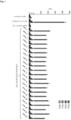
- CD1d specific binding was assessed by flowcytometry using C1Rand K562 cells expressing either CD1a, CD1b, CD1c, or CD1d. Staining was performed in a 96-well plate and all incubations were performed in FACS buffer for 30 minutes at 4°C. For initial screenings of binding to CD1d, cells were incubated with 25 ⁇ l supernatant containing anti-CD1d VHH.
- Binding of the selected anti-CD1d VHH to CD1d was confirmed after purification (see below) and sequencing of anti-CD1d VHH.
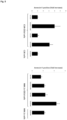
- anti-CD1d VHH and controls were tested at a concentration of 5 ⁇ g/ml. Representative data is shown in Figure 1 .
- VHH DNA from selected VHHs was amplified by colony PCR, digested with Hinf1 and subsequently run on a 2% agarose gel. Based on the digestion pattern different families could be selected. Individual families were then sequenced (BaseClear B.V. Leiden, The Netherlands) to confirm unique clones.
- Supernatants containing unique anti-CD1d VHH were produced as described. For purification, these supernatants were subsequently incubated with washed Talon resin (Clontech, Mountain View, CA, USA) for 1 hour at room temperature. Talon resin was washed 3 times with PBS and once with 15 mM imidazole/PBS pH 7 and eluted with 150 mM imidazole/PBS pH 7. The eluted fraction was dialyzed twice for 24h against PBS. Concentration of purified VHH was determined by Nanodrop measurement (Thermo Fisher Scientific Inc., Wilmington, DE, USA) and purity was confirmed by coomassie stained protein gel.
- Immature monocyte derived dendritic cells were generated as described ( Lameris R. et al, Methods Mol Biol, 2014; 1139: 155-65 ).
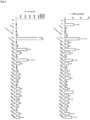
- moDC were cultured in complete medium (RPMI-1640 containing HEPES, 10% FCS, 0.05 mM beta-mercaptoethanol, ( ⁇ -ME), 100 IU/mL of sodium penicillin, 100 ⁇ g/mL of streptomycin sulfate, and 2.0 mM of I-glutamine) in 48-well plates at a concentration of 6*10 4 cells/well in the presence of 5 ng/ml rhlL-4, 500 U/ml rhGM-CSF, 1000 U/ml rhINF- ⁇ ,25 ⁇ g/ml polymyxin B and 500 nM anti-CD1d VHH or negative control VHH.
- complete medium RPMI-1640 containing HEPES, 10% FCS, 0.05 mM beta-mercaptoethanol, ( ⁇ -ME),
- LPS 200 ng/ml
- IL-12 and II-10 production (not shown) (using ELISA).
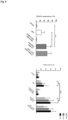
- 72h cells were harvested and analyzed for expression of moDC maturation markers (PE labelled anti-CD86 (not shown), APC labelled anti-CD83, BD Biosciences) using flowcytometry (FACS Fortessa, BD Biosciences). Representative data is shown in Figure 2 .
- iNKT cells were generated as described ( Lameris R. et al, Methods Mol Biol 2014; 1139: 155-65 ). 5*10 4 CD1d-transfected HeLa cells were cultured overnight at 37°C in a 96-well plate in DMEM, containing 10% FCS, 0.05 mM ⁇ -ME, 100 lU/mL of sodium penicillin, 100 ⁇ g/mL of streptomycin sulfate, 2.0 mM of I-glutamine and 400 ng/ml ⁇ -GalCer.
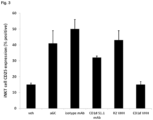
- HeLa-CD1d cells were then washed and incubated with 500 nM anti-CD1d VHH (or negative control VHH) for 2 hours at 37°C after which 5*10 4 resting ( ⁇ 25% CD25 expression) iNKT were added. After 24h, supernatants were harvested for detection of IFN- ⁇ and IL-4 (using ELISA) while iNKT cells were harvested, resuspended in FACS buffer and analyzed by flow-cytometry in order to detect the induction (or inhibition) of iNKT cell activation (assessed by expression of the activation marker CD25 on iNKT cells (FACS Fortessa, BD Biosciences). See figure 3 and figure 7 for representative results with at least VHH24.
- iNKT cells were generated as described ( Lameris R. et al, Methods Mol Biol 2014; 1139: 155-65 ). 5*10 4 CD1d-transfected HeLa cells, CD1d-transfected C1R cells and CD1d-transfected MM.1s cells were cultured overnight at 37°C in a 96-well plate in DMEM, containing 10% FCS, 0.05 mM ⁇ -ME, 100 IU/mL of sodium penicillin, 100 ⁇ g/mL of streptomycin sulfate, 2.0 mM of I-glutamine in the presence or absence of 100ng/ml ⁇ -GalCer or vehicle control.
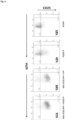
- CD1d-transfected cells loaded with ⁇ -GalCer or vehicle control, were then washed and incubated with 500 nM anti-CD1d VHH (or negative control VHH) for 2 hours at 37°C after which 5*10 4 resting ( ⁇ 25% CD25 expression) iNKT cells were added. After 24h, supernatants were harvested for detection of IFN- ⁇ and IL-4 (using ELISA) while iNKT cells were harvested, resuspended in FACS buffer and analyzed by flow-cytometry in order to assess the induction of iNKT cell activation (assessed by expression of the activation marker CD25 on iNKT cells (FACS Fortessa, BD Biosciences). See figure 4 and figure 8 (concentration dependency) for representative results; showing data for VHH12.
- CD1d-C1R and CD1d-MM.1s (as well as untransfected C1R and MM.1s cell lines as negative controls) were cultured at 37°C in a 48-well plate at 1*10 5 cells per well and incubated with 500 nM anti-CD1d VHH, negative control VHH, or anti-CD1d 51.1 mAb (as positive control). After 24h, cells were stained with annexin V and propidium iodide (PI) according to manufacturers protocol (VPS Diagnostics, Hoeven, the Netherlands) and analyzed by flow cytometry (FACS Fortessa, BD Biosciences). Experimental results are shown in Figure 5 .
- PI propidium iodide
- iNKT cells were generated as described ( Lameris R. et al, Methods Mol Biol 2014; 1139: 155-65 ).
- ⁇ -GalCer (1 mM) or vehicle control (100% DMSO) were heated for 2 minutes at 80°C, sonicated for 5 minutes and subsequently diluted in sterile, warm (37°C) 0,1% triton-X to a concentration of 100 ⁇ M.
- ⁇ M of a bispecific construct consisting of an anti-EGFR VHH fused to ⁇ 2m-human CD1d was added in a 1:1 ratio.
- Final concentrations of ⁇ -GalCer and ⁇ 2m-CD1d-anti-EGFR construct were 50 ⁇ M and 3 ⁇ M respectively.
- iNKT cells were harvested, resuspended in FACS buffer and analyzed by flow-cytometry in order to assess the induction of iNKT cell activation (assessed by expression of the activation marker CD25 on iNKT cells (FACS Fortessa, BD Biosciences). Results are presented in Figure 6 .
- FIG 9 shows induction of iNKT cell degranulation (left) and cytotoxicity against CD1d+ tumor cells line (right).
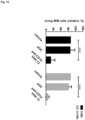
- Figure 10 shows induction of iNKT cell cytotoxicity against CD1d+ primary multiple myeloma cells.
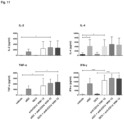
- Figure 11 shows induction of iNKT cell cytokine production by anti-CD1d VHH12.
- HeLa-CD1d cells were pulsed with vehicle control, OCH (a sphingosine truncated derivative of alpha-galactosylceramide (alpha-GC); glycolipid reported to induce Th2-cytokine production in iNKT cells) or ⁇ GC, incubated with anti-CD1d VHH and controls and co-cultured with iNKT for 24h after which supernatants were analyzed (by Cytometric Bead Assay; CBA).
- N 4; *p ⁇ 0,05; ****p ⁇ 0,0001.
- the anti-CD1d VHH shown is VHH12.
Landscapes
- Health & Medical Sciences (AREA)
- Chemical & Material Sciences (AREA)
- Immunology (AREA)
- Organic Chemistry (AREA)
- Life Sciences & Earth Sciences (AREA)
- Medicinal Chemistry (AREA)
- General Health & Medical Sciences (AREA)
- Veterinary Medicine (AREA)
- Animal Behavior & Ethology (AREA)
- Pharmacology & Pharmacy (AREA)
- Public Health (AREA)
- Chemical Kinetics & Catalysis (AREA)
- General Chemical & Material Sciences (AREA)
- Nuclear Medicine, Radiotherapy & Molecular Imaging (AREA)
- Bioinformatics & Cheminformatics (AREA)
- Engineering & Computer Science (AREA)
- Molecular Biology (AREA)
- Biophysics (AREA)
- Biochemistry (AREA)
- Genetics & Genomics (AREA)
- Proteomics, Peptides & Aminoacids (AREA)
- Tropical Medicine & Parasitology (AREA)
- Rheumatology (AREA)
- Pain & Pain Management (AREA)
- Virology (AREA)
- Pulmonology (AREA)
- Cell Biology (AREA)
- Communicable Diseases (AREA)
- Dermatology (AREA)
- Gastroenterology & Hepatology (AREA)
- Orthopedic Medicine & Surgery (AREA)
- Neurology (AREA)
- Urology & Nephrology (AREA)
- Vascular Medicine (AREA)
- Cardiology (AREA)
- Heart & Thoracic Surgery (AREA)
- Physical Education & Sports Medicine (AREA)
- Oncology (AREA)
- AIDS & HIV (AREA)
- Peptides Or Proteins (AREA)
Applications Claiming Priority (2)
| Application Number | Priority Date | Filing Date | Title |
|---|---|---|---|
| NL2014192 | 2015-01-27 | ||
| PCT/NL2016/050064 WO2016122320A1 (en) | 2015-01-27 | 2016-01-27 | Single domain antibodies targeting cd1d |
Publications (2)
| Publication Number | Publication Date |
|---|---|
| EP3250608A1 EP3250608A1 (en) | 2017-12-06 |
| EP3250608B1 true EP3250608B1 (en) | 2024-08-21 |
Family
ID=52630466
Family Applications (1)
| Application Number | Title | Priority Date | Filing Date |
|---|---|---|---|
| EP16715360.0A Revoked EP3250608B1 (en) | 2015-01-27 | 2016-01-27 | Single domain antibodies targeting cd1d |
Country Status (11)
| Country | Link |
|---|---|
| US (4) | US10501541B2 (enExample) |
| EP (1) | EP3250608B1 (enExample) |
| JP (2) | JP6743051B2 (enExample) |
| KR (2) | KR102574729B1 (enExample) |
| CN (2) | CN107531787B (enExample) |
| AU (2) | AU2016212777B2 (enExample) |
| CA (1) | CA2975078A1 (enExample) |
| EA (1) | EA201791691A1 (enExample) |
| MX (1) | MX386714B (enExample) |
| SG (1) | SG11201706128PA (enExample) |
| WO (1) | WO2016122320A1 (enExample) |
Families Citing this family (10)
| Publication number | Priority date | Publication date | Assignee | Title |
|---|---|---|---|---|
| KR102574729B1 (ko) | 2015-01-27 | 2023-09-04 | 라바 테라퓨틱스 엔.브이. | Cd1d를 표적화하는 단일 도메인 항체 |
| US12077586B2 (en) | 2018-09-19 | 2024-09-03 | LAVA Therapeutics N.V. | Bispecific antibodies for use in the treatment of hematological malignancies |
| WO2020113063A1 (en) * | 2018-11-30 | 2020-06-04 | Aleta Biotherapeutics Inc. | Single domain antibodies against cll-1 |
| EP3792283A1 (en) | 2019-09-16 | 2021-03-17 | Lava Therapeutics B.V. | Treatment of cancer comprising administration of vgamma9vdelta2 t cell receptor binding antibodies |
| IL305579A (en) | 2021-03-01 | 2023-10-01 | Deciduous Therapeutics Inc | Compounds for activating invariant natural killer T cells and methods for use in eliminating inflammatory senescent cells |
| EP4419109A1 (en) | 2021-10-21 | 2024-08-28 | LAVA Therapeutics N.V. | Uses of gamma delta t cell activating antibodies |
| CN116217723A (zh) * | 2021-12-22 | 2023-06-06 | 北京世纪沃德生物科技有限公司 | 一种crp驼源单域抗体及其制备方法和应用 |
| EP4285926A1 (en) * | 2022-05-30 | 2023-12-06 | LAVA Therapeutics N.V. | Combination treatment for chronic lymphocytic leukemia |
| EP4292610A1 (en) | 2022-06-15 | 2023-12-20 | LAVA Therapeutics N.V. | Variant antibodies that bind gamma-delta t cell receptors |
| WO2024256586A1 (en) | 2023-06-14 | 2024-12-19 | LAVA Therapeutics N.V. | Cd1d antibodies and methods of use |
Family Cites Families (56)
| Publication number | Priority date | Publication date | Assignee | Title |
|---|---|---|---|---|
| FR2698880B1 (fr) | 1992-11-25 | 1995-02-24 | Inst Nat Sante Rech Med | Procédé de production de récepteurs T solubles, produits ainsi obtenus et leur utilisation dans des compositions diagnostiques ou thérapeutiques. |
| DK0751780T3 (da) | 1993-06-21 | 2003-10-13 | Brigham & Womens Hospital | Fremgangsmåder til isolering af CD1-fremviste antigener, vacciner, som omfatter CD1-fremviste antigener, og cellelinier til anvendelse i nævnte fremgangsmåder |
| WO2000046383A2 (en) | 1999-02-05 | 2000-08-10 | Rijksuniversiteit Leiden | Method of modulating metabolite biosynthesis in recombinant cells |
| EP1198572A2 (en) | 1999-08-02 | 2002-04-24 | Keygene N.V. | Method for generating cgmmv resistant plants, genetic constructs, and obtained cgmmv-resistant plants |
| US6737398B1 (en) | 1999-09-30 | 2004-05-18 | National Jewish Medical And Research Center | Modulation of γδ T cells to regulate airway hyperresponsiveness |
| WO2001022816A1 (en) | 1999-09-30 | 2001-04-05 | National Jewish Medical And Research Center | MODULATION OF ηδ T CELLS TO REGULATE AIRWAY HYPERRESPONSIVENESS |
| AU2001259230A1 (en) | 2000-04-28 | 2001-11-12 | The Board Of Trustees Of The Leland Stanford Junior University | Inhibition of polyclonal b cell activation and immunoglobulin class switching topathogenic autoantibodies by blocking cd1-mediated interactions |
| PT1297017E (pt) | 2000-06-19 | 2012-09-04 | Gen Hospital Corp | Composições e métodos de anticorpos monoclonais e policlonais específicos para subpopulações de célula t |
| CA2441893C (en) | 2001-03-26 | 2015-01-20 | Dana-Farber Cancer Institute, Inc. | Method of attenuating reactions to skin irritants |
| US8178098B2 (en) | 2001-04-03 | 2012-05-15 | National Jewish Health | Method to inhibit airway hyperresponsiveness using aerosolized T cell receptor antibodies |
| CN100522999C (zh) | 2002-02-14 | 2009-08-05 | 免疫医疗公司 | 抗cd20抗体及其融合蛋白和使用方法 |
| EP1532175B1 (en) | 2002-03-22 | 2012-10-17 | Aprogen, Inc. | Humanized antibody and process for preparing the same |
| US8084020B2 (en) * | 2002-05-01 | 2011-12-27 | Beth Israel Deaconess Medical Center | Use of anti-CD1 antibodies for the modulation of immune responses |
| JP2006512910A (ja) | 2002-10-23 | 2006-04-20 | ルードヴィッヒ インスティテュート フォー キャンサー リサーチ | A34およびa33様3dna、タンパク質、それらに対する抗体、ならびに同一物を使用した治療方法 |
| US9028816B2 (en) | 2003-01-10 | 2015-05-12 | Ablynx N.V. | Polypeptides and polypeptide constructs comprising single domain antibodies directed against von Willebrand factor |
| WO2005046711A2 (en) | 2003-11-07 | 2005-05-26 | Government Of The United States Of America As Represented By The Secretary Of The Department Of Health And Human Services | Stimulation or inhibition of gamma delta t-cells to promote or inhibit bone healing |
| EP1753783B1 (en) | 2004-06-03 | 2014-08-06 | Novimmune SA | Anti-cd3 antibodies and methods of use thereof |
| US8153426B2 (en) | 2004-08-19 | 2012-04-10 | University College Cardiff Consultants Limited | Preparation of antigen-presenting human gamma-delta T cells and use in immunotherapy |
| US7682614B2 (en) | 2004-11-02 | 2010-03-23 | The Board Of Trustees Of The Leland Stanford Junior University | Methods for inhibition of NKT cells |
| US8338173B2 (en) | 2005-08-11 | 2012-12-25 | University College Cardiff Consultants Limited | Preparation of antigen-presenting human γδ T cells and use in immunotherapy |
| ES2780176T3 (es) * | 2006-02-22 | 2020-08-24 | Riken | Inmunoterapia mediante la utilización de células capaces de co-expresar un antígeno diana y CD1d y pulsadas con un ligando de CD1d |
| GB0605247D0 (en) * | 2006-03-15 | 2006-04-26 | Chiron Srl | Compositions and methods for immunisation |
| EP1878440A1 (en) | 2006-07-13 | 2008-01-16 | INSERM (Institut National de la Santé et de la Recherche Médicale) | Methods and compositions for increasing the efficiency of therapeutic antibodies using gamma delta cell activator compounds |
| US8012484B2 (en) | 2007-04-12 | 2011-09-06 | University Of Virginia Patent Foundation | Method of treating ischemia reperfusion injury by inhibiting NKT cell activity |
| EP2058388A1 (en) * | 2007-10-05 | 2009-05-13 | INSERM (Institut National de la Santé et de la Recherche Médicale) | Non-conventional NKT cells for use in cancer therapy |
| WO2010130830A2 (en) * | 2009-05-15 | 2010-11-18 | Ablynx N.V. | Amino acid sequences directed against sclerostin and polypeptides comprising the same for the treatment of bone diseases and disorders |
| AU2012323781B8 (en) * | 2011-10-14 | 2015-05-14 | Teva Pharmaceuticals Australia Pty Ltd. | Antibodies to CD1d |
| US9670275B2 (en) | 2012-01-23 | 2017-06-06 | Ablynx N.V. | Sequences directed against hepatocyte growth factor (HGF) and polypeptides comprising the same for the treatment of cancers and/or tumors |
| CN104334741B (zh) | 2012-03-28 | 2018-08-17 | 歌德塔有限公司 | 组合的γ9δ2T细胞受体链交换 |
| WO2013174403A1 (en) | 2012-05-23 | 2013-11-28 | Ganymed Pharmaceuticals Ag | Combination therapy involving antibodies against claudin 18.2 for treatment of cancer |
| WO2013174404A1 (en) | 2012-05-23 | 2013-11-28 | Ganymed Pharmaceuticals Ag | Combination therapy involving antibodies against claudin 18.2 for treatment of cancer |
| WO2014127785A1 (en) | 2013-02-20 | 2014-08-28 | Ganymed Pharmaceuticals Ag | Combination therapy involving antibodies against claudin 18.2 for treatment of cancer |
| WO2014210522A1 (en) | 2013-06-28 | 2014-12-31 | The Scripps Research Institute | Nkt cell ligands and methods of use |
| WO2015121383A1 (en) | 2014-02-12 | 2015-08-20 | Michael Uhlin | Bispecific antibodies for use in stem cell transplantation |
| KR102601469B1 (ko) | 2014-04-10 | 2023-11-14 | 라바 테라퓨틱스 엔.브이. | 인간 Vγ9Vδ2 T 세포에 결합하는 면역글로불린 |
| JP6894702B2 (ja) | 2014-05-13 | 2021-06-30 | 中外製薬株式会社 | 免疫抑制機能を有する細胞に対するt細胞リダイレクト抗原結合分子 |
| CA2988504A1 (en) | 2014-07-02 | 2016-01-07 | Institut National De La Sante Et De La Recherche Medicale (Inserm) | Methods for diagnosing and treating cd1d restricted gamma/delta t cell lymphomas |
| WO2016081518A2 (en) | 2014-11-17 | 2016-05-26 | Adicet Bio, Inc. | Engineered gamma delta t-cells |
| KR102574729B1 (ko) | 2015-01-27 | 2023-09-04 | 라바 테라퓨틱스 엔.브이. | Cd1d를 표적화하는 단일 도메인 항체 |
| CN104829730A (zh) | 2015-04-14 | 2015-08-12 | 苏静 | 一种能联合免疫细胞增强肿瘤杀伤能力的双特异性抗体及其制备方法和应用 |
| US11000603B2 (en) | 2015-04-14 | 2021-05-11 | Benhealth Biopharmaceutic (Shenzhen) Co., Ltd. | Multi-specific binding conjugate, related pharmaceutical compositions and use |
| JP6931329B2 (ja) | 2015-11-18 | 2021-09-01 | 中外製薬株式会社 | 免疫抑制機能を有する細胞に対するt細胞リダイレクト抗原結合分子を用いた併用療法 |
| CN109195992A (zh) | 2016-04-29 | 2019-01-11 | 本康生物制药(深圳)有限公司 | 多特异性结合偶联物、相关的药物组合物及应用 |
| US20180028566A1 (en) | 2016-07-29 | 2018-02-01 | New York University | Gamma delta t cells as a target for treatment of solid tumors |
| CA3049791A1 (en) | 2017-01-27 | 2018-08-02 | Silverback Therapeutics, Inc. | Tumor targeting conjugates and methods of use thereof |
| WO2018229163A1 (en) | 2017-06-14 | 2018-12-20 | King's College London | Methods of activating v delta 2 negative gamma delta t cells |
| TWI687227B (zh) | 2017-10-03 | 2020-03-11 | 生倍科技股份有限公司 | 用於t細胞免疫療法之組合及其用途 |
| US20210163620A1 (en) | 2018-04-05 | 2021-06-03 | Brian Granda | Trispecific binding molecules against cancers and uses thereof |
| CN112955465A (zh) | 2018-07-03 | 2021-06-11 | 马伦戈治疗公司 | 抗tcr抗体分子及其用途 |
| JP2022521751A (ja) | 2019-02-21 | 2022-04-12 | マレンゴ・セラピューティクス,インコーポレーテッド | 抗tcr抗体分子およびその使用 |
| AU2020267504A1 (en) | 2019-05-08 | 2021-12-02 | Janssen Biotech, Inc. | Materials and methods for modulating T cell mediated immunity |
| KR20220045980A (ko) | 2019-08-16 | 2022-04-13 | 감마델타 테라퓨틱스 리미티드 | 체외 감마 델타 t 세포 집단 |
| WO2021032963A1 (en) | 2019-08-16 | 2021-02-25 | GammaDelta Therapeutics Limited | Therapeutic uses of anti-tcr delta variable 1 antibodies |
| AU2021225870A1 (en) | 2020-02-27 | 2022-10-20 | Janssen Biotech, Inc. | Materials and methods for modulating an immune response |
| UY39127A (es) | 2020-03-13 | 2021-09-30 | Janssen Biotech Inc | Materiales y métodos para modular la inmunidad mediada por cadena delta |
| CN116390950A (zh) | 2020-10-28 | 2023-07-04 | 詹森生物科技公司 | 用于调节δγ链介导的免疫的组合物和方法 |
-
2016
- 2016-01-27 KR KR1020177024072A patent/KR102574729B1/ko active Active
- 2016-01-27 EA EA201791691A patent/EA201791691A1/ru unknown
- 2016-01-27 CA CA2975078A patent/CA2975078A1/en active Pending
- 2016-01-27 US US15/546,406 patent/US10501541B2/en active Active
- 2016-01-27 KR KR1020237029643A patent/KR20230132604A/ko active Pending
- 2016-01-27 SG SG11201706128PA patent/SG11201706128PA/en unknown
- 2016-01-27 AU AU2016212777A patent/AU2016212777B2/en not_active Revoked
- 2016-01-27 EP EP16715360.0A patent/EP3250608B1/en not_active Revoked
- 2016-01-27 CN CN201680007612.0A patent/CN107531787B/zh not_active Withdrawn - After Issue
- 2016-01-27 MX MX2017009680A patent/MX386714B/es unknown
- 2016-01-27 WO PCT/NL2016/050064 patent/WO2016122320A1/en not_active Ceased
- 2016-01-27 CN CN202111671891.XA patent/CN114504645A/zh active Pending
- 2016-01-27 JP JP2017557264A patent/JP6743051B2/ja active Active
-
2019
- 2019-10-29 US US16/666,734 patent/US11591394B2/en active Active
-
2020
- 2020-07-28 JP JP2020127379A patent/JP7165701B2/ja active Active
-
2022
- 2022-02-11 AU AU2022200922A patent/AU2022200922A1/en not_active Withdrawn
-
2023
- 2023-01-30 US US18/161,163 patent/US12110328B2/en active Active
-
2024
- 2024-09-03 US US18/822,745 patent/US20240425592A1/en not_active Abandoned
Also Published As
| Publication number | Publication date |
|---|---|
| AU2022200922A1 (en) | 2022-03-03 |
| JP2020172550A (ja) | 2020-10-22 |
| US10501541B2 (en) | 2019-12-10 |
| MX2017009680A (es) | 2018-04-13 |
| JP6743051B2 (ja) | 2020-08-19 |
| US20240425592A1 (en) | 2024-12-26 |
| AU2016212777B2 (en) | 2021-11-18 |
| EP3250608A1 (en) | 2017-12-06 |
| CN107531787A (zh) | 2018-01-02 |
| HK1247937A1 (en) | 2018-10-05 |
| US12110328B2 (en) | 2024-10-08 |
| US20240067726A1 (en) | 2024-02-29 |
| US20180142020A1 (en) | 2018-05-24 |
| CA2975078A1 (en) | 2016-08-04 |
| KR20170128254A (ko) | 2017-11-22 |
| AU2016212777A1 (en) | 2017-08-17 |
| KR20230132604A (ko) | 2023-09-15 |
| CN114504645A (zh) | 2022-05-17 |
| WO2016122320A1 (en) | 2016-08-04 |
| JP2018508229A (ja) | 2018-03-29 |
| KR102574729B1 (ko) | 2023-09-04 |
| MX386714B (es) | 2025-03-11 |
| JP7165701B2 (ja) | 2022-11-04 |
| US20200115450A1 (en) | 2020-04-16 |
| CN107531787B (zh) | 2022-01-18 |
| US11591394B2 (en) | 2023-02-28 |
| SG11201706128PA (en) | 2017-08-30 |
| EA201791691A1 (ru) | 2018-01-31 |
Similar Documents
| Publication | Publication Date | Title |
|---|---|---|
| US12110328B2 (en) | Single domain antibodies targeting CD1d | |
| US12187801B2 (en) | Chimeric antigen receptors against AXL or ROR2 and methods of use thereof | |
| EP3858856A1 (en) | Anti-b7-h3 monoclonal antibody and use thereof in cell therapy | |
| US20180362612A1 (en) | Novel epitope for switching to th1 cell and use thereof | |
| JP2020527144A (ja) | 癌を処置するためのヒトsiglec−9に対する抗体およびヒトnkg2aに対する抗体を使用する組み合わせ療法 | |
| KR20180118747A (ko) | Siglec 중화 항체 | |
| CN112703206A (zh) | 靶向肿瘤的重组双功能融合蛋白及其应用 | |
| EP4083211A1 (en) | Anti-cdcp1 antibody | |
| US9303086B2 (en) | Anti-hDlk-1 antibody having an antitumor activity in vivo | |
| CN116731169B (zh) | 一种分拣蛋白1特异性的纳米抗体及其应用 | |
| JP2022514786A (ja) | Muc18に特異的な抗体 | |
| JP2023547313A (ja) | Herv-k抗体治療薬 | |
| EP4506368A1 (en) | Bispecific antibody to human tim-3 and human cd39, and applications thereof | |
| EP4458956A1 (en) | Anti-mesothelin nanobody chimeric antigen receptor and use thereof | |
| HK1247937B (en) | Single domain antibodies targeting cd1d | |
| WO2023001155A1 (zh) | 一种磷脂酰肌醇蛋白聚糖3抗体及其应用 | |
| CN107840886B (zh) | Gm-csf抗体及其用途 | |
| EA042112B1 (ru) | ОДНОДОМЕННЫЕ АНТИТЕЛА, НАПРАВЛЕННЫЕ НА CD1d | |
| HK40085022A (en) | Anti-cdcp1 antibody |
Legal Events
| Date | Code | Title | Description |
|---|---|---|---|
| STAA | Information on the status of an ep patent application or granted ep patent |
Free format text: STATUS: THE INTERNATIONAL PUBLICATION HAS BEEN MADE |
|
| PUAI | Public reference made under article 153(3) epc to a published international application that has entered the european phase |
Free format text: ORIGINAL CODE: 0009012 |
|
| STAA | Information on the status of an ep patent application or granted ep patent |
Free format text: STATUS: REQUEST FOR EXAMINATION WAS MADE |
|
| 17P | Request for examination filed |
Effective date: 20170825 |
|
| AK | Designated contracting states |
Kind code of ref document: A1 Designated state(s): AL AT BE BG CH CY CZ DE DK EE ES FI FR GB GR HR HU IE IS IT LI LT LU LV MC MK MT NL NO PL PT RO RS SE SI SK SM TR |
|
| AX | Request for extension of the european patent |
Extension state: BA ME |
|
| DAV | Request for validation of the european patent (deleted) | ||
| DAX | Request for extension of the european patent (deleted) | ||
| REG | Reference to a national code |
Ref country code: HK Ref legal event code: DE Ref document number: 1247937 Country of ref document: HK |
|
| STAA | Information on the status of an ep patent application or granted ep patent |
Free format text: STATUS: EXAMINATION IS IN PROGRESS |
|
| 17Q | First examination report despatched |
Effective date: 20200408 |
|
| RAP3 | Party data changed (applicant data changed or rights of an application transferred) |
Owner name: LAVA THERAPEUTICS N.V. |
|
| GRAP | Despatch of communication of intention to grant a patent |
Free format text: ORIGINAL CODE: EPIDOSNIGR1 |
|
| STAA | Information on the status of an ep patent application or granted ep patent |
Free format text: STATUS: GRANT OF PATENT IS INTENDED |
|
| INTG | Intention to grant announced |
Effective date: 20240426 |
|
| GRAS | Grant fee paid |
Free format text: ORIGINAL CODE: EPIDOSNIGR3 |
|
| GRAA | (expected) grant |
Free format text: ORIGINAL CODE: 0009210 |
|
| STAA | Information on the status of an ep patent application or granted ep patent |
Free format text: STATUS: THE PATENT HAS BEEN GRANTED |
|
| AK | Designated contracting states |
Kind code of ref document: B1 Designated state(s): AL AT BE BG CH CY CZ DE DK EE ES FI FR GB GR HR HU IE IS IT LI LT LU LV MC MK MT NL NO PL PT RO RS SE SI SK SM TR |
|
| RAP3 | Party data changed (applicant data changed or rights of an application transferred) |
Owner name: LAVA THERAPEUTICS N.V. |
|
| REG | Reference to a national code |
Ref country code: GB Ref legal event code: FG4D |
|
| REG | Reference to a national code |
Ref country code: CH Ref legal event code: EP |
|
| REG | Reference to a national code |
Ref country code: IE Ref legal event code: FG4D |
|
| REG | Reference to a national code |
Ref country code: DE Ref legal event code: R096 Ref document number: 602016088986 Country of ref document: DE |
|
| P01 | Opt-out of the competence of the unified patent court (upc) registered |
Free format text: CASE NUMBER: APP_47299/2024 Effective date: 20240815 |
|
| REG | Reference to a national code |
Ref country code: NL Ref legal event code: FP |
|
| REG | Reference to a national code |
Ref country code: LT Ref legal event code: MG9D |
|
| REG | Reference to a national code |
Ref country code: DE Ref legal event code: R061 Ref document number: 602016088986 Country of ref document: DE |
|
| PLBR | Kind of request for revocation recorded |
Free format text: ORIGINAL CODE: EPIDOSNRVR2 |
|
| PLBT | Request for revocation filed by patent holder |
Free format text: ORIGINAL CODE: EPIDOSNRVR1 |
|
| PLDH | Decision on request for revocation |
Free format text: ORIGINAL CODE: EPIDOSNRVR3 |
|
| RDAA | Patent revoked on request of proprietor |
Free format text: ORIGINAL CODE: 0009220 |
|
| STAA | Information on the status of an ep patent application or granted ep patent |
Free format text: STATUS: PATENT REVOKED BY PROPRIETOR |
|
| REG | Reference to a national code |
Ref country code: CH Ref legal event code: PL |
|
| PLBU | Request for revocation filed by patent holder |
Free format text: ORIGINAL CODE: EPIDOSNRVR6 |
|
| PG25 | Lapsed in a contracting state [announced via postgrant information from national office to epo] |
Ref country code: NO Free format text: LAPSE BECAUSE OF FAILURE TO SUBMIT A TRANSLATION OF THE DESCRIPTION OR TO PAY THE FEE WITHIN THE PRESCRIBED TIME-LIMIT Effective date: 20241121 |
|
| REG | Reference to a national code |
Ref country code: AT Ref legal event code: MK05 Ref document number: 1715426 Country of ref document: AT Kind code of ref document: T Effective date: 20240821 |
|
| PG25 | Lapsed in a contracting state [announced via postgrant information from national office to epo] |
Ref country code: GR Free format text: LAPSE BECAUSE OF FAILURE TO SUBMIT A TRANSLATION OF THE DESCRIPTION OR TO PAY THE FEE WITHIN THE PRESCRIBED TIME-LIMIT Effective date: 20241122 Ref country code: FI Free format text: LAPSE BECAUSE OF FAILURE TO SUBMIT A TRANSLATION OF THE DESCRIPTION OR TO PAY THE FEE WITHIN THE PRESCRIBED TIME-LIMIT Effective date: 20240821 Ref country code: PT Free format text: LAPSE BECAUSE OF FAILURE TO SUBMIT A TRANSLATION OF THE DESCRIPTION OR TO PAY THE FEE WITHIN THE PRESCRIBED TIME-LIMIT Effective date: 20241223 Ref country code: PL Free format text: LAPSE BECAUSE OF FAILURE TO SUBMIT A TRANSLATION OF THE DESCRIPTION OR TO PAY THE FEE WITHIN THE PRESCRIBED TIME-LIMIT Effective date: 20240821 |
|
| PG25 | Lapsed in a contracting state [announced via postgrant information from national office to epo] |
Ref country code: BG Free format text: LAPSE BECAUSE OF FAILURE TO SUBMIT A TRANSLATION OF THE DESCRIPTION OR TO PAY THE FEE WITHIN THE PRESCRIBED TIME-LIMIT Effective date: 20240821 |
|
| PG25 | Lapsed in a contracting state [announced via postgrant information from national office to epo] |
Ref country code: LV Free format text: LAPSE BECAUSE OF FAILURE TO SUBMIT A TRANSLATION OF THE DESCRIPTION OR TO PAY THE FEE WITHIN THE PRESCRIBED TIME-LIMIT Effective date: 20240821 |
|
| REG | Reference to a national code |
Ref country code: DE Ref legal event code: R103 Ref document number: 602016088986 Country of ref document: DE Ref country code: DE Ref legal event code: R064 Ref document number: 602016088986 Country of ref document: DE |
|
| RVDA | Request for revocation filed during opposition period found admissible |
Filing date: 20241216 Effective date: 20250122 |
|
| PG25 | Lapsed in a contracting state [announced via postgrant information from national office to epo] |
Ref country code: AT Free format text: LAPSE BECAUSE OF FAILURE TO SUBMIT A TRANSLATION OF THE DESCRIPTION OR TO PAY THE FEE WITHIN THE PRESCRIBED TIME-LIMIT Effective date: 20240821 Ref country code: IS Free format text: LAPSE BECAUSE OF FAILURE TO SUBMIT A TRANSLATION OF THE DESCRIPTION OR TO PAY THE FEE WITHIN THE PRESCRIBED TIME-LIMIT Effective date: 20241221 |
|
| PG25 | Lapsed in a contracting state [announced via postgrant information from national office to epo] |
Ref country code: HR Free format text: LAPSE BECAUSE OF FAILURE TO SUBMIT A TRANSLATION OF THE DESCRIPTION OR TO PAY THE FEE WITHIN THE PRESCRIBED TIME-LIMIT Effective date: 20240821 |
|
| PG25 | Lapsed in a contracting state [announced via postgrant information from national office to epo] |
Ref country code: RS Free format text: LAPSE BECAUSE OF FAILURE TO SUBMIT A TRANSLATION OF THE DESCRIPTION OR TO PAY THE FEE WITHIN THE PRESCRIBED TIME-LIMIT Effective date: 20241121 Ref country code: ES Free format text: LAPSE BECAUSE OF FAILURE TO SUBMIT A TRANSLATION OF THE DESCRIPTION OR TO PAY THE FEE WITHIN THE PRESCRIBED TIME-LIMIT Effective date: 20240821 |
|
| PG25 | Lapsed in a contracting state [announced via postgrant information from national office to epo] |
Ref country code: RS Free format text: LAPSE BECAUSE OF FAILURE TO SUBMIT A TRANSLATION OF THE DESCRIPTION OR TO PAY THE FEE WITHIN THE PRESCRIBED TIME-LIMIT Effective date: 20241121 Ref country code: PT Free format text: LAPSE BECAUSE OF FAILURE TO SUBMIT A TRANSLATION OF THE DESCRIPTION OR TO PAY THE FEE WITHIN THE PRESCRIBED TIME-LIMIT Effective date: 20241223 Ref country code: PL Free format text: LAPSE BECAUSE OF FAILURE TO SUBMIT A TRANSLATION OF THE DESCRIPTION OR TO PAY THE FEE WITHIN THE PRESCRIBED TIME-LIMIT Effective date: 20240821 Ref country code: NO Free format text: LAPSE BECAUSE OF FAILURE TO SUBMIT A TRANSLATION OF THE DESCRIPTION OR TO PAY THE FEE WITHIN THE PRESCRIBED TIME-LIMIT Effective date: 20241121 Ref country code: LV Free format text: LAPSE BECAUSE OF FAILURE TO SUBMIT A TRANSLATION OF THE DESCRIPTION OR TO PAY THE FEE WITHIN THE PRESCRIBED TIME-LIMIT Effective date: 20240821 Ref country code: IS Free format text: LAPSE BECAUSE OF FAILURE TO SUBMIT A TRANSLATION OF THE DESCRIPTION OR TO PAY THE FEE WITHIN THE PRESCRIBED TIME-LIMIT Effective date: 20241221 Ref country code: HR Free format text: LAPSE BECAUSE OF FAILURE TO SUBMIT A TRANSLATION OF THE DESCRIPTION OR TO PAY THE FEE WITHIN THE PRESCRIBED TIME-LIMIT Effective date: 20240821 Ref country code: GR Free format text: LAPSE BECAUSE OF FAILURE TO SUBMIT A TRANSLATION OF THE DESCRIPTION OR TO PAY THE FEE WITHIN THE PRESCRIBED TIME-LIMIT Effective date: 20241122 Ref country code: FI Free format text: LAPSE BECAUSE OF FAILURE TO SUBMIT A TRANSLATION OF THE DESCRIPTION OR TO PAY THE FEE WITHIN THE PRESCRIBED TIME-LIMIT Effective date: 20240821 Ref country code: ES Free format text: LAPSE BECAUSE OF FAILURE TO SUBMIT A TRANSLATION OF THE DESCRIPTION OR TO PAY THE FEE WITHIN THE PRESCRIBED TIME-LIMIT Effective date: 20240821 Ref country code: BG Free format text: LAPSE BECAUSE OF FAILURE TO SUBMIT A TRANSLATION OF THE DESCRIPTION OR TO PAY THE FEE WITHIN THE PRESCRIBED TIME-LIMIT Effective date: 20240821 Ref country code: AT Free format text: LAPSE BECAUSE OF FAILURE TO SUBMIT A TRANSLATION OF THE DESCRIPTION OR TO PAY THE FEE WITHIN THE PRESCRIBED TIME-LIMIT Effective date: 20240821 |
|
| PG25 | Lapsed in a contracting state [announced via postgrant information from national office to epo] |
Ref country code: SM Free format text: LAPSE BECAUSE OF FAILURE TO SUBMIT A TRANSLATION OF THE DESCRIPTION OR TO PAY THE FEE WITHIN THE PRESCRIBED TIME-LIMIT Effective date: 20240821 Ref country code: DK Free format text: LAPSE BECAUSE OF FAILURE TO SUBMIT A TRANSLATION OF THE DESCRIPTION OR TO PAY THE FEE WITHIN THE PRESCRIBED TIME-LIMIT Effective date: 20240821 Ref country code: RO Free format text: LAPSE BECAUSE OF FAILURE TO SUBMIT A TRANSLATION OF THE DESCRIPTION OR TO PAY THE FEE WITHIN THE PRESCRIBED TIME-LIMIT Effective date: 20240821 |
|
| PG25 | Lapsed in a contracting state [announced via postgrant information from national office to epo] |
Ref country code: FR Free format text: LAPSE BECAUSE OF NON-PAYMENT OF DUE FEES Effective date: 20250122 |
|
| PG25 | Lapsed in a contracting state [announced via postgrant information from national office to epo] |
Ref country code: IT Free format text: LAPSE BECAUSE OF FAILURE TO SUBMIT A TRANSLATION OF THE DESCRIPTION OR TO PAY THE FEE WITHIN THE PRESCRIBED TIME-LIMIT Effective date: 20240821 Ref country code: SK Free format text: LAPSE BECAUSE OF FAILURE TO SUBMIT A TRANSLATION OF THE DESCRIPTION OR TO PAY THE FEE WITHIN THE PRESCRIBED TIME-LIMIT Effective date: 20240821 |
|
| PGFP | Annual fee paid to national office [announced via postgrant information from national office to epo] |
Ref country code: GB Payment date: 20250627 Year of fee payment: 10 |
|
| PG25 | Lapsed in a contracting state [announced via postgrant information from national office to epo] |
Ref country code: SE Free format text: LAPSE BECAUSE OF FAILURE TO SUBMIT A TRANSLATION OF THE DESCRIPTION OR TO PAY THE FEE WITHIN THE PRESCRIBED TIME-LIMIT Effective date: 20240821 |
|
| PG25 | Lapsed in a contracting state [announced via postgrant information from national office to epo] |
Ref country code: MC Free format text: LAPSE BECAUSE OF FAILURE TO SUBMIT A TRANSLATION OF THE DESCRIPTION OR TO PAY THE FEE WITHIN THE PRESCRIBED TIME-LIMIT Effective date: 20240821 |