EP3226853B1 - Animal model for dry eye and methods of use of such animals - Google Patents
Animal model for dry eye and methods of use of such animals Download PDFInfo
- Publication number
- EP3226853B1 EP3226853B1 EP15816590.2A EP15816590A EP3226853B1 EP 3226853 B1 EP3226853 B1 EP 3226853B1 EP 15816590 A EP15816590 A EP 15816590A EP 3226853 B1 EP3226853 B1 EP 3226853B1
- Authority
- EP
- European Patent Office
- Prior art keywords
- scopolamine
- benzalkonium chloride
- administered
- candidate agent
- dry eye
- Prior art date
- Legal status (The legal status is an assumption and is not a legal conclusion. Google has not performed a legal analysis and makes no representation as to the accuracy of the status listed.)
- Active
Links
- 208000003556 Dry Eye Syndromes Diseases 0.000 title claims description 124
- 206010013774 Dry eye Diseases 0.000 title claims description 77
- 241001465754 Metazoa Species 0.000 title claims description 55
- 238000000034 method Methods 0.000 title claims description 42
- 238000010171 animal model Methods 0.000 title description 5
- 229960000686 benzalkonium chloride Drugs 0.000 claims description 101
- CADWTSSKOVRVJC-UHFFFAOYSA-N benzyl(dimethyl)azanium;chloride Chemical compound [Cl-].C[NH+](C)CC1=CC=CC=C1 CADWTSSKOVRVJC-UHFFFAOYSA-N 0.000 claims description 101
- 239000003795 chemical substances by application Substances 0.000 claims description 101
- 229960002646 scopolamine Drugs 0.000 claims description 59
- 229930000680 A04AD01 - Scopolamine Natural products 0.000 claims description 57
- STECJAGHUSJQJN-GAUPFVANSA-N Hyoscine Natural products C1([C@H](CO)C(=O)OC2C[C@@H]3N([C@H](C2)[C@@H]2[C@H]3O2)C)=CC=CC=C1 STECJAGHUSJQJN-GAUPFVANSA-N 0.000 claims description 57
- STECJAGHUSJQJN-UHFFFAOYSA-N N-Methyl-scopolamin Natural products C1C(C2C3O2)N(C)C3CC1OC(=O)C(CO)C1=CC=CC=C1 STECJAGHUSJQJN-UHFFFAOYSA-N 0.000 claims description 57
- 238000011282 treatment Methods 0.000 claims description 38
- 241000283984 Rodentia Species 0.000 claims description 36
- 230000004489 tear production Effects 0.000 claims description 27
- 238000010186 staining Methods 0.000 claims description 24
- GNBHRKFJIUUOQI-UHFFFAOYSA-N fluorescein Chemical compound O1C(=O)C2=CC=CC=C2C21C1=CC=C(O)C=C1OC1=CC(O)=CC=C21 GNBHRKFJIUUOQI-UHFFFAOYSA-N 0.000 claims description 18
- 230000007794 irritation Effects 0.000 claims description 18
- 238000002513 implantation Methods 0.000 claims description 14
- 230000037396 body weight Effects 0.000 claims description 13
- 210000004969 inflammatory cell Anatomy 0.000 claims description 12
- 102000004127 Cytokines Human genes 0.000 claims description 11
- 108090000695 Cytokines Proteins 0.000 claims description 11
- 206010023642 Lacrimation decreased Diseases 0.000 claims description 10
- 230000002757 inflammatory effect Effects 0.000 claims description 10
- 230000035168 lymphangiogenesis Effects 0.000 claims description 9
- 230000003204 osmotic effect Effects 0.000 claims description 8
- 230000007423 decrease Effects 0.000 claims description 7
- 239000007924 injection Substances 0.000 claims description 7
- 238000002347 injection Methods 0.000 claims description 7
- 230000009467 reduction Effects 0.000 claims description 7
- 238000007910 systemic administration Methods 0.000 claims description 6
- 230000001939 inductive effect Effects 0.000 claims description 5
- 239000007921 spray Substances 0.000 claims description 5
- 238000001802 infusion Methods 0.000 claims description 4
- 238000011740 C57BL/6 mouse Methods 0.000 claims description 3
- 230000033115 angiogenesis Effects 0.000 claims description 3
- 238000011200 topical administration Methods 0.000 claims description 3
- STECJAGHUSJQJN-FWXGHANASA-N scopolamine Chemical compound C1([C@@H](CO)C(=O)O[C@H]2C[C@@H]3N([C@H](C2)[C@@H]2[C@H]3O2)C)=CC=CC=C1 STECJAGHUSJQJN-FWXGHANASA-N 0.000 claims 16
- 238000010998 test method Methods 0.000 claims 1
- STECJAGHUSJQJN-VJQRDGCPSA-N chembl3084722 Chemical compound C1([C@@H](CO)C(=O)O[C@@H]2C[C@@H]3N([C@H](C2)[C@@H]2[C@H]3O2)C)=CC=CC=C1 STECJAGHUSJQJN-VJQRDGCPSA-N 0.000 description 43
- STECJAGHUSJQJN-USLFZFAMSA-N LSM-4015 Chemical compound C1([C@@H](CO)C(=O)OC2C[C@@H]3N([C@H](C2)[C@@H]2[C@H]3O2)C)=CC=CC=C1 STECJAGHUSJQJN-USLFZFAMSA-N 0.000 description 42
- 210000001508 eye Anatomy 0.000 description 42
- 238000012360 testing method Methods 0.000 description 33
- 210000004027 cell Anatomy 0.000 description 17
- 230000006698 induction Effects 0.000 description 17
- 210000004561 lacrimal apparatus Anatomy 0.000 description 11
- 210000004087 cornea Anatomy 0.000 description 10
- 241000700159 Rattus Species 0.000 description 9
- 208000021386 Sjogren Syndrome Diseases 0.000 description 8
- LOKCTEFSRHRXRJ-UHFFFAOYSA-I dipotassium trisodium dihydrogen phosphate hydrogen phosphate dichloride Chemical compound P(=O)(O)(O)[O-].[K+].P(=O)(O)([O-])[O-].[Na+].[Na+].[Cl-].[K+].[Cl-].[Na+] LOKCTEFSRHRXRJ-UHFFFAOYSA-I 0.000 description 8
- 239000002953 phosphate buffered saline Substances 0.000 description 8
- 206010061218 Inflammation Diseases 0.000 description 7
- 241000699670 Mus sp. Species 0.000 description 7
- 230000004054 inflammatory process Effects 0.000 description 7
- 208000024891 symptom Diseases 0.000 description 7
- 241000699666 Mus <mouse, genus> Species 0.000 description 6
- 201000000159 corneal neovascularization Diseases 0.000 description 6
- 238000011161 development Methods 0.000 description 6
- 230000018109 developmental process Effects 0.000 description 6
- 238000005516 engineering process Methods 0.000 description 6
- 238000000684 flow cytometry Methods 0.000 description 6
- 210000001365 lymphatic vessel Anatomy 0.000 description 6
- 238000005259 measurement Methods 0.000 description 6
- 238000001356 surgical procedure Methods 0.000 description 6
- 101001054921 Homo sapiens Lymphatic vessel endothelial hyaluronic acid receptor 1 Proteins 0.000 description 5
- 102100026849 Lymphatic vessel endothelial hyaluronic acid receptor 1 Human genes 0.000 description 5
- 229940121948 Muscarinic receptor antagonist Drugs 0.000 description 5
- 210000004204 blood vessel Anatomy 0.000 description 5
- 239000000812 cholinergic antagonist Substances 0.000 description 5
- 231100001254 ocular irritant Toxicity 0.000 description 5
- 108010063738 Interleukins Proteins 0.000 description 4
- 102000015696 Interleukins Human genes 0.000 description 4
- 208000009319 Keratoconjunctivitis Sicca Diseases 0.000 description 4
- 210000001744 T-lymphocyte Anatomy 0.000 description 4
- 230000007812 deficiency Effects 0.000 description 4
- 201000010099 disease Diseases 0.000 description 4
- 208000037265 diseases, disorders, signs and symptoms Diseases 0.000 description 4
- 210000002865 immune cell Anatomy 0.000 description 4
- 230000000977 initiatory effect Effects 0.000 description 4
- 210000004698 lymphocyte Anatomy 0.000 description 4
- 239000000243 solution Substances 0.000 description 4
- 210000001519 tissue Anatomy 0.000 description 4
- 230000000699 topical effect Effects 0.000 description 4
- 241000283074 Equus asinus Species 0.000 description 3
- 101000738771 Homo sapiens Receptor-type tyrosine-protein phosphatase C Proteins 0.000 description 3
- 108050003409 Mediator of RNA polymerase II transcription subunit 22 Proteins 0.000 description 3
- 102100030223 Mediator of RNA polymerase II transcription subunit 22 Human genes 0.000 description 3
- 108010025020 Nerve Growth Factor Proteins 0.000 description 3
- 102000015336 Nerve Growth Factor Human genes 0.000 description 3
- BELBBZDIHDAJOR-UHFFFAOYSA-N Phenolsulfonephthalein Chemical compound C1=CC(O)=CC=C1C1(C=2C=CC(O)=CC=2)C2=CC=CC=C2S(=O)(=O)O1 BELBBZDIHDAJOR-UHFFFAOYSA-N 0.000 description 3
- 102100024616 Platelet endothelial cell adhesion molecule Human genes 0.000 description 3
- 102100037422 Receptor-type tyrosine-protein phosphatase C Human genes 0.000 description 3
- 101710142113 Serine protease inhibitor A3K Proteins 0.000 description 3
- 108060008682 Tumor Necrosis Factor Proteins 0.000 description 3
- 230000001363 autoimmune Effects 0.000 description 3
- 239000000872 buffer Substances 0.000 description 3
- 238000010790 dilution Methods 0.000 description 3
- 239000012895 dilution Substances 0.000 description 3
- 239000003814 drug Substances 0.000 description 3
- 239000003889 eye drop Substances 0.000 description 3
- 239000012091 fetal bovine serum Substances 0.000 description 3
- 238000001943 fluorescence-activated cell sorting Methods 0.000 description 3
- 229940053128 nerve growth factor Drugs 0.000 description 3
- 229960003531 phenolsulfonphthalein Drugs 0.000 description 3
- 150000003384 small molecules Chemical class 0.000 description 3
- 230000002123 temporal effect Effects 0.000 description 3
- 230000001225 therapeutic effect Effects 0.000 description 3
- 230000000007 visual effect Effects 0.000 description 3
- DVJXNXPFYJIACK-ULQDDVLXSA-N 3-[(5s,8s,11s)-8-(4-aminobutyl)-5-(carboxymethylcarbamoyl)-16-nitro-7,10,13-trioxo-2-oxa-6,9,12-triazabicyclo[12.4.0]octadeca-1(14),15,17-trien-11-yl]propanoic acid Chemical compound O1CC[C@@H](C(=O)NCC(O)=O)NC(=O)[C@H](CCCCN)NC(=O)[C@H](CCC(O)=O)NC(=O)C2=CC([N+]([O-])=O)=CC=C21 DVJXNXPFYJIACK-ULQDDVLXSA-N 0.000 description 2
- 206010002091 Anaesthesia Diseases 0.000 description 2
- 102000017420 CD3 protein, epsilon/gamma/delta subunit Human genes 0.000 description 2
- 238000002965 ELISA Methods 0.000 description 2
- 241000282412 Homo Species 0.000 description 2
- 108010050904 Interferons Proteins 0.000 description 2
- 102000014150 Interferons Human genes 0.000 description 2
- YQEZLKZALYSWHR-UHFFFAOYSA-N Ketamine Chemical compound C=1C=CC=C(Cl)C=1C1(NC)CCCCC1=O YQEZLKZALYSWHR-UHFFFAOYSA-N 0.000 description 2
- 102000002274 Matrix Metalloproteinases Human genes 0.000 description 2
- 108010000684 Matrix Metalloproteinases Proteins 0.000 description 2
- 206010054949 Metaplasia Diseases 0.000 description 2
- 229930040373 Paraformaldehyde Natural products 0.000 description 2
- FAPWRFPIFSIZLT-UHFFFAOYSA-M Sodium chloride Chemical compound [Na+].[Cl-] FAPWRFPIFSIZLT-UHFFFAOYSA-M 0.000 description 2
- 102000004887 Transforming Growth Factor beta Human genes 0.000 description 2
- 108090001012 Transforming Growth Factor beta Proteins 0.000 description 2
- 206010047571 Visual impairment Diseases 0.000 description 2
- 230000037005 anaesthesia Effects 0.000 description 2
- 210000003719 b-lymphocyte Anatomy 0.000 description 2
- 230000015572 biosynthetic process Effects 0.000 description 2
- 230000000903 blocking effect Effects 0.000 description 2
- 239000008280 blood Substances 0.000 description 2
- 210000005252 bulbus oculi Anatomy 0.000 description 2
- 230000008859 change Effects 0.000 description 2
- 230000006378 damage Effects 0.000 description 2
- 235000005911 diet Nutrition 0.000 description 2
- 230000000378 dietary effect Effects 0.000 description 2
- NJDNXYGOVLYJHP-UHFFFAOYSA-L disodium;2-(3-oxido-6-oxoxanthen-9-yl)benzoate Chemical compound [Na+].[Na+].[O-]C(=O)C1=CC=CC=C1C1=C2C=CC(=O)C=C2OC2=CC([O-])=CC=C21 NJDNXYGOVLYJHP-UHFFFAOYSA-L 0.000 description 2
- 229960003722 doxycycline Drugs 0.000 description 2
- XQTWDDCIUJNLTR-CVHRZJFOSA-N doxycycline monohydrate Chemical compound O.O=C1C2=C(O)C=CC=C2[C@H](C)[C@@H]2C1=C(O)[C@]1(O)C(=O)C(C(N)=O)=C(O)[C@@H](N(C)C)[C@@H]1[C@H]2O XQTWDDCIUJNLTR-CVHRZJFOSA-N 0.000 description 2
- 230000007613 environmental effect Effects 0.000 description 2
- 238000001704 evaporation Methods 0.000 description 2
- 230000008020 evaporation Effects 0.000 description 2
- 230000008595 infiltration Effects 0.000 description 2
- 238000001764 infiltration Methods 0.000 description 2
- 229940047124 interferons Drugs 0.000 description 2
- 229940047122 interleukins Drugs 0.000 description 2
- 229960003299 ketamine Drugs 0.000 description 2
- 230000007246 mechanism Effects 0.000 description 2
- 210000002901 mesenchymal stem cell Anatomy 0.000 description 2
- 230000015689 metaplastic ossification Effects 0.000 description 2
- 210000000066 myeloid cell Anatomy 0.000 description 2
- 235000020660 omega-3 fatty acid Nutrition 0.000 description 2
- 229920002866 paraformaldehyde Polymers 0.000 description 2
- 230000008506 pathogenesis Effects 0.000 description 2
- 230000007310 pathophysiology Effects 0.000 description 2
- 239000002243 precursor Substances 0.000 description 2
- 230000008569 process Effects 0.000 description 2
- 108090000765 processed proteins & peptides Proteins 0.000 description 2
- 230000000770 proinflammatory effect Effects 0.000 description 2
- 238000011160 research Methods 0.000 description 2
- 239000011780 sodium chloride Substances 0.000 description 2
- 238000007619 statistical method Methods 0.000 description 2
- 239000000126 substance Substances 0.000 description 2
- 230000009885 systemic effect Effects 0.000 description 2
- ZRKFYGHZFMAOKI-QMGMOQQFSA-N tgfbeta Chemical compound C([C@H](NC(=O)[C@H](C(C)C)NC(=O)CNC(=O)[C@H](CCC(O)=O)NC(=O)[C@H](CCCNC(N)=N)NC(=O)[C@H](CC(N)=O)NC(=O)[C@H](CC(C)C)NC(=O)[C@H]([C@@H](C)O)NC(=O)[C@H](CCC(O)=O)NC(=O)[C@H]([C@@H](C)O)NC(=O)[C@H](CC(C)C)NC(=O)CNC(=O)[C@H](C)NC(=O)[C@H](CO)NC(=O)[C@H](CCC(N)=O)NC(=O)[C@@H](NC(=O)[C@H](C)NC(=O)[C@H](C)NC(=O)[C@@H](NC(=O)[C@H](CC(C)C)NC(=O)[C@@H](N)CCSC)C(C)C)[C@@H](C)CC)C(=O)N[C@@H]([C@@H](C)O)C(=O)N[C@@H](C(C)C)C(=O)N[C@@H](CC=1C=CC=CC=1)C(=O)N[C@@H](C)C(=O)N1[C@@H](CCC1)C(=O)N[C@@H]([C@@H](C)O)C(=O)N[C@@H](CC(N)=O)C(=O)N[C@@H](CCC(O)=O)C(=O)N[C@@H](C)C(=O)N[C@@H](CC=1C=CC=CC=1)C(=O)N[C@@H](CCCNC(N)=N)C(=O)N[C@@H](C)C(=O)N[C@@H](CC(C)C)C(=O)N1[C@@H](CCC1)C(=O)N1[C@@H](CCC1)C(=O)N[C@@H](CCCNC(N)=N)C(=O)N[C@@H](CCC(O)=O)C(=O)N[C@@H](CCCNC(N)=N)C(=O)N[C@@H](CO)C(=O)N[C@@H](CCCNC(N)=N)C(=O)N[C@@H](CC(C)C)C(=O)N[C@@H](CC(C)C)C(O)=O)C1=CC=C(O)C=C1 ZRKFYGHZFMAOKI-QMGMOQQFSA-N 0.000 description 2
- 102000003390 tumor necrosis factor Human genes 0.000 description 2
- 230000007998 vessel formation Effects 0.000 description 2
- BPICBUSOMSTKRF-UHFFFAOYSA-N xylazine Chemical compound CC1=CC=CC(C)=C1NC1=NCCCS1 BPICBUSOMSTKRF-UHFFFAOYSA-N 0.000 description 2
- 229960001600 xylazine Drugs 0.000 description 2
- MZOFCQQQCNRIBI-VMXHOPILSA-N (3s)-4-[[(2s)-1-[[(2s)-1-[[(1s)-1-carboxy-2-hydroxyethyl]amino]-4-methyl-1-oxopentan-2-yl]amino]-5-(diaminomethylideneamino)-1-oxopentan-2-yl]amino]-3-[[2-[[(2s)-2,6-diaminohexanoyl]amino]acetyl]amino]-4-oxobutanoic acid Chemical compound OC[C@@H](C(O)=O)NC(=O)[C@H](CC(C)C)NC(=O)[C@H](CCCN=C(N)N)NC(=O)[C@H](CC(O)=O)NC(=O)CNC(=O)[C@@H](N)CCCCN MZOFCQQQCNRIBI-VMXHOPILSA-N 0.000 description 1
- WTRRIQCGCGCMQA-CBZIJGRNSA-N 3-Hydroxyestra-1,3,5(10),6-tetraen-17-one Chemical compound OC1=CC=C2[C@H]3CC[C@](C)(C(CC4)=O)[C@@H]4[C@@H]3C=CC2=C1 WTRRIQCGCGCMQA-CBZIJGRNSA-N 0.000 description 1
- 239000012103 Alexa Fluor 488 Substances 0.000 description 1
- 239000012110 Alexa Fluor 594 Substances 0.000 description 1
- 229930003347 Atropine Natural products 0.000 description 1
- 208000023275 Autoimmune disease Diseases 0.000 description 1
- 102100024222 B-lymphocyte antigen CD19 Human genes 0.000 description 1
- 108091003079 Bovine Serum Albumin Proteins 0.000 description 1
- 102100036170 C-X-C motif chemokine 9 Human genes 0.000 description 1
- KCXVZYZYPLLWCC-UHFFFAOYSA-N EDTA Chemical compound OC(=O)CN(CC(O)=O)CCN(CC(O)=O)CC(O)=O KCXVZYZYPLLWCC-UHFFFAOYSA-N 0.000 description 1
- 206010016260 Fatty acid deficiency Diseases 0.000 description 1
- 102000006354 HLA-DR Antigens Human genes 0.000 description 1
- 108010058597 HLA-DR Antigens Proteins 0.000 description 1
- 208000018565 Hemochromatosis Diseases 0.000 description 1
- 101000980825 Homo sapiens B-lymphocyte antigen CD19 Proteins 0.000 description 1
- 101000947172 Homo sapiens C-X-C motif chemokine 9 Proteins 0.000 description 1
- 101000799554 Homo sapiens Protein AATF Proteins 0.000 description 1
- RKUNBYITZUJHSG-UHFFFAOYSA-N Hyosciamin-hydrochlorid Natural products CN1C(C2)CCC1CC2OC(=O)C(CO)C1=CC=CC=C1 RKUNBYITZUJHSG-UHFFFAOYSA-N 0.000 description 1
- 102100037850 Interferon gamma Human genes 0.000 description 1
- 108010074328 Interferon-gamma Proteins 0.000 description 1
- 108090000174 Interleukin-10 Proteins 0.000 description 1
- 108090000177 Interleukin-11 Proteins 0.000 description 1
- 108010065805 Interleukin-12 Proteins 0.000 description 1
- 108090000176 Interleukin-13 Proteins 0.000 description 1
- 108010002350 Interleukin-2 Proteins 0.000 description 1
- 108010002386 Interleukin-3 Proteins 0.000 description 1
- 108090000978 Interleukin-4 Proteins 0.000 description 1
- 108010002616 Interleukin-5 Proteins 0.000 description 1
- 108090001005 Interleukin-6 Proteins 0.000 description 1
- 108010002586 Interleukin-7 Proteins 0.000 description 1
- 108090001007 Interleukin-8 Proteins 0.000 description 1
- 108010002335 Interleukin-9 Proteins 0.000 description 1
- 206010025323 Lymphomas Diseases 0.000 description 1
- 102000004083 Lymphotoxin-alpha Human genes 0.000 description 1
- 108090000542 Lymphotoxin-alpha Proteins 0.000 description 1
- 206010052143 Ocular discomfort Diseases 0.000 description 1
- 208000022873 Ocular disease Diseases 0.000 description 1
- 208000023715 Ocular surface disease Diseases 0.000 description 1
- 206010039710 Scleroderma Diseases 0.000 description 1
- 206010039897 Sedation Diseases 0.000 description 1
- 230000006044 T cell activation Effects 0.000 description 1
- 229920004890 Triton X-100 Polymers 0.000 description 1
- 239000013504 Triton X-100 Substances 0.000 description 1
- 238000010162 Tukey test Methods 0.000 description 1
- 102000000852 Tumor Necrosis Factor-alpha Human genes 0.000 description 1
- HOBWAPHTEJGALG-JKCMADFCSA-N [(1r,5s)-8-methyl-8-azoniabicyclo[3.2.1]octan-3-yl] 3-hydroxy-2-phenylpropanoate;sulfate Chemical compound [O-]S([O-])(=O)=O.C([C@H]1CC[C@@H](C2)[NH+]1C)C2OC(=O)C(CO)C1=CC=CC=C1.C([C@H]1CC[C@@H](C2)[NH+]1C)C2OC(=O)C(CO)C1=CC=CC=C1 HOBWAPHTEJGALG-JKCMADFCSA-N 0.000 description 1
- 238000005299 abrasion Methods 0.000 description 1
- OIPILFWXSMYKGL-UHFFFAOYSA-N acetylcholine Chemical compound CC(=O)OCC[N+](C)(C)C OIPILFWXSMYKGL-UHFFFAOYSA-N 0.000 description 1
- 229960004373 acetylcholine Drugs 0.000 description 1
- 230000004913 activation Effects 0.000 description 1
- 239000013566 allergen Substances 0.000 description 1
- 206010002022 amyloidosis Diseases 0.000 description 1
- 238000001949 anaesthesia Methods 0.000 description 1
- 238000004458 analytical method Methods 0.000 description 1
- 239000000935 antidepressant agent Substances 0.000 description 1
- 229940005513 antidepressants Drugs 0.000 description 1
- 239000000739 antihistaminic agent Substances 0.000 description 1
- 229940125715 antihistaminic agent Drugs 0.000 description 1
- 239000000164 antipsychotic agent Substances 0.000 description 1
- 229940005529 antipsychotics Drugs 0.000 description 1
- 238000013459 approach Methods 0.000 description 1
- RKUNBYITZUJHSG-SPUOUPEWSA-N atropine Chemical compound O([C@H]1C[C@H]2CC[C@@H](C1)N2C)C(=O)C(CO)C1=CC=CC=C1 RKUNBYITZUJHSG-SPUOUPEWSA-N 0.000 description 1
- 229960000396 atropine Drugs 0.000 description 1
- 229960002028 atropine sulfate Drugs 0.000 description 1
- 210000003651 basophil Anatomy 0.000 description 1
- 230000030833 cell death Effects 0.000 description 1
- 239000002771 cell marker Substances 0.000 description 1
- 239000006285 cell suspension Substances 0.000 description 1
- 210000003169 central nervous system Anatomy 0.000 description 1
- 150000001875 compounds Chemical class 0.000 description 1
- 210000001151 cytotoxic T lymphocyte Anatomy 0.000 description 1
- 230000003247 decreasing effect Effects 0.000 description 1
- 230000002950 deficient Effects 0.000 description 1
- 230000001419 dependent effect Effects 0.000 description 1
- 230000002542 deteriorative effect Effects 0.000 description 1
- 238000002224 dissection Methods 0.000 description 1
- 239000002934 diuretic Substances 0.000 description 1
- 229940030606 diuretics Drugs 0.000 description 1
- 239000006196 drop Substances 0.000 description 1
- 229940079593 drug Drugs 0.000 description 1
- 239000000975 dye Substances 0.000 description 1
- 230000004064 dysfunction Effects 0.000 description 1
- 230000000694 effects Effects 0.000 description 1
- 230000003511 endothelial effect Effects 0.000 description 1
- 210000003979 eosinophil Anatomy 0.000 description 1
- 230000001667 episodic effect Effects 0.000 description 1
- 229940059659 erythromycin ophthalmic ointment Drugs 0.000 description 1
- 238000011156 evaluation Methods 0.000 description 1
- 230000005713 exacerbation Effects 0.000 description 1
- 230000004373 eye development Effects 0.000 description 1
- 210000000744 eyelid Anatomy 0.000 description 1
- 239000010419 fine particle Substances 0.000 description 1
- 239000000834 fixative Substances 0.000 description 1
- 239000000499 gel Substances 0.000 description 1
- 210000004907 gland Anatomy 0.000 description 1
- 239000011521 glass Substances 0.000 description 1
- 210000002443 helper t lymphocyte Anatomy 0.000 description 1
- 238000010562 histological examination Methods 0.000 description 1
- 230000003054 hormonal effect Effects 0.000 description 1
- 102000056845 human AATF Human genes 0.000 description 1
- 238000010191 image analysis Methods 0.000 description 1
- 238000003018 immunoassay Methods 0.000 description 1
- 239000007943 implant Substances 0.000 description 1
- 238000011534 incubation Methods 0.000 description 1
- 208000015181 infectious disease Diseases 0.000 description 1
- 150000002484 inorganic compounds Chemical class 0.000 description 1
- 229910010272 inorganic material Inorganic materials 0.000 description 1
- 238000002430 laser surgery Methods 0.000 description 1
- 230000002045 lasting effect Effects 0.000 description 1
- 238000002826 magnetic-activated cell sorting Methods 0.000 description 1
- 238000004519 manufacturing process Methods 0.000 description 1
- 239000003550 marker Substances 0.000 description 1
- 238000002483 medication Methods 0.000 description 1
- 230000009245 menopause Effects 0.000 description 1
- 238000011133 mesenchymal stem cell therapy Methods 0.000 description 1
- 210000001616 monocyte Anatomy 0.000 description 1
- 238000010172 mouse model Methods 0.000 description 1
- 239000002858 neurotransmitter agent Substances 0.000 description 1
- 210000000440 neutrophil Anatomy 0.000 description 1
- 102000039446 nucleic acids Human genes 0.000 description 1
- 108020004707 nucleic acids Proteins 0.000 description 1
- 150000007523 nucleic acids Chemical class 0.000 description 1
- 239000002674 ointment Substances 0.000 description 1
- 150000002894 organic compounds Chemical class 0.000 description 1
- 230000007170 pathology Effects 0.000 description 1
- 230000004796 pathophysiological change Effects 0.000 description 1
- 239000000816 peptidomimetic Substances 0.000 description 1
- 210000001428 peripheral nervous system Anatomy 0.000 description 1
- 229940068196 placebo Drugs 0.000 description 1
- 239000000902 placebo Substances 0.000 description 1
- 208000005987 polymyositis Diseases 0.000 description 1
- 229920001184 polypeptide Polymers 0.000 description 1
- 235000020777 polyunsaturated fatty acids Nutrition 0.000 description 1
- 239000003755 preservative agent Substances 0.000 description 1
- 102000004196 processed proteins & peptides Human genes 0.000 description 1
- 238000012545 processing Methods 0.000 description 1
- 230000002035 prolonged effect Effects 0.000 description 1
- 238000011002 quantification Methods 0.000 description 1
- 238000011552 rat model Methods 0.000 description 1
- 206010039073 rheumatoid arthritis Diseases 0.000 description 1
- 150000003839 salts Chemical class 0.000 description 1
- 201000000306 sarcoidosis Diseases 0.000 description 1
- CXYRUNPLKGGUJF-RAFJPFSSSA-M scopolamine methobromide Chemical compound [Br-].C1([C@@H](CO)C(=O)O[C@H]2C[C@@H]3[N+]([C@H](C2)[C@@H]2[C@H]3O2)(C)C)=CC=CC=C1 CXYRUNPLKGGUJF-RAFJPFSSSA-M 0.000 description 1
- 230000003248 secreting effect Effects 0.000 description 1
- 230000028327 secretion Effects 0.000 description 1
- 230000036280 sedation Effects 0.000 description 1
- 210000002966 serum Anatomy 0.000 description 1
- 230000000391 smoking effect Effects 0.000 description 1
- 230000000087 stabilizing effect Effects 0.000 description 1
- 210000000130 stem cell Anatomy 0.000 description 1
- 239000000829 suppository Substances 0.000 description 1
- 239000000725 suspension Substances 0.000 description 1
- 238000012385 systemic delivery Methods 0.000 description 1
- 201000000596 systemic lupus erythematosus Diseases 0.000 description 1
- 229940124597 therapeutic agent Drugs 0.000 description 1
- 229940126585 therapeutic drug Drugs 0.000 description 1
- 238000007492 two-way ANOVA Methods 0.000 description 1
- 230000003827 upregulation Effects 0.000 description 1
- XLYOFNOQVPJJNP-UHFFFAOYSA-N water Substances O XLYOFNOQVPJJNP-UHFFFAOYSA-N 0.000 description 1
- 238000009736 wetting Methods 0.000 description 1
Images


Classifications
-
- A—HUMAN NECESSITIES
- A01—AGRICULTURE; FORESTRY; ANIMAL HUSBANDRY; HUNTING; TRAPPING; FISHING
- A01K—ANIMAL HUSBANDRY; AVICULTURE; APICULTURE; PISCICULTURE; FISHING; REARING OR BREEDING ANIMALS, NOT OTHERWISE PROVIDED FOR; NEW BREEDS OF ANIMALS
- A01K67/00—Rearing or breeding animals, not otherwise provided for; New or modified breeds of animals
- A01K67/027—New or modified breeds of vertebrates
-
- A—HUMAN NECESSITIES
- A61—MEDICAL OR VETERINARY SCIENCE; HYGIENE
- A61K—PREPARATIONS FOR MEDICAL, DENTAL OR TOILETRY PURPOSES
- A61K31/00—Medicinal preparations containing organic active ingredients
- A61K31/13—Amines
- A61K31/14—Quaternary ammonium compounds, e.g. edrophonium, choline
-
- A—HUMAN NECESSITIES
- A61—MEDICAL OR VETERINARY SCIENCE; HYGIENE
- A61K—PREPARATIONS FOR MEDICAL, DENTAL OR TOILETRY PURPOSES
- A61K31/00—Medicinal preparations containing organic active ingredients
- A61K31/33—Heterocyclic compounds
- A61K31/395—Heterocyclic compounds having nitrogen as a ring hetero atom, e.g. guanethidine or rifamycins
- A61K31/435—Heterocyclic compounds having nitrogen as a ring hetero atom, e.g. guanethidine or rifamycins having six-membered rings with one nitrogen as the only ring hetero atom
- A61K31/46—8-Azabicyclo [3.2.1] octane; Derivatives thereof, e.g. atropine, cocaine
-
- A—HUMAN NECESSITIES
- A61—MEDICAL OR VETERINARY SCIENCE; HYGIENE
- A61K—PREPARATIONS FOR MEDICAL, DENTAL OR TOILETRY PURPOSES
- A61K49/00—Preparations for testing in vivo
- A61K49/0004—Screening or testing of compounds for diagnosis of disorders, assessment of conditions, e.g. renal clearance, gastric emptying, testing for diabetes, allergy, rheuma, pancreas functions
- A61K49/0008—Screening agents using (non-human) animal models or transgenic animal models or chimeric hosts, e.g. Alzheimer disease animal model, transgenic model for heart failure
-
- A—HUMAN NECESSITIES
- A61—MEDICAL OR VETERINARY SCIENCE; HYGIENE
- A61K—PREPARATIONS FOR MEDICAL, DENTAL OR TOILETRY PURPOSES
- A61K9/00—Medicinal preparations characterised by special physical form
- A61K9/0012—Galenical forms characterised by the site of application
- A61K9/0048—Eye, e.g. artificial tears
-
- A—HUMAN NECESSITIES
- A61—MEDICAL OR VETERINARY SCIENCE; HYGIENE
- A61P—SPECIFIC THERAPEUTIC ACTIVITY OF CHEMICAL COMPOUNDS OR MEDICINAL PREPARATIONS
- A61P27/00—Drugs for disorders of the senses
- A61P27/02—Ophthalmic agents
-
- G—PHYSICS
- G09—EDUCATION; CRYPTOGRAPHY; DISPLAY; ADVERTISING; SEALS
- G09B—EDUCATIONAL OR DEMONSTRATION APPLIANCES; APPLIANCES FOR TEACHING, OR COMMUNICATING WITH, THE BLIND, DEAF OR MUTE; MODELS; PLANETARIA; GLOBES; MAPS; DIAGRAMS
- G09B23/00—Models for scientific, medical, or mathematical purposes, e.g. full-sized devices for demonstration purposes
- G09B23/28—Models for scientific, medical, or mathematical purposes, e.g. full-sized devices for demonstration purposes for medicine
-
- A—HUMAN NECESSITIES
- A01—AGRICULTURE; FORESTRY; ANIMAL HUSBANDRY; HUNTING; TRAPPING; FISHING
- A01K—ANIMAL HUSBANDRY; AVICULTURE; APICULTURE; PISCICULTURE; FISHING; REARING OR BREEDING ANIMALS, NOT OTHERWISE PROVIDED FOR; NEW BREEDS OF ANIMALS
- A01K2207/00—Modified animals
- A01K2207/20—Animals treated with compounds which are neither proteins nor nucleic acids
-
- A—HUMAN NECESSITIES
- A01—AGRICULTURE; FORESTRY; ANIMAL HUSBANDRY; HUNTING; TRAPPING; FISHING
- A01K—ANIMAL HUSBANDRY; AVICULTURE; APICULTURE; PISCICULTURE; FISHING; REARING OR BREEDING ANIMALS, NOT OTHERWISE PROVIDED FOR; NEW BREEDS OF ANIMALS
- A01K2227/00—Animals characterised by species
- A01K2227/10—Mammal
-
- A—HUMAN NECESSITIES
- A01—AGRICULTURE; FORESTRY; ANIMAL HUSBANDRY; HUNTING; TRAPPING; FISHING
- A01K—ANIMAL HUSBANDRY; AVICULTURE; APICULTURE; PISCICULTURE; FISHING; REARING OR BREEDING ANIMALS, NOT OTHERWISE PROVIDED FOR; NEW BREEDS OF ANIMALS
- A01K2227/00—Animals characterised by species
- A01K2227/10—Mammal
- A01K2227/105—Murine
-
- A—HUMAN NECESSITIES
- A01—AGRICULTURE; FORESTRY; ANIMAL HUSBANDRY; HUNTING; TRAPPING; FISHING
- A01K—ANIMAL HUSBANDRY; AVICULTURE; APICULTURE; PISCICULTURE; FISHING; REARING OR BREEDING ANIMALS, NOT OTHERWISE PROVIDED FOR; NEW BREEDS OF ANIMALS
- A01K2267/00—Animals characterised by purpose
- A01K2267/03—Animal model, e.g. for test or diseases
Definitions
- Dry eye disease or keratoconjunctivitis sicca (KCS)
- DEWS Dry Eye Workshop
- Ocular Surf 5(2):75-92 2007
- dry eye There are two generally recognized subgroups of dry eye, namely, dry eye associated with aqueous deficiency/ reduced tear production, and dry eye associated with increased tear film evaporation ("evaporative dry eye").
- Sjögren's syndrome dry eye
- non-SS dry eye the lacrimal glands are targeted by a systemic autoimmune process.
- the lacrimal glands are infiltrated by activated T-cells, which cause acinar and ductular cell death and hyposecretion of the tears.
- Non-Sjogren syndrome dry eye is a form of aqueous deficiency resulting from lacrimal dysfunction, where the systemic autoimmune features of SS dry eye have been excluded.
- the most common form of non-SS dry eye is age-related dry eye ( Ocular Surf 5(2):75-92, 2007 ).
- Evaporative dry eye results from increased water loss from the ocular surface despite normal lacrimal secretory function. Its causes have been categorized as intrinsic, such as resulting from disease affecting lid structures or dynamics, or extrinsic, where ocular surface disease occurs due to some extrinsic exposure, such as harsh environmental conditions.
- An altered hormonal state can lead to development or exacerbation of dry eye.
- Several other external factors are also known to cause or contribute to dry eye, such as contact lens wear, refractive laser surgery, smoking, and extended visual tasks such as computer use, watching television and prolonged reading. Worsening of dry eye is also associated with low humidity conditions found in office environments, air-conditioned cars, and extreme hot or cold weather. Dry eye may also be caused by medications such as antihistamines, antidepressants, antipsychotics, and diuretics, which decrease tear production ( Ocular Surf 5(2):75-92, 2007 ).
- dry eye pathogenesis may be dependent on T-cell activation and autoimmune inflammation.
- Pro-inflammatory cytokines such as interleukin (IL)-1, and matrix metalloproteinases (MMPs), have also been implicated in the pathogenesis of dry eye.
- IL interleukin
- MMPs matrix metalloproteinases
- Viau et al. ("No consequences of dietary n-3 polyunsaturated fatty acid deficiency on the severity of scopolamine-induced dry eye", Graefe's archive for clinical and experimental ophthalmology, vol. 294, no. 4, pages 547-557 ) evaluates whether a dietary deficiency in n-3 polyunsaturated fatty acids (PUFAs) increases the severity of the pathology in a scopolamine-induced model of dry eye in the rat.
- PUFAs polyunsaturated fatty acids
- This disclosure relates to an animal model of dry eye disease.
- Disclosed herein are methods of inducing dry eye disease in a rodent animal that reflects the pathophysiology of dry eye disease (DED) in humans.
- the rodent animal can be a mouse or rat.
- Further disclosed are methods of use of the rodent animals with induced dry eye disease, for example, in testing candidate agents for the treatment of DED.
- the methods disclosed herein induce DED by administration of both scopolamine and benzalkonium chloride (BAC) to a rodent animal.
- BAC benzalkonium chloride
- Scopolamine can be administered by various means, including systemic administration such as injection, transdermal patch, and implantation of a pump into the rodent.
- scopolamine can be administered by an implantation of a pump to provide infusion at a concentration of 0.4-4.0 mg per 20 g. body weight per day.
- Benzalkonium chloride can be administered topically to the ocular surface of the rodent.
- BAC can be administered at a concentration of 0.05-0.4%, one to four times per day.
- Dry eye condition is characterized in rodent animals treated with scopolamine and BAC by reduced tear production and increased ocular irritation, relative to control levels (e.g., an eye in untreated rodents).
- reduced tear production is measured by detecting a reduction in tear production relative to control levels.
- increased ocular irritation is measured by detecting, within the eye, one or more of: an increase in inflammatory cells, an increase in inflammatory cytokines in the eye, or an increase in fluorescein staining, relative to control levels.
- reduction and “increase” it is meant a difference of at least 10%, 20%, 30%, 40%, 50%, 75%, 100% or more, relative to control levels.
- scopolamine and BAC Upon administration of scopolamine and BAC to a rodent animal, dry eye condition is evident within days of the administration, e.g., within 5, 7, 10, 14, 21 or 28 days of the administration. In accordance with the methods disclosed herein, administration of scopolamine and BAC can continue for one or more weeks, such as two, three or four weeks, and up to two months or longer if desired.
- the methods involve providing a rodent animal, administering scopolamine and benzalkonium chloride to the rodent animal to induce dry eye in the rodent animal, administering a candidate agent to the rodent animal with dry eye, and determining whether the candidate agent is effective in treating dry eye in the rodent animal.
- the candidate agent is administered at a time point after the start of administration of scopolamine and benzalkonium chloride, such that the efficacy of the candidate agent to ameliorate the symptoms or conditions of DED can be evaluated.
- the candidate agent can be administered 3, 4, 5, 6, 7, 14, or 28 days after the start of administration of scopolamine and benzalkonium chloride.
- the efficacy of the candidate agent can be determined by measuring an increase in tear production and/or a decrease in ocular irritation, relative to control levels (e.g., eyes in animals receiving scopolamine and benzalkonium chloride but not receiving the candidate agent).
- the candidate agent is administered concurrently with the start of administration of scopolamine and benzalkonium chloride.
- the ability of a candidate agent to prevent DED e.g., to prevent or delay the onset, or limit the development, of dry eye, can be evaluated.
- the efficacy of the candidate agent can be determined by measuring the ability of the candidate agent to limit or eliminate reduction in tear production, and/or limit or eliminate increased ocular irritation, relative to control levels (e.g., eyes in animals receiving scopolamine and benzalkonium chloride but not receiving the candidate agent).
- the candidate agent can be administered topically or systemically, which may depend on the nature of the candidate agent.
- topical administration include administration of the candidate agent in a drop, spray, or gel form to the eye or nose of the rodent animal.
- systemic administration include oral administration, injection, or infusion.
- Disclosed herein are methods of inducing dry eye disease in an animal that reflects the pathophysiology of dry eye disease (DED) in humans. Further disclosed are methods of use of the rodent animals with induced dry eye disease in testing candidate agents for the treatment of DED.
- DED dry eye disease
- DED Dry eye disease
- DES Dry eye syndrome
- KCS keratoconjunctivitis sicca
- the methods involve administration of scopolamine, an anticholinergic agent, and benzalkonium chloride (BAC), an ocular irritant, to a rodent animal, in an amount and for a time sufficient to induce dry eye disease in the animal.
- BAC benzalkonium chloride
- the resulting ocular disorder displays multiple characteristics of human DED.
- the inventors were able to induce dry eye disease in rodent animals that closely resembles the clinical human disease.
- the dry eye conditions induced with the disclosed methods are easier to perform and can last for weeks.
- the animal models produced by the disclosed methods display both the ocular inflammation and tear deficiency commonly found in human dry eye disease.
- this model enables study of the pathophysiological changes in dry eye and testing of therapeutic drug candidates for treating DED.
- scopolamine is administered as an anticholinergic agent, and benzalkonium chloride (BAC) is administered as an ocular irritant, to a rodent animal, such as a mouse or rat.
- BAC benzalkonium chloride
- An anticholinergic agent is a substance that blocks the neurotransmitter acetylcholine in the central and/or peripheral nervous system.
- anticholinergic agents include, for example, scopolamine, scopolamine hydrochloride, scopolamine methobromide, atropine, atropine methyl nitrate, and atropine sulfate.
- the anticholinergic agent is scopolamine or scopolamine hydrochloride.
- scopolamine is administered systemically.
- Methods for systemic administration include injection, transdermal patch, and implantation of a pump, such as an osmotic pump that allows for continuous dosing of laboratory animals. Such methods for systemic administration in animal models are known in the art.
- scopolamine is administered by osmotic mini-pump.
- Suitable osmotic mini-pumps include, for example, ALZET osmotic pumps (Durect Corporation, Cupertino, California).
- the rodent is anaesthetized and fitted with the pump subcutaneously.
- the pump provides a controlled amount of scopolamine.
- concentrations of scopolamine include 0.1-4.0 mg per 20 g. body weight per day, 0.5-3.5 mg per 20 g. body weight per day, 1.0-3.0 mg per 20 g. body weight per day, or about 2.0 mg per 20 g. body weight per day.
- Scopolamine is administered for several days or several weeks, for example, 1, 2, 3, 4 weeks or more.
- An ocular irritant is a substance that produces irritation in the eye.
- examples of ocular irritants include surfectants, preservatives, allergens, fine particles, and dessicating agents or environmental conditions.
- the ocular irritant is benzalkonium chloride (BAC).
- BAC is administered topically to the ocular surface.
- BAC can be administered at a concentration of 0.05-1.0%, and in specific embodiments, 0.1-0.2%, in a dosage of 0.5-2.0 ⁇ l per dose, for example 1 ⁇ l per dose.
- Administration can be one to four times per day, for example, twice daily, for one to three days per week. In some embodiments, administration is performed twice daily for two days per week.
- Administration of BAC can be performed for one or more weeks, for example, 1, 2, 3, 4 weeks or more.
- Dry eye disease is confirmed in the model animal by detecting a reduction in tear production and an increase in ocular irritation, relative to control levels. Dry eye can further be confirmed by detecting an increase in angiogenesis and/or lymphangiogenesis, relative to control levels.
- control levels represent the levels in an untreated rodent animal eye.
- an untreated eye is an eye in an untreated rodent animal.
- An untreated animal can be naive (receiving essentially no treatment) or a sham operated animal (receiving an implanted pump that does not deliver an agent, or that delivers a placebo, such as saline, to the animal, or receiving a surgery without actual implantation of a pump).
- a control can also be the untreated eye in an animal with one treated eye.
- control levels are levels in eyes of untreated animals.
- Reduced tear production is identified as a reduction in tear production of at least 10%, 20%, 30%, 40%, or 50% relative to control levels.
- Methods to measure tear production include the phenol red thread (PRT) test and Schirmer's test.
- PRT phenol red thread
- a phenol red loaded thread such as ZONE-QUICK, FCI Ophthalmics, Pembroke, MA
- ZONE-QUICK ZONE-QUICK
- FCI Ophthalmics a phenol red loaded thread
- Pembroke a phenol red loaded thread
- the amount of thread that turns red is measured in millimeters.
- Schirmer's test uses paper strips to measure the production of tears. The test involves placing a small strip of filter paper inside the lower eyelid (conjunctival sac). The strip is maintained in place for several minutes. The paper is then removed and the amount of moisture is measured in mm.
- Increased ocular irritation is identified by detecting, within the eye, one or more of: an increase in inflammatory cells, an increase in inflammatory cytokines in the eye, or an increase in fluorescein staining, relative to control levels.
- An increase in inflammatory cells is an increase of at least 10%, 20%, 30%, 40%, or 50% of one or more types of inflammatory/immune cells, relative to control levels.
- Inflammatory/immune cell types include myeloid cells (including neutrophils, monocytes, eosinophils, and basophils) and lymphocytes (including T cells and B cells).
- Inflammatory cells can be detected and measured by various methods known in the art. Most commonly, inflammatory cells are measured by determining the presence/abundance of cells with identifying cell-surface markers. For example, both myeloid cells and lymphocytes are CD45+, and thus this marker can be used to identify the presence of inflammatory cells relative to non-inflammatory cells.
- Lymphocyte-specific markers include CD3 (identifying T cells), CD4 (identifying helper T cells), CD8 (identifying cytotoxic T cells), and B220 or CD19 (identifying B cells). Additional cell surface markers are known in the art, as are antibodies and other agents that detect these markers. Antibodies that detect these markers can be used to identify inflammatory cells, for example, by histological examination of corneal tissue and antibody staining of tissue sections. Antibodies that detect these markers can also be used by applying the antibodies to a population of cells to stain for expression of specific markers and processing the cells by flow cytometry to quantify cells expressing the markers.
- An increase in inflammatory cytokines is an increase of at least 10%, 20%, 30%, 40%, or 50% of one or more types of inflammatory cytokines, relative to control levels.
- Inflammatory cytokines include interleukins (ILs) such as IL-1, IL-2, IL-3, IL-4, IL-5, IL-6, IL-7, IL-8, IL-9, IL-10, IL-11, IL-12, IL-13, tumor necrosis factors (TNFs) such as TNF- ⁇ , TNF- ⁇ , TGF- ⁇ (transforming growth factor- ⁇ ), CXCL9, and interferons (IFNs) such as IFN- ⁇ .
- Methods to measure inflammatory cytokines include immunoassays, such as an enzyme linked immunosorbent assay (ELISA), that use antibodies or other agents that detect cytokines to identify and quantify cytokines in a sample.
- ELISA enzyme linked immunosorbent assay
- fluorescein staining is a score of greater than 5, 8, 10, or 12, using National Eye Institute (NEI) scoring.
- NKI National Eye Institute
- NEI scoring the five sectors of the cornea (central, superior, inferior, nasal and temporal) are scored individually on a scale of 0-3 for fluorescence, with 0 indicating no staining and 3 indicating extensive staining, with a maximal score of 15 per eye. If a different scoring standard or fluorescence technique is used, the increase in fluorescein staining would be identified as an increase of at least 10%, 20%, 30%, 40%, or 50% in fluorescence, relative to control levels.
- Measures of corneal angiogenesis and/or lymphangiogenesis can further confirm dry eye.
- the animal is euthanized and the cornea is dissected and incubated with agents that identify new lymphatic vessel formation, such as antibodies to lymphatic vessel endothelial hyaluronan receptor 1 (LYVE1), or agents that identify new blood vessel formation, such as antibodies to CD31, an endothelial precursor cell marker.
- agents that identify new lymphatic vessel formation such as antibodies to lymphatic vessel endothelial hyaluronan receptor 1 (LYVE1)
- agents that identify new blood vessel formation such as antibodies to CD31, an endothelial precursor cell marker.
- Identification of regions of new blood or lymphatic vessel growth can be used as an additional indicator of deteriorating ocular conditions and dry eye development.
- rodents rats and mice
- DED light-emitters and mice
- disclosed herein are methods of testing the efficacy of a candidate agent for the treatment of dry eye, involving administering a candidate agent to an animal with DED induced by the disclosed methods, and testing the ability of the candidate to treat DED.
- treating it is meant ameliorating the symptoms or conditions of DED, or preventing DED (e.g., preventing or delaying the onset, or limiting the development of DED).
- test agent and “candidate agent” are used interchangeably herein to refer to any agent contemplated for the treatment of dry eye.
- the agent can be a recombinant, modified or natural nucleic acid molecule; a synthetic, modified or natural peptide; a synthetic, modified or natural polypeptide, including antibodies; or an organic or inorganic compound, including small molecules.
- small molecule refers to compounds having a molecular mass of less than 3000 Daltons, preferably less than 2000 or 1500, more preferably less than 1000 or 800 Daltons.
- the test agent to be evaluated can be administered to the animal topically or systemically.
- the agent can be administered in the form of an eye drop or an intranasal spray.
- the agent can be administered orally or parenterally and, if administered parenterally, can be in the form of solution, suspension, ointment, injection, suppository and the like.
- the suitable dose of the candidate agent can be decided based on the body weight of the animal and route of administration. Conditions for administration, such as timing and number of times thereof, are also decided depending on the agent to be used.
- the candidate agent is administered coincident with the start of DED induction.
- sets of rodent animals to be tested are randomized to the following groups: naive (untreated), sham (systemic administration of saline, implantation of pump but no scopolamine treatment, or surgery analogous to pump implantation without actual implantation of a pump), benzalkonium chloride plus scopolamine (BAC plus Scop), test agent alone, or test agent plus BAC plus Scop.
- Animals in the test agent groups are administered the candidate agent coincident with the start of dry eye induction, that is, starting the same day or during the same week as DED induction begins. All treatments are performed for at least one, two, three, or four weeks. Tear production and corneal fluorescein staining are measured on days 7, 14, 21, and 28. On day 28, animals are euthanized and the extraorbital lacrimal gland and cornea can be harvested for further study.
- controls levels are levels of an untreated eye (i.e., eye without the treatment of the candidate agent), which can include an eye in animals receiving scopolamine and benzalkonium chloride but not receiving the candidate agent, or one of the eyes in an animal receiving scopolamine and benzalkonium chloride as well as the candidate agent wherein the candidate agent is being applied topically to the other eye of the same animal.
- animals receiving the test agent plus BAC plus Scop do not develop DED, that is, tear production is maintained at or within 5%, 10%, or 15% of control levels throughout the study, and/or levels of ocular inflammation, as measured by the levels of inflammatory cells, levels of inflammatory cytokines in the eye, and/or fluorescein staining score, are maintained at or within 5%, 10%, or 15% of control levels, throughout the study.
- animals receiving the test agent plus BAC plus Scop show a delay in the onset of DED symptoms, that is, there is a delay in the development of reduced tear production and/or ocular irritation by one, two, or three weeks, relative to animals receiving BAC plus Scop but not receiving the candidate agent.
- animals receiving the test agent plus BAC plus Scop develop milder DED symptoms, that is, reduced tear production and/or ocular irritation occur in these animals, but the reduced tear production and/or ocular irritation occur at levels intermediate between levels in animals without receiving DED inducing treatment (e.g, naive animals) and levels observed in animals receiving BAC plus Scop but not receiving the test agent.
- the candidate agent is administered after the start of DED induction.
- animals in the test agent groups are administered the candidate agent starting one to two weeks after dry eye induction begins, i.e., between days 7-14 after the start of dry eye induction.
- the test agent is administered for one to three weeks. Tear production and corneal fluorescein staining are measured on days 7, 14, 21, and 28 from the start of dry eye induction. On day 28, animals are euthanized and the extraorbital lacrimal gland and cornea can be harvested for further study.
- the ability of the candidate agent to treat DED is determined by detecting an increase in tear production, and/or a decrease in ocular irritation in animals receiving the candidate agent and BAC plus Scop, relative to control levels which, in this context, can be levels in eyes of animals receiving BAC plus Scop but not receiving the candidate agent.
- Example 1 Creating dry eye conditions in an animal.
- Dry eye model induction 27 adult, male C57BL/6 mice were randomized to naive (untreated), sham (receiving surgery equivalent to surgery for implantation of pump, but without actual implantation of pump and without scopolamine or BAC treatment), benzalkonium chloride (BAC), scopolamine (Scop) or BAC plus Scop groups.
- mice were subcutaneously implanted with an osmotic pump filled with Scop (2 mg/20 g body weight/day) lasting for 4 weeks. Mice were anesthetized with ketamine (120 mg/kg, IP) and xylazine (5 mg/kg, IP). Using aseptic microsurgical technique and an operating microscope, a mini-osmotic pump was placed beneath the back skin, then the skin was sutured, and erythromycin ophthalmic ointment was applied to the wound to prevent infection.
- ketamine 120 mg/kg, IP
- xylazine 5 mg/kg, IP
- BAC treatment 1 ⁇ l of 0.1-0.2% BAC was topically administrated on the right eye ocular surface, twice daily, 2 days per week, for four weeks.
- Tear production measurement and corneal fluorescein staining score Tear production and corneal fluorescein staining were performed once per week, on day 7, 14, 21, and 28.
- Tear production measurement with the animal restrained, phenol red thread was put on the eye temporal sac (without touching the cornea) and held in place for 1 minute. The wet portion of the thread was scaled per mm as tear production.
- fluorescein staining 0.5 ⁇ l of 2% sodium fluorescein was put on the ocular surface. Five minutes after application, corneal fluorescein staining was scored under a microscope using the National Eye Institute (NEI) scoring standards.
- NAI National Eye Institute
- the cornea is divided into five sectors (central, superior, inferior, nasal and temporal), each of which is scored on a scale of 0-3 for fluorescence, with 0 indicating no staining and 3 indicating extensive staining, with a maximal score of 15 per eye.
- the cornea was dissected from the eyeballs, washed in PBS, blocked for 1 hour at room temperature, with 10% normal donkey serum and 1% Triton X-100 in PBS to block antibody non-specific sites. Then the samples were washed in PBS, incubated with a cocktail of antibodies to lymphatic vessel endothelial hyaluronan receptor 1 (LYVE1) (Regeneron Pharmaceuticals, Inc., Tarrytown, NY) at 1:1000, and antibodies to CD31 (Santa Cruz Biotechnology, Santa Cruz, CA) at 1:100 at 4°C overnight.
- LYVE1 lymphatic vessel endothelial hyaluronan receptor 1
- Extraorbital lacrimal glands were placed in PBS (Life Technologies) with 3% fetal bovine serum solution (FBS) (Life Technologies) after dissection. The glands were dissociated with MACS gentle dissociator (Miltenyi Biotech, San Diego, CA) program spleen-04. Cell suspension was filtered through a 70 um strainer (Miltenyi Biotech, San Diego, CA) to remove tissue debris. Cells were washed once with FACS buffer (PBS with 3% FBS and 2 mM EDTA) (Life Technologies).
- FBS fetal bovine serum solution
- Washed cells were resuspend in FACS buffer with FcR blocking Ab (1:50 dilution) (Biolegend, San Diego, CA) and incubated for 15 minutes at 4°C. Cells were spun down to remove FcR blocking Ab and further stained with LIVE/DEAD Fixable Blue Dead Cell Stain Kit (1:500 dilution) (Life Technologies) together with CD45 PerCP-Cy5.5, Clone 30-F11, Rat IgG2b (1:100 dilution) (BD Bioscience). The cells were stained for 25 min at 4°C followed by two washes with FACS buffer. The cells were then resuspend in Stabilizing Fixative (BD) and acquired on LSR II (BD Bioscience) following standard protocol provided by the company. Data was analyzed by FlowJo (Tree Star, Ashland, OR).
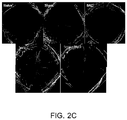
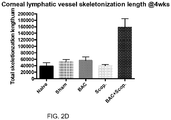
- corneal blood vessel skeletonization length significantly increased after 4 weeks of treatment with BAC + Scop.
- corneal lymphatic vessel skeletonization length increased after 4 weeks of BAC +Scop treatment.
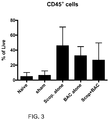
- extraorbital lacrimal glands contained immune cell infiltrate after 4 weeks of treatment, as indicated in FIG. 3 .
- Example 2 Testing ability of candidate agent to prevent or inhibit onset of dry eye
- mice For studies of the efficacy of candidate agents to prevent or inhibit the development of dry eye, sets of mice are randomized to the following groups: naive (untreated), sham (receiving surgery equivalent to implantation of pump, but no actual implantation of pump and without scopolamine or BAC treatment), benzalkonium chloride plus scopolamine (BAC plus Scop), test agent alone, or test agent plus BAC plus Scop.
- mice are subcutaneously implanted with an osmotic pump delivering scopolamine (2 mg/20 g body weight/day), and 1 ⁇ l of 0.1-0.2% BAC is topically administrated on the right eye ocular surface, twice daily, 2 days per week.
- Animals in the test agent groups are administered the candidate agent starting on the same day dry eye induction begins.
- the candidate agent is administered to the animal in the form of an eye drop, an intranasal spray, or parenterally in the form of a solution for injection.
- the suitable dose of the candidate agent and frequency of administration is decided based on the body weight of the animal and route of administration. Timing and frequency of administration depend on the agent to be used. All treatments are performed for at least one, two, three, or four weeks. Tear production and corneal fluorescein staining are measured on days 7, 14, 21, and 28. On day 28, animals are euthanized and the extraorbital lacrimal gland and cornea are harvested for flow cytometry and histology. Corneal angiogenesis and lymphangiogenesis are also quantified.
- the efficacy of the candidate agent is determined by detecting the ability of the candidate agent to maintain tear production, and/or prevent or limit ocular irritation, relative to control levels, e.g., levels in an eye of animals receiving scopolamine and benzalkonium chloride but not receiving the candidate agent.
- mice For studies of efficacy of candidate agents to treat dry eye, sets of mice are randomized to the following groups: naive (untreated), sham (receiving surgery equivalent toimplantation of pump, but without actual implantation of pump and without scopolamine or BAC treatment), benzalkonium chloride plus scopolamine (BAC plus Scop), test agent alone, or test agent plus BAC plus Scop.
- Dry eye is induced as described above.
- mice are subcutaneously implanted with an osmotic pump delivering scopolamine (2 mg/20 g body weight/day), and 1 ⁇ l of 0.1-0.2% BAC is topically administrated on the right eye ocular surface, twice daily, 2 days per week. Dry eye induction methods continue for at least one, two, three, or four weeks.
- Animals in the test agent groups are administered the candidate agent starting one to two weeks after dry eye induction begins, e.g., between days 7-14 after the start of dry eye induction.
- the candidate agent is administered to the animal in the form of an eye drop, an intranasal spray, or parenterally in the form of a solution for injection.
- the suitable dose of the candidate agent and frequency of administration is decided based on the body weight of the animal and route of administration. Timing and frequency of administration depend on the agent to be used.
- the test agent is administered for one to three weeks. Tear production and corneal fluorescein staining are measured on days 7, 14, 21, and 28 from the start of dry eye induction. On day 28, animals are euthanized and the extraorbital lacrimal gland and cornea are harvested for flow cytometry and histology. Corneal angiogenesis and lymphangiogenesis are also quantified.
- Efficacy is determined by detecting an increase in tear production and/or a decrease in ocular irritation in animals receiving the candidate agent and BAC plus Scop, relative to control levels (e.g., levels in an eye of animals receiving BAC plus Scop but not receiving the candidate agent).
Landscapes
- Health & Medical Sciences (AREA)
- Life Sciences & Earth Sciences (AREA)
- Animal Behavior & Ethology (AREA)
- General Health & Medical Sciences (AREA)
- Veterinary Medicine (AREA)
- Public Health (AREA)
- Chemical & Material Sciences (AREA)
- Medicinal Chemistry (AREA)
- Pharmacology & Pharmacy (AREA)
- Epidemiology (AREA)
- Engineering & Computer Science (AREA)
- Emergency Medicine (AREA)
- Ophthalmology & Optometry (AREA)
- Environmental Sciences (AREA)
- Zoology (AREA)
- Chemical Kinetics & Catalysis (AREA)
- Bioinformatics & Cheminformatics (AREA)
- General Chemical & Material Sciences (AREA)
- Physics & Mathematics (AREA)
- Organic Chemistry (AREA)
- General Physics & Mathematics (AREA)
- Nuclear Medicine, Radiotherapy & Molecular Imaging (AREA)
- Biodiversity & Conservation Biology (AREA)
- Toxicology (AREA)
- Urology & Nephrology (AREA)
- Rheumatology (AREA)
- Pathology (AREA)
- Gastroenterology & Hepatology (AREA)
- Endocrinology (AREA)
- Diabetes (AREA)
- Biomedical Technology (AREA)
- Animal Husbandry (AREA)
- Educational Technology (AREA)
- Pure & Applied Mathematics (AREA)
- Medical Informatics (AREA)
- Mathematical Analysis (AREA)
- Mathematical Optimization (AREA)
- Theoretical Computer Science (AREA)
- Algebra (AREA)
- Business, Economics & Management (AREA)
Applications Claiming Priority (2)
| Application Number | Priority Date | Filing Date | Title |
|---|---|---|---|
| US201462086263P | 2014-12-02 | 2014-12-02 | |
| PCT/US2015/063084 WO2016089807A1 (en) | 2014-12-02 | 2015-12-01 | Animal model for dry eye and methods of use of such animals |
Publications (2)
| Publication Number | Publication Date |
|---|---|
| EP3226853A1 EP3226853A1 (en) | 2017-10-11 |
| EP3226853B1 true EP3226853B1 (en) | 2019-09-04 |
Family
ID=55024246
Family Applications (1)
| Application Number | Title | Priority Date | Filing Date |
|---|---|---|---|
| EP15816590.2A Active EP3226853B1 (en) | 2014-12-02 | 2015-12-01 | Animal model for dry eye and methods of use of such animals |
Country Status (14)
| Country | Link |
|---|---|
| US (1) | US20170360013A1 (enExample) |
| EP (1) | EP3226853B1 (enExample) |
| JP (1) | JP6692808B2 (enExample) |
| KR (1) | KR20170100483A (enExample) |
| CN (1) | CN107106553A (enExample) |
| AU (1) | AU2015355169A1 (enExample) |
| CA (1) | CA2967432A1 (enExample) |
| ES (1) | ES2759729T3 (enExample) |
| IL (1) | IL252077A0 (enExample) |
| MX (1) | MX2017007295A (enExample) |
| RU (1) | RU2706787C2 (enExample) |
| SG (1) | SG11201703572SA (enExample) |
| WO (1) | WO2016089807A1 (enExample) |
| ZA (1) | ZA201703052B (enExample) |
Families Citing this family (6)
| Publication number | Priority date | Publication date | Assignee | Title |
|---|---|---|---|---|
| ES2909998T3 (es) * | 2016-10-14 | 2022-05-11 | I Com Medical Gmbh | Método para establecer, restablecer y preservar la homeostasis de la superficie ocular |
| US12303527B2 (en) | 2018-04-18 | 2025-05-20 | i.com medical GmbH | High molecular weight hyaluronic acid for treatment and prevention of severe ocular surface disease |
| US12268706B2 (en) | 2019-01-31 | 2025-04-08 | i.com medical GmbH | Hyaluronic acid for relief of idiopathic ocular pain |
| KR102429281B1 (ko) * | 2020-05-25 | 2022-08-05 | (주)노바셀테크놀로지 | 신규 안구건조증 치료용 약학적 조성물 |
| CN113519461A (zh) * | 2021-07-06 | 2021-10-22 | 江西中洪博元生物技术有限公司 | 伴刀豆球蛋白a诱导的小鼠干眼症模型的构建方法及应用 |
| WO2023215261A1 (en) * | 2022-05-02 | 2023-11-09 | Ocular Services On Demand, Llc | Mammalian eye models |
Family Cites Families (2)
| Publication number | Priority date | Publication date | Assignee | Title |
|---|---|---|---|---|
| CA2384679A1 (en) * | 1999-09-08 | 2001-03-15 | Srinivasan Venkateshwaran | Using quaternary ammonium salts for transdermal drug delivery |
| EP2598131A1 (fr) * | 2010-07-29 | 2013-06-05 | Laboratoires Fournier S.A. | Composes pour le traitement/la prevention des maladies inflammatoires oculaires |
-
2015
- 2015-12-01 SG SG11201703572SA patent/SG11201703572SA/en unknown
- 2015-12-01 ES ES15816590T patent/ES2759729T3/es active Active
- 2015-12-01 CN CN201580065760.3A patent/CN107106553A/zh active Pending
- 2015-12-01 MX MX2017007295A patent/MX2017007295A/es unknown
- 2015-12-01 CA CA2967432A patent/CA2967432A1/en not_active Abandoned
- 2015-12-01 EP EP15816590.2A patent/EP3226853B1/en active Active
- 2015-12-01 KR KR1020177012469A patent/KR20170100483A/ko not_active Withdrawn
- 2015-12-01 US US15/532,527 patent/US20170360013A1/en not_active Abandoned
- 2015-12-01 RU RU2017118978A patent/RU2706787C2/ru not_active IP Right Cessation
- 2015-12-01 JP JP2017525337A patent/JP6692808B2/ja not_active Expired - Fee Related
- 2015-12-01 AU AU2015355169A patent/AU2015355169A1/en not_active Abandoned
- 2015-12-01 WO PCT/US2015/063084 patent/WO2016089807A1/en not_active Ceased
-
2017
- 2017-05-03 IL IL252077A patent/IL252077A0/en unknown
- 2017-05-03 ZA ZA2017/03052A patent/ZA201703052B/en unknown
Non-Patent Citations (1)
| Title |
|---|
| None * |
Also Published As
| Publication number | Publication date |
|---|---|
| RU2017118978A (ru) | 2019-01-09 |
| ES2759729T3 (es) | 2020-05-12 |
| RU2706787C2 (ru) | 2019-11-21 |
| EP3226853A1 (en) | 2017-10-11 |
| CN107106553A (zh) | 2017-08-29 |
| KR20170100483A (ko) | 2017-09-04 |
| SG11201703572SA (en) | 2017-05-30 |
| CA2967432A1 (en) | 2016-06-09 |
| US20170360013A1 (en) | 2017-12-21 |
| IL252077A0 (en) | 2017-07-31 |
| RU2017118978A3 (enExample) | 2019-06-04 |
| MX2017007295A (es) | 2018-03-12 |
| JP6692808B2 (ja) | 2020-05-13 |
| AU2015355169A1 (en) | 2017-05-25 |
| WO2016089807A1 (en) | 2016-06-09 |
| ZA201703052B (en) | 2019-03-27 |
| JP2018500546A (ja) | 2018-01-11 |
Similar Documents
| Publication | Publication Date | Title |
|---|---|---|
| Xie et al. | Erythropoietin protects the inner blood–retinal barrier by inhibiting microglia phagocytosis via Src/Akt/cofilin signalling in experimental diabetic retinopathy | |
| US20170360013A1 (en) | Animal model for dry eye and methods of use of such animals | |
| De Paiva et al. | Dry eye–induced conjunctival epithelial squamous metaplasia is modulated by interferon-γ | |
| Sumpter et al. | Autocrine hemokinin-1 functions as an endogenous adjuvant for IgE-mediated mast cell inflammatory responses | |
| Lindstrom et al. | Diabetes induces IL-17A-Act1-FADD-dependent retinal endothelial cell death and capillary degeneration | |
| Lee et al. | Corneal lymphangiogenesis in dry eye disease is regulated by substance P/neurokinin-1 receptor system through controlling expression of vascular endothelial growth factor receptor 3 | |
| Royce et al. | Intranasal administration of mesenchymoangioblast‐derived mesenchymal stem cells abrogates airway fibrosis and airway hyperresponsiveness associated with chronic allergic airways disease | |
| Cai et al. | Endogenous regulatory T cells promote M2 macrophage phenotype in diabetic stroke as visualized by optical imaging | |
| Dietrich et al. | Comparative analysis on the dynamic of lacrimal gland damage and regeneration after Interleukin-1α or duct ligation induced dry eye disease in mice | |
| JP2020501510A (ja) | 目の表面で使用するためのアンカードメインを含む繋留タンパク質に基づく薬物 | |
| Oh et al. | The Link module of human TSG-6 (Link_TSG6) promotes wound healing, suppresses inflammation and improves glandular function in mouse models of Dry Eye Disease | |
| Lin et al. | Ectoine enhances mucin production via restoring IL-13/IFN-γ balance in a murine dry eye model | |
| Vitar et al. | Topical neurokinin-1 receptor antagonist Fosaprepitant ameliorates ocular graft-versus-host disease in a preclinical mouse model | |
| Jin et al. | Anti-inflammatory effects of glycine thymosin β4 eye drops in experimental dry eye | |
| Sun et al. | Zinc as mediator of ubiquitin conjugation following traumatic brain injury | |
| Fang et al. | Piezo2 downregulation via the Cre-lox system affects aqueous humor dynamics in mice | |
| US20140120112A1 (en) | Therapeutics for age-related macular degeneration | |
| EP2870971B1 (en) | Drug for preventing/treating ocular disease | |
| Gala et al. | Bispecific domain antibody attenuates airway hyperresponsiveness and pulmonary inflammation in ovalbumin-lipopolysaccharide induced asthma model by inhibiting IL-23 and TNF-α | |
| Lin et al. | Comparison of treatment effect and tolerance of the topical application of mizoribine and cyclosporine A in a mouse Dry eye model | |
| JP5800263B2 (ja) | アレルギー性鼻炎治療剤のスクリーニング方法およびその利用 | |
| US20090131359A1 (en) | Antifibrotic therapy | |
| KR20220051791A (ko) | Fas 신호전달 억제용 펩타이드를 포함하는 황반변성 예방 또는 치료용 조성물 | |
| Huo et al. | Influence of plasma exchange on transplantation related immune function in patients with liver failure. | |
| Ogawa et al. | The effect of rebamipide ophthalmic solution on cytokine and mucin secretion in culture of conjunctival epithelial cells from the Cu, Zn-superoxide dismutase-1 (SOD-1) knock-down mouse |
Legal Events
| Date | Code | Title | Description |
|---|---|---|---|
| STAA | Information on the status of an ep patent application or granted ep patent |
Free format text: STATUS: THE INTERNATIONAL PUBLICATION HAS BEEN MADE |
|
| PUAI | Public reference made under article 153(3) epc to a published international application that has entered the european phase |
Free format text: ORIGINAL CODE: 0009012 |
|
| STAA | Information on the status of an ep patent application or granted ep patent |
Free format text: STATUS: REQUEST FOR EXAMINATION WAS MADE |
|
| 17P | Request for examination filed |
Effective date: 20170508 |
|
| AK | Designated contracting states |
Kind code of ref document: A1 Designated state(s): AL AT BE BG CH CY CZ DE DK EE ES FI FR GB GR HR HU IE IS IT LI LT LU LV MC MK MT NL NO PL PT RO RS SE SI SK SM TR |
|
| AX | Request for extension of the european patent |
Extension state: BA ME |
|
| DAV | Request for validation of the european patent (deleted) | ||
| REG | Reference to a national code |
Ref country code: HK Ref legal event code: DE Ref document number: 1239525 Country of ref document: HK |
|
| STAA | Information on the status of an ep patent application or granted ep patent |
Free format text: STATUS: EXAMINATION IS IN PROGRESS |
|
| 17Q | First examination report despatched |
Effective date: 20190125 |
|
| GRAP | Despatch of communication of intention to grant a patent |
Free format text: ORIGINAL CODE: EPIDOSNIGR1 |
|
| STAA | Information on the status of an ep patent application or granted ep patent |
Free format text: STATUS: GRANT OF PATENT IS INTENDED |
|
| INTG | Intention to grant announced |
Effective date: 20190613 |
|
| GRAS | Grant fee paid |
Free format text: ORIGINAL CODE: EPIDOSNIGR3 |
|
| GRAA | (expected) grant |
Free format text: ORIGINAL CODE: 0009210 |
|
| STAA | Information on the status of an ep patent application or granted ep patent |
Free format text: STATUS: THE PATENT HAS BEEN GRANTED |
|
| AK | Designated contracting states |
Kind code of ref document: B1 Designated state(s): AL AT BE BG CH CY CZ DE DK EE ES FI FR GB GR HR HU IE IS IT LI LT LU LV MC MK MT NL NO PL PT RO RS SE SI SK SM TR |
|
| AX | Request for extension of the european patent |
Extension state: BA ME |
|
| REG | Reference to a national code |
Ref country code: GB Ref legal event code: FG4D |
|
| REG | Reference to a national code |
Ref country code: CH Ref legal event code: EP |
|
| REG | Reference to a national code |
Ref country code: AT Ref legal event code: REF Ref document number: 1174365 Country of ref document: AT Kind code of ref document: T Effective date: 20190915 |
|
| REG | Reference to a national code |
Ref country code: DE Ref legal event code: R096 Ref document number: 602015037358 Country of ref document: DE |
|
| REG | Reference to a national code |
Ref country code: IE Ref legal event code: FG4D |
|
| REG | Reference to a national code |
Ref country code: SE Ref legal event code: TRGR |
|
| REG | Reference to a national code |
Ref country code: NL Ref legal event code: FP |
|
| REG | Reference to a national code |
Ref country code: CH Ref legal event code: NV Representative=s name: TR-IP CONSULTING LLC, CH |
|
| REG | Reference to a national code |
Ref country code: LT Ref legal event code: MG4D |
|
| PG25 | Lapsed in a contracting state [announced via postgrant information from national office to epo] |
Ref country code: BG Free format text: LAPSE BECAUSE OF FAILURE TO SUBMIT A TRANSLATION OF THE DESCRIPTION OR TO PAY THE FEE WITHIN THE PRESCRIBED TIME-LIMIT Effective date: 20191204 Ref country code: LT Free format text: LAPSE BECAUSE OF FAILURE TO SUBMIT A TRANSLATION OF THE DESCRIPTION OR TO PAY THE FEE WITHIN THE PRESCRIBED TIME-LIMIT Effective date: 20190904 Ref country code: HR Free format text: LAPSE BECAUSE OF FAILURE TO SUBMIT A TRANSLATION OF THE DESCRIPTION OR TO PAY THE FEE WITHIN THE PRESCRIBED TIME-LIMIT Effective date: 20190904 Ref country code: FI Free format text: LAPSE BECAUSE OF FAILURE TO SUBMIT A TRANSLATION OF THE DESCRIPTION OR TO PAY THE FEE WITHIN THE PRESCRIBED TIME-LIMIT Effective date: 20190904 Ref country code: NO Free format text: LAPSE BECAUSE OF FAILURE TO SUBMIT A TRANSLATION OF THE DESCRIPTION OR TO PAY THE FEE WITHIN THE PRESCRIBED TIME-LIMIT Effective date: 20191204 |
|
| PGFP | Annual fee paid to national office [announced via postgrant information from national office to epo] |
Ref country code: DE Payment date: 20191210 Year of fee payment: 5 Ref country code: IE Payment date: 20191220 Year of fee payment: 5 Ref country code: NL Payment date: 20191219 Year of fee payment: 5 Ref country code: SE Payment date: 20191219 Year of fee payment: 5 |
|
| REG | Reference to a national code |
Ref country code: CH Ref legal event code: PCAR Free format text: NEW ADDRESS: ROUTE DU COUTSET 18, 1485 NUVILLY (CH) |
|
| PG25 | Lapsed in a contracting state [announced via postgrant information from national office to epo] |
Ref country code: GR Free format text: LAPSE BECAUSE OF FAILURE TO SUBMIT A TRANSLATION OF THE DESCRIPTION OR TO PAY THE FEE WITHIN THE PRESCRIBED TIME-LIMIT Effective date: 20191205 Ref country code: RS Free format text: LAPSE BECAUSE OF FAILURE TO SUBMIT A TRANSLATION OF THE DESCRIPTION OR TO PAY THE FEE WITHIN THE PRESCRIBED TIME-LIMIT Effective date: 20190904 Ref country code: LV Free format text: LAPSE BECAUSE OF FAILURE TO SUBMIT A TRANSLATION OF THE DESCRIPTION OR TO PAY THE FEE WITHIN THE PRESCRIBED TIME-LIMIT Effective date: 20190904 Ref country code: AL Free format text: LAPSE BECAUSE OF FAILURE TO SUBMIT A TRANSLATION OF THE DESCRIPTION OR TO PAY THE FEE WITHIN THE PRESCRIBED TIME-LIMIT Effective date: 20190904 |
|
| PGFP | Annual fee paid to national office [announced via postgrant information from national office to epo] |
Ref country code: FR Payment date: 20191220 Year of fee payment: 5 |
|
| REG | Reference to a national code |
Ref country code: AT Ref legal event code: MK05 Ref document number: 1174365 Country of ref document: AT Kind code of ref document: T Effective date: 20190904 |
|
| PGFP | Annual fee paid to national office [announced via postgrant information from national office to epo] |
Ref country code: CH Payment date: 20191219 Year of fee payment: 5 |
|
| PG25 | Lapsed in a contracting state [announced via postgrant information from national office to epo] |
Ref country code: EE Free format text: LAPSE BECAUSE OF FAILURE TO SUBMIT A TRANSLATION OF THE DESCRIPTION OR TO PAY THE FEE WITHIN THE PRESCRIBED TIME-LIMIT Effective date: 20190904 Ref country code: AT Free format text: LAPSE BECAUSE OF FAILURE TO SUBMIT A TRANSLATION OF THE DESCRIPTION OR TO PAY THE FEE WITHIN THE PRESCRIBED TIME-LIMIT Effective date: 20190904 Ref country code: PT Free format text: LAPSE BECAUSE OF FAILURE TO SUBMIT A TRANSLATION OF THE DESCRIPTION OR TO PAY THE FEE WITHIN THE PRESCRIBED TIME-LIMIT Effective date: 20200106 Ref country code: PL Free format text: LAPSE BECAUSE OF FAILURE TO SUBMIT A TRANSLATION OF THE DESCRIPTION OR TO PAY THE FEE WITHIN THE PRESCRIBED TIME-LIMIT Effective date: 20190904 Ref country code: RO Free format text: LAPSE BECAUSE OF FAILURE TO SUBMIT A TRANSLATION OF THE DESCRIPTION OR TO PAY THE FEE WITHIN THE PRESCRIBED TIME-LIMIT Effective date: 20190904 |
|
| PGFP | Annual fee paid to national office [announced via postgrant information from national office to epo] |
Ref country code: GB Payment date: 20191219 Year of fee payment: 5 Ref country code: IT Payment date: 20191227 Year of fee payment: 5 Ref country code: ES Payment date: 20200121 Year of fee payment: 5 |
|
| REG | Reference to a national code |
Ref country code: ES Ref legal event code: FG2A Ref document number: 2759729 Country of ref document: ES Kind code of ref document: T3 Effective date: 20200512 |
|
| PG25 | Lapsed in a contracting state [announced via postgrant information from national office to epo] |
Ref country code: SK Free format text: LAPSE BECAUSE OF FAILURE TO SUBMIT A TRANSLATION OF THE DESCRIPTION OR TO PAY THE FEE WITHIN THE PRESCRIBED TIME-LIMIT Effective date: 20190904 Ref country code: SM Free format text: LAPSE BECAUSE OF FAILURE TO SUBMIT A TRANSLATION OF THE DESCRIPTION OR TO PAY THE FEE WITHIN THE PRESCRIBED TIME-LIMIT Effective date: 20190904 Ref country code: IS Free format text: LAPSE BECAUSE OF FAILURE TO SUBMIT A TRANSLATION OF THE DESCRIPTION OR TO PAY THE FEE WITHIN THE PRESCRIBED TIME-LIMIT Effective date: 20200224 Ref country code: CZ Free format text: LAPSE BECAUSE OF FAILURE TO SUBMIT A TRANSLATION OF THE DESCRIPTION OR TO PAY THE FEE WITHIN THE PRESCRIBED TIME-LIMIT Effective date: 20190904 |
|
| REG | Reference to a national code |
Ref country code: DE Ref legal event code: R097 Ref document number: 602015037358 Country of ref document: DE |
|
| PLBE | No opposition filed within time limit |
Free format text: ORIGINAL CODE: 0009261 |
|
| STAA | Information on the status of an ep patent application or granted ep patent |
Free format text: STATUS: NO OPPOSITION FILED WITHIN TIME LIMIT |
|
| PG2D | Information on lapse in contracting state deleted |
Ref country code: IS |
|
| PG25 | Lapsed in a contracting state [announced via postgrant information from national office to epo] |
Ref country code: IS Free format text: LAPSE BECAUSE OF FAILURE TO SUBMIT A TRANSLATION OF THE DESCRIPTION OR TO PAY THE FEE WITHIN THE PRESCRIBED TIME-LIMIT Effective date: 20200105 Ref country code: DK Free format text: LAPSE BECAUSE OF FAILURE TO SUBMIT A TRANSLATION OF THE DESCRIPTION OR TO PAY THE FEE WITHIN THE PRESCRIBED TIME-LIMIT Effective date: 20190904 |
|
| 26N | No opposition filed |
Effective date: 20200605 |
|
| REG | Reference to a national code |
Ref country code: BE Ref legal event code: MM Effective date: 20191231 |
|
| PG25 | Lapsed in a contracting state [announced via postgrant information from national office to epo] |
Ref country code: SI Free format text: LAPSE BECAUSE OF FAILURE TO SUBMIT A TRANSLATION OF THE DESCRIPTION OR TO PAY THE FEE WITHIN THE PRESCRIBED TIME-LIMIT Effective date: 20190904 Ref country code: MC Free format text: LAPSE BECAUSE OF FAILURE TO SUBMIT A TRANSLATION OF THE DESCRIPTION OR TO PAY THE FEE WITHIN THE PRESCRIBED TIME-LIMIT Effective date: 20190904 |
|
| REG | Reference to a national code |
Ref country code: DE Ref legal event code: R082 Ref document number: 602015037358 Country of ref document: DE Representative=s name: VENNER SHIPLEY LLP, DE |
|
| PG25 | Lapsed in a contracting state [announced via postgrant information from national office to epo] |
Ref country code: LU Free format text: LAPSE BECAUSE OF NON-PAYMENT OF DUE FEES Effective date: 20191201 |
|
| PG25 | Lapsed in a contracting state [announced via postgrant information from national office to epo] |
Ref country code: BE Free format text: LAPSE BECAUSE OF NON-PAYMENT OF DUE FEES Effective date: 20191231 |
|
| PG25 | Lapsed in a contracting state [announced via postgrant information from national office to epo] |
Ref country code: CY Free format text: LAPSE BECAUSE OF FAILURE TO SUBMIT A TRANSLATION OF THE DESCRIPTION OR TO PAY THE FEE WITHIN THE PRESCRIBED TIME-LIMIT Effective date: 20190904 |
|
| REG | Reference to a national code |
Ref country code: DE Ref legal event code: R119 Ref document number: 602015037358 Country of ref document: DE |
|
| PG25 | Lapsed in a contracting state [announced via postgrant information from national office to epo] |
Ref country code: HU Free format text: LAPSE BECAUSE OF FAILURE TO SUBMIT A TRANSLATION OF THE DESCRIPTION OR TO PAY THE FEE WITHIN THE PRESCRIBED TIME-LIMIT; INVALID AB INITIO Effective date: 20151201 Ref country code: MT Free format text: LAPSE BECAUSE OF FAILURE TO SUBMIT A TRANSLATION OF THE DESCRIPTION OR TO PAY THE FEE WITHIN THE PRESCRIBED TIME-LIMIT Effective date: 20190904 |
|
| REG | Reference to a national code |
Ref country code: CH Ref legal event code: PL |
|
| REG | Reference to a national code |
Ref country code: SE Ref legal event code: EUG |
|
| REG | Reference to a national code |
Ref country code: NL Ref legal event code: MM Effective date: 20210101 |
|
| GBPC | Gb: european patent ceased through non-payment of renewal fee |
Effective date: 20201201 |
|
| PG25 | Lapsed in a contracting state [announced via postgrant information from national office to epo] |
Ref country code: NL Free format text: LAPSE BECAUSE OF NON-PAYMENT OF DUE FEES Effective date: 20210101 |
|
| PG25 | Lapsed in a contracting state [announced via postgrant information from national office to epo] |
Ref country code: FR Free format text: LAPSE BECAUSE OF NON-PAYMENT OF DUE FEES Effective date: 20201231 Ref country code: IE Free format text: LAPSE BECAUSE OF NON-PAYMENT OF DUE FEES Effective date: 20201201 Ref country code: IT Free format text: LAPSE BECAUSE OF NON-PAYMENT OF DUE FEES Effective date: 20201201 |
|
| PG25 | Lapsed in a contracting state [announced via postgrant information from national office to epo] |
Ref country code: LI Free format text: LAPSE BECAUSE OF NON-PAYMENT OF DUE FEES Effective date: 20201231 Ref country code: GB Free format text: LAPSE BECAUSE OF NON-PAYMENT OF DUE FEES Effective date: 20201201 Ref country code: DE Free format text: LAPSE BECAUSE OF NON-PAYMENT OF DUE FEES Effective date: 20210701 Ref country code: CH Free format text: LAPSE BECAUSE OF NON-PAYMENT OF DUE FEES Effective date: 20201231 Ref country code: SE Free format text: LAPSE BECAUSE OF NON-PAYMENT OF DUE FEES Effective date: 20201202 |
|
| REG | Reference to a national code |
Ref country code: ES Ref legal event code: FD2A Effective date: 20220207 |
|
| PG25 | Lapsed in a contracting state [announced via postgrant information from national office to epo] |
Ref country code: TR Free format text: LAPSE BECAUSE OF FAILURE TO SUBMIT A TRANSLATION OF THE DESCRIPTION OR TO PAY THE FEE WITHIN THE PRESCRIBED TIME-LIMIT Effective date: 20190904 Ref country code: ES Free format text: LAPSE BECAUSE OF NON-PAYMENT OF DUE FEES Effective date: 20201202 |
|
| PG25 | Lapsed in a contracting state [announced via postgrant information from national office to epo] |
Ref country code: MK Free format text: LAPSE BECAUSE OF FAILURE TO SUBMIT A TRANSLATION OF THE DESCRIPTION OR TO PAY THE FEE WITHIN THE PRESCRIBED TIME-LIMIT Effective date: 20190904 |
|
| REG | Reference to a national code |
Ref country code: HK Ref legal event code: WD Ref document number: 1239525 Country of ref document: HK |