EP3215049B1 - Künstliche zähne - Google Patents
Künstliche zähne Download PDFInfo
- Publication number
- EP3215049B1 EP3215049B1 EP15794518.9A EP15794518A EP3215049B1 EP 3215049 B1 EP3215049 B1 EP 3215049B1 EP 15794518 A EP15794518 A EP 15794518A EP 3215049 B1 EP3215049 B1 EP 3215049B1
- Authority
- EP
- European Patent Office
- Prior art keywords
- fits
- teeth
- cusp
- fossa
- palatal
- Prior art date
- Legal status (The legal status is an assumption and is not a legal conclusion. Google has not performed a legal analysis and makes no representation as to the accuracy of the status listed.)
- Active
Links
Images

Classifications
-
- A—HUMAN NECESSITIES
- A61—MEDICAL OR VETERINARY SCIENCE; HYGIENE
- A61C—DENTISTRY; APPARATUS OR METHODS FOR ORAL OR DENTAL HYGIENE
- A61C13/00—Dental prostheses; Making same
- A61C13/08—Artificial teeth; Making same
- A61C13/097—Artificial teeth; Making same characterised by occlusal profiles, i.e. chewing contact surfaces
-
- A—HUMAN NECESSITIES
- A61—MEDICAL OR VETERINARY SCIENCE; HYGIENE
- A61C—DENTISTRY; APPARATUS OR METHODS FOR ORAL OR DENTAL HYGIENE
- A61C13/00—Dental prostheses; Making same
-
- A—HUMAN NECESSITIES
- A61—MEDICAL OR VETERINARY SCIENCE; HYGIENE
- A61C—DENTISTRY; APPARATUS OR METHODS FOR ORAL OR DENTAL HYGIENE
- A61C13/00—Dental prostheses; Making same
- A61C13/0003—Making bridge-work, inlays, implants or the like
-
- A—HUMAN NECESSITIES
- A61—MEDICAL OR VETERINARY SCIENCE; HYGIENE
- A61C—DENTISTRY; APPARATUS OR METHODS FOR ORAL OR DENTAL HYGIENE
- A61C13/00—Dental prostheses; Making same
- A61C13/0003—Making bridge-work, inlays, implants or the like
- A61C13/0004—Computer-assisted sizing or machining of dental prostheses
-
- A—HUMAN NECESSITIES
- A61—MEDICAL OR VETERINARY SCIENCE; HYGIENE
- A61C—DENTISTRY; APPARATUS OR METHODS FOR ORAL OR DENTAL HYGIENE
- A61C13/00—Dental prostheses; Making same
- A61C13/0003—Making bridge-work, inlays, implants or the like
- A61C13/0006—Production methods
-
- A—HUMAN NECESSITIES
- A61—MEDICAL OR VETERINARY SCIENCE; HYGIENE
- A61C—DENTISTRY; APPARATUS OR METHODS FOR ORAL OR DENTAL HYGIENE
- A61C13/00—Dental prostheses; Making same
- A61C13/0024—Repairing or adjusting dentures; Location of irritating zones
-
- A—HUMAN NECESSITIES
- A61—MEDICAL OR VETERINARY SCIENCE; HYGIENE
- A61C—DENTISTRY; APPARATUS OR METHODS FOR ORAL OR DENTAL HYGIENE
- A61C13/00—Dental prostheses; Making same
- A61C13/0028—Instruments or appliances for wax-shaping or wax-removing
-
- A—HUMAN NECESSITIES
- A61—MEDICAL OR VETERINARY SCIENCE; HYGIENE
- A61C—DENTISTRY; APPARATUS OR METHODS FOR ORAL OR DENTAL HYGIENE
- A61C13/00—Dental prostheses; Making same
- A61C13/08—Artificial teeth; Making same
- A61C13/087—Artificial resin teeth
Definitions
- the present invention relates to a method of changing the occlusal scheme for a set of artificial teeth, as well as to methods for the production of a denture.
- Dentures are prosthetic devices constructed to replace missing teeth. They are supported by the surrounding soft and hard tissues of the oral cavity. Complete dentures replace all of the teeth in the upper and/or the lower jaw, whereas partial dentures only replace some of the teeth in the jaw concerned. For example, partial dentures may replace one or more front teeth and/or one or more of the posterior teeth.
- the tooth distribution in each quadrant of the mouth consists of three front teeth, and four or five posterior teeth including two pre-molars and two or three molars.
- the number of teeth used depends on factors such as the number of remaining natural teeth and the space available.
- the third molar tooth is not always present in the natural human dentition, and is not usually included in dentures.
- the teeth of the natural human dentition are frequently referred to by dentists, clinicians, and dental technicians using the Palmer notation.
- the Palmer notation is a system used to associate information with a specific tooth, and is a simple system in that it does not necessitate differentiating between left and right of the mouth.
- the permanent adult teeth are numbered from 1 to 8, the numbering indicating the position from the midline.
- the Palmer notation additionally uses a symbol ( ⁇ ⁇ ) designating in which quadrant the tooth is found.
- ⁇ ⁇ designating in which quadrant the tooth is found.
- the Palmer notation consists of a symbol ( ⁇ ⁇ ⁇ ⁇ ) designating in which quadrant the tooth is found and a number indicating the position from the midline.
- Adult teeth are numbered 1 to 8.
- the left and right maxillary central incisor would have the same number, "1”, but the right one would have the symbol, " ⁇ ", underneath it, while the left one would have, " ⁇ ”.
- the maxillary teeth as the upper teeth
- the mandibular teeth as the lower teeth, in combination with the number given under the Palmer system.
- Dentures should be retentive, comfortable and provide support for the cheeks and lips. They should allow effective mastication, acceptable aesthetics, clear phonetics, and contribute to the wearer's confidence and self-esteem.
- Jaw registration the dental technician will construct wax rims on models produced from these initial impressions, which are representative of the position of the patient's original teeth.
- the rims are modified in the surgery to reflect the current situation or desired clinical outcome and will provide guidance to the technician for the set-up on wax of both anterior and posterior teeth on a trial denture.
- the anterior teeth are set up using anatomical markers, in order to achieve the desired aesthetic result.
- the posterior teeth are then set up in occlusion on the wax, in order to provide the patient with an acceptable bite and adequate function.
- impressions - primary impressions and secondary impressions may still be recorded and the laboratory will digitally scan the model and the adjusted wax rims. This will record the anatomical detail of the jaws and the desired occlusal plane. In some cases, this detail may be scanned directly at the chairside and transmitted to the dental laboratory.
- Reference Points - within the denture design software Reference Points can be set to reflect the anatomical landmarks, in order to guide the set-up of the denture teeth.
- Denture Design the software allows the design of the denture base to ensure optimal coverage of the soft tissues.
- Teeth this is done virtually and the teeth are set up in the desired occlusal scheme within the denture design software. Where this takes place, the teeth are not set-up on wax and the change from balanced to lingualised occlusion or vice versa may therefore be performed digitally. In this case the rotation of the upper buccal cusps as described and claimed below may take place digitally, rather than by softening the wax.
- Dentures After the denture design has been fine-tuned and confirmed, the dentures are constructed. This may be done by a milling machine, 3D printing or some other means of production.
- Occlusion is defined as the relationship of the maxillary and mandibular teeth when they are in functional contact during mandibular activity.
- the palatal cusps of the upper (maxillary) teeth engage in the central fossae of the lower (mandibular) teeth, with the buccal cusps of the upper teeth tilted at such an angle so that in normal function they never come into contact with the lower teeth.
- the palatal cusps of the upper posteriors make contact in centric relation in the central fossae of the lower posteriors.
- the buccal cusps are out of contact; however the lingual cusps remain in contact in centric, working (mandible moving to the cheek) and balancing (opposite side of mandible moving to the tongue) movements.
- the lower teeth frequently have cusps with a very low incisal angle, or have fewer or smaller cusps, or the occluding surfaces may have a saucer shape in which the upper palatal cusps move.
- the palatal cusps of the upper (maxillary) teeth are in contact with the fossae of the lower (mandibular) teeth
- the buccal cusps of the lower teeth are in contact with the fossae of the upper teeth in centric occlusion.
- the buccal cusps of the upper teeth and the lingual cusps of the lower teeth are not normally in contact with the opposing teeth, but do come into contact during excursive movements.
- the buccal cusps of the upper posterior teeth smoothly glide into contact with the buccal cusps of the lower denture.
- the buccal cusps of the lower posterior teeth maintain contact with the palatal cusps of the respective upper denture teeth. This bilateral balanced occlusion maintains contact between the upper and lower dentures and prevents tipping of the denture, thereby enhancing stability.
- WO 2004/096077 describes a set of teeth designed exclusively for lingualised occlusion.
- WO 2007/071980 describes a set of artificial teeth that can be set up in balanced occlusion, bucco-lingually and/or antero-posteriorly, in which the working cusp spacings of the maxillary posterior teeth are substantially the same as those of the mandibular posterior teeth. In order to set the teeth up in lingualised occlusion, an additional spacer is required.
- US 2005/0095559 (Monkmeyer ) describes a set of artificial teeth in which the stamp cusps of each tooth rest on three points of its antagonist fossa in centric relationship.
- US 2004/0137407 (Ivoclar Vivadent ) describes a kit comprising two separate sets of posterior artificial teeth used for the production of dentures - one for lingualized occlusion and one with zero degree monoplane occlusion surfaces (i.e. for balanced occlusion). This is in keeping with the widely held view of dental technicians that separate sets of artificial teeth are required for different occlusal schemes, the possibility of artificial teeth being adjustable between two types of occlusion not being envisaged.
- JP 2002 177301 A discloses artificial molars used for full dentures and partial dentures.
- An artificial molar having an occlusal shape that provides an occlusion close to full-balanced occlusion and can be changed to lingualized occlusion is disclosed.
- the occlusion scheme is changed by grinding a predetermined amount of material off an artificial molar.
- Changing an occlusal scheme by rotating maxillary buccal cusps upwards or downwards around a palatal cusp on the maxillary posterior teeth such that the palatal cusps remain within the centric stops of the mandibular posterior teeth is not dislosed.
- the present invention seeks to design an improved method which overcomes the problems associated with existing artificial denture teeth as described above by providing a method in which artificial denture teeth are set up in either balanced or lingualised occlusal schemes and can be readily changed to the alternate occlusal scheme.
- the present invention provides a method according to the appended claim 1.
- the present invention provides a method according to claim 6.
- the artificial denture teeth disclosed herein present clearly defined upper palatal stamp cusps on one or more of the upper teeth and centric stops on the occluding (biting) surfaces of one or more of the lower teeth.
- the design of the artificial denture teeth is particularly of merit for complete dentures. This design enables the denture teeth to be easily set up in a number of different occlusal schemes including lingualised, balanced, cross bite, and edge to edge occlusal schemes.
- the present invention specifically relates to sets of artificial teeth in which the teeth are set up in either balanced or lingualised occlusal schemes and can be readily switched between the two schemes.
- the sets of artificial teeth disclosed herein may be set up in either balanced or lingualised occlusal schemes, and if one of these schemes is chosen and proves not to be acceptable in a particular clinical case, then the dental technician can readily change to the alternate occlusal scheme. This is achieved by softening the wax or resin under the upper posterior teeth and rotating the teeth as described to bring them into the alternate occlusal scheme.
- the tooth shape allows a simple rotation around one or more stamp cusps of the upper posterior teeth which still remain within their occlusal stops in the opposing lowers, thereby maintaining the relative positions of the teeth concerned, and making changing the occlusal scheme easy to carry out.
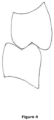
- the change to the alternate occlusal scheme is achieved by softening the wax or resin under the upper posterior teeth and simply rotating the upper buccal cusps around the upper palatal stamp cusp or cusps.
- the upper buccal cusps are rotated downwards.
- the upper buccal cusps are rotated upwards.
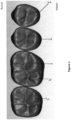
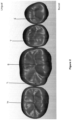
- the present disclosure provides a set of artificial teeth comprising a maxillary unit and a mandibular unit in which, when set up in lingualised occlusion, at least one of following occurs: the palatal cusp of the upper 4 (1) fits into the distal fossa of the lower 4 (6), the palatal cusp of the upper 5 (2) fits into the distal fossa of the lower 5 (7), the mesial palatal cusp of the upper 6 (3) fits into the central fossa of the lower 6 (8), the distal palatal cusp of the upper 6 (4) fits onto the marginal ridge of the lower 6 (9) and the mesial palatal cusp of the upper 7 (5) fits into the central fossa of the lower 7 (10), and wherein the buccal cusps of the lower teeth are out of contact with the upper teeth, such that the cusp/fossa dimensions and relationships of the teeth concerned enable the occlusal scheme for the teeth to be changed from lingualised
- the present disclosure also provides a set of artificial teeth comprising a maxillary unit and a mandibular unit in which, when set up in balanced occlusion, at least one of the following occurs: the palatal cusp of the upper 4 (1) fits into the distal fossa of the lower 4 (6), the palatal cusp of the upper 5 (2) fits into the distal fossa of the lower 5 (7), the mesial palatal cusp of the upper 6 (3) fits into the central fossa of the lower 6 (8), the distal palatal cusp of the upper 6 (4) fits onto the marginal ridge of the lower 6 (9), and the mesial palatal cusp of the upper 7 (5) fits into the central fossa of the lower 7 (10), and wherein at least one of the buccal cusps of the lower teeth is in contact with the upper teeth, such that the cusp/fossa dimensions and relationships of the teeth concerned enable the occlusal scheme for the teeth to be changed from
- the term "about” means plus or minus 20%; more preferably plus or minus 10%; even more preferably plus or minus 5%; most preferably plus or minus 2%.
- denture means a prosthetic device constructed to replace missing teeth; a denture consists of a denture base that is supported by the soft and hard tissues of the oral cavity, and artificial denture teeth that restore aesthetics and function for a patient.
- stamp cusp means a tooth cusp that, when the tooth is in occlusion, fits in the fossa of the antagonist tooth in a mortar- and-pestle fashion.
- Centric stop means a stable point of contact between occluded maxillary and mandibular teeth. Centric stops are located in the central fossa, marginal ridges and buccal and lingual cusps of posterior teeth.
- the palatal cusp of the upper 4 (1) fits into the distal fossa of the lower 4 (6)
- the palatal cusp of the upper 5 fits into the distal fossa of the lower 5 (7)
- the mesial palatal cusp of the upper 6 fits into the central fossa of the lower 6 (8)
- the distal palatal cusp of the upper 6 (4) fits onto the marginal ridge of the lower 6 (9)
- the mesial palatal cusp of the upper 7 fits into the central fossa of the lower 7 (10).
- the palatal cusp of the upper 4 (1) fits into the distal fossa of the lower 4 (6)
- the palatal cusp of the upper 5 fits into the distal fossa of the lower 5 (7)
- the mesial palatal cusp of the upper 6 fits into the central fossa of the lower 6
- the distal palatal cusp of the upper 6 fits onto the marginal ridge of the lower 6 (9)
- the mesial palatal cusp of the upper 7 fits into the central fossa of the lower 7 (10).
- the palatal cusp of the upper 4 (1) fits into the distal fossa of the lower 4 (6)
- the palatal cusp of the upper 5 fits into the distal fossa of the lower 5 (7)
- the mesial palatal cusp of the upper 6 fits into the central fossa of the lower 6 (8)
- the distal palatal cusp of the upper 6 (4) fits onto the marginal ridge of the lower 6 (9)
- the mesial palatal cusp of the upper 7 fits into the central fossa of the lower 7 (10).
- the palatal cusp of the upper 4 (1) fits into the distal fossa of the lower 4 (6)
- the palatal cusp of the upper 5 fits into the distal fossa of the lower 5 (7)
- the mesial palatal cusp of the upper 6 fits into the central fossa of the lower 6
- the distal palatal cusp of the upper 6 fits onto the marginal ridge of the lower 6 (9)
- the mesial palatal cusp of the upper 7 fits into the central fossa of the lower 7 (10).
- the palatal cusp of the upper 4 fits into the distal fossa of the lower 4 (6)
- the palatal cusp of the upper 5 fits into the distal fossa of the lower 5 (7)
- the mesial palatal cusp of the upper 6 fits into the central fossa of the lower 6
- the distal palatal cusp of the upper 6 fits onto the marginal ridge of the lower 6 (9)
- the mesial palatal cusp of the upper 7 fits into the central fossa of the lower 7 (10).
- the present invention provides a set of artificial teeth set up in lingualised occlusion as described above, wherein the cusp/fossa dimensions and relationships of the teeth concerned enable the occlusal scheme for the teeth to be changed from lingualised to balanced occlusion.
- the change from lingualised to balanced occlusion is preferably achieved simply by softening the wax or resin under the upper posterior teeth and rotating the upper buccal cusps downwards around the palatal stamp cusps on the upper teeth with such stamp cusps still substantially remaining within the centric stops of the lowers.
- the palatal cusp of the upper 4 (1) fits into the distal fossa of the lower 4 (6)
- the palatal cusp of the upper 5 fits into the distal fossa of the lower 5 (7)
- the mesial palatal cusp of the upper 6 fits into the central fossa of the lower 6 (8)
- the distal palatal cusp of the upper 6 (4) fits onto the marginal ridge of the lower 6 (9)
- the mesial palatal cusp of the upper 7 fits into the central fossa of the lower 7 (10).
- the palatal cusp of the upper 4 (1) fits into the distal fossa of the lower 4 (6)
- the palatal cusp of the upper 5 fits into the distal fossa of the lower 5 (7)
- the mesial palatal cusp of the upper 6 fits into the central fossa of the lower 6 (8)
- the distal palatal cusp of the upper 6 (4) fits onto the marginal ridge of the lower 6 (9)
- the mesial palatal cusp of the upper 7 fits into the central fossa of the lower 7 (10).
- the palatal cusp of the upper 4 (1) fits into the distal fossa of the lower 4 (6)
- the palatal cusp of the upper 5 fits into the distal fossa of the lower 5 (7)
- the mesial palatal cusp of the upper 6 fits into the central fossa of the lower 6 (8)
- the distal palatal cusp of the upper 6 (4) fits onto the marginal ridge of the lower 6 (9)
- the mesial palatal cusp of the upper 7 fits into the central fossa of the lower 7 (10).
- the palatal cusp of the upper 4 (1) fits into the distal fossa of the lower 4 (6)
- the palatal cusp of the upper 5 fits into the distal fossa of the lower 5 (7)
- the mesial palatal cusp of the upper 6 fits into the central fossa of the lower 6
- the distal palatal cusp of the upper 6 fits onto the marginal ridge of the lower 6 (9)
- the mesial palatal cusp of the upper 7 fits into the central fossa of the lower 7 (10).
- the palatal cusp of the upper 4 fits into the distal fossa of the lower 4 (6)
- the palatal cusp of the upper 5 fits into the distal fossa of the lower 5 (7)
- the mesial palatal cusp of the upper 6 fits into the central fossa of the lower 6
- the distal palatal cusp of the upper 6 fits onto the marginal ridge of the lower 6 (9)
- the mesial palatal cusp of the upper 7 fits into the central fossa of the lower 7 (10).
- the buccal cusps of the lower teeth are in contact with the upper teeth.
- at least one buccal cusp of the lower teeth is in contact with the upper teeth.
- at least two, at least three, or at least four buccal cusps of the lower teeth are in contact with the upper teeth.
- all of the buccal cusps of the lower teeth of the set of artificial teeth are in contact with the upper teeth.
- the buccal cusps of the lower teeth are in contact with the central fossae of the upper posterior teeth.
- the present invention provides a set of artificial teeth set up in balanced occlusion as described above, wherein the cusp/fossa dimensions and relationships of the teeth concerned enable the occlusal scheme for the teeth to be changed from balanced to lingualised occlusion.
- the change from balanced to lingualised occlusion is preferably achieved simply by softening the wax or resin under the upper posterior teeth and rotating the upper buccal cusps upwards around the palatal stamp cusps on the upper teeth with such stamp cusps still remaining within the centric stops of the lowers.
- the set of artificial teeth according to the invention comprises a maxillary unit and a mandibular unit.
- the maxillary unit and the mandibular unit of the set of artificial teeth may be regarded as a maxillary unit and mandibular unit pair.
- the set of artificial teeth comprises two maxillary unit and mandibular unit pairs, each unit designed for arrangement in a respective quadrant of the patient's mouth.
- the maxillary unit typically comprises a wax or resin base supporting at least three, or at least four maxillary posterior teeth.
- the maxillary unit comprises a wax or resin base supporting three maxillary posterior teeth.
- the maxillary unit preferably comprises a wax or resin base supporting first and second maxillary pre-molar teeth and a single maxillary molar tooth. More preferably, the maxillary unit comprises a wax or resin base supporting four maxillary posterior teeth.
- the maxillary unit comprises a wax or resin base supporting first and second maxillary pre-molar teeth and first and second maxillary molar teeth. These teeth are referred to as the upper 4, upper 5, upper 6, and upper 7.
- the maxillary unit preferably comprises a wax or resin base and at least three of the upper 4, upper 5, upper 6, and upper 7 teeth.
- the maxillary unit comprises a wax or resin base and at least the upper 4, upper 5, and upper 6 teeth. More preferably, the maxillary unit comprises a wax or resin base and all four of the upper 4, upper 5, upper 6, and upper 7 teeth.
- the mandibular unit typically comprises a wax base supporting at least three, or at least four mandibular posterior teeth.
- the mandibular unit comprises a wax or resin base supporting three mandibular posterior teeth.
- the mandibular unit preferably comprises a wax or resin base supporting first and second mandibular pre-molar teeth and a single mandibular molar tooth. More preferably, the mandibular unit comprises a wax or resin base supporting four mandibular posterior teeth.
- the mandibular unit comprises a wax or resin base supporting first and second mandibular pre-molar teeth and first and second mandibular molar teeth.
- the mandibular unit preferably comprises a wax or resin base and at least three of the lower 4, lower 5, lower 6, and lower 7 teeth.
- the maxillary unit comprises a wax or resin base and at least the lower 4, lower 5, and lower 6 teeth. More preferably, the mandibular unit comprises a wax or resin base and all four of the lower 4, lower 5, lower 6, and lower 7 teeth.
- the width of the set of four upper or maxillary posterior teeth is from about 20mm to about 60mm. More preferably, the width of the set of four upper posterior teeth is between about 25mm and about 40mm.
- the width of the set of four lower posterior teeth is from about 20mm to about 65mm. More preferably, the width of the set of four lower posterior teeth is between about 26mm and about 44mm.
- the buccal cusp angles of the set of artificial teeth are typically in the range of between about 10° and about 40°.
- the height of the palatal cusps and/or buccal cusps is typically between about 1mm and about 5mm.
- the sets of artificial teeth of the present invention may be produced by any suitable method known to the skilled person such as compression moulding, injection moulding, transfer moulding, milling or 3D printing.
- Individual teeth for use in the sets of artificial teeth of the present invention may be formed from any suitable material known to the skilled person.
- the individual teeth are formed from one or more synthetic resins, such as acrylates, which may when so required be filled with organic or inorganic fillers in order to improve their properties, or from porcelain or other inorganic material.
- the present invention also provides a method for the production of a denture according to appended claim 16.
- the present invention also provides a method for the production of a denture according to claim 17.
Landscapes
- Health & Medical Sciences (AREA)
- General Health & Medical Sciences (AREA)
- Dentistry (AREA)
- Epidemiology (AREA)
- Life Sciences & Earth Sciences (AREA)
- Animal Behavior & Ethology (AREA)
- Oral & Maxillofacial Surgery (AREA)
- Public Health (AREA)
- Veterinary Medicine (AREA)
- Engineering & Computer Science (AREA)
- Manufacturing & Machinery (AREA)
- Dental Preparations (AREA)
- Dental Tools And Instruments Or Auxiliary Dental Instruments (AREA)
Claims (17)
- Verfahren zur Änderung des Okklusionsschemas für einen Satz an Zähnen von lingualisierter zu balancierter Okklusion, welches die folgenden Schritte umfasst:(a) Bereitstellen eines Satzes aus künstlichen Zähnen, umfassend:
eine Oberkiefereinheit und eine Unterkiefereinheit;wobei die Oberkiefereinheit eine Wachs- oder Harzbasis umfasst, die Oberkieferseitenzähne trägt, wobei die Wachs- oder Harzbasis erweicht werden kann;wobei die Unterkiefereinheit eine Wachs- oder Harzbasis umfasst, die Unterkiefer-Seitenzähne trägt,wobei die Oberkieferseitenzähne jeweils einen bukkalen Höcker aufweisen, der unter bukkalen Höckern ausgewählt ist;wobei die Unterkieferseitenzähne jeweils einen bukkalen Höcker aufweisen, der unter bukkalen Höckern ausgewählt ist;wobei die Oberkieferseitenzähne und die Unterkieferseitenzähne in einer lingualisierten Okklusion stehen und mindestens eines der folgenden Ereignisse eintritt: der palatinale Höcker des oberen 4 (1) passt in die distale Fossa des unteren 4 (6), der palatinale Höcker des oberen 5 (2) passt in die distale Fossa des unteren 5 (7), der mesiale palatinale Höcker des oberen 6 (3) passt in die zentrale Fossa des unteren 6 (8), der distale palatinale Höcker des oberen 6 (4) passt auf den marginalen Kamm des unteren 6 (9) und der mesiale palatinale Höcker des oberen 7 (5) passt in die zentrale Fossa des unteren 7 (10), und wobei die bukkalen Höcker des unteren Zähne keinen Kontakt mit den oberen Zähnen haben;(b) Erweichen des Wachses oder Harzes unter den Oberkieferseitenzähnen; und(c) Drehen der bukkalen Höcker der Oberkieferzähne nach unten um die palatinalen Höcker der Oberkieferseitenzähne, so dass die palatinalen Höcker innerhalb der zentrischen Anschläge der Unterkieferseitenzähne bleiben. - Verfahren nach Anspruch 1, wobei mindestens zwei der folgenden Fälle auftreten:
der palatinale Höcker des oberen 4 (1) passt in die distale Fossa des unteren 4 (6), der palatinale Höcker des oberen 5 (2) passt in die distale Fossa des unteren 5 (7), der mesiale palatinale Höcker des oberen 6 (3) passt in die zentrale Fossa des unteren 6 (8), der distale palatinale Höcker des oberen 6(4) passt auf den Randkamm des unteren 6 (9) und der mesiale palatinale Höcker des oberen 7 (5) passt in die zentrale Fossa des unteren 7 (10). - Verfahren nach Anspruch 1 oder Anspruch 2, wobei mindestens drei der folgenden Fälle auftreten: der palatinale Höcker des oberen 4 (1) passt in die distale Fossa des unteren 4 (6), der palatinale Höcker des oberen 5 (2) passt in die distale Fossa des unteren 5 (7), der mesiale palatinale Höcker des oberen 6 (3) passt in die zentrale Fossa des unteren 6 (8), der distale palatinale Höcker des oberen 6 (4) passt auf den Randkamm des unteren 6 (9) und der mesiale palatinale Höcker des oberen 7 (5) passt in die zentrale Fossa des unteren 7 (10).
- Verfahren nach einem der Ansprüche 1 bis 3, wobei mindestens vier der folgenden Fälle auftreten: der palatinale Höcker des oberen 4 (1) passt in die distale Fossa des unteren 4 (6), der palatinale Höcker des oberen 5 (2) passt in die distale Fossa des unteren 5 (7), der mesiale palatinale Höcker des oberen 6 (3) passt in die zentrale Fossa des unteren 6 (8), der distale palatinale Höcker des oberen 6(4) passt auf den Randkamm des unteren 6 (9) und der mesiale palatinale Höcker des oberen 7 (5) passt in die zentrale Fossa des unteren 7 (10).
- Verfahren nach einem der Ansprüche 1 bis 4, wobei alle der folgenden Fälle auftreten: der palatinale Höcker des oberen 4 (1) passt in die distale Fossa des unteren 4 (6), der palatinale Höcker des oberen 5 (2) passt in die distale Fossa des unteren 5 (7), der mesiale palatinale Höcker des oberen 6 (3) passt in die zentrale Fossa des unteren 6 (8), der distale palatinale Höcker des oberen 6 (4) passt auf den Randkamm des unteren 6 (9) und der mesiale palatinale Höcker des oberen 7 (5) passt in die zentrale Fossa des unteren 7 (10).
- Verfahren zum Ändern des Okklusionsschemas für ein Gebiss von einer balancierten zu einer lingualisierten Okklusion, welches die folgenden Schritte umfasst:(a) Bereitstellen eines Satzes künstlicher Zähne, umfassend:
eine Oberkiefereinheit und eine Unterkiefereinheit;wobei die Oberkiefereinheit eine Wachs- oder Harzbasis umfasst, die die Oberkieferseitenzähne trägt, wobei die Wachs- oder Harzbasis erweicht werden kann;wobei die Unterkiefereinheit eine Wachs- oder Harzbasis umfasst, die Unterkieferseitenzähne trägt,wobei die Oberkieferseitenzähne jeweils einen bukkalen Höcker aufweisen, der unter bukkalen Höckern ausgewählt ist;wobei die Unterkieferseitenzähne jeweils einen bukkalen Höcker aufweisen, der unter bukkalen Höckern ausgewählt ist;wobei die Oberkieferseitenzähne und die Unterkieferseitenzähne in einer ausgeglichenen Okklusion stehen und mindestens eines der folgenden Fälle eintritt: der palatinale Höcker des oberen 4 (1) passt in die distale Fossa des unteren 4 (6), der palatinale Höcker des oberen 5 (2) passt in die distale Fossa des unteren 5 (7), der mesiale palatinale Höcker des oberen 6 (3) passt in die zentrale Fossa des unteren 6 (8), der distale palatinale Höcker des oberen 6 (4) auf den marginalen Kamm des unteren 6 (9) passt, und der mesiale palatinale Höcker des oberen 7 (5) in die zentrale Fossa des unteren 7 (10) passt, und wobei mindestens einer der bukkalen Höcker des unteren Zähne in Kontakt mit den oberen Zähnen ist;(b) Erweichen des Wachses oder Harzes unter den Oberkieferseitenzähnen; und(c) Drehen der bukkalen Höcker der Oberkieferzähne nach oben um die palatinalen Höcker der Oberkieferseitenzähne, so dass die palatinalen Höcker innerhalb der zentrischen Anschläge der Unterkieferseitenzähne bleiben. - Verfahren nach Anspruch 6, wobei mindestens zwei der folgenden Fälle auftreten: der palatinale Höcker des oberen 4 (1) passt in die distale Fossa des unteren 4 (6), der palatinale Höcker des oberen 5 (2) passt in die distale Fossa des unteren 5 (7), der mesiale palatinale Höcker des oberen 6 (3) passt in die zentrale Fossa des unteren 6 (8), der distale palatinale Höcker des oberen 6(4) passt auf den Randkamm des unteren 6 (9) und der mesiale palatinale Höcker des oberen 7 (5) passt in die zentrale Fossa des unteren 7 (10).
- Verfahren nach Anspruch 6 oder Anspruch 7, wobei mindestens drei der folgenden Fälle auftreten: der palatinale Höcker des oberen 4 (1) passt in die distale Fossa des unteren 4 (6), der palatinale Höcker des oberen 5 (2) passt in die distale Fossa des unteren 5 (7), der mesiale palatinale Höcker des oberen 6 (3) passt in die zentrale Fossa des unteren 6 (8), der distale palatinale Höcker des oberen 6 (4) passt auf den Randkamm des unteren 6 (9) und der mesiale palatinale Höcker des oberen 7 (5) passt in die zentrale Fossa des unteren 7 (10).
- Verfahren nach einem der Ansprüche 6 bis 8, wobei mindestens vier der folgenden Fälle auftreten: der palatinale Höcker des oberen 4 (1) passt in die distale Fossa des unteren 4 (6), der palatinale Höcker des oberen 5 (2) passt in die distale Fossa des unteren 5 (7), der mesiale palatinale Höcker des oberen 6 (3) passt in die zentrale Fossa des unteren 6 (8), der distale palatinale Höcker des oberen 6 (4) passt in die Randleiste des unteren 6 (9) und der mesiale palatinale Höcker des oberen 7 (5) passt in die zentrale Fossa des unteren 7 (10).
- Verfahren nach einem der Ansprüche 6 bis 9, wobei alle der folgenden Fälle auftreten: der palatinale Höcker des oberen 4 (1) passt in die distale Fossa des unteren 4 (6), der palatinale Höcker des oberen 5 (2) passt in die distale Fossa des unteren 5 (7), der mesiale palatinale Höcker des oberen 6 (3) passt in die zentrale Fossa des unteren 6 (8), der distale palatinale Höcker des oberen 6(4) passt auf den Randkamm des unteren 6 (9) und der mesiale palatinale Höcker des oberen 7 (5) passt in die zentrale Fossa des unteren 7 (10).
- Verfahren nach einem der Ansprüche 6 bis 10, wobei mindestens zwei, mindestens drei oder mindestens vier bukkale Höcker der in Schritt (a) bereitgestellten unteren Zähne in Kontakt mit den oberen Zähnen sind.
- Verfahren nach Anspruch 11, wobei alle bukkalen Höcker der unteren Zähne des in Schritt (a) bereitgestellten Satzes künstlicher Zähne in Kontakt mit den oberen Zähnen stehen.
- Verfahren nach einem der Ansprüche 1 bis 11, wobei einer oder mehrere der oberen Zähne obere palatinale Stempelhöcker aufweisen und/oder ein oder mehrere der unteren Zähne zentrische Stopper auf ihren Okklusionsflächen aufweisen.
- Verfahren nach einem der Ansprüche 1 bis 13, wobei der Satz künstlicher Zähne zwei Paare von Oberkiefereinheiten und Unterkiefereinheiten umfasst, wobei die Einheiten jeweils für die Anordnung in einem entsprechenden Quadranten des Mundes eines Patienten ausgelegt sind.
- Verfahren nach einem der Ansprüche 1 bis 14, wobei die Oberkiefereinheit mindestens drei oder mindestens vier Oberkieferseitenzähne umfasst und/oder die Unterkiefereinheit mindestens drei oder mindestens vier Unterkieferseitenzähne umfasst.
- Verfahren zur Herstellung eines Zahnersatzes, umfassend:(i) Bereitstellen eines Satzes künstlicher Zähne, die in lingualisierter Okklusion auf gestellt sind;(ii) Überprüfen der Annehmbarkeit des gewählten Okklusionsschemas;(iii) Wechseln zu dem alternativen ausgeglichenen Okklusionsschema für die Zähne durch Ausführen des Verfahrens nach einem der Ansprüche 1 bis 5 und 13 bis 15; und(iv) Verarbeiten und Fertigstellen zur Herstellung des Zahnersatzes.
- Verfahren zur Herstellung eines Zahnersatzes, umfassend:(i) Bereitstellen eines Satzes künstlicher Zähne, die in ausgeglichener Okklusion aufgestellt sind;(ii) Überprüfung der Annehmbarkeit des gewählten Okklusionsschemas;(iii) Wechseln zu dem alternativen lingualisierten Okklusionsschema für die Zähne durch Durchführen des Verfahrens nach einem der Ansprüche 6 bis 15; und(iv) Verarbeiten und Fertigstellen zur Herstellung des Zahnersatzes.
Applications Claiming Priority (2)
| Application Number | Priority Date | Filing Date | Title |
|---|---|---|---|
| GB1419860.0A GB2532060B (en) | 2014-11-07 | 2014-11-07 | Artificial teeth |
| PCT/EP2015/076047 WO2016071529A1 (en) | 2014-11-07 | 2015-11-09 | Artificial teeth |
Publications (4)
| Publication Number | Publication Date |
|---|---|
| EP3215049A1 EP3215049A1 (de) | 2017-09-13 |
| EP3215049B1 true EP3215049B1 (de) | 2024-08-14 |
| EP3215049C0 EP3215049C0 (de) | 2024-08-14 |
| EP3215049B8 EP3215049B8 (de) | 2024-10-16 |
Family
ID=52118161
Family Applications (1)
| Application Number | Title | Priority Date | Filing Date |
|---|---|---|---|
| EP15794518.9A Active EP3215049B8 (de) | 2014-11-07 | 2015-11-09 | Künstliche zähne |
Country Status (6)
| Country | Link |
|---|---|
| US (1) | US11337784B2 (de) |
| EP (1) | EP3215049B8 (de) |
| AU (1) | AU2015341709B2 (de) |
| ES (1) | ES2984591T3 (de) |
| GB (1) | GB2532060B (de) |
| WO (1) | WO2016071529A1 (de) |
Families Citing this family (7)
| Publication number | Priority date | Publication date | Assignee | Title |
|---|---|---|---|---|
| WO2017182461A1 (de) * | 2016-04-18 | 2017-10-26 | Ivoclar Vivadent Ag | Zahnteilbogen sowie verfahren zur herstellung eines zahnteilbogens |
| CN107582194B (zh) * | 2017-10-16 | 2020-06-02 | 北京大学口腔医学院 | 牙齿修复体获取方法及义齿支架 |
| CN114144142B (zh) * | 2019-06-17 | 2023-11-24 | 登士柏希罗纳有限公司 | 具有支撑体的增材制造的义齿基托 |
| CN110478069B (zh) * | 2019-07-11 | 2021-06-15 | 北京大学口腔医学院 | 一种牙冠生理磨耗面的仿生设计方法 |
| WO2021092538A1 (en) | 2019-11-07 | 2021-05-14 | Jensen Industries Inc. | Systems and methods for locating and verifying the anatomic position of a full-arch dental prosthetics |
| CN215273462U (zh) * | 2020-04-14 | 2021-12-24 | 黄奇卿 | 齿列矫正套件 |
| JP2023148030A (ja) * | 2022-03-30 | 2023-10-13 | 株式会社ジーシー | 人工歯群 |
Family Cites Families (13)
| Publication number | Priority date | Publication date | Assignee | Title |
|---|---|---|---|---|
| CH607686A5 (de) * | 1976-10-12 | 1978-10-13 | Gerber Peter T Dentalgeraete C | |
| US4642052A (en) * | 1985-10-02 | 1987-02-10 | Carlson Robert D | Denture with chewing inserts |
| US5501598A (en) * | 1993-07-28 | 1996-03-26 | Misch; Carl E. | Dental tooth system |
| DE4432176A1 (de) * | 1994-09-09 | 1996-03-14 | Guenter Kura | Künstlicher Seitenzahn für das menschliche Gebiß |
| JP2002177301A (ja) * | 2000-12-17 | 2002-06-25 | Gc Dental Products Corp | 人工臼歯 |
| DE10163105A1 (de) * | 2001-12-23 | 2003-07-03 | Zahn Spektrum Entwicklungsgese | Zahnsatz |
| CN1787791B (zh) * | 2003-05-01 | 2010-05-05 | 贺利氏古莎日本股份有限公司 | 用于排列人造牙的模具、排列方法和假牙 |
| JP4495244B2 (ja) * | 2008-08-01 | 2010-06-30 | 株式会社松風 | 人工臼歯 |
| JP4495245B2 (ja) * | 2008-08-01 | 2010-06-30 | 株式会社松風 | 人工臼歯 |
| JP5449965B2 (ja) * | 2008-12-16 | 2014-03-19 | 株式会社松風 | 人工歯 |
| JP5275205B2 (ja) * | 2008-12-17 | 2013-08-28 | 株式会社松風 | 人工臼歯 |
| JP4528873B1 (ja) * | 2009-08-11 | 2010-08-25 | 株式会社松風 | 凸型の調整面を有する人工歯セット |
| EP3610828B1 (de) * | 2012-06-15 | 2023-05-03 | VITA-ZAHNFABRIK H. Rauter GmbH & Co. KG | Verfahren zur herstellung einer teilweisen oder vollständigen zahnprothese |
-
2014
- 2014-11-07 GB GB1419860.0A patent/GB2532060B/en active Active
-
2015
- 2015-11-09 EP EP15794518.9A patent/EP3215049B8/de active Active
- 2015-11-09 WO PCT/EP2015/076047 patent/WO2016071529A1/en not_active Ceased
- 2015-11-09 AU AU2015341709A patent/AU2015341709B2/en active Active
- 2015-11-09 ES ES15794518T patent/ES2984591T3/es active Active
- 2015-11-09 US US15/522,141 patent/US11337784B2/en active Active
Also Published As
| Publication number | Publication date |
|---|---|
| GB2532060A (en) | 2016-05-11 |
| EP3215049A1 (de) | 2017-09-13 |
| US20170312061A1 (en) | 2017-11-02 |
| WO2016071529A1 (en) | 2016-05-12 |
| EP3215049B8 (de) | 2024-10-16 |
| AU2015341709A1 (en) | 2017-04-13 |
| AU2015341709B2 (en) | 2020-04-30 |
| GB2532060B (en) | 2020-09-16 |
| US11337784B2 (en) | 2022-05-24 |
| GB201419860D0 (en) | 2014-12-24 |
| ES2984591T3 (es) | 2024-10-30 |
| EP3215049C0 (de) | 2024-08-14 |
Similar Documents
| Publication | Publication Date | Title |
|---|---|---|
| US12232929B2 (en) | Methods and devices for jaw repositioning | |
| EP3215049B1 (de) | Künstliche zähne | |
| EP3193773B1 (de) | Dentalvorrichtung mit repositionierenden klemmbackenelementen | |
| Hinckfuss et al. | Effect of surgical guide design and surgeon's experience on the accuracy of implant placement | |
| Lang | Complete denture occlusion | |
| CN102648875B (zh) | 一种个性化舌侧矫治器制作方法及舌侧矫治器 | |
| Zeighami et al. | Full mouth reconstruction of a bruxer with severely worn dentition: a clinical report | |
| JP3172628U (ja) | 歯排列基準設定板具 | |
| Garg et al. | Textbook of preclinical conservative dentistry | |
| CN102648874A (zh) | 一种用于个性化舌侧矫治的解剖式模型排牙方法 | |
| McCullock | Making occlusion work: 2. Practical considerations | |
| Shetty et al. | Philosophies In Full Mouth Rehabilitation–A Systematic Review | |
| Dimova | TOTAL REHABILITATION BY EDENTULOUS PA-TIENTS WITH IRREGULARITY OF THE ALVEOLAR RIDGES | |
| Prasad et al. | Concepts of arrangement of artifical teeth, selective grinding and balanced occlusion in complete denture prosthodontics | |
| Adolfi | FUNCTIONAL, ESTHETIC, AND MORPHOLOGIC ADJUSTMENT PROCEDURES FOR ANTERIOR TEETH. | |
| AU2020225437B2 (en) | Prosthetic tooth | |
| Flavio | THE ESTHETIC JIG: An Original Dental Appliance for Esthetic Rehabilitation of Occlusal Vertical Dimension. | |
| Tewary et al. | Planning aesthetics in immediate denture-fact or fiction | |
| Kukucka et al. | Reference Denture Technique: A Paradigm Shift in Contemporary Prosthodontic Rehabilitation. | |
| Razzaque et al. | ENHANCING STABILITY IN COMPLETE DENTURES WITH MONOPLANE OCCLUSION. | |
| Azeez | Republic of Iraq | |
| Sarangi et al. | Deflecting from the Course: Teeth Arrangement for Abnormal Ridge-Relationships. | |
| Nanda et al. | An alternative adhesive based technique of raising the occlusal vertical dimension | |
| JP6612557B2 (ja) | 無口蓋上顎基準義歯床、無口蓋上顎基準義歯、義歯作製キット及びこれを用いる義歯作製方法 | |
| Gurav et al. | Occlusal rehabilitation of severely mutilated dentition |
Legal Events
| Date | Code | Title | Description |
|---|---|---|---|
| STAA | Information on the status of an ep patent application or granted ep patent |
Free format text: STATUS: THE INTERNATIONAL PUBLICATION HAS BEEN MADE |
|
| PUAI | Public reference made under article 153(3) epc to a published international application that has entered the european phase |
Free format text: ORIGINAL CODE: 0009012 |
|
| STAA | Information on the status of an ep patent application or granted ep patent |
Free format text: STATUS: REQUEST FOR EXAMINATION WAS MADE |
|
| 17P | Request for examination filed |
Effective date: 20170317 |
|
| AK | Designated contracting states |
Kind code of ref document: A1 Designated state(s): AL AT BE BG CH CY CZ DE DK EE ES FI FR GB GR HR HU IE IS IT LI LT LU LV MC MK MT NL NO PL PT RO RS SE SI SK SM TR |
|
| AX | Request for extension of the european patent |
Extension state: BA ME |
|
| DAV | Request for validation of the european patent (deleted) | ||
| DAX | Request for extension of the european patent (deleted) | ||
| STAA | Information on the status of an ep patent application or granted ep patent |
Free format text: STATUS: EXAMINATION IS IN PROGRESS |
|
| 17Q | First examination report despatched |
Effective date: 20190627 |
|
| GRAP | Despatch of communication of intention to grant a patent |
Free format text: ORIGINAL CODE: EPIDOSNIGR1 |
|
| STAA | Information on the status of an ep patent application or granted ep patent |
Free format text: STATUS: GRANT OF PATENT IS INTENDED |
|
| INTG | Intention to grant announced |
Effective date: 20240523 |
|
| GRAS | Grant fee paid |
Free format text: ORIGINAL CODE: EPIDOSNIGR3 |
|
| GRAA | (expected) grant |
Free format text: ORIGINAL CODE: 0009210 |
|
| STAA | Information on the status of an ep patent application or granted ep patent |
Free format text: STATUS: THE PATENT HAS BEEN GRANTED |
|
| AK | Designated contracting states |
Kind code of ref document: B1 Designated state(s): AL AT BE BG CH CY CZ DE DK EE ES FI FR GB GR HR HU IE IS IT LI LT LU LV MC MK MT NL NO PL PT RO RS SE SI SK SM TR |
|
| REG | Reference to a national code |
Ref country code: GB Ref legal event code: FG4D |
|
| REG | Reference to a national code |
Ref country code: CH Ref legal event code: EP |
|
| REG | Reference to a national code |
Ref country code: DE Ref legal event code: R096 Ref document number: 602015089546 Country of ref document: DE |
|
| REG | Reference to a national code |
Ref country code: CH Ref legal event code: PK Free format text: BERICHTIGUNG B8 |
|
| RBV | Designated contracting states (corrected) |
Designated state(s): AL AT BE BG CH CY CZ DE DK EE ES FI FR GR HR HU IE IS IT LI LT LU LV MC MK MT NL NO PL PT RO RS SE SI SK SM TR |
|
| REG | Reference to a national code |
Ref country code: IE Ref legal event code: FG4D |
|
| REG | Reference to a national code |
Ref country code: CH Ref legal event code: PK Free format text: BERICHTIGUNG B8 |
|
| U01 | Request for unitary effect filed |
Effective date: 20240823 |
|
| RAP4 | Party data changed (patent owner data changed or rights of a patent transferred) |
Owner name: DAVIS, SCHOTTLANDER & DAVIS LTD |
|
| U07 | Unitary effect registered |
Designated state(s): AT BE BG DE DK EE FI FR IT LT LU LV MT NL PT RO SE SI Effective date: 20240906 |
|
| REG | Reference to a national code |
Ref country code: ES Ref legal event code: FG2A Ref document number: 2984591 Country of ref document: ES Kind code of ref document: T3 Effective date: 20241030 |
|
| U20 | Renewal fee for the european patent with unitary effect paid |
Year of fee payment: 10 Effective date: 20241008 |
|
| PG25 | Lapsed in a contracting state [announced via postgrant information from national office to epo] |
Ref country code: NO Free format text: LAPSE BECAUSE OF FAILURE TO SUBMIT A TRANSLATION OF THE DESCRIPTION OR TO PAY THE FEE WITHIN THE PRESCRIBED TIME-LIMIT Effective date: 20241114 |
|
| PG25 | Lapsed in a contracting state [announced via postgrant information from national office to epo] |
Ref country code: PL Free format text: LAPSE BECAUSE OF FAILURE TO SUBMIT A TRANSLATION OF THE DESCRIPTION OR TO PAY THE FEE WITHIN THE PRESCRIBED TIME-LIMIT Effective date: 20240814 Ref country code: GR Free format text: LAPSE BECAUSE OF FAILURE TO SUBMIT A TRANSLATION OF THE DESCRIPTION OR TO PAY THE FEE WITHIN THE PRESCRIBED TIME-LIMIT Effective date: 20241115 |
|
| PG25 | Lapsed in a contracting state [announced via postgrant information from national office to epo] |
Ref country code: IS Free format text: LAPSE BECAUSE OF FAILURE TO SUBMIT A TRANSLATION OF THE DESCRIPTION OR TO PAY THE FEE WITHIN THE PRESCRIBED TIME-LIMIT Effective date: 20241214 |
|
| PG25 | Lapsed in a contracting state [announced via postgrant information from national office to epo] |
Ref country code: HR Free format text: LAPSE BECAUSE OF FAILURE TO SUBMIT A TRANSLATION OF THE DESCRIPTION OR TO PAY THE FEE WITHIN THE PRESCRIBED TIME-LIMIT Effective date: 20240814 |
|
| PG25 | Lapsed in a contracting state [announced via postgrant information from national office to epo] |
Ref country code: RS Free format text: LAPSE BECAUSE OF FAILURE TO SUBMIT A TRANSLATION OF THE DESCRIPTION OR TO PAY THE FEE WITHIN THE PRESCRIBED TIME-LIMIT Effective date: 20241114 |
|
| PG25 | Lapsed in a contracting state [announced via postgrant information from national office to epo] |
Ref country code: RS Free format text: LAPSE BECAUSE OF FAILURE TO SUBMIT A TRANSLATION OF THE DESCRIPTION OR TO PAY THE FEE WITHIN THE PRESCRIBED TIME-LIMIT Effective date: 20241114 Ref country code: PL Free format text: LAPSE BECAUSE OF FAILURE TO SUBMIT A TRANSLATION OF THE DESCRIPTION OR TO PAY THE FEE WITHIN THE PRESCRIBED TIME-LIMIT Effective date: 20240814 Ref country code: NO Free format text: LAPSE BECAUSE OF FAILURE TO SUBMIT A TRANSLATION OF THE DESCRIPTION OR TO PAY THE FEE WITHIN THE PRESCRIBED TIME-LIMIT Effective date: 20241114 Ref country code: IS Free format text: LAPSE BECAUSE OF FAILURE TO SUBMIT A TRANSLATION OF THE DESCRIPTION OR TO PAY THE FEE WITHIN THE PRESCRIBED TIME-LIMIT Effective date: 20241214 Ref country code: HR Free format text: LAPSE BECAUSE OF FAILURE TO SUBMIT A TRANSLATION OF THE DESCRIPTION OR TO PAY THE FEE WITHIN THE PRESCRIBED TIME-LIMIT Effective date: 20240814 Ref country code: GR Free format text: LAPSE BECAUSE OF FAILURE TO SUBMIT A TRANSLATION OF THE DESCRIPTION OR TO PAY THE FEE WITHIN THE PRESCRIBED TIME-LIMIT Effective date: 20241115 |
|
| PGFP | Annual fee paid to national office [announced via postgrant information from national office to epo] |
Ref country code: CH Payment date: 20241201 Year of fee payment: 10 |
|
| PG25 | Lapsed in a contracting state [announced via postgrant information from national office to epo] |
Ref country code: SM Free format text: LAPSE BECAUSE OF FAILURE TO SUBMIT A TRANSLATION OF THE DESCRIPTION OR TO PAY THE FEE WITHIN THE PRESCRIBED TIME-LIMIT Effective date: 20240814 |
|
| PGFP | Annual fee paid to national office [announced via postgrant information from national office to epo] |
Ref country code: ES Payment date: 20250102 Year of fee payment: 10 |
|
| PG25 | Lapsed in a contracting state [announced via postgrant information from national office to epo] |
Ref country code: CZ Free format text: LAPSE BECAUSE OF FAILURE TO SUBMIT A TRANSLATION OF THE DESCRIPTION OR TO PAY THE FEE WITHIN THE PRESCRIBED TIME-LIMIT Effective date: 20240814 |
|
| PG25 | Lapsed in a contracting state [announced via postgrant information from national office to epo] |
Ref country code: SK Free format text: LAPSE BECAUSE OF FAILURE TO SUBMIT A TRANSLATION OF THE DESCRIPTION OR TO PAY THE FEE WITHIN THE PRESCRIBED TIME-LIMIT Effective date: 20240814 |
|
| PLBE | No opposition filed within time limit |
Free format text: ORIGINAL CODE: 0009261 |
|
| STAA | Information on the status of an ep patent application or granted ep patent |
Free format text: STATUS: NO OPPOSITION FILED WITHIN TIME LIMIT |
|
| PG25 | Lapsed in a contracting state [announced via postgrant information from national office to epo] |
Ref country code: MC Free format text: LAPSE BECAUSE OF FAILURE TO SUBMIT A TRANSLATION OF THE DESCRIPTION OR TO PAY THE FEE WITHIN THE PRESCRIBED TIME-LIMIT Effective date: 20240814 |
|
| 26N | No opposition filed |
Effective date: 20250515 |
|
| PG25 | Lapsed in a contracting state [announced via postgrant information from national office to epo] |
Ref country code: IE Free format text: LAPSE BECAUSE OF NON-PAYMENT OF DUE FEES Effective date: 20241109 |
|
| U20 | Renewal fee for the european patent with unitary effect paid |
Year of fee payment: 11 Effective date: 20251021 |
|
| REG | Reference to a national code |
Ref country code: CH Ref legal event code: U11 Free format text: ST27 STATUS EVENT CODE: U-0-0-U10-U11 (AS PROVIDED BY THE NATIONAL OFFICE) Effective date: 20251201 |