EP3209739B1 - Two-component siloxane-based coatings containing polymers with urea linkages and terminal alkoxysilanes - Google Patents
Two-component siloxane-based coatings containing polymers with urea linkages and terminal alkoxysilanes Download PDFInfo
- Publication number
- EP3209739B1 EP3209739B1 EP15852973.5A EP15852973A EP3209739B1 EP 3209739 B1 EP3209739 B1 EP 3209739B1 EP 15852973 A EP15852973 A EP 15852973A EP 3209739 B1 EP3209739 B1 EP 3209739B1
- Authority
- EP
- European Patent Office
- Prior art keywords
- functional
- aliphatic
- amino
- alkoxysilane
- coating
- Prior art date
- Legal status (The legal status is an assumption and is not a legal conclusion. Google has not performed a legal analysis and makes no representation as to the accuracy of the status listed.)
- Active
Links
- 0 CCN(CC(C)C[Si+](C)CC)C(NCCC[*+]=*)=O Chemical compound CCN(CC(C)C[Si+](C)CC)C(NCCC[*+]=*)=O 0.000 description 2
- HJHAMSGXTLUICE-UHFFFAOYSA-N CCC(C(C)C)NC Chemical compound CCC(C(C)C)NC HJHAMSGXTLUICE-UHFFFAOYSA-N 0.000 description 1
- VXYICXRAQGCDSR-UHFFFAOYSA-N CCCCN(C)OC Chemical compound CCCCN(C)OC VXYICXRAQGCDSR-UHFFFAOYSA-N 0.000 description 1
- RQCZUBJKBNSQIH-UHFFFAOYSA-N CCCCOC(CCN(CCC[Si](OC)(OC)OC)C(NCCCCCCN(C(N1CCCCCCNC(OC(CC2)CCC2OC(NCCCCCCN(C(N2CCCCCCNC(N(CCCSOC)CCC(OCCCC)=O)=O)=O)C2=O)=O)=O)=O)C1=O)=O)=O Chemical compound CCCCOC(CCN(CCC[Si](OC)(OC)OC)C(NCCCCCCN(C(N1CCCCCCNC(OC(CC2)CCC2OC(NCCCCCCN(C(N2CCCCCCNC(N(CCCSOC)CCC(OCCCC)=O)=O)=O)C2=O)=O)=O)=O)C1=O)=O)=O RQCZUBJKBNSQIH-UHFFFAOYSA-N 0.000 description 1
Images


Classifications
-
- C—CHEMISTRY; METALLURGY
- C09—DYES; PAINTS; POLISHES; NATURAL RESINS; ADHESIVES; COMPOSITIONS NOT OTHERWISE PROVIDED FOR; APPLICATIONS OF MATERIALS NOT OTHERWISE PROVIDED FOR
- C09D—COATING COMPOSITIONS, e.g. PAINTS, VARNISHES OR LACQUERS; FILLING PASTES; CHEMICAL PAINT OR INK REMOVERS; INKS; CORRECTING FLUIDS; WOODSTAINS; PASTES OR SOLIDS FOR COLOURING OR PRINTING; USE OF MATERIALS THEREFOR
- C09D183/00—Coating compositions based on macromolecular compounds obtained by reactions forming in the main chain of the macromolecule a linkage containing silicon, with or without sulfur, nitrogen, oxygen, or carbon only; Coating compositions based on derivatives of such polymers
- C09D183/14—Coating compositions based on macromolecular compounds obtained by reactions forming in the main chain of the macromolecule a linkage containing silicon, with or without sulfur, nitrogen, oxygen, or carbon only; Coating compositions based on derivatives of such polymers in which at least two but not all the silicon atoms are connected by linkages other than oxygen atoms
-
- C—CHEMISTRY; METALLURGY
- C08—ORGANIC MACROMOLECULAR COMPOUNDS; THEIR PREPARATION OR CHEMICAL WORKING-UP; COMPOSITIONS BASED THEREON
- C08G—MACROMOLECULAR COMPOUNDS OBTAINED OTHERWISE THAN BY REACTIONS ONLY INVOLVING UNSATURATED CARBON-TO-CARBON BONDS
- C08G18/00—Polymeric products of isocyanates or isothiocyanates
- C08G18/06—Polymeric products of isocyanates or isothiocyanates with compounds having active hydrogen
- C08G18/28—Polymeric products of isocyanates or isothiocyanates with compounds having active hydrogen characterised by the compounds used containing active hydrogen
- C08G18/2805—Compounds having only one group containing active hydrogen
- C08G18/288—Compounds containing at least one heteroatom other than oxygen or nitrogen
- C08G18/289—Compounds containing at least one heteroatom other than oxygen or nitrogen containing silicon
-
- C—CHEMISTRY; METALLURGY
- C08—ORGANIC MACROMOLECULAR COMPOUNDS; THEIR PREPARATION OR CHEMICAL WORKING-UP; COMPOSITIONS BASED THEREON
- C08G—MACROMOLECULAR COMPOUNDS OBTAINED OTHERWISE THAN BY REACTIONS ONLY INVOLVING UNSATURATED CARBON-TO-CARBON BONDS
- C08G18/00—Polymeric products of isocyanates or isothiocyanates
- C08G18/06—Polymeric products of isocyanates or isothiocyanates with compounds having active hydrogen
- C08G18/28—Polymeric products of isocyanates or isothiocyanates with compounds having active hydrogen characterised by the compounds used containing active hydrogen
- C08G18/30—Low-molecular-weight compounds
- C08G18/32—Polyhydroxy compounds; Polyamines; Hydroxyamines
- C08G18/3225—Polyamines
- C08G18/3228—Polyamines acyclic
-
- C—CHEMISTRY; METALLURGY
- C08—ORGANIC MACROMOLECULAR COMPOUNDS; THEIR PREPARATION OR CHEMICAL WORKING-UP; COMPOSITIONS BASED THEREON
- C08G—MACROMOLECULAR COMPOUNDS OBTAINED OTHERWISE THAN BY REACTIONS ONLY INVOLVING UNSATURATED CARBON-TO-CARBON BONDS
- C08G18/00—Polymeric products of isocyanates or isothiocyanates
- C08G18/06—Polymeric products of isocyanates or isothiocyanates with compounds having active hydrogen
- C08G18/28—Polymeric products of isocyanates or isothiocyanates with compounds having active hydrogen characterised by the compounds used containing active hydrogen
- C08G18/30—Low-molecular-weight compounds
- C08G18/32—Polyhydroxy compounds; Polyamines; Hydroxyamines
- C08G18/3225—Polyamines
- C08G18/3234—Polyamines cycloaliphatic
-
- C—CHEMISTRY; METALLURGY
- C08—ORGANIC MACROMOLECULAR COMPOUNDS; THEIR PREPARATION OR CHEMICAL WORKING-UP; COMPOSITIONS BASED THEREON
- C08G—MACROMOLECULAR COMPOUNDS OBTAINED OTHERWISE THAN BY REACTIONS ONLY INVOLVING UNSATURATED CARBON-TO-CARBON BONDS
- C08G18/00—Polymeric products of isocyanates or isothiocyanates
- C08G18/06—Polymeric products of isocyanates or isothiocyanates with compounds having active hydrogen
- C08G18/28—Polymeric products of isocyanates or isothiocyanates with compounds having active hydrogen characterised by the compounds used containing active hydrogen
- C08G18/30—Low-molecular-weight compounds
- C08G18/32—Polyhydroxy compounds; Polyamines; Hydroxyamines
- C08G18/3225—Polyamines
- C08G18/3237—Polyamines aromatic
-
- C—CHEMISTRY; METALLURGY
- C08—ORGANIC MACROMOLECULAR COMPOUNDS; THEIR PREPARATION OR CHEMICAL WORKING-UP; COMPOSITIONS BASED THEREON
- C08G—MACROMOLECULAR COMPOUNDS OBTAINED OTHERWISE THAN BY REACTIONS ONLY INVOLVING UNSATURATED CARBON-TO-CARBON BONDS
- C08G18/00—Polymeric products of isocyanates or isothiocyanates
- C08G18/06—Polymeric products of isocyanates or isothiocyanates with compounds having active hydrogen
- C08G18/28—Polymeric products of isocyanates or isothiocyanates with compounds having active hydrogen characterised by the compounds used containing active hydrogen
- C08G18/30—Low-molecular-weight compounds
- C08G18/38—Low-molecular-weight compounds having heteroatoms other than oxygen
- C08G18/3819—Low-molecular-weight compounds having heteroatoms other than oxygen having nitrogen
- C08G18/3821—Carboxylic acids; Esters thereof with monohydroxyl compounds
-
- C—CHEMISTRY; METALLURGY
- C08—ORGANIC MACROMOLECULAR COMPOUNDS; THEIR PREPARATION OR CHEMICAL WORKING-UP; COMPOSITIONS BASED THEREON
- C08G—MACROMOLECULAR COMPOUNDS OBTAINED OTHERWISE THAN BY REACTIONS ONLY INVOLVING UNSATURATED CARBON-TO-CARBON BONDS
- C08G18/00—Polymeric products of isocyanates or isothiocyanates
- C08G18/06—Polymeric products of isocyanates or isothiocyanates with compounds having active hydrogen
- C08G18/28—Polymeric products of isocyanates or isothiocyanates with compounds having active hydrogen characterised by the compounds used containing active hydrogen
- C08G18/40—High-molecular-weight compounds
- C08G18/42—Polycondensates having carboxylic or carbonic ester groups in the main chain
-
- C—CHEMISTRY; METALLURGY
- C08—ORGANIC MACROMOLECULAR COMPOUNDS; THEIR PREPARATION OR CHEMICAL WORKING-UP; COMPOSITIONS BASED THEREON
- C08G—MACROMOLECULAR COMPOUNDS OBTAINED OTHERWISE THAN BY REACTIONS ONLY INVOLVING UNSATURATED CARBON-TO-CARBON BONDS
- C08G18/00—Polymeric products of isocyanates or isothiocyanates
- C08G18/06—Polymeric products of isocyanates or isothiocyanates with compounds having active hydrogen
- C08G18/28—Polymeric products of isocyanates or isothiocyanates with compounds having active hydrogen characterised by the compounds used containing active hydrogen
- C08G18/40—High-molecular-weight compounds
- C08G18/61—Polysiloxanes
-
- C—CHEMISTRY; METALLURGY
- C08—ORGANIC MACROMOLECULAR COMPOUNDS; THEIR PREPARATION OR CHEMICAL WORKING-UP; COMPOSITIONS BASED THEREON
- C08G—MACROMOLECULAR COMPOUNDS OBTAINED OTHERWISE THAN BY REACTIONS ONLY INVOLVING UNSATURATED CARBON-TO-CARBON BONDS
- C08G18/00—Polymeric products of isocyanates or isothiocyanates
- C08G18/06—Polymeric products of isocyanates or isothiocyanates with compounds having active hydrogen
- C08G18/70—Polymeric products of isocyanates or isothiocyanates with compounds having active hydrogen characterised by the isocyanates or isothiocyanates used
- C08G18/72—Polyisocyanates or polyisothiocyanates
- C08G18/77—Polyisocyanates or polyisothiocyanates having heteroatoms in addition to the isocyanate or isothiocyanate nitrogen and oxygen or sulfur
- C08G18/778—Polyisocyanates or polyisothiocyanates having heteroatoms in addition to the isocyanate or isothiocyanate nitrogen and oxygen or sulfur silicon
-
- C—CHEMISTRY; METALLURGY
- C08—ORGANIC MACROMOLECULAR COMPOUNDS; THEIR PREPARATION OR CHEMICAL WORKING-UP; COMPOSITIONS BASED THEREON
- C08G—MACROMOLECULAR COMPOUNDS OBTAINED OTHERWISE THAN BY REACTIONS ONLY INVOLVING UNSATURATED CARBON-TO-CARBON BONDS
- C08G18/00—Polymeric products of isocyanates or isothiocyanates
- C08G18/06—Polymeric products of isocyanates or isothiocyanates with compounds having active hydrogen
- C08G18/70—Polymeric products of isocyanates or isothiocyanates with compounds having active hydrogen characterised by the isocyanates or isothiocyanates used
- C08G18/72—Polyisocyanates or polyisothiocyanates
- C08G18/77—Polyisocyanates or polyisothiocyanates having heteroatoms in addition to the isocyanate or isothiocyanate nitrogen and oxygen or sulfur
- C08G18/78—Nitrogen
- C08G18/79—Nitrogen characterised by the polyisocyanates used, these having groups formed by oligomerisation of isocyanates or isothiocyanates
- C08G18/791—Nitrogen characterised by the polyisocyanates used, these having groups formed by oligomerisation of isocyanates or isothiocyanates containing isocyanurate groups
- C08G18/792—Nitrogen characterised by the polyisocyanates used, these having groups formed by oligomerisation of isocyanates or isothiocyanates containing isocyanurate groups formed by oligomerisation of aliphatic and/or cycloaliphatic isocyanates or isothiocyanates
-
- C—CHEMISTRY; METALLURGY
- C08—ORGANIC MACROMOLECULAR COMPOUNDS; THEIR PREPARATION OR CHEMICAL WORKING-UP; COMPOSITIONS BASED THEREON
- C08G—MACROMOLECULAR COMPOUNDS OBTAINED OTHERWISE THAN BY REACTIONS ONLY INVOLVING UNSATURATED CARBON-TO-CARBON BONDS
- C08G18/00—Polymeric products of isocyanates or isothiocyanates
- C08G18/06—Polymeric products of isocyanates or isothiocyanates with compounds having active hydrogen
- C08G18/70—Polymeric products of isocyanates or isothiocyanates with compounds having active hydrogen characterised by the isocyanates or isothiocyanates used
- C08G18/72—Polyisocyanates or polyisothiocyanates
- C08G18/77—Polyisocyanates or polyisothiocyanates having heteroatoms in addition to the isocyanate or isothiocyanate nitrogen and oxygen or sulfur
- C08G18/78—Nitrogen
- C08G18/79—Nitrogen characterised by the polyisocyanates used, these having groups formed by oligomerisation of isocyanates or isothiocyanates
- C08G18/798—Nitrogen characterised by the polyisocyanates used, these having groups formed by oligomerisation of isocyanates or isothiocyanates containing urethdione groups
-
- C—CHEMISTRY; METALLURGY
- C08—ORGANIC MACROMOLECULAR COMPOUNDS; THEIR PREPARATION OR CHEMICAL WORKING-UP; COMPOSITIONS BASED THEREON
- C08G—MACROMOLECULAR COMPOUNDS OBTAINED OTHERWISE THAN BY REACTIONS ONLY INVOLVING UNSATURATED CARBON-TO-CARBON BONDS
- C08G18/00—Polymeric products of isocyanates or isothiocyanates
- C08G18/06—Polymeric products of isocyanates or isothiocyanates with compounds having active hydrogen
- C08G18/70—Polymeric products of isocyanates or isothiocyanates with compounds having active hydrogen characterised by the isocyanates or isothiocyanates used
- C08G18/72—Polyisocyanates or polyisothiocyanates
- C08G18/80—Masked polyisocyanates
- C08G18/8061—Masked polyisocyanates masked with compounds having only one group containing active hydrogen
- C08G18/8083—Masked polyisocyanates masked with compounds having only one group containing active hydrogen with compounds containing at least one heteroatom other than oxygen or nitrogen
- C08G18/809—Masked polyisocyanates masked with compounds having only one group containing active hydrogen with compounds containing at least one heteroatom other than oxygen or nitrogen containing silicon
-
- C—CHEMISTRY; METALLURGY
- C08—ORGANIC MACROMOLECULAR COMPOUNDS; THEIR PREPARATION OR CHEMICAL WORKING-UP; COMPOSITIONS BASED THEREON
- C08G—MACROMOLECULAR COMPOUNDS OBTAINED OTHERWISE THAN BY REACTIONS ONLY INVOLVING UNSATURATED CARBON-TO-CARBON BONDS
- C08G18/00—Polymeric products of isocyanates or isothiocyanates
- C08G18/06—Polymeric products of isocyanates or isothiocyanates with compounds having active hydrogen
- C08G18/83—Chemically modified polymers
- C08G18/837—Chemically modified polymers by silicon containing compounds
-
- C—CHEMISTRY; METALLURGY
- C09—DYES; PAINTS; POLISHES; NATURAL RESINS; ADHESIVES; COMPOSITIONS NOT OTHERWISE PROVIDED FOR; APPLICATIONS OF MATERIALS NOT OTHERWISE PROVIDED FOR
- C09D—COATING COMPOSITIONS, e.g. PAINTS, VARNISHES OR LACQUERS; FILLING PASTES; CHEMICAL PAINT OR INK REMOVERS; INKS; CORRECTING FLUIDS; WOODSTAINS; PASTES OR SOLIDS FOR COLOURING OR PRINTING; USE OF MATERIALS THEREFOR
- C09D163/00—Coating compositions based on epoxy resins; Coating compositions based on derivatives of epoxy resins
-
- C—CHEMISTRY; METALLURGY
- C09—DYES; PAINTS; POLISHES; NATURAL RESINS; ADHESIVES; COMPOSITIONS NOT OTHERWISE PROVIDED FOR; APPLICATIONS OF MATERIALS NOT OTHERWISE PROVIDED FOR
- C09D—COATING COMPOSITIONS, e.g. PAINTS, VARNISHES OR LACQUERS; FILLING PASTES; CHEMICAL PAINT OR INK REMOVERS; INKS; CORRECTING FLUIDS; WOODSTAINS; PASTES OR SOLIDS FOR COLOURING OR PRINTING; USE OF MATERIALS THEREFOR
- C09D175/00—Coating compositions based on polyureas or polyurethanes; Coating compositions based on derivatives of such polymers
- C09D175/02—Polyureas
-
- C—CHEMISTRY; METALLURGY
- C08—ORGANIC MACROMOLECULAR COMPOUNDS; THEIR PREPARATION OR CHEMICAL WORKING-UP; COMPOSITIONS BASED THEREON
- C08G—MACROMOLECULAR COMPOUNDS OBTAINED OTHERWISE THAN BY REACTIONS ONLY INVOLVING UNSATURATED CARBON-TO-CARBON BONDS
- C08G77/00—Macromolecular compounds obtained by reactions forming a linkage containing silicon with or without sulfur, nitrogen, oxygen or carbon in the main chain of the macromolecule
- C08G77/04—Polysiloxanes
- C08G77/22—Polysiloxanes containing silicon bound to organic groups containing atoms other than carbon, hydrogen and oxygen
- C08G77/26—Polysiloxanes containing silicon bound to organic groups containing atoms other than carbon, hydrogen and oxygen nitrogen-containing groups
-
- C—CHEMISTRY; METALLURGY
- C09—DYES; PAINTS; POLISHES; NATURAL RESINS; ADHESIVES; COMPOSITIONS NOT OTHERWISE PROVIDED FOR; APPLICATIONS OF MATERIALS NOT OTHERWISE PROVIDED FOR
- C09D—COATING COMPOSITIONS, e.g. PAINTS, VARNISHES OR LACQUERS; FILLING PASTES; CHEMICAL PAINT OR INK REMOVERS; INKS; CORRECTING FLUIDS; WOODSTAINS; PASTES OR SOLIDS FOR COLOURING OR PRINTING; USE OF MATERIALS THEREFOR
- C09D5/00—Coating compositions, e.g. paints, varnishes or lacquers, characterised by their physical nature or the effects produced; Filling pastes
- C09D5/30—Camouflage paints
Definitions
- the present disclosure is generally related to two-component siloxane-based coatings.
- Polyurethane topcoats are the current technology used to provide protective camouflage, exterior color stability to UV/sunlight, chemical agent resistance, hydrocarbon and chemical resistance, flexibility, first line corrosion resistance, and a host of other properties for a variety of military assets.
- the majority of polyurethane topcoats utilized by the military are qualified to either MIL-DTL-53039E (Coating, Aliphatic Polyurethane, Single Component, Chemical Agent Resistant), MIL-DTL-64159B (Camouflage Coating, Water Dispersible Aliphatic Polyurethane, Chemical Agent Resistant), or MIL-PRF-85285E (Coating, Polyurethane, Aircraft and Support Equipment).
- Isocyanates can form polyurethanes using either a two-component (2K) system, which requires mixing of the isocyanate- and hydroxyl-functional component prior to application, or a single-component (1K) system, where the isocyanate-based polymers react with moisture to form carbamic acids, which then decarboxylate to primary amines and subsequently react with remaining isocyanates in the coating to form a self-crosslinked network.
- 2K two-component
- (1K single-component
- Aromatic polyurethane coatings are based on aromatic or aliphatic isocyanates.
- Aromatic polyurethanes contain aromatic isocyanates, which include methylene diphenyl diisocyanate (MDI), toluene diisocyanate (TDI), and diphenyl carbodiamide-diisocyanate (CD).
- Aromatic polyurethanes possess excellent hardness and chemical resistance, although they exhibit generally poor flexibility and weathering performance. As a result, aromatic polyurethanes are typically employed as primers and for chemically resistant interior linings where they are not exposed to UV radiation from sunlight.
- Aliphatic (and cycloaliphatic) polyurethanes are based on variations of either hydrogenated aromatic diisocyanates or linear diisocyanates, such as isophorone diisocyanate (IPDI), methylene dicyclohexyl diisocyanate (HMDI), and hexamethylene 1,6-diisocyanate (HDI).
- IPDI isophorone diisocyanate
- HMDI methylene dicyclohexyl diisocyanate
- HDI hexamethylene 1,6-diisocyanate
- Aliphatic isocyanate-based polyurethanes possess good weathering performance (i.e., color and gloss stability) and flexibility, which render them an excellent choice for military and aerospace topcoats, automotive refinish clearcoats, and high-performance architectural coatings.
- isocyanates are highly reactive molecules with a high vapor pressure, and airborne exposure to individuals can often result in severe irritation to the eyes, nose, throat, and skin.
- the spraying (aerosolized particles), brushing, or rolling of materials that contain isocyanates can induce symptoms of asthma, such as coughing, shortness of breath, wheezing, swelling of the arms and legs, and tightness of chest, in addition to hypersensitivity pneumonitis, which is a lung disease whose symptoms include fever, body aches, and cough with phlegm or sputum.
- PPE personal protective equipment
- Two-component (2K) polysiloxane coatings are commercially available by several manufacturers for use in the protective and marine coatings markets. These coatings are based on hybrid cure materials that contain both reactive organic groups and moisture-curable alkoxysilane groups, where one portion of the coating is crosslinked via the ambient reaction between organic groups, such as amines and epoxies, while the other portion forms a three-dimensional polysiloxane network via moisture hydrolysis of the alkoxysilanes and condensation of the resulting silanols. These coatings offer good exterior durability, hardness, and chemical resistance. However, these coatings suffer from low flexibility due to their high crosslink density, which prohibits them from being used as topcoats for military aerospace and vehicle applications.
- US 2011/065957 relates to a composition and method of preparing an isocyanatoalkoxysilane, where the polyisocyanate composition contains at least two different oligomeric compounds comprising at least three units and at most five units selected from aminoalkylsilance units and diamine units and at least one function selected from isocyanate functions and from those derived therefrom.
- composition comprising: an amine-functional compound and an alkoxysilane-terminated polyurea.
- the polyurea is made by reacting an amino-functional alkoxysilane-polyisocyanate adduct with a difunctional amino- or hydroxyl compound.
- the composition contains no unreacted isocyanate groups.
- a coating composition comprising: an amine-functional compound, an alkoxysilane-terminated polyurea, and an epoxy- or acrylate-functional compound.
- the coating composition is a two-component system.
- 2K siloxane-based coatings using flexible urea polymers with terminal alkoxysilanes. These polymers possess urea linkages (N-substituted and non-N-substituted), a flexible backbone, and moisture-curable alkoxysilane groups that hydroly
- Coatings based on these systems have application as gloss, semi-gloss, and flat/matte finish topcoats for military and commercial assets.
- the coatings are also low in viscosity and volatile organic compounds (VOCs), and are easily spray-applied via high-volume, low-pressure (HVLP) equipment.
- VOCs volatile organic compounds
- HVLP high-volume, low-pressure
- These coatings are isocyanate-free and can provide a safer alternative to the polyurethane topcoats currently used by the military, commercial aerospace, and the automotive refinish markets.
- the two-component (2K) polysiloxane coatings contain flexible polymers with urea linkages and terminal alkoxysilanes.
- the urea linkages in the polymers can be N-substituted or non-N-substituted, although N-substituted may be preferred.
- the urea linkages are located near the terminal alkoxysilanes and the flexible backbone.
- the flexible backbone may be aliphatic, cycloaliphatic, aromatic, polyester, polyurethane, polycarbonate, polyether, polysulfide, polysiloxane, or a combination thereof, and the N-substituted groups can be C1-C12 alkyl, cycloalkyl, aryl, ester-containing aliphatic, ester-containing fluorinated aliphatic, amide-containing aliphatic, polysiloxane, or any combination thereof.
- the flexible alkoxysilane-terminated urea polymer, based on total binder solids, can range from 1-50 weight % of the formulation.
- the two components (two parts that react once mixed) in the coating are based on amine- and epoxy- or amine- and acrylate-functional materials.
- the amines can be a hybrid organic-inorganic material, such as an amino-functional polydimethylsiloxane, 3-aminopropyltriethoxysilane, or 3-aminopropylmethyldiethoxysilane, or an organic-based material, such as an amino-functional polyether.
- the epoxy can be a hybrid material, such as an epoxy-functional polydimethyldiphenylsiloxane, or an organic material, such as a cycloaliphatic epoxy or aliphatic epoxy.
- Acrylic-functional materials, such as 1,6-hexanedioldiacrylate can be used in lieu or in combination with epoxies.
- These two-component coatings can also contain pigments, fillers, additives, solvents, and catalysts.
- the coating may be made by mixing the two components, applying the mixture to a surface, and allowing the mixture to cure to a coating. Any apparatus for mixing and applying the mixture may be used, and such equipment is known in the art. The mixing and applying may also be performed simultaneously.
- Either or both of the components may optionally include one or more of a catalyst, a reactive diluent, a pigment, a filler, a solvent, or an additive, though pigments and fillers are not typical in the alkoxysilane-terminated polyurea component and catalysts are not typically in the epoxy or acrylate component.
- a catalyst a reactive diluent
- pigments and fillers are not typical in the alkoxysilane-terminated polyurea component and catalysts are not typically in the epoxy or acrylate component.
- Such materials are known in the art of 2K coatings.
- the mixture may be formulated with, for example, up to 50 wt%, 1-50 wt%, or 5-50 wt% of the alkoxysilane-terminated polyurea.
- the first component (part A) includes an amine-functional compound and an alkoxysilane-terminated polyurea.
- the amine-functional compound can be a monoamine, diamine, triamine, primary amine, or secondary amine.
- Suitable amine-functional compounds include, but are not limited to, an amino-functional polydimethylsiloxane, an amino-functional polydimethyldiphenylsiloxane, 3 -aminopropyltriethoxysilane, 3 -aminopropyltrimethoxysilane, 3-aminopropylmethyldiethoxysilane, 1-aminomethyltrimethoxysilane, an aliphatic monoamine, an aliphatic diamine, a cycloaliphatic diamine, or an amino-functional polyether.
- the polyurea has terminal alkoxysilane groups formed by reacting an amine-functional alkoxysilane with a polyisocyanate to form an adduct, and has no unreacted isocyanate groups.
- no unreacted isocyanate groups means that enough isocyanate-reactive groups are used to react with all isocyanate groups.
- the adduct may be reacted with a difunctional amino- or hydroxyl compound to consume all unreacted isocyanate groups.
- a typical reaction scheme is shown below. Note that the use of a diol forms urethane groups in the polyurea.
- Each of the reactants may include more than one such compound of the general structure. Other reactants may be present or excluded.
- the value a is 1, 2, or 3, in that there is at least one alkoxy group bound to the silicon atom.
- the value n is a positive integer, in that the polyisocyanate has n+1 isocyanate groups.
- the polyurea may be a mixture of the above compounds with other polyureas. The mixture may include a small amount of polyureas where all the isocyanate groups are reacted with amine-functional alkoxysilanes as shown below.
- the first component may include at least one such compound having a molecular weight of less than 3000, 2500, or 2000, and at least 50, 75, or 90 wt% of all the polyureas in the first component may be of such molecular weights.
- Each R 1 group of the amine-functional alkoxysilane may be an independently selected alkyl group, such that all the R 1 groups are the same or may be of more than one type.
- Each R 2 group of the amine-functional alkoxysilane may be an independently selected hydrogen, aryl, alkyl, cycloalkyl, ester-containing aliphatic, ester-containing fluorinated aliphatic, amide-containing aliphatic, or polysiloxane.
- the amine-functional alkoxysilane is a different compound from the polyurea itself, and may be free of urea groups.
- Suitable amine-functional alkoxysilanes include, but are not limited to, N-butyl-3-aminopropyltrimethoxysilane, 3-aminopropyltriethoxysilane, 3-aminopropyltrimethoxysilane, 3-aminopropylmethyldiethoxysilane, N-methyl-3-aminopropyltrimethoxysilane, or N-[3-(trimethoxysilyl)propyl]- ⁇ -alanine butyl ester.
- the R 3 group of the polyisocyanate may be aliphatic, cycloaliphatic, or aromatic. Aliphatic isocyanates may provide for better flexibility and weatherability in the coating. Suitable polyisocyanates include, but are not limited to, hexamethylene diisocyanate, a homopolymer of hexamethylene diisocyanate, toluene diisocyanate, methylene diphenyl diisocyanate, and mixtures thereof. Commercially available polymeric isocyanates may include mixtures, such as dimers and trimers of hexamethylene diisocyanate.
- Each R 4 group of the difunctional amino compound may be an independently selected hydrogen, aryl, alkyl, cycloalkyl, ester-containing aliphatic, ester-containing fluorinated aliphatic, amide-containing aliphatic, or polysiloxane.
- Each R 5 group of the difunctional amino- or hydroxyl compound may include an independently selected aliphatic, cycloaliphatic, aromatic, polyester, polyether, polysulfide, polyurethane, polycarbonate, polysiloxane, and any combination thereof.
- the alkoxysilane-terminated polyurea may also be any of those disclosed in US Patent Appl. Publ. No. 2014/0275405 or US Patent Appl. Ser. No. 14/749,710 ( US Application Publication No. 2015/0291837 ). The teachings of these applications may apply to the presently disclosed polyureas.
- the aforementioned polymer is formed by reacting 30-95% of the isocyanate groups on the polyisocyanate with a non-substituted or N-substituted amino-functional alkoxysilane, and 5-70% of the isocyanate groups on the aliphatic polyisocyanate with a diamine, secondary diamine, or diol, such that no unreacted isocyanate remains in the polymer. Addition of the diamine or diol forms larger molecules, which increases the overall molecular weight of the polymer.
- the polyisocyanate can be aliphatic, cycloaliphatic or aromatic. Aliphatic polyisocyanates are more weatherable (i.e., exterior durable) than aromatic polyisocyanates, thereby providing greater color stability when utilized for exterior coatings. Aliphatic polyisocyanates can have various numbers of reactive isocyanate (NCO) groups per molecule, depending on their structure. Typically, the number ranges from 2.5 to 5.5. For the present coating composition, the aliphatic polyisocyanate may have greater than 2 NCO groups per molecule.
- NCO reactive isocyanate
- Suitable aliphatic polyisocyanates include, but are not limited to, structures based on isocyanurates (e.g., HDI and IPDI trimers), biurets, uretdiones, allophanates, oxadiazinetriones, iminooxadiazinedione, and prepolymers containing urethanes. Mixtures of these isocyanates can also be used. There are many commercially available aromatic, aliphatic, and cycloaliphatic polyisocyanates.
- the N-substituted amino-functional alkoxysilane can be N-substituted 3-aminopropyltrialkoxysilane, N-substituted 3-aminopropylalkyldialkoxysilane or N-substituted dialkylalkoxysilane, where the alkyl group attached to the silicon atom can be methyl or ethyl, and the alkoxy group attached to the silicon atom can be methoxy, ethoxy, n -propoxy, or n- butoxy.
- the N-substituted group of the N-substituted amino-functional alkoxysilane can be C1-C12 alkyl, cycloalkyl, or aryl.
- Examples include, but are not limited to, N-methyl-3-aminopropyltrimethoxysilane, N-ethyl-3-aminopropyltriethoxysilane, N-methyl-3-aminopropyltributoxysilane, N-ethyl-3-aminopropyltripropoxysilane, N- iso -propyl-3-aminopropyltrimethoxysilane, N- tert -butyl-3-aminopropyltrimethoxysilane, N-butyl-3-aminopropyltrimethoxysilane, N-butyl-3-aminopropyltrimethoxysilane, N-butyl-3-aminopropylmethyldimethoxysi
- the N-substituted group of the N-substituted amino-functional alkoxysilane can also be an ester-containing aliphatic or ester-containing fluorinated aliphatic, which are formed by the Michael Addition (conjugate addition) reaction between a molecule with a reactive "ene” group, such as an acrylate, and 3-aminopropyltrialkoxysilane, 3-aminopropylalkyldialkoxysilane, or 3-aminopropyldialkylalkoxysilane.
- Michael Addition conjugate addition
- Suitable acrylates include, but are not limited to, methyl acrylate, ethyl acrylate, butyl acrylate, cyclohexyl acrylate, hexyl acrylate, 2-ethylhexyl acrylate, octyl acrylate, 4- tert -butylcyclohexyl acrylate, diethyl maleate, dimethyl maleate, dibutyl maleate, ethylene glycol methyl ether acrylate, 1,1,1,3,3,3-hexafluoroisopropyl acrylate, 2,2,2-trifluoroethyl acrylate, and 3,3,4,4,5,5,6,6,7,7,8,8,8-tridecafluorooctyl acrylate.
- Examples include, but are not limited to, methyl 3-((3-(trimethoxysilyl)propyl)amino)propanoate, butyl 3-((3-(trimethoxysilyl)propyl)amino)propanoate, 2-ethylhexyl 3-((3-(trimethoxysilyl)propyl)amino)propanoate, octyl 3-((3-(trimethoxysilyl)propyl)amino)propanoate, 3,3,3-trifluoropropyl 3-((3-(trimethoxysilyl)propyl)amino)propanoate, dimethyl (3-(trimethoxysilyl)propyl)aspartate, and diethyl (3-(trimethoxysilyl)propyl)aspartate.
- the N-substituted group of the N-substituted amino-functional alkoxysilane can also be an amide-containing aliphatic, which is formed by the Michael Addition (conjugate addition) reaction between a molecule with a reactive "ene” group, such as an acrylamide, and 3-aminopropyltrialkoxysilane, 3-aminopropylalkyldialkoxysilane, or 3-aminopropyldialkylalkoxysilane.
- Suitable acrylamides include, but are not limited to, N-ethylacrylamide, N-propylacrylamide, N- tert -butylacrylamide, N-cyclohexylacrylamide, N-ethyl maleimide, and N,N'-diethylmaleamide.
- Examples include, but are not limited to, N-propyl-3-((3-(trimethoxysilyl)propyl)amino)propanamide, N-butyl-3-((3-(trimethoxysilyl)propyl)amino)propanamide, N-cyclohexyl-3-((3-(trimethoxysilyl)propyl)amino)propanamide, and 1-ethyl-3-((3-(trimethoxysilyl)propyl)amino)pyrrolidine-2,5-dione.
- the secondary diamine is a molecule that contains two reactive secondary amine groups, or N-substituted groups, with a chain of atoms between. These secondary diamines are used for reacting with the isocyanate groups, extending the chain length between the terminal alkoxysilanes, and increasing the overall molecular weight of the N-substituted urea polymer.
- the secondary diamines form N-substituted urea linkages once reacted with the isocyanate groups.
- the secondary diamines provide increased flexibility, exterior durability, and faster tack-free times.
- a mixture of secondary diamines can be used to provide tailored flexibility and hardness.
- the secondary diamine chain extender can be an aliphatic, cycloaliphatic, or aromatic chain with secondary diamines, such as a bis(secondary diamine).
- the secondary diamine chain extender can also be, but is not limited to, a dimethylpolysiloxane chain with secondary diamines, a methylphenylpolysiloxane chain with secondary diamines, a polyether chain with secondary diamines, a polysulfide chain with secondary diamines, or a mixture thereof.
- the N-substituted groups of the N-substituted secondary diamines can be C1-C12 alkyl, cycloalkyl, or ester-containing aliphatic.
- the N-substituted groups can be produced by reductive amination.
- the N-substituted groups can also be produced by reacting an amine with a molecule containing a reactive "ene” group, such as an acrylate or maleate, via a Michael Addition (conjugate addition) reaction.
- Suitable N-substituted secondary diamines include, but are not limited to, the following: Structure Name N 1 ,N 3 -dimethylpropane-1,3-diamine N 1 ,N 3 -diethylpropane-1,3-diamine N 1 ,N 5 -diisopropyl-2-methylpentane-1,5-diamine N 1 ,N 6 -dimethylhexane-1,6-diamine N 1 ,N 6 -bis(3,3-dimethylbutan-2-yl)hexane-1,6-diamine 1,1'-(1,2-phenylene)bis(N-methylmethanamine) N,3,3,5-tetramethyl-5-((methylamino)methyl)cyclohexan-1-amine N-isopropyl-3-((isopropylamino)methyl)-3,5,5-trimethylcyclohexan-1-amine tetraethyl 2,2'-((2-
- alkoxysilane-terminated polyureas can be utilized to provide alkoxysilane-terminated polyureas, thus providing the ability to generate a large variety of polymers that possess differences in molecular weight, structure, and properties (e.g., cure times, hardness, flexibility, solvent resistance and exterior weathering resistance).
- the polymer is the reaction product of (i) an aliphatic, cycloaliphatic or aromatic polyisocyanate with at least 2 isocyanate (NCO) reactive groups per molecule, where (ii) 30-95% of the isocyanate groups are reacted with an N-substituted amino-functional alkoxysilane, and (iii) 5-70% of the isocyanate groups are reacted with a diamine, secondary diamine or diol chain extender, such that no unreacted isocyanate remains in said polymer.
- NCO isocyanate
- the N-substituted urea polymer with terminal alkoxysilanes is the reaction product of (i) an aliphatic, cycloaliphatic or aromatic polyisocyanate with at least 2 isocyanate (NCO) reactive groups per molecule, where (ii) 50-80% of the isocyanate groups are reacted with an N-substituted amino-functional alkoxysilane, and (iii) 20-50% of the isocyanate groups are reacted with a diamine, secondary diamine or diol chain extender, such that no unreacted isocyanate remains in said polymer.
- NCO isocyanate
- the N-substituted urea polymer with terminal alkoxysilanes is the reaction product of (i) an aliphatic, cycloaliphatic or aromatic polyisocyanate with at least 2 isocyanate (NCO) reactive groups per molecule, where (ii) 60-70% of the isocyanate groups are reacted with an N-substituted amino-functional alkoxysilane, and (iii) 30-40% of the isocyanate groups are reacted with a diamine, secondary diamine, or diol chain extender, such that no unreacted isocyanate remains in said polymer.
- NCO isocyanate
- isocyanate groups e.g., 1-5%
- isocyanate groups could remain unreacted in the polymer, and thereby could be used to assist with adhesion to a substrate, or could be used to react with an isocyanate-reactive material that is not discussed herein.
- reacting a small percentage of the isocyanate groups on a polymer with a non-disclosed material is not expected to change the properties of the polymer, and should not be considered a separate polymer.
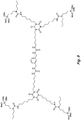
- the structure in Fig. 5 is an example of an N-substituted urea polymer with terminal alkoxysilanes that is synthesized using an aliphatic polyisocyanate based on an HDI isocyanurate trimer, N-butyl-3-aminopropyltrimethoxysilane (an N-substituted amino-functional alkoxysilane), and N-isopropyl-3-((isopropylamino)methyl)-3,5,5-trimethylcyclohexan-1-amine (a cycloaliphatic secondary diamine).
- all newly formed N-substituted urea groups possess either a butyl or isopropyl group.
- the structure in Fig. 6 is an example of an N-substituted urea polymer with terminal alkoxysilanes that is synthesized using an aliphatic polyisocyanate based on an HDI isocyanurate trimer, an N-substituted amino-functional alkoxysilane formed from the Michael Addition reaction of butyl acrylate and 3-aminopropyltrimethoxysilane, and N 1 ,N 3 -diethylpropane-1,3-diamine (an aliphatic secondary diamine).
- N-substituted urea polymers with extended chains and terminal alkoxysilanes can be formed by utilizing a mixture of two different aliphatic isocyanates, an N-substituted amino-functional alkoxysilane, and a secondary diamine.
- the structure in Fig. 7 is an example of an N-substituted urea polymer with terminal alkoxysilanes that is synthesized using a 1:1 mixture of an aliphatic polyisocyanate based on an HDI isocyanurate trimer and an aliphatic polyisocyanate based on a uretdione, N-butyl-3-aminopropyltrimethoxysilane (an N-substituted amino-functional alkoxysilane), and N 1 ,N 6 -dimethylhexane-1,6-diamine (an aliphatic secondary diamine).
- the N-substituted amino-functional alkoxysilane is reacted with -60% of the isocyanate groups, whereas the secondary diamine is reacted with -40% of the isocyanate groups.
- the structure is asymmetric due to the use of two different aliphatic polyisocyanates.
- the structure in Fig. 8 is an example of an N-substituted urea polymer with terminal alkoxysilanes that is synthesized using an aliphatic polyisocyanate based on a HDI isocyanurate trimer, N-butyl-3-aminopropyltrimethoxysilane (an N-substituted amino-functional alkoxysilane), and 1,3-phenylenedimethanamine (an aromatic diamine).
- the N-substituted amino-functional alkoxysilane is reacted with -66% of the isocyanate groups, whereas the diamine is reacted with -33% of the isocyanate groups.
- a reactive diluent also may be used for modifying the properties of the 2K coating, such as increasing the flexibility or hardness, reducing solvent content and viscosity, increasing cleanability, or increasing weatherability (i.e., resistance to exterior degradation from sunlight).
- the reactive diluent can be a polysiloxane with at least 2 hydrolyzable alkoxysilane groups, such as, but not limited to, poly(dimethoxysiloxane), poly(diethoxysiloxane), methoxy-functional dimethylpolysiloxane, methoxy-functional methylphenylpolysiloxane, ethoxy-functional dimethylpolysiloxane, and structures based on tetraethyl orthosilicate.
- the reactive diluent can also be hydroxyl-functional versions of these polysiloxanes or hydroxyl propyl terminated polysiloxanes. Many of these are commercially available.
- the reactive diluent can also be an alkyl-functional alkoxysilane, where the alkyl group is C1-C16 alkyl, cycloalkyl or fluorinated alkyl, and the alkoxysilane group is trimethoxysilane, triethoxysilane, methyldimethoxysilane, methyldiethoxysilane, dimethylmethoxysilane, and dimethylethoxysilane.
- Examples include, but are not limited to, propyltrimethoxysilane, hexyltrimethoxysilane, octyltrimethoxysilane, octyltriethoxysilane, hexadecyltrimethoxysilane, cyclohexyltriethoxysilane, (3,3,3-trifluoropropyl)trimethoxysilane, and 1H,1H,2H,2H-perfluorooctyltriethoxysilane.
- the reactive diluent can also be a polysiloxane-urea polymer with hydrolysable alkoxysilane groups. These reactive diluents are formed by reacting a polysiloxane with primary diamines, or a polysiloxane with secondary diamines, and 3-isocyanatopropyltrimethoxysilane or 3-isocyanatotriethoxysilane. They can also be formed by reacting a diisocyanate-functional polysiloxane with an N-substituted 3-aminopropylalkoxysilane.
- the polysiloxane can be a dimethylpolysiloxane or methylphenylpolysiloxane.
- the N-substituted groups of the secondary diamines (attached to the polysiloxane) and N-substituted 3-aminopropylalkoxysilane can be C1-C12 alkyl, cycloalkyl, aryl, or ester-containing aliphatic.
- the alkoxysilane group of the N-substituted 3-aminopropylalkoxysilane can be trimethoxysilane, triethoxysilane, methyldimethoxysilane, methyldiethoxysilane, dimethylmethoxysilane, and dimethylethoxysilane.
- Example structures of these synthesized reactive diluents include, but are not limited to, the following: Structure Name bis((3-triethoxysilyl)propyl)urea adduct based on N,N'-ethylaminoisobutyl terminated polydimethylsiloxane bis((3-triethoxysilyl)propyl)urea adduct based on aminopropyl terminated polydimethylsiloxane bis(N-substituted 3-aminopropylalkoxysilane) urea adduct based on diisocyanate-functional polydimethylsiloxane
- Reactive diluents that contain N-substituted urea groups are used due to their reduced hydrogen bonding character, lower viscosity and reduced solvent requirements.
- the reactive diluent can also be an aliphatic or cycloaliphatic N-substituted urea with hydrolysable alkoxysilane groups.
- These reactive diluents are formed by reacting an aliphatic or cycloaliphatic secondary diamine with 3-isocyanatopropyltrimethoxysilane or 3-isocyanatotriethoxysilane.
- the 3-isocyanatopropyltrimethoxysilane and 3-isocyanatotriethoxysilane are both commercially available.
- Suitable secondary diamines are the same as those utilized for synthesizing the N-substituted urea polymer with terminal alkoxysilanes.
- Example structures of these synthesized reactive diluents include, but are not limited to, the following: Structure Name 1,1'-(hexane-1,6-diyl)bis(1-(3,3-dimethylbutan-2-yl)-3-(3-(triethoxysilyl)propyl)urea) 1-isopropyl-1-((5-(1-isopropyl-3-(3-(triethoxysilyl)propyl)ureido)-1,3,3-trimethylcyclohexyl)methyl)-3- (3- (triethoxysilyl)propyl)urea 1,1'-(hexane-1,6-diyl)bis(1-methyl-3- (3- (triethoxysilyl)propyl)urea) tetraethyl 2,2'-(4,4,22,22-tetraethoxy-12-methyl-9,17-dioxo-3,23-dioxa-8,10
- the reactive diluent can also be a polyester-urethane polymer with hydrolyzable alkoxysilane groups. These reactive diluents are formed by reacting an aliphatic or cycloaliphatic polyester polyol with 3-isocyanatopropyltrimethoxysilane, 3-isocyanatopropyltriethoxysilane, or (isocyanatomethyl)trimethoxysilane.
- the polyester polyol should be linear or slightly branched, and can be utilized to provide increased flexibility.
- Suitable polyester polyols include unsaturated polyesters, such as 1,3-benzenedicarboxylic acid, polymer with 2,2-dimethyl-1,3-propanediol, 1,2-ethanediol, hexanedioic acid, and 1,6-hexanediol, and saturated polyesters such as those based on caprolactone. Many polyester polyols are commercially available. The 3-isocyanatopropyltrimethoxysilane, 3-isocyanatotriethoxysilane and (isocyanatomethyl)trimethoxysilane are also commercially available.
- Suitable solvents for synthesis of the polyurea are those that are not reactive with isocyanate groups. These solvents include, but are not limited to, xylenes, light aromatic naphtha, mineral spirits, butyl acetate, 1-methoxy-2-propyl acetate, tert -butyl acetate, butyl propionate, pentyl propionate, ethyl 3-ethoxypropionate, parachlorobenzotrifluoride, tetrahydrofuran, 1,4-dioxane, dimethylacetamide, and N-methyl pyrrolidone.
- the second component (part B) includes the epoxy- or acrylate-functional compound, which may be any compound that includes an amine-reactive epoxy or acrylate group, or any mixture of such compounds.
- Suitable epoxy- or acrylate-functional compounds include, but are not limited to, an epoxy-functional dimethylpolysiloxane, an epoxy-functional polydimethyldiphenylsiloxane, an aliphatic epoxy, a cycloaliphatic epoxy, an acrylate-functional dimethylpolysiloxane, or 1,6-hexanedioldiacrylate.
- a catalyst may be used to accelerate the rate of hydrolysis of the alkoxysilane groups and to facilitate crosslinking of the resulting silanol groups to form a cured coating.
- Suitable catalysts include, but are not limited to, organic tin compounds, such as dibutyl tin dilaurate, dibutyl tin diacetate, and dibutyl tin bis(2-ethylhexoate), metal alkoxides, such as titanium tetraisopropoxide, aluminum triethoxide, and zirconium tetrabutoxide, titanium chelates, alkalines, such as potassium hydroxide, organic acids, inorganic acids, tertiary amines, or mixtures thereof.
- Suitable pigments include, but are not limited to, titanium dioxide, carbon black, red iron oxide, yellow iron oxide, copper phthalocyanine blue, sodium aluminum sulphosilicate, chromium oxide, cobalt chromite green spinel, chromium green-black hematite, nickel antimony titanium yellow rutile, and manganese-based pigments.
- Suitable fillers include, but are not limited to, amorphous silica, functionalized silica, talc, mica, wollastonite, calcium carbonate, glass beads, graphite, polymeric waxes, acrylic beads, polyurethane beads, and ceramic microspheres.
- Suitable additives include, but are not limited to, rheology modifiers, thickening agents, adhesion promoters, reinforcing agents, wetting and dispersing agents, anti-floating agents, flame retardants, ultraviolet (UV) absorbers, hindered amine light stabilizers (HALS), and flow and leveling agents.
- rheology modifiers include, but are not limited to, rheology modifiers, thickening agents, adhesion promoters, reinforcing agents, wetting and dispersing agents, anti-floating agents, flame retardants, ultraviolet (UV) absorbers, hindered amine light stabilizers (HALS), and flow and leveling agents.
- the two components may be provided as a kit having each of the components in its own container.
- the two component system may also be described as a coating composition comprising the amine-functional compound, the alkoxysilane-terminated polyurea, and the epoxy- or acrylate-functional compound.
- the 2K coating can be applied to a variety of substrates.
- Suitable substrates include, but are not limited to, epoxy primed surfaces, polyurethane primed surfaces, pretreatments, epoxy-based composites, weathered or abraded silicone alkyd coatings, weathered or abraded polysiloxane coatings, bare steel surfaces, bare aluminum surfaces, bare aluminum alloy surfaces, concrete, glass, ceramics, and plastics.
- the two components When the two components are mixed and applied to a surface, they may cure to form a solid coating.
- the amine groups of the amine-functional compound in the first component react with the epoxy-functional compound in the second component.
- the amine-functional compound includes alkoxysilane groups, these groups may also hydrolyze and condense as shown below.
- the alkoxysilane groups of the polyurea may also undergo hydrolysis and condensation with each other and with those of the amine-functional compound.
- the amine groups of the amine-functional compound undergo a Michael addition with the acrylate groups as shown below.
- the polyurea may be used in the 2K system.
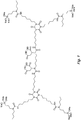
- Aspartic ester-containing backbone - 86 g (0.445 equiv.) of a hexamethylene diisocyanate homopolymer with mostly isocyanurate trimer structure was dissolved in 74 g of pentyl propionate in a 500 ml 3-neck round bottom flask equipped with an Argon inlet and thermometer. This was followed by the addition of 5 g of vinyltrimethoxysilane as a drying agent. Using an addition funnel, 70.14 g (0.298 equiv.) of N-butyl-3-aminopropyltrimethoxysilane was added dropwise to the solution while keeping the temperature at 40-50 °C.
- a flat/matte gray coating was obtained using the following two-component formulation: Part A Weight % of formula Dibutyltin dilaurate 0.25 Amino-functional polydimethylsiloxane 17.61 Flexible polymer solution ( Fig. 1 ) 8.76 Part B Cycloaliphatic epoxy 14.04 Epoxy-functional polydimethyldiphenylsiloxane 11.09 Titanium dioxide 6.41 Carbon black 0.085 Polyurea matting agent 8.55 Pentyl propionate 18.25 Ceramic microspheres 14.96
- the two parts were mixed at a 2:1 (B to A) ratio by volume and applied on aluminum and tinplate panels using a 3 mil (-75 microns) wet film gauge.
- the coating was then allowed to cure at ambient conditions for 14 days.
- the coating demonstrated a tack-free time of ⁇ 1 hour, a dry-hard time of ⁇ 2 hours, a 60° gloss of 0.6 gloss units, an 85° gloss of 4.7 gloss units, a Konig pendulum hardness of 17 oscillations, a resistance of 100+ double rubs to a methyl ethyl ketone (MEK) soaked rag, a 1 ⁇ 4" Mandrel Bend flexibility without cracking, and a GE Impact Flexibility of 40% elongation.
- MEK methyl ethyl ketone
- the coating has also demonstrated outstanding color retention when subjected to accelerated weathering in a Xenon-Arc Weatherometer (WOM) chamber.
- WOM Xenon-Arc Weatherometer
- Two-component gloss white topcoats have also been formulated.
- An example of a coating with a 1:1 (A to B) mix ratio by volume is as follows: Part A Weight % of formula Dibutyltin dilaurate 0.30 Amino-functional polydimethyldiphenylsiloxane 26.1 3-aminopropyltriethoxysilane 1.32 Flexible polymer solution 10.83 Butyl propionate 3.14 Part B Cycloaliphatic epoxy 25.8 Titanium dioxide 22.86 Butyl propionate 9.65
- the flexible backbone of the urea polymers can be aliphatic, cycloaliphatic, aromatic, polyester, polyurethane, polycarbonate, polyether, polysulfide, polysiloxane or a combination thereof, and the N-substituted groups can be C1-C12 alkyl, cycloalkyl, aryl, ester-containing aliphatic, ester-containing fluorinated aliphatic, amide-containing aliphatic, polysiloxane, or any combination thereof.
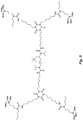
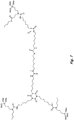
- An example of a polymer with a polyester backbone and N-butyl substituted urea linkages is shown in Fig. 2 .
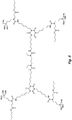
- An example of a polymer with a polydimethylsiloxane backbone and ester-containing N-substituted groups is shown in Fig. 3 .
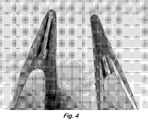
- FIG. 4 is a photograph showing the results of the bend test on a prior 2K coating (left) that does not contain the polyurea polymer compared to the presently disclosed coating (right) that does contain the polyurea polymer.
- the prior coating shows cracking along the bend while the present coating does not.
- Polyurea based on an aliphatic polyisocyanate, N-alkyl amino-functional alkoxysilanes, and a cycloaliphatic secondary diamine with N-alkyl groups - 81.6 g (0.446 equiv.) of a hexamethylene diisocyanate homopolymer with isocyanurate trimer structure was dissolved in 115 g of Aromatic 100 (commercially available from Exxon) in a 500 ml 3-neck round bottom flask equipped with an Argon inlet and thermometer. This was followed by the addition of 5 g of vinyltrimethoxysilane as a drying agent.
- Polyurea based on an aliphatic polyisocyanate, N-substituted amino-functional alkoxysilanes with butyl ester-containing groups, and an aliphatic secondary diamine with N-alkyl groups - 35.5 g (0.194 equiv.) of a hexamethylene diisocyanate homopolymer with isocyanurate trimer structure was dissolved in 60 g of Aromatic 100 solvent (commercially available from Exxon) in a 500 ml 3-neck round bottom flask equipped with an Argon inlet and thermometer. This was followed by the addition of 2 g of vinyltrimethoxysilane as a drying agent.
Landscapes
- Chemical & Material Sciences (AREA)
- Organic Chemistry (AREA)
- Chemical Kinetics & Catalysis (AREA)
- Polymers & Plastics (AREA)
- Health & Medical Sciences (AREA)
- Medicinal Chemistry (AREA)
- Wood Science & Technology (AREA)
- Materials Engineering (AREA)
- Engineering & Computer Science (AREA)
- Life Sciences & Earth Sciences (AREA)
- General Chemical & Material Sciences (AREA)
- Paints Or Removers (AREA)
- Polyurethanes Or Polyureas (AREA)
- Compositions Of Macromolecular Compounds (AREA)
Applications Claiming Priority (2)
| Application Number | Priority Date | Filing Date | Title |
|---|---|---|---|
| US201462067052P | 2014-10-22 | 2014-10-22 | |
| PCT/US2015/048478 WO2016064481A1 (en) | 2014-10-22 | 2015-09-04 | Two-component siloxane-based coatings containing polymers with urea linkages and terminal alkoxysilanes |
Publications (3)
| Publication Number | Publication Date |
|---|---|
| EP3209739A1 EP3209739A1 (en) | 2017-08-30 |
| EP3209739A4 EP3209739A4 (en) | 2018-05-30 |
| EP3209739B1 true EP3209739B1 (en) | 2019-06-19 |
Family
ID=55761299
Family Applications (1)
| Application Number | Title | Priority Date | Filing Date |
|---|---|---|---|
| EP15852973.5A Active EP3209739B1 (en) | 2014-10-22 | 2015-09-04 | Two-component siloxane-based coatings containing polymers with urea linkages and terminal alkoxysilanes |
Country Status (8)
| Country | Link |
|---|---|
| US (1) | US9587143B2 (enExample) |
| EP (1) | EP3209739B1 (enExample) |
| JP (1) | JP6831320B2 (enExample) |
| KR (1) | KR102542236B1 (enExample) |
| AU (1) | AU2015337050B2 (enExample) |
| CA (1) | CA2960413C (enExample) |
| ES (1) | ES2747965T3 (enExample) |
| WO (1) | WO2016064481A1 (enExample) |
Cited By (1)
| Publication number | Priority date | Publication date | Assignee | Title |
|---|---|---|---|---|
| WO2025147337A1 (en) * | 2024-01-02 | 2025-07-10 | Covestro Llc | Polysilanes, methods for their preparation, and the use thereof in coating compositions |
Families Citing this family (25)
| Publication number | Priority date | Publication date | Assignee | Title |
|---|---|---|---|---|
| US10190020B2 (en) | 2014-10-22 | 2019-01-29 | The United States Of America, As Represented By The Secretary Of The Navy | Siloxane-based coatings containing polymers with urea linkages and terminal alkoxysilanes |
| EP3263616B8 (de) * | 2016-06-27 | 2020-01-15 | Evonik Operations GmbH | Alkoxysilan-funktionalisierte allophanat-haltige beschichtungsmittel |
| EP3263618A1 (de) * | 2016-06-27 | 2018-01-03 | Evonik Degussa GmbH | Alkoxysilan-funktionalisierte allophanate |
| ES2998477T3 (en) * | 2017-02-27 | 2025-02-20 | Us Gov Sec Navy | Siloxane-based coatings containing polymers with urea linkages and terminal alkoxysilanes |
| EP3589695A4 (en) * | 2017-03-03 | 2021-01-20 | The Government of the United States of America, as represented by the Secretary of the Navy | MOISTURE-CURING OMNIPHOBE COATINGS |
| CA3080131C (en) * | 2017-11-07 | 2021-10-26 | Henkel IP & Holding GmbH | Silane modified polymers and use of the same in adhesive compositions |
| FR3080387B1 (fr) | 2018-04-20 | 2020-11-13 | Mermet | Fil composite renforce, procede de preparation et textile comprenant un tel fil |
| CN109504283B (zh) * | 2018-11-08 | 2021-02-05 | 江苏科技大学 | 一种具有刚性分子结构的有机硅涂料 |
| JP7547379B2 (ja) * | 2019-05-06 | 2024-09-09 | ビーエーエスエフ コーティングス ゲゼルシャフト ミット ベシュレンクテル ハフツング | シラン系コーティング組成物 |
| AU2020292442B2 (en) * | 2019-06-14 | 2026-07-09 | The Government Of The United States Of America, As Represented By The Secretary Of The Navy | Single-component polysiloxane non-skid / non-slip coatings |
| US11499001B2 (en) | 2020-01-03 | 2022-11-15 | The Government Of The United States Of America, As Represented By The Secretary Of The Navy | Single-component polysiloxane non-skid / non-slip coatings |
| US11827788B2 (en) | 2019-10-07 | 2023-11-28 | Covestro Llc | Faster cure polyaspartic resins for faster physical property development in coatings |
| JP2021066799A (ja) * | 2019-10-23 | 2021-04-30 | 旭化成株式会社 | 塗料組成物及びフィルム |
| US20230062261A1 (en) * | 2019-12-17 | 2023-03-02 | Basf Se | Polyurea copolymer |
| GB2591099B (en) * | 2020-01-14 | 2023-05-24 | Gkn Aerospace Services Ltd | Coating compositions |
| BE1029530B1 (fr) | 2021-06-25 | 2023-01-30 | Sichem | Procédé d'obtention d'un revêtement |
| CN113462162B (zh) * | 2021-06-25 | 2022-12-09 | 江苏创为交通科技发展有限公司 | 一种钢桥面铺装专用二阶纤维增韧冷拌环氧粘层油制备方法及用途 |
| CN113773501B (zh) * | 2021-09-08 | 2023-03-24 | 广东致格纳米科技有限公司 | 一种可固化硅基杂化树脂的制备方法 |
| CN117795011A (zh) * | 2021-10-08 | 2024-03-29 | 瓦克化学股份公司 | 一种组合物 |
| BE1029958B1 (fr) | 2021-11-24 | 2023-06-19 | Sichem | Revêtement biocide amélioré |
| CN115612385B (zh) * | 2022-10-09 | 2024-07-12 | 中昊北方涂料工业研究设计院有限公司 | 一种ipn结构弹性涂料组合物及其制备方法 |
| CN115772365A (zh) * | 2022-12-08 | 2023-03-10 | 苏州蓝沃奇纳米科技有限公司 | 一种仿瓷涂料及其制备方法 |
| CN117801670A (zh) * | 2023-12-28 | 2024-04-02 | 江苏云湖新材料科技有限公司 | 一种异氰酸酯固化聚硅氧烷涂料及其制备方法 |
| WO2025147343A1 (en) * | 2024-01-02 | 2025-07-10 | Covestro Llc | Ethylenically unsaturated compounds, methods for their preparation, and the use thereof in coating compositions |
| US12428514B2 (en) | 2024-01-02 | 2025-09-30 | Covestro Llc | Ethylenically unsaturated compounds, methods for their preparation, and the use thereof in coating compositions |
Family Cites Families (26)
| Publication number | Priority date | Publication date | Assignee | Title |
|---|---|---|---|---|
| DE1745526B2 (de) * | 1967-03-16 | 1980-04-10 | Union Carbide Corp., New York, N.Y. (V.St.A.) | Verfahren zur Herstellung vulkanisierbarer, unter wasserfreien Bedingungen beständiger Polymerisate |
| US3676478A (en) | 1968-12-04 | 1972-07-11 | Bayer Ag | Silyl-substituted urea derivatives |
| DE2243628A1 (de) | 1972-09-06 | 1974-03-14 | Bayer Ag | Polymere mit alkoxysilyl-substituierten biuretgruppen und verfahren zu ihrer herstellung |
| US5312943A (en) | 1992-10-13 | 1994-05-17 | Caschem, Inc. | Dual curing conformal coatings |
| DE10103027A1 (de) * | 2001-01-24 | 2002-07-25 | Bayer Ag | Zweikomponenten-Polyurethan-Bindemittel als Haftvermittler |
| WO2003052003A1 (en) * | 2001-12-14 | 2003-06-26 | Asahi Kasei Kabushiki Kaisha | Coating composition for forming low-refractive index thin layers |
| FR2864537B1 (fr) | 2003-12-24 | 2006-02-17 | Rhodia Chimie Sa | Synthese de biurets et d'isocyanates a fonctions alcoxysilanes, formulations en contenant et leurs applications |
| US20090042042A1 (en) * | 2005-04-05 | 2009-02-12 | Chugoku Marine Paints, Ltd. | Tei Coat for Organopolysiloxane Antifouling Coat, Composite Coats, and Ships and Underwater Structures Covered with the Composite Coats |
| EP1717254A1 (de) * | 2005-04-29 | 2006-11-02 | Sika Technology AG | Feuchtigkeitshärtende Zusammensetzung mit erhöhter Dehnbarkeit |
| DE102005026085A1 (de) | 2005-06-07 | 2006-12-14 | Construction Research & Technology Gmbh | Silan-modifizierte Harnstoff-Derivate, Verfahren zu ihrer Herstellung und deren Verwendung als Rheologiehilfsmittel |
| US20070032623A1 (en) * | 2005-08-05 | 2007-02-08 | Bayer Material Science Llc | Low surface energy polyisocyanates and their use in one-or two-component coating compositions |
| FR2889848B1 (fr) * | 2005-08-17 | 2007-09-21 | Saint Gobain Performance Plast | Materiau cellulaire resistant a l'hydrolyse, composition et procedes de fabrication |
| DE102005041925A1 (de) | 2005-09-03 | 2007-04-26 | Bayer Materialscience Ag | 2K PUR-Systeme enthaltend OH-funktionelle Polydimethylsiloxane |
| US20070129527A1 (en) | 2005-12-06 | 2007-06-07 | Griswold Roy M | Silylated polyurethane-polyurea protective coating compositions |
| DE602008002555D1 (de) * | 2007-01-12 | 2010-10-28 | Dow Corning | Silikonhaltige zusammensetzung |
| US8378037B2 (en) | 2007-12-26 | 2013-02-19 | Momentive Performance Materials Inc. | Moisture-curable silylated polyurea and adhesive, sealant and coating compositions containing same |
| WO2009143003A1 (en) * | 2008-05-19 | 2009-11-26 | Ppg Industries Ohio, Inc. | Coating compositions comprising polyurea and a polysiloxane |
| EP2236532A1 (de) * | 2009-03-31 | 2010-10-06 | Bayer MaterialScience AG | Nanopartikelmodifizierte hydrophile Polyisocyanate |
| US8133964B2 (en) | 2010-06-29 | 2012-03-13 | Science Applications International Corporation | Single-component coating having alkoxysilane-terminated N-substituted urea resins |
| EP2562223A1 (de) * | 2011-08-26 | 2013-02-27 | Sika Technology AG | Zweikomponentige Zusammensetzung auf Basis von silanfunktionellen Polymeren |
| JP5797981B2 (ja) * | 2011-09-06 | 2015-10-21 | 東洋ゴム工業株式会社 | 研磨パッド |
| US9663657B2 (en) * | 2011-12-15 | 2017-05-30 | Momentive Performance Materials Inc. | Moisture curable organopolysiloxane compositions |
| JP6382851B2 (ja) * | 2013-02-26 | 2018-08-29 | シーカ テクノロジー アクチェンゲゼルシャフト | 2剤組成物 |
| CN105008424A (zh) | 2013-03-06 | 2015-10-28 | 涂料外国Ip有限公司 | 双组分涂料组合物 |
| ES2655448T3 (es) | 2013-03-14 | 2018-02-20 | The Government Of The United States Of America, As Represented By The Secretary Of The Navy | Revestimientos de componente único curable con humedad a base de polímeros de urea N-sustituidos con cadenas extendidas y alcoxisilanos terminales |
| JP6175851B2 (ja) * | 2013-03-28 | 2017-08-09 | 三菱ケミカル株式会社 | ポリオール混合物及びポリウレタンの製造方法 |
-
2015
- 2015-09-04 AU AU2015337050A patent/AU2015337050B2/en active Active
- 2015-09-04 EP EP15852973.5A patent/EP3209739B1/en active Active
- 2015-09-04 WO PCT/US2015/048478 patent/WO2016064481A1/en not_active Ceased
- 2015-09-04 KR KR1020177002532A patent/KR102542236B1/ko active Active
- 2015-09-04 US US14/845,407 patent/US9587143B2/en active Active
- 2015-09-04 ES ES15852973T patent/ES2747965T3/es active Active
- 2015-09-04 JP JP2017504737A patent/JP6831320B2/ja active Active
- 2015-09-04 CA CA2960413A patent/CA2960413C/en active Active
Cited By (1)
| Publication number | Priority date | Publication date | Assignee | Title |
|---|---|---|---|---|
| WO2025147337A1 (en) * | 2024-01-02 | 2025-07-10 | Covestro Llc | Polysilanes, methods for their preparation, and the use thereof in coating compositions |
Also Published As
| Publication number | Publication date |
|---|---|
| JP2018509483A (ja) | 2018-04-05 |
| CA2960413C (en) | 2023-01-24 |
| WO2016064481A1 (en) | 2016-04-28 |
| AU2015337050A1 (en) | 2017-02-02 |
| US9587143B2 (en) | 2017-03-07 |
| EP3209739A1 (en) | 2017-08-30 |
| ES2747965T3 (es) | 2020-03-12 |
| JP6831320B2 (ja) | 2021-02-17 |
| CA2960413A1 (en) | 2016-04-28 |
| KR102542236B1 (ko) | 2023-06-09 |
| US20160115351A1 (en) | 2016-04-28 |
| EP3209739A4 (en) | 2018-05-30 |
| KR20170088818A (ko) | 2017-08-02 |
| AU2015337050B2 (en) | 2019-10-10 |
Similar Documents
| Publication | Publication Date | Title |
|---|---|---|
| US9587143B2 (en) | Two-component siloxane-based coatings containing polymers with urea linkages and terminal alkoxysilanes | |
| US10190020B2 (en) | Siloxane-based coatings containing polymers with urea linkages and terminal alkoxysilanes | |
| EP2970709B1 (en) | Single-component moisture-curable coatings based on n-substituted urea polymers with extended chains and terminal alkoxysilanes | |
| US8133964B2 (en) | Single-component coating having alkoxysilane-terminated N-substituted urea resins | |
| JP2000169793A (ja) | ハイブリッド塗料組成物 | |
| EP3585845B1 (en) | Siloxane-based coatings containing polymers with urea linkages and terminal alkoxysilanes | |
| EP3867292B1 (en) | Aspartic acid ester-functional polysiloxanes, their preparation and use thereof | |
| TW200936649A (en) | Polysiloxane-modified polyisocyanates, processes for preparing the same, and polyurethanes containing the same | |
| US20260055754A1 (en) | Wind turbine blade | |
| WO2012002932A1 (en) | Single-component coating having alkoxysilane-terminated n-substituted urea resins | |
| JP7684231B2 (ja) | 1成分ポリシロキサン滑り止め/ノンスリップコーティング |
Legal Events
| Date | Code | Title | Description |
|---|---|---|---|
| STAA | Information on the status of an ep patent application or granted ep patent |
Free format text: STATUS: THE INTERNATIONAL PUBLICATION HAS BEEN MADE |
|
| PUAI | Public reference made under article 153(3) epc to a published international application that has entered the european phase |
Free format text: ORIGINAL CODE: 0009012 |
|
| STAA | Information on the status of an ep patent application or granted ep patent |
Free format text: STATUS: REQUEST FOR EXAMINATION WAS MADE |
|
| 17P | Request for examination filed |
Effective date: 20170201 |
|
| AK | Designated contracting states |
Kind code of ref document: A1 Designated state(s): AL AT BE BG CH CY CZ DE DK EE ES FI FR GB GR HR HU IE IS IT LI LT LU LV MC MK MT NL NO PL PT RO RS SE SI SK SM TR |
|
| AX | Request for extension of the european patent |
Extension state: BA ME |
|
| DAV | Request for validation of the european patent (deleted) | ||
| DAX | Request for extension of the european patent (deleted) | ||
| A4 | Supplementary search report drawn up and despatched |
Effective date: 20180504 |
|
| RIC1 | Information provided on ipc code assigned before grant |
Ipc: C08G 18/38 20060101ALI20180426BHEP Ipc: C08G 18/61 20060101ALI20180426BHEP Ipc: C09D 175/02 20060101ALI20180426BHEP Ipc: C09D 5/30 20060101ALI20180426BHEP Ipc: C08G 77/26 20060101ALI20180426BHEP Ipc: C08G 18/83 20060101ALI20180426BHEP Ipc: C09D 183/14 20060101ALI20180426BHEP Ipc: C08G 18/32 20060101ALI20180426BHEP Ipc: C09D 175/04 20060101AFI20180426BHEP Ipc: C08G 18/42 20060101ALI20180426BHEP Ipc: C08G 18/28 20060101ALI20180426BHEP Ipc: C08G 18/79 20060101ALI20180426BHEP Ipc: C08G 18/80 20060101ALI20180426BHEP |
|
| GRAP | Despatch of communication of intention to grant a patent |
Free format text: ORIGINAL CODE: EPIDOSNIGR1 |
|
| STAA | Information on the status of an ep patent application or granted ep patent |
Free format text: STATUS: GRANT OF PATENT IS INTENDED |
|
| INTG | Intention to grant announced |
Effective date: 20190208 |
|
| GRAS | Grant fee paid |
Free format text: ORIGINAL CODE: EPIDOSNIGR3 |
|
| GRAA | (expected) grant |
Free format text: ORIGINAL CODE: 0009210 |
|
| STAA | Information on the status of an ep patent application or granted ep patent |
Free format text: STATUS: THE PATENT HAS BEEN GRANTED |
|
| RAP1 | Party data changed (applicant data changed or rights of an application transferred) |
Owner name: THE GOVERNMENT OF THE UNITED STATES OF AMERICA AS |
|
| AK | Designated contracting states |
Kind code of ref document: B1 Designated state(s): AL AT BE BG CH CY CZ DE DK EE ES FI FR GB GR HR HU IE IS IT LI LT LU LV MC MK MT NL NO PL PT RO RS SE SI SK SM TR |
|
| REG | Reference to a national code |
Ref country code: GB Ref legal event code: FG4D |
|
| REG | Reference to a national code |
Ref country code: CH Ref legal event code: EP |
|
| REG | Reference to a national code |
Ref country code: IE Ref legal event code: FG4D |
|
| REG | Reference to a national code |
Ref country code: DE Ref legal event code: R096 Ref document number: 602015032471 Country of ref document: DE |
|
| REG | Reference to a national code |
Ref country code: AT Ref legal event code: REF Ref document number: 1145480 Country of ref document: AT Kind code of ref document: T Effective date: 20190715 |
|
| REG | Reference to a national code |
Ref country code: NL Ref legal event code: FP |
|
| PG25 | Lapsed in a contracting state [announced via postgrant information from national office to epo] |
Ref country code: NO Free format text: LAPSE BECAUSE OF FAILURE TO SUBMIT A TRANSLATION OF THE DESCRIPTION OR TO PAY THE FEE WITHIN THE PRESCRIBED TIME-LIMIT Effective date: 20190919 Ref country code: LT Free format text: LAPSE BECAUSE OF FAILURE TO SUBMIT A TRANSLATION OF THE DESCRIPTION OR TO PAY THE FEE WITHIN THE PRESCRIBED TIME-LIMIT Effective date: 20190619 Ref country code: SE Free format text: LAPSE BECAUSE OF FAILURE TO SUBMIT A TRANSLATION OF THE DESCRIPTION OR TO PAY THE FEE WITHIN THE PRESCRIBED TIME-LIMIT Effective date: 20190619 Ref country code: HR Free format text: LAPSE BECAUSE OF FAILURE TO SUBMIT A TRANSLATION OF THE DESCRIPTION OR TO PAY THE FEE WITHIN THE PRESCRIBED TIME-LIMIT Effective date: 20190619 Ref country code: AL Free format text: LAPSE BECAUSE OF FAILURE TO SUBMIT A TRANSLATION OF THE DESCRIPTION OR TO PAY THE FEE WITHIN THE PRESCRIBED TIME-LIMIT Effective date: 20190619 Ref country code: FI Free format text: LAPSE BECAUSE OF FAILURE TO SUBMIT A TRANSLATION OF THE DESCRIPTION OR TO PAY THE FEE WITHIN THE PRESCRIBED TIME-LIMIT Effective date: 20190619 |
|
| REG | Reference to a national code |
Ref country code: LT Ref legal event code: MG4D |
|
| PG25 | Lapsed in a contracting state [announced via postgrant information from national office to epo] |
Ref country code: GR Free format text: LAPSE BECAUSE OF FAILURE TO SUBMIT A TRANSLATION OF THE DESCRIPTION OR TO PAY THE FEE WITHIN THE PRESCRIBED TIME-LIMIT Effective date: 20190920 Ref country code: LV Free format text: LAPSE BECAUSE OF FAILURE TO SUBMIT A TRANSLATION OF THE DESCRIPTION OR TO PAY THE FEE WITHIN THE PRESCRIBED TIME-LIMIT Effective date: 20190619 Ref country code: BG Free format text: LAPSE BECAUSE OF FAILURE TO SUBMIT A TRANSLATION OF THE DESCRIPTION OR TO PAY THE FEE WITHIN THE PRESCRIBED TIME-LIMIT Effective date: 20190919 Ref country code: RS Free format text: LAPSE BECAUSE OF FAILURE TO SUBMIT A TRANSLATION OF THE DESCRIPTION OR TO PAY THE FEE WITHIN THE PRESCRIBED TIME-LIMIT Effective date: 20190619 |
|
| REG | Reference to a national code |
Ref country code: AT Ref legal event code: MK05 Ref document number: 1145480 Country of ref document: AT Kind code of ref document: T Effective date: 20190619 |
|
| PG25 | Lapsed in a contracting state [announced via postgrant information from national office to epo] |
Ref country code: CZ Free format text: LAPSE BECAUSE OF FAILURE TO SUBMIT A TRANSLATION OF THE DESCRIPTION OR TO PAY THE FEE WITHIN THE PRESCRIBED TIME-LIMIT Effective date: 20190619 Ref country code: SK Free format text: LAPSE BECAUSE OF FAILURE TO SUBMIT A TRANSLATION OF THE DESCRIPTION OR TO PAY THE FEE WITHIN THE PRESCRIBED TIME-LIMIT Effective date: 20190619 Ref country code: RO Free format text: LAPSE BECAUSE OF FAILURE TO SUBMIT A TRANSLATION OF THE DESCRIPTION OR TO PAY THE FEE WITHIN THE PRESCRIBED TIME-LIMIT Effective date: 20190619 Ref country code: EE Free format text: LAPSE BECAUSE OF FAILURE TO SUBMIT A TRANSLATION OF THE DESCRIPTION OR TO PAY THE FEE WITHIN THE PRESCRIBED TIME-LIMIT Effective date: 20190619 Ref country code: PT Free format text: LAPSE BECAUSE OF FAILURE TO SUBMIT A TRANSLATION OF THE DESCRIPTION OR TO PAY THE FEE WITHIN THE PRESCRIBED TIME-LIMIT Effective date: 20191021 Ref country code: AT Free format text: LAPSE BECAUSE OF FAILURE TO SUBMIT A TRANSLATION OF THE DESCRIPTION OR TO PAY THE FEE WITHIN THE PRESCRIBED TIME-LIMIT Effective date: 20190619 |
|
| PG25 | Lapsed in a contracting state [announced via postgrant information from national office to epo] |
Ref country code: IT Free format text: LAPSE BECAUSE OF FAILURE TO SUBMIT A TRANSLATION OF THE DESCRIPTION OR TO PAY THE FEE WITHIN THE PRESCRIBED TIME-LIMIT Effective date: 20190619 Ref country code: IS Free format text: LAPSE BECAUSE OF FAILURE TO SUBMIT A TRANSLATION OF THE DESCRIPTION OR TO PAY THE FEE WITHIN THE PRESCRIBED TIME-LIMIT Effective date: 20191019 Ref country code: SM Free format text: LAPSE BECAUSE OF FAILURE TO SUBMIT A TRANSLATION OF THE DESCRIPTION OR TO PAY THE FEE WITHIN THE PRESCRIBED TIME-LIMIT Effective date: 20190619 |
|
| REG | Reference to a national code |
Ref country code: ES Ref legal event code: FG2A Ref document number: 2747965 Country of ref document: ES Kind code of ref document: T3 Effective date: 20200312 |
|
| PG25 | Lapsed in a contracting state [announced via postgrant information from national office to epo] |
Ref country code: TR Free format text: LAPSE BECAUSE OF FAILURE TO SUBMIT A TRANSLATION OF THE DESCRIPTION OR TO PAY THE FEE WITHIN THE PRESCRIBED TIME-LIMIT Effective date: 20190619 |
|
| PG25 | Lapsed in a contracting state [announced via postgrant information from national office to epo] |
Ref country code: DK Free format text: LAPSE BECAUSE OF FAILURE TO SUBMIT A TRANSLATION OF THE DESCRIPTION OR TO PAY THE FEE WITHIN THE PRESCRIBED TIME-LIMIT Effective date: 20190619 Ref country code: PL Free format text: LAPSE BECAUSE OF FAILURE TO SUBMIT A TRANSLATION OF THE DESCRIPTION OR TO PAY THE FEE WITHIN THE PRESCRIBED TIME-LIMIT Effective date: 20190619 |
|
| PG25 | Lapsed in a contracting state [announced via postgrant information from national office to epo] |
Ref country code: MC Free format text: LAPSE BECAUSE OF FAILURE TO SUBMIT A TRANSLATION OF THE DESCRIPTION OR TO PAY THE FEE WITHIN THE PRESCRIBED TIME-LIMIT Effective date: 20190619 Ref country code: IS Free format text: LAPSE BECAUSE OF FAILURE TO SUBMIT A TRANSLATION OF THE DESCRIPTION OR TO PAY THE FEE WITHIN THE PRESCRIBED TIME-LIMIT Effective date: 20200224 |
|
| REG | Reference to a national code |
Ref country code: CH Ref legal event code: PL |
|
| REG | Reference to a national code |
Ref country code: DE Ref legal event code: R097 Ref document number: 602015032471 Country of ref document: DE |
|
| PLBE | No opposition filed within time limit |
Free format text: ORIGINAL CODE: 0009261 |
|
| STAA | Information on the status of an ep patent application or granted ep patent |
Free format text: STATUS: NO OPPOSITION FILED WITHIN TIME LIMIT |
|
| PG2D | Information on lapse in contracting state deleted |
Ref country code: IS |
|
| PG25 | Lapsed in a contracting state [announced via postgrant information from national office to epo] |
Ref country code: CH Free format text: LAPSE BECAUSE OF NON-PAYMENT OF DUE FEES Effective date: 20190930 Ref country code: LI Free format text: LAPSE BECAUSE OF NON-PAYMENT OF DUE FEES Effective date: 20190930 Ref country code: LU Free format text: LAPSE BECAUSE OF NON-PAYMENT OF DUE FEES Effective date: 20190904 Ref country code: IE Free format text: LAPSE BECAUSE OF NON-PAYMENT OF DUE FEES Effective date: 20190904 |
|
| 26N | No opposition filed |
Effective date: 20200603 |
|
| REG | Reference to a national code |
Ref country code: BE Ref legal event code: MM Effective date: 20190930 |
|
| PG25 | Lapsed in a contracting state [announced via postgrant information from national office to epo] |
Ref country code: BE Free format text: LAPSE BECAUSE OF NON-PAYMENT OF DUE FEES Effective date: 20190930 Ref country code: SI Free format text: LAPSE BECAUSE OF FAILURE TO SUBMIT A TRANSLATION OF THE DESCRIPTION OR TO PAY THE FEE WITHIN THE PRESCRIBED TIME-LIMIT Effective date: 20190619 |
|
| PG25 | Lapsed in a contracting state [announced via postgrant information from national office to epo] |
Ref country code: CY Free format text: LAPSE BECAUSE OF FAILURE TO SUBMIT A TRANSLATION OF THE DESCRIPTION OR TO PAY THE FEE WITHIN THE PRESCRIBED TIME-LIMIT Effective date: 20190619 |
|
| PG25 | Lapsed in a contracting state [announced via postgrant information from national office to epo] |
Ref country code: MT Free format text: LAPSE BECAUSE OF FAILURE TO SUBMIT A TRANSLATION OF THE DESCRIPTION OR TO PAY THE FEE WITHIN THE PRESCRIBED TIME-LIMIT Effective date: 20190619 Ref country code: HU Free format text: LAPSE BECAUSE OF FAILURE TO SUBMIT A TRANSLATION OF THE DESCRIPTION OR TO PAY THE FEE WITHIN THE PRESCRIBED TIME-LIMIT; INVALID AB INITIO Effective date: 20150904 |
|
| PG25 | Lapsed in a contracting state [announced via postgrant information from national office to epo] |
Ref country code: MK Free format text: LAPSE BECAUSE OF FAILURE TO SUBMIT A TRANSLATION OF THE DESCRIPTION OR TO PAY THE FEE WITHIN THE PRESCRIBED TIME-LIMIT Effective date: 20190619 |
|
| PGFP | Annual fee paid to national office [announced via postgrant information from national office to epo] |
Ref country code: DE Payment date: 20250929 Year of fee payment: 11 |
|
| PGFP | Annual fee paid to national office [announced via postgrant information from national office to epo] |
Ref country code: NL Payment date: 20250926 Year of fee payment: 11 |
|
| PGFP | Annual fee paid to national office [announced via postgrant information from national office to epo] |
Ref country code: GB Payment date: 20250929 Year of fee payment: 11 |
|
| PGFP | Annual fee paid to national office [announced via postgrant information from national office to epo] |
Ref country code: FR Payment date: 20250925 Year of fee payment: 11 |
|
| PGFP | Annual fee paid to national office [announced via postgrant information from national office to epo] |
Ref country code: ES Payment date: 20251001 Year of fee payment: 11 |