EP3200812B1 - Neuartige alpha4beta7-peptidmonomer- und -dimerantagonisten - Google Patents
Neuartige alpha4beta7-peptidmonomer- und -dimerantagonisten Download PDFInfo
- Publication number
- EP3200812B1 EP3200812B1 EP15846131.9A EP15846131A EP3200812B1 EP 3200812 B1 EP3200812 B1 EP 3200812B1 EP 15846131 A EP15846131 A EP 15846131A EP 3200812 B1 EP3200812 B1 EP 3200812B1
- Authority
- EP
- European Patent Office
- Prior art keywords
- xaa
- phe
- peptide
- formula
- glu
- Prior art date
- Legal status (The legal status is an assumption and is not a legal conclusion. Google has not performed a legal analysis and makes no representation as to the accuracy of the status listed.)
- Active
Links
- 0 C*CC(CC(N1*(C)N(C(CC2C*C)=O)C2=O)=O)C1=O Chemical compound C*CC(CC(N1*(C)N(C(CC2C*C)=O)C2=O)=O)C1=O 0.000 description 1
- IVCQPZWSCLCNEM-UHFFFAOYSA-N CC(C(CC(O)=O)=CC1=CC11)=C1C(O)=O Chemical compound CC(C(CC(O)=O)=CC1=CC11)=C1C(O)=O IVCQPZWSCLCNEM-UHFFFAOYSA-N 0.000 description 1
- XABCFXXGZPWJQP-BYPYZUCNSA-N N[C@@H](CCC(O)=O)CC(O)=O Chemical compound N[C@@H](CCC(O)=O)CC(O)=O XABCFXXGZPWJQP-BYPYZUCNSA-N 0.000 description 1
Images













Classifications
-
- C—CHEMISTRY; METALLURGY
- C07—ORGANIC CHEMISTRY
- C07K—PEPTIDES
- C07K7/00—Peptides having 5 to 20 amino acids in a fully defined sequence; Derivatives thereof
- C07K7/04—Linear peptides containing only normal peptide links
- C07K7/06—Linear peptides containing only normal peptide links having 5 to 11 amino acids
-
- A—HUMAN NECESSITIES
- A61—MEDICAL OR VETERINARY SCIENCE; HYGIENE
- A61P—SPECIFIC THERAPEUTIC ACTIVITY OF CHEMICAL COMPOUNDS OR MEDICINAL PREPARATIONS
- A61P1/00—Drugs for disorders of the alimentary tract or the digestive system
-
- A—HUMAN NECESSITIES
- A61—MEDICAL OR VETERINARY SCIENCE; HYGIENE
- A61P—SPECIFIC THERAPEUTIC ACTIVITY OF CHEMICAL COMPOUNDS OR MEDICINAL PREPARATIONS
- A61P1/00—Drugs for disorders of the alimentary tract or the digestive system
- A61P1/04—Drugs for disorders of the alimentary tract or the digestive system for ulcers, gastritis or reflux esophagitis, e.g. antacids, inhibitors of acid secretion, mucosal protectants
-
- A—HUMAN NECESSITIES
- A61—MEDICAL OR VETERINARY SCIENCE; HYGIENE
- A61P—SPECIFIC THERAPEUTIC ACTIVITY OF CHEMICAL COMPOUNDS OR MEDICINAL PREPARATIONS
- A61P1/00—Drugs for disorders of the alimentary tract or the digestive system
- A61P1/16—Drugs for disorders of the alimentary tract or the digestive system for liver or gallbladder disorders, e.g. hepatoprotective agents, cholagogues, litholytics
-
- A—HUMAN NECESSITIES
- A61—MEDICAL OR VETERINARY SCIENCE; HYGIENE
- A61P—SPECIFIC THERAPEUTIC ACTIVITY OF CHEMICAL COMPOUNDS OR MEDICINAL PREPARATIONS
- A61P1/00—Drugs for disorders of the alimentary tract or the digestive system
- A61P1/18—Drugs for disorders of the alimentary tract or the digestive system for pancreatic disorders, e.g. pancreatic enzymes
-
- A—HUMAN NECESSITIES
- A61—MEDICAL OR VETERINARY SCIENCE; HYGIENE
- A61P—SPECIFIC THERAPEUTIC ACTIVITY OF CHEMICAL COMPOUNDS OR MEDICINAL PREPARATIONS
- A61P11/00—Drugs for disorders of the respiratory system
-
- A—HUMAN NECESSITIES
- A61—MEDICAL OR VETERINARY SCIENCE; HYGIENE
- A61P—SPECIFIC THERAPEUTIC ACTIVITY OF CHEMICAL COMPOUNDS OR MEDICINAL PREPARATIONS
- A61P11/00—Drugs for disorders of the respiratory system
- A61P11/02—Nasal agents, e.g. decongestants
-
- A—HUMAN NECESSITIES
- A61—MEDICAL OR VETERINARY SCIENCE; HYGIENE
- A61P—SPECIFIC THERAPEUTIC ACTIVITY OF CHEMICAL COMPOUNDS OR MEDICINAL PREPARATIONS
- A61P11/00—Drugs for disorders of the respiratory system
- A61P11/06—Antiasthmatics
-
- A—HUMAN NECESSITIES
- A61—MEDICAL OR VETERINARY SCIENCE; HYGIENE
- A61P—SPECIFIC THERAPEUTIC ACTIVITY OF CHEMICAL COMPOUNDS OR MEDICINAL PREPARATIONS
- A61P15/00—Drugs for genital or sexual disorders; Contraceptives
-
- A—HUMAN NECESSITIES
- A61—MEDICAL OR VETERINARY SCIENCE; HYGIENE
- A61P—SPECIFIC THERAPEUTIC ACTIVITY OF CHEMICAL COMPOUNDS OR MEDICINAL PREPARATIONS
- A61P19/00—Drugs for skeletal disorders
- A61P19/02—Drugs for skeletal disorders for joint disorders, e.g. arthritis, arthrosis
-
- A—HUMAN NECESSITIES
- A61—MEDICAL OR VETERINARY SCIENCE; HYGIENE
- A61P—SPECIFIC THERAPEUTIC ACTIVITY OF CHEMICAL COMPOUNDS OR MEDICINAL PREPARATIONS
- A61P19/00—Drugs for skeletal disorders
- A61P19/08—Drugs for skeletal disorders for bone diseases, e.g. rachitism, Paget's disease
- A61P19/10—Drugs for skeletal disorders for bone diseases, e.g. rachitism, Paget's disease for osteoporosis
-
- A—HUMAN NECESSITIES
- A61—MEDICAL OR VETERINARY SCIENCE; HYGIENE
- A61P—SPECIFIC THERAPEUTIC ACTIVITY OF CHEMICAL COMPOUNDS OR MEDICINAL PREPARATIONS
- A61P25/00—Drugs for disorders of the nervous system
-
- A—HUMAN NECESSITIES
- A61—MEDICAL OR VETERINARY SCIENCE; HYGIENE
- A61P—SPECIFIC THERAPEUTIC ACTIVITY OF CHEMICAL COMPOUNDS OR MEDICINAL PREPARATIONS
- A61P25/00—Drugs for disorders of the nervous system
- A61P25/04—Centrally acting analgesics, e.g. opioids
-
- A—HUMAN NECESSITIES
- A61—MEDICAL OR VETERINARY SCIENCE; HYGIENE
- A61P—SPECIFIC THERAPEUTIC ACTIVITY OF CHEMICAL COMPOUNDS OR MEDICINAL PREPARATIONS
- A61P25/00—Drugs for disorders of the nervous system
- A61P25/24—Antidepressants
-
- A—HUMAN NECESSITIES
- A61—MEDICAL OR VETERINARY SCIENCE; HYGIENE
- A61P—SPECIFIC THERAPEUTIC ACTIVITY OF CHEMICAL COMPOUNDS OR MEDICINAL PREPARATIONS
- A61P29/00—Non-central analgesic, antipyretic or antiinflammatory agents, e.g. antirheumatic agents; Non-steroidal antiinflammatory drugs [NSAID]
-
- A—HUMAN NECESSITIES
- A61—MEDICAL OR VETERINARY SCIENCE; HYGIENE
- A61P—SPECIFIC THERAPEUTIC ACTIVITY OF CHEMICAL COMPOUNDS OR MEDICINAL PREPARATIONS
- A61P29/00—Non-central analgesic, antipyretic or antiinflammatory agents, e.g. antirheumatic agents; Non-steroidal antiinflammatory drugs [NSAID]
- A61P29/02—Non-central analgesic, antipyretic or antiinflammatory agents, e.g. antirheumatic agents; Non-steroidal antiinflammatory drugs [NSAID] without antiinflammatory effect
-
- A—HUMAN NECESSITIES
- A61—MEDICAL OR VETERINARY SCIENCE; HYGIENE
- A61P—SPECIFIC THERAPEUTIC ACTIVITY OF CHEMICAL COMPOUNDS OR MEDICINAL PREPARATIONS
- A61P3/00—Drugs for disorders of the metabolism
- A61P3/04—Anorexiants; Antiobesity agents
-
- A—HUMAN NECESSITIES
- A61—MEDICAL OR VETERINARY SCIENCE; HYGIENE
- A61P—SPECIFIC THERAPEUTIC ACTIVITY OF CHEMICAL COMPOUNDS OR MEDICINAL PREPARATIONS
- A61P3/00—Drugs for disorders of the metabolism
- A61P3/08—Drugs for disorders of the metabolism for glucose homeostasis
- A61P3/10—Drugs for disorders of the metabolism for glucose homeostasis for hyperglycaemia, e.g. antidiabetics
-
- A—HUMAN NECESSITIES
- A61—MEDICAL OR VETERINARY SCIENCE; HYGIENE
- A61P—SPECIFIC THERAPEUTIC ACTIVITY OF CHEMICAL COMPOUNDS OR MEDICINAL PREPARATIONS
- A61P31/00—Antiinfectives, i.e. antibiotics, antiseptics, chemotherapeutics
- A61P31/12—Antivirals
- A61P31/14—Antivirals for RNA viruses
- A61P31/18—Antivirals for RNA viruses for HIV
-
- A—HUMAN NECESSITIES
- A61—MEDICAL OR VETERINARY SCIENCE; HYGIENE
- A61P—SPECIFIC THERAPEUTIC ACTIVITY OF CHEMICAL COMPOUNDS OR MEDICINAL PREPARATIONS
- A61P35/00—Antineoplastic agents
-
- A—HUMAN NECESSITIES
- A61—MEDICAL OR VETERINARY SCIENCE; HYGIENE
- A61P—SPECIFIC THERAPEUTIC ACTIVITY OF CHEMICAL COMPOUNDS OR MEDICINAL PREPARATIONS
- A61P37/00—Drugs for immunological or allergic disorders
- A61P37/02—Immunomodulators
-
- A—HUMAN NECESSITIES
- A61—MEDICAL OR VETERINARY SCIENCE; HYGIENE
- A61P—SPECIFIC THERAPEUTIC ACTIVITY OF CHEMICAL COMPOUNDS OR MEDICINAL PREPARATIONS
- A61P37/00—Drugs for immunological or allergic disorders
- A61P37/02—Immunomodulators
- A61P37/06—Immunosuppressants, e.g. drugs for graft rejection
-
- A—HUMAN NECESSITIES
- A61—MEDICAL OR VETERINARY SCIENCE; HYGIENE
- A61P—SPECIFIC THERAPEUTIC ACTIVITY OF CHEMICAL COMPOUNDS OR MEDICINAL PREPARATIONS
- A61P43/00—Drugs for specific purposes, not provided for in groups A61P1/00-A61P41/00
-
- A—HUMAN NECESSITIES
- A61—MEDICAL OR VETERINARY SCIENCE; HYGIENE
- A61P—SPECIFIC THERAPEUTIC ACTIVITY OF CHEMICAL COMPOUNDS OR MEDICINAL PREPARATIONS
- A61P7/00—Drugs for disorders of the blood or the extracellular fluid
-
- C—CHEMISTRY; METALLURGY
- C07—ORGANIC CHEMISTRY
- C07K—PEPTIDES
- C07K14/00—Peptides having more than 20 amino acids; Gastrins; Somatostatins; Melanotropins; Derivatives thereof
- C07K14/435—Peptides having more than 20 amino acids; Gastrins; Somatostatins; Melanotropins; Derivatives thereof from animals; from humans
- C07K14/705—Receptors; Cell surface antigens; Cell surface determinants
- C07K14/70503—Immunoglobulin superfamily
- C07K14/7051—T-cell receptor (TcR)-CD3 complex
-
- C—CHEMISTRY; METALLURGY
- C07—ORGANIC CHEMISTRY
- C07K—PEPTIDES
- C07K7/00—Peptides having 5 to 20 amino acids in a fully defined sequence; Derivatives thereof
- C07K7/04—Linear peptides containing only normal peptide links
- C07K7/08—Linear peptides containing only normal peptide links having 12 to 20 amino acids
-
- A—HUMAN NECESSITIES
- A61—MEDICAL OR VETERINARY SCIENCE; HYGIENE
- A61K—PREPARATIONS FOR MEDICAL, DENTAL OR TOILETRY PURPOSES
- A61K38/00—Medicinal preparations containing peptides
Definitions
- the present invention relates to novel compounds having activity useful for treating conditions that arise from or are exacerbated by integrin binding, pharmaceutical compositions comprising the compounds, methods of treatment using the compounds, and methods of blocking or disrupting integrin binding.
- Integrins are noncovalently associated ⁇ / ⁇ heterodimeric cell surface receptors involved in numerous cellular processes ranging from cell adhesion and migration to gene regulation ( Dubree, et al., Selective ⁇ 4 ⁇ 7 Integrin Antagonist and Their Potential as Anti-inflammatory Agents, J. Med. Chem. 2002, 45, 3451-3457 ). Differential expression of integrins can regulate a cell's adhesive properties, allowing different leukocyte populations to be recruited to specific organs in response to different inflammatory signals. If left unchecked, integrins-mediated adhesion process can lead to chronic inflammation and autoimmune disease.
- ⁇ 4 integrins ⁇ 4 ⁇ 1 and ⁇ 4 ⁇ 7, play essential roles in lymphocyte migration throughout the gastrointestinal tract. They are expressed on most leukocytes, including B and T lymphocytes, where they mediate cell adhesion via binding to their respective primary ligands, vascular cell adhesion molecule (VCAM), and mucosal addressin cell adhesion molecule (MAdCAM), respectively.
- VCAM vascular cell adhesion molecule
- MAdCAM mucosal addressin cell adhesion molecule
- the proteins differ in binding specificity in that VCAM binds both ⁇ 4 ⁇ 1 and to a lesser extent ⁇ 4 ⁇ 7, while MAdCAM is highly specific for ⁇ 4 ⁇ 7.
- the ⁇ 7 subunit also forms a heterodimeric complex with ⁇ E subunit to form ⁇ E ⁇ 7, which is primarily expressed on intraepithelial lymphocytes (IEL) in the intestine, lung and genitourinary tract.
- IEL intraepithelial lymphocytes
- ⁇ E ⁇ 7 is also expressed on dendritic cells in the gut.
- the ⁇ E ⁇ 7 heterodimer binds to E-cadherin on the epithelial cells.
- the IEL cells are thought to provide a mechanism for immune surveillance within the epithelial compartment. Therefore, blocking ⁇ E ⁇ 7 and ⁇ 4 ⁇ 7 together may be a useful method for treating inflammatory conditions of the intestine
- Inhibitors of specific integrin-ligand interactions have been shown effective as anti-inflammatory agents for the treatment of various autoimmune diseases.
- monoclonal antibodies displaying high binding affinity for ⁇ 4 ⁇ 7 have displayed therapeutic benefits for gastrointestinal auto-inflammatory/autoimmune diseases, such as Crohn's disease, and ulcerative colitis. Id.
- one of these therapies interfered with ⁇ 4 ⁇ 1 integrin-ligand interactions thereby resulting in dangerous side effects to the patient.
- Therapies utilizing a dual-specific small molecule antagonists have shown similar side effects in animal models.
- WO2016/054445A1 discloses C to N cyclized (C-N cyclic) monomer and dimer peptide molecules, as well as peptide dimers which are connected by linker moieties at the N terminus and the C terminus of each peptide subunit, which inhibit binding of ⁇ 4 ⁇ 7 to the mucosal addressin cell adhesion molecule (MAdCAM) in vitro, and show high selectivity against ⁇ 4 ⁇ 1 binding.
- CDN cyclic C to N cyclized (C-N cyclic) monomer and dimer peptide molecules
- linker moieties at the N terminus and the C terminus of each peptide subunit
- Such integrin antagonist molecules and related compositions and methods are provided by the present invention.
- the present invention has been developed in response to the present state of the art, and in particular, in response to the problems and needs in the art that have not yet been fully solved by currently available integrin antagonists.
- the present invention provides ⁇ 4 ⁇ 7 antagonist monomer and dimer peptides, e.g., for use as anti-inflammatory and/or immunosuppressive agents.
- the present invention provides ⁇ 4 ⁇ 7 antagonist monomer and dimer peptides for use in treating a condition that is associated with a biological function of ⁇ 4 ⁇ 7 to tissues expressing MAdCAM
- the invention relates to novel peptidic compounds exhibiting integrin antagonist activity.
- the present invention further relates to novel peptidic compounds exhibiting high specificity for ⁇ 4 ⁇ 7 integrin, and increased oral stability.
- the present invention relates to novel compounds having activity useful for treating conditions which arise or are exacerbated by integrin binding, pharmaceutical compositions comprising the compounds, methods of treatment using the compounds, and methods of blocking or disrupting integrin binding.
- the compounds are integrin antagonist molecules having high affinity for the ⁇ 4 ⁇ 7 integrin, which may be used as a therapy for various gastrointestinal autoimmune diseases.
- compounds of the present invention are dimers comprising two paired subunits that are linked together by their C- or N-termini via a linking moiety.
- one or both of the dimer subunit peptides of the present invention further comprises two natural or unnatural amino acids that are capable of bridging to form a cyclized structure.
- particular compounds of the present invention comprise dimerized peptides, each subunit of the dimer containing a cyclized structure through at least one of a disulfide bridge, an amide bond, or another or equivalent connection. This feature provides increased stability to the compound when administered orally as a therapeutic agent. In addition, this feature further provides for increased specificity and potency.
- C- and N-terminal linker moieties disclosed herein are non-limiting examples of suitable linkers, and that the present invention may include any suitable linker moiety.
- some embodiments of the present invention comprises a homo- or heterodimer molecule comprised of two monomer subunits selected from the peptide molecules described herein and in the accompanying figures and tables, wherein the C- or N-termini of the respective monomers are linked by any suitable linker moiety to provide a dimer molecule having superior integrin antagonist activity.
- compositions for treating a subject in need of integrin-antagonist therapy comprising a dimer compound of Formula (I), or any other compound described herein or in the accompanying figures and tables, in combination with a pharmaceutically acceptable carrier.
- a diagnostic method for visualizing and diagnosing a disease comprising administering an orally stable compound of Formula (I), or any other compound described herein or in the acompanying figures, that is further labeled with at least one of a chelating group and a detectable label for use as an in vivo imaging agent for non-invasive diagnostic procedures.
- compounds of the present invention are monomers.
- Each monomer peptide of the present invention further comprises two natural or unnatural amino acids that are capable of bridging to form a cyclized structure.
- the compounds of the present invention comprise monomer peptides, each forming a cyclized structure through at least one of a disulfide salt bridge, an amide bond, or an equivalent connection. This feature provides increased stability to the compound when administered orally as a therapeutic agent. This feature further provides for increased specificity and potency as compared to non-cyclized analogs.
- a peptide dimer compound comprising two linked monomer subunits of Formula (I): Xaa 1 -Xaa 2 -Xaa 3 -Xaa 4 -Xaa 5 -Xaa 6 -Xaa 7 -Xaa 8 -Xaa 9 -Xaa 10 -Xaa 11 -Xaa 12 -Xaa 13 -Xaa 14 (Formula (I)) or a pharmaceutically acceptable salt thereof, wherein:
- Xaa 4 may be Cys or Pen
- Xaa 10 is Pen or Cys
- Xaa 4 and Xaa 10 are linked by a disulfide bond.
- the compound further comprises a linker moiety linking the two monomer subunits, wherein the linker moiety is optionally selected from the group consisting of DIG, PEG13, PEG25, PEG1K, PEG2K, PEG3.4K, PEG4K, PEG5K, IDA, IDA-Palm, IDA-Boc, IDA-Isovaleric acid, Triazine, Triazine-Boc, Isophthalic acid, 1,3-phenylenediacetic acid, 1,4-phenylenediacetic acid, cyclopropylacetic acid, 4-fluoorobenzoic acid, 4-fluorophenylacetic acid, 3-phenylpropionic acid, succinic acid, biotin, glutaric acid, Azelaic acid, Pimelic acid, Dodecanedioic acid, aliphatic amino acids, aromatic amino acids, heteroaromatics, polyethylene glycols having a moleric acid, Triazine, Triazin
- N-terminus of each monomer subunit is linked by the linker moiety to provide an N-terminus dimer compound.
- each monomer subunit is joined by the linker moiety to provide a C-terminus dimer compound.
- Xaa 5 is N-Me-Arg
- Xaa 6 is Ser
- Xaa 7 is Asp
- Xaa 8 is Thr
- Xaa 9 is Leu
- Xaa 11 is Tic, Phe(2-carbomyl), Phe(3-carbomyl), Phe(4-COOH), Phe(4-OMe), or Phe(4-tBu).
- Xaa 5 is N-Methyl-Arg
- Xaa 6 is Ser
- Xaa 7 is Asp
- Xaa 8 is Thr or Val
- Xaa 9 is Leu
- Xaa 14 is selected from the group consisting of: any amino acid with an amine side chain, Lys, D-Lys, N-Me-Lys, D-N-Me-Lys, Orn, Dab, Dap, HomoLys, D-Dap, D-Dab, D-Orn, Cys, HomoCys, Pen, D-HomoCys, D-Cys, D-Pen, Asp, Glu, D-Asp, D-Glu and HomoSer, Homo-Glu, D-homo-Glu, N-Me-Glu, N-Me-Asp, N-Me-D-Glu, and N-Me-D-Asp.
- Xaa 14 also includes D-Cys and D-Pen.
- Xaa 14 is selected from the group consisting of: any amino acid with an amine side chain, Lys, D-Lys, N-Me-Lys, D-N-Me-Lys, Orn, Dab, Dap, HomoLys, D-Dap, D-Dab, Cys, homoCys, Pen and D-Orn.
- Xaa 5 is selected from the group consisting of Cit, Phe(4-carbomylamino), and N-Me-homoArg
- Xaa 8 is selected from the group consisting of Leu, homoLeu, Nle and Val
- Xaa 9 is selected from the group consisting of Cba, homoLeu, and Cpa
- Xaa 11 is selected from the group consisting of Tic, Phe(2-carbomyl), Phe(3-carbomyl), Phe(4-COOH), Phe(4-OMe), and Phe(4-tBu)
- one or both monomer subunits of the peptide dimer compound comprises a disulfide bond, a lactam bond, an olefin bond, a 1,2,3-triazole ring, a selenoether bond, or a diselenide bond between Xaa 4 and Xaa 10 .
- Formula (I) represents a monomer subunit of a dimer molecule, wherein the monomer subunits are linked to form a dimer molecule in accordance with the present invention.
- Xaa 4 is Cys or Pen. In certain embodiments, Xaa 10 is Cys or Pen. In certain embodiments, both Xaa 4 and Xaa 10 are Cys or Pen. In certain embodiments, both Xaa 4 and Xaa 10 are Pen. In certain embodiments, the amino acid residue directly C-terminal to Xaa 10 is an aromatic amino acid.
- Xaa 14 is any amino acid with amine side chain, Lys, D-Lys, N-Me-Lys, D-N-Me-Lys, Orn, Dab, Dap, HomoLys, D-Dap, D-Dab, or D-Orn.
- Xaa 14 is Lys, D-Lys, N-Me-Lys, D-N-Me-Lys, Orn, Dab, Dap, HomoLys, D-Dap, D-Dab, or D-Orn.
- Xaa 14 is Cys, HomoCys, or Pen.
- one or both monomer subunits of the peptide dimer comprise an intramolecular bind between Xaa 4 and Xaa 10 .
- the intramolecular bond is a disulfide bond or a lactam bond.
- a free amine in the C-terminal amino acid of the peptide monomer is capped, e.g., with an acetyl group
- any of Xaa 1 -Xaa 5 , Xaa 7 -Xaa 9 , and Xaa 11 -Xaa 12 are N(alpha)Methylated.
- Xaa 5 may further be Arg-Me-sym or Arg-Me-asym
- Xaa 11 may be O-Me-Tyr, N-Me-Lys(Ac), or 4-Me-Phe.
- any of Xaa 1 -Xaa 4 , and Xaa 11 -Xaa 14 are acylated.
- one or more residues at positions Xaa 1 -Xaa 4 , and Xaa 11 -Xaa 14 are acylated with an acylating organic compound selected from the group consisting of 2-me-Trifluorobutyl, Trifluoropentyl, Acetyl, Octonyl, Butyl, Pentyl, Hexyl, Palmityl, Lauryl, Oleoyl, and Lauryl, Trifluoromethyl butyric, cyclopentane carboxylic, cyclopropylacetic, 4-fluorobenzoic, 4-fluorophenyl acetic, 3-Phenylpropionic, tetrahedro-2H-pyran-4carboxylic, succinic acid, and glutaric acid.
- an acylating organic compound selected from the group consisting of 2-me-Trifluorobutyl, Trifluoropentyl, Acetyl, Octonyl, Butyl, Pentyl, Hexyl
- small PEG e.g., PEG4-PEG13
- PEG4-PEG13 small PEG
- Glu, IsoGlu, and/or Asp are used as spacers for acylations.
- Glu or Asp are used as spacers for acylations.
- the N-terminal or C-terminal amino acids of both peptide monomer subunits of a peptide dimer are modified with a suitable linker moiety to form a homo- or hetero-dimer molecule, wherein Formula (I) comprises a dimer formed from two subunits joined by a suitable C- or N-terminal linker.
- both subunits comprise the following sequence: Pen-(N-Me-Arg)-Ser-Asp-Thr-Leu-Pen-Phe(4-tBu)-( ⁇ -homo-Glu)-(D-Lys) (SEQ ID NO: 225);
- Both subunits comprise the same sequences.
- the subunits are linked via DIG at their C-termini.
- the peptide dimer compound comprises an C-terminal OH.
- a peptide dimer compound is disclosed herein which comprises N(alpha)methylation at one or more positions selected from the group consisting of Xaa 3 , Xaa 5 , Xaa 7 -Xaa 9 , and Xaa 11 -Xaa 13 ; or acylation at one or more position selected from the group consisting of Xaa 1 -Xaa 3 and Xaa 11 -Xaa 14 .
- Xaa 1 and Xaa 2 may be absent
- Xaa 3 is Ac.
- One or more of Xaa 11 , Xaa 12 and Xaa 13 may be absent.
- Xaa 4 is Cys or Pen
- Xaa 10 is Cys or Pen
- Xaa 4 and Xaa 10 are linked by a disulfide bond.
- Xaa 12 is absent or selected from the group consisting of: aromatic amino acids, substituted aromatic amino acids, Glu, D-Glu, homo-Glu, Asp, D-Asp, D-homo-Glu, Gla, beta-homo-Glu, Tic, and corresponding D-amino acids and suitable isosteres.
- Xaa 13 is absent or Pro.
- Xaa 5 is N-Me-Arg.
- Xaa 1 and Xaa 2 are absent, and Xaa 3 is Ac, and/or wherein one or more of Xaa 11 , Xaa 12 and Xaa 13 is absent.
- Xaa 5 is selected from the group consisting of Cit, Phe(4-carbomyl), and N-Me-HomoArg
- Xaa 8 is selected from the group consisting of Leu, homoLeu, Nle and Val
- Xaa 9 is selected from the group consisting of: Cba, homoLeu, and Cpa
- Xaa 11 is selected from the group consisting of Tic, Phe(2-carbomyl), Phe(3-carbomyl), Phe(4-COOH), Phe(4-OMe), and Phe(4-tBu)
- the peptide monomer compound comprises a disulfide bond, a lactam bond, an olefin bond, a 1,2,3-triazole ring, a selenoether bond, or a diselenide bond between Xaa 4 and Xaa 10 .
- a monomer peptide comprises a disulfide bond, a lactam bond, an olefin bond, a 1,2,3-triazole ring, a selenoether bond, or a diselenide bond between Xaa 4 and Xaa 10 .
- Xaa 4 is Cys or Pen. In certain embodiments, Xaa 10 is Cys or Pen. In certain embodiments, both Xaa 4 and Xaa 10 are Cys or Pen. In certain embodiments, both Xaa 4 and Xaa 10 are Pen.
- the amino acid residue directly C-terminal to Xaa 10 is an aromatic amino acid.
- Xaa 14 or the C-terminal amino acid does not comprise a free amine.
- Xaa 14 is absent or any amino acid with an amine side chain, Lys, D-Lys, N-Me-Lys, D-N-Me-Lys, Orn, Dab, Dap, HomoLys, D-Dap, D-Dab, or D-Orn.
- Xaa 14 is Lys, D-Lys, N-Me-Lys, D-N-Me-Lys, Orn, Dab, Dap, HomoLys, D-Dap, D-Dab, or D-Orn.
- Xaa 14 or the C-terminus comprises an NH 2 or an OH.
- a free amine in the C-terminal amino acid of the peptide monomer is capped, e.g., with an acetyl group.
- the peptide monomer comprises an intramolecular bind between Xaa 4 and Xaa 10 .
- the intramolecular bond is a disulfide bond or a lactam bond.
- any of Xaa 1 -Xaa 5 , Xaa 7 -Xaa 9 , and Xaa 11 -Xaa 12 are N(alpha)Methylated.
- Xaa 5 may further be Arg-Me-sym or Arg-Me-asym
- Xaa 11 may be O-Me-Tyr, N-Me-Lys(Ac), or 4-Me-Phe.
- any of Xaa 1 -Xaa 4 , and Xaa 11 -Xaa 14 are acylated.
- one or more residues at positions Xaa 1 -Xaa 4 , and Xaa 11 -Xaa 14 are acylated with an acylating organic compound selected from the group consisting of 2-me-Trifluorobutyl, Trifluoropentyl, Acetyl, Octonyl, Butyl, Pentyl, Hexyl, Palmityl, Lauryl, Oleoyl, and Lauryl, Trifluoromethyl butyric, cyclopentane carboxylic, cyclopropylacetic, 4-fluorobenzoic, 4-fluorophenyl acetic, 3-Phenylpropionic, tetrahedro-2H-pyran-4carboxylic, succinic acid, and glutaric acid.
- small PEG e.g., PEG4-PEG13
- Glu, IsoGlu, or Asp are used as spacer for acylations.
- a peptide monomer compound of Formula (V) Xaa 1 -Xaa 2 -Xaa 3 -Xaa 4 -Xaa 5 -Xaa 6 -Xaa 7 -Xaa 8 -Xaa 9 -Xaa 10 (Formula (V)) or a pharmaceutically acceptable salt thereof, wherein the peptide compound comprises a disulfide bond Xaa 1 and Xaa 7 ; wherein Xaa 1 -Xaa 10 of Formula (V) corresponds to Xaa 4 -Xaa 13 of Formula (IV), and wherein
- the peptide monomer compound comprises one of the following sequences or structures:
- any of the compounds are detectably labeled.
- the present invention is directed to a peptide comprising the amino acid sequence: Pen-(N-Me-Arg)-Ser-Asp-Thr-Leu-Pen-(Phe(4-tBu))-( ⁇ -homo-Glu)-(D-Lys), wherein the peptide comprises optionally comprises a disulfide bond between the two Pen amino acids.
- the N-terminus of the peptide may be acetylated and/or the peptide may comprise a C-terminal free amide.
- the present invention is further related to a peptide dimer compound comprising two monomer peptide subunits, each monomer peptide subunit comprising the amino acid sequence: Pen-(N-Me-Arg)-Ser-Asp-Thr-Leu-Pen-(Phe(4-tBu))-( ⁇ -homo-Glu)-(D-Lys), or a pharmaceutically acceptable salt thereof, wherein each of the two peptides comprises a disulfide bond between the two Pen amino acids, and wherein the two peptides are linked by a linker moiety, wherein the linker moiety is optionally diglycolic acid (DIG).
- DIG diglycolic acid
- each monomer subunit may consist of the amino acid sequence: Pen-(N-Me-Arg)-Ser-Asp-Thr-Leu-Pen-(Phe(4-tBu))-( ⁇ -homo-Glu)-(D-Lys), wherein each of the two peptides comprises a disulfide bond between the two Pen amino acids, and wherein the two peptides are linked by a linker moiety, wherein the linker moiety is optionally diglycolic acid (DIG).
- DIG diglycolic acid
- the linker moiety may be bound to the D-Lys amino acids of the two peptides, and the linker moiety may be DIG.
- each of the two peptides may be acetylated and/or each of the two peptides may comprise a C-terminal free amide.
- the peptide dimer compound may have the structure:
- the pharmaceutically acceptable salt thereof may be an acetate salt of the peptide dimer compound.
- the present invention further includes pharmaceutical composition comprising the peptide dimer compound or pharmaceutically acceptable salt thereof, of the invention and a pharmaceutically acceptable excipient, carrier or diluent.
- the pharmaceutical composition comprises an enteric coating, wherein the enteric coating protects and releases the pharmaceutical composition within a subject's lower gastrointestinal system
- a method for treating a subject afflicted with a condition that is associated with a biological function of an ⁇ 4 ⁇ 7 integrin comprising administering to the human an effective amount of a compound or compoids of the present invention.
- the present invention further includes the pharmaceutical composition for use in treating of Inflammatory Bowel Disease (IBD), ulcerative colitis, Crohn's disease,, microscopic colitis,.
- IBD Inflammatory Bowel Disease
- the condition is an inflammatory bowel disease, such as ulcerative colitis or Crohn's disease.
- the peptide dimer compound or peptide monomer compound of the invention inhibits binding of ⁇ 4 ⁇ 7 to MAdCAM, and/or selectively inhibits binding of ⁇ 4 ⁇ 7 to MAdCAM
- the subject is a human.
- the peptide dimer compound or peptide monomer compound is administered by a form of administration selected from the group consisting of oral, intravenous, peritoneal, intradermal, subcutaneous, intramuscular, intrathecal, inhalation, vaporization, nebulization, sublingual, buccal, parenteral, rectal, vaginal, and topical.
- the peptide dimer compound or peptide monomer compound is administered as an initial does followed by one or more subsequent doses and the minimum interval between any two doses is a period of less than 1 day, and wherein each of the doses comprises an effective amount of the peptide dimer compound.
- the effective amount of peptide dimer compound or peptide monomer compound is sufficient to achieve at least one of the following selected from the group consisting of: a) about 50% or greater saturation of MAdCAM binding sites on ⁇ 4 ⁇ 7 integrin molecules; b) about 50% or greater inhibition of ⁇ 4 ⁇ 7 integrin expression on the cell surface; and c) about 50% or greater saturation of MAdCAM binding sites on ⁇ 4 ⁇ 7 molecules and about 50% or greater inhibition of ⁇ 4 ⁇ 7 integrin expression on the cell surface, wherein i) the saturation is maintained for a period consistent with a dosing frequency of no more than twice daily; ii) the inhibition is maintained for a period consistent with a dosing frequency of no more than twice daily; or iii) the saturation and the inhibition are each maintained for a period consistent with a dosing frequency of no more than twice daily.
- the pharmaceutical composition is administered orally,.
- it is administered at an interval selected from the group consisting of around the clock, hourly, every four hours, once daily, twice daily, three times daily, four times daily, every other day, weekly, bi-weekly, and monthly.
- the present invention relates generally to peptides that have been shown to have integrin antagonist activity, including both peptide monomer compounds and peptide dimer compounds.
- peptides of the present invention are selective antagonists of ⁇ 4 ⁇ 7 integrin with minimal systemic exposure when administered orally, and are effective in blocking T cell homing and preventing mucosal damage in murine models of IBD.
- peptide compounds of the present invention blocked T cell trafficking and reduce histopathology.
- peptide monomer compounds or peptide dimer compounds comprising hetero- or homo-monomer subunits, which form cyclized structures through a disulfide bond, lactam bond, olefin bond, triazole bond, selenoether bond or diselenide bond.
- a peptide monomer compounds or one or both monomer subunits of a peptide dimer compound comprises an intramolecular bond to form a cyclized peptide monomer compound or cyclized monomer subunit.
- the cyclized structure of peptide monomer compounds and monomer subunits of peptide dimer compounds has been shown to increase potency and selectivity, and also increase stability for oral delivery.
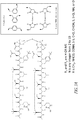
- a non-limiting, representative illustration of the cyclized structure of a peptide monomer subunit and peptide dimer compound is shown in Figure 2 .
- peptide refers broadly to a sequence of two or more amino acids joined together by peptide bonds. It should be understood that this term does not connote a specific length of a polymer of amino acids, nor is it intended to imply or distinguish whether the polypeptide is produced using recombinant techniques, chemical or enzymatic synthesis, or is naturally occurring.
- DRP disulfide rich peptides
- dimers refers broadly to a peptide comprising two or more subunits, wherein the subunits are peptides, e.g., DRPs, linked at their C- or N-termini. Dimers also include peptides comprising two subunits that are linked via one or more internal amino acid residues or derivatives thereof. Each of the subunits may be linked to the other via its N-terminus, C-terminus, or through an internal amino acid or derivate thereof, which may be different for each of the two subunits. Dimers of the present invention may include homodimers and heterodimers and function as integrin antagonists.
- Peptide dimer compounds may be described herein using the following nomenclature: [X n ] 2 , which indicates that the peptide dimer comprises two monomer subunits defined within the brackets (e.g., X n , where X represents an amino acid and n indicates the number of amino acids in the peptide).
- a linker moiety linking the two peptide subunits may be shown as follows: [X n ] 2 - L or L-[X n ] 2 , where L is the linker.
- Other chemical moieties, such as detectable labels may be shown in a similar manner as for the linker.
- L-amino acid refers to the "L” isomeric form of an amino acid
- D-amino acid refers to the "D” isomeric form of an amino acid
- NH 2 refers to the free amino group present at the amino terminus of a polypeptide.
- OH refers to the free carboxy group present at the carboxy terminus of a peptide.
- Ac refers to Acetyl protection through acylation of the C- or N-terminus of a polypeptide, or any amino acid in the peptide.
- NH 2 may also be used herein to refer to a C-terminal amide group, e.g., in the context of a CONH 2 .
- isostere or “isostere replacement,” as used herein, refers to any amino acid or other analog moiety having physiochemical and/or structural properties similar to a specified amino acid.
- an “isostere” or “suitable isostere” of an amino acid is another amino acid of the same class, wherein amino acids belong to the following classes based on the propensity of the side chain to be in contact with polar solvent like water: hydrophobic (low propensity to be in contact with water), polar or charged (energetically favorable contact with water).
- Illustrative charged amino acid residues include lysine (+), arginine (+), aspartate (-) and glutamate (-).
- Illustrative polar amino acids include serine, threonine, asparagine, glutamine, histidine and tyrosine.
- Illustrative hydrophobic amino acids include alanine, valine, leucine, isoleucine, proline, phenylalanine, tryptophane, cysteine and methionine.
- the amino acid glycine does not have a side chain and is hard to assign to one of the above classes. However, glycine is often found at the surface of proteins, often within loops, providing high flexibility to these regions, and an isostere may have a similar feature. Proline has the opposite effect, providing rigidity to the protein structure by imposing certain torsion angles on the segment of the polypeptide chain.
- an isostere is a derivative of an amino acid, e.g., a derivative having one or more modified side chains as compared to the reference amino acid.
- cyclized refers to a reaction in which one part of a polypeptide molecule becomes linked to another part of the polypeptide molecule to form a closed ring, such as by forming a disulfide bridge or other similar bond, e.g. a lactam bond.
- peptide monomer compounds or monomer subunits of peptide dimer compounds described herein are cyclized via an intramolecular bond between two amino acid residues present in the peptide monomer or monomer subunit.
- subunit refers to one of a pair of polypeptides monomers that are joined at the C- or N- terminus to form a dimer peptide composition.
- linker refers broadly to a chemical structure that is capable of linking together a plurality of peptide monomer subunits to form a dimer.
- receptor refers to chemical groups of molecules on the cell surface or in the cell interior that have an affinity for a specific chemical group or molecule. Binding between dimer peptides and targeted integrins can provide useful diagnostic tools.
- integrin-related diseases refer to indications that manifest as a result of integrin binding, and which may be treated through the administration of an integrin antagonist.
- inhibition As used herein, “inhibition,” “treatment,” “treating,” and “ameliorating” are used interchangeably and refer to, e.g., stasis of symptoms, prolongation of survival, partial or full amelioration of symptoms, and partial or full eradication of a condition, disease or disorder in a subject, e.g., a mammal.
- 'prevent or “prevention” includes (i) preventing or inhibiting the disease, injury, or condition from occurring in a subject, e.g.., a mammal, in particular, when such subject is predisposed to the condition but has not yet been diagnosed as having it; or (ii) reducing the likelihood that the disease, injury, or condition will occur in the subject.
- salts or zwitterionic forms of the compounds of the present invention which are water or oil-soluble or dispersible, which are suitable for treatment of diseases without undue toxicity, irritation, and allergic response; which are commensurate with a reasonable benefit/risk ratio, and which are effective for their intended use.
- the salts can be prepared during the final isolation and purification of the compounds or separately by treatment of an amino group with a suitable acid.
- Representative acid addition salts include acetate, adipate, alginate, citrate, aspartate, benzoate, benzenesulfonate, bisulfate, butyrate, camphorate, camphorsulfonate, digluconate, glycerophosphate, hemisulfate, heptanoate, hexanoate, formate, fumarate, hydrochloride, hydrobromide, hydroiodide, 2-hydroxyethansulfonate (isethionate), lactate, maleate, mesitylenesulfonate, methanesulfonate, naphthylenesulfonate, nicotinate, 2-naphthalenesulfonate, oxalate, pamoate, pectinate, persulfate, 3-phenylproprionate, picrate, pivalate, propionate, succinate, tartrate, trichloroacetate, trifluoroacetate, phosphate,
- amino groups in the compounds of the present invention can be quaternized with methyl, ethyl, propyl, and butyl chlorides, bromides, and iodides; dimethyl, diethyl, dibutyl, and diamyl sulfates; decyl, lauryl, myristyl, and steryl chlorides, bromides, and iodides; and benzyl and phenethyl bromides.
- acids which can be employed to form therapeutically acceptable addition salts include inorganic acids such as hydrochloric, hydrobromic, sulfuric, and phosphoric, and organic acids such as oxalic, maleic, succinic, and citric.
- any of the peptide momoner compounds or peptide dimer compounds described herein are salt forms, e.g., acetate salts.
- N(alpha)Methylation describes the methylation of the alpha amine of an amino acid, also generally termed as an N-methylation.
- sym methylation or "Arg-Me-sym”, as used herein, describes the symmetrical methylation of the two nitrogens of the guanidine group of arginine. Further, the term “asym methylation” or “Arg-Me-asym” describes the methylation of a single nitrogen of the guanidine group of arginine.
- acylating organic compounds refers to various compounds with carboxylic acid functionality e.g. which may be used to acylate the N-terminus of an amino acid subunit prior to forming a C-terminal dimer.
- Non-limiting examples of acylating organic compounds include cyclopropylacetic acid, 4-Fluorobenzoic acid, 4-fluorophenylacetic acid, 3-Phenylpropionic acid, Succinic acid, Glutaric acid, Cyclopentane carboxylic acid, 3,3,3-trifluoropropeonic acid, 3-Fluoromethylbutyric acid, Tetrahedro-2H-Pyran-4-carboxylic acid.
- peptide sequences are written according to the generally accepted convention whereby the ⁇ -N-terminal amino acid residue is on the left and the ⁇ -C-terminal is on the right.
- a-N-terminal refers to the free ⁇ -amino group of an amino acid in a peptide
- a-C-terminal refers to the free ⁇ -carboxylic acid terminus of an amino acid in a peptide.
- Peptide sequences may be shown in tables, which may further disclose additional moieties, such as N-terminal or C-terminal chemical modifications, linkers, conjugates, and/or labels, which are present in certain embodiments of the compounds of the invention.
- amino acid or "any amino acid” as used here refers to any and all amino acids, including naturally occurring amino acids (e.g., a-amino acids), unnatural amino acids, modified amino acids, and non-natural amino acids. It includes both D- and L-amino acids. Natural amino acids include those found in nature, such as, e.g., the 23 amino acids that combine into peptide chains to form the building-blocks of a vast array of proteins. These are primarily L stereoisomers, although a few D-amino acids occur in bacterial envelopes and some antibiotics.
- non-standard natural amino acids are pyrrolysine (found in methanogenic organisms and other eukaryotes), selenocysteine (present in many noneukaryotes as well as most eukaryotes), and N-formylmethionine (encoded by the start codon AUG in bacteria, mitochondria and chloroplasts).
- "Unnatural” or “non-natural” amino acids are non-proteinogenic amino acids (i.e., those not naturally encoded or found in the genetic code) that either occur naturally or are chemically synthesized. Over 140 natural amino acids are known and thousands of more combinations are possible.
- unnatural amino acids include ⁇ -amino acids ( ⁇ 3 and ⁇ 2 ), homo-amino acids, proline and pyruvic acid derivatives, 3-substituted alanine derivatives, glycine derivatives, ring-substituted phenylalanine and tyrosine derivatives, linear core amino acids, diamino acids, D-amino acids, alpha-methyl amino acids and N-methyl amino acids.
- Unnatural or non-natural amino acids also include modified amino acids.
- Modified amino acids include amino acids (e.g., natural amino acids) that have been chemically modified to include a group, groups, or chemical moiety not naturally present on the amino acid.
- aspects of the present invention include peptide dimer compounds comprising two monomer subunits, wherein the peptide dimer compounds are antagonists of ⁇ 4 ⁇ 7 integrin.
- Related aspects of the present invention include monomer subunits of peptide antagonists.
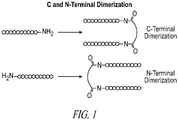
- Monomer subunits present in peptide dimer compounds are linked at either their C- or N-terminus, e.g., as shown in Figure 1 , or via internal amino acid residues, e.g., by a linker moiety.
- both monomer subunits are linked via their respective N-termini
- both monomer subunits are linked via their respective C-termini
- both monomer subunits are linked via internal amino acid residues.
- one monomer subunit is linked via any of its N-terminus, C-terminus, or an internal amino acid to another monomer subunit via any of its N-terminus, C-terminus or an internal amino acid, and linkages may occur via the same or different amino acid residues on two monomer subunits of a peptide dimer compound.
- monomer subunits of peptide dimer compounds of the present invention are linked via both their N-terminus and their C-terminus.
- the two N-termini of the monomer subunits are linked; in one embodiment, the two C-termini of the monomer subunits are linked; and in one embodiment, the N-terminus of the first monomer subunit is linked to the C-terminus of the second monomer subunit of a peptide dimer compound, and the C-terminus of the first monomer subunit is linked to the N-terminus of the second monomer subunit of the peptide dimer compound.
- linker moieties of the present invention may include any structure, length, and/or size that is compatible with the teachings herein.
- a linker moiety is selected from the non-limiting group consisting of DIG, PEG13, PEG25, PEG1K, PEG2K, PEG3.4K, PEG4K, PEG5K, IDA, IDA-Palm, IDA-Boc, IDA-Ac, IDA-Isovaleric acid, ADA Triazine, Triazine-Boc, Isophthalic acid, 1,3-phenylenediacetic acid, Glu, Asp, D-Glu, D-Asp, 1,4-phenylenediacetic acid, Biphenyl diacetic acid, cyclopropylacetic acid, succinic acid, glutaric acid, Dodecanedioic acid, suitable aliphatic diacids, suitable aromatic diacids, heteroaromatics, and polyethylene glycols having a
- linker When the linker is IDA, ADA or any linker with free amine it can be acylated with acylating organic compound selected from the group consisting of 2-me-Trifluorobutyl, Trifluoropentyl, Acetyl, Octonyl, Butyl, Pentyl, Hexyl, Palmityl, Lauryl, Oleoyl, Lauryl, Trifluoromethyl butyric, cyclopentane carboxylic, cyclopropylacetic, 4-fluorobenzoic, 4-fluorophenyl acetic, 3-Phenylpropionic, tetrahedro-2H-pyran-4carboxylic, succinic acid, and glutaric acid, straight chain aliphatic acids with 10 to 20 carbon units, cholic acid and other bile acids.
- small PEG PEG4-PEG13
- Glu IsoGlu or Asp is used as spacer before acylations.
- the linker connects two monomer subunits by connecting two sulfur containing C- or N-terminal amino acids.
- the two sulfur containing amino acids are connected by a linker comprising a di-halide, an aliphatic chain, or a PEG.
- the linker connects two monomeric subunits by connecting sulfur containing C-terminal amino acids at the C-terminus of each monomer subunit.
- the linker connects two monomeric subunits by connecting sulfur containing N-terminal amino acids at the N-terminus of each monomer subunit.
- the linker connects two monomeric subunits by connecting a sulfur containing C-terminal amino acid of one monomer subunit to a sulfur-containing N-terminal amino acid of the other monomer subunit.
- the two sulfur containing amino acids are connected by a linker comprising Homobifunctional maleimide crosslinkers, di-halide, 1,2-Bis(bromomomethyl)benzene, 1,2-Bis(chloromomethyl)benzene, 1,3-Bis(bromomomethyl)benzene, 1,3-Bis(chloromomethyl)benzene, 1,4-Bis(bromomomethyl)benzene, 1,4-Bis(chloromomethyl)benzene, 3,3'-bis-bromomethyl-biphenyl, or 2,2'-bis-bromomethyl-biphenyl.
- haloacetyl crosslinkers contain an iodoacetyl or a bromoacetyl group.
- These homo bifunctional linkers may contain spacers comprising PEG or an aliphatic chain.
- the linker is a bifunctional linker (e.g., di-acid, di-amine, dihalide, N-Hydroxy succinamine (NHS)-activated diesters, bis-maleimides, which may be capable of linking two monomer subunits through amine, ester, thioether, di-thio, or ether bonds.
- bifunctional linker e.g., di-acid, di-amine, dihalide, N-Hydroxy succinamine (NHS)-activated diesters, bis-maleimides, which may be capable of linking two monomer subunits through amine, ester, thioether, di-thio, or ether bonds.
- the linker is selected from the group consisting of DIG, PEG4, PEG4-biotin, PEG13, PEG25, PEG1K, PEG2K, PEG3.4K, PEG4K, PEG5K, IDA, ADA, Boc-IDA, Glutaric acid, Isophthalic acid, 1,3-phenylenediacetic acid, 1,4-phenylenediacetic acid, 1,2-phenylenediacetic acid, Triazine, Boc-Triazine, IDA-biotin, PEG4-Biotin, AADA, aliphatics, aromatics, heteroaromatics, and polyethylene glycol based linkers having a molecular weight from approximately 400Da to approximately 40,000Da.
- the linker is a bifunctional linker (e.g., di-acid, di-amine, dihalide, N-Hydroxy succinamine (NHS)-activated diesters, bis-maleimides, which may be capable of linking two monomer subunits through amine, ester, thioether, di-thio, or ether bonds.
- linker moieties are provided in Table 2.
- any of the peptide dimer compounds described herein e.g., peptide dimer compounds according to Formula (I) (including any of I-A, I-B, I-C, I-D, I-E, I-F, I-G, I-H, I-I, and I-J), Formula (II), Formula (III), Formula (A), Formula (B), Formula (C), Formula (D), Formula (S), Formula (X), or Formula (H), comprise two monomer subunits that are linked by any of the linkers described herein; and any of the peptide monomer compounds described herein, e.g., peptide monomer compounds according to Formula (IV) (including any of IV-A, IV-B, IV-C, IV-D, IV-E, IV-F, IV-G, IV-H, IV-I and IV-J), Formula (V) (including V-A), Formula (VI), Formula (A), Formula (B), Formula (C), or Formula (D) comprise any of the linkers described herein.
- the linker When the linker is IDA, ADA or any linker with a free amine, it can be acylated, e.g. with an acylating organic compound selected from the group consisting of 2-me-Trifluorobutyl, Trifluoropentyl, Acetyl, Octonyl, Butyl, Pentyl, Hexyl, Palmityl, Lauryl, Oleoyl, Lauryl, Trifluoromethyl butyric, cyclopentane carboxylic, cyclopropylacetic, 4-fluorobenzoic, 4-fluorophenyl acetic, 3-Phenylpropionic, tetrahedro-2H-pyran-4carboxylic, succinic acid, and glutaric acid, straight chain aliphatic acids with 10 to 20 carbon units, cholic acid and other bile acids.
- an acylating organic compound selected from the group consisting of 2-me-Trifluorobutyl, Trifluoropentyl
- small PEG PEG4-PEG13
- Glu glutathione
- IsoGlu Asp
- Asp Asp
- an amino acid reisdue of the peptide compound may undergo structural changes, e.g., an acid may become an amide.
- Reference to a particular amino acid residue encompasses the amino acid residue in any altered structural form upon binding to a linker or forming an intramolecular bond with another amino acid of the peptide compound.
- aspects of the present invention relate to various peptide monomer compounds that form cyclized structures through a disulfide bond, lactam bond, olefin bond, triazole bond, selenoether bond or diselenide bond.
- the cyclized structure of each peptide monomer has been shown to increase potency and selectivity of the molecules.
- the peptide monomer compounds and peptide dimer compounds (also referred to herein collectively as "the peptide compounds") of the instant invention may comprise one or more terminal modifying groups.
- a terminal end of a peptide compound is modified to include a terminal modifying group selected from the non-limiting group consisting of DIG, PEG4, PEG13, PEG25, PEG1K, PEG2K, PEG4K, PEG5K, Polyethylene glycol having molecular weight from 400Da to 40,000Da, IDA, ADA, Glutaric acid, Succinic acid, Isophthalic acid, 1,3-phenylenediacetic acid, 1,4-phenylenediacetic acid, 1,2-phenylenediacetic acid, AADA, and aliphatics, aromatics, and heteroaromatics.
- the N- or C-terminus of the peptide compound is linked to a modifying group.
- the N-terminus of a peptide compound is modified by one to three suitable groups, e.g., as represented by Xaa 1 , Xaa 2 , and Xaa 3 , e.g., of Formula (I) or (I-A).
- the N-terminus may further be acylated.
- the N-terminus further comprises a linker moiety or other modifying group.
- the C-terminus of a peptide is modified by a suitable group.
- the C-terminus may be acylated.
- the C-terminus further comprises a linker moiety, such as but not limited to any of those disclosed herein.
- the C-terminus comprises NH 2 or OH.
- the present invention further includes various peptide monomer compounds and peptide dimer compound having peptides that have been substituted with various modified amino acids.
- some peptides include Tic, Phe(2-carbamoyl), Phe(3-carbamoyl), Phe(4-COOH), Phe(4-OMe), Phe(4-tBu), Homo-Phe, Aic, Cit, Glu(OMe), Dab, Dap, Pen, Sar, Cit, Cav, homoLeu, 2-Nal, D-1-Nal, D-2-Nal, Bip, O-Me-Tyr, ⁇ -homoTrp, ⁇ -homoPhe, ⁇ -homo-Glu Phe(4-CF 3 ), 2-2-Indane, 1-1-Indane, Cyclobutyl, Gla, Phe(4-NH 2 ), homoPhe, 1-Nal, Nle, homo amino acids, D-amino acids, 3-3-diPhe, cyclo
- a peptide dimer compound comprising two linked subunits of Formula (I): Xaa 1 -Xaa 2 -Xaa 3 -Xaa 4 -Xaa 5 -Xaa 6 -Xaa 7 -Xaa 8 -Xaa 9 -Xaa 10 -Xaa 11 -Xaa 12 -Xaa 13 -Xaa 14 (Formula (I)) or a pharmaceutically acceptable salt thereof, wherein one or both subunits of the peptide dimer compound comprises a disulfide bond, a lactam bond, an olefin bond, a triazole bond, a selenoether bond, or a diselenide bond between Xaa 4 and Xaa 10 , and further wherein Formula (I) represents a monomer subunit of a dimer molecule, the monomer subunits are linked to form the peptide dimer compound, and wherein:
- Xaa 7 is Asp, D-Asp, or N-Me-Asp. In certain embodiments of Formula (I), Xaa 7 is Asp, Asp(OMe) or N-Me-Asp. In certain embodiments, Xaa 7 is Asp or N-Me-Asp. In certain embodiments, Xaa 7 is Asp.
- Xaa 11 is selected from the group consisting of Tic, Phe(2-carbomyl), Phe(3-carbomyl), Phe(4-COOH), Phe(4-OMe), Phe(4-tBu), Phe(4-CF 3 ), Phe(3-CF 3 ), Phe(CF 3 ), homo-Phe, D-Phe, Phe(2,3-di-Cl), Phe(3,4-di-Cl), N-Me-Tyr, N-Me-Phe, Phe(4-F), Phe(3-F), Phe(4-Me), Phe(3-Me), Phe(2-Me), Phe(3,4-diMe), Phe(2,4-di-Phe), beta-MethylPhe, and biphenyl-Ala.
- Xaa 12 is selected from the group consisting of Aic, Gln, Cit, Glu(OMe), Asn, D-His, Tic, Phe(3-COOH), D-Arg, Bip, D-Trp, Phe, D-Phe, D-Val, D-Thr, D-Tyr, D-Lys, D-Ile, D-His, N-Me-Glu, N-Me-Asp, alpha-homo-Glu, Biphenyl-Gly, Biphenyl-Ala, Homo-Phe, D-1-Nal, D-2-Nal, Thr, and Val.
- Xaa 12 is selected from the group consisting of aromatic amino acids, substituted aromatic amino acids, Glu, D-Glu, homo-Glu, Asp, D-Asp, D-homo-Glu, Gla, beta-homo-Glu, Tic, and corresponding D-amino acids and isosteres.
- Xaa 14 is selected from the group consisting of: any amino acid with an amine side chain, Lys, D-Lys, N-Me-Lys, D-N-Me-Lys, Orn, Dab, Dap, homoLys, D-Dap, D-Dab, D-Orn, Cys, homoCys, Pen, D-homoCys, D-Cys, and D-Pen.
- Xaa 14 is selected from the group consisting of: any amino acid with an amine side chain, Lys, D-Lys, N-Me-Lys, D-N-Me-Lys, Orn, Dab, Dap, homoLys, D-Dap, D-Dab, Cys, homoCys, Pen, and D-Orn.
- Xaa 14 is selected from the group consisting of: any amino acid with an amine side chain, Lys, D-Lys, N-Me-Lys, D-N-Me-Lys, Orn, Dab, Dap, HomoLys, D-Dap, D-Dab, D-Orn, Cys, HomoCys, Pen, D-HomoCys, D-Cys, D-Pen, Asp, Glu, D-Asp, D-Glu and HomoSer.
- Xaa 14 is selected from the group consisting of: Asp, Glu, homo-Glu, D-Asp, D-Glu, D-homo-Glu, N-Me-Glu, N-Me-Asp, N-Me-D-Glu, and N-Me-D-Asp.
- the two C-terminal amino acids of each subunit of a peptide dimer compound possess acid functionality, and they are linked through retroinverse linking by a diamine linker.
- Xaa 5 is selected from the group consisting of Cit, Phe(4-carbomyl), and N-Me-homoArg
- Xaa 8 is selected from the group consisting of Leu, homoLeu, Nle and Val
- Xaa 9 is selected from the group consisting of: Cba, homoLeu, and Cpa
- Xaa 11 is selected from the group consisting of Tic, Phe(2-carbomyl), Phe(3-carbomyl), Phe(4-COOH), Phe(4-OMe), and Phe(4-tBu)
- Xaa 5 is selected from the group consisting of Cit, Phe(4-carbomyl), and N-Me-homoArg.
- Xaa 8 is selected from the group consisting of Leu, homoLeu, Nle and Val.
- Xaa 9 is selected from the group consisting of: Cba, homoLeu, and Cpa.
- Xaa 11 is selected from the group consisting of Tic, Phe(2-carbomyl), Phe(3-carbomyl), Phe(4-COOH), Phe(4-OMe), and Phe(4-tBu).
- Xaa 12 is selected from the group consisting of Aic, Gln, Cit, Glu(OMe), D-His, Tic, Phe(3-COOH), D-Arg, Bip, D-Trp, Phe, D-Phe, D-Val, D-Thr, D-1-Nal, D-2-Nal, Thr, and Val.
- Xaa 13 is Pro.
- Xaa 11 is selected from the group consisting of Tic, Phe(2-carbomyl), Phe(3-carbomyl), Phe(4-COOH), Phe(4-OMe), Phe(4-tBu), Phe(4-CF 3 ), Phe(3-CF 3 ), Phe(CF 3 ), homo-Phe, D-Phe, Phe(2,3-di-Cl), Phe(3,4-di-Cl), N-Me-Tyr, N-Me-Phe, Phe(4-F), Phe(3-F), Phe(4-Me), Phe(3-Me), Phe(2-Me), Phe(3,4-diMe), Phe(2,4-di-Phe), beta-MethylPhe, or biphenyl-Ala.
- Xaa 12 is selected from the group consisting of Aic, Gln, Cit, Glu(OMe), Asn, D-His, Tic, Phe(3-COOH), D-Arg, Bip, D-Trp, Phe, D-Phe, D-Val, D-Thr, D-Tyr, D-Lys, D-Ile, D-His, N-Me-Glu, N-Me-Asp, alpha-homo-Glu, Biphenyl-Gly, Biphenyl-Ala, Homo-Phe, D-1-Nal, D-2-Nal, Thr, and Val.
- Xaa 7 is Asp, D-Asp or N-Me-Asp
- Xaa 9 is selected from the group consisting of: Gln, Ser, Asp, Pro, Gly, Ala, Phe, Glu, Ile, Val, N-butyl Ala, N-pental Ala, N-hexyl Ala, cyclobutyl Ala, Leu, Nle, Cba, homoLeu, Aoc, and N-Me-Leu
- Xaa 12 is absent or selected from the group consisting of: aromatic amino acids, substituted aromatic amino acids, Glu, D-Glu, homo-Glu, Asp, D-Asp, D-homo-Glu, Gla, beta-homo-Glu, Tic, and corresponding D-amino acids and isosteres
- Xaa 13 is absent or Pro
- Xaa 14 is selected from the group consisting of: any amino acid with an amine side chain, Lys, D
- Xaa 7 is Asp, Asp(OMe) or N-Me-Asp.
- the amino acid directly C-terminal to Xaa 10 is selected from aromatic amino acids, substituted aromatic amino acids, and Tic. In certain embodiments, the amino acid directly C-terminal to Xaa 10 is an aromatic amino acid. In certain embodiments wherein the compound is a peptide dimer, Xaa 14 is Lys, D-Lys, N-Me-Lys, D-N-Me-Lys, Orn, Dab, Dap, homoLys, D-Dap, D-Dab, or D-Orn. In certain embodiments, Xaa 14 is Cys, homoCys, or Pen. In certain embodiments, Xaa 14 or the C-terminus comprises an NH 2 or an OH.
- a free amine in the C-terminal amino acid is capped, e.g., with an acetyl group.
- Xaa 1 , Xaa 2 or Xaa 3 can only be Ac when located at the N-terminus of the peptide compound, e.g., bound to the N-terminal amino acid of the peptide compound.
- Xaa 1 is Ac
- Xaa2 and Xaa 3 are both absent or any amino acid.
- Xaa4 and Xaa10 are amino acid residues capable of binding to each other.
- Amino acids capable of binding to each other are known in the art, and various examples of specific amino acid residues that bind to each other and the bonds formed are described herein.
- Xaa 4 and Xaa 10 are capable of binding each other via a covalent bond.
- the covalent bond occurs through side chain groups on Xaa 4 and Xaa 10 .
- the bond is a disulfide bond.
- one or both peptide dimer subunit(s) comprises an intramolecular bond between Xaa 4 and Xaa 10 .
- one or both peptide dimer subunit(s) comprises an intramolecular bond between Xaa 1 and Xaa 7 .
- the bond is a disulfide bond, a lactam bond, an olefin bond, a triazole, a selenoether, or a diselenide bond. In certain embodiments, the bond occurs directly between the two amino acid residues.
- Xaa 4 is selected from the group consisting of: Cys, Pen, HomoCys, D-Cys, D-Pen, D-HomoCys, Asp, Glu, Homo-Glu, ⁇ -Asp, ⁇ -Glu, Lys, HomoLys, Orn, Dap, Dap, 2-allylglycine, 2-(3'-butenyl)glycine, 2-(4'-pentenyl)glycine, or 2-(5'-hexenyl)glycine, corresponding D-amino acids and sutiable isosteres, and Xaa 10 is selected from the group consisting of: Cys, Asp, Lys, Glu, Pen, HomoAsp, Homo-Glu, HomoCys, D-Cys, D-Pen, HomoLys, Orn, ⁇ -Asp, ⁇ -Glu, Dap, Dab
- a peptide subunit comprises a disulfide bond between Xaa 4 and Xaa 10 , and Xaa 4 and Xaa 10 are each selected from the group consisting of: Cys and Pen. In certain embodiments, both Xaa 4 and Xaa 10 are Pen.
- Xaa 10 is selected from the group consisting of Asp, homoAsp, Glu, and homo-Glu, homoLys
- Xaa 4 is selected from the group consisting of Lys, Dap, Dab, homoLys, Orn, and homo-Glu.
- Xaa 10 is selected from the group consisting of Lys, Dap, Dab, homoLys, Orn, and homo-Glu
- Xaa 4 is selected from the group consisting of Asp, homoAsp, Glu, homo-Glu, and homoLys.
- Xaa 4 is selected from the group consisting of Asp, homoAsp, Glu, homo-Glu, andhomoLys
- Xaa 10 is selected from the group consisting of Lys, Dap, Dab, homoLys, Orn, and HGlu
- Xaa 4 and Xaa 10 are cyclized through an amide bond.
- Xaa 4 and Xaa 10 are each selected from the group consisting of: 2-allylglycine, 2-(3'-butenyl)glycine, 2-(4'-pentenyl)glycine, or 2-(5'-hexenyl)glycine, and the peptide is cyclized via ring closing methasis to give the corresponding olefin / "stapled peptide.”
- Xaa 4 is Cys, Pen, homoCys, D-Pen, D-Cys or D-homoCys.
- Xaa 10 is Cys, Pen, homoCys, D-Pen, D-Cys or D-homoCys.
- Xaa 4 and Xaa 10 are each ⁇ -azido-Ala-OH or propargylglycine, and the peptide dimer subunit(s) is cyclized through click chemistry leading to a triazole ring.
- the intramolecular bond is a disulfide bond or a lactam bond.
- the N-terminal or C-terminal amino acids of both peptide monomer subunits of a peptide dimer are modified with a suitable linker moiety to form a homo- or hetero-dimer molecule, wherein Formula (I) comprises a dimer formed from two subunits joined by a suitable C- or N-terminal linker.
- a peptide dimer compound comprising two linked subunits of Formula (I'): Xaa 1 -Xaa 2 -Xaa 3 -Xaa 4 -Xaa 5 -Xaa 6 -Xaa 7 -Xaa 8 -Xaa 9 -Xaa 10 -Xaa 11 -Xaa 12 -Xaa 13 -Xaa 14 (Formula I') or a pharmaceutically acceptable salt thereof, wherein:
- Xaa 5 and Xaa 10 are linked via an intramolecular bond, e.g., a disulfide bond, a lactam bond, an olefin bond, a triazole bond, a selenoether bond, or a diselenide bond.
- an intramolecular bond e.g., a disulfide bond, a lactam bond, an olefin bond, a triazole bond, a selenoether bond, or a diselenide bond.
- Xaa 5 is selected from the group consisting of Cit, Phe(4-carbomyl), and N-Me-homoArg
- Xaa 8 is selected from the group consisting of Leu, homoLeu, Nle and Val
- Xaa 9 is selected from the group consisting of: Cba, homoLeu, and Cpa
- Xaa 11 is selected from the group consisting of Tic, Phe(2-carbomyl), Phe(3-carbomyl), Phe(4-COOH), Phe(4-OMe), and Phe(4-tBu)
- Xaa 12 is selected from the group consisting of Aic, Gln, Cit, Glu(OMe), D-His, Tic, Phe(3-COOH), D-Arg, Bip, D-Trp, Phe, D-Phe, D-Val, D-Thr, D-1-Nal, D-2-Nal, Thr, Val; or Xaaa
- any of the further limitations described for Formula (I) may be present in Formula (I'). Reference throughout to embodiments of Formula (I) also apply to any alternative embodiments of Formula (I) and also to Formula I.
- a peptide dimer compound comprising two linked subunits of Formula (II): Xaa 1 -Xaa 2 -Xaa 3 -Xaa 4 -Xaa 5 -Xaa 6 -Xaa 7 -Xaa 8 -Xaa 9 -Xaa 10 (Formula (II) or a pharmaceutically acceptable salt thereof, wherein one or both subunits of the peptide dimer compound comprises a disulfide bond, a lactam bond, an olefin bond, a triazole bond, a selenoether bond, or a diselenide bond between Xaa 1 and Xaa 7 , and further wherein Formula (II) represents a monomer subunit of a dimer molecule, the monomer subunits are linked to form a dimer molecule in accordance with the present invention, and wherein Xaa 1 -Xaa 10 of Formula (II) correspond to Xaa
- Xaa 1 and Xaa 7 are both Cys or Pen; in particular embodiments, both Xaa 1 and Xaa 7 are Pen.
- Xaa 10 is selected from the group consisting of: any amino acid with an amine side chain, Lys, D-Lys, N-Me-Lys, D-N-Me-Lys, Orn, Dab, Dap, HomoLys, D-Dap, D-Dab, D-Orn, Cys, HomoCys, Pen, D-HomoCys, D-Cys, D-Pen, Asp, Glu, D-Asp, D-Glu and HomoSer.
- Xaa 10 is selected from the group consisting of: any amino acid with an amine side chain, Lys, D-Lys, N-Me-Lys, D-N-Me-Lys, Orn, Dab, Dap, HomoLys, D-Dap, D-Dab, D-Orn, Cys, HomoCys, Pen, D-HomoCys, D-Cys, and D-Pen.
- Xaa 2 is selected from the group consisting of Cit, Phe(4-carbomyl), and N-Me-homoArg
- Xaa 5 is selected from the group consisting of Leu, HomoLeu, Nle and Val
- Xaa 6 is selected from the group consisting of: Cba, HomoLeu, and Cpa
- Xaa 8 is selected from the group consisting of Tic, Phe(2-carbomyl), Phe(3-carbomyl), Phe(4-COOH), Phe(4-OMe), and Phe(4-tBu)
- Xaa 9 is selected from the group consisting of Aic, Gln, Cit, Glu(OMe), D-His, Tic, Phe(3-COOH), D-Arg, Bip, D-Trp, Phe, D-Phe, D-Val, D-Thr, D-1-Nal, D-2-Nal, Thr, Val; or
- Xaa 2 is selected from the group consisting of Cit, Phe(4-carbomyl), and N-Me-homoArg.
- Xaa 5 is selected from the group consisting of Leu, HomoLeu, Nle and Val.
- Xaa 6 is selected from the group consisting of: Cba, HomoLeu, and Cpa.
- Xaa 8 is selected from the group consisting of Tic, Phe(2-carbomyl), Phe(3-carbomyl), Phe(4-COOH), Phe(4-OMe), and Phe(4-tBu).
- Xaa 9 is selected from the group consisting of Aic, Gln, Cit, Glu(OMe), D-His, Tic, Phe(3-COOH), D-Arg, Bip, D-Trp, Phe, D-Phe, D-Val, D-Thr, D-1-Nal, D-2-Nal, Thr, Val.
- Xaa 10 is Pro.
- one or both subunit of Formula (I) and Formula (II) comprises a disulfide bond, a lactam bond, an olefin bond, a triazole bond, a selenoether bond, or a diselenide bond between Xaa 4 and Xaa 10 of Formula (I), or Xaa 1 and Xaa 7 of Formula (II).
- the intramolecular bond is a disulfide bond or a lactam bond.
- a peptide dimer comprises one or more monomer subunits selected from of any one of Formula (I) (including any of I-A, I-B, I-C, I-D, I-E, I-F, I-G, I-H, I-I and I-J).
- Xaa 4 and Xaa 10 are linked, e.g. via a disulfide bond.
- Xaa 7 is Asp or N-Me-Asp.
- Xaa 4 and Xaa 10 are linked, e.g. via a disulfide bond.
- Xaa 7 is Asp.
- Xaa 4 and Xaa 10 are linked, e.g. via a disulfide bond.
- Xaa 7 is Asp.
- Xaa 4 and Xaa 10 are linked, e.g. via a disulfide bond.
- Xaa 7 is Asp.
- Xaa 4 and Xaa 10 are linked, e.g. via a disulfidebond.
- Xaa 7 is Asp.
- Xaa 14 is selected from the group consisting of: Lys, D-Lys, N-Me-Lys, and D-N-Me-Lys.
- Xaa 4 and Xaa 10 are linked, e.g. via a disulfide or a lactam bond.
- Xaa 7 is Asp.
- Xaa 14 is selected from the group consisting of: D-Lys, N-Me-Lys, and D-N-Me-Lys.
- Xaa 4 and Xaa 10 are linked, e.g. via a disulfide bond.
- Xaa 7 is Asp.
- Xaa 4 and Xaa 10 are linked, e.g. via a disulfide bond.
- Xaa 4 and Xaa 10 are linked, e.g. via a disulfide bond.
- Xaa 7 is Asp.
- Xaa 4 and Xaa 10 are linked via a disulfide bond, and the two monomer subunits are linked via a linker.
- linker is DIG.
- Xaa 14 is selected from the group consisting of: Lys, D-Lys, N-Me-Lys, and D-N-Me-Lys.
- Xaa 10 is selected from the group consisting of: Lys, D-Lys, N-Me-Lys, and D-N-Me-Lys.
- Xaa 14 is selected from the group consisting of: Lys, D-Lys, N-Me-Lys, and D-N-Me-Lys.
- Xaa 14 is selected from the group consisting of: any amino acid with an amine side chain, Lys, D-Lys, N-Me-Lys, D-N-Me-Lys, Orn, Dab, Dap, HomoLys, D-Dap, D-Dab, D-Orn, Cys, HomoCys, Pen, D-HomoCys, D-Cys, D-Pen, Asp, Glu, D-Asp, D-Glu and HomoSer, Asp, Glu, homo-Glu, D-Asp, D-Glu, D-homo-Glu, N-Me-Glu, N-Me-Asp, N-Me-D-Glu
- Xaa 14 is selected from the group consisting of: Asp, Glu, homo-Glu, D-Asp, D-Glu, D-homo-Glu, N-Me-Glu, N-Me-Asp, N-Me-D-Glu, and N-Me-D-Asp.
- Xaa 14 is selected from the group consisting of: Asp, Glu, homo-Glu, D-Asp, D-Glu, D-homo-Glu, N-Me-Glu, N-Me-Asp, N-Me-D-Glu, and N-Me-D-Asp.
- the two C-terminal amino acids of each subunit of a peptide dimer compound possess acid functionality, and they are linked through retroinverse linking by a diamine linker.
- Xaa 10 is selected from the group consisting of: any amino acid with an amine side chain, Lys, D-Lys, N-Me-Lys, D-N-Me-Lys, Orn, Dab, Dap, HomoLys, D-Dap, D-Dab, D-Orn, Cys, HomoCys, Pen, D-HomoCys, D-Cys, D-Pen, Asp, Glu, D-Asp, D-Glu and HomoSer, Asp, Glu, homo-Glu, D-Asp, D-Glu, D-homo-Glu, N-Me-Glu, N-Me-Asp, N-Me-D-Glu, and N-Me-D-Asp.
- Xaa 10 is selected from the group consisting of: Asp, Glu, homo-Glu, D-Asp, D-Glu, D-homo-Glu, N-Me-Glu, N-Me-Asp, N-Me-D-Glu, and N-Me-D-Asp.
- the two C-terminal amino acids of each subunit of a peptide dimer compound possess acid functionality, and they are linked through retroinverse linking by a diamine linker.
- the present invention includes peptide dimers comprising two peptide subunits of any one of Formulas (I-A), (I-B), (I-C), (I-D), (I-E), (I-F), (I-G), (I-H), (I-I), or (I-J), but wherein one or both of the Pen residues at Xaa 4 and Xaa 10 are substituted with Cys.
- both Pen residues at Xaa 4 and Xaa 10 are substituted with Cys.
- one or both subunits comprise a disulfide bond between Xaa 4 and Xaa 10 .
- the two peptide subunits are linked via their respective C-termini, e.g., via a linker bound to Xaa 13 or Xaa 14 of each subunit.
- the two peptide subunits are linked via their respective N-termini, e.g., via a linker bound to Xaa 1 , Xaa 2 , or Xaa 3 of each subunit.
- Xaa 1 is Ac
- Xaa 2 and Xaa 3 are absent or any amino acid.
- Xaa 1 and Xaa 2 are absent and Xaa 3 is Ac.
- any one or more of Xaa 1 , Xaa 2 , or Xaa 3 is selected from the group consisting of: any amino acid with an amine side chain, Lys, D-Lys, N-Me-Lys, D-N-Me-Lys, Orn, Dab, Dap, HomoLys, D-Dap, D-Dab, Cys, homoCys, Pen, and D-Orn.
- the two monomer subunits of the peptide dimer compounds are linked with ⁇ -amine of the N-terminal amino acid.
- the two sununits are linked with side chain amine, thio group or any functionality capable of linking through the linker of amino acid or the ⁇ -amine group of Xaa 1 , Xaa 2 or Xaa 3 .
- Xaa 1 , Xaa 2 or Xaa 3 is D-Lys, N-Me-Lys, or D-N-Me-Lys.
- Xaa 1 , Xaa 2 or Xaa 3 is D-Lys, N-Me-Lys, or D-N-Me-Lys, and is located at the N-terminus of the peptide.
- both subunits of a peptide dimer compound comprise an Xaa 1 , Xaa 2 or Xaa 3 selected from one of these residues, and the two subunits are linked via their respective N-termini.
- any one or more of Xaa 1 , Xaa 2 , or Xaa 3 is selected from the group consisting of: any amino acid with an amine side chain, Lys, D-Lys, N-Me-Lys, D-N-Me-Lys, Orn, Dab, Dap, HomoLys, D-Dap, D-Dab, D-Orn, Cys, HomoCys, Pen, D-HomoCys, D-Cys, D-Pen, Asp, Glu, D-Asp, D-Glu and HomoSer, Asp, Glu, homo-Glu, D-Asp, D-Glu, D-homo-
- this residue is located at the N-terminus of the peptide.
- Xaa 1 , Xaa 2 or Xaa 3 is selected from the group consisting of: Asp, Glu, homo-Glu, D-Asp, D-Glu, D-homo-Glu, N-Me-Glu, N-Me-Asp, N-Me-D-Glu, and N-Me-D-Asp.
- this residue is located at the N-terminus of the peptide.
- the two N-terminal amino acids of each subunit of a peptide dimer compound possess acid functionality, and they are linked through retroinverse linking by a diamine linker.
- both subunits of a peptide dimer compound comprise an Xaa 1 , Xaa 2 or Xaa 3 selected from one of these residues, and the two subunits are linked via their respective N-termini.
- Xaa 4 and Xaa 10 are Pen, and Xaa 5 is N-Me-Arg.
- Xaa 4 and Xaa 10 are Pen
- Xaa 5 is N-Me-Arg
- Xaa 11 is selected from the group consisting of Tic, Phe(2-carbomyl), Phe(3-carbomyl), Phe(4-COOH), Phe(4-OMe), and Phe(4-tBu).
- Xaa 10 is selected from the group consisting of: Lys, D-Lys, N-Me-Lys, and D-N-Me-Lys.
- a peptide dimer compound or peptide monomer compound that comprises one or more peptide subunits of Formula (A): Xaa 1 -Xaa 2 -Xaa 3 -Xaa 4 -Xaa 5 -Xaa 6 -Xaa 7 -Xaa 8 -Xaa 9 -Xaa 10 (Formula (A)) or a pharmaceutically acceptable salt thereof, wherein
- Xaa 10 is D-Lys, N-Me-Lys or N-Me-D-Lys.
- Xaa 1 and/or Xaa 7 are Pen.
- Xaa 10 is selected from the group consisting of: any amino acid with an amine side chain, Lys, D-Lys, N-Me-Lys, D-N-Me-Lys, Orn, Dab, Dap, HomoLys, D-Dap, D-Dab, Cys, homoCys, Pen, and D-Orn.
- Xaa 10 or the C-terminus of the peptide comprises an NH 2 or an OH.
- Embodiments include peptide dimer compounds comprising the following structure: (Xaa 1 -Xaa 2 -Xaa 3 -Xaa 4 -Xaa 5 -Xaa 6 -Xaa 7 -Xaa 8 -Xaa 9 -Xaa 10 -Xaa 11 -Xaa 12 -Xaa 13 -Xaa 14 ) 2 -L, wherein Xaa 1 - Xaa 14 are defined as shown herein for any of Formulas (I), including (I-A), (I-B), (I-C), (I-D), (I-E), (I-F), (I-G), (I-H), (I-I), and (I-J), and wherein L is any linker moiety linking the C-termini of the two monomer subunits.
- L is selected from the group consisting of DIG, bifunctional PEG13, bifunctional PEG25, bifunctional PEG1K, bifunctional PEG2K, bifunctional PEG3.4K, bifunctional PEG4K, bifunctional PEG5K, IDA, IDA-Palm, IDA-Boc, IDA-Isovaleric acid, Triazine, Triazine-Boc, Isophthalic acid, 1,3-phenylenediacetic acid, 1,4-phenylenediacetic acid, glutaric acid, Azelaic acid, Pimelic acid, Dodecanedioic acid, suitable aliphatics, aromatics, heteroaromatics, and polyethylene glycol based linkers having a molecular weight from approximately 400Da to approximately 40,000Da.
- the linker When the linker is IDA, ADA or any linker with free amine, it can be acylated with acylating organic compound selected from the group consisting of 2-me-Trifluorobutyl, Trifluoropentyl, Acetyl, Octonyl, Butyl, Pentyl, Hexyl, Palmityl, Lauryl, Oleoyl, Lauryl, Trifluoromethyl butyric, cyclopentane carboxylic, cyclopropylacetic, 4-fluorobenzoic, 4-fluorophenyl acetic, 3-Phenylpropionic, tetrahedro-2H-pyran-4carboxylic, succinic acid, and glutaric acid, straight chain aliphatic acids with 10 to 20 carbon units, cholic acid and other bile acids.
- acylating organic compound selected from the group consisting of 2-me-Trifluorobutyl, Trifluoropentyl, Acetyl, Octonyl
- the linker is a bifunctional linker (e.g., di-acid, di-amine, dihalide, N-Hydroxy succinamine (NHS)-activated diesters, bis-maleimides, which may be capable of linking two monomer subunits through amine, ester, thioether, di-thio, or ether bonds.
- bifunctional linker e.g., di-acid, di-amine, dihalide, N-Hydroxy succinamine (NHS)-activated diesters, bis-maleimides, which may be capable of linking two monomer subunits through amine, ester, thioether, di-thio, or ether bonds.
- L is selected from the group consisting of DIG, PEG13, PEG25, PEG1K, PEG2K, PEG3.4K, PEG4K, PEG5K, IDA, IDA-Palm, IDA-Boc, IDA-Isovaleric acid, Triazine, Triazine-Boc, Isophthalic acid, 1,3-phenylenediacetic acid, 1,4-phenylenediacetic acid, cyclopropylacetic acid, succinic acid, glutaric acid, Dodecanedioic acid, suitable aliphatics, suitable aromatics, heteroaromatics, and polyethylene glycols having a molecular weight from approximately 400Da to approximately 40,000Da.
- the linked is DIG.
- L is any of the linkers described herein.
- a peptide dimer compound comprising the following structure: L-(Xaa 1 -Xaa 2 -Xaa 3 -Xaa 4 -Xaa 5 -Xaa 6 -Xaa 7 -Xaa 8 -Xaa 9 -Xaa 10 -Xaa 11 -Xaa 12 -Xaa 13 -Xaa 14 ) 2 wherein Xaa 1 - Xaa 14 are defined as shown here for any of Formulas (I), including (I-A), (I-B), (I-C), (I-D), (I-E), (I-F), (I-G), (I-H), (I-I), and (I-J), and wherein L is selected from the group consisting of DIG, bifunctional PEG13, bifunctional PEG25, bifunctional PEG1K, bifunctional PEG2K, bifunctional PEG3.4K, bifunctional PEG4K, bifunctional PEG5K, IDA, IDA-Pal
- the linker When the linker is IDA, ADA or any linker with free amine, it can be acylated with acylating organic compound selected from the group consisting of 2-me-Trifluorobutyl, Trifluoropentyl, Acetyl, Octonyl, Butyl, Pentyl, Hexyl, Palmityl, Lauryl, Oleoyl, Lauryl, Trifluoromethyl butyric, cyclopentane carboxylic, cyclopropylacetic, 4-fluorobenzoic, 4-fluorophenyl acetic, 3-Phenylpropionic, tetrahedro-2H-pyran-4carboxylic, succinic acid, and glutaric acid, straight chain aliphatic acids with 10 to 20 carbon units, cholic acid and other bile acids.
- acylating organic compound selected from the group consisting of 2-me-Trifluorobutyl, Trifluoropentyl, Acetyl, Octonyl
- the linker is a bifunctional linker (e.g., di-acid, di-amine, dihalide, N-Hydroxy succinamine (NHS)-activated diesters, bis-maleimides, which may be capable of linking two monomer subunits through amine, ester, thioether, di-thio, or ether bonds.
- bifunctional linker e.g., di-acid, di-amine, dihalide, N-Hydroxy succinamine (NHS)-activated diesters, bis-maleimides, which may be capable of linking two monomer subunits through amine, ester, thioether, di-thio, or ether bonds.
- L is selected from the group consisting of DIG, PEG13, PEG25, PEG1K, PEG2K, PEG3.4K, PEG4K, PEG5K, IDA, IDA-Palm, IDA-Boc, IDA-Isovaleric acid, Triazine, Triazine-Boc, Isophthalic acid, 1,3-phenylenediacetic acid, 1,4-phenylenediacetic acid, cyclopropylacetic acid, succinic acid, glutaric acid, Dodecanedioic acid, suitable aliphatics, suitable aromatics, heteroaromatics, and polyethylene glycols having a molecular weight from approximately 400Da to approximately 40,000Da.
- the linked is DIG.
- sequences are derived from the general sequences provided in Formula (I) (including any of I-A, I-B, I-C, I-D, I-E, I-F, I-G, I-H, I-I, I-J), Formula (II) (including II-A), Formula (III), Formula (A), Formula (B), Formula (C), Formula (D) or Formula (S).
- Formula (I) including II-A), Formula (III), Formula (A), Formula (B), Formula (C), Formula (D) or Formula (S).
- the N-terminus of a decapeptide represented by Xaa 4 -Xaa 13 of Formula (I) or Xaa 1 -Xaa 10 of Formula (II) can be modified by one to three suitable groups, as represented by Xaa 1 , Xaa 2 , and Xaa 3 of Formula (I).
- the N-terminus may further be acylated.
- the N-terminus may be acylated with an acylating organic compound selected from the group consisting of 2-Methyl-4,4,4-Trifluorobutyl, Trifluoropentyl, Acetyl, Octonyl, Butyl, Pentyl, Hexyl, Palmityl, Lauryl, Oleoyl, Trifluoromethyl butyl, cyclopentane carboxylic, cyclopropylacetic, 4-fluorobenzoic, 4-fluorophenyl acetic, 3-Phenylpropionic, tetrahedro-2H-pyran-4carboxylic, succinic acid, and glutaric acid.
- small PEG e.g., PEG4-PEG13
- Glu, IsoGlu, or Asp are used as spacer for acylations.
- the N-terminus further comprises a suitable linker moiety to facilitate linking together two monomer subunits to form an N-terminal dimer molecule.
- the N-terminal amino acid is any amino acid with an amine side chain, Lys, D-Lys, N-Me-Lys, D-N-Me-Lys, Orn, Dab, Dap, HomoLys, D-Dap, D-Dab, D-Orn, Cys, HomoCys, Pen, D-HomoCys, D-Cys, D-Pen, Asp, Glu, D-Asp, D-Glu and HomoSer, Asp, Glu, homo-Glu, D-Asp, D-Glu, D-homo-Glu, N-Me-Glu, N-Me-Asp, N-Me-D-Glu, and N-Me-D-Asp.
- the N-terminal amino acid residue of the monomer subunit is an amino acid with an amine side chain, or an amino acid selected from Lys, D-Lys, N-Me-Lys, D-N-Me-Lys, Orn, Dab, Dap, HomoLys, D-Dap, D-Dab, Cys, homoCys, Pen, and D-Orn. In particular embodiments, it is D-Lys, N-Me-Lys, or D-N-Me-Lys.
- Xaa 1 , Xaa 2 and/or Xaa 3 may be an amino acid with an amine side chain, or an amino acid selected from Lys, D-Lys, N-Me-Lys, D-N-Me-Lys, Orn, Dab, Dap, HomoLys, D-Dap, D-Dab, D-Orn, Cys, HomoCys, Pen, D-HomoCys, D-Cys, D-Pen, Asp, Glu, D-Asp, D-Glu and HomoSer, Asp, Glu, homo-Glu, D-Asp, D-Glu, D-homo-Glu, N-Me-Glu, N-Me-Asp, N-Me-D-Glu, and N-Me-D-Asp.
- it is Lys, D-Lys, N-Me-Lys, D-N-Me-Lys, Orn, Dab, Dap, HomoLys, D-Dap, D-Dab, Cys, homoCys, Pen, and D-Orn, and it may participate in the linkage.
- the residue participating in the linkage may be located at the N-terminus of the peptide monomer, or it may be an internal amino acid, i.e., not the N-terminal or C-terminal amino acid.
- peptide dimer compounds having subunits based on any of the Formulas described herein, e.g., Formula (I) (including any of I-A, I-B, I-C, I-D, I-E, I-F, I-G, I-H, I-I and I-J), Formula (II) (including II-A), Formula (III), Formula (A), Formula (B), Formula (C), Formula (D), or Formula (S), wherein the subunits are linked via one or more internal amino acid residue.
- Formula (I) including any of I-A, I-B, I-C, I-D, I-E, I-F, I-G, I-H, I-I and I-J
- Formula (II) including II-A), Formula (III), Formula (A), Formula (B), Formula (C), Formula (D), or Formula (S), wherein the subunits are linked via one or more internal amino acid residue.
- an internal amino acid residue of one or more subunits could be modified to include an amino acid or derivative, such as an amino acid with an amine side chain, or an amino acid selected from Lys, D-Lys, N-Me-Lys, D-N-Me-Lys, Orn, Dab, Dap, HomoLys, D-Dap, D-Dab, Cys, homoCys, Pen, and D-Orn, capable of forming a bond with a linker.
- internal amino acid residues of the monomer subunits may be directly linked to each other (or to a linker) to form a peptide dimer compound.
- internal lysine residues present in each monomer subunit may bind to each other to form a peptide dimer compound.
- Xaa 1 , Xaa 2 , and Xaa 3 of Formula (I) are absent.
- Xaa 1 is absent, and Xaa 2 and Xaa 3 represent suitable groups for modifying the N-terminus of the peptide, e.g., the decapeptide represented by residues Xaa 4 -Xaa 13 of Formula (I), and residues Xaa 1 -Xaa 10 of Formula (II).
- Xaa 1 and Xaa 2 of Formula (I) are absent, and Xaa 3 of Formula (I) (including any of I-A, I-B, I-C, I-D, I-E, I-F, I-G, I-H, I-I and I-J) represents a single suitable group for modifying the N-terminus of the decapeptide subunit.
- Xaa 1 and Xaa 2 of Formula (I) are absent, and Xaa 3 of Formula (I) is Ac.
- the N-terminal amino acid residue of peptide dimers of either Formula (I) (including any of I-A, I-B, I-C, I-D, I-E, I-F, I-G, I-H, I-I and I-J), Formula (II) (including 2-A), Formula (III), Formula (A), Formula (B), Formula (C), Formula (D) or Formula (S) is acylated.
- the N-terminus may be acylated with an acylating organic compound selected from the group consisting of 2-me-Trifluorobutyl, Trifluoropentyl, Acetyl, Octonyl, Butyl, Pentyl, Hexyl, Palmityl, Lauryl, Oleoyl, and Lauryl, Trifluoromethyl butyric, cyclopentane carboxylic, cyclopropylacetic, 4-fluorobenzoic, 4-fluorophenyl acetic, 3-Phenylpropionic, tetrahedro-2H-pyran-4carboxylic, succinic acid, and glutaric acid.
- small PEG e.g., PEG4-PEG13
- Glu, IsoGlu, or Asp are used as spacer for acylations.
- the C-terminus of the peptide e.g., the decapeptide represented by Formula (I) (including any of I-A, I-B, I-C, I-D, I-E, I-F, I-G, I-H, I-I and I-J), Formula (II), Formula (III), Formula (A) Formula (B), Formula (C), Formula (D), or Formula (S) can be modified by a suitable group.
- the C-terminus may further be acylated, e.g., in the context of peptides dimer subunits that are dimerized via their N-terminus or peptide monomer compounds, e.g., as described herein.
- the C-terminus may be acylated, e.g., on an amino acid with a free amine, with an acylating organic compound selected from the group consisting of 2-me-Trifluorobutyl, Trifluoropentyl, Acetyl, Octonyl, Butyl, Pentyl, Hexyl, Palmityl, Lauryl, Oleoyl, and Lauryl, Trifluoromethyl butyric, cyclopentane carboxylic, cyclopropylacetic, 4-fluorobenzoic, 4-fluorophenyl acetic, 3-Phenylpropionic, tetrahedro-2H-pyran-4carboxylic, succinic acid, and glutaric acid.
- an acylating organic compound selected from the group consisting of 2-me-Trifluorobutyl, Trifluoropentyl, Acetyl, Octonyl, Butyl, Pentyl, Hexyl, Palmityl, Lauryl,
- small PEG e.g., PEG4-PEG13
- Glu, IsoGlu, or Asp are used as spacer for acylations.
- the C-terminus further comprises a suitable linker moiety to facilitate linking together two monomer subunits to form a C-terminal dimer molecule.
- Xaa 11 , Xaa 12 and Xaa 13 are absent. In other embodiments, Xaa 12 and Xaa 13 are absent. In other embodiments, Xaa 13 is absent. In particular embodiments, Xaa 14 is the C-terminal amino acid of the peptide monomer subunit of the peptide dimer. In particular embodiments, Xaa 14 is modified.
- Xaa 14 is Lysine, D-Lysine, N-methyl-Lysine, Dap or Dab. In particular embodiments, Xaa 14 is Dap or Dab. In certain embodiments, Xaa 4 comprises an NH 2 moiety.
- the N-terminal residue of Formula (I) (including any of I-A, I-B, I-C, I-D, I-E, I-F, I-G, I-H, I-I and I-J), Formula (II), Formula (III), Formula (A), Formula (B), Formula (C), Formula (D), or Formula (S) further comprises a linker moiety, e.g., one selected from the group consisting of DIG, PEG13, PEG25, PEG1K, PEG2K, PEG3.4K, PEG4K, PEG5K, IDA, IDA-Palm, IDA-Boc, IDA-Isovaleric acid, Triazine, Triazine-Boc, Isophthalic acid, 1,3-phenylenediacetic acid, 1,4-phenylenediacetic acid, cyclopropylacetic acid, succinic acid, glutaric acid, Dodecanedioic acid, suitable aliphatics
- any one or more of Xaa 1 -Xaa 4 are acylated.
- any one or more of Xaa 1 -Xaa 4 are acylated with an acylating organic compound selected from the group consisting of 2-me-Trifluorobutyl, Trifluoropentyl, Acetyl, Octonyl, Butyl, Pentyl, Hexyl, Palmityl, Lauryl, Oleoyl, and Lauryl, Trifluoromethyl butyric, cyclopentane carboxylic, cyclopropylacetic, 4-fluorobenzoic, 4-fluorophenyl acetic, 3-Phenylpropionic, tetrahedro-2H-pyran-4carboxylic, succinic acid, and glutaric acid.
- small PEG e.g., PEG4-PEG13
- Glu Iso
- Xaa 4 and Xaa 10 are both Cys or Pen
- the peptide monomer, or each subunit of the peptide dimer is cyclized though a disulfide bond between Xaa 4 and Xaa 10 .
- Xaa 4 is Cys.
- Xaa 4 is Pen.
- Xaa 4 is Pen; in other embodiments, Xaa 10 is Pen; in other embodiments, both Xaa 4 and Xaa 10 are Pen.
- Xaa 5 is N-Me-Arg.
- Xaa 6 is Ser.
- Xaa 7 is Asp.
- Xaa 8 is Thr.
- Xaa 9 is Leu.
- Xaa 10 is Pen.
- Xaa 10 is Cys.
- Xaa 11 is selected from the group consisting of Tic, Phe(2-carbomyl), Phe(3-carbomyl), Phe(4-COOH), Phe-(4-OMe), Phe(4-tBu), Phe(4-CN), N-Me-Phe, N-Me-Tyr, b-homoTrp, and Pentafluro-Phe.
- Xaa 11 is an aromatic amino acid.
- Xaa 12 is Aic.
- Xaa 13 is Pro, and Xaa 11 and/or Xaa 12 are present.
- Xaa 14 is an amino acyl residue selected from the group consisting of natural amino acids, Dap, Dab, Orn, D-Orn, N-Me-Orn, N-Me-Dap, N-Me-Dab, N-Me Lys, D-Dap, D-Dab, D-Lys, N-Me-D-Lys, suitable isostere replacements, corresponding D-amino acids, and corresponding N-Methyl amino acids.
- Xaa 14 is the C-terminus.
- Xaa 14 may be modified to include a linker moiety in accordance with the present invention.
- Xaa 14 is N(alpha)Methylated.
- any of Xaa 1 -Xaa 5 , Xaa 7 -Xaa 9 , and Xaa 11 -Xaa 12 are N(alpha)Methylated.
- Xaa 5 may further be Arg-Me-sym or Arg-Me-asym
- Xaa 11 may be O-Me-Tyr, N-Me-Lys(Ac), or 4-Me-Phe.
- any of Xaa 1 -Xaa 4 , and Xaa 11 -Xaa 14 are acylated.
- one or more residues at positions Xaa 1 -Xaa 4 , and Xaa 11 -Xaa 14 are acylated with an acylating organic compound selected from the group consisting of 2-me-Trifluorobutyl, Trifluoropentyl, Acetyl, Octonyl, Butyl, Pentyl, Hexyl, Palmityl, Lauryl, Oleoyl, and Lauryl, Trifluoromethyl butyric, cyclopentane carboxylic, cyclopropylacetic, 4-fluorobenzoic, 4-fluorophenyl acetic, 3-Phenylpropionic, tetrahedro-2H-pyran-4carboxylic, succinic acid, and glutaric acid.
- small PEG e.g., PEG4-PEG13
- Glu, IsoGlu, or Asp are used as spacer for acylations.
- Xaa 14 is Cys, HomoCys or Pen, instead of the amino acids listed.
- Xaa 5 is selected from the group consisting of N-Me-Ar, Phe(4-guanidino), Phe(4-NH 2 ), N-Me-HomoArg, HomoArg, Tyr and His;
- Xaa 8 is selected from the group consisting of Leu, HomoLeu, Nle and Val;
- Xaa9 is CPA or Aoc;
- Xaa 11 is selected from the group consisting of Tic, Phe(2-carbomyl), Phe(3-carbomyl), Phe(4
- Xaa 5 is selected from the group consisting of Cit, Phe(4-carbomyl), and N-Me-HomoArg
- Xaa 8 is selected from the group consisting of Leu, HomoLeu, Nle and Val
- Xaa 9 is selected from the group consisting of: Cba, HomoLeu, and Cpa
- Xaa 11 is selected from the group consisting of Tic, Phe(2-carbomyl), Phe(3-carbomyl), Phe(4-COOH), Phe(4-OMe), and Phe(4-tBu)
- Xaa 12 is selected from the group consisting of Aic, Gln, Cit, Glu(OMe), D-His, Tic, Phe(3-COOH), D-Arg, Bip, D-Trp, Phe, D-Phe, D-Val, D-Thr, D-1-Nal, D-2
- the N-terminal residue or C-terminal residue of any of the peptides described herein e.g., Formula (I) (including any of I-A, I-B, I-C, I-D, I-E, IF, I-G, I-H, I-I, and I-J) or Formula (II) (including II-A) or Formula (III), Formula (A), Formula (B), or Formula (C), Formula (D), or Formula (S) further comprises a conjugated moiety, e.g., a linker moiety, including but not limited to any of those described herein.
- a conjugated moiety e.g., a linker moiety, including but not limited to any of those described herein.
- the linker is selected from the group consisting of DIG, bifunctional PEG13, bifunctional PEG25, bifunctional PEG1K, bifunctional PEG2K, bifunctional PEG3.4K, bifunctional PEG4K, bifunctional PEG5K, IDA, IDA-Palm, IDA-Boc, IDA-Isovaleric acid, Triazine, Triazine-Boc, Isophthalic acid, 1,3-phenylenediacetic acid, 1,4-phenylenediacetic acid, glutaric acid, Azelaic acid, Pimelic acid, Dodecanedioic acid, suitable aliphatics, aromatics, heteroaromatics, and polyethylene glycol based linkers having a molecular weight from approximately 400Da to approximately 40,000Da.
- the linker When the linker is IDA, ADA or any linker with free amine, it can be acylated with acylating organic compound selected from the group consisting of 2-me-Trifluorobutyl, Trifluoropentyl, Acetyl, Octonyl, Butyl, Pentyl, Hexyl, Palmityl, Lauryl, Oleoyl, Lauryl, Trifluoromethyl butyric, cyclopentane carboxylic, cyclopropylacetic, 4-fluorobenzoic, 4-fluorophenyl acetic, 3-Phenylpropionic, tetrahedro-2H-pyran-4carboxylic, succinic acid, and glutaric acid, straight chain aliphatic acids with 10 to 20 carbon units, cholic acid and other bile acids.
- acylating organic compound selected from the group consisting of 2-me-Trifluorobutyl, Trifluoropentyl, Acetyl, Octonyl
- the linker is a bifunctional linker (e.g., di-acid, di-amine, dihalide, N-Hydroxy succinamine (NHS)-activated diesters, bis-maleimides, which may be capable of linking two monomer subunits through amine, ester, thioether, di-thio, or ether bonds.
- bifunctional linker e.g., di-acid, di-amine, dihalide, N-Hydroxy succinamine (NHS)-activated diesters, bis-maleimides, which may be capable of linking two monomer subunits through amine, ester, thioether, di-thio, or ether bonds.
- each subunit of the dimer molecule comprises, consists essentially of, or consists of an amino acid sequence represented by at least one of the sequences shown in the accompanying figures and tables.
- the invention further includes monomer subunits of peptide dimers described herein.
- the present invention includes compounds, including peptide dimer compounds, peptide monomer compound, and monomer subunits, comprising, consisting essentially of, or consisting of one or more of the amino acid sequences described herein, , without requiring the presence of any N-terminal modification such as Ac or any C-terminal modification such as NH 2 .
- the present invention further includes compounds described herein having an alternative N-terminal or C-terminal group.
- those compounds that show an N-terminal Ac group are also encompassed when their N-terminus is either the unaltered N-terminus of an amino acid, or when a different group is present
- those copmounds that show a C-terminal NH 2 group are also encompassed when their C-terminus is either the unaltered C-terminus of an amino acid, or when a different group is present.
- Additional embodiments of the present invention include peptide dimer compounds, peptide monomer compounds, and peptides comprising amino acid sequences shown in, tables, and which may include one or more additional amino acid residues.
- the monomer subunits of peptide dimer compounds, the peptide monomer compounds, and the peptides comprise from 7 to 35 amino acid residuesm from 7 to 30 amino acid residues, from 7 to 25 amino acid residues, from 7 to 20 amino acid residues, 7 to 19 amino acid residues, 7 to 18 amino acid residues, 7 to 17 amino acid residues, 7 to 16 amino acid residues, 7 to 15 amino acid residues, 7 to 14 amino acid residues, 7 to 13 amino acid residues, or 7 to 12 amino acid residues.
- the invention includes a peptide comprising the amino acid residues shown for SEQ ID Nos: 1-193 of Table 3 or SEQ ID Nos:194-218 of Table 4, wherein the peptide does not necessarily include (but may include) any of the N-terminal or C-terminal modifications, intramolecular bonds, linkers, or other modifications shown therein.
- the peptide comprises an intramolecular bond, e.g., a disulfide bond between two resisdues, e.g., two Pen residues.
- the invention further includes peptide monomer compounds, and peptide dimer compounds, comprising a peptide comprising an amino acid sequence described herein.
- a method of manufacturing a peptide compound of the present invention comprising synthesizing a peptide having a sequence as described herein, and introducing an intramolecular bond between two residues of the peptide (or allowing the intramolecular bond to form).
- the method further includes modifying one or both of the C-terminus and N-terminus of the peptide.
- the method includes conjugating a linker to the peptide.
- the invention includes a method of preparing a peptide dimer compound comprising: (i) synthesizing a peptide having a sequence as described herein, and introducing an intramolecular bond between two residues of the peptide (or allowing the intramolecular bond to form), and conjugating a linker to the peptide; (ii) synthesizing a peptide having a sequence as described herein (e.g., the same sequence as for step (i)), and introducing an intramolecular bond between two residues of the peptide (or allowing the intramolecular bond to form); and (iii) conjugating the peptide of step (i) to the peptide of step (ii) via the linker attached to the peptide of step (i).
- the polynucleotide encoding any of the peptide sequences disclosed herein.
- the polynucleotide is DNA, RNA, cDNA, or mRNA, including single-stranded, double-stranded polynucleotide forms thereof, and modified forms thereof.
- the incention includes a vector, e.g., an expression vector or gene therapy vector, comprising a polynucleotide encoding any of the peptides described herein.
- the vector may further include a promoter and/or other regulatory sequences operably linked to the sequence encoding the peptide sequence described herein.
- cells comprising an exogenous or introduced peptide or polynucleotide described herein.
- a peptide dimer compounds comprising two linker monomer subunits, each having the following structure of Formula (S): Xaa 1 -Xaa 2 -Xaa 3 -Xaa 4 -Xaa 5 -Xaa 6 -Xaa 7 -Xaa 8 -Xaa 9 -Xaa 10 -Xaa 11 -Xaa 12 -Xaa 13 -Xaa 14 -Xaa 15 -Xaa 16 -Xaa 17
- Formula (S) wherein Xaa 1 - Xaa 13 correspond to the residues defined at those positions in one of the formulas described herein, e.g., any of Formulas (I), (IV) and wherein Xaa 13 , Xaa 14 , Xaa 15 , Xaa 16 and Xaa 17 are absent or any amino acid, with the proviso that the C-terminal amino acid corresponds to the residues defined for
- Xaa 4 and Xaa 10 are linked via a disulfide bond, a lactam bond, an olefin bond, a triazole bond, a selenoether bond, or a diselenide bond.
- the present invention includes peptide dimer compounds comprising two linker monomer subunits,each having the following structure of Formula (S'): Xaa 1 -Xaa 2 -Xaa 3 -Xaa 4 -Xaa 5 -Xaa 6 -Xaa 7 -Xaa 8 -Xaa 9 -Xaa 10 -Xaa 11 -Xaa 12 -Xaa 13 Formula (S') wherein Xaa 1 - Xaa 9 correspond to the residues defined at those positions in one of the formulas described herein, e.g., any of Formulas (II), (III), A, B, C or D and wherein Xaa 10 , Xaa 11 , Xaa 12 , and Xaa 13 are absent or any amino acid, with the proviso that the C-terminal amino acid corresponds to the residues defined for Xaa 10 in the same formula for which Xaa 1 -X
- Xaa 1 and Xaa 7 are linked via a disulfide bond, a lactam bond, an olefin bond, a triazole bond, a selenoether bond, or a diselenide bond.
- the peptides further comprise one or more modifying group and/or linker.
- one or both of the N- or C-terminus of the peptides is modified.
- the N-terminus is acylated; and in particular embodiments, the C-terminus comprises a free amine, e.g., NH 2 .
- the C-terminus comprises an -OH group.
- the peptide comprises an intramolecular linkage between Xaa 4 and Xaa 10 of Formula (I) (including any of I-A, I-B, I-C, I-D, I-E, I-F, I-G, I-H, I-I, and I-J) (or Xaa 1 and Xaa 7 in Formula (II), (III), (A), (B), (C), or (D)).
- the present invention also includes compounds having any of the structures described herein or shown in any of the accompanying figures.
- some embodiments of the present invention comprise a peptide homodimer or hetereodimer molecule, wherein each subunit of the dimer molecule is cyclized through a disulfide bond or a lactam bond, and wherein each monomer subunit of the dimer molecule comprises, consists essentially of, or consists of an amino acid sequence represented by at least one of the sequences shown in the accompanying figures and tables.
- a peptide dimer compound comprising one or two linked subunits of Formula (III): Xaa 1 -Xaa 2 -Xaa 3 -Xaa 4 -Xaa 5 -Xaa 6 -Xaa 7 -Xaa 8 -Xaa 9 -Xaa 10 (SEQID NO: 343) (Formula (III)) or a pharmaceutically acceptable salt thereof, wherein each subunit comprises a disulfide bond between Xaa 1 and Xaa 7 , and further wherein Formula (III) represents a monomer subunit of a dimer molecule, wherein the monomer subunits are linked to form a dimer molecule in accordance with the present invention, and wherein:
- Xaa 9 is present.
- Xaa 1 is acylated.
- Xaa 10 comprises NH2 or OH.
- the two monomer subunits are linked via their respective C-termini via a linker moiety, e.g., DIG.
- the peptide dimer compound is a homodimer.
- a peptide monomer compound or a peptide dimer compound of the present invention comprises a peptide molecule of Formula (B): Xaa 1 -Xaa 2 -Xaa 3 -Xaa 4 -Xaa 5 -Xaa 6 -Xaa 7 -Xaa 8 -Xaa 9 -Xaa 10 (SEQ ID NO: 344) (Formula (B)) or a pharmaceutically acceptable salt thereof, wherein
- one or both of Xaa 1 and Xaa 7 are Pen.
- Xaa 10 is D-Lys or N-Me-Lys.
- a peptide dimer comprises two monomer subunits of Formula (B).
- the one or both subunits of the dimer comprise an intramolecular bond between Xaa 1 and Xaa 7 , e.g., a disulfide bond.
- Peptide dimer compounds are generally shown by providing the amino acid sequence of the monomer subunits of the peptide dimer compound in parentheses, followed by a lower case 2, which indicates that the peptide dimer compound comprises two subunits having the depicted amino acid sequence.
- the linker may also be shown at the C-terminus of the sequence to indicate that the two monomer subunits are linked via their C-termini, or it is shown at the N-terminus of the sequence to indicate that the two monomer subunits are linked via their N-termini.
- peptide monomer subunits having any of the Formula described herein.
- the peptide monomer subunits are bound to a linker.
- the peptide dimer and peptide monomer compounds of the present invention may be free acids or they may be pharmaceutically acceptable salts. In particular embodiments, they are acetate salts.
- peptide dimer compounds including pharmaceutically acceptable salts thereof, wherein the two monomer subunits are linked via their C-termini, having a structure of Formula (X):
- the linker moiety, Y is any of those shown herein, including but not limited to any of those shown below.
- the linker moiety is selected from DIG, PEG13, PEG25, PEG1K, PEG2K, PEG3.4K, PEG4K, PEG5K, IDA, IDA-Palm, IDA-Boc, IDA-Ac, IDA-Isovaleric acid, ADA Triazine, Triazine-Boc, Isophthalic acid, 1,3-phenylenediacetic acid, Glu, Asp, D-Glu, D-Asp, 1,4-phenylenediacetic acid, Biphenyl diacetic acid, cyclopropylacetic acid, succinic acid, glutaric acid, Dodecanedioic acid, suitable aliphatic diacids, suitable aromatic diacids, heteroaromatics, and polyethylene glycols having a molecular weight from approximately 400
- the linker is a bifunctional linker (e.g., di-acid, di-amine, dihalide, N-Hydroxy succinamine (NHS)-activated diesters, bis-maleimides, which may be capable of linking two monomer subunits through amine, ester, thioether, di-thio, or ether bonds.
- Y any linker Spacer: PEG, aliphatic chain,
- a peptide dimer compound of Formula (X) has the structure shown below (Compound X).
- compounds of Formula (X) and Compound X are salt forms. In one embodiment, they are acetate salts.
- peptide dimer compounds including pharmaceutically acceptable salts thereof, wherein the two monomer subunits are linked via their N-termini, having a structure of Formula (H):
- the linker moiety is any of those shown herein, including but not limited to those shown below.
- the linker moiety is selected from DIG, PEG13, PEG25, PEG1K, PEG2K, PEG3.4K, PEG4K, PEG5K, IDA, IDA-Palm, IDA-Boc, IDA-Ac, IDA-Isovaleric acid, ADA Triazine, Triazine-Boc, Isophthalic acid, 1,3-phenylenediacetic acid, Glu, Asp, D-Glu, D-Asp, 1,4-phenylenediacetic acid, Biphenyl diacetic acid, cyclopropylacetic acid, succinic acid, glutaric acid, Dodecanedioic acid, suitable aliphatic diacids, suitable aromatic diacids, heteroaromatics, and polyethylene glycols having a molecular weight from approximately 400Da to approximately 40,000
- the linker is a bifunctional linker (e.g., di-acid, di-amine, dihalide, N-Hydroxy succinamine (NHS)-activated diesters, bis-maleimides, which may be capable of linking two monomer subunits through amine, ester, thioether, di-thio, or ether bonds.
- Y any linker Spacer: PEG, aliphatic chain,
- a peptide dimer compound of Formula (H) has the structure shown below (Compound H):
- Embodiments include pharmaceutically acceptable salt forms of Compound H, e.g., acetate salts of Compound H.
- peptide dimer compounds comprising one or two monomer subunits comprising one of the following amino acid sequences, wherein the monomer subunits of the peptide dimer are linked via their C-terminus:
- the peptides of the monomer subunit further comprise an N-terminal Ac and/or a C-terminal NH 2 or OH.
- peptide dimer compounds comprising one or two monomer subunits comprising one of the following amino acid sequences, wherein the monomer subunits of the peptide dimer are linked via their N-termini or their C-termini:
- the monomer subunits are linked via their N-termini, they are linked by a linker that binds to the N-terminal Pen residue of each monomer subunit.
- the monomer subunits comprise at least one additional N-terminal amino acid, and wherein the N-terminal amino acid of the monomer subunit is linked by a linker to the other monomer subunit.
- the additional N-terminal amino acid is selected from the group consisting of: any amino acid with an amine side chain, Lys, D-Lys, N-Me-Lys, D-N-Me-Lys, Orn, Dab, Dap, HomoLys, D-Dap, D-Dab, D-Orn, Cys, HomoCys, Pen, D-HomoCys, D-Cys, D-Pen, Asp, Glu, D-Asp, D-Glu and HomoSer, Asp, Glu, homo-Glu, D-Asp, D-Glu, D-homo-Glu, N-Me-Glu, N-Me-Asp, N-Me-D-Glu, and N-Me-D-Asp.
- the peptides of the monomer subunit further comprise an N-terminal Ac and/or a C-terminal NH 2 or OH.
- a peptide monomer compound of Formula (IV) Xaa 1 -Xaa 2 -Xaa 3 -Xaa 4 -Xaa 5 -Xaa 6 -Xaa 7 -Xaa 8 -Xaa 9 -Xaa 10 -Xaa 11 -Xaa 12 -Xaa 13 -Xaa 14 (Formula (IV)) or a pharmaceutically acceptable salt thereof, wherein the peptide compound comprises a disulfide bond, a lactam bond, an olefin bond, a triazole bond, a selenoether bond, or a diselenide bond between Xaa 4 and Xaa 10 , wherein:
- Xaa 7 is Asp, Asp(OMe), or N-Me-Asp.
- Xaa 12 is absent or selected from the group consisting of: aromatic amino acids, substituted aromatic amino acids, Glu, D-Glu, homo-Glu, Asp, D-Asp, D-homo-Glu, Gla, beta-homo-Glu, Tic, and corresponding D-amino acids and isosteres.
- Xaa 11 is selected from the group consisting of Tic, Phe(2-carbomyl), Phe(3-carbomyl), Phe(4-COOH), Phe(4-OMe), Phe(4-tBu), Phe(4-CF 3 ), Phe(3-CF 3 ), Phe(CF 3 ), homo-Phe, D-Phe, Phe(2,3-di-Cl), Phe(3,4-di-Cl), N-Me-Tyr, N-Me-Phe, Phe(4-F), Phe(3-F), Phe(4-Me), Phe(3-Me), Phe(2-Me), Phe(3,4-diMe), Phe(2,4-di-Phe), beta-MethylPhe, and biphenyl-Ala.
- Xaa 12 is selected from the group consisting of Aic, Gln, Cit, Glu(OMe), Asn, D-His, Tic, Phe(3-COOH), D-Arg, Bip, D-Trp, Phe, D-Phe, D-Val, D-Thr, D-Tyr, D-Lys, D-Ile, D-His, N-Me-Glu, N-Me-Asp, alpha-homo-Glu, Biphenyl-Gly, Biphenyl-Ala, Homo-Phe, D-1-Nal, D-2-Nal, Thr, and Val.
- Xaa 12 is selected from the group consisting of aromatic amino acids, substituted aromatic amino acids, Glu, D-Glu, homo-Glu, Asp, D-Asp, D-homo-Glu, Gla, beta-homo-Glu, Tic, and corresponding D-amino acids and isosteres.
- Xaa 5 is selected from the group consisting of Cit, Phe(4-carbomyl), and N-Me-HomoArg
- Xaa 8 is selected from the group consisting of Leu, HomoLeu, Nle and Val
- Xaa 9 is selected from the group consisting of: Cba, HomoLeu, and Cpa
- Xaa 11 is selected from the group consisting of Tic, Phe(2-carbomyl), Phe(3-carbomyl), Phe(4-COOH), Phe(4-OMe), and Phe(4-tBu)
- Xaa 12 is selected from the group consisting of Aic, Gln, Cit, Glu(OMe), D-His, Tic, Phe(3-COOH), D-Arg, Bip, D-Trp, Phe, D-Phe, D-Val, D-Thr, D-1-Nal, D-2-Nal, Thr, Val; or
- Xaa 12 is absent or selected from the group consisting of: aromatic amino acids, substituted aromatic amino acids, Glu, D-Glu, homo-Glu, Asp, D-Asp, D-homo-Glu, Gla, beta-homo-Glu, Tic, and corresponding D-amino acids and suitable isosteres; and Xaa 13 is absent or Pro.
- the amino acid directly C-terminal to Xaa 10 is selected from aromatic amino acids, substituted aromatic amino acids, and Tic. In certain embodiments, the amino acid directly C-terminal to Xaa 10 is an aromatic amino acid.
- Xaa 14 or the C-terminal amino acid does not comprise a free amine.
- Xaa 14 is Lys, D-Lys, N-Me-Lys, D-N-Me-Lys, Orn, Dab, Dap, HomoLys, D-Dap, D-Dab, or D-Orn.
- Xaa 14 or the C-terminus comprises an NH 2 or an OH.
- a free amine in the C-terminal amino acid is capped, e.g., with an acetyl group.
- the peptide comprises an intramolecular bond between Xaa 4 and Xaa 10 .
- the bond is a disulfide bond, a lactam bond, an olefin bond, a triazole, a selenoether, or a diselenide bond.
- the bond occurs directly between the two amino acid residues.
- Xaa 4 is selected from the group consisting of: Cys, Pen, HomoCys, D-Cys, D-Pen, D-HomoCys, Asp, Glu, Homo-Glu, ⁇ -Asp, ⁇ -Glu, Lys, HomoLys, Orn, Dap, Dap, 2-allylglycine, 2-(3'-butenyl)glycine, 2-(4'-pentenyl)glycine, or 2-(5'-hexenyl)glycine, corresponding D -amino acids and suitable isosteres
- Xaa 10 is selected from the group consisting of: Cys, Asp, Lys, Glu, Pen, HomoAsp, Homo-Glu, D-Cys, D-Pen, HomoLys, Orn, ⁇ -Asp, ⁇ -Glu, Dap, Dab, D-HomoCys, 2-allyl
- Xaa 4 and Xaa 10 are each selected from the group consisting of: Cys and Pen. In certain embodiments, both Xaa 4 and Xaa 10 are Pen.
- Xaa 4 and Xaa 10 are each selected from the group consisting of: Lys, HomoLys, Orn, Dap, Dab, Asp, Glu, Homo-Glu, D-Dap, D-Dab, D-Asp, D-Glu or D-Lys.
- Xaa 10 is Lys, HomoLys, Orn, Dap or Dab; and Xaa 4 is Asp, Glu, or Homo-Glu.
- Xaa 4 is Lys, HomoLys, Orn, Dap or Dab; and Xaa 10 is Asp, Glu, or Homo-Glu.
- Xaa 10 is selected from the group consisting of Asp, HAsp, Glu, and HGlu
- HLys and Xaa 4 is selected from the group consisting of Lys, Dap, Dab, HLys, Orn, and HGl.
- Xaa 10 is selected from the group consisting of Lys, Dap, Dab, HLys, Orn, and HGlu
- Xaa 4 is selected from the group consisting of Asp, HAsp, Glu, HGlu, and HLys.
- Xaa 4 is selected from the group consisting of Asp, HAsp, Glu, HGlu, and Hlys
- Xaa 10 is selected from the group consisting of Lys, Dap, Dab, HLys, Orn, and HGlu
- Xaa 4 and Xaa 10 are cyclized through an amide bond.
- Xaa 4 and Xaa 10 are each selected from the group consisting of: 2-allylglycine, 2-(3'-butenyl)glycine, 2-(4'-pentenyl)glycine, or 2-(5'-hexenyl)glycine, and the peptide is cyclized via ring closing methasis to give the corresponding olefin / "stapled peptide.”
- Xaa 4 is Cys, Pen, or homoCys.
- Xaa 4 and Xaa 10 are each ⁇ -azido-Ala-OH or propargylglycine, and the peptide is cyclized through click chemistry leading to a triazole ring.
- the intramolecular bond is a disulfide bond or a lactam bond.
- the present invention provides a peptide monomer compound of Formula (IV'): Xaa 1 -Xaa 2 -Xaa 3 -Xaa 4 -Xaa 5 -Xaa 6 -Xaa 7 -Xaa 8 -Xaa 9 -Xaa 10 -Xaa 11 -Xaa 12 -Xaa 13 -Xaa 14 (Formula (IV')), or a pharmaceutically acceptable salt thereof, wherein:
- Xaa 5 is selected from the group consisting of Cit, Phe(4-carbomyl), and N-Me-homoArg
- Xaa 8 is selected from the group consisting of Leu, homoLeu, Nle and Val
- Xaa 9 is selected from the group consisting of: Cba, homoLeu, and Cpa
- Xaa 11 is selected from the group consisting of Tic, Phe(2-carbomyl), Phe(3-carbomyl), Phe(4-COOH), Phe(4-OMe), and Phe(4-tBu)
- Xaa 12 is selected from the group consisting of Aic, Gln, Cit, Glu(OMe), D-His, Tic, Phe(3-COOH), D-Arg, Bip, D-Trp, Phe, D-Phe, D-Val, D-Thr, D-1-Nal, D-2-Nal, Thr, Val; or Xaaa
- any of the features or limitations described for Formula (IV) may be present in Formula (IV').
- a peptide compound of Formula (V) Xaa 1 -Xaa 2 -Xaa 3 -Xaa 4 -Xaa 5 -Xaa 6 -Xaa 7 -Xaa 8 -Xaa 9 -Xaa 10 (Formula (V)) or a pharmaceutically acceptable salt thereof, wherein the peptide compound comprises a disulfide bond, a lactam bond, an olefin bond, a triazole bond, a selenoether bond, or a diselenide bond between Xaa 1 and Xaa 7 , wherein Xaa 1 -Xaa 10 of Formula (V) corresponds to Xaa 4 -Xaa 13 of Formula (IV).
- Xaa 2 is selected from the group consisting of Cit, Phe(4-carbomyl), and N-Me-homoArg
- Xaa 5 is selected from the group consisting of Leu, HomoLeu, Nle and Val
- Xaa 6 is selected from the group consisting of: Cba, homoLeu, and Cpa
- Xaa 8 is selected from the group consisting of Tic, Phe(2-carbomyl), Phe(3-carbomyl), Phe(4-COOH), Phe(4-OMe), and Phe(4-tBu)
- Xaa 9 is selected from the group consisting of Aic, Gln, Cit, Glu(OMe), D-His, Tic, Phe(3-COOH), D-Arg, Bip, D-Trp, Phe, D-Phe, D-Val, D-Thr, D-1-Nal, D-2-Nal, Thr, Val; or Xa
- Formula (IV-A) In one embodiment of Formula (IV), herein referred to as Formula (IV-A),
- Xaa 4 and Xaa 10 are linked, e.g. via a disulfide bond.
- Xaa 7 is Asp.
- Formula (IV-B) In one embodiment of Formula (IV), herein referred to as Formula (IV-B),
- Xaa 7 is Asp.
- Formula (IV-C) In one embodiment of Formula (IV), herein referred to as Formula (IV-C),
- Xaa 4 and Xaa 10 are linked, e.g. via a disulfide or a lactam bond.
- Xaa 7 is Asp.
- Formula (IV-D) In one embodiment of Formula (IV), herein referred to as Formula (IV-D),
- Xaa 4 and Xaa 10 are linked, e.g. via a disulfide bond.
- Xaa 7 is Asp.
- Formula (IV-E) In one embodiment of Formula (IV), herein referred to as Formula (IV-E),
- Xaa 4 and Xaa 10 are linked, e.g. via a disulfide or a lactam bond.
- Xaa 7 is Asp.
- Xaa 4 and Xaa 10 are linked, e.g. via a disulfide or a lactam bond.
- Xaa 7 is Asp.
- Formula (IV-G) In one embodiment of Formula (IV), herein referred to as Formula (IV-G),
- Xaa 4 and Xaa 10 are linked, e.g. via a disulfide or a lactam bond.
- Xaa 7 is Asp.
- Xaa 4 and Xaa 10 are linked, e.g. via a disulfide bond.
- Xaa 7 is Asp.
- Formula (IV-J) In one embodiment of Formula (IV), herein referred to as Formula (IV-J),
- Xaa4 and Xaa10 are linked via a disulfide bond.
- Xaa 14 is selected from the group consisting of: Lys, D-Lys, N-Me-Lys, D-N-Me-Lys.
- a peptide monomer compound or peptide dimer compound comprising a peptide molecule of Formula (C): Xaa 1 -Xaa 2 -Xaa 3 -Xaa 4 -Xaa 5 -Xaa 6 -Xaa 7 -Xaa 8 -Xaa 9 -Xaa 10 (SEQ ID NO: 345) (Formula (C)) or a pharmaceutically acceptable salt thereof, wherein
- Xaa 10 is D-Lys, N-Me-Lys or N-Me-D-Lys.
- Xaa 1 and/or Xaa 7 are Pen.
- Xaa 10 or the C-terminus of the peptide comprises an NH 2 or an OH.
- a free amine in the C-terminal amino acid is capped, e.g., with an acetyl group.
- a peptide monomer compound has the structure shown below (Compound U).
- Compound U is a pharmaceutically acceptable salt form. In one embodiment, it is an acetate salt.
- Some sequences are derived from the general sequences provided in Formula (IV) (including any of IV-A, IV-B, IV-C, IV-D, IV-E, IV-F, IV-G, IV-H, IV-I, and IV-J), Formula (V), Formula (A), (Formula (B), Formula (C), or Formula (D).
- the N-terminus of a decapeptide represented by Xaa 4 -Xaa 13 of Formula (IV) or Xaa 1 -Xaa 10 of Formula (V), (VI), (A), (B), (C), or (D) can be modified by one to three suitable groups, as represented by Xaa 1 , Xaa 2 , and Xaa 3 of Formula (IV).
- the N-terminus may further be acylated.
- the N-terminus may be acylated with an acylating organic compound selected from the group consisting of 2-me-Trifluorobutyl, Trifluoropentyl, Acetyl, Octonyl, Butyl, Pentyl, Hexyl, Palmityl, Lauryl, Oleoyl, and Lauryl, Trifluoromethyl butyric, cyclopentane carboxylic, cyclopropylacetic, 4-fluorobenzoic, 4-fluorophenyl acetic, 3-Phenylpropionic, tetrahedro-2H-pyran-4carboxylic, succinic acid, and glutaric acid.
- an acylating organic compound selected from the group consisting of 2-me-Trifluorobutyl, Trifluoropentyl, Acetyl, Octonyl, Butyl, Pentyl, Hexyl, Palmityl, Lauryl, Oleo
- small PEG e.g., PEG4-PEG13
- Glu, IsoGlu, or Asp are used as spacer for acylations.
- Xaa 1 , Xaa 2 , and Xaa 3 of Formula (IV) are absent.
- Xaa 1 is absent, and Xaa 2 and Xaa 3 represent suitable groups for modifying the N-terminus of the peptide, e.g., the decapeptide represented by residues Xaa 4 -Xaa 13 of Formula (IV), and residues Xaa 1 -Xaa 10 of Formula (V).
- Xaa 1 and Xaa 2 of Formula (IV) are absent, and Xaa 3 of Formula (IV) (including any of IV-A, IV-B, IV-C, IV-D, IV-E, IV-F, IV-G, IV-H, IV-I, and IV-J) represents a single suitable group for modifying the N-terminus of the decapeptide subunit.
- Xaa 1 and Xaa 2 of Formula (IV) are absent, and Xaa 3 of Formula (IV) is Ac.
- the N-terminal amino acid residue of the peptide of either Formula (IV), (V), (VI), (A), (B), (C), or (D) is acylated.
- the N-terminus may be acylated with an acylating organic compound selected from the group consisting of 2-me-Trifluorobutyl, Trifluoropentyl, Acetyl, Octonyl, Butyl, Pentyl, Hexyl, Palmityl, Lauryl, Oleoyl, and Lauryl, Trifluoromethyl butyric, cyclopentane carboxylic, cyclopropylacetic, 4-fluorobenzoic, 4-fluorophenyl acetic, 3-Phenylpropionic, tetrahedro-2H-pyran-4carboxylic, succinic acid, and glutaric acid.
- small PEG e.g., PEG4-PEG13
- Glu, IsoGlu, or Asp are used as spacer for acylations.
- the C-terminus of the peptide e.g., the peptide represented by Formula (IV) (including any of IV-A, IV-B, IV-C, IV-D, IV-E, IV-F, IV-G, IV-H, IV-I, and IV-J), Formula (V), Formula (VI), Formula (A), Formula (B), Formula (C) or Formula (D) can be modified by a suitable group.
- the C-terminus may further be acylated.
- the C-terminus may be acylated with an acylating organic compound selected from the group consisting of 2-me-Trifluorobutyl, Trifluoropentyl, Acetyl, Octonyl, Butyl, Pentyl, Hexyl, Palmityl, Lauryl, Oleoyl, and Lauryl, Trifluoromethyl butyric, cyclopentane carboxylic, cyclopropylacetic, 4-fluorobenzoic, 4-fluorophenyl acetic, 3-Phenylpropionic, tetrahedro-2H-pyran-4carboxylic, succinic acid, and glutaric acid.
- an acylating organic compound selected from the group consisting of 2-me-Trifluorobutyl, Trifluoropentyl, Acetyl, Octonyl, Butyl, Pentyl, Hexyl, Palmityl, Lauryl, Oleoyl, and Lauryl, Trifluoromethyl butyric
- small PEG e.g., PEG4-PEG13
- Glu, IsoGlu, or Asp are used as spacer for acylations.
- Xaa 11 , Xaa 12 and Xaa 13 are absent.
- Xaa 12 and Xaa 13 are absent.
- Xaa 13 is absent.
- Xaa 14 is the C-terminal amino acid of the peptide. In particular embodiments, Xaa 14 is modified. In certain embodiments, Xaa 14 is Lysine, D-Lysine, N-methyl-Lysine, Dap or Dab. In particular embodiments, Xaa 14 is Dap or Dab. In certain embodiments, Xaa 14 comprises an NH 2 moiety.
- any one or more of Xaa 1 -Xaa 4 are acylated.
- any one or more of Xaa 1 -Xaa 4 are acylated with an acylating organic compound selected from the group consisting of 2-me-Trifluorobutyl, Trifluoropentyl, Acetyl, Octonyl, Butyl, Pentyl, Hexyl, Palmityl, Lauryl, Oleoyl, and Lauryl, Trifluoromethyl butyric, cyclopentane carboxylic, cyclopropylacetic, 4-fluorobenzoic, 4-fluorophenyl acetic, 3-Phenylpropionic, tetrahedro-2H-pyran-4carboxylic, succinic acid, and glutaric acid.
- small PEG e.g., PEG4-PEG13
- Glu IsoGlu
- IsoGlu is used as spacer before acylations.
- Xaa 4 and Xaa 10 are both either Cys or Pen
- the peptide is cyclized though a disulfide bond or a lactam bond between Xaa 4 and Xaa 10 .
- Xaa 4 is Cys.
- Xaa 4 is Pen.
- Xaa 4 is Pen; in other embodiments, Xaa 10 is Pen; in other embodiments, both Xaa 4 and Xaa 10 are Pen.
- Xaa 5 is N-Me-Arg.
- Xaa 6 is Ser.
- Xaa 7 is Asp.
- Xaa 8 is Thr.
- Xaa 9 is Leu.
- Xaa 10 is Pen.
- Xaa 10 is Cys.
- Xaa 11 is selected from the group consisting of Tic, Phe(2-carbomyl), Phe(3-carbomyl), Phe(4-COOH), Phe-(4-OMe), Phe(4-tBu), Phe(4-F), Phe(4-CN), N-Me-Phe, N-Me-Tyr, ⁇ -homoTrp, and Pentafluro-Phe.
- Xaa 12 Glu, D-Glu, beta homo-Glu
- Xaa 13 is Pro
- Xaa 11 and/or Xaa 12 are present
- Xaa 14 is an amino acyl residue selected from the group consisting of natural amino acids, Dap, Dab, Orn, D-Orn, N-Me-Orn, N-Me-Dap, N-Me-Dab, N-Me Lys, D-Dap, D-Dab, D-Lys, N-Me-D-Lys, isostere replacements, corresponding D-amino acids, and corresponding N-Methyl amino acids.
- Xaa 14 is the C-terminus.
- Xaa 14 may be modified to include a linker moiety in accordance with the present invention.
- Xaa 14 is N(alpha)Methylated.
- any of Xaa 1 -Xaa 5 , Xaa 7 -Xaa 9 , and Xaa 11 -Xaa 12 are N(alpha)Methylated.
- Xaa 5 may further be Arg-Me-sym or Arg-Me-asym
- Xaa 11 may be O-Me-Tyr, N-Me-Lys(Ac), or 4-Me-Phe.
- any of Xaa 1 -Xaa 4 , and Xaa 11 -Xaa 14 are acylated.
- one or more residues at positions Xaa 1 -Xaa 4 , and Xaa 11 -Xaa 14 are acylated with an acylating organic compound selected from the group consisting of 2-me-Trifluorobutyl, Trifluoropentyl, Acetyl, Octonyl, Butyl, Pentyl, Hexyl, Palmityl, Lauryl, Oleoyl, and Lauryl, Trifluoromethyl butyric, cyclopentane carboxylic, cyclopropylacetic, 4-fluorobenzoic, 4-fluorophenyl acetic, 3-Phenylpropionic, tetrahedro-2H-pyran-4carboxylic, succinic acid, and glutaric acid.
- small PEG e.g., PEG4-PEG13
- Glu, IsoGlu, or Asp are used as spacer for acylations.
- Xaa 5 is selected from the group consisting of N-Me-Arg, Phe(4-guanidino), Phe(4-NH 2 ), N-Me-homoArg, homoArg, Tyr and His;
- Xaa 8 is selected from the group consisting of Leu, homoLeu, Nle and Val;
- Xaa 9 is CPA or Aoc;
- Xaa 11 is selected from the group consisting of Tic, Phe(2-carbomyl), Phe(3-carbomyl), Phe(4-carbomyl), Phe(4-COOH), Phe(4-OMe),
- Xaa 5 is selected from the group consisting of Cit, Phe(4-carbomyl), and N-Me-homoArg
- Xaa 8 is selected from the group consisting of Leu, homoLeu, Nle and Val
- Xaa 9 is selected from the group consisting of: Cba, homoLeu, and Cpa
- Xaa 11 is selected from the group consisting of Tic, Phe(2-carbomyl), Phe(3-carbomyl), Phe(4-COOH), Phe(4-OMe), and Phe(4-tBu)
- Xaa 12 is selected from the group consisting of Aic, Gln, Cit, Glu(OMe), D-His, Tic, Phe(3-COOH), D-Arg, Bip, D-Trp, Phe, D-Phe, D-Val, D-Thr, D-1-Nal, D-2-Nal, Thr
- the C-terminal residue of any of the peptides described herein e.g., Formula (IV) (including any of IV-A, IV-B, IV-C, IV-D, IV-E, IV-F, IV-G, IV-H, and IV-I) or Formula (V) (including V-A), Formula (VI), Formula (A), Formula (B), Formula (C), or Formula (D) further comprises a linker moiety selected from the group consisting of DIG, PEG13, PEG25, PEG1K, PEG2K, PEG3.4K, PEG4K, PEG5K, IDA, IDA-Palm, IDA-Boc, IDA-Isovaleric acid, Triazine, Triazine-Boc, Isophthalic acid, 1,3-phenylenediacetic acid, 1,4-phenylenediacetic acid, glutaric acid, Azelaic acid, Pimelic acid, Dodecanedioic acid,
- Some embodiments further include a peptide monomer, wherein the peptide monomer comprises, consists essentially of, or consists of an amino acid sequence represented by at least one of the sequences shown in the accompanying figures and tables.
- the peptides further comprise one or more modifying group and/or linker.
- one or both of the N- or C-terminus of the peptides is modified.
- the N-terminus is acylated.
- the N-terminus is acylated with an acylating organic compound selected from the group consisting of 2-me-Trifluorobutyl, Trifluoropentyl, Acetyl, Octonyl, Butyl, Pentyl, Hexyl, Palmityl, Lauryl, Oleoyl, and Lauryl, Trifluoromethyl butyric, cyclopentane carboxylic, cyclopropylacetic, 4-fluorobenzoic, 4-fluorophenyl acetic, 3-Phenylpropionic, tetrahedro-2H-pyran-4carboxylic, succinic acid, and glutaric acid.
- an acylating organic compound selected from the group consisting of 2-me-Trifluorobutyl, Trifluoropentyl, Acetyl, Octonyl, Butyl, Pentyl, Hexyl, Palmityl, Lauryl, Oleoyl, and Lauryl, Trifluoromethyl butyric,
- small PEG e.g., PEG4-PEG13
- Glu, IsoGlu, or Asp are used as spacer for acylations.
- the C-terminus comprises a free amine, e.g., NH 2 .
- the peptide comprises an intramolecular linkage, e.g., between Xaa 4 and Xaa 10 of Formula (IV) (or Xaa 1 and Xaa 7 in Formulas (V), (VI), (A), (B), (C), and (D).
- intramolecular linkage e.g., between Xaa 4 and Xaa 10 of Formula (IV) (or Xaa 1 and Xaa 7 in Formulas (V), (VI), (A), (B), (C), and (D).
- a peptide of Formula (VI) Xaa 1 -Xaa 2 -Xaa 3 -Xaa 4 -Xaa 5 -Xaa 6 -Xaa 7 -Xaa 8 -Xaa 9 -Xaa 10 (SEQ ID NO: 346) (Formula (VI)) or a pharmaceutically acceptable salt thereof, comprising a disulfide bond between Xaa 1 and Xaa 7 , and wherein:
- Xaa 1 and Xaa 7 are linked via a disulfide bond.
- Xaa 10 is selected from the group consisting of D-Lys, N-Me-Lys, and D-N-Me-Lys.
- Xaa 9 is present.
- Xaa 1 is acylated.
- Xaa 1 is acylated with an acylating organic compound selected from the group consisting of 2-me-Trifluorobutyl, Trifluoropentyl, Acetyl, Octonyl, Butyl, Pentyl, Hexyl, Palmityl, Lauryl, Oleoyl, and Lauryl, Trifluoromethyl butyric, cyclopentane carboxylic, cyclopropylacetic, 4-fluorobenzoic, 4-fluorophenyl acetic, 3-Phenylpropionic, tetrahedro-2H-pyran-4carboxylic, succinic acid, and glutaric acid.
- an acylating organic compound selected from the group consisting of 2-me-Trifluorobutyl, Trifluoropentyl, Acetyl, Octonyl, Butyl, Pentyl, Hexyl, Palmityl, Lauryl, Oleoyl,
- small PEG e.g., PEG4-PEG13
- Glu, IsoGlu, or Asp are use as spacer for acylations.
- Xaa 10 comprises NH 2 or OH.
- a peptide monomer compound or a peptide dimer compound comprising a peptide molecule of Formula (D): Xaa 1 -Xaa 2 -Xaa 3 -Xaa 4 -Xaa 5 -Xaa 6 -Xaa 7 -Xaa 8 -Xaa 9 -Xaa 10 (SEQ ID NO: 347) (Formula (D)) or a pharmaceutically acceptable salt thereof, wherein
- the peptide molecule comprises a bond between Xaa 1 and Xaa 7 .
- one or both of Xaa 1 and Xaa 7 are Pen.
- Xaa 7 is Cys or Pen.
- Xaa 10 is D-Lys or N-Me-Lys.
- Xaa 10 or the C-terminus of the peptide comprises an NH 2 or an OH.
- a free amine in the C-terminal amino acid is capped, e.g., with an acetyl group.
- Xaa 1 is acylated.
- Xaa 1 is acylated with an acylating organic compound selected from the group consisting of 2-me-Trifluorobutyl, Trifluoropentyl, Acetyl, Octonyl, Butyl, Pentyl, Hexyl, Palmityl, Lauryl, Oleoyl, and Lauryl, Trifluoromethyl butyric, cyclopentane carboxylic, cyclopropylacetic, 4-fluorobenzoic, 4-fluorophenyl acetic, 3-Phenylpropionic, tetrahedro-2H-pyran-4carboxylic, succinic acid, and glutaric acid.
- an acylating organic compound selected from the group consisting of 2-me-Trifluorobutyl, Trifluoropentyl, Acetyl, Octonyl, Butyl, Pentyl, Hexyl, Palmityl, Lauryl, Oleoyl, and Lauryl, Trifluoromethyl butyric,
- small PEG e.g., PEG4-PEG13
- Glu, IsoGlu, or Asp are used as spacer for acylations.
- Xaa 10 comprises NH 2 or OH.
- any of the peptide monomer compounds herein including peptide monomer compounds of any one of Formula (IV), including (IV-A)-(IV-J), Formula (V), Formula (VI), Formula (C) and Formula (D), the C-terminal amino acid (e.g., Xaa 14 or Xaa 10 ) is selected from the group consisting of: any amino acid with an amine side chain, Lys, D-Lys, N-Me-Lys, D-N-Me-Lys, Orn, Dab, Dap, HomoLys, D-Dap, D-Dab, D-Orn, Cys, HomoCys, Pen, D-HomoCys, D-Cys, D-Pen, Asp, Glu, D-Asp, D-Glu and HomoSer, Asp, Glu, homo-Glu, D-Asp, D-Glu, D-homo-Glu, N-Me-Glu,
- peptide monomer compounds herein including peptide monomer compounds of any one of Formula (IV), including (IV-A)-(IV-J), Formula (V), Formula (VI), Formula (C) and Formula (D), the C-terminal amino acid (e.g., Xaa 14 or Xaa 10 ), the C-terminal residue is selected from the group consisting of: Asp, Glu, homo-Glu, D-Asp, D-Glu, D-homo-Glu, N-Me-Glu, N-Me-Asp, N-Me-D-Glu, and N-Me-D-Asp.
- any of the peptide monomers comprising an amino acid sequence or having a structure shown in the Examples or in any of the accompanying figures.
- these sequences may include different amino acid residues at the positions that form intramolecular bonds, e.g., Xaa 4 and Xaa 10 of Formula (IV), including any of those described herein to allow the formation of particular types of bonds, e.g., disulfide, lactam, olefin, triazole (e.g., Click chemistry), selenother, or diselenide bonds.
- the present invention further comprises peptides comprising or consisting of amino acid sequences described herein, , but absent any linker.
- it includes such petides having natural N-termini and/or C-termini, N-terminal and/or C-terminal modifications depicted herein, or other N-terminal or C-terminal modifications.
- the C-terminus of the peptide comprises an NH 2 or an OH.
- a free amine in the C-terminal amino acid is capped, e.g., with an acetyl group.
- Xaa 1 is acylated.
- Xaa 1 is acylated with an acylating organic compound selected from the group consisting of 2-me-Trifluorobutyl, Trifluoropentyl, Acetyl, Octonyl, Butyl, Pentyl, Hexyl, Palmityl, Lauryl, Oleoyl, and Lauryl, Trifluoromethyl butyric, cyclopentane carboxylic, cyclopropylacetic, 4-fluorobenzoic, 4-fluorophenyl acetic, 3-Phenylpropionic, tetrahedro-2H-pyran-4carboxylic, succinic acid, and glutaric acid.
- an acylating organic compound selected from the group consisting of 2-me-Trifluorobutyl, Trifluoropentyl, Acetyl, Octonyl, Butyl, Pentyl, Hexyl, Palmityl, Lauryl, Oleoyl, and Lauryl, Trifluoromethyl butyric,
- small PEG e.g., PEG4-PEG13
- Glu, IsoGlu, or Asp are used as spacer for acylations.
- Xaa 10 comprises NH 2 or OH.
- dimers of Formula (B) the two monomer subunits are linked via their respective C-termini via a linker moiety, e.g., DIG.
- the peptide may further comprise one or more linkers or other modifying groups, e.g., attached to the C- and/or N-terminus.
- peptide monomers comprising an amino acid sequence or having a structure shown in any of the Examples and accompanying figures.
- these sequences may include different amino acid residues at the positions that form intramolecular bonds, e.g., Xaa 4 and Xaa 10 of Formula (IV), inlcuding any of those described herein to allow the formation of particular types of bonds, e.g., disulfide, lactam, olefin, triazole (e.g., Click chemistry), selenother, or diselenide bonds.
- Xaa 4 is selected from the group consisting of Cys or Pen.
- Xaa 10 is selected from the group consisting of Cys or Pen.
- Xaa 5 is selected from the group consisting of Phe(4-guanidino), Phe(4-NH 2 ), N-Me-homoArg, homoArg, Tyr and His;
- Xaa 8 is selected from the group consisting of Leu, homoLeu, Nle and Val;
- Xaa9 is CPA or Aoc;
- Xaa 10 is homoCys;
- Xaa 11 is selected from the group consisting of Tic, Phe(2-carbomyl), Phe(3-carbomyl), Phe(4-carbomyl), Phe(4-COOH), Phe(4-OMe), and Phe(4-tBu);
- Xaa 12 is selected from the group consisting of Aic, Gln, Cit, Glu(OMe), D-His, T
- peptides having the same structure or sequence as disclosed in PCT/US2013/064439 , PCT/US2014/032391 or PCT/US2014/032392 are excluded.
- a peptide comprising any of the amino acid sequences present in any of the peptides described herein. It is disclosed herein , a peptide comprising or consisting of one of the following amino acid sequences. In particular embodiments, a peptide monomer compound comprising or consisting of one of the following amino acid sequences. In particular, it is disclosed herein a peptide dimer compound comprising or consisting of monomer subunits comprising one of the following amino acid sequences:
- the peptides comprise 10-35, 10-30, 10-25, 10-20 or 10-15 amino acids.
- the Pen residues within the peptide are linked via a disulfide bond.
- peptide monomer compound comprising a peptide comprising any of the following sequences, wherein in certain embodiments the peptide monomer compound further comprises an N-terminal Ac and/or a C-terminal NH 2 or OH.:
- the present invention provides various novel antagonist peptides. These compounds have been tested to more clearly characterize the increased affinity for ⁇ 4 ⁇ 7 binding, increased selectivity against ⁇ 4 ⁇ 1, and increased stability in simulated intestinal fluid (SIF). These novel antagonist molecules demonstrate high binding affinity with ⁇ 4 ⁇ 7, thereby preventing binding between ⁇ 4 ⁇ 7 and the MAdCAM ligand. Accordingly, these antagonist peptides have shown to be effective in eliminating and/or reducing the inflammation process in various experiments.
- the present invention thus provides various monomer and dimer peptide compounds which bind or associate with the ⁇ 4 ⁇ 7 integrin, in serum and SIF, to disrupt or block binding between ⁇ 4 ⁇ 7 and the MAdCAM ligand.
- the various peptide compounds of the invention may be constructed solely of natural amino acids.
- the peptide compounds may include non-natural amino acids including, but not limited to, modified amino acids.
- Modified amino acids include natural amino acids which have been chemically modified to include a group, groups, or chemical moiety not naturally present on the amino acid.
- the peptide compounds of the invention may additionally include D-amino acids.
- the peptide compounds of the invention may include amino acid analogs.
- peptide molecules of the present invention inhibit or reduced binding between between ⁇ 4 ⁇ 7 and the MAdCAM ligand.
- a peptide of the present invention reduces binding of ⁇ 4 ⁇ 7 and the MAdCAM ligand by at least 20%, at least 30%, at least 40%, at least 50%, at least 60%, at least 70%, at least 80%, or at least 90% as compared to a negative control peptide.
- Methods of determining binding are known in the art and include ELISA assays, for example.
- a peptide molecule of the present invention has an IC50 of ⁇ 500 nM, ⁇ 250 nM, ⁇ 100 nM, ⁇ 50 nM, ⁇ 25 nM, ⁇ 10 nM, ⁇ 5 nM, ⁇ 3 nM, or ⁇ 2nM, e.g., in binding to ⁇ 4 ⁇ 7 or inhibiting ⁇ 4 ⁇ 7 from binding its receptor.
- Methods of determining activity are known in the art and include any of those described in the accompanying Examples.
- Certain peptide dimer compound and peptide monomer compounds have been shown to be gastrointestinal stable and provide high levels of specificity and affinity for the ⁇ 4 ⁇ 7 integrin.
- Some embodiments of the present invention provide a peptide monomer compound or peptide dimer compound having a half-life of greater than 60 minutes when exposed to simulated intestinal fluids (SIF).
- Some implementations further provide a peptide monomer compound or peptide dimer compound having a half-life from approximately 1 minute to approximately 60 minutes in SIF.
- Some embodiments of the present invention provide a peptide molecule comprising a half-life of greater than 180 minutes when exposed to SIF.
- Some implementations further provide a peptide molecule comprising a half-life from approximately 60 minutes to approximately 180 minutes in SIF.
- these peptides are stable under reduced conditions and, in certain embodiments, have half-life >120min when tested in DTT (Dithiothreitol) assay.
- a peptide monomer or dimer of the present invention has increased stability, increased gastrointestinal stability, increased stability in stimulated intestinal fluid (SIF), or increased stability in simulated gastric fluid (SGF), as compared to a control peptide.
- a control peptide is a peptide having the identical or a highly related amino acid sequence (e.g., > 90% sequence identity) as the peptide, but which does not form a cyclized structure, e.g., through a disulfide or lactam bond.
- a control peptide is a peptide having the identical or a highly related amino acid sequence (e.g., > 90% sequence identity) as the peptide, but which forms a disulfide bond through two Cys residues (e.g., as opposed to two Pen residues).
- the only difference between the peptide and the control peptide is that the peptide comprises one or more amino acid substitutions that introduce one or more amino acid residues into the peptide, wherein the introduced residue(s) forms a disulfide or lactam bond with another residue in the peptide.
- a peptide of the present invention has a half-life under a given set of conditions (e.g., temperature) of greater than 1 minute, greater than 10 minutes, greater than 20 minutes, greater than 30 minutes, greater than 60 minutes, greater than 90 minutes, greater than 120 minutes, greater than 3 hours, or greater than four hours when exposed to SIF or SGF.
- the temperature is about 25 °C, about 4 °C, or about 37 °C
- the pH is a physiological pH, or a pH about 7.4.
- the half-life is measured in vitro using any suitable method known in the art, e.g., in some embodiments, the stability of a peptide of the present invention is determined by incubating the peptide with pre-warmed human serum (Sigma) at 37 ° C. Samples are taken at various time points, typically up to 24 hours, and the stability of the sample is analyzed by separating the peptide monomer or dimer from the serum proteins and then analyzing for the presence of the peptide of interest using LC-MS.
- pre-warmed human serum Sigma
- a peptide of the present invention exhibits improved solubility or improved aggregation characteristics as compared to a control peptide.
- Solubility may be determined via any suitable method known in the art.
- suitable methods known in the art for determining solubility include incubating peptides in various buffers (Acetate pH4.0, Acetate pH5.0, Phos/Citrate pH5.0, Phos Citrate pH6.0, Phos pH 6.0, Phos pH 7.0, Phos pH7.5, Strong PBS pH 7.5, Tris pH7.5, Tris pH 8.0, Glycine pH 9.0, Water, Acetic acid (pH 5.0 and other known in the art) and testing for aggregation or solubility using standard techniques.
- improved solubility means the peptide is more soluble in a given liquid than is a control peptide.
- the peptides of the present invention have less degradation (i.e., more degradation stability), e.g., greater than or about 10% less, greater than or about 20% less, greater than or about 30% less, greater than or about 40% less, or greater than or about 50% less degradation than a control peptide.
- degradation stability is determined via any suitable method known in the art.
- suitable methods known in the art for determining degradation stability include the method described in Hawe et al J Pharm Sci, VOL. 101, NO. 3, 2012, p 895-913 , incorporated herein in its entirety. Such methods are in some embodiments used to select potent peptide monomer or dimer molecules with enhanced shelf lives.
- peptides of the present invention inhibit or reduce ⁇ 4 ⁇ 7-mediated inflammation. In related embodiments, peptides of the present invention inhibit or reduce ⁇ 4 ⁇ 7-mediated secretion of one or more cytokines. Methods of determining inhibition of cytokine secretion and inhibition of signaling molecules are known in the art.
- peptides of the present invention demonstrate increased binding selectivity. In certain instances, peptides of the present invention binds to ⁇ 4 ⁇ 7 with at least a two-fold, three-fold, five-fold, or ten-fold greater affinity than the peptides bind to ⁇ 4 ⁇ 1.
- peptide antagonists show limited systemic exposure and/or GI-restricted localization following oral administration.
- greater than 50%, greater than 60%, greater than 70%, greater than 80%, or greater than 90% of orally administered peptide inhibitor is localized to gastrointestinal organs and tissues.
- blood plasma levels of orally administered peptide inhibitor are less than 20%, less than 10%, less than 5%, less than 2%, less than 1% or less than 0.5% the levels of peptide inhibitor found in the small intestine, colon, or proximal colon.
- peptide antagonists of the present invention are efficacious in the treatment of colitis, e.g., ulcerative colitis, and have an IC50 for ⁇ 4 ⁇ 7 of less than 2 nm or less than 1 nM as determined by ELISA or T cell assay, have a half-life of greater than 4 h, greater than 5 h, greater than 6 h, greater than 12 h or greater than 24 h in simulated intestinal fluid (SIF), rat intestingal fluid (RIW), human intestinal fluid (HIF), colonic wash (CW), intestinal mucosal homogenate (IMH), colonic mucosal homogenate (CMH), simulated gastric fluid (SGF), plasma, Hu S9 or RL S9.
- SIF simulated intestinal fluid
- RIW rat intestingal fluid
- HIF human intestinal fluid
- CW colonic wash
- IH intestinal mucosal homogenate
- CH colonic mucosal homogenate
- SGF simulated gastric fluid
- the peptide antagonists show minimal exposure in plasma/urine, and exhibit approximately equal exposure in the GI of normal and colitis-diseased animals.
- ⁇ 4 ⁇ 7 integrin present on gut-specific homing lymphocytes is a specific and clinically validated target for IBD.
- the recently approved ⁇ 4 ⁇ 7 antagonist antibody drug, Entyvio (vedolizumab) has been described as the future front-line targeted therapy because of its combined efficacy and safety.
- the present invention provides novel, potent, target specific and orally stable peptides against this integrin target, including selective oral peptide antagonists of ⁇ 4 ⁇ 7 integrin with limited systemic exposure, and which are effective in blocking T cell homing, preventing mucosal damage in murine models of IBD, and engaging the integrin target as assessed by receptor occupancy in blood cells and in the gastrointestinal tissue.
- Certain peptides antagonists of the present invention including Peptide X described in the accompanying examples, have comparable potency and selectivity to vedolizumab in a variety of in vitro cell binding assays.
- the peptide antagonists of the present invention including Peptide X, are distinguished as oral drugs and by their marked drug exposure in the small intestine and colon, with the potential for expanding the population of IBD patients being treated with targeted therapies.
- the compounds of the present invention are peptide homo- or heterodimers formed by linking two subunit monomers at their C- or N-termini. Dimerization of the monomer subunits demonstrate increased potency over their non-dimerized, monomer analogs. Some peptide monomer and peptide dimer compounds of the present invention demonstrated further increased potency as a result of substituting various natural amino acyl residues with N-methylated analog residues. Further still, some peptide monomers and dimer compounds of the present invention comprise monomer subunits that undergo independent cyclization, whereby the cyclized structures demonstrate increased stability over their non-cyclized dimer analogs.
- Tables 3 and 4 charts are provided which include various data illustrating increased stability for various non-limiting peptide molecules, including such in accordance with the instant invention.
- Simulated Intestinal Fluid (SIF) Stability assays were performed for the majority of the instant peptide molecules. A selective sampling of these results is provided in Tables 3 and 4.
- substitutions at arginine with N-Me-Arg increased half-life substantially in SIF.
- substitution of Cys with Penicillamine (Pen) increased stability significantly in simulated intestinal fluids (SIF).
- the substitution of Cys with Pen also increased stability under reduced conditions (DTT) indicating improved gastric stability.
- Tables 3 and 4 charts are provided which include various data illustrating increased potency, selectivity and/or stability for various non-limiting sample peptide dimer molecules in accordance with the instant invention.
- the peptides also demonstrate low efficacy for ⁇ 4 ⁇ 1 when compared to ⁇ 4 ⁇ 7, thereby indicating selectivity against ⁇ 4 ⁇ 7.
- Dimerization of the monomer peptides subunits generally demonstrated increased affinity for ⁇ 4 ⁇ 7 and/or decreased affinity for ⁇ 4 ⁇ 1 leading to increased selectivity against ⁇ 4 ⁇ 1, as compared to the monomer disulfide subunit peptides.
- dimerization Upon C- and N-terminal dimerization, a significant improvement in potency for ⁇ 4 ⁇ 7 was also frequently observed. In addition, dimerization also lead to either decrease of potency for ⁇ 4 ⁇ 1 or no significant change in potency leading to increased selectivity for ⁇ 4 ⁇ 7 in ELISA and cell adhesion assays.
- N(alpha)methylation further demonstrated increased molecular stability.
- methylated isosteres of arginine may further demonstrate similar increases in potency and/or stability.
- the invention provides a method for stabilizing a peptide dimer compound or peptide monomer compound, the method comprising a step for substituting Xaa 4 and Xaa 10 with an amino acid residue selected from the group consisting of Cys and Pen, wherein Xaa 4 and Xaa 10 form a cyclized structure through a disulfide bond.
- One embodiment includes a method for stabilizing a peptide dimer compound or peptide monomer compound, by substituting Xaa 4 and Xaa 10 (or Xaa 1 and Xaa 7 in Formulas (II), (III), (IV), (V), (VI), (A), (B), (C), or (D)) with compatible amino acid residues that are capable of forming a cyclized structure through at least one of disulfide bond or lactam bond.
- the compatible amino acids are selected from the group consisting of Cys and Pen, and Xaa 4 and Xaa 10 form a cyclized structure through a disulfide bond.
- Xaa 4 is selected from the group consisting of Lys, HLys, Orn, Dap, and Dab
- Xaa 10 is selected from the group consisting of Asp, Glu, HGlu, ⁇ -Asp, and ⁇ -Glu
- Xaa 4 and Xaa 10 are cyclized through a lactam bond.
- Certain embodiments include a method for increasing SIF stability of a peptide dimer or peptide monomer compound of the present invention, comprising a step for substituting N-Me-Arg for one or more unmethylated arginine residues.
- Other embodiments include a method for increasing SIF stability of a peptide monomer compound of the present invention, comprising a step for substituting Pen for one or more cysteine residues.
- Further embodiments include method for increasing redox stability of a peptide dimer compound or peptide monomer compound according to the present invention, comprising a step for substituting Pen for one or more cysteine residues.
- integrins are heterodimers that function as cell adhesion molecules.
- the ⁇ 4 integrins, ⁇ 4 ⁇ 1 and ⁇ 4 ⁇ 7 play essential roles in lymphocyte migration throughout the gastrointestinal tract. They are expressed on most leukocytes, including B and T lymphocytes, monocytes, and dendritic cells, where they mediate cell adhesion via binding to their respective primary ligands, namely vascular cell adhesion molecule (VCAM) and mucosal addressin cell adhesion molecule (MAdCAM).
- VCAM and MAdCAM differ in binding specificity, in that VCAM binds both ⁇ 4 ⁇ 1 and ⁇ 4 ⁇ 7, while MAdCAM is highly specific for ⁇ 4 ⁇ 7.
- VCAM and MAdCAM Differences in the expression profiles of VCAM and MAdCAM provide the most convincing evidence of their role in inflammatory diseases. Both are constitutively expressed in the gut; however, VCAM expression extends into peripheral organs, while MAdCAM expression is confined to organs of the gastrointestinal tract. In addition, elevated MAdCAM expression in the gut has now been correlated with several gut-associated inflammatory diseases, including Crohn's disease, ulcerative colitis, and hepatitis C.
- the condition or medical indication comprises at least one of Inflammatory Bowel Disease (IBD) (including adult IBD, pediatric IBD and adolescent IBD), ulcerative colitis, Crohn's disease, Celiac disease (e.g., nontropical Sprue ) , enteropathy associated with seronegative arthropathies, microscopic colitis, collagenous colitis, eosinophilic gastroenteritis, radiotherapy, chemotherapy, pouchitis resulting after proctocolectomy and ileoanal anastomosis, gastrointestinal cancer, pancreatitis, insulin-dependent diabetes mellitus, mastitis, cholecystitis, cholangitis, pericholangitis, chronic bronchitis, chronic sinusitis, asthma, primary sclerosing cholangitis, human immunodeficiency virus (HIV
- the condition is pancreatitis, insulin-dependent diabetes mellitus, mastitis, cholecystitis, cholangitis, pericholangitis, chronic bronchitis, chronic sinusitis, asthma or graft versus host disease.
- these compounds may be useful in the prevention or reversal of these diseases when used in combination with currently available therapies, medical procedures, and therapeutic agents.
- the compounds of the invention may be used in combination with other compositions and procedures for the treatment of disease. Additionally, the compounds of the present invention may be combined with pharmaceutically acceptable excipients, carriers and diluent, and optionally sustained-release matrices, such as biodegradable polymers, to form therapeutic compositions.
- a method for treating an individual afflicted with a condition or indication characterized by integrin binding comprises administering to the individual an integrin antagonist dimer molecule according to Formula (I) (including any of I-A, I-B, I-C, I-D, I-E, I-F, I-G, I-H, I-I, and I-J), Formula (II), Formula (III), Formula (A), Formula (B), Formula (C), Formula (D), Formula (S), Formula (X), or Formula (H) or an integrin antagonist monomer molecule according to Formula (IV) (including any of IV-A, IV-B, IV-C, IV-D, IV-E, IV-F, IV-G, IV-H, IV-I and IV-J), Formula (V) (including V-A), Formula (VI), Formula (A), Formula (B), Formula (C), or Formula (D), or any of the compounds described herein.
- Formula (I) including any of I-A, I-B, I-C, I-D, I
- a method for treating an individual afflicted with a condition or indication characterized by inappropriate trafficking of cells expressing ⁇ 4 ⁇ 7 to tissues comprising cells expressing MAdCAM comprising administering to the individual an ⁇ 4 ⁇ 7-antagonist dimer molecule according to at least one of Formula (I) Formula (II), Formula (III), Formula (A), Formula (B), Formula (C), Formula (D), Formula (S), Formula (X), or Formula (H), or an ⁇ 4 ⁇ 7-antagonist monomer molecule according to at least one of Formula (IV) Formula (V), Formula (VI), Formula (A), Formula (B), Formula (C), or Formula (D),or any of the compounds described herein, in an amount sufficient to inhibit (partially or fully) the trafficking of cells expressing ⁇ 4 ⁇ 7 to tissues comprising cells expressing MAdCAM
- a method of inhibiting binding of MAdCAM-1 to ⁇ 4 ⁇ 7 integrin comprising contacting the MAdCAM-1 with an integrin antagonist of the present invention.
- Various embodiments of methods of the present invention may be carried out in vitro, ex vivo, or in vivo.
- exposure of the administered peptide antagonist in GI tissues is at least 10-fold, at least 20-fold, at least 50-fold, or at least 100-fold greater than the exposure in the blood.
- a method for reducing ⁇ 4 ⁇ 7+ T cells in the GI tract comprising providing to a subject in need thereof an effective amount of a peptide dimer compound or peptide monomer compound of the present invention.
- the method also causes concomitant increases in ⁇ 4 ⁇ 7+ T cells in the spleen and/or blood.
- a method for increasing receptor occupancy of ⁇ 4 ⁇ 7+ leukocytes, including memory T cells and/or increasing the percentage of circulating ⁇ 4 ⁇ 7+ memory T cells in blood comprising providing to a subject in need thereof an effective amount of a peptide dimer compound or peptide monomer compound of the present invention.
- a pharmaceutical composition comprising an integrin antagonist dimer molecule according to Formula (I) (including any of I-A, I-B, I-C, I-D, I-E, I-F, I-G, I-H, I-I, and I-J), Formula (II) (including II-A), Formula (III), Formula (A), Formula (B), Formula (C), Formula (D), Formula (S), Formula (X), Formula (H), or an integrin antagonist monomer molecule according to Formula (IV) (including any of IV-A, IV-B, IV-C, IV-D, IV-E, IV-F, IV-G, IV-H,IV-I, and IV-J), Formula (V) (including V-A), Formula (VI), Formula (A), Formula (B), Formula (C), or Formula (D), or any of the compounds described herein, is administered to a subject as a first treatment.
- Formula (I) including any of I-A, I-B, I-C, I-D, I-E, I-F
- the method further comprises administering to the subject a second treatment.
- the second treatment is administered to the subject before and/or simultaneously with and/or after the pharmaceutical composition is administered to the subject.
- the second treatment comprises an anti-inflammatory agent.
- the second pharmaceutical composition comprises an agent selected from the group consisting of non-steroidal anti-inflammatory drugs, steroids, and immune modulating agents.
- the method comprises administering to the subject a third treatment.
- a method for treating an individual afflicted with a condition or indication characterized by ⁇ 4 ⁇ 7 integrin binding comprises administering to the individual an effective amount of a peptide dimer compound or peptide monomer compound of the invention, e.g., an ⁇ 4 ⁇ 7 integrin antagonist dimer molecule containing subunits of Formula (I) (including any of I-A, I-B, I-C, I-D, I-E, I-F, I-G, I-H, I-I and I-J), Formula (II) (including II-A), Formula (III), Formula (A), Formula (B), Formula (C), Formula (D), Formula (S), Formula (X), or Formula (H), or any of the compounds described herein.
- Formula (I) including any of I-A, I-B, I-C, I-D, I-E, I-F, I-G, I-H, I-I and I-J
- Formula (II) including II-A), Formula (III), Formula (A), Formula
- Formula (IV) including any of IV-A, IV-B, IV-C, IV-D, IV-E, IV-F, IV-G, IV-H,
- compositions for treating a subject in need of ⁇ 4 ⁇ 7-specific antagonist therapy comprising providing to the subject a peptide dimer compound of Formula (I), or any other compound described herein or in the accompanying figures and tables, having high selectivity for ⁇ 4 ⁇ 7 integrin in combination with a pharmaceutically acceptable carrier.
- compositions for treating a subject in need of ⁇ 4 ⁇ 7-specific antagonist therapy comprising providing to the subject a compound of Formula (I), or any other compound described herein or in the acompanying figures and tables, having high selectivity for ⁇ 4 ⁇ 7 against ⁇ 4 ⁇ 1 integrins in combination with a pharmaceutically acceptable carrier.
- compositions for treating a subject in need of ⁇ 4 ⁇ 7-specific antagonist therapy comprising providing to the subject a compound of Formula (I), or any other compound described herein or in the acompanying figures or tables, having high selectivity for ⁇ 4 ⁇ 7 against ⁇ E ⁇ 7 integrins in combination with a pharmaceutically acceptable carrier.
- compositions for treating a subject in need of ⁇ 4 ⁇ 7 -specific antagonist therapy comprising providing to the subject a compound of Formula (I), or any other compound described herein or in the acompanying figures or tables, having low selectivity for ⁇ 4 ⁇ 7 against ⁇ E ⁇ 7 integrins in combination with a pharmaceutically acceptable carrier.
- a sustained-release matrix is a matrix made of materials, usually polymers, which are degradable by enzymatic or acid-base hydrolysis or by dissolution. Once inserted into the body, the matrix is acted upon by enzymes and body fluids.
- a sustained-release matrix desirably is chosen from biocompatible materials such as liposomes, polylactides (polylactic acid), polyglycolide (polymer of glycolic acid), polylactide co-glycolide (copolymers of lactic acid and glycolic acid) polyanhydrides, poly(ortho)esters, polypeptides, hyaluronic acid, collagen, chondroitin sulfate, carboxylic acids, fatty acids, phospholipids, polysaccharides, nucleic acids, polyamino acids, amino acids such as phenylalanine, tyrosine, isoleucine, polynucleotides, polyvinyl propylene, polyvinylpyrrolidone and silicone.
- a preferred biodegradable matrix is a matrix of one of either polylactide, polyglycolide, or polylactide co-glycolide (co-polymers of lactic acid and glycolic acid).
- Ihe invention provides a pharmaceutical composition for oral delivery.
- the various embodiments and monomer and dimer compositions of the instant invention may be prepared for oral administration according to any of the methods, techniques, and/or delivery vehicles described herein. Further, one having skill in the art will appreciate that the monomer and the dimer compositions of the instant invention may be modified or integrated into a system or delivery vehicle that is not disclosed herein, yet is well known in the art and compatible for use in oral delivery of small dimer peptide molecules.
- Oral dosage forms or unit doses compatible for use with the monomer or dimer peptides of the present invention may include a mixture of peptide active drug components, and nondrug components or excipients, as well as other non-reusable materials that may be considered either as an ingredient or packaging.
- Oral compositions may include at least one of a liquid, a solid, and a semi-solid dosage forms.
- an oral dosage form comprising an effective amount of dimer peptide having subunits selected from and corresponding to Formula (I) (including any of I-A, I-B, I-C, I-D, I-E, I-F, I-G, I-H, I-I, and I-J), Formula (II) (including II-A), Formula (III), Formula (A), Formula (B), Formula (C), Formula (D), Formula (S), Formula (X), or Formula (H) or a monomer peptide selected from and corresponding to Formula (IV) (including any of IV-A, IV-B, IV-C, IV-D, IV-E, IV-F, IV-G, IV-H, IV-I, IV-J), Formula (V) (including V-A), Formula (VI), Formula (A), Formula (B), Formula (C), or Formula (D), or any of the compounds described herein, wherein the dosage form comprises at least one of a pill, a tablet, a capsule, a gel, a
- an oral pharmaceutical composition according to any of the formulas described herein comprises an enteric coating that is designed to delay release of the peptide in the small intestine.
- a pharmaceutical composition which comprises a peptide dimer compound having subunits selected from and corresponding to Formula (I) (including any of I-A, I-B, I-C, I-D, I-E, I-F, I-G, I-H, I-I, and I-J), Formula (II) (including II-A), Formula (III), Formula (A), or Formula (B), Formula (C), Formula (D), Formula (S), Formula (X), or Formula (H) or a monomer peptide selected from and corresponding to Formula (IV) (including any of IV-A, IV-B, IV-C, IV-D, IV-E, IV-F, IV-G, IV-H, IV-I, and IV-J), Formula (V) (including V-A), Formula (VI), Formula (A), Formula (B), Formula (
- a pharmaceutical composition of the instant invention comprise an enteric coat that is soluble in gastric juice at a pH of about 5.0 or higher.
- a pharmaceutical composition comprising an enteric coating comprising a polymer having dissociable carboxylic groups, such as derivatives of cellulose, including hydroxypropylmethyl cellulose phthalate, cellulose acetate phthalate and cellulose acetate trimellitate and similar derivatives of cellulose and other carbohydrate polymers.
- a pharmaceutical composition having subunits selected from and corresponding to Formula (I) including any of I-A, I-B, I-C, I-D, I-E, I-F, I-G, I-H, I-I and I-J), Formula (II) (including II-A), Formula (III), Formula (A), or Formula (B), Formula (C), Formula (D), Formula (S), Formula (X), or Formula (H) or a monomer peptide selected from and corresponding to Formula (IV) (including any of IV-A, IV-B, IV-C, IV-D, IV-E, IV-F, IV-G, IV-H, IV-I, IV-J), Formula (V) (including V-A), Formula (VI), Formula (A), Formula (B), Formula (C), or Formula (D), or any of the compounds described herein, is provided in an enteric coating, the enteric coating being designed to protect and release the pharmaceutical composition in a controlled manner within the subjects lower gastrointestinal system, and to avoid systemic side
- the monomer or dimer peptides of the instant invention may be encapsulated, coated, engaged or otherwise associated within any compatible oral drug delivery system or component.
- a peptide of the present invention is provided in a lipid carrier system comprising at least one of polymeric hydrogels, nanoparticles, microspheres, micelles, and other lipid systems.
- some implementations of the present invention comprise a hydrogel polymer carrier system in which a peptide monomer or dimer in accordance with the present invention is contained, whereby the hydrogel polymer protect the peptide from proteolysis in the small intestine and/or colon.
- the peptides of the present invention may further be formulated for compatible use with a carrier system that is designed to increase the dissolution kinetics and enhance intestinal absorption of the peptides. These methods include the use of liposomes, micelles and nanoparticles to increase GI tract permeation of peptides.
- bioresponsive systems may also be combined with one or more peptide monomers or dimers of the present invention to provide a pharmaceutical agent for oral delivery.
- a peptide monomer or dimer of the instant invention is used in combination with a bioresponsive system, such as hydrogels and mucoadhesive polymers with hydrogen bonding groups (e.g., PEG, poly(methacrylic) acid [PMAA], cellulose, Eudragit®, chitosan and alginate) to provide a therapeutic agent for oral administration.
- a bioresponsive system such as hydrogels and mucoadhesive polymers with hydrogen bonding groups (e.g., PEG, poly(methacrylic) acid [PMAA], cellulose, Eudragit®, chitosan and alginate)
- Other embodiments include a method for optimizing or prolonging drug residence time for a peptide monomer or dimer disclosed herein, wherein the surface of the peptide monomer or dimer is modified to comprise mucoadhesive properties through hydrogen bonds, polymers with linked mucins or/and hydrophobic interactions.
- modified monomer or dimer molecules may demonstrate increase drug residence time within the subject, in accordance with a desired feature of the invention.
- targeted mucoadhesive systems may specifically bind to receptors at the enterocytes and M-cell surfaces, thereby further increasing the uptake of particles containing the dimer peptide.
- a method for oral delivery of a dimer peptide having subunits selected from and corresponding to Formula (I) including any of I-A, I-B, I-C, I-D, I-E, I-F, I-G, I-H, I-I, and I-J), Formula (II) (including II-A), Formula (III), Formula (A), or Formula (B), Formula (C), Formula (D), Formula (S), Formula (X), or Formula (H), or a monomer peptide selected from and corresponding to Formula (IV) (including any of IV-A, IV-B, IV-C, IV-D, IV-E, IV-F, IV-G, IV-H, IV-I and I-J), Formula (V) (including V-A), Formula (VI), Formula (A), Formula (B), Formula (C), or Formula (D), or any of the compounds described herein, wherein the dimer peptide is used in combination with permeation enhancers that promote the transport of the dimer peptide
- a permeation enhancer is combined with a dimer peptide having subunits selected from and corresponding to Formula (I) (including any of I-A, I-B, I-C, I-D, I-E, I-F, I-G, I-H, I-I, and I-J), Formula (II) (including II-A), Formula (III), Formula (A), or Formula (B), Formula (C), Formula (D), Formula (S), Formula (X), or Formula (H), or a monomer peptide selected from and corresponding to Formula (IV) (including any of IV-A, IV-B, IV-C, IV-D, IV-E, IV-F, IV-G, IV-H, IV-I, IV-J), Formula (V) (including V-A), Formula (VI), Formula (A), Formula (B), Formula (C), or Formula (D), or any of the compounds described herein, wherein the permeation enhancer comprises at least one of a long-chain fatty acid, a bil
- a permeation enhancer comprising sodium N-[hydroxybenzoyl)amino]caprylate is used to form a weak noncovalent association with the dimer peptide of the instant invention, wherein the permeation enhancer favors membrane transport and further dissociation once reaching the blood circulation.
- a peptide dimer of the present invention is conjugated to oligoarginine, thereby increasing cellular penetration of the monomer or dimer peptides into various cell types.
- a noncovalent bond is provided between a monomer or dimer peptide having subunits selected from and corresponding to Formula (I) (including any of I-A, I-B, I-C, I-D, I-E, I-F, I-G, I-H, I-I, I-J), Formula (II) (including II-A), Formula (III), Formula (A), or Formula (B), Formula (C), Formula (D), Formula (S), Formula (X), or Formula (H), or a monomer peptide selected from and corresponding to Formula (IV) (including any of IV-A, IV-B, IV-C, IV-D, IV-E, IV-F, IV-G, IV-H, IV-I, and IV-J), Formula (V) (including V-A), Formula (VI), Formula (A), Formula (B), Formula (C), or Formula (D), or any of the compounds described herein, and a permeation enhancer selected from the group consisting of
- a method for treating a condition in a subject comprising administering a pharmaceutical composition comprising a peptide dimer compound or peptide monomer compound described herein to the subject, wherein the condition is treatable by reducing the activity (partially or fully) of ⁇ 4 ⁇ 7 in the subject.
- the subject is a human being.
- the condition is an inflammatory condition of the gastrointestinal system.
- a method for treating a human afflicted with a condition that is associated with a biological function ⁇ 4 ⁇ 7 comprise administering to the individual a peptide dimer compound or peptide monomer compound described herein in an amount sufficient to inhibit (partially or fully) the biological function of ⁇ 4 ⁇ 7 in one or more tissues expressing MAdCAM.
- the condition is an inflammatory bowel disease.
- the condition is selected from the group consisting of Inflammatory Bowel Disease (IBD) (including adult IBD, pediatric IBD and adolescent IBD), ulcerative colitis, Crohn's disease, Celiac disease (e.g., nontropical Sprue ) , enteropathy associated with seronegative arthropathies, microscopic colitis, collagenous colitis, eosinophilic gastroenteritis, radiotherapy, chemotherapy, pouchitis resulting after proctocolectomy and ileoanal anastomosis, gastrointestinal cancer, pancreatitis, insulin-dependent diabetes mellitus, mastitis, cholecystitis, cholangitis, pericholangitis, chronic bronchitis, chronic sinusitis, asthma, primary sclerosing cholangitis, human immunodeficiency virus (HIV) infection in the GI tract, eosinophilic asthma, eosinophilic esophagitis, gast
- IBD
- the condition is pancreatitis, insulin-dependent diabetes mellitus, mastitis, cholecystitis, cholangitis, pericholangitis, chronic bronchitis, chronic sinusitis, asthma or graft versus host disease.
- the peptide dimer compound or peptide monomer compound is administered to the individual by a form of administration selected from the group consisting of oral, intravenous, peritoneal, intradermal, subcutaneous, intramuscular, intrathecal, inhalation, vaporization, nebulization, sublingual, buccal, parenteral, rectal, vaginal, and topical.
- the ⁇ 4 ⁇ 7 integrin antagonist molecule comprises an increased half-life.
- the increased half-life is at least one day in vitro or in vivo.
- the increased half-life is equal to or greater than a period consistent with no more frequent than twice daily dosing in vivo
- the ⁇ 4 ⁇ 7 integrin antagonist peptide dimer compound or peptide monomer compound comprises or is present in a pharmaceutical composition that is administered orally.
- the increased half-life is from approximately 12 hours to greater than 24 in vivo
- the ⁇ 4 ⁇ 7 integrin antagonist peptide dimer compound or peptide monomer compound comprises or is present in a pharmaceutical composition that is administered parenterally.
- the increased half-life is from approximately 12 hours to greater than 24 hours in vivo
- the ⁇ 4 ⁇ 7 integrin antagonist peptide monomer compound comprises or is present in a pharmaceutical preparation that is administered topically.
- Related embodiments of the invention provide a method for treating an individual in need thereof with an ⁇ 4 ⁇ 7 integrin antagonist monomer or dimer molecule having an increased half-life.
- the present invention provides an integrin antagonist monomer or dimer molecule having a half-life of at least several hours to one day in vitro or in vivo (e.g., when administered to a human subject) sufficient for daily (q.d.), twice daily (b.i.d.), or thrice daily (t.i.d.) dosing of a therapeutically effective amount.
- the monomer or dimer molecule has a half-life of three days or longer sufficient for weekly (q.w.) dosing of a therapeutically effective amount.
- the monomer or dimer molecule has a half-life of eight days or longer sufficient for bi-weekly (b.i.w.) or monthly dosing of a therapeutically effective amount.
- the monomer or dimer molecule is derivatized or modified such that is has a longer half-life as compared to the underivatized or unmodified dimer molecule.
- the monomer or dimer molecule contains one or more chemical modifications to increase serum half-life.
- a therapeutically effective amount of one of the compounds of the present invention may be employed in pure form or, where such forms exist, in pharmaceutically acceptable salt form.
- a "therapeutically effective amount" of the compound of the invention is meant to describe a sufficient amount of the peptide monomer or dimer compound to treat an integrin-related disease, (for example, to reduce inflammation associated with IBD) at a desired benefit/risk ratio applicable to any medical treatment. It will be understood, however, that the total daily usage of the compounds and compositions of the present invention will be decided by the attending physician within the scope of sound medical judgment.
- the specific therapeutically effective dose level for any particular subject will depend upon a variety of factors including: a) the disorder being treated and the severity of the disorder; b) activity of the specific compound employed; c) the specific composition employed, the age, body weight, general health, sex and diet of the subject; d) the time of administration, route of administration, and rate of excretion of the specific compound employed; e) the duration of the treatment; f) drugs used in combination or coincidental with the specific compound employed, and like factors well known in the medical arts. For example, it is well within the skill of the art to start doses of the compound at levels lower than those required to achieve the desired therapeutic effect and to gradually increase the dosage until the desired effect is achieved.
- a compound of the present invention may be administered as pharmaceutical compositions containing the compound of interest in combination with one or more pharmaceutically acceptable excipients.
- a pharmaceutically acceptable carrier or excipient refers to a non-toxic solid, semi-solid or liquid filler, diluent, encapsulating material or formulation auxiliary of any type. It is disclosed herein that the compositions may be administered parenterally, intracisternally, intravaginally, intraperitoneally, intrarectally, topically (as by powders, ointments, drops, suppository, or transdermal patch), or buccally.
- parenteral refers to modes of administration which include intravenous, intramuscular, intraperitoneal, intrasternal, subcutaneous, intradermal and intraarticular injection and infusion.
- compositions for parenteral injection comprise pharmaceutically acceptable sterile aqueous or nonaqueous solutions, dispersions, suspensions or emulsions, as well as sterile powders for reconstitution into sterile injectable solutions or dispersions just prior to use.
- suitable aqueous and nonaqueous carriers, diluents, solvents or vehicles include water, ethanol, polyols (such as glycerol, propylene glycol, polyethylene glycol, and the like), carboxymethylcellulose and suitable mixtures thereof, vegetable oils (such as olive oil), and injectable organic esters such as ethyl oleate.
- Proper fluidity may be maintained, for example, by the use of coating materials such as lecithin, by the maintenance of the required particle size in the case of dispersions, and by the use of surfactants.
- compositions may also contain adjuvants such as preservative, wetting agents, emulsifying agents, and dispersing agents. Prevention of the action of microorganisms may be ensured by the inclusion of various antibacterial and antifungal agents, for example, paraben, chlorobutanol, phenol sorbic acid, and the like. It may also be desirable to include isotonic agents such as sugars, sodium chloride, and the like. Prolonged absorption of the injectable pharmaceutical form may be brought about by the inclusion of agents which delay absorption, such as aluminum monostearate and gelatin.
- Injectable depot forms are made by forming microencapsule matrices of the drug in biodegradable polymers such as polylactide-polyglycolide, poly(orthoesters), poly(anhydrides), and (poly)glycols, such as PEG. Depending upon the ratio of drug to polymer and the nature of the particular polymer employed, the rate of drug release can be controlled. Depot injectable formulations are also prepared by entrapping the drug in liposomes or microemulsions which are compatible with body tissues.
- the injectable formulations may be sterilized, for example, by filtration through a bacterial-retaining filter, or by incorporating sterilizing agents in the form of sterile solid compositions which can be dissolved or dispersed in sterile water or other sterile injectable medium just prior to use.
- Topical administration includes administration to the skin or mucosa, including surfaces of the lung and eye.
- Compositions for topical lung administration may involve solutions and suspensions in aqueous and non-aqueous formulations and can be prepared as a dry powder which may be pressurized or non-pressurized.
- the active ingredient in finely divided form may be used in admixture with a larger-sized pharmaceutically acceptable inert carrier comprising particles having a size, for example, of up to 100 micrometers in diameter.
- Suitable inert carriers include sugars such as lactose.
- the composition may be pressurized and contain a compressed gas, such as nitrogen or a liquefied gas propellant.
- a compressed gas such as nitrogen or a liquefied gas propellant.
- the liquefied propellant medium and indeed the total composition is preferably such that the active ingredient does not dissolve therein to any substantial extent.
- the pressurized composition may also contain a surface active agent, such as a liquid or solid non-ionic surface active agent or may be a solid anionic surface active agent. It is preferred to use the solid anionic surface active agent in the form of a sodium salt.
- a further form of topical administration is to the eye.
- a compound of the invention is delivered in a pharmaceutically acceptable ophthalmic vehicle, such that the compound is maintained in contact with the ocular surface for a sufficient time period to allow the compound to penetrate the corneal and internal regions of the eye, as for example the anterior chamber, posterior chamber, vitreous body, aqueous humor, vitreous humor, cornea, iris/ciliary, lens, choroid/retina and sclera.
- the pharmaceutically acceptable ophthalmic vehicle may, for example, be an ointment, vegetable oil or an encapsulating material.
- the compounds of the invention may be injected directly into the vitreous and aqueous humour.
- compositions for rectal or vaginal administration are preferably suppositories which may be prepared by mixing the compounds of this invention with suitable non-irritating excipients or carriers such as cocoa butter, polyethylene glycol or a suppository wax which are solid at room temperature but liquid at body temperature and therefore melt in the rectum or vaginal cavity and release the active compound.
- suitable non-irritating excipients or carriers such as cocoa butter, polyethylene glycol or a suppository wax which are solid at room temperature but liquid at body temperature and therefore melt in the rectum or vaginal cavity and release the active compound.
- liposomes are generally derived from phospholipids or other lipid substances. Liposomes are formed by mono- or multi-lamellar hydrated liquid crystals that are dispersed in an aqueous medium. Any non-toxic, physiologically acceptable and metabolizable lipid capable of forming liposomes can be used.
- the present compositions in liposome form can contain, in addition to a compound of the present invention, stabilizers, preservatives, excipients, and the like.
- the preferred lipids are the phospholipids, including the phosphatidyl cholines (lecithins) and serines, both natural and synthetic. Methods to form liposomes are known in the art.
- Total daily dose of the compositions of the invention to be administered to a human or other mammal host in single or divided doses may be in amounts, for example, from 0.0001 to 300 mg/kg body weight daily and more usually 1 to 300 mg/kg body weight.
- the peptides as disclosed herein may be used for detection, assessment and diagnosis of intestinal inflammation by microPET imaging using an orally stable compound described herein, and that is further labeled with at least one of a chelating group and a detectable label as part of a non-invasive diagnostic procedure.
- an integrin antagonist monomer or dimer molecule is conjugated with a bifunctional chelator to provide an orally stable monomer or dimer molecule.
- an integrin antagonist monomer or dimer molecule is radiolabeled to provide an orally stable monomer or dimer molecule.
- the orally stable, chelated or radiolabeled monomer or dimer molecule is then administered to a subject orally or rectally.
- the orally stable monomer or dimer molecule is included in drinking water. Following uptake of the monomer or dimer molecules, microPET imaging may be used to visualize inflammation throughout the subject's bowels and digestive track.
- the peptides as disclosed herein may be used for determining binding and ⁇ 4 ⁇ 7 integrin receptor occupany of a peptide, e.g., on CD4 T cells, naive CD4 T cells, or B cells.
- receptor occupany of blood cells may be determined using blood obtained from a subject (e.g., a mammal or human) having been administered a peptide dimer compound or peptide monomer compound of the present invention, e.g., when the compound was orally administered to the subject.
- receptor occupany may be determined based on in vitro binding and competition of a peptide dimer compound or peptide monomer compound of the present invention.
- heparinized whole blood from animals *e.g., cyanos is stained with each of two panels of antibodies to evaluate (1) the extent of ⁇ 4 ⁇ 7 receptor occupancy in samples treated with a peptide dimer compound or peptide monomer compound described herein; and (2) the abundance of circulating ⁇ 4 ⁇ 7+, ⁇ E ⁇ 7+, and ⁇ 4 ⁇ 7+ ⁇ E ⁇ 7+ lymphocyte subsets. Receptor occupancy and integrin expression are assessed within memory CD4 T cells, naive CD4 T cells, and B cells.
- whole blood samples are first treated with 1mM MnC12 to allow peptide binding, and then pre-incubated +/- 1uM unlabeled peptide to fully occupy (i.e., block) the ⁇ 4 ⁇ 7 receptor.
- Blocked and unblocked samples were stained with 1nM Alexa 647-labeled peptide, followed by staining with antibodies against ⁇ 4 ⁇ 7, CD45, CD4, CD45RA, and CD19.
- Samples are processed to lyse erythrocytes and fix leukocytes, followed by staining with a second-step reagent (streptavidin-BV421) and wash steps.
- whole blood samples aere stained with antibodies against ⁇ 4, ⁇ 7, and ⁇ E, in addition to antibodies against CD45, CD4, CD45RA, and CD19.
- Samples are processed to lyse erythrocytes and fix leukocytes, followed by staining with a second-step reagent (streptavidin-BV421) and wash steps.
- the stained samples are analyzed by flow cytometry, collecting a constant sample volume to allow calculation of absolute cell counts.
- a blood sample obtained from a subject having been administered (e.g., orally) a peptide dimer compound or peptide monomer compound as disclosed herein is incubated with a detectably labeled version of the same peptide dimer compound or peptide monomer compound, under conditions and for a time sufficient to allow binding of the labeled peptide to cells within the blood sample.
- the samples are then stained with antibodies and/or other reagents that bind to ⁇ 4 ⁇ 7 integrin, and other markers of CD4 Tcells, naive CD4 T cells and/or B cells.
- the samples are then processed to lyse erythrocytes and fix leukoctyes, stained with a second-step reagent, e.g., to allow antibody detection and/or cell sorting, washed, and analyzed by flow cytometry to determine the amount of competitor peptide binding to the CD4 Tcells, naive CD4 T cells and/or B cells.
- the receptor occupany of the peptide dimer compound or peptide monomer compound may be determined based upon the amount of labeled peptide detected bound to the cells, optionally further in view of the amount of ⁇ 4 ⁇ 7 detected on the cells.
- a blood sample obtained from a donor animal e.g., a mammal or human not treated with the peptide
- a donor animal e.g., a mammal or human not treated with the peptide
- a negative control such as buffer only or an unrelated peptide
- the samples are then stained with a detectably-labeled version of the same peptide dimer compound or peptide monomer compound (under conditions and for a time sufficient to allow binding of the labeled peptide to cells within the blood sample), followed by staining with antibodies and/or other reagents that bind to ⁇ 4 ⁇ 7 integrin, and other markers of CD4 Tcells, naive CD4 T cells and/or B cells.
- the samples are then processed to lyse erythrocytes and fix leukoctyes, stained with a second-step reagent, e.g., to allow antibody detection and/or cell sorting, washed, and analyzed by flow cytometry to determine the amount of competitor peptide binding to the CD4 Tcells, naive CD4 T cells and/or B cells.
- the receptor occupany of the test peptide may be determined based upon the amount of labeled peptide detected bound to the cells, optionally further in view of the amount of ⁇ 4 ⁇ 7 detected on the cells.
- a blood sample is incubated with an unlabeled test peptide or a negative control (such as buffer only or an unrelated peptide), under conditions and for a time sufficient to allow binding of the test peptide to cells within the blood sample.
- the samples are then stained with a detectably-labeled peptide dimer compound or peptide monomer compound o (competitor peptide), followed by staining with antibodies and/or other reagents that bind to ⁇ 4 ⁇ 7 integrin, and other markers of CD4 Tcells, naive CD4 T cells and/or B cells.
- the samples are then processed to lyse erythrocytes and fix leukoctyes, stained with a second-step reagent, e.g., to allow antibody detection and/or cell sorting, washed, and analyzed by flow cytometry to determine the amount of competitor peptide binding to the CD4 Tcells, naive CD4 T cells and/or B cells.
- the receptor occupany of the test peptide may be determined based upon the amount of competitor peptide detected bound to the cells, further in view of the amount of ⁇ 4 ⁇ 7 detected on the cells.
- whole blood samples e.g., mouse, rat or human blood
- 1mM MnC12 to allow test peptide binding
- +/-1uM unlabeled Peptide X to bind (i.e., block) the ⁇ 4 ⁇ 7 receptor, or with no peptide or a negative control peptide (unblocked).
- Blocked and unblocked samples are stained with 1nM Alexa 647-labeled Peptide X, followed by staining with antibodies against ⁇ 4 ⁇ 7, CD45, CD4, CD45RA, and CD19.
- Samples are processed to lyse erythrocytes and fix leukocytes, followed by staining with a second-step reagent (streptavidin-BV421) and wash steps. All stained samples were analyzed by flow cytometry, collecting a constant sample volume to allow calculation of absolute cell counts.
- a second-step reagent streptavidin-BV421
- cells are kept cold during all steps prior to fization, and incubations are performed at 4 degrees C (except for red blood cell lysis).
- MnCl 2 is added to each blood sample (about 100 uL) at a final concentration of about 1mM; the sample is mixed and incubated at 4 degrees C for 10-15 minutes.
- Unlabeled peptide (or control) is added to the sample at a final concentration of 1uM or DMSO vehicle control (matching concentration of DMSO) to the appropriate blood samples, mixed, and incubated at 4 degrees C for 60 minutes.
- Labeled peptide is added at a final concentration of 1nM to the appropriate blood samples mixed, and incubated at 4 degrees C for 60 minutes.
- Antibody staining cocktail is added to each blood sample, e.g., integrin a4/b7/ae cocktail including labeled antibodies that bind CD45 (C45 V500), CD4 (CD4 Ax700), CD45RA (CD45RA FITC), CD19 (C19 PE-CF594), integrin ⁇ 4 (integrin ⁇ 4 biotin), integrin ⁇ 7 (integrin ⁇ 7 PE), or integrin ⁇ E (integrin ⁇ E PE-Cy7); or receptor occupancy staining cocktail including CD45 V500, CD4 Ax700, CD45Ra FITc, CD19 PE-CF594, vedolizumab-biotin, and integrin ⁇ E PE-Cy7; mixed, and incubated at 4 degrees C for 30 minutes.
- integrin a4/b7/ae cocktail including labeled antibodies that bind CD45 (C45 V500), CD4 (CD4 Ax700), CD45RA (CD45RA FITC), CD19
- Samples are then treated with a 10-volume excess of 1x FACS Lysing Solution (diluted from 10x stock) to lyse red blod cells, mixed thoroughly, and incubated at Room Temperature for 10 minutes. Samples are centrifuged at 400 x g for 5 min, supernatant is removed, and cells are resuspended in PBS/BSA/MnCl2 to wash. Cells are centrifuged again similarly and supernatant removed; washing is repeated.
- 1x FACS Lysing Solution diluted from 10x stock
- Cells are stained with Streptavidin BV421 at a final dilution of 1:1000 in PBS/BSA/MnCl 2 , mixed thoroughly, and incubated at 4 degrees C for 30 minutes.
- Receptor occupany of the test peptide may be determined based on the relative amount of competitor peptide that binds to unblocked samples as compared to samples blocked with the test peptide.
- heparinized whole blood from human donors is stained with each of two panels of antibodies to evaluate (1) the extent of ⁇ 4 ⁇ 7 receptor occupancy in peptide-treated samples and (2) the abundance of circulating ⁇ 4 ⁇ 7 + , ⁇ E ⁇ 7 + , and ⁇ 4 ⁇ 7 + aE ⁇ 7 + lymphocyte subsets.
- Receptor occupancy and integrin expression are assessed within memory CD4 T cells, naive CD4 T cells, and B cells.
- whole blood samples are first treated with 1mM MnCl 2 to allow peptide binding and then pre-incubated +/- 1uM unlabeled peptide to fully occupy (i.e., block) the ⁇ 4 ⁇ 7 receptor.
- Blocked and unblocked samples are stained with 1nM Alexa 647-labeled peptide, followed by staining with antibodies against ⁇ 4 ⁇ 7, CD45, CD4, CD45RA, and CD19.
- Samples are then processed to lyse erythrocytes and fix leukocytes, followed by staining with a second-step reagent (streptavidin-BV421) and wash steps.
- receptor occupany is determined by determing an amount of labeled peptide that binds to the blood cells after the blood cells have been contacted with unlabeled peptide, and determining an amount of ⁇ 4 ⁇ 7 present on the cells, wherein the difference between the amount of a 4 ⁇ 7 present on the cells and the amount bound by the labeled peptide represents receptor occupancy by the unlabeled peptide.
- a labeled (e.g., detectably-labeled) compound or peptide described here including but not limited to any of the peptide dimer compounds described herein e.g., peptide dimer compounds according to Formula (I) (including any of I-A, I-B, I-C, I-D, I-E, I-F, I-G, I-H, I-I, and I-J), Formula (II), Formula (III), Formula (A), Formula (B), Formula (C), Formula (D), Formula (S), Formula (X), or Formula (H), or any of the peptide monomer compounds described herein, e.g., peptide monomer compounds according to Formula (IV) (including any of IV-A, IV-B, IV-C, IV-D, IV-E, IV-F, IV-G, IV-H, IV-I and IV-J), Formula (V) (including V-A), Formula (VI), Formula (A), Formula (B), Formula (C), or Formula (D
- a detectably labeled peptide, peptide monomer compound or peptide dimer compound comprising any of the amino acid sequences present in any of the peptides described herein.
- the peptide compound or peptide is fluorescently labeled.
- peptide, peptide dimer compound, or peptide monomer compound comprising any of the following amino acid sequences:
- the peptide dimer compound comprises one of the following sequences or structures:
- the peptide monomer compound comprises one of the following sequences or structures:
- the peptide, peptide monomer compound, or peptide dimer compound is labeled, for example, detectably labeled, e.g., fluorescently labeled with a fluorophore or radiolabeled with a radioisotope.
- detectable molecules may be used, such as a radioisotopes, fluorochromes, dyes, enzymes, nanoparticles, chemiluminescent markers, biotin, or other monomer known in the art that can be detected directly (e.g., by light emission) or indirectly (e.g., by binding of a fluorescently-labeled antibody).
- detectable labels are well known in the art. Detectable labels may be used according to the invention. Methods for conjugating polypeptides and detectable labels are well known in the art, as are methods for imaging using detectable labels. Chimeric polypeptide sensors tagged with a detectable label may be employed in a wide variety of assays, employing a wide variety of labels. In some embodiments of the present invention, detection of a species of ubiquitin protein or ubiquitin like protein can facilitated by attaching a detectable label to the chimeric polypeptide sensor. In some embodiments, detection of a species of ubiquitin protein or species of ubiquitin like protein can be facilitated by attaching a detectable label to a competitor ubiquitin protein or a competitor ubiquitin-like protein.
- detectable labels include but are not limited to radionucleotides, enzymes, coenzymes, fluorescers, chemiluminescers, chromogens, enzyme substrates or co-factors, enzyme inhibitors, prosthetic group complexes, free radicals, particles, dyes, and the like.
- radioisotopes can be used as detectable molecules for labeling peptides including, for example, 32P, 33P, 35S, 3H, and 1251.
- suitable enzymes include horseradish peroxidase, alkaline phosphatase, ⁇ -galactosidase, or acetylcholinesterase;
- suitable prosthetic group complexes include streptavidin/biotin and avidin/biotin;
- suitable fluorescent materials include umbelliferone, fluorescein, fluorescein isothiocyanate, rhodamine, dichlorotriazinylamine fluorescein, dansyl chloride or phycoerythrin, coumarin, Alexa488, Oregon green 488, rhodamine green, Alexa 532, Cy3, Bodipy 588/586, Alexa586, TAMRA, Rox, Alexa 594, Texas red, Bodipy 630/650, Cy5, Alexa647, IR Dye 680, IR Dye 680, IR Dye 700 DX, Cy5.5, Alexa 750, IR Dye 800CW, IR Dye 800, Atto 532, Atto 4
- the detectable labels include fluorescent proteins. Suitable fluorescent proteins include TagBFP, mTagBFP2, Azurite, EBFP2, mKalama1, Sirius, Sapphire, T-Sapphire, ECFP, Cerulean, SCFP3A, mTurquoise, mTurquoise2, monomeric Midoriishi-cyan, TagCFP, mTFP1, GFP, EGFP, Emeral, Superfolder GFP, monomeric Azami Green, TagGFP2, mUKG, mWasabi, Clover, mNeonGreen, EYFP, YFP, Citrine, Venus, SYFP2, TagYFP, monomeric Kusabira Orange, MKOK, mKO2, mOrange, mOrange2, mRaspberry, mCherry, mStrawberry, mTangerine, tdTomato, TagRFP, TagRFP1, mApple, mRu
- detectable labels also include quenchers suitable for fluorescence resonance energy transfer (FRET) pairings.
- quenchers suitable for fluorescence resonance energy transfer (FRET) pairings.
- suitable quenchers include Dabcyl, BHQ1, BHQ2, BHQ3, CY5Q, CY7Q, Iowablack FQ, Iowablack RQ, IR Dye QC-1, QSY35, QSKY7, QXL570, QXL610, QXL680.
- peptide monomer compounds and peptide dimer compounds of the present invention may be synthesized by many techniques that are known to those skilled in the art. Novel peptide monomer and peptide dimer subunits were synthesized, purified, and dimerized using the techniques provided herein.
- the peptides of the present invention were synthesized using the Merrifield solid phase synthesis techniques on Protein Technology's Symphony multiple channel synthesizer using standard Fmoc chemistry
- the amino acids used are Fmoc amino acids with a standard side chain protecting group compatible with Fmoc chemistry.
- the peptides were assembled using HBTU (O-Benzotriazole-N,N,N',N'-tetramethyl-uronium-hexafluoro-phosphate), Diisopropylethylamine (DIEA) coupling conditions.
- DIEA Diisopropylethylamine
- the peptides were assembled using standard Symphony synthesizer protocols for Fmoc chemistry.
- the peptide sequences were assembled as follows: Resin (250mg, 0.14mmol) in each reaction vial was washed twice with 4ml of DMF followed by treatment with 2.5ml of 20% 4-methyl piperidine (Fmoc de-protection) for 10min. The resin was then filtered and washed two times with DMF (4ml) and re-treated with N-methyl piperifine for an additional 30 minute. The resin was again washed three times with DMF (4ml) followed by addition of 2.5ml of amino acid and 2.5ml of HBTU-DIEA mixture.
- the peptide was cleaved from the resin by treatment with a cleavage reagent, such as reagent K (82.5% trigluoroacetic acid, 5% water, 5% thioanisole, 5% phenol, 2.5% 1,2-ethanedithiol).
- a cleavage reagent such as reagent K (82.5% trigluoroacetic acid, 5% water, 5% thioanisole, 5% phenol, 2.5% 1,2-ethanedithiol).
- reagent K 82.5% trigluoroacetic acid, 5% water, 5% thioanisole, 5% phenol, 2.5% 1,2-ethanedithiol
- cleaved peptides were precipitated in cold diethyl ether followed by two washings with ethyl ether. The filtrate was poured off and a second aliquot of cold ether was added, and the procedure was repeated. The crude peptide was dissolved in a solution of acetonitrile:water (7:3 with 1% TFA) and filtered. The quality of linear peptide was then verified using electrospray ionization mass spectrometry (ESI-MS) (Micromass/Waters ZQ) before being purified.
- ESI-MS electrospray ionization mass spectrometry
- the solvent mixture was then purified by first being diluted with water and then loaded onto a reverse phase HPLC machine (Luna C18 support, 10u, 100A, Mobile phase A: water containing 0.1% TFA, mobile phase B: Acetonitrile (ACN) containing 0.1% TFA, gradient began with 5% B, and changed to 50% B over 60 minutes at a flow rate of 15ml/min). Fractions containing pure product were then freeze-dried on a lyophilyzer.
- cleaved peptide (approx. 0.12mmol) was dissolved in 100ml of anhydrous dichloromethane.
- HOBt (1-Hydroxybenzotriazole hydrate) (0.24mmol, 2 equivalents) was added followed by DIEA (N,N-Diisopropylethylamine) (1.2mmol, 10equivalents) and TBTU (O-(Benzotriazol-1-yl)-N,N,N',N'-tetramethyluronium tetrafluoroborate)(0.24 mmol, 2 equivalents). The mixture was stirred overnight and followed the reaction by HPLC.
- Dimerization Procedure 2mL of anhydrous DMF was added to a vial containing peptide monomer (0.1 mmol). The pH of the peptide was the adjusted to 8 ⁇ 9 with DIEA. Activated linker (DIG, IDA or PEG13, PEG 25) (0.48eq relative to monomer, 0.048 mmol) was then added to the monomer solution. The reaction mixture was stirred at room temperature for one hour. Completion of the dimerization reaction was monitored using analytical HPLC. The time for completion of dimerization reaction varied depending upon the linker. After completion of reaction, the peptide was precipitated in cold ether and centrifuged. The supernatant ether layer was discarded. The precipitation step was repeated twice.
- DIG Activated linker
- the crude dimer was then purified using reverse phase HPLC (Luna C18 support, 10u, 100A, Mobile phase A: water containing 0.1% TFA, mobile phase B: Acetonitrile (ACN) containing 0.1% TFA, gradient of 15%B and changed to 45%B over 60min, flow rate 15ml/min). Fractions containing pure product were then freeze-dried on a lyophilyzer.
- a nickel coated plate (Pierce # 15442) was coated with rh integrin ⁇ 4 ⁇ 7 (R&D Systems #5397-A30) at 800ng/well and incubated at room temperature with shaking for 1hr. The solution was then removed by shaking and blocked with assay buffer (50mM Tris-HCl pH7.6, 150mM NaCl, 1mM MnCl 2 or MgCl 2 , 0.05% Tween-20 and 0.5% BSA) at 250ul/well. The plate was then incubated at room temperature for 1hr.
- assay buffer 50mM Tris-HCl pH7.6, 150mM NaCl, 1mM MnCl 2 or MgCl 2 , 0.05% Tween-20 and 0.5% BSA
- wash buffer 50mM Tris-HCl pH7.6, 100mM NaCl, 1mM MnCl 2 or MgCl 2 , 0.05% Tween-20.
- wash buffer 50mM Tris-HCl pH7.6, 100mM NaCl, 1mM MnCl 2 or MgCl 2 , 0.05% Tween-20.
- 25 ul of recombinant human MAdCAM-1 R&D Systems #6056-MC
- the final starting peptide concentration was 10 ⁇ M
- the final MAdCAM-1 concentration was 10nM.
- the plates were then incubated at room temperature for 1hr to reach binding equilibrium. The wells were then washed three times with wash buffer.
- mice anti-human IgG1-HRP (Invitrogen # A10648) diluted in 1:2000 in assay buffer was then added to each well. The wells were incubated at room temperature for 45 min with shaking. The wells were then washed 3 times with wash buffer. 100ul of 3,3',5,5'-Tetramethylbenzidine (TMB) were then added to each well and closely observe during development time. The reaction was stopped with 2N H 2 SO 4 and absorbance was read at 450nm.
- TMB 3,3',5,5'-Tetramethylbenzidine
- TMB is a chromogenic substrate suitable for use in ELISA procedures, which utilize horseradish peroxidase conjugates. This substrate produces a soluble end product that is blue in color and can be read spectrophotometrically at 370 or 655 nm. The reaction maybe stopped with 2 M H2S04, resulting in a yellow solution that is read at 450 nm. Each tablet contains 1 mg of TMB substrate.
- TMB Substrate Solution dissolve one 3,3',5,5'-tetramethylbenzidine tablet in 1 ml of DMSO and add to 9 ml of 0.05 M Phosphate-Citrate Buffer, pH 5.0. Add 2 ⁇ l of fresh 30% hydrogen peroxide (Product No. H 1009) per 10 ml of substrate buffer solution, immediately prior to use.
- a Nunc MaxiSorp plate was coated with rh VCAM-1/CD106 Fc chimera (R&D #862-VC) at 400ng/well in 50ul per well in 1XPBS and incubated overnight at 4° C. The solution was removed by shaking and then blocked with 250ul of 1% BSA in 1XPBS per well. The wells were then incubated at room temperature for 1hr with shaking. Each well was then washed once with wash buffer (50mM Tris-HCl pH7.6, 100mM NaCL, 1mM MnCl2 or MgCl2, 0.05% Tween-20).
- wash buffer 50mM Tris-HCl pH7.6, 100mM NaCL, 1mM MnCl2 or MgCl2, 0.05% Tween-20).
- 25ul of serial dilutions of peptides starting at 200 ⁇ M in assay buffer (Assay buffer: 50mM Tris-HCl pH7.6, 100mM NaCl, 1mM MnCl2 or MgCl2, 0.05% Tween-20) was added to each well. Additionally, 25ul of ⁇ 4 ⁇ 1 (R&D Systems #5668-A4) was added to each well at a fixed concentration of 120nM. The final peptide and ⁇ 4 ⁇ 1 concentrations were 100 ⁇ M and 60nM, respectively. The plates were then incubated at 37°C for 2hr. The solution was then removed by shaking, and each well was washed three times with wash buffer.
- assay buffer 50mM Tris-HCl pH7.6, 100mM NaCl, 1mM MnCl2 or MgCl2, 0.05% Tween-20
- RPMI 8866 human cells (Sigma #95041316) were cultured in RPMI 1640 HEPES medium (Invitrogen #22400-089) supplemented with 10% serum (Fetal Bovine Serum, Invitrogen # 16140-071), 1 mM sodium pyruvate (Invitrogen #11360-070), 2mM L-glutamine (Invitrogen # 25030-081) and Penicillin-Streptomycin (Invitrogen # 15140-122) at 100 units of penicillin and 100 ⁇ g of streptomycin per ml.
- the cells were washed two times in DMEM medium (ATCC #30-2002) supplemented with 0.1% BSA, 10 mM HEPES pH 7 and 1 mM MnCl 2 .
- the cells were re-suspended in supplemented DMEM medium at a density of 4 X 10 6 cells/ml..
- a Nunc MaxiSorp plate was coated with rh MAdCAM-1/ Fc Chimera (R&D #6065-MC) at 200 ng per well in 50ul per well in 1XPBS and incubated at 4°C overnight. The solution was then removed by shaking, blocked with 250ul per well PBS containing 1% BSA, and incubated at 37°C for 1 hr. The solution was removed by shaking. Peptides were diluted by serial dilution in a final volume of 50ul per well (2X concentration). To each well, 50ul of cells (200,000 cells) were added and the plate was incubated at 37°C, 5% CO 2 for 30-45 min to allow cell adhesion.
- the wells were washed manually three times (100ul per wash) with supplemented DMEM. After the final wash, 100ul/well of supplemented DMEM and 10ul/well of MTT reagent (ATTC cat# 30-1010K) were added. The plate was incubated at 37°C, 5% CO 2 for 2-3hrs until a purple precipitate was visible. 100ul of Detergent Reagent (ATTC cat# 30-1010K) was added to each well. The plate was covered from the light, wrapped in Parafilm to prevent evaporation, and left overnight at room temperature in the dark. The plate was shaken for 5 min and the absorbance at 570 nm was measured. To calculate the dose response, the absorbance value of control wells not containing cells was subtracted from each test well.
- Jurkat E6.1 human cells were cultured in RPMI 1640 HEPES medium (Invitrogen #22400-089) supplemented with 10% serum (Fetal Bovine Serum, Invitrogen # 16140-071), 1 mM sodium pyruvate (Invitrogen #11360-070), 2mM L-glutamine (Invitrogen # 25030-081) and Penicillin-Streptomycin (Invitrogen # 15140-122) at 100 units of penicillin and 100 ⁇ g of streptomycin per ml.
- the cells were washed two times in DMEM medium (ATCC #30-2002) supplemented with 0.1% BSA, 10 mM HEPES pH 7 and 1 mM MnCl 2 .
- the cells were re-suspended in supplemented DMEM medium at a density of 4 X 10 6 cells/ml.
- a Nunc MaxiSorp plate was coated with rh VCAM-1/CD106 Fc chimera (R&D #862-VC) at 400 ng per well in 50 ul per well in 1XPBS and incubated at 4°C overnight. The solution was then removed by shaking, blocked with 250 ul per well PBS containing 1% BSA, and incubated at 37°C for 1 hr. The solution was removed by shaking. Peptides were diluted by serial dilution in a final volume of 50 ul per well (2X concentration). To each well, 50 ul of cells (200,000 cells) were added and the plate was incubated at 37°C, 5% CO 2 for 30-45 min to allow cell adhesion.
- the wells were washed manually three times (100ul per wash) with supplemented DMEM. After the final wash, 100ul/well of supplemented DMEM and 10ul/well of MTT reagent (ATTC cat# 30-1010K) were added. The plate was incubated at 37°C, 5% CO 2 for 2-3hrs until a purple precipitate was visible. 100ul of Detergent Reagent (ATTC cat# 30-1010K) was added to each well. The plate was covered from the light, wrapped in Parafilm to prevent evaporation, and left overnight at room temperature in the dark. The plate was shaken for 5 min and the absorbance at 570 nm was measured. To calculate the dose response, the absorbance value of control wells not containing cells was subtracted from each test well.
- TK1 cells (ATCC # ATCC-CRL-2396) were cultured in in RPMI 1640 with 2mM L-glutamine adjusted to contain 1.5g/L sodium bicarbonate, 4.5g/L glucose, 10mM HEPES, and 1.0mM sodium pyruvate (ATCC# 30-2001) and supplemented with 0.1mM non-essential amino acids,(ATCC # 30-2116) 0.05mM 2-mercaptoethanol (Invitrogen # 21985) and 10% serum (Fetal Bovine Serum, Invitrogen # 16140-071), and Penicillin-Streptomycin (Invitrogen # 15140-122) at 100 units of penicillin and 100 ⁇ g of streptomycin per ml.
- the cells were washed two times in DMEM medium (ATCC #30-2002) supplemented with 0.1% BSA, 10 mM HEPES pH 7 and 1 mM MnCl 2 .
- the cells were re-suspended in supplemented DMEM medium at a density of 4 X 10 6 cells/ml.
- a Nunc MaxiSorp plate was coated with Recombinant human MAdCAM-1 Fc Chimera (R&D #6065-MC) at 200 ng per well in 100 ⁇ l per well in 1XPBS and incubated at 4°C overnight. The solution was then removed by shaking, blocked with 250 ul per well PBS containing 1% BSA, and incubated at 37°C for 1 hr. The solution was removed by shaking..
- DATK 32 anti-mouse ⁇ 4 ⁇ 7
- peptides were diluted by serial dilution in a final volume of 50 ul per well (2X concentration).
- Fresh CD4+/CD45RO+ memory T cells were isolated from human peripheral blood mononuclear cell (PBMC) donors by Aragen Bioscience Inc. (Morgan Hill, CA).
- the assay plate was prepared using IgG Fc capture antibody (donkey anti human) immobilized at 500ng/well in 50mM sodium bicarbonate buffer, pH 9.5, ON, 4C onto a Greiner Fluotrac plate (100ul per well).
- the plate was rinsed two time with Blocking Buffer (25mM Tris HCl, pH7.5, 150mM NaCl, 1.5% BSA, .05% Tween), and blocked with Blocking Buffer for 2 hours at 37C or 5 hours at RT using 200ul per well.
- Blocking Buffer 25mM Tris HCl, pH7.5, 150mM NaCl, 1.5% BSA, .05% Tween
- Blocking Buffer was removed and either MAdCAM-1 or VCAM-1 at 400ng/well in Blocking Buffer was added and the plate incubated overnight at 4C (100ul per well). The plate was washed two times with Blocking Buffer, and rinsed once with 200ul Binding Media (DMEM phenol red free, 10mM HEPES, 1x Na pyruvate, 1x Glutamine, and supplemented with 1mM MnCl2 prior to use). To prepare cells, approximately 25 million CD4+/CD45RO+ memory T cells were counted by trypan blue exclusion using a haemocytometer to determine viability and cell count.
- Binding Media DMEM phenol red free, 10mM HEPES, 1x Na pyruvate, 1x Glutamine, and supplemented with 1mM MnCl2 prior to use.
- the cells were transferred to a 50 ml conical tube, and centrifuged at 1200 rpm for 10 minute. The media was aspirated and the cell pellet resuspended in 15 ml Binding Media. The cells were centrifuged again and resuspended in the appropriate amount of Binding Media to be used for assays (50ul of cells per well at 2x the final density). To each well, and equal volume (50ul) of test compound was added and the plate was incubated for 1.5 hours at 37C, 5% CO2. Each well was rinsed 3x with 150ul per well of Binding Media. CyQuant NF reagent was prepared as suggested by manufacturer), and 100ul of CyQuant NF reagent was added per well.
- SIF simulated intestinal fluid
- 24g porcine pancreatin (Sigma catalog P7545) was added and stirred for 30 minutes (final pancreatin concentration is 2.4%).
- the solution was filtered through a cheese cloth and a No. 1 Whatman filter, and 10ml aliquots were stored at -70oC.
- the reactions were incubated at 37°C, and at various time points 50 ⁇ l aliquots were removed and added to 200 ⁇ l of quench solution containing 50% acetonitrile, 50% methanol, 5% formic acid, and 1 ⁇ g/ml internal standard.
- quench solution containing 50% acetonitrile, 50% methanol, 5% formic acid, and 1 ⁇ g/ml internal standard.
- the quenched samples were centrifuged at 10,000 rpm for 10 minutes, and the supernatants were analyzed by LCMS/MS. The percent remaining at each time point was calculated based on the peak area response ratio of test to compound to internal standard.
- Half-lives were calculated by fitting to a first-order exponential decay equation using GraphPad.
- Intestinal wash assay solution was prepared from rats fasted for at least 6 hours prior. The animals were euthanized and a midline incision was made from the point of the jaw to the pubis. The abdomen and chest were opened by making 2 incisions through the anterior chest wall on either side. Hemostats were used to clamp off both ends of the animal's stomach-where the esophagus meets the stomach and where the stomach meets the duodenum. A hemostat was also used to clamp 2-3cm down the intestine from where the stomach meets the duodenum.
- Intestinal wash assay solution was prepared by separating 20cm of the small intestine from the body. Once separated 20cm, the end was clamped with a hemostat and the section cut from the body, leaving the hemostats in place on the removed section. 1mL of chilled saline was drawn up with a 1mL syringe. One end of the intestine was held up and the clamp removed. Approximately 2-2.5cm of the gavage needle was inserted into the intestine, and the saline was slowly injected. The fluid was massaged down the length of the intestine using gloved fingers. The gavage needle was removed and the clamp was replaced on the end of the intestine.
- the intestine was sat straight and a q-tip was run firmly up and down the length of the outside of the intestine approximately 3-6 times to mix the enzymes with the saline.
- One end of the intestine was held up and some of the fluid was carefully moved at the top down.
- the clamp was removed and that end of the intestine was set into a small weigh boat on ice.
- the other end of the intestine was carefully picked up and held vertically. Gloved fingers were gently run down it to squeeze the fluid into the container.
- the previous steps saline injection and fluid procurement steps were repeated twice using only 0.5mL of chilled saline.
- the sample was pipetted from the weigh boat into a centrifuge tube and placed on ice. All intestinal wash samples were spun down in a cold centrifuge at 12,000xg for 10 minutes. The supernatant from the top of each centrifuged sample was pipetted into cryotubes, and kept on ice until use.
- Peptide working solutions (2 mM) were prepared by combining 2 ⁇ l of 10 mM DMSO stock with 128 ⁇ l 100 mM Tris pH 7.5.
- Peptide quench solvent 50% ACN-50% MeOH-5% Formic Acid
- IS 5ug/ml; 1ul of 10mg/mL IS per 2 mL quench solvent
- rat plasma 0.5 mL of rat plasma (one tube per peptide, volume depends on how many time points are to be collected, 50 ⁇ L per time point) was added to each well of a 96-well polypropylene plate, and the tubes were incubated in a heated water bath, preset to 37°C with gentle shaking. 1 ⁇ L of 10mM peptide stock solution was added to each tub, and then 200 ⁇ L of Acetonitrile w/ 0.1% Formic Acid was added to each tube (1:4). Samples were collected at the following time points: 0, 10, 30, 45, 60, 120, 180 mins. When all time points were collected, the plate was centrifuged at 5000 rpm for 5 mins.
- LCM analysis was performed by pipetting 100 ⁇ L of each sample to appropriate well of a 96-well deep plate. 100 ⁇ L of an internal standard peptide (1 ⁇ g/mL) was added in Mobile Phase A to each well. The plate was vortexed and injected
- the DTT stability assay was conducted by adding 5 ⁇ l of a 10mM peptide stock solution in DMSO to 1ml of 100mM Tris-Cl, pH 7.5 (final peptide concentration is 50 ⁇ M). At time 0 min, 5ul of a freshly thawed 100mM DTT solution was added to the incubation tube containing the peptide, such that the final DTT concentration was 0.5mM. The reactions were incubated at room temperature. At different time points up to 120 minutes (20 min, 40 min, 80 min, 120 min), 50 ⁇ l aliquots were removed, and the reaction was quenched by adding 10 ⁇ l of 5M acetic acid.
- the quenched samples (30 ⁇ l) were analyzed by reverse phase HPLC and UV absorbance at 220nm. The fraction oxidized remaining was graphed versus time, and half-lives were calculated by fitting to a first-order exponential decay equation using Excel.
- Peptides were diluted to 90 ⁇ M by adding 4.545 ⁇ l of a 10mM peptide DMSO stock to 495.45 ⁇ l of 100mM Tris-Cl, pH 7.5. Aliquots of 75 ⁇ l were transferred to 8 wells down a column of a 96 well plate. 20 ⁇ l of 2.5mM Cystine in 100mM Tris-Cl, pH 7.5 was added to each well. Cysteine stock solutions in 100mM Tris-Cl, pH 7.5 were prepared fresh at the following concentrations: 400mM, 200mM, 80mM, 44mM, 22mM, 11mM, 5.5mM and blank.
- Table 3 provides data demonstrating the potency, selectivity and stability of various peptide monomers and dimers of the present invention.
- the amino acid sequences of peptide monomers or peptide dimer subunits are provided in Table 3A, shown from N-terminus to C-terminus from left to right, and identified by a sequence identifier number.
- the accompanying data for each peptide is shown in Tables 3B and 3C.
- Dimers are indicated by parentheses followed by a subscripted 2.
- N-terminal and C-terminal groups are indicated, e.g., Ac and NH 2 , respectively.
- Dimers are linked at the C-termini of their monomer subunits, and the linker is indicated to the right of the peptide sequence.
- Each of the peptide sequences shown includes a disulfide linkage between the amino acid residues located at position 4 and position 10, e.g., Pen and Pen.
- Table 4 provides comparative data demonstrating the greater potency, selectivity and stability of peptide monomer compounds and peptide dimer compounds of the present invention.
- the amino acid sequences of peptide monomers or peptide dimer subunits are provided in Table 4A, shown from N-terminus to C-terminus from left to right, and identified by a sequence identifier number.
- the accompanying data for each peptide is shown in Tables 4B and 4C. Dimers are indicated by parentheses followed by a subscripted 2.
- N-terminal and C-terminal groups are indicated, e.g., Ac and NH 2 , respectively.
- Each of the peptide sequences shown includes a disulfide linkage between the amino acid residues located at position 4 and position 10, e.g., Pen and Pen.
- Assays were conducted for varying durations of time, so an indication that t 1/2 was greater than a certain value means that the assay was stopped at that time, before half life could be determined.
- the predicted DTT assay stability is greater than two hours. Table 3-A.
- Certain embodiments of the invention relate to an ⁇ 4 ⁇ 7 integrin antagonist peptide dimer of two peptide monomer subunits each having the amino acid sequence shown below: Pen-(N-Me-Arg)-Ser-Asp-Thr-Leu-Pen-[Phe(4-tBu)]-( ⁇ -homo-Glu)-(D-Lys) (SEQ ID NO: 225).
- the two peptide monomer subunits each contain an intramolecular disulfide bond between the two Pen residues present in each peptide monomer subunits.
- Each of the two peptide monomer subunits contains an N-terminal acetyl group, and the two peptide monomer subunits are dimerized at each of their C-termini by the DIG linker to produce the peptide dimer referred to herein as Peptide X, which is diagrammed below: [Ac-Pen-(N-Me-Arg)-Ser-Asp-Thr-Leu-Pen-(Phe(4-tBu))-( ⁇ -homo-Glu)-(D-Lys)] 2 -DIG (SEQ ID NO: 302).
- Biochemical competition ELISA assays were performed for ⁇ 4 ⁇ 7 and ⁇ 4 ⁇ 1 integrins.
- the ELISA assay for ⁇ 4 ⁇ 7 is based on binding of MAdCAM-1 to immobilized ⁇ 4 ⁇ 7, whereas the ⁇ 4 ⁇ 1 ELISA relies on binding of soluble ⁇ 4 ⁇ 1 to immobilized VCAM-1.
- These assays are described in Example 2.
- the IC 50 for Peptide X was 3 nM and >10,000 nM for ⁇ 4 ⁇ 7 and ⁇ 4 ⁇ 1, respectively.
- the IC 50 for Peptide X was > 100 uM for both ⁇ 4 ⁇ 1 and ⁇ L ⁇ 2.
- the IC50 of Peptide X for ⁇ 4 ⁇ 7 T cells was 1 nM.
- Peptide X also blocked adhesion of MAdCAM-1 to transformed cell lines expressing ⁇ 4 ⁇ 7 integrin.
- the Peptide X IC 50 for blocking adhesion of the human B cell lymphoblastoid RPMI8866 or mouse T cell TK1 cell lines to MAdCAM-1 was 0.72 nM and 0.50 nM, respectively.
- Peptide X was highly selective in the cell adhesion assays.
- the human Jurkat cell line expresses both ⁇ 4 ⁇ 1 and ⁇ E ⁇ 2 integrins for specific adhesion to VCAM-1 or ICAM-1, respectively.
- Peptide X was inactive at the maximum concentration tested (IC 50 >100,000 nM). Together, these results indicated that Peptide X was specific for ⁇ 4 ⁇ 7, and did not block the ⁇ 4 ⁇ 1 and ⁇ L ⁇ 2 integrins.
- Peptide X also blocked adhesion of memory T cells isolated from human PBMC donors. Peptide X blocked adhesion of memory T cells to MAdCAM-1. The Peptide X average IC 50 was 1.3 nM using cells isolated from 4 different donors. In contrast, Peptide X was inactive at the highest concentration tested in cell adhesion assays specific for ⁇ 4 ⁇ 1 and ⁇ E ⁇ 2 (Table 5). Table 5. Potency of Peptide X for memory T cells isolated from human PBMC donors. Integrin ⁇ 4 ⁇ 7 ⁇ 4 ⁇ 1 ⁇ E ⁇ 2 Ligand MAdCAM-1 VCAM-1 ICAM-1 IC 50 (nM) 1.3 >100,000 >100,000
- SPR Surface plasmon resonance
- Peptide X-biotin, Peptide Z-biotin, or biotin-labeled vedolizumab antibody was immobilized to a streptavidin coated SPR chip, and the binding of soluble ⁇ 4 ⁇ 7 integrin was measured.
- the sensor grams showed that the calculated half-life for dissociation of Peptide X-biotin from ⁇ 4 ⁇ 7 integrin was 667 min, or ⁇ 11 hours. This half-life is quite long, and may be caused by a tight association between the peptide and the bound Mn 2+ metal ion on the integrin.
- the fluorescent dye Alexa 647 was conjugated to Peptide X at the same position used for attaching biotin.
- vedolizumab samples were stained separately with streptavidin Alexa 647 for stain for 30 minutes at room temperature. FACS analysis was used to assess binding of the peptide or vedolizumab to a broad panel of cell types including NK cells, basophils, monocytes, eosinophils, neutrophils, CD4 na ⁇ ve T cells, CD4 memory T cells, CD8 na ⁇ ve T cells, CD8 memory T cells, and B cells.
- Figure 10 shows the binding specificities of Peptide X-Alexa647, or vedolizumab conjugated to Alexa Fluor 647, incubated with human whole blood in the presence of 1 mM MnCl 2 .
- Table 3 shows that the binding specificities of vedolizumab and Peptide X are nearly identical in whole blood.
- the binding specificity for vedolizmab shown in Table 7 is also very similar to that reported in the literature ( Soler et al, JPET 330:864-875, 2009 ).
- Table 7 Binding specificity of vedolizumab or Peptide X-Alexa647 (1 nM) in whole blood.
- Binding to ⁇ E ⁇ 7 integrin in cyno blood was also tested. Cyno blood was incubated with 1 nM Peptide X-Alexa647, and cells expressing ⁇ 4 ⁇ 7 or ⁇ E ⁇ 7 were analyzed by FACS. For CD4 memory T cells, Peptide X-Alexa647 bound to ⁇ 4 ⁇ 7 + , but not ⁇ E ⁇ 7 + cells. Binding to ⁇ 4 ⁇ 7 was specific, because it could be blocked in the presence of a large excess (1 uM) of unlabeled Peptide X. Therefore under these conditions, it was concluded that Peptide X binds ⁇ 4 ⁇ 7, not ⁇ E ⁇ 7.
- cynomolgus monkeys were dosed with Peptide X for 7 days. Dosing was oral (nasogastric intubation) once daily. Whole blood (about 3.5 mL) was collected on Day 0 (prior to dosing) and Day 6 (1 hour post the last dose) for PK and PD analysis. On Day 6, blood was also collected from a non-dosed animal. For PD, FACS analysis was used to measure receptor occupancy, down-regulation of ⁇ 4 ⁇ 7 expression and circulating levels of T cells expressing the integrin ⁇ 4 ⁇ 7. Table 9 shows the organization of the test groups. Table 9.
- heparinized whole blood from the cynos was stained with each of two panels of antibodies to evaluate (1) the extent of ⁇ 4 ⁇ 7 receptor occupancy in Peptide X-treated samples and (2) the abundance of circulating ⁇ 4 ⁇ 7+, ⁇ E ⁇ 7+, and ⁇ 4 ⁇ 7+ ⁇ E ⁇ 7+ lymphocyte subsets.
- Receptor occupancy and integrin expression were assessed within memory CD4 T cells, na ⁇ ve CD4 T cells, and B cells.
- To evaluate receptor occupancy whole blood samples were first treated with ImM MnCl 2 to allow Peptide X binding, and then pre-incubated +/- 1uM unlabeled Peptide X to fully occupy (i.e., block) the ⁇ 4 ⁇ 7 receptor.
- Blocked and unblocked samples were stained with InM Alexa 647-labeled Peptide X, followed by staining with antibodies against ⁇ 4 ⁇ 7, CD45, CD4, CD45RA, and CD19.
- Samples were processed to lyse erythrocytes and fix leukocytes, followed by staining with a second-step reagent (streptavidin-BV421) and wash steps.
- streptavidin-BV421 a second-step reagent
- whole blood samples were stained with antibodies against ⁇ 4, ⁇ 7, and aE, in addition to antibodies against CD45, CD4, CD45RA, and CD19.
- Samples were processed to lyse erythrocytes and fix leukocytes, followed by staining with a second-step reagent (streptavidin-BV421) and wash steps. All stained samples were analyzed by flow cytometry, collecting a constant sample volume to allow calculation of absolute cell counts.
- a second-step reagent streptavidin-BV421
- Figure 14 shows that the percent receptor occupancy in blood increases with oral dose, and that receptor occupancy exceeded 90% at the highest dose.
- Figure 15 shows the percent receptor occupancy versus Peptide X plasma concentration for each animal. By extrapolation, it was estimated that a Peptide X plasma concentration of ⁇ 0.35 nM is sufficient to occupy 50% of the ⁇ 4 ⁇ 7 receptors in the blood.
- Figure 16 shows that ⁇ 4 ⁇ 7 expression on CD4 memory T cells decreased at all doses. This is consistent with binding of Peptide X inducing some internalization of ⁇ 4 ⁇ 7.
- FIG. 17 shows that Peptide X dosing caused an increase in the percentage of ⁇ 4 ⁇ 7+ memory T cells normalized to total CD4 cells. This is similar to the mouse studies. Blocking homing of ⁇ 4 ⁇ 7+ memory T cells to the gut resulted in their redistribution to the blood.
- Colitis was induced in C57BL/6 male mice (10 animals per group) by exposure to 3% DSS-treated drinking water from day 0 to day 5, when animals were shifted to normal drinking water. Once daily, animal deaths were recorded, and surviving animals were weighed and assessed visually for the presence of diarrhea and/or bloody stool. Immediately prior to sacrifice on day 9, colitis severity was assessed in all animals using video endoscopy, and the resulting images were scored for colitis severity by an observer blinded to group identity.
- mice were given twice-daily oral doses of either a vehicle/sham control (Group 1) or Peptide X (Group 2: 10 mg/kg, PO, BID). On day 9, only the AM treatment dose was administered. Animals in Group 2 also were administered Peptide X in their drinking water at a concentration of 0.2 mg/mL. The drinking water bottle weights for Groups 1 and 2 were measured, and water consumption was used to estimate the peptide dose ingested via the drinking water. Based on daily water consumption, the average daily Peptide X dose from the combination of oral gavage and drinking water was estimated to be 49 mg/kg.
- mice were sacrificed on day 9, approximately four hours after the final of gavage dose administration. Spleen, Peyer's patches (PP), mesenteric lymph nodes (MLN), and blood were collected from each animal and processed for FACS analysis of ⁇ 4 and ⁇ 7 expression on T H memory cells. Takedown and FACS analysis occurred on the same day.
- PP Peyer's patches
- MN mesenteric lymph nodes
- Peptide XX is a dimer having the following structure, where DIG links the two peptide monomers by their C-termini: [Ac-Pen-(N-Me-Arg)-S-D-T-L-Pen-W-( ⁇ -Homo-Glu)-(D-Lys)-NH 2 ] 2 -DIG (SEQ ID NO: 213).
- mice were treated continuously with 2.5% DSS.
- Peptide X dosing was 55 mg/kg/day, 17 mg/kg/day or 6 mg/kg/day in drinking water.
- Peptide XX dosing was 10 mg/kg PO BID plus 0.2 mg/ml in drinking water.
- the anti- ⁇ 4 ⁇ 7 Ab DATK32 was dosed 25 mg/kg IP every 3 days, and the anti-MAdCAM Ab MECA 367 was dosed 8 mg/kg IP daily. After takedown, distal colon sections were fixed for histopathology and processed for ⁇ 7+ cell IH staining using the anti- ⁇ 7 antibody M293.
- Figure 18 shows that Peptide XX reduced colon macroscopic and histopathology scores comparable to the antibodies in a murine 15 day chronic DSS model.
- Figure 19 shows that Peptide XX reduced infiltration of B7+ cells into the lamina intestinal of the distal colon.
- Figure 22 shows that all doses of Peptide X reduced infiltration of B7+ cells into the lamina basement of the distal colon.
- Vehicle-treated animals showed no fluorescence signal in small intestine or colon.
- the 10 mg/kg PO treated animals showed signal in small intestine with aggregated in crpts (glandular cells).
- the 90 mg/kg PO treated animals showed weak signal in the epithelial lining, interstitial cells, and glandular cells, and stronger aggregates of signal in crypts and glandular cells in mucosa of the small intestine. A weak signal was present in the epithelial lining of the colon.
- Peptide X and other peptides of the present invention are selective oral peptide antagonists of ⁇ 4 ⁇ 7 integrin with minimal systemic exposure, and are effective in blocking T cell homing and preventing mucosal damage in murine models of IBD.
- Peptide X and the clinically validated anti- ⁇ 4 ⁇ 7 antibody vedolizumab have comparable potency and selectivity in a variety of assays including cell adhesion and binding to human CD4+ memory T cells.
- DSS mice normal or dextran sodium sulfate (DSS) treated mice and rats show that oral dosing results in marked drug exposure in the small intestine, Peyer's Patches, colon, and mesenteric lymph nodes (MLN), but no significant measurable levels in the blood and urine.
- DSS mice were orally dosed daily with Peptide X for 9 days, and harvested tissues were analyzed by FACS. FACS analysis showed a dose dependent reduction of CD4 + CD44 high CD45RB low ⁇ 7 + T cells in the MLN and Peyer's Patches, and a concomitant increase in the spleen and blood.
- Peptide X also showed stability to a variety of gastrointestinal (GI) fluids, metabolic enzymes and intestinal bacteria. Peptide X was shown to be an effective oral antagonist selective for ⁇ 4 ⁇ 7 integrin. In murine colitis models, Peptide X and similar analogs blocked T cell trafficking and reduce histopathology to levels similar to that of pathway specific antibodies. In the blood of cynomolgus monkeys, Peptide X saturated blood receptor occupancy and increased circulating levels of ⁇ 4 ⁇ 7 CD4 T cells. Peptide X's low blood exposure and high GI exposure suggests that it is locally acting within the gut lymphoid compartment to block memory T cell pathology.
- GI gastrointestinal
Landscapes
- Health & Medical Sciences (AREA)
- Chemical & Material Sciences (AREA)
- Organic Chemistry (AREA)
- Life Sciences & Earth Sciences (AREA)
- Medicinal Chemistry (AREA)
- General Health & Medical Sciences (AREA)
- Public Health (AREA)
- Pharmacology & Pharmacy (AREA)
- Animal Behavior & Ethology (AREA)
- Veterinary Medicine (AREA)
- Nuclear Medicine, Radiotherapy & Molecular Imaging (AREA)
- General Chemical & Material Sciences (AREA)
- Chemical Kinetics & Catalysis (AREA)
- Engineering & Computer Science (AREA)
- Bioinformatics & Cheminformatics (AREA)
- Immunology (AREA)
- Molecular Biology (AREA)
- Proteomics, Peptides & Aminoacids (AREA)
- Genetics & Genomics (AREA)
- Biophysics (AREA)
- Biochemistry (AREA)
- Diabetes (AREA)
- Rheumatology (AREA)
- Gastroenterology & Hepatology (AREA)
- Physical Education & Sports Medicine (AREA)
- Pulmonology (AREA)
- Pain & Pain Management (AREA)
- Zoology (AREA)
- Toxicology (AREA)
- Cell Biology (AREA)
- Biomedical Technology (AREA)
- Hematology (AREA)
- Orthopedic Medicine & Surgery (AREA)
- Neurosurgery (AREA)
- Neurology (AREA)
- Virology (AREA)
- Endocrinology (AREA)
- Obesity (AREA)
- Communicable Diseases (AREA)
- Emergency Medicine (AREA)
Claims (15)
- Peptid, umfassend die Aminosäuresequenz:
Pen-(N-Me-Arg)-Ser-Asp-Thr-Leu-Pen-(Phe(4-tBu))-(β-homo-Glu)-(D-Lys), wobei das Peptid wahlweise eine Disulfidbindung zwischen den zwei Pen-Aminosäuren umfasst. - Peptid nach Anspruch 1, wobei der N-Terminus des Peptids acetyliert ist und/oder das Peptid ein C-terminales freies Amid umfasst.
- Peptiddimerverbindung, umfassend zwei Monomerpeptiduntereinheiten, wobei jede Monomerpeptiduntereinheit die Aminosäuresequenz:
Pen-(N-Me-Arg)-Ser-Asp-Thr-Leu-Pen-(Phe(4-tBu))-(β-homo-Glu)-(D-Lys) umfasst, oder ein pharmazeutisch verträgliches Salz davon, wobei jedes der zwei Peptide eine Disulfidbindung zwischen den zwei Pen-Aminosäuren umfasst und wobei die zwei Peptide durch eine Linkereinheit verbunden sind, wobei die Linkereinheit wahlweise Diglykolsäure (DIG) ist. - Peptiddimerverbindung oder pharmazeutisch verträgliches Salz davon nach Anspruch 3, wobei jede Monomeruntereinheit aus der Aminosäuresequenz: Pen-(N-Me-Arg)-Ser-Asp-Thr-Leu-Pen-(Phe(4-tBu))-(β-homoGlu)-(D-Lys) besteht, wobei jedes der zwei Peptide eine Disulfidbindung zwischen den zwei Pen-Aminosäuren umfasst und wobei die zwei Peptide durch eine Linkereinheit verbunden sind, wobei die Linkereinheit wahlweise Diglykolsäure (DIG) ist.
- Peptiddimerverbindung oder pharmazeutisch verträgliches Salz davon nach Anspruch 3 oder Anspruch 4, wobei die Linkereinheit an die D-Lys-Aminosäuren der zwei Peptide gebunden ist und die Linkereinheit DIG ist.
- Peptiddimerverbindung oder pharmazeutisch verträgliches Salz davon nach einem der Ansprüche 3-5, wobei der N-Terminus von jedem der zwei Peptide acetyliert ist und/oder jedes der zwei Peptide ein C-terminales freies Amid umfasst.
- Peptiddimerverbindung oder pharmazeutisch verträgliches Salz davon nach einem der Ansprüche 3-6, wobei die Peptiddimerverbindung die Struktur aufweist:

- Peptiddimerverbindung oder pharmazeutisch verträgliches Salz davon nach einem der Ansprüche 3-7, wobei das pharmazeutisch verträgliche Salz davon ein Acetatsalz der Peptiddimerverbindung ist.
- Pharmazeutische Zusammensetzung, umfassend die Peptiddimerverbindung oder ein pharmazeutisch verträgliches Salz davon nach einem der Ansprüche 3-8 und einen pharmazeutisch verträglichen Hilfsstoff, Träger oder Verdünnungsmittel, wobei die pharmazeutische Zusammensetzung wahlweise eine enterische Beschichtung umfasst.
- Pharmazeutische Zusammensetzung nach Anspruch 9, wobei die Peptiddimerverbindung die Struktur aufweist:

- Pharmazeutische Zusammensetzung nach Anspruch 10, wobei das pharmazeutisch verträgliche Salz davon ein Acetatsalz der Peptiddimerverbindung ist.
- Pharmazeutische Zusammensetzung nach einem der Ansprüche 9-11 zur Verwendung bei der Behandlung einer entzündlichen Darmerkrankung in einem Patienten.
- Pharmazeutische Zusammensetzung zur Verwendung nach Anspruch 12, wobei die entzündliche Darmerkrankung Colitis ulcerosa, Morbus Crohn oder mikroskopische Colitis ist.
- Pharmazeutische Zusammensetzung zur Verwendung nach Anspruch 12 oder Anspruch 13, wobei die pharmazeutische Zusammensetzung oral verabreicht wird.
- Pharmazeutische Zusammensetzung zur Verwendung nach einem der Ansprüche 12-14, wobei die Peptiddimerverbindung die Struktur aufweist:

Applications Claiming Priority (5)
| Application Number | Priority Date | Filing Date | Title |
|---|---|---|---|
| US201462058510P | 2014-10-01 | 2014-10-01 | |
| US201462058506P | 2014-10-01 | 2014-10-01 | |
| US201562149257P | 2015-04-17 | 2015-04-17 | |
| US201562192934P | 2015-07-15 | 2015-07-15 | |
| PCT/US2015/053558 WO2016054411A1 (en) | 2014-10-01 | 2015-10-01 | NOVEL α4β7 PEPTIDE MONOMER AND DIMER ANTAGONISTS |
Related Child Applications (1)
| Application Number | Title | Priority Date | Filing Date |
|---|---|---|---|
| EP20209378.7 Division-Into | 2020-11-24 |
Publications (4)
| Publication Number | Publication Date |
|---|---|
| EP3200812A1 EP3200812A1 (de) | 2017-08-09 |
| EP3200812A4 EP3200812A4 (de) | 2018-02-28 |
| EP3200812B1 true EP3200812B1 (de) | 2020-11-25 |
| EP3200812B8 EP3200812B8 (de) | 2021-04-28 |
Family
ID=55631539
Family Applications (1)
| Application Number | Title | Priority Date | Filing Date |
|---|---|---|---|
| EP15846131.9A Active EP3200812B8 (de) | 2014-10-01 | 2015-10-01 | Neuartige alpha4beta7-peptidmonomer- und -dimerantagonisten |
Country Status (13)
| Country | Link |
|---|---|
| US (5) | US9809623B2 (de) |
| EP (1) | EP3200812B8 (de) |
| JP (1) | JP2017535527A (de) |
| KR (1) | KR20170108936A (de) |
| CN (1) | CN106999537B (de) |
| AU (1) | AU2015328002A1 (de) |
| BR (1) | BR112017006826A2 (de) |
| CA (1) | CA2962642A1 (de) |
| IL (1) | IL251260A0 (de) |
| MX (1) | MX391184B (de) |
| RU (1) | RU2017114414A (de) |
| SG (1) | SG11201702553RA (de) |
| WO (1) | WO2016054411A1 (de) |
Families Citing this family (26)
| Publication number | Priority date | Publication date | Assignee | Title |
|---|---|---|---|---|
| KR102236829B1 (ko) | 2013-03-15 | 2021-04-07 | 프로타고니스트 테라퓨틱스, 인코포레이티드 | 헵시딘 유사체 및 이의 용도 |
| AU2015258863B2 (en) | 2014-05-16 | 2019-10-24 | Protagonist Therapeutics, Inc. | Alpha4beta7 integrin thioether peptide antagonists |
| AU2015289642B2 (en) | 2014-07-17 | 2021-02-25 | Protagonist Therapeutics, Inc. | Oral peptide inhibitors of interleukin-23 receptor and their use to treat inflammatory bowel diseases |
| WO2016054411A1 (en) | 2014-10-01 | 2016-04-07 | Protagonist Therapeutics, Inc. | NOVEL α4β7 PEPTIDE MONOMER AND DIMER ANTAGONISTS |
| EP3201217A4 (de) | 2014-10-01 | 2018-07-18 | Protagonist Therapeutics Inc. | Neuartige cyclische monomer- und dimerpeptide mit integrin-antagonisten-aktivität |
| US10787490B2 (en) | 2015-07-15 | 2020-09-29 | Protaganist Therapeutics, Inc. | Peptide inhibitors of interleukin-23 receptor and their use to treat inflammatory diseases |
| EP3387004B1 (de) | 2015-11-11 | 2021-10-06 | Zealand Pharma A/S | Gegen alpha4-beta7-integrin gerichtete cyclische peptide |
| WO2017117411A1 (en) | 2015-12-30 | 2017-07-06 | Protagonist Therapeutics, Inc. | Analogues of hepcidin mimetics with improved in vivo half lives |
| EP3432906A4 (de) * | 2016-03-23 | 2020-04-01 | Protagonist Therapeutics, Inc. | Verfahren zur synthetisierung von alpha4beta7-peptid-antagonisten |
| EP3473262A4 (de) * | 2016-06-16 | 2020-03-18 | The University Of Tokyo | Plexinbindungsregler |
| US11111273B2 (en) | 2016-11-11 | 2021-09-07 | Zealand Pharma A/S | Cyclic peptides multimers targeting alpha-4-beta-7 integrin |
| CA3062385A1 (en) | 2017-05-10 | 2018-11-15 | Encycle Therapeutics, Inc. | Homodetic cyclic peptides targeting a4s7 1ntegrin |
| US10278957B2 (en) | 2017-09-11 | 2019-05-07 | Protagonist Therapeutics, Inc. | Opioid agonist peptides and uses thereof |
| US12582809B2 (en) | 2018-01-26 | 2026-03-24 | Bt Bidco, Inc. | Treatment of a disease of the gastrointestinal tract with a PDE4 inhibitor |
| EP3749345A4 (de) | 2018-02-08 | 2022-04-06 | Protagonist Therapeutics, Inc. | Konjugierte hepcidin-mimetika |
| EP3810085A1 (de) | 2018-06-20 | 2021-04-28 | Progenity, Inc. | Behandlung der erkrankung des gastrointestinaltraktes mit einem integrin-inhibitor |
| TW202019948A (zh) | 2018-07-12 | 2020-06-01 | 美商領導醫療有限公司 | 介白素-23受體之肽抑制劑及其治療發炎疾病之用途 |
| MX2022000397A (es) | 2019-07-10 | 2022-04-25 | Protagonist Therapeutics Inc | Inhibidores peptídicos del receptor de interleucina-23 y su uso para tratar enfermedades inflamatorias. |
| KR20220125268A (ko) * | 2020-01-10 | 2022-09-14 | 프로타고니스트 테라퓨틱스, 인코포레이티드 | α4β7 인테그린 길항제를 사용한 염증성 장 질환의 치료 방법 |
| KR20220141808A (ko) | 2020-01-15 | 2022-10-20 | 얀센 바이오테크 인코포레이티드 | 인터루킨-23 수용체의 펩티드 억제제 및 염증성 질환을 치료하기 위한 이의 용도 |
| CN118063554A (zh) | 2020-01-15 | 2024-05-24 | 詹森生物科技公司 | 介白素-23受体的肽抑制剂及其治疗炎性疾病的用途 |
| US20230107927A1 (en) | 2020-02-28 | 2023-04-06 | First Wave Bio, Inc. | Methods of treating iatrogenic autoimmune colitis |
| US11338040B2 (en) * | 2020-06-04 | 2022-05-24 | Leidos, Inc. | Immunomodulatory compounds |
| KR20230110570A (ko) | 2020-11-20 | 2023-07-24 | 얀센 파마슈티카 엔.브이. | 인터류킨-23 수용체의 펩티드 억제제의 조성물 |
| TW202330013A (zh) | 2021-07-14 | 2023-08-01 | 美商健生生物科技公司 | 介白素-23受體之脂化肽抑制劑 |
| CN117658867A (zh) * | 2023-11-30 | 2024-03-08 | 南京药坦生物科技有限公司 | 一种小肽片段及其制备方法和应用 |
Family Cites Families (115)
| Publication number | Priority date | Publication date | Assignee | Title |
|---|---|---|---|---|
| US4684620A (en) | 1984-09-04 | 1987-08-04 | Gibson-Stephens Neuropharmaceuticals, Inc. | Cyclic polypeptides having mu-receptor specificity |
| US4724229A (en) | 1986-09-30 | 1988-02-09 | Smithkline Beckman Corporation | Arg-arg-arg-vasopressin antagonists |
| US5192746A (en) | 1990-07-09 | 1993-03-09 | Tanabe Seiyaku Co., Ltd. | Cyclic cell adhesion modulation compounds |
| CA2106314A1 (en) | 1991-04-05 | 1992-10-06 | John P. Burnier | Platelet aggregation inhibitors having high specification for gpiibiiia |
| AU673731B2 (en) | 1993-06-03 | 1996-11-21 | Banyu Pharmaceutical Co., Ltd. | Novel endothelin antagonistic peptide |
| US6037324A (en) | 1996-01-04 | 2000-03-14 | Leukosite, Inc. | Inhibitors of MAdCAM-1-mediated interactions and methods of use therefor |
| US5990084A (en) | 1996-04-19 | 1999-11-23 | Novo Nordisk A/S | Compounds with growth hormone releasing properties |
| GB9613112D0 (en) | 1996-06-21 | 1996-08-28 | Zeneca Ltd | Chemical compounds |
| US7122623B2 (en) | 1996-07-12 | 2006-10-17 | Adherex Technologies, Inc. | Compounds and methods for modulating cell adhesion |
| JP3149958B2 (ja) | 1996-08-30 | 2001-03-26 | ノボ ノルディスク アクティーゼルスカブ | Glp―1誘導体 |
| US5942492A (en) | 1996-11-12 | 1999-08-24 | Angstrom Pharmaceuticals, Inc. | Cyclic peptides that bind to urokinase-type plasminogen activator receptor |
| JP2001509493A (ja) | 1997-07-11 | 2001-07-24 | インナーダイン, インコーポレイテッド | 放射送達構造体の調製およびシール化のための方法およびシステム |
| US6818617B1 (en) | 1997-08-15 | 2004-11-16 | Temple University- Of The Commonwealth System Of Higher Education | EC-3, an inhibitor of α4β1 and α4β7 integrins |
| US6271252B1 (en) | 1997-11-24 | 2001-08-07 | Merck & Co., Inc. | Cyclic amino acid derivatives as cell adhesion inhibitors |
| EP1100473A2 (de) | 1998-07-28 | 2001-05-23 | InnerDyne, Inc. | Resorbierbare verabreichungsgeräte für brachytherapie und chemotherapie und entsprechende verfahren |
| EP1105427A2 (de) | 1998-08-17 | 2001-06-13 | Abgenix, Inc. | Herstellung von modifizierten molekülen mit mit erhöhten halbwertszeiten |
| US6087334A (en) | 1998-08-21 | 2000-07-11 | Amylin Pharmaceuticals, Inc. | Anti-diabetic peptides |
| AUPP616598A0 (en) | 1998-09-25 | 1998-10-15 | University Of Queensland, The | Auxiliary for amide bond formation |
| AUPP616498A0 (en) | 1998-09-25 | 1998-10-15 | University Of Queensland, The | Synthesis of cyclic peptides |
| AUPP660698A0 (en) | 1998-10-21 | 1998-11-12 | University Of Queensland, The | A method of protein engineering |
| US6451987B1 (en) | 1999-03-15 | 2002-09-17 | Novo Nordisk A/S | Ion exchange chromatography of proteins and peptides |
| HUP0200297A3 (en) | 1999-03-17 | 2002-09-30 | Novo Nordisk As | Method for acylating peptides and the glutaminic acid derivatives as acylating agents |
| EE200100528A (et) | 1999-04-12 | 2003-02-17 | Aventis Pharma Limited | Asendatud bitsükliline heteroarüülühend, seda sisaldav farmatseutiline kompositsioon ning nende raviotstarbeline kasutamine |
| AU2001262089A1 (en) | 2000-03-14 | 2001-09-24 | Novartis Ag | Alpha4beta1 and alpha4beta7 integrin inhibitors |
| KR20030068205A (ko) | 2001-01-09 | 2003-08-19 | 메르크 파텐트 게엠베하 | 수용체 타이로신 키나아제 저해제 및 혈관형성 저해제를사용하는 병용 요법 |
| DE10107707A1 (de) | 2001-02-19 | 2002-08-29 | Wilex Biotechnology Gmbh | Antagonisten für alpha¶4¶beta¶7¶-Integrin |
| AUPS039702A0 (en) | 2002-02-08 | 2002-03-07 | University Of Queensland, The | Common protein surface shapes and uses therefor |
| US20030166138A1 (en) | 2002-02-21 | 2003-09-04 | Todd Kinsella | Cyclic peptides and analogs useful to treat allergies |
| CA2484941A1 (en) | 2002-07-24 | 2004-02-05 | Intercell Ag | Antigens encoded by alternative reading frame from pathogenic viruses |
| US20040176293A1 (en) | 2002-12-18 | 2004-09-09 | Wyeth | Methods for screening, treating and diagnosing inflammatory bowel disease and compositions thereof |
| WO2004058804A1 (en) | 2002-12-24 | 2004-07-15 | Walter And Eliza Hall Institute Of Medical Research | Peptides and therapeutic uses thereof |
| US20070166711A1 (en) | 2003-04-15 | 2007-07-19 | Samuels Mark E | Juvenile hemochromatosis gene (hfe2a), expression products and uses thereof |
| WO2005044839A2 (en) | 2003-11-05 | 2005-05-19 | Dana-Farber Cancer Institute, Inc. | Stabilized alpha helical peptides and uses thereof |
| WO2005064345A2 (en) | 2003-12-19 | 2005-07-14 | Applera Corporation | Methods and systems for protein and peptide evidence assembly |
| MX370489B (es) | 2004-01-09 | 2019-12-16 | Pfizer | Anticuerpos contra madcam. |
| US8536140B2 (en) | 2004-03-12 | 2013-09-17 | Mti Meta Tech Inc. | Methods for treating inflammatory bowel disease |
| NZ551934A (en) | 2004-06-24 | 2009-09-25 | Inst Medical W & E Hall | Conjugates comprising a targeting moiety and a peptide that mimics the apoptosis-inducing BH3-only proteins |
| NZ554331A (en) | 2004-09-23 | 2009-04-30 | Univ Melbourne | Antigenic complex for the diagnosis and treatment of porphyromonas gingivalis infection |
| WO2006062685A2 (en) | 2004-11-11 | 2006-06-15 | Affymax, Inc. | Novel peptides that bind to the erythropoietin receptor |
| JP2008521840A (ja) | 2004-11-30 | 2008-06-26 | ガストロテック・ファルマ・アクティーゼルスカブ | 成長ホルモン分泌促進物質レセプター1aリガンド |
| US20100183617A1 (en) | 2005-02-23 | 2010-07-22 | University Of Virginia Patent Foundation | Compositions and methods for regulating sas1r |
| US7534764B2 (en) | 2005-06-29 | 2009-05-19 | The Regents Of The University Of California | Competitive regulation of hepcidin mRNA by soluble and cell-associated hemojuvelin |
| US8076306B2 (en) | 2006-04-12 | 2011-12-13 | Isis Pharmaceuticals, Inc. | Compositions and their uses directed to hepcidin |
| GB0610395D0 (en) | 2006-05-25 | 2006-07-05 | Ge Healthcare Ltd | Novel imaging agents |
| WO2007147019A2 (en) | 2006-06-13 | 2007-12-21 | Zymogenetics, Inc. | Il-17 and il-23 antagonists and methods of using the same |
| US20080019913A1 (en) | 2006-07-07 | 2008-01-24 | University Of Arizona Office Of Technology Transfer | Enkepahlin analogs with improved bioavailability |
| WO2008045252A2 (en) | 2006-10-04 | 2008-04-17 | The Board Of Trustees Of The Leland Stanford Junior University | Engineered integrin binding peptides |
| US7713937B2 (en) | 2006-11-10 | 2010-05-11 | Cara Therapeutics, Inc. | Synthetic peptide amides and dimeric forms thereof |
| US9193790B2 (en) | 2006-12-07 | 2015-11-24 | The United States Of America, As Represented By The Secretary, Department Of Health And Human Services | Use of antagonists of the interaction between HIV GP120 and A4B7 integrin |
| AR065083A1 (es) | 2007-02-02 | 2009-05-13 | Amgen Inc | Hepcidina, antagonistas de la hepcidina y metodos de uso |
| DK2426144T3 (en) | 2007-02-23 | 2019-01-07 | Merck Sharp & Dohme | Manipulated Anti-IL-23P19 Antibodies |
| US20080260820A1 (en) | 2007-04-19 | 2008-10-23 | Gilles Borrelly | Oral dosage formulations of protease-resistant polypeptides |
| ES2465223T3 (es) | 2007-04-27 | 2014-06-05 | Zymogenetics, Inc. | Antagonistas de IL-17A, IL-17F e IL-23P19 y procedimientos de uso |
| US8313950B2 (en) | 2007-05-21 | 2012-11-20 | The Ohio State University Research Foundation | Hepcidins as biomarkers for impending lupus nephritis flare |
| US20090131317A1 (en) | 2007-06-22 | 2009-05-21 | Affymax, Inc. | Compounds and peptides that bind the trail receptor |
| JP2011501941A (ja) | 2007-07-06 | 2011-01-20 | バロリゼイション エイチエスジェイ, ソシエテ アン コマンディテ | Il−23レセプターのアンタゴニストおよびその使用 |
| CN101358201A (zh) | 2007-07-31 | 2009-02-04 | 钱忠明 | 重组人铁调素腺病毒、其制备方法及应用 |
| CN101307085B (zh) | 2007-08-01 | 2012-06-13 | 香港理工大学深圳研究院 | 抑制铁调素调节蛋白的siRNA、重组慢病毒及其应用 |
| CA2707840A1 (en) | 2007-08-20 | 2009-02-26 | Allozyne, Inc. | Amino acid substituted molecules |
| GR1006896B (el) | 2007-08-24 | 2010-07-20 | Ελληνικο Ινστιτουτο Παστερ, | Μεθοδος παραγωγης μιας πεπτιδικης ορμονης |
| WO2009039185A1 (en) | 2007-09-17 | 2009-03-26 | The Trustees Of Columbia University In The City Of New York | Uses of immunologically modified scaffold for tissue prevascularization and cell transplantation |
| WO2009045536A2 (en) | 2007-10-05 | 2009-04-09 | The University Of North Carolina At Chapel Hill | Receptor targeted oligonucleotides |
| WO2010065815A2 (en) | 2008-12-05 | 2010-06-10 | The Regents Of The University Of California | Mini-hepcidin peptides and methods of using thereof |
| DE102009007381A1 (de) | 2009-01-29 | 2010-08-05 | Amp-Therapeutics Gmbh & Co. Kg | Antibiotische Peptide |
| US8999935B2 (en) | 2009-02-11 | 2015-04-07 | New York University | Treatment of osteoporosis in peri- and post-menopausal women with hepcidin |
| CN102459311B (zh) | 2009-04-08 | 2015-08-19 | 武田药品工业株式会社 | 神经调节肽u衍生物 |
| TWI578992B (zh) | 2009-04-30 | 2017-04-21 | 諾克森製藥股份有限公司 | 與鐵調節激素(hepcidin)結合之核酸類 |
| WO2011091357A1 (en) | 2010-01-25 | 2011-07-28 | Cornell University | Aromatic-cationic peptides and uses of same |
| US10416172B2 (en) | 2010-03-31 | 2019-09-17 | Medical Diagnostic Laboratories, Llc | Recombinant soluble truncated IL-23 receptor (IL-23R) capable of inhibiting IL-23R-mediated cell signaling |
| JP2011231085A (ja) | 2010-04-30 | 2011-11-17 | Osaka Prefecture Univ | 環状ペプチド |
| US20130236977A1 (en) | 2010-05-24 | 2013-09-12 | Children's Medical Center Corporation | Compositions and methods for plasma peptide analysis |
| HRP20192207T1 (hr) | 2010-08-11 | 2020-02-21 | Ironwood Pharmaceuticals, Inc. | Stabilne formulacije linaklotida |
| EP2444101A1 (de) | 2010-10-21 | 2012-04-25 | Universitätsklinikum Freiburg | Selektives Targeting der CD40L/Mac-1-Interaktion mit kleinen Peptidinhibitoren und seine Verwendung zur Behandlung von Entzündungen und Atherogenese |
| EP2668199B1 (de) | 2011-01-27 | 2017-09-06 | Ramot at Tel Aviv University, Ltd. | Glycogensynthasekinase-3-inhibitoren |
| CN103764159A (zh) | 2011-06-14 | 2014-04-30 | 康肽德生物医药技术有限公司 | 芳香族阳离子肽及其用途 |
| US8946150B2 (en) | 2011-06-14 | 2015-02-03 | Medical Diagnostic Laboratories, LLC. | Polypeptides that bound to IL-23 receptor and inhibit binding of IL-23 and cell signaling thereof |
| US9169292B2 (en) | 2011-06-14 | 2015-10-27 | Medical Diagnostic Laboratories, Llc | Polypeptides that bound to IL-23 receptor and inhibit binding of IL-23 and cell signaling thereof |
| US9605027B2 (en) | 2011-06-14 | 2017-03-28 | Medical Diagnostic Laboratories, Llc | Polypeptides that bound to IL-23 receptor and inhibit binding of IL-23 and cell signaling thereof |
| BR112014013697A2 (pt) | 2011-12-09 | 2020-11-03 | The Regents Of The University Of California | peptídeos mini-hepcidina modificados e métodos de uso dos mesmos |
| WO2013177432A1 (en) | 2012-05-23 | 2013-11-28 | The University Of Chicago | Methods of treating obesity |
| US9273093B2 (en) | 2012-10-11 | 2016-03-01 | Protagonist Therapeutics, Inc. | α4β7 peptide dimer antagonists |
| CA2901436A1 (en) | 2013-02-15 | 2014-08-21 | Srx Cardio, Llc | Proprotein convertase subtilisin/kexin type 9 (pcsk9) allosteric binding ligands to modulate serum low density lipoprotein (ldl) levels |
| KR102236829B1 (ko) | 2013-03-15 | 2021-04-07 | 프로타고니스트 테라퓨틱스, 인코포레이티드 | 헵시딘 유사체 및 이의 용도 |
| US20140294902A1 (en) | 2013-04-02 | 2014-10-02 | Protagonist Therapeutics, Inc. | Novel a4b7 peptide antagonists |
| US20140294901A1 (en) | 2013-04-02 | 2014-10-02 | Protagonist Therapeutics, Inc. | Novel a4b7 peptide dimer antagonists |
| AU2014300713B2 (en) | 2013-06-24 | 2019-02-14 | Canbas Co., Ltd. | Peptides and peptidomimetics in combination uses and treatments for cancer patient subpopulations |
| CA2916492A1 (en) | 2013-06-27 | 2014-12-31 | Stealth Biotherapeutics Corp | Peptide therapeutics and methods for using same |
| AU2014331812B2 (en) | 2013-10-09 | 2019-01-17 | Bausch Health Ireland Limited | Agonists of guanylate cyclase useful for downregulation of pro-inflammatory cytokines |
| WO2015112700A1 (en) | 2014-01-22 | 2015-07-30 | Wisconsin Alumni Research Foundation | Alpha/beta-peptide mimics of z-domain peptides |
| AU2015243990A1 (en) | 2014-04-07 | 2016-11-10 | La Jolla Pharmaceutical Company | Hepcidin mimetic peptides and uses thereof |
| AU2015258863B2 (en) | 2014-05-16 | 2019-10-24 | Protagonist Therapeutics, Inc. | Alpha4beta7 integrin thioether peptide antagonists |
| WO2015183963A2 (en) | 2014-05-28 | 2015-12-03 | Stealth Peptides International, Inc. | Therapeutic compositions including redox-active parabenzoquinones and uses thereof |
| WO2015200916A2 (en) | 2014-06-27 | 2015-12-30 | Protagonist Therapeutics, Inc. | Hepcidin and mini-hepcidin analogues and uses therof |
| WO2016004093A2 (en) | 2014-07-01 | 2016-01-07 | Stealth Biotherapeutics Corp | Therapeutic compositions including galectin-3 inhibitors and uses thereof |
| AU2015289642B2 (en) | 2014-07-17 | 2021-02-25 | Protagonist Therapeutics, Inc. | Oral peptide inhibitors of interleukin-23 receptor and their use to treat inflammatory bowel diseases |
| WO2016054411A1 (en) | 2014-10-01 | 2016-04-07 | Protagonist Therapeutics, Inc. | NOVEL α4β7 PEPTIDE MONOMER AND DIMER ANTAGONISTS |
| EP3201217A4 (de) | 2014-10-01 | 2018-07-18 | Protagonist Therapeutics Inc. | Neuartige cyclische monomer- und dimerpeptide mit integrin-antagonisten-aktivität |
| WO2016109363A1 (en) | 2014-12-29 | 2016-07-07 | The Regents Of The University Of California | S-Alkylated Hepcidin Peptides and Methods of Making and Using Thereof |
| US20160199437A1 (en) | 2015-01-08 | 2016-07-14 | D. Travis Wilson | Therapeutic compositions including iron chelators and uses thereof |
| WO2016115168A1 (en) | 2015-01-12 | 2016-07-21 | Synthorx, Inc. | Incorporation of unnatural nucleotides and methods thereof |
| US20160228491A1 (en) | 2015-02-09 | 2016-08-11 | Stealth Biotherapeutics Corp | Therapeutic compositions including phenazine-3-one and phenothiazine-3-one derivatives and uses thereof |
| WO2016195663A1 (en) | 2015-06-02 | 2016-12-08 | Stealth Peptides International, Inc. | Therapeutic compositions including bpm 31510, variants and analogues thereof, and uses thereof |
| WO2016200364A1 (en) | 2015-06-08 | 2016-12-15 | Stealth Peptides International, Inc. | THERAPEUTIC COMPOSITIONS INCLUDING SkQ COMPOUNDS AND USES THEREOF |
| UA123772C2 (uk) | 2015-07-15 | 2021-06-02 | Протагоніст Терепьютікс, Інк. | Пептидний інгібітор рецептора інтерлейкіну-23 та спосіб лікування запального захворювання кишечнику (ibd) |
| US10787490B2 (en) | 2015-07-15 | 2020-09-29 | Protaganist Therapeutics, Inc. | Peptide inhibitors of interleukin-23 receptor and their use to treat inflammatory diseases |
| WO2017117411A1 (en) | 2015-12-30 | 2017-07-06 | Protagonist Therapeutics, Inc. | Analogues of hepcidin mimetics with improved in vivo half lives |
| EP3432906A4 (de) | 2016-03-23 | 2020-04-01 | Protagonist Therapeutics, Inc. | Verfahren zur synthetisierung von alpha4beta7-peptid-antagonisten |
| WO2018022937A1 (en) | 2016-07-27 | 2018-02-01 | Protagonist Therapeutics, Inc. | Peptide inhibitors of interleukin-23 and their use to treat inflammatory diseases |
| WO2018089693A2 (en) | 2016-11-09 | 2018-05-17 | Protagonist Therapeutics, Inc. | Methods for determining and monitoring gastrointestinal inflammation |
| EP3570864B1 (de) | 2017-01-18 | 2026-02-18 | Protagonist Therapeutics, Inc. | Peptidinhibitoren des interleukin-23-rezeptors und deren verwendung zur behandlung entzündlicher erkrankungen |
| US10278957B2 (en) | 2017-09-11 | 2019-05-07 | Protagonist Therapeutics, Inc. | Opioid agonist peptides and uses thereof |
| EP3749345A4 (de) | 2018-02-08 | 2022-04-06 | Protagonist Therapeutics, Inc. | Konjugierte hepcidin-mimetika |
| US12171764B2 (en) | 2018-06-20 | 2024-12-24 | Biora Therapeutics, Inc. | Treatment of a disease of the gastrointestinal tract with a JAK or other kinase inhibitor |
| TW202019948A (zh) | 2018-07-12 | 2020-06-01 | 美商領導醫療有限公司 | 介白素-23受體之肽抑制劑及其治療發炎疾病之用途 |
| TW202116793A (zh) | 2019-07-10 | 2021-05-01 | 美商領導醫療有限公司 | 介白素-23受體之肽抑制劑及其於治療發炎疾病的用途 |
-
2015
- 2015-10-01 WO PCT/US2015/053558 patent/WO2016054411A1/en not_active Ceased
- 2015-10-01 CA CA2962642A patent/CA2962642A1/en active Pending
- 2015-10-01 SG SG11201702553RA patent/SG11201702553RA/en unknown
- 2015-10-01 AU AU2015328002A patent/AU2015328002A1/en not_active Abandoned
- 2015-10-01 BR BR112017006826A patent/BR112017006826A2/pt not_active Application Discontinuation
- 2015-10-01 KR KR1020177011880A patent/KR20170108936A/ko not_active Withdrawn
- 2015-10-01 CN CN201580064273.5A patent/CN106999537B/zh active Active
- 2015-10-01 MX MX2017004300A patent/MX391184B/es unknown
- 2015-10-01 RU RU2017114414A patent/RU2017114414A/ru not_active Application Discontinuation
- 2015-10-01 JP JP2017517669A patent/JP2017535527A/ja active Pending
- 2015-10-01 US US14/872,975 patent/US9809623B2/en active Active
- 2015-10-01 EP EP15846131.9A patent/EP3200812B8/de active Active
-
2016
- 2016-02-17 US US15/046,325 patent/US9518091B2/en active Active
-
2017
- 2017-03-19 IL IL251260A patent/IL251260A0/en unknown
- 2017-09-07 US US15/698,407 patent/US20180148477A1/en not_active Abandoned
-
2020
- 2020-02-04 US US16/781,516 patent/US11111272B2/en active Active
-
2021
- 2021-07-16 US US17/378,328 patent/US20220162261A1/en not_active Abandoned
Non-Patent Citations (1)
| Title |
|---|
| None * |
Also Published As
| Publication number | Publication date |
|---|---|
| CN106999537B (zh) | 2020-01-31 |
| BR112017006826A2 (pt) | 2017-12-12 |
| KR20170108936A (ko) | 2017-09-27 |
| SG11201702553RA (en) | 2017-04-27 |
| EP3200812A1 (de) | 2017-08-09 |
| MX391184B (es) | 2025-03-19 |
| US9809623B2 (en) | 2017-11-07 |
| EP3200812A4 (de) | 2018-02-28 |
| CA2962642A1 (en) | 2016-04-07 |
| CN106999537A (zh) | 2017-08-01 |
| MX2017004300A (es) | 2017-12-18 |
| US11111272B2 (en) | 2021-09-07 |
| WO2016054411A1 (en) | 2016-04-07 |
| RU2017114414A3 (de) | 2019-04-29 |
| RU2017114414A (ru) | 2018-11-06 |
| US20200308229A1 (en) | 2020-10-01 |
| AU2015328002A1 (en) | 2017-04-27 |
| JP2017535527A (ja) | 2017-11-30 |
| US20220162261A1 (en) | 2022-05-26 |
| EP3200812B8 (de) | 2021-04-28 |
| US20160159862A1 (en) | 2016-06-09 |
| IL251260A0 (en) | 2017-05-29 |
| US20160152664A1 (en) | 2016-06-02 |
| US20180148477A1 (en) | 2018-05-31 |
| US9518091B2 (en) | 2016-12-13 |
Similar Documents
| Publication | Publication Date | Title |
|---|---|---|
| US11111272B2 (en) | α4α7 peptide monomer and dimer antagonists | |
| US11840581B2 (en) | α4β7 thioether peptide dimer antagonists | |
| US10301371B2 (en) | Cyclic monomer and dimer peptides having integrin antagonist activity | |
| EP2981544B1 (de) | Neuartige 4-7-peptiddimerantagonisten | |
| US20140294902A1 (en) | Novel a4b7 peptide antagonists | |
| HK40069654A (en) | Alpha4beta7 integrin thioether peptide antagonists | |
| HK1235801B (en) | Alpha4beta7 integrin thioether peptide antagonists | |
| NZ726337B2 (en) | a4ß7 INTEGRIN THIOETHER PEPTIDE ANTAGONISTS |
Legal Events
| Date | Code | Title | Description |
|---|---|---|---|
| STAA | Information on the status of an ep patent application or granted ep patent |
Free format text: STATUS: THE INTERNATIONAL PUBLICATION HAS BEEN MADE |
|
| PUAI | Public reference made under article 153(3) epc to a published international application that has entered the european phase |
Free format text: ORIGINAL CODE: 0009012 |
|
| STAA | Information on the status of an ep patent application or granted ep patent |
Free format text: STATUS: REQUEST FOR EXAMINATION WAS MADE |
|
| 17P | Request for examination filed |
Effective date: 20170501 |
|
| AK | Designated contracting states |
Kind code of ref document: A1 Designated state(s): AL AT BE BG CH CY CZ DE DK EE ES FI FR GB GR HR HU IE IS IT LI LT LU LV MC MK MT NL NO PL PT RO RS SE SI SK SM TR |
|
| AX | Request for extension of the european patent |
Extension state: BA ME |
|
| DAV | Request for validation of the european patent (deleted) | ||
| DAX | Request for extension of the european patent (deleted) | ||
| A4 | Supplementary search report drawn up and despatched |
Effective date: 20180125 |
|
| RIC1 | Information provided on ipc code assigned before grant |
Ipc: A61K 38/10 20060101AFI20180119BHEP |
|
| REG | Reference to a national code |
Ref country code: HK Ref legal event code: DE Ref document number: 1243315 Country of ref document: HK |
|
| STAA | Information on the status of an ep patent application or granted ep patent |
Free format text: STATUS: EXAMINATION IS IN PROGRESS |
|
| 17Q | First examination report despatched |
Effective date: 20181210 |
|
| GRAP | Despatch of communication of intention to grant a patent |
Free format text: ORIGINAL CODE: EPIDOSNIGR1 |
|
| STAA | Information on the status of an ep patent application or granted ep patent |
Free format text: STATUS: GRANT OF PATENT IS INTENDED |
|
| INTG | Intention to grant announced |
Effective date: 20190708 |
|
| GRAJ | Information related to disapproval of communication of intention to grant by the applicant or resumption of examination proceedings by the epo deleted |
Free format text: ORIGINAL CODE: EPIDOSDIGR1 |
|
| STAA | Information on the status of an ep patent application or granted ep patent |
Free format text: STATUS: EXAMINATION IS IN PROGRESS |
|
| GRAP | Despatch of communication of intention to grant a patent |
Free format text: ORIGINAL CODE: EPIDOSNIGR1 |
|
| STAA | Information on the status of an ep patent application or granted ep patent |
Free format text: STATUS: GRANT OF PATENT IS INTENDED |
|
| INTG | Intention to grant announced |
Effective date: 20191129 |
|
| RAP1 | Party data changed (applicant data changed or rights of an application transferred) |
Owner name: PROTAGONIST THERAPEUTICS INC. |
|
| GRAJ | Information related to disapproval of communication of intention to grant by the applicant or resumption of examination proceedings by the epo deleted |
Free format text: ORIGINAL CODE: EPIDOSDIGR1 |
|
| STAA | Information on the status of an ep patent application or granted ep patent |
Free format text: STATUS: EXAMINATION IS IN PROGRESS |
|
| INTC | Intention to grant announced (deleted) | ||
| GRAP | Despatch of communication of intention to grant a patent |
Free format text: ORIGINAL CODE: EPIDOSNIGR1 |
|
| STAA | Information on the status of an ep patent application or granted ep patent |
Free format text: STATUS: GRANT OF PATENT IS INTENDED |
|
| INTG | Intention to grant announced |
Effective date: 20200417 |
|
| GRAS | Grant fee paid |
Free format text: ORIGINAL CODE: EPIDOSNIGR3 |
|
| GRAA | (expected) grant |
Free format text: ORIGINAL CODE: 0009210 |
|
| STAA | Information on the status of an ep patent application or granted ep patent |
Free format text: STATUS: THE PATENT HAS BEEN GRANTED |
|
| AK | Designated contracting states |
Kind code of ref document: B1 Designated state(s): AL AT BE BG CH CY CZ DE DK EE ES FI FR GB GR HR HU IE IS IT LI LT LU LV MC MK MT NL NO PL PT RO RS SE SI SK SM TR |
|
| REG | Reference to a national code |
Ref country code: GB Ref legal event code: FG4D |
|
| REG | Reference to a national code |
Ref country code: CH Ref legal event code: EP |
|
| REG | Reference to a national code |
Ref country code: DE Ref legal event code: R096 Ref document number: 602015062692 Country of ref document: DE |
|
| REG | Reference to a national code |
Ref country code: AT Ref legal event code: REF Ref document number: 1337504 Country of ref document: AT Kind code of ref document: T Effective date: 20201215 |
|
| REG | Reference to a national code |
Ref country code: IE Ref legal event code: FG4D |
|
| GRAT | Correction requested after decision to grant or after decision to maintain patent in amended form |
Free format text: ORIGINAL CODE: EPIDOSNCDEC |
|
| REG | Reference to a national code |
Ref country code: CH Ref legal event code: PK Free format text: BERICHTIGUNG B8 |
|
| REG | Reference to a national code |
Ref country code: DE Ref legal event code: R081 Ref document number: 602015062692 Country of ref document: DE Owner name: PROTAGONIST THERAPEUTICS, INC., NEWARK, US Free format text: FORMER OWNER: PROTAGONIST THERAPEUTICS INC., NEWARK, CA, US Ref country code: DE Ref legal event code: R082 Ref document number: 602015062692 Country of ref document: DE |
|
| REG | Reference to a national code |
Ref country code: AT Ref legal event code: MK05 Ref document number: 1337504 Country of ref document: AT Kind code of ref document: T Effective date: 20201125 |
|
| RAP4 | Party data changed (patent owner data changed or rights of a patent transferred) |
Owner name: PROTAGONIST THERAPEUTICS, INC. |
|
| REG | Reference to a national code |
Ref country code: NL Ref legal event code: MP Effective date: 20201125 |
|
| PG25 | Lapsed in a contracting state [announced via postgrant information from national office to epo] |
Ref country code: GR Free format text: LAPSE BECAUSE OF FAILURE TO SUBMIT A TRANSLATION OF THE DESCRIPTION OR TO PAY THE FEE WITHIN THE PRESCRIBED TIME-LIMIT Effective date: 20210226 Ref country code: NO Free format text: LAPSE BECAUSE OF FAILURE TO SUBMIT A TRANSLATION OF THE DESCRIPTION OR TO PAY THE FEE WITHIN THE PRESCRIBED TIME-LIMIT Effective date: 20210225 Ref country code: FI Free format text: LAPSE BECAUSE OF FAILURE TO SUBMIT A TRANSLATION OF THE DESCRIPTION OR TO PAY THE FEE WITHIN THE PRESCRIBED TIME-LIMIT Effective date: 20201125 Ref country code: RS Free format text: LAPSE BECAUSE OF FAILURE TO SUBMIT A TRANSLATION OF THE DESCRIPTION OR TO PAY THE FEE WITHIN THE PRESCRIBED TIME-LIMIT Effective date: 20201125 Ref country code: PT Free format text: LAPSE BECAUSE OF FAILURE TO SUBMIT A TRANSLATION OF THE DESCRIPTION OR TO PAY THE FEE WITHIN THE PRESCRIBED TIME-LIMIT Effective date: 20210325 |
|
| PG25 | Lapsed in a contracting state [announced via postgrant information from national office to epo] |
Ref country code: AT Free format text: LAPSE BECAUSE OF FAILURE TO SUBMIT A TRANSLATION OF THE DESCRIPTION OR TO PAY THE FEE WITHIN THE PRESCRIBED TIME-LIMIT Effective date: 20201125 Ref country code: BG Free format text: LAPSE BECAUSE OF FAILURE TO SUBMIT A TRANSLATION OF THE DESCRIPTION OR TO PAY THE FEE WITHIN THE PRESCRIBED TIME-LIMIT Effective date: 20210225 Ref country code: SE Free format text: LAPSE BECAUSE OF FAILURE TO SUBMIT A TRANSLATION OF THE DESCRIPTION OR TO PAY THE FEE WITHIN THE PRESCRIBED TIME-LIMIT Effective date: 20201125 Ref country code: PL Free format text: LAPSE BECAUSE OF FAILURE TO SUBMIT A TRANSLATION OF THE DESCRIPTION OR TO PAY THE FEE WITHIN THE PRESCRIBED TIME-LIMIT Effective date: 20201125 Ref country code: LV Free format text: LAPSE BECAUSE OF FAILURE TO SUBMIT A TRANSLATION OF THE DESCRIPTION OR TO PAY THE FEE WITHIN THE PRESCRIBED TIME-LIMIT Effective date: 20201125 Ref country code: IS Free format text: LAPSE BECAUSE OF FAILURE TO SUBMIT A TRANSLATION OF THE DESCRIPTION OR TO PAY THE FEE WITHIN THE PRESCRIBED TIME-LIMIT Effective date: 20210325 |
|
| REG | Reference to a national code |
Ref country code: LT Ref legal event code: MG9D |
|
| PG25 | Lapsed in a contracting state [announced via postgrant information from national office to epo] |
Ref country code: HR Free format text: LAPSE BECAUSE OF FAILURE TO SUBMIT A TRANSLATION OF THE DESCRIPTION OR TO PAY THE FEE WITHIN THE PRESCRIBED TIME-LIMIT Effective date: 20201125 |
|
| PG25 | Lapsed in a contracting state [announced via postgrant information from national office to epo] |
Ref country code: EE Free format text: LAPSE BECAUSE OF FAILURE TO SUBMIT A TRANSLATION OF THE DESCRIPTION OR TO PAY THE FEE WITHIN THE PRESCRIBED TIME-LIMIT Effective date: 20201125 Ref country code: CZ Free format text: LAPSE BECAUSE OF FAILURE TO SUBMIT A TRANSLATION OF THE DESCRIPTION OR TO PAY THE FEE WITHIN THE PRESCRIBED TIME-LIMIT Effective date: 20201125 Ref country code: SM Free format text: LAPSE BECAUSE OF FAILURE TO SUBMIT A TRANSLATION OF THE DESCRIPTION OR TO PAY THE FEE WITHIN THE PRESCRIBED TIME-LIMIT Effective date: 20201125 Ref country code: LT Free format text: LAPSE BECAUSE OF FAILURE TO SUBMIT A TRANSLATION OF THE DESCRIPTION OR TO PAY THE FEE WITHIN THE PRESCRIBED TIME-LIMIT Effective date: 20201125 Ref country code: RO Free format text: LAPSE BECAUSE OF FAILURE TO SUBMIT A TRANSLATION OF THE DESCRIPTION OR TO PAY THE FEE WITHIN THE PRESCRIBED TIME-LIMIT Effective date: 20201125 Ref country code: SK Free format text: LAPSE BECAUSE OF FAILURE TO SUBMIT A TRANSLATION OF THE DESCRIPTION OR TO PAY THE FEE WITHIN THE PRESCRIBED TIME-LIMIT Effective date: 20201125 |
|
| REG | Reference to a national code |
Ref country code: DE Ref legal event code: R097 Ref document number: 602015062692 Country of ref document: DE |
|
| PG25 | Lapsed in a contracting state [announced via postgrant information from national office to epo] |
Ref country code: DK Free format text: LAPSE BECAUSE OF FAILURE TO SUBMIT A TRANSLATION OF THE DESCRIPTION OR TO PAY THE FEE WITHIN THE PRESCRIBED TIME-LIMIT Effective date: 20201125 |
|
| PLBE | No opposition filed within time limit |
Free format text: ORIGINAL CODE: 0009261 |
|
| STAA | Information on the status of an ep patent application or granted ep patent |
Free format text: STATUS: NO OPPOSITION FILED WITHIN TIME LIMIT |
|
| PG25 | Lapsed in a contracting state [announced via postgrant information from national office to epo] |
Ref country code: NL Free format text: LAPSE BECAUSE OF FAILURE TO SUBMIT A TRANSLATION OF THE DESCRIPTION OR TO PAY THE FEE WITHIN THE PRESCRIBED TIME-LIMIT Effective date: 20201125 Ref country code: AL Free format text: LAPSE BECAUSE OF FAILURE TO SUBMIT A TRANSLATION OF THE DESCRIPTION OR TO PAY THE FEE WITHIN THE PRESCRIBED TIME-LIMIT Effective date: 20201125 Ref country code: IT Free format text: LAPSE BECAUSE OF FAILURE TO SUBMIT A TRANSLATION OF THE DESCRIPTION OR TO PAY THE FEE WITHIN THE PRESCRIBED TIME-LIMIT Effective date: 20201125 |
|
| 26N | No opposition filed |
Effective date: 20210826 |
|
| PG25 | Lapsed in a contracting state [announced via postgrant information from national office to epo] |
Ref country code: SI Free format text: LAPSE BECAUSE OF FAILURE TO SUBMIT A TRANSLATION OF THE DESCRIPTION OR TO PAY THE FEE WITHIN THE PRESCRIBED TIME-LIMIT Effective date: 20201125 |
|
| PG25 | Lapsed in a contracting state [announced via postgrant information from national office to epo] |
Ref country code: ES Free format text: LAPSE BECAUSE OF FAILURE TO SUBMIT A TRANSLATION OF THE DESCRIPTION OR TO PAY THE FEE WITHIN THE PRESCRIBED TIME-LIMIT Effective date: 20201125 |
|
| REG | Reference to a national code |
Ref country code: CH Ref legal event code: PL |
|
| PG25 | Lapsed in a contracting state [announced via postgrant information from national office to epo] |
Ref country code: IS Free format text: LAPSE BECAUSE OF FAILURE TO SUBMIT A TRANSLATION OF THE DESCRIPTION OR TO PAY THE FEE WITHIN THE PRESCRIBED TIME-LIMIT Effective date: 20210325 |
|
| REG | Reference to a national code |
Ref country code: BE Ref legal event code: MM Effective date: 20211031 |
|
| PG25 | Lapsed in a contracting state [announced via postgrant information from national office to epo] |
Ref country code: MC Free format text: LAPSE BECAUSE OF FAILURE TO SUBMIT A TRANSLATION OF THE DESCRIPTION OR TO PAY THE FEE WITHIN THE PRESCRIBED TIME-LIMIT Effective date: 20201125 |
|
| PG25 | Lapsed in a contracting state [announced via postgrant information from national office to epo] |
Ref country code: LU Free format text: LAPSE BECAUSE OF NON-PAYMENT OF DUE FEES Effective date: 20211001 Ref country code: BE Free format text: LAPSE BECAUSE OF NON-PAYMENT OF DUE FEES Effective date: 20211031 |
|
| PG25 | Lapsed in a contracting state [announced via postgrant information from national office to epo] |
Ref country code: LI Free format text: LAPSE BECAUSE OF NON-PAYMENT OF DUE FEES Effective date: 20211031 Ref country code: CH Free format text: LAPSE BECAUSE OF NON-PAYMENT OF DUE FEES Effective date: 20211031 |
|
| PG25 | Lapsed in a contracting state [announced via postgrant information from national office to epo] |
Ref country code: IE Free format text: LAPSE BECAUSE OF NON-PAYMENT OF DUE FEES Effective date: 20211001 |
|
| PG25 | Lapsed in a contracting state [announced via postgrant information from national office to epo] |
Ref country code: HU Free format text: LAPSE BECAUSE OF FAILURE TO SUBMIT A TRANSLATION OF THE DESCRIPTION OR TO PAY THE FEE WITHIN THE PRESCRIBED TIME-LIMIT; INVALID AB INITIO Effective date: 20151001 |
|
| PG25 | Lapsed in a contracting state [announced via postgrant information from national office to epo] |
Ref country code: CY Free format text: LAPSE BECAUSE OF FAILURE TO SUBMIT A TRANSLATION OF THE DESCRIPTION OR TO PAY THE FEE WITHIN THE PRESCRIBED TIME-LIMIT Effective date: 20201125 |
|
| REG | Reference to a national code |
Ref country code: HK Ref legal event code: WD Ref document number: 1243315 Country of ref document: HK |
|
| PG25 | Lapsed in a contracting state [announced via postgrant information from national office to epo] |
Ref country code: MK Free format text: LAPSE BECAUSE OF FAILURE TO SUBMIT A TRANSLATION OF THE DESCRIPTION OR TO PAY THE FEE WITHIN THE PRESCRIBED TIME-LIMIT Effective date: 20201125 |
|
| PG25 | Lapsed in a contracting state [announced via postgrant information from national office to epo] |
Ref country code: MT Free format text: LAPSE BECAUSE OF FAILURE TO SUBMIT A TRANSLATION OF THE DESCRIPTION OR TO PAY THE FEE WITHIN THE PRESCRIBED TIME-LIMIT Effective date: 20201125 |
|
| P01 | Opt-out of the competence of the unified patent court (upc) registered |
Free format text: CASE NUMBER: UPC_APP_409977/2023 Effective date: 20230508 |
|
| PG25 | Lapsed in a contracting state [announced via postgrant information from national office to epo] |
Ref country code: TR Free format text: LAPSE BECAUSE OF FAILURE TO SUBMIT A TRANSLATION OF THE DESCRIPTION OR TO PAY THE FEE WITHIN THE PRESCRIBED TIME-LIMIT Effective date: 20201125 |
|
| PGFP | Annual fee paid to national office [announced via postgrant information from national office to epo] |
Ref country code: DE Payment date: 20251029 Year of fee payment: 11 |
|
| PGFP | Annual fee paid to national office [announced via postgrant information from national office to epo] |
Ref country code: GB Payment date: 20251027 Year of fee payment: 11 |
|
| PGFP | Annual fee paid to national office [announced via postgrant information from national office to epo] |
Ref country code: FR Payment date: 20251027 Year of fee payment: 11 |