EP3387004B1 - Gegen alpha4-beta7-integrin gerichtete cyclische peptide - Google Patents
Gegen alpha4-beta7-integrin gerichtete cyclische peptide Download PDFInfo
- Publication number
- EP3387004B1 EP3387004B1 EP16863253.7A EP16863253A EP3387004B1 EP 3387004 B1 EP3387004 B1 EP 3387004B1 EP 16863253 A EP16863253 A EP 16863253A EP 3387004 B1 EP3387004 B1 EP 3387004B1
- Authority
- EP
- European Patent Office
- Prior art keywords
- absent
- betahomolys
- aminomethyl
- phe
- tert
- Prior art date
- Legal status (The legal status is an assumption and is not a legal conclusion. Google has not performed a legal analysis and makes no representation as to the accuracy of the status listed.)
- Active
Links
Images




Classifications
-
- C—CHEMISTRY; METALLURGY
- C07—ORGANIC CHEMISTRY
- C07D—HETEROCYCLIC COMPOUNDS
- C07D487/00—Heterocyclic compounds containing nitrogen atoms as the only ring hetero atoms in the condensed system, not provided for by groups C07D451/00 - C07D477/00
- C07D487/02—Heterocyclic compounds containing nitrogen atoms as the only ring hetero atoms in the condensed system, not provided for by groups C07D451/00 - C07D477/00 in which the condensed system contains two hetero rings
- C07D487/04—Ortho-condensed systems
-
- A—HUMAN NECESSITIES
- A61—MEDICAL OR VETERINARY SCIENCE; HYGIENE
- A61P—SPECIFIC THERAPEUTIC ACTIVITY OF CHEMICAL COMPOUNDS OR MEDICINAL PREPARATIONS
- A61P1/00—Drugs for disorders of the alimentary tract or the digestive system
-
- A—HUMAN NECESSITIES
- A61—MEDICAL OR VETERINARY SCIENCE; HYGIENE
- A61P—SPECIFIC THERAPEUTIC ACTIVITY OF CHEMICAL COMPOUNDS OR MEDICINAL PREPARATIONS
- A61P1/00—Drugs for disorders of the alimentary tract or the digestive system
- A61P1/04—Drugs for disorders of the alimentary tract or the digestive system for ulcers, gastritis or reflux esophagitis, e.g. antacids, inhibitors of acid secretion, mucosal protectants
-
- A—HUMAN NECESSITIES
- A61—MEDICAL OR VETERINARY SCIENCE; HYGIENE
- A61P—SPECIFIC THERAPEUTIC ACTIVITY OF CHEMICAL COMPOUNDS OR MEDICINAL PREPARATIONS
- A61P1/00—Drugs for disorders of the alimentary tract or the digestive system
- A61P1/14—Prodigestives, e.g. acids, enzymes, appetite stimulants, antidyspeptics, tonics, antiflatulents
-
- A—HUMAN NECESSITIES
- A61—MEDICAL OR VETERINARY SCIENCE; HYGIENE
- A61P—SPECIFIC THERAPEUTIC ACTIVITY OF CHEMICAL COMPOUNDS OR MEDICINAL PREPARATIONS
- A61P1/00—Drugs for disorders of the alimentary tract or the digestive system
- A61P1/16—Drugs for disorders of the alimentary tract or the digestive system for liver or gallbladder disorders, e.g. hepatoprotective agents, cholagogues, litholytics
-
- A—HUMAN NECESSITIES
- A61—MEDICAL OR VETERINARY SCIENCE; HYGIENE
- A61P—SPECIFIC THERAPEUTIC ACTIVITY OF CHEMICAL COMPOUNDS OR MEDICINAL PREPARATIONS
- A61P1/00—Drugs for disorders of the alimentary tract or the digestive system
- A61P1/18—Drugs for disorders of the alimentary tract or the digestive system for pancreatic disorders, e.g. pancreatic enzymes
-
- A—HUMAN NECESSITIES
- A61—MEDICAL OR VETERINARY SCIENCE; HYGIENE
- A61P—SPECIFIC THERAPEUTIC ACTIVITY OF CHEMICAL COMPOUNDS OR MEDICINAL PREPARATIONS
- A61P11/00—Drugs for disorders of the respiratory system
- A61P11/02—Nasal agents, e.g. decongestants
-
- A—HUMAN NECESSITIES
- A61—MEDICAL OR VETERINARY SCIENCE; HYGIENE
- A61P—SPECIFIC THERAPEUTIC ACTIVITY OF CHEMICAL COMPOUNDS OR MEDICINAL PREPARATIONS
- A61P11/00—Drugs for disorders of the respiratory system
- A61P11/06—Antiasthmatics
-
- A—HUMAN NECESSITIES
- A61—MEDICAL OR VETERINARY SCIENCE; HYGIENE
- A61P—SPECIFIC THERAPEUTIC ACTIVITY OF CHEMICAL COMPOUNDS OR MEDICINAL PREPARATIONS
- A61P11/00—Drugs for disorders of the respiratory system
- A61P11/08—Bronchodilators
-
- A—HUMAN NECESSITIES
- A61—MEDICAL OR VETERINARY SCIENCE; HYGIENE
- A61P—SPECIFIC THERAPEUTIC ACTIVITY OF CHEMICAL COMPOUNDS OR MEDICINAL PREPARATIONS
- A61P15/00—Drugs for genital or sexual disorders; Contraceptives
- A61P15/14—Drugs for genital or sexual disorders; Contraceptives for lactation disorders, e.g. galactorrhoea
-
- A—HUMAN NECESSITIES
- A61—MEDICAL OR VETERINARY SCIENCE; HYGIENE
- A61P—SPECIFIC THERAPEUTIC ACTIVITY OF CHEMICAL COMPOUNDS OR MEDICINAL PREPARATIONS
- A61P19/00—Drugs for skeletal disorders
- A61P19/02—Drugs for skeletal disorders for joint disorders, e.g. arthritis, arthrosis
-
- A—HUMAN NECESSITIES
- A61—MEDICAL OR VETERINARY SCIENCE; HYGIENE
- A61P—SPECIFIC THERAPEUTIC ACTIVITY OF CHEMICAL COMPOUNDS OR MEDICINAL PREPARATIONS
- A61P19/00—Drugs for skeletal disorders
- A61P19/08—Drugs for skeletal disorders for bone diseases, e.g. rachitism, Paget's disease
- A61P19/10—Drugs for skeletal disorders for bone diseases, e.g. rachitism, Paget's disease for osteoporosis
-
- A—HUMAN NECESSITIES
- A61—MEDICAL OR VETERINARY SCIENCE; HYGIENE
- A61P—SPECIFIC THERAPEUTIC ACTIVITY OF CHEMICAL COMPOUNDS OR MEDICINAL PREPARATIONS
- A61P25/00—Drugs for disorders of the nervous system
-
- A—HUMAN NECESSITIES
- A61—MEDICAL OR VETERINARY SCIENCE; HYGIENE
- A61P—SPECIFIC THERAPEUTIC ACTIVITY OF CHEMICAL COMPOUNDS OR MEDICINAL PREPARATIONS
- A61P25/00—Drugs for disorders of the nervous system
- A61P25/04—Centrally acting analgesics, e.g. opioids
-
- A—HUMAN NECESSITIES
- A61—MEDICAL OR VETERINARY SCIENCE; HYGIENE
- A61P—SPECIFIC THERAPEUTIC ACTIVITY OF CHEMICAL COMPOUNDS OR MEDICINAL PREPARATIONS
- A61P25/00—Drugs for disorders of the nervous system
- A61P25/24—Antidepressants
-
- A—HUMAN NECESSITIES
- A61—MEDICAL OR VETERINARY SCIENCE; HYGIENE
- A61P—SPECIFIC THERAPEUTIC ACTIVITY OF CHEMICAL COMPOUNDS OR MEDICINAL PREPARATIONS
- A61P25/00—Drugs for disorders of the nervous system
- A61P25/28—Drugs for disorders of the nervous system for treating neurodegenerative disorders of the central nervous system, e.g. nootropic agents, cognition enhancers, drugs for treating Alzheimer's disease or other forms of dementia
-
- A—HUMAN NECESSITIES
- A61—MEDICAL OR VETERINARY SCIENCE; HYGIENE
- A61P—SPECIFIC THERAPEUTIC ACTIVITY OF CHEMICAL COMPOUNDS OR MEDICINAL PREPARATIONS
- A61P29/00—Non-central analgesic, antipyretic or antiinflammatory agents, e.g. antirheumatic agents; Non-steroidal antiinflammatory drugs [NSAID]
-
- A—HUMAN NECESSITIES
- A61—MEDICAL OR VETERINARY SCIENCE; HYGIENE
- A61P—SPECIFIC THERAPEUTIC ACTIVITY OF CHEMICAL COMPOUNDS OR MEDICINAL PREPARATIONS
- A61P3/00—Drugs for disorders of the metabolism
- A61P3/04—Anorexiants; Antiobesity agents
-
- A—HUMAN NECESSITIES
- A61—MEDICAL OR VETERINARY SCIENCE; HYGIENE
- A61P—SPECIFIC THERAPEUTIC ACTIVITY OF CHEMICAL COMPOUNDS OR MEDICINAL PREPARATIONS
- A61P3/00—Drugs for disorders of the metabolism
- A61P3/08—Drugs for disorders of the metabolism for glucose homeostasis
- A61P3/10—Drugs for disorders of the metabolism for glucose homeostasis for hyperglycaemia, e.g. antidiabetics
-
- A—HUMAN NECESSITIES
- A61—MEDICAL OR VETERINARY SCIENCE; HYGIENE
- A61P—SPECIFIC THERAPEUTIC ACTIVITY OF CHEMICAL COMPOUNDS OR MEDICINAL PREPARATIONS
- A61P31/00—Antiinfectives, i.e. antibiotics, antiseptics, chemotherapeutics
- A61P31/12—Antivirals
-
- A—HUMAN NECESSITIES
- A61—MEDICAL OR VETERINARY SCIENCE; HYGIENE
- A61P—SPECIFIC THERAPEUTIC ACTIVITY OF CHEMICAL COMPOUNDS OR MEDICINAL PREPARATIONS
- A61P31/00—Antiinfectives, i.e. antibiotics, antiseptics, chemotherapeutics
- A61P31/12—Antivirals
- A61P31/14—Antivirals for RNA viruses
-
- A—HUMAN NECESSITIES
- A61—MEDICAL OR VETERINARY SCIENCE; HYGIENE
- A61P—SPECIFIC THERAPEUTIC ACTIVITY OF CHEMICAL COMPOUNDS OR MEDICINAL PREPARATIONS
- A61P31/00—Antiinfectives, i.e. antibiotics, antiseptics, chemotherapeutics
- A61P31/12—Antivirals
- A61P31/14—Antivirals for RNA viruses
- A61P31/18—Antivirals for RNA viruses for HIV
-
- A—HUMAN NECESSITIES
- A61—MEDICAL OR VETERINARY SCIENCE; HYGIENE
- A61P—SPECIFIC THERAPEUTIC ACTIVITY OF CHEMICAL COMPOUNDS OR MEDICINAL PREPARATIONS
- A61P31/00—Antiinfectives, i.e. antibiotics, antiseptics, chemotherapeutics
- A61P31/12—Antivirals
- A61P31/20—Antivirals for DNA viruses
-
- A—HUMAN NECESSITIES
- A61—MEDICAL OR VETERINARY SCIENCE; HYGIENE
- A61P—SPECIFIC THERAPEUTIC ACTIVITY OF CHEMICAL COMPOUNDS OR MEDICINAL PREPARATIONS
- A61P35/00—Antineoplastic agents
-
- A—HUMAN NECESSITIES
- A61—MEDICAL OR VETERINARY SCIENCE; HYGIENE
- A61P—SPECIFIC THERAPEUTIC ACTIVITY OF CHEMICAL COMPOUNDS OR MEDICINAL PREPARATIONS
- A61P37/00—Drugs for immunological or allergic disorders
- A61P37/02—Immunomodulators
- A61P37/06—Immunosuppressants, e.g. drugs for graft rejection
-
- A—HUMAN NECESSITIES
- A61—MEDICAL OR VETERINARY SCIENCE; HYGIENE
- A61P—SPECIFIC THERAPEUTIC ACTIVITY OF CHEMICAL COMPOUNDS OR MEDICINAL PREPARATIONS
- A61P7/00—Drugs for disorders of the blood or the extracellular fluid
-
- A—HUMAN NECESSITIES
- A61—MEDICAL OR VETERINARY SCIENCE; HYGIENE
- A61P—SPECIFIC THERAPEUTIC ACTIVITY OF CHEMICAL COMPOUNDS OR MEDICINAL PREPARATIONS
- A61P7/00—Drugs for disorders of the blood or the extracellular fluid
- A61P7/04—Antihaemorrhagics; Procoagulants; Haemostatic agents; Antifibrinolytic agents
-
- C—CHEMISTRY; METALLURGY
- C07—ORGANIC CHEMISTRY
- C07C—ACYCLIC OR CARBOCYCLIC COMPOUNDS
- C07C271/00—Derivatives of carbamic acids, i.e. compounds containing any of the groups, the nitrogen atom not being part of nitro or nitroso groups
- C07C271/06—Esters of carbamic acids
- C07C271/08—Esters of carbamic acids having oxygen atoms of carbamate groups bound to acyclic carbon atoms
- C07C271/10—Esters of carbamic acids having oxygen atoms of carbamate groups bound to acyclic carbon atoms with the nitrogen atoms of the carbamate groups bound to hydrogen atoms or to acyclic carbon atoms
- C07C271/18—Esters of carbamic acids having oxygen atoms of carbamate groups bound to acyclic carbon atoms with the nitrogen atoms of the carbamate groups bound to hydrogen atoms or to acyclic carbon atoms to carbon atoms of hydrocarbon radicals substituted by doubly-bound oxygen atoms
-
- C—CHEMISTRY; METALLURGY
- C07—ORGANIC CHEMISTRY
- C07C—ACYCLIC OR CARBOCYCLIC COMPOUNDS
- C07C271/00—Derivatives of carbamic acids, i.e. compounds containing any of the groups, the nitrogen atom not being part of nitro or nitroso groups
- C07C271/06—Esters of carbamic acids
- C07C271/08—Esters of carbamic acids having oxygen atoms of carbamate groups bound to acyclic carbon atoms
- C07C271/10—Esters of carbamic acids having oxygen atoms of carbamate groups bound to acyclic carbon atoms with the nitrogen atoms of the carbamate groups bound to hydrogen atoms or to acyclic carbon atoms
- C07C271/22—Esters of carbamic acids having oxygen atoms of carbamate groups bound to acyclic carbon atoms with the nitrogen atoms of the carbamate groups bound to hydrogen atoms or to acyclic carbon atoms to carbon atoms of hydrocarbon radicals substituted by carboxyl groups
-
- C—CHEMISTRY; METALLURGY
- C07—ORGANIC CHEMISTRY
- C07D—HETEROCYCLIC COMPOUNDS
- C07D207/00—Heterocyclic compounds containing five-membered rings not condensed with other rings, with one nitrogen atom as the only ring hetero atom
- C07D207/02—Heterocyclic compounds containing five-membered rings not condensed with other rings, with one nitrogen atom as the only ring hetero atom with only hydrogen or carbon atoms directly attached to the ring nitrogen atom
- C07D207/04—Heterocyclic compounds containing five-membered rings not condensed with other rings, with one nitrogen atom as the only ring hetero atom with only hydrogen or carbon atoms directly attached to the ring nitrogen atom having no double bonds between ring members or between ring members and non-ring members
- C07D207/10—Heterocyclic compounds containing five-membered rings not condensed with other rings, with one nitrogen atom as the only ring hetero atom with only hydrogen or carbon atoms directly attached to the ring nitrogen atom having no double bonds between ring members or between ring members and non-ring members with hetero atoms or with carbon atoms having three bonds to hetero atoms with at the most one bond to halogen, e.g. ester or nitrile radicals, directly attached to ring carbon atoms
- C07D207/16—Carbon atoms having three bonds to hetero atoms with at the most one bond to halogen, e.g. ester or nitrile radicals
-
- C—CHEMISTRY; METALLURGY
- C07—ORGANIC CHEMISTRY
- C07K—PEPTIDES
- C07K1/00—General methods for the preparation of peptides, i.e. processes for the organic chemical preparation of peptides or proteins of any length
- C07K1/107—General methods for the preparation of peptides, i.e. processes for the organic chemical preparation of peptides or proteins of any length by chemical modification of precursor peptides
- C07K1/1072—General methods for the preparation of peptides, i.e. processes for the organic chemical preparation of peptides or proteins of any length by chemical modification of precursor peptides by covalent attachment of residues or functional groups
- C07K1/1075—General methods for the preparation of peptides, i.e. processes for the organic chemical preparation of peptides or proteins of any length by chemical modification of precursor peptides by covalent attachment of residues or functional groups by covalent attachment of amino acids or peptide residues
-
- C—CHEMISTRY; METALLURGY
- C07—ORGANIC CHEMISTRY
- C07K—PEPTIDES
- C07K7/00—Peptides having 5 to 20 amino acids in a fully defined sequence; Derivatives thereof
- C07K7/04—Linear peptides containing only normal peptide links
- C07K7/06—Linear peptides containing only normal peptide links having 5 to 11 amino acids
-
- C—CHEMISTRY; METALLURGY
- C07—ORGANIC CHEMISTRY
- C07K—PEPTIDES
- C07K7/00—Peptides having 5 to 20 amino acids in a fully defined sequence; Derivatives thereof
- C07K7/50—Cyclic peptides containing at least one abnormal peptide link
- C07K7/54—Cyclic peptides containing at least one abnormal peptide link with at least one abnormal peptide link in the ring
-
- C—CHEMISTRY; METALLURGY
- C07—ORGANIC CHEMISTRY
- C07K—PEPTIDES
- C07K7/00—Peptides having 5 to 20 amino acids in a fully defined sequence; Derivatives thereof
- C07K7/50—Cyclic peptides containing at least one abnormal peptide link
- C07K7/54—Cyclic peptides containing at least one abnormal peptide link with at least one abnormal peptide link in the ring
- C07K7/56—Cyclic peptides containing at least one abnormal peptide link with at least one abnormal peptide link in the ring the cyclisation not occurring through 2,4-diamino-butanoic acid
-
- C—CHEMISTRY; METALLURGY
- C07—ORGANIC CHEMISTRY
- C07K—PEPTIDES
- C07K7/00—Peptides having 5 to 20 amino acids in a fully defined sequence; Derivatives thereof
- C07K7/64—Cyclic peptides containing only normal peptide links
-
- A—HUMAN NECESSITIES
- A61—MEDICAL OR VETERINARY SCIENCE; HYGIENE
- A61K—PREPARATIONS FOR MEDICAL, DENTAL OR TOILETRY PURPOSES
- A61K38/00—Medicinal preparations containing peptides
-
- A—HUMAN NECESSITIES
- A61—MEDICAL OR VETERINARY SCIENCE; HYGIENE
- A61K—PREPARATIONS FOR MEDICAL, DENTAL OR TOILETRY PURPOSES
- A61K9/00—Medicinal preparations characterised by special physical form
- A61K9/0012—Galenical forms characterised by the site of application
- A61K9/0014—Skin, i.e. galenical aspects of topical compositions
-
- A—HUMAN NECESSITIES
- A61—MEDICAL OR VETERINARY SCIENCE; HYGIENE
- A61K—PREPARATIONS FOR MEDICAL, DENTAL OR TOILETRY PURPOSES
- A61K9/00—Medicinal preparations characterised by special physical form
- A61K9/0012—Galenical forms characterised by the site of application
- A61K9/0053—Mouth and digestive tract, i.e. intraoral and peroral administration
-
- C—CHEMISTRY; METALLURGY
- C07—ORGANIC CHEMISTRY
- C07C—ACYCLIC OR CARBOCYCLIC COMPOUNDS
- C07C2603/00—Systems containing at least three condensed rings
- C07C2603/02—Ortho- or ortho- and peri-condensed systems
- C07C2603/04—Ortho- or ortho- and peri-condensed systems containing three rings
- C07C2603/06—Ortho- or ortho- and peri-condensed systems containing three rings containing at least one ring with less than six ring members
- C07C2603/10—Ortho- or ortho- and peri-condensed systems containing three rings containing at least one ring with less than six ring members containing five-membered rings
- C07C2603/12—Ortho- or ortho- and peri-condensed systems containing three rings containing at least one ring with less than six ring members containing five-membered rings only one five-membered ring
- C07C2603/18—Fluorenes; Hydrogenated fluorenes
-
- Y—GENERAL TAGGING OF NEW TECHNOLOGICAL DEVELOPMENTS; GENERAL TAGGING OF CROSS-SECTIONAL TECHNOLOGIES SPANNING OVER SEVERAL SECTIONS OF THE IPC; TECHNICAL SUBJECTS COVERED BY FORMER USPC CROSS-REFERENCE ART COLLECTIONS [XRACs] AND DIGESTS
- Y02—TECHNOLOGIES OR APPLICATIONS FOR MITIGATION OR ADAPTATION AGAINST CLIMATE CHANGE
- Y02P—CLIMATE CHANGE MITIGATION TECHNOLOGIES IN THE PRODUCTION OR PROCESSING OF GOODS
- Y02P20/00—Technologies relating to chemical industry
- Y02P20/50—Improvements relating to the production of bulk chemicals
- Y02P20/55—Design of synthesis routes, e.g. reducing the use of auxiliary or protecting groups
Definitions
- the invention relates to antagonists of ⁇ 4 ⁇ 7 integrin, and more particularly to cyclic peptide antagonists.
- Integrins are transmembrane receptors that are the bridges for cell-cell and cell-extracellular matrix (ECM) interactions. When triggered, integrins trigger chemical pathways to the interior (signal transduction), such as the chemical composition and mechanical status of the ECM.
- Integrins are obligate heterodimers, having two different chains: the ⁇ (alpha) and ⁇ (beta) subunits.
- the ⁇ 4 ⁇ 7 integrin is expressed on lymphocytes and is responsible for T-cell homing into gut-associated lymphoid tissues through its binding to mucosal addressin cell adhesion molecule (MAdCAM), which is present on high endothelial venules of mucosal lymphoid organs.
- MAdCAM mucosal addressin cell adhesion molecule
- Inhibitors of specific integrin-ligand interactions have been shown effective as antiinflammatory agents for the treatment of various autoimmune diseases.
- monoclonal antibodies displaying high binding affinity for ⁇ 4 ⁇ 7 have displayed therapeutic benefits for gastrointestinal auto-inflammatory/autoimmune diseases, such as Crohn's disease, and ulcerative colitis.
- cyclic peptides are described in Applicant's PCT Publication No. WO 2010/105363 .
- VLA-4 very late antigen-4
- a pharmaceutical composition comprising a compound described herein along with the pharmaceutically acceptable carrier.
- the pharmaceutical composition may be formulated for any one of oral delivery, topical delivery and parenteral delivery.
- a compound for use in a method of treating inflammation or an autoimmune disease in a patient wherein the compound is as described herein.
- the inflammation or an autoimmune disease is gastrointestinal.
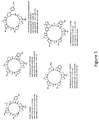
- Table 2 shows compounds exhibiting less ⁇ 4 ⁇ 7 integrin affinity, selectivity and/or activity; and specifically with respect to these compounds: (A) the structure of the linker portion; (B) the structure of the peptide portion; and (C) the affinity, selectivity and activity values.
- Table S1 is a correspondence table linking the compounds described herein with the synthesis protocols outlined in the methods and materials.
- amino acid refers to molecules containing an amine group, a carboxylic acid group and a side chain that varies.
- Amino acid is meant to include not only the twenty amino acids commonly found in proteins but also non-standard amino acids and unnatural amino acid derivatives known to those of skill in the art, and therefore includes, but is not limited to, alpha, beta and gamma amino acids.
- Peptides are polymers of at least two amino acids and may include standard, non-standard, and unnatural amino acids.
- a peptide is a polymer of two or more amino acids.
- suitable substituent is a substituent selected from the group consisting of H; hydroxyl; cyano; alkyl, such as lower alkyl, such as methyl, ethyl, propyl, n-butyl, t-butyl, hexyl and the like; alkoxy, such as lower alkoxy such as methoxy, ethoxy, and the like; aryloxy, such as phenoxy and the like; vinyl; alkenyl, such as hexenyl and the like; alkynyl; formyl; haloalkyl, such as lower haloalkyl which includes CF 3 , CCl 3 and the like; halide; aryl, such as phenyl and napthyl; heteroaryl, such as thienyl and furanyl and the like; amide such as C(O)NR a R b , where R a and R b are independently selected from lower
- lower alkyl as used herein either alone or in combination with another substituent means acyclic, straight or branched chain alkyl substituent containing from one to six carbons and includes for example, methyl, ethyl, 1-methylethyl, 1-methylpropyl, 2-methylpropyl, and the like.
- lower alkoxy as used herein includes methoxy, ethoxy, t -butoxy.
- alkyl encompasses lower alkyl, and also includes alkyl groups having more than six carbon atoms, such as, for example, acyclic, straight or branched chain alkyl substituents having seven to ten carbon atoms.
- aryl as used herein, either alone or in combination with another substituent, means an aromatic monocyclic system or an aromatic polycyclic system.
- aryl includes a phenyl or a napthyl ring, and may also include larger aromatic polycyclic systems, such as fluorescent (eg. anthracene) or radioactive labels and their derivatives.
- heteroaryl as used herein, either alone or in combination with another substituent means a 5, 6, or 7-membered unsaturated heterocycle containing from one to 4 heteroatoms selected from nitrogen, oxygen, and sulphur and which form an aromatic system.
- heteroaryl also includes a polycyclic aromatic system comprising a 5, 6, or 7-membered unsaturated heterocycle containing from one to 4 heteroatoms selected from nitrogen, oxygen, and sulphur.
- cycloalkyl as used herein, either alone or in combination with another substituent, means a cycloalkyl substituent that includes for example, but is not limited to, cyclopropyl, cyclobutyl, cyclopentyl, cyclohexyl and cycloheptyl.
- cycloalkyl-alkyl- as used herein means an alkyl radical to which a cycloalkyl radical is directly linked; and includes, but is not limited to, cyclopropylmethyl, cyclobutylmethyl, cyclopentylmethyl, 1-cyclopentylethyl, 2-cyclopentylethyl, cyclohexylmethyl, 1-cyclohexylethyl and 2-cyclohexylethyl.
- alkyl or “lower alkyl” terms is to be understood for aryl-alkyl-, aryl-loweralkyl- (eg. benzyl), -lower alkyl-alkenyl (eg.
- aryl-alkyl- means an alkyl radical, to which an aryl is bonded.
- aryl-alkyl- include, but are not limited to, benzyl (phenylmethyl), 1-phenylethyl, 2-phenylethyl and phenylpropyl.
- heterocycle either alone or in combination with another radical, means a monovalent radical derived by removal of a hydrogen from a three- to seven-membered saturated or unsaturated (including aromatic) cyclic compound containing from one to four heteroatoms selected from nitrogen, oxygen and sulfur.
- heterocycles include, but are not limited to, aziridine, epoxide, azetidine, pyrrolidine, tetrahydrofuran, thiazolidine, pyrrole, thiophene, hydantoin, diazepine, imidazole, isoxazole, thiazole, tetrazole, piperidine, piperazine, homopiperidine, homopiperazine, 1,4-dioxane, 4-morpholine, 4-thiomorpholine, pyridine, pyridine-N-oxide or pyrimidine, and the like.
- alkenyl as used herein, either alone or in combination with another radical, is intended to mean an unsaturated, acyclic straight chain radical containing two or more carbon atoms, at least two of which are bonded to each other by a double bond.
- examples of such radicals include, but are not limited to, ethenyl (vinyl), 1-propenyl, 2-propenyl, and 1-butenyl.
- alkynyl as used herein is intended to mean an unsaturated, acyclic straight chain radical containing two or more carbon atoms, at least two of which are bonded to each other by a triple bond.
- examples of such radicals include, but are not limited to, ethynyl, 1-propynyl, 2-propynyl, and 1-butynyl.
- aryloxy as used herein alone or in combination with another radical means ⁇ O-aryl, wherein aryl is defined as noted above.
- a protecting group or protective group is a substituent introduced into a molecule to obtain chemoselectivity in a subsequent chemical reaction.
- Many protecting groups are known in the art and a skilled person would understand the kinds of protecting groups that would be incorporated and could be used in connection with the methods described herein.
- protecting group based peptide synthesis typically solid phase peptide synthesis, the desired peptide is prepared by the step-wise addition of amino acid moieties to a building peptide chain.
- the two most widely used protocols, in solid-phase synthesis employ tert-butyloxycarbonyl (Boc) or 9-fluorenylmethoxycarbonyl (Fmoc) as amino protecting groups.
- Amino protecting groups generally protect an amino group against undesirable reactions during synthetic procedures and which can later be removed to reveal the amine. Commonly used amino protecting groups are disclosed in Greene, T. W. et al., Protective Groups in Organic Synthesis, 3rd Edition, John Wiley & Sons (1999 ).
- Amino protecting groups include acyl groups such as formyl, acetyl, propionyl, pivaloyl, t-butylacetyl, 2-chloroacetyl, 2-bromoacetyl, trifluoroacetyl, trichloroacetyl, o-nitrophenoxyacetyl, .alpha.-chlorobutyryl, benzoyl, 4-chlorobenzoyl, 4-bromobenzoyl, 4-nitrobenzoyl, and the like; sulfonyl groups such as benzenesulfonyl, p-toluenesulfonyl and the like; alkoxy- or aryloxy-carbonyl groups (which form urethanes with the protected amine) such as benzyloxycarbonyl (Cbz), p-chlorobenzyloxycarbonyl, p-methoxybenzyloxycarbonyl, p-nitrobenzy
- Amine protecting groups also include cyclic amino protecting groups such as phthaloyl and dithiosuccinimidyl, which incorporate the amino nitrogen into a heterocycle.
- amino protecting groups include formyl, acetyl, benzoyl, pivaloyl, t-butylacetyl, phenylsulfonyl, Alloc, Teoc, benzyl, Fmoc, Boc and Cbz. It is well within the skill of the ordinary artisan to select and use the appropriate amino protecting group for the synthetic task at hand.
- R 1 is H.
- R 2 or R 3 is covalently linked to R 1 to form proline having NR 1 as the N-terminus.
- R 2 and R 3 are not both H.
- R 2 and R 3 are each independently selected from the group consisting of amino acid side chains of a proteinogenic or a non-proteinogenic alpha-amino acids.
- R 2 and R 3 are H and CH 3 respectively or vice versa.
- R 2 or R 3 is -CH2-S-R s , wherein R s is selected from lower alkyl; lower amino alkyl; aryl; heteroaryl; alkenyl; or heterocycle; all of which are optionally substituted at one or more substitutable positions with one or more substituents selected from the group consisting of hydroxyl; cyano; alkyl, alkoxy, vinyl; alkenyl, alkynyl; formyl; haloalkyl, halide; aryl, heteroaryl, amide; acyl; ester, ether, thioether, thioalkoxy; phosphino; and ⁇ NR a R b , where R a and R b are independently selected from C1-6 alkyl, aryl or benzyl; preferably R s is phenyl or phenyl substituted with lower alkyl, halogen; or lower amino alkyl.
- R 4 and R 5 are not both H.
- R** and R*** are not both H.
- R 4 and R 5 are each independently H, or C(O)-NHR t , wherein R t is H or a lower alkyl.
- R t is tert-butyl or H.
- R 6 is H.
- R 6 and either R 8 or R 9 form a ring resulting in a proline residue having N-R 6 as its N-terminus.
- n 1
- X 1 is Leu.
- X 2 is Asp.
- X 3 is Thr.
- X 3 is Val
- X 3 is Ile.
- X y and X z are each independently a proteinogenic or non-proteinogenic alpha-amino acid.
- X z is a proteinogenic or non-proteinogenic beta-amino acid.
- X z is betaHomoLys or MethylbetaHomoLys.
- X y and X z are each a primary amino acid.
- X y and X z are each any amino acid listed under column X y and column X z respectively of Table 1B.
- the compound is any one of compounds 1-397.
- pharmaceutically acceptable salts of the compounds described herein there is provided pharmaceutically acceptable salts of the compounds described herein.
- pharmaceutically acceptable salt represents salts or zwitterionic forms of the compounds of the present invention which are water or oil-soluble or dispersible, which are suitable for treatment of diseases without undue toxicity, irritation, and allergic response; which are commensurate with a reasonable benefit/risk ratio, and which are effective for their intended use.
- the salts can be prepared during the final isolation and purification of the compounds or separately by treatment of an amino group with a suitable acid.
- Representative acid addition salts include acetate, adipate, alginate, citrate, aspartate, benzoate, benzenesulfonate, bisulfate, butyrate, camphorate, camphorsulfonate, digluconate, glycerophosphate, hemisulfate, heptanoate, hexanoate, formate, fumarate, hydrochloride, hydrobromide, hydroiodide, 2-hydroxyethansulfonate (isethionate), lactate, maleate, mesitylenesulfonate, methanesulfonate, naphthylenesulfonate, nicotinate, 2-naphthalenesulfonate, oxalate, pamoate, pectinate, persulfate, 3-phenylproprionate, picrate, pivalate, propionate, succinate, tartrate, trichloroacetate, trifluoroacetate, phosphate,
- amino groups in the compounds of the present invention can be quaternized with methyl, ethyl, propyl, and butyl chlorides, bromides, and iodides; dimethyl, diethyl, dibutyl, and diamyl sulfates; decyl, lauryl, myristyl, and steryl chlorides, bromides, and iodides; and benzyl and phenethyl bromides.
- acids which can be employed to form therapeutically acceptable addition salts include inorganic acids such as hydrochloric, hydrobromic, sulfuric, and phosphoric, and organic acids such as oxalic, maleic, succinic, and citric.
- any of the peptide compounds described herein are salt forms, e.g., acetate salts.
- a pharmaceutical composition comprising a compound described herein along with the pharmaceutically acceptable carrier.
- the pharmaceutical composition may be formulated for any one of oral delivery, topical delivery and parenteral delivery.
- pharmaceutically acceptable carrier means any and all solvents, dispersion media, coatings, antibacterial and antifungal agents, isotonic and absorption delaying agents, and the like that are physiologically compatible.
- pharmaceutically acceptable carriers include one or more of water, saline, phosphate buffered saline, dextrose, glycerol, ethanol and the like, as well as combinations thereof.
- isotonic agents for example, sugars, polyalcohols such as mannitol, sorbitol, or sodium chloride in the composition.
- Pharmaceutically acceptable carriers may further comprise minor amounts of auxiliary substances such as wetting or emulsifying agents, preservatives or buffers, which enhance the shelf life or effectiveness of the pharmacological agent.
- a compound for use in a method of treating inflammation or an autoimmune disease in a patient wherein the compound is as described herein.
- the inflammation or an autoimmune disease is gastrointestinal.
- the condition or disease is Inflammatory Bowel Disease (IBD), ulcerative colitis, Crohn's disease, Celiac disease (nontropical Sprue), enteropathy associated with seronegative arthropathies, microscopic colitis, collagenous colitis, eosinophilic gastroenteritis, radiotherapy, chemotherapy, pouchitis resulting after proctocolectomy and ileoanal anastomosis, gastrointestinal cancer, pancreatitis, insulin-dependent diabetes mellitus, mastitis, cholecystitis, cholangitis, pericholangitis, chronic bronchitis, chronic sinusitis, asthma, primary sclerosing cholangitis, human immunodeficiency virus (HIV) infection in the GI tract, eosinophilic asthma, eosinophilic esophagitis, gastritis, colitis, microscopic colitis, graft versus host disease, colitis associated with radio- or chemo-
- IBD
- the condition is pancreatitis, insulin-dependent diabetes mellitus, mastitis, cholecystitis, cholangitis, pericholangitis, chronic bronchitis, chronic sinusitis, asthma or graft versus host disease.
- the compound inhibits binding of ⁇ 4 ⁇ 7 integrin to MAdCAM.
- the compound selectively inhibits binding of ⁇ 4 ⁇ 7 integrin to MAdCAM.
- the patient is preferably a human.
- inhibition As used herein, “inhibition,” “treatment,” “treating,” and “ameliorating” are used interchangeably and refer to, e.g., stasis of symptoms, prolongation of survival, partial or full amelioration of symptoms, and partial or full eradication of a condition, disease or disorder in a subject, e.g., a mammal.
- prevent includes (i) preventing or inhibiting the disease, injury, or condition from occurring in a subject, e.g.., a mammal, in particular, when such subject is predisposed to the condition but has not yet been diagnosed as having it; or (ii) reducing the likelihood that the disease, injury, or condition will occur in the subject.
- therapeutically effective amount refers to an amount effective, at dosages and for a particular period of time necessary, to achieve the desired therapeutic result.
- a therapeutically effective amount of the pharmacological agent may vary according to factors such as the disease state, age, sex, and weight of the individual, and the ability of the pharmacological agent to elicit a desired response in the individual.
- a therapeutically effective amount is also one in which any toxic or detrimental effects of the pharmacological agent are outweighed by the therapeutically beneficial effects.
- the compound is administered by a form of administration selected from the group consisting of oral, intravenous, peritoneal, intradermal, subcutaneous, intramuscular, intrathecal, inhalation, vaporization, nebulization, sublingual, buccal, parenteral, rectal, vaginal, and topical.
- the compound is administered as an initial dose followed by one or more subsequent doses and the minimum interval between any two doses is a period of less than 1 day, and wherein each of the doses comprises an effective amount of the compound.
- the effective amount of the compound is the amount sufficient to achieve at least one of the following selected from the group consisting of: a) about 50% or greater saturation of MAdCAM binding sites on ⁇ 4 ⁇ 7 integrin molecules; b) about 50% or greater inhibition of ⁇ 4 ⁇ 7 integrin expression on the cell surface; and c) about 50% or greater saturation of MAdCAM binding sites on ⁇ 4 ⁇ 7 molecules and about 50% or greater inhibition of ⁇ 4 ⁇ 7 integrin expression on the cell surface, wherein i) the saturation is maintained for a period consistent with a dosing frequency of no more than twice daily; ii) the inhibition is maintained for a period consistent with a dosing frequency of no more than twice daily; or iii) the saturation and the inhibition are each maintained for a period consistent with a dosing frequency of no more than twice daily.
- the compound is administered at an interval selected from the group consisting of around the clock, hourly, every four hours, once daily, twice daily, three times daily, four times daily, every other day, weekly, bi-weekly, and monthly.
- Protocol A General nacellin synthesis
- Protocol B Preparation of N-alkylated Fmoc amino acid building blocks
- Protocol D Fragment-based macrocyclization
- Protocol E Aziridine aldehyde-based macrocyclization
- Protocol F Nucleophilic ring-opening of acyl aziridine, post macrocyclization
- Protocol G General Suzuki coupling, post macrocyclization
- Protocol H General Ulmann coupling, post macrocyclization
- the peptide macrocycle (0.018 mmol) was placed in a 2-dram vial containing 2 mL of dry CH 2 Cl 2 .
- Cu(OAc) 2 (1 eq.), benzene boronic acid (2 eq.) and 4 ⁇ (oven-dried) molecular sieves were then added to the vial followed by DIPEA (4 eq.).
- DIPEA 4 ⁇ (oven-dried) molecular sieves.
- the contents of the vial were stirred at room temperature overnight.
- the reaction progress was assessed by LCMS. Once the reaction was deemed complete, the mixture was filtered through a Celite plug and the solvent was removed under reduced pressure.
- Protocol I General global deprotection and cleavage
- Deprotection of the side chain protecting groups was achieved by dissolving the peptides in 2 mL of a cleavage cocktail consisting of TFA:H 2 O:TIS (95:2.5:2.5) for two hours. Subsequently, the cleavage mixture was evaporated under reduced pressure and the peptides were precipitated twice from chilled diethyl ether/hexanes (or tert -butyl methyl ether).
- Protocol J General cleavage of reductively-labile protecting groups
- Raney Ni desulfurization / debenzylation Raney Ni slurry (1-2 mL) was added directly to the cyclization reaction mixture and stirred vigorously overnight. The vial was then centrifuged and the liquid was transferred using a pipette to a tared vial. MeOH was added to the vial containing Raney Ni. The vial was then sonicated, vortexed, and centrifuged. Again, the liquid was transferred to a tared vial. This process was repeated with EtOAc and then a final time with MeOH. The combined washes were then removed under reduced pressure and the residue dried under vacuum.
- Protocol K Amidation of side chain, post macrocyclization
- the macrocycle (4 ⁇ mol) was dissolved in DMSO (200 ⁇ L). DIPEA (5 eq.) was then added. In a separate vial, 5 mg of fluorescent dye as the NHS ester was dissolved in 200 ⁇ L of DMSO. The macrocycle solution was then added to the solution of the fluorescent label. The reaction mixture was stirred overnight. Reaction progress was checked by LC-MS in the morning and then the solvent was removed by lyophilization.
- Carbonate buffer pH 9,6 50 mM
- Tris-CI 1 M
- Blocking buffer 50 mM Tris, 150 mM NaCl, 1 mM MnCl 2 , 1 % BSA, 0,05% Tween
- Assay buffer 50 mM Tris, 150 mM NaCl, 1 mM MnCl 2 , 0,1 % BSA, 0,05% Tween
- Wash buffer 50 mM Tris, 100 mM NaCl, 1 mM MnCl 2 , 0,05% Tween
- H 2 SO 4 1M
- Carbonate buffer pH 9,6 50 mM
- Tris-CI 1 M
- Blocking buffer 50 mM Tris, 150 mM NaCl, 1 mM MnCl 2 , 1 % BSA, 0,05% Tween
- Assay buffer 50 mM Tris, 150 mM NaCl, 1 mM MnCl 2 , 0,1 % BSA, 0,05% Tween
- Wash buffer 50 mM Tris, 100 mM NaCl, 1 mM MnCl 2 , 0,05% Tween
- H 2 SO 4 1M
- HTDialysis An equilibrium dialysis (HTDialysis) method was used employing 50% plasma collected from CD-1 mice or Sprague-Dawley rats and incubated with K2EDTA. Test articles were assessed at 1 microM concentration in three replicates. Incubation time as 5 hours and plasma and buffer standards were assessed using LC/MS/MS. Percentage recovery was calculated as (C buffer + C plasma )/[average]C initial , [average]C initial being measured in triplicate from the test samples prior to dialysis. Percentage of compound unbound was calculated as C buffer /C plasma .
- Aqueous solubility was determined by using 1, 0.5 or 0.2 mM (maximum) of test compound in phosphate buffered saline with pH of 7.4. Solutions were incubated for four hours at room temperature and stirred at 600 rpm and run in triplicate. Centrifugation was performed for 15 minutes at 6000 rpm and solution concentration was determined using HPLC-UV (photodiode array detector acquiring between 220 nm, and 300 nm wavelengths).
- Human liver microsomes (at 0.25 mg/ml, except for CYP1A2, where a concentration of 0.5 mg/ml was employed) were used to assess the IC 50 (in duplicate; concentration range of 0.25 nM to 15 microM) for test compounds on the activity four isoforms of cytochrome P450 ("CYP"): CYP2D6, CYP3A4, CYP2C9 and CYP1A2.
- CYP cytochrome P450
- the following substrates were employed: dextromethorphan (15 microM, CYP2D6), testosterone (50 microM, CYP3A4), diclofenac (10 microM, CYP2C9) and phenacetin (100 microM, CYP1A2).
- Control inhibitors were quinidine (0.03 nM to 1.5 microM, CYP2D6), ketoconazole (0.08 nM to 5 microM, CYP3A4), miconazole (0.25 nM to 15 microM, CYP2C9) and alpha-naphoflavone (0.03 nM to 1.5 microM, CYP1A2).
- Incubation time was 10-20 minutes and metabolites assessed were dextrorphan (CYP2D6), 6-beta-OH-testosterone (CYP3A4), 4'-OH-diclofenac (CYP2C9) and acetaminophen (CYP1A2).
- mice Female C57BI/6 mice (Charles River, St-Constant, Qc), weighting 16-19g at delivery were used for this study. Following arrival in the animal facility, all animals were subjected to a general health evaluation. An acclimation period of 7-14 days was allowed before the beginning of the study.
- mice were housed under standardized environmental conditions.
- the mice were housed in auto-ventilated cages, 2-3 per cage.
- Each cage was equipped with a manual water distribution system.
- a standard certified commercial rodent diet was provided ad libitum.
- Tap water was provided ad libitum at all times. It is considered that there are no known contaminants in the diet and water that would interfere with the objectives of the study.
- Each cage was identified for the corresponding group, indicating the treatment and the identity of the animals housed in the cage. Mice from different treatment groups were not mixed.
- the animal room was maintained at a controlled temperature of 21.5 ⁇ 1°C and a relative humidity of 40 ⁇ 10%.
- a controlled lighting system assured 12 hours light, 12 hours dark per day to the animals. Adequate ventilation of 8-10 air changes per hour was maintained.
- DSS Dextran sulfate sodium
- Mice accessed the DSS-treated water ad libitum over a 5-day period.
- Body weight and disease activity index (“DAI”) were measured on Day 5 in order to distribute DSS-treated animals in two uniform groups prior to dosing.
- test articles were administered in the morning, as a single slow bolus (over approximately 5 seconds) via oral route, according to the procedure of administration of solution by gavage: the animal was firmly restrained. A bulb-tipped gastric gavage needle of 22G was passed through the side of the mouth and was advanced towards the oesophagus. The test articles and the vehicle were dosed orally at 10 mL/kg. Dosing volume was individually adjusted according to the body weight of each animal to reach the target dose.
- Intravenous dosing of the test article and the vehicle were administered in the morning, as a single slow bolus injection (over approximately 5 seconds) via the tail vein, according to the procedure of administration of solution by intravenous administration: the animal was restrained and its tail was warmed prior to dosing. A needle of 30G was used to inject the test article, or the vehicle, through the median tail vein at a dosing volume of 5 mL/kg. Dosing volume was individually adjusted according to the body weight of each animal to reach the target dose of DATK32 control antibody.
- Percentage of different subpopulations of T lymphocytes were then analyzed using FACSCalibur cytometer.
- Oral bioavailability of test compounds was conducted by assessing plasma exposure of following one or two oral doses in mice and, in some cases, comparing said plasma exposure with that following a single intravenous dose of the same compound.
- test compound was 30% Labrasol in PBS (v/v) for oral dosing and 25% PEG-400 in PBS (v/v) for intravenous dosing.
- liver and colon were also collected from mice concomitantly with peripheral blood and on a terminal (and serial) basis.
- mice Male CD-1 mice (20 - 25 g) from Charles River Labs were acclimatized for a minimum of 5 days prior to dosing. Body weights were recorded on the day of dosing.
- Dosing The formulation containing the test compound were administered p.o. by gavage with disposable feeding needles.
- Sample collection Terminal blood and tissue samples were collected under O2/CO2 anesthesia by cardiac puncture.
- the colon samples (a 0.5 cm section, 2.5 cm distal to the cecum) will be excised, rinsed with ice cold PBS, blotted and weighed (as applicable). The livers will be blotted and weighed. Plasma, liver and colon samples will be stored frozen at -80 degrees centigrade until bioanalysis.
- Sample processing/storage All blood samples were transferred into K2EDTA tubes on wet ice and centrifuged within 5 min (3200 x g for 5 min at 4oC) to obtain plasma. Samples were stored frozen at-80°C until bioanalysis.
- the determination of the quantification dynamic range using non-zero calibration standards in singlet.
- the STDs will consist of a blank matrix sample (without IS), a zero sample (with IS), and at least 6 non-zero STDs covering the expected range and including the lower level of quantitation (LLOQ).
- At least 75% of non-zero STDs must be included in the calibration curve with all back-calculated concentrations within ⁇ 20% deviation from nominal concentrations ( ⁇ 25% for the lower level of quantification, LLOQ).
- the correlation coefficient (r) of the calibration curve must be greater than or equal to 0.99.
- the area ratio variation between the pre-and post-run injections of the system suitability samples is within ⁇ 25%.
- Samples which are >1-fold the highest calibration standard will be diluted and re-assayed along with a corresponding dilution quality control standard.
- mice Female C57BI/6 mice (Charles River, St-Constant, Qc), weighting 16-19g at delivery were used for this study. Following arrival in the animal facility, all animals were subjected to a general health evaluation. An acclimation period of 7-14 days was allowed before the beginning of the study.
- mice were housed under standardized environmental conditions.
- the mice were housed in auto-ventilated cages, 2-3 per cage.
- Each cage was equipped with a manual water distribution system.
- a standard certified commercial rodent diet was provided ad libitum.
- Tap water was provided ad libitum at all times. It is considered that there are no known contaminants in the diet and water that would interfere with the objectives of the study.
- Each cage was identified for the corresponding group, indicating the treatment and the identity of the animals housed in the cage. Mice from different treatment groups were not mixed.
- the animal room was maintained at a controlled temperature of 21.5 ⁇ 1°C and a relative humidity of 40 ⁇ 10%.
- a controlled lighting system assured 12 hours light, 12 hours dark per day to the animals. Adequate ventilation of 8-10 air changes per hour was maintained.
- nacellins and the vehicle were administered as a single slow bolus (over approximately 5 seconds) via oral route (p.o.), according to the procedure of administration of solution by gavage: the animal was firmly restrained. A bulb-tipped gastric gavage needle of 22G was passed through the side of the mouth and was advanced towards the oesophagus. The test articles and the vehicle were dosed orally at 5 mL/kg. Dosing volume was individually adjusted according to the body weight of each animal to reach the target dose of ET02451 and ET02452 (40 mg/kg).
- Intraperitoneal dosing of the test articles and the vehicle On day 5, DATK32 antibody was administered in only on Day 5, as a single slow bolus (over approximately 5 seconds) via the i.p. route. ET02452 prepared in PEG400 (40 %)/PBS (60%) and the i.p. vehicle (PEG400 (40%)/PBS (60%)) were administered from Day 5 to Day 8. Intraperitoneal administration was performed accordingly to the following procedure: the mouse was restrained manually and held with the head and body tilted downward. The tip of the needle (27 G) was inserted through the skin and just past the abdominal wall.
- a short pull back of the plunger of the syringe was done prior to administration of the solution to make sure that the syringe was not inserted in any abdominal organ (fluid would be pulled back into the syringe in this case).
- Dosing volume was individually adjusted according to the body weight of each animal to reach the target dose of DATK32 antibody (15 mg/kg) and of ET02452 (65 mg/kg).
- Inflammation Score Once the mouse was euthanized, the colon was collected and its length was measured. Lesion length was also measured. Colon inflammation was scored based on severity of oedema and ulceration.
- DAI Disease Activity Index
- aqueous solubility of integrin alpha-4-beta-7-inhibiting nacellins was relatively high, with a mean solubility of 715 microM.
- the range of solubilities measured in triplicate for 15 distinct compounds was 183 microM to greater than 1000 microM. Note that the maximum concentration evaluated was different for different test articles based on the presumed aqueous solubility. The compounds assessed include:
- the inhibitory activity of various nacellins against four isoforms of cytochrome P450 was assessed using human liver microsomes.
- the four isoforms evaluated were: CYP2D5, CYP3A4, CYP2C9, and CYP1A2.
- CYP2D5 CYP2D5
- CYP3A4 CYP2C9
- CYP1A2 CYP1A2
- 85% of the results of the assays showed an IC 50 > 15 microM (above the limit of detection).
- IC 50 s of ⁇ 10 microM, and in one case, ⁇ 1 microM were recorded for a few compounds. These compounds were subjected to a structural analysis so as to understand the functional groups contributing to this mild CYP450-inhibiting activity.
- the compounds assessed include:
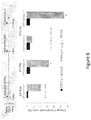
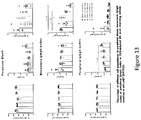
- the murine anti-alpha-4-beta-7 monoclonal antibody substantially reduces homing of integrin a4b7+ T lymphocytes to the mesenteric lymph nodes ("MLN"), but did not affect the counts of CD11a+ T lymphocytes in the peripheral blood.
- the nacellins at 100 mg/kg, the high oral bioavailability nacellin, ET1792 (Compound No. 5), but not the low oral bioavailability nacellin, ET2154 (Compound No. 105), evoked a significant reduction of homing to the MLN following oral dosing.
- ET1792 Compound No. 5
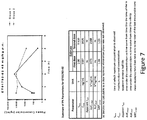
- the exposure (AUC-0-tlast) following the first dose was 1,475 h*ng/ml, whereas following the second dose, the exposure was 2,188 h*ng/ml.
- the maximum plasma concentration recorded after the first dose was nearly 1,600 ng/ml.
- ET1813 Compound No. 12
- single doses were administered via oral gavage (40 mg/kg) and intravenous injection (5 mg/kg).
- the absorption of this compound was less than that of ET1792, with a calculated oral bioavailability of ⁇ 1%, despite a significant terminal half-life of nearly 2 hours.
- ET2451 Compound No. 340
- ET2451 was found to have an oral bioavailability of approximately 11 % in plasma, and closer to 100% in colon. Also noteworthy is the difference in elimination half-life: in plasma the half-life was found to be ⁇ 30 minutes following oral dosing, whereas the half-life in colon was greater than 21 hours.
- ET2451 Compound No. 340
- ET2452 Compound No. 341
- ET2451 demonstrates significant absorption from the gut and systemic exposure following oral dosing
- ET2452 is a low oral bioavailability entity.
- Both test compounds were administered b.i.d. to mice over the course of three days - following an initial 5-days exposure to DSS (2-3%) in their drinking water.
- the efficacy and pharmacodynamics effect of the nacellins was compared to the mouse anti-integrin alpha-4-beta-7 mAb, DATK32.
- ET2452 was administered both orally and, to another group, via i.p. injection. The objective of this experimental design was to demonstrate that, although it may not be efficacious when administered orally, it produced substantial efficacy with i.p. dosing.
- DAI score Disease activity index
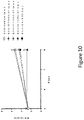
- ET02452-01 i.p. treatment prevented the increased severity of UC symptoms observed in the control vehicle-treated group, from day 5 to day 8.
- Ulcerative colitis is associated with inflammatory changes of the intestinal tract with reduction of the length of the mice colon (raw data in Annex IV).
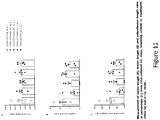
- DSS+vehicle control group showed a mean colon length of 4.3 ⁇ 0.3 cm and a lesion length of 1.7 ⁇ 0.3 cm corresponding to a lesion/colon length of 40% ( Figure 11 ).
- Treatments did not have any effect on colon length ( Figure 11 ).
- ET02451-01 significantly reduced the lesion length of this group (p ⁇ 0.05), leading to a significant improvement of the lesion/colon length ratio, by reaching a value of lesion/colon length of 12% (p ⁇ 0.05).
- ET02452-01 led to a reduction of lesion length by 53 % and 20 % respectively, in comparison to the control vehicle treated-group, but these reductions were not statistically significant ( Figure 11B ).
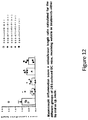
- the final score of colon inflammation was calculated by multiplying macroscopic score x lesion/colon length ratio for each mouse. Referring to Figure 12 , the measurement of this parameter shows a significant reduction of lesion inflammation by the oral administration of ET02451-01 (by 77 %) and ET02452-01 (by 76 %) in comparison to the control vehicle-treated group. Intraperitoneal administration of ET02452-01 and DATK32 led to a reduction of 39 % and 53 % respectively, but this effect was not statistically significant.
- a4b7 ELISA IC 50 (mM) a4b1 ELISA IC 50 (mM) Selectivity ELISA RPMI 8866 cell IC 50 (mM) 1 0.164 0.162 0.988 2 0.109 0.185 1.697 3 0.192 0.475 2.474 25.000 4 0.129 0.357 2.8 11.782 5 0.087 0.062 0.7 7.916 6 0.103 0.200 1.9 7 0.117 0.190 1.6 23.000 8 0.103 0.096 0.9 9 0.061 0.106 1.7 10 0.052 0.070 1.3 11 0.051 0.094 1.8 3.602 12 0.063 0.113 1.8 8.885 13 0.097 0.171 1.8 19.520 14 0.026 0.025 1.0 2.664 15 0.040 0.026 0.7 3.071 16 0.086 0.053 0.6 1.624 17 0.173 26.923 18 0.120 19 0.114 15.044 20 0.146 8.716 21 0.092 9.466 22 0.100 11.556 23 0.176 0.458 2.6
- a4b7 ELISA IC 50 (mM) a4b1 ELISA IC 50 (mM) Selectivity ELISA RPMI 8866 cell IC 50 (mM) 5 0.087 0.062 0.7 7.916 398 39.605 38.211 399 47 4 0.129 0.357 2.8 11.782 400 7.348 4.904 401 1.27 3.843 402 6.45 2.842 403 6.45 2.842 404 6.45 2.842 405 40.313 406 3.832 407 3.664 3.727 408 3.22 19.216 409 3.025 410 3.817 411 40 412 7.633 413 27.726 26.923 414 50 26.923 415 45.263 416 56.579 49.128 417 6.515 418 15.5 28.42 419 15.5 28.42 420 3.116 3 125 0.025 0.458 18.4 1.925 421 0.462 0.726 422 1.273 2.122 423 10 424 1.0 425 1.575
Landscapes
- Health & Medical Sciences (AREA)
- Chemical & Material Sciences (AREA)
- Organic Chemistry (AREA)
- Life Sciences & Earth Sciences (AREA)
- Medicinal Chemistry (AREA)
- General Health & Medical Sciences (AREA)
- General Chemical & Material Sciences (AREA)
- Chemical Kinetics & Catalysis (AREA)
- Veterinary Medicine (AREA)
- Pharmacology & Pharmacy (AREA)
- Animal Behavior & Ethology (AREA)
- Public Health (AREA)
- Nuclear Medicine, Radiotherapy & Molecular Imaging (AREA)
- Engineering & Computer Science (AREA)
- Bioinformatics & Cheminformatics (AREA)
- Molecular Biology (AREA)
- Proteomics, Peptides & Aminoacids (AREA)
- Genetics & Genomics (AREA)
- Biophysics (AREA)
- Biochemistry (AREA)
- Immunology (AREA)
- Virology (AREA)
- Diabetes (AREA)
- Rheumatology (AREA)
- Neurology (AREA)
- Neurosurgery (AREA)
- Biomedical Technology (AREA)
- Pain & Pain Management (AREA)
- Communicable Diseases (AREA)
- Pulmonology (AREA)
- Oncology (AREA)
- Physical Education & Sports Medicine (AREA)
- Hematology (AREA)
- Orthopedic Medicine & Surgery (AREA)
- Analytical Chemistry (AREA)
- Transplantation (AREA)
- Psychiatry (AREA)
- Endocrinology (AREA)
- Obesity (AREA)
- AIDS & HIV (AREA)
Claims (20)
- Verbindung der Formel (I):
 R1 H; ein C1-6-Alkyl; Aryl; Heteroaryl; Alkenyl oder Heterocyclus ist; wobei alle gegebenenfalls an einer oder mehreren substituierbaren Positionen durch einen oder mehrere geeignete Substituenten substituiert sind;R2 und R3 jeweils unabhängig eine Aminosäure-Seitenkette einer proteinogenen oder nichtproteinogenen alpha-Aminosäure sind,mit der Maßgabe, dass R2 und R3 kovalent miteinander verbunden sein können, wodurch ein Ring gebildet wird;R4 und R5 jeweils unabhängig H; ein C1-6-Alkyl; Aryl; Heteroaryl; Alkenyl; Heterocyclus; Säuren der Formel -C(O)OH; Ester der Formel -C(O)OR*, wobei R* aus einem Alkyl und Aryl ausgewählt ist; Amide der Formel -C(O)NR**R***, wobei R** und R*** unabhängig aus H, einem Alkyl und Aryl ausgewählt sind; -CH2C(O)R, wobei R aus -OH, einem C1-6-Alkyl, Aryl, -C1-6-Alkylaryl oder -NRaRb ausgewählt ist, wobei Ra und Rb unabhängig aus H, einem C1-6-Alkyl, Aryl oder -C1-6-Alkylaryl ausgewählt sind; oder -C(O)Rc, wobei Rc aus einem C1-6-Alkyl, Aryl oder -C1-6-Alkylaryl ausgewählt ist; oder ein -C1-6-Alkyl-ORd sind, wobei Rd eine geeignete Schutzgruppe oder OH-Gruppe ist; die alle gegebenenfalls an einer oder mehreren substituierbaren Positionen durch einen oder mehrere Substituenten substituiert sind, die ausgewählt sind aus der Gruppe bestehend aus Hydroxyl; Cyan; einem Alkyl, Alkoxy, Vinyl; Alkenyl, Alkinyl; Formyl; Haloalkyl, Halogenid; Aryl, Heteroaryl, Amid; Acyl; Ester, Ether, Thioether, Thioalkoxy; Phosphino und -NRaRb, wobei Ra und Rb unabhängig aus einem C1-6-Alkyl, Aryl oder Benzyl ausgewählt sind;mit der Maßgabe, dass R2 oder R3 unter Bildung eines cyclischen sekundären Amins kovalent an R1 und/oder unter Bildung eines Rings an R4 oder R5 gebunden sein können und R4 und R5 ebenfalls unter Bildung eines Rings kovalent aneinander gebunden sein können;R6 H, ein C1-6-Alkyl, Benzyl, Alkenyl, C1-6-Alkyloxy; Aryl; Heteroaryl; Heterocyclus; -C(O)R****, wobei R**** unabhängig aus einem Alkyl, Aryl, Heteroaryl, Amino, Aminoalkyl, Aminoaryl, Aminoheteroaryl, Alkoxy, Aryloxy, Heteroaryloxy ausgewählt ist; -CH2C(O)R oder -C(O)Rc; die alle gegebenenfalls an einer oder mehreren substituierbaren Positionen durch einen oder mehrere Substituenten substituiert sind, die ausgewählt sind aus der Gruppe bestehend aus Hydroxyl; Cyan; einem Alkyl, Alkoxy, Vinyl; Alkenyl, Alkinyl; Formyl; Haloalkyl, Halogenid; Aryl, Heteroaryl; Amid; Acyl; Ester, Ether, Thioether, Thioalkoxy; Phosphino und -NRaRb, wobei Ra und Rb unabhängig aus einem Niederalkyl, Aryl oder Benzyl ausgewählt sind,oder zusammen mit R7 oder R8 eine cylische Seitenkette einer proteinogenen oder nichtproteinogenen Aminosäure ist, deren N-Terminus das N-R6 ist, wobei die proteinogene oder nichtproteinogene Aminosäure durch einen Substituenten substituiert sein kann, der ausgewählt ist aus der Gruppe bestehend aus Hydroxyl; Cyan; einem Alkyl, Alkoxy, Vinyl; Alkenyl, Alkinyl; Formyl; Haloalkyl, Halogenid; Aryl, Heteroaryl, Amid; Acyl; Ester, Ether, Thioether, Thioalkoxy; Phosphino und -NRaRb, wobei Ra und Rb unabhängig aus einem Niederalkyl, Aryl oder Benzyl ausgewählt sind;R7 und R8 unabhängig aus den Aminosäure-Seitenketten einer proteinogenen oder einer nichtproteinogenen alpha-Aminosäure ausgewählt sind, deren N-Terminus der N-R6 ist, oder mit R6 eine cyclische Seitenkette bilden können;die Chiralitätszentren 1*, 2* und 3* jeweils unabhängig aus R und S ausgewählt sind;n 1, 2, 3, oder 4 ist und wobei n 2-4 ist, wobei jeder R7 und jeder R8 unabhängig voneinander sind; undwobei Z ein Aminoterminus einer Aminosäure ist; das -C=O- neben L der Carboxyterminus einer Aminosäure ist und L zusammen mit Z und -C=O- ein Peptid mit der folgenden Formel:
Xy-Xz- X1- X2- X3
ist, wobei Xy und Xz jeweils unabhängig eine proteinogene oder nichtproteinogene Aminosäure sind, oder Xz fehlt;X1 Leucin oder tert-Butyl-Ala ist;X2 Asp ist undX3 eine Aminosäure ist, die ausgewählt ist aus der Gruppe bestehend aus Thr, Thr(OBn), Thr(OEt), Thr(OMe), Pen, MeThr, alloThr, Abu, Val, Ile und Allolle. - Verbindung nach Anspruch 1, wobei R1 H ist.
- Verbindung nach Anspruch 1, wobei R2 oder R3 kovalent an R1 gebunden ist, wodurch ein Prolin mit NR1 als N-Terminus gebildet wird.
- Verbindung nach einem der Ansprüche 1-3, wobei R2 und R3 nicht beide H sind.
- Verbindung nach Anspruch 1 oder 2, wobei R2 und R3 jeweils unabhängig ausgewählt sind aus der Gruppe bestehend aus Aminosäure-Seitenketten einer proteinogenen oder einer nichtproteinogenen alpha-Aminosäure.
- Verbindung nach Anspruch 1 oder 2, wobei R2 bzw. R3 H bzw. CH3 oder umgekehrt sind.
- Verbindung nach Anspruch 1 oder 2, wobei R2 oder R3 -CH2-S-RS ist, wobei RS aus einem C1-6-Alkyl; C1-6-Aminoalkyl; Aryl; Heteroaryl; Alkenyl oder Heterocyclus ausgewählt ist, die alle gegebenenfalls an einer oder mehreren substituierbaren Positionen durch einen oder mehrere Substituenten substituiert sind, die ausgewählt sind aus der Gruppe bestehend aus Hydroxyl; Cyan; einem Alkyl, Alkoxy, Vinyl; Alkenyl, Alkinyl; Formyl; Haloalkyl, Halogenid; Aryl, Heteroaryl; Amid; Acyl; Ester, Ether, Thioether, Thioalkoxy; Phosphino und -NRaRb, wobei Ra und Rb unabhängig aus einem Niederalkyl, Aryl oder Benzyl ausgewählt sind, wobei Rs vorzugsweise Phenyl oder ein Phenyl ist, das durch ein C1-6-Alkyl, Halogen oder C1-6-Aminoalkyl substituiert ist.
- Verbindung nach einem der Ansprüche 1-4, wobei R4 und R5 nicht beide H sind, R** und R*** nicht beide H sind und/oder R4 und R5 jeweils unabhängig H oder C(O)-NHRt sind, wobei Rt H oder ein C1-6-Alkyl ist, und, wenn es Letzteres ist, wobei Rt vorzugsweise tert-Butyl oder H ist.
- Verbindung nach einem der Ansprüche 1-8, wobei R6 H ist oder wobei alternativ R6 und entweder R8 oder R9 einen Ring bilden, der einen Prolinrest mit N-R6 an seinem N-Terminus ergibt.
- Verbindung nach einem der Ansprüche 1-9, wobei n 1 ist.
- Verbindung nach einem der Ansprüche 1-10, wobei Z zusammen mit L und -C=O eine der SEQ ID Nr.: 1-380 ist.
- Verbindung nach einem der Ansprüche 1-11, wobei X1 Leu ist, X2 Asp ist und/oder X3 Thr, Val oder Ile ist.
- Verbindung nach einem der Ansprüche 1-12, wobei Xy und Xz jeweils unabhängig eine proteinogene oder nichtproteinogene alpha-Aminosäure sind oder wobei alternativ Xz eine proteinogene oder nichtproteinogene beta-Aminosäure ist oder wobei alternativ Xz betaHomoLys oder MethylbetaHomoLys ist.
- Verbindung nach einem der Ansprüche 1-12, wobei Xy und Xz jeweils eine primäre Aminosäure sind.
- Verbindung nach einem der Ansprüche 1-12, wobei Xy und Xz ausgewählt sind aus der Gruppe bestehend aus:
Verb. Nr. Xy Xz 1 Y Fehlt 2 H Fehlt 3 Y Fehlt 4 Y Fehlt 5 F Fehlt 6 HomoPhe Fehlt 7 Cha Fehlt 8 W Fehlt 9 1Nal Fehlt 10 2Nal Fehlt 11 W Fehlt 12 Bip Fehlt 13 Tyr(OPh) Fehlt 14 1Nal Fehlt 15 2Nal Fehlt 16 2Nal Fehlt 17 W Fehlt 18 Bip Fehlt 19 Tyr(2-tolyldiarylether) Fehlt 20 Tyr(4-CF3-diarylether) Fehlt 21 Tyr(4-methoxydiarylether) Fehlt 22 Tyr(4-fluordiarylether) Fehlt 23 Tyr(2-methoxydiarylether) Fehlt 24 Tyr(3-methoxydiarylether) Fehlt 25 Tyr(3-fluordiarylether) Fehlt 26 Tyr(3,4-difluordiarylether) Fehlt 27 Tyr(3-methyldiarylether) Fehlt 28 Tyr(3,4-dimethyldiarylether) Fehlt 29 Tyr(4-CO2Me-diarylether) Fehlt 30 Tyr(3-CO2Me-diarylether) Fehlt 31 Tyr(4-CO2H-diarylether) Fehlt 32 F Fehlt 33 metaY(Opr) Fehlt 34 Orn(benzamid) Fehlt 35 Orn(acetamid) Fehlt 36 Orn(methansulfonamid) Fehlt 37 Orn(ethylcarbamat) Fehlt 38 Orn(pentylamid) Fehlt 39 R Fehlt 40 F Fehlt 41 F Fehlt 42 dTyr Fehlt 43 dTic Fehlt 44 [3-(3'-Pyridyl)-Ala] Fehlt 45 F Fehlt 46 Bip Fehlt 47 [3-(3'-Pyridyl)-Ala] Fehlt 48 Y Fehlt 49 Y Fehlt 50 dArg Fehlt 51 dPip Fehlt 52 [3-(4-Thiazolyl)-Ala] Fehlt 53 Y Fehlt 54 (4-aza-Phe) Fehlt 55 Y Fehlt 56 (Vinyl-Br-Leu) Fehlt 57 Hyp (OBn) Fehlt 58 Hyp(OBn) Fehlt 59 Dap(Cbz) Fehlt 60 His(Bn) Fehlt 61 (4-Amino-Phe) Fehlt 62 (4-Aza-dPhe) Fehlt 63 Hyp Fehlt 64 dTrp Fehlt 65 M Fehlt 66 dMet Fehlt 67 (4-Guanidino-Phe) Fehlt 68 (3-aza-Phe) Fehlt 69 dTic Fehlt 70 (3-Aza-dPhe) Fehlt 71 Nva Fehlt 72 dNle Fehlt 73 dLys Fehlt 74 dPro Fehlt 75 dOrn Fehlt 76 (3-Benzothienyl-Ala) Fehlt 77 dTyr(OAllyl) Fehlt 78 dSer(OBn) Fehlt 79 [3-(4-Thiazolyl)-dAla] Fehlt 80 (3-Benzothienyl-dAla) Fehlt 81 [3-(2-Thienyl)-dAla Fehlt 82 (4-Aminomethyl-Phe) Fehlt 83 dOrn (dimethyl) Fehlt 84 (4-Amino-dPhe) Fehlt 85 (4-Aminomethyl-dPhe) Fehlt 86 dTyr(OBn) Fehlt 87 P Fehlt 88 CycloLeu Fehlt 89 Aic Fehlt 90 Tyr(OAllyl) Fehlt 91 Chg Fehlt 92 K Fehlt 93 (2-Aza-dPhe) Fehlt 94 (2-aza-Phe) Fehlt 95 [2-(2-Pyridyl)-4-thiazolyl-Ala] Fehlt 96 [2-(3-Pyridyl)-4-thiazolyl-Ala] Fehlt 97 [2-(4-Pyridyl)-4-thiazolyl-Ala] Fehlt 98 dTiq Fehlt 99 [1-(S)-Isoindolincarbonsäure] Fehlt 100 Y dThr 101 Y P 102 Y dPro 103 Y Sar 104 Y CycloLeu 105 Y Sar 106 (3-Iod-Phe) Sar 107 (4-Iod-Phe) Sar 108 (3,3-Diphenyl-Ala) Sar 109 F dLys 110 Bip dLys 111 [3-(4-Thiazolyl)-Ala] dLys 112 (3,3-Diphenyl-Ala) dLys 113 Y dLys 114 Y dArg 115 Y dSer 116 Bip Sar 117 1Nal Sar 118 Y Pip 119 (2-Iod-Phe) Sar 120 1Nal dLys 121 Y dLys 122 F Sar 123 Y dTic 124 Y dPro 125 Y dPip 126 F dPro 127 (3,4-Dimethoxy-Phe) dPro 128 (3,4,5-Trifluor-Phe) dPro 129 (3,5-Dibrom-Tyr) dPro 130 F dPip 131 [3-(4-Thiazolyl)-Ala] dPip 132 (4-Aminomethyl-Phe) dPip 133 [2-Iod-Phe] dPip 134 (2-Phenyl-Phe) dPip 135 [2-(2-Methoxy-phenyl)-Phe] dPip 136 [2-(3-Methoxy-phenyl)-Phe] dPip 137 [2-(4-Methoxy-phenyl)-Phe] dPip 138 Bip dPip 139 Y Hyp 140 Y dHyp 141 Y (cis-dHyp) 142 dTyr dPip 143 1Nal dPip 144 2Nal dPip 145 (4-Aminomethyl-Phe) dTic 146 (3-Aminomethyl-Phe) dTic 147 (3-Aminomethyl-dPhe) dTic 148 MeTyr dPip 149 Y dPip 150 Y dPip 151 [3-(4-Thiazolyl)-Ala] dHyp 152 (4-Aminomethyl-Phe) dHyp 153 Y dPip 154 Y dMeLys 155 Y dNle 156 F dHyp 157 Y dMeArg 158 Y G 159 Y A 160 Y dAla 161 M G 162 Tyr(OAllyl) Sar 163 Tyr(OAllyl) G 164 [3-(4-Thiazolyl)-Ala] Sar 165 (4-Aminomethyl-Phe) G 166 Tyr (OAllyl) dVal 167 Tyr (OAllyl) dSer 168 Tyr (OAllyl) dAla 169 Tyr (OAllyl) P 170 Tyr (OAllyl) dPro 171 [3-(4-Thiazolyl)-Ala] dVal 172 [3-(4-Thiazolyl)-Ala] dSer 173 [3-(4-Thiazolyl)-Ala] dAla 174 [3-(4-Thiazolyl)-Ala] P 175 [3-(4-Thiazolyl)-Ala] dPro 176 (4-Aminomethyl-Phe) P 177 (4-Aminomethyl-Phe) dPro 178 CycloLeu P 179 [2-(2-Pyridyl)-4-thiazolyl-Ala] Sar 180 [2-(2-Pyridyl)-4-thiazolyl-Ala] dPro 181 [2-(3-Pyridyl)-4-thiazolyl-Ala] Sar 182 [2-(3-Pyridyl)-4-thiazolyl-Ala] dPro 183 [2-(4-Pyridyl)-4-thiazolyl-Ala] dPro 184 [3-(2-Aminobenzyl-4-thiazolyl)-Ala] Sar 185 [2-(Amino-benzyl)-4-thiazolyl-Ala] dPro 186 dTyr dPip 187 (2-Aminomethyl-Phe) Aze 188 Y dPip 189 (3-Aminomethyl-Phe) dTic 190 (2,4-Dichlor-Phe) dPip 191 (3-Phenyl-dPhe) dPip 192 [3-(5-Chinolinyl)-dPhe] dPip 193 Y betaHomoLys 194 Y betaHomoPro 195 Y betaHomoLys 196 Y 2Abz 197 F betaHomoLys 198 [3-(4-Thiazolyl)-Ala] betaHomoLys 199 (4-Aminomethyl-Phe) betaHomoLys 200 Y betaHomoLys 201 MeTyr dbetaHomoLys 202 1Nal betaHomoLys 203 2Nal betaHomoLys 204 Bip betaHomoLys 205 (2-Iod-Phe) betaHomoLys 206 [2-(2,5-Dimethyl-isoxazol)-Phe] betaHomoLys 207 (2-Phenyl-Phe) betaHomoLys 208 (2-Phenyl-Phe) betaHomoLys 209 [(2-Piperazinyl-2-Phenyl)-Phe] betaHomoLys 210 Cha betaHomoLys 211 W betaHomoLys 212 dTrp betaHomoLys 213 (3-Aminomethyl-Phe) betaHomoLys 214 (4-Aminomethyl-dPhe) betaHomoLys 215 (4-Aminomethyl-Phe) betaHomoLys 216 Y dbetaHomoLys 217 dArg betaHomoLys 218 (4-Aminomethyl-Phe)-reduziert betaHomoLys 219 [3-(4-Thiazolyl)-Ala] dbetaHomoLys 220 F dbetaHomoLys 221 [3-(4-Thiazolyl)-Ala] MebetaHomoLys 222 (4-Aminomethyl-Phe) MebetaHomoLys 223 [3-(4-Thiazolyl)-Ala] betaHomoLys 224 Tic betaHomoLys 225 dTic betaHomoLys 226 dTic dbetaHomoLys 227 Y betaHomolle 228 (4-Aminomethyl-Phe) betaHomoPro 229 Y dbetaHomoPro 230 (4-Aminomethyl-Phe) dbetaHomoPro 231 R betaHomoLys 232 F MebetaHomoLys 233 Phe-reduziert betaHomoLys 234 (3-Aminomethyl-dPhe) betaHomoLys 235 [2-[3-(1-Piperazinyl)phenyl]-Phe]-betaHomoLys betaHomoLys 236 [3-(4-Thiazolyl)-dAla] betaHomoLys 237 (2-Brom-Phe) betaHomoLys 238 (2-Chlor-Phe) betaHomoLys 239 (2-Fluor-Phe) betaHomoLys 240 (2-CF3-Phe) betaHomoLys 241 (2,4-Dichlor-Phe) betaHomoLys 242 (2-Aminomethyl-Phe) betaHomoLys 243 [2-(4-Chinolinyl)-Phe] betaHomoLys 244 [2-(5-Chinolinyl)-Phe] betaHomoLys 245 [2-(3-Chinolinyl)-Phe] betaHomoLys 246 dhomoPhe betaHomoLys 247 (2-Iod-dPhe) betaHomoLys 248 (2-Phenyl-dPhe) betaHomoLys 249 [(2-Piperazinyl-2-Phenyl)-dPhe] betaHomoLys 250 Y betaHomoLys 251 Y betaHomoLys 252 dTyr betaHomoLys 253 (4-Aminomethyl-dPhe) betaHomoLys 254 (4-Aminomethyl-Phe) betaHomoLys 255 (3-Iod-Phe) betaHomoLys 256 (3-Phenyl-Phe) betaHomoLys 257 [3-(2-Methoxy-phenyl)-Phe] betaHomoLys 258 [3-(2,6-Dimethoxy-phenyl)-Phe] betaHomoLys 259 [3-(2-Trifluormethoxy-phenyl)-Phe] betaHomoLys 260 (4-Iod-Phe) betaHomoLys 261 [4-(2-Methoxy-phenyl)-Phe] betaHomoLys 262 [4-(2-Trifluormethoxy-phenyl)-Phe] betaHomoLys 263 alphaMePhe betaHomoLys 264 MePhe betaHomoLys 265 [3-(2,6-Dimethyl-phenyl)-Phe] betaHomoLys 266 [3-(Chinolin-4-yl)-Phe] betaHomoLys 267 [3-(3,4-Difluor-phenyl)-Phe] betaHomoLys 268 [4-(2,6-Dimethyl-phenyl)-Phe] betaHomoLys 269 [4-(2-Chlor-6-methoxyphenyl)-Phe] betaHomoLys 270 [3-(4-Thiazolyl)-Ala]-reduziert betaHomoLys 271 [2-[4-(1-Piperazinyl)phenyl]-Phe] betaHomoLys 272 [2-(2,6-Dimethylphenyl)-Phe] betaHomoLys 273 [2-(Benzothiazol-5-yl)-Phe] betaHomoLys 274 HomoPhe betaHomoLys 275 (Piperidin-4-amino-4-carbonsäure) betaHomoLys 276 [2-(2,5-Dimethyl-isoxazol)-dPhe] betaHomoLys 277 dTyr betaHomoLys 278 (4-Aminomethyl-dPhe) betaHomoLys 279 [2-(2-Chlor-6-methoxyphenyl)-Phe] betaHomoLys 280 2Igl betaHomoLys 281 d2Igl betaHomoLys 282 Atc betaHomoLys 283 Y betaHomoLys 284 dTyr betaHomoLys 285 (4-Aminomethyl-Phe) betaHomoLys 286 [2-[2,5-Bis (trifluormethyl)phenyl]-Phe] betaHomoLys 287 [2-[2,5-Bis (trifluormethyl)phenyl]-Phe] betaHomoLys 288 Aic betaHomoLys 289 P betaHomoLys 290 dPro betaHomoLys 291 Pip betaHomoLys 292 [2-(3-Pyridyl)-Phe] betaHomoLys 293 [2-(4-Pyridyl)-Phe] betaHomoLys 294 [2-(3-Brom-2-Pyridyl)-Phe] betaHomoLys 295 Y dbetaHomoLys 296 (N-Benzyl-Gly) betaHomoLys 297 [2-(2-Brom-3-Pyridyl)-Phe] betaHomoLys 298 [3-(2-Chlor-6-methoxyphenyl)-Phe] betaHomoLys 299 [3-(Benzothiazol-5-yl)-Phe] betaHomoLys 300 (2-Aminomethyl-Phe) MebetaHomoLys 301 (2-Aminomethyl-dPhe) MebetaHomoLys 302 [3-(4-Thiazolyl)-dAla] MebetaHomoLys 303 [2-(2-Trifluormethoxy-phenyl)-dPhe] MebetaHomoLys 304 Tic MebetaHomoLys 305 dTic MebetaHomoLys 306 [2-(5-Chinolinyl)-dPhe] betaHomoLys 307 Y betaHomoLys 308 Y MebetaHomoLys 309 MeTyr MebetaHomoLys 310 MeTyr MebetaHomoLys 311 MePhe MebetaHomoLys 312 (2-Fluor-Phe) MebetaHomoLys 313 (2-Fluor-MePhe) MebetaHomoLys 314 (2,4-Dichlor-Phe) MebetaHomoLys 315 (2,4-Dichlor-MePhe) MebetaHomoLys 316 (2-Aminomethyl-MePhe) MebetaHomoLys 317 [3-(2,6-Dimethoxy-phenyl)-dPhe] betaHomoLys 318 [3-(4-Chinolinyl)-dPhe] betaHomoLys 319 betaHomoLys Aze 320 (3-Phenyl-dPhe) betaHomoLys 321 [3-(2-Trifluormethoxy-phenyl)-dPhe] betaHomoLys 322 [3-(2-Methoxy-phenyl)-dPhe] betaHomoLys 323 [2-(5-Chinolinyl)-MePhe] MebetaHomoLys 324 F betaHomoNle 325 F MebetaHomoLys(Me) 2 326 MePhe MebetaHomoLys(Me) 2 327 M MebetaHomoLys 328 Igl MebetaHomoLys 329 HomoPhe MebetaHomoLys 330 Hyp (OBn) MebetaHomoLys 331 (1,2-cis-ACHC) MebetaHomoLys 332 MeMet MebetaHomoLys 333 betaHomoLys betaHomoLys 334 BetaHomoPhe MebetaHomoLys 335 betahomoMet MebetaHomoLys 336 Y (3-Aminomethyl-4-brom-benzoesäure) 337 Y [3-Aminomethyl-4-(4-aza-phenyl)-benzoesäure] 338 Y [3-Aminomethyl-4-(2,5-dimethyl-isoxazol)-benzoesäure] 339 Y [3-Aminomethyl-4-(3-aminomethyl-phenyl)-benzoesäure] 340 [3-Aminomethyl-4-[4-(1-piperazinyl)-phenyl]-benzoesäure] Fehlt 341 [3-Aminomethyl-4-(4-chinolinyl)-benzoesäure] Fehlt 342 (3-Aminomethyl-4-brom-benzoesäure) Fehlt 343 [3-Aminomethyl-4-(2,5-dimethyl-isoxazol)-benzoesäure] Fehlt 344 [3-Aminomethyl-4-(4-pyridyl)-benzoesäure] Fehlt 345 [3-Aminomethyl-(4-methylpyrazol-3-yl)-benzoesäure] Fehlt 346 [3-Aminomethyl-4-(3-chinolinyl)-benzoesäure] Fehlt 347 [3-Aminomethyl-4-(5-chinolinyl)-benzoesäure] Fehlt 348 [3-Aminomethyl-4-[2-(1-piperazinyl)phenyl]-benzoesäure] Fehlt 349 [3-Aminomethyl-4-[3-(1-piperazinyl)phenyl]-benzoesäure] Fehlt 350 [3-Aminomethyl-4-[2-(3-(piperidin-4-ylmethoxy)phenyl]-benzoesäure] Fehlt 351 [3-Aminomethyl-4-(4-pyridyl)-benzoesäure] Fehlt 352 [3-Aminomethyl-4-(4-pyridyl)-benzoesäure] Fehlt 353 [3-Aminomethyl-4-(4-chinolinyl)-benzoesäure] Fehlt 354 [3-Aminomethyl-4-[4-(1-piperazinyl)phenyl]-benzoesäure] Fehlt 355 [3-Aminomethyl-4-(4-chinolinyl)]-benzoesäure Fehlt 356 [3-Aminomethyl-4-[4-(1-piperazinyl-4-FITC)phenyl]-benzoesäure] Fehlt 357 (N-Benzyl-3-aminomethyl-benzoesäure) Fehlt 358 (3-Aminomethyl-benzoesäure) Fehlt 359 (3-Aminomethyl-5-brom-benzoesäure) Fehlt 360 (3-Aminomethyl-6-brom-benzoesäure) Fehlt 361 (3-Aminomethyl-4-brom-benzoesäure) Fehlt 362 [3-Aminomethyl-5-(4-aza-phenyl)-benzoesäure] Fehlt 363 [3-Aminomethyl-4-(3-thiophenyl)-benzoesäure] Fehlt 364 [3-Aminomethyl-4-(4-N,N-dimethyl-carboxamid-phenyl)-benzoesäure] Fehlt 365 [3-Aminomethyl-4-(4-aza-phenyl)-benzoesäure] Fehlt 366 [3-Aminomethyl-4-(3-aza-phenyl)-benzoesäure] Fehlt 367 [3-Aminomethyl-4-(4-hydroxyphenyl)-benzoesäure] Fehlt 368 [3-Aminomethyl-4-[5-(2,4-dimethyl)thiazol]-benzoesäure] Fehlt 369 [3-Aminomethyl-4-(3-N,N-dimethylanilin)-benzoesäure] Fehlt 370 [3-Aminomethyl-4-(2-fluor-pyridyl)-benzoesäure] Fehlt 371 [3-Aminomethyl-4-(5-pyrimidinyl)-benzoesäure] Fehlt 372 [3-Aminomethyl-4-(3-N,N-dimethyl-diarylether)-benzoesäure] Fehlt 373 [3-Aminomethyl-4-(3-CF3-phenyl)-benzoesäure] Fehlt 374 [3-Aminomethyl-4-(2,5-dimethoxy-phenyl)-benzoesäure] Fehlt 375 [3-Aminomethyl-4-[(2,3,4-tri-methoxy)-phenyl]-benzoesäure] Fehlt 376 [3-Aminomethyl-4-(4-carboxy)-phenyl)-benzoesäure] Fehlt 377 [3-Aminomethyl-4-(piperonyl)-benzoesäure] Fehlt 378 (3-Aminomethyl-4-piperidinyl-benzoesäure) Fehlt 379 (3-Aminomethyl-4-morpholinyl-benzoesäure) Fehlt 380 [3-Aminomethyl-4-(N,N-dimethyl)-benzoesäure] Fehlt 381 [3-Aminomethyl-4-(2-aminomethylphenyl)-benzoesäure] Fehlt 382 [3-Aminomethyl-4-(3-aminomethylphenyl)-benzoesäure] Fehlt 383 [3-Aminomethyl-4-(4-aminomethylphenyl)-benzoesäure] Fehlt 384 [3-Aminomethyl-4-(4-chinolinyl)-benzoesäure] Fehlt 385 [3-Aminomethyl-4-(4-chinolinyl)-benzoesäure] Fehlt 386 [3-Aminomethyl-4-[4-(1-piperazinyl-4-AlexaFluor 647)phenyl]-benzoesäure] Fehlt 387 (N-Methyl-3-aminomethyl-benzoesäure) Fehlt 388 [N-Methyl-3-aminomethyl-4-(4-chinolinyl)-benzoesäure] Fehlt 389 [2-(5-Chinolinyl)-Phe]-reduziert betaHomoLys 390 [3-Aminomethyl-4-[4-(1-piperazinyl)-phenyl]-benzoesäure] Fehlt 391 [3-Aminomethyl-4-[4-(1-piperazinyl)-phenyl]-benzoesäure] Fehlt 392 [3-Aminomethyl-4-[4-(1-piperazinyl)-phenyl]-benzoesäure] Fehlt 393 F Fehlt 394 F Fehlt 395 F Fehlt 396 F Fehlt 397 F Fehlt - Verbindung nach Anspruch 1, bei der es sich um eine der Verbindungen 1-397 handelt.
- Verbindung nach Anspruch 1, die aus der Gruppe ausgewählt ist, die aus den Verbindungen 340, 348, 349 und 358 besteht.
- Pharmazeutische Zusammensetzung, welche die Verbindung nach einem der Ansprüche 1-17 zusammen mit dem pharmazeutisch annehmbaren Träger umfasst, wobei die Zusammensetzung vorzugsweise zur oralen Verabreichung, topischen Verabreichung oder parenteralen Verabreichung formuliert ist.
- Verbindung nach einem der Ansprüche 1-17 zur Verwendung bei einem Verfahren zur Behandlung einer Entzündung oder einer Autoimmunerkrankung in einem Patienten, wobei der Patient vorzugsweise menschlich ist, wobei die Entzündung oder eine Autoimmunerkrankung gastrointestinal ist, wobei es sich bei der Erkrankung oder Krankheit weiterhin vorzugsweise um eine entzündliche Darmerkrankung (IBD), ulzerative Kolitis, Morbus Crohn, Zöliakie (nichttropische Sprue), Enteropathie im Zusammenhang mit seronegativen Arthropathien, mikroskopischer Kolitis, kollagener Kolitis, eosinophiler Gastroenteritis, einer Strahlentherapie, Chemotherapie, Pouchitis als Folge einer Proktokolektomie und ileoanalen Anastomose, einen gastrointestinalen Tumor, Pankreatitis, einen insulinabhängigen Diabetes mellitus, Mastitis, Cholezystitis, Cholangitis, Pericholangitis, chronische Bronchitis, chronische Sinusitis, Asthma, primär sklerosierende Cholangitis, eine Infektion mit dem humanen Immundefizienzvirus (HIV) im GI-Trakt, eosinophiles Asthma, eosinophile Ösophagitis, Gastritis, Kolitis, mikroskopische Kolitis, eine Graft-versus-Host-Erkrankung, Kolitis im Zusammenhang mit einer Strahlen- oder Chemotherapie, Kolitis im Zusammenhang mit Störungen der angeborenen Immunität, wie bei der Leukozytenadhäsionsdefizienz 1, chronische Granulomatose, eine Glykogenspeichererkrankung Typ 1b, das Hermansky-Pudlak-Syndrom, Chediak-Higashi Syndrom und das Wiskott-Aldrich Syndrom oder eine Pouchitis als Folge einer Proktokolektomie und ileoanalen Anastomose und verschiedene Formen eines gastrointestinalen Tumors, Osteoporose, Arthritis, multiple Sklerose, chronische Schmerzen, Gewichtszunahme und Depression handelt.
- Verbindung zur Verwendung nach Anspruch 17, wobei die Erkrankung oder Krankheit eine entzündliche Darmerkrankung, ulzerative Kolitis oder Morbus Crohn ist.
Applications Claiming Priority (2)
| Application Number | Priority Date | Filing Date | Title |
|---|---|---|---|
| US201562254003P | 2015-11-11 | 2015-11-11 | |
| PCT/CA2016/000274 WO2017079820A1 (en) | 2015-11-11 | 2016-11-14 | CYCLIC PEPTIDES TARGETING α4β7 INTEGRIN |
Publications (3)
| Publication Number | Publication Date |
|---|---|
| EP3387004A1 EP3387004A1 (de) | 2018-10-17 |
| EP3387004A4 EP3387004A4 (de) | 2019-11-20 |
| EP3387004B1 true EP3387004B1 (de) | 2021-10-06 |
Family
ID=58694457
Family Applications (2)
| Application Number | Title | Priority Date | Filing Date |
|---|---|---|---|
| EP16863254.5A Withdrawn EP3377471A4 (de) | 2015-11-11 | 2016-11-14 | Fragmentsynthese von cyclischen peptiden |
| EP16863253.7A Active EP3387004B1 (de) | 2015-11-11 | 2016-11-14 | Gegen alpha4-beta7-integrin gerichtete cyclische peptide |
Family Applications Before (1)
| Application Number | Title | Priority Date | Filing Date |
|---|---|---|---|
| EP16863254.5A Withdrawn EP3377471A4 (de) | 2015-11-11 | 2016-11-14 | Fragmentsynthese von cyclischen peptiden |
Country Status (8)
| Country | Link |
|---|---|
| US (4) | US11072616B2 (de) |
| EP (2) | EP3377471A4 (de) |
| JP (1) | JP6961586B2 (de) |
| KR (1) | KR102867019B1 (de) |
| CN (2) | CN109071602B (de) |
| AU (1) | AU2016353547B9 (de) |
| CA (2) | CA3004641A1 (de) |
| WO (2) | WO2017079820A1 (de) |
Families Citing this family (9)
| Publication number | Priority date | Publication date | Assignee | Title |
|---|---|---|---|---|
| EP3377471A4 (de) | 2015-11-11 | 2019-11-20 | Encycle Therapeutics, Inc. | Fragmentsynthese von cyclischen peptiden |
| CA3042576A1 (en) | 2016-11-11 | 2018-05-17 | Encycle Therapeutics, Inc. | Cyclic peptides multimers targeting .alpha.4.beta.7 integrin |
| JP7274425B2 (ja) * | 2017-05-10 | 2023-05-16 | ジーランド ファーマ アクティーゼルスカブ | α4β7インテグリンを標的とするホモデチック環状ペプチド |
| CN110551178B (zh) * | 2018-06-01 | 2020-07-21 | 深圳翰宇药业股份有限公司 | 一种含脯氨酸的首尾环肽合成方法 |
| WO2020185999A1 (en) * | 2019-03-14 | 2020-09-17 | Genentech, Inc. | Cyclic peptide antibiotics |
| US20230117920A1 (en) * | 2019-12-27 | 2023-04-20 | The University Of Tokyo | Library Construction Method, Cyclic Peptide, FXIIa Binder and IFNGR1 Binder |
| JP2021106565A (ja) * | 2019-12-27 | 2021-07-29 | 国立大学法人 東京大学 | ライブラリーの製造方法、環状ペプチド、FXIIa結合剤、及びIFNGR1結合剤 |
| EP4172177A1 (de) | 2020-06-29 | 2023-05-03 | Zealand Pharma A/S | Verbindungen zum targeting von alpha4-beta7-integrin |
| CA3241530A1 (en) | 2021-12-20 | 2023-06-29 | Stefan Schunk | Compounds |
Family Cites Families (25)
| Publication number | Priority date | Publication date | Assignee | Title |
|---|---|---|---|---|
| DE3219113A1 (de) | 1982-05-21 | 1983-11-24 | Bayer Ag, 5090 Leverkusen | Verwendung von n-substituierten 2,3-diaminocarbonsaeuren in arzneimitteln und ihre herstellung |
| AU638264B2 (en) | 1989-08-10 | 1993-06-24 | Aventis Inc. | Cyclic neurokinin a antagonists |
| US5296604A (en) | 1992-05-15 | 1994-03-22 | Miles Inc. | Proline derivatives and compositions for their use as inhibitors of HIV protease |
| US5705481A (en) | 1992-11-06 | 1998-01-06 | Merck Patent Gesellschaft Mit Beschrankter Haftung | Cyclopeptides |
| IL109615A (en) | 1993-05-17 | 2000-12-06 | Fujisawa Pharmaceutical Co | Cyclic polypeptide derivatives processes for the preparation thereof and pharmaceutical compositions containing the same |
| US5693325A (en) | 1994-03-15 | 1997-12-02 | Molecumetics, Ltd. | Peptide vaccines and methods relating thereto |
| DE4415310A1 (de) | 1994-04-30 | 1995-11-02 | Merck Patent Gmbh | Cyclopeptide |
| GB9524630D0 (en) * | 1994-12-24 | 1996-01-31 | Zeneca Ltd | Chemical compounds |
| US5696084A (en) | 1996-08-16 | 1997-12-09 | Abbott Laboratories | Amino-lipopetide antifungal agents |
| US6492553B1 (en) | 1998-01-29 | 2002-12-10 | Aventis Pharamaceuticals Inc. | Methods for preparing N-[(aliphatic or aromatic)carbonyl)]-2-aminoaetamide compounds and for cyclizing such compounds |
| DE10107707A1 (de) * | 2001-02-19 | 2002-08-29 | Wilex Biotechnology Gmbh | Antagonisten für alpha¶4¶beta¶7¶-Integrin |
| US6667407B2 (en) | 2002-05-03 | 2003-12-23 | Bayer Polymers Llc | Process of making polyaziridines |
| US8129346B2 (en) | 2004-04-15 | 2012-03-06 | Onyx Therapeutics, Inc. | Compounds for enzyme inhibition |
| US8143375B2 (en) | 2006-10-20 | 2012-03-27 | The Governing Council Of The University Of Toronto | Aziridine aldehydes, aziridine-conjugated amino derivatives, aziridine-conjugated biomolecules and processes for their preparation |
| EP1961759A1 (de) * | 2007-02-21 | 2008-08-27 | Universita'degli Studi Di Milano | Auf Integrin gerichtete Cyclopeptidliganden, deren Herstellung und Verwendung |
| CN102037005B (zh) | 2008-05-22 | 2017-03-29 | 国家科学研究中心 | 改善治疗功效的新光学纯化合物 |
| DK2408802T3 (en) | 2009-03-16 | 2017-08-28 | Governing Council Univ Toronto | CYCLIC AMINO ACID MOLECULES AND PROCEDURES FOR PREPARING IT |
| WO2010107832A1 (en) * | 2009-03-17 | 2010-09-23 | Bracco Imaging Spa | Lhrh-ii peptide analogs |
| CN102933563A (zh) | 2010-04-08 | 2013-02-13 | Ah美国42有限责任公司 | 作为杀虫剂和杀螨剂的取代的3,5-二苯基异噁唑啉衍生物 |
| JP5952840B2 (ja) * | 2011-02-22 | 2016-07-13 | レオ ファーマ アクティーゼルスカブ | ケラチノサイトへの結合のための環状ペプチドおよびその結合体 |
| US9273093B2 (en) | 2012-10-11 | 2016-03-01 | Protagonist Therapeutics, Inc. | α4β7 peptide dimer antagonists |
| EP3201217A4 (de) | 2014-10-01 | 2018-07-18 | Protagonist Therapeutics Inc. | Neuartige cyclische monomer- und dimerpeptide mit integrin-antagonisten-aktivität |
| SG11201702553RA (en) | 2014-10-01 | 2017-04-27 | Protagonist Therapeutics Inc | NOVEL α4β7 PEPTIDE MONOMER AND DIMER ANTAGONISTS |
| US10281407B2 (en) | 2015-11-02 | 2019-05-07 | Jon A. Petty | Multi-fluid strip test |
| EP3377471A4 (de) | 2015-11-11 | 2019-11-20 | Encycle Therapeutics, Inc. | Fragmentsynthese von cyclischen peptiden |
-
2016
- 2016-11-14 EP EP16863254.5A patent/EP3377471A4/de not_active Withdrawn
- 2016-11-14 CA CA3004641A patent/CA3004641A1/en active Pending
- 2016-11-14 CA CA3004714A patent/CA3004714A1/en active Pending
- 2016-11-14 CN CN201680079148.6A patent/CN109071602B/zh active Active
- 2016-11-14 US US15/775,309 patent/US11072616B2/en active Active
- 2016-11-14 CN CN201680078545.1A patent/CN109071430A/zh active Pending
- 2016-11-14 WO PCT/CA2016/000274 patent/WO2017079820A1/en not_active Ceased
- 2016-11-14 JP JP2018524794A patent/JP6961586B2/ja active Active
- 2016-11-14 KR KR1020187016390A patent/KR102867019B1/ko active Active
- 2016-11-14 AU AU2016353547A patent/AU2016353547B9/en active Active
- 2016-11-14 EP EP16863253.7A patent/EP3387004B1/de active Active
- 2016-11-14 US US15/775,319 patent/US11046695B2/en not_active Expired - Fee Related
- 2016-11-14 WO PCT/CA2016/000275 patent/WO2017079821A1/en not_active Ceased
-
2020
- 2020-08-04 US US16/985,096 patent/US10981921B2/en not_active Expired - Fee Related
-
2021
- 2021-03-26 US US17/214,530 patent/US20210300932A1/en not_active Abandoned
Non-Patent Citations (1)
| Title |
|---|
| None * |
Also Published As
| Publication number | Publication date |
|---|---|
| EP3377471A1 (de) | 2018-09-26 |
| WO2017079821A1 (en) | 2017-05-18 |
| US20190077805A1 (en) | 2019-03-14 |
| CN109071602A (zh) | 2018-12-21 |
| CN109071430A (zh) | 2018-12-21 |
| US10981921B2 (en) | 2021-04-20 |
| AU2016353547A1 (en) | 2018-06-28 |
| KR102867019B1 (ko) | 2025-09-30 |
| EP3387004A4 (de) | 2019-11-20 |
| JP6961586B2 (ja) | 2021-11-05 |
| US11046695B2 (en) | 2021-06-29 |
| US11072616B2 (en) | 2021-07-27 |
| US20200361944A1 (en) | 2020-11-19 |
| EP3377471A4 (de) | 2019-11-20 |
| AU2016353547B9 (en) | 2020-12-03 |
| US20200165300A1 (en) | 2020-05-28 |
| US20210300932A1 (en) | 2021-09-30 |
| AU2016353547B2 (en) | 2020-08-06 |
| KR20180095809A (ko) | 2018-08-28 |
| JP2019503340A (ja) | 2019-02-07 |
| WO2017079820A1 (en) | 2017-05-18 |
| CA3004641A1 (en) | 2017-05-18 |
| CN109071602B (zh) | 2022-09-13 |
| CA3004714A1 (en) | 2017-05-18 |
| EP3387004A1 (de) | 2018-10-17 |
Similar Documents
| Publication | Publication Date | Title |
|---|---|---|
| EP3387004B1 (de) | Gegen alpha4-beta7-integrin gerichtete cyclische peptide | |
| US12077611B2 (en) | Cyclic peptides multimers targeting α4β7 integrin | |
| US11286281B2 (en) | Homodetic cyclic peptides targeting alpha-4-beta-7 integrin | |
| HK40067055A (en) | Cyclic peptides multimers targeting alpha 4beta 7 integrin | |
| US20240343761A1 (en) | Apelinergic macrocycles and uses thereof | |
| WO2001047948A1 (en) | Novel dipeptide compound and medicinal use thereof | |
| RU2773443C2 (ru) | ГОМОДЕТНЫЕ ЦИКЛИЧЕСКИЕ ПЕПТИДЫ, ЦЕЛЕНАПРАВЛЕННО ВОЗДЕЙСТВУЮЩИЕ НА ИНТЕГРИН α4β7 | |
| EP4453004A1 (de) | Verbindungen | |
| HK1184363B (en) | Novel auristatin derivatives and use thereof | |
| HK1184363A1 (en) | Novel auristatin derivatives and use thereof |
Legal Events
| Date | Code | Title | Description |
|---|---|---|---|
| STAA | Information on the status of an ep patent application or granted ep patent |
Free format text: STATUS: THE INTERNATIONAL PUBLICATION HAS BEEN MADE |
|
| PUAI | Public reference made under article 153(3) epc to a published international application that has entered the european phase |
Free format text: ORIGINAL CODE: 0009012 |
|
| STAA | Information on the status of an ep patent application or granted ep patent |
Free format text: STATUS: REQUEST FOR EXAMINATION WAS MADE |
|
| 17P | Request for examination filed |
Effective date: 20180604 |
|
| AK | Designated contracting states |
Kind code of ref document: A1 Designated state(s): AL AT BE BG CH CY CZ DE DK EE ES FI FR GB GR HR HU IE IS IT LI LT LU LV MC MK MT NL NO PL PT RO RS SE SI SK SM TR |
|
| AX | Request for extension of the european patent |
Extension state: BA ME |
|
| DAV | Request for validation of the european patent (deleted) | ||
| DAX | Request for extension of the european patent (deleted) | ||
| A4 | Supplementary search report drawn up and despatched |
Effective date: 20191017 |
|
| RIC1 | Information provided on ipc code assigned before grant |
Ipc: A61P 37/06 20060101ALI20191011BHEP Ipc: A61K 38/08 20190101ALI20191011BHEP Ipc: C07K 7/06 20060101AFI20191011BHEP Ipc: A61P 1/00 20060101ALI20191011BHEP Ipc: C07K 14/705 20060101ALI20191011BHEP Ipc: A61P 29/00 20060101ALI20191011BHEP |
|
| STAA | Information on the status of an ep patent application or granted ep patent |
Free format text: STATUS: EXAMINATION IS IN PROGRESS |
|
| 17Q | First examination report despatched |
Effective date: 20200904 |
|
| RAP1 | Party data changed (applicant data changed or rights of an application transferred) |
Owner name: UNIVERSITE DE MONTREAL Owner name: ZEALAND PHARMA A/S |
|
| RIC1 | Information provided on ipc code assigned before grant |
Ipc: A61P 37/06 20060101ALI20210210BHEP Ipc: C07D 487/04 20060101ALI20210210BHEP Ipc: C07D 207/16 20060101ALI20210210BHEP Ipc: A61P 1/00 20060101ALI20210210BHEP Ipc: C07K 7/06 20060101AFI20210210BHEP Ipc: C07C 271/22 20060101ALI20210210BHEP Ipc: A61K 38/08 20190101ALI20210210BHEP Ipc: C07C 271/18 20060101ALI20210210BHEP Ipc: A61P 29/00 20060101ALI20210210BHEP Ipc: C07K 14/705 20060101ALI20210210BHEP |
|
| GRAP | Despatch of communication of intention to grant a patent |
Free format text: ORIGINAL CODE: EPIDOSNIGR1 |
|
| STAA | Information on the status of an ep patent application or granted ep patent |
Free format text: STATUS: GRANT OF PATENT IS INTENDED |
|
| GRAJ | Information related to disapproval of communication of intention to grant by the applicant or resumption of examination proceedings by the epo deleted |
Free format text: ORIGINAL CODE: EPIDOSDIGR1 |
|
| STAA | Information on the status of an ep patent application or granted ep patent |
Free format text: STATUS: EXAMINATION IS IN PROGRESS |
|
| INTG | Intention to grant announced |
Effective date: 20210324 |
|
| RIN1 | Information on inventor provided before grant (corrected) |
Inventor name: VAZQUEZ, MANUEL PEREZ Inventor name: MORSHED, M. MONZUR Inventor name: HICKEY, JENNIFER L. Inventor name: KAFAL, ADAM PAUL Inventor name: GILLARD, JAMES Inventor name: PATEL, NARENDRA Inventor name: CHAKKA, SAI KUMAR Inventor name: ROUGHTON, ANDREW L. Inventor name: POUPART, MARC-ANDRE Inventor name: YANG, GAOQIANG |
|
| GRAP | Despatch of communication of intention to grant a patent |
Free format text: ORIGINAL CODE: EPIDOSNIGR1 |
|
| STAA | Information on the status of an ep patent application or granted ep patent |
Free format text: STATUS: GRANT OF PATENT IS INTENDED |
|
| INTC | Intention to grant announced (deleted) | ||
| INTG | Intention to grant announced |
Effective date: 20210511 |
|
| GRAS | Grant fee paid |
Free format text: ORIGINAL CODE: EPIDOSNIGR3 |
|
| GRAA | (expected) grant |
Free format text: ORIGINAL CODE: 0009210 |
|
| STAA | Information on the status of an ep patent application or granted ep patent |
Free format text: STATUS: THE PATENT HAS BEEN GRANTED |
|
| AK | Designated contracting states |
Kind code of ref document: B1 Designated state(s): AL AT BE BG CH CY CZ DE DK EE ES FI FR GB GR HR HU IE IS IT LI LT LU LV MC MK MT NL NO PL PT RO RS SE SI SK SM TR |
|
| REG | Reference to a national code |
Ref country code: GB Ref legal event code: FG4D |
|
| REG | Reference to a national code |
Ref country code: CH Ref legal event code: EP Ref country code: AT Ref legal event code: REF Ref document number: 1436160 Country of ref document: AT Kind code of ref document: T Effective date: 20211015 |
|
| REG | Reference to a national code |
Ref country code: IE Ref legal event code: FG4D |
|
| REG | Reference to a national code |
Ref country code: DE Ref legal event code: R096 Ref document number: 602016064740 Country of ref document: DE |
|
| REG | Reference to a national code |
Ref country code: LT Ref legal event code: MG9D |
|
| REG | Reference to a national code |
Ref country code: NL Ref legal event code: MP Effective date: 20211006 |
|
| REG | Reference to a national code |
Ref country code: AT Ref legal event code: MK05 Ref document number: 1436160 Country of ref document: AT Kind code of ref document: T Effective date: 20211006 |
|
| PG25 | Lapsed in a contracting state [announced via postgrant information from national office to epo] |
Ref country code: RS Free format text: LAPSE BECAUSE OF FAILURE TO SUBMIT A TRANSLATION OF THE DESCRIPTION OR TO PAY THE FEE WITHIN THE PRESCRIBED TIME-LIMIT Effective date: 20211006 Ref country code: LT Free format text: LAPSE BECAUSE OF FAILURE TO SUBMIT A TRANSLATION OF THE DESCRIPTION OR TO PAY THE FEE WITHIN THE PRESCRIBED TIME-LIMIT Effective date: 20211006 Ref country code: FI Free format text: LAPSE BECAUSE OF FAILURE TO SUBMIT A TRANSLATION OF THE DESCRIPTION OR TO PAY THE FEE WITHIN THE PRESCRIBED TIME-LIMIT Effective date: 20211006 Ref country code: BG Free format text: LAPSE BECAUSE OF FAILURE TO SUBMIT A TRANSLATION OF THE DESCRIPTION OR TO PAY THE FEE WITHIN THE PRESCRIBED TIME-LIMIT Effective date: 20220106 Ref country code: AT Free format text: LAPSE BECAUSE OF FAILURE TO SUBMIT A TRANSLATION OF THE DESCRIPTION OR TO PAY THE FEE WITHIN THE PRESCRIBED TIME-LIMIT Effective date: 20211006 |
|
| PG25 | Lapsed in a contracting state [announced via postgrant information from national office to epo] |
Ref country code: IS Free format text: LAPSE BECAUSE OF FAILURE TO SUBMIT A TRANSLATION OF THE DESCRIPTION OR TO PAY THE FEE WITHIN THE PRESCRIBED TIME-LIMIT Effective date: 20220206 Ref country code: SE Free format text: LAPSE BECAUSE OF FAILURE TO SUBMIT A TRANSLATION OF THE DESCRIPTION OR TO PAY THE FEE WITHIN THE PRESCRIBED TIME-LIMIT Effective date: 20211006 Ref country code: PT Free format text: LAPSE BECAUSE OF FAILURE TO SUBMIT A TRANSLATION OF THE DESCRIPTION OR TO PAY THE FEE WITHIN THE PRESCRIBED TIME-LIMIT Effective date: 20220207 Ref country code: PL Free format text: LAPSE BECAUSE OF FAILURE TO SUBMIT A TRANSLATION OF THE DESCRIPTION OR TO PAY THE FEE WITHIN THE PRESCRIBED TIME-LIMIT Effective date: 20211006 Ref country code: NO Free format text: LAPSE BECAUSE OF FAILURE TO SUBMIT A TRANSLATION OF THE DESCRIPTION OR TO PAY THE FEE WITHIN THE PRESCRIBED TIME-LIMIT Effective date: 20220106 Ref country code: NL Free format text: LAPSE BECAUSE OF FAILURE TO SUBMIT A TRANSLATION OF THE DESCRIPTION OR TO PAY THE FEE WITHIN THE PRESCRIBED TIME-LIMIT Effective date: 20211006 Ref country code: LV Free format text: LAPSE BECAUSE OF FAILURE TO SUBMIT A TRANSLATION OF THE DESCRIPTION OR TO PAY THE FEE WITHIN THE PRESCRIBED TIME-LIMIT Effective date: 20211006 Ref country code: HR Free format text: LAPSE BECAUSE OF FAILURE TO SUBMIT A TRANSLATION OF THE DESCRIPTION OR TO PAY THE FEE WITHIN THE PRESCRIBED TIME-LIMIT Effective date: 20211006 Ref country code: GR Free format text: LAPSE BECAUSE OF FAILURE TO SUBMIT A TRANSLATION OF THE DESCRIPTION OR TO PAY THE FEE WITHIN THE PRESCRIBED TIME-LIMIT Effective date: 20220107 Ref country code: ES Free format text: LAPSE BECAUSE OF FAILURE TO SUBMIT A TRANSLATION OF THE DESCRIPTION OR TO PAY THE FEE WITHIN THE PRESCRIBED TIME-LIMIT Effective date: 20211006 |
|
| REG | Reference to a national code |
Ref country code: CH Ref legal event code: PL |
|
| REG | Reference to a national code |
Ref country code: DE Ref legal event code: R097 Ref document number: 602016064740 Country of ref document: DE |
|
| PG25 | Lapsed in a contracting state [announced via postgrant information from national office to epo] |
Ref country code: SM Free format text: LAPSE BECAUSE OF FAILURE TO SUBMIT A TRANSLATION OF THE DESCRIPTION OR TO PAY THE FEE WITHIN THE PRESCRIBED TIME-LIMIT Effective date: 20211006 Ref country code: SK Free format text: LAPSE BECAUSE OF FAILURE TO SUBMIT A TRANSLATION OF THE DESCRIPTION OR TO PAY THE FEE WITHIN THE PRESCRIBED TIME-LIMIT Effective date: 20211006 Ref country code: RO Free format text: LAPSE BECAUSE OF FAILURE TO SUBMIT A TRANSLATION OF THE DESCRIPTION OR TO PAY THE FEE WITHIN THE PRESCRIBED TIME-LIMIT Effective date: 20211006 Ref country code: MC Free format text: LAPSE BECAUSE OF FAILURE TO SUBMIT A TRANSLATION OF THE DESCRIPTION OR TO PAY THE FEE WITHIN THE PRESCRIBED TIME-LIMIT Effective date: 20211006 Ref country code: LU Free format text: LAPSE BECAUSE OF NON-PAYMENT OF DUE FEES Effective date: 20211114 Ref country code: EE Free format text: LAPSE BECAUSE OF FAILURE TO SUBMIT A TRANSLATION OF THE DESCRIPTION OR TO PAY THE FEE WITHIN THE PRESCRIBED TIME-LIMIT Effective date: 20211006 Ref country code: DK Free format text: LAPSE BECAUSE OF FAILURE TO SUBMIT A TRANSLATION OF THE DESCRIPTION OR TO PAY THE FEE WITHIN THE PRESCRIBED TIME-LIMIT Effective date: 20211006 Ref country code: CZ Free format text: LAPSE BECAUSE OF FAILURE TO SUBMIT A TRANSLATION OF THE DESCRIPTION OR TO PAY THE FEE WITHIN THE PRESCRIBED TIME-LIMIT Effective date: 20211006 Ref country code: BE Free format text: LAPSE BECAUSE OF NON-PAYMENT OF DUE FEES Effective date: 20211130 |
|
| REG | Reference to a national code |
Ref country code: BE Ref legal event code: MM Effective date: 20211130 |
|
| PLBE | No opposition filed within time limit |
Free format text: ORIGINAL CODE: 0009261 |
|
| STAA | Information on the status of an ep patent application or granted ep patent |
Free format text: STATUS: NO OPPOSITION FILED WITHIN TIME LIMIT |
|
| 26N | No opposition filed |
Effective date: 20220707 |
|
| PG25 | Lapsed in a contracting state [announced via postgrant information from national office to epo] |
Ref country code: IE Free format text: LAPSE BECAUSE OF NON-PAYMENT OF DUE FEES Effective date: 20211114 Ref country code: AL Free format text: LAPSE BECAUSE OF FAILURE TO SUBMIT A TRANSLATION OF THE DESCRIPTION OR TO PAY THE FEE WITHIN THE PRESCRIBED TIME-LIMIT Effective date: 20211006 |
|
| PG25 | Lapsed in a contracting state [announced via postgrant information from national office to epo] |
Ref country code: SI Free format text: LAPSE BECAUSE OF FAILURE TO SUBMIT A TRANSLATION OF THE DESCRIPTION OR TO PAY THE FEE WITHIN THE PRESCRIBED TIME-LIMIT Effective date: 20211006 |
|
| PG25 | Lapsed in a contracting state [announced via postgrant information from national office to epo] |
Ref country code: IT Free format text: LAPSE BECAUSE OF FAILURE TO SUBMIT A TRANSLATION OF THE DESCRIPTION OR TO PAY THE FEE WITHIN THE PRESCRIBED TIME-LIMIT Effective date: 20211006 Ref country code: HU Free format text: LAPSE BECAUSE OF FAILURE TO SUBMIT A TRANSLATION OF THE DESCRIPTION OR TO PAY THE FEE WITHIN THE PRESCRIBED TIME-LIMIT; INVALID AB INITIO Effective date: 20161114 |
|
| PG25 | Lapsed in a contracting state [announced via postgrant information from national office to epo] |
Ref country code: CY Free format text: LAPSE BECAUSE OF FAILURE TO SUBMIT A TRANSLATION OF THE DESCRIPTION OR TO PAY THE FEE WITHIN THE PRESCRIBED TIME-LIMIT Effective date: 20211006 |
|
| PG25 | Lapsed in a contracting state [announced via postgrant information from national office to epo] |
Ref country code: LI Free format text: LAPSE BECAUSE OF NON-PAYMENT OF DUE FEES Effective date: 20220630 Ref country code: CH Free format text: LAPSE BECAUSE OF NON-PAYMENT OF DUE FEES Effective date: 20220630 |
|
| PG25 | Lapsed in a contracting state [announced via postgrant information from national office to epo] |
Ref country code: MK Free format text: LAPSE BECAUSE OF FAILURE TO SUBMIT A TRANSLATION OF THE DESCRIPTION OR TO PAY THE FEE WITHIN THE PRESCRIBED TIME-LIMIT Effective date: 20211006 |
|
| PG25 | Lapsed in a contracting state [announced via postgrant information from national office to epo] |
Ref country code: MT Free format text: LAPSE BECAUSE OF FAILURE TO SUBMIT A TRANSLATION OF THE DESCRIPTION OR TO PAY THE FEE WITHIN THE PRESCRIBED TIME-LIMIT Effective date: 20211006 |
|
| PGFP | Annual fee paid to national office [announced via postgrant information from national office to epo] |
Ref country code: DE Payment date: 20241108 Year of fee payment: 9 |
|
| PGFP | Annual fee paid to national office [announced via postgrant information from national office to epo] |
Ref country code: GB Payment date: 20241121 Year of fee payment: 9 |
|
| PGFP | Annual fee paid to national office [announced via postgrant information from national office to epo] |
Ref country code: FR Payment date: 20241108 Year of fee payment: 9 |
|
| PG25 | Lapsed in a contracting state [announced via postgrant information from national office to epo] |
Ref country code: TR Free format text: LAPSE BECAUSE OF FAILURE TO SUBMIT A TRANSLATION OF THE DESCRIPTION OR TO PAY THE FEE WITHIN THE PRESCRIBED TIME-LIMIT Effective date: 20211006 |