EP3183336B2 - Rücksetzung pluripotenter stammzellen - Google Patents
Rücksetzung pluripotenter stammzellen Download PDFInfo
- Publication number
- EP3183336B2 EP3183336B2 EP15756227.3A EP15756227A EP3183336B2 EP 3183336 B2 EP3183336 B2 EP 3183336B2 EP 15756227 A EP15756227 A EP 15756227A EP 3183336 B2 EP3183336 B2 EP 3183336B2
- Authority
- EP
- European Patent Office
- Prior art keywords
- cells
- human
- cell
- inhibitor
- reset
- Prior art date
- Legal status (The legal status is an assumption and is not a legal conclusion. Google has not performed a legal analysis and makes no representation as to the accuracy of the status listed.)
- Active
Links
Images
















Classifications
-
- C—CHEMISTRY; METALLURGY
- C12—BIOCHEMISTRY; BEER; SPIRITS; WINE; VINEGAR; MICROBIOLOGY; ENZYMOLOGY; MUTATION OR GENETIC ENGINEERING
- C12N—MICROORGANISMS OR ENZYMES; COMPOSITIONS THEREOF; PROPAGATING, PRESERVING, OR MAINTAINING MICROORGANISMS; MUTATION OR GENETIC ENGINEERING; CULTURE MEDIA
- C12N5/00—Undifferentiated human, animal or plant cells, e.g. cell lines; Tissues; Cultivation or maintenance thereof; Culture media therefor
- C12N5/06—Animal cells or tissues; Human cells or tissues
- C12N5/0602—Vertebrate cells
- C12N5/0603—Embryonic cells ; Embryoid bodies
- C12N5/0606—Pluripotent embryonic cells, e.g. embryonic stem cells [ES]
-
- C—CHEMISTRY; METALLURGY
- C12—BIOCHEMISTRY; BEER; SPIRITS; WINE; VINEGAR; MICROBIOLOGY; ENZYMOLOGY; MUTATION OR GENETIC ENGINEERING
- C12N—MICROORGANISMS OR ENZYMES; COMPOSITIONS THEREOF; PROPAGATING, PRESERVING, OR MAINTAINING MICROORGANISMS; MUTATION OR GENETIC ENGINEERING; CULTURE MEDIA
- C12N5/00—Undifferentiated human, animal or plant cells, e.g. cell lines; Tissues; Cultivation or maintenance thereof; Culture media therefor
- C12N5/06—Animal cells or tissues; Human cells or tissues
- C12N5/0602—Vertebrate cells
- C12N5/0696—Artificially induced pluripotent stem cells, e.g. iPS
-
- C—CHEMISTRY; METALLURGY
- C12—BIOCHEMISTRY; BEER; SPIRITS; WINE; VINEGAR; MICROBIOLOGY; ENZYMOLOGY; MUTATION OR GENETIC ENGINEERING
- C12N—MICROORGANISMS OR ENZYMES; COMPOSITIONS THEREOF; PROPAGATING, PRESERVING, OR MAINTAINING MICROORGANISMS; MUTATION OR GENETIC ENGINEERING; CULTURE MEDIA
- C12N2500/00—Specific components of cell culture medium
- C12N2500/30—Organic components
- C12N2500/38—Vitamins
-
- C—CHEMISTRY; METALLURGY
- C12—BIOCHEMISTRY; BEER; SPIRITS; WINE; VINEGAR; MICROBIOLOGY; ENZYMOLOGY; MUTATION OR GENETIC ENGINEERING
- C12N—MICROORGANISMS OR ENZYMES; COMPOSITIONS THEREOF; PROPAGATING, PRESERVING, OR MAINTAINING MICROORGANISMS; MUTATION OR GENETIC ENGINEERING; CULTURE MEDIA
- C12N2500/00—Specific components of cell culture medium
- C12N2500/99—Serum-free medium
-
- C—CHEMISTRY; METALLURGY
- C12—BIOCHEMISTRY; BEER; SPIRITS; WINE; VINEGAR; MICROBIOLOGY; ENZYMOLOGY; MUTATION OR GENETIC ENGINEERING
- C12N—MICROORGANISMS OR ENZYMES; COMPOSITIONS THEREOF; PROPAGATING, PRESERVING, OR MAINTAINING MICROORGANISMS; MUTATION OR GENETIC ENGINEERING; CULTURE MEDIA
- C12N2501/00—Active agents used in cell culture processes, e.g. differentation
- C12N2501/065—Modulators of histone acetylation
-
- C—CHEMISTRY; METALLURGY
- C12—BIOCHEMISTRY; BEER; SPIRITS; WINE; VINEGAR; MICROBIOLOGY; ENZYMOLOGY; MUTATION OR GENETIC ENGINEERING
- C12N—MICROORGANISMS OR ENZYMES; COMPOSITIONS THEREOF; PROPAGATING, PRESERVING, OR MAINTAINING MICROORGANISMS; MUTATION OR GENETIC ENGINEERING; CULTURE MEDIA
- C12N2501/00—Active agents used in cell culture processes, e.g. differentation
- C12N2501/10—Growth factors
- C12N2501/115—Basic fibroblast growth factor (bFGF, FGF-2)
-
- C—CHEMISTRY; METALLURGY
- C12—BIOCHEMISTRY; BEER; SPIRITS; WINE; VINEGAR; MICROBIOLOGY; ENZYMOLOGY; MUTATION OR GENETIC ENGINEERING
- C12N—MICROORGANISMS OR ENZYMES; COMPOSITIONS THEREOF; PROPAGATING, PRESERVING, OR MAINTAINING MICROORGANISMS; MUTATION OR GENETIC ENGINEERING; CULTURE MEDIA
- C12N2501/00—Active agents used in cell culture processes, e.g. differentation
- C12N2501/10—Growth factors
- C12N2501/119—Other fibroblast growth factors, e.g. FGF-4, FGF-8, FGF-10
-
- C—CHEMISTRY; METALLURGY
- C12—BIOCHEMISTRY; BEER; SPIRITS; WINE; VINEGAR; MICROBIOLOGY; ENZYMOLOGY; MUTATION OR GENETIC ENGINEERING
- C12N—MICROORGANISMS OR ENZYMES; COMPOSITIONS THEREOF; PROPAGATING, PRESERVING, OR MAINTAINING MICROORGANISMS; MUTATION OR GENETIC ENGINEERING; CULTURE MEDIA
- C12N2501/00—Active agents used in cell culture processes, e.g. differentation
- C12N2501/10—Growth factors
- C12N2501/15—Transforming growth factor beta (TGF-β)
-
- C—CHEMISTRY; METALLURGY
- C12—BIOCHEMISTRY; BEER; SPIRITS; WINE; VINEGAR; MICROBIOLOGY; ENZYMOLOGY; MUTATION OR GENETIC ENGINEERING
- C12N—MICROORGANISMS OR ENZYMES; COMPOSITIONS THEREOF; PROPAGATING, PRESERVING, OR MAINTAINING MICROORGANISMS; MUTATION OR GENETIC ENGINEERING; CULTURE MEDIA
- C12N2501/00—Active agents used in cell culture processes, e.g. differentation
- C12N2501/10—Growth factors
- C12N2501/16—Activin; Inhibin; Mullerian inhibiting substance
-
- C—CHEMISTRY; METALLURGY
- C12—BIOCHEMISTRY; BEER; SPIRITS; WINE; VINEGAR; MICROBIOLOGY; ENZYMOLOGY; MUTATION OR GENETIC ENGINEERING
- C12N—MICROORGANISMS OR ENZYMES; COMPOSITIONS THEREOF; PROPAGATING, PRESERVING, OR MAINTAINING MICROORGANISMS; MUTATION OR GENETIC ENGINEERING; CULTURE MEDIA
- C12N2501/00—Active agents used in cell culture processes, e.g. differentation
- C12N2501/20—Cytokines; Chemokines
- C12N2501/23—Interleukins [IL]
- C12N2501/235—Leukemia inhibitory factor [LIF]
-
- C—CHEMISTRY; METALLURGY
- C12—BIOCHEMISTRY; BEER; SPIRITS; WINE; VINEGAR; MICROBIOLOGY; ENZYMOLOGY; MUTATION OR GENETIC ENGINEERING
- C12N—MICROORGANISMS OR ENZYMES; COMPOSITIONS THEREOF; PROPAGATING, PRESERVING, OR MAINTAINING MICROORGANISMS; MUTATION OR GENETIC ENGINEERING; CULTURE MEDIA
- C12N2501/00—Active agents used in cell culture processes, e.g. differentation
- C12N2501/40—Regulators of development
- C12N2501/415—Wnt; Frizzeled
-
- C—CHEMISTRY; METALLURGY
- C12—BIOCHEMISTRY; BEER; SPIRITS; WINE; VINEGAR; MICROBIOLOGY; ENZYMOLOGY; MUTATION OR GENETIC ENGINEERING
- C12N—MICROORGANISMS OR ENZYMES; COMPOSITIONS THEREOF; PROPAGATING, PRESERVING, OR MAINTAINING MICROORGANISMS; MUTATION OR GENETIC ENGINEERING; CULTURE MEDIA
- C12N2501/00—Active agents used in cell culture processes, e.g. differentation
- C12N2501/60—Transcription factors
-
- C—CHEMISTRY; METALLURGY
- C12—BIOCHEMISTRY; BEER; SPIRITS; WINE; VINEGAR; MICROBIOLOGY; ENZYMOLOGY; MUTATION OR GENETIC ENGINEERING
- C12N—MICROORGANISMS OR ENZYMES; COMPOSITIONS THEREOF; PROPAGATING, PRESERVING, OR MAINTAINING MICROORGANISMS; MUTATION OR GENETIC ENGINEERING; CULTURE MEDIA
- C12N2501/00—Active agents used in cell culture processes, e.g. differentation
- C12N2501/60—Transcription factors
- C12N2501/604—Klf-4
-
- C—CHEMISTRY; METALLURGY
- C12—BIOCHEMISTRY; BEER; SPIRITS; WINE; VINEGAR; MICROBIOLOGY; ENZYMOLOGY; MUTATION OR GENETIC ENGINEERING
- C12N—MICROORGANISMS OR ENZYMES; COMPOSITIONS THEREOF; PROPAGATING, PRESERVING, OR MAINTAINING MICROORGANISMS; MUTATION OR GENETIC ENGINEERING; CULTURE MEDIA
- C12N2501/00—Active agents used in cell culture processes, e.g. differentation
- C12N2501/60—Transcription factors
- C12N2501/605—Nanog
-
- C—CHEMISTRY; METALLURGY
- C12—BIOCHEMISTRY; BEER; SPIRITS; WINE; VINEGAR; MICROBIOLOGY; ENZYMOLOGY; MUTATION OR GENETIC ENGINEERING
- C12N—MICROORGANISMS OR ENZYMES; COMPOSITIONS THEREOF; PROPAGATING, PRESERVING, OR MAINTAINING MICROORGANISMS; MUTATION OR GENETIC ENGINEERING; CULTURE MEDIA
- C12N2501/00—Active agents used in cell culture processes, e.g. differentation
- C12N2501/70—Enzymes
- C12N2501/72—Transferases [EC 2.]
- C12N2501/724—Glycosyltransferases (EC 2.4.)
-
- C—CHEMISTRY; METALLURGY
- C12—BIOCHEMISTRY; BEER; SPIRITS; WINE; VINEGAR; MICROBIOLOGY; ENZYMOLOGY; MUTATION OR GENETIC ENGINEERING
- C12N—MICROORGANISMS OR ENZYMES; COMPOSITIONS THEREOF; PROPAGATING, PRESERVING, OR MAINTAINING MICROORGANISMS; MUTATION OR GENETIC ENGINEERING; CULTURE MEDIA
- C12N2501/00—Active agents used in cell culture processes, e.g. differentation
- C12N2501/70—Enzymes
- C12N2501/72—Transferases [EC 2.]
- C12N2501/727—Kinases (EC 2.7.)
-
- C—CHEMISTRY; METALLURGY
- C12—BIOCHEMISTRY; BEER; SPIRITS; WINE; VINEGAR; MICROBIOLOGY; ENZYMOLOGY; MUTATION OR GENETIC ENGINEERING
- C12N—MICROORGANISMS OR ENZYMES; COMPOSITIONS THEREOF; PROPAGATING, PRESERVING, OR MAINTAINING MICROORGANISMS; MUTATION OR GENETIC ENGINEERING; CULTURE MEDIA
- C12N2501/00—Active agents used in cell culture processes, e.g. differentation
- C12N2501/70—Enzymes
- C12N2501/73—Hydrolases (EC 3.)
-
- C—CHEMISTRY; METALLURGY
- C12—BIOCHEMISTRY; BEER; SPIRITS; WINE; VINEGAR; MICROBIOLOGY; ENZYMOLOGY; MUTATION OR GENETIC ENGINEERING
- C12N—MICROORGANISMS OR ENZYMES; COMPOSITIONS THEREOF; PROPAGATING, PRESERVING, OR MAINTAINING MICROORGANISMS; MUTATION OR GENETIC ENGINEERING; CULTURE MEDIA
- C12N2501/00—Active agents used in cell culture processes, e.g. differentation
- C12N2501/90—Polysaccharides
-
- C—CHEMISTRY; METALLURGY
- C12—BIOCHEMISTRY; BEER; SPIRITS; WINE; VINEGAR; MICROBIOLOGY; ENZYMOLOGY; MUTATION OR GENETIC ENGINEERING
- C12N—MICROORGANISMS OR ENZYMES; COMPOSITIONS THEREOF; PROPAGATING, PRESERVING, OR MAINTAINING MICROORGANISMS; MUTATION OR GENETIC ENGINEERING; CULTURE MEDIA
- C12N2501/00—Active agents used in cell culture processes, e.g. differentation
- C12N2501/999—Small molecules not provided for elsewhere
-
- C—CHEMISTRY; METALLURGY
- C12—BIOCHEMISTRY; BEER; SPIRITS; WINE; VINEGAR; MICROBIOLOGY; ENZYMOLOGY; MUTATION OR GENETIC ENGINEERING
- C12N—MICROORGANISMS OR ENZYMES; COMPOSITIONS THEREOF; PROPAGATING, PRESERVING, OR MAINTAINING MICROORGANISMS; MUTATION OR GENETIC ENGINEERING; CULTURE MEDIA
- C12N2510/00—Genetically modified cells
-
- C—CHEMISTRY; METALLURGY
- C12—BIOCHEMISTRY; BEER; SPIRITS; WINE; VINEGAR; MICROBIOLOGY; ENZYMOLOGY; MUTATION OR GENETIC ENGINEERING
- C12N—MICROORGANISMS OR ENZYMES; COMPOSITIONS THEREOF; PROPAGATING, PRESERVING, OR MAINTAINING MICROORGANISMS; MUTATION OR GENETIC ENGINEERING; CULTURE MEDIA
- C12N2533/00—Supports or coatings for cell culture, characterised by material
- C12N2533/50—Proteins
- C12N2533/52—Fibronectin; Laminin
Definitions
- the present invention relates to cells in a naive state, to methods for resetting human pluripotent stem cells to a more na ⁇ ve state, methods of sustaining cells in a na ⁇ ve state, to cells obtained by the methods, and to materials used in the methods.
- PSC Human pluripotent stem cells
- ESC Human pluripotent stem cells
- EpiSCs post-implantation epiblast stem cells
- Mouse ESC self-renewal is favoured by blockade of fibroblast growth factor (FGF) receptor or downstream mitogen activated protein kinase (Erk) signalling (Burdon et al., 1999; Ying et al., 2008), and is stimulated by the cytokine leukaemia inhibitory factor (LIF) (Smith et al., 1988; Williams et al., 1988).
- FGF fibroblast growth factor
- Erk mitogen activated protein kinase
- LIF cytokine leukaemia inhibitory factor
- This serum- and growth factor-free culture formulation is also highly selective; most cell types, including EpiSC and human PSC, differentiate or die in 2iL alone.
- the stability and relative homogeneity of ESC in 2iL (Wray et al., 2010) is proposed to represent a developmental ground state closely reflective of the newly formed epiblast in the mature blastocyst (Boroviak et al., 2014; Nichols and Smith, 2009). Reprogramming of murine cells towards a na ⁇ ve state was also reported in WO2009/101407 .
- EpiSC are related to primitive streak-stage late epiblast populations and, like human PSC, are heterogeneous both between and within cell lines (Kojima et al., 2014; Tsakiridis et al., 2014). Unlike ground state cells, EpiSC and human PSC passage poorly when dissociated, resulting in low cloning efficiency (Thomson et al., 1998), and are reliant on growth factors, notably fibroblast growth factor (FGF) and TGF ⁇ /activin (Amit et al., 2000; Guo et al., 2009; Vallier et al., 2005). Conversely, they are unresponsive to LIF.
- FGF fibroblast growth factor
- TGF ⁇ /activin Amit et al., 2000; Guo et al., 2009; Vallier et al., 2005.
- the present invention aims to address one or more of the inefficiencies or other problems referred to in the cited art above, and an object of the invention is to provide cells in a na ⁇ ve state.
- the invention also concerns the provision of media adapted for these things.
- human PSCs can be reprogrammed toward the ground state, for example using reprogramming factors and inhibitors.
- cells defined herein, and obtainable or obtained by the methods of the present invention are both globally distinct from standard human pluripotent stem cells, for example based on transcriptome data, and highly consistent across cell lines.
- the disclosure provides human stem cells in a naive state.
- Induction of a naive state can be done in a first, resetting medium. This naive state can be sustained, and the cells propagated in a second, naive culture medium, that comprises a PKC inhibitor.
- the present inventors have used objective criteria and functional assays to demonstrate actual and substantial progress towards reprogramming the human stem cells to a ground/na ⁇ ve state.
- the present inventors have demonstrated that ground state pluripotency is a distinctive cell identity for human cells.
- the transcriptional regulators OCT4 and SOX2 constitute the central pillar of pluripotency through all its phases (Nichols and Smith, 2012; Niwa, 2007; Young, 2011). These factors are essential but not restricted to, nor sufficient for, the ESC ground state.
- a select group of regulators present in the pre-implantation epiblast and ESC interconnect with OCT4/SOX2 to confer and sustain naive status Foremost among these are NANOG, KLF2, KLF4, ESRRB, TBX3 and TFCP2L1 (Dunn et al., 2014; Ivanova et al., 2006; Martello et al., 2013; Niwa et al., 2009; Ye et al., 2013). Apart from NANOG, these factors are expressed at very low levels or are absent from EpiSC and human PSC.
- ESRRB is introduced into the cell, for example using an expression vector.
- a ground state' and a na ⁇ ve state' are used interchangeably herein.
- Cells produced by methods of the invention are cells in a naive state.
- cells are reprogrammed to a naive state.
- Cells reprogrammed using methods of the present invention may be referred to as 'reprogrammed' or 'reset' cells.
- Ground state cells are a stable self-renewing culture of homogeneous pluripotent stem cells that are epigenetically erased and have the developmental identity and functional capacity of pre-implantation epiblast.
- the present disclosure provides human stem cells in a naive state.
- the present invention provides methods for reprogramming human stem cells, e.g. hPSCs to a naive state as set out in the claims.
- reset cells have many similarities to ground state/na ⁇ ve mouse embryonic stem cells (mESCs) and the human epiblast ICM.
- Transcriptome analysis shows that reset cells generated are both globally distinct from standard human pluripotent stem cells and highly consistent across cell lines.
- the reset cells have dramatically altered growth factor responsiveness, switched metabolic activity and a functionally distinct gene regulatory network.
- Reset or reprogrammed cells prepared according to the present invention express genes and proteins that are indicative of a naive state.
- the reset cells may express regulators that maintain a naive status in embryonic stem cells.
- Reset cells/cells in a naive state prepared according to the invention may have 1, 2, 3, 4, 5, 6, 7, 8, 9, 10, 11, 12, 13, 14, 15, 16, 17, 18, 19, 20, 21, 22, 23, 24, 25, 26, 27 or all 28 of the following features.
- reset cells/cells in a naive state have 2, 3, 4, 5, 6, 7, 8, 9, 10, 11, 12, 13, 14, 15, 16, 17, 18, 19, 20, 21, 22, 23, 24 or all 25 of features 1 to 24 and 28.
- the features of cells in a naive state comprise one or more of features 4 and 8.
- the cells comprise features 4, 5, 8 and 9.
- the cells comprise features 4, 5 and 9.
- the cells have features 5, 8 and 9.
- the cells have features 4, 5 and 6.
- the cells have features 4, 8 and 9.
- the cells have features 4, 6, 8 and 9.
- the cells have features 1-10.
- the cells have features 4-10.
- the cells have features 4-10 and 13-22.
- the cells have all of features 13-22. In some embodiments the cells have features 4, 8 and 13-22. In some embodiments the cells have features 1 and 13-22.
- the cells have at least 5 of the below features, preferably including feature 4. In some preferred embodiments the cells have at least 5 of the below features including: 4, 8 and 9; 5, 8 and 9 or 4 and 8. In some embodiments the cells have at least 5 of the below features including features 6, 9 and 10.
- the cells have at least 10 of the below features. In some embodiments the cells have at least 15 of the below features. In preferred embodiments the cells have all of the below features.
- naive cells prepared according to the invention express mRNA and protein of pre-implantation epiblast specific transcription factors.
- naive cells may express 1, 2, 3, 4, 5, 6 or all of: KLF2, KLF4, TFCP2L1, TBX3, REX1, GBX2 and STELLA (DPPA3).
- DPPA3 STELLA
- at least 80%, 85%, 90% or 95%, preferably at least 90% of cells in a naive cell culture express 1, 2, 3, 4, 5, 6 or all of the above transcription factors.
- naive cells additionally express mRNA and protein of general pluripotency factors, such as OCT4, SOX2 and SALL4.
- naive cells express elevated mRNA and protein levels of NANOG as compared to conventional hPSCs, for example elevation is by between 30-100%, as measured by qRT-PCR or RNA-seq for mRNA, immunostaining or immunoblotting for protein.
- mRNA and/or protein levels may be elevated by at least 30, 35, 40, 50, 60, 70, 80, 90 or 100%.
- At least 80%, 85%, 90% or 95%, preferably at least 90% of cells in a naive cell culture express and/or upregulate these factors.
- Upregulation of factors in reset cells can be measured relative to the cells prior to reprogramming towards a naive state using the methods described herein, or in comparison to convention hPSCs.
- Protein expression can be measured using immunostaining or immunoblotting.
- mRNA levels can be measured using qRT-PCR or RNA-seq.
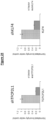
- human cells in a naive state are reliant on critical transcription factors defined in mouse embryonic stem cells, particularly TFCP2L1 and KLF4. Accordingly perturbation (for example by mutation, knockdown or knockout) of TFCP2L1 and KLF4 may lead to differentiation or death.
- TFCP2L1 and KLF4 are perturbed while the cells are cultured with a GSK3 inhibitor, a MEK inhibitor, a PCK inhibitor and Lif, the cells die. If the cells are transferred to FGF/KSR they revert to conventional hPSC characteristics.
- the human cells in a naive state are reliant on one or more of TFCP2L1, KLF4, KLF2, NANOG and TBX3. Accordingly, perturbation of one or more of these factors may lead to cell differentiation or death.
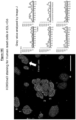
- the human cells in a naive state display nuclear localisation of TFE3.
- at least 45%, 50%, 55%, 60%, 70% or more of the cells in a naive state display nuclear localisation of TFE3.
- more than 50% of calls in a naive state display nuclear localisation of TFE3.
- Nuclear localisation of TFE3 can be demonstrated by immunostaining, for example.
- the human cells in a naive state do not express or express at low levels early lineage markers that are typically expressed in convention human pluripotent stem cells.
- the human cells in a naive state do not express, or only express at low levels markers such as AFP, EOMES and/or BRACHURY.
- mRNA of the lineage markers is expressed at levels of less than 15, 12, 10, 9, 8, 5, 2, or 1, preferably less than 10 FPKM (Fragments Per Kilobase of transcript per Million mapped reads).
- human naive cells have active mitochondrial respiration.
- Conventional PSCs do not have this property, while mouse ESC utilise both mitochondrial oxidative phosphorylation and glycolysis.
- Mitochondrial respiration may be measured by oxygen consumption rate (OCR).
- OCR oxygen consumption rate
- Basal OCR as measured by extracellular flux analysis, may be at least 2-fold higher in cells in a naive state than in conventional human pluripotent stem cells. Maximal OCR in the presence of an uncoupling reagent such as FCCP may be at least 4-fold higher.
- Cells in a naive state have substantial spare respiratory capacity, for example they may have a 4-10 fold increase in OCR in the presence of FCCP.
- Conventional human pluripotent stem cells show only a marginal increase in OCR in the presence of FCCP.
- cells in a naive state may utilise both mitochondrial oxidative phosphorylation and glycolysis.
- the cells in a na ⁇ ve state may self-renewal in the presence of 2-deoxyglucose or low glucose.
- Conventional hPSCs do not renew in these conditions.
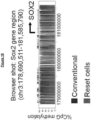
- the cells in a naive state have genome-wide hypomethylation.
- the genome-wide methylation level is 70%, 60%, 50%, 40%, 30% or less that the methylation level of hPSCs, preferably 50% or less.
- Reset cells prepared according to the present invention may show global demethylation in response to reprogramming using the methods of the invention.
- immunofluorescence staining for 5-methylcytosine (5mC) is weaker in reset cells than in cells that have not been reprogrammed.
- Reset cells may show a reduction of at least 10-90%, for example 15-80, 20-70, 30-60, 40-50, preferably about at least 50% in methylation of CpG genome-wide. In some embodiments methylation is reduced to 60% or less, preferably to 30-40%. Methylation levels may be measured in comparison to methylation levels of conventional hPSCs.
- Methylation levels may be quantified by nucleoside mass spectrometry or by bisulphite modification coupled to deep sequencing (B seq).
- Cells in a naive state prepared according to the invention may have lower levels of histone modifications associated with gene silencing than hPSCs or EpiSCs. For example reduced levels of H3K27me3 and H3K9me3.
- Levels of histone modifications may be measured by quantitative immunostaining or chromatin immunoprecipitation couple to deep sequencing (ChIP-seq).
- Female cells in a naive state may show reversible epigenetic erasure of the X chromosome, more specifically demethylation of the X chromosome, and absence of H3K27me3 foci in XX reset cells, preferably in 80% or more of XX cells.
- reversal of a naive state e.g. by culture in KSR/FGF, restores H3K27me3 foci in the majority of cells, preferably by at least 50%, 60%, or 70% or more.
- cells in a naive state are capable of incorporation into a host embryo inner cell mass (ICM) and a pre-implantation epiblast to form embryo chimaeras.
- the incorporated cells may be visualised by the presence of viable cells within the ICM at the expanded blastocyst stage.
- cells in a naive state can colonise a post-implantation epiblast and derivative tissues in chimaeras formed with the same, or closely related, species.
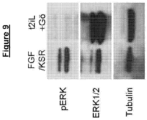
- cells in a naive state can self-renew in the absence of detectable Erk/MAP kinase signalling.
- the signalling may be detected using immunoblotting for phosphorylated Erk1 and Erk2.
- phosphorylated Erk1 and Erk2 are no detectable.
- cells in a na ⁇ ve state may self-renew in the presence of complete inhibition of Erk/MAP kinase signalling.
- cells in a naive state can self-renew in the presence of TGF- ⁇ /activin signalling inhibition.
- cells in a na ⁇ ve state may propagate independently from activin/TGF ⁇ .
- reset cells may propagate in the presence of the inhibitor A83-01.
- cells in a naive state can self-renew in the presence of PKC inhibition or knockdown, in particular atypical PKC (aPKC) inhibition, particularly aPKC iota inhibition.
- aPKC atypical PKC
- cells in a naive state can self-renew in the presence of partial inhibition of (GSK3) glycogen synthase kinase-3 activity.
- the cells in a naive state can self-renew in the presence of a GSK3 inhibitor, for example when the concentration of the inhibitor is about 0.1-5 ⁇ M, preferably about 0.5-2 ⁇ M, preferably about 1 ⁇ M.
- cells in a naive state can self-renew in the presence of leukaemia inhibitory factor (LIF) or other STAT3 agonists/activators.
- LIF leukaemia inhibitory factor
- cells in a naive state can self-renew from dissociated single cells without Rho associated kinase inhibition (ROCKi).
- ROCKi Rho associated kinase inhibition
- cells in a na ⁇ ve state can self-renew in culture that does not comprise a ROCK inhibitor.
- cells in a naive state can self-renew in the absence of serum or serum substitutes.
- cells in a naive state can self-renew in the absence of transgene expression or other genetic perturbation.
- the cells in a naive state can self-renew in the absence of exogenous reprogramming factor expression.
- reset cells produce by the methods of the invention are stable. Preferably, they show retention of normal karyotype (i.e. diploid) in long term passaging.
- cells in a naive state retain diploid karyotype, preferably without rearrangement, insertion or deletion over more than 5, 10, 15, 20, 25, 30, 35, 40, 50 or more population doublings, preferably, the cells in a naive state retain diploid karyotype over more than 40 population doublings.
- cells in a naive state differentiate in the presence of growth factor stimulation of Erk/MAP kinase signalling and activin into conventional primed pluripotent phenotype.
- this change can be measured by loss of pre-implantation epiblast (or grounds state') transcription factors and/or by up-regulation of lineage markers at the mRNA and protein level as described herein.
- cells in a naive state are able to differentiate in vitro into primordial germ cells as well as somatic germ layers
- cells in a naive state can establish continuous culture in vitro by direct transition from a pre-implantation epiblast.
- the cells in a naive state can be obtained for culture directly from a pre-implantation epiblast.
- cells in naive state are identifiable by their morphology.
- the cells may have a tightly packed domed appearance.
- the cells may also be described as forming compact refractile colonies.
- Mouse ESC have a tightly packed domed appearance.
- cells in a naive state have a reduction in expression of de novo methyltransferase (DNMT3a and DNMT3b).
- the reduction is at both mRNA and protein level as compared with conventional human pluripotent stem cells.
- the reduction is at least than two-fold, optionally three-fold.
- the reduction in expression of DNMT3a and DNMT3b may be at least half of that of conventional human pluripotent stem cells.
- the disclosure provides a human stem cell in a naive state, wherein the na ⁇ ve state is characterised by at least 1, 2, 3, 4, 5, 6, 7, 8, 9, 10, 11, 12, 13, 14, 15, 16, 17, 18, 19, 20, 21, 22, 23, 24, 25, 26, 27 or all of the following features ("na ⁇ ve state features”):
- Cells in a naive state may have one or more of the below features in addition to those described above.
- expression of one or more of the following factors is upregulated in the reset cells as compared to the cells before reprogramming:
- cells in a naive state express one or more of the above factors, in addition to OCT4, SOX2 and NANOG.
- expression of 2, 3, 4, 5, 6, 7, 8, 9, 10, 11, 12, 13 or all of the above factors is upregulated in reset cells.
- 1, 2, 3, 4, 5, 6 or all of: OCT4, SOX2, NANOG, KLF2, KLF4, TBX3 and TFCP2L1 are upregulated in reset cells.
- expression of NANOG, KLF2, KLF4, TBX3 and TFCP2L1 is induced in reset cells.
- reset cells according to the invention express upregulated levels of endogenous KLF4 and NANOG. In particularly preferred embodiments reset cells according to the invention express upregulated levels of endogenous TFCP2L1 and KLF4. In other preferred embodiments the reset cells express upregulated levels of NANOG, TFCP2L1 and KLF4.
- TET1 is also upregulated.
- Reset cells/cells in a naive state prepared according to the present invention may also display downregulation of lineage specific genes as compared to untreated cells. For example, expression of one or more of the following factors is downregulated in the reset cells as compared to the hPSCs before reprogramming. For example, or more of the following lineage specific genes may be down-regulated:
- Cells in a naive state express one or more the factors listed above that are indicative of a na ⁇ ve state.
- Cells in a naive state may also have downregulated expression of lineage specific genes, for example down regulation of one or more of the lineage specific genes listed above.
- Cells reset using the methods described herein may self-renew continuously without ERK signalling, are phenotypically stable.
- Reset cells may differentiate in vitro and form embryoid bodies. Reset cells may be capable of differentiating into cells of all three germ layers.
- Reset cells may form teratomas in vivo, for example when integrated into mice.
- Changes in properties may be observed in comparison to human pluripotent stem cells that have not been reprogrammed.
- Cells in a naive state may express one or more (e.g. 2, 3, 4, 5, 6, or 7) surface markers selected from the list consisting of: HAVCR1 (CD365), CCR8 (CDw198), ITGAM (CD11B), IL6R (CD126), PVR (CD155), ADGRE5 (CD97) and CD53.
- surface markers selected from the list consisting of: HAVCR1 (CD365), CCR8 (CDw198), ITGAM (CD11B), IL6R (CD126), PVR (CD155), ADGRE5 (CD97) and CD53.
- reset cells having one or more of the properties of reset cells/cells in a naive state are described herein.
- reset cells may express regulators that maintain a na ⁇ ve state in embryonic stem cells.
- Induction of a naive state may also be referred to herein as resetting to a naive state.
- Inducing a more naive state may comprise expressing reprogramming factors in the cell.
- Reference to reprogramming factors is reference to factors which when expressed in the cell result in it being reprogrammed.
- the reprogramming factors include one or more transcription factors.
- induction of a naive state comprises expression of 1, 2, 3, 4 or all of KLF4, NR5a1 KLF17, NANOG and KLF2.
- the present inventors have found that short-term expression of two components, NANOG and KLF2, is sufficient to ignite other elements of the network and reset the human pluripotent state.
- the reprogramming factors may be expressed in the cell prior to culturing of the cell in the first medium.
- activin may be included in the second medium at a concentration between 0.5-5.0 ng/ml.
- the basal medium is preferably a serum-free medium, such as N2B27 medium.
- Other media that are suitable for the propagation of stem cells may be used.
- the basal medium comprises 1, 2, 3, 4, 5, 6, or preferably all of: DMEM/F12 (liquid), Neurobasal, (liquid), N2 supplement, B27 supplement, ⁇ -mercaptoethanol, L-Glutamine, Insulin, and preferably also L-Ascorbic Acid.
- the cell to be reprogrammed is preferably a human cell.
- the human cells may be a pluripotent stem cell (hPSC).
- hPSCs may be induced (iPSCs) or embryo-derived.
- the methods and uses of the invention do not involve use of a human embryo for industrial/commercial purposes.
- the methods do not involve cells obtained by methods requiring use of a human embryo for industrial/commercial purposes.
- Cells may be obtained from an individual by standard techniques, for example by biopsy for skin cells. Cells may preferably be obtained from an adult. Methods for generating iPSCs are known in the art, for example as described in: Takahashi et al Nature 2007 ; Yu et al, Science 2007 .
- the cell to be reprogrammed may also be a cell which already expresses one of the reprogramming factors.
- non-human mammalian cells mutatis mutandis.
- the term "human” can be replaced with "mammalian” or any of the following: primate; non-human mammalian non-human primate; pig; sheep; cat; dog; goat; cow; camel; horse; llama; alpaca etc.
- the non-human mammalian cell is not a rodent cell.
- inducing a more naive state further comprises expressing reprogramming factors in the cell (e.g. KLF2 and NANOG).
- reprogramming factors are human factors.
- reprogramming factors for use in the present invention include one or more of OCT3/4, SOX2, Klf4, LIN28, c-MYC, KLF2 and NANOG.
- reprogramming factors for use in the present invention include one or more of KLF4, NR5a1 KLF17, NANOG and KLF2.
- reprogramming factors for use in the present invention include one or more of KLF4, NR5a1 KLF17, NANOG, OCT3/4, SOX2, LIN28, c-MYC and KLF2.
- At least 2, at least 3 or at least 4 of the reprogramming factors are used. In a preferred embodiments at least KLF2 and NANOG are used.
- Sequence data for these factors are available in established databases, for example the Ensembl Gene Browser or UniProt databases.
- Reprogramming factors can be expressed in the cell using any method available to the skilled person.
- the cell is not permanently genetically modified.
- the reprogramming factors may be transiently expressed, e.g. from plasmids.
- Reprogramming factors may be expressed for at least 4, 5, 6, 7, 8, 9, or at least 10 days. In preferred embodiments, the reprogramming factors are expressed for at least 8 days.
- the first medium may comprises an FGF receptor inhibitor. In some embodiments the first medium comprises an FGF receptor inhibitor, but no GSK3 inhibitor.
- reprogramming factors may be introduced by liposomal delivery or microinjection of either mRNAs or proteins prepared in vitro.
- the method may comprise addition of an agent to induce gene expression.
- the reprogramming factors are inducibly expressed. Accordingly the reprogramming factors may be under the control of an inducible promoter.
- DOX doxycycline
- the cells produced by the methods of the invention are not genetically modified compared to the cell provided for reprogramming.
- the cell After introduction of genetic material to express the reprogramming factors, the cell is preferably maintained in culture to allow reprogramming of the cell and growth of the cell.
- transfection leads to transient expression of the reprogramming factors and, as a result, reprogramming but yielding a population of cells without genetic modification.
- heterologous nucleic acid sequences especially those encoding reprogramming factors
- heterologous nucleic acid may normally be absent from cells of that type (e.g. retroviral sequence) or may be additional to an endogenous gene of the cell (e.g. an additional copy of a reprogramming factor, where the endogenous copy has been inactivated) but in each case the heterologous nucleic acid is introduced by human intervention.
- the nature of the transfection may be that extended culture of the reprogrammed cells results in loss of the transfection agent. Confirmation that cells are obtained with no genetic modification can be achieved by screening clones of the cells and analysing the DNA, for example using PCR with single copy deletion using this approach we have confirmed absence of genetic modification in cells obtained by these methods.
- telomeres a constitutive promoter
- suitable promoters include CAG, PKG and CMVE.
- the genetic material, such as the plasmids further preferably does not replicate and has a very low integration efficiently, which can be further reduced e.g. by using circular rather than linear plasmids.
- Plasmids are preferably introduced by using nucleofection which is an established procedure and known to be efficient. Other chemical and electrical methods are known and are also efficient, including electroporation and lipofection. Different transfection methods and protocols are available for different cells, all well known in the art. Generally, it is believed that the choice of plasmid and promoter and transfection route is not critical to the invention.
- the plasmid preparation comprises one or more plasmids which express in the cell the one or more reprogramming factors. There may be one plasmid for each factor or a plasmid may express more than one or all factors.
- the medium when the cell is cultured in the first medium, the medium may be replaced at least daily, or twice daily.
- the first medium may be replaced every 1-5, 1-4, 1-3, or 1-2 days. In preferred embodiments the first medium is replaced daily.
- Cells may be transferred to the second medium once the cells are reset, for example, when the cells display the properties described for reset cells as described herein.
- the cells are transferred to the na ⁇ ve culture medium after about 1-4 weeks, preferably after about 2 weeks in the first medium.
- the cells when the cell is cultured in the second medium, the cells may be dissociated every 3-10, 4-8, or preferably 5-7 days, for example using accutase.
- the cells may be replated as single cells.
- Cells may be cultured on feeder cells throughout the reprogramming protocol, for example on MEF feeder cells.
- the cells may be maintained in the presence of a MEK inhibitor and GSK3 inhibitor. Together this inhibitor combination may be referred to as 2i.
- the cells may be cultured in a medium comprising:
- Inhibitors may be provided or obtained by those skilled in the art by conventional means or from conventional sources, and such inhibitors per se are not part of the present invention (see also WO2007113505 ).
- the inhibitors used herein are preferably specific for the kinase to be targeted.
- the inhibitors of certain embodiments are specific for GSK3- ⁇ and GSK3- ⁇ , substantially do not inhibit erk2 and substantially do not inhibit cdc2.
- the inhibitors have at least 100 fold, more preferably at least 200 fold, very preferably at least 400 fold selectivity for human GSK3 over mouse erk2 and/or human cdc2, measured as ratio of IC 50 values; here, reference to GSK3 IC 50 values refers to the mean values for human GSK3- ⁇ and GSK3- ⁇ . Good results have been obtained with CHIR 99021 which is specific for GSK3. Examples of GSK3 inhibitors are described in Bennett C, et al, J. Biol.
- MEK inhibitors refers to MEK inhibitors in general.
- reference to a MEK inhibitor refers to any inhibitor a member of the MEK family of protein kinases, including MEK1, MEK2 and MEK5.
- suitable MEK inhibitors include the MEK1 inhibitors PD184352 and PD98059, inhibitors of MEK1 and MEK2 U0126 and SL327, and those discussed in Davies et al (2000) (Davies SP , Reddy H, Caivano M, Cohen P. Specificity and mechanism of action of some commonly used protein kinase inhibitors. Biochem J. 351, 95-105 ).
- PD184352 and PD0325901 have been found to have a high degree of specificity and potency when compared to other known MEK inhibitors ( Bain, Biochem J. 2007 ).
- Other MEK inhibitors and classes of MEK inhibitors are described in Zhang et al. (2000) Bioorganic & Medicinal Chemistry Letters; 10:2825-2828 .
- a preferred inhibitor combination is PD0325901 plus CHIR99021 used in the Examples below.
- PKC inhibitors suitable for use in the present invention include 3-[1-[3-(dimethylamino)propyl]-5-methoxy-1H-indol-3-yl]-4-(1H-indol-3-yl)-1 H-pyrrole-2,5-dione (Gö6983) (Gschwendt et al. 1996) or other compounds that selectively inhibit atypical protein kinase C isoforms and optionally also PKC delta.
- the PKC inhibitor may be present in the second medium at a concentration of 0.01 to 10 ⁇ M, preferably, 0.1 to 5 ⁇ M, preferably 1 to 4 ⁇ M.
- concentration of the PKC inhibitor is adjusted to allow culture growth in the absence of feeder cells (e.g. about 2 ⁇ M for Gö6983).
- Another preferred PKC inhibitor is Ro-31-8425, which can be used analogously to Gö6983 (for example) at a concentration of 0.1 ⁇ M-1 ⁇ M.
- FGF receptor inhibitor can be substituted with any FGF inhibitor, i.e. an inhibitor of FGF signalling.
- FGF receptor inhibitors suitable for use in the present invention include PD173074.
- references herein to an inhibitor herein encompass RNAi as an inhibitor.
- a number of assays for identifying kinase inhibitors are known.
- Davies et al (2000) describe kinase assays in which a kinase is incubated in the presence of a peptide substrate and radiolabelled ATP. Phosphorylation of the substrate by the kinase results in incorporation of the label into the substrate. Aliquots of each reaction are immobilized on phosphocellulose paper and washed in phosphoric acid to remove free ATP. The activity of the substrate following incubation is then measured and provides an indication of kinase activity. The relative kinase activity in the presence and absence of candidate kinase inhibitors can be readily determined using such an assay.
- Downey et al. (1996) J Biol Chem.; 271(35): 21005-21011 also describes assays for kinase activity which can be used to identify kinase inhibitors.
- Reset or embryo-derived ground state human pluripotent stem cells provide a superior starting material for various applications because of their homogeneity and absence of lineage priming or epigenetic restrictions that bias differentiation behaviour.
- Human ground state cells may be applied to define benchmarks for human pluripotent stem cells and enable the field to adopt common standards, in particular for induction of pluripotency by molecular reprogramming.
- Further uses include: differentiation to create cell culture models of human development and disease that can be applied in drug discovery and development, and in teratogenicity and toxicology testing; source of tissue stem cells and more mature cells for applications in clinical cell therapy; analysis of the relative contributions of genetics and epigenetics to developmental disorders, genetic disease and quantitative traits to facilitate advances in diagnostics, prognostics and patient treatment; generation of tissues and organs for transplantation either by bioengineering in vitro or by lineage/organ specific contribution to human-animal chimaeras.
- Reset or embryo-derived ground state pluripotent stem cells from non-human primates and other mammals can be used for precision genome engineering to enhance or modify germline genetic constitution of animals. Germline modification is achieved by genome engineering or genome editing and clonal selection of ground state cells in culture, followed by production of chimaeras, breeding and screening for transmission of the modified genotype. Desired genetic alterations include single or multiple gene deletion, point mutation, or substitution. Chromosome-scale genome modifications/substitutions are also possible. Applications include: disease models; behavioural models; host compatibility for xenotransplantation and organ substitution; pharmaceutical, antibody and vaccine production; livestock improvement; breeding stock preservation and improvement. Non-human primate ground state cells may also be used in pre-clinical testing and evaluation of cell therapies.
- t2iL+5 ⁇ M PKC inhibitor Gö6983 Sigma-Aldrich
- Reset cells cultured in t2iL+Gö were also passaged every five to seven days as single cells.
- Cells transferred to t2iL+Gö proliferate slowly for the initial couple of passages after withdrawal of DOX. Cells were maintained on MEF feeders throughout.
- reset cells were seeded on Matrigel (growth factor reduced, BD, 356230) coated plates in mTeSR medium for one week and then transferred into RPMI with 100ng/ml Activin A (prepared in-house) and 25ng/ml mWnt3A (R&D Systems) (Kroon et al., 2008). The following day medium was changed to RPMI with 100ng Activin A and 0.2% serum. Flow cytometry for CXCR4 and E-cadherin was performed at day 3 and immunofluorescence for SOX17 and FOXA2 was performed at day 4. For cardiomyocyte differentiation, reset cells were cultured in FGF/KSR medium for 6 days or more on MEF feeder cells.
- cDNA complementary DNA
- SuperScriptIII Invitrogen
- oligo-dT primers For real-time PCR, we used TaqMan Fast Universal Master Mix and TaqMan probes (Applied Biosystems) or the Universal Probe Library (UPL, Roche) system. Primers and UPL probe numbers are detailed in Table S5. Two or three technical replicates and at least two independent cultures were assayed for all quantitative PCR reactions. An endogenous control (Human GAPD, Applied Biosystems 4352934E) was used to normalise expression.
- KaryoMAX (Invitrogen, final concentration 0.06 ⁇ g/ml) was added to the culture medium. And cells incubated more around 6 hours at 37°C. Cells collected in a single cell suspension and washed by PBS were incubated in 5ml of a pre-warmed (37°C), 0.075M potassium chloride for 10 minutes (37°C). After centrifugation, 4ml fixative (3:1 methanol:acetic acid) was added. This fixation step was repeated twice. Fixed samples were analysed as G banded karyotypes at Medical Genetics Laboratories Cambridge University Hospitals NHS Foundation Trust.
- Oxygen consumption was measured using an XF e 24 Analyzer (SeaHorse Bioscience) according to the manufacturer's protocol.
- SeaHorse plates were pre-treated by coating with laminin and 80,000 cells were seeded on each well the night before the experiment.
- Culture media were exchanged for XF Base Medium (SeaHorse bioscience) supplemented with 2mM pyruvate and 20mM glucose with an adjusted pH of 7.4 and cells incubated at 37°C in atmospheric CO 2 for one hour.
- Oligomycin (2 ⁇ M), FCCP (500 ⁇ M), Antimycin (1 ⁇ M) and Rotenone (1 ⁇ M) were injected during assay (XF cell mito stress test kit, Seahorse Bioscience).
- Mitochondria were stained with Mito Tracker Green FM (final concentration 50nM, Life Technologies) or Tetramethylrhodamine, ethyl ester (TMRE, final concentration 20nM, Life Technologies) in the relevant medium for 10 minutes and analysed by confocal microscopy.
- Mito Tracker Green FM final concentration 50nM, Life Technologies
- TRE Tetramethylrhodamine, ethyl ester
- Genomic DNA was digested using DNA Degradase Plus (Zymo Research) according to the manufacturer's instructions and analyzed by liquid chromatography-tandem mass spectrometry on a LTQ Orbitrap Velos mass spectrometer (Thermo Scientific, Hemel Hempstead, UK) fitted with a nanoelectrospray ion-source (Proxeon, Odense, Denmark). Mass spectral data for C, 5mC and 5hmC were acquired in high resolution full scan mode (R >40,000 for the protonated pseudomolecular ions and >50,000 for the accompanying protonated base fragment ions), and also in selected reaction monitoring (SRM) mode.
- SRM selected reaction monitoring
- SRM data monitoring the transitions 228 ⁇ 112.0505 (C), 242 ⁇ 126.0662 (5mC) and 258 ⁇ 142.0611 (5hmC), were generated by HCD fragmentation using a 10 mass unit parent ion isolation window, a relative collision energy of 20% and R >14,000 for the fragment ions. Peak areas for the fragment ions were obtained from extracted ion chromatograms of the relevant scans and quantified by external calibration relative to standards obtained by digestion of nucleotide triphosphates.
- Genomic DNA was prepared using AllPrep DNA/RNA mini kit (QIAGEN), fragmented by sonication (Covaris) and adaptor ligated using Illumina supplied methylated adaptors and NEBnext library preparation kit. Subsequently DNA was bisulphite-treated using the Sigma Imprint kit according to the manufacturer's instructions (one step protocol). Final library amplification (11 cycles) was done using KAPA Uracil+ (KAPA Biosystems), after which the libraries were purified using Ampure beads (x1). Raw sequence reads were trimmed to remove both poor quality calls and adapters using Trim Galore (www.bioinformatics.babraham.ac.uk/projects/trim_galore/) (v0.2.2, default parameters).
- RNA integrity was assessed with the RNA 6000 Nano assay on the 2100 Bioanalyzer (Agilent).
- Ribosomal RNA was depleted from 5 ⁇ g of total RNA using Ribo-Zero capture probes (Epicentre). RNA samples were sheared by ultrasonication on a Covaris S2 for 80s set at Duty Cycle 10, Cycles per Burst 200 and Intensity 4. Fragmented RNA was reverse-transcribed with a combination of random hexamer and oligo-dT primers (New England Biolabs) by SuperScript III (Invitrogen) at 50°C for 2 h in the presence of 6 ⁇ g/ml actinomycin D (Sigma) to inhibit second-strand products.
- Second-strand cDNA was synthesized by DNA Polymerase I in the presence of RNase H with dUTPs substituted for dTTPs at 16°C for 2 h. Sequential end repair and 3'-adenylation of cDNA products was carried out with T4 DNA polymerase and T4 polynucleotide kinase (20°C), and with exo - Klenow fragment (65°C) in the presence of dATPs (New England Biolabs). These were ligated to barcoded adapters (NEXTflex-96, Bioo Scientific) by T4 DNA ligase (New England Biolabs) at 20°C for 30 min.
- Second-strand DNA was digested with uracil DNA glycosylase (UDG) and Endonuclease VIII at 37°C for 30 min.
- PCR amplification of first-strand library constructs was carried out with KAPA HiFi DNA polymerase (Kapa Biosystems) for 13 cycles. Purification of reaction products at each step was performed with Ampure XP paramagnetic beads (Beckman Coulter). Library size distribution and molarity was assessed by the DNA 1000 assay on the 2100 Bioanalyzer (Agilent). Sequencing was performed on the Illumina HiSeq 2000 in 100bp paired-end format.
- Sequencing reads were aligned to the human genome build hg19/GRCh37 with the STAR spliced aligner (Dobin et al., 2013). Transcript quantification was performed using htseq-count, part of the HTSeq package (Anders et al., 2014), based on GENCODE v15 (Harrow et al., 2012) (Ensembl release 70) (Flicek et al., 2014)) human gene annotation. Sequencing reads from published RNA-seq experiments were obtained from the European Nucleotide Archive (ENA). To ensure maximal compatibility between datasets, raw counts were generated in the manner described above, and all RNA-seq samples were processed together.
- ENA European Nucleotide Archive
- the mouse and human samples were related via one-to-one orthologous genes annotated in Ensembl v70. Libraries were corrected for total read count using the size factors computed by the Bioconductor package DESeq (Anders and Huber, 2010), and normalised for gene length to yield FPKM values.
- FPKM values were scaled relative to the mean expression of the gene across all samples. Heatmaps include genes for which a difference in expression was observed are displayed (i.e. scaled expression >1 or ⁇ -1 in at least one sample). Principal components were computed by singular value decomposition with the princomp function in the R stats package, using expression levels that were normalised relative to the human embryo-derived PSC samples in each study.
- UDG uracil DNA glycosylase
- APE 1 apurinic/apyrimidinic endonuclease 1
- Affymetrix Human Gene Array 1.0 ST arrays were hybridised for 16 h at 45°C, washed, stained with streptavidin-phycoerythrin (SAPE) conjugate on a FS450 automated fluidics station (Affymetrix), and imaged on a GCS3000 7G scanner (Affymetrix).
- SAPE streptavidin-phycoerythrin
- Affymetrix Human Gene Array 1.0 ST arrays were processed with the oligo Bioconductor package (Carvalho and Irizarry, 2010) to summarize probeset transcript clusters.
- Microarray data from this study were normalized together with those from Gafni et al. (2013) using the Robust Multi-Array Average (RMA) method (Irizarry et al., 2003) applied through the oligo package.
- RMA Robust Multi-Array Average
- Principal components were calculated from the centred and scaled expression covariance matrix by singular value decomposition, computed by the prcomp function in the R stats package.
- Transcript clusters were associated with targeted genes based on GENCODE v15 human genome annotation (Ensembl release 70).
- RNA-seq data were cross-referenced with the microarray data, restricting the analysis to the genes interrogated by the array.
- expression levels were computed relative to the human embryo-derived PSC samples from each study. These values were used as the basis for the global principal component analysis and the comparative analysis of marker genes.
- siRNAs (QIAGEN, Table S7) were transfected at a final concentration of 40nM using Dharmafect 1 (Dharmacon, cat. T-2001-01), following the manufacturer's protocol.
- Dharmafect 1 Dermatafect 1
- Opti MEM Invitrogen
- 20 ⁇ M siRNA solution in 50 ⁇ l of OptiMEM
- 4000 conventional PSC in 0.4ml of FGF/KSR medium or 2000 reset cells in 0.4ml of t2iL+ Gö.
- Medium was changed after overnight incubation. See Table S7 for siRNA details.
- shRNAs (Thermo Scientific, Table S8) were introduced using the Neon Transfection System (Invitrogen), program 14 for conventional PSC and Neon program 20 for reset cells with 2 ⁇ g of shRNA vector. Two days after electroporation, cells were selected in puromycin. For rescue experiments, shRNA knockdown cells were transfected using Neon program 14 with 1.5 ⁇ g of piggyBac vector carrying a Tfcp2I1, KLF4 or ESRRB expression cassette plus 1.5 ⁇ g of pBase and selected in hygromycin.
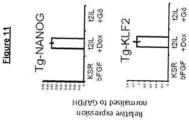
- NANOG and KLF2 reset the human PSC phenotype
- Transgenic expression of Nanog or Klf2 can convert mouse EpiSC to ground state ESC in the presence of 2i and LIF (2iL) (Hall et al., 2009; Silva et al., 2009).
- 2i and LIF (2iL) We tested the effect of expressing this pair of factors in human embryo-derived H9 cells.
- Transfectant pools were selected with G418 in conventional human PSC culture medium containing FGF and serum replacement (FGF/KSR) without DOX.
- ground state pluripotency is a distinctive cell identity for human cells, which is analogous to authentic mouse embryonic stem cells. They show that the transcription factor circuitry that governs mouse embryonic stem cells can be activated in human cells and take executive control of global metabolic, epigenetic and transcriptome programmes.
- the inventors have demonstrated reproducibility of their method in difference hPSCs and stability in long-term passaging with retention of normal karyotype for several reset lines. In fact the three reset cell lines used for transcriptome analyses had been passaged multiple times.
- FGF/KSR medium DMEM/F12 basal medium supplemented with 20%KSR, 1mM glutamine, 1% non-essential amino acids, 0.1mM 2ME and 10ng/ml FGF2
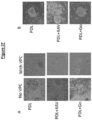
- PDL-HDACi comprises mTeSR TM -E6 basal medium (Stem Cell Technologies) supplemented with 1 ⁇ M PD0325901, human LIF (10ng/ml, prepared in house) and a HDAC inhibitor such as valproic acid sodium salt (VPC, 0.5-1 mM, Sigma,) or sodium butyrate (SB, 0.5-1mM, Sigma).
- VPC valproic acid sodium salt
- SB sodium butyrate
- a Wnt pathway inhibitor such as XAV939 (2 ⁇ M) may be included, constituting PDXL.
- XAV939 2 ⁇ M
- colony yield may be higher for some cell lines but colonies are also more heterogeneous.
- PDXL contains mTeSR TM -E6 basal medium (Stem cell Technologies) supplemented with 1 ⁇ M PD0325901, 2 ⁇ M XAV939, human LIF (prepared in house).
- PDXL-HDACi is either:
- Resetting is preferably performed in incubators at 5% oxygen.
- Na ⁇ ve maintenance medium 2ilGö-Y contains N2B27 basal medium supplemented with 250 ⁇ M.
- L-ascorbic acid-2-phosphate magnesiumAcid Sigma
- 1 ⁇ M PD0325901 1 mM Chiron
- Gö6983 2.5uM, Sigma
- human LIF 10 ⁇ M.
- the ROCK inhibitor is optional for continued culture and may be withdrawn or applied only for 24 hours after passaging.
- EOS reporter contains a GFPIresPuro cassette driven by LTR of early transposon and a trimer of mouse Oct4 distal enhancer.
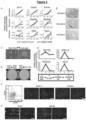
- the EOS reporter in majority of conventional human ES cells is expressed at low to undetectable level by microscope. More than 80 percent of cells do show low to moderate GFP expression by flow cytometry analysis (FACS) ( Figure 31 ).
- FACS flow cytometry analysis
- the resetting medium induced vast cell death and differentiation three days after.
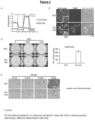
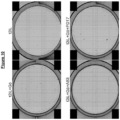
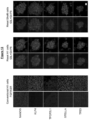
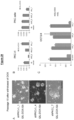
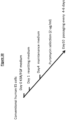
- the dome shaped GFP positive colonies appears around Day5 to Day7 and peaked after day10 to day 12 ( Figure 32 , Figure 33 , Figure 34 ).
- the colonies can then be passaged in bulk or picked singly using TrypLE TM express. Puromycin selection is applied for one or two passages to exclude differentiated cells if needed.
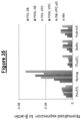
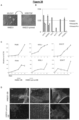
- the reset cells expressed elevated naive state markers, TFCP2L1 and DPPA3 from Day7 during resetting ( Figure 35 ).
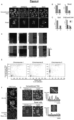
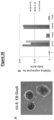
- Two pools, iS6-N and iS6-E, have been maintained over 15 passages and are karyotypically normal by G-band analysis. They form embryoid body readily in low adhesive 96 well plates and up-regulate differentiation markers ( figure 36 ).
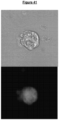
- reset naive cells can also be isolated based on their expression of surface markers such as Tra1-60, Tra1-81, E-cadherin, CD365 or CD53.
- PKC inhibition is not essential but can be added to the resetting medium.
- FGF receptor inhibition (PD17) may be applied in addition to MEK inhibition.
- E6-based medium generally allows fast and robust resetting, but N2B27 based medium also works, although with delayed kinetics.
- This protocol can be applied to pluripotent cell lines or primary embryonic cultures from other mammalian species.
- Reset cells can be derived directly from primate, rodent or other mammalian embryos.
- embryos developed in vitro or in utero are cultured either intact, or after isolation of the inner cell mass (ICM) by microdissection or immunosurgery and optional dissociation into single cells.
- Initial culture is in N2B27 or equivalent basal media with t2iL or PDL plus ROCK inhibitor (10 ⁇ M) and with or without ascorbic acid (250 ⁇ M, Sigma).
- Gö may be added at 2-4 ⁇ M from the beginning or only after passaging.
- Colonies with typical tightly clustered morphology of ground state cells may be distinct in primary outgrowths or only emerge after passaging. Colonies are picked and expanded in ground state maintenance medium as above. Levels of GSK3 and PKC inhibition may have to be adjusted to achieve the optimum for different species.
- peri-implantation embyros or post-implantation epiblast dissected and/or dissociated epiblast cells are initially cultured in resetting medium with PDL-HDACi, XAV, and optionally PKC inhibitor. They are then transferred, typically after two or three days, into ground state maintenance medium. Colonies are picked and expanded in ground state medium as above. Derivations are preferably performed in incubators at 5% oxygen.
- Embryos were thawed using embryo thawing kit (FertiPro) and cultured in drops of pre-equilibrated embryo media (Origio); either EmbryoAssist for 1-8 cell stage (Day 0-2), or BlastAssist for 8 cell to blastocyst (Day 3-6) under embryo-tested mineral oil (Sigma). They were monitored daily and transferred to fresh medium, as appropriate for developmental stage. Expanded blastocysts (Day 6) were subjected to immunosurgery (13, 23) to isolate inner cell masses (ICMs) using anti-human serum (Sigma).
- ICMs inner cell masses
- ICMs were treated with Accutase (Sigma or Gibco) for 5-10 minutes, and transferred to a droplet of medium for mechanical separation using a finely-drawn Pasteur pipette. Individual ICM cells were then scattered onto mitotically-inactivated (irradiated) murine embryonic fibroblasts (MEFs).
- Accutase Sigma or Gibco
- Cells were propagated in modified N2B27 medium supplemented with PD0325901 (1 ⁇ M, prepared in house), CHIR99021 (1 ⁇ M, prepared in house), Gö6983 (2.5 ⁇ M, Sigma-Aldrich), Rho-associated kinase inhibitor (ROCKi, Y-27632)(10 ⁇ M, Calbiochem), human LIF (10ng/ml, prepared in house) and ascorbic acid (250 ⁇ M, Sigma).
- This medium is referred to as t2iLGöY.
- Modified N2B27 medium (1L) comprised 490 mL DMEM/F12 (Life Technologies), 490 mL Neurobasal (Life Technologies), 10 mL B27 (Life Technologies), 5 mL N2 (prepared in house), 10 ⁇ g/mL insulin (Sigma), 2 mM L-glutamine (Life Technologies) and 0.1 mM 2-mercaptoethanol (Sigma).
- N2 contains 100 ⁇ g/ml Apo-transferrin (eBioscience, ABC2553), 3 ⁇ M Sodium selenite (Sigma), 1.6 mg/mL Putrescine (Sigma) and 2 ⁇ g/mL Progesterone (Sigma) in DMEM/F12 (Life technology).
- Cells were cultured on irradiated MEFs. Primary colonies and nascent cell lines were passaged manually as described above for ICMs after transferring colonies to micro-drops. Established naive stem cells were passaged either manually with Accutase (Life Technologies) dissociation or as a pool using TrypLE TM Express (Life technology, 12605). Cells were cultured in 5% oxygen, 7% carbon dioxide in a humidified incubator at 37°C.
- HNES cells were seeded on MEFs in t2iLGöY medium for 24 hours then transferred intoFGF/KSR medium for 7-10 days before passaging with TrypLE TM Express. Y27632 (10 ⁇ M) was added for the first passage. Thereafter cells were routinely passaged as clusters using Collagenase/Dispase (Roche).
- FGF/KSR medium comprised 20% KSR (Invitrogen), 1x nonessential amino acids (NEAA) (Invitrogen), 2 mM L-glutamine (Invitrogen), 100 ⁇ M 2-mercaptoethanol (Sigma), 10 ng/mL FGF2 (prepared in-house) and DMEM/F-12 basal medium (Sigma-Aldrich).
- Established HNES-primed cultures can also be maintained in mTeSR TM 1 or E8 medium (StemCell Technologies) on Matrigel coated tissue culture plates.
- Human naive stem cells or primed derivatives were dissociated with TrypLE TM Express and deposited in Prime-Surface 96V cell plates (Sumitomo Bakelite MS-9096V) at a density of 4000-5000 cells per well in differentiation medium containing either 20% FBS or 20% KSR.
- ROCK inhibitor (Y27632; 10 ⁇ M) was added during the first 24 hours of aggregation. At day 7 aggregates were plated on gelatin-coated tissue culture plastic in FBS differentiation medium for attachment and outgrowth.
- Total RNA was prepared after depletion of feeder cells by culturing on gelatin-coated dishes for 40 minutes and harvesting non-attached cells for TRIzol extraction.
- HNES human naive epiblast stem
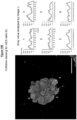
- Metaphase chromosomes were prepared from the first three lines. Two lines displayed both diploid and aberrant karyotypes while one showed 46 XY karyotype that was stable after further passaging with no abnormalities detected by G-banding or array CGH ( Fig.38K and Table B below). This line, HNES-1, is characterised further below. B.
- HNES cells were transferred to conventional PSC culture medium containing KSR/FGF and lacking inhibitors. After one passage the domed colonies of HNES cells assumed flattened epithelial morphology and after two passages stabilised in conventional PSC appearance. OCT4 and NANOG expression was reduced and na ⁇ ve markers extinguished ( Fig. 39A, 39B ).
- HNES cells can undergo multilineage differentiation via embryoid body formation.
- we detected up-regulation of early lineage markers, PAX6, MIXL1 and SOX17 Fig. 39C .
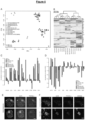
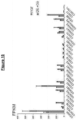
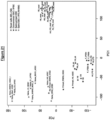
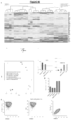
- HNES cells feature a transcriptome distinct from other PSC and consistent with the reset state ( Figure 40A ). They show consistent expression of na ⁇ ve pluripotency factors, denoting na ⁇ ve identity. In contrast, conventional PSC exhibit wider variation in expression profiles with, for example, sporadic activation of NANOG, ZFP42 (REX1) and TFCP2L1. HNES cells also express a restricted complement of lineage markers compared with conventional PSC.
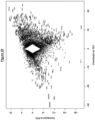
- PC1 primarily discriminates between single-cell and bulk RNA-seq samples, suggesting a major influence of sequencing protocol. Indeed, numerous genes that are detected in the other studies yield zero scores in the Yan dataset, in line with known detection limitations of single cell RNAseq ( Kharchenko et al., Nat Methods. 2014;11(7):740--2 . The biological replicates of the three HNES cells cluster together along with reset H9 cells. PC2 places HNES cells in relative proximity to the ICM cells and well separated from other PSC. The degree of alignment on PC2 between HNES cells and embryo cells appears reasonable, considering that the early ICM cells analysed likely precede na ⁇ ve epiblast.
- Mouse and human ICM cells are characterised by global DNA hypomethylation (Guo et al., 2014; Smith et al., 2014). This epigenomic feature is shared with na ⁇ ve ES cells (Ficz et al., 2013; Habibi et al., 2013; Leitch et al., 2013) and reset human PSC (see discussion hereinbefore).
- HNES cells show down-regulation of de novo methyltransferase DNMT3B and appreciable expression of TET1 ( Fig. 40C ). Immunostaining for 5-methylcytosine (5mC) is fainter in HNES cell nuclei compared to HNES-primed cells.
- HNES cell lines can be propagated by disaggregation to single cells and may retain chromosomal integrity over many passages.
- Molecular markers, global transcriptome, metabolic properties, and DNA hypomethylation features align HNES cells with reset PSC and in proximity to mouse ES cells and human ICM.
Landscapes
- Health & Medical Sciences (AREA)
- Life Sciences & Earth Sciences (AREA)
- Engineering & Computer Science (AREA)
- Biomedical Technology (AREA)
- Genetics & Genomics (AREA)
- Zoology (AREA)
- Organic Chemistry (AREA)
- Biotechnology (AREA)
- Chemical & Material Sciences (AREA)
- Bioinformatics & Cheminformatics (AREA)
- Wood Science & Technology (AREA)
- Developmental Biology & Embryology (AREA)
- Microbiology (AREA)
- Reproductive Health (AREA)
- Cell Biology (AREA)
- Biochemistry (AREA)
- General Engineering & Computer Science (AREA)
- General Health & Medical Sciences (AREA)
- Gynecology & Obstetrics (AREA)
- Transplantation (AREA)
- Micro-Organisms Or Cultivation Processes Thereof (AREA)
Claims (15)
- Verfahren zum Rücksetzen einer menschlichen Stammzelle in einen naiveren Zustand, wobei das Verfahren Folgendes umfasst:(a) Induzieren eines naiveren Zustands in der menschlichen Stammzelle durch(i) optionales Exprimieren oder Einführen eines oder mehrerer heterologer Umprogrammierfaktoren in der/die Zelle,(ii) Kultivieren der Zelle in einem Rücksetzmedium, wobei das Rücksetzmedium einen MEK-Inhibitor, einen Tankyrase-Inhibitor, bei dem es sich um XAV939 handelt, und einen STAT3-Aktivator umfasst, und(b) Halten der Zelle in einem naiven Kulturmedium, wobei das naive Kulturmedium einen MEK-Inhibitor, einen PKC-Inhibitor, einen GSK3-Inhibitor und einen STAT3-Aktivator umfasst.
- Verfahren nach Anspruch 1, wobei das Rücksetzmedium weiters einen PKC-Inhibitor umfasst.
- Verfahren nach Anspruch 1 oder 2, wobei das Rücksetzmedium weiters einen GSK3-Inhibitor umfasst.
- Verfahren nach Anspruch 1, wobei Schritt (a)(i) durchgeführt wird, um die Zelle in einen naiveren Zustand umzuprogrammieren, und das das Exprimieren von Umprogrammierfaktoren in der Zelle umfasst, wobei die Umprogrammierfaktoren NANOG und KLF2 umfassen oder daraus bestehen und wobei das Rücksetzmedium einen GSK3-Inhibitor und einen STAT3-Aktivator oder einen FGF-Inhibitor und einen STAT3-Aktivator umfasst.
- Verfahren nach einem der Ansprüche 1 bis 4, wobei die Expression des Umprogrammierfaktors vorübergehend ist, was gegebenenfalls durch Einführen eines Plasmidpräparats in die Zelle erreicht wird, das die Umprogrammierfaktoren in der Zelle exprimiert.
- Verfahren nach Anspruch 1 oder Anspruch 2, wobei Schritt (a)(i) nicht durchgeführt wird und das Rücksetzmedium weiters einen HDAC-Inhibitor umfasst.
- Verfahren nach einem der Ansprüche 1 bis 4 oder 6, wobei das naive Kulturmedium weiters einen ROCK-Inhibitor umfasst.
- Verfahren nach einem der Ansprüche 1 bis 7, wobei der GSK3-Inhibitor CHIR99021 ist.
- Verfahren nach einem der Ansprüche 1 bis 8, wobei der MEK-Inhibitor PD0325901 ist.
- Verfahren nach einem der Ansprüche 1 bis 9, wobei der PKC-Inhibitor Gö6983 oder Ro-31-8425 ist.
- Verfahren nach einem der Ansprüche 1 bis 10, wobei der STAT3-Aktivator LIF ist, der gegebenenfalls menschlicher LIF ist.
- Verfahren nach einem der Ansprüche 1 bis 11, wobei der FGF-Inhibitor, wenn vorhanden, PD173074 ist.
- Verfahren nach einem der Ansprüche 1 bis 12, wobei das Halten in einem naiven Zustand durch einen oder mehrere der folgenden Phänotypen oder Genotypen bestätigt wird:a) die Fähigkeit, sich kontinuierlich und klonal in Kultur selbst zu erneuern und Pluripotenz beizubehalten,b) ein globales Transkriptom, das jenem von embryonalen Maus-Stammzellen, die in einem definierten Medium kultiviert werden, ähnlicher ist als von Maus-Postimplantations-Epiblast-Stammzellen (EpiSCs) oder herkömmlichen menschlichen pluripotenten Stammzellen,c) ein globales Transkriptom, das einem Präimplantations-Epiblast ähnlicher ist als einem Postimplantations-Epiblast,d) Expression von mRNA und eines Proteins von Präimplantations-Epiblast-spezifischen Transkriptionsfaktoren, gegebenenfalls 1, 2, 3, 4, 5, 6 oder allen aus: KLF2, KLF4, TFCP2L1, TBX3, REX1, GBX2 und STELLA (DPPA3), und Expression von mRNA und eines Proteins von allgemeinen Pluripotenzfaktoren, wie z. B. OCT4, SOX2 und SALL4, und gegebenenfalls erhöhte mRNA- und Proteinspiegel von NANOG;e) Verlass auf kritische Transkriptionsfaktoren definiert in embryonalen Maus-Stammzellen, insbesondere TFCP2L1 und KLF4;f) Kernlokalisierung von TFE3;g) schwache Expression oder Abwesenheit der Expression von Markern einer frühen Linie, die typischerweise in herkömmlichen menschlichen pluripotenten Stammzellen exprimiert werden, wie z. B. AFP, EOMES und/oder BRACHURY;h) aktive mitochondriale Atmung;i) genomweite Hypomethylierung;j) geringe Spiegel von genassoziierten Histonmodifikationen, wie z. B. reduzierte Spiegel von H3K27me3 und H3K9me3;k) Fähigkeit zur Inkorporation in eine innere Zellmasse eines Wirtsembryos und einen Präimplantations-Epiblast, um Embryochimären zu bilden;l) Fähigkeit zur Kolonisierung eines Postimplantations-Epiblasts und von Derivatgewebe in Chimären, die mit der gleichen oder einer eng verwandten Spezies gebildet wurden;m) Selbsterneuerung in Gegenwart einer vollständigen Hemmung von Erk/MAP-Kinase-Signalübertragung;n) Selbsterneuerung in Gegenwart einer Wachstumsfaktorrezeptor-Tyrosinkinase-Signalübertragungshemmung;o) Selbsterneuerung in Gegenwart einer TGFβ/Activin-Signalübertragungshemmung;p) Selbsterneuerung in Gegenwart von PKC-Hemmung oder -Knockdown;q) Selbsterneuerung in Gegenwart einer teilweisen Hemmung von (GSK3-) Gly-kogensynthase-Kinase-3-Aktivität;r) Selbsterneuerung in Gegenwart von STAT3-Agonisten, wie z. B. LIF;s) Selbsterneuerung aus dissoziierten Einzelzellen mit oder ohne Hemmung von Rho-assoziierter Kinase (ROCKi);t) Selbsterneuerung in Abwesenheit von Serum oder Serumersatz;u) Selbsterneuerung in Abwesenheit von Feeder-Zellen;v) Selbsterneuerung in Abwesenheit von Transgenexpression oder anderer genetischer Perturbation;w) Retention eines diploiden Karyotyps ohne Umordnung bei Langzeit-Passagierung, beispielsweise über mehr als 40 Populationsverdopplungen;x) Differenzierung zu einem herkömmlichen geprimten pluripotenten Phänotyp in Gegenwart von Wachstumsfaktorstimulation von Erk/MAP-Kinase-Signalübertragung und Activin;y) Fähigkeit zu In-vitro-Differenzierung in Urkeimzell- sowie somatische Keimzellschichten;z) Fähigkeit zu In-vitro-Etablierung einer kontinuierlichen Kultur durch Übergang aus einem Präimplantations-Epiblast;aa) dicht gepacktes, gewölbtes Aussehen;bb) Reduktion der Expression von DNMT3a und DNMT3b.
- Verfahren nach Anspruch 13, wobei die Expression von KLF2, KLF4, TFCP2L1, TBX3, REX1, GBX2 und STELLA in den umprogrammierten Zellen induziert wird.
- Rücksetzmedium wie in einem der Ansprüche 1 bis 14 definiert, wobei das Rücksetzmedium einen MEK-Inhibitor, einen Tankyrase-Inhibitor, bei dem es sich um XAV939 handelt, und einen STAT3-Aktivator umfasst.
Applications Claiming Priority (3)
| Application Number | Priority Date | Filing Date | Title |
|---|---|---|---|
| GB201414992A GB201414992D0 (en) | 2014-08-22 | 2014-08-22 | Resetting human pluripotent stem cells |
| GB201415368A GB201415368D0 (en) | 2014-08-29 | 2014-08-29 | Resetting pluripotent stem cells |
| PCT/GB2015/052431 WO2016027099A2 (en) | 2014-08-22 | 2015-08-21 | Resetting pluripotent stem cells |
Publications (3)
| Publication Number | Publication Date |
|---|---|
| EP3183336A2 EP3183336A2 (de) | 2017-06-28 |
| EP3183336B1 EP3183336B1 (de) | 2020-11-25 |
| EP3183336B2 true EP3183336B2 (de) | 2025-07-09 |
Family
ID=54011046
Family Applications (1)
| Application Number | Title | Priority Date | Filing Date |
|---|---|---|---|
| EP15756227.3A Active EP3183336B2 (de) | 2014-08-22 | 2015-08-21 | Rücksetzung pluripotenter stammzellen |
Country Status (6)
| Country | Link |
|---|---|
| US (1) | US10894948B2 (de) |
| EP (1) | EP3183336B2 (de) |
| CN (1) | CN107075472A (de) |
| IL (1) | IL250689B (de) |
| SG (1) | SG11201701398SA (de) |
| WO (1) | WO2016027099A2 (de) |
Families Citing this family (38)
| Publication number | Priority date | Publication date | Assignee | Title |
|---|---|---|---|---|
| WO2011140441A2 (en) | 2010-05-06 | 2011-11-10 | Children's Hospital Medical Center | Methods and systems for converting precursor cells into intestinal tissues through directed differentiation |
| EP3712254A1 (de) | 2014-05-28 | 2020-09-23 | Children's Hospital Medical Center | Verfahren und systeme zur umwandlung von vorläuferzellen in magengewebe durch gezielte differenzierung |
| US20170313978A1 (en) * | 2014-10-07 | 2017-11-02 | Max-Delbrück-Centrum Für Molekulare Medizin In Der Helmholtz-Gemeinschaft | Endogenous retrovirus transcription as a marker for primate naive pluripotent stem cells |
| CA2963704A1 (en) | 2014-10-17 | 2016-04-21 | Children's Hospital Medical Center | In vivo model of human small intestine using pluripotent stem cells and methods of making and using same |
| EP4177335A1 (de) | 2016-05-05 | 2023-05-10 | Children's Hospital Medical Center | Verfahren zur in-vitro-herstellung von magenfundusgewebe und zusammensetzungen im zusammenhang damit |
| US11634686B2 (en) | 2016-11-01 | 2023-04-25 | Jian Feng | Method of producing naive pluripotent stem cells |
| SG11201903697WA (en) | 2016-11-04 | 2019-05-30 | Childrens Hospital Med Ct | Liver organoid compositions and methods of making and using same |
| EP3548507A4 (de) | 2016-12-05 | 2020-07-15 | Children's Hospital Medical Center | Kolonorganoide und verfahren zur herstellung und verwendung davon |
| EP3609997A4 (de) | 2017-04-14 | 2021-03-03 | Children's Hospital Medical Center | Multidonor-stammzellenzusammensetzungen und verfahren zu ihrer herstellung |
| US12297457B2 (en) | 2017-10-10 | 2025-05-13 | Children's Hospital Medical Center | Esophageal tissue and/or organoid compositions and methods of making same |
| EP3727394A4 (de) | 2017-12-21 | 2021-09-08 | Children's Hospital Medical Center | Digitalisierte menschliche organoide und verfahren zu deren verwendung |
| WO2019151386A1 (ja) | 2018-01-31 | 2019-08-08 | 富士フイルム株式会社 | 細胞の製造方法 |
| CN110423721B (zh) * | 2018-05-01 | 2024-02-27 | 云南济慈再生医学研究院有限公司 | 一种年轻化的修复型成纤维细胞的制备方法及其应用 |
| CN118006541B (zh) * | 2018-05-01 | 2024-10-18 | 云南济慈再生医学研究院有限公司 | 一种使靶细胞去分化、转分化、年轻化的方法 |
| IT201800006076A1 (it) | 2018-06-06 | 2019-12-06 | niPSCs da cellule somatiche | |
| US12421500B2 (en) | 2018-07-26 | 2025-09-23 | Children's Hospital Medical Center | Hepato-biliary-pancreatic tissues and methods of making same |
| JP2021535753A (ja) | 2018-09-12 | 2021-12-23 | チルドレンズ ホスピタル メディカル センター | 造血幹細胞およびその派生体の生成のためのオルガノイド組成物 |
| JP7437766B2 (ja) * | 2018-10-31 | 2024-02-26 | 国立大学法人京都大学 | 中内胚葉系への分化抵抗性が解除された多能性幹細胞の作製方法 |
| EP3914698B1 (de) * | 2019-01-23 | 2024-12-11 | Yeda Research and Development Co. Ltd | Kulturmedien für pluripotente stammzellen |
| WO2020160371A1 (en) | 2019-02-01 | 2020-08-06 | The University Of Hong Kong | Innervated organoid compositions and methods of making same |
| US20220145264A1 (en) * | 2019-04-05 | 2022-05-12 | The University Of Hong Kong | Culture medium for mammalian expanded potential stem cells, composition, and methods thereof |
| CA3141814A1 (en) | 2019-05-31 | 2020-12-03 | Children's Hospital Medical Center | Shaped organoid compositions and methods of making same |
| CN114174494A (zh) | 2019-05-31 | 2022-03-11 | 儿童医院医学中心 | 产生和扩增造血干细胞的方法 |
| US20220213444A1 (en) * | 2019-05-31 | 2022-07-07 | Children's Hospital Medical Center | Compositions and methods for cellular reprogramming |
| WO2021015228A1 (ja) * | 2019-07-25 | 2021-01-28 | 富士フイルム株式会社 | 特定の分化細胞の製造方法 |
| WO2021020267A1 (ja) * | 2019-07-26 | 2021-02-04 | 富士フイルム株式会社 | ナイーブ型多能性幹細胞の増殖能亢進用培地および多能性幹細胞の製造方法 |
| JP7731555B2 (ja) * | 2020-02-12 | 2025-09-01 | 株式会社カネカ | 多能性幹細胞の分化抑制方法 |
| IL299625A (en) * | 2020-07-02 | 2023-03-01 | Accellta Ltd | Mammalian pluripotent stem cells from late embryos |
| AU2021350981B9 (en) * | 2020-09-24 | 2025-06-26 | Beijing Institute For Stem Cell And Regenerative Medicine | Activated pluripotent stem cell, and preparation method therefor and use thereof |
| CN114480258A (zh) * | 2020-11-11 | 2022-05-13 | 中国科学院广州生物医药与健康研究院 | 建立和维持早期胚胎样细胞的培养基和方法 |
| CA3203232A1 (en) * | 2020-12-25 | 2022-06-30 | Kyoto University | Method for producing naive human ips cells from somatic cells |
| EP4029932A1 (de) | 2021-01-13 | 2022-07-20 | IMBA-Institut für Molekulare Biotechnologie GmbH | Blastozyst-ähnliches zellaggregat und verfahren |
| JP2024503454A (ja) | 2021-01-13 | 2024-01-25 | イーエムベーアー-インスティテュート フュール モレクラレ バイオテクノロジー ゲゼルシャフト ミット ベシュレンクテル ハフツング | 胚盤胞様細胞凝集物および方法 |
| JP2024506850A (ja) * | 2021-02-01 | 2024-02-15 | シーダーズ-サイナイ メディカル センター | 同質遺伝子型iPSC由来血管内皮細胞との共培養における機能的なヒトiPSC由来膵島の作製 |
| WO2023076577A2 (en) * | 2021-10-28 | 2023-05-04 | Memorial Sloan-Kettering Cancer Center | Methods for modulating cell pluripotency and self-renewal property |
| WO2023173370A1 (en) * | 2022-03-17 | 2023-09-21 | Guangzhou Institutes Of Biomedicine And Health, Chinese Academy Of Sciences | Media and methods for producing human cells and tissues from teratoma, organoids and embryoid bodies |
| CN116970552A (zh) * | 2022-04-22 | 2023-10-31 | 广州国家实验室 | 哺乳动物早期胚胎样细胞的诱导方法及其应用 |
| CN115948524B (zh) * | 2022-11-08 | 2024-05-24 | 吉林大学 | Gcna在提高重编程效率、干细胞原始态多能性及促进原始生殖细胞转化中的应用 |
Citations (1)
| Publication number | Priority date | Publication date | Assignee | Title |
|---|---|---|---|---|
| WO2016016894A1 (en) † | 2014-07-30 | 2016-02-04 | Yeda Research And Development Co. Ltd. | Media for culturing pluripotent stem cells |
Family Cites Families (14)
| Publication number | Priority date | Publication date | Assignee | Title |
|---|---|---|---|---|
| EP1999249B8 (de) | 2006-03-30 | 2012-02-15 | The University Court Of The University of Edinburgh | Kulturmedium mit kinasehemmern und verwendung |
| GB0606392D0 (en) * | 2006-03-30 | 2006-05-10 | Univ Court Of The Univeresity | Culture medium containing kinase inhibitors, and uses thereof |
| JP2008099662A (ja) * | 2006-09-22 | 2008-05-01 | Institute Of Physical & Chemical Research | 幹細胞の培養方法 |
| JP6093110B2 (ja) | 2008-12-17 | 2017-03-08 | ザ スクリプス リサーチ インスティテュート | 幹細胞の作製と維持 |
| WO2010124290A2 (en) * | 2009-04-24 | 2010-10-28 | Whitehead Institute For Biomedical Research | Compositions and methods for deriving or culturing pluripotent cells |
| US8193235B2 (en) * | 2009-06-12 | 2012-06-05 | University Of Kansas | Compositions and methods for establishing and maintaining stem cells in an undifferentiated state |
| WO2011084747A2 (en) | 2009-12-21 | 2011-07-14 | The Johns Hopkins University | Compositions and methods for somatic tissue induced pluripotent stem cells having an endoderm origin |
| EP3072961A1 (de) * | 2010-04-16 | 2016-09-28 | Children's Medical Center Corporation | Verzögerte polypeptidexpression aus modifizierten synthetischen rnas und verwendungen davon |
| AU2011349446C1 (en) * | 2010-12-22 | 2016-01-21 | Fate Therapauetics, Inc. | Cell culture platform for single cell sorting and enhanced reprogramming of iPSCs |
| DE102012102532A1 (de) | 2012-03-23 | 2013-09-26 | Eberhard-Karls-Universität Tübingen Universitätsklinikum | Neue MSC-Oberflächenmarker |
| US10920192B2 (en) * | 2013-04-23 | 2021-02-16 | Yeda Research And Development Co. Ltd. | Isolated naive pluripotent stem cells and methods of generating same |
| US20170313978A1 (en) | 2014-10-07 | 2017-11-02 | Max-Delbrück-Centrum Für Molekulare Medizin In Der Helmholtz-Gemeinschaft | Endogenous retrovirus transcription as a marker for primate naive pluripotent stem cells |
| EP3221446B1 (de) | 2014-11-17 | 2024-08-21 | Genome Research Limited | In-vitro-herstellung von stammzellen mit erweitertem potenzial |
| JP6719449B2 (ja) | 2015-03-18 | 2020-07-08 | 小野薬品工業株式会社 | ナイーブ型多能性幹細胞の製造方法 |
-
2015
- 2015-08-21 EP EP15756227.3A patent/EP3183336B2/de active Active
- 2015-08-21 SG SG11201701398SA patent/SG11201701398SA/en unknown
- 2015-08-21 US US15/505,707 patent/US10894948B2/en active Active
- 2015-08-21 WO PCT/GB2015/052431 patent/WO2016027099A2/en not_active Ceased
- 2015-08-21 CN CN201580056926.5A patent/CN107075472A/zh active Pending
-
2017
- 2017-02-20 IL IL250689A patent/IL250689B/en active IP Right Grant
Patent Citations (1)
| Publication number | Priority date | Publication date | Assignee | Title |
|---|---|---|---|---|
| WO2016016894A1 (en) † | 2014-07-30 | 2016-02-04 | Yeda Research And Development Co. Ltd. | Media for culturing pluripotent stem cells |
Also Published As
| Publication number | Publication date |
|---|---|
| SG11201701398SA (en) | 2017-03-30 |
| US10894948B2 (en) | 2021-01-19 |
| IL250689A0 (en) | 2017-04-30 |
| EP3183336B1 (de) | 2020-11-25 |
| EP3183336A2 (de) | 2017-06-28 |
| US20180112187A1 (en) | 2018-04-26 |
| WO2016027099A3 (en) | 2016-04-14 |
| IL250689B (en) | 2020-11-30 |
| CN107075472A (zh) | 2017-08-18 |
| WO2016027099A2 (en) | 2016-02-25 |
Similar Documents
| Publication | Publication Date | Title |
|---|---|---|
| EP3183336B1 (de) | Rücksetzung pluripotenter stammzellen | |
| Takashima et al. | Resetting transcription factor control circuitry toward ground-state pluripotency in human | |
| US20260028583A1 (en) | Isolated naive pluripotent stem cells and methods of generating same | |
| JP7516452B2 (ja) | 改善された再プログラム方法及び細胞培養基盤 | |
| US11913018B2 (en) | In vitro production of expanded potential stem cells | |
| Boroviak et al. | The ability of inner-cell-mass cells to self-renew as embryonic stem cells is acquired following epiblast specification | |
| Pierson Smela et al. | Directed differentiation of human iPSCs to functional ovarian granulosa-like cells via transcription factor overexpression | |
| Zimmerlin et al. | Tankyrase inhibition promotes a stable human naïve pluripotent state with improved functionality | |
| Yang et al. | Stat3 activation is limiting for reprogramming to ground state pluripotency | |
| Sakai et al. | Induction of the germ cell fate from pluripotent stem cells in cynomolgus monkeys | |
| US20200181568A1 (en) | Method for inducing differentiation of pluripotent stem cells into germ cells | |
| CN101802172A (zh) | 由体细胞产生多能细胞的方法 | |
| KR102116794B1 (ko) | 분화다능성 줄기세포의 제조방법 | |
| US20200362303A1 (en) | Maintenance-and-amplification method and differentiation induction method for primordial germ cells/primordial germ cell-like cells | |
| EP2603583B1 (de) | Verfahren zur induktion der differenzierung von pluripotenten stammzellen in keimzellen | |
| Iwatsuki et al. | Rat post-implantation epiblast-derived pluripotent stem cells produce functional germ cells | |
| Kurlovich et al. | Generation of marmoset primordial germ cell–like cells under chemically defined conditions | |
| De Los Angeles | Frontiers of pluripotency | |
| Lustig et al. | GATA transcription factors drive initial Xist upregulation after fertilization through direct activation of a distal enhancer element | |
| Shyamkumar et al. | Derivation of primed sheep embryonic stem cells and conversion to an intermediate naïve-like state | |
| Zorzan et al. | TGF-beta dynamically controls epithelial identity in a 3D model of human epiblast | |
| Chen et al. | A feeder-free culture system supports long-term expansion and germline competence of bovine formative embryonic stem cells | |
| Ross | Defining the minimal and context-dependent signalling cascades regulating the maintenance of human naïve embryonic stem cells and early embryo development | |
| Wamaitha | Extracellular Signalling and Stem Cell Self-Renewal | |
| WO2024243481A1 (en) | Compositions and methods for generation of bovine pluripotent embryonic stem cells |
Legal Events
| Date | Code | Title | Description |
|---|---|---|---|
| STAA | Information on the status of an ep patent application or granted ep patent |
Free format text: STATUS: THE INTERNATIONAL PUBLICATION HAS BEEN MADE |
|
| PUAI | Public reference made under article 153(3) epc to a published international application that has entered the european phase |
Free format text: ORIGINAL CODE: 0009012 |
|
| STAA | Information on the status of an ep patent application or granted ep patent |
Free format text: STATUS: REQUEST FOR EXAMINATION WAS MADE |
|
| 17P | Request for examination filed |
Effective date: 20170314 |
|
| AK | Designated contracting states |
Kind code of ref document: A2 Designated state(s): AL AT BE BG CH CY CZ DE DK EE ES FI FR GB GR HR HU IE IS IT LI LT LU LV MC MK MT NL NO PL PT RO RS SE SI SK SM TR |
|
| AX | Request for extension of the european patent |
Extension state: BA ME |
|
| DAV | Request for validation of the european patent (deleted) | ||
| DAX | Request for extension of the european patent (deleted) | ||
| STAA | Information on the status of an ep patent application or granted ep patent |
Free format text: STATUS: EXAMINATION IS IN PROGRESS |
|
| 17Q | First examination report despatched |
Effective date: 20180312 |
|
| GRAP | Despatch of communication of intention to grant a patent |
Free format text: ORIGINAL CODE: EPIDOSNIGR1 |
|
| STAA | Information on the status of an ep patent application or granted ep patent |
Free format text: STATUS: GRANT OF PATENT IS INTENDED |
|
| INTG | Intention to grant announced |
Effective date: 20200507 |
|
| GRAS | Grant fee paid |
Free format text: ORIGINAL CODE: EPIDOSNIGR3 |
|
| GRAA | (expected) grant |
Free format text: ORIGINAL CODE: 0009210 |
|
| STAA | Information on the status of an ep patent application or granted ep patent |
Free format text: STATUS: THE PATENT HAS BEEN GRANTED |
|
| AK | Designated contracting states |
Kind code of ref document: B1 Designated state(s): AL AT BE BG CH CY CZ DE DK EE ES FI FR GB GR HR HU IE IS IT LI LT LU LV MC MK MT NL NO PL PT RO RS SE SI SK SM TR |
|
| REG | Reference to a national code |
Ref country code: GB Ref legal event code: FG4D |
|
| REG | Reference to a national code |
Ref country code: CH Ref legal event code: EP |
|
| REG | Reference to a national code |
Ref country code: AT Ref legal event code: REF Ref document number: 1338330 Country of ref document: AT Kind code of ref document: T Effective date: 20201215 |
|
| REG | Reference to a national code |
Ref country code: DE Ref legal event code: R096 Ref document number: 602015062540 Country of ref document: DE |
|
| REG | Reference to a national code |
Ref country code: IE Ref legal event code: FG4D |
|
| REG | Reference to a national code |
Ref country code: NL Ref legal event code: FP |
|
| REG | Reference to a national code |
Ref country code: AT Ref legal event code: MK05 Ref document number: 1338330 Country of ref document: AT Kind code of ref document: T Effective date: 20201125 |
|
| PG25 | Lapsed in a contracting state [announced via postgrant information from national office to epo] |
Ref country code: RS Free format text: LAPSE BECAUSE OF FAILURE TO SUBMIT A TRANSLATION OF THE DESCRIPTION OR TO PAY THE FEE WITHIN THE PRESCRIBED TIME-LIMIT Effective date: 20201125 Ref country code: PT Free format text: LAPSE BECAUSE OF FAILURE TO SUBMIT A TRANSLATION OF THE DESCRIPTION OR TO PAY THE FEE WITHIN THE PRESCRIBED TIME-LIMIT Effective date: 20210325 Ref country code: FI Free format text: LAPSE BECAUSE OF FAILURE TO SUBMIT A TRANSLATION OF THE DESCRIPTION OR TO PAY THE FEE WITHIN THE PRESCRIBED TIME-LIMIT Effective date: 20201125 Ref country code: NO Free format text: LAPSE BECAUSE OF FAILURE TO SUBMIT A TRANSLATION OF THE DESCRIPTION OR TO PAY THE FEE WITHIN THE PRESCRIBED TIME-LIMIT Effective date: 20210225 Ref country code: GR Free format text: LAPSE BECAUSE OF FAILURE TO SUBMIT A TRANSLATION OF THE DESCRIPTION OR TO PAY THE FEE WITHIN THE PRESCRIBED TIME-LIMIT Effective date: 20210226 |
|
| PG25 | Lapsed in a contracting state [announced via postgrant information from national office to epo] |
Ref country code: LV Free format text: LAPSE BECAUSE OF FAILURE TO SUBMIT A TRANSLATION OF THE DESCRIPTION OR TO PAY THE FEE WITHIN THE PRESCRIBED TIME-LIMIT Effective date: 20201125 Ref country code: IS Free format text: LAPSE BECAUSE OF FAILURE TO SUBMIT A TRANSLATION OF THE DESCRIPTION OR TO PAY THE FEE WITHIN THE PRESCRIBED TIME-LIMIT Effective date: 20210325 Ref country code: SE Free format text: LAPSE BECAUSE OF FAILURE TO SUBMIT A TRANSLATION OF THE DESCRIPTION OR TO PAY THE FEE WITHIN THE PRESCRIBED TIME-LIMIT Effective date: 20201125 Ref country code: PL Free format text: LAPSE BECAUSE OF FAILURE TO SUBMIT A TRANSLATION OF THE DESCRIPTION OR TO PAY THE FEE WITHIN THE PRESCRIBED TIME-LIMIT Effective date: 20201125 Ref country code: BG Free format text: LAPSE BECAUSE OF FAILURE TO SUBMIT A TRANSLATION OF THE DESCRIPTION OR TO PAY THE FEE WITHIN THE PRESCRIBED TIME-LIMIT Effective date: 20210225 Ref country code: AT Free format text: LAPSE BECAUSE OF FAILURE TO SUBMIT A TRANSLATION OF THE DESCRIPTION OR TO PAY THE FEE WITHIN THE PRESCRIBED TIME-LIMIT Effective date: 20201125 |
|
| REG | Reference to a national code |
Ref country code: LT Ref legal event code: MG9D |
|
| PG25 | Lapsed in a contracting state [announced via postgrant information from national office to epo] |
Ref country code: HR Free format text: LAPSE BECAUSE OF FAILURE TO SUBMIT A TRANSLATION OF THE DESCRIPTION OR TO PAY THE FEE WITHIN THE PRESCRIBED TIME-LIMIT Effective date: 20201125 |
|
| PG25 | Lapsed in a contracting state [announced via postgrant information from national office to epo] |
Ref country code: RO Free format text: LAPSE BECAUSE OF FAILURE TO SUBMIT A TRANSLATION OF THE DESCRIPTION OR TO PAY THE FEE WITHIN THE PRESCRIBED TIME-LIMIT Effective date: 20201125 Ref country code: SK Free format text: LAPSE BECAUSE OF FAILURE TO SUBMIT A TRANSLATION OF THE DESCRIPTION OR TO PAY THE FEE WITHIN THE PRESCRIBED TIME-LIMIT Effective date: 20201125 Ref country code: LT Free format text: LAPSE BECAUSE OF FAILURE TO SUBMIT A TRANSLATION OF THE DESCRIPTION OR TO PAY THE FEE WITHIN THE PRESCRIBED TIME-LIMIT Effective date: 20201125 Ref country code: SM Free format text: LAPSE BECAUSE OF FAILURE TO SUBMIT A TRANSLATION OF THE DESCRIPTION OR TO PAY THE FEE WITHIN THE PRESCRIBED TIME-LIMIT Effective date: 20201125 Ref country code: EE Free format text: LAPSE BECAUSE OF FAILURE TO SUBMIT A TRANSLATION OF THE DESCRIPTION OR TO PAY THE FEE WITHIN THE PRESCRIBED TIME-LIMIT Effective date: 20201125 Ref country code: CZ Free format text: LAPSE BECAUSE OF FAILURE TO SUBMIT A TRANSLATION OF THE DESCRIPTION OR TO PAY THE FEE WITHIN THE PRESCRIBED TIME-LIMIT Effective date: 20201125 |
|
| REG | Reference to a national code |
Ref country code: DE Ref legal event code: R026 Ref document number: 602015062540 Country of ref document: DE |
|
| PLBI | Opposition filed |
Free format text: ORIGINAL CODE: 0009260 |
|
| PG25 | Lapsed in a contracting state [announced via postgrant information from national office to epo] |
Ref country code: DK Free format text: LAPSE BECAUSE OF FAILURE TO SUBMIT A TRANSLATION OF THE DESCRIPTION OR TO PAY THE FEE WITHIN THE PRESCRIBED TIME-LIMIT Effective date: 20201125 |
|
| PLAX | Notice of opposition and request to file observation + time limit sent |
Free format text: ORIGINAL CODE: EPIDOSNOBS2 |
|
| 26 | Opposition filed |
Opponent name: LEDERER & KELLER PATENTANWAELTE PARTNERSCHAFT MBB Effective date: 20210825 |
|
| PG25 | Lapsed in a contracting state [announced via postgrant information from national office to epo] |
Ref country code: IT Free format text: LAPSE BECAUSE OF FAILURE TO SUBMIT A TRANSLATION OF THE DESCRIPTION OR TO PAY THE FEE WITHIN THE PRESCRIBED TIME-LIMIT Effective date: 20201125 Ref country code: AL Free format text: LAPSE BECAUSE OF FAILURE TO SUBMIT A TRANSLATION OF THE DESCRIPTION OR TO PAY THE FEE WITHIN THE PRESCRIBED TIME-LIMIT Effective date: 20201125 |
|
| PG25 | Lapsed in a contracting state [announced via postgrant information from national office to epo] |
Ref country code: SI Free format text: LAPSE BECAUSE OF FAILURE TO SUBMIT A TRANSLATION OF THE DESCRIPTION OR TO PAY THE FEE WITHIN THE PRESCRIBED TIME-LIMIT Effective date: 20201125 |
|
| PLBB | Reply of patent proprietor to notice(s) of opposition received |
Free format text: ORIGINAL CODE: EPIDOSNOBS3 |
|
| PG25 | Lapsed in a contracting state [announced via postgrant information from national office to epo] |
Ref country code: ES Free format text: LAPSE BECAUSE OF FAILURE TO SUBMIT A TRANSLATION OF THE DESCRIPTION OR TO PAY THE FEE WITHIN THE PRESCRIBED TIME-LIMIT Effective date: 20201125 |
|
| REG | Reference to a national code |
Ref country code: CH Ref legal event code: PL |
|
| PG25 | Lapsed in a contracting state [announced via postgrant information from national office to epo] |
Ref country code: MC Free format text: LAPSE BECAUSE OF FAILURE TO SUBMIT A TRANSLATION OF THE DESCRIPTION OR TO PAY THE FEE WITHIN THE PRESCRIBED TIME-LIMIT Effective date: 20201125 |
|
| REG | Reference to a national code |
Ref country code: BE Ref legal event code: MM Effective date: 20210831 |
|
| PG25 | Lapsed in a contracting state [announced via postgrant information from national office to epo] |
Ref country code: LI Free format text: LAPSE BECAUSE OF NON-PAYMENT OF DUE FEES Effective date: 20210831 Ref country code: CH Free format text: LAPSE BECAUSE OF NON-PAYMENT OF DUE FEES Effective date: 20210831 |
|
| PG25 | Lapsed in a contracting state [announced via postgrant information from national office to epo] |
Ref country code: IS Free format text: LAPSE BECAUSE OF FAILURE TO SUBMIT A TRANSLATION OF THE DESCRIPTION OR TO PAY THE FEE WITHIN THE PRESCRIBED TIME-LIMIT Effective date: 20210325 Ref country code: LU Free format text: LAPSE BECAUSE OF NON-PAYMENT OF DUE FEES Effective date: 20210821 |
|
| PG25 | Lapsed in a contracting state [announced via postgrant information from national office to epo] |
Ref country code: IE Free format text: LAPSE BECAUSE OF NON-PAYMENT OF DUE FEES Effective date: 20210821 Ref country code: BE Free format text: LAPSE BECAUSE OF NON-PAYMENT OF DUE FEES Effective date: 20210831 |
|
| PG25 | Lapsed in a contracting state [announced via postgrant information from national office to epo] |
Ref country code: HU Free format text: LAPSE BECAUSE OF FAILURE TO SUBMIT A TRANSLATION OF THE DESCRIPTION OR TO PAY THE FEE WITHIN THE PRESCRIBED TIME-LIMIT; INVALID AB INITIO Effective date: 20150821 |
|
| P01 | Opt-out of the competence of the unified patent court (upc) registered |
Effective date: 20230508 |
|
| PG25 | Lapsed in a contracting state [announced via postgrant information from national office to epo] |
Ref country code: CY Free format text: LAPSE BECAUSE OF FAILURE TO SUBMIT A TRANSLATION OF THE DESCRIPTION OR TO PAY THE FEE WITHIN THE PRESCRIBED TIME-LIMIT Effective date: 20201125 |
|
| PLAB | Opposition data, opponent's data or that of the opponent's representative modified |
Free format text: ORIGINAL CODE: 0009299OPPO |
|
| R26 | Opposition filed (corrected) |
Opponent name: LEDERER & KELLER PATENTANWAELTE PARTNERSCHAFT MBB Effective date: 20210825 |
|
| PLAB | Opposition data, opponent's data or that of the opponent's representative modified |
Free format text: ORIGINAL CODE: 0009299OPPO |
|
| PLAB | Opposition data, opponent's data or that of the opponent's representative modified |
Free format text: ORIGINAL CODE: 0009299OPPO |
|
| R26 | Opposition filed (corrected) |
Opponent name: KRAUS & WEISERT PATENTANWAELTE PARTGMBB Effective date: 20210825 |
|
| R26 | Opposition filed (corrected) |
Opponent name: KRAUS & LEDERER PARTGMBB Effective date: 20210825 |
|
| PG25 | Lapsed in a contracting state [announced via postgrant information from national office to epo] |
Ref country code: MK Free format text: LAPSE BECAUSE OF FAILURE TO SUBMIT A TRANSLATION OF THE DESCRIPTION OR TO PAY THE FEE WITHIN THE PRESCRIBED TIME-LIMIT Effective date: 20201125 |
|
| PG25 | Lapsed in a contracting state [announced via postgrant information from national office to epo] |
Ref country code: TR Free format text: LAPSE BECAUSE OF FAILURE TO SUBMIT A TRANSLATION OF THE DESCRIPTION OR TO PAY THE FEE WITHIN THE PRESCRIBED TIME-LIMIT Effective date: 20201125 |
|
| PLAY | Examination report in opposition despatched + time limit |
Free format text: ORIGINAL CODE: EPIDOSNORE2 |
|
| PG25 | Lapsed in a contracting state [announced via postgrant information from national office to epo] |
Ref country code: MT Free format text: LAPSE BECAUSE OF FAILURE TO SUBMIT A TRANSLATION OF THE DESCRIPTION OR TO PAY THE FEE WITHIN THE PRESCRIBED TIME-LIMIT Effective date: 20201125 |
|
| PUAH | Patent maintained in amended form |
Free format text: ORIGINAL CODE: 0009272 |
|
| STAA | Information on the status of an ep patent application or granted ep patent |
Free format text: STATUS: PATENT MAINTAINED AS AMENDED |
|
| 27A | Patent maintained in amended form |
Effective date: 20250709 |
|
| AK | Designated contracting states |
Kind code of ref document: B2 Designated state(s): AL AT BE BG CH CY CZ DE DK EE ES FI FR GB GR HR HU IE IS IT LI LT LU LV MC MK MT NL NO PL PT RO RS SE SI SK SM TR |
|
| REG | Reference to a national code |
Ref country code: DE Ref legal event code: R102 Ref document number: 602015062540 Country of ref document: DE |
|
| REG | Reference to a national code |
Ref country code: NL Ref legal event code: FP |
|
| PGFP | Annual fee paid to national office [announced via postgrant information from national office to epo] |
Ref country code: NL Payment date: 20250818 Year of fee payment: 11 |
|
| PGFP | Annual fee paid to national office [announced via postgrant information from national office to epo] |
Ref country code: DE Payment date: 20250819 Year of fee payment: 11 |
|
| PGFP | Annual fee paid to national office [announced via postgrant information from national office to epo] |
Ref country code: GB Payment date: 20250818 Year of fee payment: 11 |
|
| PGFP | Annual fee paid to national office [announced via postgrant information from national office to epo] |
Ref country code: FR Payment date: 20250818 Year of fee payment: 11 |