EP3174881B1 - [1,2,4]triazolo[4,3-b]pyridazines for use in the treatment of proliferative diseases - Google Patents
[1,2,4]triazolo[4,3-b]pyridazines for use in the treatment of proliferative diseases Download PDFInfo
- Publication number
- EP3174881B1 EP3174881B1 EP15744308.6A EP15744308A EP3174881B1 EP 3174881 B1 EP3174881 B1 EP 3174881B1 EP 15744308 A EP15744308 A EP 15744308A EP 3174881 B1 EP3174881 B1 EP 3174881B1
- Authority
- EP
- European Patent Office
- Prior art keywords
- compound
- crystal
- pharmaceutically acceptable
- piperidin
- formula
- Prior art date
- Legal status (The legal status is an assumption and is not a legal conclusion. Google has not performed a legal analysis and makes no representation as to the accuracy of the status listed.)
- Active
Links
- 0 *Oc1nnc(cc2)[n]1nc2N(CC1)CCC1c(cc1)ccc1O* Chemical compound *Oc1nnc(cc2)[n]1nc2N(CC1)CCC1c(cc1)ccc1O* 0.000 description 1
- KZBBHURVQHVRMY-UHFFFAOYSA-N CC1N(C)CCN(C)C1=O Chemical compound CC1N(C)CCN(C)C1=O KZBBHURVQHVRMY-UHFFFAOYSA-N 0.000 description 1
- UAGPNKNJKVWQMF-UHFFFAOYSA-N COS(C(F)(F)F)(OC(CC1)=CCN1C(OCc1ccccc1)=O)=O Chemical compound COS(C(F)(F)F)(OC(CC1)=CCN1C(OCc1ccccc1)=O)=O UAGPNKNJKVWQMF-UHFFFAOYSA-N 0.000 description 1
- BMPNTJYLAJBOKJ-UHFFFAOYSA-N O=C(N(CC1)CCC1=O)OCC1=CCCC=C1 Chemical compound O=C(N(CC1)CCC1=O)OCC1=CCCC=C1 BMPNTJYLAJBOKJ-UHFFFAOYSA-N 0.000 description 1
- OQHWHMJLNDWGES-UHFFFAOYSA-N O=C(N(CC1)CCC1c(cc1)ccc1OCCCl)OCc1ccccc1 Chemical compound O=C(N(CC1)CCC1c(cc1)ccc1OCCCl)OCc1ccccc1 OQHWHMJLNDWGES-UHFFFAOYSA-N 0.000 description 1
- LDURPZVWUOEPII-UHFFFAOYSA-N Oc(cc1)ccc1C(CC1)=CCN1C(OCc1ccccc1)=O Chemical compound Oc(cc1)ccc1C(CC1)=CCN1C(OCc1ccccc1)=O LDURPZVWUOEPII-UHFFFAOYSA-N 0.000 description 1
- ZDEWVCFSCQUKTE-UHFFFAOYSA-N Oc1ccc(C2CCNCC2)cc1 Chemical compound Oc1ccc(C2CCNCC2)cc1 ZDEWVCFSCQUKTE-UHFFFAOYSA-N 0.000 description 1
Images





Classifications
-
- C—CHEMISTRY; METALLURGY
- C07—ORGANIC CHEMISTRY
- C07D—HETEROCYCLIC COMPOUNDS
- C07D487/00—Heterocyclic compounds containing nitrogen atoms as the only ring hetero atoms in the condensed system, not provided for by groups C07D451/00 - C07D477/00
- C07D487/02—Heterocyclic compounds containing nitrogen atoms as the only ring hetero atoms in the condensed system, not provided for by groups C07D451/00 - C07D477/00 in which the condensed system contains two hetero rings
- C07D487/04—Ortho-condensed systems
-
- A—HUMAN NECESSITIES
- A61—MEDICAL OR VETERINARY SCIENCE; HYGIENE
- A61K—PREPARATIONS FOR MEDICAL, DENTAL OR TOILETRY PURPOSES
- A61K31/00—Medicinal preparations containing organic active ingredients
- A61K31/33—Heterocyclic compounds
- A61K31/395—Heterocyclic compounds having nitrogen as a ring hetero atom, e.g. guanethidine or rifamycins
- A61K31/495—Heterocyclic compounds having nitrogen as a ring hetero atom, e.g. guanethidine or rifamycins having six-membered rings with two or more nitrogen atoms as the only ring heteroatoms, e.g. piperazine or tetrazines
- A61K31/50—Pyridazines; Hydrogenated pyridazines
- A61K31/5025—Pyridazines; Hydrogenated pyridazines ortho- or peri-condensed with heterocyclic ring systems
-
- A—HUMAN NECESSITIES
- A61—MEDICAL OR VETERINARY SCIENCE; HYGIENE
- A61P—SPECIFIC THERAPEUTIC ACTIVITY OF CHEMICAL COMPOUNDS OR MEDICINAL PREPARATIONS
- A61P35/00—Antineoplastic agents
-
- A—HUMAN NECESSITIES
- A61—MEDICAL OR VETERINARY SCIENCE; HYGIENE
- A61P—SPECIFIC THERAPEUTIC ACTIVITY OF CHEMICAL COMPOUNDS OR MEDICINAL PREPARATIONS
- A61P35/00—Antineoplastic agents
- A61P35/02—Antineoplastic agents specific for leukemia
-
- C—CHEMISTRY; METALLURGY
- C07—ORGANIC CHEMISTRY
- C07C—ACYCLIC OR CARBOCYCLIC COMPOUNDS
- C07C65/00—Compounds having carboxyl groups bound to carbon atoms of six—membered aromatic rings and containing any of the groups OH, O—metal, —CHO, keto, ether, groups, groups, or groups
- C07C65/01—Compounds having carboxyl groups bound to carbon atoms of six—membered aromatic rings and containing any of the groups OH, O—metal, —CHO, keto, ether, groups, groups, or groups containing hydroxy or O-metal groups
- C07C65/105—Compounds having carboxyl groups bound to carbon atoms of six—membered aromatic rings and containing any of the groups OH, O—metal, —CHO, keto, ether, groups, groups, or groups containing hydroxy or O-metal groups polycyclic
- C07C65/11—Compounds having carboxyl groups bound to carbon atoms of six—membered aromatic rings and containing any of the groups OH, O—metal, —CHO, keto, ether, groups, groups, or groups containing hydroxy or O-metal groups polycyclic with carboxyl groups on a condensed ring system containing two rings
-
- E—FIXED CONSTRUCTIONS
- E21—EARTH OR ROCK DRILLING; MINING
- E21B—EARTH OR ROCK DRILLING; OBTAINING OIL, GAS, WATER, SOLUBLE OR MELTABLE MATERIALS OR A SLURRY OF MINERALS FROM WELLS
- E21B7/00—Special methods or apparatus for drilling
- E21B7/04—Directional drilling
- E21B7/06—Deflecting the direction of boreholes
-
- E—FIXED CONSTRUCTIONS
- E21—EARTH OR ROCK DRILLING; MINING
- E21B—EARTH OR ROCK DRILLING; OBTAINING OIL, GAS, WATER, SOLUBLE OR MELTABLE MATERIALS OR A SLURRY OF MINERALS FROM WELLS
- E21B7/00—Special methods or apparatus for drilling
- E21B7/04—Directional drilling
- E21B7/06—Deflecting the direction of boreholes
- E21B7/062—Deflecting the direction of boreholes the tool shaft rotating inside a non-rotating guide travelling with the shaft
-
- C—CHEMISTRY; METALLURGY
- C07—ORGANIC CHEMISTRY
- C07B—GENERAL METHODS OF ORGANIC CHEMISTRY; APPARATUS THEREFOR
- C07B2200/00—Indexing scheme relating to specific properties of organic compounds
- C07B2200/13—Crystalline forms, e.g. polymorphs
Definitions
- the invention concerns certain substituted triazolopyridazine (TPDZ) compounds or pharmaceutically acceptable salts thereof, which possess anti-cancer activity and are accordingly useful in methods of treatment of the human or animal body.
- TPDZ substituted triazolopyridazine
- the invention also concerns a process for the manufacture of said TPDZ compounds, pharmaceutical compositions comprising said compounds or pharmaceutically acceptable salts thereof. Disclosed are methods of treatment of cancers in warm-blooded animals such as man.
- the invention also relates to TPDZ compounds that are inhibitors of one or more bromodomain-containing proteins, in particular the BET family of bromodomain-containing proteins.
- Bromodomain-containing proteins are implicated in diverse diseases and are of substantial interest as therapeutic targets.
- the bromodomain is a highly conserved structural fold that recognizes acetylated-lysine residues and is found in large multidomain proteins associated with chromatin remodeling transcription control, methyl or acetyltransferase activity or helicases.
- the BET family of bromodomain containing proteins is comprised of four members (BRD2, BRD3, BRD4, and BRDt) which all display a common domain architecture of N-terminal tandem bromodomains capable of binding to acetylated lysine residues in histones and transcription factors.
- BRD4 plays an important role in gene transcriptional regulation as evidenced by its association with the positive transcription elongation factor b (pTEFb) ( Jang et al. Mol. Cell, 2005, 19, 523-534 ), general transcription cofactor Mediator ( Chiang, F1000 Biol. Rep, 2009, 1, 98 ), gene-specific pro-inflammatory factor NFkB ( Huang et al. Mol. Cell Biol. 2009, 29, 1375-1387 ) and virus-encoded transcriptional regulators ( You et al. Cell, 2004, 117, 349-360 ).
- pTEFb positive transcription elongation factor b
- pTEFb positive transcription elongation factor b
- general transcription cofactor Mediator Chiang, F1000 Biol. Rep, 2009, 1, 98
- gene-specific pro-inflammatory factor NFkB Huang et al. Mol. Cell Biol. 2009, 29, 1375-1387
- virus-encoded transcriptional regulators You et al. Cell, 2004, 117, 349
- BRD4 has asymmetrical loading at extra large enhancers that are associated with a small subset of genes which often constitute the oncogenic and lineage-specific transcriptional programs in a particular cellular context ( Loven et al. Cell, 2013, 153, 320-334 ).
- BRD2 and BRD3 are reported as transcription regulators binding to hyper-acetylated chromatin regions of growth promoting genes ( LeRoy et al. Mol. Cell. 2008, 30, 51-60 ).
- BRD4 or BRD3 may fuse with NUT (nuclear protein in testis) forming novel oncogenes, BRD4-NUT or BRD3-NUT, in a highly malignant form of epithelial neoplasia ( French et al. Cancer Research, 2003, 63, 304-307 and French et al. Journal Clinical Oncology, 2004, 22, 4135-4139 ).
- BRD-NUT fusion proteins contribute to carcinogenesis ( French et al. 2008, Oncogene, 27, 2237-2242 ).
- BRD4 gene is altered in the form of gene amplification in serous ovarian and other cancers in The Cancer Genome Atlas (TCGA) dataset.
- BET family members have been reported to have some function controlling or executing aspects of the cell cycle and have been shown to remain in complex with chromosomes during cell division, suggesting a role in the maintenance of epigenetic memory.
- BET family members were recently established as being important for the maintenance of many tumor types for example, acute myeloid and mixed lineage leukemia (AML), multiple myeloma (MM), lymphoma, glioblastoma and neuroblastoma.
- AML acute myeloid and mixed lineage leukemia
- MM multiple myeloma
- lymphoma glioblastoma
- neuroblastoma neuroblastoma
- BRD4 inhibition potently suppresses Myc, ER, BC12, and other oncogenes which are frequently altered in cancer. Modulation of these key genes is believed to contribute to the anti-tumor phenotype of BET inhibition
- BET inhibitors have been shown to have anti-inflammatory properties ( Nicodeme et al. Nature, 2010, 468, 1119-1123 ) and reactivate latent HIV transcription in cell line models of latency ( Banerjee et al. J Leukoc Biol, 2012, 92, 1147-1154 ).
- bromodomain inhibitors for example benzodiazepines derivatives such as those disclosed in WO2011/054553 .
- Triazolopyridazines for use in the treatment of cancer have been disclosed, for example, in WO 2010/092371 and in WO 2010/131022 .
- novel and potent bromodomain inhibitors that can be used to treat diseases and indications where bromodomain containing proteins are implicated.
- the compounds of the invention have been found to possess activity as inhibitors of bromodomain-containing proteins, such as the BET family of bromodomains, for example BRD4, BRD2, BRD3 and BRDt, and the tandom domains thereof, for example BRD4(1) and BRD4(2).
- bromodomain-containing proteins such as the BET family of bromodomains, for example BRD4, BRD2, BRD3 and BRDt, and the tandom domains thereof, for example BRD4(1) and BRD4(2).
- R 2 is methyl
- R 1 is the group
- the compound of Formula (I) is a compound selected from:
- the compound of Formula (I) is a compound of Formula (IA):
- the compound of Formula (IA) is also referred to hereinafter as Compound A.
- the compound of Formula (I) is a compound of Formula (IB):
- the compound of Formula (I) is a compound of Formula (IC):
- the compound of Formula (I) is a compound of Formula (ID):
- a further aspect provides any of the aspects defined herein (for example the aspect of claim 1) with the proviso that one or more specific Examples (for instance one, two or three specific Examples) selected from the group consisting of Examples 1, 2, 3 and, 4, is individually disclaimed.
- one or more specific Examples for instance one, two or three specific Examples selected from the group consisting of Examples 1, 2, 3 and, 4, is individually disclaimed.
- Some of the compounds of Formula (I) may be crystalline and may have more than one crystalline form. It is to be understood that the invention encompasses any crystalline or amorphous form, or mixtures thereof, which form possess properties useful in BET inhibitory activity and, such as, BRD2, BRD3, BRD4, and BRDt inhibitory activity. It is well known how to determine the efficacy of a crystalline or amorphous form by the standard tests described hereinafter.
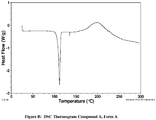
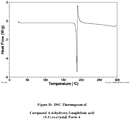
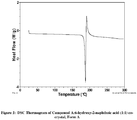
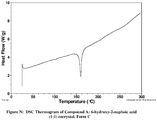
- crystalline materials may be analysed using conventional techniques such as, for example, X-ray powder diffraction (hereinafter XRPD) analysis and Differential Scanning Calorimetry (hereinafter DSC).
- XRPD X-ray powder diffraction
- DSC Differential Scanning Calorimetry
- Example 1 exhibits crystallinity and one crystalline form, Form A, has been identified.
- a further aspect of the invention is Form A of Compound A (Example 1).
- a crystalline form, Form A, of Compound A which has a XRPD pattern substantially the same as the XRPD shown in Figure A, measured using CuK ⁇ radiation.
- the degree of crystallinity is conveniently greater than about 60%, more conveniently greater than about 80%, preferably greater than about 90% and more preferably greater than about 95%. Most preferably the degree of crystallinity is greater than about 98%.
- Some of the compounds of Formula (I) may form co-crystals with specific co-former molecules. It is to be understood that the present invention encompasses any such co-crystals, which possess properties useful in BET inhibitory activity and, such as, BRD2, BRD3, BRD4, and BRDt inhibitory activity It is well known how to determine the efficacy of such co-crystals by the standard tests described hereinafter.
- the invention provides a co-crystal of a compound of Formula (I) and a co-former molecule.
- co-crystal refers to a multicomponent system in which there exists a host API (active pharmaceutical ingredient) molecule or molecules and a guest (or co-former) molecule or molecules in the same crystal lattice.
- API active pharmaceutical ingredient
- guest or co-former
- both the API molecule and the guest (or co-former) molecule exist as solids at room temperature when alone in their pure form (in order to distinguish the co-crystal from solvates or hydrates).
- the API and co-former molecules interact by hydrogen bonding and possibly other non-covalent interactions.
- a range of API:co-former molar ratios/stoichiometries may be achieved, for example an overall API:co-former molar ratio of 1:1, although this may vary slightly, depending, for example, on the characterisation measurements.
- the invention provides a co-crystal of Compound A and co-former molecule 6-hydroxy-2-naphthoic acid with a molar ratio of Compound A:6-hydroxy-2-naphthoic acid in the range 1:0.8 to 1:1.2.
- a Compound A:6-hydroxy-2-naphthoic acid (1:1) co-crystal in one aspect of the invention.
- the co-crystal of Compound A with 6-hydroxy-2-naphthoic acid is in a crystalline form, Form A.
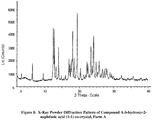
- a crystalline form, Form A, of Compound A:6-hydroxy-2-naphthoic acid (1:1) co-crystal which has a XRPD pattern substantially the same as the XRPD pattern shown in Figure I , measured using CuK ⁇ radiation.
- the co-crystal of Compound A with 6-hydroxy-2-naphthoic acid is in a crystalline form, Form B.
- a crystalline form, Form B of Compound A:6-hydroxy-2-naphthoic acid (1:1) co-crystal.
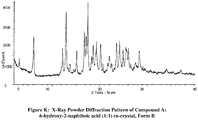
- a crystalline form, Form B, of Compound A: 6-hydroxy-2-naphthoic acid (1:1) co-crystal which has a XRPD pattern with at least one specific peak at about 2-theta 15.2° measured using CuK ⁇ radiation.
- a crystalline form, Form B, of Compound A: 6-hydroxy-2-naphthoic acid (1:1) co-crystal which has a XRPD pattern with at least one specific peak at about 2-theta 6.1°, measured using CuK ⁇ radiation.
- a crystalline form, Form B, of Compound A: 6-hydroxy-2-naphthoic acid (1:1) co-crystal which has a XRPD pattern with at least two specific peaks at about 2-theta 15.2 and 6.1° measured using CuK ⁇ radiation.
- a crystalline form, Form B, of Compound A: 6-hydroxy-2-naphthoic acid (1:1) co-crystal which has a XRPD pattern with specific peaks at about 2-theta 15.2, 6.1, 16.8, 12.2, 26.1, 28.4, 18.3,3.1 and 20.7°, measured using CuK ⁇ radiation.
- Form B of Compound A 6-hydroxy-2-naphthoic acid (1:1) co-crystal which has an XRPD pattern substantially the same as the X-ray powder diffraction pattern shown in Figure K, measured using CuK ⁇ radiation.
- a crystalline form, Form B, of Compound A: 6-hydroxy-2-naphthoic acid (1:1) co-crystal which has a XRPD pattern with at least one specific peak at 2-theta 15.2° plus or minus 0.2° 2-theta, measured using CuK ⁇ radiation.
- a crystalline form, Form B, of Compound A: 6-hydroxy-2-naphthoic acid (1:1) co-crystal which has a XRPD pattern with at least one specific peak at 2-theta 6.1° plus or minus 0.2° 2-theta, measured using CuK ⁇ radiation.
- a crystalline form, Form B, of Compound A: 6-hydroxy-2-naphthoic acid (1:1) co-crystal which has a XRPD pattern with at least two specific peaks at 2-theta 15.2° and 6.1° plus or minus 0.2° 2-theta, measured using CuK ⁇ radiation.
- a crystalline form, Form B, of Compound A: 6-hydroxy-2-naphthoic acid (1:1) co-crystal which has a XRPD pattern with specific peaks at 2-theta 15.2,6.1, 16.8, 12.2,26.1,28.4, 18.3,3.1 and 20.7° wherein said values may be plus or minus 0.2° 2-theta, measured using CuK ⁇ radiation.
- the co-crystal of Compound A with 6-hydroxy-2-naphthoic acid is in a crystalline form, Form C.
- a crystalline form, Form C, of Compound A: 6-hydroxy-2-naphthoic acid (1:1) co-crystal which has a XRPD pattern with at least one specific peak at about 2-theta 8.2° measured using CuK ⁇ radiation.
- a crystalline form, Form B, of Compound A: 6-hydroxy-2-naphthoic acid (1:1) co-crystal which has a XRPD pattern with at least one specific peak at about 2-theta 24.8°, measured using CuK ⁇ radiation.
- a crystalline form, Form C, of Compound A: 6-hydroxy-2-naphthoic acid (1:1) co-crystal which has a XRPD pattern with at least two specific peaks at about 2-theta 8.2 and 24.8° measured using CuK ⁇ radiation.
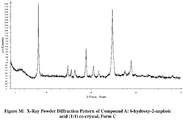
- a crystalline form, Form B, of Compound A: 6-hydroxy-2-naphthoic acid (1:1) co-crystal which has a XRPD pattern with specific peaks at about 2-theta 8.2, 24.8, 18.9, 29.0, 14.8, 15.5 and 16.3°, measured using CuK ⁇ radiation.
- Form C of Compound A 6-hydroxy-2-naphthoic acid (1:1) co-crystal which has an XRPD pattern substantially the same as the X-ray powder diffraction pattern shown in Figure M.
- a crystalline form, Form C, of Compound A: 6-hydroxy-2-naphthoic acid (1:1) co-crystal which has a XRPD pattern with at least one specific peak at 2-theta 8.2° plus or minus 0.2° 2-theta, measured using CuK ⁇ radiation.
- a crystalline form, Form C, of Compound A: 6-hydroxy-2-naphthoic acid (1:1) co-crystal which has a XRPD pattern with at least one specific peak at 2-theta 24.8° plus or minus 0.2° 2-theta, measured using CuK ⁇ radiation.
- a crystalline form, Form C, of Compound A: 6-hydroxy-2-naphthoic acid (1:1) co-crystal which has a XRPD pattern with at least two specific peaks at 2-theta 8.2 and 24.8° plus or minus 0.2° 2-theta, measured using CuK ⁇ radiation.
- a crystalline form, Form C, of Compound A: 6-hydroxy-2-naphthoic acid (1:1) co-crystal which has a XRPD pattern with specific peaks at 2-theta 8.2, 24.8, 18.9, 29.0, 14.8, 15.5 and 16.3° wherein said values may be plus or minus 0.2° 2-theta, measured using CuK ⁇ radiation.
- the degree of crystallinity is conveniently greater than about 60%, more conveniently greater than about 80%, preferably greater than about 90% and more preferably greater than about 95%. Most preferably the degree of crystallinity is greater than about 98%.
- Compound A, Form A, of the invention is not limited to the crystals that provide X-ray powder diffraction patterns identical to the X-ray powder diffraction pattern shown in Figure A, and any crystals providing X-ray powder diffraction patterns substantially the same as those shown in Figure A fall within the scope of the invention.
- the Compound A: 6-hydroxy-2-naphthoic acid (1:1) co-crystal Form A of the invention is not limited to the crystals that provide X-ray powder diffraction patterns identical to the X-ray powder diffraction pattern shown in Figures C or I, and any crystals providing X-ray powder diffraction patterns substantially the same as those shown in Figures C or I fall within the scope of the invention.
- Compound A: 6-hydroxy-2-naphthoic acid (1:1) co-crystal Forms B and C, of the invention are not limited to the crystals that provide X-ray powder diffraction patterns identical to the X-ray powder diffraction pattern shown in Figures K and M respectively, and any crystals providing X-ray powder diffraction patterns substantially the same as those shown in Figures K and M fall within the scope of the invention.
- a person skilled in the art of X-ray powder diffraction is able to judge the substantial identity of X-ray powder diffraction patterns.
- a measurement error of a diffraction angle in an X-ray powder diffractogram is approximately plus or minus 0.2° 2-theta, and such degree of a measurement error should be taken into account when considering the X-ray powder diffraction pattern in Figures A, C, I, K and M and when reading Tables A to E (see Example 1). Furthermore, it should be understood that intensities might fluctuate depending on experimental conditions and sample preparation (preferred orientation).
- the compounds of Formula (I) include one or more chiral centres.
- a structure or chemical name in this specification does not indicate chirality, the structure or name is intended to encompass any single stereoisomer (i.e. any single chiral isomer) corresponding to that structure or name, as well as any mixture of stereoisomers (e.g. a racemate).
- any single stereoisomer i.e. any single chiral isomer
- a racemate any mixture of stereoisomers
- a single stereoisomer can be obtained by isolating it from a mixtures of isomers (e.g. a racemate) using, for example, chiral chromatographic separation.
- a single stereoisomer is obtained through direct synthesis from, for example, a chiral starting material.
- a particular enantiomer or diastereoismer of a compound described herein may be more active than other enantiomers or diastereoisomers of the same compound.
- a compound of Formula (I), or a pharmaceutically acceptable salt thereof which is a single enantiomer being in enantiomer excess (%ee) of ⁇ 95%, ⁇ 98%, or ⁇ 99%.
- a single enantiomer is present in an enantiomer excess of ⁇ 99%.
- a compound of Formula (I), or a pharmaceutically acceptable salt thereof which is a single enantiomer being in enantiomer excess (%ee) in the range 95 to 100%.
- a pharmaceutical composition which comprises a compound of Formula (I) which is a single enantiomer being in enantiomer excess (%ee) of ⁇ 95%, ⁇ 98%, or ⁇ 99% or a pharmaceutically acceptable salt thereof, in association with a pharmaceutically-acceptable diluent or carrier.
- the single enantiomer is present in an enantiomer excess of ⁇ 99%.
- a pharmaceutical composition which comprises a compound of Formula (I) which is a single enantiomer being in enantiomer excess (%ee) in the range 95 to 100%, or a pharmaceutically acceptable salt thereof, in association with a pharmaceutically-acceptable diluent or carrier.
- the invention is intended to include all isotopes of atoms occurring in the present compounds.
- Isotopes will be understood to include those atoms having the same atomic number but different mass number.
- isotopes of hydrogen include tritium and deuterium and isotopes of carbon include 13 C and 14 C.
- pharmaceutically acceptable is used to specify that an object (for example a salt, dosage form, diluent or carrier) is suitable for use in patients.
- An example list of pharmaceutically acceptable salts can be found in the Handbook of Pharmaceutical Salts: Properties, Selection and Use, P. H. Stahl and C. G. Wermuth, editors, Weinheim/Zürich:Wiley-VCH/VHCA, 2002 .
- a suitable pharmaceutically acceptable salt of a compound of Formula (I) is, for example, an acid-addition salt.
- An acid addition salt of a compound of Formula (I) may be formed by bringing the compound into contact with a suitable inorganic or organic acid under conditions known to the skilled person.
- An acid addition salt may for example be formed using an inorganic acid selected from the group consisting of hydrochloric acid, hydrobromic acid, sulphuric acid and phosphoric acid.
- An acid addition salt may also be formed using an organic acid selected from the group consisting of trifluoroacetic acid, citric acid, maleic acid, oxalic acid, acetic acid, formic acid, benzoic acid, fumaric acid, succinic acid, tartaric acid, lactic acid, pyruvic acid, methanesulfonic acid, benzenesulfonic acid and para-toluenesulfonic acid.
- solvated forms may be a hydrated form. It is to be understood that the invention encompasses all such solvated and unsolvated forms.
- the compounds of Formula (I) maybe administered in the form of a prodrug, which is a compound which that is broken down in the human or animal body to release the compound of the invention.
- a prodrug which is a compound which that is broken down in the human or animal body to release the compound of the invention.
- Such, pharmaceutically acceptable, prodrugs of compounds for Formula (I) also form an aspect of the present disclosure.
- Various forms of prodrugs are known in the art. For example, see
- Another aspect of the invention provides a process for preparing a compound of Formula (I), or a pharmaceutically acceptable salt thereof.
- a suitable process is illustrated by the following representative process in which, unless otherwise stated, R 1 R 2 and n have the meanings defined hereinbefore.
- Necessary starting materials may be obtained by standard procedures of organic chemistry. The preparation of such starting materials is described in conjunction with the following representative process variants and within the accompanying Examples. Alternatively, necessary starting materials are obtainable by analogous procedures to those illustrated and are within the ordinary skill of an organic chemist.
- Compounds of Formula (I) are conveniently made by a coupling reaction, for example, reaction of a compound of Formula (II) with a compound of Formula (IIIa) or Formula (IIIb) in the presence of a trialkyl phosphine, such as trialkyl tributylphosphine, and a diazene reagent, such as (E)-diazene-1,2-diylbis(piperidin-1-ylmethanone, in a suitable solvent, such as dichloromethane, and a suitable temperature, such as 5°C.
- a coupling reaction for example, reaction of a compound of Formula (II) with a compound of Formula (IIIa) or Formula (IIIb) in the presence of a trialkyl phosphine, such as trialkyl tributylphosphine, and a diazene reagent, such as (E)-diazene-1,2-diylbis(piperidin-1-ylmethanone
- Compounds of Formula (II) may be made by, for example, reaction of a compound of Formula (IV) with 4-(piperidin-4-yl)phenol in the presence of a base, such as N,N- diisopropylethylamine, in a suitable solvent, such as ethanol, and a suitable temperature, such as 55°C.
- a base such as N,N- diisopropylethylamine
- a suitable solvent such as ethanol
- a suitable temperature such as 55°C.
- Compounds of Formula (IV) may be made by, for example, reaction of 3-chloro-6-hydrazinylpyridazine with a tetramethoxyalkane, such as tetramethoxymethane, at a suitable temperature such as 90°C.
- Compounds of Formula (IIIa) can be made by reacting 1,3-dimethylpiperazin-2-one hydrochloride with 2-bromoethanol with a base, such as potassium carbonate, in a solvent, such as 2-methyltetrahydrofuran, at a suitable temperature, such as 100°C.
- Compounds of Formula (IIIb) can be made by reacting 1-(3,5-dimethylpiperazin-1-yl)ethanone (compound V) with 2-bromopropan-1-ol with a base, such as potassium carbonate, in a solvent, such as 2-methyltetrahydrofuran, at a suitable temperature, such as 80°C.
- a base such as potassium carbonate
- a solvent such as 2-methyltetrahydrofuran
- 1-(3,5-dimethylpiperazin-1-yl)ethanone can be made by reacting N-acetyl-N-(2-(trifluoromethyl)phenyl)acetamide with 2,6-dimethylpiperazine in a solvent, such as ethanol, at a suitable temperature, such as ambient temperature.
- a solvent such as ethanol
- N -acetyl- N -(2-(trifluoromethyl)phenyl)acetamide can be made by reacting acetyl chloride with 2-(trifluoromethyl)aniline and pyridine in a suitable solvent such as toluene at a suitable temperature, such as 50°C.
- Compounds of Formula (I) may also be made by, for example, by reaction of a compound of Formula (VIa) or a compound of Formula (VIb) with a compound of Formula (IV), as described above, in the presence of a base, such as triethylamine, in a suitable solvent, such as dimethyl formamide, and at a suitable temperature, such as 56°C.
- a base such as triethylamine
- a suitable solvent such as dimethyl formamide
- Compounds of Formula (VIa) can be made by reacting compounds of -Formula (VIIa) with an acid, such as hydrogen chloride, in the presence of a suitable solvent, such as dioxane, and a suitable temperature such 20°C.
- an acid such as hydrogen chloride
- a suitable solvent such as dioxane
- Compounds of Formula (VIIa) can be made by reacting compounds of Formula (VIIIa) with 1,3-dimethylpiperazine-2-one in the presence of a base, such as N,N-diisopropylethylamine, in the presence of a catalyst, such as potassium iodide, and a solvent, such as dimethylacetamide, and a suitable temperature, such as 120°C.
- a base such as N,N-diisopropylethylamine
- a catalyst such as potassium iodide
- solvent such as dimethylacetamide
- Compounds of Formula (VIIa) can be made by reacting tert-butyl 4-(4-hydroxphenyl)piperidine-1-carboxylate with 1-bromo-3-chloroalkane and a base, such as potassium carbonate, and a solvent, such as dichloromethane, and at a suitable temperature, such as 80°C.
- Tert-butyl 4-(4-hydroxphenyl)piperidine-1-carboxylate can be made by reacting 4-(piperidin-4-yl)phenol (made as hereinbefore described) with di-tert-butyl dicarbonate in a suitable solvent, such as dichloromethane, and a suitable temperature, such as 0°C.
- Compounds of Formula (VIb) can be made by reacting compounds of Formula (VIIb) in the presence of a suitable solvent, such as methanol, and a suitable catalyst, such as 10% palladium on carbon, under an atmosphere of hydrogen.
- a suitable solvent such as methanol
- a suitable catalyst such as 10% palladium on carbon
- Compounds of Formula (VIIb) can be made by reacting compounds of Formula (VIIIb) with 1-(3,5-dimethylpiperazin-1-yl)ethanone, made as described above, in the presence of a suitable base, such as N,N-diisopropylethylamine, in the presence of a catalyst, such as potassium iodide, and a solvent, such as dimethylacetamide, and at a suitable temperature, such as 120°C.
- a suitable base such as N,N-diisopropylethylamine
- a catalyst such as potassium iodide
- solvent such as dimethylacetamide
- Compounds of Formula (VIIIb) can be made by reacting benzyl 4-(4-hydroxphenyl)piperidine-1-carboxylate with a 1-bromo-3-chloroalkane and a base, such as potassium carbonate, and a solvent, such as dichloromethane, and at a suitable temperature, such as 80°C.
- Benzyl 4-(4-hydroxphenyl)piperidine-1-carboxylate can be made by reacting 4-(piperidin-4-yl)phenol (made as hereinbefore described) with benzylchloroformate and DIPEA in a suitable solvent, such as dichloromethane, and a suitable temperature.
- one aspect of invention is a co-crystal of Compound A with 6-hydroxy-2-naphthoic acid.
- the co-crystal can be prepared by mixing Compound A in a suitable solvent with 6-hydroxy-2-naphthoic acid in a suitable solvent.
- a method of preparing a co-crystal of Compound A with 6-hydroxy-2-naphthoic acid comprising the step of mixing a solution of Compound A which is in suitable solvent with 6-hydroxy-2-naphthoic acid which is in a suitable solvent.
- Suitable solvents would include solvents that solubilise both components and do not form solvates with either Compound A or 6-hydroxy-2-naphthoic acid.
- a Compound A: 6-hydroxy-2-naphthoic acid co-crystal obtainable by the steps of
- the suitable solvent is methanol.
- Compound A:6-hydroxy-2-naphthoic acid (1:1) co-crystal was found to have a number of advantageous properties compared to the free base form of Compound A. In particular, it was found to be significantly less hydroscopic than Compound A free base. The co-crystal was also found to be more stable than Compound A free base when exposed to range of temperature and humidity conditions.
- the BROMOscan assay is based on the principle that test compounds that bind the bromodomain protein prevent its binding to an immobilized ligand thus reducing the amount of protein captured on a solid support. Conversely, test molecules that do not bind the bromodomain have no effect on the amount of protein captured on the solid support. Screening "hits" are identified by measuring the amount of bromodomain captured in test versus control samples by using a quantitative, precise and ultra-sensitive qPCR method that detects the associated DNA label. In a similar manner, dissociation constants (Kds) for test compound-bromodomain interactions are calculated by measuring the amount of bromodomain protein captured on the solid support as a function of the test compound concentration.
- Kds dissociation constants
- the ability of the compounds to bind to a bromodomain protein was tested in an AlphaScreen® assay.
- the assay is based on the interaction between Histidine-tagged bromodomain protein which can bind to Nickel-chelate donor beads, and a Biotinylated acetyl lysine peptide corresponding to a histone amino acid sequence, which can bind to streptavidin-conjugated acceptor beads.
- the protein-peptide interaction can be detected by light emission at 520-620 nm. In the presence of compounds which bind to BRD4 a lower signal is observed as the protein-peptide interaction is reduced.
- MM. 1S cells which were originally derived from a multiple myeloma patient. This assay is based on Resazurin, a non-fluorescent indicator dye converted to bright red-fluorescent resorufin via the reduction reactions of metabolically active cells. The amount of fluorescence produced is proportional to the number of living cells.
- MM. 1S cells are cultured in RPMI-1640 medium (Gibco®) plus 10% Fetal bovine serum (FBS) and 1mM L-glutamine. 12-24 hours before compound dosing, 90 ⁇ L of cell suspension (18,750 cells) was seeded into 96-well microtiter plates (black, flat bottom).
- % net growth was calculated by (Day 3 dosed well-Average Day 0)/(Average Day 3 DMSO control-Average Day 0).
- the GI 50 the concentration that causes 50% of growth inhibition, of each compound was calculated using the % net growth as defined by National Cancer Institute (NCI).
- Fluorescence geometric mean was calculated through FlowJo (TreeStar Inc), maximal inhibition signal was determined by control compound treatment at high dose across each plate, and minimal inhibition signal was determined by DMSO treatment.
- IC50 was calculated by fitting the dose-response data points which are normalized against max and min signals as percentage of inhibition using a standard 4-Parameter-Logistic nonlinear regression model.
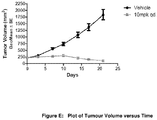
- Compound A was also investigated in a xenograft model as described below.
- mice Female CB17 SCID mice aged 6 to 8 weeks were obtained from Charles River Laboratories (Wilmington, MA) and maintained under specific-pathogen-free conditions in an AAALAC (Association for Assessment and Accreditation of Laboratory Animal Care) - accredited facility. Irradiated food and autoclaved water were provided ad libitum.
- AAALAC Association for Assessment and Accreditation of Laboratory Animal Care
- MV-4-11 cells (American Tissue Culture Consortium) were resuspended in 0.1 ml of medium without serum and Matrigel (Becton Dickinson) at a 1:1 ratio. Cells (10 7 /mouse) were injected subcutaneouly into the right flank of mice. Tumors were allowed to grow until they reached an average volume of 200mm 3 for efficacy and then the mice were randomized into groups of 8. Compound A was solubilized in 0.5% HPMC/0.1% Tween80 for dosing. For efficacy, either vehicle or Compound A was administered PO once a day (qd) for 21 days at 10 mg/kg (mpk). Body weight and tumour volume were measured twice a week for 21 days. The results are shown in Figure E and demonstrate the effect of Compound A on tumour volume.
- a pharmaceutical composition which comprises a compound of Formula (I), or a pharmaceutically acceptable salt thereof, as defined herein, in association with a pharmaceutically acceptable diluent or carrier.
- a pharmaceutical composition which comprises a Compound A:6-hydroxy-2-naphthoic acid co-crystal, as defined herein, in association with a pharmaceutically acceptable diluent or carrier.
- compositions of the invention may be in a form suitable for oral use (for example as tablets, lozenges, hard or soft capsules, aqueous or oily suspensions, emulsions, dispersible powders or granules, syrups or elixirs), for topical use (for example as creams, ointments, gels, or aqueous or oily solutions or suspensions), for administration by inhalation (for example as a finely divided powder or a liquid aerosol), for administration by insufflation (for example as a finely divided powder) or for parenteral administration (for example as a sterile aqueous or oily solution for intravenous, subcutaneous, intramuscular or intramuscular dosing or as a suppository for rectal dosing).
- the pharmaceutical composition of the invention is a composition suitable for oral use.
- compositions of the invention may be obtained by conventional procedures using conventional pharmaceutical excipients, well known in the art.
- compositions intended for oral use may contain, for example, one or more colouring, sweetening, flavouring and/or preservative agents.
- the compound of Formula (I) or the Compound A:6-hydroxy-2-naphthoic acid co-crystal will normally be administered to a warm-blooded animal at a unit dose within the range of 5 to 5000mg/m 2 body area of the animal i.e. approximately 0.1 to 100 mg/kg, and this normally provides a therapeutically effective dose.
- a unit dose form such as a tablet or a capsule, will usually contain 0.5mg to 250mg and, such as, 1 to 250 mg of active ingredient.
- the daily dose will necessarily be varied depending upon the animal or patient host treated, the particular route of administration, and the severity of the illness being treated. Accordingly, the practitioner who is treating any particular animal or patient may determine the optimum dosage.
- the compounds or co-crystals of the present invention are potentially of value as anti-proliferative agents and/or cell killing agents in the containment and/or treatment of haematological cancers (also referred to as liquid cancers) and solid tumour disease.
- haematological cancers also referred to as liquid cancers
- solid tumour disease particularly, the compounds or co-crystals of the invention are expected to be useful in the prevention or treatment of those tumours which are associated with amplification of one or more of the BET family of bromodomain containing proteins, suitably BRD4 amplification, or are dependent on key oncogenes which can be regulated by one or more of the BET family of bromodomain containing proteins, suitably BRD4, for example, ovarian, acute myeloid and mixed lineage leukemia (AML), multiple myeloma (MM), diffuse large B-cell lymphoma (DLBCL), castration-resistant prostate cancer (CRPC), non-small cell lung cancer (NSCLC), small cell lung cancer (
- the term “therapy” is intended to have its normal meaning of dealing with a disease in order to entirely or partially relieve one, some or all of its symptoms, or to correct or compensate for the underlying pathology.
- the term “therapy” also includes “prophylaxis” unless there are specific indications to the contrary.
- the terms “therapeutic” and “therapeutically” should be interpreted in a corresponding manner.
- prophylaxis is intended to have its normal meaning and includes primary prophylaxis to prevent the development of the disease and secondary prophylaxis whereby the disease has already developed and the patient is temporarily or permanently protected against exacerbation or worsening of the disease or the development of new symptoms associated with the disease.
- treatment is used synonymously with “therapy”.
- treat can be regarded as “applying therapy” where “therapy” is as defined herein.
- the term 'effective amount' refers to the amount of a compound of Formula (I) or co-crystal as described in any of the embodiments herein which is effective to potentially provide therapy in a subject.
- the effective amount may cause any of the changes observable or measurable in a subject as described in the definition of "therapy", “treatment” and “prophylaxis"
- the effective amount can potentially reduce the number of cancer or tumour cells; potentially reduce the overall tumour size; potentially inhibit or stop tumour cell infiltration into peripheral organs including, for example, the soft tissue and bone; potentially inhibit and stop tumour metastasis; potentially inhibit and stop tumour growth; potentially relieve to some extent one or more of the symptoms associated with the cancer; potentially reduce morbidity and mortality; potentially improve quality of life; or a combination of such effects.
- An effective amount may be an amount sufficient to decrease the symptoms of a disease responsive to inhibition of one or more bromodomain-containing proteins.
- efficacy in-vivo can, for example, be measured by assessing the duration of survival, time to disease progression (TTP), the response rates (RR), duration of response, and/or quality of life.
- a compound of Formula (I), or a pharmaceutically acceptable salt thereof, or a compound of Formula (I):co-former co-crystal suitably a Compound A:6-hydroxy-2-naphthoic acid co-crystal, as defined hereinbefore, for use in therapy.
- a method for producing an anti-proliferative or cell-killing effect in a warm-blooded animal, such as man, in need of such treatment which comprises administering to said animal an effective amount of a compound of Formula (I), or a pharmaceutically acceptable salt thereof, or a Compound A:6-hydroxy-2-naphthoic acid co-crystal, as defined hereinbefore.
- a method for the prevention or treatment of cancer in a warm-blooded animal, such as man, in need of such treatment which comprises administering to said animal an effective amount of a compound of Formula (I), or a pharmaceutically acceptable salt thereof, or a Compound A:6-hydroxy-2-naphthoic acid co-crystal, as defined hereinbefore.
- haematological cancers also referred to a liquid cancers
- solid cancers in a warm blooded animal such as man.
- a method for the prevention or treatment of haematological and solid cancers in a warm-blooded animal, such as man, in need of such treatment which comprises administering to said animal an effective amount of a compound of Formula (I), or a pharmaceutically acceptable salt thereof, or a Compound A:6-hydroxy-2-naphthoic acid co-crystal, as defined hereinbefore.
- One aspect of the invention provides compounds of Formula (I) that potentially inhibit one or more bromodomain-containing proteins, i.e. the BET family of bromodomain-containing proteins, and such as BRD2, BRD3, BRD4, and BRDt and, suitably BRD4.
- a proliferative disorder such as cancer in a patient where the proliferative disorder is a bromodomain-containing protein mediated disorder.
- 'bromodomain-containing protein mediated disorder is meant any disease or other deleterious condition in which one or more of the bromodomain-containing proteins are known to play a role.
- BET dependent cancer we mean any cancer in which one or more of the BET family of bromodomain-containing proteins such as BRD2, BRD3, BRD4, and BRDt play a role.
- a method for the prevention or treatment of BET dependent cancer in a warm-blooded animal, such as man, in need of such treatment which comprises administering to said animal an effective amount of a compound of Formula (I), or a pharmaceutically acceptable salt thereof, or a Compound A:6-hydroxy-2-naphthoic acid co-crystal, as defined hereinbefore.
- a method for the prevention or treatment of BRD4 dependent cancer in a warm-blooded animal, such as man, in need of such treatment which comprises administering to said animal an effective amount of a compound of Formula (I), or a pharmaceutically acceptable salt thereof, or a Compound A:6-hydroxy-2-naphthoic acid co-crystal, as defined hereinbefore.
- a method for providing an inhibitory effect on one or more of the BET family of bromodomain-containing proteins which comprises administering to said animal an effective amount of a compound of Formula (I), or a pharmaceutically acceptable salt thereof, or a Compound A:6-hydroxy-2-naphthoic acid co-crystal, as defined hereinbefore.
- a method for providing an inhibitory effect on BRD4 which comprises administering to said animal an effective amount of a compound of Formula (I), or a pharmaceutically acceptable salt thereof, or a Compound A:6-hydroxy-2-naphthoic acid co-crystal, as defined hereinbefore.
- the Compound A:6-hydroxy-2-naphthoic acid co-crystal can be in Form A, B or C, as herein defined and suitably is in Form A.
- the anti-cancer treatment described herein may be applied as a sole therapy or may involve, in addition to the compounds of the invention, conventional surgery or radiotherapy or chemotherapy or immunotherapy. Such chemotherapy could be administered concurrently, simultaneously, sequentially or separately to treatment with the compound of the invention.
- the amount of the compound of Formula (I) or pharmaceutically acceptable salt thereof or Compound A:6-hydroxy-2-naphthoic acid co-crystal described in this specification and the amount of the other pharmaceutically active agent(s) are, when combined, jointly effective to treat a targeted disorder in the animal patient.
- the combined amounts are in a "therapeutically effective amount” if they are, when combined, sufficient to decrease the symptoms of a disease responsive to inhibition of one or more bromodomain-containing proteins.
- such amounts may be determined by one skilled in the art by, for example, starting with the dosage range described in this specification for the compound of Formula (I) or pharmaceutically acceptable salt thereof or a Compound A:6-hydroxy-2-naphthoic acid co-crystal as herrin defined and an approved or otherwise published dosage range(s) of the other pharmaceutically active compound(s).
- a pharmaceutical product comprising the compound of Formula (I), and an additional anti-tumour substance, for the conjoint treatment of cancer.
- a pharmaceutical product comprising the compound of Formula (I), or a pharmaceutically acceptable salt thereof, as defined hereinbefore, and an additional anti-tumour agent, for the conjoint treatment of cancer.
- the pharmaceutical product comprises a compound of Formula (I) and co-former in form of a co-crystal.
- a pharmaceutical product comprising a Compound A:6 hydroxy-2-naphthoic acid co-crystal, as defined hereinbefore, and an additional anti-tumour substance, for the conjoint treatment of cancer.
- Such conjoint treatment may involve one or more of the following anti-tumour agent:
- a combination suitable for use in the treatment of cancer comprising a compound of Formula (I) or a pharmaceutically acceptable salt thereof and an additional anti-tumour agent, in particular any one of the anti-tumour agents listed in (i)-(xiii) above.
- a combination suitable for use in the treatment of cancer comprising a Compound A:6-hydroxy-2-naphthoic acid co-crystal and an additional anti-tumour agent, in particular any one of the anti-tumour agents listed in (i)-(xiii) above.
- a compound A 6-hydroxy-2-naphthoic co-crystal in combination with an additional anti-tumour agent, in particular an anti-tumour agent selected from one listed in (i)-(xiii) above.
- kits comprising a compound of Formula (I), or a pharmaceutically acceptable salt thereof, or a Compound A:6-hydroxy-2-naphthoic co-crystal in combination with an anti-tumor agent.
- the kit additionally comprises instructions for the use of said compound(s) or co-crystal.
- kit comprising:
- Tributylphosphine (102 mL, 414.92 mmol) was added portionwise to a suspension of 4-(1-(3-methoxy-[1,2,4]triazolo[4,3-b]pyridazin-6-yl)piperidin-4-yl)phenol (67.5 g, 207.46 mmol) in well degassed, anhydrous DCM (1.7 L) at 5 °C under nitrogen. The mixture was cooled to 0 °C and (E)-diazene-1,2-diylbis(piperidin-1-yl methanone) (105 g, 414.92 mmol) was added portionwise.
- the resulting mixture was stirred at -78 °C for 30 minutes, then allowed to warm to ambient temperature and stirred for 16 hours.
- the reaction mixture was quenched with 2M aqueous sodium hydroxide (450 mL).
- the layers were separated and the organic layer was washed with 2M aqueous sodium hydroxide (360 mL).
- the solvent was evaporated, then the residue was re-dissolved in Et 2 O (1500 mL) and the solution washed with water (500 mL).
- the reaction mixture was diluted with DCM (2 L) and washed with water (2 L). The aqueous layer was re-extracted with DCM (1 L), then the combined organics were washed with saturated brine (500 mL), dried over MgSO 4 , filtered and evaporated to afford crude product.
- the crude product was purified by flash silica chromatography, elution gradient 10 to 30 % EtOAc in isohexane. Fractions containing the desired product were evaporated to dryness then triturated with isohexane, filtered and dried to afford benzyl 4-(4-hydroxyphenyl)-5,6-dihydropyridine-1(2H)-carboxylate (62.3 g, 66.4 %) as a white solid.
- 3-Chloro-6-hydrazinylpyridazine (18 g, 124.51 mmol) was suspended in DME (330 mL) and treated with tetramethoxymethane (26.5 mL, 199.22 mmol) and the resulting mixture was stirred at 90 °C for 3 hours.
- the DME was evaporated off and the residue was dissolved in 5 % MeOH/DCM; and then filtered through a silica plug. The filtrate was evaporated to dryness and then taken up in MTBE (200 mL) and slurried for 1 hour.
- DSC Differential Scanning calorimetry
- Example 1.1 Preparation of (R)-4-(2-(4-(1-(3-methoxy-[1,2,4]triazolo[4,3-b]pyridazin-6-yl)piperidin-4-yl)phenoxy)ethyl)-1,3-dimethylpiperazin-2-one:6-hydroxy-2-naphthoic acid (1:1) co-crystal, Form A.
- DSC Differential Scanning calorimetry
- Co-crystals can be defined in terms of the ⁇ pKa, i.e. (pKa(base) - pKa(acid)). If ⁇ pKa is ⁇ 1, the API:coformer molecule complex is classified as a co-crystal. (Regulatory Classification of Pharmaceutical Co-Crystals, US FDA Guidance, April 2013).
- the pKa for the basic centre on the piperazinone in Compound A was determined to be 4.8 and the pKa for the co-former molecule 6-hydroxy-2-naphthoic acid 4.3, which gives a ⁇ pKa is ⁇ 1 and, therefore is consistent with the formation of a co-crystal.
- Such a peak would be expected to be present if the co-former carboxylic acid is not protonated and would be indicative that a proton had transferred between the co-former and free base and a salt formed. The absence of this peak is consistent with formation of a co-crystal.
- Example 1.1 15 N cross polarisation magic angle spinning solid state NMR analysis was carried out on the final product of Example 1.1. Spectra were recorded at contact times of 2 ms and 200 ⁇ s and are shown in Figure G. The spectrum recorded with the longer contact time was consistent with at least 8 different nitrogen environments in the co-crystal whereas at the shorter contact time no peaks are observed. This was consistent with none of the nitrogen atoms exhibiting a strong dipolar coupling to a proton as would be the case if a proton had fully transferred between the conformer and the base as would be observed for a salt.
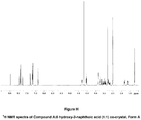
- Stoichiometry was determined by integration of resonance due to (R)-4-(2-(4-(1-(3-methoxy-[1,2,4]triazolo[4,3-b]pyridazin-6-yl)piperidin-4-yl)phenoxy)ethyl)-1,3-dimethylpiperazin-2-one, for instance using the resonance at 6.85ppm (2H) and comparison to a resonance due to 6-hydroxy-2-naphthoic acid, for instance using the resonance at 8.46 (1H), and determining the ratio between the peaks, allowing for the number of protons giving rise to the resonance signal. Stoichiometry (molar ratio) was determined to be 1:1.
- the reaction mixture was then filtered by washing with DCM to remove the ADDP by-product.
- the filtrate was stirred with aqueous hydrochloric acid and the lower organic layer discarded.
- the aqueous layer was further washed with DCM and the lower organic layer discarded.
- the aqueous solution was then basified with Na 2 CO 3 to pH 9-10 and extracted with DCM.
- the DCM layer was further washed with water and evaporated and azeotroped with methanol to remove residual water to afford crude material.
- the crude material was dissolved in methanol (7.5L, 190mol) and heated to 60°C in vessel 1.
- 6-hydroxynaphthalene-2-carboxylic acid (0.360kg, 1.87ml) was dissolved in methanol (3.8L, 94mol) in vessel 2. 10% of the solution from vessel 2 was then added to vessel 1 dropwise over 10 minutes. The temperature of vessel 1 was maintained at approximately 60°C.
- 3-Chloro-6-hydrazinylpyridazine (0.753kg) was mixed with tetramethoxymethane (8.231 mol, 1.22 kg) in methanol (5.7L) and stirred. The resulting mixture was then heated and stirred at 55°C for 2 hours. After cooling to 45°C, 4-(piperidin-4-yl)phenol hydrobromide (prepared as described above) (1.000kg, 3.874 mol) was added. DIPEA (2.03L, 11.6mol) was then added dropwise over a period of about 10 minutes and the reaction was further stirred. Methanol (5.1L, 126 mol) was added and the reaction mixture was stirred for at least 48 hours at approximately 45°C.
- DSC Differential Scanning calorimetry
- Example 1.3 Preparation of (R)-4-(2-(4-(1-(3-methoxy-[1,2,4]triazolo[4,3-b]pyridazin-6-yl)piperidin-4-yl)phenoxylethyl)-1,3-dimethylpiperazin-2-one:6-hydroxy-2-naphthoic acid (1:1) co-crystal, Form C .
- the sample was then cooled to 25°C at 10 C/min, and upon opening the sample stage at the end of the experiment material was observed to have sublimed and collected on the beam knife of the diffractometer as a white powder.
- This white powder was collected and analysed and shown to be a different crystal form, Form C. This form was determined to be crystalline by XRPD.
- DSC Differential Scanning calorimetry
- the desired product was eluted from the column using 1M NH 3 /MeOH and evaporated to dryness to afford a brown gum. This was further purified by flash silica chromatography, elution gradient 0 to 10 % 7M NH 3 /MeOH in EtOAc. Pure fractions were evaporated to dryness to afford 1-((3S,SR)-4-(2-(4-(1-(3-methoxy-[1,2,4]triazolo[4,3-b]pyridazin-6-yl)piperidin-4-yl)phenoxy)ethyl)-3,5-dimethylpiperazin-1-yl)ethanone (0.991 g, 46.7 %) as a cream foam.
- Benzyl chloroformate (5.97 mL, 41.84 mmol) was added to 4-(piperidin-4-yl)phenol hydrobromide (obtained as described in Example 1, preparation of starting materials) (9 g, 34.86 mmol) and DIPEA (14.57 mL, 83.67 mmol) in DCM (150 mL). The resulting suspension was stirred for 2 hours. The reaction mixture was washed sequentially with water (2 x 100 mL) and 1M aqueous citric acid (100 mL). The organic layer was dried over MgSO 4 , filtered and evaporated to afford crude product.
- Acetyl chloride (132 mL, 1861.91 mmol) was added dropwise over 30 minutes to 2-(trifluoromethyl)aniline (100 g, 620.64 mmol) and pyridine (200 mL, 2482.55 mmol) in toluene (500 mL) cooled to 0 °C.
- the reaction was heated to 50°C and stirred for 20 hours.
- the mixture was then cooled to ambient temperature and washed twice with 1M aqueous citric acid (250 mL).
- the crude product mixture was then evaporated to half volume and treated with heptane (500 mL).
- N -acetyl- N -(2-(trifluoromethyl)phenyl)acetamide (13.28 g, 52.54 mmol) was added to 2R,6S-2,6-dimethylpiperazine (5 g, 43.79 mmol) in EtOH (75 mL) and the mixture was stirred at ambient temperature for 24 hours. This was then evaporated to dryness, redissolved in DCM (25 mL) and washed with 2M aqueous HCl (25 mL). The aqueous solution was then basified to pH 14 with concentrated aqueous NaOH and extracted with DCM (2 x 25 mL). The combined organics were evaporated to dryness to give a yellow liquid.
- Triethylamine (0.396 mL, 2.84 mmol) was added to 6-chloro-3-methoxy-[1,2,4]triazolo[4,3-b]pyridazine (obtained as described in Example 1, preparation of starting materials) (350 mg, 1.90 mmol) and (R)-1,3-dimethyl-4-(3-(4-(piperidin-4-yl)phenoxy)propyl)piperazin-2-one (655 mg, 1.90 mmol) in DMF (10 mL) and the mixture was heated to 56 °C for 5 hours. The crude product solution was purified by ion exchange chromatography, using an SCX column.
- Triethylamine (23.76 mL, 170.44 mmol) was added slowly to 4-(piperidin-4-yl)phenol hydrobromide (obtained as described in Example 1, preparation of starting materials) (40 g, 154.95 mmol) in DCM (190 mL) at 0 °C.
- the resulting mixture was stirred for 20 minutes and then di- tert -butyl dicarbonate (35.5 g, 162.69 mmol) was added.
- the ice bath was removed and the reaction was stirred at ambient temperature for 2 hours.
- the reaction mixture was washed sequentially with water (2 x 200 mL) and saturated brine (200 mL).
- Tributylphosphine (1.441 mL, 5.84 mmol) was added dropwise to 4-(1-(3-methoxy-[1,2,4]triazolo[4,3-b]pyridazin-6-yl)piperidin-4-yl)phenol (obtained as described in Example 1, preparation of starting materials) (0.95 g, 2.92 mmol), 1-((3R,5S)-4-(3-hydroxypropyl)-3,5-dimethylpiperazin-1-yl)ethanone (0.751 g, 3.50 mmol) and (E)-diazene-1,2-diylbis(piperidin-1-ylmethanone) (1.473 g, 5.84 mmol) in degassed DCM (20 mL) under nitrogen.
- the resulting mixture was stirred for 90 minutes and then filtered.
- the crude product solution was purified by ion exchange chromatography, using an SCX column.
- the desired product was eluted from the column using 1M NH 3 /MeOH and evaporated to dryness to give a pale brown gum. This was further purified by flash silica chromatography, elution gradient 0 to 10 % 7M NH 3 /MeOH in EtOAc.
- 3-Bromopropan-1-ol (6.41 mL, 70.84 mmol) was added to 1-((3R,5S)-3,5-dimethylpiperazin-1-yl)ethanone (obtained as described in Example 2, preparation of starting materials) (6.51 g, 41.67 mmol) and potassium carbonate (14.40 g, 104.18 mmol) in 2-methyl tetrahydrofuran (40 mL). The resulting mixture was stirred at 80 °C for 18 hours, then filtered and evaporated to dryness. The crude product was purified by flash silica chromatography, elution gradient 0 to 6 % 7M NH 3 /MeOH in DCM.
Landscapes
- Chemical & Material Sciences (AREA)
- Organic Chemistry (AREA)
- Life Sciences & Earth Sciences (AREA)
- Mining & Mineral Resources (AREA)
- Geology (AREA)
- Engineering & Computer Science (AREA)
- Health & Medical Sciences (AREA)
- Physics & Mathematics (AREA)
- Geochemistry & Mineralogy (AREA)
- General Life Sciences & Earth Sciences (AREA)
- Fluid Mechanics (AREA)
- Environmental & Geological Engineering (AREA)
- Medicinal Chemistry (AREA)
- Public Health (AREA)
- Veterinary Medicine (AREA)
- General Health & Medical Sciences (AREA)
- Animal Behavior & Ethology (AREA)
- Pharmacology & Pharmacy (AREA)
- General Chemical & Material Sciences (AREA)
- Nuclear Medicine, Radiotherapy & Molecular Imaging (AREA)
- Chemical Kinetics & Catalysis (AREA)
- Epidemiology (AREA)
- Oncology (AREA)
- Hematology (AREA)
- Pharmaceuticals Containing Other Organic And Inorganic Compounds (AREA)
- Nitrogen Condensed Heterocyclic Rings (AREA)
Priority Applications (5)
| Application Number | Priority Date | Filing Date | Title |
|---|---|---|---|
| SI201530257T SI3174881T1 (en) | 2014-07-28 | 2015-07-24 | (1,2,4) triazolo (4,3-B) pyridazines for use in the treatment of proliferative diseases |
| PL15744308T PL3174881T3 (pl) | 2014-07-28 | 2015-07-24 | [1,2,4] triazolo[4,3-b]pirydazyny do zastosowania w leczeniu chorób proliferacyjnych |
| HRP20180788TT HRP20180788T1 (hr) | 2014-07-28 | 2015-07-24 | [1,2,4]triazolo[4,3-b]piridazini za uporabu za liječenje proliferativnih bolesti |
| RS20180582A RS57242B1 (sr) | 2014-07-28 | 2015-07-24 | [1,2,4]triazolo[4,3-b]piridazini za upotrebu u tretmanu proliferativnih bolesti |
| SM20180260T SMT201800260T1 (it) | 2014-07-28 | 2015-07-24 | [1,2,4]triazolo[4,3-b]piridazine per uso nel trattamento di malattie proliferative |
Applications Claiming Priority (2)
| Application Number | Priority Date | Filing Date | Title |
|---|---|---|---|
| US201462029676P | 2014-07-28 | 2014-07-28 | |
| PCT/GB2015/052143 WO2016016618A1 (en) | 2014-07-28 | 2015-07-24 | [1,2,4]triazolo[4,3-b]pyridazines for use in the treatment of proliferative diseases |
Publications (2)
| Publication Number | Publication Date |
|---|---|
| EP3174881A1 EP3174881A1 (en) | 2017-06-07 |
| EP3174881B1 true EP3174881B1 (en) | 2018-03-28 |
Family
ID=53761420
Family Applications (1)
| Application Number | Title | Priority Date | Filing Date |
|---|---|---|---|
| EP15744308.6A Active EP3174881B1 (en) | 2014-07-28 | 2015-07-24 | [1,2,4]triazolo[4,3-b]pyridazines for use in the treatment of proliferative diseases |
Country Status (37)
Families Citing this family (6)
| Publication number | Priority date | Publication date | Assignee | Title |
|---|---|---|---|---|
| NO2719005T3 (OSRAM) * | 2014-07-28 | 2018-01-20 | ||
| CN110317216A (zh) * | 2018-03-28 | 2019-10-11 | 首都医科大学 | 一种三唑并哒嗪类衍生物在医药领域的应用 |
| TWI816880B (zh) * | 2018-09-13 | 2023-10-01 | 大陸商恒翼生物醫藥(上海)股份有限公司 | 治療前列腺癌之組合療法 |
| US20230029336A1 (en) | 2019-10-14 | 2023-01-26 | Astrazeneca Ab | Combination Therapy for Treating a Hematological Malignancy |
| EP4087572A1 (en) | 2020-01-09 | 2022-11-16 | AstraZeneca AB | Combination therapy for treating cancer |
| CN113143930B (zh) * | 2021-04-08 | 2023-05-30 | 深圳湾实验室 | 化合物在制备SARS-Cov-2 E蛋白抑制剂中的用途 |
Family Cites Families (9)
| Publication number | Priority date | Publication date | Assignee | Title |
|---|---|---|---|---|
| GB0525065D0 (en) * | 2005-12-08 | 2006-01-18 | Novartis Ag | Organic compounds |
| WO2007065664A2 (en) | 2005-12-08 | 2007-06-14 | Novartis Ag | Pyrazolo[1,5-a]pyridine-3-carboxylic acids as ephb and vegfr2 kinase inhibitors |
| PE20091157A1 (es) * | 2007-12-21 | 2009-09-03 | Astrazeneca Ab | Derivados biciclicos para usar en el tratamiento de afecciones asociadas con el receptor de androgeno - 155 |
| CN102388048B (zh) * | 2009-02-10 | 2014-07-30 | 阿斯利康(瑞典)有限公司 | 三唑并[4,3-b]哒嗪衍生物及其用于前列腺癌的用途 |
| EA201101604A1 (ru) * | 2009-05-11 | 2012-05-30 | Астразенека Аб | [1,2,4]триазоло[4,3-b]пиридазины в качестве лигандов андрогенового рецептора |
| DK2722334T3 (en) | 2009-11-05 | 2016-03-07 | Glaxosmithkline Llc | benzodiazepine bromdomæneinhibitor |
| WO2012174487A2 (en) * | 2011-06-17 | 2012-12-20 | Constellation Pharmaceuticals, Inc. | Bromodomain inhibitors and uses thereof |
| US9422290B2 (en) | 2012-11-13 | 2016-08-23 | Boehringer Ingelheim International Gmbh | Triazolopyridazine |
| NO2719005T3 (OSRAM) * | 2014-07-28 | 2018-01-20 |
-
2012
- 2012-05-17 NO NO12797323A patent/NO2719005T3/no unknown
-
2015
- 2015-07-24 PL PL15744308T patent/PL3174881T3/pl unknown
- 2015-07-24 HU HUE15744308A patent/HUE037571T2/hu unknown
- 2015-07-24 WO PCT/GB2015/052143 patent/WO2016016618A1/en not_active Ceased
- 2015-07-24 EA EA201790179A patent/EA032654B9/ru unknown
- 2015-07-24 NO NO15744308A patent/NO3174881T3/no unknown
- 2015-07-24 JP JP2017504710A patent/JP6592503B2/ja not_active Expired - Fee Related
- 2015-07-24 US US15/329,274 patent/US9944650B2/en active Active
- 2015-07-24 RS RS20180582A patent/RS57242B1/sr unknown
- 2015-07-24 SM SM20180260T patent/SMT201800260T1/it unknown
- 2015-07-24 SI SI201530257T patent/SI3174881T1/en unknown
- 2015-07-24 DK DK15744308.6T patent/DK3174881T3/en active
- 2015-07-24 CA CA2956421A patent/CA2956421C/en active Active
- 2015-07-24 ES ES15744308.6T patent/ES2670444T3/es active Active
- 2015-07-24 MX MX2017001218A patent/MX374539B/es active IP Right Grant
- 2015-07-24 EP EP15744308.6A patent/EP3174881B1/en active Active
- 2015-07-24 PE PE2017000095A patent/PE20170527A1/es unknown
- 2015-07-24 TN TN2017000018A patent/TN2017000018A1/en unknown
- 2015-07-24 CA CA3185741A patent/CA3185741A1/en active Pending
- 2015-07-24 MY MYPI2017700325A patent/MY187251A/en unknown
- 2015-07-24 CN CN201580039278.2A patent/CN106536524B/zh not_active Expired - Fee Related
- 2015-07-24 PT PT157443086T patent/PT3174881T/pt unknown
- 2015-07-24 AU AU2015295120A patent/AU2015295120B2/en not_active Ceased
- 2015-07-24 KR KR1020177005146A patent/KR20170033427A/ko not_active Ceased
- 2015-07-24 HR HRP20180788TT patent/HRP20180788T1/hr unknown
- 2015-07-24 AP AP2017009700A patent/AP2017009700A0/en unknown
- 2015-07-24 BR BR112017001160A patent/BR112017001160A2/pt active Search and Examination
- 2015-07-24 SG SG11201700419SA patent/SG11201700419SA/en unknown
- 2015-07-24 LT LTEP15744308.6T patent/LT3174881T/lt unknown
-
2017
- 2017-01-15 IL IL250104A patent/IL250104B/en active IP Right Grant
- 2017-01-18 DO DO2017000018A patent/DOP2017000018A/es unknown
- 2017-01-26 CL CL2017000223A patent/CL2017000223A1/es unknown
- 2017-01-26 PH PH12017500159A patent/PH12017500159B1/en unknown
- 2017-01-27 NI NI201700006A patent/NI201700006A/es unknown
- 2017-01-27 SV SV2017005368A patent/SV2017005368A/es unknown
- 2017-01-27 GT GT201700016A patent/GT201700016A/es unknown
- 2017-02-17 ZA ZA2017/01207A patent/ZA201701207B/en unknown
- 2017-02-27 CO CONC2017/0001918A patent/CO2017001918A2/es unknown
-
2018
- 2018-04-11 US US15/950,443 patent/US10407432B2/en not_active Expired - Fee Related
- 2018-05-18 CY CY181100512T patent/CY1120602T1/el unknown
-
2019
- 2019-08-01 US US16/528,738 patent/US10766905B2/en not_active Expired - Fee Related
-
2020
- 2020-07-16 US US16/930,911 patent/US11407755B2/en active Active
-
2022
- 2022-06-29 US US17/853,737 patent/US20230035133A1/en not_active Abandoned
Also Published As
Similar Documents
| Publication | Publication Date | Title |
|---|---|---|
| US20230035133A1 (en) | [1,2,4]Triazolo[4,3-B]Pyridazines For Use in the Treatment of Proliferative Diseases | |
| US10519152B2 (en) | Compounds and their use in treating cancer | |
| EP3596073B1 (en) | Tricyclic compounds for use in treatment of proliferative disorders. | |
| AU2010212590B2 (en) | Triazolo [4,3-b] pyridazine derivatives and their uses for prostate cancer | |
| EP3383872B1 (en) | 1,3,4-thiadiazole compounds and their use in treating cancer | |
| WO2017194632A1 (en) | Imidazo[4,5-c]quinolin-2-one compounds and their use in treating cancer | |
| EA026655B1 (ru) | 6-ЗАМЕЩЕННЫЕ 3-(ХИНОЛИН-6-ИЛТИО)[1,2,4]ТРИАЗОЛО[4,3-a]ПИРИДИНЫ В КАЧЕСТВЕ ИНГИБИТОРОВ c-MET ТИРОЗИНКИНАЗЫ | |
| JP7561777B2 (ja) | 新規egfr阻害剤 | |
| US20100292222A1 (en) | Chemical compounds 751 | |
| HK1235059A1 (en) | [1,2,4]triazolo[4,3-b]pyridazines for use in the treatment of proliferative diseases | |
| HK1235059B (en) | [1,2,4]triazolo[4,3-b]pyridazines for use in the treatment of proliferative diseases | |
| HK1260707A1 (en) | 1,3,4-thiadiazole compounds and their use in treating cancer | |
| HK1260707B (en) | 1,3,4-thiadiazole compounds and their use in treating cancer |
Legal Events
| Date | Code | Title | Description |
|---|---|---|---|
| STAA | Information on the status of an ep patent application or granted ep patent |
Free format text: STATUS: THE INTERNATIONAL PUBLICATION HAS BEEN MADE |
|
| 17P | Request for examination filed |
Effective date: 20170228 |
|
| AK | Designated contracting states |
Kind code of ref document: A1 Designated state(s): AL AT BE BG CH CY CZ DE DK EE ES FI FR GB GR HR HU IE IS IT LI LT LU LV MC MK MT NL NO PL PT RO RS SE SI SK SM TR |
|
| AX | Request for extension of the european patent |
Extension state: BA ME |
|
| PUAI | Public reference made under article 153(3) epc to a published international application that has entered the european phase |
Free format text: ORIGINAL CODE: 0009012 |
|
| STAA | Information on the status of an ep patent application or granted ep patent |
Free format text: STATUS: REQUEST FOR EXAMINATION WAS MADE |
|
| DAV | Request for validation of the european patent (deleted) | ||
| GRAP | Despatch of communication of intention to grant a patent |
Free format text: ORIGINAL CODE: EPIDOSNIGR1 |
|
| STAA | Information on the status of an ep patent application or granted ep patent |
Free format text: STATUS: GRANT OF PATENT IS INTENDED |
|
| INTG | Intention to grant announced |
Effective date: 20171206 |
|
| GRAS | Grant fee paid |
Free format text: ORIGINAL CODE: EPIDOSNIGR3 |
|
| GRAA | (expected) grant |
Free format text: ORIGINAL CODE: 0009210 |
|
| STAA | Information on the status of an ep patent application or granted ep patent |
Free format text: STATUS: THE PATENT HAS BEEN GRANTED |
|
| REG | Reference to a national code |
Ref country code: HK Ref legal event code: DE Ref document number: 1235059 Country of ref document: HK |
|
| AK | Designated contracting states |
Kind code of ref document: B1 Designated state(s): AL AT BE BG CH CY CZ DE DK EE ES FI FR GB GR HR HU IE IS IT LI LT LU LV MC MK MT NL NO PL PT RO RS SE SI SK SM TR |
|
| AX | Request for extension of the european patent |
Extension state: BA ME |
|
| REG | Reference to a national code |
Ref country code: GB Ref legal event code: FG4D |
|
| REG | Reference to a national code |
Ref country code: CH Ref legal event code: EP |
|
| REG | Reference to a national code |
Ref country code: AT Ref legal event code: REF Ref document number: 983314 Country of ref document: AT Kind code of ref document: T Effective date: 20180415 |
|
| REG | Reference to a national code |
Ref country code: IE Ref legal event code: FG4D |
|
| REG | Reference to a national code |
Ref country code: DE Ref legal event code: R096 Ref document number: 602015009380 Country of ref document: DE |
|
| REG | Reference to a national code |
Ref country code: RO Ref legal event code: EPE |
|
| REG | Reference to a national code |
Ref country code: HR Ref legal event code: TUEP Ref document number: P20180788 Country of ref document: HR |
|
| REG | Reference to a national code |
Ref country code: PT Ref legal event code: SC4A Ref document number: 3174881 Country of ref document: PT Date of ref document: 20180525 Kind code of ref document: T Free format text: AVAILABILITY OF NATIONAL TRANSLATION Effective date: 20180518 |
|
| REG | Reference to a national code |
Ref country code: NL Ref legal event code: FP Ref country code: ES Ref legal event code: FG2A Ref document number: 2670444 Country of ref document: ES Kind code of ref document: T3 Effective date: 20180530 |
|
| REG | Reference to a national code |
Ref country code: DK Ref legal event code: T3 Effective date: 20180528 |
|
| REG | Reference to a national code |
Ref country code: SE Ref legal event code: TRGR Ref country code: FR Ref legal event code: PLFP Year of fee payment: 4 |
|
| REG | Reference to a national code |
Ref country code: HR Ref legal event code: T1PR Ref document number: P20180788 Country of ref document: HR |
|
| REG | Reference to a national code |
Ref country code: EE Ref legal event code: FG4A Ref document number: E015486 Country of ref document: EE Effective date: 20180517 |
|
| REG | Reference to a national code |
Ref country code: NO Ref legal event code: T2 Effective date: 20180328 |
|
| REG | Reference to a national code |
Ref country code: HU Ref legal event code: AG4A Ref document number: E037571 Country of ref document: HU |
|
| REG | Reference to a national code |
Ref country code: GR Ref legal event code: EP Ref document number: 20180401339 Country of ref document: GR Effective date: 20181031 |
|
| REG | Reference to a national code |
Ref country code: DE Ref legal event code: R097 Ref document number: 602015009380 Country of ref document: DE |
|
| REG | Reference to a national code |
Ref country code: HK Ref legal event code: GR Ref document number: 1235059 Country of ref document: HK |
|
| REG | Reference to a national code |
Ref country code: HR Ref legal event code: PBON Ref document number: P20180788 Country of ref document: HR Effective date: 20180724 |
|
| PLBE | No opposition filed within time limit |
Free format text: ORIGINAL CODE: 0009261 |
|
| STAA | Information on the status of an ep patent application or granted ep patent |
Free format text: STATUS: NO OPPOSITION FILED WITHIN TIME LIMIT |
|
| 26N | No opposition filed |
Effective date: 20190103 |
|
| PG25 | Lapsed in a contracting state [announced via postgrant information from national office to epo] |
Ref country code: HR Free format text: LAPSE BECAUSE OF NON-PAYMENT OF DUE FEES Effective date: 20180724 |
|
| REG | Reference to a national code |
Ref country code: AT Ref legal event code: UEP Ref document number: 983314 Country of ref document: AT Kind code of ref document: T Effective date: 20180328 |
|
| PGFP | Annual fee paid to national office [announced via postgrant information from national office to epo] |
Ref country code: SM Payment date: 20220630 Year of fee payment: 8 Ref country code: GB Payment date: 20220630 Year of fee payment: 8 |
|
| PGFP | Annual fee paid to national office [announced via postgrant information from national office to epo] |
Ref country code: TR Payment date: 20220630 Year of fee payment: 8 |
|
| PGFP | Annual fee paid to national office [announced via postgrant information from national office to epo] |
Ref country code: NL Payment date: 20220721 Year of fee payment: 8 Ref country code: IS Payment date: 20220630 Year of fee payment: 8 Ref country code: FR Payment date: 20220630 Year of fee payment: 8 |
|
| PGFP | Annual fee paid to national office [announced via postgrant information from national office to epo] |
Ref country code: SK Payment date: 20220701 Year of fee payment: 8 Ref country code: SE Payment date: 20220721 Year of fee payment: 8 Ref country code: RO Payment date: 20220707 Year of fee payment: 8 Ref country code: PT Payment date: 20220701 Year of fee payment: 8 Ref country code: NO Payment date: 20220721 Year of fee payment: 8 Ref country code: LU Payment date: 20220720 Year of fee payment: 8 Ref country code: LT Payment date: 20220704 Year of fee payment: 8 Ref country code: IT Payment date: 20220630 Year of fee payment: 8 Ref country code: IE Payment date: 20220721 Year of fee payment: 8 Ref country code: FI Payment date: 20220719 Year of fee payment: 8 Ref country code: ES Payment date: 20220801 Year of fee payment: 8 Ref country code: EE Payment date: 20220701 Year of fee payment: 8 Ref country code: DK Payment date: 20220721 Year of fee payment: 8 Ref country code: DE Payment date: 20220630 Year of fee payment: 8 Ref country code: CZ Payment date: 20220701 Year of fee payment: 8 Ref country code: BG Payment date: 20220701 Year of fee payment: 8 Ref country code: AT Payment date: 20220705 Year of fee payment: 8 |
|
| PGFP | Annual fee paid to national office [announced via postgrant information from national office to epo] |
Ref country code: SI Payment date: 20220705 Year of fee payment: 8 Ref country code: RS Payment date: 20220704 Year of fee payment: 8 Ref country code: PL Payment date: 20220705 Year of fee payment: 8 Ref country code: MC Payment date: 20220706 Year of fee payment: 8 Ref country code: LV Payment date: 20220707 Year of fee payment: 8 Ref country code: GR Payment date: 20220721 Year of fee payment: 8 Ref country code: BE Payment date: 20220713 Year of fee payment: 8 |
|
| PGFP | Annual fee paid to national office [announced via postgrant information from national office to epo] |
Ref country code: CH Payment date: 20220726 Year of fee payment: 8 |
|
| PGFP | Annual fee paid to national office [announced via postgrant information from national office to epo] |
Ref country code: CY Payment date: 20220701 Year of fee payment: 8 |
|
| PGFP | Annual fee paid to national office [announced via postgrant information from national office to epo] |
Ref country code: MT Payment date: 20220701 Year of fee payment: 8 Ref country code: MK Payment date: 20220725 Year of fee payment: 8 Ref country code: AL Payment date: 20220830 Year of fee payment: 8 |
|
| REG | Reference to a national code |
Ref country code: DE Ref legal event code: R119 Ref document number: 602015009380 Country of ref document: DE |
|
| REG | Reference to a national code |
Ref country code: LT Ref legal event code: MM4D Effective date: 20230724 |
|
| REG | Reference to a national code |
Ref country code: EE Ref legal event code: MM4A Ref document number: E015486 Country of ref document: EE Effective date: 20230731 |
|
| REG | Reference to a national code |
Ref country code: NO Ref legal event code: MMEP Ref country code: DK Ref legal event code: EBP Effective date: 20230731 |
|
| PG25 | Lapsed in a contracting state [announced via postgrant information from national office to epo] |
Ref country code: MC Free format text: LAPSE BECAUSE OF NON-PAYMENT OF DUE FEES Effective date: 20230731 |
|
| PG25 | Lapsed in a contracting state [announced via postgrant information from national office to epo] |
Ref country code: MC Free format text: LAPSE BECAUSE OF NON-PAYMENT OF DUE FEES Effective date: 20230731 |
|
| REG | Reference to a national code |
Ref country code: CH Ref legal event code: PL |
|
| REG | Reference to a national code |
Ref country code: SE Ref legal event code: EUG |
|
| REG | Reference to a national code |
Ref country code: NL Ref legal event code: MM Effective date: 20230801 |
|
| REG | Reference to a national code |
Ref country code: SK Ref legal event code: MM4A Ref document number: E 27402 Country of ref document: SK Effective date: 20230724 |
|
| REG | Reference to a national code |
Ref country code: AT Ref legal event code: MM01 Ref document number: 983314 Country of ref document: AT Kind code of ref document: T Effective date: 20230724 |
|
| REG | Reference to a national code |
Ref country code: BE Ref legal event code: MM Effective date: 20230731 |
|
| PG25 | Lapsed in a contracting state [announced via postgrant information from national office to epo] |
Ref country code: LU Free format text: LAPSE BECAUSE OF NON-PAYMENT OF DUE FEES Effective date: 20230724 |
|
| GBPC | Gb: european patent ceased through non-payment of renewal fee |
Effective date: 20230724 |
|
| PG25 | Lapsed in a contracting state [announced via postgrant information from national office to epo] |
Ref country code: LU Free format text: LAPSE BECAUSE OF NON-PAYMENT OF DUE FEES Effective date: 20230724 |
|
| PG25 | Lapsed in a contracting state [announced via postgrant information from national office to epo] |
Ref country code: GR Free format text: LAPSE BECAUSE OF NON-PAYMENT OF DUE FEES Effective date: 20240207 |
|
| PG25 | Lapsed in a contracting state [announced via postgrant information from national office to epo] |
Ref country code: LT Free format text: LAPSE BECAUSE OF NON-PAYMENT OF DUE FEES Effective date: 20230724 |
|
| PG25 | Lapsed in a contracting state [announced via postgrant information from national office to epo] |
Ref country code: NL Free format text: LAPSE BECAUSE OF NON-PAYMENT OF DUE FEES Effective date: 20230801 |
|
| PG25 | Lapsed in a contracting state [announced via postgrant information from national office to epo] |
Ref country code: AT Free format text: LAPSE BECAUSE OF NON-PAYMENT OF DUE FEES Effective date: 20230724 |
|
| REG | Reference to a national code |
Ref country code: IE Ref legal event code: MM4A |
|
| PG25 | Lapsed in a contracting state [announced via postgrant information from national office to epo] |
Ref country code: SM Free format text: LAPSE BECAUSE OF NON-PAYMENT OF DUE FEES Effective date: 20240215 Ref country code: RO Free format text: LAPSE BECAUSE OF NON-PAYMENT OF DUE FEES Effective date: 20230724 Ref country code: NL Free format text: LAPSE BECAUSE OF NON-PAYMENT OF DUE FEES Effective date: 20230801 Ref country code: LT Free format text: LAPSE BECAUSE OF NON-PAYMENT OF DUE FEES Effective date: 20230724 Ref country code: HU Free format text: LAPSE BECAUSE OF NON-PAYMENT OF DUE FEES Effective date: 20230725 Ref country code: GR Free format text: LAPSE BECAUSE OF NON-PAYMENT OF DUE FEES Effective date: 20240207 Ref country code: FI Free format text: LAPSE BECAUSE OF NON-PAYMENT OF DUE FEES Effective date: 20230724 Ref country code: EE Free format text: LAPSE BECAUSE OF NON-PAYMENT OF DUE FEES Effective date: 20230731 Ref country code: DE Free format text: LAPSE BECAUSE OF NON-PAYMENT OF DUE FEES Effective date: 20240201 Ref country code: CZ Free format text: LAPSE BECAUSE OF NON-PAYMENT OF DUE FEES Effective date: 20230724 Ref country code: CY Free format text: LAPSE BECAUSE OF NON-PAYMENT OF DUE FEES Effective date: 20230724 Ref country code: BG Free format text: LAPSE BECAUSE OF NON-PAYMENT OF DUE FEES Effective date: 20240131 Ref country code: AT Free format text: LAPSE BECAUSE OF NON-PAYMENT OF DUE FEES Effective date: 20230724 Ref country code: GB Free format text: LAPSE BECAUSE OF NON-PAYMENT OF DUE FEES Effective date: 20230724 Ref country code: SK Free format text: LAPSE BECAUSE OF NON-PAYMENT OF DUE FEES Effective date: 20230724 Ref country code: CH Free format text: LAPSE BECAUSE OF NON-PAYMENT OF DUE FEES Effective date: 20230731 Ref country code: PT Free format text: LAPSE BECAUSE OF NON-PAYMENT OF DUE FEES Effective date: 20240124 |
|
| PG25 | Lapsed in a contracting state [announced via postgrant information from national office to epo] |
Ref country code: SI Free format text: LAPSE BECAUSE OF NON-PAYMENT OF DUE FEES Effective date: 20230725 |
|
| PG25 | Lapsed in a contracting state [announced via postgrant information from national office to epo] |
Ref country code: SI Free format text: LAPSE BECAUSE OF NON-PAYMENT OF DUE FEES Effective date: 20230725 Ref country code: SE Free format text: LAPSE BECAUSE OF NON-PAYMENT OF DUE FEES Effective date: 20230725 Ref country code: RS Free format text: LAPSE BECAUSE OF NON-PAYMENT OF DUE FEES Effective date: 20230724 Ref country code: NO Free format text: LAPSE BECAUSE OF NON-PAYMENT OF DUE FEES Effective date: 20230731 Ref country code: LV Free format text: LAPSE BECAUSE OF NON-PAYMENT OF DUE FEES Effective date: 20230724 Ref country code: FR Free format text: LAPSE BECAUSE OF NON-PAYMENT OF DUE FEES Effective date: 20230731 Ref country code: BE Free format text: LAPSE BECAUSE OF NON-PAYMENT OF DUE FEES Effective date: 20230731 |
|
| REG | Reference to a national code |
Ref country code: SI Ref legal event code: KO00 Effective date: 20240423 |
|
| PG25 | Lapsed in a contracting state [announced via postgrant information from national office to epo] |
Ref country code: IE Free format text: LAPSE BECAUSE OF NON-PAYMENT OF DUE FEES Effective date: 20230724 |
|
| PG25 | Lapsed in a contracting state [announced via postgrant information from national office to epo] |
Ref country code: DK Free format text: LAPSE BECAUSE OF NON-PAYMENT OF DUE FEES Effective date: 20230731 |
|
| PG25 | Lapsed in a contracting state [announced via postgrant information from national office to epo] |
Ref country code: IT Free format text: LAPSE BECAUSE OF NON-PAYMENT OF DUE FEES Effective date: 20230724 Ref country code: IE Free format text: LAPSE BECAUSE OF NON-PAYMENT OF DUE FEES Effective date: 20230724 Ref country code: DK Free format text: LAPSE BECAUSE OF NON-PAYMENT OF DUE FEES Effective date: 20230731 |
|
| PGFP | Annual fee paid to national office [announced via postgrant information from national office to epo] |
Ref country code: HU Payment date: 20220702 Year of fee payment: 8 |
|
| REG | Reference to a national code |
Ref country code: ES Ref legal event code: FD2A Effective date: 20240830 |
|
| PG25 | Lapsed in a contracting state [announced via postgrant information from national office to epo] |
Ref country code: ES Free format text: LAPSE BECAUSE OF NON-PAYMENT OF DUE FEES Effective date: 20230725 |
|
| PG25 | Lapsed in a contracting state [announced via postgrant information from national office to epo] |
Ref country code: ES Free format text: LAPSE BECAUSE OF NON-PAYMENT OF DUE FEES Effective date: 20230725 |
|
| PG25 | Lapsed in a contracting state [announced via postgrant information from national office to epo] |
Ref country code: PL Free format text: LAPSE BECAUSE OF NON-PAYMENT OF DUE FEES Effective date: 20230724 |
|
| PG25 | Lapsed in a contracting state [announced via postgrant information from national office to epo] |
Ref country code: PL Free format text: LAPSE BECAUSE OF NON-PAYMENT OF DUE FEES Effective date: 20230724 |
|
| PG25 | Lapsed in a contracting state [announced via postgrant information from national office to epo] |
Ref country code: IS Free format text: LAPSE BECAUSE OF NON-PAYMENT OF DUE FEES Effective date: 20240205 |