EP3174540B9 - Methotrexate for proliferative vitreoretinopathy - Google Patents
Methotrexate for proliferative vitreoretinopathy Download PDFInfo
- Publication number
- EP3174540B9 EP3174540B9 EP15827946.3A EP15827946A EP3174540B9 EP 3174540 B9 EP3174540 B9 EP 3174540B9 EP 15827946 A EP15827946 A EP 15827946A EP 3174540 B9 EP3174540 B9 EP 3174540B9
- Authority
- EP
- European Patent Office
- Prior art keywords
- methotrexate
- pvr
- composition
- injection
- retinal
- Prior art date
- Legal status (The legal status is an assumption and is not a legal conclusion. Google has not performed a legal analysis and makes no representation as to the accuracy of the status listed.)
- Active
Links
Images

Classifications
-
- A—HUMAN NECESSITIES
- A61—MEDICAL OR VETERINARY SCIENCE; HYGIENE
- A61K—PREPARATIONS FOR MEDICAL, DENTAL OR TOILETRY PURPOSES
- A61K31/00—Medicinal preparations containing organic active ingredients
- A61K31/33—Heterocyclic compounds
- A61K31/395—Heterocyclic compounds having nitrogen as a ring hetero atom, e.g. guanethidine or rifamycins
- A61K31/495—Heterocyclic compounds having nitrogen as a ring hetero atom, e.g. guanethidine or rifamycins having six-membered rings with two or more nitrogen atoms as the only ring heteroatoms, e.g. piperazine or tetrazines
- A61K31/505—Pyrimidines; Hydrogenated pyrimidines, e.g. trimethoprim
- A61K31/519—Pyrimidines; Hydrogenated pyrimidines, e.g. trimethoprim ortho- or peri-condensed with heterocyclic rings
-
- A—HUMAN NECESSITIES
- A61—MEDICAL OR VETERINARY SCIENCE; HYGIENE
- A61K—PREPARATIONS FOR MEDICAL, DENTAL OR TOILETRY PURPOSES
- A61K9/00—Medicinal preparations characterised by special physical form
-
- A—HUMAN NECESSITIES
- A61—MEDICAL OR VETERINARY SCIENCE; HYGIENE
- A61K—PREPARATIONS FOR MEDICAL, DENTAL OR TOILETRY PURPOSES
- A61K9/00—Medicinal preparations characterised by special physical form
- A61K9/0012—Galenical forms characterised by the site of application
- A61K9/0019—Injectable compositions; Intramuscular, intravenous, arterial, subcutaneous administration; Compositions to be administered through the skin in an invasive manner
-
- A—HUMAN NECESSITIES
- A61—MEDICAL OR VETERINARY SCIENCE; HYGIENE
- A61K—PREPARATIONS FOR MEDICAL, DENTAL OR TOILETRY PURPOSES
- A61K9/00—Medicinal preparations characterised by special physical form
- A61K9/0012—Galenical forms characterised by the site of application
- A61K9/0048—Eye, e.g. artificial tears
-
- A—HUMAN NECESSITIES
- A61—MEDICAL OR VETERINARY SCIENCE; HYGIENE
- A61K—PREPARATIONS FOR MEDICAL, DENTAL OR TOILETRY PURPOSES
- A61K9/00—Medicinal preparations characterised by special physical form
- A61K9/0012—Galenical forms characterised by the site of application
- A61K9/0048—Eye, e.g. artificial tears
- A61K9/0051—Ocular inserts, ocular implants
-
- A—HUMAN NECESSITIES
- A61—MEDICAL OR VETERINARY SCIENCE; HYGIENE
- A61K—PREPARATIONS FOR MEDICAL, DENTAL OR TOILETRY PURPOSES
- A61K9/00—Medicinal preparations characterised by special physical form
- A61K9/48—Preparations in capsules, e.g. of gelatin, of chocolate
- A61K9/50—Microcapsules having a gas, liquid or semi-solid filling; Solid microparticles or pellets surrounded by a distinct coating layer, e.g. coated microspheres, coated drug crystals
- A61K9/5005—Wall or coating material
- A61K9/5021—Organic macromolecular compounds
- A61K9/5026—Organic macromolecular compounds obtained by reactions only involving carbon-to-carbon unsaturated bonds, e.g. polyvinyl pyrrolidone, poly(meth)acrylates
-
- A—HUMAN NECESSITIES
- A61—MEDICAL OR VETERINARY SCIENCE; HYGIENE
- A61K—PREPARATIONS FOR MEDICAL, DENTAL OR TOILETRY PURPOSES
- A61K9/00—Medicinal preparations characterised by special physical form
- A61K9/48—Preparations in capsules, e.g. of gelatin, of chocolate
- A61K9/50—Microcapsules having a gas, liquid or semi-solid filling; Solid microparticles or pellets surrounded by a distinct coating layer, e.g. coated microspheres, coated drug crystals
- A61K9/5005—Wall or coating material
- A61K9/5021—Organic macromolecular compounds
- A61K9/5036—Polysaccharides, e.g. gums, alginate; Cyclodextrin
- A61K9/5042—Cellulose; Cellulose derivatives, e.g. phthalate or acetate succinate esters of hydroxypropyl methylcellulose
- A61K9/5047—Cellulose ethers containing no ester groups, e.g. hydroxypropyl methylcellulose
-
- A—HUMAN NECESSITIES
- A61—MEDICAL OR VETERINARY SCIENCE; HYGIENE
- A61P—SPECIFIC THERAPEUTIC ACTIVITY OF CHEMICAL COMPOUNDS OR MEDICINAL PREPARATIONS
- A61P27/00—Drugs for disorders of the senses
- A61P27/02—Ophthalmic agents
Definitions
- This invention relates to the use of methotrexate, e.g., repeated dosing of methotrexate, for reducing risk of proliferative vitreoretinopathy (PVR) or epiretinal membranes (ERM) after surgical vitrectomy and/or scleral buckle to treat retinal detachment.
- methotrexate e.g., repeated dosing of methotrexate
- PVR proliferative vitreoretinopathy
- ERP epiretinal membranes
- RD Retinal detachment
- a retinal detachment is defined as the separation of the neurosensory retina from the retinal pigment epithelium (RPE).
- RPE retinal pigment epithelium
- the retinal pigment epithelium is a continuous epithelial monolayer occluded by tight junctions, which maintain a strict separation of the underlying choroidal capillary beds from the photoreceptors of the sensory retina, thus forming the outer blood-retina barrier. Its functions include the nourishment of photoreceptors, elimination of waste products, and reabsorption of subretinal fluid.
- the definitive treatment of retinal detachment is surgical repair. Multiple operative techniques are available to the treating retinologist, but the principles underlying treatment of retinal detachment remain the same: removal of fluid from the subretinal space, relief of any existing traction, and treatment and prophylaxis against the underlying cause for the ingression of fluid, whether it be due to a retinal break or an exudative process.
- Proliferative vitreoretinopathy is the most common cause for failure of retinal detachment surgery, a complication which occurs in 5-10% of all retinal detachment surgeries. PVR can also occur spontaneously in the absence of surgery. PVR is most likely to develop following repeated surgical instrumentation of the eye, following significant physiologic insult to the eye such as in trauma, as well as in retinal detachments complicated by multiple tears, giant tears, vitreous hemorrhage, or in eyes with uveitis.
- a milder form of PVR complicates the post-operative course of 20-30% of RD surgeries and half of these are so visually distorting that patients will require surgery.
- ERM epiretinal membrane
- autopsy studies show that close to 75-80% of patients with RD surgery have histological evidence of proliferative membranes. This may explain why many patients do not achieve perfect vision postoperatively after RD surgery, yet do not have any clinically obvious ERMs.
- ERMs can also develop spontaneously.
- SUNALP M ET AL "Effects of cytotoxic drugs on proliferative vitreoretinopathy in the rabbit cell injection model", CURRENT EYE RESEARCH, vol. 3, no. 4, 31 March 1984, pages 619-623 , discloses the effects of a single injection adriamycin, 5-fluorouracil, triamcinolone or methotrexate in an in-vivo model of PVR.
- the present invention is directed to a composition for use in treating or reducing the risk of proliferative vitreoretinopathy (PVR) or epiretinal membranes (ERM) in a subject, wherein the composition comprises methotrexate and the methotrexate is administered via a plurality of intravitreal injections over a period of at least one, two, three, or more months, given no more frequently than weekly.
- PVR proliferative vitreoretinopathy
- ERP epiretinal membranes
- the present invention is based, at least in part, on the development of methods to treat and to reduce the risk of developing PVR or ERM.
- the invention provides methods for treating or reducing the risk of proliferative vitreoretinopathy (PVR) or epiretinal membranes (ERM) in a subject.
- the methods include administering a plurality, e.g., ten or more, intravitreal injections of methotrexate over a period of at least one, two, three, or more months, given no more frequently than weekly.
- each injection provides a dose of 400 mcg in 0.1 ml methotrexate.
- the methotrexate is administered posterior to the limbus.
- the subject is undergoing an ocular surgical procedure that increases the subject's risk of developing ERM or PVR, e.g., a pars plana vitrectomy (PPV), Retinal Detachment (RD) surgery; ERM surgery; scleral buckle surgery; or a procedure in the other eye.
- ERM or PVR e.g., a pars plana vitrectomy (PPV), Retinal Detachment (RD) surgery; ERM surgery; scleral buckle surgery; or a procedure in the other eye.
- the subject requires a PPV to treat a rhegmatagenous retinal detachment secondary to trauma; preexisting proliferative vitreoretinopathy (e.g., grade C or higher); or for other indications associated with high risk condition for PVR development, e.g., giant retinal tears (giant retinal tears are defined as tears involving 90° or more of the circumference of the globe), retinal breaks larger than 3 disc areas, long-standing retinal detachments, or detachments associated with hemorrhage.
- a PPV to treat a rhegmatagenous retinal detachment secondary to trauma; preexisting proliferative vitreoretinopathy (e.g., grade C or higher); or for other indications associated with high risk condition for PVR development, e.g., giant retinal tears (giant retinal tears are defined as tears involving 90° or more of the circumference of the globe), retinal breaks larger than 3 disc areas, long-standing retinal detachments,
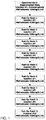
- a first injection is given at conclusion of the surgical procedure; eight weekly injections are given until postoperative month two; and a final tenth injection is given at postoperative month three.
- the methods include administering nine consecutive weekly injections, and a tenth injection three months after the first injection.
- the methods include administering additional injections monthly after the final, e.g., tenth, injection.
- the methods include administering one, two, three, four, five, six, seven, eight, or nine additional injections, e.g., monthly, after the tenth injection.
- the present disclosure provides methods for treating or reducing the risk of PVR or ERM in a subject.
- the methods include intravitreally administering a sustained release formulation of methotrexate over at least a three-month period.
- the sustained release formulation is or comprises a lipid-encapsulated formulation; multivesicular liposome (MVL) formulations of methotrexate (MTX); nano- or microparticles; polyion complex (PIC) micelles; or bioadhesive polymers.
- the bioadhesive polymers comprise one or more of hydroxypropyl methylcellulose (HPMC), carboxymethylcellulose (CMC), polyacrylic acid (PAA), or hyaluronic acid (HA).
- the disclosure provides methods for treating or reducing the risk of PVR or ERM in a subject.
- the methods include implanting a device for sustained release of methotrexate over at least a three-month period into the eye of the subject.
- the device is non-biodegradable.
- the subject does not have cancer, e.g., does not have an ocular cancer, e.g., does not have ocular or B cell lymphoma. In some embodiments, the subject does not have uveitis. In some embodiments, the methods include determining that a subject has or is at risk of developing PVR or ERM, or is about to undergo a procedure with a high risk of PVR or ERM as a side effect, and selecting the subject.
- PVR Proliferative vitreoretinopathy
- Epiretinal membranes are caused by an abnormal proliferation of cells, e.g., retinal pigment epithelial (RPE) cells, glial cells, fibroblasts, and macrophages, on the surface of the retina, typically in response to ocular disease; the membranes tend to contract and cause puckering and thus distortion of the macula.
- RPE retinal pigment epithelial
- glial cells e.g., glial cells, fibroblasts, and macrophages
- PVR is an abnormal wound healing response of the vitreous and retina, a clinical syndrome where cells with proliferative capacity, driven by inflammatory mediators, multiply on the retinal surface, contract, and eventually cause recurrent retinal detachment (RD).
- the pathogenesis of PVR begins with the introduction of RPE cells into the vitreous cavity. These cells may be introduced at the time of the retinal tear itself or may be introduced iatrogenically such as through the use of cryotherapy or retinectomy. Studies from monkey eyes with PVR have also postulated that the introduction of Müller cells, as well as potentially fibrocytes, occur as well.
- VEGF vascular endothelial growth factor
- PDGF platelet-derived growth factor
- TGF- ⁇ transforming growth factor-beta
- a pharmacologic adjuvant to prevent PVR has been an elusive goal in ophthalmology.
- a general pharmacologic strategy employed in prior PVR studies has been the single intravitreal, intraoperative administration of a variety of agents, such as duanoribicin, 5-fluorouracil (5-FU), triamcinolone, low-molecular weight heparin, and naproxen. 10-15
- the clearance of vitreally delivered drugs is dependent on a number of factors including the molecular weight of the drug, the status of the blood-retina barriers, contents of the vitreous cavity, etc., it is likely that those drugs used in these prior PVR studies were cleared from the eye within days after their administration. In contrast, PVR does not become a clinically appreciable, pathologic entity until at least 6-8 weeks after surgery.
- Methotrexate is a non-naturally occurring chemically also known as N-[4-[[(2,4-diamino-6-pteridinyl) methyl] methylamino] benzoyl]-L-glutamic acid.
- a folate analog, methotrexate is thought to act as an anti-proliferative agent by reversibly inhibiting dihydrofolate reductase, which prevents dihydrofolate from being reduced to tetrahydrofolate, which is used in the synthesis of purine nucleotides.
- Mechanisms of anti-inflammatory action are less clear, although mechanisms that have been proposed include its ability to enhance the extracellular concentration of adenosine, suppression of pro-inflammatory cytokines, inducement of apoptosis of activated T cells, and suppression of intracellular adhesion by activated T cells.
- the methotrexate is formulated for repeated injection, e.g., in Balanced Salt Solution from 25 mg vials to a sterile, single-use dose of 400 mcg/0.1 ml.
- the methotrexate is formulated for sustained release.
- sustained release formulations of methotrexate are known in the art, including but not limited to biodegradable implants such as lipid-encapsulated formulations, e.g., Depo/Methotrexate, as described in Bonetti et al., Cancer Chemother Pharmacol 33:303-306 (1994 ) and Chatelut et al., J Pharm Sci.
- MDL multivesicular liposome formulations of methotrexate (MTX), e.g., as described in WO2011143484 ; nano- or micropartricules, e.g., alpha-lactalbumin microparticles, e.g., as described in Vijayaragavan et al., Int J Pharm Res 3(1):39-44 (2011 ) or nanoparticles of conjugated methotrexate-human serum albumin as described in Taheri et al., J Nanomaterials 2011 (dx.doi.org/10.1155/2011/768201 ); polyion complex (PIC) micelles; bioadhesive polymers such as hydroxypropyl methylcellulose (HPMC), carboxymethylcellulose (CMC) and polyacrylic acid (PAA) derivatives, as well as hyaluronic acid (HA), e.g., Lacrisert (Aton Pharma), which is adhesive polymers such as hydroxypropy
- sustained release can be achieved using a sustained-release device such as intravitreal implants, e.g., as described in Palakurthi et al., Current Eye Research, 35(12):1105-1115 (2010 ) or similar to the Retisert (Bausch & Lomb), Ozurdex (Allergan); or non-biodegradable implants, e.g., similar to Iluvien (Alimera) or Vitrasert (Bausch & Lomb) implants; the I-vation platform (SurModics Inc.). See also Lee et al., Pharm Res. 27(10):2043-53 (2010 ); Haghjou et al., J Ophthalmic Vis Res.
- a sustained-release device such as intravitreal implants, e.g., as described in Palakurthi et al., Current Eye Research, 35(12):1105-1115 (2010 ) or similar to the Retisert (Bausch & Lomb), Ozurdex (Allergan);
- the methods described herein can be used to prevent (reduce the risk of) PVR or ERM in patients, e.g., in patients requiring pars plana vitrectomy (PPV), e.g., for rhegmatagenous retinal detachment secondary to trauma; for patients requiring PPV for preexisting proliferative vitreoretinopathy grade C or higher; and/or for patients with retinal detachments requiring PPV for other indications associated with high risk condition for PVR development, e.g., giant retinal tears (giant retinal tears are defined as tears involving 90° or more of the circumference of the globe), retinal breaks larger than 3 disc areas, long-standing retinal detachments, or detachments associated with hemorrhage.
- PPV pars plana vitrectomy
- sustained methotrexate in the eye in addition to PVR include the following:
- ERMs can develop spontaneously, which then requires surgery. If a subject developed an ERM in one eye, implanting a device to prevent ERMs in the other eye could prevent development in that eye.
- the methods described herein can include identifying and/or selecting a subject who is in need of treatment to prevent the development of PVR or ERM as a result of a condition listed above (e.g., selecting the subject on the basis of the need of treatment as a result of a condition listed above, e.g., an increased risk of developing PVR or ERM as a result of a condition listed above).
- the subjects treated with a method described herein do not have ocular cancers, e.g., do not have lymphoma (e.g., B cell lymphoma), and/or do not have uveitis.
- PVR clinically encompasses a wide phenotype.
- PVR can vary from a mild cellular haze (Grade A) to thick, fibrous membranes that cause the characteristic stiffened funnel of the detached retina (Grade D).
- GAA mild cellular haze
- G D fibrous membranes that cause the characteristic stiffened funnel of the detached retina
- a number of grading systems are in use, see, e.g., Ryan, Retina, 5th ed (Elsevier 2013 ); Retina Society Terminology Committee. The classification of retinal detachment with proliferative vitreoretinopathy. Ophthalmology 1983;90:121-5 (1983 ); Machemer R, Aaberg TM, Freeman HM, et al.
- the methods include identifying, selecting, and/or treating a subject who has a low grade (e.g., Grade A or Grade 1) PVR, or who has ERM.
- a low grade e.g., Grade A or Grade 1
- the methods include monitoring the subject for early signs of the development of PVR or ERM, i.e., the presence of a "vitreous haze" indicating a cellular proliferation (which may eventually develop into an organized sheet), and administering one or more doses of MTX as described herein.
- a "vitreous haze" indicating a cellular proliferation (which may eventually develop into an organized sheet)
- MTX cellular proliferation
- early Grade A PVR vs. an early ERM may be difficult to distinguish from one another, eventually untreated PVR will progress; ERMs will cause a mild traction on the macula resulting in metamorphopsia but will not cause detachment of the retina, whereas untreated PVR will cause detachment and eventually result in a funneled, atrophic retina.
- the methods can also be used to treat subjects without present signs of PVR but who are at risk for PVR or ERMs.
- the methods described herein include the use of methotrexate in subjects who are at risk of developing a first or recurring PVR or ERM, e.g., a subject who is undergoing RD surgery or ERM surgery, as described above, and in subjects who have PVR or ERM or who are at risk for developing PVR or ERMs.
- the methods described herein include the use of methotrexate in subjects who have undergone, are undergoing, or will undergo a pars plana vitrectomy (PPV) or scleral buckle (SB).
- the methods include performing a PPV, RD surgery, or ERM surgery.
- PPV PPV is performed under local or general anesthesia using three, 23 or 20 gauge sclerotomy ports.
- Any present epiretinal membranes can be dissected, e.g., using a membrane pick and forceps.
- Intraoperative tissue staining, perfluorocarbons, cryopexy, endolaser, scleral buckling, and lensectomy can also be performed as needed.
- Standard tamponading agents can be used, e.g., silicone oil or gas.
- an effective amount of methotrexate is an amount sufficient to effect beneficial or desired results, e.g., the desired therapeutic effect (i.e., a prophylactically effective amount that reduces the risk of developing PVR or ERM).
- An effective amount can be administered in one or more administrations, applications or dosages.
- a therapeutically effective amount of methotrexate can be, e.g., 400 ⁇ g/0.1 ml per injection, e.g., with at least ten injections, giving a cumulative dose of 4,000 ⁇ g over ten injections; in some embodiments, the methods include giving more than ten injections, for a cumulative dose of more than 4,000 ⁇ g.
- the methods include giving fewer than ten injections, for a cumulative does of less than 4,000 ug.
- the compositions can be administered one or more times per month. The skilled artisan will appreciate that certain factors may influence the dosage and timing required to effectively treat a subject, including but not limited to the severity of the disease or disorder, previous treatments, the general health and/or age of the subject, and other diseases present.
- intravitreal methotrexate injections are performed aseptically after the topical application of anaesthesia and an antiseptic agent, e.g., 5% povidone iodine, to the conjunctival sac.
- an antiseptic agent e.g., 5% povidone iodine
- each subject receives an intravitreal injection of methotrexate, e.g., 400 mcg/0.1 ml methotrexate, 3.0 to 3.5 mm posterior to the limbus, depending on lens status, with a 30-gauge needle.
- the subjects receive multiple intravitreal injections of methotrexate during their post-operative period.
- the first injection can be administered intraoperatively; subsequently, injections can be administered on post-operative (post-op) weeks 1, 2, 3, 4, 5, 6, 7, and 8, and on post-op month 3, for a total of 10 injections. See, e.g., Figure 1 .
- the methods include administering the methotrexate in ten doses, or ten or more doses, or less than ten doses, over a three-month period or longer, and injections would be given no more frequently than weekly.
- the methods include additional doses at weekly, biweekly, or monthly frequency thereafter for an additional one, two, three, four, five, six, seven, eight, nine, ten, 11, or 12 months thereafter. In some embodiments the methods include ten doses over three months as shown in Fig. 1 , with an optional additional one or more doses at monthly intervals thereafter for an additional one, three, six, or more months thereafter.
- the subjects receive a sustained release implant, e.g., as described above, that will release MTX over time, e.g., over a week, two weeks, a month, two months, three months, six months, or a year.
- the methods include administering subsequent implants to provide MTX administration for at least six months, one year, two years, or more.
- Example 1 Sustained methotrexate in the silicone filled postoperative eye at high risk for proliferative vitreoretinopathy
- the PPV was performed under local or general anesthesia using three, 23 or 20 gauge sclerotomy ports. Any present epiretinal membranes were dissected using a membrane pick and/or forceps. Intraoperative tissue staining, perfluorocarbons, cryopexy, endolaser, scleral buckling, and lensectomy were performed as needed. Either silicone oil or gas was used as the tamponading agent.
- Routine post-operative visits which involve a dilated funduscopic examination, occured on post-operative day 1, 7, month 1, month 2, and month 3. Patients return to the operating room after three months for silicone oil removal and were seen in clinic 4 months after the original surgery.
- the first injection was administered intraoperatively and subsequently was injected on post-op week 1,2,3,4,5,6,7,8 and on post-op month 3, for a total of 10 injections.
- Intravitreal methotrexate injections were performed aseptically after the topical application of anaesthesia and 5% povidone iodine to the conjunctival sac.
- Patient MTX08M ended the study with NLP vision. He had a history in the operative eye of pathological myopia, staphyloma, atrophy, lattice, and pave stoning. One month after his surgery (his third intravitreal surgery in that eye and the study surgery date), disc pallor was noted. Optical coherence tomographic pictures of that retina before and after had noted disorganized laminae, secondary to his underlying retinal disease. His vision at this was noted to be LP. He continued to receive injection with limited improvement in his vision and noted to be NLP at the final visit.
- Example 2 Sustained methotrexate inhibits the growth of proliferative vitreoretinopathy in vitro
- PVR membranectomy was performed in patients undergoing retinal detachment repair secondary to PVR.
- cellular constituents of the PVR membranes were separated from the extracellular matrix membranes.
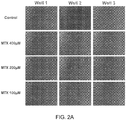
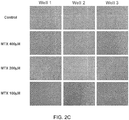
- 30,000 cells per well were placed into a standard 12 welled plate. All 12 wells received endothelial cell growth medium with supplemental growth factors.
- Four arms were designated consisting of three wells each. The first arm served as a control receiving the standard growth medium but no other intervention. The remaining wells were designated as treatment arms.
- the second arm of three wells served as the first treatment arm and exposed the cells to 400 micrograms of methotrexate.
- the third and fourth arms of three wells each exposed the cultured cells to 200 and 100 micrograms, respectively, of methotrexate.
Landscapes
- Health & Medical Sciences (AREA)
- Chemical & Material Sciences (AREA)
- Medicinal Chemistry (AREA)
- Pharmacology & Pharmacy (AREA)
- Life Sciences & Earth Sciences (AREA)
- Animal Behavior & Ethology (AREA)
- General Health & Medical Sciences (AREA)
- Public Health (AREA)
- Veterinary Medicine (AREA)
- Epidemiology (AREA)
- Ophthalmology & Optometry (AREA)
- Engineering & Computer Science (AREA)
- Bioinformatics & Cheminformatics (AREA)
- Dermatology (AREA)
- Chemical Kinetics & Catalysis (AREA)
- General Chemical & Material Sciences (AREA)
- Nuclear Medicine, Radiotherapy & Molecular Imaging (AREA)
- Organic Chemistry (AREA)
- Pharmaceuticals Containing Other Organic And Inorganic Compounds (AREA)
- Medicinal Preparation (AREA)
Priority Applications (2)
| Application Number | Priority Date | Filing Date | Title |
|---|---|---|---|
| EP20191599.8A EP3791883B1 (en) | 2014-07-30 | 2015-07-30 | Methotrexate for proliferative vitreoretinopathy |
| EP23205570.7A EP4311575A3 (en) | 2014-07-30 | 2015-07-30 | Methotrexate for proliferative vitreoretinopathy |
Applications Claiming Priority (2)
| Application Number | Priority Date | Filing Date | Title |
|---|---|---|---|
| US201462030778P | 2014-07-30 | 2014-07-30 | |
| PCT/US2015/042951 WO2016019165A1 (en) | 2014-07-30 | 2015-07-30 | Methotrexate for proliferative vitreoretinopathy |
Related Child Applications (3)
| Application Number | Title | Priority Date | Filing Date |
|---|---|---|---|
| EP20191599.8A Division EP3791883B1 (en) | 2014-07-30 | 2015-07-30 | Methotrexate for proliferative vitreoretinopathy |
| EP20191599.8A Division-Into EP3791883B1 (en) | 2014-07-30 | 2015-07-30 | Methotrexate for proliferative vitreoretinopathy |
| EP23205570.7A Division EP4311575A3 (en) | 2014-07-30 | 2015-07-30 | Methotrexate for proliferative vitreoretinopathy |
Publications (4)
| Publication Number | Publication Date |
|---|---|
| EP3174540A1 EP3174540A1 (en) | 2017-06-07 |
| EP3174540A4 EP3174540A4 (en) | 2018-04-04 |
| EP3174540B1 EP3174540B1 (en) | 2020-09-02 |
| EP3174540B9 true EP3174540B9 (en) | 2021-05-05 |
Family
ID=55218325
Family Applications (3)
| Application Number | Title | Priority Date | Filing Date |
|---|---|---|---|
| EP15827946.3A Active EP3174540B9 (en) | 2014-07-30 | 2015-07-30 | Methotrexate for proliferative vitreoretinopathy |
| EP23205570.7A Withdrawn EP4311575A3 (en) | 2014-07-30 | 2015-07-30 | Methotrexate for proliferative vitreoretinopathy |
| EP20191599.8A Active EP3791883B1 (en) | 2014-07-30 | 2015-07-30 | Methotrexate for proliferative vitreoretinopathy |
Family Applications After (2)
| Application Number | Title | Priority Date | Filing Date |
|---|---|---|---|
| EP23205570.7A Withdrawn EP4311575A3 (en) | 2014-07-30 | 2015-07-30 | Methotrexate for proliferative vitreoretinopathy |
| EP20191599.8A Active EP3791883B1 (en) | 2014-07-30 | 2015-07-30 | Methotrexate for proliferative vitreoretinopathy |
Country Status (6)
| Country | Link |
|---|---|
| US (4) | US10098884B2 (enExample) |
| EP (3) | EP3174540B9 (enExample) |
| JP (3) | JP7097181B2 (enExample) |
| CA (2) | CA3200870A1 (enExample) |
| ES (2) | ES2835499T3 (enExample) |
| WO (1) | WO2016019165A1 (enExample) |
Families Citing this family (7)
| Publication number | Priority date | Publication date | Assignee | Title |
|---|---|---|---|---|
| ES2835499T3 (es) * | 2014-07-30 | 2021-06-22 | Massachusetts Eye & Ear Infirmary | Metotrexato para la vitreorretinopatía proliferativa |
| WO2018027044A1 (en) * | 2016-08-05 | 2018-02-08 | Schepens Eye Research Institute | Idelalisib for treating proliferative vitreoretinopathy and abnormal intraocular neovascularization |
| US11739326B2 (en) | 2017-11-14 | 2023-08-29 | Massachusetts Eye And Ear Infirmary | RUNX1 inhibition for treatment of proliferative vitreoretinopathy and conditions associated with epithelial to mesenchymal transition |
| CN114423432A (zh) * | 2019-09-13 | 2022-04-29 | 奥尔德拉医疗公司 | 甲氨蝶呤的眼用制剂 |
| CN115804665A (zh) * | 2022-12-13 | 2023-03-17 | 南昌大学附属眼科医院 | 一种tpvr动物模型的建立方法 |
| WO2024129979A1 (en) * | 2022-12-14 | 2024-06-20 | Aldeyra Therapeutics, Inc. | Methotrexate treatment methods |
| US11911385B1 (en) | 2022-12-14 | 2024-02-27 | Aldeyra Therapeutics, Inc. | Methotrexate treatment methods |
Family Cites Families (16)
| Publication number | Priority date | Publication date | Assignee | Title |
|---|---|---|---|---|
| US20020032734A1 (en) | 2000-07-26 | 2002-03-14 | Rhoads Geoffrey B. | Collateral data combined with user characteristics to select web site |
| AUPQ496500A0 (en) | 2000-01-06 | 2000-02-03 | University Of Sydney, The | Kit |
| US20040253243A1 (en) * | 2003-01-21 | 2004-12-16 | David Epstein | Aptamer therapeutics useful in ocular pharmacotherapy |
| US20050255144A1 (en) | 2003-04-09 | 2005-11-17 | Directcontact Llc | Methods and articles for the delivery of medicaments to the eye for the treatment of posterior segment diseases |
| WO2005095464A1 (ja) * | 2004-04-02 | 2005-10-13 | Denki Kagaku Kogyo Kabushiki Kaisha | ヒアルロン酸-メトトレキサート結合体 |
| US20050244469A1 (en) | 2004-04-30 | 2005-11-03 | Allergan, Inc. | Extended therapeutic effect ocular implant treatments |
| ATE439123T1 (de) | 2004-07-02 | 2009-08-15 | Novagali Pharma Sa | Verwendung von emulsionen zur intra- und periocularen injection |
| MX344532B (es) * | 2004-10-01 | 2016-12-19 | Ramscor Inc | Composiciones de farmaco de liberacion sostenida convenientemente implantables. |
| US20080038316A1 (en) | 2004-10-01 | 2008-02-14 | Wong Vernon G | Conveniently implantable sustained release drug compositions |
| US8231892B2 (en) | 2007-05-24 | 2012-07-31 | Allergan, Inc. | Biodegradable drug delivery system |
| US20090081277A1 (en) | 2007-09-21 | 2009-03-26 | Allergan, Inc. | Pharmaceutical formulations and methods for treating ocular conditions |
| US20110200662A1 (en) | 2008-10-22 | 2011-08-18 | Arnold Glazier | Method For The Treatment Of Proliferative Disorders Of The Eye |
| US9770414B2 (en) | 2010-05-13 | 2017-09-26 | Pacira Pharmaceuticals, Inc. | Sustained release formulation of methotrexate as a disease-modifying antirheumatic drug (DMARD) and an anti-cancer agent |
| US20140105956A1 (en) * | 2012-10-11 | 2014-04-17 | Rupak BANERJEE | Biodegradable polymer based microimplant for ocular drug delivery |
| EP4566672A3 (en) * | 2012-11-08 | 2025-08-13 | Clearside Biomedical Inc. | Methods for the treatment of ocular disease in human subjects |
| ES2835499T3 (es) * | 2014-07-30 | 2021-06-22 | Massachusetts Eye & Ear Infirmary | Metotrexato para la vitreorretinopatía proliferativa |
-
2015
- 2015-07-30 ES ES15827946T patent/ES2835499T3/es active Active
- 2015-07-30 CA CA3200870A patent/CA3200870A1/en active Pending
- 2015-07-30 EP EP15827946.3A patent/EP3174540B9/en active Active
- 2015-07-30 WO PCT/US2015/042951 patent/WO2016019165A1/en not_active Ceased
- 2015-07-30 US US15/500,351 patent/US10098884B2/en active Active
- 2015-07-30 EP EP23205570.7A patent/EP4311575A3/en not_active Withdrawn
- 2015-07-30 CA CA2991921A patent/CA2991921C/en active Active
- 2015-07-30 ES ES20191599T patent/ES2969374T3/es active Active
- 2015-07-30 JP JP2017505180A patent/JP7097181B2/ja active Active
- 2015-07-30 EP EP20191599.8A patent/EP3791883B1/en active Active
-
2017
- 2017-09-08 US US15/699,559 patent/US10272089B2/en active Active
-
2019
- 2019-04-29 US US16/397,562 patent/US10828306B2/en active Active
-
2020
- 2020-10-30 US US17/085,907 patent/US20210283135A1/en not_active Abandoned
- 2020-12-07 JP JP2020202357A patent/JP2021059554A/ja active Pending
-
2023
- 2023-07-13 JP JP2023114963A patent/JP2023145527A/ja active Pending
Also Published As
| Publication number | Publication date |
|---|---|
| US20200085827A1 (en) | 2020-03-19 |
| US20210283135A1 (en) | 2021-09-16 |
| EP3791883A1 (en) | 2021-03-17 |
| US10828306B2 (en) | 2020-11-10 |
| EP4311575A2 (en) | 2024-01-31 |
| ES2835499T3 (es) | 2021-06-22 |
| US20170216294A1 (en) | 2017-08-03 |
| EP3174540A1 (en) | 2017-06-07 |
| WO2016019165A1 (en) | 2016-02-04 |
| EP3791883B1 (en) | 2023-10-25 |
| JP7097181B2 (ja) | 2022-07-07 |
| CA3200870A1 (en) | 2016-02-04 |
| JP2021059554A (ja) | 2021-04-15 |
| EP3174540B1 (en) | 2020-09-02 |
| JP2017523974A (ja) | 2017-08-24 |
| US10272089B2 (en) | 2019-04-30 |
| EP3174540A4 (en) | 2018-04-04 |
| JP2023145527A (ja) | 2023-10-11 |
| US20170368067A1 (en) | 2017-12-28 |
| ES2969374T3 (es) | 2024-05-17 |
| CA2991921A1 (en) | 2016-02-04 |
| US10098884B2 (en) | 2018-10-16 |
| CA2991921C (en) | 2023-08-08 |
| EP4311575A3 (en) | 2024-04-03 |
Similar Documents
| Publication | Publication Date | Title |
|---|---|---|
| US10828306B2 (en) | Methotrexate for proliferative vitreoretinopathy | |
| Chang et al. | Phase II results of an intraocular steroid delivery system for cataract surgery | |
| Wadood et al. | Safety and efficacy of a dexamethasone anterior segment drug delivery system in patients after phacoemulsification | |
| US20080125406A1 (en) | Method for Treating Primary and Secondary Forms of Glaucoma | |
| US20070197491A1 (en) | Method for treating primary and secondary forms of glaucoma | |
| Kaufman et al. | Cataract extraction in patients with pars planitis | |
| Eperon et al. | A biodegradable drug delivery system for the treatment of postoperative inflammation | |
| Stewart et al. | Efficacy and safety profile of ketorolac 0.5% ophthalmic solution in the prevention of surgically induced miosis during cataract surgery | |
| JP2024103501A (ja) | 被験体における虚血再灌流障害のリスクを予防又は軽減するための神経保護特性がある薬物の使用 | |
| JP2025513090A (ja) | 眼疾患の治療のためのミコフェノール酸及び/又はベタメタゾンの医薬組成物 | |
| US20230310446A1 (en) | Rho kinase inhibition for treatment of proliferative vitreoretinopathy and conditions associated with epithelial to mesenchymal transition | |
| İnan et al. | Prevention of posterior capsule opacification by retinoic acid and mitomycin | |
| US20130156841A1 (en) | Method of reducing incidence of intraocular pressure associated with intraocular use of corticosteroids | |
| Sandoval et al. | Evaluation of 0.4% ketorolac tromethamine ophthalmic solution versus 0.5% ketorolac tromethamine ophthalmic solution after phacoemulsification and intraocular lens implantation | |
| Mehta et al. | Formulation of a peribulbar block for prolonged postoperative pain management in vitreoretinal surgery: a randomized clinical trial | |
| Chang et al. | Two clinical trials of an intraocular steroid delivery system for cataract surgery | |
| HK40049263B (en) | Methotrexate for proliferative vitreoretinopathy | |
| HK40049263A (en) | Methotrexate for proliferative vitreoretinopathy | |
| HK1236395A1 (en) | Methotrexate for proliferative vitreoretinopathy | |
| HK1236395B (en) | Methotrexate for proliferative vitreoretinopathy | |
| AU2003213084B2 (en) | Treatment of ophthalmic disorders using urea and urea derivatives | |
| US20230355611A1 (en) | Topotecan for proliferative vitreoretinopathy | |
| CN101365456A (zh) | 治疗原发性和继发性形式的青光眼的方法 | |
| CN1802151A (zh) | 用于治疗病理性眼内血管生成的非甾体类抗炎药制剂 | |
| SA06270472B1 (ar) | طريقة لمعالجة النوعين الاولي والثانوي للغلوكوما |
Legal Events
| Date | Code | Title | Description |
|---|---|---|---|
| STAA | Information on the status of an ep patent application or granted ep patent |
Free format text: STATUS: THE INTERNATIONAL PUBLICATION HAS BEEN MADE |
|
| 17P | Request for examination filed |
Effective date: 20170216 |
|
| AK | Designated contracting states |
Kind code of ref document: A1 Designated state(s): AL AT BE BG CH CY CZ DE DK EE ES FI FR GB GR HR HU IE IS IT LI LT LU LV MC MK MT NL NO PL PT RO RS SE SI SK SM TR |
|
| AX | Request for extension of the european patent |
Extension state: BA ME |
|
| PUAI | Public reference made under article 153(3) epc to a published international application that has entered the european phase |
Free format text: ORIGINAL CODE: 0009012 |
|
| STAA | Information on the status of an ep patent application or granted ep patent |
Free format text: STATUS: REQUEST FOR EXAMINATION WAS MADE |
|
| DAV | Request for validation of the european patent (deleted) | ||
| DAX | Request for extension of the european patent (deleted) | ||
| RIC1 | Information provided on ipc code assigned before grant |
Ipc: A61K 9/00 20060101ALI20171127BHEP Ipc: A61P 27/02 20060101ALI20171127BHEP Ipc: A61K 31/519 20060101AFI20171127BHEP |
|
| REG | Reference to a national code |
Ref country code: HK Ref legal event code: DE Ref document number: 1236395 Country of ref document: HK |
|
| A4 | Supplementary search report drawn up and despatched |
Effective date: 20180305 |
|
| RIC1 | Information provided on ipc code assigned before grant |
Ipc: A61K 31/519 20060101AFI20180227BHEP Ipc: A61P 27/02 20060101ALI20180227BHEP Ipc: A61K 9/00 20060101ALI20180227BHEP |
|
| GRAP | Despatch of communication of intention to grant a patent |
Free format text: ORIGINAL CODE: EPIDOSNIGR1 |
|
| STAA | Information on the status of an ep patent application or granted ep patent |
Free format text: STATUS: GRANT OF PATENT IS INTENDED |
|
| RIC1 | Information provided on ipc code assigned before grant |
Ipc: A61K 9/00 20060101ALI20200214BHEP Ipc: A61K 9/50 20060101ALI20200214BHEP Ipc: A61K 31/519 20060101AFI20200214BHEP Ipc: A61P 27/02 20060101ALI20200214BHEP |
|
| INTG | Intention to grant announced |
Effective date: 20200317 |
|
| GRAS | Grant fee paid |
Free format text: ORIGINAL CODE: EPIDOSNIGR3 |
|
| GRAJ | Information related to disapproval of communication of intention to grant by the applicant or resumption of examination proceedings by the epo deleted |
Free format text: ORIGINAL CODE: EPIDOSDIGR1 |
|
| GRAL | Information related to payment of fee for publishing/printing deleted |
Free format text: ORIGINAL CODE: EPIDOSDIGR3 |
|
| STAA | Information on the status of an ep patent application or granted ep patent |
Free format text: STATUS: REQUEST FOR EXAMINATION WAS MADE |
|
| INTC | Intention to grant announced (deleted) | ||
| GRAR | Information related to intention to grant a patent recorded |
Free format text: ORIGINAL CODE: EPIDOSNIGR71 |
|
| STAA | Information on the status of an ep patent application or granted ep patent |
Free format text: STATUS: GRANT OF PATENT IS INTENDED |
|
| GRAA | (expected) grant |
Free format text: ORIGINAL CODE: 0009210 |
|
| STAA | Information on the status of an ep patent application or granted ep patent |
Free format text: STATUS: THE PATENT HAS BEEN GRANTED |
|
| INTG | Intention to grant announced |
Effective date: 20200706 |
|
| AK | Designated contracting states |
Kind code of ref document: B1 Designated state(s): AL AT BE BG CH CY CZ DE DK EE ES FI FR GB GR HR HU IE IS IT LI LT LU LV MC MK MT NL NO PL PT RO RS SE SI SK SM TR |
|
| REG | Reference to a national code |
Ref country code: GB Ref legal event code: FG4D |
|
| REG | Reference to a national code |
Ref country code: AT Ref legal event code: REF Ref document number: 1308004 Country of ref document: AT Kind code of ref document: T Effective date: 20200915 Ref country code: CH Ref legal event code: EP |
|
| REG | Reference to a national code |
Ref country code: DE Ref legal event code: R096 Ref document number: 602015058548 Country of ref document: DE |
|
| REG | Reference to a national code |
Ref country code: IE Ref legal event code: FG4D |
|
| REG | Reference to a national code |
Ref country code: LT Ref legal event code: MG4D |
|
| PG25 | Lapsed in a contracting state [announced via postgrant information from national office to epo] |
Ref country code: GR Free format text: LAPSE BECAUSE OF FAILURE TO SUBMIT A TRANSLATION OF THE DESCRIPTION OR TO PAY THE FEE WITHIN THE PRESCRIBED TIME-LIMIT Effective date: 20201203 Ref country code: NO Free format text: LAPSE BECAUSE OF FAILURE TO SUBMIT A TRANSLATION OF THE DESCRIPTION OR TO PAY THE FEE WITHIN THE PRESCRIBED TIME-LIMIT Effective date: 20201202 Ref country code: BG Free format text: LAPSE BECAUSE OF FAILURE TO SUBMIT A TRANSLATION OF THE DESCRIPTION OR TO PAY THE FEE WITHIN THE PRESCRIBED TIME-LIMIT Effective date: 20201202 Ref country code: LT Free format text: LAPSE BECAUSE OF FAILURE TO SUBMIT A TRANSLATION OF THE DESCRIPTION OR TO PAY THE FEE WITHIN THE PRESCRIBED TIME-LIMIT Effective date: 20200902 Ref country code: HR Free format text: LAPSE BECAUSE OF FAILURE TO SUBMIT A TRANSLATION OF THE DESCRIPTION OR TO PAY THE FEE WITHIN THE PRESCRIBED TIME-LIMIT Effective date: 20200902 Ref country code: FI Free format text: LAPSE BECAUSE OF FAILURE TO SUBMIT A TRANSLATION OF THE DESCRIPTION OR TO PAY THE FEE WITHIN THE PRESCRIBED TIME-LIMIT Effective date: 20200902 Ref country code: SE Free format text: LAPSE BECAUSE OF FAILURE TO SUBMIT A TRANSLATION OF THE DESCRIPTION OR TO PAY THE FEE WITHIN THE PRESCRIBED TIME-LIMIT Effective date: 20200902 |
|
| REG | Reference to a national code |
Ref country code: NL Ref legal event code: MP Effective date: 20200902 |
|
| REG | Reference to a national code |
Ref country code: AT Ref legal event code: MK05 Ref document number: 1308004 Country of ref document: AT Kind code of ref document: T Effective date: 20200902 |
|
| PG25 | Lapsed in a contracting state [announced via postgrant information from national office to epo] |
Ref country code: LV Free format text: LAPSE BECAUSE OF FAILURE TO SUBMIT A TRANSLATION OF THE DESCRIPTION OR TO PAY THE FEE WITHIN THE PRESCRIBED TIME-LIMIT Effective date: 20200902 Ref country code: RS Free format text: LAPSE BECAUSE OF FAILURE TO SUBMIT A TRANSLATION OF THE DESCRIPTION OR TO PAY THE FEE WITHIN THE PRESCRIBED TIME-LIMIT Effective date: 20200902 Ref country code: PL Free format text: LAPSE BECAUSE OF FAILURE TO SUBMIT A TRANSLATION OF THE DESCRIPTION OR TO PAY THE FEE WITHIN THE PRESCRIBED TIME-LIMIT Effective date: 20200902 |
|
| REG | Reference to a national code |
Ref country code: CH Ref legal event code: PK Free format text: BERICHTIGUNG B9 |
|
| PG25 | Lapsed in a contracting state [announced via postgrant information from national office to epo] |
Ref country code: SM Free format text: LAPSE BECAUSE OF FAILURE TO SUBMIT A TRANSLATION OF THE DESCRIPTION OR TO PAY THE FEE WITHIN THE PRESCRIBED TIME-LIMIT Effective date: 20200902 Ref country code: RO Free format text: LAPSE BECAUSE OF FAILURE TO SUBMIT A TRANSLATION OF THE DESCRIPTION OR TO PAY THE FEE WITHIN THE PRESCRIBED TIME-LIMIT Effective date: 20200902 Ref country code: PT Free format text: LAPSE BECAUSE OF FAILURE TO SUBMIT A TRANSLATION OF THE DESCRIPTION OR TO PAY THE FEE WITHIN THE PRESCRIBED TIME-LIMIT Effective date: 20210104 Ref country code: EE Free format text: LAPSE BECAUSE OF FAILURE TO SUBMIT A TRANSLATION OF THE DESCRIPTION OR TO PAY THE FEE WITHIN THE PRESCRIBED TIME-LIMIT Effective date: 20200902 Ref country code: CZ Free format text: LAPSE BECAUSE OF FAILURE TO SUBMIT A TRANSLATION OF THE DESCRIPTION OR TO PAY THE FEE WITHIN THE PRESCRIBED TIME-LIMIT Effective date: 20200902 |
|
| PG25 | Lapsed in a contracting state [announced via postgrant information from national office to epo] |
Ref country code: AL Free format text: LAPSE BECAUSE OF FAILURE TO SUBMIT A TRANSLATION OF THE DESCRIPTION OR TO PAY THE FEE WITHIN THE PRESCRIBED TIME-LIMIT Effective date: 20200902 Ref country code: AT Free format text: LAPSE BECAUSE OF FAILURE TO SUBMIT A TRANSLATION OF THE DESCRIPTION OR TO PAY THE FEE WITHIN THE PRESCRIBED TIME-LIMIT Effective date: 20200902 Ref country code: IS Free format text: LAPSE BECAUSE OF FAILURE TO SUBMIT A TRANSLATION OF THE DESCRIPTION OR TO PAY THE FEE WITHIN THE PRESCRIBED TIME-LIMIT Effective date: 20210102 |
|
| REG | Reference to a national code |
Ref country code: DE Ref legal event code: R097 Ref document number: 602015058548 Country of ref document: DE |
|
| REG | Reference to a national code |
Ref country code: ES Ref legal event code: FG2A Ref document number: 2835499 Country of ref document: ES Kind code of ref document: T3 Effective date: 20210622 |
|
| PG25 | Lapsed in a contracting state [announced via postgrant information from national office to epo] |
Ref country code: SK Free format text: LAPSE BECAUSE OF FAILURE TO SUBMIT A TRANSLATION OF THE DESCRIPTION OR TO PAY THE FEE WITHIN THE PRESCRIBED TIME-LIMIT Effective date: 20200902 |
|
| PLBE | No opposition filed within time limit |
Free format text: ORIGINAL CODE: 0009261 |
|
| STAA | Information on the status of an ep patent application or granted ep patent |
Free format text: STATUS: NO OPPOSITION FILED WITHIN TIME LIMIT |
|
| 26N | No opposition filed |
Effective date: 20210603 |
|
| PG25 | Lapsed in a contracting state [announced via postgrant information from national office to epo] |
Ref country code: DK Free format text: LAPSE BECAUSE OF FAILURE TO SUBMIT A TRANSLATION OF THE DESCRIPTION OR TO PAY THE FEE WITHIN THE PRESCRIBED TIME-LIMIT Effective date: 20200902 Ref country code: SI Free format text: LAPSE BECAUSE OF FAILURE TO SUBMIT A TRANSLATION OF THE DESCRIPTION OR TO PAY THE FEE WITHIN THE PRESCRIBED TIME-LIMIT Effective date: 20200902 |
|
| REG | Reference to a national code |
Ref country code: CH Ref legal event code: PL |
|
| PG25 | Lapsed in a contracting state [announced via postgrant information from national office to epo] |
Ref country code: MC Free format text: LAPSE BECAUSE OF FAILURE TO SUBMIT A TRANSLATION OF THE DESCRIPTION OR TO PAY THE FEE WITHIN THE PRESCRIBED TIME-LIMIT Effective date: 20200902 |
|
| REG | Reference to a national code |
Ref country code: BE Ref legal event code: MM Effective date: 20210731 |
|
| PG25 | Lapsed in a contracting state [announced via postgrant information from national office to epo] |
Ref country code: LI Free format text: LAPSE BECAUSE OF NON-PAYMENT OF DUE FEES Effective date: 20210731 Ref country code: CH Free format text: LAPSE BECAUSE OF NON-PAYMENT OF DUE FEES Effective date: 20210731 |
|
| PG25 | Lapsed in a contracting state [announced via postgrant information from national office to epo] |
Ref country code: LU Free format text: LAPSE BECAUSE OF NON-PAYMENT OF DUE FEES Effective date: 20210730 |
|
| PG25 | Lapsed in a contracting state [announced via postgrant information from national office to epo] |
Ref country code: IE Free format text: LAPSE BECAUSE OF NON-PAYMENT OF DUE FEES Effective date: 20210730 Ref country code: BE Free format text: LAPSE BECAUSE OF NON-PAYMENT OF DUE FEES Effective date: 20210731 |
|
| PG25 | Lapsed in a contracting state [announced via postgrant information from national office to epo] |
Ref country code: HU Free format text: LAPSE BECAUSE OF FAILURE TO SUBMIT A TRANSLATION OF THE DESCRIPTION OR TO PAY THE FEE WITHIN THE PRESCRIBED TIME-LIMIT; INVALID AB INITIO Effective date: 20150730 |
|
| PG25 | Lapsed in a contracting state [announced via postgrant information from national office to epo] |
Ref country code: NL Free format text: LAPSE BECAUSE OF NON-PAYMENT OF DUE FEES Effective date: 20200923 Ref country code: CY Free format text: LAPSE BECAUSE OF FAILURE TO SUBMIT A TRANSLATION OF THE DESCRIPTION OR TO PAY THE FEE WITHIN THE PRESCRIBED TIME-LIMIT Effective date: 20200902 |
|
| P01 | Opt-out of the competence of the unified patent court (upc) registered |
Effective date: 20230529 |
|
| PG25 | Lapsed in a contracting state [announced via postgrant information from national office to epo] |
Ref country code: MK Free format text: LAPSE BECAUSE OF FAILURE TO SUBMIT A TRANSLATION OF THE DESCRIPTION OR TO PAY THE FEE WITHIN THE PRESCRIBED TIME-LIMIT Effective date: 20200902 |
|
| PG25 | Lapsed in a contracting state [announced via postgrant information from national office to epo] |
Ref country code: TR Free format text: LAPSE BECAUSE OF FAILURE TO SUBMIT A TRANSLATION OF THE DESCRIPTION OR TO PAY THE FEE WITHIN THE PRESCRIBED TIME-LIMIT Effective date: 20200902 |
|
| PG25 | Lapsed in a contracting state [announced via postgrant information from national office to epo] |
Ref country code: MT Free format text: LAPSE BECAUSE OF FAILURE TO SUBMIT A TRANSLATION OF THE DESCRIPTION OR TO PAY THE FEE WITHIN THE PRESCRIBED TIME-LIMIT Effective date: 20200902 |
|
| PGFP | Annual fee paid to national office [announced via postgrant information from national office to epo] |
Ref country code: ES Payment date: 20250801 Year of fee payment: 11 |
|
| PGFP | Annual fee paid to national office [announced via postgrant information from national office to epo] |
Ref country code: DE Payment date: 20250729 Year of fee payment: 11 |
|
| PGFP | Annual fee paid to national office [announced via postgrant information from national office to epo] |
Ref country code: IT Payment date: 20250721 Year of fee payment: 11 |
|
| PGFP | Annual fee paid to national office [announced via postgrant information from national office to epo] |
Ref country code: GB Payment date: 20250728 Year of fee payment: 11 |
|
| PGFP | Annual fee paid to national office [announced via postgrant information from national office to epo] |
Ref country code: FR Payment date: 20250728 Year of fee payment: 11 |