EP3172334B1 - Verbesserte wirtszelle zur herstellung von proteinen - Google Patents
Verbesserte wirtszelle zur herstellung von proteinen Download PDFInfo
- Publication number
- EP3172334B1 EP3172334B1 EP15741223.0A EP15741223A EP3172334B1 EP 3172334 B1 EP3172334 B1 EP 3172334B1 EP 15741223 A EP15741223 A EP 15741223A EP 3172334 B1 EP3172334 B1 EP 3172334B1
- Authority
- EP
- European Patent Office
- Prior art keywords
- protein
- host cell
- nucleic acid
- acid sequence
- sequence encoding
- Prior art date
- Legal status (The legal status is an assumption and is not a legal conclusion. Google has not performed a legal analysis and makes no representation as to the accuracy of the status listed.)
- Active
Links
Images




Classifications
-
- C—CHEMISTRY; METALLURGY
- C12—BIOCHEMISTRY; BEER; SPIRITS; WINE; VINEGAR; MICROBIOLOGY; ENZYMOLOGY; MUTATION OR GENETIC ENGINEERING
- C12P—FERMENTATION OR ENZYME-USING PROCESSES TO SYNTHESISE A DESIRED CHEMICAL COMPOUND OR COMPOSITION OR TO SEPARATE OPTICAL ISOMERS FROM A RACEMIC MIXTURE
- C12P21/00—Preparation of peptides or proteins
- C12P21/02—Preparation of peptides or proteins having a known sequence of two or more amino acids, e.g. glutathione
-
- C—CHEMISTRY; METALLURGY
- C12—BIOCHEMISTRY; BEER; SPIRITS; WINE; VINEGAR; MICROBIOLOGY; ENZYMOLOGY; MUTATION OR GENETIC ENGINEERING
- C12N—MICROORGANISMS OR ENZYMES; COMPOSITIONS THEREOF; PROPAGATING, PRESERVING, OR MAINTAINING MICROORGANISMS; MUTATION OR GENETIC ENGINEERING; CULTURE MEDIA
- C12N15/00—Mutation or genetic engineering; DNA or RNA concerning genetic engineering, vectors, e.g. plasmids, or their isolation, preparation or purification; Use of hosts therefor
- C12N15/09—Recombinant DNA-technology
- C12N15/63—Introduction of foreign genetic material using vectors; Vectors; Use of hosts therefor; Regulation of expression
- C12N15/65—Introduction of foreign genetic material using vectors; Vectors; Use of hosts therefor; Regulation of expression using markers
-
- C—CHEMISTRY; METALLURGY
- C12—BIOCHEMISTRY; BEER; SPIRITS; WINE; VINEGAR; MICROBIOLOGY; ENZYMOLOGY; MUTATION OR GENETIC ENGINEERING
- C12Y—ENZYMES
- C12Y207/00—Transferases transferring phosphorus-containing groups (2.7)
- C12Y207/07—Nucleotidyltransferases (2.7.7)
- C12Y207/07006—DNA-directed RNA polymerase (2.7.7.6)
Definitions
- the present invention relates to heterologous systems for recombinant protein production.
- the present invention relates to host cells for use in methods for producing proteins based on an improved poison-antidote system.
- Microorganisms are today widely used for protein or DNA production. Usually, these processes require the use of bacterial plasmids as vectors carrying the gene to be expressed. However, plasmid maintenance within microorganisms is limited, and plasmid instability thus represents a significant concern in recombinant protein production or in DNA production.
- plasmid-bearing cells have been demonstrated that the growth rate of plasmid-bearing cells is significantly reduced relative to that of a plasmid-free cell.
- One theory is that plasmid replication and transcription, as well as protein production, represent a significant burden on cellular metabolism. Hence, in a fermentation process, cells losing the plasmid exhibit a higher fitness than cells still bearing the plasmid, and the former rapidly overcome the latter in the bacterial population.
- antibiotic-resistance genes The most common selectable markers used in fermentation procedures are antibiotic-resistance genes. However, contamination of the product or biomass by antibiotics (or genes encoding an antibiotic resistance) is unacceptable from a medical or regulatory perspective. Moreover, antibiotic-resistance genes may propagate in the environment, or be transferred to pathogenic strains. Moreover, recent studies demonstrated that using antibiotic-resistance genes for producing a recombinant protein strongly reduces the yield of protein production ( Peubez et al., Microbial Cell factories, 2010, 9:65 ).
- antibiotic-resistance genes An alternative to the use of antibiotic-resistance genes is the complementation of an essential mutated chromosomal gene by a wild-type allele inserted into the plasmid.
- systems were developed in which the mutant host is unable to synthesize an essential amino acid without a plasmid carrying out the gene that provides this function.
- this approach seriously restricts the possible choices in growth medium.
- Another strategy developed is a system in which a plasmid-mediated repressor titration overcomes the repression of an essential chromosomal gene placed under the control of the lac operator.
- this procedure has the following limitations: (i) it makes the Lac promoter unavailable for other purposes such as protein expression, (ii) the system is limited to E. coli or other bacteria wherein the Lac promoter is functional, and (iii) medium containing lactose has to be avoided.
- Another alternative system to the use of antibiotic-resistance genes is based on couples of poison proteins (i.e. molecules which are toxic for the host cell) combined to their antidotes.
- the poison gene may be expressed by the host cell from a chromosomal copy, while the antidote is carried by the plasmid. Therefore, presence of the plasmid is required for the host cell survival.
- An example of couple poison/antidote is the ccdA (antidote) / ccdB (poison) system.
- CcdA and CcdB are the antidote and toxin proteins encoded by the E. coli F plasmid.
- antidote / poison couples include, but are not limited to, Kis/Kid proteins, Phd/Doc proteins, RelB/relE proteins, PasB (or PasC)/PasA proteins, mazF/maze proteins.
- WO 2010/007246 discloses a self-replicating vector lacking an antibiotic-resistant gene but comprising a sequence encoding a CcdA protein and a heterologous sequence, as well as prokaryote cells, namely CYS21 and SE1, containing said vector. These cells contain one single copy of a ccdB gene in the bacterial chromosome.
- This antidote/poison system has been extensively used in cloning methods, as described for example in the US patent US8,470,580 : a host cell comprising the gene encoding a poison is used in combination with a plasmid comprising the gene encoding the corresponding antidote.
- This system thus allows the direct selection of cells having integrated a gene of interest, as only cells expressing the antidote gene survive.
- This system is also used for protein production, as previously described by the inventors ( Szpirer and Milinkovitch, BioTechniques, 2005, 38(5):775-781 ). Unexpectedly, an increase of three to five-fold of the recombinant protein production level was observed, demonstrating the great potential of this system for producing recombinant proteins. However, the Inventors observed that, when this system is used for producing toxic proteins, some drawbacks may appear, such as, for example, mutations within the gene of interest, mutations in the antidote/poison system and the like. Willing to develop an improved plasmid stabilization system, they modified the classic system comprising one copy of the antidote gene combined with one copy of the poison gene. Surprisingly and unexpectedly, they showed that the insertion of an additional copy of the poison gene in the genome of the host cell increases the stability of the plasmid, but also increases the yield of protein production (in a non-correlate manner).
- the present disclosure further relates to a host cell for producing a recombinant peptide, polypeptide or protein of interest, wherein said host cell comprises at least 2 copies of a nucleic acid sequence encoding a poison protein.
- said at least 2 copies are in a different replicon than a nucleic acid sequence encoding the antidote protein to the poison protein
- said poison protein is CcdB, encoded by SEQ ID NO: 1 or any nucleic acid sequence having at least 75% identity with SEQ ID NO: 1.
- the host cell further comprises at least one copy of a nucleic acid sequence encoding the antidote protein to the poison protein.
- said antidote protein is CcdA, encoded by SEQ ID NO: 13 or any nucleic acid sequence having at least 75% identity with SEQ ID NO: 13.
- the nucleic acid sequence encoding the antidote protein is carried by a plasmid further comprising an expression system wherein the nucleic acid sequence encoding a recombinant peptide, polypeptide or protein of interest is or may be inserted.
- said expression system comprises a promoter selected from the group comprising a T7 promoter, Ptrc, Para and Plac.
- said expression system comprises a T7 promoter and the host cell further comprises a T7 RNA polymerase gene, preferably inserted in its genome, more preferably in a T7 expression system.
- the expression system comprises a T7 promoter and the host cell further comprises a genetically modified phage inserted within its genome, preferably said phage is defined as a phage wherein:
- the host cell is a bacterium, preferably a gram negative bacterium, more preferably an Enterobacteriacea, and even more preferably E. coli.
- the host cell of the invention further comprises inactivation of at least one of the genes tonA , galK , araB , araA , lon , ompT , rcsA , hsdR, mrr , endA and recA.
- the host cell of the invention further comprises at least one additional copy of the gyrA gene.
- the present disclosure also relates to a kit comprising a host cell as described hereinabove and a vector comprising at least one copy of the nucleic acid sequence encoding the antidote protein and at least one copy of an expression system wherein the nucleic acid sequence encoding a recombinant peptide, polypeptide or protein of interest is or may be inserted.
- the nucleic acid sequence encoding a peptide, polypeptide or protein of interest is under the control of a promoter selected from the group comprising a T7 promoter, Ptrc, Para and Plac.
- Also described herein is a method for producing a recombinant peptide, polypeptide or protein of interest, wherein said method comprises cultivating the host cell as described hereinabove and recovering the peptide, polypeptide or protein of interest.
- the recombinant protein is a secreted protein, a transmembrane protein or a protein which is toxic for the bacterial strain.
- the present disclosure relates to a host cell for producing recombinant peptides, polypeptides or proteins, wherein said host cell comprises at least two copies of a nucleic acid sequence encoding a poison protein.
- the host cell comprises 2 copies of the nucleic acid sequence encoding the poison protein, or 3, 4, 5 or 6 copies (or more) of this nucleic acid sequence.
- poison proteins include, but are not limited to, CcdB, Kid, Doc, RelE, PasA, MazE or any other poison molecule such as for example bacteriocins which is or is not of plasmid origin.
- the poison protein can also be a toxin protein being naturally or artificially toxic and affecting one or more vital functions of a (prokaryote) cell.
- the protein encoded by the gene sacB (from Bacillus amylolique-faciens), the protein GpE, the protein GATA-1 and the protein Crp are other examples of such toxic molecules.
- the gene sacB encodes a levan sucrase which catalyses the hydrolysis of sucrose into products which are toxic for E. Coli ( Pierce et a/. Proc.
- the protein GpE is encoded by the E genes from the bacteriophage [phi]X174 which includes six unique restriction sites. GpE causes lysis of E. Coli cell ( Heinrich et al., Gene, Vol. 42(3) (1986) p. 345-349 ).
- the protein GATA-1 has been described by Trudel et al. (Biotechniques 1996, Vol. 20(4), p. 684-693 ).
- the protein Crp has been described by Schlieper et al. (Anal. Biochem. 1998, Vol. 257(2), p. 203-209 ).
- the host cell comprises at least two, preferably 2, copies of a nucleic acid sequence encoding the protein CcdB.
- the nucleic acid sequence encoding the protein CcdB is the ccdB gene (sequence SEQ ID NO: 1) or any sequence encoding a functional CcdB protein having at least 75%, preferably at least 80, 85, 90, 91, 92, 93, 94, 95, 96, 97, 98, 99% or more identity with SEQ ID NO: 1.
- the at least 2 copies of a nucleic acid sequence encoding a poison protein have not 100% identity (for example have about 30%, preferably about 35, 40, 45, 50, 55, 60, 65, 70, 75, 80, 85, 90, 91, 92, 93, 94, 95, 96, 97, 98, 99% or more identity), in order to avoid recombination events between 2 copies.
- the at least 2 copies of a nucleic acid sequence encoding a poison protein are from different origins (for example are from at least 2 bacterial species) or the first one is of plasmid origin and the second one is of chromosomal origin.
- the first copy of CcdB may be from E. coli O157:H7 and the second copy of CcdB may be from the F plasmid.
- the at least two poison proteins are 100% identical, but are encoded by nucleic acid sequences that do not have 100% identity (i.e. the nucleic acid sequences differ by non-coding differences, such as, for example, a codon encoding a given amino acid is replaced by another codon encoding the same amino acid).
- the at least two poison proteins are not 100% identical (for example have about 30%, preferably about 35, 40, 45, 50, 55, 60, 65, 70, 75, 80, 85, 90, 91, 92, 93, 94, 95, 96, 97, 98, 99% or more identity), but their effect may be counteracted by the same antidote.
- the at least 2 copies of a nucleic acid sequence encoding a poison protein have not 100% identity, but both contain conserved putative domains according to in silico analysis, using for example, the program TAQ V1.0 described in Guglielmini et al. (BMC Microbiology 2008, 8:104 ).
- the second copy of a nucleic acid sequence encoding a poison protein is a putative poison protein related to the first one and identified using the program TAQ V1.0.
- the first copy of a nucleic acid sequence encoding a poison protein is CcdB
- the second copy is selected among the 22 CcdB in silico inferred toxins identified using the program TAQ VI.0 by Guglielmini et al ., 2008.
- the at least two copies of a nucleic acid sequence encoding a poison protein are on a different replicon than the nucleic acid sequence encoding the corresponding antidote protein, i.e. on a replicon that does not comprise a nucleic acid sequence encoding the corresponding antidote protein.
- host cells comprising at least two copies of the plasmid F (plasmid F comprises a replicon comprising both a nucleic acid sequence encoding the poison protein and a nucleic acid sequence encoding the antidote protein) are not part of the present invention.
- the at least two copies of a nucleic acid sequence encoding a poison protein are on the same replicon. In another embodiment, the at least two copies of a nucleic acid sequence encoding a poison protein (preferably CcdB) are on at least two distinct replicons.
- At least one of the at least two copies of a nucleic acid sequence encoding a poison protein is on a plasmid. In another embodiment, the at least two copies of a nucleic acid sequence encoding a poison protein (preferably CcdB) are on a plasmid.
- the at least two copies of a nucleic acid sequence encoding a poison protein are chromosomal, i.e. are inserted within the genome of the host cell.
- each stands at an opposite side on the chromosome of the host cell.
- each copy is inserted in a non-coding region of the chromosome of the host cell or in a gene to be inactivated.
- a first copy of a nucleic acid sequence encoding a poison protein is inserted in the dcm gene, and a second copy of a nucleic acid sequence encoding a poison protein is inserted between the yjjK and slt genes, i.e. at the opposite side of the E. coli chromosome, in an intergenic non-coding space.
- identity when used in a relationship between the sequences of two or more nucleic acid sequences or polypeptides, refers to the degree of sequence relatedness between nucleic acid sequences or polypeptides (respectively), as determined by the number of matches between strings of two or more nucleic acid residues or amino acid residues (respectively). "Identity” measures the percent of identical matches between the smaller of two or more sequences with gap alignments (if any) addressed by a particular mathematical model or computer program (i.e., "algorithms"). Identity of related polypeptides can be readily calculated by known methods. Such methods include, but are not limited to, those described in Computational Molecular Biology, Lesk, A.
- Preferred methods for determining identity are designed to give the largest match between the sequences tested. Methods of determining identity are described in publicly available computer programs. Preferred computer program methods for determining identity between two sequences include the GCG program package, including GAP ( Devereux et al., Nucl. Acid. Res. ⁇ 2, 387 (1984 ); Genetics Computer Group, University of Wisconsin, Madison, Wis.), BLASTP, BLASTN, and FASTA ( Altschul et al., J. Mol. Biol. 215, 403-410 (1990 )). The BLASTX program is publicly available from the National Center for Biotechnology Information (NCBI) and other sources ( BLAST Manual, Altschul et al. NCB/NLM/NIH Bethesda, Md. 20894 ; Altschul et al ., supra). The well-known Smith Waterman algorithm may also be used to determine identity.
- NCBI National Center for Biotechnology Information
- the nucleic acid sequence encoding the poison protein is under the control of the native promoter.
- the nucleic acid sequence encoding the protein CcdB may be fused downstream to the ccd promoter. Therefore, in the presence of the antidote, the ccd promoter is strongly repressed.
- the host cell is a microorganism, preferably a prokaryote, more preferably a bacterium, and even more preferably a gram negative bacterium.
- the host cell is a bacterium from the Enterobacteriacea family according to the current applicable taxonomy. Should the taxonomy change, the skilled artisan knows how to adapt the changes in the taxonomy to deduce the strains that could be used in the present invention.
- bacteria from the Enterobacteriacea family include, but are not limited to, bacteria belonging to the genera Escherichia, Enterobacter, Erwinia, Klebsiella, Pantoea, Photorhabdus, Providencia, Salmonella, Serratia, Shigella, Morganella and Yersinia.
- the host cell belongs to the Escherichia genus, and more preferably the host cell is Escherichia coli ( E. coli).
- strains of E. coli which could be used in the present invention include, but are not limited to, strains derived from E. coli K-12, E. coli B or E .
- coli W such as, for example, MG1655, W3110, DG1, DG2, Top10, DH10B, DH5alpha, HMS174, BL21, BL21(DE3), HMS174(DE3), BL21(DE3) pLysS and BL21(DE3) pLysE.
- genes of the host cells may be inactivated.
- the term “inactivated” refers to the interruption or to the suppression of the expression of a gene at transcriptional or translational levels.
- the term “inactivated” refers to a gene whose transcription is suppressed.
- the inactivation of a gene may be due to the mutation of the gene or to the insertion of an expression system within the coding sequence of the gene.
- the term “mutation” refers to a stable change in the genetic sequence. Examples of mutation which could lead to the inactivation of a gene in the present invention include, but are not limited to, point mutations, insertions, deletions and amplification or gene duplication.
- the mutation is a deletion.
- deletion means the loss or absence of a gene, preferably the total loss or absence of a gene. More preferably, the deletion starts at or before the start codon of the deleted gene, and ends at or after the stop codon of the deleted gene.
- the gene tonA (also known as fhuA, SEQ ID NO: 2) is inactivated.
- the TonA/FhuA protein is a receptor for the phages T1, T5 and Phi80.
- the gene galK (SEQ ID NO: 3) is inactivated.
- the deletion of this gene allows the use of the galK positive/negative selection for deletion of genes by a method based on homologous recombination.
- the gene araB (SEQ ID NO: 4) is inactivated. In another embodiment, the gene araA (SEQ ID NO: 5) is inactivated. The inactivation of araB and/or araA is recommended for the use of the Para promoter (inducible by arabinose) within the host cell.
- the gene lon (SEQ ID NO: 6) and/or the gene ompT (SEQ ID NO: 7) are inactivated.
- the Lon protein is an ATP dependent protease.
- the OmpT protein is an outer membrane protease.
- the genes lon and ompT are inactivated.
- the gene rcsA (SEQ ID NO: 8) is inactivated.
- the protein RcsA is a positive regulator of the synthesis of the capsule, which is degraded by the Lon protease.
- the gene hsdR (SEQ ID NO: 9) and/or the gene mrr (SEQ ID NO: 10) are inactivated.
- the HsdR and Mrr proteins are restriction enzymes with different specificity.
- the genes hsdR and mrr are both inactivated.
- the gene endA (SEQ ID NO: 11) and/or the gene recA (SEQ ID NO: 12) are inactivated.
- EndA is a DNA specific endonuclease.
- RecA is a recombination protein with protease and nuclease activity.
- the genes endA and recA are both inactivated.
- At least one of the genes tonA, galK , araB , araA , lon , ompT , rcsA , hsdR, mrr , endA and recA are inactivated.
- the inactivated genes are deleted.
- the genes tonA , galK , araB , lon , ompT , rcsA , hsdR, mrr , endA and recA are inactivated.
- the genes tonA , galK , araB, lon , ompT , rcsA , hsdR, mrr , endA and recA are deleted.
- the host cell comprises at least one additional copy of the nucleic acid sequence encoding the target of the poison protein. In one embodiment, the host cell comprises 2 copies of the nucleic acid sequence encoding the target of the poison protein, or 3, 4, 5 or 6 copies (or more) of this nucleic acid sequence. Preferably, said at least one additional copy is chromosomal, i.e. is inserted within the genome of the host cell.
- the host cell of the invention may comprise at least one additional copy of the nucleic acid sequence encoding the protein GyrA.
- the nucleic acid sequence encoding the protein GyrA is the gyrA gene (sequence SEQ ID NO: 15) or any sequence encoding a functional GyrA protein having at least 75%, preferably at least 80, 85, 90, 91, 92, 93, 94, 95, 96, 97, 98, 99% or more identity with SEQ ID NO: 15.
- the second copy of the nucleic acid sequence encoding the target protein of the poison protein is inserted in the chromosome of the host cell at the same location that a copy of the nucleic acid sequence encoding the poison protein. In one embodiment, the second copy of the nucleic acid sequence encoding the target protein of the poison protein is inserted concomitantly to a copy of the nucleic acid sequence encoding the poison protein.
- the host cell comprises at least one copy of a nucleic acid sequence encoding the antidote protein counteracting the effects of the poison protein expressed by the host cell of the invention.
- antidote proteins include, but are not limited to, CcdA (antidote of CcdB), Kis (antidote of Kid), Phd (antidote of Doc), RelB (antidote of RelE), PasB (or PasC) (antidote of PasA), MazF (antidote of MazE) or immunity molecules (antidotes of bacteriocins).
- the antidote protein to a toxic molecule is any protein able to reduce or suppress the effect of the corresponding toxic molecule on a cell (preferably a prokaryotic cell), when said toxic molecule is produced by said cell.
- the poison protein is CcdB and the host cell comprises at least one copy of a nucleic acid sequence encoding CcdA.
- the nucleic acid sequence encoding the protein CcdA is the ccdA gene (sequence SEQ ID NO: 13) or any sequence encoding a functional CcdA protein having at least 75%, preferably at least 80, 85, 90, 91, 92, 93, 94, 95, 96, 97, 98, 99% or more identity with SEQ ID NO: 13.
- a "functional" CcdA protein relates to a protein having at least 75% identity with SEQ ID NO: 13 and retaining the ability of CcdA to reduce or suppress the effect of CcdB on a cell.
- the nucleotide sequence encoding the antidote protein is carried by a vector, such as, for example, a plasmid, a bacteriophage, a virus, a cationic vesicle or any other type of vector, preferably by a plasmid. Therefore, the skilled artisan may easily deduce that the number of copies of the nucleic acid sequence encoding the antidote protein depend on the type of plasmid used.
- a plasmid of the pBR322 family is usually present in a cell in a number of copies ranging from about 1 to about 100, preferably from about 20 to about 50; while a plasmid of the pUC family is usually present in a cell in a number of copies ranging from about 100 to about 500, preferably from about 150 to about 200.
- the skilled artisan may also easily deduce that the number of copies of a plasmid within a host cell may also depend on the replication rate and/or on the growth of the host cell.
- the host cell thus further comprises at least one copy of a vector, preferably a plasmid, carrying (1) a nucleic acid sequence encoding the antidote to the poison protein, and (2) a nucleic acid sequence encoding the recombinant peptide, polypeptide or protein of interest to be produced or an insertion site for inserting the nucleic acid sequence encoding the recombinant peptide, polypeptide or protein of interest to be produced.
- a vector preferably a plasmid, carrying (1) a nucleic acid sequence encoding the antidote to the poison protein, and (2) a nucleic acid sequence encoding the recombinant peptide, polypeptide or protein of interest to be produced or an insertion site for inserting the nucleic acid sequence encoding the recombinant peptide, polypeptide or protein of interest to be produced.
- the nucleic acid sequence encoding the recombinant peptide, polypeptide or protein of interest is comprised within an expression system; or the insertion site is such that, when inserted, the nucleic acid sequence encoding the recombinant peptide, polypeptide or protein of interest is comprised within an expression system.
- the nucleic acid sequence encoding the recombinant peptide, polypeptide or protein of interest is placed, or will be placed after insertion, under the control of a promoter.
- an "expression system” refers to a linear or a circular DNA molecule composed of a fragment encoding the nucleic acid sequence encoding the recombinant peptide, polypeptide or protein of interest operably linked to an additional fragment for the transcription of the system.
- the additional fragment includes a promoter and a stop codon sequence.
- the expression system may further contain one or more origins of replication, one or more selection markers and a sequence encoding a ribosome binding site.
- “Operably linked” means that fragments are arranged to be functioning as they are supposed to be, for example once transcription starts at the promoter, it goes through coded fragment to stop codon.
- Promoter in the meaning of the present invention is an expression control element that permits binding of RNA polymerase and the initiation of transcription.
- the nucleic acid sequence is under the control of a "strong" promoter.
- a strong promoter is characterized by a high binding affinity of the promoter sequence to an RNA polymerase, usually the naturally occurring corresponding RNA polymerase, on the one hand and by a high rate of formation of mRNA by that RNA polymerase on the other hand.
- the nucleic acid sequence is under the control of an "inducible promoter".
- An “inducible promoter” is a promoter that may be regulated by external factors, e.g. the presence of an inductor (also termed “inducer”) molecule or the absence of a repressor molecule, or physical factors like increased or decreased temperature, osmolarity, or pH value.
- inductor also termed “inducer”
- inducible promoters which may be used in the present invention include, but are not limited to, the tac or the trc promoter, the lac or the lacUV5 promoter (all inducible by lactose or its analog IPTG (isopropylthiol- ⁇ -D-galactoside)), the tightly regulatable araBAD promoter (Para; Guzman et al ., 1995, inducible by arabinose), the trp promoter (inducible by ⁇ -indole acrylic acid addition or tryptophan starvation, repressible by tryptophan addition), the lambda promoter pL ( ⁇ ) (induction by an increase of temperature), the phoA promoter (inducible by phosphate starvation), the PprpB (induction with propionate) or other promoters suitable for recombinant peptide, polypeptide or protein expression, which all use E. coli RNA polymerase.
- the tac or the trc promoter
- inducible promoters are those that show a "leaky” expression behavior. Such promoters (so-called “leaky promoters”) are, in principle, inducible, but show nevertheless also basal expression without being externally induced. Inducible promoters that show leaky expression under non-induced conditions may behave similarly to constitutive promoters (i.e. they are steadily and continuously active or they may be activated or enhanced as a result of certain cultivation conditions). Leaky promoters may be particularly useful for continuously operated cultivation processes. Examples of leaky promoters are the T7 promoter and the trp promoter.
- T7 promoter includes promoters that are present in the genome of bacteriophage T7, as well as consensus sequences and variants of such promoters with the ability to mediate transcription by the T7 RNA polymerase.
- the bacteriophage T7 contains seventeen different promoter sequences, all of which comprise a highly conserved nucleotide sequence.
- the promoter may also be constitutive, i.e. a promoter which controls expression without the need for induction on the one hand, or the possibility of repression on the other hand.
- a promoter which controls expression without the need for induction on the one hand, or the possibility of repression on the other hand.
- the strong constitutive HCD promoter Poo et al., Biotechnology Letters, 2002, 24:1185-1189 ; Jeong et al., Protein expression and purification, 2004, 36:150-156 ) may be applied for constitutive expression.
- the expression of the peptide, polypeptide or protein of interest is induced in particular conditions, such as, for example, under selection.
- the nucleic acid sequence encoding the peptide, polypeptide or protein of interest is placed under the control of a T7 promoter, of a promoter inducible by IPTG, such as, for example, a Ptrc promoter or a Ptac promoter, or of a promoter inducible by Arabinose, such as, for example, Para.
- a promoter inducible by IPTG such as, for example, a Ptrc promoter or a Ptac promoter
- a promoter inducible by Arabinose such as, for example, Para.
- the nucleic acid sequence encoding the antidote protein is directly functional, i.e. it directly encodes a functional antidote protein.
- the nucleic acid sequence encoding the peptide, polypeptide or protein of interest or the insertion site is not placed within the nucleic acid sequence encoding the antidote protein.
- the vector comprises a cer locus.
- the cer locus allows stable inheritence of ColE1 and related plasmids by preventing the runaway accumulation of multimers known as "dimer catastrophe". Multimer resolution is achieved through action of the XerCd site-specific recombinase at the cer site.
- the host cell is Escherichia coli.
- the vector does not comprise any antibiotic resistance gene.
- the host cell of the invention does not comprise any antibiotic resistance genes.
- neither the vector nor the host cell of the invention comprise any antibiotic resistance gene. Therefore, according to this embodiment, no antibiotic is required when producing peptide, polypeptide or protein of interest using the host cell and the vector of the invention.
- the present disclosure also relates to a kit comprising a host cell, comprising at least two copies of a nucleic acid encoding a poison protein, and at least one vector (preferably a plasmid) as described hereinabove.
- said vector carries at least one nucleic acid sequence encoding the antidote protein to the poison protein and a nucleic acid sequence encoding the recombinant peptide, polypeptide or protein of interest in an expression system, or an insertion site for inserting the nucleic acid sequence encoding the recombinant peptide, polypeptide or protein of interest in an expression system.
- the host cell of the invention comprises at least two nucleic acid sequences encoding the protein CcdB inserted in its genome, and the vector carries at least one nucleic acid sequence encoding CcdA
- the vector comprises an expression system and an insertion site for inserting the nucleic acid sequence encoding the peptide, polypeptide or protein of interest within said expression system, thereby obtaining a functional vector for producing the peptide, polypeptide or protein of interest. Therefore, prior to transforming host cells with the vector of the invention for producing the peptide, polypeptide or protein of interest, the nucleic acid sequence encoding the peptide, polypeptide or protein of interest has to be inserted within the vector at the insertion site.
- Methods for inserting a nucleic acid sequence within an insertion site are well-known to the skilled artisan, and are usually based on the use of restriction enzymes.
- peptide, polypeptide or protein of interest it may refer to any peptide, polypeptide or protein that is to be produced on a manufacturing scale, e.g. an industrial peptide, polypeptide or protein or a therapeutic peptide, polypeptide or protein.
- peptide, polypeptide or protein that can be produced by the method of the invention are, without limitation, enzymes, regulatory proteins, receptors, peptides (e.g. peptide hormones), cytokines, antibodies, nanobodies, membrane or transport proteins.
- the peptide, polypeptide or protein of interest may also be antigens as used for vaccination, vaccines, antigen-binding proteins, immune stimulatory proteins, allergens, full-length antibodies or antibody fragments or derivatives.
- Antibody derivatives may be selected from the group of single chain antibodies, (scFv), Fab fragments, F(ab')2 fragments, Fv fragments, single domain antibodies (VH or VL fragment), camelid single variable domains (VHH) or other antibody formats as described for instance in Andersen and Reilly (Current Opinion in Biotechnology, 2004, 15:456-462 ) or Holliger and Hudson (Nature Biotechnology, 2005 (23)9: 1126-1136 ).
- the peptide, polypeptide or protein of interest in the present invention can also be exemplified by protein (viral antigen), e.g., coat protein, core protein, protease, reverse transcriptase, integrase, and so forth, encoded in the genome of a pathogenic virus, e.g., hepatitis B virus, hepatitis C virus, I-HV, influenza, and so forth; growth factors such as platelet-derived growth factor (PDGF), stem cell growth factor (SCF), hepatocyte growth factor (HGF), transforming growth factor (TGF), nerve growth factor (NGF), epidermal growth factor (EGF), fibroblast growth factor (FGF), insulin-like growth factor (IGF), and so forth; cytokines such as tumor necrosis factor, interferon, interleukin, and so forth; hematopoietic factors such as erythropoietin, granulocyte colony-stimulating factor, granulocyte-macrophag
- endorphins enkephalins or non-natural opioids
- a hormone or neuropeptide e.g. calcitonin, glucagon, gastrins, adrenocorticotropic hormone (ACTH), cholecystokinins, lutenizing hormone, gonadotropin-releassing hormone, chorionic gonadotropin, corticotrophin-releasing factor, vasopressin, oxytocin, antidiuretic hormones, thyroid-stimulating hormone, thyrotropin-releasing hormone, relaxin, prolactin, peptide YY, neuropeptide Y, pancreastic polypeptide, leptin, CART (cocaine and amphetamine regulated transcript), a CART related peptide, perilipin, melanocortins (melanocyte-stimulating hormones) such as MC-4, melanin-concentrating hormones, natriuretic peptides, adren
- the peptide, polypeptide or protein of interest may be a processing enzyme such as proteases (eg. enterokinase, caspases trypsine like serine proteases), lipase, phospatase, glycosyl hydrolases (eg. mannosidases, xylosidases, fucosidases), kinase, mono or dioxidase, peroxidase, transglutaminase, car-boxypeptidase, amidase, esterase, phosphatase and the like.
- proteases eg. enterokinase, caspases trypsine like serine proteases
- lipase e
- phospatase glycosyl hydrolases
- glycosyl hydrolases eg. mannosidases, xylosidases, fucosidases
- kinase mono or dioxidas
- Preferred sources for such mammalian polypeptides include human, bovine, equine, porcine, lupine and rodent sources, with human proteins being particularly preferred.
- the peptide, polypeptide or protein of interest of the present invention also encompasses variants of the aforementioned peptide, polypeptide or protein of interest. These variants encompass, for example, peptide, polypeptide or protein that has the same activity as the aforementioned peptide, polypeptide or protein of interest and that comprises an amino acid sequence with, in the amino acid sequence of the aforementioned peptide, polypeptide or protein of interest, one or more deleted, substituted, inserted and/or added amino acids.
- Such peptide, polypeptide or protein can be exemplified by peptide, polypeptide or protein that has the same activity as the aforementioned peptide, polypeptide or protein of interest and that comprises an amino acid sequence with, in the amino acid sequence of the aforementioned peptide, polypeptide or protein of interest, one or more deleted, substituted, inserted and/or added amino acids. Two or more different types of modifications selected from deletion, substitution, insertion, and addition may be carried out concurrently.
- the peptide, polypeptide or protein of interest of the present invention also encompasses "partial peptides or polypeptides" of the aforementioned peptide, polypeptide or protein of interest.
- a partial peptide or polypeptide of the peptide, polypeptide or protein of interest can be exemplified by a partial peptide or polypeptide comprising an amino acid sequence in which a portion of the amino acid sequence of the aforementioned peptide, polypeptide or protein of interest runs uninterrupted, wherein the partial peptide or polypeptide preferably has the same activity as said peptide, polypeptide or protein of interest.
- Such a partial peptide or polypeptide can be exemplified by an amino acid sequence comprising at least 20 and preferably at least 50 of the amino acid residues in the amino acid sequence of the aforementioned peptide, polypeptide or protein of interest.
- This peptide or polypeptide preferably contains the amino acid sequence that corresponds to the region that is involved with the activity of the aforementioned peptide, polypeptide or protein of interest.
- partial peptide or polypeptide used in the present invention may also be a partial peptide or polypeptide as yielded by a modification of this peptide wherein 1 or a plurality of amino acid residues (for example, approximately 1 to 20, more preferably approximately 1 to 10, and even more preferably approximately 1 to 5) is deleted from, substituted in, inserted into, and/or added to its amino acid sequence.
- the partial peptide or polypeptide used in the present invention can also be used as an antigen for antibody production.
- the peptide, polypeptide or protein of interest is selected from the group comprising Human growth hormone, human insulin, follicle-stimulating hormone, Factor VIII, Erythropoeietin, Granulocyte colony-stimulating factor, Alpha-glactosidase A, Alpha-L-iduronidase, N-actetylgalactosamine-4-sulfatase, Dornase alfa, Tisssue plasminogen activator, Glucocerebrosidase, Interferon, Insulin-like growth factor 1, bovine somatotropin, Porcine somatotropin, bovine chymosin, and envelop protein of the hepaptitis B virus.
- the peptide, polypeptide or protein of interest also encompasses modified peptides, polypeptides or proteins that have underwent posttranslational and post-export modifications in the periplasm such as cyclization, glycosylation, phophorylation, methylation, oxidation, dehydratation, proteolytic cleavage.
- the peptide, polypeptide or protein of interest is an enzyme for metabolizing a biomolecule in the extracellular medium (herein referred as "extracellular biomolecule").
- extracellular biomolecule comprises a polysaccharide or a lipid.
- the polysaccharide comprises alginate, pectin, cellulose, cellobiose, laminarin, or a mixture thereof.
- the lipid comprises a fatty acid, a glycolipid, a betaine lipid, a glycerolipid, a phospholipid, a glycerolphospholipid, a sphingolipid, a sterol lipid, a prenol lipid, a saccharolipid, a polyketide, or a mixture thereof.
- the peptide, polypeptide or protein of interest is an enzyme converting a polysaccharide to a monosaccharide, an oligosaccharide, or both.
- the peptide, polypeptide or protein of interest is an enzyme converting a lipid to a fatty acid, a monosaccharide, or both.
- the monosaccharide or oligosaccharide is oligoalginate, mannuronate, guluronate, mannitol, a-keto acid, 4-deoxy-L-erythro-hexos effetose uronate (DEHU), 2-keto-3-deoxy D-gluconate (KDG), glucose, glucuronate, galacturonate, galactose, xylose, arabinose, or mannose.
- the fatty acid is 14:0, trans-14, 16:0, 16:ln-7, trans-16, 16:2n-6, 18:0, 18:ln-9, 18:2n-6, 18:3n-6, 18:3n-3, 18:4n-3, 20:0, 20:2n-6, 20:3n-6, 20:4n-3,20:4n-6, or 20:5n-3.
- the peptide, polypeptide or protein of interest is an enzyme converting an extracellular biomolecule to a commodity chemical.
- the commodity chemical is ethanol, butanol, or biodiesel.
- the biodiesel is a fatty acid, a fatty acid ester, or a terpenoid.
- the peptide, polypeptide or protein of interest is a secreted protein.
- the peptide, polypeptide or protein of interest is naturally secreted, i.e. the nucleic acid sequence encoding the same naturally comprises a signal peptide leading to its secretion.
- the peptide, polypeptide or protein of interest is artificially secreted, i.e. the nucleic acid sequence encoding the same is fused to a signal peptide, thereby allowing its secretion.
- signal peptides examples include, but are not limited to, OmpA signal peptide (SEQ ID NO: 17), DsbA signal peptide (SEQ ID NO: 18) or PhoA signal peptide (SEQ ID NO: 19).
- the peptide, polypeptide or protein is a transmembrane protein. In another embodiment, the peptide, polypeptide or protein is a protein which is toxic for the host cell.
- the host cell further comprises a nucleic acid sequence encoding a protein that induces the expression of the peptide, polypeptide or protein of interest, preferably placed in an expression system.
- nucleic acid sequences include, but are not limited to, the gene encoding the T7 RNA polymerase, T7 gene 1.
- the expression of the T7 RNA polymerase induces the expression of the peptide, polypeptide or protein of interest placed under the control of a T7 promoter.
- the nucleic acid sequence encoding a protein that induces the expression of the peptide, polypeptide or protein of interest is the T7 expression system.
- the T7 expression system was described in US4,952,496 .
- the T7 expression system comprises a DNA fragment from the T7 phage, containing the entire coding sequence for the T7 RNA polymerase (i.e. the T7 gene 1). Any natural active promoter of the T7 gene 1 was removed and an inducible lacUV5 promoter was inserted ahead of the coding sequence. The lacUV5 promoter is induced by addition of IPTG to the culture medium.
- the host cell comprises a phage inserted within its genome.
- said genetically modified phage is as described in the PCT patent application WO2013/004817 .
- said genetically modified phage is further defined as a phage wherein:
- the Int and/or Xis gene(s) of the phage is/are inactivated.
- the genetically modified phage is further defined as a phage wherein:
- phages which can be used in the invention include, but are not limited to, the lambda ( ⁇ ) phage (Enterobacteria phage lambda, accession number NC_001416), lambda-like and lambdoid phages.
- Lambda phage also known as coliphage lambda, is a virus that infects Escherichia coli. Lambda is a temperate bacteriophage. Lambda-like phages form a family of bacteriophages and archaeal viruses which are characterized by long, non-contractile tails. Lambdoid phages are natural relatives of lambda phage. Most of them grow on E.
- coli but a few come from other host cells, such as, for example, Salmonella typhimurium.
- Salmonella typhimurium examples include, but are not limited to, coliphage 434, phi80, phi81, HK97, P21 and P22.
- the phage is lambda DE3 (accession number EU078592).
- the Lambda DE3 phage is a modified lambda phage D69, comprising the gene encoding the T7 RNA polymerase under the control of a lacUV5 promoter.
- the genetically modified phage is the phage P11 having the sequence SEQ ID NO: 14 and being (DE3) ⁇ S-C, ⁇ xis-ea10 (DE3 refers to lambda phage DE3 wherein the T7 RNA polymerase gene has been integrated within the sequence of int gene).
- Said modified phage P11 corresponds to the sequence NC_001416 wherein the coding sequences of genes S, R, Rz, Xis and Int are deleted.
- the genetically modified phage is P12 corresponding to the sequence NC_001416 wherein the coding sequences of genes Int and S are deleted (one example of P12 is the sequence DE3 ⁇ S, ⁇ xis-ea10).
- the genetically modified phage is P13 corresponding to the sequence NC_001416 wherein the coding sequences of genes S, R, Rz, Q, Xis and Int are deleted (one example of P13 is the sequence DE3 ⁇ S-C, ⁇ xis-ea10, ⁇ Q).
- the genetically modified phage is P14 corresponding to the sequence NC_001416 wherein the coding sequences of genes R and Int are deleted (one example of P14 is the sequence DE3 ⁇ R).
- the genetically modified phage is P15 corresponding to the sequence NC_001416 wherein the coding sequences of genes Q and Int are deleted (one example of P15 is the sequence DE3 ⁇ Q).
- the genetically modified phage is P16 corresponding to the sequence NC_001416 wherein the coding sequences of genes S and Xis are deleted (one example of P16 is the sequence NC_001416 ⁇ S, ⁇ xis-ea10).
- the genetically modified phage is P17 corresponding to the sequence NC_001416 wherein the coding sequences of genes R and Xis are deleted (one example of P17 is the sequence NC_001416 ⁇ R, ⁇ xis-ea10).
- the genetically modified phage is P18 corresponding to the sequence NC_001416 wherein the coding sequences of genes Q and Xis are deleted (one example of P18 is the sequence NC_001416 ⁇ xis-ea10, ⁇ Q).
- the genetically modified phage is P19 corresponding to the sequence NC_001416 wherein the coding sequences of genes R, Rz and Int are deleted (one example of P19 is the sequence DE3 ⁇ R, ⁇ Rz).
- the genetically modified phage is P20 corresponding to the sequence NC_001416 wherein the coding sequences of genes S, Rz and Int are deleted (one example of P20 is the sequence DE3 ⁇ S, ⁇ Rz).
- the genetically modified phage is P21 corresponding to the sequence NC_001416 wherein the coding sequences of genes Rz, Q and Int are deleted (one example of P21 is the sequence DE3 ⁇ Rz, ⁇ Q).
- the genetically modified phage is P22 corresponding to the sequence NC_001416 wherein the coding sequences of genes S, Q and Int are deleted (one example of P22 is the sequence DE3 ⁇ S, ⁇ Q).
- the genetically modified phage is P23 corresponding to the sequence NC_001416 wherein the coding sequences of genes R, Q, and Int are deleted (one example of P23 is the sequence DE3 ⁇ R, ⁇ Q).
- the genetically modified phage is P24 corresponding to the sequence NC_001416 wherein the coding sequences of genes S, R and Int are deleted (one example of P24 is the sequence DE3 ⁇ S, ⁇ R).
- the genetically modified phage is P25 corresponding to the sequence NC_001416 wherein the coding sequences of genes R, Rz and Xis are deleted (one example of P25 is the sequence NC_001416 ⁇ R, ⁇ xis-ea10, ⁇ Rz).
- the genetically modified phage is P26 corresponding to the sequence NC_001416 wherein the coding sequences of genes S, Rz and Xis are deleted (one example of P26 is the sequence NC_001416 ⁇ S, ⁇ xis-ea10, ⁇ Rz).
- the genetically modified phage is P27 corresponding to the sequence NC_001416 wherein the coding sequences of genes Q, Rz and Xis are deleted (one example of P27 is the sequence NC_001416 ⁇ Rz, ⁇ xis-ea10, ⁇ Q).
- the genetically modified phage is P28 corresponding to the sequence NC_001416 wherein the coding sequences of genes S, Q and Xis are deleted (one example of P28 is the sequence NC_001416 ⁇ S, ⁇ xis-ea10, ⁇ Q).
- the genetically modified phage is P29 corresponding to the sequence NC_001416 wherein the coding sequences of genes R, Q and Xis are deleted (one example of P29 is the sequence NC_001416 ⁇ R, ⁇ xis-ea10, ⁇ Q).
- the genetically modified phage is P30 corresponding to the sequence NC_001416 wherein the coding sequences of genes R, S and Xis are deleted (one example of P30 is the sequence NC_001416 ⁇ S, ⁇ xis-ea10, ⁇ R).
- the genetically modified phage is P31 corresponding to the sequence NC_001416 wherein the coding sequences of genes R, Xis and Int are deleted (one example of P31 is the sequence DE3 ⁇ R, ⁇ xis-ea10).
- the genetically modified phage is P32 corresponding to the sequence NC_001416 wherein the coding sequences of genes S, Xis and Int are deleted (one example of P32 is the sequence DE3 ⁇ S, ⁇ xis-ea10).
- the genetically modified phage is P33 corresponding to the sequence NC_001416 wherein the coding sequences of genes Q, Xis and Int are deleted (one example of P33 is the sequence DE3 ⁇ xis-ea10, ⁇ Q).
- the genetically modified phage is P34 corresponding to the sequence NC_001416 wherein the coding sequences of genes S, R, Xis and Int are deleted (one example of P34 is the sequence DE3 ⁇ S, ⁇ xis-ea10, ⁇ R).
- the genetically modified phage is P35 corresponding to the sequence NC_001416 wherein the coding sequences of genes R, Q, Xis and Int are deleted (one example of P35 is the sequence DE3 ⁇ R, ⁇ xis-ea10, ⁇ Q).
- the genetically modified phage is P36 corresponding to the sequence NC_001416 wherein the coding sequences of genes S, Q, Xis and Int are deleted (one example of P36 is the sequence DE3 ⁇ S, ⁇ xis-ea10, ⁇ Q).
- the genetically modified phage is P37 corresponding to the sequence NC_001416 wherein the coding sequences of genes R, Rz, Xis and Int are deleted (one example of P37 is the sequence DE3 ⁇ R, ⁇ xis-ea10, ⁇ Rz).
- the genetically modified phage is P38 corresponding to the sequence NC_001416 wherein the coding sequences of genes S, Rz, Xis and Int are deleted (one example of P38 is the sequence DE3 ⁇ S, ⁇ xis-ea10, ⁇ Rz).
- the genetically modified phage is P39 corresponding to the sequence NC_001416 wherein the coding sequences of genes Rz, Q, Xis and Int are deleted (one example of P39 is the sequence DE3 ⁇ Rz, ⁇ xis-ea10, ⁇ Q).
- the genetically modified phage is P40 corresponding to the sequence NC_001416 wherein the coding sequences of genes S, R, Q and Int are deleted (one example of P40 is the sequence DE3 ⁇ S, ⁇ R, ⁇ Q).
- the genetically modified phage is P41 corresponds to the sequence NC_001416 wherein the coding sequences of genes S, R, Rz and Int are deleted (one example of P41 is the sequence DE3 ⁇ S-C).
- the genetically modified phage is P42 corresponding to the sequence NC_001416 wherein the coding sequences of genes R, Rz, Q and Int are deleted (one example of P42 is the sequence DE3 ⁇ R, ⁇ Rz, ⁇ Q).
- the genetically modified phage is P43 corresponding to the sequence NC_001416 wherein the coding sequences of genes S, Rz, Q and Int are deleted (one example of P43 is the sequence DE3 ⁇ S, ⁇ Rz, ⁇ Q).
- the genetically modified phage is P44 corresponding to the sequence NC_001416 wherein the coding sequences of genes S, R, Q and Xis are deleted (one example of P44 is the sequence NC_001416 ⁇ S, ⁇ R, ⁇ xis-ea10, ⁇ Q).
- the genetically modified phage is P45 corresponds to the sequence NC_001416 wherein the coding sequences of genes S, R, Rz and Xis are deleted (one example of P45 is the sequence NC_001416 ⁇ S-C, ⁇ xis-ea10).
- the genetically modified phage is P46 corresponding to the sequence NC_001416 wherein the coding sequences of genes R, Rz, Q and Xis are deleted (one example of P46 is the sequence NC_001416 ⁇ R, ⁇ Rz, ⁇ xis-ea10, ⁇ Q).
- the genetically modified phage is P47 corresponding to the sequence NC_001416 wherein the coding sequences of genes S, Rz, Q and Xis are deleted (one example of P47 is the sequence NC_001416 ⁇ S, ⁇ Rz, ⁇ xis-ea10, ⁇ Q).
- the genetically modified phage is P48 corresponding to the sequence NC_001416 wherein the coding sequences of genes S, R, Q, Xis and Int are deleted (one example of P48 is the sequence DE3 ⁇ S, ⁇ R, ⁇ xis-ea10, ⁇ Q).
- the genetically modified phage is P49 corresponding to the sequence NC_001416 wherein the coding sequences of genes S, Rz, Q, Xis and Int are deleted (one example of P49 is the sequence DE3 ⁇ S, ⁇ Rz, ⁇ xis-ea10, ⁇ Q).
- the genetically modified phage is P50 corresponding to the sequence NC_001416 wherein the coding sequences of genes R, Rz, Q, Xis and Int are deleted (one example of P50 is the sequence DE3 ⁇ R, ⁇ Rz, ⁇ xis-ea10, ⁇ Q).
- the genetically modified phage is P51 corresponding to the sequence NC_001416 wherein the coding sequences of genes S, R, Q, Rz and Int are deleted (one example of P51 is the sequence DE3 ⁇ S-C, ⁇ Q).
- the genetically modified phage is P52 corresponding to the sequence NC_001416 wherein the coding sequences of genes S, R, Rz, Q and Xis are deleted (one example of P52 is the sequence NC_001416 ⁇ S-C, ⁇ xis-ea10, ⁇ Q).
- the genetically modified phage is P53 corresponding to the sequence NC_001415 wherein the coding sequences of genes Q, Xis and Int are deleted (one example of P53 is the sequence DE3 ⁇ xis-ea10, ⁇ Q).
- the present disclosure also relates to a process for producing a peptide, polypeptide or protein of interest, wherein said method comprises:
- the at least two copies of a nucleic acid sequence encoding a poison protein are inserted within the genome of the host cell.
- the at least one copy of a nucleic acid sequence encoding the antidote protein to the poison protein and the at least one copy of the nucleic acid sequence encoding the peptide, polypeptide or protein of interest are carried by the same vector. Therefore, only host cells containing the vector are propagated, while host cells without the vector die due to the toxic effect of the poison protein.
- the nucleic acid sequence encoding the peptide, polypeptide or protein of interest is comprised within the expression system.
- the production of the peptide, polypeptide or protein of interest is direct, i.e. it results from the expression of the gene of the expression system, for example by culture in a medium wherein the promoter comprised in the expression system is induced.
- the nucleic acid sequence encoding the peptide, polypeptide or protein of interest is placed under the control of a pLac or pTRC promoter, and the expression of the peptide, polypeptide or protein of interest is induced when IPTG is added to the culture medium.
- nucleic acid sequence encoding the peptide, polypeptide or protein of interest is placed under the control of a Para promoter, and the expression of the peptide, polypeptide or protein of interest is induced when arabinose is added to the culture medium.
- the host cell further comprises another expression system comprising the nucleic acid sequence of the T7 RNA polymerase under the control of a lac promoter, preferably the lacUV5 promoter, inserted in its genome.
- the process for producing the peptide, polypeptide or protein of interest comprises the transformation of the host cell with a vector, preferably a plasmid, comprising the nucleic acid sequence of the peptide, polypeptide or protein of interest under the control of the T7 promoter and the nucleic acid sequence encoding the antidote protein.
- the expression from the T7 promoter is under the control of T7 RNA polymerase, which is stringently specific for the T7 promoter, i.e.
- the T7 promoter can only be utilized by the RNA polymerase of bacteriophage T7.
- IPTG is added to the culture medium, T7 RNA polymerase is expressed by transcription from the lac promoter which will allows the expression of the peptide, polypeptide or protein of interest.
- the peptide, polypeptide or protein of interest is secreted by the host cell in the fermentation broth.
- the peptide, polypeptide or protein of interest may be easily recovered from the fermentation broth using methods well-known in the art.
- the peptide, polypeptide or protein of interest is not secreted by the host cell in the fermentation broth.
- Methods for recovering an intracellular or periplasmic peptide, polypeptide or protein of interest are also well-known in the art. Examples of such methods include, but are not limited to, the use of trichloroacetic acid (TCA) or cracking buffer containing sodium dodecyl sulfate (SDS) to recover total proteins in denaturing conditions or the use of sonication, French press or equivalent to disrupt bacteria under pressure in order to recover total cytoplasmic proteins in native (not denaturing) conditions.
- TCA trichloroacetic acid
- SDS sodium dodecyl sulfate
- French press or equivalent to disrupt bacteria under pressure in order to recover total cytoplasmic proteins in native (not denaturing) conditions.
- the peptide, polypeptide or protein of interest can be purified using specific methods including but not limited to the use of affinity or ion exchange columns.
- the present disclosure also refers to a method for preparing a host cell as hereinabove described.
- the method for preparing a host cell comprises inserting at least two copies, preferably two copies, of the nucleic acid sequence encoding the poison protein within the genome of the host cell.
- said poison protein is CcdB, more preferably said the nucleic acid sequence encoding the poison protein is SEQ ID NO: 1.
- the method for preparing a host cell comprises a step of deletion, wherein nucleic acid sequences of the host cell are deleted.
- the modified primers are used to amplify an antibiotic resistance gene. After transformation and activation of the recombination genes, recombinant bacteria are selected on medium containing the appropriate antibiotic. In this case, the targeted gene or region is replaced by an antibiotic resistance gene. In order to use the same strategy for the next deletion, it is necessary to remove this antibiotic resistance gene during a second step. As described in Datsenko and Wanner, it is possible to use antibiotic resistance gene that are flanked by FRT (FLP recognition target) sites.
- FRT FLP recognition target
- the resistance genes are then eliminated by using a helper plasmid encoding the FLP recombinase.
- the antibiotic resistance gene is removed by this site-specific recombinase but this method leaves traces: one site-specific recombination site is still present after removal of the antibiotic resistance gene.
- the method of the invention uses galK as a marker gene.
- the principle of the galK selection is described in Warming et al. (Nucleic acid research, 2005, 33(4 )).
- This method uses galK as a positive selection marker (growth on minimal medium containing galactose) during the first recombination (insertion). The removal of this marker is performed during a second homologous recombination step.
- galK is used as a negative selection marker on minimal medium containing 2-deoxy-galactose (DOG).
- DOG 2-deoxy-galactose
- the galK gene product, galactokinase catalyzes the first step in the galactose degradation pathway.
- Galactokinase also efficiently catalyzes the phosphorylation of the DOG galactose analog.
- the product of this reaction cannot be further metabolized, leading to the accumulation of a toxic molecule (2-deoxy-galactose-1-phosphate).
- the advantage of this method is to avoid the presence of specific recombination site after deletion of the targeted gene and removal of the selective marker.
- the method further comprises a step of infection of the host cell by a genetically modified phage as defined hereinabove.
- said infection step includes the use of a helper phage.
- helper phage refers to a phage used to complement a deletion or an inactivation of another phage.
- the helper phage will provide the missing functions to said another phage to be able to infect bacteria or to prepare phage stock.
- the helper phage cannot form a lysogen by itself because it is cI minus (it has no repressor and is thus virulent).
- a first step is the preparation of the lysates and a second one is the lysogenization.
- the bacterial lysates of the helper phage may be prepared using standard methods as described in " Molecular cloning: a laboratory manual", Sambrook et al. (2001, ISBN 978-087969577-4 ) or in " Large- and Small-Scale Preparation of Bacteriophage lambda lysate and DNA", Su et al., BioTechniques 25:44-46 (July 1998 ).
- Preparation of the phage of interest may be done using the same principle, after phage induction (most often using UV irradiation or any situation where a lysogen undergoes DNA damage or the SOS response of the host or Cro production) in order to launch the lytic cycle and using a helper phage to provide the missing functions.
- An alternative to the helper phage is the use of a plasmid encoding the missing functions.
- the phage lysates may be mixed with the targeted bacteria and plated on LB plates in order to get lysogens (as described in lambda DE3 lysogenization kit from Novagen, User Protocol TB031 or an alternative method is described in Studier and Moffat, Journal of Molecular Biology, 1986, 189:113-130 ).
- a selection phage can be used to select specifically bacteria containing the phage of interest. This selection phage is a virulent phage having the same immunity as the phage of interest. Consequently, the selection phage is unable to form plaques or to kill bacteria lysogens for the phage of interest because this phage produces the cI repressor (also called C2 in DE3 lambda phage).
- the method further comprises transforming the host cell of the invention with a vector, preferably a plasmid as described hereinabove, carrying (1) a nucleic acid sequence encoding the antidote to the poison protein and (2) a nucleic acid sequence encoding the peptide, polypeptide or protein of interest.
- a vector preferably a plasmid as described hereinabove.
- the method for producing a peptide, polypeptide or protein of interest using the host cell of the invention thus presents the following advantages:
- Example 1 Duplication of the ccdB gene increases yield production
- the production of the W3110 strain using classical antibiotic stabilisation system was compared to the production of the W3110 ccdB strain which has been modified to use the Staby® technology ( ccdB gene being introduced inside the strain chromosome).
- Vectors used for this comparison both contained the ccdA gene and the vector used in W3110 ccdB was deleted for the kanamycin resistance gene (pVHH6 ⁇ Kan).
- the final plasmid stability was determined by plating bacteria on plates containing or not the appropriate antibiotics (according to the resistance gene encoded by the plasmid). Plates without antibiotics is used to determine the total number of bacteria and plates containing antibiotics are used to determine the number of bacteria still containing the plasmid.
- the plasmid stability was evaluated to about 0% for the bacteria using the antibiotics (no colony on plates containing antibiotics).
- the Staby® technology has to be improved in order to avoid this kind of stabilisation system inactivation.
- a second copy of the poison gene has been inserted between the yjjK and slt genes (resulting in W31102ccdB strain). These genes have been chosen because they stand at the opposite side of the E. coli chromosome regarding to the first ccdB gene location and because the intergenic space seems to be non-coding.
- the vector (pBAD24) has been adapted to the strains containing the ccdB gene(s) (insertion of ccdA and deletion of the ampicillin resistance gene).
- the use of the strain with 2 copies of ccdB may be used for the production of any protein.
- the yield advantage depends on each protein and when the yield is already very high when using only 1 copy of ccdB, the strain encoding 2 copies gives the same results. Since, as industrial producers and researchers never know whether a protein will be difficult to produce or not when they are starting their experiments, it is an advantage to be able to use the same strain for classical and difficult-to-produce proteins and to start immediately with the strain designed for the hardest proteins.
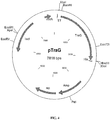
- E. coli strains are divided in K12 and B types. As the W3110 strain is a K12 strain, the applicability of the 2ccdB technology to the B strains has been tested. Thus two copies of ccdB have been introduced in the genome of an E. coli B (BL21(DE3) type ⁇ Genetic background: E. coli B - genotype F ⁇ ompT gal dcm Ion hsdS B (r B - m B -) ⁇ (DE3 [lacI lacUV5-T7 gene1])) to give the SE3 strain. Then, perfused fermentation has been realized to produce the TraG protein after several generations. Stability of the plasmids after 24h of induction is of 100% ( Fig. 7 ). Every ccdB genes are intact under these conditions of expression.
- the Staby® technology is based on the toxicity of the CcdB protein for E. coli.
- the CcdA antidote inhibits the expression of the ccdB gene, no selection pressure is applied against this toxin gene. It is so unlikely to find some E. coli resistant strains to CcdB.
- this kind of resistant has been artificially isolated by applying several round of growth in presence of mutagen agent ( Bernard et al., J Mol Biol. 1992, 226:735 ).
- This resistant strain presents a mutation in the gyrA gene (the target of CcdB) changing the arginine 462 in a cysteine.
- E. coli W3110 derivative strain called KW4: W31102ccdB 2gyrA. This strain has been compared to other W3110 strains for the production of the toxic protein model VHH6. After production, each strain was tested regarding the presence of the plasmid and 100% of retention was observed in all strains. As shown in Figure 9 , the production of VHH6 is better when 2 copies of the ccdB gene are present ( Figure 9 ). Moreover, as mentioned for the SE4 strain, the addition of 2 ccdB and 1 additional copy of gyrA (1 copy is already present) does not reduce the amount of protein produced and does not affect growth ability.
- a DNA fragment has been constructed containing the ccdB O157 gene and a kanamycin resistance gene surrounded by 2 FRT sites allowing the excision of the resistance gene after insertion of the DNA fragment into the bacterial genome.
- This construction was ligated in a plasmid and transformed in B462 (a strain resistant to CcdB due to the presence of the gyrA462 mutation).
- this fragment has been inserted between the yjjK and slt genes of E.
- a DNA fragment containing the kanamycin resistance gene with 2 FRT sites and surrounded by the region bordering the Q, S, R and Rz genes in order to allow their deletion by homologous recombination (as previously described in WO2013004817 ) was transduced in the SE2 strain [BL21(DE3) dcm::FRTccdB] to generate the strain BL21(DE3) dcm::FRTccdB QSRRz::FRT after removal of the kanamycin resistance gene.
- the SE5 strain has been compared to its unmodified-QSSRz homologous strain (SE3). There are growing both at the same rate of the SE1 strain and the production of a control protein (TraG) gave also the same results.
Landscapes
- Life Sciences & Earth Sciences (AREA)
- Health & Medical Sciences (AREA)
- Chemical & Material Sciences (AREA)
- Organic Chemistry (AREA)
- Engineering & Computer Science (AREA)
- Genetics & Genomics (AREA)
- Zoology (AREA)
- Wood Science & Technology (AREA)
- Bioinformatics & Cheminformatics (AREA)
- General Engineering & Computer Science (AREA)
- Biochemistry (AREA)
- Molecular Biology (AREA)
- General Health & Medical Sciences (AREA)
- Biotechnology (AREA)
- Microbiology (AREA)
- Biomedical Technology (AREA)
- Proteomics, Peptides & Aminoacids (AREA)
- General Chemical & Material Sciences (AREA)
- Chemical Kinetics & Catalysis (AREA)
- Physics & Mathematics (AREA)
- Biophysics (AREA)
- Plant Pathology (AREA)
- Micro-Organisms Or Cultivation Processes Thereof (AREA)
- Preparation Of Compounds By Using Micro-Organisms (AREA)
- Peptides Or Proteins (AREA)
Claims (16)
- Bakterielle Wirtszelle, die mindestens 2 Kopien einer Nukleinsäuresequenz, die ein Giftprotein codiert, und mindestens eine Kopie einer Nukleinsäuresequenz umfasst, die ein Gegengiftprotein zu dem Giftprotein codiert, vorausgesetzt, dass die mindestens 2 Kopien der Nukleinsäuresequenz, die das Giftprotein codiert, in das Chromosom der bakteriellen Wirtszelle insertiert sind, wobei es sich bei der bakteriellen Wirtszelle um E. coli handelt, wobei es sich bei dem Giftprotein um CcdB handelt und bei dem Gegengiftprotein um CcdA handelt, und wobei die Nukleinsäuresequenz, die das Gegengiftprotein codiert, von einem Plasmid getragen wird, das weiter ein Expressionssystem umfasst, bei dem eine Nukleinsäuresequenz, die ein rekombinantes Peptid, Polypeptid oder Protein von Interesse codiert, insertiert ist oder insertiert werden kann, wobei die Insertion einer zweiten Kopie der Nukleinsäuresequenz, die das Giftprotein codiert, in das Genom der Wirtszelle den Ertrag der Proteinproduktion erhöht.
- Bakterielle Wirtszelle nach Anspruch 1, wobei die zweite Kopie der Nukleinsäuresequenz, die ein CcdB-Giftprotein codiert, in Bezug auf die Stelle der ersten Kopie einer Nukleinsäuresequenz, die ein CcdB-Giftprotein codiert, auf einer gegenüberliegenden Seite des Chromosoms des bakteriellen Wirts insertiert ist.
- Bakterielle Wirtszelle nach Anspruch 1 oder Anspruch 2, wobei das CcdB-Giftprotein von SEQ ID-NR. 1 oder einer Nukleinsäuresequenz codiert wird, die mindestens 75 % Identität mit SEQ ID-NR. 1 aufweist.
- Wirtszelle nach einem der Ansprüche 1 bis 3, wobei das CcdA-Gegengiftprotein von SEQ ID-NR. 13 oder einer Nukleinsäuresequenz codiert wird, die mindestens 75 % Identität mit SEQ ID-NR. 13 aufweist.
- Bakterielle Wirtszelle nach einem der Ansprüche 1 bis 4, wobei das Expressionssystem einen Promotor umfasst, ausgewählt aus der Gruppe, die einen T7-Promotor, Ptrc, Para und Plac umfasst.
- Bakterielle Wirtszelle nach einem der Ansprüche 1 bis 5, wobei das Expressionssystem einen T7-Promotor umfasst, und die Wirtszelle weiter ein T7-RNA-Polymerase-Gen umfasst, das vorzugsweise in ihr Genom, stärker bevorzugt in ein T7-Expressionssystem insertiert ist.
- Bakterielle Wirtszelle nach einem der Ansprüche 1 bis 6, wobei das Expressionssystem einen T7-Promotor umfasst, und die Wirtszelle weiter einen genetisch modifizierten Phagen umfasst, der in ihr Genom insertiert ist, wobei der Phage vorzugsweise als ein Phage definiert ist, bei dem:- ein T7-Expressionssystem insertiert ist,- die S-, R- und/oder die Q-Gene inaktiviert sind, und- das Int- und/oder Xis-Gen inaktiviert sind.
- Bakterielle Wirtszelle nach einem der Ansprüche 1 bis 7, die weiter die Inaktivierung mindestens eines der Gene tonA, galK, araB, araA, lon, ompT, rcsA, hsdR, mrr, endA und recA umfasst.
- Bakterielle Wirtszelle nach einem der Ansprüche 1 bis 8, die weiter mindestens eine zusätzliche Kopie des gyrA-Gens umfasst.
- Set, umfassend:- eine bakterielle Wirtszelle, die mindestens 2 Kopien einer Nukleinsäuresequenz umfasst, die ein Giftprotein codiert, wobei die mindestens 2 Kopien in das Chromosom der bakteriellen Wirtszelle insertiert sind und es sich bei der bakteriellen Wirtszelle um E. coli. handelt, und- einen Vektor, umfassend:wobei es sich bei dem Giftprotein um CcdB handelt und bei dem Gegengiftprotein um CcdA handelt, und wobei die Insertion einer zweiten Kopie der Nukleinsäuresequenz, die das Giftprotein codiert, in das Genom der Wirtszelle den Ertrag der Proteinproduktion erhöht.-- mindestens eine Kopie einer Nukleinsäuresequenz, die ein Gegengiftprotein codiert, und-- mindestens eine Kopie eines Expressionssystem, bei dem eine Nukleinsäuresequenz, die ein rekombinantes Peptid, Polypeptid oder Protein von Interesse codiert, insertiert ist oder insertiert werden kann,
- Set nach Anspruch 10, wobei die Nukleinsäuresequenz, die ein Peptid, Polypeptid oder Protein von Interesse codiert, der Steuerung eines Promotors, ausgewählt aus der Gruppe, die einen T7-Promotor, Ptrc, Para und Plac umfasst, unterliegt.
- Verfahren zur Produktion eines rekombinanten Peptids, Polypeptids oder Proteins von Interesse, wobei das Verfahren das Kultivieren der bakterielle Wirtszelle nach einem der Ansprüche 1 bis 9, wobei ein Expressionssystem, bei dem eine Nukleinsäuresequenz, die ein rekombinantes Peptid, Polypeptid oder Protein von Interesse codiert, insertiert ist, in dem Plasmid umfasst ist, und das Gewinnen des Peptids, Polypeptids oder Proteins von Interesse umfasst.
- Verfahren nach Anspruch 12, wobei es sich bei dem rekombinanten Protein um ein sekretiertes Protein, ein Transmembranprotein oder ein Protein handelt, das für den Bakterienstamm toxisch ist.
- Bakterielle Wirtszelle nach einem der Ansprüche 1 bis 9, oder Verfahren nach Anspruch 12 oder 13, wobei die bakterielle Wirtszelle ein Plasmid umfasst, das ein Expressionssystem umfasst, bei dem eine Nukleinsäuresequenz, die ein rekombinantes Peptid, Polypeptid oder Protein von Interesse codiert, insertiert ist oder insertiert werden kann.
- Set nach Anspruch 10 oder 11, wobei das Set einen Vektor umfasst, der mindestens eine Kopie eines Expressionssystems umfasst, bei dem eine Nukleinsäuresequenz, die ein rekombinantes Peptid, Polypeptid oder Protein von Interesse codiert, insertiert ist oder insertiert werden kann.
- Bakterielle Wirtszelle nach Anspruch 14, Verfahren nach Anspruch 14, oder Set nach Anspruch 15, wobei das rekombinante Peptid, Polypeptid oder Protein von Interesse für die bakterielle Wirtszelle toxisch ist.
Applications Claiming Priority (3)
| Application Number | Priority Date | Filing Date | Title |
|---|---|---|---|
| EP14178656 | 2014-07-25 | ||
| EP14182341 | 2014-08-26 | ||
| PCT/EP2015/067036 WO2016012607A1 (en) | 2014-07-25 | 2015-07-24 | Improved host cell for producing proteins |
Publications (2)
| Publication Number | Publication Date |
|---|---|
| EP3172334A1 EP3172334A1 (de) | 2017-05-31 |
| EP3172334B1 true EP3172334B1 (de) | 2021-11-10 |
Family
ID=53718025
Family Applications (1)
| Application Number | Title | Priority Date | Filing Date |
|---|---|---|---|
| EP15741223.0A Active EP3172334B1 (de) | 2014-07-25 | 2015-07-24 | Verbesserte wirtszelle zur herstellung von proteinen |
Country Status (9)
| Country | Link |
|---|---|
| US (1) | US10718001B2 (de) |
| EP (1) | EP3172334B1 (de) |
| JP (3) | JP7126824B2 (de) |
| CN (1) | CN106715681B (de) |
| AU (1) | AU2015293825B2 (de) |
| BR (1) | BR112017001463A2 (de) |
| CL (1) | CL2017000200A1 (de) |
| ES (1) | ES2903413T3 (de) |
| WO (1) | WO2016012607A1 (de) |
Families Citing this family (12)
| Publication number | Priority date | Publication date | Assignee | Title |
|---|---|---|---|---|
| US11504404B2 (en) | 2016-02-24 | 2022-11-22 | Crown Laboratories, Inc. | Skin probiotic formulation |
| US11180541B2 (en) * | 2017-09-28 | 2021-11-23 | Geltor, Inc. | Recombinant collagen and elastin molecules and uses thereof |
| SG11202111349QA (en) | 2019-04-12 | 2021-11-29 | Geltor Inc | Recombinant elastin and production thereof |
| CN110373422B (zh) * | 2019-07-12 | 2022-05-10 | 扬州大学 | 重组裂解猪霍乱沙门菌及其构建方法和应用 |
| WO2021023367A1 (de) * | 2019-08-05 | 2021-02-11 | Wacker Chemie Ag | Bakterienstamm zur freisetzung eines rekombinanten proteins in einem fermentationsverfahren |
| CN116134127A (zh) * | 2020-07-24 | 2023-05-16 | 杜克大学 | 用于生产乙酰辅酶a衍生产物的方法和组合物 |
| CN114540394A (zh) * | 2020-11-25 | 2022-05-27 | 中国科学院深圳先进技术研究院 | 一种噬菌体相关的基因诱导表达系统 |
| WO2023069900A1 (en) * | 2021-10-18 | 2023-04-27 | Modernatx, Inc. | Custom bacterial strain for recombinant protein production |
| CN118374547A (zh) * | 2023-01-13 | 2024-07-23 | 上海吉量医药工程有限公司 | 一种无抗微质粒及其制备方法和应用 |
| EP4655308A2 (de) | 2023-01-25 | 2025-12-03 | Novel Biotechnology USA Inc. | Expressionssystem zur herstellung von produkten |
| GB202304540D0 (en) | 2023-03-28 | 2023-05-10 | Univ Tartu | Method of biosynthesis |
| CN117187281A (zh) * | 2023-09-11 | 2023-12-08 | 云舟生物科技(广州)股份有限公司 | 一种无抗性质粒生产系统及其应用 |
Family Cites Families (21)
| Publication number | Priority date | Publication date | Assignee | Title |
|---|---|---|---|---|
| US4952496A (en) | 1984-03-30 | 1990-08-28 | Associated Universities, Inc. | Cloning and expression of the gene for bacteriophage T7 RNA polymerase |
| DE69942249D1 (de) | 1998-05-07 | 2010-05-27 | Univ Bruxelles | Auf cytotoxinen basierendes biologisches einschlusssystem |
| US6355412B1 (en) | 1999-07-09 | 2002-03-12 | The European Molecular Biology Laboratory | Methods and compositions for directed cloning and subcloning using homologous recombination |
| EP1111061A1 (de) * | 1999-12-20 | 2001-06-27 | Universite Libre De Bruxelles | Vektor mit doppelter Selektion |
| EP1362110B1 (de) * | 2001-02-23 | 2012-09-12 | Université Libre de Bruxelles | Verfahren zur selektion von rekombinanten klonen, die eine für ein antidot- protein kodierende sequenz enthalten, das gegen ein toxin gerichtet ist |
| JP4191037B2 (ja) | 2001-11-02 | 2008-12-03 | 日本テクノ株式会社 | 滅菌用振動攪拌装置並びに振動攪拌装置を用いる滅菌装置及び滅菌方法 |
| WO2003078638A1 (en) | 2002-03-19 | 2003-09-25 | Universite Libre De Bruxelles | Poison/antidote genetic systems for the selection of genetically modified eucaryote cells or organisms |
| AU2003260200A1 (en) * | 2002-09-03 | 2004-03-29 | Universite Libre De Bruxelles | Reversible, parallel and multitask cloning method and kit |
| GB0609124D0 (en) * | 2006-05-09 | 2006-06-21 | Univ Birmingham | Plasmid curing |
| JP2010187541A (ja) | 2007-05-29 | 2010-09-02 | Ajinomoto Co Inc | L−リジンの製造法 |
| EP2310511B1 (de) * | 2008-07-18 | 2015-01-14 | Sanofi Pasteur | Selbstreplizierender vektor ohne antibiotikaresistenzgen |
| JP5729702B2 (ja) | 2009-03-23 | 2015-06-03 | 国立研究開発法人産業技術総合研究所 | コウジ酸の産生に必須の遺伝子を利用してコウジ酸の産生量を向上する方法 |
| RU2548809C2 (ru) * | 2009-05-22 | 2015-04-20 | Мериал Лимитед | Плазмида без устойчивости к антибиотику |
| EP2689020B1 (de) * | 2011-03-22 | 2018-05-16 | OPX Biotechnologies Inc. | Mikrobielle herstellung chemischer produkte und zusammensetzungen daraus sowie verfahren und systeme dafür |
| US9920323B2 (en) * | 2011-07-07 | 2018-03-20 | Delphi Genetics | Genetically modified phage and use thereof |
| US20140147890A1 (en) * | 2011-07-07 | 2014-05-29 | Delphi Genetics | Genetically modified phage and use thereof |
| CN103797113B (zh) * | 2011-07-07 | 2018-08-10 | 德尔菲遗传学公司 | 遗传修饰的噬菌体及其用途 |
| EP2570134A1 (de) * | 2011-09-15 | 2013-03-20 | De la Cueva-Mendez, Guillermo | Systeme und Verfahren zum Verringern des Zellwachstums und Einbinden der selektiven Abtötung von Zielzellen |
| US9657310B2 (en) | 2012-04-27 | 2017-05-23 | Jcr Pharmaceuticals Co., Ltd. | Expression vector |
| DE102012213206A1 (de) * | 2012-07-26 | 2014-01-30 | Trumpf Laser- Und Systemtechnik Gmbh | Vorrichtung zum Drehen eines Laserbearbeitungskopfes mittels eines Torque-Motors |
| JP2014057546A (ja) | 2012-09-18 | 2014-04-03 | Osaka Univ | トキシン−アンチトキシン系を利用したベクター |
-
2015
- 2015-07-24 EP EP15741223.0A patent/EP3172334B1/de active Active
- 2015-07-24 ES ES15741223T patent/ES2903413T3/es active Active
- 2015-07-24 WO PCT/EP2015/067036 patent/WO2016012607A1/en not_active Ceased
- 2015-07-24 JP JP2017503825A patent/JP7126824B2/ja active Active
- 2015-07-24 AU AU2015293825A patent/AU2015293825B2/en active Active
- 2015-07-24 CN CN201580051413.5A patent/CN106715681B/zh active Active
- 2015-07-24 US US15/329,087 patent/US10718001B2/en active Active
- 2015-07-24 BR BR112017001463A patent/BR112017001463A2/pt not_active Application Discontinuation
-
2017
- 2017-01-25 CL CL2017000200A patent/CL2017000200A1/es unknown
-
2020
- 2020-06-18 JP JP2020105496A patent/JP7194711B2/ja active Active
-
2022
- 2022-08-26 JP JP2022134680A patent/JP2022162124A/ja active Pending
Non-Patent Citations (1)
| Title |
|---|
| None * |
Also Published As
| Publication number | Publication date |
|---|---|
| AU2015293825A1 (en) | 2017-02-16 |
| CN106715681B (zh) | 2021-08-24 |
| EP3172334A1 (de) | 2017-05-31 |
| WO2016012607A1 (en) | 2016-01-28 |
| ES2903413T3 (es) | 2022-04-01 |
| JP7194711B2 (ja) | 2022-12-22 |
| JP2020202828A (ja) | 2020-12-24 |
| US10718001B2 (en) | 2020-07-21 |
| BR112017001463A2 (pt) | 2018-02-20 |
| JP2022162124A (ja) | 2022-10-21 |
| CA2956107A1 (en) | 2016-01-28 |
| CN106715681A (zh) | 2017-05-24 |
| US20170211118A1 (en) | 2017-07-27 |
| JP7126824B2 (ja) | 2022-08-29 |
| AU2015293825B2 (en) | 2019-06-13 |
| CL2017000200A1 (es) | 2017-07-14 |
| JP2017523780A (ja) | 2017-08-24 |
Similar Documents
| Publication | Publication Date | Title |
|---|---|---|
| EP3172334B1 (de) | Verbesserte wirtszelle zur herstellung von proteinen | |
| CN100560724C (zh) | 用于选择含有编码针对毒性分子的解毒剂蛋白的序列的重组克隆的方法 | |
| MX2014013546A (es) | Un bacteriofago para biocontrol de salmonella y en la preparacion o procesamiento de alimentos. | |
| EP2729563B1 (de) | Genetisch modifizierte phagen und verwendung dafür | |
| US20140147890A1 (en) | Genetically modified phage and use thereof | |
| US9920323B2 (en) | Genetically modified phage and use thereof | |
| EP2386641A1 (de) | Verfahren zur extrazellulären Herstellung rekombinanter Biomoleküle in einem Mikroorganismus | |
| EP3541942A1 (de) | Durch fructooligosaccharide auswählbare konjugative vektoren | |
| AU2001288542B2 (en) | Anti-microbial agents | |
| CA2956107C (en) | Improved host cell for producing proteins | |
| EP2543720A1 (de) | Genetisch modifizierte Phagen und Verwendung dafür | |
| Altenbuchner et al. | Escherichia coli | |
| AU2001288542A1 (en) | Anti-microbial agents | |
| MX2007001847A (es) | Cepas mejoradas de e.coli para la produccion de adn de plasmido. | |
| US7758854B2 (en) | Anti-microbial agents | |
| Santos | CRISPR/Cas9-Based Genome Editing Of Lactic Acid Bacteria For The Improvement Of Biopharmaceutical-Grade Plasmid And Recombinant Protein Production | |
| FO | Position Statement of the ZKBS on the Suitability of Vectors as a part of biological safety measures according to § 8 para. 2 GenTSV |
Legal Events
| Date | Code | Title | Description |
|---|---|---|---|
| STAA | Information on the status of an ep patent application or granted ep patent |
Free format text: STATUS: THE INTERNATIONAL PUBLICATION HAS BEEN MADE |
|
| PUAI | Public reference made under article 153(3) epc to a published international application that has entered the european phase |
Free format text: ORIGINAL CODE: 0009012 |
|
| STAA | Information on the status of an ep patent application or granted ep patent |
Free format text: STATUS: REQUEST FOR EXAMINATION WAS MADE |
|
| 17P | Request for examination filed |
Effective date: 20170227 |
|
| AK | Designated contracting states |
Kind code of ref document: A1 Designated state(s): AL AT BE BG CH CY CZ DE DK EE ES FI FR GB GR HR HU IE IS IT LI LT LU LV MC MK MT NL NO PL PT RO RS SE SI SK SM TR |
|
| AX | Request for extension of the european patent |
Extension state: BA ME |
|
| DAV | Request for validation of the european patent (deleted) | ||
| DAX | Request for extension of the european patent (deleted) | ||
| STAA | Information on the status of an ep patent application or granted ep patent |
Free format text: STATUS: EXAMINATION IS IN PROGRESS |
|
| 17Q | First examination report despatched |
Effective date: 20180215 |
|
| GRAP | Despatch of communication of intention to grant a patent |
Free format text: ORIGINAL CODE: EPIDOSNIGR1 |
|
| STAA | Information on the status of an ep patent application or granted ep patent |
Free format text: STATUS: GRANT OF PATENT IS INTENDED |
|
| INTG | Intention to grant announced |
Effective date: 20210316 |
|
| RAP3 | Party data changed (applicant data changed or rights of an application transferred) |
Owner name: DELPHI GENETICS |
|
| GRAS | Grant fee paid |
Free format text: ORIGINAL CODE: EPIDOSNIGR3 |
|
| GRAA | (expected) grant |
Free format text: ORIGINAL CODE: 0009210 |
|
| STAA | Information on the status of an ep patent application or granted ep patent |
Free format text: STATUS: THE PATENT HAS BEEN GRANTED |
|
| AK | Designated contracting states |
Kind code of ref document: B1 Designated state(s): AL AT BE BG CH CY CZ DE DK EE ES FI FR GB GR HR HU IE IS IT LI LT LU LV MC MK MT NL NO PL PT RO RS SE SI SK SM TR |
|
| RAP1 | Party data changed (applicant data changed or rights of an application transferred) |
Owner name: R.P. SCHERER TECHNOLOGIES, LLC |
|
| REG | Reference to a national code |
Ref country code: GB Ref legal event code: FG4D |
|
| REG | Reference to a national code |
Ref country code: AT Ref legal event code: REF Ref document number: 1446131 Country of ref document: AT Kind code of ref document: T Effective date: 20211115 Ref country code: CH Ref legal event code: EP |
|
| REG | Reference to a national code |
Ref country code: DE Ref legal event code: R096 Ref document number: 602015074872 Country of ref document: DE |
|
| REG | Reference to a national code |
Ref country code: IE Ref legal event code: FG4D |
|
| REG | Reference to a national code |
Ref country code: SE Ref legal event code: TRGR |
|
| REG | Reference to a national code |
Ref country code: NL Ref legal event code: FP |
|
| REG | Reference to a national code |
Ref country code: LT Ref legal event code: MG9D |
|
| REG | Reference to a national code |
Ref country code: ES Ref legal event code: FG2A Ref document number: 2903413 Country of ref document: ES Kind code of ref document: T3 Effective date: 20220401 |
|
| REG | Reference to a national code |
Ref country code: AT Ref legal event code: MK05 Ref document number: 1446131 Country of ref document: AT Kind code of ref document: T Effective date: 20211110 |
|
| PG25 | Lapsed in a contracting state [announced via postgrant information from national office to epo] |
Ref country code: RS Free format text: LAPSE BECAUSE OF FAILURE TO SUBMIT A TRANSLATION OF THE DESCRIPTION OR TO PAY THE FEE WITHIN THE PRESCRIBED TIME-LIMIT Effective date: 20211110 Ref country code: LT Free format text: LAPSE BECAUSE OF FAILURE TO SUBMIT A TRANSLATION OF THE DESCRIPTION OR TO PAY THE FEE WITHIN THE PRESCRIBED TIME-LIMIT Effective date: 20211110 Ref country code: FI Free format text: LAPSE BECAUSE OF FAILURE TO SUBMIT A TRANSLATION OF THE DESCRIPTION OR TO PAY THE FEE WITHIN THE PRESCRIBED TIME-LIMIT Effective date: 20211110 Ref country code: BG Free format text: LAPSE BECAUSE OF FAILURE TO SUBMIT A TRANSLATION OF THE DESCRIPTION OR TO PAY THE FEE WITHIN THE PRESCRIBED TIME-LIMIT Effective date: 20220210 Ref country code: AT Free format text: LAPSE BECAUSE OF FAILURE TO SUBMIT A TRANSLATION OF THE DESCRIPTION OR TO PAY THE FEE WITHIN THE PRESCRIBED TIME-LIMIT Effective date: 20211110 |
|
| PG25 | Lapsed in a contracting state [announced via postgrant information from national office to epo] |
Ref country code: IS Free format text: LAPSE BECAUSE OF FAILURE TO SUBMIT A TRANSLATION OF THE DESCRIPTION OR TO PAY THE FEE WITHIN THE PRESCRIBED TIME-LIMIT Effective date: 20220310 Ref country code: PT Free format text: LAPSE BECAUSE OF FAILURE TO SUBMIT A TRANSLATION OF THE DESCRIPTION OR TO PAY THE FEE WITHIN THE PRESCRIBED TIME-LIMIT Effective date: 20220310 Ref country code: PL Free format text: LAPSE BECAUSE OF FAILURE TO SUBMIT A TRANSLATION OF THE DESCRIPTION OR TO PAY THE FEE WITHIN THE PRESCRIBED TIME-LIMIT Effective date: 20211110 Ref country code: NO Free format text: LAPSE BECAUSE OF FAILURE TO SUBMIT A TRANSLATION OF THE DESCRIPTION OR TO PAY THE FEE WITHIN THE PRESCRIBED TIME-LIMIT Effective date: 20220210 Ref country code: LV Free format text: LAPSE BECAUSE OF FAILURE TO SUBMIT A TRANSLATION OF THE DESCRIPTION OR TO PAY THE FEE WITHIN THE PRESCRIBED TIME-LIMIT Effective date: 20211110 Ref country code: HR Free format text: LAPSE BECAUSE OF FAILURE TO SUBMIT A TRANSLATION OF THE DESCRIPTION OR TO PAY THE FEE WITHIN THE PRESCRIBED TIME-LIMIT Effective date: 20211110 Ref country code: GR Free format text: LAPSE BECAUSE OF FAILURE TO SUBMIT A TRANSLATION OF THE DESCRIPTION OR TO PAY THE FEE WITHIN THE PRESCRIBED TIME-LIMIT Effective date: 20220211 |
|
| PG25 | Lapsed in a contracting state [announced via postgrant information from national office to epo] |
Ref country code: SM Free format text: LAPSE BECAUSE OF FAILURE TO SUBMIT A TRANSLATION OF THE DESCRIPTION OR TO PAY THE FEE WITHIN THE PRESCRIBED TIME-LIMIT Effective date: 20211110 Ref country code: SK Free format text: LAPSE BECAUSE OF FAILURE TO SUBMIT A TRANSLATION OF THE DESCRIPTION OR TO PAY THE FEE WITHIN THE PRESCRIBED TIME-LIMIT Effective date: 20211110 Ref country code: RO Free format text: LAPSE BECAUSE OF FAILURE TO SUBMIT A TRANSLATION OF THE DESCRIPTION OR TO PAY THE FEE WITHIN THE PRESCRIBED TIME-LIMIT Effective date: 20211110 Ref country code: EE Free format text: LAPSE BECAUSE OF FAILURE TO SUBMIT A TRANSLATION OF THE DESCRIPTION OR TO PAY THE FEE WITHIN THE PRESCRIBED TIME-LIMIT Effective date: 20211110 Ref country code: DK Free format text: LAPSE BECAUSE OF FAILURE TO SUBMIT A TRANSLATION OF THE DESCRIPTION OR TO PAY THE FEE WITHIN THE PRESCRIBED TIME-LIMIT Effective date: 20211110 Ref country code: CZ Free format text: LAPSE BECAUSE OF FAILURE TO SUBMIT A TRANSLATION OF THE DESCRIPTION OR TO PAY THE FEE WITHIN THE PRESCRIBED TIME-LIMIT Effective date: 20211110 |
|
| REG | Reference to a national code |
Ref country code: DE Ref legal event code: R097 Ref document number: 602015074872 Country of ref document: DE |
|
| PLBE | No opposition filed within time limit |
Free format text: ORIGINAL CODE: 0009261 |
|
| STAA | Information on the status of an ep patent application or granted ep patent |
Free format text: STATUS: NO OPPOSITION FILED WITHIN TIME LIMIT |
|
| 26N | No opposition filed |
Effective date: 20220811 |
|
| PG25 | Lapsed in a contracting state [announced via postgrant information from national office to epo] |
Ref country code: AL Free format text: LAPSE BECAUSE OF FAILURE TO SUBMIT A TRANSLATION OF THE DESCRIPTION OR TO PAY THE FEE WITHIN THE PRESCRIBED TIME-LIMIT Effective date: 20211110 |
|
| PG25 | Lapsed in a contracting state [announced via postgrant information from national office to epo] |
Ref country code: SI Free format text: LAPSE BECAUSE OF FAILURE TO SUBMIT A TRANSLATION OF THE DESCRIPTION OR TO PAY THE FEE WITHIN THE PRESCRIBED TIME-LIMIT Effective date: 20211110 |
|
| PG25 | Lapsed in a contracting state [announced via postgrant information from national office to epo] |
Ref country code: MC Free format text: LAPSE BECAUSE OF FAILURE TO SUBMIT A TRANSLATION OF THE DESCRIPTION OR TO PAY THE FEE WITHIN THE PRESCRIBED TIME-LIMIT Effective date: 20211110 |
|
| PG25 | Lapsed in a contracting state [announced via postgrant information from national office to epo] |
Ref country code: LU Free format text: LAPSE BECAUSE OF NON-PAYMENT OF DUE FEES Effective date: 20220724 |
|
| PG25 | Lapsed in a contracting state [announced via postgrant information from national office to epo] |
Ref country code: IE Free format text: LAPSE BECAUSE OF NON-PAYMENT OF DUE FEES Effective date: 20220724 |
|
| PG25 | Lapsed in a contracting state [announced via postgrant information from national office to epo] |
Ref country code: HU Free format text: LAPSE BECAUSE OF FAILURE TO SUBMIT A TRANSLATION OF THE DESCRIPTION OR TO PAY THE FEE WITHIN THE PRESCRIBED TIME-LIMIT; INVALID AB INITIO Effective date: 20150724 |
|
| PG25 | Lapsed in a contracting state [announced via postgrant information from national office to epo] |
Ref country code: MK Free format text: LAPSE BECAUSE OF FAILURE TO SUBMIT A TRANSLATION OF THE DESCRIPTION OR TO PAY THE FEE WITHIN THE PRESCRIBED TIME-LIMIT Effective date: 20211110 Ref country code: CY Free format text: LAPSE BECAUSE OF FAILURE TO SUBMIT A TRANSLATION OF THE DESCRIPTION OR TO PAY THE FEE WITHIN THE PRESCRIBED TIME-LIMIT Effective date: 20211110 |
|
| PG25 | Lapsed in a contracting state [announced via postgrant information from national office to epo] |
Ref country code: MT Free format text: LAPSE BECAUSE OF FAILURE TO SUBMIT A TRANSLATION OF THE DESCRIPTION OR TO PAY THE FEE WITHIN THE PRESCRIBED TIME-LIMIT Effective date: 20211110 |
|
| PGFP | Annual fee paid to national office [announced via postgrant information from national office to epo] |
Ref country code: NL Payment date: 20250726 Year of fee payment: 11 |
|
| PGFP | Annual fee paid to national office [announced via postgrant information from national office to epo] |
Ref country code: ES Payment date: 20250801 Year of fee payment: 11 |
|
| PGFP | Annual fee paid to national office [announced via postgrant information from national office to epo] |
Ref country code: DE Payment date: 20250729 Year of fee payment: 11 |
|
| PGFP | Annual fee paid to national office [announced via postgrant information from national office to epo] |
Ref country code: IT Payment date: 20250721 Year of fee payment: 11 |
|
| PGFP | Annual fee paid to national office [announced via postgrant information from national office to epo] |
Ref country code: BE Payment date: 20250728 Year of fee payment: 11 Ref country code: GB Payment date: 20250728 Year of fee payment: 11 |
|
| PGFP | Annual fee paid to national office [announced via postgrant information from national office to epo] |
Ref country code: FR Payment date: 20250725 Year of fee payment: 11 |
|
| PGFP | Annual fee paid to national office [announced via postgrant information from national office to epo] |
Ref country code: CH Payment date: 20250801 Year of fee payment: 11 Ref country code: SE Payment date: 20250727 Year of fee payment: 11 |
|
| PG25 | Lapsed in a contracting state [announced via postgrant information from national office to epo] |
Ref country code: TR Free format text: LAPSE BECAUSE OF FAILURE TO SUBMIT A TRANSLATION OF THE DESCRIPTION OR TO PAY THE FEE WITHIN THE PRESCRIBED TIME-LIMIT Effective date: 20211110 |