EP3159389B1 - Latent heat cold storage material - Google Patents
Latent heat cold storage material Download PDFInfo
- Publication number
- EP3159389B1 EP3159389B1 EP16190111.1A EP16190111A EP3159389B1 EP 3159389 B1 EP3159389 B1 EP 3159389B1 EP 16190111 A EP16190111 A EP 16190111A EP 3159389 B1 EP3159389 B1 EP 3159389B1
- Authority
- EP
- European Patent Office
- Prior art keywords
- latent heat
- cold storage
- storage material
- temperature
- heat cold
- Prior art date
- Legal status (The legal status is an assumption and is not a legal conclusion. Google has not performed a legal analysis and makes no representation as to the accuracy of the status listed.)
- Active
Links
Images
Classifications
-
- C—CHEMISTRY; METALLURGY
- C09—DYES; PAINTS; POLISHES; NATURAL RESINS; ADHESIVES; COMPOSITIONS NOT OTHERWISE PROVIDED FOR; APPLICATIONS OF MATERIALS NOT OTHERWISE PROVIDED FOR
- C09K—MATERIALS FOR MISCELLANEOUS APPLICATIONS, NOT PROVIDED FOR ELSEWHERE
- C09K5/00—Heat-transfer, heat-exchange or heat-storage materials, e.g. refrigerants; Materials for the production of heat or cold by chemical reactions other than by combustion
- C09K5/02—Materials undergoing a change of physical state when used
- C09K5/06—Materials undergoing a change of physical state when used the change of state being from liquid to solid or vice versa
- C09K5/066—Cooling mixtures; De-icing compositions
-
- C—CHEMISTRY; METALLURGY
- C09—DYES; PAINTS; POLISHES; NATURAL RESINS; ADHESIVES; COMPOSITIONS NOT OTHERWISE PROVIDED FOR; APPLICATIONS OF MATERIALS NOT OTHERWISE PROVIDED FOR
- C09K—MATERIALS FOR MISCELLANEOUS APPLICATIONS, NOT PROVIDED FOR ELSEWHERE
- C09K5/00—Heat-transfer, heat-exchange or heat-storage materials, e.g. refrigerants; Materials for the production of heat or cold by chemical reactions other than by combustion
- C09K5/02—Materials undergoing a change of physical state when used
- C09K5/06—Materials undergoing a change of physical state when used the change of state being from liquid to solid or vice versa
- C09K5/063—Materials absorbing or liberating heat during crystallisation; Heat storage materials
-
- Y—GENERAL TAGGING OF NEW TECHNOLOGICAL DEVELOPMENTS; GENERAL TAGGING OF CROSS-SECTIONAL TECHNOLOGIES SPANNING OVER SEVERAL SECTIONS OF THE IPC; TECHNICAL SUBJECTS COVERED BY FORMER USPC CROSS-REFERENCE ART COLLECTIONS [XRACs] AND DIGESTS
- Y02—TECHNOLOGIES OR APPLICATIONS FOR MITIGATION OR ADAPTATION AGAINST CLIMATE CHANGE
- Y02E—REDUCTION OF GREENHOUSE GAS [GHG] EMISSIONS, RELATED TO ENERGY GENERATION, TRANSMISSION OR DISTRIBUTION
- Y02E60/00—Enabling technologies; Technologies with a potential or indirect contribution to GHG emissions mitigation
- Y02E60/14—Thermal energy storage
Definitions
- the present disclosure relates to a latent heat cold storage material that is used in storage and transportation of, for example, fresh foods.
- the latent heat cold storage material is filled into a cold storage vessel, and cooled in a freezer before being used.
- a mechanism of distributing products while maintaining a low-temperature state, a refrigerated state or a frozen state consistently from a production area to a consumption area is called a cold chain.
- the cold chain is now used in various fields including not only those of fresh products and frozen foods but also those of cut flowers, pharmaceuticals, electronic components and so on, but previous mechanisms have many problems. Particularly significant problems include energy costs for cooling apparatuses, an increase in CO 2 emission, severity of work at cargo handling sites, and difficulty in managing different temperature zones.
- refrigeration and freezing trucks are provided with a cooling apparatus, and accordingly require a high transportation cost, and are mostly large trucks, thus being unsuitable for transportation of small lots.
- the heat storage material is a material which stores heat or cold heat in a substance, and effectively utilizes entry and exit of heat as required.
- a heat storage material which mainly utilizes an exothermic/endothermic reaction associated with a phase change in a substance is called a latent heat storage material, and particularly, a heat storage suitable for freezing preservation in a temperature range of -10°C or lower, and is slightly supercooled in order to reduce electric energy required for cooling.
- a latent heat cold storage material according to the invention is defined in claim 1.
- the present disclosure provides a latent heat cold storage material which is suitable for freezing preservation in a temperature range of -10°C or lower, and is slightly supercooled in order to reduce electric energy required for cooling. Further advantageous embodiments are defined in dependent claims.
- the latent heat cold storage material as described in PTL 1 has a high melting temperature of about -10°C, and hence has an endothermic peak of higher than -10°C, and is therefore not suitable for freezing preservation at -10°C or lower, or is largely supercooled, and is therefore required to be cooled to about -40°C for being cold-stored (solidified).
- the latent heat cold storage material is suitable for freezing preservation in a temperature range of -10°C or lower, and is slightly supercooled in order to reduce electric energy required for cooling.
- a latent heat cold storage material according to the invention is defined in claim 1.
- the present disclosure provides a latent heat cold storage material which is suitable for freezing preservation in a temperature range of -10°C or lower, and is slightly supercooled in order to reduce electric energy required for cooling.
- the latent heat cold storage material as described in PTL 1 has a high melting temperature of about -10°C, and hence has an endothermic peak of higher than -10°C, and is therefore not suitable for freezing preservation at -10°C or lower, or is largely supercooled, and is therefore required to be cooled to about -40°C for being cold-stored (solidified).
- the latent heat cold storage material is significantly supercooled, and is therefore required to be cooled to about -40°C for being cold-stored (solidified).
- the supercooling is a phenomenon that in a cooling process of a liquid, no phase change occurs even at a temperature at which a phase change should inherently occur to change the liquid into a solid, and the temperature decreases in a liquid state.
- a conventional cold storage material for freezing i.e. a system in which ammonium chloride is mixed with sodium chloride, has a problem that it is necessary to cool the cold storage material to a temperature lower by 20 to 30 K than a temperature at which cold heat is required, so that excessive electric energy is required for cooling.
- a first aspect of the present invention provides a latent heat cold storage material according to claim 1.
- a cold storage material suitable for freezing preservation at -10°C or lower can be cold-stored (solidified) at -29°C or higher.
- a lower limit of a cooling temperature (solidification starting temperature) for cold storage can be increased from near -40°C to -29°C or higher to considerably reduce electric energy required for cooling.
- the crystalline powder is formed of at least one urea derivative selected from the group consisting of 1,3-diethylurea, 1,3-dibutylurea and 1,3-dicyclohexylurea.
- a difference between the solidification starting temperature and the melting starting temperature can be further decreased.
- a second and third aspect of the present invention provides, for example, the latent heat cold storage material according to the first aspect, wherein the crystalline powder is formed of 1,3-diethylurea or 1,3-dibutylurea, respectively.
- a difference between the solidification starting temperature and the melting starting temperature can be further decreased.
- the inorganic salt includes sodium chloride and ammonium chloride, or potassium chloride and ammonium chloride. According to the first aspect, a difference between the solidification starting temperature and the melting starting temperature can be further decreased to considerably reduce electric energy required for cooling.
- the latent heat cold storage material of the present disclosure contains: water; a crystalline powder; and at least one inorganic salt.
- the crystalline powder is formed of a compound having a saturated concentration of less than 7.0 wt% to an aqueous solution of the inorganic salt having a concentration of 25 wt% at 25°C.
- a concentration of the crystalline powder is set to a concentration exceeding at least a saturated concentration (of the crystalline powder) to the aqueous solution of the inorganic salt at 25°C.
- a crystalline powder to be used as a supercooling inhibitor is preferably one that has no toxicity, and is inexpensive and easy to handle.
- One crystalline powder may be used alone, or two or more crystalline powders may be used in combination.
- the latent heat cold storage material of the present disclosure contains a crystalline powder as a supercooling inhibitor.
- the crystalline powder is formed of a compound having low solubility in an aqueous solution of an inorganic salt (hereinafter, also referred to as a low-solubility compound).
- the phrase "low solubility in an aqueous solution of an inorganic salt” means that a saturated concentration of an object compound to an aqueous solution of an inorganic salt (preferably an aqueous solution containing only 15 wt% of sodium chloride and 10 wt% of ammonium chloride) having a concentration of 25 wt% at 25°C is less than 7.0 wt%, i.e.
- the low-solubility compound is preferably one in which the saturated concentration of an object compound to an aqueous solution of an inorganic salt (preferably an aqueous solution containing only 15 wt% of sodium chloride and 10 wt% of ammonium chloride) having a concentration of 25 wt% at 25°C is less than 5.0 wt%, more preferably less than 4.0 wt%.
- a content (i.e., total amount) of the crystalline powder in the latent heat cold storage material of the present disclosure is preferably an amount that exceeds a saturated concentration of the crystalline powder to an inorganic salt aqueous solution (preferably an aqueous solution containing only 15 wt% of sodium chloride and 10 wt% of ammonium chloride) having a concentration of 25 wt% at 25°C.
- an inorganic salt aqueous solution preferably an aqueous solution containing only 15 wt% of sodium chloride and 10 wt% of ammonium chloride
- An upper limit of the concentration of the crystalline powder is not particularly limited, but when the amount of the dissolved supercooling inhibitor is large, harmful effects such as a decrease in latent heat amount and a decrease in melting point may often occur, and therefore the concentration of the crystalline powder is preferably 10.0 wt% or less, more preferably 9.0 wt% or less, further preferably 8.0 wt% or less.
- the crystalline powder has a nature of exhibiting a phenomenon that the crystalline powder is precipitated from an aqueous solution of an inorganic salt with an added amount (of the crystalline powder) that is as small as possible.
- the "solubility" refers to a limit of an amount at which a solute is dissolved in a certain amount of a solvent.
- the solubility is represented by a mass (g) of the solute which is dissolved in 100 g of the solvent at a certain temperature.
- the solubility is represented by a mass (g) of a solute which is dissolved in 100 g of water at 25°C.
- the "saturated concentration” refers to a concentration of an aqueous solution in which a solute is dissolved up to the solubility.
- the low-solubility compound that forms the crystalline powder is preferably, but not according to the invention, a urea derivative represented by the following chemical formula (1).
- R 1 and R 2 are identical or mutually different, and each represent a hydrocarbon group having 2 to 20 carbon atoms.
- the urea derivative Since the urea derivative has an amide bond, and has a plane structure due to a double-bond character of the amide bond, the urea derivative has high crystallinity. Further, the urea derivative is suitable for promotion of crystallization of the inorganic salt aqueous solution because hydrophobic groups R 1 and R 2 having an effect of remarkably reducing solubility act to increase a probability of generation of crystals associated with cooling, and to increase a precipitation rate. Accordingly, a solidification point more reliably increases. Further, it is preferable that R 1 and R 2 are the same because a symmetric property is also imparted, so that crystallinity is further improved.
- hydrocarbon groups having 2 to 20 carbon atoms as R 1 and R 2 in formula (1) include aliphatic hydrocarbon groups having 2 to 20 carbon atoms and aromatic hydrocarbon groups (i.e., aryl groups) having 6 to 20 carbon atoms, and aliphatic hydrocarbon groups having 2 to 20 carbon atoms are preferable.
- the aliphatic hydrocarbon group having 2 to 20 carbon atoms is preferably a saturated aliphatic hydrocarbon group having 2 to 20 carbon atoms, more preferably an alkyl group having 2 to 20 carbon atoms or a cycloalkyl group having 3 to 20 carbon atoms, further preferably an alkyl group having 2 to 10 carbon atoms or a cycloalkyl group having 3 to 10 carbon atoms, especially preferably an alkyl group having 2 to 6 carbon atoms or a cycloalkyl group having 3 to 6 carbon atoms.
- alkyl group examples include a methyl group, an ethyl group, an n-propyl group, an isopropyl group, an n-butyl group, an isobutyl group, a sec-butyl group, a 2-methylpropyl group, a tert-butyl group, an n-pentyl group, an isopentyl group, an n-hexyl group, an n-heptyl group and an n-octyl group.
- cycloalkyl group examples include a cyclopropyl group, a cyclobutyl group, a cyclopentyl group and a cyclohexyl group.
- aryl group examples include a phenyl group and a naphthyl group.
- the hydrocarbon group as R 1 and R 2 may be substituted with a substituent, but is preferably unsubstituted.
- the substituent is not particularly limited, and examples thereof include linear or branched alkyl groups having 1 to 6 carbon atoms. Examples of the alkyl group include a methyl group, an ethyl group, an n-propyl group, an isopropyl group and an n-butyl group.
- the crystalline powder is formed of at least one urea derivative selected from the group consisting of 1,3-diethylurea, 1,3-butylurea and 1,3-dicyclohexylurea. More preferably, the crystalline powder is formed of 1,3-diethylurea or 1,3-butylurea.
- the solubility of 1,3-diethylurea in an inorganic salt aqueous solution is low, and when an inorganic salt concentration of an aqueous solution containing at least one inorganic salt is 10 to 30 wt%, the solubility of 1,3-diethylurea in the inorganic salt aqueous solution at normal temperature is 10 wt% or less. As the solubility decreases, the added amount of the crystalline powder as a supercooling inhibitor becomes smaller, so that material costs can be reduced.
- the content (i.e, total amount) thereof is preferably not less than 0.1 wt% and not more than 20 wt%, more preferably not less than 0.5 wt% and not more than 15 wt%, further preferably not less than 1 wt% and not more than 10 wt% based on the total of the latent heat cold storage material.
- the added amount of the crystalline powder is such an amount that the concentration of the crystalline powder slightly exceeds the saturated concentration near an upper limit of a use temperature range, and thus a powder residue exists. Accordingly, with cooling, dissolved crystalline components are quickly precipitated with the powder residue as a nucleus. Crystallization of the inorganic salt aqueous solution is promoted with the precipitated crystals as a quasi-nucleus.
- the crystalline powder in the present disclosure may include a crystalline powder formed of a compound other than the urea derivative of the chemical formula (1).
- the content (i.e., total amount) of the inorganic salt is not less than 10 wt% and not more than 67 wt%, preferably not less than 15 wt% and not more than 60 wt%, more preferably not less than 20 wt% and not more than 50 wt% based on a total weight (i.e., 100 wt%) of water contained in the latent heat cold storage material.
- concentration of the inorganic salt is not less than 10 wt% and not more than 67 wt%, a cold storage material that is desirable in terms of a latent heat amount and a melting temperature is obtained.
- the latent heat amount considerably decreases to the degree that a latent heat amount of 210 J/g or more cannot be obtained. Further, the melting temperature decreases to -30°C or lower, so that the latent heat cold storage material is unsuitable for freezing use.
- a purity of the inorganic salt is not particularly limited, and normally, an inorganic salt having a purity of 90% or more is used.
- the content (i.e., total amount) of the inorganic salt is preferably not less than 9 wt% and not more than 65 wt%, more preferably not less than 12 wt% and not more than 60 wt%, further preferably not less than 15 wt% and not more than 50 wt% based on the total of the cold storage material.
- the inorganic salt includes at least one selected from the group consisting of an alkali metal salt, an alkaline earth metal salt and an ammonium halide.
- the alkali metal salt include sodium chloride, potassium chloride and lithium chloride.
- the alkaline earth metal salt include magnesium chloride, calcium chloride and barium chloride.
- a combination of potassium chloride (as a main agent) and ammonium chloride (as a sub-agent) is used.
- a content of the sub-agent is lower than a content of the main agent.
- a supercooling inhibitor other than a urea derivative may be added to the latent heat cold storage material of the present disclosure.
- the supercooling inhibitor to be used is not particularly limited, but inexpensive and readily available industrial products such as porous materials including zeolite and silica gel are preferable. They may be used alone, or used in combination of two or more thereof.
- the latent heat cold storage material of the present disclosure may contain various kinds of known additives.
- additives those that are known can be used, such as, for example, viscosity modifiers, foam stabilizers, antioxidants, defoaming agents, abrasive grains, fillers, pigments, dyes, colorants, thickeners (i.e., gelling agents), surfactants, flame retardants, plasticizers, lubricants, antistatic agents, heat-resistance stabilizers, tackifiers, curing catalysts, stabilizers, silane coupling agents and waxes.
- viscosity modifiers such as, for example, viscosity modifiers, foam stabilizers, antioxidants, defoaming agents, abrasive grains, fillers, pigments, dyes, colorants, thickeners (i.e., gelling agents), surfactants, flame retardants, plasticizers, lubricants, antistatic agents, heat-resistance stabilizers, tackifiers, cu
- thickener mention is made of polyvinyl alcohol-based thickeners, cellulose-based thickeners, polysaccharide-based thickeners and so on in view of improvement of safety in case of leakage, and they may be used alone, or used in combination of two or more thereof. Types and use amounts of these various kinds of additives are not particularly limited as long as a purpose of the present disclosure is not hindered.
- the melting starting temperature (hereinafter, also referred to as a melting starting point), the endothermic peak and the solidification starting temperature (hereinafter, also referred to as a solidification starting point) in the latent heat cold storage material according to this embodiment can be measured by differential scanning calorimetry (hereinafter, referred to as "DSC") in accordance with Japanese Industrial Standards K 7121 (2012).
- DSC differential scanning calorimetry
- a known differential scanning calorimeter can be used for differential scanning calorimetry.
- As the differential scanning calorimeter for example, Power Compensation-type Double-Furnace DSC 8500 from PerkinElmer Japan Co., Ltd. can be used. Measurement conditions are as described later in examples.
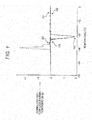
- solidification starting point 103, melting starting point 104 and endothermic peak 105 can be identified as shown in FIG. 1 .
- the endothermic peak means a peak appearing as a bottom point of a shape projected downward from a baseline due to a change in heat amount in a measurement result of differential scanning calorimetry (DSC).
- DSC differential scanning calorimetry
- the endothermic peak means an average of all the peaks.
- temperature-fall curve 101 in differential scanning calorimetry is shown by a broken line
- temperature-rise curve 102 in differential scanning calorimetry is shown by a solid line.
- the melting starting temperature in the latent heat cold storage material with sodium chloride as a main agent according to this embodiment is preferably in a range of not less than -27°C and not more than -22°C.
- the endothermic peak in melting in the latent heat cold storage material with sodium chloride as a main agent according to this embodiment is preferably in a range of not less than -25°C and no more than -20°C.
- the solidification starting temperature in the latent heat cold storage material with sodium chloride as a main agent according to this embodiment is preferably in a range of -29°C or higher and lower than the melting starting temperature.
- the melting starting temperature in the latent heat cold storage material with potassium chloride as a main agent according to this embodiment is preferably in a range of not less than -21°C and not more than -16°C.
- the endothermic peak in melting in the latent heat cold storage material with potassium chloride as a main agent according to this embodiment is preferably in a range of not less than -19°C and not more than -14°C.
- the solidification starting temperature in the latent heat cold storage material with potassium chloride as a main agent according to this embodiment is preferably in a range of -25°C or higher and lower than the melting starting temperature.
- a difference between the melting starting temperature and the solidification starting temperature is preferably 7°C or less, more preferably 6°C or less, further preferably 5°C or less.
- a difference between the melting starting temperature and the solidification starting temperature is preferably 7°C or less.
- the latent heat cold storage material with sodium chloride as a main agent is especially preferably one that is crystallized (i.e., formed into a solid phase) at -29°C or higher when cooled (i.e., cold-stored), and has a melting starting temperature in a range of not less than -27°C and not more than -22°C when allowed to release heat (i.e., allowed to cool).
- the latent heat cold storage material with potassium chloride as a main agent is especially preferably one that is crystallized (i.e., formed into a solid phase) at -25°C or higher when cooled (i.e., cold-stored), and has a melting starting temperature in a range of not less than -21°C and not more than -16°C when allowed to release heat (i.e., allowed to cool).
- a latent heat amount is preferably 210 J/g or more, more preferably 220 J/g or more, further preferably 230 J/g or more.
- An upper limit of the latent heat amount is not particularly limited, and may be 330 J/g or less.
- the latent heat amount can be measured by DSC in accordance with Japanese Industrial Standards K 7122 (2012).
- a known differential scanning calorimeter can be used for differential scanning calorimetry.
- the differential scanning calorimeter for example, Input Compensation-type Double-Furnace DSC 8500 from PerkinElmer Japan Co., Ltd. can be used to perform measurement. Measurement conditions are as described later in examples.
- a method for manufacturing a latent heat cold storage material is not particularly limited, and examples thereof include a method in which to pure water or ion-exchanged water in a vessel is slowly added an inorganic salt up to a predetermined amount with stirring, the mixture is sufficiently mixed, a crystalline powder according to this embodiment is then slowly added up to a predetermined amount with stirring, and concurrently with or before or after addition of the crystalline powder, other additives are added, followed by mixing and/or stirring the mixture; and a method in which an inorganic salt and additives are mixed beforehand, and injected into pure water or ion-exchanged water, and finally a thickener and a crystalline powder are added.
- the inorganic salt, the crystalline powder and other additives may be added in any order, and can be heated to a certain temperature for promoting dissolution. In heating, care should be taken so as not to cause a failure such as decomposition of a solute.
- the heating temperature is preferably lower than 60°C because if heating is performed for a long time at a temperature of 60°C to 80°C or higher, urea may be decomposed to generate ammonia.
- a form of the cold storage material is not particularly limited, but normally a cold storage material prepared as described above is enclosed in a metal or resin material excellent in corrosion resistance.
- a shape of the cold storage material mention is made of a lump shape, a plate shape, or a sheet shape.
- a ratio of a surface area to an inner volume is increased, responsiveness of cold storage and cooling is improved.
- a place where the cold storage material is disposed after being stored in a freezer may be in an inside of a vessel such as a box or container for transportation/storage.
- the use environment is kept at a temperature equal to or lower than normal temperature. Since the cold storage material is intended for freezing, generally, the cold storage material is circularly and repeatedly placed in a freezer and at normal temperature, and is hardly exposed under a high-temperature environment at 40°C or higher for a long time. However, when a urea derivative is used in the crystalline powder, urea may be partially decomposed to generate ammonia if the cold storage material is left standing at 60°C or higher for a long time.
- the latent heat cold storage material is required to have an endothermic peak of not less than -25°C and not more than -20°C when used for freezing preservation in a temperature range of -18°C or lower.
- the melting starting temperature is preferably not less than -27°C and not more than -22°C in terms of the endothermic peak.
- the solidification starting temperature is required to be much higher than -40°C as much as possible, and is preferably -29°C or higher.
- the latent heat amount is required to be 210 J/g or more from the viewpoint of practical utility.
- Input Compensation-type Double-Furnace DSC 8500 from PerkinElmer Japan Co., Ltd. was used.
- ⁇ not less than -25.0°C and not more than -20.0°C ⁇ : lower than -25.0°C or higher than -20.0°C
- ⁇ not less than -27.0°C and not more than -22.0°C ⁇ : lower than -27.0°C or higher than -22.0°C
- ⁇ 210 J/g or more ⁇ : less than 210 J/g
- 1,3-diethylurea As a crystalline powder in an amount as shown in Table 1, and the mixture was stirred and homogeneously mixed to prepare a latent heat cold storage material.
- a saturated concentration of 1,3-diethylurea at 25°C to an aqueous solution containing only 15 wt% of sodium chloride and 10 wt% of ammonium chloride is 3.0 wt%.
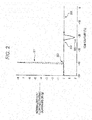
- latent heat cold storage materials A-1 and C-1 to C-6 For obtained latent heat cold storage materials A-1 and C-1 to C-6, a melting starting temperature, an endothermic peak, a solidification starting temperature and a latent heat amount were measured under the following conditions using a differential scanning calorimeter (Input Compensation-type Double-Furnace DSC 8500 from PerkinElmer Japan Co., Ltd.). Results for latent heat cold storage materials A-1 and C-1 to C-6 are shown in Tables 1 - 3. DSC results for cold storage material A-1 are shown in FIG. 1 , and DSC results for cold storage material C-1 are shown in FIG. 2 .
- Latent heat cold storage material A-1 (Example 1) contains 0.33 mmol of 1,3-diethylurea as a crystalline powder, and has a melting starting point in a range of not less than -25.0°C and not more than -19.0°C, an endothermic peak of not less than -25.0°C and not more than -20.0°C, a solidification starting temperature of -32.0°C or higher, and a latent heat amount of 230 J/g or more, Therefore, latent heat cold storage material A-1 satisfies all the evaluation criteria, and is suitable for use in freezing preservation in a temperature range of -18°C or lower.
- Latent heat cold storage material C-1 is an aqueous solution containing 15 wt% of sodium chloride and 10 wt% of ammonium chloride as a conventional cold storage material composition (G2 in FIG. 5 in International Patent Publication No. WO 2014/091938 ), and does not contain a crystalline powder.
- Latent heat cold storage material C-1 has a melting starting point of -24.0°C, an endothermic peak of -21.5°C, and a high latent heat amount of 254 J/g, but has a low solidification starting point of -40.0°C, and thus a large difference between the solidification starting temperature and the melting starting temperature.
- Latent heat cold storage material C-2 contains 0.01 mmol of 1,3-diethylurea, and has a melting starting point of -25.0°C, an endothermic peak of -20.7°C and a latent heat amount of 237 J/g, but has a low solidification starting point of -43.0°C, and thus has a large difference between the solidification starting temperature and the melting starting temperature.
- Latent heat cold storage material C-3 contains 0.06 mmol of 1,3-diethylurea, and has a melting starting point of -24.0°C, an endothermic peak of -20.9°C and a latent heat amount of 241 J/g, but has a low solidification starting point of -42.0°C, and thus has a large difference between the solidification starting temperature and the melting starting temperature.
- Latent heat cold storage material C-4 contains 0.17 mmol of 1,3-diethylurea, and has a melting starting point of -24.0°C, an endothermic peak of -21.0°C and a latent heat amount of 249 J/g, but has a low solidification starting point of -43.0°C, and thus has a large difference between the solidification starting temperature and the melting starting temperature.
- Latent heat cold storage material C-5 contains 0.22 mmol of 1,3-diethylurea, and has a melting starting point of -24.0°C, an endothermic peak of -21.0°C and a latent heat amount of 230 J/g, but has a low solidification starting point of -42.0°C, and thus has a large difference between the solidification starting temperature and the melting starting temperature.
- Latent heat cold storage material C-6 does not contain ammonium chloride and a crystalline powder, and is formed of a 23 wt% aqueous solution of sodium chloride.
- Latent heat cold storage material C-6 has a melting starting point of -21.0°C and an endothermic peak of -18.2°C, and thus does not satisfy evaluation criteria, and also, has a low solidification starting point of -37.0°C, and thus a large difference between the solidification starting temperature and the melting starting temperature.
- latent heat cold storage material A-1 shows desirable results as a cold storage material composition.
- Latent heat cold storage materials A-2 to A-7 showed desirable results as with latent heat cold storage material A-1.
- Latent heat cold storage material A-2 contains 0.44 mmol of 1,3-diethylurea
- latent heat cold storage material A-3 contains 0.55 mmol of 1,3-diethylurea.
- Latent heat cold storage materials A-2 and A-3 have a melting starting point in a range of not less than -25.0°C and not more than -19.0°C, an endothermic peak of not less than -25.0°C and not more than -20.0°C, a solidification starting temperature of -32.0°C or higher, and a latent heat amount of 230 J/g or more. Therefore, latent heat cold storage materials A-2 and A-3 satisfy all the evaluation criteria, and are suitable for use in freezing preservation in a temperature range of -18°C or lower.
- Latent heat cold storage material A-4 contains 0.33 mmol of 1,3-diethylurea in an aqueous solution of 15 wt% of sodium chloride and 6 wt% of ammonium chloride, and has a melting starting point in a range of not less than -25.0°C and not more than -19.0°C, an endothermic peak of not less than -25.0°C and not more than -20.0°C, a solidification starting temperature of -32.0°C or higher, and a latent heat amount of 230 J/g or more. Therefore, latent heat cold storage material A-4 satisfies all the evaluation criteria, and is suitable for use in freezing preservation in a temperature range of -18°C or lower.
- Latent heat cold storage material A-5 contains 0.33 mmol of 1,3-diethylurea in an aqueous solution of 15 wt% of sodium chloride and 8 wt% of ammonium chloride, and has a melting starting point in a range of not less than -25.0°C and not more than -19.0°C, an endothermic peak of not less than -25.0°C and not more than -20.0°C, a solidification starting temperature of -32.0°C or higher, and a latent heat amount of 230 J/g or more. Therefore, latent heat cold storage material A-5 satisfies all the evaluation criteria, and is suitable for use in freezing preservation in a temperature range of -18°C or lower.
- Latent heat cold storage material A-6 contains 0.33 mmol of 1,3-diethylurea in an aqueous solution of 15 wt% of sodium chloride and 12 wt% of ammonium chloride, and has a melting starting point in a range of not less than -25.0°C and not more than -19.0°C, an endothermic peak of not less than -25.0°C and not more than -20.0°C, a solidification starting temperature of -32.0°C or higher, and a latent heat amount of 230 J/g or more. Therefore, latent heat cold storage material A-6 satisfies all the evaluation criteria, and is suitable for use in freezing preservation in a temperature range of -18°C or lower.
- Latent heat cold storage material A-7 contains 0.33 mmol of 1,3-diethylurea in an aqueous solution of 15 wt% of sodium chloride and 14 wt% of ammonium chloride, and has a melting starting point in a range of not less than -25.0°C and not more than -19.0°C, an endothermic peak of not less than -25.0°C and not more than -20.0°C, a solidification starting temperature of -32.0°C or higher, and a latent heat amount of 230 J/g or more. Therefore, latent heat cold storage material A-7 satisfies all the evaluation criteria, and is suitable for use in freezing preservation in a temperature range of -18°C or lower.
- Example 7 Except that types and blending amounts of crystalline powders were changed as shown in Table 7, the same procedure as in Example 1 was carried out to prepare latent heat cold storage materials A-8 to A-12 and C-7 to C-14. For the obtained latent heat cold storage materials, characteristics were evaluated in the same manner as in Example 1. Results are shown in Tables 7-9. A saturated concentration of 1,3-dibutylurea at 25°C to an aqueous solution containing only 15 wt% of sodium chloride and 10 wt% of ammonium chloride is less than 0.08 wt%, and the saturated concentration of 1,3-dicyclohexylurea is less than 7.0 wt%.
- Compounds as additives used in latent heat cold storage materials C-7 to C-14 have high solubility in the aqueous solution containing only sodium chloride and ammonium chloride, and added amounts of the compounds in latent heat cold storage materials C-7 to C-14 as shown in Table 7 are each smaller than the saturated concentration of the compounds to the aqueous solution containing only sodium chloride and ammonium chloride at 25°C.
- Latent heat cold storage material C-7 contains 0.33 mmol of N-methylurea, and has a melting starting point of -24.7°C, an endothermic peak of -22.2°C and a latent heat amount of 226.1 J/g, but has a low solidification starting point of -42.0°C, and thus has a large difference between the solidification starting temperature and the melting starting temperature.
- Latent heat cold storage material C-8 contains 0.33 mmol of 1,1-dimethylurea, and has a melting starting point of -23.7°C, an endothermic peak of -21.6°C and a latent heat amount of 249.2 J/g, but has a low solidification starting point of -43.0°C, and thus has a large difference between the solidification starting temperature and the melting starting temperature.
- Latent heat cold storage material C-9 contains 0.33 mmol of 1,3-dimethylurea, and has a melting starting point of -24.6°C, an endothermic peak of-22.4°C and a latent heat amount of 217.7 J/g, but has a low solidification starting point of -41.0°C, and thus has a large difference between the solidification starting temperature and the melting starting temperature.
- Latent heat cold storage material C-10 contains 0.33 mmol of N-ethylurea, and has a melting starting point of -29.0°C, and thus does not satisfy evaluation criteria.
- Latent heat cold storage material C-10 has an endothermic peak of -22.5°C and a latent heat amount of 248.5 J/g, but has a low solidification starting point of -42.5°C, and thus has a large difference between the solidification starting temperature and the melting starting temperature.
- Latent heat cold storage material C-11 contains 0.33 mmol of hydroxyurea, and has a melting starting point of -24.5°C, an endothermic peak of -22.8°C and a latent heat amount of 249.4 J/g, but has a low solidification starting point of -41.0°C, and thus has a large difference between the solidification starting temperature and the melting starting temperature.
- Latent heat cold storage material C-12 contains 0.33 mmol of ethyl carbamate, and has a melting starting point of -23.6°C, an endothermic peak of -21.9°C and a latent heat amount of 254.5 J/g, but has a low solidification starting point of -42.0°C, and thus has a large difference between the solidification starting temperature and the melting starting temperature.
- Latent heat cold storage material C-13 contains 0.33 mmol of acetamide, and has a melting starting point of -28.0°C, an endothermic peak of -22.9°C and a latent heat amount of 228.6 J/g, but has a low solidification starting point of -43.0°C, and thus has a large difference between the solidification starting temperature and the melting starting temperature.
- Latent heat cold storage material C-14 contains 0.33 mmol of urea, and has a melting starting point of -26.5°C, an endothermic peak of -23.1°C and a latent heat amount of 260.3 J/g, but has a low solidification starting point of -41.0°C, and thus has a large difference between the solidification starting temperature and the melting starting temperature.
- Latent heat cold storage material A-8 contains 0.33 mmol of 1,3-dibutylurea
- latent heat cold storage material A-9 contains 0.1 mmol of 1,3-dibutylurea
- latent heat cold storage material A-10 contains 0.01 mmol of 1,3-dibutylurea
- latent heat cold storage material A-11 contains 0.005 mmol of 1,3-dibutylurea.
- Latent heat cold storage materials A-8 to A-11 have a melting starting point in a range of not less than -25.0°C and not more than -19.0°C, an endothermic peak of not less than -25.0°C and not more than -20.0°C, a solidification starting temperature of -32.0°C or higher, and a latent heat amount of 230 J/g or more. Therefore, latent heat cold storage materials A-8 to A-11 satisfy all the evaluation criteria, and are suitable for use in freezing preservation in a temperature range of -18°C or lower.
- Latent heat cold storage material A-12 contains 0.33 mmol of 1,3-dicyclohexylurea, and has a melting starting point in a range of not less than -25.0°C and not more than -19.0°C, an endothermic peak of not less than -25.0°C and not more than -20.0°C, a solidification starting temperature of -32.0°C or higher, and a latent heat amount of 220 J/g or more. Therefore, latent heat cold storage material A-12 satisfies all the evaluation criteria, and is suitable for use in freezing preservation in a temperature range of -18°C or lower.
- the latent heat cold storage material is required to have an endothermic peak of -19°C to -14°C (both inclusive) when used for freezing preservation in a temperature range of -20°C to -10°C (both inclusive).
- the melting starting temperature is preferably -21°C to -16°C (both inclusive) in terms of the endothermic peak.
- the solidification starting temperature is required to be much higher than -40°C as much as possible, and is preferably -25°C or higher.
- the latent heat amount is required to be 210 J/g or more from the viewpoint of practical utility.
- Input Compensation-type Double-Furnace DSC 8500 from PerkinElmer Japan Co., Ltd. was used.
- ⁇ 210 J/g or more ⁇ : less than 210 J/g
- the saturating concentration of 1,3-diethylurea at 25 degrees Celsius with regard to an aqueous solution containing 12.5 wt% of potassium chloride and 12.5 wt% of ammonium chloride is less than 7.0 wt%.
- Latent heat cold storage material C-15 is an aqueous solution containing 10 wt% of potassium chloride and 10 wt% of ammonium chloride as a conventional cold storage material composition (D1 in FIG. 4 in International Patent Publication No. WO 2014/091938 ), and does not contain a crystalline powder.
- Latent heat cold storage material C-15 has a melting starting point of -16.2°C, an endothermic peak of -14.4°C, and a high latent heat amount of 307.8 J/g, but has a low solidification starting point of -30.0°C, and thus a large difference between the solidification starting temperature and the melting starting temperature.
- Latent heat cold storage material C-16 contains 0.56 mmol of 1,3-diethylurea, and has a melting starting point of -17.3°C, an endothermic peak of -15.6°C and a latent heat amount of 281.5 J/g, but has a low solidification starting point of -28.0°C, and thus has a large difference between the solidification starting temperature and the melting starting temperature.
- Latent heat cold storage material B-1 contains 0.78 mmol of 1,3-diethylurea
- latent heat cold storage material B-2 contains 0.89 mmol of 1,3-diethylurea.
- Latent heat cold storage materials B-1 and B-2 have a melting starting point in a range of not less than -21.0°C and not more than -16.0°C, an endothermic peak of not less than -19.0°C and not more than -14.0°C, a solidification starting temperature of -25.0°C or higher, and a latent heat amount of 230 J/g or more. Therefore, latent heat cold storage materials B-1 and B-2 satisfy all the evaluation criteria, and are suitable for use in freezing preservation in a temperature range of not less than -20°C and not more than -10°C.
- the latent heat cold storage material according to the present disclosure can be widely used as a latent heat cold storage material capable of storing, as latent heat, cold heat required for freezing in transportation and storage of fresh products, and extracting the cold heat at a certain temperature of -10°C or lower.
- the cold storage material is filled into a cold storage vessel, and frozen in a freezer before being used.
Landscapes
- Chemical & Material Sciences (AREA)
- Engineering & Computer Science (AREA)
- Physics & Mathematics (AREA)
- Chemical Kinetics & Catalysis (AREA)
- Combustion & Propulsion (AREA)
- Thermal Sciences (AREA)
- Materials Engineering (AREA)
- Organic Chemistry (AREA)
- Thermotherapy And Cooling Therapy Devices (AREA)
Applications Claiming Priority (1)
| Application Number | Priority Date | Filing Date | Title |
|---|---|---|---|
| JP2015205829 | 2015-10-19 |
Publications (2)
| Publication Number | Publication Date |
|---|---|
| EP3159389A1 EP3159389A1 (en) | 2017-04-26 |
| EP3159389B1 true EP3159389B1 (en) | 2021-08-04 |
Family
ID=57218666
Family Applications (1)
| Application Number | Title | Priority Date | Filing Date |
|---|---|---|---|
| EP16190111.1A Active EP3159389B1 (en) | 2015-10-19 | 2016-09-22 | Latent heat cold storage material |
Country Status (4)
| Country | Link |
|---|---|
| US (1) | US9845420B2 (enExample) |
| EP (1) | EP3159389B1 (enExample) |
| JP (1) | JP6598076B2 (enExample) |
| CN (1) | CN106590538B (enExample) |
Families Citing this family (10)
| Publication number | Priority date | Publication date | Assignee | Title |
|---|---|---|---|---|
| JP6837966B2 (ja) * | 2015-06-19 | 2021-03-03 | 株式会社カネカ | 蓄冷材組成物、蓄冷材及び輸送容器 |
| WO2018180506A1 (ja) | 2017-03-29 | 2018-10-04 | 株式会社カネカ | 蓄冷材組成物、蓄冷材組成物の使用方法、蓄冷材および輸送容器 |
| JPWO2019026820A1 (ja) * | 2017-07-31 | 2020-07-30 | シャープ株式会社 | 潜熱蓄熱材、保冷具、保冷庫、物流梱包容器および保冷ユニット |
| CN111819265B (zh) * | 2018-03-06 | 2021-10-26 | 株式会社钟化 | 蓄冷材料组合物及其利用 |
| CN113185952B (zh) * | 2020-01-24 | 2022-05-13 | 纯钧新材料(深圳)有限公司 | 作为冷却剂的无机相变材料 |
| US20210333160A1 (en) * | 2020-04-27 | 2021-10-28 | Arizona Board Of Regents On Behalf Of Arizona State University | Visual indicators of biospecimen time-temperature exposure |
| GB2595662B (en) * | 2020-06-01 | 2022-09-28 | Hubbard Products Ltd | Phase change material |
| GB2595661B (en) * | 2020-06-01 | 2022-06-29 | Hubbard Products Ltd | Phase change material screening |
| JP6997851B1 (ja) * | 2020-12-04 | 2022-01-18 | シャープ株式会社 | 潜熱蓄熱材、保冷具、物流梱包容器及び食品保冷用具 |
| JP2024037222A (ja) * | 2022-09-07 | 2024-03-19 | シャープ株式会社 | 蓄冷材 |
Family Cites Families (27)
| Publication number | Priority date | Publication date | Assignee | Title |
|---|---|---|---|---|
| US1785730A (en) * | 1927-11-05 | 1930-12-23 | Tenney L Davis | Di-alkyl urea |
| US2280996A (en) * | 1940-11-16 | 1942-04-28 | American Cyanamid Co | Treatment of salt-and lime-cut mud |
| US2521311A (en) * | 1949-03-01 | 1950-09-05 | Nox Rust Chemical Corp | Corrosion inhibiting compositions |
| US2979463A (en) * | 1956-03-21 | 1961-04-11 | Carl S Ferguson | Refrigerant composition |
| US3957472A (en) * | 1973-02-21 | 1976-05-18 | Readi Temp Inc. | Chemical heat transfer unit |
| US3950158A (en) * | 1974-05-31 | 1976-04-13 | American Medical Products Company | Urea cold pack having an inner bag provided with a perforated seal |
| US4081256A (en) * | 1976-12-03 | 1978-03-28 | Readi Temp, Inc. | Endothermic composition and cold pack |
| JPS6236486A (ja) * | 1985-08-12 | 1987-02-17 | Tokuyama Soda Co Ltd | 蓄熱材 |
| US5348080A (en) * | 1990-12-19 | 1994-09-20 | Tokyo Electric Power Company | Latent heat storage apparatus and latent heat storage solution therefor |
| US5402650A (en) * | 1994-05-03 | 1995-04-04 | The Curators Of The University Of Missouri | Thermal storage composition for low energy ice harvesting, method of using same |
| JPH1135932A (ja) * | 1997-07-18 | 1999-02-09 | Mitsubishi Cable Ind Ltd | 潜熱蓄冷材 |
| JPH1135933A (ja) | 1997-07-18 | 1999-02-09 | Mitsubishi Cable Ind Ltd | 潜熱蓄冷材 |
| EP1113065A1 (en) * | 1999-03-03 | 2001-07-04 | Mitsubishi Chemical Corporation | Heat-storage material composition |
| JP2000256659A (ja) * | 1999-03-10 | 2000-09-19 | Mitsubishi Chemicals Corp | 蓄熱材組成物 |
| JP2001107035A (ja) * | 1999-08-05 | 2001-04-17 | Denso Corp | 蓄熱材およびこれを用いた空調装置用蓄熱器 |
| US20030195598A1 (en) * | 2002-04-11 | 2003-10-16 | Diroma Sabeto A. | Disposable compress |
| EP1595923B1 (en) * | 2003-02-20 | 2009-09-09 | Canon Kabushiki Kaisha | Aqueous ink, image recorded using said aqueous ink and method for forming said image |
| DE102010045261A1 (de) * | 2010-09-14 | 2012-03-15 | Scaldopack Sprl. | Verfahren zur kontrollierten Temperaturveränderung von Substanzen |
| US9039924B2 (en) * | 2010-12-02 | 2015-05-26 | Frosty Cold, Llc | Cooling agent for cold packs and food and beverage containers |
| CN102533224B (zh) * | 2010-12-28 | 2014-04-09 | 中国科学院广州能源研究所 | 一种低温相变蓄冷剂 |
| CN102268240A (zh) * | 2011-06-13 | 2011-12-07 | 广州赛能冷藏科技有限公司 | 一种低温蓄冷剂 |
| CN102660232A (zh) * | 2012-04-26 | 2012-09-12 | 湖州新驰医药科技有限公司 | 一种蓄冷型制冷剂以及蓄冷型冷敷袋 |
| US9523539B2 (en) * | 2012-05-23 | 2016-12-20 | Sharp Kabushiki Kaisha | Latent heat storage member and building material provided with same, microcapsules and thermal storage material using microcapsules |
| CN102876300B (zh) * | 2012-10-30 | 2019-02-19 | 北京中集精新相能科技有限公司 | 一种-33℃储冷材料组合物 |
| WO2014091938A1 (ja) * | 2012-12-12 | 2014-06-19 | シャープ株式会社 | 蓄熱材 |
| US20140371828A1 (en) * | 2013-06-14 | 2014-12-18 | Rapid Aid Corp | Method of manufacturing disposable cold pack and related disposable cold pack containing urea and ammonium chloride |
| CN103486793A (zh) * | 2013-10-11 | 2014-01-01 | 崔德顺 | 低温相变蓄冷冰盒或冰袋的生产工艺 |
-
2016
- 2016-09-09 CN CN201610814138.4A patent/CN106590538B/zh active Active
- 2016-09-14 US US15/264,907 patent/US9845420B2/en active Active
- 2016-09-22 EP EP16190111.1A patent/EP3159389B1/en active Active
- 2016-09-29 JP JP2016191948A patent/JP6598076B2/ja active Active
Non-Patent Citations (1)
| Title |
|---|
| None * |
Also Published As
| Publication number | Publication date |
|---|---|
| JP2017078163A (ja) | 2017-04-27 |
| JP6598076B2 (ja) | 2019-10-30 |
| CN106590538A (zh) | 2017-04-26 |
| US9845420B2 (en) | 2017-12-19 |
| EP3159389A1 (en) | 2017-04-26 |
| US20170107414A1 (en) | 2017-04-20 |
| CN106590538B (zh) | 2021-06-18 |
Similar Documents
| Publication | Publication Date | Title |
|---|---|---|
| EP3159389A1 (en) | Latent heat cold storage material | |
| EP1529088B1 (de) | Glykolfreie wässrige gefrierschutzmittel enthaltend dicarbonsäuresalze | |
| EP3000859B1 (en) | Heat storage material composition, heat storage device, and heat storage method | |
| BR112019019600A2 (pt) | concentrado anticongelante/anticorrosivo, superconcentrado para um concentrado anticongelante/anticorrosivo, processos para produzir um concentrado anticongelante/anticorrosivo e para produzir uma composição de refrigeração, composição de refrigeração aquosa, e, uso de uma composição de refrigeração | |
| EP4158261A1 (en) | Phase change material | |
| EP3864106B1 (en) | Metal nitrate based compositions for use as phase change materials | |
| US10359237B2 (en) | Heat source material composition, and auxiliary heat source and heat supply method using the same | |
| KR830002107B1 (ko) | 수화된 Mg(NO₃)₂/MgCl₂ 가역 상변화 조성물 | |
| CN113136175B (zh) | 作为冷却剂的无机相变材料的制备方法 | |
| US4283298A (en) | Hydrated Mg(NO3)2 /NH4 NO3 reversible phase change compositions | |
| US20190048242A1 (en) | Thermal storage medium, and thermal storage pack, thermostatic vessel, and transport box using the medium | |
| JP2006131856A (ja) | 潜熱蓄冷熱材組成物 | |
| JP6575859B2 (ja) | 潜熱蓄冷材 | |
| JP2001031956A (ja) | 潜熱蓄熱材組成物 | |
| JP2019044095A (ja) | 蓄熱材料及び蓄熱装置 | |
| JPS59131687A (ja) | 蓄冷剤 | |
| CN103013452A (zh) | 低温共晶液及其制备方法 | |
| JP2025092263A (ja) | セミクラスレートハイドレートおよびその製造方法 | |
| FI101547B (fi) | Menetelmä kohteen jäähdyttämiseksi lämmönsiirtoaineella, aineen käyttö ja lämmönsiirtoaine | |
| WO2015176184A1 (en) | Phase change material composition and uses thereof | |
| JPH11209748A (ja) | 蓄冷材 | |
| HK40049535A (en) | Metal nitrate based compositions for use as phase change materials | |
| HK40049535B (en) | Metal nitrate based compositions for use as phase change materials | |
| JPS60149683A (ja) | 蓄熱材組成物 | |
| JPS6312683A (ja) | 蓄冷剤組成物 |
Legal Events
| Date | Code | Title | Description |
|---|---|---|---|
| PUAI | Public reference made under article 153(3) epc to a published international application that has entered the european phase |
Free format text: ORIGINAL CODE: 0009012 |
|
| STAA | Information on the status of an ep patent application or granted ep patent |
Free format text: STATUS: THE APPLICATION HAS BEEN PUBLISHED |
|
| AK | Designated contracting states |
Kind code of ref document: A1 Designated state(s): AL AT BE BG CH CY CZ DE DK EE ES FI FR GB GR HR HU IE IS IT LI LT LU LV MC MK MT NL NO PL PT RO RS SE SI SK SM TR |
|
| AX | Request for extension of the european patent |
Extension state: BA ME |
|
| STAA | Information on the status of an ep patent application or granted ep patent |
Free format text: STATUS: REQUEST FOR EXAMINATION WAS MADE |
|
| 17P | Request for examination filed |
Effective date: 20171013 |
|
| RBV | Designated contracting states (corrected) |
Designated state(s): AL AT BE BG CH CY CZ DE DK EE ES FI FR GB GR HR HU IE IS IT LI LT LU LV MC MK MT NL NO PL PT RO RS SE SI SK SM TR |
|
| STAA | Information on the status of an ep patent application or granted ep patent |
Free format text: STATUS: EXAMINATION IS IN PROGRESS |
|
| 17Q | First examination report despatched |
Effective date: 20190221 |
|
| GRAP | Despatch of communication of intention to grant a patent |
Free format text: ORIGINAL CODE: EPIDOSNIGR1 |
|
| STAA | Information on the status of an ep patent application or granted ep patent |
Free format text: STATUS: GRANT OF PATENT IS INTENDED |
|
| INTG | Intention to grant announced |
Effective date: 20210407 |
|
| GRAS | Grant fee paid |
Free format text: ORIGINAL CODE: EPIDOSNIGR3 |
|
| GRAA | (expected) grant |
Free format text: ORIGINAL CODE: 0009210 |
|
| STAA | Information on the status of an ep patent application or granted ep patent |
Free format text: STATUS: THE PATENT HAS BEEN GRANTED |
|
| AK | Designated contracting states |
Kind code of ref document: B1 Designated state(s): AL AT BE BG CH CY CZ DE DK EE ES FI FR GB GR HR HU IE IS IT LI LT LU LV MC MK MT NL NO PL PT RO RS SE SI SK SM TR |
|
| REG | Reference to a national code |
Ref country code: GB Ref legal event code: FG4D |
|
| REG | Reference to a national code |
Ref country code: AT Ref legal event code: REF Ref document number: 1416997 Country of ref document: AT Kind code of ref document: T Effective date: 20210815 |
|
| REG | Reference to a national code |
Ref country code: CH Ref legal event code: EP |
|
| REG | Reference to a national code |
Ref country code: DE Ref legal event code: R096 Ref document number: 602016061503 Country of ref document: DE |
|
| REG | Reference to a national code |
Ref country code: IE Ref legal event code: FG4D |
|
| REG | Reference to a national code |
Ref country code: LT Ref legal event code: MG9D |
|
| REG | Reference to a national code |
Ref country code: NL Ref legal event code: MP Effective date: 20210804 |
|
| REG | Reference to a national code |
Ref country code: AT Ref legal event code: MK05 Ref document number: 1416997 Country of ref document: AT Kind code of ref document: T Effective date: 20210804 |
|
| PG25 | Lapsed in a contracting state [announced via postgrant information from national office to epo] |
Ref country code: HR Free format text: LAPSE BECAUSE OF FAILURE TO SUBMIT A TRANSLATION OF THE DESCRIPTION OR TO PAY THE FEE WITHIN THE PRESCRIBED TIME-LIMIT Effective date: 20210804 Ref country code: SE Free format text: LAPSE BECAUSE OF FAILURE TO SUBMIT A TRANSLATION OF THE DESCRIPTION OR TO PAY THE FEE WITHIN THE PRESCRIBED TIME-LIMIT Effective date: 20210804 Ref country code: RS Free format text: LAPSE BECAUSE OF FAILURE TO SUBMIT A TRANSLATION OF THE DESCRIPTION OR TO PAY THE FEE WITHIN THE PRESCRIBED TIME-LIMIT Effective date: 20210804 Ref country code: ES Free format text: LAPSE BECAUSE OF FAILURE TO SUBMIT A TRANSLATION OF THE DESCRIPTION OR TO PAY THE FEE WITHIN THE PRESCRIBED TIME-LIMIT Effective date: 20210804 Ref country code: FI Free format text: LAPSE BECAUSE OF FAILURE TO SUBMIT A TRANSLATION OF THE DESCRIPTION OR TO PAY THE FEE WITHIN THE PRESCRIBED TIME-LIMIT Effective date: 20210804 Ref country code: PT Free format text: LAPSE BECAUSE OF FAILURE TO SUBMIT A TRANSLATION OF THE DESCRIPTION OR TO PAY THE FEE WITHIN THE PRESCRIBED TIME-LIMIT Effective date: 20211206 Ref country code: NO Free format text: LAPSE BECAUSE OF FAILURE TO SUBMIT A TRANSLATION OF THE DESCRIPTION OR TO PAY THE FEE WITHIN THE PRESCRIBED TIME-LIMIT Effective date: 20211104 Ref country code: LT Free format text: LAPSE BECAUSE OF FAILURE TO SUBMIT A TRANSLATION OF THE DESCRIPTION OR TO PAY THE FEE WITHIN THE PRESCRIBED TIME-LIMIT Effective date: 20210804 Ref country code: BG Free format text: LAPSE BECAUSE OF FAILURE TO SUBMIT A TRANSLATION OF THE DESCRIPTION OR TO PAY THE FEE WITHIN THE PRESCRIBED TIME-LIMIT Effective date: 20211104 Ref country code: AT Free format text: LAPSE BECAUSE OF FAILURE TO SUBMIT A TRANSLATION OF THE DESCRIPTION OR TO PAY THE FEE WITHIN THE PRESCRIBED TIME-LIMIT Effective date: 20210804 |
|
| PG25 | Lapsed in a contracting state [announced via postgrant information from national office to epo] |
Ref country code: PL Free format text: LAPSE BECAUSE OF FAILURE TO SUBMIT A TRANSLATION OF THE DESCRIPTION OR TO PAY THE FEE WITHIN THE PRESCRIBED TIME-LIMIT Effective date: 20210804 Ref country code: LV Free format text: LAPSE BECAUSE OF FAILURE TO SUBMIT A TRANSLATION OF THE DESCRIPTION OR TO PAY THE FEE WITHIN THE PRESCRIBED TIME-LIMIT Effective date: 20210804 Ref country code: GR Free format text: LAPSE BECAUSE OF FAILURE TO SUBMIT A TRANSLATION OF THE DESCRIPTION OR TO PAY THE FEE WITHIN THE PRESCRIBED TIME-LIMIT Effective date: 20211105 |
|
| PG25 | Lapsed in a contracting state [announced via postgrant information from national office to epo] |
Ref country code: NL Free format text: LAPSE BECAUSE OF FAILURE TO SUBMIT A TRANSLATION OF THE DESCRIPTION OR TO PAY THE FEE WITHIN THE PRESCRIBED TIME-LIMIT Effective date: 20210804 |
|
| PG25 | Lapsed in a contracting state [announced via postgrant information from national office to epo] |
Ref country code: DK Free format text: LAPSE BECAUSE OF FAILURE TO SUBMIT A TRANSLATION OF THE DESCRIPTION OR TO PAY THE FEE WITHIN THE PRESCRIBED TIME-LIMIT Effective date: 20210804 |
|
| REG | Reference to a national code |
Ref country code: CH Ref legal event code: PL |
|
| REG | Reference to a national code |
Ref country code: DE Ref legal event code: R097 Ref document number: 602016061503 Country of ref document: DE |
|
| REG | Reference to a national code |
Ref country code: BE Ref legal event code: MM Effective date: 20210930 |
|
| PG25 | Lapsed in a contracting state [announced via postgrant information from national office to epo] |
Ref country code: SM Free format text: LAPSE BECAUSE OF FAILURE TO SUBMIT A TRANSLATION OF THE DESCRIPTION OR TO PAY THE FEE WITHIN THE PRESCRIBED TIME-LIMIT Effective date: 20210804 Ref country code: SK Free format text: LAPSE BECAUSE OF FAILURE TO SUBMIT A TRANSLATION OF THE DESCRIPTION OR TO PAY THE FEE WITHIN THE PRESCRIBED TIME-LIMIT Effective date: 20210804 Ref country code: RO Free format text: LAPSE BECAUSE OF FAILURE TO SUBMIT A TRANSLATION OF THE DESCRIPTION OR TO PAY THE FEE WITHIN THE PRESCRIBED TIME-LIMIT Effective date: 20210804 Ref country code: MC Free format text: LAPSE BECAUSE OF FAILURE TO SUBMIT A TRANSLATION OF THE DESCRIPTION OR TO PAY THE FEE WITHIN THE PRESCRIBED TIME-LIMIT Effective date: 20210804 Ref country code: EE Free format text: LAPSE BECAUSE OF FAILURE TO SUBMIT A TRANSLATION OF THE DESCRIPTION OR TO PAY THE FEE WITHIN THE PRESCRIBED TIME-LIMIT Effective date: 20210804 Ref country code: CZ Free format text: LAPSE BECAUSE OF FAILURE TO SUBMIT A TRANSLATION OF THE DESCRIPTION OR TO PAY THE FEE WITHIN THE PRESCRIBED TIME-LIMIT Effective date: 20210804 Ref country code: AL Free format text: LAPSE BECAUSE OF FAILURE TO SUBMIT A TRANSLATION OF THE DESCRIPTION OR TO PAY THE FEE WITHIN THE PRESCRIBED TIME-LIMIT Effective date: 20210804 |
|
| PLBE | No opposition filed within time limit |
Free format text: ORIGINAL CODE: 0009261 |
|
| STAA | Information on the status of an ep patent application or granted ep patent |
Free format text: STATUS: NO OPPOSITION FILED WITHIN TIME LIMIT |
|
| 26N | No opposition filed |
Effective date: 20220506 |
|
| GBPC | Gb: european patent ceased through non-payment of renewal fee |
Effective date: 20211104 |
|
| PG25 | Lapsed in a contracting state [announced via postgrant information from national office to epo] |
Ref country code: LU Free format text: LAPSE BECAUSE OF NON-PAYMENT OF DUE FEES Effective date: 20210922 Ref country code: IT Free format text: LAPSE BECAUSE OF FAILURE TO SUBMIT A TRANSLATION OF THE DESCRIPTION OR TO PAY THE FEE WITHIN THE PRESCRIBED TIME-LIMIT Effective date: 20210804 Ref country code: IE Free format text: LAPSE BECAUSE OF NON-PAYMENT OF DUE FEES Effective date: 20210922 Ref country code: BE Free format text: LAPSE BECAUSE OF NON-PAYMENT OF DUE FEES Effective date: 20210930 |
|
| PG25 | Lapsed in a contracting state [announced via postgrant information from national office to epo] |
Ref country code: SI Free format text: LAPSE BECAUSE OF FAILURE TO SUBMIT A TRANSLATION OF THE DESCRIPTION OR TO PAY THE FEE WITHIN THE PRESCRIBED TIME-LIMIT Effective date: 20210804 Ref country code: LI Free format text: LAPSE BECAUSE OF NON-PAYMENT OF DUE FEES Effective date: 20210930 Ref country code: CH Free format text: LAPSE BECAUSE OF NON-PAYMENT OF DUE FEES Effective date: 20210930 |
|
| PG25 | Lapsed in a contracting state [announced via postgrant information from national office to epo] |
Ref country code: FR Free format text: LAPSE BECAUSE OF NON-PAYMENT OF DUE FEES Effective date: 20211004 |
|
| PG25 | Lapsed in a contracting state [announced via postgrant information from national office to epo] |
Ref country code: GB Free format text: LAPSE BECAUSE OF NON-PAYMENT OF DUE FEES Effective date: 20211104 |
|
| PG25 | Lapsed in a contracting state [announced via postgrant information from national office to epo] |
Ref country code: HU Free format text: LAPSE BECAUSE OF FAILURE TO SUBMIT A TRANSLATION OF THE DESCRIPTION OR TO PAY THE FEE WITHIN THE PRESCRIBED TIME-LIMIT; INVALID AB INITIO Effective date: 20160922 |
|
| PG25 | Lapsed in a contracting state [announced via postgrant information from national office to epo] |
Ref country code: CY Free format text: LAPSE BECAUSE OF FAILURE TO SUBMIT A TRANSLATION OF THE DESCRIPTION OR TO PAY THE FEE WITHIN THE PRESCRIBED TIME-LIMIT Effective date: 20210804 |
|
| PG25 | Lapsed in a contracting state [announced via postgrant information from national office to epo] |
Ref country code: MK Free format text: LAPSE BECAUSE OF FAILURE TO SUBMIT A TRANSLATION OF THE DESCRIPTION OR TO PAY THE FEE WITHIN THE PRESCRIBED TIME-LIMIT Effective date: 20210804 |
|
| PG25 | Lapsed in a contracting state [announced via postgrant information from national office to epo] |
Ref country code: MT Free format text: LAPSE BECAUSE OF FAILURE TO SUBMIT A TRANSLATION OF THE DESCRIPTION OR TO PAY THE FEE WITHIN THE PRESCRIBED TIME-LIMIT Effective date: 20210804 |
|
| PGFP | Annual fee paid to national office [announced via postgrant information from national office to epo] |
Ref country code: DE Payment date: 20250919 Year of fee payment: 10 |
|
| PG25 | Lapsed in a contracting state [announced via postgrant information from national office to epo] |
Ref country code: TR Free format text: LAPSE BECAUSE OF FAILURE TO SUBMIT A TRANSLATION OF THE DESCRIPTION OR TO PAY THE FEE WITHIN THE PRESCRIBED TIME-LIMIT Effective date: 20210804 |