EP3131913B1 - Synthese von amphiphilen calixaren-glycosid-detergenzien und verwendung davon zur extraktion und stabilisierung von nativen funktionellen membranproteinen - Google Patents
Synthese von amphiphilen calixaren-glycosid-detergenzien und verwendung davon zur extraktion und stabilisierung von nativen funktionellen membranproteinen Download PDFInfo
- Publication number
- EP3131913B1 EP3131913B1 EP15716007.8A EP15716007A EP3131913B1 EP 3131913 B1 EP3131913 B1 EP 3131913B1 EP 15716007 A EP15716007 A EP 15716007A EP 3131913 B1 EP3131913 B1 EP 3131913B1
- Authority
- EP
- European Patent Office
- Prior art keywords
- absent
- group
- integer
- calixarene
- membrane
- Prior art date
- Legal status (The legal status is an assumption and is not a legal conclusion. Google has not performed a legal analysis and makes no representation as to the accuracy of the status listed.)
- Active
Links
- 0 C*c(cc1Cc(cc(C)cc2Cc(cccc3Cc(cc(C)cc4C5)c4OC)c3O*)c2OC)cc5c1OC Chemical compound C*c(cc1Cc(cc(C)cc2Cc(cccc3Cc(cc(C)cc4C5)c4OC)c3O*)c2OC)cc5c1OC 0.000 description 1
Images
Classifications
-
- C—CHEMISTRY; METALLURGY
- C07—ORGANIC CHEMISTRY
- C07H—SUGARS; DERIVATIVES THEREOF; NUCLEOSIDES; NUCLEOTIDES; NUCLEIC ACIDS
- C07H15/00—Compounds containing hydrocarbon or substituted hydrocarbon radicals directly attached to hetero atoms of saccharide radicals
- C07H15/26—Acyclic or carbocyclic radicals, substituted by hetero rings
-
- C—CHEMISTRY; METALLURGY
- C07—ORGANIC CHEMISTRY
- C07H—SUGARS; DERIVATIVES THEREOF; NUCLEOSIDES; NUCLEOTIDES; NUCLEIC ACIDS
- C07H7/00—Compounds containing non-saccharide radicals linked to saccharide radicals by a carbon-to-carbon bond
- C07H7/04—Carbocyclic radicals
-
- B—PERFORMING OPERATIONS; TRANSPORTING
- B01—PHYSICAL OR CHEMICAL PROCESSES OR APPARATUS IN GENERAL
- B01D—SEPARATION
- B01D11/00—Solvent extraction
- B01D11/02—Solvent extraction of solids
- B01D11/0288—Applications, solvents
-
- C—CHEMISTRY; METALLURGY
- C07—ORGANIC CHEMISTRY
- C07H—SUGARS; DERIVATIVES THEREOF; NUCLEOSIDES; NUCLEOTIDES; NUCLEIC ACIDS
- C07H13/00—Compounds containing saccharide radicals esterified by carbonic acid or derivatives thereof, or by organic acids, e.g. phosphonic acids
-
- C—CHEMISTRY; METALLURGY
- C07—ORGANIC CHEMISTRY
- C07H—SUGARS; DERIVATIVES THEREOF; NUCLEOSIDES; NUCLEOTIDES; NUCLEIC ACIDS
- C07H13/00—Compounds containing saccharide radicals esterified by carbonic acid or derivatives thereof, or by organic acids, e.g. phosphonic acids
- C07H13/02—Compounds containing saccharide radicals esterified by carbonic acid or derivatives thereof, or by organic acids, e.g. phosphonic acids by carboxylic acids
- C07H13/04—Compounds containing saccharide radicals esterified by carbonic acid or derivatives thereof, or by organic acids, e.g. phosphonic acids by carboxylic acids having the esterifying carboxyl radicals attached to acyclic carbon atoms
-
- C—CHEMISTRY; METALLURGY
- C07—ORGANIC CHEMISTRY
- C07H—SUGARS; DERIVATIVES THEREOF; NUCLEOSIDES; NUCLEOTIDES; NUCLEIC ACIDS
- C07H13/00—Compounds containing saccharide radicals esterified by carbonic acid or derivatives thereof, or by organic acids, e.g. phosphonic acids
- C07H13/12—Compounds containing saccharide radicals esterified by carbonic acid or derivatives thereof, or by organic acids, e.g. phosphonic acids by acids having the group -X-C(=X)-X-, or halides thereof, in which each X means nitrogen, oxygen, sulfur, selenium or tellurium, e.g. carbonic acid, carbamic acid
-
- C—CHEMISTRY; METALLURGY
- C07—ORGANIC CHEMISTRY
- C07H—SUGARS; DERIVATIVES THEREOF; NUCLEOSIDES; NUCLEOTIDES; NUCLEIC ACIDS
- C07H15/00—Compounds containing hydrocarbon or substituted hydrocarbon radicals directly attached to hetero atoms of saccharide radicals
- C07H15/02—Acyclic radicals, not substituted by cyclic structures
- C07H15/04—Acyclic radicals, not substituted by cyclic structures attached to an oxygen atom of the saccharide radical
-
- C—CHEMISTRY; METALLURGY
- C07—ORGANIC CHEMISTRY
- C07H—SUGARS; DERIVATIVES THEREOF; NUCLEOSIDES; NUCLEOTIDES; NUCLEIC ACIDS
- C07H15/00—Compounds containing hydrocarbon or substituted hydrocarbon radicals directly attached to hetero atoms of saccharide radicals
- C07H15/20—Carbocyclic rings
- C07H15/24—Condensed ring systems having three or more rings
-
- C—CHEMISTRY; METALLURGY
- C07—ORGANIC CHEMISTRY
- C07H—SUGARS; DERIVATIVES THEREOF; NUCLEOSIDES; NUCLEOTIDES; NUCLEIC ACIDS
- C07H5/00—Compounds containing saccharide radicals in which the hetero bonds to oxygen have been replaced by the same number of hetero bonds to halogen, nitrogen, sulfur, selenium, or tellurium
- C07H5/04—Compounds containing saccharide radicals in which the hetero bonds to oxygen have been replaced by the same number of hetero bonds to halogen, nitrogen, sulfur, selenium, or tellurium to nitrogen
-
- C—CHEMISTRY; METALLURGY
- C07—ORGANIC CHEMISTRY
- C07H—SUGARS; DERIVATIVES THEREOF; NUCLEOSIDES; NUCLEOTIDES; NUCLEIC ACIDS
- C07H5/00—Compounds containing saccharide radicals in which the hetero bonds to oxygen have been replaced by the same number of hetero bonds to halogen, nitrogen, sulfur, selenium, or tellurium
- C07H5/08—Compounds containing saccharide radicals in which the hetero bonds to oxygen have been replaced by the same number of hetero bonds to halogen, nitrogen, sulfur, selenium, or tellurium to sulfur, selenium or tellurium
- C07H5/10—Compounds containing saccharide radicals in which the hetero bonds to oxygen have been replaced by the same number of hetero bonds to halogen, nitrogen, sulfur, selenium, or tellurium to sulfur, selenium or tellurium to sulfur
-
- C—CHEMISTRY; METALLURGY
- C07—ORGANIC CHEMISTRY
- C07H—SUGARS; DERIVATIVES THEREOF; NUCLEOSIDES; NUCLEOTIDES; NUCLEIC ACIDS
- C07H7/00—Compounds containing non-saccharide radicals linked to saccharide radicals by a carbon-to-carbon bond
- C07H7/06—Heterocyclic radicals
-
- C—CHEMISTRY; METALLURGY
- C07—ORGANIC CHEMISTRY
- C07K—PEPTIDES
- C07K1/00—General methods for the preparation of peptides, i.e. processes for the organic chemical preparation of peptides or proteins of any length
- C07K1/14—Extraction; Separation; Purification
- C07K1/145—Extraction; Separation; Purification by extraction or solubilisation
-
- C—CHEMISTRY; METALLURGY
- C07—ORGANIC CHEMISTRY
- C07K—PEPTIDES
- C07K14/00—Peptides having more than 20 amino acids; Gastrins; Somatostatins; Melanotropins; Derivatives thereof
-
- C—CHEMISTRY; METALLURGY
- C07—ORGANIC CHEMISTRY
- C07K—PEPTIDES
- C07K14/00—Peptides having more than 20 amino acids; Gastrins; Somatostatins; Melanotropins; Derivatives thereof
- C07K14/195—Peptides having more than 20 amino acids; Gastrins; Somatostatins; Melanotropins; Derivatives thereof from bacteria
- C07K14/215—Peptides having more than 20 amino acids; Gastrins; Somatostatins; Melanotropins; Derivatives thereof from bacteria from Halobacteriaceae (F)
-
- C—CHEMISTRY; METALLURGY
- C07—ORGANIC CHEMISTRY
- C07K—PEPTIDES
- C07K14/00—Peptides having more than 20 amino acids; Gastrins; Somatostatins; Melanotropins; Derivatives thereof
- C07K14/435—Peptides having more than 20 amino acids; Gastrins; Somatostatins; Melanotropins; Derivatives thereof from animals; from humans
- C07K14/705—Receptors; Cell surface antigens; Cell surface determinants
- C07K14/70571—Receptors; Cell surface antigens; Cell surface determinants for neuromediators, e.g. serotonin receptor, dopamine receptor
Definitions
- the present invention relates to new amphiphilic calixarene glycoside compounds, their preparation, and their use for selectively extracting, solubilizing and stabilizing membrane proteins.
- Membrane proteins such as G-Protein Coupled Receptor (GPCR), other receptor proteins, enzymes, transport proteins and ion channels or other transmembrane proteins or proteins anchored to the biological membrane play a major role in the functioning of a cell, especially in relation with its growth control, the regulation of physiological functions, signaling and mediation of cellular transfer [ Almen, M. S et al.: "Mapping the human membrane proteome: a majority of the human membrane proteins can be classified according to function and evolutionary origin"; BMC Biology ; 2009; 7; 50 ].
- Membrane proteins are amphiphilic macromolecules having hydrophilic and hydrophobic regions which across one or several times the biological membrane.
- TMD TransMembrane Domain
- Membrane proteins can include one or more subunits together with hydrophobic cofactors such as lipids, saccharides, peptides or proteins. For most biochemical and biophysical in vitro studies, membrane proteins need to be extracted from the lipid bilayer by using synthetic compounds such as detergents.
- Detergents are amphiphilic compounds with a structure comprising both polar and apolar distinct domains which confer them a good solubility in water. Detergents have surfactant properties and are able to adsorb on interfaces.
- the detergents are exchanged between the solution and the surface of the water where they form a compact film which decreases the surface tension of water.
- the liquid surface becomes saturated with detergent molecules from a threshold concentration called the Critical Micellar Concentration (CMC).
- CMC Critical Micellar Concentration
- the further addition of detergent molecules induces a spontaneous self-assembly and forms aggregate assemblies in solution called micelles which are defined by a size, a shape and an aggregation number.
- PDC Protein/Detergent Complexes
- Sufficient amounts of detergent dissolve entirely lipids of the bilayer which results to a phase transition from a lamellar to a micellar phase comprising mixed lipid/detergent micelles and solubilized PDCs where their transmembrane domains interact with the hydrophobic tails of detergents [ Le Maire et al.: "Interaction of membrane proteins and lipids with solubilizing detergents", Biochimica Biophysica Acta (BBA) - Biomembranes, 2000, 1508, 86-111 ].
- Solubilization of membrane proteins therefore requires the use of detergents able to extract them from biological membrane and able to maintain them in aqueous solution under a conformational form by reproducing an environment around the protein similar to biological membranes with aid of structuring detergents.
- This extraction process still presents a major challenge related to the difficulties at handling over an extended period of time membrane proteins that tend to form aggregates in aqueous solution [ M. Caffrey, "Membrane protein crystallization”, J. Structural Biology, 2003,142, 108-132 ].
- the dissociating properties of detergents tend to disrupt essential protein/protein and protein/lipid interactions inside the quaternary structure of proteins which are essential to keep a specific folding responsible of their biological functions.
- Solubilization within the micelles of the different subunits for oligomeric proteins, a removing of lipid cofactors stabilizing or an intrusion of detergent tails onto hydrophobic transmembrane regions can cause an improper folding and disabling of the protein [ J.U. Bowie, Curr. Opin. Struct. Biol., 2001, 11, 397-402 ; C. Breyton et al., J. Biol. Chem., 1997, 272, 21892-21900 ].
- detergents are commonly classified as ionic, zwitterionic or neutral.
- the neutral class is often related as mild detergents which are less denaturing against membrane proteins.
- Detergents used in membrane protein biochemistry to extract and purify membrane targets are mostly neutral detergents comprising glycoside groups in the polar part of the amphiphilic structure among the most commonly used include Dodecyl ⁇ -D-Maltopyranoside (DDM) and Octyl ⁇ -D-Glucoside (OG).
- DDM Dodecyl ⁇ -D-Maltopyranoside
- OG Octyl ⁇ -D-Glucoside
- Calixarenes are macrocyclic compounds composed of phenolic units connected by an ortho-ortho methylene bridge forming a hydrophobic cavity that is capable of forming inclusion complexes with a variety of molecules [ C.D. Gutsche ; "Calixarenes”; Accounts of Chemical Research; 1983; 16; 161-170 ].
- Some calixarenes have already been characterized, in particular the tetramers, hexamers and octamers as well as several calixarenes having an odd number of rings in their molecule.
- Calixarenes have found several applications in industry and are applied for example in enzyme mimetics, nonlinear optics, ion sensitive electrodes or sensors, and more particularly in selective extraction of membrane proteins.
- calixarenes have been described in the patent application US 2011/144 314 A1 and US 2012/123088 A1 .
- These molecules have a cyclic platform comprising of four phenol units onto which is grafted a hydrophobic part on the lower rim and hydrophilic parts on the upper rim.
- the hydrophobic part is composed of a single aliphatic chain varying in length from one to sixteen carbon atoms.
- the hydrophilic part consists of three carboxylate groups.
- membrane proteins display a higher level of basic residues at the cytosol-membrane interface creating an enrichment of positive charges on the intracellular membrane interface [ Von Heijne, G.: “Membrane protein structure prediction: Hydrophobicity analysis and the positive-inside rule”; J. Molecular Biology, 1992, 225, 487-494 ].
- membrane proteins have a higher aromatic residue content localized at the membrane-water interface on their ⁇ -helical transmembrane segments which plays an important role to the assembly folding and stability [ Hong, H. et al., "Role of Aromatic Side Chains in the Folding and Thermodynamic Stability of Integral Membrane Proteins”; J. Am. Chem. Soc., 2007, 129, 8320-8327 ].
- these calixarene detergents confer a better packing of the transmembrane domains of extracted/purified membrane proteins and closer to that imposed by lipids in a bilayer membrane environment in comparison to that obtained by conventional detergents. Due to their structural pattern and higher rigidity, these detergents significantly improve stabilization of membrane proteins at several levels : (a) by allowing an efficient covering of hydrophobic transmembrane domains with aliphatic chains; (b) by establishing electrostatic interactions at the intracellular cytosol interface between positively charged amino acids on membrane protein loops and negatively charged carboxylate groups of the detergents and thus generating a salt bridges network in close proximity around the protein, and (c) by establishing a strong adsorption on hydrophobic domains by means of ⁇ -stacking interactions between phenolic components of the calixarene core and aromatic amino acid residues located at the interfaces.
- Calixarenic detergents have demonstrated their usefulness for extracting and stabilizing a range of both eukaryotic and prokaryote membrane proteins such as ABC transporters from Bacillus subtilis expressed in Escherichia Coli, GPCR Class I from yeast, Human Receptors from HEK cells and viral proteins [ A. Jawhari. et al.: "Native and full length membrane protein isolation for Drug Discovery”; 12th annual Drug Discovery on Target Conference, Boston; Sept 2013 ].
- some of the target membrane proteins were not fully active after solubilization and/or cannot be solubilized. That is why the present inventors wanted to design other compounds that can complement the previous ones for improving the solubilization rate and/or the functionality conservation of membrane proteins.
- the first and major object of the present invention is to provide a family of calixarene glycoside compounds which enable the selective solubilization of membrane proteins while preserving their native three-dimensional structure.
- Another object of the present invention is to provide a family of calixarene glycoside compounds which enable the selective solubilization of membrane proteins while preserving their native function.
- Another object of the present invention is to provide a family of calixarene glycoside compounds which enable the selective stabilization of solubilized and/or purified membrane proteins while preserving their native function.
- Another object of the present invention is to provide a family of calixarene glycoside compounds which enable the selective stabilization of solubilized and/or purified membrane proteins while preserving their native three-dimensional structure.
- Another object of the present invention is a method for selectively extracting membrane proteins comprising a stage which consists of contacting an aqueous solution of the membrane protein to be extracted with at least one calixarene of the present invention.
- the calixarene compound corresponds to formula (I), in which:
- the calixarene compound corresponds to formula (I), in which:
- the calixarene compound corresponds to formula (I), in which:
- the calixarene compound corresponds to formula (I), in which:
- the calixarene compound corresponds to formula (I), in which:
- the calixarene compound corresponds to formula (I), in which:
- the calixarene compound corresponds to formula (I), in which:
- the calixarene compound corresponds to formula (I), in which:
- the calixarene compound corresponds to formula (I), in which:
- the calixarene compound corresponds to formula (I), in which:
- the calixarene compound corresponds to formula (I), in which:
- Another object of the present invention is a method for selectively extracting, solubilizing and/or stabilizing membrane proteins, comprising a stage which consists of contacting membrane pellets containing one or more membrane proteins to be extracted with an aqueous solution containing at least one calixarene compound according to the invention.
- the invention further provides methods of selectively extracting a membrane protein from a lipid bilayer, e.g. a thin polar membrane made of two layers of lipid molecules, by contacting the lipid bilayer with at least one calixarene described herein in an aqueous solution to form a mixture, optionally in the presence of a buffer or other detergent, thereby forming an assembly of the calixarene compounds and the membrane protein extracted from the lipid bilayer.
- the assembly can then be separated from the mixture to provide isolated and/or purified membrane protein.
- the invention further provides methods of selectively stabilizing the membrane protein by contacting the isolated and/or purified membrane protein with at least one calixarene described herein in an aqueous solution.
- the membrane protein is a protein selected from the group comprising : (a) the transport proteins, preferably multidrug efflux transporter selected from the group comprising the Acridine resistance protein B (AcrB) and a proton pump from the group comprising the bacteriorhodopsin (bR); (b) the ion channels, preferably an M2 proton channel selected from the group comprising the influenza virus matrix protein 2 (M2); or (c) G protein-coupled receptors (GPCRs), preferably adenosine A 2A receptor; or (d) enzymes; or (e) glycoproteins.
- the transport proteins preferably multidrug efflux transporter selected from the group comprising the Acridine resistance protein B (AcrB) and a proton pump from the group comprising the bacteriorhodopsin (bR)
- the ion channels preferably an M2 proton channel selected from the group comprising the influenza virus matrix protein 2 (M2)
- M2 influenza virus matrix protein 2
- GPCRs
- the stage of contacting membrane pellets containing one or more membrane proteins to be extracted with an aqueous solution containing at least one calixarene according to the invention is effected at a pH ranging from 6 to 9.
- the stage of contacting membrane pellets containing one or more membrane proteins to be extracted with an aqueous solution containing at least one calixarene according to the invention is effected at a temperature ranging from 4 to 25 °C.
- the stage of contacting membrane pellets containing one or more membrane proteins to be extracted with an aqueous solution containing at least one calixarene according to the invention is carried out at a calixarene concentration ranging from 10 -6 to 10 -3 M.
- Another object of the present invention is a method for producing a solution of membrane proteins comprising the extraction of membrane proteins with at least one calixarene compound according the invention, and the separation of said membrane proteins extracted with said calixarenes, preferably by centrifugation.
- the stage of contacting solubilized or purified membrane proteins with a buffer solution containing at least one calixarene according to the invention is carried out at a calixarene concentration ranging from 10 -6 to 10 -3 M.
- Another object of the present invention is a method of solubilizing and/or stabilizing a membrane protein, by contacting membrane pellets containing one or more membrane proteins to be extracted with an aqueous solution containing at least one calixarene according to the invention, and optionally heating the membrane protein and the membrane pellets, thereby forming a solubilized or stabilized of the membrane protein.
- Another object of the present invention is a method for producing a solution of membrane proteins comprising the extraction of membrane proteins with at least one calixarene compound according to the invention, and the separation of said membrane proteins extracted with said calixarenes, preferably by centrifugation.
- alkyl is understood to mean a linear, branched or cyclic, saturated, monovalent hydrocarbonradical.
- An “alkyl in C 1 to C 16” is an alkyl comprising 1 to 16 carbon atoms; this comprises in particular the methyl and ethyl groups as well as linear and branched propyl, butyl, isobutyl, pentyl, hexyl, heptyl, octyl, nonyl, decyl, undecyl, dodecyl, tridecyl, tetradecyl, pentadecyl and hexadecyl groups.
- the alkyl group can possibly be substituted with one or more monovalent hetero atoms selected from the group of O, S, N, P atoms, and can therefore carry various function such as -OH, -NO 2 , -N 2 , -SO 2 (OH).
- the term "pharmaceutically acceptable salts” comprises the salts prepared with non-toxic acids or bases, depending on the substituents present on the compounds.
- the corresponding salts can be obtained by addition of an organic or inorganic base to the compound in neutralized form possibly in the presence of a preferably inert solvent.
- addition salts of a base can be the sodium, potassium, calcium, ammonium, amino (organic), or magnesium salts.
- the corresponding salts can be obtained by addition of an organic or inorganic acid possibly in a preferably inert solvent.
- Examples of inorganic acid addition salts can be the hydrochloride, hydrobromide, nitrate, carbonate, monohydrogen carbonate, phosphate, monohydrogen phosphate, dihydrogen phosphate, sulfate, monohydrogen sulfate or hydriodide salts.
- Examples of organic acid addition salts can be the acetate, propionate, isobutyrate, maleate, malonate, benzoate, succinate, suberate, fumarate, lactate, mandelate, phthalate, benzenesulfonate, p-tolylsulfonate, citrate, tartrate or methanesulfonate salts.
- a saccharide residue refers to a sugar moiety, such as a monosaccharide, disaccharide, oligosaccharide or polysaccharide.
- Typical monosaccharides include allose, altrose, glucose, mannose, gulose, idose, galactose, or talose.
- Typical disaccharides include galactose, lactose, maltose, sucrose, trehalose, and cellobiose.
- Disaccharides can have any suitable linkage between the first and the second unit of the dissacharide.
- Other suitable saccharides include glucuronic acid, sorbase, ribose, and the like.
- the saccharides can be linked to formula (I) via their anomeric oxygen, or to any other available hydroxyl group.
- the saccharide can include the oxygen that links it to another group, or exclude the oxygen that links it to another group.
- membrane protein is understood to mean a protein associated with biological membranes or artificial membranes (such as Virus-Like-Particles or liposomes), in other words either anchored, or integral, and not free for diffusion in aqueous media and unstable in those media, and also soluble proteins which are instable in those media.
- biological membranes or artificial membranes such as Virus-Like-Particles or liposomes
- soluble proteins which are instable in those media.
- membrane proteins for example the proteins of plasma membranes and the proteins of intracellular membranes (such as for example the proteins of mitochondrial, nuclear and lysosomal membranes) can be cited.
- the membrane proteins are often classified on the basis of the structures which enable them to interact with the membranes and the manner in which these structures fit together.
- the membrane proteins can be polytopic proteins or monotopic proteins.
- aqueous solution of the membrane protein is understood to mean an aqueous solution comprising one or more membrane protein(s).
- this can be a suspension or a dispersion, wherein the proteins can be in a non-dissolved or non-diffuse form or can for example be combined with a biological membrane fraction.
- the present invention provides a family of calixarene compounds defined by formula (I): wherein:
- the calixarene compound corresponds to formula (I), in which:
- the calixarenes of formula (I) have a molecular geometry in the shape of a cone or truncated cone, in which the flared region is hydrophilic whereas the tail is hydrophobic.
- This particular shape of the calixarenes of formula (I) enables the formation of micelles, which facilitates the transfer of the proteins from a membrane environment towards an aqueous medium, and which also promote the conservation of their three-dimensional structure and hence of their biological activity.
- the introduction of saccharide units in a molecule can be carried out by a glycosylation reaction via an alcohol function.
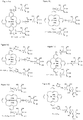
- CAL173GALO 5 can be synthesized by a glycosylation reaction between the calix-[4]-arene triol intermediate 3 and the derivative ethyl 2,3,4,6-tetra-O-benzoyl-1-thio- ⁇ -D-galactopyranoside 2 followed by the removal of the benzoyl protecting groups by a transtesterification reaction.
- the thioethyl tetrabenzoyl- ⁇ -D-galactopyranoside 2 was synthesized according to the literature [ Dondoni, A. et al, Synthesis and Properties of O-Glycosyl Calix[4]Arenes (Calixsugars), Chem. Eur. J., 1997, 3, 1774-1782 ].
- the calix-[4]-arene triol 3 can be synthesized from 4-tert-Butylphenol 6 ( CAS Number 98-54-4 ) as represented in Reaction Scheme 2. Reagents and reaction conditions are mentioned as examples, which do not limit the scope of the invention.
- a 1,3-dipolar reaction catalyzed by copper (I), between an alkyne and an azide (copper (I)-catalyzed alkyne-azide cycloaddition : CuAAC) represents a suitable method to inserting saccharide units in the calixarene-based platform.
- These calixarene compounds as illustrated in figure 1f (called here "CALX1N3GLUK” where N is an integer from 1 to 16 corresponding to the length of the alkyl chain) are accessible via the reaction sequence shown in Reaction Scheme 3.
- Reagents and reaction conditions are mentioned as examples, which do not limit the scope of the invention.
- CALX173GLUK 18 can be synthesized from the tris-azidopropyl-substitued calix-[4]-arene 16 and the propargyl 2,3,4,6-tetra-O-acetyl- ⁇ -D-glucopyranose 15 prepared according to the literature [ Mereyala, H.B. & Gurrala, S.R., Carbohyd. Res., 1998,307,351-354 ].
- the bonding between the saccharide units and the calix-[4]-arene-based platform via aromatic 1,2,3-triazole rings may have a stabilizing effect, as the phenol rings of the calixarene. This effect can be explained by " ⁇ -stacking" interactions with hydrophobic aromatic residues of membrane proteins. Moreover, the distance of the saccharide units from the calixarene-based platform provides more freedom of movement to the saccharide residues, which allows them to take the most favorable conformation to stabilize a membrane protein.
- the method of the invention enables the extraction of a given protein, selectively relative to other membrane proteins, in particular by modulating the length of the hydrophobic tail of the synthesized calix-[4]-arene compounds.
- the method of the invention enables the extraction and the separation of soluble and insoluble fractions of a wide range of membrane proteins, depending on the substituents inserted in the calix-[4]-arene-based platform.
- the membrane protein can be selected from the group comprising the transport proteins, ion channels, G protein-coupled receptors (GPCRs), enzymes or glycoproteins.
- transport protein is understood to mean a membrane protein whose role is the transport of various substances (ions, sterols, macromolecules, etc.) on both sides of the membrane.
- the step of contacting membrane pellets containing one or more membrane proteins to be extracted with an aqueous solution containing at least one calixarene of formula (I) can be carried out at a pH ranging from 5.5 to 10, preferably from 6 to 9.
- the extraction method can be carried out at a temperature ranging from 0 to 100°C, preferably from 4 to 25°C.
- the extraction and stabilization methods utilize a concentration of calixarene of formula (I) ranging from 10 -6 to 10 -2 M.
- the method of the extraction according to the invention can be carried out with calixarenes in solution or calixarenes in colloidal aggregates on account of their surface-active property.
- colloidal aggregate is understood to mean groups of a few to a few hundred molecules of calixarene organizing themselves on the basis of forces of repulsion towards the solvent.
- the calixarenes of formula (I) are capable of forming aggregates in an appropriate medium such as for example in water, in an aqueous solution, in an isotonic medium or in a biological medium.
- the aggregate can be selected from the group comprising micelles, liposomes and lipid nanoparticles.
- the calixarenes are in the form of micelles.
- micelle designates a spheroidal aggregate of molecules of calixarene of formula (I) which organizes itself depending on the solvent used. For example, in water or an aqueous solvent, the lipophilic ends are turned towards the interior of the micelle whereas the hydrophilic ends form the interface of the micelle with the solvent. In an organic solvent, for example oil, the arrangement is reversed.
- liposome designates small artificially made vesicles in particular constituted of thin sheets of phospholipids, separated from one another by aqueous compartments. They can have a structure very close to that of biological membranes.
- nanoparticle signifies an assembly of a few hundred to a few thousand molecules of calixarene of formula (I), resulting in an object at least one of whose dimensions is of nanometer size, for example between 1 and 300 nm.
- the membrane proteins complexed with the calixarenes of formula (I) and the non-complexed membrane proteins can be separated by centrifugation, for example for 2 hours at 4°C and at a speed of 100 000 g.
- the centrifugation conditions will depend on the nature of the protein. Those skilled in the art will know how to select the optimal centrifugation conditions.
- calixarene compounds have a relatively good solubility and considered acceptable for use in the extraction, solubilization and stabilization of membrane proteins.
- Example 1 relates to the preparation of the specific CALX173GALO compound with an heptyl chain which belongs to the memori CALX1N3GALO
- example 2 relates to the preparation of CALX173GLUK compound with an heptyl chain which belongs to the memori CALX1N3GLUK.
- reaction scheme 1 The following multi-step synthesis is accorded to reaction scheme 1 and 2.
- the mixture is agitated with a mechanical stirrer and the system is purged with nitrogen during 15 minutes.
- 30.6 g of phenol (0,34 mol) and 162.8 g of AlCl 3 (1,22 mol) are added in this order.
- the solution is turned quickly orange and a red viscous material is formed in the reactor walls.
- the reaction mixture is stirred vigorously during 3 hours.
- 2.5 L of distilled water is added to neutralize the excess of AlCl 3 .
- the organic phase is separated and concentrated at rotary evaporator to obtain an orange heterogeneous solution.
- 1 L of methanol is added and sonicated for 1 hour the solution in an ultrasonic bath.
- the weight proportions of the isolated mixture are defined by a 1 H NMR experiment help to the integrations of singlets located on the spectrum at 10.3, 9.9 and 8.3 ppm corresponding respectively to the cone conformations of 25,26,27,28-Tetrahydroxycalix-[4]-arene, 25-heptyloxy-26,27,28-trishydroxycalix-[4]-arene and 5,27-bisheptyloxy-26,28-bishydroxycalix -[4]-arene.
- the weight proportions are also calculated by considering the integrations of singlets at 9 and 8.1 ppm corresponding respectively to the 1,2- alternate and 1,3- alternate conformations of 5,27-bisheptyloxy-26,28-bishydroxycalix-[4]-arene.
- reaction mixture is concentrated on a rotary evaporator and 1 L of an aqueous solution of Na 2 CO 3 at 10% w/v is added drop wise to the heterogeneous white residue obtained.
- 500 mL of water is added to the white gel formed, then is extracted with CH 2 Cl 2 (3x500 mL).
- the organic phases are collected, dried over MgSO 4 , filtered and the clear solution is concentrated on a rotary evaporator to give 44 g of a fine white powder after drying under reduce pressure.
- reaction mixture is heated under argon flow at 80°C. After 48 hours, the reaction mixture is cooled at room temperature and pours the reaction mixture is poured in a 5 L erlenmeyer flask containing 2 L of iced water and 400 mL of an aqueous HCl 1N solution to neutralize excess of sodium cyanide.
- the white suspension is extracted with CH 2 Cl 2 (3x500 mL). The organic phases are collected, washed with water (2x500 mL) then brine (500 mL), then are dried over MgSO 4 , filtered and concentrated on a rotary evaporator to give 33 g of a brown solid residue.
- reaction mixture is cooled at room temperature and the solution is poured in a 2 L erlenmeyer flask containing 800 mL of an iced aqueous HCI 1N solution.
- the yellow suspension is extracted with CH 2 Cl 2 (3x200 mL).
- the organic phases are collected, dried over MgSO 4 , filtered and concentrated on a rotary evaporator to recover 24.4 g of a yellow powder.
- the residue is purified by flash chromatography on silica gel with an elution gradient with AcOH/MeOH/CH 2 Cl 2 from 1:2:97 to 1:6:93 to yield 20.4 g of a cream powder after drying under reduce pressure.
- the residue is solubilized with 1 L of ether and is washed with water (10x200 mL) to remove the acid acetic traces.
- the organic phase is dried over MgSO 4 , is filtered and concentrated on a rotary evaporator.
- the residue is dried overnight in a desiccator under reduce pressure to recover 17.9 g of a white powder in a yield of 77%.
- reaction mixture is poured in 200 mL of an iced 1N HCI solution, and the suspension is extracted with CH 2 Cl 2 (3x150 mL).
- the organic phases are collected, dried over MgSO 4 , filtered and concentrated on a rotary evaporator to recover 4 g of a white powder after drying under reduce pressure.
- the residue is purified by flash chromatography on silica gel with an elution gradient with AcOEt/Cyclohexane from 6:4 to 7:3 to give 2.63 g of a white powder with a yield of 76%.
- the dried compound 3 is dissolved with 8 mL of freshly distilled acetonitrile and, activated 3A molecular sieves are added while argon is bubbling through the suspension.
- the reaction mixture is stirred for 15 minutes under an argon stream then one fraction of compound 2 is added.
- the heterogeneous medium is sonicated 1 minute in an ultrasonic bath with the flow of argon.
- 401 mg of copper (II) triflate (1.1 mmol) and molecular sieve 3A are added.
- the green heterogeneous medium is sonicated 1 minute in an ultrasonic bath and the flow of argon is continued.
- the residue is dissolved with a minimum quantity of AcOEt and is passed through a layer of silica gel (dxh, 10x5 cm 2 ) and eluted with AcOEt (3x150 mL).
- the filtrate is concentrated on a rotary evaporator to give 3.42 g of a yellow powder residue.
- the residue is purified by flash chromatography on silica gel with a gradient elution of AcOEt/Cyclohexane from 25:75 to 3:7 and yield 729 mg of a yellow powder.
- the residue is purified by size exclusion chromatography on Sephadex LH-20 with a mixture of MeOH/CH 2 Cl 2 (1:1) to give 341 mg of a yellow powder.
- the powder is dissolved in 10 ml of a mixture of distilled solvents MeOH/CH 2 Cl 2 (1:1).
- the reaction mixture is purged with argon, and a catalytic amount of sodium methoxide is added to obtain a pH of 10-12 in the reaction mixture.
- the reaction is monitored by TLC with an eluent AcOEt/iPrOH/H 2 O (5:3:2).
- the medium is neutralized with Amberlite IR-120 (H+), and then the pink solution is filtered and concentrated on a rotary evaporator.
- the residue is purified by size exclusion chromatography on Sephadex LH-20 with a mixture of MeOH/CH 2 Cl 2 (1:1).
- reaction scheme 3 The following multi-step synthesis is accorded to reaction scheme 3.
- the system is purged by bubbling nitrogen through the reaction mixture, then 1.78 g of sodium azide (27.4 mmol), 6 mL of diphenyl phosphoryl azide (26.5 mmol) and 2 mL of 1,8-Diazabicyclo-[5.4.0]-undec-7-ene (13.4 mmol) are added.
- the reaction mixture is stirred vigorously at 120°C under a nitrogen flow during 22 hours.
- the reaction progress is monitored by TLC with eluent AcOEt/Cyclohexane (7:3).
- the brown reaction is cooled at room temperature, and then the mixture poured in 200 mL of iced water.
- the reaction mixture is extracted with CH 2 Cl 2 (3x100 mL).
- the system is purged by bubbling nitrogen through the reaction mixture and activated 4A molecular sieves are added. Then, the suspension is stirred 5 minutes under an argon flow, then 6.13 g of propargyl 2,3,4,6-tetra-O-acetyl- ⁇ -D-glucopyranose 15 (15.87 mmol), 4.8 mL of distilled DIEA (27.56 mmol) and 498 mg of Cul (2.61 mmol) are added in this order. The reaction mixture is sonicated during one minute. The reaction mixture is protected from the light and is stirred at room temperature under an argon flow. The reaction progress is monitored by TLC with the eluant AcOEt/Cyclohexane (5:95).
- the orange suspension is filtered through Celite and is washed with AcOEt (3x100 mL).
- the filtrate is washed with distilled water (500 mL), a solution of 1M sodium phosphate pH 7 (2x100 mL) and brine (100 mL).
- the organic phase is dried over MgSO 4 , is filtered and concentrated on a rotary evaporator to recover 9.27 g of a brown powder after drying under reduce pressure.
- the residue is purified by flash chromatography on silica gel with a gradient elution of AcOEt/Cyclohexane from 95:5 to pure AcOEt and 6.76 g of a yellow powder is obtained.
- the residue is purified by size exclusion chromatography on Sephadex LH-20 with a mixture of MeOH/CH 2 Cl 2 (1:1) to give 5.35 g of a light brown powder.
- the residue is dissolved in 50 mL of freshly distilled MeOH.
- the reaction mixture is purged with argon, and a catalytic amount of sodium methoxide is added to obtain a pH of 10-12 in the reaction mixture.
- the reaction is monitored by TLC with an eluant AcOEt/MeOH/H 2 O (7:2:1). After 16 h, the medium is neutralized with Amberlite IR-120 (H+), the yellow solution is filtered and concentrated on a rotary evaporator to recover 4.73 g of a yellow powder after drying under reduce pressure.
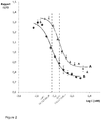
- CMC Critical Micellar Concentration
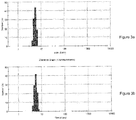
- Figures 3a and 3b show the aggregation state of CALX173GALO and CALX173GLUK. As illustrated, all the systems observed form aggregates of the micellar type.
- Fluorescence emission spectra of synthesized calixarene compounds containing 20 ⁇ M of pyrene were recorded using an excitation wavelength of 335 nm and the intensities I1 and I3 were measured at the wavelengths corresponding to the first and third vibronic bands located near 373 and 384 nm.
- the ratio I1/I3 is the so-called pyrene 1:3 ratio.
- the protein content was set at 20 mg/ml (20 mM Tris-CI pH 8.0, 150 mM NaCl, 10% Glycerol).
- the solubilization is effected at 4°C.
- the solubilized or non-solubilized protein fractions are separated by a 100 000 g centrifugation step for 1 hour at 4°C.
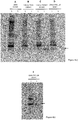
- Figures 4a) and 4b ) show the test of solubilization of membrane proteins enriched in A 2A adenosine protein with CALX173GALO (Western Blot “C”) and CALX173GLUK (Western Blot “D” and “E”) calixarenes of the present invention, and also known detergents, e.g. n-Dodecyl- ⁇ -D-Maltopyranoside (called DDM, Western Blot "A”) and 25-heptyloxy-26,27,28-tris(hydroxyl)calix-[4]-arene-5,11,17-tris(acetic acid) sodium salt (called here "CALX173ACE”, Western Blot “B”).
- DDM n-Dodecyl- ⁇ -D-Maltopyranoside
- DDM Western Blot "A”
- a 2A adenosine protein is partial with DDM, CALX173GALO, and CALX173ACE at 20 CMC and is nonexistent with CALX173GLUK to 8 CMC. It appears that the solubilization of A 2A protein is better with CALX173GALO than reference compounds, i.e. DDM and CALX173ACE (about 20%).
- the use of CALX173GLUK at 20 CMC enhances the solubilization of the A 2A protein.
- Bacteriorhodopsin protein (bR).
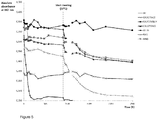
- FIG. 5 shows the effect of stabilization of membrane protein bR over the time at room temperature then 37°C in various detergent conditions : Octyl Glucoside (OG), CALX173ACE, CALX173GALO, CALX173GLUK, Amphipol A8-35, FA-3 Facial Amphiphilic, and Maltose-Neopentyl Glycol (MNG).
- OG Octyl Glucoside
- CALX173ACE CALX173GALO
- CALX173GLUK CALX173GLUK
- Amphipol A8-35 Amphipol A8-35
- FA-3 Facial Amphiphilic and Maltose-Neopentyl Glycol (MNG).
- MNG Maltose-Neopentyl Glycol
Landscapes
- Chemical & Material Sciences (AREA)
- Organic Chemistry (AREA)
- Health & Medical Sciences (AREA)
- Life Sciences & Earth Sciences (AREA)
- Biochemistry (AREA)
- General Health & Medical Sciences (AREA)
- Genetics & Genomics (AREA)
- Molecular Biology (AREA)
- Engineering & Computer Science (AREA)
- Biotechnology (AREA)
- Biophysics (AREA)
- Medicinal Chemistry (AREA)
- Proteomics, Peptides & Aminoacids (AREA)
- Gastroenterology & Hepatology (AREA)
- Chemical Kinetics & Catalysis (AREA)
- Crystallography & Structural Chemistry (AREA)
- Neurology (AREA)
- Biomedical Technology (AREA)
- Cell Biology (AREA)
- Immunology (AREA)
- Toxicology (AREA)
- Zoology (AREA)
- Analytical Chemistry (AREA)
- Peptides Or Proteins (AREA)
- Saccharide Compounds (AREA)
Claims (15)
- Calixaren-Verbindung nach Formel (I):
 - R1 für eine geradkettige oder verzweigte C(1-16)-Alkylgruppe steht;- R2 für ein Wasserstoffatom oder eine Methylgruppe steht;- R3 mit der R1- oder R2-Gruppe identisch ist;- R4 für einen Saccharidrest steht, in dem Hydroxylgruppen ungeschützt sind;- R5 mit R4 identisch ist oder fehlt;- L ein Bindeglied ist, das ausgewählt ist aus der Gruppe bestehend aus 1,2,3-Triazolfunktion, Amidfunktion, Thioharnstofffunktion, oder fehlt;- Z mit L identisch ist oder fehlt;- 0 ≤ x1 ≤ 3, wobei x1 eine ganze Zahl ist;- 0 ≤ y1 ≤ 3, wobei y1 eine ganze Zahl ist;- x2 mit x1 identisch oder gleich 0 ist;- y2 mit y1 identisch oder gleich 0 ist;- X = O, S ist oder fehlt;- Y mit X identisch ist oder fehlt.
 - Calixaren-Verbindung nach Anspruch 1, dadurch gekennzeichnet, dass:- R1 für eine geradkettige oder verzweigte C(1-16)-Alkylgruppe steht;- R2 für ein Wasserstoffatom oder eine Methylgruppe steht;- R3 mit der R1- oder R2-Gruppe identisch ist;- R4 für einen Saccharidrest steht, in dem Hydroxylgruppen ungeschützt sind, der ausgewählt ist aus der Gruppe von Monosacchariden oder Disacchariden, und vorzugsweise ausgewählt aus der Gruppe bestehend aus Glukosyl, Mannosyl, Galaktosyl, Maltosyl, Laktosyl;- R5 mit R4 identisch ist oder fehlt;- L ein Bindeglied ist, das ausgewählt ist aus der Gruppe bestehend aus 1,2,3-Triazolfunktion, Amidfunktion, Thioharnstofffunktion, oder fehlt;- Z mit L identisch ist oder fehlt;- 0 ≤ x1 ≤ 3, wobei x1 eine ganze Zahl ist;- 0 ≤ y1 ≤ 3, wobei y1 eine ganze Zahl ist;- x2 mit x1 identisch oder gleich 0 ist;- y2 mit y1 identisch oder gleich 0 ist;- X = O, S ist oder fehlt;- Y mit X identisch ist oder fehlt.
- Calixaren-Verbindung nach einem der Ansprüche 1 oder 2, dadurch gekennzeichnet, dass:- R1 für eine geradkettige oder verzweigte C(1-16)-Alkylgruppe steht;- R2, R3 für ein Wasserstoffatom oder eine Methylgruppe stehen;- R4, R5 für einen Saccharidrest stehen, in dem Hydroxylgruppen ungeschützt sind, der ausgewählt ist aus der Gruppe bestehend aus Glukosyl, Mannosyl, Galaktosyl, Maltosyl, Laktosyl;- L, Z ein Bindeglied sind, das ausgewählt ist aus der Gruppe bestehend aus 1,2,3-Triazolfunktion, Amidfunktion, Thioharnstofffunktion, oder fehlt;- 0 ≤ x1,2 ≤ 3, wobei x1,2 eine ganze Zahl sind;- 0 ≤ y1,2 ≤ 3, wobei y1,2 eine ganze Zahl sind;- X für ein Sauerstoffatom, ein Schwefelatom steht oder fehlt;- Y mit X identisch ist oder fehlt.
- Calixaren-Verbindung nach einem der Ansprüche 1 bis 3, dadurch gekennzeichnet, dass:- R1 einer geradkettigen oder verzweigten C(1-16)-Alkylgruppe entspricht;- R2, R3 Methyl sind;- R4, R5 für einen Saccharidrest stehen, in dem Hydroxylgruppen ungeschützt sind, der ausgewählt ist aus der Gruppe bestehend aus Glukosyl, Mannosyl, Galaktosyl, Maltosyl, Laktosyl;- L ein Bindeglied ist, das ausgewählt ist aus der Gruppe bestehend aus 1,2,3-Triazolfunktion, Amidfunktion, Thioharnstofffunktion, oder fehlt;- Z mit L identisch ist oder fehlt;- 0 ≤ x1,2 ≤ 3, wobei x1,2 eine ganze Zahl sind;- 0 ≤ y1,2 ≤ 3, wobei y1,2 eine ganze Zahl sind;- X für ein Sauerstoffatom, ein Schwefelatom steht oder fehlt;- Y mit X identisch ist oder fehlt.
- Calixaren-Verbindung nach einem der Ansprüche 1 bis 4, dadurch gekennzeichnet, dass- R1 einer geradkettigen oder verzweigten C(1-16)-Alkylgruppe entspricht;- R2, R3 Methyl sind;- R4, R5 für eine Galaktosylgruppe stehen, in der Hydroxylgruppen ungeschützt sind;- L, Z fehlen;- 0 ≤ x1,2 ≤ 3, wobei x1,2 eine ganze Zahl sind;- 0 ≤ y1,2 ≤ 3, wobei y1,2 eine ganze Zahl sind;- X für ein Sauerstoffatom, ein Schwefelatom steht oder fehlt;- Y mit X identisch ist oder fehlt.
- Calixaren-Verbindung nach einem der Ansprüche 1 bis 4, dadurch gekennzeichnet, dass:- R1 einer geradkettigen oder verzweigten C(1-16)-Alkylgruppe entspricht;- R2, R3 Methyl sind;- R4, R5 für eine Glukosylgruppe stehen, in der Hydroxylgruppen ungeschützt sind;- L, Z eine 1,2,3-Triazolfunktion sind;- 0 ≤ x1,2 ≤ 3, wobei x1,2 eine ganze Zahl sind;- 0 ≤ y1,2 ≤ 3, wobei y1,2 eine ganze Zahl sind;- X für ein Sauerstoffatom, ein Schwefelatom steht oder fehlt;- Y mit X identisch ist oder fehlt.
- Calixaren-Verbindung nach einem der Ansprüche 1 oder 2, dadurch gekennzeichnet, dass:- R1, R3 einer geradkettigen oder verzweigten C(1-16)-Alkylgruppe entsprechen;- R2 für ein Wasserstoffatom oder eine Methylgruppe steht;- R4 für eine Maltosylgruppe steht, in der Hydroxylgruppen ungeschützt sind;- R5 fehlt;- L ein Bindeglied ist, das ausgewählt ist aus der Gruppe bestehend aus 1,2,3-Triazolfunktion, Amidfunktion, Thioharnstofffunktion, oder fehlt;- Z fehlt;- 0 ≤ x1 ≤ 3, wobei x1 eine ganze Zahl ist;- 0 ≤ y1 ≤ 3, wobei y1 eine ganze Zahl ist;- x2 und y2 gleich 0 sind- X = O, S ist oder fehlt;- Y fehlt.
- Calixaren-Verbindung nach einem der Ansprüche 1, 2 oder 7, dadurch gekennzeichnet, dass:- R1, R3 einer geradkettigen oder verzweigten C(1-16)-Alkylgruppe entsprechen;- R2 für ein Methyl steht;- R4 für eine Maltosylgruppe steht, in der Hydroxylgruppen ungeschützt sind;- R5 fehlt;- L ein Bindeglied ist, das ausgewählt ist aus der Gruppe bestehend aus 1,2,3-Triazolfunktion, Amidfunktion, Thioharnstofffunktion, oder fehlt;- Z fehlt;- 0 ≤ x1 ≤ 3, wobei x1 eine ganze Zahl ist;- 0 ≤ y1 ≤ 3, wobei y1 eine ganze Zahl ist;- x2 und y2 gleich 0 sind- X = O, S ist oder fehlt;- Y fehlt.
- Calixaren-Verbindung nach einem der Ansprüche 1, 2, 7 oder 8, dadurch gekennzeichnet, dass:- R1, R3 einer geradkettigen oder verzweigten C(1-16)-Alkylgruppe entsprechen;- R2 für ein Methyl steht;- R4 für eine Maltosylgruppe steht, in der Hydroxylgruppen ungeschützt sind;- R5 fehlt;- L eine 1,2,3-Triazolfunktion ist;- Z fehlt;- 0 ≤ x1 ≤ 3, wobei x1 eine ganze Zahl ist;- 0 ≤ y1 ≤ 3, wobei y1 eine ganze Zahl ist;- x2 und y2 gleich 0 sind- X = O, S ist oder fehlt;- Y fehlt.
- Verfahren zum selektiven Extrahieren, Solubilisieren und/oder Stabilisieren von Membranproteinen, umfassend eine Stufe, die darin besteht, Membranpellets, die ein oder mehrere zu extrahierende Membranproteine enthalten, mit einer wässrigen Lösung zu kontaktieren, die mindestens eine Calixaren-Verbindung nach den Ansprüchen 1 bis 9 enthält, wobei das Membranprotein vorzugsweise ausgewählt ist aus der Gruppe umfassend: (a) die Transportproteine, vorzugsweise Multidrug-Effluxtransporter, ausgewählt aus der Gruppe, die das Acridin-Resistenzprotein B (AcrB) und eine Protonenpumpe aus der Gruppe umfasst, die das Bakteriorhodopsin (bR) umfasst; (b) die Ionenkanäle, vorzugsweise einen M2-Protonenkanal, ausgewählt aus der Gruppe, die das Influenzavirus-Matrixprotein 2 (M2) umfasst; oder (c) G-Protein-gekoppelte Rezeptoren (GPCRs), vorzugsweise Adenosin-A2A-Rezeptor; oder (d) Enzyme; oder (e) Glykoproteine.
- Verfahren nach Anspruch 10, wobei die Stufe des Kontaktierens von Membranpellets, die ein oder mehrere zu extrahierende Membranproteine enthalten, mit einer wässrigen Lösung, die mindestens ein Calixaren nach einem der Ansprüche 1 bis 9 enthält, bei einem pH-Wert im Bereich von 6 bis 9, und/oder bei einer Temperatur im Bereich von 4 bis 25 °C vorgenommen wird.
- Verfahren nach einem der Ansprüche 10 bis 11, wobei die Stufe des Kontaktierens von Membranpellets, die ein oder mehrere zu extrahierende Membranproteine enthalten, mit einer wässrigen Lösung, die mindestens ein Calixaren nach einem der Ansprüche 1 bis 9 enthält, bei einer Calixaren-Konzentration im Bereich von 10-6 bis 10-3 M ausgeführt wird.
- Verfahren zum Solubilisieren und/oder Stabilisieren eines Membranproteins durch Kontaktieren von Membranpellets, die ein oder mehrere zu extrahierende Membranproteine enthalten, mit einer wässrigen Lösung, die mindestens ein Calixaren nach einem der Ansprüche 1 bis 9 enthält, und gegebenenfalls Erhitzen des Membranproteins und der Membranpellets, wodurch ein Solubilisiertes oder Stabilisiertes des Membranproteins gebildet wird, und vorzugsweise ein Verfahren, bei dem das Verfahren nach einem der Ansprüche 10 bis 12 verwendet wird.
- Verfahren zum Stabilisieren eines Membranproteins durch Kontaktieren von in Lösung befindlichen solubilisierten oder gereinigten Membranproteinen mit einer wässrigen Lösung, die mindestens ein Calixaren nach einem der Ansprüche 1 bis 9 umfasst, wodurch ein Stabilisiertes des Membranproteins gebildet wird.
- Verfahren zum Herstellen einer Membranproteinlösung, das die Extraktion von Membranproteinen mit mindestens einer Calixaren-Verbindung nach einem der Ansprüche 1 bis 9, und die Abscheidung der mit den Calixarenen extrahierten Membranproteine, vorzugsweise durch Zentrifugation, umfasst.
Applications Claiming Priority (2)
| Application Number | Priority Date | Filing Date | Title |
|---|---|---|---|
| GB1406643.5A GB2525384A (en) | 2014-04-14 | 2014-04-14 | Synthesis of amphiphilic calixarene glycoside detergents and use of same for extracting and stabilizing native functional membrane proteins |
| PCT/EP2015/057544 WO2015158575A1 (en) | 2014-04-14 | 2015-04-08 | Synthesis of amphiphilic calixarene glycoside detergents and use of same for extracting and stabilizing native functional membrane proteins |
Publications (2)
| Publication Number | Publication Date |
|---|---|
| EP3131913A1 EP3131913A1 (de) | 2017-02-22 |
| EP3131913B1 true EP3131913B1 (de) | 2019-08-07 |
Family
ID=50844937
Family Applications (1)
| Application Number | Title | Priority Date | Filing Date |
|---|---|---|---|
| EP15716007.8A Active EP3131913B1 (de) | 2014-04-14 | 2015-04-08 | Synthese von amphiphilen calixaren-glycosid-detergenzien und verwendung davon zur extraktion und stabilisierung von nativen funktionellen membranproteinen |
Country Status (5)
| Country | Link |
|---|---|
| US (1) | US9695209B2 (de) |
| EP (1) | EP3131913B1 (de) |
| ES (1) | ES2750569T3 (de) |
| GB (1) | GB2525384A (de) |
| WO (1) | WO2015158575A1 (de) |
Families Citing this family (6)
| Publication number | Priority date | Publication date | Assignee | Title |
|---|---|---|---|---|
| KR101935293B1 (ko) * | 2016-10-28 | 2019-01-04 | 한양대학교 에리카산학협력단 | 새로운 레졸신아렌 기반의 양친매성 화합물 및 이의 활용 |
| US11591306B2 (en) | 2017-11-01 | 2023-02-28 | Industry-University Cooperation Foundation Hanyang University Erica Campus | Vitamin E-based amphipathic compound, and use thereof |
| WO2019157357A1 (en) | 2018-02-09 | 2019-08-15 | Si Group, Inc. | Processes for preparing calixarenes |
| WO2019157368A1 (en) | 2018-02-09 | 2019-08-15 | Si Group, Inc. | Processes for preparing calix[4]arenes from calix[8]arenes |
| US12473324B2 (en) | 2019-10-16 | 2025-11-18 | Industry-University Cooperation Foundation Hanyang University Erica Campus | Triazine-based amphiphilic compound and use thereof |
| CN114262354B (zh) * | 2021-12-28 | 2023-05-05 | 西南民族大学 | 一种化合物及其用途 |
Family Cites Families (3)
| Publication number | Priority date | Publication date | Assignee | Title |
|---|---|---|---|---|
| FR2931695B1 (fr) * | 2008-05-28 | 2010-06-25 | Centre Nat Rech Scient | Procede d'extraction selective de proteines membranaires avec les calixarenes |
| FR2944105B1 (fr) * | 2009-04-06 | 2011-06-17 | Centre Nat Rech Scient | Addifif pour la cristallisation de proteines, utilisation et procede |
| CA2820435C (en) * | 2010-12-10 | 2017-11-28 | Centre National De La Recherche Scientifique (Cnrs) | Glycomimetic compounds as anti-infectious against pathogens lectins |
-
2014
- 2014-04-14 GB GB1406643.5A patent/GB2525384A/en not_active Withdrawn
-
2015
- 2015-04-08 WO PCT/EP2015/057544 patent/WO2015158575A1/en not_active Ceased
- 2015-04-08 US US15/303,039 patent/US9695209B2/en not_active Expired - Fee Related
- 2015-04-08 ES ES15716007T patent/ES2750569T3/es active Active
- 2015-04-08 EP EP15716007.8A patent/EP3131913B1/de active Active
Non-Patent Citations (1)
| Title |
|---|
| None * |
Also Published As
| Publication number | Publication date |
|---|---|
| GB2525384A (en) | 2015-10-28 |
| WO2015158575A1 (en) | 2015-10-22 |
| EP3131913A1 (de) | 2017-02-22 |
| GB201406643D0 (en) | 2014-05-28 |
| US20170022241A1 (en) | 2017-01-26 |
| US9695209B2 (en) | 2017-07-04 |
| ES2750569T3 (es) | 2020-03-26 |
Similar Documents
| Publication | Publication Date | Title |
|---|---|---|
| EP3131913B1 (de) | Synthese von amphiphilen calixaren-glycosid-detergenzien und verwendung davon zur extraktion und stabilisierung von nativen funktionellen membranproteinen | |
| EP3805198A1 (de) | Verbindung, salz davon und lipidpartikel | |
| CN117715886A (zh) | 用于rna递送的可电离阳离子脂质 | |
| US9533049B2 (en) | Method for preparing nanoparticles based on functional amphiphilic molecules or macromolecules, and the use thereof | |
| CN104603102A (zh) | 阳离子性脂质 | |
| CZ419797A3 (cs) | Diglykosylované 1,2-dioly, způsob jejich přípravy a farmaceutický prostředek, který je obsahuje | |
| TW202337498A (zh) | 用於rna遞送之可離子化陽離子脂質 | |
| KR101797826B1 (ko) | 새로운 트리스 또는 네오펜틸 글리콜 기반의 양친매성 화합물 및 이의 활용 | |
| KR101781929B1 (ko) | 새로운 자일렌 기반의 양친매성 화합물 및 이의 활용 | |
| KR102070081B1 (ko) | 새로운 비타민 e 기반의 양친매성 화합물 및 이의 활용 | |
| KR101923584B1 (ko) | 새로운 뷰테인-테트라올 기반의 양친매성 화합물 및 이의 활용 | |
| KR102045870B1 (ko) | 덴드로닉 소수성기를 갖는 새로운 양친매성 화합물 및 이의 활용 | |
| EP1819824B1 (de) | Zu lipidmembranen in archeabakterien analoge verbindungen und liposomale zusammensetzungen mit diesen verbindungen | |
| KR101923583B1 (ko) | 새로운 메시틸렌 기반의 양친매성 화합물 및 이의 활용 | |
| EP4001262B1 (de) | Phenylhaltige verbindung, zwischenprodukt davon, herstellungsverfahren dafür und verwendung davon | |
| KR20170030261A (ko) | 새로운 만니톨 기반의 양친매성 화합물 및 이의 활용 | |
| KR102039483B1 (ko) | 텐덤 네오펜틸 글리콜 기반의 양친매성 화합물 및 이의 활용 | |
| KR102321563B1 (ko) | 새로운 터페닐 기반의 양친매성 화합물 및 이의 활용 | |
| KR102166783B1 (ko) | 새로운 트레할로스 중심을 갖는 양친매성 화합물 및 이의 활용 | |
| KR101778687B1 (ko) | 새로운 데옥시콜레이트 기반의 양친매성 화합물 및 이의 이용 | |
| KR102582645B1 (ko) | 새로운 트라이아진 다이머 기반 양친매성 화합물 및 이의 활용 | |
| WO2017134087A1 (en) | Steroidic calixarene compounds, their synthesis and use for extraction, solubilization and/or stabilization of native and functional membrane proteins | |
| Das et al. | Accessible glyco-tripod amphiphiles for membrane protein analysis | |
| KR102007317B1 (ko) | 벤젠 고리에서 파생된 양친매성 화합물 및 이의 활용 | |
| KR102164196B1 (ko) | 새로운 스테로이드 기반 양친매성 화합물 및 이의 활용 |
Legal Events
| Date | Code | Title | Description |
|---|---|---|---|
| STAA | Information on the status of an ep patent application or granted ep patent |
Free format text: STATUS: THE INTERNATIONAL PUBLICATION HAS BEEN MADE |
|
| PUAI | Public reference made under article 153(3) epc to a published international application that has entered the european phase |
Free format text: ORIGINAL CODE: 0009012 |
|
| STAA | Information on the status of an ep patent application or granted ep patent |
Free format text: STATUS: REQUEST FOR EXAMINATION WAS MADE |
|
| 17P | Request for examination filed |
Effective date: 20161114 |
|
| AK | Designated contracting states |
Kind code of ref document: A1 Designated state(s): AL AT BE BG CH CY CZ DE DK EE ES FI FR GB GR HR HU IE IS IT LI LT LU LV MC MK MT NL NO PL PT RO RS SE SI SK SM TR |
|
| AX | Request for extension of the european patent |
Extension state: BA ME |
|
| DAV | Request for validation of the european patent (deleted) | ||
| DAX | Request for extension of the european patent (deleted) | ||
| GRAP | Despatch of communication of intention to grant a patent |
Free format text: ORIGINAL CODE: EPIDOSNIGR1 |
|
| STAA | Information on the status of an ep patent application or granted ep patent |
Free format text: STATUS: GRANT OF PATENT IS INTENDED |
|
| INTG | Intention to grant announced |
Effective date: 20190329 |
|
| GRAJ | Information related to disapproval of communication of intention to grant by the applicant or resumption of examination proceedings by the epo deleted |
Free format text: ORIGINAL CODE: EPIDOSDIGR1 |
|
| STAA | Information on the status of an ep patent application or granted ep patent |
Free format text: STATUS: REQUEST FOR EXAMINATION WAS MADE |
|
| GRAP | Despatch of communication of intention to grant a patent |
Free format text: ORIGINAL CODE: EPIDOSNIGR1 |
|
| STAA | Information on the status of an ep patent application or granted ep patent |
Free format text: STATUS: GRANT OF PATENT IS INTENDED |
|
| GRAS | Grant fee paid |
Free format text: ORIGINAL CODE: EPIDOSNIGR3 |
|
| INTC | Intention to grant announced (deleted) | ||
| GRAA | (expected) grant |
Free format text: ORIGINAL CODE: 0009210 |
|
| STAA | Information on the status of an ep patent application or granted ep patent |
Free format text: STATUS: THE PATENT HAS BEEN GRANTED |
|
| INTG | Intention to grant announced |
Effective date: 20190617 |
|
| AK | Designated contracting states |
Kind code of ref document: B1 Designated state(s): AL AT BE BG CH CY CZ DE DK EE ES FI FR GB GR HR HU IE IS IT LI LT LU LV MC MK MT NL NO PL PT RO RS SE SI SK SM TR |
|
| REG | Reference to a national code |
Ref country code: GB Ref legal event code: FG4D |
|
| REG | Reference to a national code |
Ref country code: CH Ref legal event code: EP Ref country code: AT Ref legal event code: REF Ref document number: 1163691 Country of ref document: AT Kind code of ref document: T Effective date: 20190815 |
|
| REG | Reference to a national code |
Ref country code: DE Ref legal event code: R096 Ref document number: 602015035206 Country of ref document: DE |
|
| REG | Reference to a national code |
Ref country code: IE Ref legal event code: FG4D |
|
| REG | Reference to a national code |
Ref country code: SE Ref legal event code: TRGR |
|
| REG | Reference to a national code |
Ref country code: NL Ref legal event code: MP Effective date: 20190807 |
|
| REG | Reference to a national code |
Ref country code: LT Ref legal event code: MG4D |
|
| PG25 | Lapsed in a contracting state [announced via postgrant information from national office to epo] |
Ref country code: FI Free format text: LAPSE BECAUSE OF FAILURE TO SUBMIT A TRANSLATION OF THE DESCRIPTION OR TO PAY THE FEE WITHIN THE PRESCRIBED TIME-LIMIT Effective date: 20190807 Ref country code: LT Free format text: LAPSE BECAUSE OF FAILURE TO SUBMIT A TRANSLATION OF THE DESCRIPTION OR TO PAY THE FEE WITHIN THE PRESCRIBED TIME-LIMIT Effective date: 20190807 Ref country code: HR Free format text: LAPSE BECAUSE OF FAILURE TO SUBMIT A TRANSLATION OF THE DESCRIPTION OR TO PAY THE FEE WITHIN THE PRESCRIBED TIME-LIMIT Effective date: 20190807 Ref country code: PT Free format text: LAPSE BECAUSE OF FAILURE TO SUBMIT A TRANSLATION OF THE DESCRIPTION OR TO PAY THE FEE WITHIN THE PRESCRIBED TIME-LIMIT Effective date: 20191209 Ref country code: NO Free format text: LAPSE BECAUSE OF FAILURE TO SUBMIT A TRANSLATION OF THE DESCRIPTION OR TO PAY THE FEE WITHIN THE PRESCRIBED TIME-LIMIT Effective date: 20191107 Ref country code: BG Free format text: LAPSE BECAUSE OF FAILURE TO SUBMIT A TRANSLATION OF THE DESCRIPTION OR TO PAY THE FEE WITHIN THE PRESCRIBED TIME-LIMIT Effective date: 20191107 Ref country code: NL Free format text: LAPSE BECAUSE OF FAILURE TO SUBMIT A TRANSLATION OF THE DESCRIPTION OR TO PAY THE FEE WITHIN THE PRESCRIBED TIME-LIMIT Effective date: 20190807 |
|
| REG | Reference to a national code |
Ref country code: AT Ref legal event code: MK05 Ref document number: 1163691 Country of ref document: AT Kind code of ref document: T Effective date: 20190807 |
|
| PG25 | Lapsed in a contracting state [announced via postgrant information from national office to epo] |
Ref country code: AL Free format text: LAPSE BECAUSE OF FAILURE TO SUBMIT A TRANSLATION OF THE DESCRIPTION OR TO PAY THE FEE WITHIN THE PRESCRIBED TIME-LIMIT Effective date: 20190807 Ref country code: LV Free format text: LAPSE BECAUSE OF FAILURE TO SUBMIT A TRANSLATION OF THE DESCRIPTION OR TO PAY THE FEE WITHIN THE PRESCRIBED TIME-LIMIT Effective date: 20190807 Ref country code: RS Free format text: LAPSE BECAUSE OF FAILURE TO SUBMIT A TRANSLATION OF THE DESCRIPTION OR TO PAY THE FEE WITHIN THE PRESCRIBED TIME-LIMIT Effective date: 20190807 Ref country code: IS Free format text: LAPSE BECAUSE OF FAILURE TO SUBMIT A TRANSLATION OF THE DESCRIPTION OR TO PAY THE FEE WITHIN THE PRESCRIBED TIME-LIMIT Effective date: 20191207 Ref country code: GR Free format text: LAPSE BECAUSE OF FAILURE TO SUBMIT A TRANSLATION OF THE DESCRIPTION OR TO PAY THE FEE WITHIN THE PRESCRIBED TIME-LIMIT Effective date: 20191108 |
|
| REG | Reference to a national code |
Ref country code: ES Ref legal event code: FG2A Ref document number: 2750569 Country of ref document: ES Kind code of ref document: T3 Effective date: 20200326 |
|
| PG25 | Lapsed in a contracting state [announced via postgrant information from national office to epo] |
Ref country code: TR Free format text: LAPSE BECAUSE OF FAILURE TO SUBMIT A TRANSLATION OF THE DESCRIPTION OR TO PAY THE FEE WITHIN THE PRESCRIBED TIME-LIMIT Effective date: 20190807 |
|
| PG25 | Lapsed in a contracting state [announced via postgrant information from national office to epo] |
Ref country code: PL Free format text: LAPSE BECAUSE OF FAILURE TO SUBMIT A TRANSLATION OF THE DESCRIPTION OR TO PAY THE FEE WITHIN THE PRESCRIBED TIME-LIMIT Effective date: 20190807 Ref country code: AT Free format text: LAPSE BECAUSE OF FAILURE TO SUBMIT A TRANSLATION OF THE DESCRIPTION OR TO PAY THE FEE WITHIN THE PRESCRIBED TIME-LIMIT Effective date: 20190807 Ref country code: EE Free format text: LAPSE BECAUSE OF FAILURE TO SUBMIT A TRANSLATION OF THE DESCRIPTION OR TO PAY THE FEE WITHIN THE PRESCRIBED TIME-LIMIT Effective date: 20190807 Ref country code: RO Free format text: LAPSE BECAUSE OF FAILURE TO SUBMIT A TRANSLATION OF THE DESCRIPTION OR TO PAY THE FEE WITHIN THE PRESCRIBED TIME-LIMIT Effective date: 20190807 Ref country code: IT Free format text: LAPSE BECAUSE OF FAILURE TO SUBMIT A TRANSLATION OF THE DESCRIPTION OR TO PAY THE FEE WITHIN THE PRESCRIBED TIME-LIMIT Effective date: 20190807 Ref country code: DK Free format text: LAPSE BECAUSE OF FAILURE TO SUBMIT A TRANSLATION OF THE DESCRIPTION OR TO PAY THE FEE WITHIN THE PRESCRIBED TIME-LIMIT Effective date: 20190807 |
|
| PGFP | Annual fee paid to national office [announced via postgrant information from national office to epo] |
Ref country code: IE Payment date: 20200318 Year of fee payment: 6 Ref country code: SE Payment date: 20200320 Year of fee payment: 6 |
|
| PG25 | Lapsed in a contracting state [announced via postgrant information from national office to epo] |
Ref country code: IS Free format text: LAPSE BECAUSE OF FAILURE TO SUBMIT A TRANSLATION OF THE DESCRIPTION OR TO PAY THE FEE WITHIN THE PRESCRIBED TIME-LIMIT Effective date: 20200224 Ref country code: SK Free format text: LAPSE BECAUSE OF FAILURE TO SUBMIT A TRANSLATION OF THE DESCRIPTION OR TO PAY THE FEE WITHIN THE PRESCRIBED TIME-LIMIT Effective date: 20190807 Ref country code: SM Free format text: LAPSE BECAUSE OF FAILURE TO SUBMIT A TRANSLATION OF THE DESCRIPTION OR TO PAY THE FEE WITHIN THE PRESCRIBED TIME-LIMIT Effective date: 20190807 Ref country code: CZ Free format text: LAPSE BECAUSE OF FAILURE TO SUBMIT A TRANSLATION OF THE DESCRIPTION OR TO PAY THE FEE WITHIN THE PRESCRIBED TIME-LIMIT Effective date: 20190807 |
|
| REG | Reference to a national code |
Ref country code: DE Ref legal event code: R097 Ref document number: 602015035206 Country of ref document: DE |
|
| PLBE | No opposition filed within time limit |
Free format text: ORIGINAL CODE: 0009261 |
|
| STAA | Information on the status of an ep patent application or granted ep patent |
Free format text: STATUS: NO OPPOSITION FILED WITHIN TIME LIMIT |
|
| PG2D | Information on lapse in contracting state deleted |
Ref country code: IS |
|
| PGFP | Annual fee paid to national office [announced via postgrant information from national office to epo] |
Ref country code: ES Payment date: 20200504 Year of fee payment: 6 |
|
| 26N | No opposition filed |
Effective date: 20200603 |
|
| PG25 | Lapsed in a contracting state [announced via postgrant information from national office to epo] |
Ref country code: SI Free format text: LAPSE BECAUSE OF FAILURE TO SUBMIT A TRANSLATION OF THE DESCRIPTION OR TO PAY THE FEE WITHIN THE PRESCRIBED TIME-LIMIT Effective date: 20190807 |
|
| PG25 | Lapsed in a contracting state [announced via postgrant information from national office to epo] |
Ref country code: MC Free format text: LAPSE BECAUSE OF FAILURE TO SUBMIT A TRANSLATION OF THE DESCRIPTION OR TO PAY THE FEE WITHIN THE PRESCRIBED TIME-LIMIT Effective date: 20190807 |
|
| PG25 | Lapsed in a contracting state [announced via postgrant information from national office to epo] |
Ref country code: LU Free format text: LAPSE BECAUSE OF NON-PAYMENT OF DUE FEES Effective date: 20200408 |
|
| REG | Reference to a national code |
Ref country code: SE Ref legal event code: EUG |
|
| PG25 | Lapsed in a contracting state [announced via postgrant information from national office to epo] |
Ref country code: SE Free format text: LAPSE BECAUSE OF NON-PAYMENT OF DUE FEES Effective date: 20210409 |
|
| PG25 | Lapsed in a contracting state [announced via postgrant information from national office to epo] |
Ref country code: IE Free format text: LAPSE BECAUSE OF NON-PAYMENT OF DUE FEES Effective date: 20210408 |
|
| PG25 | Lapsed in a contracting state [announced via postgrant information from national office to epo] |
Ref country code: MT Free format text: LAPSE BECAUSE OF FAILURE TO SUBMIT A TRANSLATION OF THE DESCRIPTION OR TO PAY THE FEE WITHIN THE PRESCRIBED TIME-LIMIT Effective date: 20190807 Ref country code: CY Free format text: LAPSE BECAUSE OF FAILURE TO SUBMIT A TRANSLATION OF THE DESCRIPTION OR TO PAY THE FEE WITHIN THE PRESCRIBED TIME-LIMIT Effective date: 20190807 |
|
| PG25 | Lapsed in a contracting state [announced via postgrant information from national office to epo] |
Ref country code: MK Free format text: LAPSE BECAUSE OF FAILURE TO SUBMIT A TRANSLATION OF THE DESCRIPTION OR TO PAY THE FEE WITHIN THE PRESCRIBED TIME-LIMIT Effective date: 20190807 |
|
| REG | Reference to a national code |
Ref country code: ES Ref legal event code: FD2A Effective date: 20220630 |
|
| PG25 | Lapsed in a contracting state [announced via postgrant information from national office to epo] |
Ref country code: ES Free format text: LAPSE BECAUSE OF NON-PAYMENT OF DUE FEES Effective date: 20210409 |
|
| REG | Reference to a national code |
Ref country code: FR Ref legal event code: PLFP Year of fee payment: 9 |
|
| PGFP | Annual fee paid to national office [announced via postgrant information from national office to epo] |
Ref country code: GB Payment date: 20240422 Year of fee payment: 10 |
|
| PGFP | Annual fee paid to national office [announced via postgrant information from national office to epo] |
Ref country code: DE Payment date: 20240530 Year of fee payment: 10 |
|
| PGFP | Annual fee paid to national office [announced via postgrant information from national office to epo] |
Ref country code: CH Payment date: 20240501 Year of fee payment: 10 |
|
| PGFP | Annual fee paid to national office [announced via postgrant information from national office to epo] |
Ref country code: FR Payment date: 20240423 Year of fee payment: 10 |
|
| PGFP | Annual fee paid to national office [announced via postgrant information from national office to epo] |
Ref country code: BE Payment date: 20240429 Year of fee payment: 10 |
|
| REG | Reference to a national code |
Ref country code: DE Ref legal event code: R119 Ref document number: 602015035206 Country of ref document: DE |
|
| REG | Reference to a national code |
Ref country code: CH Ref legal event code: H13 Free format text: ST27 STATUS EVENT CODE: U-0-0-H10-H13 (AS PROVIDED BY THE NATIONAL OFFICE) Effective date: 20251125 |
|
| GBPC | Gb: european patent ceased through non-payment of renewal fee |
Effective date: 20250408 |
|
| REG | Reference to a national code |
Ref country code: BE Ref legal event code: MM Effective date: 20250430 |
|
| PG25 | Lapsed in a contracting state [announced via postgrant information from national office to epo] |
Ref country code: DE Free format text: LAPSE BECAUSE OF NON-PAYMENT OF DUE FEES Effective date: 20251104 |
|
| PG25 | Lapsed in a contracting state [announced via postgrant information from national office to epo] |
Ref country code: GB Free format text: LAPSE BECAUSE OF NON-PAYMENT OF DUE FEES Effective date: 20250408 |
|
| PG25 | Lapsed in a contracting state [announced via postgrant information from national office to epo] |
Ref country code: FR Free format text: LAPSE BECAUSE OF NON-PAYMENT OF DUE FEES Effective date: 20250430 |
|
| PG25 | Lapsed in a contracting state [announced via postgrant information from national office to epo] |
Ref country code: BE Free format text: LAPSE BECAUSE OF NON-PAYMENT OF DUE FEES Effective date: 20250430 |
|
| PG25 | Lapsed in a contracting state [announced via postgrant information from national office to epo] |
Ref country code: CH Free format text: LAPSE BECAUSE OF NON-PAYMENT OF DUE FEES Effective date: 20250430 |