EP3126471B1 - Platin(ii)-emitter für oled-anwendungen - Google Patents
Platin(ii)-emitter für oled-anwendungen Download PDFInfo
- Publication number
- EP3126471B1 EP3126471B1 EP15772468.3A EP15772468A EP3126471B1 EP 3126471 B1 EP3126471 B1 EP 3126471B1 EP 15772468 A EP15772468 A EP 15772468A EP 3126471 B1 EP3126471 B1 EP 3126471B1
- Authority
- EP
- European Patent Office
- Prior art keywords
- carbon atoms
- emitter
- oled
- substituted
- aryl
- Prior art date
- Legal status (The legal status is an assumption and is not a legal conclusion. Google has not performed a legal analysis and makes no representation as to the accuracy of the status listed.)
- Active
Links
- 0 Cc1c(*)c(C)c(*c2c(*)c(*)c(*)c(*)c2C)c(*)c1* Chemical compound Cc1c(*)c(C)c(*c2c(*)c(*)c(*)c(*)c2C)c(*)c1* 0.000 description 11
- DZRJSSZKQWHSMN-UHFFFAOYSA-N Brc1cccc(C2(c(cccc3)c3Oc3c2cccc3)c2ccccn2)c1 Chemical compound Brc1cccc(C2(c(cccc3)c3Oc3c2cccc3)c2ccccn2)c1 DZRJSSZKQWHSMN-UHFFFAOYSA-N 0.000 description 1
- COEDQTGAWIHQGL-UHFFFAOYSA-N Brc1cccc(C2(c3ccccc3Oc3c2cccc3)C2=NCCC=C2)c1 Chemical compound Brc1cccc(C2(c3ccccc3Oc3c2cccc3)C2=NCCC=C2)c1 COEDQTGAWIHQGL-UHFFFAOYSA-N 0.000 description 1
- ZNLLXMXVKPDCDF-UHFFFAOYSA-N C=[Br]c1cccc(C(c2ncccc2)=O)c1 Chemical compound C=[Br]c1cccc(C(c2ncccc2)=O)c1 ZNLLXMXVKPDCDF-UHFFFAOYSA-N 0.000 description 1
- SUZLIUKSQHBPFX-UHFFFAOYSA-N CC(c1cc(C2(c3ccccc3Oc3c2cccc3)c2ccccn2)ccc1)=O Chemical compound CC(c1cc(C2(c3ccccc3Oc3c2cccc3)c2ccccn2)ccc1)=O SUZLIUKSQHBPFX-UHFFFAOYSA-N 0.000 description 1
Images


Classifications
-
- H—ELECTRICITY
- H10—SEMICONDUCTOR DEVICES; ELECTRIC SOLID-STATE DEVICES NOT OTHERWISE PROVIDED FOR
- H10K—ORGANIC ELECTRIC SOLID-STATE DEVICES
- H10K85/00—Organic materials used in the body or electrodes of devices covered by this subclass
- H10K85/30—Coordination compounds
- H10K85/341—Transition metal complexes, e.g. Ru(II)polypyridine complexes
- H10K85/346—Transition metal complexes, e.g. Ru(II)polypyridine complexes comprising platinum
-
- C—CHEMISTRY; METALLURGY
- C07—ORGANIC CHEMISTRY
- C07F—ACYCLIC, CARBOCYCLIC OR HETEROCYCLIC COMPOUNDS CONTAINING ELEMENTS OTHER THAN CARBON, HYDROGEN, HALOGEN, OXYGEN, NITROGEN, SULFUR, SELENIUM OR TELLURIUM
- C07F15/00—Compounds containing elements of Groups 8, 9, 10 or 18 of the Periodic Table
- C07F15/0006—Compounds containing elements of Groups 8, 9, 10 or 18 of the Periodic Table compounds of the platinum group
- C07F15/0086—Platinum compounds
-
- C—CHEMISTRY; METALLURGY
- C09—DYES; PAINTS; POLISHES; NATURAL RESINS; ADHESIVES; COMPOSITIONS NOT OTHERWISE PROVIDED FOR; APPLICATIONS OF MATERIALS NOT OTHERWISE PROVIDED FOR
- C09K—MATERIALS FOR MISCELLANEOUS APPLICATIONS, NOT PROVIDED FOR ELSEWHERE
- C09K11/00—Luminescent materials, e.g. electroluminescent or chemiluminescent
- C09K11/06—Luminescent materials, e.g. electroluminescent or chemiluminescent containing organic luminescent materials
-
- H—ELECTRICITY
- H10—SEMICONDUCTOR DEVICES; ELECTRIC SOLID-STATE DEVICES NOT OTHERWISE PROVIDED FOR
- H10K—ORGANIC ELECTRIC SOLID-STATE DEVICES
- H10K50/00—Organic light-emitting devices
- H10K50/10—OLEDs or polymer light-emitting diodes [PLED]
- H10K50/11—OLEDs or polymer light-emitting diodes [PLED] characterised by the electroluminescent [EL] layers
-
- C—CHEMISTRY; METALLURGY
- C09—DYES; PAINTS; POLISHES; NATURAL RESINS; ADHESIVES; COMPOSITIONS NOT OTHERWISE PROVIDED FOR; APPLICATIONS OF MATERIALS NOT OTHERWISE PROVIDED FOR
- C09K—MATERIALS FOR MISCELLANEOUS APPLICATIONS, NOT PROVIDED FOR ELSEWHERE
- C09K2211/00—Chemical nature of organic luminescent or tenebrescent compounds
- C09K2211/10—Non-macromolecular compounds
- C09K2211/1018—Heterocyclic compounds
- C09K2211/1025—Heterocyclic compounds characterised by ligands
- C09K2211/1029—Heterocyclic compounds characterised by ligands containing one nitrogen atom as the heteroatom
-
- C—CHEMISTRY; METALLURGY
- C09—DYES; PAINTS; POLISHES; NATURAL RESINS; ADHESIVES; COMPOSITIONS NOT OTHERWISE PROVIDED FOR; APPLICATIONS OF MATERIALS NOT OTHERWISE PROVIDED FOR
- C09K—MATERIALS FOR MISCELLANEOUS APPLICATIONS, NOT PROVIDED FOR ELSEWHERE
- C09K2211/00—Chemical nature of organic luminescent or tenebrescent compounds
- C09K2211/18—Metal complexes
- C09K2211/185—Metal complexes of the platinum group, i.e. Os, Ir, Pt, Ru, Rh or Pd
-
- H—ELECTRICITY
- H10—SEMICONDUCTOR DEVICES; ELECTRIC SOLID-STATE DEVICES NOT OTHERWISE PROVIDED FOR
- H10K—ORGANIC ELECTRIC SOLID-STATE DEVICES
- H10K2101/00—Properties of the organic materials covered by group H10K85/00
- H10K2101/10—Triplet emission
Definitions
- platinum(II) emitters Even platinum is better than iridium in natural abundance and cost, nowadays, only iridium(III) emitters are used OLED display panels. It is because there are many remaining issues have to solve before platinum(II) emitters can be used in OLED display panel production. Efficiency roll-off is one of the most important issues encounter by platinum(II) emitters. It is because platinum emitters adopt a square planar geometry and the platinum centers tends to come together, platinum(II) emitters usually have very high self-quenching constants (in the order of 10 8 dm 3 mol -1 s -1 or more). Together with the long emission lifetime (near or longer than 10 ⁇ s), the devices fabricate from platinum(II) emitters usually have severe triple-triplet annihilation leading to serious efficiency roll-off.
- OLED fabricated from plaltinum(II) emitter showed related low efficiency.
- the maximum device efficiency of 51.8 cd/A has been achieved by platinum(II) emitters [ Appl. Phys. Lett. 91, 063508 (2007 )].
- the efficiencies of these device drops to less than 50% of the maximum values when the brightness increased to acceptable operation brightness say 1,000 cdm -2 . This is not good for OLED applications.
- OLEDs fabricated from emitters which tend to come together in the other words: tends to self-aggregate / have high self-quenching constant
- narrow doping window devices with high efficiency and good colour purity can only be obtained in a very narrow doping concentration range such as 1 wt. % - 5 wt. %).
- platinum(II) materials are not yet been used in industry.
- US 2013/274473 discloses an organometallic complex having a chemical structure of Structure I: wherein R1-R15 are independently hydrogen, halogen, hydroxyl, an unsubstituted alkyl, a substituted alkyl, cycloalkyl, an unsubstituted aryl, a substituted aryl, acyl, alkoxy, acyloxy, amino, nitro, acylamino, aralkyl, cyano, carboxyl, thio, styryl, aminocarbonyl, carbamoyl, aryloxycarbonyl, phenoxycarbonyl, or an alkoxycarbonyl group; wherein each pair of adjacent R groups of R1-R15 can be independently two separate groups or one group, and form one or more 5-8 member rings with 2 or 4 X groups; and wherein X1-X20 are independently boron, carbon, nitrogen, oxygen, silicon, germanium, phosphorous, sulphur or selenium.
- US 2012/018711 discloses organometallic complex having a chemical structure of structure I: wherein R1-R14 are independently hydrogen, halogen, hydroxyl, an unsubstituted alkyl, a substituted alkyl, cycloalkyl, an unsubstituted aryl, a substituted aryl, acyl, alkoxy, acyloxy, amino, nitro, acylamino, aralkyl, cyano, carboxyl, thio, styryl, aminocarbonyl, carbamoyl, aryloxycarbonyl, phenoxycarbonyl, or an alkoxycarbonyl group.
- R1-R14 are independently hydrogen, halogen, hydroxyl, an unsubstituted alkyl, a substituted alkyl, cycloalkyl, an unsubstituted aryl, a substituted aryl, acyl, alkoxy, acyloxy, amino, nitro, acy
- platinum(II) emitters with a new ligand core which have high emission quantum efficiencies, small self-quenching constants. They are ready to be used in industry.
- the invention relates to novel platinum(II) emitters having the chemical structure of Structure I. Also provided are applications in organic light-emitting diode (OLED).
- OLED organic light-emitting diode
- the platinum(II)-based compounds of Structure I are shown as follows: wherein R 1 -R 13 are independently hydrogen, halogen, hydroxyl, an unsubstituted alkyl, a substituted alkyl, cycloalkyl, an unsubstituted aryl, a substituted aryl, acyl, alkoxy, acyloxy, amino, nitro, acylamino, aralkyl, cyano, carboxyl, thio, styryl, aminocarbonyl, carbamoyl, aryloxycarbonyl, phenoxycarbonyl, or an alkoxycarbonyl group.
- Each pair of adjacent R groups of R 1 -R 13 can be independently joined togetherto form 5-8 member ring(s) with 2 or 4 carbon atoms in the phenyl ring(s) showed in Structure I; B and are self-quenching reduction groups.
- B is a hydrocarbon group containing 1 to 24 carbon atoms and is a hydrocarbon group containing 2 to 40 carbon atoms.
- the invention also provides devices fabricated from the platinum(II) emitters of Structure I.
- the devices of the invention exhibit at least one of and often both of high efficiency and low roll-off. Pure green emission can also be obtained in this material system.
- Amino refers to a primary, secondary, or tertiary amine which may be optionally substituted. Specifically included are secondary or tertiary amine nitrogen atoms which are members of a heterocyclic ring. Also specifically included, for example, are secondary or tertiary amino groups substituted by an acyl moiety. Some non-limiting examples of an amino group include -NR'R" wherein each of R' and R" is independently H, alkyl, aryl, aralkyl, alkaryl, cycloalkyl, acyl, heteroalkyl, heteroaryl or heterocycyl.
- Alkyl refers to a fully saturated acyclic monovalent radical containing carbon and hydrogen, and which may be branched or a straight chain.
- alkyl groups include, but are not limited to, methyl, ethyl, n-propyl, isopropyl, n-butyl, t-butyl, n-heptyl, n-hexyl, n-octyl, and n-decyl.
- Alkylamino means a radical -NHR or -NR 2 where each R is independently an alkyl group.
- Representative examples of alkylamino groups include, but are not limited to, methylamino, (1-methylethyl)amino, methylamino, dimethylamino, methylethylamino, and di(1-methyethyl)amino.
- hydroxyalkyl means an alkyl radical as defined herein, substituted with one or more, preferably one, two or three hydroxy groups.
- hydroxyalkyl include, but are not limited to, hydroxymethyl, 2-hydroxyethyl, 2-hydroxypropyl, 3-hydroxypropyl, 1-(hydroxymethyl)-2-methylpropyl, 2-hydroxybutyl, 3-hydroxybutyl, 4-hydroxybutyl, 2,3-dihydroxypropyl, 2-hydroxy-1-hydroxymethylethyl, 2,3-dihydroxybutyl, 3,4-dihydroxybutyl and 2-(hydroxymethyl)-3-hydroxy-propyl, preferably 2-hydroxyethyl, 2,3- dihydroxypropyl, and 1-(hydroxymethyl)2-hydroxyethyl.
- alkoxy refers the radical -OR x .
- Exemplary alkoxy groups include, but are not limited to, methoxy, ethoxy, and propoxy.
- Aromatic or “aromatic group” refers to aryl or heteroaryl.
- Aryl refers to optionally substituted carbocyclic aromatic groups.
- the aryl group includes phenyl, biphenyl, naphthyl, substituted phenyl, substituted biphenyl or substituted naphthyl. In other embodiments, the aryl group is phenyl or substituted phenyl.
- Alkyl refers to an alkyl group which is substituted with an aryl group. Some non-limiting examples of aralkyl include benzyl and phenethyl.
- Halogen refers to fluorine, chlorine, bromine and iodine.
- Non-limiting examples of substituents are those found in the exemplary compounds and embodiments disclosed herein, as well as halogen; alkyl; heteroalkyl; alkenyl; alkynyl; aryl; heteroaryl; hydroxy; alkoxyl; amino; nitro; thiol; thioether; imine; cyano; amido; phosphonato; phosphine; carboxyl; thiocarbonyl; sulfonyl; sulfonamide; ketone; aldehyde; ester; oxo; haloalkyl (e.g., trifluoromethyl); carbocyclic cycloalkyl, which can be monocyclic or fused or non-fused polycyclic (e.g., cyclopropyl, cyclobutyl, cyclopentyl or cyclohexyl) or a heterocycloalkyl, which can be monocyclic or fused or non-fused polycycl
- substituents can optionally be further substituted with a substituent selected from such groups. All chemical groups disclosed herein can be substituted, unless it is specified otherwise.
- substituted alkyl, alkenyl, alkynyl, aryl, hydrocarbyl or heterocyclo moieties described herein are moieties which are substituted with a hydrocarbyl moiety, a substituted hydrocarbyl moiety, a heteroatom, or a heterocyclo.
- substituents may include moieties in which a carbon atom is substituted with a heteroatom such as nitrogen, oxygen, silicon, phosphorus, boron, sulfur, or a halogen atom.
- substituents may include halogen, heterocyclo, alkoxy, alkenoxy, alkynoxy, aryloxy, hydroxy, protected hydroxy, keto, acyl, acyloxy, nitro, amino, amido, cyano, thiol, ketals, acetals, esters and ethers.
- the invention provides platinum(II) emitters.
- an organometallic emitter represented by Structure I is provided.
- the platinum center in Structure I is in +2 oxidation state and has a square planar geometry.
- the coordination sites of the platinum center are occupied by a tetradentate ligand.
- the tetradentate ligand featuring with 6-5-6 fused membered rings coordinates to the platinum center through a metal-oxygen bond, a nitrogen donor bond, a metal-carbon bond and a nitrogen donor bond in a sequence of O, N, C, N (O ⁇ N ⁇ C*N ligand; i.e., 4 connecting covalent bonds (either single or double) between O ⁇ N, 3 connecting covalent bonds (either single or double) between N ⁇ C, 4 connecting covalent bonds (either single or double) between C*N).
- the metal-oxygen bond is a bond between deprotonated phenol or substituted phenol and platinum, the nitrogen donors are from pyridine and/or isoquinoline groups, and the metal-carbon bond is formed by benzene or substituted benzene and platinum. There must a one carbon atom between the aromatic systems of C*N of the O ⁇ N ⁇ C*N system. Two different self-quenching reduction groups are attached in specific position in a specific fashion.
- the platinum(II) emitters have the chemical structures of Structure I: wherein R 1 -R 13 are independently hydrogen, halogen, hydroxyl, an unsubstituted alkyl, a substituted alkyl, cycloalkyl, an unsubstituted aryl, a substituted aryl, acyl, alkoxy, acyloxy, amino, nitro, acylamino, aralkyl, cyano, carboxyl, thio, styryl, aminocarbonyl, carbamoyl, aryloxycarbonyl, phenoxycarbonyl, or an alkoxycarbonyl group.
- Each pair of adjacent R groups of R 1 -R 13 can be independently joined togetherto form 5-8 member ring(s) with 2 or 4 carbon atoms in the phenyl ring(s) showed in Structure I; B and are self-quenching reduction groups.
- B is a hydrocarbon group containing 1 to 24 carbon atoms and is a hydrocarbon group containing 2 to 40 carbon atoms.
- B is connected to the emitter in the position depicted in Structure I through a single covalent bond.
- B is connected to the emitter in the position depicted in Structure I through two single covalent bond to the carbon atom between the C*N of the O ⁇ N ⁇ C*N system through a spiro-linkage.
- R 1 -R 13 is independently hydrogen, halogen, hydroxyl, an unsubstituted alkyl containing from 1 to 10 carbon atoms, a substituted alkyl containing from 1 to 20 carbon atoms, cycloalkyl containing from 4 to 20 carbon atoms, an unsubstituted aryl containing from 6 to 20 carbon atoms, a substituted aryl containing from 6 to 20 carbon atoms, acyl containing from 1 to 20 carbon atoms, alkoxy containing from 1 to 20 carbon atoms, acyloxy containing from 1 to 20 carbon atoms, amino, nitro, acylamino containing from 1 to 20 carbon atoms, aralkyl containing from 1 to 20 carbon atoms, cyano, carboxyl containing from 1 to 20 carbon atoms, thiol, styryl, aminocarbonyl containing from 1 to 20 carbon atoms, carbamoyl containing from 1 to 20 carbon atoms, carb
- B i a hydrocarbon group containing 1 to 24 carbon atoms.
- B can be a substituted aryl group.
- B contains at least one t-butyl group.
- B is: is a hydrocarbon group containing 2 to 40 carbon atoms. can be a substituted aryl group.
- R 14 -R 21 are independently hydrogen, halogen, hydroxyl, an unsubstituted alkyl, a substituted alkyl, cycloalkyl, an unsubstituted aryl, a substituted aryl, acyl, alkoxy, acyloxy, amino, nitro, acylamino, aralkyl, cyano, carboxyl, thio, styryl, aminocarbonyl, carbamoyl, aryloxycarbonyl, phenoxycarbonyl, or an alkoxycarbonyl group.
- Each pair of adjacent R groups of R 14 -R 21 can be independently joined together to form 5-8 member ring(s) with 2 or 4 carbon atoms in the phenyl ring(s).
- R 14 -R 21 are independently hydrogen, halogen, hydroxyl, an unsubstituted alkyl, a substituted alkyl, cycloalkyl, an unsubstituted aryl, a substituted aryl, acyl, alkoxy, acyloxy, amino, nitro, acylamino, aralkyl, cyano, carboxyl, thio, styryl, aminocarbonyl, carbamoyl, aryloxycarbonyl, phenoxycarbonyl, or an alkoxycarbonyl group.
- Each pair of adjacent R groups of R 14 -R 21 can be independently joined together to form 5-8 member ring(s) with 2 or 4 carbon atoms in the phenyl ring(s).
- platinum(II) emitters with structure I are shown as follows (emitters 1005-1008, 1013-1016, 1021, 1022, 1027 and 1028 do not form part of the invention):
- the platinum(II) emitter with chemical structure of Structure I can be prepared from a tetradentate ligand with a chemical structure of Structure II: wherein R 1 -R 13 are independently hydrogen, halogen, hydroxyl, an unsubstituted alkyl, a substituted alkyl, cycloalkyl, an unsubstituted aryl, a substituted aryl, acyl, alkoxy, acyloxy, amino, nitro, acylamino, aralkyl, cyano, carboxyl, thio, styryl, aminocarbonyl, carbamoyl, aryloxycarbonyl, phenoxycarbonyl, or an alkoxycarbonyl group.
- Each pair of adjacent R groups of R 1 -R 13 can be independently joined together to form 5-8 member ring(s) with 2 or 4 carbon atoms in the phenyl ring(s) shown in Structure I; B and are self-quenching reduction groups.
- the tetradentate ligand with Structure II can be prepared by a series of reactions depicted in Figure 1 : According to Figure 1 , Raw Material 5100 is transformed to Intermediate 3100 by Reaction 4100 and then reacts with Raw Material 5200 to get Intermediate 3200 by Reaction 4200. Intermediate 3300 is then produced by Intermediate 3200 by Reaction 4300. Through Reaction 4400, Intermediate 3300 is converted to Intermediate 3400.
- Intermediate 3500 is prepared reacting Raw Material 5300 and Raw Materials 5400 through Reaction 4500. Afterward, Intermediate 3400 reacts with Intermediate 3500 to form the Ligand 2000. Finally, the Emitter 1000 is prepared from the Ligand by Reaction 4700.
- Reaction 4100 is a Grignard Reagent preparation reaction.
- Reaction 4200 is a Grignard Reaction followed by dehydration reaction using concentrated H 2 SO 4 .
- Reaction 4300 is a Stille coupling reaction.
- Reaction 4400 is reacting the Intermediate with iodine using pyridine as solvent.
- Reaction 4500 is a condensation reaction.
- Reaction 4600 is performed in the presence of excess ammonium acetate and a solvent under a reflux condition.
- Reaction 4700 is reacting a ligand with a platinum(II) salt in the presence of solven(s).
- the platinum(II) salt is potassium tetrachloroplatinate.
- the solvents are glacial acetic acid and chloroform.
- the emitters of the invention can be formed into thin films by vacuum deposition, spin-coating, inkjet printing or other known fabrication methods.
- Different multilayer OLEDs have been fabricated using the compounds of the present invention as light-emitting material or as dopant in the emitting layer.
- the OLEDs are comprised on an anode and a cathode, between which are the hole transporting layer, light-emitting layer, and electron transporting or injection layer.
- the present invention makes use of an additional carrier confinement layer to improve the performance of the devices.
- the OLED is fabricated by vacuum deposition.
- the OLED is fabricated by solution process including spin coating and printing.
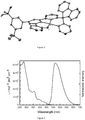
- FIG. 2 shows the emitter is not in planar structure.
- X-Ray diffraction data of single crystals were collected on a MAR PSD diffractometer with a 300 mm image plate detector or Bruker X8 Proteum diffractometer. The diffraction images were interpreted and diffraction intensities were integrated using program DENZO and the crystal structures were solved by direct methods employing SHELXS-97 program.
- UV-Vis absorption and emission spectra of Emitter 1002 is depicted in Figure 3 .
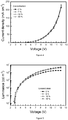
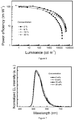
- OLEDs were constructed with a simple architecture of ITO/ MoO 3 (5 nm)/ HTL (50 nm)/ TCTA: Emitter 1002 (10 nm)/ ETL(50 nm)/ LiF (1.2 nm)/ Al (150 nm).
- TAPC di-[4-( N , N- ditolyl-amino)-phenyl]cyclohexane
- HTL hole-transporting layer
- TmPyPB 1,3,5-tri(m-pyrid-3-yl-phenyl)
- Tm3PyBPZ 2,4,6-tris(3-(3-(pyridin-3-yl)phenyl)phenyl)-1,3,5-triazine
- ETL electron-transporting layer
- the calculated geometrical parameters are in good agreement with the X-ray crystallography data.
- the Pt-Pt distances is 4.616 ⁇ , no Pt-Pt interactions arise.
- the HOMO and LUMO are mainly localized on the O ⁇ N ⁇ C ⁇ N ligand (see Figure 10 ).
- the emission is mainly from HOMO-1 ⁇ LUMO+1 (81.4%), which is mainly attributed to the ⁇ - ⁇ * transition of the substituent of the ligand.
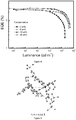
- Femtosecond time-resolved fluorescence measurement with CH 2 Cl 2 solution of Emitter 1002 ( ⁇ ex 350 nm) revealed fluorescence ( Figures 11 ) that decays with time constant of ⁇ 0.15 ps. This extremely rapid decay of fluorescence is suggestive of the presence of nearly unitary efficiency nonradiative decay attributed to efficient ISC from the electronically excited singlet to give the triplet states.
- a figure or a parameter from one range may be combined with another figure or a parameter from a different range for the same characteristic to generate a numerical range.
Landscapes
- Chemical & Material Sciences (AREA)
- Organic Chemistry (AREA)
- Engineering & Computer Science (AREA)
- Materials Engineering (AREA)
- Crystallography & Structural Chemistry (AREA)
- Inorganic Chemistry (AREA)
- Physics & Mathematics (AREA)
- Optics & Photonics (AREA)
- Electroluminescent Light Sources (AREA)
Claims (11)
- Emitter einer organischen Leuchtdiode (OLED), der eine chemische Struktur von Struktur I aufweist:


wobei B eine Kohlenwasserstoffgruppe ist, die 1 bis 24 Kohlenstoffatome enthält, und
- Emitter einer OLED nach Anspruch 1, wobei jedes von R1-R13 unabhängig Wasserstoff, Halogen, Hydroxyl, ein unsubstituiertes Alkyl, das 1 bis 10 Kohlenstoffatome enthält, ein substituiertes Alkyl, das 1 bis 20 Kohlenstoffatome enthält, Cycloalkyl, das 4 bis 20 Kohlenstoffatome enthält, ein unsubstituiertes Aryl, das 6 bis 20 Kohlenstoffatome enthält, ein substituiertes Aryl, das 6 bis 20 Kohlenstoffatome enthält, Acyl, das 1 bis 20 Kohlenstoffatome enthält, Alkoxy, das 1 bis 20 Kohlenstoffatome enthält, Acyloxy, das 1 bis 20 Kohlenstoffatome enthält, Amino, Nitro, Acylamino, das 1 bis 20 Kohlenstoffatome enthält, Aralkyl, das 1 bis 20 Kohlenstoffatome enthält, Cyano, Carboxyl, das 1 bis 20 Kohlenstoffatome enthält, Thiol, Styryl, Aminocarbonyl, das 1 bis 20 Kohlenstoffatome enthält, Carbamoyl, das 1 bis 20 Kohlenstoffatome enthält, Aryloxycarbonyl, das 1 bis 20 Kohlenstoffatome enthält, Phenoxycarbonyl, das 1 bis 20 Kohlenstoffatome enthält, oder eine Alkoxycarbonylgruppe, die 1 bis 20 Kohlenstoffatome enthält, ist.
- Emitter einer OLED nach Anspruch 1, wobei B Folgendes ist:

- Emitter einer OLED nach Anspruch 1, wobei


wobei R14-R21 unabhängig vorzugsweise Wasserstoff, Halogen, Hydroxyl, ein unsubstituiertes Alkyl, das 1 bis 10 Kohlenstoffatome enthält, ein substituiertes Alkyl, das 1 bis 20 Kohlenstoffatome enthält, Cycloalkyl, das 4 bis 20 Kohlenstoffatome enthält, ein unsubstituiertes Aryl, das 6 bis 20 Kohlenstoffatome enthält, ein substituiertes Aryl, das 6 bis 20 Kohlenstoffatome enthält, Acyl, das 1 bis 20 Kohlenstoffatome enthält, Alkoxy, das 1 bis 20 Kohlenstoffatome enthält, Acyloxy, das 1 bis 20 Kohlenstoffatome enthält, Amino, Nitro, Acylamino, das 1 bis 20 Kohlenstoffatome enthält, Aralkyl, das 1 bis 20 Kohlenstoffatome enthält, Cyano, Carboxyl, das 1 bis 20 Kohlenstoffatome enthält, Thiol, Styryl, Aminocarbonyl, das 1 bis 20 Kohlenstoffatome enthält, Carbamoyl, das 1 bis 20 Kohlenstoffatome enthält, Aryloxycarbonyl, das 1 bis 20 Kohlenstoffatome enthält, Phenoxycarbonyl, das 1 bis 20 Kohlenstoffatome enthält, oder eine Alkoxycarbonylgruppe, die 1 bis 20 Kohlenstoffatome enthält, sind. - Emitter einer OLED nach Anspruch 1, wobei der Emitter ausgewählt ist aus den folgenden Emittern:


- Emitter einer OLED nach Anspruch 1, der eine grüne Emission in einer verdünnten Lösung mit einer Emissions-λmax < 520 nm aufweist.
- Emitter einer OLED nach Anspruch 1, der eine kurze Emissionslebensdauer von weniger als 6 -s aufweist.
- Emitter einer OLED nach Anspruch 1, der eine Selbstfluoreszenzlöschungskonstante in der Ordnung von 10-7 dm3 mol-1 s-1 oder darunter aufweist.
- Lichtemittierende Vorrichtung, die mindestens einen Emitter einer OLED nach Anspruch 1 als ein emittierendes Material umfasst; wobei die Vorrichtung vorzugsweise eine organische Leuchtdiode (OLED) ist.
- Lichtemittierende Vorrichtung nach Anspruch 9, wobei die Vorrichtung eine abstrahlende Schicht enthält.
- Lichtemittierende Vorrichtung nach Anspruch 9, wobei die Vorrichtung mehr als eine abstrahlende Schicht enthält.
Applications Claiming Priority (2)
| Application Number | Priority Date | Filing Date | Title |
|---|---|---|---|
| US14/243,950 US10038153B2 (en) | 2014-04-03 | 2014-04-03 | Platinum (II) emitters for OLED applications |
| PCT/CN2015/075456 WO2015149677A1 (en) | 2014-04-03 | 2015-03-31 | Platinum (ii) emitters for oled applications |
Publications (3)
| Publication Number | Publication Date |
|---|---|
| EP3126471A1 EP3126471A1 (de) | 2017-02-08 |
| EP3126471A4 EP3126471A4 (de) | 2017-11-15 |
| EP3126471B1 true EP3126471B1 (de) | 2019-01-02 |
Family
ID=54210503
Family Applications (1)
| Application Number | Title | Priority Date | Filing Date |
|---|---|---|---|
| EP15772468.3A Active EP3126471B1 (de) | 2014-04-03 | 2015-03-31 | Platin(ii)-emitter für oled-anwendungen |
Country Status (6)
| Country | Link |
|---|---|
| US (2) | US10038153B2 (de) |
| EP (1) | EP3126471B1 (de) |
| JP (2) | JP6431085B2 (de) |
| KR (1) | KR101904629B1 (de) |
| CN (2) | CN106795428B (de) |
| WO (1) | WO2015149677A1 (de) |
Families Citing this family (20)
| Publication number | Priority date | Publication date | Assignee | Title |
|---|---|---|---|---|
| US10038153B2 (en) * | 2014-04-03 | 2018-07-31 | Versitech Limited | Platinum (II) emitters for OLED applications |
| EP3297978B1 (de) | 2015-05-18 | 2020-04-01 | Merck Patent GmbH | Materialien für organische elektrolumineszenzvorrichtungen |
| US10361382B2 (en) * | 2016-01-15 | 2019-07-23 | The University Of Hong Kong | Platinum complexes for blue OLED application |
| KR102654858B1 (ko) | 2016-02-11 | 2024-04-05 | 삼성전자주식회사 | 유기금속 화합물, 이를 포함한 유기 발광 소자 및 이를 포함한 진단용 조성물 |
| US10236456B2 (en) * | 2016-04-11 | 2019-03-19 | Universal Display Corporation | Organic electroluminescent materials and devices |
| KR102673814B1 (ko) * | 2016-08-25 | 2024-06-10 | 삼성전자주식회사 | 유기금속 화합물 및 이를 포함한 유기 발광 소자 |
| US10811621B2 (en) | 2017-02-15 | 2020-10-20 | Samsung Electronics Co., Ltd. | Organometallic compound, organic light-emitting device including the organometallic compound, and a diagnostic composition including the organometallic compound |
| WO2019015658A1 (en) * | 2017-07-19 | 2019-01-24 | The University Of Hong Kong | ORGANIC TUNABLE ORGANIC ELECTROLUMINESCENT DIODE DEVICES BASED ON A SINGLE TRANSMITTER AND ASSOCIATED METHODS |
| JP2021511335A (ja) * | 2018-01-25 | 2021-05-06 | ザ ユニバーシティ オブ ホンコンThe University of Hong Kong | 調整可能な発光エネルギを有するスピロ含有白金(ii)エミッタ及びその合成 |
| CN110872325B (zh) * | 2018-09-03 | 2021-05-21 | 广东阿格蕾雅光电材料有限公司 | 基于铂四齿oncn络合物的有机发光材料、制备方法及其在有机发光二极管中的应用 |
| KR102215256B1 (ko) | 2019-11-18 | 2021-02-15 | 주식회사 인공지능연구원 | 동기화된 음성과 동작을 지원하는 멀티미디어 저작 장치 및 그 방법 |
| CN112940040B (zh) * | 2019-12-11 | 2022-06-10 | 广东阿格蕾雅光电材料有限公司 | 一种四齿铂(ii)配合物的制备及应用 |
| CN112979710B (zh) | 2019-12-16 | 2022-02-15 | 广东阿格蕾雅光电材料有限公司 | 一种铂金属配合物及其在有机电致发光器件中的应用 |
| CN112979709B (zh) | 2019-12-16 | 2022-09-02 | 广东阿格蕾雅光电材料有限公司 | 一种金属配合物及其应用 |
| CN113698432B (zh) * | 2020-05-21 | 2024-03-08 | 广东阿格蕾雅光电材料有限公司 | 一种四齿铂(ii)配合物的制备及应用 |
| CN114573639B (zh) * | 2020-11-30 | 2023-12-12 | 广东阿格蕾雅光电材料有限公司 | 含咔唑的oncn四齿配体的铂配合物 |
| CN113583056B (zh) * | 2021-08-31 | 2024-08-09 | 浙江虹舞科技有限公司 | 基于螺芴-螺芴结构的6/5/6四齿环金属铂或钯配合物的发光材料及其应用 |
| CN116102598B (zh) * | 2021-11-10 | 2026-02-03 | 广东阿格蕾雅光电材料有限公司 | 高效二价铂配合物磷光OLEDs材料及其应用 |
| CN116102597B (zh) * | 2021-11-10 | 2026-02-03 | 广东阿格蕾雅光电材料有限公司 | 高色纯度的二价铂配合物 |
| CN118221743A (zh) * | 2022-12-21 | 2024-06-21 | 广东阿格蕾雅光电材料有限公司 | 含螺环的铂配合物及其应用 |
Family Cites Families (14)
| Publication number | Priority date | Publication date | Assignee | Title |
|---|---|---|---|---|
| US6653654B1 (en) * | 2002-05-01 | 2003-11-25 | The University Of Hong Kong | Electroluminescent materials |
| DE10345572A1 (de) * | 2003-09-29 | 2005-05-19 | Covion Organic Semiconductors Gmbh | Metallkomplexe |
| US7442797B2 (en) * | 2003-11-04 | 2008-10-28 | Takasago International Corporation | Platinum complex and light emitting device |
| US7579093B2 (en) * | 2004-09-17 | 2009-08-25 | Fujifilm Corporation | Organic electroluminescent device |
| JP4796808B2 (ja) * | 2004-09-17 | 2011-10-19 | 富士フイルム株式会社 | 有機電界発光素子 |
| JP4531509B2 (ja) * | 2004-09-27 | 2010-08-25 | 富士フイルム株式会社 | 発光素子 |
| US20060134461A1 (en) * | 2004-12-17 | 2006-06-22 | Shouquan Huo | Organometallic materials and electroluminescent devices |
| JP4727262B2 (ja) * | 2005-03-16 | 2011-07-20 | 富士フイルム株式会社 | 有機電界発光素子 |
| US8877353B2 (en) * | 2010-07-21 | 2014-11-04 | Versitech Limited | Platinum (II) tetradentate ONCN complexes for organic light-emitting diode applications |
| US8772485B2 (en) * | 2011-12-09 | 2014-07-08 | The University Of Hong Kong | Palladium complexes for organic light-emitting diodes |
| US9461254B2 (en) * | 2012-01-03 | 2016-10-04 | Universal Display Corporation | Organic electroluminescent materials and devices |
| KR101749611B1 (ko) * | 2012-04-12 | 2017-06-21 | 벌시테크 리미티드 | 유기발광다이오드용 백금(ⅱ) 착화합물 |
| US10135008B2 (en) * | 2014-01-07 | 2018-11-20 | Universal Display Corporation | Organic electroluminescent materials and devices |
| US10038153B2 (en) * | 2014-04-03 | 2018-07-31 | Versitech Limited | Platinum (II) emitters for OLED applications |
-
2014
- 2014-04-03 US US14/243,950 patent/US10038153B2/en active Active
-
2015
- 2015-03-31 CN CN201580018225.2A patent/CN106795428B/zh active Active
- 2015-03-31 EP EP15772468.3A patent/EP3126471B1/de active Active
- 2015-03-31 WO PCT/CN2015/075456 patent/WO2015149677A1/en not_active Ceased
- 2015-03-31 JP JP2016554890A patent/JP6431085B2/ja active Active
- 2015-03-31 KR KR1020167023404A patent/KR101904629B1/ko active Active
- 2015-03-31 CN CN202010585855.0A patent/CN111793094B/zh active Active
-
2018
- 2018-07-16 US US16/035,793 patent/US10998510B2/en active Active
- 2018-09-13 JP JP2018171393A patent/JP6916769B2/ja active Active
Non-Patent Citations (1)
| Title |
|---|
| None * |
Also Published As
| Publication number | Publication date |
|---|---|
| US10998510B2 (en) | 2021-05-04 |
| US20180323384A1 (en) | 2018-11-08 |
| US20150287937A1 (en) | 2015-10-08 |
| CN111793094A (zh) | 2020-10-20 |
| EP3126471A1 (de) | 2017-02-08 |
| JP6431085B2 (ja) | 2018-11-28 |
| JP6916769B2 (ja) | 2021-08-11 |
| CN111793094B (zh) | 2023-08-08 |
| CN106795428A (zh) | 2017-05-31 |
| JP2017508845A (ja) | 2017-03-30 |
| JP2019021925A (ja) | 2019-02-07 |
| WO2015149677A1 (en) | 2015-10-08 |
| KR20160131004A (ko) | 2016-11-15 |
| US10038153B2 (en) | 2018-07-31 |
| CN106795428B (zh) | 2020-09-25 |
| KR101904629B1 (ko) | 2018-10-04 |
| EP3126471A4 (de) | 2017-11-15 |
Similar Documents
| Publication | Publication Date | Title |
|---|---|---|
| EP3126471B1 (de) | Platin(ii)-emitter für oled-anwendungen | |
| EP3093326B1 (de) | Lichtemittierendes material, organisches lichtemittierendes element und verbindung | |
| Zhang et al. | Highly efficient TADF OLEDs with low efficiency roll-off based on novel acridine–carbazole hybrid donor-substituted pyrimidine derivatives | |
| EP2963035A1 (de) | Organisches lichtemittierendes material und organisches lichtemittierendes element | |
| JP2018513132A (ja) | 有機電子素子用化合物、それを用いた有機電子素子及びその電子装置 | |
| EP3275970B1 (de) | Organische lichtemittierende verbindung und organische lichtemittierende diode damit | |
| Ilmi et al. | Two new red-emitting ternary europium (III) complexes with high photoluminescence quantum yields and exceptional performance in OLED devices | |
| CN104370974A (zh) | 一类以含氮杂环卡宾为第二主配体的铱配合物及其制备方法 | |
| TW201343659A (zh) | 有機電激發光元件用材料及使用其之有機電激發光元件 | |
| KR101558966B1 (ko) | 비대칭 오르소-터페닐 유도체 및 이를 포함하는 유기 발광 소자 | |
| EP4160708A1 (de) | Organische lichtemittierende vorrichtung, herstellungsverfahren dafür und zusammensetzung für organische materialschicht einer organischen lichtemittierenden vorrichtung | |
| CN108699435B (zh) | 用于蓝色oled应用的铂络合物 | |
| KR102104633B1 (ko) | 신규한 유기 화합물 및 이를 포함하는 유기 발광 소자 | |
| KR20160056783A (ko) | 지연 형광 화합물, 이를 포함하는 유기발광다이오드소자 및 표시장치 | |
| JP2012167058A (ja) | エキシマー特性を有する1,8−アリール置換ナフタレン誘導体及びこれを用いた有機el素子 | |
| KR102486001B1 (ko) | 신규한 안트라센 유도체 및 이를 포함하는 유기 발광 소자 | |
| KR101612158B1 (ko) | 유기 화합물 및 이를 포함하는 유기 전계 발광 소자 | |
| JP6273984B2 (ja) | 環状アジン化合物、その製造方法、及びそれを含む有機電界発光素子用材料 | |
| CN101993457A (zh) | 含咔唑或噁二唑基团的2,2’-联吡啶合铼(i)的配合物及其制法和用途 | |
| JP5797078B2 (ja) | 燐光発光素子 | |
| Lu et al. | Synthesis of novel s-triazine/carbazole based bipolar molecules and their application in phosphorescent OLEDs | |
| KR20160064961A (ko) | 지연 형광 화합물 이를 포함하는 유기발광다이오드소자 및 표시장치 | |
| KR20150029340A (ko) | 오르토-치환된 벤젠 유도체 유기발광 화합물 및 이를 포함하는 유기발광 소자 | |
| KR20160045570A (ko) | 지연 형광 화합물, 이를 포함하는 유기발광다이오드소자 및 표시장치 | |
| KR101804176B1 (ko) | 실란-게르만 화합물 및 이를 포함하는 유기발광소자 |
Legal Events
| Date | Code | Title | Description |
|---|---|---|---|
| STAA | Information on the status of an ep patent application or granted ep patent |
Free format text: STATUS: THE INTERNATIONAL PUBLICATION HAS BEEN MADE |
|
| PUAI | Public reference made under article 153(3) epc to a published international application that has entered the european phase |
Free format text: ORIGINAL CODE: 0009012 |
|
| STAA | Information on the status of an ep patent application or granted ep patent |
Free format text: STATUS: REQUEST FOR EXAMINATION WAS MADE |
|
| 17P | Request for examination filed |
Effective date: 20160901 |
|
| AK | Designated contracting states |
Kind code of ref document: A1 Designated state(s): AL AT BE BG CH CY CZ DE DK EE ES FI FR GB GR HR HU IE IS IT LI LT LU LV MC MK MT NL NO PL PT RO RS SE SI SK SM TR |
|
| AX | Request for extension of the european patent |
Extension state: BA ME |
|
| DAV | Request for validation of the european patent (deleted) | ||
| DAX | Request for extension of the european patent (deleted) | ||
| A4 | Supplementary search report drawn up and despatched |
Effective date: 20171017 |
|
| RIC1 | Information provided on ipc code assigned before grant |
Ipc: C09K 11/06 20060101ALI20171011BHEP Ipc: C07F 15/00 20060101ALI20171011BHEP Ipc: H01L 51/54 20060101AFI20171011BHEP |
|
| REG | Reference to a national code |
Ref country code: DE Ref legal event code: R079 Ref document number: 602015022854 Country of ref document: DE Free format text: PREVIOUS MAIN CLASS: C09K0011060000 Ipc: H01L0051540000 |
|
| GRAP | Despatch of communication of intention to grant a patent |
Free format text: ORIGINAL CODE: EPIDOSNIGR1 |
|
| STAA | Information on the status of an ep patent application or granted ep patent |
Free format text: STATUS: GRANT OF PATENT IS INTENDED |
|
| RIC1 | Information provided on ipc code assigned before grant |
Ipc: C07F 15/00 20060101ALI20180713BHEP Ipc: H01L 51/54 20060101AFI20180713BHEP Ipc: C09K 11/06 20060101ALI20180713BHEP |
|
| INTG | Intention to grant announced |
Effective date: 20180801 |
|
| GRAS | Grant fee paid |
Free format text: ORIGINAL CODE: EPIDOSNIGR3 |
|
| GRAA | (expected) grant |
Free format text: ORIGINAL CODE: 0009210 |
|
| STAA | Information on the status of an ep patent application or granted ep patent |
Free format text: STATUS: THE PATENT HAS BEEN GRANTED |
|
| AK | Designated contracting states |
Kind code of ref document: B1 Designated state(s): AL AT BE BG CH CY CZ DE DK EE ES FI FR GB GR HR HU IE IS IT LI LT LU LV MC MK MT NL NO PL PT RO RS SE SI SK SM TR |
|
| REG | Reference to a national code |
Ref country code: GB Ref legal event code: FG4D |
|
| REG | Reference to a national code |
Ref country code: CH Ref legal event code: EP Ref country code: AT Ref legal event code: REF Ref document number: 1085506 Country of ref document: AT Kind code of ref document: T Effective date: 20190115 |
|
| REG | Reference to a national code |
Ref country code: IE Ref legal event code: FG4D |
|
| REG | Reference to a national code |
Ref country code: DE Ref legal event code: R096 Ref document number: 602015022854 Country of ref document: DE |
|
| REG | Reference to a national code |
Ref country code: NL Ref legal event code: FP |
|
| REG | Reference to a national code |
Ref country code: LT Ref legal event code: MG4D |
|
| REG | Reference to a national code |
Ref country code: AT Ref legal event code: MK05 Ref document number: 1085506 Country of ref document: AT Kind code of ref document: T Effective date: 20190102 |
|
| PG25 | Lapsed in a contracting state [announced via postgrant information from national office to epo] |
Ref country code: PT Free format text: LAPSE BECAUSE OF FAILURE TO SUBMIT A TRANSLATION OF THE DESCRIPTION OR TO PAY THE FEE WITHIN THE PRESCRIBED TIME-LIMIT Effective date: 20190502 Ref country code: ES Free format text: LAPSE BECAUSE OF FAILURE TO SUBMIT A TRANSLATION OF THE DESCRIPTION OR TO PAY THE FEE WITHIN THE PRESCRIBED TIME-LIMIT Effective date: 20190102 Ref country code: LT Free format text: LAPSE BECAUSE OF FAILURE TO SUBMIT A TRANSLATION OF THE DESCRIPTION OR TO PAY THE FEE WITHIN THE PRESCRIBED TIME-LIMIT Effective date: 20190102 Ref country code: NO Free format text: LAPSE BECAUSE OF FAILURE TO SUBMIT A TRANSLATION OF THE DESCRIPTION OR TO PAY THE FEE WITHIN THE PRESCRIBED TIME-LIMIT Effective date: 20190402 Ref country code: PL Free format text: LAPSE BECAUSE OF FAILURE TO SUBMIT A TRANSLATION OF THE DESCRIPTION OR TO PAY THE FEE WITHIN THE PRESCRIBED TIME-LIMIT Effective date: 20190102 Ref country code: SE Free format text: LAPSE BECAUSE OF FAILURE TO SUBMIT A TRANSLATION OF THE DESCRIPTION OR TO PAY THE FEE WITHIN THE PRESCRIBED TIME-LIMIT Effective date: 20190102 Ref country code: FI Free format text: LAPSE BECAUSE OF FAILURE TO SUBMIT A TRANSLATION OF THE DESCRIPTION OR TO PAY THE FEE WITHIN THE PRESCRIBED TIME-LIMIT Effective date: 20190102 |
|
| PG25 | Lapsed in a contracting state [announced via postgrant information from national office to epo] |
Ref country code: HR Free format text: LAPSE BECAUSE OF FAILURE TO SUBMIT A TRANSLATION OF THE DESCRIPTION OR TO PAY THE FEE WITHIN THE PRESCRIBED TIME-LIMIT Effective date: 20190102 Ref country code: GR Free format text: LAPSE BECAUSE OF FAILURE TO SUBMIT A TRANSLATION OF THE DESCRIPTION OR TO PAY THE FEE WITHIN THE PRESCRIBED TIME-LIMIT Effective date: 20190403 Ref country code: IS Free format text: LAPSE BECAUSE OF FAILURE TO SUBMIT A TRANSLATION OF THE DESCRIPTION OR TO PAY THE FEE WITHIN THE PRESCRIBED TIME-LIMIT Effective date: 20190502 Ref country code: BG Free format text: LAPSE BECAUSE OF FAILURE TO SUBMIT A TRANSLATION OF THE DESCRIPTION OR TO PAY THE FEE WITHIN THE PRESCRIBED TIME-LIMIT Effective date: 20190402 Ref country code: RS Free format text: LAPSE BECAUSE OF FAILURE TO SUBMIT A TRANSLATION OF THE DESCRIPTION OR TO PAY THE FEE WITHIN THE PRESCRIBED TIME-LIMIT Effective date: 20190102 Ref country code: LV Free format text: LAPSE BECAUSE OF FAILURE TO SUBMIT A TRANSLATION OF THE DESCRIPTION OR TO PAY THE FEE WITHIN THE PRESCRIBED TIME-LIMIT Effective date: 20190102 |
|
| REG | Reference to a national code |
Ref country code: DE Ref legal event code: R097 Ref document number: 602015022854 Country of ref document: DE |
|
| PG25 | Lapsed in a contracting state [announced via postgrant information from national office to epo] |
Ref country code: IT Free format text: LAPSE BECAUSE OF FAILURE TO SUBMIT A TRANSLATION OF THE DESCRIPTION OR TO PAY THE FEE WITHIN THE PRESCRIBED TIME-LIMIT Effective date: 20190102 Ref country code: RO Free format text: LAPSE BECAUSE OF FAILURE TO SUBMIT A TRANSLATION OF THE DESCRIPTION OR TO PAY THE FEE WITHIN THE PRESCRIBED TIME-LIMIT Effective date: 20190102 Ref country code: SK Free format text: LAPSE BECAUSE OF FAILURE TO SUBMIT A TRANSLATION OF THE DESCRIPTION OR TO PAY THE FEE WITHIN THE PRESCRIBED TIME-LIMIT Effective date: 20190102 Ref country code: CZ Free format text: LAPSE BECAUSE OF FAILURE TO SUBMIT A TRANSLATION OF THE DESCRIPTION OR TO PAY THE FEE WITHIN THE PRESCRIBED TIME-LIMIT Effective date: 20190102 Ref country code: MC Free format text: LAPSE BECAUSE OF FAILURE TO SUBMIT A TRANSLATION OF THE DESCRIPTION OR TO PAY THE FEE WITHIN THE PRESCRIBED TIME-LIMIT Effective date: 20190102 Ref country code: DK Free format text: LAPSE BECAUSE OF FAILURE TO SUBMIT A TRANSLATION OF THE DESCRIPTION OR TO PAY THE FEE WITHIN THE PRESCRIBED TIME-LIMIT Effective date: 20190102 Ref country code: AL Free format text: LAPSE BECAUSE OF FAILURE TO SUBMIT A TRANSLATION OF THE DESCRIPTION OR TO PAY THE FEE WITHIN THE PRESCRIBED TIME-LIMIT Effective date: 20190102 Ref country code: EE Free format text: LAPSE BECAUSE OF FAILURE TO SUBMIT A TRANSLATION OF THE DESCRIPTION OR TO PAY THE FEE WITHIN THE PRESCRIBED TIME-LIMIT Effective date: 20190102 Ref country code: AT Free format text: LAPSE BECAUSE OF FAILURE TO SUBMIT A TRANSLATION OF THE DESCRIPTION OR TO PAY THE FEE WITHIN THE PRESCRIBED TIME-LIMIT Effective date: 20190102 |
|
| REG | Reference to a national code |
Ref country code: CH Ref legal event code: PL |
|
| PLBE | No opposition filed within time limit |
Free format text: ORIGINAL CODE: 0009261 |
|
| STAA | Information on the status of an ep patent application or granted ep patent |
Free format text: STATUS: NO OPPOSITION FILED WITHIN TIME LIMIT |
|
| PG25 | Lapsed in a contracting state [announced via postgrant information from national office to epo] |
Ref country code: SM Free format text: LAPSE BECAUSE OF FAILURE TO SUBMIT A TRANSLATION OF THE DESCRIPTION OR TO PAY THE FEE WITHIN THE PRESCRIBED TIME-LIMIT Effective date: 20190102 Ref country code: LU Free format text: LAPSE BECAUSE OF NON-PAYMENT OF DUE FEES Effective date: 20190331 |
|
| REG | Reference to a national code |
Ref country code: BE Ref legal event code: MM Effective date: 20190331 |
|
| 26N | No opposition filed |
Effective date: 20191003 |
|
| PG25 | Lapsed in a contracting state [announced via postgrant information from national office to epo] |
Ref country code: IE Free format text: LAPSE BECAUSE OF NON-PAYMENT OF DUE FEES Effective date: 20190331 Ref country code: CH Free format text: LAPSE BECAUSE OF NON-PAYMENT OF DUE FEES Effective date: 20190331 Ref country code: LI Free format text: LAPSE BECAUSE OF NON-PAYMENT OF DUE FEES Effective date: 20190331 |
|
| PG25 | Lapsed in a contracting state [announced via postgrant information from national office to epo] |
Ref country code: SI Free format text: LAPSE BECAUSE OF FAILURE TO SUBMIT A TRANSLATION OF THE DESCRIPTION OR TO PAY THE FEE WITHIN THE PRESCRIBED TIME-LIMIT Effective date: 20190102 Ref country code: BE Free format text: LAPSE BECAUSE OF NON-PAYMENT OF DUE FEES Effective date: 20190331 |
|
| PG25 | Lapsed in a contracting state [announced via postgrant information from national office to epo] |
Ref country code: TR Free format text: LAPSE BECAUSE OF FAILURE TO SUBMIT A TRANSLATION OF THE DESCRIPTION OR TO PAY THE FEE WITHIN THE PRESCRIBED TIME-LIMIT Effective date: 20190102 |
|
| PG25 | Lapsed in a contracting state [announced via postgrant information from national office to epo] |
Ref country code: MT Free format text: LAPSE BECAUSE OF NON-PAYMENT OF DUE FEES Effective date: 20190331 |
|
| PG25 | Lapsed in a contracting state [announced via postgrant information from national office to epo] |
Ref country code: CY Free format text: LAPSE BECAUSE OF FAILURE TO SUBMIT A TRANSLATION OF THE DESCRIPTION OR TO PAY THE FEE WITHIN THE PRESCRIBED TIME-LIMIT Effective date: 20190102 |
|
| PG25 | Lapsed in a contracting state [announced via postgrant information from national office to epo] |
Ref country code: HU Free format text: LAPSE BECAUSE OF FAILURE TO SUBMIT A TRANSLATION OF THE DESCRIPTION OR TO PAY THE FEE WITHIN THE PRESCRIBED TIME-LIMIT; INVALID AB INITIO Effective date: 20150331 |
|
| PG25 | Lapsed in a contracting state [announced via postgrant information from national office to epo] |
Ref country code: MK Free format text: LAPSE BECAUSE OF FAILURE TO SUBMIT A TRANSLATION OF THE DESCRIPTION OR TO PAY THE FEE WITHIN THE PRESCRIBED TIME-LIMIT Effective date: 20190102 |
|
| REG | Reference to a national code |
Ref country code: DE Ref legal event code: R079 Ref document number: 602015022854 Country of ref document: DE Free format text: PREVIOUS MAIN CLASS: H01L0051540000 Ipc: H10K0085000000 |
|
| PGFP | Annual fee paid to national office [announced via postgrant information from national office to epo] |
Ref country code: NL Payment date: 20260213 Year of fee payment: 12 |
|
| PGFP | Annual fee paid to national office [announced via postgrant information from national office to epo] |
Ref country code: GB Payment date: 20260209 Year of fee payment: 12 |
|
| PGFP | Annual fee paid to national office [announced via postgrant information from national office to epo] |
Ref country code: DE Payment date: 20260204 Year of fee payment: 12 |
|
| PGFP | Annual fee paid to national office [announced via postgrant information from national office to epo] |
Ref country code: FR Payment date: 20260209 Year of fee payment: 12 |