EP3124137B1 - Verfahren zur herstellung von msnx-nanopartikeln als anodenmaterialien für eine wiederaufladbare batterie - Google Patents
Verfahren zur herstellung von msnx-nanopartikeln als anodenmaterialien für eine wiederaufladbare batterie Download PDFInfo
- Publication number
- EP3124137B1 EP3124137B1 EP15179106.8A EP15179106A EP3124137B1 EP 3124137 B1 EP3124137 B1 EP 3124137B1 EP 15179106 A EP15179106 A EP 15179106A EP 3124137 B1 EP3124137 B1 EP 3124137B1
- Authority
- EP
- European Patent Office
- Prior art keywords
- solution
- hydride
- nanoparticles
- tin
- anyone
- Prior art date
- Legal status (The legal status is an assumption and is not a legal conclusion. Google has not performed a legal analysis and makes no representation as to the accuracy of the status listed.)
- Active
Links
Images




Classifications
-
- C—CHEMISTRY; METALLURGY
- C01—INORGANIC CHEMISTRY
- C01G—COMPOUNDS CONTAINING METALS NOT COVERED BY SUBCLASSES C01D OR C01F
- C01G19/00—Compounds of tin
-
- B—PERFORMING OPERATIONS; TRANSPORTING
- B22—CASTING; POWDER METALLURGY
- B22F—WORKING METALLIC POWDER; MANUFACTURE OF ARTICLES FROM METALLIC POWDER; MAKING METALLIC POWDER; APPARATUS OR DEVICES SPECIALLY ADAPTED FOR METALLIC POWDER
- B22F9/00—Making metallic powder or suspensions thereof
- B22F9/16—Making metallic powder or suspensions thereof using chemical processes
- B22F9/18—Making metallic powder or suspensions thereof using chemical processes with reduction of metal compounds
- B22F9/24—Making metallic powder or suspensions thereof using chemical processes with reduction of metal compounds starting from liquid metal compounds, e.g. solutions
-
- H—ELECTRICITY
- H01—ELECTRIC ELEMENTS
- H01M—PROCESSES OR MEANS, e.g. BATTERIES, FOR THE DIRECT CONVERSION OF CHEMICAL ENERGY INTO ELECTRICAL ENERGY
- H01M4/00—Electrodes
- H01M4/02—Electrodes composed of, or comprising, active material
- H01M4/36—Selection of substances as active materials, active masses, active liquids
- H01M4/38—Selection of substances as active materials, active masses, active liquids of elements or alloys
- H01M4/387—Tin or alloys based on tin
-
- B—PERFORMING OPERATIONS; TRANSPORTING
- B22—CASTING; POWDER METALLURGY
- B22F—WORKING METALLIC POWDER; MANUFACTURE OF ARTICLES FROM METALLIC POWDER; MAKING METALLIC POWDER; APPARATUS OR DEVICES SPECIALLY ADAPTED FOR METALLIC POWDER
- B22F1/00—Metallic powder; Treatment of metallic powder, e.g. to facilitate working or to improve properties
- B22F1/05—Metallic powder characterised by the size or surface area of the particles
- B22F1/054—Nanosized particles
-
- B—PERFORMING OPERATIONS; TRANSPORTING
- B22—CASTING; POWDER METALLURGY
- B22F—WORKING METALLIC POWDER; MANUFACTURE OF ARTICLES FROM METALLIC POWDER; MAKING METALLIC POWDER; APPARATUS OR DEVICES SPECIALLY ADAPTED FOR METALLIC POWDER
- B22F1/00—Metallic powder; Treatment of metallic powder, e.g. to facilitate working or to improve properties
- B22F1/07—Metallic powder characterised by particles having a nanoscale microstructure
-
- B—PERFORMING OPERATIONS; TRANSPORTING
- B22—CASTING; POWDER METALLURGY
- B22F—WORKING METALLIC POWDER; MANUFACTURE OF ARTICLES FROM METALLIC POWDER; MAKING METALLIC POWDER; APPARATUS OR DEVICES SPECIALLY ADAPTED FOR METALLIC POWDER
- B22F1/00—Metallic powder; Treatment of metallic powder, e.g. to facilitate working or to improve properties
- B22F1/08—Metallic powder characterised by particles having an amorphous microstructure
-
- B—PERFORMING OPERATIONS; TRANSPORTING
- B22—CASTING; POWDER METALLURGY
- B22F—WORKING METALLIC POWDER; MANUFACTURE OF ARTICLES FROM METALLIC POWDER; MAKING METALLIC POWDER; APPARATUS OR DEVICES SPECIALLY ADAPTED FOR METALLIC POWDER
- B22F9/00—Making metallic powder or suspensions thereof
- B22F9/02—Making metallic powder or suspensions thereof using physical processes
- B22F9/04—Making metallic powder or suspensions thereof using physical processes starting from solid material, e.g. by crushing, grinding or milling
-
- B—PERFORMING OPERATIONS; TRANSPORTING
- B82—NANOTECHNOLOGY
- B82Y—SPECIFIC USES OR APPLICATIONS OF NANOSTRUCTURES; MEASUREMENT OR ANALYSIS OF NANOSTRUCTURES; MANUFACTURE OR TREATMENT OF NANOSTRUCTURES
- B82Y30/00—Nanotechnology for materials or surface science, e.g. nanocomposites
-
- B—PERFORMING OPERATIONS; TRANSPORTING
- B82—NANOTECHNOLOGY
- B82Y—SPECIFIC USES OR APPLICATIONS OF NANOSTRUCTURES; MEASUREMENT OR ANALYSIS OF NANOSTRUCTURES; MANUFACTURE OR TREATMENT OF NANOSTRUCTURES
- B82Y40/00—Manufacture or treatment of nanostructures
-
- B—PERFORMING OPERATIONS; TRANSPORTING
- B82—NANOTECHNOLOGY
- B82Y—SPECIFIC USES OR APPLICATIONS OF NANOSTRUCTURES; MEASUREMENT OR ANALYSIS OF NANOSTRUCTURES; MANUFACTURE OR TREATMENT OF NANOSTRUCTURES
- B82Y99/00—Subject matter not provided for in other groups of this subclass
-
- C—CHEMISTRY; METALLURGY
- C01—INORGANIC CHEMISTRY
- C01G—COMPOUNDS CONTAINING METALS NOT COVERED BY SUBCLASSES C01D OR C01F
- C01G51/00—Compounds of cobalt
-
- H—ELECTRICITY
- H01—ELECTRIC ELEMENTS
- H01M—PROCESSES OR MEANS, e.g. BATTERIES, FOR THE DIRECT CONVERSION OF CHEMICAL ENERGY INTO ELECTRICAL ENERGY
- H01M10/00—Secondary cells; Manufacture thereof
- H01M10/05—Accumulators with non-aqueous electrolyte
- H01M10/052—Li-accumulators
- H01M10/0525—Rocking-chair batteries, i.e. batteries with lithium insertion or intercalation in both electrodes; Lithium-ion batteries
-
- H—ELECTRICITY
- H01—ELECTRIC ELEMENTS
- H01M—PROCESSES OR MEANS, e.g. BATTERIES, FOR THE DIRECT CONVERSION OF CHEMICAL ENERGY INTO ELECTRICAL ENERGY
- H01M10/00—Secondary cells; Manufacture thereof
- H01M10/36—Accumulators not provided for in groups H01M10/05-H01M10/34
-
- H—ELECTRICITY
- H01—ELECTRIC ELEMENTS
- H01M—PROCESSES OR MEANS, e.g. BATTERIES, FOR THE DIRECT CONVERSION OF CHEMICAL ENERGY INTO ELECTRICAL ENERGY
- H01M4/00—Electrodes
- H01M4/02—Electrodes composed of, or comprising, active material
- H01M4/04—Processes of manufacture in general
- H01M4/0402—Methods of deposition of the material
- H01M4/0404—Methods of deposition of the material by coating on electrode collectors
-
- H—ELECTRICITY
- H01—ELECTRIC ELEMENTS
- H01M—PROCESSES OR MEANS, e.g. BATTERIES, FOR THE DIRECT CONVERSION OF CHEMICAL ENERGY INTO ELECTRICAL ENERGY
- H01M4/00—Electrodes
- H01M4/02—Electrodes composed of, or comprising, active material
- H01M4/13—Electrodes for accumulators with non-aqueous electrolyte, e.g. for lithium-accumulators; Processes of manufacture thereof
- H01M4/134—Electrodes based on metals, Si or alloys
-
- H—ELECTRICITY
- H01—ELECTRIC ELEMENTS
- H01M—PROCESSES OR MEANS, e.g. BATTERIES, FOR THE DIRECT CONVERSION OF CHEMICAL ENERGY INTO ELECTRICAL ENERGY
- H01M4/00—Electrodes
- H01M4/02—Electrodes composed of, or comprising, active material
- H01M4/13—Electrodes for accumulators with non-aqueous electrolyte, e.g. for lithium-accumulators; Processes of manufacture thereof
- H01M4/139—Processes of manufacture
- H01M4/1395—Processes of manufacture of electrodes based on metals, Si or alloys
-
- B—PERFORMING OPERATIONS; TRANSPORTING
- B22—CASTING; POWDER METALLURGY
- B22F—WORKING METALLIC POWDER; MANUFACTURE OF ARTICLES FROM METALLIC POWDER; MAKING METALLIC POWDER; APPARATUS OR DEVICES SPECIALLY ADAPTED FOR METALLIC POWDER
- B22F9/00—Making metallic powder or suspensions thereof
- B22F9/02—Making metallic powder or suspensions thereof using physical processes
- B22F9/04—Making metallic powder or suspensions thereof using physical processes starting from solid material, e.g. by crushing, grinding or milling
- B22F2009/043—Making metallic powder or suspensions thereof using physical processes starting from solid material, e.g. by crushing, grinding or milling by ball milling
-
- B—PERFORMING OPERATIONS; TRANSPORTING
- B22—CASTING; POWDER METALLURGY
- B22F—WORKING METALLIC POWDER; MANUFACTURE OF ARTICLES FROM METALLIC POWDER; MAKING METALLIC POWDER; APPARATUS OR DEVICES SPECIALLY ADAPTED FOR METALLIC POWDER
- B22F9/00—Making metallic powder or suspensions thereof
- B22F9/16—Making metallic powder or suspensions thereof using chemical processes
- B22F9/18—Making metallic powder or suspensions thereof using chemical processes with reduction of metal compounds
- B22F9/24—Making metallic powder or suspensions thereof using chemical processes with reduction of metal compounds starting from liquid metal compounds, e.g. solutions
- B22F2009/245—Reduction reaction in an Ionic Liquid [IL]
-
- B—PERFORMING OPERATIONS; TRANSPORTING
- B22—CASTING; POWDER METALLURGY
- B22F—WORKING METALLIC POWDER; MANUFACTURE OF ARTICLES FROM METALLIC POWDER; MAKING METALLIC POWDER; APPARATUS OR DEVICES SPECIALLY ADAPTED FOR METALLIC POWDER
- B22F2201/00—Treatment under specific atmosphere
- B22F2201/02—Nitrogen
-
- B—PERFORMING OPERATIONS; TRANSPORTING
- B22—CASTING; POWDER METALLURGY
- B22F—WORKING METALLIC POWDER; MANUFACTURE OF ARTICLES FROM METALLIC POWDER; MAKING METALLIC POWDER; APPARATUS OR DEVICES SPECIALLY ADAPTED FOR METALLIC POWDER
- B22F2201/00—Treatment under specific atmosphere
- B22F2201/10—Inert gases
-
- B—PERFORMING OPERATIONS; TRANSPORTING
- B22—CASTING; POWDER METALLURGY
- B22F—WORKING METALLIC POWDER; MANUFACTURE OF ARTICLES FROM METALLIC POWDER; MAKING METALLIC POWDER; APPARATUS OR DEVICES SPECIALLY ADAPTED FOR METALLIC POWDER
- B22F2201/00—Treatment under specific atmosphere
- B22F2201/50—Treatment under specific atmosphere air
-
- B—PERFORMING OPERATIONS; TRANSPORTING
- B22—CASTING; POWDER METALLURGY
- B22F—WORKING METALLIC POWDER; MANUFACTURE OF ARTICLES FROM METALLIC POWDER; MAKING METALLIC POWDER; APPARATUS OR DEVICES SPECIALLY ADAPTED FOR METALLIC POWDER
- B22F2301/00—Metallic composition of the powder or its coating
- B22F2301/15—Nickel or cobalt
-
- B—PERFORMING OPERATIONS; TRANSPORTING
- B22—CASTING; POWDER METALLURGY
- B22F—WORKING METALLIC POWDER; MANUFACTURE OF ARTICLES FROM METALLIC POWDER; MAKING METALLIC POWDER; APPARATUS OR DEVICES SPECIALLY ADAPTED FOR METALLIC POWDER
- B22F2301/00—Metallic composition of the powder or its coating
- B22F2301/30—Low melting point metals, i.e. Zn, Pb, Sn, Cd, In, Ga
-
- B—PERFORMING OPERATIONS; TRANSPORTING
- B22—CASTING; POWDER METALLURGY
- B22F—WORKING METALLIC POWDER; MANUFACTURE OF ARTICLES FROM METALLIC POWDER; MAKING METALLIC POWDER; APPARATUS OR DEVICES SPECIALLY ADAPTED FOR METALLIC POWDER
- B22F2998/00—Supplementary information concerning processes or compositions relating to powder metallurgy
- B22F2998/10—Processes characterised by the sequence of their steps
-
- B—PERFORMING OPERATIONS; TRANSPORTING
- B22—CASTING; POWDER METALLURGY
- B22F—WORKING METALLIC POWDER; MANUFACTURE OF ARTICLES FROM METALLIC POWDER; MAKING METALLIC POWDER; APPARATUS OR DEVICES SPECIALLY ADAPTED FOR METALLIC POWDER
- B22F2999/00—Aspects linked to processes or compositions used in powder metallurgy
-
- C—CHEMISTRY; METALLURGY
- C01—INORGANIC CHEMISTRY
- C01P—INDEXING SCHEME RELATING TO STRUCTURAL AND PHYSICAL ASPECTS OF SOLID INORGANIC COMPOUNDS
- C01P2004/00—Particle morphology
- C01P2004/60—Particles characterised by their size
- C01P2004/64—Nanometer sized, i.e. from 1-100 nanometer
-
- Y—GENERAL TAGGING OF NEW TECHNOLOGICAL DEVELOPMENTS; GENERAL TAGGING OF CROSS-SECTIONAL TECHNOLOGIES SPANNING OVER SEVERAL SECTIONS OF THE IPC; TECHNICAL SUBJECTS COVERED BY FORMER USPC CROSS-REFERENCE ART COLLECTIONS [XRACs] AND DIGESTS
- Y02—TECHNOLOGIES OR APPLICATIONS FOR MITIGATION OR ADAPTATION AGAINST CLIMATE CHANGE
- Y02E—REDUCTION OF GREENHOUSE GAS [GHG] EMISSIONS, RELATED TO ENERGY GENERATION, TRANSMISSION OR DISTRIBUTION
- Y02E60/00—Enabling technologies; Technologies with a potential or indirect contribution to GHG emissions mitigation
- Y02E60/10—Energy storage using batteries
Definitions
- the present invention generally relates to a method for the production of MSn x nanoparticles as anode materials for a rechargeable battery, in particular a sodium-ion or a lithium-ion battery, and to a method for producing an anode comprising such materials.
- graphite is still the most widely used anode material for commercial cells.
- graphite has a relatively low specific and volumetric capacity (372 mAhg -1 ; 820 mAhcm -3 ) compared to many alloying (e.g. Si, Ge, Sn) and conversion-type materials (e.g. Fe 3 O 4 , MoS 2 , SnSb).
- Sn Among the few materials, which are realistic candidates to replace graphite in commercial cells is Sn, because it combines most of the crucial properties: high volumetric and specific capacities ( ⁇ 7300 mAhcm -3 , 992 mAhg -1 ), low delithiation potential, high electric conductivity and reasonable price.
- anodes based on an amorphous Sn-Co-C nanocomposite are currently being used in Sony's NexelionTM battery which has triggered intensive research on Co-Sn based anodes for Lithium-ion batteries.[2]
- the method for the production of MSn x nanoparticles comprises the steps of:
- the molar ratio (M/Sn) of M nanoparticles and Sn nanoparticles for the mechanical mixing step may be comprised between 1:1 and 1:3.
- M is Co, and x may be preferably about 2.
- the reduction reaction of the tin salt is preferably performed at elevated reaction temperature such as at a temperature comprised between 50°C and 70°C.
- the reduction reaction of the metal salt is preferably performed at more elevated reaction temperature such as at a temperature comprised between 60°C and 180°C, depending on the reactivity of the metal salt.
- Suitable hydrides are NaBH 4 , lithium hydride, sodium hydride, potassium hydride, magnesium hydride, calcium hydride, tributyltinhydride, diisobutyl aluminum hydride, lithium aluminum hydride, lithium triethylborohydride and mixtures thereof.
- a preferred hydride is NaBH 4 .
- anhydrous polar solvents examples include 1-methyl-2-pyrrolidone (NMP), hexamethylphosphoramide, 1,3-dimethyl-2-imidazolidinone, 1,3-dimethyl-3,4,5,6-tetrahydro-2(1H)-pyrimidinone, linear ether such as glyme, diglyme, triethylene glycol dimethylether but not limited thereto, sulfoxide such as dimethylsulfoxide or sulfolane but not limited thereto, and mixtures thereof.
- NMP 1-methyl-2-pyrrolidone
- hexamethylphosphoramide 1,3-dimethyl-2-imidazolidinone
- 1,3-dimethyl-3,4,5,6-tetrahydro-2(1H)-pyrimidinone examples include linear ether such as glyme, diglyme, triethylene glycol dimethylether but not limited thereto, sulfoxide such as dimethylsulfoxide or sulfolane but not limited thereto, and
- tin salts examples include tin chloride, tin fluoride, tin bromide, tin iodide, tin oxide, tin sulfide, sodium stannate trihydrate, tetrabutyltin, and mixtures thereof, preferably tin chloride.
- suitable alloying metal salts are M chlorides (MCl 2 ), M fluorides, M bromides, M iodides, M oxides, M sulfides, M sulfates and mixtures thereof, preferably mixtures of Co salts, and most preferably Co chloride (CoCl 2 ).
- the reduction reaction of the tin salt or of the metal salt respectively may be performed in inert gas, preferably under nitrogen or may also be performed in air.
- the step of synthesizing the Sn nanoparticles may comprise the steps of:
- the step of synthesizing the Sn nanoparticles may comprise the steps of:
- the step of synthesizing the M nanoparticles may comprise the steps of:
- the reaction mixture which has been generated during one of the syntheses described above, is cooled to room temperature immediately after injection. More particularly, in a preferred embodiment the reaction mixture formed by combining the tin salt solution or the metal salt solution respectively with the hydride solution is cooled to room temperature immediately after injection of the one or more tin salt solutions or of the one or more metal salt solutions respectively, by using for example a water-ice bath.
- the solid Sn nanoparticles or the M nanoparticles which are formed are separated from their respective reaction mixture by centrifugation.
- the obtained solid Sn nanoparticles or the M nanoparticles are respectively washed preferably first with a solvent as dimethyl sulfoxide (DMSO) and then with water.
- a solvent as dimethyl sulfoxide (DMSO) and then with water.
- the Sn or M nanoparticles Prior to mechanical mixing, the Sn or M nanoparticles may be dried in a vacuum oven at room temperature.
- the method of the invention uses simple preparative procedures based on inexpensive precursors for synthesizing M-Sn based nanoparticles combining wet-chemical synthesis and mechanical ball-milling.
- An anode may be prepared by mixing the MSn x nanoparticles obtained as described above, carbon black, carboxy methyl cellulose (CMC) and water. The aqueous slurry obtained is then coated on a current collector and subsequently dried prior to battery assembly.
- CMC carboxy methyl cellulose
- a Lithium-ion battery or a Sodium-ion battery may be produced according to procedures well known in the art.
- first Sn nanoparticles (NPs) and M NPs are synthesized separately by reducing the respective metal chloride with a solution of hydride in an anhydrous polar solvent.
- a suitable amount of a hydride such as NaBH 4 is dissolved in an appropriate amount of anhydrous polar solvent such as 1-methyl-2-pyrrolidone (NMP) and heated while stirred.
- NMP 1-methyl-2-pyrrolidone
- a solution of a tin salt, such as SnCl 2 is injected quickly.
- a metal salt such as CoCl 2 , MnCl 2 , FeCl 2 , NiCl 2
- NMP anhydrous solvent
- Solid Sn NPs or M NPs are formed immediately. After the injection the respective suspensions are cooled to room temperature, e.g. with a water-ice bath. The respective obtained materials are separated from their solution by centrifugation and washed once with dimethyl sulfoxide (DMSO) and two times with water to remove unreacted NaBH 4 and water-soluble side-products such as NaCl. The respective reaction products can be finally dried in the vacuum oven at room temperature. Typically the reaction yields the desired product in amounts of 67% for Sn NPs, 98% for Co NPs, 36% for Fe NPs, 16% for Mn NPs and 34% for Ni NPs.
- DMSO dimethyl sulfoxide
- Any amide such as hexamethylphosphoramide, 1,3-dimethyl-2-imidazolidinone or 1,3-dimethyl-3,4,5,6-tetrahydro-2(1H)-pyrimidinone.
- alkali or earth alkali hydride such as lithium hydride, sodium hydride, potassium hydride, magnesium hydride, calcium hydride or other metal hydrides such as tributyltinhydride, diisobutyl aluminum hydride, lithium aluminum hydride or lithium triethylborohydride.
- tin halide such as tin fluoride, tin bromide, tin iodide; any tin oxide, tin sulfide, sodium stannate trihydrate, or tetrabutyltin.
- metal halide such as metal fluoride, metal bromide, metal iodide; any metal oxide, metal sulfide or metal sulfate.
- the particles sizes may be influenced by several characteristics such as amount of hydride, reaction temperature and cooling speed.
- the size of the NPs can be varied, i.e. the higher the amount of NaBH 4 the smaller the particles.
- an excess of NaBH 4 is necessary to produce NPs of small sizes with high yield.
- Sn NPs or M NPs can also be produced at room temperature, however, the formation of smaller NPs is likely to be favored at elevated temperatures.
- Sn NPs with a diameter of approximately 5-10 nm can be obtained by employing about a 96 fold excess of NaBH 4 as reducing agent and fast cooling down directly after the injection of the SnCl 2 .
- M NPs with a diameter of approximately 4-10 nm can be obtained by employing about a 4-8 fold excess of NaBH 4 as reducing agent and fast cooling down directly after the injection of the MCl 2 .
- the fast cooling down can be achieved by any adequate cooling technique known to the person skilled in the art.
- mixtures of Sn NPs and M NPs are prepared.
- the molar ratio of M nanoparticles and Sn nanoparticles in these mixtures is comprised between 1:1 and 1:3.
- the mixtures of Sn NPs and M NPs are ball-milled either in air or under nitrogen with the goal to alloy the materials and obtain MSn x nanoparticles.
- the M nanoparticles and Sn nanoparticles are ball-milled for 2 to 4 hours, at a frequency of 1800 to 2400 rpm.
- An anode may be prepared by mixing MSn x NPs, carbon black, CMC and water, preferably by using a ball-mill for e.g. 1 h.
- the aqueous slurry obtained is then coated on a current collector like a Cu current collector, and subsequently dried, e.g. overnight at 80°C under vacuum prior to battery assembly.
- Tin chloride SnCl 2 99.9%, Alfa Aesar
- CoCl 2 98%, Sigma-Aldrich
- 1-methyl-2-pyrrolidone NMP, anhydrous, 99.5%, Fisher BioReagents.
- Carbon black CB, Super C65, provided by TIMCAL
- carboxymethylcellulose CMC, Grade: 2200, Daicel Fine Chem Ltd.
- fluoroethylene carbonate FEC, Solvay, battery grade
- 1 M solution of LiPF 6 in ethylene carbonate/dimethyl carbonate EC:DMC : 1:1, Merck, battery grade
- glass microfiber separator GF/D, Whatman, Cu foil (9 ⁇ m, MTI Corporation
- the synthesis of CoSn 2 NCs comprises the synthesis of Sn NCs, the synthesis of Co NPs, and the synthesis of CoSn 2 NCs by ball-milling of the Sn NCs and Co NPs:
- the reaction yield was 80 mg (67%).
- Analysis of the reaction product by TEM showed that particles were polydisperse with sizes of 5-10 nm ( Figure 3B ).
- the reaction yield was 460 mg (98%).
- the XRD pattern of the obtained product showed that amorphous Co NPs were obtained.
- Figure 2 shows the EDX-spectrum of amorphous Co NPs.
- the peak corresponding to S (about 1wt% of the sample) might be attributed to residual DMSO.
- Analysis of the reaction product by TEM showed that particles were polydisperse with sizes of 4-7 nm range ( Figure 3A ).
- NCs CoSn 2 Nanocrystals
- the reaction yield was 200 mg (96%).
- Analysis of the reaction product by TEM showed that particles were polydisperse with sizes of 6-20 nm ( Figure 3D ).
- the reaction yield was 200 mg (96%).
- the XRD pattern of the obtained product showed that ball-milling in air resulted in the formation of amorphous CoSn x NPs.
- the major fraction of the samples amorphizes, with only small features corresponding to SnO 2 at 34° and CoSn 2 at 35.5°.
- Analysis of the reaction product by TEM showed that particles were polydisperse with sizes of 6-20 nm ( Figure 3C ).
- aqueous slurries were prepared by mixing the respective NPs (64 wt.%) with CB (21 wt.%), CMC (15 wt.%) and water as solvent by ball-milling at 500 rpm for 1 hour. The resulting slurries were coated onto copper current collectors, which were dried at 80°C under vacuum for 12 hours prior to battery assembly. Electrochemical measurements were conducted in air tight coin-type cells assembled in an Ar-filled glove box (O 2 ⁇ 0.1 ppm, H 2 O ⁇ 0.1 ppm) using either elemental lithium for lithium-ion half-cell tests or LiCoO 2 on aluminium foil (MTI) for lithium-ion full-cell tests. A piece of glass microfiber was used as separator.
- TEM Transmission Electron Microscopy
- EDX Energy-dispersive X-ray spectroscopy
- NanoSEM 230 Powder X-ray diffraction
- Figure 4 shows the capacity retention of Co-Sn based NPs over 1500 cycles at a high current of 1984 mAg -1 in the potential range 0.005-1.0 V.
- the current of 1984 mAg -1 corresponds to a rate of 2C for Sn based on the theoretical capacity of 992 mAhg -1 for the formation of Li 4.4 Sn.
- the theoretical capacity of CoSn x NPs and CoSn 2 NCs is with 795 mAhg -1 accordingly lower compared to pure Sn.
- the upper cut-off potential was limited to 1.0 V in order to only include processes corresponding to high energy density in full-cells.
- the CoSn x NPs obtained by the method of the invention have an ultrahigh cycling stability.
- the superior cycling stability of CoSn x NPs involving Co compared to pure Sn NCs might be attributed to two effects. Due to the fact that Co does not form lithium-alloys it can serve as inactive matrix during cycling and therefore buffer the volume changes caused by the lithiation/delithiation of Sn. Moreover, the presence of Co can prevent Sn NCs from aggregation and therefore further improve cycling stability.
- the difference between CoSn 2 NCs and CoSn x NPs in terms of cycling stability might be attributed to the fact that CoSn x NPs are more oxidized due to their preparation by ball-milling in air.
- CoSn x NPs were chosen as anode material, because of their superior capacity retention compared to Sn and CoSn 2 NCs.
- all capacities and currents are related to the mass of CoSn x NPs.
- Full-cells of CoSn x NPs/LiCoO 2 were initially charged to 2000 mAhg -1 to account for the irreversible charge loss in the first cycle. For subsequent cycling charge and discharge were limited to 500 mAhg -1 .
- CoSn x NPs show stable capacities with an average discharge voltage of 3.2 V for 50 cycles. Based on the anode capacity and discharge voltage one roughly estimates the specific energy density of CoSn x NPs to be comparable to graphite (372 mAhg -1 , 3.6 V vs. LiCoO 2 ). However, given the much higher density of bulk ⁇ -Sn ( ⁇ 7.3 gcm -3 ) and Co ( ⁇ 8.9 gcm -3 ) compared to graphite ( ⁇ 2.2 gcm -3 ) using CoSn x NPs can potentially improve the volumetric energy density by up to factor 4.
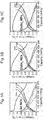
- Figure 8 shows the electrochemical performance of a CoSn x NPs lithium-ion full-cell with LiCoO 2 as cathode material:
- Figure 8A Capacity retention at a current of 500 mAg -1 .
- Figure 8B Galvanostatic charge/discharge curves for the SnSb/LiCoO 2 full cell corresponding to (A) with the average discharge voltage as inset. Cells were cycled with limitation of charge and discharge capacity to 500 mAhg -1 . Displayed capacities and currents are related to the mass of CoSn x NPs.
- the method of the invention allows to synthesize Co NPs and Sn NCs with diameters ⁇ 10 nm via simple reduction of the respective metal chlorides with NaBH 4 in NMP and subsequently converted them into intermetallic crystalline and amorphous Co-Sn nanoalloys by ball-milling.
- CoSn 2 NCs show good cycling stability for several hundred cycles
- amorphous CoSn x NPs show outstanding capacity retention with only 8% fading over 1500 cycles at 1984 mAg -1 .
- CoSn x NPs tested in lithium-ion full-cells with LiCoO 2 as cathode material
- CoSn x NPs provide stable capacities of 500 mAhg -1 with an average discharge voltage of 3.2 V.
- CoSn x NPs Given the inexpensive and easily upscalable preparation method and their excellent electrochemical properties characterized by high cyclability as well as high volumetric and specific energy densities, the herein presented CoSn x NPs have a great potential as high-performance anode materials for Li-ion and Na-ion batteries
Landscapes
- Chemical & Material Sciences (AREA)
- Engineering & Computer Science (AREA)
- General Chemical & Material Sciences (AREA)
- Chemical Kinetics & Catalysis (AREA)
- Nanotechnology (AREA)
- Electrochemistry (AREA)
- Crystallography & Structural Chemistry (AREA)
- Manufacturing & Machinery (AREA)
- Materials Engineering (AREA)
- Inorganic Chemistry (AREA)
- Organic Chemistry (AREA)
- Physics & Mathematics (AREA)
- General Physics & Mathematics (AREA)
- Condensed Matter Physics & Semiconductors (AREA)
- Composite Materials (AREA)
- Battery Electrode And Active Subsutance (AREA)
- Powder Metallurgy (AREA)
- Manufacture Of Metal Powder And Suspensions Thereof (AREA)
- Mechanical Engineering (AREA)
- Metallurgy (AREA)
Claims (17)
- Verfahren zum Herstellen von MSn x -Nanopartikeln, wobei
M ein Element ist, das aus der Gruppe ausgewählt ist, die aus Co, Mn, Fe, Ni, Cu, In, Al, Ge, Pb, Bi und Ga besteht, und
das Verfahren die folgenden Schritte umfasst:- Synthetisches Herstellen von Sn-Nanopartikeln durch Reduktion eines Zinnsalzes mit einer Lösung eines Hydrids in einem wasserfreien polaren Lösungsmittel, Trennung der festen aus der Lösung gebildeten Sn-Nanopartikel, und Waschen der Sn-Nanopartikel,- Synthetisches Herstellen von M-Nanopartikeln durch Reduktion eines Metallsalzes mit einer Lösung eines Hydrids in einem wasserfreien polaren Lösungsmittel, Trennung der festen aus der Lösung gebildeten M-Nanopartikel, und Waschen der M-Nanopartikel und- Mechanisches Mischen der Sn-Nanopartikel und der M-Nanopartikel, um sie in MSn x -Nanopartikel umzuwandeln, wobei das mechanische Mischen durch Kugelmahlen in Luft erhalten wird. - Verfahren nach Anspruch 1, wobei das Molverhältnis von M-Nanopartikeln und Sn-Nanopartikeln für den Schritt des mechanischen Mischens im Bereich von 1:1 bis 1:3 liegt.
- Verfahren nach einem der vorhergehenden Ansprüche, wobei M Co ist.
- Verfahren nach einem der vorhergehenden Ansprüche, wobei die Reduktionsreaktion des Zinnsalzes bei einer Temperatur zwischen 50 °C und 70 °C durchgeführt wird.
- Verfahren nach einem der vorhergehenden Ansprüche, wobei die Reduktionsreaktion des Metallsalzes bei einer Temperatur zwischen 60 °C und 180 °C durchgeführt wird.
- Verfahren nach einem der vorhergehenden Ansprüche, wobei das Hydrid aus der Gruppe ausgewählt ist, die aus NaBH4, Lithiumhydrid, Natriumhydrid, Kaliumhydrid, Magnesiumhydrid, Kalziumhydrid, Tributylzinnhydrid, Diisobutylaluminiumhydrid, Lithiumaluminiumhydrid, Lithiumtriethylborhydrid und Mischungen davon besteht, vorzugsweise NaBH4.
- Verfahren nach einem der vorhergehenden Ansprüche, wobei das wasserfreie polare Lösungsmittel aus der Gruppe ausgewählt ist, die aus 1-Methyl-2-pyrrolidon (NMP), Hexamethylphosphorsäuretriamid, 1,3-Dimethyl-2-imidazolidinon, 1,3-Dimethyl-3,4,5,6-tetrahydro-2(1H)-Pyrimidinon, Dimethylsulfoxid, Sulfolan, Glyme, Diglyme und/oder Triethylenglykoldimethylether und Mischungen davon besteht, vorzugsweise NMP.
- Verfahren nach einem der vorhergehenden Ansprüche, wobei das Zinnsalz aus der Gruppe ausgewählt ist, die aus Zinnchlorid, Zinnfluorid, Zinnbromid, Zinniodid, Zinnoxid, Zinnsulfid, Natriumstannattrihydrat, Tetrabutylzinn und Mischungen davon besteht, vorzugsweise Zinnchlorid.
- Verfahren nach einem der vorhergehenden Ansprüche, wobei das Metallsalz aus der Gruppe ausgewählt ist, die aus M-Chloriden und Mischungen davon besteht, vorzugsweise Mischungen von Co-Salzen, besonders bevorzugt Co-Chlorid.
- Verfahren nach einem der vorhergehenden Ansprüche, wobei die Reduktionsreaktion in einem Inertgas durchgeführt wird, vorzugsweise unter Stickstoff.
- Verfahren nach einem der Ansprüche 1 bis 9, wobei die Reduktionsreaktion in Luft durchgeführt wird.
- Verfahren nach einem der Ansprüche 1 bis 11, wobei der Schritt des Synthetisierens der Sn-Nanopartikel die folgenden Schritte umfasst:- Anfertigen einer Lösung eines Hydrids in einem wasserfreien Lösungsmittel und mindestens einer Lösung von Zinnsalz in einem wasserfreien Lösungsmittel,- Erwärmen der Lösung eines Hydrids auf die Reaktionstemperatur der Reduktionsreaktion des Zinnsalzes und- Starten der Reduktionsreaktion, wenn die Reaktionstemperatur der Reduktionsreaktion des Zinnsalzes erreicht ist, durch schnelles Einspritzen der einen oder der mehreren Zinnsalzlösungen in die Lösung des Hydrids, um ein Reaktionsgemisch zu erzeugen.
- Verfahren nach einem der Ansprüche 1 bis 11, wobei der Schritt des Synthetisierens der Sn-Nanopartikel die Schritte umfasst:- Anfertigen einer Lösung eines oder mehrere Zinnsalze in einem wasserfreien Lösungsmittel und mindestens einer Lösung eines Hydrids in einem wasserfreien Lösungsmittel,- Erwärmen der Lösung von Zinnsalzen auf die Reaktionstemperatur der Reduktionsreaktion des Zinnsalzes und- Starten der Reduktionsreaktion, wenn die Reaktionstemperatur der Reduktionsreaktion des Zinnsalzes erreicht ist, durch schnelles Einspritzen der Hydridlösung in die Lösung eines oder mehrerer Zinnsalze, um ein Reaktionsgemisch zu erzeugen.
- Verfahren nach einem der Ansprüche 1 bis 13, wobei der Schritt des Synthetisierens der M-Nanopartikel die Schritte umfasst:- Anfertigen einer Lösung eines Hydrids in einem wasserfreien Lösungsmittel und mindestens einer Lösung von Metallsalz in einem wasserfreien Lösungsmittel,- Erwärmen der Lösung eines Hydrids auf die Reaktionstemperatur der Reduktionsreaktion des Metallsalzes und- Starten der Reduktionsreaktion, wenn die Reaktionstemperatur der Reduktionsreaktion des Metallsalzes erreicht ist, durch schnelles Einspritzen der einen oder der mehreren Metallsalzlösungen in die Lösung des Hydrids, um ein Reaktionsgemisch zu erzeugen.
- Verfahren nach einem der Ansprüche 1 bis 13, wobei der Schritt des Synthetisierens der M-Nanopartikel die folgenden Schritte umfasst:- Anfertigen einer Lösung eines oder mehrere Metallsalze in einem wasserfreien Lösungsmittel und mindestens einer Lösung eines Hydrids in einem wasserfreien Lösungsmittel,- Erwärmen der Lösung von Metallsalzen auf die Reaktionstemperatur der Reduktionsreaktion des Metallsalzes und- Starten der Reduktionsreaktion, wenn die Reaktionstemperatur der Reduktionsreaktion des Metallsalzes erreicht ist, durch schnelles Einspritzen der Hydridlösung in die Lösung eines oder mehrerer Metallsalze, um ein Reaktionsgemisch zu erzeugen.
- Verfahren nach einem der Ansprüche 12 bis 15, wobei das Reaktionsgemisch unmittelbar nach dem Einspritzen auf Raumtemperatur gekühlt wird.
- Verfahren zum Herstellen einer Anode, umfassend das Durchführen des Verfahrens nach einem der Ansprüche 1 bis 16 zum Herstellen von MSnx-Nanopartikeln, das Mischen von derart erhaltenen MSn x -Nanopartikeln, Ruß, Carboxymethylzellulose (CMC) und Wasser, das Beschichten eines Stromabnehmers mit der erhaltenen wässrigen Aufschlämmung und das Trocknen umfasst.
Priority Applications (9)
| Application Number | Priority Date | Filing Date | Title |
|---|---|---|---|
| ES15179106T ES2733630T3 (es) | 2015-07-30 | 2015-07-30 | Método de producción de nanopartículas de MSnx como materiales anódicos para una batería recargable |
| EP15179106.8A EP3124137B1 (de) | 2015-07-30 | 2015-07-30 | Verfahren zur herstellung von msnx-nanopartikeln als anodenmaterialien für eine wiederaufladbare batterie |
| PL15179106T PL3124137T3 (pl) | 2015-07-30 | 2015-07-30 | Sposób wytwarzania nanocząstek MSnx jako materiałów anodowych dla baterii wielokrotnego ładowania |
| CA2935634A CA2935634C (en) | 2015-07-30 | 2016-07-07 | Method for the production of msnx nanoparticles as anode materials for a rechargeable battery |
| JP2016141193A JP6244415B2 (ja) | 2015-07-30 | 2016-07-19 | 充電池用アノード材料としてのMSnxナノ粒子を製造する方法 |
| US15/214,050 US10259046B2 (en) | 2015-07-30 | 2016-07-19 | Method for the production of MSnx nanoparticles as anode materials for a rechargeable battery |
| KR1020160092883A KR101974696B1 (ko) | 2015-07-30 | 2016-07-21 | 충전지용 애노드 재료로서 MSnx 나노입자들의 제조 방법 |
| CN201610616757.2A CN106410172B (zh) | 2015-07-30 | 2016-07-29 | 制备作为可再充电电池阳极材料的MSnx纳米颗粒的方法 |
| KR1020170158725A KR20170135786A (ko) | 2015-07-30 | 2017-11-24 | 충전지용 애노드 재료로서 MSnx 나노입자들의 제조 방법 |
Applications Claiming Priority (1)
| Application Number | Priority Date | Filing Date | Title |
|---|---|---|---|
| EP15179106.8A EP3124137B1 (de) | 2015-07-30 | 2015-07-30 | Verfahren zur herstellung von msnx-nanopartikeln als anodenmaterialien für eine wiederaufladbare batterie |
Publications (2)
| Publication Number | Publication Date |
|---|---|
| EP3124137A1 EP3124137A1 (de) | 2017-02-01 |
| EP3124137B1 true EP3124137B1 (de) | 2019-05-08 |
Family
ID=53879325
Family Applications (1)
| Application Number | Title | Priority Date | Filing Date |
|---|---|---|---|
| EP15179106.8A Active EP3124137B1 (de) | 2015-07-30 | 2015-07-30 | Verfahren zur herstellung von msnx-nanopartikeln als anodenmaterialien für eine wiederaufladbare batterie |
Country Status (8)
| Country | Link |
|---|---|
| US (1) | US10259046B2 (de) |
| EP (1) | EP3124137B1 (de) |
| JP (1) | JP6244415B2 (de) |
| KR (2) | KR101974696B1 (de) |
| CN (1) | CN106410172B (de) |
| CA (1) | CA2935634C (de) |
| ES (1) | ES2733630T3 (de) |
| PL (1) | PL3124137T3 (de) |
Families Citing this family (15)
| Publication number | Priority date | Publication date | Assignee | Title |
|---|---|---|---|---|
| KR101948217B1 (ko) * | 2016-07-26 | 2019-02-14 | 한국과학기술연구원 | 이차전지용 음극 소재, 이를 포함하는 이차전지 및 이의 제조방법 |
| US9828245B1 (en) * | 2017-02-07 | 2017-11-28 | Kuwait Institute For Scientific Research | Method of synthesizing MgH2/Ni nanocomposites |
| KR102038588B1 (ko) * | 2018-04-11 | 2019-10-31 | 한국과학기술연구원 | 이차전지용 음극활물질, 이의 제조방법 및 이를 포함하는 이차전지 |
| WO2020037245A1 (en) | 2018-08-16 | 2020-02-20 | Northwestern University | Polyelemental heterostructure nanoparticles and methods of making the same |
| CN109280800B (zh) * | 2018-09-20 | 2021-07-13 | 南京邮电大学 | 一种系列PdxSny合金纳米晶及制备方法及应用 |
| US12080880B2 (en) | 2018-09-25 | 2024-09-03 | Toyota Motor Engineering & Manufacturing North America, Inc. | Nano-alloy interphase for lithium metal solid state batteries |
| CN109309236B (zh) * | 2018-10-26 | 2021-04-02 | 北方民族大学 | 用于直接硼氢化物燃料电池的阳极催化材料、阳极材料及其制备方法和燃料电池 |
| CN110592409B (zh) * | 2019-10-30 | 2021-07-30 | 江苏隆达超合金股份有限公司 | 一种镍钙中间合金的制备方法 |
| CN111146432B (zh) * | 2020-02-11 | 2022-08-19 | 河南创力新能源科技股份有限公司 | 一种非晶混合物铁镍电池负电极及其制备方法 |
| CN111477860A (zh) * | 2020-05-11 | 2020-07-31 | 广西师范大学 | 一种GaSn/NC复合材料的制备方法 |
| CN113427012A (zh) * | 2021-07-21 | 2021-09-24 | 合肥学院 | 一种制备纳米金属粉末的方法 |
| DE112022005382A5 (de) * | 2021-11-10 | 2024-10-31 | Helmholtz-Zentrum Berlin für Materialien und Energie Gesellschaft mit beschränkter Haftung | Verfahren für die synthese von nanopartikeln aus mindestens einem element aus der gruppe, welche gebildet ist aus der gruppe der unedlen metalle und antimon und nanopartikel |
| CN114735758B (zh) * | 2022-04-22 | 2023-07-07 | 广东邦普循环科技有限公司 | 掺杂并包覆锡的四氧化三钴的制备方法及其应用 |
| CN115319114B (zh) * | 2022-08-18 | 2023-12-19 | 福州大学 | 一种使用选区激光熔化工艺制备SnBi-xFe低熔点复合材料的方法 |
| CN121097011B (zh) * | 2025-11-12 | 2026-02-17 | 承德市农林科学院 | 一种基于生物质炭的铋基合金复合电极材料及其制备方法 |
Family Cites Families (10)
| Publication number | Priority date | Publication date | Assignee | Title |
|---|---|---|---|---|
| JP4029291B2 (ja) * | 2003-09-02 | 2008-01-09 | 福田金属箔粉工業株式会社 | リチウム二次電池用負極材料及びその製造方法 |
| KR100790948B1 (ko) * | 2006-05-25 | 2008-01-03 | 삼성전기주식회사 | 금속 나노입자의 제조방법 및 이에 의해 제조되는 금속나노입자 |
| US20090090214A1 (en) * | 2007-10-04 | 2009-04-09 | Chung Yuan Christian University | Method for forming nano-scale metal particles |
| WO2009111488A2 (en) | 2008-03-04 | 2009-09-11 | Lockheed Martin Corporation | Tin nanoparticles and methodology for making same |
| US8257864B2 (en) * | 2009-06-29 | 2012-09-04 | 3M Innovative Properties Company | Method of making tin-based alloys for negative electrode compositions |
| JP5450885B2 (ja) * | 2010-04-02 | 2014-03-26 | インクテック カンパニー リミテッド | 両面プリント回路基板の製造方法 |
| CN103003984A (zh) * | 2010-04-23 | 2013-03-27 | 新日铁住金株式会社 | 非水电解质二次电池的负极材料及其制造方法 |
| US9876221B2 (en) * | 2010-05-14 | 2018-01-23 | Samsung Sdi Co., Ltd. | Negative active material for rechargeable lithium battery and rechargeable lithium battery including same |
| JP5594731B2 (ja) * | 2010-12-24 | 2014-09-24 | 山陽特殊製鋼株式会社 | リチウムイオン電池負極用Sn合金粉末およびその製造方法 |
| EP2781562B1 (de) * | 2013-03-20 | 2016-01-20 | Agfa-Gevaert | Verfahren zur herstellung einer metallnanopartikeldispersion |
-
2015
- 2015-07-30 PL PL15179106T patent/PL3124137T3/pl unknown
- 2015-07-30 ES ES15179106T patent/ES2733630T3/es active Active
- 2015-07-30 EP EP15179106.8A patent/EP3124137B1/de active Active
-
2016
- 2016-07-07 CA CA2935634A patent/CA2935634C/en active Active
- 2016-07-19 US US15/214,050 patent/US10259046B2/en active Active
- 2016-07-19 JP JP2016141193A patent/JP6244415B2/ja active Active
- 2016-07-21 KR KR1020160092883A patent/KR101974696B1/ko active Active
- 2016-07-29 CN CN201610616757.2A patent/CN106410172B/zh active Active
-
2017
- 2017-11-24 KR KR1020170158725A patent/KR20170135786A/ko not_active Withdrawn
Non-Patent Citations (1)
| Title |
|---|
| None * |
Also Published As
| Publication number | Publication date |
|---|---|
| JP2017031506A (ja) | 2017-02-09 |
| CN106410172B (zh) | 2021-07-09 |
| EP3124137A1 (de) | 2017-02-01 |
| KR101974696B1 (ko) | 2019-05-02 |
| CA2935634A1 (en) | 2017-01-30 |
| CN106410172A (zh) | 2017-02-15 |
| US10259046B2 (en) | 2019-04-16 |
| JP6244415B2 (ja) | 2017-12-06 |
| CA2935634C (en) | 2020-12-29 |
| KR20170015172A (ko) | 2017-02-08 |
| US20170028476A1 (en) | 2017-02-02 |
| ES2733630T3 (es) | 2019-12-02 |
| KR20170135786A (ko) | 2017-12-08 |
| PL3124137T3 (pl) | 2019-11-29 |
Similar Documents
| Publication | Publication Date | Title |
|---|---|---|
| EP3124137B1 (de) | Verfahren zur herstellung von msnx-nanopartikeln als anodenmaterialien für eine wiederaufladbare batterie | |
| US12148916B2 (en) | Metal-doped sodium vanadium fluorophosphate/sodium vanadium phosphate (Na3V2(PO4)2F3/Na3V2(PO4)3) composite for sodium-ion storage material | |
| Walter et al. | Inexpensive colloidal SnSb nanoalloys as efficient anode materials for lithium-and sodium-ion batteries | |
| EP3679613B1 (de) | Batterien mit anoden aus kohlenstoffbeschichtetem makroporösem silizium | |
| Cao et al. | Enabling room temperature sodium metal batteries | |
| Gabrielli et al. | A new approach for compensating the irreversible capacity loss of high-energy Si/C| LiNi0. 5Mn1. 5O4 lithium-ion batteries | |
| US9966593B2 (en) | Sb nanocrystals or Sb-alloy nanocrystals for fast charge/discharge Li- and Na-ion battery anodes | |
| US10020493B2 (en) | Coating compositions for electrode compositions and their methods of making | |
| US10879533B2 (en) | Nitride- and oxide-modified electrode compositions and their methods of making | |
| US10128489B2 (en) | Surface modifications for electrode compositions and their methods of making | |
| US20140042372A1 (en) | Method for producing cathode-active material for lithium secondary battery | |
| Walter et al. | Oxidized Co–Sn nanoparticles as long-lasting anode materials for lithium-ion batteries | |
| Liu et al. | A green and facile hydrothermal synthesis of γ-MnOOH nanowires as a prospective anode material for high power Li-ion batteries | |
| WO2020150220A1 (en) | Synthesis of gamma monoclinic sulfur and sulfur batteries containing monoclinic sulfur | |
| EP4246629A1 (de) | Elektrolytlösung für wasserfreie sekundärbatterien, wasserfreie sekundärbatterie damit und verfahren zum entladen einer wasserfreien sekundärbatterie | |
| JP7438195B2 (ja) | イオン性液体電解質および電極圧力を有する再充電可能電池 | |
| Wu et al. | Uniform Co 3 V 2 O 8 microspheres via controllable assembly for high-performance lithium-ion battery anodes | |
| WO2015032662A1 (en) | Process for producing tin dioxide particles | |
| Le et al. | Effect of carbonization temperature on the lithium storage performances of porous Sb/C nanocomposite | |
| Mulaudzi | Synthesis of Copper-and Iron-Doped Lithium Vanadium Oxides for Use as Negative Electrode Materials in Lithium-Ion Batteries | |
| US20200243839A1 (en) | Positive electrode active material, manufacturing method for the same, and rechargeable battery | |
| JP2022076868A (ja) | 非水二次電池用電解液及びそれを用いた非水二次電池 | |
| JP2022076865A (ja) | 非水二次電池用電解液及びそれを用いた非水二次電池 | |
| JP2022076871A (ja) | 非水二次電池用電解液及びそれを用いた非水二次電池 | |
| Zhou | High capacity metal-based anodes for lithium-ion batteries |
Legal Events
| Date | Code | Title | Description |
|---|---|---|---|
| PUAI | Public reference made under article 153(3) epc to a published international application that has entered the european phase |
Free format text: ORIGINAL CODE: 0009012 |
|
| STAA | Information on the status of an ep patent application or granted ep patent |
Free format text: STATUS: THE APPLICATION HAS BEEN PUBLISHED |
|
| AK | Designated contracting states |
Kind code of ref document: A1 Designated state(s): AL AT BE BG CH CY CZ DE DK EE ES FI FR GB GR HR HU IE IS IT LI LT LU LV MC MK MT NL NO PL PT RO RS SE SI SK SM TR |
|
| AX | Request for extension of the european patent |
Extension state: BA ME |
|
| STAA | Information on the status of an ep patent application or granted ep patent |
Free format text: STATUS: REQUEST FOR EXAMINATION WAS MADE |
|
| 17P | Request for examination filed |
Effective date: 20170801 |
|
| RBV | Designated contracting states (corrected) |
Designated state(s): AL AT BE BG CH CY CZ DE DK EE ES FI FR GB GR HR HU IE IS IT LI LT LU LV MC MK MT NL NO PL PT RO RS SE SI SK SM TR |
|
| STAA | Information on the status of an ep patent application or granted ep patent |
Free format text: STATUS: EXAMINATION IS IN PROGRESS |
|
| 17Q | First examination report despatched |
Effective date: 20180730 |
|
| GRAP | Despatch of communication of intention to grant a patent |
Free format text: ORIGINAL CODE: EPIDOSNIGR1 |
|
| STAA | Information on the status of an ep patent application or granted ep patent |
Free format text: STATUS: GRANT OF PATENT IS INTENDED |
|
| RIC1 | Information provided on ipc code assigned before grant |
Ipc: B82Y 99/00 20110101ALI20181214BHEP Ipc: B82Y 40/00 20110101ALI20181214BHEP Ipc: H01M 4/04 20060101ALI20181214BHEP Ipc: H01M 4/134 20100101ALI20181214BHEP Ipc: B22F 1/00 20060101AFI20181214BHEP Ipc: B82Y 30/00 20110101ALI20181214BHEP Ipc: B22F 9/24 20060101ALI20181214BHEP Ipc: C22C 1/04 20060101ALI20181214BHEP Ipc: H01M 4/38 20060101ALI20181214BHEP Ipc: B22F 9/04 20060101ALI20181214BHEP |
|
| INTG | Intention to grant announced |
Effective date: 20190117 |
|
| GRAS | Grant fee paid |
Free format text: ORIGINAL CODE: EPIDOSNIGR3 |
|
| GRAA | (expected) grant |
Free format text: ORIGINAL CODE: 0009210 |
|
| STAA | Information on the status of an ep patent application or granted ep patent |
Free format text: STATUS: THE PATENT HAS BEEN GRANTED |
|
| AK | Designated contracting states |
Kind code of ref document: B1 Designated state(s): AL AT BE BG CH CY CZ DE DK EE ES FI FR GB GR HR HU IE IS IT LI LT LU LV MC MK MT NL NO PL PT RO RS SE SI SK SM TR |
|
| REG | Reference to a national code |
Ref country code: GB Ref legal event code: FG4D |
|
| REG | Reference to a national code |
Ref country code: CH Ref legal event code: EP Ref country code: AT Ref legal event code: REF Ref document number: 1129412 Country of ref document: AT Kind code of ref document: T Effective date: 20190515 |
|
| REG | Reference to a national code |
Ref country code: DE Ref legal event code: R096 Ref document number: 602015029690 Country of ref document: DE Ref country code: IE Ref legal event code: FG4D |
|
| REG | Reference to a national code |
Ref country code: SE Ref legal event code: TRGR |
|
| REG | Reference to a national code |
Ref country code: NL Ref legal event code: MP Effective date: 20190508 |
|
| REG | Reference to a national code |
Ref country code: LT Ref legal event code: MG4D |
|
| PG25 | Lapsed in a contracting state [announced via postgrant information from national office to epo] |
Ref country code: PT Free format text: LAPSE BECAUSE OF FAILURE TO SUBMIT A TRANSLATION OF THE DESCRIPTION OR TO PAY THE FEE WITHIN THE PRESCRIBED TIME-LIMIT Effective date: 20190908 Ref country code: NL Free format text: LAPSE BECAUSE OF FAILURE TO SUBMIT A TRANSLATION OF THE DESCRIPTION OR TO PAY THE FEE WITHIN THE PRESCRIBED TIME-LIMIT Effective date: 20190508 Ref country code: AL Free format text: LAPSE BECAUSE OF FAILURE TO SUBMIT A TRANSLATION OF THE DESCRIPTION OR TO PAY THE FEE WITHIN THE PRESCRIBED TIME-LIMIT Effective date: 20190508 Ref country code: LT Free format text: LAPSE BECAUSE OF FAILURE TO SUBMIT A TRANSLATION OF THE DESCRIPTION OR TO PAY THE FEE WITHIN THE PRESCRIBED TIME-LIMIT Effective date: 20190508 Ref country code: HR Free format text: LAPSE BECAUSE OF FAILURE TO SUBMIT A TRANSLATION OF THE DESCRIPTION OR TO PAY THE FEE WITHIN THE PRESCRIBED TIME-LIMIT Effective date: 20190508 Ref country code: FI Free format text: LAPSE BECAUSE OF FAILURE TO SUBMIT A TRANSLATION OF THE DESCRIPTION OR TO PAY THE FEE WITHIN THE PRESCRIBED TIME-LIMIT Effective date: 20190508 Ref country code: NO Free format text: LAPSE BECAUSE OF FAILURE TO SUBMIT A TRANSLATION OF THE DESCRIPTION OR TO PAY THE FEE WITHIN THE PRESCRIBED TIME-LIMIT Effective date: 20190808 |
|
| PG25 | Lapsed in a contracting state [announced via postgrant information from national office to epo] |
Ref country code: BG Free format text: LAPSE BECAUSE OF FAILURE TO SUBMIT A TRANSLATION OF THE DESCRIPTION OR TO PAY THE FEE WITHIN THE PRESCRIBED TIME-LIMIT Effective date: 20190808 Ref country code: GR Free format text: LAPSE BECAUSE OF FAILURE TO SUBMIT A TRANSLATION OF THE DESCRIPTION OR TO PAY THE FEE WITHIN THE PRESCRIBED TIME-LIMIT Effective date: 20190809 Ref country code: LV Free format text: LAPSE BECAUSE OF FAILURE TO SUBMIT A TRANSLATION OF THE DESCRIPTION OR TO PAY THE FEE WITHIN THE PRESCRIBED TIME-LIMIT Effective date: 20190508 Ref country code: RS Free format text: LAPSE BECAUSE OF FAILURE TO SUBMIT A TRANSLATION OF THE DESCRIPTION OR TO PAY THE FEE WITHIN THE PRESCRIBED TIME-LIMIT Effective date: 20190508 |
|
| REG | Reference to a national code |
Ref country code: ES Ref legal event code: FG2A Ref document number: 2733630 Country of ref document: ES Kind code of ref document: T3 Effective date: 20191202 |
|
| REG | Reference to a national code |
Ref country code: AT Ref legal event code: MK05 Ref document number: 1129412 Country of ref document: AT Kind code of ref document: T Effective date: 20190508 |
|
| PG25 | Lapsed in a contracting state [announced via postgrant information from national office to epo] |
Ref country code: DK Free format text: LAPSE BECAUSE OF FAILURE TO SUBMIT A TRANSLATION OF THE DESCRIPTION OR TO PAY THE FEE WITHIN THE PRESCRIBED TIME-LIMIT Effective date: 20190508 Ref country code: AT Free format text: LAPSE BECAUSE OF FAILURE TO SUBMIT A TRANSLATION OF THE DESCRIPTION OR TO PAY THE FEE WITHIN THE PRESCRIBED TIME-LIMIT Effective date: 20190508 Ref country code: EE Free format text: LAPSE BECAUSE OF FAILURE TO SUBMIT A TRANSLATION OF THE DESCRIPTION OR TO PAY THE FEE WITHIN THE PRESCRIBED TIME-LIMIT Effective date: 20190508 Ref country code: SK Free format text: LAPSE BECAUSE OF FAILURE TO SUBMIT A TRANSLATION OF THE DESCRIPTION OR TO PAY THE FEE WITHIN THE PRESCRIBED TIME-LIMIT Effective date: 20190508 Ref country code: RO Free format text: LAPSE BECAUSE OF FAILURE TO SUBMIT A TRANSLATION OF THE DESCRIPTION OR TO PAY THE FEE WITHIN THE PRESCRIBED TIME-LIMIT Effective date: 20190508 |
|
| REG | Reference to a national code |
Ref country code: DE Ref legal event code: R097 Ref document number: 602015029690 Country of ref document: DE |
|
| PG25 | Lapsed in a contracting state [announced via postgrant information from national office to epo] |
Ref country code: MC Free format text: LAPSE BECAUSE OF FAILURE TO SUBMIT A TRANSLATION OF THE DESCRIPTION OR TO PAY THE FEE WITHIN THE PRESCRIBED TIME-LIMIT Effective date: 20190508 Ref country code: SM Free format text: LAPSE BECAUSE OF FAILURE TO SUBMIT A TRANSLATION OF THE DESCRIPTION OR TO PAY THE FEE WITHIN THE PRESCRIBED TIME-LIMIT Effective date: 20190508 |
|
| PLBE | No opposition filed within time limit |
Free format text: ORIGINAL CODE: 0009261 |
|
| STAA | Information on the status of an ep patent application or granted ep patent |
Free format text: STATUS: NO OPPOSITION FILED WITHIN TIME LIMIT |
|
| PG25 | Lapsed in a contracting state [announced via postgrant information from national office to epo] |
Ref country code: TR Free format text: LAPSE BECAUSE OF FAILURE TO SUBMIT A TRANSLATION OF THE DESCRIPTION OR TO PAY THE FEE WITHIN THE PRESCRIBED TIME-LIMIT Effective date: 20190508 |
|
| 26N | No opposition filed |
Effective date: 20200211 |
|
| REG | Reference to a national code |
Ref country code: BE Ref legal event code: MM Effective date: 20190731 |
|
| PG25 | Lapsed in a contracting state [announced via postgrant information from national office to epo] |
Ref country code: SI Free format text: LAPSE BECAUSE OF FAILURE TO SUBMIT A TRANSLATION OF THE DESCRIPTION OR TO PAY THE FEE WITHIN THE PRESCRIBED TIME-LIMIT Effective date: 20190508 Ref country code: BE Free format text: LAPSE BECAUSE OF NON-PAYMENT OF DUE FEES Effective date: 20190731 Ref country code: LU Free format text: LAPSE BECAUSE OF NON-PAYMENT OF DUE FEES Effective date: 20190730 |
|
| PG25 | Lapsed in a contracting state [announced via postgrant information from national office to epo] |
Ref country code: IE Free format text: LAPSE BECAUSE OF NON-PAYMENT OF DUE FEES Effective date: 20190730 |
|
| PG25 | Lapsed in a contracting state [announced via postgrant information from national office to epo] |
Ref country code: CY Free format text: LAPSE BECAUSE OF FAILURE TO SUBMIT A TRANSLATION OF THE DESCRIPTION OR TO PAY THE FEE WITHIN THE PRESCRIBED TIME-LIMIT Effective date: 20190508 |
|
| PG25 | Lapsed in a contracting state [announced via postgrant information from national office to epo] |
Ref country code: IS Free format text: LAPSE BECAUSE OF FAILURE TO SUBMIT A TRANSLATION OF THE DESCRIPTION OR TO PAY THE FEE WITHIN THE PRESCRIBED TIME-LIMIT Effective date: 20190908 |
|
| PG25 | Lapsed in a contracting state [announced via postgrant information from national office to epo] |
Ref country code: HU Free format text: LAPSE BECAUSE OF FAILURE TO SUBMIT A TRANSLATION OF THE DESCRIPTION OR TO PAY THE FEE WITHIN THE PRESCRIBED TIME-LIMIT; INVALID AB INITIO Effective date: 20150730 Ref country code: MT Free format text: LAPSE BECAUSE OF FAILURE TO SUBMIT A TRANSLATION OF THE DESCRIPTION OR TO PAY THE FEE WITHIN THE PRESCRIBED TIME-LIMIT Effective date: 20190508 |
|
| PG25 | Lapsed in a contracting state [announced via postgrant information from national office to epo] |
Ref country code: MK Free format text: LAPSE BECAUSE OF FAILURE TO SUBMIT A TRANSLATION OF THE DESCRIPTION OR TO PAY THE FEE WITHIN THE PRESCRIBED TIME-LIMIT Effective date: 20190508 |
|
| P01 | Opt-out of the competence of the unified patent court (upc) registered |
Effective date: 20230718 |
|
| PGFP | Annual fee paid to national office [announced via postgrant information from national office to epo] |
Ref country code: PL Payment date: 20250626 Year of fee payment: 11 |
|
| PGFP | Annual fee paid to national office [announced via postgrant information from national office to epo] |
Ref country code: GB Payment date: 20250619 Year of fee payment: 11 |
|
| PGFP | Annual fee paid to national office [announced via postgrant information from national office to epo] |
Ref country code: FR Payment date: 20250619 Year of fee payment: 11 |
|
| PGFP | Annual fee paid to national office [announced via postgrant information from national office to epo] |
Ref country code: SE Payment date: 20250619 Year of fee payment: 11 |
|
| PGFP | Annual fee paid to national office [announced via postgrant information from national office to epo] |
Ref country code: ES Payment date: 20250801 Year of fee payment: 11 |
|
| PGFP | Annual fee paid to national office [announced via postgrant information from national office to epo] |
Ref country code: DE Payment date: 20250620 Year of fee payment: 11 |
|
| PGFP | Annual fee paid to national office [announced via postgrant information from national office to epo] |
Ref country code: IT Payment date: 20250619 Year of fee payment: 11 |
|
| PGFP | Annual fee paid to national office [announced via postgrant information from national office to epo] |
Ref country code: CH Payment date: 20250801 Year of fee payment: 11 |
|
| PGFP | Annual fee paid to national office [announced via postgrant information from national office to epo] |
Ref country code: CZ Payment date: 20250701 Year of fee payment: 11 |