EP3122870B1 - Methods and genetic systems for cell engineering - Google Patents
Methods and genetic systems for cell engineering Download PDFInfo
- Publication number
- EP3122870B1 EP3122870B1 EP15768011.7A EP15768011A EP3122870B1 EP 3122870 B1 EP3122870 B1 EP 3122870B1 EP 15768011 A EP15768011 A EP 15768011A EP 3122870 B1 EP3122870 B1 EP 3122870B1
- Authority
- EP
- European Patent Office
- Prior art keywords
- gene
- target
- nucleic acid
- sequence
- interest
- Prior art date
- Legal status (The legal status is an assumption and is not a legal conclusion. Google has not performed a legal analysis and makes no representation as to the accuracy of the status listed.)
- Revoked
Links
Images




Classifications
-
- A—HUMAN NECESSITIES
- A61—MEDICAL OR VETERINARY SCIENCE; HYGIENE
- A61K—PREPARATIONS FOR MEDICAL, DENTAL OR TOILETRY PURPOSES
- A61K35/00—Medicinal preparations containing materials or reaction products thereof with undetermined constitution
- A61K35/66—Microorganisms or materials therefrom
- A61K35/74—Bacteria
- A61K35/741—Probiotics
-
- A—HUMAN NECESSITIES
- A61—MEDICAL OR VETERINARY SCIENCE; HYGIENE
- A61P—SPECIFIC THERAPEUTIC ACTIVITY OF CHEMICAL COMPOUNDS OR MEDICINAL PREPARATIONS
- A61P1/00—Drugs for disorders of the alimentary tract or the digestive system
-
- A—HUMAN NECESSITIES
- A61—MEDICAL OR VETERINARY SCIENCE; HYGIENE
- A61K—PREPARATIONS FOR MEDICAL, DENTAL OR TOILETRY PURPOSES
- A61K35/00—Medicinal preparations containing materials or reaction products thereof with undetermined constitution
- A61K35/66—Microorganisms or materials therefrom
- A61K35/74—Bacteria
- A61K35/741—Probiotics
- A61K35/744—Lactic acid bacteria, e.g. enterococci, pediococci, lactococci, streptococci or leuconostocs
- A61K35/747—Lactobacilli, e.g. L. acidophilus or L. brevis
-
- A—HUMAN NECESSITIES
- A61—MEDICAL OR VETERINARY SCIENCE; HYGIENE
- A61P—SPECIFIC THERAPEUTIC ACTIVITY OF CHEMICAL COMPOUNDS OR MEDICINAL PREPARATIONS
- A61P13/00—Drugs for disorders of the urinary system
- A61P13/02—Drugs for disorders of the urinary system of urine or of the urinary tract, e.g. urine acidifiers
-
- A—HUMAN NECESSITIES
- A61—MEDICAL OR VETERINARY SCIENCE; HYGIENE
- A61P—SPECIFIC THERAPEUTIC ACTIVITY OF CHEMICAL COMPOUNDS OR MEDICINAL PREPARATIONS
- A61P17/00—Drugs for dermatological disorders
-
- A—HUMAN NECESSITIES
- A61—MEDICAL OR VETERINARY SCIENCE; HYGIENE
- A61P—SPECIFIC THERAPEUTIC ACTIVITY OF CHEMICAL COMPOUNDS OR MEDICINAL PREPARATIONS
- A61P31/00—Antiinfectives, i.e. antibiotics, antiseptics, chemotherapeutics
-
- C—CHEMISTRY; METALLURGY
- C12—BIOCHEMISTRY; BEER; SPIRITS; WINE; VINEGAR; MICROBIOLOGY; ENZYMOLOGY; MUTATION OR GENETIC ENGINEERING
- C12N—MICROORGANISMS OR ENZYMES; COMPOSITIONS THEREOF; PROPAGATING, PRESERVING, OR MAINTAINING MICROORGANISMS; MUTATION OR GENETIC ENGINEERING; CULTURE MEDIA
- C12N15/00—Mutation or genetic engineering; DNA or RNA concerning genetic engineering, vectors, e.g. plasmids, or their isolation, preparation or purification; Use of hosts therefor
- C12N15/09—Recombinant DNA-technology
- C12N15/10—Processes for the isolation, preparation or purification of DNA or RNA
- C12N15/102—Mutagenizing nucleic acids
-
- C—CHEMISTRY; METALLURGY
- C12—BIOCHEMISTRY; BEER; SPIRITS; WINE; VINEGAR; MICROBIOLOGY; ENZYMOLOGY; MUTATION OR GENETIC ENGINEERING
- C12N—MICROORGANISMS OR ENZYMES; COMPOSITIONS THEREOF; PROPAGATING, PRESERVING, OR MAINTAINING MICROORGANISMS; MUTATION OR GENETIC ENGINEERING; CULTURE MEDIA
- C12N15/00—Mutation or genetic engineering; DNA or RNA concerning genetic engineering, vectors, e.g. plasmids, or their isolation, preparation or purification; Use of hosts therefor
- C12N15/09—Recombinant DNA-technology
- C12N15/11—DNA or RNA fragments; Modified forms thereof; Non-coding nucleic acids having a biological activity
- C12N15/111—General methods applicable to biologically active non-coding nucleic acids
-
- C—CHEMISTRY; METALLURGY
- C12—BIOCHEMISTRY; BEER; SPIRITS; WINE; VINEGAR; MICROBIOLOGY; ENZYMOLOGY; MUTATION OR GENETIC ENGINEERING
- C12N—MICROORGANISMS OR ENZYMES; COMPOSITIONS THEREOF; PROPAGATING, PRESERVING, OR MAINTAINING MICROORGANISMS; MUTATION OR GENETIC ENGINEERING; CULTURE MEDIA
- C12N9/00—Enzymes; Proenzymes; Compositions thereof; Processes for preparing, activating, inhibiting, separating or purifying enzymes
- C12N9/14—Hydrolases (3)
- C12N9/16—Hydrolases (3) acting on ester bonds (3.1)
- C12N9/22—Ribonucleases [RNase]; Deoxyribonucleases [DNase]
-
- A—HUMAN NECESSITIES
- A61—MEDICAL OR VETERINARY SCIENCE; HYGIENE
- A61K—PREPARATIONS FOR MEDICAL, DENTAL OR TOILETRY PURPOSES
- A61K35/00—Medicinal preparations containing materials or reaction products thereof with undetermined constitution
- A61K2035/11—Medicinal preparations comprising living procariotic cells
- A61K2035/115—Probiotics
-
- A—HUMAN NECESSITIES
- A61—MEDICAL OR VETERINARY SCIENCE; HYGIENE
- A61K—PREPARATIONS FOR MEDICAL, DENTAL OR TOILETRY PURPOSES
- A61K39/00—Medicinal preparations containing antigens or antibodies
- A61K2039/555—Medicinal preparations containing antigens or antibodies characterised by a specific combination antigen/adjuvant
- A61K2039/55588—Adjuvants of undefined constitution
- A61K2039/55594—Adjuvants of undefined constitution from bacteria
-
- C—CHEMISTRY; METALLURGY
- C12—BIOCHEMISTRY; BEER; SPIRITS; WINE; VINEGAR; MICROBIOLOGY; ENZYMOLOGY; MUTATION OR GENETIC ENGINEERING
- C12N—MICROORGANISMS OR ENZYMES; COMPOSITIONS THEREOF; PROPAGATING, PRESERVING, OR MAINTAINING MICROORGANISMS; MUTATION OR GENETIC ENGINEERING; CULTURE MEDIA
- C12N2310/00—Structure or type of the nucleic acid
- C12N2310/10—Type of nucleic acid
- C12N2310/20—Type of nucleic acid involving clustered regularly interspaced short palindromic repeats [CRISPR]
-
- C—CHEMISTRY; METALLURGY
- C12—BIOCHEMISTRY; BEER; SPIRITS; WINE; VINEGAR; MICROBIOLOGY; ENZYMOLOGY; MUTATION OR GENETIC ENGINEERING
- C12N—MICROORGANISMS OR ENZYMES; COMPOSITIONS THEREOF; PROPAGATING, PRESERVING, OR MAINTAINING MICROORGANISMS; MUTATION OR GENETIC ENGINEERING; CULTURE MEDIA
- C12N2320/00—Applications; Uses
- C12N2320/30—Special therapeutic applications
Definitions
- the disclosure relates to systems, mechanisms and methods to develop an engineered genetic system that can be introduced into a cell such as a probiotic for gene editing.
- the enginerred probiotic can be used in, for example, the treatment of gastrointestinal, skin or urinary tract diseases and infections, combatting the spread of antibiotic resistance, and decontamination of environmental pathogens.
- Next generation sequencing technologies are allowing researchers to rapidly and accurately interrogate the genomic content of microbiomes and catalog both commensal and pathogenic microbes. Advances in our understanding of the mammalian microbiome are likely to lead to the use of next generation sequencing as a diagnostic tool to identify the existence and precise genotype of pathogens and virulence genes and distinguish between the microbiome composition and structure of healthy and diseased individuals.
- gastrointestinal disease states have been associated with changes in the composition of faecal and intestinal mucosal communities, including inflammatory bowel diseases (IBD and IBS), obesity and the metabolic syndrome.
- Probiotics, or beneficial microbes are used to improve symbiosis between enteric microbiota and the host or to restore states of dysbiosis. Probiotics may modulate immune responses, provide key nutrients, or suppress the proliferation and virulence of infectious agents.
- the enteric microbiota are known to impact gastrointestinal health and the disruption of this homeostasis is associated with many disease states such as diarrhea. Diarrhea is defined by the WHO as the condition of having three or more loose or liquid bowel movements per day.
- the disease can be acute-usually due to an infectious agent-or chronic-usually associated with other medical conditions affecting the intestine such as IBD, IBS, and Crohn's Disease. Loss of microbial balance in the gastrointestinal tract is commonly associated with all forms of diarrhea. Thus, probiotics have garnered clinical attention as potential therapeutic or preventative treatments of the disease.
- probiotic efficacy in clinical settings is only modest for the prevention of diarrhea and contradictory results are common likely due to differences in populations studied, the type of probiotic, duration of treatment and dosage [Guandalini, 2011]. Additionally, many probiotics are hindered by inherent physiological and technological weaknesses and often the most clinically promising strains are not suitable as therapeutics. The most common probiotics tested for their impact on diarrhea are Lactobacillus, Bifidobacterium lactis, and Streptococcus, either alone or in combination with each other. Because of these variables, it is unlikely that the current wild type probiotics will be viable candidates for successful therapeutic interventions for diarrhea.
- Urinary tract infections affect 50% of women and 12% of men at least once in their lifetimes, with 80% of these infections caused by a group of Escherichia coli known as uropathogenic E. coli (UPEC) [Brumbaugh, 2012]. Similar to gastrointestinal infections, UPEC infections are often complicated by resistance to multiple antibiotics. 25% of women with urinary tract infections suffer from a recurrent infection within 6 to 12 months of the initial infection, and 3% of all women suffer from persistently recurring urinary tract infections. Prophylactic antibiotics are the current course of treatment for women with persistently recurring urinary tract infections; rising rates of antibiotic resistance are already driving physicians to abandon first- and second-line antibiotics. In addition to the complications of persistent UPEC infections, comorbidities such as secondary yeast infections and gastrointestinal infections increase the importance of developing new treatments.
- Probiotics can be designed to target pathogenic bacteria that have been used as biological weapons, such as Bacillus anthracis. These probiotics could be precisely targeted to select agents via topical application and/or ingestion of the probiotic, and by designing the the probiotic to target gene sequences unique to the select agent of concern. These approaches could also be adapted to the decontamination of environmental sites that were contaminated by select agent bacteria.
- Systems and methods of the present disclosure provide for engineered genetic systems with many applications, such as for use in the treatment of diseases and infections using engineered probiotics. Furthermore, systems and methods of the present disclosure can be used to reduce or eliminate antibiotic resistance, the spread of antibiotic resistance, and/or the spread of pathogenic elements, within or beyond a microbial community.
- an engineered genetic system comprising: a nuclease module designed to specifically target and degrade a nucleic acid of interest encoding a virulence factor, toxin, effector, pathogenic component and/or antibiotic resistance trait; and a synthetic mobile genetic element (MGE) module capable of dispersing the system from one host cell to another; wherein the nuclease module comprises a nuclease encoded by a gene located in the MGE module, wherein the nuclease module comprises: i) a Cas protein and one or more synthetic crRNAs wherein each crRNA comprises a spacer having a target sequence derived from the nucleic acid of interest; ii) a Transcription Activator-Like Effector Nuclease (TALEN) designed to target and degrade the nucleic acid of interest; iii) a Zinc Finger Nuclease (ZFN) designed to target and degrade the nucleic acid of interest; or iv) a
- the nuclease module comprises a Cas protein and one or more synthetic crRNAs wherein each crRNA comprises a spacer having a target sequence derived from the nucleic acid of interest.
- the Cas protein can be expressed constitutively or inducibly.
- the Cas protein may, in one example, be expressed from SEQ ID NO:1.
- the Cas protein is Streptomyces pyogenes Cas9 nuclease.
- the crRNA(s) can be transcribed and processed from a CRISPR array which may be placed under the control of an inducible promoter or a constitutive promoter.
- the CRISPR array has SEQ ID NO:3.
- the nuclease module can further include a tracrRNA that forms a complex with the Cas protein and crRNA.
- the tracrRNA may be placed under the control of an inducible promoter or a constitutive promoter.
- the tracrRNA is transcribed from SEQ ID NO:2.
- the tracrRNA and crRNA can be provided in a single guide RNA.
- the system can include multiple guide RNAs. These guide RNAs may target a single gene at multiple nucleotide positions, or they may target multiple genes of interest for degradation.
- the nucleic acid of interest can be DNA or RNA.
- the target sequence can be immediately adjacent to a Protospacer Associated Motif (PAM) in the nucleic acid of interest.
- PAM Protospacer Associated Motif
- the Cas protein is Streptomyces pyogenes Cas9 nuclease
- the PAM can have the NGG sequence that is 3' of the target sequence.
- the nuclease can include a Transcription Activator-Like Effector Nuclease (TALEN) designed to target and degrade the nucleic acid of interest, a Zinc Finger Nuclease (ZFN) designed to target and degrade the nucleic acid of interest, and/or a meganuclease designed to target and degrade the nucleic acid of interest.
- TALEN Transcription Activator-Like Effector Nuclease
- ZFN Zinc Finger Nuclease
- meganuclease designed to target and degrade the nucleic acid of interest.
- the virulence factor, toxin, effector, pathogenic component and/or antibiotic resistance trait are selected from those listed in Tables 1 and 2.
- the virulence factor can be a colonization or fitness factor.
- the MGE module in some embodiments, comprises a gene encoding a transposase and a MGE selected from a bacteriophage, conjugative plasmid, or conjugative transposon.
- the MGE can be derived from Tn916, RK2, PI, Tn5280, or Tn4651.
- one or more CRISPR elements may be combined with an MGE in one plasmid to facilitate transfer between bacterial cells.
- the plasmid may further be designed as in SEQ ID NO:17 or SEQ ID NO:18.
- CRISPR elements may be combined with an MGE to facilitate transfer between bacterial cells, including a transposase that allows transfer of the CRISPR elements to the genome of the recipient cell.
- the transposase can be derived from the Tn3 or Tn5 transposable elements. Two such designs are provided as SEQ ID NO:19 and SEQ ID NO:20.
- the present disclosure also provides an engineered organism comprising the engineered genetic system disclosed herein, for use in the prevention and/or treatment of a disease or infection, the prevention and/or treatment of antibiotic resistance, limiting the spread of antibiotic resistance, and/or decontamination of environmental pathogens.
- the engineered genetic system is introduced into a host selected from a bacterial cell, archaea cell and/or yeast cell.
- an engineered probiotic comprising the engineered organism described herein.
- the engineered probiotic can be an oral probiotic for use in the gastrointestinal tract, a probiotic for use in the urinary tract, and/or a topical probiotic for use on the skin.
- the engineered probiotic for use in the gastrointestinal tract and/or in the urinary tract can be based on a host selected from Bacteroidetes, Firmicutes, Proteobacteria, Actinobacteria, Verrucomicrobia or Fusobacteria divisions of Bacteria.
- the host may be selected from Bacteroides species including Bacteroides AFS519, Bacteroides sp. CCUG 39913, Bacteroides sp. Smarlab 3301186, Bacteroides ovatus, Bacteroides salyersiae, Bacteroides sp.
- MPN isolate group 6 Bacteroides DSM 12148, Bacteroides merdae, Bacteroides distasonis, Bacteroides stercosis, Bacteroides splanchnicus, Bacteroides WM2, Bacteroides uniformis, Bacteroides WH302, Bacteroides fragilis, Bacteroides caccae, Bacteroides thetaiotamicron, Bacteroides vulgatus, and Bacteroides capillosus.
- the host can also be selected from Clostridium species including Clostridium leptum, Clostridium boltaea, Clostridium bartlettii, Clostridium symbiosum, Clostridium sp.
- the host may also be selected from Eubacterium species including Eubacterium plautii, Eubacterium ventriosum, Eubacterium halii, Eubacterium siraeum, Eubacterium eligens, and Eubacterium rectale.
- the host is selected from Alistipesfinegoldii, Alistipes putredinis, Anaerotruncus colihominis, Allisonella histaminiformans, Bulleida moorei, Peptostreptococcus sp.
- E2_20 Dorea longicatena, Faecalibacterium prausnitzii, Akkermansia muciniphila, Fusobacterium sp. oral clone R002, Escherichia coli, Haemophilus parainfluenziae, Bilophila wadsworthii, Desulfovibrio piger, Cornyebacterium durum, Bifidobacterium adolescentis, Actinomyces graevenitzii, Cornyebacterium sundsvallense, Actinomyces odontolyticus, and Collinsella aerofaciens.
- the host is selected from the genus Lactobacillus, Bifidobacterium, and/or Streptococcus.
- the host can be selected from Lactobacillus casei, Lactobacillus lactis, Lactobacillus reuteri, Lactobacillus rhamnosus, Lactobacillus acidophilus, Lactobacillus plantarum, Lactobacillus paracasei, Lactobacillus bulgaricus, Lactobacillus fermentum and Lactobacillus johnsonii.
- the host may also be selected from Bacillus coagulans GBI-30, 6086, Bifidobacterium animalis subsp.
- lactis BB-12 Bifidobacterium longum subsp. infantis 35624, Lactobacillus paracasei St11 (or NCC2461), Lactobacillus johnsonii La1 (Lactobacillus johnsonii NCC533), Lactobacillus plantarum 299v, Lactobacillus reuteri ATCC 55730, Lactobacillus reuteri DSM 17938, Lactobacillus reuteri ATCC PTA 5289, Saccharomyces boulardii, Lactobacillus rhamnosus GR-1, Lactobacillus reuteri RC-14, Lactobacillus acidophilus CL1285, Lactobacillus casei LBC80R, Lactobacillus plantarum HEAL 9, Lactobacillus paracasei 8700:2, Streptococcus thermophilus, Lactobacillus paracasei LMG P 22043, Lactobacillus johnsonii BFE 6128
- the host is selected from an Escherichia coli strain, such as E. coli HS, E. coli SE11, E. coli SE15, E. coli W, and E. coli Nissle 1917.
- the host may be a clinical or environmental isolate of a bacterial strain.
- the engineered probiotic for use on the skin can be based on a host which is selected from the genera Staphylococcus, Propionibacterium, Malassezia, Corynebacterium, Brevibacterium, Lactococcus, Lactobacillus, Micrococcus, Debaryomyces, and Cryptococcus.
- the host may be selected from Staphylococcus epidermis, Staphylococcus saprophyticus, Propionibacterium acnes, Propionibacterium avidum, Lactococcus lactis, Lactobacillus reuteri and Lactobacillus plantarum.
- a method for prevention and/or treatment of a disease or infection, for prevention and/or treatment of antibiotic resistance, and/or for limiting the spread of antibiotic resistance may include administering an effective amount of the engineered probiotic described herein to a subject in need thereof.
- the subject can be a human or an animal.
- the above systems and methods can be used to limit the occurrence or spread of virulence factors, pathogenic elements and/or antibiotic resistance genes in a microbial population at an environmental site.
- the environmental site is animal feed, farm or other material or location where animals or livestock frequent.
- the environmental site is a building or location where humans frequent, such as a hospital or other clinical settings.
- a population of cells comprising at least one engineered organism or engineered probiotic disclosed herein, wherein the MGE module in the at least one engineered organism or probiotic is capable of spreading the engineered genetic system into other cells in the population.
- the population of cells will be subject to the engineered genetic system which can target and degrade the nucleic acid of interest in the population of cells.
- "vaccination" of a population of cells with one engineered cell or a small group of cells can effectively combat or eleminate undesirable trais of the population of cells, thereby achieving, for example, the treatment of gastrointestinal, skin or urinary tract diseases and infections, prevention of the spread of antibiotic resistance, and/or decontamination of emvironmental pathogens
- the present disclosure relates to methods and systems for developing and using an engineered probiotic as therapeutic treatment for gastrointestinal, skin or urinary tract diseases and/or infections, as agent for combatting the spread of antibiotic resistance, and/or as tool for decontamination of emvironmental pathogens.
- the invention is as defined in the appended claims.
- nucleic acids As used herein, the terms “nucleic acids,” “nucleic acid molecule” and “polynucleotide” may be used interchangeably and include both single-stranded (ss) and double-stranded (ds) RNA, DNA and RNA:DNA hybrids.
- nucleic acid As used herein the terms “nucleic acid”, “nucleic acid molecule”, “polynucleotide”, “oligonucleotide”, “oligomer” and “oligo” are used interchangeably and are intended to include, but are not limited to, a polymeric form of nucleotides that may have various lengths, including either deoxyribonucleotides or ribonucleotides, or analogs thereof.
- oligos may be from 5 to about 200 nucleotides, from 10 to about 100 nucleotides, or from 20 to about 50 nucleotides long. However, shorter or longer oligonucleotides may be used. Oligos for use in the present disclosure can be fully designed.
- a nucleic acid molecule may encode a full-length polypeptide or a fragment of any length thereof, or may be non-coding.
- Nucleic acids can refer to naturally-occurring or synthetic polymeric forms of nucleotides.
- the oligos and nucleic acid molecules of the present disclosure may be formed from naturally-occurring nucleotides, for example forming deoxyribonucleic acid (DNA) or ribonucleic acid (RNA) molecules.
- the naturally-occurring oligonucleotides may include structural modifications to alter their properties, such as in peptide nucleic acids (PNA) or in locked nucleic acids (LNA).
- PNA peptide nucleic acids
- LNA locked nucleic acids
- Nucleotides useful in the disclosure include, for example, naturally-occurring nucleotides (for example, ribonucleotides or deoxyribonucleotides), or natural or synthetic modifications of nucleotides, or artificial bases. Modifications can also include phosphorothioated bases for increased stability.
- nucleic acid sequences that are “complementary” are those that are capable of base-pairing according to the standard Watson-Crick complementarity rules.
- complementary sequences means nucleic acid sequences that are substantially complementary, as may be assessed by the nucleotide comparison methods and algorithms set forth below, or as defined as being capable of hybridizing to the polynucleotides that encode the protein sequences.
- the term "gene” refers to a nucleic acid that contains information necessary for expression of a polypeptide, protein, or untranslated RNA (e.g., rRNA, tRNA, anti-sense RNA).
- untranslated RNA e.g., rRNA, tRNA, anti-sense RNA
- the gene encodes a protein, it includes the promoter and the structural gene open reading frame sequence (ORF), as well as other sequences involved in expression of the protein.
- ORF structural gene open reading frame sequence
- the gene encodes an untranslated RNA, it includes the promoter and the nucleic acid that encodes the untranslated RNA.
- the term “genome” refers to the whole hereditary information of an organism that is encoded in the DNA (or RNA for certain viral species) including both coding and non-coding sequences.
- the term may include the chromosomal DNA of an organism and/or DNA that is contained in an organelle such as, for example, the mitochondria or chloroplasts and/or extrachromosomal plasmid and/or artificial chromosome.
- a "native gene” or “endogenous gene” refers to a gene that is native to the host cell with its own regulatory sequences whereas an "exogenous gene” or “heterologous gene” refers to any gene that is not a native gene, comprising regulatory and/or coding sequences that are not native to the host cell.
- a heterologous gene may comprise mutated sequences or part of regulatory and/or coding sequences.
- the regulatory sequences may be heterologous or homologous to a gene of interest.
- a heterologous regulatory sequence does not function in nature to regulate the same gene(s) it is regulating in the transformed host cell.
- Coding sequence refers to a DNA sequence coding for a specific amino acid sequence.
- regulatory sequences refer to nucleotide sequences located upstream (5' non-coding sequences), within, or downstream (3' non-coding sequences) of a coding sequence, and which influence the transcription, RNA processing or stability, or translation of the associated coding sequence.
- Regulatory sequences may include promoters, ribosome binding sites, translation leader sequences, RNA processing site, effector (e.g., activator, repressor) binding sites, stem-loop structures, and so on.
- a genetic element may be any coding or non-coding nucleic acid sequence.
- a genetic element is a nucleic acid that codes for an amino acid, a peptide or a protein.
- Genetic elements may be operons, genes, gene fragments, promoters, exons, introns, regulatory sequences, or any combination thereof. Genetic elements can be as short as one or a few codons or may be longer including functional components (e.g., encoding proteins) and/or regulatory components.
- a genetic element includes an entire open reading frame of a protein, or the entire open reading frame and one or more (or all) regulatory sequences associated therewith.
- a genetic module can comprise a regulatory sequence or a promoter or a coding sequence or any combination thereof.
- the genetic element includes at least two different genetic modules and at least two recombination sites.
- the genetic element can comprise at least three modules.
- a genetic module can be a regulator sequence or a promoter, a coding sequence, and a polyadenlylation tail or any combination thereof.
- the nucleic acid sequence may comprises control modules including, but not limited to a leader, a signal sequence and a transcription terminator.
- the leader sequence is a non-translated region operably linked to the 5' terminus of the coding nucleic acid sequence.
- the signal peptide sequence codes for an amino acid sequence linked to the amino terminus of the polypeptide which directs the polypeptide into the cell's secretion pathway.
- a codon is a series of three nucleotides (triplets) that encodes a specific amino acid residue in a polypeptide chain or for the termination of translation (stop codons). There are 64 different codons (61 codons encoding for amino acids plus 3 stop codons) but only 20 different translated amino acids. The overabundance in the number of codons allows many amino acids to be encoded by more than one codon. Different organisms (and organelles) often show particular preferences or biases for one of the several codons that encode the same amino acid. The relative frequency of codon usage thus varies depending on the organism and organelle.
- heterologous gene when expressing a heterologous gene in a host organism, it is desirable to modify the gene sequence so as to adapt to the codons used and codon usage frequency in the host.
- codons that correlate with the host's tRNA level, especially the tRNA's that remain charged during starvation.
- codons having rare cognate tRNA's may affect protein folding and translation rate, and thus, may also be used.
- Genes designed in accordance with codon usage bias and relative tRNA abundance of the host are often referred to as being "optimized" for codon usage, which has been shown to increase expression level. Optimal codons also help to achieve faster translation rates and high accuracy. In general, codon optimization involves silent mutations that do not result in a change to the amino acid sequence of a protein.
- Genetic elements or genetic modules may derive from the genome of natural organisms or from synthetic polynucleotides or from a combination thereof. In some embodiments, the genetic elements modules derive from different organisms. Genetic elements or modules useful for the methods described herein may be obtained from a variety of sources such as, for example, DNA libraries, BAC (bacterial artificial chromosome) libraries, de novo chemical synthesis, commercial gene synthesis or excision and modification of a genomic segment. The sequences obtained from such sources may then be modified using standard molecular biology and/or recombinant DNA technology to produce polynucleotide constructs having desired modifications for reintroduction into, or construction of, a large product nucleic acid, including a modified, partially synthetic or fully synthetic genome.
- Exemplary methods for modification of polynucleotide sequences obtained from a genome or library include, for example, site directed mutagenesis; PCR mutagenesis; inserting, deleting or swapping portions of a sequence using restriction enzymes optionally in combination with ligation; in vitro or in vivo homologous recombination; and site-specific recombination; or various combinations thereof.
- the genetic sequences useful in accordance with the methods described herein may be synthetic oligonucleotides or polynucleotides. Synthetic oligonucleotides or polynucleotides may be produced using a variety of methods known in the art.
- genetic elements share less than 99%, less than 95%, less than 90%, less than 80%, less than 70% sequence identity with a native or natural nucleic acid sequences.
- Identity can each be determined by comparing a position in each sequence which may be aligned for purposes of comparison. When an equivalent position in the compared sequences is occupied by the same base or amino acid, then the molecules are identical at that position; when the equivalent site occupied by the same or a similar amino acid residue (e.g., similar in steric and/or electronic nature), then the molecules can be referred to as homologous (similar) at that position.
- Expression as a percentage of homology, similarity, or identity refers to a function of the number of identical or similar amino acids at positions shared by the compared sequences.
- FASTA FASTA
- BLAST BLAST
- ENTREZ FASTA and BLAST are available as a part of the GCG sequence analysis package (University of Wisconsin, Madison, Wis.), and can be used with, e.g., default settings.
- ENTREZ is available through the National Center for Biotechnology Information, National Library of Medicine, National Institutes of Health, Bethesda, Md.
- the percent identity of two sequences can be determined by the GCG program with a gap weight of 1, e.g., each amino acid gap is weighted as if it were a single amino acid or nucleotide mismatch between the two sequences.
- a gap weight 1, e.g., each amino acid gap is weighted as if it were a single amino acid or nucleotide mismatch between the two sequences.
- Other techniques for alignment are described [Doolittle, 1996].
- an alignment program that permits gaps in the sequence is utilized to align the sequences.
- the Smith-Waterman is one type of algorithm that permits gaps in sequence alignments [Shpaer, 1997].
- the GAP program using the Needleman and Wunsch alignment method can be utilized to align sequences.
- An alternative search strategy uses MPSRCH software, which runs on a MASPAR computer.
- MPSRCH uses a Smith-Waterman algorithm to score sequences on a massively parallel computer.
- homologous recombination refers to the process in which nucleic acid molecules with similar nucleotide sequences associate and exchange nucleotide strands.
- a nucleotide sequence of a first nucleic acid molecule that is effective for engaging in homologous recombination at a predefined position of a second nucleic acid molecule can therefore have a nucleotide sequence that facilitates the exchange of nucleotide strands between the first nucleic acid molecule and a defined position of the second nucleic acid molecule.
- the first nucleic acid can generally have a nucleotide sequence that is sufficiently complementary to a portion of the second nucleic acid molecule to promote nucleotide base pairing.
- Homologous recombination requires homologous sequences in the two recombining partner nucleic acids but does not require any specific sequences.
- Homologous recombination can be used to introduce a heterologous nucleic acid and/or mutations into the host genome.
- Such systems typically rely on sequence flanking the heterologous nucleic acid to be expressed that has enough homology with a target sequence within the host cell genome that recombination between the vector nucleic acid and the target nucleic acid takes place, causing the delivered nucleic acid to be integrated into the host genome.
- the nucleic acid sequence of interest or the gene of interest may be derived from the genome of natural organisms.
- genes of interest may be excised from the genome of a natural organism or from the host genome, for example E. coli. It has been shown that it is possible to excise large genomic fragments by in vitro enzymatic excision and in vivo excision and amplification.
- the FLP/FRT site specific recombination system and the Cre/loxP site specific recombination systems have been efficiently used for excision large genomic fragments for the purpose of sequencing [Yoon, 1998].
- excision and amplification techniques can be used to facilitate artificial genome or chromosome assembly.
- the excised genomic fragments can be assembled with engineered promoters and/or other gene expression elements and inserted into the genome of the host cell.
- polypeptide refers to a sequence of contiguous amino acids of any length.
- peptide oligopeptide
- protein protein
- enzyme may be used interchangeably herein with the term “polypeptide”.
- enzyme refers to a protein having catalytic activities.
- transcription refers to the synthesis of RNA from a DNA template; the term “translation” refers to the synthesis of a polypeptide from an mRNA template.
- Translation in general is regulated by the sequence and structure of the 5' untranslated region (5'-UTR) of the mRNA transcript.
- One regulatory sequence is the ribosome binding site (RBS), which promotes efficient and accurate translation of mRNA.
- the prokaryotic RBS is the Shine-Dalgarno sequence, a purine-rich sequence of 5'-UTR that is complementary to the UCCU core sequence of the 3'-end of 16S rRNA (located within the 30S small ribosomal subunit).
- Shine-Dalgarno sequences have been found in prokaryotic mRNAs and generally lie about 10 nucleotides upstream from the AUG start codon.
- Activity of a RBS can be influenced by the length and nucleotide composition of the spacer separating the RBS and the initiator AUG.
- the Kozak sequence lies within a short 5' untranslated region and directs translation of mRNA.
- An mRNA lacking the Kozak consensus sequence may also be translated efficiently in an in vitro systems if it possesses a moderately long 5'-UTR that lacks stable secondary structure. While E.
- coli ribosome preferentially recognizes the Shine-Dalgarno sequence
- eukaryotic ribosomes (such as those found in retic lysate) can efficiently use either the Shine-Dalgarno or the Kozak ribosomal binding sites.
- promoter refers to a DNA sequence which when ligated to a nucleotide sequence of interest is capable of controlling the transcription of the nucleotide sequence of interest into mRNA.
- a promoter is typically, though not necessarily, located 5' (i.e., upstream) of a nucleotide sequence of interest whose transcription into mRNA it controls, and provides a site for specific binding by RNA polymerase and other transcription factors for initiation of transcription.
- a promoter may be constitutively active (“constitutive promoter”) or be controlled by other factors such as a chemical, heat or light.
- an "inducible promoter” is induced by the presence or absence or biotic or abiotic factors. Aspects of the disclosure relate to an "autoinducible” or “autoinduction” system where an inducible promoter is used, but addition of exogenous inducer is not required.
- Commonly used constitutive promoters include CMV, EF1a, SV40, PGK1, Ubc, human beta actin, CAG, Ac5, Polyhedrin, TEF1, GDS, ADH1 (repressed by ethanol), CaMV35S, Ubi, HI, U6, T7 (requires T7 RNA polymerase), and SP6 (requires SP6 RNA polymerase).
- Common inducible promoters include TRE (inducible by Tetracycline or its derivatives; repressible by TetR repressor), GAL1 & GAL10 (inducible with galactose; repressible with glucose), lac (constitutive in the absence of lac repressor (LacI); can be induced by IPTG or lactose), T7lac (hybrid of T7 and lac; requires T7 RNA polymerase which is also controlled by lac operator; can be induced by IPTG or lactose), araBAD (inducible by arabinose which binds repressor AraC to switch it to activate transcription; repressed catabolite repression in the presence of glucose via the CAP binding site or by competitive binding of the anti-inducer fucose), trp (repressible by tryptophan upon binding with TrpR repressor), tac (hybrid of lac and trp; regulated like the lac promoter; e.
- promoters have modular architecture and that the modular architecture may be altered.
- Bacterial promoters typically include a core promoter element and additional promoter elements.
- the core promoter refers to the minimal portion of the promoter required to initiate transcription.
- a core promoter includes a Transcription Start Site, a binding site for RNA polymerases and general transcription factor binding sites.
- the "transcription start site” refers to the first nucleotide to be transcribed and is designated +1. Nucleotides downstream of the start site are numbered +1, +2, etc., and nucleotides upstream of the start site are numbered -1, -2, etc.
- Additional promoter elements are located 5' (i.e., typically 30-250 bp upstream of the start site) of the core promoter and regulate the frequency of the transcription.
- the proximal promoter elements and the distal promoter elements constitute specific transcription factor site.
- a core promoter usually includes two consensus sequences, a -10 sequence or a -35 sequence, which are recognized by sigma factors.
- the -10 sequence (10 bp upstream from the first transcribed nucleotide) is typically about 6 nucleotides in length and is typically made up of the nucleotides adenosine and thymidine (also known as the Pribnow box). The presence of this box is essential to the start of the transcription.
- the -35 sequence of a core promoter is typically about 6 nucleotides in length.
- the nucleotide sequence of the -35 sequence is typically made up of the each of the four nucleosides. The presence of this sequence allows a very high transcription rate. In some embodiments, the -10 and the -35 sequences are spaced by about 17 nucleotides.
- Eukaryotic promoters are more diverse than prokaryotic promoters and may be located several kilobases upstream of the transcription starting site. Some eukaryotic promoters contain a TATA box, which is located typically within 40 to 120 bases of the transcriptional start site.
- One or more upstream activation sequences (UAS) which are recognized by specific binding proteins can act as activators of the transcription. Theses UAS sequences are typically found upstream of the transcription initiation site. The distance between the UAS sequences and the TATA box is highly variable and may be up to 1 kb.
- the term "vector” refers to any genetic element, such as a plasmid, phage, transposon, cosmid, chromosome, artificial chromosome, episome, virus, virion, etc., capable of replication when associated with the proper control elements and which can transfer gene sequences into or between cells.
- the vector may contain a selection module suitable for use in the identification of transformed or transfected cells.
- selection modules may provide antibiotic resistant, fluorescent, enzymatic, as well as other traits.
- selection modules may complement auxotrophic deficiencies or supply critical nutrients not in the culture media.
- Types of vectors include cloning and expression vectors.
- cloning vector refers to a plasmid or phage DNA or other DNA sequence which is able to replicate autonomously in a host cell and which is characterized by one or a small number of restriction endonuclease recognition sites and/or sites for site-specific recombination. A foreign DNA fragment may be spliced into the vector at these sites in order to bring about the replication and cloning of the fragment.
- expression vector refers to a vector which is capable of expressing of a gene that has been cloned into it. Such expression can occur after transformation into a host cell, or in IVPS systems.
- the cloned DNA is usually operably linked to one or more regulatory sequences, such as promoters, activator/repressor binding sites, terminators, enhancers and the like.
- the promoter sequences can be constitutive, inducible and/or repressible.
- the term "host” or "host cell” refers to any prokaryotic or eukaryotic single cell (e.g., yeast, bacterial, archaeal, etc.) cell or organism.
- the host cell can be a recipient of a replicable expression vector, cloning vector or any heterologous nucleic acid molecule.
- Host cells may be prokaryotic cells such as species of the genus Escherichia or Lactobacillus, or eukaryotic single cell organism such as yeast.
- the heterologous nucleic acid molecule may contain, but is not limited to, a sequence of interest, a transcriptional regulatory sequence (such as a promoter, enhancer, repressor, and the like) and/or an origin of replication.
- the terms "host,” “host cell,” “recombinant host” and “recombinant host cell” may be used interchangeably. For examples of such hosts, see [Sambrook, 2001].
- One or more nucleic acid sequences can be targeted for delivery to target prokaryotic or eukaryotic cells via conventional transformation techniques.
- transformation is intended to refer to a variety of art-recognized techniques for introducing an exogenous nucleic acid sequence (e.g., DNA) into a target cell, including calcium phosphate or calcium chloride co-precipitation, conjugation, electroporation, sonoporation, optoporation, injection and the like.
- Suitable transformation media include, but are not limited to, water, CaCl 2 , cationic polymers, lipids, and the like. Suitable materials and methods for transforming target cells can be found in [Sambrook, 2001], and other laboratory manuals.
- selection module refers to a gene, operon, or protein that can be attached to a regulatory sequence of another gene or protein of interest, so that upon expression in a host cell or organism, the reporter can confer certain characteristics that can be relatively easily selected, identified and/or measured. Reporter genes are often used as an indication of whether a certain gene has been introduced into or expressed in the host cell or organism.
- reporter examples include: antibiotic resistance genes, fluorescent proteins, auxotropic selection modules, ⁇ -galactosidase (encoded by the bacterial gene lacZ), luciferase (from lightning bugs), chloramphenicol acetyltransferase (CAT; from bacteria), GUS ( ⁇ -glucuronidase; commonly used in plants) and green fluorescent protein (GFP; from jelly fish).
- Reporters or selection moduless can be selectable or screenable.
- a selection module e.g., antibiotic resistance gene, auxotropic gene
- a selection module is a gene confers a trait suitable for artificial selection; typically host cells expressing the selectable selection module is protected from a selective agent that is toxic or inhibitory to cell growth.
- a screenable selection module e.g., gfp, lacZ generally allows researchers to distinguish between wanted cells (expressing the selection module) and unwanted cells (not expressing the selection module or expressing at insufficient level).
- viral infection factor refers to molecules that enable otherwise commensal organisms to cause disease or otherwise disrupt a microbial community.
- the removal of these factors or genetic elements encoding them (including both DNA and RNA) from a commensal bacterial geneome, or the loss of a plasmid or other mobile genetic element encoding them from a commensal bacterial genome is understood to restore the host bacteria to a non-pathogenic state.
- colonization factors that help the establishment of the pathogen at the appropriate portal of entry.
- Pathogens usually colonize host tissues that are in contact with the external environment. Sites of entry in human hosts include the urogenital tract, the digestive tract, the respiratory tract and the conjunctiva. Organisms that infect these regions have usually developed tissue adherence mechanisms and some ability to overcome or withstand the constant pressure of the host defenses at the surface, and factors involved therewith have been identified as colonization factors.
- pathogenic element refers to genetic elements (including both DNA and RNA) that enable otherwise commensal organisms to cause disease or otherwise disrupt a microbial community.
- the removal of pathogenic elements from a commensal bacterial geneome, or the loss of a plasmid or other mobile genetic element propagating pathogenic elements from a commensal bacterial genome is understood to restore the host bacteria to a non-pathogenic state.
- Pathogenic elements include but are not limited to pathogenicity islands.
- Pathogenic elements may encode virulence factors, toxins, effectors or pathogenic components.
- MGE mobile genetic element
- the term "mobile genetic element” or “MGE” refers to genetic elements that encode enzymes and other proteins (e.g., transposase) that mediate the movement of DNA within genomes (intracellular mobility) or between cells (intercellular mobility). Examples include transposons, plasmids, bacteriophage, and pathogenicity islands.
- the MGE can be naturally occurring or engineered.
- the MGE can be cell-type specific, tissue specific, organism specific, or species specific (e.g., bacteria specific or human specific).
- the MGE can also be non-specific with respect to cell-type, tissue, organism and/or species.
- engine refers to genetic manipulation or modification of biomolecules such as DNA, RNA and/or protein, or like technique commonly known in the biotechnology art.
- locus tags and accession numbers provided throughout this description are derived from the NCBI database (National Ceter for Biotechnology Information) maintained by the National Institute of Health, USA. The accession numbers are provided in the database on January 16, 2014.
- the present disclosure provides for genes of interest that constitute preferred targets for degradation by the engineered probiotic comprising the engineered genetic system according to the claims.
- Many microbial species have strains that exist as commensals as part of the natural, healthy microbial flora as well as pathogenic and/or virulent strains capable of causing disease.
- Escherichia coli exists in the human gut as a commensal organism but pathogenic strains are also known.
- Major categories of E. coli pathogens include enteropathogenic E. coli (EPEC), enterohemorrhagic E. coli (EHEC), enterotoxigenic E. coli (ETEC), enteroaggregative E. coli (EAEC), enteroinvasive E.
- EIEC extraintestinal
- DAEC diffusely adherent E. coli
- EAST enteroaggregative E. coli ST
- Other categories of E. coli pathogens are known to be extraintestinal (ExPEC) including uropathogenic E. coli (UPEC) and meningitis-associated E. coli (MNEC).
- UPEC uropathogenic E. coli
- MNEC meningitis-associated E. coli
- each of these diseases are caused by strains that are largely similar to commensal E. coli; these strains are differentiated by a small number of specific virulence attributes responsible for each disease. Genetic elements that encode these virulence attributes are frequently found on mobilizable elements that can be readily transferred into new strains to create new virulence factor combinations.
- genes that encode virulence attributes are gene targets for the engineered probiotic of this disclosure.
- Exemplary virulence factors (including both colonization and fitness factors), toxins and effectors are set forth below in Table 1. Note that many of the listed factors and toxins have multiple variants and/or types.
- a similar set of genes encoding virulence attributes may be compiled for other microbial species that include pathogenic strains. Table 1: Virulence factors, toxins and effectors in pathogenic E.
- EIEC Nucleation of actin filaments Intimin EPEC, EHEC Adhesin, induces T H 1 response
- Dr adhesins DAEC UPEC Adhesin, binds to decay-accelerating factor (DAF), activates phosphatidylinositol 3-kinase (PI-3), induces MHC class I chain-related gene A (MICA) P
- MICA MHC class I chain-related gene A
- Pap fimbriae UPEC Adhesin
- colonization factor antigens coli surface antigens, or putative colonization factors
- Type-1 fimbrae All UPEC adhesion binds to uroplakin F1C fimbriae UPEC Adhesin S fimbriae UPEC, MNEC Adhesin Bundle-forming pilius (BFP)
- BFP EPEC Type IV pilus Aggregative
- Urease EHEC Cleaves urea to ammonia and carbon dioxide EspC EPEC Serine protease; ion secretion EspP EHEC Serine protease; cleaves coagulation factor V Haemoglobin -binding protease (Tsh)
- ExPEC APEC Degrades haemoglobin to release haem/iron Pet EAEC Serine protease; ion secretion; cytotoxicity UPEC, Pic EAEC, Protease, mucinase EIEC? Sat UPEC Vacuolation SepA EIEC? Serine protease SigA EIEC?
- Ion secretion Cycle-inhibiting factor (Cif) EPEC EHEC Blocks mitosis in G2/M phase; results in inactivation of Cdkl EspF EPEC, EHEC Opens tight junctions, induces apoptosis EspH EPEC, EHEC Modulates filopodia and pedestal formation Map EPEC, EHEC Stimulates Cdc42-dependent filopodia formation; disrupts mitochondrial membrane potential Tir EPEC, EHEC Nucleation of cytoskeletal proteins, loss of microvilli, GTPase-activating protein (GAP)-like activity IpaA EIEC Actin depolymerization IpaB EIEC Apoptosis, interleukin-1 (IL-1) release; membrane insertion IpaC EIEC Actin polymerization, activation of Cdc42 and Rac IpaH EIEC Modulates inflammation (?) IpgD EIEC Inositol 4-phophatase, membrane blebbing VirA
- Exemplary target genes for degradation asssociated with skin disease and infection include genes encoding toxic shock syndrome toxin-1 (TSST-1, Accession J02615) and staphylococcal superantigen-like protein 11 (SSL11, Accession CP001996 470022..470615).
- TSST-1 toxic shock syndrome toxin-1
- SSL11 staphylococcal superantigen-like protein 11
- virulence factors include staphylococcal enterotoxins such as enterotoxin type G2 (seg2), enterotoxin K (sek), enterotoxin H (seh), enterotoxin type C4 (sec4), enterotoxin L (sel), and enterotoxin A (sea); virulence genes encoded by open reading frames SAV0811, SAV1159, SAV1208, SAV1481, SAV2371, SAV2569, SAV2638, SAV0665, SAV0149, SAV0164, SAV0815, SAV1324, SAV1811, SAV1813, SAV1046, SAV0320, SAV2035, SAV0919, SAV2170, SAV1948, SAV2008, SAV1819, SAV0422, SAV0423, SAV0424, SAV0428, SAV2039, SAV1884, SAV0661 from Staphylococcus aureus subsp.
- Mu50 (Accession BA000017.4). Antibiotic resistance genes common to skin infections include the methicillin resistance gene PBP gene for beta-lactam-inducible penicillin-binding protein (mecA, Accession Y00688). Homologs of the listed genes offer additional target genes for degradation.
- antibiotic resistance genes constitute gene targets for the engineered probiotic of this disclosure. Exemplary antibiotic resistance genes are set forth below in Table 2. Table 2: Genes encoding antibiotic resistance Antibiotic Resistance Gene(s) Species Example Locus tag / Accession number aminoglycosides aadA2 Escherichia coli pUMNK88_133 aminoglycosides aadA E.
- resistens CP002857.1 (2543105..2545177) beta-lactams pbp1B C. resistens CP002857.1 (2410761..2413031) beta-lactams pbp2A C. resistens CP002857.1 (48881..50284) beta-lactams pbp2B C. resistens CP002857.1 (311405..313186) beta-lactams pbp2C C. resistens CP002857.1 (1512744..1514591) beta-lactams dac C. resistens CP002857.1 (217296..218633) beta-lactams bla CMY-2 E.
- resistens pJA144188_p26 spectinomycin sulfonamides sul1 E. coli, Y. pestis, S. enterica pAR060302_139 sulfonamides sul2 E. coli, Y.
- other undesirable and/or malicious genes and/or genetic elements can also be targeted.
- a disease caused by a genetic abnormality such as cancer
- genetic abnormality can be targeted for degradation.
- gene therapy can be achieved.
- the targeting can be cell-type specific or tissue specific (e.g., by using cell-type specific or tissue specific MGE), so as to limit to gene degradation a desired cell type or tissue.
- CRISPR-an acronym for clustered, regularly interspaced short palindromic repeats CRISPRs were first described in 1987 [Ishino, 1987]. CRISPRs play a functional role in phage defense in prokaryotes [Barrangou, 2007; Horvath, 2008; Deveau, 2008]. Briefly, CRISPRs work as follows. When exposed to a phage infection or invasive genetic element, some members of the bacterial population incorporate short sequences from the foreign DNA (“spacers”) between repeated sequences within the CRISPR locus.
- CRISPR array The combined unit of repeats and spacers in tandem is referred to as the "CRISPR array.”
- the CRISPR array is transcribed and then processed into short crRNAs (CRISPR RNAs) each containing a single spacer and flanking repeated sequences.
- Spacers are derived from foreign DNA (which contains corresponding protospacers that can base pair with the spacers) and are generally stably inherited by daughter cells such that when later exposed to a phage or invasive DNA element with the same sequence, the strain is resistant to infection.
- CRISPRs are known to operate in conjunction with cognate Cas (CRISPR associated) protein(s) that show specificity to the repeat sequences separating the spacers [Heidelberg, 2009; Horvath, 2009; Kunin, 2007].
- the Cas protein(s) operate in conjunction with the crRNA to mediate the cleavage of incoming foreign DNA where the crRNA forms an effector complex with the Cas proteins and guides the complex to the foreign DNA, which is then cleaved by the Cas proteins [Bhaya, 2011].
- CRISPR activation There are several pathways of CRISPR activation, one of which requires a tracrRNA (trans-activating crRNA, also transcribed from the CRISPR array) which plays a role in the maturation of crRNA. Then a crRNA/tracrRNA hybrid forms and acts as a guide for the Cas9 to the foreign DNA [Deltcheva, 2011].
- tracrRNA trans-activating crRNA, also transcribed from the CRISPR array
- CRISPR-Cas nucleases and associated RNAs can be repurposed to edit the genomes in bacteria, yeast and human cells [DiCarlo, 2013; Jiang, 2013; Cong, 2013; Mali 2013; Jinek, 2013]. These techniques all rely on the use of a Cas9 nuclease to introduce double strand breaks at specific loci. Since the binding specificity of Cas9 is defined by a separate RNA molecule, crRNA, Cas9 can be directed to recognize and cleave nearly all 20-30 base pair sequences. The short sequence requirements for CRISPR targeting allow Cas9 to be re-targeted simply by inserting oligonucleotides of interest into the cognate CRISPR constructs.
- the present disclosure provides for a probiotic engineered to include a heterologous, genetic system designed to target gene(s) of interest for degradation.
- the heterologous genetic system encodes a synthetic CRISPR-Cas device designed to target a Cas nuclease to one or more gene(s) of interest.
- the heterologous genetic system comprises a gene encoding a Cas nuclease, a CRISPR array containing one or more spacers derived from the target DNA flanked by CRISPR direct repeats that is transcribed and processed into one or more crRNAs, and optionally, a tracrRNA that forms a complex with the Cas protein and the crRNA.
- Viable target sequences for CRISPR/Cas systems are determined based on the specific Cas nuclease chosen; the sequence of interest (protospacer) must be immediately adjacent to a "Protospacer Associated Motif' (PAM) [Jinek, 2012].
- the Streptococcus pyogenes Cas9 nuclease may be used [Jiang, 2013; Cong, 2013; Mali, 2013; Jinek, 2013; Jinek, 2012].
- S. pyogenes Cas9 requires the PAM "NGG" to be 3' of the sequence of interest, where "N” can be any nucleotide.
- the "NGG” motif is very common in nucleic acid sequences and thus allows us to select essentially any gene of interest as a target for the engineered probiotic.
- CRISPR arrays are highly repetitive due to the requirement for direct repeat sequences adjacent to spacer sequence(s). As such, CRISPR arrays can be unstable due to possible recombination events [Jiang, 2013]. To obviate this problem, it has been shown that the tracrRNA and crRNA may be combined into a single RNA sequence ("guide RNA") that mimics the processed crRNA-tracrRNA complex. Guide RNA based designs have been demonstrated to be effective when employed for genome editing in a variety of hosts [DiCarlo, 2013; Cong, 2013; Mali, 2013]. Thus, in some embodiments, the CRISPR/Cas system of the engineered probiotic includes one or more synthetic guide RNA(s) designed to target the gene(s) of interest for degradation.
- Transcription Activator-Like Effector Nucleases may be used to target genes of interest for degradation.
- Transcription Activator-Like Effector Nucleases are modular protein nucleases that can be designed to bind and cut specific DNA sequences [Cermak, 2011; Ting, 2011]. Exemplary TALENs are reviewed in [Joung, 2012].
- Zinc Finger Nucleases ZFNs are another class of modular protein nucleases that can be designed to bind and cut specific DNA sequences [Wright, 2006]. Exemplary ZFNs are reviewed in [Urnov, 2010].
- Meganucleases can also be used and designed to bind and cut specific DNA sequences. Exemplary meganucleases are reviewed in [Silva, 2011].
- the CRISPR/Cas system may be designed to target RNA molecules.
- the guide RNA(s) may be designed to target single stranded RNA that is analogous to the guide RNAs designed to target DNA; however, the PAM is provided in trans as a DNA oligonucleotide [O'Connell, 2014].
- the DNA oligonucleotide hybridizes to the single stranded RNA target sequence and comprises the non-target strand of the RNA:DNA heteroduplex.
- the RNA target sequence needs not include the PAM sequence as long as the DNA oligonucleotide provides the PAM sequence to facilitate cleavage. Indeed, the absence of the PAM sequence in the single stranded RNA precludes the CRISPR/Cas system from targeting the encoding DNA sequence.
- TALENs or ZFNs or meganucleases may be substituted for CRISPR/Cas nucleases in an engineered probiotic, provided the TALEN or ZFN or meganuclease is designed to target a specific DNA sequence for degradation.
- TALENs and ZFNs consist of modular protein domains, each domain conferring binding specificity to a specific DNA base pair. Indivdual modular TALEN domains can target "A,” “T,” “C,” or “G” nucleotides.
- engineered TALENs comprising a fusion protein of modular TALEN domains can be designed to target an arbitrary and specific base pair sequence [Cermak, 2011].
- individual modular domains of ZFNs target a variety of 3 base pair sequences.
- Engineered ZFNs are fusion proteins, typically composed of 3 ZFN modules that target a specific 9 base pair sequence [Maeder, 2008].
- Meganucleases target DNA sequences of 10 or more base pairs in length; if this recognition sequence exists in the gene of interest and doesn't exist elsewhere in the genomes of the targeted cellular community, then meganucleases may be substituted for CRISPR/Cas nucleases [Silva, 2011].
- Horizontal gene transfer is a major mechanism of transfer of virulence attributes and antibiotic resistance phenotypes within microbial populations. For example, metagenomic analysis of human gut flora indicates that horizontal gene transfer is more prevalent in the human microbiome than in external environments [Smillie, 2011]. The high cell density of the human gastrointestinal tract renders it highly conducive to gene transfer [Ley, 2006]. Mobile genetic elements (MGEs)-including transposons, plasmids, bacteriophage, and pathogenicity islands-are responsible for the acquisition of virulence attributes by otherwise commensal microorganisms [Kaper, 2004]. Horizontal gene transfer is primarily accomplished by one of three mechanisms in bacteria.
- the present disclosure provides for a probiotic engineered to include a heterologous, genetic system, as defined in the claims, designed to propagate the gene degradation system within a microbial population.
- the heterologous genetic system comprises a synthetic mobile genetic element (MGE) capable of dispersing the gene degradation system to other microbial strains and species in a microbial population.
- MGE synthetic mobile genetic element
- the engineered probiotic itself need only persist long enough in the microbial population to remove gene(s) of interest from the population and/or to transfer the MGE to other strains within microbial population.
- Types of known MGEs include conjugative transposons, conjugative plasmids and bacteriophages. Exemplary mobile genetic elements are set forth below in Table 3.
- MGEs Mobile genetic elements
- Tn916 Conjugative transposon 18.5 kb 11 genes Gram-positive bacteria with lower transmissibility in Gram-negative bacteria
- RK2 IncP-1 Conjugative plasmid 60 kb 56 core genes Almost all Gram-negative bacteria and some Gram-positive bacteria including Actinobacteria P1 Bacteriophage 90 kb, 117 genes Several Gram-negative bacteria Tn5280 Class I transposon 8.5 kb N/A Tn4651 Class II transposon 56 kb N/A
- Conjugative transposons are compact, self-transmissible mobile elements that combine dispersal and translocative functions on a single DNA fragment [Tsuda, 1999; Salyers, 1995]. Conjugative transposons generally reside on the bacterial genome and can self-excise and transfer to recipient cells via conjugation. Exemplary conjugative transposons include Tn916.
- Conjugative plasmids offer an alternative embodiment for the MGE of the present disclosure.
- the conjugative plasmid is an IncP-1 plasmid since they are known for both their broad-host range and high efficiency self-transmission [Adamczyk, 2003].
- Exemplary IncP-1 plasmids maintained in different hosts include E. coli (pRK2013) (a-Proteobacteria), Ralstonia eutropha (pSS50) ( ⁇ -Proteobacteria), and RK2 conjugated into Pseudonocardia autotrophica for Gram-positive Actinobacteria.
- the MGE is derived from an RK2 compatible conjugative plasmid in which the pir and tra factors have been moved from the plasmid to the chromosome of the engineered probiotic.
- Host cells that are pir + and tra + permit transfer of plasmids bearing RK2 mob elements to new strains. Since the pir and tra factors are provided in trans by the host cell, the RK2 plasmid cannot further propagate in recipient strains lacking these factors. Thus, propagation of the RK2 plasmid is limited only to those strains that make direct contact with the engineered probiotic.
- Conjugative plasmids may optionally include a transposon that allows a portion of the plasmid to be stably transferred to the genome of the recipient cell.
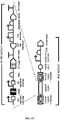
- the tnp transposase from the Tn5 transposon translocates DNA sequences flanked by IS50 repeat sequences [Phadnis, 1986]. Placement of arbitrary DNA between transposon repeats (referred to as a "payload region" in FIG. 13 ) between transposon repeats (labeled as "inverted repeat”) results in translocation of the payload region to other DNA molecules, including the genome of recipient bacterial cells.
- FIG. 13 A schematic of a typical design including a conjugative plasmid with a transposon is illustrated in FIG. 13 . While lac promoter is shown in FIG. 13 , one of ordinary skill in the art would understand other inducible promoters can also be used. Exemplary sequences are included as SEQ ID NO:19 and SEQ ID NO:20.
- Bacteriophages offer an alternative embodiment for the MGE of the present disclosure.
- Exemplary bacteriophage includes bacteriophage PI, a temperate phage capable of entering either a lysogenic or lytic state upon infection.
- PI has a broad host range among the Gram-negatives including Agrobacterium, Alcaligenes, Citrobacter, Enterobacter, Erwinia, Flavobacterium, Klebsiella, Proteus, Pseudomonas, Salmonella, and Serratia [Murooka, 1979]. Nevertheless, bacteriophages tend to have narrower host ranges than other MGEs like plasmids.
- bacteriophage as a transmission vector may necessitate additional engineering of the bacteriophage to broaden its host range.
- the bacteriophage may be engineered to bypass host restriction-modification systems by eliminating 6 bp palindromic sequences from the MGE and by adding methylase(s) to protect short sites, to expand its replication range by including a broad host range replication origin, and/or to enhance the bacteriophage's ability to penetrate the extracellular matrix by adding display degradative enzymes.
- the host cell or organism may be chosen from eukaryotic or prokaryotic systems capable of surviving, persisting and/or colonizing in the mammalian gastrointestinal system or the mammalian urinary tract, such as bacterial cells (Gram-negative or Gram-positive), archaea and yeast cells.
- bacterial cells Gram-negative or Gram-positive
- archaea and yeast cells.
- Suitable organisms can include those bacteria belonging to the Bacteroidetes, Firmicutes, Proteobacteria, Actinobacteria, Verrucomicrobia or Fusobacteria divisions (superkingdoms) of Bacteria.
- the host cell/organism is culturable in the laboratory.
- host cells/organisms can be selected from Bacteroides species including Bacteroides AFS519, Bacteroides sp. CCUG 39913, Bacteroides sp. Smarlab 3301186, Bacteroides ovatus, Bacteroides salyersiae, Bacteroides sp.
- MPN isolate group 6 Bacteroides DSM 12148, Bacteroides merdae, Bacteroides distasonis, Bacteroides stercosis, Bacteroides splanchnicus, Bacteroides WH2, Bacteroides uniformis, Bacteroides WH302, Bacteroides fragilis, Bacteroides caccae, Bacteroides thetaiotamicron, Bacteroides vulgatus, and Bacteroides capillosus.
- host cells/organisms can be selected from Clostridium species including Clostridium leptum, Clostridium boltaea, Clostridium bartlettii, Clostridium symbiosum, Clostridium sp. DSM 6877(FS41), Clostridium A2-207, Clostridium scindens, Clostridium spiroforme, Clostridium sp. A2-183, Clostridium sp. SL6/1/1, Clostridium sp. GM2/1, Clostridium sp. A2-194, Clostridium sp. A2-166, Clostridium sp. A2-175, Clostridium sp.
- Clostridium species including Clostridium leptum, Clostridium boltaea, Clostridium bartlettii, Clostridium symbiosum, Clostridium sp. DSM 6877(FS41), Clostridium A2-207,
- host cells/organisms can be selected from Eubacterium species including Eubacterium plautii, Eubacterium ventriosum, Eubacterium halii, Eubacterium siraeum, Eubacterium eligens, and Eubacterium rectale.
- host cells/organisms can be selected from Alistipes finegoldii, Alistipes putredinis, Anaerotruncus colihominis, Allisonella histaminiformans, Bulleida moorei, Peptostreptococcus sp.
- E2_20 Dorea longicatena, Faecalibacterium prausnitzii, Akkermansia muciniphila, Fusobacterium sp. oral clone R002, Escherichia coli, Haemophilus parainfluenziae, Bilophila wadsworthii, Desulfovibrio piger, Cornyebacterium durum, Bifidobacterium adolescentis, Actinomyces graevenitzii, Cornyebacterium sundsvallense, Actinomyces odontolyticus, and Collinsella aerofaciens.
- host cells or organisms can be selected from known natural probiotic strains.
- Exemplary probiotic species include those belonging to the genus Lactobacillus, Bifidobacterium, and/or Streptococcus.
- Exemplary probiotic strains include Bacillus coagulans GBI-30, 6086, Bifidobacterium animalis subsp. lactis BB-12, Bifidobacterium longum subsp.
- Lactobacillus paracasei St11 or NCC2461
- Lactobacillus johnsonii La1 Lactobacillus johnsonii NCC533
- Lactobacillus plantarum 299v Lactobacillus reuteri ATCC 55730
- Lactobacillus reuteri DSM 17938 Lactobacillus reuteri ATCC PTA 5289
- Saccharomyces boulardii Lactobacillus rhamnosus GR-1
- Lactobacillus reuteri RC-14 Lactobacillus acidophilus CL1285, Lactobacillus casei LBC80R, Lactobacillus plantarum HEAL 9, Lactobacillus paracasei 8700:2, Streptococcus thermophilus, Lactobacillus paracasei LMG P 22043, Lactobacillus johnsonii BFE 6128, Lactobacillus fermentum ME-3, Lactobacillus plantarum B
- the host cell or organism is derived from a laboratory or commensal Escherichia coli strain.
- Exemplary Escherichia coli strains are set forth below (Table 4).
- Strain W is the laboratory strain believed to most closely resemble commensal strains [Archer, 2011].
- Strain Nissle 1917 has long been used as a probiotic in human under the trade name Mutaflor [Grozdanov, 2004].
- the Escherichia coli Collection Of Reference (ECOR) is a collection of commensal Escherichia coli strains that were isolated from the gut of healthy mammals [Ochman 1984]. ECOR strains have not undergone substantial laboratory evolution since their isolation, and are therefore used as model commensal strains.
- the host cell or organism is derived from the genus Lactobacillus.
- Lactobacillus species include Lactobacillus casei, Lactobacillus lactis, Lactobacillus reuteri, Lactobacillus rhamnosus, Lactobacillus acidophilus, Lactobacillus plantarum, Lactobacillus paracasei, Lactobacillus bulgaricus, Lactobacillus fermentum and Lactobacillus johnsonii.
- the host cell or organism may be chosen from eukaryotic or prokaryotic systems capable of surviving, persisting and/or colonizing skin, such as bacterial cells (Gram-negative or Gram-positive), archaea and yeast cells. Suitable organisms can include those bacteria belonging to the Bacteroidetes, Firmicutes, Proteobacteria, and Actinobacteria phyla. In a preferred embodiment, the host cell/organism is culturable in the laboratory.
- host cells/organisms can be selected from the genera Staphylococcus, Propionibacterium, Malassezia, Corynebacterium, Brevibacterium, Lactococcus, Lactobacillus, Debaryomyces, and Cryptococcus.
- Exemplary species include Staphylococcus epidermis, Propionibacterium acnes, Lactococcus lactis, Lactobacillus reuteri and Lactobacillus plantarum.
- the host cell or organism may be chosen from eukaryotic or prokaryotic systems capable of surviving, persisting and/or colonizing the environment or substance to be decontaminated, such as bacterial cells (Gram-negative or Gram-positive), archaea and yeast cells.
- the present disclosure provides for a mechanism to select for the maintenance of the engineered probiotic and/or the heterologous genetic system comprising a mobilizable gene targeting and degradation system.
- plasmid maintenance in host cells or organisms is selected for through the inclusion of antibiotic resistance cassettes and the application of antibiotics to the microbial population.
- the inclusion of antibiotic resistance cassettes in the engineered probiotic of the present disclosure is undesirable since it may lead to unwanted spread of the cassette.
- use of antibiotics in, for example, the gastrointestinal microbiome selects against other commensal strains which can promote re-colonization by pathogenic strains particularly in hospital environments [Fekety, 1981].
- the engineered probiotic and/or the heterologous genetic system comprises a nucleic acid encoding one or more genes that confers a selective advantage that is not based on antibiotic resistance.
- the nucleic acid encodes one or more nucleic acid molecules comrpsing a carbon utilization operon that confer the ability to utilize particular carbon source(s) not used by the parent, wildtype host cell or organism from which the engineered probiotic is derived.
- the inclusion of these carbon source utilization gene(s) confers a selective advantage to any cells carrying the heterologous genetic system when grown in the presence of the corresponding carbon source. Other strains in the microbial population will not be selected against, however, since other carbon sources are available for their growth. In the absence of the corresponding carbon source, the burden of replicating, transcribing and translating the carbon source utilization gene(s) has the additional benefit of limiting the fitness of the engineered probiotic.
- the engineered probiotic and/or heterologous genetic system comprising a mobilizable gene targeting and degradation system may be selected for maintenance and dispersal under specific conditions (presence of the carbon source) and selected for containment and loss under other conditions (absence of the carbon source). Coadministration of the carbon source with the probiotic can be used as a means to control the propagation and duration of the probiotic treatment.
- the carbon source utilization gene(s) are derived from the raf operon.
- the raf operon confers the ability to catabolize the trisaccharide raffinose and has been found on multiple conjugative plasmids [Aslanidis, 1989; Périchon, 2008].
- raffinose inhibits repression of raffinose catabolic genes by the RafR repressor [Ulmke, 1997; Aslandis, 1989].
- Raffinose utilization genes include rafA which encodes an alpha-D-galactosidase, rafB which encodes a permease, rafD which encodes an invertase and rafY which encodes a porin.
- Exemplary raf operon genes are set forth below (Table 5). Table 5: raf operon genes Gene Function Accession number rafR repressor M29849 (166...
- the carbon source utilization gene(s) are derived from the csc operon.
- the csc operon confers the ability to catabolize the sugar sucrose [Archer, 2011].
- the csc operon comprises cscR which encodes a regulator, cscB which encodes a sucrose transporter, cscA which encodes an invertase, cscK which encodes a fructokinase.
- Exemplary csc operon genes are set forth below (Table 6).
- Table 6 csc operon genes Gene I Function I Accession number cscR repressor X81461.2 (7060...8055) cscB sucrose transporter X81461.2 (3171...4418) cscA sucrose invertase / sucrose hydrolase X81461.2 (5619...7052) cscK fructokinase X81461.2 (4480...5403)
- the carbon source utilization gene(s) are derived from the xyl operon.
- the xyl operon confers the ability to catabolize the sugar xylose [Song, 1997].
- Exemplary xyl operon genes are set forth below (Table 7).
- Table 7 xyl operon genes Gene Function Accession number xylR transcriptional activator NC_007779.1 (3904258..3905436) xylA xylose isomerase NC_007779.1 (3909650..3910972) xylB xyulokinase NC_007779.1 (3911044..3912498) xylF xylose ABC transporter subunit NC_007779.1 (3908292..3909284) xylG xylose ABC transporter subunit NC_007779.1 (3906673..3908214) xylH xylose ABC transporter subunit NC_007779.1 (3905514..3906695)
- Table 8 ara operon genes Gene Function Accession number araC transcriptional activator NC_000913.3 (70387..71265) araB L-ribulokinase NC_000913.3 (68348..70048) araA L-arabinose isomerase NC_000913.3 (66835..68337) araD L-ribulose-5-phosphate 4-epimerase NC_000913.3 (65855..66550) araF arabinose ABC transporter subunit NC_000913.3 (1985139..1986128,) araG arabinose ABC transporter subunit NC_000913.3 (1983555..1985069) araH arabinose ABC transporter subunit NC_000913.3 (1982554..1983540)
- the present disclosure provides for a mechanism to select against the uptake of additional mobile genetic elements by the engineered probiotic of the present disclosure.
- Various bacterial strains including Escherichia coli, Vibrio chlolerae and Nitrosomonas europaea are known to contain one or more toxin-antitoxin system encoded on their chromosomes; preliminary studies suggest that chromosomally integrated toxin-antitoxin systems may serve to protect the cell from foreign DNA including conjugative plasmids [Saavedra De Bast, 2008].
- the engineered probiotic of the present disclosure comprises a chromosomally integrated toxin-antitoxin system to restrict uptake and maintenance of foreign DNA from other strains in the microbiome.
- exemplary toxin-antitoxin systems the elements targeted by their cognate toxins, and the cellular process disrupted by the toxins are set forth below (Table 9) [Van Melderen, 2009].
- Toxin-antitoxin systems produce a toxin protein that target a cellular process; the antitoxin (typically an RNA or protein) prevents the toxin from disrupting the targeted cellular process.
- the MazF toxin protein disrupts RNA translation, and the MazE antitoxin protein binds MazF to ameliorate the toxic activity.
- Table 9 Toxin-antitoxin systems System Target Cellular Process CcdB DNA gyrase replication RelE translating ribosome translation
- MazF RNAs translation
- ParE DNA gyrase replication Doc translating ribosome translation
- VapC RNAs unknown ⁇ unknown unknown HipA Ef-Tu translation HigB translating ribosome translation
- the present disclosure provides for a mechanism to select for the functional expression of the CRISPR/Cas based gene targeting and degradation system. It has been demonstrated that natural CRISPR/Cas systems exist that degrade endogenous mRNA transcripts while leaving the corresponding genomic DNA intact [Sampson, 2013]. This is accomplished in Francisella novicida by a scaRNA molecule that forms a complex with tracrRNA and the FTN_1103 mRNA. Since the scaRNA binds specifically to the folded FTN_1103 mRNA, Cas9 selectively degrades the mRNA and not the FTN_1103 DNA sequence.
- the mechanism of selection for a functional CRISPR/Cas based gene targeting and degradation system comprises a lethal gene that has been integrated into the chromosome of the engineered probiotic and a CRISPR/Cas system designed to target the mRNA encoded by the lethal gene for degradation while leaving the lethal gene intact.
- the lethal gene is the toxin-encoding gene mazF and the CRISPR/Cas system is designed to target the mazF mRNA toxin for degradation based on its predicted mRNA secondary structure.
- the Cas gene is co-located and/or co-transcribed with the mazE gene which encodes the antitoxin. In this embodiment, there is a selection for Cas gene maintenance and/or expression rather than function.
- an engineered probiotic comprises a genetic system encoding a nuclease, a MGE, and an antibiotic-free selection module. Genetic systems containing all three modules may serve to transfer from the host cell to cells of interest in a microbial community via the MGE. The nuclease may target a gene of interest for degradation, and the antibiotic-free selection module provides a means of encouraging the propagation of the genetic system in the intended microbial community.
- These genetic systems may optionally include additional genetic elements, such as a nuclease, transcriptional activator, or transcriptional repressor.
- Table 10 provides a summary of SEQ ID NOs:1-20 disclosed herein.
- Table 10 Sequences SEQ ID NO Sequence 1 Cas9 nuclease expression cassette 2 tracrRNA under control of an inducible promoter 3 CRISPR array targeting cat gene 4 Plasmid encoding cat gene and fluorescent reporter 5 Plasmid encoding cat gene and fluorescent reporter 6 Plasmid encoding cat gene and fluorescent reporter 7 Plasmid encoding cat gene and fluorescent reporter 8 Plasmid encoding cat gene and fluorescent reporter 9 Plasmid encoding tetracycline antibiotic resistance gene 10 Plasmid encoding guide RNA targeting cat gene, target site #8 11 Plasmid encoding guide RNA targeting cat gene, target site #8 12 Plasmid encoding guide RNA targeting cat gene, target site #7 13 Plasmid encoding guide RNA targeting cat gene, target site #8 14 Plasmid encoding guide RNA targeting off-target gene 15 Plasmid encoding guide RNA targeting cat gene, target site #8 16 Plasmid encoding guide
- Example 1 A model of dispersal of the gene targeting and degradation system within a microbial population
- a basic model can be formulated to describe the spread of the gene targeting and degradation system from the engineered probiotic to other members of a microbial community ( FIG. 1 ).
- P(t) and F(t) denotes the subpopulations with and without the gene targeting and degradation system, respectively.
- R(t) denotes the pool of growth resources available.
- the model is derived from previously validated models of mobile genetic element dispersion [Bergstrom, 2000; Stewart, 1977]. The other variables are defined as in Table 11.
- Table 11 Model parameters Variable Definition ⁇ Growth rate c Cost of bearing the system b Benefit of bearing the system ⁇ Rate of conjugation ⁇ Rate of plasmid loss due to segregation k r Critical level of the resource pool ⁇ Flow of resources into the environment r Amount of resources consumed to produce a daughter cell
- the model supports the determination of the initial inoculum density of the engineered probiotic required to achieve colonization, the residence time of the gene targeting and degradation system in the gastrointestinal system, and the ratio of engineered to virulent/antibiotic-resistant microbial cells required for effective clearance of the virulent/antibiotic-resistant genes.
- Example 2 Candidate target sites in a gene of interest
- CRISPR/Cas gene targeting and degradation systems may be targeted to select sites within a gene of interest.
- target sequences In the case of systems derived from the Streptomyces pyogenes Cas9 nuclease, target sequences must be immediately 5' to the sequence NGG, where "N" can be any nucleotide.
- FIG. 2 depicts a schematic of the Yersinia pestis biovar Orientalis str IP275 chloramphenicol acetyltransferase coding sequence (CAT, Genbank accession NC_009141 40824...41483). Sites suitable for targeting with the S. pyogenes Cas9 nuclease are annotated in dark gray. Selected target sites and gene features of interest are annotated in light gray. Selected target sites are chosen to coincide with important functional or structural motifs within a gene of interest.
- Example 3 Design and construction of a CRISPR/Cas gene targeting and degradation system
- FIG. 3 depicts example designs of a CRISPR/Cas gene targeting system.
- the CRISPR array is based on the Streptomyces pyogenes CRISPR array and is designed to target a gene of interest: the chloramphenicol acetyltransferase coding sequence (CAT) described in Example 2. Both the CRISPR array ( FIG. 3A ) and the tracrRNA ( FIG. 3B ) are placed under the control of inducible promoters. The Cas9 protein may be expressed constitutively ( FIG. 3C ). In an alternative design of the CRISPR array, a five spacer array targeted at the CAT gene was constructed ( FIG. 3D ). However, multiple bands corresponding to different length arrays were observed during gel electrophoresis of arrays synthesized via commercial gene synthesis.
- CAT chloramphenicol acetyltransferase coding sequence
- Example 4 Engineered probiotic strains capable of repelling invading antibiotic resistance genes
- An engineered probiotic strain was designed and constructed comprising a Streptomyces pyogenes Cas9 nuclease expression cassette (SEQ ID NO:1), a tracrRNA (SEQ ID NO:2) and a CRISPR array (SEQ ID NO:3).
- the CRISPR array was designed to target a single 30 base pair site in the Yersinia pestis biovar Orientalis str IP275 chloramphenicol acetyltransferase coding sequence (CAT).
- CAT chloramphenicol acetyltransferase coding sequence
- a second engineered strain was constructed that omitted the CRISPR array to serve as a control strain.
- the engineered probiotic and control strain were challenged with five different plasmid designs, each of which encodes the Y. pestis CAT gene (SEQ ID NOs:4-8). In each case, the engineered probiotic successfully repelled the plasmid relative to the control strain even in the presence of chloramphenicol selection ( FIG. 5 ).
- both the engineered probiotic and control strain were challenged with plasmids that did not encode the Y. pestis CAT gene but did encode a tetracycline antibiotic resistance gene (SEQ ID NO:9). No significant difference in the number of colonies obtained after transformation and growth on tetracycline plates ( FIG. 6 ). These results indicate that the engineered probiotic is specific for the target gene of interest.
- Example 5 Removal of previously acquired antibiotic resistance genes using a CRISPR/Cas gene targeting and degradation system
- a target strain was designed and constructed comprising a low copy plasmid encoding a Streptomyces pyogenes Cas9 nuclease expression cassette (SEQ ID NO:1) and a high copy plasmid encoding a Yersinia pestis biovar Orientalis str IP275 chloramphenicol acetyltransferase coding sequence (CAT) and fluorescent protein (SEQ ID NO:4).
- the target strain was subsequently challenged via transformation with guide RNA (gRNA) constructs targeted at different sequences (SEQ ID NOs:10-16).
- Target strains challenged with gRNAs targeted at the CAT gene showed a loss of fluorescence and chloramphenicol resistance, whereas a gRNA targeted at a different gene (SEQ ID NO:14) did not impact fluorescence or chloramphenicol resistance phenotypes of the target strain ( FIG. 7 ).
- Two different on-target gRNAs were tested, each of which targeted a different 20 base pair sequence within the CAT gene; both were effective and did not show evidence of off-target activity irrespective of the identity of the promoter driving transcription of the gRNA or the plasmid propagating the gRNA.
- the off-target gRNA did not show any evidence of deleterious activity.
- Example 6 Design of an engineered probiotic
- FIG. 8 An engineered probiotic was designed comprising a CRISPR/Cas gene targeting and degradation system and selection and containment mechanism derived from the raf operon ( FIG. 8 ).
- the gene targeting and degradation system and selection and containment mechanism are flanked by inverted repeats and are adjacent to a mobilizable origin and transposon ( FIG. 8A ) to facilitate dispersal and integration into the genomes of other cells within a microbial community.
- FIG. 8B shows a selection module design based on the raf operon, in which raffinose inhibits transcription of the rafA, rafB, rafD and rafY genes.
- Example 7 Antibiotic-free promotion of engineered probiotic growth
- FIG. 10 illustrates how the raf operon can be engineered to function constitutively ("Constitutive Selection Module") or in an inducible fashion based on the presence of raffinose ("Inducible Selection Module”).
- the "Gemini Control" design in FIG. 10 is a control plasmid that is identical to the Constitutive Selection Module and Inducible Selection Module plasmids, with the exception that the hybrid fluorescent reporter Gemini is expressed in the place of a raf operon [Martin 2009].
- Some commensal strains of Escherichia coli also outgrow Gemini Control strains when transformed with the Constitutive Selection Module.
- commensal strains E. coli ECOR-08 and E. coli ECOR-51 (each transformed with the Constitutive Selection Module) outgrow a laboratory strain of Escherichia coli transformed with the Gemini Control plasmid ( FIG. 12 ).
- Laboratory strains of Escherichia coli are better adapted to the growth conditions used in FIG. 12 , thus the other ECOR strains tested in this experiment may also exhibit a growth advantage with raffinose when grown in the mammalian gut or similar environments.
- Jinek M East A, Cheng A, Lin S, Ma E, Doudna J. RNA-programmed genome editing in human cells. Elife. 2013;2:e00471 .
- Van Melderen L De Bast MS. Bacterial Toxin-Antitoxin Systems: More Than Selfish Entities? Rosenberg SM, editor. PLoS Genet. 2009 Mar 27;5(3):e1000437 .
Landscapes
- Health & Medical Sciences (AREA)
- Life Sciences & Earth Sciences (AREA)
- Engineering & Computer Science (AREA)
- Chemical & Material Sciences (AREA)
- Genetics & Genomics (AREA)
- Organic Chemistry (AREA)
- Bioinformatics & Cheminformatics (AREA)
- Biomedical Technology (AREA)
- Molecular Biology (AREA)
- General Health & Medical Sciences (AREA)
- Wood Science & Technology (AREA)
- Zoology (AREA)
- Microbiology (AREA)
- Biotechnology (AREA)
- General Engineering & Computer Science (AREA)
- Medicinal Chemistry (AREA)
- Pharmacology & Pharmacy (AREA)
- Animal Behavior & Ethology (AREA)
- Public Health (AREA)
- Veterinary Medicine (AREA)
- Biochemistry (AREA)
- Mycology (AREA)
- Physics & Mathematics (AREA)
- Nuclear Medicine, Radiotherapy & Molecular Imaging (AREA)
- General Chemical & Material Sciences (AREA)
- Chemical Kinetics & Catalysis (AREA)
- Plant Pathology (AREA)
- Biophysics (AREA)
- Epidemiology (AREA)
- Crystallography & Structural Chemistry (AREA)
- Urology & Nephrology (AREA)
- Communicable Diseases (AREA)
- Oncology (AREA)
- Dermatology (AREA)
- Medicines Containing Material From Animals Or Micro-Organisms (AREA)
- Micro-Organisms Or Cultivation Processes Thereof (AREA)
- Coloring Foods And Improving Nutritive Qualities (AREA)
Applications Claiming Priority (2)
| Application Number | Priority Date | Filing Date | Title |
|---|---|---|---|
| US201461970024P | 2014-03-25 | 2014-03-25 | |
| PCT/US2015/022508 WO2015148680A1 (en) | 2014-03-25 | 2015-03-25 | Methods and genetic systems for cell engineering |
Publications (3)
| Publication Number | Publication Date |
|---|---|
| EP3122870A1 EP3122870A1 (en) | 2017-02-01 |
| EP3122870A4 EP3122870A4 (en) | 2017-08-30 |
| EP3122870B1 true EP3122870B1 (en) | 2022-06-29 |
Family
ID=54196352
Family Applications (1)
| Application Number | Title | Priority Date | Filing Date |
|---|---|---|---|
| EP15768011.7A Revoked EP3122870B1 (en) | 2014-03-25 | 2015-03-25 | Methods and genetic systems for cell engineering |
Country Status (7)
| Country | Link |
|---|---|
| US (1) | US20170173086A1 (https=) |
| EP (1) | EP3122870B1 (https=) |
| JP (2) | JP2017512500A (https=) |
| AU (1) | AU2015236045B2 (https=) |
| CA (1) | CA2943775A1 (https=) |
| DK (1) | DK3122870T3 (https=) |
| WO (1) | WO2015148680A1 (https=) |
Families Citing this family (74)
| Publication number | Priority date | Publication date | Assignee | Title |
|---|---|---|---|---|
| US10323236B2 (en) | 2011-07-22 | 2019-06-18 | President And Fellows Of Harvard College | Evaluation and improvement of nuclease cleavage specificity |
| WO2014160059A1 (en) | 2013-03-13 | 2014-10-02 | Gen9, Inc. | Compositions and methods for synthesis of high fidelity oligonucleotides |
| US9163284B2 (en) | 2013-08-09 | 2015-10-20 | President And Fellows Of Harvard College | Methods for identifying a target site of a Cas9 nuclease |
| US9359599B2 (en) | 2013-08-22 | 2016-06-07 | President And Fellows Of Harvard College | Engineered transcription activator-like effector (TALE) domains and uses thereof |
| US9322037B2 (en) | 2013-09-06 | 2016-04-26 | President And Fellows Of Harvard College | Cas9-FokI fusion proteins and uses thereof |
| US9526784B2 (en) | 2013-09-06 | 2016-12-27 | President And Fellows Of Harvard College | Delivery system for functional nucleases |
| US9228207B2 (en) | 2013-09-06 | 2016-01-05 | President And Fellows Of Harvard College | Switchable gRNAs comprising aptamers |
| WO2015066119A1 (en) | 2013-10-30 | 2015-05-07 | North Carolina State University | Compositions and methods related to a type-ii crispr-cas system in lactobacillus buchneri |
| CN106459995B (zh) | 2013-11-07 | 2020-02-21 | 爱迪塔斯医药有限公司 | 使用统治型gRNA的CRISPR相关方法和组合物 |
| US20150165054A1 (en) | 2013-12-12 | 2015-06-18 | President And Fellows Of Harvard College | Methods for correcting caspase-9 point mutations |
| US10787654B2 (en) | 2014-01-24 | 2020-09-29 | North Carolina State University | Methods and compositions for sequence guiding Cas9 targeting |
| WO2015148680A1 (en) | 2014-03-25 | 2015-10-01 | Ginkgo Bioworks, Inc. | Methods and genetic systems for cell engineering |
| JP2017512481A (ja) | 2014-04-08 | 2017-05-25 | ノースカロライナ ステート ユニバーシティーNorth Carolina State University | Crispr関連遺伝子を用いた、rna依存性の転写抑制のための方法および組成物 |
| US10077453B2 (en) | 2014-07-30 | 2018-09-18 | President And Fellows Of Harvard College | CAS9 proteins including ligand-dependent inteins |
| EP3186375A4 (en) | 2014-08-28 | 2019-03-13 | North Carolina State University | Novel CAS9 PROTEINS AND CHARACTERISTICS FOR DNA TARGETING AND GENOME EDITING |
| EP3711488A1 (en) | 2015-05-06 | 2020-09-23 | Snipr Technologies Limited | Altering microbial populations & modifying microbiota |
| EA201792663A1 (ru) | 2015-05-29 | 2018-04-30 | Норт Каролина Стейт Юниверсити | Способы скрининга бактерий, архей, водорослей и дрожжей с использованием нуклеиновых кислот crispr |
| WO2016205276A1 (en) | 2015-06-15 | 2016-12-22 | North Carolina State University | Methods and compositions for efficient delivery of nucleic acids and rna-based antimicrobials |
| EP3356533A1 (en) | 2015-09-28 | 2018-08-08 | North Carolina State University | Methods and compositions for sequence specific antimicrobials |
| IL310721B2 (en) | 2015-10-23 | 2025-11-01 | Harvard College | Nucleobase editors and uses thereof |
| BR112018011503A2 (pt) | 2015-12-07 | 2018-12-04 | Zymergen Inc | promotores da corynebacterium glutamicum |
| US9988624B2 (en) | 2015-12-07 | 2018-06-05 | Zymergen Inc. | Microbial strain improvement by a HTP genomic engineering platform |
| US11208649B2 (en) | 2015-12-07 | 2021-12-28 | Zymergen Inc. | HTP genomic engineering platform |
| US11542466B2 (en) | 2015-12-22 | 2023-01-03 | North Carolina State University | Methods and compositions for delivery of CRISPR based antimicrobials |
| AU2016380351B2 (en) | 2015-12-29 | 2023-04-06 | Monsanto Technology Llc | Novel CRISPR-associated transposases and uses thereof |
| CN115887508A (zh) | 2016-03-04 | 2023-04-04 | 加利福尼亚大学董事会 | 微生物聚生体及其用途 |
| EP4302824A3 (en) | 2016-04-20 | 2024-03-20 | The Board of Trustees of the Leland Stanford Junior University | Compositions and methods for nucleic acid expression and protein secretion in bacteroides |
| GB201609811D0 (en) | 2016-06-05 | 2016-07-20 | Snipr Technologies Ltd | Methods, cells, systems, arrays, RNA and kits |
| EP3478845A4 (en) | 2016-06-30 | 2019-07-31 | Zymergen, Inc. | METHOD OF GENERATING A GLUCOSE PERMEASE LIBRARY AND USES THEREOF |
| US10544390B2 (en) | 2016-06-30 | 2020-01-28 | Zymergen Inc. | Methods for generating a bacterial hemoglobin library and uses thereof |
| CN110214183A (zh) | 2016-08-03 | 2019-09-06 | 哈佛大学的校长及成员们 | 腺苷核碱基编辑器及其用途 |
| WO2018031683A1 (en) | 2016-08-09 | 2018-02-15 | President And Fellows Of Harvard College | Programmable cas9-recombinase fusion proteins and uses thereof |
| US11542509B2 (en) | 2016-08-24 | 2023-01-03 | President And Fellows Of Harvard College | Incorporation of unnatural amino acids into proteins using base editing |
| WO2018071841A1 (en) * | 2016-10-14 | 2018-04-19 | The Forsyth Institute | Compositions and methods for evading bacterial defense mechanisms |
| KR102622411B1 (ko) | 2016-10-14 | 2024-01-10 | 프레지던트 앤드 펠로우즈 오브 하바드 칼리지 | 핵염기 에디터의 aav 전달 |
| US11566238B2 (en) | 2016-12-15 | 2023-01-31 | The Board Of Trustees Of The Leland Stanford Junior University | Compositions and methods for modulating growth of a genetically modified gut bacterial cell |
| WO2018119359A1 (en) | 2016-12-23 | 2018-06-28 | President And Fellows Of Harvard College | Editing of ccr5 receptor gene to protect against hiv infection |
| US11224624B2 (en) * | 2017-02-14 | 2022-01-18 | California Institute Of Technology | Modulation of microbial synthesis of 4-etylphenol and 4-ethylphenyl sulfate in behavior and disease |
| EP3592853A1 (en) | 2017-03-09 | 2020-01-15 | President and Fellows of Harvard College | Suppression of pain by gene editing |
| US12390514B2 (en) | 2017-03-09 | 2025-08-19 | President And Fellows Of Harvard College | Cancer vaccine |
| US11542496B2 (en) | 2017-03-10 | 2023-01-03 | President And Fellows Of Harvard College | Cytosine to guanine base editor |
| KR20240116572A (ko) | 2017-03-23 | 2024-07-29 | 프레지던트 앤드 펠로우즈 오브 하바드 칼리지 | 핵산 프로그램가능한 dna 결합 단백질을 포함하는 핵염기 편집제 |
| US11560566B2 (en) | 2017-05-12 | 2023-01-24 | President And Fellows Of Harvard College | Aptazyme-embedded guide RNAs for use with CRISPR-Cas9 in genome editing and transcriptional activation |
| CN111801345A (zh) | 2017-07-28 | 2020-10-20 | 哈佛大学的校长及成员们 | 使用噬菌体辅助连续进化(pace)的进化碱基编辑器的方法和组合物 |
| EP3676376B1 (en) | 2017-08-30 | 2025-01-15 | President and Fellows of Harvard College | High efficiency base editors comprising gam |
| KR20250107288A (ko) | 2017-10-16 | 2025-07-11 | 더 브로드 인스티튜트, 인코퍼레이티드 | 아데노신 염기 편집제의 용도 |
| US12406749B2 (en) | 2017-12-15 | 2025-09-02 | The Broad Institute, Inc. | Systems and methods for predicting repair outcomes in genetic engineering |
| US10760075B2 (en) | 2018-04-30 | 2020-09-01 | Snipr Biome Aps | Treating and preventing microbial infections |
| EP3773645A4 (en) | 2018-04-10 | 2021-11-24 | Siolta Therapeutics, Inc. | MICROBIAL CONSORTIA |
| US12157760B2 (en) | 2018-05-23 | 2024-12-03 | The Broad Institute, Inc. | Base editors and uses thereof |
| US12522807B2 (en) | 2018-07-09 | 2026-01-13 | The Broad Institute, Inc. | RNA programmable epigenetic RNA modifiers and uses thereof |
| WO2020072254A1 (en) | 2018-10-01 | 2020-04-09 | North Carolina State University | Recombinant type i crispr-cas system and uses thereof for killing target cells |
| US12203123B2 (en) | 2018-10-01 | 2025-01-21 | North Carolina State University | Recombinant type I CRISPR-Cas system and uses thereof for screening for variant cells |
| WO2020072250A1 (en) | 2018-10-01 | 2020-04-09 | North Carolina State University | Recombinant type i crispr-cas system and uses thereof for genome modification and alteration of expression |
| WO2020072248A1 (en) | 2018-10-01 | 2020-04-09 | North Carolina State University | Recombinant type i crispr-cas system |
| US11851663B2 (en) | 2018-10-14 | 2023-12-26 | Snipr Biome Aps | Single-vector type I vectors |
| WO2020092453A1 (en) | 2018-10-29 | 2020-05-07 | The Broad Institute, Inc. | Nucleobase editors comprising geocas9 and uses thereof |
| US20220056457A1 (en) * | 2018-12-11 | 2022-02-24 | The University Of Western Ontario | Cis conjugative plasmid system |
| CN109652570A (zh) * | 2019-01-16 | 2019-04-19 | 中国人民解放军总医院 | 微生物在鉴别和/或区分不同种族个体中的应用 |
| US12351837B2 (en) | 2019-01-23 | 2025-07-08 | The Broad Institute, Inc. | Supernegatively charged proteins and uses thereof |
| CA3128507A1 (en) | 2019-02-06 | 2020-08-13 | Fred Hutchinson Cancer Research Center | Minicircle producing bacteria engineered to differentially methylate nucleic acid molecules therein |
| BR112021017655A2 (pt) * | 2019-03-07 | 2021-11-16 | Univ Columbia | Método e sistema de integração de dna guiada por rna usando transposons tipo tn7 |
| WO2020191233A1 (en) | 2019-03-19 | 2020-09-24 | The Broad Institute, Inc. | Methods and compositions for editing nucleotide sequences |
| US12473543B2 (en) | 2019-04-17 | 2025-11-18 | The Broad Institute, Inc. | Adenine base editors with reduced off-target effects |
| GB201906668D0 (en) * | 2019-05-12 | 2019-06-26 | Folium Food Science Ltd | Antibacterial agents |
| US20210095273A1 (en) * | 2019-09-30 | 2021-04-01 | Sigma-Aldrich Co. Llc | Modulation of microbiota compositions using targeted nucleases |
| CN120732903A (zh) | 2019-10-07 | 2025-10-03 | 谢尔塔治疗公司 | 治疗性药物组合物 |
| US12435330B2 (en) | 2019-10-10 | 2025-10-07 | The Broad Institute, Inc. | Methods and compositions for prime editing RNA |
| WO2021119594A1 (en) * | 2019-12-13 | 2021-06-17 | The Regents Of The University Of California | Reducing antibiotic resistance in bacteria using pro-active genetics |
| IL292517A (en) * | 2019-12-17 | 2022-06-01 | Sigma Aldrich Co Llc | Genome editing in Bacteroidetes |
| IL297761A (en) | 2020-05-08 | 2022-12-01 | Broad Inst Inc | Methods and compositions for simultaneously editing two helices of a designated double-helix nucleotide sequence |
| CN112029699B (zh) * | 2020-11-04 | 2021-06-08 | 中国农业科学院北京畜牧兽医研究所 | 一种基于内源CRISPR-Cas系统的丁酸梭菌基因编辑系统及其应用 |
| US11851664B2 (en) | 2020-12-24 | 2023-12-26 | Oakbio, Inc. | Methods for producing biochemicals using enzyme genes derived from a strain of Brevundimonas, and compositions made thereby |
| GB202209518D0 (en) | 2022-06-29 | 2022-08-10 | Snipr Biome Aps | Treating & preventing E coli infections |
Citations (6)
| Publication number | Priority date | Publication date | Assignee | Title |
|---|---|---|---|---|
| US5627072A (en) | 1990-11-23 | 1997-05-06 | Van Den Bergh Foods Co., Division Of Conopco Inc. | Food-grade vector suitable for transforming a food-grade host cell use of said vector for transforming food-grade host cells and use of said transformed cells in biotransformation processes |
| US7005561B2 (en) | 2000-03-08 | 2006-02-28 | University Of Georgia Research Foundation, Inc. | Arabitol or ribitol as positive selectable markers |
| US20070036822A1 (en) | 2003-09-15 | 2007-02-15 | Fit Biotech Oyj Olc | Selection system containing non-antibiotic resistance selection marker |
| WO2012054726A1 (en) | 2010-10-20 | 2012-04-26 | Danisco A/S | Lactococcus crispr-cas sequences |
| WO2015034872A2 (en) | 2013-09-05 | 2015-03-12 | Massachusetts Institute Of Technology | Tuning microbial populations with programmable nucleases |
| WO2015148680A1 (en) | 2014-03-25 | 2015-10-01 | Ginkgo Bioworks, Inc. | Methods and genetic systems for cell engineering |
Family Cites Families (7)
| Publication number | Priority date | Publication date | Assignee | Title |
|---|---|---|---|---|
| US20050019335A1 (en) * | 2001-11-12 | 2005-01-27 | Lowery David E | Salmonella vaccine |
| ES2593811T3 (es) * | 2003-08-14 | 2016-12-13 | Dsm Ip Assets B.V. | Producción microbiana de ácido L-ascórbico |
| EP2211879B1 (en) * | 2007-10-26 | 2014-05-07 | Brenda E. Moore | Probiotic compositions and methods for inducing and supporting weight loss |
| JP5783503B2 (ja) * | 2008-09-03 | 2015-09-24 | 国立研究開発法人農業・食品産業技術総合研究機構 | 外来遺伝子を導入しない、非遺伝子組換えの遺伝子欠損株とその作製および選抜方法 |
| JP5940977B2 (ja) * | 2009-08-11 | 2016-06-29 | サンガモ バイオサイエンシーズ, インコーポレイテッド | 標的改変によるホモ接合生物 |
| WO2011101696A1 (en) * | 2010-02-18 | 2011-08-25 | Cellectis | Improved meganuclease recombination system |
| AU2013266968B2 (en) * | 2012-05-25 | 2017-06-29 | Emmanuelle CHARPENTIER | Methods and compositions for RNA-directed target DNA modification and for RNA-directed modulation of transcription |
-
2015
- 2015-03-25 WO PCT/US2015/022508 patent/WO2015148680A1/en not_active Ceased
- 2015-03-25 EP EP15768011.7A patent/EP3122870B1/en not_active Revoked
- 2015-03-25 AU AU2015236045A patent/AU2015236045B2/en not_active Ceased
- 2015-03-25 DK DK15768011.7T patent/DK3122870T3/da active
- 2015-03-25 JP JP2017502922A patent/JP2017512500A/ja active Pending
- 2015-03-25 CA CA2943775A patent/CA2943775A1/en not_active Abandoned
- 2015-03-25 US US15/127,498 patent/US20170173086A1/en not_active Abandoned
-
2020
- 2020-08-05 JP JP2020132873A patent/JP2021000092A/ja active Pending
Patent Citations (6)
| Publication number | Priority date | Publication date | Assignee | Title |
|---|---|---|---|---|
| US5627072A (en) | 1990-11-23 | 1997-05-06 | Van Den Bergh Foods Co., Division Of Conopco Inc. | Food-grade vector suitable for transforming a food-grade host cell use of said vector for transforming food-grade host cells and use of said transformed cells in biotransformation processes |
| US7005561B2 (en) | 2000-03-08 | 2006-02-28 | University Of Georgia Research Foundation, Inc. | Arabitol or ribitol as positive selectable markers |
| US20070036822A1 (en) | 2003-09-15 | 2007-02-15 | Fit Biotech Oyj Olc | Selection system containing non-antibiotic resistance selection marker |
| WO2012054726A1 (en) | 2010-10-20 | 2012-04-26 | Danisco A/S | Lactococcus crispr-cas sequences |
| WO2015034872A2 (en) | 2013-09-05 | 2015-03-12 | Massachusetts Institute Of Technology | Tuning microbial populations with programmable nucleases |
| WO2015148680A1 (en) | 2014-03-25 | 2015-10-01 | Ginkgo Bioworks, Inc. | Methods and genetic systems for cell engineering |
Non-Patent Citations (15)
| Title |
|---|
| ANONYMOUS: "Operation CRISPR: Deploying precision guided tools to target unique species in a complex microbiome", 1 January 2013 (2013-01-01), pages 1 - 1, XP093087292, Retrieved from the Internet <URL:https://2013.igem.org/Team:UCSF> [retrieved on 20230929] |
| ASLANIDIS CHARALAMPOS, SCHMID KURT, SCHMITT RUDIGER: "Nucleotide Sequences and Operon Structure of Plasmid-Borne Genes Mediating Uptake and Utilization of Raffinose in Escherichia colit", JOURNAL OF BACTERIOLOGY, vol. 171, no. 12, 1 December 1989 (1989-12-01), pages 6753 - 6763, XP093087310 |
| BIKARD DAVID, MARRAFFINI LUCIANO A.: "Control of gene expression by CRISPR-Cas systems", F1000 PRIME REPORTS, vol. 5, 1 November 2013 (2013-11-01), pages 1 - 8, XP093087288, DOI: 10.12703/P5-47 |
| BIKARD DAVID; HATOUM-ASLAN ASMA; MUCIDA DANIEL; MARRAFFINI LUCIANO A: "CRISPR Interference Can Prevent Natural Transformation and Virulence Acquisition during In Vivo Bacterial Infection", CELL HOST & MICROBE, vol. 12, no. 2, 16 August 2012 (2012-08-16), NL , pages 177 - 186, XP028934538, ISSN: 1931-3128, DOI: 10.1016/j.chom.2012.06.003 |
| BOUCHER ISABELLE, PARROT MARC, GAUDREAU HÉLÈNE, CHAMPAGNE CLAUDE P., VADEBONCOEUR CHRISTIAN, MOINEAU SYLVAIN: "Novel Food-Grade Plasmid Vector Based on Melibiose Fermentation for the Genetic Engineering of Lactococcus lactis", APPLIED AND ENVIRONMENTAL MICROBIOLOGY, vol. 68, no. 12, 1 December 2002 (2002-12-01), US , pages 6152 - 6161, XP093087301, ISSN: 0099-2240, DOI: 10.1128/AEM.68.12.6152-6161.2002 |
| C PLATTEEUW , I VAN ALEN-BOERRIGTER, S VAN SCHALKWIJK, W M DE VOS: "Food-grade cloning and expression system for Lactococcus lactis", APPLIED AND ENVIRONMENTAL MICROBIOLOGY, vol. 62, no. 3, 1 March 1996 (1996-03-01), US , pages 1008 - 1013, XP001038204, ISSN: 0099-2240, DOI: 10.1128/aem.62.3.1008-1013.1996 |
| HAGEN RICHTER, LENNART RANDAU, ANDRÉ PLAGENS: "Exploiting CRISPR/Cas: Interference Mechanisms and Applications", INTERNATIONAL JOURNAL OF MOLECULAR SCIENCES, vol. 14, no. 7, 1 January 2013 (2013-01-01), pages 14518 - 14531, XP055153313, DOI: 10.3390/ijms140714518 |
| LABRIE, S. ; BART, C. ; VADEBONCOEUR, C. ; MOINEAU, S.: "Use of an @?-Galactosidase Gene as a Food-Grade Selection Marker for Streptococcus thermophilus", JOURNAL OF DAIRY SCIENCE, vol. 88, no. 7, 1 July 2005 (2005-07-01), US , pages 2341 - 2347, XP026954572, ISSN: 0022-0302 |
| LEE CHANG-RO, CHO ILL, JEONG BYEONG, LEE SANG: "Strategies to Minimize Antibiotic Resistance", INTERNATIONAL JOURNAL OF ENVIRONMENTAL RESEARCH AND PUBLIC HEALTH, vol. 10, no. 9, 1 January 2013 (2013-01-01), pages 4274 - 4305, XP093087290, DOI: 10.3390/ijerph10094274 |
| M. JINEK ET AL: "A Programmable Dual-RNA-Guided DNA Endonuclease in Adaptive Bacterial Immunity", SCIENCE, AMERICAN ASSOCIATION FOR THE ADVANCEMENT OF SCIENCE, vol. 337, no. 6096, 17 August 2012 (2012-08-17), pages 816 - 821, XP055067740, ISSN: 00368075, DOI: 10.1126/science.1225829 |
| M. JINEK, K. CHYLINSKI, I. FONFARA, M. HAUER, J. A. DOUDNA, E. CHARPENTIER: "A Programmable Dual-RNA-Guided DNA Endonuclease in Adaptive Bacterial Immunity", SCIENCE, vol. 337, no. 6096, 17 August 2012 (2012-08-17), US , pages 816 - 821, XP055229606, ISSN: 0036-8075, DOI: 10.1126/science.1225829 |
| MILLEN ANNE M ET AL: "Mobile CRISPR/Cas-Mediated Bacteriophage Resistance in Lactococcus lactis", PLOS ONE, vol. 7, no. 12, 11 December 2012 (2012-12-11), pages e51663, XP055864441, DOI: 10.1371/journal.pone.0051663 |
| MILLEN ANNE M., HORVATH PHILIPPE, BOYAVAL PATRICK, ROMERO DENNIS A.: "Mobile CRISPR/Cas-Mediated Bacteriophage Resistance in Lactococcus lactis", PLOS ONE, vol. 7, no. 12, 11 December 2012 (2012-12-11), pages 1 - 9, XP055864441, DOI: 10.1371/journal.pone.0051663 |
| TRIEU-CUOT, P. ; CARLIER, C. ; MARTIN, P. ; COURVALIN, P.: "Plasmid transfer by conjugation from Escherichia coli to Gram-positive bacteria", FEMS MICROBIOLOGY LETTERS, vol. 48, no. 1-2, 1 December 1987 (1987-12-01), pages 289 - 294, XP023916710, ISSN: 0378-1097, DOI: 10.1111/j.1574-6968.1987.tb02558.x |
| WILLIAM S. REZNIKOFF: "Transposon Tn 5", ANNUAL REVIEW OF GENETICS., ANNUAL REVIEWS INC., vol. 42, no. 1, 1 December 2008 (2008-12-01), US , pages 269 - 286, XP055252347, ISSN: 0066-4197, DOI: 10.1146/annurev.genet.42.110807.091656 |
Also Published As
| Publication number | Publication date |
|---|---|
| US20170173086A1 (en) | 2017-06-22 |
| DK3122870T3 (da) | 2022-09-12 |
| CA2943775A1 (en) | 2015-10-01 |
| JP2017512500A (ja) | 2017-05-25 |
| EP3122870A1 (en) | 2017-02-01 |
| JP2021000092A (ja) | 2021-01-07 |
| AU2015236045B2 (en) | 2021-09-23 |
| EP3122870A4 (en) | 2017-08-30 |
| AU2015236045A1 (en) | 2016-10-13 |
| WO2015148680A1 (en) | 2015-10-01 |
Similar Documents
| Publication | Publication Date | Title |
|---|---|---|
| EP3122870B1 (en) | Methods and genetic systems for cell engineering | |
| Bron et al. | Genetic characterization of the bile salt response in Lactobacillus plantarum and analysis of responsive promoters in vitro and in situ in the gastrointestinal tract | |
| US20210147857A1 (en) | Vectors & methods | |
| Walter et al. | Identification of Lactobacillus reuteri genes specifically induced in the mouse gastrointestinal tract | |
| Brigulla et al. | Molecular aspects of gene transfer and foreign DNA acquisition in prokaryotes with regard to safety issues | |
| Taylor et al. | Oral immunization with a dam mutant of Yersinia pseudotuberculosis protects against plague | |
| US20120238024A1 (en) | Anti-Microbial Biotherapeutic Agents: Alternatives to Conventional Pharmaceutical Antibiotics | |
| Sheng et al. | Engineering conjugative CRISPR-Cas9 systems for the targeted control of enteric pathogens and antibiotic resistance | |
| Yu et al. | Multiplex genome editing by natural transformation in Vibrio mimicus with potential application in attenuated vaccine development | |
| EP3541942B1 (en) | Conjugative vectors selectable by fructooligosaccharides | |
| Araya et al. | Efficacy of plasmid-encoded CRISPR-Cas antimicrobial is affected by competitive factors found in wild Enterococcus faecalis isolates | |
| CN116391040A (zh) | 结合接合和Crispr/Cas系统的靶向抗菌质粒及其用途 | |
| AU2001288542A1 (en) | Anti-microbial agents | |
| Platt et al. | Development of a novel method of lytic phage delivery by use of a bacteriophage P22 site-specific recombination system | |
| Xu et al. | Eliminating the tigecycline resistance RND efflux pump gene cluster tmexCD-toprJ in bacteria using CRISPR/Cas9 | |
| US7758854B2 (en) | Anti-microbial agents | |
| US20250011799A1 (en) | Probiotic plasmids and use of same | |
| US20250009813A1 (en) | Broad host range conjugative plasmids | |
| WO2005010144A2 (en) | Displacing a plasmid in a bacterial population | |
| Moore | Engineering Escherichia coli Nissle 1917 to Enable Functional Genomic Interrogation using CRISPR Interference | |
| Dudley | In vivo expression technology and signature-tagged mutagenesis screens for identifying mechanisms of survival of zoonotic foodborne pathogens | |
| CN118215733A (zh) | 筛选表观遗传印记引起的噬菌体感染性范围的改变的方法 | |
| KR20220019697A (ko) | 항박테리아제 및 방법 |
Legal Events
| Date | Code | Title | Description |
|---|---|---|---|
| STAA | Information on the status of an ep patent application or granted ep patent |
Free format text: STATUS: THE INTERNATIONAL PUBLICATION HAS BEEN MADE |
|
| PUAI | Public reference made under article 153(3) epc to a published international application that has entered the european phase |
Free format text: ORIGINAL CODE: 0009012 |
|
| STAA | Information on the status of an ep patent application or granted ep patent |
Free format text: STATUS: REQUEST FOR EXAMINATION WAS MADE |
|
| 17P | Request for examination filed |
Effective date: 20161011 |
|
| AK | Designated contracting states |
Kind code of ref document: A1 Designated state(s): AL AT BE BG CH CY CZ DE DK EE ES FI FR GB GR HR HU IE IS IT LI LT LU LV MC MK MT NL NO PL PT RO RS SE SI SK SM TR |
|
| AX | Request for extension of the european patent |
Extension state: BA ME |
|
| RIN1 | Information on inventor provided before grant (corrected) |
Inventor name: BOYLE, PATRICK Inventor name: SHETTY, RESHMA P. |
|
| DAV | Request for validation of the european patent (deleted) | ||
| DAX | Request for extension of the european patent (deleted) | ||
| A4 | Supplementary search report drawn up and despatched |
Effective date: 20170728 |
|
| RIC1 | Information provided on ipc code assigned before grant |
Ipc: C12N 5/00 20060101AFI20170724BHEP Ipc: C12N 15/87 20060101ALI20170724BHEP Ipc: C07H 21/04 20060101ALI20170724BHEP Ipc: A61K 48/00 20060101ALI20170724BHEP Ipc: C12N 15/74 20060101ALI20170724BHEP Ipc: C12N 15/00 20060101ALI20170724BHEP |
|
| STAA | Information on the status of an ep patent application or granted ep patent |
Free format text: STATUS: EXAMINATION IS IN PROGRESS |
|
| 17Q | First examination report despatched |
Effective date: 20181030 |
|
| GRAP | Despatch of communication of intention to grant a patent |
Free format text: ORIGINAL CODE: EPIDOSNIGR1 |
|
| STAA | Information on the status of an ep patent application or granted ep patent |
Free format text: STATUS: GRANT OF PATENT IS INTENDED |
|
| INTG | Intention to grant announced |
Effective date: 20210910 |
|
| TPAC | Observations filed by third parties |
Free format text: ORIGINAL CODE: EPIDOSNTIPA |
|
| GRAS | Grant fee paid |
Free format text: ORIGINAL CODE: EPIDOSNIGR3 |
|
| GRAA | (expected) grant |
Free format text: ORIGINAL CODE: 0009210 |
|
| STAA | Information on the status of an ep patent application or granted ep patent |
Free format text: STATUS: THE PATENT HAS BEEN GRANTED |
|
| AK | Designated contracting states |
Kind code of ref document: B1 Designated state(s): AL AT BE BG CH CY CZ DE DK EE ES FI FR GB GR HR HU IE IS IT LI LT LU LV MC MK MT NL NO PL PT RO RS SE SI SK SM TR |
|
| REG | Reference to a national code |
Ref country code: GB Ref legal event code: FG4D |
|
| REG | Reference to a national code |
Ref country code: CH Ref legal event code: EP |
|
| REG | Reference to a national code |
Ref country code: AT Ref legal event code: REF Ref document number: 1501375 Country of ref document: AT Kind code of ref document: T Effective date: 20220715 |
|
| REG | Reference to a national code |
Ref country code: IE Ref legal event code: FG4D |
|
| REG | Reference to a national code |
Ref country code: DE Ref legal event code: R096 Ref document number: 602015079661 Country of ref document: DE |
|
| REG | Reference to a national code |
Ref country code: DK Ref legal event code: T3 Effective date: 20220905 |
|
| REG | Reference to a national code |
Ref country code: NL Ref legal event code: FP |
|
| REG | Reference to a national code |
Ref country code: LT Ref legal event code: MG9D |
|
| PG25 | Lapsed in a contracting state [announced via postgrant information from national office to epo] |
Ref country code: SE Free format text: LAPSE BECAUSE OF FAILURE TO SUBMIT A TRANSLATION OF THE DESCRIPTION OR TO PAY THE FEE WITHIN THE PRESCRIBED TIME-LIMIT Effective date: 20220629 Ref country code: NO Free format text: LAPSE BECAUSE OF FAILURE TO SUBMIT A TRANSLATION OF THE DESCRIPTION OR TO PAY THE FEE WITHIN THE PRESCRIBED TIME-LIMIT Effective date: 20220929 Ref country code: LT Free format text: LAPSE BECAUSE OF FAILURE TO SUBMIT A TRANSLATION OF THE DESCRIPTION OR TO PAY THE FEE WITHIN THE PRESCRIBED TIME-LIMIT Effective date: 20220629 Ref country code: HR Free format text: LAPSE BECAUSE OF FAILURE TO SUBMIT A TRANSLATION OF THE DESCRIPTION OR TO PAY THE FEE WITHIN THE PRESCRIBED TIME-LIMIT Effective date: 20220629 Ref country code: GR Free format text: LAPSE BECAUSE OF FAILURE TO SUBMIT A TRANSLATION OF THE DESCRIPTION OR TO PAY THE FEE WITHIN THE PRESCRIBED TIME-LIMIT Effective date: 20220930 Ref country code: FI Free format text: LAPSE BECAUSE OF FAILURE TO SUBMIT A TRANSLATION OF THE DESCRIPTION OR TO PAY THE FEE WITHIN THE PRESCRIBED TIME-LIMIT Effective date: 20220629 Ref country code: BG Free format text: LAPSE BECAUSE OF FAILURE TO SUBMIT A TRANSLATION OF THE DESCRIPTION OR TO PAY THE FEE WITHIN THE PRESCRIBED TIME-LIMIT Effective date: 20220929 |
|
| REG | Reference to a national code |
Ref country code: AT Ref legal event code: MK05 Ref document number: 1501375 Country of ref document: AT Kind code of ref document: T Effective date: 20220629 |
|
| PG25 | Lapsed in a contracting state [announced via postgrant information from national office to epo] |
Ref country code: RS Free format text: LAPSE BECAUSE OF FAILURE TO SUBMIT A TRANSLATION OF THE DESCRIPTION OR TO PAY THE FEE WITHIN THE PRESCRIBED TIME-LIMIT Effective date: 20220629 Ref country code: LV Free format text: LAPSE BECAUSE OF FAILURE TO SUBMIT A TRANSLATION OF THE DESCRIPTION OR TO PAY THE FEE WITHIN THE PRESCRIBED TIME-LIMIT Effective date: 20220629 |
|
| PG25 | Lapsed in a contracting state [announced via postgrant information from national office to epo] |
Ref country code: SM Free format text: LAPSE BECAUSE OF FAILURE TO SUBMIT A TRANSLATION OF THE DESCRIPTION OR TO PAY THE FEE WITHIN THE PRESCRIBED TIME-LIMIT Effective date: 20220629 Ref country code: SK Free format text: LAPSE BECAUSE OF FAILURE TO SUBMIT A TRANSLATION OF THE DESCRIPTION OR TO PAY THE FEE WITHIN THE PRESCRIBED TIME-LIMIT Effective date: 20220629 Ref country code: RO Free format text: LAPSE BECAUSE OF FAILURE TO SUBMIT A TRANSLATION OF THE DESCRIPTION OR TO PAY THE FEE WITHIN THE PRESCRIBED TIME-LIMIT Effective date: 20220629 Ref country code: PT Free format text: LAPSE BECAUSE OF FAILURE TO SUBMIT A TRANSLATION OF THE DESCRIPTION OR TO PAY THE FEE WITHIN THE PRESCRIBED TIME-LIMIT Effective date: 20221031 Ref country code: ES Free format text: LAPSE BECAUSE OF FAILURE TO SUBMIT A TRANSLATION OF THE DESCRIPTION OR TO PAY THE FEE WITHIN THE PRESCRIBED TIME-LIMIT Effective date: 20220629 Ref country code: EE Free format text: LAPSE BECAUSE OF FAILURE TO SUBMIT A TRANSLATION OF THE DESCRIPTION OR TO PAY THE FEE WITHIN THE PRESCRIBED TIME-LIMIT Effective date: 20220629 Ref country code: AT Free format text: LAPSE BECAUSE OF FAILURE TO SUBMIT A TRANSLATION OF THE DESCRIPTION OR TO PAY THE FEE WITHIN THE PRESCRIBED TIME-LIMIT Effective date: 20220629 |
|
| PG25 | Lapsed in a contracting state [announced via postgrant information from national office to epo] |
Ref country code: PL Free format text: LAPSE BECAUSE OF FAILURE TO SUBMIT A TRANSLATION OF THE DESCRIPTION OR TO PAY THE FEE WITHIN THE PRESCRIBED TIME-LIMIT Effective date: 20220629 Ref country code: IS Free format text: LAPSE BECAUSE OF FAILURE TO SUBMIT A TRANSLATION OF THE DESCRIPTION OR TO PAY THE FEE WITHIN THE PRESCRIBED TIME-LIMIT Effective date: 20221029 |
|
| REG | Reference to a national code |
Ref country code: FR Ref legal event code: PLFP Year of fee payment: 9 |
|
| REG | Reference to a national code |
Ref country code: DE Ref legal event code: R026 Ref document number: 602015079661 Country of ref document: DE |
|
| PG25 | Lapsed in a contracting state [announced via postgrant information from national office to epo] |
Ref country code: AL Free format text: LAPSE BECAUSE OF FAILURE TO SUBMIT A TRANSLATION OF THE DESCRIPTION OR TO PAY THE FEE WITHIN THE PRESCRIBED TIME-LIMIT Effective date: 20220629 |
|
| PLBI | Opposition filed |
Free format text: ORIGINAL CODE: 0009260 |
|
| PLAX | Notice of opposition and request to file observation + time limit sent |
Free format text: ORIGINAL CODE: EPIDOSNOBS2 |
|
| PG25 | Lapsed in a contracting state [announced via postgrant information from national office to epo] |
Ref country code: CZ Free format text: LAPSE BECAUSE OF FAILURE TO SUBMIT A TRANSLATION OF THE DESCRIPTION OR TO PAY THE FEE WITHIN THE PRESCRIBED TIME-LIMIT Effective date: 20220629 |
|
| 26 | Opposition filed |
Opponent name: MARKS & CLERK LLP Effective date: 20230329 Opponent name: POTTER CLARKSON LLP Effective date: 20230328 |
|
| P01 | Opt-out of the competence of the unified patent court (upc) registered |
Effective date: 20230508 |
|
| PLBB | Reply of patent proprietor to notice(s) of opposition received |
Free format text: ORIGINAL CODE: EPIDOSNOBS3 |
|
| PG25 | Lapsed in a contracting state [announced via postgrant information from national office to epo] |
Ref country code: SI Free format text: LAPSE BECAUSE OF FAILURE TO SUBMIT A TRANSLATION OF THE DESCRIPTION OR TO PAY THE FEE WITHIN THE PRESCRIBED TIME-LIMIT Effective date: 20220629 |
|
| PG25 | Lapsed in a contracting state [announced via postgrant information from national office to epo] |
Ref country code: MC Free format text: LAPSE BECAUSE OF FAILURE TO SUBMIT A TRANSLATION OF THE DESCRIPTION OR TO PAY THE FEE WITHIN THE PRESCRIBED TIME-LIMIT Effective date: 20220629 |
|
| REG | Reference to a national code |
Ref country code: BE Ref legal event code: MM Effective date: 20230331 |
|
| PG25 | Lapsed in a contracting state [announced via postgrant information from national office to epo] |
Ref country code: LU Free format text: LAPSE BECAUSE OF NON-PAYMENT OF DUE FEES Effective date: 20230325 |
|
| REG | Reference to a national code |
Ref country code: IE Ref legal event code: MM4A |
|
| PG25 | Lapsed in a contracting state [announced via postgrant information from national office to epo] |
Ref country code: IT Free format text: LAPSE BECAUSE OF FAILURE TO SUBMIT A TRANSLATION OF THE DESCRIPTION OR TO PAY THE FEE WITHIN THE PRESCRIBED TIME-LIMIT Effective date: 20220629 Ref country code: IE Free format text: LAPSE BECAUSE OF NON-PAYMENT OF DUE FEES Effective date: 20230325 |
|
| PG25 | Lapsed in a contracting state [announced via postgrant information from national office to epo] |
Ref country code: BE Free format text: LAPSE BECAUSE OF NON-PAYMENT OF DUE FEES Effective date: 20230331 |
|
| PGFP | Annual fee paid to national office [announced via postgrant information from national office to epo] |
Ref country code: NL Payment date: 20240108 Year of fee payment: 10 |
|
| PGFP | Annual fee paid to national office [announced via postgrant information from national office to epo] |
Ref country code: DE Payment date: 20231229 Year of fee payment: 10 Ref country code: GB Payment date: 20240108 Year of fee payment: 10 |
|
| PGFP | Annual fee paid to national office [announced via postgrant information from national office to epo] |
Ref country code: FR Payment date: 20240103 Year of fee payment: 10 Ref country code: DK Payment date: 20240314 Year of fee payment: 10 |
|
| PGFP | Annual fee paid to national office [announced via postgrant information from national office to epo] |
Ref country code: CH Payment date: 20240401 Year of fee payment: 10 |
|
| PG25 | Lapsed in a contracting state [announced via postgrant information from national office to epo] |
Ref country code: BG Free format text: LAPSE BECAUSE OF FAILURE TO SUBMIT A TRANSLATION OF THE DESCRIPTION OR TO PAY THE FEE WITHIN THE PRESCRIBED TIME-LIMIT Effective date: 20220629 |
|
| PG25 | Lapsed in a contracting state [announced via postgrant information from national office to epo] |
Ref country code: BG Free format text: LAPSE BECAUSE OF FAILURE TO SUBMIT A TRANSLATION OF THE DESCRIPTION OR TO PAY THE FEE WITHIN THE PRESCRIBED TIME-LIMIT Effective date: 20220629 |
|
| RDAF | Communication despatched that patent is revoked |
Free format text: ORIGINAL CODE: EPIDOSNREV1 |
|
| REG | Reference to a national code |
Ref country code: DE Ref legal event code: R103 Ref document number: 602015079661 Country of ref document: DE Ref country code: DE Ref legal event code: R064 Ref document number: 602015079661 Country of ref document: DE |
|
| RDAG | Patent revoked |
Free format text: ORIGINAL CODE: 0009271 |
|
| STAA | Information on the status of an ep patent application or granted ep patent |
Free format text: STATUS: PATENT REVOKED |
|
| REG | Reference to a national code |
Ref country code: CH Ref legal event code: PL |
|
| REG | Reference to a national code |
Ref country code: CH Ref legal event code: PL |
|
| 27W | Patent revoked |
Effective date: 20250311 |
|
| GBPR | Gb: patent revoked under art. 102 of the ep convention designating the uk as contracting state |
Effective date: 20250311 |
|
| PG25 | Lapsed in a contracting state [announced via postgrant information from national office to epo] |
Ref country code: CY Free format text: LAPSE BECAUSE OF FAILURE TO SUBMIT A TRANSLATION OF THE DESCRIPTION OR TO PAY THE FEE WITHIN THE PRESCRIBED TIME-LIMIT; INVALID AB INITIO Effective date: 20150325 |
|
| PG25 | Lapsed in a contracting state [announced via postgrant information from national office to epo] |
Ref country code: HU Free format text: LAPSE BECAUSE OF FAILURE TO SUBMIT A TRANSLATION OF THE DESCRIPTION OR TO PAY THE FEE WITHIN THE PRESCRIBED TIME-LIMIT; INVALID AB INITIO Effective date: 20150325 |
|
| PG25 | Lapsed in a contracting state [announced via postgrant information from national office to epo] |
Ref country code: TR Free format text: LAPSE BECAUSE OF FAILURE TO SUBMIT A TRANSLATION OF THE DESCRIPTION OR TO PAY THE FEE WITHIN THE PRESCRIBED TIME-LIMIT Effective date: 20220629 |