EP3095841B1 - Process for removing metals from hydrocarbons - Google Patents
Process for removing metals from hydrocarbons Download PDFInfo
- Publication number
- EP3095841B1 EP3095841B1 EP16175571.5A EP16175571A EP3095841B1 EP 3095841 B1 EP3095841 B1 EP 3095841B1 EP 16175571 A EP16175571 A EP 16175571A EP 3095841 B1 EP3095841 B1 EP 3095841B1
- Authority
- EP
- European Patent Office
- Prior art keywords
- mercury
- alkyl
- ionic liquid
- process according
- cations
- Prior art date
- Legal status (The legal status is an assumption and is not a legal conclusion. Google has not performed a legal analysis and makes no representation as to the accuracy of the status listed.)
- Active
Links
- 0 **1=C*(CC=O)C=C1 Chemical compound **1=C*(CC=O)C=C1 0.000 description 1
Images

Classifications
-
- C—CHEMISTRY; METALLURGY
- C10—PETROLEUM, GAS OR COKE INDUSTRIES; TECHNICAL GASES CONTAINING CARBON MONOXIDE; FUELS; LUBRICANTS; PEAT
- C10G—CRACKING HYDROCARBON OILS; PRODUCTION OF LIQUID HYDROCARBON MIXTURES, e.g. BY DESTRUCTIVE HYDROGENATION, OLIGOMERISATION, POLYMERISATION; RECOVERY OF HYDROCARBON OILS FROM OIL-SHALE, OIL-SAND, OR GASES; REFINING MIXTURES MAINLY CONSISTING OF HYDROCARBONS; REFORMING OF NAPHTHA; MINERAL WAXES
- C10G21/00—Refining of hydrocarbon oils, in the absence of hydrogen, by extraction with selective solvents
- C10G21/06—Refining of hydrocarbon oils, in the absence of hydrogen, by extraction with selective solvents characterised by the solvent used
- C10G21/12—Organic compounds only
- C10G21/20—Nitrogen-containing compounds
-
- C—CHEMISTRY; METALLURGY
- C10—PETROLEUM, GAS OR COKE INDUSTRIES; TECHNICAL GASES CONTAINING CARBON MONOXIDE; FUELS; LUBRICANTS; PEAT
- C10G—CRACKING HYDROCARBON OILS; PRODUCTION OF LIQUID HYDROCARBON MIXTURES, e.g. BY DESTRUCTIVE HYDROGENATION, OLIGOMERISATION, POLYMERISATION; RECOVERY OF HYDROCARBON OILS FROM OIL-SHALE, OIL-SAND, OR GASES; REFINING MIXTURES MAINLY CONSISTING OF HYDROCARBONS; REFORMING OF NAPHTHA; MINERAL WAXES
- C10G29/00—Refining of hydrocarbon oils, in the absence of hydrogen, with other chemicals
- C10G29/06—Metal salts, or metal salts deposited on a carrier
-
- C—CHEMISTRY; METALLURGY
- C10—PETROLEUM, GAS OR COKE INDUSTRIES; TECHNICAL GASES CONTAINING CARBON MONOXIDE; FUELS; LUBRICANTS; PEAT
- C10G—CRACKING HYDROCARBON OILS; PRODUCTION OF LIQUID HYDROCARBON MIXTURES, e.g. BY DESTRUCTIVE HYDROGENATION, OLIGOMERISATION, POLYMERISATION; RECOVERY OF HYDROCARBON OILS FROM OIL-SHALE, OIL-SAND, OR GASES; REFINING MIXTURES MAINLY CONSISTING OF HYDROCARBONS; REFORMING OF NAPHTHA; MINERAL WAXES
- C10G21/00—Refining of hydrocarbon oils, in the absence of hydrogen, by extraction with selective solvents
- C10G21/06—Refining of hydrocarbon oils, in the absence of hydrogen, by extraction with selective solvents characterised by the solvent used
-
- B—PERFORMING OPERATIONS; TRANSPORTING
- B01—PHYSICAL OR CHEMICAL PROCESSES OR APPARATUS IN GENERAL
- B01D—SEPARATION
- B01D53/00—Separation of gases or vapours; Recovering vapours of volatile solvents from gases; Chemical or biological purification of waste gases, e.g. engine exhaust gases, smoke, fumes, flue gases, aerosols
- B01D53/14—Separation of gases or vapours; Recovering vapours of volatile solvents from gases; Chemical or biological purification of waste gases, e.g. engine exhaust gases, smoke, fumes, flue gases, aerosols by absorption
-
- B—PERFORMING OPERATIONS; TRANSPORTING
- B01—PHYSICAL OR CHEMICAL PROCESSES OR APPARATUS IN GENERAL
- B01D—SEPARATION
- B01D53/00—Separation of gases or vapours; Recovering vapours of volatile solvents from gases; Chemical or biological purification of waste gases, e.g. engine exhaust gases, smoke, fumes, flue gases, aerosols
- B01D53/14—Separation of gases or vapours; Recovering vapours of volatile solvents from gases; Chemical or biological purification of waste gases, e.g. engine exhaust gases, smoke, fumes, flue gases, aerosols by absorption
- B01D53/1493—Selection of liquid materials for use as absorbents
-
- C—CHEMISTRY; METALLURGY
- C01—INORGANIC CHEMISTRY
- C01G—COMPOUNDS CONTAINING METALS NOT COVERED BY SUBCLASSES C01D OR C01F
- C01G13/00—Compounds of mercury
-
- C—CHEMISTRY; METALLURGY
- C07—ORGANIC CHEMISTRY
- C07C—ACYCLIC OR CARBOCYCLIC COMPOUNDS
- C07C7/00—Purification; Separation; Use of additives
- C07C7/11—Purification; Separation; Use of additives by absorption, i.e. purification or separation of gaseous hydrocarbons with the aid of liquids
-
- C—CHEMISTRY; METALLURGY
- C07—ORGANIC CHEMISTRY
- C07C—ACYCLIC OR CARBOCYCLIC COMPOUNDS
- C07C7/00—Purification; Separation; Use of additives
- C07C7/148—Purification; Separation; Use of additives by treatment giving rise to a chemical modification of at least one compound
- C07C7/152—Purification; Separation; Use of additives by treatment giving rise to a chemical modification of at least one compound by forming adducts or complexes
-
- C—CHEMISTRY; METALLURGY
- C10—PETROLEUM, GAS OR COKE INDUSTRIES; TECHNICAL GASES CONTAINING CARBON MONOXIDE; FUELS; LUBRICANTS; PEAT
- C10G—CRACKING HYDROCARBON OILS; PRODUCTION OF LIQUID HYDROCARBON MIXTURES, e.g. BY DESTRUCTIVE HYDROGENATION, OLIGOMERISATION, POLYMERISATION; RECOVERY OF HYDROCARBON OILS FROM OIL-SHALE, OIL-SAND, OR GASES; REFINING MIXTURES MAINLY CONSISTING OF HYDROCARBONS; REFORMING OF NAPHTHA; MINERAL WAXES
- C10G21/00—Refining of hydrocarbon oils, in the absence of hydrogen, by extraction with selective solvents
- C10G21/06—Refining of hydrocarbon oils, in the absence of hydrogen, by extraction with selective solvents characterised by the solvent used
- C10G21/12—Organic compounds only
- C10G21/22—Compounds containing sulfur, selenium, or tellurium
-
- C—CHEMISTRY; METALLURGY
- C10—PETROLEUM, GAS OR COKE INDUSTRIES; TECHNICAL GASES CONTAINING CARBON MONOXIDE; FUELS; LUBRICANTS; PEAT
- C10G—CRACKING HYDROCARBON OILS; PRODUCTION OF LIQUID HYDROCARBON MIXTURES, e.g. BY DESTRUCTIVE HYDROGENATION, OLIGOMERISATION, POLYMERISATION; RECOVERY OF HYDROCARBON OILS FROM OIL-SHALE, OIL-SAND, OR GASES; REFINING MIXTURES MAINLY CONSISTING OF HYDROCARBONS; REFORMING OF NAPHTHA; MINERAL WAXES
- C10G21/00—Refining of hydrocarbon oils, in the absence of hydrogen, by extraction with selective solvents
- C10G21/06—Refining of hydrocarbon oils, in the absence of hydrogen, by extraction with selective solvents characterised by the solvent used
- C10G21/12—Organic compounds only
- C10G21/24—Phosphorus-containing compounds
-
- C—CHEMISTRY; METALLURGY
- C10—PETROLEUM, GAS OR COKE INDUSTRIES; TECHNICAL GASES CONTAINING CARBON MONOXIDE; FUELS; LUBRICANTS; PEAT
- C10G—CRACKING HYDROCARBON OILS; PRODUCTION OF LIQUID HYDROCARBON MIXTURES, e.g. BY DESTRUCTIVE HYDROGENATION, OLIGOMERISATION, POLYMERISATION; RECOVERY OF HYDROCARBON OILS FROM OIL-SHALE, OIL-SAND, OR GASES; REFINING MIXTURES MAINLY CONSISTING OF HYDROCARBONS; REFORMING OF NAPHTHA; MINERAL WAXES
- C10G25/00—Refining of hydrocarbon oils in the absence of hydrogen, with solid sorbents
- C10G25/003—Specific sorbent material, not covered by C10G25/02 or C10G25/03
-
- C—CHEMISTRY; METALLURGY
- C10—PETROLEUM, GAS OR COKE INDUSTRIES; TECHNICAL GASES CONTAINING CARBON MONOXIDE; FUELS; LUBRICANTS; PEAT
- C10L—FUELS NOT OTHERWISE PROVIDED FOR; NATURAL GAS; SYNTHETIC NATURAL GAS OBTAINED BY PROCESSES NOT COVERED BY SUBCLASSES C10G OR C10K; LIQUIFIED PETROLEUM GAS; USE OF ADDITIVES TO FUELS OR FIRES; FIRE-LIGHTERS
- C10L3/00—Gaseous fuels; Natural gas; Synthetic natural gas obtained by processes not covered by subclass C10G, C10K; Liquefied petroleum gas
- C10L3/06—Natural gas; Synthetic natural gas obtained by processes not covered by C10G, C10K3/02 or C10K3/04
- C10L3/10—Working-up natural gas or synthetic natural gas
-
- C—CHEMISTRY; METALLURGY
- C10—PETROLEUM, GAS OR COKE INDUSTRIES; TECHNICAL GASES CONTAINING CARBON MONOXIDE; FUELS; LUBRICANTS; PEAT
- C10L—FUELS NOT OTHERWISE PROVIDED FOR; NATURAL GAS; SYNTHETIC NATURAL GAS OBTAINED BY PROCESSES NOT COVERED BY SUBCLASSES C10G OR C10K; LIQUIFIED PETROLEUM GAS; USE OF ADDITIVES TO FUELS OR FIRES; FIRE-LIGHTERS
- C10L3/00—Gaseous fuels; Natural gas; Synthetic natural gas obtained by processes not covered by subclass C10G, C10K; Liquefied petroleum gas
- C10L3/06—Natural gas; Synthetic natural gas obtained by processes not covered by C10G, C10K3/02 or C10K3/04
- C10L3/10—Working-up natural gas or synthetic natural gas
- C10L3/101—Removal of contaminants
-
- B—PERFORMING OPERATIONS; TRANSPORTING
- B01—PHYSICAL OR CHEMICAL PROCESSES OR APPARATUS IN GENERAL
- B01D—SEPARATION
- B01D2252/00—Absorbents, i.e. solvents and liquid materials for gas absorption
- B01D2252/30—Ionic liquids and zwitter-ions
-
- B—PERFORMING OPERATIONS; TRANSPORTING
- B01—PHYSICAL OR CHEMICAL PROCESSES OR APPARATUS IN GENERAL
- B01D—SEPARATION
- B01D2256/00—Main component in the product gas stream after treatment
- B01D2256/24—Hydrocarbons
-
- B—PERFORMING OPERATIONS; TRANSPORTING
- B01—PHYSICAL OR CHEMICAL PROCESSES OR APPARATUS IN GENERAL
- B01D—SEPARATION
- B01D2257/00—Components to be removed
- B01D2257/60—Heavy metals or heavy metal compounds
- B01D2257/602—Mercury or mercury compounds
-
- C—CHEMISTRY; METALLURGY
- C10—PETROLEUM, GAS OR COKE INDUSTRIES; TECHNICAL GASES CONTAINING CARBON MONOXIDE; FUELS; LUBRICANTS; PEAT
- C10G—CRACKING HYDROCARBON OILS; PRODUCTION OF LIQUID HYDROCARBON MIXTURES, e.g. BY DESTRUCTIVE HYDROGENATION, OLIGOMERISATION, POLYMERISATION; RECOVERY OF HYDROCARBON OILS FROM OIL-SHALE, OIL-SAND, OR GASES; REFINING MIXTURES MAINLY CONSISTING OF HYDROCARBONS; REFORMING OF NAPHTHA; MINERAL WAXES
- C10G2300/00—Aspects relating to hydrocarbon processing covered by groups C10G1/00 - C10G99/00
- C10G2300/10—Feedstock materials
- C10G2300/1025—Natural gas
-
- C—CHEMISTRY; METALLURGY
- C10—PETROLEUM, GAS OR COKE INDUSTRIES; TECHNICAL GASES CONTAINING CARBON MONOXIDE; FUELS; LUBRICANTS; PEAT
- C10G—CRACKING HYDROCARBON OILS; PRODUCTION OF LIQUID HYDROCARBON MIXTURES, e.g. BY DESTRUCTIVE HYDROGENATION, OLIGOMERISATION, POLYMERISATION; RECOVERY OF HYDROCARBON OILS FROM OIL-SHALE, OIL-SAND, OR GASES; REFINING MIXTURES MAINLY CONSISTING OF HYDROCARBONS; REFORMING OF NAPHTHA; MINERAL WAXES
- C10G2300/00—Aspects relating to hydrocarbon processing covered by groups C10G1/00 - C10G99/00
- C10G2300/10—Feedstock materials
- C10G2300/1037—Hydrocarbon fractions
- C10G2300/104—Light gasoline having a boiling range of about 20 - 100 °C
-
- C—CHEMISTRY; METALLURGY
- C10—PETROLEUM, GAS OR COKE INDUSTRIES; TECHNICAL GASES CONTAINING CARBON MONOXIDE; FUELS; LUBRICANTS; PEAT
- C10G—CRACKING HYDROCARBON OILS; PRODUCTION OF LIQUID HYDROCARBON MIXTURES, e.g. BY DESTRUCTIVE HYDROGENATION, OLIGOMERISATION, POLYMERISATION; RECOVERY OF HYDROCARBON OILS FROM OIL-SHALE, OIL-SAND, OR GASES; REFINING MIXTURES MAINLY CONSISTING OF HYDROCARBONS; REFORMING OF NAPHTHA; MINERAL WAXES
- C10G2300/00—Aspects relating to hydrocarbon processing covered by groups C10G1/00 - C10G99/00
- C10G2300/10—Feedstock materials
- C10G2300/1037—Hydrocarbon fractions
- C10G2300/1044—Heavy gasoline or naphtha having a boiling range of about 100 - 180 °C
-
- C—CHEMISTRY; METALLURGY
- C10—PETROLEUM, GAS OR COKE INDUSTRIES; TECHNICAL GASES CONTAINING CARBON MONOXIDE; FUELS; LUBRICANTS; PEAT
- C10G—CRACKING HYDROCARBON OILS; PRODUCTION OF LIQUID HYDROCARBON MIXTURES, e.g. BY DESTRUCTIVE HYDROGENATION, OLIGOMERISATION, POLYMERISATION; RECOVERY OF HYDROCARBON OILS FROM OIL-SHALE, OIL-SAND, OR GASES; REFINING MIXTURES MAINLY CONSISTING OF HYDROCARBONS; REFORMING OF NAPHTHA; MINERAL WAXES
- C10G2300/00—Aspects relating to hydrocarbon processing covered by groups C10G1/00 - C10G99/00
- C10G2300/10—Feedstock materials
- C10G2300/1037—Hydrocarbon fractions
- C10G2300/1048—Middle distillates
- C10G2300/1051—Kerosene having a boiling range of about 180 - 230 °C
-
- C—CHEMISTRY; METALLURGY
- C10—PETROLEUM, GAS OR COKE INDUSTRIES; TECHNICAL GASES CONTAINING CARBON MONOXIDE; FUELS; LUBRICANTS; PEAT
- C10G—CRACKING HYDROCARBON OILS; PRODUCTION OF LIQUID HYDROCARBON MIXTURES, e.g. BY DESTRUCTIVE HYDROGENATION, OLIGOMERISATION, POLYMERISATION; RECOVERY OF HYDROCARBON OILS FROM OIL-SHALE, OIL-SAND, OR GASES; REFINING MIXTURES MAINLY CONSISTING OF HYDROCARBONS; REFORMING OF NAPHTHA; MINERAL WAXES
- C10G2300/00—Aspects relating to hydrocarbon processing covered by groups C10G1/00 - C10G99/00
- C10G2300/10—Feedstock materials
- C10G2300/1037—Hydrocarbon fractions
- C10G2300/1048—Middle distillates
- C10G2300/1055—Diesel having a boiling range of about 230 - 330 °C
-
- C—CHEMISTRY; METALLURGY
- C10—PETROLEUM, GAS OR COKE INDUSTRIES; TECHNICAL GASES CONTAINING CARBON MONOXIDE; FUELS; LUBRICANTS; PEAT
- C10G—CRACKING HYDROCARBON OILS; PRODUCTION OF LIQUID HYDROCARBON MIXTURES, e.g. BY DESTRUCTIVE HYDROGENATION, OLIGOMERISATION, POLYMERISATION; RECOVERY OF HYDROCARBON OILS FROM OIL-SHALE, OIL-SAND, OR GASES; REFINING MIXTURES MAINLY CONSISTING OF HYDROCARBONS; REFORMING OF NAPHTHA; MINERAL WAXES
- C10G2300/00—Aspects relating to hydrocarbon processing covered by groups C10G1/00 - C10G99/00
- C10G2300/20—Characteristics of the feedstock or the products
- C10G2300/201—Impurities
- C10G2300/205—Metal content
-
- C—CHEMISTRY; METALLURGY
- C10—PETROLEUM, GAS OR COKE INDUSTRIES; TECHNICAL GASES CONTAINING CARBON MONOXIDE; FUELS; LUBRICANTS; PEAT
- C10G—CRACKING HYDROCARBON OILS; PRODUCTION OF LIQUID HYDROCARBON MIXTURES, e.g. BY DESTRUCTIVE HYDROGENATION, OLIGOMERISATION, POLYMERISATION; RECOVERY OF HYDROCARBON OILS FROM OIL-SHALE, OIL-SAND, OR GASES; REFINING MIXTURES MAINLY CONSISTING OF HYDROCARBONS; REFORMING OF NAPHTHA; MINERAL WAXES
- C10G2400/00—Products obtained by processes covered by groups C10G9/00 - C10G69/14
- C10G2400/02—Gasoline
-
- C—CHEMISTRY; METALLURGY
- C10—PETROLEUM, GAS OR COKE INDUSTRIES; TECHNICAL GASES CONTAINING CARBON MONOXIDE; FUELS; LUBRICANTS; PEAT
- C10G—CRACKING HYDROCARBON OILS; PRODUCTION OF LIQUID HYDROCARBON MIXTURES, e.g. BY DESTRUCTIVE HYDROGENATION, OLIGOMERISATION, POLYMERISATION; RECOVERY OF HYDROCARBON OILS FROM OIL-SHALE, OIL-SAND, OR GASES; REFINING MIXTURES MAINLY CONSISTING OF HYDROCARBONS; REFORMING OF NAPHTHA; MINERAL WAXES
- C10G2400/00—Products obtained by processes covered by groups C10G9/00 - C10G69/14
- C10G2400/04—Diesel oil
-
- C—CHEMISTRY; METALLURGY
- C10—PETROLEUM, GAS OR COKE INDUSTRIES; TECHNICAL GASES CONTAINING CARBON MONOXIDE; FUELS; LUBRICANTS; PEAT
- C10G—CRACKING HYDROCARBON OILS; PRODUCTION OF LIQUID HYDROCARBON MIXTURES, e.g. BY DESTRUCTIVE HYDROGENATION, OLIGOMERISATION, POLYMERISATION; RECOVERY OF HYDROCARBON OILS FROM OIL-SHALE, OIL-SAND, OR GASES; REFINING MIXTURES MAINLY CONSISTING OF HYDROCARBONS; REFORMING OF NAPHTHA; MINERAL WAXES
- C10G2400/00—Products obtained by processes covered by groups C10G9/00 - C10G69/14
- C10G2400/08—Jet fuel
-
- C—CHEMISTRY; METALLURGY
- C10—PETROLEUM, GAS OR COKE INDUSTRIES; TECHNICAL GASES CONTAINING CARBON MONOXIDE; FUELS; LUBRICANTS; PEAT
- C10L—FUELS NOT OTHERWISE PROVIDED FOR; NATURAL GAS; SYNTHETIC NATURAL GAS OBTAINED BY PROCESSES NOT COVERED BY SUBCLASSES C10G OR C10K; LIQUIFIED PETROLEUM GAS; USE OF ADDITIVES TO FUELS OR FIRES; FIRE-LIGHTERS
- C10L2290/00—Fuel preparation or upgrading, processes or apparatus therefore, comprising specific process steps or apparatus units
- C10L2290/54—Specific separation steps for separating fractions, components or impurities during preparation or upgrading of a fuel
- C10L2290/542—Adsorption of impurities during preparation or upgrading of a fuel
Definitions
- This invention relates to a process for removing mercury, from hydrocarbon fluids.
- Liquid and gaseous hydrocarbons obtained from oil and gas fields are often contaminated with mercury.
- liquid and gaseous hydrocarbons obtained from oil and gas fields in and around the Netherlands, Germany, Canada, USA, Malaysia, Brunei and the UK are known to contain mercury.
- the mercury content of such hydrocarbons may take a variety of forms.
- elemental mercury tends to predominate, particulate mercury (i.e. mercury bound to particulate matter), organic mercury (e.g. dimethylmercury and diethylmercury) and ionic mercury (e.g. mercury dichloride) may also be found in naturally occurring hydrocarbon sources.
- the mercury concentration in crude oils can range from below 1 part per billion (ppb) to several thousand ppb depending on the well and location.
- mercury concentrations in natural gas can range from below 1 ng ⁇ m -3 to greater than 1000 ⁇ g ⁇ m -3 .
- mercury in hydrocarbons is problematic due to its toxicity.
- mercury is corrosive towards hydrocarbon processing equipment, such as that used in oil and gas refineries.
- Mercury can react with aluminium components of hydrocarbon processing equipment to form an amalgam, which can lead to equipment failure.
- pipeline welds, cryogenic components, aluminium heat exchangers and hydrogenation catalysts can all be damaged by hydrocarbons contaminated with mercury. This can lead to plant shutdown, with severe economic implications, or, in extreme cases, to uncontrolled loss of containment or complete plant failure, with potentially catastrophic results.
- products with high levels of mercury contamination are considered to be of poorer quality, with the result that they command a lower price.
- ionic liquid refers to a liquid that is capable of being produced by melting a salt, and when so produced consists solely of ions.
- An ionic liquid may be formed from a homogeneous substance comprising one species of cation and one species of anion, or it can be composed of more than one species of cation and/or more than one species of anion.
- an ionic liquid may be composed of more than one species of cation and one species of anion.
- An ionic liquid may further be composed of one species of cation, and one or more species of anion.
- an ionic liquid may be composed of more than one species of cation and more than one species of anion.
- ionic liquid includes compounds having both high melting points and compounds having low melting points, e.g. at or below room temperature. Thus, many ionic liquids have melting points below 200 °C, particularly below 100 °C, around room temperature (15 to 30 °C), or even below 0 °C. Ionic liquids having melting points below around 30 °C are commonly referred to as “room temperature ionic liquids” and are often derived from organic salts having nitrogen-containing heterocyclic cations, such as imidazolium and pyridinium-based cations. In room temperature ionic liquids, the structures of the cation and anion prevent the formation of an ordered crystalline structure and therefore the salt is liquid at room temperature.
- Ionic liquids are most widely known as solvents. Many ionic liquids have been shown to have negligible vapour pressure, temperature stability, low flammability and recyclability. Due to the vast number of anion/cation combinations that are available it is possible to fine-tune the physical properties of the ionic liquid (e.g. melting point, density, viscosity, and miscibility with water or organic solvents) to suit the requirements of a particular application.
- the physical properties of the ionic liquid e.g. melting point, density, viscosity, and miscibility with water or organic solvents
- Pinto et al. US Patent Application 2007/0123660
- the combination of metal-complexing ligands and ionic liquids coated onto an inert support may be used as an adsorbent to remove mercury from coal combustion flue gases (see also Ji et al., Water, Air, & Soil Pollution: Focus 2008, 8, 349-358 , Ind. Eng. Chem. Res., 2008, 47, 8396-8400 , and Main Group Chemistry 2008, 7, 181-189 )
- a process for the oxidative dissolution of nuclear fuels and nuclear fuel-cladding materials in nitrate-based ionic liquids.
- the ionic liquids disclosed comprise nitrate anions, and optionally sulphate or tetrafluoroborate anions, and a Bronsted or Franklin acid (such as nitric acid, sulphuric acid, or nitronium cations) which is necessary to increase the oxidising power of the solvent.
- the ionic liquids disclosed are all water soluble.
- Varma et al. discloses a method of removing elemental or oxidised mercury from mercury-containing fluids using oxidative sorbent compositions.
- the oxidative sorbent compositions may be selected from one or more silicates capable of cation exchange with a plurality of active metal cations and their counter anions, such as clays such as montmorillonite, laumonite, bentonite, Mica, vermiculite and kaolinite, and from silica gels, natural and synthetic molecular sieves, zeolites, and ashes from stoker- and pulverized coal-fired boilers.
- the one or more oxidative metal halides and/or sulfates may be selected from the group consisting of CuCl, CuBr, CuCl 2 , CuBr 2 , CuSO 4 , FeCl 2 , FeCl 3 , FeSO 4 ,Fe 2 (SO 4 ) 3 ZnCl 2 , ZnBr 2 , NiCl 2 , and NiSO 4 .
- the oxidative sorbents may also include activated carbon.
- DE 4116890 Mobil Oil Corp discloses a method of removing mercury from wastestreams using an adsorbent comprising a metal compound on a support.
- Useful metals include bismuth, copper, iron, gold, silver, tin, zinc and palladium, and mixtures thereof.
- the metallic component may be in the form of elemental metal, metal oxide, metal sulphide or a mixture thereof.
- EP 0,385,742 discloses a method for removing mercury from a liquid hydrocarbon, comprising the step of contacting the liquid hydrocarbon compound with an adsorbent having an active component supported on a carrier.
- the active component is selected from copper compounds, tin compounds, and mixtures thereof.
- the disclosed method may additionally comprise the step of contacting the hydrocarbon compound with an active component selected from the elements of Groups III to VIII in the Periodic Table, chelate compounds, and mixtures thereof.
- a process for removing mercury from a liquid hydrocarbon comprising the steps of contacting the liquid hydrocarbon with an aqueous solution of a sulphur compound represented by the general formula MM'S X , wherein M is selected from a group consisting of an alkali metal and an ammonium radical, M' is selected from the group consisting of an alkali metal, ammonium radical and hydrogen and x is at least 1.
- Certain metal-containing ionic liquids are capable of extracting elemental, ionic and organic forms of mercury from hydrocarbon fluids with high levels of efficiency. It has been found that the ionic liquids have very high capacities for dissolved mercury, for instance the capacity for dissolved mercury in the ionic liquid may be as high as 20 wt%, based on the total weight of ionic liquid and mercury.
- a first process for the removal of mercury from a mercury-containing hydrocarbon fluid feed, the process comprising the steps of:
- the ionic liquids provide a mildly oxidising environment in which elemental mercury is oxidised to highly soluble ionic mercury species, and in which organomercury species undergo oxidative cleavage to form highly soluble mercury ions.
- the mercury ions thus formed are believed to partition with high selectivity from hydrocarbon fluids into the ionic liquids.
- the ionic liquids perform the dual function of oxidising mercury and providing a capture medium for oxidised mercury species. This enables mercury of all speciation types to be removed from hydrocarbon fluids with high efficiency.
- the ionic liquids used in the processes are sufficiently mild that reaction of the ionic liquid with the hydrocarbon fluid and/or the hydrocarbon processing/transportation/storage apparatus is avoided.
- the process does not require the use of corrosive acidic and/or nitrating media (e.g. ionic liquids containing sulfuric acid, nitric acid, nitronium ions, and/or hydrogen sulfate anions) which are incompatible with the processing of hydrocarbon materials.
- [M + ] may represent one or more metal cations selected from first row transition metal cations having an oxidation state of at least +2, i.e. metal cations selected from scandium, titanium, vanadium, chromium, manganese, iron, cobalt, nickel, copper and zinc and having an oxidation state of at least +2.
- [M + ] may represent one or more metal cations selected from Sc 2+ , Sc 3+ , Ti 2+ , Ti 3+ , Ti 4+ , V 2+ , V 3+ , V 4+ , V 5+ , Cr 2+ , Cr 3+ , Cr 4+ , Cr 5+ , Cr 6+ , Mn 2+ , Mn 3+ , Mn 4+ , Mn 5+ , Mn 6+ , Mn 7+ , Fe 2+ , Fe 3+ , Fe 4+ , Fe 5+ , Fe 6+ , Co 2+ , Co 3+ , Co 4+ , Co 5+ , Ni 2+ , Ni 3+ , Ni 4+ , Zn 2+ , Mo 2+ , Mo 3+ , Mo 4+ , Mo 5+ and/or Mo 6+ .
- [M + ] may represent a iron cation having an oxidation state of at least +2, i.e. selected from Fe 2+ , Fe 3+ , Fe 4+ , Fe 5+ and/or Fe 6+ . More preferably, [M + ] may represent Fe 3+ .
- [M + ] may represent a copper cation having an oxidation state of at least +2, i.e. selected from Cu 2+ , Cu 3+ and/or Cu 4+ . More preferably, [M + ] may represent Cu 2+ .
- [M + ] may represent a molybdenum cation having an oxidation state of at least +2, i.e. selected from Mo 2+ , Mo 3+ , Mo 4+ , Mo 5+ and/or Mo 6+ . More preferably, [M + ] may represent Mo 6+ .
- [M + ] may represent a cobalt cation having an oxidation state of at least +2, i.e. selected from Co 2+ , Co 3+ , Co 4+ and/or Co 5+ . More preferably, [M + ] may represent Co 2+ .
- [M + ] may represent more than one metal cation.
- [M + ] may represent more than one metal cation (i.e. a mixture of cations of different metals, and/or a mixture of cations of the same metal and having different oxidation states) selected from the preferred groups of cations disclosed above.
- [M + ] represents one or more metal cations selected from Fe 3+ , Cu 2+ , Mo 6+ , and Co 2+ . More preferably, [M + ] represents one or more metal cations selected from Fe 3+ and Cu 2+ .
- [M + ] represents Fe 3+ .
- [M + ] represents Cu 2+ .
- One advantage of using one or more metal ions having an oxidation state of at least +2 is that reduction of the metal ion during the oxidation of mercury generally leads to the formation of a metal ion having an oxidation state of at least +1, thus avoiding the formation of elemental metals as a by-product.
- the metal ion is selected so as to have an oxidation state of at least +1 following mercury oxidation (for example Cu 2+ is reduced to Cu + ).
- the mercury-containing hydrocarbon fluids that can be processed according to the present invention may comprise from 1 part per billion (ppb) of mercury to in excess of 250,000 ppb of mercury, for instance 1 to 200,000 ppb of mercury, 1 to 100,000 ppb of mercury, 1 to 50,000 ppb of mercury, 2 to 10,000 ppb of mercury, or 5 to 1000 ppb of mercury.
- the mercury content of naturally occurring hydrocarbon fluids may take a variety of forms, and the present invention can be applied to the removal of elemental mercury, particulate mercury, organic mercury or ionic mercury from hydrocarbon fluids.
- the hydrocarbon fluid feed comprises at least one of elemental mercury, particulate mercury, or organic mercury. Still more preferably, the hydrocarbon fluid feed comprises at least one of elemental mercury and organic mercury.
- the hydrocarbon fluid feed comprises elemental mercury. In a further preferred embodiment, the hydrocarbon fluid feed comprises organic mercury.
- the processes of the present invention are particularly suitable for extracting mercury from hydrocarbon fluids containing more than one type of mercury speciation, for example two or more types of mercury speciation.
- the hydrocarbon fluid may comprise:
- the processes of the invention may be used with substantially any hydrocarbon feed which comprises mercury, and which is liquid or gaseous under the operating conditions of the process.
- hydrocarbon refers to a liquid or gaseous substance containing at least 50 weight percent hydrocarbons, more preferably at least 60 weight percent hydrocarbons, more preferably at least 70 weight percent hydrocarbons, still more preferably at least 80 weight percent hydrocarbons, still more preferably at least 90 weight percent hydrocarbons, and most preferably at least 95 weight percent hydrocarbons.
- Hydrocarbon fluids that may be processed according to the present invention also include gaseous hydrocarbons, such as natural gas and refinery gas.
- [Cat + ] may comprise a cationic species selected from: ammonium, benzimidazolium, benzofuranium, benzothiophenium, benzotriazolium, borolium, cinnolinium, diazabicyclodecenium, diazabicyclononenium, 1,4-diazabicyclo[2.2.2]octanium, diazabicyclo-undecenium, dithiazolium, furanium, guanidinium, imidazolium, indazolium, indolinium, indolium, morpholinium, oxaborolium, oxaphospholium, oxazinium, oxazolium, iso-oxazolium, oxothiazolium, phospholium, phosphonium, phthalazinium, piperazinium, piperidinium, pyranium, pyrazinium, pyrazolium, pyridazinium, pyridin
- [Cat + ] comprises an aromatic heterocyclic cationic species selected from: benzimidazolium, benzofuranium, benzothiophenium, benzotriazolium, cinnolinium, diazabicyclodecenium, diazabicyclononenium, diazabicyclo-undecenium, dithiazolium, imidazolium, indazolium, indolinium, indolium, oxazinium, oxazolium, iso -oxazolium, oxathiazolium, phthalazinium, pyrazinium, pyrazolium, pyridazinium, pyridinium, pyrimidinium, quinazolinium, quinolinium, iso- quinolinium, quinoxalinium, tetrazolium, thiadiazolium, iso -thiadiazolium, thiazinium, thiazolium, iso -thiazolium, triazinium
- [Cat + ] has the formula: wherein: R a , R b , R c , R d , R e , R f and R g are each independently selected from hydrogen, a C 1 to C 20 , straight chain or branched alkyl group, a C 3 to C 8 cycloalkyl group, or a C 6 to C 10 aryl group, or any two of R b , R c , R d , R e and R f attached to adjacent carbon atoms form a methylene chain -(CH 2 ) q - wherein q is from 3 to 6; and wherein said alkyl, cycloalkyl or aryl groups or said methylene chain are unsubstituted or may be substituted by one to three groups selected from: C 1 to C 6 alkoxy, C 2 to C 12 alkoxyalkoxy, C 3 to C 8 cycloalkyl, C 6 to C 10 aryl, C 7 to C
- R a is preferably selected from C 1 to C 15 , linear or branched, alkyl, more preferably C 2 to C 10 linear or branched alkyl, still more preferably, C 2 to C 8 linear or branched alkyl, and most preferably C 4 to C 8 linear or branched alkyl.
- R a is selected from methyl, ethyl, n-propyl, n-butyl, n-pentyl, n-hexyl, n-heptyl, n-octyl, n-nonyl, n-decyl, n-undecyl, n-dodecyl, n-tridecyl, n-tetradecyl, n-pentadecyl, n-hexadecyl, n-heptadecyl and n-octadecyl.
- R g is preferably selected from C 1 to C 10 linear or branched alkyl, more preferably, C 1 to C 5 linear or branched alkyl, and most preferably R g is a methyl group.
- R a and R g are each preferably independently selected from C 1 to C 20 , linear or branched, alkyl, and one of R a and R g may also be hydrogen. More preferably, one of R a and R g may be selected from C 2 to C 10 linear or branched alkyl, still more preferably, C 2 to C 8 linear or branched alkyl, and most preferably C 4 to C 8 linear or branched alkyl, and the other one of R a and R g may be selected from C 1 to C 10 linear or branched alkyl, more preferably, C 1 to C 5 linear or branched alkyl, and most preferably a methyl group.
- R a and R g may each be independently selected, where present, from C 1 to C 20 linear or branched alkyl and C 1 to C 15 alkoxyalkyl.
- R a and R g may be substituted with hydroxy, methoxy or ethoxy.
- R b , R c , R d , R e , and R f may be independently selected from hydrogen and C 1 to C 5 linear or branched alkyl, and more preferably R b , R c , R d , R e , and R f are each hydrogen.
- [Cat + ] preferably comprises a cation selected from: wherein: R a , R b , R c , R d , R e , R f , and R g are as defined above.
- [Cat + ] preferably comprises a cation selected from: wherein: R a , R b , R c , R d , R e , R f , and R g are as defined above.
- [Cat + ] comprises a cation selected from: wherein: R a and R g are as defined above.
- [Cat + ] comprises a cation selected from: wherein: R a and R g are as defined above.
- [Cat + ] may comprise a saturated heterocyclic cation selected from cyclic ammonium, 1,4-diazabicyclo[2.2.2]octanium, morpholinium, cyclic phosphonium, piperazinium, piperidinium, quinuclidinium, and cyclic sulfonium.
- [Cat + ] comprises a saturated heterocyclic cation having the formula: wherein: R a , R b , R c , R d , R e , R f , and R g are as defined above.
- [Cat + ] comprises a saturated heterocyclic cation having the formula: and is most preferably: wherein: R a , R b , R c , R d , R e , R f , and R g are as defined above.
- [Cat + ] may preferably comprise a saturated heterocyclic cation selected from:
- R a is preferably selected from C 1 to C 15 , linear or branched, alkyl, more preferably C 2 to C 10 linear or branched alkyl, still more preferably, C 2 to C 8 linear or branched alkyl, and most preferably C 4 to C 8 linear or branched alkyl.
- R a is selected from methyl, ethyl, n-propyl, n-butyl, n-pentyl, n-hexyl, n-heptyl, n-octyl, n-nonyl, n-decyl, n-undecyl, n-dodecyl, n-tridecyl, n-tetradecyl, n-pentadecyl, n-hexadecyl, n-heptadecyl and n-octadecyl.
- R g is preferably selected from C 1 to C 10 linear or branched alkyl, more preferably, C 1 to C 5 linear or branched alkyl, and most preferably R g is a methyl group.
- R a and R g are each preferably independently selected from C 1 to C 20 , linear or branched, alkyl, and one of R a and R g may also be hydrogen.
- R a and R g may be selected from C 2 to C 10 linear or branched alkyl, still more preferably, C 2 to C 8 linear or branched alkyl, and most preferably C 4 to C 8 linear or branched alkyl, and the other one of R a and R g may be selected from C 1 to C 10 linear or branched alkyl, more preferably, C 1 to C 5 linear or branched alkyl, and most preferably a methyl group.
- R a and R g may each be independently selected, where present, from C 1 to C 20 linear or branched alkyl and C 1 to C 15 alkoxyalkyl.
- R b , R c , R d , R e , and R f may be independently selected from hydrogen and C 1 to C 5 linear or branched alkyl, and more preferably R b , R c , R d , R e , and R f are each hydrogen.
- R a may be substituted with hydroxy, methoxy or ethoxy.
- [Cat + ] may comprise an acyclic cation selected from: [N(R a )(R b )(R c )(R d )] + , [P(R a )(R b )(R c )(R d )] + , and [S(R a )(R b )(R c )] + , wherein: R a , R b , R c , and R d are each independently selected from a C 1 to C 20 , straight chain or branched alkyl group, a C 3 to C 8 cycloalkyl group, or a C 6 to C 10 aryl group; and wherein said alkyl, cycloalkyl or aryl groups are unsubstituted or may be substituted by one to three groups selected from: C 1 to C 6 alkoxy, C 2 to C 12 alkoxyalkoxy, C 3 to C 8 cycloalkyl, C 6 to C
- [Cat + ] comprises a cation selected from: [N(R a )(R b )(R c )(R d )] + , [P(R a )(R b )(R c )(R d )] + , wherein: R a , R b , R c , and R d are each independently selected from a C 1 to C 20 straight chain or branched alkyl group, a C 3 to C 6 cycloalkyl group, or a C 6 aryl group; and wherein said alkyl, cycloalkyl or aryl groups are unsubstituted or may be substituted by one to three groups selected from: C 1 to C 6 alkoxy, C 2 to C 12 alkoxyalkoxy, C 3 to C 8 cycloalkyl, C 6 to C 10 aryl, C 7 to C 10 alkaryl, C 7 to C 10 aralkyl, -CN, -
- R a is preferably selected from C 1 to C 20 , linear or branched, alkyl, more preferably C 2 to C 16 linear or branched alkyl, and most preferably C 4 to C 14 linear or branched alkyl.
- R a is selected from methyl, ethyl, n-propyl, n-butyl, n-pentyl, n-hexyl, n-heptyl, n-octyl, n-nonyl, n-decyl, n-undecyl, n-dodecyl, n-tridecyl, n-tetradecyl, n-pentadecyl, n-hexadecyl, n-heptadecyl and n-octadecyl.
- R b , R c and R d are preferably independently selected from C 1 to C 10 linear or branched alkyl, more preferably, C 1 to C 5 linear or branched alkyl.
- R b , R c and R d are selected from methyl, ethyl, n-propyl, n-butyl, n-pentyl and n-hexyl.
- R b , R c and R d are n-butyl or n-hexyl.
- R a , R b , R c and R d may be substituted with hydroxy, methoxy or ethoxy.
- acyclic ammonium and phosphonium cations suitable for use include:
- [Cat + ] may comprise a cation selected from guanidinium, cyclic guanidinium, uronium, cyclic uronium, thiuronium and cyclic thiuronium.
- [Cat + ] comprises a cation having the formula: wherein: R a , R b , R c , R d , R e , and R f are each independently selected from a C 1 to C 20 , straight chain or branched alkyl group, a C 3 to C 8 cycloalkyl group, or a C 6 to C 10 aryl group, or any two of R a , R b , R c , and R d , attached to different nitrogen atoms form a methylene chain -(CH 2 ) q - wherein q is from 2 to 5; wherein said alkyl, cycloalkyl or aryl groups or said methylene chain are unsubstituted or may be substituted by one to three groups selected from: C 1 to C 6 alkoxy, C 2 to C 12 alkoxyalkoxy, C 3 to C 8 cycloalkyl, C 6 to C 10 aryl, C 7 to C 10
- guanidinium, uronium, and thiuronium cations suitable for use include:
- [Cat + ] may comprise a cation comprising an electron-rich sulfur or selenium moiety. Examples include cations as defined above comprising pendant thiol, thioether, or disulfide substituents.
- [Cat + ] may represent one or more cations having a steric volume no greater than the steric volume of tributylmethylammonium.
- [X - ] may comprise one or more anions selected from halides, perhalides, pseudohalides, sulphates, sulphites, sulfonates, sulfonimides, phosphates, phosphites, phosphonates, methides, borates, carboxylates, azolates, carbonates, carbamates, thiophosphates, thiocarboxylates, thiocarbamates, thiocarbonates, xanthates, thiosulfonates, thiosulfates, nitrate, nitrite, perchlorate, amino acids and borates.
- [X - ] may represent one or more anions selected from:
- [X - ] does not comprise perhalide anions or anions containing acidic hydrogen atoms.
- [X] - comprises or consists of a halide anion selected from: [F] - , [Cl] - , [Br] - , and [I] - . More preferably, [X - ] comprises or consists of a halide anion selected from: [Cl] - and [Br] - . Still more preferably, [X - ] comprises or consists of a [Cl] - anion.
- [X - ] comprises or consists of a pseudohalide anion selected from: [N 3 ] - , [NCS] - , [NCSe] - , [NCO] - , and [CN] - .
- [X - ] comprises or consists of a carboxylate anion selected from [R 2 CO 2 ] - , wherein R 2 is as defined above.
- anions in this category include: [HCO 2 ] - , [MeCO 2 ] - , [EtCO 2 ] - , [CH 2 (OH)CO 2 ] - , [CH 3 CH(OH)CH 2 CO 2 ] - , [PhCO 2 ] - .
- a particularly preferred carboxylate anion is [MeCO 2 ] - .
- [X - ] comprises or consists of a sulphate anion [SO 4 ] 2- .
- [X - ] comprises an anion comprising an electron-rich sulfur or selenium moiety.
- examples include: anions as defined above comprising pendant thiol, thioether, or disulfide substituents, [NCS] - , [NCSe] - , [R 2 OCS 2 ] - , [R 2 2 NCS 2 ] - , [R 1 CS 2 ] - , [(R 2 O) 2 PS 2 ] - , [R 1 S(O) 2 S] - and [R 2 OS(O) 2 S] - , wherein R 1 and R 2 are as defined above.
- anions in this category include: [CH 2 (SH)CO 2 ] - , [CH 3 CH 2 (SH)CO 2 ] - , [CH 3 CS 2 ] - , [CH 3 CH 2 CS 2 ] - , [PhCS 2 ] - , [(MeO) 2 PS 2 ] - , [(EtO) 2 PS 2 ] - , [(PhO) 2 PS 2 ] - , [(CH 3 ) 2 NCS 2 ] - , [(CH 3 CH 2 ) 2 NCS 2 ] - , [Ph 2 NCS 2 ] - , [CH 3 OCS 2 ] - , [CH 3 CH 2 OCS 2 ] - , [PhOCS 2 ] - ,
- [X - ] comprises or consists of a halide anion and/or a pseudohalide anion as defined above and/or [SO 4 ] 2- . More preferably, [X - ] is selected from [Cl] - , [Br] - and [SCN] - . Most preferably, [X - ] is [Cl] - .
- the ionic liquids are not limited to ionic liquids comprising a single cation and a single anion.
- [Cat + ] may represent two or more cations, such as a statistical mixture of 1,3-dimethylimidazolium, 1-ethyl-3-methylimidazolium and 1-3-diethylimidazolium.
- [X - ] may represent two or more anions, such as a mixture of chloride ([Cl] - ) and bromide ([Br] - ).
- the relative molar amounts of [Cat + ], [M + ] and [X - ] in the ionic liquids defined above are not fixed, but may take a range of values provided that there is overall charge balance.
- the relative molar amounts of [Cat + ], [M + ] and [X - ] will depend on the concentration of the metal cations [M + ] and the charges on each of the ions [Cat + ], [M + ], and [X - ].
- the organic cations [Cat + ] and anions [X - ] defined above are generally single charged ions. However it is not excluded that [Cat + ] and/or [X - ] may represent ions having a multiple charge, for instance doubly-, triply- or quadruply-charged ions. For example, [SO 4 ] 2- may be identified as an example of a doubly-charged anion falling within the definition of [X - ].
- the molar ratio of [Cat + ] to [M + ] in the ionic liquid is preferably in the range of from 10:1 to 1:2, more preferably in the range of from 5:1 to 1:2, and most preferably in the range of from 2:1 to 1:1. It has been found that a molar ratio of [Cat + ] to [M + ] of from 2:1 to 1:1 allows the metal loading of the ionic liquid to be maximised, without losing the ability to control the properties of the ionic liquid (for example, melting point and water miscibility) by the choice of the organic cation(s) [Cat + ].
- the ionic liquids used may be prepared by adding a salt of the metal cation [M + ] to an ionic liquid.
- the anion or anions of the salt are the same as the ionic liquid anion [X - ].
- the metal salt may preferably comprise a halide anion, such as a chloride anion or a bromide anion.
- the salt added to the ionic liquid is selected from FeCl 3 , FeBr 3 , CuCl 2 , and CuBr 2 .
- the metal ion [M + ] may be combined with one or more ligands to form a coordination complex.
- [X - ] comprises one or more anionic species which function as ligands towards the metal ion [M + ].
- the ionic liquid may comprise neutral species which are capable of coordinating to the metal ion [M + ], for example amines and phosphines.
- the coordination complex has the formula: [(M x+ ) n (L y- ) m ] (nx-my) wherein:
- n, m, x and y depends on the chemistry of the particular metals and ligands that are used. Suitable structures are readily deducible by persons of skill in the art using basic principles of coordination chemistry.
- each L y- is independently selected from anionic species [X - ] as defined above, [O 2- ] and [S 2- ].
- each L y- is independently selected from halide anions, perhalide ions, carboxylate anions, [O 2- ] and [S 2- ].
- each L y- may be independently selected from [F] - , [Cl] - , [Br] - , [I] - , [N 3 ] - , [NCS] - , [NCSe] - , [NCO] - , [CN] - , [R 2 CO 2 ] - , wherein R 2 is as defined above, [O 2- ] and [S 2- ].
- (nx-my) is a negative number.
- the coordination complex is referred to herein as a metallate anion.
- Particularly preferred metallate anions include [FeCl 4 ] - , [CuCl 4 ] 2- , [Cu 2 Cl 6 ] 2- and [MoS 4 ] 2- .
- a metallate anion as defined above may be formed by the addition of a metal salt to the ionic liquid, whereby the ionic liquid anions combine with the metal salt to form the metallate anion.
- the metal salt combines with the chloride of the ionic liquid to form an ionic liquid having the formula [bmim] + [FeCl 4 ] - , wherein [FeCl 4 ] - represents the metallate complex.
- the metal salt combines with the chloride of the ionic liquid to form an ionic liquid having the formula ([bmim] + ) 2 ([CuCl 4 ] 2- ), wherein [CuCl 4 ] 2- represents the metallate complex.
- the metal salt combines with the chloride of the ionic liquid to form an ionic liquid having the formula ([bmim] + ) 2 [Cu 2 Cl 6 ] 2- ), wherein [Cu 2 Cl 6 ] 2- represents the metallate complex.
- the ionic liquid may comprise a mixture of metallate anions and non-complexed anions [X - ].
- the ionic liquids having the formula [Cat + ][M + ][X - ] preferably have a melting point of 250 °C or less, more preferably 150 °C or less, still more preferably 100 °C or less, still more preferably 80 °C or less, and most preferably, the ionic liquid has a melting point below 30 °C.
- the ionic liquid may comprise melting point suppressants as additives.
- melting point suppressing additives are used where the ionic liquid contains a moiety (such as a hydroxyl group) that can form hydrogen bonds to the melting point suppressing additive.
- Suitable melting point suppressing additives are well-known in the art, and include ethylene glycol, glycerol, urea, and phenol.
- the ionic liquid may be free of melting point suppressing additives.
- the process of the present invention is not particularly sensitive to the presence of water, for instance the process of the present invention is compatible with hydrocarbon streams that comprise a minor proportion of water.
- the ionic liquid itself may comprise a minor proportion of water.
- the water content of the starting ionic liquid is less than 30 wt%, more preferably less than 20 wt%, more preferably less than 10 wt%, and most preferably less than 5 wt%.
- a hydrated salt such as CuCl 2 ⁇ 2H 2 O
- the ionic liquid is chosen so as to be substantially immiscible with the hydrocarbon fluid, particularly where the hydrocarbon fluid comprises a liquid hydrocarbon.
- the ionic liquid may be free of cosolvents.
- the ionic liquid may be free of mercury-complexing ligands.
- the ionic liquid may be free of additional oxidants.
- the ionic liquid may be free of additives which may function as redox intermediates.
- the ionic liquid may be immobilised on a solid support material.
- a second process is also provided for the removal of mercury from a mercury-containing hydrocarbon fluid feed, the process comprising the steps of:
- the ionic liquid is preferably as defined in connection with the first process.
- Preferred definitions of [Cat + ], [M + ] and [X - ] identified in connection with the first process are also preferred in connection with this second process.
- the metal cation [M + ] may be combined with one or more ligands to form a coordination complex, preferably a metallate anion, as described in connection with the first process.
- the solid support material used according to the present invention comprises or consists of a porous support material.
- Particularly preferred porous support materials are those having a BET surface area of from 10 m 2 ⁇ g -1 to 3000 m 2 ⁇ g -1 , more preferably from 20 to 1000 m 2 ⁇ g -1 , still more preferably from 50 to 500 m 2 ⁇ g -1 , and most preferably from 100 to 300 m 2 g -1 .
- the solid supports used according to the present invention are preferably in the form of pellets, granules or beads having a mass mean diameter in the range of from 0.1 mm to 100 mm, more preferably 0.5 mm to 50 mm, and most preferably 1 mm to 10 mm.
- porous solid support materials used according to the present invention include silica, alumina, silica-alumina, and activated carbon. Most preferably, the solid support material is silica.
- supported ionic liquids for use according to the above aspects comprise from 1 to 50 wt% of ionic liquid, more preferably 10 to 30 wt% of ionic liquid, and most preferably 15 to 25 wt% of ionic liquid, based on the total weight of ionic liquid and solid support. Solid supports containing these ratios of ionic liquid have been found to provide maximum surface area without blocking the pores of the support, or reducing the contact velocity.
- the ionic liquid and the mercury-containing hydrocarbon fluid feed are preferably contacted in a hydrocarbon:ionic liquid volume ratio of from 1:1 to 10,000:1, more preferably from 20:1 to 10,000:1, more preferably from 100:1 to 10,000:1 and most preferably 1000:1 to 10,000:1.
- a smaller volume of ionic liquid relative to the amount of hydrocarbon is preferred as this prevents the formation of emulsions.
- the ionic liquid:hydrocarbon contact ratio may be selected such that 1 to 10,000 moles, more preferably 1 to 1000 moles, still more preferably 1 to 100 moles, still more preferably 1 to 10 moles, and most preferably 1 to 5 moles of the ionic liquid are contacted with the mercury-containing hydrocarbon fluid feed per mole of mercury in the mercury-containing hydrocarbon fluid feed.
- the ionic liquid is preferably contacted with the mercury-containing hydrocarbon fluid feed at a temperature of from 0 °C to 250 °C, more preferably from 10 °C to 150 °C, still more preferably from 20 °C to 100 °C, still more preferably from 40 °C to 80 °C, and most preferably from 50 °C to 70 °C.
- the mercury-containing hydrocarbon fluid feed may be contacted with the ionic liquid at atmospheric pressure (approximately 100 kPa), although pressures above or below atmospheric pressure may be used if desired.
- atmospheric pressure approximately 100 kPa
- the process may be conducted at a pressure of from 10 kPa to 10000 kPa, more preferably from 20 kPa to 1000 kPa, still more preferably 50 to 200 kPa, and most preferably 80 to 120 kPa.
- refinery product streams may be conveniently treated at the temperature at which they emerge from the refinery, which is typically up to 100 °C.
- the ionic liquid is allowed to contact the mercury-containing hydrocarbon fluid feed for sufficient time to enable at least a portion of the mercury in the mercury-containing hydrocarbon fluid feed to transfer into the ionic liquid phase.
- Suitable timescales include from 0.1 minute to 5 hours, more preferably from 0.2 minutes to 2 hours, and most preferably from 0.5 minutes to 1 hour.
- the present invention provides a process for the removal of mercury from a mercury-containing hydrocarbon fluid feed, the process comprising the steps of:
- each L y- is independently selected from anionic species [X - ] as defined above, as well as [O 2- ] and [S 2- ].
- each L y- is independently selected from halide anions, perhalide ions, carboxylate anions, [O 2- ] and [S 2- ].
- each L y- may be independently selected from [F] - , [Cl] - , [Br] - , [I] - , [N 3 ] - , [NCS] - , [NCSe] - , [NCO] - , [CN] - , [R 2 CO 2 ] - , wherein R 2 is as defined above, [O 2- ] and [S 2- ].
- Particularly preferred metallate anions include [FeCl 4 ] - , [CuCl 4 ] 2- , [Cu 2 Cl 6 ] 2- and [MoS 4 ] 2- .
- [Q + ] preferably represents one or more ions selected from [Li] + , [Na] + , [K] + , [Mg] 2+ , [Ca] 2+ , and [NH 4 ] + . More preferably, [Q + ] represents one or more ions selected from [Li] + , and [Na] + .
- particularly preferred metallate salts include [Li] + 2 [Cu 2 Cl 6 ] 2- and [Li] + 2 [CuCl 4 ] 2- .
- the solid-supported metallate salt is preferably contacted with the mercury-containing hydrocarbon fluid feed at a temperature of from 0 °C to 250 °C, more preferably from 10 °C to 150 °C, still more preferably from 20 °C to 100 °C, still more preferably from 40 °C to 80 °C, and most preferably from 50 °C to 70 °C.
- the mercury-containing hydrocarbon fluid feed may be contacted with the solid-supported metallate salt at atmospheric pressure (approximately 100 kPa), although pressures above or below atmospheric pressure may be used if desired.
- atmospheric pressure approximately 100 kPa
- the process may be conducted at a pressure of from 10 kPa to 10000 kPa, more preferably from 20 kPa to 1000 kPa, still more preferably 50 to 200 kPa, and most preferably 80 to 120 kPa.
- refinery product streams may be conveniently treated at the temperature at which they emerge from the refinery, which is typically up to 100 °C.
- the solid-supported metallate salt is allowed to contact the mercury-containing hydrocarbon fluid feed for sufficient time to enable at least a portion of the mercury in the mercury-containing hydrocarbon fluid feed to transfer into the ionic liquid phase.
- Suitable timescales include from 0.1 minute to 5 hours, more preferably from 0.2 minutes to 2 hours, and most preferably from 0.5 minutes to 1 hour.
- the mercury-containing hydrocarbon fluid feed may be contacted with the solid-supported metallate salt by either continuous processes or batch processes.
- the ionic liquid and the mercury-containing hydrocarbon fluid feed may be contacted using any conventional liquid-liquid or gas-liquid contactor apparatus.
- the ionic liquid and the mercury-containing hydrocarbon fluid feed may be contacted using a counter-current liquid-liquid contactor, a co-current liquid-liquid contactor, a counter-current gas-liquid contactor, a co-current gas-liquid contactor, a liquid-liquid batch contactor, or a gas-liquid batch contactor.
- contacting is preferably carried out using a fixed-bed contactor apparatus in which the mercury-containing hydrocarbon fluid feed is passed over a fixed bed of solid-supported ionic liquid or solid-supported metallate salt.
- Suitable contactors include fixed-bed continuous contactors, such as a fixed-bed scrubbing tower, and fixed-bed batch contactors.
- Contacting of the hydrocarbon fluid feed with the ionic liquid or the solid-supported metallate salt according to the invention may be carried out continuously until the oxidising capacity of the ionic liquid/solid-supported metallate salt falls below a useful level, at which stage the ionic liquid/solid-supported metallate salt is replaced.
- the ionic liquid or the solid-supported metallate salt according to the invention may be reused with a series of batches of hydrocarbon fluid feed, until such time as the oxidising capacity of the ionic liquid/solid-supported metallate salt falls below a useful level.
- the ionic liquid or solid-supported metallate salt according to the invention extracts at least 60 wt% of the mercury content of the mercury-containing hydrocarbon fluid feed. More preferably, the ionic liquid or solid-supported metallate salt extracts at least 70 wt%, still more preferably at least 80 wt%, still more preferably at least 90 wt%, still more preferably at least 95 wt%, and most preferably greater than 99 wt% of the mercury content of the mercury-containing hydrocarbon fluid feed.
- a hydrocarbon fluid product may be obtained which contains less than 40 wt%, more preferably less than 30 wt%, more preferably less than 20 wt%, still more preferably less than 10 wt%, still more preferably less than 5 wt%, and most preferably less than 1 wt% of the mercury content of the mercury-containing hydrocarbon fluid feed.
- the mercury concentration of the hydrocarbon fluid product of the processes of the invention is less than 50 ppb, more preferably less than 10 ppb, more preferably less than 5 ppb, still more preferably less than 2 ppb, still more preferably less than 1 ppb, yet still more preferably less than 0.5 ppb, yet still more preferably less than 0.2 ppb, and most preferably less than 0.1 ppb.
- An ionic liquid may be obtained which contains at least 2 wt% mercury, more preferably at least 5 wt% mercury, still more preferably at least 10 wt% mercury, still more preferably 15 wt% mercury and most preferably at least 20 wt% mercury, based on the total weight of ionic liquid and mercury and exclusive of any solid support which may be used.
- the processes of the invention may be repeated on the same mercury-containing hydrocarbon fluid feed in a series of contacting steps, e.g. two to ten, to obtain a successive reduction in the mercury content of the hydrocarbon fluid product at each step.
- the process of the invention may be used to supplement another conventional mercury removal process.
- one advantage of the present invention is that it avoids the need for pre-treatment of the hydrocarbon fluid to remove solidified species prior to the mercury removal step.
- the processes of the present invention provide a single-step process for the removal of mercury from hydrocarbons.
- the process may readily be incorporated into a multistage processing of hydrocarbon raw materials, such as crude oils, as used in commercial oil refineries.
- Typical multistage processing of hydrocarbons may involve processes such as distillation, cracking, deacidification and desulfurization. Such processes are well understood by persons of skill in the art.
- the use is provided of an ionic liquid as defined above for the removal of mercury from a mercury-containing hydrocarbon fluid.
- said use comprises or consists of carrying out a process as defined above.
- said use comprises or consists of carrying out a process as defined above.
- the present invention provides the use of a solid supported metallate salt as defined above for the removal or mercury from a mercury-containing hydrocarbon fluid.
- said use comprises or consists of carrying out a process as defined above.
- Example 1 Extraction of elemental mercury by copper-containing ionic liquids
- the solution was found to contain 3.27 ⁇ 0.21 ppm mercury, demonstrating that 0.22 g of mercury per gram of initial ionic liquid had been converted into a water soluble ionic form, compared to a theoretical uptake of 0.294 g/g mercury based on two electron reduction of Cu(II) to Cu(I).
- Example 1 The copper(II)-containing ionic liquid of Example 1 was contacted with 0.355 g elemental mercury and heated in a sealed tube to 60 °C overnight. The resulting mixture was analysed as in Example 1 and was found to contain 7.02 ⁇ 0.24 ppm mercury in the analyte solution, corresponding to 18.6 wt% mercury solubilised.
- An ionic liquid was prepared from a 2:1 molar ratio of 1-butyl-3-methylimidazolium chloride and copper(II) chloride dihydrate. 0.18 g of the ionic liquid was added to a sample vial with 10 cm 3 of dodecane containing 1000 ppm of elemental mercury, and the resulting mixture was stirred overnight at 60 °C. The resulting dodecane phase was then analysed for total mercury concentration and was found to contain 34.9 ppb of mercury.
- An ionic liquid was prepared from a 2:1 molar ratio of 1-butyl-3-methylimidazolium chloride and copper(II) chloride dihydrate. 0.275 g of the ionic liquid was added to a sample vial with 10 cm 3 of dodecane and 0.069 g of HgCl 2 , corresponding to a total mercury content of 8115 ppm, and the resulting mixture was stirred overnight at 60 °C. The resulting dodecane phase was then analysed for total mercury concentration and was found to contain 42.75 ppb of mercury. The ionic liquid was found to contain 176,000 ppm of mercury.
- An ionic liquid was prepared from a 2:1 molar ratio of 1-butyl-3-methylimidazolium chloride and copper(II) chloride dihydrate. 0.22 g of the ionic liquid was added to a sample vial with 10 cm 3 of dodecane and 0.0114 g of HgO corresponding to a total mercury content of 1696 ppm, and the resulting mixture was stirred overnight at 60 °C. The resulting dodecane phase was then analysed for total mercury concentration and was found to contain 13.25 ppb of mercury. The ionic liquid was found to contain 4.8 wt% of mercury.
- An ionic liquid was prepared from a 2:1 molar ratio of 1-butyl-3-methylimidazolium chloride and copper(II) chloride dihydrate. 0.23 g of the ionic liquid was added to a sample vial with 10 cm 3 of dodecane containing 0.0488 g of elemental mercury, and the resulting mixture was stirred overnight at 60 °C. The resulting dodecane phase was then analysed for total mercury concentration and was found to contain 946.7 ppb of mercury. The ionic liquid was found to contain 21.2 wt% of mercury. The resultant mixture contained IL saturated with mercury, hydrocarbon saturated with mercury and a small amount of dispersed elemental mercury.
- Example 7 Extraction of elemental mercury by copper-containing choline chloride/ethylene glycol eutectic fluid
- a mixture of choline chloride (30 g) and ethylene glycol (60 g) was prepared by mixing and heating to 50 °C to ensure the choline chloride was thoroughly dissolved following the procedure described by Abbott et al., PCCP 2009, 11, 4269 .
- Copper chloride dihydrate (1.3 g, 7.6 mmol) was then added to the choline chloride/ethylene glycol eutectic (4.76 g, 11.4 mmol) to give a dark green-black fluid.
- Elemental mercury (0.35 g) was added to a sample of the eutectic fluid (0.85 g) and heated overnight at 60 °C. A large volume of pale green precipitate was formed. A sample of 0.17 g of the liquid was diluted with 5 cm 3 of deionised water giving a pale green solution and white precipitate. The solution was filtered and diluted to 50 cm 3 , and 1 cm 3 of the diluted solution was further diluted to 50 cm 3 with deionised water. The resulting solution was analysed for mercury using a Milestone DMA-80 direct mercury analyser. It was found that the eutectic fluid contained 16.9 wt % water soluble mercury species, based on the original eutectic mixture.
- Example 8 Extraction of elemental mercury by ionic liquids containing different metallate anions
- This example examines the effectiveness of ionic liquids containing different metallate anions in the extraction of bulk elemental mercury.
- a sample of each ionic liquid was contacted with bulk elemental mercury, and stirred at 60 °C overnight, and a small sample of the resultant ionic liquid extracted into water and analysed for soluble mercury according to the procedure described in Example 1.
- the ionic liquids used and the results obtained are shown in Table 2.
- a series of ionic liquids was formed using a 2:1 molar ratio of [Q][CI] ionic liquid and CuCl 2 (where [Q] represents the ionic liquid cation).
- Davisil SP540 powdered silica was impregnated with each of the ionic liquids to obtain supported ionic liquids containing 1 wt% Cu(II) (ca. 7.5 to 17 wt% IL depending on cation).
- the solid supported ionic liquid was compressed to a wafer and contacted with a stirred reservoir of mercury-containing condensate for three hours.
- a comparison using silica without ionic liquid is also provided. The results are shown in Table 3.
- Example 10 Extraction of elemental mercury by supported ionic liquids
- a series of chlorometallate ionic liquids was formed from ionic liquids of the formula [Cat + ][Cl] and CuCl 2 at different molar ratios.
- the ionic liquids were impregnated into porous silica beads (Johnson Matthey, 2-4 mm diameter, 122 m 2 /g surface area) and contacted with hexane in the presence of a reservoir of elemental mercury in a stirred tank reactor for a period of 18 days.
- the composition of the solid supported IL was determined for each IL after 6 days, 13 days and 18 days, and the results are shown in Table 4.
- Example 11 Extraction of elemental mercury by supported ionic liquids
- This example demonstrates the competitive extraction of mercury from hexane to ionic liquids and non-ionic liquid salts impregnated into silica spheres (Johnson Matthey, 1.7-4 mm diameter, 135 m 2 ⁇ g -1 surface area) and Calgon AP4-60 activated carbons. Reaction conditions are as in Example 10. The data in Table 5 shows that the silica supported material gave greater uptake of mercury compared to activated carbon supported materials under competitive extraction conditions.
- Example 12 Extraction of elemental mercury by ionic liquid salts and non-ionic liquid metallate salts
- This example demonstrates the extraction of mercury from hexane to ionic liquids and non-ionic liquid metallate salts impregnated into silica beads with a size range of either 0.7 to 1.4 or 1.7 to 4.0 mm diameter (ex Johnson Matthey). Reaction conditions are as in Example 11. The data is shown in Table 6.
- Example 13 Comparison of extractive capacity of solid-supported ionic liquids having metallate anions, non-ionic liquid solid-supported metallate salts, and non-metallate salts
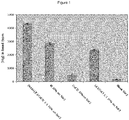
- This example provides a comparison of the extractive capacities of silica beads impregnated with CuCl 2 , LiCl/CuCl 2 (1:1, forming the metallate anion Cu 2 Cl 6 2- ), and [N 4,4,4,1 ]Cl/CuCl 2 (1:1, also forming the metallate anion Cu 2 Cl 6 2- ).
- the data in Figure 1 shows a clear improvement in extraction with salts containing metallate anions, and a further improvement when an ionic liquid is used.
- Example 14 Liquid-IL extraction of total mercury from condensate using [C 4 mim]Cl/CuCl 2 .2H 2 O (2:1).
- the ionic liquid composition [C 4 mim]Cl/CuCl 2 .2H 2 O (2:1), was prepared by direct combination, with warming, of the two components, 1-butyl-3-methylimidazolium chloride and copper(II)chloride dihydrate. Natural gas condensate was contacted with the ionic liquid at 50:1 condensate:IL mass ratio, stirred at room temperature and the upper bulk condensate phase periodically sampled for direct mercury analysis using a Milestone DMA-80 mercury analyser.
- Example 15 Scrubbing of mercury from a gas by supported ionic liquids
Landscapes
- Chemical & Material Sciences (AREA)
- Oil, Petroleum & Natural Gas (AREA)
- Organic Chemistry (AREA)
- Engineering & Computer Science (AREA)
- Chemical Kinetics & Catalysis (AREA)
- General Chemical & Material Sciences (AREA)
- Analytical Chemistry (AREA)
- Water Supply & Treatment (AREA)
- Inorganic Chemistry (AREA)
- Production Of Liquid Hydrocarbon Mixture For Refining Petroleum (AREA)
- Organic Low-Molecular-Weight Compounds And Preparation Thereof (AREA)
- Solid-Sorbent Or Filter-Aiding Compositions (AREA)
- Extraction Or Liquid Replacement (AREA)
Applications Claiming Priority (3)
| Application Number | Priority Date | Filing Date | Title |
|---|---|---|---|
| GB1016751.8A GB2484301B8 (en) | 2010-10-05 | 2010-10-05 | Process for removing metals from hydrocarbons |
| PCT/GB2011/051906 WO2012046057A2 (en) | 2010-10-05 | 2011-10-05 | Process for removing metals from hydrocarbons |
| EP11778939.6A EP2625249B1 (en) | 2010-10-05 | 2011-10-05 | Process for removing metals from hydrocarbons |
Related Parent Applications (2)
| Application Number | Title | Priority Date | Filing Date |
|---|---|---|---|
| EP11778939.6A Division EP2625249B1 (en) | 2010-10-05 | 2011-10-05 | Process for removing metals from hydrocarbons |
| EP11778939.6A Division-Into EP2625249B1 (en) | 2010-10-05 | 2011-10-05 | Process for removing metals from hydrocarbons |
Publications (2)
| Publication Number | Publication Date |
|---|---|
| EP3095841A1 EP3095841A1 (en) | 2016-11-23 |
| EP3095841B1 true EP3095841B1 (en) | 2019-11-27 |
Family
ID=43243537
Family Applications (2)
| Application Number | Title | Priority Date | Filing Date |
|---|---|---|---|
| EP16175571.5A Active EP3095841B1 (en) | 2010-10-05 | 2011-10-05 | Process for removing metals from hydrocarbons |
| EP11778939.6A Active EP2625249B1 (en) | 2010-10-05 | 2011-10-05 | Process for removing metals from hydrocarbons |
Family Applications After (1)
| Application Number | Title | Priority Date | Filing Date |
|---|---|---|---|
| EP11778939.6A Active EP2625249B1 (en) | 2010-10-05 | 2011-10-05 | Process for removing metals from hydrocarbons |
Country Status (13)
| Country | Link |
|---|---|
| US (2) | US9447335B2 (enExample) |
| EP (2) | EP3095841B1 (enExample) |
| JP (2) | JP5925786B2 (enExample) |
| CN (2) | CN106350098B (enExample) |
| AU (2) | AU2011311317B2 (enExample) |
| BR (1) | BR112013008411B1 (enExample) |
| CA (2) | CA2813490C (enExample) |
| EA (2) | EA035774B1 (enExample) |
| GB (2) | GB2547364B8 (enExample) |
| MY (1) | MY164886A (enExample) |
| NZ (1) | NZ609179A (enExample) |
| SG (1) | SG189303A1 (enExample) |
| WO (1) | WO2012046057A2 (enExample) |
Families Citing this family (32)
| Publication number | Priority date | Publication date | Assignee | Title |
|---|---|---|---|---|
| GB0905896D0 (en) * | 2009-04-06 | 2009-05-20 | Univ Belfast | Process for removing metals from hydrocarbons |
| GB0905894D0 (en) * | 2009-04-06 | 2009-05-20 | Univ Belfast | Ionic liquids solvents for metals and metal compounds |
| GB2547364B8 (en) * | 2010-10-05 | 2017-11-29 | The Queen's Univ Of Belfast | Process for removing metals from hydrocarbons |
| GB2485824B (en) * | 2010-11-25 | 2017-12-20 | The Queen's Univ Of Belfast | Process for removing organic acids from crude oil and crude oil distillates |
| DE202011106025U1 (de) | 2011-08-14 | 2012-08-17 | BLüCHER GMBH | Aktivkohle mit metallbasierter Komponente |
| DE202011106028U1 (de) * | 2011-08-14 | 2012-08-17 | BLüCHER GMBH | Neue Konzepte für die Gasbehandlung und Gasreinigung |
| PE20160226A1 (es) * | 2013-03-14 | 2016-05-11 | Conocophillips Co | Eliminacion del mercurio del petroleo crudo |
| US9574140B2 (en) | 2013-03-14 | 2017-02-21 | Conocophillips Company | Removing mercury from crude oil |
| DE102013104696A1 (de) * | 2013-05-07 | 2014-11-13 | L'Air Liquide, Société Anonyme pour l'Etude et l'Exploitation des Procédés Georges Claude | Verfahren zur Entfernung von Metallen aus hochsiedenden Kohlenwasserstofffraktionen |
| WO2015077746A2 (en) * | 2013-11-25 | 2015-05-28 | Milliken & Company | Filtration medium and process for filtering a fluid stream |
| MY175927A (en) * | 2015-03-03 | 2020-07-15 | Petroliam Nasional Berhad Petronas | Process for removing heavy metals from hydrocarbons |
| WO2016148735A1 (en) | 2015-03-16 | 2016-09-22 | University Of Wyoming | Methods and compositions for the removal of mercury from gases |
| WO2018104257A1 (en) | 2016-12-05 | 2018-06-14 | Umicore | Removal of arsenic from flue-gas |
| GB2560871B (en) * | 2016-12-16 | 2020-06-03 | Univ Belfast | Separation of rare earth matals |
| CN107141312B (zh) * | 2017-06-28 | 2019-08-13 | 北京理工大学 | 一种四唑氰基硼酸离子液体及其制备方法 |
| US10633600B2 (en) * | 2017-08-15 | 2020-04-28 | Conocophillips Company | Process for removing mercury from crude oil |
| US11499101B2 (en) | 2017-11-28 | 2022-11-15 | Khalifa University of Science and Technology | Mercury capture from hydrocarbon fluids using deep eutectic solvents |
| WO2019113513A1 (en) | 2017-12-08 | 2019-06-13 | Baker Hughes, A Ge Company, Llc | Ionic liquid based well asphaltene inhibitors and methods of using the same |
| EA202091413A1 (ru) | 2018-07-11 | 2020-09-24 | Бейкер Хьюз Холдингз Ллк | Скважинные ингибиторы асфальтенов на основе ионной жидкости и способы их применения |
| CN109621640B (zh) * | 2018-12-28 | 2021-02-26 | 河北科技大学 | 一种用于吸收so2的负载型离子液体变色材料及其制备方法和应用 |
| CN109758897A (zh) * | 2019-02-01 | 2019-05-17 | 四川大学 | 一种湿法脱硫工艺中脱除汞污染物方法 |
| AU2020350589A1 (en) * | 2019-09-16 | 2022-03-24 | Albemarle Corporation | Processes for reducing environmental availability of environmental pollutants |
| CN113046176A (zh) * | 2019-12-27 | 2021-06-29 | 丰益(上海)生物技术研发中心有限公司 | 去除流体物料中塑化剂的方法 |
| US11168265B2 (en) | 2020-01-14 | 2021-11-09 | Baker Hughes Oilfield Operations Llc | Process of removing metal contaminants from light hydrocarbons |
| EP4149671A1 (en) * | 2020-05-12 | 2023-03-22 | W. L. Gore & Associates, Inc. | Sorbent polymer composites including phophonium halides, flue gas treatment devices and flue gas treatment methods utilizing the same |
| CN114539056B (zh) * | 2020-11-24 | 2023-03-14 | 中国科学院大连化学物理研究所 | 一种甲醇羰基化制备乙酸甲酯的方法 |
| CN114534780B (zh) * | 2020-11-24 | 2023-06-13 | 中国科学院大连化学物理研究所 | 一种负载型的硫鎓锚定单原子催化剂及制备方法 |
| CN115710647B (zh) * | 2021-08-23 | 2023-10-20 | 北京大学 | 一种利用离子液体体系从含裂变元素的硝酸溶液中萃取分离钼的方法 |
| US11807610B2 (en) * | 2022-02-08 | 2023-11-07 | Chevron U.S.A. Inc. | Functionalized ionic liquid for solvating heavy aromatic compounds |
| WO2024252360A1 (en) * | 2023-06-07 | 2024-12-12 | Petroliam Nasional Berhad (Petronas) | Mercury removal from produced water feeds |
| WO2024252359A1 (en) * | 2023-06-07 | 2024-12-12 | Petroliam Nasional Berhad (Petronas) | Mercury removal from hydrocarbon fluids |
| WO2024252361A1 (en) * | 2023-06-07 | 2024-12-12 | Petroliam Nasional Berhad (Petronas) | Mercury removal from hydrocarbon fluids |
Family Cites Families (31)
| Publication number | Priority date | Publication date | Assignee | Title |
|---|---|---|---|---|
| CA1123359A (en) * | 1978-06-01 | 1982-05-11 | Uop Inc. | Process for treating a sour petroleum distillate |
| US4359596A (en) * | 1981-08-03 | 1982-11-16 | Exxon Research And Engineering Co. | Liquid salt extraction of aromatics from process feed streams |
| JPS5910343A (ja) * | 1982-07-08 | 1984-01-19 | Takeda Chem Ind Ltd | 水銀蒸気吸着剤 |
| JPH0791544B2 (ja) * | 1988-01-22 | 1995-10-04 | 三井石油化学工業株式会社 | 炭化水素系油中の水銀の除去方法 |
| AU607037B2 (en) * | 1988-01-22 | 1991-02-21 | Mitsui Chemicals, Inc. | Method of removing mercury from hydrocarbon oils |
| CN1015471B (zh) * | 1988-01-22 | 1992-02-12 | 三井石油化学工业株式会社 | 从烃油中脱除汞的方法 |
| CA1323321C (en) * | 1988-07-25 | 1993-10-19 | Kunio Sato | Process for removal of mercury from a liquid hydrocarbon |
| JPH02199197A (ja) * | 1989-01-30 | 1990-08-07 | Jgc Corp | 炭化水素中の水銀の除去方法 |
| JP2578514B2 (ja) * | 1989-03-03 | 1997-02-05 | 三井石油化学工業株式会社 | 液体炭化水素化合物中の水銀の除去方法 |
| US5080799A (en) * | 1990-05-23 | 1992-01-14 | Mobil Oil Corporation | Hg removal from wastewater by regenerative adsorption |
| GB9022060D0 (en) * | 1990-10-10 | 1990-11-21 | Ici Plc | Mercury removal |
| JPH07116445B2 (ja) * | 1992-03-19 | 1995-12-13 | 日揮株式会社 | 炭化水素中の水銀化合物の分解方法及び除去方法 |
| GB9616264D0 (en) | 1996-08-02 | 1996-09-11 | British Nuclear Fuels Plc | Reprocessing irradiated fuel |
| US6537443B1 (en) * | 2000-02-24 | 2003-03-25 | Union Oil Company Of California | Process for removing mercury from liquid hydrocarbons |
| JP2002212572A (ja) * | 2001-01-23 | 2002-07-31 | Idemitsu Petrochem Co Ltd | 液状炭化水素からの水銀の除去法 |
| DE10155281A1 (de) | 2001-11-08 | 2003-06-05 | Solvent Innovation Gmbh | Verfahren zur Entfernung polarisierbarer Verunreinigungen aus Kohlenwasserstoffen und Kohlenwasserstoffgemischen durch Extraktion mit ionischen Flüssigkeiten |
| US7081434B2 (en) * | 2001-11-27 | 2006-07-25 | Sinha Rabindra K | Chemical formulations for the removal of mercury and other pollutants present in fluid streams |
| US6849774B2 (en) * | 2001-12-31 | 2005-02-01 | Chevron U.S.A. Inc. | Separation of dienes from olefins using ionic liquids |
| GB0500029D0 (en) * | 2005-01-04 | 2005-02-09 | Univ Belfast | Basic ionic liquids |
| US8118916B2 (en) | 2005-10-21 | 2012-02-21 | The University Of Cincinnati | High capacity materials for capture of metal vapors from gas streams |
| US7578869B2 (en) * | 2005-11-30 | 2009-08-25 | Basf Catalysts Llc | Methods of manufacturing bentonite pollution control sorbents |
| US7858061B2 (en) * | 2005-12-15 | 2010-12-28 | The United States Of America As Represented By The Administrator Of The United States Environmental Protection Agency | Compositions and methods for removing mercury from mercury-containing fluids |
| WO2007138307A2 (en) * | 2006-05-25 | 2007-12-06 | The Queen's University Of Belfast | Process for removing sulfur-containing acids from crude oil |
| EP1911829A1 (en) * | 2006-10-10 | 2008-04-16 | The Queen's University of Belfast | Process for deacidifying crude oil |
| EP2522699B1 (en) * | 2006-12-22 | 2014-07-02 | Dow Global Technologies LLC | Sweetening process for hydrocarbons |
| US20080230445A1 (en) * | 2007-03-19 | 2008-09-25 | Baker Hughes Incorporated | Method of scavenging mercaptans from hydrocarbons |
| WO2009072113A2 (en) * | 2007-12-03 | 2009-06-11 | Yissum Research Development Company Of The Hebrew University Of Jerusalem | A scrubber for removing heavy metals from gases |
| GB0905896D0 (en) * | 2009-04-06 | 2009-05-20 | Univ Belfast | Process for removing metals from hydrocarbons |
| US8420561B2 (en) * | 2009-06-16 | 2013-04-16 | Amcol International Corporation | Flue gas scrubbing |
| US8268744B2 (en) * | 2009-06-16 | 2012-09-18 | Amcol International Corporation | High shear method for manufacturing a synthetic smectite mineral |
| GB2547364B8 (en) * | 2010-10-05 | 2017-11-29 | The Queen's Univ Of Belfast | Process for removing metals from hydrocarbons |
-
2010
- 2010-10-05 GB GB1706626.7A patent/GB2547364B8/en active Active
- 2010-10-05 GB GB1016751.8A patent/GB2484301B8/en active Active
-
2011
- 2011-10-05 EP EP16175571.5A patent/EP3095841B1/en active Active
- 2011-10-05 BR BR112013008411-1A patent/BR112013008411B1/pt active IP Right Grant
- 2011-10-05 CN CN201610743842.5A patent/CN106350098B/zh active Active
- 2011-10-05 NZ NZ609179A patent/NZ609179A/en unknown
- 2011-10-05 JP JP2013532270A patent/JP5925786B2/ja active Active
- 2011-10-05 MY MYPI2013001204A patent/MY164886A/en unknown
- 2011-10-05 US US13/877,706 patent/US9447335B2/en active Active
- 2011-10-05 SG SG2013025903A patent/SG189303A1/en unknown
- 2011-10-05 CA CA2813490A patent/CA2813490C/en active Active
- 2011-10-05 EA EA201691659A patent/EA035774B1/ru unknown
- 2011-10-05 EA EA201300438A patent/EA030775B1/ru unknown
- 2011-10-05 CN CN201180057126.7A patent/CN103237870B/zh active Active
- 2011-10-05 WO PCT/GB2011/051906 patent/WO2012046057A2/en not_active Ceased
- 2011-10-05 AU AU2011311317A patent/AU2011311317B2/en active Active
- 2011-10-05 CA CA3064235A patent/CA3064235C/en active Active
- 2011-10-05 EP EP11778939.6A patent/EP2625249B1/en active Active
-
2016
- 2016-04-19 JP JP2016083361A patent/JP6231606B2/ja active Active
- 2016-08-18 US US15/240,495 patent/US10138432B2/en active Active
- 2016-09-16 AU AU2016228278A patent/AU2016228278B2/en active Active
Also Published As
Similar Documents
| Publication | Publication Date | Title |
|---|---|---|
| EP3095841B1 (en) | Process for removing metals from hydrocarbons | |
| EP2417225B1 (en) | Process for removing mercury from hydrocarbons | |
| US8992769B2 (en) | Process, method, and system for removing heavy metals from fluids | |
| Martínez-Palou et al. | Applications of ionic liquids in the removal of contaminants from refinery feedstocks: an industrial perspective | |
| AU2016202664B2 (en) | Ionic liquid solvents of perhalide type for metals and metal compounds | |
| JP2013542288A5 (enExample) | ||
| WO2013101500A1 (en) | Process, method, and system for removing heavy metals from fluids | |
| WO2024252361A1 (en) | Mercury removal from hydrocarbon fluids | |
| WO2024252359A1 (en) | Mercury removal from hydrocarbon fluids | |
| BRPI1014380B1 (pt) | Processo para remoção de mercúrio a partir de uma alimentação de fluido de hidrocarbonetos contendo mercúrio |
Legal Events
| Date | Code | Title | Description |
|---|---|---|---|
| PUAI | Public reference made under article 153(3) epc to a published international application that has entered the european phase |
Free format text: ORIGINAL CODE: 0009012 |
|
| AC | Divisional application: reference to earlier application |
Ref document number: 2625249 Country of ref document: EP Kind code of ref document: P |
|
| AK | Designated contracting states |
Kind code of ref document: A1 Designated state(s): AL AT BE BG CH CY CZ DE DK EE ES FI FR GB GR HR HU IE IS IT LI LT LU LV MC MK MT NL NO PL PT RO RS SE SI SK SM TR |
|
| STAA | Information on the status of an ep patent application or granted ep patent |
Free format text: STATUS: REQUEST FOR EXAMINATION WAS MADE |
|
| 17P | Request for examination filed |
Effective date: 20170523 |
|
| RBV | Designated contracting states (corrected) |
Designated state(s): AL AT BE BG CH CY CZ DE DK EE ES FI FR GB GR HR HU IE IS IT LI LT LU LV MC MK MT NL NO PL PT RO RS SE SI SK SM TR |
|
| GRAP | Despatch of communication of intention to grant a patent |
Free format text: ORIGINAL CODE: EPIDOSNIGR1 |
|
| STAA | Information on the status of an ep patent application or granted ep patent |
Free format text: STATUS: GRANT OF PATENT IS INTENDED |
|
| INTG | Intention to grant announced |
Effective date: 20180103 |
|
| GRAJ | Information related to disapproval of communication of intention to grant by the applicant or resumption of examination proceedings by the epo deleted |
Free format text: ORIGINAL CODE: EPIDOSDIGR1 |
|
| STAA | Information on the status of an ep patent application or granted ep patent |
Free format text: STATUS: REQUEST FOR EXAMINATION WAS MADE |
|
| GRAP | Despatch of communication of intention to grant a patent |
Free format text: ORIGINAL CODE: EPIDOSNIGR1 |
|
| STAA | Information on the status of an ep patent application or granted ep patent |
Free format text: STATUS: GRANT OF PATENT IS INTENDED |
|
| INTC | Intention to grant announced (deleted) | ||
| INTG | Intention to grant announced |
Effective date: 20180529 |
|
| GRAJ | Information related to disapproval of communication of intention to grant by the applicant or resumption of examination proceedings by the epo deleted |
Free format text: ORIGINAL CODE: EPIDOSDIGR1 |
|
| STAA | Information on the status of an ep patent application or granted ep patent |
Free format text: STATUS: REQUEST FOR EXAMINATION WAS MADE |
|
| GRAP | Despatch of communication of intention to grant a patent |
Free format text: ORIGINAL CODE: EPIDOSNIGR1 |
|
| STAA | Information on the status of an ep patent application or granted ep patent |
Free format text: STATUS: GRANT OF PATENT IS INTENDED |
|
| INTG | Intention to grant announced |
Effective date: 20181019 |
|
| GRAS | Grant fee paid |
Free format text: ORIGINAL CODE: EPIDOSNIGR3 |
|
| GRAA | (expected) grant |
Free format text: ORIGINAL CODE: 0009210 |
|
| STAA | Information on the status of an ep patent application or granted ep patent |
Free format text: STATUS: THE PATENT HAS BEEN GRANTED |
|
| RAP1 | Party data changed (applicant data changed or rights of an application transferred) |
Owner name: PETROLIAM NASIONAL BERHAD (PETRONAS) |
|
| AC | Divisional application: reference to earlier application |
Ref document number: 2625249 Country of ref document: EP Kind code of ref document: P |
|
| AK | Designated contracting states |
Kind code of ref document: B1 Designated state(s): AL AT BE BG CH CY CZ DE DK EE ES FI FR GB GR HR HU IE IS IT LI LT LU LV MC MK MT NL NO PL PT RO RS SE SI SK SM TR |
|
| REG | Reference to a national code |
Ref country code: GB Ref legal event code: FG4D |
|
| REG | Reference to a national code |
Ref country code: CH Ref legal event code: EP |
|
| REG | Reference to a national code |
Ref country code: AT Ref legal event code: REF Ref document number: 1206673 Country of ref document: AT Kind code of ref document: T Effective date: 20191215 |
|
| REG | Reference to a national code |
Ref country code: DE Ref legal event code: R096 Ref document number: 602011063728 Country of ref document: DE |
|
| REG | Reference to a national code |
Ref country code: IE Ref legal event code: FG4D |
|
| REG | Reference to a national code |
Ref country code: NL Ref legal event code: MP Effective date: 20191127 |
|
| REG | Reference to a national code |
Ref country code: LT Ref legal event code: MG4D |
|
| PG25 | Lapsed in a contracting state [announced via postgrant information from national office to epo] |
Ref country code: LV Free format text: LAPSE BECAUSE OF FAILURE TO SUBMIT A TRANSLATION OF THE DESCRIPTION OR TO PAY THE FEE WITHIN THE PRESCRIBED TIME-LIMIT Effective date: 20191127 Ref country code: SE Free format text: LAPSE BECAUSE OF FAILURE TO SUBMIT A TRANSLATION OF THE DESCRIPTION OR TO PAY THE FEE WITHIN THE PRESCRIBED TIME-LIMIT Effective date: 20191127 Ref country code: NL Free format text: LAPSE BECAUSE OF FAILURE TO SUBMIT A TRANSLATION OF THE DESCRIPTION OR TO PAY THE FEE WITHIN THE PRESCRIBED TIME-LIMIT Effective date: 20191127 Ref country code: FI Free format text: LAPSE BECAUSE OF FAILURE TO SUBMIT A TRANSLATION OF THE DESCRIPTION OR TO PAY THE FEE WITHIN THE PRESCRIBED TIME-LIMIT Effective date: 20191127 Ref country code: BG Free format text: LAPSE BECAUSE OF FAILURE TO SUBMIT A TRANSLATION OF THE DESCRIPTION OR TO PAY THE FEE WITHIN THE PRESCRIBED TIME-LIMIT Effective date: 20200227 Ref country code: NO Free format text: LAPSE BECAUSE OF FAILURE TO SUBMIT A TRANSLATION OF THE DESCRIPTION OR TO PAY THE FEE WITHIN THE PRESCRIBED TIME-LIMIT Effective date: 20200227 Ref country code: LT Free format text: LAPSE BECAUSE OF FAILURE TO SUBMIT A TRANSLATION OF THE DESCRIPTION OR TO PAY THE FEE WITHIN THE PRESCRIBED TIME-LIMIT Effective date: 20191127 Ref country code: GR Free format text: LAPSE BECAUSE OF FAILURE TO SUBMIT A TRANSLATION OF THE DESCRIPTION OR TO PAY THE FEE WITHIN THE PRESCRIBED TIME-LIMIT Effective date: 20200228 |
|
| PG25 | Lapsed in a contracting state [announced via postgrant information from national office to epo] |
Ref country code: RS Free format text: LAPSE BECAUSE OF FAILURE TO SUBMIT A TRANSLATION OF THE DESCRIPTION OR TO PAY THE FEE WITHIN THE PRESCRIBED TIME-LIMIT Effective date: 20191127 Ref country code: HR Free format text: LAPSE BECAUSE OF FAILURE TO SUBMIT A TRANSLATION OF THE DESCRIPTION OR TO PAY THE FEE WITHIN THE PRESCRIBED TIME-LIMIT Effective date: 20191127 Ref country code: IS Free format text: LAPSE BECAUSE OF FAILURE TO SUBMIT A TRANSLATION OF THE DESCRIPTION OR TO PAY THE FEE WITHIN THE PRESCRIBED TIME-LIMIT Effective date: 20200327 |
|
| PG25 | Lapsed in a contracting state [announced via postgrant information from national office to epo] |
Ref country code: AL Free format text: LAPSE BECAUSE OF FAILURE TO SUBMIT A TRANSLATION OF THE DESCRIPTION OR TO PAY THE FEE WITHIN THE PRESCRIBED TIME-LIMIT Effective date: 20191127 |
|
| PG25 | Lapsed in a contracting state [announced via postgrant information from national office to epo] |
Ref country code: CZ Free format text: LAPSE BECAUSE OF FAILURE TO SUBMIT A TRANSLATION OF THE DESCRIPTION OR TO PAY THE FEE WITHIN THE PRESCRIBED TIME-LIMIT Effective date: 20191127 Ref country code: RO Free format text: LAPSE BECAUSE OF FAILURE TO SUBMIT A TRANSLATION OF THE DESCRIPTION OR TO PAY THE FEE WITHIN THE PRESCRIBED TIME-LIMIT Effective date: 20191127 Ref country code: ES Free format text: LAPSE BECAUSE OF FAILURE TO SUBMIT A TRANSLATION OF THE DESCRIPTION OR TO PAY THE FEE WITHIN THE PRESCRIBED TIME-LIMIT Effective date: 20191127 Ref country code: DK Free format text: LAPSE BECAUSE OF FAILURE TO SUBMIT A TRANSLATION OF THE DESCRIPTION OR TO PAY THE FEE WITHIN THE PRESCRIBED TIME-LIMIT Effective date: 20191127 Ref country code: EE Free format text: LAPSE BECAUSE OF FAILURE TO SUBMIT A TRANSLATION OF THE DESCRIPTION OR TO PAY THE FEE WITHIN THE PRESCRIBED TIME-LIMIT Effective date: 20191127 Ref country code: PT Free format text: LAPSE BECAUSE OF FAILURE TO SUBMIT A TRANSLATION OF THE DESCRIPTION OR TO PAY THE FEE WITHIN THE PRESCRIBED TIME-LIMIT Effective date: 20200419 |
|
| REG | Reference to a national code |
Ref country code: DE Ref legal event code: R097 Ref document number: 602011063728 Country of ref document: DE |
|
| PG25 | Lapsed in a contracting state [announced via postgrant information from national office to epo] |
Ref country code: SK Free format text: LAPSE BECAUSE OF FAILURE TO SUBMIT A TRANSLATION OF THE DESCRIPTION OR TO PAY THE FEE WITHIN THE PRESCRIBED TIME-LIMIT Effective date: 20191127 Ref country code: SM Free format text: LAPSE BECAUSE OF FAILURE TO SUBMIT A TRANSLATION OF THE DESCRIPTION OR TO PAY THE FEE WITHIN THE PRESCRIBED TIME-LIMIT Effective date: 20191127 |
|
| REG | Reference to a national code |
Ref country code: AT Ref legal event code: MK05 Ref document number: 1206673 Country of ref document: AT Kind code of ref document: T Effective date: 20191127 |
|
| PLBE | No opposition filed within time limit |
Free format text: ORIGINAL CODE: 0009261 |
|
| STAA | Information on the status of an ep patent application or granted ep patent |
Free format text: STATUS: NO OPPOSITION FILED WITHIN TIME LIMIT |
|
| 26N | No opposition filed |
Effective date: 20200828 |
|
| PG25 | Lapsed in a contracting state [announced via postgrant information from national office to epo] |
Ref country code: SI Free format text: LAPSE BECAUSE OF FAILURE TO SUBMIT A TRANSLATION OF THE DESCRIPTION OR TO PAY THE FEE WITHIN THE PRESCRIBED TIME-LIMIT Effective date: 20191127 Ref country code: AT Free format text: LAPSE BECAUSE OF FAILURE TO SUBMIT A TRANSLATION OF THE DESCRIPTION OR TO PAY THE FEE WITHIN THE PRESCRIBED TIME-LIMIT Effective date: 20191127 Ref country code: PL Free format text: LAPSE BECAUSE OF FAILURE TO SUBMIT A TRANSLATION OF THE DESCRIPTION OR TO PAY THE FEE WITHIN THE PRESCRIBED TIME-LIMIT Effective date: 20191127 |
|
| PG25 | Lapsed in a contracting state [announced via postgrant information from national office to epo] |
Ref country code: IT Free format text: LAPSE BECAUSE OF FAILURE TO SUBMIT A TRANSLATION OF THE DESCRIPTION OR TO PAY THE FEE WITHIN THE PRESCRIBED TIME-LIMIT Effective date: 20191127 |
|
| REG | Reference to a national code |
Ref country code: CH Ref legal event code: PL |
|
| PG25 | Lapsed in a contracting state [announced via postgrant information from national office to epo] |
Ref country code: MC Free format text: LAPSE BECAUSE OF FAILURE TO SUBMIT A TRANSLATION OF THE DESCRIPTION OR TO PAY THE FEE WITHIN THE PRESCRIBED TIME-LIMIT Effective date: 20191127 Ref country code: LU Free format text: LAPSE BECAUSE OF NON-PAYMENT OF DUE FEES Effective date: 20201005 |
|
| REG | Reference to a national code |
Ref country code: BE Ref legal event code: MM Effective date: 20201031 |
|
| PG25 | Lapsed in a contracting state [announced via postgrant information from national office to epo] |
Ref country code: LI Free format text: LAPSE BECAUSE OF NON-PAYMENT OF DUE FEES Effective date: 20201031 Ref country code: BE Free format text: LAPSE BECAUSE OF NON-PAYMENT OF DUE FEES Effective date: 20201031 Ref country code: CH Free format text: LAPSE BECAUSE OF NON-PAYMENT OF DUE FEES Effective date: 20201031 |
|
| PG25 | Lapsed in a contracting state [announced via postgrant information from national office to epo] |
Ref country code: IE Free format text: LAPSE BECAUSE OF NON-PAYMENT OF DUE FEES Effective date: 20201005 |
|
| PG25 | Lapsed in a contracting state [announced via postgrant information from national office to epo] |
Ref country code: TR Free format text: LAPSE BECAUSE OF FAILURE TO SUBMIT A TRANSLATION OF THE DESCRIPTION OR TO PAY THE FEE WITHIN THE PRESCRIBED TIME-LIMIT Effective date: 20191127 Ref country code: MT Free format text: LAPSE BECAUSE OF FAILURE TO SUBMIT A TRANSLATION OF THE DESCRIPTION OR TO PAY THE FEE WITHIN THE PRESCRIBED TIME-LIMIT Effective date: 20191127 Ref country code: CY Free format text: LAPSE BECAUSE OF FAILURE TO SUBMIT A TRANSLATION OF THE DESCRIPTION OR TO PAY THE FEE WITHIN THE PRESCRIBED TIME-LIMIT Effective date: 20191127 |
|
| PG25 | Lapsed in a contracting state [announced via postgrant information from national office to epo] |
Ref country code: MK Free format text: LAPSE BECAUSE OF FAILURE TO SUBMIT A TRANSLATION OF THE DESCRIPTION OR TO PAY THE FEE WITHIN THE PRESCRIBED TIME-LIMIT Effective date: 20191127 |
|
| PGFP | Annual fee paid to national office [announced via postgrant information from national office to epo] |
Ref country code: DE Payment date: 20240814 Year of fee payment: 14 |
|
| PGFP | Annual fee paid to national office [announced via postgrant information from national office to epo] |
Ref country code: GB Payment date: 20250814 Year of fee payment: 15 |
|
| PGFP | Annual fee paid to national office [announced via postgrant information from national office to epo] |
Ref country code: FR Payment date: 20250808 Year of fee payment: 15 |