EP3074504B1 - Verfahren zur verbesserung der mikrobiellen herstellung von fettalkoholen mit bestimmter länge in gegenwart von methanol - Google Patents
Verfahren zur verbesserung der mikrobiellen herstellung von fettalkoholen mit bestimmter länge in gegenwart von methanol Download PDFInfo
- Publication number
- EP3074504B1 EP3074504B1 EP14864741.5A EP14864741A EP3074504B1 EP 3074504 B1 EP3074504 B1 EP 3074504B1 EP 14864741 A EP14864741 A EP 14864741A EP 3074504 B1 EP3074504 B1 EP 3074504B1
- Authority
- EP
- European Patent Office
- Prior art keywords
- pathway
- coa
- fatty
- linear alkyl
- sugar
- Prior art date
- Legal status (The legal status is an assumption and is not a legal conclusion. Google has not performed a legal analysis and makes no representation as to the accuracy of the status listed.)
- Active
Links
Images








Classifications
-
- C—CHEMISTRY; METALLURGY
- C12—BIOCHEMISTRY; BEER; SPIRITS; WINE; VINEGAR; MICROBIOLOGY; ENZYMOLOGY; MUTATION OR GENETIC ENGINEERING
- C12N—MICROORGANISMS OR ENZYMES; COMPOSITIONS THEREOF; PROPAGATING, PRESERVING, OR MAINTAINING MICROORGANISMS; MUTATION OR GENETIC ENGINEERING; CULTURE MEDIA
- C12N15/00—Mutation or genetic engineering; DNA or RNA concerning genetic engineering, vectors, e.g. plasmids, or their isolation, preparation or purification; Use of hosts therefor
- C12N15/09—Recombinant DNA-technology
- C12N15/11—DNA or RNA fragments; Modified forms thereof; Non-coding nucleic acids having a biological activity
- C12N15/52—Genes encoding for enzymes or proenzymes
-
- C—CHEMISTRY; METALLURGY
- C12—BIOCHEMISTRY; BEER; SPIRITS; WINE; VINEGAR; MICROBIOLOGY; ENZYMOLOGY; MUTATION OR GENETIC ENGINEERING
- C12N—MICROORGANISMS OR ENZYMES; COMPOSITIONS THEREOF; PROPAGATING, PRESERVING, OR MAINTAINING MICROORGANISMS; MUTATION OR GENETIC ENGINEERING; CULTURE MEDIA
- C12N9/00—Enzymes; Proenzymes; Compositions thereof; Processes for preparing, activating, inhibiting, separating or purifying enzymes
- C12N9/0004—Oxidoreductases (1.)
- C12N9/0006—Oxidoreductases (1.) acting on CH-OH groups as donors (1.1)
-
- C—CHEMISTRY; METALLURGY
- C12—BIOCHEMISTRY; BEER; SPIRITS; WINE; VINEGAR; MICROBIOLOGY; ENZYMOLOGY; MUTATION OR GENETIC ENGINEERING
- C12N—MICROORGANISMS OR ENZYMES; COMPOSITIONS THEREOF; PROPAGATING, PRESERVING, OR MAINTAINING MICROORGANISMS; MUTATION OR GENETIC ENGINEERING; CULTURE MEDIA
- C12N9/00—Enzymes; Proenzymes; Compositions thereof; Processes for preparing, activating, inhibiting, separating or purifying enzymes
- C12N9/10—Transferases (2.)
- C12N9/1022—Transferases (2.) transferring aldehyde or ketonic groups (2.2)
-
- C—CHEMISTRY; METALLURGY
- C12—BIOCHEMISTRY; BEER; SPIRITS; WINE; VINEGAR; MICROBIOLOGY; ENZYMOLOGY; MUTATION OR GENETIC ENGINEERING
- C12N—MICROORGANISMS OR ENZYMES; COMPOSITIONS THEREOF; PROPAGATING, PRESERVING, OR MAINTAINING MICROORGANISMS; MUTATION OR GENETIC ENGINEERING; CULTURE MEDIA
- C12N9/00—Enzymes; Proenzymes; Compositions thereof; Processes for preparing, activating, inhibiting, separating or purifying enzymes
- C12N9/88—Lyases (4.)
-
- C—CHEMISTRY; METALLURGY
- C12—BIOCHEMISTRY; BEER; SPIRITS; WINE; VINEGAR; MICROBIOLOGY; ENZYMOLOGY; MUTATION OR GENETIC ENGINEERING
- C12N—MICROORGANISMS OR ENZYMES; COMPOSITIONS THEREOF; PROPAGATING, PRESERVING, OR MAINTAINING MICROORGANISMS; MUTATION OR GENETIC ENGINEERING; CULTURE MEDIA
- C12N9/00—Enzymes; Proenzymes; Compositions thereof; Processes for preparing, activating, inhibiting, separating or purifying enzymes
- C12N9/90—Isomerases (5.)
-
- C—CHEMISTRY; METALLURGY
- C12—BIOCHEMISTRY; BEER; SPIRITS; WINE; VINEGAR; MICROBIOLOGY; ENZYMOLOGY; MUTATION OR GENETIC ENGINEERING
- C12P—FERMENTATION OR ENZYME-USING PROCESSES TO SYNTHESISE A DESIRED CHEMICAL COMPOUND OR COMPOSITION OR TO SEPARATE OPTICAL ISOMERS FROM A RACEMIC MIXTURE
- C12P7/00—Preparation of oxygen-containing organic compounds
- C12P7/02—Preparation of oxygen-containing organic compounds containing a hydroxy group
- C12P7/04—Preparation of oxygen-containing organic compounds containing a hydroxy group acyclic
-
- C—CHEMISTRY; METALLURGY
- C12—BIOCHEMISTRY; BEER; SPIRITS; WINE; VINEGAR; MICROBIOLOGY; ENZYMOLOGY; MUTATION OR GENETIC ENGINEERING
- C12Y—ENZYMES
- C12Y101/00—Oxidoreductases acting on the CH-OH group of donors (1.1)
- C12Y101/01—Oxidoreductases acting on the CH-OH group of donors (1.1) with NAD+ or NADP+ as acceptor (1.1.1)
- C12Y101/01244—Methanol dehydrogenase (1.1.1.244)
-
- C—CHEMISTRY; METALLURGY
- C12—BIOCHEMISTRY; BEER; SPIRITS; WINE; VINEGAR; MICROBIOLOGY; ENZYMOLOGY; MUTATION OR GENETIC ENGINEERING
- C12Y—ENZYMES
- C12Y202/00—Transferases transferring aldehyde or ketonic groups (2.2)
- C12Y202/01—Transketolases and transaldolases (2.2.1)
- C12Y202/01003—Formaldehyde transketolase (2.2.1.3)
-
- C—CHEMISTRY; METALLURGY
- C12—BIOCHEMISTRY; BEER; SPIRITS; WINE; VINEGAR; MICROBIOLOGY; ENZYMOLOGY; MUTATION OR GENETIC ENGINEERING
- C12Y—ENZYMES
- C12Y401/00—Carbon-carbon lyases (4.1)
- C12Y401/02—Aldehyde-lyases (4.1.2)
- C12Y401/02043—3-Hexulose-6-phosphate synthase (4.1.2.43)
-
- C—CHEMISTRY; METALLURGY
- C12—BIOCHEMISTRY; BEER; SPIRITS; WINE; VINEGAR; MICROBIOLOGY; ENZYMOLOGY; MUTATION OR GENETIC ENGINEERING
- C12Y—ENZYMES
- C12Y503/00—Intramolecular oxidoreductases (5.3)
- C12Y503/01—Intramolecular oxidoreductases (5.3) interconverting aldoses and ketoses (5.3.1)
- C12Y503/01027—6-Phospho-3-hexuloisomerase (5.3.1.27)
Definitions
- the present invention relates generally to biosynthetic processes, and more specifically to organisms having specific length fatty alcohol, fatty aldehyde or fatty acid biosynthetic capacity or having isopropanol biosynthetic capacity.
- Primary alcohols are a product class of compounds having a variety of industrial applications which include a variety of biofuels and specialty chemicals. Primary alcohols also can be used to make a large number of additional industrial products including polymers and surfactants. For example, higher primary alcohols, also known as fatty alcohols (C 4 -C 24 ) and their ethoxylates are used as surfactants in many consumer detergents, cleaning products and personal care products worldwide such as laundry powders and liquids, dishwashing liquid and hard surface cleaners. They are also used in the manufacture of a variety of industrial chemicals and in lubricating oil additives. Specific length fatty alcohols, such as octanol and hexanol, have useful organoleptic properties and have long been employed as fragrance and flavor materials. Smaller chain length C 4 -C 8 alcohols (e.g., butanol) are used as chemical intermediates for production of derivatives such as acrylates used in paints, coatings, and adhesives applications.
- C 4 -C 24 fatty alcohol
- Fatty alcohols are currently produced from, for example, hydrogenation of fatty acids, hydroformylation of terminal olefins, partial oxidation of n-paraffins and the Al- catalyzed polymerization of ethylene.
- n-paraffins petroleum-based linear hydrocarbons
- This impracticality is because the oxidation of n-paraffins produces primarily secondary alcohols, tertiary alcohols or ketones, or a mixture of these compounds, but does not produce high yields of fatty alcohols.
- currently known methods for producing fatty alcohols suffer from the disadvantage that they are restricted to feedstock which is relatively expensive, notably ethylene, which is produced via the thermal cracking of petroleum.
- current methods require several steps, and several catalyst types.
- Fatty alcohol production by microorganisms involves fatty acid synthesis followed by acyl-reduction steps.
- the universal fatty acid biosynthesis pathway found in most cells has been investigated for production of fatty alcohols and other fatty acid derivatives.
- Isopropanol is a colorless, flammable liquid that mixes completely with most solvents, including water.
- the largest use for IPA is as a solvent, including its well known yet small use as "rubbing alcohol,” which is a mixture of IPA and water.
- rubbing alcohol is a mixture of IPA and water.
- IPA is found in many everyday products such as paints, lacquers, thinners, inks, adhesives, general-purpose cleaners, disinfectants, cosmetics, toiletries, de-icers, and pharmaceuticals.
- Low-grade IPA is also used in motor oils.
- the second largest use is as a chemical intermediate for the production of isopropylamines, isopropylethers, and isopropyl esters. Isopropanol can potentially be dehydrated to form propylene, a polymer precursor with an annual market of more than 2 million metric tons.
- IPA is a by-product formed in the production of phenol and propylene oxide.
- High-priced propylene is currently driving costs up and margins down throughout the chemical industry motivating the need for an expanded range of low cost feedstocks.
- the invention is defined in the claims and provides non-naturally occurring microbial organisms as defined in the claims containing a fatty alcohol, fatty aldehyde, or fatty acid pathway.
- R 3 can be H.
- each of said formaldehyde fixation pathway, said formate assimilation pathway, and said methanol metabolic pathway can comprise at least one exogenous nucleic acid encoding at least one metabolic pathway enzyme.
- the microbial organism can have an MI-FAE cycle and an acyl-CoA reductase (aldehyde forming).
- the microbial organism can have an MI-FAE cycle, an acyl-CoA reductase (aldehyde forming) and an alcohol dehydrogenase.
- the microbial organism can have an MI-FAE cycle and an acyl-CoA reductase (alcohol forming).
- the microbial organism can have an MD-FAE cycle and an acyl-CoA reductase (aldehyde forming).
- the microbial organism can have an MD-FAE cycle, an acyl-CoA reductase (aldehyde forming) and an alcohol dehydrogenase.
- the microbial organism can have an MD-FAE cycle and an acyl-CoA reductase (alcohol forming).
- the microbial organism can comprise an FAACPE cycle and a fatty acyl-ACP reductase.
- the microbial organism can have an FAACPE cycle, a thioesterase, and a CAR.
- the microbial organism can have an FAACPE cycle, a thioesterase, a CAR, and a fatty aldehyde reductase.
- the non-naturally occurring microbial organism of the invention has: a formaldehyde fixation pathway, a formate assimilation pathway, and a methanol metabolic pathway; and a malonyl-CoA independent fatty acyl-CoA elongation (MI-FAE) cycle and/or a malonyl-CoA dependent fatty acyl-CoA elongation (MD-FAE) cycle in combination with a termination pathway, as depicted in Figures 1 , 2 , 7 , 8 and 10 .
- MI-FAE malonyl-CoA independent fatty acyl-CoA elongation
- MD-FAE malonyl-CoA dependent fatty acyl-CoA elongation
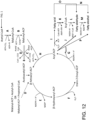
- the non-naturally occurring microbial organism of the invention has: a formaldehyde fixation pathway, a formate assimilation pathway, and a methanol metabolic pathway; and a fatty acyl-ACP elongation (FAACPE) cycle in combination with a termination pathway, as depicted in Figures 1 , 10 and 12 .
- FACPE fatty acyl-ACP elongation
- the formaldehyde fixation pathway, formate assimilation pathway, and a methanol metabolic pathway present in the microbial organisms of the invention enhances the availability of substrates and/or pathway intermediates, such as acetyl-CoA and malonyl-CoA, and/or reducing equivalents, which can be utilized for fatty alcohol, fatty aldehyde, or fatty acid, production through one or more fatty alcohol, fatty aldehyde, or fatty acid pathways of the invention.
- substrates and/or pathway intermediates such as acetyl-CoA and malonyl-CoA, and/or reducing equivalents
- a non-naturally occurring microbial organism of the invention that includes a methanol metabolic pathway can enhance the availability of reducing equivalents in the presence of methanol and/or convert methanol to formaldehyde, a substrate for the formaldehyde fixation pathway.
- a non-naturally occurring microbial organism of the invention having a formate assimilation pathway can reutilize formate to generate substrates and pathway intermediates such as formaldehyde, pyruvate and/or acetyl-CoA.
- substrates, intermediates and reducing equivalents can be used to increase the yield of a fatty alcohol, a fatty aldehyde, or a fatty acidproduced by the microbial organism.
- the microbial organisms of the invention advantageously enhance the production of substrates and/or pathway intermediates for the production of a chain length specific fatty alcohol, fatty aldehyde, fatty acid.
- the enzymes of the MI-FAE cycle, the MD-FAE cycle, the FAACPE cycle and/or the termination pathway are selective for a particular substrate.
- R 1 is C 1-24
- the invention additionally provides methods of using the above microbial organisms to produce a fatty alcohol, a fatty aldehyde, or a fatty acid by culturing a non-naturally occurring microbial organism containing a fatty alcohol, fatty aldehyde, or fatty acid pathway as described herein under conditions and for a sufficient period of time to produce a fatty alcohol, fatty aldehyde, or fatty acid.
- Figures concerned with subject-matter not encompassed by the claims are for reference.
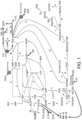
- Figure 1 shows exemplary metabolic pathways enabling the conversion of CO2, formate, formaldehyde (Fald), methanol (MeOH), glycerol, xylose (XYL) and glucose (GLC) to acetyl-CoA (ACCOA) and exemplary endogenous enzyme targets for optional attenuation or disruption.
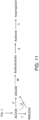
- the exemplary pathways and endogenous enzyme targets can be combined with the cycles and pathways depicted herein that utilize ACCOA, such as those depicted in Figures 1 , 11 and 12 .
- the enzyme targets are indicated by arrows having "X" markings.
- the endogenous enzyme targets include DHA kinase, methanol oxidase (AOX), PQQ-dependent methanol dehydrogenase (PQQ) and/or DHA synthase.
- the enzymatic transformations shown are carried out by the following enzymes: A) methanol dehydrogenase, B) 3-hexulose-6-phosphate synthase, C) 6-phospho-3-hexuloisomerase, D) dihydroxyacetone synthase, E) formate reductase, F) formate ligase, formate transferase, or formate synthetase, G) fonnyl-CoA reductase, H) formyltetiahydrofolate synthetase, I) methenyltetrahydrofolate cyclohydrolase, J) methylenetetrahydrofolate dehydrogenase, K) spontaneous or formaldehyde-forming enzyme, L)
- MeOH or MEOH methanol
- Fald formaldehyde
- GLC glucose
- G6P glucose-6-phosphate
- H6P hexulose-6-phosphate
- F6P fructose-6-phosphate
- FDP fructose diphosphate or fructose-1,6-diphosphate
- DHA dihydroxyacetone
- DHAP dihydroxyacetone phosphate
- G3P and glyceraldehyde-3-phosphate
- PYR pyruvate
- ACTP acetyl-phosphate
- ACCOA acetyl-CoA
- AACOA acetoacetyl-CoA
- MALCOA malonyl-CoA
- FTHF for
- association of multiple steps in a pathway can be indicated by linking their step identifiers with or without spaces or punctuation; for example, the following are equivalent to describe the 4-step pathway comprising Step W, Step X, Step Y and Step Z: steps WXYZ or W,X,Y,Z or W;X;Y;Z or W-X-Y-Z.
- steps WXYZ or W,X,Y,Z or W;X;Y;Z or W-X-Y-Z steps WXYZ or W,X,Y,Z or W;X;Y;Z or W-X-Y-Z.
- non-naturally occurring when used in reference to a microbial organism or microorganism of the invention is intended to mean that the microbial organism has at least one genetic alteration not normally found in a naturally occurring strain of the referenced species, including wild-type strains of the referenced species.
- Genetic alterations include, for example, modifications introducing expressible nucleic acids encoding metabolic polypeptides, other nucleic acid additions, nucleic acid deletions and/or other functional disruption of the microbial organism's genetic material. Such modifications include, for example, coding regions and functional fragments thereof, for heterologous, homologous or both heterologous and homologous polypeptides for the referenced species. Additional modifications include, for example, non-coding regulatory regions in which the modifications alter expression of a gene or operon.
- Exemplary metabolic polypeptides include enzymes or proteins within a fatty alcohol, fatty aldehyde or fatty alcohol biosynthetic pathway.
- a metabolic modification refers to a biochemical reaction that is altered from its naturally occurring state. Therefore, non-naturally occurring microorganisms can have genetic modifications to nucleic acids encoding metabolic polypeptides, or functional fragments thereof. Exemplary metabolic modifications are disclosed herein.
- isolated when used in reference to a microbial organism is intended to mean an organism that is substantially free of at least one component as the referenced microbial organism is found in nature.
- the term includes a microbial organism that is removed from some or all components as it is found in its natural environment.
- the term also includes a microbial organism that is removed from some or all components as the microbial organism is found in non-naturally occurring environments. Therefore, an isolated microbial organism is partly or completely separated from other substances as it is found in nature or as it is grown, stored or subsisted in non-naturally occurring environments.
- Specific examples of isolated microbial organisms include partially pure microbes, substantially pure microbes and microbes cultured in a medium that is non-naturally occurring.
- microbial As used herein, the terms "microbial,” “microbial organism” or “microorganism” are intended to mean any organism that exists as a microscopic cell that is included within the domains of archaea, bacteria or eukarya. Therefore, the term is intended to encompass prokaryotic or eukaryotic cells or organisms having a microscopic size and includes bacteria, archaea and eubacteria of all species as well as eukaryotic microorganisms such as yeast and fungi. The term also includes cell cultures of any species that can be cultured for the production of a biochemical. In the present invention, the non-naturally occurring microbial organism is Escherichia coli.
- CoA or "coenzyme A” is intended to mean an organic cofactor or prosthetic group (nonprotein portion of an enzyme) whose presence is required for the activity of many enzymes (the apoenzyme) to form an active enzyme system.
- Coenzyme A functions in certain condensing enzymes, acts in acetyl or other acyl group transfer and in fatty acid synthesis and oxidation, pyruvate oxidation and in other acetylation.
- ACP or "acyl carrier protein” refers to any of the relatively small acidic proteins that are associated with the fatty acid synthase system of many organisms, from bacteria to plants.
- ACPs can contain one 4'-phosphopantetheine prosthetic group bound covalently by a phosphate ester bond to the hydroxyl group of a serine residue.
- the sulfhydryl group of the 4'phosphopantetheine moiety serves as an anchor to which acyl intermediates are (thio)esterified during fatty-acid synthesis.
- An example of an ACP is Escherichia coli ACP, a separate single protein, containing 77 amino-acid residues (8.85 kDa), wherein the phosphopantetheine group is linked to serine 36.
- substantially anaerobic when used in reference to a culture or growth condition is intended to mean that the amount of oxygen is less than about 10% of saturation for dissolved oxygen in liquid media.
- the term also is intended to include sealed chambers of liquid or solid medium maintained with an atmosphere of less than about 1% oxygen.
- Exogenous as it is used herein is intended to mean that the referenced molecule or the referenced activity is introduced into the host microbial organism.
- the molecule can be introduced, for example, by introduction of an encoding nucleic acid into the host genetic material such as by integration into a host chromosome or as non-chromosomal genetic material such as a plasmid. Therefore, the term as it is used in reference to expression of an encoding nucleic acid refers to introduction of the encoding nucleic acid in an expressible form into the microbial organism. When used in reference to a biosynthetic activity, the term refers to an activity that is introduced into the host reference organism.
- the source can be, for example, a homologous or heterologous encoding nucleic acid that expresses the referenced activity following introduction into the host microbial organism. Therefore, the term “endogenous” refers to a referenced molecule or activity that is present in the host. Similarly, the term when used in reference to expression of an encoding nucleic acid refers to expression of an encoding nucleic acid contained within the microbial organism. The term “heterologous” refers to a molecule or activity derived from a source other than the referenced species whereas “homologous” refers to a molecule or activity derived from the host microbial organism. Accordingly, exogenous expression of an encoding nucleic acid of the invention can utilize either or both a heterologous or homologous encoding nucleic acid.
- the more than one exogenous nucleic acids refers to the referenced encoding nucleic acid or biosynthetic activity, as discussed above. It is further understood, as disclosed herein, that such more than one exogenous nucleic acids can be introduced into the host microbial organism on separate nucleic acid molecules, on polycistronic nucleic acid molecules, or a combination thereof, and still be considered as more than one exogenous nucleic acid.
- a microbial organism can be engineered to express two or more exogenous nucleic acids encoding a desired pathway enzyme or protein.
- two exogenous nucleic acids encoding a desired activity are introduced into a host microbial organism
- the two exogenous nucleic acids can be introduced as a single nucleic acid, for example, on a single plasmid, on separate plasmids, can be integrated into the host chromosome at a single site or multiple sites, and still be considered as two exogenous nucleic acids.
- exogenous nucleic acids can be introduced into a host organism in any desired combination, for example, on a single plasmid, on separate plasmids, can be integrated into the host chromosome at a single site or multiple sites, and still be considered as two or more exogenous nucleic acids, for example three exogenous nucleic acids.
- the number of referenced exogenous nucleic acids or biosynthetic activities refers to the number of encoding nucleic acids or the number of biosynthetic activities, not the number of separate nucleic acids introduced into the host organism.
- the term "gene disruption,” or grammatical equivalents thereof, is intended to mean a genetic alteration that renders the encoded gene product inactive or attenuated.
- the genetic alteration can be, for example, deletion of the entire gene, deletion of a regulatory sequence required for transcription or translation, deletion of a portion of the gene which results in a truncated gene product, or by any of various mutation strategies that inactivate or attenuate the encoded gene product, for example, replacement of a gene's promoter with a weaker promoter, replacement or insertion of one or more amino acid of the encoded protein to reduce its activity, stability or concentration, or inactivation of a gene's transactivating factor such as a regulatory protein.
- a gene disruption also includes a null mutation, which refers to a mutation within a gene or a region containing a gene that results in the gene not being transcribed into RNA and/or translated into a functional gene product.
- a null mutation can arise from many types of mutations including, for example, inactivating point mutations, deletion of a portion of a gene, entire gene deletions, or deletion of chromosomal segments.
- the term "growth-coupled" when used in reference to the production of a biochemical product is intended to mean that the biosynthesis of the referenced biochemical product is produced during the growth phase of a microorganism.
- the growth-coupled production can be obligatory, meaning that the biosynthesis of the referenced biochemical is an obligatory product produced during the growth phase of a microorganism.
- the term "attenuate,” or grammatical equivalents thereof, is intended to mean to weaken, reduce or diminish the activity or amount of an enzyme or protein. Attenuation of the activity or amount of an enzyme or protein can mimic complete disruption if the attenuation causes the activity or amount to fall below a critical level required for a given pathway to function. However, the attenuation of the activity or amount of an enzyme or protein that mimics complete disruption for one pathway, can still be sufficient for a separate pathway to continue to function.
- Attenuation of an endogenous enzyme or protein can be sufficient to mimic the complete disruption of the same enzyme or protein for production of a fatty alcohol, fatty aldehyde or fatty acid product of the invention, but the remaining activity or amount of enzyme or protein can still be sufficient to maintain other pathways, such as a pathway that is critical for the host microbial organism to survive, reproduce or grow.
- Attenuation of an enzyme or protein can also be weakening, reducing or diminishing the activity or amount of the enzyme or protein in an amount that is sufficient to increase yield of a fatty alcohol, fatty aldehyde or fatty acid product of the invention, but does not necessarily mimic complete disruption of the enzyme or protein.
- fatty alcohol is intended to mean an aliphatic compound that contains one or more hydroxyl groups and contains a chain of 4 or more carbon atoms.
- the fatty alcohol possesses the group - CH 2 OH that can be oxidized so as to form a corresponding aldehyde or acid having the same number of carbon atoms.
- a fatty alcohol can also be a saturated fatty alcohol, an unsaturated fatty alcohol, a 1,3-diol, or a 3-oxo-alkan-1-ol.
- Exemplary fatty alcohols include a compound of Formula (III)-(VI): wherein R 1 is a C 1-24 linear alkyl.
- fatty aldehyde is intended to mean an aliphatic compound that contains an aldehyde (CHO) group and contains a chain of 4 or more carbon atoms.
- the fatty aldehyde can be reduced to form the corresponding alcohol or oxidized to form the carboxylic acid having the same number of carbon atoms.
- a fatty aldehyde can also be a saturated fatty aldehyde, an unsaturated fatty aldehyde, a 3-hydroxyaldehyde or 3-oxoaldehyde.
- Exemplary fatty aldehydes include a compound of Formula (VII)-(X): wherein R 1 is a C 1-24 linear alkyl.
- fatty acid is intended to mean an aliphatic compound that contains a carboxylic acid group and contains a chain of 4 or more carbon atoms.
- the fatty acid can be reduced to form the corresponding alcohol or aldehyde having the same number of carbon atoms.
- a fatty acid can also be a saturated fatty acid, an unsaturated fatty acid, a 3-hydroxyacid or a 3-oxoacids.
- Exemplary fatty acids include a compound of Formula (XI)-(XIV): wherein R 1 is a C 1-24 linear alkyl.
- alkyl refers to a linear saturated monovalent hydrocarbon.
- the alkyl can be a linear saturated monovalent hydrocarbon that has 1 to 24 (C 1-24 ), 1 to 17 (C 1-17 ), or 9 to 13 (C 9-13 ) carbon atoms.
- alkyl groups include, but are not limited to, methyl, ethyl, propyl, butyl, pentyl, hexyl, heptyl, octyl, nonyl, decyl, undecyl and dodecyl.
- C 9-13 alkyl refers to a linear saturated monovalent hydrocarbon of 9 to 13 carbon atoms.
- the phrase "enhance carbon flux” is intended to mean to intensify, increase, or further improve the extent or flow of metabolic carbon through or to a desired pathway, pathway product, intermediate, or compound.
- the intensity, increase or improvement can be relative to a predetermined baseline of a pathway product, intermediate or compound.
- an increased yield of acetyl-CoA can be achieved per mole of methanol with a phosphoketolase enzyme described herein ( see, e.g., Figure 1 ) than in the absence of a phosphoketolase enzyme.
- an increased yield of acetyl-CoA can be achieved per mole of methanol with the formale assimilation enzymes ( see, e.g., Figure 1 ) than in the absence of the enzymes. Since an increased yield of acetyl-CoA can be achieved, a higher yield of acetyl-CoA derived products, such as fatty alcohols, fatty acids, fatty aldehydes or isopropanol of the invention, can also be achieved.
- methanol metabolic pathways and a methanol oxidation pathway to improve that availability of reducing equivaments and/or substrants for production of a compound of the invention.
- methanol is a relatively inexpensive organic feedstock that can be used as a redox, energy, and carbon source for the production of chemicals such as fatty alcohols, fatty acids, fatty aldehydes or isopropanol, and their intermediates, it is a desireable substrate for the non-naturally occurring microbial organisms of the invention.
- methanol can enter central metabolism in most production hosts by employing methanol dehydrogenase ( Figure 1 , step A) along with a pathway for formaldehyde assimilation.
- methanol dehydrogenase Figure 1 , step A
- Figure 1 One exemplary formaldehyde assimilation pathway that can utilize formaldehyde produced from the oxidation of methanol is shown in Figure 1 , which involves condensation of formaldehyde and D-ribulose-5-phosphate to form hexulose-6-phosphate (H6P) by hexulose-6-phosphate synthase ( Figure 1 , step B).
- the enzyme can use Mg 2+ or Mn 2+ for maximal activity, although other metal ions are useful, and even non-metal-ion-dependent mechanisms are contemplated.
- H6P is converted into fructose-6-phosphate by 6-phospho-3-hexuloisomerase ( Figure 1 , step C).
- Another exemplary pathway that involves the detoxification and assimilation of formaldehyde produced from the oxidation of methanol proceeds through dihydroxyacetone.
- Dihydroxyacetone synthase ( Figure 1 , step D) is a transketolase that first transfers a glycoaldehyde group from xylulose-5-phosphate to formaldehyde, resulting in the formation of dihydroxyacetone (DHA) and glyceraldehyde-3-phosphate (G3P), which is an intermediate in glycolysis.
- the DHA obtained from DHA synthase can be then further phosphorylated to form DHA phosphate by a DHA kinase.
- DHAP can be assimilated into glycolysis, e.g. via isomerization to G3P, and several other pathways.
- DHA and G3P can be converted by fructose-6-phosphate aldolase to form fructose-6-phosphate (F6P).
- molar yields of 0.333 mol acetyl-CoA/mol methanol can be achieved for production of a fatty alcohol, a fatty acid, a fatty aldehyde, isopropanol, and their intermediates.
- a fatty alcohol e.g., a C12
- a fatty acid e.g., a C12
- a fatty aldehyde e.g., a C12
- the yield on several substrates, including methanol, can be further increased by capturing some of the carbon lost from the conversion of pathway intermediates, e.g. pyruvate to acetyl-CoA, using one of the formate reutilization pathways shown in Figure 1 .
- pathway intermediates e.g. pyruvate to acetyl-CoA
- the CO 2 generated by conversion of pyruvate to acetyl-CoA can be converted to formate via formate dehydrogenase ( Figure 1 , step S).
- pyruvate formate lyase which forms formate directly instead of CO 2 , can be used to convert pyruvate to acetyl-CoA ( Figure 1 , step Q).
- Formate can be converted to formaldehyde by using: 1) formate reductase ( Figure 1 , step E), 2) a formyl-CoA synthetase, transferase, or ligase along with formyl-CoA reductase ( Figure 1 , steps F-G), or 3) formyltetrahydrofolate synthetase, methenyltetrahydrofolate cyclohydrolase, methylenetetrahydrofolate dehydrogenase, and formaldehyde-forming enzyme ( Figure 1 , steps H-I-J-K). Conversion of methylene-THF to formaldehyde alternatively will occur spontaneously.
- formate can be reutilized by converting it to pyruvate or acetyl-CoA using Figure 1 , steps H-I-J-L-M-N or Figure 1 , steps H-I-J-O-P, respectively.
- Formate reutilization is also useful when formate is an external carbon source.
- formate can be obtained from organocatalytic, electrochemical, or photoelectrochemical conversion of CO2 to formate.
- An alternative source of methanol for use in the present methods is organocatalytic, electrochemical, or photoelectrochemical conversion of CO2 to methanol,
- molar yields as high as 0.500 mol acetyl-CoA/mol methanol can be achieved for production of a fatty alcohol, a fatty acid, a fatty aldehyde, isopropanol, and their intermediates.
- a fatty alcohol e.g., a C12
- a fatty acid e.g., a C12
- a fatty aldehyde e.g., a C12
- yield increases on additional substrates are also available including but not limited to glucose, glycerol, sucrose, fructose, xylose, arabinose and galactose.
- additional substrates including but not limited to glucose, glycerol, sucrose, fructose, xylose, arabinose and galactose.
- a fatty alcohol e.g., a C12
- a fatty acid e.g., a C12
- a fatty aldehyde e.g., a C12
- the maximum theoretical yield of a fatty alcohol, a fatty acid, a fatty aldehyde, or isopropanol from glycerol can be increased by enabling fixation of formaldehyde from generation and utilization of formate.
- the following maximum theoretical yield stoichiometries for a fatty alcohol (e.g., a C12), a fatty acid (e.g., a C12), and a fatty aldehyde (e.g., a C12), on glycerol are thus made possible by combining the steps for formaldehyde fixation, formate reutilization, and product synthesis.
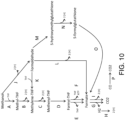
- Methanol is a relatively inexpensive organic feedstock that can be used to generate reducing equivalents by employing one or more methanol metabolic enzymes as shown in Figure 10 .
- Reducing equivalents can also be extracted from hydrogen and carbon monoxide by employing hydrogenase and carbon monoxide dehydrogenase enzymes, respectively, as shown in Figure 10 .
- the reducing equivalents are then passed to acceptors such as oxidized ferredoxins, oxidized quinones, oxidized cytochromes, NAD(P)+, water, or hydrogen peroxide to form reduced ferredoxin, reduced quinones, reduced cytochromes, NAD(P)H, H 2 , or water, respectively.
- acceptors such as oxidized ferredoxins, oxidized quinones, oxidized cytochromes, NAD(P)+, water, or hydrogen peroxide to form reduced ferredoxin, reduced quinones, reduced cytochromes, NAD(P)H, H 2 , or water, respectively.
- Reduced ferredoxin, reduced quinones and NAD(P)H are particularly useful as they can serve as redox carriers for various Wood-Ljungdahl pathway, reductive TCA cycle, or product pathway enzymes.
- the reducing equivalents produced by the metabolism of methanol, hydrogen, and carbon monoxide can be used to power several fatty alcohol, fatty acid, fatty aldehyde, and isopropanol production pathways.
- the maximum theoretical yield of a fatty alcohol, a fatty acid, a fatty aldehyde, or isopropanol from glucose and glycerol can be increased by enabling fixation of formaldehyde, formate reutilization, and extraction of reducing equivalents from an external source such as hydrogen.
- achieving such maximum yield stoichiometries may require some oxidation of reducing equivalents (e.g., H 2 + 1 ⁇ 2 O 2 ⁇ H 2 O, CO + V 2 O 2 ⁇ CO 2 , CH 4 O + 1.5 O 2 ⁇ CO 2 + 2 H 2 O, CH 12 O 6 + 6 O 2 ⁇ 6 CO 2 + 6 H 2 O) to provide sufficient energy for the substrate to product pathways to operate.
- reducing equivalents e.g., H 2 + 1 ⁇ 2 O 2 ⁇ H 2 O, CO + V 2 O 2 ⁇ CO 2 , CH 4 O + 1.5 O 2 ⁇ CO 2 + 2 H 2 O, CH 12 O 6 + 6 O 2 ⁇ 6 CO 2 + 6 H 2 O
- Pathways identified herein, and particularly pathways exemplified in specific combinations presented herein, are superior over other pathways based in part on the applicant's ranking of pathways based on attributes including maximum theoretical compound yield, maximal carbon flux, maximal production of reducing equivalents, minimal production of CO2, pathway length, number of non-native steps, thermodynamic feasibility, number of enzymes active on pathway substrates or structurally similar substrates, and having steps with currently characterized enzymes, and furthermore, the latter pathways are even more favored by having in addition at least the fewest number of non-native steps required, the most enzymes known active on pathway substrates or structurally similar substrates, and the fewest total number of steps from central metabolism.
- the microorganisms of the invention can utilize a heterologous MI-FAE cycle and/or a MD-FAE cycle coupled with an acyl-CoA termination pathway to form fatty alcohols, fatty aldehydes, or fatty acids.
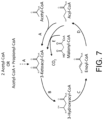
- the MI-FAE cycle can include a thiolase, a 3-oxoacyl-CoA reductase, a 3-hydroxyacyl-CoA dehydratase and an enoyl-CoA reductase.
- the MD-FAE cycle can include an elongase, a 3-oxoacyl-CoA reductase, a 3-hydroxyacyl-CoA dehydratase and an enoyl-CoA reductase.
- Each passage through the MI-FAE cycle and/or the MD-FAE cycle results in the formation of an acyl-CoA elongated by a single two carbon unit compared to the acyl-CoA substrate entering the elongation cycle.
- Products can be even or odd chain length, depending on the initial substrate entering the acyl-CoA elongation pathway, i.e.
- a termination pathway catalyzes the conversion of a MI-FAE intermediate and/or a MD-FAE intermediate, such as the acyl-CoA, to its corresponding fatty alcohol, fatty aldehyde, or fatty acid product.
- MI-FAE cycle, MD-FAE cycle and termination pathway enzymes can be expressed in one or more compartments of the microorganism.
- all MI-FAE cycle and termination pathway enzymes are expressed in the cytosol.
- all MD-FAE cycle and termination pathway enzymes are expressed in the cytosol.
- the microorganisms of the invention can be engineered to optionally secret the desired product into the culture media or fermentation broth for further manipulation or isolation.
- the microorganisms of the invention can utilize a heterologous FAACPE cycle coupled with an acyl-ACP termination pathway to form fatty alcohols, fatty aldehydes, or fatty acids.
- the FAACPE cycle includes a ⁇ -ketoacyl-ACP synthase, a ⁇ -ketoacyl-ACP reductase, a ⁇ -hydroxyacyl-ACP reductase, and a enoyl ACP-reductase.
- Each passage through the FAACPE cycle results in the formation of an acyl-ACP elongated by a single two carbon unit compared to the acyl-ACP substrate entering the elongation cycle.
- Products can be even or odd chain length, depending on the initial substrate entering the FAACPE pathway, i.e. acetoacetyl-ACP or 3-oxovaleryl-ACP. Elongation of the acetoacetyl-ACP substrates produces an even chain length product, whereas elongation with the 3-oxovaleryl-ACP substrate produces an odd chain length product.
- a termination pathway catalyzes the conversion of a FAACPE intermediate, such as the acyl-ACP, to its corresponding fatty alcohol, fatty aldehyde, or fatty acid product.
- FAACPE cycle and termination pathway enzymes can be expressed in one or more compartments of the microorganism. For example, in one embodiment, all FAACPE cycle and termination pathway enzymes are expressed in the cytosol. Additionally, the microorganisms of the invention can be engineered to optionally secret the desired product into the culture media or fermentation broth for further manipulation or isolation.
- Products of the invention include fatty alcohols, fatty aldehydes, or fatty acids derived from intermediates of the MI-FAE cycle, MD-FAE cycle, and/or FAACPE cycle.
- alcohol products can include saturated fatty alcohols, unsaturated fatty alcohols, 1,3-diols, and 3-oxo-alkan-1-ols.
- Aldehyde products can include saturated fatty aldehydes, unsaturated fatty aldehydes, 3-hydroxyaldehydes and 3-oxoaldehydes.
- Acid products can include saturated fatty acids, unsaturated fatty acids, 3-hydroxyacids and 3-oxoacids. These products can further be converted to derivatives such as fatty esters, either by chemical or enzymatic means. Methods for converting fatty alcohols to esters are well known in the art.
- the invention also encompasses fatty alcohol, fatty aldehyde, and fatty acid chain-length control strategies in conjunction with host strain engineering strategies, such that the non-naturally occurring microorganism of the invention efficiently directs carbon and reducing equivalents toward fermentation products of a specific chain length.
- Recombinant microorganisms of the invention can produce commercial quantities of a fatty alcohol, fatty aldehyde, or fatty acid ranging in chain length from four carbon atoms (C 4 ) to twenty-four carbon atoms (C 24 ) or more carbon atoms.
- the microorganism of the invention can produce a desired product that is at least 50%, 60%, 70%, 75%, 85%, 90%, 95% or more selective for a particular chain length.
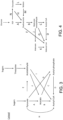
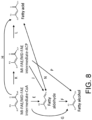
- the carbon chain-length of the product can be controlled by one or more enzymes of the MI-FAE cycle (steps A/B/C/D of Figures 7 ) and/or one or more enzymes of the MD-FAE cycle (steps E/B/C/D of Figure 7 ) in combination with one or more termination pathway enzymes (steps E-N of Figure 8 ).
- Chain length can be capped during the elongation cycle by one or more MI-FAE cycle enzymes (thiolase, 3-oxoacyl-CoA reductase, 3-hydroxyacyl-CoA dehydratase and/or enoyl-CoA reductase) exhibiting selectivity for MI-FAE cycle substrates having a number of carbon atoms that are no greater than the desired product size.
- MI-FAE cycle enzymes thiolase, 3-oxoacyl-CoA reductase, 3-hydroxyacyl-CoA dehydratase and/or enoyl-CoA reductase
- MD-FAE cycle enzymes elongase, 3-oxoacyl-CoA reductase, 3-hydroxyacyl-CoA dehydratase and/or enoyl-CoA reductase.
- Chain length can be further constrained by one or more enzymes catalyzing the conversion of the MI-FAE cycle intermediate to the fatty alcohol, fatty aldehyde or fatty acid product such that the one or more termination enzymes only reacts with substrates having a number of carbon atoms that are no less than the desired fatty alcohol, fatty aldehyde or fatty acid product.
- the termination pathway enzymes catalyzing conversion of a MI-FAE-CoA intermediate or MD-FAE-CoA intermediate to a fatty alcohol can include enzyme combinations of a fatty acyl-CoA reductase (alcohol or aldehyde forming), a fatty aldehyde reductase, an acyl-ACP reductase, an acyl-CoA:ACP acyltransferase, a thioesterase, an acyl-CoA hydrolase and/or a carboxylic acid reductase ( see, e.g., pathways G; E/F; K/J/F; HIN/F; or K/L/N/F of Figure 8 ).
- Termination pathway enzymes for converting a MI-FAE-CoA intermediate or MD-FAE-CoA intermediate to a fatty acid can include enzyme combinations of a thioesterase, a CoA hydrolase, an acyl-CoA:ACP acyltransferase, an aldehyde dehydrogenase and/or an acyl-ACP reductase ( see, e.g., pathways H; K/L; EN; K/J/N of Figure 8 ).
- the termination pathway enzymes can include enzyme combinations of a fatty acyl-CoA reductase (aldehyde forming), an acyl-ACP reductase, an acyl-CoA:ACP acyltransferase, a thioesterase, an acyl-CoA hydrolase and/or a carboxylic acid reductase ( see, e.g., pathways E; K/J; H/N; or K/L/N of Figure 8 ).
- a fatty acyl-CoA reductase aldehyde forming
- an acyl-ACP reductase an acyl-CoA:ACP acyltransferase
- a thioesterase an acyl-CoA hydrolase and/or a carboxylic acid reductase
- the carbon chain-length of the product can also be controlled by one or more enzymes of the FAACPE cycle (steps H/E/F/G of Figures 12 ) in combination with one or more termination pathway enzymes (steps I-O of Figure 12 ).
- Chain length can be capped during the elongation cycle by one or more FAACPE cycle enzymes ( ⁇ -ketoacyl-ACP synthase, ⁇ -ketoacyl-ACP reductase, ⁇ -hydroxyacyl-ACP reductase, and/or enoyl ACP-reductase) exhibiting selectivity for FAACPE cycle substrates having a number of carbon atoms that are no greater than the desired product size.
- Chain length can be further constrained by one or more enzymes catalyzing the conversion of the FAACPE cycle intermediate to the fatty alcohol, fatty aldehyde or fatty acid product such that the one or more termination enzymes only reacts with substrates having a number of carbon atoms that are no less than the desired fatty alcohol, fatty aldehyde or fatty acid product.
- the termination pathway enzymes catalyzing conversion of a FAACPE cycle intermediate to a fatty alcohol can include enzyme combinations of a thioesterase, a fatty acyl-ACP reductase, an acyl-CoA synthase, an acyl-CoA reductase, a fatty aldehyde reductase, a fatty alcohol forming acyl-CoA reductase (FAR), and/or a carboxylic acid reductase (CAR) ( see, e.g., pathways J/M; I/K/L/M; I/O/M; and I/K/N of Figure 12 ).
- Termination pathway enzyme for converting a FAACPE intermediate to a fatty acid can include a thioesterase ( see, e.g., pathways I of Figure 12 ).
- the termination pathway enzymes can include combinations of a thioesterase, a fatty acyl-ACP reductase, an acyl-CoA synthase, an acyl-CoA reductase, a fatty aldehyde reductase, and/or a carboxylic acid reductase (CAR), ( see, e.g., pathways J; I/K/L; and I/O of Figure 12 ).
- CAR carboxylic acid reductase
- the non-naturally occurring microbial organisms of the invention can also efficiently direct cellular resources, including carbon, energy and reducing equivalents, to the production of fatty alcohols, fatty aldehydes and fatty acids, thereby resulting in improved yield, productivity and/or titer relative to a naturally occurring organism.
- the microorganism is modified to increase cytosolic acetyl-CoA levels.
- the microorganism is modified to efficiently direct cytosolic acyl-CoA into fatty alcohols, fatty aldehydes or fatty acids rather than other byproducts or cellular processes. Enzymes or pathways that lead to the formation of byproducts can be attenuated or deleted.
- Exemplary byproducts include, but are not limited to, ethanol, glycerol, lactate, acetate, esters and carbon dioxide. Additional byproducts can include fatty-acyl-CoA derivatives such as alcohols, alkenes, alkanes, esters, acids and aldehydes. Accordingly, a byproduct can include any fermentation product diverting carbon and/or reducing equivalents from the product of interest.
- the availability of reducing equivalents or redox ratio is increased.
- the cofactor requirements of the microorganism are balanced such that the same reduced cofactors generated during carbon assimilation and central metabolism are utilized by MI-FAE cycle, MD-FAE cycle and/or termination pathway enzymes.
- the fatty alcohol, fatty aldehyde or fatty acid producing organism expresses a transporter which exports the fatty alcohol, fatty aldehyde or fatty acid from the cell.
- Microbial organisms capable of fatty alcohol production are exemplified herein with reference to the Saccharomyces cerevisaie genetic background.
- Saccharomyces cerevisaie genetic background With the complete genome sequence available now for thousands of species (with more than half of these available on public databases such as the NCBI), the identification of an alternate species homolog for one or more genes, including for example, orthologs, paralogs and nonorthologous gene displacements, and the interchange of genetic alterations between eukaryotic organisms is routine and well known in the art.
- the metabolic alterations enabling production of fatty alcohols described herein with reference to a particular organism such as Saccharomyces cerevisiae can be readily applied to other microorganisms, such as Escherichia coli.
- a metabolic alteration exemplified in one organism can be applied equally to other organisms.
- production of fatty alcohols, fatty aldehydes and fatty acids through the MI-FAE cycle and termination pathways disclosed herein are particularly useful because the cycle and pathways result in higher product and ATP yields than through naturally occurring biosynthetic pathways such as the well-known malonyl-CoA dependent fatty acid synthesis pathway, or in some aspects the malonyl-ACP dependent fatty acid sysnthesis pathway.
- biosynthetic pathways such as the well-known malonyl-CoA dependent fatty acid synthesis pathway, or in some aspects the malonyl-ACP dependent fatty acid sysnthesis pathway.
- acetyl-CoA as a C 2 extension unit (e.g. step A, Figure 2 ) instead of malonyl-acyl carrier protein (malonyl-ACP) saves one ATP molecule per unit flux of acetyl-CoA entering the MI-FAE cycle.
- the MI-FAE cycle results in acyl-CoA instead of acyl-ACP, and can preclude the need of the ATP-consuming acyl-CoA synthase reactions for the production of octanol and other fatty alcohols, fatty aldehydes or fatty acids if acetyl-CoA is used as the extender unit.
- the fatty alcohol, fatty aldehyde and fatty acid producing organisms of the invention can additionally allow the use of biosynthetic processes to convert low cost renewable feedstock for the manufacture of chemical products.
- Chain length control can be achieved using a combination of highly active enzymes with suitable substrate ranges appropriate for biosynthesis of the desired fatty alcohol, fatty aldehyde, or fatty acid. Chain length of the product can be controlled using one or more enzymes of MI-FAE cycle, MD-FAE cycle, FAACPE cycle or termination pathway.
- chain length can be capped during the MI-FAE cycle by one or more MI-FAE cycle enzymes (thiolase, 3-oxoacyl-CoA reductase, 3-hydroxyacyl-CoA dehydratase and/or enoyl-CoA reductase), in the case of the MD-FAE cycle, one or more MD-FAE cycle enzymes (elongase, 3-oxoacyl-CoA reductase, 3-hydroxyacyl-CoA dehydratase and/or enoyl-CoA reductase), and in the case of the FAACPE cycle, one or more enzymes ( ⁇ -ketoacyl-ACP synthase, ⁇ -ketoacylcl-ACP reductase, (3-hydroxyacyl-ACP reductase and/or enoyl ACP-reductase), exhibiting selectivity for MI-FAE cycle, MD-FAE cycle and/or FAACPE cycle substrates
- any of the elongation pathway enzymes can serve in this capacity.
- Selecting enzymes with broad substrate ranges but defined chain-length boundaries enables the use of a single enzyme to catalyze multiple cycles of elongation, while conferring product specificity.
- selectivity is further constrained by product-forming termination enzymes, such that one or more enzymes are selective for acyl-CoA, acyl-ACP or other termination pathway substrates having a number of carbon atoms that are no less than the desired chain length.
- the deletion or attenuation of endogenous pathway enzymes that produce different chain length products can further hone product specificity.
- one skilled in the art can select enzymes from the literature with characterized substrate ranges that selectively produce a fatty alcohol, fatty aldehyde or fatty acid product of a specific chain length.
- fatty alcohols fatty aldehydes or fatty acids of a desired length
- a non-naturally occurring microbial organism that produces C 16 fatty alcohol can express enzymes such as the Rattus norvegicus Acaala thiolase and the enoyl-CoA reducatse of Mycobacterium smegmatis, which only accept substrates up to length C 16 .
- Coupling one or both chain elongation enzymes with a C 16 -C 18 fatty acyl-CoA reductase (alcohol or aldehyde forming) such as FAR of Simmondsia chinensis further increases product specificity by reducing the synthesis of shorter alcohol products.
- a non-naturally occurring microbial organism of the invention can selectively produce alcohols of length C 14 by combining the 3-hydroxyacyl-CoA dehydratase of Arabidopsis thaliana with the acyl-CoA reductase Acr1 of Acinetobacter sp. Strain M-1.
- 3-oxoacids of length C 14 one can, for example, combine the rat thiolase with the 3-oxoacyl-CoA hydrolase of Solanum lycopersicum.
- C 18 fatty acids one can combine the Salmonella enterica fadE enoyl-CoA reductase with the tesB thioesterase of E . coli.
- selective production of C 6 alcohols are formed by combining the paaH1 thiolase from Ralstonia eutropha with the Leifsonia sp. S749 alcohol dehydrogenase lsadh.
- Example IV Exemplary MI-FAE cycle, MD-FAE cycle and termination pathway enzymes are described in detail in Example IV.
- the biosynthetic enzymes described herein exhibit varying degrees of substrate specificity.
- Exemplary substrate ranges of enzymes characterized in the literature are shown in the table below and described in further detail in Example IV.
- each enzyme in the MI-FAE cycle can select one or more enzymes for catalyzing each elongation cycle reaction step (e.g., steps A-D or steps E/B/C/D of Figure 6 , or H/E/F/G of Figure 12 ).
- steps A-D or steps E/B/C/D of Figure 6 e.g., steps A-D or steps E/B/C/D of Figure 6 , or H/E/F/G of Figure 12 .
- some thiolase enzymes such as bktB of Ralstonia eutropha catalyze the elongation of short- and medium-chain acyl-CoA intermediates (C 6 -C 8 ), whereas others such as Acaa1a of R.
- a microbial organism producing a fatty alcohol, fatty aldehyde or fatty acid can comprise one, two, three, four or more variants of a thiolase, elongase, 3-oxoacyl-CoA reductase, 3-hydroxyacyl-CoA dehydratase and/or enoyl-CoA reductase.
- Chain length specificity of enzymes can be assayed by methods well known in the art (eg. Wrensford et al, Anal Biochem 192:49-54 (1991 )).
- the substrate ranges of fatty alcohol, fatty aldehyde, or fatty acid producing enzymes can be further extended or narrowed by methods well known in the art.
- Variants of biologically-occurring enzymes can be generated, for example, by rational and directed evolution, mutagenesis and enzyme shuffling as described herein.
- a rational engineering approach for altering chain length specificity was taken by Denic and Weissman ( Denic and Weissman, Cell 130:663-77 (2008 )).
- Denic and Weissman mapped the region of the yeast elongase protein ELOp responsible for chain length, and introduced mutations to vary the length of fatty acid products.
- the geometry of the hydrophobic substrate pocket set an upper boundary on chain length.
- a similar approach can be useful for altering the chain length specificities of enzymes of the MI-FAE cycle, MD-FAE cycle and/or termination pathways.
- Enzyme mutagenesis, expression in a host, and screening for fatty alcohol production is another useful approach for generating enzyme variants with improved properties for the desired application.
- US patent application 2012/0009640 lists hundreds of variants of Marinobacter algicola and Marinobacter aquaeolei FAR enzymes with improved activity over the wild type enzyme, and varying product profiles.
- Enzyme mutagenesis (random or directed) in conjunction with a selection platform is another useful approach.
- Machado and coworkers developed a selection platform aimed at increasing the activity of acyl-CoA elongation cycle enzymes on longer chain length substrates ( Machado et al., Met Eng 14(5):504-511 (2012 )).
- Machado et al. identified the chain-length limiting step of their pathway (a 3-hydroxyacyl-CoA dehydrogenase) and evolved it for improved activity on C 6 -C 8 substrates using an anaerobic growth rescue platform.
- Organism Variant(s) Reference 3-Ketoacyl-CoA thiolase Acaa2 Rattus norvegicus H352A, H352E, H352K, H352Y Zeng et al., Prot. Expr. Purif. 35: 320-326 (2004 ) NP_569117.1 GI:18426866 3-Hydroxyacyl-CoA dehydrogenase Hadh Rattus norvegicus S137A, S137C, S137T Liu et al., Prot. Expr. Purif. 37:344-351 (2004 ).
- NP_476534.1 GI:17105336 Enoyl-CoA hydratase Ech1 Rattus norvegicus E144A, E144A/Q162L, E164A, Q162A, Q162L, Q162M Kiema et al., Biochem. 38:2991-2999 (1999 )
- NP_072116.1 GI:12018256 Enoyl-CoA reductase InhA Mycobacterium tuberculosis K165A, K165Q, Y158F Poletto,S. et al., Prot. Expr. Purif. 34: 118-125 (2004 ).
- the genetic alterations including metabolic modifications exemplified herein, are described with reference to a suitable host organism such as E . coli or S . cerevisiae and their corresponding metabolic reactions or a suitable source organism for desired genetic material such as genes for a desired metabolic pathway.
- a suitable host organism such as E . coli or S . cerevisiae
- desired genetic material such as genes for a desired metabolic pathway.
- the metabolic alterations exemplified herein can readily be applied to other species by incorporating the same or analogous encoding nucleic acid from species other than the referenced species.
- Such genetic alterations include, for example, genetic alterations of species homologs, in general, and in particular, orthologs, paralogs or nonorthologous gene displacements.
- ortholog is a gene or genes that are related by vertical descent and are responsible for substantially the same or identical functions in different organisms.
- mouse epoxide hydrolase and human epoxide hydrolase can be considered orthologs for the biological function of hydrolysis of epoxides.
- Genes are related by vertical descent when, for example, they share sequence similarity of sufficient amount to indicate they are homologous, or related by evolution from a common ancestor.
- Genes can also be considered orthologs if they share three-dimensional structure but not necessarily sequence similarity, of a sufficient amount to indicate that they have evolved from a common ancestor to the extent that the primary sequence similarity is not identifiable.
- Genes that are orthologous can encode proteins with sequence similarity of about 25% to 100% amino acid sequence identity.
- Genes encoding proteins sharing an amino acid similarity less that 25% can also be considered to have arisen by vertical descent if their three-dimensional structure also shows similarities.
- Members of the serine protease family of enzymes, including tissue plasminogen activator and elastase, are considered to have arisen by vertical descent from a common ancestor.
- Orthologs include genes or their encoded gene products that through, for example, evolution, have diverged in structure or overall activity. For example, where one species encodes a gene product exhibiting two functions and where such functions have been separated into distinct genes in a second species, the three genes and their corresponding products are considered to be orthologs. For the production of a biochemical product, those skilled in the art will understand that the orthologous gene harboring the metabolic activity to be introduced or disrupted is to be chosen for construction of the non-naturally occurring microorganism.
- An example of orthologs exhibiting separable activities is where distinct activities have been separated into distinct gene products between two or more species or within a single species.
- a specific example is the separation of elastase proteolysis and plasminogen proteolysis, two types of serine protease activity, into distinct molecules as plasminogen activator and elastase.
- a second example is the separation of mycoplasma 5'-3' exonuclease and Drosophila DNA polymerase III activity.
- the DNA polymerase from the first species can be considered an ortholog to either or both of the exonuclease or the polymerase from the second species and vice versa.
- paralogs are homologs related by, for example, duplication followed by evolutionary divergence and have similar or common, but not identical functions.
- Paralogs can originate or derive from, for example, the same species or from a different species.
- microsomal epoxide hydrolase epoxide hydrolase I
- soluble epoxide hydrolase epoxide hydrolase II
- Paralogs are proteins from the same species with significant sequence similarity to each other suggesting that they are homologous, or related through co-evolution from a common ancestor.
- Groups of paralogous protein families include HipA homologs, luciferase genes, peptidases, and others.
- a nonorthologous gene displacement is a nonorthologous gene from one species that can substitute for a referenced gene function in a different species. Substitution includes, for example, being able to perform substantially the same or a similar function in the species of origin compared to the referenced function in the different species.
- a nonorthologous gene displacement will be identifiable as structurally related to a known gene encoding the referenced function, less structurally related but functionally similar genes and their corresponding gene products nevertheless will still fall within the meaning of the term as it is used herein.
- Functional similarity requires, for example, at least some structural similarity in the active site or binding region of a nonorthologous gene product compared to a gene encoding the function sought to be substituted. Therefore, a nonorthologous gene includes, for example, a paralog or an unrelated gene.
- non-naturally occurring microbial organisms of the invention having fatty alcohol, fatty aldehyde or fatty acid biosynthetic capability
- identification of metabolic modifications can include identification and inclusion or inactivation of orthologs.
- paralogs and/or nonorthologous gene displacements are present in the referenced microorganism that encode an enzyme catalyzing a similar or substantially similar metabolic reaction, those skilled in the art also can utilize these evolutionally related genes.
- evolutionally related genes can also be disrupted or deleted in a host microbial organism to reduce or eliminate functional redundancy of enzymatic activities targeted for disruption.
- Orthologs, paralogs and nonorthologous gene displacements can be determined by methods well known to those skilled in the art. For example, inspection of nucleic acid or amino acid sequences for two polypeptides will reveal sequence identity and similarities between the compared sequences. Based on such similarities, one skilled in the art can determine if the similarity is sufficiently high to indicate the proteins are related through evolution from a common ancestor. Algorithms well known to those skilled in the art, such as Align, BLAST, Clustal W and others compare and determine a raw sequence similarity or identity, and also determine the presence or significance of gaps in the sequence which can be assigned a weight or score. Such algorithms also are known in the art and are similarly applicable for determining nucleotide sequence similarity or identity.
- Parameters for sufficient similarity to determine relatedness are computed based on well known methods for calculating statistical similarity, or the chance of finding a similar match in a random polypeptide, and the significance of the match determined.
- a computer comparison of two or more sequences can, if desired, also be optimized visually by those skilled in the art.
- Related gene products or proteins can be expected to have a high similarity, for example, 25% to 100% sequence identity. Proteins that are unrelated can have an identity which is essentially the same as would be expected to occur by chance, if a database of sufficient size is scanned (about 5%). Sequences between 5% and 24% may or may not represent sufficient homology to conclude that the compared sequences are related. Additional statistical analysis to determine the significance of such matches given the size of the data set can be carried out to determine the relevance of these sequences.
- Exemplary parameters for determining relatedness of two or more sequences using the BLAST algorithm can be as set forth below.
- amino acid sequence alignments can be performed using BLASTP version 2.0.8 (Jan-05-1999) and the following parameters: Matrix: 0 BLOSUM62; gap open: 11; gap extension: 1; x_dropoff: 50; expect: 10.0; wordsize: 3; filter: on.
- Nucleic acid sequence alignments can be performed using BLASTN version 2.0.6 (Sept-16-1998) and the following parameters: Match: 1; mismatch: -2; gap open: 5; gap extension: 2; x _dropoff 50; expect: 10.0; wordsize: 11; filter: off.
- Those skilled in the art will know what modifications can be made to the above parameters to either increase or decrease the stringency of the comparison, for example, and determine the relatedness of two or more sequences.
- the invention provides a non-naturally occurring microbial organism having: (i) a formaldehyde fixation pathway; (ii) a formate assimilation pathway; and (iii) a methanol metabolic pathway as depicted in Figures 1 and 10 , and a MI-FAE cycle or a MD-FAE cycle in combination with a termination pathway as depicted in Figures 2 , 7 and 8 , wherein said formaldehyde fixation pathway comprises: (1) 1B and 1C; (2) 1D; or (3) 1D and 1Z, wherein 1B is a 3-hexulose-6-phosphate synthase, wherein 1C is a 6-phospho-3-hexuloisomerase, wherein 1D is a dihydroxyacetone synthase, wherein 1Z is a fructose-6-phosphate aldolase, wherein said formate assimilation pathway comprises a pathway selected from: (4) 1E; (5) 1F, and 1G; (6) 1H
- the invention provides a non-naturally occurring microbial organism having: (i) a formaldehyde fixation pathway; (ii) a formate assimilation pathway; and (iii) a methanol metabolic pathway as depicted in Figures 1 and 10 , and a FAACPE cycle in combination with a termination pathway as depicted in Figure 12 , wherein said formaldehyde fixation pathway comprises: (1) 1B and 1C; (2) 1D; (3) 1D and 1Z, wherein 1B is a 3-hexulose-6-phosphate synthase, wherein 1C is a 6-phospho-3-hexuloisomerase, wherein 1D is a dihydroxyacetone synthase, wherein 1Z is a fructose-6-phosphate aldolase, wherein said formate assimilation pathway comprises a pathway selected from: (4) 1E; (5) 1F, and 1G; (6) 1H, 1I, 1J, and 1K; (7) 1H,
- non-naturally occurring microbial organism of the invention can produce a compound of Formula (I) wherein R 1 is C 1-17 linear alkyl.
- the R 1 of the compound of Formula (I) is C 1 linear alkyl, C 2 linear alkyl, C 3 linear alkyl, C 4 linear alkyl, C 5 linear alkyl, C 6 linear alkyl, C 7 linear alkyl, C 8 linear alkyl, C 9 linear alkyl, C 10 linear alkyl, C 11 , linear alkyl, C 12 linear alkyl or C 13 linear alkyl, C 14 linear alkyl, C 15 linear alkyl, C 16 linear alkyl, C 17 linear alkyl, C 18 linear alkyl, C 19 linear alkyl, C 20 linear alkyl, C 21 linear alkyl, C 22 linear alkyl, C 23 linear alkyl, or C 24 linear alkyl.
- the microbial organism includes two, three, or four exogenous nucleic acids each encoding an enzyme of the MI-FAE cycle, the MD-FAE cycle, or the FAACPE cycle. In some aspects of the invention, the microbial organism includes two, three, or four exogenous nucleic acids each encoding an enzyme of the termination pathway. In some aspects of the invention, the microbial organism includes one, two, three, four, five, six, seven, or eight exogenous nucleic acids each encoding a formaldehyde fixation pathway enzyme, a formate assimilation pathway enzyme, or a methanol metabolic pathway enzyme.
- the microbial organism includes exogenous nucleic acids encoding each of the enzymes of at least one of the pathways selected from (1)-(49) for a microbial organism having a MI-FAE cycle or a MD-FAE cycle in combination with a termination pathway as depicted in Figures 1 , 2 , 7 , 8 and 10 .
- the microbial organism includes exogenous nucleic acids encoding each of the enzymes of at least one of the pathways selected from (1)-(44) for a microbial organism having a fatty acyl-ACP elongation (FAACPE) cycle in combination with a termination pathway as depicted in Figures 1 , 10 and 12 .
- FACPE fatty acyl-ACP elongation
- the invention provides a non naturally occurring microbial organism, wherein the one or more enzymes of the MI-FAE cycle, MD-FAE cycle, FAACPE cycle or termination pathway is expressed in a sufficient amount to produce a fatty alcohol selected from the Formulas (III)-(VI): wherein R 1 is C 1-24 linear alkyl, or alternatively R 1 is C 1-17 linear alkyl, or alternatively R 1 is C 9-13 linear alkyl.
- R 1 is C 1 linear alkyl, C 2 linear alkyl, C 3 linear alkyl, C 4 linear alkyl, C 5 linear alkyl, C 6 linear alkyl, C 7 linear alkyl, C 8 linear alkyl, C 9 linear alkyl, C 10 linear alkyl, C 11 , linear alkyl, C 12 linear alkyl, C 13 linear alkyl, C 14 linear alkyl, C 15 linear alkyl, C 16 linear alkyl, C 17 linear alkyl, C 18 linear alkyl, C 19 linear alkyl, C 20 linear alkyl, C 21 linear alkyl, C 22 linear alkyl, C 23 linear alkyl, or C 24 linear alkyl.
- the invention provides a non naturally occurring microbial organism, wherein the one or more enzymes of the MI-FAE cycle, MD-FAE cycle, FAACPE cycle or termination pathway is expressed in a sufficient amount to produce a fatty aldehyde selected from the Formula (VII)-(X): wherein R 1 is C 1-24 linear alkyl, or alternatively R 1 is C 1-17 linear alkyl, or alternatively R 1 is C 9-13 linear alkyl.
- R 1 is C 1 linear alkyl, C 2 linear alkyl, C 3 linear alkyl, C 4 linear alkyl, C 5 linear alkyl, C 6 linear alkyl, C 7 linear alkyl, C 8 linear alkyl, C 9 linear alkyl, C 10 linear alkyl, C 11 , linear alkyl, C 12 linear alkyl, C 13 linear alkyl, C 14 linear alkyl, C 15 linear alkyl, C 16 linear alkyl, C 17 linear alkyl, C 18 linear alkyl, C 19 linear alkyl, C 20 linear alkyl, C 21 linear alkyl, C 22 linear alkyl, C 23 linear alkyl, or C 24 linear alkyl.
- the invention provides a non naturally occurring microbial organism, wherein the one or more enzymes of the MI-FAE cycle, MD-FAE cycle, FAACPE cycle or termination pathway is expressed in a sufficient amount to produce a fatty acid selected from the Formula (XI)-(XIV): wherein R 1 is C 1-24 linear alkyl, or alternatively R 1 is C 1-17 linear alkyl, or alternatively R 1 is C 9-13 linear alkyl.
- R 1 is C 1 linear alkyl, C 2 linear alkyl, C 3 linear alkyl, C 4 linear alkyl, C 5 linear alkyl, C 6 linear alkyl, C 7 linear alkyl, C 8 linear alkyl, C 9 linear alkyl, C 10 linear alkyl, C 11 , linear alkyl, C 12 linear alkyl, C 13 linear alkyl, C 14 linear alkyl, C 15 linear alkyl, C 16 linear alkyl, C 17 linear alkyl, C 18 linear alkyl, C 19 linear alkyl, C 20 linear alkyl, C 21 linear alkyl, C 22 linear alkyl, C 23 linear alkyl, or C 24 linear alkyl.
- the invention provides a non naturally occurring microbial organism, wherein one or more enzymes of the MI-FAE cycle and/or MD-FAE cycle are each selective for a compound of Formula (II) wherein R 1 is C 1-24 linear alkyl, or alternatively R 1 is C 1-17 linear alkyl, or alternatively R 1 is C 9-13 linear alkyl.
- R 1 is C 1 linear alkyl, C 2 linear alkyl, C 3 linear alkyl, C 4 linear alkyl, C 5 linear alkyl, C 6 linear alkyl, C 7 linear alkyl, C 8 linear alkyl, C 9 linear alkyl, C 10 linear alkyl, C 11, linear alkyl, C 12 linear alkyl, C 13 linear alkyl, C 14 linear alkyl, C 15 linear alkyl, C 16 linear alkyl, C 17 linear alkyl, C 18 linear alkyl, C 19 linear alkyl, C 20 linear alkyl, C 21 linear alkyl, C 22 linear alkyl, C 23 linear alkyl, or C 24 linear alkyl.
- the invention provides a non naturally occurring microbial organism, wherein one or more enzymes of the FAACPE cycle are each selective for a compound of Formula (II) wherein R 1 is C 1-24 linear alkyl, or alternatively R 1 is C 1-17 linear alkyl, or alternatively R 1 is C 9-13 linear alkyl.
- R 1 is C 1 linear alkyl, C 2 linear alkyl, C 3 linear alkyl, C 4 linear alkyl, C 5 linear alkyl, C 6 linear alkyl, C 7 linear alkyl, C 8 linear alkyl, C 9 linear alkyl, C 10 linear alkyl, C 11 , linear alkyl, C 12 linear alkyl, C 13 linear alkyl, C 14 linear alkyl, C 15 linear alkyl, C 16 linear alkyl, C 17 linear alkyl, Cis linear alkyl, C 19 linear alkyl, C 20 linear alkyl, C 21 linear alkyl, C 22 linear alkyl, C 23 linear alkyl, or C 24 linear alkyl.
- the invention provides a non naturally occurring microbial organism, wherein one or more enzymes of the termination pathway are each selective for a compound of Formula (II) wherein R 1 is C 1-24 linear alkyl, or alternatively R 1 is C 1-17 linear alkyl, or alternatively R 1 is C 9-13 linear alkyl.
- R 1 is C 1 linear alkyl, C 2 linear alkyl, C 3 linear alkyl, C 4 linear alkyl, C 5 linear alkyl, C 6 linear alkyl, C 7 linear alkyl, C 8 linear alkyl, C 9 linear alkyl, C 10 linear alkyl, C 11 , linear alkyl, C 12 linear alkyl, C 13 linear alkyl, C 14 linear alkyl, C 15 linear alkyl, C 16 linear alkyl, C 17 linear alkyl, Cis linear alkyl, C 19 linear alkyl, C 20 linear alkyl, C 21 linear alkyl, C 22 linear alkyl, C 23 linear alkyl, or C 24 linear alkyl.
- a non-naturally occurring microbial organism of the invention having a formate assimilation pathway further includes wherein the formate assimilation pathway comprises: (1) 1Q; (2) 1R, and 1S; (3) 1Y and 1Q; (4) 1Y, 1R and 1S, wherein 1Q is a pyruvate formate lyase, wherein IRis a pyruvate dehydrogenase, a pyruvate ferredoxin oxidoreductase, or a pyruvate:NADP+ oxidoreductase, wherein 1S is a formate dehydrogenase, wherein 1Y is a glyceraldehydes-3-phosphate dehydrogenase or an enzyme of lower glycolysis.
- lower glycolysis includes a phosphoglycerate kinase, a phosphoglyceromutase, an enolase, a pyruvate kinase or a PTS-dependant substrate import.
- the formate assimilation pathway comprising 1Y includes an enzyme selected from a phosphoglycerate kinase, a phosphoglyceromutase, an enolase, a pyruvate kinase and a PTS-dependant substrate import.
- a non-naturally occurring micoribial organism of the invention includes a methanol oxidation pathway.
- Such a pathway can include at least one exogenous nucleic acid encoding a methanol oxidation pathway enzyme expressed in a sufficient amount to produce formaldehyde in the presence of methanol.
- An exemplary methanol oxidation pathway enzyme is a methanol dehydrogenase.
- a non-naturally occurring micoribial organism of the invention includes at least one exogenous nucleic acid encoding a methanol dehydrogenase expressed in a sufficient amount to produce formaldehyde in the presence of methanol.
- the exogenous nucleic acid encoding an methanol dehydrogenase is expressed in a sufficient amount to produce an amount of formaldehyde greater than or equal to 1 ⁇ M, 10 ⁇ M, 20 ⁇ M, or 50 ⁇ M, or a range thereof, in culture medium or intracellularly. In other embodiments, the exogenous nucleic acid encoding an methanol dehydrogenase is capable of producing an amount of formaldehyde greater than or equal to 1 ⁇ M, 10 ⁇ M, 20 ⁇ M, or 50 ⁇ M, or a range thereof, in culture medium or intracellularly. In some embodiments, the range is from 1 ⁇ M to 50 ⁇ M or greater.
- the range is from 10 ⁇ M to 50 ⁇ M or greater. In other embodiments, the range is from 20 ⁇ M to 50 ⁇ M or greater. In other embodiments, the amount of formaldehyde production is 50 ⁇ M or greater. In specific embodiments, the amount of formaldehyde production is in excess of, or as compared to, that of a negative control, e.g., the same species of organism that does not comprise the exogenous nucleic acid, such as a wild-type microbial organism or a control microbial organism thereof.
- the methanol dehydrogenase is selected from those provided herein, e.g., as exemplified in Example II (see Figure 1 , Step A, or Figure 10 , Step J).
- the amount of formaldehyde production is determined by a whole cell assay, such as that provided in Example II (see Figure 1 , Step A, or Figure 10 , Step J), or by another assay provided herein or otherwise known in the art.
- formaldehyde utilization activity is absent in the whole cell.
- the exogenous nucleic acid encoding an methanol dehydrogenase is expressed in a sufficient amount to produce at least 1X, 2X, 3X, 4X, 5X, 6X, 7X, 8X, 9X, 10X, 15X, 20X, 30X, 40X, 50X, 100X or more formaldehyde in culture medium or intracellularly.
- the exogenous nucleic acid encoding an methanol dehydrogenase is capable of producing an amount of formaldehyde at least 1X, 2X, 3X, 4X, 5X, 6X, 7X, 8X, 9X, 10X, 15X, 20X, 30X, 40X, 50X, 100X, or a range thereof, in culture medium or intracellularly.
- the range is from 1X to 100X. In other embodiments, the range is from 2X to 100X. In other embodiments, the range is from 5X to 100X. In other embodiments, the range is from 10X to 100X. In other embodiments, the range is from 50X to 100X.
- the amount of formaldehyde production is at least 20X. In other embodiments, the amount of formaldehyde production is at least 50X. In specific embodiments, the amount of formaldehyde production is in excess of, or as compared to, that of a negative control, e. g., the same species of organism that does not comprise the exogenous nucleic acid, such as a wild-type microbial organism or a control microbial organism thereof. In certain embodiments, the methanol dehydrogenase is selected from those provided herein, e.g., as exemplified in Example II (see Figure 1 , Step A, or Figure 10 , Step J).
- the amount of formaldehyde production is determined by a whole cell assay, such as that provided in Example II (see Figure 1 , Step A, or Figure 10 , Step J), or by another assay provided herein or otherwise known in the art.
- formaldehyde utilization activity is absent in the whole cell.
- the at least one exogenous nucleic acid included in the non-naturally occurring microbial organism of the invention is a heterologous nucleic acid. Accordingly, in some embodiments, the at least one exogenous nucleic acid encoding a formaldehyde fixation pathway enzyme described herein is a heterologous nucleic acid. In some embodiments, the at least one exogenous nucleic acid encoding a formate assimilation pathway enzyme described herein is a heterologous nucleic acid. In some embodiments, the at least one exogenous nucleic acid encoding a methanol metabolic pathway enzyme described herein is a heterologous nucleic acid.
- the at least one exogenous nucleic acid encoding a MI-FAE cycle enzyme described herein is a heterologous nucleic acid. In some embodiments, the at least one exogenous nucleic acid encoding a MD-FAE cycle enzyme described herein is a heterologous nucleic acid. In some embodiments, the at least one exogenous nucleic acid encoding a FAACPE cycle enzyme described herein is a heterologous nucleic acid. In some embodiments, the at least one exogenous nucleic acid encoding a termination pathway enzyme described herein is a heterologous nucleic acid.
- the at least one exogenous nucleic acid encoding an acetoacetyl-ACP pathway enzyme described herein is a heterologous nucleic acid. In some embodiments, the at least one exogenous nucleic acid encoding a 3-oxovalery-ACP pathway enzyme described herein is a heterologous nucleic acid. In some embodiments, the at least one exogenous nucleic acid encoding an isopropanol pathway enzyme described herein is a heterologous nucleic acid. In some embodiments, the at least one exogenous nucleic acid encoding a methanol oxidation pathway enzyme described herein is a heterologous nucleic acid. In some embodiments, the at least one exogenous nucleic acid encoding a hydrogenase or a carbon monoxide dehydrogenase is a heterologous nucleic acid.
- the non-naturally occurring microbial organism of the invention is in a substantially anaerobic culture medium.
- the invention provides a non-naturally occurring microbial organism having a fatty alcohol, fatty aldehyde or fatty acid pathway, wherein the non-naturally occurring microbial organism comprises at least one exogenous nucleic acid encoding an enzyme or protein that converts a substrate to a product selected from the group consisting of MeOH to Fald, Fald to H6P, H6P to F6P, Fald to DHA and G3P, DHA and G3P to F6P, F6P to ACTP and E4P, ACTP to ACCOA, ACTP to acetate, acetate to ACCOA, Xu5P to ACTP and G3P, G3P to PYR, PYR to formate and ACCOA, PYR to CO2 and ACCOA, CO2 to formate, formate to Fald, formate to Formyl-CoA, Fonnyl-CoA to Fald, Formate to FTHF, FTHF to methenyl
- the invention provides a non-naturally occurring microbial organism containing at least one exogenous nucleic acid encoding an enzyme or protein, where the enzyme or protein converts the substrates and products of a fatty alcohol, fatty aldehyde, fatty acid, or isopropanol pathway, such as that shown in Figure 1-12 and 22 .
- a fatty alcohol, fatty aldehyde, or fatty acid pathway is exemplified in Figures 1-12 and 22 .
- the invention additionally provides a non-naturally occurring microbial organism comprising at least one exogenous nucleic acid encoding a fatty alcohol, fatty aldehyde, or fatty acid or pathway enzyme, where the microbial organism produces a fatty alcohol, fatty aldehyde, or fatty acid pathway intermediate, for example, pyruvate, formate, formaldehyde, H6P, DHA, G3P, F6P, ACTP, E4P, formyl-CoA, FTHF, methenyl-THF, methylene-THF, glycine, serine, methyl-THF, CO2, a 3-ketoacyl-CoA, a 3-hydroxyacyl-CoA, an enoyl-CoA, a ⁇ -ketoacyl-
- any of the pathways disclosed herein, as described in the Examples and exemplified in the Figures, including the pathways of Figures 1-12 and 22 , can be utilized to generate a non-naturally occurring microbial organism that produces any pathway intermediate or product, as desired.
- a microbial organism that produces an intermediate can be used in combination with another microbial organism expressing downstream pathway enzymes to produce a desired product.
- a non-naturally occurring microbial organism that produces a fatty alcohol, fatty aldehyde, or fatty acid pathway intermediate can be utilized to produce the intermediate as a desired product.
- the microbial organisms of the invention having one or more of any of the above and/or below metabolic modifications to a methanol utilization pathway and/or formaldehyde assimilation pathway configurations for enhancing product yields can be combined with any one or more, including all of the previously described methanol oxidation, formaldehyde fixation, formate reutilization, fatty alcohol, fatty aldehyde, acid and/or isopropanol pathways to enhance the yield and/or production of a product such as any of the fatty alcohol, fatty aldehyde, fatty acids and/or isopropanol described herein.
- Metabolic modifications for enabling redox- and carbon-efficient cytosolic methanol utilization in a eukaryotic or prokaryotic organism are exemplified in further detail below.
- the invention provides cytosolic expression of one or more methanol oxidation and/or formaldehyde assimilation pathways.
- Engineering into a host microbial organism carbon- and redox- efficient cytosolic formaldehyde assimilation can be achieved by expression of one or more endogenous or exogenous methanol oxidation pathways and/or one or more endogenous or exogenous formaldehyde assimilation pathway enzymes in the cytosol.
- An exemplary pathway for methanol oxidation includes NADH dependent methanol dehydrogenase as shown in Figure 1 .
- Exemplary pathways for converting cytosolic formaldehyde into glycolytic intermediates also are shown in Figure 1 .
- Such pathways include methanol oxidation via expression of an cytosolic NADH dependent methanol dehydrogenase, formaldehyde fixation via expression of cytosolic DHA synthase, both methanol oxidation via expression of an cytosolic NADH dependent methanol dehydrogenase and formaldehyde fixation via expression of cytosolic DHA synthase alone or together with the metabolic modifications exemplified below that attenuate less beneficial methanol oxidation and/or formaldehyde fixation pathways.
- Such attenuating metabolic modifications include, for example, attenuation of alcohol oxidase, attenuation of DHA kinase and/or when utilization of ribulose-5-phosphate (Ru5P) pathway for formaldehyde fixation attenuation of DHA synthase.
- Ru5P ribulose-5-phosphate
- step D formaldehyde is converted to dihydroxyacetone (DHA) and glyceraldehyde-3-phosphate (GAP) by DHA synthase (Fig 1D).
- DHA and G3P are then converted to fructose-6-phosphate in one step by F6P aldolase (Fig 1C) or in three steps by DHA kinase, FBP aldolase and fructose-1,6-bisphosphatase (not shown).
- F6P aldolase Formation of F6P from DHA and G3P by F6P aldolase is more ATP-efficient than using DHA kinase, FBP aldolase and fructose-1,6-bisphosphatase.
- Rearrangement of F6P and E4P by enzymes of the pentose phosphate pathway regenerates xylulose-5-phosphate, the DHA synthase substrate.
- Fig 1 An alternate carbon efficient pathway for formaldehyde assimilation proceeding through ribulose-5-phosphate (Ru5P) is shown in Fig 1 , step B.
- the formaldehyde assimilation enzyme of this pathway is 3-hexulose-6-phosphate synthase, which combines ru5p and formaldehyde to form hexulose-6-phosphate (Fig 1B).
- 6-Phospho-3-hexuloisomerase converts H6P to F6P (Fig 1C).
- Regeneration of Ru5P from F6P proceeds by pentose phosphate pathway enzymes.
- Carbon-efficient phosphoketolase enzymes catalyze the conversion of F6P and/or Xu5P to acetyl-phosphate and pentose phosphate intermediates. Exemplary enzymes catalyzing each step of the carbon efficient RuMP pathway are described elsewhere herein.
- conversion of cytosolic formaldehyde into glycolytic intermediates can occur via expression of a cytosolic 3-hexulose-6-phosphate (3-Hu6P) synthase and 6-phospho-3-hexuloisomerase.
- exemplary pathways that can be engineered into a microbial organism of the invention can include methanol oxidation via expression of a cytosolic NADH dependent methanol dehydrogenase, formaldehyde fixation via expression of cytosolic 3-Hu6P synthase and 6-phospho-3-hexuloisomerase, both methanol oxidation via expression of an cytosolic NADH dependent dehydrogenase and formaldehyde fixation via expression of cytosolic 3-Hu6P synthase and 6-phospho-3-hexuloisomerase alone or together with the metabolic modifications exemplified below that attenuate less beneficial methanol oxidation and/or formaldehyde fixation pathways.
- Such attenuating metabolic modifications include, for example, attenuation of alcohol oxidase, attenuation of DHA kinase and/or when utilization of ribulose-5-phosphate (Ru5P) pathway for formaldehyde fixation attenuation of DHA synthase.
- Ru5P ribulose-5-phosphate
- increased product yields can be accomplished by engineering into the host microbial organism of the invention both the RuMP and DHA pathways as shown in Figure 1 .
- the microbial organisms can have cytosolic expression of one or more methanol oxidation and/or formaldehyde assimilation pathways.
- the formaldehyde assimilation pathways can include both assimilation through cytosolic DHA synthase and 3-Hu6P synthase.
- Such pathways include methanol oxidation via expression of a cytosolic NADH dependent methanol dehydrogenase, formaldehyde fixation via expression of cytosolic DHA synthase and 3-Hu6P synthase, both methanol oxidation via expression of an cytosolic NADH dependent dehydrogenase and formaldehyde fixation via expression of cytosolic DHA synthase and 3-Hu6P synthase alone or together with the metabolic modifications exemplified previously and also below that attenuate less beneficial methanol oxidation and/or formaldehyde fixation pathways.
- Such attenuating metabolic modifications include, for example, attenuation of alcohol oxidase, attenuation of DHA kinase and/or attenuation of DHA synthase (e.g. when ribulose-5-phosphate (Ru5P) pathway for formaldehyde fixation is utilized).
- attenuation of alcohol oxidase attenuation of DHA kinase
- attenuation of DHA synthase e.g. when ribulose-5-phosphate (Ru5P) pathway for formaldehyde fixation is utilized.
- Ru5P ribulose-5-phosphate
- Increasing the expression and/or activity of one or more formaldehyde assimilation pathway enzymes in the cytosol can be utilized to assimilate formaldehyde at a high rate. Increased activity can be achieved by increased expression, altering the ribosome binding site, altering the enzyme activity, or altering the sequence of the gene to ensure, for example, that codon usage is balanced with the needs of the host organism, or that the enzyme is targeted to the cytosol as disclosed herein.
- the invention is described herein with general reference to the metabolic reaction, reactant or product thereof, or with specific reference to one or more nucleic acids or genes encoding an enzyme associated with or catalyzing, or a protein associated with, the referenced metabolic reaction, reactant or product. Unless otherwise expressly stated herein, those skilled in the art will understand that reference to a reaction also constitutes reference to the reactants and products of the reaction. Similarly, unless otherwise expressly stated herein, reference to a reactant or product also references the reaction, and reference to any of these metabolic constituents also references the gene or genes encoding the enzymes that catalyze or proteins involved in the referenced reaction, reactant or product.
- reference herein to a gene or encoding nucleic acid also constitutes a reference to the corresponding encoded enzyme and the reaction it catalyzes or a protein associated with the reaction as well as the reactants and products of the reaction.
- the non-naturally occurring microbial organisms of the invention can be produced by introducing expressible nucleic acids encoding one or more of the enzymes or proteins participating in one or more fatty alcohol, fatty aldehyde, or fatty acid biosynthetic pathways.
- nucleic acids for some or all of a particular fatty alcohol, fatty aldehyde, or fatty acid biosynthetic pathway can be expressed. For example, if a chosen host is deficient in one or more enzymes or proteins for a desired biosynthetic pathway, then expressible nucleic acids for the deficient enzyme(s) or protein(s) are introduced into the host for subsequent exogenous expression.
- a non-naturally occurring microbial organism of the invention can be produced by introducing exogenous enzyme or protein activities to obtain a desired biosynthetic pathway or a desired biosynthetic pathway can be obtained by introducing one or more exogenous enzyme or protein activities that, together with one or more endogenous enzymes or proteins, produces a desired product such as fatty alcohol, fatty aldehyde, or fatty acid.
- the non-naturally occurring microbial organisms of the invention will include at least one exogenously expressed fatty alcohol, fatty aldehyde, or fatty acid pathway-encoding nucleic acid and up to all encoding nucleic acids for one or more fatty alcohol, fatty aldehyde, or fatty acid biosynthetic pathways.
- fatty alcohol, fatty aldehyde, or fatty acid biosynthesis can be established in a host deficient in a pathway enzyme or protein through exogenous expression of the corresponding encoding nucleic acid.
- exogenous expression of all enzyme or proteins in the pathway can be included, although it is understood that all enzymes or proteins of a pathway can be expressed even if the host contains at least one of the pathway enzymes or proteins.
- exogenous expression of all enzymes or proteins in a pathway for production of fatty alcohol, fatty aldehyde, or fatty acid can be included, such as a thiolase, a 3-oxoacyl-CoA reductase, a 3-hydroxyacyl-CoA dehydratase, an enoyl-CoA redutase, an acyl-CoA reductase (aldehyde forming) and an alcohol dehydrogenase, for production of a fatty alcohol.
- a non-naturally occurring microbial organism of the invention can have one, two, three, four, five, six, seven or eight up to all nucleic acids encoding the enzymes or proteins constituting a fatty alcohol, fatty aldehyde, or fatty acid biosynthetic pathway disclosed herein.
- the non-naturally occurring microbial organisms also can include other genetic modifications that facilitate or optimize fatty alcohol, fatty aldehyde, or fatty acid biosynthesis or that confer other useful functions onto the host microbial organism.
- One such other functionality can include, for example, augmentation of the synthesis of one or more of the fatty alcohol, fatty aldehyde, or fatty acid pathway precursors such as acetyl-CoA, malonyl-ACP, malonyl-CoA or propionyl-CoA.
- exogenous expression of the encoding nucleic acids is employed.
- Exogenous expression confers the ability to custom tailor the expression and/or regulatory elements to the host and application to achieve a desired expression level that is controlled by the user.
- endogenous expression also can be utilized in other embodiments such as by removing a negative regulatory effector or induction of the gene's promoter when linked to an inducible promoter or other regulatory element.
- an endogenous gene having a naturally occurring inducible promoter can be up-regulated by providing the appropriate inducing agent, or the regulatory region of an endogenous gene can be engineered to incorporate an inducible regulatory element, thereby allowing the regulation of increased expression of an endogenous gene at a desired time.
- an inducible promoter can be included as a regulatory element for an exogenous gene introduced into a non-naturally occurring microbial organism.
- a non-naturally occurring microbial organism having a fatty alcohol, fatty aldehyde, or fatty acid biosynthetic pathway can comprise at least two exogenous nucleic acids encoding desired enzymes or proteins, such as the combination of a thiolase and an acyl-CoA reductase (alcohol forming), or alternatively a 2-oxoacyl-CoA reductase and an acyl-CoA hydrolase, or alternatively a enoyl-CoA reductase and an acyl-CoA reductase (aldehyde forming), or alternatively a methanol methyltransferase and an acetone reductase, or alternatively a 3-hexulose-6-phosphate synthase and an enoyl ACP-reductase, and the like.
- desired enzymes or proteins such as the combination of a thiolase and an acyl-CoA reductas
- any combination of two or more enzymes or proteins of a biosynthetic pathway can be included in a non-naturally occurring microbial organism of the invention.
- any combination of three or more enzymes or proteins of a biosynthetic pathway can be included in a non-naturally occurring microbial organism of the invention, for example, a thiolase, an enoyl-CoA reductase and a aldehyde dehydrogenase (acid forming), or alternatively a 3-hydroxyacyl-coA dehydratase, an acyl-CoA:ACP acyltransferase and a thioesterase, or alternatively a 3-oxoacyl-CoA reductase, an acyl-CoA hydrolase and a carboxylic acid reductase, or alternatively a dihydroxyacetone synthase, a S-formylglutathione hydrolase and an acetoacet
- any combination of four, five, six, seven, eight, nine, ten, eleven, twelve, thirteen, fourteen, fifteen, sixteen, seventeen, eighteen, nineteen, twenty or more enzymes or proteins of a biosynthetic pathway as disclosed herein can be included in a non-naturally occurring microbial organism of the invention, as desired, so long as the combination of enzymes and/or proteins of the desired biosynthetic pathway results in production of the corresponding desired product.
- Sources of encoding nucleic acids for a fatty alcohol, fatty aldehyde, or fatty acid pathway enzyme or protein can include, for example, any species where the encoded gene product is capable of catalyzing the referenced reaction.
- species include both prokaryotic and eukaryotic organisms including, but not limited to, bacteria, including archaea and eubacteria, and eukaryotes, including yeast, plant, insect, animal, and mammal, including human.
- Exemplary species for such sources include, for example, Escherichia coli, 255956237 Penicillium chrysogenum Wisconsin 54-1255, Acetobacter pasteurians, Acidaminococcus fermentans,Acinetobacter baum ⁇ rrnii Naval-82, Acinetobacter baylyi, Acinetobacter calcoaceticus, Acinetobacter sp. ADP1, Acinetobacter sp.
- subtilis 168 Bacillus alcalophilus ATCC 27647, Bacillus anthracis, Bacillus azotoformans LMG 9581, Bacillus cereus, Bacillus cereus ATCC 14579, Bacillus coagulans 36D1, Bacillus megaterium, Bacillus methanolicus MGA3, Bacillus methanolicus PB1, Bacillus selenitireducens MLS10, Bacillus sp.
- Geobacillus sp. M10EXG Geobacillus sp. Y4.1MC1
- Geobacillus themodenitrificans NG80-2 Geobacillus thermodenitrificans
- Geobacter bemidjiensis Bern Geobacter metallireducens GS-15
- Geobacter sulfurreducens Geobacter sulfurreducens PCA, Haemophilus influenza, Haloarcula marismortui, Haloarcula m ⁇ rismortui ATCC 43049, Halomonas sp.
- HTNK1 Helianthus annuus, Helicobacter pylori, Helicobacter pylori 26695, Homo sapiens, human gut metagenome, Hydrogenobacter thermophilus, Hyphomicrobium denitrificans ATCC 51888, Hyphomicrobium zavarzinii, Kineococcus radiotolerans, Klebsiella pneumonia, Klebsiella pneumoniae, Klebsiella pneumoniae subsp.
- PCC 8106 Lysinibacillusfusiformis, Lysinibacillus sphaericus, Mannheimia succiniciproducens, marine gamma proteobacterium HTCC2080, Marinobacter aquaeolei, Megathyrsus maximus, Mesorhizobium loti, Mesorhizobium loti MAFF303099, Metallosphaera sedula, Metallosphaera sedula, Metarhizium acridum CQMa 102, Methanosarcina acetivorans, Methanosarcina acetivorans C2A, Methanosarcina barkeri, Methanosarcina mazei Tuc01, Methanosarcina thermophila, Methanothermobacter thermautotrophicus, Methylobacillusflagellates, Methylobacillusflagellatus KT, Methylobacter marinus, Methylobacterium extorquens
- MP688 Moorella thermoacetica, Moorella thermoacetica ATCC 39073, Mus musculus, Mycobacter sp. strain JC1 DSM 3803, Mycobacterium avium subsp. paratuberculosis K-10, Mycobacterium bovis BCG, Mycobacterium gastri, Mycobacterium kansasii ATCC 12478, Mycobacterium mannum M, Mycobacterium smegmatis, Mycobacterium smegmatis MC2 155, Mycobacterium smegmatis str. MC2 155, Mycobacterium sp.
- PCC 7120 Ogataea parapolymorpha DL-1 (Hansenulapolymorpha DL-1), Oxalobacter formigenes, Paenibacilluspeoriae KCTC 3763, Paracoccus denitrificans, Pelobacter carbinolicus DSM2380, Penicillium chrysogenum, Perkinsus marinus ATCC 50983, Photobacterium leiognathi PL741, Photobacterium phosphoreum, Photobacterium profundum 3TCK, Phtomonas sp., Pichia pastoris, Pichia pastoris GS115, Picrophilus torridus DSM9790, Plasmodium falciparum, Porphyromonas gingivalis, Porphyromonas gingivalis W83, Prochlorococcus marinus MIT 9312, Propionibacterium acnes, Propionibacterium fredenreichii sp.
- enterica serovar Typhimurium str. LT2 Salmonella enterica Typhimurium, Salmonella typhimurium, Salmonella typhimurium LT2, Schizosaccharomyces pombe, Sebaldella termitidis ATCC 33386, Shewanella oneidensis MR-1, Shigella dysenteriae, Shigella flexneri, Shigella sonnei, Simmondsia chinensis, Sinorhizobium meliloti 1021, Solanum lycopersicum, Sordaria macrospora, Staphylococcus aureus, Staphylococcus aureus MW2, Streptococcus mutans, Streptococcus mutans UA159, Streptococcus pneumoniae, Streptococcus sanguinis, Streptomyces anulatus, Streptomyces avermitilis MA-4680, Streptomyces avermitillis, Streptomyces cinnamonens
- griseus NBRC 13350 Streptomyces luridus, Streptomyces sp CL190, Streptomyces sp CL190, Streptomyces sp. KO-3988, Streptomyces viridochromogenes, Streptomyces wedmorensis, Sulfolobus acidocaldarius, Sulfolobus solfataricus, Sulfolobus solfataricus P-2, Sulfolobus tokodaii, Sulfurihydrogenibium subterraneum, Sulfurimonas denitrificans, Sus scrofa, Synechococcus elongatus PCC 6301, Synechococcus elongatus PCC7942, Synechococcus sp.
- PCC 7002 Synechocystis str.
- PCC 6803 Syntrophobacter fum ⁇ roxidans, Syntrophus aciditrophicus, Thauera aromatic, Thermoanaerobacter ethanolicus JW 200, Thermoanaerobacter pseudethanolicus ATCC 33223, Thermoanaerobacter sp.
- the metabolic alterations allowing biosynthesis of fatty alcohol, fatty aldehyde, or fatty acid described herein with reference to a particular organism such as E . coli can be readily applied to other microorganisms, including prokaryotic and eukaryotic organisms alike. Given the teachings and guidance provided herein, those skilled in the art will know that a metabolic alteration exemplified in one organism can be applied equally to other organisms.
- fatty alcohol, fatty aldehyde, or fatty acid biosynthetic pathway exists in an unrelated species
- fatty alcohol, fatty aldehyde, or fatty acid biosynthesis can be conferred onto the host species by, for example, exogenous expression of a paralog or paralogs from the unrelated species that catalyzes a similar, yet non-identical metabolic reaction to replace the referenced reaction. Because certain differences among metabolic networks exist between different organisms, those skilled in the art will understand that the actual gene usage between different organisms may differ.
- teachings and methods of the invention can be applied to all microbial organisms using the cognate metabolic alterations to those exemplified herein to construct a microbial organism in a species of interest that will synthesize fatty alcohol, fatty aldehyde, or fatty acid.
- a nucleic acid molecule encoding a fatty alcohol, fatty aldehyde, or fatty acid pathway enzyme or protein of the invention can also include a nucleic acid molecule that hybridizes to a nucleic acid disclosed herein by SEQ ID NO, GenBank and/or GI number or a nucleic acid molecule that hybridizes to a nucleic acid molecule that encodes an amino acid sequence disclosed herein by SEQ ID NO, GenBank and/or GI number.
- Hybridization conditions can include highly stringent, moderately stringent, or low stringency hybridization conditions that are well known to one of skill in the art such as those described herein.
- nucleic acid molecule that can be used in the invention can be described as having a certain percent sequence identity to a nucleic acid disclosed herein by SEQ ID NO, GenBank and/or GI number or a nucleic acid molecule that hybridizes to a nucleic acid molecule that encodes an amino acid sequence disclosed herein by SEQ ID NO, GenBank and/or GI number.
- the nucleic acid molecule can have at least 65%, 70%, 75%, 80%, 85%, 90%, 91%, 92%, 93%, 94%, 95%, 96%, 97%, 98% or 99% sequence identity to a nucleic acid described herein.
- Stringent hybridization refers to conditions under which hybridized polynucleotides are stable. As known to those of skill in the art, the stability of hybridized polynucleotides is reflected in the melting temperature (T m ) of the hybrids. In general, the stability of hybridized polynucleotides is a function of the salt concentration, for example, the sodium ion concentration and temperature.
- a hybridization reaction can be performed under conditions of lower stringency, followed by washes of varying, but higher, stringency. Reference to hybridization stringency relates to such washing conditions.
- Highly stringent hybridization includes conditions that permit hybridization of only those nucleic acid sequences that form stable hybridized polynucleotides in 0.018M NaCl at 65°C, for example, if a hybrid is not stable in 0.018M NaCl at 65°C, it will not be stable under high stringency conditions, as contemplated herein.
- High stringency conditions can be provided, for example, by hybridization in 50% formamide, 5X Denhart's solution, 5X SSPE, 0.2% SDS at 42°C, followed by washing in 0.1X SSPE, and 0.1% SDS at 65°C.
- Hybridization conditions other than highly stringent hybridization conditions can also be used to describe the nucleic acid sequences disclosed herein.
- moderately stringent hybridization refers to conditions equivalent to hybridization in 50% formamide, 5X Denhart's solution, 5X SSPE, 0.2% SDS at 42°C, followed by washing in 0.2X SSPE, 0.2% SDS, at 42°C.
- low stringency hybridization refers to conditions equivalent to hybridization in 10% formamide, 5X Denhart's solution, 6X SSPE, 0.2% SDS at 22°C, followed by washing in 1X SSPE, 0.2% SDS, at 37°C.
- Denhart's solution contains 1% Ficoll, 1% polyvinylpyrolidone, and 1% bovine serum albumin (BSA).
- a nucleic acid molecule encoding a fatty alcohol, fatty aldehyde, fatty acid or isopropanol pathway enzyme or protein of the invention can have at least a certain sequence identity to a nucleotide sequence disclosed herein.
- a nucleic acid molecule encoding a fatty alcohol, fatty aldehyde, or fatty acid pathway enzyme or protein has a nucleotide sequence of at least 65% identity, at least 70% identity, at least 75% identity, at least 80% identity, at least 85% identity, at least 90% identity, at least 91% identity, at least 92% identity, at least 93% identity, at least 94% identity, at least 95% identity, at least 96% identity, at least 97% identity, at least 98% identity, or at least 99% identity to a nucleic acid disclosed herein by SEQ ID NO, GenBank and/or GI number or a nucleic acid molecule that hybridizes to a nucleic acid molecule that encodes an amino acid
- Sequence identity refers to sequence similarity between two nucleic acid molecules or between two polypeptides. Identity can be determined by comparing a position in each sequence, which may be aligned for purposes of comparison. When a position in the compared sequence is occupied by the same base or amino acid, then the molecules are identical at that position. A degree of identity between sequences is a function of the number of matching or homologous positions shared by the sequences. The alignment of two sequences to determine their percent sequence identity can be done using software programs known in the art, such as, for example, those described in Ausubel et al., Current Protocols in Molecular Biology, John Wiley and Sons, Baltimore, MD (1999 ). Preferably, default parameters are used for the alignment.
- BLAST One alignment program well known in the art that can be used is BLAST set to default parameters.
- Methods for constructing and testing the expression levels of a non-naturally occurring fatty alcohol, fatty aldehyde, or fatty acid-producing host can be performed, for example, by recombinant and detection methods well known in the art. Such methods can be found described in, for example, Sambrook et al., Molecular Cloning: A Laboratory Manual, Third Ed., Cold Spring Harbor Laboratory, New York (2001 ); and Ausubel et al., Current Protocols in Molecular Biology, John Wiley and Sons, Baltimore, MD (1999 ).
- Exogenous nucleic acid sequences involved in a pathway for production of fatty alcohol, fatty aldehyde, or fatty acid can be introduced stably or transiently into a host cell using techniques well known in the art including, but not limited to, conjugation, electroporation, chemical transformation, transduction, transfection, and ultrasound transformation.
- some nucleic acid sequences in the genes or cDNAs of eukaryotic nucleic acids can encode targeting signals such as an Nterminal mitochondrial or other targeting signal, which can be removed before transformation into prokaryotic host cells, if desired. For example, removal of a mitochondrial leader sequence led to increased expression in E .
- An expression vector or vectors can be constructed to include one or more fatty alcohol, fatty aldehyde, or fatty acid biosynthetic pathway encoding nucleic acids as exemplified herein operably linked to expression control sequences functional in the host organism.
- Expression vectors applicable for use in the microbial host organisms of the invention include, for example, plasmids, phage vectors, viral vectors, episomes and artificial chromosomes, including vectors and selection sequences or markers operable for stable integration into a host chromosome. Additionally, the expression vectors can include one or more selectable marker genes and appropriate expression control sequences.
- Selection control sequences can include constitutive and inducible promoters, transcription enhancers, transcription terminators, and the like which are well known in the art.
- both nucleic acids can be inserted, for example, into a single expression vector or in separate expression vectors.
- the encoding nucleic acids can be operationally linked to one common expression control sequence or linked to different expression control sequences, such as one inducible promoter and one constitutive promoter.
- exogenous nucleic acid sequences involved in a metabolic or synthetic pathway can be confirmed using methods well known in the art. Such methods include, for example, nucleic acid analysis such as Northern blots or polymerase chain reaction (PCR) amplification of mRNA, or immunoblotting for expression of gene products, or other suitable analytical methods to test the expression of an introduced nucleic acid sequence or its corresponding gene product. It is understood by those skilled in the art that the exogenous nucleic acid is expressed in a sufficient amount to produce the desired product, and it is further understood that expression levels can be optimized to obtain sufficient expression using methods well known in the art and as disclosed herein.
- the microbial organism used in a method of the invention includes a non-naturally occurring having: (i) a formaldehyde fixation pathway; (ii) a formate assimilation pathway; and (iii) a methanol metabolic pathway as depicted in Figures 1 and 10 , and a MI-FAE cycle or a MD-FAE cycle in combination with a termination pathway as depicted in Figures 2 , 7 and 8 , wherein said formaldehyde fixation pathway comprises: (1) 1B and 1C; (2) ID; or (3) 1D and 1Z, wherein 1B is a 3-hexulose-6-phosphate synthase, wherein 1C is a 6-phospho-3-hexuloisomerase, wherein 1D is a dihydroxyacetone synthase, wherein 1Z is a fructose-6-phosphate aldolase, wherein said formate assimilation pathway comprises a pathway selected from: (4) 1E; (5) 1F,
- the microbial organism used in a method of the invention includes a non-naturally occurring having: (i) a formaldehyde fixation pathway; (ii) a formate assimilation pathway; and (iii) a methanol metabolic pathway as depicted in Figures 1 and 10 , and a FAACPE cycle in combination with a termination pathway as depicted in Figure 12 , wherein said formaldehyde fixation pathway comprises: (1) 1B and 1C; (2) 1D; (3) 1D and 1Z, wherein 1B is a 3-hexulose-6-phosphate synthase, wherein 1C is a 6-phospho-3-hexuloisomerase, wherein 1D is a dihydroxyacetone synthase, wherein 1Z is a fructose-6-phosphate aldolase, wherein said formate assimilation pathway comprises a pathway selected from: (4) 1E; (5) 1F, and 1G; (6) 1H, 1I, 1J,
- the microbial organism has a formaldehyde fixation pathway, a formate assimilation pathway, a methanol metabolic pathway and a MI-FAE cycle in combination with a termination pathway. In some embodiments, the microbial organism has a formaldehyde fixation pathway, a methanol metabolic pathway and a MD-FAE cycle in combination with a termination pathway.
- the invention provides a method for producing a compound of Formula (I) wherein R 1 is C 1-17 linear alkyl.
- the R 1 of the compound of Formula (I) is C 1 linear alkyl, C 2 linear alkyl, C 3 linear alkyl, C 4 linear alkyl, C 5 linear alkyl, C 6 linear alkyl, C 7 linear alkyl, C 8 linear alkyl, C 9 linear alkyl, C 10 linear alkyl, C 11 , linear alkyl, C 12 linear alkyl or C 13 linear alkyl, C 14 linear alkyl, C 15 linear alkyl, C 16 linear alkyl, C 17 linear alkyl, C 18 linear alkyl, C 19 linear alkyl, C 20 linear alkyl, C 21 linear alkyl, C 22 linear alkyl, C 23 linear alkyl, or C 24 linear alkyl.
- the microbial organism used in a method of the invention includes two, three, or four exogenous nucleic acids each encoding an enzyme of the MI-FAE cycle, the MD-FAE cycle, or the FAACPE cycle. In some aspects of the invention, the microbial organism includes two, three, or four exogenous nucleic acids each encoding an enzyme of the termination pathway. In some aspects of the invention, the microbial organism includes one, two, three, four, five, six, seven, or eight exogenous nucleic acids each encoding a formaldehyde fixation pathway enzyme, a formate assimilation pathway enzyme, or a methanol metabolic pathway enzyme.
- the microbial organism includes exogenous nucleic acids encoding each of the enzymes of at least one of the pathways selected from (1)-(49) for a microbial organism having a MI-FAE cycle or a MD-FAE cycle in combination with a termination pathway as depicted in Figures 1 , 2 , 7 , 8 and 10 .
- the microbial organism includes exogenous nucleic acids encoding each of the enzymes of at least one of the pathways selected from (1)-(44) for a microbial organism having a fatty acyl-ACP elongation (FAACPE) cycle in combination with a termination pathway as depicted in Figures 1 , 10 and 12 .
- FACPE fatty acyl-ACP elongation
- the invention provides a method for producing a fatty alcohol selected from the Formulas (III)-(VI): wherein R 1 is C 1-24 linear alkyl, or alternatively R 1 is C 1-17 linear alkyl, or alternatively R 1 is C 9-13 linear alkyl.
- R 1 is C 1 linear alkyl, C 2 linear alkyl, C 3 linear alkyl, C 4 linear alkyl, C 5 linear alkyl, C 6 linear alkyl, C 7 linear alkyl, C 8 linear alkyl, C 9 linear alkyl, C 10 linear alkyl, C 11 , linear alkyl, C 12 linear alkyl or C 13 linear alkyl, C 14 linear alkyl, C 15 linear alkyl, C 16 linear alkyl, C 17 linear alkyl, C 18 linear alkyl, C 19 linear alkyl, C 20 linear alkyl, C 21 linear alkyl, C 22 linear alkyl, C 23 linear alkyl, or C 24 linear alkyl.
- the invention provides a method for producing a fatty aldehyde selected from the Formulas (VII)-(X): wherein R 1 is C 1-24 linear alkyl, or alternatively R 1 is C 1-17 linear alkyl, or alternatively R 1 is C 9-13 linear alkyl.
- R 1 is C 1 linear alkyl, C 2 linear alkyl, C 3 linear alkyl, C 4 linear alkyl, C 5 linear alkyl, C 6 linear alkyl, C 7 linear alkyl, C 8 linear alkyl, C 9 linear alkyl, C 10 linear alkyl, C 11 , linear alkyl, C 12 linear alkyl or C 13 linear alkyl, C 14 linear alkyl, C 15 linear alkyl, C 16 linear alkyl, C 17 linear alkyl, C 18 linear alkyl, C 19 linear alkyl, C 20 linear alkyl, C 21 linear alkyl, C 22 linear alkyl, C 23 linear alkyl, or C 24 linear alkyl.
- the microbial organism used in a method of the invention having a formate assimilation pathway further includes wherein the formate assimilation pathway comprises: (1) 1Q; (2) 1R, and 1S; (3) 1Y and 1Q; or (4) 1Y, 1R, and 1S, wherein 1Q is a pyruvate formate lyase, wherein 1R is a pyruvate dehydrogenase, a pyruvate ferredoxin oxidoreductase, or a pyruvate:NADP+ oxidoreductase, wherein 1S is a formate dehydrogenase wherein 1Y is a glyceraldehydes-3-phosphate dehydrogenase or an enzyme of lower glycolysis.
- the formate assimilation pathway comprises: (1) 1Q; (2) 1R, and 1S; (3) 1Y and 1Q; or (4) 1Y, 1R, and 1S, wherein 1Q is a pyruvate
- lower glycolysis includes a phosphoglycerate kinase, a phosphoglyceromutase, an enolase, a pyruvate kinase or a PTS-dependant substrate import.
- the formate assimilation pathway comprising 1Y includes an enzyme selected from a phosphoglycerate kinase, a phosphoglyceromutase, an enolase, a pyruvate kinase and a PTS-dependant substrate import.
- the microbial organism used in a method of the invention includes a methanol oxidation pathway.
- a pathway can include at least one exogenous nucleic acid encoding a methanol oxidation pathway enzyme expressed in a sufficient amount to produce formaldehyde in the presence of methanol.
- An exemplary methanol oxidation pathway enzyme is a methanol dehydrogenase.
- the microbial organism used in the method of the invention includes a non-naturally occurring having at least one exogenous nucleic acid encoding a methanol dehydrogenase expressed in a sufficient amount to produce formaldehyde in the presence of methanol.
- the at least one exogenous nucleic acid encoding a MI-FAE cycle enzyme described herein is a heterologous nucleic acid. In some embodiments, the at least one exogenous nucleic acid encoding a MD-FAE cycle enzyme described herein is a heterologous nucleic acid. In some embodiments, the at least one exogenous nucleic acid encoding a FAACPE cycle enzyme described herein is a heterologous nucleic acid. In some embodiments, the at least one exogenous nucleic acid encoding a termination pathway enzyme described herein is a heterologous nucleic acid.
- the at least one exogenous nucleic acid encoding an acetoacetyl-ACP pathway enzyme described herein is a heterologous nucleic acid. In some embodiments, the at least one exogenous nucleic acid encoding a 3-oxovalery-ACP pathway enzyme described herein is a heterologous nucleic acid. In some embodiments, the at least one exogenous nucleic acid encoding an isopropanol pathway enzyme described herein is a heterologous nucleic acid. In some embodiments, the at least one exogenous nucleic acid encoding a methanol oxidation pathway enzyme described herein is a heterologous nucleic acid. In some embodiments, the at least one exogenous nucleic acid encoding a hydrogenase or a carbon monoxide dehydrogenase is a heterologous nucleic acid.
- the invention further provides methods for producing elevated or enhanced yields of biosynthetic products such as a fatty alcohol, fatty aldehyde, and/or fatty acid.
- the methods for producing enhanced yields of a fatty alcohol, fatty aldehyde, and/or fatty acid described herein include using a non-naturally occurring microbial organisms having one or more of the various pathway configurations employing a methanol dehydrogenase for methanol oxidation, a formaldehyde fixation pathway, and/or a phosphoketolase for directing the carbon from methanol into acetyl-CoA and other desired products via formaldehyde fixation as described previously.
- the methods include using a non-naturally occurring microbial organism of the invention having one or more of the various different methanol oxidation and formaldehyde fixation configurations exemplified previously and below engineered in conjunction with any or each of the various methanol oxidation, formaldehyde fixation, formate reutilization, fatty alcohol, fatty aldehyde, and/or fatty acid pathway exemplified previously.
- the methods of the invention can use a microbial organism having one or more of the metabolic modifications exemplified previously and also below that increase biosynthetic product yields over, for example, endogenous methanol utilization pathways because they further focus methanol derived carbon into the assimilation pathways described herein, decrease inefficient use of methanol carbon through competing methanol utilization and/or formaldehyde fixation pathways and/or increase the production of reducing equivalents.
- the microbial organisms used in a method of the invention can include one or more of any of the above and/or below metabolic modifications to a methanol utilization pathway and/or formaldehyde assimilation pathway configurations for enhancing product yields can be combined with any one or more, including all of the previously described methanol oxidation, formaldehyde fixation, formate reutilization, fatty alcohol, fatty aldehyde, fatty acid and/or isopropanol pathway to enhance the yield and/or production of a product such as any of the fatty alcohol, fatty aldehyde, and/or fatty acids described herein.
- the microbial organism used in a method of the invention and having a methanol oxidation and/or formaldehyde assimilation pathway configurations described herein for enhancing product yields can include, for example, a NADH-dependent methanol dehydrogenase (MeDH), one or more formaldehyde assimilation pathways and/or one or more phosphoketolases.
- MeDH NADH-dependent methanol dehydrogenase
- formaldehyde assimilation pathways and/or one or more phosphoketolases.
- the methods of the invention use microbial organisms that have cytosolic expression of one or more methanol oxidation and/or formaldehyde assimilation pathways. As described previously, exemplary pathways for converting cytosolic formaldehyde into glycolytic intermediates are shown in Figure 1 .
- Such pathways include methanol oxidation via expression of a cytosolic NADH dependent methanol dehydrogenase, formaldehyde fixation via expression of cytosolic DHA synthase, both methanol oxidation via expression of an cytosolic NADH dependent methanol dehydrogenase and formaldehyde fixation via expression of cytosolic DHA synthase alone or together with the metabolic modifications exemplified previously and also below that attenuate less beneficial methanol oxidation and/or formaldehyde fixation pathways.
- Such attenuating metabolic modifications include, for example, attenuation of alcohol oxidase, attenuation of DHA kinase and/or attenuation of DHA synthase (e.g. when ribulose-5-phosphate (Ru5P) pathway for formaldehyde fixation is utilized).
- attenuation of alcohol oxidase attenuation of DHA kinase
- attenuation of DHA synthase e.g. when ribulose-5-phosphate (Ru5P) pathway for formaldehyde fixation is utilized.
- Ru5P ribulose-5-phosphate
- exemplary pathways that can be engineered into a microbial organism used in a method of the invention can include methanol oxidation via expression of a cytosolic NADH dependent methanol dehydrogenase, formaldehyde fixation via expression of cytosolic 3-Hu6P synthase, both methanol oxidation via expression of an cytosolic NADH dependent dehydrogenase and formaldehyde fixation via expression of cytosolic 3-Hu6P synthase alone or together with the metabolic modifications exemplified previously and also below that attenuate less beneficial methanol oxidation and/or formaldehyde fixation pathways.
- Such attenuating metabolic modifications include, for example, attenuation of alcohol oxidase, attenuation of DHA kinase and/or attenuation of DHA synthase (e.g. when ribulose-5-phosphate (Ru5P) pathway for formaldehyde fixation is utilized).
- attenuation of alcohol oxidase attenuation of DHA kinase
- attenuation of DHA synthase e.g. when ribulose-5-phosphate (Ru5P) pathway for formaldehyde fixation is utilized.
- Ru5P ribulose-5-phosphate
- the methods of the invention use microbial organisms that have cytosolic expression of one or more methanol oxidation and/or formaldehyde assimilation pathways.
- the formaldehyde assimilation pathways can include both assimilation through cytosolic DHA synthase and 3-Hu6P synthase.
- such pathways include methanol oxidation via expression of a cytosolic NADH dependent methanol dehydrogenase, formaldehyde fixation via expression of cytosolic DHA synthase and 3-Hu6P synthase, both methanol oxidation via expression of an cytosolic NADH dependent dehydrogenase and formaldehyde fixation via expression of cytosolic DHA synthase and 3-Hu6P synthase alone or together with the metabolic modifications exemplified previously and also below that attenuate less beneficial methanol oxidation and/or formaldehyde fixation pathways.
- Such attenuating metabolic modifications include, for example, attenuation of alcohol oxidase, attenuation of DHA kinase and/or attenuation of DHA synthase (e.g. when ribulose-5-phosphate (Ru5P) pathway for formaldehyde fixation is utilized).
- attenuation of alcohol oxidase attenuation of DHA kinase
- attenuation of DHA synthase e.g. when ribulose-5-phosphate (Ru5P) pathway for formaldehyde fixation is utilized.
- Ru5P ribulose-5-phosphate
- the method for producing a fatty alcohol, fatty aldehyde, or fatty acid described herein includes using a non-naturally occurring microbial organism as described herein, wherein the microbial organism further includes attenuation of one or more endogenous enzymes, which enhances carbon flux through acetyl-CoA.
- the endogenous enzyme can be selected from DHA kinase, methanol oxidase, PQQ-dependent methanol dehydrogenase, DHA synthase or any combination thereof.
- the attenuation is of the endogenous enzyme DHA kinase.
- the attenuation is of the endogenous enzyme methanol oxidase. In some aspects, the attenuation is of the endogenous enzyme PQQ-dependent methanol dehydrogenase. In some aspects, the attenuation is of the endogenous enzyme DHA synthase.
- the invention also provides a method wherein the microbial organism used includes attenuation of any combination of two or three endogenous enzymes described herein.
- a microbial organism can include attenuation of DHA kinase and DHA synthase, or alternatively methanol oxidase and PQQ-dependent methanol dehydrogenase, or alternatively DHA kinase, methanol oxidase, and PQQ-dependent methanol dehydrogenase, or alternatively DHA kinase, methanol oxidase, and DHA synthase.
- the invention also provides a method wherein the microbial organism used includes attenuation of all endogenous enzymes described herein.
- a microbial organism includes attenuation of DHA kinase, methanol oxidase, PQQ-dependent methanol dehydrogenase and DHA synthase.
- Suitable purification and/or assays to test for the production of fatty alcohol, fatty aldehyde, or fatty acid can be performed using well known methods. Suitable replicates such as triplicate cultures can be grown for each engineered strain to be tested. For example, product and byproduct formation in the engineered production host can be monitored. The final product and intermediates, and other organic compounds, can be analyzed by methods such as HPLC (High Performance Liquid Chromatography), GC-MS (Gas Chromatography-Mass Spectroscopy) and LC-MS (Liquid Chromatography-Mass Spectroscopy) or other suitable analytical methods using routine procedures well known in the art. The release of product in the fermentation broth can also be tested with the culture supernatant.
- HPLC High Performance Liquid Chromatography
- GC-MS Gas Chromatography-Mass Spectroscopy
- LC-MS Liquid Chromatography-Mass Spectroscopy
- Byproducts and residual glucose can be quantified by HPLC using, for example, a refractive index detector for glucose and alcohols, and a UV detector for organic acids ( Lin et al., Biotechnol. Bioeng. 90:775-779 (2005 )), or other suitable assay and detection methods well known in the art.
- the individual enzyme or protein activities from the exogenous DNA sequences can also be assayed using methods well known in the art.
- the fatty alcohol, fatty aldehyde, or fatty acid can be separated from other components in the culture using a variety of methods well known in the art.
- separation methods include, for example, extraction procedures as well as methods that include continuous liquid-liquid extraction, pervaporation, membrane filtration, membrane separation, reverse osmosis, electrodialysis, distillation, crystallization, centrifugation, extractive filtration, ion exchange chromatography, size exclusion chromatography, adsorption chromatography, and ultrafiltration. All of the above methods are well known in the art.
- any of the non-naturally occurring microbial organisms described herein can be cultured to produce and/or secrete the biosynthetic products of the invention.
- the fatty alcohol, fatty aldehyde, or fatty acid producers can be cultured for the biosynthetic production of fatty alcohol, fatty aldehyde, or fatty acid.
- the invention provides culture medium having the fatty alcohol, fatty aldehyde, or fatty acid pathway intermediate described herein.
- the culture medium can also be separated from the non-naturally occurring microbial organisms of the invention that produced the fatty alcohol, fatty aldehyde, or fatty acid pathway intermediate.
- Methods for separating a microbial organism from culture medium are well known in the art. Exemplary methods include filtration, flocculation, precipitation, centrifugation, sedimentation, and the like.
- the recombinant strains are cultured in a medium with carbon source and other essential nutrients. It is sometimes desirable and can be highly desirable to maintain anaerobic conditions in the fermenter to reduce the cost of the overall process. Such conditions can be obtained, for example, by first sparging the medium with nitrogen and then sealing the flasks with a septum and crimp-cap. For strains where growth is not observed anaerobically, microaerobic or substantially anaerobic conditions can be applied by perforating the septum with a small hole for limited aeration. Exemplary anaerobic conditions have been described previously and are well-known in the art.
- Exemplary aerobic and anaerobic conditions are described, for example, in United State publication 2009/0047719, filed August 10, 2007 . Fermentations can be performed in a batch, fed-batch or continuous manner, as disclosed herein. Fermentations can also be conducted in two phases, if desired. The first phase can be aerobic to allow for high growth and therefore high productivity, followed by an anaerobic phase of high fatty alcohol, fatty aldehyde, or fatty acid yields.
- the pH of the medium can be maintained at a desired pH, in particular neutral pH, such as a pH of around 7 by addition of a base, such as NaOH or other bases, or acid, as needed to maintain the culture medium at a desirable pH.
- the growth rate can be determined by measuring optical density using a spectrophotometer (600 nm), and the glucose uptake rate by monitoring carbon source depletion over time.
- the growth medium can include, for example, any carbohydrate source which can supply a source of carbon to the non-naturally occurring microbial organism of the invention.
- Such sources include, for example, sugars such as glucose, xylose, arabinose, galactose, mannose, fructose, sucrose and starch; or glycerol, alone as the sole source of carbon or in combination with other carbon sources described herein or known in the art.
- the carbon source is a sugar.
- the carbon source is a sugar-containing biomass.
- the sugar is glucose.
- the sugar is xylose.
- the sugar is arabinose.
- the sugar is galactose.
- the sugar is fructose. In other embodiments, the sugar is sucrose. In one embodiment, the sugar is starch. In certain embodiments, the carbon source is glycerol. In some embodiments, the carbon source is crude glycerol. In one embodiment, the carbon source is crude glycerol without treatment. In other embodiments, the carbon source is glycerol and glucose. In another embodiment, the carbon source is methanol and glycerol. In one embodiment, the carbon source is carbon dioxide. In one embodiment, the carbon source is formate. In one embodiment, the carbon source is methane. In one embodiment, the carbon source is methanol.
- methanol is used alone as the sole source of carbon or in combination with other carbon sources described herein or known in the art.
- the methanol is the only (sole) carbon source.
- the carbon source is chemoelectro-generated carbon (see, e.g., Liao et al. (2012) Science 335:1596 ).
- the chemoelectro-generated carbon is methanol.
- the chemoelectro-generated carbon is formate.
- the chemoelectro-generated carbon is formate and methanol.
- the carbon source is a carbohydrate and methanol.
- the carbon source is a sugar and methanol.
- the carbon source is a sugar and glycerol. In other embodiments, the carbon source is a sugar and crude glycerol. In yet other embodiments, the carbon source is a sugar and crude glycerol without treatment. In one embodiment, the carbon source is a sugar-containing biomass and methanol. In another embodiment, the carbon source is a sugar-containing biomass and glycerol. In other embodiments, the carbon source is a sugar-containing biomass and crude glycerol. In yet other embodiments, the carbon source is a sugar-containing biomass and crude glycerol without treatment. In some embodiments, the carbon source is a sugar-containing biomass, methanol and a carbohydrate.
- carbohydrate feedstocks include, for example, renewable feedstocks and biomass.
- biomasses that can be used as feedstocks in the methods provided herein include cellulosic biomass, hemicellulosic biomass and lignin feedstocks or portions of feedstocks.
- Such biomass feedstocks contain, for example, carbohydrate substrates useful as carbon sources such as glucose, xylose, arabinose, galactose, mannose, fructose and starch.
- carbohydrate substrates useful as carbon sources such as glucose, xylose, arabinose, galactose, mannose, fructose and starch.
- the carbon source is glycerol.
- the glycerol carbon source is crude glycerol or crude glycerol without further treatment.
- the carbon source comprises glycerol or crude glycerol, and also sugar or a sugar-containing biomass, such as glucose.
- the concentration of glycerol in the fermentation broth is maintained by feeding crude glycerol, or a mixture of crude glycerol and sugar ( e . g ., glucose).
- sugar is provided for sufficient strain growth.
- the sugar ( e . g ., glucose) is provided at a molar concentration ratio of glycerol to sugar of from 200:1 to 1:200.
- the sugar ( e . g ., glucose) is provided at a molar concentration ratio of glycerol to sugar of from 100:1 to 1:100.
- the sugar ( e . g ., glucose) is provided at a molar concentration ratio of glycerol to sugar of from 100:1 to 5:1.
- the sugar ( e . g ., glucose) is provided at a molar concentration ratio of glycerol to sugar of from 50:1 to 5:1.
- the sugar (e . g ., glucose) is provided at a molar concentration ratio of glycerol to sugar of 100:1.
- the sugar ( e . g ., glucose) is provided at a molar concentration ratio of glycerol to sugar of 90:1.
- the sugar ( e . g ., glucose) is provided at a molar concentration ratio of glycerol to sugar of 80:1.
- the sugar ( e . g ., glucose) is provided at a molar concentration ratio of glycerol to sugar of 70:1.
- the sugar ( e . g ., glucose) is provided at a molar concentration ratio of glycerol to sugar of 60:1.
- the sugar ( e . g ., glucose) is provided at a molar concentration ratio of glycerol to sugar of 50:1. In one embodiment, the sugar ( e . g ., glucose) is provided at a molar concentration ratio of glycerol to sugar of 40:1. In one embodiment, the sugar ( e . g ., glucose) is provided at a molar concentration ratio of glycerol to sugar of 30:1. In one embodiment, the sugar ( e . g ., glucose) is provided at a molar concentration ratio of glycerol to sugar of 20:1. In one embodiment, the sugar ( e .
- the sugar (e . g ., glucose) is provided at a molar concentration ratio of glycerol to sugar of 10:1.
- the sugar (e . g ., glucose) is provided at a molar concentration ratio of glycerol to sugar of 5:1.
- the sugar ( e . g ., glucose) is provided at a molar concentration ratio of glycerol to sugar of 2:1.
- the sugar ( e . g ., glucose) is provided at a molar concentration ratio of glycerol to sugar of 1:1.
- the sugar ( e . g ., glucose) is provided at a molar concentration ratio of glycerol to sugar of 1:100.
- the sugar ( e . g ., glucose) is provided at a molar concentration ratio of glycerol to sugar of 1:90. In one embodiment, the sugar ( e . g ., glucose) is provided at a molar concentration ratio of glycerol to sugar of 1:80. In one embodiment, the sugar ( e . g ., glucose) is provided at a molar concentration ratio of glycerol to sugar of 1:70. In one embodiment, the sugar ( e . g ., glucose) is provided at a molar concentration ratio of glycerol to sugar of 1:60. In one embodiment, the sugar ( e .
- the sugar (e . g ., glucose) is provided at a molar concentration ratio of glycerol to sugar of 1:50.
- the sugar (e . g ., glucose) is provided at a molar concentration ratio of glycerol to sugar of 1:40.
- the sugar ( e . g ., glucose) is provided at a molar concentration ratio of glycerol to sugar of 1:30.
- the sugar ( e . g ., glucose) is provided at a molar concentration ratio of glycerol to sugar of 1:20.
- the sugar ( e . g ., glucose) is provided at a molar concentration ratio of glycerol to sugar of 1:10.
- the sugar e . g ., glucose
- the sugar is provided at a molar concentration ratio of glycerol to sugar of 1:5.
- the sugar is provided at a molar concentration ratio of glycerol to sugar of 1:2.
- the sugar is a sugar-containing biomass.
- the glycerol is a crude glycerol or a crude glycerol without further treatment.
- the sugar is a sugar-containing biomass, and the glycerol is a crude glycerol or a crude glycerol without further treatment.
- Crude glycerol can be a by-product produced in the production of biodiesel, and can be used for fermentation without any further treatment.
- Biodiesel production methods include (1) a chemical method wherein the glycerol-group of vegetable oils or animal oils is substituted by low-carbon alcohols such as methanol or ethanol to produce a corresponding fatty acid methyl esters or fatty acid ethyl esters by transesterification in the presence of acidic or basic catalysts; (2) a biological method where biological enzymes or cells are used to catalyze transesterification reaction and the corresponding fatty acid methyl esters or fatty acid ethyl esters are produced; and (3) a supercritical method, wherein transesterification reaction is carried out in a supercritical solvent system without any catalysts.
- the chemical composition of crude glycerol can vary with the process used to produce biodiesel, the transesterification efficiency, recovery efficiency of the biodiesel, other impurities in the feedstock, and whether methanol and catalysts were recovered.
- the chemical compositions of eleven crude glycerol collected from seven Australian biodiesel producers reported that glycerol content ranged between 38% and 96%, with some samples including more than 14% methanol and 29% ash.
- the crude glycerol comprises from 5% to 99% glycerol.
- the crude glycerol comprises from 10% to 90% glycerol.
- the crude glycerol comprises from 10% to 80% glycerol.
- the crude glycerol comprises from 10% to 70% glycerol. In some embodiments, the crude glycerol comprises from 10% to 60% glycerol. In some embodiments, the crude glycerol comprises from 10% to 50% glycerol. In some embodiments, the crude glycerol comprises from 10% to 40% glycerol. In some embodiments, the crude glycerol comprises from 10% to 30% glycerol. In some embodiments, the crude glycerol comprises from 10% to 20% glycerol. In some embodiments, the crude glycerol comprises from 80% to 90% glycerol. In some embodiments, the crude glycerol comprises from 70% to 90% glycerol.
- the crude glycerol comprises from 60% to 90% glycerol. In some embodiments, the crude glycerol comprises from 50% to 90% glycerol. In some embodiments, the crude glycerol comprises from 40% to 90% glycerol. In some embodiments, the crude glycerol comprises from 30% to 90% glycerol. In some embodiments, the crude glycerol comprises from 20% to 90% glycerol. In some embodiments, the crude glycerol comprises from 20% to 40% glycerol. In some embodiments, the crude glycerol comprises from 40% to 60% glycerol. In some embodiments, the crude glycerol comprises from 60% to 80% glycerol.
- the crude glycerol comprises from 50% to 70% glycerol. In one embodiment, the glycerol comprises 5% glycerol. In one embodiment, the glycerol comprises 10% glycerol. In one embodiment, the glycerol comprises 15% glycerol. In one embodiment, the glycerol comprises 20% glycerol. In one embodiment, the glycerol comprises 25% glycerol. In one embodiment, the glycerol comprises 30% glycerol. In one embodiment, the glycerol comprises 35% glycerol. In one embodiment, the glycerol comprises 40% glycerol. In one embodiment, the glycerol comprises 45% glycerol.
- the glycerol comprises 50% glycerol. In one embodiment, the glycerol comprises 55% glycerol. In one embodiment, the glycerol comprises 60% glycerol. In one embodiment, the glycerol comprises 65% glycerol. In one embodiment, the glycerol comprises 70% glycerol. In one embodiment, the glycerol comprises 75% glycerol. In one embodiment, the glycerol comprises 80% glycerol. In one embodiment, the glycerol comprises 85% glycerol. In one embodiment, the glycerol comprises 90% glycerol. In one embodiment, the glycerol comprises 95% glycerol. In one embodiment, the glycerol comprises 99% glycerol.
- the carbon source is methanol or formate. In certain embodiments, methanol is used as a carbon source in a formaldehyde fixation pathway provided herein. In one embodiment, the carbon source is methanol or formate. In other embodiments, formate is used as a carbon source in a formaldehyde fixation pathway provided herein. In specific embodiments, methanol is used as a carbon source in a methanol oxidation pathway provided herein, either alone or in combination with the fatty alcohol, fatty aldehyde, or fatty acid pathways provided herein. In one embodiment, the carbon source is methanol. In another embodiment, the carbon source is formate.
- the carbon source comprises methanol, and sugar ( e . g ., glucose) or a sugar-containing biomass.
- the carbon source comprises formate, and sugar ( e . g ., glucose) or a sugar-containing biomass.
- the carbon source comprises methanol, formate, and sugar ( e . g ., glucose) or a sugar-containing biomass.
- the methanol or formate, or both, in the fermentation feed is provided as a mixture with sugar ( e . g ., glucose) or sugar-comprising biomass.
- sugar is provided for sufficient strain growth.
- the carbon source comprises methanol and a sugar ( e . g ., glucose).
- the sugar ( e . g ., glucose) is provided at a molar concentration ratio of methanol to sugar of from 200:1 to 1:200.
- the sugar ( e . g ., glucose) is provided at a molar concentration ratio of methanol to sugar of from 100:1 to 1:100.
- the sugar ( e . g ., glucose) is provided at a molar concentration ratio of methanol to sugar of from 100:1 to 5:1.
- the sugar ( e . g ., glucose) is provided at a molar concentration ratio of methanol to sugar of from 50:1 to 5:1.
- the sugar ( e . g ., glucose) is provided at a molar concentration ratio of methanol to sugar of 100:1.
- the sugar ( e . g ., glucose) is provided at a molar concentration ratio of methanol to sugar of 90:1.
- the sugar ( e . g ., glucose) is provided at a molar concentration ratio of methanol to sugar of 80:1.
- the sugar ( e . g ., glucose) is provided at a molar concentration ratio of methanol to sugar of 70:1.
- the sugar ( e . g ., glucose) is provided at a molar concentration ratio of methanol to sugar of 60:1. In one embodiment, the sugar ( e . g ., glucose) is provided at a molar concentration ratio of methanol to sugar of 50:1. In one embodiment, the sugar ( e . g ., glucose) is provided at a molar concentration ratio of methanol to sugar of 40:1. In one embodiment, the sugar ( e . g ., glucose) is provided at a molar concentration ratio of methanol to sugar of 30:1. In one embodiment, the sugar ( e . g ., glucose) is provided at a molar concentration ratio of methanol to sugar of 20:1.
- the sugar ( e . g ., glucose) is provided at a molar concentration ratio of methanol to sugar of 10:1. In one embodiment, the sugar ( e . g ., glucose) is provided at a molar concentration ratio of methanol to sugar of 5:1. In one embodiment, the sugar ( e . g ., glucose) is provided at a molar concentration ratio of methanol to sugar of 2:1. In one embodiment, the sugar ( e . g ., glucose) is provided at a molar concentration ratio of methanol to sugar of 1:1. In certain embodiments, the sugar ( e . g ., glucose) is provided at a molar concentration ratio of methanol to sugar of 1:100.
- the sugar ( e . g ., glucose) is provided at a molar concentration ratio of methanol to sugar of 1:90. In one embodiment, the sugar ( e . g ., glucose) is provided at a molar concentration ratio of methanol to sugar of 1:80. In one embodiment, the sugar ( e . g ., glucose) is provided at a molar concentration ratio of methanol to sugar of 1:70. In one embodiment, the sugar ( e . g ., glucose) is provided at a molar concentration ratio of methanol to sugar of 1:60. In one embodiment, the sugar ( e .
- the sugar (e . g ., glucose) is provided at a molar concentration ratio of methanol to sugar of 1:50.
- the sugar (e . g ., glucose) is provided at a molar concentration ratio of methanol to sugar of 1:40.
- the sugar ( e . g ., glucose) is provided at a molar concentration ratio of methanol to sugar of 1:30.
- the sugar ( e . g ., glucose) is provided at a molar concentration ratio of methanol to sugar of 1:20.
- the sugar ( e . g ., glucose) is provided at a molar concentration ratio of methanol to sugar of 1:10.
- the sugar e . g ., glucose
- the sugar is provided at a molar concentration ratio of methanol to sugar of 1:5.
- the sugar e . g ., glucose
- the sugar is provided at a molar concentration ratio of methanol to sugar of 1:2.
- the sugar is a sugar-containing biomass.
- the carbon source comprises formate and a sugar ( e . g ., glucose).
- the sugar ( e . g ., glucose) is provided at a molar concentration ratio of formate to sugar of from 200:1 to 1:200.
- the sugar ( e . g ., glucose) is provided at a molar concentration ratio of formate to sugar of from 100:1 to 1:100.
- the sugar ( e . g ., glucose) is provided at a molar concentration ratio of formate to sugar of from 100:1 to 5:1.
- the sugar ( e . g ., glucose) is provided at a molar concentration ratio of formate to sugar of from 50:1 to 5:1.
- the sugar ( e . g ., glucose) is provided at a molar concentration ratio of formate to sugar of 100:1.
- the sugar ( e . g ., glucose) is provided at a molar concentration ratio of formate to sugar of 90:1.
- the sugar ( e . g ., glucose) is provided at a molar concentration ratio of formate to sugar of 80:1.
- the sugar ( e . g ., glucose) is provided at a molar concentration ratio of formate to sugar of 70:1.
- the sugar ( e . g ., glucose) is provided at a molar concentration ratio of formate to sugar of 60:1.
- the sugar ( e . g ., glucose) is provided at a molar concentration ratio of formate to sugar of 50:1.
- the sugar ( e . g ., glucose) is provided at a molar concentration ratio of formate to sugar of 40:1.
- the sugar ( e . g ., glucose) is provided at a molar concentration ratio of formate to sugar of 30:1.
- the sugar ( e . g ., glucose) is provided at a molar concentration ratio of formate to sugar of 20:1.
- the sugar ( e . g ., glucose) is provided at a molar concentration ratio of formate to sugar of 10:1.
- the sugar ( e . g ., glucose) is provided at a molar concentration ratio of formate to sugar of 5:1.
- the sugar ( e . g ., glucose) is provided at a molar concentration ratio of formate to sugar of 2:1.
- the sugar ( e . g ., glucose) is provided at a molar concentration ratio of formate to sugar of 1:1.
- the sugar ( e . g ., glucose) is provided at a molar concentration ratio of formate to sugar of 1:100.
- the sugar ( e . g ., glucose) is provided at a molar concentration ratio of formate to sugar of 1:90.
- the sugar ( e . g ., glucose) is provided at a molar concentration ratio of formate to sugar of 1: 80.
- the sugar ( e . g ., glucose) is provided at a molar concentration ratio of formate to sugar of 1:70.
- the sugar ( e . g ., glucose) is provided at a molar concentration ratio of formate to sugar of 1:60.
- the sugar ( e . g ., glucose) is provided at a molar concentration ratio of formate to sugar of 1:50.
- the sugar is provided at a molar concentration ratio of formate to sugar of 1:40.
- the sugar e . g ., glucose
- the sugar is provided at a molar concentration ratio of formate to sugar of 1:30.
- the sugar is provided at a molar concentration ratio of formate to sugar of 1:20.
- the sugar is provided at a molar concentration ratio of formate to sugar of 1:10.
- the sugar is provided at a molar concentration ratio of formate to sugar of 1:5.
- the sugar ( e . g ., glucose) is provided at a molar concentration ratio of formate to sugar of 1:2.
- the sugar is a sugar-containing biomass.
- the carbon source comprises a mixture of methanol and formate, and a sugar (e . g ., glucose).
- sugar is provided for sufficient strain growth.
- the sugar ( e . g ., glucose) is provided at a molar concentration ratio of methanol and formate to sugar of from 200:1 to 1:200.
- the sugar ( e . g ., glucose) is provided at a molar concentration ratio of methanol and formate to sugar of from 100:1 to 1:100.
- the sugar ( e . g ., glucose) is provided at a molar concentration ratio of methanol and formate to sugar of from 100:1 to 5:1.
- the sugar ( e . g ., glucose) is provided at a molar concentration ratio of methanol and formate to sugar of from 50:1 to 5:1. In certain embodiments, the sugar ( e . g ., glucose) is provided at a molar concentration ratio of methanol and formate to sugar of 100:1. In one embodiment, the sugar ( e . g ., glucose) is provided at a molar concentration ratio of methanol and formate to sugar of 90:1. In one embodiment, the sugar ( e . g ., glucose) is provided at a molar concentration ratio of methanol and formate to sugar of 80:1. In one embodiment, the sugar ( e .
- the sugar ( e . g ., glucose) is provided at a molar concentration ratio of methanol and formate to sugar of 70:1.
- the sugar ( e . g ., glucose) is provided at a molar concentration ratio of methanol and formate to sugar of 60:1.
- the sugar ( e . g ., glucose) is provided at a molar concentration ratio of methanol and formate to sugar of 50:1.
- the sugar ( e . g ., glucose) is provided at a molar concentration ratio of methanol and formate to sugar of 40:1.
- the sugar ( e . g ., glucose) is provided at a molar concentration ratio of methanol and formate to sugar of 30:1.
- the sugar ( e . g ., glucose) is provided at a molar concentration ratio of methanol and formate to sugar of 20:1.
- the sugar ( e . g ., glucose) is provided at a molar concentration ratio of methanol and formate to sugar of 10: 1.
- the sugar ( e . g ., glucose) is provided at a molar concentration ratio of methanol and formate to sugar of 5:1.
- the sugar ( e . g ., glucose) is provided at a molar concentration ratio of methanol and formate to sugar of 2:1.
- the sugar ( e . g ., glucose) is provided at a molar concentration ratio of methanol and formate to sugar of 1:1.
- the sugar ( e . g ., glucose) is provided at a molar concentration ratio of methanol and formate to sugar of 1:100.
- the sugar ( e . g ., glucose) is provided at a molar concentration ratio of methanol and formate to sugar of 1:90.
- the sugar ( e . g ., glucose) is provided at a molar concentration ratio of methanol and formate to sugar of 1:80.
- the sugar ( e . g ., glucose) is provided at a molar concentration ratio of methanol and formate to sugar of 1:70.
- the sugar ( e . g ., glucose) is provided at a molar concentration ratio of methanol and formate to sugar of 1:60.
- the sugar ( e . g ., glucose) is provided at a molar concentration ratio of methanol and formate to sugar of 1:50.
- the sugar ( e . g ., glucose) is provided at a molar concentration ratio of methanol and formate to sugar of 1:40.
- the sugar ( e . g ., glucose) is provided at a molar concentration ratio of methanol and formate to sugar of 1:30.
- the sugar ( e . g ., glucose) is provided at a molar concentration ratio of methanol and formate to sugar of 1:20.
- the sugar ( e . g ., glucose) is provided at a molar concentration ratio of methanol and formate to sugar of 1:10.
- the sugar e . g ., glucose
- the sugar is provided at a molar concentration ratio of methanol and formate to sugar of 1:5.
- the sugar e . g ., glucose
- the sugar is provided at a molar concentration ratio of methanol and formate to sugar of 1:2.
- the sugar is a sugar-containing biomass.
- the fatty alcohol, fatty aldehyde, or fatty acid producing microbial organisms of the invention also can be modified for growth on syngas as its source of carbon.
- one or more proteins or enzymes are expressed in the fatty alcohol, fatty aldehyde, or fatty acid producing organisms to provide a metabolic pathway for utilization of syngas or other gaseous carbon source.
- Synthesis gas also known as syngas or producer gas
- syngas is the major product of gasification of coal and of carbonaceous materials such as biomass materials, including agricultural crops and residues.
- Syngas is a mixture primarily of H 2 and CO and can be obtained from the gasification of any organic feedstock, including but not limited to coal, coal oil, natural gas, biomass, and waste organic matter. Gasification is generally carried out under a high fuel to oxygen ratio. Although largely H 2 and CO, syngas can also include CO 2 and other gases in smaller quantities.
- synthesis gas provides a cost effective source of gaseous carbon such as CO and, additionally, CO 2 .
- a non-naturally occurring microbial organism can be produced that secretes the biosynthesized compounds of the invention when grown on a carbon source such as a carbohydrate.
- Such compounds include, for example, fatty alcohol, fatty aldehyde, fatty acid and any of the intermediate metabolites in the fatty alcohol, fatty aldehyde, or fatty acid pathway. All that is required is to engineer in one or more of the required enzyme or protein activities to achieve biosynthesis of the desired compound or intermediate including, for example, inclusion of some or all of the fatty alcohol, fatty aldehyde, or fatty acid biosynthetic pathways.
- the invention provides a non-naturally occurring microbial organism that produces and/or secretes fatty alcohol, fatty aldehyde, or fatty acid when grown on a carbohydrate or other carbon source and produces and/or secretes any of the intermediate metabolites shown in the fatty alcohol, fatty aldehyde, or fatty acid pathway when grown on a carbohydrate or other carbon source.
- the fatty alcohol, fatty aldehyde, or fatty acid producing microbial organisms of the invention can initiate synthesis from an intermediate, for example, a 3-ketoacyl-CoA, a 3-hydroxyacyl-CoA, an enoyl-CoA, an acyl-CoA, an acyl-ACP, acetate, acetaldehyde, acetyl-phosphate, oxaloacetate, matate, malonate semialdehyde, malonate, malonyl-CoA, acetyl-CoA, or citrate.
- an intermediate for example, a 3-ketoacyl-CoA, a 3-hydroxyacyl-CoA, an enoyl-CoA, an acyl-CoA, an acyl-ACP, acetate, acetaldehyde, acetyl-phosphate, oxaloacetate, matate, malonate semialdehyde, malonate, malony
- the non-naturally occurring microbial organisms of the invention are constructed using methods well known in the art as exemplified herein to exogenously express at least one nucleic acid encoding a fatty alcohol, fatty aldehyde, or fatty acid pathway enzyme or protein in sufficient amounts to produce fatty alcohol, fatty aldehyde, or fatty acid. It is understood that the microbial organisms of the invention are cultured under conditions sufficient to produce fatty alcohol, fatty aldehyde, or fatty acid. Following the teachings and guidance provided herein, the non-naturally occurring microbial organisms of the invention can achieve biosynthesis of fatty alcohol, fatty aldehyde, or fatty acid resulting in intracellular concentrations between about 0.1-200 mM or more.
- the intracellular concentration of fatty alcohol, fatty aldehyde, or fatty acid is between about 3-150 mM, particularly between about 5-125 mM and more particularly between about 8-100 mM, including about 10 mM, 20 mM, 50 mM, 80 mM, or more. Intracellular concentrations between and above each of these exemplary ranges also can be achieved from the non-naturally occurring microbial organisms of the invention.
- culture conditions include anaerobic or substantially anaerobic growth or maintenance conditions.
- Exemplary anaerobic conditions have been described previously and are well known in the art.
- Exemplary anaerobic conditions for fermentation processes are described herein and are described, for example, in U.S. publication 2009/0047719, filed August 10, 2007 . Any of these conditions can be employed with the non-naturally occurring microbial organisms as well as other anaerobic conditions well known in the art.
- the fatty alcohol, fatty aldehyde, or fatty acid producers can synthesize fatty alcohol, fatty aldehyde, or fatty acid at intracellular concentrations of 5-10 mM or more as well as all other concentrations exemplified herein. It is understood that, even though the above description refers to intracellular concentrations, fatty alcohol, fatty aldehyde, or fatty acid producing microbial organisms can produce fatty alcohol, fatty aldehyde, or fatty acid intracellularly and/or secrete the product into the culture medium.
- Exemplary fermentation processes include, but are not limited to, fed-batch fermentation and batch separation; fed-batch fermentation and continuous separation; and continuous fermentation and continuous separation.
- the production organism is grown in a suitably sized bioreactor sparged with an appropriate gas.
- the culture is sparged with an inert gas or combination of gases, for example, nitrogen, N 2 /CO 2 mixture, argon, helium, and the like.
- additional carbon source(s) and/or other nutrients are fed into the bioreactor at a rate approximately balancing consumption of the carbon source and/or nutrients.
- the temperature of the bioreactor is maintained at a desired temperature, generally in the range of 22-37 degrees C, but the temperature can be maintained at a higher or lower temperature depending on the the growth characteristics of the production organism and/or desired conditions for the fermentation process. Growth continues for a desired period of time to achieve desired characteristics of the culture in the fermenter, for example, cell density, product concentration, and the like. In a batch fermentation process, the time period for the fermentation is generally in the range of several hours to several days, for example, 8 to 24 hours, or 1, 2, 3, 4 or 5 days, or up to a week, depending on the desired culture conditions.
- the pH can be controlled or not, as desired, in which case a culture in which pH is not controlled will typically decrease to pH 3-6 by the end of the run.
- the fermenter contents can be passed through a cell separation unit, for example, a centrifuge, filtration unit, and the like, to remove cells and cell debris.
- a cell separation unit for example, a centrifuge, filtration unit, and the like.
- the cells can be lysed or disrupted enzymatically or chemically prior to or after separation of cells from the fermentation broth, as desired, in order to release additional product.
- the fermentation broth can be transferred to a product separations unit. Isolation of product occurs by standard separations procedures employed in the art to separate a desired product from dilute aqueous solutions.
- Such methods include, but are not limited to, liquid-liquid extraction using a water immiscible organic solvent (e.g., toluene or other suitable solvents, including but not limited to diethyl ether, ethyl acetate, tetrahydrofuran (THF), methylene chloride, chloroform, benzene, pentane, hexane, heptane, petroleum ether, methyl tertiary butyl ether (MTBE), dioxane, dimethylformamide (DMF), dimethyl sulfoxide (DMSO), and the like) to provide an organic solution of the product, if appropriate, standard distillation methods, and the like, depending on the chemical characteristics of the product of the fermentation process.
- a water immiscible organic solvent e.g., toluene or other suitable solvents, including but not limited to diethyl ether, ethyl acetate, tetrahydrofuran (THF),
- the production organism is generally first grown up in batch mode in order to achieve a desired cell density.
- feed medium of the same composition is supplied continuously at a desired rate, and fermentation liquid is withdrawn at the same rate.
- the product concentration in the bioreactor generally remains constant, as well as the cell density.
- the temperature of the fermenter is maintained at a desired temperature, as discussed above.
- the bioreactor is operated continuously for extended periods of time, generally at least one week to several weeks and up to one month, or longer, as appropriate and desired.
- the fermentation liquid and/or culture is monitored periodically, including sampling up to every day, as desired, to assure consistency of product concentration and/or cell density.
- fermenter contents are constantly removed as new feed medium is supplied.
- the exit stream, containing cells, medium, and product are generally subjected to a continuous product separations procedure, with or without removing cells and cell debris, as desired.
- Continuous separations methods employed in the art can be used to separate the product from dilute aqueous solutions, including but not limited to continuous liquid-liquid extraction using a water immiscible organic solvent (e.g., toluene or other suitable solvents, including but not limited to diethyl ether, ethyl acetate, tetrahydrofuran (THF), methylene chloride, chloroform, benzene, pentane, hexane, heptane, petroleum ether, methyl tertiary butyl ether (MTBE), dioxane, dimethylformamide (DMF), dimethyl sulfoxide (DMSO), and the like), standard continuous distillation methods, and the like, or other methods well known in the art.
- a water immiscible organic solvent e.g., toluene or other suitable solvents, including but not limited to diethyl ether, ethyl acetate, tetrahydrofuran (
- Non-limiting examples of such are glycine betaine, praline betaine, dimethylthetin, dimethylslfonioproprionate, 3-dimethylsulfonio-2-methylproprionate, pipecolic acid, dimethylsulfonioacetate, choline, L-camitine and ectoine.
- the osmoprotectant is glycine betaine. It is understood to one of ordinary skill in the art that the amount and type of osmoprotectant suitable for protecting a microbial organism described herein from osmotic stress will depend on the microbial organism used.
- the amount of osmoprotectant in the culturing conditions can be, for example, no more than about 0.1 mM, no more than about 0.5 mM, no more than about 1.0 mM, no more than about 1.5 mM, no more than about 2.0 mM, no more than about 2.5 mM, no more than about 3.0 mM, no more than about 5.0 mM, no more than about 7.0 mM, no more than about 10mM, no more than about 50mM, no more than about 100mM or no more than about 500mM.
- the carbon feedstock and other cellular uptake sources such as phosphate, ammonia, sulfate, chloride and other halogens can be chosen to alter the isotopic distribution of the atoms present in fatty alcohol, fatty aldehyde, or fatty acid or any fatty alcohol, fatty aldehyde, or fatty acid pathway intermediate.
- the uptake sources can be selected to alter the carbon-12, carbon-13, and carbon-14 ratios. In some embodiments, the uptake sources can be selected to alter the oxygen-16, oxygen-17, and oxygen-18 ratios. In some embodiments, the uptake sources can be selected to alter the hydrogen, deuterium, and tritium ratios. In some embodiments, the uptake sources can be selected to alter the nitrogen-14 and nitrogen-15 ratios. In some embodiments, the uptake sources can be selected to alter the sulfur-32, sulfur-33, sulfur-34, and sulfur-35 ratios. In some embodiments, the uptake sources can be selected to alter the phosphorus-31, phosphorus-32, and phosphorus-33 ratios. In some embodiments, the uptake sources can be selected to alter the chlorine-35, chlorine-36, and chlorine-37 ratios.
- the isotopic ratio of a target atom can be varied to a desired ratio by selecting one or more uptake sources.
- An uptake source can be derived from a natural source, as found in nature, or from a man-made source, and one skilled in the art can select a natural source, a man-made source, or a combination thereof, to achieve a desired isotopic ratio of a target atom.
- An example of a man-made uptake source includes, for example, an uptake source that is at least partially derived from a chemical synthetic reaction.
- Such isotopically enriched uptake sources can be purchased commercially or prepared in the laboratory and/or optionally mixed with a natural source of the uptake source to achieve a desired isotopic ratio.
- a target atom isotopic ratio of an uptake source can be achieved by selecting a desired origin of the uptake source as found in nature.
- a natural source can be a biobased derived from or synthesized by a biological organism or a source such as petroleum-based products or the atmosphere.
- a source of carbon for example, can be selected from a fossil fuel-derived carbon source, which can be relatively depleted of carbon-14, or an environmental or atmospheric carbon source, such as CO 2 , which can possess a larger amount of carbon-14 than its petroleum-derived counterpart.
- the unstable carbon isotope carbon-14 or radiocarbon makes up for roughly 1 in 10 12 carbon atoms in the earth's atmosphere and has a half-life of about 5700 years.
- the stock of carbon is replenished in the upper atmosphere by a nuclear reaction involving cosmic rays and ordinary nitrogen ( 14 N).
- Fossil fuels contain no carbon-14, as it decayed long ago. Burning of fossil fuels lowers the atmospheric carbon-14 fraction, the so-called "Suess effect".
- Isotopic enrichment is readily assessed by mass spectrometry using techniques known in the art such as accelerated mass spectrometry (AMS), Stable Isotope Ratio Mass Spectrometry (SIRMS) and Site-Specific Natural Isotopic Fractionation by Nuclear Magnetic Resonance (SNIF-NMR).
- AMS accelerated mass spectrometry
- SIRMS Stable Isotope Ratio Mass Spectrometry
- SNIF-NMR Site-Specific Natural Isotopic Fractionation by Nuclear Magnetic Resonance
- mass spectral techniques can be integrated with separation techniques such as liquid chromatography (LC), high performance liquid chromatography (HPLC) and/or gas chromatography, and the like.
- the biobased content of a compound is estimated by the ratio of carbon-14 ( 14 C) to carbon-12 ( 12 C).
- the standard calculations take into account the differential uptake of one isotope with respect to another, for example, the preferential uptake in biological systems of C 12 over C 13 over C 14 , and these corrections are reflected as a Fm corrected for ⁇ 13 .
- An oxalic acid standard (SRM 4990b or HOx 1) was made from a crop of 1955 sugar beet. Although there were 1000 lbs made, this oxalic acid standard is no longer commercially available.
- the Oxalic Acid II standard (HOx 2; N.I.S.T designation SRM 4990 C) was made from a crop of 1977 French beet molasses. In the early 1980's, a group of 12 laboratories measured the ratios of the two standards. The ratio of the activity of Oxalic acid II to 1 is 1.2933 ⁇ 0.001 (the weighted mean). The isotopic ratio of HOx II is -17.8 per mil.
- ASTM D6866-11 suggests use of the available Oxalic Acid II standard SRM 4990 C (Hox2) for the modem standard (see discussion of original vs. currently available oxalic acid standards in Mann, Radiocarbon, 25(2):519-527 (1983 )).
- a Fm 0% represents the entire lack of carbon-14 atoms in a material, thus indicating a fossil (for example, petroleum based) carbon source.
- a Fm 100%, after correction for the post-1950 injection of carbon-14 into the atmosphere from nuclear bomb testing, indicates an entirely modem carbon source. As described herein, such a "modem" source includes biobased sources.
- the percent modem carbon (pMC) can be greater than 100% because of the continuing but diminishing effects of the 1950s nuclear testing programs, which resulted in a considerable enrichment of carbon-14 in the atmosphere as described in ASTM D6866-11. Because all sample carbon-14 activities are referenced to a "pre-bomb" standard, and because nearly all new biobased products are produced in a post-bomb environment, all pMC values (after correction for isotopic fraction) must be multiplied by 0.95 (as of 2010) to better reflect the true biobased content of the sample. A biobased content that is greater than 103% suggests that either an analytical error has occurred, or that the source of biobased carbon is more than several years old.
- polypropylene terephthalate (PPT) polymers derived from renewable 1,3-propanediol and petroleum-derived terephthalic acid resulted in Fm values near 30% (i.e., since 3/11 of the polymeric carbon derives from renewable 1,3-propanediol and 8/11 from the fossil end member terephthalic acid) (Currie et al., supra , 2000).
- polybutylene terephthalate polymer derived from both renewable 1,4-butanediol and renewable terephthalic acid resulted in bio-based content exceeding 90% (Colonna et al., supra , 2011).
- the present invention provides fatty alcohol, fatty aldehyde, or fatty acid or a fatty alcohol, fatty aldehyde, or fatty acid pathway intermediate that has a carbon-12, carbon-13, and carbon-14 ratio that reflects an atmospheric carbon, also referred to as environmental carbon, uptake source.
- the fatty alcohol, fatty aldehyde, or fatty acid or a fatty alcohol, fatty aldehyde, or fatty acid pathway intermediate can have an Fm value of at least 10%, at least 15%, at least 20%, at least 25%, at least 30%, at least 35%, at least 40%, at least 45%, at least 50%, at least 55%, at least 60%, at least 65%, at least 70%, at least 75%, at least 80%, at least 85%, at least 90%, at least 95%, at least 98% or as much as 100%.
- the uptake source is CO 2 .
- the present invention provides fatty alcohol, fatty aldehyde, or fatty acid or a fatty alcohol, fatty aldehyde, or fatty acid pathway intermediate that has a carbon-12, carbon-13, and carbon-14 ratio that reflects petroleum-based carbon uptake source.
- the fatty alcohol, fatty aldehyde, or fatty acid or a fatty alcohol, fatty aldehyde, or fatty acid pathway intermediate can have an Fm value of less than 95%, less than 90%, less than 85%, less than 80%, less than 75%, less than 70%, less than 65%, less than 60%, less than 55%, less than 50%, less than 45%, less than 40%, less than 35%, less than 30%, less than 25%, less than 20%, less than 15%, less than 10%, less than 5%, less than 2% or less than 1%.
- the present invention provides fatty alcohol, fatty aldehyde, or fatty acid or a fatty alcohol, fatty aldehyde, or fatty acid pathway intermediate that has a carbon-12, carbon-13, and carbon-14 ratio that is obtained by a combination of an atmospheric carbon uptake source with a petroleum-based uptake source.
- a combination of uptake sources is one way by which the carbon-12, carbon-13, and carbon-14 ratio can be varied, and the respective ratios would reflect the proportions of the uptake sources.
- the present invention relates to the biologically produced fatty alcohol, fatty aldehyde, or fatty acid or fatty alcohol, fatty aldehyde, or fatty acid pathway intermediate as disclosed herein, and to the products derived therefrom, wherein the fatty alcohol, fatty aldehyde, or fatty acid or a fatty alcohol, fatty aldehyde, or fatty acid pathway intermediate has a carbon-12, carbon-13, and carbon-14 isotope ratio of about the same value as the CO 2 that occurs in the environment.
- the invention provides bioderived fatty alcohol, fatty aldehyde, or fatty acid or a bioderived fatty alcohol, fatty aldehyde, or fatty acid intermediate having a carbon-12 versus carbon-13 versus carbon-14 isotope ratio of about the same value as the CO 2 that occurs in the environment, or any of the other ratios disclosed herein.
- a product can have a carbon-12 versus carbon-13 versus carbon-14 isotope ratio of about the same value as the CO 2 that occurs in the environment, or any of the ratios disclosed herein, wherein the product is generated from bioderived fatty alcohol, fatty aldehyde, or fatty acid or a bioderived fatty alcohol, fatty aldehyde, or fatty acid pathway intermediate as disclosed herein, wherein the bioderived product is chemically modified to generate a final product.
- Methods of chemically modifying a bioderived product of fatty alcohol, fatty aldehyde, or fatty acid, or an intermediate thereof, to generate a desired product are well known to those skilled in the art, as described herein.
- the invention further provides biofuels, chemicals, polymers, surfactants, soaps, detergents, shampoos, lubricating oil additives, fragrances, flavor materials or acrylates having a carbon-12 versus carbon-13 versus carbon-14 isotope ratio of about the same value as the CO 2 that occurs in the environment, wherein the biofuels, chemicals, polymers, surfactants, soaps, detergents, shampoos, lubricating oil additives, fragrances, flavor materials or acrylates are generated directly from or in combination with bioderived fatty alcohol, fatty aldehyde, or fatty acid or a bioderived fatty alcohol, fatty aldehyde, or fatty acid pathway intermediate as disclosed herein.
- Fatty alcohol, fatty aldehyde or fatty acid is a chemical used in commercial and industrial applications.
- Non-limiting examples of such applications include production of biofuels, chemicals, polymers, surfactants, soaps, detergents, shampoos, lubricating oil additives, fragrances, flavor materials and acrylates.
- the invention provides biobased biofuels, chemicals, polymers, surfactants, soaps, detergents, shampoos, lubricating oil additives, fragrances, flavor materials and acrylates comprising one or more bioderived fatty alcohol, fatty aldehyde or fatty acid or bioderived fatty alcohol, fatty aldehyde or fatty acid pathway intermediate produced by a non-naturally occurring microorganism of the invention or produced using a method disclosed herein.
- bioderived means derived from or synthesized by a biological organism and can be considered a renewable resource since it can be generated by a biological organism.
- a biological organism in particular the microbial organisms of the invention disclosed herein, can utilize feedstock or biomass, such as, sugars or carbohydrates obtained from an agricultural, plant, bacterial, or animal source.
- the biological organism can utilize atmospheric carbon.
- biobased means a product as described above that is composed, in whole or in part, of a bioderived compound of the invention.
- a biobased or bioderived product is in contrast to a petroleum derived product, wherein such a product is derived from or synthesized from petroleum or a petrochemical feedstock.
- the invention provides a biofuel, chemical, polymer, surfactant, soap, detergent, shampoo, lubricating oil additive, fragrance, flavor material or acrylate comprising bioderived fatty alcohol, fatty aldehyde or fatty acid or bioderived fatty alcohol, fatty aldehyde or fatty acid pathway intermediate, wherein the bioderived fatty alcohol, fatty aldehyde or fatty acid or bioderived fatty alcohol, fatty aldehyde or fatty acid pathway intermediate includes all or part of the fatty alcohol, fatty aldehyde or fatty acid or fatty alcohol, fatty aldehyde or fatty acid pathway intermediate used in the production of a biofuel, chemical, polymer, surfactant, soap, detergent, shampoo, lubricating oil additive, fragrance, flavor material or acrylate.
- the final biofuel, chemical, polymer, surfactant, soap, detergent, shampoo, lubricating oil additive, fragrance, flavor material or acrylate can contain the bioderived fatty alcohol, fatty aldehyde or fatty acid, fatty alcohol, fatty aldehyde or fatty acid pathway intermediate, or a portion thereof that is the result of the manufacturing of the biofuel, chemical, polymer, surfactant, soap, detergent, shampoo, lubricating oil additive, fragrance, flavor material or acrylate.
- Such manufacturing can include chemically reacting the bioderived fatty alcohol, fatty aldehyde or fatty acid, or bioderived fatty alcohol, fatty aldehyde or fatty acid pathway intermediate (e.g.
- the invention provides a biobased biofuel, chemical, polymer, surfactant, soap, detergent, shampoo, lubricating oil additive, fiagrance, flavor material or acrylate comprising at least 2%, at least 3%, at least 5%, at least 10%, at least 15%, at least 20%, at least 25%, at least 30%, at least 35%, at least 40%, at least 50%, at least 60%, at least 70%, at least 80%, at least 90%, at least 95%, at least 98% or 100% bioderived fatty alcohol, fatty aldehyde or fatty acid or bioderived fatty alcohol, fatty aldehyde or fatty acid pathway intermediate as disclosed herein.
- the product when the product is a biobased polymer that includes or is obtained from a bioderived fatty alcohol, fatty aldehyde or fatty acid, or or fatty alcohol, fatty aldehyde or fatty acid pathway intermediate described herein, the biobased polymer can be molded using methods well known in the art. Accordingly, in some embodiments, provided herein is a molded product comprising the biobased polymer described herein.
- the invention provides a solvent, a paint, lacquer, thinner, ink, adhesive, cleaner, disinfectant, cosmetic, toiletry, de-icer, pharmaceutical, motor oil, isopropylamine, isopropylether, isopropyl ester, propylene or a polymer comprising bioderived isopropanol or bioderived isopropanol pathway intermediate, wherein the bioderived isopropanol or bioderived isopropanol pathway intermediate includes all or part of the isopropanol or isopropanol pathway intermediate used in the production of a solvent, a paint, lacquer, thinner, ink, adhesive, cleaner, disinfectant, cosmetic, toiletry, de-icer, pharmaceutical, motor oil, isopropylamine, isopropylether, isopropyl ester, propylene or a polymer.
- the final solvent, paint, lacquer, thinner, ink, adhesive, cleaner, disinfectant, cosmetic, toiletry, de-icer, pharmaceutical, motor oil, isopropylamine, isopropylether, isopropyl ester, propylene or polymer can contain the bioderived isopropanol, isopropanol pathway intermediate, or a portion thereof that is the result of the manufacturing of a solvent, paint, lacquer, thinner, ink, adhesive, cleaner, disinfectant, cosmetic, toiletry, de-icer, pharmaceutical, motor oil, isopropylamine, isopropylether, isopropyl ester, propylene or a polymer.
- Such manufacturing can include chemically reacting the bioderived isopropanol or bioderived isopropanol pathway intermediate (e.g. chemical conversion, chemical functionalization, chemical coupling, oxidation, reduction, polymerization, copolymerization and the like) into the final solvent, paint, lacquer, thinner, ink, adhesive, cleaner, disinfectant, cosmetic, toiletry, de-icer, pharmaceutical, motor oil, isopropylamine, isopropylether, isopropyl ester, propylene or polymer.
- the bioderived isopropanol or bioderived isopropanol pathway intermediate e.g. chemical conversion, chemical functionalization, chemical coupling, oxidation, reduction, polymerization, copolymerization and the like
- the final solvent paint, lacquer, thinner, ink, adhesive, cleaner, disinfectant, cosmetic, toiletry, de-icer, pharmaceutical, motor oil, isopropylamine, isopropylether, isopropyl ester, propylene or polymer.
- the invention provides a biobased solvent, paint, lacquer, thinner, ink, adhesive, cleaner, disinfectant, cosmetic, toiletry, de-icer, pharmaceutical, motor oil, isopropylamine, isopropylether, isopropyl ester, propylene or polymer comprising at least 2%, at least 3%, at least 5%, at least 10%, at least 15%, at least 20%, at least 25%, at least 30%, at least 35%, at least 40%, at least 50%, at least 60%, at least 70%, at least 80%, at least 90%, at least 95%, at least 98% or 100% bioderived isopropanol or bioderived isopropanol pathway intermediate as disclosed herein.
- the culture conditions can include, for example, liquid culture procedures as well as fermentation and other large scale culture procedures. As described herein, particularly useful yields of the biosynthetic products of the invention can be obtained under anaerobic or substantially anaerobic culture conditions.
- one exemplary growth condition for achieving biosynthesis of fatty alcohol, fatty aldehyde, or fatty acid includes anaerobic culture or fermentation conditions.
- the non-naturally occurring microbial organisms of the invention can be sustained, cultured or fermented under anaerobic or substantially anaerobic conditions.
- an anaerobic condition refers to an environment devoid of oxygen.
- substantially anaerobic conditions include, for example, a culture, batch fermentation or continuous fermentation such that the dissolved oxygen concentration in the medium remains between 0 and 10% of saturation.
- Substantially anaerobic conditions also includes growing or resting cells in liquid medium or on solid agar inside a sealed chamber maintained with an atmosphere of less than 1% oxygen.
- the percent of oxygen can be maintained by, for example, sparging the culture with an N 2 /CO 2 mixture or other suitable non-oxygen gas or gases.
- the culture conditions described herein can be scaled up and grown continuously for manufacturing of fatty alcohol, fatty aldehyde, or fatty acid.
- Exemplary growth procedures include, for example, fed-batch fermentation and batch separation; fed-batch fermentation and continuous separation, or continuous fermentation and continuous separation. All of these processes are well known in the art. Fermentation procedures are particularly useful for the biosynthetic production of commercial quantities of fatty alcohol, fatty aldehyde, or fatty acid.
- the continuous and/or near-continuous production of fatty alcohol, fatty aldehyde, or fatty acid will include culturing a non-naturally occurring fatty alcohol, fatty aldehyde, or fatty acid producing organism of the invention in sufficient nutrients and medium to sustain and/or nearly sustain growth in an exponential phase.
- Continuous culture under such conditions can include, for example, growth or culturing for 1 day, 2, 3, 4, 5, 6 or 7 days or more. Additionally, continuous culture can include longer time periods of 1 week, 2, 3, 4 or 5 or more weeks and up to several months.
- organisms of the invention can be cultured for hours, if suitable for a particular application.
- the continuous and/or near-continuous culture conditions also can include all time intervals in between these exemplary periods. It is further understood that the time of culturing the microbial organism of the invention is for a sufficient period of time to produce a sufficient amount of product for a desired purpose.
- Fermentation procedures are well known in the art. Briefly, fermentation for the biosynthetic production of fatty alcohol, fatty aldehyde, or fatty acid can be utilized in, for example, fed-batch fermentation and batch separation; fed-batch fermentation and continuous separation, or continuous fermentation and continuous separation. Examples of batch and continuous fermentation procedures are well known in the art.
- the fatty alcohol, fatty aldehyde, or fatty acid producers of the invention also can be, for example, simultaneously subjected to chemical synthesis and/or enzymatic procedures to convert the product to other compounds or the product can be separated from the fermentation culture and sequentially subjected to chemical and/or enzymatic conversion to convert the product to other compounds, if desired.
- Modeling can be utilized to optimize growth conditions. Modeling can also be used to design gene knockouts that additionally optimize utilization of the pathway (see, for example, U.S. patent publications US 2002/0012939 , US 2003/0224363 , US 2004/0029149 , US 2004/0072723 , US 2003/0059792 , US 2002/0168654 and US 2004/0009466 , and U.S. Patent No. 7,127,379 ). Modeling analysis allows reliable predictions of the effects on cell growth of shifting the metabolism towards more efficient production of fatty alcohol, fatty aldehyde, or fatty acid.
- a robust host organism that can efficiently direct carbon and reducing equivalents to fatty alcohol, fatty aldehyde and fatty acid biosynthesis can be beneficial.
- Host modifications described herein are particularly useful in combination with selective enzymes described herein that favor formation of the desired fatty alcohol, fatty aldehyde,, or fatty acid product.
- Several host modifications described herein entail introducing heterologous enzyme activities into the host organism. Other modifications involve overexpressing or elevating enzyme activity relative to wild type levels. Yet other modifications include disrupting endogenous genes or attenuating endogenous enzyme activities.
- the microbial organisms efficiently directs carbon and energy sources into production of acetyl-CoA, which is used as both a primer and extension unit in the MI-FAE cycle. In one embodiment of the invention, the microbial organisms efficiently directs carbon and energy sources into production of malonyl-CoA, which is used as both a primer and extension unit in the MD-FAE cycle.
- fatty alcohol, fatty aldehyde and fatty acid production in the cytosol relies on the native cell machinery to provide the necessary precursors.
- cytosolic acetyl-CoA and/or malonyl-CoA are desirable for facilitating deployment of a cytosolic fatty alcohol, fatty aldehyde or fatty acid production pathway that originates from acetyl-CoA or malonyl-CoA.
- Metabolic engineering strategies for increasing cytosolic acetyl-CoA and malonyl-CoA are disclosed herein.
- acetyl-CoA biosynthesis pathways are described herein.
- acetyl-CoA can be synthesized in the cytosol from a pyruvate or threonine precursor.
- acetyl-CoA can be synthesized in the cytosol from phosphoenolpyruvate (PEP) or pyruvate ( Figure 4 ).
- acetyl-CoA can be synthesized in cellular compartments and transported to the cytosol.
- one mechanism involves converting mitochondrial acetyl-CoA to a metabolic intermediate such as citrate or citramalate, transporting those intermediates to the cytosol, and then regenerating the acetyl-CoA (see Figures 5 and 6 ).
- Exemplary acetyl-CoA pathways and corresponding enzymes are further described in Examples V-VII.
- increasing cytosolic acetyl-CoA availability for fatty alcohol, fatty aldehyde, or fatty acid biosynthesis is to disrupt or attenuate competing enzymes and pathways that utilize acetyl-CoA or its precursors.
- exemplary competing enzyme activities include, but are not limited to, pyruvate decarboxylase, lactate dehydrogenase, short-chain aldehyde and alcohol dehydrogenases, acetate kinase, phosphotransacetylase, glyceraldehyde-3-phosphate dehydrogenases, pyruvate oxidase and acetyl-CoA carboxylase.
- Exemplary acetyl-CoA consuming pathways whose disruption or attenuation can improve fatty alcohol, fatty aldehyde,, or fatty acid production include the mitochondrial TCA cycle, fatty acid biosynthesis, ethanol production and amino acid biosynthesis. These enzymes and pathways are further described herein.
- Yet another strategy for increasing cytosolic acetyl-CoA production is to increase the pool of CoA available in the cytoplasm. This can be accomplished by overexpression of CoA biosynthetic enzymes in the cytosol.
- CoA biosynthetic enzymes in the cytosol.
- pantothenate kinase EC 2.7.1.33
- This enzyme catalyzes the first step and rate-limiting enzyme of CoA biosynthesis.
- Exemplary pantothenate kinase variants resistant to feedback inhibition by CoA are well known in the art ( Rock et al, J Bacterial 185: 3410-5 (2003 )) and are described in the below table.
- Competing enzymes and pathways that divert acyl-CoA substrates from production of fatty alcohols, fatty aldehydes or fatty acids of the invention can also be attenuated or disrupted.
- Exemplary enzymes for attenuation include acyltransferases, carnitine shuttle enzymes and negative regulators of MI-FAE cycle, MD-FAE cycle, FAACPE cycle or termination pathway enzymes.
- acyltransferases that transfer acyl moieties from CoA to other acceptors such as ACP, glycerol, ethanol and others, can increase the availability of acyl-CoA for fatty alcohol, fatty aldehyde or fatty acid production.
- Acyl-CoA:ACP transacylase EC 2.3.1.38; 2.3.1.39
- enzymes such as fabH (KASIII) of E. coli transfer acyl moieties from CoA to ACP.
- FabH is active on acetyl-CoA and butyryl-CoA ( Prescott et al, Adv. Enzymol. Relat. Areas Mol, 36:269-311 (1972 )).
- Acetyl-CoA:ACP transacylase enzymes from Plasmodium falciparum and Streptomyces avermitillis have been heterologously expressed in E. coli ( Lobo et al, Biochem 40:11955-64 (2001 )).
- a synthetic KASIII (FabH) from P. falciparum expressed in a fabH-deficient Lactococcus lactis host was able to complement the native fadH activity ( Du et al, AEM 76:3959-66 (2010 )).
- the acetyl-CoA:ACP transacylase enzyme from Spinacia oleracea accepts other acyl-ACP molecules as substrates, including butyryl-ACP ( Shimakata et al, Methods Enzym 122:53-9 (1986 )).
- Malonyl-CoA:ACP transacylase enzymes include FabD of E . coli and Brassica napsus ( Verwoert et al, J Bacteriol, 174:2851-7 (1992 ); Simon et al, FEES Lett 435:204-6 (1998 )).
- FabD of B . napsus was able to complement fabD -deficient E. coli.
- acyltransferases include diacylglycerol acyltransferases such as LRO1 and DGA1 of S. cerevisiae and DGA1 and DGA2 of Yarrowia lipolytica , glycerolipid acyltransferase enzymes such as plsB of E . coli (GenBank: AAC77011.2, GI:87082362; Heath and Rock, J Bacteriol 180:1425-30 (1998 )), sterol acyltransferases such as ARE1 and ARE2 of S .
- diacylglycerol acyltransferases such as LRO1 and DGA1 of S. cerevisiae and DGA1 and DGA2 of Yarrowia lipolytica
- glycerolipid acyltransferase enzymes such as plsB of E . coli (GenBank: AAC77011.2, GI:87082362; Heath and Rock, J Bacteriol 180:14
- acyl-CoA can be degraded or used as building blocks to synthesize fatty acids, cofactors and other byproducts.
- Acetyl-CoA and acyl-CoA molecules localized in the cytosol can be transported into other cellular compartments with the aid of the carrier molecule carnitine via carnitine shuttles ( van Roermund et al., EMBO J 14:3480-86 (1995 )).
- Acyl-camitine shuttles between cellular compartments have been characterized in yeasts such as Candida albicans ( Strijbis et al, JBiol Chem 285:2433546 (2010 )). In these shuttles, the acyl moiety of acyl-CoA is reversibly transferred to carnitine by acylcamitine transferase enzymes.
- Acetylcamitine can then be transported across the membrane by organelle-specific acylcamitine/camitine translocase enzymes. After translocation, the acyl-CoA is regenerated by acetylcamitine transferase.
- Enzymes suitable for disruption or attenuation include carnitine acyltransferase enzymes, acylcamitine translocases, acylcamitine carrier proteins and enzymes involved in carnitine biosynthesis.
- Carnitine acetyltransferase (CAT, EC 2.3.1.7) reversibly links acetyl units from acetyl-CoA to the carrier molecule, carnitine.
- Candida albicans encodes three CAT isozymes: Cat2, Yat1 and Yat2 ( Strijbis et al., JBiol Chem 285:2433546 (2010 )).
- Cat2 is expressed in both the mitochondrion and the peroxisomes, whereas Yat1 and Yat2 are cytosolic.
- the Cat2 transcript contains two start codons that are regulated under different carbon source conditions. The longer transcript contains a mitochondrial targeting sequence whereas the shorter transcript is targeted to peroxisomes.
- Cat2 of Saccharomyces cerevisiae and AcuJ of Aspergillus nidulans employ similar mechanisms of dual localization ( Elgersma et al., EMBO J 14:3472-9 (1995 ); Hynes et al., Euk Cell 10:547-55 (2011 )).
- the cytosolic CAT of A . nidulans is encoded by facC.
- Other exemplary CAT enzymes are found in Rattus norvegicus and Homo sapiens ( Cordente et al., Biochem 45:613341 (2006 )).
- Exemplary carnitine acyltransferase enzymes (EC 2.3.1.21) are the Cpt1 and Cpt2 gene products of Rattus norvegicus ( de Vries et al., Biochem 36:5285-92 (1997 )).
- Camitine-acylcamitine translocases can catalyze the bidirectional transport of carnitine and camitine-fatty acid complexes.
- the Cact gene product provides a mechanism for transporting acyl-camitine substrates across the mitochondrial membrane ( Ramsay et al Biochim Biophys Acta 1546:2142 (2001 )).
- a similar protein has been studied in humans ( Sekoguchi et al., JBiol Chem 278:38796-38802 (2003 )).
- the Saccharomyces cerevisiae mitochondrial carnitine carrier is Crc1 (van Roermund et al., supra; Palmieri et al., Biochimica et Biophys Acta 1757:1249-62 (2006 )).
- the human carnitine translocase was able to complement a Crc1-deficient strain of S . cerevisiae (van Roermund et al., supra ).
- Two additional carnitine translocases found in Drosophila melanogaster and Caenorhabditis elegans were also able to complement Crc1-deficient yeast ( Oey et al.,Mol Genet Metab 85:121-24 (2005 )).
- Four mitochondrial camitine/acetylcamitine carriers were identified in Trypanosoma brucei based on sequence homology to the yeast and human transporters ( Colasante et al.,Mol Biochem Parasit 167:104-117 (2009 )).
- the carnitine transporter of Candida albicans was also identified by sequence homology.
- An additional mitochondrial carnitine transporter is the acuH gene product of Aspergillus nidulans, which is exclusively localized to the mitochondrial membrane ( Lucas et al., FEMS Microbiol Lett 201:193-8 (2006 )).
- acyl-CoA or acyl-carnitine are transported across the peroxisomal or mitochondrial membranes by an acyl-CoA transporter such as the Pxa1 and Pxa2 ABC transporter of Saccharomyces cerevisiae or the ALDP ABC transporter of Homo sapiens ( van Roermund et al., FASEB J 22:4201-8 (2008 )).
- Pxa1 and Pxa2 (Pat1 and Pat2) form a heterodimeric complex in the peroxisomal membrane and catalyze the ATP-dependent transport of fatty acyl-CoA esters into the peroxisome ( Verleur et al., Eur J Biochem 249: 657-61 (1997 )).
- the mutant phenotype of a pxa1/pxa2 deficient yeast can be rescued by heterologous expression of ALDP, which was shown to transport a range of acyl-CoA substrates ( van Roermund et al., FASEB J 22:4201-8 (2008 )).
- Deletion of the Pxa12 transport system, in tandem with deletion of the peroxisomal fatty acyl-CoA synthetase (Faa2) abolished peroxisomal beta-oxidation in S . cerevisiae.
- Yet another strategy for reducing transport of pathway intermediates or products into the peroxisome is to attenuate or eliminate peroxisomal function, by interfering with systems involved in peroxisomal biogenesis.
- An exemplary target is Pex10 of Yarrowia lipolytica and homologs.
- Protein Accession # GI number Organism OCTN3 BAA78343.1 4996131 Mus musculus Pxa1 AAC49009.1 619668 Saccharomyces cerevisiae Pxa2 AAB51597.1 1931633 Saccharomyces cerevisiae Faa2 NP_010931.3 398364331 Saccharomyces cerevisiae ALDP NP_000024.2 7262393 Homo sapiens Pex10 BAA99413.1 9049374 Yarrowia lipolytica
- Carnitine biosynthetic pathway enzymes are also suitable candidates for disruption or attenuation.
- carnitine is synthesized from trimethyl-L-lysine in four enzymatic steps ( Strijbis et al., FASEB J 23:2349-59 (2009 )).
- the carnitine pathway precursor, trimethyllysine (TML) is produced during protein degradation.
- TML dioxygenase (CaO13.4316) hydroxylates TML to form 3-hydroxy-6-N-trimethyllysine.
- a pyridoxal-5'-phoshpate dependent aldolase (Ca019.6305) then cleaves HTML into 4-trimethylaminobutyraldehyde.
- the 4-trimethylaminobutyraldehyde is subsequently oxidized to 4-trimethylaminobutyrate by a dehydrogenase (CaO19.6306).
- a dehydrogenase CaO19.6306
- 4trimethylaminobutyrate is hydroxylated to form carnitine by the gene product of CaO19.7131. Flux through the carnitine biosynthesis pathway is limited by the availability of the pathway substrate and very low levels of carnitine seem to be sufficient for normal carnitine shuttle activity ( Strejbis et al., IUBMB Life 62:357-62 (2010 )).
- Carbon flux towards production of fatty alcohols, fatty aldehydes or fatty acids can be improved by deleting or attenuating competing pathways.
- Typical fermentation products of yeast include ethanol, glycerol and CO 2 .
- the elimination or reduction of these byproducts can be accomplished by approaches described herein. For example, carbon loss due to respiration can be reduced.
- Other potential byproducts include lactate, acetate, formate, fatty acids and amino acids.
- Ethanol can be formed from pyruvate in two enzymatic steps catalyzed by pyruvate decarboxylase and ethanol dehydrogenase. Saccharomyces cerevisiae has three pyruvate decarboxylases (PDC1, PDC5 and PDC6). PDC1 is the major isozyme and is strongly expressed in actively fermenting cells.
- PDC5 also functions during glycolytic fermentation, but is expressed only in the absence of PDC1 or under thiamine limitating conditions.
- PDC6 functions during growth on nonfermentable carbon sources. Deleting PDC1 and PDC5 can reduce ethanol production significantly; however these deletions can lead to mutants with increased PDC6 expression. Deletion of all three eliminates ethanol formation completely but also can cause a growth defect because of inability of the cells to form sufficient acetyl-CoA for biomass formation. This, however, can be overcome by evolving cells in the presence of reducing amounts of C2 carbon source (ethanol or acetate) ( van Maris et al, AFM 69:2094-9 (2003 )).
- alcohol dehydrogenases that convert acetaldehyde into ethanol and/or other short chain alcohol dehydrogenases can be disrupted or attenuated to provide carbon and reducing equivalents for the MI-FAE cycle, MD-FAE cycle, FAACPE cycle, termination pathway or isopropanol pathway.
- ADHI-ADHVII seven alcohol dehydrogenases, ADHI-ADHVII, have been reported in S . cerevisiae ( de Smidt et al, FEMS Yeast Res 8:967-78 (2008 )).
- ADH1 (GI:1419926) is the key enzyme responsible for reducing acetaldehyde to ethanol in the cytosol under anaerobic conditions.
- ADH1 GI:113358
- ADHII GAA 1704293
- Cytosolic alcohol dehydrogenases are encoded by ADH1 (GI:608690) in C. albicans, ADH1 (GI:3810864) in S. pombe, ADH1 (GI:5802617) in Y. lipolytica, ADH1 (GI:2114038) and ADHII (GI:2143328)in Pichia stipitis or Scheffersomyces stipitis ( Passoth et al, Yeast 14:1311-23 (1998 )).
- Candidate alcohol dehydrogenases are shown the table below. Protein GenBank ID GI number Organism SADH BAA24528.1 2815409 Candida parapsilosis ADH1 NP_014555.1 6324486 Saccharomyces cerevisiae s288c ADH2 NP_014032.1 6323961 Saccharomyces cerevisiae s288c ADH3 NP_013800.1 6323729 Saccharomyces cerevisiae s288c ADH4 NP_011258.2 269970305 Saccharomyces cerevisiae s288c ADH5 (SFA1) NP_010113.1 6320033 Saccharomyces cerevisiae s288c ADH6 NP_014051.1 6323980 Saccharomyces cerevisiae s288c ADH7 NP_010030.1 6319949 Saccharomyces cerevisiae s288c adhP CAA4461
- Attenuation or disruption of one or more glycerol-3-phosphatase or glycerol-3-phosphate (G3P) dehydrogenase enzymes can eliminate or reduce the formation of glycerol, and thereby conserving carbon and reducing equivalents for production of fatty alcohols, fatty aldehydes, fatty acids or isopropnaol.
- G3P phosphatase catalyzes the hydrolysis of G3P to glycerol. Enzymes with this activity include the glycerol-1-phosphatase (EC 3.1.3 .21) enzymes of Saccharomyces cerevisiae ( GPP1 and GPP2 ), Candida albicans and Dunaleilla parva ( Popp et al, Biotechnol Bioeng 100:497-505 (2008 ); Fan et al, FEMS Microbiol Lett 245:107-16 (2005 )). The D. parva gene has not been identified to date. These and additional G3P phosphatase enzymes are shown in the table below.
- S. cerevisiae has three G3P dehydrogenase enzymes encoded by GPD1 and GDP2 in the cytosol and GUT2 in the mitochondrion.
- GPD2 is known to encode the enzyme responsible for the majority of the glycerol formation and is responsible for maintaining the redox balance under anaerobic conditions.
- GPD1 is primarily responsible for adaptation of S. cerevisiae to osmotic stress ( Bakker et al., FEMS Microbiol Rev 24:15-37 (2001 )). Attenuation of GPD1, GPD2 and/or GUT2 will reduce glycerol formation.
- GPD1 and GUT2 encode G3P dehydrogenases in Yarrowia lipolytica ( Beopoulos et al, AEM74:7779-89 (2008 )).
- GPD1 and GPD2 encode for G3P dehydrogenases in S pombe.
- G3P dehydrogenase is encoded by CTRG_02011 in Candida tropicalis and a gene represented by GI:20522022 in Candida albicans.
- Enzymes that form acid byproducts such as acetate, formate and lactate can also be attenuated or disrupted.
- Such enzymes include acetate kinase, phosphotransacetylase and pyruvate oxidase. Disruption or attenuation of pyruvate formate lyase and formate dehydrogenase could limit formation of formate and carbon dioxide. These enzymes are described in further detail in Example V.
- Lactate dehydrogenase enzymes include ldhA of E. coli and ldh from Ralstonia eutropha ( Steinbuchel and Schlegel, Eur. J. Biochem. 130:329-334 (1983 )). Other alcohol dehydrogenases listed above may also exhibit LDH activity.
- exemplary pyruvate dehydrogenase genes include PDB1, PDA1, LAT1 and LPD1. Accession numbers and homologs are listed in Example V.
- Another strategy for reducing flux into the TCA cycle is to limit transport of pyruvate into the mitochondria by tuning down or deleting the mitochondrial pyruvate carrier.
- Transport of pyruvate into the mitochondria in S . cerevisiae is catalyzed by a heterocomplex encoded by MPC1 and MPC2 ( Herzig et al, Science 337:93-6 (2012 ); Bricker et al, Science 337:96-100 (2012 )).
- S. cerevisiae encodes five other putative monocarboxylate transporters (MCH1-5), several of which may be localized to the mitochondrial membrane ( Makuc et al, Yeast 18:1131-43 (2001 )).
- NDT1 is another putative pyruvate transporter, although the role of this protein is disputed in the literature ( Todisco et al, JBiol Chem 20:1524-31 (2006 )).
- Exemplary pyruvate and monocarboxylate transporters are shown in the table below: Protein GenBank ID GI number Organism MPC1 NP_011435.1 6321358 Saccharomyces cerevisiae MPC2 NP_012032.1 6321956 Saccharomyces cerevisiae MPC1 XP_504811.1 50554805 Yarrowia lipolytica MPC2 XP_501390.1 50547841 Yarrowia lipolytica MPC1 XP_719951.1 68471816 Candida albicans MPC2 XP_716190.1 68479656 Candida albicans MCH1 NP_010229.1 6320149 Saccharomyces cerevisiae MCH2 NP_012701.2 3
- Disruption or attenuation of enzymes that synthesize malonyl-CoA and fatty acids can increase the supply of carbon available for fatty alcohol, fatty aldehyde or fatty acid biosynthesis from acetyl-CoA.
- Exemplary enzymes for disruption or attenuation include fatty acid synthase, acetyl-CoA carboxylase, biotin:apoenzyme ligase, acyl carrier protein, thioesterase, acyltransferases, ACP malonyltransferase, fatty acid elongase, acyl-CoA synthetase, acyl-CoA transferase and acyl-CoA hydrolase.
- Acetyl-CoA carboxylase catalyzes the first step of fatty acid biosynthesis in many organisms: the ATP-dependent carboxylation of acetyl-CoA to malonyl-CoA.
- This enzyme utilizes biotin as a cofactor.
- Exemplary ACC enzymes are encoded by accABCD of E. coli ( Davis et al, JBiol Chem 275:28593-8 (2000 )), ACC1 of Saccharomyces cerevisiae and homologs ( Sumper et al, Methods Enzym 71:34-7 (1981 )).
- the mitochondrial acetyl-CoA carboxylase of S. cerevisiae is encoded by HFA1.
- Acetyl-CoA carboxylase holoenzyme formation requires attachment of biotin by a biotin:apoprotein ligase such as BPL1 of S. cerevisiae.
- the fatty acid synthase enzyme complex of yeast is composed of two multifunctional subunits, FAS1 and FAS2, which together catalyze the net conversion of acetyl-CoA and malonyl-CoA to fatty acids ( Lomakin et al, Cell 129: 319-32 (2007 )). Additional proteins associated with mitochondrial fatty acid synthesis include OAR1, Mct1, ETR1, ACP1 and PPT2.
- ACP1 is the mitochondrial acyl carrier protein and PPT2 encodes a phosphopantetheine transferase, which pantetheinylates mitochondrial ACP and is required for fatty acid biosynthesis in the mitochondria ( Stuible et al, J Biol Chem: 273: 22334-9 (1998 )).
- a non-genetic strategy for reducing activity of fatty acid synthases is to add an inhibitor such as cerulenin.
- Global regulators of lipid biosynthesis can also be altered to tune down endogenous fatty acid biosynthesis pathways during production of long chain alcohols or related products.
- An exemplary global regulator is SNF1 of Yarrowia lipolytica and Saccharomyces cerevisiae.
- Elongase enzymes which convert acyl-CoA substrates to longer-chain length fatty acid derivatives longer than the product of interest can also be used to increase fatty alcohol, fatty aldehyde or fatty acid production.
- Elongase enzymes are found in compartments such as the mitochondria, endoplasmic reticulum, proteoliposomes and peroxisomes. For example, some yeast such as S .
- the cerevisiae are able to synthesize long-chain fatty acids of chain length C16 and higher via a mitochondrial elongase which accepts exogenous or endogenous acyl-CoA substrates ( Bessoule et al, FEBS Lett 214: 158-162 (1987 )). This system requires ATP for activity.
- the endoplasmic reticulum also has an elongase system for synthesizing very long chain fatty acids (C18+) from acyl-CoA substrates of varying lengths ( Kohlwein et al, Mol Cell Biol 21:109-25 (2001 )). Genes involved in this system include TSC13, ELO2 and ELO3.
- ELO1 catalyzes the elongation of C12 acyl-CoAs to C16-C18 fatty acids.
- Protein Accession # GI number Organism ELO2 NP_009963.1 6319882 Saccharomyces cerevisiae ELO3 NP_013476.3 398366027 Saccharomyces cerevisiae TSC13 NP_010269.1 6320189 Saccharomyces cerevisiae ELO1 NP_012339.1 6322265 Saccharomyces cerevisiae
- Native enzymes converting acyl-CoA pathway intermediates to acid byproducts can also reduce fatty alcohol, fatty aldehyde or fatty acid yield.
- CoA hydrolases, transferases and synthetases can act on acyl-CoA intermediates to form short-, medium- or long chain acids.
- Disruption or attenuation of endogenous CoA hydrolases, CoA transerases and/or reversible CoA synthetases can be used to increase fatty alcohol, fatty aldehyde or fatty acid yield.
- Exempalry enzymes are shown in the table below.
- Enzymes that favor the degradation of products, MI-FAE cycle intermediates, MD-FAE cycle intermediates, FAACPE cycle intermediates, termination pathway intermediates, or isopropanol pathway intermediates can also be disrupted or attenuated. Examples include aldehyde dehydrogenases, aldehyde decarbonylases, oxidative alcohol dehydrogenases, and irreversible fatty acyl-CoA degrading enzymes.
- deletion or attenuation of non-specific aldehyde dehydrogenases can improve yield.
- expression of such an enzyme may improve product formation.
- Such enzymes can, for example, convert acetyl-CoA into acetaldehyde, fatty aldehydes to fatty acids, or fatty alcohols to fatty acids.
- Acylating aldehyde dehydrogenase enzymes are described in Example IV.
- Acid-forming aldehyde dehydrogenase are described in Examples VI and XII.
- the pathway enzymes that favor the reverse direction can also be disrupted or attenuated, if they are detrimental to fatty alcohol, fatty aldehyde, or fatty acid production.
- An example is long chain alcohol dehydrogenases (EC 1.1.1.192) that favor the oxidative direction.
- Exemplary long chain alcohol dehydrogenases are ADH1 and ADH2 of Geobacillus thermodenitrificans, which oxidize alcohols up to a chain length of C30 ( Liu et al, Physiol Biochem 155:2078-85 (2009 )).
- These and other exemplary fatty alcohol dehydrogenase enzymes are listed in Examples IV and V. If an alcohol-forming acyl-CoA reductase is utilized for fatty alcohol, fatty aldehyde or fatty acid biosynthesis, deletion of endogenous fatty alcohol dehydrogenases will substantially reduce backflux.
- Beta-oxidation enzymes may be reversible and operate in the direction of acyl-CoA synthesis. However, if they are irreversible or strongly favored in the degradation direction they are candidates for disruption or attenuation.
- An enzyme that fall into this category includes FOX2 of S. cerevisiae, a multifunctional enzyme with 3-hydroxyacyl-CoA dehydrogenase and enoyl-CoA hydratase activity ( Hiltunen et al, JBiol Chem 267: 6646-6653 (1992 )). Additional genes include degradative thiolases such as POT1 and acyl-CoA dehydrogenases that utilize cofactors other than NAD(P)H (EG.
- Fatty acyl-CoA oxidase enzymes such as POX1 of S. cerevisiae catalyze the oxygen-dependent oxidation of fatty acyl-CoA substrates. Enzymes with this activity can be disrupted or attenuated, if they are expressed under fatty alcohol, fatty aldehyde or fatty acid producing conditions.
- POX1 (EC 1.3.3.6) genes and homologs are shown in the table below. POX1 is subject to regulation by OAF1, which also activates genes involved in peroxisomal beta-oxidation, organization and biogenesis ( Luo et al, JBiol Chem 271:12068-75 (1996 )).
- acyl-CoA binding protein Another candidate for disruption or attenuation is an acyl-CoA binding protein.
- the acyl binding protein ACB1 of S. cerevisiae for example, binds acyl-CoA esters and shuttles them to acyl-CoA utilizing processes ( Schjerling et al, J Biol Chem 271: 22514-21 (1996 )). Deletion of this protein did not impact growth rate and lead to increased accumulation of longer-chain acyl-CoA molecules.
- Acyl-CoA esters are involved in diverse cellular processes including lipid biosynthesis and homeostatis, signal transduction, growth regulation and cell differentiation ( Rose et al, PNAS USA 89: 11287-11291 (1992 )).
- fatty aldehydes fatty acids or isopropanol it is desirable that the host organism can supply the cofactors required by the MI-FAE cycle, MD-FAE cycle, FAACPE cycle, the termination pathway and/or isopropanol pathway in sufficient quantities.
- eukaryotic organisms such as several Saccharomyces, Kluyveromyces, Candida, Aspergillus, and Yarrowia species, NADH is more abundant than NADPH in the cytosol as it is produced in large quantities by glycolysis.
- NADH can be made even more abundant by converting pyruvate to acetyl-CoA by means of heterologous or native NAD-dependant enzymes such as NAD-dependant pyruvate dehydrogenase, NAD-dependant formate dehydrogenase, NADH:ferredoxin oxidoreductase, or NAD-dependant acylating acetylaldehyde dehydrogenase in the cytosol.
- NAD-dependant pyruvate dehydrogenase NAD-dependant formate dehydrogenase
- NADH:ferredoxin oxidoreductase NADH:ferredoxin oxidoreductase
- NAD-dependant acylating acetylaldehyde dehydrogenase in the cytosol such as NAD-dependant pyruvate dehydrogenase, NAD-dependant formate dehydrogenase, NADH:ferre
- High yields of fatty alcohols, fatty aldehydes or fatty acids can thus be accomplished by, for example: 1) identifying and implementing endogenous or exogenous MI-FAE cycle, MD-FAE cycle and/or termination pathway enzymes with a stronger preference for NADH than other reducing equivalents such as NADPH; 2) attenuating one or more endogenous MI-FAE cycle, MD-FAE cycle or termination pathway enzymes that contribute NADPH-dependant reduction activity; 3) altering the cofactor specificity of endogenous or exogenous MI-FAE cycle, MD-FAE cycle, FAACPE cycle, termination pathway or isopropanol pathway enzymes so that they have a stronger preference for NADH than their natural versions; or 4) altering the cofactor specificity of endogenous or exogenous MI-FAE cycle, MD-FAE cycle, FAACPE cycle, termination pathway or isopropanol pathway enzymes so that they have a weaker preference for NADPH than their natural versions.
- Example VIII Strategies for engineering NADH-favoring MI-FAE cycle, MD-FAE cycle, FAACPE cycle termination pathways and/or isopropanol pathways are described in further detail in Example VIII. Methods for changing the cofactor specificity of an enzyme are well known in the art, and an example is described in Example IX.
- MI-FAE cycle, MD-FAE cycle, FAACPE cycle, termination pathway and/or isopropanol pathway enzymes utilizes NADPH as the cofactor, it can be beneficial to increase the production of NADPH in the host organism.
- MI-FAE cycle, MD-FAE cycle, FAACPE cycle, termination pathway and/or isopropanol pathway is present in the cytosol of the host organism, methods for increasing NADPH production in the cytosol can be beneficial.
- Several approaches for increasing cytosolic production of NADPH can be implemented including channeling an increased amount of flux through the oxidative branch of the pentose phosphate pathway relative to wild-type, channeling an increased amount of flux through the Entner Doudoroff pathway relative to wild-type, introducing a soluble or membrane-bound transhydrogenase to convert NADH to NADPH, or employing NADP-dependant versions of the following enzymes: phosphorylating or non-phosphorylating glyceraldehyde-3-phosphate dehydrogenase, pyruvate dehydrogenase, formate dehydrogenase, or acylating acetylaldehyde dehydrogenase.
- NAD-dependant enzymes including glyceraldehyde-3-phosphate dehydrogenase, pyruvate dehydrogenase, formate dehydrogenase, or acylating acetylaldehyde dehydrogenase.
- Strategies for engineering increased NADPH availability are described in Example X.
- Synthesis of fatty alcohols, fatty aldehyes, or fatty acids in the cytosol can be dependent upon the availability of sufficient carbon and reducing equivalents. Therefore, without being bound to any particular theory of operation, increasing the redox ratio of NAD(P)H to NAD(P) can help drive the MI-FAE cycle, MD-FAE cycle, FAACPE cycle, termination pathway and/or isopropanol pathway in the forward direction.
- Methods for increasing the redox ratio of NAD(P)H to NAD(P) include limiting respiration, attenuating or disrupting competing pathways that produce reduced byproducts such as ethanol and glycerol, attenuating or eliminating the use of NADH by NADH dehydrogenases, and attenuating or eliminating redox shuttles between compartments.
- One exemplary method to provide an increased number of reducing equivalents, such as NAD(P)H, for enabling the formation of fatty alcohols, fatty aldehydes, fatty acids or isopropanol is to constrain the use of such reducing equivalents during respiration.
- Respiration can be limited by: reducing the availability of oxygen, attenuating NADH dehydrogenases and/or cytochrome oxidase activity, attenuating G3P dehydrogenase, and/or providing excess glucose to Crabtree positive organisms.
- Restricting oxygen availability by culturing the non-naturally occurring eukaryotic organisms in a fermenter is one exmaple for limiting respiration and thereby increasing the ratio of NAD(P)H to NAD(P).
- Respiration can also be limited by reducing expression or activity ofNADH dehydrogenases and/or cytochrome oxidases in the cell under aerobic conditions. In this case, respiration can be limited by the capacity of the electron transport chain.
- Such an approach has been used to enable anaerobic metabolism of E. coli under completely aerobic conditions ( Portnoy et al, AEM 74:7561-9 (2008 )).
- S. cerevisiae can oxidize cytosolic NADH directly using external NADH dehydrogenases, encoded by NDE1 and NDE2.
- One such NADH dehydrogenase in Yarrowia lipolytica is encoded by NDH2 ( Kerscher et al, J Cell Sci 112:2347-54 (1999 )).
- NADH dehydrogenase enzymes are listed in the table below.
- Protein GenBank ID GI number Organism NDE1 NP_013865.1 6323794 Saccharomyces cerevisiae s288c NDE2 NP_010198.1 6320118 Saccharomyces cerevisiae s288c NDH2 AJ006852.1 3718004 Yarrowia lipolytica ANI_1_610074 XP_001392541.2 317030427 Aspergillus niger ANI_1_2462094 XP_001394893.2 317033119 Aspergillus niger KLLA0E21891g XP_454942.1 50309857 Kluyveromyces lactis KLLA0C06336g XP_452480.1 50305045 Kluyveromyces lactis NDE1 XP_720034.1 68471982 Candida albicans NDE2 XP_71798
- Cytochrome oxidases of Saccharomyces cerevisiae include the COX gene products.
- COX 1-3 are the three core subunits encoded by the mitochondrial genome, whereas COX4-13 are encoded by nuclear genes. Attenuation or disruption of any of the cytochrome genes results in a decrease or block in respiratory growth ( Hermann and Funes, Gene 354:43-52 (2005 )). Cytochrome oxidase genes in other organisms can be inferred by sequence homology.
- Cytosolic NADH can also be oxidized by the respiratory chain via the G3P dehydrogenase shuttle, consisting of cytosolic NADH-linked G3P dehydrogenase and a membrane-bound G3P:ubiquinone oxidoreductase.
- G3P dehydrogenase shuttle consisting of cytosolic NADH-linked G3P dehydrogenase and a membrane-bound G3P:ubiquinone oxidoreductase.
- the deletion or attenuation of G3P dehydrogenase enzymes will also prevent the oxidation of NADH for respiration. Enzyme candidates encoding these enzymes are described herein.
- fermentative metabolism can be achieved in the presence of excess of glucose.
- S cerevisiae makes ethanol even under aerobic conditions.
- the formation of ethanol and glycerol can be reduced/eliminated and replaced by the production of fatty alcohol, fatty aldehyde, or fatty acid in a Crabtree positive organism by feeding excess glucose to the Crabtree positive organism.
- a method for producing fatty alcohols, fatty aldehydes, fatty acids, isopropanol comprising culturing a non-naturally occurring eukaryotic organism under conditions and for a sufficient period of time to produce fatty alcohol, fatty aldehyde, or fatty acid, wherein the eukaryotic organism is a Crabtree positive organism, and wherein the eukaryotic organism is in a culture medium comprising excess glucose.
- Preventing formation of reduced fermentation byproducts will increase the availability of both carbon and reducing equivalents for fatty alcohol, fatty aldehyde, or fatty acid production.
- the two key reduced byproducts under anaerobic and microaerobic conditions are ethanol and glycerol.
- Ethanol is typically formed from pyruvate in two enzymatic steps catalyzed by pyruvate decarboxylase and ethanol dehydrogenase.
- Glycerol is formed from the glycolytic intermediate dihydroxyacetone phosphate by the enzymes glycerol-3-phsophate dehydrogenase and glycerol-3-phosphate phosphatase.
- Attenuation of one or more of these enzyme activities will increase the yield of fatty alcohols, fatty aldehydes, fatty acids or isopropanol.
- Strain engineering strategies for reducing or eliminating ethanol and glycerol formation are described herein.
- Yeast such as S . cerevisiae can produce glycerol to allow for regeneration of NAD(P) under anaerobic conditions.
- Another way to reduce or eliminate glycerol production is by oxygen-limited cultivation (Bakker et al, supra ). Glycerol formation only sets in when the specific oxygen uptake rates of the cells decrease below the rate that is required to reoxidize the NADH formed in biosynthesis.
- malate dehydrogenase can potentially draw away reducing equivalents when it functions in the reductive direction.
- Several redox shuttles believed to be functional in S. cerevisiae utilize this enzyme to transfer reducing equivalents between the cytosol and the mitochondria. This transfer of redox can be prevented by attenuating malate dehydrogenase and/or malic enzyme activity.
- the redox shuttles that can be blocked by the attenuation of mdh include (i) malate-asparate shuttle, (ii) malate-oxaloacetate shuttle, and (iii) malate-pyruvate shuttle.
- Microorganisms of the invention produce fatty alcohols, fatty aldehydes fatty acids or isopropanol and optionally secrete the fatty alcohols, fatty aldehydes fatty acids or isopropanol into the culture medium.
- S. cerevisiae, Yarrowia lipolytica and E. coli harboring heterologous fatty alcohol forming activities accululated fatty alcohols intracellularly; however fatty alcohols were not detected in the culture medium ( Behrouzian et al, United States Patent Application 20100298612 ).
- the introduction of fatty acyl-CoA reductase enzymes with improved activity resulted in higher levels of fatty alcohol secreted into the culture media.
- a fatty alcohol, fatty aldehyde, or fatty acid transporter or transport system can improve extracellular accumulation of fatty alcohols, fatty aldehydes or fatty acids.
- Exemplary transporters are listed in the table below.
- the description also discloses a non-naturally occurring microbial organism as disclosed herein having one or more gene disruptions, wherein the one or more gene disruptions occurr in endogenous genes encoding proteins or enzymes involved in: native production of ethanol, glycerol, acetate, formate, lactate, CO 2 , fatty acids, or malonyl-CoA by said microbial organism; transfer of pathway intermediates to cellular compartments other than the cytosol; or native degradation of a MI-FAE cycle intermediate, a MD-FAE cycle intermediate, a FAACPE cycle intermediate or a termination pathway intermediate by the microbial organism, the one or more gene disruptions confer increased production of a fatty alcohol, fatty aldehyde or fatty acid in the microbial organism.
- the protein or enzyme can be a fatty acid synthase, an acetyl-CoA carboxylase, a biotin:apoenzyme ligase, an acyl carrier protein, a thioesterase, an acyltransferase, an ACP malonyltransferase, a fatty acid elongase, an acyl-CoA synthetase, an acyl-CoA transferase, an acyl-CoA hydrolase, a pyruvate decarboxylase, a lactate dehydrogenase, an alcohol dehydrogenase, an acid-forming aldehyde dehydrogenases, an acetate kinase, a phosphotransacetylase, a pyruvate oxidase, a glycerol-3-phosphate dehydrogenase, a glycerol-3-phosphate phosphatase, a mitochondrial pyr
- the description also discloses a non-naturally occurring microbial organism as described herein, wherein one or more enzymes of the MI-FAE cycle, the MD-FAE cycle, the FAACPE cycle or the termination pathway preferentially react with an NADH cofactor or have reduced preference for reacting with an NAD(P)H cofactor.
- the one or more enzymes of the MI-FAE cycle can be a 3-ketoacyl-CoA reductase or an enoyl-CoA reductase.
- the one or more enzymes of the FAACPE cycle can be a 3-ketoacyl-ACP reductase or an enoyl-ACP reductase.
- the one or more enzymes can be an acyl-CoA reductase (aldehyde forming), an alcohol dehydrogenase, an acyl-CoA reductase (alcohol forming), an aldehyde decarbonylase, an acyl-ACP reductase, an aldehyde dehydrogenase (acid forming) or a carboxylic acid reductase.
- the gene encoding a protein or enzyme that results in an increased ratio of NAD(P)H to NAD(P) present in the cytosol of the microbial organism following the disruptions can be an NADH dehydrogenase, a cytochrome oxidase, a G3P dehydrogenase, G3P phosphatase, an alcohol dehydrogenase, a pyruvate decarboxylase, an aldehyde dehydrogenase (acid forming), a lactate dehydrogenase, a glycerol-3-phosphate dehydrogenase, a glycerol-3-phosphate:quinone oxidoreductase, a malic enzyme and a malate dehydrogenase.
- the one or more gene disruptions include a deletion of the one or more genes.
- the description also discloses a non-naturally occurring microbial organism as described herein having at least one exogenous nucleic acid encoding an extracellular transporter or an extracellular transport system for a fatty alcohol, fatty aldehyde or fatty acid of the invention.
- the description also discloses a non-naturally occurring microbial organism as described herein, wherein one or more endogenous enzymes involved in: native production of ethanol, glycerol, acetate, formate, lactate, CO 2 , fatty acids, or malonyl-CoA by said microbial organism; transfer of pathway intermediates to cellular compartments other than the cytosol; or native degradation of a MI-FAE cycle intermediate, a MD-FAE cycle intermediate, a FAACPE cycle intermediate or a termination pathway intermediate by said microbial organism, has attenuated enzyme activity or expression levels.
- the endogenous enzyme can be a fatty acid synthase, an acetyl-CoA carboxylase, a biotin:apoenzyme ligase, an acyl carrier protein, a thioesterase, an acyltransferase, an ACP malonyltransferase, a fatty acid elongase, an acyl-CoA synthetase, an acyl-CoA transferase, an acyl-CoA hydrolase, a pyruvate decarboxylase, a lactate dehydrogenase, an alcohol dehydrogenase, an acid-forming aldehyde dehydrogenases, an acetate kinase, a phosphotransacetylase, a pyruvate oxidase, a glycerol-3-phosphate dehydrogenase, a glycerol-3-phosphate phosphatase, a mitochondrial
- the description also discloses a non-naturally occurring microbial organism as described herein, wherein one or more endogenous enzymes involved in the oxidation of NAD(P)H or NADH, has attenuated enzyme activity or expression levels.
- the one or more endogenous enzymes can be a NADH dehydrogenase, a cytochrome oxidase, a G3P dehydrogenase, G3P phosphatase, an alcohol dehydrogenase, a pyruvate decarboxylase, an aldehyde dehydrogenase (acid forming), a lactate dehydrogenase, a glycerol-3-phosphate dehydrogenase, a glycerol-3-phosphate:quinone oxidoreductase, a malic enzyme and a malate dehydrogenase.
- the non-naturally occurring microbal organisms of the invention can contain stable genetic alterations, which refers to microorganisms that can be cultured for greater than five generations without loss of the alteration.
- stable genetic alterations include modifications that persist greater than 10 generations, particularly stable modifications will persist more than about 25 generations, and more particularly, stable genetic modifications will be greater than 50 generations, including indefinitely.
- a particularly useful stable genetic alteration is a gene deletion.
- the use of a gene deletion to introduce a stable genetic alteration is particularly useful to reduce the likelihood of a reversion to a phenotype prior to the genetic alteration.
- stable growth-coupled production of a biochemical can be achieved, for example, by deletion of a gene encoding an enzyme catalyzing one or more reactions within a set of metabolic modifications.
- the stability of growth-coupled production of a biochemical can be further enhanced through multiple deletions, significantly reducing the likelihood of multiple compensatory reversions occurring for each disrupted activity.
- the description also discloses non naturally occurring microbial organisms having genetic alterations such as gene disruptions that increase production of fatty alcohol, fatty aldehyde, or fatty acid, for example, growth-coupled production of fatty alcohol, fatty aldehyde, or fatty acid.
- Product production can be, for example, obligatorily linked to the exponential growth phase of the microorganism by genetically altering the metabolic pathways of the cell, as disclosed herein.
- the genetic alterations can increase the production of the desired product or even make the desired product an obligatory product during the growth phase.
- Metabolic alterations or transformations that result in increased production and elevated levels of fatty alcohol, fatty aldehyde, or fatty acid biosynthesis are exemplified herein.
- Each alteration corresponds to the requisite metabolic reaction that should be functionally disrupted. Functional disruption of all reactions within one or more of the pathways can result in the increased production of fatty alcohol, fatty aldehyde, or fatty acid by the engineered strain during the growth phase.
- a target enzyme activity can be reduced or eliminated by disrupting expression of a protein or enzyme that modifies and/or activates the target enzyme, for example, a molecule required to convert an apoenzyme to a holoenzyme.
- some or all of the functions of a single polypeptide or multimeric complex can be disrupted according to the invention in order to reduce or abolish the catalytic activity of one or more enzymes involved in a reaction or metabolic modification of the invention.
- some or all of enzymes involved in a reaction or metabolic modification of the invention can be disrupted so long as the targeted reaction is reduced or eliminated.
- an enzymatic reaction can be disrupted by reducing or eliminating reactions encoded by a common gene and/or by one or more orthologs of that gene exhibiting similar or substantially the same activity. Reduction of both the common gene and all orthologs can lead to complete abolishment of any catalytic activity of a targeted reaction. However, disruption of either the common gene or one or more orthologs can lead to a reduction in the catalytic activity of the targeted reaction sufficient to promote coupling of growth to product biosynthesis.
- Exemplified herein are both the common genes encoding catalytic activities for a variety of metabolic modifications as well as their orthologs.
- disruption of some or all of the genes encoding a enzyme of a targeted metabolic reaction can be practiced in the methods of the invention and incorporated into the non-naturally occurring microbial organisms of the invention in order to achieve the increased production of fatty alcohol, fatty aldehyde, or fatty acid or growth-coupled product production.
- enzymatic activity or expression can be attenuated using well known methods. Reduction of the activity or amount of an enzyme can mimic complete disruption of a gene if the reduction causes activity of the enzyme to fall below a critical level that is normally required for a pathway to function. Reduction of enzymatic activity by various techniques rather than use of a gene disruption can be important for an organism's viability.
- Methods of reducing enzymatic activity that result in similar or identical effects of a gene disruption include, but are not limited to: reducing gene transcription or translation; destabilizing mRNA, protein or catalytic RNA; and mutating a gene that affects enzyme activity or kinetics ( See, Sambrook et al., Molecular Cloning: A Laboratory Manual, Third Ed., Cold Spring Harbor Laboratory, New York (2001 ); and Ausubel et al., Current Protocols in Molecular Biology, John Wiley and Sons, Baltimore, MD (1999 ). Natural or imposed regulatory controls can also accomplish enzyme attenuation including: promoter replacement ( See, Wang et al., Mol. Biotechnol.
- RNAs or peptides such as siRNA, antisense RNA, RNA or peptide/small-molecule binding aptamers, ribozymes, aptazymes and riboswitches ( Wieland et al., Methods 56(3):351-357 (2012 ); O'Sullivan, Anal. Bioanal. Chem. 372(1):44-48 (2002 ); and Lee et al., Curr. Opin. Biotechnol. 14(5):505-511 (2003 )); and addition of drugs or other chemicals that reduce or disrupt enzymatic activity such as an enzyme inhibitor, an antibiotic or a target-specific drug.
- drugs or other chemicals that reduce or disrupt enzymatic activity such as an enzyme inhibitor, an antibiotic or a target-specific drug.
- Attenuation of an enzyme can be done at various levels. For example, at the gene level, a mutation causing a partial or complete null phenotype, such as a gene disruption, or a mutation causing epistatic genetic effects that mask the activity of a gene product ( Miko, Nature Education 1(1) (2008 )), can be used to attenuate an enzyme.
- methods for attenuation include: coupling transcription to an endogenous or exogenous inducer, such as isopropylthio- ⁇ -galactoside (IPTG), then adding low amounts of inducer or no inducer during the production phase ( Donovan et al., J. Ind. Microbiol.
- UTR untranslated region
- RNAase sites for rapid transcript degradation Pasquinelli, Nat. Rev. Genet. 13(4):271-282 (2012 ); and Arraiano et al., FEMS Microbiol. Rev. 34(5):883-932 (2010 ); introducing antisense RNA oligomers or antisense transcripts ( Nashizawa et al., Front. Biosci. 17:938-958 (2012 )); introducing RNA or peptide aptamers, ribozymes, aptazymes, riboswitches ( Wieland et al., Methods 56(3):351-357 (2012 ); O'Sullivan, Anal. Bioanal. Chem.
- enzyme attenuation can include: adding a degradation tag for faster protein turnover ( Hochstrasser, Annual Rev. Genet.
- enzyme attenuation can include: increasing intracellular concentration of known inhibitors; or modifying post-translational modified sites ( Mann et al., Nature Biotech.
- enzyme attenuation can include: adding an endogenous or an exogenous inhibitor, such as an enzyme inhibitor, an antibiotic or a target-specific drug, to reduce enzyme activity; limiting availability of essential cofactors, such as vitamin B12, for an enzyme that requires the cofactor; chelating a metal ion that is required for enzyme activity; or introducing a dominant negative mutation.
- an endogenous or an exogenous inhibitor such as an enzyme inhibitor, an antibiotic or a target-specific drug
- Microaerobic designs can be used based on the growth-coupled formation of the desired product. To examine this, production cones can be constructed for each strategy by first maximizing and, subsequently minimizing the product yields at different rates of biomass formation feasible in the network. If the rightmost boundary of all possible phenotypes of the mutant network is a single point, it implies that there is a unique optimum yield of the product at the maximum biomass formation rate possible in the network. In other cases, the rightmost boundary of the feasible phenotypes is a vertical line, indicating that at the point of maximum biomass the network can make any amount of the product in the calculated range, including the lowest amount at the bottommost point of the vertical line. Such designs are given a low priority.
- the fatty alcohol, fatty aldehyde, or fatty acid-production strategies identified in the various tables disclosed herein can be disrupted to increase production of fatty alcohol, fatty aldehyde, or fatty acid. Accordingly, the invention also provides a non-naturally occurring microbial organism having metabolic modifications coupling fatty alcohol, fatty aldehyde, or fatty acid production to growth of the organism, where the metabolic modifications includes disruption of one or more genes selected from the genes encoding proteins and/or enzymes shown in the various tables disclosed herein.
- Each of the strains can be supplemented with additional deletions if it is determined that the strain designs do not sufficiently increase the production of fatty alcohol, fatty aldehyde, or fatty acid and/or couple the formation of the product with biomass formation.
- some other enzymes not known to possess significant activity under the growth conditions can become active due to adaptive evolution or random mutagenesis. Such activities can also be knocked out.
- the list of gene deletion disclosed herein allows the construction of strains exhibiting high-yield production of fatty alcohol, fatty aldehyde, or fatty acid, including growth-coupled production of fatty alcohol, fatty aldehyde, or fatty acid.
- the protein or enzyme can be a fatty acid synthase, an acetyl-CoA carboxylase, a biotin: apoenzyme ligase, an acyl carrier protein, a thioesterase, an acyltransferases, an ACP malonyltransferase, a fatty acid elongase, an acyl-CoA synthetase, an acyl-CoA transferase, an acyl-CoA hydrolase, a pyruvate decarboxylase, a lactate dehydrogenase, an alcohol dehydrogenase, an acid-forming aldehyde dehydrogenases, an acetate kinase, a phosphotransacetylase, a pyruvate oxidase, a glycerol-3-phosphate dehydrogenase, a glycerol-3-phosphate phosphatase, a mitochondrial pyr
- the description also discloses a method for producing a fatty alcohol, fatty aldehyde or fatty acid using a non-naturally occurring microbial organism as described herein, wherein one or more enzymes of the MI-FAE cycle, MD-FAE cycle, FAACPE cycle or the termination pathway preferentially react with an NADH cofactor or have reduced preference for reacting with an NAD(P)H cofactor.
- the one or more enzymes of the MI-FAE cycle or MD-FAE cycle can be a 3-ketoacyl-CoA reductase or an enoyl-CoA reductase.
- the one or more enzymes of the FAACPE cycle can be a 3-ketoacyl-ACP reductase or an enoyl-ACP reductase.
- the one or more enzymes can be an acyl-CoA reductase (aldehyde forming), an alcohol dehydrogenase, an acyl-CoA reductase (alcohol forming), an aldehyde decarbonylase, an acyl-ACP reductase, an aldehyde dehydrogenase (acid forming) or a carboxylic acid reductase.
- the description also discloses a method for producing a fatty alcohol, fatty aldehyde or fatty acid using a non-naturally occurring microbial organism as described herein having one or more gene disruptions in genes encoding proteins or enzymes that result in an increased ratio of NAD(P)H to NAD(P) present in the cytosol of the microbial organism following the disruptions.
- the gene encoding a protein or enzyme that results in an increased ratio of NAD(P)H to NAD(P) present in the cytosol of the microbial organism following the disruptions can be an NADH dehydrogenase, a cytochrome oxidase, a glycerol-3-phosphate (G3P) dehydrogenase, a glycerol-3-phosphate (G3P) phosphatase, an alcohol dehydrogenase, a pyruvate decarboxylase, an aldehyde dehydrogenase (acid forming), a lactate dehydrogenase, a glycerol-3-phosphate dehydrogenase, a glycerol-3-phosphate:quinone oxidoreductase, a malic enzyme and a malate dehydrogenase.
- the one or more gene disruptions include a deletion of the one or more genes.
- the description also discloses a method for producing a fatty alcohol, fatty aldehyde or fatty acid using a non-naturally occurring microbial organism as described herein having at least one exogenous nucleic acid encoding an extracellular transporter or an extracellular transport system for a fatty alcohol, fatty aldehyde or fatty acid of the invention.
- the description also discloses a method for producing a fatty alcohol, fatty aldehyde or fatty acid using a non-naturally occurring microbial organism as described herein, wherein one or more endogenous enzymes involved in: native production of ethanol, glycerol, acetate, formate, lactate, CO 2 , fatty acids, or malonyl-CoA by said microbial organism; transfer of pathway intermediates to cellular compartments other than the cytosol; or native degradation of a MI-FAE cycle intermediate, a MD-FAE cycle intermediate, a FAACPE cycle intermediate or a termination pathway intermediate by said microbial organism, has attenuated enzyme activity or expression levels.
- the endogenous enzyme can be a fatty acid synthase, an acetyl-CoA carboxylase, a biotin:apoenzyme ligase, an acyl carrier protein, a thioesterase, an acyltransferase, an ACP malonyltransferase, a fatty acid elongase, an acyl-CoA synthetase, an acyl-CoA transferase, an acyl-CoA hydrolase, a pyruvate decarboxylase, a lactate dehydrogenase, an alcohol dehydrogenase, an acid-forming aldehyde dehydrogenases, an acetate kinase, a phosphotransacetylase, a pyruvate oxidase, a glycerol-3-phosphate dehydrogenase, a glycerol-3-phosphate phosphatase, a mitochondrial
- the description also discloses a method for producing a fatty alcohol, fatty aldehyde or fatty acid using a non-naturally occurring microbial organism as described herein, wherein one or more endogenous enzymes involved in the oxidation ofNAD(P)H or NADH, has attenuated enzyme activity or expression levels.
- the one or more endogenous enzymes can be NADH dehydrogenase, a cytochrome oxidase, a glycerol-3-phosphate dehydrogenase, glycerol-3-phosphate phosphatase, an alcohol dehydrogenase, a pyruvate decarboxylase, an aldehyde dehydrogenase (acid forming), a lactate dehydrogenase, a glycerol-3-phosphate dehydrogenase, a glycerol-3-phosphate:quinone oxidoreductase, a malic enzyme and a malate dehydrogenase.
- a fatty alcohol, fatty aldehyde or fatty acid can be harvested or isolated at any time point during the culturing of the microbial organism, for example, in a continuous and/or near-continuous culture period, as disclosed herein. Generally, the longer the microorganisms are maintained in a continuous and/or near-continuous growth phase, the proportionally greater amount of fatty alcohol, fatty aldehyde or fatty acid can be produced.
- the description also discloses a method for producing fatty alcohol, fatty aldehyde or fatty acid that includes culturing a non-naturally occurring microbial organism having one or more gene disruptions, as disclosed herein.
- the disruptions can occur in one or more genes encoding an enzyme that increases production of fatty alcohol, fatty aldehyde or fatty acid, including optionally coupling fatty alcohol, fatty aldehyde or fatty acid production to growth of the microorganism when the gene disruption reduces or eliminates an activity of the enzyme.
- the disruptions can confer stable growth-coupled production of fatty alcohol, fatty aldehyde or fatty acid onto the non-naturally microbial organism.
- the gene disruption can include a complete gene deletion.
- other methods to disrupt a gene include, for example, fiameshifting by omission or addition of oligonucleotides or by mutations that render the gene inoperable.
- fiameshifting by omission or addition of oligonucleotides or by mutations that render the gene inoperable.
- One skilled in the art will recognize the advantages of gene deletions, however, because of the stability it confers to the non-naturally occurring organism from reverting to a parental phenotype in which the gene disruption has not occurred.
- the gene disruptions are selected from the gene sets as disclosed herein.
- the strains can be constructed, evolved, and tested.
- Gene disruptions, including gene deletions, are introduced into host organism by methods well known in the art.
- a particularly useful method for gene disruption is by homologous recombination, as disclosed herein.
- the engineered strains can be characterized by measuring the growth rate, the substrate uptake rate, and/or the product/byproduct secretion rate.
- Cultures can be grown and used as inoculum for a fresh batch culture for which measurements are taken during exponential growth.
- the growth rate can be determined by measuring optical density using a spectrophotometer (A600).
- Concentrations of glucose and other organic acid byproducts in the culture supernatant can be determined by well known methods such as HPLC, GC-MS or other well known analytical methods suitable for the analysis of the desired product, as disclosed herein, and used to calculate uptake and secretion rates.
- Strains containing gene disruptions can exhibit suboptimal growth rates until their metabolic networks have adjusted to their missing functionalities.
- the strains can be adaptively evolved.
- cellular growth rate becomes the primary selection pressure and the mutant cells are compelled to reallocate their metabolic fluxes in order to enhance their rates of growth.
- This reprogramming of metabolism has been recently demonstrated for several E. coli mutants that had been adaptively evolved on various substrates to reach the growth rates predicted a priori by an in silico model ( Fong and Palsson, Nat. Genet. 36:1056-1058 (2004 )).
- the growth improvements brought about by adaptive evolution can be accompanied by enhanced rates of fatty alcohol, fatty aldehyde or fatty acid production.
- the strains are generally adaptively evolved in replicate, running in parallel, to account for differences in the evolutionary patterns that can be exhibited by a host organism ( Fong and Palsson, Nat. Genet. 36:1056-1058 (2004 ); Fong et al., J. Bacteriol. 185:6400-6408 (2003 ); Ibarra et al., Nature 420:186-189 (2002 )) that could potentially result in one strain having superior production qualities over the others. Evolutions can be run for a period of time, typically 2-6 weeks, depending upon the rate of growth improvement attained. In general, evolutions are stopped once a stable phenotype is obtained.
- the new strains are characterized again by measuring the growth rate, the substrate uptake rate, and the product/byproduct secretion rate. These results are compared to the theoretical predictions by plotting actual growth and production yields along side the production envelopes from metabolic modeling.
- the most successful design/evolution combinations are chosen to pursue further, and are characterized in lab-scale batch and continuous fermentations.
- the growth-coupled biochemical production concept behind the methods disclosed herein such as OptKnock approach should also result in the generation of genetically stable overproducers.
- the cultures are maintained in continuous mode for an extended period of time, for example, one month or more, to evaluate long-term stability. Periodic samples can be taken to ensure that yield and productivity are maintained.
- Adaptive evolution is a powerful technique that can be used to increase growth rates of mutant or engineered microbial strains, or of wild-type strains growing under unnatural environmental conditions. It is especially useful for strains designed via methods such as OptKnock, which results in growth-coupled product formation. Therefore, evolution toward optimal growing strains will indirectly optimize production as well.
- Unique strains of E. coli K-12 MG1655 were created through gene knockouts and adaptive evolution. ( Fong and Palsson, Nat. Genet. 36:1056-1058 (2004 )). In this work, all adaptive evolutionary cultures were maintained in prolonged exponential growth by serial passage of batch cultures into fresh medium before the stationary phase was reached, thus rendering growth rate as the primary selection pressure.
- Knockout strains were constructed and evolved on minimal medium supplemented with different carbon substrates (four for each knockout strain). Evolution cultures were carried out in duplicate or triplicate, giving a total of 50 evolution knockout strains. The evolution cultures were maintained in exponential growth until a stable growth rate was reached. The computational predictions were accurate (within 10%) at predicting the post-evolution growth rate of the knockout strains in 38 out of the 50 cases examined. Furthermore, a combination of OptKnock design with adaptive evolution has led to improved lactic acid production strains. ( Fong et al., Biotechnol. Bioeng. 91:643-648 (2005 )). Similar methods can be applied to the strains disclosed herein and applied to various host strains.
- optimization of a non-naturally occurring organism of the present invention includes utilizing adaptive evolution techniques to increase fatty alcohol, fatty aldehyde, or fatty acid production and/or stability of the producing strain.
- Serial culture involves repetitive transfer of a small volume of grown culture to a much larger vessel containing fresh growth medium. When the cultured organisms have grown to saturation in the new vessel, the process is repeated. This method has been used to achieve the longest demonstrations of sustained culture in the literature ( Lenski and Travisano, Proc. Natl. Acad. Sci. USA 91:6808-6814 (1994 )) in experiments which clearly demonstrated consistent improvement in reproductive rate over a period of years. Typically, transfer of cultures is usually performed during exponential phase, so each day the transfer volume is precisely calculated to maintain exponential growth through the next 24 hour period. Manual serial dilution is inexpensive and easy to parallelize.
- Evolugator TM is a continuous culture device developed by Evolugate, LLC (Gainesville, FL) and exhibits significant time and effort savings over traditional evolution techniques ( de Crecy et al.,. Appl. Microbiol. Biotechnol. 77:489496 (2007 )).
- the cells are maintained in prolonged exponential growth by the serial passage of batch cultures into fresh medium before the stationary phase is attained.
- automating optical density measurement and liquid handling the Evolugator TM can perform serial transfer at high rates using large culture volumes, thus approaching the efficiency of a chemostat in evolution of cell fitness.
- a mutant of Acinetobacter sp ADP1 deficient in a component of the translation apparatus, and having severely hampered growth was evolved in 200 generations to 80% of the wild-type growth rate.
- the machine operates by moving from one "reactor" to the next in subdivided regions of a spool of tubing, thus eliminating any selection for wall-growth.
- the transfer volume is adjustable, and normally set to about 50%.
- a drawback to this device is that it is large and costly, thus running large numbers of evolutions in parallel is not practical.
- gas addition is not well regulated, and strict anaerobic conditions are not maintained with the current device configuration. Nevertheless, this is an alternative method to adaptively evolve a production strain.
- a nucleic acid encoding a desired activity of a fatty alcohol, fatty aldehyde, or fatty acid pathway can be introduced into a host organism.
- known mutations that increase the activity of a protein or enzyme can be introduced into an encoding nucleic acid molecule.
- optimization methods can be applied to increase the activity of an enzyme or protein and/or decrease an inhibitory activity, for example, decrease the activity of a negative regulator.
- Directed evolution is a powerful approach that involves the introduction of mutations targeted to a specific gene in order to improve and/or alter the properties of an enzyme. Improved and/or altered enzymes can be identified through the development and implementation of sensitive highthroughput screening assays that allow the automated screening of many enzyme variants (for example, >10 4 ). Iterative rounds of mutagenesis and screening typically are performed to afford an enzyme with optimized properties. Computational algorithms that can help to identify areas of the gene for mutagenesis also have been developed and can significantly reduce the number of enzyme variants that need to be generated and screened.
- Enzyme characteristics that have been improved and/or altered by directed evolution technologies include, for example: selectivity/specificity, for conversion of non-natural substrates; temperature stability, for robust high temperature processing; pH stability, for bioprocessing under lower or higher pH conditions; substrate or product tolerance, so that high product titers can be achieved; binding (K m ), including broadening substrate binding to include non-natural substrates; inhibition (K i ), to remove inhibition by products, substrates, or key intermediates; activity (kcat), to increases enzymatic reaction rates to achieve desired flux; expression levels, to increase protein yields and overall pathway flux; oxygen stability, for operation of air sensitive enzymes under aerobic conditions; and anaerobic activity, for operation of an aerobic enzyme in the absence of oxygen.
- Described below in more detail are exemplary methods that have been developed for the mutagenesis and diversification of genes to target desired properties of specific enzymes. Such methods are well known to those skilled in the art. Any of these can be used to alter and/or optimize the activity of a fatty alcohol, fatty aldehyde, or fatty acid pathway enzyme or protein.
- EpPCR Pritchard et al., J Theor.Biol. 234:497-509 (2005 ) introduces random point mutations by reducing the fidelity of DNA polymerase in PCR reactions by the addition of Mn 2+ ions, by biasing dNTP concentrations, or by other conditional variations.
- the five step cloning process to confine the mutagenesis to the target gene of interest involves: 1) error-prone PCR amplification of the gene of interest; 2) restriction enzyme digestion; 3) gel purification of the desired DNA fragment; 4) ligation into a vector; 5) transformation of the gene variants into a suitable host and screening of the library for improved performance.
- This method can generate multiple mutations in a single gene simultaneously, which can be useful to screen a larger number of potential variants having a desired activity.
- a high number of mutants can be generated by EpPCR, so a high-throughput screening assay or a selection method, for example, using robotics, is useful to identify those with desirable characteristics.
- Error-prone Rolling Circle Amplification (epRCA) ( Fujii et al., Nucleic Acids Res. 32:e145 (2004 ); and Fujii et al., Nat. Protoc. 1:2493-2497 (2006 )) has many of the same elements as epPCR except a whole circular plasmid is used as the template and random 6-mers with exonuclease resistant thiophosphate linkages on the last 2 nucleotides are used to amplify the plasmid followed by transformation into cells in which the plasmid is re-circularized at tandem repeats. Adjusting the Mn 2+ concentration can vary the mutation rate somewhat.
- This technique uses a simple error-prone, single-step method to create a full copy of the plasmid with 3-4 mutations/kbp. No restriction enzyme digestion or specific primers are required. Additionally, this method is typically available as a commercially available kit.
- DNA or Family Shuffling typically involves digestion of two or more variant genes with nucleases such as Dnase I or EndoV to generate a pool of random fragments that are reassembled by cycles of annealing and extension in the presence of DNA polymerase to create a library of chimeric genes. Fragments prime each other and recombination occurs when one copy primes another copy (template switch). This method can be used with >1kbp DNA sequences. In addition to mutational recombinants created by fragment reassembly, this method introduces point mutations in the extension steps at a rate similar to error-prone PCR The method can be used to remove deleterious, random and neutral mutations.
- nucleases such as Dnase I or EndoV
- Staggered Extension (StEP) ( Zhao et al., Nat. Biotechnol. 16:258-261 (1998 )) entails template priming followed by repeated cycles of 2 step PCR with denaturation and very short duration of annealing/extension (as short as 5 sec). Growing fragments anneal to different templates and extend further, which is repeated until full-length sequences are made. Template switching means most resulting fragments have multiple parents. Combinations of low-fidelity polymerases (Taq and Mutazyme) reduce error-prone biases because of opposite mutational spectra.
- Random Priming Recombination random sequence primers are used to generate many short DNA fragments complementary to different segments of the template ( Shao et al., Nucleic Acids Res 26:681-683 (1998 )). Base misincorporation and mispriming via epPCR give point mutations. Short DNA fragments prime one another based on homology and are recombined and reassembled into full-length by repeated thermocycling. Removal of templates prior to this step assures low parental recombinants. This method, like most others, can be performed over multiple iterations to evolve distinct properties. This technology avoids sequence bias, is independent of gene length, and requires very little parent DNA for the application.
- Random Chimeragenesis on Transient Templates (RACHITT) ( Coco et al., Nat. Biotechnol. 19:354-359 (2001 )) employs Dnase I fragmentation and size fractionation of single stranded DNA (ssDNA). Homologous fragments are hybridized in the absence of polymerase to a complementary ssDNA scaffold. Any overlapping unhybridized fragment ends are trimmed down by an exonuclease. Gaps between fragments are filled in and then ligated to give a pool of full-length diverse strands hybridized to the scaffold, which contains U to preclude amplification. The scaffold then is destroyed and is replaced by a new strand complementary to the diverse strand by PCR amplification.
- the method involves one strand (scaffold) that is from only one parent while the priming fragments derive from other genes, and the parent scaffold is selected against. Thus, no reannealing with parental fragments occurs. Overlapping fragments are trimmed with an exonuclease. Otherwise, this is conceptually similar to DNA shuffling and StEP. Therefore, there should be no siblings, few inactives, and no unshuffled parentals. This technique has advantages in that few or no parental genes are created and many more crossovers can result relative to standard DNA shuffling.
- Recombined Extension on Truncated templates entails template switching of unidirectionally growing strands from primers in the presence of unidirectional ssDNA fragments used as a pool of templates ( Lee et al., J. Molec. Catalysis 26:119-129 (2003 )). No DNA endonucleases are used. Unidirectional ssDNA is made by DNA polymerase with random primers or serial deletion with exonuclease. Unidirectional ssDNA are only templates and not primers. Random priming and exonucleases do not introduce sequence bias as true of enzymatic cleavage of DNA shuffling/RACHITT.
- RETT can be easier to optimize than StEP because it uses normal PCR conditions instead of very short extensions. Recombination occurs as a component of the PCR steps, that is, no direct shuffling. This method can also be more random than StEP due to the absence of pauses.
- ITCHY Incremental Truncation for the Creation of Hybrid Enzymes
- THIO-ITCHY Thio-Incremental Truncation for the Creation of Hybrid Enzymes
- ITCHY Thio-Incremental Truncation for the Creation of Hybrid Enzymes
- SCRATCHY combines two methods for recombining genes, ITCHY and DNA shuffling ( Lutz et al., Proc. Natl. Acad. Sci. USA 98:11248-11253 (2001 )). SCRATCHY combines the best features of ITCHY and DNA shuffling. First, ITCHY is used to create a comprehensive set of fusions between fragments of genes in a DNA homology-independent fashion. This artificial family is then subjected to a DNA-shuffling step to augment the number of crossovers. Computational predictions can be used in optimization. SCRATCHY is more effective than DNA shuffling when sequence identity is below 80%.
- RNDM Random Drift Mutagenesis
- Sequence Saturation Mutagenesis is a random mutagenesis method that: 1) generates a pool of random length fragments using random incorporation of a phosphothioate nucleotide and cleavage; this pool is used as a template to 2) extend in the presence of "universal" bases such as inosine; 3) replication of an inosine-containing complement gives random base incorporation and, consequently, mutagenesis ( Wong et al., Biotechnol. J. 3:74-82 (2008 ); Wong et al., Nucleic Acids Res. 32:e26 (2004 ); and Wong et al., Anal. Biochem. 341:187-189 (2005 )).
- overlapping oligonucleotides are designed to encode "all genetic diversity in targets" and allow a very high diversity for the shuffled progeny ( Ness et al., Nat. Biotechnol. 20: 1251-1255 (2002 )).
- this technique one can design the fragments to be shuffled. This aids in increasing the resulting diversity of the progeny.
- sequence/codon biases to make more distantly related sequences recombine at rates approaching those observed with more closely related sequences. Additionally, the technique does not require physically possessing the template genes.
- Nucleotide Exchange and Excision Technology NexT exploits a combination of dUTP incorporation followed by treatment with uracil DNA glycosylase and then piperidine to perform endpoint DNA fragmentation ( Muller et al., Nucleic Acids Res. 33:e117 (2005 )).
- the gene is reassembled using internal PCR primer extension with proofreading polymerase.
- the sizes for shuffling are directly controllable using varying dUPT::dTTP ratios. This is an end point reaction using simple methods for uracil incorporation and cleavage.
- Other nucleotide analogs, such as 8-oxo-guanine can be used with this method. Additionally, the technique works well with very short fragments (86 bp) and has a low error rate. The chemical cleavage of DNA used in this technique results in very few unshuffled clones.
- SHIPREC Sequence Homology-Independent Protein Recombination
- GSSM TM Gene Site Saturation Mutagenesis TM
- the starting materials are a supercoiled dsDNA plasmid containing an insert and two primers which are degenerate at the desired site of mutations ( Kretz et al., Methods Enzymol. 388:3-11 (2004 )).
- Primers carrying the mutation of interest, anneal to the same sequence on opposite strands of DNA.
- the mutation is typically in the middle of the primer and flanked on each side by approximately 20 nucleotides of correct sequence.
- Dpnl is used to digest dam-methylated DNA to eliminate the wild-type template.
- This technique explores all possible amino acid substitutions at a given locus (that is, one codon). The technique facilitates the generation of all possible replacements at a single-site with no nonsense codons and results in equal to near-equal representation of most possible alleles. This technique does not require prior knowledge of the structure, mechanism, or domains of the target enzyme. If followed by shuffling or Gene Reassembly, this technology creates a diverse library of recombinants containing all possible combinations of single-site up-mutations. The usefulness of this technology combination has been demonstrated for the successful evolution of over 50 different enzymes, and also for more than one property in a given enzyme.
- Combinatorial Cassette Mutagenesis involves the use of short oligonucleotide cassettes to replace limited regions with a large number of possible amino acid sequence alterations ( Reidhaar-Olson et al. Methods Enzymol. 208:564-586 (1991 ); and Reidhaar-Olson et al. Science 241:53-57 (1988 )). Simultaneous substitutions at two or three sites are possible using this technique. Additionally, the method tests a large multiplicity of possible sequence changes at a limited range of sites. This technique has been used to explore the information content of the lambda repressor DNA-binding domain.
- CMCM Combinatorial Multiple Cassette Mutagenesis
- CMCM Combinatorial Multiple Cassette Mutagenesis
- this method can test virtually all possible alterations over a target region. If used along with methods to create random mutations and shuffled genes, it provides an excellent means of generating diverse, shuffled proteins. This approach was successful in increasing, by 51-fold, the enantioselectivity of an enzyme.
- conditional ts mutator plasmids allow increases of 20 to 4000-X in random and natural mutation frequency during selection and block accumulation of deleterious mutations when selection is not required ( Selifonova et al., Appl. Environ. Microbiol. 67:3645-3649 (2001 )).
- This technology is based on a plasmid-derived mutD5 gene, which encodes a mutant subunit of DNA polymerase III. This subunit binds to endogenous DNA polymerase III and compromises the proofreading ability of polymerase III in any strain that harbors the plasmid. A broad-spectrum of base substitutions and frameshift mutations occur.
- the mutator plasmid should be removed once the desired phenotype is achieved; this is accomplished through a temperature sensitive (ts) origin of replication, which allows for plasmid curing at 41°C. It should be noted that mutator strains have been explored for quite some time (see Low et al., J. Mol. Biol. 260:359-3680 (1996 )). In this technique, very high spontaneous mutation rates are observed. The conditional property minimizes non-desired background mutations. This technology could be combined with adaptive evolution to enhance mutagenesis rates and more rapidly achieve desired phenotypes.
- ts temperature sensitive
- LTM Look-Through Mutagenesis
- Gene Reassembly is a DNA shuffling method that can be applied to multiple genes at one time or to create a large library of chimeras (multiple mutations) of a single gene (Tunable GeneReassembly TM (TGR TM ) Technology supplied by Verenium Corporation).
- TGR TM Tumitogen Reassembly
- This technology is used in combination with ultra-high-throughput screening to query the represented sequence space for desired improvements.
- This technique allows multiple gene recombination independent of homology. The exact number and position of cross-over events can be pre-determined using fragments designed via bioinformatic analysis. This technology leads to a very high level of diversity with virtually no parental gene reformation and a low level of inactive genes.
- GSSM TM a large range of mutations can be tested for improved activity.
- the method allows "blending" and "fine tuning" of DNA shuffling, for example, codon usage can be optimized.
- PDA Silico Protein Design Automation
- This technology uses in silico structure-based entropy predictions in order to search for structural tolerance toward protein amino acid variations. Statistical mechanics is applied to calculate coupling interactions at each position. Structural tolerance toward amino acid substitution is a measure of coupling.
- this technology is designed to yield desired modifications of protein properties while maintaining the integrity of structural characteristics.
- the method computationally assesses and allows filtering of a very large number of possible sequence variants (10 50 ).
- the choice of sequence variants to test is related to predictions based on the most favorable thermodynamics. Ostensibly only stability or properties that are linked to stability can be effectively addressed with this technology.
- the method has been successfully used in some therapeutic proteins, especially in engineering immunoglobulins. In silico predictions avoid testing extraordinarily large numbers of potential variants. Predictions based on existing three-dimensional structures are more likely to succeed than predictions based on hypothetical structures. This technology can readily predict and allow targeted screening of multiple simultaneous mutations, something not possible with purely experimental technologies due to exponential increases in numbers.
- ISM Iterative Saturation Mutagenesis involves: 1) using knowledge of structure/function to choose a likely site for enzyme improvement; 2) performing saturation mutagenesis at chosen site using a mutagenesis method such as Stratagene QuikChange (Stratagene; San Diego CA); 3) screening/selecting for desired properties; and 4) using improved clone(s), start over at another site and continue repeating until a desired activity is achieved ( Reetz et al., Nat. Protoc. 2:891-903 (2007 ); and Reetz et al., Angew. Chem. Int. Ed Engl. 45:7745-7751 (2006 )). This is a proven methodology, which assures all possible replacements at a given position are made for screening/selection.
- a mutagenesis method such as Stratagene QuikChange (Stratagene; San Diego CA)
- any of the aforementioned methods for mutagenesis can be used alone or in any combination. Additionally, any one or combination of the directed evolution methods can be used in conjunction with adaptive evolution techniques, as described herein.
- This example describes enzymatic pathways for converting pyruvate to formaldehyde, and optionally in combination with producing acetyl-CoA and/or reproducing pyruvate.
- the conversion of formate to formaldehyde can be carried out by a formate reductase (step E, Figure 1 ).
- a suitable enzyme for these transformations is the aryl-aldehyde dehydrogenase, or equivalently a carboxylic acid reductase, from Nocardia iowensis.
- Carboxylic acid reductase catalyzes the magnesium, ATP and NADPH-dependent reduction of carboxylic acids to their corresponding aldehydes ( Venkitasubramanian et al., J. Biol. Chem. 282:478-485 (2007 )). This enzyme, encoded by car, was cloned and functionally expressed in E.
- npt gene product improved activity of the enzyme via post-transcriptional modification.
- the npt gene encodes a specific phosphopantetheine transferase (PPTase) that converts the inactive apo-enzyme to the active holo-enzyme.
- PPTase phosphopantetheine transferase
- the natural substrate of this enzyme is vanillic acid, and the enzyme exhibits broad acceptance of aromatic and aliphatic substrates ( Venkitasubramanian et al., in Biocatalysis in the Pharmaceutical and Biotechnology Industires, ed. RN. Patel, Chapter 15, pp.
- alpha-aminoadipate reductase (AAR, EC 1.2.1.31), participates in lysine biosynthesis pathways in some fungal species.
- This enzyme naturally reduces alpha-aminoadipate to alpha-aminoadipate semialdehyde.
- the carboxyl group is first activated through the ATP-dependent formation of an adenylate that is then reduced by NAD(P)H to yield the aldehyde and AMP.
- this enzyme utilizes magnesium and requires activation by a PPTase.
- Enzyme candidates for AAR and its corresponding PPTase are found in Saccharomyces cerevisiae ( Morris et al., Gene 98:141-145 (1991 )), Candida albicans ( Guo et al., Mol. Genet. Genomics 269:271-279 (2003 )), and Schizosaccharomyces pombe ( Ford et al., Curr. Genet. 28:131-137 (1995 )).
- the AAR from S. pombe exhibited significant activity when expressed in E. coli ( Guo et al., Yeast 21:1279-1288 (2004 )).
- Penicillium chrysogenum accepts S-carboxymethyl-L-cysteine as an alternate substrate, but did not react with adipate, L-glutamate or diaminopimelate ( Hijarrubia et al., J. Biol. Chem. 278:8250-8256 (2003 )).
- the gene encoding the P. chrysogenum PPTase has not been identified to date. Information related to these proteins and genes is shown below.
- Tani et al (Agric Biol Chem, 1978,42:63-68 ; Agnc Biol Chem, 1974, 38: 2057-2058 ) showed that purified enzymes from Escherichia coli strain B could reduce the sodium salts of different organic acids (e.g. formate, glycolate, acetate, etc.) to their respective aldehydes (e.g. formaldehyde, glycoaldehyde, acetaldehyde, etc.). Of three purified enzymes examined by Tani et al (1978), only the "A" isozyme was shown to reduce formate to formaldehyde.
- organic acids e.g. formate, glycolate, acetate, etc.
- aldehydes e.g. formaldehyde, glycoaldehyde, acetaldehyde, etc.
- glycoaldehyde dehydrogenase This group of enzymes was originally termed glycoaldehyde dehydrogenase; however, their novel reductase activity led the authors to propose the name glycolate reductase as being more appropriate ( Morita et al, Agric Biol Chem, 1979, 43: 185-186 ). Morita et al (Agric Biol Chem, 1979, 43: 185-186 ) subsequently showed that glycolate reductase activity is relatively widespread among microorganisms, being found for example in: Pseudomonas, Agrobacterium, Escherichia, Flavobacterium, Micrococcus, Staphylococcus, Bacillus, and others. Without wishing to be bound by any particular theory, it is believed that some of these glycolate reductase enzymes are able to reduce formate to formaldehyde.
- Any of these CAR or CAR-like enzymes can exhibit formate reductase activity or can be engineered to do so.
- Step F Figure 1 Formate Ligase, Formate Transferase, Formate Synthetase
- Enzymes acting on the CoA-donor for formate transferase may also be expressed to ensure efficient regeneration of the CoA-donor. For example, if oxalyl-CoA is the CoA donor substrate for formate transferase, an additional transferase, synthetase, or ligase may be required to enable efficient regeneration of oxalyl-CoA from oxalate.
- Suitable CoA-donor regeneration or formate transferase enzymes are encoded by the gene products of cat1, cat2, and cat3 of Clostridium kluyveri. These enzymes have been shown to exhibit succinyl-CoA, 4-hydroxybutyryl-CoA, and butyryl-CoA acetyltransferase activity, respectively ( Seedorf et al., Proc. Natl. Acad. Sci. USA 105:2128-2133 (2008 ); Sohling and Gottschalk, J Bacterial 178:871-880 (1996 )). Similar CoA transferase activities are also present in Trichomonas vaginalis ( van Grinsven et al., J. Biol. Chem.
- FN1857 and FN1856 are located adjacent to many other genes involved in lysine fermentation and are thus very likely to encode an acetoacetate:butyrate CoA transferase ( Kreimeyer, et al., J. Biol. Chem. 282 (10) 7191-7197 (2007 )). Additional candidates from Porphyrmonas gingivalis and Thermoanaerobacter tengcongensis can be identified in a similar fashion ( Kreimeyer, et al., J. Biol. Chem. 282 (10) 7191-7197 (2007 )). Information related to these proteins and genes is shown below.
- Additional transferase enzymes of interest include the gene products of atoAD from E. coli ( Hanai et al., Appl Environ Microbiol 73:7814-7818 (2007 )), ctfAB from C. acetobutylicum ( Jojima et al., Appl Microbiol Biotechnol 77:1219-1224 (2008 )), and ctfAB from Clostridium saccharoperbutylacetonicum ( Kosaka et al., Biosci.Biotechnol Biochem. 71:58-68 (2007 )). Information related to these proteins and genes is shown below.
- Succinyl-CoA:3-ketoacid-CoA transferase naturally converts succinate to succinyl-CoA while converting a 3-ketoacyl-CoA to a 3-ketoacid.
- Exemplary succinyl-CoA: 3 :ketoacid-CoA transferases are present in Helicobacter pylori ( Corthesy-Theulaz et al., J.Biol.Chem. 272:25659-25667 (1997 )), Bacillus subtilis ( Stols et al., Protein.Expr.Purif.
- Two additional enzymes that catalyze the activation of formate to formyl-CoA reaction are AMP-forming fonnyl-CoA synthetase and ADP-forming fonnyl-CoA synthetase.
- Exemplary enzymes, known to function on acetate, are found in E. coli ( Brown et al., J. Gen. Microbiol. 102:327-336 (1977 )), Ralstonia eutroph ⁇ ( Priefert and Steinbuchel, J. Bacterial.
- ADP-forming acetyl-CoA synthetase (ACD, EC 6.2.1.13) is another candidate enzyme that couples the conversion of acyl-CoA esters to their corresponding acids with the concurrent synthesis of ATP.
- ACD acetyl-CoA synthetase
- Haloarcula marismortui annotated as a succinyl-CoA synthetase accepts propionate, butyrate, and branched-chain acids (isovalerate and isobutyrate) as substrates, and was shown to operate in the forward and reverse directions ( Brasen et al., Arch. Microbiol. 182:277-287 (2004 )).
- the ACD encoded by PAE3250 from hyperthermophilic crenarchaeon Pyrobaculum aerophilum showed the broadest substrate range of all characterized ACDs, reacting with acetyl-CoA, isobutyryl-CoA (preferred substrate) and phenylacetyl-CoA (Brasen et al., supra (2004)).
- the enzymes from A. fulgidus, H. marismortui and P. aerophilum have all been cloned, functionally expressed, and characterized in E. coli (Musfeldt et al., supra; Brasen et al., supra (2004)). Additional candidates include the succinyl-CoA synthetase encoded by sucCD in E.
- An alternative method for adding the CoA moiety to formate is to apply a pair of enzymes such as a phosphate-transferring acyltransferase and a kinase. These activities enable the net formation of formyl-CoA with the simultaneous consumption of ATP.
- An exemplary phosphate-transferring acyltransferase is phosphotransacetylase, encoded by pta. Thepta gene from E. coli encodes an enzyme that can convert acetyl-CoA into acetyl-phosphate, and vice versa ( Suzuki, T. Biochim.Biophys.Acta 191:559-569 (1969 )).
- This enzyme can also utilize propionyl-CoA instead of acetyl-CoA forming propionate in the process ( Hesslinger et al. Mol.Microbiol 27:477492 (1998 )).
- Homologs exist in several other organisms including Salmonella enterica and Chlamydomonas reinhardtii. Such enzymes may also phosphorylate formate naturally or can be engineered to do so.
- Protein GenBank ID GI number Organism Pta NP_416800.1 16130232 Escherichia coli Pta NP_461280.1 16765665 Salmonella enterica subsp. enterica serovar Typhimurium str.
- An exemplary acetate kinase is the E. coli acetate kinase, encoded by ackA ( Skarstedt and Silverstein J.Biol.Chem. 251:6775-6783 (1976 )).
- Homologs exist in several other organisms including Salmonella enterica and Chlamydomonas reinhardtii. It is likely that such enzymes naturally possess formate kinase activity or can be engineered to have this activity. Information related to these proteins and genes is shown below: Protein GenBank ID GI number Organism AckA NP_416799.1 16130231 Escherichia coli AckA NP_461279.1 16765664 Salmonella enterica subsp.
- the acylation of formate to formyl-CoA can also be carried out by a formate ligase.
- a formate ligase For example, the product of the LSC1 and LSC2 genes of A cerevisiae and the sucC and sucD genes of E . coli naturally form a succinyl-CoA ligase complex that catalyzes the formation of succinyl-CoA from succinate with the concomitant consumption of one ATP, a reaction which is reversible in vivo ( Gruys et al., US Patent No. 5,958,745, filed September 28, 1999 ). Such enzymes may also acylate formate naturally or can be engineered to do so. Information related to these proteins and genes is shown below.
- Additional exemplary CoA-ligases include the rat dicarboxylate-CoA ligase for which the sequence is yet uncharacterized ( Vamecq et al., Biochemical J. 230:683-693 (1985 )), either of the two characterized phenylacetate-CoA ligases from P. chrysogenum ( Lamas-Maceiras et al., Biochem. J. 395:147-155 (2005 ); Wang et al., Biochem Biophy Res Commun 360(2):453-458 (2007 )), the phenylacetate-CoA ligase from Pseudomonas putida ( Martinez-Blanco et al., J. Biol. Chem.
- acyl-CoA dehydrogenases are capable of reducing an acyl-CoA (e.g., fonnyl-CoA) to its corresponding aldehyde (e.g., formaldehyde) (Steps F, Figure 1 ).
- aldehyde e.g., formaldehyde
- Exemplary genes that encode such enzymes include the Acinetobacter calcoaceticus acr1 encoding a fatty acyl-CoA reductase ( Reiser and Somerville, J. Bacterial. 179:2969-2975 (1997 ), the Acinetobacter sp. M-1 fatty acyl-CoA reductase ( Ishige et al., Appl. Environ. Microbiol.
- the enzyme acylating acetaldehyde dehydrogenase in Pseudomonas sp, encoded by bphG, is yet another candidate as it has been demonstrated to oxidize and acylate acetaldehyde, propionaldehyde, butyraldehyde, isobutyraldehyde and formaldehyde ( Powlowski et al., J. Bacterial. 175:377-385 (1993 )).
- Butyraldehyde dehydrogenase catalyzes a similar reaction, conversion of butyryl-CoA to butyraldehyde, in solventogenic organisms such as Clostridium saccharoperbutylacetonicum ( Kosaka et al., Biosci. Biotechnol. Biochem. 71:58-68 (2007 )). Additional aldehyde dehydrogenase enzyme candidates are found in Desulfatibacillum alkenivorans, Citrobacter koseri, Salmonella enterica, Lactobacillus brevis and Bacillus selenitireducens. Such enzymes may be capable of naturally converting fonnyl-CoA to formaldehyde or can be engineered to do so.
- malonyl-CoA reductase which transforms malonyl-CoA to malonic semialdehyde.
- Malonyl-CoA reductase is a key enzyme in autotrophic carbon fixation via the 3-hydroxypropionate cycle in thermoacidophilic archaeal bacteria ( Berg et al., Science 318:1782-1786 (2007 ); Thauer, Science 318:1732-1733 (2007 )).
- the enzyme utilizes NADPH as a cofactor and has been characterized in Metallasphaera and Sulfolobus spp ( Alber et al., J. Bacteriol.
- This enzyme has also been shown to catalyze the conversion of methylmalonyl-CoA to its corresponding aldehyde ( WO 2007/141208 (2007 )). Although the aldehyde dehydrogenase functionality of these enzymes is similar to the bifunctional dehydrogenase from Chloroflexus aurantiacus, there is little sequence similarity. Both malonyl-CoA reductase enzyme candidates have high sequence similarity to aspartate-semialdehyde dehydrogenase, an enzyme catalyzing the reduction and concurrent dephosphorylation of aspartyl-4-phosphate to aspartate semialdehyde.
- Additional gene candidates can be found by sequence homology to proteins in other organisms including Sulfolobus solfataricus and Sulfolobus acidocaldarius and have been listed below.
- Yet another candidate for CoA-acylating aldehyde dehydrogenase is the ald gene from Clostridium beijerinckii ( Toth et al., Appl. Environ. Microbiol. 65:4973-4980 (1999 ). This enzyme has been reported to reduce acetyl-CoA and butyryl-CoA to their corresponding aldehydes. This gene is very similar to eutE that encodes acetaldehyde dehydrogenase of Salmonella typhimurium and E.
- Such enzymes may be capable of naturally converting fonnyl-CoA to formaldehyde or can be engineered to do so.
- Protein GenBank ID GI number Organism Msed_0709 YP_001190808.1 146303492 Metallosphaera sedula Mcr NP_378167.1 15922498 Sulfolobus tokodaii asd-2 NP_343563.1 15898958 Sulfolobus solfataricus Saci_2370 YP_256941.1 70608071 Sulfolobus acidocaldarius Aid AAT66436 9473535 Clostridium beijerinckii eutE AAA80209 687645 Salmonella typhimurium eutE P77445 2498347 Escherichia coli
- Formyltetrahydrofolate synthetase ligates formate to tetrahydrofolate at the expense of one ATP. This reaction is catalyzed by the gene product of Moth_0109 in M. thermoacetica ( O'brien et al., Experientia Suppl. 26:249-262 (1976 ); Lovell et al., Arch. Microbiol. 149:280-285 (1988 ); Lovell et al., Biochemistry 29:5687-5694 (1990 )), FHS in Clostridium acidurici ( Whitehead and Rabinowitz, J. Bacterial. 167:203-209 (1986 ); Whitehead and Rabinowitz, J. Bacterial.
- Steps I and J, Figure 1 Formyltetrahydrofolate synthetase and Methylenetetrahydrofolate dehydrogenase
- Steps K, Figure 1 Formaldehyde-forming enzyme or Spontaneous
- Methylene-THF, or active formaldehyde will spontaneously decompose to formaldehyde and THF ( Thorndike and Beck, Cancer Res. 1977, 37(4) 1125-32 ; Ordonez and Caraballo, Psychopharmacol Commun. 1975 1(3) 253-60 ; Kallen and Jencks, 1966, J Biol Chem 241(24) 5851-63 ).
- a formaldehyde-forming enzyme can be applied.
- Such an activity can be obtained by engineering an enzyme that reversibly forms methylene-THF from THF and a formaldehyde donor, to release free formaldehyde.
- Such enzymes include glycine cleavage system enzymes which naturally transfer a formaldehyde group from methylene-THF to glycine (see Step L, Figure 1 for candidate enzymes). Additional enzymes include serine hydroxymethyltransferase (see Step M, Figure 1 for candidate enzymes), dimethylglycine dehydrogenase ( Porter, et al., Arch Biochem Biophys. 1985, 243(2) 396407 ; Brizio et al., 2004, (37) 2, 434-442), sarcosine dehydrogenase ( Porter, et al., Arch Biochem Biophys.
- Step L Figure 1: Glycine cleavage system
- the reversible NAD(P)H-dependent conversion of 5,10-methylenetetrahydrofolate and CO 2 to glycine is catalyzed by the glycine cleavage complex, also called glycine cleavage system, composed of four protein components; P, H, T and L.
- the glycine cleavage complex is involved in glycine catabolism in organisms such as E. coli and glycine biosynthesis in eukaryotes ( Kikuchi et al, Proc Jpn Acad Ser 84:246 (2008 )).
- the glycine cleavage system of E is reversible NAD(P)H-dependent conversion of 5,10-methylenetetrahydrofolate and CO 2 to glycine.
- coli is encoded by four genes: gcvPHT and lpdA ( Okamura et al, Eur J Biochem 216:53948 (1993 ); Heil et al, Microbiol 148:2203-14 (2002 )).
- Activity of the glycine cleavage system in the direction of glycine biosynthesis has been demonstrated in vivo in Saccharomyces cerevisiae ( Maaheimo et al, Eur J Biochem 268:2464-79 (2001 )).
- the yeast GCV is encoded by GCV1, GCV2, GCV3 and LPD1.
- serine hydroxymethyltransferase also called glycine hydroxymethyltranferase.
- This enzyme reversibly converts glycine and 5,10-methylenetetrahydrofolate to serine and THF.
- Serine methyltransferase has several side reactions including the reversible cleavage of 3-hydroxyacids to glycine and an aldehyde, and the hydrolysis of 5,10-methenyl-THF to 5-formyl-THF.
- This enzyme is encoded by glyA ofE. coli ( Plamann et al, Gene 22:9-18 (1983 )). Serine hydroxymethyltranferase enzymes of S .
- SHM1 mitochondrial
- SHM2 cytosolic
- Similar enzymes have been studied in Corynebacterium glutamicum and Methylabacterium extorquens ( Chistoserdova et al, J Bacterial 176:6759-62 (1994 ); Schweitzer et al, J Biotechnol 139:214-21 (2009 )).
- Serine can be deaminated to pyruvate by serine deaminase.
- Serine deaminase enzymes are present in several organisms including Clostridium acidurici ( Carter, et al., 1972, J Bacterial., 109(2) 757-763 ), Escherichia coli ( Cicchillo et al., 2004, J Biol Chem., 279(31) 32418-25 ), and Corneybacterium sp. ( Netzer et al., Appl Environ Microbiol. 2004 Dec;70(12):7148-55 ).
- M. thermoacetica In M. thermoacetica , this enzyme is oxygen-sensitive and contains an iron-sulfur cluster ( Clark and Ljungdahl, J. Biol. Chem. 259:10845-10849 (1984 ). This enzyme is encoded by metF in E coli ( Sheppard et al., J. Bacterial. 181:718-725 (1999 ) and CHY_1233 in C . hydrogenoformans ( Wu et al., PLoS Genet. 1:e65 (2005 ). The M. thermoacetica genes, and its C. hydrogenoformans counterpart, are located near the CODH/ACS gene cluster, separated by putative hydrogenase and heterodisulfide reductase genes.
- Acetobacterium woodii metF is coupled to the Rnf complex through RnfC2 ( Poehlein et al, PLoS One. 7:e33439 ). Homologs of RnfC are found in other organisms by blast search. The Rnf complex is known to be a reversible complex ( Fuchs (2011) Annu. Rev. Microbiol. 65:631-658 ).
- Acetyl-CoA synthase is the central enzyme of the carbonyl branch of the Wood-Ljungdahl pathway. It catalyzes the synthesis of acetyl-CoA from carbon monoxide, coenzyme A, and the methyl group from a methylated corrinoid-iron-sulfur protein.
- the corrinoid-iron-sulfur-protein is methylated by methyltetrahydrofolate via a methyltransferase.
- Expression in a foreign host entails introducing one or more of the following proteins and their corresponding activities: Methyltetrahydrofolate:corrinoid protein methyltransferase ( AcsE ), Corrinoid iron-sulfur protein ( AcsD ), Nickel-protein assembly protein ( AcsF ), Ferredoxin ( Orf7 ), Acetyl-CoA synthase ( AcsB and AcsC ), Carbon monoxide dehydrogenase ( AcsA ), and Nickel-protein assembly protein (CooC).
- AcsE Methyltetrahydrofolate:corrinoid protein methyltransferase
- AcsD Corrinoid iron-sulfur protein
- AcsF Nickel-protein assembly protein
- Ferredoxin Orf7
- Acetyl-CoA synthase AcsB and AcsC
- Carbon monoxide dehydrogenase AcsA
- Nickel-protein assembly protein CooC
- the genes used for carbon-monoxide dehydrogenase/acetyl-CoA synthase activity typically reside in a limited region of the native genome that can be an extended operon ( Ragsdale, S.W., Crit. Rev. Biochem. Mol. Biol. 39:165-195 (2004 ); Morton et al., J. Biol. Chem. 266:23824-23828 (1991 ); Roberts et al., Proc. Natl. Acad. Sci. U.S.A. 86:32-36 (1989 ).
- Each of the genes in this operon from the acetogen, M. thermoacetica has already been cloned and expressed actively in E. coli (Morton et al.
- the hydrogenic bacterium Carboxydothermus hydrogenoformans
- the acetyl-CoA synthase enzyme complex lacks carbon monoxide dehydrogenase due to a frameshift mutation (Wu et al. supra (2005)), whereas in strain DSM 6008, a functional unframeshifted full-length version of this protein has been purified ( Svetlitchnyi et al., Proc. Natl. Acad. Sci. U.SA. 101:446451 (2004 )).
- the protein sequences of the C . hydrogenoformans genes from strain Z-2901 can be identified by the following GenBank accession numbers. Protein GenBank ID GI number Organism AcsE YP_360065 78044202 Carboxydothermus hydrogenoformans AcsD YP_360064 78042962 Carboxydothermus hydrogenoformans AcsF YP_360063 78044060 Carboxydothermus hydrogenoformans Orf7 YP_360062 78044449 Carboxydothermus hydrogenoformans AcsC YP_360061 78043584 Carboxydothermus hydrogenoformans AcsB YP_360060 78042742 Carboxydothermus hydrogenoformans CooC YP_360059 78044249 Carboxydothermus hydrogenoformans
- Homologous ACS/CODH genes can also be found in the draft genome assembly of Clostridium carboxidivorans P7.
- the methanogenic archaeon, Methanosarcina acetivorans can also grow on carbon monoxide, exhibits acetyl-CoA synthase/carbon monoxide dehydrogenase activity, and produces both acetate and formate ( Lessner et al., Proc. Natl. Acad. Sci. U.S.A. 103:17921-17926 (2006 )).
- This organism contains two sets of genes that encode ACS/CODH activity ( Rother and Metcalf, Proc. Natl. Acad. Sci. U.S.A. 101:16929-16934 (2004 )).
- the protein sequences of both sets of M. acetivorans genes are identified by the following GenBank accession numbers.
- the AcsC, AcsD, AcsB, AcsEps, and AcsA proteins are commonly referred to as the gamma, delta, beta, epsilon, and alpha subunits of the methanogenic CODH/ACS. Homologs to the epsilon encoding genes are not present in acetogens such as M. thermoacetica or hydrogenogenic bacteria such as C . hydrogenoformans. Hypotheses for the existence of two active CODH/ACS operons in M .
- acetivorans include catalytic properties (i.e., K m , V max , k cat ) that favor carboxidotrophic or aceticlastic growth or differential gene regulation enabling various stimuli to induce CODH/ACS expression ( Rother et al., Arch. Microbiol. 188:463472 (2007 )).
- Step Y Figure 1: Glyceraldehydes-3-phosphate Dehydrogenase and Enzymes of Lower Glycolysis
- Enzymes comprising Step Y, G3P to PYR include: Glyceraldehyde-3-phosphate dehydrogenase; Phosphoglycerate kinase; Phosphoglyceromutase; Enolase; Pyruvate kinase or PTS-dependant substrate import.
- Glyceraldehyde-3-phosphate dehydrogenase enzymes include: NADP-dependant glyceraldehyde-3-phosphate dehydrogenase, exemplary enzymes are: Protein GenBank ID GI Number Organism gapN AAA91091.1 642667 Streptococcus mutans NP-GAPDH AEC07555.1 330252461 Arabidopsis thaliana GAPN AAM77679.2 82469904 Triticum aestivum gapN CAI56300.1 87298962 Clostridium acetobutylicum NADP-GAPDH 2D2I_A 112490271 Synechococcus elongatus PCC 7942 NADP-GAPDH CAA62619.1 4741714 Synechococcus elongatus PCC 7942 GDP1 XP_455496.1 50310947 Kluyveromyces lactis NRRL Y-1140 HP1346 NP_208138.1 1564
- Enolase also known as phosphopyruvate hydratase and 2-phosphoglycerate dehydratase
- Enolase include:
- Pyruvate kinase also known as phosphoenolpyruvate kinase and phosphoenolpyruvate kinase
- PTS-dependant substrate import enzymes include those below.
- Pyruvate kinase also known as phosphoenolpyruvate synthase (EC 2.7.9.2), converts pyruvate and ATP to PEP and AMP.
- This enzyme is encoded by the PYK1 ( Burke et al., J. Biol. Chem. 258:2193-2201 (1983 )) and PYK2 ( Boles et al., J. Bacteriol. 179:2987-2993 (1997 )) genes in S. cerevisiae.
- Phosphoenolpyruvate phosphatase catalyzes the hydrolysis or PEP to pyruvate and phosphate.
- Numerous phosphatase enzymes catalyze this activity, including alkaline phosphatase (EC 3.1.3.1), acid phosphatase (EC 3.1.3.2), phosphoglycerate phosphatase (EC 3.1.3.20) and PEP phosphatase (EC 3.1.3.60).
- PEP phosphatase enzymes have been characterized in plants such as Vignia radiate, Bruguiera sexangula and Brassica nigra.
- the phytase from Aspergillus fumigates, the acid phosphatase from Homo sapiens and the alkaline phosphatase of E. coli also catalyze the hydrolysis of PEP to pyruvate ( Brugger et al, Appl Microbiol Biotech 63:383-9 (2004 ); Hayman et al, Biochem J 261:601-9 (1989 ); et al, The Enzymes 3rd Ed. 4:373415 (1971 ))). Similar enzymes have been characterized in Campylobacter jejuni ( van Mourik et al., Microbiol.
- Pyruvate formate-lyase (PFL, EC 2.3.1.54), encoded by pflB in E. coli, can convert pyruvate into acetyl-CoA and formate.
- the activity of PFL can be enhanced by an activating enzyme encoded by pflA ( Knappe et al., Proc.Natl.Acad.Sci U.S.A 81:1332-1335 (1984 ); Wong et al., Biochemistry 32:14102-14110 (1993 )).
- Keto-acid formate-lyase (EC 2.3.1.-), also known as 2-ketobutyrate formate-lyase (KFL) and pyruvate formate-lyase 4, is the gene product of tdcE in E . coli.
- This enzyme catalyzes the conversion of 2-ketobutyrate to propionyl-CoA and formate during anaerobic threonine degradation, and can also substitute for pyruvate formate-lyase in anaerobic catabolism ( Simanshu et al., J Biosci. 32:1195-1206 (2007 )).
- Step R Figure 1: Pyruvate dehydrogenase, Pyruvate ferredoxin oxidoreductase, Pyruvate:nadp+ oxidoreductase
- the pyruvate dehydrogenase (PDH) complex catalyzes the conversion of pyruvate to acetyl-CoA ( Figure 3H).
- the E. coli PDH complex is encoded by the genes aceEF and lpdA. Enzyme engineering efforts have improved the E. coli PDH enzyme activity under anaerobic conditions ( Kim et al., J.Bacteriol. 190:3851-3858 (2008 ); Kim et al., Appl.Environ.Microbiol. 73:1766-1771 (2007 ); Zhou et al., Biotechnol.Lett. 30:335-342 (2008 )). In contrast to the E. coli PDH, the B.
- subtilis complex is active and required for growth under anaerobic conditions (Nakano et al., 179:6749-6755 (1997)).
- the Klebsiella pneumoniae PDH characterized during growth on glycerol, is also active under anaerobic conditions (Menzel et al., 56:135-142 (1997)).
- Crystal structures of the enzyme complex from bovine kidney Zhou et al., 98:14802-14807 (2001)
- the E2 catalytic domain from Azotobacter vinelandii are available ( Mattevi et al., Science. 255:1544-1550 (1992 )).
- Some mammalian PDH enzymes complexes can react on alternate substrates such as 2-oxobutanoate. Comparative kinetics of Rattus norvegicus PDH and BCKAD indicate that BCKAD has higher activity on 2-oxobutanoate as a substrate ( Paxton et al., Biochem.J. 234:295-303 (1986 )).
- the S . cerevisiae PDH complex canconsist of an E2 ( LAT1 ) core that binds E1 ( PDA1 , PDB1 ), E3 (LPD1), and Protein X (PDX1 ) components ( Pronk et al., Yeast 12:1607-1633 (1996 )).
- E2 LAT1
- E1 E1
- PDA1 , PDB1 E3
- PDX1 Protein X
- PKP1 PH kinase I
- PTC5 PH phosphatase I
- PKP2 PTC6
- Modification of these regulators may also enhance PDH activity.
- Coexpression of lipoyl ligase ( LplA of E. coli and AIM22 in S . cerevisiae) with PDH in the cytosol may be necessary for activating the PDH enzyme complex.
- Increasing the supply of cytosolic lipoate either by modifying a metabolic pathway or media supplementation with lipoate, may also improve PDH activity.
- PFOR 2-ketoacid oxidoreductase family
- PFOR enzymes contain iron-sulfur clusters, utilize different cofactors and use ferredoxin or flavodixin as electron acceptors in lieu of NAD(P)H.
- Pyruvate ferredoxin oxidoreductase PFOR
- PFOR Pyruvate ferredoxin oxidoreductase
- the PFOR from Desulfovibrio africanus has been cloned and expressed in E. coli resulting in an active recombinant enzyme that was stable for several days in the presence of oxygen ( Pieulle et al., JBacteriol. 179:5684-5692 (1997 )). Oxygen stability is relatively uncommon in PFORs and is believed to be conferred by a 60 residue extension in the polypeptide chain of the D. africanus enzyme. The M.
- thermoacetica PFORis also well characterized ( Menon et al., Biochemistry 36:8484-8494 (1997 )) and was even shown to have high activity in the direction of pyruvate synthesis during autotrophic growth ( Furdui et al., J Biol Chem. 275:28494-28499 (2000 )). Further, E . coli possesses an uncharacterized open reading frame, ydbK , that encodes a protein that is 51% identical to the M. thermoacetica PFOR. Evidence for pyruvate oxidoreductase activity in E. coli has been described ( Blaschkowski et al., Eur.J Biochem. 123:563-569 (1982 )).
- Pyruvate:NADP oxidoreductase (PNO) catalyzes the conversion of pyruvate to acetyl-CoA.
- This enzyme is encoded by a single gene and the active enzyme is a homodimer, in contrast to the multi-subunit PDH enzyme complexes described above.
- the enzyme from Euglena gracilis is stabilized by its cofactor, thiamin pyrophosphate ( Nakazawa et al, Arch Biochem Biophys 411:183-8 (2003 )).
- the mitochondrial targeting sequence of this enzyme should be removed for expression in the cytosol.
- the PNO protein of E The PNO protein of E .
- Formate dehydrogenase catalyzes the reversible transfer of electrons from formate to an acceptor.
- Enzymes with FDH activity utilize various electron carriers such as, for example, NADH (EC 1.2.1.2), NADPH (EC 1.2.1.43), quinols (EC 1.1.5.6), cytochromes (EC 1.2.2.3) and hydrogenases (EC 1.1.99.33).
- FDH enzymes have been characterized from Moorella thermoacetica ( Andreesen and Ljungdahl, J Bacterial 116:867-873 (1973 ); Li et al., JBacteriol 92:405412 (1966 ); Yamamoto et al., J Biol Chem.
- Moth_2312 is responsible for encoding the alpha subunit of formate dehydrogenase while the beta subunit is encoded by Moth_2314 ( Pierce et al., Environ Microbiol (2008 )).
- Another set of genes encoding formate dehydrogenase activity with a propensity for CO 2 reduction is encoded by Sfum_2703 through Sfum_2706 in Syntrophobacter fumaroxidans ( de Bok et al., Eur J Biochem. 270:2476-2485 (2003 )); Reda et al., PNAS 105:10654-10658 (2008 )).
- CHY_0731, CHY_0732, and CHY_0733 in C. hydrogenoformans (Wu et al., PLoS Genet 1:e65 (2005 )).
- Formate dehydrogenases are also found many additional organisms including C . carboxidivorans P7, Bacillus methanolicus , Burkholderia stabilis , Moorella thermoacetica ATCC 39073, Candida baidinii , Candida methylica , and Saccharomyces cerevisiae S288c.
- the soluble formate dehydrogenase from Ralstonia eutropha reduces NAD + ( fdsG, -B, A, -C, -D) (Oh and Bowien, 1998)
- MtaA, MtaB, and MtaC 3-methyltransferase proteins
- MtaB is a zinc protein that can catalyze the transfer of a methyl group from methanol to MtaC, a corrinoid protein.
- Exemplary genes encoding MtaB and MtaC can be found in methanogenic archaea such as Methanosarcina barkeri ( Maeder et al., J. Bacterial. 188:7922-7931 (2006 ) and Methanosarcina acetivorans ( Galagan et al., Genome Res. 12:532-542 (2002 ), as well as the acetogen, Moorella thermoacetica ( Das et al., Proteins 67:167-176 (2007 ).
- MtaB and MtaC genes are adjacent to one another on the chromosome as their activities are tightly interdependent.
- the protein sequences of various MtaB and MtaC encoding genes in M . barkeri , M. acetivorans , and M. thermoaceticum can be identified by their following GenBank accession numbers.
- the MtaB 1 and MtaC1 genes, YP_304299 and YP_304298, from AT barkeri were cloned into E. coli and sequenced ( Sauer et al., Eur. J. Biochem. 243:670-677 (1997 )).
- the crystal structure of this methanol-cobalamin methyltransferase complex is also available ( Hagemeier et al., Proc. Natl. Acad. Sci. U.S.A. 103:18917-18922 (2006 )).
- the MtaB genes, YP_307082 and YP_304612, in M . barkeri were identified by sequence homology to YP_304299.
- MtaA proteins that catalyze the transfer of the methyl group from CH 3 -MtaC are difficult to identify bioinformatically as they share similarity to other corrinoid protein methyltransferases and are not oriented adjacent to the MtaB and MtaC genes on the chromosomes. Nevertheless, a number of MtaA encoding genes have been characterized. The protein sequences of these genes in M . barkeri and M . acetivorans can be identified by the following GenBank accession numbers.
- MtaA gene YP_304602, from M. barkerz was cloned, sequenced, and functionally overexpressed in E. coli ( Harms and Thauer, Eur. J. Biochem. 235:653-659 (1996 )).
- MtaA1 is required for growth on methanol
- MtaA2 is dispensable even though methane production from methanol is reduced in MtaA2 mutants ( Bose et al., J. Bacterial. 190:4017-4026 (2008 )).
- MtaA homologs in M . barkeri and M . acetivorans that are as yet uncharacterized, but may also catalyze corrinoid protein methyltransferase activity.
- Putative MtaA encoding genes in M . thermoacetica were identified by their sequence similarity to the characterized methanogenic MtaA genes. Specifically, three M. thermoacetica genes show high homology (>30% sequence identity) to YP_304602 from M. barkeri. Unlike methanogenic MtaA proteins that naturally catalyze the transfer of the methyl group from CH 3 -MtaC to Coenzyme M, an M. thermoacetica MtaA is likely to transfer the methyl group to methyltetrahydrofolate given the similar roles of methyltetrahydrofolate and Coenzyme M in methanogens and acetogens, respectively.
- thermoacetica can be identified by the following GenBank accession numbers. Protein GenBank ID GI number Organism MtaA YP_430937 83590928 Moorella thermoacetica MtaA YP_431175 83591166 Moorella thermoacetica MtaA YP_430935 83590926 Moorella thermoacetica MtaA YP_430064 83590056 Moorella thermoacetica
- M. thermoacetica The conversion of methyl-THF to methylenetetrahydrofolate is catalyzed by methylenetetrahydrofolate reductase.
- this enzyme is oxygen-sensitive and contains an iron-sulfur cluster ( Clark and Ljungdahl, J. Biol. Chem. 259:10845-10849 (1984 ).
- This enzyme is encoded by metF in E coli ( Sheppard et al., J. Bacterial. 181:718-725 (1999 ) and CHY_1233 in C. hydrogenoformans ( Wu et al., PLoS Genet. 1:e65 (2005 ).
- This enzyme catalyzes the hydrolysis of 10-formyltetrahydrofolate (formyl-THF) to THF and formate.
- this enzyme is encoded by purU and has been overproduced, purified, and characterized ( Nagy, et al., J. Bacterial. 3:1292-1298 (1995 )).
- Homologs exist in Corynebacterium sp. U-96 ( Suzuki, et al., Biosci. Biotechnol. Biochem. 69(5):952-956 (2005 )), Corynebacterium glutamicum ATCC 14067, Salmonella enterica, and several additional organisms.
- Formyltetrahydrofolate synthetase ligates formate to tetrahydrofolate at the expense of one ATP. This reaction is catalyzed by the gene product of Moth_0109 in M. thermoacetica ( O'brien et al., Experientia Suppl. 26:249-262 (1976 ); Lovell et al., Arch. Microbiol. 149:280-285 (1988 ); Lovell et al., Biochemistry 29:5687-5694 (1990 )), FHS in Clostridium acidurici ( Whitehead and Rabinowitz, J. Bacterial. 167:203-209 (1986 ); Whitehead and Rabinowitz, J. Bacterial.
- a formate hydrogen lyase enzyme also exists in the hyperthermophilic archaeon, Thermococcus litoralis ( Takacs et al., BMC.Microbiol 8:88 (2008 )).
- Protein GenBank ID GI number Organism mhyC ABW05543 157954626 Thermococcus litoralis mhyD ABW05544 157954627 Thermococcus litoralis mhyE ABW05545 157954628 Thermococcus litoralis myhF ABW05546 157954629 Thermococcus litoralis myhG ABW05547 157954630 Thermococcus litoralis myhH ABW05548 157954631 Thermococcus litoralis fdhA AAB94932 2746736 Thermococcus litoralis fdhB AAB94931
- Hydrogenase enzymes can convert hydrogen gas to protons and transfer electrons to acceptors such as ferredoxins, NAD+, or NADP+.
- Ralstonia eutropha H16 uses hydrogen as an energy source with oxygen as a terminal electron acceptor.
- Its membrane-bound uptake [NiFe]-hydrogenase is an "O2-tolerant" hydrogenase ( Cracknell, et al. Proc Nat Acad Sci, 106(49) 20681-20686 (2009 )) that is periplasmically-oriented and connected to the respiratory chain via a b-type cytochrome ( Schink and Schlegel, Biochim. Biophys. Acta, 567, 315-324 (1979 ); Bernhard et al., Eur.
- R eutropha also contains an O 2 -tolerant soluble hydrogenase encoded by the Hox operon which is cytoplasmic and directly reduces NAD+ at the expense of hydrogen ( Schneider and Schlegel, Biochim. Biophys. Acta 452, 66-80 (1976 ); Burgdorf, J. Bact. 187(9) 3122-3132(2005 )). Soluble hydrogenase enzymes are additionally present in several other organisms including Geobacter sulfurreducens ( Coppi, Microbiology 151, 1239-1254 (2005 )), Synechocystis str. PCC 6803 ( Germer, J. Biol.
- PCC 7120 HypA NP_484742.1 17228194 Nostoc sp.
- E. coli and other enteric bacteria encode up to four hydrogenase enzymes ( Sawers, G., Antonie Van Leeuwenhoek 66:57-88 (1994 ); Sawers et al., J Bacterial. 164:1324-1331 (1985 ); Sawers and Boxer, Eur.J Biochem. 156:265-275 (1986 ); Sawers et al., JBacteriol. 168:398-404 (1986 )). Given the multiplicity of enzyme activities E. coli or another host organism can provide sufficient hydrogenase activity to split incoming molecular hydrogen and reduce the corresponding acceptor. Endogenous hydrogen-lyase enzymes of E .
- coli include hydrogenase 3, a membrane-bound enzyme complex using ferredoxin as an acceptor, and hydrogenase 4 that also uses a ferredoxin acceptor.
- Hydrogenase 3 and 4 are encoded by the hyc and hyf gene clusters, respectively. Hydrogenase activity in E. coli is also dependent upon the expression of the hyp genes whose corresponding proteins are involved in the assembly of the hydrogenase complexes ( Jacobi et al., Arch.Microbiol 158:444451 (1992 ); Rangarajan et al., JBacteriol. 190:1447-1458 (2008 )). The M .
- thermoacetica and Clostridium ljungdahli hydrogenases are suitable for a host that lacks sufficient endogenous hydrogenase activity.
- M. thermoacetica and C. ljungdahli can grow with CO 2 as the exclusive carbon source indicating that reducing equivalents are extracted from H 2 to enable acetyl-CoA synthesis via the Wood-Ljungdahl pathway ( Drake, H. L., J Bacteriol. 150:702-709 (1982 ); Drake and Daniel, ResMicrobiol 155:869-883 (2004 ); Kellum and Drake, JBacteriol. 160:466-469 (1984 )).
- thermoacetica has homologs to several hyp, hyc, and hyf genes from E. coli. These protein sequences encoded for by these genes are identified by the following GenBank accession numbers. In addition, several gene clusters encoding hydrogenase functionality are present in M . thermoacetica and C . ljungdahli (see for example US 2012/0003652 ).
- Proteins inM. thermoacetica whose genes are homologous to the E. coli hydrogenase genes are shown below. Protein GenBank ID GI Number Organism Moth_2175 YP_431007 83590998 Moorella thermoacetica Moth_2176 YP_431008 83590999 Moorella thermoacetica Moth_2177 YP_431009 83591000 Moorella thermoacetica Moth_2178 YP_431010 83591001 Moorella thermoacetica Moth_2179 YP_431011 83591002 Moorella thermoacetica Moth_2180 YP_431012 83591003 Moorella thermoacetica Moth_2181 YP_431013 83591004 Moorella thermoacetica Moth_2182 YP_431014 83591005 Moorella thermoacetica Moth_2183 YP_431015 83591006 Moorella thermoacetica Moth_2184 YP_4310
- hydrogenase encoding genes are located adjacent to a CODH.
- the encoded CODH/hydrogenase proteins form a membrane-bound enzyme complex that has been indicated to be a site where energy, in the form of a proton gradient, is generated from the conversion of CO and H 2 O to CO 2 and H 2 ( Fox et al., JBacteriol. 178:6200-6208 (1996 )).
- the CODH-1 of C . hydrogenoformans and its adjacent genes have been proposed to catalyze a similar functional role based on their similarity to the R. rubrum CODH/hydrogenase gene cluster ( Wu et al., PLoS Genet.
- Ferredoxins are small acidic proteins containing one or more iron-sulfur clusters that function as intracellular electron carriers with a low reduction potential. Reduced ferredoxins donate electrons to Fe-dependent enzymes such as ferredoxin-NADP + oxidoreductase, pyruvate:ferredoxin oxidoreductase (PFOR) and 2-oxoglutarate:ferredoxin oxidoreductase (OFOR).
- ferredoxin-NADP + oxidoreductase pyruvate:ferredoxin oxidoreductase (PFOR) and 2-oxoglutarate:ferredoxin oxidoreductase (OFOR).
- thermophilus gene fdx1 encodes a [4Fe4S]-type ferredoxin that is required for the reversible carboxylation of 2-oxoglutarate and pyruvate by OFOR and PFOR, respectively ( Yamamoto et al., Extremophiles 14:79-85 (2010 )).
- the ferredoxin associated with the Sulfolobus solfataricus 2-oxoacid:ferredoxin reductase is a monomeric dicluster [3Fe4S][4Fe4S] type ferredoxin (Park et al. 2006).
- Acetogenic bacteria such as Moorella thermoacetica, Clostridium carboxidivorans P7, Clostridium ljungdahli and Rhodospirillum rubrum are predicted to encode several ferredoxins, listed below.
- Ferredoxin oxidoreductase enzymes transfer electrons from ferredoxins or flavodoxins to NAD(P)H.
- Two enzymes catalyzing the reversible transfer of electrons from reduced ferredoxins to NAD(P)+ are ferredoxin:NAD+ oxidoreductase (EC 1.18.1.3) and ferredoxin:NADP+ oxidoreductase (FNR, EC 1.18.1.2).
- Ferredoxin:NADP+ oxidoreductase (FNR, EC 1.18.1.2) has a noncovalently bound FAD cofactor that facilitates the reversible transfer of electrons from NADPH to low-potential acceptors such as ferredoxins or flavodoxins ( Blaschkowski et al., Eur. J. Biochem. 123:563-569 (1982 ); Fujii et al., 1977).
- the Helicobacter pylori FNR encoded by HP1164 (fqrB), is coupled to the activity of pyruvate:ferredoxin oxidoreductase (PFOR) resulting in the pyruvate-dependent production of NADPH (St et al. 2007).
- a ferredoxin:NADP+ oxidoreductase enzyme is encoded in the E . coli genome by fpr (Bianchi et al. 1993). Ferredoxin:NAD+ oxidoreductase utilizes reduced ferredoxin to generate NADH from NAD+. In several organisms, including E . coli, this enzyme is a component of multifunctional dioxygenase enzyme complexes. The ferredoxin:NAD+ oxidoreductase of E .
- coli encoded by hcaD, is a component of the 3-phenylproppionate dioxygenase system involved in involved in aromatic acid utilization (Diaz et al. 1998).
- NADH:ferredoxin reductase activity was detected in cell extracts of Hydrogenobacter thermophilus, although a gene with this activity has not yet been indicated (Yoon et al. 2006).
- Additional ferredoxin:NAD(P)+ oxidoreductases have been annotated in Clostridium carboxydivorans P7.
- the NADH-dependent reduced ferredoxin: NADP oxidoreductase of C The NADH-dependent reduced ferredoxin: NADP oxidoreductase of C .
- Formate dehydrogenase catalyzes the reversible transfer of electrons from formate to an acceptor.
- Enzymes with FDH activity utilize various electron carriers such as, for example, NADH (EC 1.2.1.2), NADPH (EC 1.2.1.43), quinols (EC 1.1.5.6), cytochromes (EC 1.2.2.3) and hydrogenases (EC 1.1.99.33).
- FDH enzymes have been characterized from Moorella thermoacetica ( Andreesen and Ljungdahl, J Bacterial 116:867-873 (1973 ); Li et al., JBacteriol 92:405412 (1966 ); Yamamoto et al., JBiol Chem.
- Moth_2312 is responsible for encoding the alpha subunit of formate dehydrogenase while the beta subunit is encoded by Moth_2314 ( Pierce et al., Environ Microbiol (2008 )).
- Another set of genes encoding formate dehydrogenase activity with a propensity for CO 2 reduction is encoded by Sfum_2703 through Sfum_2706 in Syntrophobacter fumaroxidans ( de Bok et al., EurJ Biochem. 270:2476-2485 (2003 )); Reda et al., PNAS 105:10654-10658 (2008 )).
- CHY_0731 A similar set of genes presumed to carry out the same function are encoded by CHY_0731, CHY_0732, and CHY_0733 in C . hydrogenoformans ( Wu et al., PLoS Genet 1:e65 (2005 )). Formate dehydrogenases are also found many additional organisms including C . carboxidivorans P7, Bacillus methanolicus, Burkholderia stabilis,Moorella thermoacetica ATCC 39073, Candida baidinii, Candida methylica, and Saccharomyces cerevisiae S288c.
- the soluble formate dehydrogenase from Ralstonia eutropha reduces NAD + ( fdsG, -B, A, -C, -D ) (Oh and Bowien, 1998) Protein GenBankID GI Number Organism Moth_2312 YP_431142 148283121 Moorella thermoacetica Moth_2314 YP_431144 83591135 Moorella thermoacetica Sfum_2703 YP_846816.1 116750129 Syntrophobacter fumaroxidans Sfum_2704 YP_846817.1 116750130 Syntrophobacter fumaroxidans Sfum_2705 YP_846818.1 116750131 Syntrophobacter fumaroxidans Sfum_2706 YP_846819.1 116750132 Syntrophobacter fumaroxidans CHY_0731 YP_359585.1 78044572 Carboxydothermus hydrogenoformans CHY_0732 YP_3
- NAD+ dependent methanol dehydrogenase enzymes catalyze the conversion of methanol and NAD+ to formaldehyde and NADH.
- An enzyme with this activity was first characterized in Bacillus methanolicus ( Heggeset, etal., Applied and Environmental Microbiology, 78(15):5170-5181 (2012 )). This enzyme is zinc and magnesium dependent, and activity of the enzyme is enhanced by the activating enzyme encoded by act ( Kloosterman et al, JBiol Chem 277:34785-92 (2002 )). The act is a Nudix hydrolase. Several of these candidates have been identified and shown to have activity on methanol.
- Methanol dehydrogenase enzymes utilizing different electron acceptors are also known in the art. Examples include cytochrome dependent enzymes such as mxaIF of the methylotroph Methylobacterium extorquens ( Nunn et al, Nucl Acid Res 16:7722 (1988 )). Methanol dehydrogenase enzymes of methanotrophs such as Methylococcus capsulatis function in a complex with methane monooxygenase (MMO) ( Myronova et al, Biochem 45:11905-14 (2006 )).
- MMO methane monooxygenase
- Methanol can also be oxidized to formaldehyde by alcohol oxidase enzymes such as methanol oxidase (EC 1.1.3.13) of Candida boidinii ( Sakai et al, Gene 114: 67-73 (1992 )).
- alcohol oxidase enzymes such as methanol oxidase (EC 1.1.3.13) of Candida boidinii ( Sakai et al, Gene 114: 67-73 (1992 )).
- An in vivo assay was developed to determine the activity of methanol dehydrogenases. This assay relies on the detection of formaldehyde (HCHO), thus measuring the forward activity of the enzyme (oxidation of methanol).
- HCHO formaldehyde
- a strain comprising a BDOP and lacking frmA , frmB, frmR was created using Lamba Red recombinase technology ( Datsenko and Wanner, Proc. Natl. Acad. Sci. USA, 6 97(12): 6640-5 (2000 ). Plasmids expressing methanol dehydrogenases were transformed into the strain, then grown to saturation in LB medium + antibiotic at 37° C with shaking. Transformation of the strain with an empty vector served as a negative control.
- Cultures were adjusted by O.D. and then diluted 1: 10 into M9 medium + 0.5% glucose + antibiotic and cultured at 37° C with shaking for 6-8 hours until late log phase. Methanol was added to 2% v/v and the cultures were further incubated for 30 min. with shaking at 37° C. Cultures were spun down and the supernatant was assayed for formaldehyde produced using DETECTX Formaldehyde Detection kit (Arbor Assays; Ann Arbor, MI) according to manufacturer's instructions.
- frmA, frmB, frmR deletions resulted in the native formaldehyde utilization pathway to be deleted, which enables the formation of formaldehyde that can be used to detect methanol dehydrogenase activity in the NNOMO.
- Table 5 Results of in vivo assays showing formaldehyde (HCHO) production by various NNOMO comprising a plasmid expressing a methanol dehydrogenase.
- a formaldehyde activating enzyme has been identified in Methylabacterium extorquens AM1 which catalyzes the condensation of formaldehyde and tetrahydromethanopterin to methylene tetrahydromethanopterin ( Vorholt, et al., J. Bacteriol., 182(23), 6645-6650 (2000 )).
- Oxidation of formaldehyde to formate is catalyzed by formaldehyde dehydrogenase.
- An NAD+ dependent formaldehyde dehydrogenase enzyme is encoded by fdhA of Pseudomonas putida ( Ito et al, J Bacteriol 176: 2483-2491 (1994 )).
- Additional formaldehyde dehydrogenase enzymes include the NAD+ and glutathione independent formaldehyde dehydrogenase from Hyphomicrobium zavarzinii ( Jerome et al, Appl Microbiol Biotechnol 77:779-88 (2007 )), the glutathione dependent formaldehyde dehydrogenase of Pichia pastoris ( Sunga et al, Gene 330:3947 (2004 )) and the NAD(P)+ dependent formaldehyde dehydrogenase of Methylobacter marinus ( Speer et al, FEMS Microbiol Lett, 121(3):349-55 (1994 )).
- the enzymes of this pathway are S-(hydroxymethyl)glutathione synthase (EC 4.4.1.22), glutathione-dependent formaldehyde dehydrogenase (EC 1.1.1.284) and S-formylglutathione hydrolase (EC 3.1.2.12).
- Step M Spontaneous or S-(hydroxymethyl)glutathione Synthase
- the gene encoding it which was named gfa, is located directly upstream of the gene for glutathione-dependent formaldehyde dehydrogenase, which catalyzes the subsequent oxidation of S-hydroxymethylglutathione.
- Putative proteins with sequence identify to Gfa from P. denitrificans are present also in Rhodobacter sphaeroides, Sinorhizobium meliloti, andMesorhizobium loti.
- Glutathione-dependent formaldehyde dehydrogenase belongs to the family of class III alcohol dehydrogenases. Glutathione and formaldehyde combine non-enzymatically to form hydroxymethylglutathione, the true substrate of the GS-FDH catalyzed reaction. The product, S-formylglutathione, is further metabolized to formic acid.
- S-formylglutathione hydrolase is a glutathione thiol esterase found in bacteria, plants and animals. It catalyzes conversion of S-formylglutathione to formate and glutathione.
- the fghA gene of P. denitrificans is located in the same operon with gfa and flhA, two genes involved in the oxidation of formaldehyde to formate in this organism.
- FnnB is encoded in an operon with FrmR and FrmA, which are proteins involved in the oxidation of formaldehyde.
- coli is a promiscuous serine hydrolase; its highest specific activity is with the substrate S-formylglutathione.
- CODH is a reversible enzyme that interconverts CO and CO 2 at the expense or gain of electrons.
- the natural physiological role of the CODH in ACS/CODH complexes is to convert CO 2 to CO for incorporation into acetyl-CoA by acetyl-CoA synthase. Nevertheless, such CODH enzymes are suitable for the extraction of reducing equivalents from CO due to the reversible nature of such enzymes. Expressing such CODH enzymes in the absence of ACS allows them to operate in the direction opposite to their natural physiological role (i.e., CO oxidation).
- M. thermoacetica C. hydrogenoformans, C. carboxidivorans P7, and several other organisms
- additional CODH encoding genes are located outside of the ACS/CODH operons. These enzymes provide a means for extracting electrons (or reducing equivalents) from the conversion of carbon monoxide to carbon dioxide.
- the M . thermoacetica gene (Genbank Accession Number: YP_430813) is expressed by itself in an operon and is believed to transfer electrons from CO to an external mediator like ferredoxin in a "Ping-pong" reaction.
- the reduced mediator then couples to other reduced nicolinamide adenine dinucleotide phosphate (NAD(P)H) carriers or ferredoxin-dependent cellular processes ( Ragsdale, Annals of the New York Academy of Sciences 1125: 129-136 (2008 )).
- NAD(P)H reduced nicolinamide adenine dinucleotide phosphate
- ferredoxin-dependent cellular processes Ragsdale, Annals of the New York Academy of Sciences 1125: 129-136 (2008 )
- exemplary pathways which utilize formaldehyde produced from the oxidation of methanol (see, e.g., Figure 1 , step A, or Figure 10 , step J) or from formate assimilation pathways described in Example I (see, e.g., Figure 1 ) in the formation of intermediates of certain central metabolic pathways that can be used for the production of compounds disclosed herein.
- FIG. 1 One exemplary pathway that can utilize formaldehyde produced from the oxidation of methanol is shown in Figure 1 , which involves condensation of formaldehyde and D-ribulose-5-phosphate to form hexulose-6-phosphate (h6p) by hexulose-6-phosphate synthase ( Figure 1 , step B).
- the enzyme can use Mg 2+ or Mn 2+ for maximal activity, athough other metal ions are useful, and even non-metal-ion-dependent mechanisms are contemplated.
- H6p is converted into fructose-6-phosphate by 6-phospho-3-hexuloisomerase ( Figure 1 , step C).
- Dihydroxyacetone synthase is a special transketolase that first transfers a glycoaldehyde group from xylulose-5-phosphate to formaldehyde, resulting in the formation of dihydroxyacetone (DHA) and glyceraldehyde-3-phosphate (G3P), which is an intermediate in glycolysis ( Figure 1 ).
- DHA dihydroxyacetone
- G3P glyceraldehyde-3-phosphate
- the DHA obtained from DHA synthase can be further phosphorylated to form DHA phosphate and assimilated into glycolysis and several other pathways ( Figure 1 ).
- a fructose-6-phosphate aldolase can be used to catalyze the conversion of DHA and G3P to fructose-6-phosphate ( Figure 1 , step Z).
- Step B Hexulose-6-phosphate synthase
- Step C 6-phospho-3-hexuloisomerase
- hexulose-6-phosphate synthase and 6-phospho-3-hexuloisomerase enzymes are found in several organisms, including methanotrops and methylotrophs where they have been purified ( Kato et al., 2006, BioSci Biotechnol Biochem. 70(1): 10-21 .
- these enzymes have been reported in heterotrophs such as Bacillus subtilis also where they are reported to be involved in formaldehyde detoxification ( Mitsui et al., 2003, AEM 69(10):6128-32 , Yasueda et al. , 1999. J Bac 181(23):7154-60 .
- Exemplary candidate genes for hexulose-6-phopshate synthase are: Protein GenBank ID GI number Organism Hps AAR39392.1 40074227 Bacillus methanolicus MGA3 Hps EIJ81375.1 387589055 Bacillus methanolicus PB1 RmpA BAA83096.1 5706381 Methylomonas aminofaciens RmpA BAA90546.1 6899861 Mycobaclerium gastri YckG BAA08980.1 1805418 Bacillus subtilis Hps YP_544362.1 91774606 Methylobacillus flagellatus Hps YP_545763.1 91776007 Methylobacillus flagellatus Hps AAG29505.1 11093955 Aminomonas aminovorus SgbH YP_004038706.1 313200048 Methylovorus sp.
- Exemplary gene candidates for 6-phospho-3-hexuloisomerase are: Protein GenBank ID GI number Organism Phi AAR39393.1 40074228 Bacillus methanolicus MGA3 Phi EIJ81376.1 387589056 Bacillus methanolicus PB1 Phi BAA83098.1 5706383 Methylomonas aminofaciens RmpB BAA90545.1 6899860 Mycobacterium gastri Phi YP_545762.1 91776006 Methylobacillus flagellatus KT Phi YP_003051269.1 253999206 Methylovorus glucoselrophus SIP3-4 Phi YP_003990383.1 312112067 Geobacillus sp. Y4.1MC1 Phi YP_007402408.1 448238350 Geobacillus sp. GHH01
- Candidates for enzymes where both of these functions have been fused into a single open reading frame include the following. Protein GenBank ID GI number Organism PH1938 NP_143767.1 14591680 Pyrococcus horikoshii OT3 PF0220 NP_577949.1 18976592 Pyrococcus furiosus TK0475 YP_182888.1 57640410 Thermococcus kodakaraensis PAB1222 NP_127388.1 14521911 Pyrococcus abyssi MCA2738 YP_115138.1 53803128 Methylococcus capsulatas Metal_3152 EIC30826.1 380884949 Methylomicrobium album BG8
- the dihydroxyacetone synthase enzyme in Candida boidinii uses thiamine pyrophosphate and Mg 2+ as cofactors and is localized in the peroxisome.
- the K m s for formaldehyde and xylulose 5-phosphate were reported to be 1.86 mM and 33.3 microM, respectively.
- mycobacteria excluding only Mycobacterium tuberculosis, can use methanol as the sole source of carbon and energy and are reported to use dihydroxyacetone synthase ( Part et al., 2003, JBac 185(1):142-7 .
- Protein GenBank ID GI number Organism DAS1 AAC83349.1 3978466 Candida boidinii HPODL_2613 EFW95760.1 320581540 Ogataea parapolymorpha DL-1 (Hansenula polymorpha DL-1) AAG12171.2 18497328 Mycobacter sp. strain JC1 DSM 3803
- Fructose-6-phosphate aldolase can catalyze the combination of dihydroxyacetone (DHA) and glyceraldehyde-3-phosphate (G3P) to form fructose-6-phosphate.
- DHA dihydroxyacetone
- G3P glyceraldehyde-3-phosphate
- This activity was recently discovered in E . coli and the corresponding gene candidate has been termed fsa ( Schurmann and Sprenger, J. Biol. Chem. , 2001, 276(14), 11055-11061 ).
- the enzyme has narrow substrate specificity and cannot utilize fructose, fructose 1-phosphate, fructose 1,6-bisphosphate, or dihydroxyacetone phosphate. It can however use hydroxybutanone and acetol instead of DHA.
- the purified enzyme displayed a V max of 7 units/mg of protein for fructose 6-phosphate cleavage (at 30 degrees C, pH 8.5 in 50 mm glycylglycine buffer).
- V max of 45 units/mg of protein was found; K m values for the substrates were 9 mM for fructose 6-phosphate, 35 mM for dihydroxyacetone, and 0.8 mM for glyceraldehyde 3-phosphate.
- the enzyme prefers the aldol formation over the cleavage reaction.
- the selectivity of the E . coli enzyme towards DHA can be improved by introducing point mutations.
- the mutation A129S improved reactivity towards DHA by over 17 fold in terms of K cat /K m ( Gutierrez et al., Chem Commun (Camb), 2011, 47(20), 5762-5764 ).
- the same mutation reduced the catalytic efficiency on hydroxyacetone by more than 3 fold and reduced the affinity for glycoaldehyde by more than 3 fold compared to that of the wild type enzyme ( Castillo et al., Advanced Synthesis & Catalysis, 352(6), 1039-1046 ).
- Genes similar to fsa have been found in other genomes by sequence homology. Some exemplary gene candidates have been listed below.
- the assimilation of formaldehyde formed by the oxidation of methanol can proceed either via the dihydroxyacetone (DHA) pathway (step D, Figure 1 ) or the Ribulose monophosphate (RuMP) pathway (steps B and C, Figure 1 ).
- DHA dihydroxyacetone
- RuMP Ribulose monophosphate
- formaldehyde combines with ribulose-5-phosphate to form F6P.
- F6P is then either metabolized via glycolysis or used for regeneration of nbulose-5-phosphate to enable further formaldehyde assimilation.
- ATP hydrolysis is not required to form F6P from formaldehyde and ribulose-5-phosphate via the RuMP pathway.
- DHA dihydroxyacetone
- G3P glyceraldehyde-3-phosphate
- DHA and G3P must be metabolized to F6P to enable regeneration of xylulose-5-phosphate.
- DHA and G3P are converted to F6P by three enzymes: DHA kinase, fructose bisphosphate aldolase, and fructose bisphosphatase. The net conversion of DHA and G3P to F6P requires ATP hydrolysis as described below.
- DHA is phosphorylated to form DHA phosphate (DHAP) by DHA kinase at the expense of an ATP.
- DHAP and G3P are then combined by fructose bisphosphate aldolase to form fructose-1,6-diphosphate (FDP).
- FDP is converted to F6P by fructose bisphosphatase, thus wasting a high energy phosphate bond.
- a more ATP efficient sequence of reactions is enabled if DHA synthase functions in combination with F6P aldolase as opposed to in combination with DHA kinase, fructose bisphosphate aldolase, and fructose bisphosphatase.
- F6P aldolase enables direct conversion of DHA and G3P to F6P, bypassing the need for ATP hydrolysis.
- DHA synthase when combined with F6P aldolase is identical in energy demand to the RuMP pathway.
- Encoding nucleic acids and species that can be used as sources for conferring fatty alcohol and fatty aldehyde production capability onto a host microbial organism are exemplified further below.
- the genes fadA and fadB encode a multienzyme complex that exhibits three constituent activities of the malonyl-CoA independent FAS pathway, namely, ketoacyl-CoA thiolase, 3-hydroxyacyl-CoA dehydrogenase, and enoyl-CoA hydratase activities ( Nakahigashi, K. and H. Inokuchi, Nucleic Acids Research 18:4937 (1990 ); Yang et al., Journal of Bacteriology 173:7405-7406 (1991 ); Yang et al, Journal of Biological Chemistry 265:10424-10429 (1990 ); Yang et al., Biochemistry 30:6788-6795 (1990 )).
- the fadI and fadJ genes encode similar activities which can substitute for the above malonyl-CoA independent FAS conferring genes fadA and fadB.
- the acyl-CoA dehydrogenase of E . coli is encoded by fadE ( Campbell et al, J Bacterial 184: 3759-64 )). This enzyme catalyzes the rate-limiting step of beta-oxidation ( O'Brien et al, J Bacteriol 132:53240 (1977 )).
- the nucleic acid sequences for each of the above fad genes are well known in the art and can be accessed in the public databases such as Genbank using the following accession numbers.
- Thiolase enzymes also know as beta-keto thiolase, acyl-CoA C-acetyltransferase, acyl-CoA:acetyl-CoA C-acyltransferase, 3-oxoacyl-CoA thiolase, 3-ketoacyl-CoA thiolase, beta-ketoacyl-CoA thiolase, and acyl-CoA thiolase, that are suitable for fatty alcohol, fatty aldehyde or fatty acid production are described herein ( Figures 2A and 7A).
- Exemplary acetoacetyl-CoA thiolase enzymes include the gene products of atoB and homolog yqeF from E .
- S. cerevisiae Hiser et al., J.Biol.Chem. 269:31383-31389 (1994 )).
- a degradative thiolase of S. cerevisiae is encoded by POT1.
- thiolase Another candidate thiolase is the phaA gene product of R. eutropha ( Jenkins et al, Journal of Bacteriology 169:42-52 (1987 )).
- the acetoacetyl-CoA thiolase from Zoogloea ramigera is irreversible in the biosynthetic direction and a crystal structure is available ( Merilainen et al, Biochem 48: 11011-25 (2009 )). Accession numbers for these thiolases and homologs are included in the table below.
- thiolase enzymes catalyze the formation of longer-chain acyl-CoA products.
- exemplary thiolases include, for example, 3-oxoadipyl-CoA thiolase (EC 2.3.1.174) and acyl-CoA thiolase (EC 2.3.1.16).
- 3-Oxoadipyl-CoA thiolase converts succinyl-CoA and acetyl-CoA to 3-oxoadipyl-CoA, and is a key enzyme of the beta-ketoadipate pathway for aromatic compound degradation.
- the enzyme is widespread in soil bacteria and fungi including Pseudomonas putida ( Harwood et al., J Bacterial.
- beta-ketothiolases exhibit significant and selective activities in the oxoadipyl-CoA forming direction including bkt from Pseudomonas putida, pcaF and bkt from Pseudomonas aeruginosa PAO1 , bkt from Burkholderia ambifaria AMMD, paaJ from E. coli, and phaD from P. putida.
- Rhodopseudomonas palustris also encodes a beta-ketothiolase, encoded by pimB, predicted to catalyze this transformation in the degradative direction during benzoyl-CoA degradation ( Harrison et al., Microbiology 151:727-736 (2005 )).
- Acyl-CoA thiolase (EC 2.3.1.16) enzymes involved in the beta-oxidation cycle of fatty acid degradation exhibit activity on a broad range of acyl-CoA substrates of varying chain length.
- Exemplary acyl-CoA thiolases are found in Arabidopsis thaliana ( Cruz et al, Plant Physiol 135:85-94 (2004 )), Homo sapiens ( Mannaerts et al, Cell Biochem Biphys 32:73-87 (2000 )), Helianthus annuus ( Schiedel et al, Prot Expr Purif 33:25-33 (2004 )).
- thiolase enzymes can be assayed by methods well known in the art ( Wrensford et al, Anal Biochem 192:49-54 (1991 )).
- a peroxisomal thiolase found in rat liver catalyze the acetyl-CoA dependent formation of longer chain acyl-CoA products from octanoyl-CoA ( Horie et al, Arch Biochem Biophys 274: 64-73 (1989 ); Hijikata et al, J Biol Chem 265, 46004606 (1990 )).
- Acetoacetyl-CoA can also be synthesized from acetyl-CoA and malonyl-CoA by acetoacetyl-CoA synthase (EC 2.3.1.194).
- This enzyme has been characterized in the soil bacterium Streptomyces sp. CL190 where it participates in mevalonate biosynthesis ( Okamura et al, PNAS USA 107:11265-70 (2010 )).
- This enzyme catalyzes an essentially irreversible reaction, it is particularly useful for metabolic engineering applications for overproducing metabolites, fuels or chemicals derived from acetoacetyl-CoA such as long chain alcohols.
- acetoacetyl-CoA synthase genes can be identified by sequence homology to fhsA.
- Acyl-CoA synthase enzymes such as fhsA and homologs can be engineered or evolved to accept longer acyl-CoA substrates by methods known in the art.
- Chain length selectivity of selected thiolase enzymes described above is summarized in the table below.
- Chain length Gene Organism C4 atoB Escherichia coli C6 phaD Pseudomonas putida C6-C8 bktB Ralstonia eutropha C10-C16 Acaa1a Rattus norvegicus
- 3-Oxoacyl-CoA reductases also known as 3-hydroxyacyl-CoA dehydrogenases, 3-ketoacyl-CoA reductases, beta-ketoacyl-CoA reductases, beta-hydroxyacyl-CoA dehydrogenases, hydroxyacyl-CoA dehydrogenases, and ketoacyl-CoA reductases
- 3-hydroxyacyl-CoA dehydrogenases also known as 3-hydroxyacyl-CoA dehydrogenases, 3-ketoacyl-CoA reductases, beta-ketoacyl-CoA reductases, beta-hydroxyacyl-CoA dehydrogenases, hydroxyacyl-CoA dehydrogenases, and ketoacyl-CoA reductases
- subunits of two fatty acid oxidation complexes in E coli function as 3-hydroxyacyl-CoA dehydrogenases ( Binstock et al., Methods Enzymol. 71 Pt C:403-411 (1981 )).
- Knocking out a negative regulator encoded by fàdR can be utilized to activate the fadB gene product ( Sato et al., J Biosci.Bioeng 103:38-44 (2007 )).
- Another 3-hydroxyacyl-CoA dehydrogenase from E . coli is paaH ( Ismail et al., European Journal of Biochemistry 270:3047-3054 (2003 )).
- 3-oxoacyl-CoA enzymes include the gene products of phaC in Pseudomonas putida ( Olivera et al., Proc.Natl.Acad.Scz U.S.A 95:6419-6424 (1998 )) and paaC in Pseudomonasfluorescens (Di et al., 188:117-125 (2007)). These enzymes catalyze the reversible oxidation of 3-hydroxyadipyl-CoA to 3-oxoadipyl-CoA during the catabolism of phenylacetate or styrene.
- Other suitable enzyme candidates include AAO72312.1 from E .
- Enzymes catalyzing the reduction of acetoacetyl-CoA to 3-hydroxybutyryl-CoA include hbd of Clostridium acetobutylicum ( Youngleson et al., J Bacterial. 171:6800-6807 (1989 )), phbB from Zoogloea ramigera ( Ploux et al., Eur.J Biochem.
- Additional genes include phaB in Paracoccus denitrificans, Hbd1 (C-terminal domain) and Hbd2 (N-terminal domain) in Clostridium kluyveri ( Hillmer and Gottschalk, Biochim. Biophys. Acta 3334:12-23 (1974 )) and HSD17B10 in Bos taurus ( Wakil et al., J Biol.Chem. 207:631-638 (1954 )).
- the enzyme from Paracoccus denitrificans has been functionally expressed and characterized in E . coli ( Yabutani et al., FEMS Microbiol Lett. 133:85-90 (1995 )).
- the pig liver enzyme is preferentially active on short and medium chain acyl-CoA substrates whereas the heart enzyme is less selective ( He et al, Biochim Biophys Acta 1392:119-26 (1998 )).
- the S. cerevisiae enzyme FOX2 is active in beta-degradation pathways and also has enoyl-CoA hydratase activity ( Hiltunen et al, JBiol Chem 267: 6646-6653 (1992 )).
- Chain length specificity of selected hydroxyacyl-CoA dehydrogenase enzymes is shown below. Directed evolution can enhance selectivity of enzymes for longer-chain substrates.
- Machado and coworkers developed a selection platform for directed evolution of chain elongation enzymes that favor longer acyl-CoA substrates. This group evolved paaH1 of Ralstonia eutropha for improved activity on 3-oxo-hexanoyl-CoA ( Machado et al, Met Eng, In Press (2012 )).
- 3-Hydroxyacyl-CoA dehydratases catalyze the dehydration of a range of 3-hydroxyacyl-CoA substrates ( Roberts et al., Arch.Microbiol 117:99-108 (1978 ); Agnihotri et al., Bioorg.Med.Chem. 11:9-20 (2003 ); Conrad et al., JBacteriol. 118:103-111 (1974 )) and can be used in the conversion of 3-hydroxyacyl-CoA to enoyl-CoA ( Figures 2C and 7C).
- the ech gene product of Pseudomonas putida catalyzes the conversion of 3-hydroxybutyryl-CoA to crotonyl-CoA ( Roberts et al., Arch.Microbiol 117:99-108 (1978 )).
- This transformation is also catalyzed by the crt gene product of Clostridium acetobutylicum, the crt1 gene product of C. kluyveri, and other clostridial organisms Atsumi et al., Metab Eng 10:305-311 (2008 ); Boynton et al., J Bacteriol. 178:3015-3024 (1996 ); Hillmer et al., FEBS Lett. 21:351-354 (1972 )).
- Additional enoyl-CoA hydratase candidates are phaA and phaB, of P. putida, and paaA and paaB from P. fluorescens ( Olivera et al., Proc.Natl.Acad.Sci U.S.A 95:6419-6424 (1998 )).
- the gene product of pimF in Rhodopseudomonas palustris is predicted to encode an enoyl-CoA hydratase that participates in pimeloyl-CoA degradation ( Harrison et al., Microbiology 151:727-736 (2005 )).
- Enzymes with 3-hydroxyacyl-CoA dehydratase activity in S cerevisiae include PHS1 and FOX2. Gene GenBank Accession No. GI No.
- Enoyl-CoA hydratases involved in beta-oxidation can also be used in an fatty alcohol, fatty aldehyde and fatty acid biosynthetic pathway.
- the multifunctional MFP2 gene product of Arabidopsis thaliana exhibits an enoyl-CoA reductase activity selective for chain lengths less than or equal to C14 ( Arent et al, JBiol Chem 285:24066-77 (2010 )).
- the E .
- coli gene products of fadA and fadB encode amultienzyme complex involved in fatty acid oxidation that exhibits enoyl-CoA hydratase activity ( Yang et al., Biochemistry 30:6788-6795 (1991 ); Yang, JBacteriol. 173:7405-7406 (1991 ); Nakahigashi et al., Nucleic Acids Res. 18:4937 (1990 )).
- the fadI and fadJ genes encode similar functions and are naturally expressed under anaerobic conditions ( Campbell et al., Mol.Microbiol 47:793-805 (2003 )).
- Chain length specificity of selected 3-hydroxyacyl-CoA dehydratase enzymes is shown below. Chain length Gene Organism C4-C6 crt Clostridium acetobutylicum C4-C7 pimF Rhodopseudomonas palustris C4-C14 MFP2 Arabidopsis thaliana
- Enoyl-CoA reductases (also known as acyl-CoA dehydrogenases, trans-2-enoyl-CoA reductases, or acyl-CoA oxidoreductases) catalyze the conversion of an enoyl-CoA to an acyl-CoA (step D of Figures 2 and 7 ).
- acyl-CoA dehydrogenase or enoyl-CoA reductase (ECR) enzymes are the gene products of fadE of E. coli and Salmonella enterica ( Iram et al, J Bacteriol 188:599-608 (2006 )). YdiO of E.
- coli encodes a ferridoxin-dependent enoyl-CoA reductase ( Dellomonaco et al Nature 476:355 (2011 )).
- the bcd gene product from Clostridium acetobutylicum (Atsumi et al., 10:305-311 (2008); Boynton et al., J Bacterial. 178:3015-3024 (1996 )) catalyzes the reduction of crotonyl-CoA to butyryl-CoA (EC 1.3.99.2). This enzyme participates in the acetyl-CoA fermentation pathway to butyrate in Clostridial species ( Jones et al., Microbiol Rev. 50:484-524 (1986 )).
- butyryl-CoA reductase can be enhanced by expressing bcd in conjunction with expression of the C. acetobutylicum etfAB genes, which encode an electron transfer flavoprotein.
- An additional candidate for the enoyl-CoA reductase step is the enoyl-CoA reductase (EC 1.3.1.44) TER from E . gracilis ( Hoffmeister et al., J Biol.Chem 280:4329-4338 (2005 )). A construct derived from this sequence following the removal of its mitochondrial targeting leader sequence was cloned in E. coli resulting in an active enzyme.
- the S. aciditrophicus genes syn_02637 and syn_02636 bear high sequence homology to the etfAB genes of C. acetobutylicum, and are predicted to encode the alpha and beta subunits of an electron transfer flavoprotein.
- Rhodopseudomonas palustris a model organism for benzoate degradation, has the enzymatic capability to degrade pimelate via beta-oxidation of pimeloyl-CoA.
- Adjacent genes in the pim operon, pimC and pimD bear sequence homology to C . acetobutylicum bcd and are predicted to encode a flavin-containing pimeloyl-CoA dehydrogenase (Harrison et al., 151:727-736 (2005)).
- the genome of nitrogen-fixing soybean symbiont Bradyrhizobium japonicum also contains a pim operon composed of genes with high sequence similarity to pimC and pimD of R. palustris ( Harrison and Harwood, Microbiology 151:727-736 (2005 )).
- 2-methyl-branched chain enoyl-CoA reductase (EC 1.3.1.52 and EC 1.3.99.12), an enzyme catalyzing the reduction of sterically hindered trans-enoyl-CoA substrates.
- This enzyme participates in branched-chain fatty acid synthesis in the nematode Ascaris suum and is capable of reducing a variety of linear and branched chain substrates including 2-methylvaleryl-CoA, 2-methylbutanoyl-CoA, 2-methylpentanoyl-CoA, octanoyl-CoA and pentanoyl-CoA (Duran et al., 268:22391-22396 (1993)).
- ESTs ELL00002199, ELL00002335, and ELL00002648 which are all annotated as mitochondrial trans-2-enoyl-CoA reductases, can be used to isolate these additional enoyl-CoA reductase genes by methods known in the art.
- Two ECR enzymes from rat liver microsomes also exhibit different substrate specificities ( Nagi et al, Arch Biochem Biophys 226:50-64 (1983 )). The sequences of these enzymes have not been identified to date.
- the Mycobacterium smegmatis enoyl-CoA reductase accepts acyl-CoA substrates of chain lengths between C10-C16 ( Shimakata et al, J Biochem 89:1075-80 (1981 )).
- Enoyl-CoA reductases and their chain length specificities are shown in the table below.
- Chain length Gene Organism C4-C6 ECR1 Euglena gracilis
- C6-C8 ECR3 Euglena gracilis
- C8-10 ECR2 Euglena gracilis
- C8-C16 Long chain
- ECR Rattus norvegicus C10-C16
- Step E Acyl-CoA reductase (aldehyde forming)
- Acyl-CoA dehydrogenases that reduce an acyl-CoA to its corresponding aldehyde include fatty acyl-CoA reductase (EC 1.2.1.42, 1.2.1.50), succinyl-CoA reductase (EC 1.2.1.76), acetyl-CoA reductase, butyryl-CoA reductase and propionyl-CoA reductase (EC 1.2.1.3).
- acyl-CoA reductase enzymes with demonstrated activity on acyl-CoA, 3-hydroxyacyl-CoA and 3-oxoacyl-CoA substrates are known in the literature.
- acyl-CoA reductase enzymes are active on 3-hydroxyacyl-CoA substrates.
- some butyryl-CoA reductases from Clostridial organisms are active on 3-hydroxybutyryl-CoA and propionyl-CoA reductase of L. reuteri is active on 3-hydroxypropionyl-CoA.
- An enzyme for converting 3-oxoacyl-CoA substrates to their corresponding aldehydes is malonyl-CoA reductase.
- Enzymes in this class that demonstrate activity on enoyl-CoA substrates have not been identified to date. Specificity for a particular substrate can be refined using evolution or enzyme engineering methods known in the art.
- Exemplary fatty acyl-CoA reductases enzymes are encoded by acrl of Acinetobacter calcoaceticus ( Reiser, Journal of Bacteriology 179:2969-2975 (1997 )) and Acinetobacter sp. M-1 ( Ishige et al., Appl. Environ. Microbiol. 68:1192-1195 (2002 )).
- Two gene products from Mycobacterium tuberculosis accept longer chain fatty acyl-CoA substrates of length C16-C18 (Harminder Singh, U. Central Florida (2007)).
- fatty acyl-CoA reductase is LuxC of Photobacteriumphosphoreum ( Lee et al, Biochim Biohys Acta 1388:215-22 (1997 )).
- Enzymes with succinyl-CoA reductase activity are encoded by sucD of Clostridium kluyveri ( Sohling, J. Bacterial. 178:871-880 (1996 )) and sucD of P. gingivalis ( Takahashi, J. Bacterial 182:47044710 (2000 )).
- Additional succinyl-CoA reductase enzymes participate in the 3-hydroxypropionate/4-hydroxybutyrate cycle of thermophilic archaea including Metallosphaera sedula ( Berg et al., Science 318:1782-1786 (2007 )) and Thermoproteus neutrophilus ( Ramos-Vera et al., J Bacteriol, 191:4286-4297 (2009 )).
- the M. sedula enzyme, encoded by Msed_0709 is strictly NADPH-dependent and also has malonyl-CoA reductase activity.
- the T. neutraphilus enzyme is active with both NADPH and NADH.
- the enzyme acylating acetaldehyde dehydrogenase in Pseudomonas sp, encoded by bphG is yet another as it has been demonstrated to oxidize and acylate acetaldehyde, propionaldehyde, butyraldehyde, isobutyraldehyde and formaldehyde ( Powlowski, J. Bacterial. 175:377-385 (1993 )).
- Butyraldehyde dehydrogenase catalyzes a similar reaction, conversion of butyryl-CoA to butyraldehyde, in solventogenic organisms such as Clostridium saccharoperbutylacetonicum ( Kosaka et al., Biosci Biotechnol Biochem., 71:58-68 (2007 )).
- Exemplary propionyl-CoA reductase enzymes include pduP of Salmonella typhimurium LT2 ( Leal, Arch. Microbiol. 180:353-361 (2003 )) and eutE from E. coli ( Skraly, WO Patent No. 2004/024876 ).
- the propionyl-CoA reductase of Salmonella typhimurium LT2 which naturally converts propionyl-CoA to propionaldehyde, also catalyzes the reduction of 5-hydroxyvaleryl-CoA to 5-hydroxypentanal ( WO 2010/068953A2 ).
- the propionaldehyde dehydrogenase of Lactobacillus reuteri , PduP has abroad substrate range that includes butyraldehyde, valeraldehyde and 3-hydroxypropionaldehyde ( Luo et al, Appl Microbiol Biotech, 89: 697-703 (2011 ).
- Additional FAR enzymes are encoded by wax2 of Arabidopsis thaliana and FAR1 and FAR2 of Mus musculus ( Chen et al, Plant Cell 15:1170-85 (2003 ); Cheng and Russel, J Biol Chem 279:37789-97 (2004 )). Both mouse FAR enzymes accept substrates with a chain length of C16-18. Additionally, some acyl-ACP reductase enzymes such as the orf1594 gene product of Synechococcus elongatus PCC7942 also exhibit aldehyde-forming acyl-CoA reductase activity ( Schirmer et al, Science, 329: 559-62 (2010 )).
- malonyl-CoA reductase which transforms malonyl-CoA to malonic semialdehyde.
- Malonyl-CoA reductase is a key enzyme in autotrophic carbon fixation via the 3-hydroxypropionate cycle in thermoacidophilic archaeal bacteria ( Berg, Science 318:1782-1786 (2007 ); and Thauer, Science 318:1732-1733 (2007 )).
- the enzyme utilizes NADPH as a cofactor and has been characterized in Metallosphaera and Sulfolobus sp. ( Alber et al., J. Bacterial.
- the enzyme is encoded by Msed_0709 inMetallosphaera sedula ( Alber et al., J. Bacteriol. 188:8551-8559 (2006 ); and Berg, Science 318:1782-1786 (2007 )).
- a gene encoding a malonyl-CoA reductase from Sulfolobus tokodaii was cloned and heterologously expressed in E. coli ( Alber et al., J. Bacterial 188:8551-8559 (2006 ).
- This enzyme has also been shown to catalyze the conversion of methylmalonyl-CoA to its corresponding aldehyde ( WO2007141208 (2007 )). Although the aldehyde dehydrogenase functionality of these enzymes is similar to the bifunctional dehydrogenase from Chloroflexus aurantiacus , there is little sequence similarity. Both malonyl-CoA reductase enzyme candidates have high sequence similarity to aspartate-semialdehyde dehydrogenase, an enzyme catalyzing the reduction and concurrent dephosphorylation of aspartyl-4-phosphate to aspartate semialdehyde.
- Additional gene candidates can be found by sequence homology to proteins in other organisms including Sulfolobus solfataricus and Sulfolobus acidocaldarius and have been listed below.
- Yet another candidate for CoA-acylating aldehyde dehydrogenase is the ald gene from Clostridium beijerinckii ( Toth, Appl. Environ. Microbiol. 65:4973-4980 (1999 ). This enzyme has been reported to reduce acetyl-CoA and butyryl-CoA to their corresponding aldehydes.
- This gene is very similar to eutE that encodes acetaldehyde dehydrogenase of Salmonella typhimurium and E . coli ( Toth, Appl.
- Chain length specificity ranges of selected aldehyde-forming acyl-CoA reductase enzymes are show in the table below.
- Chain length Gene Organism C2-C4 bphG Pseudomonas sp C4 Bld Clostridium saccharoperbutylacetonicum C12-C20 ACR Acinetobacter calcoaceticus C14-C18 Acr1 Acinetobacter sp.
- Strain M-1 C16-C18 Rv1543, Rv3391 Mycobacterium tuberculosis C16-C18 FAR1, FAR2 Mus musculus C18 Wax2 Arabidopsis thaliana
- Step G Acyl-CoA reductase (alcohol forming)
- Bifunctional alcohol-forming acyl-CoA reductase enzymes catalyze step G (i.e. step E and F) of Figures 2 and 7 .
- Enzymes with this activity include adhE of E. coli ( Kessler et al., FEBS.Lett. 281:59-63 (1991 ))) and adhE2 of Clostridium acetobutylicum ( Fontaine et al., J.Bacterzol. 184:821-830 (2002 ))).
- the E. coli enzyme is active on C2 substrates, whereas the C.
- acetobutylicum enzyme has a broad substrate range that spans C2-C8 ( Dekishima et al, J Am Chem Soc 133:11399-11401 (2011 )).
- the C. acetobutylicum enzymes encoded by bdh I and bdh II Walter, et al., J. Bacteriol. 174:7149-7158 (1992 )), reduce acetyl-CoA and butyryl-CoA to ethanol and butanol, respectively.
- the adhE gene produce from Leuconostoc mesenteroides is active on acetyl-CoA and isobutyryl-CoA ( Kazahaya et al., J.Gen.Appl.Microbiol.
- Enzyme candidates in other organisms including Roseiflexus castenholzii , Erythrobacter sp. NAP1 and marine gamma proteobacterium HTCC2080 can be inferred by sequence similarity.
- Longer chain acyl-CoA molecules can be reduced to their corresponding alcohols by enzymes such as the jojoba ( Simmondsia chinensis ) FAR which encodes an alcohol-forming fatty acyl-CoA reductase. Its overexpression in E .
- FAR enzymes in Arabidopsis thaliana include the gene products of At3g11980, At3g44560 and CER4 ( Doan et al, J Plant Physiol 166 (2006 ); Rowland et al, Plant Physiol 142:866-77 (2006 )).
- Bifunctional prokaryotic FAR enzymes are found in Marinobacter aquaeolei VT8 ( Hofvander et al, FEES Lett 3538-43 (2011 )) ,Marinobacter algicola and Oceanobacter strain RED65 ( US Pat Appl 20110000125 ).
- Other suitable enzymes include bfar from Bombyx mori, mfar1 and mfar2 from Mus musculus ; mfar2 from Mus musculus ; acrM1 from Acinetobacter sp . M1; and hfar from H . sapiens.
- Chain length specificity ranges of selected alcohol-forming acyl-CoA reductase enzymes are show in the table below.
- Chain length Gene Organism C2 adhE Escherichia coli C2-C8 adhe2 Clostridium acetobutylicum C14-C16 At3g11980 Arabidopsis thaliana C16 At3g44560 Arabidopsis thaliana C16-C18 FAR Simmondsia chinensis C14-C18 FAR Marinobacter aquaeolei C24-C26 CER4 Arabidopsis thaliana
- Exemplary genes encoding enzymes that catalyze the conversion of an aldehyde to alcohol include alrA encoding a medium-chain alcohol dehydrogenase for C2-C14 ( Tani et al., Appl.Environ.Microbiol. 66:5231-5235 (2000 )), yqhD and fucO from E . coli (Sulzenbacher et al., 342:489-502 (2004)), and bdh I and bdh II from C.
- acetobutylicum which converts butyryaldehyde into butanol ( Walter et al., J Bacteriol 174:7149-7158 (1992 )).
- the alrA gene product showed no activity on aldehydes longer than C14, and favored the reductive direction (Tani et al, supra).
- YqhD catalyzes the reduction of a wide range of aldehydes using NADPH as the cofactor, with a preference for chain lengths longer than C(3) ( Sulzenbacher et al, J Mol Biol 342:489-502 (2004 ); Perez et al., J Biol. Chem. 283:7346-7353 (2008 )).
- the adhA gene product from Zymomonas mobilis has been demonstrated to have activity on a number of aldehydes including formaldehyde, acetaldehyde, propionaldehyde, butyraldehyde, and acrolein ( Kinoshita et al., Appl Microbiol Biotechnol 22:249-254 (1985 )). Additional aldehyde reductase candidates are encoded by bdh in C . saccharoperbutylacetonicum and Cbei 1722, Cbei_2181 and Cbei_2421 in C . beijerinckii. The alcohol dehydrogenase from Leifsonia sp.
- S749 shows maximal activity on medium chain-length substrates of length C6-C7 ( Inoue et al, AEM71: 3633-3641 (2005 ).
- the adh gene product of Pseudomonas putida is active on substrates of length C3-C10 ( Nagashima et al, J Ferment Bioeng 82:328-33(1996 )).
- the alcohol dehydrogenase enzymes ADH1 and ADH2 of Geobacillus thermodenitrificans oxidize alcohols up to a chain length of C30 ( Liu et al, Physiol Biochem 155:2078-85 (2009 )).
- ADHI-ADHVII Native alcohol dehydrogenases also convert aldehyde substrates to alcohol products.
- ADH1 GI:1419926
- K lactis two NAD-dependent cytosolic alcohol dehydrogenases have been identified and characterized. These genes also show activity for other aliphatic alcohols.
- ADH1 GI:113358
- ADHII GI:51704293
- Cytosolic alcohol dehydrogenases are encoded by ADH1 (GI:608690) in C . albicans, ADH1 (GI:3810864) in S. pombe , ADH1 (GI:5802617) in Y.
- Substrate specificity ranges of selected alcohol dehydrogenase enzymes are show in the table below.
- Chain length Gene Organism C6-C7 lsadh Letfsonia sp. S749 C2-C8 yqhD Escherichia coli C3-C10 Adh Pseudomonas putida C2-C14 alrA Acinetobacter sp. strain M-1 C2-C14 ADH Geobacillus thermodenitrificans C2-C30 ADH1 Geobacillus thermodenitrificans
- Elongase (ELO) enzymes utilize malonyl-CoA to add a C2 unit to a growing acyl-CoA chain. This process also involves decarboxylation and is thus largely irreversible. Trypanosoma brucei , a eukaryotic human parasite, is known to produce long chain fatty acids using an elongase system. The process is initiated by butyryl-CoA. In particular, the ELO system esterifies the growing fatty acid chain to CoA intermediates rather than ACP intermediates like the bacterial and other microbial counterparts ( Lee et al, Cell 126, 691-699, 2006 ; Cronan, Cell, 126, 2006 ).
- ELO 1-3 together account for synthesis of saturated fatty acids up to a chain length of C18.
- EI,O1 converts C4 to C10
- ELO2 extends the chain length from C10 to myristate (C14)
- ELO3 extends myristate to C18.
- ELO1 can extend a C10 primer to C12, albeit with low activity.
- ELO4 is an example of an ELO that is specific for poly unsaturated fatty acids (PUFAs). It extends arachidonate (C20:4) by two carbon atoms.
- PUFAs poly unsaturated fatty acids
- Several additional ELO enzymes can be found by sequence homology (see Lee et al, Nature Reviews Microbiology, Vol 5, 287-297, 2007 ).
- Elongase enzymes are found in several compartments including the mitochondria, endoplasmic reticulum, proteoliposomes and peroxisomes.
- some yeast such as S. cerevisiae are able to synthesize long-chain fatty acids of chain length C16 and higher via a mitochondrial elongase which accepts exogenous or endogenous acyl-CoA substrates ( Bessoule et al, FEBS Lett 214: 158-162 (1987 )). This system requires ATP for activity.
- the endoplasmic reticulum also has an elongase system for synthesizing very long chain fatty acids (C18+) from acyl-CoA substrates of varying lengths ( Kohlwein et al, Mol Cell Biol 21:109-25 (2001 )). Genes involved in this system include TSC13, ELO2 and ELO3. ELO1 catalyzes the elongation of C12 acyl-CoAs to C16-C18 fatty acids.
- nucleic acids encoding any or all of the malonyl-CoA independent FAS pathway or acyl-reduction pathway enzymes by cloning using known sequences from available sources.
- any or all of the encoding nucleic acids for the malonyl-CoA independent FAS pathway can be readily obtained using methods well known in the art from E . gracilis as this pathway has been well characterized in this organism.
- E . gracilis encoding nucleic acids can be isolated from, for example, an E . gracilis cDNA library using probes of known sequence.
- the probes can be designed with whole or partial DNA sequences from the following EST sequences from the publically available sequence database TBestDB (http://tbestdb.bcm.umontreal.ca).
- TBestDB http://tbestdb.bcm.umontreal.ca.
- the nucleic acids generated from this process can be inserted into an appropriate expression vector and transformed into E. coli or other microorganisms to generate fatty alcohols, fatty aldehydes or fatty acids production organisms of the invention.
- the above EST sequences can be used to identify homologue polypeptides in GenBank through BLAST search.
- the resulting homologue polypeptides and their corresponding gene sequences provide additional encoding nucleic acids for transformation into E . coli or other microorganisms to generate the fatty alcohols, fatty aldehydes or fatty acids producing organisms of the invention.
- Listed below are exemplary homologue polypeptide and their gene accession numbers in GenBank which are applicable for use in the non-naturally occurring organisms of the invention.
- Ketoacyl-CoA acyltransferase or ketoacyl-CoA thiolase
- nucleic acids other than those within the MI-FAE cycle, MD-FAE and/or termination pathways of the invention also can be introduced into a host organism for further production of fatty alcohols, fatty aldehydes or fatty acids.
- the Ralstonia eutropha BktB and PhbB genes catalyze the condensation of butyryl-CoA and acetyl-CoA to form ⁇ -keto-hexanoyl-CoA and the reduction of ⁇ -keto-hexanoyl-CoA to 3-hydroxy-hexanoyl-CoA ( Fukui et al., Biomacromolecules 3:618-624 (2002 )).
- exogenous DNA sequences encoding for these specific enzymes can be expressed in the production host of interest.
- the above described enzymes can be subjected to directed evolution to generate improved versions of these enzymes with high activity and high substrate specificity.
- a similar approach also can be utilized with any or all other enzymatic steps in the fatty alcohol, fatty aldehyde or fatty acid producing pathways of the invention to, for example, improve enzymatic activity and/or specificity and/or to generate a fatty alcohol, a fatty aldehyde or a fatty acid of a predetermined chain length or lengths.
- Pathways for the conversion of cytosolic pyruvate and threonine to cytosolic acetyl-CoA could enable deployment of a cytosolic fatty alcohol, fatty aldehyde or fatty acid production pathway that originates from acetyl-CoA.
- Several pathways for converting cytosolic pyruvate to cytosolic acetyl-CoA are shown in Figure 3 .
- Direct conversion of pyruvate to acetyl-CoA can be catalyzed by pyruvate dehydrogenase, pyruvate formate lyase, pyruvate :NAD(P) oxidoreductase or pyruvate: ferredoxin oxidoreductase. If a pyruvate formate lyase is utilized, the formate byproduct can be further converted to CO2 by formate dehydrogenase or formate hydrogen lyase.
- Indirect conversion of pyruvate to acetyl-CoA can proceed through several alternate routes.
- Pyruvate can be converted to acetaldehyde by a pyruvate decarboxylase.
- Acetaldehyde can then converted to acetyl-CoA by an acylating (CoA-dependent) acetaldehyde dehydrogenase.
- acetaldehyde generated by pyruvate decarboxylase can be converted to acetyl-CoA by the "PDH bypass" pathway.
- acetaldehyde is oxidized by acetaldehyde dehydrogenase to acetate, which is then converted to acetyl-CoA by a CoA ligase, synthetase or transferase.
- the acetate intermediate is converted by an acetate kinase to acetyl-phosphate that is then converted to acetyl-CoA by a phosphotransacetylase.
- pyruvate is directly converted to acetyl-phosphate by a pyruvate oxidase (acetyl-phosphate forming). Conversion of pyruvate to acetate is also catalyzed by acetate-forming pyruvate oxidase.
- Cytosolic acetyl-CoA can also be synthesized from threonine by expressing a native or heterologous threonine aldolase ( Figure 6J) ( van Maris et al, AFM 69:2094-9 (2003 )).
- Threonine aldolase converts threonine into acetaldehyde and glycine. The acetaldehyde product is subsequently converted to acetyl-CoA by various pathways described above.
- Pyruvate oxidase (acetate-forming) ( Figure 3A) or pyruvate: quinone oxidoreductase (PQO) can catalyze the oxidative decarboxylation of pyruvate into acetate, using ubiquione (EC 1.2.5.1) or quinone (EC 1.2.2.1) as an electron acceptor.
- the E . coli enzyme, PoxB is localized on the inner membrane ( Abdel-Hamid et al., Microbiol 147:1483-98 (2001 )).
Landscapes
- Chemical & Material Sciences (AREA)
- Health & Medical Sciences (AREA)
- Life Sciences & Earth Sciences (AREA)
- Organic Chemistry (AREA)
- Genetics & Genomics (AREA)
- Engineering & Computer Science (AREA)
- Zoology (AREA)
- Wood Science & Technology (AREA)
- Bioinformatics & Cheminformatics (AREA)
- General Engineering & Computer Science (AREA)
- General Health & Medical Sciences (AREA)
- Biochemistry (AREA)
- Biomedical Technology (AREA)
- Biotechnology (AREA)
- Molecular Biology (AREA)
- Microbiology (AREA)
- Medicinal Chemistry (AREA)
- Physics & Mathematics (AREA)
- Biophysics (AREA)
- Plant Pathology (AREA)
- Chemical Kinetics & Catalysis (AREA)
- General Chemical & Material Sciences (AREA)
- Preparation Of Compounds By Using Micro-Organisms (AREA)
- Micro-Organisms Or Cultivation Processes Thereof (AREA)
Claims (13)
- Nicht natürlich vorkommender mikrobieller Organismus, der eine Verbindung der Formel (I) erzeugt:
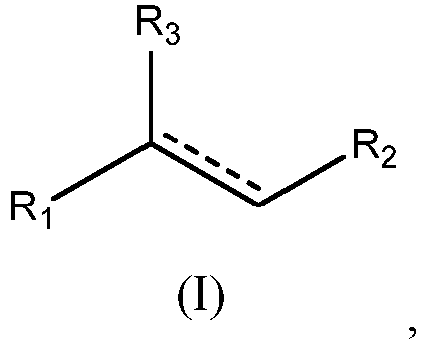 wobei R1 lineares C1-24-Alkyl ist; R2 CH2OH, oder CHO ist; R3 H, OH, oder Oxo (=O) ist; und
------ eine Einfach- oder Doppelbindung darstellt, mit der Maßgabe, dass die Wertigkeit des Kohlenstoffatoms, an das R3 gebunden ist, vier ist, wobei der Organismus aufweist:(i) einen Formaldehyd-Fixierungsweg;(ii) einen Formiat-Assimilationsweg; und(iii) einen Methanol-Stoffwechselweg,wobei der Formaldehyd-Fixierungsweg umfasst:(1)a) eine 3-Hexulose-6-phosphat-Synthase undb) eine 6-Phospho-3-Hexuloisomerase;wobei der Formiat-Assimilationsweg umfasst:
(2)a) eine Formyltetrahydrofolat-Synthetase,b) eine Methenyltetrahydrofolat-Cyclohydrolase,c) eine Methylentetrahydrofolat-Dehydrogenase,d) ein System zur Spaltung von Glycin,e) eine Serin-Hydroxymethyltransferase, undf) eine Serin-Desaminase;wobei der Methanol-Stoffwechselweg umfasst:
(3) eine Methanol-Dehydrogenase;wobei der mikrobielle Organismus außerdem umfasst:A) einen Malonyl-CoA-unabhängigen Fettsäure-Acyl-CoA-Elongationszyklus (MI-FAE) und/oder einen Malonyl-CoA-abhängigen Fettsäure-Acyl-CoA-Elongationszyklus (MD-FAE) in Kombination mit einem Terminationsweg,wobei der MI-FAE-Zyklus eine oder mehrere Thiolasen, eine oder mehrere 3-Oxoacyl-CoA-Reduktasen, eine oder mehrere 3-Hydroxyacyl-CoA-Dehydratasen, und eine oder mehrere Enoyl-CoA-Reduktasen umfasst,wobei der MD-FAE-Zyklus eine oder mehrere Elongasen, eine oder mehrere 3-Oxoacyl-CoA-Reduktasen, eine oder mehrere 3-Hydroxyacyl-CoA-Dehydratasen, und eine oder mehrere Enoyl-CoA-Reduktasen umfasst,wobei der Terminationsweg ausgewählt ist aus:(4A) einer Acyl-CoA-Reduktase (aldehydbildend);(5A)a) einer Acyl-CoA-Reduktase (aldehydbildend) undb) einer Alkoholdehydrogenase; oder(6A) einer Acyl-CoA-Reduktase (alkoholbildend),wobei ein Enzym des Formaldehyd-Fixierungsweges, des Formiat-Assimilationsweges, des Methanol-Stoffwechselweges, des MI-FAE-Zyklus, des MD-FAE-Zyklus oder des Terminationsweges durch mindestens eine exogene Nukleinsäure kodiert wird; oderB) einen Fett-Acyl-ACP-Verlängerungszyklus (FAACPE) in Kombination mit einem Terminationsweg,wobei der FAACPE-Zyklus eine oder mehrere β-Ketoacyl-ACP-Synthasen, eine oder mehrere β-Ketoacyl-ACP-Reduktasen, eine oder mehrere β-Hydroxyacyl-ACP-Reduktasen, und eine oder mehrere Enoyl-ACP-Reduktasen umfasst,wobei der Terminationsweg ausgewählt ist aus:(4B) einer Fettacyl-ACP-Reduktase;(5B)a) einer Thioesterase undb) einer Carbonsäurereduktase (CAR); oder(6B)a) einer Thioesterase,b) einer CAR, undc) einer Fettaldehydreduktase,wobei ein Enzym des Formaldehyd-Fixierungsweges, des Formiat-Assimilationsweges, des Methanol-Stoffwechselweges, des FAACPE-Zyklus oder des Terminationsweges durch mindestens eine exogene Nukleinsäure kodiert wird,wobei der Organismus eine Bakterienart ist, wobei die Bakterienart E. coli ist. - Verfahren zur Herstellung einer Verbindung der Formel (I):

- - - - - - eine Einfach- oder Doppelbindung darstellt, mit der Maßgabe, dass die Wertigkeit des Kohlenstoffatoms, an das R3 gebunden ist, vier ist, umfassend das Kultivieren des nicht natürlich vorkommenden mikrobiellen Organismus nach Anspruch 1 unter Bedingungen für einen ausreichenden Zeitraum, um die Verbindung der Formel (I) herzustellen. - Nicht natürlich vorkommender mikrobieller Organismus nach Anspruch 1, wobei der Formaldehyd-Fixierungsweg, der Formiat-Assimilationsweg und der Methanol-Stoffwechselweg jeweils mindestens eine exogene Nukleinsäure umfassen, die mindestens ein Enzym des Stoffwechselwegs kodiert.
- Nicht natürlich vorkommender mikrobieller Organismus nach Anspruch 1, wobei der mikrobielle Organismus einen MI-FAE-Zyklus und eine Acyl-CoA-Reduktase (aldehydbildend) aufweist.
- Nicht natürlich vorkommender mikrobieller Organismus nach Anspruch 1, wobei der mikrobielle Organismus einen MI-FAE-Zyklus, eine Acyl-CoA-Reduktase (aldehydbildend) und eine Alkoholdehydrogenase aufweist.
- Nicht natürlich vorkommender mikrobieller Organismus nach Anspruch 1, wobei der mikrobielle Organismus einen MI-FAE-Zyklus und eine Acyl-CoA-Reduktase (alkoholbildend) aufweist.
- Nicht natürlich vorkommender mikrobieller Organismus nach Anspruch 1, wobei der mikrobielle Organismus einen MD-FAE-Zyklus und eine Acyl-CoA-Reduktase (aldehydbildend) aufweist.
- Nicht natürlich vorkommender mikrobieller Organismus nach Anspruch 1, wobei der mikrobielle Organismus einen MD-FAE-Zyklus, eine Acyl-CoA-Reduktase (aldehydbildend) und eine Alkoholdehydrogenase aufweist.
- Nicht natürlich vorkommender mikrobieller Organismus nach Anspruch 1, wobei der mikrobielle Organismus einen MD-FAE-Zyklus und eine Acyl-CoA-Reduktase (alkoholbildend) aufweist.
- Nicht natürlich vorkommender mikrobieller Organismus nach Anspruch 1, wobei der mikrobielle Organismus einen FAACPE-Zyklus und eine Fettacyl-ACP-Reduktase umfasst.
- Nicht natürlich vorkommender mikrobieller Organismus nach Anspruch 1, wobei der mikrobielle Organismus einen FAACPE-Zyklus, eine Thioesterase und eine CAR aufweist.
- Nicht natürlich vorkommender mikrobieller Organismus nach Anspruch 1, wobei der mikrobielle Organismus einen FAACPE-Zyklus, eine Thioesterase, eine CAR und eine Fettaldehydreduktase aufweist.
- Verfahren nach Anspruch 2, wobei R3 H ist.
Applications Claiming Priority (4)
| Application Number | Priority Date | Filing Date | Title |
|---|---|---|---|
| US201361908652P | 2013-11-25 | 2013-11-25 | |
| US201361911374P | 2013-12-03 | 2013-12-03 | |
| US201461945003P | 2014-02-26 | 2014-02-26 | |
| PCT/US2014/067282 WO2015077752A1 (en) | 2013-11-25 | 2014-11-25 | Methods for enhancing microbial production of specific length fatty alcohols in the presence of methanol |
Publications (3)
| Publication Number | Publication Date |
|---|---|
| EP3074504A1 EP3074504A1 (de) | 2016-10-05 |
| EP3074504A4 EP3074504A4 (de) | 2017-05-03 |
| EP3074504B1 true EP3074504B1 (de) | 2024-12-25 |
Family
ID=53180287
Family Applications (1)
| Application Number | Title | Priority Date | Filing Date |
|---|---|---|---|
| EP14864741.5A Active EP3074504B1 (de) | 2013-11-25 | 2014-11-25 | Verfahren zur verbesserung der mikrobiellen herstellung von fettalkoholen mit bestimmter länge in gegenwart von methanol |
Country Status (3)
| Country | Link |
|---|---|
| US (3) | US20160376600A1 (de) |
| EP (1) | EP3074504B1 (de) |
| WO (1) | WO2015077752A1 (de) |
Families Citing this family (16)
| Publication number | Priority date | Publication date | Assignee | Title |
|---|---|---|---|---|
| EP3074504B1 (de) | 2013-11-25 | 2024-12-25 | Genomatica, Inc. | Verfahren zur verbesserung der mikrobiellen herstellung von fettalkoholen mit bestimmter länge in gegenwart von methanol |
| EP3868890A1 (de) | 2015-11-18 | 2021-08-25 | Provivi, Inc. | Mikroorganismen zur herstellung von insektenpheromonen und verwandten verbindungen |
| EP3464311A4 (de) | 2016-06-06 | 2020-03-18 | Provivi, Inc. | Halb-biosynthetische herstellung von fettalkoholen und fettaldehyden |
| US11104921B2 (en) | 2017-05-17 | 2021-08-31 | Provivi, Inc. | Microorganisms for the production of insect pheromones and related compounds |
| CN109971778B (zh) * | 2017-12-27 | 2022-11-18 | 北京蓝晶微生物科技有限公司 | 一种在盐单胞菌中快速基因编辑的载体组合及其应用 |
| CN108359626B (zh) * | 2018-01-05 | 2021-10-26 | 复旦大学 | 一种工程菌及其在制备(r)-3-羟基-5-己烯酸酯中的应用 |
| CN109609426B (zh) * | 2019-01-04 | 2022-02-15 | 花安堂生物科技集团有限公司 | 一种以甲醇/甲醛和葡萄糖为共底物生产1,3-丙二醇的方法 |
| WO2020185627A1 (en) * | 2019-03-08 | 2020-09-17 | Massachusetts Institute Of Technology | Human gut microbiome-derived biosynthetic enzymes for production of fatty acid amides |
| CN110713962B (zh) * | 2019-09-06 | 2022-06-21 | 南京农业大学 | 一株高产丙二酰辅酶a的基因工程菌及其构建方法和应用 |
| US20230407314A1 (en) * | 2020-11-02 | 2023-12-21 | Ambareesh Govind Phadnavis | Anaerobic co-production of essential amino acids, alcohols and lipids from molasses, hydrolysed starch and lignocellulose |
| CN112831427B (zh) * | 2021-01-20 | 2022-08-23 | 山东大学 | 一株高产β-胡萝卜素的解脂耶氏酵母及其应用 |
| US20240200019A1 (en) * | 2021-04-29 | 2024-06-20 | Ginkgo Bioworks, Inc. | Genetically modified yeast cells and methods of use for increased lipid yield |
| EP4493675A1 (de) * | 2022-03-16 | 2025-01-22 | Genomatica, Inc. | Mikroorganismen und verfahren zur herstellung von fettsäurederivaten mit reduziertem gehalt an nebenprodukten |
| CN114672437B (zh) * | 2022-04-15 | 2023-08-11 | 河北谷旺金莱生物科技有限公司 | 一株产有机酸的枯草芽孢杆菌g-1及其应用 |
| CN117210508B (zh) * | 2023-11-07 | 2024-03-15 | 青岛农业大学 | 一种制备高产二十碳五烯酸裂殖壶菌的方法 |
| WO2026003194A1 (en) * | 2024-06-27 | 2026-01-02 | Basf Se | Production of c6-c26 fatty alcohols from methanol |
Family Cites Families (68)
| Publication number | Priority date | Publication date | Assignee | Title |
|---|---|---|---|---|
| IL101120A (en) | 1991-03-08 | 1996-10-31 | Tokyo Gas Co Ltd | Preparation of compounds marked C31 |
| US6150512A (en) | 1995-05-15 | 2000-11-21 | Yuan; Ling | Engineering plant thioesterases and disclosure of plant thioesterases having novel substrate specificity |
| US5958745A (en) | 1996-03-13 | 1999-09-28 | Monsanto Company | Methods of optimizing substrate pools and biosynthesis of poly-β-hydroxybutyrate-co-poly-β-hydroxyvalerate in bacteria and plants |
| US6331428B1 (en) | 1997-07-09 | 2001-12-18 | Ajinomoto Co., Inc. | Hexulose phosphate isomerase gene |
| JP2000069976A (ja) | 1998-09-02 | 2000-03-07 | Ajinomoto Co Inc | メタノール脱水素酵素の新規活性促進因子及びその遺伝子 |
| DE19856136C2 (de) | 1998-12-04 | 2002-10-24 | Pasteur Institut | Verfahren und Vorrichtung zur Selektion beschleunigter Proliferation lebender Zellen in Suspension |
| WO2000046405A2 (en) | 1999-02-02 | 2000-08-10 | Bernhard Palsson | Methods for identifying drug targets based on genomic sequence data |
| JP2002017351A (ja) | 2000-07-07 | 2002-01-22 | Ajinomoto Co Inc | ホスホヘキシュロイソメラーゼ及びその遺伝子 |
| WO2002055995A2 (en) | 2001-01-10 | 2002-07-18 | Penn State Res Found | Method and system for modeling cellular metabolism |
| US7127379B2 (en) | 2001-01-31 | 2006-10-24 | The Regents Of The University Of California | Method for the evolutionary design of biochemical reaction networks |
| US20030059792A1 (en) | 2001-03-01 | 2003-03-27 | Palsson Bernhard O. | Models and methods for determining systemic properties of regulated reaction networks |
| US7163810B2 (en) | 2001-09-06 | 2007-01-16 | Ajinomoto Co., Inc. | Method for producing target substance |
| SE0200857D0 (sv) | 2002-03-19 | 2002-03-19 | Forskarpatent I Syd Ab | Metabolic engineering for improved xylose utilisation of saccharomyces cerevisiae |
| US20030224363A1 (en) | 2002-03-19 | 2003-12-04 | Park Sung M. | Compositions and methods for modeling bacillus subtilis metabolism |
| AU2003222128A1 (en) | 2002-03-29 | 2003-10-13 | Genomatica, Inc. | Human metabolic models and methods |
| US6911332B2 (en) | 2002-06-12 | 2005-06-28 | Ajinomoto Co., Inc. | Isolated polynucleotides encoding d-arabino-3-hexulose-6-phosphate synthases from Methylophilus methylotrophus |
| CA2491753A1 (en) | 2002-07-10 | 2004-03-04 | The Penn State Research Foundation | Method for determining gene knockout strategies |
| ES2395053T3 (es) | 2002-09-12 | 2015-10-08 | Metabolix, Inc. | Producción de polihidroxialcanoato mediante las vías de la aldehído deshidrogenasa dependiente de la coenzima A |
| WO2004035009A2 (en) | 2002-10-15 | 2004-04-29 | The Regents Of The University Of California | Methods and systems to identify operational reaction pathways |
| DE102004001674B4 (de) | 2003-01-29 | 2019-01-24 | Ajinomoto Co., Inc. | Verfahren zur Herstellung von L-Lysin unter Einsatz von Methanol verwertenden Bakterien |
| JP2004261150A (ja) | 2003-03-04 | 2004-09-24 | Ajinomoto Co Inc | 目的物質の製造法 |
| AU2005272367B2 (en) | 2004-08-10 | 2009-02-12 | Ajinomoto Co., Inc. | The use of phosphoketolase for producing useful metabolites |
| RU2004124226A (ru) | 2004-08-10 | 2006-01-27 | Закрытое акционерное общество "Научно-исследовательский институт Аджиномото-Генетика" (ЗАО АГРИ) (RU) | Использование фосфокетолазы для продукции полезных метаболитов |
| US20100242345A1 (en) | 2006-05-19 | 2010-09-30 | LS9, Inc | Production of fatty acids & derivatives thereof |
| DK2840131T3 (da) | 2006-05-19 | 2020-01-20 | Genomatica Inc | Fremstilling af fedtsyrer og derivater deraf |
| DE102006025821A1 (de) | 2006-06-02 | 2007-12-06 | Degussa Gmbh | Ein Enzym zur Herstellung von Mehylmalonatsemialdehyd oder Malonatsemialdehyd |
| WO2008113041A2 (en) | 2007-03-14 | 2008-09-18 | Ls9, Inc. | Process for producing low molecular weight hydrocarbons from renewable resources |
| AT505251B1 (de) | 2007-05-30 | 2009-09-15 | Vogelbusch Gmbh | Verfahren zum umwandeln von xylose oder xylose enthaltenden substratlísungen |
| US7947483B2 (en) | 2007-08-10 | 2011-05-24 | Genomatica, Inc. | Methods and organisms for the growth-coupled production of 1,4-butanediol |
| EP2062967A1 (de) | 2007-11-21 | 2009-05-27 | Technical University of Denmark | Genetisch manipulierter Aspergillus |
| US8048624B1 (en) | 2007-12-04 | 2011-11-01 | Opx Biotechnologies, Inc. | Compositions and methods for 3-hydroxypropionate bio-production from biomass |
| BRPI0907385A2 (pt) * | 2008-01-22 | 2015-07-21 | Genomatica Inc | Métodos e organismos para utilização de gás de síntese e outras fontes de carbono gasosas e metanol |
| KR20110104492A (ko) | 2008-12-12 | 2011-09-22 | 메타볼릭스 인코포레이티드 | 폴리(5hv)및 5 탄소 화학물질의 생산을 위한 녹색 공정 및 조성물 |
| US20100203614A1 (en) | 2009-02-12 | 2010-08-12 | Utah State University | Fatty aldehyde reductase |
| US20120052542A1 (en) | 2009-03-10 | 2012-03-01 | Athena Biotechnologies, Inc. | Reducing Carbon Dioxide Production and Increasing Ethanol Yield During Microbial Ethanol Fermentation |
| WO2010135624A2 (en) | 2009-05-22 | 2010-11-25 | Codexis, Inc. | Engineered biosynthesis of fatty alcohols |
| RU2012102900A (ru) | 2009-06-30 | 2013-08-10 | Кодексис, Инк. | Получение жирных спиртов с помощью образующих жирные спирты ацил-коа-редуктаз (fаr) |
| US7955820B1 (en) | 2009-07-09 | 2011-06-07 | Joule Unlimited, Inc. | Methods and compositions for the recombinant biosynthesis of n-alkanes |
| WO2011127409A2 (en) | 2010-04-08 | 2011-10-13 | Ls9, Inc. | Methods and compositions related to fatty alcohol biosynthetic enzymes |
| US8871488B2 (en) | 2010-06-18 | 2014-10-28 | Butamax Advanced Biofuels Llc | Recombinant host cells comprising phosphoketolases |
| WO2012006114A2 (en) | 2010-06-28 | 2012-01-12 | Codexis, Inc. | Fatty alcohol forming acyl reductases (fars) and methods of use thereof |
| US8987431B2 (en) | 2010-07-01 | 2015-03-24 | Coskata, Inc. | Essential genes encoding conserved metabolic pathway function in autotrophic solventogenic clostridial species |
| US8372610B2 (en) | 2010-09-15 | 2013-02-12 | Ls9, Inc. | Production of odd chain fatty acid derivatives in recombinant microbial cells |
| JP5387756B2 (ja) | 2011-01-20 | 2014-01-15 | トヨタ自動車株式会社 | 組換え酵母及びこれを用いた物質生産方法 |
| US9790521B2 (en) | 2011-03-24 | 2017-10-17 | Butamax Advanced Biofuels Llc | Host cells and methods for production of isobutanol |
| CA2834633A1 (en) | 2011-04-29 | 2012-11-01 | Danisco Us Inc. | Recombinant microorganisms for enhanced production of mevalonate, isoprene, and isoprenoids |
| EP3031911B1 (de) | 2011-07-12 | 2018-12-05 | Scientist of Fortune S.A. | Rekombinanter mikroorganismus zur herstellung nützlicher metaboliten |
| EP2753699A4 (de) * | 2011-09-08 | 2015-08-19 | Genomatica Inc | Eukaryotische organismen und verfahren zur herstellung von 1,3-butandiol |
| PT2753701T (pt) | 2011-09-27 | 2018-08-10 | Exxonmobil Res & Eng Co | Acil-acp-sintases de éster ceroso |
| HK1201071A1 (en) | 2011-10-07 | 2015-08-21 | Danisco Us Inc. | Utilization of phosphoketolase in the production of mevalonate, isoprenoid precursors, and isoprene |
| US8349587B2 (en) * | 2011-10-31 | 2013-01-08 | Ginkgo Bioworks, Inc. | Methods and systems for chemoautotrophic production of organic compounds |
| JP6073350B2 (ja) | 2011-11-09 | 2017-02-01 | アミリス, インコーポレイテッド | アセチル−補酵素a誘導イソプレノイドの生産 |
| PE20141569A1 (es) | 2011-11-11 | 2014-11-08 | Ajinomoto Kk | Metodo para producir una sustancia diana mediante fermentacion |
| EP2807262A4 (de) | 2012-01-25 | 2015-12-30 | Bioamber Internat S A R L | Verfahren zur succinatherstellung |
| GB201201178D0 (en) | 2012-01-25 | 2012-03-07 | Sinvent As | Novel enzymes |
| WO2013181647A2 (en) | 2012-06-01 | 2013-12-05 | Danisco Us Inc. | Compositions and methods of producing isoprene and/or industrrial bio-products using anaerobic microorganisms |
| MX2015001780A (es) * | 2012-08-10 | 2015-09-28 | Opx Biotechnologies Inc | Microorganismos y métodos para la producción de ácidos grasos y productos derivados de ácidos grasos. |
| US10513716B2 (en) * | 2012-10-15 | 2019-12-24 | Genomatica, Inc. | Microorganisms and methods for production of specific length fatty alcohols and related compounds |
| WO2014066235A1 (en) * | 2012-10-22 | 2014-05-01 | Genomatica, Inc. | Microorganisms and methods for enhancing the availability of reducing equivalents in the presence of methanol, and for producing succinate related thereto |
| BR112015011544B1 (pt) | 2012-11-20 | 2022-08-16 | Lallemand Hungary Liquidity Management Llc | Microrganismo recombinante, composição compreendendo o mesmo, método de produção de etanol e co-cultura |
| KR20150108367A (ko) | 2013-01-21 | 2015-09-25 | 세키스이가가쿠 고교가부시키가이샤 | 재조합 세포, 및 1,4-부탄디올의 생산 방법 |
| US20140273164A1 (en) | 2013-03-14 | 2014-09-18 | The Regents Of The University Of California | Non-co2 evolving metabolic pathway for chemical production |
| WO2014153207A2 (en) | 2013-03-14 | 2014-09-25 | The Regents Of The University Of California | Recombinant microorganisms having a methanol elongation cycle (mec) |
| US9518278B2 (en) | 2013-03-14 | 2016-12-13 | The Regents Of The University Of California | Recombinant microorganisms having a methanol elongation cycle (MEC) |
| WO2014152434A2 (en) * | 2013-03-15 | 2014-09-25 | Genomatica, Inc. | Microorganisms and methods for producing butadiene and related compounds by formate assimilation |
| US9410214B2 (en) | 2013-03-15 | 2016-08-09 | Amyris, Inc. | Use of phosphoketolase and phosphotransacetylase for production of acetyl-coenzyme A derived compounds |
| EP3074504B1 (de) | 2013-11-25 | 2024-12-25 | Genomatica, Inc. | Verfahren zur verbesserung der mikrobiellen herstellung von fettalkoholen mit bestimmter länge in gegenwart von methanol |
| PL3077501T3 (pl) | 2013-12-03 | 2022-01-31 | Genomatica, Inc. | Mikroorganizmy i sposoby poprawy wydajności produktu na metanolu z użyciem syntezy acetylo-coa |
-
2014
- 2014-11-25 EP EP14864741.5A patent/EP3074504B1/de active Active
- 2014-11-25 US US15/038,922 patent/US20160376600A1/en not_active Abandoned
- 2014-11-25 WO PCT/US2014/067282 patent/WO2015077752A1/en not_active Ceased
-
2021
- 2021-11-01 US US17/516,424 patent/US12398396B2/en active Active
-
2025
- 2025-05-13 US US19/207,233 patent/US20250388910A1/en active Pending
Also Published As
| Publication number | Publication date |
|---|---|
| EP3074504A4 (de) | 2017-05-03 |
| US20220348932A1 (en) | 2022-11-03 |
| EP3074504A1 (de) | 2016-10-05 |
| US20160376600A1 (en) | 2016-12-29 |
| WO2015077752A1 (en) | 2015-05-28 |
| US12398396B2 (en) | 2025-08-26 |
| US20250388910A1 (en) | 2025-12-25 |
Similar Documents
| Publication | Publication Date | Title |
|---|---|---|
| US12398396B2 (en) | Methods for enhancing microbial production of specific length fatty alcohols in the presence of methanol | |
| US11186853B2 (en) | Microorganisms and methods for production of specific length fatty alcohols and related compounds | |
| US12529078B2 (en) | Microorganisms and methods for improving product yields on methanol using acetyl-CoA synthesis | |
| EP3741865B1 (de) | Nicht-natürliche mikrobielle organismen mit verbesserter energieeffizienz | |
| US20170247709A1 (en) | Eukaryotic organisms and methods for increasing the availability of cytosolic acetyl-coa, and for producing 1,3-butanediol | |
| US20230287464A1 (en) | Microorganisms and methods for the production of butadiene using acetyl-coa | |
| WO2014071289A1 (en) | Microorganisms for enhancing the availability of reducing equivalents in the presence of methanol, and for producing 3-hydroxyisobutyrate | |
| AU2013203770B2 (en) | Eukaryotic organisms and methods for producing 1,3-butanediol |
Legal Events
| Date | Code | Title | Description |
|---|---|---|---|
| PUAI | Public reference made under article 153(3) epc to a published international application that has entered the european phase |
Free format text: ORIGINAL CODE: 0009012 |
|
| 17P | Request for examination filed |
Effective date: 20160624 |
|
| AK | Designated contracting states |
Kind code of ref document: A1 Designated state(s): AL AT BE BG CH CY CZ DE DK EE ES FI FR GB GR HR HU IE IS IT LI LT LU LV MC MK MT NL NO PL PT RO RS SE SI SK SM TR |
|
| AX | Request for extension of the european patent |
Extension state: BA ME |
|
| DAX | Request for extension of the european patent (deleted) | ||
| A4 | Supplementary search report drawn up and despatched |
Effective date: 20170331 |
|
| RIC1 | Information provided on ipc code assigned before grant |
Ipc: C12N 9/90 20060101ALN20170327BHEP Ipc: C12N 9/88 20060101ALN20170327BHEP Ipc: C12N 9/04 20060101ALN20170327BHEP Ipc: C12N 1/19 20060101AFI20170327BHEP Ipc: C12N 9/10 20060101ALN20170327BHEP Ipc: C12P 7/04 20060101ALN20170327BHEP Ipc: C12N 1/11 20060101ALI20170327BHEP Ipc: C12N 1/13 20060101ALI20170327BHEP Ipc: C12N 1/15 20060101ALI20170327BHEP Ipc: C12N 15/52 20060101ALN20170327BHEP |
|
| STAA | Information on the status of an ep patent application or granted ep patent |
Free format text: STATUS: REQUEST FOR EXAMINATION WAS MADE |
|
| STAA | Information on the status of an ep patent application or granted ep patent |
Free format text: STATUS: EXAMINATION IS IN PROGRESS |
|
| 17Q | First examination report despatched |
Effective date: 20180416 |
|
| GRAP | Despatch of communication of intention to grant a patent |
Free format text: ORIGINAL CODE: EPIDOSNIGR1 |
|
| STAA | Information on the status of an ep patent application or granted ep patent |
Free format text: STATUS: GRANT OF PATENT IS INTENDED |
|
| RIC1 | Information provided on ipc code assigned before grant |
Ipc: C12P 7/04 20060101ALN20240618BHEP Ipc: C12N 15/52 20060101ALN20240618BHEP Ipc: C12N 9/90 20060101ALN20240618BHEP Ipc: C12N 9/88 20060101ALN20240618BHEP Ipc: C12N 9/10 20060101ALN20240618BHEP Ipc: C12N 9/04 20060101ALN20240618BHEP Ipc: C12N 1/11 20060101ALI20240618BHEP Ipc: C12N 1/13 20060101ALI20240618BHEP Ipc: C12N 1/15 20060101ALI20240618BHEP Ipc: C12N 1/19 20060101AFI20240618BHEP |
|
| INTG | Intention to grant announced |
Effective date: 20240719 |
|
| GRAS | Grant fee paid |
Free format text: ORIGINAL CODE: EPIDOSNIGR3 |
|
| GRAA | (expected) grant |
Free format text: ORIGINAL CODE: 0009210 |
|
| STAA | Information on the status of an ep patent application or granted ep patent |
Free format text: STATUS: THE PATENT HAS BEEN GRANTED |
|
| P01 | Opt-out of the competence of the unified patent court (upc) registered |
Free format text: CASE NUMBER: APP_58710/2024 Effective date: 20241028 |
|
| AK | Designated contracting states |
Kind code of ref document: B1 Designated state(s): AL AT BE BG CH CY CZ DE DK EE ES FI FR GB GR HR HU IE IS IT LI LT LU LV MC MK MT NL NO PL PT RO RS SE SI SK SM TR |
|
| REG | Reference to a national code |
Ref country code: GB Ref legal event code: FG4D |
|
| REG | Reference to a national code |
Ref country code: CH Ref legal event code: EP |
|
| REG | Reference to a national code |
Ref country code: DE Ref legal event code: R096 Ref document number: 602014091384 Country of ref document: DE |
|
| REG | Reference to a national code |
Ref country code: IE Ref legal event code: FG4D |
|
| REG | Reference to a national code |
Ref country code: LT Ref legal event code: MG9D |
|
| PG25 | Lapsed in a contracting state [announced via postgrant information from national office to epo] |
Ref country code: FI Free format text: LAPSE BECAUSE OF FAILURE TO SUBMIT A TRANSLATION OF THE DESCRIPTION OR TO PAY THE FEE WITHIN THE PRESCRIBED TIME-LIMIT Effective date: 20241225 |
|
| PG25 | Lapsed in a contracting state [announced via postgrant information from national office to epo] |
Ref country code: BG Free format text: LAPSE BECAUSE OF FAILURE TO SUBMIT A TRANSLATION OF THE DESCRIPTION OR TO PAY THE FEE WITHIN THE PRESCRIBED TIME-LIMIT Effective date: 20241225 |
|
| PG25 | Lapsed in a contracting state [announced via postgrant information from national office to epo] |
Ref country code: NO Free format text: LAPSE BECAUSE OF FAILURE TO SUBMIT A TRANSLATION OF THE DESCRIPTION OR TO PAY THE FEE WITHIN THE PRESCRIBED TIME-LIMIT Effective date: 20250325 |
|
| PG25 | Lapsed in a contracting state [announced via postgrant information from national office to epo] |
Ref country code: GR Free format text: LAPSE BECAUSE OF FAILURE TO SUBMIT A TRANSLATION OF THE DESCRIPTION OR TO PAY THE FEE WITHIN THE PRESCRIBED TIME-LIMIT Effective date: 20250326 Ref country code: LV Free format text: LAPSE BECAUSE OF FAILURE TO SUBMIT A TRANSLATION OF THE DESCRIPTION OR TO PAY THE FEE WITHIN THE PRESCRIBED TIME-LIMIT Effective date: 20241225 |
|
| PG25 | Lapsed in a contracting state [announced via postgrant information from national office to epo] |
Ref country code: RS Free format text: LAPSE BECAUSE OF FAILURE TO SUBMIT A TRANSLATION OF THE DESCRIPTION OR TO PAY THE FEE WITHIN THE PRESCRIBED TIME-LIMIT Effective date: 20250325 |
|
| REG | Reference to a national code |
Ref country code: NL Ref legal event code: MP Effective date: 20241225 |
|
| PG25 | Lapsed in a contracting state [announced via postgrant information from national office to epo] |
Ref country code: NL Free format text: LAPSE BECAUSE OF FAILURE TO SUBMIT A TRANSLATION OF THE DESCRIPTION OR TO PAY THE FEE WITHIN THE PRESCRIBED TIME-LIMIT Effective date: 20241225 |
|
| REG | Reference to a national code |
Ref country code: AT Ref legal event code: MK05 Ref document number: 1754161 Country of ref document: AT Kind code of ref document: T Effective date: 20241225 |
|
| PG25 | Lapsed in a contracting state [announced via postgrant information from national office to epo] |
Ref country code: SM Free format text: LAPSE BECAUSE OF FAILURE TO SUBMIT A TRANSLATION OF THE DESCRIPTION OR TO PAY THE FEE WITHIN THE PRESCRIBED TIME-LIMIT Effective date: 20241225 |
|
| PG25 | Lapsed in a contracting state [announced via postgrant information from national office to epo] |
Ref country code: PL Free format text: LAPSE BECAUSE OF FAILURE TO SUBMIT A TRANSLATION OF THE DESCRIPTION OR TO PAY THE FEE WITHIN THE PRESCRIBED TIME-LIMIT Effective date: 20241225 |
|
| PG25 | Lapsed in a contracting state [announced via postgrant information from national office to epo] |
Ref country code: ES Free format text: LAPSE BECAUSE OF FAILURE TO SUBMIT A TRANSLATION OF THE DESCRIPTION OR TO PAY THE FEE WITHIN THE PRESCRIBED TIME-LIMIT Effective date: 20241225 |
|
| PG25 | Lapsed in a contracting state [announced via postgrant information from national office to epo] |
Ref country code: IS Free format text: LAPSE BECAUSE OF FAILURE TO SUBMIT A TRANSLATION OF THE DESCRIPTION OR TO PAY THE FEE WITHIN THE PRESCRIBED TIME-LIMIT Effective date: 20250425 |
|
| PG25 | Lapsed in a contracting state [announced via postgrant information from national office to epo] |
Ref country code: PT Free format text: LAPSE BECAUSE OF FAILURE TO SUBMIT A TRANSLATION OF THE DESCRIPTION OR TO PAY THE FEE WITHIN THE PRESCRIBED TIME-LIMIT Effective date: 20250428 |
|
| PG25 | Lapsed in a contracting state [announced via postgrant information from national office to epo] |
Ref country code: EE Free format text: LAPSE BECAUSE OF FAILURE TO SUBMIT A TRANSLATION OF THE DESCRIPTION OR TO PAY THE FEE WITHIN THE PRESCRIBED TIME-LIMIT Effective date: 20241225 |
|
| PG25 | Lapsed in a contracting state [announced via postgrant information from national office to epo] |
Ref country code: RO Free format text: LAPSE BECAUSE OF FAILURE TO SUBMIT A TRANSLATION OF THE DESCRIPTION OR TO PAY THE FEE WITHIN THE PRESCRIBED TIME-LIMIT Effective date: 20241225 Ref country code: AT Free format text: LAPSE BECAUSE OF FAILURE TO SUBMIT A TRANSLATION OF THE DESCRIPTION OR TO PAY THE FEE WITHIN THE PRESCRIBED TIME-LIMIT Effective date: 20241225 |
|
| PG25 | Lapsed in a contracting state [announced via postgrant information from national office to epo] |
Ref country code: SK Free format text: LAPSE BECAUSE OF FAILURE TO SUBMIT A TRANSLATION OF THE DESCRIPTION OR TO PAY THE FEE WITHIN THE PRESCRIBED TIME-LIMIT Effective date: 20241225 |
|
| PG25 | Lapsed in a contracting state [announced via postgrant information from national office to epo] |
Ref country code: CZ Free format text: LAPSE BECAUSE OF FAILURE TO SUBMIT A TRANSLATION OF THE DESCRIPTION OR TO PAY THE FEE WITHIN THE PRESCRIBED TIME-LIMIT Effective date: 20241225 |
|
| PG25 | Lapsed in a contracting state [announced via postgrant information from national office to epo] |
Ref country code: IT Free format text: LAPSE BECAUSE OF FAILURE TO SUBMIT A TRANSLATION OF THE DESCRIPTION OR TO PAY THE FEE WITHIN THE PRESCRIBED TIME-LIMIT Effective date: 20241225 |
|
| PG25 | Lapsed in a contracting state [announced via postgrant information from national office to epo] |
Ref country code: SE Free format text: LAPSE BECAUSE OF FAILURE TO SUBMIT A TRANSLATION OF THE DESCRIPTION OR TO PAY THE FEE WITHIN THE PRESCRIBED TIME-LIMIT Effective date: 20241225 |
|
| REG | Reference to a national code |
Ref country code: DE Ref legal event code: R097 Ref document number: 602014091384 Country of ref document: DE |
|
| PG25 | Lapsed in a contracting state [announced via postgrant information from national office to epo] |
Ref country code: DK Free format text: LAPSE BECAUSE OF FAILURE TO SUBMIT A TRANSLATION OF THE DESCRIPTION OR TO PAY THE FEE WITHIN THE PRESCRIBED TIME-LIMIT Effective date: 20241225 |
|
| PLBE | No opposition filed within time limit |
Free format text: ORIGINAL CODE: 0009261 |
|
| STAA | Information on the status of an ep patent application or granted ep patent |
Free format text: STATUS: NO OPPOSITION FILED WITHIN TIME LIMIT |
|
| 26N | No opposition filed |
Effective date: 20250926 |
|
| PGFP | Annual fee paid to national office [announced via postgrant information from national office to epo] |
Ref country code: DE Payment date: 20251022 Year of fee payment: 12 |
|
| PGFP | Annual fee paid to national office [announced via postgrant information from national office to epo] |
Ref country code: GB Payment date: 20251016 Year of fee payment: 12 |
|
| PGFP | Annual fee paid to national office [announced via postgrant information from national office to epo] |
Ref country code: FR Payment date: 20251023 Year of fee payment: 12 |