EP3071709B1 - Mikrobiotenzusammensetzung als marker des ansprechens auf eine chemotherapie und verwendung von mikrobiellen modulatoren (prä-, pro- oder symbiotisch) zur verbesserung der wirksamkeit einer krebsbehandlung - Google Patents
Mikrobiotenzusammensetzung als marker des ansprechens auf eine chemotherapie und verwendung von mikrobiellen modulatoren (prä-, pro- oder symbiotisch) zur verbesserung der wirksamkeit einer krebsbehandlung Download PDFInfo
- Publication number
- EP3071709B1 EP3071709B1 EP14812648.5A EP14812648A EP3071709B1 EP 3071709 B1 EP3071709 B1 EP 3071709B1 EP 14812648 A EP14812648 A EP 14812648A EP 3071709 B1 EP3071709 B1 EP 3071709B1
- Authority
- EP
- European Patent Office
- Prior art keywords
- ctx
- composition
- cells
- mice
- bacteria
- Prior art date
- Legal status (The legal status is an assumption and is not a legal conclusion. Google has not performed a legal analysis and makes no representation as to the accuracy of the status listed.)
- Active
Links
Images

















Classifications
-
- A—HUMAN NECESSITIES
- A61—MEDICAL OR VETERINARY SCIENCE; HYGIENE
- A61K—PREPARATIONS FOR MEDICAL, DENTAL OR TOILETRY PURPOSES
- A61K35/00—Medicinal preparations containing materials or reaction products thereof with undetermined constitution
- A61K35/66—Microorganisms or materials therefrom
- A61K35/74—Bacteria
- A61K35/741—Probiotics
- A61K35/744—Lactic acid bacteria, e.g. enterococci, pediococci, lactococci, streptococci or leuconostocs
-
- A—HUMAN NECESSITIES
- A61—MEDICAL OR VETERINARY SCIENCE; HYGIENE
- A61K—PREPARATIONS FOR MEDICAL, DENTAL OR TOILETRY PURPOSES
- A61K39/00—Medicinal preparations containing antigens or antibodies
- A61K39/02—Bacterial antigens
- A61K39/09—Lactobacillales, e.g. aerococcus, enterococcus, lactobacillus, lactococcus, streptococcus
-
- A—HUMAN NECESSITIES
- A61—MEDICAL OR VETERINARY SCIENCE; HYGIENE
- A61K—PREPARATIONS FOR MEDICAL, DENTAL OR TOILETRY PURPOSES
- A61K31/00—Medicinal preparations containing organic active ingredients
- A61K31/33—Heterocyclic compounds
- A61K31/395—Heterocyclic compounds having nitrogen as a ring hetero atom, e.g. guanethidine or rifamycins
- A61K31/40—Heterocyclic compounds having nitrogen as a ring hetero atom, e.g. guanethidine or rifamycins having five-membered rings with one nitrogen as the only ring hetero atom, e.g. sulpiride, succinimide, tolmetin, buflomedil
- A61K31/407—Heterocyclic compounds having nitrogen as a ring hetero atom, e.g. guanethidine or rifamycins having five-membered rings with one nitrogen as the only ring hetero atom, e.g. sulpiride, succinimide, tolmetin, buflomedil condensed with other heterocyclic ring systems, e.g. ketorolac, physostigmine
-
- A—HUMAN NECESSITIES
- A61—MEDICAL OR VETERINARY SCIENCE; HYGIENE
- A61K—PREPARATIONS FOR MEDICAL, DENTAL OR TOILETRY PURPOSES
- A61K35/00—Medicinal preparations containing materials or reaction products thereof with undetermined constitution
- A61K35/66—Microorganisms or materials therefrom
- A61K35/74—Bacteria
- A61K35/741—Probiotics
-
- A—HUMAN NECESSITIES
- A61—MEDICAL OR VETERINARY SCIENCE; HYGIENE
- A61K—PREPARATIONS FOR MEDICAL, DENTAL OR TOILETRY PURPOSES
- A61K35/00—Medicinal preparations containing materials or reaction products thereof with undetermined constitution
- A61K35/66—Microorganisms or materials therefrom
- A61K35/74—Bacteria
- A61K35/741—Probiotics
- A61K35/744—Lactic acid bacteria, e.g. enterococci, pediococci, lactococci, streptococci or leuconostocs
- A61K35/747—Lactobacilli, e.g. L. acidophilus or L. brevis
-
- A—HUMAN NECESSITIES
- A61—MEDICAL OR VETERINARY SCIENCE; HYGIENE
- A61K—PREPARATIONS FOR MEDICAL, DENTAL OR TOILETRY PURPOSES
- A61K38/00—Medicinal preparations containing peptides
- A61K38/04—Peptides having up to 20 amino acids in a fully defined sequence; Derivatives thereof
- A61K38/14—Peptides containing saccharide radicals; Derivatives thereof, e.g. bleomycin, phleomycin, muramylpeptides or vancomycin
-
- A—HUMAN NECESSITIES
- A61—MEDICAL OR VETERINARY SCIENCE; HYGIENE
- A61K—PREPARATIONS FOR MEDICAL, DENTAL OR TOILETRY PURPOSES
- A61K39/00—Medicinal preparations containing antigens or antibodies
- A61K39/02—Bacterial antigens
- A61K39/0216—Bacteriodetes, e.g. Bacteroides, Ornithobacter, Porphyromonas
-
- A—HUMAN NECESSITIES
- A61—MEDICAL OR VETERINARY SCIENCE; HYGIENE
- A61K—PREPARATIONS FOR MEDICAL, DENTAL OR TOILETRY PURPOSES
- A61K39/00—Medicinal preparations containing antigens or antibodies
- A61K39/39—Medicinal preparations containing antigens or antibodies characterised by the immunostimulating additives, e.g. chemical adjuvants
-
- A—HUMAN NECESSITIES
- A61—MEDICAL OR VETERINARY SCIENCE; HYGIENE
- A61K—PREPARATIONS FOR MEDICAL, DENTAL OR TOILETRY PURPOSES
- A61K45/00—Medicinal preparations containing active ingredients not provided for in groups A61K31/00 - A61K41/00
- A61K45/06—Mixtures of active ingredients without chemical characterisation, e.g. antiphlogistics and cardiaca
-
- A—HUMAN NECESSITIES
- A61—MEDICAL OR VETERINARY SCIENCE; HYGIENE
- A61P—SPECIFIC THERAPEUTIC ACTIVITY OF CHEMICAL COMPOUNDS OR MEDICINAL PREPARATIONS
- A61P35/00—Antineoplastic agents
-
- A—HUMAN NECESSITIES
- A61—MEDICAL OR VETERINARY SCIENCE; HYGIENE
- A61P—SPECIFIC THERAPEUTIC ACTIVITY OF CHEMICAL COMPOUNDS OR MEDICINAL PREPARATIONS
- A61P43/00—Drugs for specific purposes, not provided for in groups A61P1/00-A61P41/00
-
- C—CHEMISTRY; METALLURGY
- C12—BIOCHEMISTRY; BEER; SPIRITS; WINE; VINEGAR; MICROBIOLOGY; ENZYMOLOGY; MUTATION OR GENETIC ENGINEERING
- C12N—MICROORGANISMS OR ENZYMES; COMPOSITIONS THEREOF; PROPAGATING, PRESERVING, OR MAINTAINING MICROORGANISMS; MUTATION OR GENETIC ENGINEERING; CULTURE MEDIA
- C12N1/00—Microorganisms; Compositions thereof; Processes of propagating, maintaining or preserving microorganisms or compositions thereof; Processes of preparing or isolating a composition containing a microorganism; Culture media therefor
- C12N1/20—Bacteria; Culture media therefor
- C12N1/205—Bacterial isolates
-
- C—CHEMISTRY; METALLURGY
- C12—BIOCHEMISTRY; BEER; SPIRITS; WINE; VINEGAR; MICROBIOLOGY; ENZYMOLOGY; MUTATION OR GENETIC ENGINEERING
- C12Q—MEASURING OR TESTING PROCESSES INVOLVING ENZYMES, NUCLEIC ACIDS OR MICROORGANISMS; COMPOSITIONS OR TEST PAPERS THEREFOR; PROCESSES OF PREPARING SUCH COMPOSITIONS; CONDITION-RESPONSIVE CONTROL IN MICROBIOLOGICAL OR ENZYMOLOGICAL PROCESSES
- C12Q1/00—Measuring or testing processes involving enzymes, nucleic acids or microorganisms; Compositions therefor; Processes of preparing such compositions
- C12Q1/68—Measuring or testing processes involving enzymes, nucleic acids or microorganisms; Compositions therefor; Processes of preparing such compositions involving nucleic acids
- C12Q1/6876—Nucleic acid products used in the analysis of nucleic acids, e.g. primers or probes
- C12Q1/6883—Nucleic acid products used in the analysis of nucleic acids, e.g. primers or probes for diseases caused by alterations of genetic material
- C12Q1/6886—Nucleic acid products used in the analysis of nucleic acids, e.g. primers or probes for diseases caused by alterations of genetic material for cancer
-
- A—HUMAN NECESSITIES
- A61—MEDICAL OR VETERINARY SCIENCE; HYGIENE
- A61K—PREPARATIONS FOR MEDICAL, DENTAL OR TOILETRY PURPOSES
- A61K39/00—Medicinal preparations containing antigens or antibodies
- A61K2039/555—Medicinal preparations containing antigens or antibodies characterised by a specific combination antigen/adjuvant
- A61K2039/55588—Adjuvants of undefined constitution
- A61K2039/55594—Adjuvants of undefined constitution from bacteria
-
- A—HUMAN NECESSITIES
- A61—MEDICAL OR VETERINARY SCIENCE; HYGIENE
- A61K—PREPARATIONS FOR MEDICAL, DENTAL OR TOILETRY PURPOSES
- A61K2300/00—Mixtures or combinations of active ingredients, wherein at least one active ingredient is fully defined in groups A61K31/00 - A61K41/00
-
- C—CHEMISTRY; METALLURGY
- C12—BIOCHEMISTRY; BEER; SPIRITS; WINE; VINEGAR; MICROBIOLOGY; ENZYMOLOGY; MUTATION OR GENETIC ENGINEERING
- C12Q—MEASURING OR TESTING PROCESSES INVOLVING ENZYMES, NUCLEIC ACIDS OR MICROORGANISMS; COMPOSITIONS OR TEST PAPERS THEREFOR; PROCESSES OF PREPARING SUCH COMPOSITIONS; CONDITION-RESPONSIVE CONTROL IN MICROBIOLOGICAL OR ENZYMOLOGICAL PROCESSES
- C12Q2600/00—Oligonucleotides characterized by their use
- C12Q2600/106—Pharmacogenomics, i.e. genetic variability in individual responses to drugs and drug metabolism
-
- C—CHEMISTRY; METALLURGY
- C12—BIOCHEMISTRY; BEER; SPIRITS; WINE; VINEGAR; MICROBIOLOGY; ENZYMOLOGY; MUTATION OR GENETIC ENGINEERING
- C12R—INDEXING SCHEME ASSOCIATED WITH SUBCLASSES C12C - C12Q, RELATING TO MICROORGANISMS
- C12R2001/00—Microorganisms ; Processes using microorganisms
- C12R2001/01—Bacteria or Actinomycetales ; using bacteria or Actinomycetales
- C12R2001/46—Streptococcus ; Enterococcus; Lactococcus
-
- Y—GENERAL TAGGING OF NEW TECHNOLOGICAL DEVELOPMENTS; GENERAL TAGGING OF CROSS-SECTIONAL TECHNOLOGIES SPANNING OVER SEVERAL SECTIONS OF THE IPC; TECHNICAL SUBJECTS COVERED BY FORMER USPC CROSS-REFERENCE ART COLLECTIONS [XRACs] AND DIGESTS
- Y02—TECHNOLOGIES OR APPLICATIONS FOR MITIGATION OR ADAPTATION AGAINST CLIMATE CHANGE
- Y02A—TECHNOLOGIES FOR ADAPTATION TO CLIMATE CHANGE
- Y02A50/00—TECHNOLOGIES FOR ADAPTATION TO CLIMATE CHANGE in human health protection, e.g. against extreme weather
- Y02A50/30—Against vector-borne diseases, e.g. mosquito-borne, fly-borne, tick-borne or waterborne diseases whose impact is exacerbated by climate change
Definitions
- the present invention relates to the field of anticancer treatment.
- the present invention concerns the role of the microbiota in the efficacy of cancer treatments, and provides methods for determining if a patient is likely to benefit from a cancer treatment, as well as probiotics to improve the efficacy of such a treatment in patients in need thereof.
- Cancer chemotherapy is based on the use of drugs which kill replicating cells, hopefully faster than the agents kill the patient's normal cells.
- Surgery is used to reduce tumor bulk, but has little impact once the cancer has metastasized. Radiation is effective only in a localized area. All of these approaches pose significant drawbacks and added risks such as increased susceptibility to infection.
- a further approach to cancer therapy is to target the immune system ("immunotherapy") rather than or in addition to targeting the tumor itself.
- Anticancer chemotherapeutics often cause mucositis (a debilitating mucosal barrier injury associated with bacterial translocation) and neutropenia, two complications that require treatment with antibiotics, which in turn can result in dysbiosis (Ubeda et al., 2010; van Vliet et al., 2010).
- cyclophosphamide alters the composition of small intestinal microbiota in mice and provokes the translocation of selected species of Gram+ bacteria into secondary lymphoid organs. There, these bacteria stimulate the generation of a specific subset of "pathogenic" T helper 17 (pTh17) cells and memory Th1 immune responses.
- pTh17 T helper 17
- the inventors also demonstrated that germ-free mice or hosts treated with antibiotics killing Gram+ bacteria exhibited reduced pTh17 responses and relative chemoresistance to CTX unless adoptively transferred with pTh17 cells.
- dysbiosis interfered with the activity of other anticancer chemotherapeutics (such as anthracyclines and oxaliplatine).
- the present invention provides a probiotic composition which can be used as an adjuvant to an antineoplastic treatment administered to a cancer patient, wherein said probiotic composition comprises bacteria selected amongst Enterococcus hirae, Lactobacillus johnsonii, segmented filamentous bacteria (SFB), Porphyromonas, Barnesiella, Holdemania and mixtures thereof.
- said probiotic composition comprises bacteria selected amongst Enterococcus hirae, Lactobacillus johnsonii, segmented filamentous bacteria (SFB), Porphyromonas, Barnesiella, Holdemania and mixtures thereof.
- Another aspect is the use of a combination of a chemotherapeutic agent and of an antibiotic composition which decreases the firmicutes/bacteroidetes ratio or specifically augments SFB and/or Porphyromonadaceae and/or decreases Clostridium group IV in the gut microbiota of an individual when administered to said individual, for treating a patient having a cancer.
- the description also relates to the use of an antibiotic composition such as those described above, for modulating the gut microbiota of a patient to potentiate the anticancer effects of a chemotherapeutic agent administered to said patient.
- An immunogenic composition comprising fragments of bacteria selected from the group consisting of Enterococcus hirae, Lactobacillus johnsonii, Enterococcus faecalis, segmented filamentous bacteria (SFB), Porphyromonas, Barnesiella, Holdemania and mixtures thereof is also part of the present invention, as well as its use as an adjuvant to an antineoplastic treatment administered to a cancer patient.
- a first cell composition comprises antigen presenting cells (APC) which have been pulsed ex vivo with a probiotic composition or with an immunogenic composition as described above
- a second cell composition comprises memory T cells obtained by a process comprising ex vivo contacting T cells from a cancer patient with a first cell composition as defined above.
- APC antigen presenting cells
- the description also provides an in vitro method of identifying a patient likely to be a good responder to a chemotherapy, comprising determining the functionality of TLR 4, NOD1 and NOD2 in said patient, wherein if said patient lacks a functional TLR 4 and/or NODI and/or NOD2, the patient is identified as a good responder to a chemotherapy.
- the description also provides a method for in vitro determining whether a cancer patient can benefit from an antineoplastic treatment, comprising the following steps:
- the description also provides a method for in vitro determining whether an antineoplastic treatment is to be continued or stopped for a cancer patient, comprising the following steps:
- the classification of the response can be performed, for example, by comparing pre- and post-treatment secretion of cytokines in ex vivo restimulation assays.
- the present description also pertains to a method for in vitro determining the biological effects of a neoadjuvant antineoplastic treatment which has been administered to a patient, comprising the following steps:
- Another object of the present invention is a probiotic bacterial strain selected from the group consisting of Lactobacillus johnsonii (especially strain CNCM 1-4823), Enterococcus hirae (especially strain CNCM 1-4815) and Enterococcus faecalis, for use in combination with an antineoplastic agent for inducing a T-bet/Thl local and systemic immune response, as well as a composition comprising the same.
- the description also pertains to adoptive cell transfer of a cell obtained by stimulating naive CD4+ T cells from a cancer patient in the presence of a mixture of IL-1 ⁇ , IL-6 and IL23, in said cancer patient, in combination with an antineoplastic treatment, for treating cancer.
- gut microbiota (formerly called gut flora or microflora) designates the population of microorganisms living in the intestine of any organism belonging to the animal kingdom (human, animal, insect, etc .) . While each individual has a unique microbiota composition (60 to 80 bacterial species are shared by more than 50% of a sampled population on a total of 400-500 different bacterial species/individual), it always fulfils similar main physiological functions and has a direct impact on the individual's health:
- gut microbiota plays in the normal functioning of the body and the different functions it accomplishes, it is nowadays considered as an "organ”.
- organ it is an "acquired” organ, as babies are born sterile; that is, intestine colonisation starts right after birth and evolves afterwards.
- gut microbiota starts at birth. Sterile inside the uterus, the newborn's digestive tract is quickly colonized by microorganisms from the mother (vaginal, skin, breast, etc .), the environment in which the delivery takes place, the air, etc. From the third day, the composition of the intestinal microbiota is directly dependent on how the infant is fed: breastfed babies' gut microbiota, for example, is mainly dominated by Bifidobacteria, compared to babies nourished with infant formulas.
- the composition of the gut microbiota evolves throughout the entire life, from birth to old age, and is the result of different environmental influences. Gut microbiota's balance can be affected during the ageing process and, consequently, the elderly have substantially different microbiota than younger adults.
- composition at a species level is highly personalised and largely determined by the individuals' genetic, environment and diet.
- the composition of gut microbiota may become accustomed to dietary components, either temporarily or permanently.
- Japanese people, for example, can digest seaweeds (part of their daily diet) thanks to specific enzymes that their microbiota has acquired from marine bacteria.
- Dysbiosis a disequilibrium between potentially “detrimental” and known “beneficial” bacteria in the gut or any deviation to what is considered a “healthy” microbiota in terms of main bacterial groups composition and diversity.
- Dysbiosis may be linked to health problems such as functional bowel disorders, inflammatory bowel diseases, allergies, obesity and diabetes. It can also be the consequence of a treatment, such as a cytotoxic treatment or an antibiotic treatment.
- a specific dysbiosis can be highlighted depending on the pathogenic condition. For instance, patients with Crohn's disease, a chronic inflammatory bowel disease, present a microbiota with reduced percentages and diversity of bacteria belonging to the Firmicutes phylum, and mostly from the Clostridium leptum (cluster IV) group (Manichanh et al., 2006; Sokol et al., 2006). Generally, decreased percentages of bacteria from the Lachnospiraceae family can be observed.
- mucosa-associated microbiota of these patients is depleted in bacteria from the Bifidobacterium and Lactobacillus genera toward increased levels of potentially pathogenic bacteria such as specific strains of Escherichia coli with adherent and invasive phenotypes (AIEC) (Darfeuille-Michaud et al. 2011, 2004; Joossens et al., 2011).
- AIEC adherent and invasive phenotypes
- gut microbial dysbiosis relates to enrichment in bacterial species from the Bacteroides genus and decrease of Faecalibacterium and Roseburia genera belonging species (Sobhani et al., 2011; Wu et al., 2013). Specifically, Fusobacterium and Campylobacter genera were found to be consistently increased in both feces and mucosa of CRC patients.
- "beneficial or "favorable” bacteria are essentially Lactobacillus and Bifidobacterium
- “detrimental” or “unfavorable” bacteria are essentially the species Parabacteroides distasonis and Faecalibacterium prausnitzii, the genera Gemmiger, Alistipes and Clostridium Cluster IV. (Clostridium leptum group).
- Antineoplastic treatments herein designate any treatment for cancer except surgery. They include chemotherapy, hormonal and biological therapies, and radiotherapy.
- Chemotherapeutic agents are chemical molecules which act by killing cells that divide rapidly, one of the main properties of most cancer cells.
- chemotherapeutic agents are chemical molecules which act by killing cells that divide rapidly, one of the main properties of most cancer cells.
- Alkylating agents are so named because of their ability to alkylate many molecules, including proteins, RNA and DNA. This ability to bind covalently to DNA via their alkyl group is the primary cause for their anti-cancer effects, since it provokes cell apoptosis. Alkylating agents are cell cycle-independent drugs, and their effects are usually dose dependent.
- alkylating agents are the nitrogen mustards, nitrosoureas, tetrazines, aziridines, and non-classical alkylating agents.
- Nitrogen mustards include mechlorethamine, cyclophosphamide, melphalan, chlorambucil, ifosfamide and busulfan.
- Nitrosoureas include N-Nitroso-N-methylurea (MNU), carmustine (BCNU), lomustine (CCNU) and semustine (MeCCNU), fotemustine and streptozotocin.
- Tetrazines include dacarbazine, mitozolomide and temozolomide.
- Aziridines include thiotepa, mytomycin and diaziquone (AZQ).
- Non-classical alkylating agents include procarbazine and hexamethylmelamine.
- alkylating-like agents which are platinum-based chemotherapeutic drugs (also termed “platinum analogues”) and act in a similar manner as alkylating agents, will be included in the category of "alkylating agents”. These agents do not have an alkyl group, but nevertheless damage DNA. They permanently coordinate to DNA to interfere with DNA repair.
- alkylating agents as herein defined are platinum, cisplatin, carboplatin, nedaplatin, oxaliplatin, satraplatin and triplatin tetranitrate.
- Anti cancer involve the use of living organisms, substances derived from living organisms, or laboratory-produced versions of such substances to treat cancer, by targeting either the cancer cells directly, or by stimulating the body's immune system to act against cancer cells ("immunotherapy”).
- Biological therapies include monoclonal antibodies (including those targeting cancer cell surface, e.g.
- anti-CTLA4 Mabs such as ipilimumab
- targeting growth factors e.g.: bevacizumab, cetuximab, panitumumab and trastuzumab
- anti-PD-1 Mabs e.g.: bevacizumab, cetuximab, panitumumab and trastuzumab
- anti-PD-1 Mabs e.g.: bevacizumab, cetuximab, panitumumab and trastuzumab
- anti-PD-1 Mabs e.g.: anti-PD-1 Mabs
- anti-Tim3 Mabs anti-ICOS Mabs
- immunoconjugates e.g .: 90 Y-ibritumomab tiuxetan, 131 I-tositumomab, and ado-trastuzumab emtansine
- cytokines including interferons such as IFN ⁇ ; interleu
- Prebiotics are non-digestible food ingredients that stimulate the growth and/or activity of bacteria in the digestive system in ways claimed to be beneficial to health. They usually are selectively fermented ingredients that allow specific changes, both in the composition and/or activity of the gut microbiota.
- Probiotics are micro-organisms that have claimed health benefits when consumed. Probiotics are commonly consumed as part of fermented foods with specially added active live cultures, such as in yogurt, soy yogurt, or as dietary supplements. Generally, probiotics help gut microbiota keep (or re-find) its balance, integrity and diversity. The effects of probiotics are usually strain-dependent.
- “Synbiotics” refer to nutritional supplements combining probiotics and prebiotics in a form of synergism, hence synbiotics. Using prebiotics and probiotics in combination is often described as synbiotic, but the United Nations Food & Agriculture Organization (FAO) recommends that the term “synbiotic” be used only if the net health benefit is synergistic.
- FEO Food & Agriculture Organization
- cancer means all types of cancers.
- the cancers can be solid or non solid cancers.
- Non limitative examples of cancers are carcinomas or adenocarcinomas such as breast, prostate, ovary, lung, pancreas or colon cancer, sarcomas, lymphomas, melanomas, leukemias, germ cell cancers and blastomas.
- treat refers to any reduction or amelioration of the progression, severity, and/or duration of cancer, particularly a solid tumor; for example in a breast cancer, reduction of one or more symptoms thereof that results from the administration of one or more therapies.
- the present invention pertains to a probiotic composition
- a probiotic composition comprising bacteria selected from the group consisting of Enterococcus hirae, Lactobacillus johnsonii, segmented filamentous bacteria (SFB), Porphyromonas, Barnesiella, Holdemania and mixtures thereof, for use as an adjuvant to an antineoplastic treatment administered to a cancer patient.
- said composition comprises Enterococcus hirae and at least one strain selected amongst Porphyromonas, Barnesiella and Holdemania.
- a preferred strain of Enterocococcus hirae for the above compositions is the strain deposited on November 7, 2013 at the Collection Nationale de Cultures de Microorganismes (CNCM), under the number 1-4815.
- Such a composition can advantageously further comprise a Lactobacillus johnsonii strain such as Lactobacillus johnsonii strain LJFS001B, deposited on November 15, 2013 at the Collection Nationale de Cultures de Microorganismes (CNCM), under the number I-4823.
- compositions can advantageously be formulated for oral administration and administered either as food supplements or as functional food.
- food supplements e.g ., pills, tablets and the like
- functional food such as drinks, fermented yoghurts, etc.
- the probiotic composition according to the invention is administered to a patient in need thereof after the administration of an antineoplastic treatment, for example a chemotherapeutic agent such as cyclophosphamide (CTX) to said patient.
- an antineoplastic treatment for example a chemotherapeutic agent such as cyclophosphamide (CTX)
- CTX cyclophosphamide
- the probiotic composition can be administered the same day as a CTX dose, or after a few days of treatment.
- the probiotic composition can be administered daily, after each CTX uptake or even at the same time.
- the probiotic composition according to the invention is administered to a patient in need thereof before the administration of an antineoplastic treatment.
- chemotherapeutic agents especially CTX
- CTX chemotherapeutic agent
- a particularly useful application of the probiotic compositions according to the present invention is their use in combination with such a chemotherapeutic agent, for further increasing the efficacy of cancer vaccination.
- a method for treating a cancer patient comprising administering a probiotic bacterial composition such as above-described, prior to and/or after administering a chemotherapeutic agent, either alone or combined to an anticancer vaccine, to said patient, is also part of the present invention.
- compositions can be appropriately administered to any patient treated with and antineoplastic treatment such as chemotherapy (alone or in combination with an antitumor vaccine), they are particularly useful for patients who have a dysbiosis with an under-representation of species present in said probiotic composition.
- Another aspect of the present invention is the use of a combination of a chemotherapeutic agent and of an antibiotic composition which decreases the firmicutes/bacteroidetes ratio, specifically augments SFB and/or Porphyromonadaceae and/or decreases Clostridium group IV in the gut microbiota of an individual when administered to said individual, for treating a cancer.
- the antibiotic composition comprises or consists of a combination of vancomycin and imipenem.
- the antibiotic composition comprises or consists of a combination of neomycin and cephalothin.
- the chemotherapeutic agent used in combination with an antibiotic composition as described above is cyclophosphamide (CTX).
- the term “combination” refers to the use of more than one agent (e.g., vancomycin + imipenem and CTX).
- the use of the term “combination” does not restrict the order in which the therapeutic agents are administered to the patient, although it is preferable to administer the antibiotic cocktail prior to or simultaneously with the chemotherapeutic agent.
- vancomycin and imipenem can be administered prior to CTX (e.g., 24 hours, 48 hours, 72 hours, 96 hours, 1 week, 2 weeks, 3 weeks, 4 weeks before), either punctually or several times (for example, each day), preferably for 3 to 7 days before the antineoplastic treatment is administered.
- the antibiotic composition is administered before administration of a chemotherapeutic drug, in order to modulate the patient's gut microbiota to optimize the effect of said chemotherapeutic drug (such as CTX).
- a chemotherapeutic drug such as CTX
- the present invention hence provides a method for treating a cancer patient, comprising administering an antibiotic composition which decreases the firmicutes/bacteroidetes ratio, specifically augments SFB and/or Porphyromonadaceae and/or decreases Clostridium group IV in the gut microbiota of an individual when administered to said individual, prior to administering a chemotherapeutic drug (either alone or in combination with an anticancer vaccine).
- the present invention also pertains to the use of an antibiotic composition which decreases the firmicutes/bacteroidetes ratio, specifically augments SFB and/or Porphyromonadaceae and/or decreases Clostridium group IV in the gut microbiota of an individual when administered to said individual, as an adjuvant therapy to potentiate the anticancer effects of a chemotherapeutic agent administered to said patient.
- an antibiotic composition which decreases the firmicutes/bacteroidetes ratio, specifically augments SFB and/or Porphyromonadaceae and/or decreases Clostridium group IV in the gut microbiota of an individual when administered to said individual, as an adjuvant therapy to potentiate the anticancer effects of a chemotherapeutic agent administered to said patient.
- a chemotherapeutic agent such as, for example, CTX.
- Antibiotic compositions such as vancomycin + imipenem and neomycin + cephalothin are particularly useful to this aim.
- Another object of the present invention is an immunogenic composition
- an immunogenic composition comprising fragments of bacteria selected from the group consisting of Enterococcus hirae, Lactobacillus johnsonii, Enterococcus faecalis, segmented filamentous bacteria (SFB), Porphyromonas, Barnesiella, Holdemania and mixtures thereof, for use as an adjuvant to an antineoplastic treatment administered to a cancer patient.
- the immunogenic composition comprises fragments of Enterococcus hirae, more preferably fragments of the strain CNCM 1-4815, together with fragments of at least one strain selected from the group consisting of Porphyromonas, Barnesiella and Holdemania.
- the immunogenic compositions according to the invention are preferably formulated for subcutaneous or intramuscular administration. They can advantageously be administered before, at the same time or after administration of a chemotherapeutic agent such as CTX, in order to indice an immune response which will have an adjuvant effect to the treatment.
- a chemotherapeutic agent such as CTX
- a first cell composition according to the invention is a cell composition comprising antigen presenting cells (APC) such as dendritic cells (DC) which have been pulsed ex vivo with a probiotic composition or with an immunogenic composition as above-described.
- APC antigen presenting cells
- DC dendritic cells
- the antigen presenting cells present in the cell composition have also been pulsed ex vivo with a tumor antigen.
- the cell compositions according to the present invention are particularly useful for treating a cancer, by combining adoptive cell transfer with an antineoplastic treatment. Depending on the clinical context, the physician will decide how to administer such a cell composition. In particular, these compositions can be administered by intra-nodal injection, intravenous injection or subcutaneous injection.
- the above APC compositions can be used to ex vivo "educate" T cells obtained from the patient, before re-injecting these educated T cells, especially memory T cells, to the patient.
- a cell composition comprising memory T cells obtained by a process comprising ex vivo contacting T cells from a cancer patient with an APC composition as above-described, is hence also part of the present invention.
- Such a T cell composition can advantageously be used in adoptive cell transfer as an adjuvant to potentiate the effects of an antineoplastic treatment such as a chemotherapy (especially CTX administration), administered alone or in combination with an antitumoral vaccination.
- the T cells acan be administered by intra-nodal injection, intravenous injection or subcutaneous injection, depending on the cinical context.
- the description also relates to a method for ex vivo obtaining T cells able to improve the anticancer activity of a chemotherapeutic drug, comprising ex vivo expanding a polyclonal T cell line or bulk autologous T cells with dendritic cells (DC) presenting peptides from Enterococcus hirae, Lactobacillus johnsonii, segmented filamentous bacteria (SFB), Porphyromonas, Barnesiella and/or Holdemania.
- DC dendritic cells
- Another aspect of the description is an in vitro method of identifying a patient likely to be a good responder to a chemotherapy, comprising determining the functionality of TLR 4, NOD1 and NOD2 in said patient, wherein if said patient lacks a functional TLR 4 and/or NOD1/CARD4 (rs2006847, rs2066844, rs2066845, rs2066842, ND(1)+32656, rs2075820, Among other aspects of the description is an in vitro method of identifying a patient likely to be a good responder to a chemotherapy, comprising determining the functionality of TLR 4, NOD1 and NOD2 in said patient, wherein if said patient lacks a functional TLR 4 and/or NOD1/CARD4 (rs2006847, rs2066844, rs2066845, rs2066842, ND(1)+32656, rs2075820, ...) and/or NOD2/CARD15 (such as p.R702
- SNPs single nucleotide polymorphisms
- TLR4 Two cosegregating single nucleotide polymorphisms (SNPs) - Asp299Gly and Thr399Ile - have been identified within the gene encoding TLR4. These SNPs are present in approximately 10% of white individuals, and have been found to be positively correlated with several infectious diseases. In a particular embodiment of this method, the presence or absence of one or both of these SNPs is determined, for example by PCR or by any other method known by the skilled artisan.
- the description pertains to a method for in vitro determining whether a cancer patient can benefit from an antineoplastic treatment, comprising the following steps:
- the "relative abundance” is defined as the number of bacteria of a particular taxonomic level (from phylum to species) as a percentage of the total number of bacteria in the biological sample. This relative abundance can be assessed, for example, by measuring the percentage of 16S rRNA gene sequences present in the sample which are assigned to these bacteria. It can be measured by any appropriate technique known by the skilled artisan, such as 454 pyrosequencing and quantitative PCR of these specific bacterial 16S rRNA gene markers, as described in the experimental part below, or quantitative PCR of any gene specific for a bacterial group.
- a "good responder to a treatment” also called a “responder” or “responsive” patient or in other words a patient who "benefits from” this treatment, refers to a patient who is affected with a cancer and who shows or will show a clinically significant relief in the cancer after receiving this treatment.
- the disease clinical data may be assessed according to the standards recognized in the art, such as immune-related response criteria (irRC), WHO or RECIST criteria.
- the biological sample is a biofilm of a biopsy (preferably of a large biopsy) of duodenum or ileum mucosae obtained from the patient.
- this biopsy can have been obtained during a specific surgery in pancreatic, stomach, biliary tract or colon cancers.
- the biological sample is a sample of feces obtained from the patient. This sample can have been collected at diagnosis, for example, or at any moment before deciding the beginning of the treatment.
- the description pertains to a method for in vitro determining whether an antineoplastic treatment is to be continued or stopped for a cancer patient, comprising the following steps:
- This pharmacodynamic assay is particularly useful to predict, after 3-9 weeks of a chemotherapy (1-3 cycles of chemotherapy), preferably after 6-9 weeks (2-3 cycles) of chemotherapy, whether this chemotherapy is likely to trigger an adjuvant immune response and a clinical benefit.
- the secretions of IL-2, TNF ⁇ , IFN ⁇ and IL-10 are measured in ex vivo restimulation assays.
- a first assay is done before the beginning of the treatment, in order to compare the cytokine secretion profile after a few weeks of treatment to that observed pre-treatment.
- These assays can be performed, for example, using patients' autologous monocytes loaded with defined bacteria and incubated with CD4 + CD45RO + T cells purified from autologous blood.
- the response will be classified in the third (favourable) category if it is of a Th1 phenotype, i.e., if restimulation triggers a significant secretion of IL-2, TNF ⁇ and IFN ⁇ , and a low secretion of IL-10, especially when comparing the results obtained post- to pre-treatment.
- a Th1 phenotype i.e., if restimulation triggers a significant secretion of IL-2, TNF ⁇ and IFN ⁇ , and a low secretion of IL-10, especially when comparing the results obtained post- to pre-treatment.
- at least a 2-fold increase of IFN ⁇ secretion is observed post-treatment (compared to pre-treatment).
- the first category corresponds to the absence of significant cytokine secretion in restimulation assays post-treatment
- the second category corresponds to a response in which the IL-10 secretion in a restimulation assay post-treatment is superior to that observed pre-treatment.
- the memory CD4 + T cell responses directed against at least two species selected amongst Lactobacillus johnsonii, Enterococcus hirae and Enterococcus faecalis are analyzed.
- the responses directed against 2 of these, and more preferably against all of these, are assessed.
- One particularly advantageous aspect of this pharmacodynamic method is that it can be performed using a blood sample. Of course, it can be done for patients having any kind of cancers.
- the present description pertains to a method for in vitro determining the biological effects of a neoadjuvant antineoplastic treatment which has been administered to a patient, comprising the following steps:
- the "favorable” bacteria can be those from a group comprising or consisting of the genera Lactobacillus and Bifidobacterium, and the “unfavorable” bacteria can be those from a group comprising or consisting of the species Parabacteroides distasonis and Faecalibacterium prausnitzii and the genera Gemmiger, Alistipes and Clostridium Cluster IV (Clostridium leptum group).
- the skilled artisan will determine the appropriate threshold depending on the technique which is used to determine the relative abundance of bacteria from each group (for example, pyrosequencing or quantitative PCR) and depending on the definition of each group of patients. Indeed, a unique threshold cannot be determined for all cancer patients, and the ratio must be appreciated having regard to several factors, including the patient's health and food habits.
- the biological sample preferably is a biofilm from a biopsy (preferably from a large biopsy) of duodenum or ileum mucosae obtained from the patient.
- this biopsy can have been obtained during a specific surgery in pancreatic, stomach, biliary tract or colon cancers.
- the methods described above can be performed to prognosticate or diagnose the responsiveness of a cancer patient to any antineoplastic treatment as defined above, including chemotherapies, biological therapies, radiotherapies, hormone therapies, etc.
- these methods can be advantageously used to assess the (potential) benefit, for a cancer patient, of a chemotherapy, more particularly with an alkylating agent or a platinum salt such as any of those cited above, and/or an anti-tumor vaccine.
- the experimental data below clearly describe the role of microbiota on the immune response induced by cyclophosphamide (Examples 1, 3 and 4), doxorubicine (see at least Fig. 14 ) and oxaliplatine (Example 2).
- mice can be extrapolated to humans.
- the experimental data show that a "beneficial" microbiota also has a positive impact on the efficiency of a treatment by anthracyclins ( Fig. 8 ) and obviously, if bacterium species having an immunomodulatory role, such as Faecalibacterium prausnitzii, are too abundant in the gut microbiota, these bacteria will negatively impact the drug efficiency.
- the present invention also relates to a probiotic bacterial strain selected from the group consisting of Lactobacillus johnsonii, Enterococcus hirae and Enterococcus faecalis, for use in combination with an antineoplastic agent for inducing a T-bet/Th1 local and systemic immune response, for treating a cancer.
- a probiotic bacterial strain selected from the group consisting of Lactobacillus johnsonii, Enterococcus hirae and Enterococcus faecalis, for use in combination with an antineoplastic agent for inducing a T-bet/Th1 local and systemic immune response, for treating a cancer.
- probiotics are the Lactobacillus johnsonii strain LJFS001B, deposited on November 15, 2013 at the Collection Nationale de Cultures de Microorganismes (CNCM), under the number I-4823, and the Enterocococcus hirae strain EHFS001, deposited on November 7, 2013 at the Collection Nationale de Cultures de Microorganismes (CNCM), under the number I-4815.
- the probiotic bacterial strain according to the invention is formulated for oral administration.
- the skilled artisan knows a variety of formulas which can encompass living or killed microorganisms and which can present as food supplements (e.g., pills, tablets and the like) or as functional food such as drinks, fermented yoghurts, etc.
- the present invention still relates to the use of such probiotics, in combination with an antineoplastic treatment, for treating a cancer patient.
- the term "in combination” refers to the use of more than one agents (e.g., a probiotic strain and a chemotherapeutic drug).
- the use of the term “in combination” does not restrict the order in which therapies are administered to the patient, although it is preferable to administer the probiotic strain prior to or simultaneously with the antineoplastic treatment.
- the probiotic strain can be administered prior to the antineoplastic agent (e. g., 6 hours, 12 hours, 24 hours, 48 hours, 72 hours, 96 hours, 1 week, 2 weeks, 3 weeks, 4 weeks, 5 weeks, 6 weeks, 8 weeks, or 12 weeks before), either punctually or several times (for example, each day) before the antineoplastic treatment is administered.
- the probiotic bacterial strain according to the invention is used in combination with a chemotherapeutic agent or an biological immunotherapy, for example in combination with a treatment by an alkylating agent or by immunotherapy.
- a composition comprising at least the Lactobacillus johnsonii strain LJFS001B, ( Fig. 26A ) deposited on November 15, 2013 at the Collection Nationale de Cultures de Microorganismes (CNCM), under the number 1-4823, and/or the Enterocococcus hirae strain EHFS001 ( Fig. 26B ), deposited on November 7, 2013 at the Collection Nationale de Cultures de Microorganismes (CNCM), under the number I-4815, is also part of the present invention.
- the compositions according to the invention can be in the form of food supplements ( e.g ., pills, tablets, syrups and the like) or in the form of functional food such as drinks, fermented yoghurts, etc. The probiotics are preferentially alive in these compositions.
- the present invention relates to adoptive cell transfer of "pathogenic" Th17 (pTh17) cells derived from CD4+ T cells from a cancer patient, preferentially in combination with an antineoplastic treatment such as a chemotherapy (e.g., with an alkylating agent) or an immunotherapy (e.g., antitumor vaccine, ...), for treating said patient.
- antineoplastic treatment such as a chemotherapy (e.g., with an alkylating agent) or an immunotherapy (e.g., antitumor vaccine, ...), for treating said patient.
- CD4+ naive T cells can be obtained from blood, then amplified and stimulated ex vivo in the presence of cytokines favouring the pTh17 phenotype (for example in the presence of IL-1 ⁇ , IL-6, IL-21 and IL-23 and optionally IL-lb+IL-9) as well as TCR cross-linking (such as beads coated with anti-CD3/anti-CD28 Ab).
- cytokines favouring the pTh17 phenotype for example in the presence of IL-1 ⁇ , IL-6, IL-21 and IL-23 and optionally IL-lb+IL-9
- TCR cross-linking such as beads coated with anti-CD3/anti-CD28 Ab.
- pTh17 cells share hallmarks of Th1 cells (nuclear expression of the transcription factor T-bet, cytoplasmic expression of IFN ⁇ and surface exposure of the chemokine receptor CXCR3) and Thl7 cells (expression of RORyt, IL-17 and CCR6).
- mice Animals and tumor models . All animal experiments were carried out in compliance with French and European laws and regulations. Mice were used between 7 and 14 weeks of age. WT SPF C57BL/6J and DBA2/J mice were obtained from Harlan, Charles River or Janvier and kept in specific pathogen-free conditions (SPF). Nod1 - / - Nod2 - / - and Nod2 - / - C57BL/6J mice were provided by I. Gomperts Boneca (Institut Pasteur, France), Myd88 - / - C57BL/6J mice by B.
- MCA205, B16F10 (syngeneic from C57BL/6J mice) and P815 (syngeneic from DBA2/J mice) were cultured at 37°C under 5% CO 2 in RPMI 1640 containing 10% FCS, 2 mM L-glutamine, 100 IU/ml penicillin/streptomycin, 1 mM sodium pyruvate and MEM non-essential amino acids (Invitrogen).
- mice were either left untreated or received chemotherapy (d84, d91 and d98) in absence or presence of 0.25mg/ml vancomycin (mixed into drinking water starting on d77 and until the end of the experiment; antibiotic-containing water was replaced biweekly).
- Tumor volumes were quantified on d73 and 100 (equivalent of 'pre' and 'post' chemotherapy) in anesthetized mice by noninvasive imaging as described before (Cortez-Retamozo et al., 2013). Data show absolute changes in total lung tumor volumes (means ⁇ SEM) between the two time points.
- Cyclophosphamide (CTX) (Endoxan, Baxter) was provided by Institut Gustave Roussy.
- CTX Cyclophosphamide
- D1515 Doxorubicin hydrochloride
- FITC-dextran Fluorescein isothiocyanate-dextran
- Anti-mouse antibodies for CD3 ⁇ , CXCR3 (CXCR3-173), CD4 (GK1.5), CD8 ⁇ (53-6.7), ⁇ TCR (GL-3), IL-17 (eBio17B7), IFN ⁇ (XMG1.2), T-bet (4B10), ROR ⁇ t (AFKJS-9), CD45, CCR6 (140706) were obtained from BioLegend, eBioscience and R&D. LIVE/DEAD fixable yellow stain fluorescence for viability staining was purchased from Invitrogen/Molecular Probes. All cells were analyzed on a Cyan (Beckman Coulter) or a FACSCANTO II (BD) flow cytometer with FloJo (Tree Star) software.
- Antibiotics protocols Mice were treated with antibiotics 2-3 weeks before tumor implantation and continued until the end of the experiment. A mix of ampicillin (1 mg/ml) + streptomycin (5 mg/ml) + colistin (1 mg/ml) (Sigma-Aldrich) or vancomycin (0.25 mg/ml) or colistin alone (2.10 3 U/ml) were added in sterile drinking water. Solutions and bottles were changed 2-3 times a week.
- Antibiotic activity was analyzed by macroscopic changes observed at the level of caecum (dilatation) and by cultivating the fecal pellets resuspended in BHI+15% glycerol on blood agar and anaerobic blood agar plates for 48h at 37°C with 5% CO 2 for aerobic conditions or in anaerobic conditions respectively.
- vancomycin biased the repertoire of commensal bacteria towards distinct commensal species (such as E. coli and different species of Clostridium, Fig. 16 ) whereas colistin promoted the outgrowth of E . faecalis.
- L. reuteri was grown in anaerobic conditions onto COS agar plates for 48h at 37°C. Serial dilutions of bacteria preparations were plated so that the administered doses could be assessed.
- the identification of bacteria was done by MALDI-TOF analysis and 16S rRNA gene sequencing.
- the MALDI-TOF MS analysis was done on prepared cells as follows. Strains were grown overnight at 37°C on MRS agar. About 5 to 10 mg of cells were resuspended in 300 ⁇ l of sterile ultrapure water and 900 ⁇ l of absolute ethanol, homogenized by flicking the tubes, centrifuged for 2 min at 13000 g and the supernatant was discarded. Subsequently, 50 ⁇ l of formic acid was added to the pellet and mixed before the addition of 50 ⁇ l acetonitrile. The mixture was centrifuged again at 13000 g for 2 min.
- Spectra were recorded in the positive linear mode (laser frequency, 200Hz, ion source I, voltage at 20kV; ion source 2, voltage at 18.4 kV; lens voltage, 9.1 kV; mass range, 2000-20 000 Da).
- laser frequency 200Hz
- ion source I voltage at 20kV
- ion source 2 voltage at 18.4 kV
- lens voltage 9.1 kV
- mass range 2000-20 000 Da
- raw spectra were processed using the MALDI BioTyper 2.0 software (Bruker Daltonik GmbH, Germany) with default settings.
- the 16S rRNA gene from the strains studied was amplified by PCR using the universal primers A, 5'-AGAGTTTGATCATGGCTCAG-3' (SEQ ID No: 1) (position 8 to 27, Escherichia coli numbering) and H, 5'-AAGGAGGTGATCCAACCGCA-3' (SEQ ID No: 2) (position 1541 to 1522) (Bottger, 1989), in a GeneAmp® thermal cycler (Perkin-Elmer, Wellesley, MA) and the following parameters: 4 min at 94 °C, 25 cycles of 1 min at 94 °C, 25 of 1 min at 57 °C, 25 of 2 min at 72 °C with a final extension step at 72 °C for 5 min.
- the longitudinal sections were counterstained with hematoxilin and eosin.
- inflammatory foci, altered villi and the thickness of lamina propria were scored for each section, while the number of goblet cells was counted for each villus.
- paneth cells enumeration the longitudinal sections were permeabilized with 0.5% triton for 15 min, and were blocked with a solution of 0.1% triton, 5% serum and 1% BSA for 1h.
- CD11c N418), CD11b (M1/70), Ly6c (HK1.4), MHC class II (M5/114.15.2), CD24 (M1/69), CD64 (X54-5/7.1), CD317 (ebio927), CD45 (30-F11), F4/80 (C1:A3-1), CD8 ⁇ (53-6.7).
- DAPI was used for dead cell exclusion.
- Antibodies were purchased from eBiosciences, BD Biosciences or BioLegend respectively.
- CD103 + DC CD45 + CD11c + MHC-II + CD103 + CD24 +
- CD11b + CD103 + CD45 + CD11c + MHC-II + CD103 + CD11b + CD24 +
- inflammatory DC CD45 + CD11c + MHC-II + CD11b + CD64 + Ly6c +
- large intestine CD103 + DC
- CD11b + CD45 + CD11c + MHC-II + CD11b + CD24 +
- inflammatory DC CD45 + CD11c + MHC-II + CD11b + CD64 + Ly6c + ).
- Microbiota reconstitution For inoculation of GF mice with SFB, fecal pellets were collected from SFB-monocolonized mice with sterilized test tubes. Colonization was performed by oral gavage with 200 ⁇ l of suspension obtained by homogenizing the fecal pellets in water. Efficient colonization was first checked before tumor inoculation.
- E . hirae, L. johnsonii and L. plantarum were grown in BHI (Fluka analytical) and MRS (BD) broth, respectively, overnight at 37°C. Bacteria were centrifuged, washed once and resuspended in sterile PBS at an OD(600nm) of 1, which corresponds approximately to 1x10 9 colony-forming units (CFU)/ml. Equal volume of each bacteria suspension was mixed to give a suspension of equal proportion of each type of bacteria at 1x10 9 bacteria/ml. L. reuteri was grown in anaerobic conditions onto COS agar plates for 48h at 37°C. For P.
- mice were treated with a mix of ampicillin/streptomycin/colistin (ATB) for 4 weeks and orally inoculated with 10 9 CFU in 200 ⁇ l of PBS 4 days post MCA205 inoculation.
- ATB ampicillin/streptomycin/colistin
- mice were orally gavaged with 10 9 CFU of E. hirae + L. johnsonii or L. plantarum or L.reuteri one day after CTX administration and 0 to 3 days post treatment suspension.
- TCR and T cell assays were incubated in MaxiSorp plates (Nunc) precoated with anti-CD3 ⁇ mAb (145-2C11) (0.5 ⁇ g per well; eBioscience) and/or anti-CD28 mAb (37.51) (2 ⁇ g/ml; BD). The supernatants were assayed at 48h by ELISA for mouse IL-17A (eBioscience) and IFNy (BD). For TIL analyses, tumors were removed, cut into small pieces and digested in Liberase TM (Roche) and DNase I for 30 min at 37°C.
- Single-cell suspensions were obtained by crushing the digested tissue with a syringe plunger and filtering through a 100 ⁇ M cell strainer.
- cells were incubated for 4h at 37°C with 50 ng/ml of PMA, 1 ⁇ g/ml of ionomycin and BD Golgi STOPTM. After membrane staining, cells were stained with anti-IL-17A, IFN ⁇ , T-bet and RORyt using eBioscience FoxP3/Transcription factor staining buffer set.
- T cell polarization and propagation in vitro Adoptive transfer of Th1 7 cells (pathogenic or regulatory Th17 ).
- Naive CD4 + T cells (CD4 + CD62L hi ) were obtained from spleens and lymph nodes of C57BL/6 WT mice. Cells were then sorted by flow cytometry (BD ARIA III with FACSDiva Software) accordingly. The purity of isolated T cell populations routinely exceeded 95%.
- Naive T cells were stimulated with plate-bound antibodies against CD3 ⁇ (145-2C11, 2 ⁇ g/ml) and CD28 (PV-1, 2 ⁇ g/ml) in the presence of either recombinant mouse IL-1 ⁇ (10 ng/ml), IL-6 (10 ng/ml), and IL-23 (20 ng/ml) (pTh17) or TGF- ⁇ (2.5 ng/ml) and IL-6 (Th17) (Miltenyi).
- Regulatory Th17 resulted from a differentiation in TGF- ⁇ (2.5 ng/ml) and IL-6 while pathogenic Th17 (pTh17) resulted from incubation in IL-1 ⁇ , IL-6 and IL-23.
- BMDCs Bone marrow-derived dendritic cells
- Iscove's medium Sigma-Aldrich
- J558 supernatant containing 40 ng/ml of GM-CSF
- 10% FCS 100 IU/ml penicillin/streptomycin
- 2 mM L-glutamin 50 ⁇ M 2-mercaptoethanol
- BMDCs were infected with the isolated bacterial strains at a MOI (multiplicity of infection) 1:50 for 1 h at 37°C in the appropriate medium without antibiotics. Then, cells were washed with PBS and incubated in complete medium supplemented with gentamicin (50 mg/ml) to kill extracellular bacteria. After 24h, BMDCs were cultured together with naive CD4 + CD62L + T cells, purified from spleen and lymph nodes (Miltenyi), at the ratio 1:1 for 4 days. Culture supernatants were then assayed for IL-17 and IFNy by ELISA. CD4 + T cell memory response.
- MOI multiplicity of infection
- BMDCs were infected with different doses of bacteria (ratio cells:bacteria 1:2, 1:10 and 1:50) as described above and after 24h were cultured 1:1 with CD4 + T cells, purified from spleens (Miltenyi) of CTX- or NaCl-treated C57BL/6 mice. After 24h culture supernatants were assayed for IL-17 and IFNy by ELISA.
- B6.CBir1 TCR transgenic mice (Cong et al., 2009) were generated and bred in the Animal Facility at the University of Alabama at Birmingham. All experiments were reviewed and approved by the Institutional Animal Care and Use Committee of the University of Alabama at Birmingham.
- CD4 + T cells were isolated from B6.CBirl TCR Tg mice using anti-mouse CD4 magnetic beads. Briefly, splenic cells were washed twice and incubated with anti-CD4 magnetic beads at 4°C for 30 min and then separated by magnetic field. When checked by flow cytometry, over 95% of the cells were CD4 + T cells.
- CD45.1 + CBirl Tg T cells
- CTX CBirl Tg T cells
- CD45.2 + NaCl treated- na ⁇ ve congenic mice
- spleens were harvested at day 5-7 post-transfer for flow cytometry analyses and ex vivo splenocyte restimulations.
- Flow cytometry analyses gated on CD45.1 + cells to appreciate percentages of intracellular IL-17 + or IFN ⁇ + cells after PMA/ionomycin 5h restimulation in the presence of monensin.
- splenocytes were incubated in triplicate in 24 well flat bottom plates at 1.0 million/ml, cultured without or with CBirl- peptide 455-475 (DMATEMVKYSNANILSQAGQ) at 1 ⁇ g/ml and supernatants were analysed using anti-IFNy specific commercial ELISA.
- RNA extraction and genomic DNA removal were performed with the RNeasy Mini Kit (Qiagen, Hilden, Germany), following the manufacturer's instructions.
- Total RNA extraction and genomic DNA removal of ilea or duodena were performed with the RNeasy Mini Kit (Qiagen, Hilden, Germany), following the manufacturer's instructions.
- Expression of RegIII ⁇ (Mm00441127_m1) and LysM (Mm01612741_m1) -related genes was analyzed with TaqMan® Gene Expression Assays using the Universal Master Mix II on a StepOnePlusTM Real-Time PCR System (Life Technologies, France). Quantitative RT-PCR data were invariably normalized to the expression levels of the housekeeping gene peptidylprolyl isomerase A ( Ppia ) by means of the 2 - ⁇ Ct method.
- Microbiota composition was assessed by 454 pyrosequencing (GS FLX Ti technology) targeting the V3-V4 region of the bacterial 16S rRNA gene (V3fwd: 5'TACGGRAGGCAGCAG3', SEQ ID No: 5; V4rev: 5'GGACTACCAGGGTATCTAAT3', SEQ ID No: 6). Sequences were trimmed for barcodes, PCR primers, and binned for a minimal sequence length of 300pb, a minimal base quality threshold of 27, a maximum homopolymers length of 6. Resulting sequences were assigned to the different taxonomic levels, from phylum to genus using the RDP database (release 10, update 31) (Cole et al., 2009).
- OTUs Orthogonal Taxonomic Units or phylotypes
- QIIME Caporaso et al., 2010
- cdhit Li and Godzik, 2006
- OTUs were assigned to closest taxonomic neighbors and relative bacterial species using Seqmatch (RDP) and Blastall (NCBI).
- RDP Seqmatch
- NCBI Blastall
- Relative abundance of each OTUs and other taxonomic levels was calculated for each sample to account for different levels of sampling across multiple individuals. After trimming, the number of sequences clustered within each OTUs (or other taxonomic levels) was converted to a fraction representing the relative contribution of each feature to each of the individuals.
- log 10 -transformation was applied on the relative abundance data matrix, which allowed visualizing similarities or differences between samples that affect members of the community that may make up less than 1% of the relative abundance in a sample.
- Targeted qPCR systems were applied using either Taqman technology (for systems targeting All Bacteria domain, Clostridium leptum group (Mayeur et al., 2013) or SybrGreen (for systems targeting Lactobacillus / Leuconoctoc / Pediococcus group (Mayeur et al., 2013), Enterococcus group (Furet et al., 2009), SFB (Yin et al., 2013) and TM7 (Hugenholtz et al., 2001)). No CTX-specific modulations of the relative amounts of SFB and TM7 or Clostridium group XIV was observed at day 7 post-CTX (not shown).
- Quantitative PCR was performed using an ABI 7000 SequenceDetection System with software version 1.2.3 (Applied-Biosystems). Amplification and detection were carried out with either TaqMan Universal PCR 2_MasterMix (Applied-Biosystems) or SYBR-Green PCR 2_Master Mix (Applied-Biosystems) in duplicate in a final volume of 25 ⁇ l with 10 ⁇ l of appropriate dilutions of DNA samples as previously described. Amplifications were carried out using the following ramping profile: 1 cycle at 95 °C for 10 min, followed by 40 cycles of 95°C for 30 s, 60°C for 1 min. For SYBR-Green amplification, a melting step was added (Yin et al., 2013).
- Standard curves were generated from serial dilutions of a known concentration of genomic DNA from a representative of each group. Standard curves were generated by plotting threshold cycles (Ct) vs. bacterial quantity (CFU). The total number of bacteria (CFU) was interpolated from the averaged standard curves.
- RNA from T cells was extracted with Trizol (Invitrogen). 100 to 300 ng of RNA were reverse-transcribed into cDNA by M-MLV reverse transcriptase, Random Primers, and RNaseOUT inhibitor (Invitrogen). cDNA were quantified by real-time PCR with a SYBR Green Real-time PCR kit (Applied Biosystems) on a Fast7500 detection system (Applied Biosystems, France). Relative mRNA levels were determined with the ⁇ Ct method. Values were expressed relative to cyclophilin A. The sequences of the oligonucleotides used are described below.
- Table 1 oligonucleotides used for characterizing Thl7 cells expression profiles Gene Forward SEQ ID No Reverse SEQ ID No Actin ATGGAGGGGAATACAGCCC 7 TTCTTTGCAGCTCCTTCGTT 8 Cd3e CCAGGATACTGAGGGCATGT 9 CTTATCAGTTGGCGTTTGGG 10 Cd4 CCTGTGCAAGAAGCAGAGTG 11 GTTCTGCTGATTCCCCTTCC 12 Ppia GGCCGATGACGAGCCC 13 TGTCTTTGGAACTTTGTCTGCAA 14 Eomes CAGCACCACCTCTACGAACA 15 CGCCACCAAACTGAGATGAT 16 Foxp3 CTCGTCTGAAGGCAGAGTCA 17 TGGCAGAGAGGTATTGAGGG 18 Gata3 AGGATGTCCCTGCTCTCCTT 19 GCCTGCGGACTCTACCATAA 20 Ifng TGAGCTCATTGAATGCTTGG 21 ACAGCAAGGCGAAAAAGGAT 22 Il10 TGTCAAATTCATTCATGGCCT 23 ATCGATTTCTC
- Bioinformatics and statistics were evaluated at the exception of proportion and count data that were respectively compared by beta regression and negative binomial regression.
- linear modeling was applied to evaluate the impact of treatment to the parameters in their original scale or in logarithmic scale.
- Systematic examination of the model residuals and application of diagnostic tools respective to each method confirmed the appropriate fit of the data.
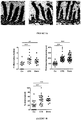
- the inflammatory status of the gut epithelial barrier was characterized 48 hours following therapy with non-myeloablative doses of CTX or the anthracycline doxorubicin in naive mice. Both drugs caused shortening of small intestinal villi, discontinuities of the epithelial barrier, interstitial edema and focal accumulation of mononuclear cells in the lamina intestinal (LP) ( Fig. 1A-B ). Post-chemotherapy, the numbers of goblet cells and Paneth cells were increased in villi ( Fig. 1C ) and crypts (Fig. ID), respectively.
- the antibacterial enzyme lysozyme (but not the microbiocide peptide RegIII ⁇ ) was upregulated in the duodenum of CTX-treated mice ( Fig. 1E ).
- Orally administered fluorescein isothiocyanate (FITC)-dextran became detectable in the blood (Yang et al., 2013) 18 h post CTX, confirming an increase in intestinal permeability ( Fig. 1F ).
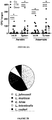
- Disruption of the intestinal barrier was accompanied by a significant translocation of commensal bacteria in >50% mice into mesenteric lymph nodes and spleens that was well detectable 48 h post-CTX, less so after doxorubicin treatment ( Fig. 2A ).
- CTX failed to cause a major dysbiosis at early time points (24-48h, Fig. 5 ), CTX significantly altered the microbial composition of the small intestine (but not of the caecum) in mice bearing subcutaneous cancers (namely metastasizing B16F10 melanomas and non-metastasizing MCA205 sarcomas) one week after its administration ( Fig. 2C , Fig. 5 ).
- CTX induced a reduction of bacterial species from the Firmicutes phylum ( Fig. 5 ) distributed within four genera and groups ( Clostridium cluster XIVa, Roseburia, unclassified Lachnospiraceae, Coprococcus, Table 2) in the mucosa of CTX-treated animals.
- CTX treated mice CTX treated mice
- Co NaCl-treated mice
- Taxonomic affiliation of these sequences is also added (phylum and genus levels).
- OTU phylotype centroids are assigned to their closest relative isolate (RDP Seqmatch database). All animals were compared together and tumor bearers were further distinguished.
- AN NCBI Accession Number
- Sab_Score RDP similarity score between the centroid sequence and the referent isolate. Wilcoxon test p-values.
- Quantitative PCR was applied to determine the bacterial counts of all bacteria and of targeted groups of bacteria ( Lactobacillus, Enterococcus, Clostridium leptum cluster IV group) in the small intestine mucosa from CTX versus vehicle-treated naive and tumor-bearing mice.
- the total bacterial load of the small intestine at 7 days post-CTX as well as the bacterial counts of the Clostridium leptum were not affected ( Fig. 2D ).
- CTX treatment led to a reduction in the abundance of lactobacilli and enterococci ( Fig. 2D ). Altogether, these data reveal the capacity of CTX to provoke the selective translocation of distinct Gram + bacterial species followed by significant changes in the small intestinal microbiome.
- Th17 cells which produce interleukin-17, IL-17
- strong links between gut-residing and systemic Th17 responses have been established in the context of autoimmune diseases affecting joints, the brain or the pancreas (Ghiringhelli et al., 2004; Lee et al., 2011; Wu et al., 2010).
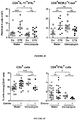
- CTX induced the polarization of splenic CD4 + T cells towards a Th1 (interferon- ⁇ [IFN ⁇ ]-producing) and Th17 pattern ( Fig. 3A , Fig. 7D ).
- CTX increased the frequency of "pathogenic" Th17 (pTh17) cells, which share hallmarks of Th1 cells (nuclear expression of the transcription factor T-bet, cytoplasmic expression of IFN ⁇ and surface exposure of the chemokine receptor CXCR3) and Th17 cells (expression of ROR ⁇ t, IL-17 and CCR6) (Ghoreschi et al., 2010; Lee et al., 2012), within the spleen ( Fig. 7F , Fig. 3C ). Again, this response depended on the gut microbiota ( Fig. 3C ). Moreover, the increase in pTh17 cells required expression of myeloid differentiation primary response gene 88 (MyD88), which signals downstream of toll-like receptors ( Fig.
- MyD88 myeloid differentiation primary response gene 88
- mice Although the feces of most SPF mice treated with ATB usually were free of cultivable bacteria ( FIG. 9 ), some mice occasionally experienced the outgrowth of Parabacteroides distasonis, a species reported to maintain part of the intestinal regulatory T cell repertoire and to mediate local anti-inflammatory effects (Geuking et al., 2011; Kverka et al., 2011; Lathrop et al., 2011). This bacterial contamination was associated with the failure of an immunogenic chemotherapy (doxorubicin) against established MCA205 sarcomas ( Fig. 14A ). Moreover, experimental recolonization of ATB-sterilized mice with P. distasonis compromised the anticancer effects of doxorubicin ( Fig.
- the inventors analyzed the impact of vancomycin on the microenvironment of suchthonous non-small cell lung cancers resulting from oncogenic activation of K-Ras and P53 and treated with CTX-based chemotherapy. They analyzed the impact of vancomycin on the infiltration of chemotherapy-treated tumor beds by ⁇ T17 cells, which are known to be crucial for the recruitment of antitumor CTLs post-chemotherapy (Ma et al., 2011). In vancomycin- or broad-spectrum ATB-treated mice, tumor beds were devoid of ⁇ T17 post-therapy in contrast to water-treated chemotherapy recipients ( Fig. 17 ).
- a transgenic tumor model of autochthonous NSCLC driven by oncogenic K-Ras coupled to a conditional P53 deletion was used to test the inhibitory role of vancomycin-based antibiotherapy on the anticancer efficacy of a combination of oxaliplatin plus CTX.
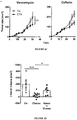
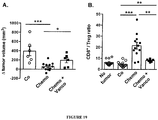
- the concept that the eradication of Gram-positive bacteria by vancomycin compromised the efficacy of CTX-based chemotherapy was validated ( Fig. 19A and Fig. 4D ), correlating with a reduced intratumoral CD8 + T effector/Foxp3 + regulatory T cell ratio ( Fig. 19B ).
- Gram-positive bacteria appear to be necessary for the optimal efficacy of the CTX-induced anticancer immune response and tumor mass reduction.
- EXAMPLE 3 HUMAN RESULTS: CYCLOPHOSPHAMIDE INDUCES TH1 AND TH10 IMMUNE RESPONSES DIRECTED AGAINST COMMENSAL BACTERIA IN CANCER PATIENTS
- CTX cyclophosphamide
- the inventors anticipate that only pattern 3 will be proned to benefit from chemotherapy, and they now correlate this anti-commensal bacterial immune response with clinical outcome. This pharmacodynamic assay is useful to predict, after 3-6 weeks (1-2 cycles of chemotherapy) whether such a CTX-based chemotherapy would trigger an adjuvant immune response and a clinical benefit.
- EXAMPLE 4 HUMAN RESULTS: OXALIPLATINE-BASED CHEMOTHERAPY INDUCES A CHANGE IN THE DISTRIBUTION OF BACTERIAL SPECIES IN GUT MICROBIOTA AND AN INCREASE OF T-BET TRANSCRIPTION BY THE GUT MICROBIOTA
- mucosal samples can be scratched and harvested (for 16S rRNA gene pyrosequencing analyses and description of the mucosal microbiota composition at the different taxonomic levels as described above), as well as mucosa that can be kept frozen (in RNAzol for qRT-PCR) or in paraffin-embedded tissues (for immunohistochemistry analyses).
- This surgery can be performed either before chemotherapy (adjuvant chemotherapy) or after chemotherapy (neoadjuvant chemotherapy).
- ileal mucosa from patients operated for a right colon cancer (6 patients in neoadjuvant oxaliplatine-based chemotherapy and 7 patients prior to therapy) were analyzed to compare the composition of ileal microbiota and the relative loss or gain of representativity of distinct genera and species (isolates) in cases of adjuvant versus neoadjuvant chemotherapy, meaning in colon cancer bearing patients that already received ( « chemo ») or did not receive ( « controls ») chemotherapy.
- the inventors also investigated, in parallel to pyrosequencing analyses of 16SrRNA of gut microbiota of ileum, the transcriptional profiling of cytokines and transcription factors detectable in mucosae of patients receiving or not chemotherapy. This investigation was done by qRT-PCR from ileal mucosa from the same patients. While RORyt and IL-17 were not very different in both groups, T-bet was upregulated post-chemotherapy and in two patients that had high levels of Bifidobacterium and Lactobacilli post-chemotherapy, T-bet transcripts were rather high compared with the other patients, suggesting that a pTh17 T cell response had been elicited by the treatment.
- EXAMPLE 6 E.HIRAE ENHANCED THE ANTICANCER IMMUNE RESPONSE IN VIVO
- OVA ovalbumine antigen
- clone 708 exhibited greater TH1 and Tc1 potential than the clone CNCM 1-4815 ( Fig. 30 ).
- clone 708 did not perform better than the CNCM 1-4815 clone for the anticancer probiotic effect in CTX-treated established MCA205 sarcomas (not shown).
- Sequence and functional differences inbetween various E.hirae isolates were corroborated in an in vitro assay aimed at monitoring LDH release (featuring cell death) and human ⁇ 2 defensin secretion from the Caco-2 epithelial intestinal cell line exposed to CTX +/- various clones of E.hirae or E.coli.
- CNCM 1-4815 and clone 708 could prevent CTX-induced Caco-2 cell death by, most likely, promoting the production of antimicrobial peptide ⁇ 2 defensin, E.coli failed to do so (not shown).
- the inventors investigated the role of major pattern recognition receptors regulating intestinal homeostasis in the elicitation of splenic pTH17 cells and in tumor control promoted by CTX in MCA205-breaing C57BL/6 mice.
- the inventors phenocopied these effects using pharmacomimetics, i.e., ligands for NOD1 and NOD2, the peptidoglycans myramyl dipeptide and TriDAP, which acted locally by promoting the release of the antimicrobial peptide lipocalin-2 in stools ( Fig. 31D ), thereby reducing CTX-mediated pTH17 in the spleen ( Fig. 31C ).
- pharmacomimetics i.e., ligands for NOD1 and NOD2
- the peptidoglycans myramyl dipeptide and TriDAP which acted locally by promoting the release of the antimicrobial peptide lipocalin-2 in stools ( Fig. 31D ), thereby reducing CTX-mediated pTH17 in the spleen ( Fig. 31C ).
- EXAMPLE 9 BENEFICIAL DYSBIOSIS IN NOD1 -/- xNOD2 -/- MICE ASSOCIATED WITH INCREASED TUMORICIDAL ACTIVITY OF CTX
- EXAMPLE 10 GRAM NEGATIVE BACTERIA ARE MANDATORY FOR ANTICANCER MEMORY T CELL RESPONSES
Landscapes
- Health & Medical Sciences (AREA)
- Life Sciences & Earth Sciences (AREA)
- Chemical & Material Sciences (AREA)
- General Health & Medical Sciences (AREA)
- Medicinal Chemistry (AREA)
- Microbiology (AREA)
- Veterinary Medicine (AREA)
- Public Health (AREA)
- Pharmacology & Pharmacy (AREA)
- Animal Behavior & Ethology (AREA)
- Mycology (AREA)
- Epidemiology (AREA)
- Organic Chemistry (AREA)
- Immunology (AREA)
- Engineering & Computer Science (AREA)
- Proteomics, Peptides & Aminoacids (AREA)
- Molecular Biology (AREA)
- Bioinformatics & Cheminformatics (AREA)
- Genetics & Genomics (AREA)
- Wood Science & Technology (AREA)
- Zoology (AREA)
- Pathology (AREA)
- Analytical Chemistry (AREA)
- General Chemical & Material Sciences (AREA)
- Chemical Kinetics & Catalysis (AREA)
- Biotechnology (AREA)
- General Engineering & Computer Science (AREA)
- Biochemistry (AREA)
- Nuclear Medicine, Radiotherapy & Molecular Imaging (AREA)
- Physics & Mathematics (AREA)
- Biophysics (AREA)
- Hospice & Palliative Care (AREA)
- Oncology (AREA)
- Gastroenterology & Hepatology (AREA)
- Biomedical Technology (AREA)
- Virology (AREA)
- Tropical Medicine & Parasitology (AREA)
- Medicines Containing Material From Animals Or Micro-Organisms (AREA)
- Measuring Or Testing Involving Enzymes Or Micro-Organisms (AREA)
- Micro-Organisms Or Cultivation Processes Thereof (AREA)
Claims (17)
- Zusammensetzung, enthaltend Bakterien, die ausgewählt sind aus der Gruppe bestehend aus Enterococcus hirae, Lactobacillus johnsonii und Mischungen derselben, zur Verwendung als Adjuvans bei einer antineoplastischen Behandlung, die einem Krebspatienten verabreicht wird.
- Zusammensetzung nach Anspruch 1 zur Verwendung nach Anspruch 1, wobei die Zusammensetzung zudem Bakterien enthält, die ausgewählt sind aus der Gruppe bestehend aus segmentierten filamentösen Bakterien (SFB), Porphyromonas, Barnesiella, Holdemania und Mischungen derselben.
- Zusammensetzung nach Anspruch 1 oder Anspruch 2 zur Verwendung nach Anspruch 1, wobei die Zusammensetzung Enterococcus hirae und zumindest einen Bakterienstamm enthält, der ausgewählt ist aus der Gruppe bestehend aus Porphyromonas, Barnesiella und Holdemania.
- Zusammensetzung nach Anspruch 3 zur Verwendung nach Anspruch 1, wobei die Zusammensetzung zudem einen Stamm von Lactobacillus johnsonii enthält.
- Zusammensetzung nach einem der Ansprüche 1 bis 4 zur Verwendung nach Anspruch 1, wobei der Stamm von Enterococcus hirae der am 7. November 2013 unter der Nummer I-4815 bei der Collection Nationale de Cultures de Microorganismes (CNCM) hinterlegte Stamm ist.
- Zusammensetzung nach einem der Ansprüche 1 bis 5 zur Verwendung nach Anspruch 1, wobei die probiotische Zusammensetzung für die orale Verabreichung formuliert ist.
- Zusammensetzung nach einem der Ansprüche 1 bis 6 zur Verwendung nach Anspruch 1, wobei die probiotische Zusammensetzung einem Patienten, bei dem dafür Bedarf besteht, nach der Verabreichung einer antineoplastischen Behandlung verabreicht wird.
- Zusammensetzung nach einem der Ansprüche 1 bis 6 zur Verwendung nach Anspruch 1 oder Anspruch 7, wobei die antineoplastische Behandlung eine Behandlung mit einem Chemotherapeutikum ist.
- Zusammensetzung nach einem der Ansprüche 1 bis 6 zur Verwendung nach Anspruch 1 oder Anspruch 7, wobei die antineoplastische Behandlung ein Anti-Krebs-Impfstoff mit einem Chemotherapeutikum als Impfstoff-Adjuvans ist.
- Zusammensetzung nach einem der Ansprüche 1 bis 6 zur Verwendung nach Anspruch 7 oder Anspruch 8, wobei das Chemotherapeutikum Cyclophosphamid (CTX) ist.
- Zusammensetzung nach einem der Ansprüche 1 bis 5 zur Verwendung nach einem der Ansprüche 1 und 7 bis 10, wobei der Patient eine Dysbiose aufweist, bei welcher Spezies unterrepräsentiert sind, die in der probiotischen Zusammensetzung vorhanden sind.
- Zusammensetzung nach einem der Ansprüche 1 bis 6 zur Verwendung nach einem der Ansprüche 1 und 7 bis 11, wobei die probiotische Zusammensetzung einem Patienten, bei dem dafür Bedarf besteht, nach der Verabreichung einer Breitbandantibiotika-Behandlung verabreicht wird.
- Immunogene Zusammensetzung, enthaltend Fragmente von Bakterien, die ausgewählt sind aus der Gruppe bestehend aus Enterococcus hirae, Lactobacillus johnsonii, Enterococcus faecalis und Mischungen derselben, zur Verwendung als Adjuvans bei einer antineoplastischen Behandlung, die einem Krebspatienten verabreicht wird.
- Immunogene Zusammensetzung nach Anspruch 13 zur Verwendung nach Anspruch 13, wobei die Zusammensetzung zudem Fragmente von segmentierten filamentösen Bakterien (SFB), Porphyromonas, Barnesiella, Holdemania und Mischungen derselben enthält.
- Immunogene Zusammensetzung nach Anspruch 13 oder Anspruch 14 zur Verwendung nach Anspruch 13, wobei die Zusammensetzung Fragmente von Enterococcus hirae und Fragmente mindestens eines Bakterienstammes enthält, der ausgewählt ist aus der Gruppe bestehend aus Porphyromonas, Barnesiella und Holdemania.
- Immunogene Zusammensetzung nach einem der Ansprüche 13 bis 15 zur Verwendung nach Anspruch 13, wobei der Stamm von Enterococcus hirae der am 7. November 2013 unter der Nummer I-4815 bei der Collection Nationale de Cultures de Microorganismes (CNCM) hinterlegte Stamm ist.
- Immunogene Zusammensetzung nach einem der Ansprüche 13 bis 16 zur Verwendung nach Anspruch 13, wobei die Zusammensetzung für die subkutane oder intramuskuläre Verabreichung formuliert ist.
Applications Claiming Priority (3)
| Application Number | Priority Date | Filing Date | Title |
|---|---|---|---|
| US201361907076P | 2013-11-21 | 2013-11-21 | |
| EP13306597.9A EP2876167A1 (de) | 2013-11-21 | 2013-11-21 | Mikrobiotazusammensetzung als Marker des Ansprechens auf eine Chemotherapie und Verwendung von mikrobiellen Modulatoren (prä-, pro- oder synbiotisch) zur Verbesserung der Wirksamkeit einer Krebsbehandlung |
| PCT/IB2014/066249 WO2015075688A1 (en) | 2013-11-21 | 2014-11-21 | Microbiota composition, as a marker of responsiveness to chemotherapy, and use of microbial modulators (pre-, pro- or synbiotics) for improving the efficacy of a cancer treatment |
Publications (2)
| Publication Number | Publication Date |
|---|---|
| EP3071709A1 EP3071709A1 (de) | 2016-09-28 |
| EP3071709B1 true EP3071709B1 (de) | 2019-12-25 |
Family
ID=49680948
Family Applications (2)
| Application Number | Title | Priority Date | Filing Date |
|---|---|---|---|
| EP13306597.9A Withdrawn EP2876167A1 (de) | 2013-11-21 | 2013-11-21 | Mikrobiotazusammensetzung als Marker des Ansprechens auf eine Chemotherapie und Verwendung von mikrobiellen Modulatoren (prä-, pro- oder synbiotisch) zur Verbesserung der Wirksamkeit einer Krebsbehandlung |
| EP14812648.5A Active EP3071709B1 (de) | 2013-11-21 | 2014-11-21 | Mikrobiotenzusammensetzung als marker des ansprechens auf eine chemotherapie und verwendung von mikrobiellen modulatoren (prä-, pro- oder symbiotisch) zur verbesserung der wirksamkeit einer krebsbehandlung |
Family Applications Before (1)
| Application Number | Title | Priority Date | Filing Date |
|---|---|---|---|
| EP13306597.9A Withdrawn EP2876167A1 (de) | 2013-11-21 | 2013-11-21 | Mikrobiotazusammensetzung als Marker des Ansprechens auf eine Chemotherapie und Verwendung von mikrobiellen Modulatoren (prä-, pro- oder synbiotisch) zur Verbesserung der Wirksamkeit einer Krebsbehandlung |
Country Status (13)
| Country | Link |
|---|---|
| US (2) | US10646521B2 (de) |
| EP (2) | EP2876167A1 (de) |
| JP (2) | JP6662775B2 (de) |
| KR (1) | KR102464342B1 (de) |
| CN (1) | CN106170557B (de) |
| AU (1) | AU2014351348B2 (de) |
| CA (1) | CA2931363C (de) |
| DK (1) | DK3071709T3 (de) |
| ES (1) | ES2764282T3 (de) |
| IL (2) | IL245751B (de) |
| PT (1) | PT3071709T (de) |
| SG (1) | SG10201803877YA (de) |
| WO (1) | WO2015075688A1 (de) |
Families Citing this family (39)
| Publication number | Priority date | Publication date | Assignee | Title |
|---|---|---|---|---|
| KR20200091499A (ko) | 2015-05-06 | 2020-07-30 | 스니프르 테크놀로지스 리미티드 | 미생물 개체군 변경 및 미생물군 변형 |
| WO2016196605A1 (en) * | 2015-06-01 | 2016-12-08 | The University Of Chicago | Treatment of cancer by manipulation of commensal microflora |
| EP3130680A1 (de) | 2015-08-11 | 2017-02-15 | Universitat de Girona | Verfahren zur detektion, nachverfolgung und/oder klassifikation von darmerkrankungen |
| WO2017068164A1 (en) | 2015-10-21 | 2017-04-27 | Ose Immunotherapeutics | Methods and compositions for modifying macrophage polarization into pro-inflammatory cells to treat cancer |
| AU2016357554B2 (en) * | 2015-11-20 | 2019-04-04 | Cj Bioscience, Inc. | Compositions comprising bacterial strains |
| GB201609811D0 (en) | 2016-06-05 | 2016-07-20 | Snipr Technologies Ltd | Methods, cells, systems, arrays, RNA and kits |
| CN106011281B (zh) * | 2016-07-19 | 2019-04-23 | 浙江大学 | 肠道分节丝状菌鞭毛蛋白的检测方法 |
| EP3512421A4 (de) * | 2016-09-16 | 2021-08-11 | Psomagen, Inc. | Verfahren und systeme zur panelcharakterisierung |
| CN116196425A (zh) | 2016-09-27 | 2023-06-02 | 得克萨斯系统大学评议会 | 通过调节微生物组来增强免疫检查点阻断疗法的方法 |
| EP3559257A1 (de) * | 2016-12-22 | 2019-10-30 | Institut Gustave Roussy (IGR) | Mikrobiotazusammensetzung, als marker der reaktion auf anti-pd1/pd-l1/pd-l2-antikörper sowie verwendung von mikrobiellen modulatoren zur verbesserung der wirksamkeit einer behandlung auf basis von anti-pd1/pd-l1/pd-l2-ab-antikörpern |
| WO2018145082A1 (en) * | 2017-02-06 | 2018-08-09 | New York University | Methods and compositions for treating and diagnosing pancreatic cancers |
| EP3378949A1 (de) * | 2017-03-22 | 2018-09-26 | Assistance Publique - Hôpitaux de Paris | Verfahren zur bestimmung der potenziellen wirksamkeit von krebstherapie |
| TW201906620A (zh) | 2017-07-05 | 2019-02-16 | 美商艾弗洛生物科技股份有限公司 | 使用動物雙岐桿菌乳亞種 (bifidobacterium animalis ssp. lactis) 治療癌症之組合物及方法 |
| MA49982A (fr) * | 2017-08-10 | 2020-06-17 | 4D Pharma Res Ltd | Compositions comprenant des souches bactériennes |
| EP3476396A1 (de) * | 2017-10-31 | 2019-05-01 | Institut Gustave Roussy | Bakterien- und zellzusammensetzungen zur behandlung von kolorektalkarzinomen und verfahren zur beurteilung einer prognose für patienten damit |
| EP3505177A1 (de) * | 2017-12-29 | 2019-07-03 | Institut Gustave Roussy | Immunogene sequenzen von einem phagenschwanzlängenmassprotein, bakterien zur expression davon und deren verwendung bei der behandlung von krebs |
| CN107904298A (zh) * | 2017-12-29 | 2018-04-13 | 苏州普瑞森基因科技有限公司 | 一种用于分析肠道微生物的试剂盒及其应用 |
| WO2019156234A1 (en) * | 2018-02-09 | 2019-08-15 | Keio University | Compositions and methods for the induction of cd8+ t-cells |
| US10760075B2 (en) | 2018-04-30 | 2020-09-01 | Snipr Biome Aps | Treating and preventing microbial infections |
| US11541105B2 (en) | 2018-06-01 | 2023-01-03 | The Research Foundation For The State University Of New York | Compositions and methods for disrupting biofilm formation and maintenance |
| EP3597202A1 (de) * | 2018-07-20 | 2020-01-22 | Maat Pharma | Fäkale mikrobiotische zusammensetzung zur verwendung bei der reduzierung von behandlungsinduzierten entzündungen |
| CA3106429A1 (en) * | 2018-08-05 | 2020-02-13 | Da Volterra | Method for improving anticancer agent efficacy |
| US11331269B2 (en) * | 2018-09-06 | 2022-05-17 | Massachusetts Institute Of Technology | Methods and compositions targeting lung microbiota and its responding immune pathways for lung cancer treatment |
| EP3629023A1 (de) * | 2018-09-28 | 2020-04-01 | Institut Gustave Roussy | Mikrobizide zusammensetzung als marker des ansprechens auf anti-pd1/pd-l1/pd-l2-antikörper bei nierenzellkrebs |
| CA3120709A1 (en) | 2018-11-21 | 2020-05-28 | Board Of Regents, The University Of Texas System | Methods and compositions for treating cancer |
| WO2020113237A1 (en) * | 2018-11-30 | 2020-06-04 | Caris Mpi, Inc. | Next-generation molecular profiling |
| CN113166815B (zh) * | 2019-02-22 | 2024-06-11 | 深圳华大生命科学研究院 | 肠道宏基因组在筛选pd-1抗体阻断剂疗效方面的用途 |
| EP3935581A4 (de) | 2019-03-04 | 2022-11-30 | Iocurrents, Inc. | Datenkompression und -kommunikation mit maschinenlernung |
| EP3950929A4 (de) * | 2019-03-28 | 2023-01-04 | CJ Bioscience, Inc. | Faecalibacterium sp. mikrobe und antikrebszusammensetzung damit |
| CN111991427A (zh) * | 2019-05-07 | 2020-11-27 | 瑞微(深圳)生物科技有限公司 | 肠道细菌在制备用于促进TCR γδ+T细胞增殖的药物中的应用 |
| EP3965750A4 (de) * | 2019-05-08 | 2023-07-12 | Garvan Institute of Medical Research | Krebsstratifizierung und behandlung auf der basis der hemmung von nod-2 |
| AU2020373179A1 (en) * | 2019-11-01 | 2022-05-19 | Uti Limited Partnership | Harnessing the power of microbiota and metabolites for the treatment of cancer |
| WO2021102510A1 (en) * | 2019-11-26 | 2021-06-03 | South Australian Health And Medical Research Institute Limited | Methods and products for reducing side effects associated with use of immune agonist antibodies |
| KR20260043144A (ko) * | 2019-12-02 | 2026-03-31 | 캐리스 엠피아이, 아이엔씨. | 범-암 백금 반응 예측기 |
| CN114832088B (zh) * | 2022-05-19 | 2026-04-14 | 李臻 | 拉瑞唑来多肽在制备缓解阿霉素心脏毒性药物中的用途 |
| GB202209518D0 (en) | 2022-06-29 | 2022-08-10 | Snipr Biome Aps | Treating & preventing E coli infections |
| CN116287355A (zh) * | 2023-05-12 | 2023-06-23 | 中国医学科学院北京协和医院 | 上消化道肿瘤化疗疗效及不良反应的肠道菌群预测模型 |
| CN117237952B (zh) * | 2023-11-15 | 2024-02-09 | 山东大学 | 基于免疫地形图的染色病理切片细胞分布标注方法及系统 |
| CN120682997B (zh) * | 2025-06-23 | 2026-05-05 | 佳木斯大学 | 一株副格氏乳杆菌及其在防治肝癌的产品中的应用 |
Family Cites Families (7)
| Publication number | Priority date | Publication date | Assignee | Title |
|---|---|---|---|---|
| JPH08295631A (ja) | 1995-02-27 | 1996-11-12 | Nichinichi Seiyaku Kk | 制癌増強剤 |
| JPH1029946A (ja) * | 1996-07-15 | 1998-02-03 | Nichinichi Seiyaku Kk | 液性免疫回復剤 |
| TW200904340A (en) | 2007-05-11 | 2009-02-01 | Mannatech Inc | Processing of natural polysaccharides by selected non-pathogenic microorganisms and methods of making and using the same |
| AU2009293476B2 (en) | 2008-09-19 | 2013-01-24 | Institut Curie | Nutritional support to prevent and/or mitigate bone marrow toxicity from a cancerous tumor |
| CN102164595A (zh) * | 2008-09-19 | 2011-08-24 | 雀巢产品技术援助有限公司 | 抗癌治疗中的免疫系统营养支持 |
| JP5717116B2 (ja) * | 2008-12-22 | 2015-05-13 | 学校法人昭和大学 | 抗原特異的ヒトTh17細胞を調整する方法 |
| WO2011131472A1 (en) * | 2010-04-22 | 2011-10-27 | Institut Gustave Roussy | Compounds and uses thereof to induce an immunogenic cancer cell death in a subject |
-
2013
- 2013-11-21 EP EP13306597.9A patent/EP2876167A1/de not_active Withdrawn
-
2014
- 2014-11-21 PT PT148126485T patent/PT3071709T/pt unknown
- 2014-11-21 DK DK14812648.5T patent/DK3071709T3/da active
- 2014-11-21 AU AU2014351348A patent/AU2014351348B2/en active Active
- 2014-11-21 WO PCT/IB2014/066249 patent/WO2015075688A1/en not_active Ceased
- 2014-11-21 CN CN201480063481.9A patent/CN106170557B/zh active Active
- 2014-11-21 EP EP14812648.5A patent/EP3071709B1/de active Active
- 2014-11-21 SG SG10201803877YA patent/SG10201803877YA/en unknown
- 2014-11-21 ES ES14812648T patent/ES2764282T3/es active Active
- 2014-11-21 CA CA2931363A patent/CA2931363C/en active Active
- 2014-11-21 US US15/038,073 patent/US10646521B2/en active Active
- 2014-11-21 KR KR1020167016068A patent/KR102464342B1/ko active Active
- 2014-11-21 JP JP2016533172A patent/JP6662775B2/ja active Active
-
2016
- 2016-05-19 IL IL245751A patent/IL245751B/en active IP Right Grant
-
2019
- 2019-08-05 IL IL268526A patent/IL268526B/en unknown
- 2019-12-09 JP JP2019221925A patent/JP2020050664A/ja active Pending
-
2020
- 2020-04-21 US US16/854,117 patent/US11344586B2/en active Active
Non-Patent Citations (1)
| Title |
|---|
| None * |
Also Published As
| Publication number | Publication date |
|---|---|
| US20160303172A1 (en) | 2016-10-20 |
| EP2876167A1 (de) | 2015-05-27 |
| JP2016539119A (ja) | 2016-12-15 |
| EP3071709A1 (de) | 2016-09-28 |
| CN106170557A (zh) | 2016-11-30 |
| DK3071709T3 (da) | 2020-03-16 |
| KR20160079122A (ko) | 2016-07-05 |
| JP6662775B2 (ja) | 2020-03-11 |
| IL268526A (en) | 2019-09-26 |
| US20200360449A1 (en) | 2020-11-19 |
| IL268526B (en) | 2022-02-01 |
| IL245751B (en) | 2019-08-29 |
| CA2931363A1 (en) | 2015-05-28 |
| CN106170557B (zh) | 2020-08-21 |
| SG10201803877YA (en) | 2018-06-28 |
| PT3071709T (pt) | 2020-01-17 |
| US10646521B2 (en) | 2020-05-12 |
| JP2020050664A (ja) | 2020-04-02 |
| AU2014351348B2 (en) | 2020-12-03 |
| AU2014351348A1 (en) | 2016-06-09 |
| ES2764282T3 (es) | 2020-06-02 |
| IL245751A0 (en) | 2016-07-31 |
| US11344586B2 (en) | 2022-05-31 |
| KR102464342B1 (ko) | 2022-11-08 |
| CA2931363C (en) | 2023-07-18 |
| WO2015075688A1 (en) | 2015-05-28 |
Similar Documents
| Publication | Publication Date | Title |
|---|---|---|
| US11344586B2 (en) | Microbiota composition, as a marker of responsiveness to chemotherapy, and use of microbial modulators (pre-, pro- or synbiotics) for improving the efficacy of a cancer treatment | |
| US12144839B2 (en) | Microbiota composition, as a marker of responsiveness to anti-PD1/PD-L1/PD-L2 antibodies and use of microbial modulators for improving the efficacy of an anti-PD1/PD-L1/PD-L2 AB-based treatment | |
| EP3209692B1 (de) | Verfahren und produkte zur biozönosezusammensetzungsmodulierung zur verbesserung der wirksamkeit einer krebsbehandlung mit einem prüfpunktblocker | |
| CN110267651B (zh) | 通过调节微生物组来增强免疫检查点阻断疗法的方法 | |
| US20240398876A1 (en) | Biological marker of intestinal dysbiosis, useful for predicting the response of a cancer patient to an anti-pdi drug | |
| WO2018172483A1 (en) | Method for determining the potential efficacy of anticancer treatment | |
| EP3664824A1 (de) | Zusammensetzungen mit bakterienstämmen | |
| Arshad et al. | Capecitabine combined with fecal microbiota transplantation prevents colorectal cancer progression through correction of microbial dysbiosis and immune regulation |
Legal Events
| Date | Code | Title | Description |
|---|---|---|---|
| PUAI | Public reference made under article 153(3) epc to a published international application that has entered the european phase |
Free format text: ORIGINAL CODE: 0009012 |
|
| 17P | Request for examination filed |
Effective date: 20160615 |
|
| AK | Designated contracting states |
Kind code of ref document: A1 Designated state(s): AL AT BE BG CH CY CZ DE DK EE ES FI FR GB GR HR HU IE IS IT LI LT LU LV MC MK MT NL NO PL PT RO RS SE SI SK SM TR |
|
| AX | Request for extension of the european patent |
Extension state: BA ME |
|
| RIN1 | Information on inventor provided before grant (corrected) |
Inventor name: GOMPERTS BONECA, IVO Inventor name: ZITVOGEL, LAURENCE Inventor name: LEPAGE, PATRICIA Inventor name: DAILLERE, ROMAIN Inventor name: VIAUD, SOPHIE |
|
| DAX | Request for extension of the european patent (deleted) | ||
| STAA | Information on the status of an ep patent application or granted ep patent |
Free format text: STATUS: EXAMINATION IS IN PROGRESS |
|
| 17Q | First examination report despatched |
Effective date: 20170725 |
|
| GRAP | Despatch of communication of intention to grant a patent |
Free format text: ORIGINAL CODE: EPIDOSNIGR1 |
|
| STAA | Information on the status of an ep patent application or granted ep patent |
Free format text: STATUS: GRANT OF PATENT IS INTENDED |
|
| INTG | Intention to grant announced |
Effective date: 20181212 |
|
| GRAS | Grant fee paid |
Free format text: ORIGINAL CODE: EPIDOSNIGR3 |
|
| GRAA | (expected) grant |
Free format text: ORIGINAL CODE: 0009210 |
|
| STAA | Information on the status of an ep patent application or granted ep patent |
Free format text: STATUS: THE PATENT HAS BEEN GRANTED |
|
| RAP1 | Party data changed (applicant data changed or rights of an application transferred) |
Owner name: INSTITUT GUSTAVE ROUSSY Owner name: UNIVERSITE PARIS-SUD Owner name: INSTITUT NATIONAL DE LA SANTE ET DE LA RECHERCHE M Owner name: INSTITUT NATIONAL DE LA RECHERCHE AGRONOMIQUE |
|
| AK | Designated contracting states |
Kind code of ref document: B1 Designated state(s): AL AT BE BG CH CY CZ DE DK EE ES FI FR GB GR HR HU IE IS IT LI LT LU LV MC MK MT NL NO PL PT RO RS SE SI SK SM TR |
|
| REG | Reference to a national code |
Ref country code: GB Ref legal event code: FG4D |
|
| REG | Reference to a national code |
Ref country code: CH Ref legal event code: EP |
|
| REG | Reference to a national code |
Ref country code: AT Ref legal event code: REF Ref document number: 1142601 Country of ref document: AT Kind code of ref document: T Effective date: 20190615 |
|
| REG | Reference to a national code |
Ref country code: DE Ref legal event code: R096 Ref document number: 602014048323 Country of ref document: DE |
|
| REG | Reference to a national code |
Ref country code: IE Ref legal event code: FG4D |
|
| APBM | Appeal reference recorded |
Free format text: ORIGINAL CODE: EPIDOSNREFNO |
|
| PUAC | Information related to the publication of a b1 document modified or deleted |
Free format text: ORIGINAL CODE: 0009299EPPU |
|
| STAA | Information on the status of an ep patent application or granted ep patent |
Free format text: STATUS: GRANT OF PATENT IS INTENDED |
|
| REG | Reference to a national code |
Ref country code: CH Ref legal event code: PK Free format text: DIE ERTEILUNG WURDE VOM EPA WIDERRUFEN. |
|
| DB1 | Publication of patent cancelled |
Effective date: 20190802 |
|
| APAF | Appeal reference modified |
Free format text: ORIGINAL CODE: EPIDOSCREFNE |
|
| REG | Reference to a national code |
Ref country code: DK Ref legal event code: T3 Effective date: 20190919 Ref country code: LU Ref legal event code: HK Effective date: 20190828 |
|
| REG | Reference to a national code |
Ref country code: SE Ref legal event code: TRGR |
|
| REG | Reference to a national code |
Ref country code: DE Ref legal event code: R107 Ref document number: 602014048323 Country of ref document: DE |
|
| GRAA | (expected) grant |
Free format text: ORIGINAL CODE: 0009210 |
|
| STAA | Information on the status of an ep patent application or granted ep patent |
Free format text: STATUS: THE PATENT HAS BEEN GRANTED |
|
| REG | Reference to a national code |
Ref country code: AT Ref legal event code: REZ Ref document number: 1142601 Country of ref document: AT Kind code of ref document: T Effective date: 20190612 |
|
| AK | Designated contracting states |
Kind code of ref document: B1 Designated state(s): AL AT BE BG CH CY CZ DE DK EE ES FI FR GB GR HR HU IE IS IT LI LT LU LV MC MK MT NL NO PL PT RO RS SE SI SK SM TR |
|
| REG | Reference to a national code |
Ref country code: CH Ref legal event code: EP |
|
| REG | Reference to a national code |
Ref country code: NO Ref legal event code: T2 Effective date: 20191225 |
|
| REG | Reference to a national code |
Ref country code: CH Ref legal event code: PK Free format text: DIE ERTEILUNG VOM 12.06.2019 WURDE VOM EPA WIDERRUFEN |
|
| REG | Reference to a national code |
Ref country code: DE Ref legal event code: R096 Ref document number: 602014048323 Country of ref document: DE |
|
| REG | Reference to a national code |
Ref country code: PT Ref legal event code: SC4A Ref document number: 3071709 Country of ref document: PT Date of ref document: 20200117 Kind code of ref document: T Free format text: AVAILABILITY OF NATIONAL TRANSLATION Effective date: 20200107 |
|
| REG | Reference to a national code |
Ref country code: NL Ref legal event code: FP |
|
| REG | Reference to a national code |
Ref country code: DK Ref legal event code: T3 Effective date: 20200310 |
|
| REG | Reference to a national code |
Ref country code: SE Ref legal event code: TRGR |
|
| PG25 | Lapsed in a contracting state [announced via postgrant information from national office to epo] |
Ref country code: LT Free format text: LAPSE BECAUSE OF FAILURE TO SUBMIT A TRANSLATION OF THE DESCRIPTION OR TO PAY THE FEE WITHIN THE PRESCRIBED TIME-LIMIT Effective date: 20191225 Ref country code: BG Free format text: LAPSE BECAUSE OF FAILURE TO SUBMIT A TRANSLATION OF THE DESCRIPTION OR TO PAY THE FEE WITHIN THE PRESCRIBED TIME-LIMIT Effective date: 20200325 Ref country code: FI Free format text: LAPSE BECAUSE OF FAILURE TO SUBMIT A TRANSLATION OF THE DESCRIPTION OR TO PAY THE FEE WITHIN THE PRESCRIBED TIME-LIMIT Effective date: 20191225 |
|
| REG | Reference to a national code |
Ref country code: LT Ref legal event code: MG4D |
|
| REG | Reference to a national code |
Ref country code: AT Ref legal event code: REF Ref document number: 1142601 Country of ref document: AT Kind code of ref document: T Effective date: 20200515 |
|
| PG25 | Lapsed in a contracting state [announced via postgrant information from national office to epo] |
Ref country code: HR Free format text: LAPSE BECAUSE OF FAILURE TO SUBMIT A TRANSLATION OF THE DESCRIPTION OR TO PAY THE FEE WITHIN THE PRESCRIBED TIME-LIMIT Effective date: 20191225 Ref country code: IS Free format text: LAPSE BECAUSE OF FAILURE TO SUBMIT A TRANSLATION OF THE DESCRIPTION OR TO PAY THE FEE WITHIN THE PRESCRIBED TIME-LIMIT Effective date: 20200224 |
|
| REG | Reference to a national code |
Ref country code: ES Ref legal event code: FG2A Ref document number: 2764282 Country of ref document: ES Kind code of ref document: T3 Effective date: 20200602 |
|
| PG2D | Information on lapse in contracting state deleted |
Ref country code: IS |
|
| PG25 | Lapsed in a contracting state [announced via postgrant information from national office to epo] |
Ref country code: EE Free format text: LAPSE BECAUSE OF FAILURE TO SUBMIT A TRANSLATION OF THE DESCRIPTION OR TO PAY THE FEE WITHIN THE PRESCRIBED TIME-LIMIT Effective date: 20191225 Ref country code: RO Free format text: LAPSE BECAUSE OF FAILURE TO SUBMIT A TRANSLATION OF THE DESCRIPTION OR TO PAY THE FEE WITHIN THE PRESCRIBED TIME-LIMIT Effective date: 20191225 |
|
| PG25 | Lapsed in a contracting state [announced via postgrant information from national office to epo] |
Ref country code: SM Free format text: LAPSE BECAUSE OF FAILURE TO SUBMIT A TRANSLATION OF THE DESCRIPTION OR TO PAY THE FEE WITHIN THE PRESCRIBED TIME-LIMIT Effective date: 20191225 Ref country code: SK Free format text: LAPSE BECAUSE OF FAILURE TO SUBMIT A TRANSLATION OF THE DESCRIPTION OR TO PAY THE FEE WITHIN THE PRESCRIBED TIME-LIMIT Effective date: 20191225 |
|
| REG | Reference to a national code |
Ref country code: DE Ref legal event code: R097 Ref document number: 602014048323 Country of ref document: DE |
|
| PG25 | Lapsed in a contracting state [announced via postgrant information from national office to epo] |
Ref country code: MC Free format text: LAPSE BECAUSE OF FAILURE TO SUBMIT A TRANSLATION OF THE DESCRIPTION OR TO PAY THE FEE WITHIN THE PRESCRIBED TIME-LIMIT Effective date: 20191225 |
|
| PG25 | Lapsed in a contracting state [announced via postgrant information from national office to epo] |
Ref country code: CZ Free format text: LAPSE BECAUSE OF FAILURE TO SUBMIT A TRANSLATION OF THE DESCRIPTION OR TO PAY THE FEE WITHIN THE PRESCRIBED TIME-LIMIT Effective date: 20191225 |
|
| PLBE | No opposition filed within time limit |
Free format text: ORIGINAL CODE: 0009261 |
|
| STAA | Information on the status of an ep patent application or granted ep patent |
Free format text: STATUS: NO OPPOSITION FILED WITHIN TIME LIMIT |
|
| PG25 | Lapsed in a contracting state [announced via postgrant information from national office to epo] |
Ref country code: SI Free format text: LAPSE BECAUSE OF FAILURE TO SUBMIT A TRANSLATION OF THE DESCRIPTION OR TO PAY THE FEE WITHIN THE PRESCRIBED TIME-LIMIT Effective date: 20191225 |
|
| 26N | No opposition filed |
Effective date: 20200928 |
|
| REG | Reference to a national code |
Ref country code: NO Ref legal event code: CHAD Owner name: INSTITUT NATIONAL DE RECHERCHE POUR L'AGRICU, FR |
|
| REG | Reference to a national code |
Ref country code: ES Ref legal event code: PC2A Owner name: INSTITUT NATIONAL DE RECHERCHE POUR L'AGRICULTURE, L'ALIMENTATION ET L'ENVIRONNEMENT Effective date: 20210202 |
|
| REG | Reference to a national code |
Ref country code: AT Ref legal event code: HC Ref document number: 1142601 Country of ref document: AT Kind code of ref document: T Owner name: INSTITUT GUSTAVE ROUSSY, FR Effective date: 20210217 Ref country code: AT Ref legal event code: HC Ref document number: 1142601 Country of ref document: AT Kind code of ref document: T Owner name: INSTITUT NATIONAL DE LA SANTE ET DE LA RECHERC, FR Effective date: 20210217 Ref country code: AT Ref legal event code: HC Ref document number: 1142601 Country of ref document: AT Kind code of ref document: T Owner name: UNIVERSITE PARIS-SUD, FR Effective date: 20210217 Ref country code: AT Ref legal event code: HC Ref document number: 1142601 Country of ref document: AT Kind code of ref document: T Owner name: INSTITUT NATIONAL DE RECHERCHE POUR L'AGRICULT, FR Effective date: 20210217 |
|
| REG | Reference to a national code |
Ref country code: BE Ref legal event code: HC Owner name: INSTITUT NATIONAL DE RECHERCHE POUR L'AGRICULTURE, L'ALIMENTATION ET L'ENVIRONNEMENT; FR Free format text: DETAILS ASSIGNMENT: CHANGE OF OWNER(S), CHANGE OF OWNER(S) NAME Effective date: 20210118 |
|
| REG | Reference to a national code |
Ref country code: LU Ref legal event code: HC Owner name: INSTITUT NATIONAL DE RECHERCHE POUR L'AGRICULTURE, L'ALIMENTATION ET L'ENVIRONNEMENT; FR Effective date: 20210506 |
|
| REG | Reference to a national code |
Ref country code: DE Ref legal event code: R081 Ref document number: 602014048323 Country of ref document: DE Owner name: UNIVERSITE PARIS SUD, FR Free format text: FORMER OWNERS: INSTITUT GUSTAVE ROUSSY, VILLEJUIF, FR; INSTITUT NATIONAL DE LA RECHERCHE AGRONOMIQUE, PARIS, FR; INSTITUT NATIONAL DE LA SANTE ET DE LA RECHERCHE MEDICALE, PARIS, FR; UNIVERSITE PARIS SUD, ORSAY, FR Ref country code: DE Ref legal event code: R081 Ref document number: 602014048323 Country of ref document: DE Owner name: INSTITUT NATIONAL DE RECHERCHE POUR L'AGRICULT, FR Free format text: FORMER OWNERS: INSTITUT GUSTAVE ROUSSY, VILLEJUIF, FR; INSTITUT NATIONAL DE LA RECHERCHE AGRONOMIQUE, PARIS, FR; INSTITUT NATIONAL DE LA SANTE ET DE LA RECHERCHE MEDICALE, PARIS, FR; UNIVERSITE PARIS SUD, ORSAY, FR Ref country code: DE Ref legal event code: R081 Ref document number: 602014048323 Country of ref document: DE Owner name: INSTITUT NATIONAL DE LA SANTE ET DE LA RECHERC, FR Free format text: FORMER OWNERS: INSTITUT GUSTAVE ROUSSY, VILLEJUIF, FR; INSTITUT NATIONAL DE LA RECHERCHE AGRONOMIQUE, PARIS, FR; INSTITUT NATIONAL DE LA SANTE ET DE LA RECHERCHE MEDICALE, PARIS, FR; UNIVERSITE PARIS SUD, ORSAY, FR Ref country code: DE Ref legal event code: R081 Ref document number: 602014048323 Country of ref document: DE Owner name: INSTITUT GUSTAVE ROUSSY, FR Free format text: FORMER OWNERS: INSTITUT GUSTAVE ROUSSY, VILLEJUIF, FR; INSTITUT NATIONAL DE LA RECHERCHE AGRONOMIQUE, PARIS, FR; INSTITUT NATIONAL DE LA SANTE ET DE LA RECHERCHE MEDICALE, PARIS, FR; UNIVERSITE PARIS SUD, ORSAY, FR |
|
| REG | Reference to a national code |
Ref country code: NL Ref legal event code: HC Owner name: INSTITUT NATIONAL DE RECHERCHE POUR L'AGRICULTURE, L'ALIMENTATION ET L'ENVIRONNEMENT; FR Free format text: DETAILS ASSIGNMENT: CHANGE OF OWNER(S), CHANGE OF OWNER(S) NAME; FORMER OWNER NAME: UNIVERSITE PARIS-SUD Effective date: 20201217 |
|
| PG25 | Lapsed in a contracting state [announced via postgrant information from national office to epo] |
Ref country code: CY Free format text: LAPSE BECAUSE OF FAILURE TO SUBMIT A TRANSLATION OF THE DESCRIPTION OR TO PAY THE FEE WITHIN THE PRESCRIBED TIME-LIMIT Effective date: 20191225 |
|
| PG25 | Lapsed in a contracting state [announced via postgrant information from national office to epo] |
Ref country code: RS Free format text: LAPSE BECAUSE OF FAILURE TO SUBMIT A TRANSLATION OF THE DESCRIPTION OR TO PAY THE FEE WITHIN THE PRESCRIBED TIME-LIMIT Effective date: 20191225 Ref country code: MK Free format text: LAPSE BECAUSE OF FAILURE TO SUBMIT A TRANSLATION OF THE DESCRIPTION OR TO PAY THE FEE WITHIN THE PRESCRIBED TIME-LIMIT Effective date: 20191225 Ref country code: AL Free format text: LAPSE BECAUSE OF FAILURE TO SUBMIT A TRANSLATION OF THE DESCRIPTION OR TO PAY THE FEE WITHIN THE PRESCRIBED TIME-LIMIT Effective date: 20191225 |
|
| PG25 | Lapsed in a contracting state [announced via postgrant information from national office to epo] |
Ref country code: LV Free format text: LAPSE BECAUSE OF FAILURE TO SUBMIT A TRANSLATION OF THE DESCRIPTION OR TO PAY THE FEE WITHIN THE PRESCRIBED TIME-LIMIT Effective date: 20191225 |
|
| P01 | Opt-out of the competence of the unified patent court (upc) registered |
Effective date: 20230602 |
|
| PG25 | Lapsed in a contracting state [announced via postgrant information from national office to epo] |
Ref country code: GR Free format text: LAPSE BECAUSE OF FAILURE TO SUBMIT A TRANSLATION OF THE DESCRIPTION OR TO PAY THE FEE WITHIN THE PRESCRIBED TIME-LIMIT Effective date: 20191225 |
|
| PG25 | Lapsed in a contracting state [announced via postgrant information from national office to epo] |
Ref country code: PL Free format text: LAPSE BECAUSE OF FAILURE TO SUBMIT A TRANSLATION OF THE DESCRIPTION OR TO PAY THE FEE WITHIN THE PRESCRIBED TIME-LIMIT Effective date: 20191225 |
|
| PGFP | Annual fee paid to national office [announced via postgrant information from national office to epo] |
Ref country code: LU Payment date: 20240125 Year of fee payment: 10 |
|
| PGFP | Annual fee paid to national office [announced via postgrant information from national office to epo] |
Ref country code: AT Payment date: 20240124 Year of fee payment: 10 |
|
| PGFP | Annual fee paid to national office [announced via postgrant information from national office to epo] |
Ref country code: MC Payment date: 20240125 Year of fee payment: 10 |
|
| PGFP | Annual fee paid to national office [announced via postgrant information from national office to epo] |
Ref country code: TR Payment date: 20231229 Year of fee payment: 10 Ref country code: MT Payment date: 20240126 Year of fee payment: 10 |
|
| PGFP | Annual fee paid to national office [announced via postgrant information from national office to epo] |
Ref country code: PT Payment date: 20241021 Year of fee payment: 11 |
|
| PGFP | Annual fee paid to national office [announced via postgrant information from national office to epo] |
Ref country code: NO Payment date: 20241024 Year of fee payment: 11 |
|
| PGFP | Annual fee paid to national office [announced via postgrant information from national office to epo] |
Ref country code: DK Payment date: 20241025 Year of fee payment: 11 |
|
| PGFP | Annual fee paid to national office [announced via postgrant information from national office to epo] |
Ref country code: SE Payment date: 20241125 Year of fee payment: 11 |
|
| PGFP | Annual fee paid to national office [announced via postgrant information from national office to epo] |
Ref country code: CH Payment date: 20241201 Year of fee payment: 11 |
|
| REG | Reference to a national code |
Ref country code: AT Ref legal event code: UEP Ref document number: 1142601 Country of ref document: AT Kind code of ref document: T Effective date: 20191225 |
|
| PG25 | Lapsed in a contracting state [announced via postgrant information from national office to epo] |
Ref country code: MC Free format text: LAPSE BECAUSE OF NON-PAYMENT OF DUE FEES Effective date: 20241202 |
|
| PG25 | Lapsed in a contracting state [announced via postgrant information from national office to epo] |
Ref country code: LU Free format text: LAPSE BECAUSE OF NON-PAYMENT OF DUE FEES Effective date: 20241121 |
|
| REG | Reference to a national code |
Ref country code: AT Ref legal event code: MM01 Ref document number: 1142601 Country of ref document: AT Kind code of ref document: T Effective date: 20241121 |
|
| PG25 | Lapsed in a contracting state [announced via postgrant information from national office to epo] |
Ref country code: AT Free format text: LAPSE BECAUSE OF NON-PAYMENT OF DUE FEES Effective date: 20241121 |
|
| PGFP | Annual fee paid to national office [announced via postgrant information from national office to epo] |
Ref country code: NL Payment date: 20251028 Year of fee payment: 12 |
|
| PGFP | Annual fee paid to national office [announced via postgrant information from national office to epo] |
Ref country code: DE Payment date: 20251117 Year of fee payment: 12 |
|
| PGFP | Annual fee paid to national office [announced via postgrant information from national office to epo] |
Ref country code: GB Payment date: 20251126 Year of fee payment: 12 |
|
| PGFP | Annual fee paid to national office [announced via postgrant information from national office to epo] |
Ref country code: IT Payment date: 20251110 Year of fee payment: 12 |
|
| PGFP | Annual fee paid to national office [announced via postgrant information from national office to epo] |
Ref country code: FR Payment date: 20251128 Year of fee payment: 12 |
|
| PGFP | Annual fee paid to national office [announced via postgrant information from national office to epo] |
Ref country code: BE Payment date: 20251120 Year of fee payment: 12 |
|
| PGFP | Annual fee paid to national office [announced via postgrant information from national office to epo] |
Ref country code: IE Payment date: 20251021 Year of fee payment: 12 |
|
| PGFP | Annual fee paid to national office [announced via postgrant information from national office to epo] |
Ref country code: ES Payment date: 20251210 Year of fee payment: 12 |