EP3068216B1 - Method of producing infertile fish and egg-producing aquatic animals and of delivering compounds into eggs and embryos - Google Patents
Method of producing infertile fish and egg-producing aquatic animals and of delivering compounds into eggs and embryos Download PDFInfo
- Publication number
- EP3068216B1 EP3068216B1 EP14862081.8A EP14862081A EP3068216B1 EP 3068216 B1 EP3068216 B1 EP 3068216B1 EP 14862081 A EP14862081 A EP 14862081A EP 3068216 B1 EP3068216 B1 EP 3068216B1
- Authority
- EP
- European Patent Office
- Prior art keywords
- fish
- eggs
- morpholino oligomer
- egg
- immersion medium
- Prior art date
- Legal status (The legal status is an assumption and is not a legal conclusion. Google has not performed a legal analysis and makes no representation as to the accuracy of the status listed.)
- Active
Links
Images





Classifications
-
- A—HUMAN NECESSITIES
- A01—AGRICULTURE; FORESTRY; ANIMAL HUSBANDRY; HUNTING; TRAPPING; FISHING
- A01K—ANIMAL HUSBANDRY; AVICULTURE; APICULTURE; PISCICULTURE; FISHING; REARING OR BREEDING ANIMALS, NOT OTHERWISE PROVIDED FOR; NEW BREEDS OF ANIMALS
- A01K67/00—Rearing or breeding animals, not otherwise provided for; New or modified breeds of animals
- A01K67/027—New or modified breeds of vertebrates
-
- A—HUMAN NECESSITIES
- A01—AGRICULTURE; FORESTRY; ANIMAL HUSBANDRY; HUNTING; TRAPPING; FISHING
- A01K—ANIMAL HUSBANDRY; AVICULTURE; APICULTURE; PISCICULTURE; FISHING; REARING OR BREEDING ANIMALS, NOT OTHERWISE PROVIDED FOR; NEW BREEDS OF ANIMALS
- A01K67/00—Rearing or breeding animals, not otherwise provided for; New or modified breeds of animals
- A01K67/027—New or modified breeds of vertebrates
- A01K67/0275—Genetically modified vertebrates, e.g. transgenic
- A01K67/0276—Knock-out vertebrates
-
- A—HUMAN NECESSITIES
- A01—AGRICULTURE; FORESTRY; ANIMAL HUSBANDRY; HUNTING; TRAPPING; FISHING
- A01K—ANIMAL HUSBANDRY; AVICULTURE; APICULTURE; PISCICULTURE; FISHING; REARING OR BREEDING ANIMALS, NOT OTHERWISE PROVIDED FOR; NEW BREEDS OF ANIMALS
- A01K61/00—Culture of aquatic animals
-
- C—CHEMISTRY; METALLURGY
- C12—BIOCHEMISTRY; BEER; SPIRITS; WINE; VINEGAR; MICROBIOLOGY; ENZYMOLOGY; MUTATION OR GENETIC ENGINEERING
- C12N—MICROORGANISMS OR ENZYMES; COMPOSITIONS THEREOF; PROPAGATING, PRESERVING, OR MAINTAINING MICROORGANISMS; MUTATION OR GENETIC ENGINEERING; CULTURE MEDIA
- C12N15/00—Mutation or genetic engineering; DNA or RNA concerning genetic engineering, vectors, e.g. plasmids, or their isolation, preparation or purification; Use of hosts therefor
- C12N15/09—Recombinant DNA-technology
- C12N15/11—DNA or RNA fragments; Modified forms thereof; Non-coding nucleic acids having a biological activity
- C12N15/113—Non-coding nucleic acids modulating the expression of genes, e.g. antisense oligonucleotides; Antisense DNA or RNA; Triplex- forming oligonucleotides; Catalytic nucleic acids, e.g. ribozymes; Nucleic acids used in co-suppression or gene silencing
-
- C—CHEMISTRY; METALLURGY
- C12—BIOCHEMISTRY; BEER; SPIRITS; WINE; VINEGAR; MICROBIOLOGY; ENZYMOLOGY; MUTATION OR GENETIC ENGINEERING
- C12N—MICROORGANISMS OR ENZYMES; COMPOSITIONS THEREOF; PROPAGATING, PRESERVING, OR MAINTAINING MICROORGANISMS; MUTATION OR GENETIC ENGINEERING; CULTURE MEDIA
- C12N15/00—Mutation or genetic engineering; DNA or RNA concerning genetic engineering, vectors, e.g. plasmids, or their isolation, preparation or purification; Use of hosts therefor
- C12N15/09—Recombinant DNA-technology
- C12N15/87—Introduction of foreign genetic material using processes not otherwise provided for, e.g. co-transformation
- C12N15/873—Techniques for producing new embryos, e.g. nuclear transfer, manipulation of totipotent cells or production of chimeric embryos
-
- A—HUMAN NECESSITIES
- A01—AGRICULTURE; FORESTRY; ANIMAL HUSBANDRY; HUNTING; TRAPPING; FISHING
- A01K—ANIMAL HUSBANDRY; AVICULTURE; APICULTURE; PISCICULTURE; FISHING; REARING OR BREEDING ANIMALS, NOT OTHERWISE PROVIDED FOR; NEW BREEDS OF ANIMALS
- A01K2207/00—Modified animals
- A01K2207/05—Animals modified by non-integrating nucleic acids, e.g. antisense, RNAi, morpholino, episomal vector, for non-therapeutic purpose
-
- A—HUMAN NECESSITIES
- A01—AGRICULTURE; FORESTRY; ANIMAL HUSBANDRY; HUNTING; TRAPPING; FISHING
- A01K—ANIMAL HUSBANDRY; AVICULTURE; APICULTURE; PISCICULTURE; FISHING; REARING OR BREEDING ANIMALS, NOT OTHERWISE PROVIDED FOR; NEW BREEDS OF ANIMALS
- A01K2217/00—Genetically modified animals
- A01K2217/07—Animals genetically altered by homologous recombination
- A01K2217/075—Animals genetically altered by homologous recombination inducing loss of function, i.e. knock out
-
- A—HUMAN NECESSITIES
- A01—AGRICULTURE; FORESTRY; ANIMAL HUSBANDRY; HUNTING; TRAPPING; FISHING
- A01K—ANIMAL HUSBANDRY; AVICULTURE; APICULTURE; PISCICULTURE; FISHING; REARING OR BREEDING ANIMALS, NOT OTHERWISE PROVIDED FOR; NEW BREEDS OF ANIMALS
- A01K2227/00—Animals characterised by species
- A01K2227/40—Fish
-
- A—HUMAN NECESSITIES
- A01—AGRICULTURE; FORESTRY; ANIMAL HUSBANDRY; HUNTING; TRAPPING; FISHING
- A01K—ANIMAL HUSBANDRY; AVICULTURE; APICULTURE; PISCICULTURE; FISHING; REARING OR BREEDING ANIMALS, NOT OTHERWISE PROVIDED FOR; NEW BREEDS OF ANIMALS
- A01K2267/00—Animals characterised by purpose
- A01K2267/02—Animal zootechnically ameliorated
-
- C—CHEMISTRY; METALLURGY
- C12—BIOCHEMISTRY; BEER; SPIRITS; WINE; VINEGAR; MICROBIOLOGY; ENZYMOLOGY; MUTATION OR GENETIC ENGINEERING
- C12N—MICROORGANISMS OR ENZYMES; COMPOSITIONS THEREOF; PROPAGATING, PRESERVING, OR MAINTAINING MICROORGANISMS; MUTATION OR GENETIC ENGINEERING; CULTURE MEDIA
- C12N2310/00—Structure or type of the nucleic acid
- C12N2310/10—Type of nucleic acid
- C12N2310/11—Antisense
-
- C—CHEMISTRY; METALLURGY
- C12—BIOCHEMISTRY; BEER; SPIRITS; WINE; VINEGAR; MICROBIOLOGY; ENZYMOLOGY; MUTATION OR GENETIC ENGINEERING
- C12N—MICROORGANISMS OR ENZYMES; COMPOSITIONS THEREOF; PROPAGATING, PRESERVING, OR MAINTAINING MICROORGANISMS; MUTATION OR GENETIC ENGINEERING; CULTURE MEDIA
- C12N2310/00—Structure or type of the nucleic acid
- C12N2310/30—Chemical structure
- C12N2310/32—Chemical structure of the sugar
- C12N2310/323—Chemical structure of the sugar modified ring structure
- C12N2310/3233—Morpholino-type ring
-
- C—CHEMISTRY; METALLURGY
- C12—BIOCHEMISTRY; BEER; SPIRITS; WINE; VINEGAR; MICROBIOLOGY; ENZYMOLOGY; MUTATION OR GENETIC ENGINEERING
- C12N—MICROORGANISMS OR ENZYMES; COMPOSITIONS THEREOF; PROPAGATING, PRESERVING, OR MAINTAINING MICROORGANISMS; MUTATION OR GENETIC ENGINEERING; CULTURE MEDIA
- C12N2310/00—Structure or type of the nucleic acid
- C12N2310/30—Chemical structure
- C12N2310/35—Nature of the modification
- C12N2310/351—Conjugate
-
- Y—GENERAL TAGGING OF NEW TECHNOLOGICAL DEVELOPMENTS; GENERAL TAGGING OF CROSS-SECTIONAL TECHNOLOGIES SPANNING OVER SEVERAL SECTIONS OF THE IPC; TECHNICAL SUBJECTS COVERED BY FORMER USPC CROSS-REFERENCE ART COLLECTIONS [XRACs] AND DIGESTS
- Y02—TECHNOLOGIES OR APPLICATIONS FOR MITIGATION OR ADAPTATION AGAINST CLIMATE CHANGE
- Y02A—TECHNOLOGIES FOR ADAPTATION TO CLIMATE CHANGE
- Y02A40/00—Adaptation technologies in agriculture, forestry, livestock or agroalimentary production
- Y02A40/80—Adaptation technologies in agriculture, forestry, livestock or agroalimentary production in fisheries management
- Y02A40/81—Aquaculture, e.g. of fish
-
- Y—GENERAL TAGGING OF NEW TECHNOLOGICAL DEVELOPMENTS; GENERAL TAGGING OF CROSS-SECTIONAL TECHNOLOGIES SPANNING OVER SEVERAL SECTIONS OF THE IPC; TECHNICAL SUBJECTS COVERED BY FORMER USPC CROSS-REFERENCE ART COLLECTIONS [XRACs] AND DIGESTS
- Y02—TECHNOLOGIES OR APPLICATIONS FOR MITIGATION OR ADAPTATION AGAINST CLIMATE CHANGE
- Y02A—TECHNOLOGIES FOR ADAPTATION TO CLIMATE CHANGE
- Y02A90/00—Technologies having an indirect contribution to adaptation to climate change
- Y02A90/40—Monitoring or fighting invasive species
Definitions
- This disclosure relates to methods for the production of reproductively sterile fish for aquaculture, the aquarium trade, and control of invasive species.
- the methods include disruption of gonadal development through the administration of compounds that lead to the failure of fertile gonadal development, as described in the claims.
- Such compounds may be delivered to the fish eggs prior to or after fertilization (or water activation) by contacting unfertilized or fertilized eggs with such compounds.
- Aquaculture is becoming increasingly important to resolve the current and projected global shortfalls in aquatic foods and seafood availability. As the shift in dependence from fisheries' harvests to artificially propagated aquatic species continues, optimization of aquaculture methods is increasingly necessary to maximize food production and minimize ecological impact, thereby achieving long-term environmental sustainability of our seafood supplies.
- Sterilization induced infertility
- farmed fish and other egg-producing aquatic animals enhances their growth rate by increasing the conversion of food energy to muscle growth, instead of gonadal development.
- reproductively sterile farmed fish and other egg-producing aquatic animals including domesticated, non-native or genetically modified species, will not be able to reproduce or inter-breed with wild population. This will assist biological containment and prevent genetic contamination of wild populations and/or the establishment in the wild of domestic, non-native or genetically modified farmed fish and other egg-producing aquatic animals.
- the disclosure relates to methods of producing populations of sterile fish as claimed in the claims, wherein the sterilization methods include disruption of primordial germ cell migration and/or development in each treated individual without detrimentally affecting other characteristics of a normal animal.
- the disclosure relates to a method for producing reproductively sterile fish, said method comprising immersion of unfertilized fish egg(s) or fertilized fish egg(s) prior to water activation or fertilized fish eggs in an aqueous immersion medium with anti-sense Morpholino oligomer which suppresses expression of the dead end gene in said fish, and wherein said anti-sense Morpholino oligomer is conjugated to 2-[(4-nitrophenyl)oxycarbonylhexamethylene-carbonylpiperazinyl]-4,6-bis ⁇ di[di(trifluoroacetamido-hexyl)-aminocarbonyl-oxyethyl]amino ⁇ triazine.
- beneficial compounds into fish or other egg-producing aquatic animals has traditionally been achieved via the feed, injection, or immersion of embryos or individuals in a compound of interest. Injection of stock, however, is not practical in large-scale commercial aquaculture operations.
- use of immersion treatment of fertilized and water-activated eggs has been limited, due to low permeability of the chorion of the egg, a thick acellular multi-layer coat, also known as the egg envelope, composed mainly of proteins and glycoproteins.
- large molecular compounds are not able to traverse the chorion and reach the embryo.
- eggs After ovulation/spawning and prior to fertilization and water-activation, eggs have a permeable and perforated chorion (or outermost coat) that allows for entry of water and substances into the unfertilized eggs through the pores or the micropyle, a small canal in the chorion of the egg allowing for the sperm to penetrate the egg for fertilization.
- the chorion becomes sealed and the egg is rendered impermeable, preventing further uptake of substances or water from the environment.
- the eggs are permeable and uptake of compounds from immersion media into the eggs is efficient. Following a short period of immersion, the eggs are fertilized and water-activated at which time they become impermeable and start embryonic development.
- the present disclosure describes methods for efficiently delivering compounds into eggs of fish and thus render fish produced therefrom reproductively sterile, as described in the claims.
- the present disclosure relates to immersing unfertilized eggs or fertilized eggs prior water-activation in an aqueous immersion medium as described in the claims.
- the immersion medium in specific embodiments may include additional compounds or other materials that are beneficial to the fish hatched from eggs immersed in the immersion medium, e.g., materials such as DNA/RNA, hormones, growth promoters, protective antigens, nutrients, etc.
- the disclosure thus contemplates methods of producing reproductively sterile fish as described in the claims, involving immersing eggs in an aqueous immersion medium with selected compounds resulting in reproductively sterile individuals.
- the sterilization methods comprise the disruption of gonadal development in the embryo.
- the methods described in the claims may be employed in methods of preventing interbreeding between domesticated, non-native and genetically modified farmed fish and their wild stocks, as well as to the establishment of such aquacultured fish in the wild.
- the disclosed methods may be employed to enable prevention of genetic contamination of a wild population by farmed fish.
- fish include egg-bearing species of all fish species.
- fish includes all fish species, including, but not limited to, salmon, Atlantic salmon, coho salmon, chinook salmon, chum salmon, sockeye salmon, pink salmon, masu salmon, trout, rainbow trout, brook trout, brown trout, common grayling, Arctic grayling, Arctic char, bass, hybrid bass, striped bass, white bass, striped-white bass hybrids, yellow bass, perch, white perch, yellow perch, European perch, bass-perch hybrids, Nile tilapia, blue tilapia, blue-Nile tilapia hybrids, Mozambique tilapia, zebrafish, carp species, breams, seabreams, porgies, catfish species, and cod.
- fish species including, but not limited to, salmon, Atlantic salmon, coho salmon, chinook salmon, chum salmon, sockeye salmon, pink salmon, masu salmon, trout, rainbow trout, brook trout, brown trout, common grayling, Arctic gray
- sterilizing fish is understood to mean rendering an individual unable to sexually reproduce.
- Reproductively sterile fish are defined as individuals that are unable to reach sexual maturity or to reproduce when reaching the age of sexual maturity.
- the methods of producing a reproductively sterile fish include administration of an anti-sense Morpholino oligomer which suppresses expression of the dead end gene in said fish to their eggs prior to fertilization or water-activation to disrupt gonadotropin releasing hormone (GnRH) cell development and/or primordial germ cell (PGC) development, migration and colonization in the gonad of the embryo, which results in failure of gonad development and/or failure of full and proper gonadal functioning at the cellular or tissular level, and ultimately the generation of sterile fish.
- GnRH gonadotropin releasing hormone
- PSC primordial germ cell
- GnRH is required for gonadal development and the maintenance of reproductive cycles in vertebrates.
- GnRH also known as luteinizing hormone releasing hormone (LHRH)
- LHRH luteinizing hormone releasing hormone
- FSH follicle-stimulating hormone
- LH luteinizing hormone
- PGCs are a population of cells in the fish embryo that are precursors of the gametes of the adult fish and other egg-producing aquatic animals.
- the PGCs are produced during the very early stages of embryonic development. At later stages of embryonic development, the PGCs migrate through the embryo from their original location to the area of the gonadal precursors. At the end of their migration, the PGCs enter the developing gonads, colonize the tissue and start the process of gametogenesis, leading to mature gonads in the adult fish and other egg-producing aquatic animals.
- the methods of the disclosure allow generation of reproductively sterile (infertile) fish.
- the sterilization strategy will specifically disrupt gonad development in the individuals without detrimentally affecting any other characteristics resulting in the production of completely normal but reproductively sterile fish.
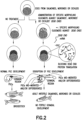
- FIG. 1 is a diagram of the immersion method of embodiments of the disclosure, for compound being an anti-sense Morpholino oligomer which suppresses expression of the dead end gene in said fish and being conjugated to VIVO.
- compounds are delivered to the eggs by immersing unfertilized eggs (or pre-water-activated eggs) or fertilized eggs in the compounds of interest in an immersion media.
- the eggs are immersed in the compound for about 2 to about 96 hours or more depending on the species and immersion temperature.
- the administration of the compound will preferably take place while the chorion of the eggs is permeable.
- the treatment with the compounds of interest will result in early stage embryos having disruption of GnRH development or PGC development.
- the resulting adult fish will be reproductively infertile or sterile, typically having no fertile gonadal development.
- the disclosure provides a method to efficiently administer compounds into embryos by contacting fish eggs with compounds which are anti-sense Morpholino oligomers which suppresses expression of the dead end gene in said fish prior to fertilization or water-activation.
- the selected compounds disrupt GnRH cell and/or PGC development, migration and/or survival in large numbers of embryos, resulting in large-scale production of reproductively sterile adult fish.
- the methods of the disclosure are also applicable to single embryos in smaller scale production of reproductively sterile adult fish.
- the compounds for use in the methods of the disclosure are anti-sense Morpholino oligomer which suppresses expression of the dead end gene in fish, which are compounds known to disrupt GnRH cell and/or PGC development, migration and/or survival which are conjugated to 2-[(4-nitrophenyl)oxycarbonylhexamethylene-carbonylpiperazinyl]-4,6-bis ⁇ di[di(trifluoroacetamido-hexyl)-aminocarbonyl-oxyethyl]amino ⁇ triazine and which are capable of entering the chorion of a pre-fertilized or a pre-water-activated egg.
- Antisense Morpholino oligomer is used to transiently silence gene expression by either blocking translation or RNA splicing that is an essential step to generate mRNA.
- Specific antisense Morpholino oligomers can be identified to transiently block or suppress the expression of genes that are essential for embryonic germ cell development including but not limited to deadend, nanos, vasa, gnrh or fsh receptor which results in the failure of gonadal development and ultimately generates sterile fish and other egg-producing aquatic animals.
- a method for producing reproductively sterile egg-producing aquatic animals comprises contacting, i.e. immersing in an aqueous immersion medium, unfertilized egg(s) or pre-water-activated fertilized eggs with anti-sense Morpholino oligomer that is effective to transfect the egg(s) and render individual(s) produced therefrom reproductively sterile.
- the contacting comprises chorionic transfection of the egg(s).
- the disclosure relates to methods of producing reproductively sterile fish by administration of effective Morpholino oligomers to eggs in order to disrupt primordial germ cell (PGC) development, and migration to, and colonization in, the gonad of the embryo, which results in the failure of gonad development and/or full and proper gonadal functioning at the cellular or tissular level, and ultimately the generation of sterile fish, i.e. by administration of an anti-sense Morpholino oligomer which suppresses expression of the dead end gene in said fish.
- PPC primordial germ cell
- Dead end is a vertebrate-specific component of the germ plasm and germ-cell granules that is essential for germ cell development in certain fish.
- the dnd gene is specifically expressed in germ plasm and primordial germ cells. Since dnd is considered essential for normal migration and survival of PGCs, embryos devoid of this protein develop to become sterile adults.
- the disclosed methods are useful for the production of reproductively sterile fish for aquaculture, the aquarium trade, and control of invasive species.
- the methods include disruption of gonadal development through the administration of antisense Morpholino oligomer against dead end mRNA ( dnd -MO) to pre-fertilized or pre-water-activated egg(s).
- dnd- MO dead end mRNA
- the action of dnd- MO leads to the failure of fertile gonad development and to sterile adult fish.
- the dnd-MO is able to transiently suppress expression of dead end protein that is essential for embryonic germ cell development.
- the present disclosure also relates to specific Morpholino oligomer sequences for use in methods for suppression of expression a dead end gene in a fish.
- FIG. 2 is a flow chart for production of reproductively sterile fish which is not part of the present invention by the administration of specific Morpholino oligomers against the dead end mRNAs of salmonids, moronids or cichlids to disrupt primordial germ cell (PGC) development, which results in the failure of gonad development, and ultimately the generation of sterile fish.
- PPC primordial germ cell
- eggs from salmonids, moronids or cichlids, or other fish species may be contacted with Morpholino oligomers against the dead end genes of the relevant fish species.
- FIG. 2 illustrates the administration of specific Morpholino oligomers against the dead end genes of salmonids, moronids or chichlids.
- the eggs may be given no treatment.
- Morpholino oligomers effect the suppression of or blocking of Dead end protein translation, resulting in the disruption of PCG development.
- the adult salmonids, monoids or cichlids are consequently infertile, since there is no fertile gonadal development. When normal PGC development is permitted, the fish will have normal fertile gonadal development and the fish may be used as broodstock.
- the antisense Morpholino oligomers for use in the methods of the disclosure are capable of effectively suppressing expression of at least one of Salmonidae dead end gene, Moronidae dead end gene or cichlidae dead end gene.
- the disclosure relates to specific antisense Morpholino oligomers for use in the claimed methods that are able to transiently and effectively suppress the translation of Dead end, an essential protein for germ cell survival, and specifically disrupt gonadal development resulting in the production of infertile fish, e.g., salmonids (salmons and trouts), moronids (basses) and cichlids (tilapias and ornamental cichlids).
- infertile fish e.g., salmonids (salmons and trouts), moronids (basses) and cichlids (tilapias and ornamental cichlids).
- the disclosure relates to a specific Morpholino oligomer, 5'-CTGACTTGAACGCTCCTCCATTATC-3' (SEQ ID NO: 1) and its variants, e.g., 5'-ACTTGAACGCTCCTCCAT-3' (SEQ ID NO: 2), for use in the claimed methods that are able to transiently and effectively suppress the expression of Salmonidae dead end gene, which results in the failure of gonad development and/or the failure of full and proper gonadal functioning, and ultimately the generation of sterile salmonids.
- 5'-CTGACTTGAACGCTCCTCCATTATC-3' SEQ ID NO: 1
- 5'-ACTTGAACGCTCCTCCAT-3' SEQ ID NO: 2
- the methods of the disclosure are applicable to all salmonids, including, but not limited to, Atlantic, coho, chinook, chum, sockeye, pink and masu salmons, rainbow, brook and brown trouts, common and Arctic grayling, and Arctic charr, among others.
- the disclosure relates to a specific Morpholino oligomer, 5'-GGCTCTGCTTGCTCTCCATCATCTC-3' (SEQ ID NO: 3) and its variants for use in the claimed methods that are able to transiently and effectively suppress the expression of Moronidae dead end gene, which results in the failure of gonad development and/or full and proper gonadal functioning, and ultimately the generation of sterile moronids.
- the methods of the disclosure are applicable to all moronids including, but not limited to, striped bass, white bass, striped-white bass hybrids, yellow bass, white perch, yellow perch, European perch, and bass-perch hybrids, among others.
- the disclosure relates to a specific Morpholino oligomer, 5'-CTGGCTTTGCGTGTTTTCCATCGTC-3' (SEQ ID NO: 4) and its variants for use in the claimed methods that are able to transiently and effectively suppress the expression of cichlidae dead end gene, which results in the failure of gonad development and/or the failure of full and proper gonadal functioning, and ultimately the generation of sterile cichlids.
- the methods of the disclosure are applicable to all cichlid and tilapia species, including, but not limited to, Nile tilapia, blue tilapia, blue-Nile tilapia hybrids, Mozambique tilapia, and other edible and ornamental cichlid species and their hybrids.
- the Morpholino oligomers may be variants of the listed sequences. These variations may include but not be limited to other modified nucleic acids and other Morpholino oligomers that cover the whole or partial sequences listed above. Particularly included are antisense oligomers that comprise, consist essentially of, or consist of, one or more of SEQ ID NOS: 1, 3 and 4.
- variants of these antisense oligomers including variant oligomers having 80%, 85%, 90%, 95%, 97%, 98%, or 99% (including all integers in between) sequence identity or sequence homology to any one of SEQ ID NOS: 1, 3 and 4, and/or variants that differ from these sequences by about 1, 2, 3, 4, 5, 6, 7, 8, 9, or 10 nucleotides, preferably variants that are effective in reproductively sterilizing fish upon contact with fish egg(s).
- SEQ ID NO:2 is a preferred variant of SEQ ID NO: 1.
- Variants that are effective in reproductively sterilizing fish upon contact with fish egg(s) as used in such context means use of the variants in the methods disclosed herein will result in reproductively sterile fish.
- the variants will effectively suppress the expression of a dead end gene of interest.
- unfertilized fish egg(s) are immersed in an aqueous immersion medium as described in the claims comprising an antisense Morpholino oligomer capable of effectively suppressing the expression of a dead end gene in the fish of interest.
- concentration of the antisense Morpholino oligomer in the bath should be sufficient to allow the antisense Morpholino oligomer to traverse the chorion of the fish egg(s), effectively transfecting the egg(s). In embodiments, such concentration will typically be about 1 to about 20, more preferably, about 3 to about 15 ⁇ M, and still more preferably, about 5 to about 10 ⁇ M.
- the immersion media is an aqueous medium which may further comprise fish ovarian fluid or fertilization diluent that contains salt, Tris (pH 7-9), Glycine, and/or 0 to 30% of serum and protease inhibitors such as aprotinin or leupeptin.
- the time required for the immersion of the unfertilized eggs or pre-water-activated fertilized eggs to result in satisfactory sterilization of the fish will depend on the species of fish, typically the fish eggs will be immersed in the immersion media containing a Morpholino oligomer for about 2 to about 96 hours, more preferably for about 4 to about 72 hours, and still more preferably from about 5 to about 48 hours.
- the methods for the production of reproductively sterile fish as described in the claims may be used for aquaculture, the aquarium trade, and control of invasive species wherein the methods include disruption of gonadal development through the administration of an anti-sense Morpholino oligomers which suppress expression of the dead end gene in said fish, and wherein said anti-sense Morpholino oligomers are conjugated to 2-[(4-nitrophenyl)oxycarbonylhexamethylene-carbonylpiperazinyl]-4,6-bis ⁇ di[di(trifluoroacetamido-hexyl)-aminocarbonyl-oxyethyl]amino ⁇ triazine to the egg or embryos, by which the anti-sense Morpholino oligomers are able to transfect the egg(s), i.e., reach and enter either unfertilized eggs or embryos.
- the action of the anti-sense Morpholino oligomer inside of the egg or embryos leads to the failure of fertile gonad development and ultimately to the production of sterile adult fish.
- the molecular transporter 2-[(4-nitrophenyl)oxycarbonylhexamethylene-carbonylpiperazinyl]-4,6-bis ⁇ di[di(trifluoroacetamido-hexyl)-aminocarbonyl-oxyethyl]amino ⁇ triazine is able to effectively transport the anti-sense Morpholino oligomer conjugated to it through miniscule channels and pores, thereby allowing it to pass through the chorion and enter the egg or embryo and reach the target tissue.
- eggs either unfertilized or fertilized, may be effectively contacted with Morpholino oligomers to produce reproductively sterile fish.
- the disclosure relates to methods of producing reproductively sterile fish by administration of an anti-sense Morpholino oligomer which suppresses expression of the dead end gene in said fish, and wherein said anti-sense Morpholino oligomer is conjugated to 2-[(4-nitrophenyl)oxycarbonylhexamethylene-carbonylpiperazinyl]-4,6-bis ⁇ di[di(trifluoroacetamido-hexyl)-aminocarbonyl-oxyethyl]amino ⁇ triazine to either unfertilized fish eggs or embryos, as described in the claims, in order to disrupt gonadotropin releasing hormone (GnRH) cell development and/or primordial germ cell (PGC) development and migration to, and colonization in, the gonad of the embryo, which results in the failure of gonad development and/or the failure of full and proper gonadal functioning at the cellular or tissular level, and ultimately the generation of ster
- the disclosure provides a method for producing reproductively sterile fish, said method comprising contacting unfertilized egg(s) or pre-water-activated fertilized eggs with a conjugate of an anti-sense Morpholino oligomer that suppresses expression of the dead end gene in said fish, and wherein said anti-sense Morpholino oligomer is conjugated to 2-[(4-nitrophenyl)oxycarbonylhexamethylene-carbonylpiperazinyl]-4,6-bis ⁇ di[di(trifluoroacetamido-hexyl)-aminocarbonyl-oxyethyl]amino ⁇ triazine which is effective to transfect the egg(s) and render individual(s) produced therefrom reproductively sterile as described in the claims.
- the disclosure contemplates a method for producing reproductively sterile fish as described in the claims, said method comprising contacting fertilized egg(s) (or embryos) with a conjugate of an anti-sense Morpholino oligomer that suppresses expression of the dead end gene in said fish conjugated with a molecular transporter compound which is 2-[(4-nitrophenyl)oxycarbonylhexamethylene-carbonylpiperazinyl]-4,6-bis ⁇ di[di(trifluoroacetamido-hexyl)-aminocarbonyl-oxyethyl]amino ⁇ triazine that is effective to transfect the egg(s) and render individual(s) produced therefrom reproductively sterile.
- a molecular transporter compound which is 2-[(4-nitrophenyl)oxycarbonylhexamethylene-carbonylpiperazinyl]-4,6-bis ⁇ di[di(trifluoroacetamido-hexyl
- the selected oligomers may disrupt GnRH cell and/or PGC development, migration and/or survival in large numbers of embryos, resulting in large-scale production of reproductively sterile adult fish.
- the methods of the disclosure are also applicable to single embryos in smaller scale production of reproductively sterile adult fish.
- the antisense Morpholino oligomer for use in the methods of the disclosure is capable of effectively suppressing the expression of at least one of Salmonidae dead end gene, Moronidae dead end gene or cichlid dead end gene.
- the antisense Morpholino oligomer for use in the methods of the disclosure is SEQ ID NO: 1, SEQ ID NO: 2, SEQ ID NO: 3, SEQ ID NO: 4 or variants thereof which are capable of effectively suppressing the expression of dead end in fish species.
- a method for producing reproductively sterile fish comprising immersing unfertilized or fertilized fish egg(s) in an aqueous immersion media comprising a conjugate of a molecular transporter compound which is 2-[(4-nitrophenyl)oxycarbonylhexamethylene-carbonylpiperazinyl]-4,6-bis ⁇ di[di(trifluoroacetamido-hexyl)-aminocarbonyl-oxyethyl]amino ⁇ triazine and an antisense Morpholino oligomer capable of effectively suppressing expression of the dead end gene in the fish.
- a molecular transporter compound which is 2-[(4-nitrophenyl)oxycarbonylhexamethylene-carbonylpiperazinyl]-4,6-bis ⁇ di[di(trifluoroacetamido-hexyl)-aminocarbonyl-oxyethyl]amino ⁇ triazine and an antisense
- unfertilized egg(s) or pre-water-activated fertilized egg(s) are immersed in an aqueous medium comprising an antisense Morpholino oligomer which suppresses expression of the dead end gene in said fish, and wherein said anti-sense Morpholino oligomer is conjugated to 2-[(4-nitrophenyl)oxycarbonylhexamethylene-carbonylpiperazinyl]-4,6-bis ⁇ di[di(trifluoroacetamido-hexyl)-aminocarbonyl-oxyethyl]amino ⁇ triazine capable of effectively suppressing the expression of a dead end gene in the fish.
- the concentration of the antisense Morpholino oligomer in the bath should be sufficient to allow the antisense Morpholino oligomer-transporter conjugate to traverse the chorion of the egg(s). In embodiments, such concentration will typically be about 1 to about 20 ⁇ M, more preferably about 3 to about 15 ⁇ M, even more preferably from about 5 to about 10 ⁇ M.
- the disclosure contemplates a method for producing reproductively sterile fish, said method comprising contacting, i.e. immersing in an aqueous immersion medium fertilized egg(s) with anti-sense Morpholino oligomer which suppresses expression of the dead end gene in said fish conjugated with a molecular transporter compound that is effective to transfect the fertilized egg(s), which is 2-[(4-nitrophenyl)oxycarbonylhexamethylene-carbonylpiperazinyl]-4,6-bis ⁇ di[di(trifluoroacetamido-hexyl)-aminocarbonyl-oxyethyl]amino ⁇ triazine and render individual(s) produced therefrom reproductively sterile.
- the contacting comprises chorionic transfection of the egg(s).
- the concentration of the antisense Morpholino oligomer in the bath should be sufficient to allow the antisense Morpholino oligomer-transporter conjugate to traverse the chorion of the fertilized egg(s). Such concentration will be higher than the amount needed for immersion of unfertilized fish egg(s) since, after fertilization and water-activation, the egg chorion becomes impermeable, hindering traversal into the egg.
- concentration of the bath for immersion of embryos is about 20 to about 80 ⁇ M, preferably about 40 to about 60 ⁇ M.
- the antisense Morpholino oligomer is capable of effectively suppressing the expression of at least one of Salmonidae dead end gene, Moronidae dead end gene or cichlid dead end gene.
- the antisense Morpholino oligomer is SEQ ID NO: 1, SEQ ID NO: 2, SEQ ID NO: 3, SEQ ID NO: 4 or a variant thereof which is capable of effectively suppressing the expression of dead end in the fish species.
- the contacting of eggs and/or embryos with the an anti-sense Morpholino oligomer which suppresses expression of the dead end gene in said fish, and wherein said anti-sense Morpholino oligomer is conjugated to 2-[(4-nitrophenyl)oxycarbonylhexamethylene-carbonylpiperazinyl]-4,6-bis ⁇ di[di(trifluoroacetamido-hexyl)-aminocarbonyl-oxyethyl]amino ⁇ triazine may be carried out in any suitable manner, which involves immersion contacting in an aqueous immersion mediumsince it is to be recognized that immersion contacting provides an efficient and effective contacting technique that is amenable to large-scale operations for the production of reproductively sterile fish
- Zebrafish were selected for initial exemplification of the methods of the disclosure, due to their short generation time and large numbers of embryos produced per mating, which are easily obtained on a daily or weekly basis. Additionally, the embryos of zebrafish are transparent, providing ease of visual observations, and are hardy. The normal development of GnRH cells, PGCs and gonads within the embryo is an evolutionarily conserved mechanism that is found in all fish.
- the methods of the disclosure are applicable to all fish species, including, but not limited to, zebrafish, carp species, trout species, salmon species, breams (including seabreams and porgies), basses (including marine and freshwater seabass and hybrid basses, etc), perches (yellow perch, white perch, etc), catfish species, cod and other major classes that are candidates for captive culture.
- fish species including, but not limited to, zebrafish, carp species, trout species, salmon species, breams (including seabreams and porgies), basses (including marine and freshwater seabass and hybrid basses, etc), perches (yellow perch, white perch, etc), catfish species, cod and other major classes that are candidates for captive culture.
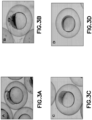
- a molecular transporter a dendrimeric octaguanidine with a triazine core also known as Vivo, was conjugated to zebrafish dnd-MO, 5'-GCTGGGCATCCATGTCTCCGACCAT-3' (SEQ ID NO 5) (zfdnd-MO-Vivo) and used in an immersion containing zebrafish embryos in water. After a 3-hour immersion with 20 ⁇ M of zfdnd-MO-Vivo, uncharacterized aggregates were found around the inner part of chorion or the surface of the blastodisc of the embryos ( FIG. 3A ). More aggregates appeared after a 5-hour immersion ( FIG. 3B ).
- FIG. 4A shows that in control fish, germ cells migrated to the gonadal region and maintained their morphology (round-shape cells).
- FIG. 4B shows that that treatment of zfdnd-MO-Vivo caused germ cell mis-migration and eventual differentiated into other cell types.
- Example 1 The zebrafish treated in Example 1 were examined after development into adult fish.
- zebrafish dnd-MO-Vivo treated embryos developed into infertile male-like adults.
- FIG. 5A shows no difference in appearance or overall size observed between treated adult fish and wild-type males.
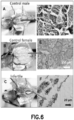
- FIG. 6 zf dnd -MO-Vivo induced sterility in zebrafish is shown. Examination of gonadal tissue showing (A) A well-developed testis of untreated male fish. (B) A well-developed ovary of untreated female fish. (C) The gonads of zf dnd- MO-Vivo treated fish developed into a thin filament-like tissue. Photomicrographs (D-F) show (D) active spermatogenesis of the testis of untreated male fish.
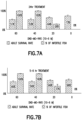
- zebrafish dnd-MO-Vivo treated embryos developed into infertile adults.
- A) 24 hour and B) 5 to 6 hour immersions all the embryos that were initially immersed with 60 or 40 ⁇ M of zf dnd- MO-Vivo immediately after fertilization developed into infertile fish.
- the bath immersion was conducted using unfertilized eggs since the permeability of the chorion gradually decreases after fertilization and water activation.
- Our results show that when eggs were immersed with 40 ⁇ M fluorescein labelled zf dnd -MO ( dnd -MO-Flu) , the unfertilized eggs up-took more dnd- MO-Flu than the eggs were water-activated 1 hour before immersion ( FIG. 9 ). As shown in FIG. 9 , eggs are more permeable before water activation.
- Salmonids (trout) eggs were immersed with salmonid's dnd-MO at A: Control; B: 10 ⁇ M Ss dnd- MO; C: 10 ⁇ M Ssdnd-MO +1 ⁇ M Ss dnd -MO-Vivo; D: 10 ⁇ M Ssdnd-MO +2 ⁇ M Ss dnd -MO-Vivo for 48 hours before fertilization. Soon after hatch, the middle part of body was cut and used for RNA extraction and RT-PCR for detecting vasa expression. One fish from group C and one from group D appeared to have very low vasa expression, indicating possible effect on reducing germ cell abundance. RT: reverse transcription.
- the methods of the invention are generally applicable to farmed fish, as production of sterile farmed species is desirable. Accordingly, the methods of the invention are applicable to any farmed species of fish, particularly to commercially important farmed species.
- the methods of the disclosure produce reproductively sterile fish. Sterilization (induced infertility) of farmed fish and aquatic egg-producing animals enhances their growth rate by increasing the conversion of food energy to muscle growth, instead of gonadal development.
- Sterilization induced infertility
- reproductively sterile farmed fish and egg-producing aquatic animals including domesticated, non-native or genetically modified species, will not be able to reproduce or inter-breed with wild stock. This will assist biological containment and prevent genetic contamination of wild populations and/or the establishment in the wild of domestic, non-native or genetically modified farmed fish and aquatic egg-producing animals.
Landscapes
- Life Sciences & Earth Sciences (AREA)
- Health & Medical Sciences (AREA)
- Genetics & Genomics (AREA)
- Engineering & Computer Science (AREA)
- Zoology (AREA)
- Biomedical Technology (AREA)
- Biotechnology (AREA)
- Wood Science & Technology (AREA)
- Bioinformatics & Cheminformatics (AREA)
- Organic Chemistry (AREA)
- Chemical & Material Sciences (AREA)
- General Engineering & Computer Science (AREA)
- Molecular Biology (AREA)
- General Health & Medical Sciences (AREA)
- Environmental Sciences (AREA)
- Plant Pathology (AREA)
- Biophysics (AREA)
- Physics & Mathematics (AREA)
- Microbiology (AREA)
- Biochemistry (AREA)
- Animal Husbandry (AREA)
- Biodiversity & Conservation Biology (AREA)
- Developmental Biology & Embryology (AREA)
- Animal Behavior & Ethology (AREA)
- Veterinary Medicine (AREA)
- Marine Sciences & Fisheries (AREA)
- Farming Of Fish And Shellfish (AREA)
- Feed For Specific Animals (AREA)
- Fodder In General (AREA)
Priority Applications (1)
| Application Number | Priority Date | Filing Date | Title |
|---|---|---|---|
| HRP20240918TT HRP20240918T1 (hr) | 2013-11-15 | 2014-11-14 | Metoda proizvodnje neplodnih riba i vodenih životinja koje proizvode jaja te dostava spojeva u jaja i embrije |
Applications Claiming Priority (4)
| Application Number | Priority Date | Filing Date | Title |
|---|---|---|---|
| US201361904652P | 2013-11-15 | 2013-11-15 | |
| US201461968458P | 2014-03-21 | 2014-03-21 | |
| US201462050815P | 2014-09-16 | 2014-09-16 | |
| PCT/US2014/065698 WO2015073819A1 (en) | 2013-11-15 | 2014-11-14 | Method of producing infertile fish and egg-producing aquatic animals and of delivering compounds into eggs and embryos |
Publications (3)
| Publication Number | Publication Date |
|---|---|
| EP3068216A1 EP3068216A1 (en) | 2016-09-21 |
| EP3068216A4 EP3068216A4 (en) | 2017-10-11 |
| EP3068216B1 true EP3068216B1 (en) | 2024-04-10 |
Family
ID=53058068
Family Applications (1)
| Application Number | Title | Priority Date | Filing Date |
|---|---|---|---|
| EP14862081.8A Active EP3068216B1 (en) | 2013-11-15 | 2014-11-14 | Method of producing infertile fish and egg-producing aquatic animals and of delivering compounds into eggs and embryos |
Country Status (18)
| Country | Link |
|---|---|
| US (3) | US9999208B2 (enExample) |
| EP (1) | EP3068216B1 (enExample) |
| JP (1) | JP6669650B2 (enExample) |
| CN (1) | CN105764333B (enExample) |
| AU (1) | AU2014348473B2 (enExample) |
| CA (1) | CA2929496C (enExample) |
| CL (1) | CL2016001113A1 (enExample) |
| DK (1) | DK180609B1 (enExample) |
| ES (1) | ES2981867T3 (enExample) |
| FI (1) | FI3068216T3 (enExample) |
| HR (1) | HRP20240918T1 (enExample) |
| IL (1) | IL245293B (enExample) |
| MX (1) | MX369329B (enExample) |
| NZ (1) | NZ719421A (enExample) |
| PL (1) | PL3068216T3 (enExample) |
| PT (1) | PT3068216T (enExample) |
| RU (1) | RU2723037C2 (enExample) |
| WO (1) | WO2015073819A1 (enExample) |
Families Citing this family (11)
| Publication number | Priority date | Publication date | Assignee | Title |
|---|---|---|---|---|
| WO2015073819A1 (en) | 2013-11-15 | 2015-05-21 | University Of Maryland Baltimore County | Method of producing infertile fish and egg-producing aquatic animals and of delivering compounds into eggs and embryos |
| BR112017000925B1 (pt) | 2014-07-14 | 2023-10-10 | Washington State University | Método de reprodução de porcos, método para gerar um porco sem nenhuma célula espermatogônica funcional, método de produção de um macho receptor e método de produção de porcos |
| RU2741645C2 (ru) * | 2015-05-19 | 2021-01-28 | Юниверсити Оф Мэрилэнд Балтимор Каунти | Способы доставки агента в икринки рыб |
| CN106614142B (zh) * | 2016-12-28 | 2019-12-03 | 浙江省海洋水产研究所 | 一种杂交不育黄姑鱼的生产方法 |
| CN109864017A (zh) * | 2017-12-05 | 2019-06-11 | 柳州市渔业技术推广站 | 山塘水库高产高效渔业养殖方法 |
| PL3723479T3 (pl) * | 2017-12-15 | 2024-10-07 | Acd Pharmaceuticals As | Sposoby produkcji sterylnych ryb |
| CN108668984B (zh) * | 2018-04-15 | 2021-02-12 | 广西壮族自治区水产科学研究院 | 一种罗非鱼苗种高密度运输方法 |
| CN108739537B (zh) * | 2018-06-06 | 2021-02-09 | 江苏省淡水水产研究所 | 一种粉白体色斑点叉尾鮰家系制种方法 |
| BR112021020349A2 (pt) * | 2019-04-09 | 2021-12-14 | Mayo Found Medical Education & Res | Peixe estéril |
| CN112553205B (zh) * | 2020-12-29 | 2022-09-13 | 中国水产科学研究院淡水渔业研究中心 | 一种抑制黄颡鱼性腺发育的反义rna序列组合和方法及应用 |
| CN114982678B (zh) * | 2022-07-21 | 2024-02-23 | 新疆额河生态养殖科技有限公司 | 一种北极茴鱼人工繁殖操作方法 |
Citations (1)
| Publication number | Priority date | Publication date | Assignee | Title |
|---|---|---|---|---|
| US6180614B1 (en) * | 1995-11-07 | 2001-01-30 | Loeb Health Research Institute At The Ottawa Hospital | DNA based vaccination of fish |
Family Cites Families (14)
| Publication number | Priority date | Publication date | Assignee | Title |
|---|---|---|---|---|
| US7115794B2 (en) * | 2003-05-19 | 2006-10-03 | University Of Hawaii | Method for direct nucleic acid uptake |
| US7194978B2 (en) * | 2003-08-22 | 2007-03-27 | University Of Maryland Biotechnology Institute | Inducing sterility in fish by disrupting the development of the GnRH system |
| CN1294808C (zh) * | 2003-09-26 | 2007-01-17 | 中国科学院水生生物研究所 | 不育转基因鱼的制备方法 |
| CN1274822C (zh) * | 2004-02-19 | 2006-09-13 | 武汉康祥科技发展有限公司 | 活体化学诱导鱼类雌核发育方法 |
| CN103898161A (zh) * | 2007-01-26 | 2014-07-02 | 辛那杰瓦生物制药股份有限公司 | 在禽类中进行转基因表达 |
| US7935816B2 (en) | 2007-10-25 | 2011-05-03 | Gene Tools, Llc | Molecular transporter compositions comprising dendrimeric oligoguanidine with a triazine core that facilitate delivery into cells in vivo |
| US8383880B2 (en) * | 2009-02-18 | 2013-02-26 | Academia Sinica | Infertility control of genetically modified fish |
| CA2789454A1 (en) * | 2010-02-09 | 2011-08-18 | National University Corporation Hokkaido University | Method for acquiring genetically identical gamete from lethal fish haploid-derived germ cell via germ line chimera |
| RU2422529C1 (ru) * | 2010-02-12 | 2011-06-27 | Учреждение Российской академии наук Институт цитологии и генетики Сибирского отделения РАН (ИЦиГ СО РАН) | ГЕННО-ИНЖЕНЕРНАЯ КОНСТРУКЦИЯ pGoatcasGCSF, ОБЕСПЕЧИВАЮЩАЯ ПРОДУКЦИЮ ГРАНУЛОЦИТ-КОЛОНИЕСТИМУЛИРУЮЩЕГО ФАКТОРА ЧЕЛОВЕКА В МОЛОКО ТРАНСГЕННЫХ ЖИВОТНЫХ |
| CA2825994A1 (en) * | 2011-02-01 | 2012-08-09 | Ten-Tsao WONG | Efficient sterilization of fish by disruption of germ cell development |
| GB201117538D0 (en) * | 2011-10-11 | 2011-11-23 | Royal Veterinary College The | Methods |
| US9538734B2 (en) | 2013-03-12 | 2017-01-10 | The General Hospital Corporation | Germ cell ablation compounds and uses thereof |
| WO2015073819A1 (en) | 2013-11-15 | 2015-05-21 | University Of Maryland Baltimore County | Method of producing infertile fish and egg-producing aquatic animals and of delivering compounds into eggs and embryos |
| RU2741645C2 (ru) * | 2015-05-19 | 2021-01-28 | Юниверсити Оф Мэрилэнд Балтимор Каунти | Способы доставки агента в икринки рыб |
-
2014
- 2014-11-14 WO PCT/US2014/065698 patent/WO2015073819A1/en not_active Ceased
- 2014-11-14 AU AU2014348473A patent/AU2014348473B2/en active Active
- 2014-11-14 FI FIEP14862081.8T patent/FI3068216T3/fi active
- 2014-11-14 RU RU2016123427A patent/RU2723037C2/ru active
- 2014-11-14 EP EP14862081.8A patent/EP3068216B1/en active Active
- 2014-11-14 PL PL14862081.8T patent/PL3068216T3/pl unknown
- 2014-11-14 US US15/035,342 patent/US9999208B2/en active Active
- 2014-11-14 ES ES14862081T patent/ES2981867T3/es active Active
- 2014-11-14 PT PT148620818T patent/PT3068216T/pt unknown
- 2014-11-14 HR HRP20240918TT patent/HRP20240918T1/hr unknown
- 2014-11-14 NZ NZ719421A patent/NZ719421A/en unknown
- 2014-11-14 MX MX2016006315A patent/MX369329B/es active IP Right Grant
- 2014-11-14 CA CA2929496A patent/CA2929496C/en active Active
- 2014-11-14 CN CN201480062691.6A patent/CN105764333B/zh active Active
- 2014-11-14 JP JP2016530195A patent/JP6669650B2/ja active Active
-
2016
- 2016-04-24 IL IL245293A patent/IL245293B/en active IP Right Grant
- 2016-05-10 CL CL2016001113A patent/CL2016001113A1/es unknown
- 2016-06-06 DK DKPA201670401A patent/DK180609B1/en active IP Right Grant
-
2018
- 2018-06-18 US US16/011,631 patent/US10136621B2/en active Active
- 2018-10-22 US US16/166,387 patent/US20190104710A1/en not_active Abandoned
Patent Citations (1)
| Publication number | Priority date | Publication date | Assignee | Title |
|---|---|---|---|---|
| US6180614B1 (en) * | 1995-11-07 | 2001-01-30 | Loeb Health Research Institute At The Ottawa Hospital | DNA based vaccination of fish |
Non-Patent Citations (1)
| Title |
|---|
| ALONSO M ET AL: "Inhibition of infectious haematopoietic necrosis virus in cell cultures with peptide-conjugated morpholino oligomers", JOURNAL OF FISH DISEASES, vol. 28, no. 7, 29 July 2005 (2005-07-29), GB, pages 399 - 410, XP055789877, ISSN: 0140-7775, DOI: 10.1111/j.1365-2761.2005.00641.x * |
Also Published As
| Publication number | Publication date |
|---|---|
| EP3068216A1 (en) | 2016-09-21 |
| MX369329B (es) | 2019-11-05 |
| AU2014348473B2 (en) | 2018-06-14 |
| PL3068216T3 (pl) | 2024-10-14 |
| BR112016011080A2 (pt) | 2017-12-05 |
| CA2929496C (en) | 2022-08-23 |
| ES2981867T3 (es) | 2024-10-10 |
| WO2015073819A1 (en) | 2015-05-21 |
| CN105764333A (zh) | 2016-07-13 |
| DK201670401A1 (en) | 2016-07-04 |
| FI3068216T3 (fi) | 2024-07-10 |
| RU2016123427A (ru) | 2017-12-20 |
| CA2929496A1 (en) | 2015-05-21 |
| US9999208B2 (en) | 2018-06-19 |
| PT3068216T (pt) | 2024-07-12 |
| DK180609B1 (en) | 2021-10-14 |
| US20160286768A1 (en) | 2016-10-06 |
| US20190104710A1 (en) | 2019-04-11 |
| HRP20240918T1 (hr) | 2024-10-11 |
| EP3068216A4 (en) | 2017-10-11 |
| IL245293A0 (en) | 2016-06-30 |
| JP2017502651A (ja) | 2017-01-26 |
| MX2016006315A (es) | 2017-01-19 |
| NZ719421A (en) | 2022-09-30 |
| US20180288984A1 (en) | 2018-10-11 |
| CL2016001113A1 (es) | 2017-01-06 |
| JP6669650B2 (ja) | 2020-03-18 |
| CN105764333B (zh) | 2021-09-03 |
| US10136621B2 (en) | 2018-11-27 |
| AU2014348473A1 (en) | 2016-05-19 |
| RU2723037C2 (ru) | 2020-06-08 |
| IL245293B (en) | 2020-04-30 |
Similar Documents
| Publication | Publication Date | Title |
|---|---|---|
| EP3068216B1 (en) | Method of producing infertile fish and egg-producing aquatic animals and of delivering compounds into eggs and embryos | |
| Jhingan et al. | Disease resistance, stress response and effects of triploidy in growth hormone transgenic coho salmon | |
| Molcho et al. | On genome editing in embryos and cells of the freshwater prawn Macrobrachium rosenbergii | |
| Buwono et al. | Reproduction performance of transgenic mutiara catfish (G1) comprising the growth hormone gene | |
| US10709119B2 (en) | Methods of agent delivery into eggs and embryos of egg-producing aquatic animals for drug screening, agent toxicity assay and production of infertile fish | |
| US20190046618A1 (en) | Methods of inhibiting gonad maturation | |
| DK181258B1 (en) | METHODS OF PRODUCING STERILE FISH | |
| Escuredo-Vielba et al. | Characterization and localization of primordial germ cells in Totoaba macdonaldi | |
| RU2802585C9 (ru) | Биологический способ борьбы с сапролегниозом икры рыб при инкубации необесклеенной икры | |
| RU2802585C1 (ru) | Биологический способ борьбы с сапролегниозом икры рыб при инкубации необесклеенной икры | |
| BR112016011080B1 (pt) | Método para a produção de peixe reprodutivamente estéril e composição para tratamento de ovo(s) de peixe para gerar peixe produzido a partir do(s) mesmo(s), reprodutivamente estéril | |
| Bar | Developing Spermatogonial Germ Cell Transplantation Technology for the Production of Southern Bluefin Tuna (Thunnus maccoyii) Seed-Producing Surrogates | |
| NZ737306B2 (en) | Methods of agent delivery into eggs of egg-producing aquatic animals |
Legal Events
| Date | Code | Title | Description |
|---|---|---|---|
| REG | Reference to a national code |
Ref country code: HR Ref legal event code: TUEP Ref document number: P20240918T Country of ref document: HR |
|
| PUAI | Public reference made under article 153(3) epc to a published international application that has entered the european phase |
Free format text: ORIGINAL CODE: 0009012 |
|
| 17P | Request for examination filed |
Effective date: 20160615 |
|
| AK | Designated contracting states |
Kind code of ref document: A1 Designated state(s): AL AT BE BG CH CY CZ DE DK EE ES FI FR GB GR HR HU IE IS IT LI LT LU LV MC MK MT NL NO PL PT RO RS SE SI SK SM TR |
|
| AX | Request for extension of the european patent |
Extension state: BA ME |
|
| DAX | Request for extension of the european patent (deleted) | ||
| RIC1 | Information provided on ipc code assigned before grant |
Ipc: C12N 15/113 20100101ALI20170529BHEP Ipc: C12N 15/87 20060101ALI20170529BHEP Ipc: A01K 67/027 20060101AFI20170529BHEP Ipc: C12N 15/873 20100101ALI20170529BHEP |
|
| A4 | Supplementary search report drawn up and despatched |
Effective date: 20170911 |
|
| RIC1 | Information provided on ipc code assigned before grant |
Ipc: C12N 15/873 20100101ALI20170905BHEP Ipc: C12N 15/113 20100101ALI20170905BHEP Ipc: A01K 67/027 20060101AFI20170905BHEP Ipc: C12N 15/87 20060101ALI20170905BHEP |
|
| STAA | Information on the status of an ep patent application or granted ep patent |
Free format text: STATUS: EXAMINATION IS IN PROGRESS |
|
| 17Q | First examination report despatched |
Effective date: 20190207 |
|
| GRAP | Despatch of communication of intention to grant a patent |
Free format text: ORIGINAL CODE: EPIDOSNIGR1 |
|
| STAA | Information on the status of an ep patent application or granted ep patent |
Free format text: STATUS: GRANT OF PATENT IS INTENDED |
|
| INTG | Intention to grant announced |
Effective date: 20231107 |
|
| GRAS | Grant fee paid |
Free format text: ORIGINAL CODE: EPIDOSNIGR3 |
|
| GRAA | (expected) grant |
Free format text: ORIGINAL CODE: 0009210 |
|
| STAA | Information on the status of an ep patent application or granted ep patent |
Free format text: STATUS: THE PATENT HAS BEEN GRANTED |
|
| AK | Designated contracting states |
Kind code of ref document: B1 Designated state(s): AL AT BE BG CH CY CZ DE DK EE ES FI FR GB GR HR HU IE IS IT LI LT LU LV MC MK MT NL NO PL PT RO RS SE SI SK SM TR |
|
| REG | Reference to a national code |
Ref country code: GB Ref legal event code: FG4D |
|
| REG | Reference to a national code |
Ref country code: CH Ref legal event code: EP |
|
| REG | Reference to a national code |
Ref country code: DE Ref legal event code: R096 Ref document number: 602014089924 Country of ref document: DE |
|
| REG | Reference to a national code |
Ref country code: IE Ref legal event code: FG4D |
|
| REG | Reference to a national code |
Ref country code: FI Ref legal event code: FGE |
|
| REG | Reference to a national code |
Ref country code: PT Ref legal event code: SC4A Ref document number: 3068216 Country of ref document: PT Date of ref document: 20240712 Kind code of ref document: T Free format text: AVAILABILITY OF NATIONAL TRANSLATION Effective date: 20240709 |
|
| REG | Reference to a national code |
Ref country code: SE Ref legal event code: TRGR |
|
| REG | Reference to a national code |
Ref country code: LT Ref legal event code: MG9D |
|
| REG | Reference to a national code |
Ref country code: NL Ref legal event code: MP Effective date: 20240410 |
|
| REG | Reference to a national code |
Ref country code: GR Ref legal event code: EP Ref document number: 20240401578 Country of ref document: GR Effective date: 20240819 |
|
| REG | Reference to a national code |
Ref country code: AT Ref legal event code: MK05 Ref document number: 1673883 Country of ref document: AT Kind code of ref document: T Effective date: 20240410 |
|
| PG25 | Lapsed in a contracting state [announced via postgrant information from national office to epo] |
Ref country code: NL Free format text: LAPSE BECAUSE OF FAILURE TO SUBMIT A TRANSLATION OF THE DESCRIPTION OR TO PAY THE FEE WITHIN THE PRESCRIBED TIME-LIMIT Effective date: 20240410 |
|
| PG25 | Lapsed in a contracting state [announced via postgrant information from national office to epo] |
Ref country code: NL Free format text: LAPSE BECAUSE OF FAILURE TO SUBMIT A TRANSLATION OF THE DESCRIPTION OR TO PAY THE FEE WITHIN THE PRESCRIBED TIME-LIMIT Effective date: 20240410 |
|
| PG25 | Lapsed in a contracting state [announced via postgrant information from national office to epo] |
Ref country code: BG Free format text: LAPSE BECAUSE OF FAILURE TO SUBMIT A TRANSLATION OF THE DESCRIPTION OR TO PAY THE FEE WITHIN THE PRESCRIBED TIME-LIMIT Effective date: 20240410 |
|
| REG | Reference to a national code |
Ref country code: ES Ref legal event code: FG2A Ref document number: 2981867 Country of ref document: ES Kind code of ref document: T3 Effective date: 20241010 |
|
| REG | Reference to a national code |
Ref country code: HR Ref legal event code: T1PR Ref document number: P20240918 Country of ref document: HR |
|
| PG25 | Lapsed in a contracting state [announced via postgrant information from national office to epo] |
Ref country code: AT Free format text: LAPSE BECAUSE OF FAILURE TO SUBMIT A TRANSLATION OF THE DESCRIPTION OR TO PAY THE FEE WITHIN THE PRESCRIBED TIME-LIMIT Effective date: 20240410 |
|
| PG25 | Lapsed in a contracting state [announced via postgrant information from national office to epo] |
Ref country code: LV Free format text: LAPSE BECAUSE OF FAILURE TO SUBMIT A TRANSLATION OF THE DESCRIPTION OR TO PAY THE FEE WITHIN THE PRESCRIBED TIME-LIMIT Effective date: 20240410 |
|
| PG25 | Lapsed in a contracting state [announced via postgrant information from national office to epo] |
Ref country code: LV Free format text: LAPSE BECAUSE OF FAILURE TO SUBMIT A TRANSLATION OF THE DESCRIPTION OR TO PAY THE FEE WITHIN THE PRESCRIBED TIME-LIMIT Effective date: 20240410 Ref country code: BG Free format text: LAPSE BECAUSE OF FAILURE TO SUBMIT A TRANSLATION OF THE DESCRIPTION OR TO PAY THE FEE WITHIN THE PRESCRIBED TIME-LIMIT Effective date: 20240410 Ref country code: AT Free format text: LAPSE BECAUSE OF FAILURE TO SUBMIT A TRANSLATION OF THE DESCRIPTION OR TO PAY THE FEE WITHIN THE PRESCRIBED TIME-LIMIT Effective date: 20240410 Ref country code: RS Free format text: LAPSE BECAUSE OF FAILURE TO SUBMIT A TRANSLATION OF THE DESCRIPTION OR TO PAY THE FEE WITHIN THE PRESCRIBED TIME-LIMIT Effective date: 20240710 |
|
| REG | Reference to a national code |
Ref country code: HR Ref legal event code: ODRP Ref document number: P20240918 Country of ref document: HR Payment date: 20241114 Year of fee payment: 11 |
|
| PGFP | Annual fee paid to national office [announced via postgrant information from national office to epo] |
Ref country code: DE Payment date: 20241218 Year of fee payment: 11 |
|
| REG | Reference to a national code |
Ref country code: DE Ref legal event code: R097 Ref document number: 602014089924 Country of ref document: DE |
|
| PGFP | Annual fee paid to national office [announced via postgrant information from national office to epo] |
Ref country code: NO Payment date: 20241202 Year of fee payment: 11 |
|
| PG25 | Lapsed in a contracting state [announced via postgrant information from national office to epo] |
Ref country code: DK Free format text: LAPSE BECAUSE OF FAILURE TO SUBMIT A TRANSLATION OF THE DESCRIPTION OR TO PAY THE FEE WITHIN THE PRESCRIBED TIME-LIMIT Effective date: 20240410 |
|
| PGFP | Annual fee paid to national office [announced via postgrant information from national office to epo] |
Ref country code: PL Payment date: 20241114 Year of fee payment: 11 Ref country code: FI Payment date: 20241129 Year of fee payment: 11 Ref country code: GR Payment date: 20241219 Year of fee payment: 11 |
|
| PGFP | Annual fee paid to national office [announced via postgrant information from national office to epo] |
Ref country code: GB Payment date: 20241129 Year of fee payment: 11 |
|
| PGFP | Annual fee paid to national office [announced via postgrant information from national office to epo] |
Ref country code: FR Payment date: 20241129 Year of fee payment: 11 |
|
| PG25 | Lapsed in a contracting state [announced via postgrant information from national office to epo] |
Ref country code: EE Free format text: LAPSE BECAUSE OF FAILURE TO SUBMIT A TRANSLATION OF THE DESCRIPTION OR TO PAY THE FEE WITHIN THE PRESCRIBED TIME-LIMIT Effective date: 20240410 |
|
| PGFP | Annual fee paid to national office [announced via postgrant information from national office to epo] |
Ref country code: IS Payment date: 20241125 Year of fee payment: 11 |
|
| PG25 | Lapsed in a contracting state [announced via postgrant information from national office to epo] |
Ref country code: CZ Free format text: LAPSE BECAUSE OF FAILURE TO SUBMIT A TRANSLATION OF THE DESCRIPTION OR TO PAY THE FEE WITHIN THE PRESCRIBED TIME-LIMIT Effective date: 20240410 |
|
| PGFP | Annual fee paid to national office [announced via postgrant information from national office to epo] |
Ref country code: HR Payment date: 20241114 Year of fee payment: 11 Ref country code: IE Payment date: 20241129 Year of fee payment: 11 |
|
| PG25 | Lapsed in a contracting state [announced via postgrant information from national office to epo] |
Ref country code: SK Free format text: LAPSE BECAUSE OF FAILURE TO SUBMIT A TRANSLATION OF THE DESCRIPTION OR TO PAY THE FEE WITHIN THE PRESCRIBED TIME-LIMIT Effective date: 20240410 Ref country code: RO Free format text: LAPSE BECAUSE OF FAILURE TO SUBMIT A TRANSLATION OF THE DESCRIPTION OR TO PAY THE FEE WITHIN THE PRESCRIBED TIME-LIMIT Effective date: 20240410 |
|
| PG25 | Lapsed in a contracting state [announced via postgrant information from national office to epo] |
Ref country code: SM Free format text: LAPSE BECAUSE OF FAILURE TO SUBMIT A TRANSLATION OF THE DESCRIPTION OR TO PAY THE FEE WITHIN THE PRESCRIBED TIME-LIMIT Effective date: 20240410 |
|
| PGFP | Annual fee paid to national office [announced via postgrant information from national office to epo] |
Ref country code: IT Payment date: 20241219 Year of fee payment: 11 |
|
| PGFP | Annual fee paid to national office [announced via postgrant information from national office to epo] |
Ref country code: SE Payment date: 20241129 Year of fee payment: 11 |
|
| PG25 | Lapsed in a contracting state [announced via postgrant information from national office to epo] |
Ref country code: SM Free format text: LAPSE BECAUSE OF FAILURE TO SUBMIT A TRANSLATION OF THE DESCRIPTION OR TO PAY THE FEE WITHIN THE PRESCRIBED TIME-LIMIT Effective date: 20240410 Ref country code: SK Free format text: LAPSE BECAUSE OF FAILURE TO SUBMIT A TRANSLATION OF THE DESCRIPTION OR TO PAY THE FEE WITHIN THE PRESCRIBED TIME-LIMIT Effective date: 20240410 Ref country code: RO Free format text: LAPSE BECAUSE OF FAILURE TO SUBMIT A TRANSLATION OF THE DESCRIPTION OR TO PAY THE FEE WITHIN THE PRESCRIBED TIME-LIMIT Effective date: 20240410 Ref country code: EE Free format text: LAPSE BECAUSE OF FAILURE TO SUBMIT A TRANSLATION OF THE DESCRIPTION OR TO PAY THE FEE WITHIN THE PRESCRIBED TIME-LIMIT Effective date: 20240410 Ref country code: DK Free format text: LAPSE BECAUSE OF FAILURE TO SUBMIT A TRANSLATION OF THE DESCRIPTION OR TO PAY THE FEE WITHIN THE PRESCRIBED TIME-LIMIT Effective date: 20240410 Ref country code: CZ Free format text: LAPSE BECAUSE OF FAILURE TO SUBMIT A TRANSLATION OF THE DESCRIPTION OR TO PAY THE FEE WITHIN THE PRESCRIBED TIME-LIMIT Effective date: 20240410 |
|
| PGFP | Annual fee paid to national office [announced via postgrant information from national office to epo] |
Ref country code: MT Payment date: 20241127 Year of fee payment: 11 |
|
| PGFP | Annual fee paid to national office [announced via postgrant information from national office to epo] |
Ref country code: TR Payment date: 20241114 Year of fee payment: 11 |
|
| PLBE | No opposition filed within time limit |
Free format text: ORIGINAL CODE: 0009261 |
|
| STAA | Information on the status of an ep patent application or granted ep patent |
Free format text: STATUS: NO OPPOSITION FILED WITHIN TIME LIMIT |
|
| PGFP | Annual fee paid to national office [announced via postgrant information from national office to epo] |
Ref country code: AL Payment date: 20241120 Year of fee payment: 11 |
|
| 26N | No opposition filed |
Effective date: 20250113 |
|
| PGFP | Annual fee paid to national office [announced via postgrant information from national office to epo] |
Ref country code: ES Payment date: 20250130 Year of fee payment: 11 |
|
| PG25 | Lapsed in a contracting state [announced via postgrant information from national office to epo] |
Ref country code: SI Free format text: LAPSE BECAUSE OF FAILURE TO SUBMIT A TRANSLATION OF THE DESCRIPTION OR TO PAY THE FEE WITHIN THE PRESCRIBED TIME-LIMIT Effective date: 20240410 |
|
| REG | Reference to a national code |
Ref country code: CH Ref legal event code: PL |
|
| PG25 | Lapsed in a contracting state [announced via postgrant information from national office to epo] |
Ref country code: MC Free format text: LAPSE BECAUSE OF FAILURE TO SUBMIT A TRANSLATION OF THE DESCRIPTION OR TO PAY THE FEE WITHIN THE PRESCRIBED TIME-LIMIT Effective date: 20240410 |
|
| PG25 | Lapsed in a contracting state [announced via postgrant information from national office to epo] |
Ref country code: LU Free format text: LAPSE BECAUSE OF NON-PAYMENT OF DUE FEES Effective date: 20241114 |
|
| REG | Reference to a national code |
Ref country code: CH Ref legal event code: PL |
|
| PG25 | Lapsed in a contracting state [announced via postgrant information from national office to epo] |
Ref country code: CH Free format text: LAPSE BECAUSE OF NON-PAYMENT OF DUE FEES Effective date: 20241130 |
|
| PGFP | Annual fee paid to national office [announced via postgrant information from national office to epo] |
Ref country code: CY Payment date: 20241115 Year of fee payment: 11 |
|
| REG | Reference to a national code |
Ref country code: BE Ref legal event code: MM Effective date: 20241130 |
|
| PG25 | Lapsed in a contracting state [announced via postgrant information from national office to epo] |
Ref country code: BE Free format text: LAPSE BECAUSE OF NON-PAYMENT OF DUE FEES Effective date: 20241130 |
|
| REG | Reference to a national code |
Ref country code: HR Ref legal event code: ODRP Ref document number: P20240918 Country of ref document: HR Payment date: 20251107 Year of fee payment: 12 |
|
| PGFP | Annual fee paid to national office [announced via postgrant information from national office to epo] |
Ref country code: PT Payment date: 20251104 Year of fee payment: 12 |