EP3061453A1 - Pulmonary delivery of triptan - Google Patents
Pulmonary delivery of triptan Download PDFInfo
- Publication number
- EP3061453A1 EP3061453A1 EP15201016.1A EP15201016A EP3061453A1 EP 3061453 A1 EP3061453 A1 EP 3061453A1 EP 15201016 A EP15201016 A EP 15201016A EP 3061453 A1 EP3061453 A1 EP 3061453A1
- Authority
- EP
- European Patent Office
- Prior art keywords
- particles
- dopa
- administration
- oral
- pulmonary
- Prior art date
- Legal status (The legal status is an assumption and is not a legal conclusion. Google has not performed a legal analysis and makes no representation as to the accuracy of the status listed.)
- Ceased
Links
Images










Classifications
-
- A—HUMAN NECESSITIES
- A61—MEDICAL OR VETERINARY SCIENCE; HYGIENE
- A61K—PREPARATIONS FOR MEDICAL, DENTAL OR TOILETRY PURPOSES
- A61K9/00—Medicinal preparations characterised by special physical form
- A61K9/0012—Galenical forms characterised by the site of application
- A61K9/007—Pulmonary tract; Aromatherapy
- A61K9/0073—Sprays or powders for inhalation; Aerolised or nebulised preparations generated by other means than thermal energy
- A61K9/0075—Sprays or powders for inhalation; Aerolised or nebulised preparations generated by other means than thermal energy for inhalation via a dry powder inhaler [DPI], e.g. comprising micronized drug mixed with lactose carrier particles
-
- A—HUMAN NECESSITIES
- A61—MEDICAL OR VETERINARY SCIENCE; HYGIENE
- A61K—PREPARATIONS FOR MEDICAL, DENTAL OR TOILETRY PURPOSES
- A61K9/00—Medicinal preparations characterised by special physical form
- A61K9/0012—Galenical forms characterised by the site of application
- A61K9/007—Pulmonary tract; Aromatherapy
-
- A—HUMAN NECESSITIES
- A61—MEDICAL OR VETERINARY SCIENCE; HYGIENE
- A61K—PREPARATIONS FOR MEDICAL, DENTAL OR TOILETRY PURPOSES
- A61K31/00—Medicinal preparations containing organic active ingredients
- A61K31/33—Heterocyclic compounds
- A61K31/395—Heterocyclic compounds having nitrogen as a ring hetero atom, e.g. guanethidine or rifamycins
- A61K31/40—Heterocyclic compounds having nitrogen as a ring hetero atom, e.g. guanethidine or rifamycins having five-membered rings with one nitrogen as the only ring hetero atom, e.g. sulpiride, succinimide, tolmetin, buflomedil
- A61K31/403—Heterocyclic compounds having nitrogen as a ring hetero atom, e.g. guanethidine or rifamycins having five-membered rings with one nitrogen as the only ring hetero atom, e.g. sulpiride, succinimide, tolmetin, buflomedil condensed with carbocyclic rings, e.g. carbazole
- A61K31/404—Indoles, e.g. pindolol
- A61K31/4045—Indole-alkylamines; Amides thereof, e.g. serotonin, melatonin
-
- A—HUMAN NECESSITIES
- A61—MEDICAL OR VETERINARY SCIENCE; HYGIENE
- A61K—PREPARATIONS FOR MEDICAL, DENTAL OR TOILETRY PURPOSES
- A61K9/00—Medicinal preparations characterised by special physical form
- A61K9/0012—Galenical forms characterised by the site of application
- A61K9/007—Pulmonary tract; Aromatherapy
- A61K9/0073—Sprays or powders for inhalation; Aerolised or nebulised preparations generated by other means than thermal energy
- A61K9/008—Sprays or powders for inhalation; Aerolised or nebulised preparations generated by other means than thermal energy comprising drug dissolved or suspended in liquid propellant for inhalation via a pressurized metered dose inhaler [MDI]
-
- A—HUMAN NECESSITIES
- A61—MEDICAL OR VETERINARY SCIENCE; HYGIENE
- A61K—PREPARATIONS FOR MEDICAL, DENTAL OR TOILETRY PURPOSES
- A61K9/00—Medicinal preparations characterised by special physical form
- A61K9/14—Particulate form, e.g. powders, Processes for size reducing of pure drugs or the resulting products, Pure drug nanoparticles
-
- A—HUMAN NECESSITIES
- A61—MEDICAL OR VETERINARY SCIENCE; HYGIENE
- A61K—PREPARATIONS FOR MEDICAL, DENTAL OR TOILETRY PURPOSES
- A61K9/00—Medicinal preparations characterised by special physical form
- A61K9/14—Particulate form, e.g. powders, Processes for size reducing of pure drugs or the resulting products, Pure drug nanoparticles
- A61K9/16—Agglomerates; Granulates; Microbeadlets ; Microspheres; Pellets; Solid products obtained by spray drying, spray freeze drying, spray congealing,(multiple) emulsion solvent evaporation or extraction
-
- A—HUMAN NECESSITIES
- A61—MEDICAL OR VETERINARY SCIENCE; HYGIENE
- A61P—SPECIFIC THERAPEUTIC ACTIVITY OF CHEMICAL COMPOUNDS OR MEDICINAL PREPARATIONS
- A61P11/00—Drugs for disorders of the respiratory system
-
- A—HUMAN NECESSITIES
- A61—MEDICAL OR VETERINARY SCIENCE; HYGIENE
- A61P—SPECIFIC THERAPEUTIC ACTIVITY OF CHEMICAL COMPOUNDS OR MEDICINAL PREPARATIONS
- A61P25/00—Drugs for disorders of the nervous system
-
- A—HUMAN NECESSITIES
- A61—MEDICAL OR VETERINARY SCIENCE; HYGIENE
- A61P—SPECIFIC THERAPEUTIC ACTIVITY OF CHEMICAL COMPOUNDS OR MEDICINAL PREPARATIONS
- A61P25/00—Drugs for disorders of the nervous system
- A61P25/06—Antimigraine agents
-
- A—HUMAN NECESSITIES
- A61—MEDICAL OR VETERINARY SCIENCE; HYGIENE
- A61P—SPECIFIC THERAPEUTIC ACTIVITY OF CHEMICAL COMPOUNDS OR MEDICINAL PREPARATIONS
- A61P25/00—Drugs for disorders of the nervous system
- A61P25/08—Antiepileptics; Anticonvulsants
-
- A—HUMAN NECESSITIES
- A61—MEDICAL OR VETERINARY SCIENCE; HYGIENE
- A61P—SPECIFIC THERAPEUTIC ACTIVITY OF CHEMICAL COMPOUNDS OR MEDICINAL PREPARATIONS
- A61P25/00—Drugs for disorders of the nervous system
- A61P25/14—Drugs for disorders of the nervous system for treating abnormal movements, e.g. chorea, dyskinesia
- A61P25/16—Anti-Parkinson drugs
-
- A—HUMAN NECESSITIES
- A61—MEDICAL OR VETERINARY SCIENCE; HYGIENE
- A61P—SPECIFIC THERAPEUTIC ACTIVITY OF CHEMICAL COMPOUNDS OR MEDICINAL PREPARATIONS
- A61P25/00—Drugs for disorders of the nervous system
- A61P25/18—Antipsychotics, i.e. neuroleptics; Drugs for mania or schizophrenia
-
- A—HUMAN NECESSITIES
- A61—MEDICAL OR VETERINARY SCIENCE; HYGIENE
- A61P—SPECIFIC THERAPEUTIC ACTIVITY OF CHEMICAL COMPOUNDS OR MEDICINAL PREPARATIONS
- A61P25/00—Drugs for disorders of the nervous system
- A61P25/22—Anxiolytics
-
- A—HUMAN NECESSITIES
- A61—MEDICAL OR VETERINARY SCIENCE; HYGIENE
- A61P—SPECIFIC THERAPEUTIC ACTIVITY OF CHEMICAL COMPOUNDS OR MEDICINAL PREPARATIONS
- A61P25/00—Drugs for disorders of the nervous system
- A61P25/24—Antidepressants
-
- A—HUMAN NECESSITIES
- A61—MEDICAL OR VETERINARY SCIENCE; HYGIENE
- A61P—SPECIFIC THERAPEUTIC ACTIVITY OF CHEMICAL COMPOUNDS OR MEDICINAL PREPARATIONS
- A61P25/00—Drugs for disorders of the nervous system
- A61P25/28—Drugs for disorders of the nervous system for treating neurodegenerative disorders of the central nervous system, e.g. nootropic agents, cognition enhancers, drugs for treating Alzheimer's disease or other forms of dementia
Definitions
- Parkinson's disease is characterized neuropathologically by degeneration of dopamine neurons in the basal ganglia and neurologically by debilitating tremors, slowness of movement and balance problems. It is estimated that over one million people suffer from Parkinson's disease. Nearly all patients receive the dopamine precursor levodopa or L-Dopa, often in conjunction with the dopa-decarboxylase inhibitor, carbidopa. L-Dopa adequately controls symptoms of Parkinson's disease in the early stages of the disease. However, it tends to become less effective after a period which can vary from several months to several years in the course of the disease.
- L-Dopa the varying effects of L-Dopa in Parkinson's disease patients is related, at least in part, to the plasma half life of L-Dopa which tends to be very short, in the range of 1 to 3 hours, even when co-administered with carbidopa.
- this factor is mitigated by the dopamine storage capacity of the targeted striatal neurons.
- L-Dopa is taken up and stored by the neurons and is released over time.
- dopaminergic neurons degenerate, resulting in decreased dopamine storage capacity. Accordingly, the positive effects of L-Dopa become increasingly related to fluctuations of plasma levels of L-Dopa.
- Parkinson's disease symptoms ranging from a return to classic Parkinson's disease symptoms, when plasma levels fall, to the so-called dyskinesis, when plasma levels temporarily rise too high following L-Dopa administration.
- L-Dopa therapy involves increasingly frequent, but lower dosing schedules. Many patients, for example, receive L-Dopa every two to three hours. It is found, however, that even frequent doses of L-Dopa are inadequate in controlling Parkinson's disease symptoms. In addition, they inconvenience the patient and often result in non-compliance.
- CNS central nervous system
- Panic attacks purportedly affect at least about 2.5 million people in this country alone.
- the disorder is characterized by acute episodes of anxiety, leading to difficult breathing, dizziness, heart palpitations and fear of losing control.
- the disorder is believed to involve a problem with the sympathetic nervous system (involving an exaggerated arousal response, leading to overstimulation of adrenaline release and/or adrenergic neurons).
- Current pharmacotherapy combines selective serotonin re-uptake inhibitors (SSRIs), or other antidepressant medications, with the concomitant use of benzodiazapines.
- a limitation of the pharmacotherapies in current use is the delay in the onset of efficacy at the beginning of treatment. Like treatments for depression, the onset of action of the SSRIs requires weeks rather than days. The resulting requirement for continuous prophylactic treatment can, in turn, lead to significant compliance problems rendering the treatment less effective. Therefore, there is a need for rapid onset therapy at the beginning of treatment to manage the anticipation of the panic attacks, as well as a treatment for aborting any attacks as soon as possible after their occurrence.
- vasogenic etiology/pathogenesis for migraine was first proposed in the 1930s; by the 1980s, this was replaced by a neurogenic etiology/pathogenesis, which temporarily won favor among migraine investigators.
- vasogenic and neurogenic components are involved, interacting as a positive feedback system, with each continuously triggering the other.
- the major neurotransmitters implicated include serotonin (the site of action of the triptans), substance P (traditionally associated with mediating pain), histamine (traditionally associated with inflammation) and dopamine.
- the major pathology associated with migraine attacks include an inflammation of the dura, an increase in diameter of meningeal vessels and supersensitivity of the trigeminal cranial nerve, including the branches that enervate the meningeal vessels.
- the triptans are believed to be effective because they affect both the neural and vascular components of the migraine pathogenic cascade.
- Migraines include Classic and Common Migraines, Cluster Headaches and Tension Headaches.
- Rapid onset of a hypnotic would also be quite desirable and particularly useful in sleep restoration therapy, as middle of night awakening and difficulty in falling asleep again, once awakened, is common in middle aged and aging adults.
- CNS chronic obstructive pulmonary disease
- Other indications related to the CNS such as, for example, mania, bipolar disorders, schizophrenia, appetite suppression, motion sickness, nausea and others, as known in the art, also require rapid delivery of a medicament to its site of action.
- the invention relates to methods of treating disorders of the central nervous system (CNS). More specifically the invention relates to methods of delivering a drug suitable in treating a disorder of the CNS to the pulmonary system and include administering to the respiratory tract of a patient in need of treatment particles comprising an effective amount of the medicament.
- the patient is in need of rapid onset of the treatment, for instance in need of rescue therapy; the medicament is released into the patient's blood stream and reaches the medicament's site of action in a time interval which is sufficiently short to provide the rescue therapy or rapid treatment onset.
- the invention is related to providing ongoing, non-rescue therapy to a patient suffering with a disorder of the CNS.
- disorders of the nervous system include, for example, Parkinson's disease, epileptic and other seizures, panic attacks, sleep disorders, migraines, attention deficit hyperactivity disorders, Alzheimer's disease, bipolar disorders, obsessive compulsive disorders and others.
- the methods of the invention are particularly useful in the ongoing treatment and for rescue therapy in the course of Parkinson's disease.
- the drug or medicament employed in the methods of the invention is a dopamine precursor or a dopamine agonist, for example, levodopa (L-DOPA).
- the invention is related to a method for treating Parkinson's disease includes administering to the respiratory tract of a patient in need of treatment or rescue therapy a drug for treating Parkinson's disease, e.g., L-Dopa.
- the drug is delivered to the pulmonary system, for instance to the alveoli region of the lung.
- at least about a two fold dose reduction is employed. Doses generally are between about two times and about ten times less than the dose required with oral administration.
- a method for treating a disorder of the CNS includes administering to the respiratory tract of a patient in need of treatment a drug for treating the disorder.
- the drug is administered in a dose which is at least about two times less than the dose required with oral administration and is delivered to the pulmonary system.
- the doses employed in the invention generally also are at least about two times less than the dose required with routes of administration other than intravenous, such as, for instance, subcutaneous injection, intramuscular injection, intra-peritoneal, buccal, rectal and nasal.
- the invention further is related to methods for administering to the pulmonary system a therapeutic dose of the medicament in a small number of steps, and preferably in a single, breath activated step.
- the invention also is related to methods of delivering a therapeutic dose of a drug to the pulmonary system, in a small number of breaths, and preferably in a single breath.
- the methods include administering particles from a receptacle which has a mass of particles, to a subject's respiratory tract.
- the receptacle has a volume of at least about 0.37 cm 3 and can have a design suitable for use in a dry powder inhaler. Larger receptacles having a volume of at least about 0.48 cm 3 , 0.67 cm 3 or 0.95 cm 3 also can be employed.
- the receptacle can be held in a single dose breath activated dry powder inhaler.
- the particles deliver at least about 10 milligrams (mg) of the drug. In other embodiments, the particles deliver at least about 15, 20, 25, 30 milligrams of drug. Higher amounts can also be delivered, for example the particles can deliver at least about 35, 40 or 50 milligrams of drug.
- the invention also is related to methods for the efficient delivery of particles to the pulmonary system.
- the invention is related to delivering to the pulmonary system particles that represent at least about 70% and preferably at least about 80% of the nominal powder dose.
- a method of delivering a medicament to the pulmonary system, in a single, breath-activated step includes administering particles, from a receptacle which has a mass of particles, to the respiratory tract of a subject, wherein at least 50% of the mass of particles is delivered.
- administration to the respiratory tract is by a dry powder inhaler or by a metered dose inhaler.
- the particles of the invention also can be employed in compositions suitable for delivery to the pulmonary system such as known in the art.
- particles employed in the method of the invention are particles suitable for delivering a medicament to the pulmonary system and in particular to the alveoli or the deep lung.
- the particles have a tap density which is less than 0.4 g/cm 3 .
- the particles have a geometric diameter, of at least 5 ⁇ m (microns), preferably between about 5 ⁇ m and 30 ⁇ m.
- the particles have an aerodynamic diameter between about 1 ⁇ m and about 5 ⁇ m.
- the particles have a mass median geometric diameter (MMGD) larger than 5 ⁇ m, preferably around about 10 ⁇ m or larger.
- the particles have a mass median aerodynamic diameter (MMAD) ranging from about 1 ⁇ m to about 5 ⁇ m.
- the particles have an MMAD ranging from about 1 ⁇ m tobout 3 ⁇ m.
- Particles can consist of the medicament or can further include one or more additional components. Rapid release of the medicament into the blood stream and its delivery to its site of action, for example, the central nervous system, is preferred.
- the particles include a material which enhances the release kinetics of the medicament. Examples of suitable such materials include, but are not limited to, certain phospholipids, amino acids, carboxylate moieties combined with salts of multivalent metals and others.
- the energy holding the particles of the dry powder in an aggregated state is such that a patient's breath, over a reasonable physiological range of inhalation flow rates is sufficient to deaggregate the powder contained in the receptacle into respirable particles.
- the deaggregated particles can penetrate via the patient's breath into and deposit in the airways and/or deep lung with high efficiency.
- pulmonary delivery provides on-demand treatment without the inconvenience of injections.
- Selective delivery of a medicament to the central nervous system can be obtained in a time frame not available with other administration routes, in particular conventional oral regimens.
- an effective dose can be delivered to the site of action on the "first pass" of the medicament in the circulatory system.
- relief is available to symptomatic patients in a time frame during which conventional oral therapies would still be traveling to the site of action.
- the reduced doses employed in the methods of the invention result in a plasma drug level which is equivalent to that obtained with the oral dose. Blood plasma levels approaching those observed with intravenous administration can be obtained.
- Dose advantages over other routes of administration e.g., intramuscular, subcutaneous, intra-peritoneal, buccal, rectal and nasal, also can be obtained. Furthermore, a therapeutic amount of the drug can be delivered to the pulmonary system in one or a small number of steps or breaths.
- the invention is generally related to methods of treating disorders of the CNS.
- the invention is related to methods for pulmonary delivery of a drug, medicament or bioactive agent.
- Parkinson's disease in particular during the late stages of the disease, when the methods described herein particularly well suited to provide rescue therapy.
- rescue therapy means on demand, rapid delivery of a drug to a patient to help reduce or control disease symptoms.
- the methods of the invention also are suitable for use in patients in acute distress observed in disorders of the CNS.
- the methods and particles disclosed herein can be used in the ongoing (non-rescue) treatment of Parkinson's disease.
- epileptical seizures In addition to Parkinson's disease, forms of epileptical seizures such as occurring in Myoclonic Epilepsies, including Progressive and Juvenile; Partial Epilepsies, including Complex Partial, Frontal Lobe, Motor and Sensory, Rolandic and Temporal Lobe; Benign Neonatal Epilepsy; Post-Traumatic Epilepsy; Reflex Epilepsy; Landau-Kleffner Syndrome; and Seizures, including Febrile, Status Epilepticus, and Epilepsia Partialis Continua also can be treated using the method of the invention.
- ADHD Attention deficit/hyperactivity disorders
- Sleep disorders that can benefit from the present invention include Dyssomnias, Sleep Deprivation, Circadian Rhythm Sleep Disorders, Intrinsic Sleep Disorders, including Disorders of Excessive Somnolence, Idiopathic Hypersomnolence, Kleine-Levin Syndrome, Narcolepsy, Nocturnal Myoclonus Syndrome, Restless Legs Syndrome, Sleep Apnea Syndromes, Sleep Initiation and Maintenance Disorders, Parasomnias, Nocturnal Nyoclonus Syndrome, Nocturnal Paroxysmal Dystonia, REM Sleep Parasomnias, Sleep Arousal Disorders, Sleep Bruxism, and Sleep-Wake Transition Disorders. Sleep interruption often occurs around 2 to 3 a.m. and requires treatment the effect of which lasts approximately 3 to 4 hours.
- disorders of the central nervous system which can be treated by the method of the invention include but are not limited to appetite suppression, motion sickness, panic or anxiety attack disorders, nausea suppressions, mania, bipolar disorders, schizophrenia and others, known in the art to require rescue therapy.
- Medicaments which can be delivered by the method of the invention include pharmaceutical preparations such as those generally prescribed in the rescue therapy of disorders of the nervous system.
- the medicament is a dopamine precursor, dopamine agonist or any combination thereof.
- Preferred dopamine precursors include levodopa (L-Dopa).
- Other drugs generally administered in the treatment of Parkinson's disease and which may be suitable in the methods of the invention include, for example, ethosuximide, dopamine agonists such as, but not limited to carbidopa, apomorphine, sopinirole, pramipexole, pergoline, bronaocriptine.
- the L-Dopa or other dopamine precursor or agonist may be any form or derivative that is biologically active in the patient being treated.
- anticonvulsants include but are not limited to diazepam, valproic acid, divalproate sodium, phenytoin, phenytoin sodium, cloanazepam, primidone, phenobarbital, phenobarbital sodium, carbamazepine, amobarbital sodium, methsuximide, metharbital, mephobarbital, mephenytoin, phensuximide, paramethadione, ethotoin, phenacemide, secobarbitol sodium, clorazepate dipotassium, trimethadione.
- anticonvulsant drugs include, for example, acetazolamide, carbamazepine, chlormethiazole, clonazepam, clorazepate dipotassium, diazepam, dimethadione, estazolam, ethosuximide, flunarizine, lorazepam, magnesium sulfate, medazepam, melatonin, mephenytoin, mephobarbital, meprobamate, nitrazepam, paraldehyde, phenobarbital, phenytoin, primidone, propofol, riluzole, thiopental, tiletamine, trimethadione, valproic acid, vigabatrin.
- Benzodiazepines are preferred drugs. Examples include, but are not limited to, alprazolam, chlordiazepoxide, clorazepate dipotassium, estazolam, medazepam, midazolam, triazolam, as well as benzodiazepinones, including anthramycin, bromazepam, clonazepam, devazepide, diazepam, flumazenil, flunitrazepam, flurazepam, lorazepam, nitrazepam, oxazepam, pirensepine, prazepam, and temazepam.
- Examples of drugs for providing symptomatic relief for migraines include the non-steroidal anti-inflammatory drugs (NSAIDs).
- NSAIDs non-steroidal anti-inflammatory drugs
- parenteral NSAIDs are more effective against migraine than oral forms.
- ketoprofen is considered by many to be one of the more effective for migraine. Its T max via the oral route, however, is about 90 min.
- NSAIDs include aminopyrine, amodiaquine, ampyrone, antipyrine, apazone, aspirin, benzydamine, bromelains, bufexamac, BW-755C, clofazimine, clonixin, curcumin, dapsone, diclofenac, diflunisal, dipyrone, epirizole, etodolac, fenoprofen, flufenamic acid, flurbiprofen, glycyrrhizic acid, ibuprofen, indomethacin, ketorolac, ketorolac tromethamine, meclofenamic acid, mefenamic acid, mesalamine, naproxen, niflumic acid, oxyphenbutazone, pentosan sulfuric polyester, phenylbutazone, piroxicam, prenazone, salicylates, sodium salicylate, sulfasalazine, sulinda
- antimigraine agents include triptans, ergotamine tartrate, propanolol hydrochloride, isometheptene mucate, dichloralphenazone, and others.
- Agents administered in the treatment of ADHD include, among others, methylpenidate, dextroamphetamine, pemoline, imipramine, desipramine, thioridazine and carbamazepine.
- Preferred drugs for sleep disorders include the benzodiazepines, for instance, alprazolam, chlordiazepoxide, clorazepate dipotassium, estazolam, medazepam, midazolam, triazolam, as well as benzodiazepinones, including anthramycin, bromazepam, clonazepam, devazepide, diazepam, flumazenil, flunitrazepam, flurazepam, lorasepam, nitrazepam, oxazepam, pirenzepine, prazepam, temazepam, and triazolam.
- benzodiazepines for instance, alprazolam, chlordiazepoxide, clorazepate dipotassium, estazolam, medazepam, midazolam, triazolam, as well as benzodiazepinones, including anthramycin, bromaz
- Still another drug is triazolam (Halcion ® , Pharmacia) which is a heterocyclic benzodiazepine derivative with a molecular weight of 343 which is soluble in alcohol but poorly soluble in water. The usual dose by mouth is 0.125 and 0.25 mg. Temazepam maybe a good candidate for sleep disorders due to a longer duration of action that is sufficient to maintain sleep throughout the night.
- Zaleplon (Sonata ® , Wyeth Ayerst) is one drug currently approved for middle of night sleep restoration due to its short duration of action.
- medicaments include analgesics/antipyretics for example, ketoprofen, flurbiprofen, aspirin, acetaminophen, ibuprofen, naproxen sodium, buprenorphine hydrochloride, propoxyphene hydrochloride, propoxyphene napsylate, meperidine hydrochloride, hydromorphone hydrochloride, morphine sulfate, oxycodone hydrochloride, codeine phosphate, dihydrocodeine bitartrate, pentazocine hydrochloride, hydrocodone bitartrate, levorphanol tartrate, diflunisal, trolamine salicylate, nalbuphine hydrochloride, mefenamic acid, butorphanol tartrate, choline salicylate, butalbital, phenyltoloxamine citrate, diphenhydramine citrate, methotrimeprazine, cinnamedrine hydrochloride, meprobamate, and others.
- Antianxiety medicaments include, for example, lorazepam, buspirone hydrochloride, prazepam, chlordizepoxide hydrochloride, oxazepam, clorazepate dipotassiun, diazepam, hydroxyzine pamoate, hydroxyzine hydrochloride, alprazolam, droperidol, halazepam, chlormezanone, and others.
- antipsychotic agents examples include haloperidol, loxapine succinate, loxapine hydrochloride, thioridazine, thioridazine hydrochloride, thiothixene, fluphenazine hydrochloride, fluphenazine decanoate, fluphenazine enanthate, trifluoperazine hydrochloride, chlorpromazine hydrochloride, perphenazine, lithium citrate, prochlorperazine, and the like.
- an antimonic agent is lithium carbonate while examples of Alzheimer agents include tetra amino acridine, donapezel, and others.
- Sedatives/hypnotics include barbiturates (e.g., pentobarbital, phenobarbital sodium, secobarbital sodium), benzodiazepines (e.g., flurazepam hydrochloride, triazolam, tomazeparm, midazolam hydrochloride), and others.
- barbiturates e.g., pentobarbital, phenobarbital sodium, secobarbital sodium
- benzodiazepines e.g., flurazepam hydrochloride, triazolam, tomazeparm, midazolam hydrochloride
- Hypoglycemic agents include, for example, ondansetron, granisetron, meclizine hydrochloride, nabilone, prochlorperazine, dimenhydrinate, promethazine hydrochloride, thiethylperazine, scopolamine, and others.
- Antimotion sickness agents include, for example, cinnorizine.
- the particles consist of a medicament, such as, for example, one of the medicaments described above.
- the particles include one or more additional components.
- the amount of drug or medicament present in these particles can range 1.0 to about 90.0 weight percent.
- optimal therapeutic plasma concentration is achieved in less than 10 minutes. It can be achieved in as fast as about 2 minutes and even less. Optimal therapeutic concentration often can be achieved in a time frame similar or approaching that observed with intravenous administration. Generally, optimal therapeutic plasma concentration is achieved significantly faster than that possible with oral administration, for example, 2 to 10 times faster.
- the particles include one or more phospholipids, such as, for example, a phosphatidylcholine, phosphatidylethanolamine, phosphatidylglycerol, phosphatidylserine, phosphatidylinositol or a combination thereof.
- the phospholipids are endogenous to the lung. Combinations of phospholipids can also be employed. Specific examples of phospholipids are shown in Table 1.
- the phospholipid can be present in the particles in an amount ranging from about 0 to about 90 weight %. Preferably, it can be present in the particles in an amount ranging from about 10 to about 60 weight %.
- the phospholipids or combinations thereof can be selected to impart control release properties to the particles.
- Particles having controlled release properties and methods of modulating release of a biologically active agent are described in U.S. Provisional Patent Application No. 60/150,742 entitled Modulation of Release From Dry Powder Formulations by Controlling Matrix Transition, filed on August 25, 1999 , U.S. Non-Provisional Patent Application No. 09/644,736, filed on August 23, 2000 , with the title Modulation of Release From Dry Powder Formulations and U.S. Non-Provisional Patent Application No. 09/792,869 filed on February 23,2001 , under Attorney Docket No. 2685.1012-004, and with the title Modulation of Release From Dry Powder Formulations.
- Rapid release preferred in the delivery of a rescue therapy medicament, can be obtained for example, by including in the particles phospholipids characterized by low transition temperatures.
- a combination of rapid with controlled release particles would allow a rescue therapy coupled with a more sustained release in a single cause of therapy.
- Control release properties can be utilized in non-rescue, ongoing treatment of a disorder of the CNS.
- the particles can include a surfactant.
- surfactant refers to any agent which preferentially absorbs to an interface between two immiscible phases, such as the interface between water and an organic polymer solution, a water/air interface or organic solvent/air interface.
- Surfactants generally possess a hydrophilic moiety and a lipophilic moiety, such that, upon absorbing to microp articles, they tend to present moieties to the external environment that do not attract similarly-coated particles, thus reducing particle agglomeration.
- Surfactants may also promote absorption of a therapeutic or diagnostic agent and increase bioavailability of the agent.
- suitable surfactants include but are not limited to hexadecanol; fatty alcohols such as polyethylene glycol (PEG); polyoxyethylene-9-lauryl ether; a surface active fatty acid, such as palmitic acid or oleic acid; glycocholate; surfactin; a poloxomer; a sorbitan fatty acid ester such as sorbitan trioleate (Span 85); and tyloxapol.
- the surfactant can be present in the particles in an amount ranging from about 0 to about 90 weight %. Preferably, it can be present in the particles in an amount ranging from about 10 to about 60 weight %.
- the particles include an amino acid.
- Hydrophobic amino acids are preferred. Suitable amino acids include naturally occurring and non-naturally occurring hydrophobic amino acids. Examples of amino acids which can be employed include, but are not limited to: glycine, proline, alanine, cysteine, methionine, valine, leucine, tyrosine, isoleucine, phenylalanine, tryptophan.
- Preferred hydrophobic amino acids include but are not limited to, leucine, isoleucine, alanine, valine, phenylalanine, glycine and tryptophan. Amino acids include combinations of hydrophobic amino acids can also be employed.
- Non-naturally occurring amino acids include, for example, beta-amino acids. Both D, L and racemic configurations of hydrophobic amino acids can be employed. Suitable hydrophobic amino acids can also include amino acid analogs.
- an amino acid analog includes the D or L configuration of an amino acid having the following formula: -NH-CHR-CO-, wherein R is an aliphatic group, a substituted aliphatic group, a benzyl group, a substituted benzyl group, an aromatic group or a substituted aromatic group and wherein R does not correspond to the side chain of a naturally-occurring amino acid.
- aliphatic groups include straight chained, branched or cyclic C1-C8 hydrocarbons which are completely saturated, which contain one or two heteroatoms such as nitrogen, oxygen or sulfur and/or which contain one or more units of unsaturation.
- Aromatic groups include carbocyclic aromatic groups such as phenyl and naphthyl and heterocyclic aromatic groups such as imidazolyl, indolyl, thienyl, furanyl, pyridyl, pyranyl, oxazolyl, benzothienyl, benzofuranyl, quinolinyl, isoquinolinyl and acridintyl.
- Suitable substituents on an aliphatic, aromatic or benzyl group include -OH, halogen (-Br, -Cl, -I and -F) -O(aliphatic, substituted aliphatic, benzyl, substituted benzyl, aryl or substituted aryl group), -CN, -NO 2 , -COOH, -NH 2 , -NH(aliphatic group, substituted aliphatic, benzyl, substituted benzyl, aryl or substituted aryl group), -N(aliphatic group, substituted aliphatic, benzyl, substituted benzyl, aryl or substituted aryl group) 2 , -COO(aliphatic group, substituted aliphatic, benzyl, substituted benzyl, aryl or substituted aryl group), -CONH 2 , -CONH(aliphatic, substituted aliphatic group, benzyl,
- a substituted benzylic or aromatic group can also have an aliphatic or substituted aliphatic group as a substituent.
- a substituted aliphatic group can also have a benzyl, substituted benzyl, aryl or substituted aryl group as a substituent.
- a substituted aliphatic, substituted aromatic or substituted benzyl group can have one or more substituents. Modifying an amino acid substituent can increase, for example, the lypophilicity or hydrophobicity of natural amino acids which are hydrophillic.
- amino acids, amino acids analogs and salts thereof can be obtained commercially. Others can be synthesized by methods known in the art. Synthetic techniques are described, for example, in Green and Wuts, "Protecting Groups in Organic Synthesis", John Wiley and Sons, Chapters 5 and 7, 1991 .
- Hydrophobicity is generally defined with respect to the partition of an amino acid between a nonpolar solvent and water.
- Hydrophobic amino acids are those acids which show a preference for the nonpolar solvent.
- Relative hydrophobicity of amino acids can be expressed on a hydrophobicity scale on which glycine has the value 0.5. On such a scale, amino acids which have a preference for water have values below 0.5 and those that have a preference for nonpolar solvents have a value above 0.5.
- the term hydrophobic amino acid refers to an amino acid that, on the hydrophobicity scale has a value greater or equal to 0.5, in other words, has a tendency to partition in the nonpolar acid which is at least equal to that of glycine.
- Combinations of hydrophobic amino acids can also be employed. Furthermore, combinations of hydrophobic and hydrophilic (preferentially partitioning in water) amino acids, where the overall combination is hydrophobic, can also be employed. Combinations of one or more amino acids and one or more phospholipids or surfactants can also be employed. Materials which impart fast release kinetics to the medicament are preferred.
- the amino acid can be present in the particles of the invention in an amount of at least 10 weight %. Preferably, the amino acid can be present in the particles in an amount ranging from about 20 to about 80 weight %.
- the salt of a hydrophobic amino acid can be present in the particles of the invention in an amount of at least 10% weight. Preferably, the amino acid salt is present in the particles in an amount ranging from about 20 to about 80 weight %.
- the particles include a carboxylate moiety and a multivalent metal salt.
- One or more phospholipids also can be included.
- Such compositions are described in U.S. Provisional Application 60/150,662, filed on August 25, 1999 , entitled Formulation for Spray-Drying Large Porous Particles, and U.S. Non-Provisional Patent Application No. 09/644,105, filed on August 23, 2000 , titled Formulation for Spray-Drying Large Porous Particles, the teachings of both are incorporated herein by reference in their entirety.
- the particles include sodium citrate and calcium chloride.
- biocompatible, and preferably biodegradable polymers can be employed. Particles including such polymeric materials are described in U.S. Patent No. 5,874,064, issued on February 23, 1999 to Edwards et al. , the teachings of which are incorporated herein by reference in their entirety.
- the particles can also include a material such as, for example, dextran, polysaccharides, lactose, trehalose, cyclodextrins, proteins, peptides, polypeptides, fatty acids, inorganic compounds, phosphates.
- a material such as, for example, dextran, polysaccharides, lactose, trehalose, cyclodextrins, proteins, peptides, polypeptides, fatty acids, inorganic compounds, phosphates.
- the particles include (by weight percent) 50% L-Dopa, 25% DPPC, 15% sodium citrate and 10% calcium chloride. In another specific example, the particles include (by weight percent) 50% L-Dopa, 40% leucine and 10% sucrose. In yet another embodiment the particles include (by weight percent) 10 % benzodiazepine, 20% sodium citrate, 10% calcium chloride and 60% DPPC.
- the particles of the invention have a tap density less than about 0.4 g/cm 3 .
- Particles which have a tap density of less than about 0.4 g/cm 3 are referred herein as "aerodynamically light particles". More preferred are particles having a tap density less than about 0.1 g/cm 3 .
- Tap density can be measured by using instruments known to those skilled in the art such as but not limited to the Dual Platform Microprocessor Controlled Tap Density Tester (Vankel, NC) or a GeoPycTM instrument (Micrometrics Instrument Corp., Norcross, GA 30093). Tap density is a standard measure of the envelope mass density.
- Tap density can be determined using the method of USP Bulk Density and Tapped Density, United States Pharmacopeia convention, Rockville, MD, 10th Supplement, 4950-4951, 1999 .
- Features which can contribute to low tap density include irregular surface texture and porous structure,
- the envelope mass density of an isotropic particle is defined as the mass of the particle divided by the minimum sphere envelope volume within which it can be enclosed. In one embodiment of the invention, the particles have an envelope mass density of less than about 0.4 g/cm 3 .
- Aerodynamically light particles have a preferred size, e.g., a volume median geometric diameter (VMGD) of at least about 5 microns ( ⁇ m).
- the VMGD is from about 5 ( ⁇ m to about 30 ⁇ m.
- the particles have a VMGD ranging from about 10 ⁇ m to about 30 ⁇ m.
- the particles have a median diameter, mass median diameter (MMD), a mass median envelope diameter (MMED) or a mass median geometric diameter (MMGD) of at least 5 ⁇ m, for example from about 5 ⁇ m and about 30 ⁇ m.
- the diameter of the spray-dried particles for example, the VMGD
- an electrical zone sensing instrument such as a Multisizer IIe, (Coulter Electronic, Luton, Beds, England), or a laser diffraction instrument (for example Helos, manufactured by Sympatec, Princeton, NJ).
- Other instruments for measuring particle diameter are well know in the art.
- the diameter of particles in a sample will range depending upon factors such as particle composition and methods of synthesis.
- the distribution of size of particles in a sample can be selected to permit optimal deposition to targeted sites within the respiratory tract.
- Aerodynamically light particles preferably have "mass median aerodynamic diameter” (MMAD), also referred to herein as “aerodynamic diameter", between about 1 ⁇ m and about 5 ⁇ m.
- MMAD mass median aerodynamic diameter
- the MMAD is between about 1 ⁇ m and about 3 ⁇ m, In a further embodiment, the MMAD is between about 3 ⁇ m and about 5 ⁇ m.
- aerodynamic diameter can be determined by employing a gravitational settling method, whereby the time for an ensemble of particles to settle a certain distance is used to infer directly the aerodynamic diameter of the particles.
- An indirect method for measuring the mass median aerodynamic diameter (MMAD) is the multi-stage liquid impinger (MSLI).
- Particles which have a tap density less than about 0.4 g/cm 3 , median diameters of at least about 5 ⁇ m, and an aerodynamic diameter of between about 1 ⁇ m and about 5 ⁇ m, preferably between about 1 ⁇ m and about 3 ⁇ m, are more capable of escaping inertial and gravitational deposition in the oropharyngeal region, and are targeted to the airways, particularly the deep lung.
- the use of larger, more porous particles is advantageous since they are able to aerosolize more efficiently than smaller, denser aerosol particles such as those currently used for inhalation therapies.
- the larger aerodynamically light particles preferably having a median diameter of at least about 5 ⁇ m, also can potentially more successfully avoid phagocytic engulfment by alveolar macrophages and clearance from the lungs, due to size exclusion of the particles from the phagocytes' cytosolic space. Phagocytosis of particles by alveolar macrophages diminishes precipitously as particle diameter increases beyond about 3 ⁇ m.
- the particle envelope volume is approximately equivalent to the volume of cytosolic space required within a macrophage for complete particle phagocytosis.
- the particles may be fabricated with the appropriate material, surface roughness, diameter and tap density for localized delivery to selected regions of the respiratory tract such as the deep lung or upper or central airways.
- higher density or larger particles may be used for upper airway delivery, or a mixture of varying sized particles in a sample, provided with the same or different therapeutic agent may be administered to target different regions of the lung in one administration.
- Particles having an aerodynamic diameter ranging from about 3 to about 5 ⁇ m are preferred for delivery to the central and upper airways.
- Particles having and aerodynamic diameter ranging from about 1 to about 3 ⁇ m are preferred for delivery to the deep lung.
- Inertial impaction and gravitational settling of aerosols are predominant deposition mechanisms in the airways and acini of the lungs during normal breathing conditions. Edwards, D.A., J. Aerosol Sci., 26: 293-317 (1995 ). The importance of both deposition mechanisms increases in proportion to the mass of aerosols and not to particle (or envelope) volume. Since the site of aerosol deposition in the lungs is determined by the mass of the aerosol (at least for particles of mean aerodynamic diameter greater than approximately 1 ⁇ m), diminishing the tap density by increasing particle surface irregularities and particle porosity permits the delivery of larger particle envelope volumes into the lungs, all other physical parameters being equal.
- the low tap density particles have a small aerodynamic diameter in comparison to the actual envelope sphere diameter.
- the aerodynamic diameter can be calculated to provide for maximum deposition within the lungs. Previously this was achieved by the use of very small particles of less than about five microns in diameter, preferably between about one and about three microns, which are then subject to phagocytosis. Selection of particles which have a larger diameter, but which are sufficiently light (hence the characterization "aerodynamically light"), results in an equivalent delivery to the lungs, but the larger size particles are not phagocytosed. Improved delivery can be obtained by using particles with a rough or uneven surface relative to those with a smooth surface.
- the particles have an envelope mass density, also referred to herein as "mass density" of less than about 0.4 g/cm 3 .
- Particles also having a mean diameter of between about 5 ⁇ m and about 30 ⁇ m are preferred.
- Mass density and the relationship between mass density, mean diameter and aerodynamic diameter are discussed in U. S. Application No. 08/655,570, filed on May 24, 1996 , which is incorporated herein by reference in its entirety.
- the aerodynamic diameter of particles having a mass density less than about 0.4 g/cm 3 and a mean diameter of between about 5 ⁇ m and about 30 ⁇ m mass mean aerodynamic diameter is between about 1 ⁇ m and about 5 ⁇ m.
- Suitable particles can be fabricated or separated, for example by filtration or centrifugation, to provide a particle sample with a preselected size distribution.
- greater than about 30%, 50%, 70%, or 80% of the particles in a sample can have a diameter within a selected range of at least about 5 ⁇ m.
- the selected range within which a certain percentage of the particles must fall maybe for example, between about 5 and about 30 ⁇ m, or optimally between about 5 and about 15 ⁇ m.
- at least a portion of the particles have a diameter between about 9 and about 11 ⁇ m.
- the particle sample also can be fabricated wherein at least about 90%, or optionally about 95% or about 99%, have a diameter within the selected range.
- Large diameter particles generally mean particles having a median geometric diameter of at least about 5 ⁇ m.
- suitable particles which can be employed in the method of the invention are fabricated by spray drying.
- the method includes forming a mixture including L-Dopa or another medicament, or a combination thereof, and a surfactant, such as, for example, the surfactants described above.
- the mixture includes a phospholipid, such as, for example the phospholipids described above.
- the mixture employed in spray drying can include an organic or aqueous-organic solvent.
- Suitable organic solvents that can be employed include but are not limited to alcohols for example, ethanol, methanol, propanol, isopropanol, butanols, and others.
- Other organic solvents include but are not limited to perfluorocarbons, dichloromethane, chloroform, ether, ethyl acetate, methyl tert-butyl ether and others.
- Co-solvents include an aqueous solvent and an organic solvent, such as, but not limited to, the organic solvents as described above.
- Aqueous solvents include water and buffered solutions.
- an ethanol water solvent is preferred with the ethanol:water ratio ranging from about 50:50 to about 90:10 ethanol:water.
- the spray drying mixture can have a neutral, acidic or alkaline pH.
- a pH buffer can be added to the solvent or co-solvent or to the formed mixture.
- the pH can range from about 3 to about 10.
- Suitable spray-drying techniques are described, for example, by K. Masters in "Spray Drying Handbook", John Wiley & Sons, New York, 1984 .
- heat from a hot gas such as heated air or nitrogen is used to evaporate the solvent from droplets formed by atomizing a continuous liquid feed.
- Other spray-drying techniques are well known to those skilled in the art.
- a rotary atomizer is employed.
- An example of suitable spray driers using rotary atomization includes the Mobile Minor spray drier, manufactured by Niro, Denmark.
- the hot gas can be, for example, air, nitrogen or argon.
- 250 milligrams (mg) of L-Dopa in 700milliliters (ml) of ethanol are combined with 300 ml of water containing 500 mg L-Dopa, 150 mg sodium citrate and 100 mg calcium chloride and the resulting mixture is spray dried.
- 700 ml of water containing 500 mg L-Dopa, 100 sucrose and 400 mg leucine are combined with 300 ml of ethanol and the resulting mixture is spray dried.
- the particles can be fabricated with a rough surface texture to reduce particle agglomeration and improve flowability of the powder.
- the spray-dried particles have improved aerosolization properties.
- the spray-dried particle can be fabricated with features which enhance aerosolization via dry powder inhaler devices, and lead to lower deposition in the mouth, throat and inhaler device.
- the particles of the invention can be employed in compositions suitable for drug delivery to the pulmonary system.
- such compositions can include the particles and a pharmaceutically acceptable carrier for administration to a patient, preferably for administration via inhalation.
- the particles may be administered alone or in any appropriate pharmaceutically acceptable carrier, such as a liquid, for example saline, or a powder, for administration to the respiratory system. They can be co-delivered with larger carrier particles, not including a therapeutic agent, the latter possessing mass median diameters for example in the range between about 50 ⁇ m and about 100 ⁇ m.
- Aerosol dosage, formulations and delivery systems maybe selected for a particular therapeutic application, as described, for example, in Gonda, I. "Aerosols for delivery of therapeutic and diagnostic agents to the respiratory tract," in Critical Reviews in Therapeutic Drug Carrier Systems, 6: 273-313, 1990 ; and in Moren, "Aerosol dosage forms and formulations," in: Aerosols in Medicine. Principles, Diagnosis and Therapy, Moren, et al., Eds, Esevier, Amsterdam, 1985 .
- the method of the invention includes delivering to the pulmonary system an effective amount of a medicament such as, for example, a medicament described above.
- a medicament such as, for example, a medicament described above.
- the term "effective amount” means the amount needed to achieve the desired effect or efficacy.
- the actual effective amounts of drug can vary according to the specific drug or combination thereof being utilized, the particular composition formulated, the mode of administration, and the age, weight, condition of the patient, and severity of the episode being treated.
- rescue therapy the effective amount refers to the amount needed to achieve abatement of symptoms or cessation of the episode.
- a dopamine precursor, agonist or combination thereof it is an amount which reduces the Parkinson's symptoms which require rescue therapy.
- Dosages for a particular patient are described herein and can be determined by one of ordinary skill in the art using conventional considerations, (e.g. by means of an appropriate, conventional pharmacological protocol).
- effective amounts of oral L-Dopa range from about 50 milligrams (mg) to about 500 mg.
- a common ongoing (oral) L-Dopa treatment schedule is 100 mg eight (8) times a day.
- effective doses of oral L-Dopa generally are similar to those administered in the ongoing treatment.
- L-dopa For being effective during rescue therapy, plasma levels of L-dopa generally are similar to those targeted during ongoing (non-rescue therapy) L-Dopa treatment. Effective amounts of L-Dopa generally result in plasma blood concentrations that range from about 0.5 microgram ( ⁇ g)/liter(l) to about 2.0 ⁇ g/l.
- pulmonary delivery of L-Dopa doses when normalized for body weight, result in at least a 2-fold increase in plasma level as well as in therapeutical advantages in comparison with oral administration. Significantly higher plasma levels and therapeutic advantages are possible in comparison with oral administration.
- pulmonary delivery of L-Dopa results in a plasma level increase ranging from about 2-fold to about 10-fold when compared to oral administration. Plasma levels that approach or are similar to those obtained with intravenous administration can be obtained. Similar findings were made with other drugs suitable in treating disorders of the CNS, such as, for example, ketoprofen.
- the amount of oral drug, e.g. L-Dopa, ketoprofen, required to achieve plasma levels comparable to those resulting from pulmonary delivery by the methods of the invention can be determined at a given point after administration.
- the plasma levels 2 minutes after oral and administration by the methods of the invention, respectively are 1 ⁇ g/ml L-Dopa and 5 ⁇ g/ml L-Dopa.
- the L-Dopa plasma levels at 120 minutes after administration are twice as high with the methods of the invention when compared to oral administration.
- twice as much L-Dopa is required after administration 1 ⁇ g/ml following oral administration in comparison to the amount administered using the methods of the invention.
- a given drug plasma concentration at a given time after administration, less drug is required when the drug is delivered by the methods of the invention than when it is administered orally.
- at least a two-fold dose reduction can be employed in the methods of the invention in comparison to the dose used in conventional oral administration. A much higher dose reduction is possible.
- a five fold reduction in dose is employed and reductions as high as about ten fold can be used in comparison to the oral dose.
- At least a two-fold dose reduction also is employed in comparison to other routes of administration, other than intravenous, such as, for example, intramuscular, subcutaneous, buccal, nasal, intra-peritoneal, rectal.
- the dose advantage resulting from the pulmonary delivery of a drug e.g., L-Dopa, used to treat disorders of the CNS
- a drug e.g., L-Dopa
- the methods of the invention avoid inconsistent medicament uptake by intestines, avoidance of delayed uptake following eating, avoidance of first pass catabolism of the drug in the circulation and rapid delivery from lung to brain via aortic artery.
- the effective amount is delivered on the "first pass" of the blood to the site of action.
- the “first pass” is the first time the blood carries the drug to and within the target organ from the point at which the drug passes from the lung to the vascular system.
- the medicament is released in the blood stream and delivered to its site of action within a time period which is sufficiently short to provide rescue therapy to the patient being treated.
- the medicament can reach the central nervous system in less than about 10 minutes, often as quickly as two minutes and even faster.
- the patient's symptoms abate within minutes and generally no later than one hour.
- the release kinetics of the medicament are substantially similar to the drug's kinetics achieved via the intravenous route.
- the T max of the medicament in the blood stream ranges from about 1 to about 10 minutes.
- the term T max means the point at which levels reach a maximum concentration.
- the onset of treatment obtained by using the methods of the invention is at least two times faster than onset of treatment obtained with oral delivery. Significantly faster treatment onset can be obtained. In one example, treatment onset is from about 2 to about 10 times faster than that observed with oral administration.
- particles which have fast release kinetics can be combined with particles having sustained release, suitable in treating the chronic aspects of a condition.
- particles designed to provide rescue therapy can be co-administered with particles having controlled release properties.
- dopamine precursor, agonist or combination thereof in particular L-Dopa, carbidopa, apomorphine, and other drugs
- Carbidopa for example, is often administered to ensure that peripheral carboxylase activity is completely shut down.
- Intramuscular, subcutaneous, oral and other administration routes can be employed.
- these other agents are delivered to the pulmonary system.
- These compounds or compositions can be administered before, after or at the same time.
- particles that are administered to the respiratory tract include both L-Dopa and carbidopa.
- coadministration is used herein to mean that the specific dopamine precursor, agonist or combination thereof and/or other compositions are administered at times to treat the episodes, as well as the underlying conditions described herein.
- regular chronic (non-rescue) L-Dopa therapy includes pulmonary delivery of L-Dopa combined with oral carbidopa.
- pulmonary delivery of L-Dopa is provided during the episode, while chronic treatment can employ conventional oral administration of L-Dopa/carbidopa.
- particles administered to the respiratory tract travel through the upper airways (oropharynx and larynx), the lower airways which include the trachea followed by bifurcations into the bronchi and bronchioli and through the terminal bronchioli which in turn divide into respiratory bronchioli leading then to the ultimate respiratory zone, the alveoli or the deep lung.
- most of the mass of particles deposits in the deep lung or alveoli.
- particles to the respiratory system can be by means such as known in the art.
- particles are delivered from an inhalation device.
- particles are administered via a dry powder inhaler (DPI).
- DPI dry powder inhaler
- MDI Metered-dose-inhalers
- nebulizers or instillation techniques also can be employed.
- the invention further is related to methods for administering to the pulmonary system a therapeutic dose of the medicament in a small number of steps, and preferably in a single, breath activated step.
- the invention also is related to methods of delivering a therapeutic dose of a drug to the pulmonary system, in a small number of breaths, and preferably in one or two single breaths.
- the methods includes administering particles from a receptacle having, holding, containing, storing or enclosing a mass of particles, to a subject's respiratory tract.
- delivery to the pulmonary system of particles is by the methods described in U.S. Patent Application, High Efficient Delivery of a Large Therapeutic Mass Aerosol, Application No. 09/591,307, filed June 9, 2000 , and those described in the Continuation-in-Part of U.S. Application No. 09/591,307 , which is filed concurrently herewith, under Attorney Docket number 2685.2001-003. The entire contents of both these applications are incorporated herein by reference.
- particles are held, contained, stored or enclosed in a receptacle.
- the receptacle e.g.
- capsule or blister has a volume of at least about 0.37cm 3 and can have a design suitable for use in a dry powder inhaler. Larger receptacles having a volume of at least about 0.48 cm 3 , 0.67 cm 3 or 0.95 cm 3 also can be employed.
- At least 50% of the mass of the particles stored in the inhaler receptacle is delivered to a subject's respiratory system in a single, breath-activated step.
- at least 10 milligrams of the medicament is delivered by administering, in a single breath, to a subject's respiratory tract particles enclosed in the receptacle. Amounts as high as 15,20,25, 30, 35, 40 and 50 milligrams can be delivered.
- delivery to the pulmonary system of particles in a single, breath-actuated step is enhanced by employing particles which are dispersed at relatively low energies, such as, for example, at energies typically supplied by a subject's inhalation. Such energies are referred to herein as "low.”
- low energy administration refers to administration wherein the energy applied to disperse and/or inhale the particles is in the range typically supplied by a subject during inhaling.
- the invention also is related to methods for efficiently delivering powder particles to the pulmonary system.
- at least about 70% and preferably at least about 80% of the nominal powder dose is actually delivered.
- nominal powder dose is the total amount of powder held in a receptacle, such as employed in an inhalation device.
- nominal drug dose is the total amount of medicament contained in the nominal amount of powder.
- the nominal powder dose is related to the nominal drug dose by the load percent of drug in the powder.
- dry powder from a dry powder inhaler receptacle e.g., capsule, holding 25 mg nominal powder dose having at 50% L-Dopa load, i.e., 12.5 mg L-Dopa
- a dry powder inhaler receptacle e.g., capsule
- 25 mg nominal powder dose having at 50% L-Dopa load i.e., 12.5 mg L-Dopa
- the 12.5 mg delivered in one breath are the equivalent of about 50 mg of L-Dopa required in oral administration.
- Several such capsules can be employed to deliver higher doses of L-Dopa. For instance a size 4 capsule can be used to deliver 50 mg of 1-Dopa to the pulmonary system to replace (considering the same conservative 4-fold dose advantage) a 200 mg oral dose.
- the particles enable delivery to patients with highly compromised lungs where other particles prove ineffective for those lacking the capacity to strongly inhale, such as young patients, old patients, infirm patients, or patients with asthma or other breathing difficulties. Further, patients suffering from a combination of ailments may simply lack the ability to sufficiently inhale. Thus, using the methods and particles for the invention, even a weak inhalation is sufficient to deliver the desired dose. This is particularly important when using the particles of the instant invention as rescue therapy for a patient suffering from debilitating illness of the central nervous system for example but not limited to migraine, anxiety, psychosis, depression, bipolar disorder, obsessive compulsive disorder (OCD), convulsions, seizures, epilepsy, Alzheimer's, and especially, Parkinson's disease.
- OCD obsessive compulsive disorder
- the pipette tip was pre-loaded with powdered L-Dopa (8 mg) and was interfaced with an oxygen tank using silicone tubing.
- L-Dopa was pushed into the lungs using a burst of oxygen (5 liters/minute)
- Blood samples 200 ⁇ l were withdrawn from a previously placed femoral cannula at the following time points: 0 (immediately prior to L-Dopa administration), 1, 5, 15, 30, 45 and 60 minutes following L-Dopa administration.
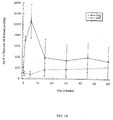
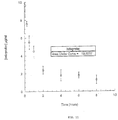
- Figs. 1A and 1B Blood levels of L-Dopa, measured, respectively, by mass spectrometry or HPLC, following administration via oral gavage or direct administration into the lungs are shown in Figs. 1A and 1B .
- the increase in blood levels of L-Dopa over time following oral administration was modest.
- administration into the lungs produced a robust and rapid rise in L-Dopa levels which peaked between 1 and 5 minutes post drag administration.
- L-Dopa levels in this group decreased between 5 and 15 minutes and remained stable thereafter. Data are presented as the mean ⁇ SEM ng L-Dopa level/ml blood.
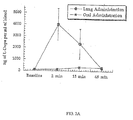
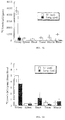
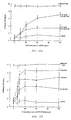
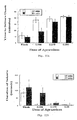
- Figs. 2A and 2B Relationship between blood L-Dopa levels and striatal dopamine levels following delivery of L-Dopa either orally or directly into the lungs, as described above, are shown in Figs. 2A and 2B .
- Fig. 2B shows dopamine levels in the striatum from the same animals shown in Fig. 2A .
- the brains were removed and striatum dissected free.
- Tissue levels of dopamine were determined using high performance liquid chromatography (HPLC). Note that the marked difference in blood L-Dopa levels seen between the two treatments at two minutes was followed, later in time, by more modest but significant differences in striatal levels of dopamine.
- Blood levels are presented as the mean ⁇ SEM ng L-Dopa levels/ml blood.
- Striatal levels of dopamine are presented as the mean ⁇ SEM ng dopamine/ mg protein.
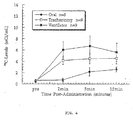
- Fig. 4 Direct comparison of plasma 14 C following administration of 14 C-L-Dopa via oral gavage, inhalation using a tracheotomy (as described above) or ventilator (Harvard Apparatus, Inc., Holliston, MA) is shown in Fig. 4 .
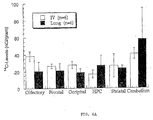
- Corresponding brain 14 C-L-Dopa levels are shown in Fig. 5 . All animals were briefly anesthetized using 1 % Isoflurane and immobilized in a harness to allow blood removal via a previously placed femoral cannula. Blood samples were removed at 0, 2, 5, and 15 minutes post administration.
- L-Dopa administration using the ventilator a 24 gauge catheter was placed within the trachea and the L-Dopa (25 ⁇ Ci) was administered over a 3-5 second period using a tidal volume of 1 ml and 100 strokes/minutes. Striatal tissue samples were processed for determinations of levels of radioactivity using scintillation counts. Both the plasma and brain levels of 14 C were comparable elevated using both the conventional tracheotomy methods and the ventilator.
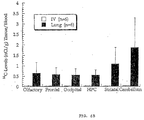
- Blood, brain and peripheral organ levels of 14 C were determined following administration of 14 C- Carboplatin via either IV or pulmonary administration.
- a total of 100 ⁇ Ci of radiolabeled carboplatin was mixed with unlabelled carboplatin to provide a total drug concentration of 8 mg/rat. All animals were anesthetized using ketamine.
- carboplatin was administered via a previously placed femoral cannula.
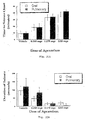
- Results are shown in Table 2, which shows scintillation counts of 14 C-levels in plasma, brain and peripheral organs following 14 C-carboplatin (100 ⁇ Ci/8mg) administration, and in Figs. 6A-6B and 7A-7B .
- Absolute plasma levels of 14 C were higher following IV administration. However, the absolute brain levels were comparable suggesting that delivery to the brain at this time point was relatively selective. This point is clearer when the ratio of brain to blood 14 C levels was calculated. Following pulmonary delivery, 14 C levels were 2833% higher than observed following IV administration. Absolute levels of 14 C in peripheral tissue was also lower following pulmonary administration (92% lower relative to IV).
- Particles comprising L-Dopa and suitable for inhalation were produced as follows. 2.00123 g DPPC (Avanti Polar Lipids, Lot #G160PC-25) was added to 2.80 L of ethanol and stirred to dissolve. 0.0817 g L-Dopa (Spectrum, Lot 0Q0128, Georgia Hills, CA), 0.9135 g Sodium Citrate (Dehydrate) (Spectrum Lot NX0195), and 0,5283 g Calcium Chloride (Dehydrate) (Spectrum Lot NT0183) were added to 1.2 L of water and dissolved. The solutions were combined by adding the water solution to the ethanol solution and then the solutions were allowed to stir until the solution was clear. The weight percent of the formulation was approximately: 20% L-Dopa, 50% DPPC, 20% Sodium Citrate, 10% Calcium Chloride.
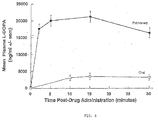
- Fig. 8 This Fig. shows blood levels of L-Dppa following administration via oral gavage or direct administration into the lungs via insufflation.
- L-Dopa levels were measured using both HPLC. Animals received an IP injection of the peripheral decarboxylase inhibitor carbi-dopa (200 mg/kg) 1 hour prior to administration of L-Dopa. Under ketamine anesthesia, the animals were divided into 2 groups. In the first group, animals were fasted overnight and L-Dopa (8 mg) was suspended in saline containing 1% methylcellulose and given via oral gavage. In the second group, insufflation was used to deliver the L-Dopa formulation directly into the lungs.
- Ketoprofen/DPPC/maltodextrin particles were prepared and administered in vivo.
- Ketoprofen (99.5%) was obtained from Sigma, (St. Louis, MO), dipalmitoyl phosphatidyl choline (DPPC) from Avanti Polar Lipids, (Alabaster, AL) and maltodextrin,M100 (Grain Processing Corp., Muscatine, IA).
- DPPC dipalmitoyl phosphatidyl choline
- ketoprofen/DPPC/Maltodextrin solutions To prepare ketoprofen/DPPC/Maltodextrin solutions, maltodextrin (0.598 g) was added to 0.60 L USP water. DPPC (0.901 g) was added to 1.40 L ethanol and stirred until dissolved. The water and ethanol solutions were combined, resulting in a cloudy solution. 500 ml of this stock solution was used for each run. The addition of ketoprofen to the DPPC/Maltodextrin stock solution is described in Table 3.
- a Niro Atomizer Portable Spray Dryer (Niro, Inc., Columbus, MD) was used to produce the dry powders. Compressed air with variable pressure (1 to 5 bar) ran a rotary atomizer (2,000 to 30,000 rpm) located above the dryer. Liquid feed of the ketoprofen/DPPC/Maltodextrin solutions, with varying rate (20 to 66 ml/min), was pumped continuously by an electronic metering pump (LMI, model #A151-192s) to the atomizer. Both the inlet and outlet temperatures were measured. The inlet temperature was controlled manually; it could be varied between 100°C and 400°C, with a limit of control of 5°C.
- LMI electronic metering pump
- the outlet temperature was determined by the inlet temperature and such factors as the gas and liquid feed rates; it varied between 50°C and 130°C.
- a container was tightly attached to the 6" cyclone for collecting the powder product.
- the spraying conditions for each solution is given in Table 4, which shows that the spraying conditions were held nearly constant throughout the study.
- the total recovery and yield for each solution is given in Table 5.
- the particles were characterized using the Aerosizer (TSI, Inc., Amherst, MA) and the RODOS dry powder disperser (Sympatec Inc., Princeton, NJ) as instructed by the manufacturer. For the RODOS, the geometric diameter was measured at 2 bars.
- the material from run #5 was also characterized using a gravimetric collapsed Andersen Cascade Impactor (ACI, 2 stage, Anderson Inst., Sunyra, GA). The samples were examined using a scanning electron microscope (SEM).
- Table 5 indicates that increasing the weight % of ketoprofen led to a decrease in yield.
- the addition of ketoprofen to the stock solution linearly decreased yield. This may be due to a decrease in melting temperature for DPPC when mixed with ketoprofen, leading to the yield loss.
- Table 6 shows that the particles ranged in diameter from 8.8 ⁇ m to 10.2 ⁇ m (VMGD) and from 2.65 ⁇ m to 3.11 ⁇ m (MMAD). The lowest MMAD particles were for the 8.4% loading material (run #5).
- the fine particle fractions (FPF) below 5.6 ⁇ m and below 3.4 ⁇ m are consistent with powders expected to be respirable.
- Each of 8 rats were given 7 mg of powder via insufflation, and each of 7 rats were orally given 7 mg of powder dissolved in 50% ethanol.
- samples were taken from either 3 or 4 rats.
- Each rat was used for 4 time points, with 3 or 4 animals each in four groups. The animals were distributed as follows: 3 animals oral at 5,30, 120, 360 minutes; 4 animals insufflation at 15, 60, 240, 480 minutes.
- Sufficient blood was drawn at each time point for the ketoprofen plasma assay. Blood samples were centrifuged, the plasma collected and then frozen at -20°C prior to shipment to the contract laboratory for analysis. The assay used in this study has a lower detection limit of 1.0 mg/ml.
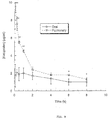
- Rats were dosed with ketoprofen via either oral or pulmonary administration to determine if the pulmonary route would alter the time required to achieve maximum plasma concentration.
- the results show that the pulmonary delivery route leads to a very rapid uptake with C max occurring at ⁇ 10 minutes.
- the rats that received oral doses of ketoprofen displayed somewhat anomalous pharmacokinetic behavior, with the relative bioavailability being about half of that displayed for rats dosed via the pulmonary route. This result was unexpected as ketoprofen is 90% orally bioavailable in the human model. This anomaly for the orally dosed rats does not, however, invalidate the significance of the early C max seen for the rats dosed via the pulmonary route.
- the ratio of the AUCs for insulflated rats vs. orally dosed was about 2.
- the plasma concentrations for ketoprofen at the early time points were statistically significant as well.
- C max for the insufflated rats clearly occurred at ⁇ 15 min and C max for the orally dosed rats occurred between 15-60 min. Due to the large standard error and the relatively low plasma levels for this group, it is not possible to accurately determine the time required for Cmax.
- ketoprofen showed higher bioavailability compared to the orally dosed rats. This is unexpected as previous studies have shown ketoprofen to have consistently high (>90%) bioavailability in humans when dosed orally, subcutaneously or rectally. Since the pharmokinetic behavior of ketoprofen delivered orally is well-known, the anomalous results seen here for the orally dosed group do not invalidate the results seen for the insufflation group.
- Table 8 Time Min. Oral Dosing Avg. (ug/ml) Group St. Dev. Pulmonary Avg. (ug/ml) Dosing Group Std. Dev.
- Aerodynamic diameter was analyzed using the API AeroDisperser and Aerosizer (TSI, Inc., St. Paul, MN) following standard procedures (Alkermes SOP# MS-034-005). Sample powder was introduced and dispersed in the AeroDisperser and then accelerated through a nozzle in the Aerosizer. A direct time-of-flight measurement was made for each particle in the Aerosizer, which was dependent on the particle's inertia. The time-of-flight distribution was then translated into a mass-based aerodynamic particle size distribution using a force balance based on Stokes law.
- Geometric diameter was determined using a laser diffraction technique (Alkermes SOP# MS-021-005).
- the equipment consists of a HELOS diffractometer and a RODOS disperser (Sympatec, Inc., Princeton, NJ).
- the RODOS disperser applies a shear force to a sample of particles, controlled by the regulator pressure of the incoming compressed air.
- the dispersed particles travel through a laser beam where the resulting diffracted light pattern produced is collected by a series of detectors.
- the ensemble diffraction pattern is then translated into a volume-based particle size distribution using the Fraunhofer diffraction model, on the basis that smaller particles diffract light at larger angles.
- the aerodynamic properties of the powders dispersed from the inhaler device were assessed with a 2-stage MkII Anderson Cascade Impactor (Anderson Instruments, Inc., Smyrna, GA).
- the instrument consists of two stages that separate aerosol particles based on aerodynamic diameter.
- the aerosol stream passes through a set of nozzles and impinges on the corresponding impaction plate. Particles having small enough inertia will continue with the aerosol stream to the next stage, while the remaining particles will impact upon the plate.
- the aerosol passes through nozzles at a higher velocity and aerodynamically smaller particles are collected on the plate.
- a filter collects the smallest particles that remain.
- L-Dopa Since the average single oral dose of L-Dopa generally ranges from 100 -150 mg, experiments were conducted to prepare particles suitable for inhalation which included high loads of L-Dopa. Formulations of 20% and 40% L-Dopa load were studied. Carbidopa, a decarboxylase inhibitor given in conjunction with L-Dopa to prevent peripheral decarboxylation, was also included at a 4:1 weight/weight (w/w) ratio in some of the formulations. L-Dopa and combination of L-Dopa and carbidopa were successfully sprayed with DPPC formulations.
- the optimal formulation consisted of L-Dopa and/or carbidopa, 20% (w/w) sodium citrate, and 10% (w/w) calcium chloride, and the remainder dipalmitoyl phosphatidyl chloline (DPPC).
- DPPC dipalmitoyl phosphatidyl chloline
- L-Dopa integrity appeared to be preserved through the formulation and spray drying process.
- L-Dopa was extracted from L-Dopa powders and analyzed by reverse phase HPLC. No impurities were detected in the L-Dopa powders ( Fig. 13A ); the early peaks eluted around 1-2 minutes are due to solvent as can be seen from Fig. 13B which is a blank sample that did not contain L-Dopa.
- the purity of L-Dopa recovered from the particles was 99.8% and 99.9% respectively for the 20% and 40% loaded particles.
- L-Dopa Determinations of plasma levels of L-Dopa were made following IV injection, oral gavage, or insufflation into the lungs.
- Carbidopa generally is administered to ensure that peripheral decarboxylase activity is completely shut down.
- animals received an intraperitoneal (IP) injection of the peripheral decarboxylase inhibitor carbidopa (200 mg/kg) 1 hour prior to administration of L-Dopa..
- IP intraperitoneal
- the animals were divided into 3 groups. In the first group of animals, L-Dopa (2 mg) was suspended in saline containing 1% methylcellulose and 1% ascorbic acid and given via oral gavage. In the second group, an insufflation technique was used for pulmonary administration of particles including L-Dopa (20% loading density).
- a laryngoscope was used to visualize the rat's epiglottis and the blunt-tip insufflation device (PennCentury Insufflation powder delivery device) was inserted into the airway.
- a bolus of air (3 cc) was used to delivery the pre-loaded powder from the chamber of the device into the animal's lungs.
- a total of 10 mg of powder (2 mg L-Dopa) was delivered.
- a previously-placed femoral cannula was used to delivery a bolus (2-3 second) of L-Dopa (2 mg).
- Blood samples (200 ⁇ L) were withdrawn from each animal using the femoral cannula at the following timepoints: 0 (immediately prior to L-Dopa administration), 2, 5, 15, 30, 60, 120, and 240 minutes following L-Dopa administration. All samples were processed for L-Dopa determinations using HPLC.
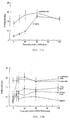
- Figs. 14A and 14B The results of a pharmacokinetic study using the procedure described are shown in Figs. 14A and 14B .
- the results of a comparison of pulmonary delivery of L-Dopa with oral administration are depicted in Fig. 14A .
- peak plasma levels of L-Dopa were seen at the earliest time point measured (2 minutes) and began to decrease within 15 minutes of administration while still remaining elevated, relative to oral administration, for up to 120 minutes.
- oral administration of L-Dopa resulted in a more gradual increase in plasma L-Dopa levels, which peaked at 15-30 minutes following administration and then decreased gradually over the next 1-2 hours.
- Fig. 14B Intravenous, oral and pulmonary delivery also were compared. The results are shown in Fig. 14B .
- This panel depicts the same data presented in Fig. 14A with the addition of the IV administration group which allows direct comparisons of the plasma L-Dopa levels obtained following all three routes of administration (pulmonary, oral, and IV). Data are presented as the mean ⁇ SEM ⁇ g L-Dopa/mL blood. Plasma levels of L-Dopa rapidly increased following intravenous (IV) administration. The highest levels of L-Dopa were seen at 2 minutes and decreased rapidly thereafter.
- Bioavailability was estimated by performing area under the curve (AUC) calculations. Over the entire time course of the study (0 - 240 min), the relative bioavailability (compared to IV) of pulmonary L-Dopa was approximately 75% as compared 33% for oral L-Dopa. The relative bioavailability of pulmonary L-Dopa at 15 min and 60 min post administration was 38% and 62%, respectively, while that of oral L-Dopa was 9% and 24%, respectively.
- AUC area under the curve
- Rats receiving L-Dopa also received unilateral injections of the neurotoxin 6-OHDA (specific for dopamine neurons in the brain) into the medial forebrain bundle. Rats were then screened to assure successful striatal dopamine depletion using a standard apomorphine-induced turning paradigm. Beginning two weeks after surgery, animals were tested weekly for three weeks for apomorphine-induced rotation behavior. For this test, animals received an IP injection of apomorphine (0.25 mg/kg for the first test and 0.1 mg/kg for the following two tests) and were placed into a cylindrical Plexiglass bucket. Each 360-degree rotation was counted for 30 minutes and only those animals exhibiting >200 rotations/30 minutes (12/30 lesioned rats) were used in behavioral testing.
- the lesioned rats were challenged with several motor tasks post L-Dopa administration.
- the data from the studies (placing task, bracing task, akinesia) further emphasized the advantage of pulmonary delivery over oral delivery.
- animals passing the apomorphine challenge were tested using a "placing task”. Prior to each test day, animals received an IP injection of the peripheral decarboxylase inhibitor carbidopa (200 mg/kg). Animals then received oral L-Dopa (0, 20 or 30 mg/kg) or pulmonary L-Dopa (0, 0.5, 1.0 or 2.0 mg of L-Dopa) and were tested 15, 30 60 and 120 minutes later. Throughout testing with oral and pulmonary delivery of L-Dopa, each animal received every possible drug combination in a randomized fashion.
- the pharmacodynamics "placing task” required the animals to make a directed forelimb movement in response to sensory stimuli. Rats were held so that their limbs were hanging unsupported. They were then raised to the side of a table so that their bodies were parallel to the edge of the table. Each rat received 10 consecutive trials with each forelimb and the total number of times the rat placed its forelimb on the top of the table was recorded.
- Figs. 15A and 15B Results from a "placing task" tests are shown in Figs. 15A and 15B .
- baseline 0; immediately prior to L-Dopa administration
- the animals performed nearly perfectly on this task with the unaffected limb, making greater than 9/10 correct responses.
- the animals were markedly impaired in their ability to perform the same task with the impaired limb, making approximately 1 correct response over the 10 trials.
- Oral L-Dopa ( Fig. 15A ) produced a dose-related improvement in performance with the impaired limb.
- performance was improved, relative to saline control, within 30 minutes and peaked between 1-2 hours after drug administration.
- the lower dose (20 mg/kg) also improved performance slightly with maximal effects at 60 minutes and stable performance thereafter. No changes were noted following administration of the saline control.
- the extent of recovery with 30 mg/kg of L-Dopa given orally was comparable to the recovery seen with 1 mg of L-Dopa given by the pulmonary route (note that 1 mg of pulmonary L-Dopa is equivalent to approximately 3 mg/kg, given that the animals body weight was approximately 300 g). Accordingly, when the L-Dopa doses were normalized by body weight, this represented nearly a 10-fold difference in the drug required to produce equivalent efficacy. Finally, the persistence of the behavioral improvements was comparable using the two delivery routes.
- Figs. 16A and 16B Results from a bracing test are shown in Figs. 16A and 16B . This test was performed using the same animals and at the same time as the "placing task" test described above. Rats were placed on a smooth stainless steel surface and gently pushed laterally 90 cm at approximately 20 cm/second. The number of steps the rat took with the forelimb on the side in which the rat was moving was recorded. Each trial included moving the rat 2 times in each direction.
- FIGs. 17A and 17B A functional akinesia pharmacodynamics study also was conducted. The results are shown in Figs. 17A and 17B . This test was performed using the same animals and at the same time as the two preceding tests. In this task, the animal was held so that it was standing on one forelimb and allowed to move on its own. The number of steps taken with the forelimb the rat was standing on was recorded during a 30 second trial for each forelimb.
- Oral administration of L-Dopa produced a marked clockwise rotation behavior that was modest during the first 10-15 minutes post L-Dopa administration ( ⁇ 5 rotations/animal).
- the number of rotations increased markedly, with peak levels occurring approximately 30 minutes after L-Dopa indicating increased dopamine activity in the intact striatum of the brain.
- the number of rotations gradually decreased, but this decrease, relative to peak levels, did not reach statistical significance (p>0.05).
- the pharmacodynamic effects of a pulmonary versus oral benzodiazepine-type drug, alprazolam were evaluated using a standard pre-clinical test of anxiolytic drug action.
- the chemical convulsant pentylenetetrazol (PZT) which is known to produce well characterized seizures in rodents, was administered to rats.
- the test was selected based on its sensitivity to a wide range of benzodiazapines and to the fact that the relative potency of benzodiazapines in blocking PZT-induced seizures is believed to be similar to the magnitude of their anti-anxiety effects in humans.
- the ability of alprazolam to block PZT-induced seizures was used as a measure of the pharmacodynamic effects of alprazolm.
- alprazolam (Sigma, St. Louis, MO was administered via aerodynamically light particles which included 10% alprazolam, 20% sodium citrate, 10% calcium chloride and 60% DPPC.
- alprazolam was suspended in light corn syrup and administered via gavage.
- pulmonary delivery an insufflation technique was used. Animals were briefly anesthetized with isoflurane (1-2%) and a laryngoscope was used to visualize the epiglottis and the blunt-tip insufflation device (PennCentury Insufflation powder delivery device) was inserted into the airway.
- the doses for pulmonary delivery were 0 (blank particles that included 20% sodium citrate, 10% calcium chloride and 70% DPPC), 0.088, 0.175, or 0.35 mgs total alprazolam, and the doses for oral delivery were 0, 0.088, 0.175, 0.35, 0.70, 1.75, or 3.50 mgs total alprazolam. These doses were chosen to encompass the range of effective and ineffective oral doses. Accordingly, any potential benefits of pulmonary delivery could be directly compared to the oral dose response curve for alprazolam.
- alprazolam was administered either 10 or 30 minutes prior to PZT, obtained from Sigma, St. Louis, MO, (60 mg/kg given i.p).
- PZT obtained from Sigma, St. Louis, MO, (60 mg/kg given i.p).
- isoflurane immediately following dosing as described above.
- the number of seizures as well as the time to seizure onset and seizure duration was recorded for 45 minutes after administration of PZT. Any animal that did not exhibit seizure activity was assigned the maximum possible time for seizure onset (45 minutes) and the minimal possible time for seizure duration (0 seconds).
- Fig. 21A and 21B further demonstrate that the effects of pulmonary alprazolam remained relatively constant as the time between alprazolam and PZT treatment increased.
- alprazolam was modestly more effective when the interval between alprazolam and PZT was kept at a minimum.
- fewer animals had seizures when alprazolam was delivered 10 minutes vs 30 minutes prior to PZT (although this effect did not reach statistical significance, p>0.05).
- the benefit of maintaining a close temporal relationship between alprazolam and PZT was also beginning to emerge when examining the time to seizure onset and the duration of seizure activity.
Landscapes
- Health & Medical Sciences (AREA)
- Bioinformatics & Cheminformatics (AREA)
- Engineering & Computer Science (AREA)
- Life Sciences & Earth Sciences (AREA)
- General Health & Medical Sciences (AREA)
- Veterinary Medicine (AREA)
- Public Health (AREA)
- Chemical & Material Sciences (AREA)
- Animal Behavior & Ethology (AREA)
- Pharmacology & Pharmacy (AREA)
- Medicinal Chemistry (AREA)
- Biomedical Technology (AREA)
- Neurosurgery (AREA)
- Neurology (AREA)
- Epidemiology (AREA)
- Nuclear Medicine, Radiotherapy & Molecular Imaging (AREA)
- Organic Chemistry (AREA)
- General Chemical & Material Sciences (AREA)
- Chemical Kinetics & Catalysis (AREA)
- Pulmonology (AREA)
- Otolaryngology (AREA)
- Psychiatry (AREA)
- Pain & Pain Management (AREA)
- Hospice & Palliative Care (AREA)
- Psychology (AREA)
- Medicinal Preparation (AREA)
- Pharmaceuticals Containing Other Organic And Inorganic Compounds (AREA)
- Acyclic And Carbocyclic Compounds In Medicinal Compositions (AREA)
- Medicines That Contain Protein Lipid Enzymes And Other Medicines (AREA)
Applications Claiming Priority (3)
| Application Number | Priority Date | Filing Date | Title |
|---|---|---|---|
| US09/665,252 US6514482B1 (en) | 2000-09-19 | 2000-09-19 | Pulmonary delivery in treating disorders of the central nervous system |
| US09/877,734 US6613308B2 (en) | 2000-09-19 | 2001-06-08 | Pulmonary delivery in treating disorders of the central nervous system |
| EP01971210.8A EP1318785B1 (en) | 2000-09-19 | 2001-09-19 | Pulmonary delivery of l-dopa |
Related Parent Applications (2)
| Application Number | Title | Priority Date | Filing Date |
|---|---|---|---|
| EP01971210.8A Division-Into EP1318785B1 (en) | 2000-09-19 | 2001-09-19 | Pulmonary delivery of l-dopa |
| EP01971210.8A Division EP1318785B1 (en) | 2000-09-19 | 2001-09-19 | Pulmonary delivery of l-dopa |
Publications (1)
| Publication Number | Publication Date |
|---|---|
| EP3061453A1 true EP3061453A1 (en) | 2016-08-31 |
Family
ID=27099159
Family Applications (2)
| Application Number | Title | Priority Date | Filing Date |
|---|---|---|---|
| EP15201016.1A Ceased EP3061453A1 (en) | 2000-09-19 | 2001-09-19 | Pulmonary delivery of triptan |
| EP01971210.8A Expired - Lifetime EP1318785B1 (en) | 2000-09-19 | 2001-09-19 | Pulmonary delivery of l-dopa |
Family Applications After (1)
| Application Number | Title | Priority Date | Filing Date |
|---|---|---|---|
| EP01971210.8A Expired - Lifetime EP1318785B1 (en) | 2000-09-19 | 2001-09-19 | Pulmonary delivery of l-dopa |
Country Status (10)
| Country | Link |
|---|---|
| US (7) | US6613308B2 (enExample) |
| EP (2) | EP3061453A1 (enExample) |
| JP (2) | JP5421510B2 (enExample) |
| AU (2) | AU9112201A (enExample) |
| CA (1) | CA2421974C (enExample) |
| CY (1) | CY1118851T1 (enExample) |
| DK (1) | DK1318785T3 (enExample) |
| ES (1) | ES2621549T3 (enExample) |
| PT (1) | PT1318785T (enExample) |
| WO (1) | WO2002024158A2 (enExample) |
Families Citing this family (180)
| Publication number | Priority date | Publication date | Assignee | Title |
|---|---|---|---|---|
| US20020052310A1 (en) * | 1997-09-15 | 2002-05-02 | Massachusetts Institute Of Technology The Penn State Research Foundation | Particles for inhalation having sustained release properties |
| US7779020B2 (en) * | 2002-03-01 | 2010-08-17 | International Business Machines Corporation | Small-footprint applicative query interpreter method, system and program product |
| ES2211151T3 (es) | 1998-08-19 | 2004-07-01 | Skyepharma Canada Inc. | Dispersiones acuosas inyectables de propofol. |
| US9006175B2 (en) | 1999-06-29 | 2015-04-14 | Mannkind Corporation | Potentiation of glucose elimination |
| CA2307278A1 (en) * | 2000-04-28 | 2001-10-28 | University Of British Columbia | Use of n-heterocyclic substituted salicylic acids for inhibition of cellular uptake of cystine |
| FR2812545B1 (fr) * | 2000-08-03 | 2003-03-28 | Air Liquide Sante Int | Aerosol medicamenteux inhalable dans le traitement ou la prevention de la douceur |
| US6613308B2 (en) * | 2000-09-19 | 2003-09-02 | Advanced Inhalation Research, Inc. | Pulmonary delivery in treating disorders of the central nervous system |
| WO2002094246A2 (en) * | 2001-05-24 | 2002-11-28 | Alexza Molecular Delivery Corporation | Delivery of nonsteroidal antiinflammatory drugs through an inhalation route |
| AU2002310074B2 (en) * | 2001-05-24 | 2008-09-04 | Alexza Pharmaceuticals, Inc. | Delivery of compounds for the treatment of migraine through an inhalation route |
| WO2002094237A1 (en) * | 2001-05-24 | 2002-11-28 | Alexza Molecular Delivery Corporation | Delivery of beta-blockers through an inhalation route |
| EP1392260A2 (en) * | 2001-05-24 | 2004-03-03 | Alexza Molecular Delivery Corporation | Delivery of benzodiazepines through an inhalation route |
| DE60227660D1 (de) * | 2001-05-24 | 2008-08-28 | Alexza Pharmaceuticals Inc | Freisetzung von antiemetika auf dem inhalationsweg |
| WO2002094238A1 (en) * | 2001-05-24 | 2002-11-28 | Alexza Molecular Delivery Corporation | Delivery of anti-migraine compounds through an inhalation route |
| US7458374B2 (en) | 2002-05-13 | 2008-12-02 | Alexza Pharmaceuticals, Inc. | Method and apparatus for vaporizing a compound |
| US7766013B2 (en) | 2001-06-05 | 2010-08-03 | Alexza Pharmaceuticals, Inc. | Aerosol generating method and device |
| US6759029B2 (en) * | 2001-05-24 | 2004-07-06 | Alexza Molecular Delivery Corporation | Delivery of rizatriptan and zolmitriptan through an inhalation route |
| US7645442B2 (en) | 2001-05-24 | 2010-01-12 | Alexza Pharmaceuticals, Inc. | Rapid-heating drug delivery article and method of use |
| AU2002259241B2 (en) * | 2001-05-24 | 2008-09-04 | Alexza Pharmaceuticals, Inc. | Delivery of sedative-hypnotics through an inhalation route |
| US7090830B2 (en) | 2001-05-24 | 2006-08-15 | Alexza Pharmaceuticals, Inc. | Drug condensation aerosols and kits |
| US6737042B2 (en) | 2001-05-24 | 2004-05-18 | Alexza Molecular Delivery Corporation | Delivery of drug esters through an inhalation route |
| US20070122353A1 (en) | 2001-05-24 | 2007-05-31 | Hale Ron L | Drug condensation aerosols and kits |
| US7585493B2 (en) | 2001-05-24 | 2009-09-08 | Alexza Pharmaceuticals, Inc. | Thin-film drug delivery article and method of use |
| WO2002094234A1 (en) * | 2001-05-24 | 2002-11-28 | Alexza Molecular Delivery Corporation | Delivery of opioids through an inhalation route |
| WO2002094232A1 (en) * | 2001-05-24 | 2002-11-28 | Alexza Molecular Delivery Corporation | Delivery of antidepressants through an inhalation route |
| US20080038363A1 (en) * | 2001-05-24 | 2008-02-14 | Zaffaroni Alejandro C | Aerosol delivery system and uses thereof |
| CA2447519C (en) * | 2001-05-24 | 2008-09-16 | Alexza Molecular Delivery Corporation | Delivery of alprazolam, estazolam, midazolam or triazolam through an inhalation route |
| US7498019B2 (en) | 2001-05-24 | 2009-03-03 | Alexza Pharmaceuticals, Inc. | Delivery of compounds for the treatment of headache through an inhalation route |
| DE10137633A1 (de) * | 2001-08-03 | 2003-02-20 | Boehringer Ingelheim Pharma | Pramipexol zur Behandlung von ADHD |
| WO2003041693A1 (en) * | 2001-11-09 | 2003-05-22 | Alexza Molecular Delivery Corporation | Delivery of diazepam through an inhalation route |
| WO2003057188A1 (en) | 2001-11-21 | 2003-07-17 | Alexza Molecular Delivery Corporation | Delivery of caffeine through an inhalation route |
| ES2364636T3 (es) | 2001-12-19 | 2011-09-08 | Novartis Ag | Administración pulmonar de aminoglucósidos. |
| US20040009231A1 (en) * | 2002-03-20 | 2004-01-15 | Advanced Inhalation Research, Inc. | hGH (human growth hormone) formulations for pulmonary administration |
| US6923175B2 (en) | 2002-03-20 | 2005-08-02 | Mannkind Corporation | Inhalation apparatus |
| US7872048B2 (en) | 2004-09-18 | 2011-01-18 | University Of Maryland, Baltimore | Methods for treating spinal cord injury with a compound that inhibits a NCCa-ATP channel |
| LT2630954T (lt) * | 2002-03-20 | 2017-01-25 | Civitas Therapeutics, Inc. | Levodopos įvedimas į plaučius |
| US7105576B2 (en) * | 2002-04-24 | 2006-09-12 | Research Development Foundation | Synergistic effects of nuclear transcription factor NF-κB inhibitors and anti-neoplastic agents |
| EP1503744A1 (en) | 2002-05-13 | 2005-02-09 | Alexza Molecular Delivery Corporation | Delivery of drug amines through an inhalation route |
| US20060193788A1 (en) * | 2002-11-26 | 2006-08-31 | Hale Ron L | Acute treatment of headache with phenothiazine antipsychotics |
| EP1523318A4 (en) * | 2002-06-24 | 2007-07-04 | Res Dev Foundation | TREATMENT OF HUMAN MULTIPLE MYELOMA BY CURCUMIN |
| CA2488976C (en) * | 2002-06-28 | 2009-08-25 | Advanced Inhalation Research, Inc. | Inhalable epinephrine |
| WO2004006841A2 (en) * | 2002-07-12 | 2004-01-22 | University Of Rochester | Use of amino acids for treatment of various conditions |
| US7550133B2 (en) * | 2002-11-26 | 2009-06-23 | Alexza Pharmaceuticals, Inc. | Respiratory drug condensation aerosols and methods of making and using them |
| US8288372B2 (en) * | 2002-11-26 | 2012-10-16 | Alexza Pharmaceuticals, Inc. | Method for treating headache with loxapine |
| US20040105818A1 (en) | 2002-11-26 | 2004-06-03 | Alexza Molecular Delivery Corporation | Diuretic aerosols and methods of making and using them |
| WO2004047841A1 (en) * | 2002-11-26 | 2004-06-10 | Alexza Molecular Delivery Corporation | Treatment of headache with antipsychotics delivered by inhalation |
| US7913688B2 (en) | 2002-11-27 | 2011-03-29 | Alexza Pharmaceuticals, Inc. | Inhalation device for producing a drug aerosol |
| EP1596824A4 (en) * | 2003-02-04 | 2011-11-23 | Chrysalis Tech Inc | AEROSOL FORMULATIONS AND AEROSOL DISTRIBUTION OF BUSPIRONE, BUPRENORPHINE, TRIAZOLAM, CYCLOBENZAPRINE AND ZOLPIDEM |
| EP1617820B1 (en) | 2003-04-14 | 2018-03-21 | Vectura Limited | Dry power inhaler devices and dry power formulations for enhancing dosing efficiency |
| US20050079166A1 (en) | 2003-05-21 | 2005-04-14 | Alexza Molecular Delivery Corporation | Self-contained heating unit and drug-supply unit employing same |
| AU2004249166B2 (en) * | 2003-06-13 | 2008-10-09 | Alkermes, Inc. | Low dose pharmaceutical powders for inhalation |
| US7462646B2 (en) | 2003-08-26 | 2008-12-09 | Research Development Foundation | Osteoclastogenesis inhibitors and uses thereof |
| US20050181036A1 (en) * | 2003-08-26 | 2005-08-18 | Research Development Foundation | Aerosol delivery of curcumin |
| US7540286B2 (en) | 2004-06-03 | 2009-06-02 | Alexza Pharmaceuticals, Inc. | Multiple dose condensation aerosol devices and methods of forming condensation aerosols |
| KR20120131245A (ko) | 2004-06-18 | 2012-12-04 | 노파르티스 아게 | 기관지 감염의 치료 방법 |
| CA2576961A1 (en) | 2004-08-12 | 2006-03-02 | Alexza Pharmaceuticals, Inc. | Aerosol drug delivery device incorporating percussively activated heat packages |
| CN101010305B (zh) | 2004-08-20 | 2010-08-11 | 曼金德公司 | 二酮哌嗪合成的催化反应 |
| BR122019022692B1 (pt) | 2004-08-23 | 2023-01-10 | Mannkind Corporation | Composição terapêutica em pó seco contendo dicetopiperazina, pelo menos um tipo de cátion e um agente biologicamente ativo |
| US10583094B2 (en) | 2004-09-18 | 2020-03-10 | University Of Maryland | Therapeutic methods that target the NCCA-ATP channel |
| GB0425758D0 (en) | 2004-11-23 | 2004-12-22 | Vectura Ltd | Preparation of pharmaceutical compositions |
| US20060134009A1 (en) * | 2004-12-16 | 2006-06-22 | Daniel Deaver | Low dose corticosteroid powders for inhalation |
| US8466133B2 (en) | 2005-04-22 | 2013-06-18 | University Of Geneva | Polylactides compositions and uses thereof |
| KR101384456B1 (ko) | 2005-09-14 | 2014-04-10 | 맨카인드 코포레이션 | 활성제에 대한 결정질 미립자 표면의 친화력의 증가를 기반으로 하는 약물 제제화의 방법 |
| ES2647080T3 (es) | 2006-02-22 | 2017-12-19 | Mannkind Corporation | Un método para mejorar las propiedades farmacéuticas de micropartículas que comprenden dicetopiperazina y un agente activo |
| CA2674949A1 (en) | 2007-01-12 | 2008-07-24 | J. Marc Simard | Targeting ncca-atp channel for organ protection following ischemic episode |
| US20080275030A1 (en) * | 2007-01-19 | 2008-11-06 | Sveinbjorn Gizurarson | Methods and Compositions for the Delivery of a Therapeutic Agent |
| CN101674730B (zh) | 2007-02-02 | 2014-09-10 | 贝勒医学院 | 用于治疗代谢疾病的组合物和方法 |
| EP2114160B1 (en) | 2007-02-09 | 2016-11-16 | University of Maryland, Baltimore | Antagonists of a non-selective cation channel in neural cells |
| ES2691033T3 (es) | 2007-02-11 | 2018-11-23 | Map Pharmaceuticals Inc. | Método de administración terapéutica de DHE para activar el alivio rápido de la migraña a la vez que se reduce al mínimo el perfil de los efectos secundarios |
| WO2008112661A2 (en) | 2007-03-09 | 2008-09-18 | Alexza Pharmaceuticals, Inc. | Heating unit for use in a drug delivery device |
| CA2691199C (en) | 2007-06-22 | 2017-09-12 | Marc J. Simard | Inhibitors of ncca-atp channels for therapy |
| EP2173380A4 (en) * | 2007-07-13 | 2011-08-31 | Abbott Biotech Ltd | METHOD AND COMPOSITIONS FOR PULMONARY ADMINISTRATION OF A TNFa HEMMER |
| WO2011163272A1 (en) | 2010-06-21 | 2011-12-29 | Mannkind Corporation | Dry powder drug delivery system and methods |
| GB0721394D0 (en) * | 2007-10-31 | 2007-12-12 | Vectura Group Plc | Compositions for trating parkinson's disease |
| GB2454480A (en) * | 2007-11-07 | 2009-05-13 | Vectura Group Plc | Pulmonary inhalation of levodopa containing compositions in the treatment of Parkinsons disease and other central nervous system disorders |
| US20090247537A1 (en) * | 2008-03-25 | 2009-10-01 | William Dale Overfield | Methods for preventing or treating bruxism using dopaminergic agents |
| DK2293833T3 (en) | 2008-06-13 | 2016-05-23 | Mannkind Corp | DRY POWDER INHALER AND MEDICINAL ADMINISTRATION SYSTEM |
| US8485180B2 (en) | 2008-06-13 | 2013-07-16 | Mannkind Corporation | Dry powder drug delivery system |
| CA2728523C (en) | 2008-06-20 | 2020-03-10 | Mannkind Corporation | An interactive apparatus and method for real-time profiling of inhalation efforts |
| TWI532497B (zh) | 2008-08-11 | 2016-05-11 | 曼凱公司 | 超快起作用胰島素之用途 |
| CN117530912A (zh) * | 2008-08-15 | 2024-02-09 | 硬木药品公司 | 适合口服给药的鸟苷酸环化酶-c受体激动剂多肽的稳定的固体制剂 |
| EP2340254B8 (en) * | 2008-09-15 | 2014-05-21 | Biovista, Inc. | Compositions and methods for treating epilepsy |
| EP2719380A3 (en) | 2008-09-16 | 2014-07-30 | University of Maryland, Baltimore | SUR1 inhibitors for therapy |
| US8349899B1 (en) | 2008-12-03 | 2013-01-08 | Arrowhead Center, Inc. | Selective inhibitors of EG5 motors and methods of use |
| US8765817B1 (en) | 2008-12-03 | 2014-07-01 | Arrowhead Center, Inc. | Selective inhibitors of EG5 motors and methods of use |
| WO2010074753A1 (en) | 2008-12-23 | 2010-07-01 | Map Pharmaceuticals, Inc. | Inhalation devices and related methods for administration of sedative hypnotic compounds |
| US8314106B2 (en) | 2008-12-29 | 2012-11-20 | Mannkind Corporation | Substituted diketopiperazine analogs for use as drug delivery agents |
| CA2754595C (en) | 2009-03-11 | 2017-06-27 | Mannkind Corporation | Apparatus, system and method for measuring resistance of an inhaler |
| EP2228054A1 (en) * | 2009-03-13 | 2010-09-15 | ITALFARMACO S.p.A. | Riluzole aqueous suspensions |
| EP2410981B2 (en) | 2009-03-26 | 2020-02-26 | Pulmatrix Operating Company, Inc. | Dry powder formulations and methods for treating pulmonary diseases |
| US20120294868A1 (en) | 2009-04-24 | 2012-11-22 | Edwards James R | Anti-tgf-beta induction of bone cell function and bone growth |
| US8551528B2 (en) | 2009-06-12 | 2013-10-08 | Mannkind Corporation | Diketopiperazine microparticles with defined specific surface areas |
| EP2456304B1 (en) | 2009-07-24 | 2015-08-19 | Baylor College Of Medicine | Methods of modulation of branched chain acids and uses thereof |
| MX2012001660A (es) * | 2009-08-06 | 2012-03-26 | Ironwood Pharmaceuticals Inc | Formulaciones que contienen linaclotida para adminstracion oral. |
| JP5784622B2 (ja) | 2009-11-03 | 2015-09-24 | マンカインド コーポレ−ション | 吸入活動をシミュレートするための装置及び方法 |
| EA201290799A1 (ru) | 2010-02-17 | 2013-03-29 | Айронвуд Фармасьютикалз, Инк. | Лечение желудочно-кишечных расстройств |
| LT2603232T (lt) | 2010-08-11 | 2020-01-27 | Ironwood Pharmaceuticals, Inc. | Stabilios linaklotido vaisto formos |
| EP4050109A1 (en) | 2010-08-18 | 2022-08-31 | Fred Hutchinson Cancer Center | Agents for use in treating facioscapulohumeral dystrophy (fshd) |
| WO2012030647A1 (en) | 2010-08-30 | 2012-03-08 | Pulmatrix, Inc. | Treatment of cystic fibrosis using calcium lactate, leucine and sodium chloride in a respiraple dry powder |
| CN107096014B (zh) | 2010-09-29 | 2022-07-15 | 普马特里克斯营业公司 | 吸入用单价金属阳离子干粉剂 |
| ES2625858T3 (es) | 2011-04-01 | 2017-07-20 | Mannkind Corporation | Paquete de tipo blíster para cartuchos farmacéuticos |
| WO2012174472A1 (en) | 2011-06-17 | 2012-12-20 | Mannkind Corporation | High capacity diketopiperazine microparticles |
| WO2013016223A2 (en) | 2011-07-22 | 2013-01-31 | The University Of Chicago | Treatments for migraine and related disorders |
| MX347354B (es) | 2011-08-17 | 2017-04-24 | Ironwood Pharmaceuticals Inc | Tratamientos para trastornos gastrointestinales. |
| WO2013057592A2 (en) | 2011-09-14 | 2013-04-25 | King Abdullah University Of Science And Technology | Treatment of sickle cell disease |
| US9644005B2 (en) | 2011-09-21 | 2017-05-09 | King Abdullah University Of Science And Technology | Didemnin biosynthetic gene cluster in Tistrella mobilis |
| WO2013043985A1 (en) | 2011-09-23 | 2013-03-28 | The Regents Of The University Of California | Edible oils to enhance delivery of orally administered steroids |
| HK1201475A1 (en) | 2011-10-24 | 2015-09-04 | Mannkind Corporation | Methods and compositions for treating pain |
| DK2806877T3 (da) | 2012-01-23 | 2019-11-04 | Sage Therapeutics Inc | Neuroaktive steroidformuleringer omfattende et kompleks af allopregnanolon og sulfobutylether beta-cyclodekstrin |
| AU2013221448B2 (en) | 2012-02-16 | 2017-02-23 | The University Of Toledo | Xenoantigen-displaying anti-cancer vaccines and method of making |
| WO2013130422A1 (en) | 2012-02-27 | 2013-09-06 | Biovista, Inc. | Compositions and methods for treating mitochondrial diseases |
| CN104487075A (zh) | 2012-02-29 | 2015-04-01 | 普马特里克斯公司 | 可吸入干粉剂 |
| AR092821A1 (es) | 2012-04-20 | 2015-05-06 | Sucampo Ag | Conjugado de derivado de acido graso-polimero |
| US10307490B2 (en) | 2012-05-23 | 2019-06-04 | The Ohio State University | Lipid nanoparticle compositions for antisense oligonucleotides delivery |
| CA3098386C (en) | 2012-07-12 | 2022-11-29 | Mannkind Corporation | Dry powder drug delivery systems and methods |
| US20140050789A1 (en) | 2012-08-13 | 2014-02-20 | The Regents Of The University Of California | Mitigation of epileptic seizures by combination therapy using benzodiazepines and neurosteroids |
| CA2882708A1 (en) | 2012-08-21 | 2014-02-27 | Sage Therapeutics, Inc. | Methods of treating epilepsy or status epilepticus |
| KR102237007B1 (ko) * | 2012-10-22 | 2021-04-06 | 키비타스 테라퓨틱스, 인코포레이티드. | 레보도파 혈장 농도의 환자간 변산도의 감소 |
| CN104884046A (zh) | 2012-10-22 | 2015-09-02 | 丝维塔斯治疗公司 | 用于快速缓解帕金森病的左旋多巴制剂 |
| EP2911690A1 (en) | 2012-10-26 | 2015-09-02 | MannKind Corporation | Inhalable influenza vaccine compositions and methods |
| WO2014074797A1 (en) * | 2012-11-09 | 2014-05-15 | Civitas Therapeutics, Inc. | Ultra low density pulmonary powders |
| US8545878B1 (en) * | 2012-11-09 | 2013-10-01 | Civitas Therapeutics, Inc. | Capsules containing high doses of levodopa for pulmonary use |
| JP2016501876A (ja) | 2012-11-30 | 2016-01-21 | ザ リージェンツ オブ ザ ユニバーシティ オブ カリフォルニア | ステロイドの抗痙攣活性 |
| US9757395B2 (en) * | 2012-12-20 | 2017-09-12 | Otitopic Inc. | Dry powder inhaler and methods of use |
| US9757529B2 (en) | 2012-12-20 | 2017-09-12 | Otitopic Inc. | Dry powder inhaler and methods of use |
| FR3000392B1 (fr) * | 2012-12-27 | 2015-03-27 | Virbac | Nouvelles compositions pharmaceutiques veterinaires et leur procede de preparation |
| WO2014160339A1 (en) | 2013-03-13 | 2014-10-02 | Board Of Regents, The University Of Texas System | Compounds for treating inflammatory and hyperproliferative diseases |
| MX369136B (es) | 2013-03-15 | 2019-10-30 | Mannkind Corp | Composiciones de dicetopiperazina microcristalina y metodos. |
| MX2015013774A (es) * | 2013-03-26 | 2016-02-29 | Optinose As | Administracion nasal. |
| US11554229B2 (en) | 2013-03-26 | 2023-01-17 | OptiNose Inc. | Nasal administration |
| WO2014165303A1 (en) | 2013-04-01 | 2014-10-09 | Pulmatrix, Inc. | Tiotropium dry powders |
| US10149823B2 (en) * | 2013-04-30 | 2018-12-11 | Otitopic Inc. | Dry powder formulations and methods of use |
| BR122019026637B1 (pt) | 2013-07-18 | 2023-09-26 | Mannkind Corporation | Formulações farmacêuticas de pó seco e método para a fabricação de uma formulação de pó seco |
| US11446127B2 (en) | 2013-08-05 | 2022-09-20 | Mannkind Corporation | Insufflation apparatus and methods |
| NZ759287A (en) | 2013-12-02 | 2022-10-28 | Baylor College Medicine | Identification of a new polypeptide hormone for maintenance of optimal body weight and blood glucose |
| CN112656780A (zh) | 2014-02-20 | 2021-04-16 | 奥迪托皮克股份有限公司 | 用于吸入的干粉制剂 |
| WO2015148905A1 (en) | 2014-03-28 | 2015-10-01 | Mannkind Corporation | Use of ultrarapid acting insulin |
| WO2015157500A1 (en) | 2014-04-09 | 2015-10-15 | Research Development Foundation | Class iia hdac inhibitors for the treatment of infection |
| MX2016013741A (es) * | 2014-04-21 | 2017-04-06 | Civitas Therapeutics Inc | Rápido alivio de las fluctuaciones motoras en la enfermedad de parkinson. |
| WO2016025202A1 (en) | 2014-08-14 | 2016-02-18 | The Regents Of The University Of Colorado | Antibody-sirna conjugates and uses therefor |
| JOP20200195A1 (ar) | 2014-09-08 | 2017-06-16 | Sage Therapeutics Inc | سترويدات وتركيبات نشطة عصبياً، واستخداماتها |
| US10561806B2 (en) | 2014-10-02 | 2020-02-18 | Mannkind Corporation | Mouthpiece cover for an inhaler |
| CN107106641B (zh) | 2014-10-31 | 2021-12-21 | 葛兰素史密斯克莱知识产权发展有限公司 | 粉末制剂 |
| WO2016073184A1 (en) | 2014-11-04 | 2016-05-12 | Dana Farber Cancer Institute, Inc. | Compositions and methods for treating multiple myeloma |
| EP3285792B1 (en) | 2015-04-20 | 2020-11-04 | The Board of Regents of The University of Texas System | Clec11a is a bone growth agent |
| MX2017013950A (es) * | 2015-05-01 | 2018-08-28 | Civitas Therapeutics Inc | Polvos de zolmitriptán para suministro pulmonar. |
| US10962551B2 (en) | 2015-06-17 | 2021-03-30 | The Johns Hopkins University | TDP-43 in degenerative disease |
| WO2017004501A1 (en) | 2015-07-02 | 2017-01-05 | Civitas Therapeutics, Inc. | Triptan powders for pulmonary delivery |
| WO2017132321A1 (en) | 2016-01-29 | 2017-08-03 | The Johns Hopkins University | Novel inhibitors of bacterial growth |
| WO2017143112A2 (en) | 2016-02-17 | 2017-08-24 | The Johns Hopkins University | An oxazolidinone for treatment of infections with mycobacterium tuberculosis |
| WO2017147370A1 (en) | 2016-02-24 | 2017-08-31 | The Johns Hopkins University | Novel antiviral proteins and their uses in therapeutic methods |
| US10888549B2 (en) | 2016-03-07 | 2021-01-12 | The Johns Hopkins University | Pharmaceutical agents targeting cancer stem cells |
| WO2017156103A1 (en) | 2016-03-08 | 2017-09-14 | Sage Therapeutics, Inc. | Neuroactive steroids, compositions, and uses thereof |
| CA3017143A1 (en) | 2016-03-10 | 2017-09-14 | The Johns Hopkins University | Methods of producing aggregate-free monomeric diphtheria toxin fusion proteins and therapeutic uses |
| US11203626B2 (en) | 2016-03-10 | 2021-12-21 | The Johns Hopkins University | Methods of producing aggregate-free monomeric diphtheria toxin fusion proteins and therapeutic uses |
| KR102889062B1 (ko) | 2016-03-17 | 2025-11-21 | 더 존스 홉킨스 유니버시티 | Paris의 파네실화에 의해 파킨슨병을 예방 또는 치료하기 위한 방법 |
| WO2017173055A1 (en) | 2016-03-30 | 2017-10-05 | The Johns Hopkins University | Olfr90 specificity and methods of detection |
| US11016085B2 (en) | 2016-04-25 | 2021-05-25 | The Johns Hopkins University | ZNT8 assays for drug development and pharmaceutical compositions |
| EP3463378A4 (en) | 2016-06-03 | 2020-01-08 | Otitopic Inc. | DRY POWDER FORMULAS FOR INHALATION |
| US11149275B2 (en) | 2016-10-10 | 2021-10-19 | The Johns Hopkins University | Device and method to treat esophageal disorders |
| HUE064864T2 (hu) | 2016-12-09 | 2024-04-28 | Alexza Pharmaceuticals Inc | Az alprazolam alkalmazása epilepszia kezelésében |
| US10434089B2 (en) | 2017-01-25 | 2019-10-08 | The Johns Hopkins University | Avibactam and carbapenems antibacterial agents |
| MX2019010986A (es) | 2017-03-14 | 2020-02-05 | Baylor College Medicine | Yap activo dominante, un efector de hippo, induce la accesibilidad a la cromatina y la renovación de cardiomiocitos. |
| US11892457B2 (en) | 2017-07-12 | 2024-02-06 | The Johns Hopkins University | Proteoliposome-based ZnT8 self-antigen for type 1 diabetes diagnosis |
| US10786456B2 (en) | 2017-09-22 | 2020-09-29 | Otitopic Inc. | Inhaled aspirin and magnesium to treat inflammation |
| AU2017432640B2 (en) | 2017-09-22 | 2023-11-30 | Aspeya US Inc. | Dry powder compositions with magnesium stearate |
| WO2019099613A1 (en) | 2017-11-16 | 2019-05-23 | University Of Maine System Board Of Trustees | Compositions and methods for modulating endothelial cell migration and angiogenesis |
| US11246857B2 (en) | 2017-12-14 | 2022-02-15 | The Johns Hopkins University | Anti-fungal inhibitors |
| KR102852740B1 (ko) | 2018-02-02 | 2025-08-29 | 알렉스자 파마스티칼즈, 인크. | 전기적 응축 에어로졸 디바이스 |
| CN112105631A (zh) | 2018-03-06 | 2020-12-18 | 约翰霍普金斯大学 | Treg耗尽和检查点抑制剂的组合 |
| CN112770735A (zh) | 2018-07-29 | 2021-05-07 | Musc研究发展基金会 | 用于治疗神经或线粒体疾病的化合物 |
| US12226433B2 (en) | 2018-08-06 | 2025-02-18 | The Johns Hopkins University | Treatment of irritable bowel syndrome with molybdenum |
| CN113166241B (zh) | 2018-08-16 | 2025-02-25 | 约翰霍普金斯大学 | 人类znt8抗体 |
| EP3921029B1 (en) | 2019-02-07 | 2025-07-30 | Baylor College of Medicine | Composition comprising ccl5 for use in treating bone break, bone fracture, bone degeneration and osteoporosis |
| US11717506B2 (en) | 2019-05-07 | 2023-08-08 | The Johns Hopkins University | Neuroprotective compounds for amyotrophic lateral sclerosis |
| US12366570B2 (en) | 2019-10-01 | 2025-07-22 | The Johns Hopkins University | Cell-based ZNT8 assay |
| WO2021133793A1 (en) | 2019-12-26 | 2021-07-01 | Figene, Llc | Suppression of interleukin-17 production and inhibition of th17 cell generation by fibroblasts and products thereof |
| WO2021133790A1 (en) | 2019-12-26 | 2021-07-01 | Figene, Llc | Prevention and treatment of kidney failure by administration of fibroblasts and products thereof |
| MX2022010960A (es) | 2020-03-04 | 2022-11-16 | Pleopharma L L C | Métodos y composiciones para tratar el trastorno por uso de cannabis y mitigar la abstinencia de cannabinoides. |
| WO2022087270A1 (en) | 2020-10-23 | 2022-04-28 | Mirati Therapeutics, Inc. | Methods for treatment of lung cancers |
| US11793808B2 (en) | 2021-02-22 | 2023-10-24 | Mannkind Corp. | Compositions of clofazimine, combinations comprising them, processes for their preparation, uses and methods comprising them |
Citations (7)
| Publication number | Priority date | Publication date | Assignee | Title |
|---|---|---|---|---|
| US4069819A (en) | 1973-04-13 | 1978-01-24 | Societa Farmaceutici S.P.A. | Inhalation device |
| US4995385A (en) | 1989-02-23 | 1991-02-26 | Phidea S.P.A. | Inhaler with regular complete emptying of the capsule |
| WO1998031346A1 (en) * | 1997-01-16 | 1998-07-23 | Massachusetts Institute Of Technology | Preparation of particles for inhalation |
| US5997848A (en) | 1994-03-07 | 1999-12-07 | Inhale Therapeutic Systems | Methods and compositions for pulmonary delivery of insulin |
| WO2000072827A2 (en) * | 1999-05-27 | 2000-12-07 | Acusphere, Inc. | Porous drug matrices and methods of manufacture thereof |
| WO2001095874A2 (en) * | 2000-06-09 | 2001-12-20 | Advanced Inhalation Research, Inc. | Highly efficient delivery of a large therapeutic mass aerosol |
| WO2002094243A1 (en) * | 2001-05-24 | 2002-11-28 | Alexza Molecular Delivery Corporation | Delivery of sumatriptan, frovatriptan or naratriptan through an inhalation route |
Family Cites Families (35)
| Publication number | Priority date | Publication date | Assignee | Title |
|---|---|---|---|---|
| JPS6122019A (ja) | 1984-07-06 | 1986-01-30 | Tomio Konno | 吸入細胞活性薬品とその使用方法 |
| GB8501015D0 (en) | 1985-01-16 | 1985-02-20 | Riker Laboratories Inc | Drug |
| AU587472B2 (en) | 1985-05-22 | 1989-08-17 | Liposome Technology, Inc. | Liposome inhalation method and system |
| WO1987005210A1 (fr) * | 1986-03-10 | 1987-09-11 | Kurt Burghart | Produit pharmaceutique et son procede de preparation |
| US6048857A (en) | 1989-10-17 | 2000-04-11 | Ellinwood, Jr.; Everett H. | Dosing method of administering medicaments via inhalation administration |
| US5118494A (en) | 1990-03-23 | 1992-06-02 | Minnesota Mining And Manufacturing Company | Use of soluble fluorosurfactants for the preparation of metered-dose aerosol formulations |
| EP0527940A1 (en) | 1990-05-08 | 1993-02-24 | Liposome Technology, Inc. | Direct spray-dried drug/lipid powder composition |
| US5166202A (en) | 1990-09-19 | 1992-11-24 | Trustees Of The University Of Pennsylvania | Method for the treatment of panic disorder |
| GB9101592D0 (en) | 1991-01-24 | 1991-03-06 | Glaxo Group Ltd | Compositions |
| DE69229070T2 (de) * | 1991-02-09 | 1999-11-18 | B.S.D. Bio Science Development Snc Di Omini C. & Zuccari G., Bussero | Antireaktive antiasthmatische Wirkung von Acetylsalicylsäure durch Inhalation |
| ATE204262T1 (de) | 1991-09-18 | 2001-09-15 | Glaxo Group Ltd | Benzanilidderivate als 5-ht1d-antagonisten |
| US5457100A (en) | 1991-12-02 | 1995-10-10 | Daniel; David G. | Method for treatment of recurrent paroxysmal neuropsychiatric |
| US5756071A (en) | 1992-06-03 | 1998-05-26 | Arrowdean Limited | Method for nasally administering aerosols of therapeutic agents to enhance penetration of the blood brain barrier |
| US5284133A (en) | 1992-07-23 | 1994-02-08 | Armstrong Pharmaceuticals, Inc. | Inhalation device with a dose-timer, an actuator mechanism, and patient compliance monitoring means |
| AU5171293A (en) | 1992-10-14 | 1994-05-09 | Regents Of The University Of Colorado, The | Ion-pairing of drugs for improved efficacy and delivery |
| US5354885A (en) * | 1992-12-24 | 1994-10-11 | Yissum Research Development Company Of The Hebrew University Of Jerusalem | Process for preparing ethyl ester of L-DOPA |
| CA2190502A1 (en) * | 1994-05-18 | 1995-11-23 | Robert M. Platz | Methods and compositions for the dry powder formulation of interferons |
| CA2152684A1 (en) | 1994-07-01 | 1996-01-02 | Richard Anthony Henry | Aerosol delivery of midazolam |
| US6019968A (en) | 1995-04-14 | 2000-02-01 | Inhale Therapeutic Systems, Inc. | Dispersible antibody compositions and methods for their preparation and use |
| US6165463A (en) | 1997-10-16 | 2000-12-26 | Inhale Therapeutic Systems, Inc. | Dispersible antibody compositions and methods for their preparation and use |
| US5654007A (en) | 1995-06-07 | 1997-08-05 | Inhale Therapeutic Systems | Methods and system for processing dispersible fine powders |
| GB9606188D0 (en) * | 1996-03-23 | 1996-05-29 | Danbiosyst Uk | Pollysaccharide microspheres for the pulmonary delivery of drugs |
| US5875776A (en) | 1996-04-09 | 1999-03-02 | Vivorx Pharmaceuticals, Inc. | Dry powder inhaler |
| US5985309A (en) | 1996-05-24 | 1999-11-16 | Massachusetts Institute Of Technology | Preparation of particles for inhalation |
| US5855913A (en) | 1997-01-16 | 1999-01-05 | Massachusetts Instite Of Technology | Particles incorporating surfactants for pulmonary drug delivery |
| US5874064A (en) | 1996-05-24 | 1999-02-23 | Massachusetts Institute Of Technology | Aerodynamically light particles for pulmonary drug delivery |
| US6503480B1 (en) * | 1997-05-23 | 2003-01-07 | Massachusetts Institute Of Technology | Aerodynamically light particles for pulmonary drug delivery |
| US6103270A (en) | 1996-06-07 | 2000-08-15 | Inhale Therapeutic Systems | Methods and system for processing dispersible fine powders |
| ZA9711732B (en) * | 1996-12-31 | 1998-12-28 | Quadrant Holdings Cambridge | Methods and compositions for improvement bioavailability of bioactive agents for mucosal delivery |
| US5958902A (en) | 1997-04-16 | 1999-09-28 | Wisconsin Alumni Research Foundation | Method and composition for treating sleep apnea |
| US6284282B1 (en) * | 1998-04-29 | 2001-09-04 | Genentech, Inc. | Method of spray freeze drying proteins for pharmaceutical administration |
| US7521068B2 (en) * | 1998-11-12 | 2009-04-21 | Elan Pharma International Ltd. | Dry powder aerosols of nanoparticulate drugs |
| US6586008B1 (en) * | 1999-08-25 | 2003-07-01 | Advanced Inhalation Research, Inc. | Use of simple amino acids to form porous particles during spray drying |
| US6613308B2 (en) * | 2000-09-19 | 2003-09-02 | Advanced Inhalation Research, Inc. | Pulmonary delivery in treating disorders of the central nervous system |
| US7090830B2 (en) * | 2001-05-24 | 2006-08-15 | Alexza Pharmaceuticals, Inc. | Drug condensation aerosols and kits |
-
2001
- 2001-06-08 US US09/877,734 patent/US6613308B2/en not_active Expired - Lifetime
- 2001-09-19 CA CA2421974A patent/CA2421974C/en not_active Expired - Lifetime
- 2001-09-19 WO PCT/US2001/029311 patent/WO2002024158A2/en not_active Ceased
- 2001-09-19 AU AU9112201A patent/AU9112201A/xx active Pending
- 2001-09-19 EP EP15201016.1A patent/EP3061453A1/en not_active Ceased
- 2001-09-19 EP EP01971210.8A patent/EP1318785B1/en not_active Expired - Lifetime
- 2001-09-19 AU AU2001291122A patent/AU2001291122B2/en not_active Expired
- 2001-09-19 PT PT1971210T patent/PT1318785T/pt unknown
- 2001-09-19 DK DK01971210.8T patent/DK1318785T3/en active
- 2001-09-19 JP JP2002528195A patent/JP5421510B2/ja not_active Expired - Lifetime
- 2001-09-19 ES ES01971210.8T patent/ES2621549T3/es not_active Expired - Lifetime
-
2003
- 2003-05-20 US US10/441,968 patent/US6979437B2/en not_active Expired - Lifetime
-
2004
- 2004-01-21 US US10/762,200 patent/US20040228923A1/en not_active Abandoned
- 2004-07-21 US US10/895,577 patent/US20040265242A1/en not_active Abandoned
-
2008
- 2008-07-02 US US12/166,704 patent/US20090162441A1/en not_active Abandoned
-
2011
- 2011-09-13 US US13/231,405 patent/US20120087952A1/en not_active Abandoned
-
2012
- 2012-06-27 JP JP2012144071A patent/JP2012180378A/ja not_active Withdrawn
-
2014
- 2014-01-10 US US14/152,492 patent/US20140193501A1/en not_active Abandoned
-
2017
- 2017-03-21 CY CY20171100358T patent/CY1118851T1/el unknown
Patent Citations (7)
| Publication number | Priority date | Publication date | Assignee | Title |
|---|---|---|---|---|
| US4069819A (en) | 1973-04-13 | 1978-01-24 | Societa Farmaceutici S.P.A. | Inhalation device |
| US4995385A (en) | 1989-02-23 | 1991-02-26 | Phidea S.P.A. | Inhaler with regular complete emptying of the capsule |
| US5997848A (en) | 1994-03-07 | 1999-12-07 | Inhale Therapeutic Systems | Methods and compositions for pulmonary delivery of insulin |
| WO1998031346A1 (en) * | 1997-01-16 | 1998-07-23 | Massachusetts Institute Of Technology | Preparation of particles for inhalation |
| WO2000072827A2 (en) * | 1999-05-27 | 2000-12-07 | Acusphere, Inc. | Porous drug matrices and methods of manufacture thereof |
| WO2001095874A2 (en) * | 2000-06-09 | 2001-12-20 | Advanced Inhalation Research, Inc. | Highly efficient delivery of a large therapeutic mass aerosol |
| WO2002094243A1 (en) * | 2001-05-24 | 2002-11-28 | Alexza Molecular Delivery Corporation | Delivery of sumatriptan, frovatriptan or naratriptan through an inhalation route |
Non-Patent Citations (12)
| Title |
|---|
| EDWARDS, D.A., J. AEROSOL SCI., vol. 26, 1995, pages 293 - 317 |
| GONDA, I.: "Aerosols for delivery of therapeutic and diagnostic agents to the respiratory tract", CRITICAL REVIEWS IN THERAPEUTIC DRUG CARRIER SYSTEMS, vol. 6, 1990, pages 273 - 313 |
| GONDA, I.: "Topics in Pharmaceutical Sciences", 1991, MEDPHANN SCIENTIFIC PUBLISHERS, article "Physico-chemical principles in aerosol delivery", pages: 95 - 117 |
| GREEN; WUTS: "Protecting Groups in Organic Synthesis", 1991, JOHN WILEY AND SONS, article "Chapters 5 and 7" |
| HEYDER, J. ET AL., J. AEROSOL SCI., vol. 17, 1986, pages 811 - 825 |
| K. MASTERS: "Spray Drying Handbook", 1984, JOHN WILEY & SONS |
| KAWAGUCHI, H. ET AL., BIOMATERIALS, vol. 7, 1986, pages 61 - 66 |
| KRENIS, L.J.; STRAUSS, B., PROC. SOC. EXP. MED., vol. 107, 1961, pages 748 - 750 |
| MOREN ET AL.: "Aerosols in Medicine. Principles, Diagnosis and Therapy", 1985, ESEVIER, article "Aerosol dosage forms and formulations" |
| RUDT, S.; MULLER, R.H., J. CONTR. REL., vol. 22, 1992, pages 263 - 272 |
| TANSEY M J B ET AL: "Sumatriptan in the acute treatment of migraine", JOURNAL OF NEUROLOGICAL SCIENCES, ELSEVIER SCIENTIFIC PUBLISHING CO, AMSTERDAM, NL, vol. 114, no. 1, 1 January 1993 (1993-01-01), pages 109 - 116, XP025439991, ISSN: 0022-510X, [retrieved on 19930101], DOI: 10.1016/0022-510X(93)90057-6 * |
| VISSER, J., POWDER TECHNOLOGY, vol. 58, pages 1 - 10 |
Also Published As
| Publication number | Publication date |
|---|---|
| US20140193501A1 (en) | 2014-07-10 |
| US20040265242A1 (en) | 2004-12-30 |
| WO2002024158A3 (en) | 2002-09-19 |
| US20030235537A1 (en) | 2003-12-25 |
| CA2421974C (en) | 2011-03-29 |
| US20090162441A1 (en) | 2009-06-25 |
| JP2012180378A (ja) | 2012-09-20 |
| JP2004509141A (ja) | 2004-03-25 |
| US6979437B2 (en) | 2005-12-27 |
| DK1318785T3 (en) | 2017-04-03 |
| AU2001291122B2 (en) | 2005-03-10 |
| WO2002024158A8 (en) | 2003-02-20 |
| PT1318785T (pt) | 2017-04-19 |
| EP1318785B1 (en) | 2016-12-21 |
| ES2621549T3 (es) | 2017-07-04 |
| US6613308B2 (en) | 2003-09-02 |
| US20120087952A1 (en) | 2012-04-12 |
| CY1118851T1 (el) | 2018-01-10 |
| AU9112201A (en) | 2002-04-02 |
| US20040228923A1 (en) | 2004-11-18 |
| EP1318785A2 (en) | 2003-06-18 |
| JP5421510B2 (ja) | 2014-02-19 |
| US20020058009A1 (en) | 2002-05-16 |
| WO2002024158A2 (en) | 2002-03-28 |
| CA2421974A1 (en) | 2002-03-28 |
Similar Documents
| Publication | Publication Date | Title |
|---|---|---|
| CA2421974C (en) | Pulmonary delivery in treating disorders of the central nervous system | |
| US6514482B1 (en) | Pulmonary delivery in treating disorders of the central nervous system | |
| AU2001291122A1 (en) | Pulmonary delivery in treating disorders of the central nervous system | |
| US8586093B2 (en) | Pulmonary delivery for levodopa | |
| CA2433335C (en) | Particles for inhalation having sustained release properties | |
| EP3308772B1 (en) | Inhalable epinephrine | |
| US20030232019A1 (en) | Inhalable formulations for sustained release | |
| AU2002230993A1 (en) | Particles for inhalation having sustained release properties | |
| EP1797902A2 (en) | Particles for inhalation having sustained release properties | |
| CA2888979C (en) | Reducing inter-patient variability of levodopa plasma concentrations | |
| HK1253918B (en) | Inhalable epinephrine | |
| HK1102494A (en) | Particles for inhalation having sustained release properties |
Legal Events
| Date | Code | Title | Description |
|---|---|---|---|
| PUAI | Public reference made under article 153(3) epc to a published international application that has entered the european phase |
Free format text: ORIGINAL CODE: 0009012 |
|
| AC | Divisional application: reference to earlier application |
Ref document number: 1318785 Country of ref document: EP Kind code of ref document: P |
|
| AK | Designated contracting states |
Kind code of ref document: A1 Designated state(s): AT BE CH CY DE DK ES FI FR GB GR IE IT LI LU MC NL PT SE TR |
|
| STAA | Information on the status of an ep patent application or granted ep patent |
Free format text: STATUS: THE APPLICATION HAS BEEN PUBLISHED |
|
| STAA | Information on the status of an ep patent application or granted ep patent |
Free format text: STATUS: REQUEST FOR EXAMINATION WAS MADE |
|
| 17P | Request for examination filed |
Effective date: 20170602 |
|
| RBV | Designated contracting states (corrected) |
Designated state(s): AT BE CH CY DE DK ES FI FR GB GR IE IT LI LU MC NL PT SE TR |
|
| STAA | Information on the status of an ep patent application or granted ep patent |
Free format text: STATUS: EXAMINATION IS IN PROGRESS |
|
| 17Q | First examination report despatched |
Effective date: 20180712 |
|
| STAA | Information on the status of an ep patent application or granted ep patent |
Free format text: STATUS: THE APPLICATION HAS BEEN REFUSED |
|
| 18R | Application refused |
Effective date: 20210320 |