EP3053924A1 - 6-cycloalkyl-1, 5-dihydro-pyrazolo [3, 4-d]pyrimidin-4-one derivatives and their use as pde9a inhibitors - Google Patents
6-cycloalkyl-1, 5-dihydro-pyrazolo [3, 4-d]pyrimidin-4-one derivatives and their use as pde9a inhibitors Download PDFInfo
- Publication number
- EP3053924A1 EP3053924A1 EP16152675.1A EP16152675A EP3053924A1 EP 3053924 A1 EP3053924 A1 EP 3053924A1 EP 16152675 A EP16152675 A EP 16152675A EP 3053924 A1 EP3053924 A1 EP 3053924A1
- Authority
- EP
- European Patent Office
- Prior art keywords
- group
- substituents
- fluorine
- substituted
- another
- Prior art date
- Legal status (The legal status is an assumption and is not a legal conclusion. Google has not performed a legal analysis and makes no representation as to the accuracy of the status listed.)
- Withdrawn
Links
- 229940122229 Phosphodiesterase 9A inhibitor Drugs 0.000 title description 3
- 150000001875 compounds Chemical class 0.000 claims abstract description 223
- 125000001424 substituent group Chemical group 0.000 claims abstract description 121
- 238000011282 treatment Methods 0.000 claims abstract description 71
- 208000037265 diseases, disorders, signs and symptoms Diseases 0.000 claims abstract description 55
- 201000010099 disease Diseases 0.000 claims abstract description 46
- 125000001072 heteroaryl group Chemical group 0.000 claims abstract description 32
- 125000001412 tetrahydropyranyl group Chemical group 0.000 claims abstract description 31
- 125000001511 cyclopentyl group Chemical group [H]C1([H])C([H])([H])C([H])([H])C([H])(*)C1([H])[H] 0.000 claims abstract description 29
- 239000003814 drug Substances 0.000 claims abstract description 29
- 125000000113 cyclohexyl group Chemical group [H]C1([H])C([H])([H])C([H])([H])C([H])(*)C([H])([H])C1([H])[H] 0.000 claims abstract description 28
- 125000003718 tetrahydrofuranyl group Chemical group 0.000 claims abstract description 27
- 208000010877 cognitive disease Diseases 0.000 claims abstract description 20
- 208000028698 Cognitive impairment Diseases 0.000 claims abstract description 19
- 125000004105 2-pyridyl group Chemical group N1=C([*])C([H])=C([H])C([H])=C1[H] 0.000 claims abstract description 15
- 125000003349 3-pyridyl group Chemical group N1=C([H])C([*])=C([H])C([H])=C1[H] 0.000 claims abstract description 14
- 125000000339 4-pyridyl group Chemical group N1=C([H])C([H])=C([*])C([H])=C1[H] 0.000 claims abstract description 14
- 201000000980 schizophrenia Diseases 0.000 claims abstract description 13
- 101100407341 Drosophila melanogaster Pde9 gene Proteins 0.000 claims abstract description 11
- 208000024827 Alzheimer disease Diseases 0.000 claims abstract description 10
- 125000003118 aryl group Chemical group 0.000 claims abstract description 9
- 230000008447 perception Effects 0.000 claims abstract description 9
- 230000028252 learning or memory Effects 0.000 claims abstract description 8
- 239000000203 mixture Substances 0.000 claims description 123
- 238000000034 method Methods 0.000 claims description 107
- 150000003839 salts Chemical class 0.000 claims description 79
- 239000011737 fluorine Substances 0.000 claims description 73
- 229910052731 fluorine Inorganic materials 0.000 claims description 73
- PXGOKWXKJXAPGV-UHFFFAOYSA-N Fluorine Chemical compound FF PXGOKWXKJXAPGV-UHFFFAOYSA-N 0.000 claims description 72
- 125000002496 methyl group Chemical group [H]C([H])([H])* 0.000 claims description 61
- -1 tetrahydropyranyl 2- Chemical group 0.000 claims description 56
- 239000013543 active substance Substances 0.000 claims description 28
- 239000000460 chlorine Substances 0.000 claims description 27
- WKBOTKDWSSQWDR-UHFFFAOYSA-N Bromine atom Chemical compound [Br] WKBOTKDWSSQWDR-UHFFFAOYSA-N 0.000 claims description 25
- GDTBXPJZTBHREO-UHFFFAOYSA-N bromine Substances BrBr GDTBXPJZTBHREO-UHFFFAOYSA-N 0.000 claims description 25
- 229910052794 bromium Inorganic materials 0.000 claims description 25
- ZAMOUSCENKQFHK-UHFFFAOYSA-N Chlorine atom Chemical compound [Cl] ZAMOUSCENKQFHK-UHFFFAOYSA-N 0.000 claims description 24
- 206010012289 Dementia Diseases 0.000 claims description 24
- 229910052801 chlorine Inorganic materials 0.000 claims description 24
- 125000004076 pyridyl group Chemical group 0.000 claims description 21
- 230000001225 therapeutic effect Effects 0.000 claims description 13
- 238000002560 therapeutic procedure Methods 0.000 claims description 13
- 230000005764 inhibitory process Effects 0.000 claims description 12
- 239000008194 pharmaceutical composition Substances 0.000 claims description 12
- 125000005842 heteroatom Chemical group 0.000 claims description 11
- 230000000069 prophylactic effect Effects 0.000 claims description 11
- 125000006272 (C3-C7) cycloalkyl group Chemical group 0.000 claims description 10
- 238000004519 manufacturing process Methods 0.000 claims description 10
- 125000000714 pyrimidinyl group Chemical group 0.000 claims description 10
- 238000012360 testing method Methods 0.000 claims description 10
- 208000006011 Stroke Diseases 0.000 claims description 9
- 210000004556 brain Anatomy 0.000 claims description 9
- 125000000842 isoxazolyl group Chemical group 0.000 claims description 9
- 125000002971 oxazolyl group Chemical group 0.000 claims description 9
- 230000002265 prevention Effects 0.000 claims description 9
- 125000001113 thiadiazolyl group Chemical group 0.000 claims description 9
- 125000000335 thiazolyl group Chemical group 0.000 claims description 9
- 125000006413 ring segment Chemical group 0.000 claims description 8
- 229910052760 oxygen Inorganic materials 0.000 claims description 7
- 229910052717 sulfur Inorganic materials 0.000 claims description 7
- 208000020925 Bipolar disease Diseases 0.000 claims description 6
- 206010013496 Disturbance in attention Diseases 0.000 claims description 6
- 208000015114 central nervous system disease Diseases 0.000 claims description 6
- 230000007850 degeneration Effects 0.000 claims description 6
- 239000004480 active ingredient Substances 0.000 claims description 5
- 230000019771 cognition Effects 0.000 claims description 5
- 206010015037 epilepsy Diseases 0.000 claims description 5
- 230000006872 improvement Effects 0.000 claims description 5
- 210000004072 lung Anatomy 0.000 claims description 5
- 125000000246 pyrimidin-2-yl group Chemical group [H]C1=NC(*)=NC([H])=C1[H] 0.000 claims description 5
- 210000000813 small intestine Anatomy 0.000 claims description 5
- 210000000952 spleen Anatomy 0.000 claims description 5
- 208000024891 symptom Diseases 0.000 claims description 5
- 125000006570 (C5-C6) heteroaryl group Chemical group 0.000 claims description 4
- 208000032928 Dyslipidaemia Diseases 0.000 claims description 4
- 208000002705 Glucose Intolerance Diseases 0.000 claims description 4
- 208000017170 Lipid metabolism disease Diseases 0.000 claims description 4
- 208000001145 Metabolic Syndrome Diseases 0.000 claims description 4
- 201000000690 abdominal obesity-metabolic syndrome Diseases 0.000 claims description 4
- 206010012601 diabetes mellitus Diseases 0.000 claims description 4
- 210000002216 heart Anatomy 0.000 claims description 4
- 201000001421 hyperglycemia Diseases 0.000 claims description 4
- 125000001715 oxadiazolyl group Chemical group 0.000 claims description 4
- 201000009104 prediabetes syndrome Diseases 0.000 claims description 4
- 238000011321 prophylaxis Methods 0.000 claims description 4
- 210000002027 skeletal muscle Anatomy 0.000 claims description 4
- 208000011580 syndromic disease Diseases 0.000 claims description 4
- 210000001550 testis Anatomy 0.000 claims description 4
- 210000001541 thymus gland Anatomy 0.000 claims description 4
- 125000004502 1,2,3-oxadiazolyl group Chemical group 0.000 claims description 3
- 125000004506 1,2,5-oxadiazolyl group Chemical group 0.000 claims description 3
- 125000001781 1,3,4-oxadiazolyl group Chemical group 0.000 claims description 3
- 208000011990 Corticobasal Degeneration Diseases 0.000 claims description 3
- 206010019196 Head injury Diseases 0.000 claims description 3
- 208000023105 Huntington disease Diseases 0.000 claims description 3
- 208000009829 Lewy Body Disease Diseases 0.000 claims description 3
- 201000002832 Lewy body dementia Diseases 0.000 claims description 3
- 208000026139 Memory disease Diseases 0.000 claims description 3
- 208000008589 Obesity Diseases 0.000 claims description 3
- 206010033799 Paralysis Diseases 0.000 claims description 3
- 208000018737 Parkinson disease Diseases 0.000 claims description 3
- 201000004810 Vascular dementia Diseases 0.000 claims description 3
- 201000008485 Wernicke-Korsakoff syndrome Diseases 0.000 claims description 3
- 239000003937 drug carrier Substances 0.000 claims description 3
- 210000001652 frontal lobe Anatomy 0.000 claims description 3
- 125000004499 isoxazol-5-yl group Chemical group O1N=CC=C1* 0.000 claims description 3
- 201000010901 lateral sclerosis Diseases 0.000 claims description 3
- 230000006984 memory degeneration Effects 0.000 claims description 3
- 206010027175 memory impairment Diseases 0.000 claims description 3
- 208000005264 motor neuron disease Diseases 0.000 claims description 3
- 201000006417 multiple sclerosis Diseases 0.000 claims description 3
- 235000020824 obesity Nutrition 0.000 claims description 3
- 125000004287 oxazol-2-yl group Chemical group [H]C1=C([H])N=C(*)O1 0.000 claims description 3
- 208000021090 palsy Diseases 0.000 claims description 3
- 230000000750 progressive effect Effects 0.000 claims description 3
- 208000019116 sleep disease Diseases 0.000 claims description 3
- 201000008914 temporal lobe epilepsy Diseases 0.000 claims description 3
- 230000000542 thalamic effect Effects 0.000 claims description 3
- 208000018726 traumatic encephalopathy Diseases 0.000 claims description 3
- HXELGNKCCDGMMN-UHFFFAOYSA-N [F].[Cl] Chemical compound [F].[Cl] HXELGNKCCDGMMN-UHFFFAOYSA-N 0.000 claims 1
- 230000001149 cognitive effect Effects 0.000 claims 1
- 230000002401 inhibitory effect Effects 0.000 abstract description 4
- 230000006735 deficit Effects 0.000 abstract description 2
- OKKJLVBELUTLKV-UHFFFAOYSA-N Methanol Chemical compound OC OKKJLVBELUTLKV-UHFFFAOYSA-N 0.000 description 108
- LFQSCWFLJHTTHZ-UHFFFAOYSA-N Ethanol Chemical compound CCO LFQSCWFLJHTTHZ-UHFFFAOYSA-N 0.000 description 58
- 239000003480 eluent Substances 0.000 description 58
- IXLVUUFUDRJUSL-RPBOFIJWSA-N 5-[[4-(3-acetamidophenyl)phenyl]methyl]-n-[(1s,2r)-2-phenylcyclopropyl]-1,3-oxazole-4-carboxamide Chemical compound CC(=O)NC1=CC=CC(C=2C=CC(CC3=C(N=CO3)C(=O)N[C@@H]3[C@H](C3)C=3C=CC=CC=3)=CC=2)=C1 IXLVUUFUDRJUSL-RPBOFIJWSA-N 0.000 description 43
- YMWUJEATGCHHMB-UHFFFAOYSA-N Dichloromethane Chemical compound ClCCl YMWUJEATGCHHMB-UHFFFAOYSA-N 0.000 description 41
- XLYOFNOQVPJJNP-UHFFFAOYSA-N water Substances O XLYOFNOQVPJJNP-UHFFFAOYSA-N 0.000 description 41
- VLKZOEOYAKHREP-UHFFFAOYSA-N n-Hexane Chemical compound CCCCCC VLKZOEOYAKHREP-UHFFFAOYSA-N 0.000 description 39
- 239000012453 solvate Substances 0.000 description 39
- 239000011541 reaction mixture Substances 0.000 description 33
- 238000000589 high-performance liquid chromatography-mass spectrometry Methods 0.000 description 32
- 101001117259 Homo sapiens High affinity cGMP-specific 3',5'-cyclic phosphodiesterase 9A Proteins 0.000 description 28
- 238000004128 high performance liquid chromatography Methods 0.000 description 26
- 102100024227 High affinity cGMP-specific 3',5'-cyclic phosphodiesterase 9A Human genes 0.000 description 24
- 230000002829 reductive effect Effects 0.000 description 24
- 239000002904 solvent Substances 0.000 description 24
- DTQVDTLACAAQTR-UHFFFAOYSA-N trifluoroacetic acid Substances OC(=O)C(F)(F)F DTQVDTLACAAQTR-UHFFFAOYSA-N 0.000 description 23
- VEXZGXHMUGYJMC-UHFFFAOYSA-N Hydrochloric acid Chemical compound Cl VEXZGXHMUGYJMC-UHFFFAOYSA-N 0.000 description 22
- 239000000047 product Substances 0.000 description 22
- XEKOWRVHYACXOJ-UHFFFAOYSA-N Ethyl acetate Chemical compound CCOC(C)=O XEKOWRVHYACXOJ-UHFFFAOYSA-N 0.000 description 21
- ZMANZCXQSJIPKH-UHFFFAOYSA-N Triethylamine Chemical compound CCN(CC)CC ZMANZCXQSJIPKH-UHFFFAOYSA-N 0.000 description 21
- 239000000243 solution Substances 0.000 description 21
- 239000007858 starting material Substances 0.000 description 20
- 238000000825 ultraviolet detection Methods 0.000 description 20
- JGFZNNIVVJXRND-UHFFFAOYSA-N N,N-Diisopropylethylamine (DIPEA) Chemical compound CCN(C(C)C)C(C)C JGFZNNIVVJXRND-UHFFFAOYSA-N 0.000 description 19
- QGZKDVFQNNGYKY-UHFFFAOYSA-N Ammonia Chemical compound N QGZKDVFQNNGYKY-UHFFFAOYSA-N 0.000 description 18
- 238000006243 chemical reaction Methods 0.000 description 18
- ZOOGRGPOEVQQDX-KHLHZJAASA-N cyclic guanosine monophosphate Chemical compound C([C@H]1O2)O[P@](O)(=O)O[C@@H]1[C@H](O)[C@H]2N1C(N=C(NC2=O)N)=C2N=C1 ZOOGRGPOEVQQDX-KHLHZJAASA-N 0.000 description 18
- 238000002953 preparative HPLC Methods 0.000 description 17
- 238000002360 preparation method Methods 0.000 description 16
- IJGRMHOSHXDMSA-UHFFFAOYSA-N Atomic nitrogen Chemical compound N#N IJGRMHOSHXDMSA-UHFFFAOYSA-N 0.000 description 14
- 239000003643 water by type Substances 0.000 description 13
- HQKMJHAJHXVSDF-UHFFFAOYSA-L magnesium stearate Chemical compound [Mg+2].CCCCCCCCCCCCCCCCCC([O-])=O.CCCCCCCCCCCCCCCCCC([O-])=O HQKMJHAJHXVSDF-UHFFFAOYSA-L 0.000 description 12
- 239000000126 substance Substances 0.000 description 12
- WYURNTSHIVDZCO-UHFFFAOYSA-N tetrahydrofuran Substances C1CCOC1 WYURNTSHIVDZCO-UHFFFAOYSA-N 0.000 description 12
- 108090001050 Phosphoric Diester Hydrolases Proteins 0.000 description 11
- 239000012317 TBTU Substances 0.000 description 11
- CLZISMQKJZCZDN-UHFFFAOYSA-N [benzotriazol-1-yloxy(dimethylamino)methylidene]-dimethylazanium Chemical compound C1=CC=C2N(OC(N(C)C)=[N+](C)C)N=NC2=C1 CLZISMQKJZCZDN-UHFFFAOYSA-N 0.000 description 11
- 239000002552 dosage form Substances 0.000 description 11
- 239000003112 inhibitor Substances 0.000 description 11
- DOTPSQVYOBAWPQ-UHFFFAOYSA-N pyrazolo[4,3-d]pyrimidin-3-one Chemical class N1=CN=C2C(=O)N=NC2=C1 DOTPSQVYOBAWPQ-UHFFFAOYSA-N 0.000 description 11
- 239000000725 suspension Substances 0.000 description 11
- KFZMGEQAYNKOFK-UHFFFAOYSA-N Isopropanol Chemical compound CC(C)O KFZMGEQAYNKOFK-UHFFFAOYSA-N 0.000 description 10
- 102000004861 Phosphoric Diester Hydrolases Human genes 0.000 description 10
- 125000004429 atom Chemical group 0.000 description 10
- 239000007787 solid Substances 0.000 description 10
- WEVYAHXRMPXWCK-UHFFFAOYSA-N Acetonitrile Chemical compound CC#N WEVYAHXRMPXWCK-UHFFFAOYSA-N 0.000 description 9
- KEAYESYHFKHZAL-UHFFFAOYSA-N Sodium Chemical compound [Na] KEAYESYHFKHZAL-UHFFFAOYSA-N 0.000 description 9
- PMZURENOXWZQFD-UHFFFAOYSA-L Sodium Sulfate Chemical compound [Na+].[Na+].[O-]S([O-])(=O)=O PMZURENOXWZQFD-UHFFFAOYSA-L 0.000 description 9
- YXFVVABEGXRONW-UHFFFAOYSA-N Toluene Chemical compound CC1=CC=CC=C1 YXFVVABEGXRONW-UHFFFAOYSA-N 0.000 description 9
- 229910021529 ammonia Inorganic materials 0.000 description 9
- 238000003556 assay Methods 0.000 description 9
- 208000035475 disorder Diseases 0.000 description 9
- 230000000694 effects Effects 0.000 description 9
- 239000012312 sodium hydride Substances 0.000 description 9
- 229910000104 sodium hydride Inorganic materials 0.000 description 9
- HEDRZPFGACZZDS-UHFFFAOYSA-N Chloroform Chemical compound ClC(Cl)Cl HEDRZPFGACZZDS-UHFFFAOYSA-N 0.000 description 8
- 102000004190 Enzymes Human genes 0.000 description 8
- 108090000790 Enzymes Proteins 0.000 description 8
- YSHOWEKUVWPFNR-UHFFFAOYSA-N burgess reagent Chemical compound CC[N+](CC)(CC)S(=O)(=O)N=C([O-])OC YSHOWEKUVWPFNR-UHFFFAOYSA-N 0.000 description 8
- 125000000753 cycloalkyl group Chemical group 0.000 description 8
- 125000001995 cyclobutyl group Chemical group [H]C1([H])C([H])([H])C([H])(*)C1([H])[H] 0.000 description 8
- 235000019439 ethyl acetate Nutrition 0.000 description 8
- 229910052757 nitrogen Inorganic materials 0.000 description 8
- CTSLXHKWHWQRSH-UHFFFAOYSA-N oxalyl chloride Chemical compound ClC(=O)C(Cl)=O CTSLXHKWHWQRSH-UHFFFAOYSA-N 0.000 description 8
- 0 *[n]1ncc2c1N=C(C(CC1)[C@]1*=C)N*2=O Chemical compound *[n]1ncc2c1N=C(C(CC1)[C@]1*=C)N*2=O 0.000 description 7
- HBAQYPYDRFILMT-UHFFFAOYSA-N 8-[3-(1-cyclopropylpyrazol-4-yl)-1H-pyrazolo[4,3-d]pyrimidin-5-yl]-3-methyl-3,8-diazabicyclo[3.2.1]octan-2-one Chemical class C1(CC1)N1N=CC(=C1)C1=NNC2=C1N=C(N=C2)N1C2C(N(CC1CC2)C)=O HBAQYPYDRFILMT-UHFFFAOYSA-N 0.000 description 7
- IVOMOUWHDPKRLL-KQYNXXCUSA-N Cyclic adenosine monophosphate Chemical compound C([C@H]1O2)OP(O)(=O)O[C@H]1[C@@H](O)[C@@H]2N1C(N=CN=C2N)=C2N=C1 IVOMOUWHDPKRLL-KQYNXXCUSA-N 0.000 description 7
- 239000002585 base Substances 0.000 description 7
- 125000004122 cyclic group Chemical group 0.000 description 7
- HPNMFZURTQLUMO-UHFFFAOYSA-N diethylamine Chemical compound CCNCC HPNMFZURTQLUMO-UHFFFAOYSA-N 0.000 description 7
- CFHGBZLNZZVTAY-UHFFFAOYSA-N lawesson's reagent Chemical compound C1=CC(OC)=CC=C1P1(=S)SP(=S)(C=2C=CC(OC)=CC=2)S1 CFHGBZLNZZVTAY-UHFFFAOYSA-N 0.000 description 7
- 239000012044 organic layer Substances 0.000 description 7
- 108090000623 proteins and genes Proteins 0.000 description 7
- IUYQIJQHYDZUDF-UHFFFAOYSA-N pyrazolo[3,4-d]pyrimidin-4-one Chemical class O=C1N=CN=C2N=NC=C12 IUYQIJQHYDZUDF-UHFFFAOYSA-N 0.000 description 7
- 230000005526 G1 to G0 transition Effects 0.000 description 6
- PEDCQBHIVMGVHV-UHFFFAOYSA-N Glycerine Chemical compound OCC(O)CO PEDCQBHIVMGVHV-UHFFFAOYSA-N 0.000 description 6
- 241000282414 Homo sapiens Species 0.000 description 6
- GUBGYTABKSRVRQ-QKKXKWKRSA-N Lactose Natural products OC[C@H]1O[C@@H](O[C@H]2[C@H](O)[C@@H](O)C(O)O[C@@H]2CO)[C@H](O)[C@@H](O)[C@H]1O GUBGYTABKSRVRQ-QKKXKWKRSA-N 0.000 description 6
- SECXISVLQFMRJM-UHFFFAOYSA-N N-Methylpyrrolidone Chemical compound CN1CCCC1=O SECXISVLQFMRJM-UHFFFAOYSA-N 0.000 description 6
- UIIMBOGNXHQVGW-UHFFFAOYSA-M Sodium bicarbonate Chemical compound [Na+].OC([O-])=O UIIMBOGNXHQVGW-UHFFFAOYSA-M 0.000 description 6
- HEMHJVSKTPXQMS-UHFFFAOYSA-M Sodium hydroxide Chemical compound [OH-].[Na+] HEMHJVSKTPXQMS-UHFFFAOYSA-M 0.000 description 6
- 125000004432 carbon atom Chemical group C* 0.000 description 6
- 210000004027 cell Anatomy 0.000 description 6
- NKLCNNUWBJBICK-UHFFFAOYSA-N dess–martin periodinane Chemical compound C1=CC=C2I(OC(=O)C)(OC(C)=O)(OC(C)=O)OC(=O)C2=C1 NKLCNNUWBJBICK-UHFFFAOYSA-N 0.000 description 6
- 238000003821 enantio-separation Methods 0.000 description 6
- 230000014509 gene expression Effects 0.000 description 6
- 238000010438 heat treatment Methods 0.000 description 6
- 239000008101 lactose Substances 0.000 description 6
- 235000019359 magnesium stearate Nutrition 0.000 description 6
- VNWKTOKETHGBQD-UHFFFAOYSA-N methane Natural products C VNWKTOKETHGBQD-UHFFFAOYSA-N 0.000 description 6
- 239000002480 mineral oil Substances 0.000 description 6
- 235000010446 mineral oil Nutrition 0.000 description 6
- UMGDCJDMYOKAJW-UHFFFAOYSA-N thiourea Chemical compound NC(N)=S UMGDCJDMYOKAJW-UHFFFAOYSA-N 0.000 description 6
- RYHBNJHYFVUHQT-UHFFFAOYSA-N 1,4-Dioxane Chemical compound C1COCCO1 RYHBNJHYFVUHQT-UHFFFAOYSA-N 0.000 description 5
- 229940076380 PDE9 inhibitor Drugs 0.000 description 5
- QAOWNCQODCNURD-UHFFFAOYSA-N Sulfuric acid Chemical compound OS(O)(=O)=O QAOWNCQODCNURD-UHFFFAOYSA-N 0.000 description 5
- 150000001408 amides Chemical class 0.000 description 5
- 230000008901 benefit Effects 0.000 description 5
- 239000002775 capsule Substances 0.000 description 5
- 239000000969 carrier Substances 0.000 description 5
- 125000000623 heterocyclic group Chemical group 0.000 description 5
- 238000001727 in vivo Methods 0.000 description 5
- 239000010410 layer Substances 0.000 description 5
- 239000002207 metabolite Substances 0.000 description 5
- 239000004031 partial agonist Substances 0.000 description 5
- 229910052938 sodium sulfate Inorganic materials 0.000 description 5
- 235000011152 sodium sulphate Nutrition 0.000 description 5
- 239000000454 talc Substances 0.000 description 5
- 235000012222 talc Nutrition 0.000 description 5
- 229910052623 talc Inorganic materials 0.000 description 5
- GVJHHUAWPYXKBD-UHFFFAOYSA-N (±)-α-Tocopherol Chemical compound OC1=C(C)C(C)=C2OC(CCCC(C)CCCC(C)CCCC(C)C)(C)CCC2=C1C GVJHHUAWPYXKBD-UHFFFAOYSA-N 0.000 description 4
- APXRHPDHORGIEB-UHFFFAOYSA-N 1H-pyrazolo[4,3-d]pyrimidine Chemical class N1=CN=C2C=NNC2=C1 APXRHPDHORGIEB-UHFFFAOYSA-N 0.000 description 4
- OCKGFTQIICXDQW-ZEQRLZLVSA-N 5-[(1r)-1-hydroxy-2-[4-[(2r)-2-hydroxy-2-(4-methyl-1-oxo-3h-2-benzofuran-5-yl)ethyl]piperazin-1-yl]ethyl]-4-methyl-3h-2-benzofuran-1-one Chemical compound C1=C2C(=O)OCC2=C(C)C([C@@H](O)CN2CCN(CC2)C[C@H](O)C2=CC=C3C(=O)OCC3=C2C)=C1 OCKGFTQIICXDQW-ZEQRLZLVSA-N 0.000 description 4
- VTYYLEPIZMXCLO-UHFFFAOYSA-L Calcium carbonate Chemical compound [Ca+2].[O-]C([O-])=O VTYYLEPIZMXCLO-UHFFFAOYSA-L 0.000 description 4
- 102100024317 Calcium/calmodulin-dependent 3',5'-cyclic nucleotide phosphodiesterase 1C Human genes 0.000 description 4
- 229920002261 Corn starch Polymers 0.000 description 4
- 239000001828 Gelatine Substances 0.000 description 4
- 101001117094 Homo sapiens Calcium/calmodulin-dependent 3',5'-cyclic nucleotide phosphodiesterase 1C Proteins 0.000 description 4
- MHAJPDPJQMAIIY-UHFFFAOYSA-N Hydrogen peroxide Chemical compound OO MHAJPDPJQMAIIY-UHFFFAOYSA-N 0.000 description 4
- WETWJCDKMRHUPV-UHFFFAOYSA-N acetyl chloride Chemical compound CC(Cl)=O WETWJCDKMRHUPV-UHFFFAOYSA-N 0.000 description 4
- 239000012346 acetyl chloride Substances 0.000 description 4
- 239000002253 acid Substances 0.000 description 4
- 239000005557 antagonist Substances 0.000 description 4
- 239000007864 aqueous solution Substances 0.000 description 4
- 239000012131 assay buffer Substances 0.000 description 4
- PFKFTWBEEFSNDU-UHFFFAOYSA-N carbonyldiimidazole Chemical compound C1=CN=CN1C(=O)N1C=CN=C1 PFKFTWBEEFSNDU-UHFFFAOYSA-N 0.000 description 4
- 239000008120 corn starch Substances 0.000 description 4
- 238000011161 development Methods 0.000 description 4
- ADEBPBSSDYVVLD-UHFFFAOYSA-N donepezil Chemical compound O=C1C=2C=C(OC)C(OC)=CC=2CC1CC(CC1)CCN1CC1=CC=CC=C1 ADEBPBSSDYVVLD-UHFFFAOYSA-N 0.000 description 4
- 229940093499 ethyl acetate Drugs 0.000 description 4
- 230000002349 favourable effect Effects 0.000 description 4
- ASUTZQLVASHGKV-JDFRZJQESA-N galanthamine Chemical compound O1C(=C23)C(OC)=CC=C2CN(C)CC[C@]23[C@@H]1C[C@@H](O)C=C2 ASUTZQLVASHGKV-JDFRZJQESA-N 0.000 description 4
- 229920000159 gelatin Polymers 0.000 description 4
- 235000019322 gelatine Nutrition 0.000 description 4
- 102000053871 human PDE9A Human genes 0.000 description 4
- 239000000546 pharmaceutical excipient Substances 0.000 description 4
- 239000000843 powder Substances 0.000 description 4
- 229940002612 prodrug Drugs 0.000 description 4
- 239000000651 prodrug Substances 0.000 description 4
- 239000000018 receptor agonist Substances 0.000 description 4
- 229940044601 receptor agonist Drugs 0.000 description 4
- QZAYGJVTTNCVMB-UHFFFAOYSA-N serotonin Chemical compound C1=C(O)C=C2C(CCN)=CNC2=C1 QZAYGJVTTNCVMB-UHFFFAOYSA-N 0.000 description 4
- 238000003756 stirring Methods 0.000 description 4
- 238000006467 substitution reaction Methods 0.000 description 4
- 238000004808 supercritical fluid chromatography Methods 0.000 description 4
- 239000000829 suppository Substances 0.000 description 4
- AHOUBRCZNHFOSL-YOEHRIQHSA-N (+)-Casbol Chemical compound C1=CC(F)=CC=C1[C@H]1[C@H](COC=2C=C3OCOC3=CC=2)CNCC1 AHOUBRCZNHFOSL-YOEHRIQHSA-N 0.000 description 3
- CZPLUOCTUPJSIZ-WDSKDSINSA-N (1r,2r)-cyclobutane-1,2-dicarbonitrile Chemical compound N#C[C@@H]1CC[C@H]1C#N CZPLUOCTUPJSIZ-WDSKDSINSA-N 0.000 description 3
- XHTYQFMRBQUCPX-UHFFFAOYSA-N 1,1,3,3-tetramethoxypropane Chemical compound COC(OC)CC(OC)OC XHTYQFMRBQUCPX-UHFFFAOYSA-N 0.000 description 3
- KKKDXSBBYUMEEQ-UHFFFAOYSA-N 5-amino-1-(oxan-4-yl)pyrazole-4-carboxamide Chemical compound NC1=C(C(=O)N)C=NN1C1CCOCC1 KKKDXSBBYUMEEQ-UHFFFAOYSA-N 0.000 description 3
- QTBSBXVTEAMEQO-UHFFFAOYSA-N Acetic acid Chemical compound CC(O)=O QTBSBXVTEAMEQO-UHFFFAOYSA-N 0.000 description 3
- WFDIJRYMOXRFFG-UHFFFAOYSA-N Acetic anhydride Chemical compound CC(=O)OC(C)=O WFDIJRYMOXRFFG-UHFFFAOYSA-N 0.000 description 3
- CSCPPACGZOOCGX-UHFFFAOYSA-N Acetone Chemical compound CC(C)=O CSCPPACGZOOCGX-UHFFFAOYSA-N 0.000 description 3
- GUBGYTABKSRVRQ-XLOQQCSPSA-N Alpha-Lactose Chemical compound O[C@@H]1[C@@H](O)[C@@H](O)[C@@H](CO)O[C@H]1O[C@@H]1[C@@H](CO)O[C@H](O)[C@H](O)[C@H]1O GUBGYTABKSRVRQ-XLOQQCSPSA-N 0.000 description 3
- 102000008130 Cyclic AMP-Dependent Protein Kinases Human genes 0.000 description 3
- 108010049894 Cyclic AMP-Dependent Protein Kinases Proteins 0.000 description 3
- 102000004654 Cyclic GMP-Dependent Protein Kinases Human genes 0.000 description 3
- 108010003591 Cyclic GMP-Dependent Protein Kinases Proteins 0.000 description 3
- IAZDPXIOMUYVGZ-UHFFFAOYSA-N Dimethylsulphoxide Chemical compound CS(C)=O IAZDPXIOMUYVGZ-UHFFFAOYSA-N 0.000 description 3
- 239000007821 HATU Substances 0.000 description 3
- 102100036837 Metabotropic glutamate receptor 2 Human genes 0.000 description 3
- LRHPLDYGYMQRHN-UHFFFAOYSA-N N-Butanol Chemical compound CCCCO LRHPLDYGYMQRHN-UHFFFAOYSA-N 0.000 description 3
- SJRJJKPEHAURKC-UHFFFAOYSA-N N-Methylmorpholine Chemical compound CN1CCOCC1 SJRJJKPEHAURKC-UHFFFAOYSA-N 0.000 description 3
- MUBZPKHOEPUJKR-UHFFFAOYSA-N Oxalic acid Chemical compound OC(=O)C(O)=O MUBZPKHOEPUJKR-UHFFFAOYSA-N 0.000 description 3
- 102000001253 Protein Kinase Human genes 0.000 description 3
- 229920002472 Starch Polymers 0.000 description 3
- XSQUKJJJFZCRTK-UHFFFAOYSA-N Urea Natural products NC(N)=O XSQUKJJJFZCRTK-UHFFFAOYSA-N 0.000 description 3
- KRKNYBCHXYNGOX-UHFFFAOYSA-N citric acid Chemical compound OC(=O)CC(O)(C(O)=O)CC(O)=O KRKNYBCHXYNGOX-UHFFFAOYSA-N 0.000 description 3
- 239000013078 crystal Substances 0.000 description 3
- 238000009472 formulation Methods 0.000 description 3
- 239000001257 hydrogen Substances 0.000 description 3
- 229910052739 hydrogen Inorganic materials 0.000 description 3
- 229910052500 inorganic mineral Inorganic materials 0.000 description 3
- 230000000670 limiting effect Effects 0.000 description 3
- 239000007788 liquid Substances 0.000 description 3
- 239000000314 lubricant Substances 0.000 description 3
- 108010038421 metabotropic glutamate receptor 2 Proteins 0.000 description 3
- 235000010755 mineral Nutrition 0.000 description 3
- 239000011707 mineral Substances 0.000 description 3
- 150000007522 mineralic acids Chemical class 0.000 description 3
- 238000002156 mixing Methods 0.000 description 3
- 150000002825 nitriles Chemical class 0.000 description 3
- 231100000252 nontoxic Toxicity 0.000 description 3
- 230000003000 nontoxic effect Effects 0.000 description 3
- 150000003833 nucleoside derivatives Chemical class 0.000 description 3
- 239000003960 organic solvent Substances 0.000 description 3
- FJKROLUGYXJWQN-UHFFFAOYSA-N papa-hydroxy-benzoic acid Natural products OC(=O)C1=CC=C(O)C=C1 FJKROLUGYXJWQN-UHFFFAOYSA-N 0.000 description 3
- 230000000144 pharmacologic effect Effects 0.000 description 3
- 230000035790 physiological processes and functions Effects 0.000 description 3
- 239000001267 polyvinylpyrrolidone Substances 0.000 description 3
- 229920000036 polyvinylpyrrolidone Polymers 0.000 description 3
- 235000013855 polyvinylpyrrolidone Nutrition 0.000 description 3
- 230000003449 preventive effect Effects 0.000 description 3
- 108060006633 protein kinase Proteins 0.000 description 3
- 235000018102 proteins Nutrition 0.000 description 3
- 102000004169 proteins and genes Human genes 0.000 description 3
- 238000000746 purification Methods 0.000 description 3
- 229940044551 receptor antagonist Drugs 0.000 description 3
- 239000002464 receptor antagonist Substances 0.000 description 3
- 239000002469 receptor inverse agonist Substances 0.000 description 3
- 229920006395 saturated elastomer Polymers 0.000 description 3
- 241000894007 species Species 0.000 description 3
- 239000008107 starch Substances 0.000 description 3
- 235000019698 starch Nutrition 0.000 description 3
- 239000000758 substrate Substances 0.000 description 3
- 235000000346 sugar Nutrition 0.000 description 3
- 239000006188 syrup Substances 0.000 description 3
- 235000020357 syrup Nutrition 0.000 description 3
- VZCYOOQTPOCHFL-UHFFFAOYSA-N trans-butenedioic acid Natural products OC(=O)C=CC(O)=O VZCYOOQTPOCHFL-UHFFFAOYSA-N 0.000 description 3
- OYPPVKRFBIWMSX-SXGWCWSVSA-N zimeldine Chemical compound C=1C=CN=CC=1C(=C/CN(C)C)\C1=CC=C(Br)C=C1 OYPPVKRFBIWMSX-SXGWCWSVSA-N 0.000 description 3
- DBGIVFWFUFKIQN-UHFFFAOYSA-N (+-)-Fenfluramine Chemical compound CCNC(C)CC1=CC=CC(C(F)(F)F)=C1 DBGIVFWFUFKIQN-UHFFFAOYSA-N 0.000 description 2
- GJJFMKBJSRMPLA-HIFRSBDPSA-N (1R,2S)-2-(aminomethyl)-N,N-diethyl-1-phenyl-1-cyclopropanecarboxamide Chemical compound C=1C=CC=CC=1[C@@]1(C(=O)N(CC)CC)C[C@@H]1CN GJJFMKBJSRMPLA-HIFRSBDPSA-N 0.000 description 2
- NWZSZGALRFJKBT-KNIFDHDWSA-N (2s)-2,6-diaminohexanoic acid;(2s)-2-hydroxybutanedioic acid Chemical compound OC(=O)[C@@H](O)CC(O)=O.NCCCC[C@H](N)C(O)=O NWZSZGALRFJKBT-KNIFDHDWSA-N 0.000 description 2
- FFTVPQUHLQBXQZ-KVUCHLLUSA-N (4s,4as,5ar,12ar)-4,7-bis(dimethylamino)-1,10,11,12a-tetrahydroxy-3,12-dioxo-4a,5,5a,6-tetrahydro-4h-tetracene-2-carboxamide Chemical compound C1C2=C(N(C)C)C=CC(O)=C2C(O)=C2[C@@H]1C[C@H]1[C@H](N(C)C)C(=O)C(C(N)=O)=C(O)[C@@]1(O)C2=O FFTVPQUHLQBXQZ-KVUCHLLUSA-N 0.000 description 2
- 125000004169 (C1-C6) alkyl group Chemical group 0.000 description 2
- ZEUITGRIYCTCEM-KRWDZBQOSA-N (S)-duloxetine Chemical compound C1([C@@H](OC=2C3=CC=CC=C3C=CC=2)CCNC)=CC=CS1 ZEUITGRIYCTCEM-KRWDZBQOSA-N 0.000 description 2
- OEICGMPRFOJHKO-UHFFFAOYSA-N 2-(ethoxymethylidene)propanedinitrile Chemical compound CCOC=C(C#N)C#N OEICGMPRFOJHKO-UHFFFAOYSA-N 0.000 description 2
- DUGMCDWNXXFHDE-VZYDHVRKSA-N 2-amino-2-methyl-n-[(2r)-1-(1-methylsulfonylspiro[2h-indole-3,4'-piperidine]-1'-yl)-1-oxo-3-phenylmethoxypropan-2-yl]propanamide;methanesulfonic acid Chemical compound CS(O)(=O)=O.C([C@@H](NC(=O)C(C)(N)C)C(=O)N1CCC2(C3=CC=CC=C3N(C2)S(C)(=O)=O)CC1)OCC1=CC=CC=C1 DUGMCDWNXXFHDE-VZYDHVRKSA-N 0.000 description 2
- SNKZJIOFVMKAOJ-UHFFFAOYSA-N 3-Aminopropanesulfonate Chemical compound NCCCS(O)(=O)=O SNKZJIOFVMKAOJ-UHFFFAOYSA-N 0.000 description 2
- QCQCHGYLTSGIGX-GHXANHINSA-N 4-[[(3ar,5ar,5br,7ar,9s,11ar,11br,13as)-5a,5b,8,8,11a-pentamethyl-3a-[(5-methylpyridine-3-carbonyl)amino]-2-oxo-1-propan-2-yl-4,5,6,7,7a,9,10,11,11b,12,13,13a-dodecahydro-3h-cyclopenta[a]chrysen-9-yl]oxy]-2,2-dimethyl-4-oxobutanoic acid Chemical compound N([C@@]12CC[C@@]3(C)[C@]4(C)CC[C@H]5C(C)(C)[C@@H](OC(=O)CC(C)(C)C(O)=O)CC[C@]5(C)[C@H]4CC[C@@H]3C1=C(C(C2)=O)C(C)C)C(=O)C1=CN=CC(C)=C1 QCQCHGYLTSGIGX-GHXANHINSA-N 0.000 description 2
- HVBSAKJJOYLTQU-UHFFFAOYSA-N 4-aminobenzenesulfonic acid Chemical compound NC1=CC=C(S(O)(=O)=O)C=C1 HVBSAKJJOYLTQU-UHFFFAOYSA-N 0.000 description 2
- DZFSPRQTWLIERI-UHFFFAOYSA-N 5-amino-1-(4,4-difluorocyclohexyl)pyrazole-4-carboxamide Chemical compound NC1=C(C(=O)N)C=NN1C1CCC(F)(F)CC1 DZFSPRQTWLIERI-UHFFFAOYSA-N 0.000 description 2
- YWOPXUCLWYGFRD-UHFFFAOYSA-N 5-amino-1-(4-methylpyridin-3-yl)pyrazole-4-carboxamide Chemical compound CC1=CC=NC=C1N1C(N)=C(C(N)=O)C=N1 YWOPXUCLWYGFRD-UHFFFAOYSA-N 0.000 description 2
- KDCGOANMDULRCW-UHFFFAOYSA-N 7H-purine Chemical compound N1=CNC2=NC=NC2=C1 KDCGOANMDULRCW-UHFFFAOYSA-N 0.000 description 2
- QNAYBMKLOCPYGJ-UHFFFAOYSA-N Alanine Chemical compound CC([NH3+])C([O-])=O QNAYBMKLOCPYGJ-UHFFFAOYSA-N 0.000 description 2
- CIWBSHSKHKDKBQ-JLAZNSOCSA-N Ascorbic acid Chemical compound OC[C@H](O)[C@H]1OC(=O)C(O)=C1O CIWBSHSKHKDKBQ-JLAZNSOCSA-N 0.000 description 2
- OKTJSMMVPCPJKN-UHFFFAOYSA-N Carbon Chemical group [C] OKTJSMMVPCPJKN-UHFFFAOYSA-N 0.000 description 2
- 208000024172 Cardiovascular disease Diseases 0.000 description 2
- QKQITTYGLPXNKK-OLZOCXBDSA-N Cc(ccnc1)c1-[n]1ncc2c1N=C([C@@H](CC1)[C@@H]1c1ncccn1)NC2=O Chemical compound Cc(ccnc1)c1-[n]1ncc2c1N=C([C@@H](CC1)[C@@H]1c1ncccn1)NC2=O QKQITTYGLPXNKK-OLZOCXBDSA-N 0.000 description 2
- GDLIGKIOYRNHDA-UHFFFAOYSA-N Clomipramine Chemical compound C1CC2=CC=C(Cl)C=C2N(CCCN(C)C)C2=CC=CC=C21 GDLIGKIOYRNHDA-UHFFFAOYSA-N 0.000 description 2
- 229910021592 Copper(II) chloride Inorganic materials 0.000 description 2
- HCYAFALTSJYZDH-UHFFFAOYSA-N Desimpramine Chemical compound C1CC2=CC=CC=C2N(CCCNC)C2=CC=CC=C21 HCYAFALTSJYZDH-UHFFFAOYSA-N 0.000 description 2
- RTZKZFJDLAIYFH-UHFFFAOYSA-N Diethyl ether Chemical compound CCOCC RTZKZFJDLAIYFH-UHFFFAOYSA-N 0.000 description 2
- 101001117089 Drosophila melanogaster Calcium/calmodulin-dependent 3',5'-cyclic nucleotide phosphodiesterase 1 Proteins 0.000 description 2
- QUSNBJAOOMFDIB-UHFFFAOYSA-N Ethylamine Chemical compound CCN QUSNBJAOOMFDIB-UHFFFAOYSA-N 0.000 description 2
- VZCYOOQTPOCHFL-OWOJBTEDSA-N Fumaric acid Chemical compound OC(=O)\C=C\C(O)=O VZCYOOQTPOCHFL-OWOJBTEDSA-N 0.000 description 2
- 102000027484 GABAA receptors Human genes 0.000 description 2
- 108091008681 GABAA receptors Proteins 0.000 description 2
- AEMRFAOFKBGASW-UHFFFAOYSA-N Glycolic acid Chemical compound OCC(O)=O AEMRFAOFKBGASW-UHFFFAOYSA-N 0.000 description 2
- 229940121710 HMGCoA reductase inhibitor Drugs 0.000 description 2
- 101001098858 Homo sapiens cGMP-dependent 3',5'-cyclic phosphodiesterase Proteins 0.000 description 2
- UFHFLCQGNIYNRP-UHFFFAOYSA-N Hydrogen Chemical compound [H][H] UFHFLCQGNIYNRP-UHFFFAOYSA-N 0.000 description 2
- 102000004310 Ion Channels Human genes 0.000 description 2
- 108090000862 Ion Channels Proteins 0.000 description 2
- TWRXJAOTZQYOKJ-UHFFFAOYSA-L Magnesium chloride Chemical compound [Mg+2].[Cl-].[Cl-] TWRXJAOTZQYOKJ-UHFFFAOYSA-L 0.000 description 2
- 241000124008 Mammalia Species 0.000 description 2
- 241001465754 Metazoa Species 0.000 description 2
- AFVFQIVMOAPDHO-UHFFFAOYSA-N Methanesulfonic acid Chemical compound CS(O)(=O)=O AFVFQIVMOAPDHO-UHFFFAOYSA-N 0.000 description 2
- 241001529936 Murinae Species 0.000 description 2
- MZRVEZGGRBJDDB-UHFFFAOYSA-N N-Butyllithium Chemical compound [Li]CCCC MZRVEZGGRBJDDB-UHFFFAOYSA-N 0.000 description 2
- 108050006807 Nicotinic acetylcholine receptors Proteins 0.000 description 2
- 102000019315 Nicotinic acetylcholine receptors Human genes 0.000 description 2
- KYYIDSXMWOZKMP-UHFFFAOYSA-N O-desmethylvenlafaxine Chemical compound C1CCCCC1(O)C(CN(C)C)C1=CC=C(O)C=C1 KYYIDSXMWOZKMP-UHFFFAOYSA-N 0.000 description 2
- NBIIXXVUZAFLBC-UHFFFAOYSA-N Phosphoric acid Chemical compound OP(O)(O)=O NBIIXXVUZAFLBC-UHFFFAOYSA-N 0.000 description 2
- JUJWROOIHBZHMG-UHFFFAOYSA-N Pyridine Chemical compound C1=CC=NC=C1 JUJWROOIHBZHMG-UHFFFAOYSA-N 0.000 description 2
- XSVMFMHYUFZWBK-NSHDSACASA-N Rivastigmine Chemical compound CCN(C)C(=O)OC1=CC=CC([C@H](C)N(C)C)=C1 XSVMFMHYUFZWBK-NSHDSACASA-N 0.000 description 2
- DBMJMQXJHONAFJ-UHFFFAOYSA-M Sodium laurylsulphate Chemical compound [Na+].CCCCCCCCCCCCOS([O-])(=O)=O DBMJMQXJHONAFJ-UHFFFAOYSA-M 0.000 description 2
- 239000004141 Sodium laurylsulphate Substances 0.000 description 2
- 235000021355 Stearic acid Nutrition 0.000 description 2
- GWEVSGVZZGPLCZ-UHFFFAOYSA-N Titan oxide Chemical compound O=[Ti]=O GWEVSGVZZGPLCZ-UHFFFAOYSA-N 0.000 description 2
- 206010067584 Type 1 diabetes mellitus Diseases 0.000 description 2
- 229930003427 Vitamin E Natural products 0.000 description 2
- PXAJQJMDEXJWFB-UHFFFAOYSA-N acetone oxime Chemical compound CC(C)=NO PXAJQJMDEXJWFB-UHFFFAOYSA-N 0.000 description 2
- 230000002378 acidificating effect Effects 0.000 description 2
- 239000000443 aerosol Substances 0.000 description 2
- 239000000556 agonist Substances 0.000 description 2
- 229910052783 alkali metal Inorganic materials 0.000 description 2
- 125000000217 alkyl group Chemical group 0.000 description 2
- 230000003281 allosteric effect Effects 0.000 description 2
- PNEYBMLMFCGWSK-UHFFFAOYSA-N aluminium oxide Inorganic materials [O-2].[O-2].[O-2].[Al+3].[Al+3] PNEYBMLMFCGWSK-UHFFFAOYSA-N 0.000 description 2
- 239000002260 anti-inflammatory agent Substances 0.000 description 2
- WPYMKLBDIGXBTP-UHFFFAOYSA-N benzoic acid Chemical compound OC(=O)C1=CC=CC=C1 WPYMKLBDIGXBTP-UHFFFAOYSA-N 0.000 description 2
- 238000004166 bioassay Methods 0.000 description 2
- 239000008280 blood Substances 0.000 description 2
- 210000004369 blood Anatomy 0.000 description 2
- 102100038953 cGMP-dependent 3',5'-cyclic phosphodiesterase Human genes 0.000 description 2
- 229910000019 calcium carbonate Inorganic materials 0.000 description 2
- 239000001506 calcium phosphate Substances 0.000 description 2
- 238000004364 calculation method Methods 0.000 description 2
- 229950004826 capromorelin Drugs 0.000 description 2
- KVLLHLWBPNCVNR-SKCUWOTOSA-N capromorelin Chemical compound C([C@@]12CN(CCC1=NN(C2=O)C)C(=O)[C@@H](COCC=1C=CC=CC=1)NC(=O)C(C)(C)N)C1=CC=CC=C1 KVLLHLWBPNCVNR-SKCUWOTOSA-N 0.000 description 2
- 150000001720 carbohydrates Chemical group 0.000 description 2
- 239000001768 carboxy methyl cellulose Substances 0.000 description 2
- 150000001732 carboxylic acid derivatives Chemical group 0.000 description 2
- 150000001735 carboxylic acids Chemical class 0.000 description 2
- 230000001413 cellular effect Effects 0.000 description 2
- 238000012512 characterization method Methods 0.000 description 2
- JQXXHWHPUNPDRT-YOPQJBRCSA-N chembl1332716 Chemical compound O([C@](C1=O)(C)O\C=C/[C@@H]([C@H]([C@@H](OC(C)=O)[C@H](C)[C@H](O)[C@H](C)[C@@H](O)[C@@H](C)/C=C\C=C(C)/C(=O)NC=2C(O)=C3C(O)=C4C)C)OC)C4=C1C3=C(O)C=2\C=N\N1CCN(C)CC1 JQXXHWHPUNPDRT-YOPQJBRCSA-N 0.000 description 2
- FFPXPXOAFQCNBS-MRVPVSSYSA-N chembl1513993 Chemical compound N1=CC=2C(=O)NC(C[C@@H](C)C(F)(F)F)=NC=2N1C1=CC=CC=C1Cl FFPXPXOAFQCNBS-MRVPVSSYSA-N 0.000 description 2
- 238000004296 chiral HPLC Methods 0.000 description 2
- 238000002648 combination therapy Methods 0.000 description 2
- ORTQZVOHEJQUHG-UHFFFAOYSA-L copper(II) chloride Chemical compound Cl[Cu]Cl ORTQZVOHEJQUHG-UHFFFAOYSA-L 0.000 description 2
- JBDSSBMEKXHSJF-UHFFFAOYSA-N cyclopentanecarboxylic acid Chemical compound OC(=O)C1CCCC1 JBDSSBMEKXHSJF-UHFFFAOYSA-N 0.000 description 2
- 238000013480 data collection Methods 0.000 description 2
- 230000003111 delayed effect Effects 0.000 description 2
- 230000001419 dependent effect Effects 0.000 description 2
- 239000003085 diluting agent Substances 0.000 description 2
- XBDQKXXYIPTUBI-UHFFFAOYSA-N dimethylselenoniopropionate Natural products CCC(O)=O XBDQKXXYIPTUBI-UHFFFAOYSA-N 0.000 description 2
- 229960003530 donepezil Drugs 0.000 description 2
- 239000012154 double-distilled water Substances 0.000 description 2
- ODQWQRRAPPTVAG-GZTJUZNOSA-N doxepin Chemical compound C1OC2=CC=CC=C2C(=C/CCN(C)C)/C2=CC=CC=C21 ODQWQRRAPPTVAG-GZTJUZNOSA-N 0.000 description 2
- 239000008298 dragée Substances 0.000 description 2
- 239000006196 drop Substances 0.000 description 2
- 239000012636 effector Substances 0.000 description 2
- 239000003995 emulsifying agent Substances 0.000 description 2
- 239000000839 emulsion Substances 0.000 description 2
- WSEQXVZVJXJVFP-FQEVSTJZSA-N escitalopram Chemical compound C1([C@]2(C3=CC=C(C=C3CO2)C#N)CCCN(C)C)=CC=C(F)C=C1 WSEQXVZVJXJVFP-FQEVSTJZSA-N 0.000 description 2
- 150000002148 esters Chemical class 0.000 description 2
- 229960001582 fenfluramine Drugs 0.000 description 2
- 239000012467 final product Substances 0.000 description 2
- 235000019264 food flavour enhancer Nutrition 0.000 description 2
- 125000000524 functional group Chemical group 0.000 description 2
- 229960003980 galantamine Drugs 0.000 description 2
- ASUTZQLVASHGKV-UHFFFAOYSA-N galanthamine hydrochloride Natural products O1C(=C23)C(OC)=CC=C2CN(C)CCC23C1CC(O)C=C2 ASUTZQLVASHGKV-UHFFFAOYSA-N 0.000 description 2
- WIGCFUFOHFEKBI-UHFFFAOYSA-N gamma-tocopherol Natural products CC(C)CCCC(C)CCCC(C)CCCC1CCC2C(C)C(O)C(C)C(C)C2O1 WIGCFUFOHFEKBI-UHFFFAOYSA-N 0.000 description 2
- 229940093915 gynecological organic acid Drugs 0.000 description 2
- 210000001320 hippocampus Anatomy 0.000 description 2
- IKDUDTNKRLTJSI-UHFFFAOYSA-N hydrazine monohydrate Substances O.NN IKDUDTNKRLTJSI-UHFFFAOYSA-N 0.000 description 2
- 125000004435 hydrogen atom Chemical class [H]* 0.000 description 2
- 239000002471 hydroxymethylglutaryl coenzyme A reductase inhibitor Substances 0.000 description 2
- 229940076716 ibutamoren mesylate Drugs 0.000 description 2
- XZZXIYZZBJDEEP-UHFFFAOYSA-N imipramine hydrochloride Chemical compound [Cl-].C1CC2=CC=CC=C2N(CCC[NH+](C)C)C2=CC=CC=C21 XZZXIYZZBJDEEP-UHFFFAOYSA-N 0.000 description 2
- 238000002649 immunization Methods 0.000 description 2
- 238000000338 in vitro Methods 0.000 description 2
- 208000015181 infectious disease Diseases 0.000 description 2
- 239000004615 ingredient Substances 0.000 description 2
- 150000002500 ions Chemical class 0.000 description 2
- SUMDYPCJJOFFON-UHFFFAOYSA-N isethionic acid Chemical compound OCCS(O)(=O)=O SUMDYPCJJOFFON-UHFFFAOYSA-N 0.000 description 2
- 210000003734 kidney Anatomy 0.000 description 2
- JVTAAEKCZFNVCJ-UHFFFAOYSA-N lactic acid Chemical compound CC(O)C(O)=O JVTAAEKCZFNVCJ-UHFFFAOYSA-N 0.000 description 2
- 238000004895 liquid chromatography mass spectrometry Methods 0.000 description 2
- VZCYOOQTPOCHFL-UPHRSURJSA-N maleic acid Chemical compound OC(=O)\C=C/C(O)=O VZCYOOQTPOCHFL-UPHRSURJSA-N 0.000 description 2
- 229960004640 memantine Drugs 0.000 description 2
- BUGYDGFZZOZRHP-UHFFFAOYSA-N memantine Chemical compound C1C(C2)CC3(C)CC1(C)CC2(N)C3 BUGYDGFZZOZRHP-UHFFFAOYSA-N 0.000 description 2
- 230000004048 modification Effects 0.000 description 2
- 238000012986 modification Methods 0.000 description 2
- 230000000051 modifying effect Effects 0.000 description 2
- 125000002950 monocyclic group Chemical group 0.000 description 2
- 239000012038 nucleophile Substances 0.000 description 2
- 239000002777 nucleoside Substances 0.000 description 2
- QIQXTHQIDYTFRH-UHFFFAOYSA-N octadecanoic acid Chemical compound CCCCCCCCCCCCCCCCCC(O)=O QIQXTHQIDYTFRH-UHFFFAOYSA-N 0.000 description 2
- OQCDKBAXFALNLD-UHFFFAOYSA-N octadecanoic acid Natural products CCCCCCCC(C)CCCCCCCCC(O)=O OQCDKBAXFALNLD-UHFFFAOYSA-N 0.000 description 2
- 150000007524 organic acids Chemical class 0.000 description 2
- 235000005985 organic acids Nutrition 0.000 description 2
- 230000003647 oxidation Effects 0.000 description 2
- 238000007254 oxidation reaction Methods 0.000 description 2
- 229960002296 paroxetine Drugs 0.000 description 2
- 239000008188 pellet Substances 0.000 description 2
- 239000006187 pill Substances 0.000 description 2
- 239000003755 preservative agent Substances 0.000 description 2
- 230000008569 process Effects 0.000 description 2
- 210000004129 prosencephalon Anatomy 0.000 description 2
- 102000005962 receptors Human genes 0.000 description 2
- 108020003175 receptors Proteins 0.000 description 2
- 230000002441 reversible effect Effects 0.000 description 2
- 229960001225 rifampicin Drugs 0.000 description 2
- 229960004136 rivastigmine Drugs 0.000 description 2
- YGSDEFSMJLZEOE-UHFFFAOYSA-N salicylic acid Chemical compound OC(=O)C1=CC=CC=C1O YGSDEFSMJLZEOE-UHFFFAOYSA-N 0.000 description 2
- 238000002821 scintillation proximity assay Methods 0.000 description 2
- VGKDLMBJGBXTGI-SJCJKPOMSA-N sertraline Chemical compound C1([C@@H]2CC[C@@H](C3=CC=CC=C32)NC)=CC=C(Cl)C(Cl)=C1 VGKDLMBJGBXTGI-SJCJKPOMSA-N 0.000 description 2
- 229910000030 sodium bicarbonate Inorganic materials 0.000 description 2
- 235000017557 sodium bicarbonate Nutrition 0.000 description 2
- 235000019333 sodium laurylsulphate Nutrition 0.000 description 2
- 239000007921 spray Substances 0.000 description 2
- 239000008117 stearic acid Substances 0.000 description 2
- 229940118176 surmontil Drugs 0.000 description 2
- 239000003826 tablet Substances 0.000 description 2
- 238000009492 tablet coating Methods 0.000 description 2
- 239000002700 tablet coating Substances 0.000 description 2
- 229960001685 tacrine Drugs 0.000 description 2
- YLJREFDVOIBQDA-UHFFFAOYSA-N tacrine Chemical compound C1=CC=C2C(N)=C(CCCC3)C3=NC2=C1 YLJREFDVOIBQDA-UHFFFAOYSA-N 0.000 description 2
- IOGXOCVLYRDXLW-UHFFFAOYSA-N tert-butyl nitrite Chemical compound CC(C)(C)ON=O IOGXOCVLYRDXLW-UHFFFAOYSA-N 0.000 description 2
- 239000012414 tert-butyl nitrite Substances 0.000 description 2
- 238000004809 thin layer chromatography Methods 0.000 description 2
- YUKQRDCYNOVPGJ-UHFFFAOYSA-N thioacetamide Chemical compound CC(N)=S YUKQRDCYNOVPGJ-UHFFFAOYSA-N 0.000 description 2
- DLFVBJFMPXGRIB-UHFFFAOYSA-N thioacetamide Natural products CC(N)=O DLFVBJFMPXGRIB-UHFFFAOYSA-N 0.000 description 2
- FYSNRJHAOHDILO-UHFFFAOYSA-N thionyl chloride Chemical compound ClS(Cl)=O FYSNRJHAOHDILO-UHFFFAOYSA-N 0.000 description 2
- PHLBKPHSAVXXEF-UHFFFAOYSA-N trazodone Chemical compound ClC1=CC=CC(N2CCN(CCCN3C(N4C=CC=CC4=N3)=O)CC2)=C1 PHLBKPHSAVXXEF-UHFFFAOYSA-N 0.000 description 2
- GKASDNZWUGIAMG-UHFFFAOYSA-N triethyl orthoformate Chemical compound CCOC(OCC)OCC GKASDNZWUGIAMG-UHFFFAOYSA-N 0.000 description 2
- ONDSBJMLAHVLMI-UHFFFAOYSA-N trimethylsilyldiazomethane Chemical compound C[Si](C)(C)[CH-][N+]#N ONDSBJMLAHVLMI-UHFFFAOYSA-N 0.000 description 2
- YDGHCKHAXOUQOS-BTJKTKAUSA-N trimipramine maleate Chemical compound [O-]C(=O)\C=C/C([O-])=O.C1CC2=CC=CC=C2[NH+](CC(C[NH+](C)C)C)C2=CC=CC=C21 YDGHCKHAXOUQOS-BTJKTKAUSA-N 0.000 description 2
- 208000001072 type 2 diabetes mellitus Diseases 0.000 description 2
- PNVNVHUZROJLTJ-UHFFFAOYSA-N venlafaxine Chemical compound C1=CC(OC)=CC=C1C(CN(C)C)C1(O)CCCCC1 PNVNVHUZROJLTJ-UHFFFAOYSA-N 0.000 description 2
- 235000019165 vitamin E Nutrition 0.000 description 2
- 229940046009 vitamin E Drugs 0.000 description 2
- 239000011709 vitamin E Substances 0.000 description 2
- REZGGXNDEMKIQB-UHFFFAOYSA-N zaprinast Chemical compound CCCOC1=CC=CC=C1C1=NC(=O)C2=NNNC2=N1 REZGGXNDEMKIQB-UHFFFAOYSA-N 0.000 description 2
- 229950005371 zaprinast Drugs 0.000 description 2
- SUSAGCZZQKACKE-QWWZWVQMSA-N (1r,2r)-cyclobutane-1,2-dicarboxylic acid Chemical compound OC(=O)[C@@H]1CC[C@H]1C(O)=O SUSAGCZZQKACKE-QWWZWVQMSA-N 0.000 description 1
- KTGRHKOEFSJQNS-BDQAORGHSA-N (1s)-1-[3-(dimethylamino)propyl]-1-(4-fluorophenyl)-3h-2-benzofuran-5-carbonitrile;oxalic acid Chemical compound OC(=O)C(O)=O.C1([C@]2(C3=CC=C(C=C3CO2)C#N)CCCN(C)C)=CC=C(F)C=C1 KTGRHKOEFSJQNS-BDQAORGHSA-N 0.000 description 1
- ORJNLCKHRRUOMU-OGPPPPIKSA-N (3r,4s)-3-[(4-methoxyphenoxy)methyl]-1-methyl-4-phenylpiperidine;hydrochloride Chemical compound Cl.C1=CC(OC)=CC=C1OC[C@@H]1[C@@H](C=2C=CC=CC=2)CCN(C)C1 ORJNLCKHRRUOMU-OGPPPPIKSA-N 0.000 description 1
- VHNYOQKVZQVBLC-RTCGXNAVSA-N (4r,7e,9as)-7-[[3-methoxy-4-(4-methylimidazol-1-yl)phenyl]methylidene]-4-(3,4,5-trifluorophenyl)-1,3,4,8,9,9a-hexahydropyrido[2,1-c][1,4]oxazin-6-one Chemical compound C1([C@@H]2COC[C@@H]3CC\C(C(N32)=O)=C/C=2C=C(C(=CC=2)N2C=C(C)N=C2)OC)=CC(F)=C(F)C(F)=C1 VHNYOQKVZQVBLC-RTCGXNAVSA-N 0.000 description 1
- WSEQXVZVJXJVFP-HXUWFJFHSA-N (R)-citalopram Chemical compound C1([C@@]2(C3=CC=C(C=C3CO2)C#N)CCCN(C)C)=CC=C(F)C=C1 WSEQXVZVJXJVFP-HXUWFJFHSA-N 0.000 description 1
- RTHCYVBBDHJXIQ-MRXNPFEDSA-N (R)-fluoxetine Chemical compound O([C@H](CCNC)C=1C=CC=CC=1)C1=CC=C(C(F)(F)F)C=C1 RTHCYVBBDHJXIQ-MRXNPFEDSA-N 0.000 description 1
- BJEPYKJPYRNKOW-REOHCLBHSA-N (S)-malic acid Chemical compound OC(=O)[C@@H](O)CC(O)=O BJEPYKJPYRNKOW-REOHCLBHSA-N 0.000 description 1
- UWYVPFMHMJIBHE-OWOJBTEDSA-N (e)-2-hydroxybut-2-enedioic acid Chemical compound OC(=O)\C=C(\O)C(O)=O UWYVPFMHMJIBHE-OWOJBTEDSA-N 0.000 description 1
- XTYLJMKJLMHFJK-UHFFFAOYSA-N 1,1,3,3-tetraethoxy-2-methylpropane Chemical compound CCOC(OCC)C(C)C(OCC)OCC XTYLJMKJLMHFJK-UHFFFAOYSA-N 0.000 description 1
- ZQGWBPQBZHMUFG-UHFFFAOYSA-N 1,1-dimethylthiourea Chemical compound CN(C)C(N)=S ZQGWBPQBZHMUFG-UHFFFAOYSA-N 0.000 description 1
- WSEQXVZVJXJVFP-UHFFFAOYSA-N 1-[3-(dimethylamino)propyl]-1-(4-fluorophenyl)-1,3-dihydro-2-benzofuran-5-carbonitrile Chemical compound O1CC2=CC(C#N)=CC=C2C1(CCCN(C)C)C1=CC=C(F)C=C1 WSEQXVZVJXJVFP-UHFFFAOYSA-N 0.000 description 1
- WIHMBLDNRMIGDW-UHFFFAOYSA-N 1-[3-(dimethylamino)propyl]-1-(4-fluorophenyl)-3h-2-benzofuran-5-carbonitrile;hydron;bromide Chemical compound [Br-].O1CC2=CC(C#N)=CC=C2C1(CCC[NH+](C)C)C1=CC=C(F)C=C1 WIHMBLDNRMIGDW-UHFFFAOYSA-N 0.000 description 1
- MLBHFBKZUPLWBD-UHFFFAOYSA-N 1-[3-(trifluoromethyl)phenyl]-2-propanamine Chemical compound CC(N)CC1=CC=CC(C(F)(F)F)=C1 MLBHFBKZUPLWBD-UHFFFAOYSA-N 0.000 description 1
- PAMIQIKDUOTOBW-UHFFFAOYSA-N 1-methylpiperidine Chemical compound CN1CCCCC1 PAMIQIKDUOTOBW-UHFFFAOYSA-N 0.000 description 1
- 238000005160 1H NMR spectroscopy Methods 0.000 description 1
- QKWWDTYDYOFRJL-UHFFFAOYSA-N 2,2-dimethoxyethanamine Chemical compound COC(CN)OC QKWWDTYDYOFRJL-UHFFFAOYSA-N 0.000 description 1
- HZAXFHJVJLSVMW-UHFFFAOYSA-N 2-Aminoethan-1-ol Chemical compound NCCO HZAXFHJVJLSVMW-UHFFFAOYSA-N 0.000 description 1
- LBLYYCQCTBFVLH-UHFFFAOYSA-N 2-Methylbenzenesulfonic acid Chemical compound CC1=CC=CC=C1S(O)(=O)=O LBLYYCQCTBFVLH-UHFFFAOYSA-N 0.000 description 1
- WLJVXDMOQOGPHL-PPJXEINESA-N 2-phenylacetic acid Chemical compound O[14C](=O)CC1=CC=CC=C1 WLJVXDMOQOGPHL-PPJXEINESA-N 0.000 description 1
- BMYNFMYTOJXKLE-UHFFFAOYSA-N 3-azaniumyl-2-hydroxypropanoate Chemical compound NCC(O)C(O)=O BMYNFMYTOJXKLE-UHFFFAOYSA-N 0.000 description 1
- 108091005482 5-HT4 receptors Proteins 0.000 description 1
- 108091005435 5-HT6 receptors Proteins 0.000 description 1
- 125000006163 5-membered heteroaryl group Chemical group 0.000 description 1
- 125000006164 6-membered heteroaryl group Chemical group 0.000 description 1
- 102000003678 AMPA Receptors Human genes 0.000 description 1
- 108090000078 AMPA Receptors Proteins 0.000 description 1
- 239000000774 AMPA receptor agonist Substances 0.000 description 1
- 244000215068 Acacia senegal Species 0.000 description 1
- 229940100578 Acetylcholinesterase inhibitor Drugs 0.000 description 1
- 229940082496 Adrenoreceptor antagonist Drugs 0.000 description 1
- 244000105624 Arachis hypogaea Species 0.000 description 1
- 239000004475 Arginine Substances 0.000 description 1
- BSYNRYMUTXBXSQ-UHFFFAOYSA-N Aspirin Chemical compound CC(=O)OC1=CC=CC=C1C(O)=O BSYNRYMUTXBXSQ-UHFFFAOYSA-N 0.000 description 1
- 239000005711 Benzoic acid Substances 0.000 description 1
- BRULSUCQLJDNRC-SKVSWLLESA-N CC(CNC([C@H](CC1)[C@@H]1C(N1)=Nc([n](C(CC2)CCC2(F)F)nc2)c2C1=O)=O)O Chemical compound CC(CNC([C@H](CC1)[C@@H]1C(N1)=Nc([n](C(CC2)CCC2(F)F)nc2)c2C1=O)=O)O BRULSUCQLJDNRC-SKVSWLLESA-N 0.000 description 1
- 229940124638 COX inhibitor Drugs 0.000 description 1
- OYPRJOBELJOOCE-UHFFFAOYSA-N Calcium Chemical compound [Ca] OYPRJOBELJOOCE-UHFFFAOYSA-N 0.000 description 1
- 229940127291 Calcium channel antagonist Drugs 0.000 description 1
- UXVMQQNJUSDDNG-UHFFFAOYSA-L Calcium chloride Chemical compound [Cl-].[Cl-].[Ca+2] UXVMQQNJUSDDNG-UHFFFAOYSA-L 0.000 description 1
- 102100024316 Calcium/calmodulin-dependent 3',5'-cyclic nucleotide phosphodiesterase 1A Human genes 0.000 description 1
- 102100024318 Calcium/calmodulin-dependent 3',5'-cyclic nucleotide phosphodiesterase 1B Human genes 0.000 description 1
- 102000000584 Calmodulin Human genes 0.000 description 1
- 108010041952 Calmodulin Proteins 0.000 description 1
- 229920002134 Carboxymethyl cellulose Polymers 0.000 description 1
- AQKGPZWKZXMMNF-KBPBESRZSA-N Cc1c(C)[o]c([C@@H](CC2)[C@H]2C(N2)=Nc([n](-c3c(C)ccnc3)nc3)c3C2=O)n1 Chemical compound Cc1c(C)[o]c([C@@H](CC2)[C@H]2C(N2)=Nc([n](-c3c(C)ccnc3)nc3)c3C2=O)n1 AQKGPZWKZXMMNF-KBPBESRZSA-N 0.000 description 1
- JJJAZTYGOSWMNM-KBPBESRZSA-N Cc1c(C)[s]c([C@@H](CC2)[C@H]2C(N2)=Nc([n](-c3cnccc3C)nc3)c3C2=O)n1 Chemical compound Cc1c(C)[s]c([C@@H](CC2)[C@H]2C(N2)=Nc([n](-c3cnccc3C)nc3)c3C2=O)n1 JJJAZTYGOSWMNM-KBPBESRZSA-N 0.000 description 1
- DCZKNVFQTTYQQV-UHFFFAOYSA-N Cc1cnc(C(CC2)C2C(N2)=Nc([n](C(CC3)CCC3(F)F)nc3)c3C2=O)[o]1 Chemical compound Cc1cnc(C(CC2)C2C(N2)=Nc([n](C(CC3)CCC3(F)F)nc3)c3C2=O)[o]1 DCZKNVFQTTYQQV-UHFFFAOYSA-N 0.000 description 1
- RQJQSTAWRLDBRL-UHFFFAOYSA-N Cc1n[o]c(C(CC2)C2C(N2)=Nc([n](C(CC3)CCC3(F)F)nc3)c3C2=O)c1 Chemical compound Cc1n[o]c(C(CC2)C2C(N2)=Nc([n](C(CC3)CCC3(F)F)nc3)c3C2=O)c1 RQJQSTAWRLDBRL-UHFFFAOYSA-N 0.000 description 1
- BCWRHLHSOGRCSK-UHFFFAOYSA-O Cc1n[o]c(C(CC2)C2C(N2)=Nc([n](C(CC3)CCC3(F)F)nc3)c3C2=[OH+])n1 Chemical compound Cc1n[o]c(C(CC2)C2C(N2)=Nc([n](C(CC3)CCC3(F)F)nc3)c3C2=[OH+])n1 BCWRHLHSOGRCSK-UHFFFAOYSA-O 0.000 description 1
- RQJQSTAWRLDBRL-QWHCGFSZSA-N Cc1n[o]c([C@@H](CC2)[C@@H]2C(N2)=Nc([n](C(CC3)CCC3(F)F)nc3)c3C2=O)c1 Chemical compound Cc1n[o]c([C@@H](CC2)[C@@H]2C(N2)=Nc([n](C(CC3)CCC3(F)F)nc3)c3C2=O)c1 RQJQSTAWRLDBRL-QWHCGFSZSA-N 0.000 description 1
- RQJQSTAWRLDBRL-STQMWFEESA-N Cc1n[o]c([C@@H](CC2)[C@H]2C(N2)=Nc([n](C(CC3)CCC3(F)F)nc3)c3C2=O)c1 Chemical compound Cc1n[o]c([C@@H](CC2)[C@H]2C(N2)=Nc([n](C(CC3)CCC3(F)F)nc3)c3C2=O)c1 RQJQSTAWRLDBRL-STQMWFEESA-N 0.000 description 1
- RQJQSTAWRLDBRL-CHWSQXEVSA-N Cc1n[o]c([C@H](CC2)[C@@H]2C(N2)=Nc([n](C(CC3)CCC3(F)F)nc3)c3C2=O)c1 Chemical compound Cc1n[o]c([C@H](CC2)[C@@H]2C(N2)=Nc([n](C(CC3)CCC3(F)F)nc3)c3C2=O)c1 RQJQSTAWRLDBRL-CHWSQXEVSA-N 0.000 description 1
- MPUNRENYBDJLLS-UHFFFAOYSA-N Cc1nc(C(CC2)C2C(N2)=Nc([n](C(CC3)CCC3(F)F)nc3)c3C2=O)c[s]1 Chemical compound Cc1nc(C(CC2)C2C(N2)=Nc([n](C(CC3)CCC3(F)F)nc3)c3C2=O)c[s]1 MPUNRENYBDJLLS-UHFFFAOYSA-N 0.000 description 1
- 229920000623 Cellulose acetate phthalate Polymers 0.000 description 1
- FBPFZTCFMRRESA-FSIIMWSLSA-N D-Glucitol Natural products OC[C@H](O)[C@H](O)[C@@H](O)[C@H](O)CO FBPFZTCFMRRESA-FSIIMWSLSA-N 0.000 description 1
- FBPFZTCFMRRESA-JGWLITMVSA-N D-glucitol Chemical compound OC[C@H](O)[C@@H](O)[C@H](O)[C@H](O)CO FBPFZTCFMRRESA-JGWLITMVSA-N 0.000 description 1
- FEWJPZIEWOKRBE-JCYAYHJZSA-N Dextrotartaric acid Chemical compound OC(=O)[C@H](O)[C@@H](O)C(O)=O FEWJPZIEWOKRBE-JCYAYHJZSA-N 0.000 description 1
- BWLUMTFWVZZZND-UHFFFAOYSA-N Dibenzylamine Chemical compound C=1C=CC=CC=1CNCC1=CC=CC=C1 BWLUMTFWVZZZND-UHFFFAOYSA-N 0.000 description 1
- 235000019739 Dicalciumphosphate Nutrition 0.000 description 1
- 101100296720 Dictyostelium discoideum Pde4 gene Proteins 0.000 description 1
- 101100189582 Dictyostelium discoideum pdeD gene Proteins 0.000 description 1
- 101100135859 Dictyostelium discoideum regA gene Proteins 0.000 description 1
- XBPCUCUWBYBCDP-UHFFFAOYSA-N Dicyclohexylamine Chemical compound C1CCCCC1NC1CCCCC1 XBPCUCUWBYBCDP-UHFFFAOYSA-N 0.000 description 1
- 102100036367 Dual 3',5'-cyclic-AMP and -GMP phosphodiesterase 11A Human genes 0.000 description 1
- KCXVZYZYPLLWCC-UHFFFAOYSA-N EDTA Chemical class OC(=O)CN(CC(O)=O)CCN(CC(O)=O)CC(O)=O KCXVZYZYPLLWCC-UHFFFAOYSA-N 0.000 description 1
- IAYPIBMASNFSPL-UHFFFAOYSA-N Ethylene oxide Chemical compound C1CO1 IAYPIBMASNFSPL-UHFFFAOYSA-N 0.000 description 1
- PIICEJLVQHRZGT-UHFFFAOYSA-N Ethylenediamine Chemical compound NCCN PIICEJLVQHRZGT-UHFFFAOYSA-N 0.000 description 1
- 108700024394 Exon Proteins 0.000 description 1
- LFMYNZPAVPMEGP-PIDGMYBPSA-N Fluvoxamine maleate Chemical compound OC(=O)\C=C/C(O)=O.COCCCC\C(=N/OCCN)C1=CC=C(C(F)(F)F)C=C1 LFMYNZPAVPMEGP-PIDGMYBPSA-N 0.000 description 1
- 102000003688 G-Protein-Coupled Receptors Human genes 0.000 description 1
- 108090000045 G-Protein-Coupled Receptors Proteins 0.000 description 1
- 102000012074 GAF domains Human genes 0.000 description 1
- 108050002598 GAF domains Proteins 0.000 description 1
- 244000194101 Ginkgo biloba Species 0.000 description 1
- WQZGKKKJIJFFOK-GASJEMHNSA-N Glucose Natural products OC[C@H]1OC(O)[C@H](O)[C@@H](O)[C@@H]1O WQZGKKKJIJFFOK-GASJEMHNSA-N 0.000 description 1
- WHUUTDBJXJRKMK-UHFFFAOYSA-N Glutamic acid Natural products OC(=O)C(N)CCC(O)=O WHUUTDBJXJRKMK-UHFFFAOYSA-N 0.000 description 1
- 102000010726 Glycine Plasma Membrane Transport Proteins Human genes 0.000 description 1
- 108010063380 Glycine Plasma Membrane Transport Proteins Proteins 0.000 description 1
- 108010051696 Growth Hormone Proteins 0.000 description 1
- NYHBQMYGNKIUIF-UUOKFMHZSA-N Guanosine Chemical class C1=NC=2C(=O)NC(N)=NC=2N1[C@@H]1O[C@H](CO)[C@@H](O)[C@H]1O NYHBQMYGNKIUIF-UUOKFMHZSA-N 0.000 description 1
- 229920000084 Gum arabic Polymers 0.000 description 1
- 208000005176 Hepatitis C Diseases 0.000 description 1
- 102100024228 High affinity cAMP-specific and IBMX-insensitive 3',5'-cyclic phosphodiesterase 8A Human genes 0.000 description 1
- 102100032508 Histamine H3 receptor Human genes 0.000 description 1
- 241000282412 Homo Species 0.000 description 1
- 101001117044 Homo sapiens Calcium/calmodulin-dependent 3',5'-cyclic nucleotide phosphodiesterase 1A Proteins 0.000 description 1
- 101001117099 Homo sapiens Calcium/calmodulin-dependent 3',5'-cyclic nucleotide phosphodiesterase 1B Proteins 0.000 description 1
- 101001072029 Homo sapiens Dual 3',5'-cyclic-AMP and -GMP phosphodiesterase 11A Proteins 0.000 description 1
- 101001117261 Homo sapiens High affinity cAMP-specific and IBMX-insensitive 3',5'-cyclic phosphodiesterase 8A Proteins 0.000 description 1
- 101001016833 Homo sapiens Histamine H3 receptor Proteins 0.000 description 1
- 101000609947 Homo sapiens Rod cGMP-specific 3',5'-cyclic phosphodiesterase subunit alpha Proteins 0.000 description 1
- DGAQECJNVWCQMB-PUAWFVPOSA-M Ilexoside XXIX Chemical compound C[C@@H]1CC[C@@]2(CC[C@@]3(C(=CC[C@H]4[C@]3(CC[C@@H]5[C@@]4(CC[C@@H](C5(C)C)OS(=O)(=O)[O-])C)C)[C@@H]2[C@]1(C)O)C)C(=O)O[C@H]6[C@@H]([C@H]([C@@H]([C@H](O6)CO)O)O)O.[Na+] DGAQECJNVWCQMB-PUAWFVPOSA-M 0.000 description 1
- 102000008394 Immunoglobulin Fragments Human genes 0.000 description 1
- 108010021625 Immunoglobulin Fragments Proteins 0.000 description 1
- ODKSFYDXXFIFQN-BYPYZUCNSA-P L-argininium(2+) Chemical compound NC(=[NH2+])NCCC[C@H]([NH3+])C(O)=O ODKSFYDXXFIFQN-BYPYZUCNSA-P 0.000 description 1
- WHUUTDBJXJRKMK-VKHMYHEASA-N L-glutamic acid Chemical compound OC(=O)[C@@H](N)CCC(O)=O WHUUTDBJXJRKMK-VKHMYHEASA-N 0.000 description 1
- KDXKERNSBIXSRK-YFKPBYRVSA-N L-lysine Chemical compound NCCCC[C@H](N)C(O)=O KDXKERNSBIXSRK-YFKPBYRVSA-N 0.000 description 1
- KDXKERNSBIXSRK-UHFFFAOYSA-N Lysine Natural products NCCCCC(N)C(O)=O KDXKERNSBIXSRK-UHFFFAOYSA-N 0.000 description 1
- 239000004472 Lysine Substances 0.000 description 1
- 108010065028 Metabotropic Glutamate 5 Receptor Proteins 0.000 description 1
- 102100038352 Metabotropic glutamate receptor 3 Human genes 0.000 description 1
- 102100038357 Metabotropic glutamate receptor 5 Human genes 0.000 description 1
- 102000007207 Muscarinic M1 Receptor Human genes 0.000 description 1
- 108010008406 Muscarinic M1 Receptor Proteins 0.000 description 1
- 102000007205 Muscarinic M2 Receptor Human genes 0.000 description 1
- 108010008407 Muscarinic M2 Receptor Proteins 0.000 description 1
- 102000007216 Muscarinic M4 Receptor Human genes 0.000 description 1
- 108010008414 Muscarinic M4 Receptor Proteins 0.000 description 1
- UEEJHVSXFDXPFK-UHFFFAOYSA-N N-dimethylaminoethanol Chemical compound CN(C)CCO UEEJHVSXFDXPFK-UHFFFAOYSA-N 0.000 description 1
- RTHCYVBBDHJXIQ-UHFFFAOYSA-N N-methyl-3-phenyl-3-[4-(trifluoromethyl)phenoxy]propan-1-amine Chemical compound C=1C=CC=CC=1C(CCNC)OC1=CC=C(C(F)(F)F)C=C1 RTHCYVBBDHJXIQ-UHFFFAOYSA-N 0.000 description 1
- 229940127523 NMDA Receptor Antagonists Drugs 0.000 description 1
- GRYLNZFGIOXLOG-UHFFFAOYSA-N Nitric acid Chemical compound O[N+]([O-])=O GRYLNZFGIOXLOG-UHFFFAOYSA-N 0.000 description 1
- LIFJKLGHHMCXCK-QWRGUYRKSA-N O=C1NC([C@@H](CC2)[C@H]2c2c[s]c(Cl)n2)=Nc2c1cn[n]2C(CC1)CCC1(F)F Chemical compound O=C1NC([C@@H](CC2)[C@H]2c2c[s]c(Cl)n2)=Nc2c1cn[n]2C(CC1)CCC1(F)F LIFJKLGHHMCXCK-QWRGUYRKSA-N 0.000 description 1
- YNCVCYHZXWMWEP-RRKGBCIJSA-N O=C1NC([C@H](CC2)C2c2c[s]c(Cl)n2)=NC2=C1CNN2C(CC1)CCC1(F)F Chemical compound O=C1NC([C@H](CC2)C2c2c[s]c(Cl)n2)=NC2=C1CNN2C(CC1)CCC1(F)F YNCVCYHZXWMWEP-RRKGBCIJSA-N 0.000 description 1
- LRRFQGYMGYXVHJ-CHWSQXEVSA-N O=C1NC([C@H](CC2)[C@@H]2c2ncccn2)=Nc2c1cn[n]2C(CC1)CCC1(F)F Chemical compound O=C1NC([C@H](CC2)[C@@H]2c2ncccn2)=Nc2c1cn[n]2C(CC1)CCC1(F)F LRRFQGYMGYXVHJ-CHWSQXEVSA-N 0.000 description 1
- IVFWFHHENYUJLU-UONOGXRCSA-N O=C1NC([C@H](CC2)[C@H]2c2ncccc2)=Nc2c1cn[n]2C1CCOCC1 Chemical compound O=C1NC([C@H](CC2)[C@H]2c2ncccc2)=Nc2c1cn[n]2C1CCOCC1 IVFWFHHENYUJLU-UONOGXRCSA-N 0.000 description 1
- YAABLWGYYSWJEN-MNOVXSKESA-N O=C1NC([C@H](CC2)[C@H]2c2nnc[o]2)=Nc2c1cn[n]2C(CC1)CCC1(F)F Chemical compound O=C1NC([C@H](CC2)[C@H]2c2nnc[o]2)=Nc2c1cn[n]2C(CC1)CCC1(F)F YAABLWGYYSWJEN-MNOVXSKESA-N 0.000 description 1
- 206010030113 Oedema Diseases 0.000 description 1
- 101150098694 PDE5A gene Proteins 0.000 description 1
- AHOUBRCZNHFOSL-UHFFFAOYSA-N Paroxetine hydrochloride Natural products C1=CC(F)=CC=C1C1C(COC=2C=C3OCOC3=CC=2)CNCC1 AHOUBRCZNHFOSL-UHFFFAOYSA-N 0.000 description 1
- 235000019483 Peanut oil Nutrition 0.000 description 1
- YGYAWVDWMABLBF-UHFFFAOYSA-N Phosgene Chemical compound ClC(Cl)=O YGYAWVDWMABLBF-UHFFFAOYSA-N 0.000 description 1
- 101100082606 Plasmodium falciparum (isolate 3D7) PDEbeta gene Proteins 0.000 description 1
- 101100082610 Plasmodium falciparum (isolate 3D7) PDEdelta gene Proteins 0.000 description 1
- 239000002202 Polyethylene glycol Substances 0.000 description 1
- 229920001213 Polysorbate 20 Polymers 0.000 description 1
- 229920001214 Polysorbate 60 Polymers 0.000 description 1
- OFOBLEOULBTSOW-UHFFFAOYSA-N Propanedioic acid Natural products OC(=O)CC(O)=O OFOBLEOULBTSOW-UHFFFAOYSA-N 0.000 description 1
- 102100039177 Rod cGMP-specific 3',5'-cyclic phosphodiesterase subunit alpha Human genes 0.000 description 1
- 101100135860 Saccharomyces cerevisiae (strain ATCC 204508 / S288c) PDE2 gene Proteins 0.000 description 1
- 229940124639 Selective inhibitor Drugs 0.000 description 1
- 229920001800 Shellac Polymers 0.000 description 1
- VYPSYNLAJGMNEJ-UHFFFAOYSA-N Silicium dioxide Chemical compound O=[Si]=O VYPSYNLAJGMNEJ-UHFFFAOYSA-N 0.000 description 1
- 208000013738 Sleep Initiation and Maintenance disease Diseases 0.000 description 1
- 102100038803 Somatotropin Human genes 0.000 description 1
- 101710172711 Structural protein Proteins 0.000 description 1
- KDYFGRWQOYBRFD-UHFFFAOYSA-N Succinic acid Natural products OC(=O)CCC(O)=O KDYFGRWQOYBRFD-UHFFFAOYSA-N 0.000 description 1
- 229930006000 Sucrose Natural products 0.000 description 1
- CZMRCDWAGMRECN-UGDNZRGBSA-N Sucrose Chemical compound O[C@H]1[C@H](O)[C@@H](CO)O[C@@]1(CO)O[C@@H]1[C@H](O)[C@@H](O)[C@H](O)[C@@H](CO)O1 CZMRCDWAGMRECN-UGDNZRGBSA-N 0.000 description 1
- NINIDFKCEFEMDL-UHFFFAOYSA-N Sulfur Chemical compound [S] NINIDFKCEFEMDL-UHFFFAOYSA-N 0.000 description 1
- 239000005864 Sulphur Substances 0.000 description 1
- FEWJPZIEWOKRBE-UHFFFAOYSA-N Tartaric acid Natural products [H+].[H+].[O-]C(=O)C(O)C(O)C([O-])=O FEWJPZIEWOKRBE-UHFFFAOYSA-N 0.000 description 1
- 108091023040 Transcription factor Proteins 0.000 description 1
- 102000040945 Transcription factor Human genes 0.000 description 1
- GSEJCLTVZPLZKY-UHFFFAOYSA-N Triethanolamine Chemical compound OCCN(CCO)CCO GSEJCLTVZPLZKY-UHFFFAOYSA-N 0.000 description 1
- 239000007983 Tris buffer Substances 0.000 description 1
- 229920004890 Triton X-100 Polymers 0.000 description 1
- 239000013504 Triton X-100 Substances 0.000 description 1
- DDNCQMVWWZOMLN-IRLDBZIGSA-N Vinpocetine Chemical compound C1=CC=C2C(CCN3CCC4)=C5[C@@H]3[C@]4(CC)C=C(C(=O)OCC)N5C2=C1 DDNCQMVWWZOMLN-IRLDBZIGSA-N 0.000 description 1
- JVVXZOOGOGPDRZ-SLFFLAALSA-N [(1R,4aS,10aR)-1,4a-dimethyl-7-propan-2-yl-2,3,4,9,10,10a-hexahydrophenanthren-1-yl]methanamine Chemical compound NC[C@]1(C)CCC[C@]2(C)C3=CC=C(C(C)C)C=C3CC[C@H]21 JVVXZOOGOGPDRZ-SLFFLAALSA-N 0.000 description 1
- FZSPJBYOKQPKCD-VIFPVBQESA-N [1-(4-chlorophenyl)-2-methylpropan-2-yl] (2s)-2-aminopropanoate Chemical compound C[C@H](N)C(=O)OC(C)(C)CC1=CC=C(Cl)C=C1 FZSPJBYOKQPKCD-VIFPVBQESA-N 0.000 description 1
- 239000000205 acacia gum Substances 0.000 description 1
- 235000010489 acacia gum Nutrition 0.000 description 1
- DPXJVFZANSGRMM-UHFFFAOYSA-N acetic acid;2,3,4,5,6-pentahydroxyhexanal;sodium Chemical compound [Na].CC(O)=O.OCC(O)C(O)C(O)C(O)C=O DPXJVFZANSGRMM-UHFFFAOYSA-N 0.000 description 1
- OFLXLNCGODUUOT-UHFFFAOYSA-N acetohydrazide Chemical compound C\C(O)=N\N OFLXLNCGODUUOT-UHFFFAOYSA-N 0.000 description 1
- 230000004913 activation Effects 0.000 description 1
- 239000008186 active pharmaceutical agent Substances 0.000 description 1
- 230000001154 acute effect Effects 0.000 description 1
- 239000000654 additive Substances 0.000 description 1
- 239000002671 adjuvant Substances 0.000 description 1
- 229960003225 alaproclate Drugs 0.000 description 1
- 150000001298 alcohols Chemical class 0.000 description 1
- 239000000783 alginic acid Substances 0.000 description 1
- 235000010443 alginic acid Nutrition 0.000 description 1
- 229920000615 alginic acid Polymers 0.000 description 1
- 229960001126 alginic acid Drugs 0.000 description 1
- 150000004781 alginic acids Chemical class 0.000 description 1
- 239000003513 alkali Substances 0.000 description 1
- 229910052784 alkaline earth metal Inorganic materials 0.000 description 1
- 208000026935 allergic disease Diseases 0.000 description 1
- 102000030484 alpha-2 Adrenergic Receptor Human genes 0.000 description 1
- 108020004101 alpha-2 Adrenergic Receptor Proteins 0.000 description 1
- BJEPYKJPYRNKOW-UHFFFAOYSA-N alpha-hydroxysuccinic acid Natural products OC(=O)C(O)CC(O)=O BJEPYKJPYRNKOW-UHFFFAOYSA-N 0.000 description 1
- 229910000147 aluminium phosphate Inorganic materials 0.000 description 1
- 235000012211 aluminium silicate Nutrition 0.000 description 1
- 150000001409 amidines Chemical class 0.000 description 1
- 150000001412 amines Chemical class 0.000 description 1
- 235000001014 amino acid Nutrition 0.000 description 1
- 150000001413 amino acids Chemical class 0.000 description 1
- 229960000836 amitriptyline Drugs 0.000 description 1
- KRMDCWKBEZIMAB-UHFFFAOYSA-N amitriptyline Chemical compound C1CC2=CC=CC=C2C(=CCCN(C)C)C2=CC=CC=C21 KRMDCWKBEZIMAB-UHFFFAOYSA-N 0.000 description 1
- VZTDIZULWFCMLS-UHFFFAOYSA-N ammonium formate Chemical compound [NH4+].[O-]C=O VZTDIZULWFCMLS-UHFFFAOYSA-N 0.000 description 1
- 230000006933 amyloid-beta aggregation Effects 0.000 description 1
- 229940025141 anafranil Drugs 0.000 description 1
- 238000004458 analytical method Methods 0.000 description 1
- 239000003242 anti bacterial agent Substances 0.000 description 1
- 229940121363 anti-inflammatory agent Drugs 0.000 description 1
- 230000003110 anti-inflammatory effect Effects 0.000 description 1
- 230000000845 anti-microbial effect Effects 0.000 description 1
- 229940088710 antibiotic agent Drugs 0.000 description 1
- 239000000935 antidepressant agent Substances 0.000 description 1
- 229940005513 antidepressants Drugs 0.000 description 1
- 239000004599 antimicrobial Substances 0.000 description 1
- 239000003963 antioxidant agent Substances 0.000 description 1
- 235000006708 antioxidants Nutrition 0.000 description 1
- 239000007900 aqueous suspension Substances 0.000 description 1
- ODKSFYDXXFIFQN-UHFFFAOYSA-N arginine Natural products OC(=O)C(N)CCCNC(N)=N ODKSFYDXXFIFQN-UHFFFAOYSA-N 0.000 description 1
- 235000010323 ascorbic acid Nutrition 0.000 description 1
- 239000011668 ascorbic acid Substances 0.000 description 1
- 229960005070 ascorbic acid Drugs 0.000 description 1
- 238000000065 atmospheric pressure chemical ionisation Methods 0.000 description 1
- QVGXLLKOCUKJST-UHFFFAOYSA-N atomic oxygen Chemical compound [O] QVGXLLKOCUKJST-UHFFFAOYSA-N 0.000 description 1
- 125000000751 azo group Chemical group [*]N=N[*] 0.000 description 1
- 125000005337 azoxy group Chemical group [N+]([O-])(=N*)* 0.000 description 1
- 210000004227 basal ganglia Anatomy 0.000 description 1
- 235000010233 benzoic acid Nutrition 0.000 description 1
- 229960004365 benzoic acid Drugs 0.000 description 1
- 239000002439 beta secretase inhibitor Substances 0.000 description 1
- WQZGKKKJIJFFOK-VFUOTHLCSA-N beta-D-glucose Chemical compound OC[C@H]1O[C@@H](O)[C@H](O)[C@@H](O)[C@@H]1O WQZGKKKJIJFFOK-VFUOTHLCSA-N 0.000 description 1
- 229950010365 bicifadine Drugs 0.000 description 1
- OFYVIGTWSQPCLF-NWDGAFQWSA-N bicifadine Chemical compound C1=CC(C)=CC=C1[C@@]1(CNC2)[C@H]2C1 OFYVIGTWSQPCLF-NWDGAFQWSA-N 0.000 description 1
- 239000011230 binding agent Substances 0.000 description 1
- 230000004071 biological effect Effects 0.000 description 1
- 230000017531 blood circulation Effects 0.000 description 1
- 239000012267 brine Substances 0.000 description 1
- KDYFGRWQOYBRFD-NUQCWPJISA-N butanedioic acid Chemical compound O[14C](=O)CC[14C](O)=O KDYFGRWQOYBRFD-NUQCWPJISA-N 0.000 description 1
- 125000000484 butyl group Chemical group [H]C([*])([H])C([H])([H])C([H])([H])C([H])([H])[H] 0.000 description 1
- 102100029175 cGMP-specific 3',5'-cyclic phosphodiesterase Human genes 0.000 description 1
- 239000011575 calcium Substances 0.000 description 1
- 229910052791 calcium Inorganic materials 0.000 description 1
- 239000001110 calcium chloride Substances 0.000 description 1
- 229910001628 calcium chloride Inorganic materials 0.000 description 1
- 229910000389 calcium phosphate Inorganic materials 0.000 description 1
- 235000011010 calcium phosphates Nutrition 0.000 description 1
- 229910052799 carbon Inorganic materials 0.000 description 1
- 235000010948 carboxy methyl cellulose Nutrition 0.000 description 1
- 239000008112 carboxymethyl-cellulose Substances 0.000 description 1
- 230000003197 catalytic effect Effects 0.000 description 1
- 230000001364 causal effect Effects 0.000 description 1
- 229940047493 celexa Drugs 0.000 description 1
- 230000004663 cell proliferation Effects 0.000 description 1
- 230000004715 cellular signal transduction Effects 0.000 description 1
- 229940081734 cellulose acetate phthalate Drugs 0.000 description 1
- 238000005119 centrifugation Methods 0.000 description 1
- 208000026106 cerebrovascular disease Diseases 0.000 description 1
- RVEJWGYZBXCGGM-DNVCBOLYSA-N chembl2179094 Chemical compound C([C@H]([C@@H](C1)C=2NC(=O)C=3C=NN(C=3N=2)C2CCOCC2)C)N1CC1=CC=CC=C1 RVEJWGYZBXCGGM-DNVCBOLYSA-N 0.000 description 1
- 239000003153 chemical reaction reagent Substances 0.000 description 1
- 239000003795 chemical substances by application Substances 0.000 description 1
- 238000004587 chromatography analysis Methods 0.000 description 1
- 210000000349 chromosome Anatomy 0.000 description 1
- 230000001684 chronic effect Effects 0.000 description 1
- 229960001653 citalopram Drugs 0.000 description 1
- 235000015165 citric acid Nutrition 0.000 description 1
- 229960004606 clomipramine Drugs 0.000 description 1
- 238000011260 co-administration Methods 0.000 description 1
- 239000011248 coating agent Substances 0.000 description 1
- 238000000576 coating method Methods 0.000 description 1
- 239000008119 colloidal silica Substances 0.000 description 1
- 210000001072 colon Anatomy 0.000 description 1
- 238000004040 coloring Methods 0.000 description 1
- 229940000425 combination drug Drugs 0.000 description 1
- 239000007859 condensation product Substances 0.000 description 1
- 229940109275 cyclamate Drugs 0.000 description 1
- 125000000392 cycloalkenyl group Chemical group 0.000 description 1
- 125000000582 cycloheptyl group Chemical group [H]C1([H])C([H])([H])C([H])([H])C([H])([H])C([H])(*)C([H])([H])C1([H])[H] 0.000 description 1
- HCAJEUSONLESMK-UHFFFAOYSA-N cyclohexylsulfamic acid Chemical compound OS(=O)(=O)NC1CCCCC1 HCAJEUSONLESMK-UHFFFAOYSA-N 0.000 description 1
- 125000001559 cyclopropyl group Chemical group [H]C1([H])C([H])([H])C1([H])* 0.000 description 1
- 229940029644 cymbalta Drugs 0.000 description 1
- 229960002887 deanol Drugs 0.000 description 1
- 238000010511 deprotection reaction Methods 0.000 description 1
- 229960003914 desipramine Drugs 0.000 description 1
- 229960001623 desvenlafaxine Drugs 0.000 description 1
- NEFBYIFKOOEVPA-UHFFFAOYSA-K dicalcium phosphate Chemical compound [Ca+2].[Ca+2].[O-]P([O-])([O-])=O NEFBYIFKOOEVPA-UHFFFAOYSA-K 0.000 description 1
- 229910000390 dicalcium phosphate Inorganic materials 0.000 description 1
- 229940038472 dicalcium phosphate Drugs 0.000 description 1
- ZBCBWPMODOFKDW-UHFFFAOYSA-N diethanolamine Chemical compound OCCNCCO ZBCBWPMODOFKDW-UHFFFAOYSA-N 0.000 description 1
- 239000012895 dilution Substances 0.000 description 1
- 238000010790 dilution Methods 0.000 description 1
- 125000002147 dimethylamino group Chemical group [H]C([H])([H])N(*)C([H])([H])[H] 0.000 description 1
- UXGNZZKBCMGWAZ-UHFFFAOYSA-N dimethylformamide dmf Chemical compound CN(C)C=O.CN(C)C=O UXGNZZKBCMGWAZ-UHFFFAOYSA-N 0.000 description 1
- IZEKFCXSFNUWAM-UHFFFAOYSA-N dipyridamole Chemical compound C=12N=C(N(CCO)CCO)N=C(N3CCCCC3)C2=NC(N(CCO)CCO)=NC=1N1CCCCC1 IZEKFCXSFNUWAM-UHFFFAOYSA-N 0.000 description 1
- 229960002768 dipyridamole Drugs 0.000 description 1
- 229940042399 direct acting antivirals protease inhibitors Drugs 0.000 description 1
- 239000007884 disintegrant Substances 0.000 description 1
- 239000002270 dispersing agent Substances 0.000 description 1
- UZZWBUYVTBPQIV-UHFFFAOYSA-N dme dimethoxyethane Chemical compound COCCOC.COCCOC UZZWBUYVTBPQIV-UHFFFAOYSA-N 0.000 description 1
- ODQWQRRAPPTVAG-UHFFFAOYSA-N doxepin Chemical compound C1OC2=CC=CC=C2C(=CCCN(C)C)C2=CC=CC=C21 ODQWQRRAPPTVAG-UHFFFAOYSA-N 0.000 description 1
- 229960005426 doxepin Drugs 0.000 description 1
- 230000008406 drug-drug interaction Effects 0.000 description 1
- 229960002866 duloxetine Drugs 0.000 description 1
- 229960001484 edetic acid Drugs 0.000 description 1
- 230000002526 effect on cardiovascular system Effects 0.000 description 1
- 229940098766 effexor Drugs 0.000 description 1
- 238000000132 electrospray ionisation Methods 0.000 description 1
- 238000010828 elution Methods 0.000 description 1
- 150000002085 enols Chemical group 0.000 description 1
- 230000002255 enzymatic effect Effects 0.000 description 1
- 229960004341 escitalopram Drugs 0.000 description 1
- AFAXGSQYZLGZPG-UHFFFAOYSA-N ethanedisulfonic acid Chemical compound OS(=O)(=O)CCS(O)(=O)=O AFAXGSQYZLGZPG-UHFFFAOYSA-N 0.000 description 1
- OCLXJTCGWSSVOE-UHFFFAOYSA-N ethanol etoh Chemical compound CCO.CCO OCLXJTCGWSSVOE-UHFFFAOYSA-N 0.000 description 1
- AEOCXXJPGCBFJA-UHFFFAOYSA-N ethionamide Chemical compound CCC1=CC(C(N)=S)=CC=N1 AEOCXXJPGCBFJA-UHFFFAOYSA-N 0.000 description 1
- 125000001495 ethyl group Chemical group [H]C([H])([H])C([H])([H])* 0.000 description 1
- DEFVIWRASFVYLL-UHFFFAOYSA-N ethylene glycol bis(2-aminoethyl)tetraacetic acid Chemical compound OC(=O)CN(CC(O)=O)CCOCCOCCN(CC(O)=O)CC(O)=O DEFVIWRASFVYLL-UHFFFAOYSA-N 0.000 description 1
- 238000013265 extended release Methods 0.000 description 1
- 239000003925 fat Substances 0.000 description 1
- 150000002191 fatty alcohols Chemical class 0.000 description 1
- OJSFTALXCYKKFQ-YLJYHZDGSA-N femoxetine Chemical compound C1=CC(OC)=CC=C1OC[C@@H]1[C@@H](C=2C=CC=CC=2)CCN(C)C1 OJSFTALXCYKKFQ-YLJYHZDGSA-N 0.000 description 1
- 229950003930 femoxetine Drugs 0.000 description 1
- 239000012530 fluid Substances 0.000 description 1
- 125000001153 fluoro group Chemical group F* 0.000 description 1
- 229960002464 fluoxetine Drugs 0.000 description 1
- 229960004038 fluvoxamine Drugs 0.000 description 1
- CJOFXWAVKWHTFT-XSFVSMFZSA-N fluvoxamine Chemical compound COCCCC\C(=N/OCCN)C1=CC=C(C(F)(F)F)C=C1 CJOFXWAVKWHTFT-XSFVSMFZSA-N 0.000 description 1
- 235000003599 food sweetener Nutrition 0.000 description 1
- 239000001530 fumaric acid Substances 0.000 description 1
- ZZUFCTLCJUWOSV-UHFFFAOYSA-N furosemide Chemical compound C1=C(Cl)C(S(=O)(=O)N)=CC(C(O)=O)=C1NCC1=CC=CO1 ZZUFCTLCJUWOSV-UHFFFAOYSA-N 0.000 description 1
- 239000003540 gamma secretase inhibitor Substances 0.000 description 1
- 244000243234 giant cane Species 0.000 description 1
- 239000008103 glucose Substances 0.000 description 1
- 230000010030 glucose lowering effect Effects 0.000 description 1
- 235000013922 glutamic acid Nutrition 0.000 description 1
- 239000004220 glutamic acid Substances 0.000 description 1
- 229960002989 glutamic acid Drugs 0.000 description 1
- 239000000122 growth hormone Substances 0.000 description 1
- 235000013928 guanylic acid Nutrition 0.000 description 1
- 208000010710 hepatitis C virus infection Diseases 0.000 description 1
- 150000004677 hydrates Chemical class 0.000 description 1
- 150000002430 hydrocarbons Chemical group 0.000 description 1
- 125000002887 hydroxy group Chemical group [H]O* 0.000 description 1
- 229960004801 imipramine Drugs 0.000 description 1
- BCGWQEUPMDMJNV-UHFFFAOYSA-N imipramine Chemical compound C1CC2=CC=CC=C2N(CCCN(C)C)C2=CC=CC=C21 BCGWQEUPMDMJNV-UHFFFAOYSA-N 0.000 description 1
- 229960002102 imipramine hydrochloride Drugs 0.000 description 1
- 238000009169 immunotherapy Methods 0.000 description 1
- 238000011534 incubation Methods 0.000 description 1
- 229950002473 indalpine Drugs 0.000 description 1
- SADQVAVFGNTEOD-UHFFFAOYSA-N indalpine Chemical compound C=1NC2=CC=CC=C2C=1CCC1CCNCC1 SADQVAVFGNTEOD-UHFFFAOYSA-N 0.000 description 1
- 230000001939 inductive effect Effects 0.000 description 1
- 239000003701 inert diluent Substances 0.000 description 1
- 201000006747 infectious mononucleosis Diseases 0.000 description 1
- 238000001802 infusion Methods 0.000 description 1
- 239000003999 initiator Substances 0.000 description 1
- 238000002347 injection Methods 0.000 description 1
- 239000007924 injection Substances 0.000 description 1
- 206010022437 insomnia Diseases 0.000 description 1
- 239000000543 intermediate Substances 0.000 description 1
- 238000007918 intramuscular administration Methods 0.000 description 1
- 238000007913 intrathecal administration Methods 0.000 description 1
- 238000001990 intravenous administration Methods 0.000 description 1
- 230000007794 irritation Effects 0.000 description 1
- 229940045996 isethionic acid Drugs 0.000 description 1
- 125000000959 isobutyl group Chemical group [H]C([H])([H])C([H])(C([H])([H])[H])C([H])([H])* 0.000 description 1
- 125000004491 isohexyl group Chemical group C(CCC(C)C)* 0.000 description 1
- 125000001972 isopentyl group Chemical group [H]C([H])([H])C([H])(C([H])([H])[H])C([H])([H])C([H])([H])* 0.000 description 1
- 125000001449 isopropyl group Chemical group [H]C([H])([H])C([H])(*)C([H])([H])[H] 0.000 description 1
- 239000007951 isotonicity adjuster Substances 0.000 description 1
- 150000002576 ketones Chemical class 0.000 description 1
- 239000004310 lactic acid Substances 0.000 description 1
- 235000014655 lactic acid Nutrition 0.000 description 1
- JNODQFNWMXFMEV-UHFFFAOYSA-N latrepirdine Chemical compound C1N(C)CCC2=C1C1=CC(C)=CC=C1N2CCC1=CC=C(C)N=C1 JNODQFNWMXFMEV-UHFFFAOYSA-N 0.000 description 1
- 229940054157 lexapro Drugs 0.000 description 1
- 229920005610 lignin Polymers 0.000 description 1
- 210000004185 liver Anatomy 0.000 description 1
- 229960002813 lofepramine Drugs 0.000 description 1
- SAPNXPWPAUFAJU-UHFFFAOYSA-N lofepramine Chemical compound C12=CC=CC=C2CCC2=CC=CC=C2N1CCCN(C)CC(=O)C1=CC=C(Cl)C=C1 SAPNXPWPAUFAJU-UHFFFAOYSA-N 0.000 description 1
- 229940009622 luvox Drugs 0.000 description 1
- 239000006166 lysate Substances 0.000 description 1
- 229910001629 magnesium chloride Inorganic materials 0.000 description 1
- 159000000003 magnesium salts Chemical class 0.000 description 1
- 230000014759 maintenance of location Effects 0.000 description 1
- 239000011976 maleic acid Substances 0.000 description 1
- 239000001630 malic acid Substances 0.000 description 1
- 235000011090 malic acid Nutrition 0.000 description 1
- 238000004949 mass spectrometry Methods 0.000 description 1
- 239000000463 material Substances 0.000 description 1
- 230000007246 mechanism Effects 0.000 description 1
- 230000007334 memory performance Effects 0.000 description 1
- COTNUBDHGSIOTA-UHFFFAOYSA-N meoh methanol Chemical compound OC.OC COTNUBDHGSIOTA-UHFFFAOYSA-N 0.000 description 1
- 230000004060 metabolic process Effects 0.000 description 1
- 108010038445 metabotropic glutamate receptor 3 Proteins 0.000 description 1
- 229940098779 methanesulfonic acid Drugs 0.000 description 1
- HWXUMVKTCYWXOI-UHFFFAOYSA-N methyl 2-acetylcyclobutane-1-carboxylate Chemical compound COC(=O)C1CCC1C(C)=O HWXUMVKTCYWXOI-UHFFFAOYSA-N 0.000 description 1
- 229920000609 methyl cellulose Polymers 0.000 description 1
- 239000001923 methylcellulose Substances 0.000 description 1
- 235000010981 methylcellulose Nutrition 0.000 description 1
- 208000027061 mild cognitive impairment Diseases 0.000 description 1
- 229960000600 milnacipran Drugs 0.000 description 1
- 150000004712 monophosphates Chemical class 0.000 description 1
- 230000002107 myocardial effect Effects 0.000 description 1
- LNOPIUAQISRISI-UHFFFAOYSA-N n'-hydroxy-2-propan-2-ylsulfonylethanimidamide Chemical compound CC(C)S(=O)(=O)CC(N)=NO LNOPIUAQISRISI-UHFFFAOYSA-N 0.000 description 1
- SYSQUGFVNFXIIT-UHFFFAOYSA-N n-[4-(1,3-benzoxazol-2-yl)phenyl]-4-nitrobenzenesulfonamide Chemical class C1=CC([N+](=O)[O-])=CC=C1S(=O)(=O)NC1=CC=C(C=2OC3=CC=CC=C3N=2)C=C1 SYSQUGFVNFXIIT-UHFFFAOYSA-N 0.000 description 1
- WOOWBQQQJXZGIE-UHFFFAOYSA-N n-ethyl-n-propan-2-ylpropan-2-amine Chemical compound CCN(C(C)C)C(C)C.CCN(C(C)C)C(C)C WOOWBQQQJXZGIE-UHFFFAOYSA-N 0.000 description 1
- 125000001280 n-hexyl group Chemical group C(CCCCC)* 0.000 description 1
- 125000000740 n-pentyl group Chemical group [H]C([H])([H])C([H])([H])C([H])([H])C([H])([H])C([H])([H])* 0.000 description 1
- 125000004123 n-propyl group Chemical group [H]C([H])([H])C([H])([H])C([H])([H])* 0.000 description 1
- 201000003631 narcolepsy Diseases 0.000 description 1
- 239000013642 negative control Substances 0.000 description 1
- 125000001971 neopentyl group Chemical group [H]C([*])([H])C(C([H])([H])[H])(C([H])([H])[H])C([H])([H])[H] 0.000 description 1
- 230000004770 neurodegeneration Effects 0.000 description 1
- 230000000324 neuroprotective effect Effects 0.000 description 1
- 239000002858 neurotransmitter agent Substances 0.000 description 1
- 230000007935 neutral effect Effects 0.000 description 1
- 108010052671 nicotinic receptor alpha4beta2 Proteins 0.000 description 1
- 229910017604 nitric acid Inorganic materials 0.000 description 1
- 125000004433 nitrogen atom Chemical group N* 0.000 description 1
- 239000000041 non-steroidal anti-inflammatory agent Substances 0.000 description 1
- 229940021182 non-steroidal anti-inflammatory drug Drugs 0.000 description 1
- 239000012457 nonaqueous media Substances 0.000 description 1
- 229940087480 norpramin Drugs 0.000 description 1
- 229940127073 nucleoside analogue Drugs 0.000 description 1
- 125000003835 nucleoside group Chemical group 0.000 description 1
- 239000003921 oil Substances 0.000 description 1
- 235000019198 oils Nutrition 0.000 description 1
- 210000000956 olfactory bulb Anatomy 0.000 description 1
- 230000003287 optical effect Effects 0.000 description 1
- 210000000056 organ Anatomy 0.000 description 1
- 150000007530 organic bases Chemical class 0.000 description 1
- 235000006408 oxalic acid Nutrition 0.000 description 1
- AHHWIHXENZJRFG-UHFFFAOYSA-N oxetane Chemical compound C1COC1 AHHWIHXENZJRFG-UHFFFAOYSA-N 0.000 description 1
- 239000001301 oxygen Substances 0.000 description 1
- 238000012856 packing Methods 0.000 description 1
- WLJNZVDCPSBLRP-UHFFFAOYSA-N pamoic acid Chemical compound C1=CC=C2C(CC=3C4=CC=CC=C4C=C(C=3O)C(=O)O)=C(O)C(C(O)=O)=CC2=C1 WLJNZVDCPSBLRP-UHFFFAOYSA-N 0.000 description 1
- 239000000312 peanut oil Substances 0.000 description 1
- HMFHBZSHGGEWLO-UHFFFAOYSA-N pentofuranose Chemical group OCC1OC(O)C(O)C1O HMFHBZSHGGEWLO-UHFFFAOYSA-N 0.000 description 1
- 239000000137 peptide hydrolase inhibitor Substances 0.000 description 1
- 239000003208 petroleum Substances 0.000 description 1
- 125000001997 phenyl group Chemical group [H]C1=C([H])C([H])=C(*)C([H])=C1[H] 0.000 description 1
- 230000004962 physiological condition Effects 0.000 description 1
- 229940096701 plain lipid modifying drug hmg coa reductase inhibitors Drugs 0.000 description 1
- 229920001223 polyethylene glycol Polymers 0.000 description 1
- 229940093430 polyethylene glycol 1500 Drugs 0.000 description 1
- 229940093429 polyethylene glycol 6000 Drugs 0.000 description 1
- 239000000256 polyoxyethylene sorbitan monolaurate Substances 0.000 description 1
- 235000010486 polyoxyethylene sorbitan monolaurate Nutrition 0.000 description 1
- 229920002689 polyvinyl acetate Polymers 0.000 description 1
- 239000011118 polyvinyl acetate Substances 0.000 description 1
- 239000013641 positive control Substances 0.000 description 1
- 159000000001 potassium salts Chemical class 0.000 description 1
- 229920001592 potato starch Polymers 0.000 description 1
- 230000003389 potentiating effect Effects 0.000 description 1
- 229940014148 pristiq Drugs 0.000 description 1
- MFDFERRIHVXMIY-UHFFFAOYSA-N procaine Chemical compound CCN(CC)CCOC(=O)C1=CC=C(N)C=C1 MFDFERRIHVXMIY-UHFFFAOYSA-N 0.000 description 1
- 229960004919 procaine Drugs 0.000 description 1
- JKANAVGODYYCQF-UHFFFAOYSA-N prop-2-yn-1-amine Chemical compound NCC#C JKANAVGODYYCQF-UHFFFAOYSA-N 0.000 description 1
- 235000019260 propionic acid Nutrition 0.000 description 1
- 210000002307 prostate Anatomy 0.000 description 1
- 229940035613 prozac Drugs 0.000 description 1
- 125000000561 purinyl group Chemical group N1=C(N=C2N=CNC2=C1)* 0.000 description 1
- UMJSCPRVCHMLSP-UHFFFAOYSA-N pyridine Natural products COC1=CC=CN=C1 UMJSCPRVCHMLSP-UHFFFAOYSA-N 0.000 description 1
- 125000005344 pyridylmethyl group Chemical group [H]C1=C([H])C([H])=C([H])C(=N1)C([H])([H])* 0.000 description 1
- 150000003242 quaternary ammonium salts Chemical class 0.000 description 1
- IUVKMZGDUIUOCP-BTNSXGMBSA-N quinbolone Chemical compound O([C@H]1CC[C@H]2[C@H]3[C@@H]([C@]4(C=CC(=O)C=C4CC3)C)CC[C@@]21C)C1=CCCC1 IUVKMZGDUIUOCP-BTNSXGMBSA-N 0.000 description 1
- 230000005855 radiation Effects 0.000 description 1
- 238000001953 recrystallisation Methods 0.000 description 1
- 230000009467 reduction Effects 0.000 description 1
- 238000006722 reduction reaction Methods 0.000 description 1
- 238000006268 reductive amination reaction Methods 0.000 description 1
- 230000001105 regulatory effect Effects 0.000 description 1
- 230000000979 retarding effect Effects 0.000 description 1
- 238000012552 review Methods 0.000 description 1
- HJORMJIFDVBMOB-UHFFFAOYSA-N rolipram Chemical compound COC1=CC=C(C2CC(=O)NC2)C=C1OC1CCCC1 HJORMJIFDVBMOB-UHFFFAOYSA-N 0.000 description 1
- 229950005741 rolipram Drugs 0.000 description 1
- CVHZOJJKTDOEJC-UHFFFAOYSA-N saccharin Chemical compound C1=CC=C2C(=O)NS(=O)(=O)C2=C1 CVHZOJJKTDOEJC-UHFFFAOYSA-N 0.000 description 1
- 229960004889 salicylic acid Drugs 0.000 description 1
- 239000012047 saturated solution Substances 0.000 description 1
- 125000002914 sec-butyl group Chemical group [H]C([H])([H])C([H])([H])C([H])(*)C([H])([H])[H] 0.000 description 1
- 230000028327 secretion Effects 0.000 description 1
- 229940076279 serotonin Drugs 0.000 description 1
- 229960002073 sertraline Drugs 0.000 description 1
- BLFQGGGGFNSJKA-XHXSRVRCSA-N sertraline hydrochloride Chemical compound Cl.C1([C@@H]2CC[C@@H](C3=CC=CC=C32)NC)=CC=C(Cl)C(Cl)=C1 BLFQGGGGFNSJKA-XHXSRVRCSA-N 0.000 description 1
- 239000008159 sesame oil Substances 0.000 description 1
- 235000011803 sesame oil Nutrition 0.000 description 1
- 239000004208 shellac Substances 0.000 description 1
- ZLGIYFNHBLSMPS-ATJNOEHPSA-N shellac Chemical compound OCCCCCC(O)C(O)CCCCCCCC(O)=O.C1C23[C@H](C(O)=O)CCC2[C@](C)(CO)[C@@H]1C(C(O)=O)=C[C@@H]3O ZLGIYFNHBLSMPS-ATJNOEHPSA-N 0.000 description 1
- 235000013874 shellac Nutrition 0.000 description 1
- 229940113147 shellac Drugs 0.000 description 1
- 101150016746 sigI gene Proteins 0.000 description 1
- 150000004760 silicates Chemical class 0.000 description 1
- RMAQACBXLXPBSY-UHFFFAOYSA-N silicic acid Chemical compound O[Si](O)(O)O RMAQACBXLXPBSY-UHFFFAOYSA-N 0.000 description 1
- 235000012239 silicon dioxide Nutrition 0.000 description 1
- 238000009097 single-agent therapy Methods 0.000 description 1
- 239000011734 sodium Substances 0.000 description 1
- 235000015424 sodium Nutrition 0.000 description 1
- 229910052708 sodium Inorganic materials 0.000 description 1
- 235000019812 sodium carboxymethyl cellulose Nutrition 0.000 description 1
- 229920001027 sodium carboxymethylcellulose Polymers 0.000 description 1
- 239000001509 sodium citrate Substances 0.000 description 1
- NLJMYIDDQXHKNR-UHFFFAOYSA-K sodium citrate Chemical compound O.O.[Na+].[Na+].[Na+].[O-]C(=O)CC(O)(CC([O-])=O)C([O-])=O NLJMYIDDQXHKNR-UHFFFAOYSA-K 0.000 description 1
- AKHNMLFCWUSKQB-UHFFFAOYSA-L sodium thiosulfate Chemical compound [Na+].[Na+].[O-]S([O-])(=O)=S AKHNMLFCWUSKQB-UHFFFAOYSA-L 0.000 description 1
- 235000019345 sodium thiosulphate Nutrition 0.000 description 1
- HPALAKNZSZLMCH-UHFFFAOYSA-M sodium;chloride;hydrate Chemical compound O.[Na+].[Cl-] HPALAKNZSZLMCH-UHFFFAOYSA-M 0.000 description 1
- DTNJZLDXJJGKCM-UHFFFAOYSA-K sodium;trichlorogold Chemical compound [Na].Cl[Au](Cl)Cl DTNJZLDXJJGKCM-UHFFFAOYSA-K 0.000 description 1
- 239000000600 sorbitol Substances 0.000 description 1
- 230000002269 spontaneous effect Effects 0.000 description 1
- 239000003381 stabilizer Substances 0.000 description 1
- 238000010561 standard procedure Methods 0.000 description 1
- 229960004793 sucrose Drugs 0.000 description 1
- 150000008163 sugars Chemical class 0.000 description 1
- 229950000244 sulfanilic acid Drugs 0.000 description 1
- LSNNMFCWUKXFEE-UHFFFAOYSA-L sulfite Chemical compound [O-]S([O-])=O LSNNMFCWUKXFEE-UHFFFAOYSA-L 0.000 description 1
- 125000000565 sulfonamide group Chemical group 0.000 description 1
- 239000003765 sweetening agent Substances 0.000 description 1
- 238000002636 symptomatic treatment Methods 0.000 description 1
- 230000002194 synthesizing effect Effects 0.000 description 1
- 239000011975 tartaric acid Substances 0.000 description 1
- 235000002906 tartaric acid Nutrition 0.000 description 1
- 125000000999 tert-butyl group Chemical group [H]C([H])([H])C(*)(C([H])([H])[H])C([H])([H])[H] 0.000 description 1
- DKACXUFSLUYRFU-UHFFFAOYSA-N tert-butyl n-aminocarbamate Chemical compound CC(C)(C)OC(=O)NN DKACXUFSLUYRFU-UHFFFAOYSA-N 0.000 description 1
- 125000001973 tert-pentyl group Chemical group [H]C([H])([H])C([H])([H])C(*)(C([H])([H])[H])C([H])([H])[H] 0.000 description 1
- VCVWXKKWDOJNIT-ZOMKSWQUSA-N tesofensine Chemical compound C1([C@H]2C[C@@H]3CC[C@@H](N3C)[C@@H]2COCC)=CC=C(Cl)C(Cl)=C1 VCVWXKKWDOJNIT-ZOMKSWQUSA-N 0.000 description 1
- 229950009970 tesofensine Drugs 0.000 description 1
- WHRNULOCNSKMGB-UHFFFAOYSA-N tetrahydrofuran thf Chemical compound C1CCOC1.C1CCOC1 WHRNULOCNSKMGB-UHFFFAOYSA-N 0.000 description 1
- WROMPOXWARCANT-UHFFFAOYSA-N tfa trifluoroacetic acid Chemical compound OC(=O)C(F)(F)F.OC(=O)C(F)(F)F WROMPOXWARCANT-UHFFFAOYSA-N 0.000 description 1
- 239000002562 thickening agent Substances 0.000 description 1
- 210000001519 tissue Anatomy 0.000 description 1
- 239000004408 titanium dioxide Substances 0.000 description 1
- 235000010215 titanium dioxide Nutrition 0.000 description 1
- 229940041597 tofranil Drugs 0.000 description 1
- 230000000699 topical effect Effects 0.000 description 1
- 231100000419 toxicity Toxicity 0.000 description 1
- 230000001988 toxicity Effects 0.000 description 1
- 230000032258 transport Effects 0.000 description 1
- 229960003991 trazodone Drugs 0.000 description 1
- OHHDIOKRWWOXMT-UHFFFAOYSA-N trazodone hydrochloride Chemical compound [H+].[Cl-].ClC1=CC=CC(N2CCN(CCCN3C(N4C=CC=CC4=N3)=O)CC2)=C1 OHHDIOKRWWOXMT-UHFFFAOYSA-N 0.000 description 1
- QORWJWZARLRLPR-UHFFFAOYSA-H tricalcium bis(phosphate) Chemical compound [Ca+2].[Ca+2].[Ca+2].[O-]P([O-])([O-])=O.[O-]P([O-])([O-])=O QORWJWZARLRLPR-UHFFFAOYSA-H 0.000 description 1
- 229960002431 trimipramine Drugs 0.000 description 1
- ZSCDBOWYZJWBIY-UHFFFAOYSA-N trimipramine Chemical compound C1CC2=CC=CC=C2N(CC(CN(C)C)C)C2=CC=CC=C21 ZSCDBOWYZJWBIY-UHFFFAOYSA-N 0.000 description 1
- LENZDBCJOHFCAS-UHFFFAOYSA-N tris Chemical compound OCC(N)(CO)CO LENZDBCJOHFCAS-UHFFFAOYSA-N 0.000 description 1
- 210000002229 urogenital system Anatomy 0.000 description 1
- 235000012141 vanillin Nutrition 0.000 description 1
- MWOOGOJBHIARFG-UHFFFAOYSA-N vanillin Chemical compound COC1=CC(C=O)=CC=C1O MWOOGOJBHIARFG-UHFFFAOYSA-N 0.000 description 1
- FGQOOHJZONJGDT-UHFFFAOYSA-N vanillin Natural products COC1=CC(O)=CC(C=O)=C1 FGQOOHJZONJGDT-UHFFFAOYSA-N 0.000 description 1
- 235000015112 vegetable and seed oil Nutrition 0.000 description 1
- 239000008158 vegetable oil Substances 0.000 description 1
- 229960004688 venlafaxine Drugs 0.000 description 1
- 229960000744 vinpocetine Drugs 0.000 description 1
- 230000003612 virological effect Effects 0.000 description 1
- 230000003442 weekly effect Effects 0.000 description 1
- 238000001262 western blot Methods 0.000 description 1
- 239000000080 wetting agent Substances 0.000 description 1
- 238000012982 x-ray structure analysis Methods 0.000 description 1
- 229960002791 zimeldine Drugs 0.000 description 1
- 229940020965 zoloft Drugs 0.000 description 1
- 229940083488 zonalon Drugs 0.000 description 1
- 229940124648 γ-Secretase Modulator Drugs 0.000 description 1
Classifications
-
- C—CHEMISTRY; METALLURGY
- C07—ORGANIC CHEMISTRY
- C07D—HETEROCYCLIC COMPOUNDS
- C07D487/00—Heterocyclic compounds containing nitrogen atoms as the only ring hetero atoms in the condensed system, not provided for by groups C07D451/00 - C07D477/00
- C07D487/02—Heterocyclic compounds containing nitrogen atoms as the only ring hetero atoms in the condensed system, not provided for by groups C07D451/00 - C07D477/00 in which the condensed system contains two hetero rings
- C07D487/04—Ortho-condensed systems
-
- A—HUMAN NECESSITIES
- A61—MEDICAL OR VETERINARY SCIENCE; HYGIENE
- A61K—PREPARATIONS FOR MEDICAL, DENTAL OR TOILETRY PURPOSES
- A61K31/00—Medicinal preparations containing organic active ingredients
- A61K31/33—Heterocyclic compounds
- A61K31/395—Heterocyclic compounds having nitrogen as a ring hetero atom, e.g. guanethidine or rifamycins
- A61K31/495—Heterocyclic compounds having nitrogen as a ring hetero atom, e.g. guanethidine or rifamycins having six-membered rings with two or more nitrogen atoms as the only ring heteroatoms, e.g. piperazine or tetrazines
- A61K31/505—Pyrimidines; Hydrogenated pyrimidines, e.g. trimethoprim
- A61K31/519—Pyrimidines; Hydrogenated pyrimidines, e.g. trimethoprim ortho- or peri-condensed with heterocyclic rings
-
- A—HUMAN NECESSITIES
- A61—MEDICAL OR VETERINARY SCIENCE; HYGIENE
- A61K—PREPARATIONS FOR MEDICAL, DENTAL OR TOILETRY PURPOSES
- A61K45/00—Medicinal preparations containing active ingredients not provided for in groups A61K31/00 - A61K41/00
- A61K45/06—Mixtures of active ingredients without chemical characterisation, e.g. antiphlogistics and cardiaca
-
- A—HUMAN NECESSITIES
- A61—MEDICAL OR VETERINARY SCIENCE; HYGIENE
- A61P—SPECIFIC THERAPEUTIC ACTIVITY OF CHEMICAL COMPOUNDS OR MEDICINAL PREPARATIONS
- A61P1/00—Drugs for disorders of the alimentary tract or the digestive system
-
- A—HUMAN NECESSITIES
- A61—MEDICAL OR VETERINARY SCIENCE; HYGIENE
- A61P—SPECIFIC THERAPEUTIC ACTIVITY OF CHEMICAL COMPOUNDS OR MEDICINAL PREPARATIONS
- A61P11/00—Drugs for disorders of the respiratory system
-
- A—HUMAN NECESSITIES
- A61—MEDICAL OR VETERINARY SCIENCE; HYGIENE
- A61P—SPECIFIC THERAPEUTIC ACTIVITY OF CHEMICAL COMPOUNDS OR MEDICINAL PREPARATIONS
- A61P15/00—Drugs for genital or sexual disorders; Contraceptives
-
- A—HUMAN NECESSITIES
- A61—MEDICAL OR VETERINARY SCIENCE; HYGIENE
- A61P—SPECIFIC THERAPEUTIC ACTIVITY OF CHEMICAL COMPOUNDS OR MEDICINAL PREPARATIONS
- A61P21/00—Drugs for disorders of the muscular or neuromuscular system
-
- A—HUMAN NECESSITIES
- A61—MEDICAL OR VETERINARY SCIENCE; HYGIENE
- A61P—SPECIFIC THERAPEUTIC ACTIVITY OF CHEMICAL COMPOUNDS OR MEDICINAL PREPARATIONS
- A61P25/00—Drugs for disorders of the nervous system
-
- A—HUMAN NECESSITIES
- A61—MEDICAL OR VETERINARY SCIENCE; HYGIENE
- A61P—SPECIFIC THERAPEUTIC ACTIVITY OF CHEMICAL COMPOUNDS OR MEDICINAL PREPARATIONS
- A61P25/00—Drugs for disorders of the nervous system
- A61P25/08—Antiepileptics; Anticonvulsants
-
- A—HUMAN NECESSITIES
- A61—MEDICAL OR VETERINARY SCIENCE; HYGIENE
- A61P—SPECIFIC THERAPEUTIC ACTIVITY OF CHEMICAL COMPOUNDS OR MEDICINAL PREPARATIONS
- A61P25/00—Drugs for disorders of the nervous system
- A61P25/14—Drugs for disorders of the nervous system for treating abnormal movements, e.g. chorea, dyskinesia
-
- A—HUMAN NECESSITIES
- A61—MEDICAL OR VETERINARY SCIENCE; HYGIENE
- A61P—SPECIFIC THERAPEUTIC ACTIVITY OF CHEMICAL COMPOUNDS OR MEDICINAL PREPARATIONS
- A61P25/00—Drugs for disorders of the nervous system
- A61P25/14—Drugs for disorders of the nervous system for treating abnormal movements, e.g. chorea, dyskinesia
- A61P25/16—Anti-Parkinson drugs
-
- A—HUMAN NECESSITIES
- A61—MEDICAL OR VETERINARY SCIENCE; HYGIENE
- A61P—SPECIFIC THERAPEUTIC ACTIVITY OF CHEMICAL COMPOUNDS OR MEDICINAL PREPARATIONS
- A61P25/00—Drugs for disorders of the nervous system
- A61P25/18—Antipsychotics, i.e. neuroleptics; Drugs for mania or schizophrenia
-
- A—HUMAN NECESSITIES
- A61—MEDICAL OR VETERINARY SCIENCE; HYGIENE
- A61P—SPECIFIC THERAPEUTIC ACTIVITY OF CHEMICAL COMPOUNDS OR MEDICINAL PREPARATIONS
- A61P25/00—Drugs for disorders of the nervous system
- A61P25/20—Hypnotics; Sedatives
-
- A—HUMAN NECESSITIES
- A61—MEDICAL OR VETERINARY SCIENCE; HYGIENE
- A61P—SPECIFIC THERAPEUTIC ACTIVITY OF CHEMICAL COMPOUNDS OR MEDICINAL PREPARATIONS
- A61P25/00—Drugs for disorders of the nervous system
- A61P25/24—Antidepressants
-
- A—HUMAN NECESSITIES
- A61—MEDICAL OR VETERINARY SCIENCE; HYGIENE
- A61P—SPECIFIC THERAPEUTIC ACTIVITY OF CHEMICAL COMPOUNDS OR MEDICINAL PREPARATIONS
- A61P25/00—Drugs for disorders of the nervous system
- A61P25/28—Drugs for disorders of the nervous system for treating neurodegenerative disorders of the central nervous system, e.g. nootropic agents, cognition enhancers, drugs for treating Alzheimer's disease or other forms of dementia
-
- A—HUMAN NECESSITIES
- A61—MEDICAL OR VETERINARY SCIENCE; HYGIENE
- A61P—SPECIFIC THERAPEUTIC ACTIVITY OF CHEMICAL COMPOUNDS OR MEDICINAL PREPARATIONS
- A61P27/00—Drugs for disorders of the senses
- A61P27/02—Ophthalmic agents
-
- A—HUMAN NECESSITIES
- A61—MEDICAL OR VETERINARY SCIENCE; HYGIENE
- A61P—SPECIFIC THERAPEUTIC ACTIVITY OF CHEMICAL COMPOUNDS OR MEDICINAL PREPARATIONS
- A61P3/00—Drugs for disorders of the metabolism
-
- A—HUMAN NECESSITIES
- A61—MEDICAL OR VETERINARY SCIENCE; HYGIENE
- A61P—SPECIFIC THERAPEUTIC ACTIVITY OF CHEMICAL COMPOUNDS OR MEDICINAL PREPARATIONS
- A61P3/00—Drugs for disorders of the metabolism
- A61P3/04—Anorexiants; Antiobesity agents
-
- A—HUMAN NECESSITIES
- A61—MEDICAL OR VETERINARY SCIENCE; HYGIENE
- A61P—SPECIFIC THERAPEUTIC ACTIVITY OF CHEMICAL COMPOUNDS OR MEDICINAL PREPARATIONS
- A61P3/00—Drugs for disorders of the metabolism
- A61P3/06—Antihyperlipidemics
-
- A—HUMAN NECESSITIES
- A61—MEDICAL OR VETERINARY SCIENCE; HYGIENE
- A61P—SPECIFIC THERAPEUTIC ACTIVITY OF CHEMICAL COMPOUNDS OR MEDICINAL PREPARATIONS
- A61P3/00—Drugs for disorders of the metabolism
- A61P3/08—Drugs for disorders of the metabolism for glucose homeostasis
-
- A—HUMAN NECESSITIES
- A61—MEDICAL OR VETERINARY SCIENCE; HYGIENE
- A61P—SPECIFIC THERAPEUTIC ACTIVITY OF CHEMICAL COMPOUNDS OR MEDICINAL PREPARATIONS
- A61P3/00—Drugs for disorders of the metabolism
- A61P3/08—Drugs for disorders of the metabolism for glucose homeostasis
- A61P3/10—Drugs for disorders of the metabolism for glucose homeostasis for hyperglycaemia, e.g. antidiabetics
-
- A—HUMAN NECESSITIES
- A61—MEDICAL OR VETERINARY SCIENCE; HYGIENE
- A61P—SPECIFIC THERAPEUTIC ACTIVITY OF CHEMICAL COMPOUNDS OR MEDICINAL PREPARATIONS
- A61P31/00—Antiinfectives, i.e. antibiotics, antiseptics, chemotherapeutics
- A61P31/12—Antivirals
- A61P31/14—Antivirals for RNA viruses
- A61P31/18—Antivirals for RNA viruses for HIV
-
- A—HUMAN NECESSITIES
- A61—MEDICAL OR VETERINARY SCIENCE; HYGIENE
- A61P—SPECIFIC THERAPEUTIC ACTIVITY OF CHEMICAL COMPOUNDS OR MEDICINAL PREPARATIONS
- A61P43/00—Drugs for specific purposes, not provided for in groups A61P1/00-A61P41/00
-
- A—HUMAN NECESSITIES
- A61—MEDICAL OR VETERINARY SCIENCE; HYGIENE
- A61P—SPECIFIC THERAPEUTIC ACTIVITY OF CHEMICAL COMPOUNDS OR MEDICINAL PREPARATIONS
- A61P9/00—Drugs for disorders of the cardiovascular system
Definitions
- the new compounds are for use as the active entity of medicaments or for the manufacture of medicaments respectively, in particular medicaments for the treatment of conditions concerning deficits in perception, concentration, learning or memory. Such conditions may for example be associated with Alzheimer's disease, schizophrenia and other diseases.
- the new compounds are also for example for the manufacture of medicaments and/or for use in the treatment of these diseases, in particular for cognitive impairment associated with such disease.
- the compounds of the invention show PDE9 inhibiting properties.
- PDE9A phosphodiesterase 9A
- Phosphodiesterase 9A is one member of the wide family of phosphodiesterases. These enzymes modulate the levels of the cyclic nucleotides 5'-3' cyclic adenosine monophosphate (cAMP) and 5'-3' cyclic guanosine monophosphate (cGMP). These cyclic nucleotides (cAMP and cGMP) are important second messengers and therefore play a central role in cellular signal transduction cascades. Each of them reactivates inter alia, but not exclusively, protein kinases.
- cAMP cyclic adenosine monophosphate
- cGMP 5'-3' cyclic guanosine monophosphate
- the protein kinase activated by cAMP is called protein kinase A (PKA) and the protein kinase activated by cGMP is called protein kinase G (PKG).
- PKA and PKG are able in turn to phosphorylate a number of cellular effector proteins (e.g. ion channels, G-protein-coupled receptors, structural proteins, transcription factors). It is possible in this way for the second messengers cAMP and cGMP to control a wide variety of physiological processes in a wide variety of organs.
- the cyclic nucleotides are also able to act directly on effector molecules.
- cGMP is able to act directly on ion channels and thus is able to influence the cellular ion concentration (review in: Wei et al., Prog. Neurobiol., 1998, 56, 37-64 ).
- the phosphodiesterases (PDE) are a control mechanism for the activity of cAMP and cGMP and thus in turn for the corresponding physiological processes.
- PDEs hydrolyse the cyclic monophosphate to the inactive monophosphates AMP and GMP.
- 11 PDE families have been defined on the basis of the sequence homology of the corresponding genes. Individual PDE genes within a family are differentiated by letters (e.g. PDE1A and PDE1B). If different splice variants within a gene also occur, then this is indicated by an additional numbering after the letters (e.g. PDE1A1).
- Km Michaelis-Menten constant
- PDE9A is expressed in humans inter alia in testes, brain, small intestine, skeletal muscle, heart, lung, thymus and spleen. The highest expression was found in the brain, small intestine, kidney, prostate, colon and spleen ( Fisher et al., J. Biol. Chem., 1998, 273 (25), 15559-15564 ; Wang et al., Gene, 2003, 314, 15-27 ).
- the gene for human PDE9A is located on chromosome 21q22.3 and comprises 21 exons. 4 alternative splice variants of PDE9A have been identified ( Guipponi et al., Hum.
- Murine PDE9A was cloned and sequenced in 1998 by Soderling et al. (J. Biol. Chem., 1998, 273 (19), 15553-15558 ). This has, like the human form, high affinity for cGMP with a Km of 70 nanomolar (nM). Particularly high expression was found in the mouse kidney, brain, lung and liver. Murine PDE9A is not inhibited by IBMX in concentrations below 200 micromolar either; the IC50 for zaprinast is 29 micromolar ( Soderling et al., J. Biol. Chem., 1998, 273 (19), 15553-15558 ). It has been found that PDE9A is strongly expressed in some regions of the rat brain.
- PDE9A In contrast to PDE2A ( Murashima et al., Biochemistry, 1990, 29, 5285-5292 ), the catalytic activity of PDE9A is not increased by cGMP because it has no GAF domain (cGMP-binding domain via which the PDE activity is allosterically increased) ( Beavo et al., Curnent Opinion in Cell Biology, 2000, 12, 174-179 ). PDE9A inhibitors may therefore lead to an increase in the baseline cGMP concentration.
- WO 2004/099210 discloses 6-arylmethyl-substituted pyrazolopyrimidinones which are PDE9 inhibitors.
- WO 2004/099211 discloses 6-cyclylmethyl- and 6-alkylmethyl-substituted pyrazolopyrimidines and their use for the improvement of cognition, concentration etc..
- DE 102 38 722 discloses the use of PDE9A-inhibitors for the improvement of cognition, concentration.
- WO 2004/018474 discloses phenyl-substituted pyrazolopyrimidines and their use for the improvement of perception, concentration learning and/or memory.
- WO 2004/026876 discloses alkyl-substituted pyrazolopyrimidines which and their use for the improvement of awareness, concentration learning capacity and/or memory performance.
- WO 2004/096811 discloses heterocyclic bicycles as PDE9 inhibitors for the treatment of diabetes, including type 1 and type 2 diabetes, hyperglycemia, dyslipidemia, impaired glucose tolerance, metabolic syndrome and/or cardiovascular disease.
- WO2009068617 discloses PDE9 inhibiting compounds derived from pyrazolopyrimidinones with a substituted phenylmethyl- or pyridyl-methyl group in the 6-position.
- WO2010112437 discloses PDE9 inhibiting compounds derived from pyrazolopyrimidinones with a phenyl or heteroaryl substituted arylmethyl- or heteroaryl-methyl group in the 6-position.
- WO 2009/121919 discloses PDE9 inhibitors derived from pyrazolopyrimidinones with a nonaromatic heterocyclyl group in the 1-position, among which is tetrahydropyranyl.
- WO 2010/026214 discloses PDE9 inhibitors derived from pyrazolopyrimidinones with a cycloalkyl or a cycloalkenyl group in the 1-position, among which is 4,4-difluorocyclohexyl. Some prior art is directed to chemically nucleoside derivatives.
- WO 2002/057425 discloses nucleoside derivatives, which are inhibitors of RNA-dependent RNA viral polymerase
- WO 2001/060315 discloses nucleoside derivatives for the treatment of hepatitis C infection or EP679657 , which discloses compounds that serve as ribonucleoside analogues
- US2002058635 discloses purine L-nucleoside compounds, in which both the purine rings and the carbohydrate ring (pentose ring) are either modified, functionalized, or both. So the carbohydrate ring for example must show at least one esterified hydroxy group.
- WO 2005/051944 discloses oxetane-containing nucleosides, for the treatment of nucleoside analogue related disorders such as disorders involving cellular proliferation and infection.
- WO 2006/084281 discloses inhibitors of the E1 activation enzyme that have a sulfonamide moiety.
- WO 1998/40384 discloses pyrazolopyrimidinones which are PDE1, 2 and 5 inhibitors and can be employed for the treatment of cardiovascular and cerebrovascular disorders and disorders of the urogenital system.
- CH396 924 , CH396 925 , CH396 926 , CH396 927 , DE1147234 , DE1149013 describe pyrazolopyrimidines which have a coronary-dilating effect and which can be employed for the treatment of disturbances of myocardial blood flow.
- US3732225 describes pyrazolopyrimidines which have an anti-inflammatory and blood glucose-lowering effect.
- DE2408906 describes styrylpyrazolopyrimidinones which can be employed as antimicrobial and anti-inflammatory agents for the treatment of, for example, oedema.
- Yet another objective of the present invention is to provide compounds which show a favourable safety profile.
- Another objective of the present invention is to provide compounds that have a favourable selectively profile in favour of PDE9A inhibition over other PDE family members and other pharmacological targets and by this may provide an advantage.
- Yet another objective is to provide a medicament that may not only serve for treatment but might also be used for the prevention or modification of the corresponding disease or condition.
- the present invention further provides a pharmaceutical composition
- a pharmaceutical composition comprising a compound as herein described, in particular in the claims and a pharmaceutically acceptable carrier.
- the present invention further provides a method for the treatment of any of the conditions as described herein in a mammal in need of such treatment, preferably a human, comprising administering to the mammal a therapeutically effective amount of a compound as herein described, in particular in the claims.
- the present invention further provides a compound as herein described, in particular in the claims, for use in a method of treatment of the human or animal body by therapy.
- This embodiment is embodiment 1 of the present invention.
- Embodiment 2 of the present invention Another embodiment of the invention concerns a compound according to general formula (I), wherein
- Embodiment 3 of the present invention concerns a compound according to general formula (I), wherein
- Embodiment 4 of the present invention concerns a compound according to general formula (I), wherein
- Embodiment 5 of the present invention concerns a compound according to general formula (I), wherein
- Embodiment 6 of the present invention concerns a compound according to general formula (I), wherein
- Embodiment 7 of the present invention concerns a compound that corresponds in all aspects with embodiment 6, except in that
- Embodiment 8 of the present invention concerns a compound according to general formula (I), wherein
- Embodiment 9 derives from embodiment 1, embodiment 10 from embodiment 2, embodiment 11 from embodiment 3, embodiment 12 from embodiment 4, embodiment 13 from embodiment 6, embodiment 14 from embodiment 6, embodiment 15 from embodiment 7, embodiment 16 from embodiment 7.
- the configuration of the cycloalkyl group at position 6 of the pyrazolopyrimidinones group with respect to said pyrazolopyrimidinones group and the substituent R 1 may be cis or trans.
- the compounds of the invention may have the following configurations: trans configuration 1 trans configuration 2 cis configuration 1 cis configuration 2 whereby R 1 , R 2 , m, n and D are as defined in any of embodiments 1 to 8.
- one or more compound(s) is (are) preferred that are selected from the group of specifically defined species as listed in the following table.
- the left column contains a letter code to identify the compound family, which is the group of compounds that have the same general chemical structural formula if no stereochemical properties are considered.
- Members of these compound families are exemplified in the section
- a A a Compound family A covering example 1, A b B a A c B b A d B c B d B C Compound family B, covering example 2, Compound family C, covering example 3 , D C a Compound family D, covering example 4 C b D a C c D b C d D c D d E c E E d Compound family E, covering example 5 F d E a Compound family F, covering example 6, E b F a F b G 1 a F c G 1 b F d G 1 c G 1 G 1 d Compound family G1, covering example 7 , G 2 G 2 d Compound family G2, covering example 8, H 1 G 2 a Compound family H1, covering examples 9 , G 2 b H 1 a G 2 c H 1 b H 1 c H 2 b H 1 d H 2 c H 2 2 d Compound family H2, covering examples 10 , I H 2 a Compound family I, covering example 11 , I
- trans configured compounds that show trans configuration with respect to the substitution at the cyclobutyl-group may be preferred over compounds with cis configuration.
- the possible trans configured compounds one thereof may show advantages in efficacy. The more efficacious a compound the more it is among the preferred compounds.
- Another criterion which may differentiate preferred compounds according to the invention is the balance of efficacy and safety, such as for example selectivity vs. other PDE family members such as PDE1C.
- a single crystal X-ray structure analysis revealed that the absolute stereochemistry of the compound which showed lower efficacy than its enantiomer is R,R.
- absolute stereochemistry of the compound with the higher efficacy is S,S.
- the S,S-configuration is represented by the following structure according to general formula (II):
- embodiment 26 of the present invention concerns a compound according to any one of embodiments 1 to 25, whereby the compound shows the following stereochemical properties if the compound generally can be represented by formula (I):: if the compound generally can be represented by formula (II): embodiment 27 of the present invention concerns a compound according to any one of embodiments 1 to 25, whereby the compound shows the following stereochemical properties: if the compound generally can be represented by formula (I): if the compound generally can be represented by formula (II): embodiment 28 of the present invention concerns a compound according to any one of embodiments 1 to 25, whereby the compound shows the following stereochemical properties: if the compound generally can be represented by formula (I): if the compound generally can be represented by formula (II): embodiment 29 of the present invention concerns a compound according to any one of embodiments 1 to 25, whereby the compound shows the following stereochemical properties: if the compound generally can be represented by formula (I): if the compound generally can be represented by formula (II): if the compound generally can be represented by formula (II)
- salts preferably pharmaceutically acceptable salts thereof, solvates thereof and the solvates of the aforementioned salts thereof.
- D may be tetrahydrofuranyl, it is preferably tetrahydrofuran-3-yl; whenever D may be tetrahydropyranyl it is preferable tetrahydropyran-3-yl or tetrahydropyran-4-yl, more preferably tetrahydropyran-4-yl.
- the heteroaryl-group R 1 preferably is bound via a carbon ring atom thereof to the cycloalkyl-group that is attached to the 6-position of the pyrazolopyrimidinone-scaffold.
- said cycloalkyl-group may be a cyclobutyl- or cyclopentyl-group, according to general formula (II) said cycloalkyl-group is a cyclobutyl-group.
- (CH 3 ) 2 N- means a monovalent radical of the formula (CH 3 ) 2 N-, which is attached via the nitrogen atom thereof (i.e. a dimethylamino-substituent). If the term of a substituent starts or ends with a minus sign or hyphen, i.e. -, this sign emphasises the attachment point as in the aforementioned example (CH 3 ) 2 N-, where the N is linked to the group of which the dimethylamino-group is a substituent. Unless otherwise specified below, conventional definitions of terms control and conventional stable atom valences are presumed and achieved in all formulas and groups.
- substitution means that any one or more hydrogen(s) on the designated atom is replaced with a member of the indicated group of substituents, provided that the designated atom's normal valence is not exceeded. In case a substituent is bound via a double bond, e.g. an oxo substituent, such substituent replaces two hydrogen atoms on the designated atom.
- the substitution shall result in a stable compound.
- “Stable” in this context preferably means a compound that from a pharmaceutical point of view is chemically and physically sufficiently stable in order to be used as an active pharmaceutical ingredient of a pharmaceutical composition. If a substituent is not defined, it shall be hydrogen.
- phrases "pharmaceutically acceptable” is employed herein to refer to those compounds, materials, compositions and/or dosage forms which are, within the scope of sound medical judgment, suitable for use in contact with the tissues of human beings or as the case may be of animals without excessive toxicity, irritation, allergic response, or other problem or complication, commensurate with a reasonable benefit/risk ratio.
- pharmaceutically acceptable salt(s) of the compounds according to the invention are subject of the present invention as well.
- pharmaceutically acceptable salt(s) refers to derivatives of the disclosed compounds wherein the parent compound is modified by making acid or base salts thereof, preferably addition salts.
- examples of pharmaceutically acceptable salts include, but are not limited to, mineral or organic acid salts of basic residues/parts of the compounds of the present invention such as aminofunctions; acidic
- residues/parts within compounds of the present invention may form salts with alkali or organic bases.
- the pharmaceutically acceptable salts include the conventional non-toxic salts or the quaternary ammonium salts of the parent compound formed, for example, from non-toxic inorganic or organic acids.
- such conventional non-toxic salts include those derived from inorganic acids such as hydrochloric acid, hydrobromic acid, sulfuric acid, sulfamic acid, phosphoric acid, nitric acid and the like; and the salts prepared from organic acids such as acetic acid, propionic acid, succinic acid, glycolic acid, stearic acid, lactic acid, malic acid, tartaric acid, citric acid, ascorbic acid, pamoic acid, maleic acid, hydroxymaleic acid, phenylacetic acid, glutamic acid, benzoic acid, salicylic acid, sulfanilic acid, 2-acetoxybenzoic acid, fumaric acid, toluenesulfonic acid, methanesulfonic acid, ethane disulfonic acid, oxalic acid, isethionic acid and the like.
- inorganic acids such as hydrochloric acid, hydrobromic acid, sulfuric acid, sulfamic acid, phosphoric acid,
- Physiologically acceptable salts with bases also may include salts with conventional bases such as, by way of example and preferably, alkali metal salts (e.g. sodium and potassium salts), alkaline earth metal salts (e.g. calcium and magnesium salts) and ammonia, organic amines having 1 to 16 C atoms, such as, by way of example and preferably, ethylamine, diethylamine, triethylamine, ethyldiisopropylamine, monoethanolamine, diethanolamine, triethanolamine, dicyclohexylamine, dimethylaminoethanol, procaine, dibenzylamine, N-methyl-morpholine, dehydroabietylamine, arginine, lysine, ethylenediamine and methylpiperidine and the like.
- alkali metal salts e.g. sodium and potassium salts
- alkaline earth metal salts e.g. calcium and magnesium salts
- ammonia organic amines having 1
- the pharmaceutically acceptable salts of the present invention can be synthesized from the parent compound with basic or acidic properties by conventional chemical methods.
- such salts can be prepared by reacting the free acid or base form of these compounds with a stoichiometric amount of the appropriate base or acid in water or in an organic solvent, or in a mixture of the two; generally, non-aqueous media like ether, ethyl acetate, ethanol, isopropanol, or acetonitrile are preferred.
- Prodrug is considered a compound that is designed to release a biologically active compound according to the present invention in-vivo when such prodrug is administered to a mammalian subject.
- Prodrugs of compounds according to the present invention are prepared by modifying functional groups present in the compound of the invention in such a way that these modifications are retransformed to the original functional groups under physiological conditions. It will be appreciated that prodrugs of the compounds according to the present inventions are subject to the present invention as well.
- Metabolites are considered derivatives of the compounds according to the present invention that are formed in - vivo . Active metabolites are such metabolites that cause a pharmacological effect. It will be appreciated that metabolites of the compounds according to the present inventions are subject to the present invention as well, in particular active metabolites.
- solvates refers to those forms of the compounds which form, in the solid or liquid state, a complex by coordination with solvent molecules. Hydrates are a specific form of solvates in which the coordination takes place with water. According to the present invention, the term preferably is used for solid solvates, such as amorphous or more preferably crystalline solvates.
- Scaffold The scaffold of the compounds according to the present invention is represented by the following core structure. The numeration of the positions of the ring member atoms is indicated in bold:
- both structural representations of the scaffold shall be considered the subject of the present invention, even if only one of the two representatives is presented.
- the equilibrium of the tautomeric forms lies on the side of the pyrazolopyrimdin-4-one representation. Therefore, all embodiments are presented as pyrazolopyrimdin-4-one-derivatives or more precisely as pyrazolo[3,4-d]pyrimidin-4-one derivatives.
- C 1-6 -alkyl denotes a saturated, branched or unbranched hydrocarbon group with 1 to 6 C atoms. Examples of such groups include methyl, ethyl, n -propyl, iso -propyl, butyl, iso butyl, sec -butyl, tert -butyl, n -pentyl, iso -pentyl, neo -pentyl, tert -pentyl, n -hexyl, iso -hexyl.
- This definition applies for the use of " alkyl " in any reasonable context within the present description in the absence of a further definition.
- C 3-7 -cycloalkyl denotes a saturated monocyclic group with 3 to 7 C ring atoms. Preferred are 5 or 6 membered cycloalkyl-groups. There are no other ring atoms than carbon atoms. Examples of such groups include cyclopropyl, cyclobutyl, cyclopentyl, cyclohexyl, cycloheptyl. This definition applies for " cycloalkyl " in any reasonable context within the present description in the absence of a further definition.
- heteroaryl used in this application denotes a heterocyclic, monocyclic aromatic ring system which includes within the ring system itself in addition to at least one C atom one or more heteroatom(s) which are independently selected from N, O and/or S. Preferred are heteroaryls with 1 to 3 heteroatoms or 1 to 2 heteroatoms, or 1 heteroatom. Preferred heteroatom is N.
- pyridyl defines a pyridine-substituent, sometimes also called pyridinyl.
- prevention of a disease means the management and care of an individual at risk of developing the disease prior to the clinical onset of the disease.
- the purpose of prevention is to combat the development of the disease, condition or disorder and includes the administration of the active compounds to prevent or delay the onset of the symptoms or complications and to prevent or delay the development of related diseases, conditions or disorders. Success of said preventive treatment is reflected statistically by reduced incidence of said condition within a patient population at risk for this condition in comparison to an equivalent patient population without preventive treatment.
- treatment or “ therapy” preferably means therapeutic treatment of (e.g. preferably human) patients having already developed one or more of said conditions in manifest, acute or chronic form, including symptomatic treatment in order to relieve symptoms of the specific indication or causal treatment in order to reverse or partially reverse the condition or to delay the progression of the indication as far as this may be possible, depending on the condition and the severity thereof.
- treatment of a disease means the management and care of a patient having developed the disease, condition or disorder. The purpose of treatment is to combat the disease, condition, disorder or a symptom thereof. Treatment includes the administration of the active compounds to eliminate or control the disease, condition or disorder as well as to alleviate the symptoms or complications associated with the disease, condition or disorder.
- nitrile functional group is further converted to heteroaryl substituents as described in Scheme 3 yielding pyrazolo[3,4-d]pyrimidin-4-ones as final products.
- Scheme 3 yielding pyrazolo[3,4-d]pyrimidin-4-ones as final products.
- Scheme 4 The mono-substituted hydrazine derivatives, that are used in step 1 of scheme 1 can be prepared by reductive amination of a ketone with hydrazinecarboxylic acid tert-butyl ester followed by a deprotection step as shown in scheme 4 for an D being cyclopentyl or cyclohexyl as defined in general formula (I) [cf., for example, J.W. Timberlake et al., "Chemistry of Hydrazo-, Azo- and Azoxy Groups "; Patai, S., Ed.; 1975, Chapter 4 ; S. C. Hung et al., Journal of Organic Chemisny 1981, 46, 5413-5414 ].
- the present invention refers to compounds, which are considered effective in the treatment of diseases.
- the compounds according to the invention are effective and selective inhibitors of phosphodiesterase 9A and can be used for the development of medicaments.
- Such medicaments shall preferably be used for the treatment of diseases in which the inhibition of PDE9A can provide a therapeutic, prophylactic or disease modifying effect.
- the medicaments shall be used to improve perception, concentration, cognition, learning or memory, like those occurring in particular in situations/diseases/syndromes such as: mild cognitive impairment, age-associated learning and memory impairments, age-associated memory losses, vascular dementia, craniocerebral trauma, stroke, dementia occurring after strokes (post stroke dementia), post-traumatic dementia, general concentration impairments, concentration impairments in children with learning and memory problems, Alzheimer's disease, Lewy body dementia, dementia with degeneration of the frontal lobes, including Pick's syndrome, Parkinson's disease, progressive nuclear palsy, dementia with corticobasal degeneration, amyotropic lateral sclerosis (ALS), Huntington's disease, multiple sclerosis, thalamic degeneration, Creutzfeld-Jacob dementia, HIV dementia, epilepsy, temporal lobe epilepsy, schizophrenia, schizophrenia (with dementia), Korsakoff's psychosis or cognitive impairment associated with depression or bipolar disorder.
- mild cognitive impairment age-associated learning and memory impairments, age-
- Another aspect of the present invention may concern the treatment of a disease which is accessible by PDE9A modulation, in particular sleep disorders like insomnia or narcolepsy, bipolar disorder, metabolic syndrome, obesity, diabetes mellitus, including type 1 or type 2 diabetes, hyperglycemia, dyslipidemia, impaired glucose tolerance, or a disease of the testes, brain, small intestine, skeletal muscle, heart, lung, thymus or spleen.
- Such a medicament preferably is for the use in a method for the treatment of a CNS disease.
- the medicament is for the use in a therapeutic or prophylactic method, preferably a therapeutic method, for the treatment of a CNS disease, the treatment of which is accessible by the inhibition of PDE9.
- the medicament is for the use in a therapeutic or prophylactic method, preferably a therapeutic method, for the treatment of a disease that is accessible by the inhibition of PDE9, specifically PDE9A.
- the medicament is for the use in a therapeutic or prophylactic method, preferably a therapeutic method, for the treatment, amelioration and / or prevention of cognitive impairment being related to perception, concentration, cognition, learning or memory, preferably if such cognitive impairment is associated with a disease or condition as described in this section.
- the medicament is for the use in a therapeutic or prophylactic method, preferably a therapeutic method, for the treatment or the amelioration or prevention of cognitive impairment being related to age-associated learning and memory impairments, age-associated memory losses, vascular dementia, craniocerebral trauma, stroke, dementia occurring after strokes (post stroke dementia), post-traumatic dementia, general concentration impairments, concentration impairments in children with learning and memory problems, Alzheimer's disease, Lewy body dementia, dementia with degeneration of the frontal lobes, including Pick's syndrome, Parkinson's disease, progressive nuclear palsy, dementia with corticobasal degeneration, amyotropic lateral sclerosis (ALS), Huntington's disease, multiple sclerosis, thalamic degeneration, Creutzfeld-Jacob dementia, HIV dementia, epilepsy, temporal lobe epilepsy, schizophrenia, schizophrenia (with dementia), Korsakoffs psychosis or cognitive impairment associated with depression or bipolar disorder.
- cognitive impairment being related to age-associated learning and memory impairments, age-associated memory losses,
- the medicament is for the use in a therapeutic or prophylactic method, preferably a therapeutic method, for the treatment of Alzheimer's disease, schizophrenia or cognitive impairment associated with Alzheimer's disease or associated with schizophrenia.
- the medicament is for the use in a therapeutic or prophylactic method, preferably a therapeutic method, for the treatment of sleep disorders, bipolar disorder, metabolic syndrome, obesity, diabetes mellitus, hyperglycemia, dyslipidemia, impaired glucose tolerance, or a disease of the testes, brain, small intestine, skeletal muscle, heart, lung, thymus or spleen.
- the present invention relates to the method of treatment or prevention of a condition or disease selected from the above listed groups of conditions and diseases, whereby the method comprises the administration of a therapeutically effective amount of a compound according to the invention in a human being in need thereof.
- Another aspect of the invention concerns the compounds of the inventions for use as a medicament in a therapeutic or prophylactic method, preferably a therapeutic method. If indicated the therapeutic method or the medicament is preferably for the treatment of a condition or a disease selected from the group of conditions or a diseases as outlined above in this section which is entitled "METHOD OF TREATMENT".
- Medicaments for administration which are also subject to the present invention, comprise
- terapéuticaally effective amount it is meant that if the medicament is applied via the appropriate regimen adapted to the patient's condition, the amount of said compound of formula (I) will be sufficient to effectively treat, to prevent or to decelerate the progression of the corresponding disease, or otherwise to ameliorate the state of a patient suffering from such a disease. It may be the case that the "therapeutically effective amount” in a mono-therapy will differ from the “therapeutically effective amount” in a combination therapy with another medicament.
- the dose range of the compounds of general formula (I) applicable per day may be usually from 0.1 to 5000 mg, preferably from 0.1 to 1000 mg, preferably from 2 to 500 mg, more preferably from 5 to 250 mg, most preferably from 10 to 100 mg.
- a dosage unit e.g. a tablet
- the actual pharmaceutically effective amount or therapeutic dosage will depend on factors known by those skilled in the art such as age, weight, gender or other condition of the patient, route of administration, severity of disease and the like.
- the compounds according to the invention may be administered by oral, parenteral (intravenous, intramuscular etc.), intranasal, sublingual, inhalative, intrathecal, topical or rectal route.
- Suitable preparations for administering the compounds according to the present invention include for example patches, tablets, capsules, pills, pellets, dragees, powders, troches, suppositories, liquid preparations such as solutions, suspensions, emulsions, drops, syrups, elixirs, or gaseous preparations such as aerosols, sprays and the like.
- the content of the pharmaceutically active compound(s) should be in the range from 0.05 to 90 wt.-%, preferably 0.1 to 50 wt.-% of the composition as a whole.
- Suitable tablets may be obtained, for example, by mixing the active substance(s) with known excipients, for example inert diluents such as calcium carbonate, calcium phosphate or lactose, disintegrants such as corn starch or alginic acid; binders such as starch or gelatine, lubricants such as magnesium stearate or talc and/or agents for delaying release, such as carboxymethyl cellulose, cellulose acetate phthalate, or polyvinyl acetate.
- excipients for example inert diluents such as calcium carbonate, calcium phosphate or lactose, disintegrants such as corn starch or alginic acid; binders such as starch or gelatine, lubricants such as magnesium stearate or talc and/or agents for delaying release, such as carboxymethyl cellulose, cellulose acetate phthalate, or polyvinyl acetate.
- excipients for example inert dilu
- Coated tablets may be prepared accordingly by coating cores produced analogously to the tablets with substances normally used for tablet coatings, for example collidone or shellac, gum arabic, talc, titanium dioxide or sugar.
- the core may also consist of a number of layers.
- the tablet coating may consist of a number of layers to achieve delayed release, possibly using the excipients mentioned above for the tablets.
- Syrups or elixirs containing the active substances or combinations thereof according to the invention may additionally contain a sweetener such as saccharine, cyclamate, glycerol or sugar and a flavour enhancer, e.g. a flavouring such as vanillin or orange extract. They may also contain suspension adjuvants or thickeners such as sodium carboxymethyl cellulose, wetting agents such as, for example, condensation products of fatty alcohols with ethylene oxide, or preservatives such as p-hydroxybenzoates.
- a sweetener such as saccharine, cyclamate, glycerol or sugar
- a flavour enhancer e.g. a flavouring such as vanillin or orange extract.
- suspension adjuvants or thickeners such as sodium carboxymethyl cellulose, wetting agents such as, for example, condensation products of fatty alcohols with ethylene oxide, or preservatives such as p-hydroxybenzoates.
- Solutions may be prepared in the usual way, e.g. with the addition of isotonic agents, preservatives such as p-hydroxybenzoates or stabilisers such as alkali metal salts of ethylenediamine-tetra-acetic acid, optionally using emulsifiers and/or dispersants, while if water shall be used as diluent, for example, organic solvents may optionally be used as solubilisers or dissolving aids and the solutions may be transferred into injection vials or ampoules or infusion bottles.
- isotonic agents e.g. with the addition of isotonic agents, preservatives such as p-hydroxybenzoates or stabilisers such as alkali metal salts of ethylenediamine-tetra-acetic acid, optionally using emulsifiers and/or dispersants, while if water shall be used as diluent, for example, organic solvents may optionally be used as solubilisers or dissolving aids and
- Capsules containing one or more active substances or combinations of active substances may for example be prepared by mixing the active substances with inert carriers such as lactose or sorbitol and packing them into gelatine capsules.
- Suitable suppositories may be made for example by mixing with carriers provided for this purpose, such as neutral fats or polyethyleneglycol or the derivatives thereof.
- Excipients which may be used include, for example, water, pharmaceutically acceptable organic solvents such as paraffins (e.g. petroleum fractions), vegetable oils (e.g. groundnut or sesame oil), mono- or polyfunctional alcohols (e.g. ethanol or glycerol), carriers such as e.g. natural mineral powders (e.g. kaolins, clays, talc, chalk), synthetic mineral powders (e.g. highly dispersed silicic acid and silicates), sugars (e.g. cane sugar, lactose and glucose), emulsifiers (e.g.
- pharmaceutically acceptable organic solvents such as paraffins (e.g. petroleum fractions), vegetable oils (e.g. groundnut or sesame oil), mono- or polyfunctional alcohols (e.g. ethanol or glycerol), carriers such as e.g. natural mineral powders (e.g. kaolins, clays, talc, chalk), synthetic mineral powders (e.g. highly disper
- lignin e.g. lignin, spent sulphite liquors, methylcellulose, starch and polyvinylpyrrolidone
- lubricants e.g. magnesium stearate, talc, stearic acid and sodium lauryl sulphate.
- the tablets may contain, in addition to the carriers specified, additives such as sodium citrate, calcium carbonate and dicalcium phosphate together with various additional substances such as starch, preferably potato starch, gelatine and the like.
- Lubricants such as magnesium stearate, sodium laurylsulphate and talc may also be used to produce the tablets.
- the active substances may be combined with various flavour enhancers or colourings in addition to the abovementioned excipients.
- the dosage of the compounds according to the invention is naturally highly dependent on the method of administration and the complaint which is being treated.
- the present invention relates to a combination therapy in which a compound according to the present invention is administered together with another active compound.
- the invention also refers to pharmaceutical formulations that provide such a combination of pharmaceutically active ingredients, whereby one of which is a compound of the present invention:
- Such combinations may be fixed dose combinations (the pharmaceutically active ingredients that are to be combined are subject of the same pharmaceutical formulation) or free dose combinations (the pharmaceutically active ingredients are in separate pharmaceutical formulations).
- a further aspect of the present invention refers to a combination of each of the compounds of the present invention, preferably at least one compound according to the present invention, with another active compound for example selected from the group of beta-secretase inhibitors; gamma-secretase inhibitors; gamma-secretase modulators; amyloid aggregation inhibitors such as e.g. alzhemed; directly or indirectly acting neuroprotective and/or disease-modifying substances; anti-oxidants, such as e.g. vitamin E , ginko biloba or ginkolide; anti-inflammatory substances, such as e.g.
- Cox inhibitors NSAIDs additionally or exclusively having Aß (Abeta) lowering properties
- HMG-CoA reductase inhibitors such as statins
- acetylcholine esterase inhibitors such as donepezil, rivastigmine, tacrine, galantamine
- NMDA receptor antagonists such as e.g.
- AMPA receptor agonists AMPA receptor positive modulators
- AMPkines glycine transporter 1 inhibitors
- monoamine receptor reuptake inhibitors substances modulating the concentration or release of neurotransmitters; substances inducing the secretion of growth hormone such as ibutamoren mesylate and capromorelin; CB-1 receptor antagonists or inverse agonists; antibiotics such as minocyclin or rifampicin; PDE1, PDE2, PDE4, PDE5 and / or PDE10 inhibitors, GABAA receptor inverse agonists; GABAA alpha5 receptor inverse agonists; GABAA receptor antagonists; nicotinic receptor agonists or partial agonists or positive modulators; alpha4beta2 nicotinic receptor agonists or partial agonists or positive modulators; alpha7 nicotinic receptor agonists or partial agonists; histamine receptor H3 antagonists; 5-HT4 receptor agonists or partial agonists;
- compositions containing one or more, preferably one active substance.
- At least one active substance is selected from the compounds according to the invention and/or the corresponding salts thereof.
- the composition comprises only one such active compound.
- the other one can be selected from the aforementioned group of combination partners such as alzhemed, vitamin E, ginkolide, donepezil, rivastigmine, tacrine, galantamine, memantine, ibutamoren mesylate, capromorelin, minocyclin and/or rifampicin.
- the composition comprises further ingredients such as inert carriers and/or diluents.
- the compounds according to the invention may also be used in combination with immunotherapies such as e.g. active immunisation with Abeta or parts thereof or passive immunisation with humanised anti-Abeta antibodies or antibody fragments for the treatment of the above mentioned diseases and conditions.
- immunotherapies such as e.g. active immunisation with Abeta or parts thereof or passive immunisation with humanised anti-Abeta antibodies or antibody fragments for the treatment of the above mentioned diseases and conditions.
- the compounds according to the invention also may be combined with Dimebon.
- the compounds according to the invention also may be combined with antidepressants like amitriptyline imipramine hydrochloride (TOFRANIL), imipramine maleate (SURMONTIL), lofepramine, desipramine (NORPRAMIN), doxepin (SINEQUAN, ZONALON), trimipramine (SURMONTIL).
- antidepressants like amitriptyline imipramine hydrochloride (TOFRANIL), imipramine maleate (SURMONTIL), lofepramine, desipramine (NORPRAMIN), doxepin (SINEQUAN, ZONALON), trimipramine (SURMONTIL).
- the compounds according to the invention also may be combined with serotonin (5-HT) reuptake inhibitors such as alaproclate, citalopram (CELEXA, CIPRAMIL) escitalopram (LEXAPRO, CIPRALEX), clomipramine (ANAFRANIL), duloxetine (CYMBALTA), femoxetine (MALEXIL), fenfluramine (PONDIMIN), norfenfluramine, fluoxetine (PROZAC), fluvoxamine (LUVOX), indalpine, milnacipran (IXEL), paroxetine (PAXIL, SEROXAT), sertraline (ZOLOFT, LUSTRAL), trazodone (DESYREL, MOLIPAXIN), venlafaxine (EFFEXOR), zimelidine (NORMUD, ZELMID), bicifadine, desvenlafaxine (PRISTIQ), brasofensme and tesofensine.
- the combinations according to the present invention may be provided simultaneously in one and the same dosage form, i.e. in form of a combination preparation, for example the two components may be incorporated in one tablet, e. g. in different layers of said tablet.
- the combination may be also provided separately, in form of a free combination, i.e. the compounds of the present invention are provided in one dosage form and one or more of the above mentioned combination partners is provided in another dosage form.
- These two dosage forms may be equal dosage forms, for example a co-administration of two tablets, one containing a therapeutically effective amount of the compound of the present invention and one containing a therapeutically effective amount of the above mentioned combination partner It is also possible to combine different administration forms, if desired. Any type of suitable administration forms may be provided.
- the compound according to the invention, or a physiologically acceptable salt thereof, in combination with another active substance may be used simultaneously or at staggered times, but particularly close together in time. If administered simultaneously, the two active substances are given to the patient together; if administered at staggered times the two active substances are given to the patient successively within a period of less than or equal to 12, particularly less than or equal to 6 hours.
- the dosage or administration forms are not limited, in the context of the present invention any suitable dosage form may be used.
- the dosage forms may be selected from solid preparations such as patches, tablets, capsules, pills, pellets, dragees, powders, troches, suppositories, liquid preparations such as solutions, suspensions, emulsions, drops, syrups, elixirs, or gaseous preparations such as aerosols, sprays and the like.
- the dosage forms are advantageously formulated in dosage units, each dosage unit being adapted to supply a single dose of each active component being present. Depending from the administration route and dosage form the ingredients are selected accordingly.
- the dosage for the above-mentioned combination partners may be expediently 1/5 of the normally recommended lowest dose up to 1/1 of the normally recommended dose.
- the dosage forms are administered to the patient for example 1, 2, 3, or 4 times daily depending on the nature of the formulation. In case of retarding or extended release formulations or other pharmaceutical formulations, the same may be applied differently (e.g. once weekly or monthly etc.). It is preferred that the compounds of the invention be administered either three or fewer times, more preferably once or twice daily.
- Tablets containing 100 mg of active substance Composition tablet active substance 100.0 mg lactose 80.0 mg corn starch 34.0 mg polyvinylpyrrolidone 4.0 mg magnesium stearate 2.0 mg 220.0 mg
- Tablets containing 150 mg of active substance Composition tablet active substance 150.0 mg powdered lactose 89.0 mg corn starch 40.0 mg colloidal silica 10.0 mg polyvinylpyrrolidone 10.0 mg magnesium stearate 1.0 mg 300.0 mg
- composition suppository active substance 150.0 mg polyethyleneglycol 1500 550.0 mg polyethyleneglycol 6000 460.0 mg polyoxyethylene sorbitan 840.0 mg monostearate 2000.0 mg
- composition ampoules containing 10 mg active substance active substance 10.0 mg 0.01 N hydrochloric acid q.s. double-distilled water ad 2.0 mL
- composition ampoules containing 50 mg of active substance active substance 50.0 mg 0.01 N hydrochloric acid q.s. double-distilled water ad 10.0 mL
- the PDE9A2 enzymatic activity assay was run as scintillation proximity assay (SPA), in general according to the protocol of the manufacturer (GE Healthcare, former Amersham Biosciences, product number: TRKQ 7100).
- SPA scintillation proximity assay
- enzyme source lysate (PBS with 1 % Triton X-100 supplemented with protease inhibitors, cell debris removed by centrifugation at 13.000 rpm for 30 min) of SF 9 cell expressing the human PDE9A2 was used.
- the total protein amount included in the assay varied upon infection and production efficacy of the SF9 cells and lay in the range of 0.1 - 100 ng.
- the assays were run in 384-well format.
- the test reagents as well as the enzyme and the substrate were diluted in assay buffer.
- the assay buffer contained 50 mM Tris, 8.3 mM MgCl 2 , 1.7 mM EGTA, 0.1 % BSA, 0.05 % Tween 20; the pH of assay buffer was adjusted to 7.5.
- the reaction was stopped by applying a PDE9 specific inhibitor (e.g. compounds according to WO 2004/099210 or WO 2004/099211 , like one of the enantiomeres of example 37, e.g.
- the assay was run in an analogous manner to the PDE9A2 assay, with the following differences: instead of PDE9A2, PDE1C was used and the assay buffer contained in addition 50 nM Calmodulin, 3 mM CaCl 2 .
- the reaction can be stopped by applying the same inhibitor than the one that is outlined above (1-(2-Chlorophenyl)-6-[(2R)-3,3,3-trifluoro-2-methyl-propyl]-1,5-dihydro-4H-pyrazolo[3,4-d]pyrimidine-4-one).
- IC 50 can be calculated with GraphPadPrism or other suited software setting the positive control as 100 and the negative control as 0. For calculation of IC 50 dilutions of the test compounds (substrates) are to be selected and tested following the aforementioned protocol.
- IC 50 values for PDE9A2 inhibition [nanomolar (nM)] illustrate that the compounds according to the present invention inhibit PDE9, specifically PDE9A2. This evidences that the compounds provide useful pharmacological properties.
- the examples are not meant to be limiting
- the table also provides selectivity values (Selectivity) that show a preference of the compounds for PDE9A versus PDE1C. Selectivity is the ratio (IC 50 for PDE1C inhibition [nanomolar (nM)]) / (IC 50 for PDE9A2 inhibition [nanomolar (nM)]).
- enantiomer 1 or enantiomer 2 is related to the elution orders of enantiomers in chiral SFC and chiral HPLC.
- the in-vivo effect of the compounds of this invention can be tested in the Novel Object Recognition test according to the procedure of Prickaerts et al. (Neuroscience 2002, 113, 351-361 ), the social recognition test or the T-maze spontaneous alternation test according to the procedures described by van der Staay et al. (Neuropharmacology 2008, 55, 908-918 ). For further information concerning biological testing one is also referred to these two citations.
- compounds according to the present invention may provide further advantageous pharmacokinetic properties.
- E.g. compounds according to the invention may show one or more advantages in the area of safety, balanced metabolism, low risk of causing drug - drug interaction and/or balanced clearance.
- Compounds also might show one-or more additional or alternative advantages in the area of bioavailability, high fraction absorbed, blood brain transport properties, a favourable (e.g. high mean) residence time (mrt), favourable exposure in the effect compartment and so on.
- MS apparatus type Waters Micromass ZQ
- HPLC apparatus type Waters Alliance 2695, Waters 2996 diode array detector
- column Varian Microsorb 100 C18, 30 x 4.6 mm, 3.0 ⁇ m
- eluent A water + 0.13 % TFA
- eluent B ACN
- gradient 0.0 min 5 % B ⁇ 0.18 min 5 % B ⁇ 20 min 98 % B ⁇ 2.2 min 98 % B ⁇ 2.3 min 5 % B ⁇ 2.5 min 5 % B
- flow rate 3.5 mL/min
- UV detection 210-380 nm.
- MS apparatus type Waters Micromass ZQ
- HPLC apparatus type Waters Alliance 2695, Waters 2996 diode array detector
- column Varian Microsorb 100 C18, 30 x 4.6 mm, 3.0 ⁇ m
- eluent A water + 0.13 % TFA, eluent B: MeOH
- gradient 0.0 min 5 % B ⁇ 0.35 min 5 % B ⁇ 3.95 min 100 % B ⁇ 4.45 min 100 % B ⁇ 4.55 min 5 % B ⁇ 4.9 min 5 % B
- flow rate 2.4 mL/min
- UV detection 210-380 nm.
- MS apparatus type Waters Micromass ZQ
- HPLC apparatus type Waters Alliance 2695, Waters 2996 diode array detector
- column Varian Microsorb C18, 20 x 4.6 mm, 5.0 ⁇ m
- eluent A water + 0.15 % TFA, eluent B: MeOH
- gradient 0.0 min 5 % B ⁇ 0.25 min 5 % B ⁇ 1.90 min 100 % B ⁇ 2,05 min 100 % B ⁇ 2.15 min 5 % B ⁇ 2.25 min 5 % B
- flow rate 5.2 mL/min
- UV detection 210-400 nm.
- SFC apparatus type Berger "Analytix”; column: Daicel IC, 250 mm x 4.6 mm, 5.0 ⁇ m; eluent: CO 2 / 25 % MeOH / 0.2 % DEA (isocratic); flow rate: 4.0 mL/min, 10 min; temperature: 40°C; UV detection: 210/220/254 nm.
- SFC apparatus type Berger "Analytix”; column: Daicel ADH, 250 mm x 4.6 mm, 5.0 ⁇ m; eluent: CO 2 / 25 % MeOH 0.2 % DEA (isocratic); flow rate: 4.0 mL/min, 10 min; temperature: 40°C; UV detection: 210/220/254 nm.
- HPLC apparatus type Agilent 1100; column: Daicel chiralcel OJ-H, 250 mm x 4.6 mm, 5.0 ⁇ m,; eluent: hexane/EtOH80:20; flow rate: 1 mL/min, Temperature: 25°C; UV Detection: variable (200- 500 nm).
- HPLC apparatus type Agilent 1100; column: Daicel chiralcel OJ-H, 250 mm x 4.6 mm, 5.0 ⁇ m,; eluent: hexane/EtOH 85:15; flow rate: 1 mL/min, Temperature: 25°C; UV Detection: variable (200- 500 nm).
- HPLC apparatus type Agilent 1100; column: Chiralpak AD-H, 250 mm x 4.6 mm, 5.0 ⁇ m,; eluent: hexane/isopropanol 80:20; flow rate: 1 mL/min, Temperature: 25°C; UV Detection: variable (200-500 nm).
- HPLC apparatus type Agilent 1100; column: Chiralpak AD-H, 250 mm x 4.6 mm, 5.0 ⁇ m,; eluent: hexane/isopropanol 80:20; flow rate: 1 mL/min, Temperature: 25°C; UV Detection: variable (200- 500 nm).
- the manufactured compound is a mixture of
- Example structure starting material R t [min] MS (ESI pos, m/z) Exp. 1B 1.12 (Method 3) 201 (M+H) + cis - racemic mixture
- Example structure starting material amide starting material: ester R t [min] MS (ESI pos, m/z) Exp. 3B (trans-racemic mixture) 5-amino-1-(tetrahydropyran-4-yl)-1H-pyrazole-4-carboxylic acid amide (see WO 2009/121919 , example 11B) Exp. 1B 1.07 (Meth od 3) 319 (M+H) + Exp.
- Example 3A 0.150 g (0.426 mmol) of Example 3A were mixed with 2 mL THF. The mixture was cooled to 0°C and 0.036 mL (0.426 mmol) oxalylchloride and one drop of DMF were added. The reaction mixture was stirred at 0°C for 1h. To the reaction mixture were added 2 mL ACN and 0.426 mL (0.851 mmol) trimethylsilyldiazomethane (2 M in hexane). The mixture was stirred for 2h, then 0.213 mL HCl (4 M in dioxane) was slowly added. The reaction was stirred for 3h. To the mixture were added ethylacetate and saturated aqueous sodium hydrogen carbonate solution. The organic layer was washed with water and brine and dried over sodium sulfate. The solvents were partially evaporated until volume of approximately 2 mL was reached. The mixture was taken to the next step without further purification.
- Example structure starting material R t [min] MS (ESI pos, m/z) Exp. 5B Exp. 3B 1.12 351/353 (Cl) trans - racemic mixture (Method 1)
- Example 3B 0.200 g (0.628 mmol) of Example 3B were mixed with 1 mL DMF. 0.174 mL (1.26 mmol) triethylamine and 0.222 g (0.691 mmol) of TBTU were added. The reaction mixture was stirred at room temperature for 10 min. Then 0.066 g (0.628 mmol) 2,2-dimethoxy-ethylamine was added and the mixture was stirred at room temperature for 1h. Then HCl (2 M aqueous solution) was added and the mixture was purified by preparative HPLC (eluent A: water + 0.13 % TFA, eluent B: MeOH).
- Example structure starting material R t [min] MS (ESI pos, m/z) Exp. 8B 1.31 (method 1) 396 (M+H) + trans - racemic mixture hydrochloride Exp. 8C 410 (M+H) + trans - mixture of stereoisomers Exp. 8D 1.12 410 (M+H) + trans - mixture of stereoisomers (method 1) Exp. 8E hydrazine hydrate 0.99 367 (M+H) + trans - racemic mixture (method 1)
- Example structure starting material Exp. 9B Exp. 8C trans - mixture of stereoisomers
- eluent A water + 0.13 % TFA
- Example 11B (0.410g, 1.027mmol) in dry CHCl 3 (5mL) was added dropwise and the mixture stirred at room temperature overnight. Solvents were evaporated under reduced pressure, residue dissolved in dry EtOH (5mL) and 6.4mL of a 7.0M solution of ammonia in MeOH (30.82mmol) were added. The mixture was stirred at room temperature for 12h. The solvent was removed under reduced pressure. The final product was obtained as hydrochloride and used for the next step without further purification. (0.37g, content 50% estimated by HPLC-MS).
- Example structure starting material R t [min] MS (ESI pos, m/z) Exp. 3 Exp. 7A 1.17 342 (M+H) + trans - racemic mixture (Method 3) Exp. 4 Exp. 4A 1.20 391 (M+H) + trans - racemic mixture (Method 1) Exp. 5 Exp. 8A 1.38 404 (M+H) + trans - racemic mixture (method 1) Exp. 6 Exp. 9A 1.37 390 (M+H) + trans - racemic mixture (method 1) Exp. 7 Exp. 9B 1.42 390 (M+H) + trans - racemic mixture (method 3) Exp. 8 Exp. 10A 0.97 377 (M+H) + trans - racemic mixture (method 1)
- Example structure starting material nucleophile starting material: chloroketon R t [min] M S (ESI pos, m/z) Exp. 10 thioacetamide Exp. 5B 1.21 (Method 3) 372 (M+H) + trans - racemic mixture Exp. 11 1,1-dimethyl-thiourea Exp. 5A 1.15 (Method 3) 435 (M+H) + trans - racemic mixture Exp. 12 racemic thiourea Exp. 5A 1.15 (Method 3) 407 (M+H) + trans - racemic mixture
- HPLC apparatus type Berger Minigram; column: Daicel 1C, 5.0 ⁇ m, 250 mm x 10 mm; method: eluent CO 2 / 30 % MeOH / 0.2 % DEA (isocratic); flow rate: 10 mL/min, Temperature: 40°C; pressure: 100 bar; UV Detection: 210 nm
- Example structure R t [min] Exp. 14 3.15 trans - enantiomer 1 (Method 4) Exp. 15 3.78 trans - enantiomer 2 (Method 4)
- Example structure starting material R t [min] MS (ESI pos, m/z) Exp. 16 1,1,3,3-tetraethoxy-2-methylpropane 1.42 401 (M+H) + trans - racemic mixture (Method 3)
- Example 19 Single crystals of example 19 have been prepared by recrystallisation from ethylacetate and subjected to X-ray crystal analysis. The data allowed to determine the absolute configuration of example 19 to be (R,R). Experimental: Data collection and reduction: Data collected on Saturn 944 CCD mounted on AFC11K goniometer, Radiation: Cu K ⁇ from RU200 rotating anode and RIGAKU VARIMAX optics, Temperature: 100K.
- Example 12b 180 mg (0.26 mmol, content 50%, estimated by HPLC-MS) of Example 12b were mixed with 1.00 mL (6.07 mmol) 1,1,3,3-tetramethoxypropane.
- the reaction mixture was heated to 175°C for 1h using a microwave oven.
- the reaction mixture was treated with DCM, washed with water. Organic layers were dried over sodiumsulphate and evaporated under reduced pressure.
- the crude was purified by flash cromatography (Cy/EtOAc from 80/20 to AcOEt/MeOH 96/4) and then with a second flash cromatography (DCM 100% to DCM/EtOH 96/4) to obtain the title compound as beige solid. (0.034g).
- HPLC apparatus type Agilent 1100; Method 6; column: Daicel chiralcel OJ-H, 250 mm x 4.6 mm, 5.0 ⁇ m; eluent: hexane/EtOH80:20; flow rate: 1 mL/min, Temperature: 25°C; UV Detection: 254 nm
- Example 12C 140 mg (content 84%, 0.33 mmol) of Example 12C were mixed with 1.4 mL of 1,1,3,3-tetramethoxypropane and 1.4mL of NMP. The reaction mixture was heated to 175°C for 1h using a microwave oven. The reaction mixture was then diluted with MeOH and loaded on SCX cartridge. Ammonia fractions were collected and the residue was purified by flash cromatography (Cy/EtOAc from 90/10 to 100%) to obtain the title compound as white solid (30mg).
- HPLC semipreparative system Waters 600 pump; column: Daicel chiralcel OJ-H, 250 mm x 20 mm, 5.0 ⁇ m; eluent: hexane/EtOH80:20; flow rate: 15 mL/min, Temperature: 25°C; UV Detection: 230 nm
- Example structure R t [min] Exp. 27 17.748 trans - enantiomer 1 (Method 6) Exp: 28 20.475 trans - enantiomer 2 (Method 6)
- HPLC apparatus type Agilent 1100; Method 6; column: Daicel chiralcel OJ-H, 250 mm x 4.6 mm, 5.0 ⁇ m; eluent: hexane/EtOH80:20; flow rate: 1 mL/min, Temperature: 25°C; UV Detection: 254 nm
- HPLC semipreparative system Waters 600 pump; column: Daicel chiralcel OJ-H, 250 mm x 20 mm, 5.0 ⁇ m; eluent: hexane/EtOH85:15; flow rate: 15 mL/min, Temperature: 25°C; UV Detection: 254 nm
- Example structure R t [min] Exp. 30 14.754 trans - enantiomer 1 (Method 6.1) Exp. 31 16.834 trans - enantiomer 2 (Method 6.1)
- HPLC apparatus type Agilent 1100; Method 6.1; column: Daicel chiralcel OJ-H, 250 mm x 4.6 mm, 5.0 ⁇ m; eluent: hexane/EtOH85:15; flow rate: 1 mL/min, Temperature: 25°C; UV Detection: 254 nm
- HPLC apparatus type Agilent 1100; Method 7; column: Daicel chiralcel AD-H, 250 mm x 4.6 mm, 5.0 ⁇ m; eluent: hexane/Isopropanol 80:20; flow rate: 1 mL/min, Temperature: 25°C; UV Detection: 260 nm.
Landscapes
- Health & Medical Sciences (AREA)
- Chemical & Material Sciences (AREA)
- Organic Chemistry (AREA)
- Life Sciences & Earth Sciences (AREA)
- Medicinal Chemistry (AREA)
- Veterinary Medicine (AREA)
- Animal Behavior & Ethology (AREA)
- Pharmacology & Pharmacy (AREA)
- Public Health (AREA)
- General Health & Medical Sciences (AREA)
- Engineering & Computer Science (AREA)
- Bioinformatics & Cheminformatics (AREA)
- General Chemical & Material Sciences (AREA)
- Nuclear Medicine, Radiotherapy & Molecular Imaging (AREA)
- Chemical Kinetics & Catalysis (AREA)
- Neurology (AREA)
- Biomedical Technology (AREA)
- Neurosurgery (AREA)
- Diabetes (AREA)
- Epidemiology (AREA)
- Hematology (AREA)
- Obesity (AREA)
- Endocrinology (AREA)
- Psychiatry (AREA)
- Pain & Pain Management (AREA)
- Virology (AREA)
- Emergency Medicine (AREA)
- Psychology (AREA)
- Child & Adolescent Psychology (AREA)
- Oncology (AREA)
- Ophthalmology & Optometry (AREA)
- Hospice & Palliative Care (AREA)
- AIDS & HIV (AREA)
- Tropical Medicine & Parasitology (AREA)
- Molecular Biology (AREA)
- Heart & Thoracic Surgery (AREA)
- Communicable Diseases (AREA)
- Anesthesiology (AREA)
- Pulmonology (AREA)
- Orthopedic Medicine & Surgery (AREA)
Abstract
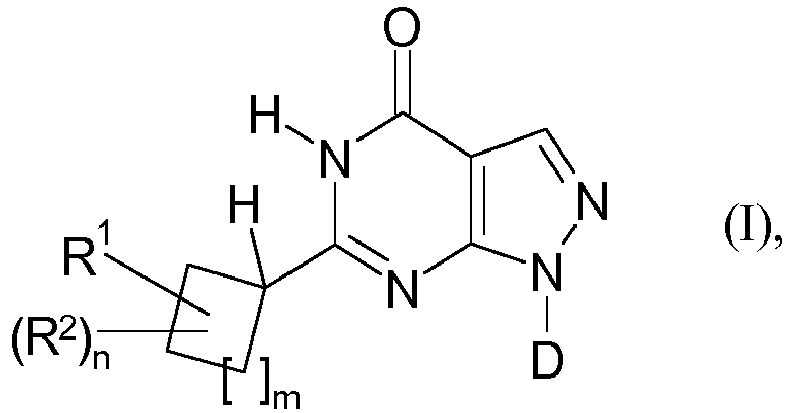
Description
- The invention relates to novel pyrazolopyrimidinones according to formula (I)

- The new compounds are for use as the active entity of medicaments or for the manufacture of medicaments respectively, in particular medicaments for the treatment of conditions concerning deficits in perception, concentration, learning or memory. Such conditions may for example be associated with Alzheimer's disease, schizophrenia and other diseases. The new compounds are also for example for the manufacture of medicaments and/or for use in the treatment of these diseases, in particular for cognitive impairment associated with such disease. The compounds of the invention show PDE9 inhibiting properties.
- The inhibition of phosphodiesterase 9A (PDE9A) is one of the current concepts to find new access paths to the treatment of cognitive impairments due to CNS disorders like Alzheimer's disease, schizophrenia and other diseases or due to any other neurodegenerative process of the brain. With the present invention, new compounds that follow this concept are presented.
- Phosphodiesterase 9A is one member of the wide family of phosphodiesterases. These enzymes modulate the levels of the cyclic nucleotides 5'-3' cyclic adenosine monophosphate (cAMP) and 5'-3' cyclic guanosine monophosphate (cGMP). These cyclic nucleotides (cAMP and cGMP) are important second messengers and therefore play a central role in cellular signal transduction cascades. Each of them reactivates inter alia, but not exclusively, protein kinases. The protein kinase activated by cAMP is called protein kinase A (PKA) and the protein kinase activated by cGMP is called protein kinase G (PKG). Activated PKA and PKG are able in turn to phosphorylate a number of cellular effector proteins (e.g. ion channels, G-protein-coupled receptors, structural proteins, transcription factors). It is possible in this way for the second messengers cAMP and cGMP to control a wide variety of physiological processes in a wide variety of organs. However, the cyclic nucleotides are also able to act directly on effector molecules. Thus, it is known, for example, that cGMP is able to act directly on ion channels and thus is able to influence the cellular ion concentration (review in: Wei et al., Prog. Neurobiol., 1998, 56, 37-64). The phosphodiesterases (PDE) are a control mechanism for the activity of cAMP and cGMP and thus in turn for the corresponding physiological processes. PDEs hydrolyse the cyclic monophosphate to the inactive monophosphates AMP and GMP. Currently, 11 PDE families have been defined on the basis of the sequence homology of the corresponding genes. Individual PDE genes within a family are differentiated by letters (e.g. PDE1A and PDE1B). If different splice variants within a gene also occur, then this is indicated by an additional numbering after the letters (e.g. PDE1A1).
- Human PDE9A was cloned and sequenced in 1998. The amino acid identity with other PDEs does not exceed 34% (PDE8A) and is never less than 28% (PDE5A). With a Michaelis-Menten constant (Km) of 170 nanomolar (nM), PDE9A has high affinity for cGMP. In addition, PDE9A is selective for cGMP (Km for cAMP=230 micromolar (µM)). PDE9A has no cGMP binding domain, suggesting that the enzyme activity is not regulated by cGMP. It was shown in a Western blot analysis that PDE9A is expressed in humans inter alia in testes, brain, small intestine, skeletal muscle, heart, lung, thymus and spleen. The highest expression was found in the brain, small intestine, kidney, prostate, colon and spleen (Fisher et al., J. Biol. Chem., 1998, 273 (25), 15559-15564; Wang et al., Gene, 2003, 314, 15-27). The gene for human PDE9A is located on chromosome 21q22.3 and comprises 21 exons. 4 alternative splice variants of PDE9A have been identified (Guipponi et al., Hum. Genet., 1998, 103, 386-392). Classical PDE inhibitors do not inhibit human PDE9A. Thus, IBMX, dipyridamole, SKF94120, rolipram and vinpocetine show no inhibition on the isolated enzyme in concentrations of up to 100 micromolar (µM). An IC50 of 35 micromolar (µM) has been demonstrated for zaprinast (Fisher et al., J. Biol. Chem., 1998, 273 (25), 15559-15564).
- Murine PDE9A was cloned and sequenced in 1998 by Soderling et al. (J. Biol. Chem., 1998, 273 (19), 15553-15558). This has, like the human form, high affinity for cGMP with a Km of 70 nanomolar (nM). Particularly high expression was found in the mouse kidney, brain, lung and liver. Murine PDE9A is not inhibited by IBMX in concentrations below 200 micromolar either; the IC50 for zaprinast is 29 micromolar (Soderling et al., J. Biol. Chem., 1998, 273 (19), 15553-15558). It has been found that PDE9A is strongly expressed in some regions of the rat brain. These include olfactory bulb, hippocampus, cortex, basal ganglia and basal forebrain (Andreeva et al., J. Neurosci., 2001, 21 (22), 9068-9076). The hippocampus, cortex and basal forebrain in particular play an important role in learning and memory processes. As already mentioned above, PDE9A is distinguished by having particularly high affinity for cGMP. PDE9A is therefore active even at low physiological concentrations, in contrast to PDE2A (Km=10 micromolar (µM); Martins et al., J. Biol. Chem., 1982, 257, 1973-1979), PDE5A (Km=4 micromolar (µM); Francis et al., J. Biol. Chem., 1980, 255, 620-626), PDE6A (Km=17 micromolar (µM); Gillespie and Beavo, J. Biol. Chem., 1988, 263 (17), 8133-8141) and PDE11A (Km=0.52 micromolar (µM); Fawcett et al., Proc. Nat. Acad. Sci., 2000, 97 (7), 3702-3707). In contrast to PDE2A (Murashima et al., Biochemistry, 1990, 29, 5285-5292), the catalytic activity of PDE9A is not increased by cGMP because it has no GAF domain (cGMP-binding domain via which the PDE activity is allosterically increased) (Beavo et al., Curnent Opinion in Cell Biology, 2000, 12, 174-179). PDE9A inhibitors may therefore lead to an increase in the baseline cGMP concentration.
- This outline will make it evident that PDE9A engages into specific physiological processes in a characteristic and unique manner, which distinguishes the role of PDE9A characteristically from any of the other PDE family members.
WO 2004/099210 discloses 6-arylmethyl-substituted pyrazolopyrimidinones which are PDE9 inhibitors.
WO 2004/099211 discloses 6-cyclylmethyl- and 6-alkylmethyl-substituted pyrazolopyrimidines and their use for the improvement of cognition, concentration etc..
DE 102 38 722 discloses the use of PDE9A-inhibitors for the improvement of cognition, concentration.
WO 2004/018474 discloses phenyl-substituted pyrazolopyrimidines and their use for the improvement of perception, concentration learning and/or memory.
WO 2004/026876 discloses alkyl-substituted pyrazolopyrimidines which and their use for the improvement of awareness, concentration learning capacity and/or memory performance.
WO 2004/096811 discloses heterocyclic bicycles as PDE9 inhibitors for the treatment of diabetes, including type 1 and type 2 diabetes, hyperglycemia, dyslipidemia, impaired glucose tolerance, metabolic syndrome and/or cardiovascular disease.
WO2009068617 discloses PDE9 inhibiting compounds derived from pyrazolopyrimidinones with a substituted phenylmethyl- or pyridyl-methyl group in the 6-position.
WO2010112437 discloses PDE9 inhibiting compounds derived from pyrazolopyrimidinones with a phenyl or heteroaryl substituted arylmethyl- or heteroaryl-methyl group in the 6-position.
WO 2009/121919 discloses PDE9 inhibitors derived from pyrazolopyrimidinones with a nonaromatic heterocyclyl group in the 1-position, among which is tetrahydropyranyl.
WO 2010/026214 discloses PDE9 inhibitors derived from pyrazolopyrimidinones with a cycloalkyl or a cycloalkenyl group in the 1-position, among which is 4,4-difluorocyclohexyl.
Some prior art is directed to chemically nucleoside derivatives. As examples it is referred toWO 2002/057425 , which discloses nucleoside derivatives, which are inhibitors of RNA-dependent RNA viral polymerase, orWO 2001/060315 , which discloses nucleoside derivatives for the treatment of hepatitis C infection orEP679657 US2002058635 , which discloses purine L-nucleoside compounds, in which both the purine rings and the carbohydrate ring (pentose ring) are either modified, functionalized, or both. So the carbohydrate ring for example must show at least one esterified hydroxy group.
WO 2005/051944 discloses oxetane-containing nucleosides, for the treatment of nucleoside analogue related disorders such as disorders involving cellular proliferation and infection.
WO 2006/084281 discloses inhibitors of the E1 activation enzyme that have a sulfonamide moiety.
WO 1998/40384
CH396 924 CH396 925 CH396 926 CH396 927 DE1147234 ,DE1149013 , describe pyrazolopyrimidines which have a coronary-dilating effect and which can be employed for the treatment of disturbances of myocardial blood flow.
US3732225 describes pyrazolopyrimidines which have an anti-inflammatory and blood glucose-lowering effect.
DE2408906 describes styrylpyrazolopyrimidinones which can be employed as antimicrobial and anti-inflammatory agents for the treatment of, for example, oedema. - Changes in the substitution pattern of pyrazolopyrimidinones result in interesting changes concerning biological activity, respectively changes in the affinity towards different target enzymes.
- Therefore it is an objective of the present invention to provide compounds as herein described, in particular in the claims, that effectively modulate PDE9A for the purpose of the development of a medicament, in particular in view of diseases or conditions, the treatment of which is accessible via PDE9A modulation.
- It is another objective of the present invention to provide compounds that are useful for the manufacture of a medicament for the treatment of CNS disorders.
- Yet another objective of the present invention is to provide compounds which show a favourable safety profile.
- Another objective of the present invention is to provide compounds that have a favourable selectively profile in favour of PDE9A inhibition over other PDE family members and other pharmacological targets and by this may provide an advantage.
- Yet another objective is to provide a medicament that may not only serve for treatment but might also be used for the prevention or modification of the corresponding disease or condition.
- The present invention further provides a pharmaceutical composition comprising a compound as herein described, in particular in the claims and a pharmaceutically acceptable carrier.
- The present invention further provides a method for the treatment of any of the conditions as described herein in a mammal in need of such treatment, preferably a human, comprising administering to the mammal a therapeutically effective amount of a compound as herein described, in particular in the claims.
- The present invention further provides a compound as herein described, in particular in the claims, for use in a method of treatment of the human or animal body by therapy.
- The compounds of the present invention are characterised by general formula (I):

- R1: is a 5 or 6 membered heteroaryl-group whereby 1, 2, 3 or 4, preferably 1, 2 or 3, of the ring atoms are heteroatoms that are selected independently of each other from N, O or S,
whereby said 5 or 6 membered aromatic heteroaryl-group optionally may be substituted by 1, 2, 3 or 4, preferably 1 or 2 substituents, whereby said substituents may be selected independently of one another from the group consisting of fluorine, chlorine, bromine, HO-, NC-, F3C-, HF2C-, FH2C-, methyl, H2N- and (CH3)2N-; - R2: is selected from the group consisting of fluorine, NC-, F3C-, HF2C-, FH2C- and methyl, preferably fluorine, NC-, F3C- and methyl;
- D: is selected from the group consisting of cyclopentyl, cyclohexyl, tetrahydrofuranyl, tetrahydropyranyl, 2-, 3- and 4-pyridyl,
whereby cyclopentyl and cyclohexyl optionally may be substituted by 1 or 2 substituents, whereby said substituents may be selected independently of one another from the group consisting of fluorine, NC-, F3C-, HF2C- and FH2C-;
whereby tetrahydrofuranyl and tetrahydropyranyl optionally may be substituted by 1 or 2 substituents, whereby said substituents may be selected independently of one another from the group consisting of fluorine, NC-, F3C-, HF2C- and FH2C-;
whereby pyridyl optionally may be substituted by 1, 2, 3 or 4,substituents, whereby said substituents may be selected independently of one another from the group consisting of fluorine, chlorine, bromine, NC-, F3C-, HF2C-, FH2C-, F3C-CH2-, C1-6-alkyl- and C3-7-cycloalkyl; - m: is selected from 1 or 2, preferably 1;
- n: is selected from 0, 1 or 2, preferably, 0 or 1, more preferably 0,
whereby if n = 2, these two groups R2 are selected independently of one another; - This embodiment is embodiment 1 of the present invention.
- Concerning the proviso definition above: it shall be understood that throughout this description this definition of the compound, specifically
"the following oxadiazolyl-derivative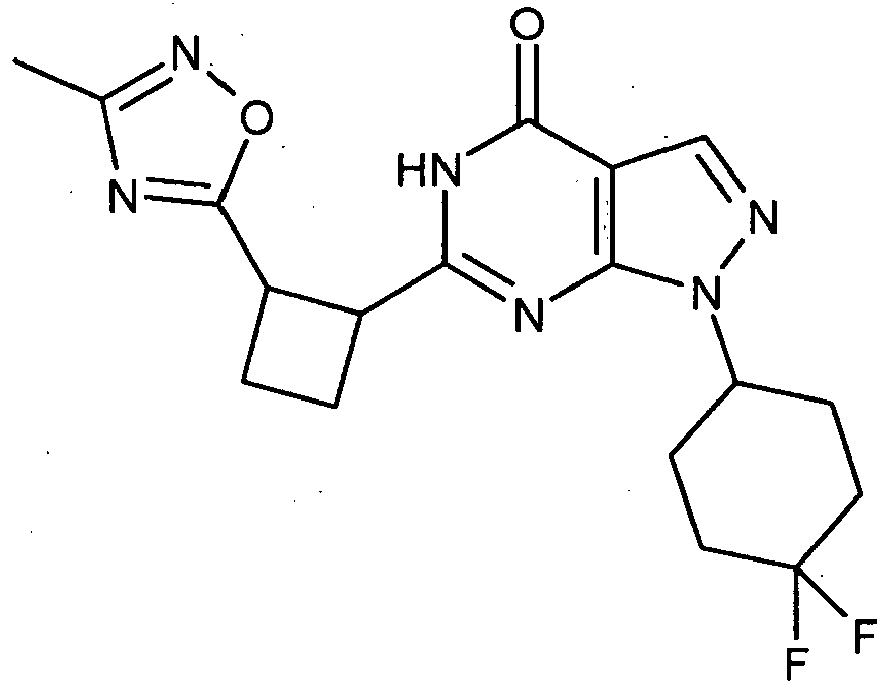


- Embodiment 2 of the present invention: Another embodiment of the invention concerns a compound according to general formula (I), wherein
- R1: is a 5 or 6 membered heteroaryl-group whereby 1, 2, 3 or 4, preferably 1, 2 or 3, of the ring atoms are heteroatoms that are selected independently of each other from N, O or S,
whereby said 5 or 6 membered aromatic heteroaryl-group optionally may be substituted by 1, 2, 3 or 4, preferably 1 or 2 substituents, whereby said substituents may be selected independently of one another from the group consisting of fluorine, chlorine, bromine, NC-, F3C-, HF2C-, FH2C-, methyl, H2N- and (CH3)2N-; - R2: is selected from the group consisting of fluorine, NC-, F3C-, HF2C-, FH2C- and methyl, preferably fluorine, NC-, F3C- and methyl;
- D: is selected from the group consisting of cyclopentyl, cyclohexyl, tetrahydrofuranyl, tetrahydropyranyl, 2-, 3- and 4-pyridyl,
whereby cyclopentyl and cyclohexyl optionally may be substituted by 1 or 2 substituents, whereby said substituents may be selected independently of one another from the group consisting of fluorine, F3C-, HF2C- and FH2C-;
whereby tetrahydrofuranyl and tetrahydropyranyl optionally may be substituted by 1 or 2 substituents, whereby said substituents may be selected independently of one another from the group consisting of fluorine, F3C-, HF2C- and FH2C-;
whereby pyridyl optionally may be substituted by 1, 2, 3 or 4, preferably 1, 2 or 3, more preferably 1 or 2, substituents, whereby said substituents may be selected independently of one another from the group consisting of fluorine, chlorine, bromine, NC-, F3C-, HF2C-, FH2C-, F3C-CH2-, C1-6-alkyl- and C3-7-cycloalkyl; - m: is selected from 1 or 2, preferably m is 1;
- n: is selected from the group consisting 0, 1 or 2, preferably n is 0 or 1, more preferably n is 0,
whereby if n = 2, these two groups R2 are selected independently of one another; - Embodiment 3 of the present invention: Another embodiment of the invention concerns a compound according to general formula (I), wherein
- R1: is a 5 membered heteroaryl-group whereby 1, 2, 3 or 4, preferably 1, 2 or 3, more preferably 2 or 3 of the ring atoms are heteroatoms that are selected independently of each other from N, O or S,
whereby said 5 membered aromatic heteroaryl-group optionally may be substituted by 1, 2, 3 or 4, preferably 1 or 2 substituents, whereby said substituents may be selected independently of one another from the group consisting of fluorine, chlorine, bromine, NC-, F3C-, HF2C-, FH2C-, methyl, H2N- and (CH3)2N-; - R2: is selected from the group consisting of fluorine, NC-, F3C-, HF2C-, FH2C- and methyl, preferably fluorine, NC-, F3C- and methyl;
- D: is selected from the group consisting of cyclopentyl, cyclohexyl, tetrahydrofuranyl, tetrahydropyranyl, 2-, 3- and 4-pyridyl,
whereby cyclopentyl and cyclohexyl optionally may be substituted by 1 or 2 substituents, whereby said substituents may be selected independently of one another from the group consisting of fluorine, F3C-, HF2C- and FH2C-;
whereby tetrahydrofuranyl and tetrahydropyranyl optionally may be substituted by 1 or 2 substituents, whereby said substituents may be selected independently of one another from the group consisting of fluorine, F3C-, HF2C- and FH2C-;
whereby pyridyl optionally may be substituted by 1, 2, 3 or 4, preferably 1, 2 or 3, more preferably 1 or 2, substituents, whereby said substituents may be selected independently of one another from the group consisting of fluorine, chlorine, bromine, NC-, F3C-, HF2C-, FH2C-, F3C-CH2-, C1-6-alkyl- and C3-7-cycloalkyl; - m: is selected from 1 or 2, preferably m is 1;
- n: is selected from 0, 1 or 2, preferably n is 0 or 1, more preferably n is 0,
whereby if n = 2, these two groups R2 are selected independently of one another; - Embodiment 4 of the present invention: Another embodiment of the invention concerns a compound according to general formula (I), wherein
- R1: is a 6 membered heteroaryl-group whereby 1, 2, 3 or 4, preferably 1, 2 or 3, more preferably 2 or 3 of the ring atoms are heteroatoms that are selected independently of each other from N, O or S,
whereby said 6 membered aromatic heteroaryl-group optionally may be substituted by 1, 2, 3 or 4, preferably 1 or 2 substituents, whereby said substituents may be selected independently of one another from the group consisting of fluorine, chlorine, bromine, NC-, F3C-, HF2C-, FH2C-, methyl, H2N- and (CH3)2N-; - R2: is selected from the group consisting of fluorine, NC-, F3C-, HF2C-, FH2C- and methyl, preferably fluorine, NC-, F3C- and methyl;
- D: is selected from the group consisting of cyclopentyl, cyclohexyl, tetrahydrofuranyl, tetrahydropyranyl, 2-, 3- and 4-pyridyl,
whereby cyclopentyl and cyclohexyl optionally may be substituted by 1 or 2 substituents, whereby said substituents may be selected independently of one another from the group consisting of fluorine, F3C-, HF2C- and FH2C-;
whereby tetrahydrofuranyl and tetrahydropyranyl optionally may be substituted by 1 or 2 substituents, whereby said substituents may be selected independently of one another from the group consisting of fluorine, F3C-, HF2C- and FH2C-;
whereby pyridyl optionally may be substituted by 1, 2, 3 or 4, preferably 1, 2 or 3, more preferably 1 or 2, substituents, whereby said substituents may be selected independently of one another from the group consisting of fluorine, chlorine, bromine, NC-, F3C-, HF2C-, FH2C-, F3C-CH2-, C1-6-alkyl- and C3-7-cycloalkyl; - m: is selected from 1 or 2, preferably m is 1;
- n: is selected from 0, 1 or 2, preferably n is 0 or 1, more preferably n is 0,
whereby if n = 2, these two groups R2 are selected independently of one another; - Embodiment 5 of the present invention: Another embodiment of the invention concerns a compound according to general formula (I), wherein
- R1: is a heteroaryl-group selected from the group consisting of thiadiazolyl, oxadiazolyl, isoxazolyl, thiazolyl, oxazolyl, pyridyl and pyrimidinyl, preferably said heteroaryl-group being selected from the group consisting of thiadiazolyl, oxadiazolyl, isoxazolyl, thiazolyl, oxazolyl and pyrimidinyl,
whereby said heteroaryl-group optionally may be substituted by 1, 2, 3 or 4, preferably 1 or 2 substituents, whereby said substituents may be selected independently of one another from the group consisting of fluorine, chlorine, bromine, NC-, F3C-, HF2C-, FH2C-, methyl, H2N- and (CH3)2N-; - R2: is selected from the group consisting of fluorine, NC-, F3C-, HF2C-, FH2C- and methyl, preferably fluorine, NC-, F3C- and methyl;
- D: is selected from the group consisting of cyclopentyl, cyclohexyl, tetrahydrofuranyl, tetrahydropyranyl, 2-, 3- and 4-pyridyl,
whereby cyclopentyl and cyclohexyl optionally may be substituted by 1 or 2 substituents, whereby said substituents may be selected independently of one another from the group consisting of fluorine, F3C-, HF2C- and FH2C-;
whereby tetrahydrofuranyl and tetrahydropyranyl optionally may be substituted by 1 or 2 substituents, whereby said substituents may be selected independently of one another from the group consisting of fluorine, F3C-, HF2C- and FH2C-;
whereby pyridyl optionally may be substituted by 1, 2, 3 or 4, preferably 1, 2 or 3, more preferably 1 or 2, substituents, whereby said substituents may be selected independently of one another from the group consisting of fluorine, chlorine, bromine, NC-, F3C-, HF2C-, FH2C-, F3C-CH2-, C1-6-alkyl- and C3-7-cycloalkyl; - m: is selected from 1 or 2, preferably m is 1;
- n: is selected from 0, 1 or 2, preferably n is 0 or 1, more preferably n is 0,
whereby if n = 2, these two groups R2 are selected independently of one another; - Embodiment 6 of the present invention: Another embodiment of the invention concerns a compound according to general formula (I), wherein
- R1: is a heteroaryl-group selected from the group consisting of thiadiazolyl, 1,2,3-oxadiazolyl, 1,3,4-oxadiazolyl, 1,2,5-oxadiazolyl, isoxazolyl, thiazolyl, oxazolyl, pyridyl and pyrimidinyl, preferably said heteroaryl-group being selected from the group consisting of thiadiazolyl, isoxazolyl, thiazolyl, oxazolyl, pyridyl and pyrimidinyl,
whereby said heteroaryl-group optionally may be substituted by 1, 2, 3 or 4, preferably 1 or 2 substituents, whereby said substituents may be selected independently of one another from the group consisting of fluorine, chlorine, bromine, NC-, F3C-, HF2C-, FH2C-, methyl, H2N- and (CH3)2N-; - R2: is selected from the group consisting of fluorine, NC-, F3C-, HF2C-, FH2C- and methyl, preferably fluorine, NC-, F3C- and methyl;
- D: is selected from the group consisting of cyclopentyl, cyclohexyl, tetrahydrofuranyl, tetrahydropyranyl, 2-, 3- and 4-pyridyl,
whereby cyclopentyl and cyclohexyl optionally may be substituted by 1 or 2 substituents selected from the group consisting of fluorine, F3C-, HF2C- and FH2C-;
whereby tetrahydrofuranyl and tetrahydropyranyl optionally may be substituted independently of one another by 1 or 2 substituents, whereby said substituents may be selected independently of one another from the group consisting of fluorine, F3C-, HF2C- and FH2C-;
whereby pyridyl optionally may be substituted by 1, 2, 3 or 4, preferably 1, 2 or 3, more preferably 1 or 2, substituents, whereby said substituents may be selected independently of one another from the group consisting of fluorine, chlorine, bromine, NC-, F3C-, HF2C-, FH2C-, F3C-CH2-, C1-6-alkyl- and C3-7-cycloalkyl; - m: is selected from 1 or 2, preferably m is 1;
- n: is selected from 0, 1 or 2, preferably n is 0 or 1, more preferably n is 0,
whereby if n = 2, these two groups R2 are selected independently of one another; - Embodiment 7 of the present invention: embodiment 7 of the invention concerns a compound that corresponds in all aspects with embodiment 6, except in that
- R1: is a heteroaryl-group selected from the group consisting of thiadiazolyl, 1,2,3-oxadiazolyl, 1,3,4-oxadiazolyl, 1,2,5-oxadiazolyl, isoxazolyl, thiazolyl, oxazolyl and pyrimidinyl, preferably said heteroaryl-group being selected from the group consisting of thiadiazolyl, isoxazolyl, thiazolyl, oxazolyl and pyrimidinyl,
whereby said heteroaryl-group optionally may be substituted by 1, 2, 3 or 4, preferably 1 or 2 substituents, whereby said substituents may be selected independently of one another from the group consisting of fluorine, chlorine, bromine, NC-, F3C-, HF2C-, FH2C-, methyl, H2N- and (CH3)2N-. - Embodiment 8 of the present invention: Another embodiment of the invention concerns a compound according to general formula (I), wherein
- R1: is a heteroaryl-group selected from the group consisting of [1,3,4]thiadiazol-2-yl, isoxazol-5-yl, thiazol-5-yl-, oxazol-2-yl, pyridin-2-yl and pyrimidin-2-yl, preferably said heteroaryl-group being selected from the group consisting of [1,3,4]thiadiazol-2-yl, isoxazol-5-yl, thiazol-5-yl-, oxazol-2-yl and pyrimidin-2-yl,
whereby said heteroaryl-group optionally may be substituted by 1 or 2 substituents, whereby said substituents may be selected independently of one another from the group consisting of fluorine, chlorine, bromine, CN-, methyl and H2N-; - R2: is selected from the group consisting of fluorine, NC-, F3C-, HF2C-, FH2C- and methyl, preferably fluorine, NC-, F3C- and methyl;
- D: is selected from the group consisting of cyclopentyl, cyclohexyl, tetrahydrofuranyl, tetrahydropyranyl, 2-, 3- and 4-pyridyl
whereby cyclopentyl and cyclohexyl optionally may be substituted by 1 or 2 substituents, whereby said substituents may be selected independently of one another from the group consisting of fluorine, F3C-, HF2C- and FH2C-; preferably by fluorine;
whereby tetrahydrofuranyl and tetrahydropyranyl optionally may be substituted by 1 or 2 substituents, whereby said substituents may be selected independently of one another from the group consisting of fluorine, F3C-, HF2C- and FH2C-;
whereby pyridyl optionally may be substituted by 1, 2, 3 or 4, preferably 1, 2 or 3, more preferably 1 or 2, substituents, whereby said substituents may be selected independently of one another from the group consisting of fluorine, chlorine, bromine, NC-, F3C-, HF2C-, FH2C-, F3C-CH2- and methyl;
whereby preferably D is selected from the group consisting of 4,4-difluorocyclohex-1-yl, tetrahydropyranyl, thereof preferably tetrahydropyran-4-yl, and 4-methy-3-pyridyl; - m: is selected from 1 or 2, preferably m is 1;
- n: is selected from 0, 1 or 2, preferably n is 0 or 1, more preferably n is 0,
whereby if n = 2, these two groups R2 are selected independently of one another; - In any of the above mentioned embodiments 1 to 8 the preferred compounds are represented by formula (II): Compounds according to formula (II)

- R1: as defined in any of the aforementioned embodiments 1 to 8;
- D being either 4,4-difluorocyclohexyl or tetrahydropyran-4-yl or 4-methy-3-pyridyl and none of these two groups has further substituents;
- The preferred embodiments 9 to 16 according to formula (II) derive from embodiments according to formula (I) in that:
- m in formula (I) is 1, so that the corresponding cycloalkyl-group is a cyclobutyl;
- n in formula (I) is 0;
- D in formula (I) is selected from the group of 4,4-difluorocyclohexyl (without further substituents, i.e. unsubstituted) and tetrahydropyran-4-yl (without further substituents, i.e. unsubstituted) and 4-methy-3-pyridyl;
- R1 in formula (I) is attached to said aforementioned cyclobutyl (m=1) in the 2-position thereof while the 1 position of said cyclobutyl is the attachment point to the 6 position of the D-substituted pyrazolopyrimidinone.
- The corresponding embodiments are designated as embodiments 9, 10, 11, 12, 13, 14, 15 and 16 respectively.
- Embodiment 9 derives from embodiment 1, embodiment 10 from embodiment 2, embodiment 11 from embodiment 3, embodiment 12 from embodiment 4, embodiment 13 from embodiment 6, embodiment 14 from embodiment 6, embodiment 15 from embodiment 7, embodiment 16 from embodiment 7.
- Within each of the above mentioned embodiments 1 to 16 more preferred compounds are represented by formula (II):

- R1: as defined in any of the aforementioned embodiments 1 to 8;
- D being either 4,4-difluorocyclohexyl or tetrahydropyran-4-yl and none of these two groups has further substituents;
- For all embodiments 1 to 24: the configuration of the cycloalkyl group at position 6 of the pyrazolopyrimidinones group with respect to said pyrazolopyrimidinones group and the substituent R1 may be cis or trans.
- In this respect the compounds of the invention may have the following configurations:
trans configuration 1 trans configuration 2 

cis configuration 1 cis configuration 2 

- These stereochemically defined embodiments are a further aspect of the invention.
- Within the context of the present invention one or more compound(s) is (are) preferred that are selected from the group of specifically defined species as listed in the following table. The left column contains a letter code to identify the compound family, which is the group of compounds that have the same general chemical structural formula if no stereochemical properties are considered. Members of these compound families are exemplified in the section
-
Table of species: A 
A a 
Compound family A, covering example 1, A b 
B a 
A c 
B b 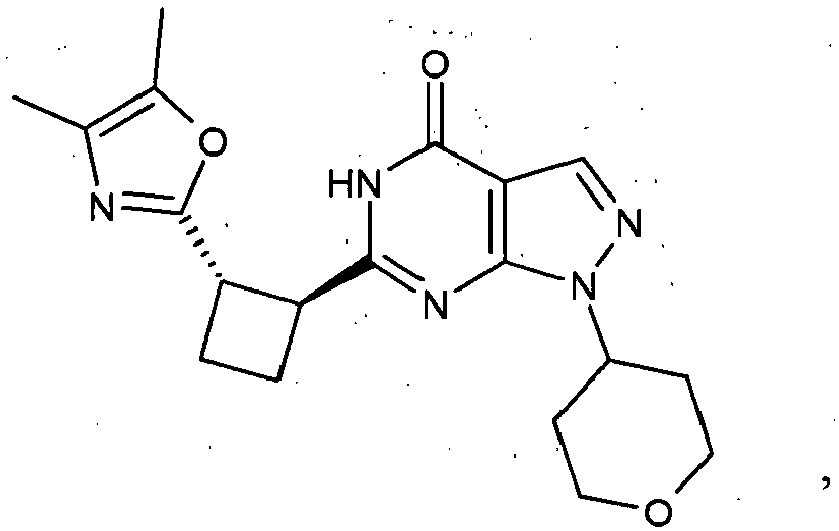
A d 
B c 
B d 
B 
C 
Compound family B, covering example 2, Compound family C, covering example 3 , D 
C a 
Compound family D, covering example 4 C b 
D a 
C c 
D b 
C d 
D c 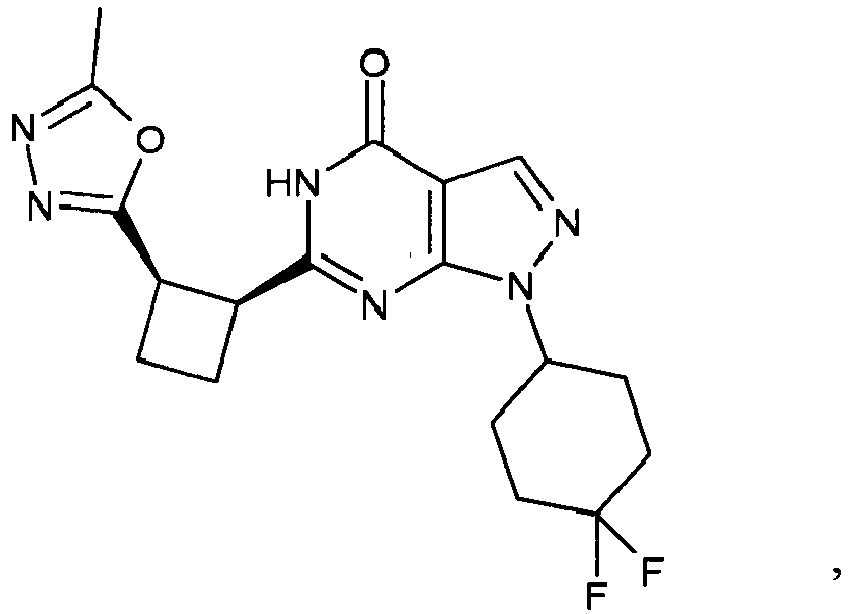
D d 
E c 
E 
E d 
Compound family E, covering example 5 F d 
E a 
Compound family F, covering example 6, E b 
F a 
F b 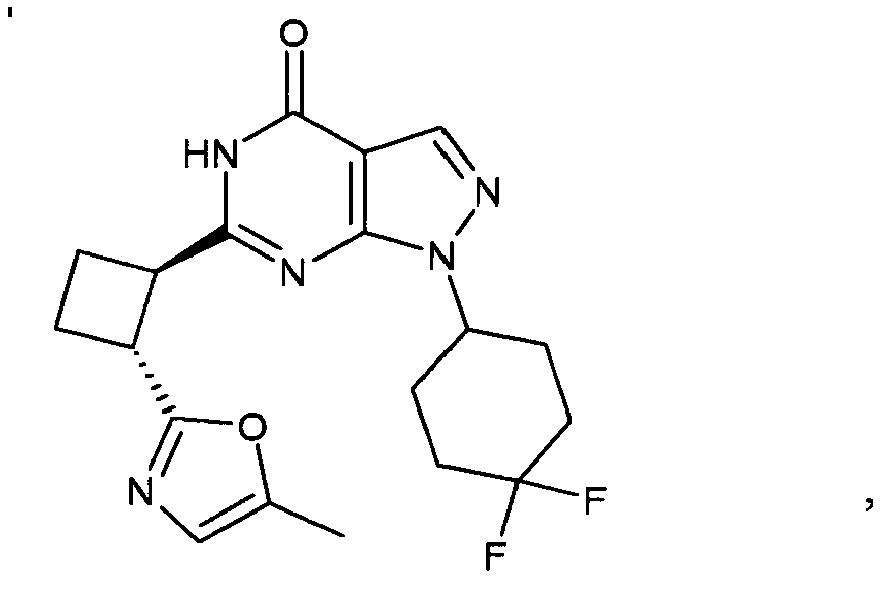
G 1 a 
F c 
G 1 b 
F d 
G 1 c 
G 1 
G 1 d 
Compound family G1, covering example 7 , G 2 
G 2 d 
Compound family G2, covering example 8, H 1 
G 2 a 
Compound family H1, covering examples 9 , G 2 b 
H 1 a 
G 2 c 
H 1 b 
H 1 c 
H 2 b 
H 1 d 
H 2 c 
H 2 
2 d 
Compound family H2, covering examples 10 , I 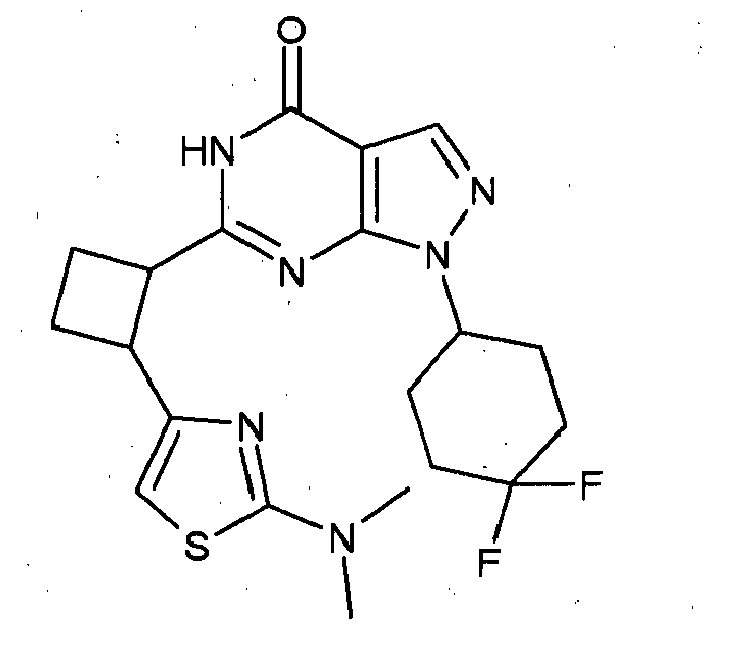
H 2 a 
Compound family I, covering example 11 , Ia 
J 
I b 
Compound family J, covering example 12 , J a 
I c 
J b 
I d 
J c 
J d 
K c 
K 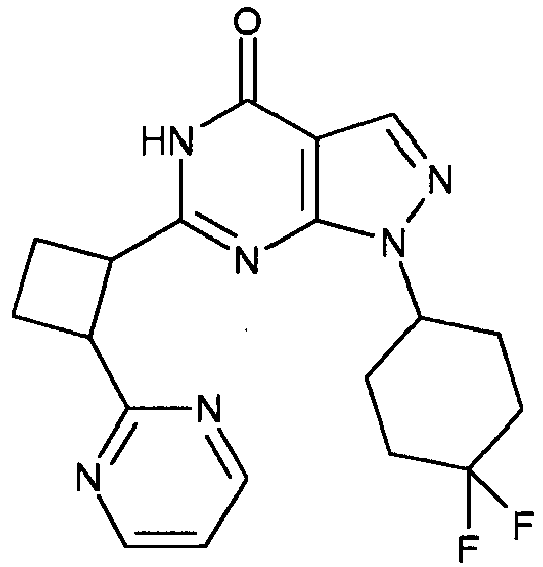
K d 
Compound family K, covering examples 13, 14 and 15 , L 
K a 
Compound family L, covering example 16 K b 
L a 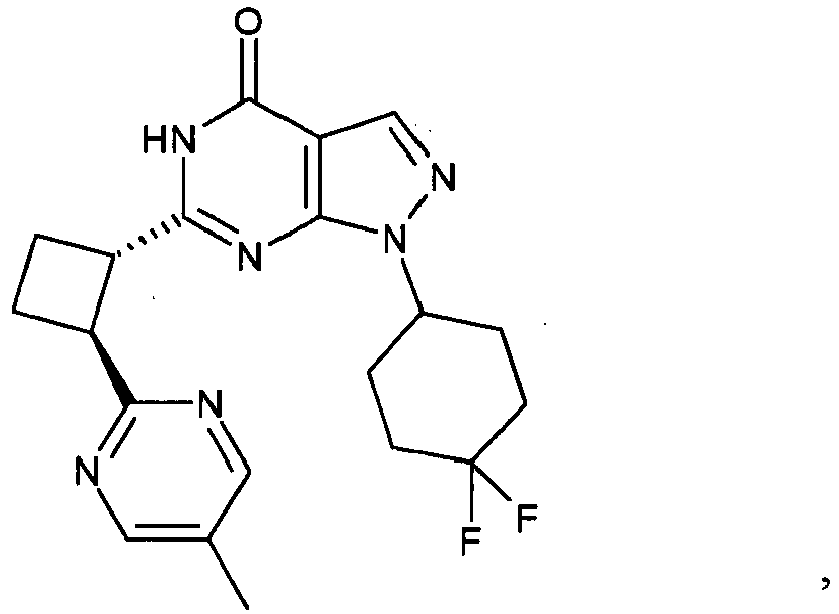
L b 
M a 
L c 
M b 
L d 
M c 
M 
M d 
Compound family M covering examples 17, 18 and 19 , N 
N d 
Compound family N, covering example 20 , O 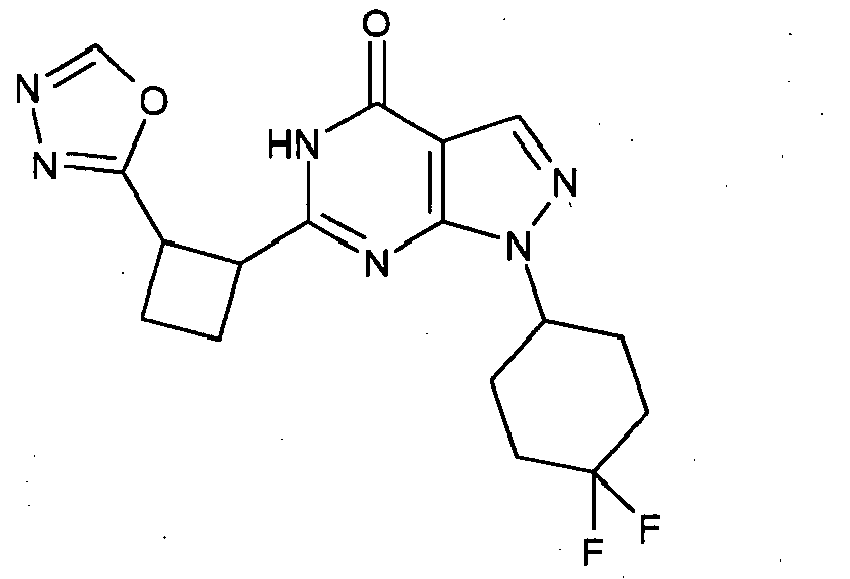
Na 
Compound family O, covering example 21, Nb 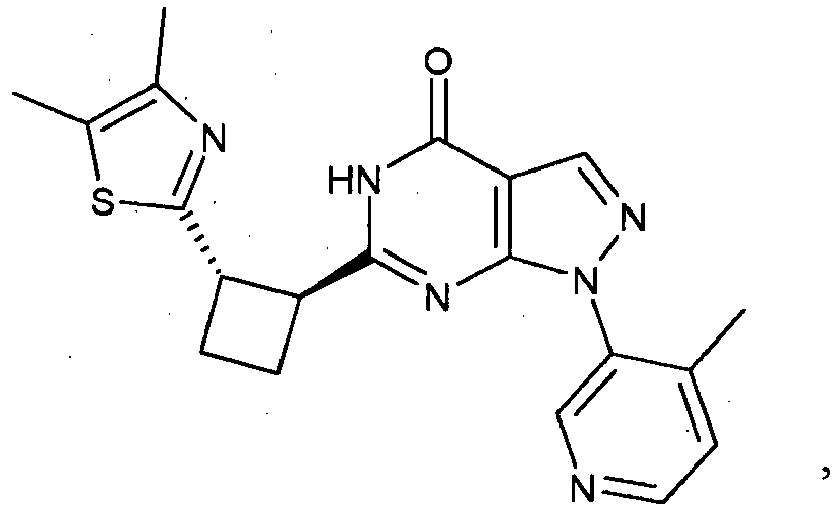
O a 
Nc 
O b 
O c 
P b 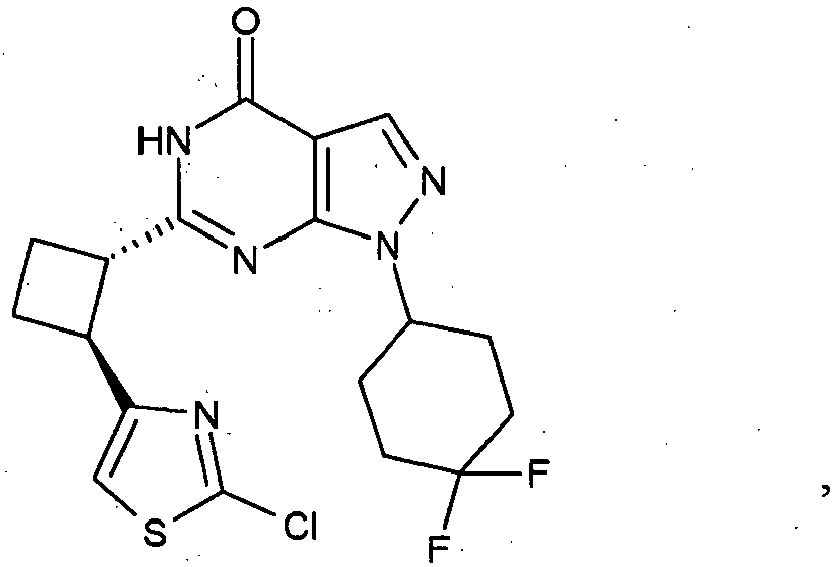
O d 
P c 
P 
P d 
Compound family P, covering example 22 , P a 
Q 
Q c 
Compound family Q, covering examples 23, 24 and 25 , Q d 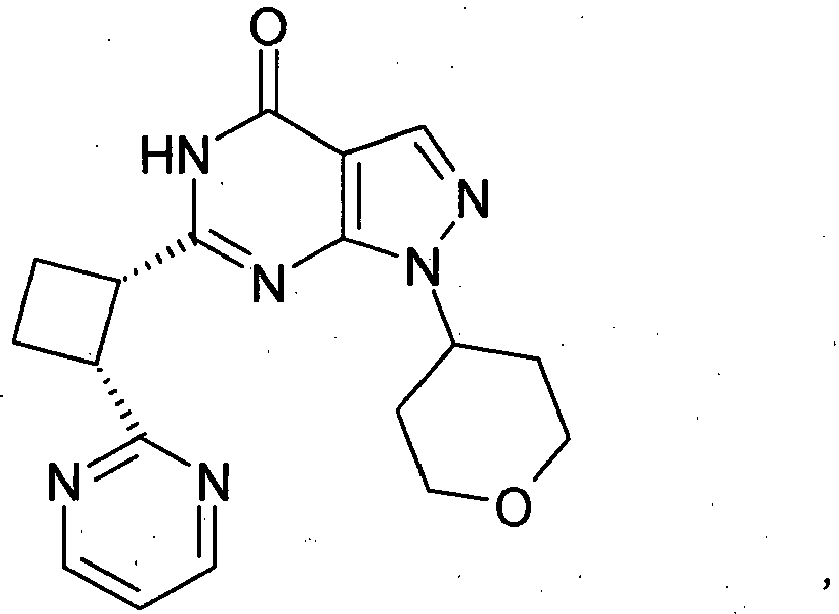
Q a 
R 
Q b 
Compound family R, covering examples 29, 30 and 31 , R a 
S 
R b 
Compound family S, covering examples 32, 33 and 34 , R c 
S a 
R d 
S b 
S c 
S d 
T b 
T 
T c 
Compound family T, covering examples 26, 27 and 28 , T d 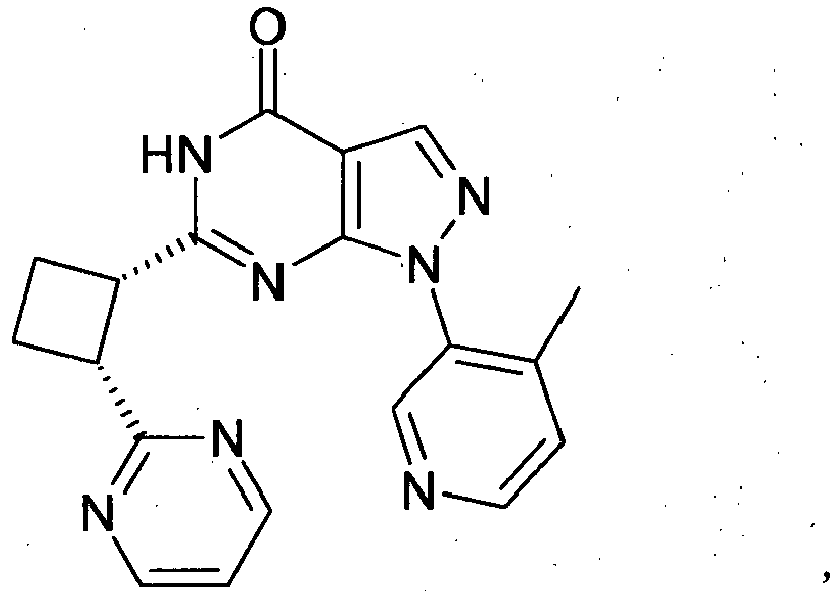
T a 
- Within the latter group of compounds, compounds that show trans configuration with respect to the substitution at the cyclobutyl-group may be preferred over compounds with cis configuration. Of the possible trans configured compounds one thereof may show advantages in efficacy. The more efficacious a compound the more it is among the preferred compounds. Another criterion which may differentiate preferred compounds according to the invention is the balance of efficacy and safety, such as for example selectivity vs. other PDE family members such as PDE1C.
For one pair of trans configured compounds according to the experimental part a single crystal X-ray structure analysis revealed that the absolute stereochemistry of the compound which showed lower efficacy than its enantiomer is R,R. As a consequence thereof absolute stereochemistry of the compound with the higher efficacy is S,S.
For said compound the S,S-configuration is represented by the following structure according to general formula (II):
- In analogy, one may assume that among the compounds according to embodiment 25, such compounds that show the same absolute stereochemistry might be the more active ones compared with the other members of the same compound family. According to the present invention, within the same compound family the more active compounds are preferred over the less active compounds. The compound family is the group of compounds that differ in their chemical structure only with regard to stereochemical properties.
- The different stereoisomers are subject to individual embodiments according to the invention:
embodiment 26 of the present invention concerns a compound according to any one of embodiments 1 to 25, whereby the compound shows the following stereochemical propertiesif the compound generally can be represented by formula (I):: if the compound generally can be represented by formula (II): 

if the compound generally can be represented by formula (I): if the compound generally can be represented by formula (II): 

if the compound generally can be represented by formula (I): if the compound generally can be represented by formula (II): 
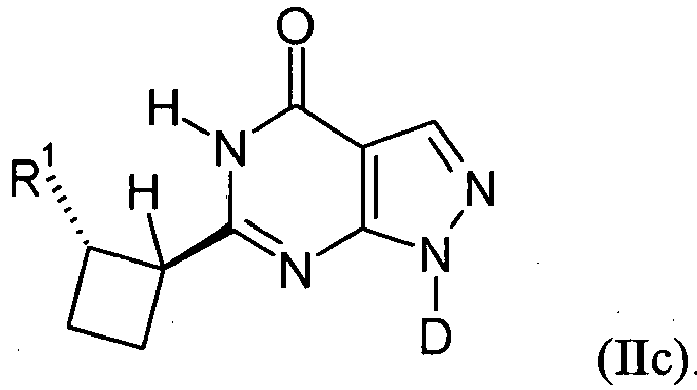
if the compound generally can be represented by formula (I): if the compound generally can be represented by formula (II): 

- R1 being pyrimidinyl, or pyridyl, preferably pyrimidin-2-yl or pyrdin-2-yl,
- m = 1,
- n = 0 and
- D is selected from the group consisting of cyclopentyl, cyclohexyl, tetrahydrofuranyl, tetrahydropyranyl, 2-, 3- and 4-pyridyl
whereby cyclopentyl and cyclohexyl optionally may be substituted by 1 or 2 substituents, whereby said substituents may be selected independently of one another from the group consisting of fluorine, F3C-, HF2C- and FH2C-; preferably by fluorine;
whereby tetrahydrofuranyl, tetrahydropyranyl optionally may be substituted by 1 or 2 substituents, whereby said substituents may be selected independently of one another from the group consisting of fluorine, F3C-, HF2C- and FH2C-;
whereby pyridyl optionally may be substituted by 1, 2, 3 or 4, preferably 1, 2 or 3, more preferably 1 or 2, substituents, whereby said substituents may be selected independently of one another from the group consisting of fluorine, chlorine, bromine, NC-, F3C-, HF2C-, FH2C-, F3C-CH2- and methyl;
whereby preferably D is selected from the group consisting of 4,4-difluorocyclohex-1-yl, tetrahydropyranyl and 4-methy-3-pyridyl - and salts, preferably pharmaceutically acceptable salts thereof, solvates thereof and the solvates of the aforementioned salts thereof.
- For each of the embodiments 1 to 30: whenever D may be tetrahydrofuranyl, it is preferably tetrahydrofuran-3-yl; whenever D may be tetrahydropyranyl it is preferable tetrahydropyran-3-yl or tetrahydropyran-4-yl, more preferably tetrahydropyran-4-yl.
- For each of the embodiments 1 to 30: the heteroaryl-group R1 preferably is bound via a carbon ring atom thereof to the cycloalkyl-group that is attached to the 6-position of the pyrazolopyrimidinone-scaffold. According to general formula (I) said cycloalkyl-group may be a cyclobutyl- or cyclopentyl-group, according to general formula (II) said cycloalkyl-group is a cyclobutyl-group.
- Terms not specifically defined herein should be given the meanings that would be given to them by a person skilled in the art in light of the disclosure and the context. Examples include that specific substituents or atoms are presented with their 1 or 2 letter code, like H for hydrogen, N for nitrogen, C for carbon, O for oxygen, S for sulphur and the like. Optionally but not mandatory the letter is followed by a hyphen to indicate a bond. As used in the specification, unless specified to the contrary, the following terms have the meaning indicated and the following conventions are adhered to.
In the groups, radicals, or moieties defined below, the number of carbon atoms is often specified preceding the group, for example, C1-6 alkyl means an alkyl group or alkyl radical having 1 to 6 carbon atoms. In general, for groups comprising two or more subgroups, the last named group is the radical attachment point, for example, "(CH3)2N-" means a monovalent radical of the formula (CH3)2N-, which is attached via the nitrogen atom thereof (i.e. a dimethylamino-substituent). If the term of a substituent starts or ends with a minus sign or hyphen, i.e. -, this sign emphasises the attachment point as in the aforementioned example (CH3)2N-, where the N is linked to the group of which the dimethylamino-group is a substituent. Unless otherwise specified below, conventional definitions of terms control and conventional stable atom valences are presumed and achieved in all formulas and groups. - In general, if terms are specifically defined with a given context, such specific definitions shall prevail over the more general definitions as outlined in this paragraph.
- In general, all "tautomeric forms and isomeric forms and mixtures", whether individual geometric isomers or optical isomers or racemic or non-racemic mixtures of isomers, of a chemical structure or compound are intended, unless the specific stereochemistry or isomeric form is specifically indicated in the compound name or structure. Specific definitions prevail.
- "Substitution": The term "substituted" as used herein explicitly or implicitly, means that any one or more hydrogen(s) on the designated atom is replaced with a member of the indicated group of substituents, provided that the designated atom's normal valence is not exceeded. In case a substituent is bound via a double bond, e.g. an oxo substituent, such substituent replaces two hydrogen atoms on the designated atom. The substitution shall result in a stable compound. "Stable" in this context preferably means a compound that from a pharmaceutical point of view is chemically and physically sufficiently stable in order to be used as an active pharmaceutical ingredient of a pharmaceutical composition. If a substituent is not defined, it shall be hydrogen. By the term "optionally substituted" is meant that either the corresponding group is substituted or it is not. A characterisation that substituents of the same group may be "selected independently of one another" shall mean, that the corresponding substituents may be the same or may be different.
- The phrase "pharmaceutically acceptable" is employed herein to refer to those compounds, materials, compositions and/or dosage forms which are, within the scope of sound medical judgment, suitable for use in contact with the tissues of human beings or as the case may be of animals without excessive toxicity, irritation, allergic response, or other problem or complication, commensurate with a reasonable benefit/risk ratio.
- "pharmaceutically acceptable salt(s)" of the compounds according to the invention are subject of the present invention as well. The term "pharmaceutically acceptable salt(s)" refers to derivatives of the disclosed compounds wherein the parent compound is modified by making acid or base salts thereof, preferably addition salts. Examples of pharmaceutically acceptable salts include, but are not limited to, mineral or organic acid salts of basic residues/parts of the compounds of the present invention such as aminofunctions; acidic
- residues/parts within compounds of the present invention may form salts with alkali or organic bases. The pharmaceutically acceptable salts include the conventional non-toxic salts or the quaternary ammonium salts of the parent compound formed, for example, from non-toxic inorganic or organic acids. For example, such conventional non-toxic salts include those derived from inorganic acids such as hydrochloric acid, hydrobromic acid, sulfuric acid, sulfamic acid, phosphoric acid, nitric acid and the like; and the salts prepared from organic acids such as acetic acid, propionic acid, succinic acid, glycolic acid, stearic acid, lactic acid, malic acid, tartaric acid, citric acid, ascorbic acid, pamoic acid, maleic acid, hydroxymaleic acid, phenylacetic acid, glutamic acid, benzoic acid, salicylic acid, sulfanilic acid, 2-acetoxybenzoic acid, fumaric acid, toluenesulfonic acid, methanesulfonic acid, ethane disulfonic acid, oxalic acid, isethionic acid and the like.
Physiologically acceptable salts with bases also may include salts with conventional bases such as, by way of example and preferably, alkali metal salts (e.g. sodium and potassium salts), alkaline earth metal salts (e.g. calcium and magnesium salts) and ammonia, organic amines having 1 to 16 C atoms, such as, by way of example and preferably, ethylamine, diethylamine, triethylamine, ethyldiisopropylamine, monoethanolamine, diethanolamine, triethanolamine, dicyclohexylamine, dimethylaminoethanol, procaine, dibenzylamine, N-methyl-morpholine, dehydroabietylamine, arginine, lysine, ethylenediamine and methylpiperidine and the like. - The pharmaceutically acceptable salts of the present invention can be synthesized from the parent compound with basic or acidic properties by conventional chemical methods. Generally, such salts can be prepared by reacting the free acid or base form of these compounds with a stoichiometric amount of the appropriate base or acid in water or in an organic solvent, or in a mixture of the two; generally, non-aqueous media like ether, ethyl acetate, ethanol, isopropanol, or acetonitrile are preferred.
- A "Prodrug" is considered a compound that is designed to release a biologically active compound according to the present invention in-vivo when such prodrug is administered to a mammalian subject. Prodrugs of compounds according to the present invention are prepared by modifying functional groups present in the compound of the invention in such a way that these modifications are retransformed to the original functional groups under physiological conditions. It will be appreciated that prodrugs of the compounds according to the present inventions are subject to the present invention as well.
- "Metabolites" are considered derivatives of the compounds according to the present invention that are formed in-vivo. Active metabolites are such metabolites that cause a pharmacological effect. It will be appreciated that metabolites of the compounds according to the present inventions are subject to the present invention as well, in particular active metabolites.
- Some of the compounds may form "solvates". For the purposes of the invention the term "solvates" refers to those forms of the compounds which form, in the solid or liquid state, a complex by coordination with solvent molecules. Hydrates are a specific form of solvates in which the coordination takes place with water. According to the present invention, the term preferably is used for solid solvates, such as amorphous or more preferably crystalline solvates.
- "Scaffold": The scaffold of the compounds according to the present invention is represented by the following core structure. The numeration of the positions of the ring member atoms is indicated in bold:

- It will be evident for the skilled person in the art, that this scaffold can be described by its tautomeric "enol" form

- In the context of the present invention both structural representations of the scaffold shall be considered the subject of the present invention, even if only one of the two representatives is presented. Without meant to be limiting or bound, it is believed that for the majority of compounds under ambient conditions and therewith under conditions which are the relevant conditions for a pharmaceutical composition comprising said compounds, the equilibrium of the tautomeric forms lies on the side of the pyrazolopyrimdin-4-one representation. Therefore, all embodiments are presented as pyrazolopyrimdin-4-one-derivatives or more precisely as pyrazolo[3,4-d]pyrimidin-4-one derivatives.
- "Bonds": If within a chemical formula of a ring system or a defined group, a substituent is directly linked to an atom or a group like "RyR" in the formula below, this shall mean that the substituent is only attached to the corresponding atom. If however from another substituent like "RxR" a bond is not specifically linked to an atom of the ring system but drawn towards the center of the ring or group this means that this substituent "RxR" may be linked to any meaningful atom of the ring system / group unless stated otherwise.

- The bond symbol "-" (= minus sign) or the symbol "-*" (= minus sign followed by an asterisk sign) stands for the bond through which a substituent is bound to the corresponding remaining part of the molecule / scaffold. In cases in that the minus sign does not seem to be sufficiently clear, there may be added an asterisk to the bond symbol "-" in order to determine the point of attachment of said bond with the corresponding main part of the molecule / scaffold.
- The term "C1-6-alkyl" denotes a saturated, branched or unbranched hydrocarbon group with 1 to 6 C atoms. Examples of such groups include methyl, ethyl, n-propyl, iso-propyl, butyl, isobutyl, sec-butyl, tert-butyl, n-pentyl, iso-pentyl, neo-pentyl, tert-pentyl, n-hexyl, iso-hexyl. This definition applies for the use of "alkyl" in any reasonable context within the present description in the absence of a further definition.
- The term "C3-7-cycloalkyl" denotes a saturated monocyclic group with 3 to 7 C ring atoms. Preferred are 5 or 6 membered cycloalkyl-groups. There are no other ring atoms than carbon atoms. Examples of such groups include cyclopropyl, cyclobutyl, cyclopentyl, cyclohexyl, cycloheptyl. This definition applies for "cycloalkyl" in any reasonable context within the present description in the absence of a further definition.
- The term "heteroaryl" used in this application denotes a heterocyclic, monocyclic aromatic ring system which includes within the ring system itself in addition to at least one C atom one or more heteroatom(s) which are independently selected from N, O and/or S. Preferred are heteroaryls with 1 to 3 heteroatoms or 1 to 2 heteroatoms, or 1 heteroatom. Preferred heteroatom is N.
- The terms "pyridyl" defines a pyridine-substituent, sometimes also called pyridinyl.
- Expressions like "prevention", "prophylaxis", "prophylactic treatment" or "preventive treatment" used herein should be understood synonymous and in the sense that the risk to develop a condition mentioned hereinbefore is reduced, especially in a patient having elevated risk for said conditions or a corresponding anamnesis. Thus the expression "prevention of a disease" as used herein means the management and care of an individual at risk of developing the disease prior to the clinical onset of the disease. The purpose of prevention is to combat the development of the disease, condition or disorder and includes the administration of the active compounds to prevent or delay the onset of the symptoms or complications and to prevent or delay the development of related diseases, conditions or disorders. Success of said preventive treatment is reflected statistically by reduced incidence of said condition within a patient population at risk for this condition in comparison to an equivalent patient population without preventive treatment.
- The expression "treatment" or "therapy" preferably means therapeutic treatment of (e.g. preferably human) patients having already developed one or more of said conditions in manifest, acute or chronic form, including symptomatic treatment in order to relieve symptoms of the specific indication or causal treatment in order to reverse or partially reverse the condition or to delay the progression of the indication as far as this may be possible, depending on the condition and the severity thereof. Thus the expression "treatment of a disease" as used herein means the management and care of a patient having developed the disease, condition or disorder. The purpose of treatment is to combat the disease, condition, disorder or a symptom thereof. Treatment includes the administration of the active compounds to eliminate or control the disease, condition or disorder as well as to alleviate the symptoms or complications associated with the disease, condition or disorder.
- The following schemes shall illustrate generally how to manufacture the compounds of the present invention by way of example. The abbreviated substituents may be as defined for the embodiments of formula (I) if not defined otherwise within the context of the schemes:

- Scheme 1: In a first step 2-ethoxymethylene-malononitrile is condensed with mono-substituted hydrazines by heating in an appropriate solvent like ethanol in the presence of a base (e.g. triethylamine) to form the corresponding 5-amino-1H-pyrazole-4-carbonitriles. These compounds are converted in a second step to the corresponding amides, e.g. by treatment of an ethanolic solution with ammonia (25 % in water) and hydrogen peroxide (35 % in water). In a third step, heating with dicarboxylic acid diesters under basic conditions (e.g. sodium hydride in ethanol) followed by the addition of aqueous sodium hydroxide leads to 4-oxo-4,5-dihydro-1H-pyrazolo[3,4-d]pyrimidin-6-yl substituted carboxylic acids (path 1). The carboxylic acid functional group thereof is converted to a heteroaryl group as described in Scheme 2 yielding pyrazolo[3,4-d]pyrimidin-4-ones as final products. Alternatively, 4-oxo-4,5-dihydro-1H-pyrazolo[3,4-d]pyrimidin-6-yl substituted nitriles can be synthesized from dinitriles by heating under basic conditions (e.g. sodium hydride in ethanol) in the third step (path 2). The nitrile functional group is further converted to heteroaryl substituents as described in Scheme 3 yielding pyrazolo[3,4-d]pyrimidin-4-ones as final products. [cf, for example, A. Miyashita et al., Heterocycles 1990, 31, 1309ff].

- Scheme 2: 4-Oxo-4,5-dihydro-1H-pyrazolo[3,4-d]pyrimidin-6-yl substituted carboxylic acids are treated under conditions listed in the table below to form heteroaryl substituted pyrazolo[3,4-d]pyrimidin-4-ones as final products. Ra is a substituent of R1.
conditions as mentioned in scheme 2 R1 Ra 1.) Reaction with HATU and DIPEA followed by a carboxylic acid hydrazide. 
H-, F3C-, HF2C-, FH2C-, methyl 2.) Treatment with Lawesson's reagent in THF at elevated temperatures. 1.) Reaction with oxalylchloride in THF followed by treatment with trimethylsilydiazomethane followed by hydrochloric acid in dioxane. 
H-, F3C-, HF2C-, FH2C-, methyl 2.) Reaction with a thioamide in EtOH. 1.) Reaction with oxalylchloride in THF followed by treatment with trimethylsilydiazomethane followed by hydrochloric acid in dioxane. 
H-, F3C-, HF2C-, FH2C-, methyl 2.) Reaction with a thiourea in EtOH. 3.) Reaction with oxalylchloride in THF followed by treatment with trimethylsilydiazomethane and hydrochloric acid in dioxane. 
H2N-, (CH3)2N- 4.) Reaction with a thiourea in EtOH. 1.) Reaction with TBTU and DIPEA followed by a 2-amino-alkohol. 
H-, NC-, F3C-, HF2C-, FH2C-, methyl 2.) Oxidation with Dess-Martin-Periodinane in dichloromethane. 3.) Treatment with Burgess-reagent in DME at elevated temperatures. 1.) Reaction with TBTU and DIPEA followed by a 2-amino-ketone hydrochloride. 
H-, NC-, F3C-, HF2C-, FH2C-, methyl 2.) Treatment with Burgess-reagent in DME at elevated temperatures. 1.) Reaction with TBTU and DIPEA followed by a 2-amino-alkohol. 
H-, NC-, F3C-, HF2C-, FH2C-, methyl 2) Oxidation with Dess-Martin-Periodinane in dichloromethane. 3.) Treatment with Lawesson's reagent in THF at elevated temperatures. 1.) Reaction with TBTU and DIPEA followed by a 2-amino-ketone hydrochloride. 
H-, NC-, F3C-, HF2C-, FH2C-, methyl 2.) Treatment with Lawesson's reagent in THF at elevated temperatures. 1.) Reaction with TBTU and DIPEA followed by 1,2-dimethylhydroxylamine hydrochloride. 
- 2.) Reaction with a mixture prepared separately from propan-2-one oxime and n-buthyllithium followed by treatment with sulfuric acid in THF / water. 1.) Reaction with TBTU and DIPEA followed by hydrazine hydrate. 
- 2.) Treatment with triethoxymethane at elevated temperatures. 
- Scheme 3: 4-Oxo-4,5-dihydro-1H-pyrazolo[3,4-d]pyrimidin-6-yl substituted nitriles are mixed with methanol and treated with acetylchloride or, alternatively, mixed with a saturated solution of hydrochloric acid in ethanol. The intermediates are treated in a second step with a solution of ammonia in methanol to form the corresponding amidines. Reaction with a 1,1,3,3-tetraalkoxypropane yields pyrimidin-2-yl substituted pyrazolo[3,4-d]pyrimidin-4-ones as final products.
- Further alternative processes for preparing pyrazolo[3,4-d]pyrimidin-4-ones are known in the art and can likewise be employed for synthesizing the compounds of the invention (see, for example: P. Schmidt et al., Helvetica Chimica Acta 1962, 189, 1620ff.).

- Scheme 4: The mono-substituted hydrazine derivatives, that are used in step 1 of scheme 1 can be prepared by reductive amination of a ketone with hydrazinecarboxylic acid tert-butyl ester followed by a deprotection step as shown in scheme 4 for an D being cyclopentyl or cyclohexyl as defined in general formula (I) [cf., for example, J.W. Timberlake et al., "Chemistry of Hydrazo-, Azo- and Azoxy Groups "; Patai, S., Ed.; 1975, Chapter 4 ; S. C. Hung et al., Journal of Organic Chemisny 1981, 46, 5413-5414].
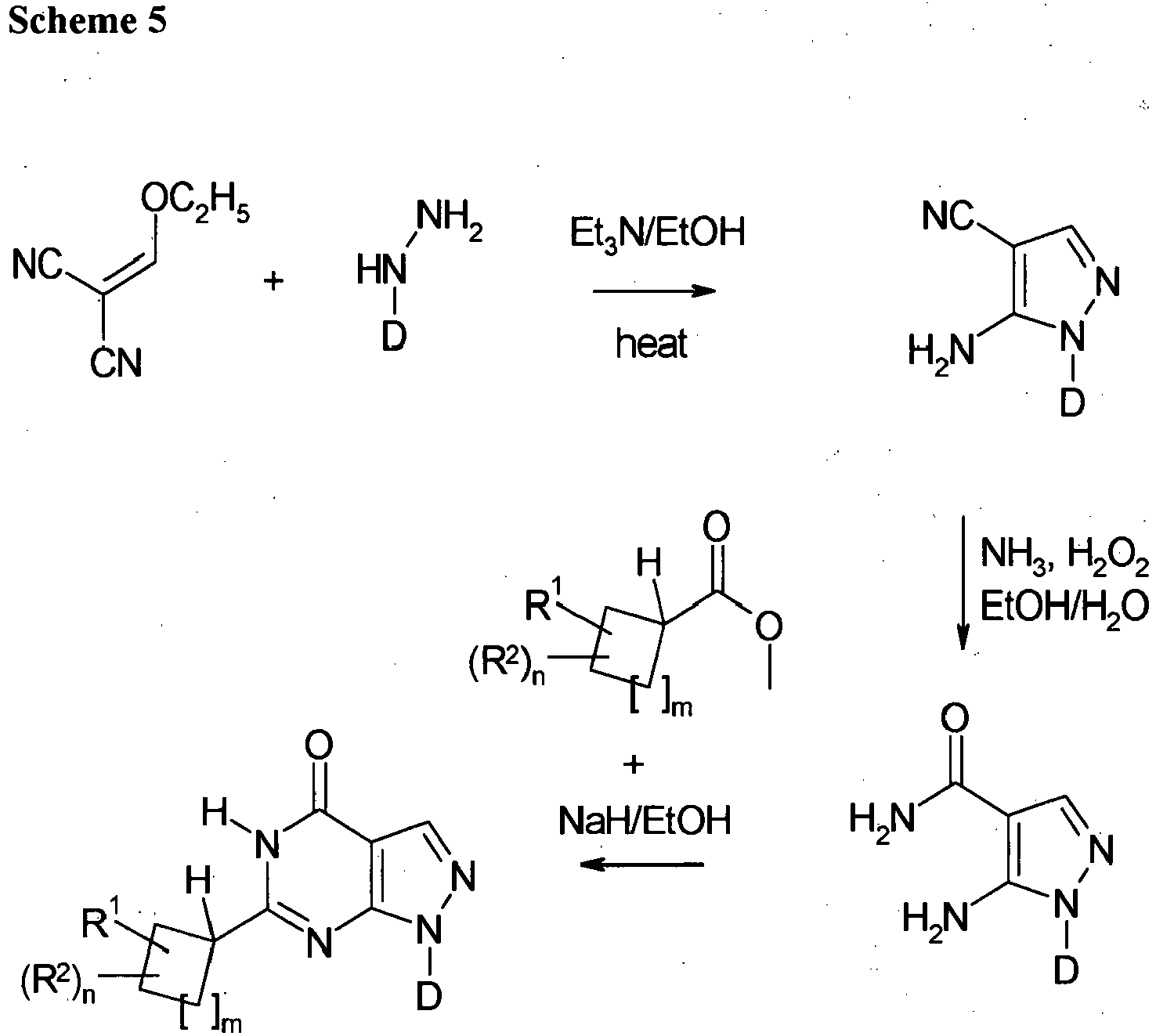
- Scheme 5: As described in scheme 1, in a first step 2-ethoxymethylene-malononitrile is condensed with mono-substituted hydrazines by heating in an appropriate solvent like ethanol in the presence of a base (e.g. triethylamine) to form the corresponding 5-amino-1H-pyrazole-4-carbonitriles. These compounds are converted in a second step to the corresponding amides, e.g. by treatment of an ethanolic solution with ammonia (25 % in water) and hydrogen peroxide (35 % in water). In a third step, heating with R1 and R2 substituted cyclobutyl or cyclopentyl carboxylic acid ester under basic conditions (e.g. sodium hydride in ethanol) leads to the final pyrazolo[3,4-d]pyrimidin-4-ones as final products. [cf., for example, A. Miyashita et al., Heterocycles 1990, 31, 1309ff]. This procedure is described in more detail for R1 being pyridniyl, m being 1 and n being 0 in the experimental section (examples 29 to 32).
- Further information also can be found in:
-
WO 2004/099210 (in particular page 9, last paragraph to page 14, line 8, incorporated by reference), - with respect to the general manufacture of compounds with D being tetrahydropyranyl more information can be found in
WO2009/121919 , particularly on page 120 to 125 and the experimental part thereof (herewith incorporated by reference), - with respect to D being 4,4-difluorocyclohexyl more information can be found in
WO 2010/026214 , particularly on page 59 to 63 and the experimental part thereof (herewith incorporated by reference), - and in the experimental part (exemplary embodiments) of this description. The letter in particular with respect to the manufacture of the two building blocks:
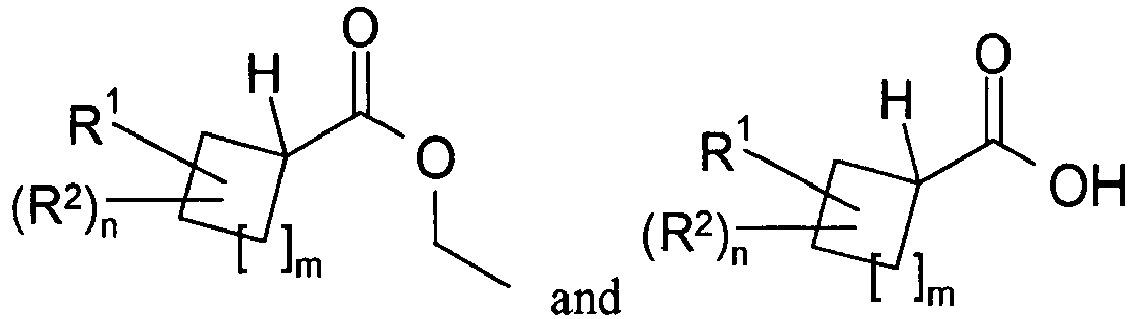
- The present invention refers to compounds, which are considered effective in the treatment of diseases. The compounds according to the invention are effective and selective inhibitors of phosphodiesterase 9A and can be used for the development of medicaments. Such medicaments shall preferably be used for the treatment of diseases in which the inhibition of PDE9A can provide a therapeutic, prophylactic or disease modifying effect. Preferably the medicaments shall be used to improve perception, concentration, cognition, learning or memory, like those occurring in particular in situations/diseases/syndromes such as: mild cognitive impairment, age-associated learning and memory impairments, age-associated memory losses, vascular dementia, craniocerebral trauma, stroke, dementia occurring after strokes (post stroke dementia), post-traumatic dementia, general concentration impairments, concentration impairments in children with learning and memory problems, Alzheimer's disease, Lewy body dementia, dementia with degeneration of the frontal lobes, including Pick's syndrome, Parkinson's disease, progressive nuclear palsy, dementia with corticobasal degeneration, amyotropic lateral sclerosis (ALS), Huntington's disease, multiple sclerosis, thalamic degeneration, Creutzfeld-Jacob dementia, HIV dementia, epilepsy, temporal lobe epilepsy, schizophrenia, schizophrenia (with dementia), Korsakoff's psychosis or cognitive impairment associated with depression or bipolar disorder.
- Another aspect of the present invention may concern the treatment of a disease which is accessible by PDE9A modulation, in particular sleep disorders like insomnia or narcolepsy, bipolar disorder, metabolic syndrome, obesity, diabetes mellitus, including type 1 or type 2 diabetes, hyperglycemia, dyslipidemia, impaired glucose tolerance, or a disease of the testes, brain, small intestine, skeletal muscle, heart, lung, thymus or spleen.
- Thus the medical aspect of the present invention can be summarised in that it is considered that a compound according to formula (I) or (II) as herein defined, in particular the specifically defined species compounds is used as a medicament.
- Such a medicament preferably is for the use in a method for the treatment of a CNS disease.
- In an alternative use, the medicament is for the use in a therapeutic or prophylactic method, preferably a therapeutic method, for the treatment of a CNS disease, the treatment of which is accessible by the inhibition of PDE9.
- In an alternative use, the medicament is for the use in a therapeutic or prophylactic method, preferably a therapeutic method, for the treatment of a disease that is accessible by the inhibition of PDE9, specifically PDE9A.
- In the most preferred alternative use, the medicament is for the use in a therapeutic or prophylactic method, preferably a therapeutic method, for the treatment, amelioration and / or prevention of cognitive impairment being related to perception, concentration, cognition, learning or memory, preferably if such cognitive impairment is associated with a disease or condition as described in this section.
- In an alternative use, the medicament is for the use in a therapeutic or prophylactic method, preferably a therapeutic method, for the treatment or the amelioration or prevention of cognitive impairment being related to age-associated learning and memory impairments, age-associated memory losses, vascular dementia, craniocerebral trauma, stroke, dementia occurring after strokes (post stroke dementia), post-traumatic dementia, general concentration impairments, concentration impairments in children with learning and memory problems, Alzheimer's disease, Lewy body dementia, dementia with degeneration of the frontal lobes, including Pick's syndrome, Parkinson's disease, progressive nuclear palsy, dementia with corticobasal degeneration, amyotropic lateral sclerosis (ALS), Huntington's disease, multiple sclerosis, thalamic degeneration, Creutzfeld-Jacob dementia, HIV dementia, epilepsy, temporal lobe epilepsy, schizophrenia, schizophrenia (with dementia), Korsakoffs psychosis or cognitive impairment associated with depression or bipolar disorder.
- In an alternative use, the medicament is for the use in a therapeutic or prophylactic method, preferably a therapeutic method, for the treatment of Alzheimer's disease, schizophrenia or cognitive impairment associated with Alzheimer's disease or associated with schizophrenia.
- In an alternative use, the medicament is for the use in a therapeutic or prophylactic method, preferably a therapeutic method, for the treatment of sleep disorders, bipolar disorder, metabolic syndrome, obesity, diabetes mellitus, hyperglycemia, dyslipidemia, impaired glucose tolerance, or a disease of the testes, brain, small intestine, skeletal muscle, heart, lung, thymus or spleen.
- In a further aspect of the invention, the present invention relates to the method of treatment or prevention of a condition or disease selected from the above listed groups of conditions and diseases, whereby the method comprises the administration of a therapeutically effective amount of a compound according to the invention in a human being in need thereof.
- Another aspect of the invention concerns the compounds of the inventions for use as a medicament in a therapeutic or prophylactic method, preferably a therapeutic method. If indicated the therapeutic method or the medicament is preferably for the treatment of a condition or a disease selected from the group of conditions or a diseases as outlined above in this section which is entitled "METHOD OF TREATMENT".
- Medicaments for administration, which are also subject to the present invention, comprise
- a compound according to the present invention as a or the pharmaceutically active ingredient in a therapeutically effective amount and
- a pharmaceutical carrier.
- By "therapeutically effective amount" it is meant that if the medicament is applied via the appropriate regimen adapted to the patient's condition, the amount of said compound of formula (I) will be sufficient to effectively treat, to prevent or to decelerate the progression of the corresponding disease, or otherwise to ameliorate the state of a patient suffering from such a disease. It may be the case that the "therapeutically effective amount" in a mono-therapy will differ from the "therapeutically effective amount" in a combination therapy with another medicament.
- The dose range of the compounds of general formula (I) applicable per day may be usually from 0.1 to 5000 mg, preferably from 0.1 to 1000 mg, preferably from 2 to 500 mg, more preferably from 5 to 250 mg, most preferably from 10 to 100 mg. A dosage unit (e.g. a tablet) preferably may contain between 2 and 250 mg, particularly preferably between 10 and 100 mg of the compounds according to the invention.
- The actual pharmaceutically effective amount or therapeutic dosage will depend on factors known by those skilled in the art such as age, weight, gender or other condition of the patient, route of administration, severity of disease and the like.
- The compounds according to the invention may be administered by oral, parenteral (intravenous, intramuscular etc.), intranasal, sublingual, inhalative, intrathecal, topical or rectal route. Suitable preparations for administering the compounds according to the present invention include for example patches, tablets, capsules, pills, pellets, dragees, powders, troches, suppositories, liquid preparations such as solutions, suspensions, emulsions, drops, syrups, elixirs, or gaseous preparations such as aerosols, sprays and the like. The content of the pharmaceutically active compound(s) should be in the range from 0.05 to 90 wt.-%, preferably 0.1 to 50 wt.-% of the composition as a whole. Suitable tablets may be obtained, for example, by mixing the active substance(s) with known excipients, for example inert diluents such as calcium carbonate, calcium phosphate or lactose, disintegrants such as corn starch or alginic acid; binders such as starch or gelatine, lubricants such as magnesium stearate or talc and/or agents for delaying release, such as carboxymethyl cellulose, cellulose acetate phthalate, or polyvinyl acetate. The tablets may also comprise several layers.
- Coated tablets may be prepared accordingly by coating cores produced analogously to the tablets with substances normally used for tablet coatings, for example collidone or shellac, gum arabic, talc, titanium dioxide or sugar. To achieve delayed release or prevent incompatibilities the core may also consist of a number of layers. Similarly the tablet coating may consist of a number of layers to achieve delayed release, possibly using the excipients mentioned above for the tablets.
- Syrups or elixirs containing the active substances or combinations thereof according to the invention may additionally contain a sweetener such as saccharine, cyclamate, glycerol or sugar and a flavour enhancer, e.g. a flavouring such as vanillin or orange extract. They may also contain suspension adjuvants or thickeners such as sodium carboxymethyl cellulose, wetting agents such as, for example, condensation products of fatty alcohols with ethylene oxide, or preservatives such as p-hydroxybenzoates.
- Solutions may be prepared in the usual way, e.g. with the addition of isotonic agents, preservatives such as p-hydroxybenzoates or stabilisers such as alkali metal salts of ethylenediamine-tetra-acetic acid, optionally using emulsifiers and/or dispersants, while if water shall be used as diluent, for example, organic solvents may optionally be used as solubilisers or dissolving aids and the solutions may be transferred into injection vials or ampoules or infusion bottles.
- Capsules containing one or more active substances or combinations of active substances may for example be prepared by mixing the active substances with inert carriers such as lactose or sorbitol and packing them into gelatine capsules.
- Suitable suppositories may be made for example by mixing with carriers provided for this purpose, such as neutral fats or polyethyleneglycol or the derivatives thereof.
- Excipients which may be used include, for example, water, pharmaceutically acceptable organic solvents such as paraffins (e.g. petroleum fractions), vegetable oils (e.g. groundnut or sesame oil), mono- or polyfunctional alcohols (e.g. ethanol or glycerol), carriers such as e.g. natural mineral powders (e.g. kaolins, clays, talc, chalk), synthetic mineral powders (e.g. highly dispersed silicic acid and silicates), sugars (e.g. cane sugar, lactose and glucose), emulsifiers (e.g. lignin, spent sulphite liquors, methylcellulose, starch and polyvinylpyrrolidone) and lubricants (e.g. magnesium stearate, talc, stearic acid and sodium lauryl sulphate).
- For oral use the tablets may contain, in addition to the carriers specified, additives such as sodium citrate, calcium carbonate and dicalcium phosphate together with various additional substances such as starch, preferably potato starch, gelatine and the like. Lubricants such as magnesium stearate, sodium laurylsulphate and talc may also be used to produce the tablets. In the case of aqueous suspensions the active substances may be combined with various flavour enhancers or colourings in addition to the abovementioned excipients.
- The dosage of the compounds according to the invention is naturally highly dependent on the method of administration and the complaint which is being treated.
- In another aspect the present invention relates to a combination therapy in which a compound according to the present invention is administered together with another active compound. Accordingly, the invention also refers to pharmaceutical formulations that provide such a combination of pharmaceutically active ingredients, whereby one of which is a compound of the present invention: Such combinations may be fixed dose combinations (the pharmaceutically active ingredients that are to be combined are subject of the same pharmaceutical formulation) or free dose combinations (the pharmaceutically active ingredients are in separate pharmaceutical formulations).
- Consequently, a further aspect of the present invention refers to a combination of each of the compounds of the present invention, preferably at least one compound according to the present invention, with another active compound for example selected from the group of beta-secretase inhibitors; gamma-secretase inhibitors; gamma-secretase modulators; amyloid aggregation inhibitors such as e.g. alzhemed; directly or indirectly acting neuroprotective and/or disease-modifying substances; anti-oxidants, such as e.g. vitamin E , ginko biloba or ginkolide; anti-inflammatory substances, such as e.g. Cox inhibitors, NSAIDs additionally or exclusively having Aß (Abeta) lowering properties; HMG-CoA reductase inhibitors, such as statins; acetylcholine esterase inhibitors, such as donepezil, rivastigmine, tacrine, galantamine; NMDA receptor antagonists such as e.g. memantine; AMPA receptor agonists; AMPA receptor positive modulators, AMPkines, glycine transporter 1 inhibitors; monoamine receptor reuptake inhibitors; substances modulating the concentration or release of neurotransmitters; substances inducing the secretion of growth hormone such as ibutamoren mesylate and capromorelin; CB-1 receptor antagonists or inverse agonists; antibiotics such as minocyclin or rifampicin; PDE1, PDE2, PDE4, PDE5 and / or PDE10 inhibitors, GABAA receptor inverse agonists; GABAA alpha5 receptor inverse agonists; GABAA receptor antagonists; nicotinic receptor agonists or partial agonists or positive modulators; alpha4beta2 nicotinic receptor agonists or partial agonists or positive modulators; alpha7 nicotinic receptor agonists or partial agonists; histamine receptor H3 antagonists; 5-HT4 receptor agonists or partial agonists; 5-HT6 receptor antagonists; alpha2-adrenoreceptor antagonists, calcium antagonists; muscarinic receptor M1 agonists or partial agonists or positive modulators; muscarinic receptor M2 antagonists; muscarinic receptor M4 antagonists; metabotropic glutamate receptor 5 positive allosteric modulators; metabotropic glutamate receptor 2 antagonists; metabotropic glutamate receptor 2/3 agonists; metabotropic glutamate receptor 2 positive allosteric modulators and other substances that modulate receptors or enzymes in, a manner such that the efficacy and/or safety of the compounds according to the invention is increased and/or unwanted side effects are reduced.
- This invention further relates to pharmaceutical compositions containing one or more, preferably one active substance. At least one active substance is selected from the compounds according to the invention and/or the corresponding salts thereof. Preferably the composition comprises only one such active compound. In case of more than one active compound the other one can be selected from the aforementioned group of combination partners such as alzhemed, vitamin E, ginkolide, donepezil, rivastigmine, tacrine, galantamine, memantine, ibutamoren mesylate, capromorelin, minocyclin and/or rifampicin. Optionally the composition comprises further ingredients such as inert carriers and/or diluents.
- The compounds according to the invention may also be used in combination with immunotherapies such as e.g. active immunisation with Abeta or parts thereof or passive immunisation with humanised anti-Abeta antibodies or antibody fragments for the treatment of the above mentioned diseases and conditions.
- The compounds according to the invention also may be combined with Dimebon.
- The compounds according to the invention also may be combined with antidepressants like amitriptyline imipramine hydrochloride (TOFRANIL), imipramine maleate (SURMONTIL), lofepramine, desipramine (NORPRAMIN), doxepin (SINEQUAN, ZONALON), trimipramine (SURMONTIL).
Or the compounds according to the invention also may be combined with serotonin (5-HT) reuptake inhibitors such as alaproclate, citalopram (CELEXA, CIPRAMIL) escitalopram (LEXAPRO, CIPRALEX), clomipramine (ANAFRANIL), duloxetine (CYMBALTA), femoxetine (MALEXIL), fenfluramine (PONDIMIN), norfenfluramine, fluoxetine (PROZAC), fluvoxamine (LUVOX), indalpine, milnacipran (IXEL), paroxetine (PAXIL, SEROXAT), sertraline (ZOLOFT, LUSTRAL), trazodone (DESYREL, MOLIPAXIN), venlafaxine (EFFEXOR), zimelidine (NORMUD, ZELMID), bicifadine, desvenlafaxine (PRISTIQ), brasofensme and tesofensine. - The combinations according to the present invention may be provided simultaneously in one and the same dosage form, i.e. in form of a combination preparation, for example the two components may be incorporated in one tablet, e. g. in different layers of said tablet. The combination may be also provided separately, in form of a free combination, i.e. the compounds of the present invention are provided in one dosage form and one or more of the above mentioned combination partners is provided in another dosage form. These two dosage forms may be equal dosage forms, for example a co-administration of two tablets, one containing a therapeutically effective amount of the compound of the present invention and one containing a therapeutically effective amount of the above mentioned combination partner It is also possible to combine different administration forms, if desired. Any type of suitable administration forms may be provided.
- The compound according to the invention, or a physiologically acceptable salt thereof, in combination with another active substance may be used simultaneously or at staggered times, but particularly close together in time. If administered simultaneously, the two active substances are given to the patient together; if administered at staggered times the two active substances are given to the patient successively within a period of less than or equal to 12, particularly less than or equal to 6 hours.
- The dosage or administration forms are not limited, in the context of the present invention any suitable dosage form may be used. For example, the dosage forms may be selected from solid preparations such as patches, tablets, capsules, pills, pellets, dragees, powders, troches, suppositories, liquid preparations such as solutions, suspensions, emulsions, drops, syrups, elixirs, or gaseous preparations such as aerosols, sprays and the like.
- The dosage forms are advantageously formulated in dosage units, each dosage unit being adapted to supply a single dose of each active component being present. Depending from the administration route and dosage form the ingredients are selected accordingly.
- The dosage for the above-mentioned combination partners may be expediently 1/5 of the normally recommended lowest dose up to 1/1 of the normally recommended dose.
- The dosage forms are administered to the patient for example 1, 2, 3, or 4 times daily depending on the nature of the formulation. In case of retarding or extended release formulations or other pharmaceutical formulations, the same may be applied differently (e.g. once weekly or monthly etc.). It is preferred that the compounds of the invention be administered either three or fewer times, more preferably once or twice daily.
- Examples which might illustrate possible pharmaceutical formulations, without being meant to be limiting:
- The term "active substance" denotes one or more compounds according to the invention including the salts thereof. In the case of one of the aforementioned combinations with one or more other active substances the term "active substance" may also include the additional active substances.
- Tablets containing 100 mg of active substance
Composition: tablet active substance 100.0 mg lactose 80.0 mg corn starch 34.0 mg polyvinylpyrrolidone 4.0 mg magnesium stearate 2.0 mg 220.0 mg - Tablets containing 150 mg of active substance
Composition: tablet active substance 150.0 mg powdered lactose 89.0 mg corn starch 40.0 mg colloidal silica 10.0 mg polyvinylpyrrolidone 10.0 mg magnesium stearate 1.0 mg 300.0 mg - Hard gelatine capsules containing 150 mg of active substance
active substance 150.0 mg lactose 87.0 mg corn starch (dried) 80.0 mg magnesium stearate 3.0 mg 320.0 mg -
Composition: suppository active substance 150.0 mg polyethyleneglycol 1500 550.0 mg polyethyleneglycol 6000 460.0 mg polyoxyethylene sorbitan 840.0 mg monostearate 2000.0 mg -
Composition: ampoules containing 10 mg active substance active substance 10.0 mg 0.01 N hydrochloric acid q.s. double-distilled water ad 2.0 mL -
Composition: ampoules containing 50 mg of active substance active substance 50.0 mg 0.01 N hydrochloric acid q.s. double-distilled water ad 10.0 mL - The preparation of any the above mentioned formulations can be done following standard procedures.
- The in-vitro effect of the compounds of the invention can be shown with the following biological assays.
- The PDE9A2 enzymatic activity assay was run as scintillation proximity assay (SPA), in general according to the protocol of the manufacturer (GE Healthcare, former Amersham Biosciences, product number: TRKQ 7100). As enzyme source, lysate (PBS with 1 % Triton X-100 supplemented with protease inhibitors, cell debris removed by centrifugation at 13.000 rpm for 30 min) of SF 9 cell expressing the human PDE9A2 was used. The total protein amount included in the assay varied upon infection and production efficacy of the SF9 cells and lay in the range of 0.1 - 100 ng.
- In general, the assay conditions were as follows:
- total assay volume: 40 microlitre
- protein amount: 0.1 - 50 ng
- substrate concentration (cGMP): 20 nanomolar; ∼1 mCi/l
- incubation time: 60 min at room temperature
- final DMSO concentration: 0.2 - 1 %
- The assays were run in 384-well format. The test reagents as well as the enzyme and the substrate were diluted in assay buffer. The assay buffer contained 50 mM Tris, 8.3 mM MgCl2, 1.7 mM EGTA, 0.1 % BSA, 0.05 % Tween 20; the pH of assay buffer was adjusted to 7.5. The reaction was stopped by applying a PDE9 specific inhibitor (e.g. compounds according to
WO 2004/099210 orWO 2004/099211 , like one of the enantiomeres of example 37, e.g. 1-(2-Chlorophenyl)-6-[(2R)-3,3,3-trifluoro-2-methyl-propyl]-1,5-dihydro-4H-pyrazolo[3,4-d]pyrimidine-4-one) in excess. - Wunder F, Tersteegen A, Rebmann A, Erb C, Fahrig T, Hendrix M. Characterization of the first potent and selective PDE9 inhibitor using a cGMP reporter cell line. Molecular Pharmacology. 2005 Dec;68(6): 1775-81.
- van der Staay FJ, Rutten K, Bärfacker L, Devry J, Erb C, Heckroth H, Karthaus D, Tersteegen A, van Kampen M, Blokland A, Prickaerts J, Reymann KG, Schröder UH, Hendrix M. The novel selective PDE9 inhibitor BAY 73-6691 improves learning and memory in rodents. Neuropharmacology. 2008 Oct;55(5):908-18.
- The assay was run in an analogous manner to the PDE9A2 assay, with the following differences: instead of PDE9A2, PDE1C was used and the assay buffer contained in addition 50 nM Calmodulin, 3 mM CaCl2. The reaction can be stopped by applying the same inhibitor than the one that is outlined above (1-(2-Chlorophenyl)-6-[(2R)-3,3,3-trifluoro-2-methyl-propyl]-1,5-dihydro-4H-pyrazolo[3,4-d]pyrimidine-4-one).
- IC50 can be calculated with GraphPadPrism or other suited software setting the positive control as 100 and the negative control as 0. For calculation of IC50 dilutions of the test compounds (substrates) are to be selected and tested following the aforementioned protocol.
- In the following IC50 values for PDE9A2 inhibition [nanomolar (nM)] illustrate that the compounds according to the present invention inhibit PDE9, specifically PDE9A2. This evidences that the compounds provide useful pharmacological properties. The examples are not meant to be limiting
- The table also provides selectivity values (Selectivity) that show a preference of the compounds for PDE9A versus PDE1C. Selectivity is the ratio (IC50 for PDE1C inhibition [nanomolar (nM)]) / (IC50 for PDE9A2 inhibition [nanomolar (nM)]).
- The example numbers refer to the final examples as outlined in the section Exemplary embodiments and as defined by the above compound family table (embodiment 25).
- All data can be measured according to the procedure described herein. The definition enantiomer 1 or enantiomer 2 is related to the elution orders of enantiomers in chiral SFC and chiral HPLC.
Compound family Example No. IC50 PDE9A2 [nanomolar] Selectivity A 1* 450 3 B 2* 5 143 C 3* 23 34 D 4* 242 22 E 5* 60 14 F 6* 58 15 G1 7* 31 15 G2 8* 85 63 H1 9* 19 46 H2 10* 13 120 I 11* 233 ≥ 43 J 12* 80 38 K 13* 7 328 K 14 (enantiomer 1) 473 4,3 K 15 (enantiomer 2) 4 424 L 16* 5 245 M 17* 16 78 M 18 (enantiomer 1) 5 255 M 19 (enantiomer 2) 1345 0.61 N 20* 31 68 O 21* 433 10 P 22* 21 49 Q 23 23 187 Q 24 (enantiomer 1) 218 8.9 Q 25 (enantiomer 2) 7 197 R 29* 11 117 R 30 (enantiomer 1) 304 4.95 R 31 (enantiomer 2) 7 186 S 32* 7 117 S 33 (enantiomer 1) 4 181 S 34 (enantiomer 2) 388 1.68 T 26* 32 >400 T 27 (enantiomer 1) 11 250 T 28 (enantiomer 2) 360 7 * trans racemic mixture - It is believed that the positive in-vitro efficacy results of the compounds of the present invention translate in positive in-vivo efficacy.
- The in-vivo effect of the compounds of this invention can be tested in the Novel Object Recognition test according to the procedure of Prickaerts et al. (Neuroscience 2002, 113, 351-361), the social recognition test or the T-maze spontaneous alternation test according to the procedures described by van der Staay et al. (Neuropharmacology 2008, 55, 908-918). For further information concerning biological testing one is also referred to these two citations.
- Besides the inhibition property toward the target PDE9, compounds according to the present invention may provide further advantageous pharmacokinetic properties.
- E.g. compounds according to the invention may show one or more advantages in the area of safety, balanced metabolism, low risk of causing drug - drug interaction and/or balanced clearance.
- Compounds also might show one-or more additional or alternative advantages in the area of bioavailability, high fraction absorbed, blood brain transport properties, a favourable (e.g. high mean) residence time (mrt), favourable exposure in the effect compartment and so on.
-
- Burgess-reagent
- (methoxycarbonylsulfamoyl)-triethylammonium-N-betain
- Lawesson's reagent
- 2,4-bis-(4-methoxy-phenyl)-[1,3,2,4]dithiadiphosphetane 2,4-disulfide
- APCI
- Atmospheric pressure chemical ionization
- ACN
- acetonitrile
- CDI
- 1,1'-carbonyldiimidazole
- DEA
- diethylamine
- DIPEA
- diisopropylethylamine
- DME
- 1,2-dimethoxyethane
- DMF
- dimethylformamide
- ESI
- electrospray ionization (in MS)
- EtOH
- ethanol
- Exp.
- example
- h
- hour(s)
- HATU
- 0-(7-azabenzotriazol-1-yl)-N,N,N',N'-tetramethyluronium hexafluorophosphate
- HPLC
- high performance liquid chromatography
- HPLC-MS
- coupled high performance liquid chromatography-mass spectrometry
- M
- molar (mol/L)
- MeOH
- methanol
- min
- minutes
- MS
- mass spectrometry
- NMP
- 1-methyl-2-pyrrolidinone
- Rt
- retention time (in HPLC)
- SFC
- supercrticial fluid chromatography
- TBTU
- O-(benzotriazol-1-yl)-N,N,N',N'-tetramethyluronium tetrafluoroborate
- TFA
- trifluoroacetic acid
- THF
- tetrahydrofuran
- TLC
- thin-layer chromatography
- MS apparatus type: Waters Micromass ZQ; HPLC apparatus type: Waters Alliance 2695, Waters 2996 diode array detector; column: Varian Microsorb 100 C18, 30 x 4.6 mm, 3.0 µm; eluent A: water + 0.13 % TFA, eluent B: ACN; gradient: 0.0 min 5 % B → 0.18 min 5 % B → 20 min 98 % B → 2.2 min 98 % B → 2.3 min 5 % B → 2.5 min 5 % B; flow rate: 3.5 mL/min; UV detection: 210-380 nm.
- MS apparatus type: Waters Micromass ZQ; HPLC apparatus type: Waters Alliance 2695, Waters 2996 diode array detector; column: Varian Microsorb 100 C18, 30 x 4.6 mm, 3.0 µm; eluent A: water + 0.13 % TFA, eluent B: MeOH; gradient: 0.0 min 5 % B → 0.35 min 5 % B → 3.95 min 100 % B → 4.45 min 100 % B → 4.55 min 5 % B → 4.9 min 5 % B; flow rate: 2.4 mL/min; UV detection: 210-380 nm.
- MS apparatus type: Waters Micromass ZQ; HPLC apparatus type: Waters Alliance 2695, Waters 2996 diode array detector; column: Varian Microsorb C18, 20 x 4.6 mm, 5.0 µm; eluent A: water + 0.15 % TFA, eluent B: MeOH; gradient: 0.0 min 5 % B → 0.25 min 5 % B → 1.90 min 100 % B → 2,05 min 100 % B → 2.15 min 5 % B → 2.25 min 5 % B; flow rate: 5.2 mL/min; UV detection: 210-400 nm.
- Instrument: LC/MS ThermoFinnigan. Hplc Surveyor DAD, MSQ Quadrupole; column: Synergi Hydro-RP80A, 4 um, 4.60 x 100 mm; eluent A: 90% water + 10% acetonitrile + ammonium formate 10 mM; eluent B = ACN 90%+10% H2O + NH4COOH 10 mM; gradient: A (100) for 1.5 min, then to B (100) in 10 min for 1.5 min; flow rate: 1.2 mL/min; UV Detection: 254nm; Ion source: APCI.
- SFC apparatus type: Berger "Analytix"; column: Daicel IC, 250 mm x 4.6 mm, 5.0 µm; eluent: CO2 / 25 % MeOH / 0.2 % DEA (isocratic); flow rate: 4.0 mL/min, 10 min; temperature: 40°C; UV detection: 210/220/254 nm.
- SFC apparatus type: Berger "Analytix"; column: Daicel ADH, 250 mm x 4.6 mm, 5.0 µm; eluent: CO2 / 25 % MeOH 0.2 % DEA (isocratic); flow rate: 4.0 mL/min, 10 min; temperature: 40°C; UV detection: 210/220/254 nm.
- HPLC apparatus type: Agilent 1100; column: Daicel chiralcel OJ-H, 250 mm x 4.6 mm, 5.0 µm,; eluent: hexane/EtOH80:20; flow rate: 1 mL/min, Temperature: 25°C; UV Detection: variable (200- 500 nm).
- HPLC apparatus type: Agilent 1100; column: Daicel chiralcel OJ-H, 250 mm x 4.6 mm, 5.0 µm,; eluent: hexane/EtOH 85:15; flow rate: 1 mL/min, Temperature: 25°C; UV Detection: variable (200- 500 nm).
- HPLC apparatus type: Agilent 1100; column: Chiralpak AD-H, 250 mm x 4.6 mm, 5.0 µm,; eluent: hexane/isopropanol 80:20; flow rate: 1 mL/min, Temperature: 25°C; UV Detection: variable (200-500 nm).
- HPLC apparatus type: Agilent 1100; column: Chiralpak AD-H, 250 mm x 4.6 mm, 5.0 µm,; eluent: hexane/isopropanol 80:20; flow rate: 1 mL/min, Temperature: 25°C; UV Detection: variable (200- 500 nm).
-
- Discover® CEM instruments, equipped with 10 and 35 mL vessels;
- Biotage Initiator Sixty.
- Compounds with stereogenic centre(s): The structures depicted in the experimental section below will not necessarily show all the stereochemical possibilities of the compounds but only one. However, in such cases a term like "trans - racemic mixture" or "cis-racemic mixture" is added next to the depicted structure in order to indicate the other stereochemical options.
- An example is given below. The presented structural formula is

- The added term "trans-racemic mixture" points to the second stereochemical option:

- Thus, the manufactured compound is a mixture of
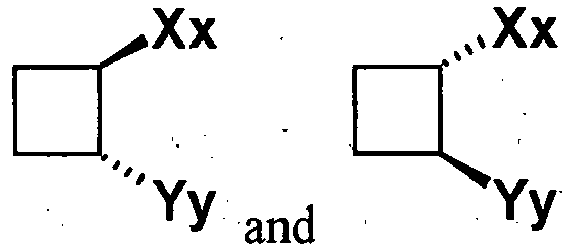
- This principle applies to other depicted structures as well.
-

- 2.00 g (13.9 mmol) trans-cyclobutan-1,2-dicarboxylic acid were mixed with 16 mL EtOH at 0°C and 2.21 mL (30.5 mmol) thionylchloride were slowly added. The mixture was allowed to warm to room temperature and stirred for 1h. The solvent was removed under reduced pressure and the product was filtered through a pad of activated basic alumina. 2.71 g (98 %) of the product were obtained.
HPLC-MS (Method 1): Rt = 1.34 min
MS (ESI pos): m/z = 201 (M+H)+ - The following example was synthesized in analogy to the preparation of Example 1 A, using the corresponding diacid as starting material.
Example structure starting material Rt [min] MS (ESI pos, m/z) Exp. 1B 

1.12 (Method 3) 201 (M+H)+ cis - racemic mixture -

- 8.00 g (89.7 mmol) 2-amino-propionic acid were mixed with 88.0 mL (0.93 mol) acetic anhydride and 88.0 mL pyridine. The reaction mixture was stirred at 100°C for 135 min.The solvent was removed under reduced pressure. Toluene was added to the residue and the solvent was removed under reduced pressure, then 204 mL (816 mmol) HCl (4 M aqueous solution) was added and the mixture was refluxed for 3h. The solvent was removed under reduced pressure. 1-Butanol (20 mL) was added to the residue and the solvent was removed under reduced pressure. 11.6 g of the title compound were obtained as hydrochloride salt.
MS (ESI pos): m/z = 88 (M+H)+ -

- 1.00 g (4.09 mmol) 5-Amino-1-(4,4-difluoro-cyclohexyl)-1H-pyrazole-4-carboxylic acid amide (see
PCT patent application WO 2010/026214 , example 8A) was mixed with 15 mL of anhydrous EtOH, 2.46 g (12.3 mmol) of Example 1A and 0.66 g (16.4 mmol) of sodium hydride (60 % suspension in mineral oil) were added. The reaction mixture was heated to 140°C for 30 min in a microwave oven. The mixture was cooled to room temperature and sodium hydroxide solution (4 M aqueous solution) was added. The solvent was removed under reduced pressure. The residue was purified by preparative HPLC (eluent A: water + 0.13 % TFA, eluent B: MeOH). 0.70 g (49 %) of the product were obtained.
HPLC-MS (Method 1): Rt = 1.24 min
MS (ESI pos): m/z = 353 (M+H)+ - The following examples were synthesized in analogy to the preparation of Example 3 A, using the corresponding amide and ester as starting materials (for starting materials it is referred to
PCT patent publications WO 2010/026214 ,WO 2009/121919 andWO 2004/09921 Example structure starting material: amide starting material: ester Rt [min] MS (ESI pos, m/z) Exp. 3B (trans-racemic mixture) 
5-amino-1-(tetrahydropyran-4-yl)-1H-pyrazole-4-carboxylic acid amide (see WO 2009/121919 , example 11B)Exp. 1B 1.07 (Meth od 3) 319 (M+H)+ Exp. 3C (trans - racemic mixture) 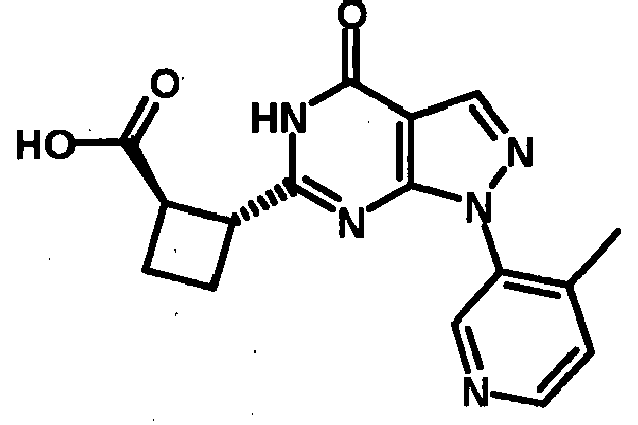
5-amino-1-(4-methyl-pyridin-3-yl)-1H-pyrazole-4-carboxylic acid amide (see WO 2004/099211 , example 35A)Exp. 1A 0.81 (Meth od 1): 326 (M+H)+ -

- 0.200 g (0.568 mmol) Example 3A were mixed with 0.157 mL (1.14 mmol) triethylamine and 5 mL DMF. To the mixture were added 0.237 g (0.624 mmol) HATU, then the reaction mixture was stirred at room temperature for 10 min. To the mixture were added 0.042 g (0.568 mmol) acetic acid hydrazide and the reaction mixture was stirred at room temperature for 1h. The mixture was purified by preparative HPLC (eluent A: water +0.13% TFA, eluent B: MeOH). 30 mg of the product were obtained
HPLC-MS (Method 1): Rt = 1.03 min
MS (ESI pos): m/z = 409 (M+H)+ -

- 0.150 g (0.426 mmol) of Example 3A were mixed with 2 mL THF. The mixture was cooled to 0°C and 0.036 mL (0.426 mmol) oxalylchloride and one drop of DMF were added. The reaction mixture was stirred at 0°C for 1h. To the reaction mixture were added 2 mL ACN and 0.426 mL (0.851 mmol) trimethylsilyldiazomethane (2 M in hexane). The mixture was stirred for 2h, then 0.213 mL HCl (4 M in dioxane) was slowly added. The reaction was stirred for 3h. To the mixture were added ethylacetate and saturated aqueous sodium hydrogen carbonate solution. The organic layer was washed with water and brine and dried over sodium sulfate. The solvents were partially evaporated until volume of approximately 2 mL was reached. The mixture was taken to the next step without further purification.
- HPLC-MS (Method 1): R, = 1.40 min
MS (ESI pos): m/z = 385/387 (Cl) - The following example was synthesized in analogy to the preparation of Example 5A, using the corresponding acid as starting material.
Example structure starting material Rt [min] MS (ESI pos, m/z) Exp. 5B 
Exp. 3B 1.12 351/353 (Cl) trans - racemic mixture (Method 1) -

- 0.200 g (0.628 mmol) of Example 3B were mixed with 1 mL DMF. 0.261 mL (1.89 mmol) triethylamine and 0.222 g (0.691 mmol) of TBTU were added. The reaction mixture was stirred at room temperature for 10 min. Then 0.078 g (0.628 mmol) of Example 2A was added and the mixture was stirred at room temperature for 1h. The mixture was purified by preparative HPLC (eluent A: water + 0.13% TFA, eluent B: MeOH). 190 mg of the product were obtained.
HPLC-MS (Method 3): Rt = 1.03 min
MS (ESI pos): m/z = 388 (M+H)+ -

- 0.200 g (0.628 mmol) of Example 3B were mixed with 1 mL DMF. 0.174 mL (1.26 mmol) triethylamine and 0.222 g (0.691 mmol) of TBTU were added. The reaction mixture was stirred at room temperature for 10 min. Then 0.066 g (0.628 mmol) 2,2-dimethoxy-ethylamine was added and the mixture was stirred at room temperature for 1h. Then HCl (2 M aqueous solution) was added and the mixture was purified by preparative HPLC (eluent A: water + 0.13 % TFA, eluent B: MeOH). The residue was mixed with 5 mL acetone and 1 mL HCl (2 M aqueous solution) and stirred overnight under nitrogen. Then the mixture was extracted with DCM. The organic layer was evaporated and purified by preparative HPLC (eluent A: water + 0.13 % TFA, eluent B: MeOH). 170 mg of the product was obtained.
- HPLC-MS (Method 3): Rt = 1.01 min
MS (ESI pos): m/z = 360 (M+H)+ -
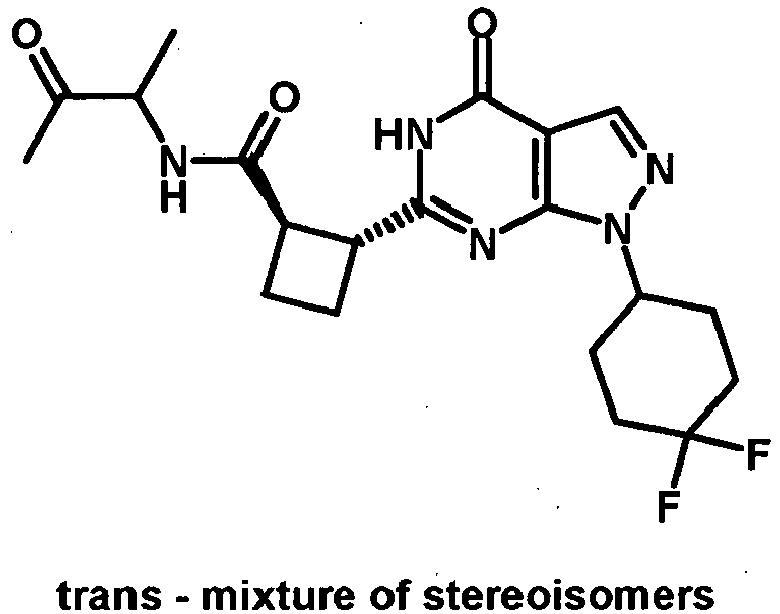
- 0.200 g (0.568 mmol) of Example 3A was mixed with 1.0 mL DMF. 0.432 mL (2.84 mmol) DIPEA and 0.200 g (0.624 mmol) TBTU were added. The reaction mixture was stirred at room temperature for 10 min. Then 0.140 g (1.14 mmol) of Example 2A were added and the mixture was stirred at room temperature for 2h. The mixture was purified by preparative HPLC (eluent A: water + 0.13 % TFA, eluent B: MeOH). 70 mg (29 %) of the product was obtained.
HPLC-MS (Method 1): Rt = 1.23 min
MS (ESI pos): m/z = 422 (M+H)+ - The following examples were synthesized in analogy to the preparation of Example 8A, using the corresponding nucleophiles as starting materials..
Example structure starting material Rt [min] MS (ESI pos, m/z) Exp. 8B 

1.31 (method 1) 396 (M+H)+ trans - racemic mixture hydrochloride Exp. 8C 

410 (M+H)+ trans - mixture of stereoisomers Exp. 8D 

1.12 410 (M+H)+ trans - mixture of stereoisomers (method 1) Exp. 8E 
hydrazine hydrate 0.99 367 (M+H)+ trans - racemic mixture (method 1) -

- 0.182 g (0.430 mmol) Dess-Martin periodinane were mixed with 2.5 mL DCM. 0.160 g (0.391 mmol) Example 8D in 2.5 mL DCM was added at room temperature. The reaction mixture stirred at room temperature for 30 min and at 30°C for 30 min. To the mixture were added 10 mL sodium thiosulfate solution (10 % in water) and 10 mL saturated sodium hydrogen carbonate solution and the mixture was stirred for 20 min. The organic layer was separated and the aqueous layer was extracted with DCM. The organic layer was washed with saturated sodium hydrogen carbonate solution, dried and evaporated. 93 mg (58 %) of the product were obtained.
HPLC-MS (Method 1): Rt = 1.18 min
MS (ESI pos): m/z = 408 (M+H)+ - The following example was synthesized in analogy to the preparation of Example 9A, using the corresponding alcohol as starting material.
Example structure starting material Exp. 9B 
Exp. 8C trans - mixture of stereoisomers -

- 0.450 g of Example 3C was mixed with 3.5 mL DMF and 0.273 g (2.21 mmol) Example 2A. 1.00 mL (6.64 mmol) DIPEA and 0.390 g (1.22 mmol) TBTU were added and the mixture was stirred for 1h. The mixture was purified by preparative HPLC (eluent A: water + 0.13 % TFA, eluent B: MeOH). 360 mg (83 %) of the product was obtained.
HPLC-MS (Method 1): Rt = 0.85 min
MS (ESI pos): m/z = 395 (M+H)+ -
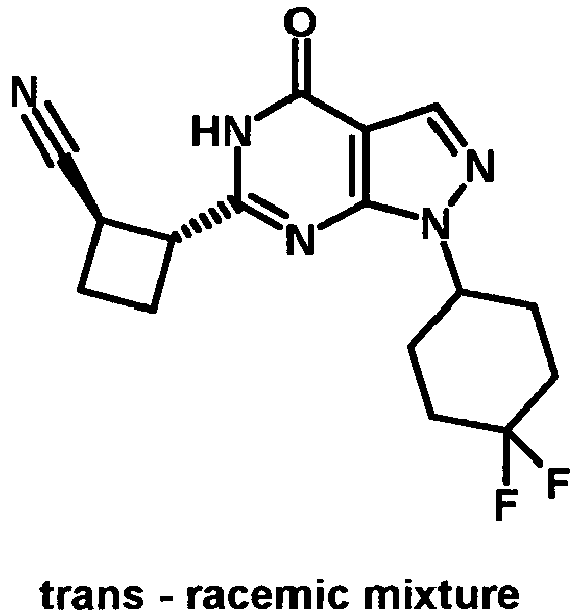
- 300 mg (1.23 mmol) of 5-amino-1-(4,4-difluoro-cyclohexyl)-1H-pyrazole-4-carboxylic acid amide (see
WO 2010/026214 , example 8A) were mixed with 4 mL anhydrous EtOH, 326 mg (3.07 mmol) trans-cyclobutane-1,2-dicarbonitrile and 0.197 g (4.91 mmol) of sodium hydride (60 % suspension in mineral oil) under nitrogen. The reaction mixture was heated to 140°C for 45 min in a microwave oven. The solvent was removed under reduced pressure. The residue was purified by preparative HPLC (eluent A: water + 0.13 % TFA, eluent B: MeOH). 210 mg (51 %) of the title compound were obtained. - HPLC-MS (Method 3): Rt = 1.19 min
MS (ESI pos): m/z = 334 (M+H)+ -

- To a solution of 0.8 g (3.805 mmol) of 5-amino-1-(tetrahydro-pyran-4-yl)-1-H-pyrazole-4-carboxylic acid amide (see
PCT patent application WO2010/026214 ) in 8 mL anhydrous EtOH , 0.457 g (19.6 mmol) of sodium hydride (60 % suspension in mineral oil) were added at room temperature under nitrogen. After 1 h under stirring, 1.2g (11.42mmol) of trans-cyclobutane-1,2-dicarbonitrile were added and the reaction mixture was heated to 140°C for 45 min in a microwave oven. The solvent was removed under reduced pressure. The residue was dissolved in DCM, water was added and phases were separated. Organic layers were dried over sodium sulphate and evaporated under reduced pressure. The crude was purified by flash cromatography (Cy/EtOAc from 80/20 to 100%) to obtain the title compound as yellow solid. (0.64g, 55%) - HPLC-MS(Method 1Eh):Rt=6.21min
MS (APCI): m/z = 300 (M+H)+ -

- To a solution of 0.85 g (3.91 mmol) of 5-amino-1-(4-methyl-pyridin-3-yl)-1H-pyrazole-4-carboxylic acid amide (see
PCT patent application WO 2004/09921 - HPLC-MS (Method 1Eh): Rt = 5.92 min
MS (APCI pos): m/z = 307 (M+H)+ -

- 190 mg (0.570 mmol) of Example 11A were mixed with 0.281 mL toluene and 0.093 mL (2.30 mmol) anhydrous MeOH. 0.103 mL (1.45 mmol) acetylchloride were added slowly at 0°C. The mixture was stirred at room temperature for 12h. The solvent was removed under reduced pressure. To the residue 0.5 mL MeOH were added. Then 0.407 mL (2.85 mmol) ammonia (7 M in MeOH) were added at 0°C and the mixture was allowed to warm to room temperature. After 30 min the reaction mixture was treated with water and the pH was adjusted to pH=1 by addition of TFA. The mixture was purified by preparative HPLC (eluent A: water + 0.13 % TFA, eluent B: MeOH) yielding 110 mg (42 %) of the product were as trifluoroacetic acid salt.
- HPLC-MS (Method 3): Rt = 1.04 min
MS (ESI pos): m/z = 351 (M+H)+ -

- To a mixture of dry EtOH (5mL) and dry CHCl3 (5mL) cooled at 0°C, acetylchloride (2.27mL, 30.82mmol) was added slowly and mixture left under stirring for 20min. 0°C. A solution of Example 11B (0.410g, 1.027mmol) in dry CHCl3 (5mL) was added dropwise and the mixture stirred at room temperature overnight. Solvents were evaporated under reduced pressure, residue dissolved in dry EtOH (5mL) and 6.4mL of a 7.0M solution of ammonia in MeOH (30.82mmol) were added. The mixture was stirred at room temperature for 12h. The solvent was removed under reduced pressure. The final product was obtained as hydrochloride and used for the next step without further purification. (0.37g, content 50% estimated by HPLC-MS).
- HPLC-MS (Method 1Eh): Rt = 5.38 min
MS (APCI pos): m/z = 317 (M+H)+ -

- To a mixture of dry EtOH (4mL) and dry CHCl3 (10mL) cooled at 0°C, acetylchloride (4.38 mL, 61.7 mmol) was added slowly and mixture left under stirring for 20min. 0°C. A solution of Example 11C (0.63g, 2.057 mmol) in dry CHCl3 (5mL) was added dropwise and the mixture stirred at room temperature overnight. Solvents were evaporated under reduced pressure, residue dissolved in dry MeOH (10mL) and 10.3 mL of a 7.0M solution of ammonia in MeOH (72 mmol) were added. The mixture was stirred at room temperature for 12h. The solvent was removed under reduced pressure. The final product, obtained as hydrochloride salt, was used as such in the next step without further purification. (0.85g, content 84%, estimated by 1H-NMR).
- HPLC-MS (Method 1Eh): Rt = 5.15 min
MS (APCI pos): m/z = 324 (M+H)+ -

- To a solution of 1.6 g (10.24 mmol) of 2-acetyl-cyclobutanecarboxylic acid methyl ester (prepared as described in J. Med. Chem, 25, 109, 1982) in dry EtOH (12mL), propargylamine (1.4mL, 20.4mmmol) was added followed by 0.122g (0.307mmol) of sodium gold trichloride. The reaction mixture was heated to 140°C for 45 min in a microwave oven, solid was filtered and the organic evaporated. Crude was purified by flash cromatography (Cy/EtOAc 70:30) to obtain the title compound as yellow green oil. (0.18g, 9.2%).
- HPLC-MS (Method 1Eh): Rt = 0.87 min
MS (APCI pos): m/z = 192 (M+H)+ -

- 22.0 mg (0.306 mmol) of propan-2-one oxime were mixed with 2 mL anhydrous THF and 0.471 mL (1.22 mmol) n-butyllithium (2.6 mol/L in toluene) was added carefully to the mixture. The reaction mixture was stirred at room temperature for 30 min. 0.110 g (0.278 mmol)) of Example 8B in 1 mL anhydrous THF were carefully added during 10 min. After 30 min the reaction mixture was added to a mixture of 0.28 mL H2SO4 and 4 mL THF/water (4:1). The mixture was refluxed for 1.5h. Saturated aqueous sodium hydrogen carbonate solution was added and extracted with ethylacetate. The organic layer was dried and the solvents were evaporated. The residue was purified by preparative HPLC (eluent A: water + 0.13 % TFA, eluent B: MeOH). 8 mg (8 %) of the product were obtained.
HPLC-MS (Method 1): Rt = 1.40 min
MS (ESI pos): m/z = 390 (M+H)+ -

- 0.190 g of Example 6A were mixed with 3 mL DME and 0.273 g (1.14 mmol) Burgess reagent. The reaction mixture was heated, to 130°C for 1h in a microwave oven. The solvent was evaporated and the residue purified by preparative HPLC ((eluent A: water + 0.13 % TFA, eluent B: MeOH). 70 mg (55 %) of the product were obtained.
HPLC-MS (Method 1): Rt = 1.11 min
MS OESI pos): m/z = 370 (M+H)+ - The following examples were synthesized in analogy to the preparation of Example 2, using the corresponding amides as starting materials.
Example structure starting material Rt [min] MS (ESI pos, m/z) Exp. 3 
Exp. 7A 1.17 342 (M+H)+ trans - racemic mixture (Method 3) Exp. 4 
Exp. 4A 1.20 391 (M+H)+ trans - racemic mixture (Method 1) Exp. 5 
Exp. 8A 1.38 404 (M+H)+ trans - racemic mixture (method 1) Exp. 6 
Exp. 9A 1.37 390 (M+H)+ trans - racemic mixture (method 1) Exp. 7 
Exp. 9B 1.42 390 (M+H)+ trans - racemic mixture (method 3) Exp. 8 
Exp. 10A 0.97 377 (M+H)+ trans - racemic mixture (method 1) -

- To a solution of Example 5A, synthesized starting from 0.426 mmol of Example 3A as described above, was added dropwise 0.062 g (0.832 mmol) thioacetamide in 2 mL EtOH. The reaction mixture was stirred overnight. The mixture was purified by preparative HPLC (eluent A: water +0.13 % TFA, eluent B: MeOH). 62 mg of the title compound were obtained,
HPLC-MS (Method 1): Rt = 1.37 min
MS (ESI pos): m/z = 406 (M+H)+ - The following examples were synthesized in analogy to the preparation of Example 9, using the corresponding starting materials.
Example structure starting material: nucleophile starting material: chloroketon Rt [min] MS (ESI pos, m/z) Exp. 10 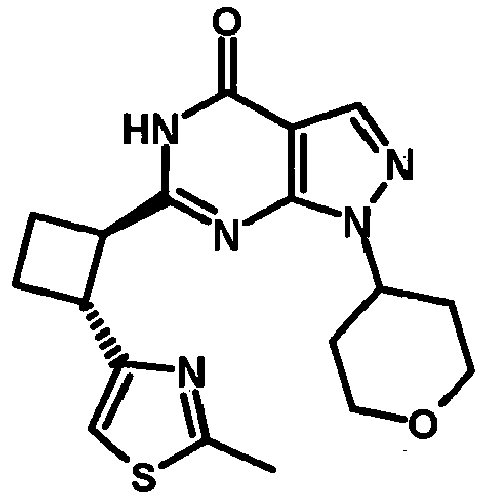
thioacetamide Exp. 5B 1.21 (Method 3) 372 (M+H)+ trans - racemic mixture Exp. 11 
1,1-dimethyl-thiourea Exp. 5A 1.15 (Method 3) 435 (M+H)+ trans - racemic mixture Exp. 12 
thiourea Exp. 5A 1.15 (Method 3) 407 (M+H)+ trans - racemic mixture -

- 100 mg (0.215 mmol) of Example 12A were mixed with 1.00 mL (6.07 mmol) 1,1,3,3-tetramethoxypropane. The reaction mixture was heated to 175°C for 1h using a microwave oven. The reaction mixture was treated with DCM/MeOH and one drop of triethylamine. The solvents were removed under reduced pressure. The mixture was purified by preparative HPLC (eluent A: water +0.13% TFA, eluent B: MeOH) yielding 45 mg (54 %) of the title compound.
HPLC-MS (Method 3): Rt = 1.36 min
MS (ESI pos): m/z = 387 (M+H)+ - The enantiomers of the title compound were separated by HPLC using a chiral stationary phase.
- HPLC apparatus type: Berger Minigram; column: Daicel 1C, 5.0 µm, 250 mm x 10 mm; method: eluent CO2 / 30 % MeOH / 0.2 % DEA (isocratic); flow rate: 10 mL/min, Temperature: 40°C; pressure: 100 bar; UV Detection: 210 nm
Example structure Rt [min] Exp. 14 
3.15 trans - enantiomer 1 (Method 4) Exp. 15 
3.78 trans - enantiomer 2 (Method 4) - The following example was synthesized in analogy to the preparation of Example 13, using the corresponding dialdehydediacetal as starting material.
Example structure starting material Rt [min] MS (ESI pos, m/z) Exp. 16 
1,1,3,3-tetraethoxy-2-methylpropane 1.42 401 (M+H)+ trans - racemic mixture (Method 3) -

- 176 mg (0.431 mmol) of Example 4A were mixed with 3 mL THF and 122 mg (0.302 mmol) Lawesson's reagent at room temperature. Then the mixture was stirred for 6h at 60°C. The reaction mixture was treated with water and diluted with DCM. The mixture was filtered over basic alumia and eluted with DCM und EtOH. The solvents were removed under reduced pressure. The residue was purified by preparative HPLC (eluent A: water + 0.13 % TFA, eluent B: MeOH). 45 mg (26 %) of the product were obtained.
HPLC-MS (Method 3): Rt = 1.37 min
MS (ESI pos): m/z = 407 (M+H)+ - The enantiomers of the title compound were seperated by HPLC using a chiral stationary phase.
- HPLC apparatus type: Berger Minigram; column: Daicel ADH, 5.0 µm, 250 mm x 10 mm; method: eluent CO2 / 30 % MeOH / 0.2 % DEA (isocratic); flow rate: 10 mL/min,
Temperature: 40°C; pressure: 100 bar; UV Detection: 210 nmExample structure Rt [min] Exp. 18 
2.47 trans - enantiomer 1 (S,S) (Method 5) Exp. 19 
2.96 trans - enantiomer 2 (R,R) (Method 5) - Single crystals of example 19 have been prepared by recrystallisation from ethylacetate and subjected to X-ray crystal analysis. The data allowed to determine the absolute configuration of example 19 to be (R,R).
Experimental: Data collection and reduction: Data collected on Saturn 944 CCD mounted on AFC11K goniometer, Radiation: Cu Kα from RU200 rotating anode and RIGAKU VARIMAX optics, Temperature: 100K.Summary of data collection statistics Spacegroup P21 Unit cell dimensions 8.560(2) 6.844(1) 15.603(3) 90.00 98.82(3) 90.00 Resolution range 15.42 - 0.85 (0.88 - 0.85) Total number of reflections 10857 Number of unique reflections 1588 Average redundancy 6.84 (2.46) % completeness 95.7 (79.1) Rmerge 0.064 (0.118) Output <I/sigI> 27.7 (7.9)
Refinement statistics: - Final Structure Factor Calculation for example 19 in P21
- Total number of l.s. parameters = 255
- GooF = S = 1.154

- R1 = 0.0695 for 2207 Fo > 4sig(Fo)and 0.0829 for all 2334 data, wR2 = 0.1646,

-

- 0.060 g of Example 10A were mixed with 4 mL anhydrous dioxane and 0.074 g (0.180 mmol) Lawesson's reagent. The reaction mixture was heated to 120°C for 1h in a microwave oven. The mixture was filtered over basic alumina and eluted with DCM and MeOH. The solvents were removed under reduced pressure. The residue was purified by preparative HPLC (eluent A: water + 0.13 % TFA, eluent B: MeOH). 22 mg of the product were obtained as salt with TFA.
HPLC-MS: (Method 1): Rt = 0.94 min
MS (ESI pos): m/z = 3393 (M+H)+ -

- 0.190 g (0.519 mmol) Example 8E were mixed with 1.38 mL (8.31 mmol) triethoxymethane. The mixture was stirred for 1.5h at 150°C. The reaction mixture was allowed to cool to room temperature and purified by preparative HPLC (eluent A: water + 0.13 % TFA, eluent B: MeOH). 90 mg (46 %) of the product were obtained.
HPLC-MS (Method 1): Rt = 1.19 min
MS (ESI pos): m/z = 377 (M+H)+ -

- 13 mg (0.10 mmol) CuCl2, 26 mL (0.22 mmol) tert-butyl-nitrite were mixed with ACN: A mixture of 22 mg (0.05 mmol) Example 12 in ACN was carefully added at 0°C. The mixture was stirred for 1h at 25°C. Additional 9 mg (0.07 mmol) CuCl2 and 13 mL (0.11 mmol) tert-butyl-nitrite was added and stirred another 20 min. The solvents were removed under reduced pressure. The residue was taken up in DCM and extracted with HCl and water. The mixture was purified by preparative HPLC (eluent A: water + 0.13 % TFA, eluent B: MeOH) yielding2.1 mg (9 %) of the product..
HPLC-MS: (Method 3): Rt = 1.46 min
MS (ESI pos): m/z = 426/428 (Cl) (M+H)+ -

- 180 mg (0.26 mmol, content 50%, estimated by HPLC-MS) of Example 12b were mixed with 1.00 mL (6.07 mmol) 1,1,3,3-tetramethoxypropane. The reaction mixture was heated to 175°C for 1h using a microwave oven. The reaction mixture was treated with DCM, washed with water. Organic layers were dried over sodiumsulphate and evaporated under reduced pressure. The crude was purified by flash cromatography (Cy/EtOAc from 80/20 to AcOEt/MeOH 96/4) and then with a second flash cromatography (DCM 100% to DCM/EtOH 96/4) to obtain the title compound as beige solid. (0.034g).
- HPLC-MS (Method 1Eh): Rt = 6.57 min
MS (APCI pos): m/z = 353 (M+H)+ - The enantiomers of the title compound were seperated by HPLC using a chiral stationary phase.
- HPLC semipreparative system: Waters 600 pump; column: Daicel chiralcel OJ-H, 250 mm x 20 mm, 5.0 µm; eluent: hexane/EtOH80:20; flow rate: 15 mL/min, Temperature: 25°C; UV Detection: 254 nm
Example structure Rt [min] Exp. 24 
15.604 trans - enantiomer 1 (Method 6) Exp. 25 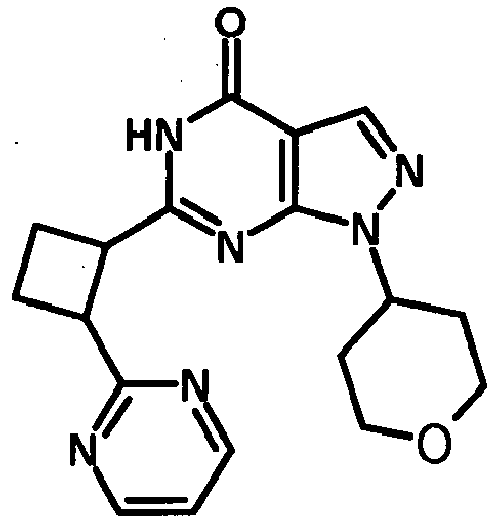
20.119 trans - enantiomer 2 (Method 6) -

- 140 mg (content 84%, 0.33 mmol) of Example 12C were mixed with 1.4 mL of 1,1,3,3-tetramethoxypropane and 1.4mL of NMP. The reaction mixture was heated to 175°C for 1h using a microwave oven. The reaction mixture was then diluted with MeOH and loaded on SCX cartridge. Ammonia fractions were collected and the residue was purified by flash cromatography (Cy/EtOAc from 90/10 to 100%) to obtain the title compound as white solid (30mg).
- HPLC-MS (Method 1Eh): Rt = 6.72 min
MS (APCIpos): m/z = 370 (M+H)+ - The enantiomers of the title compound were seperated by HPLC using a chiral stationary phase.
- HPLC semipreparative system: Waters 600 pump; column: Daicel chiralcel OJ-H, 250 mm x 20 mm, 5.0 µm; eluent: hexane/EtOH80:20; flow rate: 15 mL/min, Temperature: 25°C; UV Detection: 230 nm
Example structure Rt [min] Exp. 27 
17.748 trans - enantiomer 1 (Method 6) Exp: 28 
20.475 trans - enantiomer 2 (Method 6) - HPLC apparatus type: Agilent 1100; Method 6; column: Daicel chiralcel OJ-H, 250 mm x 4.6 mm, 5.0 µm; eluent: hexane/EtOH80:20; flow rate: 1 mL/min, Temperature: 25°C; UV Detection: 254 nm
-
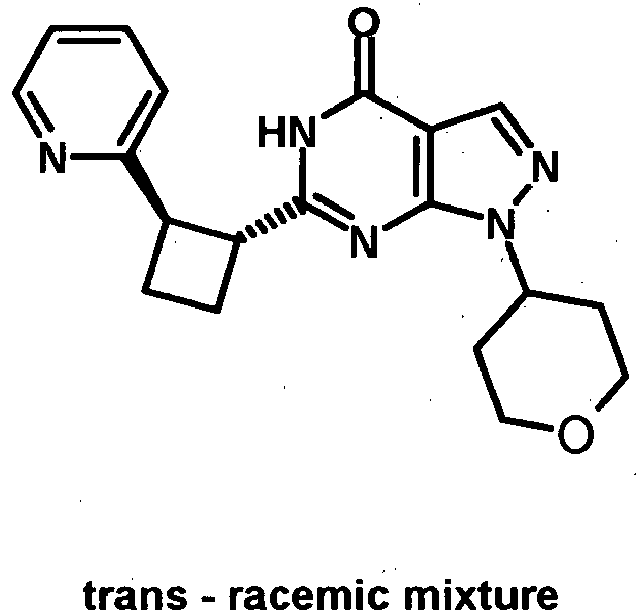
- To a suspension of 0.132 g (0.63mmol) of 5-amino-1-(tetrahydro-pyran-4-yl)-1-H-pyrazole-4-carboxylic acid amide (see
PCT patent application WO2010/026214 ) in dry EtOH (1.5mL), 0.066 g (1.66 mmol) of sodium hydride (60 % suspension in mineral oil) were added at room temperature under nitrogen. After 10min, 0.181mg (0.945mmol) of Example 13 A were added and the reaction mixture was heated to 140°C for 40 min in a microwave oven (Power 100W). The reaction mixture was then diluted with DCM, water was added, organics separated and dried over sodiumsulphate. Organics were evaporated under reduced pressure and the crude purified by flash cromatography (DCM/IPA 98:2) to obtain the title compound as a white solid. (54mg, 32%). - HPLC-MS (Method 1Eh): Rt = 8.01 min
MS (APCI pos): m/z = 352 (M+H)+ - The enantiomers of the title compound were seperated by HPLC using a chiral stationary phase.
- HPLC semipreparative system: Waters 600 pump; column: Daicel chiralcel OJ-H, 250 mm x 20 mm, 5.0 µm; eluent: hexane/EtOH85:15; flow rate: 15 mL/min, Temperature: 25°C; UV Detection: 254 nm
Example structure Rt [min] Exp. 30 
14.754 trans - enantiomer 1 (Method 6.1) Exp. 31 
16.834 trans - enantiomer 2 (Method 6.1) - HPLC apparatus type: Agilent 1100; Method 6.1; column: Daicel chiralcel OJ-H, 250 mm x 4.6 mm, 5.0 µm; eluent: hexane/EtOH85:15; flow rate: 1 mL/min, Temperature: 25°C; UV Detection: 254 nm
-

- To a suspension of 0.135 g (0.553 mmol) of 5-amino-1-(4,4-difluoro-cyclohexyl)-1-H-pyrazole-4-carboxylic acid amide (see
PCT patent application WO2010/026214 ) in dry EtOH (1.5mL), 0.066 g (1.66 mmol) of sodium hydride (60 % suspension in mineral oil) were added at room temperature under nitrogen. After 10min, 0.161mg (0.837mmol) of Example 13A were added and the reaction mixture was heated to 140°C for 40 min in a microwave oven (Power 100W). The reaction mixture was then diluted with DCM, water was added, organics separated and dried over sodium sulphate. Organics were evaporated under reduced pressure and the crude purified by flash cromatography (Cy/EA from 50:50 to 10:90) to obtain the title compound as a white solid. (54mg, 25%). - HPLC-MS (Method 1Eh): Rt = 9.63 min
MS (APCI pos): m/z = 386 (M+H)+ - The enantiomers of the title compound were seperated by HPLC using a chiral stationary phase.
- HPLC semipreparative system: Waters 600 pump; Column: Daicel chiralpak AD-H, 250 mm x 20 mm, 5.0 µm; eluent: hexane/Isopropanol 80:20; flow rate: 10 mL/min, Temperature: 25°C; UV Detection: 260 nm
Example structure Rt [min] Exp. 3 
14.80 trans - enantiomer 1 (Method 7) Exp. 34 
20.40 trans - enantiomer 2 (Method 7) - HPLC apparatus type: Agilent 1100; Method 7; column: Daicel chiralcel AD-H, 250 mm x 4.6 mm, 5.0 µm; eluent: hexane/Isopropanol 80:20; flow rate: 1 mL/min, Temperature: 25°C; UV Detection: 260 nm.
with the proviso that the compound is not the following oxadiazolyl-derivative

with the proviso that the compound is not the following oxadiazolyl-derivative

with the proviso that the compound is not the following oxadiazolyl-derivative

with the proviso that the compound is not the following oxadiazolyl-derivative
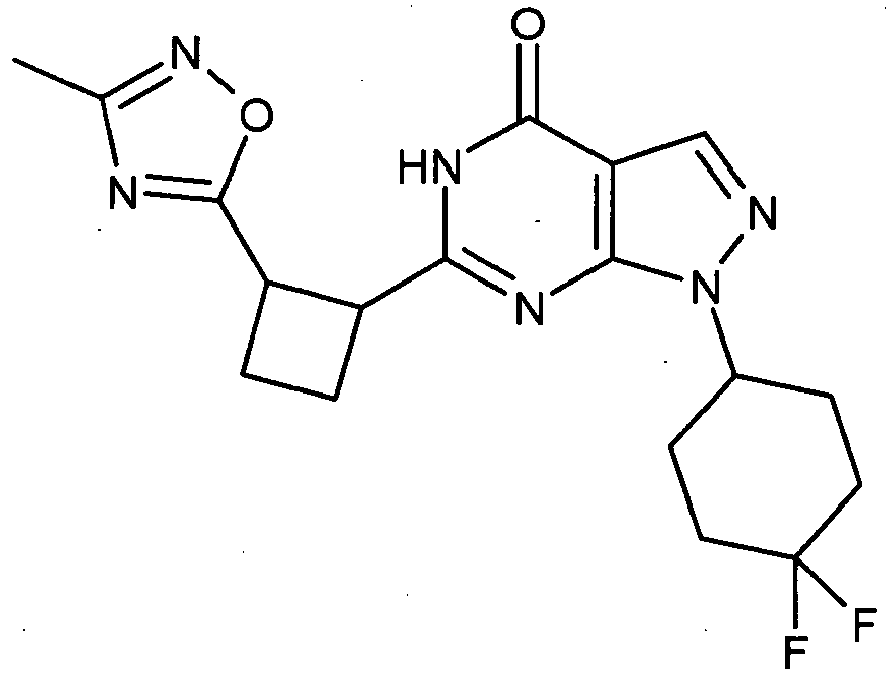
with the proviso that the compound is not the following oxadiazolyl-derivative

with the proviso that the compound is not the following oxadiazolyl-derivative

Claims (19)
- A compound of formula (I)
 R1: is a 5 or 6 membered heteroaryl-group whereby 1, 2, 3 or 4, preferably 1, 2 or 3 of the ring atoms are heteroatoms that are selected independently of each other from N, O or S,
whereby said 5 or 6 membered aromatic heteroaryl-group optionally may be substituted by 1, 2, 3 or 4, preferably 1 or 2 substituents, whereby said substituents may be selected independently of one another from the group consisting of fluorine, chlorine, bromine, HO-, NC-, F3C-, HF2C-, FH2C-, methyl, H2N- and (CH3)2N-;R2: is selected from the group consisting of fluorine, NC-, F3C-, HF2C-, FH2C- and methyl, preferably fluorine, NC-, F3C- and methyl;D: is selected from the group consisting of cyclopentyl, cyclohexyl, tetrahydrofuranyl, tetrahydropyranyl, 2-, 3- and 4-pyridyl,
whereby cyclopentyl and cyclohexyl optionally may be substituted by 1 or 2 substituents, whereby said substituents may be selected independently of one another from the group consisting of fluorine, NC-, F3C-, HF2C- and FH2C-;
whereby tetrahydrofuranyl and tetrahydropyranyl optionally may be substituted by 1 or 2 substituents, whereby said substituents may be selected independently of one another from the group consisting of fluorine, NC-, F3C-, HF2C- and FH2C-;
whereby pyridyl optionally may be substituted by 1, 2, 3 or 4 substituents, whereby said substituents may be selected independently of one another from the group consisting of fluorine, chlorine, bromine, NC-, F3C-, HF2C-, FH2C-, F3C-CH2-, C1-6-alkyl- and C3-7-cycloalkyl,m: is selected from 1 or 2, preferably m is 1;n: is selected from 0, 1 or 2, preferably n is 0 or 1, more preferably n is 0,and salts, preferably pharmaceutically acceptable salts thereof;
whereby if n = 2, these two groups R2 are selected independently of one another;
with the proviso that the compound is not
- A compound according to claim 1,
whereinR1: is a 5 or 6 membered heteroaryl-group whereby 1, 2, 3 or 4 preferably 1, 2 or 3 of the ring atoms are heteroatoms that are selected independently of each other from N, O or S,
whereby said 5 or 6 membered aromatic heteroaryl-group optionally may be substituted by 1, 2, 3 or 4, preferably 1 or 2 substituents, whereby said substituents may be selected independently of one another from the group consisting of fluorine chlorine, bromine, NC-, F3C-, HF2C-, FH2C-, methyl, H2N- and (CH3)2N-;R2: is selected from the group consisting of fluorine, NC-, F3C-, HF2C-, FH2C- and methyl, preferably fluorine, NC-, F3C- and methyl;D: is selected from the group consisting of cyclopentyl, cyclohexyl, tetrahydrofuranyl, tetrahydropyranyl 2-, 3- and 4-pyridyl,
whereby cyclopentyl and cyclohexyl optionally may be substituted by 1 or 2 substituents, whereby said substituents may be selected independently of one another from the group consisting of fluorine, F3C-, HF2C- and FH2C-;
whereby tetrahydrofuranyl and tetrahydropyranyl optionally may be substituted by 1 or 2 substituents, whereby said substituents may be selected independently of one another from the group consisting of fluorine, F3C-, HF2C- and FH2C-;
whereby pyridyl optionally may be substituted by 1, 2, 3 or 4 substituents, whereby said substituents may be selected independently of one another from the group consisting of fluorine, chlorine, bromine, NC-, F3C-, HF2C-, FH2C-, F3C-CH2-, C1-6-alkyl- and C3-7-cycloalkyl.m: is selected from 1 or 2, preferably m is 1;n: is selected from 0, 1 or 2, preferably n is 0 or 1, more preferably n is 0,and salts, preferably pharmaceutically acceptable salts thereof;
whereby if n = 2, these two groups R2 are selected independently of one another;
with the proviso that the compound is not
- A compound according to claim 2,
whereinR1: is a heteroaryl-group selected from the group consisting of thiadiazolyl, oxadiazolyl, isoxazolyl, thiazolyl, oxazolyl, pyridyl and pyrimidinyl,
whereby said heteroaryl-group optionally may be substituted by 1, 2, 3 or 4, preferably 1 or 2 substituents, whereby said substituents may be selected independently of one another from the group consisting of fluorine, chlorine, bromine, NC-, F3C-, HF2C-, FH2C-, methyl, H2N- and (CH3)2N-. - A compound according to claim 1,
whereinR1: is a heteroaryl-group selected from the group consisting of thiadiazolyl, 1,2,3-oxadiazolyl, 1,3,4-oxadiazolyl, 1,2,5-oxadiazolyl, isoxazolyl, thiazolyl, oxazolyl, pyridyl and pyrimidinyl, preferably said group consisting of thiadiazolyl, isoxazolyl, thiazolyl, oxazolyl, pyridyl and pyrimidinyl,
whereby said heteroaryl-group optionally may be substituted by 1, 2, 3 or 4, preferably 1 or 2 substituents, whereby said substituents may be selected independently of one another from the group consisting of fluorine, chlorine, bromine, NC-, F3C-, HF2C-, FH2C-, methyl, H2N- and (CH3)2N-;R2: is selected from the group consisting of fluorine, NC-, F3C-, HF2C-, FH2C- and methyl, preferably fluorine, NC-, F3C- and methyl;D: is selected from the group consisting of cyclopentyl, cyclohexyl, tetrahydrofuranyl, tetrahydropyranyl, 2-, 3- and 4-pyridyl,
whereby cyclopentyl and cyclohexyl optionally may be substituted by 1 or 2 substituents, whereby said substituents may be selected independently of one another from the group consisting of fluorine, F3C-, HF2C- and FH2C-; whereby tetrahydrofuranyl and tetrahydropyranyl optionally may be substituted by 1 or 2 substituents, whereby said substituents may be selected independently of one another from the group consisting of fluorine, F3C-, HF2C- and FH2C-;
whereby pyridyl optionally may be substituted by 1, 2, 3 or 4, preferably 1 or 2 substituents, whereby said substituents may be selected independently of one another from the group consisting of fluorine, chlorine, bromine, NC-, F3C-, HF2C-, FH2C-, F3C-CH2-, C1-6-alkyl- and C3-7-cycloalkyl.m: is selected from 1 or 2, preferably m is 1;n: is selected from 0, 1 or 2, preferably n is 0 or 1, more preferably n is 0,and salts, preferably pharmaceutically acceptable salts thereof.
whereby if n = 2, these two groups R2 are selected independently of one another; - A compound according to any of claims 1 to 4, whereby R1 is no oxadiazolyl, neither unsubstituted nor substituted.
- A compound according to claim 4,
whereinR1: is a heteroaryl-group selected from the group consisting of [1,3,4]thiadiazol-2-yl, isoxazol-5-yl, thiazol-5-yl-, oxazol-2-yl, pyridin-2-yl and pyrimidin-2-yl,
whereby said heteroaryl-group optionally may be substituted by 1 or 2 substituents, whereby said substituents may be selected independently of one another from the group consisting of fluorine, chlorine, bromine, CN-, methyl and H2N-;R2: is selected from the group consisting of fluorine, NC-, F3C-, HF2C-, FH2C- and methyl, preferably fluorine, NC-, F3C- and methyl;D: is selected from the group consisting of cyclopentyl, cyclohexyl, tetrahydrofuranyl, thereof preferably tetrahydrofuran-3yl, tetrahydropyranyl, thereof preferably tetrahydropyran-4yl, 2-, 3- and 4-pyridyl,
whereby cyclopentyl and cyclohexyl optionally may be substituted by 1 or 2 substituents, whereby said substituents may be selected independently of one another from the group consisting of fluorine, F3C-, HF2C- and FH2C-; preferably fluorine; whereby tetrahydrofuranyl and tetrahydropyranyl optionally may be substituted by 1 or 2 substituents, whereby said substituents may be selected independently of one another from the group consisting of fluorine, F3C-, HF2C- and FH2C-; whereby pyridyl optionally may be substituted by 1, 2, 3 or 4 substituents, whereby said substituents may be selected independently of one another from the group consisting of fluorine, chlorine, bromine, NC-, F3C-, HF2C-, FH2C-, F3C-CH2- and methyl;
whereby preferably D is selected from the group of 4,4-difluorocyclohex-1-yl, tetrahydropyranyl, preferably tetrahydropyran-4-yl, and 4-methy-3-pyridyl;m: is selected from 1 or 2, preferably m is 1;n: is selected from 0, 1 or 2, preferably n is 0 or 1, more preferably n is 0,and salts, preferably pharmaceutically acceptable salts thereof.
whereby if n = 2, these two groups R2 are selected independently of one another; - A compound according to claim 1, characterised in that it is a compound according to formula (II)
 R1: is as defined in any of claims 1, 2, 3, 4, 5 or 6;D: is selected from the group consisting of 4,4-difluorocyclohexyl, tetrahydropyran-4-yl and 4-methy-3-pyridyl whereby neither 4,4-difluorocyclohexyl nor tetrahydropyran-4-yl has additional substituents;and salts, preferably pharmaceutically acceptable salts thereof.
 - A compound according to claim 7, wherein the compound is selected from the group consisting of

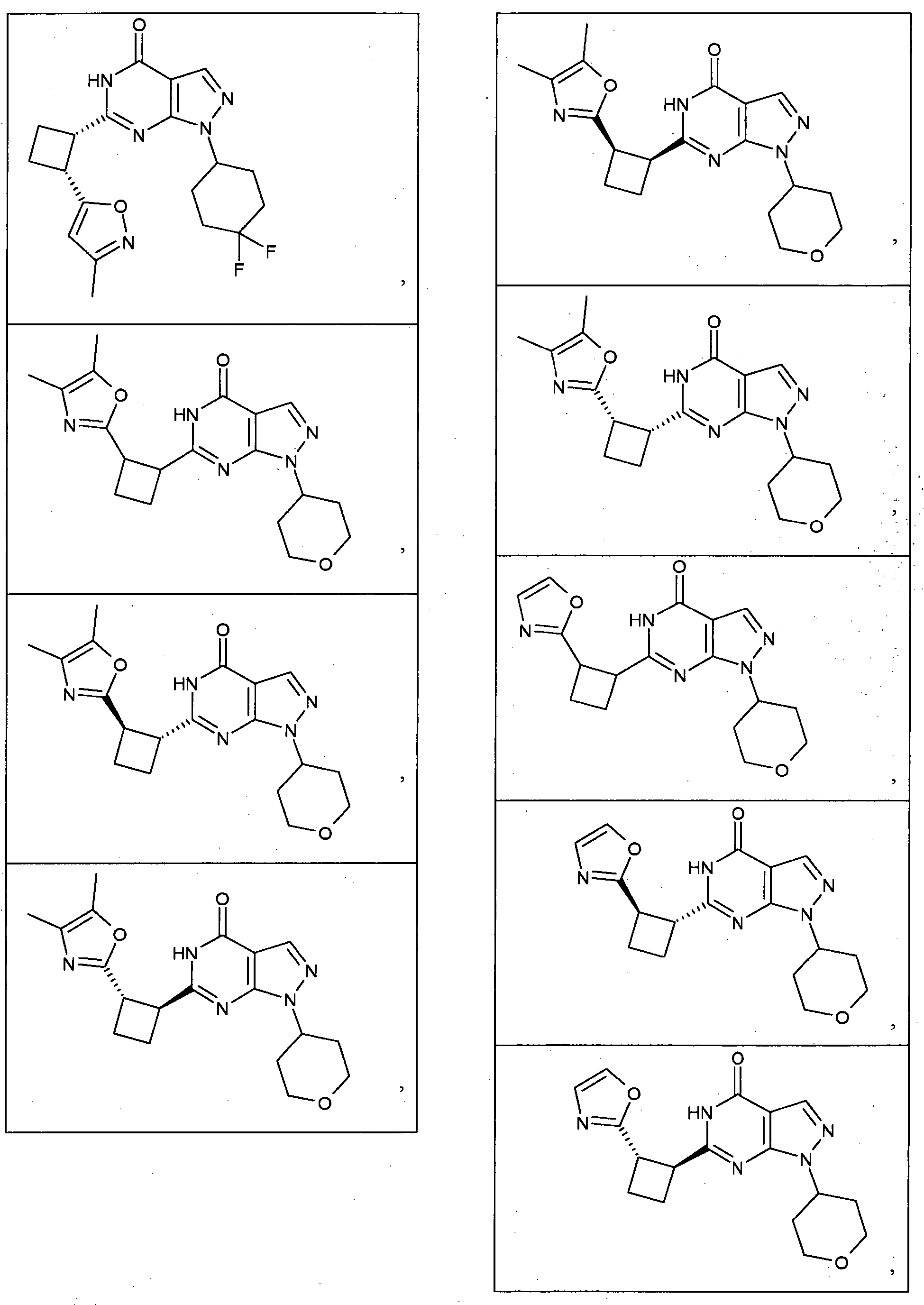


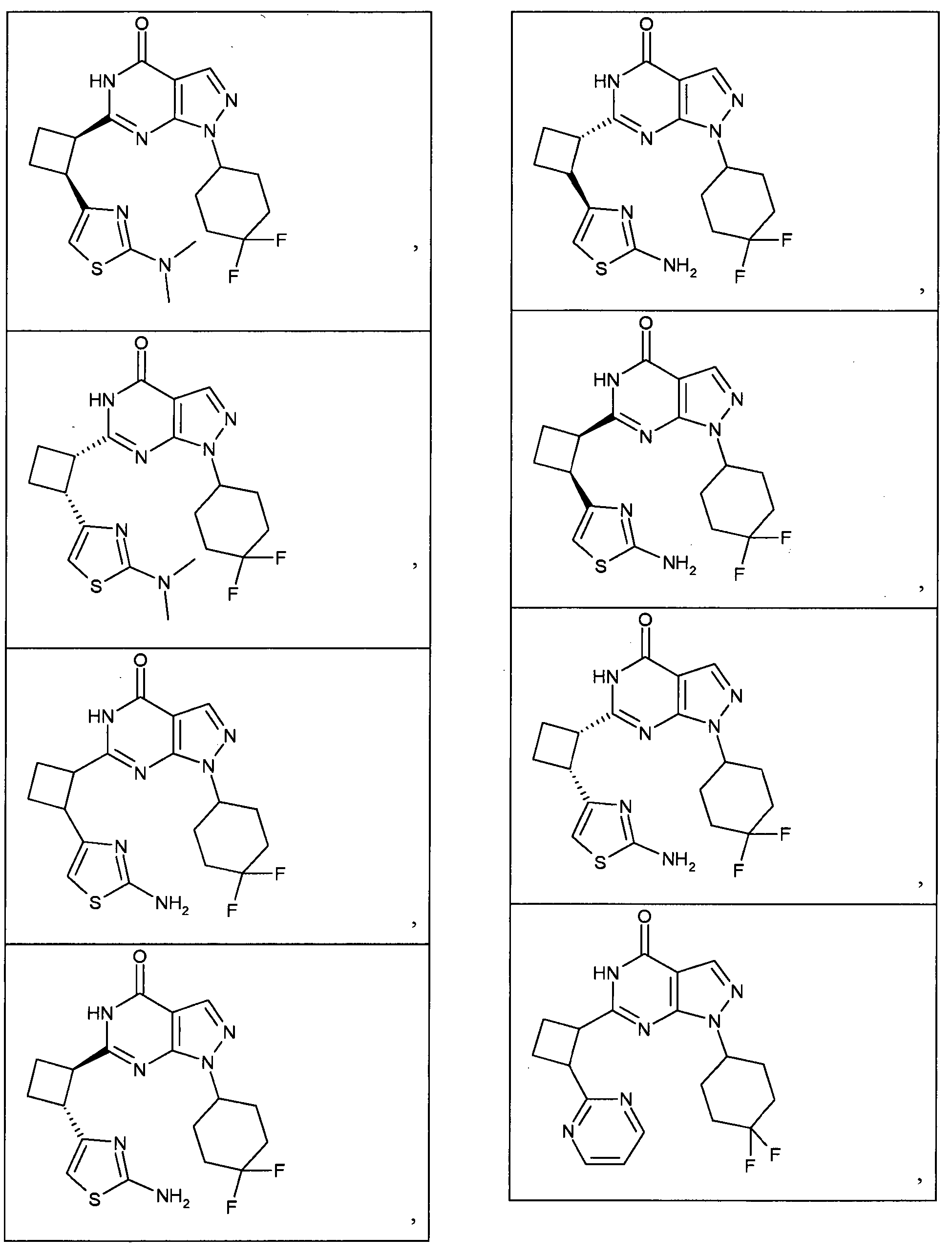


 and salts, preferably pharmaceutically acceptable salts thereof.
- A compound according to any one of claims 1-6, whereby the compound is selected from the group of a compound according to formula (Ia), formula (Ib), formula (Ic) and formula (Id)
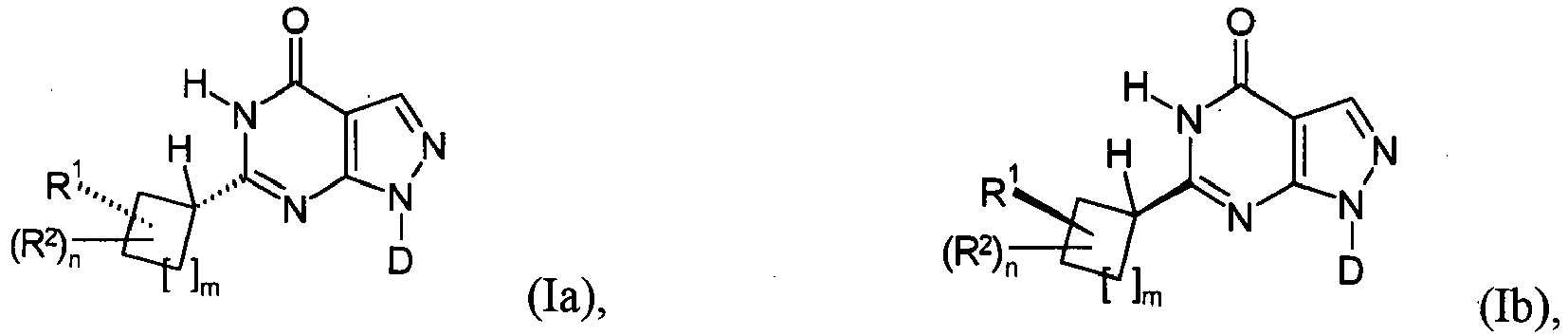

and salts, preferably pharmaceutically acceptable salts thereof. - A compound according to any one of claims 7 and 8, whereby the compound is selected from the group of a compound according to formula (IIa), formula (IIb), formula (IIc) and formula (IId)


and salts, preferably pharmaceutically acceptable salts thereof. - A compound according to any one of claims 1 to 10 for use as a medicament or for the use as pharmaceutically active ingredient in a medicament, preferably a medicament for use in a therapeutic or prophylactic method, preferably in a therapeutic method.
- A compound according to any one of claims 1 to 10 for use in a therapeutic or prophylactic, preferably a therapeutic method(a) for the treatment of a CNS disease, more preferably a CNS disease, the treatment of which is accessible by the inhibition of PDE9,(b) for the treatment of a disease that is accessible by the inhibition of PDE9,(c) for the treatment of or for the amelioration of or for the prevention of, preferably for the treatment of a condition being selected from the group consisting of cognitive impairment being related to a disease or condition selected from the group of perception, concentration, cognition, learning or memory, whereby preferably the treatment, amelioration or prevention of cognitive impairment is related to age-associated learning and memory impairments, age-associated memory losses; vascular dementia, craniocerebral trauma, stroke, dementia occurring after strokes (post stroke dementia), post-traumatic dementia, general concentration impairments, concentration impairments in children with learning and memory problems, Alzheimer's disease, Lewy body dementia, dementia with degeneration of the frontal lobes, including Pick's syndrome, Parkinson's disease, progressive nuclear palsy, dementia with corticobasal degeneration, amyotropic lateral sclerosis (ALS), Huntington's disease, multiple sclerosis, thalamic degeneration, Creutzfeld-Jacob dementia, HIV dementia, epilepsy, temporal lobe epilepsy, schizophrenia, schizophrenia (with dementia), Korsakoff's psychosis or cognitive impairment associated with depression or bipolar disorder,(d) for the treatment of Alzheimer's disease or cognitive impairment associated with Alzheimer's disease,(e) for the treatment of schizophrenia or cognitive impairment associated with schizophrenia,(f) for the treatment of epilepsy or cognitive impairment associated with epilepsy,(g) for the treatment of a disease or condition being selected from the group consisting of sleep disorders, bipolar disorder, metabolic syndrome, obesity, diabetes mellitus, hyperglycemia, dyslipidemia, impaired glucose tolerance, or a disease of the testes, brain, small intestine, skeletal muscle, heart, lung, thymus or spleen.
- A compound according to any one of claims 1 to 10 for use in a method for the treatment or prophylaxis of cognitive impairment, preferable cognitive impairment related to perception, concentration, learning or memory.
- A compound according to any one of claims 1 to 10 for use in a method for the treatment or prophylaxis of cognitive impairment, preferable cognitive impairment related to perception, concentration, learning or memory, as symptoms of anther base laying disease.
- A compound according to any one of claims 1 to 10 for use in a method for the improvement of cognitive skills related to perception, concentration, learning or memory.
- Pharmaceutical composition comprising a compound according to any one of claims 1 to 10 and a pharmaceutical carrier.
- Method for the treatment of a disease or condition as defined in any of claims 12 to 15 in a patient in need of such treatment comprising administering to said patient a therapeutically active amount of a compound according to any one or more of claims 1 to 10.
- Use of a compound according to any one of claims 1 to 10 for the manufacture of a medicament for the treatment of a disease or condition as defined in any of claims 12 to 15.
- Combination of a compound according to any one of claims 1 to 10 with another active agent, whereby- said combination preferably is useful for the treatment of a disease or condition as defined in any of claims 12 to 15 or- said combination preferably being for the use in a therapeutic or prophylactic method, preferably a therapeutic method, for the treatment of a condition or disease as defined in any of claims 12 to 15 or- said combination being for the manufacture of a medicament which preferably is for the treatment of a condition or disease as defined in any of claims 12 to 15.
Priority Applications (1)
| Application Number | Priority Date | Filing Date | Title |
|---|---|---|---|
| EP16152675.1A EP3053924A1 (en) | 2010-08-12 | 2011-08-09 | 6-cycloalkyl-1, 5-dihydro-pyrazolo [3, 4-d]pyrimidin-4-one derivatives and their use as pde9a inhibitors |
Applications Claiming Priority (4)
| Application Number | Priority Date | Filing Date | Title |
|---|---|---|---|
| EP10172597 | 2010-08-12 | ||
| EP11154397 | 2011-02-14 | ||
| EP11740949.0A EP2603511B1 (en) | 2010-08-12 | 2011-08-09 | 6-cycloalkyl-1, 5-dihydro-pyrazolo [3, 4-d] pyrimidin-4-one derivatives and their use as pde9a inhibitors |
| EP16152675.1A EP3053924A1 (en) | 2010-08-12 | 2011-08-09 | 6-cycloalkyl-1, 5-dihydro-pyrazolo [3, 4-d]pyrimidin-4-one derivatives and their use as pde9a inhibitors |
Related Parent Applications (3)
| Application Number | Title | Priority Date | Filing Date |
|---|---|---|---|
| EP11740949.0A Division-Into EP2603511B1 (en) | 2010-08-12 | 2011-08-09 | 6-cycloalkyl-1, 5-dihydro-pyrazolo [3, 4-d] pyrimidin-4-one derivatives and their use as pde9a inhibitors |
| EP11740949.0A Division EP2603511B1 (en) | 2010-08-12 | 2011-08-09 | 6-cycloalkyl-1, 5-dihydro-pyrazolo [3, 4-d] pyrimidin-4-one derivatives and their use as pde9a inhibitors |
| PCT/EP2011/063705 Previously-Filed-Application WO2012020022A1 (en) | 2010-08-12 | 2011-08-09 | 6-cycloalkyl-1, 5-dihydro-pyrazolo [3, 4-d] pyrimidin-4-one derivatives and their use as pde9a inhibitors |
Publications (1)
| Publication Number | Publication Date |
|---|---|
| EP3053924A1 true EP3053924A1 (en) | 2016-08-10 |
Family
ID=45567392
Family Applications (2)
| Application Number | Title | Priority Date | Filing Date |
|---|---|---|---|
| EP16152675.1A Withdrawn EP3053924A1 (en) | 2010-08-12 | 2011-08-09 | 6-cycloalkyl-1, 5-dihydro-pyrazolo [3, 4-d]pyrimidin-4-one derivatives and their use as pde9a inhibitors |
| EP11740949.0A Active EP2603511B1 (en) | 2010-08-12 | 2011-08-09 | 6-cycloalkyl-1, 5-dihydro-pyrazolo [3, 4-d] pyrimidin-4-one derivatives and their use as pde9a inhibitors |
Family Applications After (1)
| Application Number | Title | Priority Date | Filing Date |
|---|---|---|---|
| EP11740949.0A Active EP2603511B1 (en) | 2010-08-12 | 2011-08-09 | 6-cycloalkyl-1, 5-dihydro-pyrazolo [3, 4-d] pyrimidin-4-one derivatives and their use as pde9a inhibitors |
Country Status (30)
| Country | Link |
|---|---|
| US (2) | US8912201B2 (en) |
| EP (2) | EP3053924A1 (en) |
| JP (1) | JP5756176B2 (en) |
| KR (1) | KR101918909B1 (en) |
| CN (2) | CN105541849B (en) |
| AP (1) | AP2012006631A0 (en) |
| AR (1) | AR082667A1 (en) |
| AU (1) | AU2011288503C1 (en) |
| BR (1) | BR112013003097B1 (en) |
| CA (1) | CA2807687C (en) |
| CL (1) | CL2013000368A1 (en) |
| CO (1) | CO6670591A2 (en) |
| DK (1) | DK2603511T3 (en) |
| EA (1) | EA024984B1 (en) |
| ES (1) | ES2626006T3 (en) |
| GE (1) | GEP20156217B (en) |
| HU (1) | HUE033378T2 (en) |
| IL (1) | IL223347A (en) |
| MX (1) | MX344770B (en) |
| MY (1) | MY170189A (en) |
| NZ (1) | NZ603725A (en) |
| PE (1) | PE20130602A1 (en) |
| PH (1) | PH12013500226B1 (en) |
| PL (1) | PL2603511T3 (en) |
| SG (1) | SG187081A1 (en) |
| TN (1) | TN2013000051A1 (en) |
| TW (1) | TWI510490B (en) |
| UA (1) | UA110347C2 (en) |
| UY (1) | UY33556A (en) |
| WO (1) | WO2012020022A1 (en) |
Families Citing this family (31)
| Publication number | Priority date | Publication date | Assignee | Title |
|---|---|---|---|---|
| DE10238722A1 (en) | 2002-08-23 | 2004-03-11 | Bayer Ag | Improving attention, concentration, cognition, learning and/or memory performance, using selective phosphodiesterase 9A inhibitors, preferably 4H-pyrazolo-(3,4-d)-pyrimidin-4-one derivatives |
| JP5498392B2 (en) | 2007-11-30 | 2014-05-21 | ベーリンガー インゲルハイム インターナショナル ゲゼルシャフト ミット ベシュレンクテル ハフツング | 1,5-Dihydro-pyrazolo [3,4-D] pyrimidin-4-one derivatives and their use as PDE9A modulators for the treatment of CNS disorders |
| UA105362C2 (en) | 2008-04-02 | 2014-05-12 | Бьорингер Ингельхайм Интернациональ Гмбх | 1-heterocyclyl-1, 5-dihydro-pyrazolo [3, 4-d] pyrimidin-4-one derivatives and their use as pde9a modulators |
| CN102143965A (en) | 2008-09-08 | 2011-08-03 | 贝林格尔.英格海姆国际有限公司 | Pyrazolopyrimidines and their use for the treatment of CNS disorders |
| PT2414363E (en) | 2009-03-31 | 2014-02-26 | Boehringer Ingelheim Int | 1-heterocyclyl-1,5-dihydro-pyrazolo[3,4-d]pyrimidin-4-one derivatives and their use as pde9a modulators |
| UA110347C2 (en) | 2010-08-12 | 2015-12-25 | Бьорінгер Інгельхайм Інтернаціональ Гмбх | DERIVATIVES OF 6-CYCLOALKYL-1,5-DIHYDROPYRAZOLE $ 3,4-d] PYRIMIDIN-4-ONE AND THEIR USE AS PDE9A INHIBITORS |
| US20130040971A1 (en) * | 2011-02-14 | 2013-02-14 | Boehringer Ingelheim International Gmbh | 6-cycloalkyl-pyrazolopyrimidinones for the treatment of cns disorders |
| US8809345B2 (en) | 2011-02-15 | 2014-08-19 | Boehringer Ingelheim International Gmbh | 6-cycloalkyl-pyrazolopyrimidinones for the treatment of CNS disorders |
| CN104364249B (en) * | 2012-05-30 | 2018-04-17 | 霍夫曼-拉罗奇有限公司 | Triazol compound as PDE10 inhibitor |
| WO2013184572A1 (en) | 2012-06-04 | 2013-12-12 | Pharmacyclics, Inc. | Crystalline forms of a bruton's tyrosine kinase inhibitor |
| PL400149A1 (en) | 2012-07-26 | 2014-02-03 | Celon Pharma Spólka Z Ograniczona Odpowiedzialnoscia | Pyrazolo [3,4-d] pyrimidine-4 (5H) -one derivatives as PDE9 inhibitors |
| CN102786525B (en) | 2012-08-08 | 2014-12-17 | 中山大学 | N-substituted pyrazolo [3, 4-d] pyrimidine ketone compound and preparation method and application thereof |
| CA2908482A1 (en) | 2013-03-01 | 2014-09-04 | Fundacion Para La Investigacion Medica Aplicada | Novel compounds as dual inhibitors of phosphodiesterases and histone deacetylases |
| LT3431106T (en) | 2014-01-21 | 2021-02-10 | Janssen Pharmaceutica Nv | Combinations comprising positive allosteric modulators of metabotropic glutamatergic receptor subtype 2 and their use |
| KR102414246B1 (en) | 2014-01-21 | 2022-06-27 | 얀센 파마슈티카 엔.브이. | Combinations comprising positive allosteric modulators or orthosteric agonists of metabotropic glutamatergic receptor subtype 2 and their use |
| IL315294A (en) | 2015-03-03 | 2024-10-01 | Pharmacyclics Llc | Pharmaceutical formulations of proton tyrosine kinase inhibitor |
| CN108218874B (en) * | 2016-12-21 | 2020-10-30 | 南京药捷安康生物科技有限公司 | Phosphodiesterase inhibitor and application thereof |
| KR102590848B1 (en) * | 2016-12-28 | 2023-10-19 | 다트 뉴로사이언스, 엘엘씨 | Substituted pyrazolopyrimidinone compounds as PDE2 inhibitors |
| WO2018153887A1 (en) * | 2017-02-23 | 2018-08-30 | Boehringer Ingelheim International Gmbh | New medical use of compound iii |
| IL270394B (en) | 2017-06-01 | 2022-08-01 | Eisai R&D Man Co Ltd | A therapeutic agent for dementia that combines a pyrazoloquinoline derivative and memantine |
| CN110545812A (en) | 2017-06-01 | 2019-12-06 | 卫材R&D管理有限公司 | Pharmaceutical compositions comprising PDE9 inhibitors |
| SG11201909595VA (en) | 2017-06-01 | 2019-11-28 | Eisai R&D Man Co Ltd | Dementia therapeutic agent combining pyrazoloquinoline derivative and donepezil |
| CA3061884A1 (en) | 2017-06-01 | 2019-10-29 | Eisai R&D Management Co., Ltd. | Lewy body disease therapeutic agent containing pyrazoloquinoline derivative |
| JP2020523309A (en) * | 2017-06-08 | 2020-08-06 | メルク・シャープ・アンド・ドーム・コーポレーションMerck Sharp & Dohme Corp. | Pyrazolopyrimidine PDE9 inhibitors |
| WO2019055750A1 (en) * | 2017-09-15 | 2019-03-21 | Aduro Biotech, Inc. | Pyrazolopyrimidinone compounds and uses thereof |
| CN110627795A (en) * | 2018-06-21 | 2019-12-31 | 南京药捷安康生物科技有限公司 | Phosphodiesterase inhibitors and uses thereof |
| CN108785677A (en) * | 2018-07-10 | 2018-11-13 | 仙鹤生物科技(杭州)有限公司 | PDE9A inhibitor promotes the application in the drug and health products of the product of Treg contents, prevention inflammatory bowel disease preparing |
| KR102712818B1 (en) * | 2018-12-06 | 2024-09-30 | 한국화학연구원 | Compound for inhibiting PDE9A and medical uses thereof |
| KR102706457B1 (en) * | 2018-12-06 | 2024-09-11 | 한국화학연구원 | Compound for inhibiting PDE9A and medical uses thereof |
| WO2020123271A1 (en) | 2018-12-12 | 2020-06-18 | Merck Sharp & Dohme Corp. | Cyclobutyl pyrazolopyrimidine pde9 inhibitors |
| CN114057698B (en) * | 2020-08-10 | 2023-08-15 | 暨南大学附属第一医院(广州华侨医院) | Development and Application of PDE10A Receptor Targeting Positron Drug [18F]P10A-1910 |
Citations (26)
| Publication number | Priority date | Publication date | Assignee | Title |
|---|---|---|---|---|
| DE1147234B (en) | 1960-05-11 | 1963-04-18 | Ciba Geigy | Process for the preparation of 1-isopropyl-4-hydroxy-6-benzyl-pyrazolo [3, 4-d] pyrimidine |
| DE1149013B (en) | 1960-05-11 | 1963-05-22 | Ciba Geigy | Process for the preparation of 4-oxo-4, 5-dihydro-pyrazolo- [3, 4-d] pyrimidines |
| CH396925A (en) | 1960-05-11 | 1965-08-15 | Ciba Geigy | Process for the preparation of new pyrazolopyrimidines |
| CH396926A (en) | 1960-05-11 | 1965-08-15 | Ciba Geigy | Process for the preparation of new pyrazolopyrimidines |
| CH396927A (en) | 1960-05-11 | 1965-08-15 | Ciba Geigy | Process for the preparation of new pyrazolopyrimidines |
| CH396924A (en) | 1960-05-11 | 1965-08-15 | Ciba Geigy | Process for the preparation of 4-mercapto-pyrazolo (3,4-d) pyrimidines |
| US3732225A (en) | 1970-07-23 | 1973-05-08 | Squibb & Sons Inc | Pyrazolo(3,4-d)pyrimidine derivatives |
| EP0679657A2 (en) | 1994-04-27 | 1995-11-02 | Ciba-Geigy Ag | Nucleosides and oligonucleotides containing 2'-ether groups |
| WO1998040384A1 (en) | 1997-03-11 | 1998-09-17 | Bayer Aktiengesellschaft | 1,5-dihydro-pyrazolo[3,4-d]-pyrimidinone derivatives |
| WO2001060315A2 (en) | 2000-02-18 | 2001-08-23 | Shire Biochem Inc. | Method for the treatment or prevention of flavivirus infections using nucleoside analogues |
| US20020058635A1 (en) | 1996-10-16 | 2002-05-16 | Averett Devron R. | Purine L-nucleosides, analogs and uses thereof |
| WO2002057425A2 (en) | 2001-01-22 | 2002-07-25 | Merck & Co., Inc. | Nucleoside derivatives as inhibitors of rna-dependent rna viral polymerase |
| WO2004009921A2 (en) | 2002-07-19 | 2004-01-29 | Mossor David B | Portable shielding system |
| WO2004018474A1 (en) | 2002-08-23 | 2004-03-04 | Bayer Healthcare Ag | Phenyl-substituted pyrazolopyrimidines |
| DE10238722A1 (en) | 2002-08-23 | 2004-03-11 | Bayer Ag | Improving attention, concentration, cognition, learning and/or memory performance, using selective phosphodiesterase 9A inhibitors, preferably 4H-pyrazolo-(3,4-d)-pyrimidin-4-one derivatives |
| WO2004026876A1 (en) | 2002-08-23 | 2004-04-01 | Bayer Healthcare Ag | Alkyl-substituted pyrazolopyrimidines |
| WO2004096811A1 (en) | 2003-04-30 | 2004-11-11 | Pfizer Products Inc. | Pde9 inhibitors for treating type 2 diabetes, metabokic syndrome, and cardiovascular disease |
| WO2004099211A1 (en) | 2003-05-09 | 2004-11-18 | Bayer Healthcare Ag | 6-cyclylmethyl- and 6-alkylmethyl-substituted pyrazolopyrimidines |
| WO2004099210A1 (en) | 2003-05-09 | 2004-11-18 | Bayer Healthcare Ag | 6-arylmethyl-substituted pyrazolopyrimidines |
| WO2005051944A1 (en) | 2003-11-21 | 2005-06-09 | University Of Connecticut | Heterocyclyl-substituted oxetanes for the treatment of proliferative or infectious diseases |
| WO2006084281A1 (en) | 2005-02-04 | 2006-08-10 | Millennium Pharmaceuticals, Inc. | Inhibitors of e1 activating enzymes |
| WO2009068617A1 (en) | 2007-11-30 | 2009-06-04 | Boehringer Ingelheim International Gmbh | 1, 5-dihydro-pyrazolo (3, 4-d) pyrimidin-4-one derivatives and their use as pde9a modulators for the teatment of cns disorders |
| WO2009121919A1 (en) | 2008-04-02 | 2009-10-08 | Boehringer Ingelheim International Gmbh | 1-heterocyclyl-1,5-dihydro-pyrazolo[3,4-d] pyrimidin-4-one derivatives and their use as pde9a modulators |
| WO2010026214A1 (en) | 2008-09-08 | 2010-03-11 | Boehringer Ingelheim International Gmbh | Pyrazolopyrimidines and their use for the treatment of cns disorders |
| WO2010112437A1 (en) | 2009-03-31 | 2010-10-07 | Boehringer Ingelheim International Gmbh | 1-heterocyclyl-1, 5-dihydro-pyrazolo [3, 4-d] pyrimidin-4-one derivatives and their use as pde9a modulators |
| WO2011018495A1 (en) * | 2009-08-12 | 2011-02-17 | Boehringer Ingelheim International Gmbh | New compounds for the treatment of cns disorders |
Family Cites Families (155)
| Publication number | Priority date | Publication date | Assignee | Title |
|---|---|---|---|---|
| US3169965A (en) | 1965-02-16 | New x-mercapto-pyrazolo | ||
| US3165520A (en) | 1965-01-12 | Certificate of correction | ||
| DE149013C (en) | ||||
| DE147234C (en) | 1902-06-25 | |||
| GB973361A (en) | 1960-05-11 | 1964-10-28 | Ciba Ltd | Pyrazolo-pyrimidines and process for their manufacture |
| ES267249A1 (en) | 1960-05-11 | 1961-11-01 | Ciba Geigy | New pyrazolo-pyrimidines and process for the preparation thereof |
| DE1156415B (en) | 1960-05-11 | 1963-10-31 | Ciba Geigy | Process for the preparation of 1-isopropyl-4-hydroxy-pyrazolo [3, 4-d] -pyrimidines |
| DE1161281B (en) | 1960-05-11 | 1964-01-16 | Ciba Aktiengesellschaft, Basel (Schweiz) | Process for the preparation of 1-alkyl-6-aralkyl-pyrazoloÄ3,4-dÜ-pyrimidines. |
| DE1153023B (en) | 1960-05-11 | 1963-08-22 | Ciba Geigy | Process for the preparation of 4-hydroxy-pyrazolo [3,4-d] pyrimidines |
| CH396923A (en) | 1960-05-11 | 1965-08-15 | Ciba Geigy | Process for the preparation of 4-mercapto-pyrazolo (3,4-d) pyrimidines |
| GB937723A (en) | 1960-05-11 | 1963-09-25 | Ciba Ltd | Pyrazolo-pyrimidines and process for their manufacture |
| CH398626A (en) | 1960-05-11 | 1966-03-15 | Ciba Geigy | Process for the preparation of new pyrazolopyrimidines |
| US3244328A (en) | 1964-03-23 | 1966-04-05 | Corning Glass Works | Dispensing from plural sources |
| NL167151C (en) | 1971-04-09 | 1981-11-16 | Acf Chemiefarma Nv | PROCESS FOR THE PREPARATION OF MEDICINAL PRODUCTS WITH ANTI-PARASITARY ACTION ON THE BASIS OF HALOGEN CONTAINING THE 2,2'-METHYLENE DIFENOL DERIVATIVES, AND METHOD FOR PREPARING THESE MEDICINAL COMPOUNDS. |
| US3847908A (en) | 1973-03-05 | 1974-11-12 | Squibb & Sons Inc | 6-styrylpyrazolo(3,4-d)pyrimidinones and pyrimidines |
| GR82004B (en) | 1983-06-30 | 1984-12-12 | American Home Prod | |
| US4602023A (en) | 1985-06-03 | 1986-07-22 | Warner-Lambert Company | Diphenic acid monoamides |
| US6211158B1 (en) | 1987-04-10 | 2001-04-03 | Roche Diagnostics Gmbh | Desazapurine-nucleotide derivatives, processes for the preparation thereof, pharmaceutical compositions containing them and the use thereof for nucleic acid sequencing and as antiviral agents |
| DE3739366A1 (en) | 1987-04-10 | 1988-10-27 | Boehringer Mannheim Gmbh | DESAZA-PURIN-NUCLEOSIDE DERIVATIVES, METHOD FOR THE PRODUCTION THEREOF AND THEIR USE IN NUCLEIC ACID SEQUENCING AND AS AN ANTIVIRAL AGENT |
| US6175008B1 (en) | 1988-04-11 | 2001-01-16 | Biochem Pharma Inc. | Processes for preparing substituted 1,3-oxathiolanes with antiviral properties |
| US5047407A (en) | 1989-02-08 | 1991-09-10 | Iaf Biochem International, Inc. | 2-substituted-5-substituted-1,3-oxathiolanes with antiviral properties |
| US6903224B2 (en) | 1988-04-11 | 2005-06-07 | Biochem Pharma Inc. | Substituted 1,3-oxathiolanes |
| US5041449A (en) | 1988-04-11 | 1991-08-20 | Iaf Biochem International, Inc. | 4-(nucleoside base)-substituted-1,3-dioxolanes useful for treatment of retroviral infections |
| US5466806A (en) | 1989-02-08 | 1995-11-14 | Biochem Pharma Inc. | Processes for preparing substituted 1,3-oxathiolanes with antiviral properties |
| US5270315A (en) | 1988-04-11 | 1993-12-14 | Biochem Pharma Inc. | 4-(purinyl bases)-substituted-1,3-dioxlanes |
| US6350753B1 (en) | 1988-04-11 | 2002-02-26 | Biochem Pharma Inc. | 2-Substituted-4-substituted-1,3-dioxolanes and use thereof |
| US7119202B1 (en) | 1989-02-08 | 2006-10-10 | Glaxo Wellcome Inc. | Substituted-1,3-oxathiolanes and substituted-1,3-dioxolanes with antiviral properties |
| ES2196004T3 (en) | 1989-02-08 | 2003-12-16 | Iaf Biochem Int | PROCEDURE TO PREPARE 1,3-OXATIOLANS SUBSTITUTED WITH ANTIVIRAL PROPERTIES. |
| JP2619710B2 (en) | 1989-02-27 | 1997-06-11 | 日本製紙 株式会社 | Method for producing 2 ', 3'-dideoxypurine nucleosides |
| US5113855A (en) | 1990-02-14 | 1992-05-19 | Newhouse Michael T | Powder inhaler |
| US5201308A (en) | 1990-02-14 | 1993-04-13 | Newhouse Michael T | Powder inhaler |
| US5002949A (en) | 1990-05-01 | 1991-03-26 | American Home Products Corporation | 5-substituted-6-aminopyrimidine derivatives |
| DE4027391A1 (en) | 1990-08-30 | 1992-03-12 | Boehringer Ingelheim Kg | GAS-FREE INHALATION DEVICE |
| GB9027234D0 (en) | 1990-12-15 | 1991-02-06 | Harris Pharma Ltd | An inhalation device |
| FI933303L (en) | 1991-01-23 | 1993-08-31 | Gensia Inc | ADENOSINCINE INHIBITORS |
| FR2676929B1 (en) | 1991-05-30 | 1994-02-11 | Aerosols Bouchage Ste Fse | POWDER INHALER. |
| US5341801A (en) | 1991-12-03 | 1994-08-30 | Sandoz Ltd. | Inhaler |
| US5294612A (en) | 1992-03-30 | 1994-03-15 | Sterling Winthrop Inc. | 6-heterocyclyl pyrazolo [3,4-d]pyrimidin-4-ones and compositions and method of use thereof |
| FR2700279B1 (en) | 1993-01-14 | 1995-03-17 | Valois | Portable device for projecting doses of a fluid substance using a stream of compressed air. |
| IL108523A0 (en) | 1993-02-03 | 1994-05-30 | Gensia Inc | Pharmaceutical compositions containing adenosine kinase inhibitors for preventing or treating conditions involving inflammatory responses and pain |
| US5256668A (en) | 1993-03-17 | 1993-10-26 | American Home Products Corporation | Aminopyrimidine derivatives as antiviral agents for respiratory syncytial virus |
| DK0626387T3 (en) | 1993-05-12 | 1999-09-27 | Novartis Ag | Nucleosides and oligonucleotides with 2'-ether groups |
| EP0652022B1 (en) | 1993-05-12 | 1999-01-27 | Teijin Limited | Device and method for dispensing powdered medicine in multiple doses |
| JP3398152B2 (en) | 1993-10-12 | 2003-04-21 | ブリストル‐マイヤーズ・スクイブ・ファーマ・カンパニー | 1N-alkyl-N-arylpyrimidineamine and derivatives thereof |
| GB9423910D0 (en) | 1994-11-26 | 1995-01-11 | Pfizer Ltd | Therapeutic agents |
| US5656629A (en) | 1995-03-10 | 1997-08-12 | Sanofi Winthrop, Inc. | 6-substituted pyrazolo (3,4-d)pyrimidin-4-ones and compositions and methods of use thereof |
| KR100213932B1 (en) | 1995-11-02 | 1999-08-02 | 김충환 | Novel oligonucleoside derivatives and process for preparing the same |
| AU3029797A (en) | 1996-06-06 | 1998-01-05 | Novartis Ag | 2'-substituted nucleosides and oligonucleotide derivatives |
| AU3340797A (en) | 1996-06-28 | 1998-01-21 | Novartis Ag | Modified oligonucleotides |
| US6110471A (en) | 1996-09-13 | 2000-08-29 | The Board Of Trustees Of The Leland Stanford Junior University | Non-hormonal method of contraception |
| US6509320B1 (en) | 1996-10-16 | 2003-01-21 | Icn Pharmaceuticals, Inc. | Purine L-nucleosides, analogs and uses thereof |
| US5985627A (en) | 1997-02-28 | 1999-11-16 | Carlsberg Laboratory | Modified carboxypeptidase |
| US5948812A (en) | 1997-06-09 | 1999-09-07 | Givaudan Roure (International) Sa | 1,7-dioxacycloalkan-8-one compounds |
| US5969499A (en) | 1997-09-10 | 1999-10-19 | Shaffer; Randall A | Controller for AC motor |
| JP2002503662A (en) | 1998-02-17 | 2002-02-05 | テュラリク インコーポレイテッド | Antiviral pyrimidine derivatives |
| DE19838705A1 (en) | 1998-08-26 | 2000-03-02 | Bayer Ag | New dihydro- (1,2,3) -triazolo- [4,5-d] pyrimidin-7-ones |
| TWI241298B (en) | 1998-09-25 | 2005-10-11 | Mitsubishi Chem Corp | Pyrimidone derivatives |
| GB9823103D0 (en) | 1998-10-23 | 1998-12-16 | Pfizer Ltd | Pharmaceutically active compounds |
| ATE284691T1 (en) | 1998-11-02 | 2005-01-15 | Merck & Co Inc | COMPOSITIONS OF A 5HT1B/1D AGONIST AND A SELECTIVE COX-2 INHIBITOR FOR THE TREATMENT OF MIGRAINE |
| US6225315B1 (en) | 1998-11-30 | 2001-05-01 | Pfizer Inc | Method of treating nitrate-induced tolerance |
| US6100037A (en) | 1999-01-07 | 2000-08-08 | Incyte Pharmaceuticals, Inc. | Human cyclic nucleotide PDEs |
| CZ27399A3 (en) | 1999-01-26 | 2000-08-16 | Ústav Experimentální Botaniky Av Čr | Substituted nitrogen heterocyclic derivatives process of their preparation, the derivatives employed as medicaments, pharmaceutical composition and a compound pharmaceutical preparation in which these derivatives are comprised as well as use of these derivatives for preparing medicaments |
| US6515117B2 (en) | 1999-10-12 | 2003-02-04 | Bristol-Myers Squibb Company | C-aryl glucoside SGLT2 inhibitors and method |
| US6534651B2 (en) | 2000-04-06 | 2003-03-18 | Inotek Pharmaceuticals Corp. | 7-Substituted isoindolinone inhibitors of inflammation and reperfusion injury and methods of use thereof |
| US6369222B1 (en) | 2000-07-18 | 2002-04-09 | Hoffmann-La Roche Inc. | mGluR antagonists and a method for their synthesis |
| WO2002009713A2 (en) | 2000-08-01 | 2002-02-07 | Bayer Aktiengesellschaft | Selective pde 2 inhibitors, used as medicaments for improving cognition |
| WO2002016348A1 (en) | 2000-08-09 | 2002-02-28 | Astrazeneca Ab | Antiangiogenic bicyclic derivatives |
| SK2152003A3 (en) | 2000-08-24 | 2003-08-05 | Novartis Ag | Process for surface modifying substrates and modified substrates resulting therefrom |
| US6581338B2 (en) | 2000-10-20 | 2003-06-24 | Myron N. Koenig | Escapable area well cover |
| US20020074774A1 (en) | 2000-12-14 | 2002-06-20 | Davin Hsu | Adjustable handle of umbrella stroller by telescoping and swiveling |
| GB0100621D0 (en) | 2001-01-10 | 2001-02-21 | Vernalis Res Ltd | Chemical compounds VI |
| TWI255817B (en) | 2001-02-14 | 2006-06-01 | Kissei Pharmaceutical | Glucopyranosyloxybenzylbenzene derivatives and medicinal use thereof |
| DE10108752A1 (en) | 2001-02-23 | 2002-09-05 | Bayer Ag | New substituted imidazotriazinones |
| US6936590B2 (en) | 2001-03-13 | 2005-08-30 | Bristol Myers Squibb Company | C-aryl glucoside SGLT2 inhibitors and method |
| GB0106661D0 (en) | 2001-03-16 | 2001-05-09 | Pfizer Ltd | Pharmaceutically active compounds |
| ES2258141T3 (en) | 2001-04-11 | 2006-08-16 | Bristol-Myers Squibb Company | C-ARILO GLUCOSIDE AMINO ACIDS COMPLEX FOR DIABETES TREATMENT AND PROCEDURE. |
| JPWO2002086160A1 (en) | 2001-04-18 | 2004-08-12 | 三菱レイヨン株式会社 | Hybridization probe |
| DK1397351T3 (en) | 2001-06-01 | 2010-01-18 | Hoffmann La Roche | Pyrimidine, triazine and pyrazine derivatives as glutamate receptors |
| WO2002100399A1 (en) | 2001-06-12 | 2002-12-19 | Elan Pharmaceuticals, Inc. | Macrocycles useful in the treatment of alzheimer's disease |
| EP1409562B1 (en) | 2001-07-25 | 2006-04-12 | PPG Industries Ohio, Inc. | High refractive index optical resin composition |
| EP1283226A1 (en) | 2001-07-31 | 2003-02-12 | Resolution Research Nederland B.V. | Hydroxyl-functional copolymer and coating compositions formed therewith |
| US6962991B2 (en) | 2001-09-12 | 2005-11-08 | Epoch Biosciences, Inc. | Process for the synthesis of pyrazolopyrimidines |
| WO2003031458A1 (en) | 2001-10-12 | 2003-04-17 | Dana-Farber Cancer Institute | Methods for synthesis of diarylmethanes |
| HN2002000317A (en) | 2001-11-02 | 2003-05-21 | Pfizer | PDE9 INHIBITORS FOR TREATMENT OF CARDIOVASCULAR DISORDERS |
| JP2005508978A (en) | 2001-11-02 | 2005-04-07 | ファイザー・プロダクツ・インク | Treatment of insulin resistance syndrome and type 2 diabetes with PDE9 inhibitors |
| US20030195205A1 (en) | 2001-11-02 | 2003-10-16 | Pfizer Inc. | PDE9 inhibitors for treating cardiovascular disorders |
| DE10156249A1 (en) | 2001-11-15 | 2003-05-28 | Bayer Ag | Regulation of the cGMP-specific phosphodiesterase 9A |
| US7285658B2 (en) | 2002-02-28 | 2007-10-23 | Biota, Inc. | Nucleotide mimics and their prodrugs |
| DE10219435A1 (en) | 2002-05-02 | 2003-11-13 | Bayer Cropscience Ag | Substituted pyrazolo-pyrimidin-4-ones |
| WO2003099840A1 (en) | 2002-05-24 | 2003-12-04 | Isis Pharmaceuticals, Inc. | Oligonucleotides having modified nucleoside units |
| PT1523489E (en) | 2002-06-28 | 2014-06-24 | Centre Nat Rech Scient | MODIFIED 2 'AND 3' NUCLEOUS PROPERTIES FOR THE TREATMENT OF FLAVIRIDAE INFECTIONS |
| DE10238725A1 (en) | 2002-08-23 | 2004-03-04 | Bayer Cropscience Ag | New heterocyclyl-substituted 2-(difluorobutenyl-sulfanyl)-pyrimidine derivatives, useful as pesticides, e.g. insecticides, acaricides, nematocides, ectoparasiticides or antifouling agents |
| DE10244795A1 (en) | 2002-09-26 | 2004-04-08 | Boehringer Ingelheim Pharma Gmbh & Co. Kg | powder inhaler |
| RU2005118421A (en) | 2002-11-15 | 2006-01-20 | Айденикс (Кайман) Лимитед (Ky) | 2'-BRANCHED NUCLEOSIDES AND MUTATION FLAVIVIRIDAE |
| AU2003299966A1 (en) | 2003-01-03 | 2004-08-10 | Bristol-Myers Squibb Company | Methods of producing c-aryl glucoside sglt2 inhibitors |
| EP1460077B1 (en) | 2003-03-18 | 2007-08-01 | The Jordanian Pharmaceutical Manufacturing Co. Ltd. | Novel pyrazolopyrimidones and their use as PDE inhibitors |
| US8044060B2 (en) * | 2003-05-09 | 2011-10-25 | Boehringer Ingelheim International Gmbh | 6-cyclylmethyl- and 6-alkylmethyl pyrazolo[3,4-D]pyrimidines, methods for their preparation and methods for their use to treat impairments of perception, concentration learning and/or memory |
| US7872052B2 (en) | 2003-06-06 | 2011-01-18 | Arexis Ab | Use of heterocyclic compounds as SCCE inhibitors |
| DE10328479A1 (en) | 2003-06-25 | 2005-01-13 | Bayer Ag | 6-arylamino-5-cyano-4-pyrimidinones |
| WO2005021566A2 (en) | 2003-08-26 | 2005-03-10 | Boehringer Ingelheim International Gmbh | Glucopyranosyloxy- pirazoles, drugs containing said compounds the use and production method thereof |
| US7375090B2 (en) | 2003-08-26 | 2008-05-20 | Boehringer Ingelheim International Gmbh | Glucopyranosyloxy-pyrazoles, pharmaceutical compositions containing these compounds, the use thereof and processed for the preparation thereof |
| HUE034668T2 (en) * | 2003-09-22 | 2018-02-28 | Glaxosmithkline Australia Pty Ltd | Process for the synthesis of morphinane compounds and intermediates thereof |
| US7371732B2 (en) | 2003-12-22 | 2008-05-13 | Boehringer Ingelheim International Gmbh | Glucopyranosyloxy-substituted aromatic compounds, medicaments containing such compounds, their use and process for their manufacture |
| DE102004001873A1 (en) | 2004-01-14 | 2005-09-29 | Bayer Healthcare Ag | Cyanopyrimidinone |
| DE102004012093A1 (en) | 2004-03-05 | 2005-09-22 | Boehringer Ingelheim Pharma Gmbh & Co. Kg | Powder inhaler with Merkanaldüse |
| EP2360165A3 (en) | 2004-03-16 | 2012-01-04 | Boehringer Ingelheim International GmbH | Glucopyranosyl-substituted benzene derivatives, medicaments containing such compounds, their use and process for their manufacture |
| US7393836B2 (en) | 2004-07-06 | 2008-07-01 | Boehringer Ingelheim International Gmbh | D-xylopyranosyl-substituted phenyl derivatives, medicaments containing such compounds, their use and process for their manufacture |
| EP1773800A1 (en) | 2004-07-27 | 2007-04-18 | Boehringer Ingelheim International GmbH | D-glucopyranosyl phenyl-substituted cyclene, medicaments containing these compounds, their use, and method for the production thereof |
| DE102004048388A1 (en) | 2004-10-01 | 2006-04-06 | Boehringer Ingelheim Pharma Gmbh & Co. Kg | D-pyranosyl-substituted phenyls, pharmaceutical compositions containing them, their use and processes for their preparation |
| WO2006064033A2 (en) | 2004-12-16 | 2006-06-22 | Boehringer Ingelheim International Gmbh | Glucopyranosyl-substituted benzene derivatives, medicaments containing such compounds, their use and process for their manufacture |
| DOP2006000009A (en) | 2005-01-13 | 2006-08-15 | Arena Pharm Inc | PROCEDURE TO PREPARE ETERES OF PIRAZOLO [3,4-D] PYRIMIDINE |
| WO2006089872A1 (en) | 2005-02-23 | 2006-08-31 | Boehringer Ingelheim International Gmbh | Glucopyranosyl-substituted ( (hetero)arylethynyl-benzyd-benzene derivatives and use thereof as sodium-dependent glucose cotransporter 2 (sglt2) inhibitors |
| WO2006091905A1 (en) | 2005-02-25 | 2006-08-31 | Gilead Sciences, Inc. | Bicyclo (3.1.0) hexane derivatives as antiviral compounds |
| ATE453656T1 (en) | 2005-04-15 | 2010-01-15 | Boehringer Ingelheim Int | GLUCOPYRANOSYL-SUBSTITUTED (HETEROARYLOXY-BENZYL)-BENZENE DERIVATIVES AS SGLT INHIBITORS |
| UA91546C2 (en) | 2005-05-03 | 2010-08-10 | Бьорінгер Інгельхайм Інтернаціональ Гмбх | Crystalline form of 1-chloro-4-(я-d-glucopyranos-1-yl)-2-[4-((s)-tetrahydrofuran-3-yloxy)-benzyl]-benzene, a method for its preparation and the use thereof for preparing medicaments |
| US7723309B2 (en) | 2005-05-03 | 2010-05-25 | Boehringer Ingelheim International Gmbh | Crystalline forms of 1-chloro-4-(β-D-glucopyranos-1-yl)-2-[4-((R)-tetrahydrofuran-3-yloxy)-benzyl]-benzene, a method for its preparation and the use thereof for preparing medicaments |
| US7772191B2 (en) | 2005-05-10 | 2010-08-10 | Boehringer Ingelheim International Gmbh | Processes for preparing of glucopyranosyl-substituted benzyl-benzene derivatives and intermediates therein |
| DE102005024493A1 (en) | 2005-05-27 | 2006-11-30 | Bayer Healthcare Ag | Use of pyrazolopyrimidines |
| ES2346347T3 (en) | 2005-07-27 | 2010-10-14 | Boehringer Ingelheim International Gmbh | DERIVATIVES OF ((HETERO) CICLOALQUILETINIL-BENCIL) -BENZENE AND ITS USE AS INHIBITORS OF THE SODIUM DEPENDENT GLUCOSE COTRANSPORTADOR (SGLT). |
| US20070185063A1 (en) | 2005-08-23 | 2007-08-09 | Idenix Pharmaceuticals, Inc. | Seven-membered ring nucleosides |
| ATE484499T1 (en) | 2005-08-30 | 2010-10-15 | Boehringer Ingelheim Int | GLUCOPYRANOSYL-SUBSTITUTED BENZYL DERIVATIVES, MEDICATIONS CONTAINING SUCH COMPOUNDS, THEIR USE AND PRODUCTION METHOD THEREOF |
| AR056195A1 (en) | 2005-09-15 | 2007-09-26 | Boehringer Ingelheim Int | PROCEDURES TO PREPARE DERIVATIVES OF (ETINIL-BENCIL) -BENZENE REPLACED GLUCOPYRANOSIL AND INTERMEDIATE COMPOUNDS OF THE SAME |
| US7488766B2 (en) | 2005-10-06 | 2009-02-10 | Sabic Innovative Plastics Ip B.V. | Polymer composition, method, and article |
| TW200815361A (en) | 2005-10-20 | 2008-04-01 | Astrazeneca Ab | Chemical compounds |
| AU2007216452A1 (en) | 2006-02-15 | 2007-08-23 | Boehringer Ingelheim International Gmbh | Glucopyranosyl-substituted benzonitrile derivatives, pharmaceutical compositions containing such compounds, their use and process for their manufacture |
| DE102006016903A1 (en) | 2006-04-11 | 2007-10-25 | Boehringer Ingelheim Pharma Gmbh & Co. Kg | inhaler |
| EP1844805A1 (en) | 2006-04-13 | 2007-10-17 | Boehringer Ingelheim Pharma GmbH & Co.KG | Inhaler |
| PE20080697A1 (en) | 2006-05-03 | 2008-08-05 | Boehringer Ingelheim Int | BENZONITRILE DERIVATIVES SUBSTITUTED WITH GLUCOPYRANOSIL, PHARMACEUTICAL COMPOSITIONS CONTAINING COMPOUNDS OF THIS TYPE, THEIR USE AND PROCEDURE FOR THEIR MANUFACTURE |
| PE20080251A1 (en) | 2006-05-04 | 2008-04-25 | Boehringer Ingelheim Int | USES OF DPP IV INHIBITORS |
| WO2008005542A2 (en) | 2006-07-07 | 2008-01-10 | Gilead Sciences, Inc., | Antiviral phosphinate compounds |
| CA2656847A1 (en) | 2006-08-15 | 2008-02-21 | Boehringer Ingelheim International Gmbh | Glucopyranosyl-substituted cyclopropylbenzene derivatives, pharmaceutical compositions containing such compounds, their use as sglt inhibitors and process for their manufacture |
| DE102006044752A1 (en) | 2006-09-20 | 2008-04-10 | Boehringer Ingelheim Pharma Gmbh & Co. Kg | Piston |
| US7858587B2 (en) | 2006-09-21 | 2010-12-28 | Boehringer Ingelheim International Gmbh | Glucopyranosyl-substituted difluorobenzyl-benzene derivates, medicaments containing such compounds, their use and process for their manufacture |
| EP2086991A1 (en) | 2006-10-27 | 2009-08-12 | Boehringer Ingelheim International GmbH | CRYSTALLINE FORM OF 4-(ß-D-GLUCOPYRANOS-1-YL)-1-METHYL-2-[4-((S)-TETRAHYDROFURAN-3-YLOXY)-BENZYL]-BENZENE, A METHOD FOR ITS PREPARATION AND THE USE THEREOF FOR PREPARING MEDICAMENTS |
| US7879806B2 (en) | 2006-11-06 | 2011-02-01 | Boehringer Ingelheim International Gmbh | Glucopyranosyl-substituted benzyl-benzonitrile derivates, medicaments containing such compounds, their use and process for their manufacture |
| US20090137549A1 (en) | 2006-11-09 | 2009-05-28 | Paul John Edward | Novel compounds useful for the treatment of degenerative & inflamatory diseases |
| EP2081569A2 (en) | 2006-11-09 | 2009-07-29 | Boehringer Ingelheim International GmbH | Combination therapy with sglt-2 inhibitors and their pharmaceutical compositions |
| MX2009005461A (en) * | 2006-11-22 | 2009-08-28 | Progenics Pharm Inc | N-oxides of 4,5-epoxy-morphinanium analogs. |
| EP2382972A1 (en) | 2007-01-26 | 2011-11-02 | Boehringer Ingelheim International GmbH | Methods for preventing and treating neurodegenerative disorders |
| JP2008183929A (en) | 2007-01-26 | 2008-08-14 | Toshiba Corp | VOR monitor receiving apparatus and VOR monitor receiving method |
| WO2008100447A2 (en) | 2007-02-09 | 2008-08-21 | Gilead Sciences, Inc. | Nucleoside analogs for antiviral treatment |
| JP2010519273A (en) | 2007-02-21 | 2010-06-03 | ベーリンガー インゲルハイム インターナショナル ゲゼルシャフト ミット ベシュレンクテル ハフツング | Tetrasubstituted glucopyranosylated benzene derivatives, drugs containing such compounds, their use and methods for their production |
| US8338437B2 (en) | 2007-02-28 | 2012-12-25 | Methylgene Inc. | Amines as small molecule inhibitors |
| MX2009011830A (en) | 2007-05-11 | 2009-11-13 | Pfizer | Amino-heterocyclic compounds. |
| PE20090603A1 (en) | 2007-08-16 | 2009-06-11 | Boehringer Ingelheim Int | PHARMACEUTICAL COMPOSITION INCLUDING A SGLT2 INHIBITOR AND A DPP IV INHIBITOR |
| US20110203586A1 (en) | 2008-02-20 | 2011-08-25 | Boehringer Ingelheim International Gmbh | Powder Inhalers |
| US20090235929A1 (en) | 2008-03-19 | 2009-09-24 | Marc Egen | Powder inhalers |
| PL2395983T3 (en) | 2009-02-13 | 2020-09-07 | Boehringer Ingelheim International Gmbh | Pharmaceutical composition comprisng a sglt2 inhibitor, a dpp-iv inhibitor and optionally a further antidiabetic agent and uses thereof |
| MY161472A (en) | 2009-02-13 | 2017-04-14 | Boehringer Ingelheim Int | Sglt-2 inhibitor for treating type 1 diabetes mellitus, type 2 diabetes mellitus, impaired glucose tolerance or hyperglycemia |
| UY32427A (en) | 2009-02-13 | 2010-09-30 | Boheringer Ingelheim Internat Gmbh | PHARMACEUTICAL COMPOSITION, PHARMACEUTICAL FORM, PROCEDURE FOR PREPARATION, METHODS OF TREATMENT AND USES OF THE SAME |
| MX345494B (en) | 2009-02-13 | 2017-02-02 | Boehringer Ingelheim Int Gmbh * | Pharmaceutical composition comprising glucopyranosyl diphenylmethane derivatives, pharmaceutical dosage form thereof, process for their preparation and uses thereof for improved glycemic control in a patient. |
| HUE029381T2 (en) | 2009-09-30 | 2017-02-28 | Boehringer Ingelheim Int | A method for preparing a crystalline form of 1-chloro-4- (beta-D-glucopyranos-1-yl) -2- [4 - ((S) -tetrahydrofuran-3-yloxy) benzyl] benzene. |
| BR112012007085B8 (en) | 2009-09-30 | 2021-05-25 | Boehringer Ingelheim Int | processes for the preparation of glycopyranosyl substituted benzyl-benzene derivatives |
| US10610489B2 (en) | 2009-10-02 | 2020-04-07 | Boehringer Ingelheim International Gmbh | Pharmaceutical composition, pharmaceutical dosage form, process for their preparation, methods for treating and uses thereof |
| UA110347C2 (en) | 2010-08-12 | 2015-12-25 | Бьорінгер Інгельхайм Інтернаціональ Гмбх | DERIVATIVES OF 6-CYCLOALKYL-1,5-DIHYDROPYRAZOLE $ 3,4-d] PYRIMIDIN-4-ONE AND THEIR USE AS PDE9A INHIBITORS |
-
2011
- 2011-08-09 UA UAA201302834A patent/UA110347C2/en unknown
- 2011-08-09 DK DK11740949.0T patent/DK2603511T3/en active
- 2011-08-09 MY MYPI2013000151A patent/MY170189A/en unknown
- 2011-08-09 AP AP2012006631A patent/AP2012006631A0/en unknown
- 2011-08-09 MX MX2013001335A patent/MX344770B/en active IP Right Grant
- 2011-08-09 EP EP16152675.1A patent/EP3053924A1/en not_active Withdrawn
- 2011-08-09 AU AU2011288503A patent/AU2011288503C1/en not_active Ceased
- 2011-08-09 BR BR112013003097-6A patent/BR112013003097B1/en not_active IP Right Cessation
- 2011-08-09 EP EP11740949.0A patent/EP2603511B1/en active Active
- 2011-08-09 HU HUE11740949A patent/HUE033378T2/en unknown
- 2011-08-09 CN CN201610036976.3A patent/CN105541849B/en active Active
- 2011-08-09 SG SG2013003033A patent/SG187081A1/en unknown
- 2011-08-09 WO PCT/EP2011/063705 patent/WO2012020022A1/en not_active Ceased
- 2011-08-09 CN CN201180038508.5A patent/CN103052639B/en active Active
- 2011-08-09 PE PE2013000224A patent/PE20130602A1/en not_active Application Discontinuation
- 2011-08-09 EA EA201201664A patent/EA024984B1/en not_active IP Right Cessation
- 2011-08-09 CA CA2807687A patent/CA2807687C/en active Active
- 2011-08-09 NZ NZ60372511A patent/NZ603725A/en not_active IP Right Cessation
- 2011-08-09 KR KR1020137001000A patent/KR101918909B1/en not_active Expired - Fee Related
- 2011-08-09 JP JP2013523596A patent/JP5756176B2/en active Active
- 2011-08-09 GE GEAP201113025A patent/GEP20156217B/en unknown
- 2011-08-09 PL PL11740949T patent/PL2603511T3/en unknown
- 2011-08-09 PH PH1/2013/500226A patent/PH12013500226B1/en unknown
- 2011-08-09 ES ES11740949.0T patent/ES2626006T3/en active Active
- 2011-08-10 US US13/206,633 patent/US8912201B2/en active Active
- 2011-08-11 TW TW100128722A patent/TWI510490B/en not_active IP Right Cessation
- 2011-08-11 AR ARP110102931A patent/AR082667A1/en unknown
- 2011-08-12 UY UY0001033556A patent/UY33556A/en not_active Application Discontinuation
-
2012
- 2012-11-29 IL IL223347A patent/IL223347A/en active IP Right Grant
-
2013
- 2013-02-06 CL CL2013000368A patent/CL2013000368A1/en unknown
- 2013-02-08 TN TNP2013000051A patent/TN2013000051A1/en unknown
- 2013-02-12 CO CO13028601A patent/CO6670591A2/en active IP Right Grant
-
2014
- 2014-10-10 US US14/511,238 patent/US9328120B2/en active Active
Patent Citations (26)
| Publication number | Priority date | Publication date | Assignee | Title |
|---|---|---|---|---|
| DE1147234B (en) | 1960-05-11 | 1963-04-18 | Ciba Geigy | Process for the preparation of 1-isopropyl-4-hydroxy-6-benzyl-pyrazolo [3, 4-d] pyrimidine |
| DE1149013B (en) | 1960-05-11 | 1963-05-22 | Ciba Geigy | Process for the preparation of 4-oxo-4, 5-dihydro-pyrazolo- [3, 4-d] pyrimidines |
| CH396925A (en) | 1960-05-11 | 1965-08-15 | Ciba Geigy | Process for the preparation of new pyrazolopyrimidines |
| CH396926A (en) | 1960-05-11 | 1965-08-15 | Ciba Geigy | Process for the preparation of new pyrazolopyrimidines |
| CH396927A (en) | 1960-05-11 | 1965-08-15 | Ciba Geigy | Process for the preparation of new pyrazolopyrimidines |
| CH396924A (en) | 1960-05-11 | 1965-08-15 | Ciba Geigy | Process for the preparation of 4-mercapto-pyrazolo (3,4-d) pyrimidines |
| US3732225A (en) | 1970-07-23 | 1973-05-08 | Squibb & Sons Inc | Pyrazolo(3,4-d)pyrimidine derivatives |
| EP0679657A2 (en) | 1994-04-27 | 1995-11-02 | Ciba-Geigy Ag | Nucleosides and oligonucleotides containing 2'-ether groups |
| US20020058635A1 (en) | 1996-10-16 | 2002-05-16 | Averett Devron R. | Purine L-nucleosides, analogs and uses thereof |
| WO1998040384A1 (en) | 1997-03-11 | 1998-09-17 | Bayer Aktiengesellschaft | 1,5-dihydro-pyrazolo[3,4-d]-pyrimidinone derivatives |
| WO2001060315A2 (en) | 2000-02-18 | 2001-08-23 | Shire Biochem Inc. | Method for the treatment or prevention of flavivirus infections using nucleoside analogues |
| WO2002057425A2 (en) | 2001-01-22 | 2002-07-25 | Merck & Co., Inc. | Nucleoside derivatives as inhibitors of rna-dependent rna viral polymerase |
| WO2004009921A2 (en) | 2002-07-19 | 2004-01-29 | Mossor David B | Portable shielding system |
| WO2004018474A1 (en) | 2002-08-23 | 2004-03-04 | Bayer Healthcare Ag | Phenyl-substituted pyrazolopyrimidines |
| DE10238722A1 (en) | 2002-08-23 | 2004-03-11 | Bayer Ag | Improving attention, concentration, cognition, learning and/or memory performance, using selective phosphodiesterase 9A inhibitors, preferably 4H-pyrazolo-(3,4-d)-pyrimidin-4-one derivatives |
| WO2004026876A1 (en) | 2002-08-23 | 2004-04-01 | Bayer Healthcare Ag | Alkyl-substituted pyrazolopyrimidines |
| WO2004096811A1 (en) | 2003-04-30 | 2004-11-11 | Pfizer Products Inc. | Pde9 inhibitors for treating type 2 diabetes, metabokic syndrome, and cardiovascular disease |
| WO2004099211A1 (en) | 2003-05-09 | 2004-11-18 | Bayer Healthcare Ag | 6-cyclylmethyl- and 6-alkylmethyl-substituted pyrazolopyrimidines |
| WO2004099210A1 (en) | 2003-05-09 | 2004-11-18 | Bayer Healthcare Ag | 6-arylmethyl-substituted pyrazolopyrimidines |
| WO2005051944A1 (en) | 2003-11-21 | 2005-06-09 | University Of Connecticut | Heterocyclyl-substituted oxetanes for the treatment of proliferative or infectious diseases |
| WO2006084281A1 (en) | 2005-02-04 | 2006-08-10 | Millennium Pharmaceuticals, Inc. | Inhibitors of e1 activating enzymes |
| WO2009068617A1 (en) | 2007-11-30 | 2009-06-04 | Boehringer Ingelheim International Gmbh | 1, 5-dihydro-pyrazolo (3, 4-d) pyrimidin-4-one derivatives and their use as pde9a modulators for the teatment of cns disorders |
| WO2009121919A1 (en) | 2008-04-02 | 2009-10-08 | Boehringer Ingelheim International Gmbh | 1-heterocyclyl-1,5-dihydro-pyrazolo[3,4-d] pyrimidin-4-one derivatives and their use as pde9a modulators |
| WO2010026214A1 (en) | 2008-09-08 | 2010-03-11 | Boehringer Ingelheim International Gmbh | Pyrazolopyrimidines and their use for the treatment of cns disorders |
| WO2010112437A1 (en) | 2009-03-31 | 2010-10-07 | Boehringer Ingelheim International Gmbh | 1-heterocyclyl-1, 5-dihydro-pyrazolo [3, 4-d] pyrimidin-4-one derivatives and their use as pde9a modulators |
| WO2011018495A1 (en) * | 2009-08-12 | 2011-02-17 | Boehringer Ingelheim International Gmbh | New compounds for the treatment of cns disorders |
Non-Patent Citations (21)
| Title |
|---|
| A. MIYASHITA ET AL., HETEROCYCLES, vol. 31, 1990, pages 1309FF |
| ANDREEVA ET AL., J. NEUROSCI., vol. 21, no. 22, 2001, pages 9068 - 9076 |
| BEAVO ET AL., CURRENT OPINION IN CELL BIOLOGY, vol. 12, 2000, pages 174 - 179 |
| FAWCETT ET AL., PROC. NAT. ACAD SCI., vol. 97, no. 7, 2000, pages 3702 - 3707 |
| FISHER ET AL., J. BIOL. CHEM., vol. 273, no. 25, 1998, pages 15559 - 15564 |
| FRANCIS ET AL., J. BIOL. CHEM., vol. 255, 1980, pages 620 - 626 |
| GILLESPIE; BEAVO, J. BIOL. CHEM., vol. 263, no. 17, 1988, pages 8133 - 8141 |
| GUIPPONI ET AL., HUM. GENET., vol. 103, 1998, pages 386 - 392 |
| J. MED. CHEM, vol. 25, 1982, pages 109 |
| J.W. TIMBERLAKE ET AL.: "Chemistry of Hydrazo-, Azo- and Azoxy Groups", 1975 |
| MARTINS ET AL., J. BIOL. CHEM., vol. 257, 1982, pages 1973 - 1979 |
| MURASHIMA ET AL., BIOCHEMISTRY, vol. 29, 1990, pages 5285 - 5292 |
| P. SCHMIDT ET AL., HELVETICA CHIMICA ACTA, vol. 189, 1962, pages 1620FF |
| PRICKAERTS ET AL., NEUROSCIENCE, vol. 113, 2002, pages 351 - 361 |
| S. C. HUNG ET AL., JOURNAL OF ORGANIC CHEMISTRY, vol. 46, 1981, pages 5413 - 5414 |
| SODERLING ET AL., J. BIOL. CHEM., vol. 273, no. 19, 1998, pages 15553 - 15558 |
| VAN DER STAAY ET AL., NEUROPHARMACOLOGY, vol. 55, 2008, pages 908 - 918 |
| VAN DER STAAY FJ; RUTTEN K; BARFACKER L; DEVRY J; ERB C; HECKROTH H; KARTHAUS D; TERSTEEGEN A; VAN KAMPEN M; BLOKLAND A: "The novel selective PDE9 inhibitor BAY 73-6691 improves learning and memory in rodents", NEUROPHARMACOLOGY, vol. 55, no. 5, October 2008 (2008-10-01), pages 908 - 918 |
| WANG ET AL., GENE, vol. 314, 2003, pages 15 - 27 |
| WEI, PROG. NEUROBIOL., vol. 56, 1998, pages 37 - 64 |
| WUNDER F; TERSTEEGEN A; REBMANN A; ERB C; FAHRIG T; HENDRIX M: "Characterization of the first potent and selective PDE9 inhibitor using a cGMP reporter cell line", MOLECULAR PHARMACOLOGY., vol. 68, no. 6, December 2005 (2005-12-01), pages 1775 - 1781 |
Also Published As
Similar Documents
| Publication | Publication Date | Title |
|---|---|---|
| EP2603511B1 (en) | 6-cycloalkyl-1, 5-dihydro-pyrazolo [3, 4-d] pyrimidin-4-one derivatives and their use as pde9a inhibitors | |
| EP2675807B1 (en) | 6-cyclobutyl-1, 5-dihydro-pyrazolo [3, 4-d] pyrimidin-4-one derivatives and their use as pde9a inhibitors | |
| EP2675806B1 (en) | 6-cycloalkyl-pyrazolopyrimidinones for the treatment of cns disorders | |
| EP2217602B1 (en) | 1,5-dihydro-pyrazolo[3,4-d]pyrimidin-4-one derivatives and their use as pde9a modulators for the treatment of cns disorders | |
| OA16302A (en) | 6-Cycloalkyl-1, 5-dihydro-pyrazolo [3, 4-d] pyrimidin-4-one derivatives and their use as PDE9A inhibitors. | |
| OA16512A (en) | 6-cyclobutyl-1,5-dihydro-pyrazolo[3,4D]pyrimidin-4-one derivatives and their use as PDE9A inhibitors. | |
| HK1178539B (en) | 6-cycloalkyl-1, 5-dihydro-pyrazolo [3, 4-d] pyrimidin-4-one derivatives and their use as pde9a inhibitors |
Legal Events
| Date | Code | Title | Description |
|---|---|---|---|
| PUAI | Public reference made under article 153(3) epc to a published international application that has entered the european phase |
Free format text: ORIGINAL CODE: 0009012 |
|
| AC | Divisional application: reference to earlier application |
Ref document number: 2603511 Country of ref document: EP Kind code of ref document: P |
|
| AK | Designated contracting states |
Kind code of ref document: A1 Designated state(s): AL AT BE BG CH CY CZ DE DK EE ES FI FR GB GR HR HU IE IS IT LI LT LU LV MC MK MT NL NO PL PT RO RS SE SI SK SM TR |
|
| AX | Request for extension of the european patent |
Extension state: BA ME |
|
| STAA | Information on the status of an ep patent application or granted ep patent |
Free format text: STATUS: THE APPLICATION IS DEEMED TO BE WITHDRAWN |
|
| 18D | Application deemed to be withdrawn |
Effective date: 20170211 |