EP3047276B1 - Methods of bh3 profiling - Google Patents
Methods of bh3 profiling Download PDFInfo
- Publication number
- EP3047276B1 EP3047276B1 EP14845952.2A EP14845952A EP3047276B1 EP 3047276 B1 EP3047276 B1 EP 3047276B1 EP 14845952 A EP14845952 A EP 14845952A EP 3047276 B1 EP3047276 B1 EP 3047276B1
- Authority
- EP
- European Patent Office
- Prior art keywords
- cells
- staining
- molecule
- fixed
- marker
- Prior art date
- Legal status (The legal status is an assumption and is not a legal conclusion. Google has not performed a legal analysis and makes no representation as to the accuracy of the status listed.)
- Active
Links
Images




Classifications
-
- G—PHYSICS
- G01—MEASURING; TESTING
- G01N—INVESTIGATING OR ANALYSING MATERIALS BY DETERMINING THEIR CHEMICAL OR PHYSICAL PROPERTIES
- G01N33/00—Investigating or analysing materials by specific methods not covered by groups G01N1/00 - G01N31/00
- G01N33/48—Biological material, e.g. blood, urine; Haemocytometers
- G01N33/50—Chemical analysis of biological material, e.g. blood, urine; Testing involving biospecific ligand binding methods; Immunological testing
- G01N33/5005—Chemical analysis of biological material, e.g. blood, urine; Testing involving biospecific ligand binding methods; Immunological testing involving human or animal cells
- G01N33/5008—Chemical analysis of biological material, e.g. blood, urine; Testing involving biospecific ligand binding methods; Immunological testing involving human or animal cells for testing or evaluating the effect of chemical or biological compounds, e.g. drugs, cosmetics
- G01N33/5011—Chemical analysis of biological material, e.g. blood, urine; Testing involving biospecific ligand binding methods; Immunological testing involving human or animal cells for testing or evaluating the effect of chemical or biological compounds, e.g. drugs, cosmetics for testing antineoplastic activity
-
- G—PHYSICS
- G01—MEASURING; TESTING
- G01N—INVESTIGATING OR ANALYSING MATERIALS BY DETERMINING THEIR CHEMICAL OR PHYSICAL PROPERTIES
- G01N33/00—Investigating or analysing materials by specific methods not covered by groups G01N1/00 - G01N31/00
- G01N33/48—Biological material, e.g. blood, urine; Haemocytometers
- G01N33/50—Chemical analysis of biological material, e.g. blood, urine; Testing involving biospecific ligand binding methods; Immunological testing
- G01N33/5005—Chemical analysis of biological material, e.g. blood, urine; Testing involving biospecific ligand binding methods; Immunological testing involving human or animal cells
- G01N33/5008—Chemical analysis of biological material, e.g. blood, urine; Testing involving biospecific ligand binding methods; Immunological testing involving human or animal cells for testing or evaluating the effect of chemical or biological compounds, e.g. drugs, cosmetics
- G01N33/502—Chemical analysis of biological material, e.g. blood, urine; Testing involving biospecific ligand binding methods; Immunological testing involving human or animal cells for testing or evaluating the effect of chemical or biological compounds, e.g. drugs, cosmetics for testing non-proliferative effects
- G01N33/5035—Chemical analysis of biological material, e.g. blood, urine; Testing involving biospecific ligand binding methods; Immunological testing involving human or animal cells for testing or evaluating the effect of chemical or biological compounds, e.g. drugs, cosmetics for testing non-proliferative effects on sub-cellular localization
-
- G—PHYSICS
- G01—MEASURING; TESTING
- G01N—INVESTIGATING OR ANALYSING MATERIALS BY DETERMINING THEIR CHEMICAL OR PHYSICAL PROPERTIES
- G01N33/00—Investigating or analysing materials by specific methods not covered by groups G01N1/00 - G01N31/00
- G01N33/48—Biological material, e.g. blood, urine; Haemocytometers
- G01N33/50—Chemical analysis of biological material, e.g. blood, urine; Testing involving biospecific ligand binding methods; Immunological testing
- G01N33/5005—Chemical analysis of biological material, e.g. blood, urine; Testing involving biospecific ligand binding methods; Immunological testing involving human or animal cells
- G01N33/5008—Chemical analysis of biological material, e.g. blood, urine; Testing involving biospecific ligand binding methods; Immunological testing involving human or animal cells for testing or evaluating the effect of chemical or biological compounds, e.g. drugs, cosmetics
- G01N33/5076—Chemical analysis of biological material, e.g. blood, urine; Testing involving biospecific ligand binding methods; Immunological testing involving human or animal cells for testing or evaluating the effect of chemical or biological compounds, e.g. drugs, cosmetics involving cell organelles, e.g. Golgi complex, endoplasmic reticulum
- G01N33/5079—Mitochondria
-
- G—PHYSICS
- G01—MEASURING; TESTING
- G01N—INVESTIGATING OR ANALYSING MATERIALS BY DETERMINING THEIR CHEMICAL OR PHYSICAL PROPERTIES
- G01N33/00—Investigating or analysing materials by specific methods not covered by groups G01N1/00 - G01N31/00
- G01N33/48—Biological material, e.g. blood, urine; Haemocytometers
- G01N33/50—Chemical analysis of biological material, e.g. blood, urine; Testing involving biospecific ligand binding methods; Immunological testing
- G01N33/53—Immunoassay; Biospecific binding assay; Materials therefor
- G01N33/575—Immunoassay; Biospecific binding assay; Materials therefor for cancer
- G01N33/57575—Immunoassay; Biospecific binding assay; Materials therefor for cancer involving oncogenic proteins
-
- G—PHYSICS
- G01—MEASURING; TESTING
- G01N—INVESTIGATING OR ANALYSING MATERIALS BY DETERMINING THEIR CHEMICAL OR PHYSICAL PROPERTIES
- G01N33/00—Investigating or analysing materials by specific methods not covered by groups G01N1/00 - G01N31/00
- G01N33/48—Biological material, e.g. blood, urine; Haemocytometers
- G01N33/50—Chemical analysis of biological material, e.g. blood, urine; Testing involving biospecific ligand binding methods; Immunological testing
- G01N33/58—Chemical analysis of biological material, e.g. blood, urine; Testing involving biospecific ligand binding methods; Immunological testing involving labelled substances
- G01N33/582—Chemical analysis of biological material, e.g. blood, urine; Testing involving biospecific ligand binding methods; Immunological testing involving labelled substances with fluorescent label
-
- G—PHYSICS
- G01—MEASURING; TESTING
- G01N—INVESTIGATING OR ANALYSING MATERIALS BY DETERMINING THEIR CHEMICAL OR PHYSICAL PROPERTIES
- G01N2333/00—Assays involving biological materials from specific organisms or of a specific nature
- G01N2333/82—Translation products from oncogenes
-
- G—PHYSICS
- G01—MEASURING; TESTING
- G01N—INVESTIGATING OR ANALYSING MATERIALS BY DETERMINING THEIR CHEMICAL OR PHYSICAL PROPERTIES
- G01N2800/00—Detection or diagnosis of diseases
- G01N2800/52—Predicting or monitoring the response to treatment, e.g. for selection of therapy based on assay results in personalised medicine; Prognosis
Definitions
- the invention relates to generally to improved methods of determining cellular chemosensitivity by determining the pattern of sensitively of a cell to a panel of BH3 domain peptides.
- apoptosis plays an indispensable role in the development and maintenance of tissue homeostasis within all multicellular organisms ( Raff, Nature 356: 397-400, 1992 ). Genetic and molecular analysis from nematodes to humans has indicated that the apoptotic pathway of cellular suicide is highly conserved ( Hengartner and Horvitz, Cell 76: 1107-1114, 1994 ). In addition to being essential for normal development and maintenance, apoptosis is important in the defense against viral infection and in preventing the emergence of cancer.
- BCL-2 Bactet al.
- BCL-2 Bactet al.
- the anti-apoptotic proteins which include BCL-2 and BCL-X L , are all "multidomain," sharing homology throughout all four BH domains.
- pro-apoptotic proteins can be further subdivided and include multidomain proteins, such as BAX and BAK, which possess sequence homology in BH1-3 domains.
- multidomain proteins such as BAX and BAK
- BAX and BAK which possess sequence homology in BH1-3 domains.
- the more distantly related "BH3-only" proteins are to date all pro-apoptotic and share sequence homology within the amphipathic ⁇ -helical BH3 region, which is required for their apoptotic function (Chittenden et al., 1995; O'Connor et al., 1998; Wang et al., 1996; Zha et al., 1997).
- Multidomain pro-apoptotic proteins such as BAX and BAK upon receipt of death signals participate in executing mitochondrial dysfunction. In viable cells, these proteins exist as monomers.
- inactive BAX which is located in the cytosol or loosely attached to membranes, inserts deeply into the outer mitochondrial membrane as a homo-oligomerized multimer (Eskes et al., 2000; Gross et al., 1998; Wolter et al., 1997).
- Inactive BAK resides at the mitochondrion where it also undergoes an allosteric conformational change in response to death signals, which includes homo-oligomerization (Griffiths et al., 1999; Wei et al., 2000). Cells deficient in both BAX and BAK are resistant to a wide variety of death stimuli that emanate from multiple locations within the cell (Wei et al., 2001).
- the BH3-only molecules constitute the third subset of this family and include BID, NOXA, PUMA, BIK, BIM and BAD (KELEKAR and THOMPSON, 1998). These proteins share sequence homology only in the amphipathic ⁇ -helical BH3 region which mutation analysis indicated is required in pro-apoptotic members for their death activity. Moreover, the BH3-only proteins require this domain to demonstrate binding to "multidomain" BCl-2 family members.
- BAD, and NOXA as intact molecules display preferential binding to anti-apoptotic members (BOYD et al., 1995; O'CONNOR et al., 1998; ODA et al., 2000; YANG et al., 1995).
- the invention provides a method of predicting sensitivity of a cancer cell population to a chemotherapeutic agent, the method comprising:
- the present invention is based in part by the discovery of improved methods of measuring mitochondrial outer membrane permeabilization. These improved methods are useful in BH3 Profiling as described in US2008/0199890 and Ryan et al. (PNAS 107, 12895-12900, 2010 ).
- sensitivity of a cancer cell population to an agent is determined.
- Cell sensitivity is determined by permeabilizing the cells, contacting the cell or cellular component (e.g., mitochondria) with a BH3 domain peptide, fixing the permeabilized cells and staining the fixed permeabilized cells for a molecule from the mitochondrial intermembrane space.
- a decrease in the amount of the molecule retained by the stained fixed permeabilized cells compared to an amount of the molecule retained by stained fixed permeabilized cells not contacted with the BH3 domain peptide indicates that the cancer cell population is sensitive to a chemotherapeutic agent.
- a cell is sensitive to an agent if apoptosis is detected
- cell sensitivity is determined by providing a test BH3 profile of the cell and comparing the profile to a cancer cell BH3 profile.
- a similarity of the test profile and the control profile indicates that the cell is sensitive to an agent.
- a BH3 profile is a pattern of sensitivity to BH3 peptides of the cell. Sensitivity is indicated by apoptosis.
- a cancer cell BH3 profile is a pattern of sensitivity to BH3 peptides in a cancer cell whose responsiveness or lack thereof to a particular agent is known.
- the test BH3 profile is compared to more than one cancer cell BH3 profile. Thus, by comparing the test BH3 profile to the control BH3 profile sensitivity to an agent is determined.
- the cell or cellular component is a cancer cell.
- the cell is permeabilized to permit the BH3 peptides access to the mitochondria.
- Cells are permeabilized by methods known in the art, for example, the cells are permeabilized by contacting the cell with digitonin.
- the cells are treated with the BH3 peptides or test agents.
- mitochondrial outer membrane permeabilization is measured.
- Outer membrane permeabilization can be measured by a number of methods, for example, outer membrane permeabilization by loss of mitochondrial membrane potential. Loss of mitochondrial membrane potential can be measured for example by treating the cells are treated with a potentiometric or radiometric dye (not part of the invention).
- outer membrane permeabilization can be determined by measuring the release of molecules from the mitochondrial inter-membrane space.
- molecules that can be measured include cytochrome c and SMAC/Diablo, Omi, adenylate knase-2 or apoptosis inducing factor (AIF).
- Cells are fixed prior to measuring outer membrane permeabilization. Cells are fixed by methods know in the art such as by using an aldehyde such as formaldehyde.
- Mitochondrial outer membrane permeabilization can be measured at the single cell level or multi-cell level or across the entire population of cells. Additionally, some of the methods disclosed herein allow for subpopulations of cells to be assayed.
- potentiometric dyes examples include green-fluorescent JC-1 probe (5,5',6,6'-tetrachloro-1,1',3,3'-tetraethylbenzimidazolylcarbocyanine iodide) or dihydrorhodamine 123.
- JC-1 exists as a monomer at low membrane concentrations). However, JC-1 accumulated in the mitochondrial matrix under conditions of higher mitochondrial potentials. At these higher concentrations, JC-1 forms red-fluorescent "J-aggregates". As a monomer the dye has an absorption/emission maxima of 527 nm while at high membrane potential the emission maximum is 590 nm. Thus, ratio measurements of the emission of this cyanine dye can be used as a sensitive measure of mitochondrial membrane potential. The dye allows for a dual measurement of dye concentration that does not require the measurement of a nuclear or cytoplasmic reference values.
- Dihydrorhodamine 123 an uncharged, nonfluorescent agent that can be converted by oxidation to the fluorescent laser dye rhodamine 123 (R123) Retainment and release of molecules from the mitochondrial inter-membrane space can be measured by methods know in the art, for example , by using antibodies to the molecules to be measured, i.e., antibodies to cytochrome C or SMAC/Diablo. Detection can be for example, by ELISA, FACS, immunoblot, immunofluorescence, or immunohistochemistry.
- BH3 profiling can be accomplished at the single cell level by immobilizing cells on a solid surface.
- the solid surface is polyamine or poly-lysine coated.
- Immobilized cells are permeabilized as described above.
- the cells are then contacted with BH3 peptides and/ or test agents.
- the cells After the cells have been treated for a predetermined period of time such as 45- 90 minutes, the cells are fixed and further permeabilized by methods know in the art. For example the cells are fixed with formaldehyde and further permeabilized with methanol or triton x-100.
- Outer membrane permeabilization is determined intracellular staining for molecules from the mitochondrial inter-membrane space and a mitochondrial marker.
- a mitochondrial marker includes MnSOD.
- Stained cells can be counterstained with nuclear stains such as DAPI.
- other intracellular and extracellular markers can be measured. Analysis of the cells can be manually accomplished using a microscope or automated for example by using software such as Cellprofiler to locate nuclei.
- the cell is from a subject known to having cancer.
- the subject is preferably a mammal.
- the mammal is, e.g. , a human, non-human primate, mouse, rat, dog, cat, horse, or cow.
- the subject has been previously diagnosed as having cancer, and possibly has already undergone treatment for cancer.
- the agent is a therapeutic agent such as a chemotherapeutic agent.
- the agent is a mimetic of sensitizer BH3 domains or an antagonist of an anti-apoptotic protein.
- Apoptosis i.e., cell death is identified by know methods.
- characteristics of apoptosis include the cell shrinks, develop bubble-like blebs on their surface, have the chromatin (DNA and protein) in their nucleus degraded, and have their mitochondria break down with the release of cytochrome c, loss of mitochondrial membrane potential, break into small, membrane-wrapped, fragments, or phosphatidylserine, which is normally hidden within the plasma membrane, is exposed on the surface of the cell.
- the difference in the level apoptosis of a cell that has been contacted with a BH3 peptide compared to a cell that has not been contacted with a BH3 peptide is statistically significant.
- statistically significant is meant that the alteration is greater than what might be expected to happen by chance alone.
- Statistical significance is determined by method known in the art. For example statistical significance is determined by p-value.
- the p-value is a measure of probability that a difference between groups during an experiment happened by chance. (P(z ⁇ z observed )). For example, a p-value of 0.01 means that there is a 1 in 100 chance the result occurred by chance. The lower the p-value, the more likely it is that the difference between groups was caused by treatment.
- An alteration is statistically significant if the p-value is or less than 0.05.
- the p-value is 0.04, 0.03, 0.02, 0.01, 0.005, 0.001 or less.
- the disclosure also includes a profile of a pattern of mitochondrial sensitivity to BH3 sensitizer peptides taken from one or more subjects who have cancer.
- a BH3 domain peptide is less than 195 amino acids in length, e.g., less than or equal to 150, 100, 75, 50, 35, 25 or 15 amino acid in length.
- a BH3 peptide includes the sequence of SEQ ID NO: 1-13 shown in Table 1.
- a BH3 domain peptide include a peptide which includes (in whole or in part) the sequence NH 2 - XXXXXIAXXLXXXGDXXX -COOH (SEQ ID NO: 14) or NH 2 -XXXXXXXXLXXXXDXXXX -COOH (SEQ ID NO: 15).
- X may be any amino acid.
- the BH3 domain peptides include at least 5, 6, 7, 8, 9, 15 or more amino acids of SEQ ID NO: 14 or SEQ ID NO: 15).
- the BH3 domain peptide is attached to transduction domain.
- a transduction domain compound that directs a peptide in which it is present to a desired cellular destination can direct the peptide across the plasma membrane, e.g. , from outside the cell, through the plasma membrane, and into the cytoplasm.
- the transduction domain can direct the peptide to a desired location within the cell, e.g. , the nucleus, the ribosome, the ER, mitochondria, a lysosome, or peroxisome.
- the transduction domain is derived from a known membrane-translocating sequence.
- transduction domain is a compound that is known to facilitate membrane uptake such as polyethylene glycol, cholesterol moieties, octanoic acid and decanoic acid.
- the trafficking peptide may include sequences from the human immunodeficiency virus (HIV) 1 TAT protein.
- HAV human immunodeficiency virus
- This protein is described in, e.g. , U.S. Patent Nos. 5,804,604 and 5,674,980 .
- the BH3 domain peptide is linked to some or all of the entire 86 amino acids that make up the TAT protein.
- a functionally effective fragment or portion of a TAT protein that has fewer than 86 amino acids, which exhibits uptake into cells can be used. See e.g. , Vives et al., J. Biol. Chem., 272(25): 16010-17 (1997 ).
- a TAT peptide that includes the region that mediates entry and uptake into cells can be further defined using known techniques. See, e.g. , Franked et al., Proc. Natl. Acad. Sci, USA 86: 7397-7401 (1989 ).
- Other sources for translocating sequences include, e.g., VP22 (described in, e.g., WO 97/05265 ; Elliott and O'Hare, Cell 88: 223-233 (1997 )), Drosophila Antennapedia (Antp) homeotic transcription factor, HSV, poly-arginine, poly lysine, or non-viral proteins ( Jackson et al, Proc. Natl. Acad. Sci. USA 89: 10691-10695 (1992 )).
- the transduction domain may be linked either to the N-terminal or the C-terminal end of BH3 domain peptide.
- a hinge of two proline residues may be added between the transduction domain and BH3 domain peptide to create the full fusion peptide.
- the transduction domain is linked to the BH3 domain peptide in such a way that the transduction domain is released from the BH3 domain peptide upon entry into the cell or cellular component.
- the transduction domain can be a single ( i.e. , continuous) amino acid sequence present in the translocating protein. Alternatively it can be two or more amino acid sequences, which are present in protein, but in the naturally-occurring protein are separated by other amino acid sequences.
- translocation protein can be modified, for example, by addition, deletion and/or substitution of at least one amino acid present in the naturally-occurring protein, to produce modified protein.
- Modified translocation proteins with increased or decreased stability can be produced using known techniques.
- translocation proteins or peptides include amino acid sequences that are substantially similar, although not identical, to that of naturally-occurring protein or portions thereof.
- cholesterol or other lipid derivatives can be added to translocation protein to produce a modified protein having increased membrane solubility.
- the BH3 domain peptide and the transduction domain can be linked by chemical coupling in any suitable manner known in the art.
- Many known chemical cross-linking methods are non-specific, i.e. ; they do not direct the point of coupling to any particular site on the transport polypeptide or cargo macromolecule.
- use of non-specific cross-linking agents may attack functional sites or sterically block active sites, rendering the conjugated proteins biologically inactive.
- One way to increasing coupling specificity is to directly chemical coupling to a functional group found only once or a few times in one or both of the polypeptides to be crosslinked. For example, in many proteins, cysteine, which is the only protein amino acid containing a thiol group, occurs only a few times. Also, for example, if a polypeptide contains no lysine residues, a cross-linking reagent specific for primary amines will be selective for the amino terminus of that polypeptide. Successful utilization of this approach to increase coupling specificity requires that the polypeptide have the suitably rare and reactive residues in areas of the molecule that may be altered without loss of the molecule's biological activity.
- Cysteine residues may be replaced when they occur in parts of a polypeptide sequence where their participation in a cross-linking reaction would otherwise likely interfere with biological activity.
- a cysteine residue is replaced, it is typically desirable to minimize resulting changes in polypeptide folding. Changes in polypeptide folding are minimized when the replacement is chemically and sterically similar to cysteine. For these reasons, serine is preferred as a replacement for cysteine.
- a cysteine residue may be introduced into a polypeptide's amino acid sequence for cross-linking purposes. When a cysteine residue is introduced, introduction at or near the amino or carboxy terminus is preferred. Conventional methods are available for such amino acid sequence modifications, whether the polypeptide of interest is produced by chemical synthesis or expression of recombinant DNA.
- Coupling of the two constituents can be accomplished via a coupling or conjugating agent.
- a coupling or conjugating agent There are several intermolecular cross-linking reagents which can be utilized, See for example , Means and Feeney, CHEMICAL MODIFICATION OF PROTEINS, Holden-Day, 1974, pp. 39-43 .
- reagents for example, J-succinimidyl 3-(2-pyridyldithio) propionate (SPDP) or N, N'- (1,3-phenylene) bismaleimide (both of which are highly specific for sulfhydryl groups and form irreversible linkages); N, N'-ethylene-bis- (iodoacetamide) or other such reagent having 6 to 11 carbon methylene bridges (which relatively specific for sulfhydryl groups); and 1,5-difluoro-2, 4-dinitrobenzene (which forms irreversible linkages with amino and tyrosine groups).
- SPDP J-succinimidyl 3-(2-pyridyldithio) propionate
- N, N'- (1,3-phenylene) bismaleimide both of which are highly specific for sulfhydryl groups and form irreversible linkages
- cross-linking reagents useful for this purpose include: p,p'-difluoro-m,m'-dinitrodiphenylsulfone (which forms irreversible cross-linkages with amino and phenolic groups); dimethyl adipimidate (which is specific for amino groups); phenol-1,4-disulfonylchloride (which reacts principally with amino groups); hexamethylenediisocyanate or diisothiocyanate, or azophenyl-p-diisocyanate (which reacts principally with amino groups); glutaraldehyde (which reacts with several different side chains) and disdiazobenzidine (which reacts primarily with tyrosine and histidine).
- Cross-linking reagents may be homobifunctional, i.e. , having two functional groups that undergo the same reaction.
- a preferred homobifunctional cross-linking reagent is bismaleimidohexane ("BMH").
- BMH contains two maleimide functional groups, which react specifically with sulfhydryl-containing compounds under mild conditions (pH 6.5-7.7). The two maleimide groups are connected by a hydrocarbon chain. Therefore, BMH is useful for irreversible cross-linking of polypeptides that contain cysteine residues.
- Cross-linking reagents may also be heterobifunctional.
- Heterobifunctional cross-linking agents have two different functional groups, for example an amine-reactive group and a thiol-reactive group, that will cross-link two proteins having free amines and thiols, respectively.
- heterobifunctional cross-linking agents are succinimidyl 4-(N-maleimidomethyl) cyclohexane-1-carboxylate (“SMCC”), m-maleimidobenzoyl-N-hydroxysuccinimide ester (“MBS”), and succinimide 4-(p-maleimidophenyl) butyrate (“SMPB”), an extended chain analog of MBS.
- SMCC succinimidyl 4-(N-maleimidomethyl) cyclohexane-1-carboxylate
- MBS m-maleimidobenzoyl-N-hydroxysuccinimide ester
- SMPB succinimide 4-(p-maleimi
- Cross-linking reagents often have low solubility in water.
- a hydrophilic moiety such as a sulfonate group, may be added to the cross-linking reagent to improve its water solubility.
- Sulfo-MBS and sulfo-SMCC are examples of cross-linking reagents modified for water solubility.
- cross-linking reagents yield a conjugate that is essentially non-cleavable under cellular conditions.
- some cross-linking reagents contain a covalent bond, such as a disulfide, that is cleavable under cellular conditions.
- a disulfide such as a disulfide
- DSP dithiobis (succinimidylpropionate)
- SPDP N-succinimidyl 3-(2-pyridyldithio) propionate
- the use of a cleavable cross-linking reagent permits the cargo moiety to separate from the transport polypeptide after delivery into the target cell. Direct disulfide linkage may also be useful.
- cross-linking reagents including the ones discussed above, are commercially available. Detailed instructions for their use are readily available from the commercial suppliers.
- a general reference on protein cross-linking and conjugate preparation is: Wong, CHEMISTRY OF PROTEIN CONJUGATION AND CROSS-LINKING, CRC Press (1991 ).
- Chemical cross-linking may include the use of spacer arms.
- Spacer arms provide intramolecular flexibility or adjust intramolecular distances between conjugated moieties and thereby may help preserve biological activity.
- a spacer arm may be in the form of a polypeptide moiety that includes spacer amino acids, e.g. proline.
- a spacer arm may be part of the cross-linking reagent, such as in "long-chain SPDP" (Pierce Chem. Co., Rockford, IL., cat. No. 21651 H).
- the BH3 domain peptides and/or the transduction domain peptides can be polymers of L-amino acids, D-amino acids, or a combination of both.
- the peptides are D retro-inverso peptides.
- the term "retro-inverso isomer” refers to an isomer of a linear peptide in which the direction of the sequence is reversed and the chirality of each amino acid residue is inverted. See , e.g. , Jameson et al., Nature, 368, 744-746 (1994 ); Brady et al., Nature, 368, 692-693 (1994 ).
- any given L-amino acid sequence of the disclosure may be made into a D retro-inverso peptide by synthesizing a reverse of the sequence for the corresponding native L-amino acid sequence.
- the BH3 domain peptides and/or the transduction domain peptides are cyclic peptides.
- Cyclic peptides are prepared by methods known in the art. For example, macrocyclization is often accomplished by forming an amide bond between the peptide N- and C-termini, between a side chain and the N- or C-terminus [e.g., with K 3 Fe(CN) 6 at pH 8.5] ( Samson et al., Endocrinology, 137: 5182-5185 (1996 )), or between two amino acid side chains. See, e.g., DeGrado, Adv Protein Chem, 39: 51-124 (1988 ).
- BH3 domain peptides and/or the transduction domain peptides are easily prepared using modern cloning techniques, or may be synthesized by solid state methods or by site-directed mutagenesis.
- a domain BH3 peptide and/or the transduction domain peptides may include dominant negative forms of a polypeptide.
- native BH3 domain peptides and/or transduction domain peptides can be isolated from cells or tissue sources by an appropriate purification scheme using standard protein purification techniques.
- BH3 domain polypeptides and/or transduction domain peptides are produced by recombinant DNA techniques.
- BH3 domain peptides and/or transduction domain peptides can be synthesized chemically using standard peptide synthesis techniques.
- the BH3 peptide maintains its secondary structure, e.g. ⁇ -helical structure.
- Methods of helix stabilization are known in the art.
- the BH3 peptide is a stable peptide.
- stable it is meant that the peptide possess stability sufficient to allow the manufacture and which maintains the integrity of the compound for a sufficient period of time to be useful for the purposes detailed herein.
- the peptides are covalently stabilized using polar and or labile crosslinks ( Phelan et al. 1997 J. Am. Chem. Soc. 119:455 ; Leuc et al. 2003 Proc. Nat'l. Acad. Sci. USA 100:11273 ; Bracken et al., 1994 J. Am. Chem. Soc. 116:6432 ; Yan et al. 2004 Bioorg. Med. Chem.
- the peptides are stabilized using the metathesis-based approach, which employed .alpha.,.alpha.-disubstituted non-natural amino acids containing alkyl tethers ( Schafmeister et al., 2000 J. Am. Chem. Soc. 122:5891 ; Blackwell et al. 1994 Angew Chem. Int. Ed. 37:3281 ).
- the peptides are stabilized using hydrocarbon stapling. Stapled peptides are chemically braced or "stapled" peptides so that their shape, and therefore their activity, is restored and/or maintained.
- Stably cross- linking a polypeptide having at least two modified amino acids can help to conformationally bestow the native secondary structure of that polypeptide.
- cross-linking a polypeptide predisposed to have an alpha-helical secondary structure can constrain the polypeptide to its native alpha- helical conformation.
- the constrained secondary structure can increase resistance of the polypeptide to proteolytic cleavage and also increase hydrophobicity.
- Stapled BH3 peptides are produced for example, as described in WO05044839A2 .
- the BH3 peptides are cyclic peptides. Cyclic peptides are prepared by methods known in the art.
- macrocyclization is often accomplished by forming an amide bond between the peptide N- and C-termini, between a side chain and the N- or C-terminus [ e.g ., with K 3 Fe(CN) 6 at pH 8.5] ( Samson et al., Endocrinology, 137: 5182-5185 (1996 )), or between two amino acid side chains. See, e.g., DeGrado, Adv Protein Chem, 39: 51-124 (1988 ).
- an “isolated” or “purified” protein or biologically active portion thereof is substantially free of cellular material or other contaminating proteins from the cell or tissue source from which the BH3 domain peptide is derived, or substantially free from chemical precursors or other chemicals when chemically synthesized.
- the language “substantially free of cellular material” includes preparations of BH3 peptides and/or transduction domain peptides in which the protein is separated from cellular components of the cells from which it is isolated or recombinantly produced.
- the language "substantially free of cellular material” includes preparations of BH3 domain peptides and/or the transduction domain peptides having less than about 30% (by dry weight) of non- BH3 domain peptide and/or non- transduction domain peptides (also referred to herein as a "contaminating protein"), more preferably less than about 20% of non- BH3 peptide and/or non- transduction domain peptides, still more preferably less than about 10% of non- BH3 peptide and/or non- transduction domain peptides, and most preferably less than about 5% non-BH3 domain peptide and/or non- transduction domain peptides .
- the BH3 domain peptide and/or the transduction domain peptides or biologically active portion thereof is recombinantly produced, it is also preferably substantially free of culture medium, i.e. , culture medium represents less than about 20%, more preferably less than about 10%, and most preferably less than about 5% of the volume of the protein preparation.
- the language "substantially free of chemical precursors or other chemicals” includes preparations of BH3 domain peptides and/or the transduction domain peptides in which the protein is separated from chemical precursors or other chemicals that are involved in the synthesis of the protein.
- the language “substantially free of chemical precursors or other chemicals” includes preparations of BH3 domain peptides and/or transduction domain peptides having less than about 30% (by dry weight) of chemical precursors or non-BH3 domain peptide and/or non-transduction domain peptides chemicals, more preferably less than about 20% chemical precursors or non-BH3 domain peptide and/or non-transduction domain peptides chemicals, still more preferably less than about 10% chemical precursors or non-BH3 domain peptide chemicals, and most preferably less than about 5% chemical precursors or non-BH3 domain peptide and/or non- transduction domain peptides chemicals.
- compositions of the present disclosure are capable of demonstrating some or all of the same apoptosis modulating effects, i.e., release of cytochrome C or BAK oligomerization although not necessarily to the same degree as the BH3 domain polypeptide deduced from sequences identified from cDNA libraries of human, rat or mouse origin or produced from recombinant expression symptoms.
- Percent conservation is calculated from the above alignment by adding the percentage of identical residues to the percentage of positions at which the two residues represent a conservative substitution (defined as having a log odds value of greater than or equal to 0.3 in the PAM250 residue weight table). Conservation is referenced to sequences as indicated above for identity comparisons. Conservative amino acid changes satisfying this requirement are: R-K; E-D, Y-F, L-M; V-I, Q-H.
- BH3 domain peptides can also include derivatives of BH3 domain peptides which are intended to include hybrid and modified forms of BH3 domain peptides including fusion proteins and BH3 domain peptide fragments and hybrid and modified forms in which certain amino acids have been deleted or replaced and modifications such as where one or more amino acids have been changed to a modified amino acid or unusual amino acid and modifications such as glycosylation so long as the hybrid or modified form retains the biological activity of BH3 domain peptides .
- BH3 polypeptide By retaining the biological activity, it is meant that cell death is induced by the BH3 polypeptide, although not necessarily at the same level of potency as that of the naturally-occurring BH3 domain polypeptide identified for human or mouse and that can be produced, for example, recombinantly.
- induced and stimulated are used interchangeably throughout the specification.
- Preferred variants are those that have conservative amino acid substitutions made at one or more predicted non-essential amino acid residues.
- a "conservative amino acid substitution” is one in which the amino acid residue is replaced with an amino acid residue having a similar side chain. Families of amino acid residues having similar side chains have been defined in the art. These families include amino acids with basic side chains (e.g. , lysine, arginine, histidine), acidic side chains (e.g. , aspartic acid, glutamic acid), uncharged polar side chains (e.g. , glycine, asparagine, glutamine, serine, threonine, tyrosine, cysteine), nonpolar side chains (e.g.
- beta-branched side chains e.g. , threonine, valine, isoleucine
- aromatic side chains e.g. , tyrosine, phenylalanine, tryptophan, histidine.
- mutations can be introduced randomly along all or part of a BH3 coding sequence, such as by saturation mutagenesis, and the resultant mutants can be screened to identify mutants that retain activity.
- any BH3 domain peptide which may be isolated by virtue of cross-reactivity with antibodies to the BH3 domain peptide described herein or whose encoding nucleotide sequences including genomic DNA, mRNA or cDNA may be isolated through hybridization with the complementary sequence of genomic or subgenomic nucleotide sequences or cDNA of the BH3 domain peptides herein or fragments thereof.
- kits for performing BH3 Profiling using whole cells are also included in the disclosure.
- the kit consists of a multi-well plate containing staining components in a mitochondrial buffer and a tube of mitochondrial buffer for the suspension and dispensing of cells into the plate for analysis.
- Each well of the multi-well plate contains a mixture of JC-1 dye, oligomycin, 2-mercaptoethanol, digitonin, and a peptide or small molecule at twice their final concentration,
- the plate and suspension buffer tube can be frozen for later use along with the suspension buffer tube.
- the plate and buffer tube are thawed and brought to room temperature. Cells are suspended in buffer, dispensed into the wells of the plate, and analyzed in a fluorescence plate reader using the JC-1 red fluorescence at 590 nm with excitation at 545 nm.
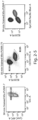
- iBH3 adds a key fixation step to prior protocols for BH3 profiling. This produced a better signal, increased sample stability, and improved staining to discriminate subsets in complex clinical samples.
- Primary tissue or cell cultures are dissociated into single cell suspensions, optionally stained for cell surface markers, and suspended in DTEB Mitochondria] buffer (BH3 profiling in whole cells by fluorimeter or FACS. Methods. 2013 Apr 20. Epub ahead of print). The suspended cells are then added to wells containing DTEB supplemented with digitonin (a permeabilizing agent) and either peptides (i. e.
- BH3 peptides or small molecules, which can be prepared and frozen in sample tubes or plates, to allow the molecules or peptides to access the mitochondria and allow for the free diffusion of cytochrome c out of permeabilized mitochondria and out of the cell.
- Cells are exposed to peptides/small molecules for period of time before a short aldehyde fixation followed by neutralization with a Tris/Glycine buffer.
- Anti-cytochrome c antibody is then added to each well as a concentrate with saponin, fetal bovine serum, and bovine serum albumin to stain cytochrome c retained by the cells.
- Other antibodies to intracellular targets can be added at this time.
- iBH3 faithfully reproduces the profile of individual subpopulations within mixed populations. Samples profiled individually (unmixed) or as a complex mixture (mixed) produce the same profile. This ability to discriminate subpopulations can be applied to any antigen or signal whether intra or extracellular.
- EXAMPLE 2 MICROBH3: SINGLE CELL BH3 PROFILING BY IMMUNOFLUORESCENCE MICROSCOPY
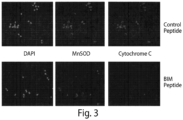
- MicroBH3 is a BH3 profiling method where the measurement of the mitochondrial effect of BH3 peptides have on individual cells by microscopy. To accomplish this, cells are immobilized on polyamine or poly-lysine coated surfaces and treated with low concentrations of digitonin in a mitochondrial buffer to permeabilize the plasma membrane and grant access to the mitochondria without cell disruption. Fixed concentrations of BH3 peptides or chemical compounds are added for a fixed time, generally 45-90 min, before formaldehyde fixation and permeabilization by methanol and/or triton x-100 for intracellular staining of cytochrome C and a mitochondrial marker such as MnSOD.
- Stained cells are counterstained with nuclear stains such as DAPI, and fluorescent images are acquired in nuclear, mitochondrial, and cytochrome c channels.
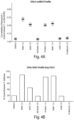
- Automated analysis is performed using software such as Cellprofiler to locate nuclei, define regions adjacent to nuclei that have mitochondria, and then correlate the presence of cytochrome c with the location of the mitochondria. Loss of localization indicates a loss of cytochrome c and a reaction to the peptide or compound. This method allows the response of cells to BH3 peptides or compounds and determine their apoptotic propensity, or priming, at a single cell level.
Landscapes
- Health & Medical Sciences (AREA)
- Life Sciences & Earth Sciences (AREA)
- Engineering & Computer Science (AREA)
- Immunology (AREA)
- Biomedical Technology (AREA)
- Molecular Biology (AREA)
- Chemical & Material Sciences (AREA)
- Hematology (AREA)
- Urology & Nephrology (AREA)
- Physics & Mathematics (AREA)
- General Physics & Mathematics (AREA)
- Cell Biology (AREA)
- Food Science & Technology (AREA)
- Medicinal Chemistry (AREA)
- Biotechnology (AREA)
- Analytical Chemistry (AREA)
- Biochemistry (AREA)
- General Health & Medical Sciences (AREA)
- Microbiology (AREA)
- Pathology (AREA)
- Bioinformatics & Cheminformatics (AREA)
- Toxicology (AREA)
- Tropical Medicine & Parasitology (AREA)
- Peptides Or Proteins (AREA)
- Measuring Or Testing Involving Enzymes Or Micro-Organisms (AREA)
- Oncology (AREA)
- Investigating Or Analysing Biological Materials (AREA)
- Investigating Or Analysing Materials By The Use Of Chemical Reactions (AREA)
- Immobilizing And Processing Of Enzymes And Microorganisms (AREA)
Applications Claiming Priority (2)
| Application Number | Priority Date | Filing Date | Title |
|---|---|---|---|
| US201361879869P | 2013-09-19 | 2013-09-19 | |
| PCT/US2014/056284 WO2015042249A1 (en) | 2013-09-19 | 2014-09-18 | Methods of bh3 profiling |
Publications (3)
| Publication Number | Publication Date |
|---|---|
| EP3047276A1 EP3047276A1 (en) | 2016-07-27 |
| EP3047276A4 EP3047276A4 (en) | 2017-04-26 |
| EP3047276B1 true EP3047276B1 (en) | 2023-06-14 |
Family
ID=52689380
Family Applications (1)
| Application Number | Title | Priority Date | Filing Date |
|---|---|---|---|
| EP14845952.2A Active EP3047276B1 (en) | 2013-09-19 | 2014-09-18 | Methods of bh3 profiling |
Country Status (6)
| Country | Link |
|---|---|
| US (2) | US10739333B2 (enExample) |
| EP (1) | EP3047276B1 (enExample) |
| JP (2) | JP6663852B2 (enExample) |
| AU (1) | AU2014323526B2 (enExample) |
| CA (1) | CA2922503C (enExample) |
| WO (1) | WO2015042249A1 (enExample) |
Families Citing this family (30)
| Publication number | Priority date | Publication date | Assignee | Title |
|---|---|---|---|---|
| CA2496400A1 (en) | 2002-09-09 | 2004-03-18 | Dana-Farber Cancer Institute, Inc. | Bh3 peptides and method of use thereof |
| US8221966B2 (en) | 2006-03-31 | 2012-07-17 | Dana Farber Cancer Institute | Methods of determining cellular chemosensitivity |
| ES2606958T3 (es) | 2010-05-14 | 2017-03-28 | Dana-Farber Cancer Institute, Inc. | Compuestos de tienotriazolodiazepina para tratar una neoplasia |
| CN103154246B (zh) | 2010-05-14 | 2015-11-25 | 达那-法伯癌症研究所 | 用于治疗白血病的组合物和方法 |
| CN103180318B (zh) | 2010-05-14 | 2017-05-10 | 达那-法伯癌症研究所 | 雄性避孕组合物以及使用方法 |
| WO2014047342A1 (en) | 2012-09-19 | 2014-03-27 | Dana-Farber Cancer Institute, Inc. | Dynamic bh3 profiling |
| BR112016001457A2 (pt) | 2013-07-25 | 2017-08-29 | Dana Farber Cancer Inst Inc | Inibidores de fatores de transcrição e usos dos mesmos |
| AU2014323526B2 (en) | 2013-09-19 | 2020-07-23 | Dana-Farber Cancer Institute, Inc. | Methods of BH3 profiling |
| US11446309B2 (en) | 2013-11-08 | 2022-09-20 | Dana-Farber Cancer Institute, Inc. | Combination therapy for cancer using bromodomain and extra-terminal (BET) protein inhibitors |
| MX2016009974A (es) | 2014-01-31 | 2016-10-31 | Dana Farber Cancer Inst Inc | Derivados de diaminopirimidina bencensulfona y sus usos. |
| EP3099693A4 (en) | 2014-01-31 | 2017-08-16 | Dana-Farber Cancer Institute, Inc. | Uses of diazepane derivatives |
| WO2015131113A1 (en) | 2014-02-28 | 2015-09-03 | Tensha Therapeutics, Inc. | Treatment of conditions associated with hyperinsulinaemia |
| WO2016022970A1 (en) | 2014-08-08 | 2016-02-11 | Dana-Farber Cancer Institute, Inc. | Dihydropteridinone derivatives and uses thereof |
| RU2017104897A (ru) | 2014-08-08 | 2018-09-10 | Дана-Фарбер Кэнсер Инститьют, Инк. | Производные диазепана и их применения |
| UA122130C2 (uk) | 2014-10-27 | 2020-09-25 | Тенша Терапеутікс, Інк. | Інгібітори бромодомену |
| WO2016115105A1 (en) | 2015-01-12 | 2016-07-21 | Eutropics Pharmaceuticals, Inc. | Context dependent diagnostics test for guiding cancer treatment |
| AU2016252609B2 (en) | 2015-04-20 | 2022-06-30 | Sumitomo Pharma Oncology, Inc. | Predicting response to alvocidib by mitochondrial profiling |
| AU2016255749B2 (en) * | 2015-04-27 | 2021-10-14 | Dana-Farber Cancer Institute, Inc. | Compositions and methods for assessing toxicity using Dynamic BH3 profiling |
| HUE045585T2 (hu) | 2015-05-18 | 2020-01-28 | Tolero Pharmaceuticals Inc | Megnövelt biológiai hozzáférhetõséggel rendelkezõ Alvocidib gyógyszer-elõanyagok |
| CA2986441A1 (en) | 2015-06-12 | 2016-12-15 | Dana-Farber Cancer Institute, Inc. | Combination therapy of transcription inhibitors and kinase inhibitors |
| AU2016301315C1 (en) | 2015-08-03 | 2022-07-07 | Sumitomo Pharma Oncology, Inc. | Combination therapies for treatment of cancer |
| RU2018112953A (ru) | 2015-09-11 | 2019-10-14 | Дана-Фарбер Кэнсер Инститьют, Инк. | Ацетамидтиенотриазолодиазепины и пути их применения |
| US11306105B2 (en) | 2015-09-11 | 2022-04-19 | Dana-Farber Cancer Institute, Inc. | Cyano thienotriazolodiazepines and uses thereof |
| CR20180336A (es) | 2015-11-25 | 2018-08-06 | Dana Farber Cancer Inst Inc | Inhibidores de bromodominio bivalentes y usos de los mismos |
| WO2018094275A1 (en) | 2016-11-18 | 2018-05-24 | Tolero Pharmaceuticals, Inc. | Alvocidib prodrugs and their use as protein kinase inhibitors |
| CA3047557A1 (en) | 2016-12-19 | 2018-06-28 | Tolero Pharmaceuticals, Inc. | Profiling peptides and methods for sensitivity profiling |
| JP7196160B2 (ja) | 2017-09-12 | 2022-12-26 | スミトモ ファーマ オンコロジー, インコーポレイテッド | Mcl-1阻害剤アルボシジブを用いた、bcl-2阻害剤に対して非感受性である癌の治療レジメン |
| US11034710B2 (en) | 2018-12-04 | 2021-06-15 | Sumitomo Dainippon Pharma Oncology, Inc. | CDK9 inhibitors and polymorphs thereof for use as agents for treatment of cancer |
| EP3931563A4 (en) | 2019-02-26 | 2022-12-21 | Dana-Farber Cancer Institute, Inc. | BH3 DYNAMIC PROFILING FOR LIVING CELL IMAGING |
| JP2022525149A (ja) | 2019-03-20 | 2022-05-11 | スミトモ ダイニッポン ファーマ オンコロジー, インコーポレイテッド | ベネトクラクスが失敗した急性骨髄性白血病(aml)の処置 |
Family Cites Families (62)
| Publication number | Priority date | Publication date | Assignee | Title |
|---|---|---|---|---|
| US4522811A (en) | 1982-07-08 | 1985-06-11 | Syntex (U.S.A.) Inc. | Serial injection of muramyldipeptides and liposomes enhances the anti-infective activity of muramyldipeptides |
| US4816567A (en) | 1983-04-08 | 1989-03-28 | Genentech, Inc. | Recombinant immunoglobin preparations |
| US4676980A (en) | 1985-09-23 | 1987-06-30 | The United States Of America As Represented By The Secretary Of The Department Of Health And Human Services | Target specific cross-linked heteroantibodies |
| US5225539A (en) | 1986-03-27 | 1993-07-06 | Medical Research Council | Recombinant altered antibodies and methods of making altered antibodies |
| US4946778A (en) | 1987-09-21 | 1990-08-07 | Genex Corporation | Single polypeptide chain binding molecules |
| GB8823869D0 (en) | 1988-10-12 | 1988-11-16 | Medical Res Council | Production of antibodies |
| EP0739904A1 (en) | 1989-06-29 | 1996-10-30 | Medarex, Inc. | Bispecific reagents for aids therapy |
| US5670617A (en) | 1989-12-21 | 1997-09-23 | Biogen Inc | Nucleic acid conjugates of tat-derived transport polypeptides |
| US5804604A (en) | 1989-12-21 | 1998-09-08 | Biogen, Inc. | Tat-derived transport polypeptides and fusion proteins |
| EP1690935A3 (en) | 1990-01-12 | 2008-07-30 | Abgenix, Inc. | Generation of xenogeneic antibodies |
| US5625126A (en) | 1990-08-29 | 1997-04-29 | Genpharm International, Inc. | Transgenic non-human animals for producing heterologous antibodies |
| US5661016A (en) | 1990-08-29 | 1997-08-26 | Genpharm International Inc. | Transgenic non-human animals capable of producing heterologous antibodies of various isotypes |
| US5633425A (en) | 1990-08-29 | 1997-05-27 | Genpharm International, Inc. | Transgenic non-human animals capable of producing heterologous antibodies |
| ES2246502T3 (es) | 1990-08-29 | 2006-02-16 | Genpharm International, Inc. | Animales no humanos transgenicos capaces de producir anticuerpos heterologos. |
| US5545806A (en) | 1990-08-29 | 1996-08-13 | Genpharm International, Inc. | Ransgenic non-human animals for producing heterologous antibodies |
| WO1992020373A1 (en) | 1991-05-14 | 1992-11-26 | Repligen Corporation | Heteroconjugate antibodies for treatment of hiv infection |
| WO1993008829A1 (en) | 1991-11-04 | 1993-05-13 | The Regents Of The University Of California | Compositions that mediate killing of hiv-infected cells |
| ES2301158T3 (es) | 1992-07-24 | 2008-06-16 | Amgen Fremont Inc. | Produccion de anticuerpos xenogenicos. |
| ATE139900T1 (de) | 1992-11-13 | 1996-07-15 | Idec Pharma Corp | Therapeutische verwendung von chimerischen und markierten antikörper gegen menschlichen b lymphozyt beschränkter differenzierung antigen für die behandlung von b-zell-lymphoma |
| US5731168A (en) | 1995-03-01 | 1998-03-24 | Genentech, Inc. | Method for making heteromultimeric polypeptides |
| CA2219361C (en) | 1995-04-27 | 2012-02-28 | Abgenix, Inc. | Human antibodies derived from immunized xenomice |
| WO1996034096A1 (en) | 1995-04-28 | 1996-10-31 | Abgenix, Inc. | Human antibodies derived from immunized xenomice |
| AU705563B2 (en) | 1995-07-28 | 1999-05-27 | Marie Curie Cancer Care | Transport proteins and their uses |
| WO1997015831A1 (en) | 1995-10-24 | 1997-05-01 | Sangstat Medical Corporation | Anti alpha-galactosyl screening technique |
| US5965703A (en) | 1996-09-20 | 1999-10-12 | Idun Pharmaceuticals | Human bad polypeptides, encoding nucleic acids and methods of use |
| US5916771A (en) | 1996-10-11 | 1999-06-29 | Abgenix, Inc. | Production of a multimeric protein by cell fusion method |
| US7064193B1 (en) | 1997-09-17 | 2006-06-20 | The Walter And Eliza Hall Institute Of Medical Research | Therapeutic molecules |
| US20020029391A1 (en) | 1998-04-15 | 2002-03-07 | Claude Geoffrey Davis | Epitope-driven human antibody production and gene expression profiling |
| EP1210098A1 (en) | 1999-04-07 | 2002-06-05 | Thomas Jefferson University | Enhancement of peptide cellular uptake |
| WO2001012661A2 (en) | 1999-08-16 | 2001-02-22 | The Government Of The United States Of America, Asrepresented By The Secretary, Department Of Healthand Human Services, The National Institutes Of Health | RECEPTOR-MEDIATED UPTAKE OF AN EXTRACELLULAR BCL-xL FUSION PROTEIN INHIBITS APOPTOSIS |
| WO2002020568A2 (en) | 2000-09-06 | 2002-03-14 | Abbott Laboratories | Mutant peptides derived from bad and their use to identify substances which bind to a member of the bcl-2 family of proteins |
| WO2002069995A2 (en) | 2001-02-16 | 2002-09-12 | Medical College Of Georgia Research Institute, Inc. | Use of trail and antiprogestins for treating cancer |
| WO2003040168A2 (en) | 2001-11-06 | 2003-05-15 | Enanta Pharmaceuticals, Inc. | Methods and compositions for identifying peptide aptamers capable of altering a cell phenotype |
| EP1455819A1 (en) | 2001-12-21 | 2004-09-15 | Arius Research, Inc. | Individualized anti-cancer antibodies |
| CA2496400A1 (en) | 2002-09-09 | 2004-03-18 | Dana-Farber Cancer Institute, Inc. | Bh3 peptides and method of use thereof |
| WO2004058804A1 (en) | 2002-12-24 | 2004-07-15 | Walter And Eliza Hall Institute Of Medical Research | Peptides and therapeutic uses thereof |
| EP1608969A4 (en) | 2003-03-19 | 2007-06-06 | Alfa Wassermann Inc | SEPARATION AND ACCUMULATION OF SUB-CELLULAR COMPONENTS, AND PROTEINS WHICH ARE DRAWN THEREFROM |
| EP1680443B9 (en) | 2003-11-05 | 2014-09-03 | Dana-Farber Cancer Institute, Inc. | Stabilized alpha helical peptides and uses thereof |
| WO2006069186A2 (en) | 2004-12-22 | 2006-06-29 | The Ohio State Research Foundation | Small molecule bcl-xl/bcl-2 binding inhibitors |
| JP2005130867A (ja) | 2005-02-16 | 2005-05-26 | Mitokor | ミトコンドリア内カルシウムを使用するスクリーニングアッセイ |
| WO2006099667A1 (en) * | 2005-03-21 | 2006-09-28 | The Walter And Eliza Hall Institute Of Medical Research | Prophylactic and therapeutic agents and uses therefor |
| US20070027175A1 (en) * | 2005-07-27 | 2007-02-01 | Shaughnessy John Jr | Antineoplastic activities of ellipticine and its derivatives |
| US8221966B2 (en) | 2006-03-31 | 2012-07-17 | Dana Farber Cancer Institute | Methods of determining cellular chemosensitivity |
| US8518635B2 (en) * | 2006-06-12 | 2013-08-27 | The J. David Gladstone Institutes | Regulation of protein activity by reversible acetylation |
| KR100786759B1 (ko) | 2006-07-07 | 2007-12-18 | 김현기 | Hccr-1을 포함하는 유방암 예후 마커 및 비만 유도조성물 |
| US9360473B2 (en) | 2006-08-16 | 2016-06-07 | Eutropics Pharmaceuticals, Inc. | Assay system to identify therapeutic agents |
| WO2008152405A2 (en) | 2007-06-15 | 2008-12-18 | The Queen's University Of Belfast | Protein complexes comprising bh3 peptides and voltage dependent anion channel (vdac) peptides as well as uses thereof for the treatment of proliferative diseases |
| CA2699794C (en) * | 2007-09-10 | 2016-07-19 | University Of Massachusetts | Mitochondria-targeted anti-tumor agents |
| EP2208061B1 (en) | 2007-09-26 | 2017-11-08 | Dana Farber Cancer Institute | Methods and compositions for modulating bcl-2 family polypeptides |
| JP2009240173A (ja) | 2008-03-28 | 2009-10-22 | Univ Of Tokushima | パーキン蛋白の新規糖化因子 |
| MX2011013385A (es) | 2009-06-11 | 2012-05-29 | Minerva Biotechnologies Corp | Metodos para cultivar celulas madre y celulas progenitoras. |
| WO2010147961A1 (en) * | 2009-06-15 | 2010-12-23 | Precision Therapeutics, Inc. | Methods and markers for predicting responses to chemotherapy |
| US20130122492A1 (en) | 2011-11-14 | 2013-05-16 | Kellbenx Inc. | Detection, isolation and analysis of rare cells in biological fluids |
| WO2013170176A2 (en) | 2012-05-10 | 2013-11-14 | Eutropics Pharmaceuticals, Inc. | Surrogate functional diagnostics test for cancer |
| WO2013188978A1 (en) | 2012-06-20 | 2013-12-27 | Cytospan Technologies Corporation | Apparatus and method for quantification of replicative lifespan and observation of senescene |
| WO2014047342A1 (en) * | 2012-09-19 | 2014-03-27 | Dana-Farber Cancer Institute, Inc. | Dynamic bh3 profiling |
| JP6327662B2 (ja) | 2012-09-26 | 2018-05-23 | 学校法人藤田学園 | 細胞表面タンパクを抗原とする抗体を測定する方法 |
| WO2015010094A1 (en) | 2013-07-18 | 2015-01-22 | Eutropics Pharmaceuticals, Inc. | Differential bh3 mitochondrial profiling |
| AU2014323526B2 (en) * | 2013-09-19 | 2020-07-23 | Dana-Farber Cancer Institute, Inc. | Methods of BH3 profiling |
| AU2016255749B2 (en) | 2015-04-27 | 2021-10-14 | Dana-Farber Cancer Institute, Inc. | Compositions and methods for assessing toxicity using Dynamic BH3 profiling |
| US11092602B2 (en) | 2015-07-06 | 2021-08-17 | Whitehead Institute For Biomedical Research | Methods and compositions relating to proteasome inhibitor resistance |
| EP3931563A4 (en) | 2019-02-26 | 2022-12-21 | Dana-Farber Cancer Institute, Inc. | BH3 DYNAMIC PROFILING FOR LIVING CELL IMAGING |
-
2014
- 2014-09-18 AU AU2014323526A patent/AU2014323526B2/en active Active
- 2014-09-18 JP JP2016543983A patent/JP6663852B2/ja active Active
- 2014-09-18 US US15/022,987 patent/US10739333B2/en active Active
- 2014-09-18 WO PCT/US2014/056284 patent/WO2015042249A1/en not_active Ceased
- 2014-09-18 CA CA2922503A patent/CA2922503C/en active Active
- 2014-09-18 EP EP14845952.2A patent/EP3047276B1/en active Active
-
2019
- 2019-10-15 JP JP2019188457A patent/JP2020012850A/ja not_active Withdrawn
-
2020
- 2020-07-02 US US16/919,173 patent/US11867687B2/en active Active
Also Published As
| Publication number | Publication date |
|---|---|
| US20210018493A1 (en) | 2021-01-21 |
| EP3047276A1 (en) | 2016-07-27 |
| US10739333B2 (en) | 2020-08-11 |
| JP2016536005A (ja) | 2016-11-24 |
| AU2014323526A1 (en) | 2016-03-10 |
| JP2020012850A (ja) | 2020-01-23 |
| US11867687B2 (en) | 2024-01-09 |
| WO2015042249A1 (en) | 2015-03-26 |
| US20160231314A1 (en) | 2016-08-11 |
| JP6663852B2 (ja) | 2020-03-13 |
| CA2922503C (en) | 2021-10-26 |
| EP3047276A4 (en) | 2017-04-26 |
| CA2922503A1 (en) | 2015-03-26 |
| AU2014323526B2 (en) | 2020-07-23 |
Similar Documents
| Publication | Publication Date | Title |
|---|---|---|
| US11867687B2 (en) | Methods of BH3 profiling | |
| US11815508B2 (en) | Dynamic BH3 profiling | |
| US11215608B2 (en) | Methods of determining cellular chemosensitivity | |
| JP5457633B2 (ja) | Iapタンパク質とのhsp90タンパク質−タンパク質相互作用を阻害する化合物 | |
| JP2013138688A (ja) | Nogoレセプター結合タンパク質 | |
| Perez et al. | Rab3A and Rab3B carboxy-terminal peptides are both potent and specific inhibitors of prolactin release by rat cultured anterior pituitary cells. | |
| HK1226817B (en) | Methods of bh3 profiling | |
| HK1226817A1 (en) | Methods of bh3 profiling |
Legal Events
| Date | Code | Title | Description |
|---|---|---|---|
| PUAI | Public reference made under article 153(3) epc to a published international application that has entered the european phase |
Free format text: ORIGINAL CODE: 0009012 |
|
| 17P | Request for examination filed |
Effective date: 20160419 |
|
| AK | Designated contracting states |
Kind code of ref document: A1 Designated state(s): AL AT BE BG CH CY CZ DE DK EE ES FI FR GB GR HR HU IE IS IT LI LT LU LV MC MK MT NL NO PL PT RO RS SE SI SK SM TR |
|
| AX | Request for extension of the european patent |
Extension state: BA ME |
|
| DAX | Request for extension of the european patent (deleted) | ||
| A4 | Supplementary search report drawn up and despatched |
Effective date: 20170327 |
|
| RIC1 | Information provided on ipc code assigned before grant |
Ipc: G01N 33/574 20060101ALI20170321BHEP Ipc: G01N 33/50 20060101AFI20170321BHEP Ipc: G01N 33/58 20060101ALI20170321BHEP |
|
| REG | Reference to a national code |
Ref country code: HK Ref legal event code: DE Ref document number: 1226817 Country of ref document: HK |
|
| STAA | Information on the status of an ep patent application or granted ep patent |
Free format text: STATUS: REQUEST FOR EXAMINATION WAS MADE |
|
| R17P | Request for examination filed (corrected) |
Effective date: 20160419 |
|
| STAA | Information on the status of an ep patent application or granted ep patent |
Free format text: STATUS: EXAMINATION IS IN PROGRESS |
|
| 17Q | First examination report despatched |
Effective date: 20180301 |
|
| GRAP | Despatch of communication of intention to grant a patent |
Free format text: ORIGINAL CODE: EPIDOSNIGR1 |
|
| STAA | Information on the status of an ep patent application or granted ep patent |
Free format text: STATUS: GRANT OF PATENT IS INTENDED |
|
| INTG | Intention to grant announced |
Effective date: 20230112 |
|
| GRAS | Grant fee paid |
Free format text: ORIGINAL CODE: EPIDOSNIGR3 |
|
| GRAA | (expected) grant |
Free format text: ORIGINAL CODE: 0009210 |
|
| STAA | Information on the status of an ep patent application or granted ep patent |
Free format text: STATUS: THE PATENT HAS BEEN GRANTED |
|
| AK | Designated contracting states |
Kind code of ref document: B1 Designated state(s): AL AT BE BG CH CY CZ DE DK EE ES FI FR GB GR HR HU IE IS IT LI LT LU LV MC MK MT NL NO PL PT RO RS SE SI SK SM TR |
|
| REG | Reference to a national code |
Ref country code: CH Ref legal event code: EP |
|
| REG | Reference to a national code |
Ref country code: DE Ref legal event code: R096 Ref document number: 602014087381 Country of ref document: DE |
|
| P01 | Opt-out of the competence of the unified patent court (upc) registered |
Effective date: 20230530 |
|
| REG | Reference to a national code |
Ref country code: AT Ref legal event code: REF Ref document number: 1579588 Country of ref document: AT Kind code of ref document: T Effective date: 20230715 |
|
| REG | Reference to a national code |
Ref country code: LT Ref legal event code: MG9D |
|
| REG | Reference to a national code |
Ref country code: NL Ref legal event code: MP Effective date: 20230614 |
|
| PG25 | Lapsed in a contracting state [announced via postgrant information from national office to epo] |
Ref country code: SE Free format text: LAPSE BECAUSE OF FAILURE TO SUBMIT A TRANSLATION OF THE DESCRIPTION OR TO PAY THE FEE WITHIN THE PRESCRIBED TIME-LIMIT Effective date: 20230614 Ref country code: NO Free format text: LAPSE BECAUSE OF FAILURE TO SUBMIT A TRANSLATION OF THE DESCRIPTION OR TO PAY THE FEE WITHIN THE PRESCRIBED TIME-LIMIT Effective date: 20230914 Ref country code: ES Free format text: LAPSE BECAUSE OF FAILURE TO SUBMIT A TRANSLATION OF THE DESCRIPTION OR TO PAY THE FEE WITHIN THE PRESCRIBED TIME-LIMIT Effective date: 20230614 |
|
| REG | Reference to a national code |
Ref country code: AT Ref legal event code: MK05 Ref document number: 1579588 Country of ref document: AT Kind code of ref document: T Effective date: 20230614 |
|
| PG25 | Lapsed in a contracting state [announced via postgrant information from national office to epo] |
Ref country code: RS Free format text: LAPSE BECAUSE OF FAILURE TO SUBMIT A TRANSLATION OF THE DESCRIPTION OR TO PAY THE FEE WITHIN THE PRESCRIBED TIME-LIMIT Effective date: 20230614 Ref country code: NL Free format text: LAPSE BECAUSE OF FAILURE TO SUBMIT A TRANSLATION OF THE DESCRIPTION OR TO PAY THE FEE WITHIN THE PRESCRIBED TIME-LIMIT Effective date: 20230614 Ref country code: LV Free format text: LAPSE BECAUSE OF FAILURE TO SUBMIT A TRANSLATION OF THE DESCRIPTION OR TO PAY THE FEE WITHIN THE PRESCRIBED TIME-LIMIT Effective date: 20230614 Ref country code: LT Free format text: LAPSE BECAUSE OF FAILURE TO SUBMIT A TRANSLATION OF THE DESCRIPTION OR TO PAY THE FEE WITHIN THE PRESCRIBED TIME-LIMIT Effective date: 20230614 Ref country code: HR Free format text: LAPSE BECAUSE OF FAILURE TO SUBMIT A TRANSLATION OF THE DESCRIPTION OR TO PAY THE FEE WITHIN THE PRESCRIBED TIME-LIMIT Effective date: 20230614 Ref country code: GR Free format text: LAPSE BECAUSE OF FAILURE TO SUBMIT A TRANSLATION OF THE DESCRIPTION OR TO PAY THE FEE WITHIN THE PRESCRIBED TIME-LIMIT Effective date: 20230915 |
|
| PG25 | Lapsed in a contracting state [announced via postgrant information from national office to epo] |
Ref country code: FI Free format text: LAPSE BECAUSE OF FAILURE TO SUBMIT A TRANSLATION OF THE DESCRIPTION OR TO PAY THE FEE WITHIN THE PRESCRIBED TIME-LIMIT Effective date: 20230614 |
|
| PG25 | Lapsed in a contracting state [announced via postgrant information from national office to epo] |
Ref country code: SK Free format text: LAPSE BECAUSE OF FAILURE TO SUBMIT A TRANSLATION OF THE DESCRIPTION OR TO PAY THE FEE WITHIN THE PRESCRIBED TIME-LIMIT Effective date: 20230614 |
|
| PG25 | Lapsed in a contracting state [announced via postgrant information from national office to epo] |
Ref country code: IS Free format text: LAPSE BECAUSE OF FAILURE TO SUBMIT A TRANSLATION OF THE DESCRIPTION OR TO PAY THE FEE WITHIN THE PRESCRIBED TIME-LIMIT Effective date: 20231014 |
|
| PG25 | Lapsed in a contracting state [announced via postgrant information from national office to epo] |
Ref country code: SM Free format text: LAPSE BECAUSE OF FAILURE TO SUBMIT A TRANSLATION OF THE DESCRIPTION OR TO PAY THE FEE WITHIN THE PRESCRIBED TIME-LIMIT Effective date: 20230614 Ref country code: SK Free format text: LAPSE BECAUSE OF FAILURE TO SUBMIT A TRANSLATION OF THE DESCRIPTION OR TO PAY THE FEE WITHIN THE PRESCRIBED TIME-LIMIT Effective date: 20230614 Ref country code: RO Free format text: LAPSE BECAUSE OF FAILURE TO SUBMIT A TRANSLATION OF THE DESCRIPTION OR TO PAY THE FEE WITHIN THE PRESCRIBED TIME-LIMIT Effective date: 20230614 Ref country code: PT Free format text: LAPSE BECAUSE OF FAILURE TO SUBMIT A TRANSLATION OF THE DESCRIPTION OR TO PAY THE FEE WITHIN THE PRESCRIBED TIME-LIMIT Effective date: 20231016 Ref country code: IS Free format text: LAPSE BECAUSE OF FAILURE TO SUBMIT A TRANSLATION OF THE DESCRIPTION OR TO PAY THE FEE WITHIN THE PRESCRIBED TIME-LIMIT Effective date: 20231014 Ref country code: EE Free format text: LAPSE BECAUSE OF FAILURE TO SUBMIT A TRANSLATION OF THE DESCRIPTION OR TO PAY THE FEE WITHIN THE PRESCRIBED TIME-LIMIT Effective date: 20230614 Ref country code: CZ Free format text: LAPSE BECAUSE OF FAILURE TO SUBMIT A TRANSLATION OF THE DESCRIPTION OR TO PAY THE FEE WITHIN THE PRESCRIBED TIME-LIMIT Effective date: 20230614 Ref country code: AT Free format text: LAPSE BECAUSE OF FAILURE TO SUBMIT A TRANSLATION OF THE DESCRIPTION OR TO PAY THE FEE WITHIN THE PRESCRIBED TIME-LIMIT Effective date: 20230614 |
|
| PG25 | Lapsed in a contracting state [announced via postgrant information from national office to epo] |
Ref country code: PL Free format text: LAPSE BECAUSE OF FAILURE TO SUBMIT A TRANSLATION OF THE DESCRIPTION OR TO PAY THE FEE WITHIN THE PRESCRIBED TIME-LIMIT Effective date: 20230614 |
|
| REG | Reference to a national code |
Ref country code: DE Ref legal event code: R097 Ref document number: 602014087381 Country of ref document: DE |
|
| PLBE | No opposition filed within time limit |
Free format text: ORIGINAL CODE: 0009261 |
|
| STAA | Information on the status of an ep patent application or granted ep patent |
Free format text: STATUS: NO OPPOSITION FILED WITHIN TIME LIMIT |
|
| PG25 | Lapsed in a contracting state [announced via postgrant information from national office to epo] |
Ref country code: DK Free format text: LAPSE BECAUSE OF FAILURE TO SUBMIT A TRANSLATION OF THE DESCRIPTION OR TO PAY THE FEE WITHIN THE PRESCRIBED TIME-LIMIT Effective date: 20230614 |
|
| PG25 | Lapsed in a contracting state [announced via postgrant information from national office to epo] |
Ref country code: SI Free format text: LAPSE BECAUSE OF FAILURE TO SUBMIT A TRANSLATION OF THE DESCRIPTION OR TO PAY THE FEE WITHIN THE PRESCRIBED TIME-LIMIT Effective date: 20230614 |
|
| PG25 | Lapsed in a contracting state [announced via postgrant information from national office to epo] |
Ref country code: LU Free format text: LAPSE BECAUSE OF NON-PAYMENT OF DUE FEES Effective date: 20230918 |
|
| 26N | No opposition filed |
Effective date: 20240315 |
|
| REG | Reference to a national code |
Ref country code: BE Ref legal event code: MM Effective date: 20230930 |
|
| PG25 | Lapsed in a contracting state [announced via postgrant information from national office to epo] |
Ref country code: SI Free format text: LAPSE BECAUSE OF FAILURE TO SUBMIT A TRANSLATION OF THE DESCRIPTION OR TO PAY THE FEE WITHIN THE PRESCRIBED TIME-LIMIT Effective date: 20230614 Ref country code: LU Free format text: LAPSE BECAUSE OF NON-PAYMENT OF DUE FEES Effective date: 20230918 Ref country code: IT Free format text: LAPSE BECAUSE OF FAILURE TO SUBMIT A TRANSLATION OF THE DESCRIPTION OR TO PAY THE FEE WITHIN THE PRESCRIBED TIME-LIMIT Effective date: 20230614 Ref country code: MC Free format text: LAPSE BECAUSE OF FAILURE TO SUBMIT A TRANSLATION OF THE DESCRIPTION OR TO PAY THE FEE WITHIN THE PRESCRIBED TIME-LIMIT Effective date: 20230614 |
|
| REG | Reference to a national code |
Ref country code: IE Ref legal event code: MM4A |
|
| PG25 | Lapsed in a contracting state [announced via postgrant information from national office to epo] |
Ref country code: IE Free format text: LAPSE BECAUSE OF NON-PAYMENT OF DUE FEES Effective date: 20230918 |
|
| PG25 | Lapsed in a contracting state [announced via postgrant information from national office to epo] |
Ref country code: IE Free format text: LAPSE BECAUSE OF NON-PAYMENT OF DUE FEES Effective date: 20230918 |
|
| PG25 | Lapsed in a contracting state [announced via postgrant information from national office to epo] |
Ref country code: BE Free format text: LAPSE BECAUSE OF NON-PAYMENT OF DUE FEES Effective date: 20230930 |
|
| PG25 | Lapsed in a contracting state [announced via postgrant information from national office to epo] |
Ref country code: BG Free format text: LAPSE BECAUSE OF FAILURE TO SUBMIT A TRANSLATION OF THE DESCRIPTION OR TO PAY THE FEE WITHIN THE PRESCRIBED TIME-LIMIT Effective date: 20230614 |
|
| PG25 | Lapsed in a contracting state [announced via postgrant information from national office to epo] |
Ref country code: BG Free format text: LAPSE BECAUSE OF FAILURE TO SUBMIT A TRANSLATION OF THE DESCRIPTION OR TO PAY THE FEE WITHIN THE PRESCRIBED TIME-LIMIT Effective date: 20230614 |
|
| PG25 | Lapsed in a contracting state [announced via postgrant information from national office to epo] |
Ref country code: CY Free format text: LAPSE BECAUSE OF FAILURE TO SUBMIT A TRANSLATION OF THE DESCRIPTION OR TO PAY THE FEE WITHIN THE PRESCRIBED TIME-LIMIT; INVALID AB INITIO Effective date: 20140918 |
|
| PG25 | Lapsed in a contracting state [announced via postgrant information from national office to epo] |
Ref country code: HU Free format text: LAPSE BECAUSE OF FAILURE TO SUBMIT A TRANSLATION OF THE DESCRIPTION OR TO PAY THE FEE WITHIN THE PRESCRIBED TIME-LIMIT; INVALID AB INITIO Effective date: 20140918 |
|
| REG | Reference to a national code |
Ref country code: CH Ref legal event code: U11 Free format text: ST27 STATUS EVENT CODE: U-0-0-U10-U11 (AS PROVIDED BY THE NATIONAL OFFICE) Effective date: 20251001 |
|
| PGFP | Annual fee paid to national office [announced via postgrant information from national office to epo] |
Ref country code: DE Payment date: 20250929 Year of fee payment: 12 |
|
| PGFP | Annual fee paid to national office [announced via postgrant information from national office to epo] |
Ref country code: GB Payment date: 20250929 Year of fee payment: 12 |
|
| PGFP | Annual fee paid to national office [announced via postgrant information from national office to epo] |
Ref country code: FR Payment date: 20250925 Year of fee payment: 12 |
|
| PG25 | Lapsed in a contracting state [announced via postgrant information from national office to epo] |
Ref country code: TR Free format text: LAPSE BECAUSE OF FAILURE TO SUBMIT A TRANSLATION OF THE DESCRIPTION OR TO PAY THE FEE WITHIN THE PRESCRIBED TIME-LIMIT Effective date: 20230614 |
|
| PGFP | Annual fee paid to national office [announced via postgrant information from national office to epo] |
Ref country code: CH Payment date: 20251001 Year of fee payment: 12 |