EP3035339B1 - Verfahren zur herstellung der axialen leistungsverteilung des kerns von kernreaktoren unter verwendung einer neuronalen netzwerkschaltung und in-core-schutzsystem (icops) damit - Google Patents
Verfahren zur herstellung der axialen leistungsverteilung des kerns von kernreaktoren unter verwendung einer neuronalen netzwerkschaltung und in-core-schutzsystem (icops) damit Download PDFInfo
- Publication number
- EP3035339B1 EP3035339B1 EP15182971.0A EP15182971A EP3035339B1 EP 3035339 B1 EP3035339 B1 EP 3035339B1 EP 15182971 A EP15182971 A EP 15182971A EP 3035339 B1 EP3035339 B1 EP 3035339B1
- Authority
- EP
- European Patent Office
- Prior art keywords
- core
- nuclear reactor
- layer
- neural network
- node
- Prior art date
- Legal status (The legal status is an assumption and is not a legal conclusion. Google has not performed a legal analysis and makes no representation as to the accuracy of the status listed.)
- Active
Links
Images

Classifications
-
- G—PHYSICS
- G21—NUCLEAR PHYSICS; NUCLEAR ENGINEERING
- G21C—NUCLEAR REACTORS
- G21C17/00—Monitoring; Testing ; Maintaining
- G21C17/06—Devices or arrangements for monitoring or testing fuel or fuel elements outside the reactor core, e.g. for burn-up, for contamination
-
- G—PHYSICS
- G21—NUCLEAR PHYSICS; NUCLEAR ENGINEERING
- G21D—NUCLEAR POWER PLANT
- G21D3/00—Control of nuclear power plant
-
- G—PHYSICS
- G21—NUCLEAR PHYSICS; NUCLEAR ENGINEERING
- G21C—NUCLEAR REACTORS
- G21C17/00—Monitoring; Testing ; Maintaining
- G21C17/10—Structural combination of fuel element, control rod, reactor core, or moderator structure with sensitive instruments, e.g. for measuring radioactivity, strain
- G21C17/102—Structural combination of fuel element, control rod, reactor core, or moderator structure with sensitive instruments, e.g. for measuring radioactivity, strain the sensitive element being part of a fuel element or a fuel assembly
-
- G—PHYSICS
- G06—COMPUTING OR CALCULATING; COUNTING
- G06G—ANALOGUE COMPUTERS
- G06G7/00—Devices in which the computing operation is performed by varying electric or magnetic quantities
- G06G7/48—Analogue computers for specific processes, systems or devices, e.g. simulators
- G06G7/54—Analogue computers for specific processes, systems or devices, e.g. simulators for nuclear physics, e.g. nuclear reactors, radioactive fall
-
- G—PHYSICS
- G06—COMPUTING OR CALCULATING; COUNTING
- G06N—COMPUTING ARRANGEMENTS BASED ON SPECIFIC COMPUTATIONAL MODELS
- G06N3/00—Computing arrangements based on biological models
- G06N3/02—Neural networks
- G06N3/08—Learning methods
- G06N3/088—Non-supervised learning, e.g. competitive learning
-
- G—PHYSICS
- G21—NUCLEAR PHYSICS; NUCLEAR ENGINEERING
- G21D—NUCLEAR POWER PLANT
- G21D3/00—Control of nuclear power plant
- G21D3/08—Regulation of any parameters in the plant
- G21D3/10—Regulation of any parameters in the plant by a combination of a variable derived from neutron flux with other controlling variables, e.g. derived from temperature, cooling flow, pressure
-
- G—PHYSICS
- G21—NUCLEAR PHYSICS; NUCLEAR ENGINEERING
- G21D—NUCLEAR POWER PLANT
- G21D3/00—Control of nuclear power plant
- G21D3/001—Computer implemented control
- G21D3/002—Core design; core simulations; core optimisation
-
- Y—GENERAL TAGGING OF NEW TECHNOLOGICAL DEVELOPMENTS; GENERAL TAGGING OF CROSS-SECTIONAL TECHNOLOGIES SPANNING OVER SEVERAL SECTIONS OF THE IPC; TECHNICAL SUBJECTS COVERED BY FORMER USPC CROSS-REFERENCE ART COLLECTIONS [XRACs] AND DIGESTS
- Y02—TECHNOLOGIES OR APPLICATIONS FOR MITIGATION OR ADAPTATION AGAINST CLIMATE CHANGE
- Y02E—REDUCTION OF GREENHOUSE GAS [GHG] EMISSIONS, RELATED TO ENERGY GENERATION, TRANSMISSION OR DISTRIBUTION
- Y02E30/00—Energy generation of nuclear origin
-
- Y—GENERAL TAGGING OF NEW TECHNOLOGICAL DEVELOPMENTS; GENERAL TAGGING OF CROSS-SECTIONAL TECHNOLOGIES SPANNING OVER SEVERAL SECTIONS OF THE IPC; TECHNICAL SUBJECTS COVERED BY FORMER USPC CROSS-REFERENCE ART COLLECTIONS [XRACs] AND DIGESTS
- Y02—TECHNOLOGIES OR APPLICATIONS FOR MITIGATION OR ADAPTATION AGAINST CLIMATE CHANGE
- Y02E—REDUCTION OF GREENHOUSE GAS [GHG] EMISSIONS, RELATED TO ENERGY GENERATION, TRANSMISSION OR DISTRIBUTION
- Y02E30/00—Energy generation of nuclear origin
- Y02E30/30—Nuclear fission reactors
Definitions
- the present invention relates to a method of synthesizing axial power distributions of a nuclear reactor core using a neural network circuit according to the preamble of claim 1 which is known from " Axial Power Distribution Calculation Using a Neural Network in the Nuclear Reactor Core", October 1997 (1997-10-01), pages 58-63, XP055266328, Retrieved from the internet: URL:http://www.osti.gov/etde/servlets/purl/324084-tqe2VL/webviewable/ 324084.pdf and an in-core protection system (ICOPS) using the same.
- ICOPS in-core protection system
- the present invention relates to a method of synthesizing axial power distributions of a nuclear reactor core using a neural network circuit and an ICOPS using the same, in which using the neural network circuit including an input layer, an output layer, and at least one hidden layer, each layer being configured with at least one node, each node of one layer being connected to nodes of the other layers, node-to-node connections being made with connection weights varied based on a learning result, optimum connection weights between the respective nodes constituting the neural network circuit are determined through learning based on various core design data applied to the design of a nuclear reactor core of a nuclear power plant, and axial power distributions of the nuclear reactor core are synthesized based on ex-core flux detector signals measured by ex-core neutron flux detectors during operation of a nuclear reactor, so that the initial time required to perform a start-up test of the nuclear reactor can be reduced since basic data for synthesizing axial power distributions need not be separately measured in the start-up test of the nuclear reactor contrary to
- a core protection calculator system (CPCS) of a nuclear power plant is an essential nuclear reactor protection system for safely keeping a nuclear reactor from a nuclear fuel meltdown and a departure from nucleate boiling (DNB.)
- the CPCS is a system in which safety and reliability are absolutely required.
- a plurality of ex-core neutron flux detectors provided along the circumference of the periphery of the nuclear reactor are respectively disposed at three levels (top, middle, and bottom portions) along the axial direction of the core, so that axial power distributions of the nuclear reactor core are synthesized based on ex-core flux detector signals at the three levels measured by the ex-core neutron flux detectors.
- a conventional in-core protection system (ICOPS), as disclosed in Korean Patent No. 10-0009517 , entitled “METHOD & APPARATUS FOR MONITORING THE AXIAL POWER DISTRIBUTION WITHIN THE CORE OF A NUCLEAR REACTOR EXTERIOR OF THE REACTOR” (Westinghouse Electric Corporation), registered on March 23, 1981, is configured to calculate core-periphery powers at three levels (top, middle, and bottom portions), using ex-core flux detector signals measured by ex-core neutron flux detectors at the periphery of a nuclear reactor, calculate average core-periphery powers at the three levels by reflecting rod shadowing factors (RSFs) based on the calculated core-periphery outputs, and then synthesize 20 axial power distributions using a cubic spline interpolation, based on the calculated average core-periphery powers.
- RSS rod shadowing factors
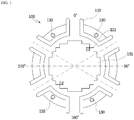
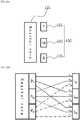
- a plurality of ex-core neutron flux detectors 130 provided along the circumference of the periphery of the nuclear reactor as shown in FIG. 1 are respectively disposed at the three levels (top, middle, and bottom portions) equidistantly disposed along the axial height of the nuclear reactor core as shown in FIGS. 2(a) and 2(b) , so that core-periphery powers P T , P M , and P B at the three levels are calculated based on ex-core flux detector signals L T , L M , and L B measured by the ex-core neutron flux detectors 131, 132, and 133.
- the ex-core neutron flux detectors 131, 132, and 133 disposed at the respective levels are spaced apart from the nuclear reactor core at a regular distance, to detect, as shown in FIG. 2(b) , not only neutrons radiated from a corresponding level of the nuclear reactor core but also neutrons radiated from the other levels of the nuclear reactor core. Therefore, the calculated core-periphery power at the corresponding level is different from an actual core-periphery power at the corresponding level.
- the core-periphery powers P T , P M , and P B at the respective levels are calculated through a shape annealing matrix (SAM) including constants A ij which define a relationship between the ex-core flux detector signals L T , L M , and L B and the core-periphery powers P T , P M , and P B as shown in the following Equation 1.
- SAM shape annealing matrix
- P T , P M , and P B are core-periphery powers at top, middle, and bottom portions of the nuclear reactor core, respectively
- L T , L M , and L B are ex-core flux detector signals detected by the ex-core neutron flux detectors disposed at the three levels, i.e., the top, middle, and bottom portions of the periphery of the nuclear reactor, respectively
- a ij is a constant which defines a relationship between the ex-core flux detector signals and the core-periphery powers.
- the constants (A ij ) of the SAM are required so as to obtain the core-periphery powers P T , P M , and P B .
- the SAM is determined based on data acquired in a start-up test of the nuclear reactor (i.e., at the beginning of the nuclear fuel period), which is performed at the beginning of every plant operating period.
- the core-periphery powers P T , P M , and P B calculated based on the ex-core flux detector signals L T , L M , and L B are compared with the actual core-periphery powers measured by in-core neutron flux detectors (not shown) while the power of the nuclear reactor increases up to 30% to 80%, and the SAM is determined such that the differences between the calculated core-periphery powers and the actual core-periphery powers are minimized.
- core-periphery powers of the nuclear reactor core during one plant period are calculated using a SAM determined based on data acquired at the beginning of the period, and average core-periphery powers for the respective nodes are calculated through a correction process such as reflecting RSFs to the calculated core-periphery powers. Then, axial power distributions are synthesized based on the calculated average core-periphery powers for the respective nodes, so that axial power distributions having the same level as the actual core-periphery powers can be continuously synthesized in real time.
- the SAM was determined based on data acquired at the beginning of a period, and hence a change in power depending on changes in composition and state of nuclear fuel in the nuclear reactor core at the end of the period cannot be properly reflected. Therefore, an error in synthesizing axial power distributions would increase at the end of the period. Further, since the SAM should be newly determined at the beginning of every period, the time required to perform a start-up test of the nuclear reactor increases. For this reason, the efficiency of the nuclear power plant is lowered.
- An object of the present invention is to provide a method of synthesizing axial power distributions of a nuclear reactor core using a neural network circuit and an in-core protection system (ICOPS) using the same, in which using the neural network circuit including an input layer, an output layer, and at least one hidden layer, each layer being configured with at least one node, each node of one layer being connected to nodes of the other layers, node-to-node connections being made with connection weights varied based on a learning result, optimum connection weights between the respective nodes constituting the neural network circuit are determined through learning based on various core design data applied to the design of a nuclear reactor core of a nuclear power plant, and axial power distributions of the nuclear reactor core are synthesized based on ex-core flux detector signals measured by ex-core neutron flux detectors during operation of a nuclear reactor, so that the initial time required to perform a start-up test of the nuclear reactor can be reduced since basic data for
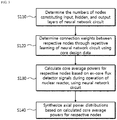
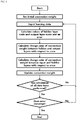
- FIG. 3 is a flowchart illustrating a method of synthesizing axial power distributions according to an embodiment of the present invention.
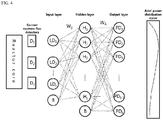
- FIG. 4 is a view illustrating a configuration of a neural network circuit for synthesizing axial power distributions according to the embodiment of the present invention.
- a method of synthesizing axial power distributions of a nuclear reactor core using a neural network circuit and an in-core protection system (ICOPS) using the same in which, in a neural network circuit including an input layer, an output layer, and at least one hidden layer, the method is configured to determine the number of nodes LD; constituting the input layer, the number of nodes H j constituting the hidden layer, and the number of nodes PD k constituting the output layer (S110), allow the neural network to learn through a back-propagation (BP) algorithm and a simulated annealing (SA) method by inputting various core design data applied to the design of the nuclear reactor core, to optimize the neural network by determining optimum connection weights (i.e., weight values W ij , and W jk ) among the respective nodes LD i , H j , and PD k (S120), calculate previously set core average powers for the
- a method of synthesizing axial power distributions of a nuclear reactor core using a neural network circuit and an ICOPS using the same have advantages in that using the neural network circuit including an input layer, an output layer, and at least one hidden layer, each layer being configured with at least one node, each node of one layer being connected to nodes of the other layers, node-to-node connections being made with connection weights varied based on a learning result, optimum connection weights between the respective nodes constituting the neural network circuit are determined through learning based on various core design data applied to the design of a nuclear reactor core of a nuclear power plant, and axial power distributions of the nuclear reactor core are synthesized based on ex-core flux detector signals measured by ex-core neutron flux detectors during operation of a nuclear reactor, so that the initial time required to perform a start-up test of the nuclear reactor can be reduced since basic data for synthesizing axial power distributions need not be separately measured in the start-up test of the nuclear reactor contrary to
- FIG. 1 is a view schematically illustrating relative positions of ex-core neutron flux detectors in a nuclear reactor.
- FIG. 2(a) is a view schematically illustrating relative positions of the ex-core neutron flux detectors with respect to the axial direction of the nuclear reactor core in the nuclear reactor.
- FIG. 2(b) is a view schematically illustrating a relationship between core-periphery powers and ex-core flux detector signals in the nuclear reactor.
- the ICOPS according to the present invention is configured such that a plurality of ex-core neutron flux detectors 130 ( see FIG. 1 ) provided along the circumference of the periphery of the nuclear reactor are respectively disposed at three levels (top, middle, and bottom portions) equidistantly disposed along the axial direction of the core ( see Fig. 2(a) ), so that axial power distributions of the nuclear reactor core are synthesized based on ex-core flux detector signals at the three levels measured by the ex-core neutron flux detectors 131, 132, and 133 disposed at the three levels, as described above.
- the ex-core neutron flux detectors 131, 132, and 133 disposed at the respective levels are spaced apart at from the nuclear reactor core a regular distance, to detect not only neutrons radiated from a corresponding level of the nuclear reactor core but also neutrons radiated from the other levels of the nuclear reactor core. Therefore, the calculated core-periphery power at the corresponding level is different from an actual core-periphery power at the corresponding level.
- a neural network circuit configured to include an input layer, an output layer, and at least one hidden layer, each layer being configured with at least one node, each node of one layer being connected to nodes of the other layers, node-to-node connections being made with connection weights varied based on a learning result, core average powers for the respective nodes are calculated based on ex-core flux detector signals measured by the ex-core neutron flux detectors 131, 132, and 133, thereby synthesizing axial power distributions of the core.
- FIG. 3 is a flowchart illustrating a method of synthesizing axial power distributions according to an embodiment of the present invention.
- FIG. 4 is a view illustrating a configuration of a neural network circuit for synthesizing axial power distributions according to the embodiment of the present invention.
- FIG. 5 is a flowchart illustrating a learning process of the neural network circuit through a BP algorithm according to an embodiment of the present invention.
- the neural network circuit applied to the synthesization of axial power distributions of the nuclear reactor core according to the present invention includes an input layer, an output layer, and at least one hidden layer.
- the input, hidden, and output layers constituting the neural network circuit are configured with a plurality of nodes LD i , a plurality of nodes H j , and a plurality of nodes PD k , respectively.
- the number of nodes LD i , the number of nodes H j , and the number of nodes PD k (S110).
- the numbers of the input and output layer nodes LD i , and PD k are naturally determined according to the number of ex-core neutron flux detectors and the number of core average power nodes to be sought so as to synthesize axial power distributions of the core.
- the number of hidden layer nodes H j is determined through user's experiences and repetitive experiments. As the number of hidden layer nodes H j increases, the difference between a core average power of the output layer and an actual core average power decreases. However, the processing speed decreases, and therefore, it is required to optimize the number of nodes H j of the hidden layer.
- the input layer is a layer which receives, as input values, three ex-core flux detector signals measured by ex-core neutron flux detectors (D 1 , D 2 , and D 3 of FIG. 3 ).
- the input layer is configured with three input layer nodes LD 1 , LD 2 , and LD 3 .
- the output layer is a layer which outputs a core average power node value for synthesizing axial power distributions of the core.
- the output layer may be configured with 15 to 25 output layer nodes PD k as axial power distributions are synthesized through 15 to 25 core average output node values in a general ICOPS.
- the output layer is configured with 20 output layer nodes PD 1 to PD 20 .
- the hidden layer is a layer which connects the hidden layer and the input layer to each other between the two layers, and at least one hidden layer may be added between the input layer and the output layer.
- one hidden layer is used.
- the hidden layer node H j it is appropriate as the result of repetitive experiments that the number of hidden layer nodes is set to 10 to 20.
- the hidden layer is configured with 15 hidden layer nodes H 1 to H 15 .
- the input layer and the hidden layer may be configured to additionally include one bias node B having a bias value when necessary.
- the numbers of the input, hidden, and output layer nodes LD i , H j , and PD k are not limited to those proposed in this embodiment. It will be apparent that the numbers of the input, hidden, and output nodes LD i , H j , and PD k may be properly selected and used according to the structure of the nuclear reactor or the processing speed of a neural network circuit system and the accuracy of a power value to be sought.
- the neural network circuit is learned using various core design data (i.e., all data at the beginning, middle, and end of a period of loaded nuclear fuel) applied to the design of the nuclear reactor core of the nuclear power plant, thereby determining optimum connection weights between the respective nodes (S120).
- core design data i.e., all data at the beginning, middle, and end of a period of loaded nuclear fuel
- a BP algorithm is used for learning of the neural network circuit.
- the BP algorithm as shown in FIG. 5 , determines the optimum connection weights W ij and W jk between the respective nodes through a series of processes.
- arbitrary numbers randomly selected in an arbitrary section are set to initial connection weights W ij and W jk .
- a value of the hidden layer node H j is calculated using, as input values of the input layer node LD i , the set initial connection weight W ij between the input layer and the hidden layer and an ex-core flux detector signal detected by the ex-core neutron flux detector, which is included in the design data.
- a value of the output layer node PD k is calculated based on the calculated value of the hidden layer node H j and the initial connection weight W jk between the hidden layer and the output layer.
- the value of the output layer node PD k calculated as described above is compared with a true value for each node (here, an actual core average power based on a corresponding ex-core flux detector signal, which is included in the design data), thereby calculating an error.
- the calculated error is partially differentiated using the connection weight W jk between the hidden layer and the output layer, thereby calculating a change ratio of the connection weight W jk between the hidden layer and the output layer with respect to the error. Also, the error is partially differentiated using the connection weight W ij between the input layer and the hidden layer, thereby calculating a change ratio of the connection weight W ij between the input layer and the hidden layer with respect to the error.
- connection weight W jk between the hidden layer and the output layer and the connection weight W ij between the input layer and the hidden layer are updated in the opposite direction of a change ratio having influence on the error, based on the respective calculated change ratios of the connection weights, and the above-described process is repeatedly performed on a set of various design data (i.e., ex-core flux detector signals and core average power data corresponding thereto) applied to the design of the nuclear reactor core, thereby calculating a performance index of a learning result value from a difference between a core average power value obtained from the neural network circuit and an actual core average power value shown in the design data.
- design data i.e., ex-core flux detector signals and core average power data corresponding thereto
- the BP algorithm When the calculated performance index is equal to or smaller than a previously set measurement limit value, the BP algorithm is considered to converge, and the learning using the BP algorithm is finished, thereby optimizing the connection weights W ij and W jk among the respective nodes LD i , H j , and PD k .
- the hidden layer node and the output layer node except for the bias node and the input layer node have a differentiable active function (generally, a sigmoid or hyperbolic tangent function is frequently used) for the purpose of learning, and values of the hidden layer node H j and the output layer node PD k are calculated by the following Equations 2 and 3. Accordingly, the performance index of the learning result value can be obtained from the following Equation 4.
- H j is a value of a j th hidden layer node
- n is the number of input layer nodes except for the bias node
- W i,j is a connection weight (weight value) between an i th input layer node and the j th hidden layer node, LD; is a value of the i th input layer node
- B is the bias node
- a(x) is an active function of the hidden layer node.
- PD k is a value of a k th output layer node
- n is the number of hidden layer nodes except for a bias node
- W j,k is a connection weight (weight value) between the j th hidden layer node and the k th output layer node
- H j is a value of the j th hidden layer node
- B is the bias node
- a(x) is an active function of the output layer node.
- L and M are node numbers used in error calculation, where the calculation is being performed from M th node to L th node, o ij is a calculation result value of the neural network circuit at a j th node at i th test case, t j is a true value at the j th node, and N is the number of test cases used in learning.
- the error between the true value and the result value calculated through the neural network circuit does not converge on a global minimum value but converges on a local minimum value according to the arbitrarily selected initial connection weight, and therefore, an optimum connection weight where an actual error is minimized may not be found.
- FIG. 6 is an illustrating example in which an error converges on a local or global minimum value through the BP algorithm based on an initial connection weight in the learning of the neural network circuit through the BP algorithm according to the present invention.
- the error converges in the direction where the error decreases.
- a connection weight at point A or B is set as the initial connection weight, the error converges in the direction where the error decreases, so that an optimum connection weight W where the error is the local minimum value can be found.
- connection weight W 1 or W 2 at a point where the error is the local minimum value is merely found, but the optimum connection weight W is not found.
- an SA method is applied together with the BP algorithm in the learning of the neural network circuit for synthesizing axial power distributions, thereby more accurately synthesizing axial power distributions.
- the SA method which is a probabilistic search algorithm which enables to search over the entire region of a solution space, is a technique technologically applying a process of finally stabilizing a metal into a crystal form having the minimum energy when the metal in a liquid state is cooled down through an annealing process.
- the SA method performs the global optimization by repeating a process of probabilistically determining a new solution from a current solution.
- One of important features of the SA method is that it is possible to transfer the current solution to a solution having a cost function value inferior to the current solution. As shown in FIG. 6 , although the optimum connection weight converges on the connection weight W 1 or W 2 where the error is the local minimum value, the SA method enables to search over the entire region out of the connection weight W 1 or W 2 , so that the actual optimum connection weight W can be founded.
- the SA method described above is a general probabilistic meta algorithm with respect to a global optimization issue.
- the SA method is a method applied in various fields so as to derive an optimum solution in a process of deriving a convergence value. In this specification, detailed description of the SA method will be omitted.
- a neural network circuit configured to include an input layer, an output layer, and at least one hidden layer, each layer being configured with at least one node, each node of one layer being connected to nodes of the other layers, node-to-node connections being made with connection weights varied based on a learning result
- optimum connection weights between the respective nodes constituting the neural network circuit are determined through learning based on various core design data applied to the design of a nuclear reactor core of a nuclear power plant, and axial power distributions of the nuclear reactor core are synthesized based on ex-core flux detector signals measured by ex-core neutron flux detectors during operation of a nuclear reactor, so that the initial time required to perform a start-up test of the nuclear reactor can be reduced since basic data for synthesizing axial power distributions need not be separately measured in the start-up test of the nuclear reactor contrary to a conventional ICOPS, thereby improving the economic efficiency of the nuclear power plant, and so that overall nuclear reactor core design data can be used rather than
- axial core average powers of the nuclear reactor core can be directly calculated through the neural network circuit, based on ex-core flux detector signals measured by three ex-core neutron flux detectors, so that it is possible to more simply synthesize axial power distributions of the nuclear reactor core based on the ex-core flux detector signal, without calculating separate core-periphery powers.
Landscapes
- Engineering & Computer Science (AREA)
- Physics & Mathematics (AREA)
- General Engineering & Computer Science (AREA)
- High Energy & Nuclear Physics (AREA)
- Plasma & Fusion (AREA)
- Theoretical Computer Science (AREA)
- Computer Hardware Design (AREA)
- Mathematical Physics (AREA)
- General Physics & Mathematics (AREA)
- Life Sciences & Earth Sciences (AREA)
- Health & Medical Sciences (AREA)
- Artificial Intelligence (AREA)
- Biomedical Technology (AREA)
- Biophysics (AREA)
- Computational Linguistics (AREA)
- Data Mining & Analysis (AREA)
- Evolutionary Computation (AREA)
- General Health & Medical Sciences (AREA)
- Molecular Biology (AREA)
- Computing Systems (AREA)
- Software Systems (AREA)
- Monitoring And Testing Of Nuclear Reactors (AREA)
Claims (8)
- Verfahren zum Synthetisieren axialer Leistungsverteilungen eines Nuklearreaktorkerns unter Verwendung eines neuralen Netzwerkkreises, das auf ein kerninternes Schutzsystem angewendet wird, zum Steuern des Betriebes eines Kernreaktors auf der Basis kernexterner Flussdetektorsignale, die durch kernexterne Neutronenflussdetektoren gemessen werden, wobei der neurale Netzwerkkreis Folgendes umfasst: eine Eingangsschicht, die dafür ausgebildet ist, die durch die kernexternen Neutronenflussdetektoren gemessenen kernexternen Flussdetektorsignale zu empfangen; eine Ausgangsschicht, die dafür ausgebildet ist, eine durch den neuralen Netzwerkkreis berechnete Kerndurchschnittsleistung für jeden Knoten auszugeben; und mindestens eine verborgene Schicht, die zwischen der Eingangsschicht und der Ausgangsschicht angeordnet ist, um die zwei Schichten miteinander zu verbinden,
wobei jede der Eingangsschicht, der Ausgangsschicht und der verborgenen Schicht mit mindestens einem Knoten ausgebildet ist, wobei jeder Knoten einer einzelnen Schicht mit Knoten der anderen Schichten verbunden ist, wobei Knoten-zu-Knoten-Verbindungen hergestellt werden, während Verbindungsgewichte auf der Basis eines Lernergebnisses variiert werden, so dass optimale Verbindungsgewichte zwischen den jeweiligen Knoten, die den neuralen Netzwerkkreis bilden, durch auf wiederholtem Lernen basierende Kernkonstruktionsdaten bestimmt werden, die auf die Konstruktion des Nuklearreaktorkerns eines Kernkraftwerks angewendet werden;
dadurch gekennzeichnet, dass
der neurale Netzwerkkreis optimale Verbindungsgewichte zwischen den jeweiligen Knoten durch wiederholtes Lernen unter Verwendung eines Back-Propagation (BP)-Algorithmus bestimmt, und
der neurale Netzwerkkreis zusätzlich einen Prozess zum Optimieren der unter Verwendung des BP-Algorithmus erhaltenen Verbindungsgewichte durch ein Simulated Annealing (SA)-Verfahren ausführt. - Verfahren nach Anspruch 1, wobei die Eingangsschicht mit drei Eingangsschichtknoten ausgebildet ist, die jeweils drei kernexterne Flussdetektorsignale empfangen, die durch kernexterne Neutronenflussdetektoren gemessen werden, die auf drei Ebenen (oberer, mittlerer und unterer Abschnitt) angeordnet sind, die in gleichen Abständen entlang der axialen Höhe des Nuklearreaktorkerns angeordnet sind.
- Verfahren nach Anspruch 1, wobei die Ausgangsschicht mit 15 bis 25 Ausgangsschichtknoten ausgebildet ist, die eine Kerndurchschnittsleistung des Kernreaktors ausgeben.
- Verfahren nach Anspruch 1, wobei die verborgene Schicht mit 10 bis 20 verborgenen Schichtknoten ausgebildet ist, die zwischen den Eingangs- und Ausgangsschichten angeordnet sind, um mit den jeweiligen Knoten verbunden zu werden, welche die Eingangs- und Ausgangsschichten bilden.
- Verfahren nach Anspruch 4, wobei die verborgene Schicht mit 15 verborgenen Schichtknoten ausgebildet ist.
- Verfahren nach Anspruch 1, wobei die Eingangsschicht des Weiteren einen Vorspannknoten umfasst, der einen Vorspannwert aufweist.
- Verfahren nach Anspruch 1, wobei die verborgene Schicht des Weiteren einen Vorspannknoten umfasst, der einen Vorspannwert aufweist.
- Kerninternes Schutzsystem, das dafür ausgelegt ist, axiale Leistungsverteilungen auf der Basis kernexterner Flussdetektorsignale, die durch kernexterne Neutronenflussdetektoren eines Kernreaktors gemessen werden, durch das Verfahren nach Anspruch 1 zu synthetisieren.
Applications Claiming Priority (1)
| Application Number | Priority Date | Filing Date | Title |
|---|---|---|---|
| KR1020140184557A KR101614772B1 (ko) | 2014-12-19 | 2014-12-19 | 신경망 회로를 이용한 원자로 노심의 축방향 출력분포 합성방법 및 그 방법이 적용된 노심보호계통 |
Publications (2)
| Publication Number | Publication Date |
|---|---|
| EP3035339A1 EP3035339A1 (de) | 2016-06-22 |
| EP3035339B1 true EP3035339B1 (de) | 2017-12-13 |
Family
ID=54014587
Family Applications (1)
| Application Number | Title | Priority Date | Filing Date |
|---|---|---|---|
| EP15182971.0A Active EP3035339B1 (de) | 2014-12-19 | 2015-08-28 | Verfahren zur herstellung der axialen leistungsverteilung des kerns von kernreaktoren unter verwendung einer neuronalen netzwerkschaltung und in-core-schutzsystem (icops) damit |
Country Status (3)
| Country | Link |
|---|---|
| US (1) | US20160180976A1 (de) |
| EP (1) | EP3035339B1 (de) |
| KR (1) | KR101614772B1 (de) |
Families Citing this family (12)
| Publication number | Priority date | Publication date | Assignee | Title |
|---|---|---|---|---|
| RU2647126C1 (ru) * | 2017-02-10 | 2018-03-14 | Публичное акционерное общество "Машиностроительный завод" | Способ контроля линейной плотности распределения топлива по длине топливного столба уран-засыпных и уран-заливных тепловыделяющих элементов |
| CN107065556B (zh) * | 2017-05-03 | 2020-04-24 | 广东核电合营有限公司 | 一种堆芯机组变功率运行策略优化方案的自动搜索方法 |
| FR3085787B1 (fr) | 2018-09-12 | 2020-10-23 | Framatome Sa | Procede d'exploitation d'un reacteur nucleaire avec calcul du rftc en ligne, reacteur nucleaire correspondant |
| CN110135558B (zh) * | 2019-04-22 | 2022-04-12 | 南京邮电大学 | 基于可变强度组合测试的深度神经网络测试充分性方法 |
| CN111523234B (zh) * | 2020-04-23 | 2021-10-19 | 西安交通大学 | 一种基于轴向展开的模拟压水堆堆芯三维中子通量的方法 |
| JP7373475B2 (ja) * | 2020-08-26 | 2023-11-02 | 三菱重工業株式会社 | 解析装置、解析方法及びプログラム |
| KR102503912B1 (ko) | 2021-12-28 | 2023-02-24 | 한전원자력연료 주식회사 | 정규 크리깅 방법을 이용한 노내 계측기 신호기반의 원자로 노심보호계통 출력분포 합성시스템 및 그 방법 |
| CN114547988B (zh) * | 2022-04-25 | 2022-07-08 | 西安交通大学 | 一种针对材料均匀分布反应堆的中子输运求解方法 |
| CN115618732B (zh) * | 2022-10-24 | 2023-07-04 | 上海交通大学 | 核反应堆数字孪生关键参数自主优化数据反演方法 |
| CN116992771B (zh) * | 2023-08-09 | 2024-03-12 | 上海交通大学 | 基于神经网络的热管堆多物理场快速预测方法 |
| CN119670539A (zh) * | 2024-11-22 | 2025-03-21 | 中国人民解放军海军工程大学 | 小型动力堆堆芯功率分布快速计算方法及系统 |
| KR102891370B1 (ko) * | 2025-07-31 | 2025-11-26 | 한전원자력연료 주식회사 | 설명 가능한 인공지능 기반 핵비등이탈 정지 제한치 예측 시스템 |
Family Cites Families (2)
| Publication number | Priority date | Publication date | Assignee | Title |
|---|---|---|---|---|
| KR800001625B1 (ko) * | 1977-02-28 | 1980-12-30 | 알 브이 개버트 | 원자 로심의 축방향 출력분포 검사방법 |
| JPH07260985A (ja) * | 1994-03-17 | 1995-10-13 | Hitachi Ltd | 原子炉炉心設計支援装置 |
-
2014
- 2014-12-19 KR KR1020140184557A patent/KR101614772B1/ko active Active
-
2015
- 2015-08-28 EP EP15182971.0A patent/EP3035339B1/de active Active
- 2015-09-17 US US14/857,712 patent/US20160180976A1/en not_active Abandoned
Non-Patent Citations (1)
| Title |
|---|
| None * |
Also Published As
| Publication number | Publication date |
|---|---|
| EP3035339A1 (de) | 2016-06-22 |
| KR101614772B1 (ko) | 2016-04-22 |
| US20160180976A1 (en) | 2016-06-23 |
Similar Documents
| Publication | Publication Date | Title |
|---|---|---|
| EP3035339B1 (de) | Verfahren zur herstellung der axialen leistungsverteilung des kerns von kernreaktoren unter verwendung einer neuronalen netzwerkschaltung und in-core-schutzsystem (icops) damit | |
| US20160300630A1 (en) | Method of synthesizing axial power distributions of nuclear reactor core using neural network circuit and in-core monitoring system (icoms) using the same | |
| Leppänen et al. | Validation of the Serpent-ARES code sequence using the MIT BEAVRS benchmark–Initial core at HZP conditions | |
| Mo et al. | A dynamic neural network aggregation model for transient diagnosis in nuclear power plants | |
| Zhu et al. | Designing stellarator coils by a modified Newton method using FOCUS | |
| US20140236548A1 (en) | Method and system for designing a material | |
| Boyer et al. | Prediction of electron density and pressure profile shapes on NSTX-U using neural networks | |
| KR101104893B1 (ko) | 중수로 압력관 반경방향 크립 예측 방법 | |
| CN102930178B (zh) | 一种负荷数据异常检测方法 | |
| JP7625498B2 (ja) | 原子炉内出力分布推定方法及び原子炉内出力分布推定装置 | |
| Aubailly et al. | Scintillation resistant wavefront sensing based on<? A3B2 show [pmg: line-break justify=" yes"/]?> multi-aperture phase reconstruction technique | |
| CN109559019B (zh) | 一种基于风险指数的电力系统动态安全评估方法 | |
| Jiang et al. | Prediction of critical heat flux for water flow in vertical round tubes using support vector regression model | |
| CN115660173A (zh) | 功率倾斜预测方法、装置、设备、存储介质和程序产品 | |
| JP2007240464A (ja) | 沸騰水型原子炉炉心状態監視装置 | |
| JP6801457B2 (ja) | 状態推定装置、状態推定方法、及び状態推定プログラム | |
| KR101739546B1 (ko) | 수용가의 전력 위험 상황 회피를 위한 전력데이터 분석 시스템 | |
| CN106126926B (zh) | 一种能够处理温度分布效应的子群共振计算方法 | |
| Gleiter et al. | Bayesian inference of radial impurity transport in the pedestal of ASDEX Upgrade discharges using charge-exchange spectroscopy | |
| Moses et al. | Calibration issues in development of ISO standards for fixed steel offshore structures | |
| Li et al. | Research on probe fault detection of EAST magnetic diagnostic system | |
| CN113986983A (zh) | 瞬态分析的氙策略确定方法、装置、计算机设备 | |
| KR101029310B1 (ko) | 원자력발전소의 노외계측기의 sam결정 방법 | |
| KR102891370B1 (ko) | 설명 가능한 인공지능 기반 핵비등이탈 정지 제한치 예측 시스템 | |
| Noh | A response matrix method for the refined Analytic Function Expansion Nodal (AFEN) method in the two-dimensional hexagonal geometry and its numerical performance |
Legal Events
| Date | Code | Title | Description |
|---|---|---|---|
| PUAI | Public reference made under article 153(3) epc to a published international application that has entered the european phase |
Free format text: ORIGINAL CODE: 0009012 |
|
| AK | Designated contracting states |
Kind code of ref document: A1 Designated state(s): AL AT BE BG CH CY CZ DE DK EE ES FI FR GB GR HR HU IE IS IT LI LT LU LV MC MK MT NL NO PL PT RO RS SE SI SK SM TR |
|
| AX | Request for extension of the european patent |
Extension state: BA ME |
|
| 17P | Request for examination filed |
Effective date: 20160916 |
|
| RBV | Designated contracting states (corrected) |
Designated state(s): AL AT BE BG CH CY CZ DE DK EE ES FI FR GB GR HR HU IE IS IT LI LT LU LV MC MK MT NL NO PL PT RO RS SE SI SK SM TR |
|
| GRAP | Despatch of communication of intention to grant a patent |
Free format text: ORIGINAL CODE: EPIDOSNIGR1 |
|
| STAA | Information on the status of an ep patent application or granted ep patent |
Free format text: STATUS: GRANT OF PATENT IS INTENDED |
|
| RIC1 | Information provided on ipc code assigned before grant |
Ipc: G06N 3/02 20060101ALN20170512BHEP Ipc: G21D 3/00 20060101AFI20170512BHEP |
|
| INTG | Intention to grant announced |
Effective date: 20170531 |
|
| RIN1 | Information on inventor provided before grant (corrected) |
Inventor name: KIM, DONG SOO Inventor name: KIM, YOUNG BAEK Inventor name: PARK, YOUNG HO Inventor name: OH, DO YOUNG |
|
| GRAS | Grant fee paid |
Free format text: ORIGINAL CODE: EPIDOSNIGR3 |
|
| GRAJ | Information related to disapproval of communication of intention to grant by the applicant or resumption of examination proceedings by the epo deleted |
Free format text: ORIGINAL CODE: EPIDOSDIGR1 |
|
| GRAL | Information related to payment of fee for publishing/printing deleted |
Free format text: ORIGINAL CODE: EPIDOSDIGR3 |
|
| STAA | Information on the status of an ep patent application or granted ep patent |
Free format text: STATUS: REQUEST FOR EXAMINATION WAS MADE |
|
| INTC | Intention to grant announced (deleted) | ||
| GRAP | Despatch of communication of intention to grant a patent |
Free format text: ORIGINAL CODE: EPIDOSNIGR1 |
|
| STAA | Information on the status of an ep patent application or granted ep patent |
Free format text: STATUS: GRANT OF PATENT IS INTENDED |
|
| RIC1 | Information provided on ipc code assigned before grant |
Ipc: G06N 3/02 20060101ALN20170816BHEP Ipc: G21D 3/00 20060101AFI20170816BHEP |
|
| INTG | Intention to grant announced |
Effective date: 20170919 |
|
| GRAA | (expected) grant |
Free format text: ORIGINAL CODE: 0009210 |
|
| STAA | Information on the status of an ep patent application or granted ep patent |
Free format text: STATUS: THE PATENT HAS BEEN GRANTED |
|
| REG | Reference to a national code |
Ref country code: GB Ref legal event code: FG4D |
|
| REG | Reference to a national code |
Ref country code: AT Ref legal event code: REF Ref document number: 955109 Country of ref document: AT Kind code of ref document: T Effective date: 20171215 Ref country code: CH Ref legal event code: EP |
|
| REG | Reference to a national code |
Ref country code: IE Ref legal event code: FG4D |
|
| REG | Reference to a national code |
Ref country code: DE Ref legal event code: R096 Ref document number: 602015006598 Country of ref document: DE |
|
| REG | Reference to a national code |
Ref country code: NL Ref legal event code: MP Effective date: 20171213 |
|
| PG25 | Lapsed in a contracting state [announced via postgrant information from national office to epo] |
Ref country code: FI Free format text: LAPSE BECAUSE OF FAILURE TO SUBMIT A TRANSLATION OF THE DESCRIPTION OR TO PAY THE FEE WITHIN THE PRESCRIBED TIME-LIMIT Effective date: 20171213 Ref country code: SE Free format text: LAPSE BECAUSE OF FAILURE TO SUBMIT A TRANSLATION OF THE DESCRIPTION OR TO PAY THE FEE WITHIN THE PRESCRIBED TIME-LIMIT Effective date: 20171213 Ref country code: NO Free format text: LAPSE BECAUSE OF FAILURE TO SUBMIT A TRANSLATION OF THE DESCRIPTION OR TO PAY THE FEE WITHIN THE PRESCRIBED TIME-LIMIT Effective date: 20180313 |
|
| REG | Reference to a national code |
Ref country code: AT Ref legal event code: MK05 Ref document number: 955109 Country of ref document: AT Kind code of ref document: T Effective date: 20171213 |
|
| PG25 | Lapsed in a contracting state [announced via postgrant information from national office to epo] |
Ref country code: BG Free format text: LAPSE BECAUSE OF FAILURE TO SUBMIT A TRANSLATION OF THE DESCRIPTION OR TO PAY THE FEE WITHIN THE PRESCRIBED TIME-LIMIT Effective date: 20180313 Ref country code: HR Free format text: LAPSE BECAUSE OF FAILURE TO SUBMIT A TRANSLATION OF THE DESCRIPTION OR TO PAY THE FEE WITHIN THE PRESCRIBED TIME-LIMIT Effective date: 20171213 Ref country code: GR Free format text: LAPSE BECAUSE OF FAILURE TO SUBMIT A TRANSLATION OF THE DESCRIPTION OR TO PAY THE FEE WITHIN THE PRESCRIBED TIME-LIMIT Effective date: 20180314 Ref country code: RS Free format text: LAPSE BECAUSE OF FAILURE TO SUBMIT A TRANSLATION OF THE DESCRIPTION OR TO PAY THE FEE WITHIN THE PRESCRIBED TIME-LIMIT Effective date: 20171213 Ref country code: LV Free format text: LAPSE BECAUSE OF FAILURE TO SUBMIT A TRANSLATION OF THE DESCRIPTION OR TO PAY THE FEE WITHIN THE PRESCRIBED TIME-LIMIT Effective date: 20171213 |
|
| PG25 | Lapsed in a contracting state [announced via postgrant information from national office to epo] |
Ref country code: NL Free format text: LAPSE BECAUSE OF FAILURE TO SUBMIT A TRANSLATION OF THE DESCRIPTION OR TO PAY THE FEE WITHIN THE PRESCRIBED TIME-LIMIT Effective date: 20171213 |
|
| PG25 | Lapsed in a contracting state [announced via postgrant information from national office to epo] |
Ref country code: ES Free format text: LAPSE BECAUSE OF FAILURE TO SUBMIT A TRANSLATION OF THE DESCRIPTION OR TO PAY THE FEE WITHIN THE PRESCRIBED TIME-LIMIT Effective date: 20171213 Ref country code: SK Free format text: LAPSE BECAUSE OF FAILURE TO SUBMIT A TRANSLATION OF THE DESCRIPTION OR TO PAY THE FEE WITHIN THE PRESCRIBED TIME-LIMIT Effective date: 20171213 Ref country code: CZ Free format text: LAPSE BECAUSE OF FAILURE TO SUBMIT A TRANSLATION OF THE DESCRIPTION OR TO PAY THE FEE WITHIN THE PRESCRIBED TIME-LIMIT Effective date: 20171213 Ref country code: EE Free format text: LAPSE BECAUSE OF FAILURE TO SUBMIT A TRANSLATION OF THE DESCRIPTION OR TO PAY THE FEE WITHIN THE PRESCRIBED TIME-LIMIT Effective date: 20171213 Ref country code: CY Free format text: LAPSE BECAUSE OF FAILURE TO SUBMIT A TRANSLATION OF THE DESCRIPTION OR TO PAY THE FEE WITHIN THE PRESCRIBED TIME-LIMIT Effective date: 20171213 |
|
| REG | Reference to a national code |
Ref country code: FR Ref legal event code: PLFP Year of fee payment: 4 |
|
| PG25 | Lapsed in a contracting state [announced via postgrant information from national office to epo] |
Ref country code: SM Free format text: LAPSE BECAUSE OF FAILURE TO SUBMIT A TRANSLATION OF THE DESCRIPTION OR TO PAY THE FEE WITHIN THE PRESCRIBED TIME-LIMIT Effective date: 20171213 Ref country code: PL Free format text: LAPSE BECAUSE OF FAILURE TO SUBMIT A TRANSLATION OF THE DESCRIPTION OR TO PAY THE FEE WITHIN THE PRESCRIBED TIME-LIMIT Effective date: 20171213 Ref country code: IT Free format text: LAPSE BECAUSE OF FAILURE TO SUBMIT A TRANSLATION OF THE DESCRIPTION OR TO PAY THE FEE WITHIN THE PRESCRIBED TIME-LIMIT Effective date: 20171213 Ref country code: RO Free format text: LAPSE BECAUSE OF FAILURE TO SUBMIT A TRANSLATION OF THE DESCRIPTION OR TO PAY THE FEE WITHIN THE PRESCRIBED TIME-LIMIT Effective date: 20171213 Ref country code: IS Free format text: LAPSE BECAUSE OF FAILURE TO SUBMIT A TRANSLATION OF THE DESCRIPTION OR TO PAY THE FEE WITHIN THE PRESCRIBED TIME-LIMIT Effective date: 20180413 Ref country code: AT Free format text: LAPSE BECAUSE OF FAILURE TO SUBMIT A TRANSLATION OF THE DESCRIPTION OR TO PAY THE FEE WITHIN THE PRESCRIBED TIME-LIMIT Effective date: 20171213 |
|
| REG | Reference to a national code |
Ref country code: DE Ref legal event code: R097 Ref document number: 602015006598 Country of ref document: DE |
|
| PLBE | No opposition filed within time limit |
Free format text: ORIGINAL CODE: 0009261 |
|
| STAA | Information on the status of an ep patent application or granted ep patent |
Free format text: STATUS: NO OPPOSITION FILED WITHIN TIME LIMIT |
|
| 26N | No opposition filed |
Effective date: 20180914 |
|
| PG25 | Lapsed in a contracting state [announced via postgrant information from national office to epo] |
Ref country code: DK Free format text: LAPSE BECAUSE OF FAILURE TO SUBMIT A TRANSLATION OF THE DESCRIPTION OR TO PAY THE FEE WITHIN THE PRESCRIBED TIME-LIMIT Effective date: 20171213 |
|
| PG25 | Lapsed in a contracting state [announced via postgrant information from national office to epo] |
Ref country code: SI Free format text: LAPSE BECAUSE OF FAILURE TO SUBMIT A TRANSLATION OF THE DESCRIPTION OR TO PAY THE FEE WITHIN THE PRESCRIBED TIME-LIMIT Effective date: 20171213 |
|
| REG | Reference to a national code |
Ref country code: DE Ref legal event code: R119 Ref document number: 602015006598 Country of ref document: DE |
|
| PG25 | Lapsed in a contracting state [announced via postgrant information from national office to epo] |
Ref country code: MC Free format text: LAPSE BECAUSE OF FAILURE TO SUBMIT A TRANSLATION OF THE DESCRIPTION OR TO PAY THE FEE WITHIN THE PRESCRIBED TIME-LIMIT Effective date: 20171213 |
|
| REG | Reference to a national code |
Ref country code: CH Ref legal event code: PL |
|
| PG25 | Lapsed in a contracting state [announced via postgrant information from national office to epo] |
Ref country code: LU Free format text: LAPSE BECAUSE OF NON-PAYMENT OF DUE FEES Effective date: 20180828 Ref country code: LI Free format text: LAPSE BECAUSE OF NON-PAYMENT OF DUE FEES Effective date: 20180831 Ref country code: CH Free format text: LAPSE BECAUSE OF NON-PAYMENT OF DUE FEES Effective date: 20180831 |
|
| REG | Reference to a national code |
Ref country code: BE Ref legal event code: MM Effective date: 20180831 |
|
| PG25 | Lapsed in a contracting state [announced via postgrant information from national office to epo] |
Ref country code: DE Free format text: LAPSE BECAUSE OF NON-PAYMENT OF DUE FEES Effective date: 20190301 |
|
| PG25 | Lapsed in a contracting state [announced via postgrant information from national office to epo] |
Ref country code: BE Free format text: LAPSE BECAUSE OF NON-PAYMENT OF DUE FEES Effective date: 20180831 |
|
| PG25 | Lapsed in a contracting state [announced via postgrant information from national office to epo] |
Ref country code: MT Free format text: LAPSE BECAUSE OF NON-PAYMENT OF DUE FEES Effective date: 20180828 |
|
| PG25 | Lapsed in a contracting state [announced via postgrant information from national office to epo] |
Ref country code: TR Free format text: LAPSE BECAUSE OF FAILURE TO SUBMIT A TRANSLATION OF THE DESCRIPTION OR TO PAY THE FEE WITHIN THE PRESCRIBED TIME-LIMIT Effective date: 20171213 |
|
| PG25 | Lapsed in a contracting state [announced via postgrant information from national office to epo] |
Ref country code: PT Free format text: LAPSE BECAUSE OF FAILURE TO SUBMIT A TRANSLATION OF THE DESCRIPTION OR TO PAY THE FEE WITHIN THE PRESCRIBED TIME-LIMIT Effective date: 20171213 |
|
| PG25 | Lapsed in a contracting state [announced via postgrant information from national office to epo] |
Ref country code: IE Free format text: LAPSE BECAUSE OF NON-PAYMENT OF DUE FEES Effective date: 20180828 Ref country code: MK Free format text: LAPSE BECAUSE OF NON-PAYMENT OF DUE FEES Effective date: 20171213 Ref country code: LT Free format text: LAPSE BECAUSE OF FAILURE TO SUBMIT A TRANSLATION OF THE DESCRIPTION OR TO PAY THE FEE WITHIN THE PRESCRIBED TIME-LIMIT Effective date: 20171213 Ref country code: HU Free format text: LAPSE BECAUSE OF FAILURE TO SUBMIT A TRANSLATION OF THE DESCRIPTION OR TO PAY THE FEE WITHIN THE PRESCRIBED TIME-LIMIT; INVALID AB INITIO Effective date: 20150828 |
|
| PG25 | Lapsed in a contracting state [announced via postgrant information from national office to epo] |
Ref country code: AL Free format text: LAPSE BECAUSE OF FAILURE TO SUBMIT A TRANSLATION OF THE DESCRIPTION OR TO PAY THE FEE WITHIN THE PRESCRIBED TIME-LIMIT Effective date: 20171213 |
|
| PGFP | Annual fee paid to national office [announced via postgrant information from national office to epo] |
Ref country code: GB Payment date: 20250828 Year of fee payment: 11 |
|
| PGFP | Annual fee paid to national office [announced via postgrant information from national office to epo] |
Ref country code: FR Payment date: 20250821 Year of fee payment: 11 |