EP3031812B1 - Chemical compounds - Google Patents
Chemical compounds Download PDFInfo
- Publication number
- EP3031812B1 EP3031812B1 EP16150494.9A EP16150494A EP3031812B1 EP 3031812 B1 EP3031812 B1 EP 3031812B1 EP 16150494 A EP16150494 A EP 16150494A EP 3031812 B1 EP3031812 B1 EP 3031812B1
- Authority
- EP
- European Patent Office
- Prior art keywords
- deoxyuridine
- fluoro
- phosphate
- naphthyl
- compound
- Prior art date
- Legal status (The legal status is an assumption and is not a legal conclusion. Google has not performed a legal analysis and makes no representation as to the accuracy of the status listed.)
- Active
Links
Images





Classifications
-
- C—CHEMISTRY; METALLURGY
- C07—ORGANIC CHEMISTRY
- C07F—ACYCLIC, CARBOCYCLIC OR HETEROCYCLIC COMPOUNDS CONTAINING ELEMENTS OTHER THAN CARBON, HYDROGEN, HALOGEN, OXYGEN, NITROGEN, SULFUR, SELENIUM OR TELLURIUM
- C07F9/00—Compounds containing elements of Groups 5 or 15 of the Periodic Table
- C07F9/02—Phosphorus compounds
- C07F9/547—Heterocyclic compounds, e.g. containing phosphorus as a ring hetero atom
- C07F9/6558—Heterocyclic compounds, e.g. containing phosphorus as a ring hetero atom containing at least two different or differently substituted hetero rings neither condensed among themselves nor condensed with a common carbocyclic ring or ring system
-
- A—HUMAN NECESSITIES
- A61—MEDICAL OR VETERINARY SCIENCE; HYGIENE
- A61P—SPECIFIC THERAPEUTIC ACTIVITY OF CHEMICAL COMPOUNDS OR MEDICINAL PREPARATIONS
- A61P35/00—Antineoplastic agents
-
- A—HUMAN NECESSITIES
- A61—MEDICAL OR VETERINARY SCIENCE; HYGIENE
- A61K—PREPARATIONS FOR MEDICAL, DENTAL OR TOILETRY PURPOSES
- A61K31/00—Medicinal preparations containing organic active ingredients
- A61K31/66—Phosphorus compounds
- A61K31/675—Phosphorus compounds having nitrogen as a ring hetero atom, e.g. pyridoxal phosphate
-
- A—HUMAN NECESSITIES
- A61—MEDICAL OR VETERINARY SCIENCE; HYGIENE
- A61K—PREPARATIONS FOR MEDICAL, DENTAL OR TOILETRY PURPOSES
- A61K45/00—Medicinal preparations containing active ingredients not provided for in groups A61K31/00 - A61K41/00
- A61K45/06—Mixtures of active ingredients without chemical characterisation, e.g. antiphlogistics and cardiaca
-
- A—HUMAN NECESSITIES
- A61—MEDICAL OR VETERINARY SCIENCE; HYGIENE
- A61P—SPECIFIC THERAPEUTIC ACTIVITY OF CHEMICAL COMPOUNDS OR MEDICINAL PREPARATIONS
- A61P35/00—Antineoplastic agents
- A61P35/02—Antineoplastic agents specific for leukemia
-
- A—HUMAN NECESSITIES
- A61—MEDICAL OR VETERINARY SCIENCE; HYGIENE
- A61P—SPECIFIC THERAPEUTIC ACTIVITY OF CHEMICAL COMPOUNDS OR MEDICINAL PREPARATIONS
- A61P43/00—Drugs for specific purposes, not provided for in groups A61P1/00-A61P41/00
-
- C—CHEMISTRY; METALLURGY
- C07—ORGANIC CHEMISTRY
- C07F—ACYCLIC, CARBOCYCLIC OR HETEROCYCLIC COMPOUNDS CONTAINING ELEMENTS OTHER THAN CARBON, HYDROGEN, HALOGEN, OXYGEN, NITROGEN, SULFUR, SELENIUM OR TELLURIUM
- C07F9/00—Compounds containing elements of Groups 5 or 15 of the Periodic Table
- C07F9/02—Phosphorus compounds
- C07F9/547—Heterocyclic compounds, e.g. containing phosphorus as a ring hetero atom
- C07F9/655—Heterocyclic compounds, e.g. containing phosphorus as a ring hetero atom having oxygen atoms, with or without sulfur, selenium, or tellurium atoms, as the only ring hetero atoms
- C07F9/65515—Heterocyclic compounds, e.g. containing phosphorus as a ring hetero atom having oxygen atoms, with or without sulfur, selenium, or tellurium atoms, as the only ring hetero atoms the oxygen atom being part of a five-membered ring
-
- C—CHEMISTRY; METALLURGY
- C07—ORGANIC CHEMISTRY
- C07F—ACYCLIC, CARBOCYCLIC OR HETEROCYCLIC COMPOUNDS CONTAINING ELEMENTS OTHER THAN CARBON, HYDROGEN, HALOGEN, OXYGEN, NITROGEN, SULFUR, SELENIUM OR TELLURIUM
- C07F9/00—Compounds containing elements of Groups 5 or 15 of the Periodic Table
- C07F9/02—Phosphorus compounds
- C07F9/547—Heterocyclic compounds, e.g. containing phosphorus as a ring hetero atom
- C07F9/6558—Heterocyclic compounds, e.g. containing phosphorus as a ring hetero atom containing at least two different or differently substituted hetero rings neither condensed among themselves nor condensed with a common carbocyclic ring or ring system
- C07F9/65586—Heterocyclic compounds, e.g. containing phosphorus as a ring hetero atom containing at least two different or differently substituted hetero rings neither condensed among themselves nor condensed with a common carbocyclic ring or ring system at least one of the hetero rings does not contain nitrogen as ring hetero atom
-
- C—CHEMISTRY; METALLURGY
- C07—ORGANIC CHEMISTRY
- C07F—ACYCLIC, CARBOCYCLIC OR HETEROCYCLIC COMPOUNDS CONTAINING ELEMENTS OTHER THAN CARBON, HYDROGEN, HALOGEN, OXYGEN, NITROGEN, SULFUR, SELENIUM OR TELLURIUM
- C07F9/00—Compounds containing elements of Groups 5 or 15 of the Periodic Table
- C07F9/02—Phosphorus compounds
- C07F9/547—Heterocyclic compounds, e.g. containing phosphorus as a ring hetero atom
- C07F9/6564—Heterocyclic compounds, e.g. containing phosphorus as a ring hetero atom having phosphorus atoms, with or without nitrogen, oxygen, sulfur, selenium or tellurium atoms, as ring hetero atoms
- C07F9/6581—Heterocyclic compounds, e.g. containing phosphorus as a ring hetero atom having phosphorus atoms, with or without nitrogen, oxygen, sulfur, selenium or tellurium atoms, as ring hetero atoms having phosphorus and nitrogen atoms with or without oxygen or sulfur atoms, as ring hetero atoms
- C07F9/6584—Heterocyclic compounds, e.g. containing phosphorus as a ring hetero atom having phosphorus atoms, with or without nitrogen, oxygen, sulfur, selenium or tellurium atoms, as ring hetero atoms having phosphorus and nitrogen atoms with or without oxygen or sulfur atoms, as ring hetero atoms having one phosphorus atom as ring hetero atom
- C07F9/65842—Cyclic amide derivatives of acids of phosphorus, in which one nitrogen atom belongs to the ring
- C07F9/65844—Cyclic amide derivatives of acids of phosphorus, in which one nitrogen atom belongs to the ring the phosphorus atom being part of a five-membered ring which may be condensed with another ring system
-
- C—CHEMISTRY; METALLURGY
- C07—ORGANIC CHEMISTRY
- C07H—SUGARS; DERIVATIVES THEREOF; NUCLEOSIDES; NUCLEOTIDES; NUCLEIC ACIDS
- C07H19/00—Compounds containing a hetero ring sharing one ring hetero atom with a saccharide radical; Nucleosides; Mononucleotides; Anhydro-derivatives thereof
- C07H19/02—Compounds containing a hetero ring sharing one ring hetero atom with a saccharide radical; Nucleosides; Mononucleotides; Anhydro-derivatives thereof sharing nitrogen
- C07H19/04—Heterocyclic radicals containing only nitrogen atoms as ring hetero atom
- C07H19/06—Pyrimidine radicals
- C07H19/10—Pyrimidine radicals with the saccharide radical esterified by phosphoric or polyphosphoric acids
-
- A—HUMAN NECESSITIES
- A61—MEDICAL OR VETERINARY SCIENCE; HYGIENE
- A61K—PREPARATIONS FOR MEDICAL, DENTAL OR TOILETRY PURPOSES
- A61K31/00—Medicinal preparations containing organic active ingredients
- A61K31/70—Carbohydrates; Sugars; Derivatives thereof
- A61K31/7042—Compounds having saccharide radicals and heterocyclic rings
- A61K31/7052—Compounds having saccharide radicals and heterocyclic rings having nitrogen as a ring hetero atom, e.g. nucleosides, nucleotides
- A61K31/706—Compounds having saccharide radicals and heterocyclic rings having nitrogen as a ring hetero atom, e.g. nucleosides, nucleotides containing six-membered rings with nitrogen as a ring hetero atom
- A61K31/7064—Compounds having saccharide radicals and heterocyclic rings having nitrogen as a ring hetero atom, e.g. nucleosides, nucleotides containing six-membered rings with nitrogen as a ring hetero atom containing condensed or non-condensed pyrimidines
- A61K31/7068—Compounds having saccharide radicals and heterocyclic rings having nitrogen as a ring hetero atom, e.g. nucleosides, nucleotides containing six-membered rings with nitrogen as a ring hetero atom containing condensed or non-condensed pyrimidines having oxo groups directly attached to the pyrimidine ring, e.g. cytidine, cytidylic acid
- A61K31/7072—Compounds having saccharide radicals and heterocyclic rings having nitrogen as a ring hetero atom, e.g. nucleosides, nucleotides containing six-membered rings with nitrogen as a ring hetero atom containing condensed or non-condensed pyrimidines having oxo groups directly attached to the pyrimidine ring, e.g. cytidine, cytidylic acid having two oxo groups directly attached to the pyrimidine ring, e.g. uridine, uridylic acid, thymidine, zidovudine
Definitions
- the present invention relates to chemical compounds useful in the treatment of cancer.
- 5-Fluorouracil 5-Fluorouracil
- 5FU 5-Fluorouracil
- 5FU 5-fluorouracil
- 5-fluoro-2'-deoxyuridine 5-fluorouracil
- 5-FU 5-fluoro-2'-deoxyuridine
- 5-FU 5-fluoro-2'-deoxyuridine
- 5-FU 5-fluoro-2'-deoxyuridine
- 5-FU 5-fluoro-2'-deoxyuridine
- LV leucovorin
- the drug 5FU is usually administered by intravenous bolus or by continuous infusion.
- 5-FdUrd The antitumour activity of 5FU is comparable to that of its analogue 5-FdUrd, which partly acts as prodrug of 5FU.
- 5-FdUrd was approved by FDA in 1970, and has been used extensively for the clinical treatment of carcinoma of the ovary, breast and gastrointestinal tract.
- 5-FdUrd is a useful drug for hepatic arterial chemotherapy of liver metastases thereby it is more efficiently metabolized by the liver than 5FU.
- WO 2005/012327A2 relates to phosphoramidate derivatives of nucleotides and their use in the treatment of cancer.
- WO 99/37753A1 relates to a method for identifying potential therapeutic agents by contacting a target cell with a candidate therapeutic agent which is a selective substrate for an endogenous, intracellular enzyme in the cell which is enhanced in its expression as a result of selection by biologic or chemotherapy. It also relates to methods and examples of molecules for selectively killing a pathological cell by contacting the cell with a prodrug that is a selective substrate for an endogenous, intracellular enzyme. The prodrug is subsequently converted to a cellular toxin.
- the compounds of the present invention show activity that renders them useful in the prophylaxis or treatment of cancer in homo sapiens.
- the present compounds exhibit beneficial properties which indicate their ability to treat cancer in patients whilst showing reduced resistance in tumour cells.
- compounds of the present invention can show a cytoactivity comparable to or better than that of 5-fluoracil, but with a resistance that is comparable to or less than that of each of 5-fluoracil and 5-fluoro-2'-deoxyuridine.
- Resistance in the present application is meant a low or diminished response to therapy.
- Resistance can be innate or acquired.
- An innate resistance is a reduced responsiveness relative to other specimens or patients.
- An acquired resistance is a reduced effectiveness over the course of time in a given patient, whether or not acquired in conjunction with therapy comprising the administration to the patient of a drug regime to treat cancer, for example, a drug regime comprising 5FU and/or 5-FdUrd.
- Each of innate resistance and acquired resistance can correspond to the downregulation or low activity of transporter proteins, including nucleoside transporter proteins, or necessary anabolic enzymes or the upregulation of catabolic enzymes.
- TK thymidine kinase
- TS thymidylate synthase
- compounds of the present invention can show significant cytostatic activity in cells with a lowered level of nucleoside transporter proteins and/or with nucleoside kinase-deficient cells and/or in mycoplasma-infected cells.
- the beneficial property of compounds of the present invention to retain marked cytostatic activity in nucleoside kinase-deficient cells may confer in vivo a clinical advantage in cellular environments lacking in nucleoside kinases or having decreased levels of nucleoside kinases and thus unable to efficiently activate 5-FdUrd.
- Mycoplasma-infected cells greatly reduce the activity of nucleosides such as 5-FdUrd due, it is believed, to the overproduction of thymidylate synthase (TS).
- TS thymidylate synthase
- the prodrugs comprising the compounds of the present invention due to their lipophylic nature may be taken up by the target cells in an at least partially nucleoside transport carrier-independent way, and thus, may circumvent potential resistance mechanisms due to lowered levels of nucleoside or nucleobases transport carriers in the target cell membrane.
- the prodrugs comprising the compounds of the present invention are surprisingly insensitive to the action of the catabolic enzyme Thymidine Phosphorylase (TP) that is often upregulated in tumors, and thus, the prodrugs would be more independent of the presence of this catabolic enzyme than 5-FdUrd.
- TP Thymidine Phosphorylase
- mycoplasma infection of cells can greatly reduce the activity of nucleosides, including 5-FdUrd.
- Administration of a TP inhibitor restores the cytostatic activity of 5-FdUrd in mycoplasma-infected cell cultures, providing evidence of the deteriorating role of TP in the eventual cytostatic activity of 5-FdUrd.
- This may be a limitation in patients that are mycoplasma infected.
- the 5-FdUrd prodrugs of the present invention can retain high activity in these mycoplasma-infected cells.
- the present compounds thus have the potential to overcome many of the limitations of 5-FU and 5-FdUrd.
- 5-Fluorouracil is one of the first examples of an anticancer drug.
- the design of 5-FU was based on the available biochemical information: a fluorine atom and a hydrogen atom have a similar size, however a carbon-fluorine bond is much stronger than a carbon-hydrogen bond.
- Thymidylate synthase acts by replacing the 5-hydrogen of deoxyuridine monophosphate with a methyl group obtained from methylene tetrahydrofolate to make thymidylate.
- 5FU exerts its cytotoxic effect through three different pathways.
- the nucleobase 5FU and the deoxyribonucleoside 5-FdUrd enter cells through facilitated nucleoside transport systems.
- TS thymidylate synthase
- the nucleobase 5FU is converted to the deoxynucleoside 5-fluoro-2'-deoxyuridine (5-FdUrd) by thymidine phosphorylase.
- Subsequent phosphorylation of the deoxynucleoside 5-FdURd by thymidine kinase results in formation of the cytotoxic nucleotide 5-fluoro-2'-deoxyuridine-5'-monophosphate (5-FdUMP).
- TS thymidylate synthase
- 5-FdUMP forms a covalent ternary complex with thymidylate synthase (TS), inhibiting this enzyme activity and leading to depletion of deoxythymidine triphosphate, necessary for DNA synthesis.
- TS thymidylate synthase
- 5-FdUMP is synthesized after conversion of 5FU to5-FUMP by OPRT, to fluorouridine diphosphate (FUDP), fluorodeoxyuridine diphosphate (5-FdUDP) by ribonucleotide reductase (RR) and eventually to 5'-FdUMP. It has been observed that after drug exposure to 5FU or 5-FdUrd, the cells develop resistance to these chemotherapeutic agents.
- TS thymidylate synthase
- 5FU may also inhibit RNA synthesis by its conversion to FUMP by OPRT and subsequently, in two steps, to fluorouridine triphosphate (FUTP) that is incorporated into RNA. This is believed to be another potential action of 5FU.
- the molecule 5FU thus does not result in an optimal TS inhibitory drug because it is inefficiently converted to 5-FdUMP due to the several metabolic steps required for metabolic activation of 5FU. Further resistance can occur if the cell produces excess quantities of dUMP to compete with the drug for the active site.
- 5-FdUrd is a relatively good substrate for thymidine kinase, which converts it directly to 5-FdUMP.
- 5-FdURd is about 5000 fold more potent as inhibitor of cell growth than 5FU.
- the prodrug 5-FdURd shows no significant conversion to ribonucleotide metabolites at cytotoxic concentrations.
- 5-FdUrd is degraded to its relative base 5FU by thymidine phosphorylase, enzyme for which 5-FdUrd shows a good affinity.
- the compound of the present invention is provided for use in a method of prophylaxis or treatment of cancer in homo sapiens.
- the cancer is selected from the group comprising leukemia, pancreatic, prostate, lung, breast and cervical cancer.
- the compound of the present invention is for use in a method of prophylaxis or treatment of cancer in a patient who has developed or has the potential to develop resistance in tumour cells with respect to the activity of 5-fluoracil or 5-fluoro-2'-deoxyuridine in the prophylaxis or the treatment of cancer.
- the compound of the present invention can be for use in a method of prophylaxis or treatment of cancer in a patient with cells with a lowered level of nucleoside transporter proteins and/or with nucleoside kinase-deficient cells and/or with mycoplasma-infected cells, particularly where the cancer is leukemia.
- the compound of the present invention can instead of or as well as be for use in a method of prophylaxis or treatment of cancer in a patient who has cells with a raised level of thymidylate synthase (TS).
- TS thymidylate synthase
- a method of propylaxis or treatment of cancer comprising administering to a homo sapiens patient in need of such treatment an effective dose of a compound of the present invention.
- the cancer is selected from the group comprising leukemia, pancreatic, prostate, lung, breast and cervical cancer.
- the present invention comprises a method for treating a patient who has developed or has the potential to develop resistance in tumour cells with respect to the activity of 5-fluoracil or 5-fluoro-2'-deoxyuridine in a method of prophylaxis or treatment of cancer.
- the method of the present invention can comprise treating a patient with cells with a lowered level nucleoside transporter proteins and/or with nucleoside kinase-deficient cells and/or with mycoplasma-infected cells, particularly where the cancer is leukemia.
- the method of the present invention for treating a patient can instead of or as well as be for treating a patient that has cells with a raised level of thymidylate synthase (TS).
- TS thymidylate synthase
- Tuour or “tumour cell” as used in the present application, unless otherwise indicated, refers to both solid tumours and cancers such as leukemia.
- compounds of the present invention can be used for treating a patient with cancer either alone de novo or in conjunction with other cancer therapy.
- compounds of the present invention can be used in a cancer treatment regime in conjunction with other anti-cancer drugs, such as 5-FU and/or 5-FdUrd either, with or without leucovorin (LV), and/or other anti-cancer drugs.
- compounds of the present invention can be used where a patient has failed to respond to other anti-cancer drugs, such as for example 5FU and/or 5-FdUrd either with or without leucovorin (LV), or where the patient has shown resistance to other anti-cancer drugs, such as for example 5-FU and/or 5-FdUrd either with or without leucovorin (LV).
- Compounds of the present invention where Ar is 1-naphthyl, whether substituted or unsubstituted, are particularly suitable for use in the above uses and methods of the present invention, particularly in a patient who has developed, or who has the potential to develop, resistance in tumour cells, such as, for example, a patient with cells with a lowered level of nucleoside transporter cells and/or with kinase-deficient cells and/or with mycoplasma-infected cells and/or a patient who has cells with a raised level of thymidylate synthase (TS).
- TS thymidylate synthase
- a pharmaceutical composition comprising a compound of the present invention in combination with a pharmaceutically acceptable carrier, diluent or excipient.
- a method of preparing a pharmaceutical composition comprising the step of combining a compound of the present invention with a pharmaceutically acceptable excipient, carrier or diluent.
- a process for the preparation of a compound of the present invention comprising reacting a compound of formula (II) with a compound of formula (III) wherein Ar, R 3 , R 4 , R 1 and R 2 have the meanings required to form the compounds of claim 1.
- a pharmaceutically acceptable derivative is meant any pharmaceutically acceptable salt, ester, salt of such ester, hydrate, solvate, or crystalline form or metabolite or any other compound which upon administration to a recipient is capable of providing (directly or indirectly) a compound of the invention.
- nucleoside analogues These molecules are designed to mimic natural pyrimidine and purine nucleosides. After uptake by the cell, they are phosphorylated by cellular enzymes such as (deoxy)cytidine kinase (dCK), thymidine kinase (TK) and/or nucleo(s)(t)ide kinases. These antimetabolites can subsequently interfere with the de novo synthesis of DNA/RNA precursors to eventually inhibit DNA/RNA synthesis resulting in cytotoxic/static activity (Hatse et al., 1999; Galmarini et al., 2002).
- dCK deoxycytidine kinase
- TK thymidine kinase
- nucleo(s)(t)ide kinases nucleo(s)(t)ide kinases.
- Fluoropyrimidine-based antimetabolites such as fluorouracil (5-FU), capecitabine and 5-fluoro-2'-deoxyuridine (5-FdUrd) are mainly used in the treatment of colon, breast and ovarian carcinoma (de Bruin et al., 2006; Ishikawa et al., 1998; Walko et al., 2005).
- TS thymidylate synthase
- 5-FdUrd requires only one metabolic conversion, a phosphorylation catalysed by TK to generate 5-FdUMP (Longley et al., 2003).
- This obligatory phosphorylation is often the rate-limiting step in the metabolism of many anti-cancer drugs (including 5-FdUrd), and is therefore still one of the limiting factors for the therapeutic use of nucleoside analogues.
- different strategies to improve the antitumour efficacy of nucleoside analogues have been investigated (Galmarini et al., 2002).
- nucleoside monophosphates under physiological conditions results in poor, if any, penetration across the cell membrane (Mehellou et al., 2009). Therefore, the direct administration of phosphorylated molecules to circumvent the first phosphorylation step has little therapeutic advantage. Hence, different strategies for bypassing the rate-limiting phosphorylation using various types of nucleoside 5'-monophosphate prodrugs for more efficient drug-delivery have been explored (Hecker & Erion, 2008).
- lipophilic phosphoramidate nucleotide prodrugs has proved successful for several molecules with anti-viral/cancer activity (Harris et al., 2001; Congiatu et al., 2006; McGuigan et al., 2010).
- prodrugs By masking the charges of the phosphate motif, good passive membrane diffusion of the prodrugs can be accomplished after which the prodrug is rapidly converted intracellularly into the nucleoside monophosphate by enzymatic cleavage (Mehellou et al., 2009).
- Mycoplasmas are the smallest self-replicating organisms on earth and are characterized by the lack of a cell wall and a strongly reduced genome (600-1,200 kb). Many of these bacteria have a parasitic lifestyle and reside in the human body causing asymptomatic infections (Razin et al., 1998). It was shown that these prokaryotes tend to preferentially colonize tumour tissue: Huang et al. (2001) reported that 39.7-56% of human gastric, colon, oesophageal, lung and breast cancers are infected with mycoplasmas compared to 20.9-30% in non-tumourigenic tissue. Pehlivan et al.
- mycoplasmas Due to their reduced set of genes, mycoplasmas lack the pathway for de novo pyrimidine and purine synthesis and therefore express a wide array of salvage nucleo(s)(t)ide-metabolizing enzymes, such as thymidine phosphorylase (TP), deoxycytidine deaminase, etc. (Razin, 1978; Charron & Langelier, 1981; Neale et al., 1983; Tham et al., 1993).
- mycoplasma-encoded enzymes e.g. TP
- present in contaminated cell cultures lead to decreased dTTP incorporation in lymphocytes (Sinigaglia & Talmadge, 1985).
- mycoplasma-encoded thymidine phosphorylase also interfere with the cytostatic activity of several chemotherapeutics, including 5-trifluorothymidine, in vitro (Bronckaers et al., 2008; Jetté et al., 2008; Liekens et al., 2009). Therefore it has been hypothesized that the elimination of mycoplasmas by antibiotics or suppression of mycoplasma-encoded enzymes in human tumour tissue may optimize treatment of cancer patients using purine and pyrimidine antimetabolites (Liekens et al., 2009).
- the present invention is derived from the development and assessment of TK-independent phosphoramidate prodrugs of 5-FdUrd and provides compounds that can also be insensitive to the TP-dependent inactivation of its free nucleoside analogue.
- Compounds of the present invention can thus provide mycoplasma-insensitive nucleoside analogue prodrugs which may optimize treatment of cancer patients using a pyrimidine antimetabolite.
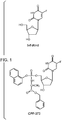
- CPF-373 (identified below and mentioned above as a particularly suitable compound of the invention with R 4 as H) was chosen for further in depth studies. This molecule contains a naphthyl and benzylalaninyl group to mask the charged 5'-phosphate on 5-FdUMP.
- tumour cell resistance towards fluoropyrimidines such as 5FU, 5-FdUrd and trifluorothymidine (TFT) have been described, including a decreased activity of crucial drug-activating enzymes (e.g. TK and orotate phosphoribosyltransferase), an increased activity of drug-inactivating enzymes (i.e. thymidine phosphorylase) and/or an upregulation of the target enzymes (e.g. TS) (Agarwal et al., 1999; Murakami et al., 2000; Kosaka et al., 2004).
- crucial drug-activating enzymes e.g. TK and orotate phosphoribosyltransferase
- drug-inactivating enzymes i.e. thymidine phosphorylase
- upregulation of the target enzymes e.g. TS
- TP levels found in several types of cancer tissue were reported to be predictive of a poorer prognosis upon treatment with fluoropyrimidines (Kamoshida et al., 2005; Ciaparrone et al., 2006; Koopman et al., 2009), although other studies have not confirmed these findings (Ciccolini et al., 2004; Koopman et al., 2009).
- the present invention derives from the development of a prodrug for 5-FdUrd, to circumvent possible resistance mechanisms and susceptibility to degradation by catabolic enzymes, present in the tumour micro-environment.
- CPF-373 are phosphoramidate prodrugs of 5-FdUrd and are described herein and can fulfil these aims.
- CPF-373 After uptake into the tumour cells, CPF-373, for example, generates 5-FdUMP intracellularly upon enzymatic cleavage.
- Stability studies and enzymatic/serum studies by 31 P NMR technology revealed that the prodrug CPF-373, for example, is fully stable in acid and alkaline conditions, but subject to hydrolysis in the presence of serum or carboxypeptidase Y, resulting in the formation of the nucleoside 5'-phosphoramidate derivative.
- TK is a key enzyme in the activation of 5-FdUrd
- CPF-373 was found to be much less dependent on TK to exert its cytostatic action in both murine (L1210) and human (CEM) cell cultures. Due to the lipophilic nature of ProTides, these molecules can deliver nucleoside-monophosphates directly into the intact tumour cell after conversion to their nucleoside phosphoramidate derivative by enzymes such as carboxyesterases or carboxypeptidases (i.e. carboxypeptidase Y), eliminating the need for an initial phosphorylation by specific nucleoside kinases such as TK.
- carboxyesterases or carboxypeptidases i.e. carboxypeptidase Y
- CPF-373 may be an adequate tool for the treatment of tumour cells with a modified TK activity (be it acquired or inherent). Also, since TK expression is S-phase-dependent, it is expected that CPF-373, for example, can also efficiently deliver 5-FdUMP in tumour cells that are not in the S-phase of their replication cycle. TS activity studies revealed that, CPF-373, for example, was able to inhibit TS in both wild-type and TK-deficient tumour cell lines, pointing again to an efficient intracellular delivery of the 5'-monophosphate of 5-FdUrd, and its virtual independence of cellular TK for metabolic activation.
- CPF-373 may have at least several advantages over its parent drug 5-FdUrd: it exerts its cytostatic activity independent of TK and it is resistant to metabolic breakdown by TP, an enzyme that is often upregulated in tumours or may be externally expressed by mycoplasma infection of the tumour tissue.
- the compound having formula I or the pharmaceutical composition according to the present invention can be administered to a homo sapiens patient by any suitable means.
- the medicaments employed in the present invention can be administered by oral or parenteral routes, including intravenous, intramuscular, intraperitoneal, subcutaneous, transdermal, airway (aerosol), rectal, vaginal and topical (including buccal and sublingual) administration.
- oral or parenteral routes including intravenous, intramuscular, intraperitoneal, subcutaneous, transdermal, airway (aerosol), rectal, vaginal and topical (including buccal and sublingual) administration.
- the compounds of the invention will generally be provided in the form of tablets or capsules, as a powder or granules, or as an aqueous solution or suspension.
- Tablets for oral use may include the active ingredient mixed with pharmaceutically acceptable excipients such as inert diluents, disintegrating agents, binding agents, lubricating agents, sweetening agents, flavouring agents, colouring agents and preservatives.
- suitable inert diluents include sodium and calcium carbonate, sodium and calcium phosphate, and lactose, while cornstarch and alginic acid are suitable disintegrating agents.
- Binding agents may include starch and gelatin, while the lubricating agent, if present, will generally be magnesium stearate, stearic acid or talc.
- the tablets may be coated with a material such as glyceryl monostearate or glyceryl distearate, to delay absorption in the gastrointestinal tract.
- Capsules for oral use include hard gelatin capsules in which the active ingredient is mixed with a solid diluent, and soft gelatin capsules wherein the active ingredient is mixed with water or an oil such as peanut oil, liquid paraffin or olive oil.
- Formulations for rectal administration may be presented as a suppository with a suitable base comprising for example cocoa butter or a salicylate.
- Formulations suitable for vaginal administration may be presented as pessaries, tampons, creams, gels, pastes, foams or spray formulations containing in addition to the active ingredient such carriers as are known in the art to be appropriate.
- the compounds of the invention will generally be provided in sterile aqueous solutions or suspensions, buffered to an appropriate pH and isotonicity.
- Suitable aqueous vehicles include Ringer's solution and isotonic sodium chloride.
- Aqueous suspensions according to the invention may include suspending agents such as cellulose derivatives, sodium alginate, polyvinyl-pyrrolidone and gum tragacanth, and a wetting agent such as lecithin.
- Suitable preservatives for aqueous suspensions include ethyl and n-propyl p-hydroxybenzoate.
- the compounds of the invention may also be presented as liposome formulations.
- a suitable dose will be in the range of 0.1 to 300 mg per kilogram body weight of the recipient per day.
- a preferred lower dose is 0.5 mg per kilogrm body weight of recpient per day, a more preferred lower dose is 6 mg per kilogram body weight of recipient per day, an even more preferred lower dose is 10 mg per kilogram body weight per recipient per day.
- a suitable dose is preferably in the range of 6 to 150 mg per kilogram body weight per day, and most preferably in the range of 15 to 100 mg per kilogram body weight per day.
- the desired dose is preferably presented as two, three, four, five or six or more sub-doses administered at appropriate intervals throughout the day. These sub-doses may be administered in unit dosage forms, for example, containing 10 to 1500 mg, preferably 20 to 1000 mg, and most preferably 50 to 700 mg of active ingredient per unit dosage form.
- arylphosphorodichlorophosphate ( 2 ) has been prepared coupling 1-naphthol ( 3 ) with phosphorus oxychloride ( 4 ) in the presence of Et 3 N (Scheme 1) and this was allowed to react with L-alanine benzyl ester tosylate ( 5 ) in the presence of Et 3 N to generate the phosphorochloridate derivative ( 6 ) (Scheme 2).
- the nucleoside 5-FdUrd ( 7 ) was converted to the 5' ProTide by coupling with the phosphorochloridate derivative ( 6 ) in THF, in the presence of N -methyl imidazole (NMI) to give the target compound CPF-373 ( 1 ) (Scheme 3).
- the sample was obtained as a mixture of two diastereoisomers as confirmed by the presence of two peaks in the 31 P NMR.
- Phosphorus oxychloride (1.0 equiv) was added to a solution of 1-naphthol (1.0 equiv) in diethyl ether under argon atmosphere, then anhydrous triethylamine (1.0 equiv) was added dropwise at -78 °C and the resulting reaction mixture was stirred for 1 h. Subsequently the reaction mixture was allowed to slowly warm up to room temperature for 3 h. Formation of the desired compound was monitored by 31 P NMR. The resulting mixture was filtered and then evaporated in vacuo under nitrogen to afford the crude colourless oil as product, which was used without further purification in the next step.
- [5- 3 H]dCyd (radiospecificity: 22 Ci/mmol) and [5- 3 H]dUrd (radiospecificity: 15.9 Ci/mmol) were obtained from Moravek Biochemicals Inc. (Brea, CA).
- the phosphoramidate was prepared using 5-fluoro-2'-deoxyuridine (0.40 g, 1.62 mmol), tert -butylmagnesium chloride in tetrahydrofuran (t BuMgCl) (1.0 M, 2.43 mL, 2.43 mmol) and phenyl(benzoxy-L-alaninyl) phosphorochloridate (1.08 g, 3.20 mmol) according to general procedure E.
- the phosphoramidate was prepared using 5-fluoro-2'-deoxyuridine (0.10 g, 0.40 mmol), tert-butylmagnesium chloride in tetrahydrofuran (t BuMgCl) (1.0 M, 0.61 mL, 0.61 mmol) and 1-naphthyl(isopropoxy-L-alaninyl) phosphorochloridate (0.31 g, 0.89 mmol) according to general procedure E.
- the phosphoramidate was prepared using 5-fluoro-2'-deoxyuridine (0.40 g, 1.62 mmol), tert -butylmagnesium chloride in tetrahydrofuran (t BuMgCl) (1.0 M, 2.43 mL, 2.43 mmol) and phenyl(benzoxy- ⁇ , ⁇ -dimethylglycine) phosphorochloridate (1.17 g, 3.20 mmol) according to general procedure E.
- the phosphoramidate was prepared using 5-fluoro-2'-deoxyuridine (0.40 g, 1.62 mmol), tert -butylmagnesium chloride in tetrahydrofuran (t BuMgCl) (1.0 M, 2.43 mL, 2.43 mmol) and 1-naphthyl(ethoxy- ⁇ , ⁇ -dimethylglycine) phosphorochloridate (1.14 g, 3.20 mmol) according to general procedure E.
- Murine leukaemia L1210/0 and human T-lymphocyte CEM/0 cells were obtained from the American Type Culture Collection (ATCC) (Rockville, MD). Human glioblastoma U87 cells were kindly provided by Dr. E. Menue (Institut Pasteur, Paris, France). Thymidine kinase-deficient CEM/TK - cells were a kind gift from Prof. S. Eriksson (currently at Uppsala University, Uppsala, Sweden) and Prof. A. Karlsson (Karolinska Institute, Sweden).
- Thymidine kinase-deficient L1210/TK - were derived from L1210/0 cells after selection for resistance against 5-bromo-2'-dUrd (Balzarini et al., 1982). Infection of relevant cell lines with Mycoplasma hyorhinis (ATCC) resulted in chronically-infected cell lines further referred to as L1210.Hyor and U87.Hyor.
- DMEM Dulbecco's modified Eagle's medium
- FBS foetal bovine serum
- FBS Biochrom AG, Berlin, Germany
- Monolayer cells (U87 and U87.Hyor) were seeded in 48-well microtiter plates (NuncTM, Roskilde, Denmark) at 10,000 cells/well. After 24 hours, an equal volume of fresh medium containing the test compounds was added. On day 5, cells were trypsinized and counted in a Coulter counter (Analis, Suarlée, Belgium). Suspension cells (L1210/0, L1210/TK - , L1210.Hyor, CEM/0, CEM/TK - ) were seeded in 96-well microtiter plates (NuncTM) at 60,000 cells/well in the presence of a given amount of the test compounds.
- the cells were allowed to proliferate for 48 h (L1210) or 72 hours (CEM) and were then counted in a Coulter counter.
- the 50% inhibitory concentration (IC 50 ) was defined as the compound concentration required to reduce the number of viable cells by 50 %.
- Assay 1 The samples were assayed for biological activity versus a range of tumour cell lines with data recorded in Table 1 below. Data are expressed as CC 50 in ⁇ M, i.e. cytostatic concentration required to inhibit cell proliferation by 50%.
- the cell lines employed were L1210/0 (a leukemia cell line), FM3A/0 (a breast cancer cell line), Cem/0 (an acute lymphoblastic leukemia cell line) and HeLa (a cervical cell line).
- Table 1 also contains comparative data for 5FU, 5-FdUrd and reference compounds CPF 382, CPF 437 and CPF 438.
- the structure of CPF 382 is given above.
- the structure of each of CPF 437 and CPF 438 is as follows:
- compounds of the present invention can exhibit cytostatic activity that is comparable to or better than that of 5-FU, whilst exhibiting marked cytostatic activity in nucleoside kinase-deficient cells.
- cytostatic activity in nucleotide kinase-deficient cells is in direct contrast to that of 5-FdUrd.
- TK - cells of compounds embodying the present invention can be markedly greater than that of reference compounds CPF 382, CPF 437 and CPF 438.
- Table 1 L1210/0 L1210/TK - FM3A/0 FM3ArTK - Cem/0 Cem/TK - HeLa HeLa/TK - 5-FdUrd 0.00082 ⁇ 0.00008 3.1 ⁇ 0.2 0.028 ⁇ 0.002 1.5 ⁇ 0.1 5-FdUrd (2) 0.0010 ⁇ 0.0001 4.8 ⁇ 4.0 0.0065 ⁇ 0.0055 0.70 ⁇ 0.02 0.026 ⁇ 0.000 4.4 ⁇ 2.9 0.029 ⁇ 0.007 1.4 ⁇ 0.5 5-FdUrd (3) 0.0011 ⁇ 0.0002 3.0 ⁇ 0.1 0.022 ⁇ 0.006 3.0 ⁇ 0.4 0.050 ⁇ 0.011 1.4 ⁇ 0.4 FU 0.33 ⁇ 0.17 0.32 ⁇ 0.31 0.18 ⁇ 0.02
- CC50 values in ⁇ M for 5-FdUrd and compounds embodying the present invention in mycoplasma negative and positive cells and % retention of activity on mycoplasma infection. "% retention” is a measure of the ratio of the CC50 values measured with respect to L1210 with respect to those for L1210/Hyor and is calculated as CC50 L1210 x 100 ⁇ CC50 L1210/Hyor .
- 5-FdUrd The cytostatic activity of 5-FdUrd and CPF-373 was determined in different TK-expressing and TK-deficient tumour cell lines. As shown in Table 3, 5-FdUrd is strongly dependent on the expression of TK for its cytostatic activity. Its IC 50 increased by 4,000-fold for L1210/TK- cells (IC 50 : 3.1 ⁇ M) versus wild-type L1210/0 cells (IC 50 : 0.0008 ⁇ M) and by 50-fold for CEM/TK- cells (IC 50 : 1.5 ⁇ M) versus CEM/0 cells (IC 50 : 0.028 ⁇ M).
- the cytostatic activity of the 5-FdUrd prodrug CPF-373 remained virtually unchanged in TK-deficient cells when compared with wild-type cells (IC 50 : 0.027 and 0.011 ⁇ M for L1210/TK - and L1210/0, and 0.32 and 0.089 ⁇ M for CEM/TK - and CEM/0 cells, respectively).
- the cytostatic activity of CPF-373 was 3- to 10-fold inferior to 5-FdUrd against wild-type L1210/0 and CEM/0 cells, it proved 5- to 100-fold superior to 5-FdUrd in the TK-deficient tumour cell lines (see Table 3). Table 3.
- the L1210/0 cell cultures were infected with the mycoplasma species M . hyorhinis (cells designated: L1210.Hyor).
- 5-FdUrd markedly lost its cytostatic activity against the mycoplasma-infected L1210.Hyor cells by 300-fold (IC 50 : 0.24 ⁇ M).
- 5-FdUrd lost its cytostatic activity by 400-fold in U87.Hyor cell cultures when compared with uninfected U87 cells (see Table 3).
- the 5-FdUrd prodrug CPF-373 kept a similar cytostatic potential in both L1210/0 and L1210.Hyor cell cultures (IC 50 : 0.011 and 0.025 ⁇ M, respectively).
- Nucleoside 5-FdUrd can be degraded to its relative base 5FU by a phosphorolytic reaction, using thymidine phosphorylase purified from Escherichia coli as well as uridine phosphorylase purified from Ehrlich ascite tumor. This breakdown has been suggested to be one of the reasons for the limited therapeutic effectiveness of 5-FdUrd according to the following scheme:
- the phosphorylase assay was carried out towards phosphorolysis by Thymidine Phosphorylase purified from Escherichia coli using in situ 19 F NMR.
- the application to the ProTide compound CPF 373 was an attempt to prevent the cleavage of the structure and thus circumvent the action of the enzyme.
- Two potassium phosphate buffers at pH 7.4, 200 nM solution and 300 nM solution respectively, were used as phosphate donor. Units of enzyme were defined as the amount of enzyme required to hydrolyse about 0.25 mg of inosine per min used as standard. Assays were conducted for 30 minutes.
- Phosphorylase assay was applied to benzyl L-alanine phenyl derivative CPF 373 in order to investigate the stability, following the procedure and the conditions above described.
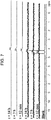
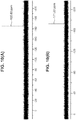
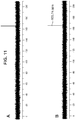
- ProTide compound CPF 373 proved to be completely stable as showed by comparing chemical shifts of sample analysed without TP enzyme, as shown in Figure 11 spectrum A, and in the presence of TP, as shown in Figure 11 spectrum B.
- 19 F NMR was repeated after 4 days and the ProTide compound CPF 373 was shown once again to be stable.
- thymidine phosphorylase towards natural thymidine (dThd), uridine (Urd), 5-FdUrd and CPF-373 was investigated by high pressure liquid chromatography (HPLC).
- Reaction mixtures containing 100 ⁇ M test compound and recombinant TP or UP (human TP: 8.6 ng/ ⁇ L; E . coli TP: 3.0 ng/ ⁇ L; human UP: 4 ng/mL) in a total volume of 500 ⁇ L reaction buffer (10 mM TrisHCl; 300 ⁇ M NaCl; 1 mM EDTA; 2 mM KH 2 PO 4 /K 2 HPO 4 ) were incubated at room temperature.
- the separation of dThd from thymine was performed by a linear gradient from 98% separation buffer (50 mM NaH 2 PO 4 and 5 mM heptane sulfonic acid, pH 3.2) and 2 % acteonitrile, to 20% separation buffer + 80% acetonitrile (8 min 98% separation buffer + 2% acetonitrile; 5 min linear gradient of 98% separation buffer + 2% acetonitrile to 20% separation buffer + 80% acetonitrile; 10 min 20% separation buffer + 80% acetonitrile, followed by equilibration at 98% separation buffer + 2% acetonitrile).
- UV-based detection was performed at 267 nm.
- the separation of Urd from uracil was performed by a linear gradient from 100% separation buffer (see above) to 60% separation buffer + 40% acetonitrile (3 min 100% separation buffer; 6 min linear gradient of 100% separation buffer to 60% separation buffer + 40% acetonitrile; 6 min 60% separation buffer + 40% acetonitrile, followed by equilibration at 100% separation buffer).
- UV-based detection was performed at 258 nm.
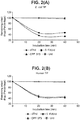
- 5-FdUrd and its prodrug CPF-373 were exposed to purified thymidine phosphorylase derived from E.coli or human erythrocytes, and to purified uridine phosphorylase derived from human tumors.
- E.coli and human TP rapidly converted dThd and 5-FdUrd to their free bases
- CPF-373 kept fully stable in the presence of these enzymes ( Fig. 2 ).
- uridine was converted to uracil by human UP, but not by E.coli TP, or human TP.
- dThd and CPF-373 were not affected by the enzyme, whereas 5-FdUrd was slightly hydrolysed ( Fig. 2 , panel C).
- TS in intact L1210/0 and L1210/TK- cells was measured by evaluation of tritium release from [5- 3 H]dUMP (formed in the cells from [5- 3 H]dUrd or [5- 3 H]dCyd) in the reaction catalysed by TS.
- This method has been described in detail by Balzarini & De Clercq (1984). Shortly, cell cultures (500 ⁇ L DMEM culture medium) were prepared containing ⁇ 3 x 10 6 L1210 cells and appropriate amounts of the test compounds (5-FdUrd and CPF-373).
- TS thymidylate synthase
- the activity of TS in intact tumour cells can be directly monitored by measuring the tritium release in intact L1210/0 cell cultures that were exposed to [5- 3 H]deoxyuridine ([5- 3 H]dUrd) or [5- 3 H]deoxycytidine ([5- 3 H]dCyd). Indeed, after intracellular conversion of [5- 3 H]dUrd or [5- 3 H]dCyd to [5- 3 H]dUMP, the C-5 tritium atom on the pyrimidine base is released during the TS-catalysed reductive methylation.
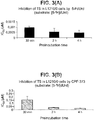
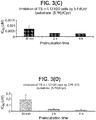
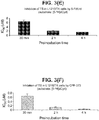
- IC 50 values of 5-FdUrd and CPF-373 against TS in intact L1210/0 tumour cells as determined by tritium release from [5- 3 H]dUrd and [5- 3 H]dCyd after 30 min exposure to the drugs).
- IC 50 a ( ⁇ M) Compound Tritium release from dUrd* Tritium release from dCyd* 5-FdUrd 0.0009 ⁇ 0.0002 0.0007 ⁇ 0.003 CPF-373 0.16 ⁇ 0.05 0.19 ⁇ 0.08 a 50% Inhibitory concentration or compound concentration required to inhibit tritium release from [5- 3 H]dUrd or [5- 3 H]dCyd in drug-exposed L1210/0 cell cultures by 50%.
- the inhibitory activity of CPF-373 on tritium release was much less ( ⁇ 200-fold) pronounced than that of 5-FdUrd, especially after only 30 min preincubation of the cells with the drugs (IC 50 : 0.16-0.19 ⁇ M).
- Preincubation of the tumour cells with 5-FdUrd and CPF-373 for at least 4 hrs results in TS inhibition in the intact tumour cells at drug concentrations that are very comparable with the 50% cytostatic activity concentrations of these drugs.
- TS The activity of TS in the presence of 5-FdUrd and CPF-373 was also measured in intact L1210/TK- cells using [5- 3 H]dCyd as an externally supplied substrate (due to TK deficiency, [5- 3 H]dUrd cannot be used).
- concentration of 5-FdUrd required to cause 50 % inhibition of TS decreased by a factor 5,700 in TK-deficient L1210/TK- cells (IC 50 : 1.4 ⁇ M) when compared to wild-type L1210/0 cells (IC 50 : 0.0003 ⁇ M).
- IC 50 values of 5-FdUrd and CPF-373 against TS in intact L1210/0 and L1210/TK- cells (as determined by tritium release from [5- 3 H]dCyd after 4 hours of preincubation with the products)
- IC 50 a ( ⁇ M) Compound L1210/0 L1210/TK- 5-FdUrd 0.0003 ⁇ 0.00003 1.42 ⁇ 0.09
- CPF-373 0.013 ⁇ 0.008 0.053 ⁇ 0.0009 a 50% Inhibitory concentration or compound concentration required to inhibit tritium release from [5- 3 H]dCyd in drug-exposed L1210 cells by 50% upon pre-exposure of the tumour cells for 4 hrs to the drugs.
- the enzymatic stability of the prodrug CPF-373 towards carboxypeptidase Y was studied using in situ 31 P NMR (202 MHz). The experiment was carried out by dissolving CPF-373 (3.0 mg) in d 6 -acetone (150 ⁇ L) and adding TRIZMA buffer pH 7.6 (300 ⁇ L). The resulting solution was placed in an NMR tube and a 31 P-NMR experiment at 25 °C was recorded as the blank experiment. The enzyme Carboxypeptidase Y (0.2 mg) was solubilised in TRIZMA (150 ⁇ L) and added to the solution of the phosphoramidate derivative in the NMR tube.
- the stability of the prodrug CPF-373 in the presence of human serum was studied using in situ 31 P NMR (202 MHz).
- the ProTide CPF-373 ( 1 ) (5.0 mg) was dissolved in DMSO (0.05 mL) and D 2 O (0.15 mL). Then the sample was transferred into an NMR tube, which was inserted in the NMR chamber at 37 °C (with enough solvent to obtain a control NMR reading of the blank). Then 0.3 ml human serum was quickly added to the sample in the NMR tube.
- NMR experiments were programmed to record data every 15 minutes for 12 hours and 30 minutes. Because of excess noise and poor shimming profiles (most likely due to the biological media and concentration), individual spectra were further processed.
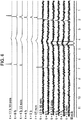
- the spectra displayed a singlet peak inherent to the human serum at ⁇ ⁇ 2.00 and the double peak of the parent at ⁇ ⁇ 4.50 which after 4 hours and 15 minutes was hydrolyzed to the aminoacyl phosphoramidate intermediate shown as a singlet peak at ⁇ 7.20.
- the putative mechanism of activation of the ProTides inside the cell, after uptake involves a first enzymatic activation step mediated by a carboxypeptidase-type enzyme which hydrolyzes the ester of the aminoacyl moiety (step a) followed by spontaneous cyclization and subsequent spontaneous displacement of the aryl group (step b) and opening of the unstable ring mediated by water (step c).
- the last step involves a hydrolysis of the P-N bond mediated by a phosphoramidase-type enzyme (step d) with release of the nucleoside monophosphate in the intact cell ( Fig 4 ) (McGuigan et al., 2009; Mehellou et al., 2010).
- the prodrug CPF-373 ( 1 ) appeared as two peaks ⁇ 4.07; 4.23 corresponding with the two diastereoisomers noted as parent with the characteristic doubling-up of the chiral phosphate centre of the phosphoramidate.
- the compound was quickly hydrolyzed after 4 minutes to intermediates ⁇ 4.95; 5.16 which lack the ester motif and this intermediate did not persist as it was in turn quickly metabolized to the aminoacyl phosphoramidate intermediate, the final product in this assay, via the loss of the aryl group (steps a to c in Fig. 4 ).
- the intermediate appeared as a singlet peak at ⁇ 6.85 due to the achiral phosphate centre.
- the enzymatic assay spectra showed a fast metabolism of the parent ⁇ ⁇ 4.00 with complete conversion to the putative intermediate within 26 minutes, which further stayed consistently present throughout the 14 h of the assay.
- the cleavage of the P-N bond releasing the nucleoside monophosphate was not detected in the enzyme experiment, as expected.
- This experiment indicates that the first activation step of ProTide CPF-373 ( 1 ) may be sufficiently efficient, and therefore, may allow the eventual delivery of the nucleoside monophosphate metabolite in the intact tumour cells.
- the present invention provides novel phosphoramidate nucleotide prodrugs of the anticancer nucleoside analogue 5-fluoro-2'-deoxyuridine (5-FdUrd), which were synthesized and evaluated for their cytostatic activity.
- 5-FdUrd substantially lost its cytostatic potential in thymidine kinase (TK)-deficient murine leukaemia L1210 and human lymphocyte CEM cell cultures
- compounds which form part of this disclosure, such as CPF-373 markedly kept their antiproliferative activity in both the wild-type and TK-deficient tumour cells and are thus largely independent of intracellular TK activity to exert their cytostatic action.
- CPF-373 for example, was found to inhibit thymidylate synthase (TS) in the TK-deficient and wild-type cell lines at drug concentrations that correlated well with its cytostatic activity in these cells.
- CPF-373 does not seem to be susceptible to inactivation by catabolic enzymes such as thymidine phosphorylase (TP) and uridine phosphorylase (UP).
- TP thymidine phosphorylase
- UP uridine phosphorylase
- Table 6 records the cytostatic activity of 5-FU, 5-FdUrd, reference example CPF382 and compounds embodying the present invention against tumour cell lines in terms of IC 50 or compound concentration required to inhibit tumour cell proliferation by 50%. Data are the mean ( ⁇ SD) of at least two to four independent experiments.
- Table 6 identifies the phosphoramidate motif of reference example CPF382 and of compounds embodying the present invention with respect to: "aryl”, which corresponds to Ar of Formula I and is either phenyl (Ph) or 1-naphthyl (Nap); "ester”, which corresponds to R 3 of Formula I; and "AA”, which sets out the amino acid whose alpha C atom and substituents on the alpha C atom correspond to CR 1 R 2 of Formula I.
- Table 6 discloses compounds embodying the present invention not previously mentioned above in Table 1, as well as additional data for some of the compounds mentioned in Table 1. Table 6.
- Table 7 records the cytostatic activity of 5-FdUrd, reference example CPF382 and compounds embodying the present invention in wild type murine leukemia L1210 cell cultures (L1210/0) and L1210 cell cultures, infected with Mycoplasma hyorhinis (L1210.Hyor) in terms of IC 50 or compound concentration to inhibit cell proliferation by 50%. Data are mean ( ⁇ SD) of at least two to four independent experiments.
- Table 7 identifies the phosphoramidate motif of reference example CPF382 and of compounds embodying the present invention, as discussed above with respect to Table 6, but with "Naph" standing for 1-naphthyl.
- Table 7 discloses compounds embodying the present invention not previously mentioned above in Table 2, as well as additional data for some of the compounds mentioned in Table 2.
- Table 7. IC 50 ( ⁇ M) Compd aryl ester AA L1210/0 L1210.Hyor IC 50 (L1210.Hyor)/IC 50 (L1210/0) 5-FdUrd 0.0009 ⁇ 0.0003 0.34 ⁇ 0.13 378 Ph Me Ala 0.040 ⁇ 0.016 0.87 ⁇ 0.28 22 Ph Et Ala 0.11 ⁇ 0.0021 0.54 ⁇ 0.12 5 Ph i -Pr Ala 0.050 ⁇ 0.013 0.70 ⁇ 0.10 14 Ph c -Hex Ala 0.032 ⁇ 0.0050 0.040 ⁇ 0.016 1.25 Ph Bn Ala 0.026 ⁇ 0.008 0.15 ⁇ 0.006 5.8 Ph Et Val 0.20 ⁇ 0.033 4.4 ⁇ 1.1 22 Ph Bn Leu 0.054 ⁇ 0.0021 0.17 ⁇ 0.047
- Table 8 below records the cytostatic activity of 5-FdUrd and compounds embodying the present invention in CEM cell cultures containing (Cem/hEnt-1) or lacking (Cem/hEnt-0) the hEnt1 transporter in terms of IC 50 or compound concentration required to inhibit tumour cell proliferation by 50%. Data are mean ( ⁇ SD) of at least two to four independent experiments.
- Table 8 identifies the phosphoramidate motif of compounds embodying the present invention, as discussed above with respect to Table 6, but with "Naph” standing for 1-naphthyl.
- the rate of the initial activation step might thus be considered in general as one of requirments for good biological actrivity of phosphoramidates.
- Chemical hydrolysis of compound CPF 373 in the presence of triethylamine and water produced the diammonium salt of the anionic second metabolite, which was added to the final assay sample derived from compound CPF 373, i.e. containing only the enzymatic second metabolite derived from compound CPF 581 in Trizma.
- the sample had a 31 P NMR spectrum showing only a single peak at ⁇ P 6.85 ppm, strongly supporting this part of the metabolic pathway and activation of the phosphoramidate compounds of the present invention.
Landscapes
- Health & Medical Sciences (AREA)
- Chemical & Material Sciences (AREA)
- Organic Chemistry (AREA)
- Life Sciences & Earth Sciences (AREA)
- General Health & Medical Sciences (AREA)
- Molecular Biology (AREA)
- Pharmacology & Pharmacy (AREA)
- Animal Behavior & Ethology (AREA)
- Medicinal Chemistry (AREA)
- Public Health (AREA)
- Veterinary Medicine (AREA)
- Biochemistry (AREA)
- Epidemiology (AREA)
- Nuclear Medicine, Radiotherapy & Molecular Imaging (AREA)
- General Chemical & Material Sciences (AREA)
- Chemical Kinetics & Catalysis (AREA)
- Engineering & Computer Science (AREA)
- Genetics & Genomics (AREA)
- Biotechnology (AREA)
- Oncology (AREA)
- Hematology (AREA)
- Bioinformatics & Cheminformatics (AREA)
- Pharmaceuticals Containing Other Organic And Inorganic Compounds (AREA)
- Saccharide Compounds (AREA)
- Medicines That Contain Protein Lipid Enzymes And Other Medicines (AREA)
- Medicinal Preparation (AREA)
- Measuring Or Testing Involving Enzymes Or Micro-Organisms (AREA)
Priority Applications (6)
| Application Number | Priority Date | Filing Date | Title |
|---|---|---|---|
| EP21209926.1A EP4023299B1 (en) | 2011-03-01 | 2012-02-29 | Phosphoramidate derivatives of 5-fluoro-2'-deoxyuridine for use in the treatment of cancer |
| DK18178715.1T DK3447061T3 (da) | 2011-03-01 | 2012-02-29 | Farmaceutisk formulering omfattende et phosphoramidatderivat af 5-fluor-2'-deoxyuridin til anvendelse i cancerbehandling |
| PL18178715T PL3447061T3 (pl) | 2011-03-01 | 2012-02-29 | Farmaceutyczna formulacja zawierająca pochodną fosforoamidynianową 5-fluoro-2'-deoksyurydyny do zastosowania w leczeniu nowotworu |
| EP18178715.1A EP3447061B1 (en) | 2011-03-01 | 2012-02-29 | Pharmaceutical formulation comprising a phosphoramidate derivative of 5-fluoro-2'-deoxyuridine for use in the treatment of cancer |
| PL16150494T PL3031812T3 (pl) | 2011-03-01 | 2012-02-29 | Związki chemiczne |
| CY20211101114T CY1124871T1 (el) | 2011-03-01 | 2021-12-17 | Φαρμακευτικα σκευασματα που περιλαμβανουν παραγωγα φωσφοραμιδιου της 5-φθορο-2'-δεοξυουριδινη προς χρηση στη θεραπεια του καρκινου |
Applications Claiming Priority (4)
| Application Number | Priority Date | Filing Date | Title |
|---|---|---|---|
| GBGB1103582.1A GB201103582D0 (enExample) | 2011-03-01 | 2011-03-01 | |
| GBGB1105660.3A GB201105660D0 (en) | 2011-04-01 | 2011-04-01 | Chemical compounds |
| EP12709146.0A EP2681227B1 (en) | 2011-03-01 | 2012-02-29 | Phosphoramidate derivatives of 5-fluoro-2'-deoxyuridine for use in the treatment of cancer |
| PCT/GB2012/050457 WO2012117246A1 (en) | 2011-03-01 | 2012-02-29 | Phosphoramidate derivatives of 5 - fluoro - 2 ' - deoxyuridine for use in the treatment of cancer |
Related Parent Applications (1)
| Application Number | Title | Priority Date | Filing Date |
|---|---|---|---|
| EP12709146.0A Division EP2681227B1 (en) | 2011-03-01 | 2012-02-29 | Phosphoramidate derivatives of 5-fluoro-2'-deoxyuridine for use in the treatment of cancer |
Related Child Applications (3)
| Application Number | Title | Priority Date | Filing Date |
|---|---|---|---|
| EP18178715.1A Division-Into EP3447061B1 (en) | 2011-03-01 | 2012-02-29 | Pharmaceutical formulation comprising a phosphoramidate derivative of 5-fluoro-2'-deoxyuridine for use in the treatment of cancer |
| EP18178715.1A Division EP3447061B1 (en) | 2011-03-01 | 2012-02-29 | Pharmaceutical formulation comprising a phosphoramidate derivative of 5-fluoro-2'-deoxyuridine for use in the treatment of cancer |
| EP21209926.1A Division EP4023299B1 (en) | 2011-03-01 | 2012-02-29 | Phosphoramidate derivatives of 5-fluoro-2'-deoxyuridine for use in the treatment of cancer |
Publications (2)
| Publication Number | Publication Date |
|---|---|
| EP3031812A1 EP3031812A1 (en) | 2016-06-15 |
| EP3031812B1 true EP3031812B1 (en) | 2018-08-01 |
Family
ID=45841523
Family Applications (4)
| Application Number | Title | Priority Date | Filing Date |
|---|---|---|---|
| EP16150494.9A Active EP3031812B1 (en) | 2011-03-01 | 2012-02-29 | Chemical compounds |
| EP18178715.1A Active EP3447061B1 (en) | 2011-03-01 | 2012-02-29 | Pharmaceutical formulation comprising a phosphoramidate derivative of 5-fluoro-2'-deoxyuridine for use in the treatment of cancer |
| EP21209926.1A Active EP4023299B1 (en) | 2011-03-01 | 2012-02-29 | Phosphoramidate derivatives of 5-fluoro-2'-deoxyuridine for use in the treatment of cancer |
| EP12709146.0A Active EP2681227B1 (en) | 2011-03-01 | 2012-02-29 | Phosphoramidate derivatives of 5-fluoro-2'-deoxyuridine for use in the treatment of cancer |
Family Applications After (3)
| Application Number | Title | Priority Date | Filing Date |
|---|---|---|---|
| EP18178715.1A Active EP3447061B1 (en) | 2011-03-01 | 2012-02-29 | Pharmaceutical formulation comprising a phosphoramidate derivative of 5-fluoro-2'-deoxyuridine for use in the treatment of cancer |
| EP21209926.1A Active EP4023299B1 (en) | 2011-03-01 | 2012-02-29 | Phosphoramidate derivatives of 5-fluoro-2'-deoxyuridine for use in the treatment of cancer |
| EP12709146.0A Active EP2681227B1 (en) | 2011-03-01 | 2012-02-29 | Phosphoramidate derivatives of 5-fluoro-2'-deoxyuridine for use in the treatment of cancer |
Country Status (28)
| Country | Link |
|---|---|
| US (7) | US8933053B2 (enExample) |
| EP (4) | EP3031812B1 (enExample) |
| JP (1) | JP5978232B2 (enExample) |
| KR (1) | KR101885940B1 (enExample) |
| CN (2) | CN104974206B (enExample) |
| AU (1) | AU2012223012C1 (enExample) |
| BR (1) | BR112013021986B1 (enExample) |
| CA (1) | CA2828326C (enExample) |
| CL (1) | CL2013002517A1 (enExample) |
| CY (2) | CY1117445T1 (enExample) |
| DK (3) | DK3031812T3 (enExample) |
| ES (4) | ES2686219T3 (enExample) |
| HR (2) | HRP20211967T1 (enExample) |
| HU (2) | HUE029022T2 (enExample) |
| IL (1) | IL228169A (enExample) |
| LT (1) | LT3447061T (enExample) |
| MX (1) | MX339822B (enExample) |
| NZ (1) | NZ615270A (enExample) |
| PH (2) | PH12013501723A1 (enExample) |
| PL (3) | PL3447061T3 (enExample) |
| PT (2) | PT3031812T (enExample) |
| RS (2) | RS62721B1 (enExample) |
| RU (1) | RU2614406C2 (enExample) |
| SG (1) | SG192841A1 (enExample) |
| SI (2) | SI3447061T1 (enExample) |
| SM (2) | SMT202100715T1 (enExample) |
| WO (1) | WO2012117246A1 (enExample) |
| ZA (2) | ZA201306468B (enExample) |
Families Citing this family (37)
| Publication number | Priority date | Publication date | Assignee | Title |
|---|---|---|---|---|
| GB201016855D0 (en) | 2010-10-06 | 2010-11-17 | Nucana Biomed Ltd | Chemical compounds |
| CA2828326C (en) | 2011-03-01 | 2019-05-07 | Nucana Biomed Limited | Phosphoramidate derivatives of 5 - fluoro - 2' - deoxyuridine for use in the treatment of cancer |
| US10005810B2 (en) | 2012-11-16 | 2018-06-26 | University College Cardiff Consultants Limited | Process for preparing nucleoside prodrugs |
| WO2015013352A2 (en) * | 2013-07-25 | 2015-01-29 | Patel Hasmukh B | Nucleoside phosphoramidates and phosphoramidites |
| CN104447923B (zh) * | 2013-09-23 | 2018-03-30 | 中国药科大学 | 2’‑脱氧‑2’‑氟‑2’‑甲基核苷衍生物及其制备方法与在制药中的用途 |
| RU2553996C1 (ru) * | 2013-11-27 | 2015-06-20 | Андрей Александрович Иващенко | Замещенные (2r,3r,5r)-3-гидрокси-(5-пиримидин-1-ил)тетрагидрофуран-2-илметил арил фосфорамидаты |
| KR102456088B1 (ko) | 2014-04-04 | 2022-10-19 | 델 마 파마슈티컬스 | 폐의 비소세포 암종 및 난소암을 치료하기 위한 디안하이드로갈락티톨 및 이의 유사체 또는 유도체 |
| KR20170005492A (ko) * | 2014-05-28 | 2017-01-13 | 아이데닉스 파마슈티칼스 엘엘씨 | 암의 치료를 위한 뉴클레오시드 유도체 |
| CN105153257B (zh) * | 2014-06-12 | 2019-03-05 | 正大天晴药业集团股份有限公司 | 索非布韦的制备方法 |
| CA2945938C (en) | 2014-06-25 | 2023-04-18 | Nucana Biomed Limited | Gemcitabine prodrugs |
| PL225283B1 (pl) * | 2014-07-24 | 2017-03-31 | Univ Im Adama Mickiewicza W Poznaniu | Pochodne 2,3’-anhydro-2’-deoksy-5-fluorourydyny o działaniu cytotoksycznym, sposób wytwarzania i zastosowanie |
| IL291927A (en) | 2014-11-28 | 2022-06-01 | NuCana plc | Oligonucleotides containing modified nucleosides |
| IL302877A (en) | 2015-03-06 | 2023-07-01 | Atea Pharmaceuticals Inc | Cell-D-2'-deoxy-2'-alpha-fluoro-2'-cell-C-modified-2-different-N6-purine modified nucleotides for the treatment of hepatitis C virus |
| CN108368147A (zh) * | 2015-05-27 | 2018-08-03 | 南方研究院 | 用于治疗癌症的核苷酸 |
| CA3005444A1 (en) | 2015-11-16 | 2017-05-26 | Ichorion Therapeutics, Inc. | Nucleic acid prodrugs |
| GB201522764D0 (en) | 2015-12-23 | 2016-02-03 | Nucana Biomed Ltd | Formulations of phosphate derivatives |
| GB201609601D0 (en) | 2016-06-01 | 2016-07-13 | Nucana Biomed Ltd | Phosphoramidate compounds |
| GB201609600D0 (en) * | 2016-06-01 | 2016-07-13 | Nucuna Biomed Ltd | Cancer treatments |
| LU100724B1 (en) | 2016-07-14 | 2018-07-31 | Atea Pharmaceuticals Inc | Beta-d-2'-deoxy-2'-alpha-fluoro-2'-beta-c-substituted-4'-fluoro-n6-substituted-6-amino-2-substituted purine nucleotides for the treatment of hepatitis c virus infection |
| KR102456417B1 (ko) | 2016-09-07 | 2022-10-19 | 아테아 파마슈티컬즈, 인크. | Rna 바이러스 치료를 위한 2'-치환된-n6-치환된 퓨린 뉴클레오티드 |
| WO2018089909A1 (en) | 2016-11-13 | 2018-05-17 | Imagine Pharma | Compositions and methods for treating diabetes, hypertension and hypercholesterolemia |
| AU2017378959B2 (en) | 2016-12-23 | 2021-09-09 | Sichuan Kelun-Biotech Biopharmaceutical Co., Ltd. | Nucleoside phosphate compound and preparation method and use thereof |
| RU2644156C1 (ru) * | 2017-02-28 | 2018-02-08 | Александр Васильевич Иващенко | Пролекарство ингибитора NS5B HCV полимеразы, способ его получения и применения |
| GB201709471D0 (en) * | 2017-06-14 | 2017-07-26 | Nucana Biomed Ltd | Diastereoselective synthesis of hosphate derivatives |
| US11576930B2 (en) | 2017-08-08 | 2023-02-14 | Sun Yat-Sen University | Methods and compositions for treatment of multi-drug resistant tumors |
| GB201713916D0 (en) * | 2017-08-30 | 2017-10-11 | Nucana Biomed Ltd | Treatment regimens |
| GB201715011D0 (en) | 2017-09-18 | 2017-11-01 | Nucana Biomed Ltd | Floxuridine synthesis |
| GB201720279D0 (en) | 2017-12-05 | 2018-01-17 | Nucana Biomed Ltd | Anticancer compounds |
| JP7266896B2 (ja) * | 2018-03-09 | 2023-05-01 | 国立研究開発法人科学技術振興機構 | β修飾リン酸化合物前駆体、β修飾リン酸化合物、反応阻害剤及びこれを含む医薬並びに反応阻害方法 |
| CN110387226A (zh) * | 2018-04-20 | 2019-10-29 | 天津大学 | 一种用于检测肿瘤的荧光探针及用途 |
| US12221649B2 (en) | 2018-11-30 | 2025-02-11 | The University Of Tokyo | Fluorescent probe for detecting carboxypeptidase activity |
| GB201904544D0 (en) | 2019-04-01 | 2019-05-15 | NuCana plc | Anticancer compounds |
| CN110840907B (zh) * | 2019-08-16 | 2022-11-25 | 南京医科大学 | 一类自由基敏感的尿嘧啶类ProTide前药及其药物用途 |
| WO2021173713A1 (en) | 2020-02-27 | 2021-09-02 | Atea Pharmaceuticals, Inc. | Highly active compounds against covid-19 |
| US10874687B1 (en) | 2020-02-27 | 2020-12-29 | Atea Pharmaceuticals, Inc. | Highly active compounds against COVID-19 |
| US20240043467A1 (en) * | 2020-08-31 | 2024-02-08 | Emory University | 5'-substituted nucleoside monophosphates, prodrugs thereof, and uses related thereto |
| WO2024121527A1 (en) | 2022-12-07 | 2024-06-13 | NuCana plc | Synthesis of nucleoside derivative nuc-3373 |
Citations (2)
| Publication number | Priority date | Publication date | Assignee | Title |
|---|---|---|---|---|
| WO1999037753A1 (en) * | 1998-01-23 | 1999-07-29 | Newbiotics, Inc. | Enzyme catalyzed therapeutic agents |
| WO2005012327A2 (en) * | 2003-07-21 | 2005-02-10 | University College Cardiff Consultants Limited | Nucleotide phosphoramidates as anticancer agents |
Family Cites Families (32)
| Publication number | Priority date | Publication date | Assignee | Title |
|---|---|---|---|---|
| US2802005A (en) | 1957-08-06 | S-eluorourace | ||
| US1002239A (en) | 1902-04-11 | 1911-09-05 | Stromberg Carlson Telephone | Telephone system. |
| US2945038A (en) | 1956-09-26 | 1960-07-12 | Hoffmann La Roche | 5-fluorocytosine and preparation thereof |
| US3201387A (en) | 1963-09-18 | 1965-08-17 | Heidelberger Charles | 5-trifluoromethyluracil, derivatives thereof, and processes for preparing the same |
| US3792039A (en) | 1971-12-27 | 1974-02-12 | Miles Lab | Poly 2'-fluoro-2'-deoxyuridylic acid |
| DD279248A1 (de) | 1989-01-01 | 1990-05-30 | Akad Wissenschaften Ddr | Verfahren zur herstellung von 2',3'-didesoxythymidin-5'-diamidophosphaten |
| GB9505025D0 (en) * | 1995-03-13 | 1995-05-03 | Medical Res Council | Chemical compounds |
| RU2197964C2 (ru) * | 1995-04-12 | 2003-02-10 | Дзе Проктер Энд Гэмбл Компани | Фармацевтическая композиция, композиция стандартной лекарственной формы и способ лечения злокачественных новообразований, опухолей и вирусных инфекций |
| US7462605B2 (en) | 1998-01-23 | 2008-12-09 | Celmed Oncology (Usa), Inc. | Phosphoramidate compounds and methods of use |
| ATE429438T1 (de) | 1999-07-22 | 2009-05-15 | Celmed Oncology Usa Inc | Enzym katalisierte therapeutische aktivierung |
| DE10109657A1 (de) | 2001-02-28 | 2002-09-05 | Menarini Ricerche Spa | Verfahren zur Herstellung von (E)-5-(2-Bromvinyl)-2`-desoxyuridin |
| EP1404694A1 (en) | 2001-06-21 | 2004-04-07 | Glaxo Group Limited | Nucleoside compounds in hcv |
| CA2589935A1 (en) | 2004-12-09 | 2006-06-15 | Regents Of The University Of Minnesota | Nucleosides with antiviral and anticancer activity |
| GB0505781D0 (en) | 2005-03-21 | 2005-04-27 | Univ Cardiff | Chemical compounds |
| WO2007020193A2 (en) | 2005-08-15 | 2007-02-22 | F. Hoffmann-La Roche Ag | Antiviral phosphoramidates of 4 ' -substituted pronucleotides |
| WO2007056596A2 (en) | 2005-11-09 | 2007-05-18 | Wayne State University | Phosphoramidate derivatives of fau |
| US7964580B2 (en) | 2007-03-30 | 2011-06-21 | Pharmasset, Inc. | Nucleoside phosphoramidate prodrugs |
| TWI583692B (zh) | 2009-05-20 | 2017-05-21 | 基利法瑪席特有限責任公司 | 核苷磷醯胺 |
| CN101922935B (zh) | 2010-07-16 | 2012-07-18 | 北京大学 | 一种最小互易结构干涉型全光纤陀螺仪 |
| ES2524398T3 (es) | 2010-07-19 | 2014-12-09 | Gilead Sciences, Inc. | Métodos para la preparación de profármacos de fosforoamidato diastereoméricamente puros |
| JP6012605B2 (ja) | 2010-09-22 | 2016-10-25 | アリオス バイオファーマ インク. | 置換されたヌクレオチドアナログ |
| WO2012040126A1 (en) | 2010-09-22 | 2012-03-29 | Alios Biopharma, Inc. | Substituted nucleotide analogs |
| WO2012048013A2 (en) | 2010-10-06 | 2012-04-12 | Inhibitex, Inc. | Phosphorodiamidate derivatives of guanosine nucleoside compounds for treatment of viral injections |
| GB201016855D0 (en) | 2010-10-06 | 2010-11-17 | Nucana Biomed Ltd | Chemical compounds |
| CA2824360C (en) | 2011-03-01 | 2020-01-14 | Janssen Pharmaceutica Nv | 6,7-dihydro-pyrazolo[1,5-a]pyrazin-4-ylamine derivatives useful as inhibitors of beta-secretase (bace) |
| CA2828326C (en) | 2011-03-01 | 2019-05-07 | Nucana Biomed Limited | Phosphoramidate derivatives of 5 - fluoro - 2' - deoxyuridine for use in the treatment of cancer |
| CN110882268A (zh) | 2014-06-25 | 2020-03-17 | 努卡那有限公司 | 包括吉西他滨前药的制剂 |
| IL291927A (en) | 2014-11-28 | 2022-06-01 | NuCana plc | Oligonucleotides containing modified nucleosides |
| MX390506B (es) | 2015-05-14 | 2025-03-20 | NuCana plc | Nuc-1031 (gemcitabina-[fenil-benzoxi-l-alaninil])-fosfato) para usarse en el tratamiento neoadyuvante y adyuvante en pacientes con cáncer. |
| GB201522764D0 (en) | 2015-12-23 | 2016-02-03 | Nucana Biomed Ltd | Formulations of phosphate derivatives |
| GB201609600D0 (en) | 2016-06-01 | 2016-07-13 | Nucuna Biomed Ltd | Cancer treatments |
| GB201709471D0 (en) | 2017-06-14 | 2017-07-26 | Nucana Biomed Ltd | Diastereoselective synthesis of hosphate derivatives |
-
2012
- 2012-02-29 CA CA2828326A patent/CA2828326C/en active Active
- 2012-02-29 DK DK16150494.9T patent/DK3031812T3/en active
- 2012-02-29 PT PT16150494T patent/PT3031812T/pt unknown
- 2012-02-29 SG SG2013062823A patent/SG192841A1/en unknown
- 2012-02-29 JP JP2013555935A patent/JP5978232B2/ja active Active
- 2012-02-29 PH PH1/2013/501723A patent/PH12013501723A1/en unknown
- 2012-02-29 EP EP16150494.9A patent/EP3031812B1/en active Active
- 2012-02-29 PL PL18178715T patent/PL3447061T3/pl unknown
- 2012-02-29 HU HUE12709146A patent/HUE029022T2/en unknown
- 2012-02-29 HU HUE18178715A patent/HUE060127T2/hu unknown
- 2012-02-29 LT LTEP18178715.1T patent/LT3447061T/lt unknown
- 2012-02-29 RS RS20211549A patent/RS62721B1/sr unknown
- 2012-02-29 SI SI201231972T patent/SI3447061T1/sl unknown
- 2012-02-29 EP EP18178715.1A patent/EP3447061B1/en active Active
- 2012-02-29 EP EP21209926.1A patent/EP4023299B1/en active Active
- 2012-02-29 DK DK12709146.0T patent/DK2681227T3/da active
- 2012-02-29 MX MX2013009815A patent/MX339822B/es active IP Right Grant
- 2012-02-29 DK DK18178715.1T patent/DK3447061T3/da active
- 2012-02-29 ES ES16150494.9T patent/ES2686219T3/es active Active
- 2012-02-29 EP EP12709146.0A patent/EP2681227B1/en active Active
- 2012-02-29 RU RU2013143862A patent/RU2614406C2/ru active
- 2012-02-29 PT PT181787151T patent/PT3447061T/pt unknown
- 2012-02-29 SM SM20210715T patent/SMT202100715T1/it unknown
- 2012-02-29 ES ES18178715T patent/ES2903097T3/es active Active
- 2012-02-29 PL PL12709146T patent/PL2681227T3/pl unknown
- 2012-02-29 ES ES12709146.0T patent/ES2569185T3/es active Active
- 2012-02-29 CN CN201510329656.2A patent/CN104974206B/zh active Active
- 2012-02-29 WO PCT/GB2012/050457 patent/WO2012117246A1/en not_active Ceased
- 2012-02-29 HR HRP20211967TT patent/HRP20211967T1/hr unknown
- 2012-02-29 PL PL16150494T patent/PL3031812T3/pl unknown
- 2012-02-29 SI SI201230488T patent/SI2681227T1/sl unknown
- 2012-02-29 BR BR112013021986-6A patent/BR112013021986B1/pt active IP Right Grant
- 2012-02-29 ES ES21209926T patent/ES3039965T3/es active Active
- 2012-02-29 HR HRP20160346TT patent/HRP20160346T1/hr unknown
- 2012-02-29 KR KR1020137025749A patent/KR101885940B1/ko active Active
- 2012-02-29 US US14/000,682 patent/US8933053B2/en active Active
- 2012-02-29 CN CN201280010761.4A patent/CN103403013B/zh active Active
- 2012-02-29 RS RS20160211A patent/RS54776B1/sr unknown
- 2012-02-29 AU AU2012223012A patent/AU2012223012C1/en active Active
- 2012-02-29 NZ NZ615270A patent/NZ615270A/en unknown
-
2013
- 2013-08-28 IL IL228169A patent/IL228169A/en active IP Right Grant
- 2013-08-30 CL CL2013002517A patent/CL2013002517A1/es unknown
- 2013-09-09 ZA ZA2013/06468A patent/ZA201306468B/en unknown
-
2014
- 2014-12-04 US US14/560,097 patent/US9221866B2/en active Active
- 2014-12-09 ZA ZA2014/09013A patent/ZA201409013B/en unknown
-
2015
- 2015-03-05 PH PH12015500485A patent/PH12015500485B1/en unknown
- 2015-11-17 US US14/943,555 patent/US9655915B2/en active Active
-
2016
- 2016-04-27 CY CY20161100360T patent/CY1117445T1/el unknown
- 2016-05-06 SM SM201600132T patent/SMT201600132B/it unknown
-
2017
- 2017-04-18 US US15/489,884 patent/US10022390B2/en active Active
-
2018
- 2018-06-28 US US16/021,103 patent/US10993957B2/en active Active
-
2021
- 2021-04-06 US US17/223,241 patent/US11559542B2/en active Active
- 2021-12-17 CY CY20211101114T patent/CY1124871T1/el unknown
-
2023
- 2023-01-11 US US18/095,937 patent/US11925658B2/en active Active
Patent Citations (2)
| Publication number | Priority date | Publication date | Assignee | Title |
|---|---|---|---|---|
| WO1999037753A1 (en) * | 1998-01-23 | 1999-07-29 | Newbiotics, Inc. | Enzyme catalyzed therapeutic agents |
| WO2005012327A2 (en) * | 2003-07-21 | 2005-02-10 | University College Cardiff Consultants Limited | Nucleotide phosphoramidates as anticancer agents |
Also Published As
Similar Documents
| Publication | Publication Date | Title |
|---|---|---|
| US11925658B2 (en) | Phosphoramidate derivatives of 5-fluoro-2′—deoxyuridine for use in the treatment of cancer | |
| HK40069170A (en) | Phosphoramidate derivatives of 5-fluoro-2'-deoxyuridine for use in the treatment of cancer | |
| HK40001167A (en) | Pharmaceutical formulation comprising a phosphoramidate derivative of 5-fluoro-2'-deoxyuridine for use in the treatment of cancer | |
| HK40001167B (en) | Pharmaceutical formulation comprising a phosphoramidate derivative of 5-fluoro-2'-deoxyuridine for use in the treatment of cancer | |
| HK1192758B (en) | Phosphoramidate derivatives of 5-fluoro-2'-deoxyuridine for use in the treatment of cancer |
Legal Events
| Date | Code | Title | Description |
|---|---|---|---|
| PUAI | Public reference made under article 153(3) epc to a published international application that has entered the european phase |
Free format text: ORIGINAL CODE: 0009012 |
|
| AC | Divisional application: reference to earlier application |
Ref document number: 2681227 Country of ref document: EP Kind code of ref document: P |
|
| AK | Designated contracting states |
Kind code of ref document: A1 Designated state(s): AL AT BE BG CH CY CZ DE DK EE ES FI FR GB GR HR HU IE IS IT LI LT LU LV MC MK MT NL NO PL PT RO RS SE SI SK SM TR |
|
| AX | Request for extension of the european patent |
Extension state: BA ME |
|
| STAA | Information on the status of an ep patent application or granted ep patent |
Free format text: STATUS: REQUEST FOR EXAMINATION WAS MADE |
|
| 17P | Request for examination filed |
Effective date: 20161214 |
|
| RBV | Designated contracting states (corrected) |
Designated state(s): AL AT BE BG CH CY CZ DE DK EE ES FI FR GB GR HR HU IE IS IT LI LT LU LV MC MK MT NL NO PL PT RO RS SE SI SK SM TR |
|
| STAA | Information on the status of an ep patent application or granted ep patent |
Free format text: STATUS: EXAMINATION IS IN PROGRESS |
|
| 17Q | First examination report despatched |
Effective date: 20170206 |
|
| RAP1 | Party data changed (applicant data changed or rights of an application transferred) |
Owner name: NUCANA BIOMED LIMITED |
|
| RAP1 | Party data changed (applicant data changed or rights of an application transferred) |
Owner name: NUCANA PLC |
|
| GRAP | Despatch of communication of intention to grant a patent |
Free format text: ORIGINAL CODE: EPIDOSNIGR1 |
|
| STAA | Information on the status of an ep patent application or granted ep patent |
Free format text: STATUS: GRANT OF PATENT IS INTENDED |
|
| RIC1 | Information provided on ipc code assigned before grant |
Ipc: C07F 9/655 20060101ALI20180201BHEP Ipc: A61P 35/00 20060101ALI20180201BHEP Ipc: C07H 19/10 20060101ALI20180201BHEP Ipc: A61K 31/7072 20060101ALI20180201BHEP Ipc: C07F 9/6584 20060101ALI20180201BHEP Ipc: A61K 31/675 20060101ALI20180201BHEP Ipc: C07F 9/6558 20060101AFI20180201BHEP |
|
| INTG | Intention to grant announced |
Effective date: 20180226 |
|
| RAP1 | Party data changed (applicant data changed or rights of an application transferred) |
Owner name: NUCANA PLC |
|
| GRAS | Grant fee paid |
Free format text: ORIGINAL CODE: EPIDOSNIGR3 |
|
| GRAA | (expected) grant |
Free format text: ORIGINAL CODE: 0009210 |
|
| STAA | Information on the status of an ep patent application or granted ep patent |
Free format text: STATUS: THE PATENT HAS BEEN GRANTED |
|
| AC | Divisional application: reference to earlier application |
Ref document number: 2681227 Country of ref document: EP Kind code of ref document: P |
|
| AK | Designated contracting states |
Kind code of ref document: B1 Designated state(s): AL AT BE BG CH CY CZ DE DK EE ES FI FR GB GR HR HU IE IS IT LI LT LU LV MC MK MT NL NO PL PT RO RS SE SI SK SM TR |
|
| REG | Reference to a national code |
Ref country code: GB Ref legal event code: FG4D |
|
| REG | Reference to a national code |
Ref country code: CH Ref legal event code: EP Ref country code: AT Ref legal event code: REF Ref document number: 1024166 Country of ref document: AT Kind code of ref document: T Effective date: 20180815 |
|
| REG | Reference to a national code |
Ref country code: IE Ref legal event code: FG4D |
|
| REG | Reference to a national code |
Ref country code: DE Ref legal event code: R096 Ref document number: 602012049310 Country of ref document: DE |
|
| REG | Reference to a national code |
Ref country code: DK Ref legal event code: T3 Effective date: 20180912 |
|
| REG | Reference to a national code |
Ref country code: NL Ref legal event code: FP |
|
| REG | Reference to a national code |
Ref country code: SE Ref legal event code: TRGR |
|
| REG | Reference to a national code |
Ref country code: ES Ref legal event code: FG2A Ref document number: 2686219 Country of ref document: ES Kind code of ref document: T3 Effective date: 20181016 |
|
| REG | Reference to a national code |
Ref country code: PT Ref legal event code: SC4A Ref document number: 3031812 Country of ref document: PT Date of ref document: 20181018 Kind code of ref document: T Free format text: AVAILABILITY OF NATIONAL TRANSLATION Effective date: 20180906 |
|
| REG | Reference to a national code |
Ref country code: CH Ref legal event code: NV Representative=s name: MICHELI AND CIE SA, CH |
|
| REG | Reference to a national code |
Ref country code: NO Ref legal event code: T2 Effective date: 20180801 |
|
| REG | Reference to a national code |
Ref country code: LT Ref legal event code: MG4D |
|
| PG25 | Lapsed in a contracting state [announced via postgrant information from national office to epo] |
Ref country code: BG Free format text: LAPSE BECAUSE OF FAILURE TO SUBMIT A TRANSLATION OF THE DESCRIPTION OR TO PAY THE FEE WITHIN THE PRESCRIBED TIME-LIMIT Effective date: 20181101 Ref country code: IS Free format text: LAPSE BECAUSE OF FAILURE TO SUBMIT A TRANSLATION OF THE DESCRIPTION OR TO PAY THE FEE WITHIN THE PRESCRIBED TIME-LIMIT Effective date: 20181201 Ref country code: LT Free format text: LAPSE BECAUSE OF FAILURE TO SUBMIT A TRANSLATION OF THE DESCRIPTION OR TO PAY THE FEE WITHIN THE PRESCRIBED TIME-LIMIT Effective date: 20180801 Ref country code: RS Free format text: LAPSE BECAUSE OF FAILURE TO SUBMIT A TRANSLATION OF THE DESCRIPTION OR TO PAY THE FEE WITHIN THE PRESCRIBED TIME-LIMIT Effective date: 20180801 |
|
| PG25 | Lapsed in a contracting state [announced via postgrant information from national office to epo] |
Ref country code: AL Free format text: LAPSE BECAUSE OF FAILURE TO SUBMIT A TRANSLATION OF THE DESCRIPTION OR TO PAY THE FEE WITHIN THE PRESCRIBED TIME-LIMIT Effective date: 20180801 Ref country code: LV Free format text: LAPSE BECAUSE OF FAILURE TO SUBMIT A TRANSLATION OF THE DESCRIPTION OR TO PAY THE FEE WITHIN THE PRESCRIBED TIME-LIMIT Effective date: 20180801 Ref country code: HR Free format text: LAPSE BECAUSE OF FAILURE TO SUBMIT A TRANSLATION OF THE DESCRIPTION OR TO PAY THE FEE WITHIN THE PRESCRIBED TIME-LIMIT Effective date: 20180801 |
|
| REG | Reference to a national code |
Ref country code: GR Ref legal event code: EP Ref document number: 20180403018 Country of ref document: GR Effective date: 20190320 |
|
| PG25 | Lapsed in a contracting state [announced via postgrant information from national office to epo] |
Ref country code: EE Free format text: LAPSE BECAUSE OF FAILURE TO SUBMIT A TRANSLATION OF THE DESCRIPTION OR TO PAY THE FEE WITHIN THE PRESCRIBED TIME-LIMIT Effective date: 20180801 Ref country code: CZ Free format text: LAPSE BECAUSE OF FAILURE TO SUBMIT A TRANSLATION OF THE DESCRIPTION OR TO PAY THE FEE WITHIN THE PRESCRIBED TIME-LIMIT Effective date: 20180801 Ref country code: RO Free format text: LAPSE BECAUSE OF FAILURE TO SUBMIT A TRANSLATION OF THE DESCRIPTION OR TO PAY THE FEE WITHIN THE PRESCRIBED TIME-LIMIT Effective date: 20180801 |
|
| REG | Reference to a national code |
Ref country code: DE Ref legal event code: R097 Ref document number: 602012049310 Country of ref document: DE |
|
| PG25 | Lapsed in a contracting state [announced via postgrant information from national office to epo] |
Ref country code: SM Free format text: LAPSE BECAUSE OF FAILURE TO SUBMIT A TRANSLATION OF THE DESCRIPTION OR TO PAY THE FEE WITHIN THE PRESCRIBED TIME-LIMIT Effective date: 20180801 Ref country code: SK Free format text: LAPSE BECAUSE OF FAILURE TO SUBMIT A TRANSLATION OF THE DESCRIPTION OR TO PAY THE FEE WITHIN THE PRESCRIBED TIME-LIMIT Effective date: 20180801 |
|
| PLBE | No opposition filed within time limit |
Free format text: ORIGINAL CODE: 0009261 |
|
| STAA | Information on the status of an ep patent application or granted ep patent |
Free format text: STATUS: NO OPPOSITION FILED WITHIN TIME LIMIT |
|
| 26N | No opposition filed |
Effective date: 20190503 |
|
| PG25 | Lapsed in a contracting state [announced via postgrant information from national office to epo] |
Ref country code: SI Free format text: LAPSE BECAUSE OF FAILURE TO SUBMIT A TRANSLATION OF THE DESCRIPTION OR TO PAY THE FEE WITHIN THE PRESCRIBED TIME-LIMIT Effective date: 20180801 |
|
| PG25 | Lapsed in a contracting state [announced via postgrant information from national office to epo] |
Ref country code: MC Free format text: LAPSE BECAUSE OF FAILURE TO SUBMIT A TRANSLATION OF THE DESCRIPTION OR TO PAY THE FEE WITHIN THE PRESCRIBED TIME-LIMIT Effective date: 20180801 Ref country code: LU Free format text: LAPSE BECAUSE OF NON-PAYMENT OF DUE FEES Effective date: 20190228 |
|
| PG25 | Lapsed in a contracting state [announced via postgrant information from national office to epo] |
Ref country code: TR Free format text: LAPSE BECAUSE OF FAILURE TO SUBMIT A TRANSLATION OF THE DESCRIPTION OR TO PAY THE FEE WITHIN THE PRESCRIBED TIME-LIMIT Effective date: 20180801 |
|
| PG25 | Lapsed in a contracting state [announced via postgrant information from national office to epo] |
Ref country code: MT Free format text: LAPSE BECAUSE OF NON-PAYMENT OF DUE FEES Effective date: 20190228 |
|
| REG | Reference to a national code |
Ref country code: AT Ref legal event code: UEP Ref document number: 1024166 Country of ref document: AT Kind code of ref document: T Effective date: 20180801 |
|
| PG25 | Lapsed in a contracting state [announced via postgrant information from national office to epo] |
Ref country code: CY Free format text: LAPSE BECAUSE OF FAILURE TO SUBMIT A TRANSLATION OF THE DESCRIPTION OR TO PAY THE FEE WITHIN THE PRESCRIBED TIME-LIMIT Effective date: 20180801 |
|
| PG25 | Lapsed in a contracting state [announced via postgrant information from national office to epo] |
Ref country code: HU Free format text: LAPSE BECAUSE OF FAILURE TO SUBMIT A TRANSLATION OF THE DESCRIPTION OR TO PAY THE FEE WITHIN THE PRESCRIBED TIME-LIMIT; INVALID AB INITIO Effective date: 20120229 |
|
| PG25 | Lapsed in a contracting state [announced via postgrant information from national office to epo] |
Ref country code: MK Free format text: LAPSE BECAUSE OF FAILURE TO SUBMIT A TRANSLATION OF THE DESCRIPTION OR TO PAY THE FEE WITHIN THE PRESCRIBED TIME-LIMIT Effective date: 20180801 |
|
| P01 | Opt-out of the competence of the unified patent court (upc) registered |
Effective date: 20230511 |
|
| PGFP | Annual fee paid to national office [announced via postgrant information from national office to epo] |
Ref country code: NL Payment date: 20240131 Year of fee payment: 13 |
|
| PGFP | Annual fee paid to national office [announced via postgrant information from national office to epo] |
Ref country code: GR Payment date: 20240130 Year of fee payment: 13 |
|
| PGFP | Annual fee paid to national office [announced via postgrant information from national office to epo] |
Ref country code: IE Payment date: 20240201 Year of fee payment: 13 |
|
| PGFP | Annual fee paid to national office [announced via postgrant information from national office to epo] |
Ref country code: AT Payment date: 20240130 Year of fee payment: 13 |
|
| PGFP | Annual fee paid to national office [announced via postgrant information from national office to epo] |
Ref country code: FI Payment date: 20240206 Year of fee payment: 13 Ref country code: CH Payment date: 20240308 Year of fee payment: 13 Ref country code: PT Payment date: 20240130 Year of fee payment: 13 |
|
| PGFP | Annual fee paid to national office [announced via postgrant information from national office to epo] |
Ref country code: SE Payment date: 20240301 Year of fee payment: 13 Ref country code: PL Payment date: 20240131 Year of fee payment: 13 Ref country code: NO Payment date: 20240208 Year of fee payment: 13 Ref country code: DK Payment date: 20240209 Year of fee payment: 13 Ref country code: BE Payment date: 20240207 Year of fee payment: 13 |
|
| REG | Reference to a national code |
Ref country code: DK Ref legal event code: EBP Effective date: 20250228 |
|
| REG | Reference to a national code |
Ref country code: CH Ref legal event code: PL |
|
| REG | Reference to a national code |
Ref country code: NL Ref legal event code: MM Effective date: 20250301 |
|
| PG25 | Lapsed in a contracting state [announced via postgrant information from national office to epo] |
Ref country code: PT Free format text: LAPSE BECAUSE OF NON-PAYMENT OF DUE FEES Effective date: 20250901 |
|
| PGFP | Annual fee paid to national office [announced via postgrant information from national office to epo] |
Ref country code: ES Payment date: 20250729 Year of fee payment: 14 |
|
| PG25 | Lapsed in a contracting state [announced via postgrant information from national office to epo] |
Ref country code: FI Free format text: LAPSE BECAUSE OF NON-PAYMENT OF DUE FEES Effective date: 20250228 |
|
| PGFP | Annual fee paid to national office [announced via postgrant information from national office to epo] |
Ref country code: DE Payment date: 20250730 Year of fee payment: 14 |
|
| PG25 | Lapsed in a contracting state [announced via postgrant information from national office to epo] |
Ref country code: GR Free format text: LAPSE BECAUSE OF NON-PAYMENT OF DUE FEES Effective date: 20250903 Ref country code: NO Free format text: LAPSE BECAUSE OF NON-PAYMENT OF DUE FEES Effective date: 20250228 |
|
| PGFP | Annual fee paid to national office [announced via postgrant information from national office to epo] |
Ref country code: IT Payment date: 20250729 Year of fee payment: 14 |
|
| REG | Reference to a national code |
Ref country code: AT Ref legal event code: MM01 Ref document number: 1024166 Country of ref document: AT Kind code of ref document: T Effective date: 20250228 |
|
| PGFP | Annual fee paid to national office [announced via postgrant information from national office to epo] |
Ref country code: GB Payment date: 20250728 Year of fee payment: 14 |
|
| PG25 | Lapsed in a contracting state [announced via postgrant information from national office to epo] |
Ref country code: AT Free format text: LAPSE BECAUSE OF NON-PAYMENT OF DUE FEES Effective date: 20250228 |
|
| PGFP | Annual fee paid to national office [announced via postgrant information from national office to epo] |
Ref country code: FR Payment date: 20250808 Year of fee payment: 14 |
|
| PG25 | Lapsed in a contracting state [announced via postgrant information from national office to epo] |
Ref country code: CH Free format text: LAPSE BECAUSE OF NON-PAYMENT OF DUE FEES Effective date: 20250228 |
|
| REG | Reference to a national code |
Ref country code: SE Ref legal event code: EUG |
|
| PG25 | Lapsed in a contracting state [announced via postgrant information from national office to epo] |
Ref country code: NL Free format text: LAPSE BECAUSE OF NON-PAYMENT OF DUE FEES Effective date: 20250301 |
|
| REG | Reference to a national code |
Ref country code: BE Ref legal event code: MM Effective date: 20250228 |