EP3014271B1 - Zielantigenerkennung, phänotypische masken und verwendung davon zur identifikation zielzellspezifischer zielepitope - Google Patents
Zielantigenerkennung, phänotypische masken und verwendung davon zur identifikation zielzellspezifischer zielepitope Download PDFInfo
- Publication number
- EP3014271B1 EP3014271B1 EP14816936.0A EP14816936A EP3014271B1 EP 3014271 B1 EP3014271 B1 EP 3014271B1 EP 14816936 A EP14816936 A EP 14816936A EP 3014271 B1 EP3014271 B1 EP 3014271B1
- Authority
- EP
- European Patent Office
- Prior art keywords
- cell
- library
- cell type
- antigen
- dna
- Prior art date
- Legal status (The legal status is an assumption and is not a legal conclusion. Google has not performed a legal analysis and makes no representation as to the accuracy of the status listed.)
- Active
Links
Images



Classifications
-
- C—CHEMISTRY; METALLURGY
- C40—COMBINATORIAL TECHNOLOGY
- C40B—COMBINATORIAL CHEMISTRY; LIBRARIES, e.g. CHEMICAL LIBRARIES
- C40B30/00—Methods of screening libraries
- C40B30/04—Methods of screening libraries by measuring the ability to specifically bind a target molecule, e.g. antibody-antigen binding, receptor-ligand binding
-
- G—PHYSICS
- G01—MEASURING; TESTING
- G01N—INVESTIGATING OR ANALYSING MATERIALS BY DETERMINING THEIR CHEMICAL OR PHYSICAL PROPERTIES
- G01N33/00—Investigating or analysing materials by specific methods not covered by groups G01N1/00 - G01N31/00
- G01N33/48—Biological material, e.g. blood, urine; Haemocytometers
- G01N33/50—Chemical analysis of biological material, e.g. blood, urine; Testing involving biospecific ligand binding methods; Immunological testing
- G01N33/68—Chemical analysis of biological material, e.g. blood, urine; Testing involving biospecific ligand binding methods; Immunological testing involving proteins, peptides or amino acids
- G01N33/6878—Chemical analysis of biological material, e.g. blood, urine; Testing involving biospecific ligand binding methods; Immunological testing involving proteins, peptides or amino acids in epitope analysis
-
- C—CHEMISTRY; METALLURGY
- C07—ORGANIC CHEMISTRY
- C07K—PEPTIDES
- C07K16/00—Immunoglobulins [IGs], e.g. monoclonal or polyclonal antibodies
- C07K16/18—Immunoglobulins [IGs], e.g. monoclonal or polyclonal antibodies against material from animals or humans
- C07K16/28—Immunoglobulins [IGs], e.g. monoclonal or polyclonal antibodies against material from animals or humans against receptors, cell surface antigens or cell surface determinants
-
- C—CHEMISTRY; METALLURGY
- C12—BIOCHEMISTRY; BEER; SPIRITS; WINE; VINEGAR; MICROBIOLOGY; ENZYMOLOGY; MUTATION OR GENETIC ENGINEERING
- C12N—MICROORGANISMS OR ENZYMES; COMPOSITIONS THEREOF; PROPAGATING, PRESERVING, OR MAINTAINING MICROORGANISMS; MUTATION OR GENETIC ENGINEERING; CULTURE MEDIA
- C12N15/00—Mutation or genetic engineering; DNA or RNA concerning genetic engineering, vectors, e.g. plasmids, or their isolation, preparation or purification; Use of hosts therefor
- C12N15/09—Recombinant DNA-technology
- C12N15/10—Processes for the isolation, preparation or purification of DNA or RNA
- C12N15/1034—Isolating an individual clone by screening libraries
- C12N15/1037—Screening libraries presented on the surface of microorganisms, e.g. phage display, E. coli display
-
- C—CHEMISTRY; METALLURGY
- C12—BIOCHEMISTRY; BEER; SPIRITS; WINE; VINEGAR; MICROBIOLOGY; ENZYMOLOGY; MUTATION OR GENETIC ENGINEERING
- C12N—MICROORGANISMS OR ENZYMES; COMPOSITIONS THEREOF; PROPAGATING, PRESERVING, OR MAINTAINING MICROORGANISMS; MUTATION OR GENETIC ENGINEERING; CULTURE MEDIA
- C12N15/00—Mutation or genetic engineering; DNA or RNA concerning genetic engineering, vectors, e.g. plasmids, or their isolation, preparation or purification; Use of hosts therefor
- C12N15/09—Recombinant DNA-technology
- C12N15/10—Processes for the isolation, preparation or purification of DNA or RNA
- C12N15/1034—Isolating an individual clone by screening libraries
- C12N15/1048—SELEX
-
- C—CHEMISTRY; METALLURGY
- C12—BIOCHEMISTRY; BEER; SPIRITS; WINE; VINEGAR; MICROBIOLOGY; ENZYMOLOGY; MUTATION OR GENETIC ENGINEERING
- C12N—MICROORGANISMS OR ENZYMES; COMPOSITIONS THEREOF; PROPAGATING, PRESERVING, OR MAINTAINING MICROORGANISMS; MUTATION OR GENETIC ENGINEERING; CULTURE MEDIA
- C12N2320/00—Applications; Uses
- C12N2320/10—Applications; Uses in screening processes
- C12N2320/13—Applications; Uses in screening processes in a process of directed evolution, e.g. SELEX, acquiring a new function
-
- G—PHYSICS
- G01—MEASURING; TESTING
- G01N—INVESTIGATING OR ANALYSING MATERIALS BY DETERMINING THEIR CHEMICAL OR PHYSICAL PROPERTIES
- G01N2500/00—Screening for compounds of potential therapeutic value
- G01N2500/04—Screening involving studying the effect of compounds C directly on molecule A (e.g. C are potential ligands for a receptor A, or potential substrates for an enzyme A)
Definitions
- Binding polypeptides such as antibodies and fragments thereof, are commercially important as therapeutic and diagnostic agents.
- Traditional methods of screening for binding polypeptide generally employ soluble antigens.
- conformational epitopes on these antigens are altered when the antigens are solubilized from the plasma membrane, resulting in a failure to generate binding polypeptides that can recognize the native antigen. Accordingly, there is a need in the art for novel methods of screening for binding polypeptides that can specifically bind to cell-surface antigens in their native conformation.
- the invention provides methods and compositions for identifying binding polypeptides (e.g., antibodies or antigen binding fragments thereof) that specifically binds to a cell-surface antigen.
- the methods of the invention generally comprise contacting a variegated cell-free nucleic acid-display library of binding polypeptides with a cell-surface antigen displayed on the exterior surface of a cell; and isolating from the library at least one library member that specifically binds to the cell-surface antigen on the exterior surface of the cell.
- the methods and compositions of the invention are particularly advantageous in that they allow for the rapid identification of binding polypeptides that bind to native forms of the target cell surface antigen. These methods and compositions also allow for identification of novel, therapeutically useful cell-type specific antigens or epitopes.
- the invention provides a method of identifying a binding polypeptide that specifically binds to a cell-surface antigen, wherein the binding polypeptide comprises an antibody VH or VL domain, the method comprising:
- nucleic acid display library refers to any art recognized in vitro cell-free phenotype-genotype linked display, including, without limitation those set forth in, for example, U.S. Patent Nos. 7,195,880 ; 6,951,725 ; 7,078,197 ; 7,022,479 ; 6,518,018 ; 7,125,669 ; 6,846,655 ; 6,281,344 ; 6,207,446 ; 6,214,553 ; 6,258,558 ; 6,261,804 ; 6,429,300 ; 6,489,116 ; 6,436,665 ; 6,537,749 ; 6,602,685 ; 6,623,926 ; 6,416,950 ; 6,660,473 ; 6,312,927 ; 5,922,545 ; and 6,348,315 , and in WO2010/011944 .
- the term "antigen" refers to the molecule recognized by a binding polypeptide.
- the term “specifically binds to” refers to the ability of a binding molecule (e.g., a VH or VL domain) to bind to an antigen with an affinity of at least about 1 x 10 ⁇ 6 M, 1 x 10 -7 M, 1 x 10 -8 M, 1 x 10 -9 M, 1 x 10 -10 M, 1 x 10 -11 M, 1 x 10 -12 M, or more, and/or bind to a target with an affinity that is at least two-fold greater than its affinity for a nonspecific antigen.
- a binding molecule e.g., a VH or VL domain
- the term "antibody” refers to immunoglobulin molecules comprising four polypeptide chains, two heavy (H) chains and two light (L) chains inter-connected by disulfide bonds, as well as multimers thereof (e.g., IgM).
- Each heavy chain comprises a heavy chain variable region (abbreviated VH) and a heavy chain constant region.
- the heavy chain constant region comprises three domains, CH1, CH2 and CH3.
- Each light chain comprises a light chain variable region (abbreviated VL) and a light chain constant region.
- the light chain constant region comprises one domain (CL1).
- the VH and VL regions can be further subdivided into regions of hypervariability, termed complementarity determining regions (CDRs), interspersed with regions that are more conserved, termed framework regions (FR).
- CDRs complementarity determining regions
- antigen-binding portion of an antibody includes any naturally occurring, enzymatically obtainable, synthetic, or genetically engineered polypeptide or glycoprotein that specifically binds an antigen to form a complex.
- Antigen-binding fragments of an antibody may be derived, e.g., from full antibody molecules using any suitable standard techniques such as proteolytic digestion or recombinant genetic engineering techniques involving the manipulation and expression of DNA encoding antibody variable and optionally constant domains.
- Non-limiting examples of antigen-binding portions include: (i) Fab fragments; (ii) F(ab') 2 fragments; (iii) Fd fragments; (iv) Fv fragments; (v) single-chain Fv (scFv) molecules; (vi) dAb fragments; and (vii) minimal recognition units consisting of the amino acid residues that mimic the hypervariable region of an antibody (e.g., an isolated complementarity determining region (CDR)).
- CDR complementarity determining region
- Other engineered molecules such as diabodies, triabodies, tetrabodies and minibodies, are also encompassed within the expression "antigen-binding portion.”
- VH domain and VL domain refer to single antibody variable heavy and light domains, respectively, comprising FR (Framework Regions) 1, 2, 3 and 4 and CDR (Complementary Determinant Regions) 1, 2 and 3 (see Kabat et al. (1991) Sequences of Proteins of Immunological Interest. (NIH Publication No. 91-3242, Bethesda ).
- any antigen that is capable of being displayed on the surface of a cell can be employed in the methods of the invention, including without limitation, protein, glycan, and/or lipid antigens.
- the antigen is a naturally occurring molecule. Suitable, non-limiting examples of naturally occurring antigens include transmembrane proteins (e.g., G-protein coupled receptors) and GPI-anchored proteins.
- the antigen is a non-naturally occurring recombinant or synthetic antigen. Suitable, non-limiting examples of naturally occurring antigens include chimeric antigens comprising portions from different antigen molecules.
- the identity of the antigen is known prior to preforming the methods of the invention. In certain embodiments, the identity of the antigen is unknown prior to preforming the methods of the invention.
- the cell surface antigens employed in the methods of the invention can be displayed on any cell or cell-like particle (e.g., lipid vesicle).
- the cell is a cell type that naturally expresses the cell-surface antigen.
- the cell is a recombinant cell that is engineered to heterologously express the cell-surface antigen.
- the cell is a disease-associated variant of a normal cell (e,g, a tumor cell).
- binding polypeptide can be employed in the methods of the invention including, without limitation antibodies, or fragments thereof, and immunoglobulin-like domains.
- Suitable immunoglobulin-like domains include, without limitation, fibronectin domains (see, for example, Koide et al. (2007), Methods Mol. Biol. 352: 95-109 ), DARPin (see, for example, Stumpp et al. (2008) Drug Discov. Today 13 (15-16): 695-701 ), Z domains of protein A (see, Nygren et al. (2008) FEBS J. 275 (11): 2668-76 ), Lipocalins (see, for example, Skerra et al. (2008) FEBS J.
- the binding polypeptide is antibody VH or VL domain.
- the disclosure provides a method of identifying a binding polypeptide that specifically binds to a cell-surface antigen, the method comprising: (a) contacting a variegated nucleic acid-display library of binding polypeptides with a cell-surface antigen displayed on the exterior surface of a first cell type; and (b) isolating from the library at least one library member that specifically binds to the cell-surface antigen on the exterior surface of the first cell type, thereby identifying a binding polypeptide that specifically binds to the cell surface antigen.
- the invention provides a method of identifying a binding polypeptide that specifically binds to a cell-surface antigen, wherein the binding polypeptide comprises an antibody VH or VL domain, the method comprising:
- the variegated nucleic acid-display library of binding polypeptides is contacted with a second cell type that does not display the antigen displayed on the exterior surface, in order to pre-clear the library of binding polypeptides that do not specifically bind to the antigen.
- the disclosure provides a method of identifying a binding polypeptide that specifically binds to a cell-surface antigen, the method comprising: (a) contacting a variegated nucleic acid-display library of binding polypeptides with a first cell type expressing a cell-surface antigen, and isolating from the library at least one library member that specifically binds to the first cell type; (b) contacting the variegated nucleic acid-display library of binding polypeptides with a second cell type that does not express the cell surface antigen, and isolating from the library at least one library member that specifically binds to the second cell type; and (c) selecting library members that specifically bind to the first cell type but not to the second cell type, thereby identifying a binding polypeptide that specifically binds to the cell surface antigen.
- the method of identifying a binding polypeptide that specifically binds to a cell-surface antigen, wherein the binding polypeptide comprises an antibody VH or VL domain as provided by the invention may further comprise:
- nucleic acid-display libraries for use in the methods of the invention are set forth in, for example, U.S. Patent Nos. 7,195,880 ; 6,951,725 ; 7,078,197 ; 7,022,479 ; 6,518,018 ; 7,125,669 ; 6,846,655 ; 6,281,344 ; 6,207,446 ; 6,214,553 ; 6,258,558 ; 6,261,804 ; 6,429,300 ; 6,489,116 ; 6,436,665 ; 6,537,749 ; 6,602,685 ; 6,623,926 ; 6,416,950 ; 6,660,473 ; 6,312,927 ; 5,922,545 ; and 6,348,315 , and in WO2010/011944 .
- the variegated nucleic acid-display library is a DNA display library.
- nucleic acid-display library is a DNA display library described herein or in
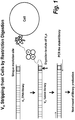
- each member of the DNA-display library comprises a binding polypeptide linked through an intervening DNA linker to a DNA coding sequence encoding the binding polypeptide, wherein the DNA linker comprising a restriction endonuclease site (see e.g., Figure 1 ).
- the DNA linker comprising a restriction endonuclease site (see e.g., Figure 1 ). Any restriction endonuclease site can be employed.
- the restriction endonuclease site is not present in the DNA coding sequence of members of the DNA-display library, thus avoiding cleavage of the DNA coding sequence upon restriction endonuclease digestion of the library members.
- the restriction endonuclease site is a Not1 site.
- the DNA coding sequence of the isolated library members it is desirable to physically separate the DNA coding sequence of the isolated library members from the linked binding polypeptide. Any methods of physical separation can be employed. Where the isolated library members comprise a DNA linker comprising a restriction endonuclease site (see e.g., Figure 1 ), the physical separation can be achieved by restriction endonuclease digestion of the isolated library members. The resultant liberated DNA coding sequences can be further separated from the cell/binding polypeptide complexes by any art recognized method, e.g., centrifugation .
- the isolated library members are separated from the first or second cell type by enzymatic cleavage of the cell-surface antigen. Any methods of enzymatic cleavage of the antigen can be employed, e.g., protease, lipid, and/or glycosidase enzymatic cleavage.
- the isolated library members are separated from the first or second cell type by phospholipase cleavage of the glycolipid anchor.
- the resultant liberated isolated library members can be further separated from the first or second cell type by any art recognized method, e.g., centrifugation.
- the methods of the invention further comprise the step of determining the DNA coding sequence of at least a portion of the isolated library members.
- Any art recognized means for DNA sequence determination can be employed.
- the DNA coding sequence is determined by single molecule, deep sequencing techniques (e.g., pyrosequencing). Single molecule, deep sequencing techniques are well known in the art (see e.g., those described in US6,210,891 ).
- the binding polypeptides are antibodies, or antigen binding fragments thereof, the DNA coding sequence of the CDR3 region is determined.
- the DNA coding sequences of the library member that bind to the first and second cell types are determined.
- Library members that specifically bind to the first cell type but not to the second cell type are considered to comprise binding polypeptides that specifically bind to an antigen specific for the first cell type.
- a binding polypeptide that specifically binds to the cell-surface antigen can be heterologously expressed in vitro (e.g., in cells or in a cell-free expression system) or in vivo (e.g., in a transgenic animal). Accordingly, in certain embodiments, the methods of the invention further comprise the step of heterologously expressing in vitro (e.g., in cells or in a cell-free expression system) or in vivo (e.g., in a transgenic animal), the identified binding polypeptide.
- the identity of the antigen is known prior to performing the methods of the invention. However, it is not necessary to know the identity of the antigen. Indeed, in certain embodiments, the identity of the antigen is unknown prior to performing the methods of the invention. Thus, in this latter case, the methods of the invention allow for the identification of novel antigens and epitopes present on the surface of a cell type of interest (e.g., a tumor cell).
- a cell type of interest e.g., a tumor cell
- the methods disclosed herein comprise the selection of binding polypeptides that are capable of functional internalization upon binding to the cell surface antigen.
- binding polypeptides are particularly useful in the production of drug conjugates because they allow for the delivery of a cytotoxic drug to the interior of a target cell.
- Any methodology for screening for functional internalization can be employed.
- the variegated nucleic acid-display library of binding polypeptides can be contacted with target cells under conditions that to allow for binding polypeptide internalization (e.g., for about for 1-2 hours at 37°C).
- the cells can then washed and lysed with cell lysis buffer in the presence of protease inhibitors.
- the internalized library members can then be ethanol precipitated and the DNA coding sequences enriched by PCR amplification.
- target epitopes can include: homing domains for inflammation; tumor specific target epitopes from primary tumors with or without resistance to treatment, tumor cell lines, and tumors that harbor any mutations that may result in neoepitopes; and other disease specific epitopes that mediate disease specific malfunction and be targeted for biologic therapy
- the methods disclosed herein can also be applied for biomarker discovery to monitor the presence or absence of particular cell surface epitopes over a course of a drug treatment to patients.
- the antibodies derived from the biomarker discovery can also be used as tools for biomarker detection.
- the methods disclosed herein can be applied to target or epitope discovery in other species, such as in transgenic animals and animal disease models.
- a fully human antibody VH library obtained from bone marrow, peripheral blood and splenocytes of human donors was constructed and numerous high affinity and specific VH binders to multiple targets were identified using dsDNA display technology.
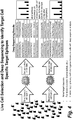
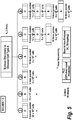
- Target cell specific epitopes were identified by live cell selection and deep sequencing analysis using human VH library and dsDNA display technology. Strategies of parallel, differential selections and target cell selective selections were applied in these methods (see Figures 4 , 5 , 6 ).
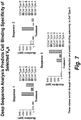
- the tabulation of the CDR3 frequency from deep sequencing of all pools across all rounds predicted the selectivity of the VH clones. High affinity VHs were identified that selectively bind to target cells and related cell types.
- the first method involved stripping off binders from live cells by restriction digestion of the DNA fused to bound antibodies. This method enables the full recovery of the VHs bound to all epitopes on cells.
- a C-terminal of VH DNA library was engineered to carry a NotI restriction site (see Figure 1 ). There are no NotI sites in naive VH frameworks and therefore only full length VH binders are eluted from cells for subsequent amplification.
- the NotI restriction digestion buffer was tested on live cells, and with up to a 2 hour incubation at 37C the cells were viable. The efficiency of the NotI digestion was high.
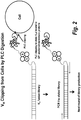
- the second method is to clip off VH binders from live cells using phospholipase C (PLC) digestion.
- PLC phospholipase C
- This method enables the elution of the VHs that bound to the epitopes of any GPI anchored membrane protein (i.e., a subset of epitopes).
- the PLC clipping efficiency is high, as validated on FACS with control molecule. After incubation of library with cells for 1 hour at 4C, the cells were washed and incubated with PLC at 37C for 15 mins. The cells were subsequently spun down and the supernatant, containing fusion VH complexed with extracellular domain of the GPI anchored membrane protein, was PCR amplified (see Figure 2 ).
- Master naive fusion library was produced according to the protocol set forth in WO2010/011944 .
- the purified fusion library was split equally into multiple libraries that carry the same diversity for all selection branches (see Figure 5 ).
- libraries were pre-cleared with 200 ul of pre-blocked streptavidin beads and 200 ul of pre-blocked hIgG-Epoxy beads for 30 mins at room temperature sequencially to remove any misfold and sticky library members.
- the pre-cleared libraries were then chilled on ice and subjected to pre-blocked cells and incubated on ice for 1 hour.
- pre-clearance was performed on undesired and closely related cell types for 1 hour on ice to remove any non-selective binders and then subjected on target cells.
- binding pools were PCR amplified.
- the HCDR3 of each binding pool was lifted up by PCR with oligos priming C-terminal of framework 3 and N-terminal of framework 4 of VH fragments.
- These HCDR3 fragments derived from individual selection rounds and branches were then tagged with specific DNA bar code used for Illumina sequencing by PCR.
- the tagged HCDR3 were pooled and sent for high throughput sequencing with Hi Seq technology.
- the round 4 binding pools from target cells were also tagged with DNA bar code and submitted for 454 sequencing to get full length VH sequences.
- sequences were deconvoluted based on the DNA bar code after sequencing. Millions of sequences derived from each selection round and selection branch were tabulated by comparing the frequency of a particular CDR3 sequence present at different rounds and selection branches.
- the criteria used for identification of selective binders were: 1) specific enrichment of a CDR3 sequence from earlier round to later round on target cells, not on control or close related cell types; 2) higher frequency on target specific cell type and low on control or closely related cell type at differential selection round (see Figure 7 ); and 3 ) sequences not present in other target or cell selections from other programs in database.
- the selective clones identified by Illumina sequencing were then synthesized based on the 454 full length sequence information.
- VHs were then subcloned into pET22b expression vectors.
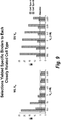
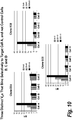
- the VHs were produced in BL-21 E.coli cells and purified through C-terminal His tag using standard protocols. FACS assay was performed to assess the binding and selectivity of VHs to different cell types and the EC50 of the binders. High affinity and selective VH binders were identified through the live cell selection process (see Figures 8 , 9 and 10 ).
Landscapes
- Life Sciences & Earth Sciences (AREA)
- Health & Medical Sciences (AREA)
- Chemical & Material Sciences (AREA)
- Engineering & Computer Science (AREA)
- Biomedical Technology (AREA)
- Molecular Biology (AREA)
- Genetics & Genomics (AREA)
- Organic Chemistry (AREA)
- Biotechnology (AREA)
- Immunology (AREA)
- General Health & Medical Sciences (AREA)
- Biochemistry (AREA)
- Bioinformatics & Cheminformatics (AREA)
- Zoology (AREA)
- Wood Science & Technology (AREA)
- General Engineering & Computer Science (AREA)
- Physics & Mathematics (AREA)
- Microbiology (AREA)
- Urology & Nephrology (AREA)
- Hematology (AREA)
- Medicinal Chemistry (AREA)
- Biophysics (AREA)
- Proteomics, Peptides & Aminoacids (AREA)
- Plant Pathology (AREA)
- Crystallography & Structural Chemistry (AREA)
- Analytical Chemistry (AREA)
- Pathology (AREA)
- General Physics & Mathematics (AREA)
- Food Science & Technology (AREA)
- Cell Biology (AREA)
- Virology (AREA)
- Chemical Kinetics & Catalysis (AREA)
- General Chemical & Material Sciences (AREA)
- Bioinformatics & Computational Biology (AREA)
- Measuring Or Testing Involving Enzymes Or Micro-Organisms (AREA)
- Peptides Or Proteins (AREA)
- Investigating Or Analysing Biological Materials (AREA)
- Micro-Organisms Or Cultivation Processes Thereof (AREA)
- Preparation Of Compounds By Using Micro-Organisms (AREA)
- Pharmaceuticals Containing Other Organic And Inorganic Compounds (AREA)
Claims (10)
- Verfahren zur Identifizierung eines Bindungspolypeptids, das spezifisch an ein Zelloberflächenantigen bindet, wobei das Bindungspolypeptid eine Antikörper-VH- oder -VL-Domäne umfasst, wobei das Verfahren umfasst:(a) Inkontaktbringen einer vielfältigen zellfreien Nukleinsäure-Display-Bibliothek von Bindungspolypeptiden mit einem Zelloberflächenantigen, das auf der Außenfläche eines ersten Zelltyps angezeigt wird, wobei die vielfältige Nukleinsäure-Display-Bibliothek eine DNA-Display-Bibliothek ist, wobei jedes Mitglied der DNA-Display-Bibliothek ein Bindungspolypeptid umfasst, das über einen intervenierenden DNA-Linker an eine codierende DNA-Sequenz gebunden ist, die das Bindungspolypeptid codiert, und wobei der DNA-Linker eine Restriktionsendonukleasestelle umfasst, die in der codierenden Sequenz der Mitglieder der DNA-Display-Bibliothek nicht vorhanden ist;(b) Trennen der gebundenen Bibliotheksmitglieder von dem ersten Zelltyp durch Spalten der Restriktionsendonukleasestelle mit einer geeigneten Restriktionsendonuklease; und(c) Isolieren von mindestens einem Bibliotheksmitglied, das spezifisch an das Zelloberflächenantigen auf der Außenfläche des ersten Zelltyps bindet, aus der Bibliothek, wodurch ein Bindungspolypeptid identifiziert wird, das spezifisch an das Zelloberflächenantigen bindet.
- Verfahren nach Anspruch 1, wobei vor Schritt (a) die vielfältige Nukleinsäure-Display-Bibliothek von Bindungspolypeptiden mit einem zweiten Zelltyp in Kontakt gebracht wird, der das Antigen auf seiner Außenfläche nicht anzeigt.
- Verfahren nach Anspruch 1, zudem umfassend:(d) Inkontaktbringen der vielfältigen Nukleinsäure-Display-Bibliothek von Bindungspolypeptiden mit einem zweiten Zelltyp, der das Zelloberflächenantigen nicht exprimiert;(e) Isolieren mindestens eines Bibliotheksmitglieds, das spezifisch an den zweiten Zelltyp bindet, aus der Bibliothek, und gegebenenfalls Trennen des mindestens einen isolierten Bibliotheksmitglieds, das spezifisch an den zweiten Zelltyp bindet, von dem zweiten Zelltyp; und(f) Selektieren von Bibliotheksmitgliedern, die spezifisch an den ersten Zelltyp, jedoch nicht an den zweiten Zelltyp binden.
- Verfahren nach einem der vorhergehenden Ansprüche, wobei das Verfahren zudem das Bestimmen der DNA-Codierungssequenz von mindestens einem Teil der isolierten Bibliotheksmitglieder umfasst, wobei die DNA-Codierungssequenz gegebenenfalls durch Pyro-Sequenzierung bestimmt wird.
- Verfahren nach einem der vorhergehenden Ansprüche, wobei das Antigen ein natürlich vorkommendes Protein, Glykan oder Lipid ist, oder das Antigen ein an Glycophosphatidylinositol (GPI) verankertes Protein ist, oder das Antigen ein rekombinantes Antigen ist, oder das Antigen ein chimäres Antigen ist.
- Verfahren nach einem der vorhergehenden Ansprüche, wobei der erste Zelltyp eine Zelle ist, die das Zelloberflächenantigen natürlich exprimiert, oder der erste Zelltyp eine rekombinante Zelle ist, die so konstruiert ist, dass sie das Zelloberflächenantigen heterolog exprimiert, oder der erste Zelltyp eine krankheitsassoziierte Variante einer normalen Zelle ist, oder der erste Zelltyp eine Tumorzelle ist.
- Verfahren nach Anspruch 1, wobei der erste Zelltyp eine lebende Zelle ist.
- Verfahren nach Anspruch 2, wobei der erste und der zweite Zelltyp lebende Zellen sind.
- Verfahren nach Anspruch 3, wobei der erste und der zweite Zelltyp lebende Zellen sind.
- Verfahren nach einem der vorhergehenden Ansprüche, wobei das Bindungspolypeptid ein Antikörper oder Fragment davon ist.
Priority Applications (1)
| Application Number | Priority Date | Filing Date | Title |
|---|---|---|---|
| EP20163403.7A EP3739336B1 (de) | 2013-06-28 | 2014-06-20 | Zielantigenerkennung, phänotypische masken und verwendung davon zur identifikation zielzellspezifischer zielepitope |
Applications Claiming Priority (2)
| Application Number | Priority Date | Filing Date | Title |
|---|---|---|---|
| US201361840583P | 2013-06-28 | 2013-06-28 | |
| PCT/US2014/043454 WO2014209801A1 (en) | 2013-06-28 | 2014-06-20 | Target antigen discovery, phenotypic screens and use thereof for identification of target cell specific target epitopes |
Related Child Applications (1)
| Application Number | Title | Priority Date | Filing Date |
|---|---|---|---|
| EP20163403.7A Division EP3739336B1 (de) | 2013-06-28 | 2014-06-20 | Zielantigenerkennung, phänotypische masken und verwendung davon zur identifikation zielzellspezifischer zielepitope |
Publications (3)
| Publication Number | Publication Date |
|---|---|
| EP3014271A1 EP3014271A1 (de) | 2016-05-04 |
| EP3014271A4 EP3014271A4 (de) | 2017-01-11 |
| EP3014271B1 true EP3014271B1 (de) | 2020-03-18 |
Family
ID=52142578
Family Applications (2)
| Application Number | Title | Priority Date | Filing Date |
|---|---|---|---|
| EP14816936.0A Active EP3014271B1 (de) | 2013-06-28 | 2014-06-20 | Zielantigenerkennung, phänotypische masken und verwendung davon zur identifikation zielzellspezifischer zielepitope |
| EP20163403.7A Active EP3739336B1 (de) | 2013-06-28 | 2014-06-20 | Zielantigenerkennung, phänotypische masken und verwendung davon zur identifikation zielzellspezifischer zielepitope |
Family Applications After (1)
| Application Number | Title | Priority Date | Filing Date |
|---|---|---|---|
| EP20163403.7A Active EP3739336B1 (de) | 2013-06-28 | 2014-06-20 | Zielantigenerkennung, phänotypische masken und verwendung davon zur identifikation zielzellspezifischer zielepitope |
Country Status (17)
| Country | Link |
|---|---|
| US (3) | US10370651B2 (de) |
| EP (2) | EP3014271B1 (de) |
| JP (1) | JP6636917B2 (de) |
| KR (2) | KR102309517B1 (de) |
| CN (1) | CN105659090B (de) |
| AU (3) | AU2014302811B2 (de) |
| CA (1) | CA2916576C (de) |
| ES (2) | ES2791068T3 (de) |
| IL (4) | IL243391B (de) |
| MX (1) | MX374317B (de) |
| MY (1) | MY191368A (de) |
| NZ (1) | NZ716126A (de) |
| PH (1) | PH12015502807B1 (de) |
| RU (1) | RU2678421C2 (de) |
| SA (1) | SA515370328B1 (de) |
| SG (2) | SG10201806428YA (de) |
| WO (1) | WO2014209801A1 (de) |
Families Citing this family (3)
| Publication number | Priority date | Publication date | Assignee | Title |
|---|---|---|---|---|
| WO2015042528A1 (en) | 2013-09-23 | 2015-03-26 | X-Body Biosciences, Inc. | Methods and compositions for generation of binding agents against cell surface antigens |
| WO2019089982A1 (en) | 2017-11-01 | 2019-05-09 | Juno Therapeutics, Inc. | Method of assessing activity of recombinant antigen receptors |
| WO2024130037A1 (en) * | 2022-12-14 | 2024-06-20 | President And Fellows Of Harvard College | Systems and methods for identifying gpcr modulators and other agents |
Family Cites Families (41)
| Publication number | Priority date | Publication date | Assignee | Title |
|---|---|---|---|---|
| US5922545A (en) | 1993-10-29 | 1999-07-13 | Affymax Technologies N.V. | In vitro peptide and antibody display libraries |
| GB9620209D0 (en) | 1996-09-27 | 1996-11-13 | Cemu Bioteknik Ab | Method of sequencing DNA |
| US5876925A (en) | 1996-10-11 | 1999-03-02 | The Trustees Of The University Of Pennsylvania | Magnetically activated cell sorting for production of proteins |
| US6261804B1 (en) | 1997-01-21 | 2001-07-17 | The General Hospital Corporation | Selection of proteins using RNA-protein fusions |
| CA2278786C (en) | 1997-01-21 | 2010-07-20 | The General Hospital Corporation | Selection of proteins using rna-protein fusions |
| DE69834032T2 (de) | 1997-04-23 | 2006-12-07 | Universität Zürich | Verfahren zur erkennung von nucleinsäuremolekülen codierend für (poly)peptide, welche mit zielmolekülen interagieren |
| CA2323638A1 (en) | 1998-04-03 | 1999-10-14 | Phylos, Inc. | Addressable protein arrays |
| US6794128B2 (en) | 1998-04-24 | 2004-09-21 | The Regents Of The University Of California | Methods of selecting internalizing antibodies |
| US6846655B1 (en) | 1998-06-29 | 2005-01-25 | Phylos, Inc. | Methods for generating highly diverse libraries |
| EP1105516A4 (de) | 1998-08-17 | 2002-01-09 | Phylos Inc | Verfahren zur herstellung von nukleinsäuren mit fehlenden 3'-untranslatierten regionen und optimierung des formens zellulärer rna-protein fusiosen |
| WO2000009464A1 (en) | 1998-08-17 | 2000-02-24 | Phylos, Inc. | Identification of compound-protein interactions using libraries of protein-nucleic acid fusion molecules |
| HK1039355B (en) | 1998-12-02 | 2007-09-21 | Bristol-Myers Squibb Company | Dna-protein fusions and uses thereof |
| EP1187626A4 (de) | 1999-06-01 | 2006-07-19 | Compound Therapeutics Inc | Verfahren zur herstellung von 5'-nukleinsäure-protein konjugaten |
| AU778194B2 (en) | 1999-07-12 | 2004-11-18 | Bristol-Myers Squibb Company | C-terminal protein tagging |
| EP1196637B1 (de) | 1999-07-27 | 2007-04-25 | Adnexus Therapeutics, Inc. | Peptidakzeptor ligationsverfahren |
| AU779653B2 (en) | 1999-08-27 | 2005-02-03 | Bristol-Myers Squibb Company | Methods for encoding and sorting in vitro translated proteins |
| US7022479B2 (en) | 2000-01-24 | 2006-04-04 | Compound Therapeutics, Inc. | Sensitive, multiplexed diagnostic assays for protein analysis |
| AU783689B2 (en) | 2000-01-24 | 2005-11-24 | Adnexus Therapeutics, Inc. | Sensitive, multiplexed diagnostic assays for protein analysis |
| US6951725B2 (en) | 2001-06-21 | 2005-10-04 | Compound Therapeutics, Inc. | In vitro protein interaction detection systems |
| WO2003045975A2 (en) | 2001-11-27 | 2003-06-05 | Compound Therapeutics, Inc. | Solid-phase immobilization of proteins and peptides |
| EP1523574A4 (de) * | 2002-03-01 | 2005-11-30 | Dyax Corp | Modulare rekombinatorische display-bibliotheken |
| RU2346004C2 (ru) | 2002-11-09 | 2009-02-10 | Эвидекс Лимитед | Экспонирование т-клеточных рецепторов |
| US7195875B2 (en) | 2003-04-18 | 2007-03-27 | Beckman Coulter, Inc. | Oligonucleotide pairs for multiplexed binding assays |
| WO2005026379A2 (en) * | 2003-09-08 | 2005-03-24 | Ramot At Tel Aviv University | The mapping and reconstitution of a conformational discontinuous binding surface |
| JP4782700B2 (ja) | 2004-01-20 | 2011-09-28 | カロバイオス ファーマシューティカルズ インコーポレイティッド | 最低限必須な結合決定基を用いた抗体特異性の移入 |
| CN100486991C (zh) | 2005-09-27 | 2009-05-13 | 南开大学 | 与肿瘤转移细胞特异性结合的多肽及其应用 |
| CA2625619A1 (en) | 2005-10-14 | 2007-04-26 | Medimmune, Inc. | Cell display of antibody libraries |
| SG10201608268RA (en) | 2006-10-02 | 2016-11-29 | Medarex Llc | Human antibodies that bind cxcr4 and uses thereof |
| US7732195B2 (en) * | 2006-11-01 | 2010-06-08 | Facet Biotech Corporation | Tethered vectors for cell surface immunoglobulin display |
| US20110076752A1 (en) * | 2007-02-09 | 2011-03-31 | Medimmune, Llc | Antibody library display by yeast cell plasma membrane |
| EP2192922A4 (de) | 2007-09-17 | 2010-09-29 | Univ California | Auf prostatazellen in situ abzielende internalisierende humane monoklonale antikörper |
| JP5924937B2 (ja) * | 2008-07-25 | 2016-05-25 | エックス−ボディ インコーポレイテッド | タンパク質スクリーニング法 |
| BRPI0919426A2 (pt) | 2008-09-30 | 2015-12-15 | Abbott Lab | métodos melhorado de exposição de rna |
| CA2752622A1 (en) | 2009-02-13 | 2010-08-19 | X-Body, Inc. | Identification of nucleic acid delivery vehicles using dna display |
| CA2744103C (en) | 2009-02-24 | 2018-01-02 | Esbatech, An Alcon Biomedical Research Unit Llc | Methods for identifying immunobinders of cell-surface antigens |
| JP2013503626A (ja) | 2009-09-08 | 2013-02-04 | ネオファーム シーオー., エルティーディー. | グルカゴン受容体に対する抗体と、それらの使用 |
| US8734798B2 (en) | 2009-10-27 | 2014-05-27 | Ucb Pharma S.A. | Function modifying NAv 1.7 antibodies |
| GB201014715D0 (en) | 2010-09-06 | 2010-10-20 | Vib Vzw | Nanobodies stabilizing functional conformational states of GPCRS |
| EP3798236B1 (de) | 2011-03-15 | 2022-08-10 | X-Body, Inc. | Antikörper-screening-verfahren |
| SG194745A1 (en) | 2011-05-20 | 2013-12-30 | Fluidigm Corp | Nucleic acid encoding reactions |
| CA2877081C (en) | 2011-09-27 | 2020-09-22 | The Governing Council Of The University Of Toronto | Molecular display method |
-
2014
- 2014-06-20 EP EP14816936.0A patent/EP3014271B1/de active Active
- 2014-06-20 MX MX2015017714A patent/MX374317B/es active IP Right Grant
- 2014-06-20 ES ES14816936T patent/ES2791068T3/es active Active
- 2014-06-20 US US14/897,892 patent/US10370651B2/en active Active
- 2014-06-20 KR KR1020207028257A patent/KR102309517B1/ko not_active Expired - Fee Related
- 2014-06-20 RU RU2016102589A patent/RU2678421C2/ru active
- 2014-06-20 SG SG10201806428YA patent/SG10201806428YA/en unknown
- 2014-06-20 MY MYPI2015002986A patent/MY191368A/en unknown
- 2014-06-20 KR KR1020167001215A patent/KR102163529B1/ko active Active
- 2014-06-20 AU AU2014302811A patent/AU2014302811B2/en not_active Ceased
- 2014-06-20 WO PCT/US2014/043454 patent/WO2014209801A1/en not_active Ceased
- 2014-06-20 NZ NZ716126A patent/NZ716126A/en not_active IP Right Cessation
- 2014-06-20 CN CN201480042778.7A patent/CN105659090B/zh active Active
- 2014-06-20 SG SG11201510312RA patent/SG11201510312RA/en unknown
- 2014-06-20 EP EP20163403.7A patent/EP3739336B1/de active Active
- 2014-06-20 CA CA2916576A patent/CA2916576C/en active Active
- 2014-06-20 JP JP2016523818A patent/JP6636917B2/ja active Active
- 2014-06-20 ES ES20163403T patent/ES2920601T3/es active Active
-
2015
- 2015-12-17 PH PH12015502807A patent/PH12015502807B1/en unknown
- 2015-12-28 SA SA515370328A patent/SA515370328B1/ar unknown
- 2015-12-28 IL IL243391A patent/IL243391B/en active IP Right Grant
-
2019
- 2019-06-21 US US16/448,567 patent/US11414784B2/en active Active
-
2020
- 2020-01-16 AU AU2020200325A patent/AU2020200325B2/en not_active Ceased
- 2020-01-16 IL IL272091A patent/IL272091B/en active IP Right Grant
-
2021
- 2021-02-21 IL IL281005A patent/IL281005B/en unknown
-
2022
- 2022-03-13 IL IL291326A patent/IL291326A/en unknown
- 2022-03-25 AU AU2022202076A patent/AU2022202076A1/en not_active Abandoned
- 2022-07-29 US US17/816,017 patent/US20230074705A1/en not_active Abandoned
Non-Patent Citations (1)
| Title |
|---|
| None * |
Also Published As
Similar Documents
| Publication | Publication Date | Title |
|---|---|---|
| US20230074705A1 (en) | Target antigen discovery, phenotypic screens and use thereof for identification of target cell specific target epitopes | |
| HK40040607B (en) | Target antigen discovery, phenotypic screens and use thereof for identification of target cell specific target epitopes | |
| HK40040607A (en) | Target antigen discovery, phenotypic screens and use thereof for identification of target cell specific target epitopes | |
| AU2020202428B2 (en) | Methods and compositions for generation of binding agents against cell surface antigens | |
| RU2777769C2 (ru) | Обнаружение антигена-мишени, фенотипический скрининг и его применение для идентификации специфичных эпитопов-мишеней клеток-мишеней | |
| HK1218779B (en) | Target antigen discovery, phenotypic screens and use thereof for identification of target cell specific target epitopes | |
| HK40045824A (en) | Methods and compositions for generation of binding agents against cell surface antigens | |
| BR112015032557B1 (pt) | Método de identificação de um polipeptídeo de ligação que se liga especificamente a um antígeno da superfície celular | |
| HK1226140B (en) | Methods and compositions for generation of binding agents against cell surface antigens |
Legal Events
| Date | Code | Title | Description |
|---|---|---|---|
| PUAI | Public reference made under article 153(3) epc to a published international application that has entered the european phase |
Free format text: ORIGINAL CODE: 0009012 |
|
| 17P | Request for examination filed |
Effective date: 20160119 |
|
| AK | Designated contracting states |
Kind code of ref document: A1 Designated state(s): AL AT BE BG CH CY CZ DE DK EE ES FI FR GB GR HR HU IE IS IT LI LT LU LV MC MK MT NL NO PL PT RO RS SE SI SK SM TR |
|
| AX | Request for extension of the european patent |
Extension state: BA ME |
|
| A4 | Supplementary search report drawn up and despatched |
Effective date: 20161208 |
|
| RIC1 | Information provided on ipc code assigned before grant |
Ipc: G01N 33/53 20060101AFI20161202BHEP Ipc: G01N 33/563 20060101ALI20161202BHEP Ipc: G01N 33/68 20060101ALI20161202BHEP Ipc: C12N 15/11 20060101ALI20161202BHEP |
|
| STAA | Information on the status of an ep patent application or granted ep patent |
Free format text: STATUS: EXAMINATION IS IN PROGRESS |
|
| 17Q | First examination report despatched |
Effective date: 20180201 |
|
| GRAP | Despatch of communication of intention to grant a patent |
Free format text: ORIGINAL CODE: EPIDOSNIGR1 |
|
| STAA | Information on the status of an ep patent application or granted ep patent |
Free format text: STATUS: GRANT OF PATENT IS INTENDED |
|
| INTG | Intention to grant announced |
Effective date: 20190927 |
|
| RIN1 | Information on inventor provided before grant (corrected) |
Inventor name: CHEN, YAN Inventor name: SHAMAH, STEVE |
|
| GRAS | Grant fee paid |
Free format text: ORIGINAL CODE: EPIDOSNIGR3 |
|
| GRAA | (expected) grant |
Free format text: ORIGINAL CODE: 0009210 |
|
| STAA | Information on the status of an ep patent application or granted ep patent |
Free format text: STATUS: THE PATENT HAS BEEN GRANTED |
|
| AK | Designated contracting states |
Kind code of ref document: B1 Designated state(s): AL AT BE BG CH CY CZ DE DK EE ES FI FR GB GR HR HU IE IS IT LI LT LU LV MC MK MT NL NO PL PT RO RS SE SI SK SM TR |
|
| AX | Request for extension of the european patent |
Extension state: BA ME |
|
| REG | Reference to a national code |
Ref country code: GB Ref legal event code: FG4D |
|
| REG | Reference to a national code |
Ref country code: DE Ref legal event code: R096 Ref document number: 602014062592 Country of ref document: DE |
|
| REG | Reference to a national code |
Ref country code: AT Ref legal event code: REF Ref document number: 1246508 Country of ref document: AT Kind code of ref document: T Effective date: 20200415 Ref country code: IE Ref legal event code: FG4D |
|
| PG25 | Lapsed in a contracting state [announced via postgrant information from national office to epo] |
Ref country code: RS Free format text: LAPSE BECAUSE OF FAILURE TO SUBMIT A TRANSLATION OF THE DESCRIPTION OR TO PAY THE FEE WITHIN THE PRESCRIBED TIME-LIMIT Effective date: 20200318 Ref country code: NO Free format text: LAPSE BECAUSE OF FAILURE TO SUBMIT A TRANSLATION OF THE DESCRIPTION OR TO PAY THE FEE WITHIN THE PRESCRIBED TIME-LIMIT Effective date: 20200618 Ref country code: FI Free format text: LAPSE BECAUSE OF FAILURE TO SUBMIT A TRANSLATION OF THE DESCRIPTION OR TO PAY THE FEE WITHIN THE PRESCRIBED TIME-LIMIT Effective date: 20200318 |
|
| REG | Reference to a national code |
Ref country code: NL Ref legal event code: MP Effective date: 20200318 |
|
| PG25 | Lapsed in a contracting state [announced via postgrant information from national office to epo] |
Ref country code: SE Free format text: LAPSE BECAUSE OF FAILURE TO SUBMIT A TRANSLATION OF THE DESCRIPTION OR TO PAY THE FEE WITHIN THE PRESCRIBED TIME-LIMIT Effective date: 20200318 Ref country code: LV Free format text: LAPSE BECAUSE OF FAILURE TO SUBMIT A TRANSLATION OF THE DESCRIPTION OR TO PAY THE FEE WITHIN THE PRESCRIBED TIME-LIMIT Effective date: 20200318 Ref country code: HR Free format text: LAPSE BECAUSE OF FAILURE TO SUBMIT A TRANSLATION OF THE DESCRIPTION OR TO PAY THE FEE WITHIN THE PRESCRIBED TIME-LIMIT Effective date: 20200318 Ref country code: BG Free format text: LAPSE BECAUSE OF FAILURE TO SUBMIT A TRANSLATION OF THE DESCRIPTION OR TO PAY THE FEE WITHIN THE PRESCRIBED TIME-LIMIT Effective date: 20200618 Ref country code: GR Free format text: LAPSE BECAUSE OF FAILURE TO SUBMIT A TRANSLATION OF THE DESCRIPTION OR TO PAY THE FEE WITHIN THE PRESCRIBED TIME-LIMIT Effective date: 20200619 |
|
| REG | Reference to a national code |
Ref country code: LT Ref legal event code: MG4D |
|
| PG25 | Lapsed in a contracting state [announced via postgrant information from national office to epo] |
Ref country code: NL Free format text: LAPSE BECAUSE OF FAILURE TO SUBMIT A TRANSLATION OF THE DESCRIPTION OR TO PAY THE FEE WITHIN THE PRESCRIBED TIME-LIMIT Effective date: 20200318 |
|
| PG25 | Lapsed in a contracting state [announced via postgrant information from national office to epo] |
Ref country code: RO Free format text: LAPSE BECAUSE OF FAILURE TO SUBMIT A TRANSLATION OF THE DESCRIPTION OR TO PAY THE FEE WITHIN THE PRESCRIBED TIME-LIMIT Effective date: 20200318 Ref country code: IS Free format text: LAPSE BECAUSE OF FAILURE TO SUBMIT A TRANSLATION OF THE DESCRIPTION OR TO PAY THE FEE WITHIN THE PRESCRIBED TIME-LIMIT Effective date: 20200718 Ref country code: SK Free format text: LAPSE BECAUSE OF FAILURE TO SUBMIT A TRANSLATION OF THE DESCRIPTION OR TO PAY THE FEE WITHIN THE PRESCRIBED TIME-LIMIT Effective date: 20200318 Ref country code: CZ Free format text: LAPSE BECAUSE OF FAILURE TO SUBMIT A TRANSLATION OF THE DESCRIPTION OR TO PAY THE FEE WITHIN THE PRESCRIBED TIME-LIMIT Effective date: 20200318 Ref country code: LT Free format text: LAPSE BECAUSE OF FAILURE TO SUBMIT A TRANSLATION OF THE DESCRIPTION OR TO PAY THE FEE WITHIN THE PRESCRIBED TIME-LIMIT Effective date: 20200318 Ref country code: EE Free format text: LAPSE BECAUSE OF FAILURE TO SUBMIT A TRANSLATION OF THE DESCRIPTION OR TO PAY THE FEE WITHIN THE PRESCRIBED TIME-LIMIT Effective date: 20200318 Ref country code: PT Free format text: LAPSE BECAUSE OF FAILURE TO SUBMIT A TRANSLATION OF THE DESCRIPTION OR TO PAY THE FEE WITHIN THE PRESCRIBED TIME-LIMIT Effective date: 20200812 Ref country code: SM Free format text: LAPSE BECAUSE OF FAILURE TO SUBMIT A TRANSLATION OF THE DESCRIPTION OR TO PAY THE FEE WITHIN THE PRESCRIBED TIME-LIMIT Effective date: 20200318 |
|
| REG | Reference to a national code |
Ref country code: ES Ref legal event code: FG2A Ref document number: 2791068 Country of ref document: ES Kind code of ref document: T3 Effective date: 20201030 |
|
| REG | Reference to a national code |
Ref country code: AT Ref legal event code: MK05 Ref document number: 1246508 Country of ref document: AT Kind code of ref document: T Effective date: 20200318 |
|
| REG | Reference to a national code |
Ref country code: DE Ref legal event code: R097 Ref document number: 602014062592 Country of ref document: DE |
|
| PLBE | No opposition filed within time limit |
Free format text: ORIGINAL CODE: 0009261 |
|
| STAA | Information on the status of an ep patent application or granted ep patent |
Free format text: STATUS: NO OPPOSITION FILED WITHIN TIME LIMIT |
|
| PG25 | Lapsed in a contracting state [announced via postgrant information from national office to epo] |
Ref country code: DK Free format text: LAPSE BECAUSE OF FAILURE TO SUBMIT A TRANSLATION OF THE DESCRIPTION OR TO PAY THE FEE WITHIN THE PRESCRIBED TIME-LIMIT Effective date: 20200318 Ref country code: MC Free format text: LAPSE BECAUSE OF FAILURE TO SUBMIT A TRANSLATION OF THE DESCRIPTION OR TO PAY THE FEE WITHIN THE PRESCRIBED TIME-LIMIT Effective date: 20200318 Ref country code: AT Free format text: LAPSE BECAUSE OF FAILURE TO SUBMIT A TRANSLATION OF THE DESCRIPTION OR TO PAY THE FEE WITHIN THE PRESCRIBED TIME-LIMIT Effective date: 20200318 |
|
| 26N | No opposition filed |
Effective date: 20201221 |
|
| PG25 | Lapsed in a contracting state [announced via postgrant information from national office to epo] |
Ref country code: PL Free format text: LAPSE BECAUSE OF FAILURE TO SUBMIT A TRANSLATION OF THE DESCRIPTION OR TO PAY THE FEE WITHIN THE PRESCRIBED TIME-LIMIT Effective date: 20200318 |
|
| PG25 | Lapsed in a contracting state [announced via postgrant information from national office to epo] |
Ref country code: LU Free format text: LAPSE BECAUSE OF NON-PAYMENT OF DUE FEES Effective date: 20200620 |
|
| REG | Reference to a national code |
Ref country code: BE Ref legal event code: MM Effective date: 20200630 |
|
| PG25 | Lapsed in a contracting state [announced via postgrant information from national office to epo] |
Ref country code: IE Free format text: LAPSE BECAUSE OF NON-PAYMENT OF DUE FEES Effective date: 20200620 |
|
| PG25 | Lapsed in a contracting state [announced via postgrant information from national office to epo] |
Ref country code: BE Free format text: LAPSE BECAUSE OF NON-PAYMENT OF DUE FEES Effective date: 20200630 Ref country code: SI Free format text: LAPSE BECAUSE OF FAILURE TO SUBMIT A TRANSLATION OF THE DESCRIPTION OR TO PAY THE FEE WITHIN THE PRESCRIBED TIME-LIMIT Effective date: 20200318 |
|
| PG25 | Lapsed in a contracting state [announced via postgrant information from national office to epo] |
Ref country code: TR Free format text: LAPSE BECAUSE OF FAILURE TO SUBMIT A TRANSLATION OF THE DESCRIPTION OR TO PAY THE FEE WITHIN THE PRESCRIBED TIME-LIMIT Effective date: 20200318 Ref country code: MT Free format text: LAPSE BECAUSE OF FAILURE TO SUBMIT A TRANSLATION OF THE DESCRIPTION OR TO PAY THE FEE WITHIN THE PRESCRIBED TIME-LIMIT Effective date: 20200318 Ref country code: CY Free format text: LAPSE BECAUSE OF FAILURE TO SUBMIT A TRANSLATION OF THE DESCRIPTION OR TO PAY THE FEE WITHIN THE PRESCRIBED TIME-LIMIT Effective date: 20200318 |
|
| PG25 | Lapsed in a contracting state [announced via postgrant information from national office to epo] |
Ref country code: MK Free format text: LAPSE BECAUSE OF FAILURE TO SUBMIT A TRANSLATION OF THE DESCRIPTION OR TO PAY THE FEE WITHIN THE PRESCRIBED TIME-LIMIT Effective date: 20200318 Ref country code: AL Free format text: LAPSE BECAUSE OF FAILURE TO SUBMIT A TRANSLATION OF THE DESCRIPTION OR TO PAY THE FEE WITHIN THE PRESCRIBED TIME-LIMIT Effective date: 20200318 |
|
| P01 | Opt-out of the competence of the unified patent court (upc) registered |
Effective date: 20230518 |
|
| PGFP | Annual fee paid to national office [announced via postgrant information from national office to epo] |
Ref country code: DE Payment date: 20250429 Year of fee payment: 12 |
|
| PGFP | Annual fee paid to national office [announced via postgrant information from national office to epo] |
Ref country code: GB Payment date: 20250501 Year of fee payment: 12 |
|
| PGFP | Annual fee paid to national office [announced via postgrant information from national office to epo] |
Ref country code: IT Payment date: 20250522 Year of fee payment: 12 |
|
| PGFP | Annual fee paid to national office [announced via postgrant information from national office to epo] |
Ref country code: FR Payment date: 20250508 Year of fee payment: 12 |
|
| PGFP | Annual fee paid to national office [announced via postgrant information from national office to epo] |
Ref country code: ES Payment date: 20250704 Year of fee payment: 12 |
|
| PGFP | Annual fee paid to national office [announced via postgrant information from national office to epo] |
Ref country code: CH Payment date: 20250701 Year of fee payment: 12 |