EP2993218A1 - Process for the manufacture of diesel range hydrocarbons - Google Patents
Process for the manufacture of diesel range hydrocarbons Download PDFInfo
- Publication number
- EP2993218A1 EP2993218A1 EP15174586.6A EP15174586A EP2993218A1 EP 2993218 A1 EP2993218 A1 EP 2993218A1 EP 15174586 A EP15174586 A EP 15174586A EP 2993218 A1 EP2993218 A1 EP 2993218A1
- Authority
- EP
- European Patent Office
- Prior art keywords
- oil
- process according
- catalyst
- feed
- ppm
- Prior art date
- Legal status (The legal status is an assumption and is not a legal conclusion. Google has not performed a legal analysis and makes no representation as to the accuracy of the status listed.)
- Withdrawn
Links
Images

Classifications
-
- C—CHEMISTRY; METALLURGY
- C10—PETROLEUM, GAS OR COKE INDUSTRIES; TECHNICAL GASES CONTAINING CARBON MONOXIDE; FUELS; LUBRICANTS; PEAT
- C10G—CRACKING HYDROCARBON OILS; PRODUCTION OF LIQUID HYDROCARBON MIXTURES, e.g. BY DESTRUCTIVE HYDROGENATION, OLIGOMERISATION, POLYMERISATION; RECOVERY OF HYDROCARBON OILS FROM OIL-SHALE, OIL-SAND, OR GASES; REFINING MIXTURES MAINLY CONSISTING OF HYDROCARBONS; REFORMING OF NAPHTHA; MINERAL WAXES
- C10G45/00—Refining of hydrocarbon oils using hydrogen or hydrogen-generating compounds
- C10G45/02—Refining of hydrocarbon oils using hydrogen or hydrogen-generating compounds to eliminate hetero atoms without changing the skeleton of the hydrocarbon involved and without cracking into lower boiling hydrocarbons; Hydrofinishing
- C10G45/04—Refining of hydrocarbon oils using hydrogen or hydrogen-generating compounds to eliminate hetero atoms without changing the skeleton of the hydrocarbon involved and without cracking into lower boiling hydrocarbons; Hydrofinishing characterised by the catalyst used
- C10G45/06—Refining of hydrocarbon oils using hydrogen or hydrogen-generating compounds to eliminate hetero atoms without changing the skeleton of the hydrocarbon involved and without cracking into lower boiling hydrocarbons; Hydrofinishing characterised by the catalyst used containing nickel or cobalt metal, or compounds thereof
- C10G45/08—Refining of hydrocarbon oils using hydrogen or hydrogen-generating compounds to eliminate hetero atoms without changing the skeleton of the hydrocarbon involved and without cracking into lower boiling hydrocarbons; Hydrofinishing characterised by the catalyst used containing nickel or cobalt metal, or compounds thereof in combination with chromium, molybdenum, or tungsten metals, or compounds thereof
-
- C—CHEMISTRY; METALLURGY
- C10—PETROLEUM, GAS OR COKE INDUSTRIES; TECHNICAL GASES CONTAINING CARBON MONOXIDE; FUELS; LUBRICANTS; PEAT
- C10G—CRACKING HYDROCARBON OILS; PRODUCTION OF LIQUID HYDROCARBON MIXTURES, e.g. BY DESTRUCTIVE HYDROGENATION, OLIGOMERISATION, POLYMERISATION; RECOVERY OF HYDROCARBON OILS FROM OIL-SHALE, OIL-SAND, OR GASES; REFINING MIXTURES MAINLY CONSISTING OF HYDROCARBONS; REFORMING OF NAPHTHA; MINERAL WAXES
- C10G3/00—Production of liquid hydrocarbon mixtures from oxygen-containing organic materials, e.g. fatty oils, fatty acids
- C10G3/42—Catalytic treatment
- C10G3/44—Catalytic treatment characterised by the catalyst used
- C10G3/45—Catalytic treatment characterised by the catalyst used containing iron group metals or compounds thereof
- C10G3/46—Catalytic treatment characterised by the catalyst used containing iron group metals or compounds thereof in combination with chromium, molybdenum, tungsten metals or compounds thereof
-
- C—CHEMISTRY; METALLURGY
- C10—PETROLEUM, GAS OR COKE INDUSTRIES; TECHNICAL GASES CONTAINING CARBON MONOXIDE; FUELS; LUBRICANTS; PEAT
- C10G—CRACKING HYDROCARBON OILS; PRODUCTION OF LIQUID HYDROCARBON MIXTURES, e.g. BY DESTRUCTIVE HYDROGENATION, OLIGOMERISATION, POLYMERISATION; RECOVERY OF HYDROCARBON OILS FROM OIL-SHALE, OIL-SAND, OR GASES; REFINING MIXTURES MAINLY CONSISTING OF HYDROCARBONS; REFORMING OF NAPHTHA; MINERAL WAXES
- C10G3/00—Production of liquid hydrocarbon mixtures from oxygen-containing organic materials, e.g. fatty oils, fatty acids
- C10G3/42—Catalytic treatment
- C10G3/44—Catalytic treatment characterised by the catalyst used
- C10G3/47—Catalytic treatment characterised by the catalyst used containing platinum group metals or compounds thereof
-
- C—CHEMISTRY; METALLURGY
- C10—PETROLEUM, GAS OR COKE INDUSTRIES; TECHNICAL GASES CONTAINING CARBON MONOXIDE; FUELS; LUBRICANTS; PEAT
- C10G—CRACKING HYDROCARBON OILS; PRODUCTION OF LIQUID HYDROCARBON MIXTURES, e.g. BY DESTRUCTIVE HYDROGENATION, OLIGOMERISATION, POLYMERISATION; RECOVERY OF HYDROCARBON OILS FROM OIL-SHALE, OIL-SAND, OR GASES; REFINING MIXTURES MAINLY CONSISTING OF HYDROCARBONS; REFORMING OF NAPHTHA; MINERAL WAXES
- C10G3/00—Production of liquid hydrocarbon mixtures from oxygen-containing organic materials, e.g. fatty oils, fatty acids
- C10G3/50—Production of liquid hydrocarbon mixtures from oxygen-containing organic materials, e.g. fatty oils, fatty acids in the presence of hydrogen, hydrogen donors or hydrogen generating compounds
-
- C—CHEMISTRY; METALLURGY
- C10—PETROLEUM, GAS OR COKE INDUSTRIES; TECHNICAL GASES CONTAINING CARBON MONOXIDE; FUELS; LUBRICANTS; PEAT
- C10G—CRACKING HYDROCARBON OILS; PRODUCTION OF LIQUID HYDROCARBON MIXTURES, e.g. BY DESTRUCTIVE HYDROGENATION, OLIGOMERISATION, POLYMERISATION; RECOVERY OF HYDROCARBON OILS FROM OIL-SHALE, OIL-SAND, OR GASES; REFINING MIXTURES MAINLY CONSISTING OF HYDROCARBONS; REFORMING OF NAPHTHA; MINERAL WAXES
- C10G45/00—Refining of hydrocarbon oils using hydrogen or hydrogen-generating compounds
- C10G45/02—Refining of hydrocarbon oils using hydrogen or hydrogen-generating compounds to eliminate hetero atoms without changing the skeleton of the hydrocarbon involved and without cracking into lower boiling hydrocarbons; Hydrofinishing
-
- C—CHEMISTRY; METALLURGY
- C10—PETROLEUM, GAS OR COKE INDUSTRIES; TECHNICAL GASES CONTAINING CARBON MONOXIDE; FUELS; LUBRICANTS; PEAT
- C10G—CRACKING HYDROCARBON OILS; PRODUCTION OF LIQUID HYDROCARBON MIXTURES, e.g. BY DESTRUCTIVE HYDROGENATION, OLIGOMERISATION, POLYMERISATION; RECOVERY OF HYDROCARBON OILS FROM OIL-SHALE, OIL-SAND, OR GASES; REFINING MIXTURES MAINLY CONSISTING OF HYDROCARBONS; REFORMING OF NAPHTHA; MINERAL WAXES
- C10G45/00—Refining of hydrocarbon oils using hydrogen or hydrogen-generating compounds
- C10G45/02—Refining of hydrocarbon oils using hydrogen or hydrogen-generating compounds to eliminate hetero atoms without changing the skeleton of the hydrocarbon involved and without cracking into lower boiling hydrocarbons; Hydrofinishing
- C10G45/04—Refining of hydrocarbon oils using hydrogen or hydrogen-generating compounds to eliminate hetero atoms without changing the skeleton of the hydrocarbon involved and without cracking into lower boiling hydrocarbons; Hydrofinishing characterised by the catalyst used
- C10G45/10—Refining of hydrocarbon oils using hydrogen or hydrogen-generating compounds to eliminate hetero atoms without changing the skeleton of the hydrocarbon involved and without cracking into lower boiling hydrocarbons; Hydrofinishing characterised by the catalyst used containing platinum group metals or compounds thereof
-
- C—CHEMISTRY; METALLURGY
- C10—PETROLEUM, GAS OR COKE INDUSTRIES; TECHNICAL GASES CONTAINING CARBON MONOXIDE; FUELS; LUBRICANTS; PEAT
- C10G—CRACKING HYDROCARBON OILS; PRODUCTION OF LIQUID HYDROCARBON MIXTURES, e.g. BY DESTRUCTIVE HYDROGENATION, OLIGOMERISATION, POLYMERISATION; RECOVERY OF HYDROCARBON OILS FROM OIL-SHALE, OIL-SAND, OR GASES; REFINING MIXTURES MAINLY CONSISTING OF HYDROCARBONS; REFORMING OF NAPHTHA; MINERAL WAXES
- C10G45/00—Refining of hydrocarbon oils using hydrogen or hydrogen-generating compounds
- C10G45/58—Refining of hydrocarbon oils using hydrogen or hydrogen-generating compounds to change the structural skeleton of some of the hydrocarbon content without cracking the other hydrocarbons present, e.g. lowering pour point; Selective hydrocracking of normal paraffins
-
- C—CHEMISTRY; METALLURGY
- C10—PETROLEUM, GAS OR COKE INDUSTRIES; TECHNICAL GASES CONTAINING CARBON MONOXIDE; FUELS; LUBRICANTS; PEAT
- C10G—CRACKING HYDROCARBON OILS; PRODUCTION OF LIQUID HYDROCARBON MIXTURES, e.g. BY DESTRUCTIVE HYDROGENATION, OLIGOMERISATION, POLYMERISATION; RECOVERY OF HYDROCARBON OILS FROM OIL-SHALE, OIL-SAND, OR GASES; REFINING MIXTURES MAINLY CONSISTING OF HYDROCARBONS; REFORMING OF NAPHTHA; MINERAL WAXES
- C10G45/00—Refining of hydrocarbon oils using hydrogen or hydrogen-generating compounds
- C10G45/58—Refining of hydrocarbon oils using hydrogen or hydrogen-generating compounds to change the structural skeleton of some of the hydrocarbon content without cracking the other hydrocarbons present, e.g. lowering pour point; Selective hydrocracking of normal paraffins
- C10G45/60—Refining of hydrocarbon oils using hydrogen or hydrogen-generating compounds to change the structural skeleton of some of the hydrocarbon content without cracking the other hydrocarbons present, e.g. lowering pour point; Selective hydrocracking of normal paraffins characterised by the catalyst used
- C10G45/64—Refining of hydrocarbon oils using hydrogen or hydrogen-generating compounds to change the structural skeleton of some of the hydrocarbon content without cracking the other hydrocarbons present, e.g. lowering pour point; Selective hydrocracking of normal paraffins characterised by the catalyst used containing crystalline alumino-silicates, e.g. molecular sieves
-
- C—CHEMISTRY; METALLURGY
- C10—PETROLEUM, GAS OR COKE INDUSTRIES; TECHNICAL GASES CONTAINING CARBON MONOXIDE; FUELS; LUBRICANTS; PEAT
- C10G—CRACKING HYDROCARBON OILS; PRODUCTION OF LIQUID HYDROCARBON MIXTURES, e.g. BY DESTRUCTIVE HYDROGENATION, OLIGOMERISATION, POLYMERISATION; RECOVERY OF HYDROCARBON OILS FROM OIL-SHALE, OIL-SAND, OR GASES; REFINING MIXTURES MAINLY CONSISTING OF HYDROCARBONS; REFORMING OF NAPHTHA; MINERAL WAXES
- C10G65/00—Treatment of hydrocarbon oils by two or more hydrotreatment processes only
- C10G65/02—Treatment of hydrocarbon oils by two or more hydrotreatment processes only plural serial stages only
- C10G65/04—Treatment of hydrocarbon oils by two or more hydrotreatment processes only plural serial stages only including only refining steps
- C10G65/043—Treatment of hydrocarbon oils by two or more hydrotreatment processes only plural serial stages only including only refining steps at least one step being a change in the structural skeleton
-
- C—CHEMISTRY; METALLURGY
- C10—PETROLEUM, GAS OR COKE INDUSTRIES; TECHNICAL GASES CONTAINING CARBON MONOXIDE; FUELS; LUBRICANTS; PEAT
- C10G—CRACKING HYDROCARBON OILS; PRODUCTION OF LIQUID HYDROCARBON MIXTURES, e.g. BY DESTRUCTIVE HYDROGENATION, OLIGOMERISATION, POLYMERISATION; RECOVERY OF HYDROCARBON OILS FROM OIL-SHALE, OIL-SAND, OR GASES; REFINING MIXTURES MAINLY CONSISTING OF HYDROCARBONS; REFORMING OF NAPHTHA; MINERAL WAXES
- C10G2300/00—Aspects relating to hydrocarbon processing covered by groups C10G1/00 - C10G99/00
- C10G2300/10—Feedstock materials
- C10G2300/1011—Biomass
- C10G2300/1014—Biomass of vegetal origin
-
- C—CHEMISTRY; METALLURGY
- C10—PETROLEUM, GAS OR COKE INDUSTRIES; TECHNICAL GASES CONTAINING CARBON MONOXIDE; FUELS; LUBRICANTS; PEAT
- C10G—CRACKING HYDROCARBON OILS; PRODUCTION OF LIQUID HYDROCARBON MIXTURES, e.g. BY DESTRUCTIVE HYDROGENATION, OLIGOMERISATION, POLYMERISATION; RECOVERY OF HYDROCARBON OILS FROM OIL-SHALE, OIL-SAND, OR GASES; REFINING MIXTURES MAINLY CONSISTING OF HYDROCARBONS; REFORMING OF NAPHTHA; MINERAL WAXES
- C10G2300/00—Aspects relating to hydrocarbon processing covered by groups C10G1/00 - C10G99/00
- C10G2300/10—Feedstock materials
- C10G2300/1011—Biomass
- C10G2300/1018—Biomass of animal origin
-
- C—CHEMISTRY; METALLURGY
- C10—PETROLEUM, GAS OR COKE INDUSTRIES; TECHNICAL GASES CONTAINING CARBON MONOXIDE; FUELS; LUBRICANTS; PEAT
- C10G—CRACKING HYDROCARBON OILS; PRODUCTION OF LIQUID HYDROCARBON MIXTURES, e.g. BY DESTRUCTIVE HYDROGENATION, OLIGOMERISATION, POLYMERISATION; RECOVERY OF HYDROCARBON OILS FROM OIL-SHALE, OIL-SAND, OR GASES; REFINING MIXTURES MAINLY CONSISTING OF HYDROCARBONS; REFORMING OF NAPHTHA; MINERAL WAXES
- C10G2300/00—Aspects relating to hydrocarbon processing covered by groups C10G1/00 - C10G99/00
- C10G2300/80—Additives
- C10G2300/802—Diluents
-
- C—CHEMISTRY; METALLURGY
- C10—PETROLEUM, GAS OR COKE INDUSTRIES; TECHNICAL GASES CONTAINING CARBON MONOXIDE; FUELS; LUBRICANTS; PEAT
- C10G—CRACKING HYDROCARBON OILS; PRODUCTION OF LIQUID HYDROCARBON MIXTURES, e.g. BY DESTRUCTIVE HYDROGENATION, OLIGOMERISATION, POLYMERISATION; RECOVERY OF HYDROCARBON OILS FROM OIL-SHALE, OIL-SAND, OR GASES; REFINING MIXTURES MAINLY CONSISTING OF HYDROCARBONS; REFORMING OF NAPHTHA; MINERAL WAXES
- C10G2400/00—Products obtained by processes covered by groups C10G9/00 - C10G69/14
- C10G2400/04—Diesel oil
-
- Y—GENERAL TAGGING OF NEW TECHNOLOGICAL DEVELOPMENTS; GENERAL TAGGING OF CROSS-SECTIONAL TECHNOLOGIES SPANNING OVER SEVERAL SECTIONS OF THE IPC; TECHNICAL SUBJECTS COVERED BY FORMER USPC CROSS-REFERENCE ART COLLECTIONS [XRACs] AND DIGESTS
- Y02—TECHNOLOGIES OR APPLICATIONS FOR MITIGATION OR ADAPTATION AGAINST CLIMATE CHANGE
- Y02E—REDUCTION OF GREENHOUSE GAS [GHG] EMISSIONS, RELATED TO ENERGY GENERATION, TRANSMISSION OR DISTRIBUTION
- Y02E50/00—Technologies for the production of fuel of non-fossil origin
- Y02E50/10—Biofuels, e.g. bio-diesel
-
- Y—GENERAL TAGGING OF NEW TECHNOLOGICAL DEVELOPMENTS; GENERAL TAGGING OF CROSS-SECTIONAL TECHNOLOGIES SPANNING OVER SEVERAL SECTIONS OF THE IPC; TECHNICAL SUBJECTS COVERED BY FORMER USPC CROSS-REFERENCE ART COLLECTIONS [XRACs] AND DIGESTS
- Y02—TECHNOLOGIES OR APPLICATIONS FOR MITIGATION OR ADAPTATION AGAINST CLIMATE CHANGE
- Y02P—CLIMATE CHANGE MITIGATION TECHNOLOGIES IN THE PRODUCTION OR PROCESSING OF GOODS
- Y02P30/00—Technologies relating to oil refining and petrochemical industry
- Y02P30/20—Technologies relating to oil refining and petrochemical industry using bio-feedstock
Definitions
- the invention relates to an improved process for the manufacture of hydrocarbons, particularly diesel range hydrocarbons from bio oils and fats, wherein the formation of higher molecular weight compounds is reduced.
- the invention also relates to processing of feedstock containing free fatty acids, using a high product recycle/fresh oil-ratio at reduced reaction temperatures.
- Undesired oxygen may be removed from fatty acids or their esters by deoxygenation reactions.
- the deoxygenation of bio oils and fats, which are oils and fats based on biological material, to produce hydrocarbons suitable as diesel fuel products, may be carried out by catalytic hydroprocessing, such as hydrocracking, but also more controlled hydrotreating conditions may be utilized.
- Unsaturated feeds and free fatty acids in bio oils and fats may also promote the formation of heavy molecular weight compounds, which may cause plugging of the preheating section and decrease catalyst activity and life.
- the fatty acid composition, size and saturation degree of the fatty acid may vary considerably in feedstock of different origin.
- the melting point of bio oil or fat is mainly a consequence of saturation degree. Fats are more saturated than liquid oils and in this respect need less hydrogen for hydrogenation of double bonds. Double bonds in a fatty acid chain also promote different kinds of side reactions, such as oligomerisation/polymerization, cyclisation/aromatisation and cracking reactions, which deactivate catalyst, increase hydrogen consumption and reduce diesel yield.
- Plant oils/fats and animal oils/fat may contain typically 0-30% of free fatty acids, which are formed during enzymatic hydrolysis of triglycerides especially when oil seeds are kept in humid atmosphere. Free fatty acids can be also formed during purification of bio oils and fats, especially during caustic wash i.e. alkali catalyzed hydrolysis. The amount of free fatty acids present in plant/vegetable oils is typically 1-5 wt % and in animal fat 10-25 wt-%. Free fatty acids are corrosive in their nature, they can attack against materials of unit or catalyst and can promote some side reactions. Free fatty acids react very efficiently with metal impurities producing metal carboxylates, which promote side reaction chemistry.
- Fatty acids may also promote the formation of heavy compounds.
- the boiling range of these heavy compounds is different from the range of diesel fuel and may shorten the life of isomerisation catalyst. Due to the free fatty acids contained in bio oils and fats, the formation of heavy molecular weight compounds are significantly increased compared to triglyceridic bio feeds, which have only low amount of free fatty acids ( ⁇ 1%).
- Bio raw materials often contain metal compounds, organic nitrogen, sulphur and phosphorus compounds, which are known catalyst inhibitors and poisons inevitably reducing the service life of the catalyst and necessitating more frequent catalyst regeneration or change.
- Metals in bio oils/fats inevitably build up on catalyst surface and change the activity and selectivity of the catalyst. Metals can promote some side reactions, but blocking of catalyst active sites typically decreases the activity and thus metal impurities such as Na, Ca, and Mg compounds should be removed as efficiently as possible.
- Diglycerides and monoglycerides are surface-active compounds, which can form emulsions and make liquid/liquid separations of water and oil more difficult.
- Bio oils and fats can also contain other glyceride-like surface-active impurities like phospholipids (for example lecithin), which have phosphorus in their structures.
- Phospholipids are gum like materials, which can be harmful for catalysts.
- Natural oils and fats also contain other types of components, such as waxes, sterols, tocopherols and carotenoids, some metals and organic sulphur compounds as well as organic nitrogen compounds. These compounds can be harmful for catalysts or pose other problems in processing.
- Patents US 4,992,605 and US 5,705,722 describe processes for the production of diesel fuel additives by conversion of bio oils into saturated hydrocarbons under hydroprocessing conditions with CoMo and NiMo catalysts.
- the process operates at high temperatures of 350-450°C and produces n-paraffins and other hydrocarbons.
- the product has a high cetane number but poor cold properties (melting point >20°C), which limits the amount of product that can be blended in conventional diesel fuels in summer time and prevent its use during winter time.
- the formation of heavy compounds with a boiling point above 343°C was observed, especially when a fatty acid fraction was used as a feed.
- a reaction temperature with a lower limit of 350°C was concluded as a requirement for trouble-free operation.
- a two-step process is disclosed in FI 100248 , for producing middle distillates from vegetable oil by hydrogenating fatty acids or triglycerides of vegetable oil origin using commercial sulphur removal catalysts, such as NiMo and CoMo, to give n-paraffins, followed by isomerising said n-paraffins using metal containing molecular sieves or zeolites to obtain branched-chain paraffins.
- the hydrotreating was carried out at rather high reaction temperatures of 330-450°C, preferably 390°C. Hydrogenating fatty acids at those high temperatures leads to shortened catalyst life resulting from coking and formation of side products.
- EP 1 396 531 describes a process containing at least two steps, the first one being a hydrodeoxygenation step and the second one being a hydroisomerisation step utilizing counter-current flow principle, and using biological raw material containing fatty acids and/or fatty acid esters as the feedstock.
- the process comprises an optional stripping step.
- Deoxygenation of plant oils/fats and animal fats with hydrogen use a large amount of hydrogen and at the same time releases significant amount of heat. Heat is produced from deoxygenation reactions and from double bond hydrogenation. Different feedstocks produce significantly different amounts of reaction heat. The variation of reaction heat produced is mainly dependent on double bond hydrogenation. The average amount of double bonds per triglyceride molecule can vary from about 1.5 to more than 5 depending on the source of bio oil or fat.
- FR 2,607,803 describes a process for hydrocracking of vegetable oils or their fatty acid derivatives under pressure to give hydrocarbons and to some extent acid.
- the catalyst contains a metal dispersed on a support. A high temperature of 370°C did not result complete oxygen removal or high selectivity of n-paraffins.
- the product mixture formed contained also some intermediate fatty acid compounds.
- Deoxygenation under hydrodeoxygenation conditions is to some extent accompanied by a decarboxylation reaction pathway and a decarbonylation reaction pathway.
- Deoxygenation of fatty acid derivatives by decarboxylation and/or decarbonylation reactions forms carbon oxides (CO 2 and CO) and aliphatic hydrocarbon chains with one carbon atom less than in the original fatty acid molecule.
- Decarb-reactions mean here decarboxylation and/or decarbonylation reactions.
- Patent US 4,554,397 discloses a process for the manufacture of linear olefins from saturated fatty acids or esters, suggesting a catalytic system consisting of nickel and at least one metal selected from the group consisting of lead, tin and germanium. With other catalysts, such as Pd/C, low catalytic activity and cracking to saturated hydrocarbons, or formation of ketones when Raney-Ni was used, were observed.
- An object of the invention is an improved process for the manufacture of diesel range hydrocarbons from bio oils and fats, with high selectivity, essentially without side reactions and with high diesel yield.
- a further object of the invention is an improved process for the manufacture of diesel range hydrocarbons from bio oils and fats, wherein the extent of high molecular weight compounds formed during hydrotreating is decreased and the stability of the catalyst is increased.
- a still further object of the invention is an improved process for the manufacture of diesel range hydrocarbons from bio oils and fats, wherein the hydrotreatment of triglyceride feedstock containing free fatty acids is carried out using dilution of fresh feed and reduced reaction temperature.
- a still further object of the invention is an improved process for the manufacture of diesel range hydrocarbons from bio oils and fats, which process produces high quality diesel component with high yield.
- hydroprocessing is understood as catalytic processing of organic material by all means of molecular hydrogen.
- hydrotreatment is understood as a catalytic process, which removes oxygen from organic oxygen compounds as water (hydrodeoxygenation, HDO), sulphur from organic sulphur compounds as dihydrogen sulphide (H 2 S) (hydrodesulphurisation, HDS), nitrogen from organic nitrogen compounds as ammonia (NH 3 ) (hydrodenitrogenation, HDN) and halogens, for example chlorine from organic chloride compounds as hydrochloric acid (HCl) (hydrodechlorination, HDCI), typically under the influence of sulphided NiMo or sulphided CoMo catalysts.
- H 2 S dihydrogen sulphide
- HDN ammonia
- halogens for example chlorine from organic chloride compounds as hydrochloric acid (HCl) (hydrodechlorination, HDCI), typically under the influence of sulphided NiMo or sulphided CoMo catalysts.
- deoxygenation is understood to mean removal of oxygen from organic molecules, such as fatty acid derivatives, alcohols, ketones, aldehydes or ethers by any means previously described.
- hydrodeoxygenation (HDO) of triglycerides or other fatty acid derivatives or fatty acids is understood to mean the removal of carboxyl oxygen as water by the means of molecular hydrogen under the influence of catalyst.
- decarboxylation and/or decarbonylation of triglycerides or other fatty acid derivatives or fatty acids is understood to mean removal of carboxyl oxygen as CO 2 (decarboxylation) or as CO (decarbonylation) with or without the influence of molecular hydrogen.
- Decarboxylation and decarbonylation reactions either together or alone are referred to as decarb-reactions.
- hydrocracking is understood as catalytic decomposition of organic hydrocarbon materials using molecular hydrogen at high pressures.
- hydrogenation means saturation of carbon-carbon double bonds by means of molecular hydrogen under the influence of a catalyst.
- n-paraffins mean normal alkanes or linear alkanes that do not contain side chains.
- isoparaffins mean alkanes having one or more C 1 - C 9 , typically C 1 - C 2 alkyl side chains, typically mono-, di-, tri- or tetramethylalkanes..
- the feed (total feed) to the hydrotreating unit is here understood to comprise fresh feed and at least one dilution agent.
- the present invention relates to an improved process for the manufacture of hydrocarbons from renewable sources, such as plant oils/fats and animal oils/fats, comprising a hydrotreating step and an isomerisation step.
- the invention relates to the transformation of the starting materials comprising triglycerides, fatty acids and derivatives of fatty acids or combinations of thereof, into n-paraffins with reduced formation of high molecular weight hydrocarbons using dilution of fresh feed and reduced reaction temperature in the hydrotreating step and converting the obtained n-paraffins into diesel range branched alkanes using isomerisation, with high diesel yield.
- the hydrotreating step is carried out contacting the feed comprising fresh feed and at least one diluting agent with a hydrotreatment catalyst under hydrotreatment conditions. Then the obtained product is isomerised with an isomerisation catalyst under isomerisation conditions.
- the hydrocarbon oil formed via this process is a high quality diesel component.
- the diluting agent can be a hydrocarbon of biological origin and/or non-biological origin.
- the dilution agent can also be recycled product from the process (product recycle).
- the diluting agent / fresh feed-ratio is 5-30:1, preferably 10-30:1 and most preferably 12-25:1.
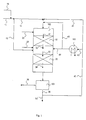
- FIG. 1 A preferable embodiment of the invention and of the hydrotreatment step is illustrated in Figure 1 , wherein a hydrotreatment process configuration is provided, comprising one or more catalyst beds in series, hydrotreated product recycle introduction on the top of the first catalyst bed and fresh feed, quench liquid and hydrogen introduction on top of each catalyst beds. This results in improved control of the reaction temperature in the catalyst beds and hence diminishes undesired side reactions.
- the hydrotreatment reactor 100 comprises two catalyst beds 10 and 20.
- Fresh feed 11 is introduced as streams 12 and 13 on the catalyst beds 10 and 20, respectively, and hydrogen as stream 22 and 23 on the catalyst beds 10 and 20, respectively.
- the fresh feed stream 12 is first mixed with the hydrotreated product recycle stream 41 and quench liquid stream 43 and the resulting mixture 31, diluted in the fresh feed concentration, is then introduced on the catalyst bed 10.
- required amount of sulphur make up is added to the fresh feed stream 11 via stream 15.
- fatty acids and fatty acid derivatives of the fresh feed stream 12 are converted to the corresponding reaction products.
- a two-phase stream 32 is withdrawn from the bottom of the catalyst bed 10 and is mixed with the fresh feed stream 13, quench liquid stream 44 and the hydrogen stream 23.
- the formed vapor-liquid mixture 33 diluted in the fresh feed concentration, is then introduced on the catalyst bed 20 at reduced temperature due to cooling effect of the hydrogen, quench liquid and fresh feed, passed through the catalyst bed 20 and finally withdrawn from the catalyst bed as a product stream 34.
- the stream 34 is separated in to a vapor stream 35 and liquid stream 36 in the high temperature separator 101.
- Vapor stream 35 is rich in hydrogen and is directed to further treatment.
- Part of the liquid stream 36 is returned to the reactor 100 as recycle stream 40, which is further divided to dilution stream 41 and total quench liquid stream 42.
- the quench liquid stream 42 is cooled in the heat exchanger 102 to provide adequate cooling effect on the top of the catalyst beds 10 and 20.
- Hydrotreated product stream 51 is directed from the hydrotreatment step to further processing.
- the catalyst beds 10 and 20 may be located in the same pressure vessel or in separate pressure vessels. In the embodiment where the catalyst beds are in the same pressure vessels the hydrogen streams 22 and 23 may alternatively be introduced on the catalyst bed 10 and then be passed through the catalyst beds 10 and 20. In the embodiment where the catalyst beds are in separate pressure vessels, the catalyst beds may operate in parallel mode with separate dilution streams, hydrogen streams and quench liquid streams.
- the number of catalyst beds may be one or two or more than two.
- the sulphur make up to the hydrotreatment step may be introduced with the fresh feed stream 11.
- required amount of sulphur may be fed with the hydrogen streams 22 and 23 as gaseous sulphur compound such as hydrogen sulphide.
- Hydrogen is fed to the hydrotreating reactor in excess of the theoretical hydrogen consumption.
- triglyceride oils, fatty acids and derivatives thereof are almost theoretically converted to n-paraffins without or almost without side reactions.
- propane is formed from the glycerol part of the triglycerides, water and CO and/or CO 2 from carboxylic oxygen, H 2 S from organic sulphur compounds and NH 3 from organic nitrogen compounds.
- the temperature at the end of the catalyst bed is controlled by net heat of reactions and to the extent of the dilution agent used.
- the dilution agent may be any hydrocarbon available, of biological origin or non-biological origin. It can also be recycled product from the process. Fresh feed content from feed (total feed) is be less than 20 wt-%. If the product recycle is used, product recycle/fresh feed ratio is 5-30:1, preferably 10-30:1, most preferably 12-25:1. After the hydrotreatment step, the product is subjected to an isomerization step.
- the bio oil and/or fat used as the fresh feed in the process of the present invention originates from renewable sources, such as fats and oils from plants and/or animals and/or fish and compounds derived from them.
- the basic structural unit of a typical plant or vegetable or animal oil/fat useful as the feedstock is a triglyceride, which is a triester of glycerol with three fatty acid molecules, having the structure presented in the following formula I:
- R 1 , R 2 and R 3 are alkyl chains. Fatty acids found in natural triglycerides are almost solely fatty acids of even carbon number. Therefore R 1 , R 2 , and R 3 typically are C 5 - C 23 alkyl groups, mainly C 11 -C 19 alkyl groups and most typically C 15 or C 17 alkyl groups. R 1 , R 2 , and R 3 may contain carbon-carbon double bonds. These alkyl chains can be saturated, unsaturated or polyunsaturated.
- Suitable bio oils are plant and vegetable oils and fats, animal fats, fish oils, and mixtures thereof containing fatty acids and/or fatty acid esters.
- suitable materials are wood-based and other plant-based and vegetable-based fats and oils such as rapeseed oil, colza oil, canola oil, tall oil, sunflower oil, soybean oil, hempseed oil, olive oil, linseed oil, mustard oil, palm oil, peanut oil, castor oil, coconut oil, as well as fats contained in plants bred by means of gene manipulation, animal-based fats such as lard, tallow, train oil, and fats contained in milk, as well as recycled fats of the food industry and mixtures of the above.
- Bio oil and fat suitable as fresh feed may comprise C 12 - C 24 fatty acids, derivatives thereof such as anhydrides or esters of fatty acids as well as triglycerides of fatty acids or combinations of thereof.
- Fatty acids or fatty acid derivatives, such as esters may be produced via hydrolysis of bio oils or by their fractionalization or transesterification reactions of triglycerides.
- the feed shall comply with the following requirements:
- the amount of alkaline and alkaline earth metals, calculated as elemental alkaline and alkaline earth metals, in the feed is below 10, preferably below 5 and most preferably below 1 w-ppm.
- the amount of other metals, calculated as elemental metals, in the feed is below 10, preferably below 5 and most preferably below 1 w-ppm.
- the amount of phosphorus, calculated as elemental phosphorus is below 30, preferably below 15 and most preferably below 5 w-ppm.
- the feedstock such as crude plant oil or animal fat
- the feedstock is not suitable as such in processing because of high impurity content and thus the feedstock is preferably purified using suitably one or more conventional purification procedures before introducing it to the hydrotreating step of the process. Examples of some conventional procedures are provided below:
- a feedstock which is optionally degummed or refined in another conventional way, may be bleached.
- the degummed or refined feedstock is heated and mixed with natural or acid-activated bleaching clay.
- Bleaching removes various impurity traces left from other pretreatment steps like degumming, such as chlorophyll, carotenoids, phosphoipids, metals, soaps and oxidation products.
- Bleaching is typically carried out under vacuum to minimize possible oxidation.
- the goal of bleaching is to reduce the color pigments in order to produce an oil of acceptable color and to reduce the oxidation tendency of oil.
- the triglyceride structures of the feedstock may be decomposed by prehydrogenating the double bonds using reduced reaction temperature with NiMo or other catalyst, prior to the of by hydrodeoxygenations in order to prevent double bond polymerisation of unsaturated triglycerides.
- the process according to the invention is particularly advantageous when the fresh feed contains more than 5 % of free fatty acids and even more than 10 % of free fatty acids.
- the fresh feed contains more than 5 % of free fatty acids and even more than 10 % of free fatty acids.
- naturally occurring fats and oils containing significant amounts of free fatty acids can be processed without the removal of free fatty acids.
- fatty acids, triglycerides and other fatty acid derivatives comprised in the feed are deoxygenated, denitrogenated and desulphurisated.
- the feed comprises fresh feed and at least one dilution agent and the ratio of the dilution agent/fresh feed is 5 - 30:1, preferably 10-30:1, most preferably 12-25:1.
- the dilution agent is selected from hydrocarbons and recycled product of the process i.e. product recycle or mixtures thereof.
- the pressure range may be varied between 20 and 150 bar, preferably between 50 and 100 bar, and the temperature between 200 and 400 °C, preferably between 250 and 350 °C and most preferably between 280 and 340°C.
- At least one organic or inorganic sulphur compound may optionally be fed along with hydrogen or with the feed to achieve the desired sulphur content.
- the inorganic sulphur compound can be for example H 2 S or elemental sulphur or the sulphur compound may be an easily decomposable organic sulphur compound such as dimethyl disulphide, carbon disulfide and butyl thiol or a mixture of easily decomposable organic sulphur compounds. It is also possible to use refinery gas or liquid streams containing decomposable sulphur compounds.
- known hydrogenation catalysts containing metals from Group VIII and/or VIB of the Periodic System may be used.
- the hydrogenation catalysts are supported Pd, Pt, Ni, NiMo or a CoMo catalyst, the support being alumina and/or silica, as described for instance in FI 100248 .
- NiMo/Al 2 O 3 and CoMo/Al 2 O 3 catalysts are used.
- the hydrotreatment section comprises one or more catalyst beds in series, dilution agent introduction on the top of the first catalyst bed and fresh feed, recycle liquid and hydrogen introduction on top of each catalyst beds.
- the product recycle/fresh oil-ratio is from 5-30:1, preferably 10-30:1 and most preferably 12-25:1.
- the catalyst beds can be located in same pressure vessel or each bed in a separate pressure vessel. Hydrogen is fed in excess to the theoretical chemical hydrogen consumption and the feedstock is converted totally or almost totally within each catalyst bed. Using these procedures, harmful, partially converted product intermediates are avoided, the temperature needed for reaction initiation is achieved in the beginning of each catalyst bed, the rise of reaction heating is controlled in the catalyst beds and the catalyst life is improved considerably.
- Hydrodeoxygenation of triglycerides facilitates controlled decomposition of the triglyceride molecule contrary to uncontrolled cracking. Double bonds are also hydrogenated during the controlled hydrotreatment. Light hydrocarbons and gases formed, mainly propane, water, CO 2 , CO, H 2 S and NH 3 are removed from the hydrotreated product.
- product recycle dilution can prevent or remarkably decrease the reactions between free fatty acids and the formation of high molecular weight compounds during hydrotreating, when at least 5:1 (product recycle):(fresh oil)-ratio was used.
- product recycle is based on two phenomena: dilution effect of recycle and more controllable and reduced reaction temperatures used over catalyst bed during hydrodeoxygenation. Higher temperatures and especially hot spots of catalyst bed promote ketonisation reactions. Due to this invention, it is possible to use various sources of bio oils and fats without the need to remove fatty acids. After the hydrotreatment step, the product is subjected to an isomerization step.
- isomerization is carried out which causes branching of the hydrocarbon chain and results in improved performance of the product oil at low temperatures.
- the isomerisation produces predominantly methyl branches.
- the severity of isomerisation conditions and choice of catalyst controls the amount of methyl branches formed and their distance from each other and therefore cold properties of bio diesel fraction produced.
- the product obtained from the hydrotreatment step is isomerised under isomerisation conditions with an isomerisation catalyst.
- the feed into the isomerisation reactor is a mixture of pure n-paraffins and the composition of it can be predicted from the fatty acid distribution of individual bio oils.
- triglyceride oils and other fatty acid derivatives and fatty acids are almost theoretically converted to n-paraffms.
- propane is formed from the glycerol part of triglycerides, water and COx from carboxylic oxygen, H 2 S from organic sulphur compounds and NH 3 from organic nitrogen compounds. It is substantial for the process that these gas phase impurities are removed as completely as possible before the hydrocarbons are contacted with the isomerization catalyst.
- the isomerization step may comprise an optional stripping step, wherein the reaction product from the hydrotreatment step may be purified by stripping with water vapour or a suitable gas such as light hydrocarbon, nitrogen or hydrogen.
- the optional stripping step is carried out in counter-current manner in a unit upstream of the isomerization catalyst, wherein the gas and liquid are contacted with each other, or before the actual isomerization reactor in a separate stripping unit utilizing the counter-current principle.
- the pressure varies in the range of 20-150 bar, preferably in the range of 30-100 bar and the temperature varies between 200 and 500 °C, preferably between 280 and 400 °C.
- isomerisation catalysts known in the art may be used. Suitable isomerisation catalysts contain a molecular sieve and/or a metal selected from Group VIII of the Periodic Table and/or a carrier. Preferably, the isomerisation catalyst contains SAPO-11 or SAPO-41 or ZSM-22 or ZSM-23 or ferrierite and Pt, Pd or Ni and Al 2 O 3 or SiO 2 . Typical isomerization catalysts are, for example, Pt/SAPO-11/Al 2 O 3 , Pt/ZSM-22/Al 2 O 3 , Pt/ZSM-23/Al 2 O 3 and Pt/SAPO-11/SiO 2 . Most of these catalysts require the presence of hydrogen to reduce the catalyst deactivation.
- An isomerised product which is a mixture of branched hydrocarbons and preferably branched paraffins boiling in the range of 180 - 350°C, the diesel fuel range, and having one carbon atom less than the original fatty acid chain, is obtained. Additionally some gasoline and gas may be obtained.
- the invention provides a method for reducing the formation of higher molecular weight compounds during the hydrotreatment of a feed obtained from plant oils and animal fats and which may contain free fatty acids.
- the problems of prior art processes may be avoided or at least significantly reduced by the improved process according to the invention, comprising a hydrotreatment step and an isomerisation step wherein product recycle or another dilution agent in the hydrotreatment step in combination with reduced operation temperature result in important improvements, particularly when the fresh feed contains more than 5 wt% of free fatty acids.
- a special reactor configuration and high dilution of fresh feed introduced into hydrotreatment are used in the method. The extent of side reactions is decreased and the stability of catalyst during hydrotreating is increased during the hydrotreatment step.
- the ratio of at least 5:1 significantly decreased the formation of high molecular weight products, when the feedstock contains 10 wt-% of free fatty acids (calculated from fresh oil) is used.
- free fatty acids can be processed without the need for deacidification. High quality hydrocarbons are obtained, suitable for the diesel fuel pool with high yield.
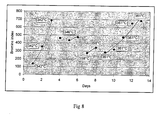
- Hydrotreating of tall oil (100 % free fatty acids) with NiMo catalyst was carried out at 50 bars pressure, LHSV 1.5 and reaction temperatures from 340-360°C without product recycle. Hydrogen oil ratio was 900 normal liters H 2 per liter oil fed. The hydrotreating of tall oil 100 % free fatty acid feed caused rapid deactivation of NiMo catalyst, and formation of heavy weight compounds and aromatics was observed. Bromine indexes increased during the run even if temperature compensation of catalyst was used ( Figure 8 ). Product oil contained about 7 wt-% aromatics and about 7 wt-% heavies (>375°C boiling). Density (50°C) of product oil was high 777.1 kg/m3 compared to typical values with rapeseed oil hydrotreated product oil (761-762 kg/m3) using lower reaction temperature and optimized reaction conditions.
- bromine index should be below 50.
- Table 1 describes densities, bromine indexes, reaction temperatures and water formed during test runs for 2 to 14 days using tall oil fatty acid feed (100% FFA) without recycling.
- Table 1. Duration of test run 2nd day 4th day 6th day 9th day 11th day 12th day 13th day 14th day Temperature, °C 370 375 378 381 385 385 385 385 Density, 50°C, kg/m3 771.8 773.1 773.7 776.5 779.1 779.8 780.5 781.2
- Bromine index 101 150 188 198 247 269 300 330 Product water, % 9.37 9.5 9.81 10.3 10.2 10.0 10.1 10.2
- Tube reactor hydrotreatment test runs were carried out using crude rapeseed oil, crude animal fat and purified rapeseed oil. Analysis of these feeds are shown in Table 2. Crude feeds contained significant amount of metals, organic phosphorus, sulphur and nitrogen compounds. Purified feeds contained only trace levels of these impurities Table 2.
- Second hydrotreatment test run was carried out using purified rapeseed oil and crude animal fat.
- Purified rapeseed oil was used as a reference feed.
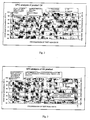
- product oil contained triglycerides and catalyst also significantly deactivated during crude animal fat feed. Pumping problems was also observed during crude animal fat feeding. Performance of crude animal fat is presented in Figure 5 .
- Hydrotreatment was carried out using purified rapeseed oil as reference feed without product recycle.
- stearic acid was fed (10 wt-% from rapeseed oil) along with purified rapeseed oil using same reaction conditions without product recycle. It was right away observed that the extent of high molecular weight compounds increased gradually from initial level ⁇ 3 wt-% to ⁇ 8 wt-%.
- same feed was diluted with product hydrocarbons so that (fresh oil)/ (product recycle) - ratio was 1:5.
- WHSV of fresh oil was maintained at 1, therefore WHSV of total oil feed increased to 6.
- the reaction temperature was kept at 305°C and reaction pressure at 50 bars.
- H 2 /(fresh oil)-ratio was maintained at 1000.
- HDO product (n-paraffins) simulated product recycle, which was mixed in advance with fresh oil. The initial content of heavy hydrocarbons in the recycle was -0,4 wt-%.
- Alkali raffinated rapeseed oil triglycerides contained mainly C 18 fatty acids. C 18 fatty acids contributed about 89 wt-% of all fatty acids in rapeseed oil. Theoretical amount of n-paraffins formed from rapeseed oil fed is about 86.4 wt-% (calculated from rapeseed oil fed).
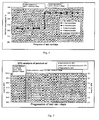
- Fresh oil was then diluted in advance with 1:5 ratio of HDO product (simulates product recycle). The duration of test run was over 9 months. Stabile operation was maintained (table 4 and Figure 7 ) and the formation of heavies was steady over the whole test run Figure 7 . Table 4.
Landscapes
- Chemical & Material Sciences (AREA)
- Oil, Petroleum & Natural Gas (AREA)
- Engineering & Computer Science (AREA)
- Chemical Kinetics & Catalysis (AREA)
- General Chemical & Material Sciences (AREA)
- Organic Chemistry (AREA)
- Crystallography & Structural Chemistry (AREA)
- Production Of Liquid Hydrocarbon Mixture For Refining Petroleum (AREA)
- Fats And Perfumes (AREA)
- Organic Low-Molecular-Weight Compounds And Preparation Thereof (AREA)
Priority Applications (1)
| Application Number | Priority Date | Filing Date | Title |
|---|---|---|---|
| EP15174586.6A EP2993218A1 (en) | 2005-07-04 | 2005-07-04 | Process for the manufacture of diesel range hydrocarbons |
Applications Claiming Priority (2)
| Application Number | Priority Date | Filing Date | Title |
|---|---|---|---|
| EP15174586.6A EP2993218A1 (en) | 2005-07-04 | 2005-07-04 | Process for the manufacture of diesel range hydrocarbons |
| EP05014428.6A EP1741768B2 (en) | 2005-07-04 | 2005-07-04 | Process for the manufacture of diesel range hydrocarbons |
Related Parent Applications (2)
| Application Number | Title | Priority Date | Filing Date |
|---|---|---|---|
| EP05014428.6A Division-Into EP1741768B2 (en) | 2005-07-04 | 2005-07-04 | Process for the manufacture of diesel range hydrocarbons |
| EP05014428.6A Division EP1741768B2 (en) | 2005-07-04 | 2005-07-04 | Process for the manufacture of diesel range hydrocarbons |
Publications (1)
| Publication Number | Publication Date |
|---|---|
| EP2993218A1 true EP2993218A1 (en) | 2016-03-09 |
Family
ID=36440866
Family Applications (2)
| Application Number | Title | Priority Date | Filing Date |
|---|---|---|---|
| EP15174586.6A Withdrawn EP2993218A1 (en) | 2005-07-04 | 2005-07-04 | Process for the manufacture of diesel range hydrocarbons |
| EP05014428.6A Expired - Lifetime EP1741768B2 (en) | 2005-07-04 | 2005-07-04 | Process for the manufacture of diesel range hydrocarbons |
Family Applications After (1)
| Application Number | Title | Priority Date | Filing Date |
|---|---|---|---|
| EP05014428.6A Expired - Lifetime EP1741768B2 (en) | 2005-07-04 | 2005-07-04 | Process for the manufacture of diesel range hydrocarbons |
Country Status (16)
| Country | Link |
|---|---|
| EP (2) | EP2993218A1 (da) |
| JP (1) | JP4741662B2 (da) |
| CN (2) | CN101287812A (da) |
| AP (1) | AP2694A (da) |
| BR (1) | BRPI0612723B1 (da) |
| DK (1) | DK1741768T4 (da) |
| ES (1) | ES2550259T5 (da) |
| FI (1) | FI1741768T4 (da) |
| HU (1) | HUE025942T2 (da) |
| MY (1) | MY146965A (da) |
| NZ (1) | NZ565052A (da) |
| PL (1) | PL1741768T5 (da) |
| PT (1) | PT1741768E (da) |
| SI (1) | SI1741768T2 (da) |
| UA (1) | UA90907C2 (da) |
| ZA (1) | ZA200800059B (da) |
Families Citing this family (176)
| Publication number | Priority date | Publication date | Assignee | Title |
|---|---|---|---|---|
| US7754931B2 (en) * | 2005-09-26 | 2010-07-13 | Her Majesty The Queen In Right Of Canada As Represented By The Minister Of Natural Resources | Production of high-cetane diesel fuel from low-quality biomass-derived feedstocks |
| JP4878824B2 (ja) * | 2005-11-30 | 2012-02-15 | Jx日鉱日石エネルギー株式会社 | 環境低負荷型燃料の製造方法および環境低負荷型燃料 |
| DE602007011667D1 (de) | 2006-12-01 | 2011-02-10 | Univ North Carolina State | Verfahren zur umwandlung von biomasse in treibstoff |
| FR2910486B1 (fr) | 2006-12-21 | 2009-02-13 | Inst Francais Du Petrole | Procede de conversion de charges issues de sources renouvelables pour produire des bases carburants gazoles de faible teneur en soufre et de cetane ameliore |
| FR2910483B1 (fr) * | 2006-12-21 | 2010-07-30 | Inst Francais Du Petrole | Procede de conversion de charges issues de sources renouvelables en bases carburants gazoles de bonne qualite. |
| AU2008219263B2 (en) | 2007-02-20 | 2011-01-20 | Shell Internationale Research Maatschappij B.V. | Process for producing paraffinic hydrocarbons |
| US20090004715A1 (en) | 2007-06-01 | 2009-01-01 | Solazyme, Inc. | Glycerol Feedstock Utilization for Oil-Based Fuel Manufacturing |
| US8084655B2 (en) | 2007-06-15 | 2011-12-27 | E. I. Du Pont De Nemours And Company | Catalytic process for converting renewable resources into paraffins for use as diesel blending stocks |
| WO2009011639A2 (en) * | 2007-07-19 | 2009-01-22 | Sunpine Ab | Diesel range fuels from carboxylic acids with plant origin |
| US7982076B2 (en) * | 2007-09-20 | 2011-07-19 | Uop Llc | Production of diesel fuel from biorenewable feedstocks |
| US7982075B2 (en) * | 2007-09-20 | 2011-07-19 | Uop Llc | Production of diesel fuel from biorenewable feedstocks with lower hydrogen consumption |
| US7834226B2 (en) * | 2007-12-12 | 2010-11-16 | Chevron U.S.A. Inc. | System and method for producing transportation fuels from waste plastic and biomass |
| JP5478505B2 (ja) | 2007-12-20 | 2014-04-23 | エクソンモービル リサーチ アンド エンジニアリング カンパニー | ディーゼル範囲炭化水素を製造するためのバイオ原料の多段共処理 |
| US8551327B2 (en) | 2007-12-27 | 2013-10-08 | Exxonmobil Research And Engineering Company | Staged co-processing of biofeeds for manufacture of diesel range hydrocarbons |
| US8735637B2 (en) | 2008-04-21 | 2014-05-27 | Sunpine Ab | Conversion of crude tall oil to renewable feedstock for diesel range fuel compositions |
| GB2462054A (en) * | 2008-04-29 | 2010-01-27 | Statoilhydro Asa | Biodiesel |
| US8581013B2 (en) | 2008-06-04 | 2013-11-12 | Syntroleum Corporation | Biorenewable naphtha composition and methods of making same |
| US20090300971A1 (en) | 2008-06-04 | 2009-12-10 | Ramin Abhari | Biorenewable naphtha |
| FR2932812B1 (fr) | 2008-06-24 | 2011-07-29 | Inst Francais Du Petrole | Procede de conversion de charges issues de sources renouvelables en bases carburants gazoles de bonne qualite mettant en oeuvre un catalyseur zeolithique sans separation gaz liquide intermediaire |
| FR2932811B1 (fr) | 2008-06-24 | 2010-09-03 | Inst Francais Du Petrole | Procede de conversion de charges issues de sources renouvelables en bases carburants gazoles de bonne qualite mettant en oeuvre un catalyseur de type zeolithique |
| RU2495082C2 (ru) † | 2008-09-10 | 2013-10-10 | Хальдор Топсеэ А/С | Способ и катализатор гидропереработки |
| JP5070169B2 (ja) * | 2008-09-18 | 2012-11-07 | Jx日鉱日石エネルギー株式会社 | 炭化水素油の製造方法 |
| IT1393058B1 (it) * | 2008-10-22 | 2012-04-11 | Eni Spa | Composizione idrocarburica utile come carburante e combustibile ottenuta da componenti petrolifere e da una componente biologica |
| US9447339B2 (en) | 2008-11-06 | 2016-09-20 | Exxonmobil Research And Engineering Company | Hydroprocessing of biodiesel fuels and blends |
| AU2009319722B2 (en) | 2008-11-28 | 2016-08-04 | Corbion Biotech, Inc. | Production of tailored oils in heterotrophic microorganisms |
| US8231804B2 (en) | 2008-12-10 | 2012-07-31 | Syntroleum Corporation | Even carbon number paraffin composition and method of manufacturing same |
| FR2940144B1 (fr) | 2008-12-23 | 2016-01-22 | Inst Francais Du Petrole | Methode de transformation d'effluents d'origine renouvelable en carburant d'excellente qualite mettant en oeuvre un catalyseur a base de molybdene |
| US8785701B2 (en) * | 2008-12-24 | 2014-07-22 | Exxonmobil Research And Engineering Company | Co-processing of diesel biofeed and kerosene range hydrocarbons |
| US8632675B2 (en) | 2008-12-24 | 2014-01-21 | Exxonmobil Research And Engineering Company | Co-processing of diesel biofeed and heavy oil |
| FI124508B (fi) | 2009-02-27 | 2014-09-30 | Upm Kymmene Oyj | Menetelmä ja laitteisto polttoainekomponenttien valmistamiseksi raakamäntyöljystä |
| PT2226375E (pt) | 2009-03-04 | 2012-07-20 | IFP Energies Nouvelles | Processo de hidrogenação contínua de matéria primas contendo triglicéridos |
| FR2943071B1 (fr) | 2009-03-10 | 2011-05-13 | Inst Francais Du Petrole | Procede d'hydrodesoxygenation de charges issues de sources renouvelables avec conversion limitee en decarboxylation mettant en oeuvre un catalyseur a base de nickel et de molybdene |
| FI122957B (fi) | 2009-06-24 | 2012-09-14 | Neste Oil Oyj | Menetelmä rasvan tuottamiseksi |
| DE102009032802A1 (de) * | 2009-07-10 | 2011-01-13 | Uhde Gmbh | Verfahren zur Entschwefelung olefinhaltiger Einsatzstoffe durch Regelung des Olefinanteils |
| EP4371970A3 (en) | 2009-07-17 | 2024-08-28 | Neste Oyj | Process for the preparation of light fuels |
| FR2949475B1 (fr) * | 2009-09-02 | 2012-04-20 | Inst Francais Du Petrole | Procede de conversion de charges issues de sources renouvelables en co-traitement avec une charge petroliere mettant en oeuvre un catalyseur a base de molybdene |
| FR2949476B1 (fr) * | 2009-09-02 | 2012-08-03 | Inst Francais Du Petrole | Procede de conversion de charges issues de sources renouvelables en co-traitement avec une charge petroliere mettant en oeuvre un catalyseur a base de nickel et de molybdene |
| FR2950895B1 (fr) * | 2009-10-06 | 2012-02-17 | Inst Francais Du Petrole | Procede d'hydrotraitement et d'hydroisomerisation de charges issues de source renouvelable mettant en oeuvre un catalyseur a base de carbure de silicium |
| FR2951190B1 (fr) | 2009-10-13 | 2012-08-17 | Inst Francais Du Petrole | Procede d'hydrotraitement et d'hydroisomerisation de charges issues de source renouvelable mettant en oeuvre une zeolithe modifiee |
| CN102041071B (zh) * | 2009-10-21 | 2014-03-05 | 中国石油化工股份有限公司 | 柴油加氢工艺方法 |
| FR2951733B1 (fr) * | 2009-10-27 | 2012-08-10 | Inst Francais Du Petrole | Procede d'hydrotraitement de charges issues de sources renouvelables avec chauffe indirecte mettant en oeuvre un catalyseur a base de molybdene |
| FR2951734B1 (fr) * | 2009-10-27 | 2012-08-03 | Inst Francais Du Petrole | Procede d'hydrotraitement de charges issues de sources renouvelables avec chauffe indirecte |
| FR2951732B1 (fr) | 2009-10-27 | 2012-08-03 | Inst Francais Du Petrole | Procede d'hydrotraitement de charges issues de sources renouvelables avec chauffe indirecte mettant en oeuvre un catalyseur a base de nickel et de molybdene presentant un rapport atomique particulier |
| FR2952378B1 (fr) | 2009-11-10 | 2012-04-20 | Inst Francais Du Petrole | Procede d'hydrotraitement et d'hydroisomerisation de charges issues de source renouvelable mettant en oeuvre une zeolithe modifiee par un traitement basique |
| FR2953854B1 (fr) * | 2009-12-16 | 2012-12-28 | Inst Francais Du Petrole | Procede de conversion de charges issues de sources renouvelables avec pretraitement des charges par dephosphatation a chaud |
| US8853474B2 (en) | 2009-12-29 | 2014-10-07 | Exxonmobil Research And Engineering Company | Hydroprocessing of biocomponent feedstocks with low purity hydrogen-containing streams |
| CN102811814B (zh) | 2010-01-20 | 2014-10-15 | 吉坤日矿日石能源株式会社 | 单环芳香族烃制造用催化剂及单环芳香族烃的制造方法 |
| FI123968B (fi) | 2010-02-08 | 2014-01-15 | Upm Kymmene Corp | Menetelmä ja laitteisto raakamäntyöljyn puhdistamiseksi |
| AU2011224483B2 (en) | 2010-03-09 | 2016-06-30 | Exxonmobil Research And Engineering Company | Hydroprocessing of diesel range biomolecules |
| FI125931B (fi) | 2010-05-25 | 2016-04-15 | Upm Kymmene Corp | Menetelmä ja laitteisto hiilivetyjen valmistamiseksi |
| EP2390341B1 (en) | 2010-05-25 | 2018-06-27 | Neste Oyj | Process and microorganisms for production of lipids |
| US8592188B2 (en) | 2010-05-28 | 2013-11-26 | Solazyme, Inc. | Tailored oils produced from recombinant heterotrophic microorganisms |
| US8366907B2 (en) | 2010-08-02 | 2013-02-05 | Battelle Memorial Institute | Deoxygenation of fatty acids for preparation of hydrocarbons |
| US8877669B2 (en) * | 2010-08-02 | 2014-11-04 | Basf Corporation | Hydroisomerization catalysts for biological feedstocks |
| EP2428547B1 (en) | 2010-09-08 | 2018-09-05 | IFP Energies nouvelles | Process for the continuous hydrogenation of triglyceride containing raw materials using a nickel and molybdenum based catalyst |
| EP2428548A1 (en) | 2010-09-08 | 2012-03-14 | IFP Energies nouvelles | Process for the continuous hydrogenation of triglyceride containing raw materials using a molybdenum based catalyst |
| FI20106252A0 (fi) | 2010-11-26 | 2010-11-26 | Upm Kymmene Corp | Menetelmä ja systeemi polttoainekomponenttien valmistamiseksi |
| PL2465868T3 (pl) | 2010-12-17 | 2016-08-31 | Neste Oyj | Ulepszenie produkcji lipidów |
| EP2655558A2 (en) * | 2010-12-20 | 2013-10-30 | Shell Oil Company | Biomass conversion systems having integrated heat management and methods for use thereof |
| FR2969642B1 (fr) * | 2010-12-22 | 2012-12-28 | IFP Energies Nouvelles | Production de carburants paraffiniques a partir de matieres renouvelables par un procede d'hydrotraitement en continu |
| EP2468875B1 (en) | 2010-12-22 | 2022-07-27 | Neste Oyj | An integrated process for producing biofuels |
| PL2468857T3 (pl) | 2010-12-22 | 2015-03-31 | Neste Oil Oyj | Zintegrowany układ technologiczny do wytwarzania lipidów i otrzymywania masy celulozowej |
| EP2468877B1 (en) | 2010-12-22 | 2019-07-17 | Neste Oyj | Process for producing enzymes |
| EP2476482B2 (en) | 2011-01-18 | 2020-05-13 | Neste Oyj | Method and arrangement for feeding heat-sensitive materials to fixed-bed reactors |
| KR101964965B1 (ko) | 2011-02-02 | 2019-04-03 | 테라비아 홀딩스 인코포레이티드 | 재조합 유지성 미생물로부터 생산된 맞춤 오일 |
| DK2489276T3 (da) | 2011-02-17 | 2014-01-20 | Neste Oil Oyj | Fremgangsmåde til udvinding af olie |
| KR101896733B1 (ko) | 2011-03-25 | 2018-10-04 | 제이엑스티지 에네루기 가부시키가이샤 | 단환 방향족 탄화수소의 제조 방법 |
| JP5646381B2 (ja) * | 2011-03-25 | 2014-12-24 | Jx日鉱日石エネルギー株式会社 | 単環芳香族炭化水素の製造方法 |
| JP5690623B2 (ja) * | 2011-03-25 | 2015-03-25 | Jx日鉱日石エネルギー株式会社 | 単環芳香族炭化水素の製造方法 |
| JP5690624B2 (ja) * | 2011-03-25 | 2015-03-25 | Jx日鉱日石エネルギー株式会社 | 単環芳香族炭化水素の製造方法 |
| EP2546352A1 (en) | 2011-07-15 | 2013-01-16 | Neste Oil Oyj | Process for producing lipids from palm oil production residues |
| US10427069B2 (en) | 2011-08-18 | 2019-10-01 | Inaeris Technologies, Llc | Process for upgrading biomass derived products using liquid-liquid extraction |
| US8884086B2 (en) * | 2011-09-14 | 2014-11-11 | Bp Corporation North America Inc. | Renewable diesel refinery strategy |
| EP3872156A1 (en) | 2011-10-07 | 2021-09-01 | Neste Oil Oyj | Improved process for manufacture of liquid fuel components from renewable sources |
| FR2982271B1 (fr) | 2011-11-08 | 2013-11-08 | Ifp Energies Now | Production de carburants paraffiniques a partir de matieres renouvelables par un procede d'hydrotraitement en continu comprenant une etape de pretraitement sous hydrogene |
| FR2982270B1 (fr) | 2011-11-08 | 2013-11-08 | IFP Energies Nouvelles | Production de carburants paraffiniques a partir de matieres renouvelables par un procede d'hydrotraitement en continu comprenant une etape de pretraitement |
| US9068126B2 (en) * | 2011-12-14 | 2015-06-30 | Uop Llc | Methods for deoxygenating biomass-derived pyrolysis oil |
| US9080109B2 (en) * | 2011-12-14 | 2015-07-14 | Uop Llc | Methods for deoxygenating biomass-derived pyrolysis oil |
| CA2863470C (en) | 2012-01-31 | 2018-06-12 | Neste Oil Oyj | A method for production of hydrocarbons by increasing hydrocarbon chain length |
| US8945908B2 (en) | 2012-04-18 | 2015-02-03 | Solazyme, Inc. | Tailored oils |
| FR2992326B1 (fr) | 2012-06-21 | 2014-06-20 | IFP Energies Nouvelles | Procede de production de tensio-actifs a partir de matieres renouvelables comprenant une etape d'hydrotraitement et une etape de transformation de paraffines en tensio-actifs |
| US9222037B2 (en) * | 2012-11-14 | 2015-12-29 | Uop Llc | Apparatuses and methods for deoxygenating biomass-derived pyrolysis oil |
| EP2735610A1 (en) | 2012-11-26 | 2014-05-28 | Neste Oil Oyj | Oleaginous bacterial cells and methods for producing lipids |
| CA2889005A1 (en) | 2012-12-28 | 2014-09-25 | Exxonmobil Research And Engineering Company | Blending of dewaxed biofuels with mineral-based kero(jet) distillate cuts to provide on-spec jet fuels |
| US9816079B2 (en) | 2013-01-29 | 2017-11-14 | Terravia Holdings, Inc. | Variant thioesterases and methods of use |
| US9567615B2 (en) | 2013-01-29 | 2017-02-14 | Terravia Holdings, Inc. | Variant thioesterases and methods of use |
| CN105008492A (zh) | 2013-02-21 | 2015-10-28 | 吉坤日矿日石能源株式会社 | 单环芳香族烃的制造方法 |
| US9783836B2 (en) | 2013-03-15 | 2017-10-10 | Terravia Holdings, Inc. | Thioesterases and cells for production of tailored oils |
| US9290749B2 (en) | 2013-03-15 | 2016-03-22 | Solazyme, Inc. | Thioesterases and cells for production of tailored oils |
| EP2993993A2 (en) | 2013-04-26 | 2016-03-16 | Solazyme, Inc. | Low polyunsaturated fatty acid oils and uses thereof |
| EP3033407B1 (en) * | 2013-08-12 | 2019-10-16 | Inaeris Technologies, LLC | Process for upgrading bio-oil |
| MX369685B (es) | 2013-10-04 | 2019-11-19 | Terravia Holdings Inc | Aceites adaptables. |
| WO2015086782A1 (en) | 2013-12-11 | 2015-06-18 | Neste Oil Oyj | Method of processing lignocellulosic material using an alkaline delignification agent |
| EP3080288B1 (en) | 2013-12-11 | 2019-01-30 | Neste Oyj | Method of processing lignocellulosic material using a cationic compound |
| CN105814211B (zh) | 2013-12-11 | 2020-11-06 | 耐思特公司 | 自木质纤维素材料产生单细胞油的方法 |
| EP4257662B1 (en) | 2014-05-29 | 2025-11-05 | ENI S.p.A. | Process for producing a diesel hydrocarbon fraction starting from a renewable feedstock |
| ES2860924T3 (es) | 2014-05-29 | 2021-10-05 | Eni Spa | Proceso para producir una fracción de hidrocarburo diésel a partir de una materia prima renovable |
| WO2015181744A1 (en) | 2014-05-29 | 2015-12-03 | Eni S.P.A. | Process for producing a diesel hydrocarbon fraction starting from a renewable feedstock |
| EP2954945B1 (en) | 2014-06-11 | 2016-06-08 | Neste Oyj | Method and apparatus for mixing fluids |
| US9765368B2 (en) | 2014-07-24 | 2017-09-19 | Terravia Holdings, Inc. | Variant thioesterases and methods of use |
| US10125382B2 (en) | 2014-09-18 | 2018-11-13 | Corbion Biotech, Inc. | Acyl-ACP thioesterases and mutants thereof |
| WO2016093777A1 (en) * | 2014-12-11 | 2016-06-16 | Türkiye Petrol Rafinerileri A. S. | A method for diesel production |
| FI127333B (en) * | 2014-12-19 | 2018-04-13 | Upm Kymmene Corp | Process for the preparation of hydrocarbons |
| CN107960101A (zh) | 2015-04-06 | 2018-04-24 | 柯碧恩生物技术公司 | 具有lpaat消融的产油微藻 |
| EP3095844A1 (en) | 2015-05-21 | 2016-11-23 | Neste Oyj | Method for producing bio hydrocarbons by thermally cracking a bio-renewable feedstock |
| EP3095843A1 (en) | 2015-05-21 | 2016-11-23 | Neste Oyj | Method for producing bio hydrocarbons by thermally cracking a bio-renewable feedstock containing at least 65 wt.% iso-paraffins |
| FR3039160B1 (fr) | 2015-07-24 | 2017-07-28 | Ifp Energies Now | Procede d'hydrotraitement de matieres renouvelables avec un recycle gaz optimise |
| FI126341B (en) | 2015-09-18 | 2016-10-14 | Neste Oyj | Method for separating and purifying renewable propane |
| ES2837075T3 (es) | 2016-08-26 | 2021-06-29 | Neste Oyj | Un método para fabricar un componente de combustible |
| FI127886B (en) * | 2016-12-19 | 2019-04-30 | Neste Oyj | More Diesel Component Composition |
| FI127887B (en) | 2016-12-19 | 2019-04-30 | Neste Oyj | Multi-component diesel composition |
| IT201700037970A1 (it) | 2017-04-06 | 2018-10-06 | Eni Spa | Idrotrattamento di cariche da fonti rinnovabili con catalizzatori ad elevato contenuto di fase attiva |
| CA3064957C (en) | 2017-06-19 | 2024-02-13 | Neste Oyj | Renewable base oil in lubricant formulations |
| FI20176201A1 (en) | 2017-12-29 | 2019-06-30 | Neste Oyj | A method for determining the amount of renewable fuel in a fuel mixture. |
| FI128839B (en) | 2018-04-10 | 2021-01-15 | Neste Oyj | A method for producing a mixture of hydrocarbons |
| FI130443B (en) | 2018-04-10 | 2023-09-01 | Neste Oyj | Renewable isomeric paraffin composition and use thereof |
| FI130603B (en) | 2018-08-03 | 2023-12-08 | Neste Oyj | THE METHOD PRODUCES BIORENEWABLE PROPENE FROM OILS AND FATS |
| FI130367B (fi) | 2018-12-17 | 2023-07-26 | Neste Oyj | Menetelmä valmistaa korkealaatuisia uusiutuvia komponentteja uusiutuvasta raaka-aineesta |
| FI129367B (en) * | 2018-12-28 | 2021-12-31 | Neste Oyj | METHOD FOR HANDLING LIPID - CONTAINING MATERIALS |
| FI129457B (en) | 2018-12-31 | 2022-02-28 | Neste Oyj | Process for the catalytic production of propanol |
| FI128570B (en) | 2018-12-31 | 2020-08-14 | Neste Oyj | Process for making renewable products |
| US11643606B2 (en) | 2018-12-31 | 2023-05-09 | Neste Oyj | Method for producing renewable base oil and renewable fuel components |
| WO2020141255A1 (en) | 2018-12-31 | 2020-07-09 | Neste Oyj | Process for integrated production of renewable fuels and chemicals |
| FI20195647A1 (en) | 2019-07-22 | 2021-01-23 | Neste Oyj | Paraffinic products, a method for producing paraffinic products and a use of paraffinic products |
| IT201900014778A1 (it) * | 2019-08-14 | 2021-02-14 | Nextchem S P A | Processo per il pretrattamento di alimentazioni destinate alla produzione di bio-carburanti, mediante idrolisi di grassi ad alta temperatura e pressione |
| FI128954B (en) | 2019-09-26 | 2021-03-31 | Neste Oyj | Preparation of renewable base oil including metathesis |
| FI128952B (en) | 2019-09-26 | 2021-03-31 | Neste Oyj | Preparation of renewable alkenes including metathesis |
| FI128953B (en) | 2019-09-26 | 2021-03-31 | Neste Oyj | Production of renewable chemicals including metathesis and microbial oxidation |
| WO2021094645A1 (en) | 2019-11-15 | 2021-05-20 | Neste Oyj | Production of paraffinic products |
| FI130917B1 (en) | 2019-12-20 | 2024-05-28 | Neste Oyj | Flexible integrated production facility system and procedure |
| CN115427542B (zh) | 2020-03-02 | 2024-11-26 | Reg合成燃料有限责任公司 | 向加氢脱氧反应器提供生物油的方法 |
| WO2022020832A1 (en) | 2020-07-21 | 2022-01-27 | Exxonmobil Research And Engineering Company | Methods of co-processing petroleum distillates and bio-based |
| CN112159682A (zh) * | 2020-08-11 | 2021-01-01 | 易高生物化工科技(张家港)有限公司 | 一种废弃动植物油脂加氢制备低凝点可再生烷烃的方法 |
| FI20205816A1 (en) | 2020-08-21 | 2022-02-22 | Neste Oyj | COOLANT FOR DIRECT, SINGLE-PHASE IMMEDIATE COOLING |
| FI20205840A1 (en) | 2020-08-31 | 2022-03-01 | Neste Oyj | Octane-enhanced hydrocarbon intermediate composition |
| MY209634A (en) * | 2020-09-09 | 2025-07-28 | Green Tech Research Co Ltd | Process and system for hydrotreating renewable feedstock |
| WO2022069601A1 (en) * | 2020-09-30 | 2022-04-07 | Neste Oyj | Method for producing renewable fuel |
| US20240018070A1 (en) | 2020-11-06 | 2024-01-18 | Neste Oyj | A method for producing a cracking product fraction comprising propylene, c4 olefins, or both |
| CN116648493B (zh) | 2020-12-11 | 2024-06-21 | 耐思特公司 | 具有良好十六烷值和良好冷特性的可再生烃组合物 |
| FI20206282A1 (en) | 2020-12-11 | 2022-06-12 | Neste Oyj | Renewable hydrocarbon composition having good cetane number and good cold properties |
| FI129379B (en) | 2020-12-18 | 2022-01-14 | Neste Oyj | Alcohol production process |
| FR3122661B1 (fr) | 2021-05-04 | 2024-05-17 | Ifp Energies Now | Procede optimise d'hydrotraitement et d’hydroconversion de charges issues de sources renouvelables |
| FI130300B (en) | 2021-05-20 | 2023-06-09 | Neste Oyj | OCTANE IMPROVING TWO-COMPONENT INTERMEDIATE |
| FI130060B (en) | 2021-06-30 | 2023-01-13 | Neste Oyj | Process and input material for the production of ethylene |
| FI130043B (en) | 2021-12-17 | 2022-12-30 | Neste Oyj | Method for treating a gaseous composition containing propane |
| CN116333823B (zh) * | 2021-12-23 | 2025-01-24 | 中国石油天然气股份有限公司 | 一种油脂选择性催化脱氧制备液体燃料的方法 |
| FI130344B (en) | 2021-12-27 | 2023-06-30 | Neste Oyj | Method for producing renewable aviation fuel |
| FI130374B (en) | 2021-12-27 | 2023-07-31 | Neste Oyj | Process for producing renewable C3 hydrocarbons and renewable aromatic hydrocarbons |
| FI130343B (en) | 2021-12-27 | 2023-06-30 | Neste Oyj | Method for producing renewable gas, renewable naphtha and renewable aviation fuel |
| FI130744B1 (fi) | 2022-04-07 | 2024-02-26 | Neste Oyj | Menetelmä vetykäsittelykatalyytin deaktivoinnin vähentämiseksi |
| FI130743B1 (en) | 2022-04-07 | 2024-02-26 | Neste Oyj | A method for producing renewable hydrocarbons |
| EP4547789A1 (en) | 2022-06-30 | 2025-05-07 | Neste Oyj | A process for producing a liquid transportation fuel component |
| CA3256602A1 (en) | 2022-06-30 | 2024-01-04 | Neste Oyj | HYDROCARBON COMPONENT |
| AU2023300579A1 (en) | 2022-06-30 | 2024-12-05 | Neste Oyj | A process for producing liquid transportation fuel components |
| FI130641B1 (en) | 2022-06-30 | 2024-01-03 | Neste Oyj | Process for preparing a liquid traffic fuel component |
| WO2024003469A1 (en) | 2022-06-30 | 2024-01-04 | Neste Oyj | A process for producing a liquid transportation fuel component |
| FI130997B1 (en) | 2022-12-21 | 2024-07-22 | Neste Oyj | Catalyst composition with redox-active support for simultaneous oxygen and nitrogen removal |
| FR3148602A1 (fr) | 2023-05-12 | 2024-11-15 | IFP Energies Nouvelles | Procédé d'hydrotraitement et d'hydroisomérisation d'huile végétale en une étape utilisant au moins un catalyseur sulfure avec une zéolithe isomérisante |
| FR3148603A1 (fr) | 2023-05-12 | 2024-11-15 | IFP Energies Nouvelles | Procédé d'hydrotraitement et d'hydroisomérisation d'huile végétale en une étape utilisant au moins un catalyseur sulfure avec une zéolithe de type structural BEA seule ou en mélange avec une zéolithe de type structural FAU |
| WO2024240613A1 (en) | 2023-05-25 | 2024-11-28 | Unilever Ip Holdings B.V. | A method for producng a linear alkyl benzene from oleo chemical feedstocks |
| FI131404B1 (en) | 2023-05-31 | 2025-04-04 | Neste Oyj | Multi-purpose oil and method for producing the same |
| FR3155239A1 (fr) * | 2023-11-10 | 2025-05-16 | Totalenergies Onetech | Procede de recuperation de composes hydrocarbones pieges dans des adsorbants |
| FR3157420A1 (fr) | 2023-12-21 | 2025-06-27 | IFP Energies Nouvelles | Procede de production de kerosene renouvelable comprenant deux etapes d’hydroconversion et utilisant un catalyseur specifique dans la seconde etape d’hydroconversion |
| FI20236414A1 (en) | 2023-12-21 | 2025-06-22 | Neste Oyj | Process for the production of hydrocarbon fractions with sustainable content |
| WO2025133470A1 (en) | 2023-12-21 | 2025-06-26 | Neste Oyj | A process for producing hydrocarbon fractions having sustainable content and hydrocarbon fractions obtainable by said process |
| FR3157421A1 (fr) | 2023-12-21 | 2025-06-27 | IFP Energies Nouvelles | Procede de production de kerosene renouvelable par hydroprocessing en 2 etapes utilisant un catalyseur specifique dans l’etape d’hydroconversion avec recyclage d’une fraction lourde |
| FR3157422A1 (fr) | 2023-12-21 | 2025-06-27 | IFP Energies Nouvelles | Procede de production de kerosene ou de gazole renouvelable par hydroprocessing en 2 etapes utilisant un catalyseur specifique pour l’etape d’hydroconversion sans recycle |
| FR3157424A1 (fr) | 2023-12-21 | 2025-06-27 | IFP Energies Nouvelles | Procede de co-production de kerosene et de gazole renouvelable par hydroprocessing en 2 etapes utilisant un catalyseur specifique pour l’etape d’hydroconversion sans recycle |
| WO2025141244A1 (en) | 2023-12-27 | 2025-07-03 | Neste Oyj | A process for producing diesel boiling range fraction(s) having sustainable content |
| FI132031B1 (en) | 2024-01-18 | 2026-04-27 | Neste Oyj | Process for making renewable aviation fuel |
| FI132030B1 (en) | 2024-01-18 | 2026-04-27 | Neste Oyj | An integrated method for producing sustainable aviation fuel |
| EP4667551A1 (en) | 2024-06-18 | 2025-12-24 | Neste Oyj | A method for producing propylene |
| FR3163951A1 (fr) | 2024-06-27 | 2026-01-02 | IFP Energies Nouvelles | Procede de production de kerosene renouvelable comprenant deux etapes d’hydroconversion successives et utilisant un catalyseur specifique pour chacune des etapes. |
| FI131837B1 (en) | 2024-07-05 | 2026-01-07 | Neste Oyj | Method of producing middle distillate blend |
| FR3165011A1 (fr) | 2024-07-26 | 2026-01-30 | IFP Energies Nouvelles | Procédé d'hydrotraitement et d'hydroisomérisation d'huile végétale en une étape utilisant au moins un catalyseur d’hydrotraitement à base de métaux des groupes VIB et VIII. |
| FR3165012A1 (fr) | 2024-07-26 | 2026-01-30 | IFP Energies Nouvelles | Procédé d'hydrotraitement et d'hydroisomérisation d'huile végétale en deux étapes utilisant au moins un catalyseur d’hydrotraitement à base de métaux des groupes VIB et VIII. |
Citations (8)
| Publication number | Priority date | Publication date | Assignee | Title |
|---|---|---|---|---|
| US4554397A (en) | 1983-08-25 | 1985-11-19 | Institut Francais Du Petrole | Process for manufacturing a linear olefin from a saturated fatty acid or fatty acid ester |
| FR2607803A1 (fr) | 1986-12-08 | 1988-06-10 | Univ Paris Curie | Procede d'hydrocraquage sous pression des huiles vegetales ou des acides gras derives desdites huiles |
| US4992605A (en) | 1988-02-16 | 1991-02-12 | Craig Wayne K | Production of hydrocarbons with a relatively high cetane rating |
| FI100248B (fi) | 1996-02-05 | 1997-10-31 | Fortum Oil Oy | Keskitisleen valmistus |
| US5705722A (en) | 1994-06-30 | 1998-01-06 | Natural Resources Canada | Conversion of biomass feedstock to diesel fuel additive |
| EP1396531A2 (en) | 2002-09-06 | 2004-03-10 | Fortum OYJ | Process for producing a hydrocarbon component of biological origin |
| US20040230085A1 (en) * | 2002-09-06 | 2004-11-18 | Juha Jakkula | Process for producing a hydrocarbon component of biological origin |
| EP1489157A1 (de) * | 2003-06-16 | 2004-12-22 | Fraunhofer-Gesellschaft zur Förderung der angewandten Forschung e.V. | Verfahren zum Konvertieren von fett- oder ölhaltigen Roh- und Abfallstoffen in Gemische mit hohem Kohlenwasserstoffanteil, mit diesem Verfahren hergestellte Produkte und deren Verwendung |
Family Cites Families (5)
| Publication number | Priority date | Publication date | Assignee | Title |
|---|---|---|---|---|
| US5183556A (en) | 1991-03-13 | 1993-02-02 | Abb Lummus Crest Inc. | Production of diesel fuel by hydrogenation of a diesel feed |
| CZ283575B6 (cs) † | 1996-01-17 | 1998-05-13 | Chemopetrol, A. S. | Způsob výroby automobilového benzínu |
| EP0993498B1 (en) | 1997-06-24 | 2004-08-11 | Process Dynamics, Inc. | Two phase hydroprocessing |
| AU728062B2 (en) | 1997-07-09 | 2001-01-04 | Crystallisation And Degumming Sprl | Process for removing metals, together with gums bound to said metals, from fatty substances |
| JP2005527237A (ja) | 2002-05-30 | 2005-09-15 | カウンシル・オブ・サイエンティフィック・アンド・インダストリアル・リサーチ | 植物油の物理的精製を行うための前処理方法 |
-
2005
- 2005-07-04 EP EP15174586.6A patent/EP2993218A1/en not_active Withdrawn
- 2005-07-04 FI FIEP05014428.6T patent/FI1741768T4/fi active
- 2005-07-04 PL PL05014428.6T patent/PL1741768T5/pl unknown
- 2005-07-04 ES ES05014428T patent/ES2550259T5/es not_active Expired - Lifetime
- 2005-07-04 DK DK05014428.6T patent/DK1741768T4/da active
- 2005-07-04 HU HUE05014428A patent/HUE025942T2/en unknown
- 2005-07-04 PT PT50144286T patent/PT1741768E/pt unknown
- 2005-07-04 EP EP05014428.6A patent/EP1741768B2/en not_active Expired - Lifetime
- 2005-07-04 SI SI200532016T patent/SI1741768T2/sl unknown
-
2006
- 2006-06-29 AP AP2008004334A patent/AP2694A/xx active
- 2006-06-29 CN CNA2006800274240A patent/CN101287812A/zh active Pending
- 2006-06-29 UA UAA200801410A patent/UA90907C2/ru unknown
- 2006-06-29 JP JP2008518887A patent/JP4741662B2/ja active Active
- 2006-06-29 BR BRPI0612723A patent/BRPI0612723B1/pt active IP Right Grant
- 2006-06-29 NZ NZ565052A patent/NZ565052A/en unknown
- 2006-06-29 CN CN201510422515.5A patent/CN105062552A/zh active Pending
- 2006-07-03 MY MYPI20063159A patent/MY146965A/en unknown
-
2008
- 2008-01-02 ZA ZA200800059A patent/ZA200800059B/xx unknown
Patent Citations (8)
| Publication number | Priority date | Publication date | Assignee | Title |
|---|---|---|---|---|
| US4554397A (en) | 1983-08-25 | 1985-11-19 | Institut Francais Du Petrole | Process for manufacturing a linear olefin from a saturated fatty acid or fatty acid ester |
| FR2607803A1 (fr) | 1986-12-08 | 1988-06-10 | Univ Paris Curie | Procede d'hydrocraquage sous pression des huiles vegetales ou des acides gras derives desdites huiles |
| US4992605A (en) | 1988-02-16 | 1991-02-12 | Craig Wayne K | Production of hydrocarbons with a relatively high cetane rating |
| US5705722A (en) | 1994-06-30 | 1998-01-06 | Natural Resources Canada | Conversion of biomass feedstock to diesel fuel additive |
| FI100248B (fi) | 1996-02-05 | 1997-10-31 | Fortum Oil Oy | Keskitisleen valmistus |
| EP1396531A2 (en) | 2002-09-06 | 2004-03-10 | Fortum OYJ | Process for producing a hydrocarbon component of biological origin |
| US20040230085A1 (en) * | 2002-09-06 | 2004-11-18 | Juha Jakkula | Process for producing a hydrocarbon component of biological origin |
| EP1489157A1 (de) * | 2003-06-16 | 2004-12-22 | Fraunhofer-Gesellschaft zur Förderung der angewandten Forschung e.V. | Verfahren zum Konvertieren von fett- oder ölhaltigen Roh- und Abfallstoffen in Gemische mit hohem Kohlenwasserstoffanteil, mit diesem Verfahren hergestellte Produkte und deren Verwendung |
Non-Patent Citations (2)
| Title |
|---|
| "Fuels and Chemicals from Biomass", vol. 666, 1 May 1997, AMERICAN CHEMICAL SOCIETY, Washington, DC, ISBN: 978-0-84-121625-9, article GERHARD KNOTHE ET AL: "Biodiesel: The Use of Vegetable Oils and Their Derivatives as Alternative Diesel Fuels", pages: 172 - 208, XP055185438, DOI: 10.1021/bk-1997-0666.ch010 * |
| MAIER, W. F. ET AL., CHEMISCHE BERICHTE, vol. 115, no. 2, 1982, pages 808 - 12 |
Also Published As
| Publication number | Publication date |
|---|---|
| SI1741768T1 (sl) | 2016-02-29 |
| EP1741768A1 (en) | 2007-01-10 |
| DK1741768T3 (da) | 2015-10-26 |
| EP1741768B2 (en) | 2023-04-05 |
| CN105062552A (zh) | 2015-11-18 |
| PL1741768T3 (pl) | 2015-12-31 |
| DK1741768T4 (da) | 2023-04-24 |
| ES2550259T3 (es) | 2015-11-05 |
| FI1741768T4 (fi) | 2023-04-25 |
| UA90907C2 (ru) | 2010-06-10 |
| JP2008545035A (ja) | 2008-12-11 |
| PT1741768E (pt) | 2015-11-03 |
| HUE025942T2 (en) | 2016-05-30 |
| BRPI0612723A2 (pt) | 2010-11-30 |
| AP2694A (en) | 2013-07-16 |
| PL1741768T5 (pl) | 2024-02-05 |
| JP4741662B2 (ja) | 2011-08-03 |
| SI1741768T2 (sl) | 2023-05-31 |
| EP1741768B1 (en) | 2015-07-22 |
| MY146965A (en) | 2012-10-15 |
| ZA200800059B (en) | 2008-12-31 |
| BRPI0612723B1 (pt) | 2016-04-19 |
| CN101287812A (zh) | 2008-10-15 |
| ES2550259T5 (es) | 2023-06-08 |
| NZ565052A (en) | 2011-04-29 |
Similar Documents
| Publication | Publication Date | Title |
|---|---|---|
| US11473018B2 (en) | Process for the manufacture of diesel range hydrocarbons | |
| EP1741768B1 (en) | Process for the manufacture of diesel range hydrocarbons | |
| AU2006264900B2 (en) | Process for the manufacture of diesel range hydrocarbons | |
| EP1741767B2 (en) | Process for the manufacture of diesel range hydrocarbons | |
| US8278492B2 (en) | Process for the manufacture of diesel range hydrocarbons | |
| KR101037583B1 (ko) | 디젤 등급 탄화수소류의 제조 공정 | |
| US12203035B2 (en) | Process for the manufacture of diesel range hydrocarbons | |
| HK1123572A (en) | Process for the manufacture of diesel range hydrocarbons | |
| HK1119734B (en) | Process for the manufacture of diesel range hydrocarbons |
Legal Events
| Date | Code | Title | Description |
|---|---|---|---|
| PUAI | Public reference made under article 153(3) epc to a published international application that has entered the european phase |
Free format text: ORIGINAL CODE: 0009012 |
|
| AC | Divisional application: reference to earlier application |
Ref document number: 1741768 Country of ref document: EP Kind code of ref document: P |
|
| AK | Designated contracting states |
Kind code of ref document: A1 Designated state(s): AT BE BG CH CY CZ DE DK EE ES FI FR GB GR HU IE IS IT LI LT LU LV MC NL PL PT RO SE SI SK TR |
|
| 17P | Request for examination filed |
Effective date: 20160902 |
|
| RBV | Designated contracting states (corrected) |
Designated state(s): AT BE BG CH CY CZ DE DK EE ES FI FR GB GR HU IE IS IT LI LT LU LV MC NL PL PT RO SE SI SK TR |
|
| STAA | Information on the status of an ep patent application or granted ep patent |
Free format text: STATUS: EXAMINATION IS IN PROGRESS |
|
| 17Q | First examination report despatched |
Effective date: 20210817 |
|
| STAA | Information on the status of an ep patent application or granted ep patent |
Free format text: STATUS: THE APPLICATION IS DEEMED TO BE WITHDRAWN |
|
| 18D | Application deemed to be withdrawn |
Effective date: 20220301 |