EP2965090B1 - Methods and compositions for the diagnosis of alzheimer's disease - Google Patents
Methods and compositions for the diagnosis of alzheimer's disease Download PDFInfo
- Publication number
- EP2965090B1 EP2965090B1 EP14726887.4A EP14726887A EP2965090B1 EP 2965090 B1 EP2965090 B1 EP 2965090B1 EP 14726887 A EP14726887 A EP 14726887A EP 2965090 B1 EP2965090 B1 EP 2965090B1
- Authority
- EP
- European Patent Office
- Prior art keywords
- alpha
- complement
- afamin
- antichymotrypsin
- apolipoprotein
- Prior art date
- Legal status (The legal status is an assumption and is not a legal conclusion. Google has not performed a legal analysis and makes no representation as to the accuracy of the status listed.)
- Active
Links
Images






Classifications
-
- G—PHYSICS
- G01—MEASURING; TESTING
- G01N—INVESTIGATING OR ANALYSING MATERIALS BY DETERMINING THEIR CHEMICAL OR PHYSICAL PROPERTIES
- G01N33/00—Investigating or analysing materials by specific methods not covered by groups G01N1/00 - G01N31/00
- G01N33/48—Biological material, e.g. blood, urine; Haemocytometers
- G01N33/50—Chemical analysis of biological material, e.g. blood, urine; Testing involving biospecific ligand binding methods; Immunological testing
- G01N33/68—Chemical analysis of biological material, e.g. blood, urine; Testing involving biospecific ligand binding methods; Immunological testing involving proteins, peptides or amino acids
- G01N33/6893—Chemical analysis of biological material, e.g. blood, urine; Testing involving biospecific ligand binding methods; Immunological testing involving proteins, peptides or amino acids related to diseases not provided for elsewhere
- G01N33/6896—Neurological disorders, e.g. Alzheimer's disease
-
- C—CHEMISTRY; METALLURGY
- C07—ORGANIC CHEMISTRY
- C07K—PEPTIDES
- C07K14/00—Peptides having more than 20 amino acids; Gastrins; Somatostatins; Melanotropins; Derivatives thereof
- C07K14/435—Peptides having more than 20 amino acids; Gastrins; Somatostatins; Melanotropins; Derivatives thereof from animals; from humans
- C07K14/46—Peptides having more than 20 amino acids; Gastrins; Somatostatins; Melanotropins; Derivatives thereof from animals; from humans from vertebrates
- C07K14/47—Peptides having more than 20 amino acids; Gastrins; Somatostatins; Melanotropins; Derivatives thereof from animals; from humans from vertebrates from mammals
- C07K14/4701—Peptides having more than 20 amino acids; Gastrins; Somatostatins; Melanotropins; Derivatives thereof from animals; from humans from vertebrates from mammals not used
- C07K14/4711—Alzheimer's disease; Amyloid plaque core protein
-
- C—CHEMISTRY; METALLURGY
- C12—BIOCHEMISTRY; BEER; SPIRITS; WINE; VINEGAR; MICROBIOLOGY; ENZYMOLOGY; MUTATION OR GENETIC ENGINEERING
- C12Q—MEASURING OR TESTING PROCESSES INVOLVING ENZYMES, NUCLEIC ACIDS OR MICROORGANISMS; COMPOSITIONS OR TEST PAPERS THEREFOR; PROCESSES OF PREPARING SUCH COMPOSITIONS; CONDITION-RESPONSIVE CONTROL IN MICROBIOLOGICAL OR ENZYMOLOGICAL PROCESSES
- C12Q1/00—Measuring or testing processes involving enzymes, nucleic acids or microorganisms; Compositions therefor; Processes of preparing such compositions
- C12Q1/68—Measuring or testing processes involving enzymes, nucleic acids or microorganisms; Compositions therefor; Processes of preparing such compositions involving nucleic acids
- C12Q1/6876—Nucleic acid products used in the analysis of nucleic acids, e.g. primers or probes
- C12Q1/6883—Nucleic acid products used in the analysis of nucleic acids, e.g. primers or probes for diseases caused by alterations of genetic material
-
- G—PHYSICS
- G16—INFORMATION AND COMMUNICATION TECHNOLOGY [ICT] SPECIALLY ADAPTED FOR SPECIFIC APPLICATION FIELDS
- G16B—BIOINFORMATICS, i.e. INFORMATION AND COMMUNICATION TECHNOLOGY [ICT] SPECIALLY ADAPTED FOR GENETIC OR PROTEIN-RELATED DATA PROCESSING IN COMPUTATIONAL MOLECULAR BIOLOGY
- G16B40/00—ICT specially adapted for biostatistics; ICT specially adapted for bioinformatics-related machine learning or data mining, e.g. knowledge discovery or pattern finding
-
- G—PHYSICS
- G16—INFORMATION AND COMMUNICATION TECHNOLOGY [ICT] SPECIALLY ADAPTED FOR SPECIFIC APPLICATION FIELDS
- G16B—BIOINFORMATICS, i.e. INFORMATION AND COMMUNICATION TECHNOLOGY [ICT] SPECIALLY ADAPTED FOR GENETIC OR PROTEIN-RELATED DATA PROCESSING IN COMPUTATIONAL MOLECULAR BIOLOGY
- G16B40/00—ICT specially adapted for biostatistics; ICT specially adapted for bioinformatics-related machine learning or data mining, e.g. knowledge discovery or pattern finding
- G16B40/20—Supervised data analysis
-
- C—CHEMISTRY; METALLURGY
- C12—BIOCHEMISTRY; BEER; SPIRITS; WINE; VINEGAR; MICROBIOLOGY; ENZYMOLOGY; MUTATION OR GENETIC ENGINEERING
- C12Q—MEASURING OR TESTING PROCESSES INVOLVING ENZYMES, NUCLEIC ACIDS OR MICROORGANISMS; COMPOSITIONS OR TEST PAPERS THEREFOR; PROCESSES OF PREPARING SUCH COMPOSITIONS; CONDITION-RESPONSIVE CONTROL IN MICROBIOLOGICAL OR ENZYMOLOGICAL PROCESSES
- C12Q2600/00—Oligonucleotides characterized by their use
- C12Q2600/112—Disease subtyping, staging or classification
-
- C—CHEMISTRY; METALLURGY
- C12—BIOCHEMISTRY; BEER; SPIRITS; WINE; VINEGAR; MICROBIOLOGY; ENZYMOLOGY; MUTATION OR GENETIC ENGINEERING
- C12Q—MEASURING OR TESTING PROCESSES INVOLVING ENZYMES, NUCLEIC ACIDS OR MICROORGANISMS; COMPOSITIONS OR TEST PAPERS THEREFOR; PROCESSES OF PREPARING SUCH COMPOSITIONS; CONDITION-RESPONSIVE CONTROL IN MICROBIOLOGICAL OR ENZYMOLOGICAL PROCESSES
- C12Q2600/00—Oligonucleotides characterized by their use
- C12Q2600/158—Expression markers
-
- G—PHYSICS
- G01—MEASURING; TESTING
- G01N—INVESTIGATING OR ANALYSING MATERIALS BY DETERMINING THEIR CHEMICAL OR PHYSICAL PROPERTIES
- G01N2333/00—Assays involving biological materials from specific organisms or of a specific nature
- G01N2333/435—Assays involving biological materials from specific organisms or of a specific nature from animals; from humans
- G01N2333/46—Assays involving biological materials from specific organisms or of a specific nature from animals; from humans from vertebrates
- G01N2333/47—Assays involving proteins of known structure or function as defined in the subgroups
-
- G—PHYSICS
- G01—MEASURING; TESTING
- G01N—INVESTIGATING OR ANALYSING MATERIALS BY DETERMINING THEIR CHEMICAL OR PHYSICAL PROPERTIES
- G01N2333/00—Assays involving biological materials from specific organisms or of a specific nature
- G01N2333/435—Assays involving biological materials from specific organisms or of a specific nature from animals; from humans
- G01N2333/46—Assays involving biological materials from specific organisms or of a specific nature from animals; from humans from vertebrates
- G01N2333/47—Assays involving proteins of known structure or function as defined in the subgroups
- G01N2333/4701—Details
- G01N2333/4716—Complement proteins, e.g. anaphylatoxin, C3a, C5a
-
- G—PHYSICS
- G01—MEASURING; TESTING
- G01N—INVESTIGATING OR ANALYSING MATERIALS BY DETERMINING THEIR CHEMICAL OR PHYSICAL PROPERTIES
- G01N2333/00—Assays involving biological materials from specific organisms or of a specific nature
- G01N2333/435—Assays involving biological materials from specific organisms or of a specific nature from animals; from humans
- G01N2333/76—Assays involving albumins other than in routine use for blocking surfaces or for anchoring haptens during immunisation
-
- G—PHYSICS
- G01—MEASURING; TESTING
- G01N—INVESTIGATING OR ANALYSING MATERIALS BY DETERMINING THEIR CHEMICAL OR PHYSICAL PROPERTIES
- G01N2333/00—Assays involving biological materials from specific organisms or of a specific nature
- G01N2333/435—Assays involving biological materials from specific organisms or of a specific nature from animals; from humans
- G01N2333/775—Apolipopeptides
-
- G—PHYSICS
- G01—MEASURING; TESTING
- G01N—INVESTIGATING OR ANALYSING MATERIALS BY DETERMINING THEIR CHEMICAL OR PHYSICAL PROPERTIES
- G01N2333/00—Assays involving biological materials from specific organisms or of a specific nature
- G01N2333/81—Protease inhibitors
-
- G—PHYSICS
- G01—MEASURING; TESTING
- G01N—INVESTIGATING OR ANALYSING MATERIALS BY DETERMINING THEIR CHEMICAL OR PHYSICAL PROPERTIES
- G01N2333/00—Assays involving biological materials from specific organisms or of a specific nature
- G01N2333/81—Protease inhibitors
- G01N2333/8107—Endopeptidase (E.C. 3.4.21-99) inhibitors
- G01N2333/811—Serine protease (E.C. 3.4.21) inhibitors
- G01N2333/8121—Serpins
-
- G—PHYSICS
- G01—MEASURING; TESTING
- G01N—INVESTIGATING OR ANALYSING MATERIALS BY DETERMINING THEIR CHEMICAL OR PHYSICAL PROPERTIES
- G01N2333/00—Assays involving biological materials from specific organisms or of a specific nature
- G01N2333/90—Enzymes; Proenzymes
- G01N2333/91—Transferases (2.)
- G01N2333/912—Transferases (2.) transferring phosphorus containing groups, e.g. kinases (2.7)
-
- G—PHYSICS
- G01—MEASURING; TESTING
- G01N—INVESTIGATING OR ANALYSING MATERIALS BY DETERMINING THEIR CHEMICAL OR PHYSICAL PROPERTIES
- G01N2800/00—Detection or diagnosis of diseases
- G01N2800/28—Neurological disorders
- G01N2800/2814—Dementia; Cognitive disorders
- G01N2800/2821—Alzheimer
Definitions
- AD Alzheimer's disease
- AD is a chronic neurodegenerative disease currently identified by progressive cognitive impairment and loss of memory leading to severe dementia.
- AD is typically a disease of the elderly, most prevalent in persons over the age of 65. It is the leading cause of dementia in the elderly and with an increasingly higher life expectancy, the prevalence in the population is only set to increase.
- AD is not typically life threatening, however as the disease progresses to severe dementia, patients are unable to care for themselves and usually require full time professional care.
- AD Alzheimer's disease
- AD Alzheimer's disease
- AD Alzheimer's disease
- pathological investigations of patients revealed the presence of neurofibrillary tangles (caused by accumulation of Tau protein) and Beta-amyloid plaques.
- neurofibrillary tangles caused by accumulation of Tau protein
- Beta-amyloid plaques There is also widespread neuronal and synaptic loss, which is thought to underlie the reduced cognitive and mnemonic function.
- the formation of plaques has been shown to cause neurodegeneration, however the causes of plaque formation are unknown. Diagnostic tests that identify specific isoforms of these proteins have been the main focus in diagnostic assay development. However, the presence of these proteins may indicate that the disease has progressed past a therapeutically viable stage and therefore earlier risk markers may be more beneficial.
- EP2293075 A2 and WO 2011/143597 A1 There have been several inventions describing methods for diagnosing AD using blood biomarkers, these include; EP 2293075 A2 and WO 2011/143597 A1 .
- EP2293075 identified several markers expressed in blood platelets using 2-D gel electrophoresis, which were differentially expressed between AD and control patients. These included variants of proteins which may correspond to a genetic susceptibility to AD.
- EP2507638 protein biomarkers were combined in an algorithm along with genotyping to improve the diagnostic model. In this algorithm patients whom were ApoE4 positive were more likely to have AD, as were patients whom were ApoE4 negative, but expressed two copies of the wild-type glutathione S-transferase 1 Omega (wtGSTO) gene.
- wtGSTO wild-type glutathione S-transferase 1 Omega
- wtGSTO was defined as any GSTO gene which did not contain the rs4825 mutation (which encodes an Aspartic acid instead of an Alanine at residue 140 [A140D]).
- This invention highlights the effectiveness of combining blood-based biomarkers and genotyping to assist in the diagnosis of disease.
- WO 2011/143597 A1 identified multiple biomarkers that are differentially expressed between serum of AD and control patients using multiplexed assays. In this invention, greater accuracy of diagnosis is observed when using multiple combinations of biomarkers combined with clinical measurements and demographic variables using Random forests to develop a classification algorithm. However, these methods have not found clinical utility and there is an urgent need for a method that can be used routinely to aid the diagnosis of AD.
- the present invention relates to methods and compositions for the diagnosis of Alzheimer's disease.
- the present invention identifies and describes proteins that are differentially expressed in the Alzheimer's disease state relative to their expression in the normal state.
- a method of diagnosing or monitoring a person at risk of developing Alzheimer's disease comprising measuring the concentration or relative levels of Afamin and Alpha-1 antichymotrypsin, and optionally at least one additional biomarker selected from Alpha-2-macroglobulin, Apolipoprotein B100, complement C3, Serine threonine kinase TBK-1, vitamin D binding protein, alpha-1-B glycoprotein, hemopexin, serum albumin, ceruloplasmin, alpha-2-antiplasmin, apolipoprotein A1, complement factor H, IgG, IgG fc binding protein, hornerin, fibrinogen or complement C5 in a fluid sample obtained from a person suspected of having or at least at risk of having AD, and establishing the significance of the concentrations or relative levels.
- the sample is serum or plasma.
- the relative levels of the differentially expressed proteins are used in conjunction with at least one of the ApoE or GSTO1 genotype or phenotype of a subject through identification of the nucleic acid sequence encoding the protein in the genome or through determining the form of protein produced in a fluid sample taken from the subject. This can increase the ability to differentiate between patients at risk of developing or having AD and those who are not at risk or do not have AD.
- the method for predicting the likelihood that a subject can be defined as suffering from or at risk of developing Alzheimer's disease may comprise a categorical prediction model using statistical modelling or machine learning methods.
- Such methods may include, but are not limited to; perceptron neural networks, support vector machines, logistic regression, decision trees and random forests.
- the present invention describes a biomarker-based method to aid in the diagnosis of Alzheimer's disease (AD). Specifically the measurement of relative levels or concentration of biomarkers within a fluid sample taken from a patient suspected of having or at risk of developing Alzheimer's disease are measured.
- the disclosure may also be used for monitoring the progression of AD and diagnosing and monitoring other forms of dementia and cognitive disorders, these include but are not limited to; Parkinson's dementia, Lewy body dementia, Vascular dementia, mild cognitive impairment, frontotemporal dementia.
- the term 'biomarker' in the context of the current invention, refers to a molecule present in a biological sample of a patient, the levels of which in said biological fluid may be indicative of Alzheimer's disease.
- Such molecules may include peptides/proteins or nucleic acids and derivatives thereof;
- the term 'relative levels' in the context of the current invention refers to the light intensity or absorbance reading (However the invention is not restricted to measurement using these techniques, the skilled person will be aware of other methods for measuring biological molecules that do not utilise measuring the properties of visible light to determine a measurement) from a biological assay that results from comparing the levels of the biomarker in a given biological sample to a reference material with a known concentration (this concentration may be zero) of the biomarker or level by which the biomarker within a biological sample directly competes with a reference material known to contain said biomarker to bind to a specific probe for said biomarker, the latter method generates a level inversely related to the concentration of the biomarker;
- the term 'probe' in the context of the current invention refers to a synthetic or biological molecule that specifically binds to a region of a biomarker.
- the term 'at risk of developing Alzheimer's disease' refers to a patient that displays early clinical signs; such as mild cognitive impairment (MCI) or vascular dementia determined by methods known in the art (such as MMSE ), has family history of Alzheimer's disease, has genetic prevalence for Alzheimer's disease or is classified 'at risk' due to lifestyle (e.g. age, diet, general health, occupation, geographical location).
- MCI mild cognitive impairment
- MMSE vascular dementia determined by methods known in the art
- lifestyle e.g. age, diet, general health, occupation, geographical location.
- genotype may be determined through genotyping or identifying the disease relevant form of the expressed protein in a biological fluid from the patient. More specifically, the number of alleles encoding ApoE4 and wild-type GSTO (wtGSTO) variants shall be determined.
- wtGSTO in the context of the current invention, refers to any variant of GSTO that does not contain the rs4825 mutation in the genomic sequence, or an alanine to aspartic acid substitution at residue 140 of the protein sequence.
- the invention describes various biomarkers for use in diagnosing AD either alone or in combination with other diagnostic methods or as complementary biomarkers.
- a complementary biomarker in the current context implies a biomarker that can be used in conjunction with other biomarkers for AD.
- a first aspect of the invention describes a method for diagnosing AD in a subject suspected of having, at risk of developing or of having AD which comprises measuring in an in vitro sample obtained from the subject, the relative level or concentration of the biomarkers Afamin and Alpha-1 antichymotrypsin and optionally one or more additional biomarkers selected from Table 1, and establishing the significance of the relative level(s) or concentration(s) of said biomarkers.
- the significance of the relative level or concentration is gauged by comparing said relative level or concentration to a control value for the specific biomarker.
- the control value is derived from determining the relative level or concentration of said biomarker in a biological sample taken from an individual(s) who does not have AD, as determined by clinical assessment.
- the invention utilises a method of employing a combination of Afamin and Alpha-1 antichymotrypsin, and optionally at least one additional biomarker selected from Alpha-2-macroglobulin, Apolipoprotein B100, complement C3, Serine threonine kinase TANK Binding Kinase-1 (TBK1), vitamin D binding protein, alpha-1-B glycoprotein, hemopexin, serum albumin, ceruloplasmin, alpha-2-antiplasmin, apolipoprotein A1, complement factor H, IgG, IgG fc binding protein, hornerin, fibrinogen or complement C5.
- TK1 Serine threonine kinase TANK Binding Kinase-1
- the invention uses a method whereby the relative level or concentration of Afamin is divided by the relative level or concentration of Alpha-1 antichymotrypsin to produce a ratio of Afamin/Alpha-1 antichymotrypsin.
- ratio' in the context of the current embodiment of the invention, relates to dividing the value of one biomarker by the other, this value should be the same for both biomarkers and can be represented as a weight or moles of biomarker in a given volume (concentration) or by a light intensity or absorbance level generated by means of an assay (relative level).
- a further embodiment of the invention utilises the value of the ratio of Afamin/Alpha-1 antichymotrypsin in combination with relative levels or concentration of one or more biomarkers chosen from Alpha-1 antichymotrypsin, Alpha-2-macroglobulin, Apolipoprotein B100, complement C3 , Serine threonine kinase TBK-1, vitamin D binding protein, alpha-1-B glycoprotein, hemopexin, serum albumin, ceruloplasmin, alpha-2-antiplasmin, apolipoprotein A1, complement factor H, IgG, IgG fc binding protein, hornerin, fibrinogen or complement C5.
- biomarkers chosen from Alpha-1 antichymotrypsin, Alpha-2-macroglobulin, Apolipoprotein B100, complement C3 , Serine threonine kinase TBK-1, vitamin D binding protein, alpha-1-B glycoprotein, hemopexin, serum albumin, ceruloplasmin, al
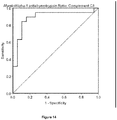
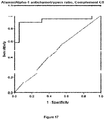
- a preferred combination is the ratio of Afamin/Alpha-1 antichymotrypsin in combination with the relative level or concentration of Complement C3.
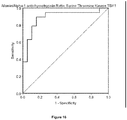
- Another preferred combination of the invention is the ratio of Afamin/Alpha-1 antichymotrypsin in combination with the relative level or concentration of serine threonine kinase TBK-1.
- the invention is directed to the use of Afamin, and Alpha-1 antichymotrypsin, and optionally at least one additional biomarkers selected from Alpha-2-macroglobulin, Apolipoprotein B100, complement C3 , Serine threonine kinase TBK-1, vitamin D binding protein, alpha-1-B glycoprotein, hemopexin, serum albumin, ceruloplasmin, alpha-2-antiplasmin, apolipoprotein A1, complement factor H, IgG, IgG fc binding protein, hornerin, fibrinogen or complement C5 as complementary biomarkers of AD.
- additional biomarkers selected from Alpha-2-macroglobulin, Apolipoprotein B100, complement C3 , Serine threonine kinase TBK-1, vitamin D binding protein, alpha-1-B glycoprotein, hemopexin, serum albumin, ceruloplasmin, alpha-2-antiplasmin, apolipoprotein A1, complement factor H, Ig
- AD diagnosis in conjunction with other clinical evidence such as mental state assessment (MMSE), neurological imaging, Beta-amyloid peptides, phosphorylated Tau, ApoE genotype, and wild-type GSTO 1 genotype (wtGSTO).
- MMSE mental state assessment
- Beta-amyloid peptides Beta-amyloid peptides
- phosphorylated Tau ApoE genotype
- wtGSTO wild-type GSTO 1 genotype
- This clinical evidence may be added to the predictive model, based on the output measurement.
- ApoE status of a patient may be determined through genotyping, by identifying the disease relevant form of protein that is expressed at the genetic level (DNA and/or RNA), or by detecting the presence of the specific expressed form of the protein from a fluid sample taken from the patient.
- This output may be expressed as either a dichotomised value, whereby the patient is either positive for the ApoE4 gene or protein or not; or as an ordinal output for the number of ApoE4 alleles present in the patients genomic DNA (0-2), which can be calculated using relative levels of the gene or protein within a sample taken from the patient.
- Biomarker relative levels or concentrations can be determined by contacting the sample with probes, preferably immobilised on a substrate, specific for each of the biomarkers included in the combination of biomarkers. Interactions between biomarker and its respective probe can be monitored and quantified using various techniques that are well-known in the art.
- An example of a suitable technique is an enzyme-linked immunosorbent assay (ELISA). Performing an ELISA involves at least one antibody with specificity for a particular antigen.
- the sample with an unknown amount of antigen is immobilized on a solid support (usually a polystyrene microtiter plate) either non-specifically (via adsorption to the surface) or specifically (via capture by another antibody specific to the same antigen, in a "sandwich” ELISA).
- a solid support usually a polystyrene microtiter plate
- the detection antibody is added, forming a complex with the antigen.
- the detection antibody can be covalently linked to an enzyme, or can itself be detected by a secondary antibody that is linked to an enzyme through bioconjugation.
- the plate is typically washed to remove any proteins or antibodies that are not specifically bound.
- the plate is developed by adding an enzymatic substrate to produce a visible signal, which indicates the quantity of antigen in the sample.
- the 'sample' as referred to herein is serum or plasma, however it may be any sample from a patient from which biomarker levels or concentrations can be determined. These include but are not limited to whole blood, urine, saliva, cerebrospinal fluid and platelets.
- the substrate will comprise probes specific to the Afamin and Alpha-1 antichymotrypsin biomarkers.
- the term 'specific' means that the probe binds only to one of the biomarkers of the invention, with negligible binding to other biomarkers of the invention or to other analytes in the biological sample being analysed. This ensures that the integrity of the diagnostic assay and its result using the biomarkers of the invention is not compromised by additional binding events.
- the substrate can be any surface able to support one or more probes, but is preferably a biochip.
- a "Biochip” is a general term for a reaction platform for hosting chemical, biochemical, proteomic or molecular tests, as may be required for medical diagnosis, drug detection, etc.
- a Biochip comprises an inert substrate, such as silicon, glass or ceramic (often of the order of about 1 cm 2 or less in surface area), on which one or a plurality of reaction sites is provided.
- the sites generally carry one or more ligands, for example, one or more antibodies, selected for the test (or "assay") to be performed, adsorbed to the surface of the chip for activation upon combination with a sample applied to the chip (e.g.
- biochips carry a very large number (hundreds or thousands) of such tests sites, typically arranged in a grid or array, making it possible to carry out numerous assays simultaneously, and using the same single specimen.
- a preferred probe of the invention is a monoclonal antibody
- other probes such as aptamers, molecular imprinted polymers, phages, short chain antibody fragments and other antibody-based probes may be used.
- the invention also allows for nucleic acid sequence probes.
- a solid state device is used in the methods of the present invention, preferably the Biochip Array Technology system (BAT) (available from Randox Laboratories Limited). More preferably, the Evidence Evolution and Evidence Investigator apparatus (available from Randox Laboratories) may be used to determine the levels of biomarkers in the sample.
- BAT Biochip Array Technology system
- the Evidence Evolution and Evidence Investigator apparatus available from Randox Laboratories may be used to determine the levels of biomarkers in the sample.
- ROC receiver operating characteristics
- a suitable mathematical or machine learning classification model such as logistic regression equation
- the logistic regression equation might include other variables such as age and gender of the patient.
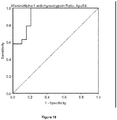
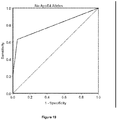
- the ROC curve can be used to assess the accuracy of the logistic regression model.
- the logistic regression equation can be used independently or in an algorithm to aid clinical decision making. Although a logistic regression equation is a common mathematical/statistical procedure used in such cases and is preferred in the context of the present invention, other mathematical/statistical, decision trees or machine learning procedures can also be used.
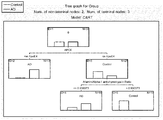
- a decision tree may be grown where a decision branch is grown from each node (sub-population) to divide the population into classification groups.
- Figure 19 represents an example of a tree that was grown using the data described in this invention, which could correctly classify all AD patients with a relatively small error.
- Plasma normalisation was conducted as per US 2009/0136966 . Briefly human plasma was normalised by removing high abundance proteins utilising the propriety method. Firstly, high abundance proteins were removed using Multiple Affinity Removal System (MARS) technology. The resultant plasma was then loaded on to a Multi-ImmunoAffinity Normalisation (MIAN) column, where normalisation stringency was adjusted by altering the flow rate. The flow-throw and wash samples were combined to give a differentially normalised sample. Some of this normalised plasma was then ubiquitously biotinylated to provide a tracer substance, known as QuantiplasmaTM.
- MIAN Multi-ImmunoAffinity Normalisation
- Monoclonal antibodies were produced as per US 2009/0136966 . Normalised plasma was used as an immunogen to generate polyclonal antibodies. B-cells were then isolated and monoclonal hybridomas were generated. Initial selection of hybridomas was done using an ELISA. Plates were coated with mouse Ig gamma-Fc specific GAM, and then incubated with the mAb hybridoma supernatant, following a wash step this complex was then incubated with the QuantiplasmaTM and finally an enzyme-substrate reaction was induced to detect the binding of the biotinylated plasma (QuantiplasmaTM) to the mAb. This selection identified more than 1000 mAb.
- Serum samples were obtained from 19 clinically confirmed Alzheimer's disease (AD) patients and 19 age/gender-matched control participants with normal cognitive function. These samples were frozen shortly after collection and stored at (-80°C) until analysis was performed. Additional clinical information was gathered for these subjects, this included basic personal and family medical history. Further to this, ApoE and GSTO genotype were determined through methods known in the art. For each patient, genomic DNA was isolated and the presence of DNA that encodes each of the 3 isoforms of ApoE (E2, E3, E4) or GSTO (wild-type, mutant A140 [rs4825]) were determined utilising polymerase chain reaction (PCR) techniques. Further analysis allowed the allelic frequency of each of the isoforms to be determined through methods known in the art.
- PCR polymerase chain reaction
- a panel of 69 mAb antibodies (Table 1) were selected out of a catalogue of >1000 generated as per Section 2. Antibodies were then evaluated by competitive immunoassay. They were first immobilised on a biochip platform (9mm x 9mm), which was the substrate for the immunoreactions.
- the semi-automated bench top analyser Evidence Investigator was used (EV3602, Randox Laboratories Ltd., Crumlin, UK, patents- EP98307706 , EP98307732 , EP0902394 , EP1227311 , EP1434995 and EP1354623 ).
- the assay principle is based on competition for binding sites of the monoclonal antibody between free antigen (the patient sample) and labelled tracer plasma (QuantiplasmaTM).
- Sample and reagents are added to the biochip and incubated under controlled conditions. Following addition of substrate, a light signal is generated which is then detected using digital imaging technology.
- the system incorporates dedicated software to automatically process, report and archive the data generated.
- the level of a specific protein in the patient sample is determined by comparing the difference between the light signal (RLU) at the position of the respective antibody on a biochip containing sample and the tracer (test) and a biochip containing just the tracer (blank).
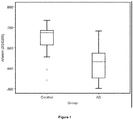
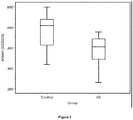
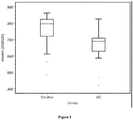
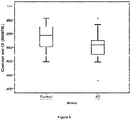
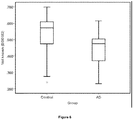
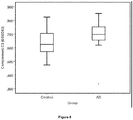
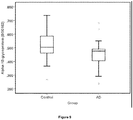
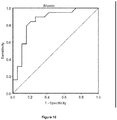
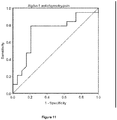
- Ratios for AD patients and control patients for all mAbs were determined (Example Figures 1-9 ) and non-parametric analysis was conducted to identify those mAbs which could distinguish between AD and control patients (Table 2). Areas under the curve (AUC) of the receiver operator characteristic (ROC) curves were calculated for all mAbs, these are detailed in Table 3.
Landscapes
- Life Sciences & Earth Sciences (AREA)
- Health & Medical Sciences (AREA)
- Engineering & Computer Science (AREA)
- Chemical & Material Sciences (AREA)
- Physics & Mathematics (AREA)
- General Health & Medical Sciences (AREA)
- Proteomics, Peptides & Aminoacids (AREA)
- Biomedical Technology (AREA)
- Biotechnology (AREA)
- Medical Informatics (AREA)
- Molecular Biology (AREA)
- Immunology (AREA)
- Organic Chemistry (AREA)
- Biophysics (AREA)
- Data Mining & Analysis (AREA)
- Analytical Chemistry (AREA)
- Bioinformatics & Cheminformatics (AREA)
- Biochemistry (AREA)
- Hematology (AREA)
- Urology & Nephrology (AREA)
- Zoology (AREA)
- Genetics & Genomics (AREA)
- Pathology (AREA)
- Microbiology (AREA)
- Public Health (AREA)
- Computer Vision & Pattern Recognition (AREA)
- Bioinformatics & Computational Biology (AREA)
- Artificial Intelligence (AREA)
- Evolutionary Computation (AREA)
- Spectroscopy & Molecular Physics (AREA)
- Epidemiology (AREA)
- Software Systems (AREA)
- Databases & Information Systems (AREA)
- Theoretical Computer Science (AREA)
- Bioethics (AREA)
- Evolutionary Biology (AREA)
- Wood Science & Technology (AREA)
- Medicinal Chemistry (AREA)
- Neurology (AREA)
- General Physics & Mathematics (AREA)
Applications Claiming Priority (2)
| Application Number | Priority Date | Filing Date | Title |
|---|---|---|---|
| GB1303936.7A GB2511525A (en) | 2013-03-05 | 2013-03-05 | Methods and Compositions for the Diagnosis of Alzheimer's Disease |
| PCT/EP2014/054185 WO2014135546A1 (en) | 2013-03-05 | 2014-03-04 | Methods and compositions for the diagnosis of alzheimer's disease |
Publications (2)
| Publication Number | Publication Date |
|---|---|
| EP2965090A1 EP2965090A1 (en) | 2016-01-13 |
| EP2965090B1 true EP2965090B1 (en) | 2018-04-25 |
Family
ID=48142456
Family Applications (1)
| Application Number | Title | Priority Date | Filing Date |
|---|---|---|---|
| EP14726887.4A Active EP2965090B1 (en) | 2013-03-05 | 2014-03-04 | Methods and compositions for the diagnosis of alzheimer's disease |
Country Status (9)
| Country | Link |
|---|---|
| US (1) | US20160097780A1 (enExample) |
| EP (1) | EP2965090B1 (enExample) |
| JP (1) | JP6430413B2 (enExample) |
| CN (1) | CN105164536B (enExample) |
| AU (1) | AU2014224727B2 (enExample) |
| CA (1) | CA2900002C (enExample) |
| ES (1) | ES2674526T3 (enExample) |
| GB (1) | GB2511525A (enExample) |
| WO (1) | WO2014135546A1 (enExample) |
Families Citing this family (18)
| Publication number | Priority date | Publication date | Assignee | Title |
|---|---|---|---|---|
| GB201504432D0 (en) * | 2015-03-17 | 2015-04-29 | Electrophoretics Ltd | Materials and methods for diagnosis and treatment of alzheimers disease |
| JP6702836B2 (ja) * | 2016-09-28 | 2020-06-03 | ハルメク・ベンチャーズ株式会社 | 認知症判定得点算出装置及びそのプログラム |
| EP3309550A1 (en) * | 2016-10-12 | 2018-04-18 | sphingotec GmbH | Method for the detection of apolipoprotein e4 |
| CN111247595B (zh) | 2017-10-31 | 2024-07-23 | 通用电气健康护理有限公司 | 用于诊断认知疾病病理和/或结果的医疗系统 |
| JP6950952B2 (ja) * | 2017-12-20 | 2021-10-13 | 国立大学法人三重大学 | 脳アミロイド血管症の末梢血バイオマーカー |
| CN108681748A (zh) * | 2018-05-18 | 2018-10-19 | 宝枫生物科技(北京)有限公司 | 判别轻度认知障碍的模型选择处理方法及装置 |
| BR112021000895A2 (pt) * | 2018-07-19 | 2021-04-13 | Genentech, Inc. | Métodos para identificar um indivíduo como possuindo ou estando em risco de desenvolver uma demência positiva para amilóide e para detectar um indivíduo com um valor aumentado para uma combinação de marcadores e uso de ass40, ass42 e ttau |
| CN110464833A (zh) * | 2019-09-04 | 2019-11-19 | 北京豪思生物科技有限公司 | 铜蓝蛋白的应用 |
| WO2021071219A1 (ko) * | 2019-10-07 | 2021-04-15 | 조한나 | 퇴행성 신경질환의 진단용 바이오마커 |
| JP7109499B2 (ja) * | 2020-05-07 | 2022-07-29 | 一般社団法人脳と心の健康科学研究所 | 認知症判定得点算出装置及びそのプログラム |
| US20240077501A1 (en) * | 2020-12-28 | 2024-03-07 | Mcbi Inc. | Judgment supporting information generating method, judgment supporting information generating system, and information processing device |
| ES2924776A1 (es) * | 2021-03-25 | 2022-10-10 | Univ Castilla La Mancha | Metodos para el diagnostico y pronostico de la enfermedad de alzheimer |
| CN112858697B (zh) * | 2021-03-29 | 2024-03-01 | 鲁东大学 | ALG-2-interacting protein X在制备分子标志物中的应用 |
| CN114634970A (zh) * | 2022-03-29 | 2022-06-17 | 南通惠皓医疗科技有限公司 | 遗传性阿尔兹海默症致病基因panel检测方法 |
| CN116990395A (zh) * | 2022-04-26 | 2023-11-03 | 中国科学院深圳先进技术研究院 | 一种基于粪便的阿尔兹海默症生物标志物及其应用 |
| EP4549945A1 (en) * | 2022-06-28 | 2025-05-07 | Mcbi Inc. | Assessment-supporting information generating method, assessment-supporting information generating system, and information processing device |
| CN116063447B (zh) * | 2022-09-13 | 2023-11-03 | 北京湃德智健科技有限公司 | 用于检测adap自身抗体的抗原多肽及其应用 |
| CN119495355B (zh) * | 2024-10-31 | 2026-04-24 | 山东大学 | 一种阿尔兹海默症诊断标志物的筛选方法和系统 |
Family Cites Families (13)
| Publication number | Priority date | Publication date | Assignee | Title |
|---|---|---|---|---|
| JPH067191A (ja) * | 1991-09-26 | 1994-01-18 | Konica Corp | モノクローナル抗体、それを産生するハイブリド−マ、その対応抗原及びそれを用いた測定方法 |
| US5652352A (en) * | 1994-03-31 | 1997-07-29 | Amgen Inc. | Afamin: a human serum albumin-like gene |
| AT411014B (de) * | 2001-04-30 | 2003-09-25 | Vitateq Biotechnology Gmbh | Präparationen von vitamin e in kombination mit afamin |
| JP4153873B2 (ja) * | 2001-10-04 | 2008-09-24 | 株式会社 免疫生物研究所 | アルツハイマー危険因子の検出試薬および検出用キットならびにこれらを用いるアルツハイマー危険因子の検出方法 |
| WO2005107760A1 (en) * | 2004-04-30 | 2005-11-17 | Irm Llc | Compounds and compositions as inducers of keratinocyte differentiation |
| WO2006108051A2 (en) * | 2005-04-05 | 2006-10-12 | Neurodx, Llc | Compositions and methods relating to alzheimer's disease |
| GB0512401D0 (en) * | 2005-06-17 | 2005-07-27 | Randox Lab Ltd | Method |
| US7575876B2 (en) * | 2005-10-27 | 2009-08-18 | The University Of Washington | Biomarkers for neurodegenerative disorders |
| AT505727B1 (de) * | 2007-09-04 | 2009-06-15 | Univ Innsbruck | Verfahren zur diagnose des metabolischen syndroms |
| GB0921447D0 (en) * | 2009-12-04 | 2010-01-20 | Randox Lab Ltd | Assay |
| EP2569451A4 (en) * | 2010-05-14 | 2013-09-11 | Rules Based Medicine Inc | METHOD AND DEVICES FOR DIAGNOSING MORBUS ALZHEIMER |
| NZ629074A (en) * | 2012-01-20 | 2016-09-30 | Adelaide Res & Innovation Pty | Biomarkers for gastric cancer and uses thereof |
| ITMI20120865A1 (it) * | 2012-05-18 | 2013-11-19 | Antonio Bertolotto | Biomarcatori per patologie del sistema nervoso centrale |
-
2013
- 2013-03-05 GB GB1303936.7A patent/GB2511525A/en not_active Withdrawn
-
2014
- 2014-03-04 ES ES14726887.4T patent/ES2674526T3/es active Active
- 2014-03-04 EP EP14726887.4A patent/EP2965090B1/en active Active
- 2014-03-04 WO PCT/EP2014/054185 patent/WO2014135546A1/en not_active Ceased
- 2014-03-04 CA CA2900002A patent/CA2900002C/en active Active
- 2014-03-04 JP JP2015560663A patent/JP6430413B2/ja active Active
- 2014-03-04 CN CN201480008554.4A patent/CN105164536B/zh active Active
- 2014-03-04 AU AU2014224727A patent/AU2014224727B2/en active Active
- 2014-03-04 US US14/777,718 patent/US20160097780A1/en not_active Abandoned
Non-Patent Citations (1)
| Title |
|---|
| None * |
Also Published As
| Publication number | Publication date |
|---|---|
| CA2900002C (en) | 2022-01-25 |
| GB2511525A (en) | 2014-09-10 |
| JP2016511406A (ja) | 2016-04-14 |
| CN105164536A (zh) | 2015-12-16 |
| GB201303936D0 (en) | 2013-04-17 |
| EP2965090A1 (en) | 2016-01-13 |
| US20160097780A1 (en) | 2016-04-07 |
| CN105164536B (zh) | 2018-02-06 |
| AU2014224727A1 (en) | 2015-08-13 |
| CA2900002A1 (en) | 2014-09-12 |
| AU2014224727B2 (en) | 2020-09-03 |
| ES2674526T3 (es) | 2018-07-02 |
| JP6430413B2 (ja) | 2018-11-28 |
| WO2014135546A1 (en) | 2014-09-12 |
Similar Documents
| Publication | Publication Date | Title |
|---|---|---|
| AU2014224727B2 (en) | Methods and compositions for the diagnosis of Alzheimer's disease | |
| US20120178637A1 (en) | Biomarkers and methods for detecting alzheimer's disease | |
| US11761959B2 (en) | Blood biomarker that predicts persistent cognitive dysfunction after concussion | |
| WO2010025393A2 (en) | Protein biomarkers and methods for diagnosing kawasaki disease | |
| CN105849566B (zh) | 肾脏疾病生物标志物 | |
| JP2015519564A (ja) | 子癇前症評価を提供するための方法および組成物 | |
| AU2010324527A1 (en) | Methods, kits and reagents for diagnosing, aiding diagnosis and/or monitoring progression of a neurological disorder | |
| WO2011143574A2 (en) | Plasma biomarkers for diagnosis of alzheimer's disease | |
| CN112567246A (zh) | 治疗脊髓性肌萎缩症的方法 | |
| US20150377905A1 (en) | Methods for diagnosis of kawasaki disease | |
| US10078089B2 (en) | Compositions and methods for treating steroid resistant nephrotic syndrome and/or steroid sensitive nephrotic syndrome | |
| US20150293120A1 (en) | Marker sequences for rheumatoid arthritis | |
| US12174187B2 (en) | Methods for detecting multiple sclerosis (MS) diagnostic autoantibodies | |
| US20220003787A1 (en) | Biomarker proteins for diagnosing alzheimer's dementia and use thereof | |
| CN104704365B (zh) | 精神分裂症标记物组及其利用 | |
| CN116773825B (zh) | 诊断急性川崎病的血液生物标志物和方法 | |
| US20170121774A1 (en) | Methods and compositions for assessing predicting responsiveness to a tnf inhibitor | |
| Delaby et al. | Beyond amyloid and tau: synaptic and neurodegenerative biomarkers shape MCI progression | |
| CN119120680A (zh) | Zcchc2在干燥综合征诊断与区分系统性红斑狼疮中的用途 | |
| CN119859676A (zh) | 鉴别感染性肺炎诱发的脓毒症和非感染性肺病的生物标志物及其用途 | |
| CN119859677A (zh) | CCNA1、CHIT1、C9orf103在鉴别感染性肺炎诱发的脓毒症和非感染性肺病中的应用 | |
| CN119120679A (zh) | Klhdc8b在系统性红斑狼疮诊断中的应用 | |
| CN116218991A (zh) | RabGGTase在ALS病情严重程度和病情进展率诊断中的应用 | |
| HK40045405A (en) | Methods and devices for diagnosing ocular surface inflammation and dry eye disease | |
| WO2021024009A1 (en) | Methods and compositions for providing colon cancer assessment using protein biomarkers |
Legal Events
| Date | Code | Title | Description |
|---|---|---|---|
| PUAI | Public reference made under article 153(3) epc to a published international application that has entered the european phase |
Free format text: ORIGINAL CODE: 0009012 |
|
| 17P | Request for examination filed |
Effective date: 20150717 |
|
| AK | Designated contracting states |
Kind code of ref document: A1 Designated state(s): AL AT BE BG CH CY CZ DE DK EE ES FI FR GB GR HR HU IE IS IT LI LT LU LV MC MK MT NL NO PL PT RO RS SE SI SK SM TR |
|
| AX | Request for extension of the european patent |
Extension state: BA ME |
|
| DAX | Request for extension of the european patent (deleted) | ||
| 17Q | First examination report despatched |
Effective date: 20160622 |
|
| STAA | Information on the status of an ep patent application or granted ep patent |
Free format text: STATUS: EXAMINATION IS IN PROGRESS |
|
| GRAP | Despatch of communication of intention to grant a patent |
Free format text: ORIGINAL CODE: EPIDOSNIGR1 |
|
| STAA | Information on the status of an ep patent application or granted ep patent |
Free format text: STATUS: GRANT OF PATENT IS INTENDED |
|
| INTG | Intention to grant announced |
Effective date: 20170929 |
|
| RAP1 | Party data changed (applicant data changed or rights of an application transferred) |
Owner name: RANDOX TEORANTA |
|
| GRAS | Grant fee paid |
Free format text: ORIGINAL CODE: EPIDOSNIGR3 |
|
| GRAA | (expected) grant |
Free format text: ORIGINAL CODE: 0009210 |
|
| STAA | Information on the status of an ep patent application or granted ep patent |
Free format text: STATUS: THE PATENT HAS BEEN GRANTED |
|
| AK | Designated contracting states |
Kind code of ref document: B1 Designated state(s): AL AT BE BG CH CY CZ DE DK EE ES FI FR GB GR HR HU IE IS IT LI LT LU LV MC MK MT NL NO PL PT RO RS SE SI SK SM TR |
|
| REG | Reference to a national code |
Ref country code: GB Ref legal event code: FG4D |
|
| REG | Reference to a national code |
Ref country code: CH Ref legal event code: EP |
|
| REG | Reference to a national code |
Ref country code: AT Ref legal event code: REF Ref document number: 993477 Country of ref document: AT Kind code of ref document: T Effective date: 20180515 |
|
| REG | Reference to a national code |
Ref country code: IE Ref legal event code: FG4D |
|
| REG | Reference to a national code |
Ref country code: DE Ref legal event code: R096 Ref document number: 602014024451 Country of ref document: DE |
|
| REG | Reference to a national code |
Ref country code: ES Ref legal event code: FG2A Ref document number: 2674526 Country of ref document: ES Kind code of ref document: T3 Effective date: 20180702 |
|
| REG | Reference to a national code |
Ref country code: NL Ref legal event code: FP |
|
| RAP2 | Party data changed (patent owner data changed or rights of a patent transferred) |
Owner name: RANDOX TEORANTA |
|
| REG | Reference to a national code |
Ref country code: CH Ref legal event code: PCOW Free format text: NEW ADDRESS: MEENMORE, DUNGLOE, CO. DONEGAL (IE) |
|
| REG | Reference to a national code |
Ref country code: LT Ref legal event code: MG4D |
|
| PG25 | Lapsed in a contracting state [announced via postgrant information from national office to epo] |
Ref country code: LT Free format text: LAPSE BECAUSE OF FAILURE TO SUBMIT A TRANSLATION OF THE DESCRIPTION OR TO PAY THE FEE WITHIN THE PRESCRIBED TIME-LIMIT Effective date: 20180425 Ref country code: PL Free format text: LAPSE BECAUSE OF FAILURE TO SUBMIT A TRANSLATION OF THE DESCRIPTION OR TO PAY THE FEE WITHIN THE PRESCRIBED TIME-LIMIT Effective date: 20180425 Ref country code: NO Free format text: LAPSE BECAUSE OF FAILURE TO SUBMIT A TRANSLATION OF THE DESCRIPTION OR TO PAY THE FEE WITHIN THE PRESCRIBED TIME-LIMIT Effective date: 20180725 Ref country code: FI Free format text: LAPSE BECAUSE OF FAILURE TO SUBMIT A TRANSLATION OF THE DESCRIPTION OR TO PAY THE FEE WITHIN THE PRESCRIBED TIME-LIMIT Effective date: 20180425 Ref country code: BG Free format text: LAPSE BECAUSE OF FAILURE TO SUBMIT A TRANSLATION OF THE DESCRIPTION OR TO PAY THE FEE WITHIN THE PRESCRIBED TIME-LIMIT Effective date: 20180725 Ref country code: SE Free format text: LAPSE BECAUSE OF FAILURE TO SUBMIT A TRANSLATION OF THE DESCRIPTION OR TO PAY THE FEE WITHIN THE PRESCRIBED TIME-LIMIT Effective date: 20180425 |
|
| PG25 | Lapsed in a contracting state [announced via postgrant information from national office to epo] |
Ref country code: RS Free format text: LAPSE BECAUSE OF FAILURE TO SUBMIT A TRANSLATION OF THE DESCRIPTION OR TO PAY THE FEE WITHIN THE PRESCRIBED TIME-LIMIT Effective date: 20180425 Ref country code: HR Free format text: LAPSE BECAUSE OF FAILURE TO SUBMIT A TRANSLATION OF THE DESCRIPTION OR TO PAY THE FEE WITHIN THE PRESCRIBED TIME-LIMIT Effective date: 20180425 Ref country code: GR Free format text: LAPSE BECAUSE OF FAILURE TO SUBMIT A TRANSLATION OF THE DESCRIPTION OR TO PAY THE FEE WITHIN THE PRESCRIBED TIME-LIMIT Effective date: 20180726 Ref country code: LV Free format text: LAPSE BECAUSE OF FAILURE TO SUBMIT A TRANSLATION OF THE DESCRIPTION OR TO PAY THE FEE WITHIN THE PRESCRIBED TIME-LIMIT Effective date: 20180425 |
|
| REG | Reference to a national code |
Ref country code: AT Ref legal event code: MK05 Ref document number: 993477 Country of ref document: AT Kind code of ref document: T Effective date: 20180425 |
|
| PG25 | Lapsed in a contracting state [announced via postgrant information from national office to epo] |
Ref country code: PT Free format text: LAPSE BECAUSE OF FAILURE TO SUBMIT A TRANSLATION OF THE DESCRIPTION OR TO PAY THE FEE WITHIN THE PRESCRIBED TIME-LIMIT Effective date: 20180827 |
|
| REG | Reference to a national code |
Ref country code: DE Ref legal event code: R097 Ref document number: 602014024451 Country of ref document: DE |
|
| PG25 | Lapsed in a contracting state [announced via postgrant information from national office to epo] |
Ref country code: SK Free format text: LAPSE BECAUSE OF FAILURE TO SUBMIT A TRANSLATION OF THE DESCRIPTION OR TO PAY THE FEE WITHIN THE PRESCRIBED TIME-LIMIT Effective date: 20180425 Ref country code: CZ Free format text: LAPSE BECAUSE OF FAILURE TO SUBMIT A TRANSLATION OF THE DESCRIPTION OR TO PAY THE FEE WITHIN THE PRESCRIBED TIME-LIMIT Effective date: 20180425 Ref country code: DK Free format text: LAPSE BECAUSE OF FAILURE TO SUBMIT A TRANSLATION OF THE DESCRIPTION OR TO PAY THE FEE WITHIN THE PRESCRIBED TIME-LIMIT Effective date: 20180425 Ref country code: RO Free format text: LAPSE BECAUSE OF FAILURE TO SUBMIT A TRANSLATION OF THE DESCRIPTION OR TO PAY THE FEE WITHIN THE PRESCRIBED TIME-LIMIT Effective date: 20180425 Ref country code: AT Free format text: LAPSE BECAUSE OF FAILURE TO SUBMIT A TRANSLATION OF THE DESCRIPTION OR TO PAY THE FEE WITHIN THE PRESCRIBED TIME-LIMIT Effective date: 20180425 Ref country code: EE Free format text: LAPSE BECAUSE OF FAILURE TO SUBMIT A TRANSLATION OF THE DESCRIPTION OR TO PAY THE FEE WITHIN THE PRESCRIBED TIME-LIMIT Effective date: 20180425 |
|
| PG25 | Lapsed in a contracting state [announced via postgrant information from national office to epo] |
Ref country code: SM Free format text: LAPSE BECAUSE OF FAILURE TO SUBMIT A TRANSLATION OF THE DESCRIPTION OR TO PAY THE FEE WITHIN THE PRESCRIBED TIME-LIMIT Effective date: 20180425 |
|
| PLBE | No opposition filed within time limit |
Free format text: ORIGINAL CODE: 0009261 |
|
| STAA | Information on the status of an ep patent application or granted ep patent |
Free format text: STATUS: NO OPPOSITION FILED WITHIN TIME LIMIT |
|
| 26N | No opposition filed |
Effective date: 20190128 |
|
| PG25 | Lapsed in a contracting state [announced via postgrant information from national office to epo] |
Ref country code: SI Free format text: LAPSE BECAUSE OF FAILURE TO SUBMIT A TRANSLATION OF THE DESCRIPTION OR TO PAY THE FEE WITHIN THE PRESCRIBED TIME-LIMIT Effective date: 20180425 |
|
| PG25 | Lapsed in a contracting state [announced via postgrant information from national office to epo] |
Ref country code: MC Free format text: LAPSE BECAUSE OF FAILURE TO SUBMIT A TRANSLATION OF THE DESCRIPTION OR TO PAY THE FEE WITHIN THE PRESCRIBED TIME-LIMIT Effective date: 20180425 |
|
| PG25 | Lapsed in a contracting state [announced via postgrant information from national office to epo] |
Ref country code: LU Free format text: LAPSE BECAUSE OF NON-PAYMENT OF DUE FEES Effective date: 20190304 Ref country code: AL Free format text: LAPSE BECAUSE OF FAILURE TO SUBMIT A TRANSLATION OF THE DESCRIPTION OR TO PAY THE FEE WITHIN THE PRESCRIBED TIME-LIMIT Effective date: 20180425 |
|
| REG | Reference to a national code |
Ref country code: BE Ref legal event code: MM Effective date: 20190331 |
|
| PG25 | Lapsed in a contracting state [announced via postgrant information from national office to epo] |
Ref country code: BE Free format text: LAPSE BECAUSE OF NON-PAYMENT OF DUE FEES Effective date: 20190331 |
|
| PG25 | Lapsed in a contracting state [announced via postgrant information from national office to epo] |
Ref country code: TR Free format text: LAPSE BECAUSE OF FAILURE TO SUBMIT A TRANSLATION OF THE DESCRIPTION OR TO PAY THE FEE WITHIN THE PRESCRIBED TIME-LIMIT Effective date: 20180425 |
|
| PG25 | Lapsed in a contracting state [announced via postgrant information from national office to epo] |
Ref country code: MT Free format text: LAPSE BECAUSE OF NON-PAYMENT OF DUE FEES Effective date: 20190304 |
|
| PG25 | Lapsed in a contracting state [announced via postgrant information from national office to epo] |
Ref country code: CY Free format text: LAPSE BECAUSE OF FAILURE TO SUBMIT A TRANSLATION OF THE DESCRIPTION OR TO PAY THE FEE WITHIN THE PRESCRIBED TIME-LIMIT Effective date: 20180425 |
|
| PG25 | Lapsed in a contracting state [announced via postgrant information from national office to epo] |
Ref country code: IS Free format text: LAPSE BECAUSE OF FAILURE TO SUBMIT A TRANSLATION OF THE DESCRIPTION OR TO PAY THE FEE WITHIN THE PRESCRIBED TIME-LIMIT Effective date: 20180825 |
|
| PG25 | Lapsed in a contracting state [announced via postgrant information from national office to epo] |
Ref country code: HU Free format text: LAPSE BECAUSE OF FAILURE TO SUBMIT A TRANSLATION OF THE DESCRIPTION OR TO PAY THE FEE WITHIN THE PRESCRIBED TIME-LIMIT; INVALID AB INITIO Effective date: 20140304 |
|
| REG | Reference to a national code |
Ref country code: GB Ref legal event code: 732E Free format text: REGISTERED BETWEEN 20210708 AND 20210714 |
|
| PG25 | Lapsed in a contracting state [announced via postgrant information from national office to epo] |
Ref country code: MK Free format text: LAPSE BECAUSE OF FAILURE TO SUBMIT A TRANSLATION OF THE DESCRIPTION OR TO PAY THE FEE WITHIN THE PRESCRIBED TIME-LIMIT Effective date: 20180425 |
|
| P01 | Opt-out of the competence of the unified patent court (upc) registered |
Effective date: 20230523 |
|
| PGFP | Annual fee paid to national office [announced via postgrant information from national office to epo] |
Ref country code: ES Payment date: 20230505 Year of fee payment: 10 |
|
| REG | Reference to a national code |
Ref country code: ES Ref legal event code: FD2A Effective date: 20250425 |
|
| PG25 | Lapsed in a contracting state [announced via postgrant information from national office to epo] |
Ref country code: ES Free format text: LAPSE BECAUSE OF NON-PAYMENT OF DUE FEES Effective date: 20240305 |
|
| PGFP | Annual fee paid to national office [announced via postgrant information from national office to epo] |
Ref country code: CH Payment date: 20250401 Year of fee payment: 12 |
|
| REG | Reference to a national code |
Ref country code: CH Ref legal event code: U11 Free format text: ST27 STATUS EVENT CODE: U-0-0-U10-U11 (AS PROVIDED BY THE NATIONAL OFFICE) Effective date: 20260401 |
|
| PGFP | Annual fee paid to national office [announced via postgrant information from national office to epo] |
Ref country code: GB Payment date: 20260225 Year of fee payment: 13 |
|
| PGFP | Annual fee paid to national office [announced via postgrant information from national office to epo] |
Ref country code: DE Payment date: 20260309 Year of fee payment: 13 Ref country code: IE Payment date: 20260309 Year of fee payment: 13 |
|
| PGFP | Annual fee paid to national office [announced via postgrant information from national office to epo] |
Ref country code: IT Payment date: 20260320 Year of fee payment: 13 |
|
| PGFP | Annual fee paid to national office [announced via postgrant information from national office to epo] |
Ref country code: NL Payment date: 20260309 Year of fee payment: 13 |
|
| PGFP | Annual fee paid to national office [announced via postgrant information from national office to epo] |
Ref country code: FR Payment date: 20260327 Year of fee payment: 13 |