EP2956471B1 - Il-1beta inhibitor composition and use thereof - Google Patents
Il-1beta inhibitor composition and use thereof Download PDFInfo
- Publication number
- EP2956471B1 EP2956471B1 EP13875211.8A EP13875211A EP2956471B1 EP 2956471 B1 EP2956471 B1 EP 2956471B1 EP 13875211 A EP13875211 A EP 13875211A EP 2956471 B1 EP2956471 B1 EP 2956471B1
- Authority
- EP
- European Patent Office
- Prior art keywords
- acid sequence
- seq
- amino acid
- polypeptide
- human
- Prior art date
- Legal status (The legal status is an assumption and is not a legal conclusion. Google has not performed a legal analysis and makes no representation as to the accuracy of the status listed.)
- Active
Links
Images






Classifications
-
- C—CHEMISTRY; METALLURGY
- C07—ORGANIC CHEMISTRY
- C07K—PEPTIDES
- C07K14/00—Peptides having more than 20 amino acids; Gastrins; Somatostatins; Melanotropins; Derivatives thereof
- C07K14/435—Peptides having more than 20 amino acids; Gastrins; Somatostatins; Melanotropins; Derivatives thereof from animals; from humans
- C07K14/705—Receptors; Cell surface antigens; Cell surface determinants
- C07K14/715—Receptors; Cell surface antigens; Cell surface determinants for cytokines; for lymphokines; for interferons
- C07K14/7155—Receptors; Cell surface antigens; Cell surface determinants for cytokines; for lymphokines; for interferons for interleukins [IL]
-
- A—HUMAN NECESSITIES
- A61—MEDICAL OR VETERINARY SCIENCE; HYGIENE
- A61K—PREPARATIONS FOR MEDICAL, DENTAL OR TOILETRY PURPOSES
- A61K38/00—Medicinal preparations containing peptides
-
- A—HUMAN NECESSITIES
- A61—MEDICAL OR VETERINARY SCIENCE; HYGIENE
- A61K—PREPARATIONS FOR MEDICAL, DENTAL OR TOILETRY PURPOSES
- A61K38/00—Medicinal preparations containing peptides
- A61K38/16—Peptides having more than 20 amino acids; Gastrins; Somatostatins; Melanotropins; Derivatives thereof
- A61K38/17—Peptides having more than 20 amino acids; Gastrins; Somatostatins; Melanotropins; Derivatives thereof from animals; from humans
- A61K38/177—Receptors; Cell surface antigens; Cell surface determinants
- A61K38/1793—Receptors; Cell surface antigens; Cell surface determinants for cytokines; for lymphokines; for interferons
-
- A—HUMAN NECESSITIES
- A61—MEDICAL OR VETERINARY SCIENCE; HYGIENE
- A61K—PREPARATIONS FOR MEDICAL, DENTAL OR TOILETRY PURPOSES
- A61K47/00—Medicinal preparations characterised by the non-active ingredients used, e.g. carriers or inert additives; Targeting or modifying agents chemically bound to the active ingredient
- A61K47/50—Medicinal preparations characterised by the non-active ingredients used, e.g. carriers or inert additives; Targeting or modifying agents chemically bound to the active ingredient the non-active ingredient being chemically bound to the active ingredient, e.g. polymer-drug conjugates
- A61K47/51—Medicinal preparations characterised by the non-active ingredients used, e.g. carriers or inert additives; Targeting or modifying agents chemically bound to the active ingredient the non-active ingredient being chemically bound to the active ingredient, e.g. polymer-drug conjugates the non-active ingredient being a modifying agent
- A61K47/68—Medicinal preparations characterised by the non-active ingredients used, e.g. carriers or inert additives; Targeting or modifying agents chemically bound to the active ingredient the non-active ingredient being chemically bound to the active ingredient, e.g. polymer-drug conjugates the non-active ingredient being a modifying agent the modifying agent being an antibody, an immunoglobulin or a fragment thereof, e.g. an Fc-fragment
- A61K47/6801—Drug-antibody or immunoglobulin conjugates defined by the pharmacologically or therapeutically active agent
- A61K47/6803—Drugs conjugated to an antibody or immunoglobulin, e.g. cisplatin-antibody conjugates
- A61K47/6811—Drugs conjugated to an antibody or immunoglobulin, e.g. cisplatin-antibody conjugates the drug being a protein or peptide, e.g. transferrin or bleomycin
-
- A—HUMAN NECESSITIES
- A61—MEDICAL OR VETERINARY SCIENCE; HYGIENE
- A61P—SPECIFIC THERAPEUTIC ACTIVITY OF CHEMICAL COMPOUNDS OR MEDICINAL PREPARATIONS
- A61P11/00—Drugs for disorders of the respiratory system
-
- A—HUMAN NECESSITIES
- A61—MEDICAL OR VETERINARY SCIENCE; HYGIENE
- A61P—SPECIFIC THERAPEUTIC ACTIVITY OF CHEMICAL COMPOUNDS OR MEDICINAL PREPARATIONS
- A61P17/00—Drugs for dermatological disorders
-
- A—HUMAN NECESSITIES
- A61—MEDICAL OR VETERINARY SCIENCE; HYGIENE
- A61P—SPECIFIC THERAPEUTIC ACTIVITY OF CHEMICAL COMPOUNDS OR MEDICINAL PREPARATIONS
- A61P19/00—Drugs for skeletal disorders
- A61P19/02—Drugs for skeletal disorders for joint disorders, e.g. arthritis, arthrosis
-
- A—HUMAN NECESSITIES
- A61—MEDICAL OR VETERINARY SCIENCE; HYGIENE
- A61P—SPECIFIC THERAPEUTIC ACTIVITY OF CHEMICAL COMPOUNDS OR MEDICINAL PREPARATIONS
- A61P19/00—Drugs for skeletal disorders
- A61P19/06—Antigout agents, e.g. antihyperuricemic or uricosuric agents
-
- A—HUMAN NECESSITIES
- A61—MEDICAL OR VETERINARY SCIENCE; HYGIENE
- A61P—SPECIFIC THERAPEUTIC ACTIVITY OF CHEMICAL COMPOUNDS OR MEDICINAL PREPARATIONS
- A61P27/00—Drugs for disorders of the senses
- A61P27/02—Ophthalmic agents
-
- A—HUMAN NECESSITIES
- A61—MEDICAL OR VETERINARY SCIENCE; HYGIENE
- A61P—SPECIFIC THERAPEUTIC ACTIVITY OF CHEMICAL COMPOUNDS OR MEDICINAL PREPARATIONS
- A61P27/00—Drugs for disorders of the senses
- A61P27/02—Ophthalmic agents
- A61P27/04—Artificial tears; Irrigation solutions
-
- A—HUMAN NECESSITIES
- A61—MEDICAL OR VETERINARY SCIENCE; HYGIENE
- A61P—SPECIFIC THERAPEUTIC ACTIVITY OF CHEMICAL COMPOUNDS OR MEDICINAL PREPARATIONS
- A61P27/00—Drugs for disorders of the senses
- A61P27/02—Ophthalmic agents
- A61P27/14—Decongestants or antiallergics
-
- A—HUMAN NECESSITIES
- A61—MEDICAL OR VETERINARY SCIENCE; HYGIENE
- A61P—SPECIFIC THERAPEUTIC ACTIVITY OF CHEMICAL COMPOUNDS OR MEDICINAL PREPARATIONS
- A61P29/00—Non-central analgesic, antipyretic or antiinflammatory agents, e.g. antirheumatic agents; Non-steroidal antiinflammatory drugs [NSAID]
-
- A—HUMAN NECESSITIES
- A61—MEDICAL OR VETERINARY SCIENCE; HYGIENE
- A61P—SPECIFIC THERAPEUTIC ACTIVITY OF CHEMICAL COMPOUNDS OR MEDICINAL PREPARATIONS
- A61P3/00—Drugs for disorders of the metabolism
- A61P3/08—Drugs for disorders of the metabolism for glucose homeostasis
- A61P3/10—Drugs for disorders of the metabolism for glucose homeostasis for hyperglycaemia, e.g. antidiabetics
-
- A—HUMAN NECESSITIES
- A61—MEDICAL OR VETERINARY SCIENCE; HYGIENE
- A61P—SPECIFIC THERAPEUTIC ACTIVITY OF CHEMICAL COMPOUNDS OR MEDICINAL PREPARATIONS
- A61P43/00—Drugs for specific purposes, not provided for in groups A61P1/00-A61P41/00
-
- A—HUMAN NECESSITIES
- A61—MEDICAL OR VETERINARY SCIENCE; HYGIENE
- A61P—SPECIFIC THERAPEUTIC ACTIVITY OF CHEMICAL COMPOUNDS OR MEDICINAL PREPARATIONS
- A61P9/00—Drugs for disorders of the cardiovascular system
- A61P9/06—Antiarrhythmics
-
- A—HUMAN NECESSITIES
- A61—MEDICAL OR VETERINARY SCIENCE; HYGIENE
- A61P—SPECIFIC THERAPEUTIC ACTIVITY OF CHEMICAL COMPOUNDS OR MEDICINAL PREPARATIONS
- A61P9/00—Drugs for disorders of the cardiovascular system
- A61P9/10—Drugs for disorders of the cardiovascular system for treating ischaemic or atherosclerotic diseases, e.g. antianginal drugs, coronary vasodilators, drugs for myocardial infarction, retinopathy, cerebrovascula insufficiency, renal arteriosclerosis
-
- C—CHEMISTRY; METALLURGY
- C07—ORGANIC CHEMISTRY
- C07K—PEPTIDES
- C07K2319/00—Fusion polypeptide
- C07K2319/30—Non-immunoglobulin-derived peptide or protein having an immunoglobulin constant or Fc region, or a fragment thereof, attached thereto
-
- C—CHEMISTRY; METALLURGY
- C07—ORGANIC CHEMISTRY
- C07K—PEPTIDES
- C07K2319/00—Fusion polypeptide
- C07K2319/32—Fusion polypeptide fusions with soluble part of a cell surface receptor, "decoy receptors"
Definitions
- the invention relates to the field of biological pharmaceuticals as well as their use in conditions associated with inflammatory disorders (e.g. rheumatoid arthritis, Crohn's disease, etc.), diabetes, cardiovascular disease and gout. More specifically, the invention relates to a heterodimeric IL-1R1/IL-1RAcP -derived composition that is capable of inhibiting IL-1 ⁇ cytokine.
- the interleukin-1 (IL-1) family of cytokines comprises 11 proteins (IL-1F1 to IL-1F11) encoded by 11 distinct genes in humans and mice.
- IL-1-type cytokines are major mediators of innate immune reactions, and blockade of the founding members IL-1 or IL-1 ⁇ by the interleukin-1 receptor antagonist (IL-1RA) has demonstrated a central role of IL-1 in a number of human autoinflammatory diseases.
- IL-1 or IL-1 ⁇ rapidly increase messenger RNA expression of hundreds of genes in multiple different cell types.
- the potent proinflammatory activities of IL-1and IL-1 ⁇ are restricted at three major levels: (i) synthesis and release, (ii) membrane receptors, and (iii) intracellular signal transduction.
- This pathway summarizes extracellular and intracellular signaling of IL-1 or IL-1 ⁇ , including positive- and negative-feedback mechanisms that amplify or terminate the IL-1 response.
- a complex sequence of combinatorial phosphorylation and ubiquitination events results in activation of nuclear factor kappa-B signaling and the JNK and p38 mitogen-activated protein kinase pathways, which, cooperatively, induce the expression of canonical IL-1 target genes (such as IL-6, IL-8, MCP-1, COX-2, IB, IL-1, IL-1 ⁇ , MKP-1) by transcriptional and posttranscriptional mechanisms.
- canonical IL-1 target genes such as IL-6, IL-8, MCP-1, COX-2, IB, IL-1, IL-1 ⁇ , MKP-1
- IL-1 interleukin-1
- IL-18 and IL-33 cytokines
- TLRs Toll-like-receptors
- cytotoxic stresses see Weber A., et al., Sci Signal., 2010 Jan 19;3(105 )).
- IL-1 and IL-1 ⁇ independently bind the type I IL-1 receptor (IL-1R1), which is ubiquitously expressed.
- a third specific ligand, the IL-1 receptor antagonist (IL-1RA) binds the IL-1RI with similar specificity and affinity but does not activate the receptor and trigger downstream signaling.
- the IL-1 receptor accessory protein (IL-1RAcP) serves as a co-receptor that is required for signal transduction of IL-1/IL-1RI complexes, and this co-receptor is also necessary for activation of IL-1R1 by other IL-1 family members, in particular IL-18 and IL-33.
- the type II IL-1 receptor (IL-1R2) binds IL-1 and IL-1 ⁇ but lacks a signaling-competent cytosolic part and thus serves as a decoy receptor.
- the II,-1RA, the plasma membrane-anchored IL-1R2, and the naturally occurring "shed" domains of each of the extracellular IL-1 receptor chains (termed sIL-1RI, sIL-1RII, and sIL-1RAcP, where "s” stands for soluble) provide inducible negative regulators of IL-1 signaling in the extracellular space whose abundance, which is regulated by a combination of increased transcription and controlled release, can limit or terminate IL-1 effects.
- the initial step in IL-1 signal transduction is a ligand-induced conformational change in the first extracellular domain of the IL-1RI that facilitates recruitment of IL-1RacP.
- TIR Toll- and IL-1R-like domains
- the trimeric complex rapidly assembles two intracellular signaling proteins, myeloid differentiation primary response gene 88 (MYD88) and interleukin-1 receptor-activated protein kinase (IRAK) 4.
- MYD88 myeloid differentiation primary response gene 88
- IRAK interleukin-1 receptor-activated protein kinase
- Mice lacking MYD88 or IRAK4 show severe defects in IL-1 signaling.
- humans with mutations in the IRAK4 gene have defects in IL-1RI and Toll-like receptor (TLR) signaling.
- IL-1, IL-1RI, IL-RAcP, MYD88, and IRAK4 form a stable IL-1-induced first signaling module. This is paralleled by the (auto)phosphorylation of IRAK4, which subsequently phosphorylates IRAK1 and IRAK2, and then this is followed by the recruitment and oligomerization of tumor necrosis factor-associated factor (TRAF) 6.
- IRAK1 and 2 function as both adaptors and protein kinases to transmit downstream signals. Complexes of IRAK1, IRAK2, and TRAF6 dissociate from the initial receptor complex, and cells lacking these proteins have impaired activation of the transcription factors nuclear factor kappa-B (NF-kappa-B) and activator protein 1 (AP-1).
- IL-1 has been linked to the pathology of diabetes, cardiovascular disease, gout and certain types of arthritis (e.g. rheumatoid arthritis (RA)).
- RA rheumatoid arthritis
- Rilonacept is an IL-1 antagonist which includes an IL-1-specific fusion protein which comprises an IL-1 binding portion of the extracellular domain of human IL1-RAcP, an IL-1 binding portion of the extracellular domain of human IL-1RI, and a multimerizing component.
- This IL-1-specific fusion protein is described in U.S. Pat. No. 6,472,179 , U.S. patent publication No. 2003/0143697, published 31 Jul. 2003 , U.S. Pat. No. 7,361,350 , and U.S. patent publication No. 2005/0197293, published 8 Sep. 2005 .
- Rilonacept under the trade name ARCALYST was approved by U.S. Food and Drug Administration (FDA) for the treatment of Cryopyrin-Associated Periodic Syndromes (CAPS), including Familial Cold Auto-inflammatory Syndrome (FCAS) and Muckle-Wells Syndrome (MWS) in adults and children 12 and older. Further clinical trials of rilonacept are currently under way, i.e. for gout.
- FDA Food and Drug Administration
- the present invention provides for a heterodimeric protein composition capable of binding human IL-1 ⁇ (GenBank: AAH08678.1).
- the protein composition comprises a first polypeptide which includes a first amino acid sequence which contains amino acids 18 through 333 of human IL1-R1 (GenBank: AAM88423.1), and a second amino acid sequence which contains a first mutant of a Fc portion of human immunoglobulin gamma-1 Fc (GenBank: J00228.1).
- the protein composition also comprises a second polypeptide which includes another first amino acid sequence containing amino acids 21 through 358 of human II,1-RAcP (GenBank: BAA25421.1), and another second amino acid sequence which contains a second mutant of the Fc portion of human immunoglobulin gamma-1 Fc.
- the first and second mutants are selected as to favor heterodimeric assembly between the first and second mutants over any homodimeric assembly.
- the first polypeptide comprises the amino acid sequence of SEQ ID N°1
- the second polypeptide comprises the amino acid sequence of SEQ ID N°2.
- the protein composition may be capable of exhibiting human IL-1 ⁇ binding activity in an ELISA assay with an EC50 of about 50 ng/ml.
- the present invention provides for a therapeutic composition.
- the therapeutic composition comprises a heterodimeric protein composition capable of binding human IL-1 ⁇ .
- the protein composition comprises a first polypeptide which includes a first amino acid sequence which contains amino acids 18 through 333 of human IL1-R1, and a second amino acid sequence which contains a first mutant of the Fc portion of human immunoglobulin gamma-1 Fc.
- the protein composition also comprises a second polypeptide which includes another first amino acid sequence containing amino acids 21 through 358 of human IL1-RAcP, and another second amino acid sequence which contains a second mutant of the Fc portion of human immunoglobulin gamma-1 Fc.
- the first and second mutants are selected as to favor heterodimeric assembly between the first and second mutants over any homodimeric assembly.
- the first polypeptide comprises the amino acid sequence of SEQ ID N°1 and the second polypeptide comprises the amino acid sequence of SEQ ID N°2.
- the therapeutic composition may exhibit a half-life of the heterodimeric protein composition in systemic circulation in mice after a subcutaneous administration at a dose of 5 mg/kg of at least about 88 hours, as assayed by human Fc ELISA.
- the present invention provides for an isolated nucleic acid encoding a polypeptide comprising an amino acid sequence of any one of SEQ ID N°1, SEQ ID N°2, SEQ ID N°3 and SEQ ID N°5.
- the codon usage of the nucleic acid may be optimized for high expression of the polypeptide in a mammalian cell.
- the present invention provides for an isolated nucleic acid encoding a polypeptide comprising amino acid sequence of SEQ ID N°3 and comprising the sequence of SEQ ID N°4, or an isolated nucleic acid sequence encoding a polypeptide comprising amino acid sequence of SEQ ID N°5 and comprising the sequence of SEQ ID N°6.
- the nucleic acid may comprise an expression vector.
- the present invention provides for an isolated nucleic acid of SEQ ID NO. 7.
- the present invention provides for a heterologous expression system.
- the expression system harbors an expression vector comprising a nucleic acid sequence encoding a first polypeptide containing amino acid sequence of SEQ ID NO. 3 and another nucleic acid sequence encoding a second polypeptide containing amino acid sequence of SEQ ID NO. 4.
- the expression vector of the expression system may be harbored in a mammalian cell.
- the mammalian cell may be a CHO cell.
- the expression system may be capable of expressing a heterodimeric protein comprising a first polypeptide containing amino acid sequence of SEQ ID NO. 1 and a second polypeptide containing amino acid sequence of SEQ ID NO. 2.
- the level of expression of the heterodimeric protein may be at least 300 mg per liter of cell culture.
- the present invention provides a substance for use in the treatment or prevention of a disease associated with modulation of activity of human IL-1 ⁇ .
- the substance comprises a heterodimeric protein comprised of a first polypeptide containing amino acid sequence of SEQ ID NO. 1 and a second polypeptide containing amino acid sequence of SEQ ID NO. 2.
- the disease associated with modulation of activity of human IL-1 ⁇ may be an arthritis, a gout, a rheumatoid arthritis, a Cryopyrin-Associated Periodic Syndromes (CAPS), a scleroderma, a diabetes, a atherosclerosis, a dry eye disease, an ocular allergy, or an uveitis.
- CAPS Cryopyrin-Associated Periodic Syndromes
- the present invention provides for a heterodimeric protein composition capable of binding human, wherein said heterodimeric composition comprises a first polypeptide comprising the SEQ ID N°1 and a second polypeptide comprising the amino acid sequence of SEQ ID N °2.
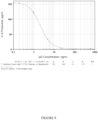
- the protein composition is capable of inhibiting human IL-6 production in human lung fibroblasts in response to treating the fibroblasts with human IL-1 ⁇ .
- the inhibiting is characterized by an IC50 value of about 2.3 pM.
- the teachings disclosed herein are based, in part, upon engineering of a heterodimeric protein assembly that is capable of binding to human IL-1 ⁇ and attenuating its function.
- the heterodimeric protein assembly of the present teachings comprises extracellular portions of IL1-R1 (GenBank: AAM88423.1) and of IL-1RAcP (GenBank: BAA25421.1), or functional fragments thereof.
- IL1-R1 GenBank: AAM88423.1
- IL-1RAcP GenBank: BAA25421.1
- Each, the IL1-R1 portion and the IL-1RAcP portion is fused to a distinct mutant of Fc portion of the human Ig Gamma-1 (GenBank: J00228.1).
- the two distinct Fc mutants in the heterodimeric protein assembly are engineered as to favor the heteromeric dimer formation between the two Fc mutants over any homomeric assembly.
- a DNA expression vector has been constructed for overproducing the heterodimeric protein assembly in a heterologous protein expression system, and mammalian cells have been prepared stably expressing the heterodimeric protein assembly to a high expression level.
- a protein purification procedure has been devised allowing obtaining a physiologically relevant substantially pure preparation of the heterodimeric protein assembly of the present teachings.
- purified protein molecule demonstrates a high degree of specific activity in an in vitro Enzyme-Linked Immunosorbent Assay (ELISA) using human IL-1 ⁇ (GenBank: AAH08678.1).
- ELISA Enzyme-Linked Immunosorbent Assay
- human IL-1 ⁇ GenBank: AAH08678.1
- the terms “about” and “approximately” may mean values that are within an order of magnitude, preferably within 5- fold and more preferably within 2-fold of a given value. Numerical quantities given herein are approximate unless stated otherwise, meaning that the term “about” or “approximately” can be inferred when not expressly stated.
- the methods disclosed herein may include steps of comparing sequences to each other, including wild-type sequence to one or more mutants (sequence variants).
- Such comparisons typically comprise alignments of polymer sequences, e.g., using sequence alignment programs and/or algorithms that are well known in the art (for example, BLAST, FASTA and MEGALIGN, to name a few).
- sequence alignment programs and/or algorithms that are well known in the art (for example, BLAST, FASTA and MEGALIGN, to name a few).
- sequence alignment programs and/or algorithms that are well known in the art (for example, BLAST, FASTA and MEGALIGN, to name a few).
- the methods disclosed herein may include statistical calculations, e.g. determination of IC50 or EC50 values, etc..
- the skilled artisan can readily appreciate that such can be performed using a variety of commercially available software, e.g. PRISM (GraphPad Software Inc, La Jolla, CA, USA) or similar.
- the term “homologous,” when modified with an adverb such as "highly,” may refer to sequence similarity and may or may not relate to a common evolutionary origin.
- sequence similarity in all its grammatical forms, refers to the degree of identity or correspondence between nucleic acid or amino acid sequences that may or may not share a common evolutionary origin.
- polypeptides described herein may be comprised of more than one contiguous amino acid chain, thus forming dimers or other oligomeric formations.
- the polypeptides described herein for use in mammals are expressed in mammalian cells that allow for proper post-translational modifications, such as CHO or HEK293 cell lines, although other mammalian expression cell lines are expected to be useful as well. It is therefore anticipated that the polypeptides described herein may be post-translationally modified without substantially effecting its biological function.
- fusion proteins having at least a biologically active portion of the human IL1-R1 or IL-1RAcP or a functional fragment thereof, and one or more fusion domains.
- fusion domains include, but are not limited to, polyhistidine, Glu-Glu, glutathione S transferase (GST), thioredoxin, protein A, protein G, an immunoglobulin heavy chain constant region (e.g., an Fc), maltose binding protein (MBP), or human serum albumin.
- a fusion domain may be selected so as to confer a desired property.
- the IL1-R1 or IL-1RAcP polypeptide portions may be fused with a domain that stabilizes the IL1-R1 or IL-1RAcP polypeptides in vivo (a "stabilizer” domain), optionally via a suitable peptide linker.
- a stabilizer means anything that increases the half life of a polypeptide in systemic circulation, regardless of whether this is because of decreased destruction, decreased clearance, or other pharmacokinetic effect. Fusions with the Fc portion of an immunoglobulin are known to confer desirable pharmacokinetic properties on certain proteins. Likewise, fusions to human serum albumin can confer desirable properties.
- fusion domains that may be selected include multimerizing (e.g., dimerizing, tetramerizing) domains and functional domains that confer an additional biological function, e.g. promoting accumulation at the targeted site of action in vivo.
- multimerizing e.g., dimerizing, tetramerizing
- functional domains that confer an additional biological function, e.g. promoting accumulation at the targeted site of action in vivo.
- the heterodimeric protein assemblies described herein comprise an extracellular portion of IL1-R1, or a functional fragment thereof, fused with a IgG-Fc domain, and an extracellular portion IL-1RAcP, or a functional fragment thereof, fused with another IgG-Fc domain.
- the IgG-Fc domain and the another IgG-Fc domain are chosen as to favor a heterodimeric protein assembly over any homodimeric protein assembly.
- the extracellular portion of IL1-R1 may be fused with the IgG-Fc domain via a flexible linker, while IL-1RAcP, or a functional fragment thereof, may be fused with the another IgG-Fc domain via the flexible linker of the same amino acid sequence or via another flexible linker.
- the extracellular portion of IL1-R1 fused with IgG-Fc domain (Fc-II) via a flexible linker may comprise the amino acid sequence of SEQ. ID NO. 1, while IL-1RAcP fused with another IgG-Fc domain (Fc-V) via a flexible linker may comprise the amino acid sequence of SEQ. ID NO. 2.
- the present teachings provides for a recombinant DNA molecule having an open reading frame coding for a polypeptide comprising the leading 333 amino acids of the human IL1-R1 fused with IgG-Fc domain (Fc-II) via a flexible linker, and for another recombinant DNA molecule having an open reading frame coding for another polypeptide comprising the leading 358 amino acids of the human IL-1RAcP fused with another IgG-Fc domain (Fc-V) via a flexible linker.
- the polypeptide comprising the leading 333 amino acids of the human IL1-R1 fused with IgG-Fc domain (Fc-II) via a flexible linker comprises the amino acid sequence of SEQ. ID NO. 3.
- the corresponding to it DNA molecule may comprise the nucleotide sequence of SEQ ID NO. 4.
- the another polypeptide comprises the leading 358 amino acids of the human IL-1RAcP fused with another IgG-Fc domain (Fc-V) via a flexible linker may comprise the amino acid sequence of SEQ. ID NO. 5.
- the corresponding to it DNA molecule may comprise the nucleotide sequence of SEQ ID NO. 6.
- the present disclosure provides for a recombinant malian expression plasmid for high expression of a polypeptide comprising the leading 333 amino acids of the human IL1-R1 fused with IgG-Fc domain (Fc-II) via a flexible linker, and for another recombinant DNA molecule having an open reading frame coding for another polypeptide comprising the leading 358 amino acids of the human IL-1RAcP fused with another IgG-Fc domain (Fc-V) via a flexible linker.
- This plasmid comprises two cytomegalovirus (CMV) promoters to drive transcription of the two genes coding for said polypeptide and said another polypeptide, each followed by a transcription termination sequence and a polyadenylation sequence.
- CMV cytomegalovirus
- the plasmid also contains an origin of replication and a gene conferring ampicillin resistance, for supporting plasmid propagation and selection in bacteria.
- the plasmid further contains a gene for Glutamine synthetase, a selectable marker widely used for establishing stable CHOK1 and NSO cell lines.
- the plasmid of the present disclosure is illustratively shown in Figure 2 .
- the mammalian expression plasmid of the present teachings comprises the nucleotide sequence of SEQ ID NO. 7.
- HIL1-R1-hIgG1-Fc-II/ IL-1RAcP- hIgG1-Fc-V expression plasmid (SEQ ID NO. 7)
- the present teachings provide for a mammalian expression system for production of a heterodimeric protein assembly comprising a polypeptide comprising amino acid residues 18 through 333 of the human IL1-R1 fused with IgG-Fc domain (Fc-II) via a flexible linker, and another polypeptide comprising amino acid residues 21 through 358 of the human IL-1RAcP fused with another IgG-Fc domain (Fc-V) via a flexible linker.
- the mammalian expression system of the present invention comprises Chinese hamster ovary cells (CHO-K1) harboring a plasmid comprising nucleotide sequence of SEQ ID NO. 7.
- Example 1 Construction of plasmids for expression of polypeptides of the present invention.
- Optimized gene sequences comprising sequences encoding residues amino acid residues 1 through 333 of IL-1R1 or residues 1 through 358 of IL-1RAcP were chemically synthesized. The resulting fragments were cloned in-frame into the recipient intermediate vectors comprising sequences coding for Fc-V or Fc-II, via HindIII and BspEI restriction sites. Obtained positive clones were verified by DNA sequencing. The resulting constructions were termed PKN001'-IL-1R-FcV and PKN001'-RAcP-FcII, respectively.
- PKN002 The gene encoding IL-1R1-Fc-V was then cloned into a second intermediate vector, termed PKN002, via HindIII and EcoRI restriction sites. Positive clones were screened by double digestion and the insertion sequence of the correct plasmids was verified by DNA sequencing. The resulting constructions were termed PKN002-IL-1R-FcV.
- RAcP-FcII from PKN001 '-RAcP-FcII was integrated into PKN002-II,-1R-FcV plasmid via NotI and SalI restriction sites and yielded a new recombinant construction that contained expression elements for both RAcP-FcII and IL-1R-FcV.
- the resulting clones were screened by NotI and SalI double digestion followed by DNA gel electrophoresis, the correct clones were exhibiting one band migrating approximately as an 8kb DNA fragment and another band migrating approximately as a 4kb DNA fragment.
- the final plasmid was termed PKN012-IL1R-FcV-RAcP-FcII.
- Recombinant plasmid PKN012-IL1R-FcV-RAcP-FcII combines expression cassettes for both RAcP-FcII and IL-1R-FcV.
- the plasmid can be used for co-expressing RAcP-FcII and IL-1R-FcV proteins in a 1 to 1 ratio under the control of a CMV promoter. The majority of these two fusion proteins would then form IL1R-FcV/RAcP-FcII heterodimers after secretion.
- the plasmid also expresses Glutamine synthetase (GS) protein via a SV40 promoter, which can be used as a selection marker to generate stable cell lines for IL1R-FcV/RAcP-FcII heterodimer production.
- GS Glutamine synthetase
- the plasmid map for PKN012-II,1R-FcV-RAcP-FcII is illustratively shown in Figure 2 .
- Example 2 Generation of stable cell lines for expressing polypeptides of the present invention.
- a stable clone of CHO-K1 cells co-expressing hIL1-R1-hIgG1-Fc polypeptide of SEQ ID NO. 1 and hIL-IRAcP-hIgGI-Fc polypeptide of SEQ ID NO. 2 has been generated through standard cell biology protocols.
- the expression plasmid PKN012-IL1R-FcV-RAcP-FcII described in Example 1 was used for generating stable cell lines for high expression of said polypeptides. Expression levels of said polypeptides in a plurality of clones were about or over 100 mg/L in a 7-day batch culture.
- One clonal cell line showed expression levels of about or over 300 mg/L in shake flask batch culture.
- CHO-K1 Chinese hamster ovary cells
- ATCC CCL-61 TM
- the cells were adapted in house into a CD CHO media. Media and reagent were obtained from commercial source. Upon full adaptation, the cells were grown to high density for a few passages. The resulting cells were subcloned. One of the resulting clones with a doubling time under 20 hrs and good morphology was selected as parental cell line.
- CHO-K1 cells at passage 4 were cultured in CD-CHO chemically defined media (Invitrogen) containing 6 mM L-Glutamine. The cells were maintained by 1:3 splits after reaching a cell density of 4 ⁇ 10 6 cells/ml. Cells were span down by centrifugation and resuspended into 1 ml of CD-CHO chemically defined media (Invitrogen).
- the chosen highest production cell line was selected and thawed into CD-CHO. Growth curves on the cell line were assessed, and samples were collected daily for cell count, cell viability and IL1R-FcV-RAcP-FcII productivity. Based on these studies, it was determined that selected highest productivity cell line was expressing IL1R-FcV-RAcP-FcII heterodimer in CD-CHO media in amounts necessary to support commercial production. The yield of the heterodimer after purification was at least about 300 mg/L (without any production optimization).
- Table 1 A Representative Clonal Cell Line Growth curve Culture period (DAY) Cell density (10 6 cells/ml) Feeding 0 0.5 1 1.09 2 1.93 3 2.97 +10% feed B 5 4.13 6 4.55 +10% feed B 7 4.6 8 5.46 +10% feed B 9 4.86 10 2.4 11 1
- Example 3 Purification of polypeptides of the present invention.
- HIL1-R1-hIgG1-Fc polypeptide of SEQ ID NO. 1 and hIL-1RAcP-hIgG1-Fc polypeptide of SEQ ID NO. 2 were co-expressed in CHO-K1 essentially as described in foregoing Example 2.
- Cells were harvested and lysed utilizing well established protocols. After cell lysate clarification, the supernatant at protein concentration of about 0.4 mg/ml, containing expressed HIL1-R1-hIgG1-Fc/ hIL-IRAcP-hIgGI-Fc polypeptides, was applied to a Protein A affinity column.
- the affinity purification step was carried out according to the procedure outlined in Table 2.
- the Protein A eluate containing HIL1-R1-hIgG1-Fc/ hIL-1RAcP-hIgG1-Fc at pH of about 3.5 - 3.7 is incubated for 45-60 minutes to inactivate potentially existing in the contaminating materials.
- the pH adjusted Protein A column eluate was further purified by anion-exchange chromatography (AIEX) utilizing Q Sepharose resin.
- AIEX anion-exchange chromatography
- the AIEX step is operated according to a step-elution procedure outlined in Table 3. Pooled elution peak fractions are concentrated by microfiltration to a concentration of about 20 mg/ml, followed by addition of a 20% Sucrose stock solution to a final Sucrose concentration of about 1% (w/v) and freezing at -80°C.
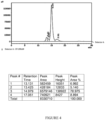
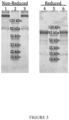
- hIL1-R1-hIgG1-Fc/ hIL-1RAcP-hIgG1-Fc heterodimer has an apparent molecular weight of about 180 kDa, consisting of two di-sulfide linked monomers, each of an apparent molecular weight of about 90 kDa.
- the SEC-HPLC operational procedure is outlined in Table 4. Loading sample is diluted with mobile phase to reach protein concentration of about 5 mg/ml.
- Table 2 The operational procedure of Protein A Affinity Chromatography Step Buffer Vol CV Flow cm/h Rinse Before-use dH2O 3 150 Equilibration 10 mM NaPh, pH 6.0 5 150 Sample Load Cell harvest 150 Wash 1 10 mM NaPh, pH 6.0 3 150 Wash 2 25 mM NaPh, 0.5 MNaCl, 5% Isopropanol pH 7.0 5 150 Re-Equilibration 10 mM NaPh, pH 6.0 3 150 Elution 20 mM Na-Citrate, pH 3.4 4 150 Re-Equilibration 10 mM PB, pH 6.0 3 150 CIP 0.1 M NaOH (contact time 15 min), reversed flow, CIP every 5 cycles 3 100 Rinse with NaCl 1M NaCl 3 150 Rinse After-use dH2O 3 150 Storage 20% (v/v) Ethanol, 20 mM NaPh, pH 7.0 3 150 Table 3: The operational procedure of AIEX Step Buffer Vol CV Flow
- Example 4 Characterization of inhibition of IL-1 ⁇ -induced IL-6 production with IL1R-FcV-RAcP-FcII heterodimer in human cells.
- the present Example demonstrates potent functional (inhibitory) properties of IL1R-FcV-RAcP-FcII heterodimer in targeting human IL-1 ⁇ .
- As a functional comparator previously characterized mouse monoclonal antibodies against IL-1 ⁇ were used. Human lung fibroblasts MRC5 produce IL-6 in response to treatment with IL-1 ⁇ . Quantification of IL-1 ⁇ -induced IL-6 production in MRC5 cells was used as the assay functional output. Inhibition of IL-6 production by IL1R-FcV-RAcP-FcII heterodimer and by control anti IL-1 ⁇ antibody provides a quantitative measure of inhibitory properties of the IL1R-FcV-RAcP-FcII heterodimer preparation.
- Polypeptides of II,1R-FcV-RAcP-Fc ⁇ heterodimer (SEQ ID NO.1 and SEQ ID NO. 2) were co-expressed and purified essentially as described in the forgoing examples.
- the assay employs the quantitative sandwich enzyme immunoassay technique.
- a microplate is pre-coated with a monoclonal antibody specific for IL-6.
- control anti-IL-1 ⁇ antibody is a very potent inhibitor of IL-1 ⁇ signaling pathway with an IC50 of about 2.1 ng/ml or about 14 pM; (2) plating cell density of 2 ⁇ 10 3 cells per well 24 hours prior to the assay setup is adequate; (3) recovery of IL-6 spiked into the culture medium at a final concentration of 20 pg/ml is about 114%.
- Example 5 Pharmacokinetics (PK) of IL1R-FcV-RAcP-FcII heterodimer after subcutaneous administration in mice.
- Polypeptides of II,1R-FcV-RAcP-Fc ⁇ heterodimer (SEQ ID NO.1 and SEQ ID NO. 2) were co-expressed and purified essentially as described in the forgoing examples.
- the polypeptides were formulated in the following buffer: 1% w/v Sucrose, 100mM Sodium Chloride, 20 mM L-Arginine Hydrochloride, 25 mM Sodium Bicarbonate, pH 6.3.
- the dosing stock concentration used was 0.5 mg/mL of the polypeptide.
- mice Fourteen female Balb/c nu/nu mice were randomized based on body weight into seven groups of two animals on Day 0 of the study. A single treatment of the polypeptides (5 mg/kg) was administered subcutaneously (dorsal) on Day 0 to all groups except mice in Group 1, which were bled via cardiac puncture for plasma preparation on Day 0 of the study. Blood samples were collected from mice via the orbital sinus in the remaining groups at various times throughout the study for preparation of plasma.
- Body weights were recorded for all animals on the treatment day (Day 0) and then three times per week, including the termination day of each group.
- mice were culled at specific time points for plasma preparation. Body weight changes were not measured in groups culled for sample collection at 0 hours and within 36 hours of dose administration. All other mice gained body weight and no adverse clinical signs were reported during the study period.
- the polypeptides were detected in the plasma of animals at 1 hour post-administration.
- One Phase Decay Model equation using Prism 5.0c (GraphPad Software Inc, La Jolla, CA, USA) was then used to determine pharmacokinetics of the polypeptides as detected by Hu-Fc ELISA.
- Peak circulating level of Hu-Fc (Cmax) was determined to be 1.65 ⁇ g/mL, and time to peak circulating levels (Tmax) was 36 hours post treatment.
- the half-life (T1/2) was 88.15 hours and the rate constant (K) was 0.0079 hr-1.
- Hu-Fc levels were negligible in the plasma of the untreated Group 1 animals. The results of the study are summarized in Table 7.
- Table 7 Mean Human-Fc Protein Concentration ⁇ SEM ( ⁇ g/mL) at each Time Post-Administration Group Treatment Bleeding Schedule (time post-administration) Mean Human-Fc Protein Concentration [ ⁇ g/mL] SEM 1 No treatment 0 hours 0.00 - - * 2 polypeptide of SEQ IDs NO. 1 and NO.
- Example 6 Evaluation of the toxicity of II,1R-FcV-RAcP-Fc ⁇ heterodimer following 28-days repeated dosing in C57BL6 mice.
Landscapes
- Health & Medical Sciences (AREA)
- Life Sciences & Earth Sciences (AREA)
- Chemical & Material Sciences (AREA)
- Engineering & Computer Science (AREA)
- Bioinformatics & Cheminformatics (AREA)
- General Health & Medical Sciences (AREA)
- Medicinal Chemistry (AREA)
- Organic Chemistry (AREA)
- Public Health (AREA)
- Pharmacology & Pharmacy (AREA)
- Veterinary Medicine (AREA)
- Animal Behavior & Ethology (AREA)
- General Chemical & Material Sciences (AREA)
- Chemical Kinetics & Catalysis (AREA)
- Nuclear Medicine, Radiotherapy & Molecular Imaging (AREA)
- Immunology (AREA)
- Proteomics, Peptides & Aminoacids (AREA)
- Ophthalmology & Optometry (AREA)
- Rheumatology (AREA)
- Diabetes (AREA)
- Zoology (AREA)
- Gastroenterology & Hepatology (AREA)
- Epidemiology (AREA)
- Molecular Biology (AREA)
- Cell Biology (AREA)
- Pain & Pain Management (AREA)
- Heart & Thoracic Surgery (AREA)
- Physical Education & Sports Medicine (AREA)
- Cardiology (AREA)
- Genetics & Genomics (AREA)
- Biophysics (AREA)
- Biochemistry (AREA)
- Toxicology (AREA)
- Hematology (AREA)
- Endocrinology (AREA)
- Emergency Medicine (AREA)
- Vascular Medicine (AREA)
- Obesity (AREA)
- Pulmonology (AREA)
- Orthopedic Medicine & Surgery (AREA)
Priority Applications (6)
| Application Number | Priority Date | Filing Date | Title |
|---|---|---|---|
| SM20240191T SMT202400191T1 (it) | 2013-02-15 | 2013-02-15 | Composizione di inibitore di IL-1Beta e uso di essa |
| HUE13875211A HUE067221T2 (hu) | 2013-02-15 | 2013-02-15 | IL-1béta inhibitor készítmény és annak alkalmazása |
| EP21208571.6A EP4050019A1 (en) | 2013-02-15 | 2013-02-15 | Il-1beta inhibitor composition and use thereof |
| SI201332081T SI2956471T1 (sl) | 2013-02-15 | 2013-02-15 | Sestava za zaviralca il-1beta in njegova uporaba |
| RS20240597A RS65559B1 (sr) | 2013-02-15 | 2013-02-15 | Sastav il-1beta inhibitora i njegova upotreba |
| HRP20240641TT HRP20240641T1 (hr) | 2013-02-15 | 2013-02-15 | Sastav inhibitora proteina il-1beta i njegova uporaba |
Applications Claiming Priority (1)
| Application Number | Priority Date | Filing Date | Title |
|---|---|---|---|
| PCT/US2013/026349 WO2014126582A1 (en) | 2013-02-15 | 2013-02-15 | IL-1β INHIBITOR COMPOSITION AND USE THEREOF |
Related Child Applications (2)
| Application Number | Title | Priority Date | Filing Date |
|---|---|---|---|
| EP21208571.6A Division-Into EP4050019A1 (en) | 2013-02-15 | 2013-02-15 | Il-1beta inhibitor composition and use thereof |
| EP21208571.6A Division EP4050019A1 (en) | 2013-02-15 | 2013-02-15 | Il-1beta inhibitor composition and use thereof |
Publications (3)
| Publication Number | Publication Date |
|---|---|
| EP2956471A1 EP2956471A1 (en) | 2015-12-23 |
| EP2956471A4 EP2956471A4 (en) | 2019-11-13 |
| EP2956471B1 true EP2956471B1 (en) | 2024-04-10 |
Family
ID=51354448
Family Applications (2)
| Application Number | Title | Priority Date | Filing Date |
|---|---|---|---|
| EP13875211.8A Active EP2956471B1 (en) | 2013-02-15 | 2013-02-15 | Il-1beta inhibitor composition and use thereof |
| EP21208571.6A Pending EP4050019A1 (en) | 2013-02-15 | 2013-02-15 | Il-1beta inhibitor composition and use thereof |
Family Applications After (1)
| Application Number | Title | Priority Date | Filing Date |
|---|---|---|---|
| EP21208571.6A Pending EP4050019A1 (en) | 2013-02-15 | 2013-02-15 | Il-1beta inhibitor composition and use thereof |
Country Status (24)
| Country | Link |
|---|---|
| EP (2) | EP2956471B1 (pl) |
| JP (1) | JP6225197B2 (pl) |
| KR (1) | KR101989551B1 (pl) |
| CN (1) | CN105431448B (pl) |
| AU (1) | AU2013378122B2 (pl) |
| BR (1) | BR112015019729B1 (pl) |
| DK (1) | DK2956471T3 (pl) |
| EA (1) | EA033269B1 (pl) |
| ES (1) | ES2990881T3 (pl) |
| FI (1) | FI2956471T3 (pl) |
| HR (1) | HRP20240641T1 (pl) |
| HU (1) | HUE067221T2 (pl) |
| IL (1) | IL240553B (pl) |
| LT (1) | LT2956471T (pl) |
| MX (1) | MX390047B (pl) |
| NZ (1) | NZ710900A (pl) |
| PH (1) | PH12015501796A1 (pl) |
| PL (1) | PL2956471T3 (pl) |
| PT (1) | PT2956471T (pl) |
| RS (1) | RS65559B1 (pl) |
| SG (1) | SG11201506389YA (pl) |
| SI (1) | SI2956471T1 (pl) |
| SM (1) | SMT202400191T1 (pl) |
| WO (1) | WO2014126582A1 (pl) |
Families Citing this family (10)
| Publication number | Priority date | Publication date | Assignee | Title |
|---|---|---|---|---|
| RS65559B1 (sr) | 2013-02-15 | 2024-06-28 | R Pharm International Llc | Sastav il-1beta inhibitora i njegova upotreba |
| US12180264B2 (en) | 2014-03-24 | 2024-12-31 | R-Pharm Overseas, Inc. | IL1-R1 derived inhibitor of IL-1β and use thereof |
| WO2021236091A1 (en) * | 2020-05-22 | 2021-11-25 | R-Pharm Overseas, Inc. | Il1-r1 derived inhibitor of il-1b and use thereof |
| CN104628870A (zh) * | 2015-02-04 | 2015-05-20 | 中国药科大学 | 一种人IL12Rβ1-CHR蛋白及其Fc融合蛋白 |
| CN104725514A (zh) * | 2015-02-06 | 2015-06-24 | 中国药科大学 | 新型il23拮抗剂 |
| EP3638700B8 (en) | 2017-06-14 | 2024-09-04 | Shihuida Pharmaceutical Group (Jilin) Co., Ltd., a China corporation | Proteinaceous heterodimer and use thereof |
| CA3075538A1 (en) | 2017-09-26 | 2019-04-04 | Regeneron Pharmaceuticals, Inc. | Treatment of inflammatory conditions by delivery of interleukin-1 receptor antagonist fusion protein |
| KR20220014531A (ko) * | 2020-07-29 | 2022-02-07 | (주)메디톡스 | 헤테로이량체 Fc 융합 단백질, 및 관련 조성물, 용도 및 방법 |
| CN116144668A (zh) * | 2023-02-13 | 2023-05-23 | 杭州吉倍思生物制药有限公司 | 人il-1r1基因、蛋白、同源二聚体蛋白质与用途 |
| CN116286844A (zh) * | 2023-02-13 | 2023-06-23 | 浙江大学 | 人IL-1R1和人IL-1RAcP多肽片段组合的同源二聚体蛋白质与用途 |
Family Cites Families (8)
| Publication number | Priority date | Publication date | Assignee | Title |
|---|---|---|---|---|
| US6927044B2 (en) | 1998-09-25 | 2005-08-09 | Regeneron Pharmaceuticals, Inc. | IL-1 receptor based cytokine traps |
| US6472179B2 (en) | 1998-09-25 | 2002-10-29 | Regeneron Pharmaceuticals, Inc. | Receptor based antagonists and methods of making and using |
| ES2391334T3 (es) * | 2005-06-21 | 2012-11-23 | Xoma Technology Ltd. | Anticuerpos y fragmentos de los mismos que se unen a la IL-1beta |
| US7666622B2 (en) * | 2005-10-19 | 2010-02-23 | Regeneron Pharmaceuticals, Inc. | Monomeric self-associating fusion polypeptides and therapeutic uses thereof |
| US8592562B2 (en) * | 2008-01-07 | 2013-11-26 | Amgen Inc. | Method for making antibody Fc-heterodimeric molecules using electrostatic steering effects |
| CA2827188C (en) * | 2011-03-17 | 2020-02-11 | Ramot At Tel-Aviv University Ltd. | Bi- and monospecific, asymmetric antibodies and methods of generating the same |
| WO2014035361A1 (en) * | 2012-08-26 | 2014-03-06 | R-PHARM, CJSC (Closed Joint Stock Company) | IL-1β INHIBITOR COMPOSITION AND USE THEREOF |
| RS65559B1 (sr) | 2013-02-15 | 2024-06-28 | R Pharm International Llc | Sastav il-1beta inhibitora i njegova upotreba |
-
2013
- 2013-02-15 RS RS20240597A patent/RS65559B1/sr unknown
- 2013-02-15 MX MX2015010438A patent/MX390047B/es unknown
- 2013-02-15 HU HUE13875211A patent/HUE067221T2/hu unknown
- 2013-02-15 LT LTEPPCT/US2013/026349T patent/LT2956471T/lt unknown
- 2013-02-15 SM SM20240191T patent/SMT202400191T1/it unknown
- 2013-02-15 EP EP13875211.8A patent/EP2956471B1/en active Active
- 2013-02-15 JP JP2015557984A patent/JP6225197B2/ja active Active
- 2013-02-15 SI SI201332081T patent/SI2956471T1/sl unknown
- 2013-02-15 CN CN201380075648.9A patent/CN105431448B/zh active Active
- 2013-02-15 EA EA201500842A patent/EA033269B1/ru unknown
- 2013-02-15 SG SG11201506389YA patent/SG11201506389YA/en unknown
- 2013-02-15 FI FIEP13875211.8T patent/FI2956471T3/fi active
- 2013-02-15 DK DK13875211.8T patent/DK2956471T3/da active
- 2013-02-15 PT PT138752118T patent/PT2956471T/pt unknown
- 2013-02-15 BR BR112015019729-9A patent/BR112015019729B1/pt active IP Right Grant
- 2013-02-15 ES ES13875211T patent/ES2990881T3/es active Active
- 2013-02-15 KR KR1020157025393A patent/KR101989551B1/ko active Active
- 2013-02-15 AU AU2013378122A patent/AU2013378122B2/en active Active
- 2013-02-15 EP EP21208571.6A patent/EP4050019A1/en active Pending
- 2013-02-15 PL PL13875211.8T patent/PL2956471T3/pl unknown
- 2013-02-15 NZ NZ71090013A patent/NZ710900A/en unknown
- 2013-02-15 WO PCT/US2013/026349 patent/WO2014126582A1/en not_active Ceased
- 2013-02-15 HR HRP20240641TT patent/HRP20240641T1/hr unknown
-
2015
- 2015-08-12 IL IL240553A patent/IL240553B/en active IP Right Grant
- 2015-08-14 PH PH12015501796A patent/PH12015501796A1/en unknown
Also Published As
Similar Documents
| Publication | Publication Date | Title |
|---|---|---|
| EP2956471B1 (en) | Il-1beta inhibitor composition and use thereof | |
| CN111655718B (zh) | 经过工程化的il-2 fc融合蛋白 | |
| TWI791894B (zh) | 新型白介素2及其用途 | |
| CN107709355B (zh) | 单链cd40受体激动剂蛋白 | |
| EP4122952A1 (en) | Interleukin-2 mutant and use thereof | |
| CN106795213B (zh) | 选择性地活化调节性t细胞用于治疗自身免疫病的分子 | |
| TWI834031B (zh) | 白介素2突變體及其用途 | |
| US7115398B2 (en) | IL-17 homologous polypeptides and therapeutic uses thereof | |
| KR100467751B1 (ko) | 생체내 에리스로포이에틴 활성이 증진된 융합단백질 | |
| EP2829550A2 (en) | Fusion proteins forming trimers | |
| KR20180035906A (ko) | Lag-3 및 pd-1에 특이적인 신규 융합 폴리펩타이드 | |
| CN108602871A (zh) | 用于治疗自身免疫疾病的选择性地活化调节性t细胞的分子 | |
| KR19990022141A (ko) | Cd40l 돌연변이 단백질 | |
| US12522639B2 (en) | Heterodimeric FC cytokines and uses thereof | |
| US20250388640A1 (en) | Human il-12p40 variants and uses thereof | |
| HK1219281B (en) | Il-1beta inhibitor composition and use thereof | |
| RU2689522C1 (ru) | Нуклеотидная последовательность, кодирующая слитый белок, состоящий из растворимого внеклеточного домена человеческого tnfr1 и константной части тяжёлой цепи человеческого igg4 | |
| JP7606240B2 (ja) | IL-1βのIL1-R1由来のインヒビターおよびその使用 | |
| WO2025002113A1 (zh) | 一种人血小板生成素受体激动剂的融合蛋白 | |
| HK40037529A (en) | Engineered il-2 fc fusion proteins | |
| HK1261663A1 (en) | Molecules that selectively activate regulatory t cells for the treatment of autoimmune diseases | |
| JP2015143270A (ja) | 三量体形成融合タンパク質 |
Legal Events
| Date | Code | Title | Description |
|---|---|---|---|
| REG | Reference to a national code |
Ref country code: HR Ref legal event code: TUEP Ref document number: P20240641T Country of ref document: HR |
|
| PUAI | Public reference made under article 153(3) epc to a published international application that has entered the european phase |
Free format text: ORIGINAL CODE: 0009012 |
|
| 17P | Request for examination filed |
Effective date: 20150914 |
|
| AK | Designated contracting states |
Kind code of ref document: A1 Designated state(s): AL AT BE BG CH CY CZ DE DK EE ES FI FR GB GR HR HU IE IS IT LI LT LU LV MC MK MT NL NO PL PT RO RS SE SI SK SM TR |
|
| AX | Request for extension of the european patent |
Extension state: BA ME |
|
| DAX | Request for extension of the european patent (deleted) | ||
| STAA | Information on the status of an ep patent application or granted ep patent |
Free format text: STATUS: THE APPLICATION IS DEEMED TO BE WITHDRAWN |
|
| 18D | Application deemed to be withdrawn |
Effective date: 20160901 |
|
| REG | Reference to a national code |
Ref country code: HK Ref legal event code: DE Ref document number: 1219281 Country of ref document: HK |
|
| 18RA | Request filed for re-establishment of rights before grant |
Effective date: 20170601 |
|
| APBK | Appeal reference recorded |
Free format text: ORIGINAL CODE: EPIDOSNREFNE |
|
| APBN | Date of receipt of notice of appeal recorded |
Free format text: ORIGINAL CODE: EPIDOSNNOA2E |
|
| APBR | Date of receipt of statement of grounds of appeal recorded |
Free format text: ORIGINAL CODE: EPIDOSNNOA3E |
|
| APAF | Appeal reference modified |
Free format text: ORIGINAL CODE: EPIDOSCREFNE |
|
| RAP1 | Party data changed (applicant data changed or rights of an application transferred) |
Owner name: R-PHARM INTERNATIONAL, LLC |
|
| APBT | Appeal procedure closed |
Free format text: ORIGINAL CODE: EPIDOSNNOA9E |
|
| STAA | Information on the status of an ep patent application or granted ep patent |
Free format text: STATUS: REQUEST FOR EXAMINATION WAS MADE |
|
| D18D | Application deemed to be withdrawn (deleted) | ||
| R17P | Request for examination filed (corrected) |
Effective date: 20150914 |
|
| A4 | Supplementary search report drawn up and despatched |
Effective date: 20191015 |
|
| RIC1 | Information provided on ipc code assigned before grant |
Ipc: C07K 14/545 20060101ALI20191009BHEP Ipc: C12N 15/09 20060101ALI20191009BHEP Ipc: C12N 15/66 20060101ALI20191009BHEP Ipc: C07K 14/715 20060101ALI20191009BHEP Ipc: A61P 9/06 20060101ALI20191009BHEP Ipc: A61K 38/16 20060101ALI20191009BHEP Ipc: A61K 38/20 20060101ALI20191009BHEP Ipc: A61K 38/17 20060101ALI20191009BHEP Ipc: C07K 14/00 20060101AFI20191009BHEP Ipc: C07K 19/00 20060101ALI20191009BHEP Ipc: A61P 19/02 20060101ALI20191009BHEP Ipc: C12N 15/117 20100101ALI20191009BHEP Ipc: A61P 3/10 20060101ALI20191009BHEP |
|
| STAA | Information on the status of an ep patent application or granted ep patent |
Free format text: STATUS: EXAMINATION IS IN PROGRESS |
|
| 17Q | First examination report despatched |
Effective date: 20220518 |
|
| REG | Reference to a national code |
Ref country code: DE Ref legal event code: R079 Free format text: PREVIOUS MAIN CLASS: C07K0014000000 Ipc: A61P0009100000 Ref country code: DE Ref legal event code: R079 Ref document number: 602013085561 Country of ref document: DE Free format text: PREVIOUS MAIN CLASS: C07K0014000000 Ipc: A61P0009100000 |
|
| RIC1 | Information provided on ipc code assigned before grant |
Ipc: A61P 29/00 20060101ALI20230912BHEP Ipc: A61P 43/00 20060101ALI20230912BHEP Ipc: A61P 27/14 20060101ALI20230912BHEP Ipc: A61P 27/04 20060101ALI20230912BHEP Ipc: A61P 27/02 20060101ALI20230912BHEP Ipc: A61P 19/06 20060101ALI20230912BHEP Ipc: A61K 38/17 20060101ALI20230912BHEP Ipc: A61P 3/10 20060101ALI20230912BHEP Ipc: C07K 14/715 20060101ALI20230912BHEP Ipc: A61P 19/02 20060101ALI20230912BHEP Ipc: A61P 9/06 20060101ALI20230912BHEP Ipc: A61P 17/00 20060101ALI20230912BHEP Ipc: A61P 11/00 20060101ALI20230912BHEP Ipc: A61P 9/10 20060101AFI20230912BHEP |
|
| GRAP | Despatch of communication of intention to grant a patent |
Free format text: ORIGINAL CODE: EPIDOSNIGR1 |
|
| STAA | Information on the status of an ep patent application or granted ep patent |
Free format text: STATUS: GRANT OF PATENT IS INTENDED |
|
| INTG | Intention to grant announced |
Effective date: 20231024 |
|
| GRAS | Grant fee paid |
Free format text: ORIGINAL CODE: EPIDOSNIGR3 |
|
| GRAA | (expected) grant |
Free format text: ORIGINAL CODE: 0009210 |
|
| STAA | Information on the status of an ep patent application or granted ep patent |
Free format text: STATUS: THE PATENT HAS BEEN GRANTED |
|
| AK | Designated contracting states |
Kind code of ref document: B1 Designated state(s): AL AT BE BG CH CY CZ DE DK EE ES FI FR GB GR HR HU IE IS IT LI LT LU LV MC MK MT NL NO PL PT RO RS SE SI SK SM TR |
|
| REG | Reference to a national code |
Ref country code: CH Ref legal event code: EP |
|
| P01 | Opt-out of the competence of the unified patent court (upc) registered |
Effective date: 20240311 |
|
| REG | Reference to a national code |
Ref country code: DE Ref legal event code: R096 Ref document number: 602013085561 Country of ref document: DE |
|
| REG | Reference to a national code |
Ref country code: IE Ref legal event code: FG4D |
|
| REG | Reference to a national code |
Ref country code: FI Ref legal event code: FGE |
|
| REG | Reference to a national code |
Ref country code: DK Ref legal event code: T3 Effective date: 20240513 |
|
| REG | Reference to a national code |
Ref country code: PT Ref legal event code: SC4A Ref document number: 2956471 Country of ref document: PT Date of ref document: 20240527 Kind code of ref document: T Free format text: AVAILABILITY OF NATIONAL TRANSLATION Effective date: 20240522 |
|
| REG | Reference to a national code |
Ref country code: SE Ref legal event code: TRGR |
|
| REG | Reference to a national code |
Ref country code: NL Ref legal event code: FP |
|
| REG | Reference to a national code |
Ref country code: SK Ref legal event code: T3 Ref document number: E 44195 Country of ref document: SK |
|
| REG | Reference to a national code |
Ref country code: EE Ref legal event code: FG4A Ref document number: E024314 Country of ref document: EE Effective date: 20240517 |
|
| REG | Reference to a national code |
Ref country code: HU Ref legal event code: AG4A Ref document number: E067221 Country of ref document: HU |
|
| REG | Reference to a national code |
Ref country code: ES Ref legal event code: FG2A Ref document number: 2990881 Country of ref document: ES Kind code of ref document: T3 Effective date: 20241202 |
|
| REG | Reference to a national code |
Ref country code: DE Ref legal event code: R097 Ref document number: 602013085561 Country of ref document: DE |
|
| PLBE | No opposition filed within time limit |
Free format text: ORIGINAL CODE: 0009261 |
|
| STAA | Information on the status of an ep patent application or granted ep patent |
Free format text: STATUS: NO OPPOSITION FILED WITHIN TIME LIMIT |
|
| 26N | No opposition filed |
Effective date: 20250113 |
|
| PGFP | Annual fee paid to national office [announced via postgrant information from national office to epo] |
Ref country code: MC Payment date: 20250224 Year of fee payment: 13 |
|
| PGFP | Annual fee paid to national office [announced via postgrant information from national office to epo] |
Ref country code: DE Payment date: 20250220 Year of fee payment: 13 Ref country code: PT Payment date: 20250212 Year of fee payment: 13 Ref country code: IS Payment date: 20250226 Year of fee payment: 13 |
|
| PGFP | Annual fee paid to national office [announced via postgrant information from national office to epo] |
Ref country code: DK Payment date: 20250203 Year of fee payment: 13 Ref country code: FI Payment date: 20250225 Year of fee payment: 13 Ref country code: RO Payment date: 20250213 Year of fee payment: 13 Ref country code: SM Payment date: 20250225 Year of fee payment: 13 Ref country code: LT Payment date: 20250205 Year of fee payment: 13 |
|
| PGFP | Annual fee paid to national office [announced via postgrant information from national office to epo] |
Ref country code: BG Payment date: 20250213 Year of fee payment: 13 |
|
| PGFP | Annual fee paid to national office [announced via postgrant information from national office to epo] |
Ref country code: ES Payment date: 20250304 Year of fee payment: 13 |
|
| PGFP | Annual fee paid to national office [announced via postgrant information from national office to epo] |
Ref country code: SE Payment date: 20250224 Year of fee payment: 13 Ref country code: IE Payment date: 20250224 Year of fee payment: 13 |
|
| PGFP | Annual fee paid to national office [announced via postgrant information from national office to epo] |
Ref country code: NO Payment date: 20250225 Year of fee payment: 13 |
|
| PGFP | Annual fee paid to national office [announced via postgrant information from national office to epo] |
Ref country code: AT Payment date: 20250204 Year of fee payment: 13 Ref country code: EE Payment date: 20250217 Year of fee payment: 13 Ref country code: GR Payment date: 20250225 Year of fee payment: 13 Ref country code: BE Payment date: 20250204 Year of fee payment: 13 Ref country code: CH Payment date: 20250301 Year of fee payment: 13 Ref country code: SI Payment date: 20250207 Year of fee payment: 13 Ref country code: LV Payment date: 20250226 Year of fee payment: 13 |
|
| PGFP | Annual fee paid to national office [announced via postgrant information from national office to epo] |
Ref country code: PL Payment date: 20250204 Year of fee payment: 13 Ref country code: FR Payment date: 20250224 Year of fee payment: 13 Ref country code: CZ Payment date: 20250206 Year of fee payment: 13 |
|
| PGFP | Annual fee paid to national office [announced via postgrant information from national office to epo] |
Ref country code: SK Payment date: 20250212 Year of fee payment: 13 Ref country code: IT Payment date: 20250226 Year of fee payment: 13 Ref country code: GB Payment date: 20250304 Year of fee payment: 13 |
|
| PGFP | Annual fee paid to national office [announced via postgrant information from national office to epo] |
Ref country code: RS Payment date: 20250207 Year of fee payment: 13 |
|
| PGFP | Annual fee paid to national office [announced via postgrant information from national office to epo] |
Ref country code: TR Payment date: 20250210 Year of fee payment: 13 Ref country code: MT Payment date: 20250225 Year of fee payment: 13 |
|
| PGFP | Annual fee paid to national office [announced via postgrant information from national office to epo] |
Ref country code: AL Payment date: 20250214 Year of fee payment: 13 |
|
| REG | Reference to a national code |
Ref country code: HR Ref legal event code: ODRP Ref document number: P20240641T Country of ref document: HR Payment date: 20250211 Year of fee payment: 13 |
|
| REG | Reference to a national code |
Ref country code: HR Ref legal event code: T1PR Ref document number: P20240641 Country of ref document: HR |
|
| PGFP | Annual fee paid to national office [announced via postgrant information from national office to epo] |
Ref country code: HR Payment date: 20250602 Year of fee payment: 13 |
|
| PGFP | Annual fee paid to national office [announced via postgrant information from national office to epo] |
Ref country code: CY Payment date: 20250205 Year of fee payment: 13 |
|
| PGFP | Annual fee paid to national office [announced via postgrant information from national office to epo] |
Ref country code: MK Payment date: 20250205 Year of fee payment: 13 |
|
| REG | Reference to a national code |
Ref country code: CH Ref legal event code: U11 Free format text: ST27 STATUS EVENT CODE: U-0-0-U10-U11 (AS PROVIDED BY THE NATIONAL OFFICE) Effective date: 20260301 |
|
| REG | Reference to a national code |
Ref country code: HR Ref legal event code: ODRP Ref document number: P20240641 Country of ref document: HR Payment date: 20260213 Year of fee payment: 14 |
|
| PGFP | Annual fee paid to national office [announced via postgrant information from national office to epo] |
Ref country code: LU Payment date: 20260209 Year of fee payment: 14 Ref country code: NL Payment date: 20260209 Year of fee payment: 14 |
|
| PGFP | Annual fee paid to national office [announced via postgrant information from national office to epo] |
Ref country code: HU Payment date: 20260213 Year of fee payment: 14 |