EP2955432A2 - Beleuchtungsvorrichtung für fahrzeuge - Google Patents
Beleuchtungsvorrichtung für fahrzeuge Download PDFInfo
- Publication number
- EP2955432A2 EP2955432A2 EP15171347.6A EP15171347A EP2955432A2 EP 2955432 A2 EP2955432 A2 EP 2955432A2 EP 15171347 A EP15171347 A EP 15171347A EP 2955432 A2 EP2955432 A2 EP 2955432A2
- Authority
- EP
- European Patent Office
- Prior art keywords
- light
- boundary surface
- reflection structure
- light guide
- lighting device
- Prior art date
- Legal status (The legal status is an assumption and is not a legal conclusion. Google has not performed a legal analysis and makes no representation as to the accuracy of the status listed.)
- Granted
Links
Images

Classifications
-
- G—PHYSICS
- G02—OPTICS
- G02B—OPTICAL ELEMENTS, SYSTEMS OR APPARATUS
- G02B6/00—Light guides; Structural details of arrangements comprising light guides and other optical elements, e.g. couplings
- G02B6/0001—Light guides; Structural details of arrangements comprising light guides and other optical elements, e.g. couplings specially adapted for lighting devices or systems
- G02B6/0005—Light guides; Structural details of arrangements comprising light guides and other optical elements, e.g. couplings specially adapted for lighting devices or systems the light guides being of the fibre type
- G02B6/001—Light guides; Structural details of arrangements comprising light guides and other optical elements, e.g. couplings specially adapted for lighting devices or systems the light guides being of the fibre type the light being emitted along at least a portion of the lateral surface of the fibre
-
- B—PERFORMING OPERATIONS; TRANSPORTING
- B60—VEHICLES IN GENERAL
- B60Q—ARRANGEMENT OF SIGNALLING OR LIGHTING DEVICES, THE MOUNTING OR SUPPORTING THEREOF OR CIRCUITS THEREFOR, FOR VEHICLES IN GENERAL
- B60Q1/00—Arrangement of optical signalling or lighting devices, the mounting or supporting thereof or circuits therefor
- B60Q1/0029—Spatial arrangement
- B60Q1/0041—Spatial arrangement of several lamps in relation to each other
- B60Q1/0052—Spatial arrangement of several lamps in relation to each other concentric
-
- F—MECHANICAL ENGINEERING; LIGHTING; HEATING; WEAPONS; BLASTING
- F21—LIGHTING
- F21S—NON-PORTABLE LIGHTING DEVICES; SYSTEMS THEREOF; VEHICLE LIGHTING DEVICES SPECIALLY ADAPTED FOR VEHICLE EXTERIORS
- F21S43/00—Signalling devices specially adapted for vehicle exteriors, e.g. brake lamps, direction indicator lights or reversing lights
- F21S43/20—Signalling devices specially adapted for vehicle exteriors, e.g. brake lamps, direction indicator lights or reversing lights characterised by refractors, transparent cover plates, light guides or filters
- F21S43/235—Light guides
- F21S43/236—Light guides characterised by the shape of the light guide
- F21S43/237—Light guides characterised by the shape of the light guide rod-shaped
-
- F—MECHANICAL ENGINEERING; LIGHTING; HEATING; WEAPONS; BLASTING
- F21—LIGHTING
- F21S—NON-PORTABLE LIGHTING DEVICES; SYSTEMS THEREOF; VEHICLE LIGHTING DEVICES SPECIALLY ADAPTED FOR VEHICLE EXTERIORS
- F21S43/00—Signalling devices specially adapted for vehicle exteriors, e.g. brake lamps, direction indicator lights or reversing lights
- F21S43/20—Signalling devices specially adapted for vehicle exteriors, e.g. brake lamps, direction indicator lights or reversing lights characterised by refractors, transparent cover plates, light guides or filters
- F21S43/235—Light guides
- F21S43/236—Light guides characterised by the shape of the light guide
- F21S43/241—Light guides characterised by the shape of the light guide of complex shape
-
- F—MECHANICAL ENGINEERING; LIGHTING; HEATING; WEAPONS; BLASTING
- F21—LIGHTING
- F21S—NON-PORTABLE LIGHTING DEVICES; SYSTEMS THEREOF; VEHICLE LIGHTING DEVICES SPECIALLY ADAPTED FOR VEHICLE EXTERIORS
- F21S43/00—Signalling devices specially adapted for vehicle exteriors, e.g. brake lamps, direction indicator lights or reversing lights
- F21S43/20—Signalling devices specially adapted for vehicle exteriors, e.g. brake lamps, direction indicator lights or reversing lights characterised by refractors, transparent cover plates, light guides or filters
- F21S43/235—Light guides
- F21S43/242—Light guides characterised by the emission area
- F21S43/245—Light guides characterised by the emission area emitting light from one or more of its major surfaces
-
- F—MECHANICAL ENGINEERING; LIGHTING; HEATING; WEAPONS; BLASTING
- F21—LIGHTING
- F21S—NON-PORTABLE LIGHTING DEVICES; SYSTEMS THEREOF; VEHICLE LIGHTING DEVICES SPECIALLY ADAPTED FOR VEHICLE EXTERIORS
- F21S43/00—Signalling devices specially adapted for vehicle exteriors, e.g. brake lamps, direction indicator lights or reversing lights
- F21S43/20—Signalling devices specially adapted for vehicle exteriors, e.g. brake lamps, direction indicator lights or reversing lights characterised by refractors, transparent cover plates, light guides or filters
- F21S43/235—Light guides
- F21S43/251—Light guides the light guides being used to transmit light from remote light sources
-
- G—PHYSICS
- G02—OPTICS
- G02B—OPTICAL ELEMENTS, SYSTEMS OR APPARATUS
- G02B6/00—Light guides; Structural details of arrangements comprising light guides and other optical elements, e.g. couplings
- G02B6/0001—Light guides; Structural details of arrangements comprising light guides and other optical elements, e.g. couplings specially adapted for lighting devices or systems
- G02B6/0011—Light guides; Structural details of arrangements comprising light guides and other optical elements, e.g. couplings specially adapted for lighting devices or systems the light guides being planar or of plate-like form
- G02B6/0033—Means for improving the coupling-out of light from the light guide
- G02B6/0063—Means for improving the coupling-out of light from the light guide for extracting light out both the major surfaces of the light guide
-
- G—PHYSICS
- G02—OPTICS
- G02B—OPTICAL ELEMENTS, SYSTEMS OR APPARATUS
- G02B6/00—Light guides; Structural details of arrangements comprising light guides and other optical elements, e.g. couplings
- G02B6/0001—Light guides; Structural details of arrangements comprising light guides and other optical elements, e.g. couplings specially adapted for lighting devices or systems
- G02B6/0011—Light guides; Structural details of arrangements comprising light guides and other optical elements, e.g. couplings specially adapted for lighting devices or systems the light guides being planar or of plate-like form
- G02B6/0013—Means for improving the coupling-in of light from the light source into the light guide
- G02B6/0015—Means for improving the coupling-in of light from the light source into the light guide provided on the surface of the light guide or in the bulk of it
- G02B6/0018—Redirecting means on the surface of the light guide
-
- G—PHYSICS
- G02—OPTICS
- G02B—OPTICAL ELEMENTS, SYSTEMS OR APPARATUS
- G02B6/00—Light guides; Structural details of arrangements comprising light guides and other optical elements, e.g. couplings
- G02B6/0001—Light guides; Structural details of arrangements comprising light guides and other optical elements, e.g. couplings specially adapted for lighting devices or systems
- G02B6/0011—Light guides; Structural details of arrangements comprising light guides and other optical elements, e.g. couplings specially adapted for lighting devices or systems the light guides being planar or of plate-like form
- G02B6/0013—Means for improving the coupling-in of light from the light source into the light guide
- G02B6/0023—Means for improving the coupling-in of light from the light source into the light guide provided by one optical element, or plurality thereof, placed between the light guide and the light source, or around the light source
- G02B6/0028—Light guide, e.g. taper
-
- G—PHYSICS
- G02—OPTICS
- G02B—OPTICAL ELEMENTS, SYSTEMS OR APPARATUS
- G02B6/00—Light guides; Structural details of arrangements comprising light guides and other optical elements, e.g. couplings
- G02B6/0001—Light guides; Structural details of arrangements comprising light guides and other optical elements, e.g. couplings specially adapted for lighting devices or systems
- G02B6/0011—Light guides; Structural details of arrangements comprising light guides and other optical elements, e.g. couplings specially adapted for lighting devices or systems the light guides being planar or of plate-like form
- G02B6/0033—Means for improving the coupling-out of light from the light guide
- G02B6/0035—Means for improving the coupling-out of light from the light guide provided on the surface of the light guide or in the bulk of it
- G02B6/0038—Linear indentations or grooves, e.g. arc-shaped grooves or meandering grooves, extending over the full length or width of the light guide
-
- G—PHYSICS
- G02—OPTICS
- G02B—OPTICAL ELEMENTS, SYSTEMS OR APPARATUS
- G02B6/00—Light guides; Structural details of arrangements comprising light guides and other optical elements, e.g. couplings
- G02B6/0001—Light guides; Structural details of arrangements comprising light guides and other optical elements, e.g. couplings specially adapted for lighting devices or systems
- G02B6/0011—Light guides; Structural details of arrangements comprising light guides and other optical elements, e.g. couplings specially adapted for lighting devices or systems the light guides being planar or of plate-like form
- G02B6/0033—Means for improving the coupling-out of light from the light guide
- G02B6/0058—Means for improving the coupling-out of light from the light guide varying in density, size, shape or depth along the light guide
- G02B6/0061—Means for improving the coupling-out of light from the light guide varying in density, size, shape or depth along the light guide to provide homogeneous light output intensity
Definitions
- the invention relates to a lighting device for vehicles, in particular motor vehicles, comprising at least one light source and at least one light guide arrangement assigned to the at least one light source for guiding the light emitted by the at least one light source and coupled into the light guide arrangement, wherein one or more light guides in the light guide arrangement, wherein the at least one optical fiber has one or more coupling points for decoupling at least a portion of the coupled-in light, and wherein the at least one optical fiber for deflecting the light towards the at least one decoupling point at least partially at one of the at least one outcoupling point opposite boundary surface of the optical fiber has a reflection structure , wherein the reflection structure comprises a number of reflection structure elements, which reflection structure elements as inward, in the light guide ger Recesses are formed, which are arranged and / or formed such that at least a portion of the luminous flux, preferably the entire luminous flux, which is totally reflected on a structure element surface which limits the reflection structure element, on the structure element surface.
- the invention relates to a vehicle headlight, in particular motor vehicle headlight with at least one such lighting device.
- the invention relates to a vehicle, in particular a motor vehicle with at least one such vehicle headlight.
- At least one, preferably exactly one, optical element for example at least one thick-wall optical system is then provided on at least one light-exit-side boundary surface, into which light is coupled via the at least light-out coupling of the optical waveguide, which light at least a light exit surface of the at least one optical element emerges to form a light function and / or a light distribution.
- the reflection structure comprises coupling-out means for decoupling at least part of the light incident on the reflection structure, preferably incident between the reflection structure elements, in a direction away from the at least one coupling-out location.
- direction away from the point of decoupling means that a vector component of a considered light beam is directed counter to the main decoupling direction.
- the reflection structure elements are arranged one behind the other in a main light-guiding direction and adjacent reflection structure elements are arranged at a distance from one another.
- the main light-guiding direction corresponds to the main light-deflecting direction (s).
- the coupling-out means comprise elevations or are formed as elevations, which elevations on the reflection surface having the boundary surface of the light guide, in areas between adjacent reflection structure elements, of the Boundary surface to the outside, from the at least one output point pioneering, are arranged.
- elevations for example in the form of prisms on the back of the light guide, preferably in the vicinity of the deflection, the total reflection is suppressed, so that the disturbing light impression is prevented in oblique viewing.
- the elevations are, for example, staircase-shaped on the back of the light guide applied (or integrally formed with this) additional surfaces and allow leakage of unwanted light rays to the rear.
- the elevations are configured and / or arranged such that at least a portion of the light which impinges on a elevation boundary surface, which elevation boundary surface in each case delimits an elevation to the outside, exits the light guide via the elevation boundary surface.
- light guides and elevations are made of the same material, in particular, these are preferably produced in one piece.
- the elevations have a prismatic shape or are formed as prisms.
- the elevation boundary surfaces each consist of two boundary subareas, which converge in a survey edge.
- elevation edges may be due to manufacturing technology, e.g. when manufactured by means of an injection process, have slight edge rounding.
- At least one, preferably both limiting partial surfaces are formed as flat surfaces.
- elevations preferably all elevations, extend in each case over the entire area between two reflection structure elements.
- elevations preferably all elevations each extend over substantially the entire height extent of at least one adjacent structural element.
- the local angle between the elevation boundary surface and the original boundary surface of the light guide is less than the angle in a rear region of the elevation boundary surface.
- Each land boundary surface has a “dot” (in fact generally a curve with dots) with maximum distance to the original light pipe boundary surface - this "point” or curve divides the land boundary surface into a front area and a rear area.
- "Rear” and “Front” can be seen in relation to the main guide direction, i. the front region faces the deflection device, the rear region faces away from the deflection device.
- “Local” angle means that with a curved elevation, the angle changes along the elevation boundary surface.
- Local is meant the angle of a tangential plane at a point of interest to the elevation boundary surface.
- each sub-area has exactly one angle, which is preferably measured between the sub-area and a tangent plane to the light guide in the region of the intersection or the interface of the sub-area with the back of the light guide.
- the relation "rear area rear partial area”
- the local angle between the elevation boundary surface and the original boundary surface of the light guide is such it is selected that at least a part of the light incident on the rear area of the elevation boundary surface exits the light guide via the rear area of the elevation boundary surface.
- the local angle between the elevation boundary surface and the original boundary surface of the light guide is selected such that at least a portion of the area at the rear of the elevation area is selected. Impact surface incident light impinges at an angle which is smaller than the limit angle for total reflection in the considered, local point of the survey boundary surface.
- the front partial surface occupies a first angle to the original boundary surface, which is preferably in a range of 12.5 ° - 40 ° and / or the rear Partial surface occupies a second angle to the original boundary surface, which is preferably in a range of 70 ° - 90 °.
- the reflection structure elements have a prismatic shape or are formed as prisms.
- the reflection structure element boundary surfaces each consist of two boundary sub-areas, which converge in one structure element edge.
- At least one, or preferably both reflective structure element partial surfaces are formed as flat surfaces.
- the local angle between the reflection structure element boundary surface and the original boundary surface of the light guide is selected such that at least a part, preferably substantially all of them Reflected area light flux is totally reflected and deflected to at least one Lichtauskoppelstelle.
- the angle to the original boundary surface is in a range of 40 ° -45 °.
- edges of the reflection structure elements and the elevations run parallel to one another.
- the reflection structure elements in particular the edges of the reflection structure elements are arranged equidistantly.
- the height of the reflection structure elements i. the normal distance of the edges of the reflection structure elements to the original boundary surface increases as it progresses along the light guide.
- the height of the elevations i. the normal distance of the edges of the elevations to the original boundary surface, decreases as it progresses along the light guide.
- the height of the elevations decreases to the same extent as the height of the reflection structure elements increases.
- At least one, preferably exactly one optical element for example at least one thick-wall optical system, is then provided on at least one light-exit-side boundary surface into which light is coupled via the at least light coupling-out point of the optical waveguide arrangement Light exits at least one light exit surface of the at least one optical element to form a light function and / or a light distribution.
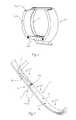
- FIG. 1 shows a lighting device 10 for vehicles, in particular motor vehicles, which at least one light source (not shown) and one of the at least one light source, not shown here in detail light guide assembly 1 for guiding the radiated from the at least one light source and coupled into the light guide assembly 1 comprises light
- the optical waveguide arrangement has, for example, an optical waveguide into which light from the light source is fed via a light-coupling region.
- a light deflection device for example a deflection prism
- the invention is not limited to such a variant.
- an optical element 200 for example, a thick-wall optics is provided, in which light via the light extraction point of the light guide assembly 1 and the light guide is coupled. This light is emitted at a light exit surface 210 of the optical element 200 to form a light function and / or a light distribution.
- lateral illumination spots 300 are formed on the light exit surface 210 of the optical element 200.
- a light guide arrangement according to the invention or a light guide according to the invention is used as described below.
- FIG. 2 shows a light guide assembly 1 according to the invention with a light guide 4, in which via a feed line 3 light from at least one, not shown, light source in the light feed direction L1 is fed.
- a deflecting device 100 is schematically indicated, by means of which, in the shown, non-limiting embodiment, the injected light is fed into both arms of the optical fiber 4.
- the light guide 4 has extraction points 2 for decoupling at least part of the coupled-in light.
- the extraction points are essentially the entire front side 2 of the light guide, from which light can emerge and is emitted into a region in front of the illumination device or in front of the vehicle.
- the reflection structure 5 For deflecting the light to the front side (coupling-out region, coupling-out points) 2 of the optical waveguide, it has a reflection structure 5 on the opposite boundary surface 40 (also referred to below as backside), the reflection structure 5 comprising a number of reflection structure elements 5a, which comprise reflection structure elements 5a inside, in the light guide 4 into (ie in the direction of the front side 2) directed depressions are formed.
- These reflection structure elements 5a are arranged and / or formed such that at least part of the luminous flux, preferably the total luminous flux, which is totally reflected on a structure element surface 5b, 5c which delimits the reflection structure element 5, is totally reflected on the structure element surface 5b, 5c ,
- FIG. 3 shows a known from the prior art light guide 4, which has such reflection structure elements 5a
- FIG. 3a shows these reflection structure elements 5a in detail.
- Light which is coupled into the light guide 4 in the direction L1 (main light-receiving direction) and deflected in the two directions L2 (main light-guiding directions L2) is totally reflected and stepped on the back surface 40 and on the reflecting structure elements 5a of the light guide 4 as shown via the front side 2 from the light guide 4.
- the main light guide direction of the (or the) is also referred to as the main Lichtumlenkraum (en) L2.
- a reflecting structure element 5a is preferably formed, as shown, by two structural element surfaces 5b, 5c which, as shown, are preferably flat and converge in an edge 5d.
- Light, which impinges directly on the front surface 5b, is reflected by this to the front side 2, light, which impinges on the back 40 of the light guide 4 between two reflection structure elements 5a, is also totally reflected there and, optionally after further reflection on the surface 5b, emitted to the front.
- Light is emitted via the front side 2 in the direction of the main light output direction L3, which is generally parallel to the direction of travel of the vehicle in which the lighting device is arranged, and is imaged in an area in front of the vehicle.
- the reflection structure 5 additionally comprises, in addition to the reflection structure elements 5a, outcoupling means 20 for decoupling at least a portion of the light incident on the reflection structure 5 between the reflection structure elements 5 in a direction away from the decoupling point 2.
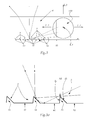
- FIG. 4a shows in detail this coupling-out means, and as can be seen, the light beam (shown in FIG. 3a was still totally reflected) not totally reflected and exits backwards out of the light guide, so it can no longer contribute to the formation of an unwanted luminance spots.
- the reflection structure elements 5a are arranged one behind the other in a main light-guiding direction L2 and adjacent reflection structure elements 5a are arranged at a distance from one another.
- the reflection structure elements 5a have a prismatic shape or are formed as prisms.
- the reflective feature element boundary surfaces are as related to Figures 3 and 3a already mentioned in each case from two planar boundary partial surfaces 5b, 5c, which converge in a structural element edge 5d.
- the (local) angle 50b between the front planar reflecting structure element delimiting surface 5b and the original limiting surface 40 of the optical waveguide 4 is selected such that at least a part, preferably substantially all, of the luminous flux incident on this region 5b is totally reflected and directed to the light extraction point (front side). 2 is deflected.
- this angle is 50b to the original boundary surface 40 in a range of 40 ° - 45 °.
- the angle 50c of the rear reflective feature limiting surface 5c is larger than the front angle 50b as shown.
- the reflection structure elements 5a in particular the edges 5d of the reflection structure elements 5a are arranged equidistantly. It is also favorable if the height of the reflection structure elements 5a, i. the normal distance of the edges 5d of the reflection structure elements 5a to the original boundary surface 40 increases as it progresses along the light guide. The "progression" begins at the Lichteinkoppel Anlagen and takes place in the light guide.
- the coupling-out means comprise a number of elevations 20, which elevations 20 are arranged on the limiting surface 40 of the light guide 4 having the reflection structure 5, in regions between adjacent reflection structure elements 5, pointing away from the limiting surface 40 to the outside, away from the extraction point 2.
- Such an elevation 20 is in each case located between two reflection structure elements 5 a, wherein an elevation 20 preferably occupies substantially the entire area between the two structural elements 5 a.
- the elevations 20 are configured and / or arranged such that at least part of the light which impinges on an elevation delimiting surface 20a, 20b, which elevation delimiting surface 20a, 20b in each case delimits an elevation 20 toward the outside, projects beyond the elevation area.
- the elevations 20 preferably have a prismatic shape or are formed as prisms. Specifically, in the embodiment shown, the elevations 20 are respectively bounded by two flat boundary partial surfaces 20a, 20b, which converge in a raised edge 20c. These elevation edges may be due to manufacturing technology, e.g. when manufactured by means of an injection process, have slight edge rounding.
- elevations 20, preferably all elevations 20 each extend over substantially the entire height extent of the adjacent structural elements 5 extend.
- the term "height extension” is the extent of the reflection structure elements transverse to a main light-guiding direction, that is to say the direction normal to the plane of the drawing in FIG 4, 4a to understand.
- the angle 120a between a bump boundary surface 20a and the original boundary surface 40 of the light guide 4 is preferably less than the angle 120b between the rear bump boundary surface 20b, as shown.
- the angle (120b) between the rear bump boundary surface 20b and the original boundary surface 40 is selected so that at least part of the light incident on the rear portion of the bump boundary surface 20b exits the light guide 4 via the rear bump boundary surface 20b ,
- the angle 120b is preferably selected such that at least a portion of the light incident on the rear of the bump boundary surface 20b impinges at an angle on the bump boundary surface 20b, which is less than the limit angle for total reflection in the localized one Point of the land boundary surface 20b.
- the angle 120a between a front partial surface 20a and the original limiting surface 40 is in a range of 12.5 ° -40 °
- the second, "rear" angle 120b is preferably in a range of 70 ° -90 °.
- edges 5d of the reflection structure elements 5 and the edges 20c of the elevations 20 preferably run parallel to one another.
- the height of the elevations 20, i. the normal distance of the edges 20c of the projections 20 to the original boundary surface 40 decreases as it progresses along the optical fiber.
- the height of the elevations 20 preferably decreases to the same extent as the height of the reflection structure elements 5a increases.
Landscapes
- Engineering & Computer Science (AREA)
- General Engineering & Computer Science (AREA)
- Physics & Mathematics (AREA)
- General Physics & Mathematics (AREA)
- Optics & Photonics (AREA)
- Mechanical Engineering (AREA)
- Planar Illumination Modules (AREA)
- Non-Portable Lighting Devices Or Systems Thereof (AREA)
Abstract
Description
- Die Erfindung betrifft eine Beleuchtungsvorrichtung für Fahrzeuge, insbesondere Kraftfahrzeuge, umfassend zumindest eine Lichtquelle und zumindest eine der zumindest einen Lichtquelle zugeordnete Lichtleiteranordnung zur Führung des von der zumindest einen Lichtquelle abgestrahlten und in die Lichtleiteranordnung eingekoppelten Lichts, wobei in der Lichtleiteranordnung einen oder mehrere Lichtleiter umfasst, wobei der zumindest eine Lichtleiter ein oder mehrere Auskopplungsstellen zur Auskoppelung zumindest eines Teils des eingekoppelten Lichtes aufweist, und wobei der zumindest eine Lichtleiter zur Umlenkung des Lichtes zu der zumindest einen Auskoppelungsstelle hin zumindest bereichsweise an einer der zumindest einen Auskopplungsstelle gegenüberliegenden Begrenzungsfläche des Lichtleiters eine Reflexionsstruktur aufweist, wobei die Reflexionsstruktur eine Anzahl an Reflexionsstrukturelementen umfasst, welche Reflexionsstrukturelemente als nach innen, in den Lichtleiter hinein gerichtete Vertiefungen ausgebildet sind, welche derart angeordnet und/oder ausgebildet sind, dass zumindest ein Teil des Lichtstromes, vorzugsweise der gesamte Lichtstrom, der auf eine Strukturelement-Fläche, welche das Reflexionsstrukturelement begrenzt, an der Strukturelement-Oberfläche totalreflektiert wird.
- Weiters betrifft die Erfindung einen Fahrzeugscheinwerfer, insbesondere Kraftfahrzeugscheinwerfer mit zumindest einer solchen Beleuchtungsvorrichtung.
- Außerdem betrifft die Erfindung ein Fahrzeug, insbesondere Kraftfahrzeug mit zumindest einem solchen Fahrzeugscheinwerfer.
- Bei solchen Beleuchtungsvorrichtungen ist beispielsweise vorgesehen, dass anschließend an zumindest eine lichtaustrittsseitig gelegene Begrenzungsfläche des zumindest einen Lichtleiters zumindest ein, vorzugsweise genau ein Optikelement, beispielsweise zumindest eine Dickwandoptik vorgesehen ist, in welche Licht über die zumindest Lichtauskoppelstelle der Lichtleiteranordnung eingekoppelt wird, welches Licht an zumindest einer Lichtaustrittsfläche des zumindest einen Optikelementes zur Bildung einer Lichtfunktion und/oder einer Lichtverteilung austritt.
- Dabei tritt das Problem auf, dass bei einer seitlichen Betrachtung an der Lichtaustrittsfläche des Optikelementes Leuchtdichtehotspots auftreten, die einen unschönen optischen Eindruck erzeugen. Typischerweise tritt dieser Effekt bei einer seitlichen Betrachtung unter ca. 45° und +/- 20° in vertikaler Richtung auf. Bei einer an der Unterseite abgeflachten Kontur des Optikelementes erscheint dabei jeweils die dem Betrachter zugewandte untere Ecke der Lichtaustrittsfläche des Optikelementes sehr hell.
- Es ist eine Aufgabe der Erfindung, Leuchtdichtespots wie oben beschrieben zu vermeiden bzw. abzuschwächen.
- Diese Aufgabe wird mit einer eingangs erwähnten Beleuchtungsvorrichtung dadurch gelöst, dass erfindungsgemäß die Reflexionsstruktur Auskopplungsmittel zum Auskoppeln zumindest eines Teiles des auf die Reflexionsstruktur auftreffenden, vorzugsweise zwischen den Reflexionsstrukturelementen auftreffenden, Lichtes in eine von der zumindest einen Auskopplungsstelle abgewandte Richtung aufweist.
- Der Begriff "von der Auskopplungsstelle abgewandte Richtung" bedeutet dabei, dass eine Vektorkomponente eines betrachteten Lichtstrahls entgegen der Haupt-Auskoppelrichtung gerichtet ist.
- Über die Auskopplungsmittel wird somit Totalreflexion im Bereich der Auskopplungsmittel zumindest für einen Teil der dort auftreffenden Lichtstrahlen unterbunden, Lichtstrahlen können aus dem Lichtleiter nach hinten austreten und können entsprechend nicht mehr zu dem oder den unerwünschten Leuchtdichtespot(s) beitragen, welche dadurch abgeschwächt oder ganz beseitigt werden.
- Vorteilhafterweise sind die Reflexionsstrukturelemente in einer Haupt-Lichtführungsrichtung hintereinander und benachbarte Reflexionsstrukturelemente zueinander beabstandet angeordnet sind.
- Bei einem Lichtleiter, in den Licht über eine Lichtumlenkeinrichtung eingespeist wird, entspricht die Haupt-Lichtführungsrichtung der (oder den) Haupt-Lichtumlenkrichtung(en).
- Bevorzugt umfassen die Auskopplungsmittel Erhebungen oder sind als Erhebungen ausgebildet, welche Erhebungen an der die Reflexionsstruktur aufweisenden Begrenzungsfläche des Lichtleiters, in Bereichen zwischen benachbarten Reflexionsstrukturelementen, von der Begrenzungsfläche nach Außen, von der zumindest einen Auskopplungsstelle wegweisend, angeordnet sind.
- Durch die Ausformung dieser Erhebungen, beispielsweise in Form von Prismen an der Rückseite des Lichtleiters, vorzugsweise im Nahbereich der Umlenkeinrichtung, wird die Totalreflexion unterbunden, sodass der störende Leuchteindruck bei schräger Betrachtung unterbunden wird. Die Erhebungen sind beispielsweise treppenförmig nach hinten am Lichtleiter aufgebrachte (bzw. einstückig mit diesem ausgebildete) Zusatzflächen und erlauben einen Austritt von unerwünschten Lichtstrahlen nach hinten.
- Beispielsweise sind die Erhebungen derart ausgestaltet und/ oder angeordnet, dass zumindest ein Teil des Lichtes, welcher auf eine Erhebungs-Begrenzungsfläche, welche Erhebungs-Begrenzungsfläche jeweils eine Erhebung nach Außen hin begrenzt, auftrifft, über die Erhebungs-Begrenzungsfläche aus dem Lichtleiter austritt.
- Bevorzugt sind Lichtleiter und Erhebungen aus demselben Material, insbesondere sind diese vorzugsweise einstückig hergestellt.
- Weiters ist es von Vorteil, wenn die Erhebungen eine prismatische Form aufweisen bzw. als Prismen ausgebildet sind.
- Beispielsweise bestehen die Erhebungs-Begrenzungsflächen jeweils aus zwei Begrenzungs-Teilflächen, welche in einer Erhebungskante zusammenlaufen.
- Diese Erhebungskanten können fertigungstechnisch bedingt, z.B. bei Herstellung mittels eines Spritzvorganges, leichte Kantenverrundungen aufweisen.
- Bei einer konkreten, bevorzugten Ausführungsform ist vorgesehen, dass zumindest eine, vorzugsweise beide Begrenzungs-Teilflächen als ebene Flächen ausgebildet sind.
- Weiters hat es sich als günstig herausgestellt, wenn sich Erhebungen, vorzugsweise alle Erhebungen jeweils über den gesamten Bereich zwischen zwei Reflexionsstrukturelementen erstrecken.
- Außerdem ist es günstig, wenn sich Erhebungen, vorzugsweise alle Erhebungen jeweils über im Wesentlichen die gesamte Höhenerstreckung zumindest eines benachbarten Strukturelementes erstrecken.
- Unter "Höhenerstreckung" ist dabei die Erstreckung der Reflexionsstrukturelemente quer zu einer Haupt-Lichtführungsrichtung zu verstehen.
- Günstig ist es, wenn in einem in einer Haupt-Lichtführungsrichtung gesehen vorderen Bereich der lokale Winkel zwischen Erhebungs-Begrenzungsfläche und der ursprünglichen Begrenzungsfläche des Lichtleiters geringer ist als der Winkel in einem hinteren Bereich der Erhebungs-Begrenzungsfläche.
- Jede Erhebungs-Begrenzungsfläche hat einen "Punkt" (tatsächlich im allgemeinen eine Kurve mit Punkten) mit Maximalabstand zu der ursprünglichen Lichtleiter-Begrenzungsfläche - dieser "Punkt" bzw. diese Kurve unterteilt die Erhebungs-Begrenzungsfläche in einen vorderen Bereich und einen hinteren Bereich. "Hinten" und "Vorne" sind in Bezug auf die Haupt-Führungsrichtung zu sehen, d.h. der vordere Bereich ist der Umlenkeinrichtung zugewandt, der hintere Bereich ist der Umlenkeinrichtung abgewandt.
- "Lokaler" Winkel bedeutet, dass bei einer gekrümmten Erhebung der Winkel sich entlang der Erhebungs-Begrenzungsfläche verändert. Mit lokal ist der Winkel einer Tangentialebene in einem betrachteten Punkt an die Erhebungs-Begrenzungsfläche zu verstehen.
- Bei einer Erhebungs-Begrenzungsfläche, die aus zwei ebenen Teilflächen besteht, weist jede Teilfläche genau einen Winkel auf, der vorzugsweise gemessen wird zwischen der Teilfläche und einer Tangentialebene an den Lichtleiter im Bereich des Schnittpunktes bzw. der Schnittfläche der Teilfläche mit der Rückseite des Lichtleiters. In diesem Fall gilt auch der Zusammenhang "hinterer Bereich = hintere Teilfläche", "vorderer Bereich = vordere Teilfläche".
- Vorzugsweise ist vorgesehen, dass in einem in einer Haupt-Lichtführungsrichtung gesehen hinteren Bereich der Erhebungs-Begrenzungsfläche der lokale Winkel zwischen der Erhebungs-Begrenzungsfläche und der ursprünglichen Begrenzungsfläche des Lichtleiters derart gewählt ist, dass zumindest ein Teil des auf den hinteren Bereich der Erhebungs-Begrenzungsfläche auftreffenden Lichtes über den hinteren Bereich der Erhebungs-Begrenzungsfläche aus dem Lichtleiter austritt.
- Insbesondere ist es günstig, wenn in dem in einer Haupt-Lichtführungsrichtung gesehen hinteren Bereich der Erhebungs-Begrenzungsfläche der lokale Winkel zwischen der Erhebungs-Begrenzungsfläche und der ursprünglichen Begrenzungsfläche des Lichtleiters derart gewählt ist, dass zumindest ein Teil des auf den hinteren Bereich der Erhebungs-Begrenzungsfläche auftreffenden Lichtes unter einem Winkel auftrifft, welcher kleiner als der Grenz-Winkel für Totalreflexion in dem betrachteten, lokalen Punkt der Erhebungs-Begrenzungsfläche.
- Bei einer konkreten Ausführungsform mit einer Erhebungs-Begrenzungsfläche, welche von zwei ebenen Teilflächen gebildet ist, nimmt die vordere Teilfläche einen ersten Winkel zu der ursprünglichen Begrenzungsfläche ein, welcher vorzugsweise in einem Bereich von 12,5° - 40° liegt und/oder die hintere Teilfläche nimmt einen zweiten Winkel zu der ursprünglichen Begrenzungsfläche ein, welcher vorzugsweise in einem Bereich von 70° - 90° liegt.
- Weiters ist mit Vorteil noch vorgesehen, dass die Reflexionsstrukturelemente eine prismatische Form aufweisen bzw. als Prismen ausgebildet sind.
- Beispielsweise bestehen die Reflexionsstrukturelement-Begrenzungsflächen jeweils aus zwei Begrenzungs-Teilflächen, welche in einer Strukturelementkante zusammenlaufen.
- Beispielsweise ist zumindest eine, bzw. sind vorzugsweise beide Reflexionsstrukturelement-Teilflächen als ebene Flächen ausgebildet.
- Vorzugsweise ist weiters vorgesehen, dass in einem in einer Haupt-Lichtführungsrichtung gesehen vorderen Bereich der Reflexionsstrukturelement-Begrenzungsfläche der lokale Winkel zwischen der Reflexionsstrukturelement-Begrenzungsfläche und der ursprünglichen Begrenzungsfläche des Lichtleiters derart gewählt ist, dass zumindest ein Teil, vorzugsweise im Wesentlichen der gesamte auf diesen Bereich auftreffende Lichtstrom totalreflektiert und zu zumindest einer Lichtauskoppelstelle umgelenkt wird.
- Beispielsweise liegt bei einer vorderen Reflexionsstrukturelement-Begrenzungsfläche, welche ebene ausgebildet ist, der Winkel zu der ursprünglichen Begrenzungsfläche in einem Bereich von 40° - 45°.
- Weiters ist bevorzugt vorgesehen, dass die Kanten der Reflexionsstrukturelemente und der Erhebungen parallel zueinander verlaufen.
- Bevorzugt ist vorgesehen, dass die Reflexionsstrukturelemente, insbesondere die Kanten der Reflexionsstrukturelemente äquidistant angeordnet sind.
- Günstig ist es, wenn die Höhe der Reflexionsstrukturelemente, d.h. der Normalabstand der Kanten der Reflexionsstrukturelemente zu der ursprünglichen Begrenzungsfläche, bei einem Fortschreiten entlang des Lichtleiters zunimmt.
- Das "Fortschreiten" beginnt bei dem Lichteinkoppelbereich und erfolgt in den Lichtleiter hinein.
- Weiters ist vorzugsweise vorgesehen, dass die Höhe der Erhebungen, d.h. der Normalabstand der Kanten der Erhebungen zu der ursprünglichen Begrenzungsfläche, bei einem Fortschreiten entlang des Lichtleiters abnimmt.
- Günstig kann es auch sein, wenn die Höhe der Erhebungen in demselben Ausmaß abnimmt, wie die Höhe der Reflexionsstrukturelemente zunimmt.
- Wie eingangs schon beschrieben, ist vorzugsweise noch vorgesehen, dass anschließend an zumindest eine lichtaustrittsseitig gelegene Begrenzungsfläche des zumindest einen Lichtleiters zumindest ein, vorzugsweise genau ein Optikelement, beispielsweise zumindest eine Dickwandoptik vorgesehen ist, in welche Licht über die zumindest Lichtauskoppelstelle der Lichtleiteranordnung eingekoppelt wird, welches Licht an zumindest einer Lichtaustrittsfläche des zumindest einen Optikelementes zur Bildung einer Lichtfunktion und/ oder einer Lichtverteilung austritt.
- Im Folgenden ist die Erfindung an Hand der Zeichnung näher erläutert. In dieser zeigt
-
Fig. 1 eine Beleuchtungsvorrichtung in einer perspektivischen Ansicht von schräg Vorne, -
Fig. 2 eine perspektivische Ansicht einer erfindungsgemäßen Lichtleiteranordnung, -
Fig. 3 einen bekannte Lichtleiteranordnung in einem Horizontalschnitt, -
Fig. 3a eine Detailansicht ausFigur 3 im Bereich der Rückseite des Lichtleiters der Lichtleiteranordnung, -
Fig. 4 einen erfindungsgemäße Lichtleiteranordnung in einem Horizontalschnitt, und -
Fig. 4a eine Detailansicht ausFigur 4 im Bereich der Rückseite des erfindungsgemäßen Lichtleiters der Lichtleiteranordnung. -
Figur 1 zeigt eine Beleuchtungsvorrichtung 10 für Fahrzeuge, insbesondere Kraftfahrzeuge, welche zumindest eine (nicht dargestellte) Lichtquelle und eine der zumindest einen Lichtquelle zugeordnete, hier nicht im Detail dargestellte Lichtleiteranordnung 1 zur Führung des von der zumindest einen Lichtquelle abgestrahlten und in die Lichtleiteranordnung 1 eingekoppelten Lichts umfasst. Die Lichtleiteranordnung verfügt z.B. über einen Lichtleiter, in welchen Licht von der Lichtquelle über einen Lichteinkoppelbereich eingespeist wird. Beispielsweise kann in dem Lichteinkoppelbereich eine Lichtumlenkeinrichtung, z.B. ein Umlenkprisma angeordnet sein, welche das von der Lichtquelle zugeführte Licht in zwei Richtungen umlenkt und so in zwei Richtungen in den Lichtleiter einkoppelt. Die Erfindung ist allerdings nicht auf eine solche Variante beschränkt. - Anschließend an eine lichtaustrittsseitig gelegene Begrenzungsfläche des Lichtleiters, über welche das Licht ausgekoppelt wird, ist ein Optikelement 200, beispielsweise eine Dickwandoptik vorgesehen ist, in welche Licht über die Lichtauskoppelstelle der Lichtleiteranordnung 1 bzw. des Lichtleiters eingekoppelt wird. Dieses Licht wird an einer Lichtaustrittsfläche 210 des Optikelementes 200 zur Bildung einer Lichtfunktion und/oder einer Lichtverteilung austritt.
- Wie eingangs beschrieben, bilden sich bei Verwendung eines aus dem Stand der Technik bekannten Lichtleiters bei seitlicher Betrachtung Leuchtdichtehotspots 300 an der Lichtaustrittsfläche 210 des Optikelementes 200.
- Um diese Leuchtdichtehotspots 300 abzuschwächen oder vorzugsweise ganz zu eliminieren, und so auch bei seitlicher Betrachtung ein homogenes Erscheinungsbild des Optikelementes zu gewährleisten, wird eine erfindungsgemäße Lichtleiteranordnung bzw. ein erfindungsgemäßer Lichtleiter wie im Folgen beschrieben verwendet.
-
Figur 2 zeigt eine erfindungsgemäße Lichtleiteranordnung 1 mit einem Lichtleiter 4, in welchen über eine Zuleitung 3 Licht von zumindest einer, nicht dargestellten, Lichtquelle in Lichteinspeisrichtung L1 eingespeist wird. In dem Lichteinkoppel- bzw. Lichteinspeisbereich 3a ist eine Umlenkeinrichtung 100 schematisch angedeutet, mittels welcher bei der gezeigten, nicht einschränkenden Ausführungsform das eingekoppelte Licht in beide Arme des Lichtleiters 4 eingespeist wird. - Der Lichtleiter 4 weist Auskopplungsstellen 2 zur Auskoppelung zumindest eines Teils des eingekoppelten Lichtes aufweist. Typischerweise handelt es sich bei den Auskoppelungsstellen um im Wesentlichen die gesamte Vorderseite 2 des Lichtleiters, aus welcher Licht austreten kann und in einen Bereich vor der Beleuchtungsvorrichtung bzw. vor dem Fahrzeug abgestrahlt wird.
- Zur Umlenkung des Lichtes zu der Vorderseite (Auskopplungsbereich, Auskopplungsstellen) 2 des Lichtleiters weist dieser an der gegenüberliegenden Begrenzungsfläche 40 (im Folgen auch als Rückseite bezeichnet) eine Reflexionsstruktur 5 aufweist, wobei die Reflexionsstruktur 5 eine Anzahl an Reflexionsstrukturelementen 5a umfasst, welche Reflexionsstrukturelemente 5a als nach innen, in den Lichtleiter 4 hinein (d.h. in Richtung der Vorderseite 2) gerichtete Vertiefungen ausgebildet sind. Diese Reflexionsstrukturelementen 5a sind derart angeordnet und/oder ausgebildet sind, dass zumindest ein Teil des Lichtstromes, vorzugsweise der gesamte Lichtstrom, der auf eine Strukturelement-Fläche 5b, 5c, welche das Reflexionsstrukturelement 5 begrenzt, an der Strukturelement-Oberfläche 5b, 5c totalreflektiert wird.
-
Figur 3 zeigt einen aus dem Stand der Technik bekannten Lichtleiter 4, welcher solche Reflexionsstrukturelementen 5a aufweist,Figur 3a zeigt diese Reflexionsstrukturelementen 5a im Detail. Licht, welches in Richtung L1 (Haupt-Lichteinkoppelrichtung) in den Lichtleiter 4 eingekoppelt wird und in die beiden Richtungen L2 (Haupt-Lichtführungsrichtungen L2) umgelenkt wird, wird an der Rückseite 40 und an den Reflexionsstrukturelementen 5a des Lichtleiters 4 wie gezeigt totalreflektiert und tritt über die Vorderseite 2 aus dem Lichtleiter 4 aus. Bei einem Lichtleiter, in den Licht wie gezeigt über eine Lichtumlenkeinrichtung eingespeist wird, werden die Haupt-Lichtführungsrichtung der (oder den) auch als Haupt-Lichtumlenkrichtung(en) L2 bezeichnet. - Ein Reflexionsstrukturelement 5a wird vorzugsweise wie gezeigt von zwei Strukturelement-Flächen 5b, 5c, die wie gezeigt vorzugsweise eben ausgebildet sind und in einer Kante 5d zusammenlaufen, gebildet. Licht, welches direkt auf die vordere Fläche 5b auftrifft, wird von dieser zur Vorderseite 2 reflektiert, Licht, welches auf die Rückseite 40 des Lichtleiters 4 zwischen zwei Reflexionsstrukturelementen 5a auftrifft, wird dort ebenfalls totalreflektiert und, gegebenenfalls nach weiterer Reflexion an der Fläche 5b, nach vorne abgestrahlt.
- Über die Vorderseite 2 tritt Licht in Richtung der Haupt-Lichtauskoppelrichtung L3, welche in der Regel parallel zur Fahrtrichtung des Fahrzeuges, in welchem die Beleuchtungsvorrichtung angeordnet ist, aus und wird in einen Bereich vor dem Fahrzeug abgebildet.
- Um die unerwünschten Leuchtdichtespots abzuschwächen oder ganz zu beseitigen, wird nun ein Lichtleiter wie in
Figur 3 und 3a gezeigt und wie im Folgenden beschrieben modifiziert. - Ein solcher beispielhafter erfindungsgemäßer Lichtleiter ist bereits in
Figur 2 und im Detail inFiguren 4, 4a gezeigt. Erfindungsgemäß umfasst bei einem solchen Lichtleiter die Reflexionsstruktur 5 zusätzlich zu den Reflexionsstrukturelementen 5a noch Auskopplungsmittel 20 zum Auskoppeln zumindest eines Teiles des auf die Reflexionsstruktur 5 zwischen den Reflexionsstrukturelementen 5 auftreffenden Lichtes in eine von der Auskopplungsstelle 2 abgewandten Richtung. -
Figur 4a zeigt im Detail diese Auskopplungsmittel, und wie zu erkennen ist wird der strichliert dargestellte Lichtstrahl (der gemäßFigur 3a noch totalreflektiert wurde) nicht totalreflektiert und tritt nach hinten aus dem Lichtleiter aus, kann also zur Bildung eines unerwünschten Leuchtdichtespots nicht mehr beitragen. - Über die Auskopplungsmittel wird somit Totalreflexion im Bereich der Auskopplungsmittel zumindest für einen Teil der dort auftreffenden Lichtstrahlen unterbunden, Lichtstrahlen können aus dem Lichtleiter nach hinten austreten und können entsprechend nicht mehr zu dem oder den unerwünschten Leuchtdichtespot(s) beitragen, welche dadurch abgeschwächt oder ganz beseitigt werden.
- Bei dem erfindungsgemäßen Lichtleiter 4 sind die Reflexionsstrukturelemente 5a in einer Haupt-Lichtführungsrichtung L2 hintereinander und benachbarte Reflexionsstrukturelemente 5a zueinander beabstandet angeordnet. Die Reflexionsstrukturelemente 5a weisen eine prismatische Form auf bzw. sind als Prismen ausgebildet. Die Reflexionsstrukturelement-Begrenzungsflächen bestehen, wie im Zusammenhang mit
Figur 3 und 3a schon erwähnt jeweils aus zwei ebenen Begrenzungs-Teilflächen 5b, 5c, welche in einer Strukturelementkante 5d zusammenlaufen. - Der (lokale) Winkel 50b zwischen der vorderen ebenen Reflexionsstrukturelement-Begrenzungsfläche 5b und der ursprünglichen Begrenzungsfläche 40 des Lichtleiters 4 ist derart gewählt, dass zumindest ein Teil, vorzugsweise im Wesentlichen der gesamte auf diesen Bereich 5b auftreffende Lichtstrom totalreflektiert und zu der Lichtauskoppelstelle (Vorderseite) 2 umgelenkt wird. Beispielsweise liegt dieser Winkel 50b zu der ursprünglichen Begrenzungsfläche 40 in einem Bereich von 40° - 45°. Der Winkel 50c der hinteren Reflexionsstrukturelement-Begrenzungsfläche 5c ist in der Regel, wie gezeigt, größer als der vordere Winkel 50b.
- Bevorzugt ist vorgesehen, dass die Reflexionsstrukturelemente 5a, insbesondere die Kanten 5d der Reflexionsstrukturelemente 5a äquidistant angeordnet sind. Günstig ist es auch, wenn die Höhe der Reflexionsstrukturelemente 5a, d.h. der Normalabstand der Kanten 5d der Reflexionsstrukturelemente 5a zu der ursprünglichen Begrenzungsfläche 40, bei einem Fortschreiten entlang des Lichtleiters zunimmt. Das "Fortschreiten" beginnt bei dem Lichteinkoppelbereich und erfolgt in den Lichtleiter hinein.
- Die Auskopplungsmittel umfassen eine Anzahl von Erhebungen 20, welche Erhebungen 20 an der die Reflexionsstruktur 5 aufweisenden Begrenzungsfläche 40 des Lichtleiters 4, in Bereichen zwischen benachbarten Reflexionsstrukturelementen 5, von der Begrenzungsfläche 40 nach Außen, von der Auskopplungsstelle 2 wegweisend, angeordnet sind. Zwischen zwei Reflexionsstrukturelementen 5a befindet sich jeweils eine solche Erhebung 20, wobei eine Erhebung 20 vorzugsweise im Wesentlichen den gesamten Bereich zwischen den beiden Strukturelementen 5a einnimmt.
- Die Erhebungen 20 sind derart ausgestaltet und/ oder angeordnet, dass zumindest ein Teil des Lichtes, welcher auf eine Erhebungs-Begrenzungsfläche 20a, 20b, welche Erhebungs-Begrenzungsfläche 20a, 20b jeweils eine Erhebung 20 nach Außen hin begrenzt, auftrifft, über die Erhebungs-Begrenzungsfläche 20a, 20b aus dem Lichtleiter 4 austritt, wie dies in
Figur 4b an Hand des strichlierten Lichtstrahls schematisch dargestellt ist. - Die Erhebungen 20 weisen vorzugsweise eine prismatische Form aufweisen bzw. sind als Prismen ausgebildet. Konkret sind in der gezeigten Ausführungsform die Erhebungen 20 jeweils aus zwei ebenen Begrenzungs-Teilflächen 20a, 20b begrenzt, welche in einer Erhebungskante 20c zusammenlaufen. Diese Erhebungskanten können fertigungstechnisch bedingt, z.B. bei Herstellung mittels eines Spritzvorganges, leichte Kantenverrundungen aufweisen.
- Die Erhebungen 20, vorzugsweise alle Erhebungen 20 erstrecken sich jeweils über im Wesentlichen die gesamte Höhenerstreckung der benachbarten Strukturelemente 5 erstrecken. Unter "Höhenerstreckung" ist dabei die Erstreckung der Reflexionsstrukturelemente quer zu einer Haupt-Lichtführungsrichtung, also die Richtung normal auf die Zeichenebene in
Figur 4, 4a zu verstehen. - Der Winkel 120a zwischen einer Erhebungs-Begrenzungsfläche 20a und der ursprünglichen Begrenzungsfläche 40 des Lichtleiters 4 ist vorzugsweise, wie gezeigt geringer als der Winkel 120b zwischen der hinteren Erhebungs-Begrenzungsfläche 20b.
- Der Winkel (120b) zwischen der hinteren Erhebungs-Begrenzungsfläche 20b und der ursprünglichen Begrenzungsfläche 40 ist dabei derart gewählt, dass zumindest ein Teil des auf den hinteren Bereich der Erhebungs-Begrenzungsfläche 20b auftreffenden Lichtes über die hintere Erhebungs-Begrenzungsfläche 20b aus dem Lichtleiter 4 austritt.
- Dazu ist der Winkel 120b vorzugsweise derart gewählt, dass zumindest ein Teil des auf den hinteren Bereich der Erhebungs-Begrenzungsfläche 20b auftreffenden Lichtes unter einem Winkel auf die Erhebungs-Begrenzungsfläche 20b auftrifft, welcher kleiner als der Grenz-Winkel für Totalreflexion in dem betrachteten, lokalen Punkt der Erhebungs-Begrenzungsfläche 20b.
- Beispielsweise liegt der Winkel 120a zwischen einer vorderen Teilfläche 20a und der ursprünglichen Begrenzungsfläche 40 in einem Bereich von 12,5° - 40°, der zweite, "hintere" Winkel 120b liegt vorzugsweise in einem Bereich von 70° - 90°.
- Die Kanten 5d der Reflexionsstrukturelemente 5 und die Kanten 20c der Erhebungen 20 verlaufen vorzugsweise parallel zueinander.
- Weiters ist vorzugsweise vorgesehen, dass die Höhe der Erhebungen 20, d.h. der Normalabstand der Kanten 20c der Erhebungen 20 zu der ursprünglichen Begrenzungsfläche 40, bei einem Fortschreiten entlang des Lichtleiters abnimmt.
- Die Höhe der Erhebungen 20 nimmt dabei vorzugsweise in demselben Ausmaß ab, wie die Höhe der Reflexionsstrukturelemente 5a zunimmt.
Claims (19)
- Beleuchtungsvorrichtung für Fahrzeuge, insbesondere Kraftfahrzeuge, umfassend zumindest eine Lichtquelle und zumindest eine der zumindest einen Lichtquelle zugeordnete Lichtleiteranordnung (1) zur Führung des von der zumindest einen Lichtquelle abgestrahlten und in die Lichtleiteranordnung (1) eingekoppelten Lichts,
wobei in der Lichtleiteranordnung (1) einen oder mehrere Lichtleiter (4) umfasst, wobei der zumindest eine Lichtleiter (4) ein oder mehrere Auskopplungsstellen (2) zur Auskoppelung zumindest eines Teils des eingekoppelten Lichtes aufweist, und wobei
der zumindest eine Lichtleiter (4) zur Umlenkung des Lichtes zu der zumindest einen Auskoppelungsstelle (2) hin zumindest bereichsweise an einer der zumindest einen Auskopplungsstelle (2) gegenüberliegenden Begrenzungsfläche (40) des Lichtleiters (4) eine Reflexionsstruktur (5) aufweist, wobei
die Reflexionsstruktur (5) eine Anzahl an Reflexionsstrukturelementen (5a) umfasst, welche Reflexionsstrukturelemente (5a) als nach innen, in den Lichtleiter (4) hinein gerichtete Vertiefungen ausgebildet sind, welche derart angeordnet und/oder ausgebildet sind, dass zumindest ein Teil des Lichtstromes, vorzugsweise der gesamte Lichtstrom, der auf eine Strukturelement-Fläche (5b, 5c), welche das Reflexionsstrukturelement (5) begrenzt, an der Strukturelement-Oberfläche (5b, 5c) totalreflektiert wird,
dadurch gekennzeichnet, dass
die Reflexionsstruktur (5) Auskopplungsmittel (20) zum Auskoppeln zumindest eines Teiles des auf die Reflexionsstruktur (5) auftreffenden, vorzugsweise zwischen den Reflexionsstrukturelementen (5) auftreffenden, Lichtes in eine von der zumindest einen Auskopplungsstelle (2) abgewandte Richtung aufweist. - Beleuchtungsvorrichtung nach Anspruch 1, dadurch gekennzeichnet, dass die Reflexionsstrukturelemente (5a) in einer Haupt-Lichtführungsrichtung (L2) hintereinander und benachbarte Reflexionsstrukturelemente (5a) zueinander beabstandet angeordnet sind.
- Beleuchtungsvorrichtung nach Anspruch 1 oder 2, dadurch gekennzeichnet, dass die Auskopplungsmittel Erhebungen (20) umfassen oder als Erhebungen (20) ausgebildet sind, wobei beispielsweise die Erhebungen (20) eine prismatische Form aufweisen bzw. als Prismen ausgebildet sind, welche Erhebungen (20) an der die Reflexionsstruktur (5) aufweisenden Begrenzungsfläche (40) des Lichtleiters (4), in Bereichen zwischen benachbarten Reflexionsstrukturelementen (5a), von der Begrenzungsfläche (40) nach Außen, von der zumindest einen Auskopplungsstelle (2) wegweisend, angeordnet sind, wobei vorzugsweise die Erhebungen (20) derart ausgestaltet und/oder angeordnet sind, dass zumindest ein Teil des Lichtes, welcher auf eine Erhebungs-Begrenzungsfläche (20a, 20b), welche Erhebungs-Begrenzungsfläche (20a, 20b) jeweils eine Erhebung (20) nach Außen hin begrenzt, auftrifft, über die Erhebungs-Begrenzungsfläche (20a, 20b) aus dem Lichtleiter (4) austritt.
- Beleuchtungsvorrichtung nach Anspruch 3, dadurch gekennzeichnet, dass die Erhebungs-Begrenzungsfläche aus zwei Begrenzungs-Teilflächen (20a, 20b) besteht, welche in einer Erhebungskante (20c) zusammenlaufen, wobei beispielsweise zumindest eine, vorzugsweise beide Begrenzungs-Teilflächen (20a, 20b) als ebene Flächen ausgebildet sind.
- Beleuchtungsvorrichtung nach Anspruch 3 oder 4, dadurch gekennzeichnet, dass sich Erhebungen (20), vorzugsweise alle Erhebungen (20) jeweils über den gesamten Bereich zwischen zwei Reflexionsstrukturelementen (5) erstrecken.
- Beleuchtungsvorrichtung nach einem der Ansprüche 3 bis 5, dadurch gekennzeichnet, dass sich Erhebungen (20), vorzugsweise alle Erhebungen (20) jeweils über im Wesentlichen die gesamte Höhenerstreckung zumindest eines benachbarten Strukturelementes (5a) erstrecken.
- Beleuchtungsvorrichtung nach einem der Ansprüche 3 bis 6, dadurch gekennzeichnet, dass in einem in einer Haupt-Lichtführungsrichtung (L2) gesehen vorderen Bereich der lokale Winkel (120a) zwischen Erhebungs-Begrenzungsfläche (20a) und der ursprünglichen Begrenzungsfläche (40) des Lichtleiters (4) geringer ist als der Winkel (120b) in einem hinteren Bereich der Erhebungs-Begrenzungsfläche (20b), wobei vorzugsweise
in einem in einer Haupt-Lichtführungsrichtung (L2) gesehen hinteren Bereich der Erhebungs-Begrenzungsfläche (20b) der lokale Winkel (120b) zwischen der Erhebungs-Begrenzungsfläche (20b) und der ursprünglichen Begrenzungsfläche (40) des Lichtleiters (4) derart gewählt ist, dass zumindest ein Teil des auf den hinteren Bereich der Erhebungs-Begrenzungsfläche (20b) auftreffenden Lichtes über den hinteren Bereich der Erhebungs-Begrenzungsfläche (20b) aus dem Lichtleiter (4) austritt, und wobei beispielsweise in dem in einer Haupt-Lichtführungsrichtung (L2) gesehen hinteren Bereich der Erhebungs-Begrenzungsfläche (20b) der lokale Winkel (120b) zwischen der Erhebungs-Begrenzungsfläche (20b) und der ursprünglichen Begrenzungsfläche (40) des Lichtleiters (4) derart gewählt ist, dass zumindest ein Teil des auf den hinteren Bereich der Erhebungs-Begrenzungsfläche (20b) auftreffenden Lichtes unter einem Winkel auftrifft, welcher kleiner als der Winkel für Totalreflexion in dem betrachteten, lokalen Punkt der Erhebungs-Begrenzungsfläche (20b). - Beleuchtungsvorrichtung nach Anspruch 7, dadurch gekennzeichnet, dass bei einer Erhebungs-Begrenzungsfläche, welche von zwei ebenen Teilflächen (20a, 20b) gebildet ist, die vordere Teilfläche (20a) einen ersten Winkel (120a) zu der ursprünglichen Begrenzungsfläche (40) einnimmt, welcher vorzugsweise in einem Bereich von 12,5° - 40° liegt und/ oder die hintere Teilfläche (20b) einen zweiten Winkel (120b) zu der ursprünglichen Begrenzungsfläche (40) einnimmt, welcher vorzugsweise in einem Bereich von 70° - 90° liegt.
- Beleuchtungsvorrichtung nach einem der Ansprüche 1 bis 8, dadurch gekennzeichnet, dass die Reflexionsstrukturelemente (5) eine prismatische Form aufweisen bzw. als Prismen ausgebildet sind.
- Beleuchtungsvorrichtung nach einem der Ansprüche 1 bis 9, dadurch gekennzeichnet, dass Reflexionsstrukturelement-Begrenzungsflächen jeweils aus zwei Begrenzungs-Teilflächen (5b, 5c) bestehen, welche in einer Strukturelementkante (5d) zusammenlaufen, wobei vorzugsweisezumindest eine, vorzugsweise beide Reflexionsstrukturelement-Teilflächen (5b, 5c) als ebene Flächen ausgebildet sind.
- Beleuchtungsvorrichtung nach Anspruch 10, dadurch gekennzeichnet, dass in einem in einer Haupt-Lichtführungsrichtung (L2) gesehen vorderen Bereich der Reflexionsstrukturelement-Begrenzungsfläche (5b) der lokale Winkel (50b) zwischen der Reflexionsstrukturelement-Begrenzungsfläche (5b) und der ursprünglichen Begrenzungsfläche (40) des Lichtleiters (4) derart gewählt ist, dass zumindest ein Teil, vorzugsweise im Wesentlichen der gesamte auf diesen Bereich (5b) auftreffende Lichtstrom totalreflektiert und zu zumindest einer Lichtauskoppelstelle (2) umgelenkt wird, wobei vorzugsweise bei einer vorderen Reflexionsstrukturelement-Begrenzungsfläche (5b), welche ebene ausgebildet ist, der Winkel (50b) zu der ursprünglichen Begrenzungsfläche (40) in einem Bereich von 40° - 45° liegt.
- Beleuchtungsvorrichtung nach Anspruch 10 oder 11, dadurch gekennzeichnet, dass die Kanten (5d) der Reflexionsstrukturelemente (5a) und der Erhebungen (20c) parallel zueinander verlaufen.
- Beleuchtungsvorrichtung nach einem der Ansprüche 1 bis 12, dadurch gekennzeichnet, dass die Reflexionsstrukturelemente (5a), insbesondere die Kanten (5d) der Reflexionsstrukturelemente (5) äquidistant angeordnet sind.
- Beleuchtungsvorrichtung nach einem der Ansprüche 1 bis 13, dadurch gekennzeichnet, dass die Höhe der Reflexionsstrukturelemente (5a), d.h. der Normalabstand der Kanten (5d) der Reflexionsstrukturelemente (5a) zu der ursprünglichen Begrenzungsfläche (40), bei einem Fortschreiten entlang des Lichtleiters zunimmt.
- Beleuchtungsvorrichtung nach einem der Ansprüche 3 bis 14, dadurch gekennzeichnet, dass die Höhe der Erhebungen (20), d.h. der Normalabstand der Kanten (20c) der Erhebungen (20) zu der ursprünglichen Begrenzungsfläche (40), bei einem Fortschreiten entlang des Lichtleiters abnimmt.
- Beleuchtungsvorrichtung nach Anspruch 14 und Anspruch 15, dadurch gekennzeichnet, dass die Höhe der Erhebungen (20) in demselben Ausmaß abnimmt, wie die Höhe der Reflexionsstrukturelemente (5a) zunimmt.
- Beleuchtungsvorrichtung nach einem der Ansprüche 1 bis 16, dadurch gekennzeichnet, dass anschließend an zumindest eine lichtaustrittsseitig gelegene Begrenzungsfläche (2) des zumindest einen Lichtleiters (4) zumindest ein, vorzugsweise genau ein Optikelement (200), beispielsweise zumindest eine Dickwandoptik vorgesehen ist, in welche Licht über die zumindest Lichtauskoppelstelle (2) der Lichtleiteranordnung (1) eingekoppelt wird, welches Licht an zumindest einer Lichtaustrittsfläche (210) des zumindest einen Optikelementes (200) zur Bildung einer Lichtfunktion und/ oder einer Lichtverteilung austritt.
- Fahrzeugscheinwerfer, insbesondere Kraftfahrzeugscheinwerfer mit zumindest einer Beleuchtungsvorrichtung nach einem der Ansprüche 1 bis 17.
- Fahrzeug, insbesondere Kraftfahrzeug mit zumindest einem Fahrzeugscheinwerfer nach Anspruch 18.
Applications Claiming Priority (1)
| Application Number | Priority Date | Filing Date | Title |
|---|---|---|---|
| ATA50401/2014A AT515864B1 (de) | 2014-06-11 | 2014-06-11 | Beleuchtungsvorrichtung für Fahrzeuge sowie Kraftfahrzeugscheinwerfer |
Publications (3)
| Publication Number | Publication Date |
|---|---|
| EP2955432A2 true EP2955432A2 (de) | 2015-12-16 |
| EP2955432A3 EP2955432A3 (de) | 2016-01-27 |
| EP2955432B1 EP2955432B1 (de) | 2021-08-04 |
Family
ID=53442510
Family Applications (1)
| Application Number | Title | Priority Date | Filing Date |
|---|---|---|---|
| EP15171347.6A Active EP2955432B1 (de) | 2014-06-11 | 2015-06-10 | Beleuchtungsvorrichtung für fahrzeuge |
Country Status (3)
| Country | Link |
|---|---|
| EP (1) | EP2955432B1 (de) |
| CN (1) | CN105299558B (de) |
| AT (1) | AT515864B1 (de) |
Cited By (7)
| Publication number | Priority date | Publication date | Assignee | Title |
|---|---|---|---|---|
| WO2017215987A1 (en) * | 2016-06-16 | 2017-12-21 | Philips Lighting Holding B.V. | A lighting system using a light guiding structure. |
| DE102017102237A1 (de) | 2017-02-06 | 2018-08-09 | HELLA GmbH & Co. KGaA | Beleuchtungsvorrichtung für ein Kraftfahrzeug |
| US10073205B1 (en) | 2017-05-05 | 2018-09-11 | Maxzone Vehicle Lighting Corp. | Optical module of vehicle light and light guide |
| CN110187435A (zh) * | 2019-05-30 | 2019-08-30 | 山东光韵智能科技有限公司 | 一种远距离照明用多节点光纤及其制造方法 |
| CZ307956B6 (cs) * | 2018-06-25 | 2019-09-11 | Varroc Lighting Systems, s.r.o. | Světlovodivý optický systém, zejména pro motorová vozidla |
| CN114719223A (zh) * | 2022-02-21 | 2022-07-08 | 岚图汽车科技有限公司 | 一种信号灯和机动车 |
| EP4368880A1 (de) * | 2022-11-08 | 2024-05-15 | Hella Autotechnik Nova, s.r.o. | Lichtleiter für eine kraftfahrzeuglampe |
Families Citing this family (5)
| Publication number | Priority date | Publication date | Assignee | Title |
|---|---|---|---|---|
| DE102016115278B4 (de) | 2016-08-17 | 2023-11-02 | Automotive Lighting Reutlingen Gmbh | Beleuchtungseinrichtung für ein Kraftfahrzeug |
| CN108916805B (zh) * | 2017-03-22 | 2021-03-30 | 堤维西交通工业股份有限公司 | 车灯透镜 |
| CN110953547B (zh) * | 2019-12-10 | 2022-08-12 | 东风汽车有限公司 | 用于车灯的厚壁件及车灯 |
| CN112594650A (zh) * | 2020-12-16 | 2021-04-02 | 领为视觉智能科技(宁波)有限公司 | 一种利用光栅全反射的厚壁件及其应用 |
| CN112902105B (zh) * | 2021-03-25 | 2022-09-30 | 兰普电器股份有限公司 | 异型侧反射前照灯 |
Family Cites Families (13)
| Publication number | Priority date | Publication date | Assignee | Title |
|---|---|---|---|---|
| KR100785025B1 (ko) * | 2006-10-26 | 2007-12-12 | 삼성전자주식회사 | 디스플레이 소자용 양면 조명장치 및 이를 채용한 양면디스플레이 소자 |
| TW200900637A (en) * | 2007-04-12 | 2009-01-01 | Koninkl Philips Electronics Nv | Improved light guide and light-output device |
| TWM347535U (en) * | 2008-06-17 | 2008-12-21 | yun-heng Xu | Structural improvement of light guide plate |
| DE102008034052B4 (de) * | 2008-07-22 | 2019-08-14 | HELLA GmbH & Co. KGaA | Lichtleitkörper zur Anwendung als Positionslicht oder als Tagfahrlicht für ein Kraftfahrzeug |
| EP2325545B1 (de) * | 2008-09-30 | 2014-07-16 | Sharp Kabushiki Kaisha | Beleuchtungsvorrichtung, anzeigevorrichtung und fernsehempfänger |
| WO2010124028A2 (en) * | 2009-04-21 | 2010-10-28 | Vasylyev Sergiy V | Light collection and illumination systems employing planar waveguide |
| JP2011040279A (ja) * | 2009-08-11 | 2011-02-24 | Sony Corp | 面状照明装置 |
| TWI452359B (zh) * | 2011-04-29 | 2014-09-11 | Coretronic Corp | 導光板與光源模組 |
| JP5749576B2 (ja) * | 2011-06-07 | 2015-07-15 | 株式会社小糸製作所 | 車両用灯具 |
| FR2977332B1 (fr) * | 2011-06-29 | 2017-08-11 | Valeo Vision | Guide de lumiere avec portion de decouplage et cache recoltant les rayons decouples |
| ITTV20110100A1 (it) * | 2011-07-13 | 2013-01-14 | Automotive Lighting Italia Spa | Fanale automobilistico |
| DE102012209337A1 (de) * | 2012-06-01 | 2013-12-05 | Automotive Lighting Reutlingen Gmbh | Lichtleiter und Lichtleitervorrichtung |
| DE102013204021B4 (de) * | 2012-06-01 | 2015-02-19 | Automotive Lighting Reutlingen Gmbh | Lichtleiter für eine Beleuchtungseinrichtung |
-
2014
- 2014-06-11 AT ATA50401/2014A patent/AT515864B1/de not_active IP Right Cessation
-
2015
- 2015-06-10 CN CN201510314511.5A patent/CN105299558B/zh active Active
- 2015-06-10 EP EP15171347.6A patent/EP2955432B1/de active Active
Non-Patent Citations (1)
| Title |
|---|
| None |
Cited By (12)
| Publication number | Priority date | Publication date | Assignee | Title |
|---|---|---|---|---|
| WO2017215987A1 (en) * | 2016-06-16 | 2017-12-21 | Philips Lighting Holding B.V. | A lighting system using a light guiding structure. |
| DE102017102237A1 (de) | 2017-02-06 | 2018-08-09 | HELLA GmbH & Co. KGaA | Beleuchtungsvorrichtung für ein Kraftfahrzeug |
| US10073205B1 (en) | 2017-05-05 | 2018-09-11 | Maxzone Vehicle Lighting Corp. | Optical module of vehicle light and light guide |
| EP3399227A1 (de) * | 2017-05-05 | 2018-11-07 | Depo Auto Parts Ind. Co., Ltd. | Optisches modul eines fahrzeuglichts und lichtleiter |
| CZ307956B6 (cs) * | 2018-06-25 | 2019-09-11 | Varroc Lighting Systems, s.r.o. | Světlovodivý optický systém, zejména pro motorová vozidla |
| DE102019116965A1 (de) | 2018-06-25 | 2020-01-02 | Varroc Lighting Systems S.R.O. | Ein Licht leitendes optisches System, insbesondere für Kraftfahrzeuge |
| US10787111B2 (en) | 2018-06-25 | 2020-09-29 | Varroc Lighting Systems, s.r.o. | Light-guiding optical system, especially for motor vehicles |
| DE102019116965B4 (de) | 2018-06-25 | 2026-03-26 | PO LIGHTING CZECH s.r.o. | Ein Licht leitendes optisches System, insbesondere für Kraftfahrzeuge |
| CN110187435A (zh) * | 2019-05-30 | 2019-08-30 | 山东光韵智能科技有限公司 | 一种远距离照明用多节点光纤及其制造方法 |
| CN114719223A (zh) * | 2022-02-21 | 2022-07-08 | 岚图汽车科技有限公司 | 一种信号灯和机动车 |
| CN114719223B (zh) * | 2022-02-21 | 2023-08-04 | 岚图汽车科技有限公司 | 一种信号灯和机动车 |
| EP4368880A1 (de) * | 2022-11-08 | 2024-05-15 | Hella Autotechnik Nova, s.r.o. | Lichtleiter für eine kraftfahrzeuglampe |
Also Published As
| Publication number | Publication date |
|---|---|
| AT515864A1 (de) | 2015-12-15 |
| CN105299558A (zh) | 2016-02-03 |
| EP2955432A3 (de) | 2016-01-27 |
| AT515864B1 (de) | 2016-03-15 |
| EP2955432B1 (de) | 2021-08-04 |
| CN105299558B (zh) | 2018-11-16 |
Similar Documents
| Publication | Publication Date | Title |
|---|---|---|
| AT515864B1 (de) | Beleuchtungsvorrichtung für Fahrzeuge sowie Kraftfahrzeugscheinwerfer | |
| DE102014102496B4 (de) | Beleuchtungsvorrichtung für Fahrzeuge | |
| DE102013100557B4 (de) | Beleuchtungsvorrichtung für Fahrzeuge | |
| EP3899358B1 (de) | Beleuchtungsvorrichtung für einen kraftfahrzeugscheinwerfer sowie kraftfahrzeugscheinwerfer | |
| EP3653926B1 (de) | Beleuchtungsvorrichtung für einen kraftfahrzeugscheinwerfer sowie kraftfahrzeugscheinwerfer | |
| EP3063463B1 (de) | Beleuchtungsvorrichtung für einen kraftfahrzeugscheinwerfer | |
| AT517105B1 (de) | Lichtleiteranordnung zur Erzeugung von zumindest einer Beleuchtungsfunktion und/oder Signalisierungsfunktion eines Kraftfahrzeugscheinwerfers | |
| EP3084292B1 (de) | Kraftfahrzeugleuchte mit einem lichtleiter | |
| AT518118B1 (de) | Beleuchtungseinheit für ein Kraftfahrzeug | |
| DE102011055429B4 (de) | Beleuchtungsvorrichtung für Fahrzeuge | |
| EP2889529A2 (de) | Kraftfahrzeugleuchte mit einem linien- oder flächenhaften Erscheinungsbild | |
| DE102013200441B3 (de) | Kraftfahrzeugbeleuchtungseinrichtung mit einem grabenartige Vertiefungen aufweisenden Lichtleiter | |
| DE102012103310B4 (de) | Beleuchtungsvorrichtung für Fahrzeuge | |
| EP2955062A2 (de) | Beleuchtungsvorrichtung für ein fahrzeug | |
| DE102008034052B4 (de) | Lichtleitkörper zur Anwendung als Positionslicht oder als Tagfahrlicht für ein Kraftfahrzeug | |
| DE102006008191B4 (de) | Leuchteneinheit für Fahrzeuge | |
| EP2955554B1 (de) | Beleuchtungsvorrichtung für ein fahrzeug | |
| EP4202289A1 (de) | Optiksystem für einen kraftfahrzeugscheinwerfer | |
| DE102005059958A1 (de) | Beleuchtungseinrichtung | |
| DE102012213547B4 (de) | Beleuchtungseinrichtung für ein Kraftfahrzeug | |
| DE102007046197B4 (de) | Signalleuchte für Kraftfahrzeuge | |
| DE102014201413A1 (de) | Lichtleiter | |
| WO2019158338A1 (de) | Beleuchtungsvorrichtung zur erzeugung von wenigstens zwei lichtfunktionen mit einem streifen- oder linienartigen lichterscheinungsbild | |
| EP4560185A1 (de) | Beleuchtungsvorrichtung für einen kraftfahrzeugscheinwerfer sowie kraftfahrzeugscheinwerfer | |
| DE102023116195A1 (de) | Beleuchtungsvorrichtung für Fahrzeuge |
Legal Events
| Date | Code | Title | Description |
|---|---|---|---|
| PUAI | Public reference made under article 153(3) epc to a published international application that has entered the european phase |
Free format text: ORIGINAL CODE: 0009012 |
|
| AK | Designated contracting states |
Kind code of ref document: A2 Designated state(s): AL AT BE BG CH CY CZ DE DK EE ES FI FR GB GR HR HU IE IS IT LI LT LU LV MC MK MT NL NO PL PT RO RS SE SI SK SM TR |
|
| AX | Request for extension of the european patent |
Extension state: BA ME |
|
| PUAL | Search report despatched |
Free format text: ORIGINAL CODE: 0009013 |
|
| AK | Designated contracting states |
Kind code of ref document: A3 Designated state(s): AL AT BE BG CH CY CZ DE DK EE ES FI FR GB GR HR HU IE IS IT LI LT LU LV MC MK MT NL NO PL PT RO RS SE SI SK SM TR |
|
| AX | Request for extension of the european patent |
Extension state: BA ME |
|
| RIC1 | Information provided on ipc code assigned before grant |
Ipc: F21S 8/10 20060101ALI20151221BHEP Ipc: B60Q 1/00 20060101ALN20151221BHEP Ipc: F21V 8/00 20060101AFI20151221BHEP |
|
| 17P | Request for examination filed |
Effective date: 20160704 |
|
| RBV | Designated contracting states (corrected) |
Designated state(s): AL AT BE BG CH CY CZ DE DK EE ES FI FR GB GR HR HU IE IS IT LI LT LU LV MC MK MT NL NO PL PT RO RS SE SI SK SM TR |
|
| RAP1 | Party data changed (applicant data changed or rights of an application transferred) |
Owner name: ZKW GROUP GMBH |
|
| STAA | Information on the status of an ep patent application or granted ep patent |
Free format text: STATUS: EXAMINATION IS IN PROGRESS |
|
| 17Q | First examination report despatched |
Effective date: 20190523 |
|
| GRAP | Despatch of communication of intention to grant a patent |
Free format text: ORIGINAL CODE: EPIDOSNIGR1 |
|
| STAA | Information on the status of an ep patent application or granted ep patent |
Free format text: STATUS: GRANT OF PATENT IS INTENDED |
|
| RIC1 | Information provided on ipc code assigned before grant |
Ipc: F21V 8/00 20060101AFI20201202BHEP Ipc: F21S 43/237 20180101ALI20201202BHEP Ipc: F21S 43/245 20180101ALI20201202BHEP Ipc: B60Q 1/00 20060101ALN20201202BHEP Ipc: F21S 43/251 20180101ALI20201202BHEP |
|
| INTG | Intention to grant announced |
Effective date: 20201222 |
|
| GRAJ | Information related to disapproval of communication of intention to grant by the applicant or resumption of examination proceedings by the epo deleted |
Free format text: ORIGINAL CODE: EPIDOSDIGR1 |
|
| STAA | Information on the status of an ep patent application or granted ep patent |
Free format text: STATUS: EXAMINATION IS IN PROGRESS |
|
| INTC | Intention to grant announced (deleted) | ||
| RIC1 | Information provided on ipc code assigned before grant |
Ipc: F21V 8/00 20060101AFI20210422BHEP Ipc: F21S 43/237 20180101ALI20210422BHEP Ipc: F21S 43/245 20180101ALI20210422BHEP Ipc: F21S 43/251 20180101ALI20210422BHEP Ipc: B60Q 1/00 20060101ALN20210422BHEP |
|
| GRAP | Despatch of communication of intention to grant a patent |
Free format text: ORIGINAL CODE: EPIDOSNIGR1 |
|
| STAA | Information on the status of an ep patent application or granted ep patent |
Free format text: STATUS: GRANT OF PATENT IS INTENDED |
|
| GRAS | Grant fee paid |
Free format text: ORIGINAL CODE: EPIDOSNIGR3 |
|
| GRAA | (expected) grant |
Free format text: ORIGINAL CODE: 0009210 |
|
| STAA | Information on the status of an ep patent application or granted ep patent |
Free format text: STATUS: THE PATENT HAS BEEN GRANTED |
|
| INTG | Intention to grant announced |
Effective date: 20210616 |
|
| RIC1 | Information provided on ipc code assigned before grant |
Ipc: F21V 8/00 20060101AFI20210608BHEP Ipc: F21S 43/237 20180101ALI20210608BHEP Ipc: F21S 43/245 20180101ALI20210608BHEP Ipc: F21S 43/251 20180101ALI20210608BHEP Ipc: B60Q 1/00 20060101ALN20210608BHEP |
|
| AK | Designated contracting states |
Kind code of ref document: B1 Designated state(s): AL AT BE BG CH CY CZ DE DK EE ES FI FR GB GR HR HU IE IS IT LI LT LU LV MC MK MT NL NO PL PT RO RS SE SI SK SM TR |
|
| REG | Reference to a national code |
Ref country code: GB Ref legal event code: FG4D Free format text: NOT ENGLISH |
|
| REG | Reference to a national code |
Ref country code: AT Ref legal event code: REF Ref document number: 1417333 Country of ref document: AT Kind code of ref document: T Effective date: 20210815 |
|
| REG | Reference to a national code |
Ref country code: CH Ref legal event code: EP |
|
| REG | Reference to a national code |
Ref country code: DE Ref legal event code: R096 Ref document number: 502015015021 Country of ref document: DE |
|
| REG | Reference to a national code |
Ref country code: IE Ref legal event code: FG4D Free format text: LANGUAGE OF EP DOCUMENT: GERMAN |
|
| REG | Reference to a national code |
Ref country code: LT Ref legal event code: MG9D |
|
| REG | Reference to a national code |
Ref country code: NL Ref legal event code: MP Effective date: 20210804 |
|
| PG25 | Lapsed in a contracting state [announced via postgrant information from national office to epo] |
Ref country code: HR Free format text: LAPSE BECAUSE OF FAILURE TO SUBMIT A TRANSLATION OF THE DESCRIPTION OR TO PAY THE FEE WITHIN THE PRESCRIBED TIME-LIMIT Effective date: 20210804 Ref country code: SE Free format text: LAPSE BECAUSE OF FAILURE TO SUBMIT A TRANSLATION OF THE DESCRIPTION OR TO PAY THE FEE WITHIN THE PRESCRIBED TIME-LIMIT Effective date: 20210804 Ref country code: RS Free format text: LAPSE BECAUSE OF FAILURE TO SUBMIT A TRANSLATION OF THE DESCRIPTION OR TO PAY THE FEE WITHIN THE PRESCRIBED TIME-LIMIT Effective date: 20210804 Ref country code: PT Free format text: LAPSE BECAUSE OF FAILURE TO SUBMIT A TRANSLATION OF THE DESCRIPTION OR TO PAY THE FEE WITHIN THE PRESCRIBED TIME-LIMIT Effective date: 20211206 Ref country code: NO Free format text: LAPSE BECAUSE OF FAILURE TO SUBMIT A TRANSLATION OF THE DESCRIPTION OR TO PAY THE FEE WITHIN THE PRESCRIBED TIME-LIMIT Effective date: 20211104 Ref country code: ES Free format text: LAPSE BECAUSE OF FAILURE TO SUBMIT A TRANSLATION OF THE DESCRIPTION OR TO PAY THE FEE WITHIN THE PRESCRIBED TIME-LIMIT Effective date: 20210804 Ref country code: FI Free format text: LAPSE BECAUSE OF FAILURE TO SUBMIT A TRANSLATION OF THE DESCRIPTION OR TO PAY THE FEE WITHIN THE PRESCRIBED TIME-LIMIT Effective date: 20210804 Ref country code: BG Free format text: LAPSE BECAUSE OF FAILURE TO SUBMIT A TRANSLATION OF THE DESCRIPTION OR TO PAY THE FEE WITHIN THE PRESCRIBED TIME-LIMIT Effective date: 20211104 Ref country code: LT Free format text: LAPSE BECAUSE OF FAILURE TO SUBMIT A TRANSLATION OF THE DESCRIPTION OR TO PAY THE FEE WITHIN THE PRESCRIBED TIME-LIMIT Effective date: 20210804 |
|
| PG25 | Lapsed in a contracting state [announced via postgrant information from national office to epo] |
Ref country code: PL Free format text: LAPSE BECAUSE OF FAILURE TO SUBMIT A TRANSLATION OF THE DESCRIPTION OR TO PAY THE FEE WITHIN THE PRESCRIBED TIME-LIMIT Effective date: 20210804 Ref country code: LV Free format text: LAPSE BECAUSE OF FAILURE TO SUBMIT A TRANSLATION OF THE DESCRIPTION OR TO PAY THE FEE WITHIN THE PRESCRIBED TIME-LIMIT Effective date: 20210804 Ref country code: GR Free format text: LAPSE BECAUSE OF FAILURE TO SUBMIT A TRANSLATION OF THE DESCRIPTION OR TO PAY THE FEE WITHIN THE PRESCRIBED TIME-LIMIT Effective date: 20211105 |
|
| PG25 | Lapsed in a contracting state [announced via postgrant information from national office to epo] |
Ref country code: NL Free format text: LAPSE BECAUSE OF FAILURE TO SUBMIT A TRANSLATION OF THE DESCRIPTION OR TO PAY THE FEE WITHIN THE PRESCRIBED TIME-LIMIT Effective date: 20210804 |
|
| PG25 | Lapsed in a contracting state [announced via postgrant information from national office to epo] |
Ref country code: DK Free format text: LAPSE BECAUSE OF FAILURE TO SUBMIT A TRANSLATION OF THE DESCRIPTION OR TO PAY THE FEE WITHIN THE PRESCRIBED TIME-LIMIT Effective date: 20210804 |
|
| REG | Reference to a national code |
Ref country code: DE Ref legal event code: R097 Ref document number: 502015015021 Country of ref document: DE |
|
| PG25 | Lapsed in a contracting state [announced via postgrant information from national office to epo] |
Ref country code: SM Free format text: LAPSE BECAUSE OF FAILURE TO SUBMIT A TRANSLATION OF THE DESCRIPTION OR TO PAY THE FEE WITHIN THE PRESCRIBED TIME-LIMIT Effective date: 20210804 Ref country code: SK Free format text: LAPSE BECAUSE OF FAILURE TO SUBMIT A TRANSLATION OF THE DESCRIPTION OR TO PAY THE FEE WITHIN THE PRESCRIBED TIME-LIMIT Effective date: 20210804 Ref country code: RO Free format text: LAPSE BECAUSE OF FAILURE TO SUBMIT A TRANSLATION OF THE DESCRIPTION OR TO PAY THE FEE WITHIN THE PRESCRIBED TIME-LIMIT Effective date: 20210804 Ref country code: EE Free format text: LAPSE BECAUSE OF FAILURE TO SUBMIT A TRANSLATION OF THE DESCRIPTION OR TO PAY THE FEE WITHIN THE PRESCRIBED TIME-LIMIT Effective date: 20210804 Ref country code: CZ Free format text: LAPSE BECAUSE OF FAILURE TO SUBMIT A TRANSLATION OF THE DESCRIPTION OR TO PAY THE FEE WITHIN THE PRESCRIBED TIME-LIMIT Effective date: 20210804 Ref country code: AL Free format text: LAPSE BECAUSE OF FAILURE TO SUBMIT A TRANSLATION OF THE DESCRIPTION OR TO PAY THE FEE WITHIN THE PRESCRIBED TIME-LIMIT Effective date: 20210804 |
|
| PLBE | No opposition filed within time limit |
Free format text: ORIGINAL CODE: 0009261 |
|
| STAA | Information on the status of an ep patent application or granted ep patent |
Free format text: STATUS: NO OPPOSITION FILED WITHIN TIME LIMIT |
|
| 26N | No opposition filed |
Effective date: 20220506 |
|
| PG25 | Lapsed in a contracting state [announced via postgrant information from national office to epo] |
Ref country code: IT Free format text: LAPSE BECAUSE OF FAILURE TO SUBMIT A TRANSLATION OF THE DESCRIPTION OR TO PAY THE FEE WITHIN THE PRESCRIBED TIME-LIMIT Effective date: 20210804 |
|
| PG25 | Lapsed in a contracting state [announced via postgrant information from national office to epo] |
Ref country code: SI Free format text: LAPSE BECAUSE OF FAILURE TO SUBMIT A TRANSLATION OF THE DESCRIPTION OR TO PAY THE FEE WITHIN THE PRESCRIBED TIME-LIMIT Effective date: 20210804 |
|
| PG25 | Lapsed in a contracting state [announced via postgrant information from national office to epo] |
Ref country code: MC Free format text: LAPSE BECAUSE OF FAILURE TO SUBMIT A TRANSLATION OF THE DESCRIPTION OR TO PAY THE FEE WITHIN THE PRESCRIBED TIME-LIMIT Effective date: 20210804 |
|
| REG | Reference to a national code |
Ref country code: CH Ref legal event code: PL |
|
| REG | Reference to a national code |
Ref country code: BE Ref legal event code: MM Effective date: 20220630 |
|
| GBPC | Gb: european patent ceased through non-payment of renewal fee |
Effective date: 20220610 |
|
| PG25 | Lapsed in a contracting state [announced via postgrant information from national office to epo] |
Ref country code: LU Free format text: LAPSE BECAUSE OF NON-PAYMENT OF DUE FEES Effective date: 20220610 Ref country code: LI Free format text: LAPSE BECAUSE OF NON-PAYMENT OF DUE FEES Effective date: 20220630 Ref country code: IE Free format text: LAPSE BECAUSE OF NON-PAYMENT OF DUE FEES Effective date: 20220610 Ref country code: CH Free format text: LAPSE BECAUSE OF NON-PAYMENT OF DUE FEES Effective date: 20220630 |
|
| PG25 | Lapsed in a contracting state [announced via postgrant information from national office to epo] |
Ref country code: GB Free format text: LAPSE BECAUSE OF NON-PAYMENT OF DUE FEES Effective date: 20220610 Ref country code: BE Free format text: LAPSE BECAUSE OF NON-PAYMENT OF DUE FEES Effective date: 20220630 |
|
| P01 | Opt-out of the competence of the unified patent court (upc) registered |
Effective date: 20230528 |
|
| REG | Reference to a national code |
Ref country code: AT Ref legal event code: MM01 Ref document number: 1417333 Country of ref document: AT Kind code of ref document: T Effective date: 20220610 |
|
| PG25 | Lapsed in a contracting state [announced via postgrant information from national office to epo] |
Ref country code: AT Free format text: LAPSE BECAUSE OF NON-PAYMENT OF DUE FEES Effective date: 20220610 |
|
| PG25 | Lapsed in a contracting state [announced via postgrant information from national office to epo] |
Ref country code: HU Free format text: LAPSE BECAUSE OF FAILURE TO SUBMIT A TRANSLATION OF THE DESCRIPTION OR TO PAY THE FEE WITHIN THE PRESCRIBED TIME-LIMIT; INVALID AB INITIO Effective date: 20150610 |
|
| PG25 | Lapsed in a contracting state [announced via postgrant information from national office to epo] |
Ref country code: MK Free format text: LAPSE BECAUSE OF FAILURE TO SUBMIT A TRANSLATION OF THE DESCRIPTION OR TO PAY THE FEE WITHIN THE PRESCRIBED TIME-LIMIT Effective date: 20210804 Ref country code: CY Free format text: LAPSE BECAUSE OF FAILURE TO SUBMIT A TRANSLATION OF THE DESCRIPTION OR TO PAY THE FEE WITHIN THE PRESCRIBED TIME-LIMIT Effective date: 20210804 |
|
| PG25 | Lapsed in a contracting state [announced via postgrant information from national office to epo] |
Ref country code: TR Free format text: LAPSE BECAUSE OF FAILURE TO SUBMIT A TRANSLATION OF THE DESCRIPTION OR TO PAY THE FEE WITHIN THE PRESCRIBED TIME-LIMIT Effective date: 20210804 |
|
| PG25 | Lapsed in a contracting state [announced via postgrant information from national office to epo] |
Ref country code: MT Free format text: LAPSE BECAUSE OF FAILURE TO SUBMIT A TRANSLATION OF THE DESCRIPTION OR TO PAY THE FEE WITHIN THE PRESCRIBED TIME-LIMIT Effective date: 20210804 |
|
| PGFP | Annual fee paid to national office [announced via postgrant information from national office to epo] |
Ref country code: DE Payment date: 20250618 Year of fee payment: 11 |
|
| PGFP | Annual fee paid to national office [announced via postgrant information from national office to epo] |
Ref country code: FR Payment date: 20250624 Year of fee payment: 11 |