EP2954762B1 - Stretchable electronic systems with containment chambers - Google Patents
Stretchable electronic systems with containment chambers Download PDFInfo
- Publication number
- EP2954762B1 EP2954762B1 EP14749472.8A EP14749472A EP2954762B1 EP 2954762 B1 EP2954762 B1 EP 2954762B1 EP 14749472 A EP14749472 A EP 14749472A EP 2954762 B1 EP2954762 B1 EP 2954762B1
- Authority
- EP
- European Patent Office
- Prior art keywords
- substrate
- electronic devices
- device components
- containment
- modulus
- Prior art date
- Legal status (The legal status is an assumption and is not a legal conclusion. Google has not performed a legal analysis and makes no representation as to the accuracy of the status listed.)
- Active
Links
Images







































Classifications
-
- H—ELECTRICITY
- H05—ELECTRIC TECHNIQUES NOT OTHERWISE PROVIDED FOR
- H05K—PRINTED CIRCUITS; CASINGS OR CONSTRUCTIONAL DETAILS OF ELECTRIC APPARATUS; MANUFACTURE OF ASSEMBLAGES OF ELECTRICAL COMPONENTS
- H05K1/00—Printed circuits
- H05K1/02—Details
- H05K1/0277—Bendability or stretchability details
- H05K1/0283—Stretchable printed circuits
-
- H—ELECTRICITY
- H01—ELECTRIC ELEMENTS
- H01L—SEMICONDUCTOR DEVICES NOT COVERED BY CLASS H10
- H01L23/00—Details of semiconductor or other solid state devices
- H01L23/12—Mountings, e.g. non-detachable insulating substrates
- H01L23/14—Mountings, e.g. non-detachable insulating substrates characterised by the material or its electrical properties
- H01L23/145—Organic substrates, e.g. plastic
-
- H—ELECTRICITY
- H01—ELECTRIC ELEMENTS
- H01L—SEMICONDUCTOR DEVICES NOT COVERED BY CLASS H10
- H01L23/00—Details of semiconductor or other solid state devices
- H01L23/48—Arrangements for conducting electric current to or from the solid state body in operation, e.g. leads, terminal arrangements ; Selection of materials therefor
- H01L23/488—Arrangements for conducting electric current to or from the solid state body in operation, e.g. leads, terminal arrangements ; Selection of materials therefor consisting of soldered or bonded constructions
- H01L23/498—Leads, i.e. metallisations or lead-frames on insulating substrates, e.g. chip carriers
- H01L23/49838—Geometry or layout
-
- H—ELECTRICITY
- H01—ELECTRIC ELEMENTS
- H01L—SEMICONDUCTOR DEVICES NOT COVERED BY CLASS H10
- H01L23/00—Details of semiconductor or other solid state devices
- H01L23/48—Arrangements for conducting electric current to or from the solid state body in operation, e.g. leads, terminal arrangements ; Selection of materials therefor
- H01L23/488—Arrangements for conducting electric current to or from the solid state body in operation, e.g. leads, terminal arrangements ; Selection of materials therefor consisting of soldered or bonded constructions
- H01L23/498—Leads, i.e. metallisations or lead-frames on insulating substrates, e.g. chip carriers
- H01L23/4985—Flexible insulating substrates
-
- H—ELECTRICITY
- H01—ELECTRIC ELEMENTS
- H01L—SEMICONDUCTOR DEVICES NOT COVERED BY CLASS H10
- H01L2924/00—Indexing scheme for arrangements or methods for connecting or disconnecting semiconductor or solid-state bodies as covered by H01L24/00
- H01L2924/10—Details of semiconductor or other solid state devices to be connected
- H01L2924/11—Device type
- H01L2924/12—Passive devices, e.g. 2 terminal devices
- H01L2924/1203—Rectifying Diode
- H01L2924/12032—Schottky diode
-
- H—ELECTRICITY
- H01—ELECTRIC ELEMENTS
- H01L—SEMICONDUCTOR DEVICES NOT COVERED BY CLASS H10
- H01L2924/00—Indexing scheme for arrangements or methods for connecting or disconnecting semiconductor or solid-state bodies as covered by H01L24/00
- H01L2924/10—Details of semiconductor or other solid state devices to be connected
- H01L2924/11—Device type
- H01L2924/12—Passive devices, e.g. 2 terminal devices
- H01L2924/1204—Optical Diode
- H01L2924/12041—LED
-
- H—ELECTRICITY
- H01—ELECTRIC ELEMENTS
- H01L—SEMICONDUCTOR DEVICES NOT COVERED BY CLASS H10
- H01L2924/00—Indexing scheme for arrangements or methods for connecting or disconnecting semiconductor or solid-state bodies as covered by H01L24/00
- H01L2924/10—Details of semiconductor or other solid state devices to be connected
- H01L2924/11—Device type
- H01L2924/12—Passive devices, e.g. 2 terminal devices
- H01L2924/1204—Optical Diode
- H01L2924/12042—LASER
-
- H—ELECTRICITY
- H01—ELECTRIC ELEMENTS
- H01L—SEMICONDUCTOR DEVICES NOT COVERED BY CLASS H10
- H01L2924/00—Indexing scheme for arrangements or methods for connecting or disconnecting semiconductor or solid-state bodies as covered by H01L24/00
- H01L2924/10—Details of semiconductor or other solid state devices to be connected
- H01L2924/11—Device type
- H01L2924/12—Passive devices, e.g. 2 terminal devices
- H01L2924/1204—Optical Diode
- H01L2924/12043—Photo diode
-
- H—ELECTRICITY
- H01—ELECTRIC ELEMENTS
- H01L—SEMICONDUCTOR DEVICES NOT COVERED BY CLASS H10
- H01L2924/00—Indexing scheme for arrangements or methods for connecting or disconnecting semiconductor or solid-state bodies as covered by H01L24/00
- H01L2924/10—Details of semiconductor or other solid state devices to be connected
- H01L2924/11—Device type
- H01L2924/12—Passive devices, e.g. 2 terminal devices
- H01L2924/1204—Optical Diode
- H01L2924/12044—OLED
-
- H—ELECTRICITY
- H01—ELECTRIC ELEMENTS
- H01L—SEMICONDUCTOR DEVICES NOT COVERED BY CLASS H10
- H01L2924/00—Indexing scheme for arrangements or methods for connecting or disconnecting semiconductor or solid-state bodies as covered by H01L24/00
- H01L2924/10—Details of semiconductor or other solid state devices to be connected
- H01L2924/146—Mixed devices
- H01L2924/1461—MEMS
-
- H—ELECTRICITY
- H01—ELECTRIC ELEMENTS
- H01L—SEMICONDUCTOR DEVICES NOT COVERED BY CLASS H10
- H01L2924/00—Indexing scheme for arrangements or methods for connecting or disconnecting semiconductor or solid-state bodies as covered by H01L24/00
- H01L2924/15—Details of package parts other than the semiconductor or other solid state devices to be connected
- H01L2924/151—Die mounting substrate
- H01L2924/156—Material
- H01L2924/157—Material with a principal constituent of the material being a metal or a metalloid, e.g. boron [B], silicon [Si], germanium [Ge], arsenic [As], antimony [Sb], tellurium [Te] and polonium [Po], and alloys thereof
- H01L2924/15738—Material with a principal constituent of the material being a metal or a metalloid, e.g. boron [B], silicon [Si], germanium [Ge], arsenic [As], antimony [Sb], tellurium [Te] and polonium [Po], and alloys thereof the principal constituent melting at a temperature of greater than or equal to 950 C and less than 1550 C
- H01L2924/15747—Copper [Cu] as principal constituent
-
- H—ELECTRICITY
- H05—ELECTRIC TECHNIQUES NOT OTHERWISE PROVIDED FOR
- H05K—PRINTED CIRCUITS; CASINGS OR CONSTRUCTIONAL DETAILS OF ELECTRIC APPARATUS; MANUFACTURE OF ASSEMBLAGES OF ELECTRICAL COMPONENTS
- H05K2201/00—Indexing scheme relating to printed circuits covered by H05K1/00
- H05K2201/09—Shape and layout
- H05K2201/09209—Shape and layout details of conductors
- H05K2201/09218—Conductive traces
- H05K2201/09263—Meander
-
- Y—GENERAL TAGGING OF NEW TECHNOLOGICAL DEVELOPMENTS; GENERAL TAGGING OF CROSS-SECTIONAL TECHNOLOGIES SPANNING OVER SEVERAL SECTIONS OF THE IPC; TECHNICAL SUBJECTS COVERED BY FORMER USPC CROSS-REFERENCE ART COLLECTIONS [XRACs] AND DIGESTS
- Y02—TECHNOLOGIES OR APPLICATIONS FOR MITIGATION OR ADAPTATION AGAINST CLIMATE CHANGE
- Y02P—CLIMATE CHANGE MITIGATION TECHNOLOGIES IN THE PRODUCTION OR PROCESSING OF GOODS
- Y02P70/00—Climate change mitigation technologies in the production process for final industrial or consumer products
- Y02P70/50—Manufacturing or production processes characterised by the final manufactured product
Definitions
- thin film transistors having semiconductor elements made of these materials exhibit field effect mobilities approximately three orders of magnitude less than complementary single crystalline silicon based devices.
- flexible electronic devices are presently limited to specific applications not requiring high performance, such as use in switching elements for active matrix flat panel displays with non-emissive pixels and in light emitting diodes.
- Flexible electronic circuitry is an active area of research in a number of fields including flexible displays, electro-active surfaces of arbitrary shapes such as electronic textiles and electronic skin. These circuits often are unable to sufficiently conform to their surroundings because of an inability of the conducting components to stretch in response to conformation changes. Accordingly, those flexible circuits are prone to damage and electronic degradation and can be unreliable under rigorous and/or repeated conformation change. Flexible circuits require stretchable and bendable interconnects that remain intact while cycling through stretching and relaxation.
- Conductors that are capable of both bending and elasticity are generally made by embedding metal particles in an elastomer such as silicone. Those conductive rubbers are both mechanically elastic and electrically conductive. The drawbacks of a conductive rubber include high electrical resistivity and significant resistance changes under stretching, thereby resulting in overall poor interconnect performance and reliability.
- Gray et al. discuss constructing elastomeric electronics using microfabricated tortuous wires encased in a silicone elastomer capable of linear strains up to 54% while maintaining conductivity.
- the wires are formed as a helical spring-shape.
- tortuous wires remained conductive at significantly higher strains (e.g., 27.2%).
- Such a wire geometry relies on the ability of wires to elongate by bending rather than stretching. That system suffers limitations in the ability to controllably and precisely pattern in different shapes and in additional planes, thereby limiting the ability to tailor systems to different strain and bending regimes.
- One manner of imparting stretchability to metal interconnects is by prestraining (e.g., 15%-25%) the substrate during conductor (e.g., metal) application, followed by spontaneous relief of the prestain, thereby inducing a waviness to the metal conductor interconnects.
- prestraining e.g., 15%-25%
- the substrate e.g., metal
- spontaneous relief of the prestain thereby inducing a waviness to the metal conductor interconnects.
- Lacour et al. (2003) report by initially compressing gold stripes to generate spontaneously wrinkled gold stripes, electrical continuity is maintained under strains of up to 22% (compared to fracture strains of gold films on elastic substrates of a few per cent). That study, however, used comparatively thin layers of metal films (e.g., about 105 nm) and is relatively limited in that the system could potentially make electrical conductors that could be stretched by about 10%.
- US Patent Nos. 7,557,367 , 7,521,292 , and 8,217,381 and US Patent Publication Nos. 2010/0002402 , 2012/0157804 , and 2011/0230747 describe flexible and/or stretchable electronic systems accessed by microfabrication pathways including printing-based techniques.
- the stretchable systems of these references include devices having distributed electronic device components interconnected via deformable electronic interconnects, optionally capable of elastic responses to large strain deformation.
- the systems of these references include electronic devices for applications including tissue mounted biomedical devices, solar energy and large area macroelectronic systems.
- US 2012/051005 teaches a stretchable electronic device
- the device has a stretchable interconnection electrically connecting two electronic components.
- the stretchable interconnection includes an electrically conductive channel having a predetermined first geometry by which the channel is stretchable up to a given elastic limit and a first flexible supporting layer provided for supporting the electrically conductive channel and having a predetermined second geometry by which the first supporting layer is stretchable.
- the predetermined second geometry has a predetermined deviation from the predetermined first geometry chosen for restricting stretchability of the electrically conductive channel below its elastic limit.
- US 2011/230747 A1 teaches implantable biomedical devices and methods of administering implantable biomedical devices, making implantable biomedical devices, and using implantable biomedical devices to actuate a target tissue or sense a parameter associated with the target tissue in a biological environment.
- the present invention provides electronic systems according to independent claim 1 and a method of making electronic systems according to claim 26.
- Preferred embodiments are defined in the respective dependent claims.
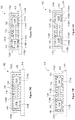
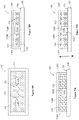
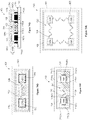
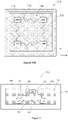
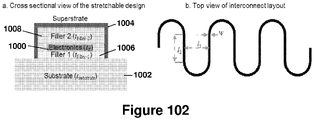
- the terms "embodiment”, “embodiment of the present invention” and “example according to embodiment” are used. Irrespective of these terms and expressions, only those examples that fall under the scope of appended claims, namely as shown in figures 10A-71 and 102-103B , form part of the invention.
- Useful containment fluids for use in containment chambers of electronic devices of the invention include lubricants, electrolytes and/or electronically resistive fluids.
- electronic systems of the invention comprise one or more electronic devices and/or device components provided in a freestanding and/or tethered configuration that decouples, or otherwise mechanically isolates, forces originating upon deformation, stretching or compression of a supporting substrate from the free standing or tethered device or device component, for example, so as to decrease the strain on the one or more electronic devices and/or device components caused by deformation, stretching or compression of the supporting substrate by a factor of 4 to 1000 times, and optionally greater than 10 times, relative to a comparable device having an equivalent device or device component provided in a configuration where it is directly bonded to the supporting substrate.
- the present disclosure provides systems combining elastomeric materials, fluid packaging and devices or device components having a free standing or tethered geometry enabling useful mechanical, electronic and/or optical properties, for example, when provided in compressed, elongated, stretched and/or deformed configurations.
- Devices of the present disclosure are useful for a wide range of applications including power generation, communications, sensing, photovoltaics, displays, generation of electromagnetic radiation, medical devices, conformable electronics, large area electronics, wearable electronics, electronic paper, and the like.
- the present disclosure provides an electronic system comprising: (i) a substrate; (ii) an electronic device or device component supported by the substrate; wherein the electronic device or device component is free standing or tethered to the substrate; and (iii) a containment chamber at least partially enclosing the electronic device or device component; wherein the containment chamber is at least partially filled with a containment fluid or a low modulus solid.
- the present disclosure provides an electronic system comprising: (i) an ultra low modulus layer; (ii) a substrate supported by the ultra low modulus layer; (iii) an electronic device or device component supported by the substrate; wherein the electronic device or device component is free standing or tethered to the substrate; and a containment chamber, comprising a plurality of side walls and a top wall, at least partially enclosing the electronic device or device component; wherein the containment chamber is at least partially filled with a containment fluid or a low modulus solid; wherein the substrate has a Young's modulus greater than a Young's modulus of the ultra low modulus layer and the top wall has a Young's modulus greater than a Young's modulus of the containment fluid or the low modulus solid such that a Young's modulus profile of the system spatially varies along an axis substantially perpendicular to the ultra low modulus layer.
- the free standing or tethered configuration of the electronic device or device component at least partially decouples motion and/or deformation of the substrate from the electronic device or device component.
- the free standing or tethered configuration of the electronic device or device component at least partially decouples forces generated by elongation, compression or deformation of the substrate from the electronic device or device component.
- an ultra low modulus layer is provided on one surface of a substrate.
- the ultra low modulus layer may improve adherence of the substrate to a surface.
- the ultra low modulus layer may comprise ecoflex ® .
- the ultra low modulus layer has a Young's modulus less than or or equal to 150 KPa, or less than or equal to 100 KPa, or less than or equal to 50 KPa.
- the ultra low modulus layer has a Young's modulus selected from the range of 50 KPa to 150 Pa, or 50 KPa to 100 KPa.
- a plurality of devices or device components may be enclosed within a single containment chamber and/or one or more devices or device components may be segregated into a compartmentalized or nested containment chamber.
- a device or device component in a compartmentalized or nested containment chamber may be isolated from bulk devices or device components to perform a solitary function, e.g. to communicate with exterior devices and/or to communicate or otherwise interface with an external environment.
- a geometry of a device component layout of certain aspects of the present disclosure allows different components to communicate or interface with one another and/or allows device components to interface with an external environment, e.g. a tissue interface.
- the device of the present disclosure is characterized by an integrated electronic device and/or electronic circuit comprising a plurality of integrated device components, wherein the integrated electronic device and/or electronic circuit is provided as a free standing or tethered structure enclosed within a single containment chamber.
- Devices of this aspect may communicate with other devices (e.g. in a device array) or with an external environment via a range of systems including wired communication and/or power systems, optical communication systems, radio frequency systems, and/or electrical interconnects which connect the device or circuit provided within the containment chamber to devices or device components external to the containment chamber.
- a single freestanding or tethered integrated circuit or chip is provided in a single containment chamber.
- an electronic device or device component is provided on a receiving surface of a substrate or on an intermediate structure provided between the substrate and the electronic device or device component.
- intermediate structures may be used to support devices and device components of the present disclosure including functional device component structures (e.g. electrodes, electrical insulators, dielectric structures, semiconductor structures, etc.) and structural device component structures (e.g., thin film structures, low modulus solids, relief features, particles, pedestals, membranes, etc.).
- a containment chamber comprises one or more enclosing structures positioned to at least partially surround an exterior portion of an electronic device or device component, optionally entirely enclosing the device or device component.
- the one or more enclosing structures of the containment chamber may be operationally coupled to a supporting surface or an intermediate structure provided between the supporting surface and the one or more enclosing structures, for example via lamination, chemical bonding and/or use of adhesives.
- the one or more enclosing structures of the containment chamber are not in physical contact with the electronic device or device component, and optionally for some embodiments all of the enclosing structures of the containment chamber are not in physical contact with the electronic device or device component.
- the enclosing structures may comprise one or more chamber walls or barrier structures each positioned at least 1000 microns from a side of the electronic device or device component, optionally for some embodiments at least 100 microns from a side of the electronic device or device component and optionally for some embodiments at least 10 microns from a side of the electronic device or device component.
- a barrier structure or chamber wall is provided that constrains movement of the device or device component, for example, by physically impeding or otherwise blocking movement of the device or component.
- a barrier structure or chamber wall that constrains movement of the device or device component in a direction parallel to a surface of the substrate, e.g., a supporting surface of the substrate directly or indirectly supporting the device or device component, to less than or equal to 1000 microns, optionally for some embodiments less than or equal to 100 microns and optionally for some embodiments less than or equal to 10 microns.
- a barrier structure or chamber wall that constrains movement of the device or device component in a direction orthogonal to a surface of the substrate, e.g., a supporting surface of the substrate directly or indirectly supporting the device or device component, to less than or equal to 1000 microns, optionally for some embodiments less than or equal to 100 microns and optionally for some embodiments less than or equal to 10 microns.
- one or more of the enclosing structures of the containment chamber are in physical contact with the device or device component.
- one or more of the enclosing structures of the containment chamber are not in physical contact with the device or device component, for example, when provided in an undeformed state.
- the containment chamber further comprises one or more recessed features provided in the substrate to accommodate the device or device component, for example, partially surrounding the electronic device or device component, where the one or more enclosing structures are provided to at least partially enclose the recessed features.
- the recessed features of the containment chamber may comprise one or more chamber walls or barrier structures each positioned at least 1000 microns from a side of the electronic device or device component, optionally for some embodiments at least 100 microns from a side of the electronic device or device component and optionally for some embodiments at least 10 microns from a side of the electronic device or device component.
- enclosing structures of the containment chamber is physically or chemically bonded (e.g., laminated, glued etc.) to the substrate or an intermediate structure provided between the substrate and the enclosing structure.
- a flip chip bonder may be used to bond commercial off the shelf (COTS) chips and/or bare dies with anisotropic conductive film or solder bumper at the chip/metal interconnect interface.
- COTS chips or bare die have a modulus from 10 GPa to 100 GPa, and a tensile rigidity from 0.01 GPa ⁇ mm 2 to 1000 GPa ⁇ mm 2 .
- a barrier structure limits or otherwise restricts movement of a free standing or tethered device or device component, for example limiting movement in a direction parallel and/or orthogonal to a supporting surface or receiving surface of a substrate.
- exemplary barrier structures include but are not limited to corrals, relief features, embossed features, indentations or depressions, inner chamber walls of the containment chamber, the containment chamber itself, bumpers and the like.
- barrier structures are positioned at least 1000 microns from a side of the electronic device or device component, optionally for some embodiments at least 100 microns from a side of the electronic device or device component and optionally for some embodiments at least 10 microns from a side of the electronic device or device component.
- barrier structures are positioned between 10 microns and 100 millimeters from a side of an electronic device or device component, or optionally between 100 microns and 5 millimeters from a side of an electronic device or device component, or optionally between 100 microns and 1 millimeter from a side of an electronic device or device component.
- barrier structures have a height, h, that is less than (e.g., 90% or less, optionally 60% or less) the full height of the containment chamber, such that a gap exists between the barrier structure and the top wall of the containment chamber.
- the present disclosure includes barrier structures that extend the entire height of a containment chamber. The height of a barrier structure is, however, at least sufficient to prevent a free standing device or device component from moving or otherwise extending over the barrier structure through a gap between the barrier structure and a top region of the containment chamber.
- the containment fluid or low modulus solid mitigates forces of friction acting on the electronic device or device component, for example by functioning as a lubricant, for example to decrease the force of friction between moving surfaces of the device or device component.
- the containment fluid or low modulus solid decreases friction so as to prevent degradation or failure of the device of device component, for example, by decreasing friction generated by rubbing or other physical interactions of surfaces of the device or device components.
- the containment fluid or low modulus solid functions as a lubricant to decrease friction generated by physical interaction of an electrical interconnect with itself and/or other electrical interconnects or other components of a device.
- the containment fluid or low modulus solid decreases the extent of friction between one or more devices or device components by more than a factor of 2, optionally for some embodiments by more than a factor of 10 and optionally for some embodiments by more than a factor of 100, relative to a configuration not having the containment fluid present.
- the electronic device or device component is a free standing or tethered fully formed chip or integrated circuit or a compound thereof. By utilizing the tethering, selective bonding and/or floating of the fluid containment strategy described herein, mechanical loads of the chips/integrated circuit to the elastomeric substrate are minimized.
- the electronic device or device component is a single crystalline semiconductor structure or electronic device, such as a single crystalline inorganic semiconductor structure or electronic device including high purity inorganic single crystalline materials and/or doped inorganic single crystalline materials.
- the electronic device or device component is a single crystalline semiconductor structure or device component, which may be operationally connected to at least one additional device component or structure selected from the group consisting of a conducting structure, a dielectric structure, an electrode, a cathode, an anode, and an additional semiconductor structure.
- the device or device component comprises single crystalline silicon, germanium, III-V semiconductor (e.g., GaAs) or diamond.
- the device or device component comprises a piezoelectric material, such as a piezoelectric semiconductor material.
- a single crystalline semiconductor electronic device or device component may, for example, comprise one or more electronic devices selected from the group consisting of a transistor, an electrochemical cell, a fuel cell, an integrated circuit, a solar cell, a laser, a light emitting diode, a nanoelectromechanical device, a microelectromechanical device, a photodiode, a P-N junction, a sensor, a memory device, an integrated circuit, a complementary logic circuit and arrays or combinations of these.
- the electronic device or device component has a thickness selected from the range of 10 nanometers to about 1000 microns, a width selected from the range of 100 nanometers to about 10 millimeter and a length selected from the range of 500 nanometers to about 10 millimeter. In an embodiment, the electronic device or device component has a thickness selected from the range of 10 nanometers to about 100 microns, a width selected from the range of 100 nanometers to about 1 millimeter and a length selected from the range of 1 micron to about 1 millimeter.
- the electronic device or device component has a thickness selected from the range of 500 nanometers to about 1000 microns, a width selected from the range of 1 micron to about 1 millimeter and a length selected from the range of 1 micron to about 1 millimeter.
- and electronic system may further comprise one or more additional electronic devices or device components at least partially enclosed by a containment chamber or at least partially enclosed by one or more additional containment chambers.
- the present disclosure includes devices comprising an array of electronic devices or device components, optionally electrically interconnected with each other, provided in the same or a plurality of containment chambers.
- a device of the present disclosure includes 5 or more devices or device components provided in a containment chamber, optionally 20 or more devices or device components provided in a containment chamber, and optionally 100 or more devices or device components provided in a containment chamber.
- the electronic device or device component is an electrical interconnect, such as a stretchable electrical interconnect.
- one or more stretchable electrical interconnects may be in electrical contact with an electronic device or device component, and at least a portion of the one or more stretchable electrical interconnects may be at least partially embedded in an enclosing structure of a containment chamber.
- an enclosing structure of a containment chamber such as a chamber wall or barrier structure, has a Young's modulus selected from the range of 1 KPa to 1 GPa, or selected from the range of 1KPa to 100 MPa, or selected from the range of 100 KPa to 1 MPa, or selected from the range of 250 KPa to 750 KPa.
- an enclosing structure of a containment chamber such as a chamber wall or barrier structure, has a Young's modulus that is less than or equal to 10MPa, optionally less than or equal to 1MPa, and, optionally less than or equal to 500KPa , optionally less than or equal to 200KPa.
- an enclosing structure of a containment chamber such as a chamber wall or barrier structure, has a flexural rigidity selected from the range of 10 -13 N ⁇ m to 10 5 N ⁇ m, or selected from the range of 10 -10 N ⁇ m to 10 3 N ⁇ m, or selected from the range of 10 -5 N ⁇ m to 10 N ⁇ m.
- an enclosing structure of a containment chamber has a permeability selected from the range of 1 fg ⁇ mm/m 2 ⁇ day to 1 g ⁇ mm/m 2 ⁇ day, or selected from the range of 1 ng ⁇ mm/m 2 ⁇ day to 0.5 g ⁇ mm/m 2 ⁇ day, or selected from the range of 1 mg ⁇ mm/m 2 ⁇ day to 0.1 g ⁇ mm/m 2 ⁇ day.
- an enclosing structure of a containment chamber has a coefficient of thermal expansion selected from the range of 10 -7 °C -1 to 10 -2 °C -1 , or selected from the range of 10 -5 °C -1 to 10 -1 °C -1 , or selected from the range of 10 -3 °C -1 to 10 °C -1 .
- the containment chamber comprises a material that is not permeable to the containment fluid.
- a wide range of polymers are useful for containment chambers of the present disclosure.
- the containment chamber may comprise a soft material capable of being physically stretched, such as an elastomer.
- a wide range of polymers are useful for containment chambers of the present disclosure.
- the containment chamber comprises a material selected form the group consisting of polydimethylsiloxane (PDMS), ecoflex ® , a silicone, a rubber, and a polymer.
- PDMS base may be used without the addition of any curing agent.
- the containment chamber has a height selected from the range of 10 ⁇ m to 10 cm, or selected from the range of 100 ⁇ m to 5 cm, or selected from the range of 1 mm to 0.5 cm, or selected from the range of 5 mm to 50 mm. In an embodiment, for example, the containment chamber has a height that is greater than or equal to 10 ⁇ m, and optionally for some embodiments greater than or equal to 100 ⁇ m, and optionally for some embodiments greater than or equal to 1000 ⁇ m.
- the containment chamber has lateral dimensions (e.g., length and width) selected from the range of 10 ⁇ m to 10 m, or selected from the range of 100 ⁇ m to 1 m, or selected from the range of 1 mm to 0.1 m, or selected from the range of 50 mm to 50 cm.
- the containment chamber has a lateral dimensions that are greater than or equal to 10 ⁇ m, and optionally for some embodiments greater than or equal to 100 ⁇ m, and optionally for some embodiments greater than or equal to 1000 ⁇ m.
- the containment chamber has a volume selected from the range of 1000 ⁇ m 3 to 10 m 3 , or selected from the range of 1 ⁇ m 3 to 1 m 3 , or selected from the range of 100 mm 3 to 100 cm 3 , or selected from the range of 10 mm 3 to 1 cm 3 .
- the containment chamber has a volume that is greater than or equal to 1000 ⁇ m 3 , and optionally for some embodiments greater than or equal to 1 ⁇ m 3 ⁇ m, and optionally for some embodiments greater than or equal to 100 mm 3 .
- the containment chamber is structurally self-supporting.
- the containment chamber is formed of two thin sheets of elastomer sealed along an outer border to form a pouch.
- the fluid container may have a form factor or geometry selected from a 3D square, a 3D rectangle, a sphere, a prism, or an arbitrary form, depending on the layout of the electronic device or device component contained in the chamber.
- At least 50% of the volume of containment chamber is occupied by a containment fluid or low modulus solid, and optionally at least 90% of the volume of the containment chamber is occupied by a containment fluid or low modulus solid, and optionally at least 98% of the volume of the containment chamber is occupied by a containment fluid or low modulus solid.
- the containment fluid occupies a percentage of the containment chamber selected from the range of 1% to 99.9%, or selected from the range of 1% to 99%, or selected from the range of 25% to 90%, or selected from the range of 50% to 90%, or selected from the range of 50% to 75%.
- at least 0.1% of the volume of the containment chamber is occupied by an electronic device or device component.
- the electronic device or device component occupies a percentage of the containment chamber selected from the range of 1% to 99%, or selected from the range of 2% to 50%, or selected from the range of 5% to 30%, or selected from the range of 5% to 15%.
- the containment fluid may, for example, be in physical contact with the electronic device or device component, for example, in physical contact with one or all external surfaces of the device or device component.
- Suitable containment fluids include but are not limited to functional fluids, such as liquids, colloids, gels, gases, lubricants, electrolytes, thermally functional fluids, fluids having a low viscosity, chemically inert fluids, fluids having a low ionic resistance, and fluids having a high ionic resistance (e.g., electrically insulating fluids).
- suitable lubricants include oils (natural or synthetic) and uncured silicone elastomer precursors, such as a polydimethylsiloxane precursor.
- suitable lubricants include silicones, halocarbons or fluorocarbons.
- Suitable electrolytes include non-aqueous lithium ion battery electrolytes, such as lithium salts, e.g. LiPF 6 , LiBF 4 or LiClO 4 in an organic solvent, such as ethylene carbonate, dimethyl carbonate, and diethyl carbonate.
- Suitable thermally functional fluids include heat transfer fluids, such as fluids having a finite heat transfer coefficient, in order to dissipate the heat generated from the electronic device components.
- the containment fluid is a material selected from the group consisting of a prepolymer, a solvent, a nonaqueous electrolyte, a silicone, a natural oil, a synthetic oil, a polyolefin and a fluorocarbon.
- one or more colloids may be added to the containment fluid to adjust the fluid's viscosity, optical properties, and/or electrical properties.
- the containment fluid is a thermally stable fluid.
- a containment fluid has a vapor pressure less than or equal to 760 Torr at 298 K. In an embodiment, a containment fluid has a viscosity selected from 0.1 cP to 10000 cP at 298 K, or selected from 10 cP to 500 cP at 298 K. In an embodiment, a containment fluid has an ionic resistance selected from 10 7 ohm ⁇ cm to infinity, or selected from 10 10 ohm ⁇ cm to 10 70 ohm ⁇ cm. In an embodiment, a containment fluid has an electronic resistance selected from 10 7 ohm ⁇ cm to infinity, or selected from 10 10 ohm ⁇ cm to 10 70 ohm ⁇ cm.
- a containment fluid has a vapor pressure selected from 100 Pa to 1 MPa, or selected from 500 Pa to 1 KPa. In an embodiment, a containment fluid has a vapor pressure selected from 10 -7 °C -1 to 10 -1 °C -1 , or selected from 10 -5 °C -1 to 10 -3 °C -1 . In an embodiment, a containment fluid has a surface tension or wetting property, depending on the materials used for constructing the liquid chamber, such that the fluid should has a contact angle below 90°, e.g., selected from 1 dyne/cm to 70 dynes/cm.
- a containment fluid has a high ionic conductivity, for example, so as to function as an electrolyte in an electrochemical system, such as an ionic conductivity greater than or equal to 0.001 S cm -1 , optionally greater than or equal to 0.01 S cm -1 , optionally greater than or equal to 0.005 S cm -1 .
- containment material properties that are important for the design of systems using containment chambers include, but are not limited to, viscosity, vapor pressure, porosity, elastic modulus, and temperature dependence of the elastic modulus.
- the elastic modulus of a material typically decreases with increasing temperature, and some electronic systems with containment chambers may be operated in variable temperature environments (e.g., in unregulated environments, in vivo, in electronic systems that generate heat as a waste product, etc).
- the low modulus solid is a material selected from the group consisting of a gel, a prepolymer, a silicone, a natural oil, a synthetic oil, a polyolefin or a fluorocarbon. In an embodiment, the low modulus solid has a Young's modulus less than or equal to 1 MPa, or less than or equal to 0.5 MPa, or less than or equal to 200 KPa.
- the low modulus solid has a Young's modulus selected from the range of 2 KPa to 1 MPa, or selected from the range of 2 KPa to 500 KPa, or selected from the range of 2 KPa to 200 KPa, or selected from the range of 2 KPa to 100 KPa, or selected from the range of 2 KPa to 50 KPa.
- the low modulus solid has a Young's modulus that is lower than a Young's modulus of the substrate or the top wall of the containment chamber by a factor of 100, or by a factor of 10, or by a factor of 5, or by a factor of 2.
- the low modulus solid has a Young's modulus that is lower than a Young's modulus of the substrate or the top wall of the containment chamber by a factor of 2 or more.
- a low modulus solid is selected from the group consisting of silbione, exoflex ® , solaris, PDMS and combinations of these.
- Silbione ® RT Gel 4717 A&B (Bluestar Silicones USA, East Brunswick, NJ) is a biocompatible, two-component silicone elastomer that crosslinks at room temperature to produce an elastic and resistant gel.
- Solaris ® is a low viscosity, clear and colorless liquid platinum cure silicone rubber distributed by Smooth-On, Inc., Easton, PA.
- low modulus solid materials that are typically cured or crosslinked by mixing with a curing agent may be used in the absence of any curing agent.
- a level of containment fluid or low modulus solid within a containment chamber is monitored, adjusted or controlled through one or more microfluidic channels operationally connecting one or more containment chambers to a reservoir of containment fluid or low modulus solid.
- the electronic device or device component is a free standing structure supported by or in physical contact with the substrate.
- free standing refers to a configuration wherein the device or device component is supported by, but not bonded to, a surface of the substrate or an intermediate substrate between the substrate and the device or device component.
- a free standing device or device component is capable of movement relative to a substrate surface, such as movement in a direction parallel and/or orthogonal to a substrate surface, such as a supporting or receiving surface of the substrate.
- a free standing structure may, however, undergo and/or participate in one or more associative interactions with the substrate or an intermediate structure provided between the substrate and the free standing structure, for example wherein the associative interaction is a dipole - dipole interaction or a Van der Waals interaction.
- associative interactions between electronic devices or device components and a supporting layer or substrate may cause stiction.
- a supporting layer or substrate may be textured, microstructured or nanostructured to reduce the contact area between the electronic device or device component and the supporting layer or substrate.
- an electronic device or device component such as a semiconductor device component, electrode and/or electrical interconnect
- a tethered structure supported by one or more tethering structures, such as relief features of a substrate or one or more relief features supported by the substrate.
- a tethered device or device component is capable of movement relative to a substrate surface, such as movement in a direction parallel and/or orthogonal to a substrate surface, such as a supporting or receiving surface of the substrate.
- a tethering structure such as one or more relief features, is bonded to the substrate or an intermediate structure provided between the tethering structure and the substrate.
- a tethering structure such as one or more relief features, is bonded to a portion, but not all, of a surface of the device or device component, such as 30% or less than the area of a bottom surface of the device or device component, optionally 10% or less than the area of a bottom surface of the device or device component, optionally 5% or less than the area of a bottom surface of the device or device component and optionally 1% or less than the area of a bottom surface of the device or device component.
- a tethering structure such as one or more relief features, is bonded to a portion, but not all, of a surface of the device or device component, such as between 1% and 30% of the area of a bottom surface of the device or device component, optionally between 1% and 10% of the area of a bottom surface of the device or device component and optionally between 1% and 5% of the area of a bottom surface of the device or device component.
- a surface of the device or device component such as between 1% and 30% of the area of a bottom surface of the device or device component, optionally between 1% and 10% of the area of a bottom surface of the device or device component and optionally between 1% and 5% of the area of a bottom surface of the device or device component.
- the tethered geometry of some embodiments is useful for mechanically isolating the device component from the substrate, for example, providing mechanical isolation from movement and/or deformation of the substrate.
- the tethered geometry of some embodiments is useful for holding the position of the device component, such as a semiconductor device component, electrode and/or electrical interconnect.
- the tethered geometry is useful for preventing tangling of the device component, such as tangling of a semiconductor device component, electrode and/or electrical interconnect, for example, during or after stretching and release cycles.
- an electronic device or device component is a tethered structure supported by array of 5 to 1000 relief features, and optionally for some examples an array of 5 to 100 relief features, and optionally for some examples an array of 5 to 20 relief features.
- an electronic device or device component is a tethered structure supported by at least 5 relief features, optionally for some embodiments supported by at least 10 relief features and optionally for some embodiments supported by at least 100 relief features.
- a wide range of tethering structures are useful in the present disclosure including one or more columns, pedestals, pillars, platforms, fingers, and the like.
- Tethering structures of the present disclosure may have a wide range of cross sectional shapes, such as circular, triangular, elliptical, rectangular, trapezoidal and any combination of these.
- a tethering structure of the present disclosure extends a length along a direction orthogonal or substantially orthogonal (e.g. within 20 degrees of absolute orthogonal orientation) relative to the substrate surface.
- the one or more relief features may comprise a pedestal, or the one or more relief features may comprise an array of at least 10 pedestals, optionally for some embodiments an array of at least 20 pedestals, optionally for some embodiments an array of at least 100 pedestals, and optionally for some embodiments an array of at least 1000 pedestals.
- the tethered structure is bonded to the one or more relief features comprising the tethering structure.
- relief features of the tethering structure comprise an elastomer, PDMS, ecoflex ® , or a silicone.
- the tether comprises a materials different than that of the device or device component.
- each of the one or more relief structures of the tethering structure independently extends a length selected over the range of 100 nm to 1 mm and independently has one or more cross sectional physical dimensions selected over the range of 100 nm to 10 mm, and optionally for some embodiments a length selected over the range of 100 nm to 1000 microns and independently has one or more cross sectional physical dimensions selected over the range of 100 nm to 1000 microns, and optionally for some embodiments a length selected over the range of 1 micron to 1000 microns and independently has one or more cross sectional physical dimensions selected over the range of 1 micron to 1000 microns, and optionally for some embodiments a length selected over the range of 10 micron to 1000 microns and independently has one or more cross sectional physical dimensions selected over the range of 10 micron to 1000 microns.
- a substrate is a flexible substrate or a stretchable substrate, such as a polymer substrate.
- the substrate may comprise one or more materials selected from the group consisting of an elastomer, PDMS, ecoflex ® , spandex, adhesive bandages and silicone.
- the substrate has a Young's modulus selected from the range of 1 KPa to 100 MPa, or selected from the range of 10 KPa to 10 MPa, or selected from the range of 20 KPa to 1 MPa.
- the substrate has a thickness selected from the range of 100 microns to 100 mm, or selected from the range of 100 microns to 50 mm, or selected from the range of 1 mm to 10 mm. In some embodiments, the substrate has a thickness less than or equal to 1000 mm, optionally less than or equal to 10 mm and optionally less than or equal to 1 mm. In some embodiments, a substrate may have spatially varying elastic properties within a plane of the substrate (e.g. shown by the coordinate axes of Fig. 70S ), which may for example provide progressive elasticity and/or strain limiting behavior to prevent overstretching that could damage or break device components or connections.
- a substrate may have an in-plane spatially varying Young's modulus that varies within a range of 1 KPa to 100 MPa, or within a range of 10 KPa to 10 MPa, or within a range of 20 KPa to 1 MPa.
- an electronic system may have spatially varying elastic properties out of the plane of the substrate (e.g. along an axis, such as axis N of Fig. 70N , that is substantially perpendicular to the plane of the substrate).
- an electronic system may have an out-of-plane spatially varying Young's modulus that varies within a range of 1 KPa to 10 GPa.
- an electronic system comprises one or more electrical interconnects in electrical contact with an electronic device or device component.
- the one or more electrical interconnects may establish electrical contact between the electronic device or device component and one or more additional electronic devices or device components.
- the electronic device or device component, the one or more additional electronic devices or device components and the one or more electrical interconnects may be provided in an island bridge geometry, where the electronic devices or device components comprise the islands and where the electrical interconnects comprise the bridges.
- the electronic device or device component, the one or more additional electronic devices or device components and the one or more electrical interconnects may be provided in a rigid island bridge geometry, where the electronic devices or device components comprise rigid islands and where the electrical interconnects comprise the flexible and/or stretchable bridges.
- an electronic system comprises an array of device components comprising rigid device islands, wherein the one or more electrical interconnects electrically connect adjacent rigid device islands.
- the one or more electrical interconnects may electrically connect a device component comprising a first rigid device island with a second device component comprising a second rigid device island.
- an electronic system comprises a plurality of device components, where each of the rigid device islands corresponds to a device component. Generally, the physical dimension and geometry of the islands correspond to those of the electronic device or device component.
- one or more electrical interconnects may be a stretchable electrical interconnect configured to provide elasticity, bendability, or both to the electronic system.
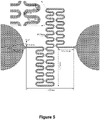
- at least a portion of the one or more stretchable electrical interconnects may have a bent, buckled, folded, curved or serpentine geometry.
- at least a portion of the one or more stretchable electrical interconnects may have a geometry that is in plane, out of plane, or both in plane and out of plane, relative to a plane defined by a support surface of the substrate, which may curved or substantially flat.
- at least a portion of the one or more electrical interconnects has an in plane serpentine geometry.
- an as-fabricated multilayer (polyimide(1.2 ⁇ m)/Cu(500 nm)/Au(100 nm)/polyimide(1.2 ⁇ m)/(Cu(600 nm)/polyimide(1.2 ⁇ m)/Al(600 nm)/polyimide(1.2 ⁇ m)) interconnect has an in-plane (or non-coplanar) serpentine geometry, or arc-shaped pop-up layout, with a lateral width of 50 ⁇ m - 100 ⁇ m.
- the Young's moduli of these materials are polyimide 2.5 GPa, Cu 120 GPa, Au 78 GPa, and Al 70 GPa.
- the free standing and/or tether device geometries of the present disclosure provide an efficient means of achieving mechanical isolation of the electronic device, or components thereof, from the substrate.
- This aspect of the present disclosure is beneficial, for example, for reducing the extent of strain on an electronic device component caused by movement or deformation of the substrate.
- a free standing or tethered electronic device or device component such as semiconductor device, chip, etc., is mechanically isolated from the substrate.
- the strain level of a device without mechanical isolation is 4 to 1000 times larger than the strain level of a device that is free standing or tethered according to the present disclosure.
- a plurality of tethers are used to support an electronic device, device component or interconnect.
- the number of tethers will vary depending on the number of devices or device components and the sophistication of the circuit layout.
- the function of the tethers is to substantially maintain the position of an electronic device or device component or interconnect to prevent physical or electrical interaction (e.g., tangling) during stretching and releasing.
- a tether may be cylindrical, conical, rectangular, square, or irregularly shaped.
- a tether typically has a height of about 100 ⁇ m, a Young's modulus of about 1 KPa to 1 GPa and a flexural rigidity of about 10 -13 N ⁇ m to 10 5 N ⁇ m.
- tethers and the substrate are mounted in an etched Si wafer as a single, unitary piece and standard procedures are used to laminate multilayered metal serpentine interconnects onto the tether's surface by UV ozone activation and SiO 2 bonding.
- tethers are used to prevent drifting of the rigid device islands and stretchable interconnects are used to prevent entangling of the interconnects during repetitive stretching and releasing processes.
- devices or device components such as COTS chips as received and after mechanical decapsulation, bare dies and in-house fabricated thin film sensors/devices, are embedded in enclosing structures of a containment chamber.
- interconnects are embedded in enclosing structures (e.g. walls) of a containment chamber.
- interconnects are single or multilayered with vias, and conducting metal traces may be insulated, for example, by dielectric polymers, such as polyimide or parylene C or SU8.
- At least a portion of the one or more stretchable electrical interconnects comprises a plurality of electrically conductive structures each independently having a primary unit cell shape comprising a plurality of spatially offset and opposing segments, wherein the conductive structures are connected in a sequence characterized by a secondary shape comprising at least one pair of spatially offset and opposing regions formed from the sequence of electrically conductive structures, where the sequence of conductive structures is capable of undergoing deformation thereby providing stretchability of the stretchable electronic device.
- at least a portion of the one or more electrical interconnects comprising the sequence of electrically conductive structures provides an overall self-similar geometry for the stretchable electrical interconnect.
- the sequence of conductive structures may comprise a monolithic structure and/or the sequence of conductive structures may comprise a wire.
- the secondary shape is similar to the primary unit cell shape but has a different scale.
- the secondary shape may be similar to the primary unit cell shape but at least 10 times larger than the primary unit cell shape, or at least 25 times larger than the primary unit cell shape, or at least 50 times larger than the primary unit cell shape.
- the sequence of electrically conductive structures is further characterized by a tertiary shape comprising at least one pair of spatially offset and opposing regions formed from a repeating series of the electrically conductive structures comprising the secondary shape.
- the spatially offset and opposing segments of the primary unit cell shape comprise convex and concave regions.
- the unit cell shape may be a serpentine shape.
- an electronic system comprises a transistor, an electrochemical cell, a fuel cell, an integrated circuit, a solar cell, a laser, a light emitting diode, a nanoelectromechanical device, a microelectromechanical device, a photodiode, a P-N junction, a sensor, a memory device, a complementary logic circuit or an array of any of these.
- an electrochemical cell comprises: a substrate; a positive electrode forming part of a first electronic device component supported by the substrate; wherein the first electronic device component is free standing or tethered to the substrate; a negative electrode forming part of a second electronic device component supported by the substrate; wherein the second electronic device component is free standing or tethered to the substrate; and a containment chamber at least partially enclosing the positive electrode, the negative electrode or both the positive electrode and the negative electrode; wherein the containment chamber is at least partially filled with an electrolyte fluid allowing for ionic transport between the positive electrode and the negative electrode.
- an electrochemical cell further comprises one or more stretchable electrical interconnects in electrical contact with the positive electrode, the negative electrode or both the positive electrode and the negative electrode.
- each of the one or more stretchable electrical interconnects may independently have a self-similar serpentine geometry.
- An array comprising a plurality of electronically interconnected electrochemical cells is also described.
- a method of making an electronic system comprises: providing a substrate; providing an electronic device or device component that is free standing or tethered to the substrate in a containment chamber on the substrate such that the containment chamber at least partially encloses the electronic device or device component; and at least partially filling the containment chamber with a containment fluid or low modulus solid.
- a method of using an electronic system comprises providing an electronic system comprising: a substrate; an electronic device or device component supported by the substrate; wherein the electronic device or device component is free standing or tethered to the substrate; and a containment chamber at least partially enclosing the electronic device or device component; wherein the containment chamber is at least partially filled with a containment fluid or low modulus solid; and applying an electric current to the electronic system.
- Stretchable and flexible electronics having the configuration described herein may be used for a variety of device applications.
- the use of free floating interconnects in a fluid allows the interconnects to freely buckle and deform, which greatly increases the stretchability and flexibility of electronic devices in various fields of use.
- a free floating interconnect may be used in a lithium ion battery having an array of active material islands connected by wavy interconnects. The islands may be firmly bonded on the substrate, while the wavy interconnects can freely buckle and deform.
- Stretchable interconnects may also be used in optical systems, such as light emitting diode and photo diode arrays formed as rigid island arrays. Rigid island sensor arrays be also be used to monitor temperature, hydration, pressure, strain and/or biological parameters. For example, by design specific functional circuits, electrophysiological parameters of humans and/or animals can be measured, such as skin temperature, electrocardiograms, electromyograms, electroencephalograms, electrooculograms.
- the present disclosure also provides methods of making and using electronic systems including stretchable and/or deformable electronic devices and device arrays. These methods are explicitly intended to be commensurate in scope with the entirety of the description and may be practiced with all devices and embodiments disclosed herein.
- “Functional layer” refers to a layer that imparts some functionality to the device.
- the functional layer may contain semiconductor components.
- the functional layer may comprise multiple layers, such as multiple semiconductor layers separated by support layers.
- the functional layer may comprise a plurality of patterned elements, such as interconnects running between or below electrodes or islands.
- the functional layer may be homogeneous or may have one or more properties or materials that are inhomogeneous.
- “Inhomogeneous property” refers to a physical parameter that can spatially vary, thereby effecting the position of the neutral mechanical plane within a multilayer device.
- Structural layer refers to a layer that imparts structural functionality, for example by supporting and/or encapsulating and/or partitioning device components.
- semiconductor refers to any material that is an insulator at a very low temperature, but which has an appreciable electrical conductivity at a temperature of about 300 Kelvin. In the present description, use of the term semiconductor is intended to be consistent with use of this term in the art of microelectronics and electronic devices.
- Useful semiconductors include those comprising elemental semiconductors, such as silicon, germanium and diamond, and compound semiconductors, such as group IV compound semiconductors such as SiC and SiGe, group III-V semiconductors such as AlSb, AlAs, AIN, AIP, BN, BP, BAs, GaSb, GaAs, GaN, GaP, InSb, InAs, InN, and InP, group III-V ternary semiconductors such as Al x Ga 1-x As, group II-VI semiconductors such as CsSe, CdS, CdTe, ZnO, ZnSe, ZnS, and ZnTe, group I-VII semiconductors such as CuCI, group IV - VI semiconductors such as PbS, PbTe, and SnS, layer semiconductors such as PbI 2 , MoS 2 , and GaSe, and oxide semiconductors such as CuO and Cu 2 O.
- group IV compound semiconductors such as SiC and SiGe
- semiconductor includes intrinsic semiconductors and extrinsic semiconductors that are doped with one or more selected materials, including semiconductors having p-type doping materials and n-type doping materials, to provide beneficial electronic properties useful for a given application or device.
- semiconductor includes composite materials comprising a mixture of semiconductors and/or dopants.
- Specific semiconductor materials useful for some embodiments include, but are not limited to, Si, Ge, Se, diamond, fullerenes, SiC, SiGe, SiO, SiO 2 , SiN, AlSb, AlAs, Alln, AIN, AIP, AIS, BN, BP, BAs, As 2 S 3 , GaSb, GaAs, GaN, GaP, GaSe, InSb, InAs, InN, InP, CsSe, CdS, CdSe, CdTe, Cd 3 P 2 , Cd 3 As 2 , Cd 3 Sb 2 , ZnO, ZnSe, ZnS, ZnTe, Zn 3 P 2 , Zn 3 As 2 , Zn 3 Sb 2 , ZnSiP 2 , CuCl, PbS, PbSe, PbTe, FeO, FeS 2 , NiO, EuO, EuS, PtSi, TlBr, CrBr 3
- Impurities of semiconductor materials are atoms, elements, ions and/or molecules other than the semiconductor material(s) themselves or any dopants provided to the semiconductor material. Impurities are undesirable materials present in semiconductor materials which may negatively impact the electronic properties of semiconductor materials, and include but are not limited to oxygen, carbon, and metals including heavy metals. Heavy metal impurities include, but are not limited to, the group of elements between copper and lead on the periodic table, calcium, sodium, and all ions, compounds and/or complexes thereof.
- a “semiconductor component” broadly refers to any semiconductor material, composition or structure, and expressly includes high quality single crystalline and polycrystalline semiconductors, semiconductor materials fabricated via high temperature processing, doped semiconductor materials, inorganic semiconductors, and composite semiconductor materials.
- a “component” is used broadly to refer to an individual part of a device.
- An “interconnect” is one example of a component, and refers to an electrically conducting structure capable of establishing an electrical connection with another component or between components. In particular, an interconnect may establish electrical contact between components that are separate. Depending on the desired device specifications, operation, and application, an interconnect is made from a suitable material. Suitable conductive materials include semiconductors.
- TFTs thin film transistors
- Other components include, but are not limited to, thin film transistors (TFTs), transistors, electrodes, integrated circuits, circuit elements, control elements, microprocessors, transducers, islands, bridges and combinations thereof.
- Components may be connected to one or more contact pads as known in the art, such as by metal evaporation, wire bonding, and application of solids or conductive pastes, for example.
- NMP Neuronal mechanical plane
- the NMP is less susceptible to bending stress than other planes of the device that lie at more extreme positions along the vertical, h, axis of the device and/or within more bendable layers of the device.
- the position of the NMP is determined by both the thickness of the device and the materials forming the layer(s) of the device.
- Coupled refers to the relative position of two or more objects, planes or surfaces, for example a surface such as a neutral mechanical plane that is positioned within or is adjacent to a layer, such as a functional layer, substrate layer, or other layer.
- a neutral mechanical plane is positioned to correspond to the most strain-sensitive layer or material within the layer.
- Proximate refers to the relative position of two or more objects, planes or surfaces, for example a neutral mechanical plane that closely follows the position of a layer, such as a functional layer, substrate layer, or other layer while still providing desired conformability without an adverse impact on the strain-sensitive material physical properties.
- Stress-sensitive refers to a material that fractures or is otherwise impaired in response to a relatively low level of strain. In general, a layer having a high strain sensitivity, and consequently being prone to being the first layer to fracture, is located in the functional layer, such as a functional layer containing a relatively brittle semiconductor or other strain-sensitive device element.
- a neutral mechanical plane that is proximate to a layer need not be constrained within that layer, but may be positioned proximate or sufficiently near to provide a functional benefit of reducing the strain on the strain-sensitive device element.
- direct and indirect describe the actions or physical positions of one component relative to another component, or one device relative to another device.
- a component that "directly” acts upon or touches another component does so without intervention from an intermediary.
- a component that "indirectly” acts upon or touches another component does so through an intermediary (e.g., a third component).
- Electrode generally refers to a device incorporating a plurality of components, and includes large area electronics, printed wire boards, integrated circuits, component arrays, electrophysiological and/or biological and/or chemical sensors, and physical sensors (e.g., temperature, acceleration, etc.).
- Sensing refers to detecting the presence, absence, amount, magnitude or intensity of a physical and/or chemical property.
- Useful electronic device components for sensing include, but are not limited to electrode elements, chemical or biological sensor elements, pH sensors, accelerometers, temperature sensors and capacitive sensors.
- Island refers to a relatively rigid component of an electronic device comprising a plurality of semiconductor components.
- Bridge refers to structures interconnecting two or more islands or one island to another component.
- the present disclosure includes electronic devices having bridge structures comprising electrical interconnects, such as stretchable electrical interconnects provided between and in electrical contact with semiconductor device components.
- Encapsulate refers to the orientation of one structure such that it is at least partially, and in some cases completely, surrounded by one or more other structures.
- Partially encapsulated refers to the orientation of one structure such that it is partially surrounded by one or more other structures, for example, wherein 30%, or optionally 50% or optionally 90%, of the external surfaces of the structure is surrounded by one or more structures.
- “Completely encapsulated” refers to the orientation of one structure such that it is completely surrounded by one or more other structures.
- Contiguous refers to materials or layers that are touching or connected throughout in an unbroken sequence. In one embodiment, a contiguous layer of a device has not been manipulated to remove a substantial portion (e.g., 10% or more) of the originally provided material or layer.
- Active circuit and “active circuitry” refer to one or more components configured for performing a specific function.
- Useful active circuits include, but are not limited to, amplifier circuits, multiplexing circuits, current limiting circuits, integrated circuits, impedance matching circuits, wireless power harvesting circuits, wireless data transmission circuits, transistors and transistor arrays.
- Substrate refers to a material, layer or other structure having a surface, such as a receiving surface or supporting surface, that is capable of supporting one or more components or electronic devices.
- a component that is "bonded” to the substrate refers to a component that is in physical contact with the substrate and unable to substantially move relative to the substrate surface to which it is bonded. Unbonded components or portions of a component, in contrast, are capable of substantial movement relative to the substrate.
- the present disclosure includes electronic devices having one or more free standing semiconductor device components supported by a substrate, optionally in physical contact with the substrate or in physical contact with one or more intermediate structures supported by the substrate.
- the present disclosure includes electronic devices having one or more tethered semiconductor device components supported by, or optionally bonded to, one or more structures, such as a pedestal or array of pedestals, independently connecting the semiconductor device components to the substrate.
- a "containment chamber” is a structure that encloses or encapsulates an electronic device or device component.
- a containment chamber is shaped as a rectanglular or square structure comprising a substrate or bottom wall, a lid or top wall, and a plurality of walls to support the top wall.
- a containment chamber is shaped as a sphere, half sphere, pyramid, or an irregular three-dimensional structure.
- a containment chamber is self-supporting, such that the containment chamber retains its shape when hollow or partially hollow.
- the containment chamber is a fluid containment chamber.
- a containment chamber is a low modulus solid containment chamber.
- Free standing refers to a configuration wherein a device or device component is supported by, but not bonded to, a substrate or intermediate structure provided between the device or device component and the substrate.
- a substrate is able to move relative to a free standing device or component supported by the substrate.
- a free standing device or component is able to move relative to a substrate supporting the free standing device or component.
- a free standing configuration of a device or device component decouples movement and/or deformation of the substrate from the device or device component.
- a free standing configuration of a device or device component decouples forces generated by elongation, compression or deformation of the substrate from the device or device component.
- a free standing device or component is characterized by undergoing an associative interaction with a substrate surface or intermediate structure provided thereon, such as a Van der Waals interaction, dipole-dipole interaction or other non-covalent associative interaction.
- a free standing device or component is not covalently bonded to the supporting surface of a substrate.
- Tethered refers to a configuration wherein a device or component is connected to a substrate via one or more tethering structures, such as a pedestal or array of pedestals.
- a substrate is able to move relative to a tethered device or component supported by the substrate.
- a tethered device or component is able to move relative to a substrate supporting the tethered device or component.
- a tethered configuration of a device or device component decouples movement and/or deformation of the substrate from the device or device component.
- a tethered configuration of a device or device component decouples forces generated by elongation, compression or deformation of the substrate from the device or device component. In some embodiments, less than 20%, optionally less than 5%, and optionally less than 1%, of the area of a bottom surface of a device or component is covalently bonded to the tethering structure connected to the substrate.
- Nanostructured surface and “microstructured surface” refer to device surfaces having nanometer-sized and micrometer-sized relief features, respectively.
- the relief features extend a length, x, from a substantially contiguous plane of the device surface.
- Quantitative descriptors of a structured surface include surface roughness parameters, such as R max , R a , and normalized roughness (R a /R max ), all of which may be measured by atomic force microscopy (AFM).
- R max is the maximum height between a highest peak to a lowest valley.
- R a is the center-line-mean roughness, which is the average of an absolute value of a deviation from a center line of a roughness curve to the roughness curve.
- the surface of a substrate or layer is "substantially smooth", for the purposes of this disclosure, if the surface has an R a value of 100 nm or less. If the surface has an R a value greater than 100 nm, the surface is considered to be a "structured surface" for purposes of this disclosure.
- Dielectric refers to a non-conducting or insulating material.
- an inorganic dielectric comprises a dielectric material substantially free of carbon.
- Specific examples of inorganic dielectric materials include, but are not limited to, silicon nitride, silicon dioxide and non-conjugated polymers.
- Polymer refers to a macromolecule composed of repeating structural units connected by covalent chemical bonds or the polymerization product of one or more monomers, often characterized by a high molecular weight.
- the term polymer includes homopolymers, or polymers consisting essentially of a single repeating monomer subunit.
- polymer also includes copolymers, or polymers consisting essentially of two or more monomer subunits, such as random, block, alternating, segmented, grafted, tapered and other copolymers.
- Useful polymers include organic polymers or inorganic polymers that may be in amorphous, semi-amorphous, crystalline or partially crystalline states. Crosslinked polymers having linked monomer chains are particularly useful for some applications.
- Polymers useable in the methods, devices and components include, but are not limited to, plastics, elastomers, thermoplastic elastomers, elastoplastics, thermoplastics and acrylates.
- Exemplary polymers include, but are not limited to, acetal polymers, biodegradable polymers, cellulosic polymers, fluoropolymers, nylons, polyacrylonitrile polymers, polyamide-imide polymers, polyimides, polyarylates, polybenzimidazole, polybutylene, polycarbonate, polyesters, polyetherimide, polyethylene, polyethylene copolymers and modified polyethylenes, polyketones, poly(methyl methacrylate), polymethylpentene, polyphenylene oxides and polyphenylene sulfides, polyphthalamide, polypropylene, polyurethanes, styrenic resins, sulfone-based resins, vinyl-based resins, rubber (including natural rubber, styrene-butadiene,
- Elastomeric stamp and “elastomeric transfer device” are used interchangeably and refer to an elastomeric material having a surface that can receive as well as transfer a material.
- Exemplary elastomeric transfer devices include stamps, molds and masks. The transfer device affects and/or facilitates material transfer from a donor material to a receiver material.
- Elastomer refers to a polymeric material which can be stretched or deformed and returned to its original shape without substantial permanent deformation. Elastomers commonly undergo substantially elastic deformations. Useful elastomers include those comprising polymers, copolymers, composite materials or mixtures of polymers and copolymers. Elastomeric layer refers to a layer comprising at least one elastomer. Elastomeric layers may also include dopants and other non-elastomeric materials.
- elastomers include, but are not limited to, thermoplastic elastomers, styrenic materials, olefinic materials, polyolefin, polyurethane thermoplastic elastomers, polyamides, synthetic rubbers, PDMS, polybutadiene, polyisobutylene, poly(styrene-butadiene-styrene), polyurethanes, polychloroprene and silicones.
- an elastomeric stamp comprises an elastomer.
- Exemplary elastomers include, but are not limited to silicon containing polymers such as polysiloxanes including poly(dimethyl siloxane) (i.e.
- PDMS and h-PDMS poly(methyl siloxane), partially alkylated poly(methyl siloxane), poly(alkyl methyl siloxane) and poly(phenyl methyl siloxane), silicon modified elastomers, thermoplastic elastomers, styrenic materials, olefinic materials, polyolefin, polyurethane thermoplastic elastomers, polyamides, synthetic rubbers, polyisobutylene, poly(styrene-butadienestyrene), polyurethanes, polychloroprene and silicones.
- a polymer is an elastomer.
- Conformable refers to a device, material or substrate which has a bending stiffness that is sufficiently low to allow the device, material or substrate to adopt any desired contour profile, for example a contour profile allowing for conformal contact with a surface having a pattern of relief features.
- Conformal contact refers to contact established between a device and a receiving surface.
- conformal contact involves a macroscopic adaptation of one or more surfaces (e.g., contact surfaces) of a device to the overall shape of a surface.
- conformal contact involves a microscopic adaptation of one or more surfaces (e.g., contact surfaces) of a device to a surface resulting in an intimate contact substantially free of voids.
- conformal contact involves adaptation of a contact surface(s) of the device to a receiving surface(s) such that intimate contact is achieved, for example, wherein less than 20% of the surface area of a contact surface of the device does not physically contact the receiving surface, or optionally less than 10% of a contact surface of the device does not physically contact the receiving surface, or optionally less than 5% of a contact surface of the device does not physically contact the receiving surface.
- High Young's modulus (or “high modulus”) and low Young's modulus (or “low modulus”) are relative descriptors of the magnitude of Young's modulus in a given material, layer or device.
- a high Young's modulus is larger than a low Young's modulus, preferably about 10 times larger for some applications, more preferably about 100 times larger for other applications, and even more preferably about 1000 times larger for yet other applications.
- a low modulus layer has a Young's modulus less than 100 MPa, optionally less than 10 MPa, and optionally a Young's modulus selected from the range of 0.1 MPa to 50 MPa.
- a high modulus layer has a Young's modulus greater than 100 MPa, optionally greater than 10 GPa, and optionally a Young's modulus selected from the range of 1 GPa to 100 GPa.
- “Inhomogeneous Young's modulus” refers to a material having a Young's modulus that spatially varies (e.g., changes with surface location).
- a material having an inhomogeneous Young's modulus may optionally be described in terms of a “bulk” or “average” Young's modulus for the entire material.
- Low modulus refers to materials having a Young's modulus less than or equal to 1 MPa, less than or equal to 0.5 MPa, or less than or equal to 200 KPa.
- a low modulus material may have a Young's modulus selected from the range of 1 MPa to 1 KPa, or 0.5 MPa to 1 KPa, or 200 KPa to 1 KPa, 100 KPa to 1 KPa, or 50 KPa to 1 KPa.
- Ultra low modulus refers to materials having a Young's modulus less than or equal to 150 KPa, less than or equal to 100 KPa or less than or equal to 50 KPa.
- Bending stiffness is a mechanical property of a material, device or layer describing the resistance of the material, device or layer to an applied bending moment. Generally, bending stiffness is defined as the product of the modulus and area moment of inertia of the material, device or layer. A material having an inhomogeneous bending stiffness may optionally be described in terms of a “bulk” or “average” bending stiffness for the entire layer of material.
- Example 1 Stretchable batteries with self-similar serpentine interconnects and integrated wireless recharging systems
- Stretchability represents a more challenging type of mechanics, in which the systems must accommodate large strain deformation (»1%), typically of arbitrary form, including not only bending, but also twisting, stretching, compressing and others, and thickness is typically not a critical factor.
- Stretchable supercapacitors using buckled thin films of CNTs 19 or CNT-soaked fibrous textiles 20 , and stretchable non-rechargeable zinc carbon batteries based on conductive fabrics 21,22 represent two examples.
- the devices of this example exploit pouch cells in which arrays of small-scale storage components are connected by conducting frameworks with extraordinary stretchable characteristics.
- a schematic illustration of the system, an exploded view of the multilayer construction of a unit cell, and a representation of the 'self-similar' interconnect geometries appear in Fig. 1a,b , c , and Fig. 5 in Supplementary Information (SI).
- the current collectors consist of photolithographically patterned circular disks of aluminum (600 nm) and copper (600 nm). Layers of polyimide (PI; 1.2 ⁇ m) encapsulate interconnecting traces between these disks in a way that places the metals close to the neutral mechanical plane ( Fig. 1d and 1e , left panel).
- Thin (0.25 mm), low modulus (60 KPa) sheets of silicone elastomer form top and bottom substrates that support these structures ( Fig. 1d and 1e , middle panel) and other components of the batteries.
- the overall construct consists of a square array of 100 electrode disks, electrically connected in parallel. Molded pads of slurries based on LiCoO 2 and Li 4 Ti 5 O 12 serve as active materials at the cathode and anode 23,24 , respectively ( Fig. 1d and 1e , right panel, and Fig. 6 ).
- the two sheets laminate together in a way that involves spatial offsets between the active materials to avoid electrical shortage between them and to eliminate the need for a separator.
- a spacer made of the same silicone elastomer and applied around the periphery of the system, prevents direct contact of the top and bottom sheets.
- a gel electrolyte injected into the gap provides media for ionic transport.
- Thin encapsulating layers of an acryloxy perfluoropolyether elastomer bonded to the outer surfaces help to prevent moisture from diffusing into the battery and solvents in the gel from leaking out 25 .
- Long term operation requires more sophisticated packages consisting, for example, of buckled bilayer sheets of aluminum/polyimide that bond to the outer surfaces of the battery ( Fig. 7 ). The materials and fabrication details appear in the Methods section.
- the devices must accommodate two competing design goals: (1) achieving high areal capacity, which requires large coverage of the active regions, and (2) affording high mechanical stretchability, which requires large distances between these regions.
- Strategic features of relief on the elastomer substrates provide a partial solution to this challenge, as demonstrated recently in photovoltaic modules 26,27 .
- a disadvantage is that levels of stretchability beyond -30% can be difficult to achieve without sacrificing coverage.
- a conventional serpentine consists of circular arcs connected by straight lines.
- Fig. 8 For the entire range of tensile strains examined, from 0% to 300%, the configurations predicted by FEA agree remarkably well with optical images collected during the experiments, as shown in Fig. 2 .
- the trace consists of three columns of serpentine wires connected by two horizontal straight lines. We refer to the construct that corresponds to the 'short' wavelength serpentine within each column as the 1st level; the 2nd level corresponds to the large-scale serpentine shape, with 'long' wavelength.
- Fig. 8 For the symmetric buckling mode ( Fig.
- the left and right columns undergo mainly an overall bending deformation along the vertical direction, resulting in the collective upward motion of the entire middle column of serpentine wires.
- the serpentines in the left and right columns mainly undergo an overall twisting deformation along the vertical direction.
- the two ends of the middle serpentine move in opposite directions (i.e. one moves up, and the other moves down).
- the 2nd level gradually "unravels” via bending and twisting as the applied strain increases from 0.08% to -150%, during which there is essentially no further deformation in the 1st level.
- the motions in the 1st level start when the 2nd level is almost fully extended, corresponding to an applied strain of -150% in this case.
- the strain in the materials begins to increase rapidly, thereby defining the practical limit in stretchability.
- Electrochemical and mechanical behavior of the battery After choosing a set of dimensions that offers excellent system level stretchability, with good areal capacity density, and modest interconnect resistance, we observed the best electrical performance for layouts in which the diameters of the disks for the cathode and anode are 2.20 mm and 1.58 mm, respectively, and the offset distances are 0.51 mm. This configuration corresponds to an areal coverage of 33% for the cathode, 17% for the anode, and 50% for the entire battery (in the undeformed configuration) ( Fig. 13 ).
- the interconnects have thicknesses of 600 nm and widths of 50 ⁇ m. For these parameters, the resistance between adjacent disks is 24 ⁇ , and that between the connection lead and the most distant disk is 45 ⁇ .
- the leads for external connection are thin and narrow to avoid strain at the interface, and facilitate connection to flexible (but not stretchable) cables that connect to external characterization equipment.
- the gel electrolyte combines the flow properties of viscous liquids with the cohesive properties of a solid, thereby allowing it to accommodate large strains while maintaining ionic conduction pathways.
- Electrochemical properties of the battery electrodes without and with 300% uniaxial strain appear in Fig. 3a .
- the results show two well defined plateaus at around 2.35 V corresponding to potentials of Co 3+ / 4+ and Ti 4+ / 3+ redox couples 29 .
- the thickness of the LiCoO 2 (specific capacity 145 mAh/g) at each unit is -120 ⁇ m, corresponding to a mass of -95 mg, and thus areal capacity density of 1.1 mAh/cm 2 at a charge/discharge rate of C/2.
- the mass of Li 4 Ti 5 O 12 (specific capacity 160 mAh/g) is -90 mg, which corresponds to 5%-10% more anode capacity than cathode 30 .
- Slurry disks with thicknesses larger than those described here yield improved areal capacity density, but with reduced rate capability due to the concentration polarization in the disks 31,32 .
- the output resistance of the battery is -70 ⁇ ( Fig. 14 ), and the leakage current is 1-10 ⁇ A.
- the leakage current arises from three main sources: (i) the reverse biased Schottky diode, (ii) internal ohmic self-discharge between the slurry disks at the anode and cathode and (iii) Faradaic effects, including shuttle reactions associated with impurities in the slurry materials, residual oxygen and/or moisture.
- Figure 15 show that use of separators and enhanced packaging schemes can reduce the capacity loss from 161 ⁇ A ⁇ h to 23 ⁇ A ⁇ h in 44 hours.
- Figure 3b shows the coulombic efficiency (red) and cycling performance (black) of the encapsulated battery.
- the coulombic efficiency rises from -60% for the first cycle to over 90% after three cycles.
- the initial loss can be attributed to the formation cycle, during which a solid-electrolyte-interphase forms, and lithium is consumed in side reactions with impurities in the electrolyte.
- the gradually degrading capacity retention results rather from the cycle fade ( Fig.
- FIG. 16 shows the output power of the battery, when connected to a resistor (2020 ⁇ ), during biaxial stretching and releasing.
- the slight decrease in output power with strain likely results from increased internal resistances that arise from the significantly increased separations between slurry disks with strains at these large levels.
- the battery provides sufficient power to operate commercial light emitting diodes (LEDs), with turn on voltages of 1.7 V ( Fig. 18 ), as shown in Fig. 3d .
- the battery could be stretched for up to 300% ( Fig. 3e ), folded ( Fig. 3f ), twisted ( Fig. 3g ), and compliant when mounted on human skin ( Fig. 3h ) without noticeable dimming of the LED.
- FEA demonstrates that the effective modulus (66.8 KPa) of the full composite structure of the battery is only slightly higher than the modulus (60.0 KPa) of substrate materials (Ecoflex).
- the battery is not only stretchable but also exceptionally soft and compliant.
- the modulus is, in fact, lower than that of the human epidermis (140-600 KPa) 8 , thereby offering the potential for integration onto the skin and biological tissues, without significant mechanical loading.
- Stretchable wireless charging system for the battery In many practical cases such as embedded devices, the ability to charge the battery without establishing physical connections to external supplies can be valuable. Even in systems where the charging terminals are accessible, such as in skin-mounted devices, there is value in wireless charging, simply because the process of establishing physical contacts can be mechanically destructive to thin, stretchable devices (or to the underlying soft tissue). Approaches that involve physical contact also have the danger of electrical shock to surrounding materials (e.g. the skin itself).
- the versatility of the materials and designs enable integration of wireless power transmission systems, monolithically with the battery itself. The design and an actual device appear in Figs. 4a, b , respectively.
- a secondary coil couples the electromagnetic flux from a primary coil, and a Schottky diode provides rectification.
- the Schottky diode (packaged in epoxy, with a modulus of -4.0 GPa) has a modulus of more than 4 orders of magnitude larger than that of the substrate (made of Ecoflex, modulus -60 KPa), but its size (length 0.62 mm, width 0.32 mm, and height 0.31 mm) is only a few percent (-2%) of the overall size (-30 mm x -20 mm) of the wireless system.
- the capacitor smooths oscillations in the output voltages; its small size and thickness enable natural integration into the overall system.
- the coil and rectifier add a series resistance of 2.3 K ⁇ ( Fig. 22 ), which functions as a parallel resistance with the secondary coil, shunting away current from the battery.
- the resistance of the serpentine secondary coil is 1.92 k ⁇ /m; a coil with similar overall geometry but without the serpentine shape is calculated to be 1.22 k ⁇ /m. Improving the efficiency of the charging system can be achieved by increasing the width and thickness of the wires, but at the expense of reduced stretchability and increased modulus. Specific application requirements will define the right tradeoffs. In this case, the output power from the primary coil was 187 mW.
- the capacitor has a capacitance of 1.7 nF, in a structure that uses a 1.2 ⁇ m thick layer of polyimide as the dielectric, with a layer of thiol molecules on the bottom Au electrodes to enhance adhesion.
- Figure 4c shows the input and output of this wireless power transmission device.
- An input voltage at a frequency of 44.5 MHz matches the self-resonant frequency of the secondary coil, which is dependent on the coil area, number of turns, distance between each turn, and wire resistance.
- the DC output voltage is 3.0 V ( Fig. 4c red curve).
- the charging curves of a small scale battery using the wireless coil appear in Fig. 4d .
- the battery voltage ( Fig. 4d orange curve) rises to 2.5 V in about 6 mins.
- the charging current in the circuit ( Fig. 4d blue curve) decreases from 0.5 mA to below 0.2 mA.
- the materials and schemes described in this example provide routes to energy storage devices and wireless charging systems with forms and properties that are attractive for powering stretchable electronic and optoelectronic devices.
- the slurry materials themselves are deployed in ways (a soft lithographic type casting process) that allow natural integration with unusual materials (low modulus silicone rubber sheets, embossed with surface relief).
- the stretchable interconnects exploit a 'self-similar' design that offers unique, 'spring within a spring' mechanics. The consequence is a level of stretchability that is more than 4x larger than previous reports, even while, at the same time, enabling coverages of active materials as high as 50%.
- the combination of these two aspects, together with comprehensive and experimentally validated models of the underlying mechanics leads to a technology, i.e. a stretchable, rechargeable battery, which offers much different characteristics than anything that has been previously possible.
- we introduce integrated stretchable, wireless charging systems that offer physical properties similar to those of the batteries.
- the slurry chemistries, separator materials, and stretchable, air-impermeable packaging materials can be selected to provide high device performance.
- the self-similar serpentine interconnect structure possesses a geometry of space filling curve, and a buckling physics of ordered unraveling. This type of interconnect structure has immediate, and general utility, suitable for any class of stretchable technology that combines hard and soft materials.
- the topology-level interconnect geometry simultaneously provides for large mechanical stretchability and low electrical resistance. Wireless power transfer efficiency can be improved by reducing the coil input resistance, maximizing the mutual inductance between the primary and secondary coils, and increasing the self-resonant frequency of the coils. Regulation circuits may be incorporated to avoid over-charging the battery.
- Sequential spin casting defined a bilayer of poly(methyl methacrylate) (PMMA 495 A2, 3000 rpm for 30 s, baked on a hotplate at 180°C for 2 mins) and then a layer of polyimide (PI, from poly(pyromellitic dianhydride-co-4,4'-oxydianiline) amic acid solution; 4000 rpm for 30 s, baked on a hotplate at 150 °C for 4 mins and then in a vacuum oven at 10 mT and 250 °C for 1 h) on a silicon wafer.
- PI poly(methyl methacrylate)
- PI poly(pyromellitic dianhydride-co-4,4'-oxydianiline) amic acid solution
- the cathode and anodes consisted of 600 nm thick layers of Al or Cu, respectively, deposited by electron beam evaporation onto the PI.
- Photolithography (AZ5214E) and etching (Type A aluminum etchant on hotplate at 50 °C for 2 min; Type CE-100 copper etchant at room temperature for 10 s; Transene Company) defined patterns in these metals. After removing the residual photoresist, spin coating formed an additional layer of PI over the entire structure.
- photolithography (AZ 4620, 2000 rpm for 30 s, baked at 110 °C for 4 mins) and oxygen plasma etching (300 mT, 20 sccm O 2 , 200 W for 10 mins) patterned the layers of PI in a geometry matched to the metal traces.
- Thin (250 ⁇ m) silicone substrates (Ecoflex, Smooth-On, Inc., Easton, PA) were prepared by mixing the two components in a 1:1 weight ratio, spin-casting (300 rpm for 30 s) the resulting material into a petri dish and then partially curing it (30 mins at room temperature).
- each disk was mounted on top of a post (250 mm in height) molded into the silicone substrate. Images and video of the deformed interconnects were collected with a digital single-lens reflex camera.
- Patterned moulding of slurries and their integration with current collecting electrodes Photolithography (AZ 4620, 7-8 ⁇ m thick) and inductively coupled plasma reactive ion etching (ICP RIE) defined arrays of cylindrical wells on the surface of a silicon wafer. The conditions were chosen to yield sloped sidewalls, which are important for effective transfer of the slurries, as described subsequently. Washing with acetone removed the photoresist. A layer of polytetrafluoroethylene (-200 nm) conformally deposited using the ICP RIE tool served as a coating to prevent adhesion.
- ICP RIE inductively coupled plasma reactive ion etching
- the slurry materials consisted of lithium cobalt oxide or lithium titanium oxide, acetylene black, and polyvinylidene fluoride, mixed in a weight ratio of 8:1:1 in a solvent of N-methyl-2-pyrrolidone (NMP) for the cathode and anode, respectively.
- NMP N-methyl-2-pyrrolidone
- the mixture was stirred for overnight, and then mechanically scraped across the etched surface of the silicon wafer.
- the cylindrical wells, filled with slurry in this manner, were baked on a hotplate at 90 °C for overnight, and then retrieved onto the surface of a piece of water soluble tape. The baking conditions were selected carefully to enable retrieval of the slurry with high yield.
- the gel electrolyte consisted of a mixture of 100 g lithium perchlorate, 500 ml ethylene carbonate, 500 ml dimethylcarbonate, and 10 g polyethylene oxide (4 ⁇ 106 g/mol), prepared in an argon filled glovebox as a homogenous gel. This material was injected into the battery using a syringe through an edge.
- a BioLogic VMP3 electrochemical station with a cutoff voltage of 2.5-1.6 V at room temperature was used to charge and discharge the as-fabricated and stretched battery electrodes, and to evaluate cycling behavior of the full, integrated battery. Areal capacity density was calculated based on the active region. The output power was monitored with the battery connected to a 2020 ⁇ resistor, using an ammeter. Values of current were recorded as a function of strain applied to the battery.
- Fabrication and testing of the wireless coil A silicon wafer, coated with layers of PMMA and PI using steps described previously, served as a substrate for deposition of Cr (5 nm) / Au (500 nm) by electron beam evaporation.
- Photolithography (AZ 5214E) and etching (Transene Company) defined patterns in the geometry of the bottom electrode of the capacitor and associated contact lines.
- This layer of PI served as the dielectric for the capacitor.
- Photolithography (AZ 4620, 2000 rpm for 30 s, baked at 110 °C for 4 mins) defined a mask for etching vias through the PI layer, as points of connection between the coil and the bottom electrode of the capacitor.
- sputter deposition formed a conformal layer of Cu (600 nm) over the entire surface, including the sidewalls.
- Photolithography (AZ 5214E) and etching defined the coil and the other top electrode of the capacitor.
- a third spin-cast layer of PI formed a coating on the Cu electrodes.
- An oxygen plasma etching through the three PI layers in a patterned geometry defined the final device layout. Release by immersion in hot acetone partially removed the underlying PMMA, to enable the release of the entire structure onto water soluble tape.
- Deposition of Ti (5 nm) / SiO 2 (50 nm) and lamination onto the UV activated surface of an ecoflex substrate led to strong bonding.
- a Schottky diode chip (Digikey BAT 62-02LS E6327) was bonded between the coil and the capacitor using silver epoxy.
- the forward input resistance is -500 ⁇
- the rectification ratio is ⁇ 1 ⁇ 104 at a bias voltage of ⁇ 1 V 35 .
- High frequency alternating current signals were generated by a KEITHLEY 3390 50 MHz arbitrary waveform generator.
- the input and output characterization of the wireless coil were performed using an Agilent infiniium DSO8104A oscilloscope (1 GHz, 4 channels).
- the wireless charging voltage and current to the battery were monitored using a BioLogic VMP3 electrochemical station.
- the first step involved fabrication of a trilayer of PMMA/PI/AI on a silicon substrate, using procedures similar to those employed for the Al battery electrodes. Photolithography with AZ5214E and wet etching the Al defined the lateral dimensions of the PI/AI sheet. Next, oxygen plasma etching (300 mT, 20 sccm O 2 , 200 W for 5 mins) removed the PI layer in the exposed regions. Immersion in hot acetone partially removed the underlying PMMA layer, thereby allowing the entire structure to be retrieved from the silicon wafer onto the surface of a piece of water soluble tape (3M, Inc.). Electron beam evaporation of Ti (5 nm) / SiO 2 (50 nm) formed backside coatings.
- silicone sheets (Ecoflex, Smooth-On, Inc., Easton, PA) were prepared, then removed and prestrained biaxially to a level of -30% and then fixed by lamination onto a glass slide.
- the silicone surface was activated by exposure to UV-induced ozone for 5 mins. Laminating the PI/AI bilayer onto this surface led to strong bonding, upon contact.
- the water soluble tape was removed by immersing the substrate in tap water for overnight. Peeling the entire assembly away from the glass slide released the prestrain, and led to an expected pattern of buckling. In this configuration, the overall system can be stretched to strains as large as those equal to the prestrain.
- FEA Full three-dimensional (3D) FEA is adopted to analyze the postbuckling behaviors of "island-bridge" self-similar electrode structures under stretching and compression. Due to the structural periodicity of the electrode, a representative unit cell was studied, and its detailed geometry is shown in Fig. 5 .
- the circular island of the electrode is mounted on a post (height 250 ⁇ m) molded on the surface of a silicone substrate (ecoflex; thickness 500 ⁇ m).
- the metal interconnect (thickness 0.6 ⁇ m), is encased, top and bottom, by a thin layer of polyimide (PI, thickness 1.2 ⁇ m for each layer).
- Eight-node 3D solid elements and four-node shell elements were used for the ecoflex and self-similar electrode, respectively, and refined meshes were adopted to ensure the accuracy.
- the evolution of deformed configurations with applied strains are obtained from FEA for both stretching and compression, as shown in Fig. 2 and Fig. 12 , respectively. Good agreement between FEA and experiment results can be found.
- the leakage current arises from three sources.
- the first source is current through the reverse biased Schottky diode. This current is -0.2 ⁇ A, and is relatively constant throughout the lifetime of the battery. Schottky diodes with smaller reverse current are available; such devices can reduce this contribution to the leakage.
- the second source is the internal ohmic self-discharge current between the slurry disks at the anode and cathode. This contribution arises from finite electronic conductivity of the electrolyte and any parasitic physical contacts between the slurry disks at the cathode and anode. These losses can be dramatically reduced by electrolyte materials with enhanced purity and implementing separators. New experiments reveal the latter effects quantitatively.
- Fig. 15a and b show the voltage decay and leakage current curves for otherwise similar batteries with and without a commercial separator (Celgard). This component reduces the capacity loss from 161 ⁇ A ⁇ h to 88 ⁇ A ⁇ h in 44 hours.
- the third source is from current produced by Faradaic effects, including shuttle reactions associated with impurities in the slurry materials, residual oxygen and/or moisture. Improving the air-impermeability of the packaging materials can reduce currents that arise from such reactions.
- New experiments show that sealing the battery in an Al pouch (which can be configured in a wrinkled configuration to allow stretching) reduces the capacity loss from 161 ⁇ A ⁇ h to 62 ⁇ A ⁇ h. Combining the separator and the Al pouch packaging, suppresses the capacity loss to 23 ⁇ A ⁇ h.
- Fig. 15 summarizes all of these findings.
- the Schottky diode which is encapsulated in epoxy which has a modulus of -4.0 GPa, is effectively more than 4 orders of magnitude larger than that of substrate (made of Ecoflex, with a modulus of -60 KPa), its dimensions (length 0.62 mm, width 0.32 mm, and height 0.31 mm) represent only a few percent ( ⁇ 2%) of the overall size ( ⁇ 30 mm ⁇ ⁇ 20 mm) of the wireless system.
- the system is robust to stretching up to -30% and beyond.
- Fig. 20a shows the distributions of maximum principal strains in a large Ecoflex substrate with a diode mounted in its center, for stretching to 30%.
- Fig. 20b illustrates the distribution of the substrate normal strain at the diode/substrate interface.
- the normal interface strain in this case is negative, corresponding to compressive strain at the interface. This outcome, which is consistent with theoretical predictions based on energy release rates at an interface crack, minimizes the propensity for delamination.
- the coil resistance/qualify factor is a critical parameter that dictates the efficiency.
- the results show that coils formed using a 7 ⁇ m thick copper film (Dupont) have total resistances of 185 ⁇ , and generate a received power of 30.8 mW with an input power of 179 mW (at a distance of 1 mm, similar to the previously reported results).
- the corresponding efficiency is 17.2%, which represents more than a factor of three improvement over the original, gold coils (4.9%).
- Further reducing the coil resistance to 38 ⁇ by using 18 ⁇ m thick copper foil (MTI Corp.) improves the received power to 36.2 mW, and the efficiency to 20.2%. See Fig. 23a .
- U 0 is the charging source of 3 volts voltage.
- L and R are the associated inductance and the resistance of the circuit.
- U(t) is the time dependent readout of the voltmeter and I(t) is the time dependent readout of an ammeter.
- a program has been developed to simulate the I-V curve based on the partial differential equation (1).
- the simulated time dependent current I s (t) based on U(t) is compared with measured i(t), and the results are shown in Fig. 20 .
- Example 2 Device Geometries and Materials Strategies for Stretchable Electronic Systems.
- Figures 25 and 27 provide example fabrication process flow diagrams for making some electronic systems of the invention.
- Figure 25 provides an overall fabrication flow chart.
- Figure 26 illustrates silver epoxy scraping for making the electrical contact between the serpentine interconnects and COTS chips.
- Figure 27 illustrates liquid chamber fabrication. The cavity or pouch is formed by laminating a thin piece of elastomer sheet on top of the substrate, and sealing at the surrounding periphery is achieved under heat and pressure with the uncured elastomer as glue. Fluid is injected into the as-formed cavity by injection through the cavity side edge with a syringe.
- Figure 28 illustrates a single battery of the present disclosure.
- Figure 29 Illustrates a battery undergoing -100% uniaxial stretching.
- Figure 30 provides an ECG circuit with wireless power and telecommunication.
- Figure 31 provides an example of ECG data on wired oscilloscope, and on frequency counter by wireless telecommunication, where the data fidelity is very high, and the QRS complexes can be clearly distinguished.
- Figure 32 illustrates a stretchable format of the circuit in Figure 30 , where the red circles indicate places with selective bonding to the substrate.
- Figure 33 shows an array of Ecoflex pedestals mounted into etched Si wafer or patterned thick SU8.
- Figure 34 illustrates the same circuit as Figure 32 but with a thinner version of COTS chips ( ⁇ 1 mm).
- Figure 35 shows the circuit in Figure 34 but with a liquid chamber, where a bubble is intentionally left behind to indicate the presence of fluid.
- Figure 36 provides images demonstrating stretching.
- Figure 37 provides images demonstrating flexing at a radius of around 2 cm.
- Figure 38 provides mechanical simulations illustrating the strain distribution in different geometries of the interconnects under a fully encapsulated case at the liquid chamber interface.
- Figure 39 provides schematic diagrams illustrating system level strain distribution in the interconnects between the stiff islands-horizontal.
- Figure 40 provides schematic diagrams illustrating system level strain distribution in the interconnects between the stiff islands-vertical.
- Figure 41 shows the overall layout of a multifunctional circuit with liquid chamber.
- the basic functions of this circuit include: wireless radiofrequency power harvesting, two-terminal electrophysiological sensors (electrocardiogram, electromyogram, electroencephalogram, and electrooculogram), temperature sensor, acceleration sensor, and wireless data transmission.
- Figure 42 shows mechanically polished commercial off the shelf (COTS) chips with the electrical functionality intact and a thickness below 0.5 mm.
- Figure 43 provides a list of example circuit functions.
- Figure 44 illustrates a multilayer - 1 st data transmission lines
- Figure 45 illustrates a multilayer - 2 nd power delivery lines
- Figure 46 illustrates a multilayer - 3 rd ground lines. At the cross points of these lines, they are insulated from each other by polymer, such as polyimide, parylene C, or SU8.
- Figure 47 illustrates the locations of precise selective bonding of the islands and the interconnects (1).
- Figure 48 illustrates the fabrication processes to achieve precise selective bonding (2).
- Figure 49 illustrates reduced sharp corners to increase the robustness of the interconnects.
- Figure 50 illustrates the hybrid usage of self-similar interconnects and conventional serpentine interconnects (1).
- Figure 51 illustrates self-similar interconnects of the contact pads to the skin (2).
- Figures 52 and 53 illustrate an example of basic fabrication schemes, similar to Figures 25 and 26 .
- Figure 54 provides an example of a wireless power circuit using a resonant inductive coil.
- Figure 55 demonstrates wireless circuit stretching uniaxially to 100%.
- Figure 56 illustrates an example ECG circuit similar to the circuit in Figure 30 .
- Figures 57 , 58 and 59 illustrate examples of layout, selective bonding location under each rigid island, and interconnect geometry design considerations.
- Figure 60 illustrates examples of fabricated interconnects with three layers of metals for data, power, and ground lines, respectively. These metal layers are separated by polyimide, in this case. The contact pads in the metal layers to the COTS chips are exposed.
- Figure 61 illustrates selective bonding using an unconventional fabrication process, along with optical microscope images showing the parts with selective bonding.
- Figure 62 illustrates scanning electron microscope images with tethered device components comprising stretchable electrical interconnects bonded to pedestals. As shown, the interconnects are selectively bonded to the substrate at discrete locations, such that 5% or less of the surface area of a device component is in physical contact a tether, or 2% or less of the surface area of a device component is in physical contact with a tether, or 1% or less of the surface area of a device component is in physical contact with a tether. Tethering through selective bonding of interconnects and/or other device components at one or more positions may be used to reduce or prevent entanglement of interconnects, device components and/or devices.
- Figure 63 illustrates chip depackaging by purely mechanical polishing and acid etching by hot fuming nitric acid.
- Figure 64 shows a fabricated multifunctional device with liquid chamber on a bent cylindrical surface with COTS chips as received and mechanically polished.
- Figure 65 illustrates stretching and flexing of the device in Figure 64 .
- Figure 66 shows example mechanical analyses of the multilayered interconnects.
- Figure 67 shows strain distribution in the multilayered interconnects under vertical uniaxial strain of 30%.
- Figures 68 and 69 schematically illustrate stretching simulation video.
- Example 3 Electronic Systems Having Fluid Containment
- Figures 70A and 70L show side plan views of inventive systems 102 comprising a substrate 100 with one or more electronic devices or device components 110A, 110B, 110C supported by a surface 105 of the substrate.
- devices or device components 110A, 110B, 110C are free standing and a containment chamber 135 is formed by a plurality of enclosing structures, such as a top wall 135B and side walls 135A, 135C.
- the containment chamber 135 at least partially surrounds the devices/components 110A, 110B, 110C within a void space 130 of the chamber that is at least partially filled with a containment fluid 140.
- the devices/components 110A, 110B are connected to one another by an electrical interconnect 120.
- Figures 70B and 70M show embodiments similar to those of Figures 70A and 70L except that containment chamber 135 is formed in part by a bottom wall 135D in addition to top wall 135B and side walls 135A, 135C.
- devices/components 110A, 110B, 110C and containment fluid 140 do not contact substrate 100. Instead, the devices/components 110A, 110B, 110C are free standing on bottom wall 135D.
- Figure 70C shows an embodiment where a containment chamber 135 contains an interior wall 135E that forms multiple void spaces 150, 160.
- devices/components 110A and 110B are located in separate void spaces 150, 160, but they are in electrical contact through electrical interconnect 120, which is embedded within interior wall 135E.
- a containment fluid 140 at least partially fills each void space 150, 160.
- Figure 70D shows an embodiment of a system 102 comprising multiple void spaces 150, 160 formed by a containment chamber 135 having a top wall 135B, a bottom wall 135D, side walls 135A, 135C and an interior wall 135E.
- a containment fluid 140 at least partially fills each void space 150, 160.
- the devices or device components are located in separate void spaces 150, 160, but are connected to one another by electrical interconnect 120, which is embedded within interior wall 135E.
- the entire system is supported by a substrate 100.
- Figures 70E and 70N show embodiments of a system 102 comprising one or more devices or device components 110A , 110B, 110D that are tethered to a substrate 100 by a relief feature 170A, 170B, 170D.
- the relief feature 170A, 170B, 170D may be a pedestal.
- devices/components 110A, 110B are connected to one another by an electrical interconnect 120, which may be a stretchable or serpentine electrical interconnect.
- Devices/components 110A, 110B, 110D , relief features 170A, 170B, 170D and optionally electrical interconnect 120 are enclosed within a void space 130 of a containment chamber 135 formed by a top wall 135B and side walls 135A, 135C that are laminated to substrate 100.
- Void space 130 is at least partially filled with a containment fluid 140.
- Figure 70F shows an embodiment where devices or device components 110A, 110B, which are each tethered to a substrate 100 by a relief feature 170A, 170B, are located in separate void spaces 150, 160 of a containment chamber 135 formed by a top wall 135B, side walls 135A, 135C, and an interior wall 135E.
- the tethered devices/components are connected to one another by an electrical interconnect 120 that passes through interior wall 135E.
- Figure 70G shows an embodiment comprising an array of relief features supporting each device or device component 110A , 110B .
- device/component 110A is supported by relief features 170A1, 170A2 and 170A3
- device/component 110B is supported by relief features 170B1, 170B2 and 170B3.
- containment fluid 140 is able to infiltrate between relief features 170A1-A3 and 170B1-B3.
- Figure 70H shows an embodiment of a system 102 comprising devices or device components 110A , 110B each supported by an array of relief features 170A1-A3 and 170B1-B3, where each device/component 110A, 110B is disposed in an independent void space 150, 160 of a containment chamber 135 formed by a top wall 135B, side walls 135A, 135C and an interior wall 135E.
- containment chamber 135 is laminated to the surface 105 of substrate 100, but alternate embodiments could include a bottom wall 135D (not shown) of a containment chamber.
- Figures 7011 and 70I2 show the result of stretching substrate 100.
- Figure 7011 shows a system 102 without any external force on the system.
- Figure 70I2 shows a force in the direction of arrow A on substrate 100.
- the applied force pulls the point of relief feature 170B bound to the substrate in the direction of arrow A.
- the tethered geometry of device/component 110B involving relief feature 170B functions to decouple motion and/or deformation of the substrate from device/component 110B .
- Containment fluid 140 within void space 130 of containment chamber 135 buffers device/component 110B.
- Figures 70J1 and 70J2 show the result of contracting a substrate 100 of a system 102.
- Figure 70J1 shows system 102 without any external force on the system.
- Figure 70J2 shows forces in the directions of arrows B1 and B2 such that substrate 100 is being contracted or squeezed. The applied forces moves the bonding points of relief features 170B and 170A with the substrate in the directions of arrows B1 and B2, respectively.
- the tethered geometry of devices/components 110B and 110A involving relief features 170B and 170A functions to decouple motion and/or deformation of the substrate from device/components 110B and 110A .
- Figure 70K shows a top plan view of an embodiment of a system 102 comprising a stretchable serpentine electrical interconnect 120 connecting devices or device components 110A, 110B .
- the system further includes a containment chamber 135 having a void 130 that is at least partially filled with a containment fluid 140.
- the containment chamber 135 may include a top wall (not shown) and/or a bottom wall (not shown). The entire system is supported by a substrate 100.
- Figure 70O shows a top plan view of an embodiment of an exemplary system 102 comprising a stretchable serpentine electrical interconnect 120 connecting devices or device components 110A, 110B.
- the system further includes a containment chamber 135 having a void 130 that is at least partially filled with a containment fluid 140.
- the containment chamber 135 may include a top wall (not shown) and/or a bottom wall (not shown).
- the entire system is supported by a substrate 100.
- the embodiment shown in Figure 70O also includes barrier structures 700, in the form of corrals, which limit movement of a free standing device or device component.
- Corrals 700 are unitary structures having a height, h, that is less than the full height of containment chamber 135 and having an opening for interconnect 120 to access device or device component 110A , 110B .
- Figure 70P shows a similar embodiment, where the barrier structures are formed as a plurality of bumpers 710 including side walls 710(1), back walls 710(2) and front walls 710(3).
- Each bumper 710 is positioned substantially parallel to an edge of a device or device component, and although bumper 710 is shorter than the edge of the device or device component it sufficiently long to constrain movement of the device or device component without preventing movement of containment fluid 140.
- Two front walls 710(3) form an opening for interconnect 120 to access device or device component 110A, 110B.
- Figure 70Q shows a side plan view of the embodiment of Figure 70P , wherein free standing devices or device components 110A, 110B are laterally constrained by bumpers 710 having widths, w, less than a corresponding edge of device or device component 110A , 110B, and heights, h, at least sufficient to prevent device or device component 110A , 110B from moving vertically and escaping through a gap, g, between a bumper 710 and top wall 135B of containment chamber 135.
- Figure 70R shows a top plan view of an embodiment of a system 102 comprising a plurality of stretchable serpentine electrical interconnects 120 connecting devices or device components 110A-110D.
- the system further includes a containment chamber 135 having a void 130 that is at least partially filled with a containment fluid (not shown).
- the containment chamber 135 may include a top wall (not shown) and/or a bottom wall (not shown).
- the entire system is supported by a substrate 100 comprising discrete areas 800 of higher elastic modulus material than other portions of the substrate.
- the higher modulus areas may be localized under or near devices or device components 110A-110D to minimize strain at the junction of interconnect 120 and device or device component 110A-110D.
- the substrate may be formed from alternating higher modulus areas and lower modulus areas (e.g., formed by discrete strips of material).
- the areas of higher modulus material may be provided by replacing the substrate materials with a higher modulus material, incorporating a higher modulus material (e.g., a mesh or glass wool) into the substrate material at discrete locations, layering a higher modulus material with the substrate material at discrete locations, thickening the substrate material at discrete locations, and other techniques known to those of skill in the art.
- Figure 70S shows a top plan view of an embodiment of a system 102 comprising a plurality of stretchable serpentine electrical interconnects 120 connecting devices or device components 110A-110D.
- the system further includes a containment chamber 135 having a void 130 that is at least partially filled with a containment fluid (not shown).
- the containment chamber 135 may include a top wall (not shown) and/or a bottom wall (not shown).
- the entire system is supported by a substrate 100 having a continuously varying elastic modulus (schematically represented by cross-hatching), where the elastic modulus is spatially varying within the plane of the substrate.
- the elastic modulus of the substrate may spatially vary according to a continuous or smooth linear, parabolic or sinusoidal function.
- the elastic modulus of the substrate may spatially vary from one edge or corner of the substrate to an opposite edge or corner of the substrate, or from a center of the substrate to an outer perimeter of the substrate, or according to a set frequency or pattern.
- a smooth or continuous spatial variation may be provided by incorporating a spatially varying concentration of higher modulus material (e.g., a mesh or glass wool) into the substrate, spatially varying substrate thickness (e.g., by molding or reductive processing), and other techniques known to those of skill in the art.
- Figure 71 shows a top plan view of an embodiment of an exemplary system 770 comprising stretchable serpentine electrical interconnects 120 connecting devices or device components 110, which may be free floating or tethered and optionally may be constrained within a barrier structure (not shown).
- the system further includes a containment chamber 135 having a void 130 that is at least partially filled with a containment fluid 140.
- the containment chamber 135 may include a top wall (not shown) and/or a bottom wall (not shown). The entire system is supported by a substrate 100.
- interconnects 120 are selectively bonded to the bottom wall or substrate 100 by a bonding pad 750, which may be a pedestal, adhesive bead, or other material for anchoring a device or device component to a bottom wall or substrate 100.
- a bonding pad 750 which may be a pedestal, adhesive bead, or other material for anchoring a device or device component to a bottom wall or substrate 100.
- Multi-modal, non-invasive access to the body can be accomplished through electrical/optical/fluidic interfaces established transcutaneously.
- Conventional hard electronic components and sensors adhere to the skin by use of straps, pins or tapes, thereby constraining natural motions in ways that cause discomfort, frustrate robust adhesion and prevent stable biotic/abiotic interfaces.
- 'Skin-like' devices sometimes referred to as 'epidermal' electronic systems (1, 2), avoid these limitations by adopting thicknesses (3-5), moduli, levels of elastic stretchability and other basic physical properties that match those of the skin itself, to allow a soft, compliant type of integration.
- 3-5 thicknesses
- moduli moduli
- levels of elastic stretchability and other basic physical properties that match those of the skin itself, to allow a soft, compliant type of integration.
- These ideal characteristics can be achieved even in components that incorporate established, high-performance semiconductor materials such as silicon, which are themselves hard and brittle (1, 6, 7).
- the required specialized, ultrathin device geometries can, however, create engineering impediments to quick design iterations and fast development.
- the layout involves a matrix of microfluidic spaces designed to decouple the mechanics of the constituent devices and associated interconnect network from a thin, elastomeric enclosure that simultaneously provides a supporting surface (i.e. substrate) and an encapsulation layer (i.e. superstrate). Each component bonds to the bottom surface of this enclosure selectively at small, localized cylindrical features of relief (i.e. support posts) molded onto the thin elastomer substrate. Except for these posts, the devices are suspended in the surrounding fluid and, as a result, are mechanically isolated.
- a free-floating network of interconnects in thin, serpentine shapes and multilayer, neutral mechanical plane layouts joins the devices into circuit architectures that provide system-level function.
- Figure 72A presents an exploded view schematic illustration of an integrated device capable of wireless acquisition, filtering, amplification and RF transmission of electrophysiological (EP) data, for precision measurement of electrocardiograms (ECGs), electromyograms (EMGs), electrooculograms (EOGs) and electroencephalograms (EEGs).
- ECGs electrocardiograms
- EMGs electromyograms
- EOGs electrooculograms
- EEGs electroencephalograms
- Bonding the superstrate and substrate at their edges defines a microfluidic structure that is filled, in a second step, with a dielectric fluid using an injection needle ( Fig. 72B ).
- the elastomer self-seals after removal of the needle ( Fig. 73 ); additional elastomer can be added to enhance the robustness of this seal.
- Selection criteria for the fluid include (1) wettability toward the electronic components and the substrate/superstrate, to facilitate the filling process, (2) large volume resistivity (>1 ⁇ 10 14 Ohm*cm) to eliminate electrical crosstalk, (3) high dielectric strength (>10 kV/mm) to avoid electrical breakdown, (4) moderate viscosity ( ⁇ 5 Pa ⁇ s) to enhance impact resistance, (5) good thermal stability (weight loss ⁇ 0.1% at 100 °C for 4 hours ( Fig.
- the free-floating interconnects can buckle, twist and deform, both in and out of the plane, with little constraint, in response to externally imposed deformations of the entire system.
- the fluidic-based strain isolation strategy allows large-range motions of the substrate/superstrate with minimal coupling to the device components. This physics is apparent from the three dimensional (3D) finite element analysis (FEA) results of Fig. 72C .
- FEA finite element analysis
- a dense array of sharp, pyramidal features molded onto the superstrate/substrate prevent non-specific adhesion to the interconnects and the devices, to allow low friction, lubricated relative motions.
- This relief as well as that associated with a support post to allow strain isolation of component chips and a physical barrier to prevent entanglement of adjacent interconnects, appear in the cross sectional scanning electron microscope (SEM) image of Fig. 72D and Fig. 76 .
- Figure 72 , E and F show the same region after integration of the interconnect network by transfer printing, including a magnified view. Crossovers in the interconnect network can be accommodated either with interlayer dielectrics or chip-scale crossovers. All chips (all ⁇ 1 mm in thickness, achieved by mechanical grinding ( Fig.
- the completed system includes modules for (1) wireless power supply by resonant inductive energy transfer, (2) low-noise amplification and filtering of EP signals and (3) frequency-modulated (FM) RF transmission of measured data.
- Table 1 and Fig. 82 summarize the components and the design rationale.
- the images in Fig. 72 , H and I, show the ability of the device to stretch (shown here to -30% uniaxial strain) and twist (shown here to -75 degrees), respectively. Detailed information on the materials and fabrication procedures are provided in the Supplementary Information section.
- Figure 83 summarizes systematic computational and experimental studies of the device in Fig. 72 , without the superstrate membrane to facilitate imaging.
- 3D finite element analysis (FEA) results ( Fig. 83A ) and experimental pictures ( Fig. 83B ) reveal the configurations of the chips and interconnects at various levels of equal-biaxial stretch.
- FEA finite element analysis
- Fig. 83B experimental pictures
- the good agreement observed here validates the models and establishes their utility as design tools for optimizing the layouts of the chips and the shapes of the interconnects.
- the computed results allow rapid identification of locations of (1) high principle strains, (2) entanglements in the interconnects and (3) collisions between the chips.
- the system offers a large range of stretchability.
- 100% equal-biaxial strain induces maximum principle strains of only -2% in the active materials (Cu of the interconnects), as highlighted by a segment of the interconnect network shown in the bottom frame of Fig. 83A .
- the maximum biaxial stretchability predicted by 3D-FEA is -125%, limited by localized fracture of the Cu (failure strain -5%) in the interconnect network, consistent with experimental observation ( ⁇ 100%).
- Reversible, elastic behaviors can be obtained (yield strain of Cu -0.3%) for biaxial strains of -49% ( Fig. 85 ), even with the high ( ⁇ 46%) cumulative areal coverage of chips in this device layout.
- Figure 90 shows a completed device ( ⁇ 1.7 ⁇ 1.8 cm 2 ), including a pair of epidermal electrodes (each ⁇ 0.8 ⁇ 1 cm 2 , in filamentary, self-similar serpentine mesh designs; Fig. 91 ), laminated onto the skin of the forearm, in undeformed and deformed states, respectively.
- low interface stresses associated with the low effective modulus of the device enable robust adhesion to the skin through van der Waals forces alone, facilitated by an ultralow modulus thin elastomer coating on the bottom surface of the substrate.
- Alternating voltage (10 V p-p at 150 kHz) applied to a primary coil in proximity (within mm's) to the device activates it by creating direct current output from the inductive power module, which consists of an LC oscillator, a Schottky diode rectifier and an integration capacitor (10 ⁇ F) .
- the total power consumption is -35 mW, which lies with a range accessible to near field communication (NFC) capabilities present in many modern cellular phones.
- An instrumentation amplifier provides a gain of up to 800.
- Capacitors remove high frequency and DC components of EP signals collected by the epidermal working and reference electrodes, with a floating ground.
- a voltage controlled RF oscillator transforms the amplified data into an FM RF signal at -2.4 GHz that passes out of the device through a compact three dimensional antenna.
- a separate patch antenna, RF amplifier and frequency counter can receive the transmitted RF reliably at a distance of up to 1 m ( Fig. 92 ), when operated in a room designed to eliminate background electrical noise. Laminating the device across the sternum with the electrodes in bi-lateral fourth intercostal spaces enables collection of ECG. Representative measurements, with clearly identifiable QRS complexes, appear in Fig. 90C . The fidelity of this system is similar to that of conventional commercial hardware (Brain Vision V-Amp) with wired connections. Results for ECG measured from standard adhesive electrodes placed next to the epidermal electrodes (with a nearby ground electrode on a distal position on the left forearm) are shown in Fig. 93 .
- Figure 90D presents corresponding EOG recorded at positions superior and inferior to the left eye (and slightly lateral from the left outer canthus) as the subject blinks once per second. Similar levels of agreement occur in EMG and EEG, where the commercial system used a pair of Au plated Ag electrodes held against the head with adhesive stickers and conductive electrode gel, and a nearby ground electrode. EMG measured from the proximal left forearm over the flexor carpi radialis muscle during hand clenches appears in Fig. 90E, and Fig. 90F shows EEG measured on the forehead, with commercial electrodes placed inferior to the hairline at position Fpz referenced to a lateral electrode at location AF7. The epidermal electrodes were directly inferior, parallel, and the same distance apart.
- a multi-modal measurement system capable not only of EP sensing, but also of recording motion with a tri-axial accelerometer and temperature with a thermistor in a Wheatstone bridge configuration ( Fig. 95A and Fig. 96 ) provides an example.
- This set of measurement capabilities is important for many applications, ranging from training in sports, to tracking in sleep apnea studies, to monitoring in neonatal care, to assessing cognitive state and awareness.
- a multiplexer switches sequentially among the outputs of the three sensor channels, to allow data transmission with a single voltage controlled oscillator.
- data from the EP, acceleration and temperature channels transmit for 18, 9 and 9 seconds, respectively, as determined by two oscillators that generate two bit control logic by tuning the ratio of their oscillation frequencies to 1:2 ( Fig. 97 ).
- the device includes 31 component chips, and an interconnect network with 4 crossovers, with an overall size of 1.9x2.9 cm 2 .
- Table 3 and Fig. 96 summarize the components and design rationale.
- a pulse width modulation oscillator periodically turns on and off the voltage controlled oscillator, for a duty cycle of -7% at a frequency of 1000 Hz ( Fig. 98 ), to reduce the average power consumption from -40 mW (continuous operating mode) to -6.3 mW.
- This power level lies in a range that can be addressed not only with NFC, but also by small coin-cell batteries or, potentially, far field RF power transfer.
- a pair of contact pads enables integration of these or other options in power supply ( Fig. 95A ). Examples of inductive and battery power appear in Fig. 99 .
- a combined circuit and mechanics iterative design process similar to that described for the single-channel device, enables a high level of stretchability, and low effective modulus. As a consequence, the system ( Fig. 95B ) can naturally integrate with the skin, and remain adhered by van der Waals forces during twisting, stretching, and pinching ( Fig. 95 , C and D).
- Figure 95E shows an EMG recorded from the forearm during repeated clenching and releasing of the fist.
- the output of the accelerometer during walking and falling appears in Fig. 95F .
- the temperature responses induced by breathing onto the device ( Fig. 95G ) and by physical exercise are consistent with those observed using a commercial IR camera Figs. 100 and 101 ).
- the ideas illustrated here provide versatile routes to integrated assemblies of sensors, circuits, radios and devices for power supply into systems that exhibit uniformly soft, elastic mechanical responses. These physical characteristics allow direct lamination onto the skin to yield advanced modes of operation in wearable electronic devices, with capabilities that complement and extend those of other approaches.
- Other embodiments might, for example, combine epidermal transistors for amplified, multiplexed addressing of signals from distributed arrays of soft sensors, with compact, stretchable collections of chip-scale components for data storage, processing and RF transmission.
- Such opportunities taken together with progress in power efficient radios (24-26), wireless energy transfer (27-29) and functional microfluidics (14-16), suggest promising body-integrated electronics.
- Chip 105 (10 ⁇ F capacitor) is used to block the DC offset of the incoming ECG signal.
- Chip 107 (0.1 ⁇ F capacitor) and chip 13 (200 k ⁇ ) form a high pass RC filter to remove low frequency noise from the incoming ECG signal.
- the instrumentation amplifier (AD627b, chip 1) amplifies the ECG signal by 800 times.
- Chip 107 (0.1 ⁇ Fcapacitor) and chip 10 (10 k ⁇ ) form a low pass RC filter to remove high frequency noise from the amplified ECG signal.
- a voltage controlled oscillator (MAX2750, chip 3) generates high frequency signals that represent the ECG signal voltage. The output of this chip passes through a compact antenna (chip 18).
- the inductive power module is based on resonant inductive coupling: a 10 ⁇ H inductive coil (27T103C, chip 101) and 0.1uF capacitor (chip 107) forms a LC loop.
- the EP amplification subunit is similar to that of the ECG system.
- the acceleration sensing module consists of chip 6 (KXTH9) which converts acceleration to an analog voltage output.
- the temperature sensing module uses a bridge circuit to convert temperature to an analog voltage output.
- Chip 5 (PTS080501 B500RP100) is a RTD sensor.
- Chips 16 and 17 are paired resistors to form the bridge loop.
- chip 21 (LTC6991) generates an oscillating signal that controls the multiplexer (MAX4734, chip 2), to switch between EP, temperature and acceleration sensing.
- the wireless data transmission subunit is similar to that of the ECG system.
- Molding structures of surface relief on the elastomeric device substrate The process began with a piece of a clean (100) Si wafer, coated with a 100 nm thick Si 3 N 4 film formed by plasma enhanced chemical vapor deposition (STS PECVD). Photolithography (AZ P4620, 3000 rpm, 30 s, soft bake at 110 °C for 3 min, 300 mJ/cm 2 , 1:2 volume ratio of AZ 400K and DI water for 1 min) and reactive ion etching (RIE, 22.5 sccm CF4, 40 mT, 150 W, 8 min) defined an array of circles (20 ⁇ m ⁇ ) in the Si 3 N 4 .
- Photolithography AZ P4620, 3000 rpm, 30 s, soft bake at 110 °C for 3 min, 300 mJ/cm 2 , 1:2 volume ratio of AZ 400K and DI water for 1 min
- RIE reactive ion etching
- a second photolithography step (AZ P4620) and inductively coupled plasma reactive ion etching process (ICP RIE, Bosch process) defined trenches (30 ⁇ m in depth) for the support posts for the chips.
- ICP RIE inductively coupled plasma reactive ion etching process
- a third photolithography step (AZ P4620) and RIE process (STS ICP RIE, Bosch process) defined the trenches (100 ⁇ m in depth) for the isolation barriers.
- Thin (300 ⁇ m) silicone substrates (Ecoflex, Smooth-On, Inc., Easton, PA) were prepared by mixing the two components of a commercial kit in a 1:1 weight ratio, spin-casting (300 rpm for 30 s) the resulting material onto the processed Si wafer and then curing into a solid form (2 hours at room temperature).
- a 2.4 ⁇ m thick layer of polyimide (PI, from poly(pyromellitic dianhydride-co-4,4'-oxydianiline) amic acid solution was then applied by spin casting (2000 rpm for 60 s), baked on a hotplate at 150 °C for 4 mins and in a vacuum oven at 10 mT and 250 °C for 1 h.
- the interconnects and metal electrodes consisted of a 400 nm thick layer of Cu deposited by electron beam evaporation onto the PI. Photolithography (AZ P4620) and etching (CE-100 copper etchant, Transene Company) defined patterns in the Cu.
- spin coating formed a second 2.4 ⁇ m thick layer of PI over the entire structure.
- a 50 nm thick layer of SiO 2 was then deposited using electron beam evaporation, to serve as an etching mask for the PI.
- photolithography AZ P4620
- RIE etching 50 mT, 40 sccm CF 4 , 100 W, 20 min
- oxygen plasma etching (20 sccm O 2 , 300 mT, 200 W for 21 mins) patterned the layers of PI in a geometry matched to the metal traces.
- the residue SiO 2 mask was removed using buffered oxide etchant, and the overall circuit electrodes were immersed in electroless Sn plating solution (Transene Company) at 80 °C for -10 s. The Sn deposited only onto the exposed Cu surfaces, for the purpose of ensuring good wettability of the solder on the bonding pads.
- the circuit electrodes were retrieved using water soluble tape (3M, Inc.) for aligned transfer to the device substrate.
- a shadow mask the same as the one for electroless Sn plating, was then aligned and laminated onto the electrodes to selectively expose the contact pads for the pin contacts associated with each of the component chips.
- a Sn 42 Bi 58 alloy solder paste (Chip Quik Inc. SMDLTFP250T3) was screen printed onto the contact pads.
- a combined lapping and polishing process with tripod polisher was used for thinning of the thickest chips, such that all chips had thicknesses ⁇ 1 mm.
- the lapping process involved a fast back grinding step, followed by a polishing process to remove remaining rough surfaces.
- Each chip component was manually placed over the electrodes under an optical microscope. After all of the chips were in position, the solder paste was reflowed in an oven at -180 °C for 5 mins.
- a thin silicone superstrate (-100 ⁇ m thick) encapsulated the entire chip region of the device. The edges were sealed with an additional application of partially cured silicone followed by baking on a hotplate at 120 °C for 10 min.
- a liquid PDMS base (Sylgard 184, without the curing agent), injected into the capped cavity through an edge, covered all of the chips and interconnects via capillary force.
- the ECG data were received by a back end antenna, then filtered through a 2.2-2.7 GHz band pass filter (RF-lambda, RBPF2450, SN:12041902227), amplified by a 2.2-2.7 GHz low noise amplifier (ZQL-2700MLNW+), and read out by a frequency counter, where the frequency-modulated signals were processed and analyzed.
- a 2.2-2.7 GHz band pass filter RF-lambda, RBPF2450, SN:12041902227
- ZQL-2700MLNW+ 2.2-2.7 GHz low noise amplifier
- Fig. 102a shows a schematic of a design layout for achieving high stretchability of electronic systems encapsulated within containment chambers.
- an electronic system comprises an electronic device or component 1000 encapsulated within a containment chamber formed by a substrate 1002 and a superstrate 1004.
- the electronic device or component 1000 is supported by substrate 1002 and a first filler or low modulus solid 1006.
- a second filler or low modulus solid 1008 contacts top and side surfaces of electronic device or component 1000.
- a thickness of the first filler is less than or equal to 1000 ⁇ m, or less than or equal to 500 ⁇ m, or less than or equal to 250 ⁇ m, or less than or equal to 100 ⁇ m.
- the first and second fillers may be the same or different low modulus solid materials.
- the Young's moduli of the first filler and the second filler may be the same or different.
- more than two filler materials e.g., 3, 4, 5, 6 filler materials
- electronic device or component 1000 may be completely bonded, partially bonded or tethered to the first filler. In an embodiment, electronic device or component 1000 is free-standing on the first filler.
- electronic device or component 1000 is tethered to substrate 1002 but at least partially supported by first filler 1006.
- first filler 1006 naturally fills a space beneath an electronic device or component that is at least partially supported by a pedestal.
- FEA FEA
- Table 4 Eight-node 3D solid elements were used for the substrate and filler, and four-node shell elements were used for the serpentine interconnect, with refined meshes to ensure accuracy.
- the calculated elastic stretchabilities are summarized in Table 5 for various exemplary filler materials, with modulus values ranging from 0 to 1.0 MPa.
- the elastic stretchability increases as the Young's modulus of the filler material decreases.
- ultra low modulus elastomers such as silbione (Silbione ® RT Gel 4717 A/B, Bluestar Silicones) and PDMS (1:50)
- the predicted elastic stretchabilities 115.6% and 108.4%
- Table 4 shows the mechanical advantage of the stretchable design using low modulus solid fillers.
- Example 6 Fabrication of Systems Using Containment With Low Modulus Solid Material
- containment systems comprising a low modulus solid may be fabricated by bonding a superstrate and a substrate to form a cavity.
- the superstrate may, for example, comprise a plurality of side walls and a top wall.
- a low modulus solid such as silbione, is then injected into the cavity using a needle, e.g., through an edge between the superstrate and substrate.
- the injection hole self-seals after removal of the needle, but additional elastomer can be added at the injection site to enhance the robustness of the seal.
- containment systems comprising a low modulus solid may be fabricated by bonding a plurality of side walls to a substrate to form an open cavity. A low modulus solid is then added to the cavity via the opening. Lastly, a top wall is positioned on and sealed to the side walls to enclose the low modulus solid.
- Example 7 Fabrication of Systems in Containment Chambers Filled with Fluids and/or Low Modulus Solid Materials
- An interconnect having a self-similar structure is fabricated by conventional photolithography using PI (1.2 micron) coated Cu foil (5 micron). It is then picked up with water soluble tape and a Cr (5 nm)/SiO x (60 nm) layer is deposited on it by e-beam evaporation. Finally, the interconnect is transferred onto a desired substrate and an individual solar cell, battery or other electronic device or component is attached to the interconnect with In-based solder.
- the substrate e.g., Ecoflex
- a layer of low modulus solid e.g., Silbione
- Silbione is mixed in a 2:1 ratio of base to curing agent, then spin coated onto a 0.5 mm thick layer of Ecoflex and cured at room temperature for 2 days before the interconnects and other components are contacted with the low modulus solid.
- An Ecoflex superstrate or cap is bonded to the substrate, and a fluid or low modulus solid is injected into the cavity of the containment chamber.
- an interconnect is bonded directly to the substrate.
- the interconnect is transferred onto a 0.5 mm thick layer of Ecoflex. After assembly of the electronic device(s), the substrate is covered by a silicone cap and sealed with Ecoflex. After complete sealing, PDMS base is injected into the cap.
- Figure 103A shows a schematic of a design layout comprising a first low modulus material and a fluid or second low modulus material.
- Figure 103B shows a schematic of a design layout comprising a fluid or low modulus solid filled containment chamber housing a solar cell soldered to two electronic devices or components on dielectric materials in contact with a substrate.
- Figure 104 is a photograph, and exploded view, of the device of Figure 103B .
Landscapes
- Engineering & Computer Science (AREA)
- Microelectronics & Electronic Packaging (AREA)
- Physics & Mathematics (AREA)
- Computer Hardware Design (AREA)
- Power Engineering (AREA)
- Condensed Matter Physics & Semiconductors (AREA)
- General Physics & Mathematics (AREA)
- Geometry (AREA)
- Structures Or Materials For Encapsulating Or Coating Semiconductor Devices Or Solid State Devices (AREA)
- Secondary Cells (AREA)
- Internal Circuitry In Semiconductor Integrated Circuit Devices (AREA)
- Micromachines (AREA)
- Battery Mounting, Suspending (AREA)
- Structure Of Printed Boards (AREA)
- Connection Of Batteries Or Terminals (AREA)
- Thin Film Transistor (AREA)
- Details Of Aerials (AREA)
- Casings For Electric Apparatus (AREA)
- Thermistors And Varistors (AREA)
Applications Claiming Priority (4)
| Application Number | Priority Date | Filing Date | Title |
|---|---|---|---|
| US201361761412P | 2013-02-06 | 2013-02-06 | |
| US13/835,284 US10497633B2 (en) | 2013-02-06 | 2013-03-15 | Stretchable electronic systems with fluid containment |
| US201461930732P | 2014-01-23 | 2014-01-23 | |
| PCT/US2014/014944 WO2014124049A2 (en) | 2013-02-06 | 2014-02-05 | Stretchable electronic systems with containment chambers |
Publications (3)
| Publication Number | Publication Date |
|---|---|
| EP2954762A2 EP2954762A2 (en) | 2015-12-16 |
| EP2954762A4 EP2954762A4 (en) | 2016-12-14 |
| EP2954762B1 true EP2954762B1 (en) | 2022-04-06 |
Family
ID=51300112
Family Applications (2)
| Application Number | Title | Priority Date | Filing Date |
|---|---|---|---|
| EP14749472.8A Active EP2954762B1 (en) | 2013-02-06 | 2014-02-05 | Stretchable electronic systems with containment chambers |
| EP14748754.0A Active EP2954551B1 (en) | 2013-02-06 | 2014-02-05 | Self-similar and fractal design for stretchable electronics |
Family Applications After (1)
| Application Number | Title | Priority Date | Filing Date |
|---|---|---|---|
| EP14748754.0A Active EP2954551B1 (en) | 2013-02-06 | 2014-02-05 | Self-similar and fractal design for stretchable electronics |
Country Status (6)
| Country | Link |
|---|---|
| EP (2) | EP2954762B1 (enExample) |
| JP (2) | JP2016520986A (enExample) |
| KR (2) | KR20150125946A (enExample) |
| CN (2) | CN105340369A (enExample) |
| CA (2) | CA2900579A1 (enExample) |
| WO (2) | WO2014124049A2 (enExample) |
Families Citing this family (98)
| Publication number | Priority date | Publication date | Assignee | Title |
|---|---|---|---|---|
| US8389862B2 (en) | 2008-10-07 | 2013-03-05 | Mc10, Inc. | Extremely stretchable electronics |
| US9123614B2 (en) | 2008-10-07 | 2015-09-01 | Mc10, Inc. | Methods and applications of non-planar imaging arrays |
| US8097926B2 (en) | 2008-10-07 | 2012-01-17 | Mc10, Inc. | Systems, methods, and devices having stretchable integrated circuitry for sensing and delivering therapy |
| EP2830492B1 (en) | 2012-03-30 | 2021-05-19 | The Board of Trustees of the University of Illinois | Appendage mountable electronic devices conformable to surfaces and method of making the same |
| US9171794B2 (en) | 2012-10-09 | 2015-10-27 | Mc10, Inc. | Embedding thin chips in polymer |
| WO2014058473A1 (en) | 2012-10-09 | 2014-04-17 | Mc10, Inc. | Conformal electronics integrated with apparel |
| CA2909313A1 (en) | 2013-04-12 | 2014-10-16 | The Board Of Trustees Of The University Of Illinois | Transient electronic devices comprising inorganic or hybrid inorganic and organic substrates and encapsulates |
| US9706647B2 (en) | 2013-05-14 | 2017-07-11 | Mc10, Inc. | Conformal electronics including nested serpentine interconnects |
| JP6711750B2 (ja) | 2013-11-22 | 2020-06-17 | エムシー10 インコーポレイテッドMc10,Inc. | 心臓活動の検知および分析のためのコンフォーマルセンサシステム |
| JP6470524B2 (ja) * | 2014-08-12 | 2019-02-13 | 日本メクトロン株式会社 | 伸縮性フレキシブルプリント基板および伸縮性フレキシブルプリント基板の製造方法 |
| US9383593B2 (en) * | 2014-08-21 | 2016-07-05 | Johnson & Johnson Vision Care, Inc. | Methods to form biocompatible energization elements for biomedical devices comprising laminates and placed separators |
| CN104347591B (zh) * | 2014-09-10 | 2017-05-31 | 朱慧珑 | 柔性集成电路器件及其组件和制造方法 |
| USD781270S1 (en) | 2014-10-15 | 2017-03-14 | Mc10, Inc. | Electronic device having antenna |
| EP3009822B1 (en) * | 2014-10-16 | 2017-06-21 | Nokia Technologies OY | A deformable apparatus and method |
| EP3010315A1 (en) | 2014-10-16 | 2016-04-20 | Nokia Technologies OY | A deformable apparatus and method |
| CN107530004A (zh) | 2015-02-20 | 2018-01-02 | Mc10股份有限公司 | 基于贴身状况、位置和/或取向的可穿戴式设备的自动检测和构造 |
| KR102335807B1 (ko) * | 2015-03-10 | 2021-12-08 | 삼성디스플레이 주식회사 | 표시 장치 |
| JP6712764B2 (ja) * | 2015-05-25 | 2020-06-24 | パナソニックIpマネジメント株式会社 | 伸縮性フレキシブル基板およびその製造方法 |
| JP6491556B2 (ja) * | 2015-07-09 | 2019-03-27 | 日東電工株式会社 | 配線回路基板 |
| JP6484133B2 (ja) | 2015-07-09 | 2019-03-13 | 日東電工株式会社 | 配線回路基板の製造方法 |
| CN105326495A (zh) * | 2015-10-19 | 2016-02-17 | 杨军 | 一种可穿戴柔性皮肤电极的制造和使用方法 |
| CN105361875A (zh) * | 2015-10-28 | 2016-03-02 | 杨军 | 一种具有柔性皮肤电极的无线可穿戴心电检测装置 |
| WO2017079445A1 (en) | 2015-11-03 | 2017-05-11 | Cornell University | Stretchable electroluminescent devices and methods of making and using same |
| US10925543B2 (en) | 2015-11-11 | 2021-02-23 | The Board Of Trustees Of The University Of Illinois | Bioresorbable silicon electronics for transient implants |
| US10206277B2 (en) | 2015-12-18 | 2019-02-12 | Intel Corporation | Gradient encapsulant protection of devices in stretchable electronics |
| WO2017136320A1 (en) * | 2016-02-01 | 2017-08-10 | The Regents Of The University Of Michigan | Segmented cell architecture for solid state batteries |
| CN108781313B (zh) | 2016-02-22 | 2022-04-08 | 美谛达解决方案公司 | 用以贴身获取传感器信息的耦接的集线器和传感器节点的系统、装置和方法 |
| EP3829187A1 (en) | 2016-02-22 | 2021-06-02 | Medidata Solutions, Inc. | System, devices, and method for on-body data and power transmission |
| US11684764B2 (en) * | 2016-04-14 | 2023-06-27 | The Regents Of The University Of California | Closed-loop actuating and sensing epidermal systems |
| WO2017184705A1 (en) | 2016-04-19 | 2017-10-26 | Mc10, Inc. | Method and system for measuring perspiration |
| WO2017218878A1 (en) | 2016-06-17 | 2017-12-21 | The Board Of Trustees Of The University Of Illinois | Soft, wearable microfluidic systems capable of capture, storage, and sensing of biofluids |
| JP6666806B2 (ja) * | 2016-07-14 | 2020-03-18 | トクセン工業株式会社 | 伸縮性配線シート及びその製造方法、伸縮性タッチセンサシート |
| CN106098927B (zh) * | 2016-08-09 | 2019-11-15 | 江苏艾伦摩尔微电子科技有限公司 | 一种三明治式柔性电容式压力传感器及其制备方法 |
| US10447347B2 (en) | 2016-08-12 | 2019-10-15 | Mc10, Inc. | Wireless charger and high speed data off-loader |
| FI127173B (fi) * | 2016-09-27 | 2017-12-29 | Tty-Säätiö Sr | Venyvä rakenne käsittäen johtavan polun ja menetelmä rakenteen valmistamiseksi |
| CN106469523A (zh) * | 2016-09-30 | 2017-03-01 | 昆山工研院新型平板显示技术中心有限公司 | 柔性显示装置及其制造方法 |
| CN106450686B (zh) * | 2016-10-13 | 2019-04-16 | 中国科学院力学研究所 | 一种可大范围连续调频的便携式气球天线及制作方法 |
| CN106441077B (zh) * | 2016-11-22 | 2018-11-20 | 中国科学院力学研究所 | 一种柔性曲率传感器及其制备方法 |
| CN106725887B (zh) * | 2016-11-30 | 2019-04-12 | 华中科技大学 | 一种制备柔性呼吸传感器的方法 |
| CN106777768B (zh) * | 2017-01-09 | 2022-09-30 | 大连理工大学 | 一种用于消除薄膜结构拉伸褶皱的优化设计方法 |
| CN107221371A (zh) * | 2017-02-17 | 2017-09-29 | 全普光电科技(上海)有限公司 | 具有空腔的石墨烯基复合薄膜及其制备方法 |
| KR20180101098A (ko) | 2017-03-03 | 2018-09-12 | 가천대학교 산학협력단 | 유기 태양 전지 기반 의료용 패치 |
| CN106821378A (zh) * | 2017-03-21 | 2017-06-13 | 成都柔电云科科技有限公司 | 一种基于电子表皮的便携式肌肉疲劳度检测设备 |
| JP6880930B2 (ja) * | 2017-03-30 | 2021-06-02 | セイコーエプソン株式会社 | センサー |
| JP7227687B2 (ja) * | 2017-03-31 | 2023-02-22 | 東洋アルミニウム株式会社 | 配線基板、該配線基板を備える構造物及び配線基板の取り付け方法 |
| CN107126630B (zh) * | 2017-04-26 | 2024-02-20 | 中国科学院力学研究所 | 一种可拉伸柔性红外治疗仪 |
| KR102063636B1 (ko) | 2017-05-10 | 2020-01-08 | 고려대학교 산학협력단 | 다기능 센서 어레이 |
| WO2018211614A1 (ja) * | 2017-05-17 | 2018-11-22 | 株式会社野田スクリーン | 薄膜キャパシタ構造、および当該薄膜キャパシタ構造を備えた半導体装置 |
| JP7190453B2 (ja) * | 2017-06-12 | 2022-12-15 | スリーエム イノベイティブ プロパティズ カンパニー | 伸縮性導体 |
| KR102030235B1 (ko) | 2017-06-15 | 2019-10-10 | 고려대학교 세종산학협력단 | 신축성 기판 구조체 및 그 제조방법, 신축성 디스플레이 및 그 제조방법 그리고 신축성 디스플레이 사용방법 |
| CN107660066B (zh) * | 2017-10-31 | 2024-05-14 | 北京京东方显示技术有限公司 | 一种柔性电路板、其制作方法及显示装置 |
| CN108088591B (zh) * | 2017-12-15 | 2020-09-01 | 西安交通大学 | 一种分形式锰铜薄膜超高压力传感器 |
| CN107961436A (zh) * | 2018-01-08 | 2018-04-27 | 成都柔电云科科技有限公司 | 基于电子表皮的皮肤导入/导出系统、方法和用途 |
| KR101952908B1 (ko) * | 2018-03-08 | 2019-03-05 | 울산과학기술원 | 무선 통신 장치 및 방법 |
| CN108461801B (zh) * | 2018-03-29 | 2021-11-12 | 努比亚技术有限公司 | 链式电池及电子装置 |
| CN108766951A (zh) * | 2018-05-30 | 2018-11-06 | 京东方科技集团股份有限公司 | 柔性基板及制备方法、柔性电子装置 |
| CN109077703B (zh) * | 2018-07-09 | 2020-06-05 | 清华大学 | 柔性检测装置以及信息处理方法及装置 |
| CN109059748B (zh) * | 2018-07-09 | 2020-04-24 | 清华大学 | 柔性传感器及柔性信号检测装置 |
| CN108996463A (zh) * | 2018-07-25 | 2018-12-14 | 清华大学深圳研究生院 | 一种多孔石墨烯心音检测传感器及其制作方法 |
| CN109216188A (zh) * | 2018-09-07 | 2019-01-15 | 清华大学 | 柔性互连线及其制造方法以及参数测量方法 |
| DE102018124751B4 (de) * | 2018-10-08 | 2023-11-02 | OSRAM Opto Semiconductors Gesellschaft mit beschränkter Haftung | Optoelektronisches Bauteil und Verfahren zur Herstellung eines optoelektronischen Bauteils |
| US20200154594A1 (en) * | 2018-10-09 | 2020-05-14 | Uncharted Power, Inc. | Modular system and method for monitoring and distributing power |
| CN109573939B (zh) * | 2018-10-24 | 2020-11-17 | 永康国科康复工程技术有限公司 | 双层应变基体及可拉伸电子器件 |
| CN109273610A (zh) * | 2018-11-07 | 2019-01-25 | 东华大学 | 一种可拉伸钙钛矿太阳能电池及其制备方法和应用 |
| KR102559089B1 (ko) * | 2018-12-19 | 2023-07-24 | 엘지디스플레이 주식회사 | 신축성 표시 장치 |
| KR102167733B1 (ko) * | 2018-12-26 | 2020-10-20 | 한국과학기술원 | 스트레처블 기판 |
| CN109860242B (zh) * | 2019-01-08 | 2021-01-29 | 云谷(固安)科技有限公司 | 柔性显示基板、制备方法及显示装置 |
| CN109920334B (zh) | 2019-03-27 | 2021-04-27 | 京东方科技集团股份有限公司 | 一种阵列基板及显示装置 |
| CN110051348A (zh) * | 2019-03-29 | 2019-07-26 | 永康国科康复工程技术有限公司 | 一种柔性电子检测贴片及人机交互系统 |
| KR20250110358A (ko) | 2019-04-18 | 2025-07-18 | 오티아이 루미오닉스 인크. | 핵 생성 억제 코팅 형성용 물질 및 이를 포함하는 디바이스 |
| KR102238023B1 (ko) * | 2019-04-25 | 2021-04-08 | 한국화학연구원 | 평면 방향으로 연신이 가능한 연신 전극 및 이의 제조 방법 |
| JP2020181958A (ja) * | 2019-04-26 | 2020-11-05 | 株式会社ジャパンディスプレイ | フレキシブル基板 |
| KR102763481B1 (ko) * | 2019-04-29 | 2025-02-06 | 삼성디스플레이 주식회사 | 폴딩 부재 및 이를 포함하는 표시 장치 |
| CN110164950B (zh) * | 2019-06-27 | 2021-09-10 | 上海天马微电子有限公司 | 一种可拉伸柔性显示面板及显示装置 |
| CN110489862A (zh) * | 2019-08-19 | 2019-11-22 | 重庆大学 | 一种复杂机电系统寿命预测方法 |
| WO2021073828A1 (en) * | 2019-10-14 | 2021-04-22 | Ecole Polytechnique Federale De Lausanne (Epfl) | Hybrid soft-rigid electrical interconnection system |
| CN111053535A (zh) * | 2019-12-18 | 2020-04-24 | 上海交通大学 | 用于生物植入的柔性可拉伸神经探针以及其制备方法 |
| JP7523921B2 (ja) * | 2020-02-28 | 2024-07-29 | 株式会社ジャパンディスプレイ | 電子機器 |
| KR20210116007A (ko) * | 2020-03-17 | 2021-09-27 | 엘지이노텍 주식회사 | 센싱 장치 |
| WO2021193239A1 (ja) * | 2020-03-26 | 2021-09-30 | リンテック株式会社 | シート状導電部材及びシート状ヒーター |
| CN111419228B (zh) * | 2020-04-17 | 2021-12-21 | 上海交通大学 | 一种基于水凝胶的爪状脑电电极装置 |
| CN111588372A (zh) * | 2020-04-20 | 2020-08-28 | 北京邮电大学 | 一种制备柔性心电(ecg)电极的方法 |
| KR102304356B1 (ko) * | 2020-06-11 | 2021-09-23 | 한국생산기술연구원 | 세탁 내구성이 향상된 패치형 섬유 안테나 및 그의 제조방법 |
| CN111968776A (zh) * | 2020-07-27 | 2020-11-20 | 广东工业大学 | 一种高耐用性的二级蛇形互联导线结构 |
| RS20201065A1 (sr) | 2020-09-04 | 2022-03-31 | Inst Biosens Istrazivacko Razvojni Inst Za Informacione Tehnologije Biosistema | Planarna elektroda za biosenzore realizovana primenom ponavljajuće fraktalne geometrije |
| AU2021364219A1 (en) * | 2020-10-19 | 2023-03-23 | Duracell U.S. Operations, Inc. | Sensor assembly comprising conformable battery pack |
| TWI745229B (zh) * | 2020-11-10 | 2021-11-01 | 友達光電股份有限公司 | 可拉伸顯示器的畫素亮度補償結構 |
| EP4295434A1 (en) * | 2021-02-18 | 2023-12-27 | Duracell U.S. Operations, Inc. | Conformable battery pack assembly |
| CN113057639B (zh) * | 2021-03-17 | 2021-11-16 | 清华大学 | 柔性脑电极及其制备方法 |
| CN113140890B (zh) * | 2021-04-25 | 2022-08-12 | 维沃移动通信有限公司 | 伸缩式电子设备的天线结构和伸缩式电子设备 |
| CN113410649B (zh) * | 2021-06-18 | 2022-04-12 | 电子科技大学 | 光机结构式反射型波束可控微波超表面 |
| CN113834418B (zh) * | 2021-09-06 | 2023-04-18 | 电子科技大学 | 一种泊松比可调控的柔性应变传感器 |
| CN113903257A (zh) * | 2021-09-27 | 2022-01-07 | 业成科技(成都)有限公司 | 可拉伸电子模组及其应用的电子装置 |
| CN114784522A (zh) * | 2022-04-19 | 2022-07-22 | 电子科技大学长三角研究院(湖州) | 一种柔性一维可拉伸相控阵天线单元 |
| KR20230164976A (ko) | 2022-05-26 | 2023-12-05 | 한국전자통신연구원 | 신축성 전자 장치 |
| CN115332186B (zh) * | 2022-10-11 | 2023-03-10 | 苏州熹联光芯微电子科技有限公司 | 芯片组件的封装结构 |
| CN115500002A (zh) * | 2022-10-25 | 2022-12-20 | 北京创盈光电医疗科技有限公司 | 柔性可拉伸电路及其制备方法、电子设备 |
| KR20250033960A (ko) | 2023-09-01 | 2025-03-10 | (주)아모레퍼시픽 | PDMS(poly(dimethyl siloxane)) 기반 화장막 제형 분석 방법 |
Citations (2)
| Publication number | Priority date | Publication date | Assignee | Title |
|---|---|---|---|---|
| US20110230747A1 (en) * | 2010-03-17 | 2011-09-22 | Rogers John A | Implantable biomedical devices on bioresorbable substrates |
| US20120051005A1 (en) * | 2009-01-30 | 2012-03-01 | Universiteit Gent | Stretchable electronic device |
Family Cites Families (40)
| Publication number | Priority date | Publication date | Assignee | Title |
|---|---|---|---|---|
| JPS607056A (ja) * | 1983-06-25 | 1985-01-14 | Tomoyuki Aoki | 可撓性薄型電池の製造方法 |
| JP2854889B2 (ja) * | 1989-08-31 | 1999-02-10 | 東レ・ダウコーニング・シリコーン株式会社 | 電気接点の導電障害非招来性シリコーン組成物及び導電障害防止方法 |
| NO911774D0 (no) * | 1991-05-06 | 1991-05-06 | Sensonor As | Anordning ved innkapsling av et funksjonsorgan, samt fremgangsmaate for fremstilling av samme. |
| TW311267B (enExample) * | 1994-04-11 | 1997-07-21 | Raychem Ltd | |
| US5663106A (en) * | 1994-05-19 | 1997-09-02 | Tessera, Inc. | Method of encapsulating die and chip carrier |
| US6020219A (en) * | 1994-06-16 | 2000-02-01 | Lucent Technologies Inc. | Method of packaging fragile devices with a gel medium confined by a rim member |
| EP0703613A3 (en) * | 1994-09-26 | 1996-06-05 | Motorola Inc | Protection of electronic components in acidic and basic environments |
| JPH10125825A (ja) * | 1996-10-23 | 1998-05-15 | Nec Corp | チップ型デバイスの封止構造およびその封止方法 |
| US5967986A (en) * | 1997-11-25 | 1999-10-19 | Vascusense, Inc. | Endoluminal implant with fluid flow sensing capability |
| MXPA02007113A (es) * | 2000-01-19 | 2003-03-27 | Fractus Sa | Antenas miniatura rellenadoras de espacio. |
| JP2001237351A (ja) * | 2000-02-22 | 2001-08-31 | Hitachi Maxell Ltd | 半導体装置 |
| JP4497683B2 (ja) * | 2000-09-11 | 2010-07-07 | ローム株式会社 | 集積回路装置 |
| US6614108B1 (en) * | 2000-10-23 | 2003-09-02 | Delphi Technologies, Inc. | Electronic package and method therefor |
| US6743982B2 (en) * | 2000-11-29 | 2004-06-01 | Xerox Corporation | Stretchable interconnects using stress gradient films |
| TW476147B (en) * | 2001-02-13 | 2002-02-11 | Siliconware Precision Industries Co Ltd | BGA semiconductor packaging with through ventilator heat dissipation structure |
| US6617683B2 (en) * | 2001-09-28 | 2003-09-09 | Intel Corporation | Thermal performance in flip chip/integral heat spreader packages using low modulus thermal interface material |
| US7348096B2 (en) * | 2002-02-12 | 2008-03-25 | Eveready Battery Company, Inc. | Flexible thin printed battery and device and method of manufacturing same |
| US6993392B2 (en) * | 2002-03-14 | 2006-01-31 | Duke University | Miniaturized high-density multichannel electrode array for long-term neuronal recordings |
| JP4346333B2 (ja) * | 2003-03-26 | 2009-10-21 | 新光電気工業株式会社 | 半導体素子を内蔵した多層回路基板の製造方法 |
| US8217381B2 (en) | 2004-06-04 | 2012-07-10 | The Board Of Trustees Of The University Of Illinois | Controlled buckling structures in semiconductor interconnects and nanomembranes for stretchable electronics |
| CN101120433B (zh) | 2004-06-04 | 2010-12-08 | 伊利诺伊大学评议会 | 用于制造并组装可印刷半导体元件的方法 |
| US7521292B2 (en) * | 2004-06-04 | 2009-04-21 | The Board Of Trustees Of The University Of Illinois | Stretchable form of single crystal silicon for high performance electronics on rubber substrates |
| KR100578787B1 (ko) * | 2004-06-12 | 2006-05-11 | 삼성전자주식회사 | 반도체 장치 및 그 제조 방법 |
| US7614530B2 (en) * | 2006-06-12 | 2009-11-10 | Rieke Corporation | Closure assembly having a spout with a memory band for spout directing |
| US8758946B2 (en) * | 2006-10-04 | 2014-06-24 | Giner, Inc. | Electrolyte suitable for use in a lithium ion cell or battery |
| CN103872002B (zh) | 2008-03-05 | 2017-03-01 | 伊利诺伊大学评议会 | 可拉伸和可折叠的电子器件 |
| PL2370015T3 (pl) * | 2008-11-11 | 2017-07-31 | Shifamed Holdings, Llc | Niskoprofilowy zespół elektrodowy |
| US8187795B2 (en) * | 2008-12-09 | 2012-05-29 | The Board Of Trustees Of The University Of Illinois | Patterning methods for stretchable structures |
| EP2392196B1 (en) * | 2009-01-30 | 2018-08-22 | IMEC vzw | Stretchable electronic device |
| WO2011008459A2 (en) * | 2009-06-29 | 2011-01-20 | Infinite Corridor Technology, Llc | Structured material substrates for flexible, stretchable electronics |
| US9936574B2 (en) * | 2009-12-16 | 2018-04-03 | The Board Of Trustees Of The University Of Illinois | Waterproof stretchable optoelectronics |
| EP2513953B1 (en) * | 2009-12-16 | 2017-10-18 | The Board of Trustees of the University of Illionis | Electrophysiology using conformal electronics |
| CN105105844B (zh) * | 2010-05-12 | 2017-12-15 | 施菲姆德控股有限责任公司 | 小轮廓的电极组件 |
| DE102010030960B4 (de) * | 2010-07-06 | 2020-12-10 | Robert Bosch Gmbh | Verfahren zur Herstellung eines schwingungsgedämpften Bauteils |
| US8338266B2 (en) * | 2010-08-11 | 2012-12-25 | Soitec | Method for molecular adhesion bonding at low pressure |
| KR101217562B1 (ko) * | 2010-11-16 | 2013-01-02 | 삼성전자주식회사 | 가요성 전지 및 이를 포함하는 가요성 전자기기 |
| GB2489508B8 (en) * | 2011-03-31 | 2016-03-16 | Plasyl Ltd | Improvements for electrical circuits |
| DE102011007058A1 (de) * | 2011-04-08 | 2012-10-11 | Fraunhofer-Gesellschaft zur Förderung der angewandten Forschung e.V. | Elektrische Leiterbahn |
| JP6029262B2 (ja) * | 2011-04-26 | 2016-11-24 | 日本メクトロン株式会社 | フレキシブル回路体 |
| US8895864B2 (en) * | 2012-03-30 | 2014-11-25 | Nokia Corporation | Deformable apparatus and method |
-
2014
- 2014-02-05 CN CN201480018412.6A patent/CN105340369A/zh active Pending
- 2014-02-05 EP EP14749472.8A patent/EP2954762B1/en active Active
- 2014-02-05 CA CA2900579A patent/CA2900579A1/en not_active Abandoned
- 2014-02-05 KR KR1020157024298A patent/KR20150125946A/ko not_active Ceased
- 2014-02-05 WO PCT/US2014/014944 patent/WO2014124049A2/en not_active Ceased
- 2014-02-05 WO PCT/US2014/014932 patent/WO2014124044A1/en not_active Ceased
- 2014-02-05 JP JP2015557036A patent/JP2016520986A/ja active Pending
- 2014-02-05 CA CA2900583A patent/CA2900583A1/en not_active Abandoned
- 2014-02-05 CN CN201480018478.5A patent/CN105324841A/zh active Pending
- 2014-02-05 KR KR1020157024299A patent/KR20150115019A/ko not_active Ceased
- 2014-02-05 JP JP2015557038A patent/JP6440260B2/ja not_active Expired - Fee Related
- 2014-02-05 EP EP14748754.0A patent/EP2954551B1/en active Active
Patent Citations (2)
| Publication number | Priority date | Publication date | Assignee | Title |
|---|---|---|---|---|
| US20120051005A1 (en) * | 2009-01-30 | 2012-03-01 | Universiteit Gent | Stretchable electronic device |
| US20110230747A1 (en) * | 2010-03-17 | 2011-09-22 | Rogers John A | Implantable biomedical devices on bioresorbable substrates |
Also Published As
| Publication number | Publication date |
|---|---|
| KR20150125946A (ko) | 2015-11-10 |
| KR20150115019A (ko) | 2015-10-13 |
| EP2954551B1 (en) | 2018-07-04 |
| CN105324841A (zh) | 2016-02-10 |
| CN105340369A (zh) | 2016-02-17 |
| EP2954762A4 (en) | 2016-12-14 |
| EP2954762A2 (en) | 2015-12-16 |
| WO2014124044A1 (en) | 2014-08-14 |
| JP6440260B2 (ja) | 2018-12-19 |
| EP2954551A4 (en) | 2017-05-10 |
| WO2014124049A3 (en) | 2015-02-26 |
| EP2954551A1 (en) | 2015-12-16 |
| JP2016520986A (ja) | 2016-07-14 |
| CA2900579A1 (en) | 2014-08-14 |
| JP2016509759A (ja) | 2016-03-31 |
| WO2014124049A2 (en) | 2014-08-14 |
| CA2900583A1 (en) | 2014-08-14 |
Similar Documents
| Publication | Publication Date | Title |
|---|---|---|
| EP2954762B1 (en) | Stretchable electronic systems with containment chambers | |
| US10840536B2 (en) | Stretchable electronic systems with containment chambers | |
| US10497633B2 (en) | Stretchable electronic systems with fluid containment | |
| US10192830B2 (en) | Self-similar and fractal design for stretchable electronics | |
| Yu et al. | Inorganic semiconducting materials for flexible and stretchable electronics | |
| Dahiya et al. | Energy autonomous wearable sensors for smart healthcare: A review | |
| Shim et al. | Functionalized elastomers for intrinsically soft and biointegrated electronics | |
| Ray et al. | Bio-integrated wearable systems: a comprehensive review | |
| Gong et al. | Toward soft skin‐like wearable and implantable energy devices | |
| US12114982B2 (en) | Skin-mountable electronic devices and methods of using and fabricating the same | |
| Khan et al. | A survey of wearable energy harvesting systems | |
| WO2014138465A1 (en) | Processing techniques for silicon-based transient devices | |
| Koo et al. | Nanomaterials on flexible substrates to explore innovative functions: From energy harvesting to bio-integrated electronics | |
| Bai et al. | Intrinsically stretchable microbattery with ultrahigh deformability for self-powering wearable electronics | |
| Huang et al. | Flexible electronics: Theory and method of structural design | |
| Kassanos et al. | Sensor embodiment and flexible electronics | |
| Kiourti et al. | Wearable Antennas and Electronics | |
| JP6684126B2 (ja) | 粘着性電極及び体表面電位測定デバイス | |
| Zhao et al. | Silicon-based transient electronics: principles, devices and applications | |
| Feng et al. | Wireless technologies in stretchable bioelectronics | |
| Dey et al. | Flexible and Stretchable Electrodes in Biofuel Cells for Sustainable Power | |
| Robert et al. | Soft Material-Enabled Packaging for Stretchable and Flexible Hybrid Electronics | |
| Wu et al. | Materials Today Energy | |
| Huang et al. | Structural Engineering of Flexible Electronics | |
| Kim et al. | Stretchable Electronic and Optoelectronic Devices Using Single‐Crystal Inorganic Semiconductor Materials |
Legal Events
| Date | Code | Title | Description |
|---|---|---|---|
| PUAI | Public reference made under article 153(3) epc to a published international application that has entered the european phase |
Free format text: ORIGINAL CODE: 0009012 |
|
| 17P | Request for examination filed |
Effective date: 20150828 |
|
| AK | Designated contracting states |
Kind code of ref document: A2 Designated state(s): AL AT BE BG CH CY CZ DE DK EE ES FI FR GB GR HR HU IE IS IT LI LT LU LV MC MK MT NL NO PL PT RO RS SE SI SK SM TR |
|
| AX | Request for extension of the european patent |
Extension state: BA ME |
|
| RIN1 | Information on inventor provided before grant (corrected) |
Inventor name: ZHANG, YIHUI Inventor name: XU, SHENG Inventor name: FAN, JONATHAN A. Inventor name: JIA, LIN Inventor name: HUANG, YONGGANG Inventor name: ROGERS, JOHN A. |
|
| DAX | Request for extension of the european patent (deleted) | ||
| RIN1 | Information on inventor provided before grant (corrected) |
Inventor name: ZHANG, YIHUI Inventor name: HUANG, YONGGANG Inventor name: FAN, JONATHAN A. Inventor name: ROGERS, JOHN A. Inventor name: XU, SHENG Inventor name: JIA, LIN |
|
| RIC1 | Information provided on ipc code assigned before grant |
Ipc: H01L 23/498 20060101ALI20160726BHEP Ipc: H01L 23/14 20060101ALI20160726BHEP Ipc: H05K 1/02 20060101ALI20160726BHEP Ipc: H05K 1/03 20060101AFI20160726BHEP |
|
| A4 | Supplementary search report drawn up and despatched |
Effective date: 20161114 |
|
| RIC1 | Information provided on ipc code assigned before grant |
Ipc: H05K 1/03 20060101AFI20161108BHEP Ipc: H05K 1/02 20060101ALI20161108BHEP Ipc: H01L 23/498 20060101ALI20161108BHEP Ipc: H01L 23/14 20060101ALI20161108BHEP |
|
| STAA | Information on the status of an ep patent application or granted ep patent |
Free format text: STATUS: EXAMINATION IS IN PROGRESS |
|
| 17Q | First examination report despatched |
Effective date: 20180601 |
|
| GRAP | Despatch of communication of intention to grant a patent |
Free format text: ORIGINAL CODE: EPIDOSNIGR1 |
|
| STAA | Information on the status of an ep patent application or granted ep patent |
Free format text: STATUS: GRANT OF PATENT IS INTENDED |
|
| GRAJ | Information related to disapproval of communication of intention to grant by the applicant or resumption of examination proceedings by the epo deleted |
Free format text: ORIGINAL CODE: EPIDOSDIGR1 |
|
| INTG | Intention to grant announced |
Effective date: 20210428 |
|
| INTG | Intention to grant announced |
Effective date: 20210428 |
|
| GRAJ | Information related to disapproval of communication of intention to grant by the applicant or resumption of examination proceedings by the epo deleted |
Free format text: ORIGINAL CODE: EPIDOSDIGR1 |
|
| STAA | Information on the status of an ep patent application or granted ep patent |
Free format text: STATUS: EXAMINATION IS IN PROGRESS |
|
| GRAP | Despatch of communication of intention to grant a patent |
Free format text: ORIGINAL CODE: EPIDOSNIGR1 |
|
| INTC | Intention to grant announced (deleted) | ||
| STAA | Information on the status of an ep patent application or granted ep patent |
Free format text: STATUS: GRANT OF PATENT IS INTENDED |
|
| INTG | Intention to grant announced |
Effective date: 20210930 |
|
| GRAS | Grant fee paid |
Free format text: ORIGINAL CODE: EPIDOSNIGR3 |
|
| GRAA | (expected) grant |
Free format text: ORIGINAL CODE: 0009210 |
|
| STAA | Information on the status of an ep patent application or granted ep patent |
Free format text: STATUS: THE PATENT HAS BEEN GRANTED |
|
| AK | Designated contracting states |
Kind code of ref document: B1 Designated state(s): AL AT BE BG CH CY CZ DE DK EE ES FI FR GB GR HR HU IE IS IT LI LT LU LV MC MK MT NL NO PL PT RO RS SE SI SK SM TR |
|
| REG | Reference to a national code |
Ref country code: GB Ref legal event code: FG4D |
|
| REG | Reference to a national code |
Ref country code: CH Ref legal event code: EP |
|
| REG | Reference to a national code |
Ref country code: AT Ref legal event code: REF Ref document number: 1482645 Country of ref document: AT Kind code of ref document: T Effective date: 20220415 |
|
| REG | Reference to a national code |
Ref country code: IE Ref legal event code: FG4D |
|
| REG | Reference to a national code |
Ref country code: DE Ref legal event code: R096 Ref document number: 602014083112 Country of ref document: DE |
|
| REG | Reference to a national code |
Ref country code: LT Ref legal event code: MG9D |
|
| REG | Reference to a national code |
Ref country code: NL Ref legal event code: MP Effective date: 20220406 |
|
| REG | Reference to a national code |
Ref country code: AT Ref legal event code: MK05 Ref document number: 1482645 Country of ref document: AT Kind code of ref document: T Effective date: 20220406 |
|
| PG25 | Lapsed in a contracting state [announced via postgrant information from national office to epo] |
Ref country code: NL Free format text: LAPSE BECAUSE OF FAILURE TO SUBMIT A TRANSLATION OF THE DESCRIPTION OR TO PAY THE FEE WITHIN THE PRESCRIBED TIME-LIMIT Effective date: 20220406 |
|
| PG25 | Lapsed in a contracting state [announced via postgrant information from national office to epo] |
Ref country code: SE Free format text: LAPSE BECAUSE OF FAILURE TO SUBMIT A TRANSLATION OF THE DESCRIPTION OR TO PAY THE FEE WITHIN THE PRESCRIBED TIME-LIMIT Effective date: 20220406 Ref country code: PT Free format text: LAPSE BECAUSE OF FAILURE TO SUBMIT A TRANSLATION OF THE DESCRIPTION OR TO PAY THE FEE WITHIN THE PRESCRIBED TIME-LIMIT Effective date: 20220808 Ref country code: NO Free format text: LAPSE BECAUSE OF FAILURE TO SUBMIT A TRANSLATION OF THE DESCRIPTION OR TO PAY THE FEE WITHIN THE PRESCRIBED TIME-LIMIT Effective date: 20220706 Ref country code: LT Free format text: LAPSE BECAUSE OF FAILURE TO SUBMIT A TRANSLATION OF THE DESCRIPTION OR TO PAY THE FEE WITHIN THE PRESCRIBED TIME-LIMIT Effective date: 20220406 Ref country code: HR Free format text: LAPSE BECAUSE OF FAILURE TO SUBMIT A TRANSLATION OF THE DESCRIPTION OR TO PAY THE FEE WITHIN THE PRESCRIBED TIME-LIMIT Effective date: 20220406 Ref country code: GR Free format text: LAPSE BECAUSE OF FAILURE TO SUBMIT A TRANSLATION OF THE DESCRIPTION OR TO PAY THE FEE WITHIN THE PRESCRIBED TIME-LIMIT Effective date: 20220707 Ref country code: FI Free format text: LAPSE BECAUSE OF FAILURE TO SUBMIT A TRANSLATION OF THE DESCRIPTION OR TO PAY THE FEE WITHIN THE PRESCRIBED TIME-LIMIT Effective date: 20220406 Ref country code: ES Free format text: LAPSE BECAUSE OF FAILURE TO SUBMIT A TRANSLATION OF THE DESCRIPTION OR TO PAY THE FEE WITHIN THE PRESCRIBED TIME-LIMIT Effective date: 20220406 Ref country code: BG Free format text: LAPSE BECAUSE OF FAILURE TO SUBMIT A TRANSLATION OF THE DESCRIPTION OR TO PAY THE FEE WITHIN THE PRESCRIBED TIME-LIMIT Effective date: 20220706 Ref country code: AT Free format text: LAPSE BECAUSE OF FAILURE TO SUBMIT A TRANSLATION OF THE DESCRIPTION OR TO PAY THE FEE WITHIN THE PRESCRIBED TIME-LIMIT Effective date: 20220406 |
|
| PG25 | Lapsed in a contracting state [announced via postgrant information from national office to epo] |
Ref country code: RS Free format text: LAPSE BECAUSE OF FAILURE TO SUBMIT A TRANSLATION OF THE DESCRIPTION OR TO PAY THE FEE WITHIN THE PRESCRIBED TIME-LIMIT Effective date: 20220406 Ref country code: PL Free format text: LAPSE BECAUSE OF FAILURE TO SUBMIT A TRANSLATION OF THE DESCRIPTION OR TO PAY THE FEE WITHIN THE PRESCRIBED TIME-LIMIT Effective date: 20220406 Ref country code: LV Free format text: LAPSE BECAUSE OF FAILURE TO SUBMIT A TRANSLATION OF THE DESCRIPTION OR TO PAY THE FEE WITHIN THE PRESCRIBED TIME-LIMIT Effective date: 20220406 Ref country code: IS Free format text: LAPSE BECAUSE OF FAILURE TO SUBMIT A TRANSLATION OF THE DESCRIPTION OR TO PAY THE FEE WITHIN THE PRESCRIBED TIME-LIMIT Effective date: 20220806 |
|
| REG | Reference to a national code |
Ref country code: DE Ref legal event code: R097 Ref document number: 602014083112 Country of ref document: DE |
|
| PG25 | Lapsed in a contracting state [announced via postgrant information from national office to epo] |
Ref country code: SM Free format text: LAPSE BECAUSE OF FAILURE TO SUBMIT A TRANSLATION OF THE DESCRIPTION OR TO PAY THE FEE WITHIN THE PRESCRIBED TIME-LIMIT Effective date: 20220406 Ref country code: SK Free format text: LAPSE BECAUSE OF FAILURE TO SUBMIT A TRANSLATION OF THE DESCRIPTION OR TO PAY THE FEE WITHIN THE PRESCRIBED TIME-LIMIT Effective date: 20220406 Ref country code: RO Free format text: LAPSE BECAUSE OF FAILURE TO SUBMIT A TRANSLATION OF THE DESCRIPTION OR TO PAY THE FEE WITHIN THE PRESCRIBED TIME-LIMIT Effective date: 20220406 Ref country code: EE Free format text: LAPSE BECAUSE OF FAILURE TO SUBMIT A TRANSLATION OF THE DESCRIPTION OR TO PAY THE FEE WITHIN THE PRESCRIBED TIME-LIMIT Effective date: 20220406 Ref country code: DK Free format text: LAPSE BECAUSE OF FAILURE TO SUBMIT A TRANSLATION OF THE DESCRIPTION OR TO PAY THE FEE WITHIN THE PRESCRIBED TIME-LIMIT Effective date: 20220406 Ref country code: CZ Free format text: LAPSE BECAUSE OF FAILURE TO SUBMIT A TRANSLATION OF THE DESCRIPTION OR TO PAY THE FEE WITHIN THE PRESCRIBED TIME-LIMIT Effective date: 20220406 |
|
| PLBE | No opposition filed within time limit |
Free format text: ORIGINAL CODE: 0009261 |
|
| STAA | Information on the status of an ep patent application or granted ep patent |
Free format text: STATUS: NO OPPOSITION FILED WITHIN TIME LIMIT |
|
| 26N | No opposition filed |
Effective date: 20230110 |
|
| PG25 | Lapsed in a contracting state [announced via postgrant information from national office to epo] |
Ref country code: AL Free format text: LAPSE BECAUSE OF FAILURE TO SUBMIT A TRANSLATION OF THE DESCRIPTION OR TO PAY THE FEE WITHIN THE PRESCRIBED TIME-LIMIT Effective date: 20220406 |
|
| PG25 | Lapsed in a contracting state [announced via postgrant information from national office to epo] |
Ref country code: SI Free format text: LAPSE BECAUSE OF FAILURE TO SUBMIT A TRANSLATION OF THE DESCRIPTION OR TO PAY THE FEE WITHIN THE PRESCRIBED TIME-LIMIT Effective date: 20220406 |
|
| P01 | Opt-out of the competence of the unified patent court (upc) registered |
Effective date: 20230514 |
|
| PG25 | Lapsed in a contracting state [announced via postgrant information from national office to epo] |
Ref country code: MC Free format text: LAPSE BECAUSE OF FAILURE TO SUBMIT A TRANSLATION OF THE DESCRIPTION OR TO PAY THE FEE WITHIN THE PRESCRIBED TIME-LIMIT Effective date: 20220406 |
|
| REG | Reference to a national code |
Ref country code: CH Ref legal event code: PL |
|
| REG | Reference to a national code |
Ref country code: BE Ref legal event code: MM Effective date: 20230228 |
|
| PG25 | Lapsed in a contracting state [announced via postgrant information from national office to epo] |
Ref country code: LU Free format text: LAPSE BECAUSE OF NON-PAYMENT OF DUE FEES Effective date: 20230205 Ref country code: LI Free format text: LAPSE BECAUSE OF NON-PAYMENT OF DUE FEES Effective date: 20230228 Ref country code: CH Free format text: LAPSE BECAUSE OF NON-PAYMENT OF DUE FEES Effective date: 20230228 |
|
| REG | Reference to a national code |
Ref country code: IE Ref legal event code: MM4A |
|
| PG25 | Lapsed in a contracting state [announced via postgrant information from national office to epo] |
Ref country code: IT Free format text: LAPSE BECAUSE OF FAILURE TO SUBMIT A TRANSLATION OF THE DESCRIPTION OR TO PAY THE FEE WITHIN THE PRESCRIBED TIME-LIMIT Effective date: 20220406 Ref country code: IE Free format text: LAPSE BECAUSE OF NON-PAYMENT OF DUE FEES Effective date: 20230205 |
|
| PG25 | Lapsed in a contracting state [announced via postgrant information from national office to epo] |
Ref country code: BE Free format text: LAPSE BECAUSE OF NON-PAYMENT OF DUE FEES Effective date: 20230228 |
|
| PG25 | Lapsed in a contracting state [announced via postgrant information from national office to epo] |
Ref country code: BG Free format text: LAPSE BECAUSE OF FAILURE TO SUBMIT A TRANSLATION OF THE DESCRIPTION OR TO PAY THE FEE WITHIN THE PRESCRIBED TIME-LIMIT Effective date: 20220406 |
|
| PG25 | Lapsed in a contracting state [announced via postgrant information from national office to epo] |
Ref country code: BG Free format text: LAPSE BECAUSE OF FAILURE TO SUBMIT A TRANSLATION OF THE DESCRIPTION OR TO PAY THE FEE WITHIN THE PRESCRIBED TIME-LIMIT Effective date: 20220406 |
|
| PGFP | Annual fee paid to national office [announced via postgrant information from national office to epo] |
Ref country code: DE Payment date: 20250227 Year of fee payment: 12 |
|
| PGFP | Annual fee paid to national office [announced via postgrant information from national office to epo] |
Ref country code: FR Payment date: 20250225 Year of fee payment: 12 |
|
| PGFP | Annual fee paid to national office [announced via postgrant information from national office to epo] |
Ref country code: GB Payment date: 20250227 Year of fee payment: 12 |
|
| PG25 | Lapsed in a contracting state [announced via postgrant information from national office to epo] |
Ref country code: CY Free format text: LAPSE BECAUSE OF FAILURE TO SUBMIT A TRANSLATION OF THE DESCRIPTION OR TO PAY THE FEE WITHIN THE PRESCRIBED TIME-LIMIT; INVALID AB INITIO Effective date: 20140205 |
|
| PG25 | Lapsed in a contracting state [announced via postgrant information from national office to epo] |
Ref country code: HU Free format text: LAPSE BECAUSE OF FAILURE TO SUBMIT A TRANSLATION OF THE DESCRIPTION OR TO PAY THE FEE WITHIN THE PRESCRIBED TIME-LIMIT; INVALID AB INITIO Effective date: 20140205 |
|
| PG25 | Lapsed in a contracting state [announced via postgrant information from national office to epo] |
Ref country code: TR Free format text: LAPSE BECAUSE OF FAILURE TO SUBMIT A TRANSLATION OF THE DESCRIPTION OR TO PAY THE FEE WITHIN THE PRESCRIBED TIME-LIMIT Effective date: 20220406 |