EP2907525A2 - Alkine und verfahren zur reaktion von alkinen mit 1,3-dipolfunktionalen verbindungen - Google Patents
Alkine und verfahren zur reaktion von alkinen mit 1,3-dipolfunktionalen verbindungen Download PDFInfo
- Publication number
- EP2907525A2 EP2907525A2 EP15156184.2A EP15156184A EP2907525A2 EP 2907525 A2 EP2907525 A2 EP 2907525A2 EP 15156184 A EP15156184 A EP 15156184A EP 2907525 A2 EP2907525 A2 EP 2907525A2
- Authority
- EP
- European Patent Office
- Prior art keywords
- group
- alkyne
- organic group
- compound
- hydrogen
- Prior art date
- Legal status (The legal status is an assumption and is not a legal conclusion. Google has not performed a legal analysis and makes no representation as to the accuracy of the status listed.)
- Granted
Links
- 0 CC(C(c1c(C(C2)O)cccc1)[N+]*C*O*(C(C1*)OC(C)=O)OC(COC(C)=O)C1OC(C)=O)c1c2cccc1 Chemical compound CC(C(c1c(C(C2)O)cccc1)[N+]*C*O*(C(C1*)OC(C)=O)OC(COC(C)=O)C1OC(C)=O)c1c2cccc1 0.000 description 4
Images










Classifications
-
- A—HUMAN NECESSITIES
- A61—MEDICAL OR VETERINARY SCIENCE; HYGIENE
- A61K—PREPARATIONS FOR MEDICAL, DENTAL OR TOILETRY PURPOSES
- A61K47/00—Medicinal preparations characterised by the non-active ingredients used, e.g. carriers or inert additives; Targeting or modifying agents chemically bound to the active ingredient
- A61K47/50—Medicinal preparations characterised by the non-active ingredients used, e.g. carriers or inert additives; Targeting or modifying agents chemically bound to the active ingredient the non-active ingredient being chemically bound to the active ingredient, e.g. polymer-drug conjugates
- A61K47/51—Medicinal preparations characterised by the non-active ingredients used, e.g. carriers or inert additives; Targeting or modifying agents chemically bound to the active ingredient the non-active ingredient being chemically bound to the active ingredient, e.g. polymer-drug conjugates the non-active ingredient being a modifying agent
- A61K47/54—Medicinal preparations characterised by the non-active ingredients used, e.g. carriers or inert additives; Targeting or modifying agents chemically bound to the active ingredient the non-active ingredient being chemically bound to the active ingredient, e.g. polymer-drug conjugates the non-active ingredient being a modifying agent the modifying agent being an organic compound
-
- A—HUMAN NECESSITIES
- A61—MEDICAL OR VETERINARY SCIENCE; HYGIENE
- A61K—PREPARATIONS FOR MEDICAL, DENTAL OR TOILETRY PURPOSES
- A61K47/00—Medicinal preparations characterised by the non-active ingredients used, e.g. carriers or inert additives; Targeting or modifying agents chemically bound to the active ingredient
- A61K47/50—Medicinal preparations characterised by the non-active ingredients used, e.g. carriers or inert additives; Targeting or modifying agents chemically bound to the active ingredient the non-active ingredient being chemically bound to the active ingredient, e.g. polymer-drug conjugates
- A61K47/51—Medicinal preparations characterised by the non-active ingredients used, e.g. carriers or inert additives; Targeting or modifying agents chemically bound to the active ingredient the non-active ingredient being chemically bound to the active ingredient, e.g. polymer-drug conjugates the non-active ingredient being a modifying agent
- A61K47/54—Medicinal preparations characterised by the non-active ingredients used, e.g. carriers or inert additives; Targeting or modifying agents chemically bound to the active ingredient the non-active ingredient being chemically bound to the active ingredient, e.g. polymer-drug conjugates the non-active ingredient being a modifying agent the modifying agent being an organic compound
- A61K47/542—Carboxylic acids, e.g. a fatty acid or an amino acid
-
- A—HUMAN NECESSITIES
- A61—MEDICAL OR VETERINARY SCIENCE; HYGIENE
- A61K—PREPARATIONS FOR MEDICAL, DENTAL OR TOILETRY PURPOSES
- A61K47/00—Medicinal preparations characterised by the non-active ingredients used, e.g. carriers or inert additives; Targeting or modifying agents chemically bound to the active ingredient
- A61K47/50—Medicinal preparations characterised by the non-active ingredients used, e.g. carriers or inert additives; Targeting or modifying agents chemically bound to the active ingredient the non-active ingredient being chemically bound to the active ingredient, e.g. polymer-drug conjugates
- A61K47/51—Medicinal preparations characterised by the non-active ingredients used, e.g. carriers or inert additives; Targeting or modifying agents chemically bound to the active ingredient the non-active ingredient being chemically bound to the active ingredient, e.g. polymer-drug conjugates the non-active ingredient being a modifying agent
- A61K47/56—Medicinal preparations characterised by the non-active ingredients used, e.g. carriers or inert additives; Targeting or modifying agents chemically bound to the active ingredient the non-active ingredient being chemically bound to the active ingredient, e.g. polymer-drug conjugates the non-active ingredient being a modifying agent the modifying agent being an organic macromolecular compound, e.g. an oligomeric, polymeric or dendrimeric molecule
- A61K47/61—Medicinal preparations characterised by the non-active ingredients used, e.g. carriers or inert additives; Targeting or modifying agents chemically bound to the active ingredient the non-active ingredient being chemically bound to the active ingredient, e.g. polymer-drug conjugates the non-active ingredient being a modifying agent the modifying agent being an organic macromolecular compound, e.g. an oligomeric, polymeric or dendrimeric molecule the organic macromolecular compound being a polysaccharide or a derivative thereof
-
- A—HUMAN NECESSITIES
- A61—MEDICAL OR VETERINARY SCIENCE; HYGIENE
- A61K—PREPARATIONS FOR MEDICAL, DENTAL OR TOILETRY PURPOSES
- A61K47/00—Medicinal preparations characterised by the non-active ingredients used, e.g. carriers or inert additives; Targeting or modifying agents chemically bound to the active ingredient
- A61K47/50—Medicinal preparations characterised by the non-active ingredients used, e.g. carriers or inert additives; Targeting or modifying agents chemically bound to the active ingredient the non-active ingredient being chemically bound to the active ingredient, e.g. polymer-drug conjugates
- A61K47/51—Medicinal preparations characterised by the non-active ingredients used, e.g. carriers or inert additives; Targeting or modifying agents chemically bound to the active ingredient the non-active ingredient being chemically bound to the active ingredient, e.g. polymer-drug conjugates the non-active ingredient being a modifying agent
- A61K47/62—Medicinal preparations characterised by the non-active ingredients used, e.g. carriers or inert additives; Targeting or modifying agents chemically bound to the active ingredient the non-active ingredient being chemically bound to the active ingredient, e.g. polymer-drug conjugates the non-active ingredient being a modifying agent the modifying agent being a protein, peptide or polyamino acid
-
- A—HUMAN NECESSITIES
- A61—MEDICAL OR VETERINARY SCIENCE; HYGIENE
- A61K—PREPARATIONS FOR MEDICAL, DENTAL OR TOILETRY PURPOSES
- A61K47/00—Medicinal preparations characterised by the non-active ingredients used, e.g. carriers or inert additives; Targeting or modifying agents chemically bound to the active ingredient
- A61K47/50—Medicinal preparations characterised by the non-active ingredients used, e.g. carriers or inert additives; Targeting or modifying agents chemically bound to the active ingredient the non-active ingredient being chemically bound to the active ingredient, e.g. polymer-drug conjugates
- A61K47/51—Medicinal preparations characterised by the non-active ingredients used, e.g. carriers or inert additives; Targeting or modifying agents chemically bound to the active ingredient the non-active ingredient being chemically bound to the active ingredient, e.g. polymer-drug conjugates the non-active ingredient being a modifying agent
- A61K47/62—Medicinal preparations characterised by the non-active ingredients used, e.g. carriers or inert additives; Targeting or modifying agents chemically bound to the active ingredient the non-active ingredient being chemically bound to the active ingredient, e.g. polymer-drug conjugates the non-active ingredient being a modifying agent the modifying agent being a protein, peptide or polyamino acid
- A61K47/64—Drug-peptide, drug-protein or drug-polyamino acid conjugates, i.e. the modifying agent being a peptide, protein or polyamino acid which is covalently bonded or complexed to a therapeutically active agent
-
- A—HUMAN NECESSITIES
- A61—MEDICAL OR VETERINARY SCIENCE; HYGIENE
- A61K—PREPARATIONS FOR MEDICAL, DENTAL OR TOILETRY PURPOSES
- A61K47/00—Medicinal preparations characterised by the non-active ingredients used, e.g. carriers or inert additives; Targeting or modifying agents chemically bound to the active ingredient
- A61K47/50—Medicinal preparations characterised by the non-active ingredients used, e.g. carriers or inert additives; Targeting or modifying agents chemically bound to the active ingredient the non-active ingredient being chemically bound to the active ingredient, e.g. polymer-drug conjugates
- A61K47/69—Medicinal preparations characterised by the non-active ingredients used, e.g. carriers or inert additives; Targeting or modifying agents chemically bound to the active ingredient the non-active ingredient being chemically bound to the active ingredient, e.g. polymer-drug conjugates the conjugate being characterised by physical or galenical forms, e.g. emulsion, particle, inclusion complex, stent or kit
- A61K47/6921—Medicinal preparations characterised by the non-active ingredients used, e.g. carriers or inert additives; Targeting or modifying agents chemically bound to the active ingredient the non-active ingredient being chemically bound to the active ingredient, e.g. polymer-drug conjugates the conjugate being characterised by physical or galenical forms, e.g. emulsion, particle, inclusion complex, stent or kit the form being a particulate, a powder, an adsorbate, a bead or a sphere
-
- A—HUMAN NECESSITIES
- A61—MEDICAL OR VETERINARY SCIENCE; HYGIENE
- A61K—PREPARATIONS FOR MEDICAL, DENTAL OR TOILETRY PURPOSES
- A61K49/00—Preparations for testing in vivo
- A61K49/001—Preparation for luminescence or biological staining
- A61K49/0013—Luminescence
- A61K49/0017—Fluorescence in vivo
- A61K49/0019—Fluorescence in vivo characterised by the fluorescent group, e.g. oligomeric, polymeric or dendritic molecules
- A61K49/0021—Fluorescence in vivo characterised by the fluorescent group, e.g. oligomeric, polymeric or dendritic molecules the fluorescent group being a small organic molecule
-
- A—HUMAN NECESSITIES
- A61—MEDICAL OR VETERINARY SCIENCE; HYGIENE
- A61K—PREPARATIONS FOR MEDICAL, DENTAL OR TOILETRY PURPOSES
- A61K49/00—Preparations for testing in vivo
- A61K49/001—Preparation for luminescence or biological staining
- A61K49/0013—Luminescence
- A61K49/0017—Fluorescence in vivo
- A61K49/0019—Fluorescence in vivo characterised by the fluorescent group, e.g. oligomeric, polymeric or dendritic molecules
- A61K49/0021—Fluorescence in vivo characterised by the fluorescent group, e.g. oligomeric, polymeric or dendritic molecules the fluorescent group being a small organic molecule
- A61K49/0041—Xanthene dyes, used in vivo, e.g. administered to a mice, e.g. rhodamines, rose Bengal
- A61K49/0043—Fluorescein, used in vivo
-
- A—HUMAN NECESSITIES
- A61—MEDICAL OR VETERINARY SCIENCE; HYGIENE
- A61K—PREPARATIONS FOR MEDICAL, DENTAL OR TOILETRY PURPOSES
- A61K49/00—Preparations for testing in vivo
- A61K49/001—Preparation for luminescence or biological staining
- A61K49/0013—Luminescence
- A61K49/0017—Fluorescence in vivo
- A61K49/005—Fluorescence in vivo characterised by the carrier molecule carrying the fluorescent agent
- A61K49/0052—Small organic molecules
-
- A—HUMAN NECESSITIES
- A61—MEDICAL OR VETERINARY SCIENCE; HYGIENE
- A61P—SPECIFIC THERAPEUTIC ACTIVITY OF CHEMICAL COMPOUNDS OR MEDICINAL PREPARATIONS
- A61P37/00—Drugs for immunological or allergic disorders
- A61P37/02—Immunomodulators
- A61P37/04—Immunostimulants
-
- C—CHEMISTRY; METALLURGY
- C07—ORGANIC CHEMISTRY
- C07C—ACYCLIC OR CARBOCYCLIC COMPOUNDS
- C07C211/00—Compounds containing amino groups bound to a carbon skeleton
- C07C211/33—Compounds containing amino groups bound to a carbon skeleton having amino groups bound to carbon atoms of rings other than six-membered aromatic rings
- C07C211/39—Compounds containing amino groups bound to a carbon skeleton having amino groups bound to carbon atoms of rings other than six-membered aromatic rings of an unsaturated carbon skeleton
- C07C211/41—Compounds containing amino groups bound to a carbon skeleton having amino groups bound to carbon atoms of rings other than six-membered aromatic rings of an unsaturated carbon skeleton containing condensed ring systems
- C07C211/42—Compounds containing amino groups bound to a carbon skeleton having amino groups bound to carbon atoms of rings other than six-membered aromatic rings of an unsaturated carbon skeleton containing condensed ring systems with six-membered aromatic rings being part of the condensed ring systems
-
- C—CHEMISTRY; METALLURGY
- C07—ORGANIC CHEMISTRY
- C07C—ACYCLIC OR CARBOCYCLIC COMPOUNDS
- C07C251/00—Compounds containing nitrogen atoms doubly-bound to a carbon skeleton
- C07C251/32—Oximes
- C07C251/34—Oximes with oxygen atoms of oxyimino groups bound to hydrogen atoms or to carbon atoms of unsubstituted hydrocarbon radicals
- C07C251/44—Oximes with oxygen atoms of oxyimino groups bound to hydrogen atoms or to carbon atoms of unsubstituted hydrocarbon radicals with the carbon atom of at least one of the oxyimino groups being part of a ring other than a six-membered aromatic ring
-
- C—CHEMISTRY; METALLURGY
- C07—ORGANIC CHEMISTRY
- C07C—ACYCLIC OR CARBOCYCLIC COMPOUNDS
- C07C251/00—Compounds containing nitrogen atoms doubly-bound to a carbon skeleton
- C07C251/32—Oximes
- C07C251/50—Oximes having oxygen atoms of oxyimino groups bound to carbon atoms of substituted hydrocarbon radicals
- C07C251/58—Oximes having oxygen atoms of oxyimino groups bound to carbon atoms of substituted hydrocarbon radicals of hydrocarbon radicals substituted by nitrogen atoms not being part of nitro or nitroso groups
-
- C—CHEMISTRY; METALLURGY
- C07—ORGANIC CHEMISTRY
- C07C—ACYCLIC OR CARBOCYCLIC COMPOUNDS
- C07C271/00—Derivatives of carbamic acids, i.e. compounds containing any of the groups, the nitrogen atom not being part of nitro or nitroso groups
- C07C271/06—Esters of carbamic acids
- C07C271/32—Esters of carbamic acids having oxygen atoms of carbamate groups bound to carbon atoms of rings other than six-membered aromatic rings
- C07C271/34—Esters of carbamic acids having oxygen atoms of carbamate groups bound to carbon atoms of rings other than six-membered aromatic rings with the nitrogen atoms of the carbamate groups bound to hydrogen atoms or to acyclic carbon atoms
-
- C—CHEMISTRY; METALLURGY
- C07—ORGANIC CHEMISTRY
- C07C—ACYCLIC OR CARBOCYCLIC COMPOUNDS
- C07C35/00—Compounds having at least one hydroxy or O-metal group bound to a carbon atom of a ring other than a six-membered aromatic ring
- C07C35/22—Compounds having at least one hydroxy or O-metal group bound to a carbon atom of a ring other than a six-membered aromatic ring polycyclic, at least one hydroxy group bound to a condensed ring system
- C07C35/37—Compounds having at least one hydroxy or O-metal group bound to a carbon atom of a ring other than a six-membered aromatic ring polycyclic, at least one hydroxy group bound to a condensed ring system with a hydroxy group on a condensed system having three rings
-
- C—CHEMISTRY; METALLURGY
- C07—ORGANIC CHEMISTRY
- C07C—ACYCLIC OR CARBOCYCLIC COMPOUNDS
- C07C49/00—Ketones; Ketenes; Dimeric ketenes; Ketonic chelates
- C07C49/587—Unsaturated compounds containing a keto groups being part of a ring
- C07C49/657—Unsaturated compounds containing a keto groups being part of a ring containing six-membered aromatic rings
- C07C49/683—Unsaturated compounds containing a keto groups being part of a ring containing six-membered aromatic rings having unsaturation outside the aromatic rings
-
- C—CHEMISTRY; METALLURGY
- C07—ORGANIC CHEMISTRY
- C07D—HETEROCYCLIC COMPOUNDS
- C07D249/00—Heterocyclic compounds containing five-membered rings having three nitrogen atoms as the only ring hetero atoms
- C07D249/16—Heterocyclic compounds containing five-membered rings having three nitrogen atoms as the only ring hetero atoms condensed with carbocyclic rings or ring systems
-
- C—CHEMISTRY; METALLURGY
- C07—ORGANIC CHEMISTRY
- C07D—HETEROCYCLIC COMPOUNDS
- C07D261/00—Heterocyclic compounds containing 1,2-oxazole or hydrogenated 1,2-oxazole rings
- C07D261/20—Heterocyclic compounds containing 1,2-oxazole or hydrogenated 1,2-oxazole rings condensed with carbocyclic rings or ring systems
-
- C—CHEMISTRY; METALLURGY
- C07—ORGANIC CHEMISTRY
- C07D—HETEROCYCLIC COMPOUNDS
- C07D271/00—Heterocyclic compounds containing five-membered rings having two nitrogen atoms and one oxygen atom as the only ring hetero atoms
- C07D271/12—Heterocyclic compounds containing five-membered rings having two nitrogen atoms and one oxygen atom as the only ring hetero atoms condensed with carbocyclic rings or ring systems
-
- C—CHEMISTRY; METALLURGY
- C07—ORGANIC CHEMISTRY
- C07D—HETEROCYCLIC COMPOUNDS
- C07D307/00—Heterocyclic compounds containing five-membered rings having one oxygen atom as the only ring hetero atom
- C07D307/94—Heterocyclic compounds containing five-membered rings having one oxygen atom as the only ring hetero atom spiro-condensed with carbocyclic rings or ring systems, e.g. griseofulvins
-
- C—CHEMISTRY; METALLURGY
- C07—ORGANIC CHEMISTRY
- C07D—HETEROCYCLIC COMPOUNDS
- C07D311/00—Heterocyclic compounds containing six-membered rings having one oxygen atom as the only hetero atom, condensed with other rings
- C07D311/02—Heterocyclic compounds containing six-membered rings having one oxygen atom as the only hetero atom, condensed with other rings ortho- or peri-condensed with carbocyclic rings or ring systems
- C07D311/78—Ring systems having three or more relevant rings
- C07D311/80—Dibenzopyrans; Hydrogenated dibenzopyrans
- C07D311/82—Xanthenes
- C07D311/90—Xanthenes with hydrocarbon radicals, substituted by amino radicals, directly attached in position 9
-
- C—CHEMISTRY; METALLURGY
- C07—ORGANIC CHEMISTRY
- C07D—HETEROCYCLIC COMPOUNDS
- C07D495/00—Heterocyclic compounds containing in the condensed system at least one hetero ring having sulfur atoms as the only ring hetero atoms
- C07D495/02—Heterocyclic compounds containing in the condensed system at least one hetero ring having sulfur atoms as the only ring hetero atoms in which the condensed system contains two hetero rings
- C07D495/04—Ortho-condensed systems
-
- C—CHEMISTRY; METALLURGY
- C07—ORGANIC CHEMISTRY
- C07H—SUGARS; DERIVATIVES THEREOF; NUCLEOSIDES; NUCLEOTIDES; NUCLEIC ACIDS
- C07H21/00—Compounds containing two or more mononucleotide units having separate phosphate or polyphosphate groups linked by saccharide radicals of nucleoside groups, e.g. nucleic acids
-
- C—CHEMISTRY; METALLURGY
- C07—ORGANIC CHEMISTRY
- C07K—PEPTIDES
- C07K14/00—Peptides having more than 20 amino acids; Gastrins; Somatostatins; Melanotropins; Derivatives thereof
-
- C—CHEMISTRY; METALLURGY
- C07—ORGANIC CHEMISTRY
- C07K—PEPTIDES
- C07K2/00—Peptides of undefined number of amino acids; Derivatives thereof
-
- G—PHYSICS
- G01—MEASURING; TESTING
- G01N—INVESTIGATING OR ANALYSING MATERIALS BY DETERMINING THEIR CHEMICAL OR PHYSICAL PROPERTIES
- G01N33/00—Investigating or analysing materials by specific methods not covered by groups G01N1/00 - G01N31/00
- G01N33/48—Biological material, e.g. blood, urine; Haemocytometers
- G01N33/50—Chemical analysis of biological material, e.g. blood, urine; Testing involving biospecific ligand binding methods; Immunological testing
- G01N33/58—Chemical analysis of biological material, e.g. blood, urine; Testing involving biospecific ligand binding methods; Immunological testing involving labelled substances
- G01N33/582—Chemical analysis of biological material, e.g. blood, urine; Testing involving biospecific ligand binding methods; Immunological testing involving labelled substances with fluorescent label
-
- C—CHEMISTRY; METALLURGY
- C07—ORGANIC CHEMISTRY
- C07C—ACYCLIC OR CARBOCYCLIC COMPOUNDS
- C07C2603/00—Systems containing at least three condensed rings
- C07C2603/02—Ortho- or ortho- and peri-condensed systems
- C07C2603/04—Ortho- or ortho- and peri-condensed systems containing three rings
- C07C2603/36—Ortho- or ortho- and peri-condensed systems containing three rings containing eight-membered rings
Definitions
- Bioorthogonal reactions are reactions of materials with each other, wherein each material has limited or substantially no reactivity with functional groups found in vivo .
- the efficient reaction between an azide and a terminal alkyne, i.e., the most widely studied example of "click" chemistry, is known as a useful example of a bioorthogonal reaction.
- the Cu(I) catalyzed 1,3-dipolar cyclization of azides with terminal alkynes to give stable triazoles e.g., Binder et al., Macromol. Rapid Commun. 2008, 29:952-981
- the cycloaddition has also been used for activity-based protein profiling, monitoring of enzyme activity, and the chemical synthesis of microarrays and small molecule libraries.
- An attractive approach for installing azides into biomolecules is based on metabolic labeling whereby an azide containing biosynthetic precursor is incorporated into biomolecules using the cells' biosynthetic machinery.
- This approach has been employed for tagging proteins, glycans, and lipids of living systems with a variety of reactive probes. These probes can facilitate the mapping of saccharide-selective glycoproteins and identify glycosylation sites.
- Alkyne probes have also been used for cell surface imaging of azide-modified bio-molecules and a particularly attractive approach involves the generation of a fluorescent probe from a non-fluorescent precursor by a [3+2] cycloaddition.
- the present invention provides an alkyne, and methods of making an alkyne.
- the alkyne includes: a cleavable linker fragment including at least two ends: an alkyne fragment attached to a first end of the cleavable linker fragment; and a biotinylated fragment attached to a second end of the cleavable linker fragment.
- the alkyne fragment includes a strained, cyclic alkyne fragment.
- the alkyne further includes at least one heavy mass isotope.
- the alkyne further includes at least one detectable label such as a fluorescent label.
- Alkynes such as those described herein above can be reacted with at least one 1,3-dipole-functional compound (e.g., an azide-functional compound, a nitrile oxide-functional compound, a nitrone-functional compound, an azoxy-functional compound, and/or an acyl diazo-functional compound) in a cyclization reaction to form a heterocyclic compound, preferably in the substantial absence of added catalyst (e.g., Cu(I)).
- the reaction can take place within or on the surface of a living cell.
- the at least one 1,3-dipole-functional compound includes a 1,3-dipole-functional biomolecule such as a peptide, protein, glycoprotein, nucleic acid, lipid, saccharide, oligosaccharide, and/or polysaccharide.
- the 1,3-dipole-functional biomolecule includes a detectable label such as an affinity label.
- the heterocyclic compounds formed by the alkyne with the at least one 1,3-dipole-functional compound are also disclosed herein.
- the reaction between the alkyne and the at least one 1,3-dipole-functional compound can take place within or on the surface of a living cell.
- the heterocyclic compound includes a biotinylated fragment
- the heterocyclic compound can be bound to a compound that binds biotin, such as avidin and/or streptavidin.
- the present invention provides a substrate having an alkyne as described herein on the surface thereof.
- the substrate can be in the form of a resin, a gel, nanoparticles, or combinations thereof.
- the substrate is a three-dimensional matrix.
- the X group of an alkyne of Formula I represents a point of attachment to the surface of the substrate.
- Such substrates can be useful for immobilizing biomolecules such as peptides, proteins, glycoproteins, nucleic acids, lipids, saccharides, oligosaccharides, and/or polysaccharides.
- Articles including an immobilized biomolecule, such as a protein immobilized on a three-dimensional matrix, are also disclosed herein.
- compositions and methods disclosed herein can offer advantages over bioorthogonal reactions known in the art. See, for example, Baskin et al., QSAR Comb. Sci. 2007, 26:1211-1219 .
- C N-OR 3
- each R 3 and R 4 independently represents hydrogen or an organic group
- X represents CH 2
- Codelli et al., J. Am.
- alkynes of Formula I have the capability of reacting not only with azides, but also a variety of other 1,3-dipole-functional compounds.
- Alkynes such as those described herein can be reacted with at least one 1,3-dipole-functional compound in a cyclization reaction to form a heterocyclic compound.
- the reaction can be carried out in the substantial absence of added catalyst (e.g., Cu(I)).
- exemplary 1,3-dipole-functional compounds include, but are not limited to, azide-functional compounds, nitrile oxide-functional compounds, nitrone-functional compounds, azoxy-functional compounds, and/or acyl diazo-functional compounds.
- each R 1 represents hydrogen and/or each R 2 represents hydrogen.
- R 3 includes a covalently bound organic dye (e.g., a fluorescent dye).
- organic group is used for the purpose of this invention to mean a hydrocarbon group that is classified as an aliphatic group, cyclic group, or combination of aliphatic and cyclic groups (e.g., alkaryl and aralkyl groups).
- suitable organic groups for compounds of this invention are those that do not interfere with the reaction of an alkyne with a 1,3-dipole-functional compound to form a heterocyclic compound.
- aliphatic group means a saturated or unsaturated linear or branched hydrocarbon group. This term is used to encompass alkyl, alkenyl, and alkynyl groups, for example.
- alkyl group means a saturated linear or branched monovalent hydrocarbon group including, for example, methyl, ethyl, n -propyl, isopropyl, tert -butyl, amyl, heptyl, and the like.
- alkenyl group means an unsaturated, linear or branched monovalent hydrocarbon group with one or more olefinically unsaturated groups (i.e., carbon-carbon double bonds), such as a vinyl group.
- alkynyl group means an unsaturated, linear or branched monovalent hydrocarbon group with one or more carbon-carbon triple bonds.
- cyclic group means a closed ring hydrocarbon group that is classified as an alicyclic group, aromatic group, or heterocyclic group.
- alicyclic group means a cyclic hydrocarbon group having properties resembling those of aliphatic groups.
- aromatic group or “aryl group” means a mono- or polynuclear aromatic hydrocarbon group.
- heterocyclic group means a closed ring hydrocarbon in which one or more of the atoms in the ring is an element other than carbon (e.g., nitrogen, oxygen, sulfur, etc.).
- alkyl group is intended to include not only pure open chain saturated hydrocarbon alkyl substituents, such as methyl, ethyl, propyl, tert -butyl, and the like, but also alkyl substituents bearing further substituents known in the art, such as hydroxy, alkoxy, alkylsulfonyl, halogen atoms, cyano, nitro, amino, carboxyl, etc.
- alkyl group includes ether groups, haloalkyls, nitroalkyls. carboxyalkyls, hydroxyalkyls, sulfoalkyls, etc.
- the phrase “alkyl moiety” is limited to the inclusion of only pure open chain saturated hydrocarbon alkyl substituents, such as methyl, ethyl, propyl, tert -butyl, and the like.
- R 3 can have the formula -(CH 2 ) a C(O)Y, wherein: a is 1-3; Y represents OH or NHR 5 : and R 5 represents hydrogen or a biotinylation product of a primary amine-containing organic group.
- Another exemplary alkyne of Formula I is the species in which X represents CHOH, an alkyne of the formula:
- Another exemplary alkyne of Formula I is the species in which X represents CHNH 2 , an alkyne of the formula:
- Additional exemplary alkynes include alkynes that have: a cleavable linker fragment including at least two ends: an alkyne fragment attached to a first end of the cleavable linker fragment; and a biotinylated fragment attached to a second end of the cleavable linker fragment.
- the alkyne fragment includes a strained, cyclic alkyne fragment.
- the alkyne further includes at least one heavy mass isotope.
- the alkyne further includes at least one detectable label (e.g.. a fluorescent label).
- X can represent a polymeric or a copolymeric group.
- the copolymeric group can include a hydrophilic segment and a hydrophobic segment.
- each R 1 is independently selected from the group consisting of hydrogen, halogen, hydroxy
- 1,3-dipole-functional compounds can be used to react with the alkynes disclosed herein.
- a "1,3-dipole-functional compound” is meant to include compounds having at least one 1,3-dipole group attached thereto.
- a "1,3-dipole group” is intended to refer to a group having a three-atom pi-electron system containing 4 electrons delocalized over the three atoms.
- Exemplary 1,3-dipole groups include, but are not limited to, azides, nitrile oxides, nitrones, azoxy groups, and acyl diazo groups.
- the 1,3-dipole-functional compound can be a biomolecule having at least one 1,3-dipole group attached thereto.
- the at least one 1,3-dipole-functional compound can include a detectable label (e.g., an immunoassay or affinity label).
- One or more 1,3-dipole-functional compounds can be combined with an alkyne as described herein under conditions effective to react in a cyclization reaction and form a heterocyclic compound.
- conditions effective to form the heterocyclic compound can include the substantial absence of added catalyst.
- Conditions effective to form the heterocyclic compound can also include the presence or absence of a wide variety of solvents including, but not limited to, aqueous (e.g.. water) and nonaqueous solvents; protic and aprotic solvents; polar and non-polar solvents; and combinations thereof.
- the heterocyclic compound can be formed over a wide temperature range, with a temperature range of 0°C to 40°C (and in some embodiments 23°C to 37°C) being particularly useful when biomolecules are involved. Conveniently, reaction times can be less than one day, and sometimes one hour or even less.
- Tissue that can be removed includes, for example, primary cells (e.g., cells that have recently been removed from a subject and are capable of limited growth or maintenance in tissue culture medium), cultured cells (e.g., cells that are capable of extended growth or maintenance in tissue culture medium), and combinations thereof.
- primary cells e.g., cells that have recently been removed from a subject and are capable of limited growth or maintenance in tissue culture medium
- cultured cells e.g., cells that are capable of extended growth or maintenance in tissue culture medium
- R 8 can include a detectable label (e.g., an affinity label).
- the heterocyclic compound formed from the cyclization reaction between the alkyne and the one or more 1,3-dipole-functional compounds includes a biotinylated fragment
- the heterocyclic compound can be bound by contacting the heterocyclic compound with a compound that binds biotin (e.g., avidin and/or streptavidin). Further, the bound heterocyclic compound can be detected by methods described herein.
- Substrates having an alkyne attached to the surface thereof can be reacted with 1,3-dipole-functional compounds to form heterocyclic compounds, effectively chemically bonding the 1,3-dipole-functional compounds to the substrate.
- substrates can be, for example, in the form of resins, gels, nanoparticles (e.g., including magnetic nanoparticles), or combinations thereof.
- substrates can be in the form of microarrays or even three-dimensional matrices or scaffolds.
- Exemplary three-dimensional matrices include, but are not limited to, those available under the trade designations ALGIMATRIX 3D Culture system, GELTRIX matrix, and GIBCO three-dimensional scaffolds, all available from Invitrogen (Carlsbad, CA). Such three- dimensional matrices can be particularly useful for applications including cell cultures.
- Conditions effective to form the heterocyclic compound can also include the presence or absence of a wide variety of solvents including, but not limited to, aqueous (e.g.. water and other biological fluids) and non-aqueous solvents; protic and aprotic solvents; polar and non-polar solvents; and combinations thereof.
- aqueous e.g.. water and other biological fluids
- non-aqueous solvents e.g.. water and other biological fluids
- protic and aprotic solvents e.g. water and other biological fluids
- polar and non-polar solvents e.g., polar and non-polar solvents
- the heterocyclic compound can be formed over a wide temperature range, with a temperature range of 0°C to 40°C (and in some embodiments 23°C to 37°C) being particularly useful. Conveniently, reaction times can be less than one day, and sometimes one hour or even less.
- cyclization reactions between 1,3-dipole-functional compounds and alkynes of Formula I in which X represents a polymeric or a copolymeric group can be used, for example, for controlling the delivery of drugs as described herein below.
- alkynes of Formula I in which X represents a copolymeric group including a hydrophilic segment and a hydrophobic segment can be blended with a polymer or a copolymer.
- a copolymer micelle can be formed when an alkyne of Formula in which X represents a copolymeric group including a hydrophilic segment and a hydrophobic segment is blended with a copolymer having a hydrophilic segment and a hydrophobic segment, a copolymer micelle can be formed.
- copolymer micelles that include an alkyne of Formula 1 as described herein above can advantageously be used to control the delivery of drugs.
- a copolymer micelle that includes an alkyne of Formula 1 can be combined with at least one 1,3-dipole-functional drug and allowed to react under conditions effective to form a heterocyclic compound and attach the drug to the copolymer micelle.
- Alkynes of Formula 1 can also have utility for imaging applications including, for example, as reagents for magnetic resonance imaging (MRI).
- alkynes of Formula I can contain a fluorescent tag.
- Alkynes of Formula I can also be useful in qualitative or quantitative proteomics and glycomics applications utilizing mass spectrometry.
- the alkyne of Formula I can be selected to contain one or more heavy mass isotopes, such as deuterium, 13 C, 15 N, 35 S and the like, and then can be used to label and/or immobilize azide-functional biomolecules as described herein.
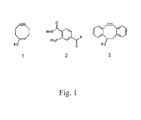
- 4-dibenzocyclooctynols such as compound 3 would be ideal for labeling living cells with azides because the aromatic rings are expected to impose additional ring strain and conjugate with the alkyne, thereby increasing the reactivity of the alkyne in metal-free [2+3] cycloadditions with azides.
- the compound should, however, have excellent stability because the ortho hydrogen atoms of the aromatic rings shield the alkyne from nucleophilic attack.
- the hydroxy group of 3 provides a handle for the incorporation of tags such as fluorescent probes and biotin.
- Compound 3 could be prepared easily from known ( Jung et al., J. Org. Chem. 1978. 43:3698-3701 ; Jung and Miller, J. Am. Chem. Soc. 1981, 103:1984-1992 ) 3-hydroxy-1,2:5,6-dibenzocycloocta-1,5,7-triene (4) by protection of the hydroxy group as a TBS ether to give 5, which was brominated to provide dibromide 6 in a yield of 60% (Scheme 1; Figure 2 ). The TBS protecting group was lost during the latter transformation, but the bromination was low yielding when performed on alcohol 4.
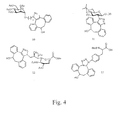
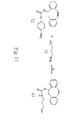
- Compound 3 has an excellent, long shelf life and after treatment did not react with nucleophiles such as thiols and amines. However, upon exposure to azides a fast reaction took place and gave the corresponding triazoles in high yield. For example, triazoles 10-13 were obtained in quantitative yields as mixtures of regioisomers by reaction of the corresponding azido-containing sugar and amino acid derivatives with 3 in methanol for 30 minutes (Scheme 2; Figure 3 and Figure 4 ).
- Jurkat cells were cultured in the presence of 25 micromolar N- azidoacetylmannosamine (Ac 4 ManNAz) for three days to metabolically introduce N -azidoacetylsialic acid (SiaNAz) moieties into glycoproteins ( Luchansky and Bertozzi, Chem-BioChem 2004, 5:1706-1709 ).
- Ac 4 ManNAz N- azidoacetylmannosamine
- SiaNAz N -azidoacetylsialic acid
- FITC avidin-fluorescein isothiocyanate
- the efficiency of the two-step cell-surface labeling was determined by measuring the fluorescence intensity of the cell lysates.
- the cell-surface azido moieties were also labeled by Staudinger ligation with biotin-modified phosphine 2 followed by treatment with avidin-FITC.
- the labeling with 9 was almost complete after an incubation time of 60 minutes ( Figure 6a ).
- DIFO difluorinated cyclooctyne
- 4-Dibenzocyclooctynols such as 3 and 9 have several advantageous features for researchers such as ease of chemical synthesis and the possibility to further enhance the rate of cycloaddition by functionalization of the aromatic moieties. Modifying the aromatic rings may also offer an exciting opportunity to obtain reagents that become fluorescent upon [3+2] cycloaddition with azido-containing compounds, which will make it possible to monitor in real time the trafficking of glycoproteins and other biomolecules in living cells.
- 1 H NMR (1D, 2D) and 13 C NMR were recorded on a Varian Merc 300 spectrometer and on Varian 500 and 600 MHz spectrometers equipped with Sun workstations.
- 1 H and 13 C NMR spectra were recorded in CDCl 3 , and chemical shifts ( ⁇ ) are given in ppm relative to solvent peaks ( 1 H, ⁇ 7.24; 13 C, ⁇ 77.0) as internal standard for protected compounds.
- Negative ion matrix assisted laser desorption ionization time of flight (MALDI-TOF) were recorded on a VOYAGER-DE Applied Biosystems using dihydrobenzoic acid as a matrix.
- High-resolution mass spectra were obtained using a VOYAGER-DE Applied Biosystems in the positive mode by using 2,5-dihydroxyl-benzoic acid in THF as matrix.
- tert -Butyl dimethyl silyl chloride (3.0 g, 20 mmol) was added to a stirred solution of 4 (2.2 g, 10 mmol) in a mixture of CH 2 Cl 2 (20 mL) and pyridine (5 mL). After stirring for 6 hours at room temperature, the reaction mixture was diluted with water and extracted with CH 2 Cl 2 (40 mL). The combined organic extracts were washed with water and brine and then dried (MgSO 4 ). The solvents were evaporated under reduced pressure and the residue was purified by silica gel column chromatography (hexane/ethyl acetate. 7/1, v/v) to afford 5 (2.9 g, 87%).
- reaction was monitored by TLC, and after stirring the reaction mixture for 30 minutes at room temperature, the reaction had gone to completion.
- the solvents were evaporated under reduced pressure and the residue was purified by silica gel column chromatography to afford the desired products 10-13 respectively in quantitative yields.
- N '-Boc- N' -biotinyl-3,6-dioxaoctane-1,8-diamine (1.9 g, 4 mmol) was dissolved in 50% TFA in CH 2 Cl 2 (20 mL) and stirred for 1 hour at room temperature. The solvents were evaporated under reduced pressure to give an oily residue, which was purified by flash silica gel column chromatography (CH 2 Cl 2 /CH 3 OH, 10/1, v/v) to afford 7 (1.3 g, 92%).
- Synthetic compounds 2 and 9 were reconstituted in DMF and stored at 80°C. Final concentrations of DMF never exceeded 0.56% to avoid toxic effects.
- Human Jurkat cells (Clone E6-1; ATCC) were cultured in RPMI 1640 medium (ATCC) with L-glutamine (2 mM), adjusted to contain sodium bicarbonate (1.5 g L -1 ), glucose (4.5 g L -1 ), HEPES (10 mM), and sodium pyruvate (1.0 mM) and supplemented with penicillin (100 u mL -1 )/streptomycin (100 micrograms mL -1 ; Mediatech) and fetal bovine serum (FBS, 10%; Hyclone). Cells were maintained in a humid 5% CO 2 atmosphere at 37°C.
- Jurkat cells were grown in the presence of peracetylated N -azidoacetylmannosamine (Ac4ManNaz; 25 micromolar final concentration) for 3 days, leading to the metabolic incorporation of the corresponding N -azidoacetyl sialic acid (SiaNAz) into their cell surface glycoproteins.
- Jurkat cells bearing azides and untreated control cells were incubated with the biotinylated compounds 2 and 9 (0-100 micromolar) in labeling buffer (DPBS, supplemented with FBS (1%)) for 0-180 minutes at room temperature. The cells were washed three times with labeling buffer and then incubated with avidin conjugated with fluorescein (Molecular Probes) for 15 minutes at 4°C.
- DPBS labeling buffer
- FBS fluorescein
- cell lysates were analysed for fluorescence intensity (485 ex / 520 em) using a microplate reader (BMG Labtech). Data points were collected in triplicate and are representative of three separate experiments. Cell viability was assessed at different points in the procedure with exclusion of trypan blue.
- CHO cells Chinese hamster ovary (CHO) cells (Clone K1; ATCC) were cultured in Kaighn's modification of Ham's F-12 medium (F-12K) with L-glutamine (2 mM), adjusted to contain sodium bicarbonate (1.5 g L -1 ) and supplemented with penicillin (100 u mL -1 ) / streptomycin (100 micrograms mL -1 and FBS (10%). Cells were maintained in a humid 5% CO 2 atmosphere at 37°C. CHO cells were grown in the presence of Ac4ManNaz (100 micromolar final concentration) for 3 days to metabolically incorporate SiaNAz into their cell surface glycoproteins.
- F-12K Ham's F-12 medium
- streptomycin 100 micrograms mL -1 and FBS (10%).
- Cells were maintained in a humid 5% CO 2 atmosphere at 37°C.
- CHO cells were grown in the presence of Ac4ManNaz (100 micromolar final concentration) for 3 days to
- CHO cells bearing azides and untreated control cells were then transferred to a glass coverslip and cultured for 36 hours in their original medium.
- Live CHO cells were treated with the biotinylated compound 9 (30 micromolar) in labeling buffer (DPBS, supplemented with FBS (1%)) for 1 hour at 4°C or at room temperature, followed by incubation with avidin conjugated with Alexa Fluor 488 (Molecular Probes) for 15 minutes at 4°C.
- Cells were washed 3 times with labeling buffer and fixed with formaldehyde (3.7% in PBS) or incubated for 1 hour at 37°C before fixation.
- the nucleus was labeled with the far red fluorescent TO-PRO-3 dye (Molecular Probes).
- the cells were mounted with PermaFluor (Thermo Electron Corporation) before imaging. Initial analysis was performed on a Zeiss Axioplan2 fluorescent microscope. Confocal images were acquired using a 60X (NA1.42) oil objective. Stacks of optical sections were collected in the z dimensions. The step size, based on the calculated optimum for each objective, was between 0.25 and 0.5 micrometers. Subsequently, each stack was collapsed into a single image ( z -projection). Analysis was performed offline using ImageJ 1.39f software (National Institutes of Health. USA) and Adobe Photoshop CS3 Extended Version 10.0 (Adobe Systems Incorporated), whereby all images were treated equally.
- Azides which are extremely rare in biological systems, are emerging as attractive chemical handles for bioconjugation ( Dedola et al., Org. Biomol. Chem. 2007, 5, 1006 ; Kolb and Sharpless, Drug Dis. Today 2003, 8, 1128 ; Moses and Moorhouse, Chem. Soc. Rev. 2007. 36, 1249 ; Nandivada et al., Adv. Mater. 2007, 19, 2197 ; Wu and Fokin, Aldrichimica ACTA 2007, 40, 7 ; Agard et al., ACS Chem. Biol. 2006, 1, 644 ).
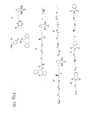
- Compound 21 is an example of the new class of reagent ( Figure 9 ). It contains a 4-dibenzocyclooctynol fragment for reaction with azides, a disulfide, which can be cleaved with reducing reagents such as dithiothreitol (DTT), and biotin.
- DTT dithiothreitol
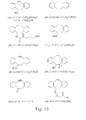
- 4-Dibenzocydooctynol 45 could be prepared by an alternative synthetic route (Scheme 6; Figure 14 ).
- dibenzosuberenone (41) was treated trimethylsilyl diazomethane in the presence of BF 3 ⁇ OEt 2 in CH 2 Cl 2 (20 ml) at -10 °C to give 6 H -Dibenzo[ a,e ]cyclooctatrien-5-one (42) in good yield.
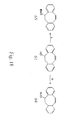
- Compound 50 was obtained by reaction of 46 with bromoacetic acid in the presence of lithium diisopropylamide in tetrahydrofuran followed by condensation of the resulting acid 48 with tris(ethylene glycol)-1,8-diamine in DMF in the presence of the coupling reagent HATU and the base DIPEA. Finally, derivative 51 was prepared by oxime formation be reaction of ketone 51 with N - ⁇ 2-[2-(2-amino-ethoxy)-ethoxy]-ethyl ⁇ -2-aminooxy-acetamide (84 mg, 0.251 mmol) in the presence of acetic acid and in a mixture of methanol and dichloromethane.
- a feature of 51 is that the oxime linkage can be cleaved by treatment with aqueous acid to detach the captured compound from the click reagent.
- the Cu(I) catalyzed 1,3-dipolar cycloaddition of azides with terminal alkynes to give stable triazoles has been employed for tagging a variety of biomolecules including proteins, nucleic acids, lipids, and saccharides. This reaction has also been used to modify polymers and nanoscale materials. Potential difficulties to remove Cu(I), which is highly cytotoxic, complicates the use of the 1,3-dipolar cycloaddition for conjugation of compounds or material for biological or medical application.
- the use of 4-dibenzocyclooctynol instead of a terminal alkyne for cycloadditions with azides should overcome this problem.
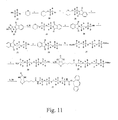
- co-block polymers 83 and 84 were prepared. These materials were employed to form organomicelles in water and it was shown that 4-dibenzocyclooctyne fragment of these materials can be reacted was with azido containing molecules ( Figure 20A, B ).
- organomicelles composed of a polyester and polyethyleneglycol fragment self-assemble in water to form organomicelles. These nano-materials have attracted attention as drug delivery devises. Derivatization of organomicelles with, for example, tissue or tumor targeting moieties may lead to smart drug delivery devises. In addition, modification of organomicelles with fluorescent tags or MRI reagents, such as biotin, will be valuable for imaging purposes ( Figure 20C ).
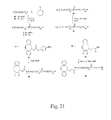
- Copolymerization of polyethylene glycol methyl ether (81) or azide (82) (MW ⁇ 2000 Da) with caprolactone in the presence of a catalytic amount of SnOct gave copolymers 83 and 84, respectively (Scheme 11; Figure 21 ).
- the azido fragment of 84 was reduced with triphenylphosphine and the amine of the resulting polymer 85 was reacted with 86 and 87 to give dibenzocyclooctyl derivatives 88 and 89, respectively.
- a mixture of 83 and 88 or 89 (9/1, w/w) dissolved in a small amount of THF were added to water.
- Cryo- TEM showed that organomicelles that have a diameter of approximately 40A were formed.
- the resulting micelles were incubated with azido-containing saccharide 90 and after a reaction time of 24 hours, unreacted saccharide was removed by dialysis.
- the micelles were analyzed for sugar content by hydrolysis with TFA followed by quantification by high pH anion exchange chromatography. It was established that approximately 45% of the cyclooctynes were modified by saccharides.
- compound 84 can also be employed for the formation of micelles and the azido moieties of the resulting azides employed in cycloaddition with compounds modified with a dibenzocyclooctyl fragment.
- PEG 44 -b-PCL 26 83 PEG 45 - b -PCL 23 block copolymers were synthesized as reported. A predetermined volume (12.0 mL) of ⁇ -caprolactone monomer was placed in a flask containing an amount (9.0 g) of PEG 81 under an argon atmosphere. Then, a drop of SnOct was added. After cooling to liquid-nitrogen temperature, the flask was evacuated for 12 hours, sealed off, and kept at 130°C for 24 hours. The synthesized polymers were dissolved in THF, recovered by precipitation by cold hexane, and dried under vacuum at room temperature. The degree of polymerization of the PCL was calculated by 1 H NMR relative to the degree of polymerization of the PEG 81.
- Azide-PEG- b -PCL was synthesized by a one-pot cationic ring opening polymerization at 130°C under a stream of argon adopting a previously reported method for the preparation of PEG- b -PCL with some modifications. Briefly, a predetermined volume (3.3 mL) of ⁇ -caprolactone monomer was placed in a flask containing a preweighed amount (2.5 g) of azide-PEG-OH 82 under a nitrogen atmosphere. Then a drop of SnOct was added. After cooling to liquid-nitrogen temperature, the flask was evacuated, sealed off, and kept at 130°C for 24 hours.
- the synthesized polymers were then dissolved in THF, recovered by precipitation into cold hexane, and dried under vacuum at room temperature.
- the number average molecular weight ( M n ) of azide-PEO 44 - b -PCL 26 84 block copolymer was determined by 1 H NMR.
- DIDO-PEO-PCL copolymer (88).
- SEC size exclusion chromatography
- DIDO - PEO - PCL copolymer (89).
- Nitrones were prepared by a modification of the procedures disclosed in Dicken et al., J. Org. Chem. 1982, 47, 2047-2051 ; and Inouye et al., Bull. Chem. Soc. Jpn. 1983, 56, 3541-3542 .
- N-alkylhydroxylamine hydrochloride (10.0 mmol), glyoxylic acid (0.92 g, 10.0 mmol), and sodium bicarbonate (1.68 g, 20.0 mmol) in toluene (20 ml) were stirred at room temperature overnight. The solid was filtered and the filtrate was concentrated to afford the nitrone. This nitrone was then used directly without any purification.
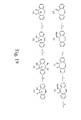
- nitrones 91-95 were mixed with 4-dibenzocyclooctynol and after a reaction time of 3 minutes to 3.5 hours the corresponding 2,3-dihydro-issoxazole cycloaddition products were isolated in almost a quantitative yield. It can be seen in figure] 18 that the chemical nature of the nitrone has a dramatic impact of the reaction rate. In particular electron poor nitrones 93 and 94 react at much faster rates than corresponding azides.
- Second order rate constants for the reaction were determined by plotting the 1 /[substrates] versus time and analysis by linear regression. Second order rate constants correspond to one half of the determined slope.
Landscapes
- Chemical & Material Sciences (AREA)
- Organic Chemistry (AREA)
- Health & Medical Sciences (AREA)
- Life Sciences & Earth Sciences (AREA)
- Engineering & Computer Science (AREA)
- General Health & Medical Sciences (AREA)
- Veterinary Medicine (AREA)
- Animal Behavior & Ethology (AREA)
- Public Health (AREA)
- Epidemiology (AREA)
- Medicinal Chemistry (AREA)
- Biomedical Technology (AREA)
- Bioinformatics & Cheminformatics (AREA)
- Pharmacology & Pharmacy (AREA)
- Molecular Biology (AREA)
- Biochemistry (AREA)
- Immunology (AREA)
- Proteomics, Peptides & Aminoacids (AREA)
- Genetics & Genomics (AREA)
- Biotechnology (AREA)
- Biophysics (AREA)
- Hematology (AREA)
- Urology & Nephrology (AREA)
- Gastroenterology & Hepatology (AREA)
- Cell Biology (AREA)
- Microbiology (AREA)
- Food Science & Technology (AREA)
- Physics & Mathematics (AREA)
- Analytical Chemistry (AREA)
- General Physics & Mathematics (AREA)
- Pathology (AREA)
- General Chemical & Material Sciences (AREA)
- Nuclear Medicine, Radiotherapy & Molecular Imaging (AREA)
- Chemical Kinetics & Catalysis (AREA)
- Heterocyclic Carbon Compounds Containing A Hetero Ring Having Oxygen Or Sulfur (AREA)
- Organic Low-Molecular-Weight Compounds And Preparation Thereof (AREA)
- Plural Heterocyclic Compounds (AREA)
- Saccharide Compounds (AREA)
- Furan Compounds (AREA)
- Heterocyclic Carbon Compounds Containing A Hetero Ring Having Nitrogen And Oxygen As The Only Ring Hetero Atoms (AREA)
Applications Claiming Priority (4)
| Application Number | Priority Date | Filing Date | Title |
|---|---|---|---|
| US402107P | 2007-11-21 | 2007-11-21 | |
| US767407P | 2007-12-14 | 2007-12-14 | |
| US13706108P | 2008-07-25 | 2008-07-25 | |
| EP08852196.8A EP2222341B1 (de) | 2007-11-21 | 2008-11-21 | Alkyne und verfahren zur reaktion von alkynen mit 1,3-dipol-funktionalen verbindungen |
Related Parent Applications (1)
| Application Number | Title | Priority Date | Filing Date |
|---|---|---|---|
| EP08852196.8A Division EP2222341B1 (de) | 2007-11-21 | 2008-11-21 | Alkyne und verfahren zur reaktion von alkynen mit 1,3-dipol-funktionalen verbindungen |
Publications (3)
| Publication Number | Publication Date |
|---|---|
| EP2907525A2 true EP2907525A2 (de) | 2015-08-19 |
| EP2907525A3 EP2907525A3 (de) | 2015-12-02 |
| EP2907525B1 EP2907525B1 (de) | 2018-05-16 |
Family
ID=40510055
Family Applications (2)
| Application Number | Title | Priority Date | Filing Date |
|---|---|---|---|
| EP08852196.8A Active EP2222341B1 (de) | 2007-11-21 | 2008-11-21 | Alkyne und verfahren zur reaktion von alkynen mit 1,3-dipol-funktionalen verbindungen |
| EP15156184.2A Active EP2907525B1 (de) | 2007-11-21 | 2008-11-21 | Dibenzocycloocten-verbindungen fuer bioorthogonale reaktionen |
Family Applications Before (1)
| Application Number | Title | Priority Date | Filing Date |
|---|---|---|---|
| EP08852196.8A Active EP2222341B1 (de) | 2007-11-21 | 2008-11-21 | Alkyne und verfahren zur reaktion von alkynen mit 1,3-dipol-funktionalen verbindungen |
Country Status (6)
| Country | Link |
|---|---|
| US (5) | US8133515B2 (de) |
| EP (2) | EP2222341B1 (de) |
| JP (4) | JP5498952B2 (de) |
| CN (2) | CN104529711B (de) |
| DK (2) | DK2907525T3 (de) |
| WO (1) | WO2009067663A1 (de) |
Cited By (1)
| Publication number | Priority date | Publication date | Assignee | Title |
|---|---|---|---|---|
| US10905678B2 (en) | 2014-04-08 | 2021-02-02 | University Of Georgia Research Foundation, Inc. | Site-specific antibody-drug glycoconjugates and methods |
Families Citing this family (88)
| Publication number | Priority date | Publication date | Assignee | Title |
|---|---|---|---|---|
| EP2222341B1 (de) * | 2007-11-21 | 2015-02-25 | University Of Georgia Research Foundation, Inc. | Alkyne und verfahren zur reaktion von alkynen mit 1,3-dipol-funktionalen verbindungen |
| EP2279011B1 (de) | 2008-04-30 | 2017-10-25 | Siemens Medical Solutions USA, Inc. | Auf substrat basierende pet-kontrastmittel |
| AU2009298802A1 (en) | 2008-09-23 | 2010-04-08 | Alnylam Pharmaceuticals, Inc. | Chemical modifications of monomers and oligonucleotides with cycloaddition |
| US8258347B2 (en) | 2009-02-19 | 2012-09-04 | University Of Georgia Research Foundation, Inc. | Cyclopropenones and the photochemical generation of cyclic alkynes therefrom |
| US8426649B2 (en) | 2009-02-19 | 2013-04-23 | University Of Georgia Research Foundation, Inc. | Cyclopropenones and the photochemical generation of cyclic alkynes therefrom |
| FR2951449B1 (fr) * | 2009-10-15 | 2011-11-25 | Commissariat Energie Atomique | Procede de fonctionnalisation de molecules biologiques |
| US9198972B2 (en) * | 2010-01-28 | 2015-12-01 | Alnylam Pharmaceuticals, Inc. | Monomers and oligonucleotides comprising cycloaddition adduct(s) |
| JP5741572B2 (ja) | 2010-03-26 | 2015-07-01 | Jnc株式会社 | 環状化合物、環状化合物の製造方法および生体分子の修飾法 |
| EP2563753B9 (de) | 2010-04-27 | 2016-07-06 | SynAffix B.V. | Kondensierte Cyclooctylverbindungen und ihre Verwendung in metallfreien Click-Reaktionen |
| US9144575B2 (en) | 2010-07-28 | 2015-09-29 | Life Technologies Corporation | Anti-viral azide containing compounds |
| US20120028335A1 (en) | 2010-07-28 | 2012-02-02 | Life Technologies Corporation | Anti-viral azide-containing compounds |
| US8912322B2 (en) | 2010-07-29 | 2014-12-16 | University Of Georgia Research Foundation, Inc. | Aza-dibenzocyclooctynes and methods of making and using same |
| WO2012016188A2 (en) * | 2010-07-30 | 2012-02-02 | Alnylam Pharmaceuticals, Inc. | Methods and compositions for delivery of active agents |
| WO2012047663A2 (en) * | 2010-09-27 | 2012-04-12 | University Of Georgia Reaserch Foundation, Inc. | Methods including latent 1,3-dipole-functional compounds and materials prepared thereby |
| US20120208722A1 (en) * | 2010-10-19 | 2012-08-16 | Richard Dluhy | Surface enhanced raman spectroscopy platforms and methods |
| WO2012054784A1 (en) | 2010-10-20 | 2012-04-26 | Li-Cor, Inc. | Fluorescent imaging with substituted cyanine dyes |
| EP2681196B1 (de) | 2011-03-04 | 2015-09-09 | Life Technologies Corporation | Verbindungen und verfahren zur konjugation von biomolekülen |
| US9145361B2 (en) | 2011-03-25 | 2015-09-29 | Life Technologies Corporation | SDP-containing heterobifunctional agents |
| US20140170653A1 (en) | 2011-04-15 | 2014-06-19 | Life Technologies Corporation | Chemical ligation |
| US9675561B2 (en) | 2011-04-28 | 2017-06-13 | President And Fellows Of Harvard College | Injectable cryogel vaccine devices and methods of use thereof |
| EP2532639A1 (de) * | 2011-06-09 | 2012-12-12 | ModiQuest B.V. | Verfahren zur Herstellung einer reaktiven Beschichtung |
| EP2793947B1 (de) | 2011-12-23 | 2021-02-03 | Innate Pharma | Enzymatische konjugation von polypeptiden |
| WO2014004278A1 (en) * | 2012-06-26 | 2014-01-03 | The Curators Of The University Of Missouri | Photocleavable drug conjugates |
| US10132799B2 (en) | 2012-07-13 | 2018-11-20 | Innate Pharma | Screening of conjugated antibodies |
| CA2878059A1 (en) * | 2012-07-31 | 2014-02-06 | The University Of Akron | Polymeric structures containing strained cycloalkyne functionality for post-fabrication azidealkyne cycloaddition functionalization |
| AU2013305827A1 (en) * | 2012-08-21 | 2015-03-05 | Academia Sinica | Benzocyclooctyne compounds and uses thereof |
| CN105142672B (zh) | 2012-10-23 | 2019-04-05 | 西纳福克斯股份有限公司 | 经修饰的抗体、抗体-缀合物及其制备方法 |
| WO2014066733A2 (en) | 2012-10-25 | 2014-05-01 | Life Technologies Corporation | Methods and compositions for enzyme-mediated site-specific radiolabeling of glycoproteins |
| EP3564259A3 (de) | 2012-11-09 | 2020-02-12 | Innate Pharma | Kennungen für tgase-vermittelte konjugation |
| GB201300707D0 (en) * | 2013-01-15 | 2013-02-27 | Novartis Ag | Compounds and processes |
| EP4036579B1 (de) | 2013-03-15 | 2025-05-07 | Arizona Board of Regents on behalf of Arizona State University | Biosensor-mikroarrayzusammensetzungen und verfahren |
| US10611824B2 (en) | 2013-03-15 | 2020-04-07 | Innate Pharma | Solid phase TGase-mediated conjugation of antibodies |
| WO2014157584A1 (ja) * | 2013-03-28 | 2014-10-02 | 静岡県公立大学法人 | [18f]fまたは蛍光色素で標識されたpeg化生物活性物質の製造方法、ならびにその体内動態解析 |
| PL2991683T3 (pl) | 2013-05-02 | 2020-03-31 | Glykos Finland Oy | Koniugaty glikoproteiny lub glikanu z toksycznym ładunkiem |
| US20160107999A1 (en) | 2013-05-24 | 2016-04-21 | Synaffix B.V. | Substituted azadibenzocyclooctyne compounds and their use in metal-free click reactions |
| EP3010547B1 (de) | 2013-06-20 | 2021-04-21 | Innate Pharma | Enzymatische konjugation von polypeptiden |
| CN105517577A (zh) | 2013-06-21 | 2016-04-20 | 先天制药公司 | 多肽的酶促偶联 |
| EP2818867A1 (de) | 2013-06-27 | 2014-12-31 | INSERM (Institut National de la Santé et de la Recherche Médicale) | An mindestens ein Nucleinsäuremolekül konjugierte Antikörper und deren Verwendung in Multiplex-Immunnachweis-Assays |
| JP6327547B2 (ja) * | 2013-08-02 | 2018-05-23 | 国立研究開発法人理化学研究所 | 新規化合物及びその利用 |
| WO2015057066A1 (en) | 2013-10-14 | 2015-04-23 | Synaffix B.V. | Glycoengineered antibody, antibody-conjugate and methods for their preparation |
| US20160235861A1 (en) | 2013-10-14 | 2016-08-18 | SynAffix. B.V. | Glycoengineered antibody, antibody-conjugate and methods for their preparation |
| US9987373B2 (en) | 2013-10-14 | 2018-06-05 | Synaffix B.V. | Modified glycoprotein, protein-conjugate and process for the preparation thereof |
| EP3080137A4 (de) | 2013-12-12 | 2017-07-19 | The University Of Georgia Research Foundation, Inc | Prodrug zur freisetzung von cisplatin und cyclooxygenaseinhibitoren |
| US11168085B2 (en) | 2014-01-24 | 2021-11-09 | Synaffix B.V. | Process for the cycloaddition of a hetero(aryl) 1,3-dipole compound with a (hetero)cycloalkyne |
| CN103983764B (zh) * | 2014-04-17 | 2016-06-29 | 深圳先进技术研究院 | 对细胞进行原位标记的方法和应用 |
| EP3137105A4 (de) | 2014-04-30 | 2017-12-27 | President and Fellows of Harvard College | Kombinationsimpfstoffvorrichtungen und -verfahren zur abtötung von krebszellen |
| EP3270903B1 (de) | 2015-03-17 | 2020-05-06 | Arrowhead Pharmaceuticals, Inc. | Disulfidhaltige alkinverknüpfungsmittel |
| US11752238B2 (en) | 2016-02-06 | 2023-09-12 | President And Fellows Of Harvard College | Recapitulating the hematopoietic niche to reconstitute immunity |
| WO2017137458A1 (en) | 2016-02-08 | 2017-08-17 | Synaffix B.V. | Antibody-conjugates with improved therapeutic index for targeting cd30 tumours and method for improving therapeutic index of antibody-conjugates |
| WO2017137457A1 (en) | 2016-02-08 | 2017-08-17 | Synaffix B.V. | Antibody-conjugates with improved therapeutic index for targeting cd30 tumours and method for improving therapeutic index of antibody-conjugates |
| JP7020403B2 (ja) | 2016-05-02 | 2022-02-16 | 味の素株式会社 | アジド基含有Fcタンパク質 |
| JP2017218422A (ja) * | 2016-06-08 | 2017-12-14 | ソニー株式会社 | 物質固定化基板及びその製造方法、物質固定化基板に用いられる物質固定化剤 |
| WO2017218891A1 (en) | 2016-06-17 | 2017-12-21 | Life Technologies Corporation | Site-specific crosslinking of antibodies |
| JP7128121B2 (ja) * | 2016-06-28 | 2022-08-30 | ヴェンタナ メディカル システムズ, インク. | Ihc及びishアッセイにおけるシグナル増幅のためのクリックケミストリーの応用 |
| CN109789092A (zh) | 2016-07-13 | 2019-05-21 | 哈佛学院院长等 | 抗原呈递细胞模拟支架及其制备和使用方法 |
| IL264557B2 (en) | 2016-08-02 | 2024-01-01 | Harvard College | Biological agents for regulating immune responses |
| CN110366428B (zh) | 2016-12-30 | 2024-05-17 | Vaxcyte公司 | 具有非天然氨基酸的多肽-抗原缀合物 |
| US11951165B2 (en) | 2016-12-30 | 2024-04-09 | Vaxcyte, Inc. | Conjugated vaccine carrier proteins |
| CA3082231A1 (en) | 2017-11-09 | 2019-05-16 | National Research Council Of Canada | Antibody glycoconjugates and methods of production and use |
| WO2019092148A1 (en) | 2017-11-10 | 2019-05-16 | Innate Pharma | Antibodies with functionalized glutamine residues |
| WO2019151128A1 (ja) * | 2018-02-05 | 2019-08-08 | 国立大学法人 宮崎大学 | 細胞標識剤及び細胞標識キット |
| EP4491743A3 (de) | 2018-03-02 | 2025-03-19 | Life Technologies Corporation | Neuartiger quencher und reporterfarbstoffkombinationen |
| WO2019240219A1 (ja) * | 2018-06-14 | 2019-12-19 | 持田製薬株式会社 | 新規な架橋アルギン酸 |
| CN112672764A (zh) | 2018-06-19 | 2021-04-16 | 格莱科斯生物医药公司 | 结合物 |
| US20210138080A1 (en) | 2018-06-29 | 2021-05-13 | Glykos Biomedical Oy | Conjugates |
| WO2020061129A1 (en) | 2018-09-19 | 2020-03-26 | President And Fellows Of Harvard College | Compositions and methods for labeling and modulation of cells in vitro and in vivo |
| EP3936501B1 (de) * | 2019-03-08 | 2025-12-31 | ABTIS Co., Ltd. | Ortsspezifische antikörper-konjugation und antikörper-wirkstoff-konjugat als spezifisches beispiel dafür |
| CN114302749A (zh) | 2019-06-28 | 2022-04-08 | 持田制药株式会社 | 使用了化学交联海藻酸的移植用器件 |
| WO2021041372A1 (en) | 2019-08-26 | 2021-03-04 | The Board Of Trustees Of The Leland Stanford Junior University | Universal orthogonal network bioinks for three-dimensional bioprinting |
| GB201913598D0 (en) * | 2019-09-20 | 2019-11-06 | Univ Birmingham | Labelling of biomolecules |
| WO2021061837A1 (en) | 2019-09-23 | 2021-04-01 | President And Fellows Of Harvard College | Biomaterial-based antigen free vaccine and the use thereof |
| CA3153644A1 (en) | 2019-09-30 | 2021-04-08 | Beijing Xuanyi Pharmasciences Co., Ltd. | Protein-macromolecule conjugates and methods of use thereof |
| CN114787286A (zh) | 2019-12-09 | 2022-07-22 | 豪夫迈·罗氏有限公司 | 双阳离子荧光染料 |
| WO2021123506A1 (en) | 2019-12-18 | 2021-06-24 | Glykos Biomedical Oy | Stabile conjugate |
| WO2021155297A1 (en) * | 2020-01-29 | 2021-08-05 | President And Fellows Of Harvard College | Methods for labeling and targeting cells |
| EP4096717B1 (de) | 2020-01-31 | 2024-12-11 | Innate Pharma | Behandlung von krebs |
| CN111620848A (zh) * | 2020-04-29 | 2020-09-04 | 华东师范大学 | 含吡喃和中环骨架的三环稠合芳香体系化合物及其合成和应用 |
| AR122020A1 (es) * | 2020-05-05 | 2022-08-03 | Genentech Inc | Sistemas y métodos para la conjugación específica de sitio de proteínas mediada por tirosinasa |
| KR20230052958A (ko) | 2020-08-19 | 2023-04-20 | 박사이트, 인코포레이티드 | 운반-단백질 폴리삭카라이드 접합 방법 |
| MX2023005873A (es) | 2020-11-25 | 2023-06-05 | Innate Pharma | Tratamiento del cancer. |
| US11377424B1 (en) * | 2021-05-27 | 2022-07-05 | Massachusetts Institute Of Technology | Cyclooctynes for click chemistry |
| WO2022250679A1 (en) * | 2021-05-27 | 2022-12-01 | Massachusetts Institute Of Technology | Cyclooctynes for click chemistry |
| CN116102403B (zh) * | 2021-11-11 | 2024-06-11 | 中国科学院福建物质结构研究所 | 一种联烯醇类化合物的制备方法 |
| JP2025517476A (ja) | 2022-05-25 | 2025-06-05 | イナート・ファルマ・ソシエテ・アノニム | ネクチン-4結合剤 |
| CN114853556B (zh) * | 2022-06-14 | 2023-08-29 | 绍兴文理学院 | 一种5H-二苯并[a,d]环庚烯骨架的新合成方法 |
| US20240036055A1 (en) * | 2022-06-15 | 2024-02-01 | Wisconsin Alumni Research Foundation | Multiplexed DiLeu-Biotin-Azide (DBA) Tag Enabled Isobaric Tandem Orthogonal Proteolysis Activity-Based Protein Profiling (isoBOP-ABPP) Platform For High-Throughput Quantitative Pan-PTM Analysis |
| CN120659627A (zh) | 2022-07-29 | 2025-09-16 | 瑞泽恩制药公司 | 用于转铁蛋白受体(tfr)介导的脑和肌肉递送的组合物和方法 |
| KR20250116795A (ko) | 2022-11-14 | 2025-08-01 | 리제너론 파마슈티칼스 인코포레이티드 | 별아교세포로의 섬유아세포 성장 인자 수용체 3-매개된 전달을 위한 조성물 및 방법 |
Family Cites Families (22)
| Publication number | Priority date | Publication date | Assignee | Title |
|---|---|---|---|---|
| US3711489A (en) * | 1971-03-31 | 1973-01-16 | Pfizer | Certain 8,9-dihydro(3,4,7,8)cycloocta(1,2-d)imidazoles |
| SE403775B (sv) * | 1973-11-21 | 1978-09-04 | Du Pont | Nya etenoantracenderivat (bensenobens(e)isoindolderivat) avsedda till anvendning som inhibitorer vid friradikal-polymerisation av vinylforeningar |
| US5723289A (en) | 1990-06-11 | 1998-03-03 | Nexstar Pharmaceuticals, Inc. | Parallel selex |
| EP0486937B1 (de) | 1990-11-17 | 1995-03-22 | Nihon Nohyaku Co., Ltd. | Hydrazonderivate, Verfahren zu ihrer Herstellung und ihre Verwendung |
| US5767259A (en) | 1994-12-27 | 1998-06-16 | Naxcor | Oligonucleotides containing base-free linking groups with photoactivatable side chains |
| SE9500342D0 (sv) * | 1995-01-31 | 1995-01-31 | Marek Kwiatkowski | Novel chain terminators, the use thereof for nucleic acid sequencing and synthesis and a method of their preparation |
| US5843650A (en) | 1995-05-01 | 1998-12-01 | Segev; David | Nucleic acid detection and amplification by chemical linkage of oligonucleotides |
| US5874532A (en) * | 1997-01-08 | 1999-02-23 | Nexstar Pharmaceuticals, Inc. | Method for solution phase synthesis of oligonucleotides and peptides |
| EP2319854B1 (de) | 1997-01-08 | 2016-11-30 | Sigma-Aldrich Co. LLC | Biokonjugation von Makromolekülen |
| US7427678B2 (en) * | 1998-01-08 | 2008-09-23 | Sigma-Aldrich Co. | Method for immobilizing oligonucleotides employing the cycloaddition bioconjugation method |
| AU2001296645A1 (en) | 2000-10-06 | 2002-04-15 | The Trustees Of Columbia University In The City Of New York | Massive parallel method for decoding dna and rna |
| JP4638225B2 (ja) | 2002-05-30 | 2011-02-23 | ザ スクリプス リサーチ インスティテュート | 銅を触媒とするアジドとアセチレンのライゲーション |
| US7597876B2 (en) * | 2007-01-11 | 2009-10-06 | Immunomedics, Inc. | Methods and compositions for improved F-18 labeling of proteins, peptides and other molecules |
| WO2004018497A2 (en) | 2002-08-23 | 2004-03-04 | Solexa Limited | Modified nucleotides for polynucleotide sequencing |
| WO2004055160A2 (en) * | 2002-12-13 | 2004-07-01 | The Trustees Of Columbia University In The City Of New York | Biomolecular coupling methods using 1,3-dipolar cycloaddition chemistry |
| EP1809339A2 (de) | 2004-10-07 | 2007-07-25 | Koninklijke Philips Electronics N.V. | Verbindungen, kits und verfahren zur verwendung in der medizinischen bilddarstellung |
| US20060147963A1 (en) * | 2004-12-30 | 2006-07-06 | Affymetrix, Inc. | Detection of polynucleotides on nucleic acid arrays using azido-modified triphosphate nucleotide analogs |
| EP2270228B1 (de) * | 2005-05-02 | 2013-08-21 | baseclick GmbH | Neue Kennzeichnungsstrategie zur sensitiven Erkennung von Analyten |
| JP2009512641A (ja) * | 2005-10-04 | 2009-03-26 | コーニンクレッカ フィリップス エレクトロニクス エヌ ヴィ | [3+2]アジド−アルキン環付加を使用するターゲットにされたイメージング及び/又は治療 |
| US8114636B2 (en) | 2006-02-10 | 2012-02-14 | Life Technologies Corporation | Labeling and detection of nucleic acids |
| EP2222341B1 (de) | 2007-11-21 | 2015-02-25 | University Of Georgia Research Foundation, Inc. | Alkyne und verfahren zur reaktion von alkynen mit 1,3-dipol-funktionalen verbindungen |
| JP2010122071A (ja) * | 2008-11-19 | 2010-06-03 | Okayama Univ | 物質を固定化した物質固定化担体および物質固定化担体を作製する方法 |
-
2008
- 2008-11-21 EP EP08852196.8A patent/EP2222341B1/de active Active
- 2008-11-21 DK DK15156184.2T patent/DK2907525T3/en active
- 2008-11-21 WO PCT/US2008/084345 patent/WO2009067663A1/en not_active Ceased
- 2008-11-21 CN CN201410717307.3A patent/CN104529711B/zh active Active
- 2008-11-21 JP JP2010535090A patent/JP5498952B2/ja active Active
- 2008-11-21 DK DK08852196.8T patent/DK2222341T3/en active
- 2008-11-21 EP EP15156184.2A patent/EP2907525B1/de active Active
- 2008-11-21 CN CN200880125596.0A patent/CN101925366B/zh active Active
- 2008-11-21 US US12/743,632 patent/US8133515B2/en active Active
-
2012
- 2012-03-13 US US13/418,676 patent/US8940859B2/en active Active
-
2014
- 2014-03-10 JP JP2014046551A patent/JP5956487B2/ja active Active
-
2015
- 2015-01-07 US US14/591,290 patent/US9227943B2/en active Active
- 2015-12-14 US US14/967,896 patent/US9725405B2/en active Active
-
2016
- 2016-02-22 JP JP2016030875A patent/JP6659397B2/ja active Active
-
2017
- 2017-07-24 US US15/657,601 patent/US9932297B2/en active Active
- 2017-12-01 JP JP2017231659A patent/JP2018039841A/ja active Pending
Non-Patent Citations (67)
| Title |
|---|
| ; WANG ET AL., J. AM. CHEM. SOC., vol. 125, 2003, pages 3192 |
| AGARD ET AL., ACS CHEM. BIOL., vol. 1, 2006, pages 644 |
| AGARD ET AL., ACS CHEM. BIOL., vol. 1, 2006, pages 644 - 648 |
| AGARD ET AL., J. AM. CHEM. SOC., vol. 126, 2004, pages 15046 - 15047 |
| BANTSCHEFF ET AL., ANAL. BIOANAL. CHEM, vol. 389, 2007, pages 1017 |
| BANTSCHEFF, ANAL. BIOANAL. CHON., vol. 389, 2007, pages 1017 |
| BASKIN ET AL., PROC. NATL. ACAD. SCI. USA, vol. 104, 2007, pages 16793 - 16797 |
| BASKIN ET AL., QSAR COMB. SCI., vol. 26, 2007, pages 1211 - 1219 |
| BINDER ET AL., MACROMOL. RAPID COMMUN, vol. 29, 2008, pages 952 - 981 |
| CHAFFINS, S.; BRETTREICH, M.; WUDL, F., SYNTHESIS, 2002, pages 1191 - 1194 |
| CHIN ET AL., SCIENCE, vol. 301, 2003, pages 964 |
| CHIN ET AL., SCIENCE, vol. 301, 2003, pages 964 - 967 |
| CHOI ET AL., J. DISPERSION SCI. TECH., vol. 24, 2003, pages 475 - 487 |
| CODELLI ET AL., J. AM. CHEM. SOC., vol. 130, 2008, pages 11486 - 11493 |
| DEDOLA ET AL., ORG. BIOMOL. CHEM., vol. 5, 2007, pages 1006 |
| DEDOLA ET AL., ORG. BIOMOL. CHEM., vol. 5, 2007, pages 1006 - 1017 |
| DICKEN ET AL., J. ORG. CHEM., vol. 47, 1982, pages 2047 - 2051 |
| GAUCHER ET AL., J.CONTROL. RELEASE, vol. 109, 2005, pages 169 - 188 |
| GICRLICH ET AL., ORG. LETT., vol. 8, 2006, pages 3639 |
| GIERLICH ET AL., ORG. LETT., vol. 8, 2006, pages 3639 - 3642 |
| HANSON ET AL., J. AAM. CHEM. SOC., vol. 129, 2007, pages 7266 |
| HANSON ET AL., J. AM. CHEM. SOC., vol. 129, 2007, pages 7266 |
| HANSON ET AL., J. AM. CHEM. SOC., vol. 129, 2007, pages 7266 - 7267 |
| INOUYE ET AL., BULL. CHEM. SOC. JPN., vol. 56, 1983, pages 3541 - 3542 |
| JOHNSON ET AL., CHEM. COMMUN., 2008, pages 3064 - J066 |
| JUNG ET AL., J.ORG. CHEM., vol. 43, 1978, pages 3698 - 3701 |
| JUNG; MILLER, J. AM. CHEM. SOC., vol. 103, 1981, pages 1984 - 1992 |
| KHO ET AL., PROC. NAT/. ACAD. SCI., vol. 101, 2004, pages 12479 |
| KHO ET AL., PROC.NATL.ACAD. SCI. USA, vol. 101, 2004, pages 12479 - 12484 |
| KOLB; SHARPLESS, DRUG DIS. TODAY, vol. 8, 2003, pages 1128 |
| KOLB; SHARPLESS, DRUG DISCOVERY TODAY, vol. 8, 2003, pages 1128 - 1137 |
| LAU ET AL., PROTEAMICS, vol. 7, 2007, pages 2787 |
| LAU ET AL., PROTEOMICS, vol. 7, 2007, pages 2787 |
| LAUGHLIN ET AL., SCIENCE, vol. 320, 2008, pages 664 - 667 |
| LAVASANIFAR ET AL., ADV. DRUG DELIVERY REV., vol. 54, 2002, pages 169 - 190 |
| LINK ET AL., PROC. NATL. ACAD. SCI. USA, vol. 103, 2006, pages 10180 - 10185 |
| LINK ET AL., PROC. NATL.ACAD.SCI., vol. 103, 2006, pages 10180 |
| LINK; TIRREL, J. AM. CHEM. SOC., vol. 125, 2003, pages 11164 - 11165 |
| LUCHANSKY; BERTOZZI, CHEM-BIOCHEM, vol. 5, 2004, pages 1706 - 1709 |
| MOSES; MOORHOUSE, CHEM. SOC. REV., vol. 36, 2007, pages 1249 |
| MOSES; MOORHOUSE, CHEM. SOC. REV., vol. 36, 2007, pages 1249 - 1262 |
| NANDIVADA ET AL., ADV. MATER., vol. 19, 2007, pages 2197 |
| NANDIVADA ET AL., ADV.MATER., vol. 19, 2007, pages 2197 - 2208 |
| NISHIYAMA, ADV. POLYM. SCI., vol. 193, 2006, pages 67 - 101 |
| PRESCHER; BERTOZZI, NAT. CHEM. BIOL., vol. 1, 2005, pages 13 |
| PRESCHER; BERTOZZI, NAT. CHEM. BIOL., vol. 1, 2005, pages 13 - 21 |
| ROSIER ET AL., ADV. DRUG DELIVERY REV., vol. 53, 2001, pages 95 - 108 |
| ROSTOVTSEV ET AL., ANGEW. CHEM. INT. ED., vol. 41, 2002, pages 2596 - 2599 |
| ROSTOVTSEV ET AL., ANGEW. CHEM., vol. 114, 2002, pages 2708 - 2711 |
| SEITZ ET AL., ANGEW. CHEM. INT. ED. ENGL., vol. 8, 1969, pages 447 - 448 |
| SEITZ ET AL., ANGEW. CHEM., vol. 81, 1969, pages 427 - 428 |
| SIVAKUMAR ET AL., ORG. LETT, vol. 6, 2004, pages 4603 - 4606 |
| SIVAKUMAR ET AL., ORG. LETT., vol. 6, 2004, pages 4603 |
| SLETTEN ET AL., ORGANIC LETTERS, vol. 10, 2008, pages 3097 - 3099 |
| SPEERS ET AL., J. AM. CHEM. SOC., vol. 125, 2003, pages 4686 |
| SPEERS ET AL., J. AM. CHEM. SOC., vol. 125, 2003, pages 4686 - 4687 |
| SUN ET AL., BIOCONJUGATE CHEM, vol. 17, 2006, pages 52 - 57 |
| SUN ET AL., BIOCONJUGATE CHEM., vol. 17, 2006, pages 52 |
| TOO, EXPERT REV. PROFEOMICS, vol. 4, 2007, pages 603 |
| TOO, EXPERT REV. PROTEOMICS, vol. 4, 2007, pages 603 |
| TORNOE ET AL., J.ORG. CHEM., vol. 67, 2002, pages 3057 - 3064 |
| TUMER ET AL., J. AM. CHEM. SOC., vol. 95, 1973, pages 790 - 792 |
| TURNER, J.AM. CHEM. SOC., vol. 95, 1973, pages 790 - 792 |
| VANBERKEL ET AL., CHEM-BIOCHEM, vol. 8, 2007, pages 1504 - 1508 |
| WANG ET AL., J. AM. CHEM. SOC., vol. 125, 2003, pages 3192 - 3193 |
| WU; FOKIN, ALDRICHIMICA ACTA, vol. 40, 2007, pages 7 |
| WU; FOKIN, ALDRICHIMICA ACTA, vol. 40, 2007, pages 7 - 17 |
Cited By (2)
| Publication number | Priority date | Publication date | Assignee | Title |
|---|---|---|---|---|
| US10905678B2 (en) | 2014-04-08 | 2021-02-02 | University Of Georgia Research Foundation, Inc. | Site-specific antibody-drug glycoconjugates and methods |
| US11872215B2 (en) | 2014-04-08 | 2024-01-16 | University Of Georgia Research Foundation, Inc. | Site-specific antibody-drug glyconjugates and methods |
Also Published As
| Publication number | Publication date |
|---|---|
| JP2011504507A (ja) | 2011-02-10 |
| WO2009067663A1 (en) | 2009-05-28 |
| WO2009067663A8 (en) | 2009-07-23 |
| JP2016145221A (ja) | 2016-08-12 |
| US8133515B2 (en) | 2012-03-13 |
| EP2907525B1 (de) | 2018-05-16 |
| CN101925366B (zh) | 2015-02-04 |
| US9932297B2 (en) | 2018-04-03 |
| DK2222341T3 (en) | 2015-03-09 |
| JP6659397B2 (ja) | 2020-03-04 |
| EP2907525A3 (de) | 2015-12-02 |
| EP2222341A1 (de) | 2010-09-01 |
| US9725405B2 (en) | 2017-08-08 |
| US20120040011A9 (en) | 2012-02-16 |
| US9227943B2 (en) | 2016-01-05 |
| US20120172575A1 (en) | 2012-07-05 |
| JP2018039841A (ja) | 2018-03-15 |
| DK2907525T3 (en) | 2018-08-06 |
| US20160159732A1 (en) | 2016-06-09 |
| US8940859B2 (en) | 2015-01-27 |
| CN104529711A (zh) | 2015-04-22 |
| JP2014177458A (ja) | 2014-09-25 |
| JP5956487B2 (ja) | 2016-07-27 |
| US20100297250A1 (en) | 2010-11-25 |
| CN101925366A (zh) | 2010-12-22 |
| US20150126706A1 (en) | 2015-05-07 |
| US20170320815A1 (en) | 2017-11-09 |
| US20120322974A9 (en) | 2012-12-20 |
| EP2222341B1 (de) | 2015-02-25 |
| JP5498952B2 (ja) | 2014-05-21 |
| CN104529711B (zh) | 2020-02-07 |
Similar Documents
| Publication | Publication Date | Title |
|---|---|---|
| EP2907525B1 (de) | Dibenzocycloocten-verbindungen fuer bioorthogonale reaktionen | |
| US8497299B2 (en) | Compositions including quinonoid derivatives of cannabinoids for therapeutic use | |
| Dai et al. | H 2 O 2-responsive polymeric micelles with a benzil moiety for efficient DOX delivery and AIE imaging | |
| Lv et al. | Enhanced Tumor Diagnostic and Therapeutic Effect of Mesoporous Silica Nanoparticle-Mediated Pre-targeted Strategy: Lv et al. | |
| Zhong et al. | Amphiphilic drug–drug assembly via dual-responsive linkages for small-molecule anticancer drug delivery | |
| Shao et al. | Design of a prodrug photocage for cancer cells detection and anticancer drug release | |
| Guo et al. | Novel amphiphilic PEG-hydroxycamptothecin conjugates as glutathione-responsive prodrug nanocapsules for cancer chemotherapy | |
| Bhatta et al. | Recyclable cell-surface chemical tags for repetitive cancer targeting | |
| CN120904244A (zh) | 靶向线粒体自噬的铁死亡前药化合物及其制备方法和应用 | |
| KR20030024800A (ko) | 제약학적 활성 화합물 | |
| CN121405763A (zh) | 胆固醇和三苯基膦基修饰不对称轴向取代硅(ⅳ)酞菁及其制备方法和应用 | |
| Erdağı | Design, Synthesis, and Biological Evaluation of Curcumin--sitosterol Conjugate a Potential Candidate for Breast Cancer Therapy | |
| CN117659113A (zh) | 胆固醇和三苯基膦基修饰不对称轴向取代硅(ⅳ)酞菁及其制备方法和应用 | |
| Chinaglia | Design, synthesis and biological evaluation of novel nucleoside and oligonucleotide conjugates of bio-medical interest. | |
| CN117924312A (zh) | 一种基于亚甲蓝的肿瘤靶向自组装分子及其制备方法和药学上的应用 | |
| Reddy et al. | Doxorubicin Coordination with Tetrazole-Functionalized Cyclotriveratrilene Studied Using Nuclear Magnetic Resonance and UV–Visible Spectroscopy: Enhanced Cancer Cell Drug Loading Induced by Cavitand Complexation | |
| CN110590877A (zh) | 连接子,载药连接子、细胞穿透肽偶联药物、抗体偶联药物及其制备方法 | |
| CN108752204A (zh) | 一种姜黄素衍生物及其制备方法和用途 | |
| JPH10330346A (ja) | 直鎖状ニトロン誘導体並びにこれを含有する医薬および試薬 | |
| BE878187A (fr) | Derives d'hormones steroides antitumoraux et leur procede de preparation |
Legal Events
| Date | Code | Title | Description |
|---|---|---|---|
| PUAI | Public reference made under article 153(3) epc to a published international application that has entered the european phase |
Free format text: ORIGINAL CODE: 0009012 |
|
| AC | Divisional application: reference to earlier application |
Ref document number: 2222341 Country of ref document: EP Kind code of ref document: P |
|
| AK | Designated contracting states |
Kind code of ref document: A2 Designated state(s): AT BE BG CH CY CZ DE DK EE ES FI FR GB GR HR HU IE IS IT LI LT LU LV MC MT NL NO PL PT RO SE SI SK TR |
|
| AX | Request for extension of the european patent |
Extension state: AL BA MK RS |
|
| APBK | Appeal reference recorded |
Free format text: ORIGINAL CODE: EPIDOSNREFNE |
|
| APBN | Date of receipt of notice of appeal recorded |
Free format text: ORIGINAL CODE: EPIDOSNNOA2E |
|
| APBR | Date of receipt of statement of grounds of appeal recorded |
Free format text: ORIGINAL CODE: EPIDOSNNOA3E |
|
| APBV | Interlocutory revision of appeal recorded |
Free format text: ORIGINAL CODE: EPIDOSNIRAPE |
|
| PUAL | Search report despatched |
Free format text: ORIGINAL CODE: 0009013 |
|
| AK | Designated contracting states |
Kind code of ref document: A3 Designated state(s): AT BE BG CH CY CZ DE DK EE ES FI FR GB GR HR HU IE IS IT LI LT LU LV MC MT NL NO PL PT RO SE SI SK TR |
|
| AX | Request for extension of the european patent |
Extension state: AL BA MK RS |
|
| RIC1 | Information provided on ipc code assigned before grant |
Ipc: A61K 47/48 20060101AFI20151028BHEP Ipc: C07C 211/42 20060101ALI20151028BHEP Ipc: C07C 251/44 20060101ALI20151028BHEP Ipc: C07D 249/18 20060101ALI20151028BHEP Ipc: C07D 271/12 20060101ALI20151028BHEP Ipc: C07C 35/37 20060101ALI20151028BHEP Ipc: A61K 49/10 20060101ALI20151028BHEP Ipc: C07C 49/683 20060101ALI20151028BHEP Ipc: C07D 263/52 20060101ALI20151028BHEP |
|
| 17P | Request for examination filed |
Effective date: 20160531 |
|
| RAX | Requested extension states of the european patent have changed |
Extension state: BA Payment date: 20160531 Extension state: MK Payment date: 20160531 Extension state: RS Payment date: 20160531 Extension state: AL Payment date: 20160531 |
|
| RBV | Designated contracting states (corrected) |
Designated state(s): AT BE BG CH CY CZ DE DK EE ES FI FR GB GR HR HU IE IS IT LI LT LU LV MC MT NL NO PL PT RO SE SI SK TR |
|
| R17P | Request for examination filed (corrected) |
Effective date: 20160531 |
|
| 17Q | First examination report despatched |
Effective date: 20170317 |
|
| REG | Reference to a national code |
Ref country code: DE Ref legal event code: R079 Ref document number: 602008055319 Country of ref document: DE Free format text: PREVIOUS MAIN CLASS: A61K0047480000 Ipc: C07D0249160000 |
|
| GRAP | Despatch of communication of intention to grant a patent |
Free format text: ORIGINAL CODE: EPIDOSNIGR1 |
|
| RIC1 | Information provided on ipc code assigned before grant |
Ipc: C07D 495/04 20060101ALI20171102BHEP Ipc: A61K 47/64 20170101ALI20171102BHEP Ipc: C07D 249/16 20060101AFI20171102BHEP Ipc: C07D 271/12 20060101ALI20171102BHEP Ipc: C07D 261/20 20060101ALI20171102BHEP Ipc: A61K 47/61 20170101ALI20171102BHEP Ipc: C07K 2/00 20060101ALI20171102BHEP Ipc: C07D 311/90 20060101ALI20171102BHEP Ipc: C07H 21/00 20060101ALI20171102BHEP Ipc: C07D 307/94 20060101ALI20171102BHEP Ipc: C07K 14/00 20060101ALI20171102BHEP Ipc: A61K 47/54 20170101ALI20171102BHEP Ipc: A61K 47/69 20170101ALI20171102BHEP Ipc: A61K 49/00 20060101ALI20171102BHEP Ipc: A61K 47/62 20170101ALI20171102BHEP |
|
| INTG | Intention to grant announced |
Effective date: 20171122 |
|
| GRAS | Grant fee paid |
Free format text: ORIGINAL CODE: EPIDOSNIGR3 |
|
| GRAA | (expected) grant |
Free format text: ORIGINAL CODE: 0009210 |
|
| RIN1 | Information on inventor provided before grant (corrected) |
Inventor name: GUO, JUN Inventor name: NING, XINGHAI Inventor name: WOLFERT, MARGARETHA Inventor name: BOONS, GEERT-JAN |
|
| AC | Divisional application: reference to earlier application |
Ref document number: 2222341 Country of ref document: EP Kind code of ref document: P |
|
| AK | Designated contracting states |
Kind code of ref document: B1 Designated state(s): AT BE BG CH CY CZ DE DK EE ES FI FR GB GR HR HU IE IS IT LI LT LU LV MC MT NL NO PL PT RO SE SI SK TR |
|
| AX | Request for extension of the european patent |
Extension state: AL BA MK RS |
|
| REG | Reference to a national code |
Ref country code: GB Ref legal event code: FG4D |
|
| REG | Reference to a national code |
Ref country code: CH Ref legal event code: EP |
|
| REG | Reference to a national code |
Ref country code: IE Ref legal event code: FG4D |
|
| REG | Reference to a national code |
Ref country code: DE Ref legal event code: R096 Ref document number: 602008055319 Country of ref document: DE |
|
| REG | Reference to a national code |
Ref country code: AT Ref legal event code: REF Ref document number: 999413 Country of ref document: AT Kind code of ref document: T Effective date: 20180615 |
|
| REG | Reference to a national code |
Ref country code: SE Ref legal event code: TRGR |
|
| REG | Reference to a national code |
Ref country code: DK Ref legal event code: T3 Effective date: 20180802 |
|
| REG | Reference to a national code |
Ref country code: NL Ref legal event code: FP |
|
| REG | Reference to a national code |
Ref country code: LT Ref legal event code: MG4D |
|
| PG25 | Lapsed in a contracting state [announced via postgrant information from national office to epo] |
Ref country code: FI Free format text: LAPSE BECAUSE OF FAILURE TO SUBMIT A TRANSLATION OF THE DESCRIPTION OR TO PAY THE FEE WITHIN THE PRESCRIBED TIME-LIMIT Effective date: 20180516 Ref country code: BG Free format text: LAPSE BECAUSE OF FAILURE TO SUBMIT A TRANSLATION OF THE DESCRIPTION OR TO PAY THE FEE WITHIN THE PRESCRIBED TIME-LIMIT Effective date: 20180816 Ref country code: NO Free format text: LAPSE BECAUSE OF FAILURE TO SUBMIT A TRANSLATION OF THE DESCRIPTION OR TO PAY THE FEE WITHIN THE PRESCRIBED TIME-LIMIT Effective date: 20180816 Ref country code: ES Free format text: LAPSE BECAUSE OF FAILURE TO SUBMIT A TRANSLATION OF THE DESCRIPTION OR TO PAY THE FEE WITHIN THE PRESCRIBED TIME-LIMIT Effective date: 20180516 Ref country code: LT Free format text: LAPSE BECAUSE OF FAILURE TO SUBMIT A TRANSLATION OF THE DESCRIPTION OR TO PAY THE FEE WITHIN THE PRESCRIBED TIME-LIMIT Effective date: 20180516 |
|
| PG25 | Lapsed in a contracting state [announced via postgrant information from national office to epo] |
Ref country code: HR Free format text: LAPSE BECAUSE OF FAILURE TO SUBMIT A TRANSLATION OF THE DESCRIPTION OR TO PAY THE FEE WITHIN THE PRESCRIBED TIME-LIMIT Effective date: 20180516 Ref country code: LV Free format text: LAPSE BECAUSE OF FAILURE TO SUBMIT A TRANSLATION OF THE DESCRIPTION OR TO PAY THE FEE WITHIN THE PRESCRIBED TIME-LIMIT Effective date: 20180516 Ref country code: GR Free format text: LAPSE BECAUSE OF FAILURE TO SUBMIT A TRANSLATION OF THE DESCRIPTION OR TO PAY THE FEE WITHIN THE PRESCRIBED TIME-LIMIT Effective date: 20180817 |
|
| REG | Reference to a national code |
Ref country code: AT Ref legal event code: MK05 Ref document number: 999413 Country of ref document: AT Kind code of ref document: T Effective date: 20180516 |
|
| PG25 | Lapsed in a contracting state [announced via postgrant information from national office to epo] |
Ref country code: SK Free format text: LAPSE BECAUSE OF FAILURE TO SUBMIT A TRANSLATION OF THE DESCRIPTION OR TO PAY THE FEE WITHIN THE PRESCRIBED TIME-LIMIT Effective date: 20180516 Ref country code: PL Free format text: LAPSE BECAUSE OF FAILURE TO SUBMIT A TRANSLATION OF THE DESCRIPTION OR TO PAY THE FEE WITHIN THE PRESCRIBED TIME-LIMIT Effective date: 20180516 Ref country code: EE Free format text: LAPSE BECAUSE OF FAILURE TO SUBMIT A TRANSLATION OF THE DESCRIPTION OR TO PAY THE FEE WITHIN THE PRESCRIBED TIME-LIMIT Effective date: 20180516 Ref country code: CZ Free format text: LAPSE BECAUSE OF FAILURE TO SUBMIT A TRANSLATION OF THE DESCRIPTION OR TO PAY THE FEE WITHIN THE PRESCRIBED TIME-LIMIT Effective date: 20180516 Ref country code: RO Free format text: LAPSE BECAUSE OF FAILURE TO SUBMIT A TRANSLATION OF THE DESCRIPTION OR TO PAY THE FEE WITHIN THE PRESCRIBED TIME-LIMIT Effective date: 20180516 Ref country code: AT Free format text: LAPSE BECAUSE OF FAILURE TO SUBMIT A TRANSLATION OF THE DESCRIPTION OR TO PAY THE FEE WITHIN THE PRESCRIBED TIME-LIMIT Effective date: 20180516 |
|
| REG | Reference to a national code |
Ref country code: DE Ref legal event code: R097 Ref document number: 602008055319 Country of ref document: DE |
|
| PG25 | Lapsed in a contracting state [announced via postgrant information from national office to epo] |
Ref country code: IT Free format text: LAPSE BECAUSE OF FAILURE TO SUBMIT A TRANSLATION OF THE DESCRIPTION OR TO PAY THE FEE WITHIN THE PRESCRIBED TIME-LIMIT Effective date: 20180516 |
|
| PLBE | No opposition filed within time limit |
Free format text: ORIGINAL CODE: 0009261 |
|
| STAA | Information on the status of an ep patent application or granted ep patent |
Free format text: STATUS: NO OPPOSITION FILED WITHIN TIME LIMIT |
|
| 26N | No opposition filed |
Effective date: 20190219 |
|
| PG25 | Lapsed in a contracting state [announced via postgrant information from national office to epo] |
Ref country code: SI Free format text: LAPSE BECAUSE OF FAILURE TO SUBMIT A TRANSLATION OF THE DESCRIPTION OR TO PAY THE FEE WITHIN THE PRESCRIBED TIME-LIMIT Effective date: 20180516 |
|
| REG | Reference to a national code |
Ref country code: CH Ref legal event code: PL |
|
| PG25 | Lapsed in a contracting state [announced via postgrant information from national office to epo] |
Ref country code: LU Free format text: LAPSE BECAUSE OF NON-PAYMENT OF DUE FEES Effective date: 20181121 Ref country code: MC Free format text: LAPSE BECAUSE OF FAILURE TO SUBMIT A TRANSLATION OF THE DESCRIPTION OR TO PAY THE FEE WITHIN THE PRESCRIBED TIME-LIMIT Effective date: 20180516 |
|
| REG | Reference to a national code |
Ref country code: BE Ref legal event code: MM Effective date: 20181130 |
|
| REG | Reference to a national code |
Ref country code: IE Ref legal event code: MM4A |
|
| PG25 | Lapsed in a contracting state [announced via postgrant information from national office to epo] |
Ref country code: LI Free format text: LAPSE BECAUSE OF NON-PAYMENT OF DUE FEES Effective date: 20181130 Ref country code: CH Free format text: LAPSE BECAUSE OF NON-PAYMENT OF DUE FEES Effective date: 20181130 |
|
| PG25 | Lapsed in a contracting state [announced via postgrant information from national office to epo] |
Ref country code: IE Free format text: LAPSE BECAUSE OF NON-PAYMENT OF DUE FEES Effective date: 20181121 |
|
| PG25 | Lapsed in a contracting state [announced via postgrant information from national office to epo] |
Ref country code: BE Free format text: LAPSE BECAUSE OF NON-PAYMENT OF DUE FEES Effective date: 20181130 |
|
| PG25 | Lapsed in a contracting state [announced via postgrant information from national office to epo] |
Ref country code: MT Free format text: LAPSE BECAUSE OF NON-PAYMENT OF DUE FEES Effective date: 20181121 |
|
| PG25 | Lapsed in a contracting state [announced via postgrant information from national office to epo] |
Ref country code: TR Free format text: LAPSE BECAUSE OF FAILURE TO SUBMIT A TRANSLATION OF THE DESCRIPTION OR TO PAY THE FEE WITHIN THE PRESCRIBED TIME-LIMIT Effective date: 20180516 |
|
| PG25 | Lapsed in a contracting state [announced via postgrant information from national office to epo] |
Ref country code: PT Free format text: LAPSE BECAUSE OF FAILURE TO SUBMIT A TRANSLATION OF THE DESCRIPTION OR TO PAY THE FEE WITHIN THE PRESCRIBED TIME-LIMIT Effective date: 20180516 |
|
| PG25 | Lapsed in a contracting state [announced via postgrant information from national office to epo] |
Ref country code: HU Free format text: LAPSE BECAUSE OF FAILURE TO SUBMIT A TRANSLATION OF THE DESCRIPTION OR TO PAY THE FEE WITHIN THE PRESCRIBED TIME-LIMIT; INVALID AB INITIO Effective date: 20081121 Ref country code: CY Free format text: LAPSE BECAUSE OF FAILURE TO SUBMIT A TRANSLATION OF THE DESCRIPTION OR TO PAY THE FEE WITHIN THE PRESCRIBED TIME-LIMIT Effective date: 20180516 |
|
| PG25 | Lapsed in a contracting state [announced via postgrant information from national office to epo] |
Ref country code: IS Free format text: LAPSE BECAUSE OF FAILURE TO SUBMIT A TRANSLATION OF THE DESCRIPTION OR TO PAY THE FEE WITHIN THE PRESCRIBED TIME-LIMIT Effective date: 20180916 |
|
| P01 | Opt-out of the competence of the unified patent court (upc) registered |
Effective date: 20230428 |
|
| PGFP | Annual fee paid to national office [announced via postgrant information from national office to epo] |
Ref country code: NL Payment date: 20251119 Year of fee payment: 18 |
|
| PGFP | Annual fee paid to national office [announced via postgrant information from national office to epo] |
Ref country code: DE Payment date: 20251118 Year of fee payment: 18 |
|
| PGFP | Annual fee paid to national office [announced via postgrant information from national office to epo] |
Ref country code: GB Payment date: 20251118 Year of fee payment: 18 |
|
| PGFP | Annual fee paid to national office [announced via postgrant information from national office to epo] |
Ref country code: DK Payment date: 20251119 Year of fee payment: 18 |
|
| PGFP | Annual fee paid to national office [announced via postgrant information from national office to epo] |
Ref country code: FR Payment date: 20251120 Year of fee payment: 18 |
|
| PGFP | Annual fee paid to national office [announced via postgrant information from national office to epo] |
Ref country code: SE Payment date: 20251119 Year of fee payment: 18 |