EP2902407B1 - Method of recovering peptide - Google Patents
Method of recovering peptide Download PDFInfo
- Publication number
- EP2902407B1 EP2902407B1 EP15152228.1A EP15152228A EP2902407B1 EP 2902407 B1 EP2902407 B1 EP 2902407B1 EP 15152228 A EP15152228 A EP 15152228A EP 2902407 B1 EP2902407 B1 EP 2902407B1
- Authority
- EP
- European Patent Office
- Prior art keywords
- peptide
- blood
- protein
- heat
- amino acids
- Prior art date
- Legal status (The legal status is an assumption and is not a legal conclusion. Google has not performed a legal analysis and makes no representation as to the accuracy of the status listed.)
- Not-in-force
Links
- 108090000765 processed proteins & peptides Proteins 0.000 title claims description 178
- 238000000034 method Methods 0.000 title claims description 82
- 150000001413 amino acids Chemical class 0.000 claims description 95
- 210000004369 blood Anatomy 0.000 claims description 64
- 239000008280 blood Substances 0.000 claims description 64
- 102000004169 proteins and genes Human genes 0.000 claims description 50
- 108090000623 proteins and genes Proteins 0.000 claims description 50
- 239000007788 liquid Substances 0.000 claims description 44
- 239000000203 mixture Substances 0.000 claims description 26
- 239000002244 precipitate Substances 0.000 claims description 22
- 239000003153 chemical reaction reagent Substances 0.000 claims description 20
- 238000002156 mixing Methods 0.000 claims description 10
- 230000007935 neutral effect Effects 0.000 claims description 10
- 230000002378 acidificating effect Effects 0.000 claims description 9
- 210000002966 serum Anatomy 0.000 claims description 9
- 239000012634 fragment Substances 0.000 claims description 8
- 210000002381 plasma Anatomy 0.000 claims description 4
- 229940024606 amino acid Drugs 0.000 description 93
- 235000001014 amino acid Nutrition 0.000 description 93
- 102000004196 processed proteins & peptides Human genes 0.000 description 69
- DHMQDGOQFOQNFH-UHFFFAOYSA-N Glycine Chemical compound NCC(O)=O DHMQDGOQFOQNFH-UHFFFAOYSA-N 0.000 description 61
- 238000011084 recovery Methods 0.000 description 55
- 239000000523 sample Substances 0.000 description 54
- 235000018102 proteins Nutrition 0.000 description 46
- 238000000746 purification Methods 0.000 description 41
- 238000010438 heat treatment Methods 0.000 description 29
- 239000004471 Glycine Substances 0.000 description 27
- DCXYFEDJOCDNAF-REOHCLBHSA-N L-asparagine Chemical compound OC(=O)[C@@H](N)CC(N)=O DCXYFEDJOCDNAF-REOHCLBHSA-N 0.000 description 24
- 238000001027 hydrothermal synthesis Methods 0.000 description 20
- AYFVYJQAPQTCCC-GBXIJSLDSA-N L-threonine Chemical compound C[C@@H](O)[C@H](N)C(O)=O AYFVYJQAPQTCCC-GBXIJSLDSA-N 0.000 description 19
- 229920001184 polypeptide Polymers 0.000 description 19
- 108010088751 Albumins Proteins 0.000 description 15
- 102000009027 Albumins Human genes 0.000 description 15
- 229960001230 asparagine Drugs 0.000 description 14
- 238000000326 densiometry Methods 0.000 description 14
- DCXYFEDJOCDNAF-UHFFFAOYSA-N Asparagine Natural products OC(=O)C(N)CC(N)=O DCXYFEDJOCDNAF-UHFFFAOYSA-N 0.000 description 13
- 235000009582 asparagine Nutrition 0.000 description 13
- 239000000243 solution Substances 0.000 description 13
- 239000004473 Threonine Substances 0.000 description 12
- 229960002898 threonine Drugs 0.000 description 12
- CKLJMWTZIZZHCS-REOHCLBHSA-N L-aspartic acid Chemical compound OC(=O)[C@@H](N)CC(O)=O CKLJMWTZIZZHCS-REOHCLBHSA-N 0.000 description 11
- AYFVYJQAPQTCCC-UHFFFAOYSA-N Threonine Natural products CC(O)C(N)C(O)=O AYFVYJQAPQTCCC-UHFFFAOYSA-N 0.000 description 11
- 235000008521 threonine Nutrition 0.000 description 11
- MTCFGRXMJLQNBG-REOHCLBHSA-N (2S)-2-Amino-3-hydroxypropansäure Chemical compound OC[C@H](N)C(O)=O MTCFGRXMJLQNBG-REOHCLBHSA-N 0.000 description 10
- 229960000258 corticotropin Drugs 0.000 description 10
- 239000006228 supernatant Substances 0.000 description 10
- 238000001514 detection method Methods 0.000 description 9
- 238000005259 measurement Methods 0.000 description 9
- 239000000275 Adrenocorticotropic Hormone Substances 0.000 description 8
- 102400000739 Corticotropin Human genes 0.000 description 8
- 101800000414 Corticotropin Proteins 0.000 description 8
- ZDXPYRJPNDTMRX-VKHMYHEASA-N L-glutamine Chemical compound OC(=O)[C@@H](N)CCC(N)=O ZDXPYRJPNDTMRX-VKHMYHEASA-N 0.000 description 8
- AGPKZVBTJJNPAG-WHFBIAKZSA-N L-isoleucine Chemical compound CC[C@H](C)[C@H](N)C(O)=O AGPKZVBTJJNPAG-WHFBIAKZSA-N 0.000 description 8
- IDLFZVILOHSSID-OVLDLUHVSA-N corticotropin Chemical compound C([C@@H](C(=O)N[C@@H](CO)C(=O)N[C@@H](CCSC)C(=O)N[C@@H](CCC(O)=O)C(=O)N[C@@H](CC=1NC=NC=1)C(=O)N[C@@H](CC=1C=CC=CC=1)C(=O)N[C@@H](CCCNC(N)=N)C(=O)N[C@@H](CC=1C2=CC=CC=C2NC=1)C(=O)NCC(=O)N[C@@H](CCCCN)C(=O)N1[C@@H](CCC1)C(=O)N[C@@H](C(C)C)C(=O)NCC(=O)N[C@@H](CCCCN)C(=O)N[C@@H](CCCCN)C(=O)N[C@@H](CCCNC(N)=N)C(=O)N[C@@H](CCCNC(N)=N)C(=O)N1[C@@H](CCC1)C(=O)N[C@@H](C(C)C)C(=O)N[C@@H](CCCCN)C(=O)N[C@@H](C(C)C)C(=O)N[C@@H](CC=1C=CC(O)=CC=1)C(=O)N1[C@@H](CCC1)C(=O)N[C@@H](CC(N)=O)C(=O)NCC(=O)N[C@@H](C)C(=O)N[C@@H](CCC(O)=O)C(=O)N[C@@H](CC(O)=O)C(=O)N[C@@H](CCC(O)=O)C(=O)N[C@@H](CO)C(=O)N[C@@H](C)C(=O)N[C@@H](CCC(O)=O)C(=O)N[C@@H](C)C(=O)N[C@@H](CC=1C=CC=CC=1)C(=O)N1[C@@H](CCC1)C(=O)N[C@@H](CC(C)C)C(=O)N[C@@H](CCC(O)=O)C(=O)N[C@@H](CC=1C=CC=CC=1)C(O)=O)NC(=O)[C@@H](N)CO)C1=CC=C(O)C=C1 IDLFZVILOHSSID-OVLDLUHVSA-N 0.000 description 8
- LOKCTEFSRHRXRJ-UHFFFAOYSA-I dipotassium trisodium dihydrogen phosphate hydrogen phosphate dichloride Chemical compound P(=O)(O)(O)[O-].[K+].P(=O)(O)([O-])[O-].[Na+].[Na+].[Cl-].[K+].[Cl-].[Na+] LOKCTEFSRHRXRJ-UHFFFAOYSA-I 0.000 description 8
- YMAWOPBAYDPSLA-UHFFFAOYSA-N glycylglycine Chemical compound [NH3+]CC(=O)NCC([O-])=O YMAWOPBAYDPSLA-UHFFFAOYSA-N 0.000 description 8
- 239000002953 phosphate buffered saline Substances 0.000 description 8
- KDXKERNSBIXSRK-YFKPBYRVSA-N L-lysine Chemical compound NCCCC[C@H](N)C(O)=O KDXKERNSBIXSRK-YFKPBYRVSA-N 0.000 description 7
- COLNVLDHVKWLRT-QMMMGPOBSA-N L-phenylalanine Chemical compound OC(=O)[C@@H](N)CC1=CC=CC=C1 COLNVLDHVKWLRT-QMMMGPOBSA-N 0.000 description 7
- KZSNJWFQEVHDMF-BYPYZUCNSA-N L-valine Chemical compound CC(C)[C@H](N)C(O)=O KZSNJWFQEVHDMF-BYPYZUCNSA-N 0.000 description 7
- 102000016943 Muramidase Human genes 0.000 description 7
- 108010014251 Muramidase Proteins 0.000 description 7
- 108010062010 N-Acetylmuramoyl-L-alanine Amidase Proteins 0.000 description 7
- KZSNJWFQEVHDMF-UHFFFAOYSA-N Valine Natural products CC(C)C(N)C(O)=O KZSNJWFQEVHDMF-UHFFFAOYSA-N 0.000 description 7
- 229960000274 lysozyme Drugs 0.000 description 7
- 239000004325 lysozyme Substances 0.000 description 7
- 235000010335 lysozyme Nutrition 0.000 description 7
- 229960001153 serine Drugs 0.000 description 7
- 229910021642 ultra pure water Inorganic materials 0.000 description 7
- 239000012498 ultrapure water Substances 0.000 description 7
- QTBSBXVTEAMEQO-UHFFFAOYSA-N Acetic acid Chemical compound CC(O)=O QTBSBXVTEAMEQO-UHFFFAOYSA-N 0.000 description 6
- ONIBWKKTOPOVIA-BYPYZUCNSA-N L-Proline Chemical compound OC(=O)[C@@H]1CCCN1 ONIBWKKTOPOVIA-BYPYZUCNSA-N 0.000 description 6
- QNAYBMKLOCPYGJ-REOHCLBHSA-N L-alanine Chemical compound C[C@H](N)C(O)=O QNAYBMKLOCPYGJ-REOHCLBHSA-N 0.000 description 6
- MTCFGRXMJLQNBG-UHFFFAOYSA-N Serine Natural products OCC(N)C(O)=O MTCFGRXMJLQNBG-UHFFFAOYSA-N 0.000 description 6
- BQCADISMDOOEFD-UHFFFAOYSA-N Silver Chemical compound [Ag] BQCADISMDOOEFD-UHFFFAOYSA-N 0.000 description 6
- FAPWRFPIFSIZLT-UHFFFAOYSA-M Sodium chloride Chemical compound [Na+].[Cl-] FAPWRFPIFSIZLT-UHFFFAOYSA-M 0.000 description 6
- 239000000654 additive Substances 0.000 description 6
- 229960003767 alanine Drugs 0.000 description 6
- 235000003704 aspartic acid Nutrition 0.000 description 6
- OQFSQFPPLPISGP-UHFFFAOYSA-N beta-carboxyaspartic acid Natural products OC(=O)C(N)C(C(O)=O)C(O)=O OQFSQFPPLPISGP-UHFFFAOYSA-N 0.000 description 6
- 201000010099 disease Diseases 0.000 description 6
- 208000037265 diseases, disorders, signs and symptoms Diseases 0.000 description 6
- 229960000310 isoleucine Drugs 0.000 description 6
- 235000006109 methionine Nutrition 0.000 description 6
- 229930182817 methionine Natural products 0.000 description 6
- 235000004400 serine Nutrition 0.000 description 6
- 229910052709 silver Inorganic materials 0.000 description 6
- 239000004332 silver Substances 0.000 description 6
- WGTODYJZXSJIAG-UHFFFAOYSA-N tetramethylrhodamine chloride Chemical compound [Cl-].C=12C=CC(N(C)C)=CC2=[O+]C2=CC(N(C)C)=CC=C2C=1C1=CC=CC=C1C(O)=O WGTODYJZXSJIAG-UHFFFAOYSA-N 0.000 description 6
- 229960004295 valine Drugs 0.000 description 6
- WHUUTDBJXJRKMK-UHFFFAOYSA-N Glutamic acid Natural products OC(=O)C(N)CCC(O)=O WHUUTDBJXJRKMK-UHFFFAOYSA-N 0.000 description 5
- ROHFNLRQFUQHCH-YFKPBYRVSA-N L-leucine Chemical compound CC(C)C[C@H](N)C(O)=O ROHFNLRQFUQHCH-YFKPBYRVSA-N 0.000 description 5
- FFEARJCKVFRZRR-BYPYZUCNSA-N L-methionine Chemical compound CSCC[C@H](N)C(O)=O FFEARJCKVFRZRR-BYPYZUCNSA-N 0.000 description 5
- QIVBCDIJIAJPQS-VIFPVBQESA-N L-tryptophane Chemical compound C1=CC=C2C(C[C@H](N)C(O)=O)=CNC2=C1 QIVBCDIJIAJPQS-VIFPVBQESA-N 0.000 description 5
- ROHFNLRQFUQHCH-UHFFFAOYSA-N Leucine Natural products CC(C)CC(N)C(O)=O ROHFNLRQFUQHCH-UHFFFAOYSA-N 0.000 description 5
- KDXKERNSBIXSRK-UHFFFAOYSA-N Lysine Natural products NCCCCC(N)C(O)=O KDXKERNSBIXSRK-UHFFFAOYSA-N 0.000 description 5
- ONIBWKKTOPOVIA-UHFFFAOYSA-N Proline Natural products OC(=O)C1CCCN1 ONIBWKKTOPOVIA-UHFFFAOYSA-N 0.000 description 5
- QIVBCDIJIAJPQS-UHFFFAOYSA-N Tryptophan Natural products C1=CC=C2C(CC(N)C(O)=O)=CNC2=C1 QIVBCDIJIAJPQS-UHFFFAOYSA-N 0.000 description 5
- 235000004279 alanine Nutrition 0.000 description 5
- 239000000090 biomarker Substances 0.000 description 5
- XUJNEKJLAYXESH-UHFFFAOYSA-N cysteine Natural products SCC(N)C(O)=O XUJNEKJLAYXESH-UHFFFAOYSA-N 0.000 description 5
- 235000018417 cysteine Nutrition 0.000 description 5
- 229960002433 cysteine Drugs 0.000 description 5
- 235000013922 glutamic acid Nutrition 0.000 description 5
- 239000004220 glutamic acid Substances 0.000 description 5
- ZDXPYRJPNDTMRX-UHFFFAOYSA-N glutamine Natural products OC(=O)C(N)CCC(N)=O ZDXPYRJPNDTMRX-UHFFFAOYSA-N 0.000 description 5
- 235000004554 glutamine Nutrition 0.000 description 5
- 229960002449 glycine Drugs 0.000 description 5
- KWIUHFFTVRNATP-UHFFFAOYSA-N glycine betaine Chemical compound C[N+](C)(C)CC([O-])=O KWIUHFFTVRNATP-UHFFFAOYSA-N 0.000 description 5
- AGPKZVBTJJNPAG-UHFFFAOYSA-N isoleucine Natural products CCC(C)C(N)C(O)=O AGPKZVBTJJNPAG-UHFFFAOYSA-N 0.000 description 5
- 235000014705 isoleucine Nutrition 0.000 description 5
- 235000005772 leucine Nutrition 0.000 description 5
- 229960003136 leucine Drugs 0.000 description 5
- 244000052769 pathogen Species 0.000 description 5
- 229960005190 phenylalanine Drugs 0.000 description 5
- COLNVLDHVKWLRT-UHFFFAOYSA-N phenylalanine Natural products OC(=O)C(N)CC1=CC=CC=C1 COLNVLDHVKWLRT-UHFFFAOYSA-N 0.000 description 5
- 235000008729 phenylalanine Nutrition 0.000 description 5
- 229960002429 proline Drugs 0.000 description 5
- 235000013930 proline Nutrition 0.000 description 5
- 239000011369 resultant mixture Substances 0.000 description 5
- 238000002415 sodium dodecyl sulfate polyacrylamide gel electrophoresis Methods 0.000 description 5
- 238000012360 testing method Methods 0.000 description 5
- 229960004799 tryptophan Drugs 0.000 description 5
- 239000004474 valine Substances 0.000 description 5
- 235000014393 valine Nutrition 0.000 description 5
- VOUAQYXWVJDEQY-QENPJCQMSA-N 33017-11-7 Chemical compound OC(=O)CC[C@H](N)C(=O)N[C@@H](C)C(=O)N[C@@H](CCC(O)=O)C(=O)N[C@@H](CC(O)=O)C(=O)N[C@@H](CC(C)C)C(=O)N[C@@H](CCC(N)=O)C(=O)N[C@@H](C(C)C)C(=O)NCC(=O)N[C@@H](CCC(N)=O)C(=O)N[C@@H](C(C)C)C(=O)N[C@@H](CCC(O)=O)C(=O)N[C@@H](CC(C)C)C(=O)NCC(=O)NCC(=O)NCC(=O)N1CCC[C@H]1C(=O)NCC(=O)N[C@@H](C)C(=O)NCC(=O)N[C@@H](CO)C(=O)N[C@@H](CC(C)C)C(=O)N[C@@H](CCC(N)=O)C(=O)N1[C@H](C(=O)N[C@@H](CC(C)C)C(=O)N[C@@H](C)C(=O)N[C@@H](CC(C)C)C(=O)N[C@@H](CCC(O)=O)C(=O)NCC(=O)N[C@@H](CO)C(=O)N[C@@H](CC(C)C)C(=O)N[C@@H](CCC(N)=O)C(O)=O)CCC1 VOUAQYXWVJDEQY-QENPJCQMSA-N 0.000 description 4
- 208000002109 Argyria Diseases 0.000 description 4
- 102400000667 Brain natriuretic peptide 32 Human genes 0.000 description 4
- 101800000407 Brain natriuretic peptide 32 Proteins 0.000 description 4
- 101800002247 Brain natriuretic peptide 45 Proteins 0.000 description 4
- 108010075254 C-Peptide Proteins 0.000 description 4
- XUJNEKJLAYXESH-REOHCLBHSA-N L-Cysteine Chemical compound SC[C@H](N)C(O)=O XUJNEKJLAYXESH-REOHCLBHSA-N 0.000 description 4
- WHUUTDBJXJRKMK-VKHMYHEASA-N L-glutamic acid Chemical compound OC(=O)[C@@H](N)CCC(O)=O WHUUTDBJXJRKMK-VKHMYHEASA-N 0.000 description 4
- 239000004472 Lysine Substances 0.000 description 4
- NBIIXXVUZAFLBC-UHFFFAOYSA-N Phosphoric acid Chemical compound OP(O)(O)=O NBIIXXVUZAFLBC-UHFFFAOYSA-N 0.000 description 4
- 239000012472 biological sample Substances 0.000 description 4
- 238000001816 cooling Methods 0.000 description 4
- 229940079593 drug Drugs 0.000 description 4
- 239000003814 drug Substances 0.000 description 4
- 238000001962 electrophoresis Methods 0.000 description 4
- 229960002743 glutamine Drugs 0.000 description 4
- 229960004452 methionine Drugs 0.000 description 4
- HPNRHPKXQZSDFX-OAQDCNSJSA-N nesiritide Chemical compound C([C@H]1C(=O)NCC(=O)N[C@@H](CCCNC(N)=N)C(=O)N[C@@H](CCCCN)C(=O)N[C@@H](CCSC)C(=O)N[C@@H](CC(O)=O)C(=O)N[C@@H](CCCNC(N)=N)C(=O)N[C@H](C(N[C@@H](CO)C(=O)N[C@@H](CO)C(=O)N[C@@H](CO)C(=O)N[C@@H](CO)C(=O)NCC(=O)N[C@@H](CC(C)C)C(=O)NCC(=O)N[C@@H](CSSC[C@@H](C(=O)N1)NC(=O)CNC(=O)[C@H](CO)NC(=O)CNC(=O)[C@H](CCC(N)=O)NC(=O)[C@@H](NC(=O)[C@H](CCSC)NC(=O)[C@H](CCCCN)NC(=O)[C@H]1N(CCC1)C(=O)[C@@H](N)CO)C(C)C)C(=O)N[C@@H](CCCCN)C(=O)N[C@@H](C(C)C)C(=O)N[C@@H](CC(C)C)C(=O)N[C@@H](CCCNC(N)=N)C(=O)N[C@@H](CCCNC(N)=N)C(=O)N[C@@H](CC=1N=CNC=1)C(O)=O)=O)[C@@H](C)CC)C1=CC=CC=C1 HPNRHPKXQZSDFX-OAQDCNSJSA-N 0.000 description 4
- 238000007789 sealing Methods 0.000 description 4
- 239000002904 solvent Substances 0.000 description 4
- 230000003595 spectral effect Effects 0.000 description 4
- 239000012134 supernatant fraction Substances 0.000 description 4
- 239000004475 Arginine Substances 0.000 description 3
- PEDCQBHIVMGVHV-UHFFFAOYSA-N Glycerine Chemical compound OCC(O)CO PEDCQBHIVMGVHV-UHFFFAOYSA-N 0.000 description 3
- 108010008488 Glycylglycine Proteins 0.000 description 3
- ODKSFYDXXFIFQN-BYPYZUCNSA-N L-arginine Chemical compound OC(=O)[C@@H](N)CCCN=C(N)N ODKSFYDXXFIFQN-BYPYZUCNSA-N 0.000 description 3
- OKKJLVBELUTLKV-UHFFFAOYSA-N Methanol Chemical compound OC OKKJLVBELUTLKV-UHFFFAOYSA-N 0.000 description 3
- 239000007983 Tris buffer Substances 0.000 description 3
- ODKSFYDXXFIFQN-UHFFFAOYSA-N arginine Natural products OC(=O)C(N)CCCNC(N)=N ODKSFYDXXFIFQN-UHFFFAOYSA-N 0.000 description 3
- 235000009697 arginine Nutrition 0.000 description 3
- 238000004040 coloring Methods 0.000 description 3
- 238000007796 conventional method Methods 0.000 description 3
- 238000005516 engineering process Methods 0.000 description 3
- 238000002073 fluorescence micrograph Methods 0.000 description 3
- 229940043257 glycylglycine Drugs 0.000 description 3
- 208000015181 infectious disease Diseases 0.000 description 3
- 235000018977 lysine Nutrition 0.000 description 3
- 108010094020 polyglycine Proteins 0.000 description 3
- 229920000232 polyglycine polymer Polymers 0.000 description 3
- 239000011780 sodium chloride Substances 0.000 description 3
- 239000007787 solid Substances 0.000 description 3
- 239000000126 substance Substances 0.000 description 3
- 238000005406 washing Methods 0.000 description 3
- 101800001288 Atrial natriuretic factor Proteins 0.000 description 2
- 102400001282 Atrial natriuretic peptide Human genes 0.000 description 2
- 101800001890 Atrial natriuretic peptide Proteins 0.000 description 2
- 239000000055 Corticotropin-Releasing Hormone Substances 0.000 description 2
- 108010044091 Globulins Proteins 0.000 description 2
- 102000006395 Globulins Human genes 0.000 description 2
- WCUXLLCKKVVCTQ-UHFFFAOYSA-M Potassium chloride Chemical compound [Cl-].[K+] WCUXLLCKKVVCTQ-UHFFFAOYSA-M 0.000 description 2
- 239000004809 Teflon Substances 0.000 description 2
- 229920006362 Teflon® Polymers 0.000 description 2
- 230000000996 additive effect Effects 0.000 description 2
- 229910000147 aluminium phosphate Inorganic materials 0.000 description 2
- 150000003862 amino acid derivatives Chemical class 0.000 description 2
- 238000007664 blowing Methods 0.000 description 2
- 239000000872 buffer Substances 0.000 description 2
- NSQLIUXCMFBZME-MPVJKSABSA-N carperitide Chemical compound C([C@H]1C(=O)NCC(=O)NCC(=O)N[C@@H](CCCNC(N)=N)C(=O)N[C@@H](CCSC)C(=O)N[C@@H](CC(O)=O)C(=O)N[C@@H](CCCNC(N)=N)C(=O)N[C@H](C(NCC(=O)N[C@@H](C)C(=O)N[C@@H](CCC(N)=O)C(=O)N[C@@H](CO)C(=O)NCC(=O)N[C@@H](CC(C)C)C(=O)NCC(=O)N[C@@H](CSSC[C@@H](C(=O)N1)NC(=O)[C@H](CO)NC(=O)[C@H](CO)NC(=O)[C@H](CCCNC(N)=N)NC(=O)[C@H](CCCNC(N)=N)NC(=O)[C@H](CC(C)C)NC(=O)[C@@H](N)CO)C(=O)N[C@@H](CC(N)=O)C(=O)N[C@@H](CO)C(=O)N[C@@H](CC=1C=CC=CC=1)C(=O)N[C@@H](CCCNC(N)=N)C(=O)N[C@@H](CC=1C=CC(O)=CC=1)C(O)=O)=O)[C@@H](C)CC)C1=CC=CC=C1 NSQLIUXCMFBZME-MPVJKSABSA-N 0.000 description 2
- 230000000694 effects Effects 0.000 description 2
- 238000002189 fluorescence spectrum Methods 0.000 description 2
- 239000011521 glass Substances 0.000 description 2
- 238000010335 hydrothermal treatment Methods 0.000 description 2
- 239000002207 metabolite Substances 0.000 description 2
- 238000002360 preparation method Methods 0.000 description 2
- 239000001488 sodium phosphate Substances 0.000 description 2
- 229910000162 sodium phosphate Inorganic materials 0.000 description 2
- 238000010186 staining Methods 0.000 description 2
- RYFMWSXOAZQYPI-UHFFFAOYSA-K trisodium phosphate Chemical compound [Na+].[Na+].[Na+].[O-]P([O-])([O-])=O RYFMWSXOAZQYPI-UHFFFAOYSA-K 0.000 description 2
- XLYOFNOQVPJJNP-UHFFFAOYSA-N water Substances O XLYOFNOQVPJJNP-UHFFFAOYSA-N 0.000 description 2
- QDGAVODICPCDMU-UHFFFAOYSA-N 2-amino-3-[3-[bis(2-chloroethyl)amino]phenyl]propanoic acid Chemical compound OC(=O)C(N)CC1=CC=CC(N(CCCl)CCCl)=C1 QDGAVODICPCDMU-UHFFFAOYSA-N 0.000 description 1
- QCVGEOXPDFCNHA-UHFFFAOYSA-N 5,5-dimethyl-2,4-dioxo-1,3-oxazolidine-3-carboxamide Chemical compound CC1(C)OC(=O)N(C(N)=O)C1=O QCVGEOXPDFCNHA-UHFFFAOYSA-N 0.000 description 1
- 101800000112 Acidic peptide Proteins 0.000 description 1
- 241000894006 Bacteria Species 0.000 description 1
- 102400000967 Bradykinin Human genes 0.000 description 1
- 101800004538 Bradykinin Proteins 0.000 description 1
- QNAYBMKLOCPYGJ-UHFFFAOYSA-N D-alpha-Ala Natural products CC([NH3+])C([O-])=O QNAYBMKLOCPYGJ-UHFFFAOYSA-N 0.000 description 1
- 239000004470 DL Methionine Substances 0.000 description 1
- 102000002322 Egg Proteins Human genes 0.000 description 1
- 108010000912 Egg Proteins Proteins 0.000 description 1
- 101800001586 Ghrelin Proteins 0.000 description 1
- 102400000442 Ghrelin-28 Human genes 0.000 description 1
- QXZGBUJJYSLZLT-UHFFFAOYSA-N H-Arg-Pro-Pro-Gly-Phe-Ser-Pro-Phe-Arg-OH Natural products NC(N)=NCCCC(N)C(=O)N1CCCC1C(=O)N1C(C(=O)NCC(=O)NC(CC=2C=CC=CC=2)C(=O)NC(CO)C(=O)N2C(CCC2)C(=O)NC(CC=2C=CC=CC=2)C(=O)NC(CCCN=C(N)N)C(O)=O)CCC1 QXZGBUJJYSLZLT-UHFFFAOYSA-N 0.000 description 1
- 101000609413 Homo sapiens Inter-alpha-trypsin inhibitor heavy chain H4 Proteins 0.000 description 1
- VEXZGXHMUGYJMC-UHFFFAOYSA-N Hydrochloric acid Chemical compound Cl VEXZGXHMUGYJMC-UHFFFAOYSA-N 0.000 description 1
- 102100034420 IQ and ubiquitin-like domain-containing protein Human genes 0.000 description 1
- 101710113297 IQ and ubiquitin-like domain-containing protein Proteins 0.000 description 1
- 102100039457 Inter-alpha-trypsin inhibitor heavy chain H4 Human genes 0.000 description 1
- QNAYBMKLOCPYGJ-UWTATZPHSA-N L-Alanine Natural products C[C@@H](N)C(O)=O QNAYBMKLOCPYGJ-UWTATZPHSA-N 0.000 description 1
- 235000019766 L-Lysine Nutrition 0.000 description 1
- 229930064664 L-arginine Natural products 0.000 description 1
- 235000014852 L-arginine Nutrition 0.000 description 1
- ODKSFYDXXFIFQN-BYPYZUCNSA-P L-argininium(2+) Chemical compound NC(=[NH2+])NCCC[C@H]([NH3+])C(O)=O ODKSFYDXXFIFQN-BYPYZUCNSA-P 0.000 description 1
- 229930182816 L-glutamine Natural products 0.000 description 1
- 229930182844 L-isoleucine Natural products 0.000 description 1
- 108010038807 Oligopeptides Proteins 0.000 description 1
- 102000015636 Oligopeptides Human genes 0.000 description 1
- 239000011542 SDS running buffer Substances 0.000 description 1
- 108010017898 Shiga Toxins Proteins 0.000 description 1
- 241000700605 Viruses Species 0.000 description 1
- 239000002253 acid Substances 0.000 description 1
- 150000007513 acids Chemical class 0.000 description 1
- 230000004931 aggregating effect Effects 0.000 description 1
- 108010041395 alpha-Endorphin Proteins 0.000 description 1
- 230000015572 biosynthetic process Effects 0.000 description 1
- OWMVSZAMULFTJU-UHFFFAOYSA-N bis-tris Chemical compound OCCN(CCO)C(CO)(CO)CO OWMVSZAMULFTJU-UHFFFAOYSA-N 0.000 description 1
- 210000001124 body fluid Anatomy 0.000 description 1
- 239000010839 body fluid Substances 0.000 description 1
- QXZGBUJJYSLZLT-FDISYFBBSA-N bradykinin Chemical compound NC(=N)NCCC[C@H](N)C(=O)N1CCC[C@H]1C(=O)N1[C@H](C(=O)NCC(=O)N[C@@H](CC=2C=CC=CC=2)C(=O)N[C@@H](CO)C(=O)N2[C@@H](CCC2)C(=O)N[C@@H](CC=2C=CC=CC=2)C(=O)N[C@@H](CCCNC(N)=N)C(O)=O)CCC1 QXZGBUJJYSLZLT-FDISYFBBSA-N 0.000 description 1
- 239000003638 chemical reducing agent Substances 0.000 description 1
- 230000000052 comparative effect Effects 0.000 description 1
- 230000003247 decreasing effect Effects 0.000 description 1
- 238000004925 denaturation Methods 0.000 description 1
- 230000036425 denaturation Effects 0.000 description 1
- 238000010790 dilution Methods 0.000 description 1
- 239000012895 dilution Substances 0.000 description 1
- BNIILDVGGAEEIG-UHFFFAOYSA-L disodium hydrogen phosphate Chemical compound [Na+].[Na+].OP([O-])([O-])=O BNIILDVGGAEEIG-UHFFFAOYSA-L 0.000 description 1
- 210000000969 egg white Anatomy 0.000 description 1
- 235000014103 egg white Nutrition 0.000 description 1
- 230000005284 excitation Effects 0.000 description 1
- 239000000834 fixative Substances 0.000 description 1
- 238000000799 fluorescence microscopy Methods 0.000 description 1
- 239000007850 fluorescent dye Substances 0.000 description 1
- 238000012632 fluorescent imaging Methods 0.000 description 1
- GNKDKYIHGQKHHM-RJKLHVOGSA-N ghrelin Chemical compound C([C@H](NC(=O)[C@@H](NC(=O)[C@H](CO)NC(=O)CN)COC(=O)CCCCCCC)C(=O)N[C@@H](CC(C)C)C(=O)N[C@@H](CO)C(=O)N1[C@@H](CCC1)C(=O)N[C@@H](CCC(O)=O)C(=O)N[C@@H](CC=1N=CNC=1)C(=O)N[C@@H](CCC(N)=O)C(=O)N[C@@H](CCCNC(N)=N)C(=O)N[C@@H](C(C)C)C(=O)N[C@@H](CCC(N)=O)C(=O)N[C@@H](CCC(N)=O)C(=O)N[C@@H](CCCNC(N)=N)C(=O)N[C@@H](CCCCN)C(=O)N[C@@H](CCC(O)=O)C(=O)N[C@@H](CO)C(=O)N[C@@H](CCCCN)C(=O)N[C@@H](CCCCN)C(=O)N1[C@@H](CCC1)C(=O)N1[C@@H](CCC1)C(=O)N[C@@H](C)C(=O)N[C@@H](CCCCN)C(=O)N[C@@H](CC(C)C)C(=O)N[C@@H](CCC(N)=O)C(=O)N1[C@@H](CCC1)C(=O)N[C@@H](CCCNC(N)=N)C(O)=O)C1=CC=CC=C1 GNKDKYIHGQKHHM-RJKLHVOGSA-N 0.000 description 1
- 230000003100 immobilizing effect Effects 0.000 description 1
- 238000000338 in vitro Methods 0.000 description 1
- 239000003112 inhibitor Substances 0.000 description 1
- 239000012160 loading buffer Substances 0.000 description 1
- 229960003646 lysine Drugs 0.000 description 1
- 229940073475 lysozyme hydrochloride Drugs 0.000 description 1
- 238000004949 mass spectrometry Methods 0.000 description 1
- FFEARJCKVFRZRR-UHFFFAOYSA-N methionine Chemical compound CSCCC(N)C(O)=O FFEARJCKVFRZRR-UHFFFAOYSA-N 0.000 description 1
- 229910000402 monopotassium phosphate Inorganic materials 0.000 description 1
- 235000019796 monopotassium phosphate Nutrition 0.000 description 1
- 230000001575 pathological effect Effects 0.000 description 1
- PJNZPQUBCPKICU-UHFFFAOYSA-N phosphoric acid;potassium Chemical compound [K].OP(O)(O)=O PJNZPQUBCPKICU-UHFFFAOYSA-N 0.000 description 1
- 239000001103 potassium chloride Substances 0.000 description 1
- 235000011164 potassium chloride Nutrition 0.000 description 1
- 239000000843 powder Substances 0.000 description 1
- 239000000047 product Substances 0.000 description 1
- 230000004845 protein aggregation Effects 0.000 description 1
- 239000010453 quartz Substances 0.000 description 1
- 239000012723 sample buffer Substances 0.000 description 1
- 230000035945 sensitivity Effects 0.000 description 1
- VYPSYNLAJGMNEJ-UHFFFAOYSA-N silicon dioxide Inorganic materials O=[Si]=O VYPSYNLAJGMNEJ-UHFFFAOYSA-N 0.000 description 1
- IFGCUJZIWBUILZ-UHFFFAOYSA-N sodium 2-[[2-[[hydroxy-(3,4,5-trihydroxy-6-methyloxan-2-yl)oxyphosphoryl]amino]-4-methylpentanoyl]amino]-3-(1H-indol-3-yl)propanoic acid Chemical compound [Na+].C=1NC2=CC=CC=C2C=1CC(C(O)=O)NC(=O)C(CC(C)C)NP(O)(=O)OC1OC(C)C(O)C(O)C1O IFGCUJZIWBUILZ-UHFFFAOYSA-N 0.000 description 1
- AIDBEARHLBRLMO-UHFFFAOYSA-M sodium;dodecyl sulfate;2-morpholin-4-ylethanesulfonic acid Chemical compound [Na+].OS(=O)(=O)CCN1CCOCC1.CCCCCCCCCCCCOS([O-])(=O)=O AIDBEARHLBRLMO-UHFFFAOYSA-M 0.000 description 1
- 238000003756 stirring Methods 0.000 description 1
- 239000012089 stop solution Substances 0.000 description 1
- 239000003053 toxin Substances 0.000 description 1
- 231100000765 toxin Toxicity 0.000 description 1
- 108700012359 toxins Proteins 0.000 description 1
- LENZDBCJOHFCAS-UHFFFAOYSA-N tris Chemical compound OCC(N)(CO)CO LENZDBCJOHFCAS-UHFFFAOYSA-N 0.000 description 1
- NXSIJWJXMWBCBX-NWKQFZAZSA-N α-endorphin Chemical compound C([C@@H](C(=O)N[C@@H](CCSC)C(=O)N[C@@H]([C@@H](C)O)C(=O)N[C@@H](CO)C(=O)N[C@@H](CCC(O)=O)C(=O)N[C@@H](CCCCN)C(=O)N[C@@H](CO)C(=O)N[C@@H](CCC(N)=O)C(=O)N[C@@H]([C@@H](C)O)C(=O)N1[C@@H](CCC1)C(=O)N[C@@H](CC(C)C)C(=O)N[C@@H](C(C)C)C(=O)N[C@@H]([C@@H](C)O)C(O)=O)NC(=O)CNC(=O)CNC(=O)[C@@H](N)CC=1C=CC(O)=CC=1)C1=CC=CC=C1 NXSIJWJXMWBCBX-NWKQFZAZSA-N 0.000 description 1
Images
Classifications
-
- C—CHEMISTRY; METALLURGY
- C07—ORGANIC CHEMISTRY
- C07K—PEPTIDES
- C07K1/00—General methods for the preparation of peptides, i.e. processes for the organic chemical preparation of peptides or proteins of any length
- C07K1/14—Extraction; Separation; Purification
- C07K1/30—Extraction; Separation; Purification by precipitation
-
- C—CHEMISTRY; METALLURGY
- C07—ORGANIC CHEMISTRY
- C07K—PEPTIDES
- C07K1/00—General methods for the preparation of peptides, i.e. processes for the organic chemical preparation of peptides or proteins of any length
- C07K1/14—Extraction; Separation; Purification
- C07K1/145—Extraction; Separation; Purification by extraction or solubilisation
-
- G—PHYSICS
- G01—MEASURING; TESTING
- G01N—INVESTIGATING OR ANALYSING MATERIALS BY DETERMINING THEIR CHEMICAL OR PHYSICAL PROPERTIES
- G01N33/00—Investigating or analysing materials by specific methods not covered by groups G01N1/00 - G01N31/00
- G01N33/48—Biological material, e.g. blood, urine; Haemocytometers
- G01N33/50—Chemical analysis of biological material, e.g. blood, urine; Testing involving biospecific ligand binding methods; Immunological testing
- G01N33/68—Chemical analysis of biological material, e.g. blood, urine; Testing involving biospecific ligand binding methods; Immunological testing involving proteins, peptides or amino acids
- G01N33/6803—General methods of protein analysis not limited to specific proteins or families of proteins
-
- G—PHYSICS
- G01—MEASURING; TESTING
- G01N—INVESTIGATING OR ANALYSING MATERIALS BY DETERMINING THEIR CHEMICAL OR PHYSICAL PROPERTIES
- G01N21/00—Investigating or analysing materials by the use of optical means, i.e. using sub-millimetre waves, infrared, visible or ultraviolet light
- G01N21/62—Systems in which the material investigated is excited whereby it emits light or causes a change in wavelength of the incident light
- G01N21/63—Systems in which the material investigated is excited whereby it emits light or causes a change in wavelength of the incident light optically excited
- G01N21/64—Fluorescence; Phosphorescence
- G01N2021/6417—Spectrofluorimetric devices
Definitions
- the present invention relates to a method of recovering a peptide from a liquid sample such as blood.
- peptides in blood include peptides that indicate the differences in concentrations in blood between a living body with healthy and specific pathologic condition. Such peptides are useful as biomarkers for diseases in clinical test fields.
- a protein such as albumin or globulin is contained in the blood (hereinafter also referred to as "protein in blood”). Peptides bind to the protein in blood in many cases. Therefore, in detection of peptides, it is preferable to liberate the peptides from the protein in blood.
- As a technique of liberating a peptide there is a technique in US Patent Application Publication No. 2012/0277407 .
- the method described in US Patent Application Publication No. 2012/0277407 is a method comprising heat-treating a solution containing a complex of peptide and albumin to form a non-peptide binding self-aggregate of albumin and liberating the peptide from the albumin.
- An object of the present invention is to provide a method of recovering a peptide from a liquid sample at a high recovery rate and a high purification degree.
- peptides can be recovered at a high recovery rate or high purification degree by mixing a liquid sample containing a complex of peptide and protein in blood with a reagent containing a specific amino acid and completed the present invention.
- the present invention provides a method of recovering a peptide from a liquid such as blood, plasma or serum comprising: liberating a peptide from a protein in blood by mixing a liquid sample containing a complex of the peptide and the protein in blood with a reagent containing a neutral amino acid, an acidic amino acid or both; and recovering the liberated peptide.
- the liberating step comprises a step of heat-treating a mixture of the liquid sample and the reagent.
- the heat-treating is performed under conditions wherein the peptide in the liquid sample is not completely denatured by heat.
- the heat-treating is performed by irradiation with microwaves.
- the liberating step comprises a step of heat-treating a mixture of the liquid sample and the reagent.
- the heat-treating is performed by irradiation with microwaves.
- the mixture is heated to between 120°C and 260°C in the heat-treating.
- the mixture is heated for between 30 seconds and 5 minutes in the heat-treating.
- the method provided herein further comprises removing a precipitate comprising the protein in blood which is formed after the mixing and recovering the peptide from the remaining supernatant.
- the method further comprises removing a precipitate comprising the protein in blood which is formed after the heat-treating and recovering the peptide from the remaining supernatant.
- the liquid sample is blood, plasma or serum.
- the peptide is a peptide or a fragment thereof produced in a living body.
- the invention provides methods of recovering a peptide from a liquid sample comprising a protein in blood, which methods comprise contacting the sample with a reagent containing a neutral amino acid, an acidic amino acid or both so as to liberate the peptide from the protein in blood and recovering the liberated peptide.
- the present invention it is possible to recover peptides at a high recovery rate or high purification degree from a liquid sample containing a complex of peptide and protein in blood, compared to the conventional method.
- the liberating step of the method of recovering a peptide of the present disclosure is a step of liberating the peptide from the protein in blood by mixing a liquid sample containing a complex of peptide and protein in blood with a reagent containing a neutral amino acid, an acidic amino acid or both the neutral and acidic amino acids (hereinafter also referred to as "amino acid containing reagent").
- the liquid sample is a biological sample.
- the biological sample include body fluid such as blood collected from a living body. Examples thereof also include plasma and serum obtained from blood.
- the liquid sample may be diluted for use. Those skilled in the art are able to set the dilution rate, as appropriate.
- the liquid sample is a sample which contains a protein in blood.
- the "protein in blood” used herein means a protein present in the blood, such as albumin or globulin.
- the protein in blood binds to the peptide described below in blood to form a complex.
- the peptide is liberated from said complex through the liberating step of an embodiment of the methods of the present invention.
- the protein in blood after liberation of the peptide is aggregated and precipitated during the treatment in the liberating step.
- the protein in blood can also be recovered. In alternative embodiments, it is not recovered.
- the peptide to be recovered is not particularly limited, and it may be a naturally occurring peptide or a synthetic peptide.
- the length of the peptide is not particularly limited as long as the peptide is recovered by the method of the present disclosure.
- a polypeptide of relatively large size (for example, the protein in blood) among polypeptides in the liquid sample is more likely to be aggregated and precipitated by the treatment in the liberating step, while a polypeptide of relatively small size (for example, oligopeptide) is liberated in the solution.
- the liberated polypeptide is a "peptide" that can be recovered by the method of the present disclosure. Not all the polypeptides in the liquid sample will be precipitated or liberated completely.
- polypeptides may be contained to some extent in precipitated aggregates and will also be contained in a liberated component. Such polypeptides are contained in the liberated component (for example, supernatant) and they can be recovered. Thus, these polypeptides are included in the term "peptide" as envisaged herein.
- a polypeptide when a polypeptide is a peptide having about 130 residues, the polypeptide is liberated in a sample. Accordingly, a peptide having less than 130 residues is suitable for recovery according to the methods envisaged herein.
- the present invention is not limited thereto.
- polypeptides When not only polypeptides originally present in a liquid sample but also polypeptides fragmented in the process of being treated by the method of the present disclosure are contained in the liberated component, these polypeptides are also included in the "peptide". Accordingly, the methods provided herein also envisage liberating peptides which are fragments of polypeptides present in a sample.
- the isoelectric point of the peptide is not particularly limited.
- the peptide may be any of a basic peptide, an acidic peptide, and a neutral peptide.
- the peptide may be derived from molecules produced in a living body or may be derived from molecules introduced from outside the living body.
- Examples of the peptide derived from molecules produced in a living body include peptides produced in a living body and fragments of polypeptides produced in a living body.
- the peptide may be a biomarker present in the blood.
- biomarkers include ghrelin, brain natriuretic peptide (BNP), adrenocorticotropichormone (ACTH), atrial natriuretic peptide (ANP), bradykinin, ⁇ -endorphin, C-peptide, C3f fragment, ITIH4 fragment, and A ⁇ peptide.
- BNP brain natriuretic peptide
- ACTH adrenocorticotropichormone
- ABP atrial natriuretic peptide
- bradykinin ⁇ -endorphin
- C-peptide C3f fragment
- ITIH4 fragment ITIH4 fragment
- a ⁇ peptide A ⁇ peptide.
- the peptide to be liberated can be one that has an unidentified novel sequence of amino acids.
- the method of the present invention can be used in an embodiment to obtain, for example, information about the presence of a specific disease and the stage of progression of the disease. That is, it is assumed that information providing an indication of determining the presence of a disease or the stage of progression of the disease is obtained by recovering a peptide, biomarker from a biological sample by an embodiment of the method of the present invention, and detecting the recovered peptide qualitatively and/or quantitatively.
- the peptide may be a polypeptide administered into a living body, a metabolite thereof or a fragment of these polypeptides.
- the method of the present invention may be used in an embodiment to obtain information about drug susceptibility. That is, it is assumed that information providing an indication of determining the sensitivity of a drug is obtained by recovering a polypeptide, drug administered to a living body or a metabolite thereof by an embodiment of the method of the present invention and detecting the recovered peptide qualitatively and/or quantitatively.
- the peptide may be a peptide not derived from a living body being examined, but a peptide introduced into a living body from outside a living body.
- examples thereof include peptides derived from pathogens (bacteria, viruses, etc.).
- the method of the present invention may be used in an embodiment to obtain information, for example, about infection by pathogens.
- information providing an indication of determining the infection by pathogens is obtained by recovering a peptide derived from proteins including pathogens or a peptide derived from toxins produced by pathogens (for example, verotoxin) from a biological sample by an embodiment of the method of the present invention, and detecting the recovered peptide qualitatively and/or quantitatively.
- a basic amino acid is not used in an embodiment of the method of the invention. Since a basic amino acid is used as a protein aggregation inhibitor, it is considered not to be suitable for a method comprising aggregating proteins in blood; and recovering peptides, like the method of the present invention. Therefore, in the embodiments of the method of the present invention, a neutral amino acid or an acidic amino acid is used.
- the neutral amino acid include glycine, threonine, asparagine, serine, methionine, valine, tryptophan, glutamine, isoleucine, phenylalanine, alanine, proline, leucine, and cysteine.
- the acidic amino acid include aspartic acid and glutamic acid.
- Two or more neutral amino acids may be used, and two or more acidic amino acids may be used.
- One or more neutral amino acids may be used in combination with one or more acidic amino acids.
- the amino acids may be L- or D-isomer forms and may be synthetic or naturally occurring.
- the amino acids are selected from glycine, threonine, asparagine, a combination of glycine and threonine, a combination of asparagine and threonine, serine, methionine, valine, tryptophan, glutamine, isoleucine, phenylalanine, alanine, and proline,
- the amino acid containing reagent is not particularly limited as long as it contains at least one of the above amino acids.
- the reagent may be in the form of a solid or liquid.
- the reagent is a solid.
- the reagent is a powder.
- the reagent may be any of the amino acids themselves listed above or may be an amino acid mixture containing at least one of the amino acids listed above or may further contain components other than the amino acids listed above within an acceptable range to perform the present disclosure.
- the reagent is a solution containing at least one of the amino acids listed above and may further contain components other than the amino acids listed above within an acceptable range to perform the present disclosure.
- a solvent is not particularly limited as long as it is suitable for dissolving the above amino acids, and those skilled in the art are able to select the solvent, as appropriate. Examples of the solvent include water and phosphate buffered saline (PBS).
- the reagent consists essentially only, more particularly only of the one or more amino acids.
- the additive amount of the reagent to the liquid sample is not particularly limited as long as it is an amount that the final concentration of amino acid is higher than the concentration of amino acid in the blood. Those skilled in the art are able to set the amount, as appropriate.
- the additive amount is preferably an amount that the final concentration of amino acid is 1 mM or more, more preferably an amount that the final concentration is 3 mM or more.
- the final concentration of amino acids is 5mM or more, 7mM or more, 10mM or more, 25 mM or more, more particularly 50 mM or more, such as 100 mM or more or 500mM or more.
- the final concentration of the amino acid is as detailed in Tables 1, 7 or 8 herein.
- the recovery method of the present disclosure further comprises heat-treating a mixture obtained by mixing a liquid sample with a reagent.
- the temperature and time for heat-treatment of the mixture may be set in the range in which peptides in the mixture are not completely denatured by heat.
- the term "peptides are completely denatured" means that peptides are denatured to the extent that the peptides cannot be detected.
- the heat treatment is performed preferably at a temperature ofbetween 50°C and 260°C, more preferably a temperature ofbetween 100°C and 260°C, still more preferably a temperature ofbetween 120°C and 260°C.
- the heat treatment time is preferably from 30 seconds to 5 minutes, more preferably from 1 minute to 3 minutes.
- the rate of temperature increase in the heat treatment is not particularly limited and those skilled in the art are able to set the rate, as appropriate.
- the method of heat treatment is not particularly limited as long as it is a method capable of heating the mixture at the temperatures described above.
- the method may be selected from known methods in the art. Examples of the method include a method of external heating by conduction and a method of heating by microwaves.
- the apparatus of heat-treatment is not particularly limited as long as it is an apparatus which heats the mixture at controlled temperatures.
- a hydrothermal reaction vessel and a microwave irradiation device may be used, for example.
- a precipitate considered to be a self-aggregate of protein in blood may be formed from a complex of peptide and protein in blood in the mixture in the above manner.
- US Patent Application Publication No. 2012/0277407 has reported that almost all the molecules of the self-aggregate of albumin lose the ability to bind to peptides due to denaturation of higher order structure of albumin upon heat treatment. Consequently, the present invention is not intended to be restricted to a certain theory.
- a hypothesis capable of explaining the mechanism of the recovery method of the present disclosure may be that the peptide is liberated from the protein in blood upon the formation of the precipitate considered to be a self-aggregate of protein in blood in the recovery method of the present invention.
- the precipitate is insoluble in a solvent contained in the mixture, and the precipitate is formed in the heat-treated mixture. That is, the heat-treated mixture is divided into two fractions: the precipitate considered to be a self-aggregate of protein in blood and supernatant containing peptides.
- the peptide liberated from protein in blood is able to be identified as the expected free form in the supernatant fraction using any known method in the art. Examples of the method include electrophoresis and mass spectrometry.
- the method of removing the precipitate from the heat-treated mixture is not particularly limited.
- the precipitate may be directly removed using a spatula.
- the precipitate may be removed using a commercially available separator or filter paper.
- the peptides can be recovered by removing the precipitate from the heat-treated mixture and obtaining the supernatant fraction containing the liberated peptides.
- the self-aggregate of albumin is not bound to the peptide. Therefore, it is unlikely that the precipitate considered to be a self-aggregate of the protein in blood which contains albumin as a main component binds to the peptide.
- the precipitate has water absorbability like a sponge and adsorbs a part of the supernatant containing peptides.
- the recovery method of the present disclosure may further include a step of obtaining the supernatant containing peptides from the removed precipitate.
- the step of obtaining the supernatant containing peptides from the precipitate for example, the precipitate is transferred into a tube with ultrafilter and centrifuged to squeeze the supernatant out.
- the supernatant may be obtained by stirring the precipitate with a homogenizer.
- the step of obtaining the supernatant containing peptides from the precipitate needs no heat treatment.
- the peptides bound to the protein in blood are liberated and then recovered, whereby peptides can be more efficiently recovered.
- the present disclosure also includes a method of detecting a peptide.
- the peptides liberated by the above liberating step are detected by any conventionally known method.
- the detection includes quantitative detection, qualitative detection, and semi-qualitative detection (determination of negativity, weak positivity or strong positivity).
- the results obtained by the detection method are used to obtain information such as determination of the diseases, drug susceptibility or the presence or absence of infection.
- ACTH partial peptide consisting of 1st to 24th amino acids of ACTH and TMR-ACTH partial peptide in which the above peptide was labeled with tetramethyl rhodamine (TMR) (a red fluorescent dye) (Biologica Co, Ltd.) were used as peptides.
- TMR tetramethyl rhodamine
- the resultant mixture (1.5 mL) was transferred to a 10-mL volume glass test tube.
- the tube was sealed with a pressure resistant sealing holder for test tube of Teflon (Milestone General KK.) and placed in a microwave applicator (MultiSYNTH type, Milestone General K K.). Then, heat treatment was performed by increasing the temperature from room temperature (25°C) to 100°C for 30 seconds and then increasing the temperature from 100°C to 160°C for 1 minute. Cooling after heating was performed by blowing compressed air to the pressure resistant sealing holder from an air compressor (YC-3 R type, YAEZAKI KUATU. CO., LTD.) connected to the microwave applicator. The cooling rate was set to 20°C/min.
- the liquid sample (1.5 mL) not containing amino acids or an amino acid derivative was used as a control.
- the liquid sample was similarly sealed and subjected to the same heat-treatment. Precipitates were observed in all of the heat-treated mixtures and the heat-treated liquid sample.
- the supernatant fractions of the heat-treated mixtures and the heat-treated liquid sample were used as samples and SDS-PAGE was performed on the samples.
- a sample buffer (not containing a reductant) prepared by mixing a 10 x loading buffer (TAKARA BIO INC.) with a 60% (w/w) glycerol solution at a ratio of 1:1 was mixed with each of the samples.
- electrophoresis was performed on each of the resultant mixtures at 200 V (constant voltage) for 30 minutes using NuPAGE 4-12% Bis-Tris Gel and NuPAGE MES SDS Running Buffer (both products are manufactured by Life Technologies Corporation).
- the used electrophoresis tank was X-Cell Sure Lock Minicell (Life Technologies Corporation) and the used electric power unit was Power Station 1000XP (ATTO Corporation).
- the TMR-ACTH partial peptide was detected using a fluorescence imager (Pharos FX Molecular Imager type, Bio-Rad Laboratories, Inc.) and the HSA was detected by silver staining.
- a silver stain kit (EZStainSilver, ATTO Corporation) was used.
- Respective staining steps are as follows: Immobilizing: shaking with 100 mL of a fixative (40 mL of ultrapure water, 50 mL of methanol, 10 mL of acetic acid, and a 1 mL-kit bottle S-1) for 10 minutes; Washing: shaking with 100 mL of ultrapure water three times for 10 minutes; Staining: shaking with a stain solution (100 mL of ultrapure water and a 1 mL-kit bottle S-2) for 10 minutes; Washing: shaking with 100 mL of ultrapure water for 30 seconds shaking with 100 mL of a coloring liquid (200 mL of ultrapure water, a 1 mL-kit bottle S-3, a 1 mL-kit bottle S-4) for 30 seconds;
- Coloring shaking with 100 mL of a coloring liquid for 5 to 10 minutes, Terminating; shaking with 100 mL of a stop solution (100 mL of ultrapure water, 1 mL of acetic acid) for 10 minutes; Washing: shaking with 100 mL of ultrapure water twice for 5 minutes.
- the used shaker was In vitro shaker Wave-SI (TAITEC CORPORATION).
- the densitometry value of the peptide or protein residue was calculated using image processing software ImageJ 1.46r (NIH).
- the recovery rate and the purification degree were calculated according to Equations 1 and 2 below, respectively.
- Recovery rate densitometry value when adding amino acids after hydrothermal reaction / densitometry value when not adding amino acids after hydrothermal reaction
- Purification degree gel densitometry value when adding amino acids after hydrothermal reaction / gel densitometry value when adding amino acids after hydrothermal reaction
- the ratio between the densitometry value in the case of using a measurement sample after the treatment of the present Examples (hydrothermal reaction and addition of amino acids) and the densitometry value in the case of using a measurement sample as a control (measurement sample subjected to hydrothermal treatment without adding amino acids, i.e., the conventional technique) was used.
- the "recovery rate” and the "purification degree” are represented as relative values when the measurement sample as a control is defined as 1.
- the band of peptide to be detected in fluorescence imaging is expected to be stronger than the band of peptide in the case of not adding amino acids. Accordingly, the densitometry value in the peptide band area in the case of adding amino acids is expected to be larger than the densitometry value in the band area in the case of not adding amino acids (after hydrothermal reaction). Consequently, the recovery rate calculated by Equation 1 is considered to increase when peptides can be recovered at an excellent recovery rate.
- the silver-stained image of the non-amino acid-containing lane that is detected in silver staining is expected to be stronger than the silver-stained image of the amino acid-containing lane. Accordingly, the gel densitometry value of the non-amino acid-containing lane (after hydrothermal reaction) is expected to be larger than the gel densitometry value of the amino acid-containing lane. Consequently, the purification degree calculated by Equation 2 is considered to increase when peptides can be recovered at an excellent purification degree.
- Glycine was added to the liquid sample containing the complex of peptide and protein in blood at a final concentration of 1500 mM to obtain a mixture containing a complex of peptide and protein in blood and amino acids.
- the resultant mixture (1.5 mL) was transferred to a 10-mL volume glass test tube.
- the tube was sealed with a pressure resistant sealing holder for test tube of Teflon (Milestone General KK.) and placed in a microwave applicator (MultiSYNTH type, Milestone General K K.). Then, heat treatment was performed by increasing the temperature from room temperature (25°C) to 100°C for 30 seconds and then increasing the temperature from 100°C to 160°C for 1 minute. Cooling after heating was performed by blowing compressed air to the pressure resistant sealing holder from an air compressor (YC-3 R type, YAEZAKI KUATU.CO., LTD.) connected to the microwave applicator. The cooling rate was set to 20°C/min.
- the above liquid sample (1.5 mL) not containing glycine but containing various peptides was similarly sealed and subjected to the same heat-treatment.
- the recovery rate and purification degree obtained by using the liquid sample was defined as 1. Precipitates were observed in all of the heat-treated mixture and liquid samples.
- peptides could be recovered at an excellent recovery rate ⁇ purification degree as follows: In the case of using TMR-ACTH (1-24), the recovered amount of peptide was 12.2 times the amount when not adding amino acids. In the case of using TMR-BNP, the recovered amount of peptide was 11.0 times the amount when not adding amino acids. In the case of using Iqp, the recovered amount of peptide was 8.00 times the amount when not adding amino acids. In the case of using C-peptide, the recovered amount of peptide was 3.95 times the amount when not adding amino acids.
- peptides could be recovered at an excellent recovery rate ⁇ purification degree as follows: In the case of using glycine at a final concentration of 10 mM, the recovered amount of peptide was 1.43 times the amount when not adding amino acids. In the case of using glycine at a final concentration of 100 mM, the recovered amount of peptide was 5.45 times the amount when not adding amino acids. In the case of using glycine at a final concentration of 500 mM, the recovered amount of peptide was 9.12 times the amount when not adding amino acids. In the case of using glycine at a final concentration of 1500 mM, the recovered amount of peptide was 24.6 times the amount when not adding amino acids.
- amino acids glycine, asparagine, aspartic acid, glutamic acid, leucine or cysteine; the final concentrations are shown in Table 8 below
- amino acid-containing samples all the samples: 1.5 mL.
- the samples were subjected to the same heat-treatment.
- the fluorescence image, silver-stained image and gel densitometry data of various amino acid-containing samples were obtained in the same manner as Example 1.
- the recovery rate and the purification degree were evaluated. The results are shown in Table 8 below.
- peptides can be recovered at an excellent recovery rate and purification degree even if any of glycine, asparagine, aspartic acid, glutamic acid, leucine, and cysteine is added as compared to the case of not adding amino acids.
- the fluorescence image, silver-stained image and gel densitometry data were obtained in the same manner as Example 4 except that, as an amino acid, asparagine was used at a final concentration of 150 mM, and the heating temperature was 130°C, 140°C, 150°C or 160°C.
- the temperature was increased from room temperature (25°C) to 100°C for 30 seconds. Thereafter, the temperature was increased at a rate of 1°C/sec. The temperature was increased from 100°C to each temperature, and then the temperature was maintained at each temperature for 30 seconds, 20 seconds, and 10 seconds, respectively.
- Table 9 The results are shown in Table 9 below.
- the recovery rate increased about 2 times to about 7 times that in the case of not adding amino acids
- the purification degree increased about 2 times to about 2.5 times that in the case of not adding amino acids
- the recovery rate ⁇ purification degree of peptide increased about 5 times to about 17 times that in the case of not adding amino acids.
- hen egg-white lysozyme hydrochloride having 129 residues (Wako 120-02674 Lot LAQ6504; about 15 kDa) was used.
- the lysozyme was dissolved in PBS.
- a 2 M glycine solution was added to the resultant mixture to prepare a measurement sample 1.
- the concentration of lysozyme in the measurement sample 1 was 10 mg/mL, and the concentration of glycine was 1 M.
- a solution (without hydrothermal treatment) prepared by mixing the measurement sample 1, a tris phosphoric acid buffer (Tris•HCl [pH 7.0] (final concentration: 100 mM)), sodium phosphate (final concentration: 0.4 mM), and NaCl (final concentration: 6 mM) in an equivalent amount was used, and SDS-PAGE was performed on the solution.
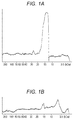
- a graph of the band intensity of the gel is shown in Fig. 1A .
- a graph of the band intensity of the gel is shown in Fig. 1B .
- a large peak was observed at a position of 15 kDa. This corresponds to the size of the lysozyme dissolved in the sample.
- a peak can be confirmed at a position of 15 kDa. However, the peak decreased greatly, compared to the peak of the PBS solution of lysozyme ( Fig. 1A ). In contrast, peaks were detected at a position of 3.5 to 10 kDa and a position of less than 3.5 kDa. This suggests that the lysozyme was fragmented. Therefore, the results of Fig. 1B show that when the method of recovering a peptide of the present disclosure is used, the lysozyme itself can be recovered and the fragment of the lysozyme can also be recovered.
Landscapes
- Chemical & Material Sciences (AREA)
- Life Sciences & Earth Sciences (AREA)
- Health & Medical Sciences (AREA)
- Molecular Biology (AREA)
- Organic Chemistry (AREA)
- Engineering & Computer Science (AREA)
- Medicinal Chemistry (AREA)
- General Health & Medical Sciences (AREA)
- Proteomics, Peptides & Aminoacids (AREA)
- Biophysics (AREA)
- Biochemistry (AREA)
- Analytical Chemistry (AREA)
- Genetics & Genomics (AREA)
- Hematology (AREA)
- Physics & Mathematics (AREA)
- Urology & Nephrology (AREA)
- Biomedical Technology (AREA)
- Immunology (AREA)
- Bioinformatics & Cheminformatics (AREA)
- Cell Biology (AREA)
- Biotechnology (AREA)
- Microbiology (AREA)
- Bioinformatics & Computational Biology (AREA)
- Food Science & Technology (AREA)
- General Physics & Mathematics (AREA)
- Pathology (AREA)
- Peptides Or Proteins (AREA)
- Investigating Or Analysing Biological Materials (AREA)
Applications Claiming Priority (1)
| Application Number | Priority Date | Filing Date | Title |
|---|---|---|---|
| JP2014010597A JP6161548B2 (ja) | 2014-01-23 | 2014-01-23 | ペプチドの回収方法 |
Publications (2)
| Publication Number | Publication Date |
|---|---|
| EP2902407A1 EP2902407A1 (en) | 2015-08-05 |
| EP2902407B1 true EP2902407B1 (en) | 2016-04-13 |
Family
ID=52434569
Family Applications (1)
| Application Number | Title | Priority Date | Filing Date |
|---|---|---|---|
| EP15152228.1A Not-in-force EP2902407B1 (en) | 2014-01-23 | 2015-01-23 | Method of recovering peptide |
Country Status (4)
| Country | Link |
|---|---|
| US (1) | US9840535B2 (enExample) |
| EP (1) | EP2902407B1 (enExample) |
| JP (1) | JP6161548B2 (enExample) |
| CN (1) | CN104807691B (enExample) |
Families Citing this family (3)
| Publication number | Priority date | Publication date | Assignee | Title |
|---|---|---|---|---|
| DE102015214414B4 (de) * | 2015-07-29 | 2020-10-22 | Berthold Technologies Gmbh & Co. Kg | Verfahren und System zur Ermittlung biologischer Eigenschaften von Proben |
| JP6675167B2 (ja) | 2015-08-28 | 2020-04-01 | シスメックス株式会社 | ペプチドの遊離方法及び回収方法、並びにペプチド遊離剤及び試薬キット |
| JP6979797B2 (ja) | 2017-05-31 | 2021-12-15 | シスメックス株式会社 | 固液分離方法、固液分離装置およびそれに用いるピペットチップ、粒子およびキット |
Family Cites Families (7)
| Publication number | Priority date | Publication date | Assignee | Title |
|---|---|---|---|---|
| JPS62266071A (ja) * | 1986-05-14 | 1987-11-18 | テルモ株式会社 | 血漿蛋白質分離装置 |
| JPH04309361A (ja) * | 1991-04-05 | 1992-10-30 | Terumo Corp | 血漿蛋白質分画分離剤および血漿蛋白質分画分離用器具 |
| EP1042465A1 (en) * | 1997-12-03 | 2000-10-11 | ZymoGenetics, Inc. | Human thyroid protein zsig45 and dna encoding same |
| WO2005052593A1 (en) * | 2003-10-29 | 2005-06-09 | The University Of Leicester | Detection |
| EP2182003B1 (en) * | 2007-08-21 | 2014-01-22 | Mmt Co., Ltd | Peptide capable of binding to immunoglobulin |
| JP5689074B2 (ja) * | 2009-11-20 | 2015-03-25 | シスメックス株式会社 | 分析対象ペプチドの保護方法および回収方法 |
| JP5636331B2 (ja) * | 2011-04-28 | 2014-12-03 | シスメックス株式会社 | ペプチドの遊離方法および回収方法 |
-
2014
- 2014-01-23 JP JP2014010597A patent/JP6161548B2/ja not_active Expired - Fee Related
-
2015
- 2015-01-14 US US14/596,334 patent/US9840535B2/en not_active Expired - Fee Related
- 2015-01-23 CN CN201510033385.6A patent/CN104807691B/zh not_active Expired - Fee Related
- 2015-01-23 EP EP15152228.1A patent/EP2902407B1/en not_active Not-in-force
Also Published As
| Publication number | Publication date |
|---|---|
| EP2902407A1 (en) | 2015-08-05 |
| CN104807691A (zh) | 2015-07-29 |
| US20150203533A1 (en) | 2015-07-23 |
| JP6161548B2 (ja) | 2017-07-12 |
| US9840535B2 (en) | 2017-12-12 |
| JP2015137978A (ja) | 2015-07-30 |
| CN104807691B (zh) | 2019-03-01 |
Similar Documents
| Publication | Publication Date | Title |
|---|---|---|
| JP2021516672A (ja) | 質量分光測定分析のためのトリプシン耐性ポリペプチドを調製するための方法 | |
| Moritz et al. | Application of 2‐D free‐flow electrophoresis/RP‐HPLC for proteomic analysis of human plasma depleted of multi high‐abundance proteins | |
| US9840535B2 (en) | Method of recovering peptide and method of detecting peptide | |
| CN102667487B (zh) | 碱性肽的检测方法及碱性肽检测用试剂 | |
| JP2013068594A (ja) | シアロ糖鎖をアミド化修飾する方法 | |
| CN104807692B (zh) | 肽的回收方法、肽的检测方法及试剂 | |
| US8716440B2 (en) | Method of liberating and recovering peptide | |
| JP6742235B2 (ja) | 質量分析を用いたタンパク質の検出方法 | |
| EP3076166B1 (en) | Method of determining temperature | |
| CN111512152B (zh) | 改善单克隆抗体的检测结果的方法 | |
| JP2022506747A (ja) | ペプチド合成 | |
| CN103561758A (zh) | 通过沉降灭活/去除凝血因子的方法 | |
| Jensen et al. | Metal-catalyzed oxidation of brain-derived neurotrophic factor (BDNF): Analytical challenges for the identification of modified sites | |
| EP3135683B1 (en) | Method of liberating peptide, method of recovering peptide, using a peptide liberating agent | |
| DiMarchi et al. | Myoglobin semisynthesis: removal of the amino-terminal valine of sperm whale myoglobin and its subsequent reincorporation | |
| Marie et al. | Characterization of chemical and physical modifications of human serum albumin by capillary zone electrophoresis | |
| Kaplan et al. | A simple amyloid typing procedure based on proteomic approach | |
| Das et al. | 8 Biophysical and biochemical characterization | |
| Kamagata et al. | Parallel folding pathway of proline‐free staphylococcal nuclease studied by the stopped‐flow double‐jump method | |
| Khajesharifi et al. | A selective colorimetric chemosensor for the detection of glutathione in some real samples |
Legal Events
| Date | Code | Title | Description |
|---|---|---|---|
| PUAI | Public reference made under article 153(3) epc to a published international application that has entered the european phase |
Free format text: ORIGINAL CODE: 0009012 |
|
| 17P | Request for examination filed |
Effective date: 20150123 |
|
| AK | Designated contracting states |
Kind code of ref document: A1 Designated state(s): AL AT BE BG CH CY CZ DE DK EE ES FI FR GB GR HR HU IE IS IT LI LT LU LV MC MK MT NL NO PL PT RO RS SE SI SK SM TR |
|
| AX | Request for extension of the european patent |
Extension state: BA ME |
|
| 17P | Request for examination filed |
Effective date: 20150717 |
|
| RBV | Designated contracting states (corrected) |
Designated state(s): AL AT BE BG CH CY CZ DE DK EE ES FI FR GB GR HR HU IE IS IT LI LT LU LV MC MK MT NL NO PL PT RO RS SE SI SK SM TR |
|
| GRAP | Despatch of communication of intention to grant a patent |
Free format text: ORIGINAL CODE: EPIDOSNIGR1 |
|
| RIC1 | Information provided on ipc code assigned before grant |
Ipc: C07K 1/14 20060101AFI20150915BHEP |
|
| INTG | Intention to grant announced |
Effective date: 20150928 |
|
| GRAS | Grant fee paid |
Free format text: ORIGINAL CODE: EPIDOSNIGR3 |
|
| GRAA | (expected) grant |
Free format text: ORIGINAL CODE: 0009210 |
|
| AK | Designated contracting states |
Kind code of ref document: B1 Designated state(s): AL AT BE BG CH CY CZ DE DK EE ES FI FR GB GR HR HU IE IS IT LI LT LU LV MC MK MT NL NO PL PT RO RS SE SI SK SM TR |
|
| REG | Reference to a national code |
Ref country code: GB Ref legal event code: FG4D |
|
| REG | Reference to a national code |
Ref country code: AT Ref legal event code: REF Ref document number: 790037 Country of ref document: AT Kind code of ref document: T Effective date: 20160415 Ref country code: CH Ref legal event code: EP |
|
| REG | Reference to a national code |
Ref country code: IE Ref legal event code: FG4D |
|
| REG | Reference to a national code |
Ref country code: DE Ref legal event code: R096 Ref document number: 602015000011 Country of ref document: DE |
|
| REG | Reference to a national code |
Ref country code: LT Ref legal event code: MG4D |
|
| REG | Reference to a national code |
Ref country code: AT Ref legal event code: MK05 Ref document number: 790037 Country of ref document: AT Kind code of ref document: T Effective date: 20160413 |
|
| REG | Reference to a national code |
Ref country code: NL Ref legal event code: MP Effective date: 20160413 |
|
| PG25 | Lapsed in a contracting state [announced via postgrant information from national office to epo] |
Ref country code: PL Free format text: LAPSE BECAUSE OF FAILURE TO SUBMIT A TRANSLATION OF THE DESCRIPTION OR TO PAY THE FEE WITHIN THE PRESCRIBED TIME-LIMIT Effective date: 20160413 Ref country code: FI Free format text: LAPSE BECAUSE OF FAILURE TO SUBMIT A TRANSLATION OF THE DESCRIPTION OR TO PAY THE FEE WITHIN THE PRESCRIBED TIME-LIMIT Effective date: 20160413 Ref country code: NL Free format text: LAPSE BECAUSE OF FAILURE TO SUBMIT A TRANSLATION OF THE DESCRIPTION OR TO PAY THE FEE WITHIN THE PRESCRIBED TIME-LIMIT Effective date: 20160413 Ref country code: LT Free format text: LAPSE BECAUSE OF FAILURE TO SUBMIT A TRANSLATION OF THE DESCRIPTION OR TO PAY THE FEE WITHIN THE PRESCRIBED TIME-LIMIT Effective date: 20160413 Ref country code: NO Free format text: LAPSE BECAUSE OF FAILURE TO SUBMIT A TRANSLATION OF THE DESCRIPTION OR TO PAY THE FEE WITHIN THE PRESCRIBED TIME-LIMIT Effective date: 20160713 |
|
| PG25 | Lapsed in a contracting state [announced via postgrant information from national office to epo] |
Ref country code: ES Free format text: LAPSE BECAUSE OF FAILURE TO SUBMIT A TRANSLATION OF THE DESCRIPTION OR TO PAY THE FEE WITHIN THE PRESCRIBED TIME-LIMIT Effective date: 20160413 Ref country code: GR Free format text: LAPSE BECAUSE OF FAILURE TO SUBMIT A TRANSLATION OF THE DESCRIPTION OR TO PAY THE FEE WITHIN THE PRESCRIBED TIME-LIMIT Effective date: 20160714 Ref country code: AT Free format text: LAPSE BECAUSE OF FAILURE TO SUBMIT A TRANSLATION OF THE DESCRIPTION OR TO PAY THE FEE WITHIN THE PRESCRIBED TIME-LIMIT Effective date: 20160413 Ref country code: LV Free format text: LAPSE BECAUSE OF FAILURE TO SUBMIT A TRANSLATION OF THE DESCRIPTION OR TO PAY THE FEE WITHIN THE PRESCRIBED TIME-LIMIT Effective date: 20160413 Ref country code: SE Free format text: LAPSE BECAUSE OF FAILURE TO SUBMIT A TRANSLATION OF THE DESCRIPTION OR TO PAY THE FEE WITHIN THE PRESCRIBED TIME-LIMIT Effective date: 20160413 Ref country code: RS Free format text: LAPSE BECAUSE OF FAILURE TO SUBMIT A TRANSLATION OF THE DESCRIPTION OR TO PAY THE FEE WITHIN THE PRESCRIBED TIME-LIMIT Effective date: 20160413 Ref country code: HR Free format text: LAPSE BECAUSE OF FAILURE TO SUBMIT A TRANSLATION OF THE DESCRIPTION OR TO PAY THE FEE WITHIN THE PRESCRIBED TIME-LIMIT Effective date: 20160413 Ref country code: PT Free format text: LAPSE BECAUSE OF FAILURE TO SUBMIT A TRANSLATION OF THE DESCRIPTION OR TO PAY THE FEE WITHIN THE PRESCRIBED TIME-LIMIT Effective date: 20160816 |
|
| REG | Reference to a national code |
Ref country code: FR Ref legal event code: PLFP Year of fee payment: 3 |
|
| PG25 | Lapsed in a contracting state [announced via postgrant information from national office to epo] |
Ref country code: IT Free format text: LAPSE BECAUSE OF FAILURE TO SUBMIT A TRANSLATION OF THE DESCRIPTION OR TO PAY THE FEE WITHIN THE PRESCRIBED TIME-LIMIT Effective date: 20160413 Ref country code: BE Free format text: LAPSE BECAUSE OF FAILURE TO SUBMIT A TRANSLATION OF THE DESCRIPTION OR TO PAY THE FEE WITHIN THE PRESCRIBED TIME-LIMIT Effective date: 20160413 |
|
| REG | Reference to a national code |
Ref country code: DE Ref legal event code: R097 Ref document number: 602015000011 Country of ref document: DE |
|
| PG25 | Lapsed in a contracting state [announced via postgrant information from national office to epo] |
Ref country code: SK Free format text: LAPSE BECAUSE OF FAILURE TO SUBMIT A TRANSLATION OF THE DESCRIPTION OR TO PAY THE FEE WITHIN THE PRESCRIBED TIME-LIMIT Effective date: 20160413 Ref country code: CZ Free format text: LAPSE BECAUSE OF FAILURE TO SUBMIT A TRANSLATION OF THE DESCRIPTION OR TO PAY THE FEE WITHIN THE PRESCRIBED TIME-LIMIT Effective date: 20160413 Ref country code: RO Free format text: LAPSE BECAUSE OF FAILURE TO SUBMIT A TRANSLATION OF THE DESCRIPTION OR TO PAY THE FEE WITHIN THE PRESCRIBED TIME-LIMIT Effective date: 20160413 Ref country code: DK Free format text: LAPSE BECAUSE OF FAILURE TO SUBMIT A TRANSLATION OF THE DESCRIPTION OR TO PAY THE FEE WITHIN THE PRESCRIBED TIME-LIMIT Effective date: 20160413 Ref country code: EE Free format text: LAPSE BECAUSE OF FAILURE TO SUBMIT A TRANSLATION OF THE DESCRIPTION OR TO PAY THE FEE WITHIN THE PRESCRIBED TIME-LIMIT Effective date: 20160413 |
|
| PLBE | No opposition filed within time limit |
Free format text: ORIGINAL CODE: 0009261 |
|
| STAA | Information on the status of an ep patent application or granted ep patent |
Free format text: STATUS: NO OPPOSITION FILED WITHIN TIME LIMIT |
|
| PG25 | Lapsed in a contracting state [announced via postgrant information from national office to epo] |
Ref country code: SM Free format text: LAPSE BECAUSE OF FAILURE TO SUBMIT A TRANSLATION OF THE DESCRIPTION OR TO PAY THE FEE WITHIN THE PRESCRIBED TIME-LIMIT Effective date: 20160413 |
|
| 26N | No opposition filed |
Effective date: 20170116 |
|
| PG25 | Lapsed in a contracting state [announced via postgrant information from national office to epo] |
Ref country code: SI Free format text: LAPSE BECAUSE OF FAILURE TO SUBMIT A TRANSLATION OF THE DESCRIPTION OR TO PAY THE FEE WITHIN THE PRESCRIBED TIME-LIMIT Effective date: 20160413 |
|
| PG25 | Lapsed in a contracting state [announced via postgrant information from national office to epo] |
Ref country code: MC Free format text: LAPSE BECAUSE OF FAILURE TO SUBMIT A TRANSLATION OF THE DESCRIPTION OR TO PAY THE FEE WITHIN THE PRESCRIBED TIME-LIMIT Effective date: 20160413 |
|
| REG | Reference to a national code |
Ref country code: IE Ref legal event code: MM4A |
|
| PG25 | Lapsed in a contracting state [announced via postgrant information from national office to epo] |
Ref country code: LU Free format text: LAPSE BECAUSE OF NON-PAYMENT OF DUE FEES Effective date: 20170123 |
|
| REG | Reference to a national code |
Ref country code: FR Ref legal event code: PLFP Year of fee payment: 4 |
|
| PG25 | Lapsed in a contracting state [announced via postgrant information from national office to epo] |
Ref country code: IE Free format text: LAPSE BECAUSE OF NON-PAYMENT OF DUE FEES Effective date: 20170123 |
|
| REG | Reference to a national code |
Ref country code: CH Ref legal event code: PL |
|
| PG25 | Lapsed in a contracting state [announced via postgrant information from national office to epo] |
Ref country code: MT Free format text: LAPSE BECAUSE OF NON-PAYMENT OF DUE FEES Effective date: 20170123 |
|
| PG25 | Lapsed in a contracting state [announced via postgrant information from national office to epo] |
Ref country code: AL Free format text: LAPSE BECAUSE OF FAILURE TO SUBMIT A TRANSLATION OF THE DESCRIPTION OR TO PAY THE FEE WITHIN THE PRESCRIBED TIME-LIMIT Effective date: 20160413 |
|
| PG25 | Lapsed in a contracting state [announced via postgrant information from national office to epo] |
Ref country code: LI Free format text: LAPSE BECAUSE OF NON-PAYMENT OF DUE FEES Effective date: 20180131 Ref country code: CH Free format text: LAPSE BECAUSE OF NON-PAYMENT OF DUE FEES Effective date: 20180131 |
|
| PG25 | Lapsed in a contracting state [announced via postgrant information from national office to epo] |
Ref country code: HU Free format text: LAPSE BECAUSE OF FAILURE TO SUBMIT A TRANSLATION OF THE DESCRIPTION OR TO PAY THE FEE WITHIN THE PRESCRIBED TIME-LIMIT; INVALID AB INITIO Effective date: 20150123 |
|
| PG25 | Lapsed in a contracting state [announced via postgrant information from national office to epo] |
Ref country code: BG Free format text: LAPSE BECAUSE OF FAILURE TO SUBMIT A TRANSLATION OF THE DESCRIPTION OR TO PAY THE FEE WITHIN THE PRESCRIBED TIME-LIMIT Effective date: 20160413 |
|
| PG25 | Lapsed in a contracting state [announced via postgrant information from national office to epo] |
Ref country code: CY Free format text: LAPSE BECAUSE OF FAILURE TO SUBMIT A TRANSLATION OF THE DESCRIPTION OR TO PAY THE FEE WITHIN THE PRESCRIBED TIME-LIMIT Effective date: 20160413 |
|
| PG25 | Lapsed in a contracting state [announced via postgrant information from national office to epo] |
Ref country code: MK Free format text: LAPSE BECAUSE OF FAILURE TO SUBMIT A TRANSLATION OF THE DESCRIPTION OR TO PAY THE FEE WITHIN THE PRESCRIBED TIME-LIMIT Effective date: 20160413 |
|
| PG25 | Lapsed in a contracting state [announced via postgrant information from national office to epo] |
Ref country code: TR Free format text: LAPSE BECAUSE OF FAILURE TO SUBMIT A TRANSLATION OF THE DESCRIPTION OR TO PAY THE FEE WITHIN THE PRESCRIBED TIME-LIMIT Effective date: 20160413 |
|
| PG25 | Lapsed in a contracting state [announced via postgrant information from national office to epo] |
Ref country code: IS Free format text: LAPSE BECAUSE OF FAILURE TO SUBMIT A TRANSLATION OF THE DESCRIPTION OR TO PAY THE FEE WITHIN THE PRESCRIBED TIME-LIMIT Effective date: 20160813 |
|
| PGFP | Annual fee paid to national office [announced via postgrant information from national office to epo] |
Ref country code: FR Payment date: 20211217 Year of fee payment: 8 Ref country code: GB Payment date: 20211206 Year of fee payment: 8 |
|
| PGFP | Annual fee paid to national office [announced via postgrant information from national office to epo] |
Ref country code: DE Payment date: 20211130 Year of fee payment: 8 |
|
| REG | Reference to a national code |
Ref country code: DE Ref legal event code: R119 Ref document number: 602015000011 Country of ref document: DE |
|
| GBPC | Gb: european patent ceased through non-payment of renewal fee |
Effective date: 20230123 |
|
| PG25 | Lapsed in a contracting state [announced via postgrant information from national office to epo] |
Ref country code: GB Free format text: LAPSE BECAUSE OF NON-PAYMENT OF DUE FEES Effective date: 20230123 Ref country code: DE Free format text: LAPSE BECAUSE OF NON-PAYMENT OF DUE FEES Effective date: 20230801 |
|
| PG25 | Lapsed in a contracting state [announced via postgrant information from national office to epo] |
Ref country code: FR Free format text: LAPSE BECAUSE OF NON-PAYMENT OF DUE FEES Effective date: 20230131 |