EP2884280B1 - Verfahren zur Bewertung des Duftverhaltens von Duftstoffen und Duftstoffmischungen - Google Patents
Verfahren zur Bewertung des Duftverhaltens von Duftstoffen und Duftstoffmischungen Download PDFInfo
- Publication number
- EP2884280B1 EP2884280B1 EP13197310.9A EP13197310A EP2884280B1 EP 2884280 B1 EP2884280 B1 EP 2884280B1 EP 13197310 A EP13197310 A EP 13197310A EP 2884280 B1 EP2884280 B1 EP 2884280B1
- Authority
- EP
- European Patent Office
- Prior art keywords
- odorants
- ors
- olfactory
- odorant
- receptor
- Prior art date
- Legal status (The legal status is an assumption and is not a legal conclusion. Google has not performed a legal analysis and makes no representation as to the accuracy of the status listed.)
- Not-in-force
Links
- 0 CC1C(C2)*2C(C)(C)CC1 Chemical compound CC1C(C2)*2C(C)(C)CC1 0.000 description 2
- UTPHVTOEOCZQJU-UHFFFAOYSA-N CC1(CC2)CC2CC1 Chemical compound CC1(CC2)CC2CC1 UTPHVTOEOCZQJU-UHFFFAOYSA-N 0.000 description 1
Images




Classifications
-
- G—PHYSICS
- G01—MEASURING; TESTING
- G01N—INVESTIGATING OR ANALYSING MATERIALS BY DETERMINING THEIR CHEMICAL OR PHYSICAL PROPERTIES
- G01N33/00—Investigating or analysing materials by specific methods not covered by groups G01N1/00 - G01N31/00
- G01N33/48—Biological material, e.g. blood, urine; Haemocytometers
- G01N33/50—Chemical analysis of biological material, e.g. blood, urine; Testing involving biospecific ligand binding methods; Immunological testing
- G01N33/5005—Chemical analysis of biological material, e.g. blood, urine; Testing involving biospecific ligand binding methods; Immunological testing involving human or animal cells
- G01N33/5008—Chemical analysis of biological material, e.g. blood, urine; Testing involving biospecific ligand binding methods; Immunological testing involving human or animal cells for testing or evaluating the effect of chemical or biological compounds, e.g. drugs, cosmetics
- G01N33/502—Chemical analysis of biological material, e.g. blood, urine; Testing involving biospecific ligand binding methods; Immunological testing involving human or animal cells for testing or evaluating the effect of chemical or biological compounds, e.g. drugs, cosmetics for testing non-proliferative effects
- G01N33/5041—Chemical analysis of biological material, e.g. blood, urine; Testing involving biospecific ligand binding methods; Immunological testing involving human or animal cells for testing or evaluating the effect of chemical or biological compounds, e.g. drugs, cosmetics for testing non-proliferative effects involving analysis of members of signalling pathways
-
- C—CHEMISTRY; METALLURGY
- C12—BIOCHEMISTRY; BEER; SPIRITS; WINE; VINEGAR; MICROBIOLOGY; ENZYMOLOGY; MUTATION OR GENETIC ENGINEERING
- C12Q—MEASURING OR TESTING PROCESSES INVOLVING ENZYMES, NUCLEIC ACIDS OR MICROORGANISMS; COMPOSITIONS OR TEST PAPERS THEREFOR; PROCESSES OF PREPARING SUCH COMPOSITIONS; CONDITION-RESPONSIVE CONTROL IN MICROBIOLOGICAL OR ENZYMOLOGICAL PROCESSES
- C12Q1/00—Measuring or testing processes involving enzymes, nucleic acids or microorganisms; Compositions therefor; Processes of preparing such compositions
- C12Q1/66—Measuring or testing processes involving enzymes, nucleic acids or microorganisms; Compositions therefor; Processes of preparing such compositions involving luciferase
-
- G—PHYSICS
- G01—MEASURING; TESTING
- G01N—INVESTIGATING OR ANALYSING MATERIALS BY DETERMINING THEIR CHEMICAL OR PHYSICAL PROPERTIES
- G01N33/00—Investigating or analysing materials by specific methods not covered by groups G01N1/00 - G01N31/00
- G01N33/48—Biological material, e.g. blood, urine; Haemocytometers
- G01N33/50—Chemical analysis of biological material, e.g. blood, urine; Testing involving biospecific ligand binding methods; Immunological testing
- G01N33/53—Immunoassay; Biospecific binding assay; Materials therefor
- G01N33/566—Immunoassay; Biospecific binding assay; Materials therefor using specific carrier or receptor proteins as ligand binding reagents where possible specific carrier or receptor proteins are classified with their target compounds
-
- G—PHYSICS
- G01—MEASURING; TESTING
- G01N—INVESTIGATING OR ANALYSING MATERIALS BY DETERMINING THEIR CHEMICAL OR PHYSICAL PROPERTIES
- G01N2500/00—Screening for compounds of potential therapeutic value
- G01N2500/04—Screening involving studying the effect of compounds C directly on molecule A (e.g. C are potential ligands for a receptor A, or potential substrates for an enzyme A)
Definitions
- the present invention belongs to the area of aromas and scents and refers to a new method for evaluating and identifying the scent performance of perfumes or perfumes mixtures by exposing them to specific olfactory receptors.
- the scope of protection is defined by the appended claims.
- the human olfactory system has the remarkable capacity to recognize and discriminate a large number of different chemical components and odor molecules.
- the olfactory system is effective on social and sexual behavior and quality of life because the odorant can evoke memories and emotions or influence our mood.
- Odorant perception starts with the chemical interaction between an odorant molecule and an olfactory receptor expressed in an olfactory sensory neuron (OSN). These neurons are located in the olfactory epithelium (OE), which is covered with a mucous layer which supplies lipid/protein-rich secretions for the OE surface.
- OSN olfactory sensory neuron
- Most parts of the human nasal cavity consist of ciliated columnar respiratory epithelial tissue.
- the upper section of the nasal cavity, lining the cribriform plate, consists of OSNs.
- OSNs are bipolar cells with a single unbranched dendrite with axons penetrating through the cribriform plate to the olfactory bulb of the brain.
- OB olfactory bulb
- OR olfactory receptor
- the olfactory system can differentiate among thousands of chemical components by olfactory receptors as one of the key components of the molecular decoding device of the nose.
- ORs such as visual opsins, bitter and sweet taste receptors (TAS2R1 and TAS1R1) and vomeronasal receptors (V1Rs, V2Rs and V3Rs)
- GPCRs G-protein-coupled receptors
- This gene super family is organized into 18 gene families and 300 subfamilies and localized in multiple clusters of varying sizes distributed on all autosomes except chromosomes 20 and Y.
- the two largest OR gene clusters are located on chromosomes 11 with 38 functional genes on 11q and 44 functional genes on 11p.
- OR genes can be grouped into a particular family and furthermore into a subfamily. ORs with >40% protein sequence identity are considered to be within the same family, and if they share >60%, they belong to the same subfamily. In accordance with this concept, OR genes are classified by the HUGO Gene Nomenclature Committee (HGNC).
- ORs are ⁇ 310 amino acids long on average.
- the sequence of OR genes revealed remarkable diversity in transmembrane (TM) helices 3 to 6 between paralogs, likely accounting for the high diversity in ligand specificity.
- TM transmembrane
- One such motif is 'MAYDRYVAIC', located at the junction of TM3 and the intracellular loop between TM3 and TM4. Within this motif, the stretch of three amino acids, 'DRY' (aspartic acid-arginine-tyrosine), is highly conserved among rhodopsin-like GPCRs.
- the DRY motif is possibly important for G-protein coupling. It is supposed that in the OR repertoire, contact positions show pronounced variability between paralogs.
- SPG Segregating Pseudogenes
- Human OR contains a high number of pseudogenes, whereby more than 50% of the loci are nonfunctional due to frame-disrupting mutations.
- a fraction of the human olfactory receptors could be segregated between an intact and pseudogene form of olfactory receptor.
- some olfactory receptor genes display both functional and non-functional allels, which are called segregating pseudogenes. They are explained as genes that segregate in populations between intact genes and pseudogenes due to a disruptive disruption single nucleotide polymorphism (SNP).
- SNP single nucleotide polymorphism
- CNVs caused by genomic rearrangements can generate phenotypes by different molecular mechanisms such as: gene dosage, gene interruption, gene fusion and position effects or unmasking of recessive alleles.
- Some of the association between CNVs and phenotype variation are involved in human diseases.
- the best-known example is Down syndrome caused by trisomy of human chromosome 21; another would be thalasemia due to alpha globin gene rearrangements.
- CNVs have been defined as "a segment of DNA that is 1 kb or larger and is present at a variable copy number in comparison with a reference genome". This explanation was modified, based on a functional definition, and it was suggested that we should choose an average exon size ( ⁇ 100 bp) as a parameter for defining CNV. Copy number variations are a source of genetic diversity in humans. When the breakpoint of a deletion, insertion or duplication is located within a functional gene, it may interrupt the gene and cause a loss of function by inactivating a gene as described by red-green opsin genes and color blindness.
- OR loci display an extensive range of locus copy-numbers across individuals, with zero to nine copies in OR loci.
- a recent study by Olender in 2012 showed an increased number of CNVs to 66% of intact OR loci.
- 438 have a frame-disrupting pseudogene apparently fixed in the entire population.
- 271 (66%) have at least one allele lacking an intact open reading frame, including frame disruptions and deletion CNV alleles.
- CNVs could be one of the reasons for the significant variations in olfactory capabilities among human individuals. However, the relation of CNV to odor perception remains to be evaluated.
- the canonical pathway of signal transduction in OSNs of mammals is composed of the OR as one variable component and four constant elements: the G ⁇ olf-containing heterotrimeric G-protein; adenylyl cyclase, which produces the second messenger cAMP; a cyclic nucleotide-gated cation channel and a Ca-activated chloride channel.
- Olfactory sensory neurons express a G-protein with a specific subunit named Gaolf. With binding of an agonist to the OR, Gaolf activates an olfaction-specific adenylate cyclase that leads to activation of cAMP. Following this cascade, cyclic nucleotide-gated channels (CNG) will be opened by increasing of cAMP level.
- CNG cyclic nucleotide-gated channels
- Inactive OSNs normally maintain a resting potential across their plasma membrane of about -65 mV (inside with respect to outside).
- the opening of the channel is depolarised of neuron membranes by influx of sodium (Na+) and calcium (Ca2+) ions.
- the Ca2+ -influx also causes the opening of a Ca2+-dependent-Cl--channel, which enhances the depolarising of the cell membrane and generates action potentials. along the sensory axons, leading to signal transmissions to the olfactory bulbs.
- adenylyl cyclase (AC)/cAMP pathway is essential for olfactory responses in vertebrates.
- odorants activate more than one transduction cascade; IP3 has also been shown to be an efficient second messenger.
- IP3 has also been shown to be an efficient second messenger.
- odors did not elicit a rise in cAMP in biochemical assays. Instead, such 'non-cAMP odors' appeared to induce phospho-inositide signalling in olfactory cells.
- inositol 1, 4, 5-trisphosphate (InsP3) was reported for a variety of species.
- phosphatidyl-inositide-related signaling proteins including phospholipase C beta-2 (PLC b2), InsP3-receptor type III (InsP3R-III) and classical transient receptor potential channel 6 (TRPC6), are co-localised in a distinct population of microvillus cells in the olfactory epithelium of mammals. They showed the presence of a novel class of secondary chemosensory cells in the olfactory epithelium of mammals that utilize phosphatidyl-inositides as second messengers in signal transduction.
- PLC b2 phospholipase C beta-2
- InsP3R-III InsP3-receptor type III
- TRPC6 classical transient receptor potential channel 6
- OR function has improved slowly due to a lack of suitable heterologous systems for expression and assays on odorant responses.
- Expression of GPCRs is a complex process that includes protein folding, posttranslational modifications, and transport through cellular compartments including the endoplasmic reticulum and Golgi apparatus.
- One main reason for the inadequate functional expression of ORs is that the receptors do not reach the cell membrane of heterologous cells. They remain in the endoplasmic reticulum as a result of inefficient folding and poor coupling to the export machinery, combined with aggregation and degradation through both proteosomal and autophagic pathways.
- Tagged ORs could be co-transfected in heterologous cells with the G ⁇ subunits.
- the dissociated G ⁇ and G ⁇ subunits activate a widespread variety of effectors, including adenylyl cyclases, phospholipases and plasma membrane channels.
- the primary effectors of Gs and Gq coupled signalling pathways are adenylyl cyclase and phospholipase C, respectively (Chen et al. 1995).
- the Gs subunit usually involves the activation of adenylyl cyclase and measurement of cAMP concentration by radioimmunoassay, while activation of the Gq subunit is commonly assayed by measurement of the production of inositol triphosphate or diacylglycerol from phosphatidiylinositol 4,5-bisphosphate or by changes in intracellular calcium.
- RTPs receptor transporting proteins 1 and 2
- REEP receptor expression enhancing protein
- Ric-8B As a known GEF expressed in olfactory sensory neurons, is able to interact with G ⁇ olf. GEFs catalyse the exchange of GDP for GTP to generate an activated form of G ⁇ , which is then able to activate a variety of effectors.
- Ric-8A and Ric-8B are GEFs in the mammalian olfactory system.
- Ric8A can interact with the Gaq, Gai and G ⁇ o classes of G ⁇ subunits
- Ric-8B interacts with the Gas class. It has been shown that Ric-8 (A and B) promotes efficient functional expression of ORs in heterologous systems. It has also been shown that a myristoylation sequence-conjugated mutant of Ric-8A (Myr-Ric-8A) could be used as a signal amplifier and Myr-Ric-8A greatly enhances Ga15-mediated Ca2+responses of ORs in HEK293 cells. Myr-Ric-8A as a cofactor that enhances OR-mediated Ca2+ signaling in HEK293 cells should be helpful in functional expression of ORs in heterologous cells by using Ca-imaging.
- Hsc70t which belongs to the Hsp70 family of genes, is expressed exclusively after meiosis in mouse spermatogenesis. In addition, it might be involved in the folding or trafficking of olfactory receptors.
- Hsc70t expression also changes the quantity of cells functionally expressing olfactory receptors at the cell surface so the number of cells responding to odorants in Ca-imaging experiments will be increased significantly.
- odorant is a substance capable of eliciting an olfactory response whereas odor is the sensation resulting from stimulation of the olfactory organs. Odors play an important part in our everyday life, from appetite stimulation to serving as warning signals.
- the general criterions for an odorant are: it should be volatile, hydrophobic and have a molecular weight less than approximately 300 Daltons.
- odor threshold should be noted. This term used to determine the lowest concentration of particular odorant to which animals (humans) responded 50 per cent of the time to repeated presentations of an odorant.
- Thresholds for odorants vary greatly between individual persons and it is base of classification of odorants in terms of the intensity to weak and strong according to efficacy and affinity.
- the perception of odorants always happens as a complex mixture of different odor molecules.
- the smell of a rose constitutes 260 chemical components.
- the magnitude of mixed stimuli is perceived as the sum of the magnitudes of the individual stimuli; this property is known as additivity.
- the estimated intensity of the smell of the mixture of two odorants is frequently perceived as being non-additive. This phenomenon is called "counteracting".
- Odorant perception is most variable sense among different individuals. This variation is reflected in olfactory dysfunctions and normal physiological variation such as specific anosmia.
- olfactory dysfunction Distribution of olfactory dysfunction in human population is a matter of debate. However, most studies reported frequencies of 1% to 3% of chemosensory disorders. Different reasons are reported as factors in occurrence of smell dysfunction. One of the main reasons of olfactory dysfunction is a process that directly affects and impairs either the olfactory epithelium or olfactory pathways. Olfactory disorders can be categorized in different groups:
- anosmia is androstenone (5 ⁇ -androst-16-en-3-one), with 30% rates of specific anosmia, some individuals with normal sense of smell are unable to detect the odor of androstenone (5 ⁇ -androst-16-en-3-one) at the concentrations tested, and those who are able to perceive it describe the odor in different ways as: sweaty, urinous, musky, sweet, or even perfume-like.
- Olfactory receptors are the largest group of G protein-coupled receptors. These receptors are presenting worldwide with genetic variations which are hypothesized to influence on their functions. However, still just a small number of agonists were identified out of thousands of odorants. Due to this compelling complexity, the identification of receptor-ligand pairs was and is still in its infancy and just a handful of human cognate receptor-ligand pairs are known so far.
- the problem underlying the present invention has been to relate specific anosmias (encountered in various populations) with the underlying gene mutations and to develop a method for evaluating the scent performance of perfumes or perfume mixtures, in particular for those products which are known to be recognized by a limited number of individuals only.
- Another object of the present invention has been to identify deorphanized receptors to address several distinct questions such as quantification of odorant similarity, quantification of receptor similarity and receptor code of an odorant is composed of ORs that are "narrowly tuned” to a few odorants or “broadly tuned” to recognize many odorants.
- Object of the present invention is a method for evaluating the scent performance of perfumes or perfume mixtures, wherein at least one odorant is brought into contact with the olfactory receptor OR1B1 and measuring the response of the receptor.
- the OR has the capability to respond to one or more odorants, in particular to those odorants which are subject to anosmia, that means they are known to be recognized only by a limited number of individuals only.
- OR genes repertory is one of the most genetically diverse regions in the human genome and it contains thousands of deletions or duplications of DNA segments greater than 1 Kb in size (CNV), which are present in some individuals but not in others, and also a large number of single nucleotide polymorphisms (SNPs), some of which lead to the inactivation of OR genes (i.e. segregating pseudogenes).
- CNV 1 Kb in size
- SNPs single nucleotide polymorphisms
- OR1B1, OR2L8, OR4X2, OR8D2 and OR8B4 were deorphanized as SPGs with minor allel frequency (MAF of SNPs occurred as a point mutation in a highly conserved amino acid) of 33%, 22%, 16%, 50% and 26% respectively for odorants including 3-hydroxy-2-methyl-4pyran, Calone, androstenone, testosterone, Yasamber, Timbrol, 2-aminoacetophenone, Anisic aldehyde, aldehyde C6, alcohol C6 and Muguet alcohol.
- androstenone is one of the best characterised chemical components.
- Androstenone (5a-androst-16-en-3-one) is reported as an odorous steroid derived from testosterone, and is variously perceived by different individuals as offensive (“sweaty, urinous”), pleasant ("sweet, floral”) or odorless. Depending on the study, between 11% and 75% of the population is unable to detect the odor of androstenone. This variation in the ability to perceive androstenone might suggest that androstenone perception is in part determined genetically. As some family studies have shown, androstenone thresholds are more similar among identical twins compared with fraternal twins (0.95 and 0.22, respectively) and concordance for the ability to smell androstenone is reported to be considerably higher among identical than fraternal twins (100% and 61%, respectively).
- OR7D4 a human odorant receptor
- OR1B1-574 is a mutant form of OR1B1 that converts the active gene of OR1B1 to pseudogene (Arginine change to termination amino acid) with a frequency of 33%.
- OR1B1-688 and OR1B1-789 are missense SNPs.
- OR1B1-688 and OR1B1-789 did not show any significant difference in evoke responses to androstenone and testosterone in comparison with OR1B1-WT; however, OR1B1-574 showed that mutations on SNP in position 574, which change amino acids into extracellular loop 2 and convert OR1B1 to pseudogene, severely impair OR1B1 function. It should be noted that OR1B1 responded to androstenone and, in addition, also responded to 3-hydrtoxy-2-methyl-4-pyran and Calone, thus cannot be regarded as a specific receptor for androstenone, but the other 73 ORs did not respond to this odorant.
- the comparative analysis indicates that the genetic variations of OR10Q1 and OR4K2 as deorphanized receptors for pentadecanolide are different in comparison with specific anosmia rates of pentadecanolide in the human population (Tab. 4.1).
- the 76 olfactory receptors including SPGs and CNVs
- three olfactory receptors in the CNV group responded to the musk group.
- OR4P4 that responded to Globalide with a 40% deletion rate in the human population
- OR10Q1 and OR4K2 responded to Pentadecanolide.
- Table A Genetic variation rates of olfactory receptors in comparison with anosmia occurrence ORs Genetic variation [%] Ligands Primary odor Anosmia occurrence [%] OR1B1 33 5a-androst-16-ene-3-one urinous 47 OR4K2 54 isobutyraldehyde malty 36 OR10Q1 0.6 w-pentadecalactone malty 12 OR12D2 37 Isovaleric acid sweaty 3
- OR1B1 may play a role in the urinous anosmia while the genetic variations of OR4K2 (54%), OR10Q1 (0.6%) and OR12D2 (37%) are different in comparison with the specific anosmia rates of musky (12%), malty (36%) or of sweat odor (3%).
- this analysis is based on the hypothesis of the theory "specific anosmia and the concept of primary odorants".
- OR2L8 responded to Ysamber K and Timbrol. According to results of the experiments, 25% (7 of 32) of odorants responded to more than one OR as segt out in Table B: Table B Odorants that respond to more than one OR Odorant Olfactory Receptor Ysamber K OR2L8; OR4K5 Octadecanal OR4C16; OR5L1 Beta-damascone OR5L1; OR4C3 Hexanal OR8D2; OR10A6 Muguet Alcohol OR8D2; OR10A6 2,4,6-trichloranisole OR52B4; OR4E2 3-phenylpropyl aldehyde OR4E2; OR4K2
- Some olfactory receptors are "generalists" which bind a variety of ligands and reveal broad recognition abilities and large plasticity of their binding cavity while others are reported as "specialists” that are narrowly tuned to a small number of ligands. Results of current study showed that 77% (14/18) of our receptors are broadly tuned and do not respond only to one special odorant or chemical component.
- the sense of smell allows us to perceive volatile chemicals present in our environment. The almost unlimited numbers of odorant molecules have to be accurately understood by the human nose. To this end, our sense of smell has to adapt to concept wide variety of odorants and chemical components by limited numbers of active ORs. We perceive odors through a combinatorial code involving less than 400 receptors.
- ORs are presented as responsible for specific odorants (4/18) and could respond to more chemical components but because of the small number of odorants that we used in our study we were not able to show other possible odorants.
- OR8B4 and OR8D2 are activated by Muguet alcohol, and alcohol C6 elicited a response in OR8D2 and OR10A6.
- Aldehyde C6, alcohol C6, Graniol and Octanal are found to act as ligands for OR2W1; Graniol is also discovered as a ligand for OR2M7.
- OR51E2 and OR51L1 are found to be receptors for propionic acid and n-hexanoic acid, respectively.
- OR11H4, OR11H6 and OR11H7 were identified in a genetically based study as receptors for isovaleric acid. Although not many odorants could activate more than one OR but in combination with previous deorphanization results it is obvious that the relation between ORs and odorants is complex and that one odorant could activate with more than one receptor, according to the hypothesis known as "combinatory code", which allows for the perception of unlimited odorants by different combination of ORs.
- 5a-androst-16-en-3one and w-pentadecalactone were chosen as reference odorants for urinous and musky odorants respectively. These two odorants have molecular weights in the same general range and a similar orientation of functional groups and also have the same molecular thickness. But the androstenone molecule is longer and narrower, whereas the pentadecalactone is shorter and wider. It is suggested that these differences is origin of differentiate between urinous and musky odorants in the human olfactory organ. In our experiments we found different receptors to be responsible ORs for androstenone and pentadecalactone. The separation of responding ORs for these two primary odorants could be part of a possible discriminatory mechanism.
- OR1B1 which deorphanized for androstenone responded to testosterone as a steroid hormone from the androgen group. Androstenone is a steroid and a metabolite of testosterone. Testosterone and androstenone have similar general chemical structures with the same number of CAN.
- OR1B1 is expressed in prostate and brain tissues.
- Human ORs (SPGs /CNVs) were amplified from human genomic DNA by PCR using specific primers, which amplify the complete open reading frame and contain restriction sites(EcoRI, Notl, Apal and SalI) for further subcloning into pCI expression vector (Invitrogen). Amplified ORs were cloned in multiple cloning site of pCI vector contain with Rho-tag (Fig. 2.1). PCR reactions were done with 100 ng genomic DNA and specific primers for human olfactory receptors. The generated plasmid was verified by sequencing.
- Primers were designed with Primer3plus software (http://www.bioinformatics.nl/cgi-bin/primer3plus/primer3plus.cgi), with parameters including of melting temperature (Tm) between 55 and 650 C, GC-content between 30% and 70% and length from 18 to 28 bp (Tab. 2.1).
- Tm melting temperature
- GC-content between 30% and 70%
- length from 18 to 28 bp
- the restriction site was chosen identical with the restriction site in pCl-vector. It was controlled with the Webcutter 2.0 software (http://users.unimi.it/ ⁇ camelot/tools/cut2.html) to ensure that the restricted nucleotide site is not identical with any nucleotide region inside the target gene.
- the expression cofactor RTP1 was co-transfected to support the expression of recombinant ORs on the cell surface.
- the other cofactors G ⁇ 15, Myr-Ric8A, and HSC70 were also co-transfected for augmentation of olfactory signals which are produced by OR activations.
- Myr-Ric8A was generated by using Ric8A primer including Myr site (Yoshikawa, Touhara 2009) and cloning the PCR products into a pcDNA3 vector.
- Forward and reverse primers used in construction of Myr-Ric8A were as follow: as forward primer included restriction site of EcoRI and gcatatGCGGCCGCTCAG-TCAGGGTCCGAGTCAGGGT as reverse primer with Notl restriction site.
- Figure 1 shows the cloning of ORs.
- OR1B1 and OR10Q1 Mutations were introduced for OR1B1 and OR10Q1 (Tab. 2.2) by Overlap Extension PCR (OEP).
- OEP Overlap Extension PCR
- Table 2.1 shows primers for site-directed mutagenesis of OR1B1 and OR10Q1 genes. Flanking primers in combination with internal primers provided mutated gene segments, Full length primers included EcoRI and Notl restriction sites for further cloning into pCI expression vector. Site-directed mutations were selected for base of minor allele frequency of nucleotide.
- initial PCRs provided mutated gene segments, with overlapping complementary 3' ends carrying desired point mutation that were then mixed and used as template for a subsequent PCR to generate the full-length product.
- Overlapping strands of these intermediate products hybridize at this 3' region in a subsequent PCR and are extended to generate the full-length product amplified by flanking primers; this shown in Figure 2 .
- Full length primers included restriction sites for further cloning into pCI vector. The nucleotide sequence of the mutants was verified by sequencing. In more detail the primers were obtained according to the following procedure: First PCRs generate overlapping gene segments that are then used as template DNA for second PCR to create a full-length product.
- Internal primers generate overlapping, complementary 3' ends on the intermediate segments and introduce nucleotide substitutions for site-directed mutagenesis. Overlapping strands of these intermediate products hybridize at this 3' region in a subsequent PCR and are extended to generate the full-length product amplified by flanking primers.
- Odorants which are related to specific anosmia were used for odorant explorations for OR expressions. These 66 odorants were divided to deferent groups according to chemical structures (Tab. 2.3) and smelling. Odorants contained in each mixture are shown below.
- odorants belong to the group formed by ketones, aldehydes, lactones, carboxylic acids and odorous steroids. Odorant stock solutions were prepared in dimethyl sulfoxide (DMSO). Chemical component were diluted with Ringer's solution to concentration for Ca-imaging (final DMSO concentration was maximum 0.2%).
- DMSO dimethyl sulfoxide
- HEK293 cells were cultivated in Petri dishes ( ⁇ 35 mm) as previously described (Benbernou et al. 2007). We grow up HEK293 cells in culture medium containing standard DMEM with 10% heat-inactivated fetal bovine serum, 2 mM L-glutamine, 100 units/ml penicillin, and 100 units/ml streptomycin in a humidified atmosphere (37 °C, 5% CO2). After 2-3 days, the transfection process was carried out, whereby the cell culture was 70-80% confluent. The calcium-phosphate method was applied to transfect DNA plasmid transiently in HEK293 cells in case of Ca-imaging method.
- HANA3A cells were plated in 96 well plate covered with poly-D-lysine at roughly density about 4000 cells/well (in 50 ⁇ l volume). After 24h incubation (370 C/ CO2), Table 2 shows the additives added in two different tubes (Scale according to one well): Table 2 Additives Tube a) 52 ng receptor plasmid 20.8 ng pCRE-Luci plasmid 10.4 ng pSV40-Renilla DMEM (no serum) 5 ⁇ l per well. Tube b) 0.15 ⁇ l Fugene transfection reagent (according to protocol) DMEM (no serum) 5 ⁇ l per well
- transfection complex To prepare the transfection complex, we mixed solution (a) and (b) together and incubate them for 15-20 min at room temperature and in last step 45 ⁇ l DMEM (with 5% FBS) was added to the "ab" mixture. After aspiration media from cells in the 96 well plates 50 ⁇ l of DMEM (with 5% FBS and AB mixture) was added to each well.
- Calcium imaging of the transfected HEK293 cells was done by using chambers determinate an inverted microscope (Olympus; IX70) using a 10x objective (CPlanFL N Olympus). Fluorescence emission was determined every 4 s by using a CCD camera (Charge Coupled Device, C9100 Hamamatsu). The capillary tube which was responsible to supply odorants was generated closely above the cells. The columns filled with odorants, DMSO and ATP. Odorants were manually monitored to drop each 4-5 s to transfected cells. Solutions with drop wise form spread on HEK293 cells in 35mm dishes.
- Fura-2 Acetoxymethylester (Fura-2/AM) was applied.
- the non-polar Fura-2/AM is fluorescent but not yet calcium-sensitive.
- Fura-2/AM is hydrolyzed to Fura-2 which is calcium-sensitive and functions as Ca2+ chelator. Regardless of the presence of calcium, Fura-2 emits at the wavelength of 510 nm.
- Fura-2 binds to free intracellular Ca2+ in cell plasma, its ratio of excitation at wavelengths of 340 nm and 380 nm is changed and correlated to the amount of intracellular Ca2+. According to this feature, the analysis of 340/380 nm excitation ratio for Fura-2 allows to quantify intracellular calcium levels.
- transfected HEK293 cells were added 3 ⁇ l Fura-2/AM (3 ⁇ M) and incubated 30-45 min at 370C, 5% CO2. After this step, experiments were carried out in a dark condition (Fura-2 is light-sensitive). After the incubation, medium of cell culture was replaced with 2 ml Ringer's solution.
- transfection rates of cells controlled with transfected m-Cherry plasmid were controlled with transfected m-Cherry plasmid. Transfected cells by m-Cherry could be observed as red cells under fluorescence of microscope (emission maximum at 610 nm)
- Odorants were freshly prepared with DMSO as 1 M stocks solutions. Six mixtures (200 ⁇ M each chemical) were applied to cells sequentially (20s each mixture/30s Ringer). Those ORs tested with single odorants that had generated a response to odorant mixture group previously. Odorants were prepared in 100-200 ⁇ M concentration.
- Ringer's solution was used for washing cells between measuring by two different odorants. Positive response was determined by the timing of the response, the strength of the response (more than twofold higher than the noise amplitude of the baseline), and the shape of the response curve (sharp rise in curve with gradual recovery). The typical shape of response curves was established by observing responses to repeated stimulation with 200 ⁇ M of odorants. After testing with single odorants at 100 ⁇ M, stimulating odorants were often retested at 200 ⁇ M concentrations. To confirm the result of every receptor that produced a significant response curves, the experiment was repeated for twelve times. Finally, cells were exposed to ATP (0.25 mM) which could activate P2Y receptor channel and induce Ca2+ influx into cells.
- ORs with all 66 odorants they were classified into 7 different chemical groups. Odorants were applied in two steps, during the first one; ORs were screened by odorant groups and in the second step particular odorants were applied for deorphanization.
- first step of ORs screening odorant groups were applied for ORs during three different times of measuring. ORs that responded to same odorant groups at least for two times were selected for next step of screening with particular odorants in same responded odorant group.
- the OR after three times of measuring responded significantly to particular odorants, it would be selected for more measuring otherwise it would be excluded from the experiments.
- Dual-Luciferase® Reporter (DLRTM) Assay and Dual-GloTM Assay enable the sequential measurement of both firefly and renilla luciferases from one sample. Odorant receptor activation leads to an increase in intracellular cAMP; we used CRE-luciferase to measure this change.
- renilla luciferase driven by a constitutively active SV40 promoter (pRL-SV40; Promega) served as an internal control for cell viability and transfection efficiency. At the end data were normalized to renilla activity levels by dividing the value obtained for firefly luciferase by the renilla luciferase value.
- SEAP Secreted embryonic alkaline phosphatase
- PLAP placental alkaline phosphatase
- PLAP is extremely heat stable and resistant to the inhibitor L-homoarginine.
- SEAP is secreted into cell culture supernatant and therefore allows determining reporter activity without disturbing the cells
- cells from each well were cotransfected with G ⁇ olf, Ric8b, RTP1, OR and a pCRE-SEAP plasmid in order that coming bellow.
- the protocol of CRE-SEAP assay provided kindly by L. Buck.
- HEK293 cells seeding the HEK293 cells in DMEM (10% fetal calf serum), 6000-7000 cells per well.
- HEK293 immunohistochemistry studies were used to consider the expression of olfactory receptors in HEK293 cells and expression on the cell surface.
- HEK293 were grown on polylysine-coated coverslips (80-100 ⁇ m thickness; Menzel Gläser, Germany). After the transfection of the HEK293 cells, coverslips were fixed by incubation in 3% paraformaldehyde in Ringer's solution containing 10 mM glucose at room temperature for 30min.
- Rho-tag For live cell-surface staining Plasma membrane expression of N-terminally tagged Rho-tag was assessed using the primary anti-rhodopsin antibody, 4D2 in staining solution (1:100, 1 h incubation on ice) and HEK293 cells were incubated with 4D2 anti body for 30min. After aspiration of staining solution including 4D2 anti body, cells would be incubated with second antibody on ice. Labeled OR protein was visualized by using a 488-Goat Anti-Mouse secondary antibody (1:200, goat-anti-mouse) and confocal microscopy (LSM510 Meta; Zeiss, 100_ HCXPL APO oil immersion).
- 488-Goat Anti-Mouse secondary antibody (1:200, goat-anti-mouse
- confocal microscopy LSM510 Meta; Zeiss, 100_ HCXPL APO oil immersion
- array CGH array-based comparative genomic hybridization
- ORs were selected from two groups of variations in CNV as those that gain or loss of the genes.
- ORs as CNV were selected by their different distribution in the human population from 0.01% in OR1S2 to 99% in OR4C5. Most of these olfactory receptors were located in family 4.
- pCI plasmids containing Rho-tag were used for cloning.
- the inclusion of the first 20 amino acids of rhodopsin (Rho-tag) at the N-terminal end has been shown to promote the cell-surface expression of some ORs.
- Figure 3 shows the inclusion of the first 20 amino acids of rhodopsin at the N-terminal ends of OR has been shown to promote the cell-surface expression of ORs.
- PCRs were all done as described above and cloned in pCI vector supplemented with Rho-tag. After the cloning procedure all extracted plasmids were sequenced and those that were identified as pseudogene were excluded from the experiments.
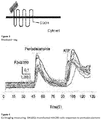
- transfected HEK293 cells with OR10Q1 are shown as an example, during screening with pentadecalactone. With increasing Ca2+ concentration fluorescence intensity is changed. In this case when the cells are stimulated with pentadecalactone, Ca-concentration will increase in the cells. The increasing of Ca-concentration was recorded as color changing by Cell-R software. Different levels of Ca-concentration are distinguished by color from dark blue (basic level of internal Ca-concentration) to red (highest level of Ca-concentration) by the cell-R software. At the end of the measurements, cells responded to ATP (as a marker of cell vitality) strongly with an increase of internal Ca 2+ .
- ATP as a marker of cell vitality
- transfected HEK293 cells with ORs were monitored for increases in intracellular calcium during sequential measuring with the 7 odorant mixtures containing 100 ⁇ M of each odorant.
- 38 responded to one or more mixtures and were suitable for analysis; the other 36 ORs were excluded from further analysis (Table 3).
- OR1B1 Hek293 cells transfected with OR1B1, OR2L8, OR4X2, OR8D2, OR8B4 and OR10AQ1. It was observed that these ORs responded to ketone, amber, ketone, alcohol, aldehyde and musk odorant groups respectively. According to the strategy for deorphanization, all of the olfactory receptors responding to odorant groups were screened with odorants in subgroups. After the final step of deorphanization it was observed that OR1B1 was significantly (P ⁇ 0.05) activated by Calone, androstenone and 3-hydroxy-2-methyl-4-pyran-one which all belongs to the ketone group.
- OR1B1 responded to other groups of odorants further investigation did not show any significant activation of this receptor by single substances of other mixtures.
- the same strategy was used for the screening of OR2L8 with the amber group as a unique group that activated OR2L8.
- Ca-imaging results showed that the Ca2+ concentration increased in transfected cells with OR2L8 during the screening of the cells with Timbrol and Yasamber as individual odorants in the amber group.
- OR4X2 responded to ketone group. In the following screening procedure by Ca-imaging, it was found that OR4X2 could be the receptor for 2-aminoacetophenon (P ⁇ 0.05).
- OR8D2 as a further deorphanized olfactory receptor, responded during group screening to the amber and alcohol groups, but during the subgroup screening only two odorants of the alcohol group, Muguet alcohol and alcohol C6, significantly activated OR8D2 (P ⁇ 0.05). No reaction was observed when individual odorants of the amber group were applied to this receptor (P>0.05).
- OR8B4 responded significantly to Anisic aldehyde and aldehyde C6 as two odorants of the aldehyde group (P ⁇ 0.05).
- 12 ORs were activated by the musk odorant mixture. However, only three of them responded to individual musk odorants in the screening of single substances. One of these was OR10Q1 which significantly responded to Cyclopentadecanolide (P ⁇ 0.05). In addition to the musk group, OR10Q1 also responded to the amber group mix but the application of single amber odorants did not produce any response.
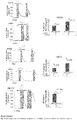
- First diagram shows responses of OR1B1 to Calone, androstenone and 3-hydroxy-2-methyl-4-pyrane.
- OR1B1 induced totally 20, 35, 9 cell responses to Calone, androstenone and 3-hydroxy-2-methyl-4-pyrane respectively (column chart) in comparison to 0, 0, 5 cells response in controls; p-value ⁇ 0.05 (2000 cells were screened during three times of measuring).
- Line chart show responses curves in one measurement.
- Second diagram shows responses of OR2L8 to Timbrol and Yasamber. Expressed OR2L8 induced totally 10 cell responses to both of odorants (column chart); p-value ⁇ 0.05 evaluated significant response. Line chart show responses curves in one measurement.
- Third diagram shows responses of OR4X2 to 2-aminoacetophenone.
- OR4X2 induced totally 20 cell responses to 2-aminoacetophenone (column chart) in comparison with cell response in controls; p-value ⁇ 0.05 (2000 cells were screened during three times of measuring).
- Line chart show responses curves in one measurement.
- Next diagram is responses of OR8B4 to Anisic aldehyde and aldehyde C6.
- OR8B4 induced totally 14 and 8 cell responses to Anisic aldehyde and aldehyde C6 respectively (column chart); p-value ⁇ 0.05 evaluated significant response.
- Line chart show responses curves in one measurement.
- OR8D2 responded to Muguet alcohol and alcohol C6.
- the first 12 OR represent SPGs, the remaining 6 CNVs; CAN stands for the carbon number.
- OR1B1, OR2L8, OR4X2, OR8B4, OR8D2 and OR10Q1 were deorphanized as receptors for particular odorants.
- ORs measuring the activation of ORs upon odorant stimulation is important for studying odor-coding by the ORs.
- One critical step after expression of OR proteins is trafficking of proteins to the plasma membrane.
- cofactors plasmids including RTP1, Myr-Ric8A, HSC70 and G ⁇ 15 were expressed in HEK293 cells transiently. With the use of fluorescent immunocytochemis-try in live cells, we measured cell surface expression level of ORs.
- OR1B1 which selectively responded to three odorants from the ketone mixture, including 3-hydroxy-2methyl-4pyran, Calone and androstenone.
- OR8D2 responded to alcohol C6 and Muguet alcohol, and two odorants from the alcohol mixture or OR2L8 responded to Yasamber and Timbrol, two odorants from the amber group.
- OR2L8 responded to Yasamber and Timbrol, two odorants from the amber group.
- a single OR can recognize multiple odorants.
- 14 ORs responded to more than one odorant. Similar results are shown in other studies were single olfactory neuron or olfactory receptors in recombinant systems can respond to multiple odorants.
- OR2L8 or OR4K5 responded to odorants with between 15 and 17 CANs and OR4E2 showed some signal with odorants with between 9 and 11 CANs and OR8B4 between 6 and 8.
- No responsive receptors recognized odorants of all the lengths tested (i.e. C2-C19); these results were consistent with previous observations.
- OR1B1 responded to 3-hydroxy-2mytyl-4pyran with 6 CANs and also responded to androstenone with 19 CANs.
- ORs recognized odorants that belonged to two or three chemical classes. This diversity in the recognition properties of ORs is likely to be of central importance to the olfactory system's ability to detect and discriminate a wide variety of structurally diverse odorants.
- OR10Q1, OR4K2, OR4P4 and OR1B1 were measured with other musk odorants (Pentadecanolide, Civetone, Muscone, Globanone and Globalide) with a similar base of chemical structures. But ORs which responded to musk odorants did not show any significant responses to other musk odorants with similar chemical structures as set out in Figure 7 .
- Civetone is closely related to muscone, the principal fragrant compound found in musk, because both compounds are macrocyclic ketones.
- Pentadecanolide and globalide are known as lactone musks, and muscone, civetone and globanone are in the ketone musk group.
- Structurally related odorants were individually tested in vitro by Ca-imaging for their ability to activate OR4P4, OR10Q1 and OR4K2.
- the column chart shows the number of cells that responded to different musks during measuring by Ca-imaging. Approximately 2000 cells were screened during three times of measuring.
- OR1B1 is a deorphanized receptor for androstenone.
- testosterone as a chemical substance with close structural similarity to androstenone.
- Ca-imaging results showed that OR1B1 responded to testosterone as well as to androstenone.
- Testosterone is a steroid hormone from the androgen group and is found in mammals. It is the principal male sex hormone and an anabolic steroid.
- Figure 8 refers to steroid hormones with similar chemical structure produced similar responses by Ca-imaging technique.
- OR1B1 responds to androstenone and testosterone (200 ⁇ M). In this study it was shown OR1B1 also responded to Calone and 3-hydroxy-2-methyl-4-pyrane (200 ⁇ M). In the second approach to compare responses between similar chemical structures testosterone was used as an androgen with a similar chemical structure to testosterone.
- OR1B1 induced in total 13 and 12 cell responses for androstenone and testosterone respectively (column chart) in comparison with 3 and 1 cell response in controls, p-value ⁇ 0.05, evaluated a significant response.
- Control HEK293 cells were transfected with all cofactors and pCI plasmids without ORs. The line chart shows response curves in one measurement of androstenone and testosterone. Approximately 2000 cells were screened during three times of measuring.
- OR4P4 and OR4C3 are in the same clade and are activated by acids. It seems these sequences do not necessarily correspond to the binding site of the ORs. It was found that TM3-TM6 sequence identities among the 18 ORs that recognized odorants in relation to specific anosmia. Red numbers are branch support values as a likelihood ratio based on the confidence that these branches are neighbors. Variable regions of the ORs were compared with using the Phylogeny.fr online program.
- OR1B1-574 3 non-synonymous SNPs in this receptor, occurring at frequencies greater than 25%.
- OR1B1-574 the most common allele of this receptor
- OR1B1-688 the most common allele of this receptor
- OR1B1-789 Three different common variants of this receptor contain non-synonymous single nucleotide polymorphisms (with MAF > 0.25), resulting in three amino acid substitutions that severely impair function in vitro. It was screened for androstenone and testosterone-mediated stimulation with Ca-imaging and generated odorant receptors with each of the SNPs and found that OR1B1-574 was not able to reproduce responses to androstenone and testosterone with a concentration of 200 ⁇ M.
- Figure 11 shows the responsiveness of OR1B1-574 to androstenone and testosterone in comparison to OR1B1 WT as examined by Ca-imaging measurements on receptors heterologous expressed in HEK293 cells.
- Cell responses were quantified with unspecific activity of androstenone and testosterone in controls.
- HEK293 cells as controls were transfected with all cofactors and pCI plasmids without ORs. Both odorants were applied for 20 seconds with a concentration of 200 ⁇ M. Bars indicate the SEM (* p ⁇ 0.05 according to Chi-square test). Control cells respond to androstenone and testosterone (3 and 1 cells respectively). Approximately 2000 cells were screened during three times of measuring.
- OR1B1-688 and OR1B1-789 did not show any significant differences responses in comparison with OR1B1 WT.
- Pentadecalactone is known as an odorant with a specific anosmia of 12% in humans. With the observation of the Mendelian inheritance pattern of pentadecalactone it is supposed that this specific anosmia is due to an inheritable defect in one of the olfactory receptor proteins.
- OR10Q1 As a new deorphanized receptor for pentadecanolide could be effective in odorant perception or not.
- a search for polymorphisms in OR10Q1 in SNP databases identified one non-synonymous SNP in this receptor, occurring at frequencies greater than 0.05%.
- OR10Q1-614 A common variant of this receptor contains non-synonymous single nucleotide polymorphisms (with MAF of 14.88%), resulting in amino acid with substitution of Cys instead of Arg.
- MAF non-synonymous single nucleotide polymorphisms
- OR10Q1-variants were transiently expressed in HEK293 cells and then functionally characterized by Ca-imaging. A mutant of OR10Q1 was stimulated with pentadecalactone, but did not show any difference in comparison to the response of OR10Q1-WT.
- Figure 13 shows similar responses of OR10Q1-614 to pentadecanolide in comparison with OR10Q1 WT as examined by Ca-imaging measurements on mutated and WT receptor heterologous expressed in HEK293 cells. Odorant was applied for 20 seconds with concentration of 200 ⁇ M. Bars indicate the SEM (* p ⁇ 0.05 according to Chi-square test). Control cells did not respond to pentadecanolide. There was no significant different response between OR10Q1 WT and OR10Q1-614. Approximately 2000 cells were screened during three times of measuring.
Landscapes
- Health & Medical Sciences (AREA)
- Life Sciences & Earth Sciences (AREA)
- Engineering & Computer Science (AREA)
- Chemical & Material Sciences (AREA)
- Immunology (AREA)
- Molecular Biology (AREA)
- Biomedical Technology (AREA)
- Urology & Nephrology (AREA)
- Hematology (AREA)
- Organic Chemistry (AREA)
- Microbiology (AREA)
- Biotechnology (AREA)
- General Health & Medical Sciences (AREA)
- Analytical Chemistry (AREA)
- Physics & Mathematics (AREA)
- Biochemistry (AREA)
- Zoology (AREA)
- Wood Science & Technology (AREA)
- Proteomics, Peptides & Aminoacids (AREA)
- Cell Biology (AREA)
- Bioinformatics & Cheminformatics (AREA)
- Food Science & Technology (AREA)
- Medicinal Chemistry (AREA)
- General Physics & Mathematics (AREA)
- Pathology (AREA)
- Genetics & Genomics (AREA)
- General Engineering & Computer Science (AREA)
- Biophysics (AREA)
- Toxicology (AREA)
- Tropical Medicine & Parasitology (AREA)
- Measuring Or Testing Involving Enzymes Or Micro-Organisms (AREA)
Claims (7)
- Verfahren zur Bewertung der Duftleistung eines Parfüms oder einer Parfümmischung durch Messung der Antwort des olfaktorischen Rezeptors, dadurch gekennzeichnet, dass:(a) die olfaktorischen Rezeptoren auf Basis von DNA aus dem menschlichen Genom sowie spezifischen Primern für menschliche olfaktorische Rezeptoren amplifiziert wurden;(b) die olfaktorischen Rezeptoren in einen pCl Expressionsvektor mit Rho-tag als leitender Peptidsequenz einkloniert wurden;(c) das so erzeugte rekombinierte Plasmid durch Sequenzierung verifiziert und der olfaktorische Rezeptor auf einer Zelloberfläche exprimiert wurde,wobei der olfaktorische Rezeptor OR1B1 ist.
- Das Verfahren nach Anspruch 1, wobei der olfaktorische Faktor deorphanisiert vorliegt.
- Das Verfahren nah Anspruch 1, wobei die Riechstoffe Anosmia betreffen.
- Das Verfahren nach Anspruch 1, wobei die Riechstoffe 6 bis 9 Kohlenstoffatome aufweisen.
- Das Verfahren nach Anspruch 1, wobei die Riechstoffe ausgewählt sind aus der Liste, die gebildet wird von Ketonen, Aldehyden, Carbonsäuren und mit Geruch ausgestatteten Steroiden.
- Das Verfahren nach Anspruch 1, wobei die Antwort des Rezeptors über die Calcium-Abbildung bestimmt wird.
- Das Verfahren nach Anspruch 1, wobei die Antwort des Rezeptors über einen CRE Luziferase-Assay bestimmt wird.
Priority Applications (3)
| Application Number | Priority Date | Filing Date | Title |
|---|---|---|---|
| EP13197310.9A EP2884280B1 (de) | 2013-12-15 | 2013-12-15 | Verfahren zur Bewertung des Duftverhaltens von Duftstoffen und Duftstoffmischungen |
| CN201410768714.7A CN104726551B (zh) | 2013-12-15 | 2014-12-12 | 用于评估香料或香料混合物香味性能的方法 |
| US14/568,976 US9939427B2 (en) | 2013-12-15 | 2014-12-12 | Method for evaluating the scent performance of perfumes or perfume mixtures |
Applications Claiming Priority (1)
| Application Number | Priority Date | Filing Date | Title |
|---|---|---|---|
| EP13197310.9A EP2884280B1 (de) | 2013-12-15 | 2013-12-15 | Verfahren zur Bewertung des Duftverhaltens von Duftstoffen und Duftstoffmischungen |
Publications (2)
| Publication Number | Publication Date |
|---|---|
| EP2884280A1 EP2884280A1 (de) | 2015-06-17 |
| EP2884280B1 true EP2884280B1 (de) | 2018-05-09 |
Family
ID=49841507
Family Applications (1)
| Application Number | Title | Priority Date | Filing Date |
|---|---|---|---|
| EP13197310.9A Not-in-force EP2884280B1 (de) | 2013-12-15 | 2013-12-15 | Verfahren zur Bewertung des Duftverhaltens von Duftstoffen und Duftstoffmischungen |
Country Status (3)
| Country | Link |
|---|---|
| US (1) | US9939427B2 (de) |
| EP (1) | EP2884280B1 (de) |
| CN (1) | CN104726551B (de) |
Families Citing this family (16)
| Publication number | Priority date | Publication date | Assignee | Title |
|---|---|---|---|---|
| CN105044261B (zh) * | 2015-07-02 | 2020-10-16 | 谱尼测试集团深圳有限公司 | 一种个人护理品中卡拉花醛的检测方法 |
| JP6849399B2 (ja) * | 2016-11-09 | 2021-03-24 | 花王株式会社 | 龍涎香様の匂いを呈する香料素材の探索方法 |
| EP3336544B1 (de) * | 2016-12-14 | 2019-11-27 | Takasago International Corporation | Verfahren zur identifizierung von produkten gegen unangenehme gerüche |
| US11382848B2 (en) * | 2017-01-30 | 2022-07-12 | Chemcom S.A. | Compounds reducing malodour perception and the use thereof |
| EP3578976A4 (de) * | 2017-02-02 | 2020-11-25 | Kao Corporation | Verfahren zur auswahl eines stoffes zur geruchsbekämpfung |
| JP7062636B2 (ja) * | 2017-03-07 | 2022-05-06 | 高砂香料工業株式会社 | マリンノートを呈する香料素材のスクリーニング方法 |
| WO2018190118A1 (ja) * | 2017-04-13 | 2018-10-18 | 高砂香料工業株式会社 | アンバーグリスノートを呈する香料素材のスクリーニング方法 |
| CN111133100A (zh) * | 2017-07-05 | 2020-05-08 | 加利福尼亚大学董事会 | 多路复用的受体-配体相互作用筛选 |
| JP2022540344A (ja) * | 2019-06-25 | 2022-09-15 | アロマイクス・コーポレーション | 芳香または香味組成物の最適化 |
| BR112022002473A2 (pt) * | 2019-10-04 | 2022-05-03 | Firmenich & Cie | Método de determinação de tonalidade de composição de fragrância, método de determinação de composição de fragrância e sistemas correspondentes |
| CN111100849B (zh) * | 2020-01-16 | 2021-01-12 | 安徽农业大学 | 茶树类胡萝卜素裂解双加氧酶CsCCD4及其在催化合成β-紫罗酮上的应用 |
| CN111333562B (zh) * | 2020-03-16 | 2023-05-19 | 宁波大学 | 一种1,6-二烯与醚的氧化断裂/环化反应方法 |
| CN114533740B (zh) * | 2022-02-10 | 2024-04-12 | 广州威生医药科技有限公司 | 一种公猪气味剂组合物及其应用 |
| CN115932189B (zh) * | 2022-05-18 | 2025-08-01 | 汉王科技股份有限公司 | 嗅觉受体在识别3-甲硫基丙醛中的用途和检测3-甲硫基丙醛的方法 |
| CN115840026B (zh) * | 2023-02-13 | 2023-05-23 | 汉王科技股份有限公司 | 嗅觉受体在识别4-甲氧基苯甲醛中的用途和检测4-甲氧基苯甲醛的方法 |
| CN118178367B (zh) * | 2023-12-11 | 2024-09-13 | 南方医科大学 | 一种治疗胶质母细胞瘤的药物及其应用 |
Family Cites Families (3)
| Publication number | Priority date | Publication date | Assignee | Title |
|---|---|---|---|---|
| JP3897419B2 (ja) | 1997-10-31 | 2007-03-22 | 三菱レイヨン株式会社 | 中空糸膜モジュールを用いた濾過方法および濾過装置 |
| US7052857B2 (en) * | 2001-07-06 | 2006-05-30 | Senomyx, Inc. | Expression of functional human olfactory cyclic nucleotide gated (CNG) channel in recombinant host cells and use thereof in cell based assays to identify GPCR modulators |
| US20050176009A1 (en) * | 2002-04-23 | 2005-08-11 | Doron Lancet | Polymorphic olfactory receptor genes and arrays, kits and methods utilizing information derived therefrom for genetic typing of individuals |
-
2013
- 2013-12-15 EP EP13197310.9A patent/EP2884280B1/de not_active Not-in-force
-
2014
- 2014-12-12 CN CN201410768714.7A patent/CN104726551B/zh not_active Expired - Fee Related
- 2014-12-12 US US14/568,976 patent/US9939427B2/en not_active Expired - Fee Related
Non-Patent Citations (1)
| Title |
|---|
| None * |
Also Published As
| Publication number | Publication date |
|---|---|
| US9939427B2 (en) | 2018-04-10 |
| CN104726551A (zh) | 2015-06-24 |
| EP2884280A1 (de) | 2015-06-17 |
| US20150260707A1 (en) | 2015-09-17 |
| CN104726551B (zh) | 2020-07-14 |
Similar Documents
| Publication | Publication Date | Title |
|---|---|---|
| US9939427B2 (en) | Method for evaluating the scent performance of perfumes or perfume mixtures | |
| JP6835773B2 (ja) | 匂い物質および香り受容体を特定、単離および使用する方法 | |
| JP7085841B2 (ja) | ムスク化合物の同定方法 | |
| JP7662685B2 (ja) | 悪臭調節化合物の同定方法 | |
| Liberles et al. | A second class of chemosensory receptors in the olfactory epithelium | |
| Raote et al. | Serotonin 2A (5-HT2A) receptor function: ligand-dependent mechanisms and pathways | |
| Mashukova et al. | β-arrestin2-mediated internalization of mammalian odorant receptors | |
| JP7770307B2 (ja) | 嗅覚香調を嗅覚受容体活性化に割り当てる方法および割り当てられた香調を有する化合物を同定する方法 | |
| JP7263355B2 (ja) | ムスクの香りの知覚に関与する嗅覚受容体およびその使用 | |
| EP2155910A1 (de) | Zusammensetzungen und verfahren zur charakterisierung und regulierung der geruchswahrnehmung | |
| JP2021508030A (ja) | 匂い物質受容体のためのポジティブなアロステリックモジュレーターを同定するための方法 | |
| Ashti Baghaei | Large scale analysis of olfactory receptors with highly genetically variations in relation with specific anosmia | |
| Hrovat et al. | Establishing and functional characterization of an HEK-293 cell line expressing autofluorescently tagged β-actin (pEYFP-ACTIN) and the neurokinin type 1 receptor (NK1-R) | |
| Powlowski | Exploring Voltage-Gated Sodium Channel NaV1. 6 as an Interacting Partner with G Protein-Coupled Receptors | |
| Jiang | Modulation and Ligand Selectivity of Mammalian Odorant Receptors | |
| HK40028688B (en) | Olfactory receptor involved in the perception of musk fragrance and the use thereof | |
| HK40028688A (en) | Olfactory receptor involved in the perception of musk fragrance and the use thereof |
Legal Events
| Date | Code | Title | Description |
|---|---|---|---|
| PUAI | Public reference made under article 153(3) epc to a published international application that has entered the european phase |
Free format text: ORIGINAL CODE: 0009012 |
|
| 17P | Request for examination filed |
Effective date: 20131215 |
|
| AK | Designated contracting states |
Kind code of ref document: A1 Designated state(s): AL AT BE BG CH CY CZ DE DK EE ES FI FR GB GR HR HU IE IS IT LI LT LU LV MC MK MT NL NO PL PT RO RS SE SI SK SM TR |
|
| AX | Request for extension of the european patent |
Extension state: BA ME |
|
| R17P | Request for examination filed (corrected) |
Effective date: 20151215 |
|
| RBV | Designated contracting states (corrected) |
Designated state(s): AL AT BE BG CH CY CZ DE DK EE ES FI FR GB GR HR HU IE IS IT LI LT LU LV MC MK MT NL NO PL PT RO RS SE SI SK SM TR |
|
| 17Q | First examination report despatched |
Effective date: 20170526 |
|
| GRAP | Despatch of communication of intention to grant a patent |
Free format text: ORIGINAL CODE: EPIDOSNIGR1 |
|
| INTG | Intention to grant announced |
Effective date: 20171207 |
|
| GRAS | Grant fee paid |
Free format text: ORIGINAL CODE: EPIDOSNIGR3 |
|
| GRAA | (expected) grant |
Free format text: ORIGINAL CODE: 0009210 |
|
| AK | Designated contracting states |
Kind code of ref document: B1 Designated state(s): AL AT BE BG CH CY CZ DE DK EE ES FI FR GB GR HR HU IE IS IT LI LT LU LV MC MK MT NL NO PL PT RO RS SE SI SK SM TR |
|
| REG | Reference to a national code |
Ref country code: GB Ref legal event code: FG4D |
|
| REG | Reference to a national code |
Ref country code: CH Ref legal event code: EP Ref country code: AT Ref legal event code: REF Ref document number: 998049 Country of ref document: AT Kind code of ref document: T Effective date: 20180515 |
|
| REG | Reference to a national code |
Ref country code: IE Ref legal event code: FG4D |
|
| REG | Reference to a national code |
Ref country code: DE Ref legal event code: R096 Ref document number: 602013037164 Country of ref document: DE |
|
| REG | Reference to a national code |
Ref country code: NL Ref legal event code: MP Effective date: 20180509 |
|
| REG | Reference to a national code |
Ref country code: LT Ref legal event code: MG4D |
|
| PG25 | Lapsed in a contracting state [announced via postgrant information from national office to epo] |
Ref country code: BG Free format text: LAPSE BECAUSE OF FAILURE TO SUBMIT A TRANSLATION OF THE DESCRIPTION OR TO PAY THE FEE WITHIN THE PRESCRIBED TIME-LIMIT Effective date: 20180809 Ref country code: NO Free format text: LAPSE BECAUSE OF FAILURE TO SUBMIT A TRANSLATION OF THE DESCRIPTION OR TO PAY THE FEE WITHIN THE PRESCRIBED TIME-LIMIT Effective date: 20180809 Ref country code: FI Free format text: LAPSE BECAUSE OF FAILURE TO SUBMIT A TRANSLATION OF THE DESCRIPTION OR TO PAY THE FEE WITHIN THE PRESCRIBED TIME-LIMIT Effective date: 20180509 Ref country code: SE Free format text: LAPSE BECAUSE OF FAILURE TO SUBMIT A TRANSLATION OF THE DESCRIPTION OR TO PAY THE FEE WITHIN THE PRESCRIBED TIME-LIMIT Effective date: 20180509 Ref country code: ES Free format text: LAPSE BECAUSE OF FAILURE TO SUBMIT A TRANSLATION OF THE DESCRIPTION OR TO PAY THE FEE WITHIN THE PRESCRIBED TIME-LIMIT Effective date: 20180509 Ref country code: LT Free format text: LAPSE BECAUSE OF FAILURE TO SUBMIT A TRANSLATION OF THE DESCRIPTION OR TO PAY THE FEE WITHIN THE PRESCRIBED TIME-LIMIT Effective date: 20180509 |
|
| PG25 | Lapsed in a contracting state [announced via postgrant information from national office to epo] |
Ref country code: NL Free format text: LAPSE BECAUSE OF FAILURE TO SUBMIT A TRANSLATION OF THE DESCRIPTION OR TO PAY THE FEE WITHIN THE PRESCRIBED TIME-LIMIT Effective date: 20180509 Ref country code: HR Free format text: LAPSE BECAUSE OF FAILURE TO SUBMIT A TRANSLATION OF THE DESCRIPTION OR TO PAY THE FEE WITHIN THE PRESCRIBED TIME-LIMIT Effective date: 20180509 Ref country code: LV Free format text: LAPSE BECAUSE OF FAILURE TO SUBMIT A TRANSLATION OF THE DESCRIPTION OR TO PAY THE FEE WITHIN THE PRESCRIBED TIME-LIMIT Effective date: 20180509 Ref country code: GR Free format text: LAPSE BECAUSE OF FAILURE TO SUBMIT A TRANSLATION OF THE DESCRIPTION OR TO PAY THE FEE WITHIN THE PRESCRIBED TIME-LIMIT Effective date: 20180810 Ref country code: RS Free format text: LAPSE BECAUSE OF FAILURE TO SUBMIT A TRANSLATION OF THE DESCRIPTION OR TO PAY THE FEE WITHIN THE PRESCRIBED TIME-LIMIT Effective date: 20180509 |
|
| REG | Reference to a national code |
Ref country code: AT Ref legal event code: MK05 Ref document number: 998049 Country of ref document: AT Kind code of ref document: T Effective date: 20180509 |
|
| PG25 | Lapsed in a contracting state [announced via postgrant information from national office to epo] |
Ref country code: EE Free format text: LAPSE BECAUSE OF FAILURE TO SUBMIT A TRANSLATION OF THE DESCRIPTION OR TO PAY THE FEE WITHIN THE PRESCRIBED TIME-LIMIT Effective date: 20180509 Ref country code: PL Free format text: LAPSE BECAUSE OF FAILURE TO SUBMIT A TRANSLATION OF THE DESCRIPTION OR TO PAY THE FEE WITHIN THE PRESCRIBED TIME-LIMIT Effective date: 20180509 Ref country code: DK Free format text: LAPSE BECAUSE OF FAILURE TO SUBMIT A TRANSLATION OF THE DESCRIPTION OR TO PAY THE FEE WITHIN THE PRESCRIBED TIME-LIMIT Effective date: 20180509 Ref country code: AT Free format text: LAPSE BECAUSE OF FAILURE TO SUBMIT A TRANSLATION OF THE DESCRIPTION OR TO PAY THE FEE WITHIN THE PRESCRIBED TIME-LIMIT Effective date: 20180509 Ref country code: RO Free format text: LAPSE BECAUSE OF FAILURE TO SUBMIT A TRANSLATION OF THE DESCRIPTION OR TO PAY THE FEE WITHIN THE PRESCRIBED TIME-LIMIT Effective date: 20180509 Ref country code: CZ Free format text: LAPSE BECAUSE OF FAILURE TO SUBMIT A TRANSLATION OF THE DESCRIPTION OR TO PAY THE FEE WITHIN THE PRESCRIBED TIME-LIMIT Effective date: 20180509 Ref country code: SK Free format text: LAPSE BECAUSE OF FAILURE TO SUBMIT A TRANSLATION OF THE DESCRIPTION OR TO PAY THE FEE WITHIN THE PRESCRIBED TIME-LIMIT Effective date: 20180509 |
|
| REG | Reference to a national code |
Ref country code: DE Ref legal event code: R097 Ref document number: 602013037164 Country of ref document: DE |
|
| PG25 | Lapsed in a contracting state [announced via postgrant information from national office to epo] |
Ref country code: SM Free format text: LAPSE BECAUSE OF FAILURE TO SUBMIT A TRANSLATION OF THE DESCRIPTION OR TO PAY THE FEE WITHIN THE PRESCRIBED TIME-LIMIT Effective date: 20180509 Ref country code: IT Free format text: LAPSE BECAUSE OF FAILURE TO SUBMIT A TRANSLATION OF THE DESCRIPTION OR TO PAY THE FEE WITHIN THE PRESCRIBED TIME-LIMIT Effective date: 20180509 |
|
| PLBE | No opposition filed within time limit |
Free format text: ORIGINAL CODE: 0009261 |
|
| STAA | Information on the status of an ep patent application or granted ep patent |
Free format text: STATUS: NO OPPOSITION FILED WITHIN TIME LIMIT |
|
| 26N | No opposition filed |
Effective date: 20190212 |
|
| PG25 | Lapsed in a contracting state [announced via postgrant information from national office to epo] |
Ref country code: SI Free format text: LAPSE BECAUSE OF FAILURE TO SUBMIT A TRANSLATION OF THE DESCRIPTION OR TO PAY THE FEE WITHIN THE PRESCRIBED TIME-LIMIT Effective date: 20180509 |
|
| REG | Reference to a national code |
Ref country code: CH Ref legal event code: PL |
|
| PG25 | Lapsed in a contracting state [announced via postgrant information from national office to epo] |
Ref country code: MC Free format text: LAPSE BECAUSE OF FAILURE TO SUBMIT A TRANSLATION OF THE DESCRIPTION OR TO PAY THE FEE WITHIN THE PRESCRIBED TIME-LIMIT Effective date: 20180509 Ref country code: LU Free format text: LAPSE BECAUSE OF NON-PAYMENT OF DUE FEES Effective date: 20181215 |
|
| REG | Reference to a national code |
Ref country code: IE Ref legal event code: MM4A |
|
| REG | Reference to a national code |
Ref country code: BE Ref legal event code: MM Effective date: 20181231 |
|
| PG25 | Lapsed in a contracting state [announced via postgrant information from national office to epo] |
Ref country code: IE Free format text: LAPSE BECAUSE OF NON-PAYMENT OF DUE FEES Effective date: 20181215 |
|
| PG25 | Lapsed in a contracting state [announced via postgrant information from national office to epo] |
Ref country code: AL Free format text: LAPSE BECAUSE OF FAILURE TO SUBMIT A TRANSLATION OF THE DESCRIPTION OR TO PAY THE FEE WITHIN THE PRESCRIBED TIME-LIMIT Effective date: 20180509 Ref country code: BE Free format text: LAPSE BECAUSE OF NON-PAYMENT OF DUE FEES Effective date: 20181231 |
|
| PG25 | Lapsed in a contracting state [announced via postgrant information from national office to epo] |
Ref country code: CH Free format text: LAPSE BECAUSE OF NON-PAYMENT OF DUE FEES Effective date: 20181231 Ref country code: LI Free format text: LAPSE BECAUSE OF NON-PAYMENT OF DUE FEES Effective date: 20181231 |
|
| PG25 | Lapsed in a contracting state [announced via postgrant information from national office to epo] |
Ref country code: MT Free format text: LAPSE BECAUSE OF NON-PAYMENT OF DUE FEES Effective date: 20181215 |
|
| PG25 | Lapsed in a contracting state [announced via postgrant information from national office to epo] |
Ref country code: TR Free format text: LAPSE BECAUSE OF FAILURE TO SUBMIT A TRANSLATION OF THE DESCRIPTION OR TO PAY THE FEE WITHIN THE PRESCRIBED TIME-LIMIT Effective date: 20180509 |
|
| PG25 | Lapsed in a contracting state [announced via postgrant information from national office to epo] |
Ref country code: PT Free format text: LAPSE BECAUSE OF FAILURE TO SUBMIT A TRANSLATION OF THE DESCRIPTION OR TO PAY THE FEE WITHIN THE PRESCRIBED TIME-LIMIT Effective date: 20180509 |
|
| PG25 | Lapsed in a contracting state [announced via postgrant information from national office to epo] |
Ref country code: CY Free format text: LAPSE BECAUSE OF FAILURE TO SUBMIT A TRANSLATION OF THE DESCRIPTION OR TO PAY THE FEE WITHIN THE PRESCRIBED TIME-LIMIT Effective date: 20180509 Ref country code: MK Free format text: LAPSE BECAUSE OF NON-PAYMENT OF DUE FEES Effective date: 20180509 Ref country code: HU Free format text: LAPSE BECAUSE OF FAILURE TO SUBMIT A TRANSLATION OF THE DESCRIPTION OR TO PAY THE FEE WITHIN THE PRESCRIBED TIME-LIMIT; INVALID AB INITIO Effective date: 20131215 |
|
| PG25 | Lapsed in a contracting state [announced via postgrant information from national office to epo] |
Ref country code: IS Free format text: LAPSE BECAUSE OF FAILURE TO SUBMIT A TRANSLATION OF THE DESCRIPTION OR TO PAY THE FEE WITHIN THE PRESCRIBED TIME-LIMIT Effective date: 20180909 |
|
| PGFP | Annual fee paid to national office [announced via postgrant information from national office to epo] |
Ref country code: GB Payment date: 20231220 Year of fee payment: 11 |
|
| PGFP | Annual fee paid to national office [announced via postgrant information from national office to epo] |
Ref country code: FR Payment date: 20231219 Year of fee payment: 11 Ref country code: DE Payment date: 20231214 Year of fee payment: 11 |
|
| REG | Reference to a national code |
Ref country code: DE Ref legal event code: R119 Ref document number: 602013037164 Country of ref document: DE |
|
| GBPC | Gb: european patent ceased through non-payment of renewal fee |
Effective date: 20241215 |
|
| PG25 | Lapsed in a contracting state [announced via postgrant information from national office to epo] |
Ref country code: DE Free format text: LAPSE BECAUSE OF NON-PAYMENT OF DUE FEES Effective date: 20250701 |
|
| PG25 | Lapsed in a contracting state [announced via postgrant information from national office to epo] |
Ref country code: GB Free format text: LAPSE BECAUSE OF NON-PAYMENT OF DUE FEES Effective date: 20241215 |
|
| PG25 | Lapsed in a contracting state [announced via postgrant information from national office to epo] |
Ref country code: FR Free format text: LAPSE BECAUSE OF NON-PAYMENT OF DUE FEES Effective date: 20241231 |