EP2858677B1 - Pulmonary delivery of messenger rna - Google Patents
Pulmonary delivery of messenger rna Download PDFInfo
- Publication number
- EP2858677B1 EP2858677B1 EP13735212.6A EP13735212A EP2858677B1 EP 2858677 B1 EP2858677 B1 EP 2858677B1 EP 13735212 A EP13735212 A EP 13735212A EP 2858677 B1 EP2858677 B1 EP 2858677B1
- Authority
- EP
- European Patent Office
- Prior art keywords
- mrna
- pei
- pharmaceutical composition
- lung
- pulmonary
- Prior art date
- Legal status (The legal status is an assumption and is not a legal conclusion. Google has not performed a legal analysis and makes no representation as to the accuracy of the status listed.)
- Active
Links
Images


Classifications
-
- A—HUMAN NECESSITIES
- A61—MEDICAL OR VETERINARY SCIENCE; HYGIENE
- A61K—PREPARATIONS FOR MEDICAL, DENTAL OR TOILETRY PURPOSES
- A61K48/00—Medicinal preparations containing genetic material which is inserted into cells of the living body to treat genetic diseases; Gene therapy
- A61K48/0008—Medicinal preparations containing genetic material which is inserted into cells of the living body to treat genetic diseases; Gene therapy characterised by an aspect of the 'non-active' part of the composition delivered, e.g. wherein such 'non-active' part is not delivered simultaneously with the 'active' part of the composition
- A61K48/0025—Medicinal preparations containing genetic material which is inserted into cells of the living body to treat genetic diseases; Gene therapy characterised by an aspect of the 'non-active' part of the composition delivered, e.g. wherein such 'non-active' part is not delivered simultaneously with the 'active' part of the composition wherein the non-active part clearly interacts with the delivered nucleic acid
- A61K48/0041—Medicinal preparations containing genetic material which is inserted into cells of the living body to treat genetic diseases; Gene therapy characterised by an aspect of the 'non-active' part of the composition delivered, e.g. wherein such 'non-active' part is not delivered simultaneously with the 'active' part of the composition wherein the non-active part clearly interacts with the delivered nucleic acid the non-active part being polymeric
-
- A—HUMAN NECESSITIES
- A61—MEDICAL OR VETERINARY SCIENCE; HYGIENE
- A61K—PREPARATIONS FOR MEDICAL, DENTAL OR TOILETRY PURPOSES
- A61K47/00—Medicinal preparations characterised by the non-active ingredients used, e.g. carriers or inert additives; Targeting or modifying agents chemically bound to the active ingredient
- A61K47/50—Medicinal preparations characterised by the non-active ingredients used, e.g. carriers or inert additives; Targeting or modifying agents chemically bound to the active ingredient the non-active ingredient being chemically bound to the active ingredient, e.g. polymer-drug conjugates
- A61K47/51—Medicinal preparations characterised by the non-active ingredients used, e.g. carriers or inert additives; Targeting or modifying agents chemically bound to the active ingredient the non-active ingredient being chemically bound to the active ingredient, e.g. polymer-drug conjugates the non-active ingredient being a modifying agent
- A61K47/54—Medicinal preparations characterised by the non-active ingredients used, e.g. carriers or inert additives; Targeting or modifying agents chemically bound to the active ingredient the non-active ingredient being chemically bound to the active ingredient, e.g. polymer-drug conjugates the non-active ingredient being a modifying agent the modifying agent being an organic compound
- A61K47/549—Sugars, nucleosides, nucleotides or nucleic acids
-
- A—HUMAN NECESSITIES
- A61—MEDICAL OR VETERINARY SCIENCE; HYGIENE
- A61K—PREPARATIONS FOR MEDICAL, DENTAL OR TOILETRY PURPOSES
- A61K31/00—Medicinal preparations containing organic active ingredients
- A61K31/70—Carbohydrates; Sugars; Derivatives thereof
- A61K31/7088—Compounds having three or more nucleosides or nucleotides
- A61K31/7105—Natural ribonucleic acids, i.e. containing only riboses attached to adenine, guanine, cytosine or uracil and having 3'-5' phosphodiester links
-
- A—HUMAN NECESSITIES
- A61—MEDICAL OR VETERINARY SCIENCE; HYGIENE
- A61K—PREPARATIONS FOR MEDICAL, DENTAL OR TOILETRY PURPOSES
- A61K47/00—Medicinal preparations characterised by the non-active ingredients used, e.g. carriers or inert additives; Targeting or modifying agents chemically bound to the active ingredient
- A61K47/50—Medicinal preparations characterised by the non-active ingredients used, e.g. carriers or inert additives; Targeting or modifying agents chemically bound to the active ingredient the non-active ingredient being chemically bound to the active ingredient, e.g. polymer-drug conjugates
- A61K47/51—Medicinal preparations characterised by the non-active ingredients used, e.g. carriers or inert additives; Targeting or modifying agents chemically bound to the active ingredient the non-active ingredient being chemically bound to the active ingredient, e.g. polymer-drug conjugates the non-active ingredient being a modifying agent
- A61K47/56—Medicinal preparations characterised by the non-active ingredients used, e.g. carriers or inert additives; Targeting or modifying agents chemically bound to the active ingredient the non-active ingredient being chemically bound to the active ingredient, e.g. polymer-drug conjugates the non-active ingredient being a modifying agent the modifying agent being an organic macromolecular compound, e.g. an oligomeric, polymeric or dendrimeric molecule
- A61K47/59—Medicinal preparations characterised by the non-active ingredients used, e.g. carriers or inert additives; Targeting or modifying agents chemically bound to the active ingredient the non-active ingredient being chemically bound to the active ingredient, e.g. polymer-drug conjugates the non-active ingredient being a modifying agent the modifying agent being an organic macromolecular compound, e.g. an oligomeric, polymeric or dendrimeric molecule obtained otherwise than by reactions only involving carbon-to-carbon unsaturated bonds, e.g. polyureas or polyurethanes
-
- A—HUMAN NECESSITIES
- A61—MEDICAL OR VETERINARY SCIENCE; HYGIENE
- A61K—PREPARATIONS FOR MEDICAL, DENTAL OR TOILETRY PURPOSES
- A61K48/00—Medicinal preparations containing genetic material which is inserted into cells of the living body to treat genetic diseases; Gene therapy
- A61K48/0075—Medicinal preparations containing genetic material which is inserted into cells of the living body to treat genetic diseases; Gene therapy characterised by an aspect of the delivery route, e.g. oral, subcutaneous
-
- A—HUMAN NECESSITIES
- A61—MEDICAL OR VETERINARY SCIENCE; HYGIENE
- A61P—SPECIFIC THERAPEUTIC ACTIVITY OF CHEMICAL COMPOUNDS OR MEDICINAL PREPARATIONS
- A61P11/00—Drugs for disorders of the respiratory system
-
- A—HUMAN NECESSITIES
- A61—MEDICAL OR VETERINARY SCIENCE; HYGIENE
- A61P—SPECIFIC THERAPEUTIC ACTIVITY OF CHEMICAL COMPOUNDS OR MEDICINAL PREPARATIONS
- A61P11/00—Drugs for disorders of the respiratory system
- A61P11/06—Antiasthmatics
-
- A—HUMAN NECESSITIES
- A61—MEDICAL OR VETERINARY SCIENCE; HYGIENE
- A61P—SPECIFIC THERAPEUTIC ACTIVITY OF CHEMICAL COMPOUNDS OR MEDICINAL PREPARATIONS
- A61P31/00—Antiinfectives, i.e. antibiotics, antiseptics, chemotherapeutics
- A61P31/04—Antibacterial agents
-
- A—HUMAN NECESSITIES
- A61—MEDICAL OR VETERINARY SCIENCE; HYGIENE
- A61P—SPECIFIC THERAPEUTIC ACTIVITY OF CHEMICAL COMPOUNDS OR MEDICINAL PREPARATIONS
- A61P31/00—Antiinfectives, i.e. antibiotics, antiseptics, chemotherapeutics
- A61P31/12—Antivirals
- A61P31/14—Antivirals for RNA viruses
-
- A—HUMAN NECESSITIES
- A61—MEDICAL OR VETERINARY SCIENCE; HYGIENE
- A61P—SPECIFIC THERAPEUTIC ACTIVITY OF CHEMICAL COMPOUNDS OR MEDICINAL PREPARATIONS
- A61P31/00—Antiinfectives, i.e. antibiotics, antiseptics, chemotherapeutics
- A61P31/12—Antivirals
- A61P31/14—Antivirals for RNA viruses
- A61P31/16—Antivirals for RNA viruses for influenza or rhinoviruses
-
- A—HUMAN NECESSITIES
- A61—MEDICAL OR VETERINARY SCIENCE; HYGIENE
- A61P—SPECIFIC THERAPEUTIC ACTIVITY OF CHEMICAL COMPOUNDS OR MEDICINAL PREPARATIONS
- A61P35/00—Antineoplastic agents
-
- A—HUMAN NECESSITIES
- A61—MEDICAL OR VETERINARY SCIENCE; HYGIENE
- A61P—SPECIFIC THERAPEUTIC ACTIVITY OF CHEMICAL COMPOUNDS OR MEDICINAL PREPARATIONS
- A61P43/00—Drugs for specific purposes, not provided for in groups A61P1/00-A61P41/00
-
- A—HUMAN NECESSITIES
- A61—MEDICAL OR VETERINARY SCIENCE; HYGIENE
- A61P—SPECIFIC THERAPEUTIC ACTIVITY OF CHEMICAL COMPOUNDS OR MEDICINAL PREPARATIONS
- A61P7/00—Drugs for disorders of the blood or the extracellular fluid
- A61P7/04—Antihaemorrhagics; Procoagulants; Haemostatic agents; Antifibrinolytic agents
-
- A—HUMAN NECESSITIES
- A61—MEDICAL OR VETERINARY SCIENCE; HYGIENE
- A61P—SPECIFIC THERAPEUTIC ACTIVITY OF CHEMICAL COMPOUNDS OR MEDICINAL PREPARATIONS
- A61P9/00—Drugs for disorders of the cardiovascular system
- A61P9/12—Antihypertensives
-
- C—CHEMISTRY; METALLURGY
- C12—BIOCHEMISTRY; BEER; SPIRITS; WINE; VINEGAR; MICROBIOLOGY; ENZYMOLOGY; MUTATION OR GENETIC ENGINEERING
- C12N—MICROORGANISMS OR ENZYMES; COMPOSITIONS THEREOF; PROPAGATING, PRESERVING, OR MAINTAINING MICROORGANISMS; MUTATION OR GENETIC ENGINEERING; CULTURE MEDIA
- C12N15/00—Mutation or genetic engineering; DNA or RNA concerning genetic engineering, vectors, e.g. plasmids, or their isolation, preparation or purification; Use of hosts therefor
- C12N15/09—Recombinant DNA-technology
- C12N15/11—DNA or RNA fragments; Modified forms thereof; Non-coding nucleic acids having a biological activity
- C12N15/111—General methods applicable to biologically active non-coding nucleic acids
Definitions
- the present invention relates to mRNA complexed with polyethyleneimine (PEI) to provide a combination comprising the mRNA and PEI or to a pharmaceutical composition comprising mRNA complexed with PEI for use in the treatment of a pulmonary defect by expressing the mRNA in lung, wherein said combination or pharmaceutical composition is to be administered to lung by inhalation via a nebulizer, is to be introduced into the respiratory tract via a nebulizer, is formulated for inhalation via a nebulizer and/or is formulated for introduction into the respiratory tract via a nebulizer.
- PEI polyethyleneimine
- mRNA Messenger RNAs
- mRNA are polymers which are built up of nucleoside phosphate building blocks mainly with adenosine, cytidine, uridine and guanosine as nucleosides, which as intermediate carriers bring the genetic information from the DNA in the cell nucleus into the cytoplasm, where it is translated into proteins. They are thus suitable as alternatives for gene expression.
- mRNAs for the therapy of hereditary diseases in order to treat gene defects which lead to diseases.
- the advantage in this is that the mRNA only has to be introduced into the cytoplasm of a cell, but does not have to be translocated into the nucleus. Translocation into the nucleus is difficult and inefficient; moreover there is a considerable risk of the chromosomal DNA being altered if the vector or parts thereof become incorporated into the genome.
- RNA wherein one of the four ribonucleotides is replaced by a modified nucleotide.
- RNA was investigated how mRNA behaves when the uridine is totally replaced by pseudouridine. It was found that such an RNA molecule is significantly less immunogenic.
- RNA was further proposed to use RNA with a sequence which encodes a protein or protein fragment, wherein the RNA contains a combination of unmodified and modified nucleotides, wherein 5 to 50% of the uridine nucleotides and 5 to 50% of the cytidine nucleotides are respectively modified uridine nucleotides and modified cytidine nucleotides.
- RNA molecule is significantly less immunogenic and even more stable. It was further proposed that such RNA can be used to prevent death in mice suffering from surfactant protein B (SP-B) deficiency by repeated intratracheal aerosol application in mice.
- SP-B surfactant protein B
- RNA efficacy In order to be able to provide the lung of the body with necessary or beneficial proteins and/or to treat a disease due to missing or deficient proteins with RNA, it is desirable to have a method for repeated aerosol application available which avoids repeated anaesthesia of the patient. At the same time, however, this method must not cause a decrease in RNA efficacy to a significant extent.
- PEI polyethylenimine
- EP 1 173 224 B1 discloses a method of targeting therapy such as gene therapy via the respiratory tract, comprising the step of delivering aqueous dispersions of a genetic macromolecule complexed with polyethyleneimine via small particle aerosol via a respiratory tract of an individual.
- Representative examples of genetic macromolecules according to the methods of the invention included DNA, RNA and other nucleic acid species. However, the invention has been reduced to practice in the examples comprised in the patent for DNA delivery only but not for mRNA.
- complexes of plasmid DNA, encoding a gene of interest, with PEI were formed by mixing plasmid DNA dissolved in water with appropriate amounts of PEI dissolved in PBS.
- Rudolph et al. Rudolph et al.
- PEI-DNA complexes when assembled and nebulized in hypoosmotic distilled water yielded 57- and 185-fold higher expression levels in mouse lungs than those in isotonic 5% glucose or Hepes-buffered saline, respectively.
- PEI-DNA complexes when assembled and nebulized in PBS were entirely ineffective. This was primarily attributed to the fact that PEI gene vectors formulated in PBS resulted in large diameters (848 ⁇ 142 nm) which were kinetically instable and led to precipitation.
- thermodynamically stable polyplex vectors e.g. PEI-mRNA
- the strength of electrostatic interaction between the carrier and the mRNA by using shorter polycations gave major increases in expression, with mRNA polyplexes formed using low molecular weight PEI and PLL achieving 5-fold greater levels of luciferase expression than DOTAP/mRNA.
- the polyplexes formed using low molecular weight polycations lost their endosomolytic activity and required chloroquine to mediate mRNA expression.
- the task underlying the present invention was providing a compliant and non-invasive method for pulmonary delivery of messenger RNA resulting in pulmonary expression of a protein encoded by said mRNA.
- the prior art is deficient in non-invasive methods for pulmonary delivery of mRNA.
- an object of the present invention is to provide a method for delivery of an mRNA therapeutic agent through non-invasive pulmonary application that results in the production of effective levels of encoded protein inside the lung.
- the present invention provides mRNA which is complexed with polyethyleneimine (PEI) to provide a combination comprising the mRNA and PEI for use in the treatment of a pulmonary defect by expressing the mRNA in lung, wherein
- PEI polyethyleneimine
- the lung in accordance with the present invention is preferably the lung of a human patient, preferably a human patient with a pulmonary defect.
- the pulmonary defect to be treated in accordance with the invention is selected from the group surfactant protein B (SPB) deficiency, ATP-binding cassette sub-family A member 3 (ABCA3) deficiency, cystic fibrosis, alpha-1 antitrypsin (A1AT) deficiency, lung cancer, surfactant protein C (SPC) deficiency, alveolar proteinosis, sarcoidosis, acute and chronic bronchitis, emphysema, chronic obstructive pulmonary disease (COPD), asthma bronchiale, bronchiectasis, pneumoconiosis, asbestosis, Acute Respiratory Distress Syndrome (ARDS), Infant respiratory distress syndrome (IRDS), pulmonary oedema, pulmonary eosinophilia, Lö
- SPB surfactant protein B
- the lung of the human patient may serve as a bioreactor for secretion of proteins expressed by the mRNA from the lung cells into the blood circulation such as erythropoietin, complement defects such as protein C deficiency, thrombotic thrombocytopenic purpura (TTP, ADAMTS 13 deficiency) and congenital hemochromatoses (e.g. Hepcidin deficiency).
- proteins expressed by the mRNA from the lung cells into the blood circulation such as erythropoietin, complement defects such as protein C deficiency, thrombotic thrombocytopenic purpura (TTP, ADAMTS 13 deficiency) and congenital hemochromatoses (e.g. Hepcidin deficiency).
- Expression of an mRNA from lung cells can also be used for vaccination against pulmonary infectious diseases such respiratory syncytial virus (RSV) infection, parainfluenza virus (PIV) infection, influenza virus infection, rhinoviruses infection, and severe acute respiratory syndrome (corona virus (SARS-CoV) infection, tuberculosis, Pseudomonas aeruginosa infection, Burkholderia cepacia infection, Methicillin-Resistant Staphylococcus aureus (MRSA) infection, and Haemophilus influenzae infection.
- RSV respiratory syncytial virus
- PV parainfluenza virus
- influenza virus infection influenza virus infection
- rhinoviruses infection rhinoviruses infection
- severe acute respiratory syndrome corona virus (SARS-CoV) infection
- tuberculosis tuberculosis
- Pseudomonas aeruginosa infection Burkholderia cepacia infection
- MRSA Methicillin-Resistant
- the PEI to be administered in the course of the present invention is usually not critical ( Morimoto et al., Mol. Ther. 7 (2003), 254-261 ), however, it is advantageous within the course of the present invention to use a PEI which has a molecular weight of 1 kDa to 1000 kDa, preferably from 10 kDa to 50 kDa, especially from 20 to 30 kDa.
- the PEI comprises a targeting ligand, preferably a IP 1 receptor ligand, more preferred a prostacyclin analogue, especially Iloprost (5- ⁇ (E)-(1S,5S,6R,7R)-7-hydroxy-6[(E)-(3S, 4RS)-3-hydroxy-4-methyl-1-octen-6-inyl]-bi-cyclo[3.3.0]octan-3-ylidene ⁇ pentanoic acid) or Treprostinil ((1R,2R,3aS,9aS)-[[2,3,3a,4,9,9a-hexahydro-2-hydroxy-1-[(3S)-3-hydroxyoctyl]-1H-benz[f]inden-5-yl] oxy]acetic acid); or ⁇ 2 -aderonceptor ligands, especially Clenbuterol ( Elfinger et al., J.
- the combination for use or the pharmaceutical composition for use does not comprise a targeting ligand.
- IP 1 receptor ligand more preferred a prostacyclin analogue, for target-specific delivering PEI-based pharmaceutical formulation to lung cells, especially to bronchial or alveolar epithelial cells has been disclosed and made available by WO 2011/076391 A .
- an mRNA to lung cells which has medical benefit, especially mRNA which replaces, overturns, antagonises or suppresses a gene which has pathogenic effect in the lung or for this patient. It is specifically preferred to deliver an mRNA which substitutes for a defect gene in that lung cell.
- the mRNA encodes Cystic fibrosis transmembrane conductance regulator (CFTR), Surfactant Protein B (SPB), ATP-binding cassette sub-family A member 3 (ABCA3) or alpha-1 antitrypsin (A1AT), surfactant protein C (SPC), granulocyte macrophage colony stimulating factor, erythropoietin, Hepcidin, angiotensin converting enzyme II or antigens of viral and bacterial pathogens.
- CTR Cystic fibrosis transmembrane conductance regulator
- SPB Surfactant Protein B
- ABCA3 ATP-binding cassette sub-family A member 3
- A1AT alpha-1 antitrypsin
- SPC surfactant protein C
- granulocyte macrophage colony stimulating factor erythropoietin
- Hepcidin angiotensin converting enzyme II or antigens of viral and bacterial pathogens.
- the present invention also relates to a pharmaceutical composition
- a pharmaceutical composition comprising mRNA complexed with PEI for use in the treatment of a pulmonary defect by expressing the mRNA in lung, wherein the mRNA encodes Cystic fibrosis transmembrane conductance regulator (CFTR), Surfactant Protein B (SPB), ATP- binding cassette sub-family A member 3 (ABCA3) or alpha-1 antitrypsin (A1AT), surfactant protein C (SPC), erythropoietin, granulocyte macrophage colony stimulating factor, Hepcidin, angiotensin converting enzyme II or antigens of viral and bacterial pathogens.
- CFTR Cystic fibrosis transmembrane conductance regulator
- SPB Surfactant Protein B
- ABCA3 ATP- binding cassette sub-family A member 3
- A1AT alpha-1 antitrypsin
- SPC surfactant protein C
- erythropoietin granul
- a pharmaceutical composition comprising mRNA and PEI for use in a method for expressing the mRNA in lung.
- the pharmaceutical composition according to the present invention is specifically suited for the treatment of a pulmonary defect, especially a pulmonary defect selected from the group surfactant protein B (SPB) deficiency, ATP-binding cassette sub-family A member 3 (ABCA3) deficiency, cystic fibrosis, alpha-1 antitrypsin (A1AT) deficiency; lung cancer, surfactant protein C (SPC) deficiency, alveolar proteinosis, sarcoidosis, acute and chronic bronchitis, emphysema, chronic obstructive pulmonary disease (COPD), asthma bronchiale, bronchiectasis, pneumoconiosis, asbestosis, Acute Respiratory Distress Syndrome (ARDS), Infant respiratory distress syndrome (IRDS), pulmonary oedema, pulmonary eosinophilia,
- a preferred pharmaceutical composition according to the present invention further comprises at least one fluorocarbon.
- the mRNA for use or the pharmaceutical composition for use according to the invention consists of the mRNA for use or the pharmaceutical composition for use according to any one of claims 1 to 10, wherein said combination or pharmaceutical composition consists of
- the mRNA complexed with PEI or the pharmaceutical composition comprising the mRNA complexed with PEI of the present invention is preferably provided as an aerosol.
- the pharmaceutical composition according to the present invention intended for pulmonary administration is combined with perfluorocarbon, which is administered previously or simultaneously with the pharmaceutical composition in order to increase the transfection efficiency.
- the mRNA/PEI combination according to the invention is provided in a form suitable for uptake via the lung, e.g. by inhalation.
- Suitable formulae for this are known to those skilled in the art.
- the preparation is in a form which can be introduced into the respiratory tract via normal nebulizers or inhalers, e.g. as a liquid for nebulizing or as a powder.
- Devices for administration as liquid are known, and ultrasound nebulizers or nebulizers with a perforated oscillating membrane which operate with low shear forces compared to nozzle jet nebulizers are suitable.
- powder aerosols are also suitable for powder aerosols.
- mRNA complexed with PEI is available after the freeze-drying with the sugar sucrose as powder that can then be crushed to a respirable size and moreover shows biological activity.
- the mRNA/PEI combination is administered intratracheally as an aerosol.
- the pharmaceutical preparation is provided as an aerosol containing magnetic particles, especially preparations wherein the aerosol contains magnetic particles have a diameter of at least 5 nm and at most 800 nm together with the mRNA/PEI combination ( EP 1 924 244 A ).
- the magnetic particles usually have a diameter of at least 50 nm and at most 750 nm, preferably of at least 100 nm and at most 700 nm, more preferably of at least 150 nm and at most 600 nm, still more preferably of at least 200 nm and at most 500 nm, particularly preferably of at least 250 nm and at most 450 nm, most preferably of at least 300 nm and at most 400 nm.
- the PEI is coupled to the magnetic particles in the aerosol.
- the aerosol containing magnetic particles according to the present invention consist of metals and/or oxides and/or hydroxides thereof or contain these.
- the magnetic particles consist of metals, or contain these, and are selected from the group consisting of iron, cobalt or nickel, magnetic iron oxides or hydroxides, such as Fe 3 O 4 , gamma-Fe 2 O 3 , double oxides or hydroxides of di- or trivalent iron ions with other di- or trivalent metal ions, such as Co 2+ , Mn 2+ , Cu 2+ , Ni 2+ , Cr 3+ , Gd 3+ , Dy 3+ or Sm 3+ , and any mixtures thereof.
- the aerosol containing magnetic particles can be deposited by a magnetic field onto the surface of the region of the respiratory tract and/or lung to be treated.
- the magnetic field has a field strength of at least 100 mT (millitesla), at least 200 mT, at least 500 mT or at least 1 T (tesla).
- the magnetic field has a magnetic field gradient of greater than 1 T/m or greater than 10 T/m.
- the magnetic field is a pulsating, an oscillating or pulsating-oscillating magnetic field.
- the magnetic field is matched dynamically to the breathing of the patient and is active only during the resting pauses between in- and exhalation of ex- and inhalation ( EP 1 924 244 A ).
- PEI 25 kDa which is used to formulate mRNA which encodes a protein or protein fragment and wherein the formulation is generated in distilled water and which is applied as an aerosol to the lung using a jet-nebulizer.
- Specifically preferred embodiments of the present invention are prepared by using aqueous buffers and solvents with low pH and low conductivity.
- PBS buffer has a pH of 7.4 and a conductivity of 16,500 ⁇ 500 ⁇ S/cm (at 25°C).
- the mRNA in the compositions according to the present invention surprisingly shows increasing stability if solutions of lower conductivity and/or lower pH are applied.
- autoclaved ultrapure water has a conductivity of 1 ⁇ 0.2 ⁇ S/cm (the US Pharmacopeia requires an upper limit for conductivity at 25°C of 1.3) and a pH of 5.0 to 7.0.
- Tap water filtered through a 0.2- ⁇ m filter has a conductivity of 300 ⁇ 5 ⁇ S/cm.
- aqueous buffers and solvents with lower pH and lower conductivity than PBS buffer are applied.
- the pharmaceutical composition according to the present invention has therefore preferably a pH of under 6.5, preferably of 3 to 6, especially of 4 to 5.5 and/or a 25°C conductivity (i.e. a conductivity at 25°C) of 10000 ⁇ S/cm or lower, preferably of 1000 or lower, especially of 100 or lower.
- a specifically preferred embodiment contains pharmaceutically acceptable water (Water for Injection), as defined in the US Pharmacopeia (instead of a buffer, such as PBS).
- the pharmaceutical preparation according to the present invention can further contain pharmaceutically acceptable carriers and/or further auxiliary compounds, especially compounds usually provided in aerosol compositions to be delivered to human lungs.
- pDNA plasmid DNA
- mRNA messenger RNA
- This strategy combines several advantages compared to pDNA: i) the nuclear membrane, which is a major obstacle for pDNA, can be avoided because mRNA exerts its function in the cytoplasm; ii) the risk of insertional mutagenesis can be excluded; iii) the determination and use of an efficient promoter is omitted; iv) repeated application is possible; v) mRNA is also effective in non-dividing cells, and vi) vector-induced immunogenicity may be avoidable.
- plasmid DNA has been largely used for nonviral gene transfer.
- it can hardly be transfected into non-dividing mammalian cells and, besides, bacterial unmethylated DNA CpG motifs induce strong immune response through Toll-like receptor 9 (TLR9).
- TLR9 Toll-like receptor 9
- only 1-10% of DCs are transfected by means of electroporation, cationic polymers or cationic lipids.
- transfection efficiencies by electroporation of mRNA has been previously shown to reach up to 95% transfected cells.
- mRNA undergoes approximately 13 different nucleoside modifications including methylation in eukaryotic cells, and in vitro transcribed mRNA causes strong immune responses mediated by TLR3, TLR7 and TLR8, which represents a major challenge for its successful in vivo application.
- modified nucleosides may contribute to a reduction of these immune stimulatory effects, as shall be discussed later.
- Mature mRNA in eukaryotic cells consists of five significant portions: the cap structure ([m7Gp3N (N: any nucleotide)], the 5'untranslated region (5'UTR), an open reading frame (ORF), the 3'untranslated region (3'UTR), and a tail of 100-250 adenosine residues (Poly(A) tail).
- the cap structure [m7Gp3N (N: any nucleotide)]
- 5'UTR 5'untranslated region
- ORF open reading frame
- 3'untranslated region 3'UTR
- a tail of 100-250 adenosine residues Poly(A) tail
- In vitro transcribed mRNA can be obtained from plasmid DNA harboring a bacteriophage promoter, such as T7, SP6, or T3.
- In vitro transcription is a common technique using commercially available kits to obtain sufficient amounts of functional mRNA. Thus far, feasibility and technical refinement have been dramatically improved.
- tetraphosphate ARCAs can promote translation more efficiently than other cap analogs.
- ARCA-mRNA in vitro ARCA-capped transcripts (ARCA-mRNA) showed significantly higher translation efficiency compared to normal capped transcripts (CAP-mRNA) in a rabbit reticulocyte lysate.
- m 2 7,3'O Gpp CH2 pG or m 2 7,3'O Gp CH2 ppG in which the bridging oxygen in the ⁇ - ⁇ -linkage or ⁇ - ⁇ -linkage, was substituted by a methylene group, respectively, were found to be resistant to hydrolysis by human Dcp2, one of the decapping enzymes, in vitro, and increased mRNA stability ( Grudzien et al., 2006. J Biol Chem, 281, 1857-67 ).
- m 2 7,3'O Gpp CH2 pG showed only 52-68% affinity for eIF4E compared to m 2 7,3'O Gp 3 G.
- the poly(A) tail plays an important role in both mRNA translation and stability.
- the poly(A) tail binds to polyadenosyl binding protein (PABP).
- PABP polyadenosyl binding protein
- PABP interacts with the N-terminus of eIF4G, which leads to mRNA circularization.
- the poly(A) tail is able to bind numerous PABPs, whose interaction with eIF4G results in an increase for the affinity of eIF4E to the cap structure.
- the Cap-poly(A) interaction cooperatively results from the physical interactions between mRNA 5'and 3'ends.
- the poly(A) tail is very important to inhibit decapping as well as degradation of mRNA.
- the template plasmid DNA may contain a poly(d(A/T) tail, it may be post-polyadenylated by the poly(A) polymerase.
- the length of the poly(A) tail may vary from reaction to reaction and within one approach, although this variation remains surprisingly low.
- both the cap structure and the poly(A) tail have been reported to individually contribute to the level of protein expression.
- ARCA-luc mRNA-A64 or 100 showed 25-fold, and 50-fold higher luciferase activity than CAP-luc mRNA-A64 or 100, respectively, using lipofection in mouse dendritic cells (JAWSII).
- ARCA-luc mRNA-A100 showed 700-fold higher luciferase activity than CAP-luc mRNA-A64.
- a long poly(A) tail combined with a modified cap structure, ARCA greatly improves expression efficiency in dendritic cells.
- DOTMA a synthetic cationic lipid, incorporated into a liposome (lipofectin) was used to efficiently transfect mRNA into different cell lines in vitro. Different amounts of applied mRNA yielded a linear response of luciferase activity.
- DOTAP seems to be the most efficient and the most widely used cationic lipid, relatively cheap and efficient in both in vitro and in vivo mRNA delivery applications.
- cationic polymers may be used for mRNA transfection. Certain synthetic vectors based on reducible polycations exceeded the mRNA transfection efficiencies of the 25kDa PEI by far.
- RNA is shuttled directly into the cytosol, therefore possibly not being sensed by innate RNA receptors, which could surpass unwanted immune responses.
- TLRs Toll-like receptors
- TLR3, TLR7, TLR8 and TLR9 - all of which are involved in the recognition of nucleic-acid like structures, are localized intracellularly.
- TLR3 recognizes dsRNA, siRNA and mRNA, while TLR7 and TLR8 bind ssRNA and the recognition of CpG DNA motifs is mediated via TLR9.
- RNA In line with DNA CpG methylation (that suppresses recognition via TLR9), the immunogenicity of RNA seems to be under the control of similar types of modification.
- In vitro transcribed RNA resulted in strong TNF-alpha response by dendritic cells if they showed no mammalian-typical modifications.
- the modification of specific nucleotides e.g. N6-methyladenosine or pseudouridine
- TLR3, TLR7 and TLR8 mediated cytokine secretion and activation of DCs dramatically.
- PBMCs peripheral blood mononuclear cells
- RNA-transfected DCs are used for therapeutic vaccination.
- DCs dendritic cells
- APCs antigen presenting cells
- DCs dendritic cells
- APCs antigen presenting cells
- T and B cells Several in vivo and in vitro studies have shown that targeting DCs with mRNA induced tumor immunity or anti-tumor responses.
- mRNA based gene transfer led to higher tumor antigen loading of DCs and had a higher potential to stimulate cytotoxic T lymphocyte responses.
- anti-tumor approaches the ambition arised to use RNA-transfected DCs to cure or prevent infectious diseases like AIDS, hepatitis C or fungal infection.
- RNA vaccination Another elegant strategy to achieve RNA vaccination is to express a target antigen by a bi-cistronic replicative RNA which codes both for the antigen and a RNA replicase, thereby utilizing the ability of alphaviruses to produce large amounts of viral mRNA. If a cell is transfected, the viral RNA is amplified by the replicase complex which synthesizes a genomic negative-strand that itself represents the template for the synthesis of many genomic RNA positive-strands by the RNA replicase. This approach has already been used in a mouse model to break tolerance and provide immunity to melanoma.
- the present disclosure has now enabled a suitable way of efficiently delivering mRNA to lung cells and allowing effective expression of the protein encoded by the mRNA in these cells.
- Sigma-Aldrich Schonelldorf, Germany
- PEI was diluted in double-distilled water and adjusted to pH 7 with HCl.
- Double distilled endotoxin free water was purchased from Delta Pharma (Boehringer Ingelheim, Germany).
- cDNA coding for mEPO was excised from pCR4EPO plasmid (purchased from Open Biosystems, catalog number MMM1013-99829153) via EcoR I digestion and cloned into the respective site of pVAXA120. Clones were screened for insert using PmeI digestion and for orientation using Nhe I (single digest) and Sma I- Xba I (double digest). Clones which were correct with all the three digests were used for RNA production.
- plasmid was linearized downstream of the poly (A) tail via overnight digestion with Xba I (Fermentas) at 37 degrees °C and purified using chloroform extraction and sodium acetate precipitation as described by Sambrook et al. ( Sambrook, J., Fritsch, E. F., and Maniatis, T (1989). In Molecular Cloning: A Laboratory Manual. Cold Spring Harbor Laboratory Press, N.Y. Vol 1, 2, 3 ). Complete linearization of plasmid template was confirmed on 1% agarose gel.
- EPO Mod For in vitro transcription of chemically modified mEPO mRNA (EPO Mod) 25% of both Cytidine-5'-Triphosphate and Uridine-5'-Triphosphate were replaced by 5-Methylcytidine-5'-Triphosphate (TriLink, USA) and 2-Thiouridine-5'-Triphosphate (TriLink, USA). Purification of mRNA was performed by chloroform extraction and size exclusion chromatography on PD-10 columns (GE Healthcare, Germany). The produced mRNA was screened for activity by transfection of a bronchial epithelial cell line (BEAS-2B) and a human embryonic epithelial kidney cellline (HEK 293) and measurement of mEPO amounts by ELISA (R&D Systems, Germany). Significantly higher amounts of mEPO could be quantified from BEAS-2B transfected with mEPO mRNA produced at 30 degrees °C compared to its counterpart produced at 37 degrees °C.
- BEAS-2B bronchial epithelial cell line
- ORF coding for MetLuc (Clonetech sequence) was synthesized and cloned into the BamHI / EcoR I sites of pVAXA120 by GeneArt AG (Germany). The received pVAXA120-MetLuc plasmid was further used for in vitro transcription.
- plasmid was linearized downstream of the poly (A) tail via overnight digestion with Xba I (Fermentas) at 37 degrees C and purified using chloroform extraction and sodium acetate precipitation as described by Sambrook et al. ( Sambrook, J., Fritsch, E. F., and Maniatis, T (1989). In Molecular Cloning: A Laboratory Manual. Cold Spring Harbor Laboratory Press, N.Y. Vol 1, 2, 3 ). Complete linearization of plasmid template was confirmed on 1% agarose gel.
- mice Six to eight week-old female BALB/c mice were obtained from Janvier, Route Des Chênes SecsBP5, F-53940 Le Genest St. Isle, France, and maintained under specific pathogen-free conditions. Mice were acclimatized to the environment of the animal facility for at least seven days prior to the experiments. All animal procedures were approved and controlled by the local ethics committee and carried out according to the guidelines of the German law of protection of animal life.
- Polyplexes were formulated as follows: mRNA and PEI were diluted in 4.0 ml of double distilled water resulting in concentrations of 250 ⁇ g/ml mRNA and 326.3 ⁇ g/ml PEI, respectively (corresponding to an N/P ratio of 10). The mRNA solution was pipetted to the PEI solution, mixed by pipetting up and down, to yield a final mRNA concentration of 125 ⁇ g/ml. The complexes were incubated for 20 min at ambient temperature before use. It was observed within the course of the present invention that it is specifically advantageous to use only water without any buffers for complexation because otherwise nanoparticles may aggregate or be ineffective in mouse lungs ( Rudolph et al., J. Mol Ther. 2005, 12: 493-501 )
- mice are placed in a 9.8 ⁇ 13.2 ⁇ 21.5 cm plastic box which can be sealed with a lid. At one narrow side of the box, four small holes are positioned as aerosol outflow. Through a whole at the opposite narrow side, the box is connected via a 2.1 cm diameter connecting piece to a 15.4 cm wide ⁇ 41.5 cm long plastic cylinder. The bottom of the cylinder is evenly covered with 150 g of silica gel (1-3 mm, #85330; Fluka, Switzerland) for drying the aerosol which is produced by a jet nebulizer jet nebulizer (PARI BOY® LC plus, PARI GmbH) connected to the other end of the cylinder. (Details described in Rudolph et al., J Gene Med. 2005, 7: 59-66 ).
- mice Twenty-four hours post administration mice were anaesthetized by intraperitoneal injection of medetomidine (11.5 ⁇ g/kg BW), midazolame (115 ⁇ g/kg BW) and fentanyl (1.15 ⁇ g/kg BW) and the peritonea were opened by midline incisions. After opening the peritonea by midline incisions, lungs were dissected from animals and perfused with PBS. Lungs were snap-frozen in liquid nitrogen and homogenized in the frozen state with mortar and pestle.
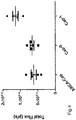
- the first experiment shows that both unmodified and chemically modified EPO mRNA is effectively expressed in the lung cells of the animals upon pulmonary aerosol delivery as a combination with PEI 25 kDa. This shows that the method for delivery into the lungs is independent from the chemical composition of mRNA.
- the second experiment shows that Metridia luciferase is effectively expressed in the lung cells of the animals upon pulmonary aerosol delivery as a combination with PEI 25 kDa. This shows that the method for delivery into the lungs is not restricted to a single coding mRNA but independent from the sequence the mRNA codes for. Together this shows that the object of the present invention can be properly addressed by the method and pharmaceutical preparations according to the present invention.
- Sigma-Aldrich Schonelldorf, Germany
- Endotoxin free water was purchased from B.Braun (Melsungen, Germany).
- IVT in-vitro-transcription
- plasmid pVAXA120-Luc was linearized by restriction digestion with NotI. Template was further purified by Chloroform-Ethanol-Precipitation. Quality of template was determined by native agarosegel electrophoresis. IVT was carried out with a standard IVT mix containing ribonucleotide triphosphates, an anti-reverse cap analogue (ARCA, m 7,3'-O GpppG) and T7 RNA Polymerase. Modifications were introduced using 25% of 5-methyl-cytidine-5'-triphosphate and 25% of 2-thio-uridine-5'-triphosphate. ARCA was used to ensure incorporation of cap only in the desired orientation.
- IVT was performed without any cap analogue resulting in mRNA containing a 5' terminal triphosphate.
- Capping was performed using the Vaccinia virus Capping Enzyme, rGTP and S-Adenosyl methionine (SAM) as a methyl donor to add a 7-methylguanylate cap-0 structure (m7GpppG) to the 5'end of the mRNA.
- SAM S-Adenosyl methionine
- an mRNA Cap 2'-o-Methyltransferase and SAM were used. This methylation resulted in a cap-1 structure (m7GpppGm) of the mRNA cap. Purification of mRNA was performed by ammonium acetate precipitation. Modified Luc RNA was resuspended in aqua ad injectabilia and quality control was performed using UV-measurement, native agarose gel electrophoresis and transfection in NIH3T3 cells.
- mice Six to eight week-old female BALB/c mice were obtained from Janvier, Route Des Chênes SecsBP5, F-53940 Le Genest St. Isle, France, and maintained under specific pathogen-free conditions. Mice were acclimatized to the environment of the animal facility for at least seven days prior to the experiments. All animal procedures were approved and controlled by the local ethics committee and carried out according to the guidelines of the German law of protection of animal life.
- Polyplexes were formulated as follows: mRNA and PEI were diluted in 4.0 ml of double distilled water resulting in concentrations of 250 ⁇ g/ml mRNA and 326.3 ⁇ g/ml PEI, respectively (corresponding to an N/P ratio of 10). The mRNA solution was pipetted to the PEI solution, mixed by pipetting up and down, to yield a final mRNA concentration of 125 ⁇ g/ml. The complexes were incubated for 20 min at ambient temperature before use. It was observed within the course of the present invention that it is specifically advantageous to use only water without any buffers for complexation because otherwise nanoparticles may aggregate or be ineffective in mouse lungs ( Rudolph et al., J. Mol Ther. 2005, 12: 493-501 )
- mice are placed in a 9.8 ⁇ 13.2 ⁇ 21.5 cm plastic box which can be sealed with a lid. At one narrow side of the box, four small holes are positioned as aerosol outflow. Through a whole at the opposite narrow side, the box is connected via a 2.1 cm diameter connecting piece to a 15.4 cm wide ⁇ 41.5 cm long plastic cylinder. The bottom of the cylinder is evenly covered with 150 g of silica gel (1-3 mm, #85330; Fluka, Switzerland) for drying the aerosol which is produced by a jet nebulizer (PARI BOY® LC plus, PARI GmbH) connected to the other end of the cylinder. (Details described in Rudolph et al., J Gene Med. 2005, 7: 59-66 ) .
- mice Twenty-four hours post administration mice were anaesthetized by intraperitoneal injection of medetomidine (11.5 ⁇ g/kg BW), midazolame (115 ⁇ g/kg BW) and fentanyl (1.15 ⁇ g/kg BW).
- D-luciferin substrate (3 mg/50 ⁇ l PBS per mouse) was applied via the intranasal route ( Buckley SM, Howe SJ, Wong SP, Buning H, McIntosh J, et al. (2008) Luciferin detection after intra-nasal vector delivery is improved by intra-nasal rather than intra-peritoneal luciferin administration. Hum Gene Ther ).
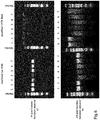
- Bioluminescence was measured 10 minutes later, using an IVIS 100 Imaging System (Xenogen, Alameda, USA) and the camera settings: field of view 10, f1 f-stop, high-resolution binning and exposure-time of 10 min.
- the signal was quantified and analyzed using the Living Image Software version 2.50 (Xenogen, Alameda, USA) .
- Sedation of the pig was initiated by premedication with azaperone 2 mg/kg body weight, ketamine 15 mg/kg body weight, atropine 0.1 mg/kg body weight and followed by insertion of an intravenous line to the lateral auricular vein.
- the pig was anesthetized by intravenous injection of propofol 3-5 mg/kg body weight as required. Anesthesia was maintained with continuous intravenous infusion of 1% propofol as required. Ventilation parameters were matched with endexpiratory carbon dioxide and adjusted if necessary. Anesthesia, respiratory and cardiovascular parameters were monitored continuously using pulse oximetry, capnography, rectal temperature probe and reflex status.
- the pig received infusion of balanced electrolyte solution at 10 ml/kg/h.
- Duration of the anesthesia was approximately 80-120 min.
- the pig was killed with bolus injection of pentobarbital 100 mg/kg of body weight via the lateral ear vein after sedation after aerosol application was completed (Aeroneb mesh nebulizer).
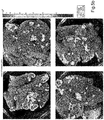
- Lungs were excised and sliced approximately 1 cm thick tissue specimens were collected from various lung regions followed by incubation in cell culture medium for 24 hrs at 37°C (5% carbon dioxide) in an incubator.
- luciferase activity tissue specimens were incubated in a medium bath comprising D-Luciferin substrate in PBS (100 ⁇ g/ml) at 37°C for 30 min and subjected to ex vivo luciferase bioluminescent imaging (IVIS 100, Xenogen, Alameda, USA) .
- IVIS 100 ex vivo luciferase bioluminescent imaging
- Polyplexes were formed using a two channel syringe pump (KDS-210-CE, KD Scientific).mRNA and PEI were diluted each in 12.0 ml of double distilled water resulting in concentrations of 500 ⁇ g/ml mRNA and 650 ⁇ g/ml PEI, respectively (corresponding to an N/P ratio of 10). Both solutions were filled into a separate 20mL syringe using the withdrawal function of the syringe pump at a speed of 5mL/min. To mix both samples the two syringes were connected via a tubing (Safeflow Extension Set, B.Braun) was to a t-piece.
- WFI Water for injection
- Branched PEI 25kDa (Sigma-Aldrich, Schnelldorf) stock solutions were prepared at 10 mg/ml and 5 mg/ml in either Aqua ad Injectabilia (WFI, B.Braun, Melsungen) or Dulbecco's PBS (Life technologies, Darmstadt) and pH was adjusted with HCl to pH 7.4, pH 6.0 or pH 5.0.
- 25 ⁇ l modified mRNA (1 ⁇ g/ ⁇ l) and 3.3 ⁇ l of PEI stock solution (10 mg/ml) were diluted in 50 ⁇ l WFI or D-PBS resulting in concentrations of 0.5 ⁇ g/ ⁇ l mRNA and 0.66 ⁇ g/ ⁇ l PEI, respectively (corresponding to an N/P ratio of 10).
- 25 ⁇ l modified mRNA (1 ⁇ g/ ⁇ l) and 6.6 ⁇ l of PEI stock solution in D-PBS (5 mg/ml) were diluted in 50 ⁇ l WFI.
- the PEI solution was slowly vortexed and the DNA solution was added to it to make a final volume of 100 ⁇ l.
- the mixture was allowed to stand at room temperature for 20 min before use.
Landscapes
- Health & Medical Sciences (AREA)
- Life Sciences & Earth Sciences (AREA)
- Chemical & Material Sciences (AREA)
- General Health & Medical Sciences (AREA)
- Public Health (AREA)
- Pharmacology & Pharmacy (AREA)
- Veterinary Medicine (AREA)
- Animal Behavior & Ethology (AREA)
- Medicinal Chemistry (AREA)
- Engineering & Computer Science (AREA)
- Molecular Biology (AREA)
- Organic Chemistry (AREA)
- Bioinformatics & Cheminformatics (AREA)
- Epidemiology (AREA)
- Nuclear Medicine, Radiotherapy & Molecular Imaging (AREA)
- General Chemical & Material Sciences (AREA)
- Chemical Kinetics & Catalysis (AREA)
- Genetics & Genomics (AREA)
- Biotechnology (AREA)
- Biochemistry (AREA)
- Virology (AREA)
- Biomedical Technology (AREA)
- Pulmonology (AREA)
- Communicable Diseases (AREA)
- Oncology (AREA)
- Zoology (AREA)
- Wood Science & Technology (AREA)
- General Engineering & Computer Science (AREA)
- Microbiology (AREA)
- Physics & Mathematics (AREA)
- Biophysics (AREA)
- Plant Pathology (AREA)
- Diabetes (AREA)
- Hematology (AREA)
- Cardiology (AREA)
- Heart & Thoracic Surgery (AREA)
- Pharmaceuticals Containing Other Organic And Inorganic Compounds (AREA)
- Medicines That Contain Protein Lipid Enzymes And Other Medicines (AREA)
- Medicinal Preparation (AREA)
- Micro-Organisms Or Cultivation Processes Thereof (AREA)
Priority Applications (1)
| Application Number | Priority Date | Filing Date | Title |
|---|---|---|---|
| EP20189217.1A EP3800254A1 (en) | 2012-06-08 | 2013-06-07 | Pulmonary delivery of messenger rna |
Applications Claiming Priority (2)
| Application Number | Priority Date | Filing Date | Title |
|---|---|---|---|
| US201261657344P | 2012-06-08 | 2012-06-08 | |
| PCT/EP2013/061811 WO2013182683A1 (en) | 2012-06-08 | 2013-06-07 | Pulmonary delivery of messenger rna |
Related Child Applications (1)
| Application Number | Title | Priority Date | Filing Date |
|---|---|---|---|
| EP20189217.1A Division EP3800254A1 (en) | 2012-06-08 | 2013-06-07 | Pulmonary delivery of messenger rna |
Publications (2)
| Publication Number | Publication Date |
|---|---|
| EP2858677A1 EP2858677A1 (en) | 2015-04-15 |
| EP2858677B1 true EP2858677B1 (en) | 2020-08-05 |
Family
ID=48782278
Family Applications (2)
| Application Number | Title | Priority Date | Filing Date |
|---|---|---|---|
| EP13735212.6A Active EP2858677B1 (en) | 2012-06-08 | 2013-06-07 | Pulmonary delivery of messenger rna |
| EP20189217.1A Pending EP3800254A1 (en) | 2012-06-08 | 2013-06-07 | Pulmonary delivery of messenger rna |
Family Applications After (1)
| Application Number | Title | Priority Date | Filing Date |
|---|---|---|---|
| EP20189217.1A Pending EP3800254A1 (en) | 2012-06-08 | 2013-06-07 | Pulmonary delivery of messenger rna |
Country Status (14)
| Country | Link |
|---|---|
| US (1) | US20150126589A1 (enExample) |
| EP (2) | EP2858677B1 (enExample) |
| JP (1) | JP6208750B2 (enExample) |
| KR (2) | KR102087643B1 (enExample) |
| CN (1) | CN104349794B (enExample) |
| AU (1) | AU2013273504B2 (enExample) |
| BR (1) | BR112014029807A2 (enExample) |
| CA (1) | CA2873274C (enExample) |
| DK (1) | DK2858677T3 (enExample) |
| EA (1) | EA037448B1 (enExample) |
| ES (1) | ES2826203T3 (enExample) |
| IN (1) | IN2014DN09744A (enExample) |
| WO (1) | WO2013182683A1 (enExample) |
| ZA (1) | ZA201408184B (enExample) |
Families Citing this family (87)
| Publication number | Priority date | Publication date | Assignee | Title |
|---|---|---|---|---|
| EP3403647A1 (en) | 2009-12-01 | 2018-11-21 | Translate Bio, Inc. | Delivery of mrna for the augmentation of proteins and enzymes in human genetic diseases |
| EP2338520A1 (de) | 2009-12-21 | 2011-06-29 | Ludwig Maximilians Universität | Konjugat mit Zielfindungsligand und dessen Verwendung |
| EP3578205A1 (en) | 2010-08-06 | 2019-12-11 | ModernaTX, Inc. | A pharmaceutical formulation comprising engineered nucleic acids and medical use thereof |
| EP4108671B1 (en) | 2010-10-01 | 2024-11-20 | ModernaTX, Inc. | Modified nucleosides, nucleotides, and nucleic acids, and uses thereof |
| WO2012116715A1 (en) * | 2011-03-02 | 2012-09-07 | Curevac Gmbh | Vaccination in newborns and infants |
| EP3138577A1 (en) * | 2011-03-02 | 2017-03-08 | CureVac AG | Vaccination in elderly patients |
| WO2012116714A1 (en) | 2011-03-02 | 2012-09-07 | Curevac Gmbh | Vaccination in elderly patients |
| JP2014511687A (ja) | 2011-03-31 | 2014-05-19 | モデルナ セラピューティクス インコーポレイテッド | 工学操作された核酸の送達および製剤 |
| PT2717893T (pt) | 2011-06-08 | 2019-08-20 | Translate Bio Inc | Composições de nanopartículas lipídicas e métodos para transferência de arnm |
| US9464124B2 (en) | 2011-09-12 | 2016-10-11 | Moderna Therapeutics, Inc. | Engineered nucleic acids and methods of use thereof |
| PL3682905T3 (pl) | 2011-10-03 | 2022-04-04 | Modernatx, Inc. | Modyfikowane nukleozydy, nukleotydy i kwasy nukleinowe oraz ich zastosowania |
| PL2791160T3 (pl) | 2011-12-16 | 2022-06-20 | Modernatx, Inc. | Kompozycje zmodyfikowanego mrna |
| US10501512B2 (en) | 2012-04-02 | 2019-12-10 | Modernatx, Inc. | Modified polynucleotides |
| US9572897B2 (en) | 2012-04-02 | 2017-02-21 | Modernatx, Inc. | Modified polynucleotides for the production of cytoplasmic and cytoskeletal proteins |
| US9283287B2 (en) | 2012-04-02 | 2016-03-15 | Moderna Therapeutics, Inc. | Modified polynucleotides for the production of nuclear proteins |
| WO2013151665A2 (en) | 2012-04-02 | 2013-10-10 | modeRNA Therapeutics | Modified polynucleotides for the production of proteins associated with human disease |
| EP2859102A4 (en) | 2012-06-08 | 2016-05-11 | Shire Human Genetic Therapies | NUCLEASE RESISTANT POLYNUCLEOTIDES AND USES THEREOF |
| RS63237B1 (sr) | 2012-11-26 | 2022-06-30 | Modernatx Inc | Terminalno modifikovana rnk |
| ES2689523T3 (es) * | 2013-03-14 | 2018-11-14 | Translate Bio, Inc. | Composiciones a base de ARNM del gen CFTR y métodos y usos relacionados |
| US8980864B2 (en) | 2013-03-15 | 2015-03-17 | Moderna Therapeutics, Inc. | Compositions and methods of altering cholesterol levels |
| WO2015048744A2 (en) | 2013-09-30 | 2015-04-02 | Moderna Therapeutics, Inc. | Polynucleotides encoding immune modulating polypeptides |
| JP2016538829A (ja) | 2013-10-03 | 2016-12-15 | モデルナ セラピューティクス インコーポレイテッドModerna Therapeutics,Inc. | 低密度リポタンパク質受容体をコードするポリヌクレオチド |
| EA201690590A1 (ru) | 2013-10-22 | 2016-12-30 | Шир Хьюман Дженетик Терапис, Инк. | ТЕРАПИЯ НЕДОСТАТОЧНОСТИ АРГИНИНОСУКЦИНАТ-СИНТЕТАЗЫ С ПОМОЩЬЮ мРНК |
| CN105658242A (zh) | 2013-10-22 | 2016-06-08 | 夏尔人类遗传性治疗公司 | 用于苯丙酮尿症的mrna疗法 |
| HUE051311T2 (hu) | 2014-03-09 | 2021-03-01 | Univ Pennsylvania | Ornitin transzkarbamiláz (TC) deficiencia kezelésében alkalmas készítmények |
| CN110511927A (zh) | 2014-04-25 | 2019-11-29 | 川斯勒佰尔公司 | 信使rna的纯化方法 |
| JP6767976B2 (ja) | 2014-12-05 | 2020-10-14 | トランスレイト バイオ, インコーポレイテッド | 関節疾患の治療のためのメッセンジャーrna治療法 |
| EP3256487A4 (en) | 2015-02-09 | 2018-07-18 | Duke University | Compositions and methods for epigenome editing |
| EP3288594B1 (en) | 2015-04-27 | 2022-06-29 | The Trustees of The University of Pennsylvania | Dual aav vector system for crispr/cas9 mediated correction of human disease |
| US11136585B2 (en) | 2015-06-30 | 2021-10-05 | Ethris Gmbh | UTRs increasing the translation efficiency of RNA molecules |
| EP3913054A2 (en) * | 2015-06-30 | 2021-11-24 | Ethris GmbH | Atp-binding cassette family coding polyribonucleotides and formulations thereof |
| EP3325018B1 (en) | 2015-07-22 | 2025-01-15 | Duke University | High-throughput screening of regulatory element function with epigenome editing technologies |
| EP4345455A3 (en) | 2015-08-25 | 2024-07-17 | Duke University | Compositions and methods of improving specificity in genomic engineering using rna-guided endonucleases |
| EP4089175A1 (en) | 2015-10-13 | 2022-11-16 | Duke University | Genome engineering with type i crispr systems in eukaryotic cells |
| DE20164728T1 (de) | 2015-10-22 | 2021-09-30 | Modernatx, Inc. | Impfstoffe gegen atemwegsvirus |
| HUE068588T2 (hu) * | 2015-12-30 | 2025-01-28 | Visiongate Inc | Rendszer és eljárás diszplázia automatizált detektálásra és monitorozására |
| US20190127713A1 (en) | 2016-04-13 | 2019-05-02 | Duke University | Crispr/cas9-based repressors for silencing gene targets in vivo and methods of use |
| EP3458108A4 (en) | 2016-05-18 | 2020-04-22 | ModernaTX, Inc. | POLYNUCLEOTIDES ENCODING A CYSTIC FIBROSIS TRANSMEMBRANE CONDUCTANCE REGULATOR FOR THE TREATMENT OF CYSTIC FIBROSIS |
| WO2017205767A1 (en) * | 2016-05-27 | 2017-11-30 | Transcriptx, Inc. | Treatment of primary ciliary dyskinesia with synthetic messenger rna |
| US10927383B2 (en) | 2016-06-30 | 2021-02-23 | Ethris Gmbh | Cas9 mRNAs |
| WO2018010815A1 (en) * | 2016-07-15 | 2018-01-18 | Biontech Rna Pharmaceuticals Gmbh | Formulation for administration of rna |
| WO2018017754A1 (en) | 2016-07-19 | 2018-01-25 | Duke University | Therapeutic applications of cpf1-based genome editing |
| EP3548005A4 (en) | 2016-11-29 | 2020-06-17 | Puretech Health LLC | Exosomes for delivery of therapeutic agents |
| US11103578B2 (en) | 2016-12-08 | 2021-08-31 | Modernatx, Inc. | Respiratory virus nucleic acid vaccines |
| US11104887B2 (en) | 2017-01-03 | 2021-08-31 | Ethris Gmbh | Ornithine transcarbamylase coding polyribonucleotides and formulations thereof |
| EA201991747A1 (ru) | 2017-02-27 | 2020-06-04 | Транслейт Био, Инк. | НОВАЯ КОДОН-ОПТИМИЗИРОВАННАЯ мРНК CFTR |
| EP3589730B1 (en) | 2017-02-28 | 2023-12-27 | The Trustees of The University of Pennsylvania | Adeno-associated virus (aav) clade f vector and uses therefor |
| JOP20190200A1 (ar) | 2017-02-28 | 2019-08-27 | Univ Pennsylvania | تركيبات نافعة في معالجة ضمور العضل النخاعي |
| US11564996B2 (en) | 2017-03-01 | 2023-01-31 | The Trustees Of The University Of Pennsylvania | Gene therapy for ocular disorders |
| US11879133B2 (en) | 2017-04-24 | 2024-01-23 | The Trustees Of The University Of Pennsylvania | Gene therapy for ocular disorders |
| IL270422B2 (en) | 2017-05-11 | 2025-04-01 | Univ Pennsylvania | Gene therapy for neuronal ceroid lipofuscinosis |
| EP3624824B1 (en) | 2017-05-16 | 2024-07-10 | Translate Bio, Inc. | Codon-optimized mrna encoding cftr for use in treating cystic fibrosis |
| US11793887B2 (en) | 2017-05-31 | 2023-10-24 | The Trustees Of The University Of Pennsylvania | Gene therapy for treating peroxisomal disorders |
| US11555206B2 (en) | 2017-11-30 | 2023-01-17 | The Trustees Of The University Of Pennsylvania | Gene therapy for mucopolysaccharidosis IIIA |
| JP7384797B2 (ja) | 2017-11-30 | 2023-11-21 | ザ・トラステイーズ・オブ・ザ・ユニバーシテイ・オブ・ペンシルベニア | ムコ多糖症iiib型のための遺伝子療法 |
| PL3784285T3 (pl) | 2018-04-25 | 2023-12-18 | Ethris Gmbh | Środki krioprotekcyjne do formulacji cząstek stałych |
| AU2019384557B2 (en) | 2018-11-21 | 2025-07-17 | Translate Bio, Inc. | Treatment of cystic fibrosis by delivery of nebulized mRNA encoding CFTR |
| US11351242B1 (en) | 2019-02-12 | 2022-06-07 | Modernatx, Inc. | HMPV/hPIV3 mRNA vaccine composition |
| BR112021014528A2 (pt) * | 2019-02-14 | 2021-10-13 | Ethris Gmbh | Composição farmacêutica, e, método para analisar o efeito de um polirribonucleotídeo na ciliogênese |
| US11065260B1 (en) * | 2020-04-13 | 2021-07-20 | Alan C Nelson | Method of treatment for reducing pulmonary inflammation in a patient with pathogen infection using oral prostacyclin analog drugs |
| BR112022022212A2 (pt) | 2020-05-12 | 2022-12-13 | Univ Pennsylvania | Composições para redução específica de drg de expressão de transgene |
| CA3183153A1 (en) | 2020-06-17 | 2021-12-23 | Christian HINDERER | Compositions and methods for treatment of gene therapy patients |
| AU2021309645A1 (en) | 2020-07-13 | 2023-02-09 | The Trustees Of The University Of Pennsylvania | Compositions useful for treatment of charcot-marie-tooth disease |
| JP2023539454A (ja) * | 2020-08-12 | 2023-09-14 | アクティム・セラピューティクス・インコーポレイテッド | 免疫刺激細菌ベースのワクチン、治療薬およびrnaデリバリープラットフォーム |
| JP2023544803A (ja) | 2020-10-07 | 2023-10-25 | レジェンクスバイオ インコーポレーテッド | Cln2疾患の眼症状に対する遺伝子療法 |
| TW202229560A (zh) | 2020-10-09 | 2022-08-01 | 賓州大學委員會 | 治療法布瑞氏症之組成物及方法 |
| AU2021390480A1 (en) | 2020-12-01 | 2023-06-22 | The Trustees Of The University Of Pennsylvania | Novel compositions with tissue-specific targeting motifs and compositions containing same |
| EP4255500A1 (en) | 2020-12-01 | 2023-10-11 | The Trustees of The University of Pennsylvania | Compositions and uses thereof for treatment of angelman syndrome |
| US20240091380A1 (en) | 2021-02-01 | 2024-03-21 | Regenxbio Inc. | Gene therapy for neuronal ceroid lipofuscinoses |
| AU2022258312A1 (en) | 2021-04-12 | 2023-10-26 | The Trustees Of The University Of Pennsylvania | Compositions useful for treating spinal and bulbar muscular atrophy (sbma) |
| TW202305124A (zh) | 2021-04-23 | 2023-02-01 | 賓州大學委員會 | 具有腦特異性靶向模體的新穎構成物及含有其之組成物 |
| US20250295807A1 (en) | 2021-11-15 | 2025-09-25 | The Trustees Of The University Of Pennsylvania | Compositions for drg-specific reduction of transgene expression |
| US20240408157A1 (en) | 2021-12-02 | 2024-12-12 | The Trustees Of The University Of Pennsylvania | Compositions and methods for treatment of fabry disease |
| WO2023133574A1 (en) | 2022-01-10 | 2023-07-13 | The Trustees Of The University Of Pennsylvania | Compositions and methods useful for treatment of c9orf72-mediated disorders |
| WO2023183300A1 (en) * | 2022-03-22 | 2023-09-28 | The Children's Medical Center Corporation | Compositions and methods for prevention and treatment of genetic disease |
| AU2023289696A1 (en) | 2022-06-24 | 2025-01-16 | Tune Therapeutics, Inc. | Compositions, systems, and methods for reducing low-density lipoprotein through targeted gene repression |
| WO2024121160A1 (en) | 2022-12-05 | 2024-06-13 | Ethris Gmbh | Regulator(s) of energy homeostasis-encoding rna molecule(s) with increased translation efficiency |
| WO2024130070A2 (en) | 2022-12-17 | 2024-06-20 | The Trustees Of The University Of Pennsylvania | Recombinant aav capsids with cardiac- and skeletal muscle- specific targeting motifs and uses thereof |
| JP2026500351A (ja) | 2022-12-17 | 2026-01-06 | ザ・トラステイーズ・オブ・ザ・ユニバーシテイ・オブ・ペンシルベニア | 心筋および骨格筋特異的標的化モチーフを有する組換えaav変異体ベクターおよびそれを含む組成物 |
| WO2024258961A1 (en) | 2023-06-12 | 2024-12-19 | The Trustees Of The University Of Pennsylvania | Aav gene therapy for mucopolysaccharidosis iiib |
| TW202516019A (zh) | 2023-06-29 | 2025-04-16 | 賓州大學委員會 | 具中樞神經系統靶向模體的突變aav及含有其之組成物 |
| WO2025035143A1 (en) | 2023-08-10 | 2025-02-13 | The Trustees Of The University Of Pennsylvania | Compositions and methods for treatment of spinal muscular atrophy |
| WO2025102034A1 (en) | 2023-11-10 | 2025-05-15 | The Trustees Of The University Of Pennsylvania | Gene therapy for barth syndrome |
| WO2025106661A1 (en) | 2023-11-14 | 2025-05-22 | The Trustees Of The University Of Pennsylvania | Compositions with cardiac and skeletal musclespecific targeting motifs and uses thereof |
| WO2025129157A1 (en) | 2023-12-15 | 2025-06-19 | The Trustees Of The University Of Pennsylvania | Gene therapy for treatment of canavan disease |
| WO2025184172A1 (en) | 2024-02-27 | 2025-09-04 | Overt Bio, Inc. | Cancer reactive t cell receptors |
| WO2025184170A1 (en) | 2024-02-27 | 2025-09-04 | Overt Bio, Inc. | Methods and compositions for improving t cell function in an immunosuppressive environment |
Family Cites Families (19)
| Publication number | Priority date | Publication date | Assignee | Title |
|---|---|---|---|---|
| US5756353A (en) * | 1991-12-17 | 1998-05-26 | The Regents Of The University Of California | Expression of cloned genes in the lung by aerosol-and liposome-based delivery |
| FR2722506B1 (fr) * | 1994-07-13 | 1996-08-14 | Rhone Poulenc Rorer Sa | Composition contenant des acides nucleiques, preparation et utilisations |
| AU4680699A (en) * | 1998-06-12 | 1999-12-30 | Aradigm Corporation | Methods of delivering aerosolized polynucleotides to the respiratory tract |
| IL145592A0 (en) * | 1999-04-02 | 2002-06-30 | Res Dev Foundation | Polyethyleneimine: dna formulations for aerosol delivery |
| EP1297169B1 (en) * | 2000-06-26 | 2012-08-08 | Ethris Gmbh | Method for transfecting cells using a magnetic field |
| US20020086842A1 (en) * | 2000-06-26 | 2002-07-04 | Christian Plank | Method for transfecting cells using a magnetic field |
| AU2002368202B2 (en) * | 2001-11-02 | 2008-06-05 | Insert Therapeutics, Inc | Methods and compositions for therapeutic use of RNA interference |
| BRPI0407107A (pt) * | 2003-01-31 | 2006-01-24 | Novartis Ag | Infra-regulação de gene alvo com complexos de oligoribonucleotìdeo de filamento único e polìmero de polietilenoimina (pei) |
| GB0313259D0 (en) * | 2003-06-09 | 2003-07-16 | Consejo Superior Investigacion | Magnetic nanoparticles |
| MXPA05013983A (es) * | 2003-06-30 | 2006-03-02 | Canji Inc | Encapsulacion polimerica de adenovirus. |
| GB0411537D0 (en) * | 2004-05-24 | 2004-06-23 | Midatech Ltd | Nanoparticles comprising rna ligands |
| GB0508110D0 (en) * | 2005-04-22 | 2005-06-01 | Univ Keele | Gene delivery |
| EP4174179B1 (en) | 2005-08-23 | 2025-05-07 | The Trustees of the University of Pennsylvania | Rna containing modified nucleosides and methods of use thereof |
| DE102005042768A1 (de) | 2005-09-08 | 2007-03-15 | Ludwig-Maximilian-Universität | Magnetfeld-gesteuerter Wirkstofftransfer für die Aerosoltherapie |
| WO2009127230A1 (en) * | 2008-04-16 | 2009-10-22 | Curevac Gmbh | MODIFIED (m)RNA FOR SUPPRESSING OR AVOIDING AN IMMUNOSTIMULATORY RESPONSE AND IMMUNOSUPPRESSIVE COMPOSITION |
| WO2010037408A1 (en) * | 2008-09-30 | 2010-04-08 | Curevac Gmbh | Composition comprising a complexed (m)rna and a naked mrna for providing or enhancing an immunostimulatory response in a mammal and uses thereof |
| WO2010110314A1 (ja) * | 2009-03-27 | 2010-09-30 | 協和発酵キリン株式会社 | 核酸を含有する肺高血圧症治療剤 |
| EP2338520A1 (de) | 2009-12-21 | 2011-06-29 | Ludwig Maximilians Universität | Konjugat mit Zielfindungsligand und dessen Verwendung |
| WO2011113065A2 (en) * | 2010-03-12 | 2011-09-15 | Intezyne Technologies, Incorporated | Pegylated polyplexes for polynucleotide delivery |
-
2013
- 2013-06-07 WO PCT/EP2013/061811 patent/WO2013182683A1/en not_active Ceased
- 2013-06-07 CA CA2873274A patent/CA2873274C/en active Active
- 2013-06-07 JP JP2015515538A patent/JP6208750B2/ja active Active
- 2013-06-07 BR BR112014029807A patent/BR112014029807A2/pt not_active Application Discontinuation
- 2013-06-07 EA EA201401337A patent/EA037448B1/ru unknown
- 2013-06-07 EP EP13735212.6A patent/EP2858677B1/en active Active
- 2013-06-07 CN CN201380027591.5A patent/CN104349794B/zh active Active
- 2013-06-07 KR KR1020197011630A patent/KR102087643B1/ko active Active
- 2013-06-07 ES ES13735212T patent/ES2826203T3/es active Active
- 2013-06-07 KR KR20147033746A patent/KR20150020288A/ko not_active Ceased
- 2013-06-07 EP EP20189217.1A patent/EP3800254A1/en active Pending
- 2013-06-07 AU AU2013273504A patent/AU2013273504B2/en not_active Ceased
- 2013-06-07 DK DK13735212.6T patent/DK2858677T3/da active
- 2013-06-07 US US14/406,112 patent/US20150126589A1/en not_active Abandoned
-
2014
- 2014-11-10 ZA ZA2014/08184A patent/ZA201408184B/en unknown
- 2014-11-18 IN IN9744DEN2014 patent/IN2014DN09744A/en unknown
Non-Patent Citations (1)
| Title |
|---|
| None * |
Also Published As
| Publication number | Publication date |
|---|---|
| AU2013273504B2 (en) | 2017-12-07 |
| BR112014029807A2 (pt) | 2017-06-27 |
| ZA201408184B (en) | 2015-10-28 |
| JP2015518874A (ja) | 2015-07-06 |
| EA037448B1 (ru) | 2021-03-30 |
| CN104349794A (zh) | 2015-02-11 |
| EP2858677A1 (en) | 2015-04-15 |
| ES2826203T3 (es) | 2021-05-17 |
| EA201401337A1 (ru) | 2015-05-29 |
| JP6208750B2 (ja) | 2017-10-04 |
| KR20150020288A (ko) | 2015-02-25 |
| DK2858677T3 (da) | 2020-08-31 |
| IN2014DN09744A (enExample) | 2015-07-31 |
| CN104349794B (zh) | 2019-01-04 |
| HK1209340A1 (en) | 2016-04-01 |
| US20150126589A1 (en) | 2015-05-07 |
| KR102087643B1 (ko) | 2020-03-11 |
| CA2873274C (en) | 2021-06-01 |
| CA2873274A1 (en) | 2013-12-12 |
| EP3800254A1 (en) | 2021-04-07 |
| WO2013182683A1 (en) | 2013-12-12 |
| KR20190045403A (ko) | 2019-05-02 |
| AU2013273504A1 (en) | 2014-11-27 |
Similar Documents
| Publication | Publication Date | Title |
|---|---|---|
| EP2858677B1 (en) | Pulmonary delivery of messenger rna | |
| Uchida et al. | Nanomedicine-based approaches for mRNA delivery | |
| Guan et al. | Nanotechnologies in delivery of mRNA therapeutics using nonviral vector-based delivery systems | |
| US20210095272A1 (en) | Rna with a combination of unmodified and modified nucleotides for protein expression | |
| RU2651498C2 (ru) | Молекулы искусственной нуклеиновой кислоты | |
| US20240299583A1 (en) | Modified Guide RNAs for Gene Editing | |
| KR20230152014A (ko) | 에어로졸 형성을 위한 제형 및 핵산 전달을 위한 에어로졸 | |
| Yu et al. | Nucleic acid-based nanotherapeutics for treating sepsis and associated organ injuries | |
| HK1209340B (en) | Pulmonary delivery of messenger rna | |
| PAN et al. | PROGRESS OF OLIGONUCLEOTIDE THERAPEUTICS REVIEW ON MODIFICATION, TARGET TO RNA: CONJUGATION, AND DELIVERY | |
| WO2025226878A2 (en) | Compositions and methods for delivering dna | |
| Malefyt et al. | siRNA therapeutic design: Tools and challenges | |
| HK40014268B (zh) | 经修饰的指导rna | |
| HK40014268A (en) | Modified guide rnas |
Legal Events
| Date | Code | Title | Description |
|---|---|---|---|
| PUAI | Public reference made under article 153(3) epc to a published international application that has entered the european phase |
Free format text: ORIGINAL CODE: 0009012 |
|
| 17P | Request for examination filed |
Effective date: 20150107 |
|
| AK | Designated contracting states |
Kind code of ref document: A1 Designated state(s): AL AT BE BG CH CY CZ DE DK EE ES FI FR GB GR HR HU IE IS IT LI LT LU LV MC MK MT NL NO PL PT RO RS SE SI SK SM TR |
|
| AX | Request for extension of the european patent |
Extension state: BA ME |
|
| RIN1 | Information on inventor provided before grant (corrected) |
Inventor name: RUDOLPH, CARSTEN Inventor name: ANEJA, MANISH KUMAR Inventor name: GEIGER, JOHANNES |
|
| DAX | Request for extension of the european patent (deleted) | ||
| RAP1 | Party data changed (applicant data changed or rights of an application transferred) |
Owner name: ETHRIS GMBH |
|
| 17Q | First examination report despatched |
Effective date: 20151127 |
|
| REG | Reference to a national code |
Ref country code: HK Ref legal event code: DE Ref document number: 1209340 Country of ref document: HK |
|
| STAA | Information on the status of an ep patent application or granted ep patent |
Free format text: STATUS: EXAMINATION IS IN PROGRESS |
|
| REG | Reference to a national code |
Ref country code: DE Ref legal event code: R079 Ref document number: 602013071307 Country of ref document: DE Free format text: PREVIOUS MAIN CLASS: A61K0047480000 Ipc: C12N0015110000 |
|
| GRAP | Despatch of communication of intention to grant a patent |
Free format text: ORIGINAL CODE: EPIDOSNIGR1 |
|
| STAA | Information on the status of an ep patent application or granted ep patent |
Free format text: STATUS: GRANT OF PATENT IS INTENDED |
|
| RIC1 | Information provided on ipc code assigned before grant |
Ipc: C12N 15/67 20060101ALI20190109BHEP Ipc: C12N 15/11 20060101AFI20190109BHEP Ipc: A61K 31/7105 20060101ALI20190109BHEP Ipc: A61K 47/59 20170101ALI20190109BHEP Ipc: A61K 48/00 20060101ALI20190109BHEP |
|
| INTG | Intention to grant announced |
Effective date: 20190208 |
|
| TPAC | Observations filed by third parties |
Free format text: ORIGINAL CODE: EPIDOSNTIPA |
|
| GRAJ | Information related to disapproval of communication of intention to grant by the applicant or resumption of examination proceedings by the epo deleted |
Free format text: ORIGINAL CODE: EPIDOSDIGR1 |
|
| STAA | Information on the status of an ep patent application or granted ep patent |
Free format text: STATUS: EXAMINATION IS IN PROGRESS |
|
| INTC | Intention to grant announced (deleted) | ||
| GRAP | Despatch of communication of intention to grant a patent |
Free format text: ORIGINAL CODE: EPIDOSNIGR1 |
|
| STAA | Information on the status of an ep patent application or granted ep patent |
Free format text: STATUS: GRANT OF PATENT IS INTENDED |
|
| INTG | Intention to grant announced |
Effective date: 20200214 |
|
| GRAS | Grant fee paid |
Free format text: ORIGINAL CODE: EPIDOSNIGR3 |
|
| GRAA | (expected) grant |
Free format text: ORIGINAL CODE: 0009210 |
|
| STAA | Information on the status of an ep patent application or granted ep patent |
Free format text: STATUS: THE PATENT HAS BEEN GRANTED |
|
| RIN1 | Information on inventor provided before grant (corrected) |
Inventor name: RUDOLPH, CARSTEN Inventor name: ANEJA, MANISH KUMAR Inventor name: GEIGER, JOHANNES |
|
| AK | Designated contracting states |
Kind code of ref document: B1 Designated state(s): AL AT BE BG CH CY CZ DE DK EE ES FI FR GB GR HR HU IE IS IT LI LT LU LV MC MK MT NL NO PL PT RO RS SE SI SK SM TR |
|
| REG | Reference to a national code |
Ref country code: GB Ref legal event code: FG4D |
|
| REG | Reference to a national code |
Ref country code: CH Ref legal event code: EP |
|
| REG | Reference to a national code |
Ref country code: AT Ref legal event code: REF Ref document number: 1298758 Country of ref document: AT Kind code of ref document: T Effective date: 20200815 |
|
| REG | Reference to a national code |
Ref country code: DE Ref legal event code: R096 Ref document number: 602013071307 Country of ref document: DE |
|
| REG | Reference to a national code |
Ref country code: NL Ref legal event code: FP |
|
| REG | Reference to a national code |
Ref country code: DK Ref legal event code: T3 Effective date: 20200827 |
|
| REG | Reference to a national code |
Ref country code: IE Ref legal event code: FG4D |
|
| REG | Reference to a national code |
Ref country code: CH Ref legal event code: NV Representative=s name: VOSSIUS AND PARTNER PATENTANWAELTE RECHTSANWAE, CH |
|
| REG | Reference to a national code |
Ref country code: SE Ref legal event code: TRGR |
|
| REG | Reference to a national code |
Ref country code: LT Ref legal event code: MG4D |
|
| PG25 | Lapsed in a contracting state [announced via postgrant information from national office to epo] |
Ref country code: GR Free format text: LAPSE BECAUSE OF FAILURE TO SUBMIT A TRANSLATION OF THE DESCRIPTION OR TO PAY THE FEE WITHIN THE PRESCRIBED TIME-LIMIT Effective date: 20201106 Ref country code: NO Free format text: LAPSE BECAUSE OF FAILURE TO SUBMIT A TRANSLATION OF THE DESCRIPTION OR TO PAY THE FEE WITHIN THE PRESCRIBED TIME-LIMIT Effective date: 20201105 Ref country code: PT Free format text: LAPSE BECAUSE OF FAILURE TO SUBMIT A TRANSLATION OF THE DESCRIPTION OR TO PAY THE FEE WITHIN THE PRESCRIBED TIME-LIMIT Effective date: 20201207 Ref country code: HR Free format text: LAPSE BECAUSE OF FAILURE TO SUBMIT A TRANSLATION OF THE DESCRIPTION OR TO PAY THE FEE WITHIN THE PRESCRIBED TIME-LIMIT Effective date: 20200805 Ref country code: LT Free format text: LAPSE BECAUSE OF FAILURE TO SUBMIT A TRANSLATION OF THE DESCRIPTION OR TO PAY THE FEE WITHIN THE PRESCRIBED TIME-LIMIT Effective date: 20200805 Ref country code: BG Free format text: LAPSE BECAUSE OF FAILURE TO SUBMIT A TRANSLATION OF THE DESCRIPTION OR TO PAY THE FEE WITHIN THE PRESCRIBED TIME-LIMIT Effective date: 20201105 Ref country code: FI Free format text: LAPSE BECAUSE OF FAILURE TO SUBMIT A TRANSLATION OF THE DESCRIPTION OR TO PAY THE FEE WITHIN THE PRESCRIBED TIME-LIMIT Effective date: 20200805 |
|
| PG25 | Lapsed in a contracting state [announced via postgrant information from national office to epo] |
Ref country code: LV Free format text: LAPSE BECAUSE OF FAILURE TO SUBMIT A TRANSLATION OF THE DESCRIPTION OR TO PAY THE FEE WITHIN THE PRESCRIBED TIME-LIMIT Effective date: 20200805 Ref country code: RS Free format text: LAPSE BECAUSE OF FAILURE TO SUBMIT A TRANSLATION OF THE DESCRIPTION OR TO PAY THE FEE WITHIN THE PRESCRIBED TIME-LIMIT Effective date: 20200805 Ref country code: PL Free format text: LAPSE BECAUSE OF FAILURE TO SUBMIT A TRANSLATION OF THE DESCRIPTION OR TO PAY THE FEE WITHIN THE PRESCRIBED TIME-LIMIT Effective date: 20200805 Ref country code: IS Free format text: LAPSE BECAUSE OF FAILURE TO SUBMIT A TRANSLATION OF THE DESCRIPTION OR TO PAY THE FEE WITHIN THE PRESCRIBED TIME-LIMIT Effective date: 20201205 |
|
| PG25 | Lapsed in a contracting state [announced via postgrant information from national office to epo] |
Ref country code: SM Free format text: LAPSE BECAUSE OF FAILURE TO SUBMIT A TRANSLATION OF THE DESCRIPTION OR TO PAY THE FEE WITHIN THE PRESCRIBED TIME-LIMIT Effective date: 20200805 Ref country code: RO Free format text: LAPSE BECAUSE OF FAILURE TO SUBMIT A TRANSLATION OF THE DESCRIPTION OR TO PAY THE FEE WITHIN THE PRESCRIBED TIME-LIMIT Effective date: 20200805 Ref country code: EE Free format text: LAPSE BECAUSE OF FAILURE TO SUBMIT A TRANSLATION OF THE DESCRIPTION OR TO PAY THE FEE WITHIN THE PRESCRIBED TIME-LIMIT Effective date: 20200805 Ref country code: CZ Free format text: LAPSE BECAUSE OF FAILURE TO SUBMIT A TRANSLATION OF THE DESCRIPTION OR TO PAY THE FEE WITHIN THE PRESCRIBED TIME-LIMIT Effective date: 20200805 |
|
| REG | Reference to a national code |
Ref country code: DE Ref legal event code: R097 Ref document number: 602013071307 Country of ref document: DE |
|
| REG | Reference to a national code |
Ref country code: ES Ref legal event code: FG2A Ref document number: 2826203 Country of ref document: ES Kind code of ref document: T3 Effective date: 20210517 |
|
| PG25 | Lapsed in a contracting state [announced via postgrant information from national office to epo] |
Ref country code: AL Free format text: LAPSE BECAUSE OF FAILURE TO SUBMIT A TRANSLATION OF THE DESCRIPTION OR TO PAY THE FEE WITHIN THE PRESCRIBED TIME-LIMIT Effective date: 20200805 |
|
| PLBE | No opposition filed within time limit |
Free format text: ORIGINAL CODE: 0009261 |
|
| STAA | Information on the status of an ep patent application or granted ep patent |
Free format text: STATUS: NO OPPOSITION FILED WITHIN TIME LIMIT |
|
| REG | Reference to a national code |
Ref country code: AT Ref legal event code: UEP Ref document number: 1298758 Country of ref document: AT Kind code of ref document: T Effective date: 20200805 |
|
| PG25 | Lapsed in a contracting state [announced via postgrant information from national office to epo] |
Ref country code: SK Free format text: LAPSE BECAUSE OF FAILURE TO SUBMIT A TRANSLATION OF THE DESCRIPTION OR TO PAY THE FEE WITHIN THE PRESCRIBED TIME-LIMIT Effective date: 20200805 |
|
| 26N | No opposition filed |
Effective date: 20210507 |
|
| PG25 | Lapsed in a contracting state [announced via postgrant information from national office to epo] |
Ref country code: SI Free format text: LAPSE BECAUSE OF FAILURE TO SUBMIT A TRANSLATION OF THE DESCRIPTION OR TO PAY THE FEE WITHIN THE PRESCRIBED TIME-LIMIT Effective date: 20200805 |
|
| PG25 | Lapsed in a contracting state [announced via postgrant information from national office to epo] |
Ref country code: MC Free format text: LAPSE BECAUSE OF FAILURE TO SUBMIT A TRANSLATION OF THE DESCRIPTION OR TO PAY THE FEE WITHIN THE PRESCRIBED TIME-LIMIT Effective date: 20200805 |
|
| PG25 | Lapsed in a contracting state [announced via postgrant information from national office to epo] |
Ref country code: LU Free format text: LAPSE BECAUSE OF NON-PAYMENT OF DUE FEES Effective date: 20210607 |
|
| PG25 | Lapsed in a contracting state [announced via postgrant information from national office to epo] |
Ref country code: HU Free format text: LAPSE BECAUSE OF FAILURE TO SUBMIT A TRANSLATION OF THE DESCRIPTION OR TO PAY THE FEE WITHIN THE PRESCRIBED TIME-LIMIT; INVALID AB INITIO Effective date: 20130607 |
|
| PG25 | Lapsed in a contracting state [announced via postgrant information from national office to epo] |
Ref country code: CY Free format text: LAPSE BECAUSE OF FAILURE TO SUBMIT A TRANSLATION OF THE DESCRIPTION OR TO PAY THE FEE WITHIN THE PRESCRIBED TIME-LIMIT Effective date: 20200805 |
|
| PG25 | Lapsed in a contracting state [announced via postgrant information from national office to epo] |
Ref country code: MK Free format text: LAPSE BECAUSE OF FAILURE TO SUBMIT A TRANSLATION OF THE DESCRIPTION OR TO PAY THE FEE WITHIN THE PRESCRIBED TIME-LIMIT Effective date: 20200805 |
|
| PGFP | Annual fee paid to national office [announced via postgrant information from national office to epo] |
Ref country code: IE Payment date: 20240618 Year of fee payment: 12 |
|
| PGFP | Annual fee paid to national office [announced via postgrant information from national office to epo] |
Ref country code: GB Payment date: 20240619 Year of fee payment: 12 |
|
| PGFP | Annual fee paid to national office [announced via postgrant information from national office to epo] |
Ref country code: DE Payment date: 20240627 Year of fee payment: 12 |
|
| PGFP | Annual fee paid to national office [announced via postgrant information from national office to epo] |
Ref country code: DK Payment date: 20240624 Year of fee payment: 12 |
|
| PGFP | Annual fee paid to national office [announced via postgrant information from national office to epo] |
Ref country code: NL Payment date: 20240625 Year of fee payment: 12 |
|
| PGFP | Annual fee paid to national office [announced via postgrant information from national office to epo] |
Ref country code: AT Payment date: 20240618 Year of fee payment: 12 |
|
| PGFP | Annual fee paid to national office [announced via postgrant information from national office to epo] |
Ref country code: FR Payment date: 20240625 Year of fee payment: 12 |
|
| PGFP | Annual fee paid to national office [announced via postgrant information from national office to epo] |
Ref country code: SE Payment date: 20240624 Year of fee payment: 12 Ref country code: BE Payment date: 20240625 Year of fee payment: 12 |
|
| PG25 | Lapsed in a contracting state [announced via postgrant information from national office to epo] |
Ref country code: MT Free format text: LAPSE BECAUSE OF FAILURE TO SUBMIT A TRANSLATION OF THE DESCRIPTION OR TO PAY THE FEE WITHIN THE PRESCRIBED TIME-LIMIT Effective date: 20200805 |
|
| PGFP | Annual fee paid to national office [announced via postgrant information from national office to epo] |
Ref country code: IT Payment date: 20240619 Year of fee payment: 12 |
|
| PGFP | Annual fee paid to national office [announced via postgrant information from national office to epo] |
Ref country code: CH Payment date: 20240701 Year of fee payment: 12 Ref country code: ES Payment date: 20240710 Year of fee payment: 12 |
|
| PG25 | Lapsed in a contracting state [announced via postgrant information from national office to epo] |
Ref country code: TR Free format text: LAPSE BECAUSE OF FAILURE TO SUBMIT A TRANSLATION OF THE DESCRIPTION OR TO PAY THE FEE WITHIN THE PRESCRIBED TIME-LIMIT Effective date: 20200805 |
|
| REG | Reference to a national code |
Ref country code: CH Ref legal event code: H13 Free format text: ST27 STATUS EVENT CODE: U-0-0-H10-H13 (AS PROVIDED BY THE NATIONAL OFFICE) Effective date: 20260127 |
|
| REG | Reference to a national code |
Ref country code: SE Ref legal event code: EUG |