EP2855490B1 - Solide hybride organique inorganique amelioee à surface externe modifiée - Google Patents
Solide hybride organique inorganique amelioee à surface externe modifiée Download PDFInfo
- Publication number
- EP2855490B1 EP2855490B1 EP13731374.8A EP13731374A EP2855490B1 EP 2855490 B1 EP2855490 B1 EP 2855490B1 EP 13731374 A EP13731374 A EP 13731374A EP 2855490 B1 EP2855490 B1 EP 2855490B1
- Authority
- EP
- European Patent Office
- Prior art keywords
- mil
- group
- solid
- ligand
- nanoparticles
- Prior art date
- Legal status (The legal status is an assumption and is not a legal conclusion. Google has not performed a legal analysis and makes no representation as to the accuracy of the status listed.)
- Active
Links
- 0 CC(C)(C(*)C(C)(C)N)C(*)(*)O Chemical compound CC(C)(C(*)C(C)(C)N)C(*)(*)O 0.000 description 14
- CNDDRRRSQRPPFR-LIGCLBOYSA-N C/C(/c(cc1)ccc1N=O)=C\C(\c(cc1)ccc1N=O)=C/C(c(cc1)ccc1N=O)=C Chemical compound C/C(/c(cc1)ccc1N=O)=C\C(\c(cc1)ccc1N=O)=C/C(c(cc1)ccc1N=O)=C CNDDRRRSQRPPFR-LIGCLBOYSA-N 0.000 description 2
- ZUAGIDYXNBKEDN-UHFFFAOYSA-N CC[NH+](c(c(N=O)c1)cc(cc2N=O)c1cc2N=O)[O-] Chemical compound CC[NH+](c(c(N=O)c1)cc(cc2N=O)c1cc2N=O)[O-] ZUAGIDYXNBKEDN-UHFFFAOYSA-N 0.000 description 1
- LTVVFWBJQKEWPW-UHFFFAOYSA-N O=Nc(ccc1c2)cc1ccc2N=O Chemical compound O=Nc(ccc1c2)cc1ccc2N=O LTVVFWBJQKEWPW-UHFFFAOYSA-N 0.000 description 1
- YGXFIMRHAJPNJZ-UHFFFAOYSA-N O=Nc1c(cccc2N=O)c2ccc1 Chemical compound O=Nc1c(cccc2N=O)c2ccc1 YGXFIMRHAJPNJZ-UHFFFAOYSA-N 0.000 description 1
Images








Classifications
-
- A—HUMAN NECESSITIES
- A61—MEDICAL OR VETERINARY SCIENCE; HYGIENE
- A61K—PREPARATIONS FOR MEDICAL, DENTAL OR TOILETRY PURPOSES
- A61K47/00—Medicinal preparations characterised by the non-active ingredients used, e.g. carriers or inert additives; Targeting or modifying agents chemically bound to the active ingredient
- A61K47/06—Organic compounds, e.g. natural or synthetic hydrocarbons, polyolefins, mineral oil, petrolatum or ozokerite
- A61K47/08—Organic compounds, e.g. natural or synthetic hydrocarbons, polyolefins, mineral oil, petrolatum or ozokerite containing oxygen, e.g. ethers, acetals, ketones, quinones, aldehydes, peroxides
-
- A—HUMAN NECESSITIES
- A61—MEDICAL OR VETERINARY SCIENCE; HYGIENE
- A61K—PREPARATIONS FOR MEDICAL, DENTAL OR TOILETRY PURPOSES
- A61K47/00—Medicinal preparations characterised by the non-active ingredients used, e.g. carriers or inert additives; Targeting or modifying agents chemically bound to the active ingredient
- A61K47/06—Organic compounds, e.g. natural or synthetic hydrocarbons, polyolefins, mineral oil, petrolatum or ozokerite
- A61K47/24—Organic compounds, e.g. natural or synthetic hydrocarbons, polyolefins, mineral oil, petrolatum or ozokerite containing atoms other than carbon, hydrogen, oxygen, halogen, nitrogen or sulfur, e.g. cyclomethicone or phospholipids
-
- A—HUMAN NECESSITIES
- A61—MEDICAL OR VETERINARY SCIENCE; HYGIENE
- A61K—PREPARATIONS FOR MEDICAL, DENTAL OR TOILETRY PURPOSES
- A61K47/00—Medicinal preparations characterised by the non-active ingredients used, e.g. carriers or inert additives; Targeting or modifying agents chemically bound to the active ingredient
- A61K47/06—Organic compounds, e.g. natural or synthetic hydrocarbons, polyolefins, mineral oil, petrolatum or ozokerite
- A61K47/26—Carbohydrates, e.g. sugar alcohols, amino sugars, nucleic acids, mono-, di- or oligo-saccharides; Derivatives thereof, e.g. polysorbates, sorbitan fatty acid esters or glycyrrhizin
-
- A—HUMAN NECESSITIES
- A61—MEDICAL OR VETERINARY SCIENCE; HYGIENE
- A61K—PREPARATIONS FOR MEDICAL, DENTAL OR TOILETRY PURPOSES
- A61K49/00—Preparations for testing in vivo
-
- A—HUMAN NECESSITIES
- A61—MEDICAL OR VETERINARY SCIENCE; HYGIENE
- A61K—PREPARATIONS FOR MEDICAL, DENTAL OR TOILETRY PURPOSES
- A61K9/00—Medicinal preparations characterised by special physical form
- A61K9/14—Particulate form, e.g. powders, Processes for size reducing of pure drugs or the resulting products, Pure drug nanoparticles
-
- A—HUMAN NECESSITIES
- A61—MEDICAL OR VETERINARY SCIENCE; HYGIENE
- A61P—SPECIFIC THERAPEUTIC ACTIVITY OF CHEMICAL COMPOUNDS OR MEDICINAL PREPARATIONS
- A61P25/00—Drugs for disorders of the nervous system
- A61P25/04—Centrally acting analgesics, e.g. opioids
-
- A—HUMAN NECESSITIES
- A61—MEDICAL OR VETERINARY SCIENCE; HYGIENE
- A61P—SPECIFIC THERAPEUTIC ACTIVITY OF CHEMICAL COMPOUNDS OR MEDICINAL PREPARATIONS
- A61P29/00—Non-central analgesic, antipyretic or antiinflammatory agents, e.g. antirheumatic agents; Non-steroidal antiinflammatory drugs [NSAID]
-
- A—HUMAN NECESSITIES
- A61—MEDICAL OR VETERINARY SCIENCE; HYGIENE
- A61P—SPECIFIC THERAPEUTIC ACTIVITY OF CHEMICAL COMPOUNDS OR MEDICINAL PREPARATIONS
- A61P31/00—Antiinfectives, i.e. antibiotics, antiseptics, chemotherapeutics
- A61P31/04—Antibacterial agents
-
- A—HUMAN NECESSITIES
- A61—MEDICAL OR VETERINARY SCIENCE; HYGIENE
- A61P—SPECIFIC THERAPEUTIC ACTIVITY OF CHEMICAL COMPOUNDS OR MEDICINAL PREPARATIONS
- A61P31/00—Antiinfectives, i.e. antibiotics, antiseptics, chemotherapeutics
- A61P31/12—Antivirals
-
- A—HUMAN NECESSITIES
- A61—MEDICAL OR VETERINARY SCIENCE; HYGIENE
- A61P—SPECIFIC THERAPEUTIC ACTIVITY OF CHEMICAL COMPOUNDS OR MEDICINAL PREPARATIONS
- A61P35/00—Antineoplastic agents
-
- C—CHEMISTRY; METALLURGY
- C07—ORGANIC CHEMISTRY
- C07F—ACYCLIC, CARBOCYCLIC OR HETEROCYCLIC COMPOUNDS CONTAINING ELEMENTS OTHER THAN CARBON, HYDROGEN, HALOGEN, OXYGEN, NITROGEN, SULFUR, SELENIUM OR TELLURIUM
- C07F15/00—Compounds containing elements of Groups 8, 9, 10 or 18 of the Periodic Table
- C07F15/02—Iron compounds
- C07F15/025—Iron compounds without a metal-carbon linkage
-
- C—CHEMISTRY; METALLURGY
- C07—ORGANIC CHEMISTRY
- C07F—ACYCLIC, CARBOCYCLIC OR HETEROCYCLIC COMPOUNDS CONTAINING ELEMENTS OTHER THAN CARBON, HYDROGEN, HALOGEN, OXYGEN, NITROGEN, SULFUR, SELENIUM OR TELLURIUM
- C07F3/00—Compounds containing elements of Groups 2 or 12 of the Periodic Table
- C07F3/06—Zinc compounds
-
- C—CHEMISTRY; METALLURGY
- C07—ORGANIC CHEMISTRY
- C07F—ACYCLIC, CARBOCYCLIC OR HETEROCYCLIC COMPOUNDS CONTAINING ELEMENTS OTHER THAN CARBON, HYDROGEN, HALOGEN, OXYGEN, NITROGEN, SULFUR, SELENIUM OR TELLURIUM
- C07F5/00—Compounds containing elements of Groups 3 or 13 of the Periodic Table
- C07F5/06—Aluminium compounds
- C07F5/061—Aluminium compounds with C-aluminium linkage
-
- C—CHEMISTRY; METALLURGY
- C07—ORGANIC CHEMISTRY
- C07F—ACYCLIC, CARBOCYCLIC OR HETEROCYCLIC COMPOUNDS CONTAINING ELEMENTS OTHER THAN CARBON, HYDROGEN, HALOGEN, OXYGEN, NITROGEN, SULFUR, SELENIUM OR TELLURIUM
- C07F7/00—Compounds containing elements of Groups 4 or 14 of the Periodic Table
- C07F7/003—Compounds containing elements of Groups 4 or 14 of the Periodic Table without C-Metal linkages
-
- C—CHEMISTRY; METALLURGY
- C07—ORGANIC CHEMISTRY
- C07F—ACYCLIC, CARBOCYCLIC OR HETEROCYCLIC COMPOUNDS CONTAINING ELEMENTS OTHER THAN CARBON, HYDROGEN, HALOGEN, OXYGEN, NITROGEN, SULFUR, SELENIUM OR TELLURIUM
- C07F9/00—Compounds containing elements of Groups 5 or 15 of the Periodic Table
- C07F9/02—Phosphorus compounds
- C07F9/28—Phosphorus compounds with one or more P—C bonds
- C07F9/38—Phosphonic acids [RP(=O)(OH)2]; Thiophosphonic acids ; [RP(=X1)(X2H)2(X1, X2 are each independently O, S or Se)]
- C07F9/3804—Phosphonic acids [RP(=O)(OH)2]; Thiophosphonic acids ; [RP(=X1)(X2H)2(X1, X2 are each independently O, S or Se)] not used, see subgroups
- C07F9/3839—Polyphosphonic acids
- C07F9/3873—Polyphosphonic acids containing nitrogen substituent, e.g. N.....H or N-hydrocarbon group which can be substituted by halogen or nitro(so), N.....O, N.....S, N.....C(=X)- (X =O, S), N.....N, N...C(=X)...N (X =O, S)
-
- C—CHEMISTRY; METALLURGY
- C08—ORGANIC MACROMOLECULAR COMPOUNDS; THEIR PREPARATION OR CHEMICAL WORKING-UP; COMPOSITIONS BASED THEREON
- C08B—POLYSACCHARIDES; DERIVATIVES THEREOF
- C08B37/00—Preparation of polysaccharides not provided for in groups C08B1/00 - C08B35/00; Derivatives thereof
- C08B37/0006—Homoglycans, i.e. polysaccharides having a main chain consisting of one single sugar, e.g. colominic acid
- C08B37/0009—Homoglycans, i.e. polysaccharides having a main chain consisting of one single sugar, e.g. colominic acid alpha-D-Glucans, e.g. polydextrose, alternan, glycogen; (alpha-1,4)(alpha-1,6)-D-Glucans; (alpha-1,3)(alpha-1,4)-D-Glucans, e.g. isolichenan or nigeran; (alpha-1,4)-D-Glucans; (alpha-1,3)-D-Glucans, e.g. pseudonigeran; Derivatives thereof
- C08B37/0012—Cyclodextrin [CD], e.g. cycle with 6 units (alpha), with 7 units (beta) and with 8 units (gamma), large-ring cyclodextrin or cycloamylose with 9 units or more; Derivatives thereof
-
- C—CHEMISTRY; METALLURGY
- C08—ORGANIC MACROMOLECULAR COMPOUNDS; THEIR PREPARATION OR CHEMICAL WORKING-UP; COMPOSITIONS BASED THEREON
- C08B—POLYSACCHARIDES; DERIVATIVES THEREOF
- C08B37/00—Preparation of polysaccharides not provided for in groups C08B1/00 - C08B35/00; Derivatives thereof
- C08B37/0006—Homoglycans, i.e. polysaccharides having a main chain consisting of one single sugar, e.g. colominic acid
- C08B37/0009—Homoglycans, i.e. polysaccharides having a main chain consisting of one single sugar, e.g. colominic acid alpha-D-Glucans, e.g. polydextrose, alternan, glycogen; (alpha-1,4)(alpha-1,6)-D-Glucans; (alpha-1,3)(alpha-1,4)-D-Glucans, e.g. isolichenan or nigeran; (alpha-1,4)-D-Glucans; (alpha-1,3)-D-Glucans, e.g. pseudonigeran; Derivatives thereof
- C08B37/0021—Dextran, i.e. (alpha-1,4)-D-glucan; Derivatives thereof, e.g. Sephadex, i.e. crosslinked dextran
-
- C—CHEMISTRY; METALLURGY
- C08—ORGANIC MACROMOLECULAR COMPOUNDS; THEIR PREPARATION OR CHEMICAL WORKING-UP; COMPOSITIONS BASED THEREON
- C08B—POLYSACCHARIDES; DERIVATIVES THEREOF
- C08B37/00—Preparation of polysaccharides not provided for in groups C08B1/00 - C08B35/00; Derivatives thereof
- C08B37/0006—Homoglycans, i.e. polysaccharides having a main chain consisting of one single sugar, e.g. colominic acid
- C08B37/0024—Homoglycans, i.e. polysaccharides having a main chain consisting of one single sugar, e.g. colominic acid beta-D-Glucans; (beta-1,3)-D-Glucans, e.g. paramylon, coriolan, sclerotan, pachyman, callose, scleroglucan, schizophyllan, laminaran, lentinan or curdlan; (beta-1,6)-D-Glucans, e.g. pustulan; (beta-1,4)-D-Glucans; (beta-1,3)(beta-1,4)-D-Glucans, e.g. lichenan; Derivatives thereof
- C08B37/0027—2-Acetamido-2-deoxy-beta-glucans; Derivatives thereof
- C08B37/003—Chitin, i.e. 2-acetamido-2-deoxy-(beta-1,4)-D-glucan or N-acetyl-beta-1,4-D-glucosamine; Chitosan, i.e. deacetylated product of chitin or (beta-1,4)-D-glucosamine; Derivatives thereof
-
- G—PHYSICS
- G01—MEASURING; TESTING
- G01N—INVESTIGATING OR ANALYSING MATERIALS BY DETERMINING THEIR CHEMICAL OR PHYSICAL PROPERTIES
- G01N33/00—Investigating or analysing materials by specific methods not covered by groups G01N1/00 - G01N31/00
- G01N33/48—Biological material, e.g. blood, urine; Haemocytometers
- G01N33/50—Chemical analysis of biological material, e.g. blood, urine; Testing involving biospecific ligand binding methods; Immunological testing
- G01N33/58—Chemical analysis of biological material, e.g. blood, urine; Testing involving biospecific ligand binding methods; Immunological testing involving labelled substances
-
- A—HUMAN NECESSITIES
- A61—MEDICAL OR VETERINARY SCIENCE; HYGIENE
- A61K—PREPARATIONS FOR MEDICAL, DENTAL OR TOILETRY PURPOSES
- A61K2123/00—Preparations for testing in vivo
Definitions
- the present invention relates to an improved metal-organic framework (MOF) solid, porous crystalline, with a modified external surface, and, in particular, to its preparation process.
- MOF metal-organic framework
- the MOF solid of the present invention is useful for example as a contrast agent and / or for the transport of pharmaceutical compounds.
- the solid of the present invention can also be used for applications in the field of storage, separation, catalysis, cosmetics or agro-food. It can also be used for vectorization and / or monitoring of pharmaceutical compounds in an organism. It can also be used for detoxification. It may be, for example, in the form of crystals, powder, particles or nanoparticles.
- the use of carriers and vectors of molecules of interest has become an important issue for the development of new diagnostic methods or new drugs.
- the molecules of interest have characteristics which have an influence on the pharmacokinetics and biodistribution of these molecules and which are not always favorable or adaptable to the medium into which they are introduced. These are, for example, physicochemical characteristics such as instability, the strong tendency to crystallization, low hydro / liposolubility and / or biological characteristics such as toxicity, biodegradability, etc.
- Metal-Organic Framework are inorganic-organic hybrid framework coordination polymers comprising metal ions and organic ligands coordinated to metal ions. These materials are organized into a mono-, bi- or tri-dimensional network where the inorganic entities are connected to each other by spacer ligands periodically. These materials have a crystalline structure, are usually porous and could be used in many industrial applications such as gas storage, adsorption of liquids, separation of liquids or gases, catalysis, etc.
- NanoMOFs Organic-inorganic hybrid nanoparticles based on porous iron carboxylate have recently been developed in order to meet certain challenges in modern galenics.
- the research in this field is part of the finding that there was still a number of active ingredients with a very short plasma half-life, poorly crossing the body's natural barriers, or leading to resistance or toxicity phenomena, for which nanoencapsulation would be an interesting alternative.
- Some of these molecules of interest (in particular with anticancer or antiviral activity) could not be successfully encapsulated in known nanovectors (liposomes, nanoparticles based on polymers or inorganic, etc.).
- the main reason was the incompatibility of these active molecules, in terms of sufficient interaction to properly encapsulate them, with the materials currently used to develop nanovectors (polymers, lipids, oils, ).
- these nanoparticles or nanoMOFs of iron carboxylate Due to their high pore volume and high surface area, these nanoparticles or nanoMOFs of iron carboxylate have been found to be capable of adsorbing by simple impregnation into active principle solutions, with very large amounts of these therapeutic molecules being able to exceed 40% by weight. weight in the case of several hydrophilic, hydrophobic or amphiphilic molecules which have never previously been effectively encapsulated (encapsulated quantities ⁇ 1 or at most 5% by weight).
- this surface modification strategy has disadvantages, in particular because of the porous nature of the MOF materials. These are manifested in particular by a decreased encapsulation capacity, and a greater difficulty in controlling the release of the encapsulated active ingredients (see Example 11).
- variable q is at least 2
- the ligand L is inherently polyfunctionalized.
- the ligand L represents a di-, tri-, tetra- or hexa-carboxylate ligand.
- the size of the pore access windows of the MOF materials described herein is defined by the M, X, L, m, k, l, and p parameters.
- the MOF materials are well known in the scientific literature, and the reader will know without difficulty from the selection of parameters M, X, L, M, K, I and P operated (and therefore the choice of the MOF material in question) determine the structure of the MOF, including the pore window sizes, and in particular the size of the larger pore access windows of the MOF material.
- the organic surface agent can be chosen from a monomer, oligomer or cyclodextrin polymer; a branched polyethylene glycol (e.g., "stellate” or dendrimer); a protein; a polysaccharide with or without a plurality of polyethylene glycol (PEG) side chains, themselves optionally optionally coupled at the end of the chain with specific ligands; or a polysaccharide such as chitosan, insoluble in water at 6 ⁇ pH ⁇ 8 and soluble in water at pH ⁇ 5.
- a monomer, oligomer or cyclodextrin polymer e.g., "stellate” or dendrimer
- PEG polyethylene glycol
- said organic surface agent being in interaction with (for example complexed to) a metal center M or a ligand L located on the surface of the crystalline MOF solid via said one or more phosphate, phosphonate, sulfate, carboxylate group (s), hydroxy, cathecolate, thiolate, heterocyclic nitrogen, amide or amino, or a combination of these groups.
- the PEG chains may carry at their free end a specific ligand (antibody, peptide, folate, etc.) allowing the change of their biodistribution, in particular a targeting of the nanoparticles.
- a specific ligand antibody, peptide, folate, etc.
- the organic surface agent interacts with a metal center M or with a ligand L located on the surface of the crystalline MOF solid via at least one of those mentioned above.
- the interaction is preferably by covalent, iono-covalent, ionic interactions or weak interactions (ie hydrogen bonds) (eg, iron-phosphate coordination).
- weak interactions ie hydrogen bonds
- hydrophobic type interactions for example an alkyl-MOF chain
- good stability of recovery means a sufficient stability to allow, in a biological medium, to achieve a function of biomedical interest: for example, to reach a target (ex tumor, infected tissue, etc.); interact with the intestinal mucosa and / or circulate long enough in the blood stream.
- a "good stability of the recovery” can represent a stall of less than 20% of the recovery (that is to say of the agent of surface on the outer surface of the MOF material) for one hour of incubation with stirring at 37 ° C. in 0.15 M phosphate buffer solution, pH 7.4.
- the surfactant may be dextran grafted with both PEG chains and Alendronate bisphosphonate groups, as exemplified herein.
- the synthesis method according to the present invention makes it possible to vary both the density of PEG chains and anchor points (alendronate).
- the organic surface agent can be chosen from a monomer, oligomer or cyclodextrin polymer; a branched polyethylene glycol group; a polysaccharide carrying a plurality of polyethylene glycol side chains; or a polysaccharide insoluble in water at 6 ⁇ pH ⁇ 8 and soluble in water at pH ⁇ 5.
- each occurrence of M in the units of formula (I) may be identical or different.
- each occurrence of M independently represents a metal ion Fe 2+ , Fe 3+ , Zn 2+ or Ca 2+ .
- solid in the sense of the present invention any type of crystalline material.
- Said solid may for example be in the form of crystals, powder, particles of various shapes, for example spherical, cubic, parallelepipedic, rhombohedral, lamellar, etc.
- the particles may be in the form of nanoparticles.
- nanoparticle is meant a particle of size less than 1 micron.
- the nanoparticles of MOF solid according to the invention may have a diameter of less than 1000 nanometers, preferably less than 500 nm, more preferably less than 250 nm, more particularly less than 100 nm.
- rigid section of a molecule or a surfactant is meant the dimension of the minor axis of the rigid volume occupied by the molecule or the surfactant in a given medium, preferably a liquid medium.
- a liquid medium may be the liquid medium in which the molecule or the surfactant is brought into contact with the MOF material, in particular during the modification of the external surface of the MOF material with the molecule or the surface agent in question.
- it may also alternatively be the liquid medium in which the MOF material, modified with the molecule or surfactant according to the present invention, is located.
- the rigid volume represents the volume occupied by the molecule or the surfactant in its most stable conformation in the medium in question, either when changing the outer surface of the MOF material according to the present invention, or once the surface modification is performed.
- the medium may be water, a physiological liquid, an organic solvent or a water / organic solvent mixture.
- the rigid section can be calculated using numerical simulation (Materials Studio software, Accelrys, known to those skilled in the art) once the most stable conformation of the molecule or surfactant in the medium given is determined by minimizing energy.
- the Accelrys software, Materials Studio version 5.0 (2010) can be used.
- cyclodextrin monomer is meant a cyclodextrin unit, which may be for example an ⁇ -, ⁇ - or ⁇ -cyclodextrin.
- cyclodextrin oligomer is meant a sequence of 2 to 9 identical or different cyclodextrin units.
- the cyclodextrin units may be, for example, ⁇ -, ⁇ - or ⁇ -cyclodextrins.
- cyclodextrin polymer or “polycyclodextrin” is meant a polymer comprising at least 10 identical or different cyclodextrin units.
- the cyclodextrin polymer contains at least 10 cyclodextrin units, preferably at least 15 cyclodextrin units, and advantageously at least 20 cyclodextrin units.
- the cyclodextrin polymers carrying cyclodextrins comprise on average at least 100 cyclodextrin units, preferably at least 200 cyclodextrin units, and advantageously at least 300 cyclodextrin units.
- the cyclodextrin polymers comprise on average at least 400 cyclodextrin units.
- the polycyclodextrin contains on average between 10 and 1500 cyclodextrin units within its structure, preferably on average between 10 and 1000 cyclodextrin units, preferably on average between 15 and 800 cyclodextrin units, preferably on average between 50 and 600 units.
- cyclodextrin and advantageously on average between 100 and 400 cyclodextrin units.
- the cyclodextrin units present within the polycyclodextrin may, in general, be ⁇ -cyclodextrins, ⁇ -cyclodextrins, ⁇ -cyclodextrins, or mixtures of at least two of these types of cyclodextrins.
- the average number of cyclodextrin units present in the polymers of the invention can for example be established by steric exclusion chromatography and by nuclear magnetic resonance.
- the cyclodextrin units may be linked together by hydrocarbon chains of 3 to 50 carbon atoms, linear or branched, optionally interrupted by one or more oxygen atoms, and these chains preferably being alkyl chains, alkenyls, or alkynyls of 3 to 50 carbon atoms, or else polyether chains of 3 to 50 carbon atoms, these chains may be substituted with hydrophilic groups (hydroxyl or amino groups for example).
- the chains linking together the cyclodextrin units may comprise at least 3 carbon atoms and preferably from 4 to 50 carbon atoms, the shortest path between two cyclodextrin units being preferably constituted by a chain comprising between 3 and 8 carbon atoms. carbon.
- the hydrocarbon chains linking together two cyclodextrin units within a polycyclodextrin correspond to the general formula a group of formula -O- (CH 2 -CHOR 1 -CH 2 ) n -O- where n is an integer between 1 and 50 (generally between 2 and 10) and where in each n units (CH 2 -CHOR 1 -CH 2 ), R 1 denotes either a hydrogen atom or a chain -CH 2 -CHOH-CH 2 -O- connected to a cyclodextrin unit of the polymer.
- the polycyclodextrins can typically be obtained by crosslinking of cyclodextrin molecules with bifunctional compounds capable of forming covalent bonds with the hydroxyl groups of the cyclodextrins.
- it may be dicarboxylic acids such as citric acid, sebacic acid, fumaric acid, glutamic acid, maleic acid, malic acid, malonic acid, aspartic acid, oxalic acid, succinic acid, glutaric acid, trans acid, trans-muconic acid, terephthalic acid, isophthalic acid, oxaloacetic acid, phthalic acid, acid adipic or butanedioic acid.
- dicarboxylic acids such as citric acid, sebacic acid, fumaric acid, glutamic acid, maleic acid, malic acid, malonic acid, aspartic acid, oxalic acid, succinic acid, glutaric acid, trans acid, trans-muconic acid, terephthalic acid,
- Polycyclodextrins can also be obtained by polycondensation of molecules of cyclodextrins and hexamethylene diisocyanate, as described for example in Elif Yilmaz Ozmen et al. Bioresource Technology, Volume 99, Issue 3, Pages 526-531 (2008) ) [11].
- the polycyclodextrins can also be obtained by polycondensation of cyclodextrin molecules and several oligoethylimine branches, to form a star polymer, as described for example in Yang et al., Biomaterials, Volume 28, Issue 21, Pages 3245-3254 (2007) ).
- the total mass of the cyclodextrin units present within the polycyclodextrins represents at least 30%, advantageously at least 40%, and even more preferably at least 50%, of the total mass of said polymers, this total mass of the cyclodextrin units generally representing between 30 and 80%, and preferably between 40 and 75% of the total weight of the polymers based on cyclodextrin units.
- This mass percentage of cyclodextrins in the polymers that can be used in the context of the present invention may, for example, be determined by nuclear magnetic resonance (NMR).
- the polycyclodextrin may be a poly- ⁇ -cyclodextrin of the following Formula I: wherein n represents an integer from 1 to 50, preferably from 2 to 10; and the number of beta-cyclodextrin units is on average between 10 and 1500, preferably on average between 10 and 1000, preferably on average between 15 and 800, preferably on average between 50 and and 600, and preferably on average between 100 and 400 units.
- the monosaccharides at the ends of the structure schematize the continuity of the polymer (i.e., linking of ⁇ -cyclodextrin units forming the remainder of the polymer).
- the polycyclodextrin may be a poly- ⁇ -cyclodextrin of higher molar mass, and may correspond to formula I above, wherein n represents an integer of between 1 and 50, preferably between 2 and 10; and the number of beta-cyclodextrin units is on average between 10 and 2000, preferably on average between 100 and 1800 units, preferably on average between 500 and 1600 units, and advantageously on average between 800 and 1500 units.
- the polycyclodextrin may be a poly- ⁇ -cyclodextrin corresponding to Formula I above in which the ⁇ -cyclodextrin units are replaced by ⁇ -cyclodextrins.
- the polycyclodextrin may be a poly- ⁇ -cyclodextrin corresponding to Formula I above in which the ⁇ -cyclodextrin units are replaced by ⁇ -cyclodextrins.
- the branched polyethylene glycol group may be a polyethylene glycol dendrimer.
- dendrimers have both internal cavities and a large number of terminal groups at the periphery, easily accessible, which can be responsible for a variety of properties and reactivities.
- PEG dendrimers are commercial, it may be a branched PEG responding to one of the following structures: (H2N-dPEG (4) - [dPEG (12) -OMe] 3 or C99H197N5047 Iris Biotech, ref PEG1325.0100), or (HOOC-dPEG (4) - [dPEG (12) -OMe] 3 or C104H203N5050 Iris Biotech, ref PEG1490.0100).
- PAMAM-PEG Dendrimer kit generations 3-6 marketed by Sigma-Aldrich under the reference 683493.
- the surfactant may be a protein.
- the protein can be enzymatic, structural, transport, signaling, regulatory or motor, such as albumin or immunoglobulins.
- polysaccharide carrying a plurality of polyethylene glycol side chains means a polysaccharide on which polyethylene glycol groups are grafted.
- the polysaccharide may be a natural or synthetic polysaccharide.
- it may be hyaluronic acid, alginic acid, chitosan, chitin, scleroglucan, dextran, amilose, amilopectin, a cellulose derivative, starch, pullulan, pectin, alginate, heparin, ulvan, carrageenan, fucan, curdlan, xylan, polyguluronic acid, xanthan, arabinan, polysaccharides containing sialic acid or polymannuronic acid.
- the polysaccharide may be chitosan.
- the water-insoluble polysaccharide at 6 ⁇ pH ⁇ 8 and soluble in water at pH ⁇ 5 can be chitosan.
- the hydrodynamic diameter of the The polysaccharide can be increased, which prevents it from penetrating into the pores of the MOF particles, and thus allows a better control of the release profile of the compounds possibly encapsulated in the MOFs.
- Chitosan is water soluble at low pH but forms aggregates at neutral pH. Chitosan can therefore be used to cover, by a technique related to coacervation, the nanoMOFs of the present invention by adjusting the pH.
- Phosphated cyclodextrins are known in the prior art. For example, mention may be made of the beta-cyclodextrin phosphate marketed by the company Cyclolab.
- Sulfated cyclodextrins are known in the prior art.
- beta-cyclodextrin sulfate sold by the company Cyclolab.
- Bisphosphonated cyclodextrins are known in the prior art.
- the synthetic methods for functionalizing the alpha and / or gamma-cyclodextrins with the phosphate, sulfate and bisphosphonate groups can be adapted from the synthetic methods used for the preparation of their beta-cyclodextrin homologues mentioned above.
- the bisphosphonate group may be in the form of an alendronate or zoledronate group.
- the groups that complex the strongest of the metal sites for example the phosphate, cathecolate, carboxylate, sulfate phosphonate and / or bisphosphonate groups.
- complexing groups such as hydroxy, thiolate, nitrogen-containing heterocyclic groups, amido or amino
- organic surface agent as defined above, functionalized with several amino groups, in order to compensate for the low complexing power of the latter.
- COOH or NH 2 groups present on the proteins may also participate in the anchoring of the protein (as a surfactant) on the surface of the MOFs.
- substituted denotes the replacement of a hydrogen radical in a given structure with the radical of a substituent. specified.
- substituted for example means the replacement of a hydrogen radical in a given structure by a radical R 2 as defined above. When more than one position may be substituted, the substituents may be the same or different at each position.
- spacer ligand means a ligand (including, for example, neutral species and ions) coordinated to at least two metal sites M, participating in the distance between these metal sites and in the formation of empty spaces or pores.
- the spacer ligand can comprise several complexing functions comprising carboxylates, phosphonates, imidazolates, preferably from 2 to 6 functional groups which can be mono, bi-tri or tetradentates, that is, to include 1, 2, 3 or 4 points of attachment to the metallic site.
- the term "external surface” means the outer surface of the MOF materials, that is to say excluding the surface of the pores (micropores and / or mesopores) of the MOFs.
- alkyl means a linear, branched or cyclic, saturated or unsaturated, optionally substituted carbon radical comprising 1 to 25 carbon atoms, for example 1 to 10 carbon atoms, for example 1 to 10 carbon atoms. 8 carbon atoms, for example 1 to 6 carbon atoms.
- alkylene means a linear, branched or cyclic, saturated, optionally substituted divalent carbon radical comprising 1 to 25 carbon atoms, for example 1 to 10 carbon atoms, for example 1 to 8 carbon atoms. carbon atoms, for example 1 to 6 carbon atoms.
- alkenylene in the sense of the present invention, an alkylene radical, as defined above, having at least one carbon-carbon double bond.
- alkynylene in the sense of the present invention, an alkylene radical, as defined above, having at least one carbon-carbon triple bond.
- aryl means an aromatic system comprising at least one ring satisfying the Hückel aromaticity rule. Said aryl is optionally substituted and may comprise from 6 to 50 carbon atoms, for example 6 to 20 carbon atoms, for example 6 to 10 carbon atoms.
- heteroaryl in the sense of the present invention, a system comprising at least one cycle 5- to 50-membered aromatic group of which at least one aromatic ring member is a heteroatom, in particular selected from the group consisting of sulfur, oxygen, nitrogen and boron.
- Said heteroaryl is optionally substituted and may comprise from 1 to 50 carbon atoms, preferably 1 to 20 carbon atoms, preferably 3 to 10 carbon atoms.
- amino means a system of formula -N (R) 2 in which each occurrence of R is independently H, C 1-6 alkyl, or C 6-10 aryl, preferably H, C 1-6 alkyl, or phenyl.
- nitrogen heterocyclic means a saturated or unsaturated and nonaromatic mono- or polycyclic ring system comprising from 5 to 20 members, and optionally comprising one or more 5 or 6-membered rings having at least a nitrogen atom, and optionally between 1 to 2 other heteroatoms selected independently from each other from S, O, and N, wherein (i) each 5-membered ring has from 0 to 2 double bonds, and each ring to 6 links have from 0 to 3 double bonds, (ii) the sulfur and / or nitrogen atoms are optionally oxidized, and (iii) the nitrogen atoms are optionally in the quaternary salt form.
- a heterocyclic radical may be pyrrolidinyl, pyrazolinyl, pyrazolidinyl, imidazolinyl, imidazolidinyl, piperidinyl, piperazinyl, oxazolidinyl, isoxazolidinyl, morpholinyl, thiazolidinyl, isothiazolidinyl, or tetrahydrofuryl.
- Three-dimensional structure means a three-dimensional succession or repetition of units of formula (I) as conventionally understood in the field of MOF materials, which is also characterized as "metallo-organic coordination polymers". ".
- surfactants can be used to combine the above properties.
- a surfactant combining at least two of the aforementioned properties can be used.
- the cyclodextrin units of the poly- ⁇ , poly- ⁇ or poly- ⁇ -cyclodextrin or the copolymer of ⁇ , ⁇ and / or ⁇ -cyclodextrin can be linked together by hydrocarbon chains corresponding to the -O - (CH 2 -CHOR 1 -CH 2 ) n -O- where n is an integer between 1 and 50 and, in each of the units (CH 2 -CHOR 1 -CH 2 ), R 1 denotes either an atom of hydrogen, or a -CH 2 -CHOH-CH 2 -O- chain connected to a cyclodextrin unit of said polymer or copolymer.
- the poly- ⁇ , poly- ⁇ or poly- ⁇ -cyclodextrin or the copolymer of ⁇ , ⁇ and / or ⁇ -cyclodextrin can be obtained by polycondensation of molecules of cyclodextrin and epichlorohydrin.
- the MOF solid according to the invention may comprise di-, tri- or tetravalent metal atoms.
- the metal atoms may have an octahedral, pentahedral geometry, tetrahedral, or even be in higher coordination in the structure of the material.
- coordination or “coordination number” is meant the number of bonds for which the two electrons shared in the bond originate from the same atom.
- the electron donor atom acquires a positive charge while the electron acceptor atom acquires a negative charge.
- the metal atoms can be isolated or grouped into inorganic entities.
- the MOF solid according to the invention may for example be constructed from chains of polyhedra, dimers, trimers, tetramers, pentamers or hexamers of polyhedra or a combination of these entities.
- the MOF solid according to the invention can be constructed from chains of octahedra, dimers, trimers or tetramers of octahedra.
- the MOF iron carboxylate materials according to the invention can be constructed from chains of octahedra bound by the vertices or edges or trimers of octahedra connected by a central oxygen atom.
- organic entity means a set of atoms containing at least two metals linked by ionocovalent bonds, either directly by anions, for example O, OH, Cl, F, etc., or by the organic ligand.
- MOF solid according to the invention can be in various forms or "phases" taking into account the various possibilities of organization and connections of the ligands to the metal or metal group.
- phase means a hybrid composition comprising at least one metal and at least one organic ligand having a defined crystalline structure.
- the crystalline spatial organization of the solid of the present invention is at the basis of the particular characteristics and properties of this material, and notably governs the pore size, which has an influence on the specific surface of the material and on the adsorption characteristics, but also the density of the material, which is relatively low, the proportion of metal in this material, the stability of the material, the rigidity and flexibility of its structure, etc.
- MOF solid according to the invention can be isoreactive, that is to say comprise networks of the same topology.
- the solid of the present invention may comprise units which contain either a single type of metal ion or several types of metal ions.
- the solid of the present invention may comprise a three-dimensional succession of three different patterns.
- the solid of the present invention may comprise a three-dimensional succession of two different patterns.
- the pore size can be adjusted by choosing appropriate spacer ligands.
- the ligand L of the unit of formula (I) of the present invention may be a di-, tri- or tetracarboxylate ligand chosen from the group comprising: C 2 H 2 (CO 2 - ) 2 (fumarate), C 2 H 4 (CO 2 - ) 2 (succinate), C 3 H 6 (CO 2 - ) 2 (glutarate), C 4 H 4 (CO 2 - ) 2 (muconate), C 4 H 8 (CO 2 - ) 2 (adipate), C 7 H 14 (CO 2 - ) 2 (azelate), C 5 H 3 S (CO 2 - ) 2 (2,5-thiophene dicarboxylate), C 6 H 4 (CO 2 - ) 2 (terephthalate) , C 6 H 2 N 2 (CO 2 - ) 2 (2,5-pyrazine dicarboxylate), C 10 H 6 (CO 2 - ) 2 (naphthalene-2,6-dicarboxylate),
- the ligand L of the unit of formula (I) of the present invention can also represent 2,5 diperfluoroterephthalate, azobenzene 4,4'-dicarboxylate, 3,3'-dichloro azobenzene 4,4'-dicarboxylate, 3,3'- dihydroxo azobenzene 4,4'-dicarboxylate, 3,3'-diperfluoro azobenzene 4,4'-dicarboxylate, 3,5,3 ', 5'-azobenzene tetracarboxylate, 2,5-dimethyl terephthalate, perfluorosuccinate, perfluoromuconate, perfluoro glutarate, 3,5,3 ', 5'perfluoro-4,4'-azobenzene dicarboxylate, 3,3'-diperfluoro azobenzene 4,4'-dicarboxylate.
- the ligand L of the unit of formula (I) of the present invention may also be an imidazolate, tetrazolate, phosphate or phosphonate ligand such as imidazole, 2-methylimidazolate, 2-ethylimidazole, 4, (imidazol-dicarboxyic acid). 1,4- (butanediyl) bis (imidazole), purine, pyrimidine, benzimidazolate, piperazinediphosphonate, tetrazolylbenzoate.
- Ligand L may exhibit biological activity.
- the nanoporous hybrid solids according to the invention have a mineral part, the metal (iron), and an organic part, a ligand with two or more complexing functions (carboxylate, phosphate, amide, etc.).
- Incorporation of organic ligands that possess biological activity has the advantage of allowing controlled release of active molecules depending on the rate of degradation of the material (these are biologically active ligands mentioned above which are released during the degradation of the MOF material).
- the MOF material itself can be "bioactive", i.e., it is capable of releasing components having biological activity.
- the present invention also relates to MOF solids comprising biologically active ligands and / or encapsulating one or more active ingredients, with an activity that may be complementary or different, and their use for combination therapies.
- the combined therapy is carried out by salting out (i) the active ingredient encapsulated in the pores of the MOF material and (ii) biologically active ligands incorporated into the lattice (the framework) of the crystalline MOF material.
- it may be azelaic acid (HO 2 C (CH 2 ) 7 CO 2 H, dermatological agent with antineoplastic activity), meprobamate (anticonvulsant, sedative, muscle relaxant, anti-anxiety), aminosalicylic acid (anti-tuberculosis), chlodronate, pamidronate, zoledronate, alendronate and etidronate (curative treatment for postmenopausal osteoporosis), azobenzenes (antimicrobial activity, COX inhibitors), porphyrins or amino acids (Lys, Arg, Asp, Cys, Glu, Gln, etc.), 4-aminosalycic acid, pyrazinamide (antituberculous), dibenzofuran-4,6-dicarboxylic acid (transtryretin inhibitor), dipicolinic acid (dihydrodipicolinate reductase inhibitor), glutamic acid, fumaric acid, succinic acid, suberic acid,
- the antimicrobial or anti-inflammatory activity (NSAIDs, COX inhibitors) of azobenzenes may refer to the following references: G. Oros, T. Cserhati, E. Forgacs, Chemosphere 52, 2003, 185 [15] AM Badawi, EMS Azzam, SMI Morsy, Bioorg. Med. Chem., 14, 2006, 8661 [16] and WJ. Tsai, YJ Shiao, Lin SJ, Chiou WF, Lin LC, Yang TH, Teng CM, Wu TS, Yang LM, Bioorg. Med. Chem. Letters 16, 2006, 4440 [17].
- the ligand L can be a biologically active ligand selected from the group comprising C 7 H 14 (CO 2 - ) 2 (azelate); aminosalicylate (carboxylic, amino and hydroxo groups); chlodronate, pamidrontate, alendronate and etidronate (with phosphonate groups); meprobamate (with carbamate groups); porphyrins comprising carboxylate, phosphonate and / or amino groups; amino acids (Lys, Arg, Asp, Cys, Glu, Gln, etc.) which contain amino, carboxylate, amide and / or imine groups; azobenzenes comprising carboxylate, phosphonate, and / or amino groups; dibenzofuran-4,6-dicarboxylate, dipicolinate (pyridine-type mixed ligand with carboxylic groups); glutamate, fumarate, succinate, suberate, adipate, nicotinate, nicot
- the anion X of the unit of formula (I) of the present invention may be chosen from the group comprising OH - , Cl - , Br - , F - , R- (COO) n - , PF 6 - , NO 3 - , SO 4 2- , ClO 4 - , with R and n as defined above.
- anion X of the unit of formula (I) of the present invention may be chosen from the group comprising OH - , Cl - , F - , CH 3 -COO - , PF 6 - , ClO 4 - , or a ligand selected from the list above.
- the anion X may be chosen from the group comprising OH - , Cl - , F - and R- (COO) n - where R represents -CH 3 , -C 6 H 3 , -C 6 H 4 , -C 10 H 4 or -C 6 (CH 3 ) 4 .
- the X anion may be in an isotopic form suitable for imaging techniques such as positron emission tomography (PET).
- PET positron emission tomography
- PET Positron Emission Tomography
- CPT is a nuclear medical imaging method that measures the metabolic activity of an organ in three dimensions by the emissions produced by positrons from the disintegration of a radioactive product injected into the body.
- PET is based on the general principle of scintigraphy, which consists in injecting a tracer whose behavior and biological properties are known to obtain an image of the functioning of an organ.
- This tracer is marked by a radioactive atom (carbon, fluorine, nitrogen, oxygen ...) which emits positrons whose annihilation itself produces two photons.
- the detection of the trajectory of these photons by the collimator of the PET camera makes it possible to locate the place of their emission and thus the concentration of the tracer at each point of the organ. It is this quantitative information that is represented in the form of an image showing in color the areas of high concentration of the tracer.
- PET can visualize the activities of cell metabolism: we speak of functional imaging as opposed to so-called structural imaging techniques such as those based on X-rays (radiology or CT-scan) which are limited to the images of the anatomy. Therefore, the positron emission tomography is a diagnostic tool that can detect certain pathologies that result in an alteration of normal physiology such as cancer. PET is also used in biomedical research, for example in brain imaging where it reveals the active regions of the brain during this or that cognitive activity similarly to what is done with functional magnetic resonance imaging.
- X can represent 18 F - , which is a positron emitter and thus allows the use of the MOF solids of the invention for applications involving PET imaging.
- At least one occurrence of ligand X is 18 F - .
- the MOF solid according to the invention may comprise a percentage of metal in dry phase of 5 to 40%, preferably 18 to 31%.
- the mass percentage (% m) is a unit of measurement used in chemistry and metallurgy to designate the composition of a mixture or an alloy, that is to say the proportions of each component in the mixture.
- 1% m of a component 1 g of the component per 100 g of mixture or 1 kg of said component per 100 kg of mixture.
- the MOF solids of the present invention have the particular advantage of having a thermal stability up to a temperature of 400 ° C.
- the MOF solid of the present invention has the particular advantage of having a thermal stability of 120 ° C to 400 ° C.
- the MOF solid according to the invention may be in particulate form with a particle diameter of less than 4 ⁇ m, preferably less than 1000 nanometers.
- the MOF solid according to the invention may have a pore size of 0.4 to 6 nm, preferably 0.5 to 5.2 nm, and more preferably 0.5 to 3.4 nm. .
- the MOF solid according to the invention may have a specific surface area (BET) of 5 to 6000 m 2 / g, preferably 5 to 4500 m 2 / g.
- BET specific surface area
- the MOF solid according to the invention may have a pore volume of 0.05 to 4 cm 2 / g, preferably 0.05 to 2 cm 2 / g.
- the pore volume means the accessible volume for the gas and / or liquid molecules.
- MOF materials comprising a three-dimensional structure of units of formula (I) can be in the form of a rigid or flexible structure.
- the MOF solid of the present invention can be in the form of a robust structure, which has a rigid framework and contracts only very little when the pores are empty, or in the form of a flexible structure, which can swelling and deflating varying the pore opening depending on the nature of the adsorbed molecules.
- These adsorbed molecules may be, for example, solvents and / or gases.
- the term "rigid structure” means structures that swell or contract only very slightly, that is to say with an amplitude of up to 10%.
- the MOF solid according to the invention may have a rigid structure that swells or contracts with an amplitude of 0 to 10%.
- the term "flexible structure” means structures that swell or contract with a large amplitude, in particular with an amplitude greater than 10%, for example greater than 50%.
- a MOF material of flexible structure can swell or contract with an amplitude of 10% to 300%, preferably 50% to 300%.
- the MOF solid according to the invention may have a flexible structure that swells or contracts with an amplitude greater than 10%, for example from 50 to 300%.
- the present invention can be implemented with MOF materials of rigid or flexible structure.
- MIL Metal Organic Framework
- ZIF Zeolite Imidazolate Framework
- AEPF alkaline-earth polymer framework
- certain solids according to the invention may have a higher number of possible phases compared to MOF materials conventionally encountered in the literature.
- different phases have been obtained for the iron (III) carboxylate solids according to the invention, for example MIL-53, MIL-69, MIL-88A, MIL-88B, MIL-88Bt, MIL-88C, MIL-88B, 88D, MIL-89, MIL-100, MIL-101, MIL-102.
- These different phases are presented inter alia in the international applications WO 2009/77670 and WO 2009/77671 .
- MOF materials of the same general formula (I) but of different structures This is for example the case of MIL-88B and MIL-101 solids.
- MIL-88B and MIL-101 solids the difference between MIL-88B and MIL-101 solids lies in the way ligands are connected to the octahedron trimers: in the MIL-101 solid, the ligands L assemble in the form of rigid tetrahedra, while in the the solid MIL-88B, they form trigonal bipyramids, making possible the spacing between the trimers.
- the mode of assembly of these ligands can be controlled during the synthesis for example by adjusting the pH.
- the solid MIL-88 is obtained in a less acidic medium than the solid MIL-101 as described in the international application WO 2009/77671 .
- the MOF solid of the present invention may have a phase selected from the group consisting of: MIL-53, MIL-88, MIL-100, MIL-101, MIL-102 as described in the international application WO 2009/77671 , ZIF-8, MIL-125 and UiO-66.
- the MOF solid according to the invention may comprise at least one metal having paramagnetic or diamagnetic properties.
- the MOF solid according to the invention may comprise one or more paramagnetic metals, which may be identical or different, which may be iron.
- the MOF solid according to the invention may comprise one or more paramagnetic metal ions, which may be identical or different, which may be chosen from Fe 2+ and Fe 3+ .
- MOF solid according to the invention can be used in imaging.
- the invention also the use of MOF solid according to the invention as a contrast agent.
- the contrast agents are characterized by their relaxivity. The larger it is, the greater the effect of the contrast agents.
- Relaxivity is the ability of contrast agents to modify the proton relaxation times of the water in the medium following the application of a magnetic field. It depends on the paramagnetic properties of the metals used but also on the quantity and mobility of the water molecules that co-ordinate with the metal in the first internal sphere, bringing the most important contribution, as well as in the outer sphere.
- These "coordination spheres" represent immediately attached to the metal center atoms in the case of the 1 st sphere; for the outer sphere, this represents the atoms located immediately beyond the sphere 1 era.
- the structural characteristics of the solid of the present invention allow water to coordinate around the sphere 1 era coordination and to circulate in the pores which induces an effect on the T1 and T2 longitudinal relaxation times of the protons of the water.
- the relaxivity r 2 of the solid is sufficient for use in vivo during gradient echo experiments.
- the research work carried out by the inventors has allowed them to develop a flexible and flexible method of synthesis that makes it possible to obtain the MOF solids according to the invention having a particular isoreticular structural organization with good yields.
- the method makes it possible to obtain nanoparticles of desired dimensions and particle sizes and homogeneous pores.
- the method for preparing the solid of the invention may further comprise a step (iii) of fixing on said solid at least one organic surface agent as defined above.
- This fixing step (iii) can be carried out during or after the reaction step (i) or after a step of introducing (ii) a molecule of interest. See examples 22, 23 and 24 of WO 2009/77671 .
- MOF solids with a modified outer surface are illustrated in the "Examples" section. It is understood that these examples are given for illustrative and not limiting.
- the surface modification methods of the MOF solids illustrated in the Examples are applicable and / or adaptable to all the MOF solids according to the present invention (eg, MOF solids based on a metal M different from Fe, with different ligands L, and / or encapsulating or not at least one active principle, a compound of cosmetic interest and / or a marker).
- these methods can be implemented without difficulty for modifying the surfaces of all the MOF solids described in the present application.
- each occurrence of R 3 represents a hydrogen atom.
- each occurrence of the radicals R L1 , R L2 and R L3 represents a hydrogen atom.
- the ligand L 'used may be a di-, tri- or tetracarboxylic acid chosen from the group comprising: C 2 H 2 (CO 2 H) 2 (fumaric acid) , C 2 H 4 (CO 2 H) 2 (succinic acid), C 3 H 6 (CO 2 H) 2 (glutaric acid), C 4 H 4 (CO 2 H) 2 (muconic acid), C 4 H 8 (CO 2 H) 2 (adipic acid), C 7 H 14 (CO 2 H) 2 (azelaic acid), C 5 H 3 S (CO 2 H) 2 (2,5-thiophene dicarboxylic acid), C 6 H 4 (CO 2 H) 2 (terephthalic acid), C 6 H 2 N 2 (CO 2 H) 2 (2,5-pyrazine dicarboxylic acid), C 10 H 6 (CO 2 H) 2 (2,6-naphthalene acid) dicarboxylic acid), C 12 H 8 (CO 2 H) 2
- the ligand L 'used may also be chosen from the group comprising: 2,5-diperfluoroterephthalic acid, azobenzene 4,4'-dicarboxylic acid, 3,3'-dichloroazobenzene 4,4'-dicarboxylic acid, 3,3'-dihydroxoazobenzene 4,4'-dicarboxylic acid, 3,3'-diperfluoroazobenzene 4,4'-dicarboxylic acid, 3,5,3 ', 5'-azobenzene tetracarboxylic acid, 2,5-dimethyl terephthalic acid, perfluoro glutaric acid.
- the ligand L ' may also be a precursor of the ligand imidazolate, tetrazolate, phosphate or phosphonate such as imidazole, 2-methylimidazolate, 2-ethylimidazole, 4, (imidazol-dicarboxyic acid, 1,4- (butanediyl) bis (imidazole), purine, pyrimidine, benzimidazolate, piperazinediphosphonate, tetrazolylbenzoate.
- imidazole 2-methylimidazolate
- 2-ethylimidazole 4, (imidazol-dicarboxyic acid, 1,4- (butanediyl) bis (imidazole), purine, pyrimidine, benzimidazolate, piperazinediphosphonate, tetrazolylbenzoate.
- MOF materials can preferably be carried out in the presence of energy that can be provided by For example, by heating, for example hydrothermal or solvothermal conditions, but also by microwaves, ultrasounds, grinding, a process involving a supercritical fluid, etc.
- energy that can be provided by For example, by heating, for example hydrothermal or solvothermal conditions, but also by microwaves, ultrasounds, grinding, a process involving a supercritical fluid, etc.
- the corresponding protocols are those known to those skilled in the art. Nonlimiting examples of protocols that can be used for hydrothermal or solvothermal conditions are described, for example, in international applications. WO 2009/077670 and WO 2009/077670 , and in the references cited therein.
- the hydrothermal or solvothermal conditions whose reaction temperatures can vary between 0 and 220 ° C, are generally carried out in glass (or plastic) containers when the temperature is below the boiling point of the solvent.
- Teflon bodies inserted in metal bombs are used.
- the solvents used are generally polar.
- the following solvents may be used: water, alcohols, dimethylformamide, dimethylsulfoxide, acetonitrile, tetrahydrofuran, diethylformamide, chloroform, cyclohexane, acetone, cyanobenzene, dichloromethane, nitrobenzene, ethylene glycol, dimethylacetamide or mixtures of these solvents.
- One or more co-solvents may also be added at any stage of the synthesis for better solubilization of the compounds of the mixture.
- These may include monocarboxylic acids, such as acetic acid, formic acid, benzoic acid, and the like.
- the co-solvent is a monocarboxylic acid
- the latter in addition to a solubilizing effect, also makes it possible to stop the crystalline growth of the MOF solid.
- the carboxylic function coordinates with iron, which will not be able to bind to another iron atom because of the absence of a second -COOH function on the co-solvent molecule.
- the growth of the crystal lattice is slowed down and stopped.
- a monocarboxylic co-solvent such as acetic acid, formic acid, benzoic acid, etc., thus makes it possible to reduce the size of the MOF solid particles obtained.
- the use of a monocarboxylic co-solvent can therefore promote the production of nanoparticles (particles of size ⁇ 1 ⁇ m).
- the ranges of preferred values for each of these parameters may vary depending on whether the synthesis of the nanoparticles is carried out by the hydro / solvothermal route, by ultrasound or by microwaves. For example, a higher reaction temperature will generally be used for the hydro / solvothermal route (about 20-150 ° C) than for the ultrasound route (about 0 ° C).
- the inventors have also demonstrated that the particular structural characteristics of the solid of the present invention, in particular in terms of flexibility or pore size, which confer on it particularly advantageous properties, especially in terms of adsorption capacity, selective adsorption and purity. These materials therefore make it possible to selectively adsorb molecules, such as for example pharmaceutical molecules, with a favorable energy cost and a higher release time.
- the research work conducted by the inventors allowed them to highlight the interest of MOF materials for the adsorption and transport of active ingredients.
- the invention also relates to the use of the MOF solid according to the invention, which comprises in its pores or on its surface at least one pharmaceutically active principle.
- the invention also relates to the use of the MOF solid according to the invention loaded in principle as pharmaceutically active drug.
- the pharmaceutically active principle may be contained either in the pores or on the surface of the solid according to the invention. This is what is meant in the remainder of this document by "MOF solid loaded in principle pharmaceutically active”.
- MOF solid loaded with component X means an MOF solid according to the invention containing in its pores or on its surface the component X.
- the component X can be adsorbed or bound by a covalent bond, by hydrogen bonding, by Van der Waals bond, by electrostatic interaction at the surface or in the pores of the MOF solid.
- This component X can be, as indicated above, a pharmaceutically active principle.
- the term "active ingredient” means a molecule that has a therapeutic effect.
- it may be any molecule having therapeutic properties involved in the composition of a drug.
- NSAIDs nonsteroidal anti-inflammatory drugs
- abortives alpha-blockers
- alpha2-agonists aminoglycosides
- aminoglycosides aminoglycosides
- analgesics anesthetics
- local anesthetics anorectics
- 5HT3 antagonists and antagonists
- the MOF solid according to the invention has the advantage of having high adsorption or charge capacities.
- the solid of the invention has a favorable hydrophobic / hydrophilic internal micro-environment, especially for the incorporation of amphiphilic molecules such as busulfan.
- amphiphilic molecules such as busulfan.
- it makes it possible to effectively adsorb pharmaceutical molecules which present particular difficulties of encapsulation, for example because of their instability, their high reactivity, their low solubility, their strong tendency to crystallize, their hydrophilic, amphiphilic character, etc. ...
- the solid according to the invention can be loaded with at least one pharmaceutically active ingredient which has one or more of the following characteristics: hydrophilic, amphiphilic, lipophilic, unstable, toxic, with a strong tendency to crystallize or substantially insoluble.
- Cisplatin causes intra- catenary DNA bridges, has low myelotoxicity, but is highly emetic and may be nephrotoxic.
- substantially insoluble means a pharmaceutically active principle whose solubility is less than 0.1 mg / ml in water. It can be for example Busulfan.
- stable is meant a pharmaceutically active ingredient that can decompose, crystallize and / or react by losing its structure and activity. It can be for example Busulfan.
- the pharmaceutically active principle may be any molecule having a biological activity, such as by for example, a drug, in particular an anticancer agent, an antiviral agent, a nucleoside analog, modified or otherwise, a nucleic acid, an antibody, a protein, a vitamin, etc.
- hydrophilic active ingredients mention may be made, for example, of azidothymidine phosphate, or not, CDV (cidofovir), 5-fluoroacil, citarabine.
- amphiphilic active principles there may be mentioned, for example, busulfan, doxorubicin chloride, imipramine chloride.
- lipophilic active principles there may be mentioned, for example, tamoxifene, docetaxel, paclitaxel, ibuprofen, lidocaine, fat-soluble vitamins such as vitamins A (retinol), D (calciferol), E (tocopherol), K1 (phylloquinone), K2 (menaquinone).
- the solid according to the invention can be loaded with at least one pharmaceutically active principle chosen for example from the group comprising taxotere, busulfan, azidothymidine (AZT), azidothymidine phosphate (AZTP), ibuprofen , cidofovir, antibiotics, gemcitabine, tamoxifen, zalcitabine (ddC), didanosine (ddI).
- at least one pharmaceutically active principle chosen for example from the group comprising taxotere, busulfan, azidothymidine (AZT), azidothymidine phosphate (AZTP), ibuprofen , cidofovir, antibiotics, gemcitabine, tamoxifen, zalcitabine (ddC), didanosine (ddI).
- the solid according to the invention can be loaded with at least one pharmaceutically active principle chosen, for example, from the group comprising busulfan, azidothymidine (AZT), azidothymidine phosphate (AZTP), cidofovir, gemcitabine, 'ibuprofen.
- at least one pharmaceutically active principle chosen, for example, from the group comprising busulfan, azidothymidine (AZT), azidothymidine phosphate (AZTP), cidofovir, gemcitabine, 'ibuprofen.
- the solid according to the invention can be loaded with at least one compound of interest in cosmetics.
- compound of cosmetic interest means any active substance used in the formulation of a cosmetic preparation, that is to say a preparation intended to be brought into contact with various superficial parts of the human body, in particular the epidermis, the hair and capillary systems, the external organs, the teeth and the mucous membranes, with a view, exclusively or mainly, to cleanse, protect, perfume, maintain the human body in good condition, modify its appearance or correct its odor.
- active substance is meant a substance that ensures the effectiveness of the cosmetic preparation.
- the compound of cosmetic interest can be an active substance used in the preparation of any cosmetic preparation known to those skilled in the art, for example, hygiene products (eg, makeup remover, toothpaste, deodorant, shower gel, soap, shampoo). ), skincare products (eg, anti-wrinkle cream, day cream, night cream, moisturizer, floral water, exfoliation, milk, beauty mask, lip balm, tonic), hair products (eg, after-care) shampoo, straightener, gel, oil, hairspray, mask, dye), make-up products (eg, anti-ring, self-tanner, eyeliner, makeup, makeup, kohl, mascara, powder, skin whitening product, red to lips, nail polish), perfumes (eg, eau de Cologne, eau de toilette, perfume), sun products (eg, creams, after-sun and sun oils or lotions), shaving products and depilatory products (eg, aftershave, depilatory cream, shaving cream), or preparations for baths and showers (e.g., bubble bath, bath oil,
- the solid according to the invention can be loaded with at least one compound of cosmetic interest selected from the group comprising benzophenone, visnadine, salicylic acid, ascorbic acid, benzophenone and its derivatives, the caffeine, urea, hyaluronic acid, etc.
- compound of cosmetic interest selected from the group comprising benzophenone, visnadine, salicylic acid, ascorbic acid, benzophenone and its derivatives, the caffeine, urea, hyaluronic acid, etc.
- the organic surface agent may further be functionalized with a fluorescent molecule.
- a fluorescent molecule for example, it may be rhodamines (for example rhodamine B), fluorescein, luciferase, pyrene and its derivatives, aminopyrrolidino-7-nitrobenzofurazan or quantum dots.
- quantum dots may be selected from cadmium selenide, cadmium sulphide, arsenide of indium, indium phosphide or selenide cadmium sulphide.
- the active ingredient may be a fluorinated molecule; that is to say comprising at least one substituent F. It may be for example one of the fluorinated molecules mentioned above. These fluorinated molecules are suitable for use in imaging, particularly fluorescence imaging such as the aforementioned PET technique.
- the invention also relates to the use of MOF nanoparticles encapsulating one or more fluorinated molecules according to the invention as a marker that can be used in medical imaging, such as PET imaging.
- the solid according to the invention can be loaded in principle pharmaceutically active with a loading capacity of 1 to 200% by weight of dry solid, for example from 1 to 70% by weight of dry solid, that is to say nearly 10 to 700 mg per gram of dry solid.
- the charge capacity means the storage capacity of molecules or the amount of molecules adsorbed in the material.
- the load capacity can be expressed in mass capacity (gram / gram) or in molar capacity (mol / mol) or in others (mol / gram, gram / mol, etc.)
- MOF solid with external surface modified according to the invention has the advantage of allowing longer release times, in particular thanks to the internal micro-environment but also thanks to the structure of the compounds.
- surfactants with a size greater than that of the pore access windows of MOF materials, functionalized with ligands highly complexing metals, such as iron (Fe 2+ , Fe 3+ ), zinc ( Zn 2+ ), zirconium (Zr 4+ ), titanium (Ti 4+ ), calcium (Ca 2+ ), magnesium (Mg 2+ ) and aluminum (Al 3+ ) make it possible to obtain both stable overlays, without disturbing the encapsulated molecules.
- highly complexing metals such as iron (Fe 2+ , Fe 3+ ), zinc ( Zn 2+ ), zirconium (Zr 4+ ), titanium (Ti 4+ ), calcium (Ca 2+ ), magnesium (Mg 2+ ) and aluminum (Al 3+ ) make it possible to obtain both stable overlays, without disturbing the encapsulated molecules.
- the solid according to the invention may also comprise, for example on the spacer ligands, functional groups which can modify the interactions between the MOF solid according to the invention and the molecule of interest. This can make it possible to control the encapsulation and the release of the molecules of interest.
- the MOF materials of the invention can thus be adapted, formulated and designed ("designed") according to the molecules of interest to be transported in order to modulate the rate of encapsulation, the release of the molecules and / or the degradability of the solid.
- MOF solid according to the invention has been the subject of very positive toxicity studies, described in the "Examples" section below.
- the MOF solid of the present invention used for the transport of active principles makes it possible to overcome the problems of the prior art mentioned above, in particular the problems related to the instability of the recoveries of the MOF vehicle, in particular in a biological medium, and to their interference with the release of pore-encapsulated molecules from MOFs with a modified outer surface.
- the MOF solid according to the invention makes it possible to incorporate markers into this material, which is also of interest.
- the solid according to the invention can be loaded with at least one molecule of interest which can be a pharmaceutically active principle and / or a compound of interest in cosmetics and / or a marker.
- the molecule of interest can be contained either in the pores or on the surface of the solid according to the invention.
- the MOF solids according to the invention can be used for the manufacture of medicaments, cosmetic compositions and / or markers that can be used in medical imaging.
- a method of treating a subject affected by a disease comprising administering to said subject an MOF solid according to the invention comprising in its pores or on its surface at least one active ingredient known to treat said disease.
- the MOF solid according to the invention can be loaded with at least one marker selected from the group comprising a medical imaging marker, a contrast agent, a tracer, a radioactive marker, a fluorescent marker, a phosphorescent marker.
- the inventors describe in the "Examples" section below a surface modification with a fluorescent compound, in particular a cyclodextrin or a rhodamine-labeled polycyclodextrin.
- This modification allows the detection of particles using a confocal microscope.
- the confocal laser scanning microscope - CLSM (English LCMS for "confocal laser scanning microscope") is an optical microscope which has the property of producing images of very small depth of field (about 600 nm) called “optical sections”. By positioning the focal plane the lens at different depth levels in the sample, it is possible to produce series of images from which we can obtain a three-dimensional representation of the object.
- One possible application is the study of interactions with cell lines.
- nanoparticles labeled with fluorescent compounds can be used in fluorescence imaging.
- the solid according to the invention can be loaded with at least one marker selected from the group consisting of: a fluorescent compound, an iron oxide, a gadolinium complex, gadolinium ions directly present in the structure, for example in the form complex with organic ligand, etc.
- the marker charge protocols are those known to those skilled in the art. Nonlimiting examples which can be used are described for example in AK Gupta, et al., Nanomed. 2007 2 (1), 23-39 [28]; in P Caravan, Chem. Soc. Rev., 2006, 35, 512-523 [29]; or in Yan-Ping Ren, et al., Angew. Chem. Int. Ed. 2003, 42, No. 5, 532 [30].
- the MOF solid according to the invention can be used for the manufacture, transport and / or vectorization of markers.
- the solid of the invention can be used for the vectorization of drugs when loaded in principle pharmaceutically active and / or for the detection and monitoring of diseases involving biological targets (such as cancer) when it is used as a marker.
- the solid of the present invention advantageously allows to visualize the biodistribution of a drug. This is of great interest, especially for monitoring a treatment therapy and the study of the biodistribution of a drug.
- the process for preparing the solid according to the invention may further comprise a step (ii) of introducing into the pores or on the surface of the MOF solid at least one molecule of interest, which may be a pharmaceutically active ingredient and / or a compound of interest in cosmetics and / or marker.
- Said introduction step can be carried out during the reaction step (i) or after it so as to obtain a solid loaded with the molecule of interest.
- MOFs materials of the present invention therefore constitute improved compounds capable of escaping the immune system and / or their capture by certain organs, for example the liver, thus avoiding their accumulation in these organs, and capable of vectorizing active ingredients to specific targets.
- These compounds are capable of transporting and active principles, for example active principles presenting particular encapsulation difficulties related to their instability, their strong tendency to crystallize, their low solubility, their amphiphilic, hydrophilic character, etc.
- the phosphated cyclodextrins were used as surfactants according to the invention.
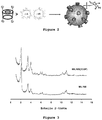
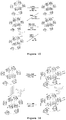
- Cyclodextrins (CD) are very good candidates because they are larger than the pore access windows of iron trimesate MIL-100 (Fe), one of the nanoMOFs with the largest pores (cf. Figures 1 and 2 ).
- Fe iron trimesate MIL-100
- These cyclodextrins have been functionalized with phosphate groups able to bind stably by coordination with the unsaturated sites of iron, zinc, zirconium, titanium, calcium, magnesium and / or aluminum at the surface of the MOFs.
- the strategy proposed in the present application uses the grafting of groups, that is to say complexing force equivalent or greater than that of phosphates, in sufficient number to increase the surface adhesion of the MOF of the organic surfactant (cooperative effect).
- the surface modification according to the invention can be obtained by simple incubation in the cyclodextrin phosphate (CD-P) solutions. It is an easy and fast method (less than 15 minutes) which also has the advantage of a "green galenic" (although for the encapsulation of hydrophobic molecules, an organic solvent can be used). Indeed, the surface modification does not require the addition of any organic solvent, surfactant or other chemical to be removed at the end of the reaction. This method could therefore be extrapolated on an industrial scale.
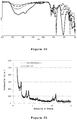
- the crystallinity and the pore volume of the MOFs modified with the phosphated cyclodextrins are not affected, unlike the PEG surfactants described in the application. WO 2009/077671 . Indeed, the pore volume of the samples grafted with the cyclodextrin-phosphate is close to that of the initial solid (cf. Figure 7A ).
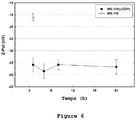
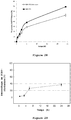
- recoveries of CD-P have an effect beneficial to the stability of nanoMOFs, in that they do not aggregate even after several days of incubation in water ( Figure 10 ). This aspect is particularly important for applications (biological, cosmetic) and for the storage of MOF particles.
- the aforementioned advantages and properties for externally modified MOFs with cyclodextrin-phosphate can also be obtained with the other surfactants according to the present invention, namely monomers, oligomers or cyclodextrin polymers; branched polyethylene glycol groups; the proteins ; polysaccharides carrying a plurality of polyethylene glycol side chains; or water-insoluble polysaccharides at 6 ⁇ pH ⁇ 8 and soluble in water at pH ⁇ 5, which are complexed to a metal center M or to a ligand L located at the surface of the crystalline MOF solid via one or more groups (S) phosphate, phosphonate, bisphosphonate, sulfate, carboxylate, azolate (eg, imidazolate), amido and / or amino.
- S groups
- MIL-89nano The synthesis of MIL-89nano is made from iron acetate (1 mmol, synthesized according to the procedure described in CT Dziobkowski, TJ Wrobleski, DB Brown, Inorg. Chem. 1982, 21, 671 [51]) and muconic acid (1 mmol, Fluka, 97%) in 5 ml of ethanol (Riedel-de Ha ⁇ n, 99.8%) with the addition of 0.25mL of 2M sodium hydroxide (Alfa Aesar, 98). %) in an autoclave (Paar bomb) at 100 ° C for 12h. After cooling the container, the product is recovered by centrifugation at 5000 rpm for 10 minutes.
- the particle size measured by light scattering is 400 nm.
- the nanoparticles show a rounded and slightly elongated morphology, with a very homogeneous particle size of 50-100 nm.
- the particle size measured by light scattering is 250 nm. SEM images show elongated particles with edges. There are two particle sizes, ⁇ 500 nm and 150 nm.
- the MIL-100 nanoparticles were obtained by hydrothermal synthesis under microwave irradiation (March 5, CEM), by heating an aqueous suspension containing 20 ml of deionized water, 8.97 mmol of FeCl 3 (FeCl 3 ⁇ 6H 2 O), 98% Alfa Aesar) and 4.02 mmol of 1,3,5-benzenetricarboxylic acid (BTC, Sigma Aldrich) for 6 minutes at 130 ° C. with stirring.
- the details of the synthesis are shown in Table 1 (reaction conditions for hydrothermal synthesis of MOF MIL-100 (Fe)).
- the nanoparticles were recovered by centrifugation at 5600xg for 15 min and they were activated by 6 washes with 30 ml of absolute EtOH. Once activated, they were re-dispersed in EtOH, sonicated with a probe u.s. up to a size ⁇ 300nm and a PDI ⁇ 0.3. Finally, the MIL-100s were centrifuged for 15 min at 5600xg, the supernatant was removed and the nanoparticles were stored at room temperature until the time of analysis.
- the product is heated at 200 ° C under vacuum for 1 day. Store under vacuum or inert atmosphere as the product is not air stable.
- the particle size measured by light scattering is 310 nm.
- the solid MIL-88Btnano is synthesized from a solution of FeCl 3 ⁇ 6H 2 O (1 mmol, Alfa Aesar, 98%) and 1,4-benzenetetramethyldicarboxylic acid (1 mmol, Chem Service) in 10 mL of dimethylformamide ( Fluka, 98%) with 0.4 mL of 2M NaOH. This solution is placed in a bomb Paar and heated at 100 ° C for 2 hours. After cooling the container with cold water, the product is recovered by centrifugation at 5000 rpm for 10 minutes.
- Measurement of particle size by light scattering shows two populations of nanoparticles of 50 and 140 nm.
- the nanoparticles of the solid MIL-88Btnano have a spherical morphology with a size of 50 nm. Only a minority fraction has a size of 200 nm. Agglomerates of small particles can also be observed.
- the solid MIL-88Bnano is synthesized from a solution of iron acetate (1 mmol, synthesized according to the procedure described in CT Dziobkowski, TJ Wrobleski, DB Brown, Inorg. Chem. 1982, 21, 671 and 1,4-benzenedicarboxylic acid (1 mmol; 1.4-BDC Aldrich, 98%) in 5 mL of methanol (Aldrich, 99%). This solution is placed in a bomb Paar and heated at 100 ° C for 2 hours. After cooling the container with cold water, the product is recovered by centrifugation at 5000 rpm for 10 minutes.
- Measurement of particle size by light scattering shows a bimodal distribution of nanoparticles of 156 and 498 nm.
- the morphology of the particles is very irregular, with a size of 300 nm.
- Nanoparticle synthesis of zinc imidazolate ZIF-8 (Zn) nano is made from a solution of Zn (NO 3 ) 2 ⁇ 6H 2 O (2.933 g, 9.87 mmol, 98% Sigma-Aldrich) in 200 mL of methanol (Aldrich, 99%).
- the synthesis of nanoparticles of the aluminum trimesate MIL-100 (Al) nano is carried out by dispersing 1.21 grams (0.05 mol) of methyl 1,3,5-benzenetricarboxylate in 20 ml of water with the aid of Ultrasound cane (20 sec at 20% then 20 sec at 30%). The mixture is then stirred magnetically and 2.6629 g of aluminum nitrate nonahydrate is poured. Then 4 mL of 4 M nitric acid is added to the resulting dispersion, which is further stirred for 5 minutes before heating. The synthesis is carried out under microwave irradiation at 210 ° C for 30 min with a heating ramp of 10 min. The reactor was removed from the microwave oven when the temperature dropped to 90 ° C and the reactor cooled in an ice bath. The solid is recovered by centrifugation at 10,500 rpm for 20 minutes.
- the deposit is redispersed in 30 ml of methanol and kept under magnetic stirring overnight. The dispersion is finally centrifuged using the conditions described above to obtain a yellow solid.
- the particle size measured by light scattering is 120 nm.
- particle size determination by light scattering was performed on a Malvern Zetasizer Nano series - Nano-ZS apparatus; Zen model 3600; serial No 500180; UK.
- Inorganic-inorganic hybrid nanoparticles based on iron trimesate, (MIL-100) were modified with ⁇ cyclodextrin phosphate ( ⁇ CDP, Cyclolab, CY-2017.1, molecular formula: C 42 H 70 O 47 P 4 Na 4 ).
- This molecule has two fundamental characteristics for effective surface modification of nanoMOFs: 1) it has a larger structure than the microporous windows of the MIL-100, which should prevent its adsorption inside the pores, thus preserving the porosity of the nanoparticles ; 2) it is substituted with four phosphate groups, which should ensure a stable interaction with the nanoparticles by the formation of iono-covalent bonds with the iron atoms on the surface of the particles ( Fig. 2 ).
- MIL-100 2 mg were incubated with 500 ⁇ l of an aqueous solution of ⁇ CDP 2 mg / ml during different incubation times (1 h, 4 h, 8 h, 24 h), with stirring, at room temperature.
- the nanoparticles were recovered by centrifugation at 5600xg 10 min, washed twice with water, and resuspended in a 0.5 mM KCl solution.
- the surface charge of MIL-100 was analyzed by de potential measurements (Zetasizer Nano 6.12, Malvern Instruments Ltd., UK).
- MIL-100 30 mg was incubated with 2 mL of PEG aqueous solution 5 mg / mL, 3 h, 30 ° C, with shaking. At the end of the incubation, the nanoparticles were recovered by centrifugation at 5600xg 10 min and dried for 6 h at 100 °. The porosity of the materials was analyzed by nitrogen adsorption porosimetry at 77 K.
- nanoparticles of MIL 100 were incubated with 2 mL of an aqueous star PEG 0.5 mg / mL solution (Amino-dPEG TM (4) - [dPEG TM (12) -OMe] 3 , C 99 H 197 N 5 O 47, 2209, 63 g / mol, Iris Biotech, Germany) at room temperature with two-dimensional stirring, for 2 minutes.
- the nanoparticles were recovered by centrifugation at 5600xg 10 min, followed by two washes with water. PEG was measured in the supernatants recovered after the first centrifugation using a colorimetric method (Baleaux [33]).
- Step 2 Coupling alendronate-PEG5000-COOH (PEG-alendronate)
- Alendronate (7.8 mg, 0.9 eq) is solubilized in 1 ml of water.
- the pH is adjusted to 10 with a few drops of triethylamine.
- the solution is then added dropwise to the activated PEG solution, and the pH is adjusted up to one more time.
- the solution is stirred for 24 hours in the incubator at 37 ° C.
- the nanoparticles were recovered by centrifugation at 5600xg 10 min, followed by two washes with water.
- PEG was measured in the supernatants recovered after the first centrifugation using a colorimetric method (Baleaux [33] ). Only 1 to 2 wt% of PEG remains in the supernatant, which shows that virtually all of the PEG (98-99 wt%) interacts with the nanoparticles.
- the porosity of the dried nanoparticles was analyzed by nitrogen adsorption at 77 K.
- the BET specific surface area decreased from 1400 to 1050, 1120, 1160, 1270 and 1320 m 2 / g in the case of MeO-PEG-COOH, MeO -PEG-NH 2 , NH 2 -PEG-COOH and, star-shaped PEG and PEG-alendronate, respectively.
- the surface charge does not change after functionalization with the branched PEG (potential ⁇ ⁇ -25 mV).
- PhP 3 8 mg (0.03 mmol) PhP 3 were dispersed with stirring in 15 ml of anhydrous DMF. To this solution, 8 mg (0.03 mmol) of I 2 was gently added for 10 min being careful that the temperature did not exceed 40 ° C. 2.1 g of poly-BCD was then added, the temperature raised to 50 ° C and the solution was stirred at atmospheric pressure for 7 h. The suspension was cooled to about 50 ° C, 5 ml of CH 3 OH was added and the suspension was stirred for 30 min. CH 3 OH was then removed under reduced pressure and DMF ( ⁇ 2 mL) was added until a solution was obtained. 4 mg (0.062 mmol) of NaN 3 were added and the temperature brought to 100 ° C for 3h.
- thermodynamics of surface modification reaction of nanoparticles by ITC was characterized.
- Aqueous solutions of ⁇ CDP and ⁇ -cyclodextrin ( ⁇ CD) at 30 and 14 mg / ml respectively were injected dropwise into 2 ml of an aqueous suspension of MIL-100 1.5 mg / ml.
- ⁇ CDPs interact with MIL-100s through a complex reaction, involving exothermic and endothermic phenomena, which could be related respectively to the coordination between phosphate groups and iron atoms and to the consequent dehydration of nanoparticles.
- no signal was observed by titrating the ⁇ CD solution.
- Example 7 Stability of recovery based on ⁇ CDP.
- the nanoparticles were recovered by centrifugation at 5600xg 10 min, and the supernatant was analyzed by spectrofluorimetry in order to define the amount of ⁇ CDP-rhodamine bound to the nanoparticles.
- the results obtained indicate that the amount of ⁇ CDP-rhodamine associated with the MIL-100s is 30.5 ( ⁇ 0.1)% w / w. These results are in agreement with those obtained by elemental analysis.
- the modified nanoparticles were washed with 1 ml of water in order to eliminate the excess of ⁇ CDP-rhodamine and finally incubated in 1 ml of PBS (Phosphate Buffered Saline, Lonza) or RPMI 10% FBS (RPMI 1640 GlutaMAX TM added of fetal bovine serum 10% (v / v), 100 IU / mL penicillin-streptomycin), at 37 ° C, with shaking. After different incubation times (0.5-2.5-5-8-24 h) the suspension was centrifuged for 10 min at 5600xg, 500 ⁇ L of the supernatant was removed and replaced with the same amount of fresh medium.
- PBS Phosphate Buffered Saline, Lonza
- RPMI 10% FBS RPMI 1640 GlutaMAX TM added of fetal bovine serum 10% (v / v), 100 IU / mL penicillin-streptomycin
- Example 9 Use of MIL-100 for release of AZT-TP after modification with ⁇ CDP or MeO-PEG-NH 2
- AZT-TP azidothymidine triphosphate
- triples an aqueous solution of azidothymidine triphosphate 400 ⁇ g / ml, containing 1% of AZT-TP [ 3 H] (AZT-TP methyl [3 h], Moravek), 24 h, with stirring, at room temperature.
- the nanoparticles were recovered by centrifugation at 5600xg 10 min, and the supernatant was analyzed by a scintillation counter, in order to calculate the encapsulated drug level.
- we recovered the nanoparticles by centrifugation at 5600xg 10 min and analyzed the supernatant using a scintillation counter to quantify drug release after surface modification.
- the nanoparticles were incubated in 1 ml of PBS at 37 ° C. with stirring. After various incubation times the suspension was centrifuged for 10 min at 5600xg, 500 ⁇ l of supernatant was removed and replaced by the same amount of fresh medium. The supernatant was analyzed by a scintillation counter to evaluate the release of AZT-TP by unmodified nanoparticles, modified with ⁇ CDP or MeO-PEG-NH2.
- the results summarized in the Fig. 11 show that the surface modification with ⁇ CDP does not affect the release of the drug, probably because, as already stated, they only interact with the surface of nanoparticles without disturbing the internal porosity of the particles.
- the murine macrophage cell line, J774, (ECACC # 91051511) was cultured in RPMI 1640 GlutaMAX TM supplemented with inactivated bovine fetal serum (10% (v / v)) penicillin (100 IU / mL) and streptomycin (100 ⁇ g / mL).
- the cytotoxicity of the MIL-100s to this line was determined by an MTT assay in 96-well plates (10 4 cells per well) after 48 hours of incubation with solutions of nanoparticles differently concentrated. The results showed that MIL-100s have no significant cytotoxic effect at high concentrations (100 mM), and the same results were observed after modification with ⁇ CDP.
- MIL-100s were labeled with a fluorophore: BODIPY-FL adenosine 5'-triphosphate (ATP-BODIPY, adenosine 5'-triphosphate, BODIPY® FL, Invitrogen).
- BODIPY-FL adenosine 5'-triphosphate
- 1.25 mg of MIL-100 were incubated with 500 ⁇ l of an aqueous solution of ATP-BODIPY 10 nmol / ml, 1 h, with stirring, in the dark at room temperature.
- the nanoparticles were recovered by centrifugation at 5600xg 10 min, and the supernatant was analyzed by spectrofluorometry to quantify the rate of fluorophore uptake.
- the nanoparticles were then incubated in 500 ⁇ l of water (unmodified sample) or an aqueous solution of ⁇ CDP 1.25 mg / ml, 1 h with stirring, at room temperature, in the dark. At the end of the incubation, the nanoparticles were recovered by centrifugation at 5600xg 10 min and resuspended in 10% SFV RMPI at the final concentration of 50 ⁇ g / ml.
- the cells of the J774 line were previously cultured in 24-well plates (5 x 10 4 cells per well) on a sterile glass slide.
- Example 12 Comparative Example of Modification of the Surface of an MOF with a Dextran-Biotin Not Functionalized with a Complexing Group According to the Invention
- the results obtained indicate that the amount of ⁇ CDP-rhodamine associated with the MIL-100s represents 34 ( ⁇ 0.5)% w / w.
- the modified nanoparticles were washed with 1 ml of water in order to remove the excess poly- ⁇ CDP-rhodamine and finally incubated in 1 ml of PBS (Phosphate Buffered Saline, Lonza) at 37 ° C., with stirring at room temperature. concentration of 2 mg / ml. After various incubation times (0.3-6-24 h) the suspension was centrifuged for 10 min at 9500 g, then 500 ⁇ L of the supernatant was removed and replaced with the same amount of fresh medium.
- PBS Phosphate Buffered Saline, Lonza
- NanoMOF Organic-inorganic hybrid nanoparticles based on iron trimesate (MIL-100) have been modified with chitosan.
- Chitosan is a naturally occurring polysaccharide obtained by deacetylation of chitin, the formula of which is given below (DDA is the degree of deacetylation of chitosan (DDA: degree of deacetylation)).
- This polymer consisting of glucosamine units linked together by ⁇ (1-4) bonds, has the advantage of being biodegradable and biocompatible. In addition, it has bioadhesive properties.
- the water-insoluble chitosan may be solubilized in an acidic medium such as a 1% acetic acid solution (AA1%); the amine groups distributed along the polymer chain are then protonated and the polymer is positively charged.
- the nanoparticles of MIL-100 comprise Fe 3+ cations and also COOH groups derived from the trimesic acid used for their synthesis (pKa 3, 4).
- the surface modification by chitosan is based on the multitude of electrostatic interactions between the polymer and the nanoparticles of MIL-100 in AA1% medium ( Fig.18 ).
- the interaction between chitosan and the nanoparticles can be enhanced by the addition of a salt such as Na 2 SO 4 which results in the loss of solubility of chitosan and makes it possible to increase the amount of polymer attached to the surface of the nanoparticles.
- a salt such as Na 2 SO 4 which results in the loss of solubility of chitosan and makes it possible to increase the amount of polymer attached to the surface of the nanoparticles.
- the MIL-100 nanoparticles were obtained by hydrothermal synthesis under microwave irradiation (Mars 5, CEM), by heating an aqueous suspension containing 20 ml of deionized water, 8.97 mmol of FeCl 3 (FeCl 3 ⁇ 6H 2 O, 98% Alfa Aesar) and 4.02 mmol of 1,3,5-benzenetricarboxylic acid (BTC, Sigma Aldrich) for 6 min at 130 ° C. with stirring.
- the nanoparticles were recovered by centrifugation at 5600xg for 15 min.
- the activation of the particles ie the extraction of the BTC from the pores
- the size of the nanoparticles was measured by quasi-elastic light scattering (Nanosizer, Malvern, France). Table 3 shows the results obtained on the day of formation of MIL-100 / chitosan (day 0) and after 30 days of storage at room temperature (20 ° C). The analysis showed a slight increase in the average diameter of the nanoparticles after covering with chitosan (213 ⁇ 3 nm vs 178 ⁇ 3 nm). Similarly, the polydispersity index goes from 0.05 for MIL-100 to 0.26 for MIL-100 / chitosan. After 30 days of storage, aggregation of the particles was observed in the unmodified sample.
- MIL-100 nanoparticles coated with chitosan have retained their average diameter.
- the colloidal stability of the nanoparticles was also evaluated by diluting the suspensions by a factor of 100 in milliQ water and following the evolution of the average diameter in the diluted sample ( Fig. 19 ).
- MIL-100 / chitosan nanoparticles were prepared using chitosan labeled with rhodamine isothiocyanate (chitosan-RITC) with a weight ratio MIL-100 / chitosan: 4/1. After contacting the MIL-100s and the chitosan solution for 1, 2 and 24 h, the samples were centrifuged, purified and resuspended in milliQ water as previously described (see methods). The supernatants resulting from the centrifugation of the samples as well as from the purification were analyzed by spectrofluorimetry. It has been shown that chitosan is associated with MIL-100 with a level of about 2% w / w.
- the nanoparticles labeled with rhodamine-ITC were resuspended in 1 mL of phosphate buffer pH 7.4. After 24 h incubation at RT in this medium, the samples were centrifuged and the supernatants were analyzed by spectrofluorimetry. Chitosan-RITC was not detected in supernatants indicating that the MIL-100 / chitosan combination was stable under the experimental conditions tested.
- Unmodified and chitosan-modified MIL-100 nanoparticles were dried at 100 ° C for 18 h and then analyzed for their structure by X-ray diffraction. X-ray diffraction analysis showed that the method of modification of the surface of the MIL-100 nanoparticles by chitosan did not alter the crystalline structure of the material ( Fig.20 ).
- the results showed that the specific surface of the MIL-100 nanoparticles was not modified by the chitosan coating.
- the MIL-100 showed a Langmuir surface of 2100 m 2 / g while the MIL-100 / chitosan showed a Langmuir surface equal to 2030 m 2 / g. It also shows that chitosan does not block pore access and so this is consistent with the presence of chitosan only on the surface of the particles.
- Nanoparticles modified with chitosan were incubated with a solution of AZT-TP. After 24 hours of contact, the samples were centrifuged and the encapsulated AZT-TP was determined. It has been shown that even after modification, MIL-100 nanoparticles retain their ability to encapsulate AZT-TP. The encapsulation efficiency was 99% corresponding to a nanoparticle association rate of 7.8% (w / w). These results were similar to those obtained for MIL-100s in the absence of any recovery. In addition, nanoparticles of MIL-100 encapsulating AZT-TP were modified by chitosan (post-encapsulation modification). It has been shown that the process of This modification dislodged only 4% of the encapsulated PA by a dilution effect due to the recovery process.
- the size of the microparticles was measured by laser granulometry in a liquid medium (Mastersizer 2000, Malvern, France). They showed an average diameter of 6.4 ⁇ m with a narrow distribution as indicated by the Span index equal to 1.5. ( Fig. 23 , Table 4 ). 10% of the particles have a diameter of less than 3.3 ⁇ m and 90% of the particles have a diameter of less than 12.6 ⁇ m. ⁇ b> Table 4 ⁇ / b>: Granulometric parameters of a suspension of MIL-100 / chitosan microparticles. Mass ratio MIL / chitosan: 20/1. D (0.1) microns D (0.5) ⁇ m D (0.9) ⁇ m span 3.3 6.4 12.6 1.5
- Microparticles were prepared from 5 mg of MIL-100 and 0.25 mg of chitosan. After purification, the microparticle pellet was dried at 100 ° C. for 18 h and then analyzed by elemental microanalysis ( Table 5 ). As the nitrogen atom was found specifically in chitosan, it was possible to quantify its presence in the microparticles. The analysis showed that all chitosan was found to be associated with MIL 100. ⁇ b> Table 5 ⁇ / b>: Percentages of C, H and N determined by elemental microanalysis in MIL-100, chitosan and MIL-100 / chitosan microparticle samples. MIL-100 chitosan MIL-100 / chitosan % measured % measured % measured carbon 36.5 45.5 31.7 hydrogen 2.7 6.7 2.1 nitrogen 0 8.5 0.4
- Microparticles were prepared using chitosan labeled with rhodamine isothiocyanate (chitosan-RITC) with a mass ratio MIL-100 / chitosan: 4/1; 8/1 and 20/1. After formation of the microparticles, Samples were centrifuged and washed with deionized water as previously described. The supernatants resulting from the centrifugation of the samples as well as the different washes were analyzed by spectrofluorimetry. It has been shown that they do not contain chitosan, the latter being fully associated with the MIL-100 to form the microparticles. This result confirms the results of elemental microanalysis.
- microparticles labeled with rhodamineITC were resuspended in 1 ml of phosphate buffer pH 7.4. After 24 h incubation at RT in this medium, the samples were centrifuged and the supernatants were analyzed by spectrofluorimetry. Chitosan-RITC was not detected in supernatants indicating that the MIL / chitosan combination was stable in the phosphate buffer.
- microparticles were dried at 100 ° C. for 18 h and then analyzed by FT-IR.
- the spectra obtained clearly show the presence of a characteristic absorption band of chitosan around 1030 cm -1 (elongation band of the COC ether bond) in the microparticle samples.
- Fig. 24 The spectra obtained clearly show the presence of a characteristic absorption band of chitosan around 1030 cm -1 (elongation band of the COC ether bond) in the microparticle samples.
- MIL-100 and MIL-100 / chitosan materials were dried at 100 ° C. for 18 hours. Their structure was analyzed by X-ray diffraction (Siemens D5000 X'Pert MDP ( ⁇ -2 ⁇ ) high-resolution diffractometer ( ⁇ Cu, K ⁇ 1, K ⁇ 2) . The results showed the method of modifying the surface of the MIL 100 with the chitosan does not alter the crystal structure of the MIL-100s ( Fig. 25 ).
- Micrometric particles modified with chitosan were incubated with a solution of AZT-TP. After 24 hours of contact, the samples were centrifuged and the encapsulated AZT-TP was determined. It has been shown that even after modification, the MIL-100 particles retain their ability to encapsulate AZT-TP. The encapsulation efficiency was 99% corresponding to an association rate of 7.8% (w / w). These results were similar to those obtained for MIL-100s in the absence of any recovery.
- MIL-100 / chitosan microparticles loaded with AZT-TP were also prepared from nanoparticles encapsulating AZT-TP (post-encapsulation modification). It has been shown that the modification process (post-encapsulation of AZT-TP) dislodges only 0.8% of the encapsulated AP by a dilution effect due to the recovery process.
- a PEG-alendronate-dextran bioconjugate was synthesized ( Fig. 27 ) for the superficial modification of the MOFs. This example concerns those based on iron trimesate (MIL-100).
- Dextran is a linear hydrophilic polysaccharide consisting of glucose units linked together by ⁇ - (1,6) bonds. This polymer has the advantage of being neutral, soluble in water, biocompatible and biodegradable. In addition, it is used for biomedical applications and gives the possibility of grafting different ligands of interest for targeting.
- Alendronate is a molecule used for the treatment of osteoporosis.
- the role of alendronate will be to ensure the inking and stability of the dextran-PEG coating on the surface of the nanoMOF, by coordination with the iron.
- Ethyl acetate (AcOEt), dimethylformamide (DMF), dichloromethane (DCM), N-hydroxysuccinimide (NHS), 1-ethyl-3- (3'-dimethylaminopropyl) -N- (3-dimethylaminopropyl) -N'-ethylcarbodiimide hydrochloride (EDC), polyethylene glycol (PEG), 4-dimethylaminopyridine (DMAP), tetrahydrofuran (THF), 1,1-carbonyldiimidazole (DCI), molecular weight (MW), size exclusion chromatography (according to English) Size Exclusion Chromatography, SEC).
- AcOEt dimethylformamide
- DCM dichloromethane
- NHS N-hydroxysuccinimide
- EDC 1-ethyl-3- (3'-dimethylaminopropyl) -N- (3-dimethylaminopropyl) -N'-e
- Azido-alendronate was synthesized through a three-step synthetic procedure using 6-bromohexanoic acid as starting material.
- a "click” reaction was used as a synthesis method. Specifically, the copper-catalyzed cycloaddition reaction of azides and alkynes (I) was employed. 5, 9, 10
- the PEG-dextran bioconjugate (SEC PM (g / mol): 62,120 ( ⁇ 2.3%)) and azido-alendronate were mixed under a nitrogen atmosphere. Then, an aqueous solution (5 mL) containing CuSO 4 (5H 2 O) (MW 249.69, 0.017 g, 0.067 mmol, 10 equiv) previously purged with nitrogen was added. The resulting solution was placed at room temperature with stirring and N 2 for 5 min. Then, an aqueous solution of sodium ascorbate (PM 198.1, 0.016 g, 0.08 mmol, 12 equiv) (5 mL) was added. Then, the mixture was stirred under nitrogen at room temperature for 24 hours. At the end of the reaction, the solution was subjected to dialysis for 48 hours (membranes with a cutoff of 12000-14000 g / mol). Then, the dialyzed product was recovered and lyophilized.
- the results obtained indicate that the amount of ⁇ CDP-rhodamine associated with the MIL-100s represents 34 ( ⁇ 0.5)% w / w.
- the modified nanoparticles were washed with 1 ml of water in order to remove the excess poly- ⁇ CDP-rhodamine and finally incubated in 1 ml of PBS (Phosphate Buffered Saline, Lonza) at 37 ° C., with stirring at room temperature. concentration of 2 mg / ml. After various incubation times (0.3-6-24 h) the suspension was centrifuged for 10 min at 9500 g, 500 ⁇ l of the supernatant was removed and replaced with the same amount of fresh medium.
- PBS Phosphate Buffered Saline, Lonza
- Example 17 Superficial modification of the nanoparticles of MIL-100 (Al) based on ⁇ CDP.
- the modified nanoparticles were washed with 1 ml of water in order to eliminate the excess ⁇ CDP-rhodamine and finally incubated in 1 ml of PBS (Phosphate Buffered Saline, Lonza) at 37 ° C., with stirring. After various incubation times (0.3, 6.24h) the suspension was centrifuged for 10 min at 9491xg, 500 ⁇ L of the supernatant was removed and replaced with the same amount of fresh medium. The supernatants were analyzed by spectrofluorimetry in order to quantify the release of ⁇ CDP-rhodamine in the medium.
- PBS Phosphate Buffered Saline, Lonza
Landscapes
- Chemical & Material Sciences (AREA)
- Health & Medical Sciences (AREA)
- Organic Chemistry (AREA)
- Life Sciences & Earth Sciences (AREA)
- General Health & Medical Sciences (AREA)
- Medicinal Chemistry (AREA)
- Molecular Biology (AREA)
- Chemical Kinetics & Catalysis (AREA)
- Engineering & Computer Science (AREA)
- Biochemistry (AREA)
- Animal Behavior & Ethology (AREA)
- Public Health (AREA)
- Veterinary Medicine (AREA)
- Polymers & Plastics (AREA)
- Materials Engineering (AREA)
- Pharmacology & Pharmacy (AREA)
- General Chemical & Material Sciences (AREA)
- Epidemiology (AREA)
- Oil, Petroleum & Natural Gas (AREA)
- Nuclear Medicine, Radiotherapy & Molecular Imaging (AREA)
- Biomedical Technology (AREA)
- Biophysics (AREA)
- Immunology (AREA)
- Hematology (AREA)
- Pain & Pain Management (AREA)
- Oncology (AREA)
- Communicable Diseases (AREA)
- Bioinformatics & Cheminformatics (AREA)
- Urology & Nephrology (AREA)
- General Physics & Mathematics (AREA)
- Rheumatology (AREA)
- Food Science & Technology (AREA)
- Microbiology (AREA)
- Analytical Chemistry (AREA)
- Virology (AREA)
- Biotechnology (AREA)
- Cell Biology (AREA)
- Physics & Mathematics (AREA)
- Pathology (AREA)
- Neurology (AREA)
Applications Claiming Priority (2)
| Application Number | Priority Date | Filing Date | Title |
|---|---|---|---|
| FR1255065A FR2991325B1 (fr) | 2012-05-31 | 2012-05-31 | Solide hybride organique inorganique ameliore a surface externe modifiee |
| PCT/FR2013/051219 WO2013178954A1 (fr) | 2012-05-31 | 2013-05-30 | Solide hybride organique inorganique amelioee à surface externe modifiée |
Publications (2)
| Publication Number | Publication Date |
|---|---|
| EP2855490A1 EP2855490A1 (fr) | 2015-04-08 |
| EP2855490B1 true EP2855490B1 (fr) | 2018-03-07 |
Family
ID=48699167
Family Applications (1)
| Application Number | Title | Priority Date | Filing Date |
|---|---|---|---|
| EP13731374.8A Active EP2855490B1 (fr) | 2012-05-31 | 2013-05-30 | Solide hybride organique inorganique amelioee à surface externe modifiée |
Country Status (10)
| Country | Link |
|---|---|
| US (1) | US10159738B2 (enExample) |
| EP (1) | EP2855490B1 (enExample) |
| JP (1) | JP6185571B2 (enExample) |
| KR (1) | KR101993297B1 (enExample) |
| CN (1) | CN104718214B (enExample) |
| CA (1) | CA2873379C (enExample) |
| ES (1) | ES2672943T3 (enExample) |
| FR (1) | FR2991325B1 (enExample) |
| IN (1) | IN2014DN10222A (enExample) |
| WO (1) | WO2013178954A1 (enExample) |
Families Citing this family (75)
| Publication number | Priority date | Publication date | Assignee | Title |
|---|---|---|---|---|
| EP3006474B1 (en) | 2014-10-08 | 2018-06-27 | Commissariat à l'Énergie Atomique et aux Énergies Alternatives | Porous solid with outer surface grafted with a polymer |
| WO2017019185A1 (en) | 2015-07-29 | 2017-02-02 | Panaceanano, Inc. | Method of using cyclodextrin-based metal organic frameworks |
| WO2017039885A1 (en) | 2015-08-31 | 2017-03-09 | Panaceanano, Inc. | Methods to isolate cyclodextrins |
| WO2017048378A1 (en) | 2015-09-17 | 2017-03-23 | Exxonmobil Chemical Patents Inc. | Process for recovering para-xylene using a metal organic framework adsorbent in a simulated moving-bed process |
| WO2017078609A1 (en) | 2015-11-05 | 2017-05-11 | Su Holding Ab | One-pot synthesis of metal-organic frameworks with encapsulated target-molecule and their use |
| US10500218B2 (en) | 2015-11-15 | 2019-12-10 | Northwestern University | Uptake of pharmaceuticals within cyclodextrin-based porous materials |
| CN108289822A (zh) | 2015-11-17 | 2018-07-17 | 帕那刻亚纳诺有限公司 | 含芳香剂的环糊精基金属有机框架 |
| CN105503885A (zh) * | 2015-12-02 | 2016-04-20 | 天津工业大学 | 一类新型NMOFs(IRMOF-3)药物载体及其制备方法 |
| CN105381786B (zh) * | 2015-12-07 | 2018-04-03 | 复旦大学 | 一种树枝状分子修饰的mof材料及其制备方法和应用 |
| US10208104B2 (en) * | 2015-12-11 | 2019-02-19 | The Chinese University Of Hong Kong | Fast and efficient conjugation method based on thiourea-catechol coupling |
| WO2017120111A1 (en) | 2016-01-05 | 2017-07-13 | Panaceanano, Inc. | Method of preparing cyclodextrin complexes |
| CN105664893B (zh) * | 2016-01-20 | 2018-03-13 | 北京工业大学 | 一种稳定的In金属‑有机骨架材料、制备方法及其应用 |
| WO2017146914A1 (en) | 2016-02-26 | 2017-08-31 | Exxonmobil Chemical Patents Inc. | Process for recovering para-xylene |
| CN107151328B (zh) * | 2016-03-04 | 2020-11-06 | 中国科学院上海药物研究所 | 一种载三氯蔗糖的环糊精-金属有机骨架复合物及其制备方法 |
| CN107151329B (zh) * | 2016-03-04 | 2020-10-16 | 中国科学院上海药物研究所 | 环糊精-金属有机骨架材料的快速合成方法 |
| US10583147B2 (en) | 2016-03-24 | 2020-03-10 | Panaceanano, Inc. | Compositions containing cyclodextrin-based metal organic frameworks |
| EP3225590A1 (en) * | 2016-03-31 | 2017-10-04 | Université de Strasbourg | Highly selective artificial neurotransmitter receptors |
| CN105997978B (zh) * | 2016-05-09 | 2021-01-29 | 云南大学 | 一种金属有机骨架化合物抗肿瘤血管生成剂及其使用方法 |
| CN106432366A (zh) * | 2016-09-14 | 2017-02-22 | 哈尔滨理工大学 | 一种基于卟啉配体的纳米金属有机骨架材料pcn‑223的制备及应用 |
| CN107837401B (zh) * | 2016-09-19 | 2022-04-08 | 中国科学院上海药物研究所 | 环糊精-金属有机骨架材料复合微球及其制备方法 |
| CN106518843B (zh) * | 2016-09-29 | 2019-02-19 | 山东师范大学 | 一种基于含咪唑基烟酰腙类有机配体的Cd(II)金属有机框架及其制备方法与应用 |
| EP3357929B1 (en) | 2017-02-02 | 2020-06-17 | Centre National de la Recherche Scientifique | Low temperature process for the synthesis of mof carboxylate nanoparticles |
| KR101890588B1 (ko) * | 2017-04-24 | 2018-09-28 | 숙명여자대학교산학협력단 | 바이오 이미징용 물질이 담지된 나노금속유기골격구조체 및 그것의 제조방법 |
| WO2018225783A1 (ja) * | 2017-06-06 | 2018-12-13 | 株式会社Atomis | 医薬品組成物 |
| CN107746705B (zh) * | 2017-09-20 | 2019-05-24 | 吉林大学 | 一种基于mof的荧光探针及其制备方法和应用 |
| EP3730122B1 (en) * | 2017-12-21 | 2025-02-26 | H&A Pharmachem Co., Ltd | Transdermal delivery complex using metal-organic framework and nanocellulose |
| CN107941774B (zh) * | 2017-12-27 | 2020-09-25 | 南昌大学 | 基于金属有机框架复合材料比率荧光检测磷酸盐的方法 |
| CN108611920B (zh) * | 2018-05-31 | 2020-10-20 | 安徽金兄弟环保科技股份有限公司 | 一种制浆造纸用无机纤维用增强剂的制备方法 |
| CN108586501A (zh) * | 2018-07-05 | 2018-09-28 | 北京石油化工学院 | 一种锌配合物及其制备方法与应用 |
| CN109134873B (zh) * | 2018-07-31 | 2020-06-19 | 浙江大学 | 一种利用单端氨基聚乙二醇调控zif-8纳米粒子尺寸的方法 |
| CN109097026B (zh) * | 2018-08-19 | 2021-03-16 | 中国科学院合肥物质科学研究院 | 一种纳米花状Al-MOF荧光探针材料及其制备方法与应用 |
| CN109164076B (zh) * | 2018-09-03 | 2021-01-08 | 中国药科大学 | 基于La-ZIF-8的荧光纳米探针、制备方法及其在生物荧光传感中的应用 |
| KR102822641B1 (ko) * | 2018-09-28 | 2025-06-18 | 더 리젠츠 오브 더 유니버시티 오브 캘리포니아 | 금속-유기 구조체 상 및 미세결정 형상 제어 |
| EP3653201A1 (en) * | 2018-11-16 | 2020-05-20 | Centre National De La Recherche Scientifique | Novel nanoparticles of antiretroviral drugs, their preparation and their use for the treatment of viral infections |
| CN109585887B (zh) * | 2018-12-05 | 2022-02-01 | 福建师范大学 | 一种染料@金属有机框架材料及其制备方法和用途 |
| CN109738406B (zh) * | 2019-01-03 | 2021-06-18 | 中南民族大学 | 一种定量测定儿茶素类物质的方法 |
| CN109768151B (zh) * | 2019-01-04 | 2020-05-08 | 浙江大学 | 一种照明和显示用多色led及其制备方法 |
| US20220158173A1 (en) * | 2019-03-07 | 2022-05-19 | Cornell University | Mof-sulfur materials and composite materials, methods of making same, and uses thereof |
| FR3093419B1 (fr) * | 2019-03-08 | 2021-06-18 | Univ Grenoble Alpes | Composition et procédé associé de mesure de l’observance thérapeutique |
| CN110152006B (zh) * | 2019-05-22 | 2023-02-28 | 辽宁大学 | 肝靶向性金属有机框架药物载体及其制备方法和应用 |
| CN110467732B (zh) * | 2019-08-09 | 2021-08-13 | 盐城工学院 | 一种手性识别材料及其在手性电化学传感器中的应用 |
| US20210115071A1 (en) * | 2019-10-17 | 2021-04-22 | Oregon State University | Nanoscale metal-organic frameworks for enhanced tumor chemoradiation |
| CN112823651A (zh) * | 2019-11-20 | 2021-05-21 | 常州市红太阳生物工程有限公司 | 双组分蛋白粉及其制备方法 |
| CN110850018B (zh) * | 2019-11-28 | 2021-05-28 | 青岛理工大学 | 一种环境水样中四种磺胺类抗生素的分析检测方法 |
| KR102904096B1 (ko) | 2019-12-06 | 2025-12-24 | (주) 에이치엔에이파마켐 | 공유결합성 유기 골격체 및 폴리머를 이용한 경피전달용 복합체 |
| US11642650B2 (en) * | 2020-05-14 | 2023-05-09 | Numat Technologies Inc. | Metal organic frameworks for removal of elemental impurities in pharmaceutical products |
| CN113831907B (zh) * | 2020-06-24 | 2024-07-26 | Tcl科技集团股份有限公司 | 量子点材料及制备方法、量子点发光二极管及制备方法 |
| CN113000070A (zh) * | 2021-03-11 | 2021-06-22 | 辽宁大学 | 含氟超疏水改性MOFs材料及其作为催化剂在催化制备环状碳酸酯中的应用 |
| CN115215943B (zh) * | 2021-04-16 | 2023-04-14 | 中国科学院化学研究所 | 一种有机室温磷光高分子材料及其制备方法和应用 |
| US20220332742A1 (en) * | 2021-04-20 | 2022-10-20 | Colgate-Palmolive Company | Naringin-Loaded Metal Organic Frameworks |
| CN113070042A (zh) * | 2021-04-28 | 2021-07-06 | 广东工业大学 | 一种CdS量子点/MIL-101(Cr)复合材料及其制备方法和应用 |
| KR102899709B1 (ko) * | 2021-05-14 | 2025-12-12 | 주식회사 두본 | 캡슐화된, 코디세핀이 삽입된 하이드로탈사이트를 포함하는 약물의 선택적 전달을 위한 조성물 |
| CN117377678A (zh) * | 2021-05-28 | 2024-01-09 | 埃克森美孚技术与工程公司 | 具有特定微孔体积的UiO-66的制造方法 |
| CN113801336B (zh) * | 2021-09-26 | 2022-06-24 | 中山大学 | 一种金属有机骨架材料UiO-67-4Me的功能化及其功能化产物和应用 |
| CN115463044B (zh) * | 2021-10-19 | 2023-12-08 | 广州花出见生物科技有限公司 | 一种含有超分子壬二酸的提亮组合物及其制备方法 |
| CN114011254B (zh) * | 2021-10-28 | 2023-03-24 | 天津工业大学 | 一种具有非平衡烯烃-烷烃筛分性质的混合基质膜 |
| KR102643762B1 (ko) * | 2021-11-08 | 2024-03-06 | 광주과학기술원 | 금속-유기 구조체를 포함하는 얼음 결정의 형성 또는 성장 억제용 조성물 및 이의 제조 방법 |
| US12421258B2 (en) | 2021-11-08 | 2025-09-23 | Gwangju Institute Of Science And Technology | Compositions including metal organic frame for inhibiting formation or growth of ice crystallization and preparing method thereof |
| CN114813862B (zh) * | 2021-11-12 | 2024-03-26 | 重庆大学 | 一种电化学生物传感器及其应用 |
| CN113944053B (zh) * | 2021-11-19 | 2024-03-01 | 廊坊师范学院 | 一种极端环境下具有探测应用的MOFs材料的制备方法 |
| CN114470865B (zh) * | 2022-01-12 | 2023-03-10 | 武汉大学 | 简便快捷分离温敏性聚合物及其连接体的方法 |
| CN114672302B (zh) * | 2022-03-22 | 2023-08-04 | 湘潭大学 | 一种基于硅罗丹明的近红外mof荧光探针的制备和应用 |
| CN115028226B (zh) * | 2022-04-24 | 2023-10-03 | 中南大学 | 基于碳酸氢根促进MIL-100(Fe)去除As(III)或As(V)的方法 |
| CN117659296A (zh) * | 2022-08-31 | 2024-03-08 | 中国科学院大连化学物理研究所 | 一种光控转换mof单层膜的制备及应用 |
| CN115746167B (zh) * | 2022-10-31 | 2023-11-14 | 中国科学院大学 | 一种室温磷光材料及其制备方法和应用 |
| CN115888656B (zh) * | 2022-11-29 | 2024-07-12 | 四川轻化工大学 | 一种金属有机框架Cys-MIL-101吸附剂的水热合成方法 |
| CN116284493B (zh) * | 2023-02-13 | 2025-01-10 | 湖北工程学院 | 一种2-位咪唑啉酮修饰的壳聚糖衍生物及其制备方法、应用 |
| CN116496494B (zh) * | 2023-04-25 | 2024-12-20 | 山东新和成维生素有限公司 | 一种钯系均相催化剂的制备方法及其在异植物醇合成中的应用 |
| CN116622078B (zh) * | 2023-05-15 | 2024-01-12 | 浙江工业大学 | 一种定向组装柔性mof水凝胶及其制备方法与质子传导应用 |
| CN116396496A (zh) * | 2023-05-19 | 2023-07-07 | 安徽建筑大学 | 一种分子印迹Zr-MOF荧光探针材料及其制备方法和应用 |
| WO2025096786A1 (en) * | 2023-10-31 | 2025-05-08 | President And Fellows Of Harvard College | Microporous hydrogels for controlled gas storage and delivery |
| CN117720740B (zh) * | 2023-11-24 | 2025-11-14 | 浙江大学杭州国际科创中心 | 金属有机框架合成及节点修饰改性与c6烷烃异构体吸附分离应用 |
| KR20250090018A (ko) * | 2023-12-12 | 2025-06-19 | 주식회사 메디아크 | 면역항암제가 결합된 금속-유기 골격체를 포함하는 항암용 조성물 및 이의 용도 |
| KR20250104505A (ko) * | 2023-12-29 | 2025-07-08 | 주식회사 메디아크 | 금속-유기 골격체를 포함하는 수지상 세포 분화 유도용 조성물 및 이의 용도 |
| CN121872527B (zh) * | 2026-03-10 | 2026-07-10 | 山东纯宏环保科技有限公司 | 一种造纸废水处理用絮凝剂及其制备方法 |
Family Cites Families (5)
| Publication number | Priority date | Publication date | Assignee | Title |
|---|---|---|---|---|
| EP0007895B1 (fr) | 1978-07-19 | 1983-06-22 | Patrick Couvreur | Nanoparticules biodégradables, compositions pharmaceutiques les contenant et procédé pour leur préparation |
| WO2009007767A1 (en) | 2007-07-06 | 2009-01-15 | Gumlink A/S | Compressed chewing gum comprising an encapsulation delivery system comprising natural resin |
| FR2921661B1 (fr) * | 2007-10-01 | 2013-05-31 | Centre Nat Rech Scient | Solide hybride organique inorganique a surface modifiee. |
| FR2921660B1 (fr) | 2007-10-01 | 2015-09-25 | Centre Nat Rech Scient | Nanoparticules hybrides organiques inorganiques a base de carboxylates de fer. |
| FR2929278A1 (fr) * | 2008-04-01 | 2009-10-02 | Centre Nat Rech Scient | Solide hybride cristallin poreux pour l'adsorption et la liberation de gaz a interet biologique. |
-
2012
- 2012-05-31 FR FR1255065A patent/FR2991325B1/fr active Active
-
2013
- 2013-05-30 ES ES13731374.8T patent/ES2672943T3/es active Active
- 2013-05-30 IN IN10222DEN2014 patent/IN2014DN10222A/en unknown
- 2013-05-30 KR KR1020147036044A patent/KR101993297B1/ko active Active
- 2013-05-30 WO PCT/FR2013/051219 patent/WO2013178954A1/fr not_active Ceased
- 2013-05-30 US US14/403,277 patent/US10159738B2/en active Active
- 2013-05-30 CA CA2873379A patent/CA2873379C/fr active Active
- 2013-05-30 CN CN201380033944.2A patent/CN104718214B/zh active Active
- 2013-05-30 JP JP2015514567A patent/JP6185571B2/ja active Active
- 2013-05-30 EP EP13731374.8A patent/EP2855490B1/fr active Active
Also Published As
| Publication number | Publication date |
|---|---|
| JP6185571B2 (ja) | 2017-08-23 |
| WO2013178954A1 (fr) | 2013-12-05 |
| US20150150981A1 (en) | 2015-06-04 |
| ES2672943T3 (es) | 2018-06-18 |
| IN2014DN10222A (enExample) | 2015-08-07 |
| FR2991325B1 (fr) | 2015-01-16 |
| CN104718214B (zh) | 2017-12-29 |
| KR101993297B1 (ko) | 2019-06-26 |
| US10159738B2 (en) | 2018-12-25 |
| KR20150031243A (ko) | 2015-03-23 |
| JP2015521197A (ja) | 2015-07-27 |
| CN104718214A (zh) | 2015-06-17 |
| FR2991325A1 (fr) | 2013-12-06 |
| CA2873379A1 (fr) | 2013-12-05 |
| EP2855490A1 (fr) | 2015-04-08 |
| CA2873379C (fr) | 2023-01-17 |
Similar Documents
| Publication | Publication Date | Title |
|---|---|---|
| CA2873379C (fr) | Solide de reseau metal-organique (mof) cristallin poreux, a surface externe modifiee et son procede de preparation | |
| CA2699480C (fr) | Nanoparticules hybrides organiques inorganiques a base de carboxylates de fer | |
| EP2193136B1 (fr) | Solide hybride organique inorganique a surface modifiee | |
| Liu et al. | Iron-based metal–organic frameworks in drug delivery and biomedicine | |
| EP3006474B1 (en) | Porous solid with outer surface grafted with a polymer | |
| EP2260048B1 (fr) | Solide hybride cristallin poreux pour l'adsorption et la liberation de gaz a interet biologique | |
| US20210277042A1 (en) | Low temperature process for the synthesis of mof carboxylate nanoparticles | |
| Lei et al. | Chitosan/sodium alginate modificated graphene oxide-based nanocomposite as a carrier for drug delivery | |
| Ma et al. | Injectable self-assembled dipeptide-based nanocarriers for tumor delivery and effective in vivo photodynamic therapy | |
| Braga | Cyclodextrin superstructures for drug delivery | |
| Abdelgalil et al. | Engineered sericin-tagged layered double hydroxides for combined delivery of pemetrexed and ZnO quantum dots as biocompatible cancer nanotheranostics | |
| Qiu et al. | Carbohydrates in metal organic frameworks: Supramolecular assembly and surface modification for biomedical applications | |
| US11344499B2 (en) | Nanoparticles as delivery vehicles of active ingredients and methods for the production thereof | |
| Patil et al. | Design of Surface Modified Acyclovir-loaded Graphene Oxide-Mesoporous Silica Nanocomposite: Optimization and In Vitro Characterization. | |
| WO2002039979A1 (fr) | Copolymere a structure sequencee compose d'un segment saccharidique lie a au moins un segment hydrophobe bioerodable, et particules correspondantes | |
| Christodoulou | A comprehensive study of the erosion mechanism of porous hybrid particles for biomedical applications | |
| Jenita et al. | Design and characterization of bovine serum albumin nanocarriers for tenofovir by modified desolvation method | |
| KR20250014672A (ko) | 카르복실레이트 클레이 기반 신규 약물전달체 및 이의 용도 |
Legal Events
| Date | Code | Title | Description |
|---|---|---|---|
| PUAI | Public reference made under article 153(3) epc to a published international application that has entered the european phase |
Free format text: ORIGINAL CODE: 0009012 |
|
| 17P | Request for examination filed |
Effective date: 20141124 |
|
| AK | Designated contracting states |
Kind code of ref document: A1 Designated state(s): AL AT BE BG CH CY CZ DE DK EE ES FI FR GB GR HR HU IE IS IT LI LT LU LV MC MK MT NL NO PL PT RO RS SE SI SK SM TR |
|
| AX | Request for extension of the european patent |
Extension state: BA ME |
|
| RIN1 | Information on inventor provided before grant (corrected) |
Inventor name: GREF, RUXANDRA Inventor name: DAOUD-MAHAMMED, SAMIA Inventor name: JICSINSZKY, LASZLO Inventor name: HORCAJADA-CORTES, PATRICIA Inventor name: RODRIGUEZ-RUIZ, VIOLETA Inventor name: SERRE, CHRISTIAN Inventor name: MALANGA, MILO Inventor name: AGOSTONI, VALENTINA |
|
| DAX | Request for extension of the european patent (deleted) | ||
| GRAP | Despatch of communication of intention to grant a patent |
Free format text: ORIGINAL CODE: EPIDOSNIGR1 |
|
| STAA | Information on the status of an ep patent application or granted ep patent |
Free format text: STATUS: GRANT OF PATENT IS INTENDED |
|
| INTG | Intention to grant announced |
Effective date: 20171108 |
|
| GRAS | Grant fee paid |
Free format text: ORIGINAL CODE: EPIDOSNIGR3 |
|
| GRAA | (expected) grant |
Free format text: ORIGINAL CODE: 0009210 |
|
| STAA | Information on the status of an ep patent application or granted ep patent |
Free format text: STATUS: THE PATENT HAS BEEN GRANTED |
|
| AK | Designated contracting states |
Kind code of ref document: B1 Designated state(s): AL AT BE BG CH CY CZ DE DK EE ES FI FR GB GR HR HU IE IS IT LI LT LU LV MC MK MT NL NO PL PT RO RS SE SI SK SM TR |
|
| REG | Reference to a national code |
Ref country code: GB Ref legal event code: FG4D Free format text: NOT ENGLISH |
|
| REG | Reference to a national code |
Ref country code: CH Ref legal event code: EP Ref country code: AT Ref legal event code: REF Ref document number: 976439 Country of ref document: AT Kind code of ref document: T Effective date: 20180315 |
|
| REG | Reference to a national code |
Ref country code: IE Ref legal event code: FG4D Free format text: LANGUAGE OF EP DOCUMENT: FRENCH |
|
| REG | Reference to a national code |
Ref country code: DE Ref legal event code: R096 Ref document number: 602013034025 Country of ref document: DE |
|
| REG | Reference to a national code |
Ref country code: CH Ref legal event code: NV Representative=s name: NOVAGRAAF INTERNATIONAL SA, CH |
|
| REG | Reference to a national code |
Ref country code: ES Ref legal event code: FG2A Ref document number: 2672943 Country of ref document: ES Kind code of ref document: T3 Effective date: 20180618 |
|
| REG | Reference to a national code |
Ref country code: NL Ref legal event code: MP Effective date: 20180307 |
|
| REG | Reference to a national code |
Ref country code: LT Ref legal event code: MG4D |
|
| PG25 | Lapsed in a contracting state [announced via postgrant information from national office to epo] |
Ref country code: CY Free format text: LAPSE BECAUSE OF FAILURE TO SUBMIT A TRANSLATION OF THE DESCRIPTION OR TO PAY THE FEE WITHIN THE PRESCRIBED TIME-LIMIT Effective date: 20180307 Ref country code: HR Free format text: LAPSE BECAUSE OF FAILURE TO SUBMIT A TRANSLATION OF THE DESCRIPTION OR TO PAY THE FEE WITHIN THE PRESCRIBED TIME-LIMIT Effective date: 20180307 Ref country code: LT Free format text: LAPSE BECAUSE OF FAILURE TO SUBMIT A TRANSLATION OF THE DESCRIPTION OR TO PAY THE FEE WITHIN THE PRESCRIBED TIME-LIMIT Effective date: 20180307 Ref country code: NO Free format text: LAPSE BECAUSE OF FAILURE TO SUBMIT A TRANSLATION OF THE DESCRIPTION OR TO PAY THE FEE WITHIN THE PRESCRIBED TIME-LIMIT Effective date: 20180607 Ref country code: FI Free format text: LAPSE BECAUSE OF FAILURE TO SUBMIT A TRANSLATION OF THE DESCRIPTION OR TO PAY THE FEE WITHIN THE PRESCRIBED TIME-LIMIT Effective date: 20180307 |
|
| REG | Reference to a national code |
Ref country code: FR Ref legal event code: PLFP Year of fee payment: 6 |
|
| REG | Reference to a national code |
Ref country code: AT Ref legal event code: MK05 Ref document number: 976439 Country of ref document: AT Kind code of ref document: T Effective date: 20180307 |
|
| PG25 | Lapsed in a contracting state [announced via postgrant information from national office to epo] |
Ref country code: LV Free format text: LAPSE BECAUSE OF FAILURE TO SUBMIT A TRANSLATION OF THE DESCRIPTION OR TO PAY THE FEE WITHIN THE PRESCRIBED TIME-LIMIT Effective date: 20180307 Ref country code: SE Free format text: LAPSE BECAUSE OF FAILURE TO SUBMIT A TRANSLATION OF THE DESCRIPTION OR TO PAY THE FEE WITHIN THE PRESCRIBED TIME-LIMIT Effective date: 20180307 Ref country code: BG Free format text: LAPSE BECAUSE OF FAILURE TO SUBMIT A TRANSLATION OF THE DESCRIPTION OR TO PAY THE FEE WITHIN THE PRESCRIBED TIME-LIMIT Effective date: 20180607 Ref country code: GR Free format text: LAPSE BECAUSE OF FAILURE TO SUBMIT A TRANSLATION OF THE DESCRIPTION OR TO PAY THE FEE WITHIN THE PRESCRIBED TIME-LIMIT Effective date: 20180608 Ref country code: RS Free format text: LAPSE BECAUSE OF FAILURE TO SUBMIT A TRANSLATION OF THE DESCRIPTION OR TO PAY THE FEE WITHIN THE PRESCRIBED TIME-LIMIT Effective date: 20180307 |
|
| PG25 | Lapsed in a contracting state [announced via postgrant information from national office to epo] |
Ref country code: MT Free format text: LAPSE BECAUSE OF FAILURE TO SUBMIT A TRANSLATION OF THE DESCRIPTION OR TO PAY THE FEE WITHIN THE PRESCRIBED TIME-LIMIT Effective date: 20180307 |
|
| PG25 | Lapsed in a contracting state [announced via postgrant information from national office to epo] |
Ref country code: AL Free format text: LAPSE BECAUSE OF FAILURE TO SUBMIT A TRANSLATION OF THE DESCRIPTION OR TO PAY THE FEE WITHIN THE PRESCRIBED TIME-LIMIT Effective date: 20180307 Ref country code: PL Free format text: LAPSE BECAUSE OF FAILURE TO SUBMIT A TRANSLATION OF THE DESCRIPTION OR TO PAY THE FEE WITHIN THE PRESCRIBED TIME-LIMIT Effective date: 20180307 Ref country code: NL Free format text: LAPSE BECAUSE OF FAILURE TO SUBMIT A TRANSLATION OF THE DESCRIPTION OR TO PAY THE FEE WITHIN THE PRESCRIBED TIME-LIMIT Effective date: 20180307 Ref country code: RO Free format text: LAPSE BECAUSE OF FAILURE TO SUBMIT A TRANSLATION OF THE DESCRIPTION OR TO PAY THE FEE WITHIN THE PRESCRIBED TIME-LIMIT Effective date: 20180307 Ref country code: EE Free format text: LAPSE BECAUSE OF FAILURE TO SUBMIT A TRANSLATION OF THE DESCRIPTION OR TO PAY THE FEE WITHIN THE PRESCRIBED TIME-LIMIT Effective date: 20180307 |
|
| PG25 | Lapsed in a contracting state [announced via postgrant information from national office to epo] |
Ref country code: SK Free format text: LAPSE BECAUSE OF FAILURE TO SUBMIT A TRANSLATION OF THE DESCRIPTION OR TO PAY THE FEE WITHIN THE PRESCRIBED TIME-LIMIT Effective date: 20180307 Ref country code: CZ Free format text: LAPSE BECAUSE OF FAILURE TO SUBMIT A TRANSLATION OF THE DESCRIPTION OR TO PAY THE FEE WITHIN THE PRESCRIBED TIME-LIMIT Effective date: 20180307 Ref country code: SM Free format text: LAPSE BECAUSE OF FAILURE TO SUBMIT A TRANSLATION OF THE DESCRIPTION OR TO PAY THE FEE WITHIN THE PRESCRIBED TIME-LIMIT Effective date: 20180307 Ref country code: AT Free format text: LAPSE BECAUSE OF FAILURE TO SUBMIT A TRANSLATION OF THE DESCRIPTION OR TO PAY THE FEE WITHIN THE PRESCRIBED TIME-LIMIT Effective date: 20180307 |
|
| RAP2 | Party data changed (patent owner data changed or rights of a patent transferred) |
Owner name: UNIVERSITE PARIS-SUD Owner name: CENTRE NATIONAL DE LA RECHERCHE SCIENTIFIQUE |
|
| REG | Reference to a national code |
Ref country code: DE Ref legal event code: R097 Ref document number: 602013034025 Country of ref document: DE |
|
| PG25 | Lapsed in a contracting state [announced via postgrant information from national office to epo] |
Ref country code: PT Free format text: LAPSE BECAUSE OF FAILURE TO SUBMIT A TRANSLATION OF THE DESCRIPTION OR TO PAY THE FEE WITHIN THE PRESCRIBED TIME-LIMIT Effective date: 20180709 |
|
| PLBE | No opposition filed within time limit |
Free format text: ORIGINAL CODE: 0009261 |
|
| STAA | Information on the status of an ep patent application or granted ep patent |
Free format text: STATUS: NO OPPOSITION FILED WITHIN TIME LIMIT |
|
| REG | Reference to a national code |
Ref country code: CH Ref legal event code: PUEA Owner name: UNIVERSITE PARIS-SUD, FR Free format text: FORMER OWNER: UNIVERSITE DE VERSAILLES SAINT-QUENTIN-EN-YVELINES, FR |
|
| REG | Reference to a national code |
Ref country code: DE Ref legal event code: R081 Ref document number: 602013034025 Country of ref document: DE Owner name: UNIVERSITE PARIS SUD, FR Free format text: FORMER OWNERS: CENTRE NATIONAL DE LA RECHERCHE SCIENTIFIQUE (C.N.R.S.), PARIS, FR; UNIVERSITE DE VERSAILLES SAINT-QUENTIN-EN-YVELINES, VERSAILLES, FR; UNIVERSITE PARIS SUD, ORSAY, FR Ref country code: DE Ref legal event code: R081 Ref document number: 602013034025 Country of ref document: DE Owner name: CENTRE NATIONAL DE LA RECHERCHE SCIENTIFIQUE (, FR Free format text: FORMER OWNERS: CENTRE NATIONAL DE LA RECHERCHE SCIENTIFIQUE (C.N.R.S.), PARIS, FR; UNIVERSITE DE VERSAILLES SAINT-QUENTIN-EN-YVELINES, VERSAILLES, FR; UNIVERSITE PARIS SUD, ORSAY, FR |
|
| REG | Reference to a national code |
Ref country code: BE Ref legal event code: MM Effective date: 20180531 |
|
| PG25 | Lapsed in a contracting state [announced via postgrant information from national office to epo] |
Ref country code: DK Free format text: LAPSE BECAUSE OF FAILURE TO SUBMIT A TRANSLATION OF THE DESCRIPTION OR TO PAY THE FEE WITHIN THE PRESCRIBED TIME-LIMIT Effective date: 20180307 Ref country code: MC Free format text: LAPSE BECAUSE OF FAILURE TO SUBMIT A TRANSLATION OF THE DESCRIPTION OR TO PAY THE FEE WITHIN THE PRESCRIBED TIME-LIMIT Effective date: 20180307 |
|
| 26N | No opposition filed |
Effective date: 20181210 |
|
| REG | Reference to a national code |
Ref country code: IE Ref legal event code: MM4A |
|
| PG25 | Lapsed in a contracting state [announced via postgrant information from national office to epo] |
Ref country code: SI Free format text: LAPSE BECAUSE OF FAILURE TO SUBMIT A TRANSLATION OF THE DESCRIPTION OR TO PAY THE FEE WITHIN THE PRESCRIBED TIME-LIMIT Effective date: 20180307 |
|
| REG | Reference to a national code |
Ref country code: GB Ref legal event code: 732E Free format text: REGISTERED BETWEEN 20190214 AND 20190221 |
|
| PG25 | Lapsed in a contracting state [announced via postgrant information from national office to epo] |
Ref country code: IE Free format text: LAPSE BECAUSE OF NON-PAYMENT OF DUE FEES Effective date: 20180530 |
|
| PG25 | Lapsed in a contracting state [announced via postgrant information from national office to epo] |
Ref country code: BE Free format text: LAPSE BECAUSE OF NON-PAYMENT OF DUE FEES Effective date: 20180531 |
|
| PG25 | Lapsed in a contracting state [announced via postgrant information from national office to epo] |
Ref country code: TR Free format text: LAPSE BECAUSE OF FAILURE TO SUBMIT A TRANSLATION OF THE DESCRIPTION OR TO PAY THE FEE WITHIN THE PRESCRIBED TIME-LIMIT Effective date: 20180307 |
|
| PG25 | Lapsed in a contracting state [announced via postgrant information from national office to epo] |
Ref country code: MK Free format text: LAPSE BECAUSE OF NON-PAYMENT OF DUE FEES Effective date: 20180307 Ref country code: HU Free format text: LAPSE BECAUSE OF FAILURE TO SUBMIT A TRANSLATION OF THE DESCRIPTION OR TO PAY THE FEE WITHIN THE PRESCRIBED TIME-LIMIT; INVALID AB INITIO Effective date: 20130530 |
|
| PG25 | Lapsed in a contracting state [announced via postgrant information from national office to epo] |
Ref country code: IS Free format text: LAPSE BECAUSE OF FAILURE TO SUBMIT A TRANSLATION OF THE DESCRIPTION OR TO PAY THE FEE WITHIN THE PRESCRIBED TIME-LIMIT Effective date: 20180707 |
|
| PGFP | Annual fee paid to national office [announced via postgrant information from national office to epo] |
Ref country code: ES Payment date: 20250728 Year of fee payment: 13 |
|
| PGFP | Annual fee paid to national office [announced via postgrant information from national office to epo] |
Ref country code: LU Payment date: 20260527 Year of fee payment: 14 |
|
| REG | Reference to a national code |
Ref country code: CH Ref legal event code: U11 Free format text: ST27 STATUS EVENT CODE: U-0-0-U10-U11 (AS PROVIDED BY THE NATIONAL OFFICE) Effective date: 20260630 |
|
| PGFP | Annual fee paid to national office [announced via postgrant information from national office to epo] |
Ref country code: GB Payment date: 20260526 Year of fee payment: 14 |
|
| PGFP | Annual fee paid to national office [announced via postgrant information from national office to epo] |
Ref country code: IT Payment date: 20260526 Year of fee payment: 14 |
|
| PGFP | Annual fee paid to national office [announced via postgrant information from national office to epo] |
Ref country code: DE Payment date: 20260625 Year of fee payment: 14 |
|
| PGFP | Annual fee paid to national office [announced via postgrant information from national office to epo] |
Ref country code: CH Payment date: 20260630 Year of fee payment: 14 |
|
| PGFP | Annual fee paid to national office [announced via postgrant information from national office to epo] |
Ref country code: FR Payment date: 20260527 Year of fee payment: 14 |