EP2816117B1 - Collagen producing plants and methods of generating and using same - Google Patents
Collagen producing plants and methods of generating and using same Download PDFInfo
- Publication number
- EP2816117B1 EP2816117B1 EP14185576.7A EP14185576A EP2816117B1 EP 2816117 B1 EP2816117 B1 EP 2816117B1 EP 14185576 A EP14185576 A EP 14185576A EP 2816117 B1 EP2816117 B1 EP 2816117B1
- Authority
- EP
- European Patent Office
- Prior art keywords
- collagen
- plant
- alpha
- chain
- human
- Prior art date
- Legal status (The legal status is an assumption and is not a legal conclusion. Google has not performed a legal analysis and makes no representation as to the accuracy of the status listed.)
- Revoked
Links
- 102000008186 Collagen Human genes 0.000 title claims abstract description 215
- 108010035532 Collagen Proteins 0.000 title claims abstract description 215
- 229920001436 collagen Polymers 0.000 title claims abstract description 213
- 238000000034 method Methods 0.000 title claims abstract description 56
- 108010043005 Prolyl Hydroxylases Proteins 0.000 claims description 105
- 102000004079 Prolyl Hydroxylases Human genes 0.000 claims description 104
- 210000004027 cell Anatomy 0.000 claims description 35
- 108010076504 Protein Sorting Signals Proteins 0.000 claims description 32
- 108010022452 Collagen Type I Proteins 0.000 claims description 24
- 102000012422 Collagen Type I Human genes 0.000 claims description 24
- 230000008685 targeting Effects 0.000 claims description 22
- 108090000765 processed proteins & peptides Proteins 0.000 claims description 21
- 210000003934 vacuole Anatomy 0.000 claims description 17
- 102000004196 processed proteins & peptides Human genes 0.000 claims description 14
- 229920001184 polypeptide Polymers 0.000 claims description 10
- 230000014759 maintenance of location Effects 0.000 claims description 8
- 230000001939 inductive effect Effects 0.000 claims description 7
- 230000000640 hydroxylating effect Effects 0.000 claims description 6
- 150000001875 compounds Chemical class 0.000 claims description 4
- 208000027418 Wounds and injury Diseases 0.000 claims description 3
- 230000006378 damage Effects 0.000 claims description 3
- 208000014674 injury Diseases 0.000 claims description 3
- 238000005507 spraying Methods 0.000 claims description 2
- 238000003306 harvesting Methods 0.000 claims 1
- 101710096389 Collagen alpha chain Proteins 0.000 abstract description 24
- 230000000694 effects Effects 0.000 abstract description 15
- 238000009825 accumulation Methods 0.000 abstract description 6
- 102200024044 rs1555523872 Human genes 0.000 abstract 3
- 241000196324 Embryophyta Species 0.000 description 239
- 108020004414 DNA Proteins 0.000 description 47
- 108090000623 proteins and genes Proteins 0.000 description 46
- 230000014509 gene expression Effects 0.000 description 45
- 150000007523 nucleic acids Chemical class 0.000 description 43
- 108020004707 nucleic acids Proteins 0.000 description 33
- 102000039446 nucleic acids Human genes 0.000 description 33
- 244000061176 Nicotiana tabacum Species 0.000 description 25
- 235000002637 Nicotiana tabacum Nutrition 0.000 description 25
- 102000004169 proteins and genes Human genes 0.000 description 24
- 230000033444 hydroxylation Effects 0.000 description 22
- 238000005805 hydroxylation reaction Methods 0.000 description 22
- 102100035199 Procollagen glycosyltransferase Human genes 0.000 description 21
- 235000018102 proteins Nutrition 0.000 description 21
- 230000003612 virological effect Effects 0.000 description 21
- 108091026890 Coding region Proteins 0.000 description 20
- 235000007340 Hordeum vulgare Nutrition 0.000 description 20
- 240000005979 Hordeum vulgare Species 0.000 description 20
- 230000009261 transgenic effect Effects 0.000 description 20
- 102000004190 Enzymes Human genes 0.000 description 19
- 108090000790 Enzymes Proteins 0.000 description 19
- 229940088598 enzyme Drugs 0.000 description 19
- 239000002243 precursor Substances 0.000 description 19
- 101710102040 Procollagen glycosyltransferase Proteins 0.000 description 18
- 210000001519 tissue Anatomy 0.000 description 18
- 108010050808 Procollagen Proteins 0.000 description 16
- 101710094171 Thiol protease aleurain Proteins 0.000 description 16
- 238000013459 approach Methods 0.000 description 16
- 241000700605 Viruses Species 0.000 description 15
- 230000002792 vascular Effects 0.000 description 15
- 108091027544 Subgenomic mRNA Proteins 0.000 description 14
- 210000003763 chloroplast Anatomy 0.000 description 14
- 235000013930 proline Nutrition 0.000 description 14
- 239000000523 sample Substances 0.000 description 13
- 230000009466 transformation Effects 0.000 description 13
- 101710132601 Capsid protein Proteins 0.000 description 12
- 101710094648 Coat protein Proteins 0.000 description 12
- ONIBWKKTOPOVIA-BYPYZUCNSA-N L-Proline Chemical compound OC(=O)[C@@H]1CCCN1 ONIBWKKTOPOVIA-BYPYZUCNSA-N 0.000 description 12
- 101710125418 Major capsid protein Proteins 0.000 description 12
- 101710141454 Nucleoprotein Proteins 0.000 description 12
- 102000057297 Pepsin A Human genes 0.000 description 12
- 108090000284 Pepsin A Proteins 0.000 description 12
- 101710083689 Probable capsid protein Proteins 0.000 description 12
- ONIBWKKTOPOVIA-UHFFFAOYSA-N Proline Natural products OC(=O)C1CCCN1 ONIBWKKTOPOVIA-UHFFFAOYSA-N 0.000 description 12
- 229940111202 pepsin Drugs 0.000 description 12
- 229960002429 proline Drugs 0.000 description 12
- 230000035882 stress Effects 0.000 description 12
- 239000013598 vector Substances 0.000 description 12
- 230000029087 digestion Effects 0.000 description 11
- 239000000835 fiber Substances 0.000 description 11
- 210000003463 organelle Anatomy 0.000 description 11
- 102100021181 Golgi phosphoprotein 3 Human genes 0.000 description 10
- FAPWRFPIFSIZLT-UHFFFAOYSA-M Sodium chloride Chemical compound [Na+].[Cl-] FAPWRFPIFSIZLT-UHFFFAOYSA-M 0.000 description 10
- QTBSBXVTEAMEQO-UHFFFAOYSA-N Acetic acid Chemical compound CC(O)=O QTBSBXVTEAMEQO-UHFFFAOYSA-N 0.000 description 9
- 101100328884 Caenorhabditis elegans sqt-3 gene Proteins 0.000 description 9
- 230000003367 anti-collagen effect Effects 0.000 description 9
- 238000001262 western blot Methods 0.000 description 9
- 102000035195 Peptidases Human genes 0.000 description 8
- 108091005804 Peptidases Proteins 0.000 description 8
- 210000002826 placenta Anatomy 0.000 description 8
- 239000006228 supernatant Substances 0.000 description 8
- 241000589158 Agrobacterium Species 0.000 description 7
- 101100328886 Caenorhabditis elegans col-2 gene Proteins 0.000 description 7
- 101000595913 Homo sapiens Procollagen glycosyltransferase Proteins 0.000 description 7
- 238000010276 construction Methods 0.000 description 7
- 108010042388 protease C Proteins 0.000 description 7
- 108010043393 protease N Proteins 0.000 description 7
- 238000001338 self-assembly Methods 0.000 description 7
- 101000717362 Acetabularia peniculus Ribulose bisphosphate carboxylase small subunit, chloroplastic 7 Proteins 0.000 description 6
- 235000007516 Chrysanthemum Nutrition 0.000 description 6
- 240000005250 Chrysanthemum indicum Species 0.000 description 6
- 230000015572 biosynthetic process Effects 0.000 description 6
- 102000013373 fibrillar collagen Human genes 0.000 description 6
- 108060002894 fibrillar collagen Proteins 0.000 description 6
- 239000012634 fragment Substances 0.000 description 6
- 125000003588 lysine group Chemical group [H]N([H])C([H])([H])C([H])([H])C([H])([H])C([H])([H])C([H])(N([H])[H])C(*)=O 0.000 description 6
- 239000013612 plasmid Substances 0.000 description 6
- 108091033319 polynucleotide Proteins 0.000 description 6
- 102000040430 polynucleotide Human genes 0.000 description 6
- 239000002157 polynucleotide Substances 0.000 description 6
- 239000013641 positive control Substances 0.000 description 6
- PMMYEEVYMWASQN-DMTCNVIQSA-N Hydroxyproline Chemical compound O[C@H]1CN[C@H](C(O)=O)C1 PMMYEEVYMWASQN-DMTCNVIQSA-N 0.000 description 5
- 108090000631 Trypsin Proteins 0.000 description 5
- 102000004142 Trypsin Human genes 0.000 description 5
- 230000035508 accumulation Effects 0.000 description 5
- 238000003776 cleavage reaction Methods 0.000 description 5
- 229940096422 collagen type i Drugs 0.000 description 5
- PMMYEEVYMWASQN-UHFFFAOYSA-N dl-hydroxyproline Natural products OC1C[NH2+]C(C([O-])=O)C1 PMMYEEVYMWASQN-UHFFFAOYSA-N 0.000 description 5
- 239000000499 gel Substances 0.000 description 5
- 238000010438 heat treatment Methods 0.000 description 5
- -1 hydroxylysyl Chemical group 0.000 description 5
- 229960002591 hydroxyproline Drugs 0.000 description 5
- 239000002245 particle Substances 0.000 description 5
- 230000007017 scission Effects 0.000 description 5
- 239000011780 sodium chloride Substances 0.000 description 5
- FGMPLJWBKKVCDB-UHFFFAOYSA-N trans-L-hydroxy-proline Natural products ON1CCCC1C(O)=O FGMPLJWBKKVCDB-UHFFFAOYSA-N 0.000 description 5
- 239000012588 trypsin Substances 0.000 description 5
- QKNYBSVHEMOAJP-UHFFFAOYSA-N 2-amino-2-(hydroxymethyl)propane-1,3-diol;hydron;chloride Chemical compound Cl.OCC(N)(CO)CO QKNYBSVHEMOAJP-UHFFFAOYSA-N 0.000 description 4
- 241000219195 Arabidopsis thaliana Species 0.000 description 4
- 108010059892 Cellulase Proteins 0.000 description 4
- 244000068988 Glycine max Species 0.000 description 4
- 235000010469 Glycine max Nutrition 0.000 description 4
- 235000017587 Medicago sativa ssp. sativa Nutrition 0.000 description 4
- 241000208128 Nicotiana glauca Species 0.000 description 4
- 108091034117 Oligonucleotide Proteins 0.000 description 4
- 240000007594 Oryza sativa Species 0.000 description 4
- 235000007164 Oryza sativa Nutrition 0.000 description 4
- 239000004365 Protease Substances 0.000 description 4
- 244000061456 Solanum tuberosum Species 0.000 description 4
- 235000002595 Solanum tuberosum Nutrition 0.000 description 4
- 108700005078 Synthetic Genes Proteins 0.000 description 4
- 229940024606 amino acid Drugs 0.000 description 4
- 235000001014 amino acid Nutrition 0.000 description 4
- 150000001413 amino acids Chemical class 0.000 description 4
- 238000004458 analytical method Methods 0.000 description 4
- 230000001580 bacterial effect Effects 0.000 description 4
- 238000010367 cloning Methods 0.000 description 4
- 241001493065 dsRNA viruses Species 0.000 description 4
- 239000013604 expression vector Substances 0.000 description 4
- 238000000338 in vitro Methods 0.000 description 4
- 235000018977 lysine Nutrition 0.000 description 4
- 229910052757 nitrogen Inorganic materials 0.000 description 4
- 238000003976 plant breeding Methods 0.000 description 4
- 229920002401 polyacrylamide Polymers 0.000 description 4
- 238000012545 processing Methods 0.000 description 4
- 235000019833 protease Nutrition 0.000 description 4
- 230000010076 replication Effects 0.000 description 4
- 235000009566 rice Nutrition 0.000 description 4
- 238000000844 transformation Methods 0.000 description 4
- DGVVWUTYPXICAM-UHFFFAOYSA-N β‐Mercaptoethanol Chemical compound OCCS DGVVWUTYPXICAM-UHFFFAOYSA-N 0.000 description 4
- 108010020504 2-Oxoglutarate 5-Dioxygenase Procollagen-Lysine Proteins 0.000 description 3
- 102000008490 2-Oxoglutarate 5-Dioxygenase Procollagen-Lysine Human genes 0.000 description 3
- 108020005345 3' Untranslated Regions Proteins 0.000 description 3
- 108020003589 5' Untranslated Regions Proteins 0.000 description 3
- 108010085238 Actins Proteins 0.000 description 3
- 102000007469 Actins Human genes 0.000 description 3
- 241000219194 Arabidopsis Species 0.000 description 3
- 235000014698 Brassica juncea var multisecta Nutrition 0.000 description 3
- 235000006008 Brassica napus var napus Nutrition 0.000 description 3
- 240000000385 Brassica napus var. napus Species 0.000 description 3
- 235000006618 Brassica rapa subsp oleifera Nutrition 0.000 description 3
- 235000004977 Brassica sinapistrum Nutrition 0.000 description 3
- 229920000742 Cotton Polymers 0.000 description 3
- 244000299507 Gossypium hirsutum Species 0.000 description 3
- 101000936403 Homo sapiens A disintegrin and metalloproteinase with thrombospondin motifs 2 Proteins 0.000 description 3
- 101000695352 Homo sapiens Bone morphogenetic protein 1 Proteins 0.000 description 3
- 101000945357 Homo sapiens Collagen alpha-1(I) chain Proteins 0.000 description 3
- 235000003332 Ilex aquifolium Nutrition 0.000 description 3
- 241000209027 Ilex aquifolium Species 0.000 description 3
- 235000007688 Lycopersicon esculentum Nutrition 0.000 description 3
- 240000004658 Medicago sativa Species 0.000 description 3
- 108091028043 Nucleic acid sequence Proteins 0.000 description 3
- 240000003768 Solanum lycopersicum Species 0.000 description 3
- 241000218632 Strawberry vein banding virus Species 0.000 description 3
- 235000021307 Triticum Nutrition 0.000 description 3
- 244000098338 Triticum aestivum Species 0.000 description 3
- 240000008042 Zea mays Species 0.000 description 3
- 235000016383 Zea mays subsp huehuetenangensis Nutrition 0.000 description 3
- 235000002017 Zea mays subsp mays Nutrition 0.000 description 3
- 239000000872 buffer Substances 0.000 description 3
- 238000004113 cell culture Methods 0.000 description 3
- 239000002299 complementary DNA Substances 0.000 description 3
- 238000004925 denaturation Methods 0.000 description 3
- 230000036425 denaturation Effects 0.000 description 3
- 238000001514 detection method Methods 0.000 description 3
- 238000005516 engineering process Methods 0.000 description 3
- 238000002474 experimental method Methods 0.000 description 3
- 238000000227 grinding Methods 0.000 description 3
- 238000007403 mPCR Methods 0.000 description 3
- 235000009973 maize Nutrition 0.000 description 3
- 238000004519 manufacturing process Methods 0.000 description 3
- 239000000463 material Substances 0.000 description 3
- 210000003470 mitochondria Anatomy 0.000 description 3
- 230000004048 modification Effects 0.000 description 3
- 238000012986 modification Methods 0.000 description 3
- 238000010369 molecular cloning Methods 0.000 description 3
- 230000004481 post-translational protein modification Effects 0.000 description 3
- 230000008569 process Effects 0.000 description 3
- 239000000047 product Substances 0.000 description 3
- 230000017854 proteolysis Effects 0.000 description 3
- 230000002797 proteolythic effect Effects 0.000 description 3
- 239000000758 substrate Substances 0.000 description 3
- 238000012360 testing method Methods 0.000 description 3
- 230000035897 transcription Effects 0.000 description 3
- 238000013518 transcription Methods 0.000 description 3
- 230000010474 transient expression Effects 0.000 description 3
- 238000013519 translation Methods 0.000 description 3
- 238000011282 treatment Methods 0.000 description 3
- 239000013638 trimer Substances 0.000 description 3
- 239000013603 viral vector Substances 0.000 description 3
- IJGRMHOSHXDMSA-UHFFFAOYSA-N Atomic nitrogen Chemical compound N#N IJGRMHOSHXDMSA-UHFFFAOYSA-N 0.000 description 2
- 102100028728 Bone morphogenetic protein 1 Human genes 0.000 description 2
- 102100037084 C4b-binding protein alpha chain Human genes 0.000 description 2
- 102000010834 Extracellular Matrix Proteins Human genes 0.000 description 2
- 108010037362 Extracellular Matrix Proteins Proteins 0.000 description 2
- 108060003306 Galactosyltransferase Proteins 0.000 description 2
- 102000030902 Galactosyltransferase Human genes 0.000 description 2
- 108010055629 Glucosyltransferases Proteins 0.000 description 2
- 102000000340 Glucosyltransferases Human genes 0.000 description 2
- 101001072202 Homo sapiens Protein disulfide-isomerase Proteins 0.000 description 2
- LCWXJXMHJVIJFK-UHFFFAOYSA-N Hydroxylysine Natural products NCC(O)CC(N)CC(O)=O LCWXJXMHJVIJFK-UHFFFAOYSA-N 0.000 description 2
- KDXKERNSBIXSRK-UHFFFAOYSA-N Lysine Natural products NCCCCC(N)C(O)=O KDXKERNSBIXSRK-UHFFFAOYSA-N 0.000 description 2
- 239000004472 Lysine Substances 0.000 description 2
- CSNNHWWHGAXBCP-UHFFFAOYSA-L Magnesium sulfate Chemical compound [Mg+2].[O-][S+2]([O-])([O-])[O-] CSNNHWWHGAXBCP-UHFFFAOYSA-L 0.000 description 2
- 238000000636 Northern blotting Methods 0.000 description 2
- 108020005089 Plant RNA Proteins 0.000 description 2
- 101710136733 Proline-rich protein Proteins 0.000 description 2
- 102000006010 Protein Disulfide-Isomerase Human genes 0.000 description 2
- 101150041925 RBCS gene Proteins 0.000 description 2
- 108020004511 Recombinant DNA Proteins 0.000 description 2
- 108090000848 Ubiquitin Proteins 0.000 description 2
- 102000044159 Ubiquitin Human genes 0.000 description 2
- 108020005202 Viral DNA Proteins 0.000 description 2
- 210000004102 animal cell Anatomy 0.000 description 2
- 230000036760 body temperature Effects 0.000 description 2
- 150000001720 carbohydrates Chemical class 0.000 description 2
- 230000004186 co-expression Effects 0.000 description 2
- 230000037319 collagen production Effects 0.000 description 2
- 210000000805 cytoplasm Anatomy 0.000 description 2
- 230000006743 cytoplasmic accumulation Effects 0.000 description 2
- 238000012217 deletion Methods 0.000 description 2
- 230000037430 deletion Effects 0.000 description 2
- YSMODUONRAFBET-UHFFFAOYSA-N delta-DL-hydroxylysine Natural products NCC(O)CCC(N)C(O)=O YSMODUONRAFBET-UHFFFAOYSA-N 0.000 description 2
- 210000002472 endoplasmic reticulum Anatomy 0.000 description 2
- YSMODUONRAFBET-UHNVWZDZSA-N erythro-5-hydroxy-L-lysine Chemical compound NC[C@H](O)CC[C@H](N)C(O)=O YSMODUONRAFBET-UHNVWZDZSA-N 0.000 description 2
- 210000002744 extracellular matrix Anatomy 0.000 description 2
- 239000000284 extract Substances 0.000 description 2
- 230000013595 glycosylation Effects 0.000 description 2
- 238000006206 glycosylation reaction Methods 0.000 description 2
- 229910001385 heavy metal Inorganic materials 0.000 description 2
- 102000045875 human BMP1 Human genes 0.000 description 2
- 102000053643 human P4HB Human genes 0.000 description 2
- 102000015090 human lysyl hydroxylase 3 Human genes 0.000 description 2
- QJHBJHUKURJDLG-UHFFFAOYSA-N hydroxy-L-lysine Natural products NCCCCC(NO)C(O)=O QJHBJHUKURJDLG-UHFFFAOYSA-N 0.000 description 2
- 208000015181 infectious disease Diseases 0.000 description 2
- 230000000977 initiatory effect Effects 0.000 description 2
- 230000010354 integration Effects 0.000 description 2
- 230000001404 mediated effect Effects 0.000 description 2
- 239000012528 membrane Substances 0.000 description 2
- 231100000783 metal toxicity Toxicity 0.000 description 2
- 238000000520 microinjection Methods 0.000 description 2
- 238000013508 migration Methods 0.000 description 2
- 230000005012 migration Effects 0.000 description 2
- 239000000203 mixture Substances 0.000 description 2
- 230000031787 nutrient reservoir activity Effects 0.000 description 2
- 230000001717 pathogenic effect Effects 0.000 description 2
- 150000003148 prolines Chemical class 0.000 description 2
- 235000019419 proteases Nutrition 0.000 description 2
- 108020003519 protein disulfide isomerase Proteins 0.000 description 2
- 210000001938 protoplast Anatomy 0.000 description 2
- 230000006798 recombination Effects 0.000 description 2
- 238000005215 recombination Methods 0.000 description 2
- 230000022532 regulation of transcription, DNA-dependent Effects 0.000 description 2
- 230000004044 response Effects 0.000 description 2
- 230000002441 reversible effect Effects 0.000 description 2
- YGSDEFSMJLZEOE-UHFFFAOYSA-N salicylic acid Chemical compound OC(=O)C1=CC=CC=C1O YGSDEFSMJLZEOE-UHFFFAOYSA-N 0.000 description 2
- 238000012216 screening Methods 0.000 description 2
- 230000028327 secretion Effects 0.000 description 2
- 210000001082 somatic cell Anatomy 0.000 description 2
- 230000002269 spontaneous effect Effects 0.000 description 2
- 238000003786 synthesis reaction Methods 0.000 description 2
- 230000009885 systemic effect Effects 0.000 description 2
- 238000012546 transfer Methods 0.000 description 2
- DQHAZEKGLAMVFA-UHFFFAOYSA-M (1,1-dimethylpyrrolidin-1-ium-2-yl)methyl 2-hydroxy-2,2-diphenylacetate;methyl sulfate Chemical compound COS([O-])(=O)=O.C[N+]1(C)CCCC1COC(=O)C(O)(C=1C=CC=CC=1)C1=CC=CC=C1 DQHAZEKGLAMVFA-UHFFFAOYSA-M 0.000 description 1
- PVPBBTJXIKFICP-UHFFFAOYSA-N (7-aminophenothiazin-3-ylidene)azanium;chloride Chemical compound [Cl-].C1=CC(=[NH2+])C=C2SC3=CC(N)=CC=C3N=C21 PVPBBTJXIKFICP-UHFFFAOYSA-N 0.000 description 1
- GOJUJUVQIVIZAV-UHFFFAOYSA-N 2-amino-4,6-dichloropyrimidine-5-carbaldehyde Chemical group NC1=NC(Cl)=C(C=O)C(Cl)=N1 GOJUJUVQIVIZAV-UHFFFAOYSA-N 0.000 description 1
- HLXHCNWEVQNNKA-UHFFFAOYSA-N 5-methoxy-2,3-dihydro-1h-inden-2-amine Chemical group COC1=CC=C2CC(N)CC2=C1 HLXHCNWEVQNNKA-UHFFFAOYSA-N 0.000 description 1
- 101150074148 AT2S1 gene Proteins 0.000 description 1
- RZVAJINKPMORJF-UHFFFAOYSA-N Acetaminophen Chemical compound CC(=O)NC1=CC=C(O)C=C1 RZVAJINKPMORJF-UHFFFAOYSA-N 0.000 description 1
- 108700006678 Arabidopsis ACT2 Proteins 0.000 description 1
- 101100215339 Arabidopsis thaliana ACT11 gene Proteins 0.000 description 1
- 101100434207 Arabidopsis thaliana ACT8 gene Proteins 0.000 description 1
- 101000717417 Arabidopsis thaliana Cysteine proteinase RD21A Proteins 0.000 description 1
- 101100036901 Arabidopsis thaliana RPL40B gene Proteins 0.000 description 1
- 241000894006 Bacteria Species 0.000 description 1
- 241000701513 Badnavirus Species 0.000 description 1
- 239000002028 Biomass Substances 0.000 description 1
- 108090000654 Bone morphogenetic protein 1 Proteins 0.000 description 1
- 241000283690 Bos taurus Species 0.000 description 1
- 240000002791 Brassica napus Species 0.000 description 1
- 235000011293 Brassica napus Nutrition 0.000 description 1
- 102100028668 C-type lectin domain family 4 member C Human genes 0.000 description 1
- 108090000565 Capsid Proteins Proteins 0.000 description 1
- 241001515826 Cassava vein mosaic virus Species 0.000 description 1
- 102100036213 Collagen alpha-2(I) chain Human genes 0.000 description 1
- 101710126238 Collagen alpha-2(I) chain Proteins 0.000 description 1
- 235000019750 Crude protein Nutrition 0.000 description 1
- 244000000626 Daucus carota Species 0.000 description 1
- 235000002767 Daucus carota Nutrition 0.000 description 1
- 208000035874 Excoriation Diseases 0.000 description 1
- 108700028146 Genetic Enhancer Elements Proteins 0.000 description 1
- 108010025076 Holoenzymes Proteins 0.000 description 1
- 101000766907 Homo sapiens C-type lectin domain family 4 member C Proteins 0.000 description 1
- 206010021143 Hypoxia Diseases 0.000 description 1
- 244000211187 Lepidium sativum Species 0.000 description 1
- 235000007849 Lepidium sativum Nutrition 0.000 description 1
- 102000003960 Ligases Human genes 0.000 description 1
- 108090000364 Ligases Proteins 0.000 description 1
- 241000124008 Mammalia Species 0.000 description 1
- 241000219823 Medicago Species 0.000 description 1
- 241001465754 Metazoa Species 0.000 description 1
- 108010006519 Molecular Chaperones Proteins 0.000 description 1
- 102000005431 Molecular Chaperones Human genes 0.000 description 1
- 101100217138 Mus musculus Actr10 gene Proteins 0.000 description 1
- 230000004988 N-glycosylation Effects 0.000 description 1
- 108091005461 Nucleic proteins Proteins 0.000 description 1
- 230000004989 O-glycosylation Effects 0.000 description 1
- 101100036899 Oryza sativa subsp. japonica Ub-CEP52-1 gene Proteins 0.000 description 1
- 102000004316 Oxidoreductases Human genes 0.000 description 1
- 108090000854 Oxidoreductases Proteins 0.000 description 1
- 101710091688 Patatin Proteins 0.000 description 1
- 108700011203 Phaseolus vulgaris phaseolin Proteins 0.000 description 1
- 229940124158 Protease/peptidase inhibitor Drugs 0.000 description 1
- 108010029485 Protein Isoforms Proteins 0.000 description 1
- 102000001708 Protein Isoforms Human genes 0.000 description 1
- 241001112090 Pseudovirus Species 0.000 description 1
- 240000000111 Saccharum officinarum Species 0.000 description 1
- 235000007201 Saccharum officinarum Nutrition 0.000 description 1
- 241000583552 Scleranthus annuus Species 0.000 description 1
- 101710172711 Structural protein Proteins 0.000 description 1
- 108010076830 Thionins Proteins 0.000 description 1
- 108091023040 Transcription factor Proteins 0.000 description 1
- 102000040945 Transcription factor Human genes 0.000 description 1
- 239000007983 Tris buffer Substances 0.000 description 1
- 241000251539 Vertebrata <Metazoa> Species 0.000 description 1
- 108700005077 Viral Genes Proteins 0.000 description 1
- 108020000999 Viral RNA Proteins 0.000 description 1
- 229920002494 Zein Polymers 0.000 description 1
- 238000005299 abrasion Methods 0.000 description 1
- OFHCOWSQAMBJIW-AVJTYSNKSA-N alfacalcidol Chemical compound C1(/[C@@H]2CC[C@@H]([C@]2(CCC1)C)[C@H](C)CCCC(C)C)=C\C=C1\C[C@@H](O)C[C@H](O)C1=C OFHCOWSQAMBJIW-AVJTYSNKSA-N 0.000 description 1
- 210000000709 aorta Anatomy 0.000 description 1
- 230000008901 benefit Effects 0.000 description 1
- 230000003115 biocidal effect Effects 0.000 description 1
- 238000009835 boiling Methods 0.000 description 1
- 210000000988 bone and bone Anatomy 0.000 description 1
- 238000009395 breeding Methods 0.000 description 1
- 230000001488 breeding effect Effects 0.000 description 1
- 210000004899 c-terminal region Anatomy 0.000 description 1
- 239000006285 cell suspension Substances 0.000 description 1
- 230000001413 cellular effect Effects 0.000 description 1
- 230000030570 cellular localization Effects 0.000 description 1
- 238000005119 centrifugation Methods 0.000 description 1
- 108010031100 chloroplast transit peptides Proteins 0.000 description 1
- 230000008645 cold stress Effects 0.000 description 1
- 108010049937 collagen type I trimeric cross-linked peptide Proteins 0.000 description 1
- 238000004891 communication Methods 0.000 description 1
- 239000000470 constituent Substances 0.000 description 1
- 150000001879 copper Chemical class 0.000 description 1
- 239000002537 cosmetic Substances 0.000 description 1
- 239000000287 crude extract Substances 0.000 description 1
- 239000013078 crystal Substances 0.000 description 1
- 230000007812 deficiency Effects 0.000 description 1
- 230000004069 differentiation Effects 0.000 description 1
- 239000000539 dimer Substances 0.000 description 1
- 230000005684 electric field Effects 0.000 description 1
- 238000004520 electroporation Methods 0.000 description 1
- 239000003623 enhancer Substances 0.000 description 1
- 230000006353 environmental stress Effects 0.000 description 1
- DNJIEGIFACGWOD-UHFFFAOYSA-N ethyl mercaptane Natural products CCS DNJIEGIFACGWOD-UHFFFAOYSA-N 0.000 description 1
- 238000000605 extraction Methods 0.000 description 1
- 235000013305 food Nutrition 0.000 description 1
- 230000005714 functional activity Effects 0.000 description 1
- 230000002538 fungal effect Effects 0.000 description 1
- 230000002068 genetic effect Effects 0.000 description 1
- PCHJSUWPFVWCPO-UHFFFAOYSA-N gold Chemical compound [Au] PCHJSUWPFVWCPO-UHFFFAOYSA-N 0.000 description 1
- 239000010931 gold Substances 0.000 description 1
- 229910052737 gold Inorganic materials 0.000 description 1
- 230000006801 homologous recombination Effects 0.000 description 1
- 238000002744 homologous recombination Methods 0.000 description 1
- 210000005260 human cell Anatomy 0.000 description 1
- 125000001841 imino group Chemical group [H]N=* 0.000 description 1
- 210000001822 immobilized cell Anatomy 0.000 description 1
- 238000003018 immunoassay Methods 0.000 description 1
- 238000011534 incubation Methods 0.000 description 1
- 230000006698 induction Effects 0.000 description 1
- 230000008595 infiltration Effects 0.000 description 1
- 238000001764 infiltration Methods 0.000 description 1
- 238000002347 injection Methods 0.000 description 1
- 239000007924 injection Substances 0.000 description 1
- 238000011081 inoculation Methods 0.000 description 1
- 238000003780 insertion Methods 0.000 description 1
- 230000037431 insertion Effects 0.000 description 1
- 239000002198 insoluble material Substances 0.000 description 1
- 239000007788 liquid Substances 0.000 description 1
- 230000004807 localization Effects 0.000 description 1
- 210000004072 lung Anatomy 0.000 description 1
- 229910052943 magnesium sulfate Inorganic materials 0.000 description 1
- 235000019341 magnesium sulphate Nutrition 0.000 description 1
- 210000004962 mammalian cell Anatomy 0.000 description 1
- 239000003550 marker Substances 0.000 description 1
- 239000000155 melt Substances 0.000 description 1
- 108020004999 messenger RNA Proteins 0.000 description 1
- 230000002906 microbiologic effect Effects 0.000 description 1
- 239000011859 microparticle Substances 0.000 description 1
- 230000002438 mitochondrial effect Effects 0.000 description 1
- 238000002156 mixing Methods 0.000 description 1
- 230000006911 nucleation Effects 0.000 description 1
- 238000010899 nucleation Methods 0.000 description 1
- 238000007899 nucleic acid hybridization Methods 0.000 description 1
- 235000018343 nutrient deficiency Nutrition 0.000 description 1
- 238000002515 oligonucleotide synthesis Methods 0.000 description 1
- 230000003204 osmotic effect Effects 0.000 description 1
- 230000008723 osmotic stress Effects 0.000 description 1
- 230000002018 overexpression Effects 0.000 description 1
- 238000012261 overproduction Methods 0.000 description 1
- 239000007800 oxidant agent Substances 0.000 description 1
- 238000007833 oxidative deamination reaction Methods 0.000 description 1
- 230000001590 oxidative effect Effects 0.000 description 1
- 238000004806 packaging method and process Methods 0.000 description 1
- FJKROLUGYXJWQN-UHFFFAOYSA-N papa-hydroxy-benzoic acid Natural products OC(=O)C1=CC=C(O)C=C1 FJKROLUGYXJWQN-UHFFFAOYSA-N 0.000 description 1
- 244000052769 pathogen Species 0.000 description 1
- 230000007918 pathogenicity Effects 0.000 description 1
- 239000000137 peptide hydrolase inhibitor Substances 0.000 description 1
- 230000000737 periodic effect Effects 0.000 description 1
- 239000013600 plasmid vector Substances 0.000 description 1
- 230000001323 posttranslational effect Effects 0.000 description 1
- 239000000843 powder Substances 0.000 description 1
- 239000002244 precipitate Substances 0.000 description 1
- 125000001500 prolyl group Chemical group [H]N1C([H])(C(=O)[*])C([H])([H])C([H])([H])C1([H])[H] 0.000 description 1
- 230000001902 propagating effect Effects 0.000 description 1
- 238000012514 protein characterization Methods 0.000 description 1
- 102000003336 protein disulfide isomerase activity proteins Human genes 0.000 description 1
- 108040010373 protein disulfide isomerase activity proteins Proteins 0.000 description 1
- 238000001742 protein purification Methods 0.000 description 1
- 108010056599 proteinase C Proteins 0.000 description 1
- 230000008929 regeneration Effects 0.000 description 1
- 238000011069 regeneration method Methods 0.000 description 1
- 238000004153 renaturation Methods 0.000 description 1
- 210000003935 rough endoplasmic reticulum Anatomy 0.000 description 1
- 229960004889 salicylic acid Drugs 0.000 description 1
- 238000010187 selection method Methods 0.000 description 1
- 238000012163 sequencing technique Methods 0.000 description 1
- 230000035939 shock Effects 0.000 description 1
- 210000003491 skin Anatomy 0.000 description 1
- 239000002689 soil Substances 0.000 description 1
- 241000894007 species Species 0.000 description 1
- 239000000126 substance Substances 0.000 description 1
- 230000002194 synthesizing effect Effects 0.000 description 1
- 230000002123 temporal effect Effects 0.000 description 1
- 210000002435 tendon Anatomy 0.000 description 1
- 230000034005 thiol-disulfide exchange Effects 0.000 description 1
- 108091005703 transmembrane proteins Proteins 0.000 description 1
- 102000035160 transmembrane proteins Human genes 0.000 description 1
- LENZDBCJOHFCAS-UHFFFAOYSA-N tris Chemical compound OCC(N)(CO)CO LENZDBCJOHFCAS-UHFFFAOYSA-N 0.000 description 1
- WFKWXMTUELFFGS-UHFFFAOYSA-N tungsten Chemical compound [W] WFKWXMTUELFFGS-UHFFFAOYSA-N 0.000 description 1
- 229910052721 tungsten Inorganic materials 0.000 description 1
- 239000010937 tungsten Substances 0.000 description 1
- 238000009281 ultraviolet germicidal irradiation Methods 0.000 description 1
- 230000035899 viability Effects 0.000 description 1
- XLYOFNOQVPJJNP-UHFFFAOYSA-N water Substances O XLYOFNOQVPJJNP-UHFFFAOYSA-N 0.000 description 1
- 239000005019 zein Substances 0.000 description 1
- 229940093612 zein Drugs 0.000 description 1
Images





Classifications
-
- C—CHEMISTRY; METALLURGY
- C12—BIOCHEMISTRY; BEER; SPIRITS; WINE; VINEGAR; MICROBIOLOGY; ENZYMOLOGY; MUTATION OR GENETIC ENGINEERING
- C12N—MICROORGANISMS OR ENZYMES; COMPOSITIONS THEREOF; PROPAGATING, PRESERVING, OR MAINTAINING MICROORGANISMS; MUTATION OR GENETIC ENGINEERING; CULTURE MEDIA
- C12N15/00—Mutation or genetic engineering; DNA or RNA concerning genetic engineering, vectors, e.g. plasmids, or their isolation, preparation or purification; Use of hosts therefor
- C12N15/09—Recombinant DNA-technology
- C12N15/63—Introduction of foreign genetic material using vectors; Vectors; Use of hosts therefor; Regulation of expression
- C12N15/79—Vectors or expression systems specially adapted for eukaryotic hosts
- C12N15/82—Vectors or expression systems specially adapted for eukaryotic hosts for plant cells, e.g. plant artificial chromosomes (PACs)
- C12N15/8241—Phenotypically and genetically modified plants via recombinant DNA technology
- C12N15/8242—Phenotypically and genetically modified plants via recombinant DNA technology with non-agronomic quality (output) traits, e.g. for industrial processing; Value added, non-agronomic traits
- C12N15/8257—Phenotypically and genetically modified plants via recombinant DNA technology with non-agronomic quality (output) traits, e.g. for industrial processing; Value added, non-agronomic traits for the production of primary gene products, e.g. pharmaceutical products, interferon
-
- C—CHEMISTRY; METALLURGY
- C07—ORGANIC CHEMISTRY
- C07K—PEPTIDES
- C07K14/00—Peptides having more than 20 amino acids; Gastrins; Somatostatins; Melanotropins; Derivatives thereof
- C07K14/415—Peptides having more than 20 amino acids; Gastrins; Somatostatins; Melanotropins; Derivatives thereof from plants
-
- C—CHEMISTRY; METALLURGY
- C07—ORGANIC CHEMISTRY
- C07K—PEPTIDES
- C07K14/00—Peptides having more than 20 amino acids; Gastrins; Somatostatins; Melanotropins; Derivatives thereof
- C07K14/435—Peptides having more than 20 amino acids; Gastrins; Somatostatins; Melanotropins; Derivatives thereof from animals; from humans
- C07K14/78—Connective tissue peptides, e.g. collagen, elastin, laminin, fibronectin, vitronectin or cold insoluble globulin [CIG]
-
- C—CHEMISTRY; METALLURGY
- C12—BIOCHEMISTRY; BEER; SPIRITS; WINE; VINEGAR; MICROBIOLOGY; ENZYMOLOGY; MUTATION OR GENETIC ENGINEERING
- C12N—MICROORGANISMS OR ENZYMES; COMPOSITIONS THEREOF; PROPAGATING, PRESERVING, OR MAINTAINING MICROORGANISMS; MUTATION OR GENETIC ENGINEERING; CULTURE MEDIA
- C12N15/00—Mutation or genetic engineering; DNA or RNA concerning genetic engineering, vectors, e.g. plasmids, or their isolation, preparation or purification; Use of hosts therefor
- C12N15/09—Recombinant DNA-technology
- C12N15/63—Introduction of foreign genetic material using vectors; Vectors; Use of hosts therefor; Regulation of expression
- C12N15/79—Vectors or expression systems specially adapted for eukaryotic hosts
- C12N15/82—Vectors or expression systems specially adapted for eukaryotic hosts for plant cells, e.g. plant artificial chromosomes (PACs)
- C12N15/8241—Phenotypically and genetically modified plants via recombinant DNA technology
- C12N15/8261—Phenotypically and genetically modified plants via recombinant DNA technology with agronomic (input) traits, e.g. crop yield
- C12N15/8271—Phenotypically and genetically modified plants via recombinant DNA technology with agronomic (input) traits, e.g. crop yield for stress resistance, e.g. heavy metal resistance
- C12N15/8273—Phenotypically and genetically modified plants via recombinant DNA technology with agronomic (input) traits, e.g. crop yield for stress resistance, e.g. heavy metal resistance for drought, cold, salt resistance
-
- Y—GENERAL TAGGING OF NEW TECHNOLOGICAL DEVELOPMENTS; GENERAL TAGGING OF CROSS-SECTIONAL TECHNOLOGIES SPANNING OVER SEVERAL SECTIONS OF THE IPC; TECHNICAL SUBJECTS COVERED BY FORMER USPC CROSS-REFERENCE ART COLLECTIONS [XRACs] AND DIGESTS
- Y02—TECHNOLOGIES OR APPLICATIONS FOR MITIGATION OR ADAPTATION AGAINST CLIMATE CHANGE
- Y02A—TECHNOLOGIES FOR ADAPTATION TO CLIMATE CHANGE
- Y02A40/00—Adaptation technologies in agriculture, forestry, livestock or agroalimentary production
- Y02A40/10—Adaptation technologies in agriculture, forestry, livestock or agroalimentary production in agriculture
- Y02A40/146—Genetically Modified [GMO] plants, e.g. transgenic plants
Definitions
- the present invention relates to the embodiments as characterized in the claims, specifically to methods of generating collagen producing plants. More particularly, the present invention relates to a novel approach for generating plants capable of producing high levels of hydroxylated collagen chains which are capable of forming native triple helix type I collagen fibers as defined in the claims .
- Collagens are the main structural proteins responsible for the structural integrity of vertebrates and many other multicellular organisms.
- Type I collagen represents the prototypical fibrillar collagen and is the major collagen type in most tissues.
- Type I collagen is the predominant collagen component of bone and tendon and is found in large amounts in skin, aorta, and lung. Type I collagen fibers provide great tensile strength and limited extensibility. The most abundant molecular form of type I collagen is a heterotrimer composed of two different alpha chains [alpha 1(I)] 2 and alpha 2(1) (Inkinen, 2003). All fibrillar collagen molecules contain three polypeptide chains constructed from a repeating Gly-X-Y triplet, where X and Y can be any amino acid but are frequently the imino acids proline and hydroxyproline.
- Fibril forming collagens are synthesized as precursor procollagens containing globular N- and C-terminal extension propeptides.
- the biosynthesis of procollagen is a complex process involving a number of different post-translational modifications including proline and lysine hydroxylation, N-linked and O-linked glycosylation and both intra- and inter-chain disulphide-bond formation.
- the enzymes carrying out these modifications act in a coordinated fashion to ensure the folding and assembly of a correctly aligned and thermally stable triple-helical molecule.
- Each procollagen molecule assembles within the rough endoplasmic reticulum from the three constituent polypeptide chains.
- the polypeptide chain is co-translationally translocated across the membrane of the endoplasmic reticulum, hydroxylation of proline and lysine residues occurs within the Gly-X-Y repeat region.
- the C-propeptide folds.
- Three pro-alpha chains then associate via their C-propeptides to form a trimeric molecule allowing the Gly-X-Y repeat region to form a nucleation point at its C- terminal end, ensuring correct alignment of the chains.
- the Gly-X-Y region then folds in a C-to-N direction to form a triple helix.
- the temporal relationship between polypeptide chain modification and triple-helix formation is crucial as hydroxylation of proline residues is required to ensure stability of the triple helix at body temperature, once formed, the triple helix no longer serves as a substrate for the hydroxylation enzyme.
- the C-propeptides (and to a lesser extent the N-propeptides) keep the procollagen soluble during its passage through the cell (Bulleid et al., 2000).
- propeptides are removed by procollagen N- and C-proteinases, thereby triggering spontaneous self-assembly of collagen molecules into fibrils (Hulmes, 2002).
- telopeptides short non triple-helical peptides called telopeptides at the ends of the triple-helical domain, which ensure correct registration of the collagen molecules within-the fibril structure and lower the critical concentration for self-assembly (Bulleid et al., 2000).
- the stability of the triple-helical structure of collagen requires the hydroxylation of prolines by the enzyme prolyl-4-hydroxylase (P4H) to form residues of hydroxyproline within a collagen chain.
- Plants expressing collagen chains are known in the art, see for example, U.S. Pat. No. 6,617,431 and (Merle et al., 2002, Ruggiero et al., 2000). Although plants are capable of synthesizing hydroxyproline-containing proteins the prolyl hydroxylase that is responsible for synthesis of hydroxyproline in plant cells exhibits relatively loose substrate sequence specificity as compared with mammalian P4H and thus, production of collagen containing hydroxyproline only in the Y position of Gly -X-Y triplets requires plant co-expression of collagen and P4H genes (Olsen et al, 2003).
- Lysyl hydroxylase (LH,EC 1.14.11.4), galactosyltransferase (EC 2.4.1.50) and glucosyltransferase (EC 2.4.1.66) are enzymes involved in posttranslational modifications of collagens. They sequentially modify lysyl residues in specific positions to hydroxylysyl, galactosylhydroxylysyl and glucosylgalactosyl hydroxylysyl residues. These structures are unique to collagens and essential for their functional activity (Wang et al, 2002). A single human enzyme, Lysyl hydroxylase 3 (LH3) can catalyze all three consecutive steps in hydroxylysine linked carbohydrate formation (Wang et al, 2002).
- a method of producing collagen in a plant or an isolated plant cell comprising expressing in the plant or the isolated plant cell at least one type of a collagen alpha chain and exogenous P4H in a manner enabling accumulation of the at least one type of the collagen alpha chain and the exogenous P4H in a subcellular compartment devoid of endogenous P4H activity, thereby producing the collagen in the plant as defined in the claims.
- the method further comprises expressing exogenous LH3 in the subcellular compartment devoid of endogenous P4H activity.
- the at least one type of the collagen alpha chain includes a signal peptide for targeting to a vacuole.
- the at least one type of the collagen alpha chain is devoid of an ER targeting sequence.
- the at least one type of the collagen alpha chain is expressed in a DNA-containing organelle of the plant.
- the exogenous P4H includes a signal peptide for targeting to a vacuole and is devoid of an ER targeting sequence.
- exogenous P4H is expressed in a DNA-containing organelle of the plant
- the at least one type of the collagen alpha chain is alpha 1 chain.
- the at least one type of the collagen alpha chain includes a C-terminus and/or an N-terminus propeptide.
- the plant is selected from the group consisting of Tobacco, Maize, Alfalfa, Rice, Potato, Soybean, Tomato, Wheat, Barley, Canola and Cotton.
- the at least one type of the collagen alpha chain or the exogenous P4H are expressed in only a portion of the plant
- portion of the plant is leaves, seeds, roots, tubers or stems.
- the exogenous P4H is capable of specifically hydroxylating the Y position of Gly-X-Y triplets of the at least one type of the collagen alpha chain.
- the exogenous P4H is human P4H.
- the plant is subjected to a stress condition.
- the stress condition is selected from the group consisting of drought, salinity, injury, cold and spraying with stress inducing compounds.
- a genetically modified plant or isolated plant cell capable of accumulating a collagen alpha chain having a hydroxylation pattern identical to that produced when the collagen alpha chain is expressed in human cells.
- a genetically modified plant or isolated plant cell capable of accumulating a collagen alpha chain in a subcellular compartment devoid of endogenous P4H activity.
- the genetically modified plant further comprises an exogenous P4H.
- the at least one type of the collagen alpha chain includes a signal peptide for targeting to an apoplast or a vacuole.
- the at least one type of the collagen alpha chain is devoid of an ER targeting or retention sequence.
- the at least one type of the collagen alpha chain is expressed in a DNA-containing organelle of the plant.
- the exogenous P4H includes a signal peptide for targeting to an apoplast or a vacuole.
- the exogenous P4H is devoid of an ER targeting or retention sequence.
- the exogenous P4H is expressed in a DNA-containing organelle of the plant.
- collagen alpha chain is alpha 1 chain.
- collagen alpha chain is alpha 2 chain.
- the collagen alpha chain includes a C-terminus and/or an N-terminus propeptide.
- a plant system comprising a first genetically modified plant capable of accumulating a collagen alpha 1 chain and a second genetically modified plant capable of accumulating a collagen alpha 2 chain.
- a plant system comprising a first genetically modified plant capable of accumulating a collagen alpha 1 chain and a collagen alpha 2 chain and a second genetically modified plant capable of accumulating P4H.
- At least one of the first genetically modified plant and the second genetically modified plant further comprises exogenous P4H.
- a method of producing fibrillar collagen comprising: (a) expressing in a first plant a collagen alpha 1 chain; (b) expressing in a second plant a collagen alpha 2 chain, wherein expression in the first plant and the second plant the is configured such that the collagen alpha 1 chain and the collagen alpha 2 chain are each capable of accumulating in a subcellular compartment devoid of endogenous P4H activity; and (c) crossing the first plant and the second plant and selecting progeny expressing the collagen alpha 1 chain and the collagen alpha 2 chain thereby producing fibrillar collagen.
- the method further comprises expressing an exogenous P4H in each of the first plant and the second plant herein
- each of the collagen alpha 1 chain and the collagen alpha 2 chain includes a signal peptide for targeting to an apoplast or a vacuole.
- each of the collagen alpha 1 chain and the collagen alpha 2 chain* is devoid of an ER targeting or retention sequence.
- steps (a) and (b) are effected via expression in a DNA-containing organelle of the plant.
- the exogenous P4H includes a signal peptide for targeting to an apoplast or a vacuole.
- the exogenous P4H is devoid of an ER targeting or retention sequence.
- the exogenous P4H is expressed in a DNA-containing organelle of the plant
- each of the collagen alpha 1 chain and the collagen alpha 2 chain includes a C-terminus and/or an N-terminus propeptide.
- the exogenous P4H is capable of specifically hydroxylating the Y position of Gly-X-Y triplets of the at least one type of the collagen alpha chain.
- the exogenous P4H is human P4H.
- first plant and the second plant are subjected to a stress condition.
- the stress condition is selected from the group consisting of drought, salinity, injury, heavy metal toxicity and cold stress.
- a method of producing fibrillar collagen comprising: (a) expressing in a first plant a collagen alpha 1 chain and a collagen alpha 2 chain, wherein expression in the first plant is configured such that the collagen alpha 1 chain and the collagen alpha 2 chain are each capable of accumulating in a subcellular compartment devoid of endogenous P4H activity; (b) expressing in a second plant an exogenous P4H capable of accumulating in the subcellular compartment devoid of endogenous P4H activity; and (c) crossing the first plant and the second plant and selecting progeny expressing the collagen alpha 1 chain, the collagen alpha 2 chain and the P4H thereby producing fibrillar collagen.
- nucleic acid construct comprising a polynucleotide encoding a human P4H positioned under the transcriptional control of a promoter functional in plant cells.
- the promoter is selected from the group consisting of the CaMV 35S promoter, the Ubiquitin promoter, the rbcS promoter and the SVBV promoter.
- a genetically modified plant or isolated plant cell being capable of expressing collagen alpha 1 chain, collagen alpha 2 chain, P4H, LH3 and protease C and/or protease N.
- the collagen alpha 1 chain and the collagen alpha 2 chain are each capable of accumulating in a subcellular compartment devoid of endogenous plant P4H activity.
- a genetically modified plant or isolated plant cell being capable of accumulating collagen having a temperature stability characteristic identical to that of mammalian collagen.
- the collagen is type I collagen.
- the mammalian collagen is human collagen.
- the collagen encoding sequence is as set forth by SEQ ID NO:1.
- the present invention successfully addresses the shortcomings of the presently known configurations by providing a plant capable of expressing correctly hydroxylated collagen chains which are capable of assembling into collagen having properties similar to that of human collagen.
- the present invention is of methods of generating collagen producing plants expressing and accumulating collagen which can be used to produce collagen and collagen fibers which display characteristics of mammalian collagen.
- Collagen producing plants are known in the art. Although such plants can be used to produce collagen chains as well as collagen, such chains are incorrectly hydroxylated and thus self-assembly thereof, whether in planta or not, leads to collagen which is inherently unstable.
- a method of generating a genetically modified plant which is capable of expressing at least one type of a collagen alpha chain and accumulating it in a subcellular compartment which is devoid of endogenous P4H activity as defined in the claims.
- the phrase "genetically modified plant” refers to any lower (e.g. moss) or higher (vascular) plant or a tissue or an isolated cell thereof (e.g., of a cell suspension) which is stably or transiently transformed with an exogenous polynucleotide sequence.
- plants include Tobacco, Maize, Alfalfa, Rice, Potato, Soybean, Tomato, Wheat, Barley, Canola, Cotton, Carrot as well as lower plants such as moss.
- collagen chain refers to a collagen subunit such as the alpha 1 or 2 chains of collagen fibers, preferably type I fibers.
- collagen refers to an assembled collagen trimer, which in the case of type I collagen includes two alpha 1 chains and one alpha 2 chain.
- a collagen fiber is collagen which is devoid of terminal propeptides C and N.
- subcellular compartment devoid of endogenous P4H activity refers to any compartmentalized region of the cell which does not include plant P4H or an enzyme having plant-like P4H activity.
- subcellular compartments include the vacuole, apoplast and cytoplasm as well as organelles such as the chloroplast, mitochondria and the like.
- Any type of collagen chain can be expressed by the genetically modified plant .
- Examples include Fibril-forming collagens (types I, II, III, V, and XI), networks forming collagens (types IV, VIII, and X), collagens associated with fibril surfaces (types IX, XII, and XIV), collagens which occur as transmembrane proteins (types XIII and XVII), or form 11-nm periodic beaded filaments (type VI).
- Fibril-forming collagens types I, II, III, V, and XI
- networks forming collagens types IV, VIII, and X
- collagens associated with fibril surfaces types IX, XII, and XIV
- collagens which occur as transmembrane proteins types XIII and XVII
- form 11-nm periodic beaded filaments type VI.
- the collagen chain expressed is an alpha 1 and 2 chain of type I collagen.
- the expressed collagen alpha chain can be encoded by any polynucleotide sequences derived from any mammal.
- the sequences encoding collagen alpha chains are human and are set forth by SEQ ID NOs: 1 and 4.
- alpha collagen chains expressed in plants may or may not include their terminal propeptides (i.e. propeptide C and propeptide N).
- N-propeptide cleavage by plant proteolytic activity takes place in mature plants but not in plantlets. Such cleavage removes 2 amino acids from the N telopeptide (2 out of 17).
- the C-propeptides maintain the procollagen soluble during its passage through the animal cell (Bulleid et al., 2000) and are expected to have a similar effect in the plant cell.
- propeptides are removed by procollagen N- and C- proteinases, thereby triggering spontaneous self-assembly of collagen molecules into fibrils (Hulmes, 2002). Removal of the propeptides by procollagen N- and C-proteinases lowers the solubility of procollagen by >10000-fold and is necessary and sufficient to initiate the self-assembly of collagen into fibers.
- telopeptides At the ends of the triple-helical domain, which ensure correct registration of the collagen molecules within the fibril structure and lower the critical concentration for self-assembly (Bulleid et al., 2000).
- Prior art describe the use of pepsin to cleave the propeptides during production of collagen (Bulleid et al 2000). However pepsin-damages the telopeptides and as a result, pepsin-extracted collagen is unable to form ordered fibrillar structures (Bulleid et al 2000).
- Protein disulfide isomerase that form the beta subunit of human P4H was shown to bind to the C-propeptide prior to trimmer assembly thereby also acting as a molecular chaperone during chain assembly (Ruggiero et al, 2000).
- the use of human Procollagen I N-proteinase and Procollagen C-proteinase expressed in a different plants may generate collagen that is more similar to the native human collagen and can form ordered fibrillar structures.
- the genetically modified plant of the present invention can also express the respective protease (i.e. C or N or both).
- protease i.e. C or N or both.
- Polynucleotide sequences encoding such proteases are exemplified by SEQ ID NOs: 18 (protease C) and 20 (Protease N).
- proteases can be expressed such that they are accumulated in the same subcellular compartment as the collagen chain.
- Accumulation of the expressed collagen chain in a subcellular compartment devoid of endogenous P4H activity can be effected via any one of several approaches.
- the expressed collagen chain can include a signal sequence for targeting the expressed protein to a subcellular compartment such as the apoplast or an organelle (e.g. chloroplast).
- a signal sequence for targeting the expressed protein to a subcellular compartment such as the apoplast or an organelle (e.g. chloroplast).
- suitable signal sequences include the chloroplast transit peptide (included in Swiss-Prot entry P07689, amino acids 1- 57) and the Mitochondrion transit peptide (included in Swiss-Prot entry P46643, amino acids 1- 28).
- the Examples section which follows provides additional examples of suitable signal sequences as well as guidelines for employing such signal sequences in expression of collagen chains in plant cells.
- sequence of the collagen chain can be modified in a way which alters the cellular localization of collagen when expressed in plants.
- the ER of plants includes a P4H which is incapable of correctly hydroxylating collagen chains.
- Collagen alpha chains natively include an ER targeting sequence which directs expressed collagen into the ER where it is post-translationally modified (including incorrect hydroxylation).
- removal of the ER targeting sequence will lead to cytoplasmic accumulation of collagen chains which are devoid of post translational modification including any hydroxylations.
- Example 1 of the Examples section which follows describes generation of collagen sequences which are devoid of ER sequences.
- collagen chains can be expressed and accumulated in a DNA containing organelle such as the chloroplast or mitochondria. Further description of chloroplast expression is provided hereinbelow.
- hydroxylation of alpha chains is required for assembly of a stable type I collagen. Since alpha chains expressed by the genetically modified plant of the present invention accumulate in a compartment devoid of endogenous P4H activity, such chains must be isolated from the plant, plant tissue or cell and in-vitro hydroxylated. Such hydroxylation can be achieved by the method described by Turpeenniemi-Hujanen and Myllyla (Concomitant hydroxylation of proline and lysine residues in collagen using purified enzymes in vitro. Biochim Biophys Acta. 1984 Jul 16;800(1):59-65 ).
- the genetically modified plant generated according to the method of the invention also co-expresses P4H which is capable of correctly hydroxylating the collagen alpha chain(s) [i.e. hydroxylating only the proline (Y) position of the Gly -X-Y triplets].
- P4H is an enzyme composed of two subunits, alpha and beta. Both are needed to form an active enzyme while the Beta subunit also posses a chaperon function.
- the P4H expressed by the genetically modified plant is a human P4H which is encoded by, for example, SEQ ID's NO:12 and 14.
- P4H mutants which exhibit enhanced substrate specificity can also be used.
- collagen is also modified by Lysyl hydroxylase, galactosyltransferase and glucosyltransferase. These enzymes sequentially modify lysyl residues in specific positions to hydroxylysyl, galactosylhydroxylysyl and glucosylgalactosyl hydroxylysyl residues.
- Lysyl hydroxylase 3 LH3
- the genetically modified plant generated according to the method of the invention preferably also expresses mammalian LH3.
- An LH3 encoding sequence such as that set forth by SEQ ID NO: 22 can be used for such purposes.
- the collagen chain(s) and modifying enzymes described above can be expressed from a stably integrated or a transiently expressed nucleic acid construct which includes polynucleotide sequences encoding the alpha chains and/or modifying enzymes (e.g. P4H and LH3) positioned under the transcriptional control of plant functional promoters.
- a nucleic acid construct (which is also termed herein as an expression construct) can be configured for expression throughout the whole plant, defined plant tissues or defined plant cells, or at define developmental stages of the plant.
- Such a construct may also include selection markers (e.g. antibiotic resistance), enhancer elements and an origin of replication for bacterial replication.
- constructs including two expressible inserts preferably include an individual promoter for each insert, or alternatively such constructs can express a single transcript chimera including both insert sequences from a single promoter.
- the chimeric transcript includes an IRES sequence between the two insert sequences such that the downstream insert can be translated therefrom.
- plant promoter or “promoter” includes a promoter which can direct gene expression in plant cells (including DNA containing organelles).
- a promoter can be derived from a plant, bacterial, viral, fungal or animal origin.
- Such a promoter can be constitutive, i.e., capable of directing high level of gene expression in a plurality of plant tissues, tissue specific, i.e., capable of directing gene expression in a particular plant tissue or tissues, inducible, i.e., capable of directing gene expression under a stimulus, or chimeric, i.e., formed of portions of at least two different promoters.
- the plant promoter employed can be a constitutive promoter, a tissue specific promoter, an inducible promoter or a chimeric promoter.
- constitutive plant promoters include, without being limited to, CaMV35S and CaMV19S promoters, FMV34S promoter, sugarcane bacilliform badnavirus promoter, CsVMV promoter, Arabidopsis ACT2/ACT8 actin promoter, Arabidopsis ubiquitin UBQ1 promoter, barley leaf thionin BTH6 promoter, and rice actin promoter.
- tissue specific promoters include, without being limited to, bean phaseolin storage protein promoter, DLEC promoter, PHS promoter, zein storage protein promoter, congiutin gamma promoter from soybean, AT2S1 gene promoter, ACT11 actin promoter from Arabidopsis, napA promoter from Brassica napus and potato patatin gene promoter.
- the inducible promoter is a promoter induced by a specific stimuli such as stress conditions comprising, for example, light, temperature, chemicals, drought, high salinity, osmotic shock, oxidant conditions or in case of pathogenicity and include, without being limited to, the light-inducible promoter derived from the pea rbcS gene, the promoter from the alfalfa rbcS gene, the promoters DRE, MYC and MYB active in drought; the promoters INT, INPS, prxEa, Ha hsp17.7G4 and RD21 active in high salinity and osmotic stress, and the promoters hsr203J and str246C active in pathogenic stress.
- stress conditions comprising, for example, light, temperature, chemicals, drought, high salinity, osmotic shock, oxidant conditions or in case of pathogenicity and include, without being limited to, the light-inducible promoter derived from the pea r
- the promoter utilized by the present invention is a strong constitutive promoter such that over expression of the construct inserts is effected following plant transformation.
- any of the construct types used in the present invention can be co-transformed into the same plant using same or different selection markers in each construct type.
- the first construct type can be introduced into a first plant while the second construct type can be introduced into a second isogenic plant, following which the transgenic plants resultant therefrom can be crossed and the progeny selected for double transformants. Further self-crosses of such progeny can be employed to generate lines homozygous for both constructs.
- nucleic acid constructs into both monocotyledonous and dicotyledenous plants
- Potrykus I., Annu. Rev. Plant. Physiol., Plant. Mol. Biol. (1991) 42:205-225 ; Shimamoto et al., Nature (1989) 338:274-276 ).
- Such methods rely on either stable integration of the nucleic acid construct or a portion thereof into the genome of the plant, or on transient expression of the nucleic acid construct in which case these sequences are not inherited by a progeny of the plant.
- nucleic acid construct can be directly introduced into the DNA of a DNA containing organelle such as a chloroplast.
- the Agrobacterium system includes the use of plasmid vectors that contain defined DNA segments that integrate into the plant genomic DNA. Methods of inoculation of the plant tissue vary depending upon the plant species and the Agrobacterium delivery system. A widely used approach is the leaf disc procedure which can be performed with any tissue explant that provides a good source for initiation of whole plant differentiation. Horsch et al. in Plant Molecular Biology Manual A5, Kluwer Academic Publishers, Dordrecht (1988) p. 1-9 . A supplementary approach employs the Agrobacterium delivery system in combination with vacuum infiltration. The Agrobacterium system is especially viable in the creation of transgenic dicotyledenous plants.
- DNA transfer into plant cells There are various methods of direct DNA transfer into plant cells. In electroporation, protoplasts are briefly exposed to a strong electric field. In microinjection, the DNA is mechanically injected directly into the cells using very small micropipettes. In microparticle bombardment, the DNA is adsorbed on microprojectiles such as magnesium sulfate crystals, tungsten particles or gold particles, and the microprojectiles are physically accelerated into cells or plant tissues.
- microprojectiles such as magnesium sulfate crystals, tungsten particles or gold particles
- Viruses that have been shown to be useful for the transformation of plant hosts include CaMV, TMV and BV. Transformation of plants using plant viruses is described in U.S. Pat. No. 4,855,237 (BGV), EP-A 67,553 (TMV), Japanese Published Application No. 63-14693 (TMV), EPA 194,809 (BV), EPA 278,667 (BV); and Gluzman, Y. et al., Communications in Molecular Biology: Viral Vectors, Cold Spring Harbor Laboratory, New York, pp. 172-189 (1988 ). Pseudovirus particles for use in expressing foreign DNA in many hosts, including plants, is described in WO 87/06261 .
- the constructions can be made to the virus itself.
- the virus can first be cloned into a bacterial plasmid for ease of constructing the desired viral vector with the foreign DNA. The virus can then be excised from the plasmid. If the virus is a DNA virus, a bacterial origin of replication can be attached to the viral DNA, which is then replicated by the bacteria. Transcription and translation of this DNA will produce the coat protein which will encapsidate the viral DNA.
- the virus is an RNA virus, the virus is generally cloned as a cDNA and inserted into a plasmid. The plasmid is then used to make all of the constructions. The RNA virus is then produced by transcribing the viral sequence of the plasmid and translation of the viral genes to produce the coat protein(s) which encapsidate the viral RNA.
- a plant viral nucleic acid may be provided in which the native coat protein coding sequence has been deleted from a viral nucleic acid, a non-native plant viral coat protein coding sequence and a non-native promoter, preferably the subgenomic promoter of the non-native coat protein coding sequence, capable of expression in the plant host, packaging of the recombinant plant viral nucleic acid, and ensuring a systemic infection of the host by the recombinant plant viral nucleic acid, has been inserted.
- the coat protein gene may be inactivated by insertion of the non-native nucleic acid sequence within it, such that a protein is produced.
- the recombinant plant viral nucleic acid may contain one or more additional non-native subgenomic promoters.
- Each non-native subgenomic promoter is capable of transcribing or expressing adjacent genes or nucleic acid sequences in the plant host and incapable of recombination with each other and with native subgenomic promoters.
- Non-native (foreign) nucleic acid sequences may be inserted adjacent the native plant viral subgenomic promoter or the native and a non-native plant viral subgenomic promoters if more than one nucleic acid sequence is included.
- the non-native nucleic acid sequences are transcribed or expressed in the host plant under control of the subgenomic promoter to produce the desired products.
- a recombinant plant viral nucleic acid may be provided as in the preceding paragraph except that the native coat protein coding sequence is placed adjacent one of the non-native coat protein subgenomic promoters instead of a non-native coat protein coding sequence.
- a recombinant plant viral nucleic acid may be provided in which the native coat protein gene is adjacent its subgenomic promoter and one or more non-native subgenomic promoters have been inserted into the viral nucleic acid.
- the inserted non-native subgenomic promoters are capable of transcribing or expressing adjacent genes in a plant host and are incapable of recombination with each other and with native subgenomic promoters.
- Non-native nucleic acid sequences may be inserted adjacent the non-native subgenomic plant viral promoters such that said sequences are transcribed or expressed in the host plant under control of the subgenomic promoters to produce the desired product.
- a recombinant plant viral nucleic acid may be provided as in the preceding paragraph except that the native coat protein coding sequence is replaced by a non-native coat protein coding sequence.
- the viral vectors are encapsidated by the coat proteins encoded by the recombinant plant viral nucleic acid to produce a recombinant plant virus.
- the recombinant plant viral nucleic acid or recombinant plant virus is used to infect appropriate host plants.
- the recombinant plant viral nucleic acid is capable of replication in the host, systemic spread in the host, and transcription or expression of foreign gene(s) (isolated nucleic acid) in the host to produce the desired protein.
- a technique for introducing exogenous nucleic acid sequences to the genome of the chloroplasts involves the following procedures. First, plant cells are chemically treated so as to reduce the number of chloroplasts per cell to about one. Then, the exogenous nucleic acid is introduced via particle bombardment into the cells with the aim of introducing at least one exogenous nucleic acid molecule into the chloroplasts. The exogenous nucleic acid is selected such that it is integratable into the chloroplast's genome via homologous recombination which is readily effected by enzymes inherent to the chloroplast.
- the exogenous nucleic acid includes, in addition to a gene of interest, at least one nucleic acid stretch which is derived from the chloroplast's genome.
- the exogenous nucleic acid includes a selectable marker, which serves by sequential selection procedures to ascertain that all or substantially all of the copies of the chloroplast genomes following such selection will include the exogenous nucleic acid. Further details relating to this technique are found in U.S. Pat. Nos. 4,945,050 ; and 5,693,507 .
- a polypeptide can thus be produced by the protein expression system of the chloroplast and become integrated into the chloroplast's inner membrane.
- transformation approaches can be used to produce collagen chains and/or modifying enzymes as well as assembled collagen (with or without propeptides) in any species of plant, or plant tissue or isolated plants cell derived therefrom.
- Preferred plants are those which are capable of accumulating large amounts of collagen chains, collagen and/or the processing enzymes described herein. Such plants may also be selected according to their resistance to stress conditions and the ease at which expressed components or assembled collagen can be extracted. Examples of preferred plants include Tobacco, Maize, Alfalfa, Rice, Potato, Soybean, Tomato, Wheat, Barley, Canola and Cotton.
- Collagen fibers are extensively used in the food and cosmetics industry. Thus, although collagen fiber components (alpha chains) and modifying enzymes expressed by plants find utility in industrial synthesis of collagen, complete collagen production in plants is preferred for its simplicity and cost effectiveness.
- collagen alpha 1 chain can be isolated from a plant expressing collagen alpha 1 and P4H (and optionally LH3) and mixed with a collagen alpha 2 chain which is isolated from a plant expressing collagen alpha 2 and P4H (and optionally LH3 and protease C and/or N). Since collagen alpha 1 chain self assembles into a triple helix by itself, it may be necessary to denature such a homo-trimer prior to mixing and renaturation with the collagen alpha 2 chain.
- a first plant expressing collagen alpha 1 and P4H (and optionally LH3 and protease C and/or N) can be crossed with a second (and preferably isogenic) plant which expresses collagen alpha 2 or alternatively, a first plant expressing both alpha chains can be crossed with a second plant expressing P4H and optionally LH3 and protease C and/or N.
- a single plant expressing collagen alpha 1 and 2, P4H and LH3 (and optionally protease C and/or N) can be generated via several transformation events each designed for introducing one more expressible components into the cell. In such cases, stability of each transformation event can be verified using specific selection markers.
- transformation and plant breeding approaches can be used to generate any plant, expressing any number of components.
- plants which express collagen alpha 1 and 2 chains, P4H, LH3 and at least one protease (e.g. protease C and/or N).
- protease C and/or N e.g. protease C and/or N.
- Progeny resulting from breeding or alternatively multiple-transformed plants can be selected, by verifying presence of exogenous mRNA and/or polypeptides by using nucleic acid or protein probes (e.g. antibodies).
- nucleic acid or protein probes e.g. antibodies
- the latter approach is preferred since it enables localization of the expressed polypeptide components (by for example, probing fractionated plants extracts) and thus also verifies a potential for correct processing and assembly. Examples of suitable probes are provided in the Examples section which follows
- preferred cultivating conditions are those which increase free proline accumulation in the cultivated plant.
- Free proline accumulates in a variety of plants in response to a wide range of environmental stresses including water deprivation, salinization, low temperature, high temperature, pathogen infection, heavy metal toxicity, anaerobiosis, nutrient deficiency, atmospheric pollution and UV - irradiation (Hare and Cress, 1997).
- Free proline may also accumulate in response to treatment of the plant or soil with compounds such as ABA or stress inducing compounds such as copper salt, paraquate, salicylic acid and the like.
- collagen-expressing progeny can be grown under different stress conditions (e.g. different concentrations of NaCl ranging from 50mM up to 250mM).
- different stress conditions e.g. different concentrations of NaCl ranging from 50mM up to 250mM.
- the effect of various stress conditions on collagen expression will examined and optimized with respect to plant viability, biomass and collagen accumulation.
- Plant tissues/cells are preferably harvested at maturity, and the collagen fibers are isolated using well know prior art extraction approaches, one such approach is detailed below.
- Leaves of transgenic plants are ground to a powder under liquid nitrogen and the homogenate is extracted in 0.5 M acetic acid containing 0.2 M NaCl for 60 h at 4 °C. Insoluble material is removed by centrifugation. The supernatant containing the recombinant collagen is salt-fractionated at 0.4 M and 0.7 M NaCl. The 0.7 M NaCl precipitate, containing the recombinant heterotrimeric collagen, is dissolved in and dialyzed against 0.1 M acetic acid and stored at -20 °C (following Ruggiero et al., 2000).
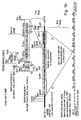
- Figure 1a the synthetic genes coding for Col1 and Col2 (SEQ ID's 1, 4) fused either to the vacuolar signal or to the apoplast signal (encoded by SEQ ID NO: 7) or without signals were cloned in expression cassettes composed of a Chrysanthemum rbcS1 promoter and 5' UTR (SEQ ID NO: 10) and a Chrysanthemum rbcS1 3'UTR and terminator (SEQ ID NO: 11).
- the complete expression cassettes were cloned in the multiple cloning site of the pBINPLUS plant transformation vector ( van Engelen et al., 1995, Transgenic Res 4: 288-290 ).
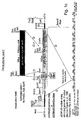
- Figure 1b The synthetic genes coding for P4H beta-human, P4H alpha-human and P4H-plant (SEQ ID NOs: 12, 14 and 16) fused either to the vacuolar signal or to the apoplast signal (encoded by SEQ ID NO: 7) or without signals were cloned in expression cassettes composed of the CaMV 35S promoter and TMV omega sequence and Agrobacterium Nopaline synthetase (NOS) terminator carried by the vector pJD330 ( Galili et al., 1987, Nucleic Acids Res 15: 3257-3273 ).
- NOS Nopaline synthetase
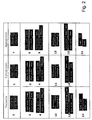
- Co-transformations schemes utilizing the expression cassettes described in Figure 1 into a host plant are illustrated in Figure 2 .
- Each expression cassette insert is represented by a short name of the coding sequence.
- the coding sequences and related SEQ ID NOs. are described in Table 1.
- Each co-transformation is preformed by two pBINPLUS binary vectors.
- Each rectangle represents a single pBINPLUS vector carrying one, two or three expression cassettes. Promoters and terminators are specified in Figure 1 .
- Collagen alpha I(I) chain [Precursor] p02452 1442 - One version ER signal Col1 3 1 Collagen alpha 2(I) chain [Precursor] p08123 Two changes done in p08123: D549A and N249I 1342 One version ER signal Col2 6 4 Prolyl 4-hydroxylase beta subunit p07237 487 One version ER signal, KDEL P4H betaHu man 13 12 Prolyl 4-hydroxylase alpha-1 subunit p13674 517 P13674-1 ER signal P4H alphaH uman 15 14 Prolyl 4-hydroxylase Plant No entry in Swissprot.
- Plant expression vectors were constructed as taught in Example 1, the composition of each constructed expression vector was confirmed via restriction analysis and sequencing.
- Expression vectors including the following expression cassettes were constructed:
- Each of the above described coding sequences was either translationally fused to a vacuole transit peptide or to an apoplasm transit peptide or was devoid of any transit peptide sequences, in which case cytoplasmic accumulation is expected.
- Tobacco plants (Nicotiana tabacum, Samsun NN) were transformed with the above described expression vectors according to the transformation scheme taught in Figure 2 .
- Resultant transgenic plants were screened via multiplex PCR using four primers which were designed capable of amplifying a 324bp fragment of Collagen alpha 1 and a 537bp fragment of Collagen alpha 2 (Table 2).
- Figure 3 illustrates the results of one mulitplex PCR screen.
- the crude extract was mixed with 250 ⁇ l 4X Sample application buffer containing 10% beta-mercapto-ethanol and 8% SDS, the samples were boiled for 7 minutes and centrifuged for 8 minutes in 13000 rpm. 20 ⁇ l of the supernatant were loaded in a 10% polyacrylamide gel and tested with anti-Collagen I (denatured) antibody ((#AB745 from Chemicon Inc.) in a standard Western blot procedure ( Figure 4 ). W.T.
- Positive collagen bands are visible in plants that are PCR positive for collagen typeI alpha 1 or alpha 2 or both.
- Positive control band of 500ng collagen type I from human placenta represents about 0.3% of the total soluble proteins (about 150 ⁇ g) in the samples from the transgenic plants.
- the present data also clearly shows that crossing two plants each expressing a different collagen chain type is advantageous in that it enables selection of plants expressing optimal levels of each chain type and subsequent plant crossing to achieve the desired collagen producing plant.
- Collagen produced by the plants of the present invention includes the native propeptides and therefore is expected to form a larger protein then the human control that was purified by proteolysis.
- the calculated molecular weight of Collagen alpha 1 and alpha 2 chains without hydroxylations or glycosylations are the following: Col1 with propeptides - 136kDa, Col1 without propeptides - 95kDa, Col2 with propeptides - 127kDa, Col2 without propeptides -92kDa.
- Two bands in transformants #2-9 may represent dimers or trimers, which are stable following 7 minutes of boiling with SDS and mercaptoethanol. Similar bands are visible in human collagen (upper panel) and in transformants #3-5. A possible explanation is a covalent bond between two peptides in different triple helixes (cross link), formed following oxidative deamination of two lysines by Lysine oxidase.
- Pepsin digestion was initiated by adding to each sample 4.5 ⁇ l of 0.1M HCl and 4 ⁇ l of 2.5 mg/ml Pepsin in 10 mM acetic acid. The samples were incubated for 30 minutes at room temperature (about 22 °C). The digestion was terminated by adding 5 ⁇ l of unbuffered 1 M Tris. Each sample was mixed with 22 ⁇ l 4X Sample application buffer containing 10% beta-mercapto-ethanol and 8% SDS, boiled for 7 minutes and centrifuged for 7 minutes in 13000 rpm. 40 ⁇ l of the supernatant were loaded in a 10% polyacrylamide gel and tested with anti-Collagen I antibody ((#AB745 from Chemicon Inc.) in a standard Western blot procedure. Positive control was sample of -50 ng human collagen I (#CC050 from Chemicon Inc., extracted from human placenta by pepsin digestion) added to total soluble proteins from w.t. tobacco.
- collagen triple helix that formed in plant #13-6 was resistant to denaturation at 42 °C. Cleavage of the propetides is first visible at 33 °C and gradually increases in efficiency when the temperature is raised to 38 °C and again to 42 °C. The cleaved collagen triple helix domain shows a similar migration on the gel to the migration of the pepsin treated human collagen.
- the human collagen that was used in this experiment was extracted from human placenta by pepsin proteolysis and therefore lacks the propeptides and some of the telopeptides.
- Tobacco P4H cDNA was cloned and used as a probe to determine conditions and treatments that would induce endogenous P4H expression.
- Northern blot analysis ( Figure 7 ) clearly shows that P4H is expressed at relatively high levels in the shoot apex and at low levels in leaves. P4H level was induced significantly in leaves 4 hours following abrasion treatment ("wounded" in the lower panel). Similar results were achieved using other stress conditions (not shown).
- P4H alpha, P4H beta and collagen I alpha 1 and alpha 2 bands was confirmed in plant 13-6 (also transformed also with human LH3).
- the calculated molecular weights of P4H alpha and beta including the vacuolar signal peptide are 65.5 kDa and 53.4 kDa respectively.
- the calculated molecular weights of Collagen alpha 1 and alpha 2 chains with propeptides, without hydroxylations or glycosylations are 136 kDa and 127 kDa respectively.
Landscapes
- Health & Medical Sciences (AREA)
- Life Sciences & Earth Sciences (AREA)
- Genetics & Genomics (AREA)
- Chemical & Material Sciences (AREA)
- Organic Chemistry (AREA)
- Molecular Biology (AREA)
- Engineering & Computer Science (AREA)
- Zoology (AREA)
- Biotechnology (AREA)
- Biochemistry (AREA)
- Biomedical Technology (AREA)
- Biophysics (AREA)
- Wood Science & Technology (AREA)
- General Engineering & Computer Science (AREA)
- General Health & Medical Sciences (AREA)
- Bioinformatics & Cheminformatics (AREA)
- Medicinal Chemistry (AREA)
- Microbiology (AREA)
- Gastroenterology & Hepatology (AREA)
- Physics & Mathematics (AREA)
- Cell Biology (AREA)
- Plant Pathology (AREA)
- Proteomics, Peptides & Aminoacids (AREA)
- Pharmacology & Pharmacy (AREA)
- Toxicology (AREA)
- Botany (AREA)
- Micro-Organisms Or Cultivation Processes Thereof (AREA)
- Breeding Of Plants And Reproduction By Means Of Culturing (AREA)
- Peptides Or Proteins (AREA)
- Preparation Of Compounds By Using Micro-Organisms (AREA)
- Fertilizers (AREA)
- Enzymes And Modification Thereof (AREA)
- Cosmetics (AREA)
Priority Applications (2)
| Application Number | Priority Date | Filing Date | Title |
|---|---|---|---|
| EP17205280.5A EP3312282B1 (en) | 2004-09-29 | 2005-09-28 | Collagen producing plants and methods of generating and using same |
| EP16171177.5A EP3088528B1 (en) | 2004-09-29 | 2005-09-28 | Collagen producing plants and methods of generating and using same |
Applications Claiming Priority (3)
| Application Number | Priority Date | Filing Date | Title |
|---|---|---|---|
| US61371904P | 2004-09-29 | 2004-09-29 | |
| EP05789469A EP1809751B1 (en) | 2004-09-29 | 2005-09-28 | Collagen producing plants and methods of generating and using same |
| EP10168971.9A EP2357241B1 (en) | 2004-09-29 | 2005-09-28 | Collagen producing plants and methods of generating and using same |
Related Parent Applications (3)
| Application Number | Title | Priority Date | Filing Date |
|---|---|---|---|
| EP10168971.9A Division EP2357241B1 (en) | 2004-09-29 | 2005-09-28 | Collagen producing plants and methods of generating and using same |
| EP10168971.9A Division-Into EP2357241B1 (en) | 2004-09-29 | 2005-09-28 | Collagen producing plants and methods of generating and using same |
| EP05789469A Division EP1809751B1 (en) | 2004-09-29 | 2005-09-28 | Collagen producing plants and methods of generating and using same |
Related Child Applications (3)
| Application Number | Title | Priority Date | Filing Date |
|---|---|---|---|
| EP17205280.5A Division EP3312282B1 (en) | 2004-09-29 | 2005-09-28 | Collagen producing plants and methods of generating and using same |
| EP16171177.5A Division EP3088528B1 (en) | 2004-09-29 | 2005-09-28 | Collagen producing plants and methods of generating and using same |
| EP16171177.5A Division-Into EP3088528B1 (en) | 2004-09-29 | 2005-09-28 | Collagen producing plants and methods of generating and using same |
Publications (3)
| Publication Number | Publication Date |
|---|---|
| EP2816117A2 EP2816117A2 (en) | 2014-12-24 |
| EP2816117A3 EP2816117A3 (en) | 2015-05-27 |
| EP2816117B1 true EP2816117B1 (en) | 2016-11-30 |
Family
ID=35788568
Family Applications (6)
| Application Number | Title | Priority Date | Filing Date |
|---|---|---|---|
| EP05789469A Revoked EP1809751B1 (en) | 2004-09-29 | 2005-09-28 | Collagen producing plants and methods of generating and using same |
| EP14185576.7A Revoked EP2816117B1 (en) | 2004-09-29 | 2005-09-28 | Collagen producing plants and methods of generating and using same |
| EP10181115A Ceased EP2360261A1 (en) | 2004-09-29 | 2005-09-28 | Collagen producing plants and methods of generating and using same |
| EP16171177.5A Active EP3088528B1 (en) | 2004-09-29 | 2005-09-28 | Collagen producing plants and methods of generating and using same |
| EP10168971.9A Revoked EP2357241B1 (en) | 2004-09-29 | 2005-09-28 | Collagen producing plants and methods of generating and using same |
| EP17205280.5A Expired - Lifetime EP3312282B1 (en) | 2004-09-29 | 2005-09-28 | Collagen producing plants and methods of generating and using same |
Family Applications Before (1)
| Application Number | Title | Priority Date | Filing Date |
|---|---|---|---|
| EP05789469A Revoked EP1809751B1 (en) | 2004-09-29 | 2005-09-28 | Collagen producing plants and methods of generating and using same |
Family Applications After (4)
| Application Number | Title | Priority Date | Filing Date |
|---|---|---|---|
| EP10181115A Ceased EP2360261A1 (en) | 2004-09-29 | 2005-09-28 | Collagen producing plants and methods of generating and using same |
| EP16171177.5A Active EP3088528B1 (en) | 2004-09-29 | 2005-09-28 | Collagen producing plants and methods of generating and using same |
| EP10168971.9A Revoked EP2357241B1 (en) | 2004-09-29 | 2005-09-28 | Collagen producing plants and methods of generating and using same |
| EP17205280.5A Expired - Lifetime EP3312282B1 (en) | 2004-09-29 | 2005-09-28 | Collagen producing plants and methods of generating and using same |
Country Status (14)
| Country | Link |
|---|---|
| EP (6) | EP1809751B1 (enExample) |
| JP (2) | JP5100386B2 (enExample) |
| KR (1) | KR20070083870A (enExample) |
| CN (1) | CN101065491B (enExample) |
| AT (1) | ATE479762T1 (enExample) |
| BR (1) | BRPI0516303B1 (enExample) |
| CA (1) | CA2582051C (enExample) |
| DE (1) | DE602005023332D1 (enExample) |
| HK (1) | HK1251611B (enExample) |
| IL (1) | IL182320A (enExample) |
| MX (1) | MX2007003767A (enExample) |
| NZ (1) | NZ554787A (enExample) |
| WO (1) | WO2006035442A2 (enExample) |
| ZA (1) | ZA200703369B (enExample) |
Cited By (1)
| Publication number | Priority date | Publication date | Assignee | Title |
|---|---|---|---|---|
| WO2023194333A1 (en) | 2022-04-04 | 2023-10-12 | Swiftpharma Bv | Recombinant spider silk-reinforced collagen proteins produced in plants and the use thereof |
Families Citing this family (30)
| Publication number | Priority date | Publication date | Assignee | Title |
|---|---|---|---|---|
| US7378506B2 (en) | 1997-07-21 | 2008-05-27 | Ohio University | Synthetic genes for plant gums and other hydroxyproline-rich glycoproteins |
| US6639050B1 (en) | 1997-07-21 | 2003-10-28 | Ohio University | Synthetic genes for plant gums and other hydroxyproline-rich glycoproteins |
| WO2005069845A2 (en) | 2004-01-14 | 2005-08-04 | Ohio University | Methods of producing peptides/proteins in plants and peptides/proteins produced thereby |
| US8623812B2 (en) | 2004-04-19 | 2014-01-07 | Ohio University | Cross-linkable glycoproteins and methods of making the same |
| US8455717B2 (en) | 2004-09-29 | 2013-06-04 | Collplant Ltd. | Collagen producing plants and methods of generating and using same |
| JP5100386B2 (ja) | 2004-09-29 | 2012-12-19 | コルプラント リミテッド | コラーゲン生産植物及びその作成方法及びその使用 |
| EP2084285A4 (en) * | 2006-07-10 | 2010-01-13 | Univ Ohio | COEXPRESSION OF PROLIN HYDROXYLASES TO FACILITATE HYP-GLYCOSYLATION OF PROTEINS EXPRESSED AND SEPARATED IN PLANT CELLS |
| US8759487B2 (en) | 2007-10-26 | 2014-06-24 | Collplant Ltd. | Methods of processing recombinant procollagen |
| WO2009069123A2 (en) * | 2007-11-26 | 2009-06-04 | Yissum Research Development Company Of The Hebrew University Of Jerusalem | Compositions comprising fibrous polypeptides and polysaccharides |
| ES2565185T3 (es) * | 2008-04-18 | 2016-04-01 | Collplant Ltd. | Métodos de generación y de uso del procolágeno |
| WO2011064773A1 (en) | 2009-11-24 | 2011-06-03 | Collplant Ltd. | Method of generating collagen fibers |
| EP2640877A2 (en) | 2010-11-16 | 2013-09-25 | Collplant Ltd. | Collagen structures and method of fabricating the same |
| WO2013030840A2 (en) | 2011-09-01 | 2013-03-07 | Yissum Research Development Company Of The Hebrew University Of Jerusalem Ltd. | Adhesive biopolymers and uses thereof |
| WO2013093921A1 (en) | 2011-12-20 | 2013-06-27 | Collplant Ltd. | Collagen coated synthetic polymer fibers |
| KR102063686B1 (ko) * | 2012-01-02 | 2020-02-11 | (주)아모레퍼시픽 | 콩뿌리 추출물을 함유하는 피부 외용제 조성물 |
| EP2976097B1 (en) | 2013-03-21 | 2021-05-26 | CollPlant Ltd. | Compositions comprising collagen and prp for tissue regeneration and their production method |
| WO2014146175A1 (en) * | 2013-03-21 | 2014-09-25 | Commonwealth Scientific And Industrial Research Organisation | Purification of triple helical proteins |
| GB201308120D0 (en) * | 2013-05-06 | 2013-06-12 | Baden Wuerttemberg Stiftung Gmbh | Recombinant protein and method for its production |
| EP3044233A4 (en) | 2013-09-09 | 2017-07-19 | Commonwealth Scientific and Industrial Research Organisation | Modified bacterial collagen-like proteins |
| EP3221455B1 (en) | 2014-11-20 | 2020-08-12 | Yissum Research and Development Company of the Hebrew University of Jerusalem Ltd. | Compositions and methods for producing polypeptides with a modified glycosylation pattern in plant cells |
| EP3634512A4 (en) | 2017-06-09 | 2021-04-14 | CollPlant Ltd. | GENERATIVE MANUFACTURING USING A RECOMBINANT COLLAGEN-CONTAINING FORMULATION |
| US20210032311A1 (en) * | 2017-09-25 | 2021-02-04 | Yu-Chun Wu | Non-human gene-edited mammal, protein crude extract separated from connective tissue of non-human gene-edited mammal, method for protein crude extract and uses of protein crude extract |
| AU2019263122B2 (en) | 2018-05-03 | 2022-09-29 | Collplant Ltd. | Dermal fillers and applications thereof |
| US20210310082A1 (en) * | 2018-07-31 | 2021-10-07 | Collplant Ltd. | Tobacco transgenic event and methods for detection and use thereof |
| CN109988234A (zh) * | 2019-02-20 | 2019-07-09 | 江苏悦智生物医药有限公司 | 酵母重组人源I型胶原α1链蛋白、合成方法及其应用 |
| EP4057833A1 (en) * | 2019-11-11 | 2022-09-21 | Kamcharov, Alexander Evgenievich | Beverage with collagen and additional additives |
| FR3105792B1 (fr) | 2019-12-26 | 2022-08-12 | Michel Assor | Matériau biocomposite collagène/matrice polymérique poreuse et son utilisation comme implant de réparation de lésions méniscales du genou et/ou de prévention ou de traitement de l’arthrose du genou |
| WO2021229577A1 (en) | 2020-05-12 | 2021-11-18 | Collplant Ltd. | Collagen as a delivery tool for metal-based anti-viral agents |
| CN119604615A (zh) | 2022-08-02 | 2025-03-11 | 株式会社UniBio | 胶原蛋白产生方法 |
| CN117209592A (zh) * | 2023-07-26 | 2023-12-12 | 浙江大学 | 一种人源化i型胶原蛋白及其制备方法与应用 |
Citations (6)
| Publication number | Priority date | Publication date | Assignee | Title |
|---|---|---|---|---|
| US5593859A (en) | 1991-10-23 | 1997-01-14 | Thomas Jefferson University | Synthesis of human procollagens and collagens in recombinant DNA systems |
| WO1999016890A2 (en) | 1997-09-30 | 1999-04-08 | The Regents Of The University Of California | Production of proteins in plant seeds |
| WO2001034647A2 (en) | 1999-11-12 | 2001-05-17 | Fibrogen, Inc. | Animal collagens and gelatins |
| US6617431B1 (en) | 1996-12-17 | 2003-09-09 | Meristem Therapeutics S.A. | Recombinant collagen and derived proteins produced by plants, methods for obtaining them and uses |
| US20040018592A1 (en) | 1999-11-12 | 2004-01-29 | Fibrogen, Inc. | Bovine collagens and gelatins |
| WO2006035442A2 (en) | 2004-09-29 | 2006-04-06 | Collplant Ltd. | Collagen producing plants and methods of generating and using same |
Family Cites Families (35)
| Publication number | Priority date | Publication date | Assignee | Title |
|---|---|---|---|---|
| NL154600B (nl) | 1971-02-10 | 1977-09-15 | Organon Nv | Werkwijze voor het aantonen en bepalen van specifiek bindende eiwitten en hun corresponderende bindbare stoffen. |
| NL154598B (nl) | 1970-11-10 | 1977-09-15 | Organon Nv | Werkwijze voor het aantonen en bepalen van laagmoleculire verbindingen en van eiwitten die deze verbindingen specifiek kunnen binden, alsmede testverpakking. |
| NL154599B (nl) | 1970-12-28 | 1977-09-15 | Organon Nv | Werkwijze voor het aantonen en bepalen van specifiek bindende eiwitten en hun corresponderende bindbare stoffen, alsmede testverpakking. |
| US3901654A (en) | 1971-06-21 | 1975-08-26 | Biological Developments | Receptor assays of biologically active compounds employing biologically specific receptors |
| US3853987A (en) | 1971-09-01 | 1974-12-10 | W Dreyer | Immunological reagent and radioimmuno assay |
| US3867517A (en) | 1971-12-21 | 1975-02-18 | Abbott Lab | Direct radioimmunoassay for antigens and their antibodies |
| NL171930C (nl) | 1972-05-11 | 1983-06-01 | Akzo Nv | Werkwijze voor het aantonen en bepalen van haptenen, alsmede testverpakkingen. |
| US3850578A (en) | 1973-03-12 | 1974-11-26 | H Mcconnell | Process for assaying for biologically active molecules |
| US3935074A (en) | 1973-12-17 | 1976-01-27 | Syva Company | Antibody steric hindrance immunoassay with two antibodies |
| US3996345A (en) | 1974-08-12 | 1976-12-07 | Syva Company | Fluorescence quenching with immunological pairs in immunoassays |
| US4034074A (en) | 1974-09-19 | 1977-07-05 | The Board Of Trustees Of Leland Stanford Junior University | Universal reagent 2-site immunoradiometric assay using labelled anti (IgG) |
| US3984533A (en) | 1975-11-13 | 1976-10-05 | General Electric Company | Electrophoretic method of detecting antigen-antibody reaction |
| US4098876A (en) | 1976-10-26 | 1978-07-04 | Corning Glass Works | Reverse sandwich immunoassay |
| US4879219A (en) | 1980-09-19 | 1989-11-07 | General Hospital Corporation | Immunoassay utilizing monoclonal high affinity IgM antibodies |
| CA1192510A (en) | 1981-05-27 | 1985-08-27 | Lawrence E. Pelcher | Rna plant virus vector or portion thereof, a method of construction thereof, and a method of producing a gene derived product therefrom |
| JPS6054684A (ja) | 1983-09-05 | 1985-03-29 | Teijin Ltd | 新規dνa及びハイブリツドdνa |
| US5011771A (en) | 1984-04-12 | 1991-04-30 | The General Hospital Corporation | Multiepitopic immunometric assay |
| US4666828A (en) | 1984-08-15 | 1987-05-19 | The General Hospital Corporation | Test for Huntington's disease |
| US4945050A (en) | 1984-11-13 | 1990-07-31 | Cornell Research Foundation, Inc. | Method for transporting substances into living cells and tissues and apparatus therefor |
| CA1288073C (en) | 1985-03-07 | 1991-08-27 | Paul G. Ahlquist | Rna transformation vector |
| US4683202A (en) | 1985-03-28 | 1987-07-28 | Cetus Corporation | Process for amplifying nucleic acid sequences |
| US4801531A (en) | 1985-04-17 | 1989-01-31 | Biotechnology Research Partners, Ltd. | Apo AI/CIII genomic polymorphisms predictive of atherosclerosis |
| GB8608850D0 (en) | 1986-04-11 | 1986-05-14 | Diatech Ltd | Packaging system |
| JPS6314693A (ja) | 1986-07-04 | 1988-01-21 | Sumitomo Chem Co Ltd | 植物ウイルスrnaベクタ− |
| ES2060646T3 (es) | 1987-02-09 | 1994-12-01 | Lubrizol Genetics Inc | Virus rna hibrido. |
| US5316931A (en) | 1988-02-26 | 1994-05-31 | Biosource Genetics Corp. | Plant viral vectors having heterologous subgenomic promoters for systemic expression of foreign genes |
| US5693507A (en) | 1988-09-26 | 1997-12-02 | Auburn University | Genetic engineering of plant chloroplasts |
| US5272057A (en) | 1988-10-14 | 1993-12-21 | Georgetown University | Method of detecting a predisposition to cancer by the use of restriction fragment length polymorphism of the gene for human poly (ADP-ribose) polymerase |
| US5192659A (en) | 1989-08-25 | 1993-03-09 | Genetype Ag | Intron sequence analysis method for detection of adjacent and remote locus alleles as haplotypes |
| US5281521A (en) | 1992-07-20 | 1994-01-25 | The Trustees Of The University Of Pennsylvania | Modified avidin-biotin technique |
| AU2003203147B2 (en) * | 1998-03-23 | 2008-05-29 | Novozymes A/S | Phytase variants |
| WO2001029242A2 (en) * | 1999-10-21 | 2001-04-26 | Monsanto Company | Post-translational modification of recombinant proteins produced in plants |
| WO2002099067A2 (en) * | 2001-06-05 | 2002-12-12 | Oishi Karen K | Gene expression and production of tgf-b proteins including bioactive mullerian inhibiting substance from plants |
| WO2004057001A2 (en) * | 2002-12-19 | 2004-07-08 | University Of Bristol | Method for the production of polyunsaturated fatty acids |
| AU2003293906A1 (en) * | 2002-12-20 | 2004-07-22 | Basf Aktiengesellschaft | Malate dehydrogenase as a target for herbicides |
-
2005
- 2005-09-28 JP JP2007534176A patent/JP5100386B2/ja not_active Expired - Lifetime
- 2005-09-28 EP EP05789469A patent/EP1809751B1/en not_active Revoked
- 2005-09-28 DE DE602005023332T patent/DE602005023332D1/de active Active
- 2005-09-28 MX MX2007003767A patent/MX2007003767A/es active IP Right Grant
- 2005-09-28 EP EP14185576.7A patent/EP2816117B1/en not_active Revoked
- 2005-09-28 NZ NZ554787A patent/NZ554787A/en not_active IP Right Cessation
- 2005-09-28 KR KR1020077009817A patent/KR20070083870A/ko not_active Withdrawn
- 2005-09-28 EP EP10181115A patent/EP2360261A1/en not_active Ceased
- 2005-09-28 EP EP16171177.5A patent/EP3088528B1/en active Active
- 2005-09-28 EP EP10168971.9A patent/EP2357241B1/en not_active Revoked
- 2005-09-28 BR BRPI0516303-0A patent/BRPI0516303B1/pt active IP Right Grant
- 2005-09-28 EP EP17205280.5A patent/EP3312282B1/en not_active Expired - Lifetime
- 2005-09-28 WO PCT/IL2005/001045 patent/WO2006035442A2/en not_active Ceased
- 2005-09-28 CA CA2582051A patent/CA2582051C/en active Active
- 2005-09-28 CN CN2005800408217A patent/CN101065491B/zh not_active Expired - Lifetime
- 2005-09-28 AT AT05789469T patent/ATE479762T1/de not_active IP Right Cessation
-
2007
- 2007-03-29 IL IL182320A patent/IL182320A/en active IP Right Grant
- 2007-04-25 ZA ZA200703369A patent/ZA200703369B/xx unknown
-
2011
- 2011-11-29 JP JP2011259678A patent/JP5517309B2/ja not_active Expired - Fee Related
-
2018
- 2018-08-23 HK HK18110838.5A patent/HK1251611B/en not_active IP Right Cessation
Patent Citations (6)
| Publication number | Priority date | Publication date | Assignee | Title |
|---|---|---|---|---|
| US5593859A (en) | 1991-10-23 | 1997-01-14 | Thomas Jefferson University | Synthesis of human procollagens and collagens in recombinant DNA systems |
| US6617431B1 (en) | 1996-12-17 | 2003-09-09 | Meristem Therapeutics S.A. | Recombinant collagen and derived proteins produced by plants, methods for obtaining them and uses |
| WO1999016890A2 (en) | 1997-09-30 | 1999-04-08 | The Regents Of The University Of California | Production of proteins in plant seeds |
| WO2001034647A2 (en) | 1999-11-12 | 2001-05-17 | Fibrogen, Inc. | Animal collagens and gelatins |
| US20040018592A1 (en) | 1999-11-12 | 2004-01-29 | Fibrogen, Inc. | Bovine collagens and gelatins |
| WO2006035442A2 (en) | 2004-09-29 | 2006-04-06 | Collplant Ltd. | Collagen producing plants and methods of generating and using same |
Non-Patent Citations (9)
| Title |
|---|
| HORVATH ET AL.: "The production of recombinant proteins in transgenic barley grains", PROC NATL ACAD SCI U S A., vol. 97, no. 4, 15 February 2000 (2000-02-15), pages 1914 - 1919, XP002173225 |
| MARTY: "Plant vacuoles", THE PLANT CELL, vol. 11, no. 4, 1 April 1999 (1999-04-01), pages 587 - 599, XP002640272 |
| MATSUOKA ET AL.: "CIS-ELEMENTS OF PROTEIN TRANSPORT TO THE PLANT VACUOLES", JOURNAL OF EXPERIMENTAL BOTANY, vol. 50, no. 331, 1 February 1999 (1999-02-01), pages 165 - 174, XP001188956 |
| MERLE ET AL.: "Hydroxylated human homotrimeric collagen I in Agrobacterium tumefaciens-mediated transient expression and in transgenic tobacco plant", FEBS LETT., vol. 515, no. 1-3, 27 March 2002 (2002-03-27), pages 114 - 118, XP004347752 |
| OLSEN ET AL.: "Production of human type I collagen in yeast reveals unexpected new insight into the molecular assembly of collagen trimers", J BIOL CHEM., vol. 276, no. 26, 2001, pages 24038 - 24043, XP002969135 |
| OLSEN ET AL.: "Recombinant collagen and gelatin for drug delivery", ADV DRUG DELIV REV., vol. 55, no. 12, 2003, pages 1547 - 1567, XP002368792 |
| PERRET ET AL.: "Prolyl hydroxylation of collagen type I is required for efficient binding to integrin [alpha]1[beta]1 and platelet glycoprotein VI but not to [alpha]2[beta]1", J BIOL CHEM., vol. 278, no. 32, 2003, pages 29873 - 29879, XP002626606 |
| RUGGIERO ET AL.: "Triple helix assembly and processing of human collagen produced in transgenic tobacco plants", FEBS LETT., vol. 515, no. 1, 3 March 2002 (2002-03-03), pages 132 - 136, XP004261062 |
| YOSHIDA ET AL.: "The plant vesicular transport engineering for production of useful recombinant proteins", JOURNAL OF MOLECULAR CATALYSIS B: ENZYMATIC, vol. 28, no. 4-6, 1 June 2004 (2004-06-01), pages 167 - 171, XP002640279 |
Cited By (1)
| Publication number | Priority date | Publication date | Assignee | Title |
|---|---|---|---|---|
| WO2023194333A1 (en) | 2022-04-04 | 2023-10-12 | Swiftpharma Bv | Recombinant spider silk-reinforced collagen proteins produced in plants and the use thereof |
Also Published As
Similar Documents
| Publication | Publication Date | Title |
|---|---|---|
| EP2816117B1 (en) | Collagen producing plants and methods of generating and using same | |
| HK1251611A1 (en) | Collagen producing plants and methods of generating and using same | |
| US10626408B2 (en) | Collagen producing plants and methods of generating and using same | |
| JP4610334B2 (ja) | 植物の小胞体由来のタンパク粒に蓄積することによるペプチドおよびタンパク質の産生 | |
| EP2220246B1 (en) | Methods of processing recombinant procollagen | |
| AU2011211341B2 (en) | Collagen Producing Plants and Methods of Generating and Using Same | |
| AU2007201384B8 (en) | Collagen Producing Plants and Methods of Generating and Using Same | |
| HK1160176B (en) | Collagen producing plants and methods of generating and using same | |
| HK1160177A (en) | Collagen producing plants and methods of generating and using same | |
| HK1114405B (en) | Collagen producing plants and methods of generating and using same |
Legal Events
| Date | Code | Title | Description |
|---|---|---|---|
| PUAI | Public reference made under article 153(3) epc to a published international application that has entered the european phase |
Free format text: ORIGINAL CODE: 0009012 |
|
| 17P | Request for examination filed |
Effective date: 20141016 |
|
| AC | Divisional application: reference to earlier application |
Ref document number: 1809751 Country of ref document: EP Kind code of ref document: P Ref document number: 2357241 Country of ref document: EP Kind code of ref document: P |
|
| AK | Designated contracting states |
Kind code of ref document: A2 Designated state(s): AT BE BG CH CY CZ DE DK EE ES FI FR GB GR HU IE IS IT LI LT LU LV MC NL PL PT RO SE SI SK TR |
|
| RIC1 | Information provided on ipc code assigned before grant |
Ipc: A01H 5/00 20060101ALI20150119BHEP Ipc: C12N 15/82 20060101AFI20150119BHEP Ipc: C07K 14/78 20060101ALI20150119BHEP |
|
| PUAL | Search report despatched |
Free format text: ORIGINAL CODE: 0009013 |
|
| AK | Designated contracting states |
Kind code of ref document: A3 Designated state(s): AT BE BG CH CY CZ DE DK EE ES FI FR GB GR HU IE IS IT LI LT LU LV MC NL PL PT RO SE SI SK TR |
|
| RIC1 | Information provided on ipc code assigned before grant |
Ipc: C07K 14/78 20060101ALI20150420BHEP Ipc: C12N 15/82 20060101AFI20150420BHEP Ipc: A01H 5/00 20060101ALI20150420BHEP |
|
| 17Q | First examination report despatched |
Effective date: 20160115 |
|
| GRAP | Despatch of communication of intention to grant a patent |
Free format text: ORIGINAL CODE: EPIDOSNIGR1 |
|
| INTG | Intention to grant announced |
Effective date: 20160811 |
|
| GRAS | Grant fee paid |
Free format text: ORIGINAL CODE: EPIDOSNIGR3 |
|
| GRAA | (expected) grant |
Free format text: ORIGINAL CODE: 0009210 |
|
| AC | Divisional application: reference to earlier application |
Ref document number: 2357241 Country of ref document: EP Kind code of ref document: P Ref document number: 1809751 Country of ref document: EP Kind code of ref document: P |
|
| AK | Designated contracting states |
Kind code of ref document: B1 Designated state(s): AT BE BG CH CY CZ DE DK EE ES FI FR GB GR HU IE IS IT LI LT LU LV MC NL PL PT RO SE SI SK TR |
|
| REG | Reference to a national code |
Ref country code: CH Ref legal event code: EP Ref country code: GB Ref legal event code: FG4D |
|
| REG | Reference to a national code |
Ref country code: AT Ref legal event code: REF Ref document number: 849844 Country of ref document: AT Kind code of ref document: T Effective date: 20161215 |
|
| REG | Reference to a national code |
Ref country code: IE Ref legal event code: FG4D |
|
| REG | Reference to a national code |
Ref country code: DE Ref legal event code: R096 Ref document number: 602005050839 Country of ref document: DE |
|
| REG | Reference to a national code |
Ref country code: NL Ref legal event code: FP |
|
| PG25 | Lapsed in a contracting state [announced via postgrant information from national office to epo] |
Ref country code: LV Free format text: LAPSE BECAUSE OF FAILURE TO SUBMIT A TRANSLATION OF THE DESCRIPTION OR TO PAY THE FEE WITHIN THE PRESCRIBED TIME-LIMIT Effective date: 20161130 |
|
| REG | Reference to a national code |
Ref country code: LT Ref legal event code: MG4D |
|
| REG | Reference to a national code |
Ref country code: AT Ref legal event code: MK05 Ref document number: 849844 Country of ref document: AT Kind code of ref document: T Effective date: 20161130 |
|
| PG25 | Lapsed in a contracting state [announced via postgrant information from national office to epo] |
Ref country code: LT Free format text: LAPSE BECAUSE OF FAILURE TO SUBMIT A TRANSLATION OF THE DESCRIPTION OR TO PAY THE FEE WITHIN THE PRESCRIBED TIME-LIMIT Effective date: 20161130 Ref country code: GR Free format text: LAPSE BECAUSE OF FAILURE TO SUBMIT A TRANSLATION OF THE DESCRIPTION OR TO PAY THE FEE WITHIN THE PRESCRIBED TIME-LIMIT Effective date: 20170301 Ref country code: SE Free format text: LAPSE BECAUSE OF FAILURE TO SUBMIT A TRANSLATION OF THE DESCRIPTION OR TO PAY THE FEE WITHIN THE PRESCRIBED TIME-LIMIT Effective date: 20161130 |
|
| PG25 | Lapsed in a contracting state [announced via postgrant information from national office to epo] |
Ref country code: PT Free format text: LAPSE BECAUSE OF FAILURE TO SUBMIT A TRANSLATION OF THE DESCRIPTION OR TO PAY THE FEE WITHIN THE PRESCRIBED TIME-LIMIT Effective date: 20170330 Ref country code: AT Free format text: LAPSE BECAUSE OF FAILURE TO SUBMIT A TRANSLATION OF THE DESCRIPTION OR TO PAY THE FEE WITHIN THE PRESCRIBED TIME-LIMIT Effective date: 20161130 Ref country code: ES Free format text: LAPSE BECAUSE OF FAILURE TO SUBMIT A TRANSLATION OF THE DESCRIPTION OR TO PAY THE FEE WITHIN THE PRESCRIBED TIME-LIMIT Effective date: 20161130 Ref country code: FI Free format text: LAPSE BECAUSE OF FAILURE TO SUBMIT A TRANSLATION OF THE DESCRIPTION OR TO PAY THE FEE WITHIN THE PRESCRIBED TIME-LIMIT Effective date: 20161130 Ref country code: PL Free format text: LAPSE BECAUSE OF FAILURE TO SUBMIT A TRANSLATION OF THE DESCRIPTION OR TO PAY THE FEE WITHIN THE PRESCRIBED TIME-LIMIT Effective date: 20161130 |
|
| PG25 | Lapsed in a contracting state [announced via postgrant information from national office to epo] |
Ref country code: EE Free format text: LAPSE BECAUSE OF FAILURE TO SUBMIT A TRANSLATION OF THE DESCRIPTION OR TO PAY THE FEE WITHIN THE PRESCRIBED TIME-LIMIT Effective date: 20161130 Ref country code: CZ Free format text: LAPSE BECAUSE OF FAILURE TO SUBMIT A TRANSLATION OF THE DESCRIPTION OR TO PAY THE FEE WITHIN THE PRESCRIBED TIME-LIMIT Effective date: 20161130 Ref country code: SK Free format text: LAPSE BECAUSE OF FAILURE TO SUBMIT A TRANSLATION OF THE DESCRIPTION OR TO PAY THE FEE WITHIN THE PRESCRIBED TIME-LIMIT Effective date: 20161130 Ref country code: RO Free format text: LAPSE BECAUSE OF FAILURE TO SUBMIT A TRANSLATION OF THE DESCRIPTION OR TO PAY THE FEE WITHIN THE PRESCRIBED TIME-LIMIT Effective date: 20161130 Ref country code: DK Free format text: LAPSE BECAUSE OF FAILURE TO SUBMIT A TRANSLATION OF THE DESCRIPTION OR TO PAY THE FEE WITHIN THE PRESCRIBED TIME-LIMIT Effective date: 20161130 |
|
| REG | Reference to a national code |
Ref country code: DE Ref legal event code: R026 Ref document number: 602005050839 Country of ref document: DE |
|
| PG25 | Lapsed in a contracting state [announced via postgrant information from national office to epo] |
Ref country code: BG Free format text: LAPSE BECAUSE OF FAILURE TO SUBMIT A TRANSLATION OF THE DESCRIPTION OR TO PAY THE FEE WITHIN THE PRESCRIBED TIME-LIMIT Effective date: 20170228 Ref country code: BE Free format text: LAPSE BECAUSE OF FAILURE TO SUBMIT A TRANSLATION OF THE DESCRIPTION OR TO PAY THE FEE WITHIN THE PRESCRIBED TIME-LIMIT Effective date: 20161130 |
|
| PLBI | Opposition filed |
Free format text: ORIGINAL CODE: 0009260 |
|
| REG | Reference to a national code |
Ref country code: FR Ref legal event code: PLFP Year of fee payment: 13 |
|
| PLAX | Notice of opposition and request to file observation + time limit sent |
Free format text: ORIGINAL CODE: EPIDOSNOBS2 |
|
| 26 | Opposition filed |
Opponent name: FIBROGEN, INC. Effective date: 20170830 |
|
| PGFP | Annual fee paid to national office [announced via postgrant information from national office to epo] |
Ref country code: FR Payment date: 20170928 Year of fee payment: 13 Ref country code: DE Payment date: 20170928 Year of fee payment: 13 Ref country code: IT Payment date: 20170926 Year of fee payment: 13 Ref country code: CH Payment date: 20170921 Year of fee payment: 13 Ref country code: LU Payment date: 20170921 Year of fee payment: 13 Ref country code: GB Payment date: 20170921 Year of fee payment: 13 |
|
| PG25 | Lapsed in a contracting state [announced via postgrant information from national office to epo] |
Ref country code: SI Free format text: LAPSE BECAUSE OF FAILURE TO SUBMIT A TRANSLATION OF THE DESCRIPTION OR TO PAY THE FEE WITHIN THE PRESCRIBED TIME-LIMIT Effective date: 20161130 |
|
| PGFP | Annual fee paid to national office [announced via postgrant information from national office to epo] |
Ref country code: IE Payment date: 20170928 Year of fee payment: 13 Ref country code: NL Payment date: 20170921 Year of fee payment: 13 |
|
| PG25 | Lapsed in a contracting state [announced via postgrant information from national office to epo] |
Ref country code: MC Free format text: LAPSE BECAUSE OF FAILURE TO SUBMIT A TRANSLATION OF THE DESCRIPTION OR TO PAY THE FEE WITHIN THE PRESCRIBED TIME-LIMIT Effective date: 20161130 |
|
| RDAF | Communication despatched that patent is revoked |
Free format text: ORIGINAL CODE: EPIDOSNREV1 |
|
| STAA | Information on the status of an ep patent application or granted ep patent |
Free format text: STATUS: THE PATENT HAS BEEN GRANTED |
|
| REG | Reference to a national code |
Ref country code: DE Ref legal event code: R064 Ref document number: 602005050839 Country of ref document: DE Ref country code: DE Ref legal event code: R103 Ref document number: 602005050839 Country of ref document: DE |
|
| RDAG | Patent revoked |
Free format text: ORIGINAL CODE: 0009271 |
|
| STAA | Information on the status of an ep patent application or granted ep patent |
Free format text: STATUS: PATENT REVOKED |
|
| REG | Reference to a national code |
Ref country code: CH Ref legal event code: PL |
|
| 27W | Patent revoked |
Effective date: 20180625 |
|
| GBPR | Gb: patent revoked under art. 102 of the ep convention designating the uk as contracting state |
Effective date: 20180625 |
|
| PG25 | Lapsed in a contracting state [announced via postgrant information from national office to epo] |
Ref country code: CY Free format text: LAPSE BECAUSE OF FAILURE TO SUBMIT A TRANSLATION OF THE DESCRIPTION OR TO PAY THE FEE WITHIN THE PRESCRIBED TIME-LIMIT Effective date: 20161130 |
|
| PG25 | Lapsed in a contracting state [announced via postgrant information from national office to epo] |
Ref country code: IS Free format text: LAPSE BECAUSE OF FAILURE TO SUBMIT A TRANSLATION OF THE DESCRIPTION OR TO PAY THE FEE WITHIN THE PRESCRIBED TIME-LIMIT Effective date: 20170330 |
|
| PG25 | Lapsed in a contracting state [announced via postgrant information from national office to epo] |
Ref country code: TR Free format text: LAPSE BECAUSE OF FAILURE TO SUBMIT A TRANSLATION OF THE DESCRIPTION OR TO PAY THE FEE WITHIN THE PRESCRIBED TIME-LIMIT Effective date: 20161130 |