EP2772304B2 - Vorrichtungen zur Aufreinigung von Nitrierprodukten - Google Patents
Vorrichtungen zur Aufreinigung von Nitrierprodukten Download PDFInfo
- Publication number
- EP2772304B2 EP2772304B2 EP13005208.7A EP13005208A EP2772304B2 EP 2772304 B2 EP2772304 B2 EP 2772304B2 EP 13005208 A EP13005208 A EP 13005208A EP 2772304 B2 EP2772304 B2 EP 2772304B2
- Authority
- EP
- European Patent Office
- Prior art keywords
- washing
- jet
- tube reactor
- emulsion
- mixing
- Prior art date
- Legal status (The legal status is an assumption and is not a legal conclusion. Google has not performed a legal analysis and makes no representation as to the accuracy of the status listed.)
- Active
Links
Images

Classifications
-
- C—CHEMISTRY; METALLURGY
- C07—ORGANIC CHEMISTRY
- C07C—ACYCLIC OR CARBOCYCLIC COMPOUNDS
- C07C201/00—Preparation of esters of nitric or nitrous acid or of compounds containing nitro or nitroso groups bound to a carbon skeleton
- C07C201/06—Preparation of nitro compounds
- C07C201/16—Separation; Purification; Stabilisation; Use of additives
-
- B—PERFORMING OPERATIONS; TRANSPORTING
- B01—PHYSICAL OR CHEMICAL PROCESSES OR APPARATUS IN GENERAL
- B01J—CHEMICAL OR PHYSICAL PROCESSES, e.g. CATALYSIS OR COLLOID CHEMISTRY; THEIR RELEVANT APPARATUS
- B01J14/00—Chemical processes in general for reacting liquids with liquids; Apparatus specially adapted therefor
-
- B—PERFORMING OPERATIONS; TRANSPORTING
- B01—PHYSICAL OR CHEMICAL PROCESSES OR APPARATUS IN GENERAL
- B01J—CHEMICAL OR PHYSICAL PROCESSES, e.g. CATALYSIS OR COLLOID CHEMISTRY; THEIR RELEVANT APPARATUS
- B01J19/00—Chemical, physical or physico-chemical processes in general; Their relevant apparatus
- B01J19/24—Stationary reactors without moving elements inside
-
- C—CHEMISTRY; METALLURGY
- C07—ORGANIC CHEMISTRY
- C07C—ACYCLIC OR CARBOCYCLIC COMPOUNDS
- C07C205/00—Compounds containing nitro groups bound to a carbon skeleton
- C07C205/06—Compounds containing nitro groups bound to a carbon skeleton having nitro groups bound to carbon atoms of six-membered aromatic rings
-
- B—PERFORMING OPERATIONS; TRANSPORTING
- B01—PHYSICAL OR CHEMICAL PROCESSES OR APPARATUS IN GENERAL
- B01J—CHEMICAL OR PHYSICAL PROCESSES, e.g. CATALYSIS OR COLLOID CHEMISTRY; THEIR RELEVANT APPARATUS
- B01J2219/00—Chemical, physical or physico-chemical processes in general; Their relevant apparatus
- B01J2219/24—Stationary reactors without moving elements inside
Definitions
- the present invention relates to the technical field of nitration, in particular the preparation of nitrated aromatic organic compounds (synonymously referred to below as “nitroaromatics", “nitration products” or the like) and their purification after their preparation.
- the present invention relates to a device or system for removing impurities (such as, in particular, unreacted reactants, reaction by-products, nitrating acid and its reaction products, such as nitrogen oxides or nitrous acid, etc.) from nitrated crude products obtained in the nitration of nitratable aromatic compounds after separation of the nitrating acid by treatment with a washing medium.
- impurities such as, in particular, unreacted reactants, reaction by-products, nitrating acid and its reaction products, such as nitrogen oxides or nitrous acid, etc.
- the present invention relates to a device or system for purifying nitrated crude products obtained in the nitration of nitratable aromatic compounds after separation of the nitrating acid.
- the device or plant according to the invention is particularly suitable for carrying out a corresponding process for removing impurities from nitrated crude products obtained during the nitration of nitratable aromatic compounds after separation of the nitrating acid by treatment with a washing medium.
- Aromatic nitro compounds such as nitrobenzene (MNB), mononitrotoluene (MNT), dinitrotoluene (DNT), trinitrotoluene (TNT), nitrochlorobenzene (MNCB) etc., which are produced by reacting a corresponding aromatic such as benzene, toluene, xylene, chlorobenzene, dichlorobenzenes etc.
- nitric acid - directly or in the presence of sulphuric acid as a catalyst and water-binding agent - must be subjected to multi-stage washing and additional cleaning stages before further processing in order to remove impurities still dissolved or suspended in the crude nitroaromatics, such as sulphuric acid, nitric acid, nitroses, nitrophenols, nitrocresols etc., which may be present as mono-, dinitro- and trinitro compounds, and other oxidation products such as nitrobenzene.
- nitroaromatics such as sulphuric acid, nitric acid, nitroses, nitrophenols, nitrocresols etc.
- the washing of the crude nitroaromatics to remove the dissolved and suspended acids of the nitration mixture, the nitrophenols and other acidic and other contaminants that can be extracted with the washing agent consists of three steps (see e.g. F. Meissner et al., Industrial and Engineering Chemistry, Vol. 46, pages 718 to 724 (1954 ); Ullmann's Encyclopedia of Technical Chemistry, 4th edition, vol. 17, pages 384 to 386 ; H.
- the aim of these washing steps is to obtain a pure product and as little wastewater as possible per ton of product in which the washed-out contaminants are present in such a way that their disposal can be carried out cost-effectively.
- the washing can be carried out in countercurrent, for example, so that the water used for the neutral wash is used in the alkaline wash after the addition of bases (see e.g. AB Quakenbush et. al., The Olin Dinitrotoluene (DNT) Process, Polyurethanes World Congress 1993, Publish.: Technomic Lancaster, pages 484 to 488 ) or that the acid wash is carried out with a minimal amount of water in such a way that a concentrated acid is obtained which can be returned to the nitration directly or after further concentration.
- bases see e.g. AB Quakenbush et. al., The Olin Dinitrotoluene (DNT) Process, Polyurethanes World Congress 1993, Publish.: Technomic Lancaster, pages 484 to 488 .
- the aim is also to minimise the technical effort required for washing (e.g. by adapting the technology used for washing not only to the washing stage but also specifically to the product to be washed).
- the washing machines used for washing the nitroaromatics to be purified at the individual washing stages are usually so-called mixer-settlers (see e.g. EP 1 593 654 A1 ) where the mixing part is usually a stirred tank (see e.g. Ullmann's Encyclopedia of Industrial Chemistry, 5th Ed., Vol. B 3, pages 6.19 to 6.21 ; M. Baerns et al., Technical Chemistry, Publisher Wiley-VCH 2006, pages 352/352 ).
- the German patent specification already states EN 1 135 425 An arrangement of mixer and separator is described which allows crystalline nitroaromatics such as DNT, TNT or NCB to be washed into liquid form at elevated temperatures while minimising the heating effort, even at room temperature. Centrifugal pumps and static mixers have also been used as mixers (see, for example, the publications US 3 221 064 A or EP 1 816 117 B1 ).
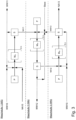
- mixer/settler technology (see e.g. Fig.1 ) is, however, complex and expensive. Due to the unavoidable slippage in continuously operated stirred tanks as mixers or blenders, it is necessary, especially when removing nitrophenols or nitrocresols when these are present in high concentrations in the crude nitroaromatic, to work in multiple stages and, if possible, in countercurrent in order to obtain the low content of impurities desired for further processing of the nitroaromatic (e.g. a nitrophenol content of less than 10 ppm, preferably 2 to 3 ppm). Washing in multi-stage extraction columns is also technically complex and expensive and not very effective. In addition, the creation of large exchange surfaces for a two-phase mixture in a short time for effective mass transfer followed by rapid chemical conversion is not feasible in a stirred tank or in extraction columns.
- the washing of nitroaromatics is a complex process.
- the effectiveness of a washing stage depends on the distribution equilibria of the contaminant between the organ phase and the washing medium and also on whether the contaminant extracted from the organ phase is stable as such in the washing medium or is removed from the distribution equilibrium by a subsequent reaction.
- document DE 21 51 206 A1 relates to a method and a device for mixing liquids, wherein the mixing of liquids is carried out using jet nozzles which protrude into a mixing reactor.
- document DE 12 22 904 B relates to a process for the purification of aromatic nitro compounds containing nitrophenol, wherein the aromatic nitro compounds to be purified are subjected to a washing with water and subsequently, either immediately or after mixing, are mixed with the same volume of a 0.1 to 2 percent by weight aqueous sodium hydroxide solution and then passed over an alkaline anion exchange resin.
- document US 3 221 064 A relates to a process for the purification of dinitrotoluenes, wherein the dinitrotoluenes are emulsified in a centrifugal pump with water and aqueous sodium hydroxide solution and the corresponding washing medium is separated off after each washing step.
- document EP 0 279 312 A relates to a process for the separation of sulphuric acid and nitric acid from dinitrotoluene mixtures obtained in the nitration of toluene, wherein the dinitrotoluenes are mixed with water and the aqueous phase which subsequently separates and contains sulphuric and nitric acid is separated.
- document US 4 597 875 A relates to a process for removing nitrocresol and picric acid impurities from waste water resulting from the production of nitroaromatics, wherein the impurities are accumulated over several washing steps, treated with acid and the precipitated organic residues are then incinerated.
- document US 4 492 860 A relates to a process for the purification of dinitrotoluene, wherein the dinitrotoluene is washed with an aqueous basic phase to remove the dinitroorthocresol compounds, but leaving the dinitroorthocresol in the organic phase.
- the present invention is therefore based on the object of providing a device or plant for removing impurities from nitrated crude products obtained during the nitration of nitratable aromatic compounds after separation of the nitrating acid, wherein the previously described problems and disadvantages occurring in connection with the prior art are to be at least largely avoided or at least mitigated.
- an object of the present invention is to provide a device or plant suitable for carrying out a corresponding process, with which an efficient purification of the nitrated crude products, as they result from the nitration of nitratable aromatic compounds after separation of the so-called nitrating end acids, is to be made possible.
- impurities such as entrained nitrating acid, dissolved sulfuric acid, nitric acid, nitroses, nitrophenols, nitrobenzoic acids, degradation products from the oxidative degradation of nitrophenols, etc.
- the above process is therefore excellently suited for the purification of nitrated crude products obtained during the nitration of nitratable aromatic compounds after separation of the nitrating acid.
- the principle of the above process is therefore to first bring the crude nitroaromatics originating from the nitration and still containing significant amounts of impurities - after separating the nitrating acid (e.g. in a separator) - into contact with a washing medium and to convert the mixture of nitroaromatics to be purified and washing medium into an emulsion or dispersion and then to feed the resulting emulsion or dispersion into a tubular reactor so that the impurities initially present in the nitroaromatics to be purified are transferred to the washing medium or are neutralized thereby, thus producing a purified nitroaromatic.
- the tubular reactor used according to the invention for treating the crude nitroaromatic with the washing medium ensures such an intimate and fine distribution of crude nitroaromatic on the one hand and washing medium on the other hand that during the tubular reactor treatment according to process step (b) all or at least substantially all impurities are transferred to the washing medium or are neutralized thereby, so that they can subsequently (ie after completion of process step (b)) be separated together with the washing medium from the then purified nitroaromatic.
- the emulsions that can be produced in this way from the organic phase to be cleaned in the washing medium (O/W type) or the washing medium in the organic phase (W/O type) provide the interface required for effective and optimal mass transfer between the nitroaromatic to be washed and the washing medium.
- this is generally carried out by means of a suitable dispersing or emulsifying device, in particular by means of a suitable mixing device.
- a stirred tank a jet mixer (jet mixer or jet mixing device) or a pump, in particular a centrifugal pump, can be used as a dispersing or emulsifying device (ie in particular as a preferably first dispersing or emulsifying device ), in particular as a mixing device.
- a dispersing or emulsifying device ie in particular as a preferably first dispersing or emulsifying device
- a pump in particular a centrifugal pump, is used as a dispersing or emulsifying device, in particular as a mixing device, in process step (a).
- a so-called jet mixer (also referred to synonymously as a “jet mixer” or “ jet mixing device”) is used as a dispersing or emulsifying device, in particular as a mixing device , in process step (a).
- the jet mixer used according to the invention is in particular a device which generates a (central) propulsion jet in a medium surrounding the (central) propulsion jet (e.g. annular jet).
- jet mixers can be used as jet mixers which allow the nitroaromatic to be washed or the washing medium to be washed to be injected at high relative speed using the central driving jet as a free jet, which can consist of both the washing medium and the nitroaromatic to be washed, in such a way that either the nitroaromatic to be washed is distributed in the washing medium or the washing medium in the nitroaromatic to be washed as an emulsion with a large interface.
- Devices of this type are used, for example, in Ullmann's Encyclopedia of Industrial Chemistry, 2003, 5th Ed., Vol. B 4, pages 87/88 and 565 to 571 , or in Perry's Chemical Engineers' Handbook, McGraw-Hill Book Company, 1984, 6th edition, pages 5-21 to 5-23 or in the German disclosure document EN 2 151 206 described.
- the (central) driving jet in the jet mixer can be the washing medium and the surrounding medium can be the nitrated crude aromatic to be purified; alternatively, however, the (central) driving jet can be formed by the nitrated crude product to be purified and the medium surrounding the (central) driving jet can be formed by the washing medium. Both alternative embodiments lead to the desired result.
- the flow velocity of the washing emulsion after the jet mixer in the subsequent tubular reactor is in particular in the range from 0.1 to 15.0 m/s, preferably in the range from 0.5 to 10 m/s.
- the dispersing device used in process step (a), in particular the mixing element is connected upstream of the tubular reactor, in particular directly upstream.
- the dispersing or emulsifying device, in particular the mixing element passes into the tubular reactor.
- the dispersing device in particular the mixing element
- the dispersing device can be integrated into the tubular reactor or to be a component of the tubular reactor.
- the dispersing device can be arranged in the upper or upstream part of the tubular reactor.
- the dispersing device, in particular the mixing element is designed as a so-called jet mixer.
- the tubular reactor for carrying out process step (b) is equipped with mixing elements for introducing additional mixing energy.
- the mixing elements can in particular be metal sheets, in particular impact or deflection plates, baffles, static mixers, flow dividers or the like. According to the invention, it is preferred if 1 to 15, in particular 2 to 15, preferably 2 to 10, particularly preferably 2 to 5, mixing elements are present in the tubular reactor.
- a total mixing energy i.e. a volume-related mixing energy
- a total mixing energy i.e. a volume-related mixing energy of 10 to 1,000 joules/liter, preferably 10 to 500 joules/liter, particularly preferably 20 to 200 joules/liter
- a total mixing energy i.e. a volume-related mixing energy of 10 to 1,000 joules/liter, preferably 10 to 500 joules/liter, particularly preferably 20 to 200 joules/liter
- the mixing elements are designed such that the pressure drop per mixing element is 0.1 bar to 3.0 bar, preferably 0.3 to 1.5 bar, particularly preferably 0.3 to 0.8 bar.
- the residence time of the emulsion of washing medium on the one hand and crude aromatics on the other hand in the tubular reactor in process step (b) can vary within wide ranges. It is particularly preferred if the residence time in the tubular reactor is 0.1 to 120 seconds, preferably 0.1 to 60 seconds, particularly preferably 1 to 30 seconds. In this way, particularly good washing results are achieved, since on the one hand a sufficient minimum residence time is ensured, but on the other hand an economical throughput is also ensured.
- the mass and phase ratio between the nitrated raw products to be purified on the one hand and the washing medium on the other hand are also important, which can vary within wide ranges.
- phase ratio i.e. in particular the phase ratio in the washing apparatus
- the phase ratio can be set in particular by circulating the washing medium after phase separation. This ensures on the one hand an optimal exchange area between the organic phase and the washing medium and on the other hand the shortest possible time for phase separation in the phase separation apparatus.
- the washing of the nitroaromatics is usually carried out as a liquid/liquid wash (i.e. at temperatures at which the nitroaromatic to be washed or purified - as well as the washing medium - is present as a liquid).
- washing medium used is liquid under process conditions, in particular at temperatures from 5 °C, in particular at temperatures from 25 °C, and atmospheric pressure.
- an aqueous-based washing medium preferably water, is used.
- the nitroaromatic to be washed is dispersed in the washing medium as an oil-in-water emulsion (O/W emulsion) or the washing medium is dispersed in the aromatic to be washed as a water-in-oil emulsion (W/O emulsion).
- O/W emulsion oil-in-water emulsion
- W/O emulsion water-in-oil emulsion
- the efficiency of the washing medium can be further increased by adding at least one base to the washing medium.
- the base can be selected in particular from the group of inorganic hydroxides, carbonates, hydrogen carbonates, sulfites, hydrogen sulfites and ammonia and mixtures or combinations thereof, preferably from the group of sodium hydroxide solution, potassium hydroxide solution, sodium carbonate, potassium carbonate, sodium hydrogen carbonate, potassium hydrogen carbonate, ammonia, ammonium carbonate, sodium sulfite and sodium hydrogen sulfite and mixtures or combinations thereof.
- the amount of alkali used in an alkaline wash should in particular be so high that not only can all acids be quantitatively converted to their salts, but an excess of base should be used so that the pH value in the wash liquor is so high that even weak acids such as mononitrophenols can be quantitatively washed out.
- the alkali content can in particular be 0.01 mol/l to 0.4 mol/l, preferably 0.02 mol/l to 0.2 mol/l, but at least twice the amount required for the neutralization of all nitrophenols.
- the base content in the washing medium is 0.01 to 0.4 mol/l, preferably 0.02 to 0.2 mol/l.
- the base content in the washing medium should be at least twice the amount of alkali theoretically required to neutralise all nitrophenols contained as impurities.
- the phase ratio of the nitroaromatic to be washed and the freshly added washing medium should advantageously be 200:1 to 1:10, preferably 100:1 to 1:5, particularly preferably 10:1 to 1:2.
- a phase ratio between the nitroaromatic to be washed and the washing medium of 25:1 to 1:5, in particular 10:1 to 1:2, particularly preferably 5:1 to 1:1, in order to create an optimal exchange area between the organ phase and the washing medium on the one hand and to keep the time for phase separation in the phase separation apparatus as short as possible on the other hand.
- the nitroaromatic to be washed is dispersed in the washing medium as an oil-in-water emulsion (O/W emulsion) or the washing medium is dispersed in the aromatic to be washed as a water-in-oil emulsion (W/O emulsion) (see above).
- O/W emulsion oil-in-water emulsion
- W/O emulsion water-in-oil emulsion
- either the aromatic to be washed or the washing medium serves as the driving jet in order to set the desired emulsion type.
- the flow rate of the washing emulsion after the jet mixer in the subsequent tubular reactor can in particular be in the range from 0.1 to 15.0 m/s, preferably 0.5 to 10 m/s.
- the ratio of the speed between the central jet and the surrounding medium is - as previously mentioned - between 1:5 and 30:1, preferably 1:2 to 20:1 and particularly preferably between 1:1 and 10:1.
- This additional mixing energy is introduced into the mixture of the two immiscible phases by feeding it into a reactor with additional mixing devices, preferably into a tubular reactor without backmixing, whereby the O/W or W/O type emulsion is maintained in the tubular reactor by additional mixing elements distributed over the tubular reactor, such as orifices, baffles, baffles, static mixers or other static mixing elements.
- additional mixing elements distributed over the tubular reactor, such as orifices, baffles, baffles, static mixers or other static mixing elements.
- 1 to 15, in particular 2 to 15, preferably 2 to 10 and particularly preferably 2 to 5 mixing elements can be present in the tubular reactor, the jet mixer being counted as a mixing element.
- the total volume-related mixing energy to be introduced is 10 to 1000 J/l, preferably 10 to 500 J/l and particularly preferably 20 to 200 J/l.
- the pressure loss per mixing element is 0.1 to 3.0 bar, preferably 0.2 to 1.5 bar and particularly preferably 0.2 to 0.8 bar, in order to keep the number of additional mixing elements required in the tubular reactor as low as possible and the residence time in the phase separation device as short as possible.
- alkali such as sodium hydroxide solution, soda, bicarbonate, ammonia, potassium hydroxide solution, etc.
- the residence time in the subsequent reactor should be adapted to these conditions (such as by combining the devices described above for producing an optimal washing emulsion with stirred tanks in order to produce the necessary residence time). According to a particular embodiment of the above process, this is achieved in particular by combining the devices described above for producing an optimal washing emulsion with stirred tanks in order to ensure the necessary residence time for the phase transfer and the subsequent reaction.
- the amount of alkali used in an alkaline wash should be so high that not only can all acids be quantitatively converted to their salts, but an excess of base should be used so that the pH value in the wash liquor is so high that even weak acids such as mononitrophenols can be quantitatively washed out.
- the alkali content should be in particular 0.01 mol/l to 0.4 mol/l, preferably 0.02 mol/l to 0.2 mol/l, but at least twice the amount required to neutralize all nitrophenols.
- the emulsion present at the end of the mixing section can be separated into the individual phases in a phase separation device (e.g. separator or settler).
- the washing medium with the impurities it contains can either be fed as waste water to a waste water treatment plant or introduced in countercurrent into the upstream washing stage.
- the washed nitroaromatic can either be fed into the subsequent washing stage or, at the end of the washing process, transferred directly for further processing or to an intermediate storage facility.
- phase separation devices can be used as phase separation devices, but also dynamic separators such as centrifugal separators.
- the separation time of the nitroaromatic/washing medium emulsion depends not only on the emulsion type (W/O or O/W) and the mixing energy introduced, but also on the excess of base in the washing medium that is not required for neutralization. If the same mixing energy is introduced, the separation time decreases. significantly with increasing base concentration in the washing medium.
- surface-active agents or mechanical separation aids such as packings, separating plates, etc. can also be used to accelerate phase separation.
- the phase separation can also be accelerated by adjusting the distance between the individual mixing elements to suit the nitroaromatic and emulsion type.
- the nitrated crude products to be purified are generally liquid under process conditions, in particular at temperatures from 5 °C, in particular at temperatures from 25 °C, and atmospheric pressure.
- the nitrated crude products to be purified originate from the nitration of mono- or polynuclear aromatics, in particular from the nitration of benzene, toluene, xylene or halogenated aromatics, such as in particular chlorinated benzenes.
- the nitrated crude products to be purified are in particular optionally halogenated mono-, di- and trinitroaromatics, such as nitrobenzene (MNB), mononitrotoluene (MNT), dinitrotoluene (DNT), trinitrotoluene (TNT), nitrochlorobenzene (MNCB) or the like.
- MNB nitrobenzene
- MNT mononitrotoluene
- DNT dinitrotoluene
- TNT trinitrotoluene
- MNCB nitrochlorobenzene
- Process step (b) is generally followed by a separation of the nitrated products freed from impurities from the washing medium. This separation is generally carried out using a suitable separation device (separator or settler).
- the mixture of purified nitrated products and washing medium emerging from the tubular reactor is first transferred to a stirred tank, in particular before the nitrated products freed of impurities are separated from the washing medium.
- the contact and/or residence time between the nitrated products to be purified on the one hand and the washing medium on the other hand is efficiently extended, so that any impurities that have not yet been washed out are transferred to the washing medium or are neutralized thereby.
- the washing medium is recycled, in particular after the nitrated products freed from impurities have been separated from the washing medium. In this way, efficient washing or recycling is made possible and the amount of washing medium is reduced to a minimum.
- any residual amounts or traces of water still present, in particular suspended and/or dissolved water, can be removed from the purified nitroaromatic by drying.
- the above method is suitable for carrying out the acidic wash and/or the basic wash and/or the neutral wash of the nitrated raw products.
- the above method can therefore be used in all three of the above-mentioned washing steps.
- the above method can be used flexibly.
- the above process enables efficient purification of nitrated crude products obtained during the nitration of nitratable aromatic compounds after separation of the nitrating acid with only low complexity and high process economy and process efficiency.
- the tubular reactor used according to the invention enables efficient and intimate distribution of washing medium on the one hand and nitrated crude aromatics on the other hand, so that no further washing steps or other treatment steps are required.
- the washing or treatment efficiency can be further increased by providing additional mixing elements in the tubular reactor, as described above, which further improve the mixing.
- the tubular reactor used for the purification according to the invention can also be used as a reaction vessel in the preceding nitration, so that no additional apparatus needs to be used for the purification of the nitrated crude products.
- the tubular reactor used according to the invention for the purification of the crude nitration products enables the generation of large exchange surfaces for a two-phase mixture of washing medium on the one hand and nitrated crude aromatics on the other, so that in this way an effective mass transfer and a rapid transfer of the impurities into the washing medium or, in the case of acidic compounds, a rapid neutralization is ensured.
- the above process allows for a rapid and efficient removal of the impurities resulting from the nitration from the nitrated raw products, whereby the washing medium can be easily recycled or circulated after the treatment of the nitrated raw aromatics.
- the dispersing device in particular the mixing element, can be a stirred tank, a jet mixer or a pump, in particular a centrifugal pump, preferably a pump, in particular a centrifugal pump, or a jet mixer, particularly preferably a jet mixer.
- the dispersing device in particular the mixing element
- the dispersing device can be arranged upstream of the reactor, in particular directly upstream.
- the dispersing device, in particular the mixing element passes into the tubular reactor.
- the dispersing device in particular the mixing element, can be integrated into the tubular reactor and/or be a component of the tubular reactor.
- the dispersing device in particular the mixing element, can be integrated into the tubular reactor and/or be a component of the tubular reactor.
- the tubular reactor can be equipped with mixing elements, in particular for the introduction of additional mixing energy.
- the mixing elements can be designed as plates, in particular impact or deflection plates, as baffles, as static mixers or as flow dividers.
- a one-, two- or three-stage washing of the crude nitration product can be carried out (i.e. acidic washing and/or basic washing and/or neutral washing).
- a separation device namely a separating device (separator or settler and/or dynamic separator or centrifugal separator), is arranged for separating the nitrated products freed from the impurities from the washing medium.
- stirred tank and/or stirred reactor it is possible for a stirred tank and/or stirred reactor to be arranged downstream of the tubular reactor and upstream of the separation device (i.e. in other words between the tubular reactor and the separation device).
- the contact and/or residence time between nitrated products on the one hand and the washing medium on the other hand is extended in this way.
- the previously described device or plant for purification i.e. for removing impurities, is part of this production plant, namely in the form of the washing unit or washing device (c), the optional washing device (d) and the separation device (e).
- the dispersing device in particular the mixing element, can also be a stirred tank, a jet mixer or a pump, in particular a centrifugal pump, preferably a pump, in particular a centrifugal pump, or a jet mixer, particularly preferably a jet mixer.
- the dispersing device in particular the mixing element, can - as previously described - be connected upstream of the reactor, in particular directly upstream.
- the dispersing device, in particular the mixing element can pass into the tubular reactor.
- the dispersing device in particular the mixing element, is integrated into the tubular reactor and/or is a component of the tubular reactor.
- the dispersing device in particular the mixing element, is integrated into the tubular reactor and/or is a component of the tubular reactor.
- the tubular reactor can be equipped with mixing elements, in particular for the introduction of additional mixing energy.
- the mixing elements can be designed as plates, in particular impact or deflection plates, as baffles, as static mixers or as flow dividers.
- the above method is particularly suitable for carrying out an acidic wash and/or an alkaline wash and/or a neutral wash of nitrated raw products.
- the above method can therefore be used in all three of the above-mentioned washing steps of a washing device.
- the above method can be used flexibly.
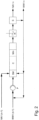
- Fig. 2 shows an embodiment for a washing stage according to the above method or with the device or system according to the invention for washing nitroaromatics with the washing medium as a propulsion jet.
- SM jet mixer
- WW1 washing medium
- C tubular reactor
- the washing emulsion from the tubular reactor can be fed into a residence time vessel, such as one or more stirred tanks (R).
- the washing emulsion from the tubular reactor is separated into phases in a separating device either directly or after an extended residence time in the stirred tank.
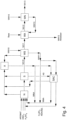
- Fig.4 shows an example of a production plant for producing nitroaromatics with integrated washing according to the invention of the crude nitroaromatics from an isothermal or adiabatic nitration.
- the crude nitroaromatic (NA 10) formed in the nitration unit (N) by reacting the aromatic with nitric acid in the presence of sulfuric acid is washed with water (WW 10) in the acidic wash (WS) in the manner according to the invention after the nitrating acid has been separated in the separator (S).
- the resulting waste water (WW 11) which contains all the washed-out sulfuric and nitric acid, is returned to the nitration together with the nitric acid (WNA) obtained from the exhaust gas treatment of the nitration plant in an absorber plant (A), either directly or after concentration in an SAC plant (SAC), together with the final acid (AS) from the nitration, or is discharged as waste water to be treated.
- WNA nitric acid
- the nitroaromatic (NA 11) freed from the mineral acids is washed in washing stage 2 (alkaline wash WA) in the presence of bases according to the above process in a quasi single stage.
- alkaline wash WA alkaline wash WA
- the waste water from the alkaline wash (WW12) with a pH value in the range of 8.0 to 13, which contains all nitrophenols, nitrobenzoic acids and other acidic substances from the oxidative degradation of impurities and isomeric nitroaromatics (e.g. TNT) is subjected to additional treatment, such as thermolysis, before being discharged into a receiving water body.
- the nitroaromatic (NA 12) from the alkaline wash (WA) is fed into the neutral wash (WN) and washed with water (WW 10) according to the above process in a one-stage process.
- the waste water (WW 13) from the neutral wash (WN) is fed into washing stage 2 (WA) together with base.
- the washed nitroaromatic (NA 13) is passed on for further processing, such as isomer separation, reduction to the corresponding amine or to an intermediate storage facility.
- the method or the device according to the present invention is in no way limited thereto, but can also be applied to any other nitroaromatics, e.g. from the nitration of toluene, chlorobenzenes, xylenes, nitrobenzenes, etc., and to any other bases than sodium hydroxide solution.
- Example 1 Single-stage alkaline washing (comparative example)
- the stirrer speed was set so that an O/W emulsion with the dosed phase ratio was present in the stirred tank.
- the residence time in the stirred tank was 6 minutes.
- the pH value in the wash liquor which contained 1,850 ppm of nitrophenols, was approx. 11.7. 60 ppm of nitrophenols were found in the washed nitrobenzene.
- the separation time could be reduced by a factor of almost 4 to approx. 15 minutes.
- Example 2 Single-stage alkaline washing (according to the invention)
- the relative speed between the central jet and the nitrobenzene to be washed was 8:1.
- the residence time in the tubular reactor was no more than 5 seconds.
- the pressure drop over the entire length of the tubular reactor was 1.6 bar.
- the pH value in the wash liquor which contained 1,908 ppm of nitrophenols, was approx. 11.6. 2 ppm of nitrophenols were found in the washed nitrobenzene.
- the separation time could be reduced by a factor of 4 to about 10 minutes. The same results were achieved with the nitroaromatic to be washed as a central jet in the jet mixer.
- Example 3 Single-stage neutral wash (according to the invention)
- Example 4 Single-stage alkaline washing (according to the invention)
- the relative speed between the central jet and the nitrobenzene to be washed was 8:1.
- the residence time in the tubular reactor was no more than 5 seconds.
- the pressure drop over the entire length of the tubular reactor was 1.6 bar.
- the pH value in the wash liquor which contained 9,552 ppm of nitrophenols, was approx. 12.3. Approx. 8 ppm of nitrophenols were found in the washed, still cloudy nitrobenzene.
- Example 5 Single-stage neutral wash (according to the invention)
Landscapes
- Chemical & Material Sciences (AREA)
- Organic Chemistry (AREA)
- Chemical Kinetics & Catalysis (AREA)
- Organic Low-Molecular-Weight Compounds And Preparation Thereof (AREA)
- Coloring Foods And Improving Nutritive Qualities (AREA)
- General Preparation And Processing Of Foods (AREA)
Priority Applications (1)
| Application Number | Priority Date | Filing Date | Title |
|---|---|---|---|
| PL13005208T PL2772304T3 (pl) | 2011-05-19 | 2012-05-18 | Urządzenia do oczyszczania poddanych nitrowaniu produktów |
Applications Claiming Priority (3)
| Application Number | Priority Date | Filing Date | Title |
|---|---|---|---|
| DE102011102059 | 2011-05-19 | ||
| EP12723831.9A EP2705020B2 (de) | 2011-05-19 | 2012-05-18 | Verfahren und vorrichtung zur aufreinigung von nitrierprodukten |
| PCT/EP2012/002139 WO2012156095A1 (de) | 2011-05-19 | 2012-05-18 | Verfahren und vorrichtung zur aufreinigung von nitrierprodukten |
Related Parent Applications (2)
| Application Number | Title | Priority Date | Filing Date |
|---|---|---|---|
| EP12723831.9A Division-Into EP2705020B2 (de) | 2011-05-19 | 2012-05-18 | Verfahren und vorrichtung zur aufreinigung von nitrierprodukten |
| EP12723831.9A Division EP2705020B2 (de) | 2011-05-19 | 2012-05-18 | Verfahren und vorrichtung zur aufreinigung von nitrierprodukten |
Publications (4)
| Publication Number | Publication Date |
|---|---|
| EP2772304A2 EP2772304A2 (de) | 2014-09-03 |
| EP2772304A3 EP2772304A3 (de) | 2014-11-05 |
| EP2772304B1 EP2772304B1 (de) | 2017-05-10 |
| EP2772304B2 true EP2772304B2 (de) | 2024-08-07 |
Family
ID=46172762
Family Applications (2)
| Application Number | Title | Priority Date | Filing Date |
|---|---|---|---|
| EP13005208.7A Active EP2772304B2 (de) | 2011-05-19 | 2012-05-18 | Vorrichtungen zur Aufreinigung von Nitrierprodukten |
| EP12723831.9A Active EP2705020B2 (de) | 2011-05-19 | 2012-05-18 | Verfahren und vorrichtung zur aufreinigung von nitrierprodukten |
Family Applications After (1)
| Application Number | Title | Priority Date | Filing Date |
|---|---|---|---|
| EP12723831.9A Active EP2705020B2 (de) | 2011-05-19 | 2012-05-18 | Verfahren und vorrichtung zur aufreinigung von nitrierprodukten |
Country Status (15)
| Country | Link |
|---|---|
| US (2) | US9115048B2 (pl) |
| EP (2) | EP2772304B2 (pl) |
| JP (1) | JP5818287B2 (pl) |
| KR (1) | KR101587109B1 (pl) |
| CN (1) | CN103562174B (pl) |
| BR (1) | BR112013029323A2 (pl) |
| CA (1) | CA2835121C (pl) |
| DE (1) | DE102012009787A1 (pl) |
| EA (1) | EA024988B1 (pl) |
| ES (2) | ES2633799T3 (pl) |
| HU (2) | HUE033730T2 (pl) |
| PL (2) | PL2705020T3 (pl) |
| PT (2) | PT2705020E (pl) |
| UA (1) | UA108437C2 (pl) |
| WO (1) | WO2012156095A1 (pl) |
Families Citing this family (10)
| Publication number | Priority date | Publication date | Assignee | Title |
|---|---|---|---|---|
| JP3061239B2 (ja) | 1994-03-31 | 2000-07-10 | 矢崎総業株式会社 | ハウジング分離供給装置及びハウジング分離供給方法 |
| WO2014122596A2 (pt) * | 2013-02-05 | 2014-08-14 | Cuf - Químicos Industriais S.A. | Processo de remoção de compostos nitrofenólicos na produção de mononitrobenzeno |
| PT106909B (pt) * | 2013-04-26 | 2017-06-01 | Cuf - Quim Ind S A | Processo e equipamento para remoção de impurezas de compostos aromáticos nitrados |
| DE102013110952B4 (de) * | 2013-08-15 | 2015-11-26 | Josef Meissner Gmbh & Co. Kg | Verfahren zur Entfernung von bei der Herstellung von aliphatischen Nitratestern anfallenden Verunreinigungen |
| DE102015106617B4 (de) | 2014-07-07 | 2017-09-21 | Josef Meissner Gmbh & Co. Kg | Verfahren zur Aufreinigung von Rohdinitrotoluolen |
| CN107750244B (zh) | 2015-06-12 | 2021-01-01 | 诺拉姆国际公司 | 一种纯化来自硝化过程的硝化芳香族化合物的方法 |
| DE102017110084C5 (de) * | 2017-02-03 | 2026-02-26 | Josef Meissner Gmbh & Co. Kg | Verwendungen von Nitroaromaten in der adiabatischen Nitrierung von Aromaten |
| CN109627170B (zh) * | 2018-12-17 | 2021-09-14 | 湖北东方化工有限公司 | 从硝基甲苯酸性废水提取多硝基甲苯的方法 |
| RU2712699C1 (ru) * | 2019-02-20 | 2020-01-30 | Федеральное Казенное Предприятие "Бийский Олеумный Завод" | Способ получения смеси динитротолуола с тринитротолуолом (варианты) |
| CN117567289A (zh) * | 2024-01-17 | 2024-02-20 | 万华化学集团股份有限公司 | 一种粗dnt一次洗涤工艺 |
Citations (1)
| Publication number | Priority date | Publication date | Assignee | Title |
|---|---|---|---|---|
| EP0771783A1 (de) † | 1995-10-22 | 1997-05-07 | JOSEF MEISSNER GMBH & CO | Verfahren zur Aromatennitrierung |
Family Cites Families (42)
| Publication number | Priority date | Publication date | Assignee | Title |
|---|---|---|---|---|
| BE528983A (pl) | ||||
| BE518008A (pl) | ||||
| DE732742C (de) | 1940-01-09 | 1943-03-10 | Meissner Fa Josef | Verfahren zum kontinuierlichen Waschen von Trinitrotoluol |
| DE1057081B (de) | 1955-06-16 | 1959-05-14 | Dynamit Nobel Ag | Verfahren und Vorrichtung zur kontinuierlichen Reinigung von Trinitrotoluol unter Gewinnung eines besonders reinen Trinitrotolulols |
| US3111538A (en) | 1957-02-07 | 1963-11-19 | Hercules Powder Co Ltd | Continuous manufacture of explosive liquid nitric acid esters |
| NL258275A (pl) | 1959-12-03 | |||
| DE1222904B (de) | 1963-10-29 | 1966-08-18 | Bayer Ag | Verfahren zur Reinigung von nitrophenolhaltigen rohen aromatischen Nitroverbindungen |
| GB1081092A (en) | 1964-01-08 | 1967-08-31 | Ici Ltd | Purification of dinitrotoluenes |
| US3409620A (en) | 1967-02-06 | 1968-11-05 | Mario Biazzi Sa Dr Ing | Continuous manufacture in vacuum of nitric esters and/or organic nitro compounds |
| US3704006A (en) | 1971-01-25 | 1972-11-28 | Kenics Corp | Dispersion producing method |
| BE790131A (fr) | 1971-10-14 | 1973-04-16 | Basf Ag | Procede et dispositif de melange de liquides |
| US3847375A (en) * | 1972-10-12 | 1974-11-12 | Basf Ag | Method and apparatus for mixing liquids |
| CA1034603A (en) | 1973-10-05 | 1978-07-11 | Allied Chemical Corporation | Water washing of nitroaromatic compounds prior to catalytic reduction |
| NL7403883A (nl) | 1974-03-22 | 1975-09-24 | Philips Nv | Werkwijze en inrichting voor extraktie bij vloei- stoffen. |
| US4091042A (en) | 1977-08-19 | 1978-05-23 | American Cyanamid Company | Continuous adiabatic process for the mononitration of benzene |
| US4314974A (en) | 1979-04-30 | 1982-02-09 | Chemineer, Inc. | Solvent extraction method using static mixers |
| US4453027A (en) | 1982-12-10 | 1984-06-05 | Monsanto Company | Adiabatic process for the nitration of halobenzenes |
| US4482769A (en) * | 1983-09-16 | 1984-11-13 | Air Products And Chemicals, Inc. | Reducing 2,4-dinitroortho-cresol in effluent stream from dinitrotoluene process |
| US4597875A (en) | 1985-05-07 | 1986-07-01 | Air Products And Chemicals, Inc. | Precipitative removal of nitrocresols from dinitrotoluene waste streams |
| DE3705091A1 (de) * | 1987-02-18 | 1988-09-01 | Bayer Ag | Verfahren zur abtrennung von schwefelsaeure und salpetersaeure aus bei der nitrierung von toluol erhaltenen dinitrotoluolgemischen |
| US4994242A (en) | 1988-08-15 | 1991-02-19 | Noram Engineering And Constructors Ltd. | Jet impingement reactor |
| US5514820A (en) | 1989-09-29 | 1996-05-07 | Henkel Kommanditgesellschaft Auf Aktien | Continuous process for the production of lower alkyl esters |
| DE4121212A1 (de) | 1991-06-27 | 1993-01-14 | Bayer Ag | Verfahren zur herstellung von polycarbonat |
| DE4227372A1 (de) | 1991-10-12 | 1993-04-22 | Bayer Ag | Verfahren zur herstellung von polycarbonaten |
| DE4238390A1 (de) | 1992-11-13 | 1994-05-19 | Bayer Ag | Verfahren zur Herstellung von Dinitrotoluol |
| DE4437047A1 (de) | 1994-10-17 | 1996-04-18 | Bayer Ag | Verfahren zur Dinitrierung von aromatischen Verbindungen |
| DE19512114C2 (de) | 1995-04-04 | 2000-04-27 | Meissner Gmbh & Co Kg Josef | Rückgewinnung von Salpetersäure aus Nitrierprozessen |
| US6350354B1 (en) | 1999-09-03 | 2002-02-26 | Koch-Glitsch, Inc. | Modular solvent extraction plant |
| US6288289B1 (en) | 2000-01-27 | 2001-09-11 | Noram Engineering And Constructors Ltd. | Integrated effluent treatment process for nitroaromatic manufacture |
| JP4485731B2 (ja) | 2000-03-02 | 2010-06-23 | ダウ グローバル テクノロジーズ インコーポレイティド | 管状反応器、管状反応器中で液/液多相反応を行うための方法及び管状反応器中で芳香族化合物を環ニトロ化するための方法 |
| DE10307140A1 (de) * | 2003-02-20 | 2004-09-09 | Bayer Ag | Verfahren zur zweistufigen Herstellung von Dinitrotoluol |
| DE102004017628A1 (de) | 2004-04-10 | 2005-11-03 | Bayer Materialscience Ag | Verfahren zur Aufarbeitung von aromatische Nitroverbindungen enthaltenden Abwässern |
| CN1597557A (zh) † | 2004-09-01 | 2005-03-23 | 中国石化集团南京化学工业有限公司 | 采用静态混合器进行芳烃硝化物中和水洗方法 |
| CN2729072Y (zh) † | 2004-10-09 | 2005-09-28 | 沈阳化工学院 | 硝基苯洗涤生产装置 |
| CN1757630A (zh) | 2004-10-09 | 2006-04-12 | 沈阳化工学院 | 硝基苯洗涤生产装置和洗涤生产方法 |
| DE102005050106B4 (de) * | 2005-10-18 | 2008-04-30 | Josef Meissner Gmbh & Co. Kg | Rückgewinnung von Nitriersäuregemischen aus Nitrienprozessen |
| DE102006004943A1 (de) * | 2006-02-03 | 2007-08-09 | Bayer Materialscience Ag | Verfahren zur Herstellung von Nitrobenzol |
| CN101735066A (zh) | 2008-11-18 | 2010-06-16 | 董安成 | 芳烃硝化物中和水洗新方法 |
| RU2404171C2 (ru) | 2008-12-16 | 2010-11-20 | Алексей Андреевич Брункин | Способ непрерывного получения 2-меркаптобензтиазола в трубчатом реакторе и устройство для его проведения |
| CN102471092B (zh) | 2009-08-18 | 2013-11-06 | 诺拉姆国际公司 | 用于硝基芳族化合物的洗涤系统 |
| BR112012004604A2 (pt) | 2009-08-31 | 2016-04-05 | Basf Se | processo para preparar de maneira contínua aromáticos nitrados |
| DE102011120587A1 (de) | 2011-12-08 | 2013-06-13 | Oxea Gmbh | Verfahren zur Gewinnung von aliphatischen Monocarbonsäuren aus Destillationsrückständen |
-
2012
- 2012-05-18 EP EP13005208.7A patent/EP2772304B2/de active Active
- 2012-05-18 EP EP12723831.9A patent/EP2705020B2/de active Active
- 2012-05-18 PT PT127238319T patent/PT2705020E/pt unknown
- 2012-05-18 KR KR1020137033709A patent/KR101587109B1/ko active Active
- 2012-05-18 US US14/118,737 patent/US9115048B2/en active Active
- 2012-05-18 JP JP2014510693A patent/JP5818287B2/ja active Active
- 2012-05-18 CA CA2835121A patent/CA2835121C/en active Active
- 2012-05-18 UA UAA201314700A patent/UA108437C2/ru unknown
- 2012-05-18 PL PL12723831T patent/PL2705020T3/pl unknown
- 2012-05-18 HU HUE13005208A patent/HUE033730T2/en unknown
- 2012-05-18 PT PT130052087T patent/PT2772304T/pt unknown
- 2012-05-18 ES ES13005208.7T patent/ES2633799T3/es active Active
- 2012-05-18 WO PCT/EP2012/002139 patent/WO2012156095A1/de not_active Ceased
- 2012-05-18 ES ES12723831.9T patent/ES2539787T3/es active Active
- 2012-05-18 HU HUE12723831A patent/HUE026436T2/en unknown
- 2012-05-18 CN CN201280024399.6A patent/CN103562174B/zh active Active
- 2012-05-18 BR BR112013029323A patent/BR112013029323A2/pt active Search and Examination
- 2012-05-18 PL PL13005208T patent/PL2772304T3/pl unknown
- 2012-05-18 DE DE102012009787A patent/DE102012009787A1/de not_active Withdrawn
- 2012-05-18 EA EA201391727A patent/EA024988B1/ru not_active IP Right Cessation
-
2015
- 2015-02-26 US US14/632,086 patent/US9540313B2/en active Active
Patent Citations (1)
| Publication number | Priority date | Publication date | Assignee | Title |
|---|---|---|---|---|
| EP0771783A1 (de) † | 1995-10-22 | 1997-05-07 | JOSEF MEISSNER GMBH & CO | Verfahren zur Aromatennitrierung |
Also Published As
| Publication number | Publication date |
|---|---|
| EP2705020A1 (de) | 2014-03-12 |
| PL2772304T3 (pl) | 2017-10-31 |
| US20140221703A1 (en) | 2014-08-07 |
| WO2012156095A1 (de) | 2012-11-22 |
| CN103562174B (zh) | 2015-05-20 |
| EP2772304A3 (de) | 2014-11-05 |
| EP2705020B1 (de) | 2015-04-08 |
| DE102012009787A1 (de) | 2012-11-22 |
| CA2835121A1 (en) | 2012-11-22 |
| US20150174551A1 (en) | 2015-06-25 |
| ES2633799T3 (es) | 2017-09-25 |
| EP2772304B1 (de) | 2017-05-10 |
| CN103562174A (zh) | 2014-02-05 |
| HUE026436T2 (en) | 2016-06-28 |
| ES2539787T3 (es) | 2015-07-06 |
| HUE033730T2 (en) | 2018-01-29 |
| EP2772304A2 (de) | 2014-09-03 |
| US9115048B2 (en) | 2015-08-25 |
| PT2772304T (pt) | 2017-07-14 |
| PL2705020T3 (pl) | 2015-09-30 |
| CA2835121C (en) | 2015-12-29 |
| BR112013029323A2 (pt) | 2017-01-31 |
| US9540313B2 (en) | 2017-01-10 |
| UA108437C2 (uk) | 2015-04-27 |
| KR20140032446A (ko) | 2014-03-14 |
| EA024988B1 (ru) | 2016-11-30 |
| KR101587109B1 (ko) | 2016-01-20 |
| EA201391727A1 (ru) | 2014-03-31 |
| JP5818287B2 (ja) | 2015-11-18 |
| EP2705020B2 (de) | 2025-11-05 |
| JP2014518866A (ja) | 2014-08-07 |
| PT2705020E (pt) | 2015-07-24 |
Similar Documents
| Publication | Publication Date | Title |
|---|---|---|
| EP2772304B2 (de) | Vorrichtungen zur Aufreinigung von Nitrierprodukten | |
| EP1496043B1 (de) | Verfahren zur Aufarbeitung des bei der Herstellung von Dinitroluol anfallenden Abwassers | |
| EP1880989B1 (de) | Verfahren zur Herstellung von Dinitrotoluol | |
| EP3154931B1 (de) | Verfahren zur entfernung von verunreinigungen aus dinitrotoluolen | |
| WO2009027416A1 (de) | Verfahren zur aufarbeitung von abwässern aus der nitrierung | |
| EP2513035A1 (de) | Saure toluolextraktion von dnt-abwässern | |
| EP1493730B1 (de) | Verfahren zur Aufarbeitung von Nebenkomponenten der Dinitroluolherstellung | |
| EP3555039B1 (de) | Verfahren und anlage zur adiabatischen nitrierung von aromaten | |
| EP2841412B1 (de) | Verfahren zur wäsche von dinitrotoluol | |
| EP3060543B1 (de) | Verfahren zur sauren wäsche von dinitrotoluol in gegenwart von blausäure | |
| DE102013110952B4 (de) | Verfahren zur Entfernung von bei der Herstellung von aliphatischen Nitratestern anfallenden Verunreinigungen | |
| DE2333144B2 (de) | Verfahren zur aufarbeitung von endsaeuren der nitroglycerin-herstellung |
Legal Events
| Date | Code | Title | Description |
|---|---|---|---|
| PUAI | Public reference made under article 153(3) epc to a published international application that has entered the european phase |
Free format text: ORIGINAL CODE: 0009012 |
|
| 17P | Request for examination filed |
Effective date: 20131220 |
|
| AC | Divisional application: reference to earlier application |
Ref document number: 2705020 Country of ref document: EP Kind code of ref document: P |
|
| AK | Designated contracting states |
Kind code of ref document: A2 Designated state(s): AL AT BE BG CH CY CZ DE DK EE ES FI FR GB GR HR HU IE IS IT LI LT LU LV MC MK MT NL NO PL PT RO RS SE SI SK SM TR |
|
| AX | Request for extension of the european patent |
Extension state: BA ME |
|
| PUAL | Search report despatched |
Free format text: ORIGINAL CODE: 0009013 |
|
| AK | Designated contracting states |
Kind code of ref document: A3 Designated state(s): AL AT BE BG CH CY CZ DE DK EE ES FI FR GB GR HR HU IE IS IT LI LT LU LV MC MK MT NL NO PL PT RO RS SE SI SK SM TR |
|
| AX | Request for extension of the european patent |
Extension state: BA ME |
|
| RIC1 | Information provided on ipc code assigned before grant |
Ipc: C07C 205/06 20060101ALI20140929BHEP Ipc: B01J 14/00 20060101AFI20140929BHEP Ipc: C07C 201/16 20060101ALI20140929BHEP |
|
| R17P | Request for examination filed (corrected) |
Effective date: 20141015 |
|
| RAX | Requested extension states of the european patent have changed |
Extension state: ME Payment date: 20141015 Extension state: BA Payment date: 20141015 |
|
| RBV | Designated contracting states (corrected) |
Designated state(s): AL AT BE BG CH CY CZ DE DK EE ES FI FR GB GR HR HU IE IS IT LI LT LU LV MC MK MT NL NO PL PT RO RS SE SI SK SM TR |
|
| 17Q | First examination report despatched |
Effective date: 20160523 |
|
| GRAP | Despatch of communication of intention to grant a patent |
Free format text: ORIGINAL CODE: EPIDOSNIGR1 |
|
| STAA | Information on the status of an ep patent application or granted ep patent |
Free format text: STATUS: GRANT OF PATENT IS INTENDED |
|
| INTG | Intention to grant announced |
Effective date: 20170224 |
|
| GRAS | Grant fee paid |
Free format text: ORIGINAL CODE: EPIDOSNIGR3 |
|
| GRAA | (expected) grant |
Free format text: ORIGINAL CODE: 0009210 |
|
| STAA | Information on the status of an ep patent application or granted ep patent |
Free format text: STATUS: THE PATENT HAS BEEN GRANTED |
|
| AC | Divisional application: reference to earlier application |
Ref document number: 2705020 Country of ref document: EP Kind code of ref document: P |
|
| AK | Designated contracting states |
Kind code of ref document: B1 Designated state(s): AL AT BE BG CH CY CZ DE DK EE ES FI FR GB GR HR HU IE IS IT LI LT LU LV MC MK MT NL NO PL PT RO RS SE SI SK SM TR |
|
| AX | Request for extension of the european patent |
Extension state: BA ME |
|
| REG | Reference to a national code |
Ref country code: GB Ref legal event code: FG4D Free format text: NOT ENGLISH |
|
| REG | Reference to a national code |
Ref country code: AT Ref legal event code: REF Ref document number: 891718 Country of ref document: AT Kind code of ref document: T Effective date: 20170515 Ref country code: CH Ref legal event code: EP |
|
| REG | Reference to a national code |
Ref country code: FR Ref legal event code: PLFP Year of fee payment: 6 |
|
| REG | Reference to a national code |
Ref country code: IE Ref legal event code: FG4D Free format text: LANGUAGE OF EP DOCUMENT: GERMAN |
|
| REG | Reference to a national code |
Ref country code: DE Ref legal event code: R096 Ref document number: 502012010348 Country of ref document: DE |
|
| REG | Reference to a national code |
Ref country code: NL Ref legal event code: FP |
|
| REG | Reference to a national code |
Ref country code: PT Ref legal event code: SC4A Ref document number: 2772304 Country of ref document: PT Date of ref document: 20170714 Kind code of ref document: T Free format text: AVAILABILITY OF NATIONAL TRANSLATION Effective date: 20170706 |
|
| REG | Reference to a national code |
Ref country code: SE Ref legal event code: TRGR |
|
| REG | Reference to a national code |
Ref country code: ES Ref legal event code: FG2A Ref document number: 2633799 Country of ref document: ES Kind code of ref document: T3 Effective date: 20170925 Ref country code: LT Ref legal event code: MG4D |
|
| PG25 | Lapsed in a contracting state [announced via postgrant information from national office to epo] |
Ref country code: FI Free format text: LAPSE BECAUSE OF FAILURE TO SUBMIT A TRANSLATION OF THE DESCRIPTION OR TO PAY THE FEE WITHIN THE PRESCRIBED TIME-LIMIT Effective date: 20170510 Ref country code: NO Free format text: LAPSE BECAUSE OF FAILURE TO SUBMIT A TRANSLATION OF THE DESCRIPTION OR TO PAY THE FEE WITHIN THE PRESCRIBED TIME-LIMIT Effective date: 20170810 Ref country code: GR Free format text: LAPSE BECAUSE OF FAILURE TO SUBMIT A TRANSLATION OF THE DESCRIPTION OR TO PAY THE FEE WITHIN THE PRESCRIBED TIME-LIMIT Effective date: 20170811 Ref country code: LT Free format text: LAPSE BECAUSE OF FAILURE TO SUBMIT A TRANSLATION OF THE DESCRIPTION OR TO PAY THE FEE WITHIN THE PRESCRIBED TIME-LIMIT Effective date: 20170510 Ref country code: HR Free format text: LAPSE BECAUSE OF FAILURE TO SUBMIT A TRANSLATION OF THE DESCRIPTION OR TO PAY THE FEE WITHIN THE PRESCRIBED TIME-LIMIT Effective date: 20170510 |
|
| REG | Reference to a national code |
Ref country code: SK Ref legal event code: T3 Ref document number: E 24529 Country of ref document: SK |
|
| PG25 | Lapsed in a contracting state [announced via postgrant information from national office to epo] |
Ref country code: LV Free format text: LAPSE BECAUSE OF FAILURE TO SUBMIT A TRANSLATION OF THE DESCRIPTION OR TO PAY THE FEE WITHIN THE PRESCRIBED TIME-LIMIT Effective date: 20170510 Ref country code: IS Free format text: LAPSE BECAUSE OF FAILURE TO SUBMIT A TRANSLATION OF THE DESCRIPTION OR TO PAY THE FEE WITHIN THE PRESCRIBED TIME-LIMIT Effective date: 20170910 Ref country code: BG Free format text: LAPSE BECAUSE OF FAILURE TO SUBMIT A TRANSLATION OF THE DESCRIPTION OR TO PAY THE FEE WITHIN THE PRESCRIBED TIME-LIMIT Effective date: 20170810 Ref country code: RS Free format text: LAPSE BECAUSE OF FAILURE TO SUBMIT A TRANSLATION OF THE DESCRIPTION OR TO PAY THE FEE WITHIN THE PRESCRIBED TIME-LIMIT Effective date: 20170510 |
|
| REG | Reference to a national code |
Ref country code: HU Ref legal event code: AG4A Ref document number: E033730 Country of ref document: HU |
|
| PG25 | Lapsed in a contracting state [announced via postgrant information from national office to epo] |
Ref country code: RO Free format text: LAPSE BECAUSE OF FAILURE TO SUBMIT A TRANSLATION OF THE DESCRIPTION OR TO PAY THE FEE WITHIN THE PRESCRIBED TIME-LIMIT Effective date: 20170510 Ref country code: EE Free format text: LAPSE BECAUSE OF FAILURE TO SUBMIT A TRANSLATION OF THE DESCRIPTION OR TO PAY THE FEE WITHIN THE PRESCRIBED TIME-LIMIT Effective date: 20170510 Ref country code: DK Free format text: LAPSE BECAUSE OF FAILURE TO SUBMIT A TRANSLATION OF THE DESCRIPTION OR TO PAY THE FEE WITHIN THE PRESCRIBED TIME-LIMIT Effective date: 20170510 |
|
| REG | Reference to a national code |
Ref country code: DE Ref legal event code: R026 Ref document number: 502012010348 Country of ref document: DE |
|
| PLBI | Opposition filed |
Free format text: ORIGINAL CODE: 0009260 |
|
| REG | Reference to a national code |
Ref country code: IE Ref legal event code: MM4A |
|
| PLAX | Notice of opposition and request to file observation + time limit sent |
Free format text: ORIGINAL CODE: EPIDOSNOBS2 |
|
| PG25 | Lapsed in a contracting state [announced via postgrant information from national office to epo] |
Ref country code: SM Free format text: LAPSE BECAUSE OF FAILURE TO SUBMIT A TRANSLATION OF THE DESCRIPTION OR TO PAY THE FEE WITHIN THE PRESCRIBED TIME-LIMIT Effective date: 20170510 |
|
| 26 | Opposition filed |
Opponent name: NORAM INTERNATIONAL LIMITED Effective date: 20180212 Opponent name: COVESTRO DEUTSCHLAND AG Effective date: 20180208 |
|
| REG | Reference to a national code |
Ref country code: HU Ref legal event code: HC9C |
|
| PG25 | Lapsed in a contracting state [announced via postgrant information from national office to epo] |
Ref country code: LU Free format text: LAPSE BECAUSE OF NON-PAYMENT OF DUE FEES Effective date: 20170518 |
|
| PG25 | Lapsed in a contracting state [announced via postgrant information from national office to epo] |
Ref country code: IE Free format text: LAPSE BECAUSE OF NON-PAYMENT OF DUE FEES Effective date: 20170518 |
|
| REG | Reference to a national code |
Ref country code: FR Ref legal event code: PLFP Year of fee payment: 7 |
|
| PG25 | Lapsed in a contracting state [announced via postgrant information from national office to epo] |
Ref country code: SI Free format text: LAPSE BECAUSE OF FAILURE TO SUBMIT A TRANSLATION OF THE DESCRIPTION OR TO PAY THE FEE WITHIN THE PRESCRIBED TIME-LIMIT Effective date: 20170510 |
|
| PLAF | Information modified related to communication of a notice of opposition and request to file observations + time limit |
Free format text: ORIGINAL CODE: EPIDOSCOBS2 |
|
| REG | Reference to a national code |
Ref country code: AT Ref legal event code: MM01 Ref document number: 891718 Country of ref document: AT Kind code of ref document: T Effective date: 20170518 |
|
| PLBB | Reply of patent proprietor to notice(s) of opposition received |
Free format text: ORIGINAL CODE: EPIDOSNOBS3 |
|
| PG25 | Lapsed in a contracting state [announced via postgrant information from national office to epo] |
Ref country code: AT Free format text: LAPSE BECAUSE OF NON-PAYMENT OF DUE FEES Effective date: 20170518 |
|
| PG25 | Lapsed in a contracting state [announced via postgrant information from national office to epo] |
Ref country code: MT Free format text: LAPSE BECAUSE OF FAILURE TO SUBMIT A TRANSLATION OF THE DESCRIPTION OR TO PAY THE FEE WITHIN THE PRESCRIBED TIME-LIMIT Effective date: 20170510 |
|
| PG25 | Lapsed in a contracting state [announced via postgrant information from national office to epo] |
Ref country code: MC Free format text: LAPSE BECAUSE OF FAILURE TO SUBMIT A TRANSLATION OF THE DESCRIPTION OR TO PAY THE FEE WITHIN THE PRESCRIBED TIME-LIMIT Effective date: 20170510 |
|
| PG25 | Lapsed in a contracting state [announced via postgrant information from national office to epo] |
Ref country code: CY Free format text: LAPSE BECAUSE OF FAILURE TO SUBMIT A TRANSLATION OF THE DESCRIPTION OR TO PAY THE FEE WITHIN THE PRESCRIBED TIME-LIMIT Effective date: 20170510 |
|
| PG25 | Lapsed in a contracting state [announced via postgrant information from national office to epo] |
Ref country code: MK Free format text: LAPSE BECAUSE OF FAILURE TO SUBMIT A TRANSLATION OF THE DESCRIPTION OR TO PAY THE FEE WITHIN THE PRESCRIBED TIME-LIMIT Effective date: 20170510 |
|
| APBM | Appeal reference recorded |
Free format text: ORIGINAL CODE: EPIDOSNREFNO |
|
| APBP | Date of receipt of notice of appeal recorded |
Free format text: ORIGINAL CODE: EPIDOSNNOA2O |
|
| APAH | Appeal reference modified |
Free format text: ORIGINAL CODE: EPIDOSCREFNO |
|
| PG25 | Lapsed in a contracting state [announced via postgrant information from national office to epo] |
Ref country code: TR Free format text: LAPSE BECAUSE OF FAILURE TO SUBMIT A TRANSLATION OF THE DESCRIPTION OR TO PAY THE FEE WITHIN THE PRESCRIBED TIME-LIMIT Effective date: 20170510 |
|
| APBM | Appeal reference recorded |
Free format text: ORIGINAL CODE: EPIDOSNREFNO |
|
| APBP | Date of receipt of notice of appeal recorded |
Free format text: ORIGINAL CODE: EPIDOSNNOA2O |
|
| APBM | Appeal reference recorded |
Free format text: ORIGINAL CODE: EPIDOSNREFNO |
|
| APBP | Date of receipt of notice of appeal recorded |
Free format text: ORIGINAL CODE: EPIDOSNNOA2O |
|
| APBQ | Date of receipt of statement of grounds of appeal recorded |
Free format text: ORIGINAL CODE: EPIDOSNNOA3O |
|
| PLAB | Opposition data, opponent's data or that of the opponent's representative modified |
Free format text: ORIGINAL CODE: 0009299OPPO |
|
| APBQ | Date of receipt of statement of grounds of appeal recorded |
Free format text: ORIGINAL CODE: EPIDOSNNOA3O |
|
| APBQ | Date of receipt of statement of grounds of appeal recorded |
Free format text: ORIGINAL CODE: EPIDOSNNOA3O |
|
| APAH | Appeal reference modified |
Free format text: ORIGINAL CODE: EPIDOSCREFNO |
|
| R26 | Opposition filed (corrected) |
Opponent name: NORAM INTERNATIONAL LIMITED Effective date: 20180212 |
|
| PG25 | Lapsed in a contracting state [announced via postgrant information from national office to epo] |
Ref country code: AL Free format text: LAPSE BECAUSE OF FAILURE TO SUBMIT A TRANSLATION OF THE DESCRIPTION OR TO PAY THE FEE WITHIN THE PRESCRIBED TIME-LIMIT Effective date: 20170510 |
|
| PGFP | Annual fee paid to national office [announced via postgrant information from national office to epo] |
Ref country code: FR Payment date: 20200522 Year of fee payment: 9 Ref country code: NL Payment date: 20200527 Year of fee payment: 9 Ref country code: CZ Payment date: 20200515 Year of fee payment: 9 Ref country code: PT Payment date: 20200515 Year of fee payment: 9 Ref country code: CH Payment date: 20200520 Year of fee payment: 9 |
|
| PGFP | Annual fee paid to national office [announced via postgrant information from national office to epo] |
Ref country code: HU Payment date: 20200627 Year of fee payment: 9 Ref country code: BE Payment date: 20200527 Year of fee payment: 9 Ref country code: GB Payment date: 20200603 Year of fee payment: 9 Ref country code: SK Payment date: 20200513 Year of fee payment: 9 Ref country code: PL Payment date: 20200509 Year of fee payment: 9 Ref country code: IT Payment date: 20200528 Year of fee payment: 9 Ref country code: SE Payment date: 20200527 Year of fee payment: 9 |
|
| PGFP | Annual fee paid to national office [announced via postgrant information from national office to epo] |
Ref country code: ES Payment date: 20200728 Year of fee payment: 9 |
|
| REG | Reference to a national code |
Ref country code: SE Ref legal event code: EUG |
|
| REG | Reference to a national code |
Ref country code: CH Ref legal event code: PL |
|
| REG | Reference to a national code |
Ref country code: NL Ref legal event code: MM Effective date: 20210601 |
|
| GBPC | Gb: european patent ceased through non-payment of renewal fee |
Effective date: 20210518 |
|
| REG | Reference to a national code |
Ref country code: SK Ref legal event code: MM4A Ref document number: E 24529 Country of ref document: SK Effective date: 20210518 |
|
| PG25 | Lapsed in a contracting state [announced via postgrant information from national office to epo] |
Ref country code: HU Free format text: LAPSE BECAUSE OF NON-PAYMENT OF DUE FEES Effective date: 20210519 Ref country code: CZ Free format text: LAPSE BECAUSE OF NON-PAYMENT OF DUE FEES Effective date: 20210518 Ref country code: SE Free format text: LAPSE BECAUSE OF NON-PAYMENT OF DUE FEES Effective date: 20210519 Ref country code: SK Free format text: LAPSE BECAUSE OF NON-PAYMENT OF DUE FEES Effective date: 20210518 Ref country code: PT Free format text: LAPSE BECAUSE OF NON-PAYMENT OF DUE FEES Effective date: 20211118 Ref country code: CH Free format text: LAPSE BECAUSE OF NON-PAYMENT OF DUE FEES Effective date: 20210531 Ref country code: LI Free format text: LAPSE BECAUSE OF NON-PAYMENT OF DUE FEES Effective date: 20210531 |
|
| REG | Reference to a national code |
Ref country code: BE Ref legal event code: MM Effective date: 20210531 |
|
| PG25 | Lapsed in a contracting state [announced via postgrant information from national office to epo] |
Ref country code: GB Free format text: LAPSE BECAUSE OF NON-PAYMENT OF DUE FEES Effective date: 20210518 |
|
| PG25 | Lapsed in a contracting state [announced via postgrant information from national office to epo] |
Ref country code: NL Free format text: LAPSE BECAUSE OF NON-PAYMENT OF DUE FEES Effective date: 20210601 Ref country code: FR Free format text: LAPSE BECAUSE OF NON-PAYMENT OF DUE FEES Effective date: 20210531 |
|
| PG25 | Lapsed in a contracting state [announced via postgrant information from national office to epo] |
Ref country code: BE Free format text: LAPSE BECAUSE OF NON-PAYMENT OF DUE FEES Effective date: 20210531 |
|
| REG | Reference to a national code |
Ref country code: ES Ref legal event code: FD2A Effective date: 20220802 |
|
| PG25 | Lapsed in a contracting state [announced via postgrant information from national office to epo] |
Ref country code: ES Free format text: LAPSE BECAUSE OF NON-PAYMENT OF DUE FEES Effective date: 20210519 |
|
| PG25 | Lapsed in a contracting state [announced via postgrant information from national office to epo] |
Ref country code: PL Free format text: LAPSE BECAUSE OF NON-PAYMENT OF DUE FEES Effective date: 20210518 |
|
| PG25 | Lapsed in a contracting state [announced via postgrant information from national office to epo] |
Ref country code: IT Free format text: LAPSE BECAUSE OF NON-PAYMENT OF DUE FEES Effective date: 20200518 |
|
| P01 | Opt-out of the competence of the unified patent court (upc) registered |
Effective date: 20230613 |
|
| APBU | Appeal procedure closed |
Free format text: ORIGINAL CODE: EPIDOSNNOA9O |
|
| PUAH | Patent maintained in amended form |
Free format text: ORIGINAL CODE: 0009272 |
|
| STAA | Information on the status of an ep patent application or granted ep patent |
Free format text: STATUS: PATENT MAINTAINED AS AMENDED |
|
| 27A | Patent maintained in amended form |
Effective date: 20240807 |
|
| AK | Designated contracting states |
Kind code of ref document: B2 Designated state(s): AL AT BE BG CH CY CZ DE DK EE ES FI FR GB GR HR HU IE IS IT LI LT LU LV MC MK MT NL NO PL PT RO RS SE SI SK SM TR |
|
| REG | Reference to a national code |
Ref country code: DE Ref legal event code: R102 Ref document number: 502012010348 Country of ref document: DE |
|
| PGFP | Annual fee paid to national office [announced via postgrant information from national office to epo] |
Ref country code: DE Payment date: 20250522 Year of fee payment: 14 |
|
| PG25 | Lapsed in a contracting state [announced via postgrant information from national office to epo] |
Ref country code: IT Free format text: LAPSE BECAUSE OF NON-PAYMENT OF DUE FEES Effective date: 20210518 |