EP2767282B1 - Verwendung von glutarylhistamin zur behandlung von atemwegsinfektionen - Google Patents
Verwendung von glutarylhistamin zur behandlung von atemwegsinfektionen Download PDFInfo
- Publication number
- EP2767282B1 EP2767282B1 EP12839969.8A EP12839969A EP2767282B1 EP 2767282 B1 EP2767282 B1 EP 2767282B1 EP 12839969 A EP12839969 A EP 12839969A EP 2767282 B1 EP2767282 B1 EP 2767282B1
- Authority
- EP
- European Patent Office
- Prior art keywords
- glutaryl histamine
- pharmaceutically acceptable
- medicament
- acceptable salt
- dose
- Prior art date
- Legal status (The legal status is an assumption and is not a legal conclusion. Google has not performed a legal analysis and makes no representation as to the accuracy of the status listed.)
- Active
Links
Images




Classifications
-
- A—HUMAN NECESSITIES
- A61—MEDICAL OR VETERINARY SCIENCE; HYGIENE
- A61K—PREPARATIONS FOR MEDICAL, DENTAL OR TOILETRY PURPOSES
- A61K31/00—Medicinal preparations containing organic active ingredients
- A61K31/33—Heterocyclic compounds
- A61K31/395—Heterocyclic compounds having nitrogen as a ring hetero atom, e.g. guanethidine or rifamycins
- A61K31/41—Heterocyclic compounds having nitrogen as a ring hetero atom, e.g. guanethidine or rifamycins having five-membered rings with two or more ring hetero atoms, at least one of which being nitrogen, e.g. tetrazole
- A61K31/4164—1,3-Diazoles
- A61K31/417—Imidazole-alkylamines, e.g. histamine, phentolamine
-
- A—HUMAN NECESSITIES
- A61—MEDICAL OR VETERINARY SCIENCE; HYGIENE
- A61K—PREPARATIONS FOR MEDICAL, DENTAL OR TOILETRY PURPOSES
- A61K31/00—Medicinal preparations containing organic active ingredients
- A61K31/33—Heterocyclic compounds
- A61K31/395—Heterocyclic compounds having nitrogen as a ring hetero atom, e.g. guanethidine or rifamycins
- A61K31/41—Heterocyclic compounds having nitrogen as a ring hetero atom, e.g. guanethidine or rifamycins having five-membered rings with two or more ring hetero atoms, at least one of which being nitrogen, e.g. tetrazole
- A61K31/4164—1,3-Diazoles
-
- A—HUMAN NECESSITIES
- A61—MEDICAL OR VETERINARY SCIENCE; HYGIENE
- A61K—PREPARATIONS FOR MEDICAL, DENTAL OR TOILETRY PURPOSES
- A61K31/00—Medicinal preparations containing organic active ingredients
- A61K31/33—Heterocyclic compounds
- A61K31/395—Heterocyclic compounds having nitrogen as a ring hetero atom, e.g. guanethidine or rifamycins
- A61K31/41—Heterocyclic compounds having nitrogen as a ring hetero atom, e.g. guanethidine or rifamycins having five-membered rings with two or more ring hetero atoms, at least one of which being nitrogen, e.g. tetrazole
- A61K31/425—Thiazoles
- A61K31/429—Thiazoles condensed with heterocyclic ring systems
- A61K31/43—Compounds containing 4-thia-1-azabicyclo [3.2.0] heptane ring systems, i.e. compounds containing a ring system of the formula, e.g. penicillins, penems
-
- A—HUMAN NECESSITIES
- A61—MEDICAL OR VETERINARY SCIENCE; HYGIENE
- A61K—PREPARATIONS FOR MEDICAL, DENTAL OR TOILETRY PURPOSES
- A61K31/00—Medicinal preparations containing organic active ingredients
- A61K31/33—Heterocyclic compounds
- A61K31/395—Heterocyclic compounds having nitrogen as a ring hetero atom, e.g. guanethidine or rifamycins
- A61K31/535—Heterocyclic compounds having nitrogen as a ring hetero atom, e.g. guanethidine or rifamycins having six-membered rings with at least one nitrogen and one oxygen as the ring hetero atoms, e.g. 1,2-oxazines
- A61K31/5375—1,4-Oxazines, e.g. morpholine
- A61K31/5383—1,4-Oxazines, e.g. morpholine ortho- or peri-condensed with heterocyclic ring systems
-
- A—HUMAN NECESSITIES
- A61—MEDICAL OR VETERINARY SCIENCE; HYGIENE
- A61K—PREPARATIONS FOR MEDICAL, DENTAL OR TOILETRY PURPOSES
- A61K31/00—Medicinal preparations containing organic active ingredients
- A61K31/33—Heterocyclic compounds
- A61K31/395—Heterocyclic compounds having nitrogen as a ring hetero atom, e.g. guanethidine or rifamycins
- A61K31/54—Heterocyclic compounds having nitrogen as a ring hetero atom, e.g. guanethidine or rifamycins having six-membered rings with at least one nitrogen and one sulfur as the ring hetero atoms, e.g. sulthiame
- A61K31/542—Heterocyclic compounds having nitrogen as a ring hetero atom, e.g. guanethidine or rifamycins having six-membered rings with at least one nitrogen and one sulfur as the ring hetero atoms, e.g. sulthiame ortho- or peri-condensed with heterocyclic ring systems
- A61K31/545—Compounds containing 5-thia-1-azabicyclo [4.2.0] octane ring systems, i.e. compounds containing a ring system of the formula:, e.g. cephalosporins, cefaclor, or cephalexine
- A61K31/546—Compounds containing 5-thia-1-azabicyclo [4.2.0] octane ring systems, i.e. compounds containing a ring system of the formula:, e.g. cephalosporins, cefaclor, or cephalexine containing further heterocyclic rings, e.g. cephalothin
-
- A—HUMAN NECESSITIES
- A61—MEDICAL OR VETERINARY SCIENCE; HYGIENE
- A61K—PREPARATIONS FOR MEDICAL, DENTAL OR TOILETRY PURPOSES
- A61K31/00—Medicinal preparations containing organic active ingredients
- A61K31/70—Carbohydrates; Sugars; Derivatives thereof
- A61K31/7042—Compounds having saccharide radicals and heterocyclic rings
- A61K31/7048—Compounds having saccharide radicals and heterocyclic rings having oxygen as a ring hetero atom, e.g. leucoglucosan, hesperidin, erythromycin, nystatin, digitoxin or digoxin
-
- A—HUMAN NECESSITIES
- A61—MEDICAL OR VETERINARY SCIENCE; HYGIENE
- A61K—PREPARATIONS FOR MEDICAL, DENTAL OR TOILETRY PURPOSES
- A61K31/00—Medicinal preparations containing organic active ingredients
- A61K31/70—Carbohydrates; Sugars; Derivatives thereof
- A61K31/7042—Compounds having saccharide radicals and heterocyclic rings
- A61K31/7052—Compounds having saccharide radicals and heterocyclic rings having nitrogen as a ring hetero atom, e.g. nucleosides, nucleotides
-
- A—HUMAN NECESSITIES
- A61—MEDICAL OR VETERINARY SCIENCE; HYGIENE
- A61K—PREPARATIONS FOR MEDICAL, DENTAL OR TOILETRY PURPOSES
- A61K45/00—Medicinal preparations containing active ingredients not provided for in groups A61K31/00 - A61K41/00
- A61K45/06—Mixtures of active ingredients without chemical characterisation, e.g. antiphlogistics and cardiaca
-
- A—HUMAN NECESSITIES
- A61—MEDICAL OR VETERINARY SCIENCE; HYGIENE
- A61K—PREPARATIONS FOR MEDICAL, DENTAL OR TOILETRY PURPOSES
- A61K9/00—Medicinal preparations characterised by special physical form
- A61K9/0012—Galenical forms characterised by the site of application
- A61K9/0019—Injectable compositions; Intramuscular, intravenous, arterial, subcutaneous administration; Compositions to be administered through the skin in an invasive manner
-
- A—HUMAN NECESSITIES
- A61—MEDICAL OR VETERINARY SCIENCE; HYGIENE
- A61K—PREPARATIONS FOR MEDICAL, DENTAL OR TOILETRY PURPOSES
- A61K9/00—Medicinal preparations characterised by special physical form
- A61K9/0012—Galenical forms characterised by the site of application
- A61K9/0043—Nose
-
- A—HUMAN NECESSITIES
- A61—MEDICAL OR VETERINARY SCIENCE; HYGIENE
- A61K—PREPARATIONS FOR MEDICAL, DENTAL OR TOILETRY PURPOSES
- A61K9/00—Medicinal preparations characterised by special physical form
- A61K9/0012—Galenical forms characterised by the site of application
- A61K9/0053—Mouth and digestive tract, i.e. intraoral and peroral administration
-
- A—HUMAN NECESSITIES
- A61—MEDICAL OR VETERINARY SCIENCE; HYGIENE
- A61K—PREPARATIONS FOR MEDICAL, DENTAL OR TOILETRY PURPOSES
- A61K9/00—Medicinal preparations characterised by special physical form
- A61K9/0012—Galenical forms characterised by the site of application
- A61K9/007—Pulmonary tract; Aromatherapy
- A61K9/0073—Sprays or powders for inhalation; Aerolised or nebulised preparations generated by other means than thermal energy
- A61K9/0075—Sprays or powders for inhalation; Aerolised or nebulised preparations generated by other means than thermal energy for inhalation via a dry powder inhaler [DPI], e.g. comprising micronized drug mixed with lactose carrier particles
-
- A—HUMAN NECESSITIES
- A61—MEDICAL OR VETERINARY SCIENCE; HYGIENE
- A61K—PREPARATIONS FOR MEDICAL, DENTAL OR TOILETRY PURPOSES
- A61K9/00—Medicinal preparations characterised by special physical form
- A61K9/02—Suppositories; Bougies; Bases therefor; Ovules
-
- A—HUMAN NECESSITIES
- A61—MEDICAL OR VETERINARY SCIENCE; HYGIENE
- A61K—PREPARATIONS FOR MEDICAL, DENTAL OR TOILETRY PURPOSES
- A61K9/00—Medicinal preparations characterised by special physical form
- A61K9/20—Pills, tablets, discs, rods
- A61K9/2004—Excipients; Inactive ingredients
- A61K9/2022—Organic macromolecular compounds
- A61K9/205—Polysaccharides, e.g. alginate, gums; Cyclodextrin
- A61K9/2059—Starch, including chemically or physically modified derivatives; Amylose; Amylopectin; Dextrin
-
- A—HUMAN NECESSITIES
- A61—MEDICAL OR VETERINARY SCIENCE; HYGIENE
- A61P—SPECIFIC THERAPEUTIC ACTIVITY OF CHEMICAL COMPOUNDS OR MEDICINAL PREPARATIONS
- A61P11/00—Drugs for disorders of the respiratory system
-
- A—HUMAN NECESSITIES
- A61—MEDICAL OR VETERINARY SCIENCE; HYGIENE
- A61P—SPECIFIC THERAPEUTIC ACTIVITY OF CHEMICAL COMPOUNDS OR MEDICINAL PREPARATIONS
- A61P11/00—Drugs for disorders of the respiratory system
- A61P11/02—Nasal agents, e.g. decongestants
-
- A—HUMAN NECESSITIES
- A61—MEDICAL OR VETERINARY SCIENCE; HYGIENE
- A61P—SPECIFIC THERAPEUTIC ACTIVITY OF CHEMICAL COMPOUNDS OR MEDICINAL PREPARATIONS
- A61P11/00—Drugs for disorders of the respiratory system
- A61P11/04—Drugs for disorders of the respiratory system for throat disorders
-
- A—HUMAN NECESSITIES
- A61—MEDICAL OR VETERINARY SCIENCE; HYGIENE
- A61P—SPECIFIC THERAPEUTIC ACTIVITY OF CHEMICAL COMPOUNDS OR MEDICINAL PREPARATIONS
- A61P31/00—Antiinfectives, i.e. antibiotics, antiseptics, chemotherapeutics
- A61P31/04—Antibacterial agents
-
- A—HUMAN NECESSITIES
- A61—MEDICAL OR VETERINARY SCIENCE; HYGIENE
- A61P—SPECIFIC THERAPEUTIC ACTIVITY OF CHEMICAL COMPOUNDS OR MEDICINAL PREPARATIONS
- A61P43/00—Drugs for specific purposes, not provided for in groups A61P1/00-A61P41/00
Definitions
- the invention relates to medicine, in particular, to glutaryl histamine and pharmaceutically acceptable salts thereof for use in the treatment of respiratory tract diseases.
- Respiratory tract bacterial infections are widely disseminated and frequently require antibacterial therapy ( Antimicrobial Treatment Guidelines for Acute Bacterial Rhinosinusitis. Otolaryngol Head Neck Surg 2004; 130(suppl): S1-45 ).
- N-acyl derivatives of biogenic amines including the compound according to the invention (glutaryl histamine), has been disclosed in patent RU 2141483 .
- glutaryl histamine is effective in the treatment of respiratory tract diseases such as sinusitis, tonsillitis and acute respiratory distress syndrome (ARDS), by potentiating the effectiveness of antibacterial drugs, shortening the duration and reducing the severity of a disease. Furthermore, it has been found that glutaryl histamine potentiates the effectiveness of antibacterial therapy in the treatment of respiratory tract diseases such as tonsillitis and pneumonia. Such effects of glutaryl histamine were not known and not suggested before.
- the object of the invention is to provide a novel and effective agent for use in the treatment of respiratory tract diseases.
- the object of the invention is to provide an effective agent for use in the treatment of respiratory tract diseases, which agent potentiating the action of antibacterial drugs.
- An additional object of the invention is to increase the effectiveness of antibacterial therapy of respiratory tract diseases caused by microorganisms with a reduced sensitivity to antibacterial drugs or by microorganisms resistant to antibacterial therapy.
- the invention relates to a medicament for use in the treatment of respiratory tract diseases selected from the group consisting of sinusitis, tonsillitis and acute respiratory distress syndrome (ARDS), the medicament comprising glutaryl histamine or a pharmaceutically acceptable salt thereof in an effective amount.
- ARDS acute respiratory distress syndrome
- the structural formula of the compound is the following.
- the medicament potentiates the effectiveness of antibacterial therapy in the treatment of respiratory tract diseases.
- Said antibacterial therapy can comprise administration of at least one antibacterial drug selected from the group including cefotaxime, midecamycin, azithromycin, amoxicillin, levofloxacin, oxacillin, vancomycin, and ceftriaxone.
- the antibacterial therapy is targeted to microorganisms with a reduced sensitivity to antibacterial drugs or to microorganisms resistant to antibacterial therapy.
- Said microorganisms can include at least one species selected from Staphylococcus aureus, Streptococcus pneumonia, Haemophylus influenza and Moraxella catarrhalis.
- the invention relates to a pharmaceutical composition for use in the treatment of a respiratory tract disease selected from the group including sinusitis, tonsillitis and acute respiratory distress syndrome (ARDS), wherein the pharmaceutical composition comprises glutaryl histamine or a pharmaceutically acceptable salt thereof in an effective amount, and a pharmaceutically acceptable carrier or diluent.
- the pharmaceutical composition is intended to potentiate the effectiveness of antibacterial therapy in the treatment of respiratory tract diseases.
- Said antibacterial therapy can comprise administration of at least one antibacterial drug selected from the group including cefotaxime, midecamycin, azithromycin, amoxicillin, levofloxacin, oxacillin, vancomycin, and ceftriaxone.
- the antibacterial therapy is targeted to microorganisms with a reduced sensitivity to antibacterial drugs or to microorganisms resistant to antibacterial therapy.
- Said microorganisms can include at least one species selected from Staphylococcus aureus, Streptococcus pneumonia, Haemophylus influenza and Moraxella catarrhalis.
- the invention further relates to the medicament or pharmaceutical composition for use in potentiating the effectiveness of antibacterial therapy in the treatment of respiratory tract diseases, wherein the respiratory tract disease is preferably selected from the group consisting of tonsillitis and pneumonia.
- composition or medicament for use in the treatment of a respiratory tract disease can be administered in the amount providing the dose of glutaryl histamine or a pharmaceutically acceptable salt thereof of 0.1-100 mg/kg of body weight, preferably 0.5-50 mg/kg of weight body.
- the composition or medicament for use according to the invention is administered orally.
- the composition or medicament for use according to the invention can be administered daily.
- the invention also relates to glutaryl histamine or a pharmaceutically acceptable salt thereof for use in the treatment of a respiratory tract disease selected from the group including sinusitis, tonsillitis and acute respiratory distress syndrome (ARDS).
- glutaryl histamine or the pharmaceutically acceptable salt thereof is intended to potentiate the effectiveness of antibacterial therapy in the treatment of respiratory tract diseases.
- Said antibacterial therapy can comprise administration of at least one antibacterial drug selected from the group including cefotaxime, midecamycin, azithromycin, amoxicillin, levofloxacin, oxacillin, vancomycin, and ceftriaxone.
- the antibacterial therapy is targeted to microorganisms with a reduced sensitivity to antibacterial drugs or to microorganisms resistant to antibacterial therapy.
- Said microorganisms can include at least one species selected from Staphylococcus aureus, Streptococcus pneumonia, Haemophylus influenza and Moraxella catarrhalis.
- a dose of glutaryl histamine or a pharmaceutically acceptable salt thereof is 0.1-100 mg/kg of body weight.
- a dose of glutaryl histamine or a pharmaceutically acceptable salt thereof can be 0.5-50 mg/kg of weight body.
- the invention further relates to glutaryl histamine or a pharmaceutically acceptable salt thereof for use in the treatment of sepsis.
- Glutaryl histamine can be also used in the form of pharmaceutically acceptable salts produced by reacting, for example, with sodium hydroxide, potassium hydroxide, potassium carbonate, lithium hydroxide, calcium carbonate by routine methods widely described in literature.
- ARS acute rhinosinusitis
- This reference example shows a specific pharmacological activity of glutaryl histamine in an experimental rat model of acute rhinosinusitis induced by intranasal administration of formalin.
- Administration of 20 ⁇ l of 7.5% formalin to the rat nasal passages leads to the development of a clinical picture similar to the symptoms of acute rhinosinusitis in a human.
- the tested medicament and reference medicaments were administered for 7 days after administration of 7.5% formalin. Normal saline solution was used as placebo. The animals were subjected to euthanasia on day 8 after induction of experimental acute rhinosinusitis by method of air embolism. During necropsy, nasal passages of all animals were sampled. The obtained material was placed into 10% neutral-buffered formalin for further histological analysis.
- the mucous and submucous membranes of both nasal passages (respiratory and olfactory regions) of the experimental animals were subjected to a morphological analysis of the specific activity of glutaryl histamine.
- the material derived from the animals was subjected to the standard treatment to prepare histological paraffin sections with a thickness of 3 to 5 ⁇ m.
- the sections were stained with hematoxylin and eosin for a microscopic study. Comparison and histological analysis of changes were performed versus the group of intact rats.
- Body weight was increased in the group treated with the medicament and in the intact and control groups on average by 6.3%, except the animals who received dexamethasone as a therapy, which body weight decreased by 34% due to wasting that was most probably caused by the toxic action of the medicament (see Table 1).
- Acute rhinitis in rats was manifested in the form of mucous and mucopurulent nasal catarrh (Table 2).
- the main processes characterizing damage in the nasal passages were apparent in the rats of the control group.
- the nasal passages of the intact animals did not have macroscopic and microscopic symptoms of damage.
- Table 2 Comparative macroscopic characteristic of changes of the mucous membrane in the nasal passages in rats from different groups Group Without changes Mucous catarrh Mucopurulent catarrh Intact 10 0 0 Control 0 2 8 Diclofenac 11 mg/kg 0 3 7 Dexamethasone 5 mg/kg 9 1 0 Glutaryl histamine 9 mg/kg 3 4 3 Glutaryl histamine 27 mg/kg 8 1 1 Glutaryl histamine 45 mg/kg 10 0 0 0
- the second reference medicament dexamethasone had more pronounced therapeutic effect since the mucous membrane in the nasal passages did not have macroscopic changes in nine from ten animals.
- Table 3 The microscopic analysis of exudative disorder developed in rats with acute rhinitis was aimed at measuring the number of caliciform cells comprising acidic mucus (Table 3).
- the form and number of caliciform cells depends on the functional condition of the mucous membrane. In catarrh of the nasal mucous membrane, the number of caliciform cells increases, thereby changing their normal ratio to ciliated cells, which destroys the function of the mucociliary transport system providing the movement of the mucous secretory products and different microorganisms and foreign particles, which sediment on its surface, toward the nasopharynx, i.e. the clearance thereof.
- reference medicament diclofenac did not result in a significant effect.
- the number of caliciform cells significantly increased, almost two times as compared with the group of intact rats, however, valid differences (p ⁇ 0.05) were also revealed in comparison with the control group, almost one and half times (Table 3).
- the use of reference medicament dexamethasone in a dose of 5 mg/kg resulted in a pronounced effect, in particular, the number of caliciform cells reaches the number of the same cells in the intact group (Table 3).
- the number of caliciform cells comprising acidic mucus significantly (p ⁇ 0.05) exceeded their number in the intact group one and half times, but was significantly lower compared with the number of the control group (Table 3).
- LPS-induced tonsillitis is one of the most adequate models for the study of the pathogenesis, pathomorphological changes and action of pharmacological medicaments on the course of this disease.
- Tonsillitis was induced under anesthesia by administration of a solution of E.coli lipopolysaccharide (LPS) (Sigma) in normal physiological solution in a dose of 20 ⁇ g/kg, by 10 ⁇ l to the right upper lymph node ( Inn. Cervicales superficiales ). After administration, the lymph nodes were put under superficial neck muscles and then the skin was stitched. The wound was treated with streptocide. The animal was placed into a post-operation cage.
- LPS E.coli lipopolysaccharide
- the tested medicament was administered once daily in a given dose strictly at the stated time for three days before the induction of tonsillitis and 10 days after. Normal saline solution was used as placebo.
- lymph nodes derived from the half of animals from each group were being frozen after removal in a refrigerating chamber at -25°C for 72 hours. Then the lymph nodes were lyophilized.
- the affected lymph nodes were subjected to histological analysis. After euthanasia, intact and affected lymph nodes were removed from each animal. After the standard histological treatment with ascending alcohols (70-95%) and impregnation with chloroform, the tissue was embedded with paraffin. Sections with a thickness of 4 to 6 ⁇ m were prepared from the paraffin blocks, stained with hematoxylin and eosin to reveal typical pathological processes and study required parameters using light-optical microscope Leica DM LS (magnification 200x and 400x).
- Weights of intact and affected lymph nodes were compared and the nodes also were lyophilized to evaluate an effect of the medicaments on the swelling degree and adequacy of the model of tonsillitis.
- the lymph nodes of the control group had the pattern of acute nonspecific lymphadenitis. Their histological structure was unchanged; in the cortical layer, follicles were enlarged (hyperplasia) and the number of follicles with germinal centers was increased. The area of germinal centers in the lymph nodes was significantly increased, almost two times, compared with the intact group.
- lymph nodes in the animals administered diclofenac, the lymphadenitis pattern was slightly less severe compared with the control group, but without statistically significant differences (Table 6). This medicament did not demonstrate a therapeutic effect.
- the lymph nodes of these groups still had the pattern of acute nonspecific lymphadenitis expressed in hyperplasia of cortical lymphoid follicles due to secondary follicles.
- the primary follicles without light germinal centers were singular.
- the area of germinal centers increased in affected lymph nodes.
- the different doses of the medicament have been found to have different effects on the morphological structure of the lymph nodes.
- the action of glutaryl histamine was expressed in a decrease in the area of the germinal centers of the secondary follicles, which action depended on a dose.
- glutaryl histamine in a dose of 27 mg/kg had the most evident effect. This case had a statistically significant decrease in the area of germinal centers, but without any difference from that in the intact group.
- the therapeutic effectiveness of glutaryl histamine was studied on an experimental model of acute bronchitis.
- the therapeutic effectiveness of glutaryl histamine was studied on an experimental model of acute bronchitis induced by endotracheal administration of lipopolysaccharide to laboratory Wistar rats through a probe.
- the probe had an attached syringe filed with a ready solution of LPS (500 ⁇ g/animal dissolved in 200 ⁇ l of 0.9% NaCl [Nathens A.B. et al., 1998]).
- LPS 500 ⁇ g/animal dissolved in 200 ⁇ l of 0.9% NaCl
- Dexamethasone in a dose of 5 mg/kg was used a reference medicament.
- LPS caused a strong response of different segments of the lower respiratory tract, the initial stages of which corresponded to acute bronchiolitis (AB) with a rapid progression to acute pneumonia of various severity: from microfocal to macrofocal confluent pneumonia with abscess formations.
- LPS-induced lung injury caused both systemic and local reactions expressed by interstitialedema.
- bronchi and bronchioles were lined with simple epithelium.
- Peribronchial infiltration which is a variant of the norm, was observed around large bronchi.
- Exudate and cell detritus specific for destructive processes in the tissue were not found in the lumens of bronchi and bronchioles.
- Respiratory areas looked aerial, most part of alveolar walls were not thickened. The symptoms of serose or hemorrhagic exudate in the alveolar lumens were not detected.
- Fig.1 shows the degree of interstitial edema (in scores) in intratracheal administration of LPS over time.
- the histological pattern was characterized even severe injury of the respiratory area with the formation of large confluent pneumonia lesions both around bronchi and bronchioles and at a distance from them, covering in some cases up to 50% of the total lung section, thereby abruptly reducing the area of the respiratory surface.
- Figs 1 , 2 and 3 The time history of changes in lungs after administration of LPS are shown in Figs 1 , 2 and 3 , wherein the changes are expressed by semi-quantitative scores (intensity of interstitial edema expressed by scores) or by a percentage ratio of the injured part of the lung.
- Interstitial edema is a thickening of interalveolar septa due to exudation and infiltration by erythrocytes that further may release into the interalveolar space.
- the degree of interstitialedema the total area of the respiratory surface decreases due to reduction of alveoli, thereby leading to respiratory failure.
- Interstitial edema was most pronounced in the control on the second day after the administration of LPS, although it was intensive on the other days as well.
- Fig.2 shows the degree of alveolar infiltration expressed in % based on the total area of the lung section, over time.
- the degree of lung injury after the intratracheal administration of LPS was about 30% with an insignificant reduction on the second day, but with a slightly increase on the third day.
- Fig.3 shows the degree of diapedesis of erythrocytes (in % of a lung section) in intratracheal administration of LPS over time.
- Fig.3 shows this process over time, where it can be seen that diapedesis gradually decreases and has the minimal value on the third day.
- the rest of the rats had lung changes specific for acute lung injury; however, they were much less evident than in the control group.
- the degree of interstitial edema ( Figs 1 ) was significantly less on the first and second days, and on the third day it was less twice than in the control group.
- the area of alveolar infiltration ( Fig.2 ) also was initially less, and on the second and third days a difference with the control animals was statistically significant.
- diapedesis of erythrocytes was elevated ( Figs 3 and 4 ), almost the same as in the control group, and decreased on the second day, reaching the minimum value on the third day.
- Fig.4 shows lung sections of experimental animals (dexamethasone, 5 mg/kg) 24 hours after administration of LPS. Diapedesis of erythrocytes is elevated.
- Fig.5 shows lung sections of experimental animals (dexamethasone, 5 mg/kg) 72 hours after administration of LPS. Peribronchial infiltration and interstitial edema are reduced.
- Fig.6 shows lung sections of experimental animals (dexamethasone, 27 mg/kg) 24 hours after administration of LPS. Peribronchial infiltration and interstitialedema are reduced.
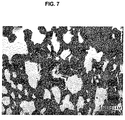
- Fig.7 shows lung sections of experimental animals (dexamethasone, 27 mg/kg) 72 hours after administration of LPS. Peri- and intrabronchial infiltration and interstitialedema are reduced.
- Intratracheal administration of LPS caused massive injuries in different segments of the lower respiratory tracts.
- the initial stages of the injuries corresponded to acute bronchiolitis with inherent symptoms: the presence of exudate with cell debris inside the respiratory tract and infiltrate of the peribronchiolar and peribronchial areas.
- the injury rapidly progressed and transformed to acute pneumonia of various severity: from microfocal to macrofocal confluent pneumonia with abscess formations.
- LPS-induced lung injury caused both systemic and local reactions expressed in interstitial edema.
- glutaryl histamine Compared to dexamethasone, glutaryl histamine had evident advantages such as less pronounced side effects inherent in glucocorticoid hormones. Daily intestinal administration of glutaryl histamine in a dose of 27 mg/kg improved histological symptoms of interstitialedema and hemorrhagic phenomena in the lung tissue.
- the trial included 60 patients which were under medical supervision. When admitted to hospital, patients were randomized into two groups by a random sampling technique. The patients of the first group (30 subjects) received glutaryl histamine in an amount of 90 mg (1 pill) per day for 5 days (450 mg course dose) and standard therapy comprising antibacterial medicaments (penicillin 1 g I.M. 4 times a day or cefasoline 1 g I.M. 3 times a day for 7 days) and nosotropic agents. The patients of the second group (30 subjects) received only standard therapy.
- Laboratory analysis included: general blood test, determination of C-reactive protein, and microbiological analysis of tonsil smears. Laboratory data were analyzed on day 6 of the treatment.
- Clinical effectiveness of glutaryl histamine was evaluated according to the following criteria: time of temperature normalization; time of disappearance of intoxication symptoms, time-dependent inflammatory changes in the oropharynx, time-dependent changes of laboratory parameters (general blood test and C-reactive protein), complication onset (paratonsillitis, paratonsillar abscess); time-dependent change in symptoms evaluated by a patient and a physician according to a 4-score scale (headache, fatigue, sore throat, purulent deposits in the throat, cough, and rhinitis): 0 - without symptoms, 1 - mild symptom intensity, 2 - moderate symptom intensity, and 4 - severe symptom intensity.
- Control time points for the evaluation of the effectiveness of the medicament were treatment days 3, 6 and 8.
- the treatment withdrawal criteria were normalization of body temperature and the lack of purulent deposits on the tonsils, leukocytosis and neutrophil shift.
- Microflora was represented by non-group A ⁇ -hemolytic streptococcus, alpha-hemolytic streptococcus, Friedlender's bacillus , Neisseria and combinations thereof.
- the body temperature In the first group of patients received glutaryl histamine in the course of the complex treatment, the body temperature normalized within 24 hours in 69.2%, whereas in 33.3% in the second group received standard therapy. In 24-36 hours from the beginning of the treatment, the temperature normalized in 90.0% and 53.3%, respectively (see Table 8). In the control time points (24 and 48 h of the treatment), the mean values of maximum daily body temperature had statistically significant differences between the compared groups (p ⁇ 0.05; Figs 8-13 ).
- Glutaryl histamine was well tolerated by patients. Patients of two groups had no undesirable symptoms and secondary complications (paratonsillitis, abscess). Thetreatment duration of the patients of group I was shorter by one day compared with group II (6.7 and 7.6 days, respectively).
- glutaryl histamine in combined therapy led to shorter duration and severity of fever, reduced intensity of intoxication symptoms and faster disappearance of changes in the tonsillar tissue, all of which were statistically significant compared with standard therapy, thereby shortening the duration of the disease and hospital stay.
- Glutaryl histamine has an excellent safety profile - none of the cases had undesirable symptoms.
- LPS lipopolysaccharide
- dexamethasone was administered according to the following schedule: 49, 24 and 1 hour before the induction of ARDS in a dose of 5 mg/kg, for 3 days after the first injection of LPS in the same dose; the medicament was withdrawn by a gradual dose reduction for 3 days. Thus, dexamethasone was administered 9 times.
- the mortality rate among the animals administered LPS in an intravenous dose of 7.5 mg/kg was 70% for 8 days. The most of them (60%) died on the first day, in particular, from 4 to 12-16 hours after the injection of LPS.
- the mortality rate among the animals administered glutaryl histamine was different from the rate in animals treated with dexamethasone; however, most of them also died on the first day, about in the same time period (Table 11).
- mice were administered LPS at more lower dose, but for longer time period. They were received 2 mg/kg on days 1 and 2, and 3 and 4 mg/kg on days 3 and 4, respectively.
- the maximum mortality rate similarly to the single-dose administration of LD 70 , was on the first day. On eighth day, mortality reached 33%. Survival and mortality rates and protective index are given in Table 12.
- the mortality rate among the animals administered glutaryl histamine in doses 0.5 and 27 mg/kg was 12.5 and 8.3%, and protective index was 62.5 and 75%, respectively.
- the mortality rate among the animals administered dexamethasone was 0% for the first three days, but, starting from the fourth day, 8% of animals died, and additional 4% of animals died on the fourth day.
- the mortality rate among the animals administered dexamethasone was 12.5% and protective index was 62.5%.
- the injury pattern of lungs was typical for acute respiratory distress syndrome. The maximum intensity was observed four hours after administration of LPS. However, interstitial swelling accompanied by thickening interalveolar septa, alveolar edema with exudate effusion into alveoli, formation of "hyaline membranes" and the presence of insignificant alveolar infiltration were already observed after two hours. Massive diapedesis of erythrocyteswas also detected, and in some cases there were hemorrhage, hyperemia and congestion in small and middle vessels, perivascular edema and perivascular infiltration. Similar symptoms also were detected in the control animals, however, they were pronounced less than 4 hours after.
- the analysis of the results has shown that the mortality rate is minimal in a dose of glutaryl histamine of 0.5 mg/kg (30% for 8 days) and 27 mg/kg (20%), protective index is 57.1% and 71.4%, respectively.
- the mortality rate among the animals administered dexamethasone in a dose of 5 mg/kg stands out.
- the maximum mortality rate among the control animals and the animals treated with the medicaments was on the first day, namely, first 16 hours after intravenous administration of LPS.
- the rates received dexamethasone fatal cases were not registered for the first 3 days. However, after the drug withdrawal (administration of all medicaments was terminated on the third day after the injection of LPS), intensive, almost daily death of animals was registered from the fourth day.
- the protective index was 28.6%.
- the same picture was at the second stage of the experiment when the death of animals treated with dexamethasone was suspended and observed starting from the fourth day. This seems to be associated with side effects of dexamethasone, in particular, with accession of a secondary infection.
- the accession of a secondary infection was supported, in particular, in autopsy of these animals, in particular, by the formation of multiple abscesses.
- the second step of the experiment comprises the evaluation of both the mortality rate of the animals with calculation of the protective index and narrower indexes used for determination of a specific protection provided by glutaryl histamine in ARDS.
- a lower dose of LPS (LD 30 ) was used at the second stage.
- LPS was administered every day for 4 days. This method of administration was aimed at achieving the maximum disorder exactly in the lung for subsequent evaluation of possible protective action of glutaryl histamine.
- the analysis of the mortality rate among the animals treated with multiple doses of LPS has shown that the protective index of glutaryl histamine in a dose of 27 mg/kg was slightly higher than in a dose of 0.5 mg/kg and was 75% and 62.5%, respectively. This substantially agreed with the data obtained at the first stage of the experiment and evidenced high activity of glutaryl histamine in this pathology.
- the protective index of dexamethasone also was 62.5%.
- This example is aimed at studying activity of glutaryl histamine in combination with levofloxacin in staphylococcal sepsis and E.coli sepsis in mice.
- the tested medicament was glutaryl histamine in doses of 15, 30 and 45 mg/kg. Solutions of the tested medicament for oral administration were prepared ex tempore. Levofloxacin (in oral administration) was used as a therapeutic preparation since this substance was the most experimentally studied antibiotic approved in clinical practice many years ago.
- Staphylococcus aureus (mouse-adaptedstrain 10) was used as an infectious agent. Mice were infected intravenously.
- a lethal dose (LD 100 ) of staphylococcus to be intravenously administered to this line of mice having a certain weight. Fatal cases among mice were registered every day for ten days. The lethal dose was 3 ⁇ 10 8 CFU/mouse. After that, there was determined ED 50 (50% effective dose) of levofloxacin for staphylococcus taken in a lethal dose. For this purpose, mice were housed into cages (10 animals per cage) and infected with a lethal dose of staphylococcus. One hour after each mouse was administered orally levofloxacin in doses of 1, 2, 4, 6, 8, 10, and 12 mg/kg.
- mice infected with a lethal dose of staphylococcus without the treatment was considered as a control group. Fatal cases among mice were registered every day for ten days. ED 50 for levofloxacin was 2.65 mg/kg (2.5 mg/kg in experiment).
- the next step of the experiment was to study an effect of combined administration of glutaryl histamine and levofloxacin on a model of staphylococcal sepsis in mice.
- mice were housed in following groups (10 animals per cage):
- Glutaryl histamine was administered orally in the corresponding doses to the mice of groups 3, 4, 5, 6, 7, and 8 for 5 days.
- All groups of mice were intravenously administered with 0.2 ml of Staphylococcus aureus in the lethal dose.
- mice of groups 2, 6, 7 and 8 were orally administered 0.2 ml of levofloxacin in a dose of 2.5 mg/kg.
- glutaryl histamine was administered to mice of groups 3-8 for additional 5 days. During the experiment, the animals were observed every day, and fatal cases were registered (see Table 13).
- Escherichia coli (mouse-adaptedstrain 4300, Institute collection) was used as an infectious agent. Mice were infected intravenously.
- mice were housed into cages (10 animals per cage) and infected with a lethal dose of Escherichia coli. One hour after each mouse was administered orally levofloxacin in doses of 1, 2, 4, 6, 8, 10, and 12 mg/kg.
- mice infected with a lethal dose of Escherichia coli without the treatment was considered as a control group. Fatal cases among mice were registered every day for ten days. ED 50 levofloxacin was 2.97 mg/kg (3 mg/kg in experiment).
- the next step of the experiment was to study an effect of combined administration of glutaryl histamine and levofloxacin on a model of E.coli sepsis in mice.
- mice were housed in following groups (10 animals per cage):
- Glutaryl histamine was administered orally in the corresponding doses to mice of groups 3, 4, 5, 6, 7, and 8 for 5 days. Five day after, all groups of mice were intravenously administered 0.2 ml of Escherichia coli in the lethal dose. One hour after infection, mice of groups 2, 6, 7 and 8 were orally administered 0.2 ml of levofloxacin in a dose of 3 mg/kg. After infection and administration of levofloxacin, glutaryl histamine was administered to mice of groups 3-8 for additional 5 days. During the experiment, the animals were observed every day, and fatal cases were registered (see Table 14).
- Glutaryl histamine in a dose ranging from 15 to 45 mg/kg in a combined therapy increases the efficiency of levofloxacin in staphylococcal sepsis from 50% to 80-100% according to the survival rate, and in E.coli sepsis from 50 to 80-90% according to the survival rate, thereby confirming its pronounced potentiating properties.
- the tested medicament was glutaryl histamine in doses of 15, 30 and 45 mg/kg. Solutions of the tested medicament for oral administration were prepared ex tempore. Ampicillin (in intravenous administration) was used as a therapeutic preparation since this substance was the most experimentally studied antibiotic approved in clinical practice many years ago.
- Staphylococcus aureus (mouse-adapted strain 10) was used as an infectious agent. Mice were infected intravenously.
- mice were housed into cages (10 animals per cage) and infected with a lethal dose of staphylococcus. One hour later, each mouse was intravenously administered ampicillin in doses of 10, 20, 30, 40, and 50 mg/kg. A group of mice infected with a lethal dose of staphylococcus without the treatment was considered as a control group. Fatal cases among mice were registered every day for ten days. ED 50 ampicillin was 17.3 mg/kg (20 mg/kg in experiment).
- the next step of the experiment was to study an effect of combined administration of glutaryl histamine with ampicillin on a model of staphylococcal sepsis in mice.
- mice were housed in following groups (10 animals per cage):
- Glutaryl histamine was administered orally in the corresponding doses to mice of groups 3, 4, 5, 6, 7, and 8 for 5 days.
- mice of groups 3, 4, 5, 6, 7, and 8 were intravenously administered 0.2 ml of Staphylococcus aureus in the lethal dose.
- mice of groups 2, 6, 7 and 8 were orally administered 0.2 ml of ampicillin in a dose of 20 mg/kg.
- mice of groups 3-8 were administered glutaryl histamine for additional 5 days. During the experiment, the animals were observed every day, and fatal cases were registered.
- ampicillin was used in a 50% effective dose (ED 50 ) since a positive or negative action of glutaryl histamine can be registered only in such a dose.
- glutaryl histamine can be used for the treatment of respiratory tract diseases, in particular to enhance the efficiency of antibacterial therapy for the treatment of respiratory tract disease.
- the diseases can be rhinosinusitis, sinusitis, tonsillitis, bronchiolitis, pneumonia, acute respiratory distress syndrome (ARDS).
- This experiment was aimed at evaluating activity of glutaryl histamine in combination with ampicillin on a model of MRSA-induced staphylococcal sepsis.
- Levofloxacin was used in a 50% effective dose (ED 50 ) as a positive control.
- Tested medicament was glutaryl histamine in doses of 15, 30 and 45 mg/kg. Solutions of the tested medicament for oral administration were prepared ex tempore in stream water. Ampicillin (in intravenous administration) was used as a therapeutic preparation since it is the most experimentally studied antibiotic approved in clinical practice many years ago. Levofloxacin was used as a positive control (in oral administration).
- Staphylococcus aureus was used as an infectious agent (mouse-adapted MRSA strain 5, collection from GU NIINA im.G.F.Gauze RAMN).
- mice were housed into cages by 10 animals and infected with a lethal dose of staphylococcus. One hour later, each mouse was intravenously administered ampicillin in doses of 30, 60, 90, 120, 150, and 180 mg/kg.
- mice infected with a lethal dose of staphylococcus without the treatment were considered as a control group. Fatal cases among mice were registered every day for ten days.
- the dose of ampicillin providing a survival rate of 20% of mice infected with staphylococcus MRSA was 120 mg/ml.
- Levofloxacin (to which the strain MSRA is sensitive) in a dose of ED 50 (4mg/kg) was used as a positive control.
- the next step of the experiment was to study an effect of combined administration of glutaryl histamine with ampicilline on a model of MRSA-induced staphylococcal sepsis in mice.
- mice were housed in following groups of 10 animals per cage:
- the first fatal case in the tested groups was recorded on the third day in a dose 7 ⁇ 10 8 (1 mouse); and in doses 8 and 9 ⁇ 10 8 (two mice in each case).
- the last fatal cases were recorded on the fifth day in a dose of 6 ⁇ 10 8 ; on the seventh day in a dose of 9 ⁇ 10 8 ; and on the eight day in doses of 7 ⁇ 10 8 and 8 ⁇ 10 8 .
- the mortality rate was the following: 50% in a dose of 6 ⁇ 10 8 , 80% in a dose of 7 ⁇ 10 8 , and 100% in doses of 8 and 9 ⁇ 10 8 .
- the control (intact) group had no fatal cases.
- LD 100 St.a. (MRSA) 8 ⁇ 10 8 (the minimum dose of St.a. providing 100% mortality rate among mice) was used in the main experiment.
- the first fatal case was registered on day 2 after infection with a lethal staphylococcus dose.
- the first fatal case in the tested groups was registered on the second day in a dose of 30 mg/kg, on the third day in doses of 60, 90, 120 mg/kg, and on the fourth day in doses of 150 and 180 mg/kg.
- the last mouse in the control group died in the experiment on day 7.
- the mortality rate was the following: 0 in doses 30 and 60 mg/kg, 10% in a dose of 90 mg/kg, and 20% in doses of 120, 150, and 180 mg/kg.
- the control (intact) group had no fatal cases.
- Table 18 Determination of activity of glutaryl histamine in combination with ampicillin on an MRSA-induced model of staphylococcal sepsis in mice Group No Days of experiment (numerator -died animals, denominator - survived animals) Mortality rate, % Survival rate, % 1 2 3 4 5 6 7 8 9 10 1 0/10 0/10 1/9 3/7 5/5 7/3 8/2 9/1 10/0 10/0 100 0 2 0/10 0/10 1/9 2/8 3/7 5/5 6/4 7/3 8/2 8/2 80 20 3 0/10 0/10 0/10 1/9 2/8 3/7 4/6 5/5 5/5 5/5 50 50 4 0/10 0/10 0/10 0/10 1/9 2/8 4/6 5/5 6/4 6/4 60 40 5 0/10 0/10 0/10 0/10 0/10 1/9 3/7 4/6 4/6 5/5 50 50 6 0/10 0/10 0/10 1/9 2/8 3/7 6/4 5/5 50 50 Groups for Table 18
- Staphylococcus MSRA 8 ⁇ 10 8 , i.v. one time
- Staphylococcus 8 ⁇ 10 8 , i.v., one time
- ampicillin 120 mg/ml, i.v., one time
- Staphylococcus 8 ⁇ 10 8 , i.v., one time
- levofloxacin 4 mg/ml, per os , one time
- Staphylococcus (8 ⁇ 10 8 , i.v., one time)+ glutaryl histamine (15 mg/ml, per os , 10 days) + ampicillin (120 mg/ml, i.v., one time) 5.
- Staphylococcus (8 ⁇ 10 8 , i.v., one time)+ glutaryl histamine (30 mg/ml, per os , 10 days) + ampicillin (120 mg/ml, i.v., one time) 6.
- Staphylococcus (8 ⁇ 10 8 , i.v., one time) + glutaryl histamine (45 mg/ml, per os , 10 days) + ampicillin(120 mg/ml, i.v., one time).
- Example 9.1 A patient with a diagnosis of double-sided multisegmental pneumonia was treated. When entered a hospital, the patient had temperature of 38.9°C and was in a moderate-to-severe condition. He had the marked symptoms such as pale face skin and cyanosis of the lips. Other observed symptoms were scleral injection and conjunctival hyperemia; hyperemic oropharyngeal mucous membrane, cyanosis and granulation in the mucous membrane in the soft palate. Dry cough that was painful in the tracheal area, respiratory rate was 20 breaths/min. Breath sounds in the lung were diminished with moist rales. The level of blood saturation was 96%. Heart sounds were muffled, rhythmic, and pulse rate was 100 beats/min. Blood pressure was 105/60 mmHg.
- Chest X-ray showed intensive shadow with distinct boundaries in the right lobe (S7 and S5), caused by infiltration and interlobar effusion, and right-sided pleural reaction. In the left side (S9), there are focally confluent shadows against the background of enhanced vascular and interstitial pattern. Roots were dilated and structural. Conclusion: double sided multisegmental pleuropneumonia.
- Admission general blood test Leukocytes - 8.2 ⁇ 10 9 g/l, platelets - 132 ⁇ 10 9 g/l.
- Neutrophils stab - 19%, segmented - 59%; lymphocytes - 17%; monocytes - 5%; ESR - 25 mm/h.
- CRP C-reactive protein
- the treatment was conducted according to the following scheme: glutaryl histamine 90 mg per os once a day for 5 days; cefotaxime 2.0 g, IM, three times a day for 8 days.
- Chest X-ray 10 days after admission showed only local prominence and deformation of the lung pattern in the right lower lobe. In the left side, the lung field was completely clear.
- the control blood test did not reveal abnormalities, the values of CRP and procalcitonin after the treatment completely normalized.
- This clinical example demonstrates successful treatment of pneumonia with markers of active bacterial infection: neutrophil-stab shift in the peripheral blood, high levels of C-reactive protein and procalcitonin >0.05.
- Example 9.2 A patient with a diagnosis of right-focal confluent pneumonia was treated. When entered a hospital, the patient was in a moderate-to-severe condition. The patient had pale skin, moderate cyanosis of the lips, scleral injection and conjunctival hyperemia; rough nasal breathing; hyperemic oropharyngeal mucosa membrane with cyanosis in the soft palate, and granulation in the mucous membrane on the posterior wall. Voice was hoarse. Cough was dry, painful and attack-like. Admission chest X-ray showed an intensification of the lung pattern in the right basal segments of the lower lobe, against which there were focally confluent shadows of weak intensity caused by pneumonic infiltration. The right root was dilated. Conclusion: right-focal confluent pneumonia.
- Admission general blood test Leukocytes - 9.8 ⁇ 10 9 g/l, platelets - 174 ⁇ 10 9 g/l; Neutrophils: stab - 6%, segmented - 72%; lymphocytes - 10%; monocytes - 12%; ESR - 2 mm/h. CRP - 96 mg/l.
- the treatment was conducted according to the following scheme: glutaryl histamine 90 mg per os once a day for 5 days; cefotaxim 2.0 g, IM, three times a day for 10 days; macropene (midecamycin) - 400 mg per os twice a day for 10 days.
- This clinical example demonstrates successful treatment of pneumonia treated according to the present invention.
- Administration of the combined therapy according to the invention allowed the optimal clinical effect.
- Admission general blood test Leukocytes - 7.1 ⁇ 10 9 g/l, platelets - 109 ⁇ 10 9 g/l.
- Neutrophils stab - 19%, segmented - 55%; lymphocytes - 17%; monocytes - 9%; toxic granulosity ++; ESR - 40 mm/h; CRP - 192 mg/l; and procalcitonin - 15.8 hg/ml.
- the treatment was conducted according to the following scheme: glutaryl histamine 90 mg per os once a day for 5 days; cefotaxime - 2.0 g IM three times a day for 10 days; azithromycin - 500.0 once a day for 3 days.
- the therapy was symptomatic.
- Example 9.4 A patient with a diagnosis of right bilobar pneumonia was treated. When entered a hospital, the patient had temperature of 38.4°C, and was in a moderate-to-severe condition. On this day he started coughing. Clinical examination revealed the following symptoms: skin color was normal, and cyanosis was absent. There were scleral injection, conjunctival hyperemia; marked granulation in the soft palate, hypertrophic follicles on the posterior wall. Nose was stuffed, without discharge. Cough was soft non-productive. Breathing was harsh. The level of blood saturation was 97%. Heart sounds were rhythmic and muffled; pulse rate was 96 beats/min.
- Admission general blood test Leukocytes - 7.9 ⁇ 10 9 g/l, platelets - 163 ⁇ 10 9 g/l.
- Neutrophils stab - 2%, segmented - 70%; lymphocytes - 22%; monocytes - 5%; eosinophils - 1%; ESR - 31 mm/h; CRP - 192 mg/l; and procalcitonin - 0.124 hg/ml.
- Admission sputum had a growth of Str. viridans ⁇ 10 7 , Hemophylus sp ⁇ 10 7 .
- the treatment was conducted according to the following scheme: glutaryl histamine 90 mg per os once a day for 5 days; azithromycin 0.5 g once a day for 3 days; cefasoline 2 g three times a day for 12 days.
- glutaryl histamine can be administered orally, intramuscularly or intravenously in the unit dosage forms comprising non-toxic pharmaceutically acceptable carriers.
- Glutaryl histamine may be administered to a patient in daily dose of from 0.1 to 100 mg/kg of human body weight, preferably in a dose of from 0.5 to 50 mg/kg, one or more times per day.
- a particular dose for a particular patient is depend on many factors, such as patient's age, body weight, gender, general health condition, and diet; the schedule and route of the agent administration and the excretion rate of the agent from the body; a specific combination of medicaments and severity of a disease in a subject to be treated.
- compositions according to the invention comprise glutaryl histamine in an amount efficient for providing a desired result, and may be administered in the form of a unit dosage form (for example, in solid, semi-solid, or liquid form) that comprises glutaryl histamine as an active agent in a mixture with a carrier or an excipient suitable for intravenous and oral administration.
- the active agent may be included into the composition together with conventional nontoxic pharmaceutically acceptable carriers suitable for the manufacture of solutions, tablets, pills, capsules, pellets, and any other dosage forms.
- excipients may be used, such as saccharides, for example, glucose, lactose, of sucrose; mannitol or sorbitol; cellulose derivatives; and/or calcium phosphates, for example, tricalcium phosphate or calcium hydrogen phosphate.
- binders may be used: starch paste (for example, corn, wheat, rice, or potato starch), gelatin, tragacanth, methylcellulose, hydroxypropyl methylcellulose, sodium carboxymethyl cellulose, and/or polyvinylpyrrolidone.
- disintegrating agents such as the aforementioned starches and carboxymethyl starch, crosslinkedpolyvinylpyrrolidone, agar-agar, or alginic acid or a salt thereof, such as sodium alginate.
- Optional additives may be used, such as flowability control agents and lubricants, such as silica, talc, stearic acid and salts thereof, for example, magnesium stearate or calcium stearate, and/or propylene glycol.
- flowability control agents and lubricants such as silica, talc, stearic acid and salts thereof, for example, magnesium stearate or calcium stearate, and/or propylene glycol.
- Stabilizing, thickening, colorant, and fragrance additives may also be used.
- the amount of an active agent used in combination with a carrier may vary depending on the recipient under the therapy and on the route of administration of therapeutic agent.
- the active agent in this solution is in an amount of 0.01 to 5 wt.%.
- the following solutions are suitable: 0.9% sodium chloride solution, distilled water, Novocaine solution for injections, Ringer solution, glucose solution, and specific solubilizing adjuvants.
- glutaryl histamine is administered in the form of tablets, its amount is 5.0 to 500 mg per unit dosage form.
- Dosage forms of glutaryl histamine used according to the present invention are prepared by the standard methods such as, for example, processes of mixing, granulating, forming pills, dissolving and lyophilizing.
- a tableted form is prepared by using the following ingredients: Glutaryl histamine or a pharmaceutically acceptable salt thereof 1-100 mg Potato starch 20-50 mg Magnesium stearate 3 mg Aerosil 1 mg Lactose up to 300 mg The ingredients are mixed and compressed to form tablets weighing 300 mg.
- Example of a suppository formulation Glutaryl histamine or a pharmaceutically acceptable salt thereof 1-100 mg Cacao oil in an amount required for a suppository
- a rectal, vaginal, and urethral suppository can be prepared with corresponding excipients.
- Example of a powder formulation Glutaryl histamine or a pharmaceutically acceptable salt thereof 0.2 g Lactose up to 1 g
- a powder is placed in a special device (container) or a gelatin capsule
- Example of a spray formulation Glutaryl histamine or a pharmaceutically acceptable salt thereof 1.5-150 mg Purified water up to 15 ml
- Example of the formulation of a solution for injections Glutaryl histamine or a pharmaceutically acceptable salt thereof 1-50 mg Water for injection 2 ml
Landscapes
- Health & Medical Sciences (AREA)
- Life Sciences & Earth Sciences (AREA)
- General Health & Medical Sciences (AREA)
- Veterinary Medicine (AREA)
- Chemical & Material Sciences (AREA)
- Animal Behavior & Ethology (AREA)
- Medicinal Chemistry (AREA)
- Pharmacology & Pharmacy (AREA)
- Public Health (AREA)
- Epidemiology (AREA)
- Bioinformatics & Cheminformatics (AREA)
- Engineering & Computer Science (AREA)
- Otolaryngology (AREA)
- Pulmonology (AREA)
- Organic Chemistry (AREA)
- Nuclear Medicine, Radiotherapy & Molecular Imaging (AREA)
- Chemical Kinetics & Catalysis (AREA)
- General Chemical & Material Sciences (AREA)
- Molecular Biology (AREA)
- Dermatology (AREA)
- Nutrition Science (AREA)
- Physiology (AREA)
- Communicable Diseases (AREA)
- Oncology (AREA)
- Pharmaceuticals Containing Other Organic And Inorganic Compounds (AREA)
- Medicines That Contain Protein Lipid Enzymes And Other Medicines (AREA)
Claims (17)
- Medikament oder pharmazeutische Zusammensetzung zur Verwendung bei der Behandlung von Atemwegserkrankungen ausgewählt aus der Gruppe bestehend aus Sinusitis, Tonsillitis und Atemnotsyndrom, wobei
das Medikament Glutarylhistamin oder ein pharmazeutisch akzeptables Salz davon in einer wirksamen Menge umfasst, und
die pharmazeutische Zusammensetzung Glutarylhistamin oder ein pharmazeutisch akzeptables Salz davon in einer wirksamen Menge und einen pharmazeutisch akzeptablen Träger oder Verdünner umfasst. - Medikament, das Glutarylhistamin oder ein pharmazeutisch akzeptables Salz davon in einer wirksamen Menge umfasst, oder pharmazeutische Zusammensetzung, die Glutarylhistamin oder ein pharmazeutisch akzeptables Salz davon in einer wirksamen Menge und einen pharmazeutisch akzeptablen Träger oder Verdünner umfasst, zur Verwendung bei der Verstärkung der Wirksamkeit einer antibakteriellen Therapie bei der Behandlung von Atemwegserkrankungen.
- Medikament oder pharmazeutische Zusammensetzung zur Verwendung gemäß Anspruch 2, wobei die antibakterielle Therapie es umfasst, dass mindestens ein antibakterielles Arzneimittel ausgewählt aus der Gruppe, die Cefotaxim, Midecamycin, Azithromycin, Amoxicillin, Levofloxacin, Oxacillin, Vancomycin und Ceftriaxon einschließt, verabreicht wird.
- Medikament oder pharmazeutische Zusammensetzung zur Verwendung gemäß Anspruch 3, wobei die antibakterielle Therapie auf Mikroorganismen mit einer verringerten Sensibilität gegenüber antibakteriellen Arzneimitteln oder auf Mikroorganismen, die gegenüber antibakterieller Therapie resistent sind, gerichtet ist.
- Medikament oder pharmazeutische Zusammensetzung zur Verwendung gemäß Anspruch 4, wobei die Mikroorganismen mindestens eine Spezies, ausgewählt aus Staphylococcus aureus, Streptococcus pneumonia, Haemophylus influenza und Moraxella catarrhalis, einschließen.
- Medikament oder pharmazeutische Zusammensetzung zur Verwendung gemäß mindestens einem der Ansprüche 1 bis 5, wobei die Zusammensetzung oder das Medikament in einer Menge, die eine Dosis an Glutarylhistamin oder einem pharmazeutisch akzeptablen Salz davon von 0,1 bis 100 mg/kg Körpergewicht bereitstellt, verabreicht wird.
- Medikament oder pharmazeutische Zusammensetzung zur Verwendung gemäß Anspruch 6, wobei die Zusammensetzung oder das Medikament in einer Menge, die eine Dosis an Glutarylhistamin oder einem pharmazeutisch akzeptablen Salz davon von 0,5 bis 5 mg/kg Körpergewicht bereitstellt, verabreicht wird.
- Medikament oder pharmazeutische Zusammensetzung zur Verwendung gemäß mindestens einem der Ansprüche 1 bis 5, wobei die Verabreichung eine orale Verabreichung oder eine tägliche Verabreichung ist.
- Medikament oder pharmazeutische Zusammensetzung zur Verwendung gemäß mindestens einem der Ansprüche 2 bis 5, wobei die Atemwegserkrankung ausgewählt ist aus der Gruppe bestehend aus Tonsillitis und Lungenentzündung.
- Glutarylhistamin oder pharmazeutisch akzeptables Salz davon zur Verwendung bei der Behandlung von Atemwegserkrankungen ausgewählt aus der Gruppe bestehend aus Sinusitis, Tonsillitis und Atemnotsyndrom.
- Glutarylhistamin oder pharmazeutisch akzeptables Salz davon zur Verwendung bei der Verstärkung der Wirksamkeit einer antibakteriellen Therapie bei der Behandlung von Atemwegserkrankungen.
- Glutarylhistamin oder pharmazeutisch akzeptables Salz davon zur Verwendung gemäß Anspruch 11, wobei die antibakterielle Therapie es umfasst, dass mindestens ein antibakterielles Arzneimittel ausgewählt aus der Gruppe, die Cefotaxim, Midecamycin, Azithromycin, Amoxicillin, Levofloxacin, Oxacillin, Vancomycin und Ceftriaxon einschließt, verabreicht wird.
- Glutarylhistamin oder pharmazeutisch akzeptables Salz davon zur Verwendung gemäß Anspruch 12, wobei die antibakterielle Therapie auf Mikroorganismen mit einer verringerten Sensibilität gegenüber antibakteriellen Arzneimitteln oder auf Mikroorganismen, die gegenüber antibakterieller Therapie resistent sind, gerichtet ist.
- Glutarylhistamin oder pharmazeutisch akzeptables Salz davon zur Verwendung gemäß Anspruch 13, wobei die Mikroorganismen mindestens eine Spezies, ausgewählt aus Staphylococcus aureus, Streptococcus pneumonia, Haemophylus influenza und Moraxella catarrhalis, einschließen.
- Glutarylhistamin oder pharmazeutisch akzeptables Salz davon zur Verwendung gemäß mindestens einem der Ansprüche 10 bis 14, wobei die Dosis an Glutarylhistamin oder einem pharmazeutisch akzeptablen Salz davon 0,1 bis 100 mg/kg Körpergewicht beträgt.
- Glutarylhistamin oder pharmazeutisch akzeptables Salz davon zur Verwendung gemäß Anspruch 15, wobei die Dosis an Glutarylhistamin oder einem pharmazeutisch akzeptablen Salz davon von 0,5 bis 5 mg/kg Körpergewicht beträgt.
- Glutarylhistamin oder pharmazeutisch akzeptables Salz davon zur Verwendung bei der Behandlung von Sepsis.
Priority Applications (1)
| Application Number | Priority Date | Filing Date | Title |
|---|---|---|---|
| PL12839969T PL2767282T3 (pl) | 2011-10-11 | 2012-10-09 | Zastosowanie glutarylohistaminy w leczeniu infekcji dróg oddechowych |
Applications Claiming Priority (2)
| Application Number | Priority Date | Filing Date | Title |
|---|---|---|---|
| RU2011141288 | 2011-10-11 | ||
| PCT/RU2012/000821 WO2013055258A2 (ru) | 2011-10-11 | 2012-10-09 | Применение глутарилгистамина для лечения заболеваний дыхательных путей |
Publications (4)
| Publication Number | Publication Date |
|---|---|
| EP2767282A2 EP2767282A2 (de) | 2014-08-20 |
| EP2767282A4 EP2767282A4 (de) | 2015-03-11 |
| EP2767282B1 true EP2767282B1 (de) | 2020-04-15 |
| EP2767282B8 EP2767282B8 (de) | 2020-06-03 |
Family
ID=48082695
Family Applications (1)
| Application Number | Title | Priority Date | Filing Date |
|---|---|---|---|
| EP12839969.8A Active EP2767282B8 (de) | 2011-10-11 | 2012-10-09 | Verwendung von glutarylhistamin zur behandlung von atemwegsinfektionen |
Country Status (10)
| Country | Link |
|---|---|
| US (2) | US20140357587A1 (de) |
| EP (1) | EP2767282B8 (de) |
| JP (1) | JP6069331B2 (de) |
| KR (1) | KR102007280B1 (de) |
| CN (1) | CN104023719B (de) |
| EA (1) | EA029461B1 (de) |
| ES (1) | ES2792064T3 (de) |
| PL (1) | PL2767282T3 (de) |
| UA (1) | UA115431C2 (de) |
| WO (1) | WO2013055258A2 (de) |
Families Citing this family (9)
| Publication number | Priority date | Publication date | Assignee | Title |
|---|---|---|---|---|
| US9504673B2 (en) * | 2009-05-21 | 2016-11-29 | LTD “Valenta-Intellekt” | Agent for the prophylaxis and treatment of highly pathogenic infectious diseases |
| CN103382179A (zh) * | 2013-06-05 | 2013-11-06 | 四川百利药业有限责任公司 | 英加韦林的多晶型物及其制备方法 |
| RU2628800C2 (ru) * | 2014-03-12 | 2017-08-22 | Общество С Ограниченной Ответственностью "Фарминтерпрайсез" | Амидные соединения, способы получения, применение в качестве средств для лечения и профилактики заболеваний, вызываемых рнк-содержащими вирусами |
| CN118141807A (zh) * | 2017-05-26 | 2024-06-07 | 瓦伦塔有限责任公司 | 谷氨酰胺酰基环化酶抑制剂及其在治疗多种疾病中的用途 |
| WO2021049980A1 (ru) * | 2019-09-12 | 2021-03-18 | Общество С Ограниченной Ответственностью "Валента-Интеллект" | Новые составы для лечения и профилактики вирусных заболеваний |
| RU2746692C1 (ru) * | 2020-04-14 | 2021-04-19 | Общество С Ограниченной Ответственностью "Валента - Интеллект" | Новые составы 2-(имидазол-4-ил)-этанамида пентандиовой-1,5 кислоты для лечения и профилактики вирусных заболеваний |
| RU2770521C2 (ru) * | 2020-02-11 | 2022-04-18 | Общество С Ограниченной Ответственностью "Валента-Интеллект" | Жидкая лекарственная форма для лечения и профилактики гриппа и орви |
| RU2770518C2 (ru) * | 2020-02-11 | 2022-04-18 | Общество С Ограниченной Ответственностью "Валента-Интеллект" | Жидкая лекарственная форма для лечения и профилактики гриппа и орви |
| BR112022026356A2 (pt) * | 2020-06-26 | 2023-01-17 | Valenta Intellekt Ltd | Uso de um derivado de glutarimida para tratar doenças associadas à atividade aberrante da interleucina-6 |
Family Cites Families (5)
| Publication number | Priority date | Publication date | Assignee | Title |
|---|---|---|---|---|
| RU2141483C1 (ru) * | 1997-07-04 | 1999-11-20 | Небольсин Владимир Евгеньевич | Производные пептидов или их фармацевтически приемлемые соли, способ их получения, применение и фармацевтическая композиция |
| RU2217196C2 (ru) * | 2002-02-28 | 2003-11-27 | Небольсин Владимир Евгеньевич | Способ индукции дифференцировки клеток |
| RU2335495C2 (ru) * | 2005-06-15 | 2008-10-10 | Общество С Ограниченной Ответственностью "Фарминтерпрайсез" | N-ацильные производные аминокислот, их фармацевтически приемлевые соли, фармацевтическая композиция и применение в качестве гиполипидемических средств |
| RU2338552C2 (ru) * | 2006-09-19 | 2008-11-20 | Владимир Евгеньевич Небольсин | Фармацевтическая композиция для ингаляции |
| US9504673B2 (en) * | 2009-05-21 | 2016-11-29 | LTD “Valenta-Intellekt” | Agent for the prophylaxis and treatment of highly pathogenic infectious diseases |
-
2012
- 2012-09-10 UA UAA201404936A patent/UA115431C2/uk unknown
- 2012-10-09 US US14/351,352 patent/US20140357587A1/en not_active Abandoned
- 2012-10-09 ES ES12839969T patent/ES2792064T3/es active Active
- 2012-10-09 EA EA201490750A patent/EA029461B1/ru unknown
- 2012-10-09 PL PL12839969T patent/PL2767282T3/pl unknown
- 2012-10-09 KR KR1020147012576A patent/KR102007280B1/ko active Active
- 2012-10-09 JP JP2014535690A patent/JP6069331B2/ja not_active Expired - Fee Related
- 2012-10-09 EP EP12839969.8A patent/EP2767282B8/de active Active
- 2012-10-09 WO PCT/RU2012/000821 patent/WO2013055258A2/ru not_active Ceased
- 2012-10-09 CN CN201280055495.7A patent/CN104023719B/zh active Active
-
2016
- 2016-10-26 US US15/334,636 patent/US20170143674A1/en not_active Abandoned
Non-Patent Citations (1)
| Title |
|---|
| None * |
Also Published As
| Publication number | Publication date |
|---|---|
| EP2767282A2 (de) | 2014-08-20 |
| WO2013055258A3 (ru) | 2013-06-06 |
| EA029461B1 (ru) | 2018-03-30 |
| ES2792064T3 (es) | 2020-11-06 |
| HK1200699A1 (en) | 2015-08-14 |
| EP2767282B8 (de) | 2020-06-03 |
| US20170143674A1 (en) | 2017-05-25 |
| JP2014528473A (ja) | 2014-10-27 |
| US20140357587A1 (en) | 2014-12-04 |
| EP2767282A4 (de) | 2015-03-11 |
| KR20140107190A (ko) | 2014-09-04 |
| UA115431C2 (uk) | 2017-11-10 |
| CN104023719A (zh) | 2014-09-03 |
| CN104023719B (zh) | 2017-05-24 |
| KR102007280B1 (ko) | 2019-08-06 |
| PL2767282T3 (pl) | 2021-02-08 |
| EA201490750A1 (ru) | 2014-07-30 |
| WO2013055258A9 (ru) | 2013-07-25 |
| WO2013055258A2 (ru) | 2013-04-18 |
| JP6069331B2 (ja) | 2017-02-01 |
Similar Documents
| Publication | Publication Date | Title |
|---|---|---|
| EP2767282B1 (de) | Verwendung von glutarylhistamin zur behandlung von atemwegsinfektionen | |
| US10751363B2 (en) | Use of aliginate oligomers and CFTR modulators in treatment of conditions associated with CFTR dysfunction | |
| RU2685706C2 (ru) | Фармацевтические композиции, содержащие 15-гэпк, и способы лечения астмы и заболеваний легких с их применением | |
| CN112386597B (zh) | 泽布替尼在制备治疗肺纤维化疾病药物中的应用 | |
| ES2315479T3 (es) | Empleo de glicosaminoglicanos tales como p.ej.heparina para el tratamiento de trastornos respiratorios tales como copd. | |
| US12440488B2 (en) | Methods and compositions for treating chronic obstructive pulmonary disease, asthma, pneumonia, bronchitis, cystic fibrosis, pulmonary edema, interstitial lung disease, sarcoidosis, idiopathic pulmonary fibrosis, acute respiratory distress syndrome, and pulmonary arterial hypertension | |
| CN111467354B (zh) | 格列齐特在制备治疗肺纤维化疾病药物中的应用 | |
| EP4159241A1 (de) | Pharmazeutische zusammensetzung zur verbesserung der schädigung des atemsystems und verwendung bei der herstellung einer pharmazeutischen zusammensetzung zur verbesserung der schädigung des atemsystems | |
| JP7570499B2 (ja) | 肺炎を予防・治療する薬物におけるポリペプチドの応用 | |
| CN115811969A (zh) | 用于预防和治疗纤维化和炎性病症的组合物和方法 | |
| JP2010538008A (ja) | 呼吸器系疾患または症状を処置および予防するためのグリセロリン酸カルシウム | |
| HK1200699B (en) | Use of glutaryl histamine for the treatment of respiratory tract diseases | |
| US20250032598A1 (en) | Compounds, Pharmaceuticals, Formulations, and Methods for Treating and Preventing RNA Virus Infections and Associated Diseases | |
| CN115990160A (zh) | 盐酸去亚甲基小檗碱在制备预防性治疗铜绿假单胞菌肺炎药物中的应用 | |
| EP4051300A1 (de) | Zusammensetzung zur prävention und behandlung von atemwegserkrankungen | |
| JP2010150242A (ja) | アンレキサノクスとエフェドリン類を含有する経口用医薬組成物 | |
| KR20130132792A (ko) | 엘라스타제 관련 장애를 치료하기 위한 과황산화 이당류 |
Legal Events
| Date | Code | Title | Description |
|---|---|---|---|
| PUAI | Public reference made under article 153(3) epc to a published international application that has entered the european phase |
Free format text: ORIGINAL CODE: 0009012 |
|
| 17P | Request for examination filed |
Effective date: 20140509 |
|
| AK | Designated contracting states |
Kind code of ref document: A2 Designated state(s): AL AT BE BG CH CY CZ DE DK EE ES FI FR GB GR HR HU IE IS IT LI LT LU LV MC MK MT NL NO PL PT RO RS SE SI SK SM TR |
|
| DAX | Request for extension of the european patent (deleted) | ||
| RIC1 | Information provided on ipc code assigned before grant |
Ipc: A61P 11/00 20060101ALI20150129BHEP Ipc: A61K 31/417 20060101ALI20150129BHEP Ipc: A61K 31/5383 20060101ALI20150129BHEP Ipc: A61K 31/7052 20060101ALI20150129BHEP Ipc: A61K 31/43 20060101ALI20150129BHEP Ipc: A61K 9/20 20060101ALI20150129BHEP Ipc: A61K 31/546 20060101ALI20150129BHEP Ipc: A61K 31/7048 20060101ALI20150129BHEP Ipc: A61K 9/02 20060101AFI20150129BHEP Ipc: A61K 45/06 20060101ALI20150129BHEP |
|
| A4 | Supplementary search report drawn up and despatched |
Effective date: 20150209 |
|
| STAA | Information on the status of an ep patent application or granted ep patent |
Free format text: STATUS: EXAMINATION IS IN PROGRESS |
|
| 17Q | First examination report despatched |
Effective date: 20180502 |
|
| GRAP | Despatch of communication of intention to grant a patent |
Free format text: ORIGINAL CODE: EPIDOSNIGR1 |
|
| STAA | Information on the status of an ep patent application or granted ep patent |
Free format text: STATUS: GRANT OF PATENT IS INTENDED |
|
| INTG | Intention to grant announced |
Effective date: 20190528 |
|
| RAP1 | Party data changed (applicant data changed or rights of an application transferred) |
Owner name: NEBOLSIN, VLADIMIR EVGENIEVICH Owner name: LTD. "VALENTA-INTELLEKT" |
|
| RIN1 | Information on inventor provided before grant (corrected) |
Inventor name: KOLOBUKHINA, LYUDMILA VASILIEVNA Inventor name: NEBOLSIN, VLADIMIR EVGENIEVICH |
|
| GRAJ | Information related to disapproval of communication of intention to grant by the applicant or resumption of examination proceedings by the epo deleted |
Free format text: ORIGINAL CODE: EPIDOSDIGR1 |
|
| STAA | Information on the status of an ep patent application or granted ep patent |
Free format text: STATUS: EXAMINATION IS IN PROGRESS |
|
| INTC | Intention to grant announced (deleted) | ||
| GRAP | Despatch of communication of intention to grant a patent |
Free format text: ORIGINAL CODE: EPIDOSNIGR1 |
|
| STAA | Information on the status of an ep patent application or granted ep patent |
Free format text: STATUS: GRANT OF PATENT IS INTENDED |
|
| INTG | Intention to grant announced |
Effective date: 20191106 |
|
| GRAS | Grant fee paid |
Free format text: ORIGINAL CODE: EPIDOSNIGR3 |
|
| GRAA | (expected) grant |
Free format text: ORIGINAL CODE: 0009210 |
|
| STAA | Information on the status of an ep patent application or granted ep patent |
Free format text: STATUS: THE PATENT HAS BEEN GRANTED |
|
| AK | Designated contracting states |
Kind code of ref document: B1 Designated state(s): AL AT BE BG CH CY CZ DE DK EE ES FI FR GB GR HR HU IE IS IT LI LT LU LV MC MK MT NL NO PL PT RO RS SE SI SK SM TR |
|
| REG | Reference to a national code |
Ref country code: CH Ref legal event code: EP Ref country code: GB Ref legal event code: FG4D |
|
| RAP2 | Party data changed (patent owner data changed or rights of a patent transferred) |
Owner name: NEBOLSIN, VLADIMIR EVGENIEVICH Owner name: LTD. "VALENTA-INTELLEKT" |
|
| REG | Reference to a national code |
Ref country code: NL Ref legal event code: FP |
|
| REG | Reference to a national code |
Ref country code: DE Ref legal event code: R096 Ref document number: 602012069348 Country of ref document: DE |
|
| REG | Reference to a national code |
Ref country code: FI Ref legal event code: FGE |
|
| REG | Reference to a national code |
Ref country code: IE Ref legal event code: FG4D |
|
| REG | Reference to a national code |
Ref country code: CH Ref legal event code: PK Free format text: BERICHTIGUNG B8 Ref country code: AT Ref legal event code: REF Ref document number: 1256458 Country of ref document: AT Kind code of ref document: T Effective date: 20200515 |
|
| REG | Reference to a national code |
Ref country code: SE Ref legal event code: TRGR |
|
| REG | Reference to a national code |
Ref country code: CH Ref legal event code: NV Representative=s name: RIEDERER HASLER AND PARTNER PATENTANWAELTE AG, LI |
|
| REG | Reference to a national code |
Ref country code: LT Ref legal event code: MG4D |
|
| REG | Reference to a national code |
Ref country code: GR Ref legal event code: EP Ref document number: 20200401338 Country of ref document: GR Effective date: 20201014 |
|
| PG25 | Lapsed in a contracting state [announced via postgrant information from national office to epo] |
Ref country code: IS Free format text: LAPSE BECAUSE OF FAILURE TO SUBMIT A TRANSLATION OF THE DESCRIPTION OR TO PAY THE FEE WITHIN THE PRESCRIBED TIME-LIMIT Effective date: 20200815 Ref country code: PT Free format text: LAPSE BECAUSE OF FAILURE TO SUBMIT A TRANSLATION OF THE DESCRIPTION OR TO PAY THE FEE WITHIN THE PRESCRIBED TIME-LIMIT Effective date: 20200817 Ref country code: LT Free format text: LAPSE BECAUSE OF FAILURE TO SUBMIT A TRANSLATION OF THE DESCRIPTION OR TO PAY THE FEE WITHIN THE PRESCRIBED TIME-LIMIT Effective date: 20200415 Ref country code: NO Free format text: LAPSE BECAUSE OF FAILURE TO SUBMIT A TRANSLATION OF THE DESCRIPTION OR TO PAY THE FEE WITHIN THE PRESCRIBED TIME-LIMIT Effective date: 20200715 |
|
| REG | Reference to a national code |
Ref country code: ES Ref legal event code: FG2A Ref document number: 2792064 Country of ref document: ES Kind code of ref document: T3 Effective date: 20201106 |
|
| PG25 | Lapsed in a contracting state [announced via postgrant information from national office to epo] |
Ref country code: BG Free format text: LAPSE BECAUSE OF FAILURE TO SUBMIT A TRANSLATION OF THE DESCRIPTION OR TO PAY THE FEE WITHIN THE PRESCRIBED TIME-LIMIT Effective date: 20200715 Ref country code: RS Free format text: LAPSE BECAUSE OF FAILURE TO SUBMIT A TRANSLATION OF THE DESCRIPTION OR TO PAY THE FEE WITHIN THE PRESCRIBED TIME-LIMIT Effective date: 20200415 Ref country code: LV Free format text: LAPSE BECAUSE OF FAILURE TO SUBMIT A TRANSLATION OF THE DESCRIPTION OR TO PAY THE FEE WITHIN THE PRESCRIBED TIME-LIMIT Effective date: 20200415 Ref country code: HR Free format text: LAPSE BECAUSE OF FAILURE TO SUBMIT A TRANSLATION OF THE DESCRIPTION OR TO PAY THE FEE WITHIN THE PRESCRIBED TIME-LIMIT Effective date: 20200415 |
|
| PG25 | Lapsed in a contracting state [announced via postgrant information from national office to epo] |
Ref country code: AL Free format text: LAPSE BECAUSE OF FAILURE TO SUBMIT A TRANSLATION OF THE DESCRIPTION OR TO PAY THE FEE WITHIN THE PRESCRIBED TIME-LIMIT Effective date: 20200415 |
|
| REG | Reference to a national code |
Ref country code: DE Ref legal event code: R097 Ref document number: 602012069348 Country of ref document: DE |
|
| PG25 | Lapsed in a contracting state [announced via postgrant information from national office to epo] |
Ref country code: DK Free format text: LAPSE BECAUSE OF FAILURE TO SUBMIT A TRANSLATION OF THE DESCRIPTION OR TO PAY THE FEE WITHIN THE PRESCRIBED TIME-LIMIT Effective date: 20200415 Ref country code: SM Free format text: LAPSE BECAUSE OF FAILURE TO SUBMIT A TRANSLATION OF THE DESCRIPTION OR TO PAY THE FEE WITHIN THE PRESCRIBED TIME-LIMIT Effective date: 20200415 Ref country code: EE Free format text: LAPSE BECAUSE OF FAILURE TO SUBMIT A TRANSLATION OF THE DESCRIPTION OR TO PAY THE FEE WITHIN THE PRESCRIBED TIME-LIMIT Effective date: 20200415 Ref country code: RO Free format text: LAPSE BECAUSE OF FAILURE TO SUBMIT A TRANSLATION OF THE DESCRIPTION OR TO PAY THE FEE WITHIN THE PRESCRIBED TIME-LIMIT Effective date: 20200415 |
|
| PLBE | No opposition filed within time limit |
Free format text: ORIGINAL CODE: 0009261 |
|
| STAA | Information on the status of an ep patent application or granted ep patent |
Free format text: STATUS: NO OPPOSITION FILED WITHIN TIME LIMIT |
|
| PG25 | Lapsed in a contracting state [announced via postgrant information from national office to epo] |
Ref country code: SK Free format text: LAPSE BECAUSE OF FAILURE TO SUBMIT A TRANSLATION OF THE DESCRIPTION OR TO PAY THE FEE WITHIN THE PRESCRIBED TIME-LIMIT Effective date: 20200415 |
|
| 26N | No opposition filed |
Effective date: 20210118 |
|
| PG25 | Lapsed in a contracting state [announced via postgrant information from national office to epo] |
Ref country code: SI Free format text: LAPSE BECAUSE OF FAILURE TO SUBMIT A TRANSLATION OF THE DESCRIPTION OR TO PAY THE FEE WITHIN THE PRESCRIBED TIME-LIMIT Effective date: 20200415 |
|
| PG25 | Lapsed in a contracting state [announced via postgrant information from national office to epo] |
Ref country code: LU Free format text: LAPSE BECAUSE OF NON-PAYMENT OF DUE FEES Effective date: 20201009 Ref country code: MC Free format text: LAPSE BECAUSE OF FAILURE TO SUBMIT A TRANSLATION OF THE DESCRIPTION OR TO PAY THE FEE WITHIN THE PRESCRIBED TIME-LIMIT Effective date: 20200415 |
|
| PG25 | Lapsed in a contracting state [announced via postgrant information from national office to epo] |
Ref country code: IE Free format text: LAPSE BECAUSE OF NON-PAYMENT OF DUE FEES Effective date: 20201009 |
|
| PGFP | Annual fee paid to national office [announced via postgrant information from national office to epo] |
Ref country code: IT Payment date: 20210908 Year of fee payment: 10 Ref country code: FR Payment date: 20210906 Year of fee payment: 10 Ref country code: FI Payment date: 20210903 Year of fee payment: 10 Ref country code: CZ Payment date: 20210903 Year of fee payment: 10 Ref country code: CH Payment date: 20210902 Year of fee payment: 10 Ref country code: NL Payment date: 20210906 Year of fee payment: 10 |
|
| PGFP | Annual fee paid to national office [announced via postgrant information from national office to epo] |
Ref country code: GR Payment date: 20210903 Year of fee payment: 10 Ref country code: PL Payment date: 20210922 Year of fee payment: 10 Ref country code: BE Payment date: 20210906 Year of fee payment: 10 Ref country code: TR Payment date: 20210903 Year of fee payment: 10 Ref country code: SE Payment date: 20210903 Year of fee payment: 10 Ref country code: GB Payment date: 20210903 Year of fee payment: 10 |
|
| PGFP | Annual fee paid to national office [announced via postgrant information from national office to epo] |
Ref country code: AT Payment date: 20210906 Year of fee payment: 10 Ref country code: ES Payment date: 20211101 Year of fee payment: 10 Ref country code: DE Payment date: 20210908 Year of fee payment: 10 |
|
| PG25 | Lapsed in a contracting state [announced via postgrant information from national office to epo] |
Ref country code: MT Free format text: LAPSE BECAUSE OF FAILURE TO SUBMIT A TRANSLATION OF THE DESCRIPTION OR TO PAY THE FEE WITHIN THE PRESCRIBED TIME-LIMIT Effective date: 20200415 Ref country code: CY Free format text: LAPSE BECAUSE OF FAILURE TO SUBMIT A TRANSLATION OF THE DESCRIPTION OR TO PAY THE FEE WITHIN THE PRESCRIBED TIME-LIMIT Effective date: 20200415 |
|
| PG25 | Lapsed in a contracting state [announced via postgrant information from national office to epo] |
Ref country code: MK Free format text: LAPSE BECAUSE OF FAILURE TO SUBMIT A TRANSLATION OF THE DESCRIPTION OR TO PAY THE FEE WITHIN THE PRESCRIBED TIME-LIMIT Effective date: 20200415 |
|
| PG25 | Lapsed in a contracting state [announced via postgrant information from national office to epo] |
Ref country code: CZ Free format text: LAPSE BECAUSE OF NON-PAYMENT OF DUE FEES Effective date: 20221009 |
|
| REG | Reference to a national code |
Ref country code: DE Ref legal event code: R119 Ref document number: 602012069348 Country of ref document: DE |
|
| REG | Reference to a national code |
Ref country code: SE Ref legal event code: EUG |
|
| REG | Reference to a national code |
Ref country code: CH Ref legal event code: PL |
|
| REG | Reference to a national code |
Ref country code: NL Ref legal event code: MM Effective date: 20221101 |
|
| REG | Reference to a national code |
Ref country code: AT Ref legal event code: MM01 Ref document number: 1256458 Country of ref document: AT Kind code of ref document: T Effective date: 20221009 |
|
| REG | Reference to a national code |
Ref country code: BE Ref legal event code: MM Effective date: 20221031 |
|
| GBPC | Gb: european patent ceased through non-payment of renewal fee |
Effective date: 20221009 |
|
| PG25 | Lapsed in a contracting state [announced via postgrant information from national office to epo] |
Ref country code: NL Free format text: LAPSE BECAUSE OF NON-PAYMENT OF DUE FEES Effective date: 20221101 Ref country code: LI Free format text: LAPSE BECAUSE OF NON-PAYMENT OF DUE FEES Effective date: 20221031 Ref country code: FR Free format text: LAPSE BECAUSE OF NON-PAYMENT OF DUE FEES Effective date: 20221031 Ref country code: DE Free format text: LAPSE BECAUSE OF NON-PAYMENT OF DUE FEES Effective date: 20230503 Ref country code: CH Free format text: LAPSE BECAUSE OF NON-PAYMENT OF DUE FEES Effective date: 20221031 Ref country code: AT Free format text: LAPSE BECAUSE OF NON-PAYMENT OF DUE FEES Effective date: 20221009 |
|
| PG25 | Lapsed in a contracting state [announced via postgrant information from national office to epo] |
Ref country code: SE Free format text: LAPSE BECAUSE OF NON-PAYMENT OF DUE FEES Effective date: 20221010 Ref country code: GR Free format text: LAPSE BECAUSE OF NON-PAYMENT OF DUE FEES Effective date: 20230508 |
|
| PG25 | Lapsed in a contracting state [announced via postgrant information from national office to epo] |
Ref country code: BE Free format text: LAPSE BECAUSE OF NON-PAYMENT OF DUE FEES Effective date: 20221031 |
|
| PG25 | Lapsed in a contracting state [announced via postgrant information from national office to epo] |
Ref country code: IT Free format text: LAPSE BECAUSE OF NON-PAYMENT OF DUE FEES Effective date: 20221009 Ref country code: GB Free format text: LAPSE BECAUSE OF NON-PAYMENT OF DUE FEES Effective date: 20221009 |
|
| REG | Reference to a national code |
Ref country code: ES Ref legal event code: FD2A Effective date: 20231128 |
|
| PG25 | Lapsed in a contracting state [announced via postgrant information from national office to epo] |
Ref country code: ES Free format text: LAPSE BECAUSE OF NON-PAYMENT OF DUE FEES Effective date: 20221010 |
|
| PG25 | Lapsed in a contracting state [announced via postgrant information from national office to epo] |
Ref country code: ES Free format text: LAPSE BECAUSE OF NON-PAYMENT OF DUE FEES Effective date: 20221010 |
|
| PG25 | Lapsed in a contracting state [announced via postgrant information from national office to epo] |
Ref country code: FI Free format text: LAPSE BECAUSE OF NON-PAYMENT OF DUE FEES Effective date: 20221009 |
|
| PG25 | Lapsed in a contracting state [announced via postgrant information from national office to epo] |
Ref country code: PL Free format text: LAPSE BECAUSE OF NON-PAYMENT OF DUE FEES Effective date: 20221009 |