EP2757423A1 - Pièce pour mouvement d'horlogerie - Google Patents
Pièce pour mouvement d'horlogerie Download PDFInfo
- Publication number
- EP2757423A1 EP2757423A1 EP13151669.2A EP13151669A EP2757423A1 EP 2757423 A1 EP2757423 A1 EP 2757423A1 EP 13151669 A EP13151669 A EP 13151669A EP 2757423 A1 EP2757423 A1 EP 2757423A1
- Authority
- EP
- European Patent Office
- Prior art keywords
- pivot
- austenitic
- axis
- pivots
- metal
- Prior art date
- Legal status (The legal status is an assumption and is not a legal conclusion. Google has not performed a legal analysis and makes no representation as to the accuracy of the status listed.)
- Granted
Links
Images
Classifications
-
- G—PHYSICS
- G04—HOROLOGY
- G04B—MECHANICALLY-DRIVEN CLOCKS OR WATCHES; MECHANICAL PARTS OF CLOCKS OR WATCHES IN GENERAL; TIME PIECES USING THE POSITION OF THE SUN, MOON OR STARS
- G04B15/00—Escapements
- G04B15/14—Component parts or constructional details, e.g. construction of the lever or the escape wheel
-
- G—PHYSICS
- G04—HOROLOGY
- G04B—MECHANICALLY-DRIVEN CLOCKS OR WATCHES; MECHANICAL PARTS OF CLOCKS OR WATCHES IN GENERAL; TIME PIECES USING THE POSITION OF THE SUN, MOON OR STARS
- G04B1/00—Driving mechanisms
- G04B1/10—Driving mechanisms with mainspring
- G04B1/16—Barrels; Arbors; Barrel axles
-
- G—PHYSICS
- G04—HOROLOGY
- G04B—MECHANICALLY-DRIVEN CLOCKS OR WATCHES; MECHANICAL PARTS OF CLOCKS OR WATCHES IN GENERAL; TIME PIECES USING THE POSITION OF THE SUN, MOON OR STARS
- G04B13/00—Gearwork
- G04B13/02—Wheels; Pinions; Spindles; Pivots
-
- G—PHYSICS
- G04—HOROLOGY
- G04B—MECHANICALLY-DRIVEN CLOCKS OR WATCHES; MECHANICAL PARTS OF CLOCKS OR WATCHES IN GENERAL; TIME PIECES USING THE POSITION OF THE SUN, MOON OR STARS
- G04B1/00—Driving mechanisms
- G04B1/02—Driving mechanisms with driving weight
- G04B1/04—Mechanisms in which the clockwork acts as the driving weight
-
- Y—GENERAL TAGGING OF NEW TECHNOLOGICAL DEVELOPMENTS; GENERAL TAGGING OF CROSS-SECTIONAL TECHNOLOGIES SPANNING OVER SEVERAL SECTIONS OF THE IPC; TECHNICAL SUBJECTS COVERED BY FORMER USPC CROSS-REFERENCE ART COLLECTIONS [XRACs] AND DIGESTS
- Y10—TECHNICAL SUBJECTS COVERED BY FORMER USPC
- Y10T—TECHNICAL SUBJECTS COVERED BY FORMER US CLASSIFICATION
- Y10T29/00—Metal working
- Y10T29/49—Method of mechanical manufacture
Definitions
- the invention relates to a piece for a watch movement and in particular to a non-magnetic pivoting axis for a mechanical clockwork movement and more particularly to a balance shaft, an anchor rod and a nonmagnetic escape pinion.
- the manufacture of a clock pivot axis consists, from a bar of hardened steel, to perform machining operations to define different active surfaces (scope, shoulder, pivots etc.) and then to submit the axis Vietnameselleté to heat treatment operations comprising at least one quench to improve the hardness of the axis and one or more income to improve toughness.
- the heat treatment operations are followed by a rolling operation of the pivots of the axes, an operation consisting in polishing the pivots to bring them to the required dimensions. During the rolling operation the hardness as well as the roughness of the pivots are further improved. Note that this rolling operation is very difficult or impossible to achieve with materials whose hardness is low, that is to say less than 600HV
- the pivot axes for example the balance shafts, conventionally used in mechanical watch movements are made in grades of free cutting steels which are generally carbon martensitic steels including lead and manganese sulphides to improve their performance. machinability.
- a steel of this type is known, designated 20AP is typically used for these applications.
- This type of material has the advantage of being easily machinable, in particular to be able to bar-turning and has, after treatments of quenching and tempering, high mechanical properties very interesting for the realization of horological pivot axes.
- these steels exhibit high wear resistance and hardness after heat treatment.
- the hardness of the pivots of an axis made of steel AP may reach a hardness exceeding 700 HV after heat treatment and rolling.
- this type of material has the disadvantage of being magnetic and of being able to disrupt the running of a watch after being subjected to a magnetic field, and in particular when this material is used for producing a balance shaft cooperating with a balance spring of ferromagnetic material.
- This phenomenon is well known to those skilled in the art and is for example described in Swiss Annual Chronometry Newsletter Vol. I, pages 52 to 74 . It should also be noted that these martensitic steels are also susceptible to corrosion.
- austenitic stainless steels which have the particularity of being non-magnetic, that is to say of the paramagnetic or diamagnetic or antiferromagnetic type.
- these austenitic steels have a crystallographic structure which makes it impossible to not to soak them and achieve hardnesses and therefore wear resistances compatible with the requirements for the realization of clock axes of rotation.
- One way to increase the hardness of these steels is work hardening, however this hardening operation does not allow to obtain hardnesses greater than 500 HV. Therefore, in the context of parts requiring high resistance to frictional wear and having pivots having little or no risk of deformation, the use of this type of steel remains limited.
- the object of the present invention is to overcome all or part of the aforementioned disadvantages by providing a pivot axis that both limits the sensitivity to magnetic fields and to obtain an improved hardness compatible with the wear resistance requirements. and shocks in the watchmaking field.
- the invention also aims to provide a non-magnetic pivot axis having improved corrosion resistance.
- the invention also aims to provide a non-magnetic pivot axis that can be manufactured simply and economically.
- the invention relates to a metal pivot axis for a watch movement comprising at least one pivot at least one of its ends characterized in that the metal is austenitic type steel, a cobalt alloy of the austenitic type or a nickel alloy of the austenitic type in order to limit its sensitivity to magnetic fields and in that at least the external surface of said at least one pivot is hardened relative to the center of the axis to a predetermined depth.
- the pivot axis can accumulate advantages such as low sensitivity to magnetic fields, and in the main stress zones, hardness, in addition to good corrosion resistance while maintaining a good general tenacity.
- advantages such as low sensitivity to magnetic fields, and in the main stress zones, hardness, in addition to good corrosion resistance while maintaining a good general tenacity.
- the use of such austenitic steel is advantageous in that it has a high machinability.
- the invention relates to a watch movement, characterized in that it comprises a pivot axis according to one of the preceding variants, and in particular a balance shaft, an anchor rod and / or an escape pinion comprising an axis according to one of the preceding claims.
- a surface area or all of the pivots is hardened without having to deposit a second material over the pivots.
- the hardening is carried out directly in the material of the pivot axis which advantageously allows according to the invention to avoid any subsequent delamination as may occur in the case of the deposition of a hard layer on the axis .
- thermochemical treatment which aims to diffuse carbon and / or nitrogen atoms in the interstitial sites of the alloy does not form in principle carbides and / or nitrides that could degrade the corrosion resistance of the axes of the alloy. pivoting.
- the invention relates to a piece for a watch movement and in particular to a non-magnetic pivoting axis for a mechanical clockwork movement.
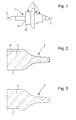
- a balance shaft 1 which comprises a plurality of sections 2 of different diameters defining typically spans 2a and shoulders 2b arranged between two end portions defining pivots 3. These pivots are each intended to rotate in a bearing typically in an orifice of a stone or ruby.
- the metal 4 of the axis 1 is of the steel of the austenitic type and, preferably, stainless, in order to advantageously limit its sensitivity to magnetic fields.
- at least the outer surface 5 of the pivots is hardened relative to the rest of the balance shaft to a predetermined depth to provide, advantageously according to the invention, a high hardness at said outer surface while maintaining a high tenacity.
- a curing depth of between 5% and 40% of the total diameter of the pivots 3 is sufficient for application to a balance shaft.
- the radius d / 2 is 50 microns
- the depth of hardening is preferably around 15 microns around the pivots 3.
- a different depth of hardening of between 5% and 80% of the total diameter d can be provided.
- the hardened outer surface of the pivots 3 comprises diffused atoms of at least one non-metal such as nitrogen and / or carbon.
- a surface zone 5 is cured without having to deposit a second material over the pivots 3.
- the curing is carried out directly in the material 4 pivots 3 which advantageously according to the invention to avoid any subsequent delamination during use.
- At least one surface zone 5 is hardened, that is to say the core of the pivots 3 and / or the remainder of the axis, can remain little or not modified without significant modification of the mechanical properties of the axis. 1.
- the pivots 3 are rolled or polished after step b) in order to reach the desired final dimensions and surface condition for the pivots 3.
- This rolling operation after treatment makes it possible to obtain pins having wear resistance and shock improved compared to axes whose pivots have only undergone the hardening operation.
- step b) may consist of a thermochemical treatment such as a carburizing or nitriding of several balance shafts and / or several blanks of balance shafts. It is understood that step b) may consist in interstitially diffusing in the steel 4, atoms of a chemical element preferably a non-metal such as nitrogen and / or carbon.
- Step b) could also consist of an ion implantation process and / or diffusion heat treatment.
- This variant has the advantage of not limiting the type of diffused atoms and allowing an interstitial as well as a substitutional diffusion.
- the present invention is not limited to the illustrated example but is susceptible of various variations and modifications that will occur to those skilled in the art.
- the base material for producing a pivot axis may also be a cobalt alloy of the austenitic type comprising at least 39% cobalt, typically an alloy known under the designation DIN K13C20N16Fe15D7 typically having 39% of Co, 19% Cr, 15% Ni and 6% Mo, 1.5% Mn, 18% Fe and the balance of additives or an austenitic nickel alloy comprising at least 33% nickel typically one alloy known as MP35N® typically having 35% Ni 20% Cr, 10% Mo, 33% Co and the balance of additives.
- a cobalt alloy of the austenitic type comprising at least 39% cobalt, typically an alloy known under the designation DIN K13C20N16Fe15D7 typically having 39% of Co, 19% Cr, 15% Ni and 6% Mo, 1.5% Mn, 18% Fe and the balance of additives
- an austenitic nickel alloy comprising at least 33% nickel typically one alloy known as MP35N® typically having 35% Ni 20% Cr, 10% Mo, 33% Co and the balance of additives
Landscapes
- Physics & Mathematics (AREA)
- General Physics & Mathematics (AREA)
- Heat Treatment Of Articles (AREA)
- Solid-Phase Diffusion Into Metallic Material Surfaces (AREA)
- Engineering & Computer Science (AREA)
- Manufacturing & Machinery (AREA)
- Metallurgy (AREA)
- Powder Metallurgy (AREA)
Abstract
Description
- L'invention se rapporte à une pièce pour mouvement d'horlogerie et notamment à un axe de pivotement amagnétique pour un mouvement d'horlogerie mécanique et plus particulièrement à un axe de balancier, une tige d'ancre et un pignon d'échappement amagnétiques.
- La fabrication d'un axe de pivotement horloger consiste, à partir d'une barre en acier trempable, à réaliser des opérations de décolletage pour définir des différentes surfaces actives (portée, épaulement, pivots etc.) puis à soumettre l'axe décolleté à des opérations de traitement thermique comprenant au moins une trempe pour améliorer la dureté de l'axe et un ou plusieurs revenus pour en améliorer la ténacité. Les opérations de traitements thermiques sont suivies d'une opération de roulage des pivots des axes, opération consistant à polir les pivots pour les amener aux dimensions requises. Au cours de l'opération de roulage la dureté ainsi que la rugosité des pivots sont encore améliorées. On notera que cette opération de roulage est très difficile voire impossible à réaliser avec des matériaux dont la dureté est faible c'est-à-dire inférieure à 600HV
- Les axes de pivotement, par exemple les axes de balancier, utilisés classiquement dans les mouvements d'horlogerie mécaniques sont réalisés dans des nuances d'aciers de décolletage qui sont généralement des aciers martensitiques au carbone incluant du plomb et des sulfures de manganèse pour améliorer leur usinabilité. Un acier de ce type est connu, désigné 20AP est typiquement utilisé pour ces applications.
- Ce type de matériau a l'avantage d'être facilement usinable, en particulier d'être apte au décolletage et présente, après des traitements de trempe et de revenu, des propriétés mécaniques élevées très intéressantes pour la réalisation d'axes de pivotement horlogers. Ces aciers présentent en particulier une résistance à l'usure et une dureté après traitement thermique élevées. Typiquement la dureté des pivots d'un axe réalisé en acier 20 AP peut atteindre une dureté dépassant les 700 HV après traitement thermique et roulage.
- Bien que fournissant des propriétés mécaniques satisfaisantes pour les applications horlogères décrites ci-dessus, ce type de matériau présente l'inconvénient d'être magnétique et de pouvoir perturber la marche d'une montre après avoir été soumis à un champ magnétique, et ce notamment lorsque ce matériau est utilisé pour la réalisation d'un axe de balancier coopérant avec un balancier spiral en matériau ferromagnétique. Ce phénomène est bien connu de l'homme du métier et est par exemple décrit dans le Bulletin Annuel Suisse de Chronométrie Vol. I, pages 52 à 74. On notera également que ces aciers martensitiques sont également sensibles à la corrosion.
- Des essais pour tenter de remédier à ces inconvénients ont été menés avec des aciers inoxydables austénitiques qui présentent la particularité d'être amagnétiques c'est -à-dire du type paramagnétique ou diamagnétique ou antiferromagnétique Toutefois, ces aciers austénitiques présentent une structure cristallographique ne permettant pas de les tremper et d'atteindre des duretés et donc des résistances à l'usure compatibles avec les exigences requises pour la réalisation d'axes de pivotement horlogers. Un moyen d'augmenter la dureté de ces aciers est l'écrouissage, toutefois cette opération de durcissement ne permet pas d'obtenir des duretés supérieure à 500 HV. Par conséquent, dans le cadre de pièces nécessitant une grande résistance à l'usure par frottement et devant avoir des pivots ne présentant pas ou peu de risque de déformation, l'utilisation de ce type d'aciers reste limitée
- Une autre approche pour tenter de remédier à ces inconvénients a consisté à déposer sur les axes de pivotements des couches dures de matériaux tels que le carbone amorphe connu sous la dénomination anglaise diamond like carbone (DCL) . Or, on a constaté des risques importants de délamination de la couche dure et donc la formation de débris qui peuvent circuler à l'intérieur du mouvement horloger et venir perturber le fonctionnement de ce dernier, ce qui n'est pas satisfaisant.
- Encore une autre approche a été envisagée pour remédier aux inconvénients des aciers inoxydables austénitiques, à savoir le durcissement superficiel de ces axes de pivotement par nitruration, carburation ou nitrocarburation. Toutefois ces traitements sont connus pour entrainer une perte importante de la résistance à la corrosion en raison de la réaction de l'azote et/ou du carbone avec le chrome de l'acier et la formation de nitrure de chrome et/ou de carbure de chrome causant un appauvrissement localisé de la matrice en chrome, ce qui est préjudiciable pour l'application horlogère souhaitée.
- Le but de la présente invention est de pallier tout ou partie des inconvénients cités précédemment en proposant un axe de pivotement permettant à la fois de limiter la sensibilité aux champs magnétiques et d'obtenir une dureté améliorée compatible avec les exigences de résistance à l'usure et aux chocs dans le domaine horloger .
- L'invention a également pour but de fournir un axe de pivotement amagnétique ayant une résistance à la corrosion améliorée.
- L'invention a encore pour but de fournir un axe de pivotement amagnétique qui puisse être fabriqué de manière simple et économique.
- A cet effet, l'invention se rapporte à un axe de pivotement en métal pour mouvement horloger comportant au moins un pivot à au moins une de ses extrémités caractérisé en ce que le métal est un acier du type austénitique, un alliage de cobalt du type austénitique ou un alliage de nickel du type austénitique afin de limiter sa sensibilité aux champs magnétiques et en ce qu'au moins la surface externe dudit au moins un pivot est durcie par rapport au coeur de l'axe selon une profondeur prédéterminée.
- Par conséquent, une zone superficielle ou la totalité de l'axe est durcie c'est-à-dire que le coeur l'axe peut rester peu ou pas modifié. Par ce durcissement sélectif de portions de l'axe, l'axe de pivotement permet de cumuler les avantages comme la faible sensibilité aux champs magnétiques, et dans les zones de contrainte principales, une dureté, en plus d'une bonne résistance à la corrosion tout en conservant une bonne ténacité générale. Par ailleurs l'utilisation d'un tel acier austénitique est avantageuse dans la mesure où ce dernier présente une grande usinabilité .
- Conformément à d'autres caractéristiques avantageuses de l'invention :
- la profondeur prédéterminée représente entre 5% et 40% du diamètre d total du pivot, typiquement entre 5 et 35 microns;
- la surface externe durcie comporte des atomes diffusés d'un élément chimique, ledit au moins élément chimique étant un non-métal et de préférence de l'azote et/ou du carbone ;
- la surface externe durcie comporte une dureté supérieure à 1000 HV;
- De plus, l'invention se rapporte à un mouvement d'horlogerie, caractérisé en ce qu'il comprend un axe de pivotement selon l'une des variantes précédentes, et en particulier un axe de balancier, une tige d'ancre et/ou un pignon d'échappement comprenant un axe selon l'une des revendications précédentes.
- Enfin, l'invention se rapporte à un procédé de fabrication d'un axe de pivotement comportant les étapes suivantes :
- a) former une axe de pivotement à base d'acier du type austénitique, d'un alliage de cobalt du type austénitique ou d'un alliage de nickel du type austénitique, pour limiter sa sensibilité aux champs magnétiques comportant au moins un pivot à au moins une de ses extrémités;
- b) diffuser des atomes selon une profondeur prédéterminée au moins à la surface externe dudit au moins un pivot afin de durcir l'axe de pivotement au niveau des zones de contraintes principales tout en gardant une ténacité élevée.
- Par conséquent, par diffusion d'atomes dans l'acier ou dans l'alliage de cobalt ou de nickel, une zone superficielle ou la totalité des pivots est durcie sans avoir à déposer un deuxième matériau par-dessus les pivots. En effet, le durcissement est réalisé directement dans le matériau de l'axe de pivotement ce qui permet avantageusement selon l'invention d'éviter tout délaminage ultérieur comme cela peut se produire dans le cas du dépôt d'une couche dure sur l'axe.
- De plus, ce traitement thermochimique qui vise à diffuser des atomes de carbone et/ou d'azote dans les sites interstitiels de l'alliage ne forme en principe ni carbures et/ou ni nitrures qui pourraient dégrader la résistance à la corrosion des axes de pivotement.
- Conformément à d'autres caractéristiques avantageuses de l'invention :
- la profondeur prédéterminée représente entre 5% et 40% du diamètre d total du pivot ;
- les atomes comportent au moins un élément chimique, ce dernier étant de préférence un non-métal comme de l'azote et/ou du carbone ;
- l'étape b) effectue un traitement thermochimique de diffusion ;
- l'étape b) effectue un processus d'implantation ionique et de traitement de diffusion ;
- les pivots sont roulés ou polis après l'étape b).
- D'autres particularités et avantages ressortiront clairement de la description qui en est faite ci-après, à titre indicatif et nullement limitatif, en référence aux dessins annexés, dans lesquels :
- la
figure 1 est une représentation d'un axe de pivotement selon l'invention ; - la
figure 2 est une coupe partielle d'un pivot d'axe de balancier selon l'invention après l'opération de traitement de diffusion et avant l'opération de roulage ou de polissage. - la
figure 3 est une coupe partielle similaire à celle de lafigure 2 illustrant un pivot après l'opération de traitement de diffusion et après l'opération de roulage ou de polissage. - Les
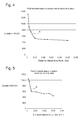
figures 4 et 5 sont des graphes illustrant le profil de dureté du bord en direction du coeur d'un pivot d'axe de balancier selon l'invention, après l'opération de diffusion, respectivement avant et après l'opération de roulage ou polissage. - L'invention se rapporte à une pièce pour mouvement d'horlogerie et notamment à un axe de pivotement amagnétique pour un mouvement d'horlogerie mécanique.
- L'invention sera décrite ci-après dans le cadre d'une application à un axe de balancier amagnétique 1 . Bien évidemment, d'autres types d'axes de pivotement horlogers sont envisageables comme par exemple des axes de mobiles horlogers, typiquement des pignons d'échappement, ou encore des tiges d'ancre .
- En se référant à la
figure 1 on voir un axe de balancier 1 selon l'invention qui comporte une pluralité de sections 2 de diamètres différents définissants classiquement des portées 2a et des épaulements 2b arrangés entre deux portions d'extrémité définissant des pivots 3. Ces pivots sont destinés à venir chacun pivoter dans un palier typiquement dans un orifice d'une pierre ou rubis. - Avec le magnétisme induit par les objets rencontrés au quotidien, il est important de limiter la sensibilité de l'axe de balancier 1 sous peine d'influencer la marche de la pièce d'horlogerie dans lequel il est incorporé.
- De manière surprenante, l'invention permet de résoudre les deux problèmes en même temps sans compromis et en apportant d'autres avantages. Ainsi, le métal 4 de l'axe 1 est de l'acier du type austénitique et, préférentiellement, inoxydable, afin de limiter de manière avantageuse sa sensibilité aux champs magnétiques. De plus, au moins la surface externe 5 des pivots (
Figures 2 et 3 ) est durcie par rapport au reste de l'axe de balancier selon une profondeur prédéterminée afin d'offrir, avantageusement selon l'invention, une dureté élevée au niveau de ladite surface externe tout en gardant une ténacité élevée . - En effet, selon l'invention, nous avons pu obtenir des durcissements de la surface externe des pivots 3 supérieur à 1000 HV Les valeurs ci-dessus ont été obtenues à partir de l'acier austénitique inox nickel chrome comprenant au moins 16.5 % de Cr et 10% de Ni du type 316L (DIN X2CrNiMo17-12-2+Su+Cu) avec ajout de soufre et de sulfure de manganèse. Bien évidemment, d'autres aciers austénitiques sont envisageables dès lors que la proportion de leur constituant leur confère des propriétés paramagnétiques, diamagnétiques ou antiferromagnétiques ainsi qu'une bonne usinabilité..
- Il a été montré empiriquement qu'une profondeur de durcissement comprise entre 5% et 40% de diamètre d total des pivots 3 suffit pour l'application à un axe de balancier. A titre d'exemple, si le rayon d/2 est de 50 µm, la profondeur de durcissement est préférentiellement autour de 15 µm tout autour des pivots 3. Bien évidemment, suivant les applications, une profondeur différente de durcissement comprise entre 5% et 80% du diamètre d total peut être prévue.
- Préférentiellement selon l'invention, la surface externe durcie 5 des pivots 3 comporte des atomes diffusés d'au moins un non-métal comme de l'azote et/ou du carbone. En effet, comme expliqué ci-dessous, par sursaturation interstitielle d'atomes dans l'acier 4, une zone superficielle 5 est durcie sans avoir à déposer un deuxième matériau par-dessus les pivots 3. En effet, le durcissement est réalisé directement dans le matériau 4 des pivots 3 ce qui permet avantageusement selon l'invention d'éviter tout délaminage ultérieur en cours d'utilisation.
- Par conséquent, au moins une zone superficielle 5 est durcie c'est-à-dire que le coeur des pivots 3 et/ou le reste de l'axe, peut rester peu ou pas modifié sans modification notable des propriétés mécaniques de l'axe de balancier 1. Par ce durcissement sélectif des pivots 3 de l'axe de balancier 1 permet de cumuler les avantages comme la faible sensibilité aux champs magnétiques, une dureté est une ténacité élevée, dans les zones de contrainte principales tout en ayant une bonne résistance à la corrosion et à la fatigue.
- L'invention se rapporte également au procédé de fabrication d'un axe de balancier comme expliqué ci-dessus. Le procédé comporte avantageusement selon l'invention les étapes suivantes :
- a) former un axe de balancier 1 à base d'un acier du type austénitique pour limiter sa sensibilité aux champs magnétiques et comportant un pivots 3 à chacune de ses extrémités;
- b) diffuser des atomes selon une profondeur prédéterminée au moins à la surface externe 5 des pivots 3 afin de durcir les pivots au niveau des zones de contraintes principales.
- Selon un premier mode préférentiel de réalisation, les pivots 3 sont roulés ou poli après l'étape b) afin d'atteindre les dimensions et l'état de surface finaux désirés pour les pivots 3. Cette opération de roulage après traitement permet d'obtenir des axes présentant une résistance à l'usure et aux chocs améliorée par rapport à des axes dont les pivots n'ont subi que l'opération de durcissement .
- En observant les graphes illustrés aux
figures 4 et 5 , qui ont été réalisés sur la base d'axes de balancier ayant subi le traitement de diffusion de l'étape b) sur la totalité de ses surfaces on constate que la dureté en surface de l'axe, y compris de la surface de ses pivots 3, atteint une dureté de l'ordre de 1300HV (courbe Afigure 4 ). On constate également contre toute attente que l'opération de roulage qui a éliminé une partie de la couche superficielle 5a (la couche sombre à lafigure 2 ) a également éliminé la partie la plus dure de la couche superficielle 5 des pivots 3 mais que la dureté superficielle des pivots 3 (courbe BFigure 5 ) reste avantageusement supérieure à 1000HV, ce qui donne aux pivots 3 des propriétés de résistance à l'usure très satisfaisantes pour l'application considérée. - Avantageusement selon l'invention, quel que soit le mode de réalisation, le procédé peut être appliqué en vrac. Ainsi, l'étape b) peut consister en un traitement thermochimique comme une cémentation ou une nitruration de plusieurs axes de balancier et/ou de plusieurs ébauches de d'axes de balancier. On comprend que l'étape b) peut consister à diffuser interstitiellement dans l'acier 4, des atomes d'un élément chimique préférentiellement d'un non-métal comme de l'azote et/ou du carbone. Enfin, avantageusement, il a été trouvé que les contraintes compressives du procédé améliorent la résistance à la fatigue et la tenue aux chocs.
- L'étape b) pourrait également consister en un processus d'implantation ionique et/ou d'un traitement thermique de diffusion. Cette variante possède l'avantage de ne pas limiter le type d'atomes diffusés et permettre une diffusion aussi bien interstitielle que substitutionnelle.
- Bien entendu, la présente invention ne se limite pas à l'exemple illustré mais est susceptible de diverses variantes et modifications qui apparaîtront à l'homme de l'art. En particulier, il peut être envisagé de totalement ou quasi-totalement traiter les pivots 3, c'est-à-dire traiter un pourcentage supérieur à 80% du diamètre d des pivots 3 même si cela n'est pas nécessaire pour l'application à des axes de pivotements tels que des axes de balanciers horlogers.
- L'invention prévoit également que le matériau de base pour la réalisation d'un axe de pivotement peut être également un alliage de cobalt du type austénitique comprenant au moins 39% de cobalt, typiquement un alliage connu sous la désignation DIN K13C20N16Fe15D7 ayant typiquement 39% de Co, 19% de Cr, 15% de Ni et 6% de Mo, 1.5% de Mn, 18% de Fe et le soldes d'additifs ou un alliage de nickel de type austénitique comprenant au moins 33% de nickel typiquement un alliage connu sous la désignation MP35N® ayant typiquement 35% de Ni 20% de Cr, 10% de Mo, 33% de Co et le solde d'additifs.
Claims (19)
- Axe de pivotement en métal (1) pour mouvement horloger comportant au moins un pivot à au moins une de ses extrémités caractérisé en ce que le métal est un acier du type austénitique, un alliage de cobalt du type austénitique ou un alliage de nickel du type austénitique afin de limiter sa sensibilité aux champs magnétiques et en ce qu'au moins la surface externe (5) dudit au moins un pivot (3) est durcie par rapport au coeur de l'axe selon une profondeur prédéterminée.
- Axe de pivotement (1) selon la revendication 1, caractérisé en ce que la profondeur prédéterminée représente entre 5% et 40% du diamètre total( d ).
- Axe de pivotement (1) selon la revendication 1 ou 2, caractérisé en ce que la surface externe durcie (5) comporte des atomes diffusés d'au moins un élément chimique.
- Axe de pivotement (1) selon la revendication 3, caractérisé en ce que ledit au moins un élément chimique est un non métal
- Axe de pivotement (1) selon la revendication 4, caractérisé en ce que ledit au moins non-métal est de l'azote et/ou du carbone.
- Axe de pivotement (1) selon l'une des revendications précédentes, caractérisé en ce que la surface externe durcie (5) comporte une dureté supérieure à 1000 HV.
- Axe de pivotement (1) selon l'une des revendications précédentes, caractérisé en ce que le métal formant l'axe est choisi parmi l'ensemble comprenant les aciers austénitiques inox nickel chrome comprenant au moins 16.5 % de Cr et 10% de Ni, les alliages de cobalt de type austénitique comprenant au moins 39% de cobalt, les alliages de nickel de type austénitique ayant au moins 33% de nickel.
- Axe de pivotement (1) selon la revendication 7, caractérisé en ce que le métal formant l'axe est choisi parmi l'ensemble comprenant les l'acier austénitique X2CrNiMo17-12-2+Su+Cu, l'alliages de cobalt de type austénitique K13C20N16Fe15D7, et l'alliage de nickel de type austénitique ayant pour composition 35% de Ni 20% de Cr, 10% de Mo, 33% de Co et le solde d'additifs.
- Axe de pivotement (1) selon l'une des revendications précédentes, caractérisé en ce qu'il comprend deux pivots.
- Mouvement pour une pièce d'horlogerie caractérisé en ce qu'il comprend un axe de pivotement (1) selon l'une des revendications précédentes.
- Mouvement pour une pièce d'horlogerie caractérisé en ce qu'il comprend un axe de balancier (1), une tige d'ancre et/ou un pignon d'échappement comprenant un axe selon l'une des revendications précédentes.
- Procédé de fabrication d'un axe de pivotement (1) comportant les étapes suivantes :a) former une axe de pivotement (1) à base d'acier (5) du type austénitique, d'un alliage de cobalt du type austénitique ou d'un alliage de nickel du type austénitique, pour limiter sa sensibilité aux champs magnétiques comportant au moins un pivot (3) à une de ses extrémités;b) diffuser des atomes selon une profondeur prédéterminée au moins à la surface externe dudit au moins un pivot (3) afin de durcir l'axe de pivotement (3) au niveau des zones de contraintes principales tout en gardant une ténacité élevée.
- Procédé selon la revendication 12, caractérisé en ce que la profondeur prédéterminée représente entre 5% et 40% du diamètre total ( d ) des pivots (3).
- Procédé selon la revendication 12 ou 13, caractérisé en ce que l'étape de diffusion comprend la diffusion d'atomes d'au moins un élément chimique
- Procédé selon la revendication 14, caractérisé en ce que les atomes comportent au moins un non-métal.
- Procédé selon la revendication 15, caractérisé en ce que ledit au moins un non-métal est de l'azote et/ou de carbone.
- Procédé selon l'une des revendications 12 à 16, caractérisé en ce que l'étape b) consiste en un traitement thermochimique de diffusion.
- Procédé selon l'une des revendications 12 à 16, caractérisé en ce que l'étape b) consiste en un processus d'implantation ionique suivi ou non d'un traitement de diffusion.
- Procédé selon l'une des revendications 12 à 18, caractérisé en ce que les pivots (3) est subissent une opération de roulage/polissage après l'étape b).
Priority Applications (14)
| Application Number | Priority Date | Filing Date | Title |
|---|---|---|---|
| EP13151669.2A EP2757423B1 (fr) | 2013-01-17 | 2013-01-17 | Pièce pour mouvement d'horlogerie |
| US14/154,673 US9182742B2 (en) | 2013-01-17 | 2014-01-14 | Part for a timepiece movement |
| RU2014101336A RU2625254C2 (ru) | 2013-01-17 | 2014-01-16 | Деталь часового механизма |
| CN201410022528.9A CN103941572A (zh) | 2013-01-17 | 2014-01-17 | 用于钟表机芯的部件 |
| JP2014006503A JP2014137376A (ja) | 2013-01-17 | 2014-01-17 | 時計ムーブメントのための部品 |
| CN201910758457.1A CN110376868A (zh) | 2013-01-17 | 2014-01-17 | 用于钟表机芯的部件 |
| HK15100660.2A HK1200221A1 (en) | 2013-01-17 | 2015-01-21 | Part for a timepiece movement |
| US14/852,074 US9389587B2 (en) | 2013-01-17 | 2015-09-11 | Part for a timepiece movement |
| JP2015240807A JP6420752B2 (ja) | 2013-01-17 | 2015-12-10 | 時計ムーブメントのための部品 |
| JP2018070668A JP2018136328A (ja) | 2013-01-17 | 2018-04-02 | 時計ムーブメントのための部品 |
| JP2019200748A JP2020034570A (ja) | 2013-01-17 | 2019-11-05 | 時計ムーブメントのための部品 |
| JP2021177240A JP2022009719A (ja) | 2013-01-17 | 2021-10-29 | 時計ムーブメントのための部品 |
| JP2022155179A JP2022173431A (ja) | 2013-01-17 | 2022-09-28 | 時計ムーブメントのための部品 |
| JP2024126512A JP2024144687A (ja) | 2013-01-17 | 2024-08-02 | 時計ムーブメントのための部品 |
Applications Claiming Priority (1)
| Application Number | Priority Date | Filing Date | Title |
|---|---|---|---|
| EP13151669.2A EP2757423B1 (fr) | 2013-01-17 | 2013-01-17 | Pièce pour mouvement d'horlogerie |
Publications (2)
| Publication Number | Publication Date |
|---|---|
| EP2757423A1 true EP2757423A1 (fr) | 2014-07-23 |
| EP2757423B1 EP2757423B1 (fr) | 2018-07-11 |
Family
ID=47678580
Family Applications (1)
| Application Number | Title | Priority Date | Filing Date |
|---|---|---|---|
| EP13151669.2A Active EP2757423B1 (fr) | 2013-01-17 | 2013-01-17 | Pièce pour mouvement d'horlogerie |
Country Status (6)
| Country | Link |
|---|---|
| US (2) | US9182742B2 (fr) |
| EP (1) | EP2757423B1 (fr) |
| JP (7) | JP2014137376A (fr) |
| CN (2) | CN103941572A (fr) |
| HK (1) | HK1200221A1 (fr) |
| RU (1) | RU2625254C2 (fr) |
Cited By (13)
| Publication number | Priority date | Publication date | Assignee | Title |
|---|---|---|---|---|
| EP3258325A1 (fr) | 2016-06-13 | 2017-12-20 | Rolex Sa | Axe horloger |
| EP3273304A1 (fr) | 2016-07-19 | 2018-01-24 | Nivarox-FAR S.A. | Pièce pour mouvement d'horlogerie |
| EP3273306A1 (fr) | 2016-07-19 | 2018-01-24 | Nivarox-FAR S.A. | Pièce pour mouvement d'horlogerie |
| EP3273307A1 (fr) | 2016-07-19 | 2018-01-24 | Nivarox-FAR S.A. | Pièce pour mouvement d'horlogerie |
| EP3273303A1 (fr) | 2016-07-19 | 2018-01-24 | Nivarox-FAR S.A. | Pièce pour mouvement d'horlogerie |
| EP3273305A1 (fr) | 2016-07-19 | 2018-01-24 | Nivarox-FAR S.A. | Pièce pour mouvement d'horlogerie |
| EP3285123A1 (fr) * | 2016-08-15 | 2018-02-21 | Rolex Sa | Dispositif de remontage d'un mouvement horloger |
| EP3339968A1 (fr) | 2016-12-20 | 2018-06-27 | Nivarox-FAR S.A. | Pièce pour mouvement d'horlogerie |
| EP2757423B1 (fr) | 2013-01-17 | 2018-07-11 | Omega SA | Pièce pour mouvement d'horlogerie |
| EP3663865A1 (fr) * | 2018-12-06 | 2020-06-10 | Richemont International S.A. | Procede de realisation d'un axe de balancier et axe de balancier |
| EP3940112A1 (fr) | 2020-07-16 | 2022-01-19 | Richemont International Sa | Procede d amelioration d'un materiau de piece horlogere |
| WO2022223479A1 (fr) | 2021-04-20 | 2022-10-27 | Acrotec R&D Sa | Procede de fabrication d'un axe de pivotement de type horloger |
| WO2023036928A1 (fr) | 2021-09-09 | 2023-03-16 | Rolex Sa | Élément inertiel pour mouvement horloger |
Families Citing this family (8)
| Publication number | Priority date | Publication date | Assignee | Title |
|---|---|---|---|---|
| EP2771743B8 (fr) | 2011-10-24 | 2025-01-01 | Rolex S.A. | Oscillateur de mouvement horloger |
| CH707790B1 (fr) * | 2013-03-26 | 2017-12-15 | Montres Breguet Sa | Arbre de mobile pivotant d'horlogerie magnétiquement inhomogène. |
| EP3208664B1 (fr) * | 2016-02-19 | 2023-08-16 | Omega SA | Mecanisme horloger ou horloge sans signature magnetique |
| CN109557796B (zh) * | 2017-09-25 | 2021-10-01 | 精工爱普生株式会社 | 配有磁传感器的钟表 |
| EP3862819A1 (fr) * | 2020-02-04 | 2021-08-11 | Rolex Sa | Procédé de traitement thermique d'un composant horloger |
| FR3118064B1 (fr) * | 2020-12-23 | 2023-12-01 | Univ De Lorraine | Pièces d’horlogerie amagnétiques et procédé de traitement thermomécanique pour l’obtention de telles pièces. |
| EP4198642A1 (fr) * | 2021-12-15 | 2023-06-21 | Nivarox-FAR S.A. | Balancier pour mouvement d'horlogerie |
| CN120379940A (zh) | 2022-10-28 | 2025-07-25 | 株式会社精益佳 | 处理剂、废液处理工具及下游侧废液处理工具 |
Citations (7)
| Publication number | Priority date | Publication date | Assignee | Title |
|---|---|---|---|---|
| CH477718A (fr) * | 1967-02-01 | 1969-05-14 | Petignat Maurice | Procédé de durcissage de la surface d'une pièce d'horlogerie en acier inoxydable austénitique et pièce d'horlogerie obtenue par la mise en oeuvre de ce procédé |
| CH554501A (de) * | 1971-12-28 | 1974-09-30 | Suisse Horlogerie Rech Lab | Achse fuer feinmechanische geraete. |
| FR2300256A1 (fr) | 1975-02-10 | 1976-09-03 | Straumann Inst Ag | Partie de palier et procede pour sa realisation |
| JPS5935673A (ja) * | 1982-08-24 | 1984-02-27 | Seiko Instr & Electronics Ltd | 金色携帯時計用外装部品 |
| EP0801142A2 (fr) | 1996-04-12 | 1997-10-15 | Nitruvid | Procédé de traitement de surface d'une pièce métallique, pièce métallique obtenue et ses applications |
| JP2003214526A (ja) | 2002-01-23 | 2003-07-30 | Seiko Epson Corp | 金属部品、歯車装置、動力伝達装置およびこれらを備えた機器 |
| EP2065107A1 (fr) * | 2007-11-19 | 2009-06-03 | DAMASKO, Konrad | Procédé de fabrication d'un composant doté d'une surface durcie |
Family Cites Families (35)
| Publication number | Priority date | Publication date | Assignee | Title |
|---|---|---|---|---|
| US2865791A (en) * | 1954-03-05 | 1958-12-23 | Metallgesellschaft Ag | Metal nitride coating process |
| US3034286A (en) * | 1957-04-30 | 1962-05-15 | Straumann Inst Ag | Escapement |
| US3099128A (en) * | 1960-09-10 | 1963-07-30 | Straumann Inst Ag | Watchwork mechanisms |
| US3199978A (en) * | 1963-01-31 | 1965-08-10 | Westinghouse Electric Corp | High-strength, precipitation hardening austenitic alloys |
| CH1246668A4 (fr) * | 1968-08-19 | 1972-11-30 | ||
| CH1751771A4 (fr) * | 1971-12-02 | 1975-02-14 | ||
| JPS5884968A (ja) | 1981-11-12 | 1983-05-21 | Seiko Instr & Electronics Ltd | 時計用硬質外装部品 |
| JP4463353B2 (ja) * | 1999-11-10 | 2010-05-19 | シチズンホールディングス株式会社 | 時計外装部品およびその製造方法 |
| CN2080186U (zh) * | 1990-12-14 | 1991-07-03 | 河南省新乡市钟表总厂 | 摆装置 |
| JPH06308260A (ja) | 1993-04-23 | 1994-11-04 | Daido Hoxan Inc | 耐食性時計部材 |
| FR2708941B1 (fr) * | 1993-08-10 | 1995-10-27 | Stephanois Rech Mec | Procédé pour améliorer la résistance à l'usure et à la corrosion de pièces en métaux ferreux. |
| JPH08134700A (ja) * | 1994-11-04 | 1996-05-28 | Yamaha Motor Co Ltd | 金属材の表面処理法 |
| JP3064909B2 (ja) * | 1995-06-27 | 2000-07-12 | エア・ウォーター株式会社 | 浸炭硬化食器類およびその製法 |
| DE19704530C2 (de) | 1997-02-06 | 1999-02-25 | Vacuumschmelze Gmbh | Verwendung einer nickelfreien, austenitischen Kobaltbasislegierung |
| US6264768B1 (en) * | 1999-04-23 | 2001-07-24 | The Penn State Research Foundation | Method for strengthening of rolling element bearings by thermal-mechanical net shape finish forming technique |
| JP2003042294A (ja) * | 2001-07-31 | 2003-02-13 | Nippon Piston Ring Co Ltd | ピストンリング |
| JP2004085434A (ja) * | 2002-08-28 | 2004-03-18 | Seiko Instruments Inc | 時計 |
| JP4133842B2 (ja) * | 2004-01-13 | 2008-08-13 | エア・ウォーター株式会社 | ステンレス鋼ばねの製造方法 |
| JP3642427B1 (ja) * | 2004-03-16 | 2005-04-27 | セイコーエプソン株式会社 | 装飾品および時計 |
| CH694465A5 (de) * | 2004-05-10 | 2005-01-31 | Prec Engineering Ag | Verfahren zum Bearbeiten von metallischen Körpern, insbesondere von Uhrenbestandteilen. |
| US7966969B2 (en) * | 2004-09-22 | 2011-06-28 | Asm International N.V. | Deposition of TiN films in a batch reactor |
| DE102005013088B4 (de) * | 2005-03-18 | 2006-12-28 | Man B & W Diesel Ag | Gaswechselventil mit Korrosionsschutzschicht |
| JP2007248397A (ja) * | 2006-03-17 | 2007-09-27 | Seiko Epson Corp | 装飾品および時計 |
| JP2008063602A (ja) | 2006-09-05 | 2008-03-21 | Toshiba Corp | 明細書耐食性オーステナイト系合金及びその製造方法 |
| DE102007051949B3 (de) * | 2007-10-31 | 2009-03-12 | Durferrit Gmbh | Verfahren zum Härten von Oberflächen von Werkstücken aus Edelstahl und Verwendung einer Salzschmelze zur Durchführung des Verfahrens |
| CH702836B1 (fr) * | 2008-06-23 | 2011-09-30 | Omega Sa | Pièce décorative réalisée par incrustation et pièce d'horlogerie comprenant une telle pièce. |
| DE602008006057D1 (de) * | 2008-07-04 | 2011-05-19 | Swatch Group Res & Dev Ltd | Gekoppelte Resonatoren für Uhr |
| EP2351864B1 (fr) * | 2008-11-17 | 2016-08-10 | Research Institute for Electromagnetic Materials | Procédé de fabrication d'un alliage à module constant à dureté élevée insensible au magnétisme, spiral, dispositif d'entraînement mécanique et montre |
| DE102009005357A1 (de) * | 2008-12-04 | 2010-08-05 | Konrad Damasko | Verfahren zum Herstellen von Funktionselementen für Uhren, insbesondere zum Herstellen von Feder für ein mechanisches Schwingsystem |
| US7833906B2 (en) * | 2008-12-11 | 2010-11-16 | Asm International N.V. | Titanium silicon nitride deposition |
| IL196439A (en) * | 2009-01-11 | 2013-04-30 | Iscar Ltd | Method of grooving superalloys and cutting insert therefor |
| DE202010018420U1 (de) * | 2009-02-06 | 2016-06-22 | Damasko Gmbh | Mechanisches Schwingsystem für eine Uhr und Unruhfeder für eine Uhr |
| EP2400352A1 (fr) * | 2010-06-22 | 2011-12-28 | The Swatch Group Research and Development Ltd. | Système d'échappement pour pièce d'horlogerie |
| EP2511229B1 (fr) * | 2011-04-12 | 2017-03-08 | GFD Gesellschaft für Diamantprodukte mbH | Composant micromécanique doté de flancs renforcés |
| EP2757423B1 (fr) | 2013-01-17 | 2018-07-11 | Omega SA | Pièce pour mouvement d'horlogerie |
-
2013
- 2013-01-17 EP EP13151669.2A patent/EP2757423B1/fr active Active
-
2014
- 2014-01-14 US US14/154,673 patent/US9182742B2/en active Active
- 2014-01-16 RU RU2014101336A patent/RU2625254C2/ru active
- 2014-01-17 JP JP2014006503A patent/JP2014137376A/ja active Pending
- 2014-01-17 CN CN201410022528.9A patent/CN103941572A/zh active Pending
- 2014-01-17 CN CN201910758457.1A patent/CN110376868A/zh active Pending
-
2015
- 2015-01-21 HK HK15100660.2A patent/HK1200221A1/xx unknown
- 2015-09-11 US US14/852,074 patent/US9389587B2/en active Active
- 2015-12-10 JP JP2015240807A patent/JP6420752B2/ja active Active
-
2018
- 2018-04-02 JP JP2018070668A patent/JP2018136328A/ja active Pending
-
2019
- 2019-11-05 JP JP2019200748A patent/JP2020034570A/ja active Pending
-
2021
- 2021-10-29 JP JP2021177240A patent/JP2022009719A/ja active Pending
-
2022
- 2022-09-28 JP JP2022155179A patent/JP2022173431A/ja active Pending
-
2024
- 2024-08-02 JP JP2024126512A patent/JP2024144687A/ja active Pending
Patent Citations (7)
| Publication number | Priority date | Publication date | Assignee | Title |
|---|---|---|---|---|
| CH477718A (fr) * | 1967-02-01 | 1969-05-14 | Petignat Maurice | Procédé de durcissage de la surface d'une pièce d'horlogerie en acier inoxydable austénitique et pièce d'horlogerie obtenue par la mise en oeuvre de ce procédé |
| CH554501A (de) * | 1971-12-28 | 1974-09-30 | Suisse Horlogerie Rech Lab | Achse fuer feinmechanische geraete. |
| FR2300256A1 (fr) | 1975-02-10 | 1976-09-03 | Straumann Inst Ag | Partie de palier et procede pour sa realisation |
| JPS5935673A (ja) * | 1982-08-24 | 1984-02-27 | Seiko Instr & Electronics Ltd | 金色携帯時計用外装部品 |
| EP0801142A2 (fr) | 1996-04-12 | 1997-10-15 | Nitruvid | Procédé de traitement de surface d'une pièce métallique, pièce métallique obtenue et ses applications |
| JP2003214526A (ja) | 2002-01-23 | 2003-07-30 | Seiko Epson Corp | 金属部品、歯車装置、動力伝達装置およびこれらを備えた機器 |
| EP2065107A1 (fr) * | 2007-11-19 | 2009-06-03 | DAMASKO, Konrad | Procédé de fabrication d'un composant doté d'une surface durcie |
Cited By (25)
| Publication number | Priority date | Publication date | Assignee | Title |
|---|---|---|---|---|
| EP2757423B1 (fr) | 2013-01-17 | 2018-07-11 | Omega SA | Pièce pour mouvement d'horlogerie |
| EP3258325A1 (fr) | 2016-06-13 | 2017-12-20 | Rolex Sa | Axe horloger |
| US11982977B2 (en) | 2016-06-13 | 2024-05-14 | Rolex Sa | Method of manufacturing a timepiece shaft |
| EP3584640A1 (fr) | 2016-06-13 | 2019-12-25 | Rolex Sa | Oscillateur horloger |
| EP4177677A1 (fr) | 2016-06-13 | 2023-05-10 | Rolex Sa | Axe horloger |
| US10761482B2 (en) | 2016-07-19 | 2020-09-01 | Nivarox-Far S.A. | Component for a timepiece movement |
| EP3273304A1 (fr) | 2016-07-19 | 2018-01-24 | Nivarox-FAR S.A. | Pièce pour mouvement d'horlogerie |
| EP3273306A1 (fr) | 2016-07-19 | 2018-01-24 | Nivarox-FAR S.A. | Pièce pour mouvement d'horlogerie |
| EP3273307A1 (fr) | 2016-07-19 | 2018-01-24 | Nivarox-FAR S.A. | Pièce pour mouvement d'horlogerie |
| EP3273303A1 (fr) | 2016-07-19 | 2018-01-24 | Nivarox-FAR S.A. | Pièce pour mouvement d'horlogerie |
| EP3273305A1 (fr) | 2016-07-19 | 2018-01-24 | Nivarox-FAR S.A. | Pièce pour mouvement d'horlogerie |
| US11131965B2 (en) | 2016-07-19 | 2021-09-28 | Nivarox-Far S.A. | Component for a timepiece movement |
| EP3285123A1 (fr) * | 2016-08-15 | 2018-02-21 | Rolex Sa | Dispositif de remontage d'un mouvement horloger |
| US11144011B2 (en) | 2016-08-15 | 2021-10-12 | Rolex Sa | Device for winding a timepiece movement |
| EP3339968A1 (fr) | 2016-12-20 | 2018-06-27 | Nivarox-FAR S.A. | Pièce pour mouvement d'horlogerie |
| CH715613A1 (fr) * | 2018-12-06 | 2020-06-15 | Richemont Int Sa | Procédé de réalisation d'un axe de balancier et axe de balancier. |
| EP3663865A1 (fr) * | 2018-12-06 | 2020-06-10 | Richemont International S.A. | Procede de realisation d'un axe de balancier et axe de balancier |
| EP4485089A3 (fr) * | 2018-12-06 | 2025-03-05 | Richemont International S.A. | Procédé de réalisation d'un axe de balancier et axe de balancier |
| EP4481510A3 (fr) * | 2018-12-06 | 2025-03-05 | Richemont International S.A. | Procédé de réalisation d'un axe de balancier et axe de balancier |
| EP3940112A1 (fr) | 2020-07-16 | 2022-01-19 | Richemont International Sa | Procede d amelioration d'un materiau de piece horlogere |
| CH717663A1 (fr) * | 2020-07-16 | 2022-01-31 | Richemont Int Sa | Procédé de fabrication d'une pièce horlogère, comportant une implantation ionique d'au moins deux types d'atomes. |
| EP4535095A2 (fr) | 2020-07-16 | 2025-04-09 | Richemont International S.A. | Procede d amelioration d'un materiau de piece horlogere |
| EP4535095A3 (fr) * | 2020-07-16 | 2025-07-23 | Richemont International S.A. | Procede d amelioration d'un materiau de piece horlogere |
| WO2022223479A1 (fr) | 2021-04-20 | 2022-10-27 | Acrotec R&D Sa | Procede de fabrication d'un axe de pivotement de type horloger |
| WO2023036928A1 (fr) | 2021-09-09 | 2023-03-16 | Rolex Sa | Élément inertiel pour mouvement horloger |
Also Published As
| Publication number | Publication date |
|---|---|
| US20140198625A1 (en) | 2014-07-17 |
| JP2016033523A (ja) | 2016-03-10 |
| CN103941572A (zh) | 2014-07-23 |
| JP2022009719A (ja) | 2022-01-14 |
| JP2020034570A (ja) | 2020-03-05 |
| JP2018136328A (ja) | 2018-08-30 |
| HK1200221A1 (en) | 2015-07-31 |
| EP2757423B1 (fr) | 2018-07-11 |
| RU2625254C2 (ru) | 2017-07-12 |
| RU2014101336A (ru) | 2015-07-27 |
| JP6420752B2 (ja) | 2018-11-07 |
| CN110376868A (zh) | 2019-10-25 |
| US20150378309A1 (en) | 2015-12-31 |
| US9182742B2 (en) | 2015-11-10 |
| US9389587B2 (en) | 2016-07-12 |
| JP2014137376A (ja) | 2014-07-28 |
| JP2024144687A (ja) | 2024-10-11 |
| JP2022173431A (ja) | 2022-11-18 |
Similar Documents
| Publication | Publication Date | Title |
|---|---|---|
| EP2757423B1 (fr) | Pièce pour mouvement d'horlogerie | |
| EP2757424B1 (fr) | Pièce pour mouvement d'horlogerie | |
| EP3273303B1 (fr) | Pièce pour mouvement d'horlogerie | |
| CH707504A2 (fr) | Axe de pivotement en métal pour mouvement horloger et procédé de fabrication d'un tel axe. | |
| EP3273307B1 (fr) | Pièce pour mouvement d'horlogerie | |
| EP3273306B1 (fr) | Pièce pour mouvement d'horlogerie | |
| EP3743538B1 (fr) | Axe de pivotement d'un organe reglant et son procédé de fabrication | |
| EP2680090A1 (fr) | Ressort-moteur pour une pièce d'horlogerie | |
| CH712719A2 (fr) | Composant horloger pour mouvement d'horlogerie. | |
| EP3273304B1 (fr) | Pièce pour mouvement d'horlogerie | |
| EP3273305B1 (fr) | Pièce pour mouvement d'horlogerie | |
| CH712718A2 (fr) | Axe de pivotement pour mouvement d'horlogerie. | |
| EP3339968B1 (fr) | Pièce pour mouvement d'horlogerie | |
| CH707505A2 (fr) | Axe de pivotement en métal pour mouvement horloger et procédé de fabrication d'un tel axe. | |
| EP4327165A1 (fr) | Procede de fabrication d'un axe de pivotement horloger et axe de pivotement horloger obtenu par ledit procede | |
| EP3800511B1 (fr) | Axe de pivotement d'un organe réglant | |
| EP4327164A1 (fr) | Composant horloger et procede de fabrication d'un tel composant horloger | |
| CH719580A2 (fr) | Axe de pivotement amagnétique horloger. | |
| CH712720A2 (fr) | Axe de pivotement pour mouvement horloger. | |
| EP4718169A1 (fr) | Axe de pivotement amagnétique | |
| CH722184A2 (fr) | Axe de pivotement amagnétique pour mouvement horloger, et procédé de traitement thermique | |
| CH718549A2 (fr) | Composant horloger et procédé de fabrication d'un tel composant horloger. | |
| CH718550A2 (fr) | Axe de pivotement horloger et procédé de fabrication d'un tel axe de pivotement horloger. | |
| CH716664A2 (fr) | Composant horloger amagnétique et dur, notamment axe de pivotement d'un organe réglant. | |
| EP4258064A1 (fr) | Axe de pivotement amagnetique |
Legal Events
| Date | Code | Title | Description |
|---|---|---|---|
| PUAI | Public reference made under article 153(3) epc to a published international application that has entered the european phase |
Free format text: ORIGINAL CODE: 0009012 |
|
| 17P | Request for examination filed |
Effective date: 20130117 |
|
| AK | Designated contracting states |
Kind code of ref document: A1 Designated state(s): AL AT BE BG CH CY CZ DE DK EE ES FI FR GB GR HR HU IE IS IT LI LT LU LV MC MK MT NL NO PL PT RO RS SE SI SK SM TR |
|
| AX | Request for extension of the european patent |
Extension state: BA ME |
|
| R17P | Request for examination filed (corrected) |
Effective date: 20141223 |
|
| RBV | Designated contracting states (corrected) |
Designated state(s): AL AT BE BG CH CY CZ DE DK EE ES FI FR GB GR HR HU IE IS IT LI LT LU LV MC MK MT NL NO PL PT RO RS SE SI SK SM TR |
|
| 17Q | First examination report despatched |
Effective date: 20161011 |
|
| STAA | Information on the status of an ep patent application or granted ep patent |
Free format text: STATUS: EXAMINATION IS IN PROGRESS |
|
| GRAP | Despatch of communication of intention to grant a patent |
Free format text: ORIGINAL CODE: EPIDOSNIGR1 |
|
| STAA | Information on the status of an ep patent application or granted ep patent |
Free format text: STATUS: GRANT OF PATENT IS INTENDED |
|
| INTG | Intention to grant announced |
Effective date: 20180207 |
|
| GRAS | Grant fee paid |
Free format text: ORIGINAL CODE: EPIDOSNIGR3 |
|
| GRAA | (expected) grant |
Free format text: ORIGINAL CODE: 0009210 |
|
| STAA | Information on the status of an ep patent application or granted ep patent |
Free format text: STATUS: THE PATENT HAS BEEN GRANTED |
|
| AK | Designated contracting states |
Kind code of ref document: B1 Designated state(s): AL AT BE BG CH CY CZ DE DK EE ES FI FR GB GR HR HU IE IS IT LI LT LU LV MC MK MT NL NO PL PT RO RS SE SI SK SM TR |
|
| REG | Reference to a national code |
Ref country code: GB Ref legal event code: FG4D Free format text: NOT ENGLISH |
|
| REG | Reference to a national code |
Ref country code: CH Ref legal event code: EP Ref country code: CH Ref legal event code: NV Representative=s name: ICB INGENIEURS CONSEILS EN BREVETS SA, CH |
|
| REG | Reference to a national code |
Ref country code: AT Ref legal event code: REF Ref document number: 1017532 Country of ref document: AT Kind code of ref document: T Effective date: 20180715 |
|
| REG | Reference to a national code |
Ref country code: IE Ref legal event code: FG4D Free format text: LANGUAGE OF EP DOCUMENT: FRENCH |
|
| REG | Reference to a national code |
Ref country code: DE Ref legal event code: R096 Ref document number: 602013039961 Country of ref document: DE |
|
| REG | Reference to a national code |
Ref country code: NL Ref legal event code: MP Effective date: 20180711 |
|
| REG | Reference to a national code |
Ref country code: LT Ref legal event code: MG4D |
|
| REG | Reference to a national code |
Ref country code: AT Ref legal event code: MK05 Ref document number: 1017532 Country of ref document: AT Kind code of ref document: T Effective date: 20180711 |
|
| PG25 | Lapsed in a contracting state [announced via postgrant information from national office to epo] |
Ref country code: NL Free format text: LAPSE BECAUSE OF FAILURE TO SUBMIT A TRANSLATION OF THE DESCRIPTION OR TO PAY THE FEE WITHIN THE PRESCRIBED TIME-LIMIT Effective date: 20180711 |
|
| PG25 | Lapsed in a contracting state [announced via postgrant information from national office to epo] |
Ref country code: NO Free format text: LAPSE BECAUSE OF FAILURE TO SUBMIT A TRANSLATION OF THE DESCRIPTION OR TO PAY THE FEE WITHIN THE PRESCRIBED TIME-LIMIT Effective date: 20181011 Ref country code: GR Free format text: LAPSE BECAUSE OF FAILURE TO SUBMIT A TRANSLATION OF THE DESCRIPTION OR TO PAY THE FEE WITHIN THE PRESCRIBED TIME-LIMIT Effective date: 20181012 Ref country code: BG Free format text: LAPSE BECAUSE OF FAILURE TO SUBMIT A TRANSLATION OF THE DESCRIPTION OR TO PAY THE FEE WITHIN THE PRESCRIBED TIME-LIMIT Effective date: 20181011 Ref country code: SE Free format text: LAPSE BECAUSE OF FAILURE TO SUBMIT A TRANSLATION OF THE DESCRIPTION OR TO PAY THE FEE WITHIN THE PRESCRIBED TIME-LIMIT Effective date: 20180711 Ref country code: RS Free format text: LAPSE BECAUSE OF FAILURE TO SUBMIT A TRANSLATION OF THE DESCRIPTION OR TO PAY THE FEE WITHIN THE PRESCRIBED TIME-LIMIT Effective date: 20180711 Ref country code: LT Free format text: LAPSE BECAUSE OF FAILURE TO SUBMIT A TRANSLATION OF THE DESCRIPTION OR TO PAY THE FEE WITHIN THE PRESCRIBED TIME-LIMIT Effective date: 20180711 Ref country code: PL Free format text: LAPSE BECAUSE OF FAILURE TO SUBMIT A TRANSLATION OF THE DESCRIPTION OR TO PAY THE FEE WITHIN THE PRESCRIBED TIME-LIMIT Effective date: 20180711 Ref country code: FI Free format text: LAPSE BECAUSE OF FAILURE TO SUBMIT A TRANSLATION OF THE DESCRIPTION OR TO PAY THE FEE WITHIN THE PRESCRIBED TIME-LIMIT Effective date: 20180711 Ref country code: IS Free format text: LAPSE BECAUSE OF FAILURE TO SUBMIT A TRANSLATION OF THE DESCRIPTION OR TO PAY THE FEE WITHIN THE PRESCRIBED TIME-LIMIT Effective date: 20181111 Ref country code: AT Free format text: LAPSE BECAUSE OF FAILURE TO SUBMIT A TRANSLATION OF THE DESCRIPTION OR TO PAY THE FEE WITHIN THE PRESCRIBED TIME-LIMIT Effective date: 20180711 |
|
| PG25 | Lapsed in a contracting state [announced via postgrant information from national office to epo] |
Ref country code: ES Free format text: LAPSE BECAUSE OF FAILURE TO SUBMIT A TRANSLATION OF THE DESCRIPTION OR TO PAY THE FEE WITHIN THE PRESCRIBED TIME-LIMIT Effective date: 20180711 Ref country code: AL Free format text: LAPSE BECAUSE OF FAILURE TO SUBMIT A TRANSLATION OF THE DESCRIPTION OR TO PAY THE FEE WITHIN THE PRESCRIBED TIME-LIMIT Effective date: 20180711 Ref country code: LV Free format text: LAPSE BECAUSE OF FAILURE TO SUBMIT A TRANSLATION OF THE DESCRIPTION OR TO PAY THE FEE WITHIN THE PRESCRIBED TIME-LIMIT Effective date: 20180711 Ref country code: HR Free format text: LAPSE BECAUSE OF FAILURE TO SUBMIT A TRANSLATION OF THE DESCRIPTION OR TO PAY THE FEE WITHIN THE PRESCRIBED TIME-LIMIT Effective date: 20180711 |
|
| REG | Reference to a national code |
Ref country code: DE Ref legal event code: R026 Ref document number: 602013039961 Country of ref document: DE |
|
| PLBI | Opposition filed |
Free format text: ORIGINAL CODE: 0009260 |
|
| PLAX | Notice of opposition and request to file observation + time limit sent |
Free format text: ORIGINAL CODE: EPIDOSNOBS2 |
|
| PG25 | Lapsed in a contracting state [announced via postgrant information from national office to epo] |
Ref country code: EE Free format text: LAPSE BECAUSE OF FAILURE TO SUBMIT A TRANSLATION OF THE DESCRIPTION OR TO PAY THE FEE WITHIN THE PRESCRIBED TIME-LIMIT Effective date: 20180711 Ref country code: RO Free format text: LAPSE BECAUSE OF FAILURE TO SUBMIT A TRANSLATION OF THE DESCRIPTION OR TO PAY THE FEE WITHIN THE PRESCRIBED TIME-LIMIT Effective date: 20180711 Ref country code: IT Free format text: LAPSE BECAUSE OF FAILURE TO SUBMIT A TRANSLATION OF THE DESCRIPTION OR TO PAY THE FEE WITHIN THE PRESCRIBED TIME-LIMIT Effective date: 20180711 Ref country code: CZ Free format text: LAPSE BECAUSE OF FAILURE TO SUBMIT A TRANSLATION OF THE DESCRIPTION OR TO PAY THE FEE WITHIN THE PRESCRIBED TIME-LIMIT Effective date: 20180711 |
|
| 26 | Opposition filed |
Opponent name: ROLEX SA Effective date: 20190411 |
|
| PG25 | Lapsed in a contracting state [announced via postgrant information from national office to epo] |
Ref country code: SK Free format text: LAPSE BECAUSE OF FAILURE TO SUBMIT A TRANSLATION OF THE DESCRIPTION OR TO PAY THE FEE WITHIN THE PRESCRIBED TIME-LIMIT Effective date: 20180711 Ref country code: DK Free format text: LAPSE BECAUSE OF FAILURE TO SUBMIT A TRANSLATION OF THE DESCRIPTION OR TO PAY THE FEE WITHIN THE PRESCRIBED TIME-LIMIT Effective date: 20180711 Ref country code: SM Free format text: LAPSE BECAUSE OF FAILURE TO SUBMIT A TRANSLATION OF THE DESCRIPTION OR TO PAY THE FEE WITHIN THE PRESCRIBED TIME-LIMIT Effective date: 20180711 |
|
| PG25 | Lapsed in a contracting state [announced via postgrant information from national office to epo] |
Ref country code: SI Free format text: LAPSE BECAUSE OF FAILURE TO SUBMIT A TRANSLATION OF THE DESCRIPTION OR TO PAY THE FEE WITHIN THE PRESCRIBED TIME-LIMIT Effective date: 20180711 Ref country code: MC Free format text: LAPSE BECAUSE OF FAILURE TO SUBMIT A TRANSLATION OF THE DESCRIPTION OR TO PAY THE FEE WITHIN THE PRESCRIBED TIME-LIMIT Effective date: 20180711 |
|
| PLBB | Reply of patent proprietor to notice(s) of opposition received |
Free format text: ORIGINAL CODE: EPIDOSNOBS3 |
|
| PG25 | Lapsed in a contracting state [announced via postgrant information from national office to epo] |
Ref country code: LU Free format text: LAPSE BECAUSE OF NON-PAYMENT OF DUE FEES Effective date: 20190117 |
|
| REG | Reference to a national code |
Ref country code: BE Ref legal event code: MM Effective date: 20190131 |
|
| REG | Reference to a national code |
Ref country code: IE Ref legal event code: MM4A |
|
| PG25 | Lapsed in a contracting state [announced via postgrant information from national office to epo] |
Ref country code: BE Free format text: LAPSE BECAUSE OF NON-PAYMENT OF DUE FEES Effective date: 20190131 |
|
| PG25 | Lapsed in a contracting state [announced via postgrant information from national office to epo] |
Ref country code: IE Free format text: LAPSE BECAUSE OF NON-PAYMENT OF DUE FEES Effective date: 20190117 |
|
| PG25 | Lapsed in a contracting state [announced via postgrant information from national office to epo] |
Ref country code: TR Free format text: LAPSE BECAUSE OF FAILURE TO SUBMIT A TRANSLATION OF THE DESCRIPTION OR TO PAY THE FEE WITHIN THE PRESCRIBED TIME-LIMIT Effective date: 20180711 |
|
| PG25 | Lapsed in a contracting state [announced via postgrant information from national office to epo] |
Ref country code: PT Free format text: LAPSE BECAUSE OF FAILURE TO SUBMIT A TRANSLATION OF THE DESCRIPTION OR TO PAY THE FEE WITHIN THE PRESCRIBED TIME-LIMIT Effective date: 20181111 Ref country code: MT Free format text: LAPSE BECAUSE OF FAILURE TO SUBMIT A TRANSLATION OF THE DESCRIPTION OR TO PAY THE FEE WITHIN THE PRESCRIBED TIME-LIMIT Effective date: 20180711 |
|
| PG25 | Lapsed in a contracting state [announced via postgrant information from national office to epo] |
Ref country code: CY Free format text: LAPSE BECAUSE OF FAILURE TO SUBMIT A TRANSLATION OF THE DESCRIPTION OR TO PAY THE FEE WITHIN THE PRESCRIBED TIME-LIMIT Effective date: 20180711 |
|
| PG25 | Lapsed in a contracting state [announced via postgrant information from national office to epo] |
Ref country code: HU Free format text: LAPSE BECAUSE OF FAILURE TO SUBMIT A TRANSLATION OF THE DESCRIPTION OR TO PAY THE FEE WITHIN THE PRESCRIBED TIME-LIMIT; INVALID AB INITIO Effective date: 20130117 |
|
| RDAF | Communication despatched that patent is revoked |
Free format text: ORIGINAL CODE: EPIDOSNREV1 |
|
| APAH | Appeal reference modified |
Free format text: ORIGINAL CODE: EPIDOSCREFNO |
|
| APBM | Appeal reference recorded |
Free format text: ORIGINAL CODE: EPIDOSNREFNO |
|
| APBP | Date of receipt of notice of appeal recorded |
Free format text: ORIGINAL CODE: EPIDOSNNOA2O |
|
| APBQ | Date of receipt of statement of grounds of appeal recorded |
Free format text: ORIGINAL CODE: EPIDOSNNOA3O |
|
| PG25 | Lapsed in a contracting state [announced via postgrant information from national office to epo] |
Ref country code: MK Free format text: LAPSE BECAUSE OF FAILURE TO SUBMIT A TRANSLATION OF THE DESCRIPTION OR TO PAY THE FEE WITHIN THE PRESCRIBED TIME-LIMIT Effective date: 20180711 |
|
| APAH | Appeal reference modified |
Free format text: ORIGINAL CODE: EPIDOSCREFNO |
|
| TPAC | Observations filed by third parties |
Free format text: ORIGINAL CODE: EPIDOSNTIPA |
|
| P01 | Opt-out of the competence of the unified patent court (upc) registered |
Effective date: 20230701 |
|
| APBU | Appeal procedure closed |
Free format text: ORIGINAL CODE: EPIDOSNNOA9O |
|
| TPAC | Observations filed by third parties |
Free format text: ORIGINAL CODE: EPIDOSNTIPA |
|
| PGFP | Annual fee paid to national office [announced via postgrant information from national office to epo] |
Ref country code: GB Payment date: 20251219 Year of fee payment: 14 |
|
| PGFP | Annual fee paid to national office [announced via postgrant information from national office to epo] |
Ref country code: FR Payment date: 20251217 Year of fee payment: 14 |
|
| REG | Reference to a national code |
Ref country code: CH Ref legal event code: U11 Free format text: ST27 STATUS EVENT CODE: U-0-0-U10-U11 (AS PROVIDED BY THE NATIONAL OFFICE) Effective date: 20260201 |
|
| PGFP | Annual fee paid to national office [announced via postgrant information from national office to epo] |
Ref country code: DE Payment date: 20251217 Year of fee payment: 14 |
|
| PGFP | Annual fee paid to national office [announced via postgrant information from national office to epo] |
Ref country code: CH Payment date: 20260201 Year of fee payment: 14 |