EP2732819B1 - Compounds that enhance Atoh-1 expression - Google Patents
Compounds that enhance Atoh-1 expression Download PDFInfo
- Publication number
- EP2732819B1 EP2732819B1 EP13182379.1A EP13182379A EP2732819B1 EP 2732819 B1 EP2732819 B1 EP 2732819B1 EP 13182379 A EP13182379 A EP 13182379A EP 2732819 B1 EP2732819 B1 EP 2732819B1
- Authority
- EP
- European Patent Office
- Prior art keywords
- cells
- compounds
- alkyl
- optionally substituted
- atoms
- Prior art date
- Legal status (The legal status is an assumption and is not a legal conclusion. Google has not performed a legal analysis and makes no representation as to the accuracy of the status listed.)
- Active
Links
- 0 *c1n[o]c(*)n1 Chemical compound *c1n[o]c(*)n1 0.000 description 33
- QDQOLKXVSCFWKW-UHFFFAOYSA-N CC(C)c1cc(C(Nc(cc2)ccc2Br)=O)n[o]1 Chemical compound CC(C)c1cc(C(Nc(cc2)ccc2Br)=O)n[o]1 QDQOLKXVSCFWKW-UHFFFAOYSA-N 0.000 description 1
- FLISPZKWFXOOAI-UHFFFAOYSA-N CC(Nc1ccc2nc(NC(c3ccc[o]3)=O)[s]c2c1)=O Chemical compound CC(Nc1ccc2nc(NC(c3ccc[o]3)=O)[s]c2c1)=O FLISPZKWFXOOAI-UHFFFAOYSA-N 0.000 description 1
- JFHGEZKEAMGUNV-UHFFFAOYSA-N CC[n](cc1)nc1C(Nc1cc(Cl)ccc1Cl)=O Chemical compound CC[n](cc1)nc1C(Nc1cc(Cl)ccc1Cl)=O JFHGEZKEAMGUNV-UHFFFAOYSA-N 0.000 description 1
- KDIBYEXYKOOOBI-UHFFFAOYSA-N COc(cc1)ccc1-c([n](c1c2)OCc(cccc3)c3Cl)nc1ccc2Cl Chemical compound COc(cc1)ccc1-c([n](c1c2)OCc(cccc3)c3Cl)nc1ccc2Cl KDIBYEXYKOOOBI-UHFFFAOYSA-N 0.000 description 1
- HCSQOCQSLRYMCE-UHFFFAOYSA-N COc1cccc(C(Nc2nc(ccc(F)c3)c3[s]2)=O)c1 Chemical compound COc1cccc(C(Nc2nc(ccc(F)c3)c3[s]2)=O)c1 HCSQOCQSLRYMCE-UHFFFAOYSA-N 0.000 description 1
- JCTSLWVNRLJSRO-UHFFFAOYSA-N COc1ccccc1N(CC1)CCN1c1nc2ccccc2cc1 Chemical compound COc1ccccc1N(CC1)CCN1c1nc2ccccc2cc1 JCTSLWVNRLJSRO-UHFFFAOYSA-N 0.000 description 1
- XFLWEBGMTHKYGN-UHFFFAOYSA-N Cc(cc1)ccc1-c1cnc(NCCOC)nc1 Chemical compound Cc(cc1)ccc1-c1cnc(NCCOC)nc1 XFLWEBGMTHKYGN-UHFFFAOYSA-N 0.000 description 1
- MSHNCNCMADMAGG-UHFFFAOYSA-N Cc1ccc(CO[n]2c(-c(cc3)ccc3OC)nc(cc3)c2cc3Cl)cc1 Chemical compound Cc1ccc(CO[n]2c(-c(cc3)ccc3OC)nc(cc3)c2cc3Cl)cc1 MSHNCNCMADMAGG-UHFFFAOYSA-N 0.000 description 1
- RMHDNTKNCCMULG-UHFFFAOYSA-N Cc1ccc2nc(C3=Cc(cccc4)c4OC3=N)[nH]c2c1 Chemical compound Cc1ccc2nc(C3=Cc(cccc4)c4OC3=N)[nH]c2c1 RMHDNTKNCCMULG-UHFFFAOYSA-N 0.000 description 1
- VZQOMOTXZJPWTG-UHFFFAOYSA-N Clc(cc1)cc2c1nc(-c1ccccc1)[n]2OCc1ccccc1Cl Chemical compound Clc(cc1)cc2c1nc(-c1ccccc1)[n]2OCc1ccccc1Cl VZQOMOTXZJPWTG-UHFFFAOYSA-N 0.000 description 1
Images








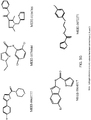
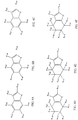
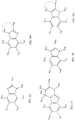
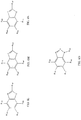
















Classifications
-
- A—HUMAN NECESSITIES
- A61—MEDICAL OR VETERINARY SCIENCE; HYGIENE
- A61K—PREPARATIONS FOR MEDICAL, DENTAL OR TOILETRY PURPOSES
- A61K31/00—Medicinal preparations containing organic active ingredients
- A61K31/33—Heterocyclic compounds
- A61K31/395—Heterocyclic compounds having nitrogen as a ring hetero atom, e.g. guanethidine or rifamycins
- A61K31/535—Heterocyclic compounds having nitrogen as a ring hetero atom, e.g. guanethidine or rifamycins having six-membered rings with at least one nitrogen and one oxygen as the ring hetero atoms, e.g. 1,2-oxazines
- A61K31/5375—1,4-Oxazines, e.g. morpholine
- A61K31/5377—1,4-Oxazines, e.g. morpholine not condensed and containing further heterocyclic rings, e.g. timolol
-
- A—HUMAN NECESSITIES
- A61—MEDICAL OR VETERINARY SCIENCE; HYGIENE
- A61K—PREPARATIONS FOR MEDICAL, DENTAL OR TOILETRY PURPOSES
- A61K31/00—Medicinal preparations containing organic active ingredients
- A61K31/33—Heterocyclic compounds
- A61K31/335—Heterocyclic compounds having oxygen as the only ring hetero atom, e.g. fungichromin
- A61K31/34—Heterocyclic compounds having oxygen as the only ring hetero atom, e.g. fungichromin having five-membered rings with one oxygen as the only ring hetero atom, e.g. isosorbide
- A61K31/341—Heterocyclic compounds having oxygen as the only ring hetero atom, e.g. fungichromin having five-membered rings with one oxygen as the only ring hetero atom, e.g. isosorbide not condensed with another ring, e.g. ranitidine, furosemide, bufetolol, muscarine
-
- A—HUMAN NECESSITIES
- A61—MEDICAL OR VETERINARY SCIENCE; HYGIENE
- A61K—PREPARATIONS FOR MEDICAL, DENTAL OR TOILETRY PURPOSES
- A61K31/00—Medicinal preparations containing organic active ingredients
- A61K31/33—Heterocyclic compounds
- A61K31/335—Heterocyclic compounds having oxygen as the only ring hetero atom, e.g. fungichromin
- A61K31/34—Heterocyclic compounds having oxygen as the only ring hetero atom, e.g. fungichromin having five-membered rings with one oxygen as the only ring hetero atom, e.g. isosorbide
- A61K31/343—Heterocyclic compounds having oxygen as the only ring hetero atom, e.g. fungichromin having five-membered rings with one oxygen as the only ring hetero atom, e.g. isosorbide condensed with a carbocyclic ring, e.g. coumaran, bufuralol, befunolol, clobenfurol, amiodarone
-
- A—HUMAN NECESSITIES
- A61—MEDICAL OR VETERINARY SCIENCE; HYGIENE
- A61K—PREPARATIONS FOR MEDICAL, DENTAL OR TOILETRY PURPOSES
- A61K31/00—Medicinal preparations containing organic active ingredients
- A61K31/33—Heterocyclic compounds
- A61K31/335—Heterocyclic compounds having oxygen as the only ring hetero atom, e.g. fungichromin
- A61K31/35—Heterocyclic compounds having oxygen as the only ring hetero atom, e.g. fungichromin having six-membered rings with one oxygen as the only ring hetero atom
- A61K31/352—Heterocyclic compounds having oxygen as the only ring hetero atom, e.g. fungichromin having six-membered rings with one oxygen as the only ring hetero atom condensed with carbocyclic rings, e.g. methantheline
-
- A—HUMAN NECESSITIES
- A61—MEDICAL OR VETERINARY SCIENCE; HYGIENE
- A61K—PREPARATIONS FOR MEDICAL, DENTAL OR TOILETRY PURPOSES
- A61K31/00—Medicinal preparations containing organic active ingredients
- A61K31/33—Heterocyclic compounds
- A61K31/335—Heterocyclic compounds having oxygen as the only ring hetero atom, e.g. fungichromin
- A61K31/35—Heterocyclic compounds having oxygen as the only ring hetero atom, e.g. fungichromin having six-membered rings with one oxygen as the only ring hetero atom
- A61K31/352—Heterocyclic compounds having oxygen as the only ring hetero atom, e.g. fungichromin having six-membered rings with one oxygen as the only ring hetero atom condensed with carbocyclic rings, e.g. methantheline
- A61K31/353—3,4-Dihydrobenzopyrans, e.g. chroman, catechin
-
- A—HUMAN NECESSITIES
- A61—MEDICAL OR VETERINARY SCIENCE; HYGIENE
- A61K—PREPARATIONS FOR MEDICAL, DENTAL OR TOILETRY PURPOSES
- A61K31/00—Medicinal preparations containing organic active ingredients
- A61K31/33—Heterocyclic compounds
- A61K31/38—Heterocyclic compounds having sulfur as a ring hetero atom
- A61K31/381—Heterocyclic compounds having sulfur as a ring hetero atom having five-membered rings
-
- A—HUMAN NECESSITIES
- A61—MEDICAL OR VETERINARY SCIENCE; HYGIENE
- A61K—PREPARATIONS FOR MEDICAL, DENTAL OR TOILETRY PURPOSES
- A61K31/00—Medicinal preparations containing organic active ingredients
- A61K31/33—Heterocyclic compounds
- A61K31/395—Heterocyclic compounds having nitrogen as a ring hetero atom, e.g. guanethidine or rifamycins
- A61K31/40—Heterocyclic compounds having nitrogen as a ring hetero atom, e.g. guanethidine or rifamycins having five-membered rings with one nitrogen as the only ring hetero atom, e.g. sulpiride, succinimide, tolmetin, buflomedil
- A61K31/403—Heterocyclic compounds having nitrogen as a ring hetero atom, e.g. guanethidine or rifamycins having five-membered rings with one nitrogen as the only ring hetero atom, e.g. sulpiride, succinimide, tolmetin, buflomedil condensed with carbocyclic rings, e.g. carbazole
- A61K31/404—Indoles, e.g. pindolol
-
- A—HUMAN NECESSITIES
- A61—MEDICAL OR VETERINARY SCIENCE; HYGIENE
- A61K—PREPARATIONS FOR MEDICAL, DENTAL OR TOILETRY PURPOSES
- A61K31/00—Medicinal preparations containing organic active ingredients
- A61K31/33—Heterocyclic compounds
- A61K31/395—Heterocyclic compounds having nitrogen as a ring hetero atom, e.g. guanethidine or rifamycins
- A61K31/41—Heterocyclic compounds having nitrogen as a ring hetero atom, e.g. guanethidine or rifamycins having five-membered rings with two or more ring hetero atoms, at least one of which being nitrogen, e.g. tetrazole
- A61K31/415—1,2-Diazoles
-
- A—HUMAN NECESSITIES
- A61—MEDICAL OR VETERINARY SCIENCE; HYGIENE
- A61K—PREPARATIONS FOR MEDICAL, DENTAL OR TOILETRY PURPOSES
- A61K31/00—Medicinal preparations containing organic active ingredients
- A61K31/33—Heterocyclic compounds
- A61K31/395—Heterocyclic compounds having nitrogen as a ring hetero atom, e.g. guanethidine or rifamycins
- A61K31/41—Heterocyclic compounds having nitrogen as a ring hetero atom, e.g. guanethidine or rifamycins having five-membered rings with two or more ring hetero atoms, at least one of which being nitrogen, e.g. tetrazole
- A61K31/415—1,2-Diazoles
- A61K31/4155—1,2-Diazoles non condensed and containing further heterocyclic rings
-
- A—HUMAN NECESSITIES
- A61—MEDICAL OR VETERINARY SCIENCE; HYGIENE
- A61K—PREPARATIONS FOR MEDICAL, DENTAL OR TOILETRY PURPOSES
- A61K31/00—Medicinal preparations containing organic active ingredients
- A61K31/33—Heterocyclic compounds
- A61K31/395—Heterocyclic compounds having nitrogen as a ring hetero atom, e.g. guanethidine or rifamycins
- A61K31/41—Heterocyclic compounds having nitrogen as a ring hetero atom, e.g. guanethidine or rifamycins having five-membered rings with two or more ring hetero atoms, at least one of which being nitrogen, e.g. tetrazole
- A61K31/4164—1,3-Diazoles
- A61K31/4184—1,3-Diazoles condensed with carbocyclic rings, e.g. benzimidazoles
-
- A—HUMAN NECESSITIES
- A61—MEDICAL OR VETERINARY SCIENCE; HYGIENE
- A61K—PREPARATIONS FOR MEDICAL, DENTAL OR TOILETRY PURPOSES
- A61K31/00—Medicinal preparations containing organic active ingredients
- A61K31/33—Heterocyclic compounds
- A61K31/395—Heterocyclic compounds having nitrogen as a ring hetero atom, e.g. guanethidine or rifamycins
- A61K31/41—Heterocyclic compounds having nitrogen as a ring hetero atom, e.g. guanethidine or rifamycins having five-membered rings with two or more ring hetero atoms, at least one of which being nitrogen, e.g. tetrazole
- A61K31/4192—1,2,3-Triazoles
-
- A—HUMAN NECESSITIES
- A61—MEDICAL OR VETERINARY SCIENCE; HYGIENE
- A61K—PREPARATIONS FOR MEDICAL, DENTAL OR TOILETRY PURPOSES
- A61K31/00—Medicinal preparations containing organic active ingredients
- A61K31/33—Heterocyclic compounds
- A61K31/395—Heterocyclic compounds having nitrogen as a ring hetero atom, e.g. guanethidine or rifamycins
- A61K31/41—Heterocyclic compounds having nitrogen as a ring hetero atom, e.g. guanethidine or rifamycins having five-membered rings with two or more ring hetero atoms, at least one of which being nitrogen, e.g. tetrazole
- A61K31/42—Oxazoles
- A61K31/423—Oxazoles condensed with carbocyclic rings
-
- A—HUMAN NECESSITIES
- A61—MEDICAL OR VETERINARY SCIENCE; HYGIENE
- A61K—PREPARATIONS FOR MEDICAL, DENTAL OR TOILETRY PURPOSES
- A61K31/00—Medicinal preparations containing organic active ingredients
- A61K31/33—Heterocyclic compounds
- A61K31/395—Heterocyclic compounds having nitrogen as a ring hetero atom, e.g. guanethidine or rifamycins
- A61K31/41—Heterocyclic compounds having nitrogen as a ring hetero atom, e.g. guanethidine or rifamycins having five-membered rings with two or more ring hetero atoms, at least one of which being nitrogen, e.g. tetrazole
- A61K31/4245—Oxadiazoles
-
- A—HUMAN NECESSITIES
- A61—MEDICAL OR VETERINARY SCIENCE; HYGIENE
- A61K—PREPARATIONS FOR MEDICAL, DENTAL OR TOILETRY PURPOSES
- A61K31/00—Medicinal preparations containing organic active ingredients
- A61K31/33—Heterocyclic compounds
- A61K31/395—Heterocyclic compounds having nitrogen as a ring hetero atom, e.g. guanethidine or rifamycins
- A61K31/41—Heterocyclic compounds having nitrogen as a ring hetero atom, e.g. guanethidine or rifamycins having five-membered rings with two or more ring hetero atoms, at least one of which being nitrogen, e.g. tetrazole
- A61K31/425—Thiazoles
- A61K31/426—1,3-Thiazoles
-
- A—HUMAN NECESSITIES
- A61—MEDICAL OR VETERINARY SCIENCE; HYGIENE
- A61K—PREPARATIONS FOR MEDICAL, DENTAL OR TOILETRY PURPOSES
- A61K31/00—Medicinal preparations containing organic active ingredients
- A61K31/33—Heterocyclic compounds
- A61K31/395—Heterocyclic compounds having nitrogen as a ring hetero atom, e.g. guanethidine or rifamycins
- A61K31/41—Heterocyclic compounds having nitrogen as a ring hetero atom, e.g. guanethidine or rifamycins having five-membered rings with two or more ring hetero atoms, at least one of which being nitrogen, e.g. tetrazole
- A61K31/425—Thiazoles
- A61K31/428—Thiazoles condensed with carbocyclic rings
-
- A—HUMAN NECESSITIES
- A61—MEDICAL OR VETERINARY SCIENCE; HYGIENE
- A61K—PREPARATIONS FOR MEDICAL, DENTAL OR TOILETRY PURPOSES
- A61K31/00—Medicinal preparations containing organic active ingredients
- A61K31/33—Heterocyclic compounds
- A61K31/395—Heterocyclic compounds having nitrogen as a ring hetero atom, e.g. guanethidine or rifamycins
- A61K31/435—Heterocyclic compounds having nitrogen as a ring hetero atom, e.g. guanethidine or rifamycins having six-membered rings with one nitrogen as the only ring hetero atom
- A61K31/4353—Heterocyclic compounds having nitrogen as a ring hetero atom, e.g. guanethidine or rifamycins having six-membered rings with one nitrogen as the only ring hetero atom ortho- or peri-condensed with heterocyclic ring systems
- A61K31/4365—Heterocyclic compounds having nitrogen as a ring hetero atom, e.g. guanethidine or rifamycins having six-membered rings with one nitrogen as the only ring hetero atom ortho- or peri-condensed with heterocyclic ring systems the heterocyclic ring system having sulfur as a ring hetero atom, e.g. ticlopidine
-
- A—HUMAN NECESSITIES
- A61—MEDICAL OR VETERINARY SCIENCE; HYGIENE
- A61K—PREPARATIONS FOR MEDICAL, DENTAL OR TOILETRY PURPOSES
- A61K31/00—Medicinal preparations containing organic active ingredients
- A61K31/33—Heterocyclic compounds
- A61K31/395—Heterocyclic compounds having nitrogen as a ring hetero atom, e.g. guanethidine or rifamycins
- A61K31/435—Heterocyclic compounds having nitrogen as a ring hetero atom, e.g. guanethidine or rifamycins having six-membered rings with one nitrogen as the only ring hetero atom
- A61K31/4353—Heterocyclic compounds having nitrogen as a ring hetero atom, e.g. guanethidine or rifamycins having six-membered rings with one nitrogen as the only ring hetero atom ortho- or peri-condensed with heterocyclic ring systems
- A61K31/437—Heterocyclic compounds having nitrogen as a ring hetero atom, e.g. guanethidine or rifamycins having six-membered rings with one nitrogen as the only ring hetero atom ortho- or peri-condensed with heterocyclic ring systems the heterocyclic ring system containing a five-membered ring having nitrogen as a ring hetero atom, e.g. indolizine, beta-carboline
-
- A—HUMAN NECESSITIES
- A61—MEDICAL OR VETERINARY SCIENCE; HYGIENE
- A61K—PREPARATIONS FOR MEDICAL, DENTAL OR TOILETRY PURPOSES
- A61K31/00—Medicinal preparations containing organic active ingredients
- A61K31/33—Heterocyclic compounds
- A61K31/395—Heterocyclic compounds having nitrogen as a ring hetero atom, e.g. guanethidine or rifamycins
- A61K31/435—Heterocyclic compounds having nitrogen as a ring hetero atom, e.g. guanethidine or rifamycins having six-membered rings with one nitrogen as the only ring hetero atom
- A61K31/44—Non condensed pyridines; Hydrogenated derivatives thereof
-
- A—HUMAN NECESSITIES
- A61—MEDICAL OR VETERINARY SCIENCE; HYGIENE
- A61K—PREPARATIONS FOR MEDICAL, DENTAL OR TOILETRY PURPOSES
- A61K31/00—Medicinal preparations containing organic active ingredients
- A61K31/33—Heterocyclic compounds
- A61K31/395—Heterocyclic compounds having nitrogen as a ring hetero atom, e.g. guanethidine or rifamycins
- A61K31/435—Heterocyclic compounds having nitrogen as a ring hetero atom, e.g. guanethidine or rifamycins having six-membered rings with one nitrogen as the only ring hetero atom
- A61K31/44—Non condensed pyridines; Hydrogenated derivatives thereof
- A61K31/4427—Non condensed pyridines; Hydrogenated derivatives thereof containing further heterocyclic ring systems
- A61K31/4436—Non condensed pyridines; Hydrogenated derivatives thereof containing further heterocyclic ring systems containing a heterocyclic ring having sulfur as a ring hetero atom
-
- A—HUMAN NECESSITIES
- A61—MEDICAL OR VETERINARY SCIENCE; HYGIENE
- A61K—PREPARATIONS FOR MEDICAL, DENTAL OR TOILETRY PURPOSES
- A61K31/00—Medicinal preparations containing organic active ingredients
- A61K31/33—Heterocyclic compounds
- A61K31/395—Heterocyclic compounds having nitrogen as a ring hetero atom, e.g. guanethidine or rifamycins
- A61K31/435—Heterocyclic compounds having nitrogen as a ring hetero atom, e.g. guanethidine or rifamycins having six-membered rings with one nitrogen as the only ring hetero atom
- A61K31/44—Non condensed pyridines; Hydrogenated derivatives thereof
- A61K31/4427—Non condensed pyridines; Hydrogenated derivatives thereof containing further heterocyclic ring systems
- A61K31/4439—Non condensed pyridines; Hydrogenated derivatives thereof containing further heterocyclic ring systems containing a five-membered ring with nitrogen as a ring hetero atom, e.g. omeprazole
-
- A—HUMAN NECESSITIES
- A61—MEDICAL OR VETERINARY SCIENCE; HYGIENE
- A61K—PREPARATIONS FOR MEDICAL, DENTAL OR TOILETRY PURPOSES
- A61K31/00—Medicinal preparations containing organic active ingredients
- A61K31/33—Heterocyclic compounds
- A61K31/395—Heterocyclic compounds having nitrogen as a ring hetero atom, e.g. guanethidine or rifamycins
- A61K31/495—Heterocyclic compounds having nitrogen as a ring hetero atom, e.g. guanethidine or rifamycins having six-membered rings with two or more nitrogen atoms as the only ring heteroatoms, e.g. piperazine or tetrazines
- A61K31/496—Non-condensed piperazines containing further heterocyclic rings, e.g. rifampin, thiothixene or sparfloxacin
-
- A—HUMAN NECESSITIES
- A61—MEDICAL OR VETERINARY SCIENCE; HYGIENE
- A61K—PREPARATIONS FOR MEDICAL, DENTAL OR TOILETRY PURPOSES
- A61K31/00—Medicinal preparations containing organic active ingredients
- A61K31/33—Heterocyclic compounds
- A61K31/395—Heterocyclic compounds having nitrogen as a ring hetero atom, e.g. guanethidine or rifamycins
- A61K31/495—Heterocyclic compounds having nitrogen as a ring hetero atom, e.g. guanethidine or rifamycins having six-membered rings with two or more nitrogen atoms as the only ring heteroatoms, e.g. piperazine or tetrazines
- A61K31/498—Pyrazines or piperazines ortho- and peri-condensed with carbocyclic ring systems, e.g. quinoxaline, phenazine
-
- A—HUMAN NECESSITIES
- A61—MEDICAL OR VETERINARY SCIENCE; HYGIENE
- A61K—PREPARATIONS FOR MEDICAL, DENTAL OR TOILETRY PURPOSES
- A61K31/00—Medicinal preparations containing organic active ingredients
- A61K31/33—Heterocyclic compounds
- A61K31/395—Heterocyclic compounds having nitrogen as a ring hetero atom, e.g. guanethidine or rifamycins
- A61K31/495—Heterocyclic compounds having nitrogen as a ring hetero atom, e.g. guanethidine or rifamycins having six-membered rings with two or more nitrogen atoms as the only ring heteroatoms, e.g. piperazine or tetrazines
- A61K31/505—Pyrimidines; Hydrogenated pyrimidines, e.g. trimethoprim
- A61K31/517—Pyrimidines; Hydrogenated pyrimidines, e.g. trimethoprim ortho- or peri-condensed with carbocyclic ring systems, e.g. quinazoline, perimidine
-
- A—HUMAN NECESSITIES
- A61—MEDICAL OR VETERINARY SCIENCE; HYGIENE
- A61K—PREPARATIONS FOR MEDICAL, DENTAL OR TOILETRY PURPOSES
- A61K31/00—Medicinal preparations containing organic active ingredients
- A61K31/33—Heterocyclic compounds
- A61K31/395—Heterocyclic compounds having nitrogen as a ring hetero atom, e.g. guanethidine or rifamycins
- A61K31/495—Heterocyclic compounds having nitrogen as a ring hetero atom, e.g. guanethidine or rifamycins having six-membered rings with two or more nitrogen atoms as the only ring heteroatoms, e.g. piperazine or tetrazines
- A61K31/505—Pyrimidines; Hydrogenated pyrimidines, e.g. trimethoprim
- A61K31/519—Pyrimidines; Hydrogenated pyrimidines, e.g. trimethoprim ortho- or peri-condensed with heterocyclic rings
-
- A—HUMAN NECESSITIES
- A61—MEDICAL OR VETERINARY SCIENCE; HYGIENE
- A61K—PREPARATIONS FOR MEDICAL, DENTAL OR TOILETRY PURPOSES
- A61K35/00—Medicinal preparations containing materials or reaction products thereof with undetermined constitution
- A61K35/12—Materials from mammals; Compositions comprising non-specified tissues or cells; Compositions comprising non-embryonic stem cells; Genetically modified cells
- A61K35/28—Bone marrow; Haematopoietic stem cells; Mesenchymal stem cells of any origin, e.g. adipose-derived stem cells
-
- A—HUMAN NECESSITIES
- A61—MEDICAL OR VETERINARY SCIENCE; HYGIENE
- A61K—PREPARATIONS FOR MEDICAL, DENTAL OR TOILETRY PURPOSES
- A61K35/00—Medicinal preparations containing materials or reaction products thereof with undetermined constitution
- A61K35/12—Materials from mammals; Compositions comprising non-specified tissues or cells; Compositions comprising non-embryonic stem cells; Genetically modified cells
- A61K35/48—Reproductive organs
- A61K35/54—Ovaries; Ova; Ovules; Embryos; Foetal cells; Germ cells
- A61K35/545—Embryonic stem cells; Pluripotent stem cells; Induced pluripotent stem cells; Uncharacterised stem cells
-
- A—HUMAN NECESSITIES
- A61—MEDICAL OR VETERINARY SCIENCE; HYGIENE
- A61K—PREPARATIONS FOR MEDICAL, DENTAL OR TOILETRY PURPOSES
- A61K9/00—Medicinal preparations characterised by special physical form
- A61K9/0012—Galenical forms characterised by the site of application
- A61K9/0046—Ear
-
- A—HUMAN NECESSITIES
- A61—MEDICAL OR VETERINARY SCIENCE; HYGIENE
- A61P—SPECIFIC THERAPEUTIC ACTIVITY OF CHEMICAL COMPOUNDS OR MEDICINAL PREPARATIONS
- A61P19/00—Drugs for skeletal disorders
-
- A—HUMAN NECESSITIES
- A61—MEDICAL OR VETERINARY SCIENCE; HYGIENE
- A61P—SPECIFIC THERAPEUTIC ACTIVITY OF CHEMICAL COMPOUNDS OR MEDICINAL PREPARATIONS
- A61P19/00—Drugs for skeletal disorders
- A61P19/02—Drugs for skeletal disorders for joint disorders, e.g. arthritis, arthrosis
-
- A—HUMAN NECESSITIES
- A61—MEDICAL OR VETERINARY SCIENCE; HYGIENE
- A61P—SPECIFIC THERAPEUTIC ACTIVITY OF CHEMICAL COMPOUNDS OR MEDICINAL PREPARATIONS
- A61P25/00—Drugs for disorders of the nervous system
-
- A—HUMAN NECESSITIES
- A61—MEDICAL OR VETERINARY SCIENCE; HYGIENE
- A61P—SPECIFIC THERAPEUTIC ACTIVITY OF CHEMICAL COMPOUNDS OR MEDICINAL PREPARATIONS
- A61P27/00—Drugs for disorders of the senses
-
- A—HUMAN NECESSITIES
- A61—MEDICAL OR VETERINARY SCIENCE; HYGIENE
- A61P—SPECIFIC THERAPEUTIC ACTIVITY OF CHEMICAL COMPOUNDS OR MEDICINAL PREPARATIONS
- A61P27/00—Drugs for disorders of the senses
- A61P27/02—Ophthalmic agents
-
- A—HUMAN NECESSITIES
- A61—MEDICAL OR VETERINARY SCIENCE; HYGIENE
- A61P—SPECIFIC THERAPEUTIC ACTIVITY OF CHEMICAL COMPOUNDS OR MEDICINAL PREPARATIONS
- A61P27/00—Drugs for disorders of the senses
- A61P27/16—Otologicals
-
- A—HUMAN NECESSITIES
- A61—MEDICAL OR VETERINARY SCIENCE; HYGIENE
- A61P—SPECIFIC THERAPEUTIC ACTIVITY OF CHEMICAL COMPOUNDS OR MEDICINAL PREPARATIONS
- A61P35/00—Antineoplastic agents
-
- A—HUMAN NECESSITIES
- A61—MEDICAL OR VETERINARY SCIENCE; HYGIENE
- A61P—SPECIFIC THERAPEUTIC ACTIVITY OF CHEMICAL COMPOUNDS OR MEDICINAL PREPARATIONS
- A61P43/00—Drugs for specific purposes, not provided for in groups A61P1/00-A61P41/00
Definitions
- This invention generally provides compounds and pharmaceutical compositions for use in the treatment of a hearing impairment or imbalance disorder associated with loss of auditory hair cells. Also provided are novel pharmaceutical compositions which are useful for the treatment of a hearing impairment or imbalance disorder associated with loss of auditory hair cells.
- sensorineural deafness is caused by the loss of hair cells, sensory cells in the cochlea that are responsible for transduction of sound into an electrical signal.
- the human inner ear contains only about 15,000 hair cells per cochlea at birth, and, although these cells can be lost as a result of various genetic or environmental factors, the lost or damaged cells cannot be replaced.
- Atohl can induce the differentiation of hair cells from epithelial cells in the sensory organ of the cochlea, the organ of Corti (( Zheng and Gao, Nat Neurosci 2000;3:580-586 ; Kawamoto et al., J Neurosci 2003;23:4395-4400 ; Gubbels et al., Nature 2008;455:537-541 ).
- Atoh-1 expression also plays a role in driving other cells, e.g., intestinal cells, into a differentiated state ( Aragaki et al., Biochem. Biophys. Res. Comm. 2008 Apr;368(4):923-929 ), and overexpression of Atoh-1 reduces proliferation of colon cancer cells ( Leow et al., Ann N Y Acad Sci. 2005 Nov;1059:174-83 ).
- the present invention features a pharmaceutical composition for use in the treatment of a hearing impairment or imbalance disorder associated with loss of auditory hair cells in a subject in need of treatment, the composition comprising a compound of the following formula, or a pharmaceutically acceptable salt thereof, and a pharmaceutically acceptable carrier: wherein:
- the present invention features a pharmaceutical composition
- a pharmaceutical composition comprising a compound selected from:
- the present invention features a compound as defined by the following formula: wherein:
- the present invention features a kit comprising the pharmaceutical composition of the invention and informational material.
- the compounds described herein, and compositions containing them are useful in the treatment of a hearing impairment or imbalance disorder associated with loss of auditory hair cells.
- the present invention features a pharmaceutical composition for use in the treatment of a hearing impairment or imbalance disorder associated with loss of auditory hair cells in a subject in need of treatment, the composition including one or more compounds capable of increasing Atohl expression in a cell, as defined in the claims, or a pharmaceutically acceptable salt thereof, and a pharmaceutically acceptable carrier.
- the compositions can be formulated for administration to a patient.
- pharmaceutical compositions are within the present invention, as are concentrated stocks and compositions suitable for application to cells or tissues maintained in tissue culture, and methods of use of the compounds and compositions.
- composition is pharmaceutically acceptable (i.e., non-toxic)
- a pharmaceutically acceptable carrier such as a buffer (e.g., a phosphate buffer), an amino acid, urea, an alcohol, ascorbic acid, a phospholipid, a polypeptide, EDTA, sodium chloride (e.g., normal saline), a liposome, mannitol, sorbitol, water, glycerol, or a combination thereof.
- a pharmaceutically acceptable carrier such as a buffer (e.g., a phosphate buffer), an amino acid, urea, an alcohol, ascorbic acid, a phospholipid, a polypeptide, EDTA, sodium chloride (e.g., normal saline), a liposome, mannitol, sorbitol, water, glycerol, or a combination thereof.
- Preservatives and dyes may also be included.
- the composition is sterile.
- the compounds described herein can be used to alter the characteristics of a cell maintained in cell culture (e.g., in vitro ), and the compounds and/or the treated cells can be administered to a patient in need of treatment.
- a method of treating a patient can be carried out by a method including the steps of (a) selecting a patient in need of treatment, and (b) administering to the patient a therapeutically effective amount of a compound described herein (e.g., a compound formulated for administration).
- the pharmaceutical composition can be administered systemically (e.g., orally or parenterally). More specifically, the composition can be administered intravenously, intramuscularly, intraperitoneally, sublingually, rectally, vaginally, transdermally, subcutaneously, or by inhalation.
- the composition When administered orally, the composition can be formulated as a tablet (e.g., a compressed tablet), pill, syrup, suspension, emulsion, or capsule. When administered parenterally, the composition can be formulated as a lozenge, drop (e.g., ear drops), solution, enema, suppository, or spray. The compositions can also be administered using a catheter or pump.
- a tablet e.g., a compressed tablet
- pill e.g., syrup
- suspension emulsion
- the composition When administered parenterally, the composition can be formulated as a lozenge, drop (e.g., ear drops), solution, enema, suppository, or spray.
- the compositions can also be administered using a catheter or pump.
- the present compositions can also be administered locally (e.g., to the ear or other site where cellular differentiation and/or Atohl expression is desired).
- the pharmaceutical composition can be administered by injection into the luminae of the cochlea, into the auditory nerve trunk in the internal auditory meatus, and/or into the scala tympani. More specifically, the pharmaceutical composition can be administered by intratympanic injection, application to (e.g., injection into) the outer, middle, or inner ear, an injection through the round window of the ear, or an injection through the cochlear capsule.
- the pharmaceutical composition can also be administered to the patient (e.g., locally to the middle and/or inner ear) using a catheter or pump.
- the patient in need of treatment can have, or have a risk of developing, a hearing impairment or imbalance disorder associated with loss of auditory hair cells. While the invention is not limited to compounds that work by any particular mechanism, the present compositions may be used where the treatment effectively increases the expression of an Atohl gene in cells in the patient's inner ear (or other target tissue (e.g., a tumor)) or effectively increases the number of cells in the patient's inner ear that have characteristics of auditory hair cells.
- the auditory hair cells can be outer or inner auditory hair cells.
- the patient in need of treatment can also have, or be at risk of developing, cancer.
- the cancer can be a gastrointestinal cancer (e.g., cancer of the esophagus, gallbladder, liver, pancreas, stomach, small intestine, large intestine, colon, or rectum).
- the patient in need of treatment can also have, or be at risk of developing, cerebellar granule neuron deficiencies, joint disease, and/or osteoarthritis.
- the method of treating a patient who has a hearing impairment or imbalance disorder can be carried out by a method that includes the steps of: (a) optionally selecting a patient in need of treatment, (b) obtaining a population of cells capable of differentiating into auditory hair cells, (c) contacting the population of cells in vitro with an effective amount of one or more of the compounds described herein for a time sufficient to increase the number cells in the population that have characteristics of a differentiated auditory hair cell, and (d) administering the population of cells, or a subset thereof (e.g., a subset of more highly differentiated cells), to the patient's ear.
- a subset thereof e.g., a subset of more highly differentiated cells
- the population of cells capable of differentiating into auditory hair cells can include stem cells, induced pluripotent stem (iPS) cells, progenitor cells, support cells, Deiters' cells, pillar cells, inner phalangeal cells, tectal cells, Hensen's cells, and germ cells.
- the stem cells can be adult stem cells (e.g., stem cells derived from the inner ear, bone marrow, mesenchyme, skin, fat, liver, muscle, or blood), embryonic stem cells, or stem cells obtained from a placenta or umbilical cord.
- the progenitor cells can be derived from the inner ear, bone marrow, mesenchyme, skin, fat, liver, muscle, or blood.
- Administering the population of cells can be accomplished by (a) injecting the cells into the luminae of the cochlea, into the auditory nerve trunk in the internal auditory meatus, or into the scala tympani or (b) implanting the cells within a cochlear implant.
- the patient may, in addition, be treated with one or more of the present compounds, and vice-versa.
- the pharmaceutical compositions can be administered systemically or locally, as described above.
- Other methods described herein include methods of increasing the number of cells with the characteristics of auditory hair cells in a population of cells in vitro. These methods can be carried out by obtaining a population of cells capable of differentiating into auditory hair cells, contacting the population of cells in vitro (e.g., in cell culture) with an effective amount of one or more of the compounds described herein for a time sufficient to increase the number of cells with the characteristics of auditory hair cells in the population of cells.
- the population of cells capable of differentiating into hair cells includes cells selected from the group consisting of stem cells, iPS cells, inner ear stem cells, adult stem cells, bone marrow derived stem cells, embryonic stem cells, mesenchymal stem cells, skin stem cells, fat derived stem cells, progenitor cells, inner ear progenitor cells, support cells, Deiters' cells, pillar cells, inner phalangeal cells, tectal cells, Hensen's cells, and germ cells.
- the compounds described herein can be used as a medicament, and in the manufacture of a medicament for the treatment or prevention of a condition described herein.
- the medicament can be used in a method for treating or preventing hearing loss or imbalance associated with hair cell loss, or a condition associated with unwanted cellular proliferation.
- the present invention is concerned with providing compounds and pharmaceutical compositions for use in the treatment of hearing loss or imbalance associated with hair cell loss.
- the medicament can be in any form described herein, and can be administered alone or in combination with another treatment or active agent.
- kits e.g., a kit comprising the pharmaceutical compositions described above with informational material or a kit comprising a compound described herein and informational material.
- the cells within the kits can be made by the methods described above, and any of the kits can include additional materials such as a device suitable for administration of the pharmaceutical composition or the population of cells, e.g., a sterile flexible cannula that is adapted for insertion into the inner ear of a subject.
- the invention encompasses a cell or a population of cells made by the methods described herein.
- the present disclosure also includes using one or more of the compounds described herein as a medicament, e.g., that can be used for the treatment of a hearing impairment or imbalance disorder associated with a loss of auditory hair cells and/or a condition associated with abnormal cellular proliferation.
- abnormal proliferation is defined as any unwanted hyperproliferation of any type of cell, wherein said cell is not under the constraints of normal cell cycle progression and wherein said proliferation can result in a tumor or any cancerous development.
- treatment means any manner in which one or more of the symptoms of a disease or disorder are ameliorated or otherwise beneficially altered.
- amelioration of the symptoms of a particular disorder refers to any lessening, whether permanent or temporary, lasting or transient that can be attributed to or associated with treatment by the compositions and methods of the present invention.
- an effective amount and “effective to treat,” as used herein, refer to an amount or a concentration of one or more compounds or a pharmaceutical composition described herein utilized for a period of time (including acute or chronic administration and periodic or continuous administration) that is effective within the context of its administration for causing an intended effect or physiological outcome.
- Effective amounts of one or more compounds or a pharmaceutical composition for use in the present invention include amounts that promote increased Atohl expression, promote complete or partial differentiation of one or more cells to treat a disease that would benefit from increased Atohl expression, e.g., prevent or delay the onset, delay the progression, ameliorate the effects of, or generally improve the prognosis of a patient diagnosed with one or more diseases that would benefit from increased Atohl expression, e.g., one or more of the diseases described herein.
- a compound which improves hearing to any degree or arrests any symptom of hearing impairment would be therapeutically effective.
- a compound which reduces proliferation would be therapeutically effective.
- a compound which reduces proliferation of the cells, reduces tumor size, reduces metastases, reduces proliferation of blood vessels to said cancer would be therapeutically effective, for example.
- a therapeutically effective amount of a compound is not required to cure a disease but will provide a treatment for a disease.
- patient is used throughout the specification to describe an animal, human or non-human, to whom treatment according to the methods of the present invention is provided.
- Veterinary and non-veterinary applications are contemplated.
- the term includes, but is not limited to, birds, reptiles, amphibians, and mammals, e.g., humans, other primates, pigs, rodents such as mice and rats, rabbits, guinea pigs, hamsters, cows, horses, cats, dogs, sheep and goats.
- Typical patients include humans, farm animals, and domestic pets such as cats and dogs.
- halo or halogen refers to any radical of fluorine, chlorine, bromine or iodine.
- substituent (radical) prefix names are derived from the parent hydride by either (i) replacing the "ane” in the parent hydride with the suffixes "yl,” “diyl,” “triyl,” “tetrayl,” etc.; or (ii) replacing the "e” in the parent hydride with the suffixes "yl,” “diyl,” “triyl,” “tetrayl,” etc. (here the atom(s) with the free valence, when specified, is (are) given numbers as low as is consistent with any established numbering of the parent hydride).
- Accepted contracted names e.g., adamantyl, naphthyl, anthryl, phenanthryl, furyl, pyridyl, isoquinolyl, quinolyl, and piperidyl, and trivial names, e.g., vinyl, allyl, phenyl, and thienyl are also used herein throughout.
- Conventional numbering/lettering systems are also adhered to for substituent numbering and the nomenclature of fused, bicyclic, tricyclic, polycyclic rings.
- alkyl refers to a saturated hydrocarbon chain that may be a straight chain or branched chain, containing the indicated number of carbon atoms.
- C 1 -C 6 alkyl indicates that the group may have from 1 to 6 (inclusive) carbon atoms in it. Any atom can be optionally substituted, e.g., by one or more subsitutents (e.g., such as those delineated in any definition of R a described herein).
- alkyl groups include without limitation methyl, ethyl, n -propyl, iso propyl, and tert-butyl.
- haloalkyl refers to an alkyl group, in which at least one hydrogen atom is replaced by halo. In some embodiments, more than one hydrogen atom (e.g., 2, 3, 4, 5, 6, 7, 8, 9, 10, 11, 12, 13, or 14) are replaced by halo. In these embodiments, the hydrogen atoms can each be replaced by the same halogen (e.g., fluoro) or the hydrogen atoms can be replaced by a combination of different halogens (e.g., fluoro and chloro).
- Haloalkyl also includes alkyl moieties in which all hydrogens have been replaced by halo (sometimes referred to herein as perhaloalkyl, e.g., perfluoroalkyl, such as trifluoromethyl). Any atom can be optionally substituted, e.g., by one or more substituents (e.g., such as those delineated in any definition of R b described herein).
- aralkyl refers to an alkyl moiety in which an alkyl hydrogen atom is replaced by an aryl group. One of the carbons of the alkyl moiety serves as the point of attachment of the aralkyl group to another moiety. Any ring or chain atom can be optionally substituted e.g., by one or more substituents (e.g., such as those delineated in any definition of R c described herein).
- substituents e.g., such as those delineated in any definition of R c described herein.
- Non-limiting examples of “aralkyl” include benzyl, 2-phenylethyl, and 3-phenylpropyl groups.
- heteroarylkyl refers to an alkyl moiety in which an alkyl hydrogen atom is replaced by a heteroaryl group. One of the carbons of the alkyl moiety serves as the point of attachment of the aralkyl group to another moiety.
- Heteroaralkyl includes groups in which more than one hydrogen atom on an alkyl moiety has been replaced by a heteroaryl group. Any ring or chain atom can be optionally substituted e.g., by one or more substituents (e.g., such as those delineated in any definition of R c described herein).
- Heteroaralkyl can include, for example, 2-pyridylethyl.
- alkoxy and haloalkoxy refer to -O-alkyl and -O-haloalkyl radicals, respectively.
- phenoxy refers to an -O-phenyl radical.
- heterocyclyl refers to a fully saturated monocyclic, bicyclic, tricyclic or other polycyclic ring system having one or more (e.g., 1-4) heteroatom ring atoms independently selected from O, N, or S.
- the heteroatom or ring carbon is the point of attachment of the heterocyclyl substituent to another moiety.
- Any atom can be optionally substituted, e.g., by one or more substituents (e.g., such as those delineated in any definition of R c described herein).
- Heterocyclyl groups can include, e.g., tetrahydrofuryl, tetrahydropyranyl, piperidyl (piperidino), piperazinyl, morpholinyl (morpholino), pyrrolinyl, and pyrrolidinyl.
- cycloalkyl refers to a fully saturated monocyclic, bicyclic, tricyclic, or other polycyclic hydrocarbon groups. Any atom can be optionally substituted, e.g., by one or more substituents (e.g., such as those delineated in any definition of R c described herein). A ring carbon serves as the point of attachment of a cycloalkyl group to another moiety.
- Cycloalkyl moieties can include, e.g., cyclopropyl, cyclobutyl, cyclopentyl, cyclohexyl, cycloheptyl, adamantyl, and norbornyl (bicycle[2.2.1]heptyl).
- cycloalkenyl refers to partially unsaturated monocyclic, bicyclic, tricyclic, or other polycyclic hydrocarbon groups.
- a ring carbon e.g., saturated or unsaturated is the point of attachment of the cycloalkenyl substituent. Any atom can be optionally substituted e.g., by one or more substituents (e.g., such as those delineated in any definition of R c described herein).
- Cycloalkenyl moieties can include, e.g., cyclohexenyl, cyclohexadienyl, or norbornenyl.
- aryl refers to an aromatic monocyclic or bicyclic hydrocarbon ring system, wherein any ring atom can be optionally substituted, e.g., by one or more substituents (e.g., such as those delineated in any definition of R d described herein).
- Aryl moieties can include phenyl and naphthyl.
- heteroaryl refers to an aromatic monocyclic or bicyclic hydrocarbon groups having one or more (e.g., 1-6) heteroatom ring atoms independently selected from O, N, or S (and mono and dioxides thereof, e.g., N ⁇ O - , S(O), SO 2 ). Any atom can be optionally substituted, e.g., by one or more substituents(e.g., such as those delineated in any definition of R d described herein). Heteroaryl groups can include pyridyl, thienyl, furyl (furanyl), imidazolyl, isoquinolyl, quinolyl and pyrrolyl.
- the descriptor C(O) refers to a carbon atom that is doubly bonded to an oxygen atom.
- substituted refers to a group “substituted” on, e.g., an alkyl, haloalkyl, cycloalkyl, aralkyl, heteroaralkyl, heterocyclyl, , cycloalkenyl, aryl, or heteroaryl group at any atom of that group.
- substituted e.g., an alkyl, haloalkyl, cycloalkyl, aralkyl, heteroaralkyl, heterocyclyl, , cycloalkenyl, aryl, or heteroaryl group at any atom of that group.
- substituted(s) other than hydrogen refers collectively to the non-hydrogen possibilities for that particular variable.
- Descriptors such as "C 6 -C 10 aryl which is optionally substituted with from 1-5 R d " (and the like) is intended to include both an unsubstituted C 6 -C 10 aryl group and a C 6 -C 10 aryl group that is substituted with from 1-5 R d .
- the use of a substituent (radical) prefix names such as alkyl without the modifier "optionally substituted” or “substituted” is understood to mean that the particular substituent is unsubstituted.
- haloalkyl without the modifier "optionally substituted” or “substituted” is still understood to mean an alkyl group, in which at least one hydrogen atom is replaced by halo.
- the present invention provides, inter alia , compounds and pharmaceutical compositions for use in the treatment of a hearing impairment or imbalance disorder associated with loss of auditory hair cells. While the treatment methods are not limited to those in which particular underlying cellular events occur, the present compounds and compositions may increase the expression of an Atohl gene in a subject and/or a cell, thereby causing the cell to differentiate, e.g., into an auditory hair cell.
- Atonal protein homologue 1 (Atohl or atonal) is a proneural gene that encodes a basic helix-loop-helix (bHLH) domain-containing protein that seems to play an important role in cell fate determination in the development of the Drosophila nervous system ( Jarman et al., Cell, 73:1307-1321, 1993 ). Atohl is evolutionarily conserved, with homologs identified in Tribolium castenium (the red flour beetle), Fugu rubripes (puffer fish), chicken (Cathl), mouse (Mathl), and human (Hathl) ( Ben-Arie et al., Hum. Mol. Gene., 5:1207-1216, 1996 ).
- Each of these homologs contain a bHLH domain that is identical in length and have high sequence identity to the Atohl bHLH domain.
- the Hath1 and Math1 genes are almost identical in length. These molecules also have highly similar nucleotide sequences (86% identity) and highly similar bHLH amino acid sequences (89%).
- the bHLH domain of Cath1 is 97% and 95% identical to the bHLH domain of Hath1 and Math1, respectively.
- the bHLH of Cath1 is 67% identical to the Atohl bHLH domain.
- the bHLH domains of other Drosophila encoded proteins share only 40-50% sequence identity.
- Each of the mammalian Atohl homologs functions as a transcription factor that activates E box (CANNTG (SEQ ID NO:1)) dependent transcription ( Arie et al., Hum. Mol. Genet., 9:1207-1216, 1996 ; Akazawa et al., J. Biol. Chem., 270:8730-8738, 1995 ) and functions as a critical positive regulator of cell fate determination in neural tissue and the gastrointestinal (GI) tract ( Helms et al., Development, 125:919-928, 1998 ; Isaka et al., Eur. J. Neurosci., 11:2582-2588, 1999 ; Ben-Arie et al., Development, 127:1039-1048, 2000 ).
- GI gastrointestinal
- nucleic acids encoding the Atohl homologues described above for the treatment of deafness, osteoarthritis, and abnormal cell proliferation was described by Zoghbi et al., (U.S. Publication No. 2004/0237127 ).
- Atohl refers to any and all Atohl-associated nucleic acid or protein sequences and includes any sequence that is orthologous or homologous to, or has significant sequence similarity to, an Atohl nucleic acid or amino acid sequence, respectively, and thus the term “Atohl” includes other mammalian homologues, e.g., human, mouse, rat, etc. The sequence can be present in any animal including mammals (e.g., humans).
- Atohl nucleic acid and amino sequences include, but are not limited to Atohl (e.g., NM_001012432.1 and NP_001012434.1, respectively)( Pan troglodytes), Hath1 (e.g., NM_005172.1 and NP _ 005163.1)( Homo sapiens), Math1 (e.g., NM_007500.4 and NP_031526.1)( Mus musculus ), Atohl (NM_001109238.1 and NP_001102708.1) ( Rattus norvegicus ); Atohl (XM_001102247.1 and XP_001102247.1)( Macaca mulatta ); Atohl (NM_001098099.1 and NP_001091568.1)( Bos taurus ); Atohl (XM_544986.2 and XP_544986.2)( Canis lupus familiaris ); and Cath1 (e.g.,
- GeneID: 474 Homo sapiens
- GeneID: 11921 mus musculus
- GeneID: 461380 Pan troglodytes
- GeneID: 500156 Rattus norvegicus
- GeneID: 704893 Macaca mulatta
- GeneID: 539158 Bos taurus
- GeneID: 487864 Canis lupus familiaris ).
- sequences with significant sequence similarity i.e., similarity greater than 80%, e.g., is at least 85%, 90%, 95%, 99%, or more, across the entire sequence
- human Atohl sequence found at Genbank Acc. Nos. NM_005172.1 and NP_005163.1
- sequences are aligned for optimal comparison purposes (gaps are introduced in one or both of a first and a second amino acid or nucleic acid sequence as required for optimal alignment, and non-homologous sequences can be disregarded for comparison purposes).
- the length of a reference sequence aligned for comparison purposes is at least 80% (in some embodiments, about 85%, 90%, 95%, or 100% of the length of the reference sequence) is aligned.
- the nucleotides at corresponding nucleotide positions are then compared. When a position in the first sequence is occupied by the same nucleotide as the corresponding position in the second sequence, then the molecules are identical at that position.
- the percent identity between the two sequences is a function of the number of identical positions shared by the sequences, taking into account the number of gaps, and the length of each gap, which need to be introduced for optimal alignment of the two sequences.
- the comparison of sequences and determination of percent identity between two sequences can be accomplished using a mathematical algorithm.
- the percent identity between two amino acid sequences can be determined using the Needleman and Wunsch ((1970) J. Mol. Biol. 48:444-453 ) algorithm which has been incorporated into the GAP program in the GCG software package, using a Blossum 62 scoring matrix with a gap penalty of 12, a gap extend penalty of 4, and a frameshift gap penalty of 5.
- the present invention provides compounds that are capable of increasing Atohl expression in a cell.
- the compounds for use according to the invention are 1,2,4-oxadiazole compounds as defined in the claims and all other compounds mentioned herein are used as comparative examples.
- the increase in Atohl expression is a significant increase.
- the increase in Atohl expression can be, e.g., between about 1-10% above baseline, 11-20%, 21-30%, 31-40%, 41-50%, 51-60%, 61-70%, 71-80%, 81-90%, 91-100%, 101-200%, 201-300%, 301-400%, 401-500%, 501-1000%, 1001-10000%, 10001-100000% or more.
- Increases in Atohl can also be expressed as a fold increase, e.g., wherein a increase of 100% is a 1-fold increase, an increase of 1000% is a 10-fold increase and so forth.
- the increase in Atohl expression is sufficient to promote the differentiation of a cell, e.g., of a non-auditory hair cell (i.e., a cell other than an auditory hair cell, e.g., a progenitor or stem cell) to or towards an auditory hair cell.
- a non-auditory hair cell i.e., a cell other than an auditory hair cell, e.g., a progenitor or stem cell
- phenolic compounds or their sulfur analogs, e.g., phenyl thiols
- compounds that are derived from such compounds such as phenyl ethers (or thioethers), e.g., straight chain or cyclic phenyl ethers.
- phenyl ethers or thioethers
- straight chain or cyclic phenyl ethers e.g., straight chain or cyclic phenyl ethers.
- any phenolic compound (or sulfur analog) can be in neutral or salt form, e.g., a lithium, sodium, potassium or calcium salt thereof.
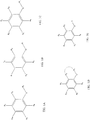
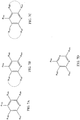
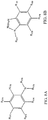
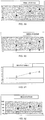
- R 2 , R 3 , R 4 , R 5 and R 6 are each independently H, F, Cl, Br, I, OH, CN, NO 2 , or a moiety that includes up to 16 carbon atoms and, optionally, one or more N, O, S or F atoms;
- X is O (see FIG. 1B ) or S (see FIG. 1C ); and
- R 1 is H or a moiety that includes up to 16 carbon atoms and, optionally, one or more N, O, S or F atoms.
- the moiety that includes up to 16 carbon atoms and, optionally, one or more N, O, S or F atoms can be an alkoxy group or a trifluoromethyl group.
- R 1 and R 2 together define one or more ring systems that each include up to 16 carbon atoms and, optionally, one or more N, O, S or F atoms.
- R 1 is H; that is, the compounds are phenols.
- the phenolic derivatives are cyclic ether derivatives.
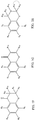
- the cyclic ether portion of the molecules can be made rigid by incorporating a carbonyl group (see FIG. 1F ) and/or a carbon-carbon double bond (see FIG. 1G , which contains both).
- Such cyclic ether derivatives can be made rigid by incorporating a second ring system about the cyclic ether system.
- the cyclic ether derivatives are represented by the structure of FIG.
- R 8 , R 9 , R 10 and R 11 are each independently H, F, Cl, Br, I, OH, CN, NO 2 , or a moiety that includes up to 16 carbon atoms and, optionally, one or more N, O, S or F atoms.
- the cyclic ether derivatives are represented by the structure of FIG. 1G , in which R 12 and R 13 are each independently H, F, Cl, Br, I, OH, or a moiety that includes up to 16 carbon atoms and, optionally, one or more N, O, S or F atom.
- the cyclic ether derivatives are represented by the structure of FIG.
- R 14 and R 15 together define one or more ring systems that each include up to 16 carbon atoms and, optionally, one or more N, O, S or F atoms
- R 16 , R 17 and R 18 each are each independently H, F, Cl, Br, I, OH, or a moiety that includes up to 16 carbon atoms and, optionally, one or more N, O, S or F atoms.
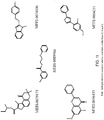
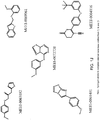
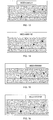
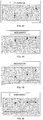
- benzamide compounds and/or related compounds Such compounds can be generally represented by those structures shown in FIGS. 2A-2F , and specifically exemplified in those structures shown in FIGS. 2G-2I . Any of the present benzamide or related compounds can be in neutral or salt form.
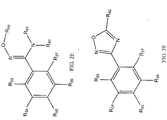
- Such benzamide compounds and/or derivatives can be described by the structure of FIG. 2A , in which R 20 , R 21 , R 22 , R 23 and R 24 are each independently H, F, Cl, Br, I, OH, CN, NO 2 , or a moiety that includes up to 16 carbon atoms and, optionally, one or more N, O, S or F atoms; and R 24 and R 26 are each independently H or a moiety that includes up to 16 carbon atoms and, optionally, one or more N, O, S or F atoms.
- R 24 and R 25 can together define one or more ring systems that each include up to 16 carbon atoms and, optionally, one or more N, O, S or F atoms.
- Such compounds can be represented by the structures of FIG. 2B .
- such compounds can have the structures shown in FIGS.
- R 27 , R 28 , R 29 , R 31 and R 32 are each independently H, F, Cl, Br, I, OH, CN, NO 2 , or a moiety that includes up to 16 carbon atoms and, optionally, one or more N, O, S or F atoms; and R 26 is H or a moiety that includes up to 16 carbon atoms and, optionally, one or more N, O, S or F atoms.
- R 33 , R 34 , R 35 , R 36 and R 37 are each independently H, F, Cl, Br, I, OH, CN, NO 2 , or a moiety that includes up to 16 carbon atoms and, optionally, one or more N, O, S or F atoms;
- R 39 , R 40 , R 41 and R 42 are each independently H or a moiety that includes up to 16 carbon atoms and, optionally, one or more N, O, S or F atoms.
- heterocyclic ring systems such as a 3, 4, 5, 6, or 7-membered ring system that includes one more heteroatoms, such as O, S or N.
- the one or more ring systems can include 1, 2, 3, 4 or even 5 heteroatoms, such as O, S or N.
- the rings can be aromatic.
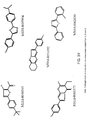
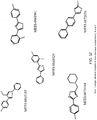
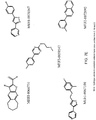
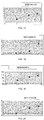
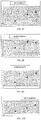
- such compounds can be generally represented by those structures shown in FIGS. 3A-3X , and specifically exemplified in those structures shown in FIGS. 3Y-3ZZ . Any described compound that is or that includes the one or more ring system can be in neutral or salt form.
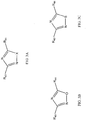
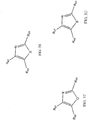
- R 43 and R 44 are each independently H, F, Cl, Br, I, OH, CN, NO 2 , or a moiety that includes up to 16 carbon atoms and, optionally, one or more N, O, S or F atoms; and X is O ( FIG. 3B ) or S ( FIG. 3C ).
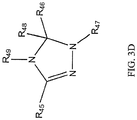
- R 45 , R 46 and R 48 are each independently H, F, Cl, Br, I, OH, CN, NO 2 , or a moiety that includes up to 16 carbon atoms and, optionally, one or more N, O, S or F atoms; and R 47 and R 49 are each independently H, or a moiety that includes up to 16 carbon atoms and, optionally, one or more N, O, S or F atoms.
- R 50 , R 51 , R 52 and R 53 are each independently H, F, Cl, Br, I, OH, CN, NO 2 , or a moiety that includes up to 16 carbon atoms and, optionally, one or more N, O, S or F atoms; and X is O ( FIG. 3F ) or S ( FIG. 3G ).
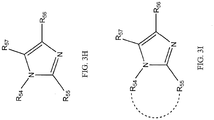
- R 55 , R 56 and R 57 are each independently H, F, Cl, Br, I, OH, CN, NO 2 , or a moiety that includes up to 16 carbon atoms and, optionally, one or more N, O, S or F atoms; and R 54 is H or a moiety that includes up to 16 carbon atoms and, optionally, one or more N, O, S or F atoms.
- R 54 and R 55 can together define one or more ring systems that each includes up to 16 carbon atoms and, optionally, one or more N, O, S or F atoms, as shown in FIG. 31 .
- R 57 , R 59 and R 60 are each independently H, F, Cl, Br, I, OH, CN, NO 2 or a moiety that includes up to 16 carbon atoms and, optionally, one or more N, O, S or F atoms; and R 58 is H or a moiety that includes up to 16 carbon atoms and, optionally, one or more N, O, S or F atoms.
- R 58 and R 59 can together define one or more ring systems that each includes up to 16 carbon atoms and, optionally, one or more N, O, S or F atoms, as shown in FIG. 3K .
- R 57 and R 60 can together define one or more ring systems that each includes up to 16 carbon atoms and, optionally, one or more N, O, S or F atoms, as shown in FIG. 3L .
- R 57 and R 60 and R 58 and R 59 can together each define one or more ring systems that each includes up to 16 carbon atoms and, optionally, one or more N, O, S or F atoms, as shown in FIG. 3M .
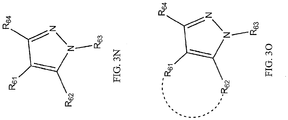
- R 61 , R 62 , and R 64 are each independently H, F, Cl, Br, I, OH, CN, NO 2 , or a moiety that includes up to 16 carbon atoms and, optionally, one or more N, O, S or F atoms; and R 63 is H or a moiety that includes up to 16 carbon atoms and, optionally, one or more N, O, S or F atoms.
- R 61 and R 62 can together define one or more ring systems that each includes up to 16 carbon atoms and, optionally, one or more N, O, S or F atoms, as shown in FIG. 3O .
- R 65 and R 66 are each independently H, F, Cl, Br, I, OH, CN, NO 2 , or a moiety that includes up to 16 carbon atoms and, optionally, one or more N, O, S or F atoms; and X is O ( FIG. 3Q ) or S ( FIG. 3R ).
- R 67 , R 68 , and R 69 are each independently H, F, Cl, Br, I, OH, CN, NO 2 or a moiety that includes up to 16 carbon atoms and, optionally, one or more N, O, S or F atoms; and X is O ( FIG. 3T ) or S ( FIG. 3U ).
- R 70 , R 71 , and R 72 are each independently H, F, Cl, Br, I, OH, CN, NO 2 or a moiety that includes up to 16 carbon atoms and, optionally, one or more N, O, S or F atoms; and X is O ( FIG. 3W ) or S ( FIG. 3X ).
- phenyl rings such as a fused phenyl ring system, e.g., one that is part of a flavonoid, coumarin or other similar system.
- a fused phenyl ring system e.g., one that is part of a flavonoid, coumarin or other similar system.
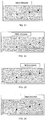
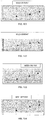
- such compounds can be generally represented by those structures shown in FIGS. 4A-4G , and specifically exemplified in those structures shown in FIGS. 4H and 41 .
- Any described compound that is or that includes the one or more ring system can be in neutral or salt form.
- R 74 , R 75 , R 76 , R 77 , R 78 and R 79 are each independently H, F, Cl, Br, I, OH, CN, NO 2 or a moiety that includes up to 16 carbon atoms and, optionally, one or more N, O, S or F atoms.
- R 76 and R 77 can together define one or more ring systems that each includes up to 16 carbon atoms and, optionally, one or more N, O, S or F atoms, as shown in FIG. 4B .
- the compounds of FIG. 4B can be described by the compounds of FIGS.
- R 81 , R 82 , R 83 and R 84 are each independently H, F, Cl, Br, I, OH, CN, NO 2 or a moiety that includes up to 16 carbon atoms and, optionally, one or more N, O, S or F atoms.
- R 76 and R 77 together define one or more ring systems the compounds can be represented by those structures of FIGS.
- R 85 , R 86 , R 87 and R 88 are each independently H, F, Cl, Br, I, OH, CN, NO 2 or a moiety that includes up to 16 carbon atoms and, optionally, one or more N, O, S or F atoms; and R 89 is H or a moiety that includes up to 16 carbon atoms and, optionally, one or more N, O, S or F atoms.
- Further compounds described herein include an amide group bonded to a 5-membered heterocyclic ring system, such as one that that includes one more heteroatoms, such as O, S or N.
- the one or more ring systems can include 1, 2, 3, 4 or even 5 heteroatoms, such as O, S or N.
- the rings systems are aromatic.
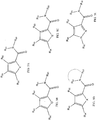
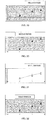
- such compounds can be generally represented by those structures shown in FIGS. 5A-5E , and specifically exemplified in those structures shown in FIGS. 5F-5G . Any described compound that is or that includes the one or more ring system can be in neutral or salt form.
- R 92 , R 93 and R 94 are each independently H, F, Cl, Br, I, OH, CN, NO 2 or a moiety that includes up to 16 carbon atoms and, optionally, one or more N, O, S or F atoms; and R 90 and R 91 are each independently H or a moiety that includes up to 16 carbon atoms and, optionally, one or more N, O, S or F atoms; and X is O ( FIG. 5B ) or S ( FIG. 5C ).
- R 90 and R 91 can together define one or more ring systems that includes up to 16 carbon atoms, optionally, substituted with one or more N, O, S or F atoms (see FIG. 5D ).
- R 97 and R 98 are each independently H, F, Cl, Br, I, OH, CN, NO 2 or a moiety that includes up to 16 carbon atoms and, optionally, one or more N, O, S or F atoms; and R 95 , R 96 and R 99 are each independently H or a moiety that includes up to 16 carbon atoms and, optionally, one or more N, O, S or F atoms.
- FIGS. 6A-6O a 5-membered heterocyclic ring system fused to one or more other ring systems, e.g., that defines one or more 4-, 5-, 6-, 7- or 8-membered ring system.
- such compounds can be generally represented by those structures shown in FIGS. 6A-6O , and specifically exemplified in those structures shown in FIGS. 6P-6V .
- Any described compound that is or that includes the one or more ring system can be in neutral or salt form.
- R 100 , R 101 , R 102 , R 103 , R 104 and R 105 are each independently H, F, Cl, Br, I, OH, CN, NO 2 or a moiety that includes up to 16 carbon atoms and, optionally, one or more N, O, S or F atoms; and X is S (see FIG. 6B ) or O (see FIG. 6C ).
- FIG. 6D the compounds that include a 5-membered heterocyclic ring system fused to one or more other ring systems are described by FIG. 6D , in which R 106 , R 107 , R 108 , R 109 , R 110 , R 111 , R 112 , R 113 , R 114 and R 115 are each independently H, F, Cl, Br, I, OH, CN, NO 2 or a moiety that includes up to 16 carbon atoms and, optionally, one or more N, O, S or F atoms; and X is S (see FIG. 6E ) or O (see FIG. 6F ).
- FIG. 6G Further compounds described herein that include a 5-membered heterocyclic ring system fused to one or more other ring systems are described by FIG. 6G , in which R 118 , R 119 , R 120 , R 121 , R 123 are each independently H, F, Cl, Br, I, OH, CN, NO 2 or a moiety that includes up to 16 carbon atoms and, optionally, one or more N, O, S or F atoms; and R 123 is H or a moiety that includes up to 16 carbon atoms and, optionally, one or more N, O, S or F atoms.
- FIG. 6H the compounds that include a 5-membered heterocyclic ring system fused to one or more other ring systems are described by FIG. 6H , in which R 124 , R 125 , R 126 and R 127 are each independently H, F, Cl, Br, I, OH, CN, NO 2 or a moiety that includes up to 16 carbon atoms and, optionally, one or more N, O, S or F atoms; and R 128 and R 129 together define one or more rings that each include up to 16 carbon atoms and, optionally, one or more N, O, S or F atoms.
- the compounds of FIG. 6H can be described by FIG.
- R 130 , R 131 , R 132 and R 128' are each independently H, F, Cl, Br, I, OH, CN, NO 2 or a moiety that includes up to 16 carbon atoms and, optionally, one or more N, O, S or F atoms; and R 129' is H, or a moiety that includes up to 16 carbon atoms and, optionally, one or more N, O, S or F atoms.
- R 134 , R 135 , R 136 , R 137 , R 140 and R 141 are each independently H, F, Cl, Br, I, OH, CN, NO 2 or a moiety that includes up to 16 carbon atoms and, optionally, one or more N, O, S or F atoms; and R 139 is H or a moiety that includes up to 16 carbon atoms and, optionally, one or more N, O, S or F atoms.
- R 140 and R 141 together define a one or more rings that each include up to 16 carbon atoms and, optionally, one or more N, O, S or F atoms.
- FIG. 6L the compounds that include a 5-membered heterocyclic ring system fused to one or more other ring systems are described by FIG. 6L , in which R 143 , R 144 , R 145 , R 146 and R 147 are each independently H, F, Cl, Br, I, OH, CN, NO 2 or a moiety that includes up to 16 carbon atoms and, optionally, one or more N, O, S or F atoms; and X is O (see FIG. 6M ) or S (see FIG. 6N ).
- R 149 , R 150 , R 151 and R 152 are each independently H, F, Cl, Br, I, OH, CN, NO 2 or a moiety that includes up to 16 carbon atoms and, optionally, one or more N, O, S or F atoms; and R 153 is H or a moiety that includes up to 16 carbon atoms and, optionally, one or more N, O, S or F atoms.
- pyridines or pyrimidines are pyridines or pyrimidines.
- such compounds can be generally represented by those structures shown in FIGS. 7A-7D , and specifically exemplified in those structures shown in FIGS. 7E and 7F .
- Any described compound that is a pyridine or a pyrimidine can be in neutral or salt form, e.g., a hydrochloride salt thereof.
- R 155 , R 156 , R 157 , R 159 and R160 are each independently H, F, Cl, Br, I, OH, CN, NO 2 or a moiety that includes up to 16 carbon atoms and, optionally, one or more N, O, S or F atoms.
- R 156 and R 157 (see FIG. 7B ), or R 156 and R 157 and R 159 and R 160 (see FIG. 7C ) together define a one or more rings that each include up to 16 carbon atoms and, optionally, one or more N, O, S or F atoms.
- the pyrimidine compounds are described by FIG. 7D , in which R 161 , R 162 , R 163 and R 164 are each independently H, F, Cl, Br, I, OH, CN, NO 2 or a moiety that includes up to 16 carbon atoms and, optionally, one or more N, O, S or F atoms.
- anilines or aniline derivatives can be generally represented by those structures shown in FIGS. 8A and 8B , and specifically exemplified in those structures shown in FIGS. 8C .
- Any described compound that is a pyridine or a pyrimidine can be in neutral or salt form.
- R 170 , R 171 , R 172 , R 173 and R 174 are each independently H, F, Cl, Br, I, OH, CN, NO 2 or a moiety that includes up to 16 carbon atoms and, optionally, one or more N, O, S or F atoms; and R 175 and R 176 are each independently H or a moiety that includes up to 16 carbon atoms and, optionally, one or more N, O, S or F atoms.
- the aniline derivative compounds are described by FIG. 8B , in which R 178 , R 179 , R 180 and R 181 are each independently H, F, Cl, Br, I, OH, CN, NO 2 , or a moiety that includes up to 16 carbon atoms and, optionally, one or more N, O, S or F atoms; and R 177 is H or a moiety that includes up to 16 carbon atoms and, optionally, one or more N, O, S or F atoms.
- the compounds can have the formula delineated in FIG. 6G : wherein:
- each of R 118 , R 119 , R 120 , and R 121 is hydrogen.
- each of R 118 , R 119 , R 120 , and R 121 is independently selected from H, halo and NO 2 .
- one of R 118 , R 119 , R 120 , and R 121 is halo, OH, CN, NO 2 , C 1 -C 3 alkyl, C 1 -C 3 haloalkyl, C 1 -C 3 alkoxy, or C 1 -C 3 haloalkoxy (e.g., halo, e.g., chloro; or NO 2 ); and the others are hydrogen (e.g., one of R 118 , R 119 , R 120 , and R 121 (e.g., R 120 ) is halo and NO 2 , and the others are hydrogen).
- R 122 can be -Z-R a .
- Embodiments can include one or more of the following features.
- Z can be O.
- Z can be a bond.
- R a can be:
- R a can be:
- R a can be C 7 -C 11 aralkyl, or heteroaralkyl including 6-11 atoms, each of which is optionally substituted with from 1-5 R c (e.g., C 7 -C 11 aralkyl, which is optionally substituted with from 1-5 R c ).
- R a can be benzyl or phenethyl, in which the phenyl portion is optionally substituted with from 1-5 (e.g., 1-4, 1-3, 1-2, or 1, e.g., 1-2 or 1) R c (e.g., halo (e.g., chloro); C 1 -C 6 alkoxy (e.g., OCH 3 ); or C 1 -C 6 alkyl (e.g., CH 3 ).
- Z can be O.
- R a can be C 1 -C 6 alkyl or C 1 -C 6 haloalkyl, each of which is optionally substituted with from 1-3 R b (e.g., C 1 -C 6 alkyl, each of which is optionally substituted with from 1-3 R b ).
- R a can be CH 3 .
- Z can be a bond.
- R 122 can be hydrogen.
- R 123 can be:
- R 123 can be:
- R 123 can be C 6 -C 10 aryl or heteroaryl including 5-10 atoms, each of which is optionally substituted with from 1-5 R d (e.g., C 6 -C 10 aryl, which is optionally substituted with from 1-5 R d ).
- R 123 can be phenyl, is optionally substituted with from 1-5 (e.g., 1-4, 1-3, 1-2, or 1) R d (e.g., C 1 -C 6 alkoxy, e.g., OCH 3 ).
- R 123 can be C 7 -C 11 aralkyl, or heteroaralkyl including 6-11 atoms, each of which is optionally substituted with from 1-5 R c (e.g., C 7 -C 11 aralkyl, which is optionally substituted with from 1-5 R c ).
- R 123 can be benzyl or phenethyl, in which the phenyl portion is optionally substituted with from 1-5 (e.g., 1-4, 1-3, 1-2, or 1) R c (e.g., halo (e.g., chloro); C 1 -C 6 alkoxy (e.g., OCH 3 ); C 1 -C 6 alkyl (e.g., CH 3 ); NH 2 ; or hydroxyl).
- 1-5 e.g., 1-4, 1-3, 1-2, or 1
- R c e.g., halo (e.g., chloro); C 1 -C 6 alkoxy (e.g., OCH 3 ); C 1 -C 6 alkyl (e.g., CH 3 ); NH 2 ; or hydroxyl).
- R 123 can be -(C 1 -C 6 alkyl)-Z 1 -(C 6 -C 10 aryl), wherein Z 1 is O, S, NH, or N(CH 3 ); the alkyl portion is optionally substituted with from 1-3 R b ; and the aryl portion is optionally substituted with from 1-5 R d .
- R 123 can be -(CH 2 )-Z 1 -(phenyl), in which the phenyl portion is optionally substituted with from 1-5 (e.g., 1-4, 1-3, 1-2, or 1) R d (e.g., halo (e.g., chloro); C 1 -C 6 alkoxy (e.g., OCH 3 ); C 1 -C 6 alkyl (e.g., CH 3 ); NH 2 ; or hydroxyl).
- 1-5 e.g., 1-4, 1-3, 1-2, or 1
- R d e.g., halo (e.g., chloro); C 1 -C 6 alkoxy (e.g., OCH 3 ); C 1 -C 6 alkyl (e.g., CH 3 ); NH 2 ; or hydroxyl).
- a subset of compounds includes those in which:
- R c and R d can be as defined anywhere herein.
- Z can be O.
- Each of R 118 , R 119 , R 120 , and R 121 is hydrogen. In other embodiments, each of R 118 , R 119 , R 120 , and R 121 is independently selected from H, halo and NO 2 . In still other embodiments, one of R 118 , R 119 , R 120 , and R 121 (e.g., R 120 ) is halo, OH, CN, NO 2 , C 1 -C 3 alkyl, C 1 -C 3 haloalkyl, C 1 -C 3 alkoxy, or C 1 -C 3 haloalkoxy (e.g., halo, e.g., chloro; or NO 2 ); and the others are hydrogen (e.g., one of R 118 , R 119 , R 120 , and R 121 (e.g., R 120 ) is halo and NO 2 , and the others are hydrogen); e.g., one of is halo (e.
- Z is a bond, and the definitions in the above example apply.
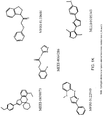
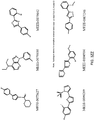
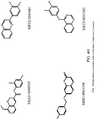
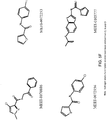
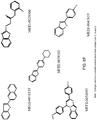
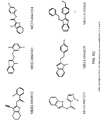
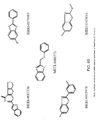
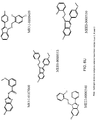
- Examples of compounds having the formula delineated in FIG. 6G include: CP-0000489, CP-0000540, CP-0000550, CP-0000553, CP-0000554, CP-0000557, CP-0000571, CP-0047659, CP-0064483, CP-0066829, CP-0069961, CP-0074806, CP-0080773, CP-0091818, CP-0109953, CP-0105772, and CP-0193184.
- the compounds can have the formula delineated in FIG. 6L :
- X can be S.
- X can be O.
- each of R 143 , R 144 , R 145 , and R 146 is hydrogen.
- one of R 143 , R 144 , R 145 , and R 146 is halo, OH, CN, NO 2 , C 1 -C 3 alkyl, C 1 -C 3 haloalkyl, C 1 -C 3 alkoxy, C 1 -C 3 haloalkoxy; or -NHC(O)(C 1 -C 3 alkyl); and the others are hydrogen.
- R 147 can be NR e R f , wherein one of R e and R f is hydrogen or C 1 -C 3 alkyl (e.g., hydrogen); and the other of R e and R f is:
- R 147 can be NR e R f , wherein one of R e and R f is hydrogen or C 1 -C 3 alkyl (e.g., hydrogen); and the other of R e and R f is -C(O)R g ; wherein R g is C 6 -C 10 aryl or heteroaryl including 5-10 atoms, each of which is optionally substituted with from 1-5 R h .
- R g can be phenyl, which is optionally substituted with from 1-5 (e.g., 1-4, 1-3, 1-2, or 1) R h (e.g., halo (e.g., chloro); C 1 -C 6 alkoxy (e.g., OCH 3 ); or C 1 -C 6 alkyl (e.g., CH 3 )).
- R h e.g., halo (e.g., chloro); C 1 -C 6 alkoxy (e.g., OCH 3 ); or C 1 -C 6 alkyl (e.g., CH 3 )).
- R g can be heteroaryl including 5-6 (e.g., 5) atoms, which is optionally substituted with from 1-2 (e.g., 1) R h (e.g., C 1 -C 6 alkyl (e.g., CH 3 )).
- R g and R h can be as defined anywhere herein.
- each of R 143 , R 144 , R 145 , and R 146 is hydrogen.
- one of R 143 , R 144 , R 145 , and R 146 is halo, OH, CN, NO 2 , C 1 -C 3 alkyl, C 1 -C 3 haloalkyl, C 1 -C 3 alkoxy, C 1 -C 3 haloalkoxy; or -NHC(O)(C 1 -C 3 alkyl); and the others are hydrogen.
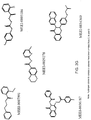
- Examples of compounds having the formula delineated in FIG. 6L include: CP-0064917, CP-0067233, CP-0068578, CP-0103014, CP-0105777, CP-0107060, CP-0029300, CP-0079983, and CP-0103978.
- X can be S.
- X can be O.
- each of R 100 , R 101 , R 102 , and R 103 is hydrogen.
- one of R 100 , R 101 , R 102 , and R 103 is halo, OH, CN, NO 2 , C 1 -C 3 alkyl, C 1 -C 3 haloalkyl, C 1 -C 3 alkoxy, C 1 -C 3 haloalkoxy; or -NHC(O)(C 1 -C 3 alkyl); and the others are hydrogen.
- R 104 is -C(O)NR j R k , wherein one of R j and R k is hydrogen or C 1 -C 3 alkyl (e.g., hydrogen); and the other of R j and R k is:
- one of R j and R k is hydrogen or C 1 -C 3 alkyl (e.g., hydrogen); and the other of R j and R k is heteroaryl including 5-6 atoms, which is optionally substituted with from 1-5 substituents independently selected from halo, OH, CN, NO 2 , C 1 -C 3 alkyl, C 1 -C 3 haloalkyl, C 1 -C 3 alkoxy, C 1 -C 3 haloalkoxy; -C(O)NH 2 ; -NHC(O)(C 1 -C 3 alkyl); and a fused C 5 -C 6 cycloalkyl ring.
- R 105 can be chloro or CH 3 .
- Examples of compounds having the formula delineated in FIG. 6A include: CP-0079175, CP-0087336, CP-0064314, CP-0068577, and CP-0102404.
- Embodiments can include one or more of the following features.
- R 43 can be C 6 -C 10 aryl, which is optionally substituted with from 1-5 R m .
- R 43 can be phenyl, which is optionally substituted with from 1-5 (e.g., 1-4, 1-3, 1-2, or 1) R m (e.g., C 1 -C 6 alkyl (e.g., CH 3 )).
- R 43 can be heteroaryl including 5-6 atoms, each of which is optionally substituted with from 1-5 R m .
- R 44 can be C 6 -C 10 aryl, which is optionally substituted with from 1-5 R m .
- R 44 can be phenyl, which is optionally substituted with from 1-5 (e.g., 1-4, 1-3, 1-2, or 1) R m (e.g., halo (e.g., chloro); C 1 -C 6 alkoxy (e.g., OCH 3 ); or C 1 -C 6 alkyl (e.g., CH 3 )).
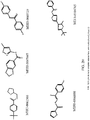
- Examples of compounds of the invention having the formula delineated in FIG. 3B include: CP-0067108, CP-0067246, CP-0068395, CP-0068929, CP-0068961, CP-0070164, CP-0070367, CP-0079642, CP-0104904, and CP-0130665.
- R 67 and R 68 is C 6 -C 10 aryl or heteroaryl including 5-10 atoms, each of which is optionally substituted with from 1-5 R n ; and the other is hydrogen.
- R o and R p is hydrogen or C 1 -C 3 alkyl (e.g., hydrogen); and the other of R o and R p is C 6 -C 10 aryl or heteroaryl including 5-6 atoms, which is optionally substituted with from 1-5 R n .
- Examples of compounds having the formula delineated in FIG. 3U include: CP-0063182, CP-0071862, CP-0072036, CP-0105343, CP-0122949, and CP-0134381.
- R 50 and R 53 are -C(O)R q ; and the other of R 50 and R 53 is hydrogen or C 6 -C 10 aryl or heteroaryl including 5-10 atoms, each of which is optionally substituted with from 1-5 R r .
- R q can be -NR s R t .
- Examples of compounds having the formula delineated in FIG. 3E include: CP-0061777, CP-0066008, CP-0072253, CP-0099289, CP-0008545, CP-0060852, CP-0072156, CP-0072271, CP-0104766, and CP-0110352.
- R 61 , R 62 , and R 64 are other than hydrogen.
- Examples of compounds having the formula delineated in FIG. 3N include: CP-0000477, CP-0063375, CP-0064231, CP-0065105, CP-0070844, CP-0070886, and CP-0104765.
- R 70 can be an amide (i.e., having the general formula - C(O)NRR') or reverse amide (i.e., having the general formula -NR"C(O)R"') as described anywhere herein.
- R 71 can be hydrogen.
- R 72 can be:
- Examples of compounds having the formula delineated in FIG. 3V include: CP-0065665, CP-0075627, and CP-0075656.
- the pyrimidine ring can be substituted with 1-2 substituents independently selected from:
- the pyrimidine ring can be substituted with a fused ring.
- Examples of compounds having the formula delineated in FIG. 7D include: CP-0059547, CP-0059563, CP-0059642, CP-0064382, CP-0067053, CP-0072720, and CP-0079810.
- the pyridine ring can be substituted with an amide or reverse amide as described anywhere herein.
- the pyrimidine ring can be substituted with one or more fused ring.
- Examples of compounds having the formula delineated in FIG. 7A include: CP-0060729, CP-0066751, CP-0069934, CP-0076627, CP-0080276, CP-0089966, CP-0029278, and CP-0130586.
- the compounds of the present invention can be obtained commercially from suppliers such as Bionet, Maybridge, Chemdiv, ChemBridge, Peakdale, IFLAB/Life Chemicals, Enamine, Microsource, or Timtec.
- the compounds described herein can be synthesized according to methods described herein (or variations thereof) and/or conventional, organic chemical synthesis methods from commercially available starting materials and reagents or from starting materials and reagents that can be prepared according to conventional organic chemical synthesis methods.
- the compounds described herein can be separated from a reaction mixture and further purified by a method such as column chromatography, high-performance liquid chromatography (HPLC), or recrystallization.
- Compounds having the formula delineated in FIG. 6G can be obtained commercially or synthesized using conventional synthetic methods. For example, compounds CP-0000489, CP-0000540, CP-0000550, CP-0000553, CP-0000554, CP-0000557, CP-0000571, CP-0047659, CP-0064483, CP-0066829, CP-0069961, CP-0074806, CP-0080773, CP-0091818, CP-0105772, and CP-0109953 were obtained commercially from the suppliers provided in Table 1 (Entries 1-17). Other benzimidazoles 1-14 (Scheme 1) described in the present disclosure can be obtained commercially.
- Quinazolinone derivatives included in the FIG. 2G can be obtained commercially or synthesized using conventional synthetic methods.
- compounds CP-0034360 and CP-0036187 were obtained commercially from the suppliers provided in Table 1 (Entries 27-28).
- Other compounds having the formula delineated in FIG. 2C can be obtained, e.g., using the chemistries described in Connolly et al., Tetrahedron 61(43):10153-10202, 2005 .
- Benzimidazopyrimidine compounds having the formula delineated in FIG. 61 can be obtained commercially or synthesized using conventional synthetic methods.
- compounds CP-0050095 and CP-0131763 were obtained commercially from the suppliers provided in Table 1 (Entries 29-30).
- Compounds having the formula delineated in FIG. 6J can be obtained commercially or synthesized using conventional synthetic methods. For example, compounds CP-0010539, CP-0072096, CP-0078448, and CP-0103978 were obtained commercially from the suppliers provided in Table 1 (Entries 36-38). Other compounds having the formula delineated in FIG. 6J can be obtained, e.g., using the chemistries described in Humphrey et al., Chem. Rev., 106(7):2875-2911, 2006 .
- Quinolines derivatives included in the FIG. 7E and 7F can be obtained commercially or synthesized using conventional synthetic methods.
- compounds CP-0072092 and CP-0087799 were obtained commercially from the suppliers provided in Table 1 (Entries 39-40).
- Other quinoline compounds can be obtained, e.g., using the chemistries described in Larsen et al., Sci. Synth. 15:389-549, 2005 .
- Compounds having the formula delineated in FIG. 6O can be obtained commercially or synthesized using conventional synthetic methods. For example, compounds CP-0009883 and CP-0070871 were obtained commercially from the suppliers provided in Table 1 (Entries 41-42). Other compounds having the formula delineated in FIG. 6O can be obtained, e.g., using the chemistries described in Katritzky et al., Chem. Rev. 98(2):409-548, 1998 .
- the coumarin-, benzopyran-, tetrahydroquinoline-, benzopyranone-, and benzopyrazine-containing compounds can be obtained commercially or synthesized using conventional synthetic methods.
- compounds CP-0063508, CP-0000928, CP-0005069, CP-0096433, and CP-0045061 included in the FIG. 1 were obtained from the suppliers provided in Table 1 (Entries 43-47).
- Other coumarin-, benzopyran-, tetrahydroquinoline-, benzopyranone-, and benzopyrazine-containing compounds can be obtained, e.g., using the chemistries described in Borges et al., Curr. Med. Chem.
- Compounds having the formula delineated in FIG. 7A can be obtained commercially or synthesized using conventional synthetic methods. For example, compounds CP-0060729, CP-0066751, CP-0069934, CP-0076627, CP-0080276, CP-0089966, CP-0029278, and CP-0130586 were obtained commercially from the suppliers provided in Table 1 (Entries 48-55). Other compounds having the formula delineated in FIG. 7A can be obtained, e.g., using the chemistries described in either Li et al., Bioorg. & Med. Chem. Lett. 17(8):2347-2350, 2007 , or in Spitzner et al., Sci. Synth. 15:11-255, 2005 .
- Compounds having the formula delineated in FIG. 7D can be obtained commercially or synthesized using conventional synthetic methods. For example, compounds CP-0059547, CP-0059563, CP-0059642, CP-0064382, CP-0067053, CP-0072720, and CP-0079810 were obtained commercially from the suppliers provided in Table 1 (Entries 56-62). Other compounds having the formula delineated in FIG. 7D can be obtained, e.g., using the chemistries described in either Luo et al., Tetrahedron Lett. 43(33), 5739-5742, 2002 , or von Angerer et al., Sci. Synth. 16:379-572, 2004 .
- Compounds having the formula delineated in FIG. 3U can be obtained commercially or synthesized using conventional synthetic methods. For example, compounds CP-0063182, CP-0071862, CP-0072036, CP-0105343, CP-0122949, and CP-0134381 were obtained commercially from the suppliers provided in Table 1 (Entries 73-78). Other compounds having the formula delineated in FIG. 3U can be obtained, e.g., using the chemistries described in either Narayana et al., Phosphorus, Sulfur and Silicon and the Related Elements 181(6):1381-1389, 2006 , or Kikelj et al., Sci. Synth. 11:627-806, 2002 .
- Compounds having the formula delineated in FIG. 3N can be obtained commercially or synthesized using conventional synthetic methods. For example, compounds CP-0000477, CP-0063375, CP-0064231, CP-0065105, CP-0070844, CP-0070886, and CP-0104765 were obtained commercially from the suppliers provided in Table 1 (Entries 79-85). Other compounds having the formula delineated in FIG. 3N can be obtained, e.g., using the chemistries described in either McKeown et al., Bioorg. & Med. Chem. Lett., 16(18):4767-4771, 2006 , or Stanovnik, et al., Sci. Synth. 12:15-226, 2003 .
- Compounds having the formula delineated in FIG. 3V can be obtained commercially or synthesized using conventional synthetic methods. For example, compounds CP-0065665, CP-0075627, and CP-0075656 were obtained commercially from the suppliers provided in Table 1 (Entries 86-88). Other compounds having the formula delineated in FIG. 3V can be obtained, e.g., using the chemistries described in Wakefield, Sci. Synth. 11:229-288, 2002 .
- Compounds having the formula delineated in FIG. 3A can be obtained commercially or synthesized using conventional synthetic methods. For example, compounds CP-0067108, CP-0067246, CP-0068395, CP-0068929, CP-0068961, CP-0070164, CP-0070367, CP-0079642, CP-0104904, and CP-0130665 were obtained commercially from the suppliers provided in Table 1 (Entries 89-98). Other compounds having the formula delineated in FIG. 3A can be obtained, e.g., using the chemistries described in either Grant et al., J. Org. Chem. 73(18):7219-7223, 2008 , or Hemming, et al., Sci. Synth. 13:127-184, 2004 .
- Compounds having the formula delineated in FIG. 2A can be obtained commercially or synthesized using conventional synthetic methods. For example, compounds CP-0005186, CP-0007991, and CP-0061566 were obtained commercially from the suppliers provided in Table 1 (Entries 99-101). Other compounds having the formula delineated in FIG. 2A can be obtained using the methods known to one skilled in the art e.g., by a condensation of the corresponding benzoic acid and an amine.
- the 1,3,4-oxadiazole-, triazoline-, pyrazoline-, dihydropyridone-, triazole-, indoline-, and imidazotriazine-containing compounds can be obtained commercially or synthesized using conventional synthetic methods.
- compounds CP-0062030, CP-0007994, CP-0039073, CP-0004116, CP-0061401, CP-0064286, CP-0110644, and CP-0051092 were obtained commercially from the suppliers provided in Table 1 (Entries 102-109).
- Table 1 Entries 102-109
- TABLE 1 Compound Structure Entry Number and Name A Supplier (Supplier ID) CP-0000489 1.
- BIONET bionet-7F-307S
- 6-chloro-1-(2-chlorobenzyloxy)-2-phenyl-1H-benzo[d]imidazole BIONET bionet-9F-327S
- CP-0000550 6-chloro-1-(2-chlorobenzyloxy)-2-(4-methoxyphenyl)-1H-benzo[d]imidazole BIONET (bionet-10F-310S) CP-0000553 4.
- 6-chloro-2-(4-methoxyphenyl)-1-(4-methylbenzyloxy)-1H-benzo[d]imidazole BIONET bionet-10F-324S
- 6-chloro-1-(3,5-dimethylbenzyloxy)-2-(4-methoxyphenyl)-1H-benzo[d]imidazole BIONET bionet-10F-325S
- 6-chloro-1-(4-methoxybenzyloxy)-2-(4-methoxyphenyl)-1H-benzo[d]imidazole BIONET bionet-10F-350S
- N-sec-butyl-1,7,7-trimethyl-9-oxo-8,9-dihydro-7H-furo[3,2-f]chromene-2-carboxamide CHEMDIV (C795-0478) CP-0087336 32.
- N-(3-carbamoyl-5,6-dihydro-4H-cyclopenta[b]thiophen-2-yl)benzofuran-2-carboxamide ENAMINE (T0516-9815) CP-0064314 33.
- 3-chloro-N-(5-chloropyridin-2-yl)benzo[b]thiophene-2-carboxamide CHEMDIV (3616-0520) CP-0068577 34.
- N-(3-methoxyphenyl)-9H-purin-6-amine CHEMDIV (8009-2985) CP-0079810 62.
- N,N-diethyl-1-m-tolyl-1H-pyrazolo[3,4-d]pyrimidin-4-amine CHEMDIV (K402-0503) or IFLAB/ LIFE-CHEMICA LS (F0518-0004) CP-0061777 63.
- N-(2-(4-fluorophenoxy)ethyl)thiophene-2-carboxamide CHEMDIV 8003-7471
- CP-0104766 1,5-dimethyl-N-phenyl-1-(thiophen-2-ylmethyl)-1H-pyrrole-3-carboxamide MAY-BRIDGE (SP 00299)
- SP 00299 1,5-dimethyl-N-phenyl-1-(thiophen-2-ylmethyl)-1H-pyrrole-3-carboxamide MAY-BRIDGE (SP 00299)
- N-(3-(5-tert-butyl-2-methylfuran-3-yl)-1H-pyrazol-5-yl)benzamide MAY-BRIDGE (SP 00221) CP-0065665 86.
- the present invention provides compounds and pharmaceutical compositions for use in methods related to the use of the compounds and pharmaceutical compositions for treating diseases and/or disorders that would benefit from increased Atohl expression.
- the methods of treatment involve the use of one or more of the compounds described herein to increase Atohl expression levels, and thereby promote partial or complete differentiation of a target cell.
- Diseases that can benefit from such treatment are those in which increased levels of Atohl treat one or more symptoms of the disease, e.g., those diseases in which the completely or partially differentiated cells that result from increased Atohl expression (1) serve to replace lost or damaged cells or tissue, e.g., functional cells, e.g., auditory hair cells, and/or (2) prevent expansion of a damaging population of cells, e.g., cancer cells.
- the present invention provides steps whereby one or more of the compounds described herein are administered to a patient.
- the present invention provides steps whereby one or more target cells e.g., stem cells, iPS cells, progenitor cells, and/or support cells are contacted, e.g., in vitro, with one or more of the compounds described herein to promote complete or partial differentiation of those cells to or toward a mature cell type, e.g., a hair cell, steps whereby one or more cells, e.g., cells, progenitor cells, and/or support cells that have been contacted with one or more of the compounds described herein, e.g., in vitro, is administered to a patient, and/or steps whereby one or more cells, e.g., cells, progenitor cells, and/or support cells that have been contacted with one or more of the compounds described herein, e.g., in vitro are administered to a patient in combination with one or more of the compounds.
- target cells e.g
- Atohl in hair cell genesis is well documented.
- Math1 is required for hair cell development and the differentiation of inner ear progenitor cells to inner ear support cells and/or hair cells ( Bermingham et al., Science, 284:1837-1841, 1999 ).
- adenovirus mediated Math1 overexpression in the endolymph of the mature guinea pig results in the differentiation of non-sensory cells in the mature cochlea into immature hair cells ( Kawamoto et al., J. Neurosci., 23:4395-4400, 2003 ). The implications of these studies are twofold.
- these compounds capable of increasing Atohl levels in a subject and/or cell or tissue. As described herein, these compounds promote increased Atohl expression and thereby promote differentiation of a target cell or cells to or toward sensory cell or cells of the inner ear, e.g., a hair cell.
- a target cell or cells to or toward sensory cell or cells of the inner ear, e.g., a hair cell.
- the use of these compounds to promote hair cell differentiation from cells located in the ear, or from cells capable of differentiating into a hair cell is well supported at least by the experimental data described by Bermingham et al ., supra , Kawamoto et al ., supra , and Izumikawa et al ., supra. Consequently, the compounds described herein can be used to treat those diseases and disorders that result from hair cell loss in a patient.
- the present invention provides compounds and pharmaceutical compositions for treating patients who have, or who are at risk for developing, an auditory disorder resulting from a loss of hair cells.
- the methods of treatment include steps whereby one or more of the compounds described herein are administered to a patient to promote the formation of auditory hair cells, e.g., in the ear of the patient (e.g., the inner ear) and/or increase the number of auditory hair cells in the ear (e.g., the inner ear) of a patient by promoting complete or partial auditory hair cell differentiation from non-hair cell types naturally present in the inner ear of a patient.
- the compounds are for use in a methods of treatment including steps whereby one or more of the compounds described herein are administered to a patient to promote the formation of auditory hair cells in the patient's inner ear (e.g., an inner and/or outer auditory hair cells) and/or increase the number of auditory hair cells (e.g., an inner and/or outer auditory hair cells) in the inner ear of a patient by promoting complete or partial auditory hair cell differentiation from non-hair cell types naturally present in the inner ear of a patient.
- inner ear e.g., an inner and/or outer auditory hair cells
- increase the number of auditory hair cells e.g., an inner and/or outer auditory hair cells
- Examples of cells that are capable of differentiating into hair cells include but are not limited to inner ear stem cells, iPS cells, progenitor cells, and/or support cells (e.g., Deiters' cells, pillar cells, inner phalangeal cells, tectal cells and Hensen's cells).
- the present invention also include steps whereby one or more cells that are capable of differentiating completely or partially into a hair cell are contacted, e.g., in vitro , with one or more of the compounds described herein to promote complete or partial differentiation of those cells to or toward a mature cell type of the inner ear, e.g., a hair cell (e.g., an inner and/or outer hair cell).
- a hair cell e.g., an inner and/or outer hair cell.
- Exemplary cells that are capable of differentiating into a hair cell include, but are not limited to stem cells (e.g., inner ear stem cells, adult stem cells, bone marrow derived stem cells, embryonic stem cells, mesenchymal stem cells, skin stem cells, iPS cells, and fat derived stem cells), progenitor cells (e.g., inner ear progenitor cells), support cells (e.g., Deiters' cells, pillar cells, inner phalangeal cells, tectal cells and Hensen's cells), and/or germ cells.
- stem cells e.g., inner ear stem cells, adult stem cells, bone marrow derived stem cells, embryonic stem cells, mesenchymal stem cells, skin stem cells, iPS cells, and fat derived stem cells
- progenitor cells e.g., inner ear progenitor cells
- support cells e.g., Deiters' cells, pillar cells, inner phalangeal cells, tectal cells and Hen
- the methods include steps whereby one or more cells that are capable of differentiating into a hair cell (e.g., an inner and/or outer hair cell) and that have been contacted with one or more of the compounds described herein, e.g., in vitro , are administered to the ear (e.g., the inner ear) of the patient (cell therapy).
- a hair cell e.g., an inner and/or outer hair cell
- the compounds described herein e.g., in vitro
- the methods include steps whereby one or more cells that are capable of differentiating into a hair cell (e.g., an inner and/or outer hair cell) and that have been contacted with one or more of the compounds described herein, e.g., in vitro are administered to the ear (e.g., inner ear) of a patient in combination with one or more of the compounds (combination therapy).
- a hair cell e.g., an inner and/or outer hair cell
- the compounds described herein e.g., in vitro are administered to the ear (e.g., inner ear) of a patient in combination with one or more of the compounds (combination therapy).
- the present invention can be used to treat hair cell loss and any disorder that arises as a consequence of cell loss in the ear, such as hearing impairments, deafness, and vestibular disorders, for example, by promoting differentiation (e.g., complete or partial differentiation) of one or more cells into one or more cells capable of functioning as sensory cells of the ear, e.g., hair cells.
- differentiation e.g., complete or partial differentiation
- the methods include steps of selecting a patient at risk of hair cell loss and/or a patient with hair cell loss.
- the methods include steps of selecting a patient at risk of sensorineural hearing loss and/or a patient with sensorineural hearing loss.
- any human experiencing or at risk for developing hearing loss is a candidate for the treatment methods described herein.
- a human having or at risk for developing a hearing loss can hear less well than the average human being, or less well than a human before experiencing the hearing loss.
- hearing can be diminished by at least 5, 10, 30, 50% or more.
- the subject can a hearing loss associated with hair cell loss for any reason, or as a result of any type of event.
- a human can be deaf because of a genetic or congenital defect; for example, a human can have been deaf since birth, or can be deaf or hard-of-hearing as a result of a gradual loss of hearing due to a genetic or congenital defect.
- a human can be deaf or hard-of-hearing as a result of a traumatic event, such as a physical trauma to a structure of the ear, or a sudden loud noise, or a prolonged exposure to loud noises. For example, prolonged exposures to concert venues, airport runways, and construction areas can cause inner ear damage and subsequent hearing loss.
- a human can experience chemical-induced ototoxicity, wherein ototoxins include therapeutic drugs including antineoplastic agents, salicylates, quinines, and aminoglycoside antibiotics, contaminants in foods or medicinals, and environmental or industrial pollutants.
- ototoxins include therapeutic drugs including antineoplastic agents, salicylates, quinines, and aminoglycoside antibiotics, contaminants in foods or medicinals, and environmental or industrial pollutants.
- a human can have a hearing disorder that results from aging, or the human can have tinnitus (characterized by ringing in the ears).
- a human suitable for the treatment using the compounds and methods featured in the invention can include a human having a vestibular dysfunction, including bilateral and unilateral vestibular dysfunction.
- Vestibular dysfunction is an inner ear dysfunction characterized by symptoms that include dizziness, imbalance, vertigo, nausea, and fuzzy vision and may be accompanied by hearing problems, fatigue and changes in cognitive functioning.
- Vestibular dysfunction can be the result of a genetic or congenital defect; an infection, such as a viral or bacterial infection; or an injury, such as a traumatic or nontraumatic injury.
- Vestibular dysfunction is most commonly tested by measuring individual symptoms of the disorder (e.g., vertigo, nausea, and fuzzy vision).
- the compounds and methods featured in the invention can be used prophylactically, such as to prevent, reduce or delay progression of hearing loss, deafness, or other auditory disorders associated with loss of inner ear function.
- a composition containing one or more compounds can be administered with (e.g., before, after or concurrently with) a second therapeutic, such as a therapeutic that may affect a hearing disorder.
- Such ototoxic drugs include the antibiotics neomycin, kanamycin, amikacin, viomycin, gentamycin, tobramycin, erythromycin, vancomycin, and streptomycin; chemotherapeutics such as cisplatin; nonsteroidal anti-inflammatory drugs (NSAIDs) such as choline magnesium trisalicylate, diclofenac, diflunisal, fenoprofen, flurbiprofen, ibuprofen, indomethacin, ketoprofen, meclofenamate, nabumetone, naproxen, oxaprozin, phenylbutazone, piroxicam, salsalate, sulindac, and tolmetin; diuretics; salicylates such as aspirin; and certain malaria treatments such as quinine and chloroquine.
- NSAIDs nonsteroidal anti-inflammatory drugs
- a human undergoing chemotherapy can be treated using the compounds and methods described herein.
- the chemotherapeutic agent cisplatin for example, is known to cause hearing loss. Therefore, a composition containing one or more compounds can be administered with cisplatin therapy (e.g., before, after or concurrently with) to prevent or lessen the severity of the cisplatin side effect.
- a composition can be administered before, after and/or simultaneously with the second therapeutic agent.
- the two agents may be administered by different routes of administration.
- the compounds and methods featured in the invention are appropriate for the treatment of hearing disorders resulting from sensorineural hair cell loss.
- Patients with sensorineural hair cell loss experience the degeneration of cochlear hair cells, which frequently results in the loss of spiral ganglion neurons in regions of hair cell loss.
- Such patients may also experience loss of supporting cells in the organ of Corti, and degeneration of the limbus, spiral ligament, and stria vascularis in the temporal bone material.
- These patients can receive treatment with an agent that causes cells to differentiate into hair cells, or a tissue transplant containing hair cells grafted or injected into the inner ear.
- Ear cells or ear cell progenitors can be generated from stem cells isolated from a mammal, such as a mouse or human, and the cells can be embryonic stem cells or stem cells derived from mature (e.g., adult) tissue, such as the inner ear, central nervous system, blood, skin, eye or bone marrow. Any of the methods described below for culturing stem cells and inducing differentiation into ear cells (e.g., hair cells) can be used.
- the compounds and methods described herein can be used to generate hair cell growth in the ear and/or to increase the number of hair cells in the ear (e.g., in the inner, middle, and/or outer ear).
- the number of hair cells in the ear can be increased about 2-, 3-, 4-, 6-, 8-, or 10-fold, or more, as compared to the number of hair cells before treatment.
- This new hair cell growth can effectively restore or establish at least a partial improvement in the subject's ability to hear.
- administration of an agent can improve hearing loss by about 5, 10, 15, 20, 40, 60, 80, 100% or more.
- the human can be tested for an improvement in hearing or in other symptoms related to inner ear disorders.
- Methods for measuring hearing are well-known and include pure tone audiometry, air conduction, and bone conduction tests. These exams measure the limits of loudness (intensity) and pitch (frequency) that a human can hear.
- Hearing tests in humans include behavioral observation audiometry (for infants to seven months), visual reinforcement orientation audiometry (for children 7 months to 3 years) and play audiometry for children older than 3 years.
- Oto-acoustic emission testing can be used to test the functioning of the cochlear hair cells, and electro-cochleography provides information about the functioning of the cochlea and the first part of the nerve pathway to the brain.
- treatment can be continued with or without modification or can be stopped.
- Cell proliferation is normally a tightly regulated process that is governed by multiple checkpoints and safeguards. Abnormal cell proliferation occurs when one or more of these checkpoints or safeguards are bypassed or breakdown, e.g., through genetic mutation. The result of abnormal cell proliferation is the formation of cancerous growths or tumors. The most aggressive cancerous growths are typically invasive and metastatic. Less aggressive benign growths are not invasive or metastatic, although they frequently retain the potential to become metastatic.
- Atohl expression Abnormally proliferating or cancerous cells that can benefit from increased Atohl expression can be identified by determining Atohl expression levels within the cells, e.g., using real-time PCR and other techniques that can be readily performed by one of skill in the art.
- Such determinations can be performed by obtaining a sample of abnormally proliferating or cancerous cells from a subject; isolating the genetic material from the sample (e.g., DNA and RNA); reverse transcribing the mRNA from the sample; and amplifying a Atohl sequence using oligonucleotides that have been designed to hybridize to a Atohl sequence. Abnormally proliferating cells or cancer cells that can benefit from increased Atohl expression will have undetectable Atohl expression in the cell sample. Alternatively or in addition, the above determination will be repeated using a non-cancerous cell control. Atohl expression in the control will then be compared to Atohl expression in the cancerous sample.
- a sample of abnormally proliferating or cancerous cells from a subject
- isolating the genetic material from the sample e.g., DNA and RNA
- reverse transcribing the mRNA from the sample e.g., DNA and RNA
- Abnormally proliferating cells or cancer cells that can benefit from increased Atohl expression will have less Atohl expression than the non-cancerous control. In general, abnormally proliferating cells or cancer cells that can benefit from increased Atohl expression will have low or undetectable Atohl expression levels.
- cancers include but are not limited to cancers of the esophagus, gallbladder, liver, pancreas, stomach, small intestine, large intestine (colon) and rectum.
- the intestinal epithelium consists of four main cell types that derived from one multipotent stem cell during embryogenesis.
- the first cell type is the absorptive enterocyte or columnar cell;
- the second cell type is the mucous secreting goblet cell;
- the third cell type is the regulatory peptide-secreting enteroendocrine cell;
- the fourth cell type is the antimicrobial peptide-secreting Paneth cell.
- a healthy animal will have each of these four cell types.
- Math1 null transgenic mice however, have depleted goblet, enteroendocrine, and paneth cells.
- gastrointestinal cancer will benefit from increased Atohl expression, for example, by reducing the number of proliferating gastric cancer cells by promoting the differentiation of such cells to or towards a non-cancerous cell of the intestinal epithelium. Consequently, a patient with gastrointestinal cancer can be treated with one or more of the compounds described herein.
- the methods of treatment include steps whereby one or more of the compounds described herein are administered to a patient to treat gastrointestinal cancer (direct therapy).
- the methods include methods of selecting a patient at risk of gastrointestinal cancer and/or a patient with gastrointestinal cancer.
- screens can include the use of endoscopy (e.g., oral and/or rectal). Screens can also include tests to detect various immunohistochemical markers, including but not limited to, e.g., CK20, MUC2, MUC5A, MUC6, DAS-1, and CDX2.
- Compounds described herein may be useful for providing treatment for patients who have or who are at risk for developing gastrointestinal cancer using one or more of the compounds described herein.
- the methods of treatment include steps whereby one or more of the compounds described herein are administered to a patient to promote complete or partial differentiation of gastric cancer cells.
- screens for colorectal cancer include: fecal occult blood test (FOBT), which checks for blood in the stool, digital rectal exam (DRE), which checks for tactile abnormalities in the rectum, sigmoidoscopy, which looks for visual abnormality in the rectum and lower part of the colon, colonoscopy, which allows visualization of the rectum and entire colon, and double contrast barium enema (DCBE), which allows radiographic examination of the rectum and colon.
- fecal occult blood test (FOBT), which checks for blood in the stool
- DRE digital rectal exam
- sigmoidoscopy which looks for visual abnormality in the rectum and lower part of the colon
- colonoscopy which allows visualization of the rectum and entire colon
- DCBE double contrast barium enema
- a biopsy or polypectomy of abnormal colorectal tissue is examined to confirm that the tissue is cancerous.
- stage scales such as the Dukes, Astler-Coller, and AJCC/TNM scales.
- An individual's grade of cancer indicates the degree of de-differentiation the cancer cells have undergone, i.e., how much the tumor's cells still retain the characteristics of a colon or rectal cell.
- Stage groupings are indicative of person's overall disease stage. In some systems, stage groupings are expressed as Roman numerals from 0 (the earliest stage) to IV (the most advanced stage). In stage 0, the cancer is found only in the inner lining of the colon or rectum. In stage I, the cancer has spread to more of the inner wall of the colon or rectum.
- stage II the cancer has spread outside the colon or rectum to nearby tissue, but has not spread to the lymph nodes.
- stage III the cancer has spread to nearby lymph nodes but not to other parts of the body.
- stage IV the cancer has spread to other parts of the body.
- Colorectal cancer tends to spread to the liver and/or lungs. (Stages 0 and IV, just described, correspond to stages A and D, respectively, in the Duke scale). Further information on the screening, diagnosis, and staging of colorectal cancer can be found in Frei et al., Cancer Medicine, BC Decker Inc., Hamilton, Ontario (2003 ).
- Compounds described herein may be useful for providing treatment for patients who have (e.g., stages 0 to IV), or who are at risk for developing, colorectal cancer using one or more of the compounds described herein.
- the methods of treatment include steps whereby one or more of the compounds described herein are administered to a patient to promote complete or partial differentiation of colorectal cancer cells.
- a patient undergoing treatment or having completed treatment for colon cancer may be reevaluated, e.g., using the methods described above, to determine the effectiveness of therapy.
- treatment can be continued with or without modification or can be stopped.
- Atohl expression is also reported in the cerebellum and dorsal spinal cord and has an important role, e.g., in development (Bermingham et al ., supra and Helms et al ., supra ). Atohl clearly has a role in promoting cell differentiation in neural cells and tissues beyond those found in the inner ear.
- the compounds and pharmaceutical compositions described herein, therefore, can also be used for the treatment of diseases and/or disorders of such tissues that would benefit from increased Atohl expression.
- the present invention can be used to treat cerebellar granule neuron deficiencies, joint disease, and osteoarthritis.
- Conditions that can benefit from increased Atohl expression can be identified by determining Atohl expression levels within a cell using, e.g., the RT-PCR methods described above. In general, conditions that can benefit from increased Atohl expression will have low or undetectable Atohl expression levels.
- the route of administration will vary depending on the disease being treated. Hair cell loss and/or sensorineural hearing loss can be treated using direct therapy using systemic administration and/or local administration.
- the route of administration can be determined by a patient's health care provider or clinician, for example following an evaluation of the patient.
- a individual patient's therapy may be customized, e.g., one or more compounds, the routes of administration, and the frequency of administration can be personalized.
- therapy may be performed using a standard course of treatment, e.g., using one or more pre-selected compounds and pre-selected routes of administration and frequency of administration.
- one or more of the compounds described herein can be administered to a patient, e.g., a patient identified as being in need of treatment for hair cell loss, using a systemic route of administration.
- Systemic routes of administration can include, but are not limited to, parenteral routes of administration, e.g., intravenous injection, intramuscular injection, and intraperitoneal injection; enteral routes of administration e.g., administration by the oral route, lozenges, compressed tablets, pills, tablets, capsules, drops (e.g., ear drops), syrups, suspensions and emulsions; rectal administration, e.g., a rectal suppository or enema; a vaginal suppository; a urethral suppository; transdermal routes of administration; and inhalation (e.g., nasal sprays).
- parenteral routes of administration e.g., intravenous injection, intramuscular injection, and intraperitoneal injection
- enteral routes of administration e.g
- one or more of the compounds described herein can be administered to a patient, e.g., a patient identified as being in need of treatment for hair cell loss, using a local route of administration.
- a local route of administration include administering one or more of the compounds described herein into the ear of a patient and/or the inner ear of a patient, for example, by injection and/or using a pump.
- a pharmaceutical composition can be injected into the ear (e.g., auricular administration), such as into the luminae of the cochlea (e.g., the Scala media, Sc vestibulae, and Sc tympani), e.g., using a syringe, e.g., a single-dose syringe.
- a syringe e.g., a single-dose syringe.
- one or more of the compounds described herein can be administered by intratympanic injection (e.g., into the middle ear), and/or injections into the outer, middle, and/or inner ear.
- intratympanic injection e.g., into the middle ear
- injections into the outer, middle, and/or inner ear e.g., for the administration of steroids and antibiotics into human ears.
- Injection can be, for example, through the round window of the ear or through the cochlear capsule.
- Other inner ear administration methods are known in the art (see, e.g., Salt and Plontke, Drug Discovery Today, 10:1299-1306, 2005 ).
- the pharmaceutical composition in another mode of administration, can be administered in situ, via a catheter or pump.
- a catheter or pump can, for example, direct a pharmaceutical composition into the cochlear luminae or the round window of the ear and/or the lumen of the colon.
- Exemplary drug delivery apparatus and methods suitable for administering one or more of the compounds described herein into an ear, e.g., a human ear, are described by McKenna et al., (U.S. Publication No. 2006/0030837 ) and Jacobsen et al., (U.S. Patent No. 7,206,639 ).
- a catheter or pump can be positioned, e.g., in the ear (e.g., the outer, middle, and/or inner ear) of a patient during a surgical procedure. In some embodiments, a catheter or pump can be positioned, e.g., in the ear (e.g., the outer, middle, and/or inner ear) of a patient without the need for a surgical procedure.
- one or more of the compounds described herein can be administered in combination with a mechanical device such as a cochlear implant or a hearing aid, which is worn in the outer ear.
- a mechanical device such as a cochlear implant or a hearing aid, which is worn in the outer ear.
- An exemplary cochlear implant that is suitable for use with the present invention is described by Edge et al., (U.S. Publication No. 2007/0093878 ).
- the modes of administration described above may be combined in any order and can be simultaneous or interspersed.
- the present invention may be administered according to any of the Food and Drug Administration approved methods, for example, as described in CDER Data Standards Manual, version number 004 (which is available at fda.give/cder/dsm/DRG/drg00301.htm).
- the cell therapy methods described herein can be used to promote complete or partial differentiation of a cell to or towards a mature cell type of the inner ear (e.g., a hair cell) in vitro.
- a mature cell type of the inner ear e.g., a hair cell
- Cells resulting from such methods can then be transplanted or implanted into a patient in need of such treatment.
- the cell culture methods required to practice these methods including methods for identifying and selecting suitable cell types, methods for promoting complete or partial differentiation of selected cells, methods for identifying complete or partially differentiated cell types, and methods for implanting complete or partially differentiated cells are described below.
- Cells suitable for use in the present invention include, but are not limited to, cells that are capable of differentiating completely or partially into a mature cell of the inner ear, e.g., a hair cell (e.g., an inner and/or outer hair cell), when contacted, e.g., in vitro, with one or more of the compounds described herein.
- a hair cell e.g., an inner and/or outer hair cell
- Exemplary cells that are capable of differentiating into a hair cell include, but are not limited to stem cells (e.g., inner ear stem cells, adult stem cells, bone marrow derived stem cells, embryonic stem cells, mesenchymal stem cells, skin stem cells, iPS cells, and fat derived stem cells), progenitor cells (e.g., inner ear progenitor cells), support cells (e.g., Deiters' cells, pillar cells, inner phalangeal cells, tectal cells and Hensen's cells), and/or germ cells.
- stem cells e.g., inner ear stem cells, adult stem cells, bone marrow derived stem cells, embryonic stem cells, mesenchymal stem cells, skin stem cells, iPS cells, and fat derived stem cells
- progenitor cells e.g., inner ear progenitor cells
- support cells e.g., Deiters' cells, pillar cells, inner phalangeal cells, tectal cells and Hen
- Such suitable cells can be identified by analyzing (e.g., qualitatively or quantitatively) the presence of one or more tissue specific genes.
- gene expression can be detected by detecting the protein product of one or more tissue-specific genes.
- Protein detection techniques involve staining proteins (e.g., using cell extracts or whole cells) using antibodies against the appropriate antigen.
- the appropriate antigen is the protein product of the tissue-specific gene expression.
- a first antibody i.e., the antibody that binds the antigen
- a second antibody directed against the first e.g., an anti-IgG
- This second antibody is conjugated either with fluorochromes, or appropriate enzymes for colorimetric reactions, or gold beads (for electron microscopy), or with the biotin-avidin system, so that the location of the primary antibody, and thus the antigen, can be recognized.
- RNA detection methods include reverse transcription coupled to polymerase chain reaction (RT-PCR), Northern blot analysis, and RNAse protection assays.
- Exemplary tissue specific genes that may be used to identify a stem cell include, but are not limited to, e.g., nestin, sox1, sox2, or musashi, NeuroD, Atoh1, and neurogenin1.
- stem cells can be selected based on one or more of the unique properties that such cell types present in vitro. For example, in vitro , stem cells often show a distinct potential for forming spheres by proliferation of single cells. Thus, the identification and isolation of spheres can aid in the process of isolating stem cells from mature tissue for use in making differentiated cells of the inner ear.
- stem cells can be cultured in serum free DMEM/high-glucose and F12 media (mixed 1:1), and supplemented with N2 and B27 solutions and growth factors.
- Growth factors such as EGF, IGF-1, and bFGF have been demonstrated to augment sphere formation in culture.
- tissue specific genes that may be used to identify a progenitor cells and/or an inner ear progenitor cell (e.g., a less than fully differentiated or partially differentiated cell) include but are not limited to, e.g., nestin, sox2, and musashi, in addition to certain inner-ear specific marker genes such as Brn3c, islet1 and Pax2
- tissue specific genes that may be used to identify fully differentiated cells (e.g., support cells) include, but are not limited to, e.g., p27 kip , p75, S100A, Jagged-1, and Prox1.
- tissue specific genes that may be used to identify fully differentiated cells capable of functioning as inner ear sensory cells) include, but are not limited to, e.g., myosin VIIa, Math1, o9 acetylcholine receptor, espin, parvalbumin 3, and F-actin (phalloidin).
- cells suspected as being fully differentiated may be subjected to physiological testing to determine whether conductance channels that would be present in mature hair cells are present and active.
- inner ear hair cells may be distinguished from other fully differentiated cells of the inner ear (e.g., spiral ganglia) by analyzing the expression of markers that are specific to spiral ganglia, which include but are not limited to ephrinB2, ephrinB3, trkB, trkC, GATA3, and BF1.
- markers that are specific to spiral ganglia, which include but are not limited to ephrinB2, ephrinB3, trkB, trkC, GATA3, and BF1.
- suitable cells can be derived from a mammal, such as a human, mouse, rat, pig, sheep, goat, or non-human primate.
- stem cells have been identified and isolated from the mouse utricular macula ( Li et al., Nature Medicine 9:1293-1299, 2003 ). The cells can also be obtained from a patient to whom they will subsequently be re-administered.
- suitable cells may be isolated from the inner ear of an animal. More specifically, a suitable cells can be obtained from the cochlear organ of Corti, the modiolus (center) of the cochlea, the spiral ganglion of the cochlea, the vestibular sensory epithelia of the saccular macula, the utricular macula, or the cristae of the semicircular canals.
- the stem cell, progenitor cell, and/or support cells can also be obtained, however, from other tissues such as bone marrow, blood, skin, or an eye.
- the cells employed can be obtained from a single source (e.g., the ear or a structure or tissue within the ear) or a combination of sources (e.g., the ear and one or more peripheral tissues (e.g., bone marrow, blood, skin, or an eye)).
- a single source e.g., the ear or a structure or tissue within the ear
- a combination of sources e.g., the ear and one or more peripheral tissues (e.g., bone marrow, blood, skin, or an eye)).
- methods include obtaining tissue from the inner ear of the animal, where the tissue includes at least a portion of the utricular maculae.
- the animal can be a mammal, such as a mouse, rat, pig, rabbit, goat, horse, cow, dog, cat, primate, or human.
- the isolated tissue can be suspended in a neutral buffer, such as phosphate buffered saline (PBS), and subsequently exposed to a tissue-digesting enzyme (e.g., trypsin, leupeptin, chymotrypsin, and the like) or a combination of enzymes, or a mechanical (e.g., physical) force, such as trituration, to break the tissue into smaller pieces.
- a tissue-digesting enzyme e.g., trypsin, leupeptin, chymotrypsin, and the like
- a mechanical force e.g., physical
- both mechanisms of tissue disruption can be used.
- the tissue can be incubated in about 0.05% enzyme (e.g., about 0.001%, 0.01%, 0.03%, 0.07%, or 1.0% of enzyme) for about 5, 10, 15, 20, or 30 minutes, and following incubation, the cells can be mechanically disrupted.
- the disrupted tissue can be passed through a device, such as a filter or bore pipette, that separates a stem cell or progenitor cell from a differentiated cell or cellular debris.
- the separation of the cells can include the passage of cells through a series of filters having progressively smaller pore size.
- the filter pore size can range from about 80 ⁇ m or less, about 70 ⁇ m or less, about 60 ⁇ m or less, about 50 ⁇ m or less, about 40 ⁇ m or less, about 30 ⁇ m or less, about 35 ⁇ m or less, or about 20 ⁇ m or less.
- the cells obtained may constitute an enriched population of stem cells and/or progenitor cells; isolation from all (or essentially all) differentiated cells or other cellular material within the tissue may be achieved but is not required to meet the definition of "isolated.” Absolute purity is not required.
- the invention encompasses cells obtained by the isolation procedures described herein. The cells may be mixed with a cryoprotectant and stored or packaged into kits. Once obtained, the stem cells and/or progenitor cells can be expanded in culture.
- the proportion of stem cells within the test population can vary.
- the population can contain few stem cells (e.g., about 1-10%) a moderate proportion of stem cells (e.g., about 10-90% (e.g., about 20, 25, 30, 40, 50, 60, 70, 75, 80, or 85% stem cells)) or many stem cells (e.g., at least 90% of the population (e.g., 92, 94, 96, 97, 98, or 99%) can be stem cells).
- the cells will have the potential to differentiate into a completely or partially differentiated cell of the inner ear (e.g., the cell can be a pluripotent stem cell that differentiates into a cell that expresses one or more auditory proteins).
- Partially differentiated cells are useful in the treatment methods (whether therapeutic or prophylactic) so long as they express a sufficient number and type of auditory-specific proteins to confer a benefit on the patient (e.g., improved hearing).
- differentiation can be promoted by contacting a suitable target cell and/or cell population with one or more of the compounds described herein for a time sufficient to promote complete or partial differentiation of the cells to or towards a mature sensory cell of the inner ear, e.g., a hair cell.
- Suitable cells can be cultured in vitro.
- standard culture methods are used in the methods described herein.
- Appropriate culture medium is described in the art, such as in Li et al. Nature Medicine 9:1293-1299, 2003 .
- the growth medium for cultured stem cells can contain one or more or any combination of growth factors.
- growth media can contain leukemia inhibitory factor (LIF), which prevents stem cells from differentiating.
- LIF leukemia inhibitory factor
- Cells can be separated into individual well of a culture dish and cultured. Formation of spheres (clonal floating colonies) from the isolated cells can be monitored, and the spheres can be amplified by disrupting them (e.g., by physically means) to separate the cells, and the cells can be cultured again to form additional spheres. Such cultured cells can then be contacted with one or more of the compounds described herein.
- cells may be contacted with one or more of the compounds described herein in combination with an additional induction protocol.
- induction protocols known in the art for inducing differentiation of stem cells with neurogenic potential into neural progenitor cells, including growth factor treatment (e.g., treatment with EGF, FGF, and IGF, as described herein) and neurotrophin treatment (e.g., treatment with NT3 and BDNF, as described herein).
- growth factor treatment e.g., treatment with EGF, FGF, and IGF, as described herein
- neurotrophin treatment e.g., treatment with NT3 and BDNF, as described herein.
- Other differentiation protocols are known in the art; see, e.g., Corrales et al., J. Neurobiol. 66(13):1489-500 (2006 ); Kim et al., Nature 418:50-6 (2002 ); Lee et al., Nat. Biotechnol. 18:675-9 (2000 ); and Li et
- suitable cells are grown in the presence of supplemental growth factors that induce differentiation into progenitor cells.
- supplemental growth factors are added to the culture medium.
- the type and concentration of the supplemental growth factors is be adjusted to modulate the growth characteristics of the cells (e.g., to stimulate or sensitize the cells to differentiate) and to permit the survival of the differentiated cells such as neurons, glial cells, supporting cells or hair cells.
- Exemplary supplementary growth factors include, but are not limited to basic fibroblast growth factor (bFGF), insulin-like growth factor (IGF), and epidermal growth factor (EGF).
- the supplemental growth factors can include the neurotrophic factors neurotrophin-3 (NT3) and brain derived neurotrophic factor (BDNF).
- Exemplary concentrations of growth factors can range, e.g., from about 100 ng/mL to about 0.5 ng/mL (e.g., from about 80 ng/mL to about 3 ng/mL, such as about 60 ng/mL, about 50 ng/mL, about 40 ng/mL, about 30 ng/mL, about 20 ng/mL, about 10 ng/mL, or about 5 ng/mL).
- the medium can be exchanged for medium lacking growth factors.
- the medium can be serum-free DMEM/high glucose and F12 media (mixed 1:1) supplemented with N2 and B27 solutions. Equivalent alternative media and nutrients can also be used. Culture conditions can be optimized using methods known in the art.
- a compound can be tested for its ability to promote differentiation using stem cells that have been engineered to express a reporter gene that facilitates detection of cells converted into inner ear cells. These engineered stem cells make up a reporter cell line.
- a reporter gene is any gene whose expression may be assayed; such genes include, without limitation, green fluorescent protein (GFP), ⁇ - glucuronidase (GUS), luciferase, chloramphenicol transacetylase (CAT), horseradish peroxidase (HRP), alkaline phosphatase, acetylcholinesterase and ⁇ -galactosidase.
- GFP green fluorescent protein
- GUS ⁇ - glucuronidase
- CAT chloramphenicol transacetylase
- HRP horseradish peroxidase
- alkaline phosphatase acetylcholinesterase
- ⁇ -galactosidase include but are not limited to red fluorescent protein (RFP), cyan fluorescent
- a reporter gene can be under control of a promoter that is active in cells of the inner ear, including progenitor cells and cells at varying degrees of differentiation, but not in stem cells.
- the promoter is stably upregulated in the differentiated cells or progenitors cells to allow assessment of the partially or fully differentiated phenotype (e.g., expression of the reporter gene and further identification of genes known to be expressed in the inner ear).
- Cells that have been contacted with one or more of the compounds disclosed herein may be analyzed to determine if complete of partial differentiation has occurred. Such a determination can be performed by analyzing the presence or absence of tissue specific genes, as described above (see Cell Selection).
- a hair cell can be identified by physiological testing to determine if the cells generate conductance channels characteristic of mature hair or spiral ganglion cells. Such cells can be distinguished from spiral ganglia cells using the markers described above.
- Secondary assays can be used to confirm, or provide additional evidence, that a cell has differentiated into a cell of the inner ear.
- a gene useful as a marker for identifying a cell of the inner ear can be expressed exclusively in a particular cell type (e.g., exclusively in a hair cell or exclusively in cells of the spiral ganglion), or the cell may also be expressed in a few other cell types (preferably not more than one, two, three, four, or five other cell types).
- ephrinB1 and ephrinB2 are expressed in spiral ganglion cells, and also in retinal cells.
- ephrinB1 or ephrinB2 expression is not definitive proof that a stem cell has differentiated into a cell of the spiral ganglion.
- Secondary assays can be used to confirm that a cell has developed into a cell of the spiral ganglion. Such assays include detection of multiple genes known to be expressed in the suspected cell type. For example, a cell that expresses ephrinB1 and/or ephrinB2, can also be assayed for expression of one or more of GATA3, trkB, trkC, BF1, FGF10, FGF3, CSP, GFAP, and Isletl. A determination that these additional genes are expressed is additional evidence that a stem cell has differentiated into a spiral ganglion cell.
- Secondary assays also include detection of the absence of gene expression or the absence of proteins that are not typically expressed in hair cells.
- negative markers include the pan-cytokeratin gene, which is not expressed in mature hair cells but is expressed in supporting cells of the inner ear ( Li et al., Nat. Med. 9:1293-1299, 2003 ).
- a hair cell that are confirmed to have undergone complete or partial differentiation towards a inner ear sensory cell, e.g., a hair cell can be transplanted or implanted into a patient.
- Partially and/or fully differentiated cells can be transplanted or implanted, such as in the form of a cell suspension, into the ear by injection, such as into the luminae of the cochlea. Injection can be, for example, through the round window of the ear or through the bony capsule surrounding the cochlea. The cells can be injected through the round window into the auditory nerve trunk in the internal auditory meatus or into the scala tympani.
- cells can be modified prior to differentiation.
- the cells can be engineered to overexpress one or more anti-apoptotic genes in the progenitor or differentiated cells.
- the Fak tyrosine kinase or Akt genes are candidate anti-apoptotic genes that can be useful for this purpose; overexpression of FAK or Akt can prevent cell death in spiral ganglion cells and encourage engraftment when transplanted into another tissue, such as an explanted organ of Corti (see for example, Mangi et al., Nat. Med. 9:1195-201, 2003 ).
- Neural progenitor cells overexpressing ⁇ v ⁇ 3 integrin may have an enhanced ability to extend neurites into a tissue explant, as the integrin has been shown to mediate neurite extension from spiral ganglion neurons on laminin substrates ( Aletsee et al., Audio1. Neurootol. 6:57-65, 2001 ).
- ephrinB2 and ephrinB3 expression can be altered, such as by silencing with RNAi or overexpression with an exogenously expressed cDNA, to modify EphA4 signaling events.
- Spiral ganglion neurons have been shown to be guided by signals from EphA4 that are mediated by cell surface expression of ephrin-B2 and -B3 ( Brors et al., J. Comp. Neurol. 462:90-100, 2003 ). Inactivation of this guidance signal may enhance the number of neurons that reach their target in an adult inner ear. Exogenous factors such as the neurotrophins BDNF and NT3, and LIF can be added to tissue transplants to enhance the extension of neurites and their growth towards a target tissue in vivo and in ex vivo tissue cultures. Neurite extension of sensory neurons can be enhanced by the addition of neurotrophins (BDNF, NT3) and LIF ( Gillespie et al., NeuroReport 12:275-279, 2001 ).
- BDNF neurotrophins
- NT3 neurotrophins
- the cells described herein can be used in a cochlear implant, for example, as described in Edge et al., (U.S. Publication No. 2007/0093878 ).
- a cochlear implant is an electronic device that is used to improve hearing in humans who have experienced hearing loss, particularly severe to profound hearing loss. These devices typically include an "external" and an "internal" part.
- the external part includes a microphone, which can be placed behind the ear, that detects sounds in the environment. The sounds are then digitized and processed by a small computer called a speech processor.
- the external components may be referred to as a processor unit.
- the external portion of the implant can include a power source, such as a battery and an external antenna transmitter coil.
- the internal part is an electronic device that is put under the skin in the vicinity of the ear and is commonly referred to as a stimulator/receiver unit (see FIG. 1 ).
- the coded signal output by the speech processor is transmitted transcutaneously to the implanted stimulator/receiver unit situated within a recess of the temporal bone of the implantee. This transcutaneous transmission occurs through use of an inductive coupling provided between the external antenna transmitter coil which is positioned to communicate with the implanted antenna receiver coil provided with the stimulator/receiver unit.
- the communication is typically provided by a radio frequency (RF) link, but other such links have been proposed and implemented with varying degrees of success.
- RF radio frequency
- the implanted stimulator/receiver unit typically includes the antenna receiver coil that receives the coded signal and power from the external processor component, and a stimulator that processes the coded signal and outputs a stimulation signal to an electrode assembly, which applies the electrical stimulation directly to the auditory nerve producing a hearing sensation corresponding to the original detected sound.
- the electrode can be a bundle of wires that have open contacts spread along the length of the cochlea and represent different frequencies of sounds.
- the number of electrodes can vary from 1 to about 30 electrodes, such as about 5, 10, 15, 18, 20, 22, 24, 26, or 28 electrodes.
- the present invention provides compounds and pharmaceutical compositions for use in methods for treating a patient with one or more of the compounds described herein using the direct administration and cell therapy methods described above.
- the route of administration will vary depending on the disease being treated.
- Abnormal cell proliferation and/or cancer can be treated using direct therapy, e.g., using systemic administration and/or local administration according to one or more of the Food and Drug Administration approved methods, for example, as described in CDER Data Standards Manual, version number 004 (which is available at fda.give/cder/dsm/DRG/drg00301.htm).
- the route of administration can be determined by a patient's health care provider or clinician, for example following an evaluation of the patient.
- a individual patient's therapy may be customized, e.g., one or more compounds, the routes of administration, and the frequency of administration can be personalized.
- therapy may be performed using a standard course of treatment, e.g., using one or more pre-selected compounds and pre-selected routes of administration and frequency of administration.
- one or more of the compounds described herein can be administered to a patient, e.g., a patient identified as being in need of treatment for hair cell loss, using a systemic route of administration.
- Systemic routes of administration can include, but are not limited to, parenteral routes of administration, e.g., intravenous injection, intramuscular injection, and intraperitoneal injection; enteral routes of administration e.g., administration by the oral route, lozenges, compressed tablets, pills, tablets, capsules, drops, syrups, suspensions and emulsions; rectal administration, e.g., a rectal suppository or enema; a vaginal suppository; a urethral suppository; transdermal routes of administration; and inhalation (e.g., nasal sprays).
- parenteral routes of administration e.g., intravenous injection, intramuscular injection, and intraperitoneal injection
- enteral routes of administration e.g., administration by the oral route, lo
- one or more of the compounds described herein can be administered to a patient, e.g., a patient identified as being in need of treatment for hair cell loss, using a local route of administration.
- a patient e.g., a patient identified as being in need of treatment for hair cell loss
- one or more of the compounds can be administered during a surgical procedure, e.g., to remove a tumor and can be performed by injection or topically at one or more site in and around the cancerous site.
- compositions containing one or more of the compounds described herein will be formulated according to the intended method of administration.
- compositions described herein can be formulated as pharmaceutical compositions for direct administration to a subject.
- Pharmaceutical compositions containing one or more of the compounds described herein can be formulated in a conventional manner using one or more physiologically acceptable carriers or excipients.
- a pharmaceutical composition can be formulated for local or systemic administration, e.g., administration by drops or injection into the ear, insufflation (such as into the ear), intravenous, topical, or oral administration.
- the pharmaceutical compositions for administration is dependent on the mode of administration and can readily be determined by one of ordinary skill in the art.
- the pharmaceutical composition is sterile or sterilizable.
- the therapeutic compositions featured in the invention can contain carriers or excipients, many of which are known to skilled artisans. Excipients that can be used include buffers (for example, citrate buffer, phosphate buffer, acetate buffer, and bicarbonate buffer), amino acids, urea, alcohols, ascorbic acid, phospholipids, polypeptides (for example, serum albumin), EDTA, sodium chloride, liposomes, mannitol, sorbitol, water, and glycerol.
- nucleic acids, polypeptides, small molecules, and other modulatory compounds featured in the invention can be administered by any standard route of administration.
- administration can be parenteral, intravenous, subcutaneous, or oral.
- a modulatory compound can be formulated in various ways, according to the corresponding route of administration.
- liquid solutions can be made for administration by drops into the ear, for injection, or for ingestion; gels or powders can be made for ingestion or topical application. Methods for making such formulations are well known and can be found in, for example, Remington's Pharmaceutical Sciences, 18th Ed., Gennaro, ed., Mack Publishing Co., Easton, Pa., 1990 .
- One or more of the compounds described herein can be administered, e.g., as a pharmaceutical composition, directly and/or locally by injection or through surgical placement, e.g., to the inner ear and/or the colon.
- the amount of the pharmaceutical composition may be described as the effective amount or the amount of a cell-based composition may be described as a therapeutically effective amount.
- the compositions of the invention can be placed in sustained released formulations or implantable devices (e.g., a pump).
- compositions can be formulated for systemic parenteral administration by injection, for example, by bolus injection or continuous infusion.
- Such formulations can be presented in unit dosage form, for example, in ampoules or in multi-dose containers, with an added preservative.
- the compositions may take such forms as suspensions, solutions or emulsions in oily or aqueous vehicles, and may contain formulatory agents such as suspending, stabilizing and/or dispersing agents.
- the active ingredient may be in powder form for constitution with a suitable vehicle, for example, sterile pyrogen-free water, before use.
- compositions can also be formulated as a depot preparation. Such long acting formulations can be administered by implantation (e.g., subcutaneously).
- the compositions can be formulated with suitable polymeric or hydrophobic materials (for example as an emulsion in an acceptable oil) or ion exchange resins, or as sparingly soluble derivatives, for example, as a sparingly soluble salt.
- compositions formulated for systemic oral administration can take the form of tablets or capsules prepared by conventional means with pharmaceutically acceptable excipients such as binding agents (for example, pregelatinised maize starch, polyvinylpyrrolidone or hydroxypropyl methylcellulose); fillers (for example, lactose, microcrystalline cellulose or calcium hydrogen phosphate); lubricants (for example, magnesium stearate, talc or silica); disintegrants (for example, potato starch or sodium starch glycolate); or wetting agents (for example, sodium lauryl sulphate).
- binding agents for example, pregelatinised maize starch, polyvinylpyrrolidone or hydroxypropyl methylcellulose
- fillers for example, lactose, microcrystalline cellulose or calcium hydrogen phosphate
- lubricants for example, magnesium stearate, talc or silica
- disintegrants for example, potato starch or sodium starch glycolate
- wetting agents for example, sodium lauryl sulph
- Liquid preparations for oral administration may take the form of, for example, solutions, syrups or suspensions, or they may be presented as a dry product for constitution with water or other suitable vehicle before use.
- Such liquid preparations may be prepared by conventional means with pharmaceutically acceptable additives such as suspending agents (for example, sorbitol syrup, cellulose derivatives or hydrogenated edible fats); emulsifying agents (for example, lecithin or acacia); non-aqueous vehicles (for example, almond oil, oily esters, ethyl alcohol or fractionated vegetable oils); and preservatives (for example, methyl or propyl-p-hydroxybenzoates or sorbic acid).
- the preparations may also contain buffer salts, flavoring, coloring and sweetening agents as appropriate.
- Preparations for oral administration may be suitably formulated to give controlled release of the active compound.
- the pharmaceutical compositions described herein can include one or more of the compounds formulated according to any of the methods described above, and one or more cells obtained to the methods described herein.
- Toxicity and therapeutic efficacy of the compounds and pharmaceutical compositions described herein can be determined by standard pharmaceutical procedures, using either cells in culture or experimental animals to determine the LD 50 (the dose lethal to 50% of the population) and the ED 50 (the dose therapeutically effective in 50% of the population).
- the dose ratio between toxic and therapeutic effects is the therapeutic index and can be expressed as the ratio LD 50 /ED 50 .
- Polypeptides or other compounds that exhibit large therapeutic indices are preferred.
- the dosage of such compounds lies preferably within a range of circulating concentrations that include the ED 50 with little or no toxicity, and with little or no adverse effect on a human's ability to hear.
- the dosage may vary within this range depending upon the dosage form employed and the route of administration utilized.
- the therapeutically effective dose can be estimated initially from cell culture assays.
- a dose can be formulated in animal models to achieve a circulating plasma concentration range that includes the IC 50 (that is, the concentration of the test compound which achieves a half-maximal inhibition of symptoms) as determined in cell culture. Such information can be used to more accurately determine useful doses in humans.
- Exemplary dosage amounts of a differentiation agent are at least from about 0.01 to 3000 mg per day, e.g., at least about 0.00001, 0.0001, 0.001, 0.01, 0.1, 1, 2, 5, 10, 25, 50, 100, 200, 500, 1000, 2000, or 3000 mg per kg per day, or more.
- the formulations and routes of administration can be tailored to the disease or disorder being treated, and for the specific human being treated.
- a subject can receive a dose of the agent once or twice or more daily for one week, one month, six months, one year, or more.
- the treatment can continue indefinitely, such as throughout the lifetime of the human.
- Treatment can be administered at regular or irregular intervals (once every other day or twice per week), and the dosage and timing of the administration can be adjusted throughout the course of the treatment.
- the dosage can remain constant over the course of the treatment regimen, or it can be decreased or increased over the course of the treatment.
- the dosage facilitates an intended purpose for both prophylaxis and treatment without undesirable side effects, such as toxicity, irritation or allergic response.
- side effects such as toxicity, irritation or allergic response.
- human doses can readily be extrapolated from animal studies ( Katocs et al., Chapter 27 in Remington's Pharmaceutical Sciences, 18th Ed., Gennaro, ed., Mack Publishing Co., Easton, Pa., 1990 ).
- the dosage required to provide an effective amount of a formulation will vary depending on several factors, including the age, health, physical condition, weight, type and extent of the disease or disorder of the recipient, frequency of treatment, the nature of concurrent therapy, if required, and the nature and scope of the desired effect(s) ( Nies et al., Chapter 3, In: Goodman & Gilman's The Pharmacological Basis of Therapeutics, 9th Ed., Hardman et al., eds., McGraw-Hill, New York, N.Y., 1996 ).
- the compounds and pharmaceutical compositions described herein can be provided in a kit, as can cells that have been induced to differentiate (e.g., stem cells, progenitor cells, and/or support cells that have differentiated into, for example, hair cells or hair-like cells) and/or that are capable of differentiating into hair cells.
- the kit can also include combinations of the compounds and pharmaceutical compositions described herein and such cells.
- the kit can include (a) one or more compounds, such as in a composition that includes the compound, (b) cells that have been induced to differentiate (e.g., stem cells, progenitor cells, and/or support cells that have differentiated into, for example, hair cells or hair-like cells) and/or that are capable of differentiating into hair cells, (c) informational material, and any combination of (a)-(c).
- (a) and/or (b) can be provided in a syringe (e.g., a preloaded disposable single dose syringe) suitable for the direct administration of (a) and/or (b) directly into the ear (e.g., the middle or inner ear) of a patient.
- a syringe e.g., a preloaded disposable single dose syringe
- kits can also include paraphernalia for administering a differentiation agent to a cell (in culture or in vivo ) and/or for administering a cell to a patient.
- the informational material can include instructions for administering the pharmaceutical composition and/or cell(s) in a suitable manner to treat a human, e.g., in a suitable dose, dosage form, or mode of administration (e.g., a dose, dosage form, or mode of administration described herein).
- the informational material can include instructions to administer the pharmaceutical composition to a suitable subject, e.g., a human, e.g., a human having, or at risk for developing, auditory hair cell loss and/or abnormal cell proliferation.
- the informational material of the kits is not limited in its form.
- the informational material e.g., instructions
- the informational material is provided in printed matter, such as in a printed text, drawing, and/or photograph, such as a label or printed sheet.
- the informational material can also be provided in other formats, such as Braille, computer readable material, video recording, or audio recording.
- the informational material can also be provided in any combination of formats.
- the composition of the kit can include other ingredients, such as a solvent or buffer, a stabilizer, a preservative, a fragrance or other cosmetic ingredient, and/or a second agent for treating a condition or disorder described herein.
- the other ingredients can be included in the kit, but in different compositions or containers than the agent.
- the kit can include instructions for admixing the agent and the other ingredients, or for using one or more compounds together with the other ingredients.
- the kit can include one or more containers for the pharmaceutical composition.
- the kit contains separate containers, dividers or compartments for the composition and informational material.
- the composition can be contained in a bottle (e.g., a dropper bottle, such as for administering drops into the ear), vial, or syringe, and the informational material can be contained in a plastic sleeve or packet.
- the separate elements of the kit are contained within a single, undivided container.
- the composition is contained in a bottle, vial or syringe that has attached thereto the informational material in the form of a label.
- the kit includes a plurality (e.g., a pack) of individual containers, each containing one or more unit dosage forms (e.g., a dosage form described herein) of the pharmaceutical composition.
- the kit can include a plurality of syringes, ampoules, foil packets, or blister packs, each containing a single unit dose of the pharmaceutical composition.
- the containers of the kits can be air tight and/or waterproof, and the containers can be labeled for a particular use. For example, a container can be labeled for use to treat a hearing disorder.
- kits optionally include a device suitable for administration of the composition (e.g., a syringe, pipette, forceps, dropper (e.g., ear dropper), swab (e.g., a cotton swab or wooden swab), or any such delivery device).
- a device suitable for administration of the composition e.g., a syringe, pipette, forceps, dropper (e.g., ear dropper), swab (e.g., a cotton swab or wooden swab), or any such delivery device).
- a human embryonic kidney (HEK) cell line stably expressing a Luciferase gene controlled by an Math1 enhancer and minimal promoter was used in a high-throughput screen (HTS) of 144,000 small molecules to identify compounds that increase Math1 expression (i.e., transcription and/or translation).
- Such compounds can be used to increase the conversion of stem cells, progenitor cells, and support cells to or towards a hair cell. Screens to identify such compounds are described by Li et al., (U.S. Publication No. 2005/0287127 ) and Li et al., (U.S. Application No. 11/953,797 ).
- the HTS was optimized using 1 ⁇ M retinoic acid as a positive control for the activation of the Math1-luciferase reporter construct.
- Retinoic acid is a well known general inducer of differentiation to mature cell types.
- HEK cells stably expressing the Math1 Luciferase reporter were plated onto 384 well plates and cultured overnight in medium containing 10% fetal calf serum (FCS).
- FCS fetal calf serum
- Activation of the Math1 enhancer was measured by the increase in luminescence on a plate reader following addition of a luciferase detection agent.
- the assay was optimized for cell number, time of incubation, volume of medium, cell lysis reagent and luciferase reagent.
- Luminescence levels were compared in cells with the Math1-luciferase construct with and without retinoic acid (1 ⁇ M), and/or a luciferase construct with and without the Math1 enhancer and minimal promoter region.
- luciferase reporter assay reagent BriteLite luciferase reporter assay reagent, Perkin Elmer
- Triton-X-100 was added to the lysis reagent to ensure complete lysis of the cells. Following these changes a CV of 4.2% was recorded. These conditions were used for all high-throughput screens.
- the luminescence threshold for a compound to be positive was defined as a 2-fold increase above the control (e.g., cells exposed to DMSO).
- Time of exposure to the compounds and cell density was optimized as follows.
- the optimal exposure time was determined to provide the time at which Math1 activity was greatest with minimal cell loss. This was performed using various concentrations of retinoic acid.
- Optimal cell density was performed by performing a cell titration experiment in which the activity of the Math1 Luciferase reporter was compared in wells seeded with 2000 to 40000 cells per well in a 384-well plate. Cells exposed to retinoic acid were then compared to cells not exposed to retinoic acid. A cell viability assay was also performed to ascertain the viability of the cells expressing the Math1 luciferase reporter.
- the cell viability assay showed a linear increase in the number of cells in the range between 2000 and 10000 cells per well. There was no difference in the signal produced in the wells with 8000 and 15000 cells per well, which implied that there may be reduced survival over the course of the experiment at densities greater than 10000 cells per well. The largest difference between untreated and retinoic acid treated cells was observed at a density of 8000 cells per well. Based on these results, assay parameters were selected to be 8000 cells per well, with a 48 hour incubation period in the presence of absence of a test compound or known activator.
- HTS HTS were performed using HEK-Math1 cells seeded in 384 well plates. One compound was added per well using pin transfer. The final concentration of each compound was 100 ⁇ M. Cell were incubated in the presence of a compound for 48 hours at 37 °C with 5% CO2. Cell lysates then were collected and bioluminescence determined. Luminescence values were compared normalized against DMSO.
- the total number of compounds selected for further evaluation is 110 compounds.
- the structures of these compounds are shown in FIG. 1 to FIG. 8 .
- the increase in Math1 expression promoted by these compounds is shown in FIGs. 9-116 .
- HEK cells were plated on 96 well plates at a density of 100000 cells per well. One day after plating, 0.1, 1, and 5 ⁇ M of each positive compound was added per well in a 10% fetal bovine serum (FBS) DMEM solution. Cells were then lysed 48 hours after addition of the compound and Math1 expression was analyzed using a luciferase reporter assay, as described above, and real-time PCR.
- FBS fetal bovine serum
- Inner ear stem cells were exposed to compound CP.-0000540, which was selected at random from the group of 110 positive compounds described in Example 2.
- CP.-0000540 increased the number of cells that co-labeled with hair cell specific markers Math1-GFP and myosin 7a when compared to cells not exposed to compound CP.-0000540, as shown in FIG. 121A . Hair cell differentiation was increased to 5.1% of total cells compared to 1.6% for control.
- Math1 mRNA expression levels were analyzed using RT-PCR as described in Example 3.
- Positive compounds were assessed for their ability to increase the yield of hair cells from mouse inner ear derived stem cells. Positive compounds are also assessed in vivo in the inner ear of a sensorineural disease mouse model.
- Isolated cells were exposed to 0.1, 1, and 5 ⁇ M of each positive compound identified in Examples 3, 4, and 5 in vitro.
- Compounds are also added to the inner ear of damaged inner ear mouse models, e.g., gentamycin treated mouse models and/or flox caspase transgenic mouse models. These models are used to test the compounds capacity to regenerate hair cells after their loss by toxin damage, as occurs in human deafness.
- Cells are also subjected to physiological testing to identify channels that would be present in mature hair cells were (1) present and (2) active.
- a select number of positive compounds are assessed for their ability to promote differentiation of inner ear progenitor cells derived from bone marrow to hair cells.
- Experiments are initially performed using bone marrow derived inner ear progenitor cells (e.g., mesenchymal stem cells (MSCs)), and a luciferase reporter construct in which luciferase expression is driven by a myosin VIII enhancer region and promoter. This is a strong promoter in hair cells.
- the myosin VIIa enhancer region and promoter was also operably linked to GFP. Positive results are confirmed using RT-PCR and immunocytochemistry using the methods described in Example 3-6, modified for myosin VIIa.
- IC 50 half maximal inhibitory concentration
- LD50 median lethal dose or Lethal Dose, 50%
- IC 50 and LD50 values for each compound are shown in Table 2.
- Table 2 Compound IC50 ( ⁇ M) Maximum (Fold DMSO) LD50 ( ⁇ M) CP-0000477 2 2 >30 CP-0000489 0.1 2.1 >30 CP-0000540 1.3 2 >30 CP-0000550 0.03 2 >30 CP-0000553 0.01 2 >30 CP-0000554 0.4 2 >30 CP-0000557 0.02 2.6 30 CP-0000571 0.3 2 >30 CP-0000928 0.3 2 >10 CP-0005186 1 1.8 >10 CP-0007991 0.6 2 >10 CP-0007994 1 1.9 >10 CP-0008545 0.4 2.5 >10 CP-0009883 2.5 2.3 >10 CP-0010539 0.5 2.1 >10 CP-0029278 0.5 1.9 >10 CP-0029300 1.6 2 >10 CP-0034360 1 2 >10 CP-0036187 1 2.3 >10
- Cochlear stem cells are isolated from Atohl-nGFP mice, as previously described (Oshima et al., supra ). As described above, these animals express a nuclear version of enhanced green fluorescent protein (GFP) when Atohl enhancer elements are activated (Chen et al. and Lumpkin et al., supra ). Thus, cells obtained from these animals can be used to track the differentiation of inner ear progenitor cells to hair cells using fluorescence microscopy.
- GFP enhanced green fluorescent protein
- inner ear progenitor cells are obtained at 1 to 3 days of age from second or third generation animals. Cells are then seeded at a density of 300 spheres per well ( Oshima et al., J Assoc Res Otolaryngol 8:18-31, 2007 , and Martinez-Monedero et al., J Neurobiol 66:319-331, 2008 ) and allowed to attached the surface of 6-well plates and cultured in the presence of growth factors. Cells cultured in DMEM medium containing N2 and B27, but without growth factors, are exposed to the compound and maintained in culture for 3-10 days.
- Cell differentiation is monitored by examining nuclear GFP expression green fluorescence from the Atohl reporter and by staining for the mature hair cell markers myosin VIIa and espin in cultures treated with the compound as compared to controls at 24, 72m and 108 hour time points.
- Example 2 Compounds identified in Example 2 are tested for their ability to promote new hair cell formation in mouse organ of corti explants.
- explants are prepared from an Atohl-GFP mouse by dissection. Organs of corti are cultured on collagen coated plates, and cultured overnight in serum containing medium. Compounds are added to the cultures at the time of plating, as previously described (Shi et al., and Martinez-Monedero et al., supra ). Cultures are maintained in DMEM containing B27 supplement (Invitrogen) for 3-10 days prior to analysis.
- Hair cell formation arising from the epithelial cells in the cultures outside of the hair cells rows is monitored using quantitative immunohistochemistry using an automated system to detect the appearance of GFP-positive cells.
- Compounds are optimized to provide potency in the nanomolar range and reduced cytotoxicity.
- ADME Absorption, Distribution, Metabolism, and Excretion
- Compound Log P values are determined by adding 15 mL of compound stock solution (10 mM in DMSO) to 750 mL 1-octanol buffer (pH 7.4) in test tubes. 3 mL testosterone (50 mM in DMSO) is used as a control. The samples are rotated at room temperature for 1 hour before allowing samples to stand for 1 hour to allow separation of layers. 400 mL of each layer is removed and placed in separate containers. Serial dilutions of each sample in 50% aqueous methanol are then made. Standard curves of compound and testosterone were prepared using 50% aqueous methanol and samples are analyzed using LC/MS monitoring. The ratio of calculated concentration of test compound in each phase is calculated independently using the least dilute sample from each phase that falls within the standard curve for each of the two replicate experiments. Log P is calculated by taking the Log 10 of the average of the two calculated ratios.
- Plasma protein binding studies are performed by preparing solutions containing compound (5 ⁇ m, 0.5% final DMSO concentration), buffer and 10% plasma (v/v in buffer).
- 96-well dialysis plates are assembled in which each well is divided in two by a semi-permeable cellulose membrane (molecular weight cut off 10,000). Buffer solutions are added to one side of the membrane and the plasma solution to the other side. The plates are then sealed and placed on an orbital shaker and incubated at 37°C. Standards prepared in plasma and buffer are incubated at 37°C with the dialysis plate.
- Corresponding solutions for each compound are analyzed in cassettes by tandem mass spectrometry (LC-MS-MS). Each compound is tested in duplicate.
- Compounds are administered using intracerebroventricular (icv) injection to the mouse brain and dosing studies are performed to determine the maximal dose of the compound that can be administered via this route.
- icv intracerebroventricular
- IP intraperitoneal
- IV intra-cochlear
- Compound levels are measured in the plasma and cochlear tissue at nine time points spanning 24 hours.
- Orally administered compounds are dissolved in a formulation such as 2% hydroxypropyl-beta-cyclodextrin at a concentration of 3 mg/kg body weight.
- Intra-cochlear administered compounds are administered as previously described ( Chen et al., J. Neurosci. Methods, 150:67-73, 2006 ). Briefly, mice are anesthetized and a tube is inserted into a cochleostomy to provide access to the scala tympani. Compounds in solution are then delivered by a syringe pump at a flow rate of 1 ⁇ L per hour over a 6 hour time period. Surgical sites are then closed and the animals are tested at various time points.
- a 10-wk old mouse is exposed to octave-band (8-16 kHz) noise at ⁇ 116 dB SPL for 2 hours.
- this noise dose destroys the outer hair cells throughout the basal half of the cochlea and inner hair cells and supporting cells are destroyed in a more restricted region in the middle of the cochlea ( Wang et al., J. Ass. Res. Otolaryngol., 3:248-268, 2002 ). Further, neurons begin to degenerate within 7 days in the regions in which inner hair cells are destroyed.
- Such mice are tested for ABRs and DPOAEs after a recovery period.
- Cochleas were dissected and subjected to immunostaining after cutting of frozen sections or whole mounts. Cell division is assessed in the animals by injecting BrdU and antibody staining frozen sections. Cell death is evaluated by TUNEL. The number of hair cells, supporting cells and spiral ganglion neurons were counted.
- Noise treated mice are injected with compounds (lmg/lOg body weight) one week after noise treatment. Samples are analyzed at 4, 8, 14, and 21 day time points and hair cell counts are performed for the entire length of the cochlear spiral.
Landscapes
- Health & Medical Sciences (AREA)
- Life Sciences & Earth Sciences (AREA)
- Medicinal Chemistry (AREA)
- Veterinary Medicine (AREA)
- Chemical & Material Sciences (AREA)
- Public Health (AREA)
- General Health & Medical Sciences (AREA)
- Pharmacology & Pharmacy (AREA)
- Animal Behavior & Ethology (AREA)
- Epidemiology (AREA)
- Engineering & Computer Science (AREA)
- Chemical Kinetics & Catalysis (AREA)
- Organic Chemistry (AREA)
- Nuclear Medicine, Radiotherapy & Molecular Imaging (AREA)
- General Chemical & Material Sciences (AREA)
- Bioinformatics & Cheminformatics (AREA)
- Cell Biology (AREA)
- Developmental Biology & Embryology (AREA)
- Immunology (AREA)
- Biomedical Technology (AREA)
- Reproductive Health (AREA)
- Zoology (AREA)
- Virology (AREA)
- Biotechnology (AREA)
- Physical Education & Sports Medicine (AREA)
- Gynecology & Obstetrics (AREA)
- Hematology (AREA)
- Neurosurgery (AREA)
- Rheumatology (AREA)
- Orthopedic Medicine & Surgery (AREA)
- Ophthalmology & Optometry (AREA)
- Neurology (AREA)
- Pharmaceuticals Containing Other Organic And Inorganic Compounds (AREA)
- Acyclic And Carbocyclic Compounds In Medicinal Compositions (AREA)
- Medicines That Contain Protein Lipid Enzymes And Other Medicines (AREA)
- Nitrogen Condensed Heterocyclic Rings (AREA)
- Micro-Organisms Or Cultivation Processes Thereof (AREA)
- Medicines Containing Material From Animals Or Micro-Organisms (AREA)
- Hydrogenated Pyridines (AREA)
- Pyrane Compounds (AREA)
Applications Claiming Priority (3)
| Application Number | Priority Date | Filing Date | Title |
|---|---|---|---|
| US2703208P | 2008-02-07 | 2008-02-07 | |
| EP09708566.6A EP2254572B1 (en) | 2008-02-07 | 2009-02-09 | Compounds that enhance atoh-1 expression |
| PCT/US2009/033569 WO2009100438A2 (en) | 2008-02-07 | 2009-02-09 | Compounds that enhance atoh-1 expression |
Related Parent Applications (1)
| Application Number | Title | Priority Date | Filing Date |
|---|---|---|---|
| EP09708566.6A Division EP2254572B1 (en) | 2008-02-07 | 2009-02-09 | Compounds that enhance atoh-1 expression |
Publications (3)
| Publication Number | Publication Date |
|---|---|
| EP2732819A2 EP2732819A2 (en) | 2014-05-21 |
| EP2732819A3 EP2732819A3 (en) | 2014-09-03 |
| EP2732819B1 true EP2732819B1 (en) | 2019-10-16 |
Family
ID=40408118
Family Applications (2)
| Application Number | Title | Priority Date | Filing Date |
|---|---|---|---|
| EP13182379.1A Active EP2732819B1 (en) | 2008-02-07 | 2009-02-09 | Compounds that enhance Atoh-1 expression |
| EP09708566.6A Not-in-force EP2254572B1 (en) | 2008-02-07 | 2009-02-09 | Compounds that enhance atoh-1 expression |
Family Applications After (1)
| Application Number | Title | Priority Date | Filing Date |
|---|---|---|---|
| EP09708566.6A Not-in-force EP2254572B1 (en) | 2008-02-07 | 2009-02-09 | Compounds that enhance atoh-1 expression |
Country Status (7)
| Country | Link |
|---|---|
| US (5) | US8188131B2 (enExample) |
| EP (2) | EP2732819B1 (enExample) |
| JP (3) | JP2011511806A (enExample) |
| CN (1) | CN101990433B (enExample) |
| AU (1) | AU2009212135B2 (enExample) |
| CA (1) | CA2714370C (enExample) |
| WO (1) | WO2009100438A2 (enExample) |
Families Citing this family (68)
| Publication number | Priority date | Publication date | Assignee | Title |
|---|---|---|---|---|
| JP2010509919A (ja) | 2006-11-15 | 2010-04-02 | マサチューセッツ・アイ・アンド・イア・インファーマリー | 内耳細胞の生成 |
| ES2542849T3 (es) * | 2007-08-13 | 2015-08-12 | Monsanto Technology Llc | Composiciones y procedimientos de control de nematodos |
| AU2009212135B2 (en) | 2008-02-07 | 2014-08-21 | Massachusetts Eye & Ear Infirmary | Compounds that enhance Atoh-1 expression |
| EP3587413A1 (en) | 2009-02-10 | 2020-01-01 | Monsanto Technology LLC | Compositions and methods for controlling nematodes comprising oxadiazoles |
| US20100222381A1 (en) * | 2009-02-27 | 2010-09-02 | Hariprasad Vankayalapati | Cyclopentathiophene/cyclohexathiophene DNA methyltransferase inhibitors |
| EP2518066B1 (en) | 2009-12-18 | 2016-05-18 | Mitsubishi Tanabe Pharma Corporation | Novel anti-platelet agent |
| CA2829790C (en) | 2010-03-30 | 2018-06-05 | Verseon Corporation | Multisubstituted aromatic compounds as inhibitors of thrombin |
| JP5973996B2 (ja) | 2010-05-26 | 2016-08-23 | カッパーアールエヌエー,インコーポレイテッド | Atoh1に対する天然アンチセンス転写物の阻害による無調ホモログ1(atoh1)関連疾患の治療 |
| CA2827392A1 (en) * | 2011-02-24 | 2012-08-30 | Emory University | Noggin blocking compositions for ossification and methods related thereto |
| WO2013120107A1 (en) * | 2012-02-09 | 2013-08-15 | University Of Rochester | Methods and compositions for treating a subject to inhibit hearing loss |
| AU2013312305B2 (en) | 2012-09-07 | 2018-06-28 | Massachusetts Eye And Ear Infirmary | Methods and compositions for regenerating hair cells and/or supporting cells |
| HK1211875A1 (en) | 2012-09-07 | 2016-06-03 | Massachusetts Eye & Ear Infirmary | Treating hearing loss |
| EP2903440B1 (de) | 2012-10-02 | 2017-09-06 | Bayer CropScience AG | Heterocyclische verbindungen als schädlingsbekämpfungsmittel |
| JP2016501531A (ja) | 2012-12-12 | 2016-01-21 | ザ・ブロード・インスティテュート・インコーポレイテッド | 配列操作および治療適用のための系、方法および組成物の送達、エンジニアリングおよび最適化 |
| TWI644899B (zh) | 2013-02-04 | 2018-12-21 | 健生藥品公司 | Flap調節劑 |
| WO2014121055A2 (en) * | 2013-02-04 | 2014-08-07 | Janssen Pharmaceutica Nv | Flap modulators |
| EP3421036B8 (en) | 2013-03-15 | 2020-12-30 | Verseon International Corporation | Multisubstituted aromatic compounds as serine protease inhibitors |
| US9572815B2 (en) | 2013-03-15 | 2017-02-21 | St. Jude Children's Research Hospital | Methods and compositions of p27KIP1 transcriptional modulators |
| CA2902431A1 (en) | 2013-03-15 | 2014-09-25 | Kevin Michael Short | Halogenopyrazoles as inhibitors of thrombin |
| EP3514147B1 (en) * | 2013-04-04 | 2022-08-03 | University of Maryland, Baltimore | Steroidal compounds with potent androgen receptor down-regulation and anti prostate cancer activity |
| EP3620524A1 (en) | 2013-06-17 | 2020-03-11 | The Broad Institute, Inc. | Delivery, engineering and optimization of systems, methods and compositions for targeting and modeling diseases and disorders of post mitotic cells |
| SG10201710487VA (en) | 2013-06-17 | 2018-01-30 | Broad Inst Inc | Delivery, Use and Therapeutic Applications of the Crispr-Cas Systems and Compositions for Targeting Disorders and Diseases Using Viral Components |
| WO2015089462A1 (en) | 2013-12-12 | 2015-06-18 | The Broad Institute Inc. | Delivery, use and therapeutic applications of the crispr-cas systems and compositions for genome editing |
| EP3470089A1 (en) | 2013-12-12 | 2019-04-17 | The Broad Institute Inc. | Delivery, use and therapeutic applications of the crispr-cas systems and compositions for targeting disorders and diseases using particle delivery components |
| US20150272999A1 (en) * | 2014-03-31 | 2015-10-01 | Banner Health | Retrograde coronary vein delivery of stem cells |
| CN104072425B (zh) * | 2014-07-09 | 2016-12-07 | 大连理工大学 | 苯并咪唑类化合物及其应用 |
| WO2016022776A2 (en) | 2014-08-06 | 2016-02-11 | Massachusetts Eye And Ear Infirmary | Increasing atoh1 life to drive sensorineural hair cell differentiantion |
| RU2017112739A (ru) | 2014-09-17 | 2018-10-17 | Версеон Корпорейшн | Пиразолил-замещенные пиридоновые соединения как ингибиторы сериновых протеаз |
| US11370823B2 (en) | 2014-10-29 | 2022-06-28 | Massachusetts Eye And Ear Infirmary | Efficient delivery of therapeutic molecules to cells of the inner ear |
| WO2016094872A1 (en) | 2014-12-12 | 2016-06-16 | The Broad Institute Inc. | Dead guides for crispr transcription factors |
| WO2016094874A1 (en) | 2014-12-12 | 2016-06-16 | The Broad Institute Inc. | Escorted and functionalized guides for crispr-cas systems |
| EP3985115A1 (en) | 2014-12-12 | 2022-04-20 | The Broad Institute, Inc. | Protected guide rnas (pgrnas) |
| AU2015369725A1 (en) | 2014-12-24 | 2017-06-29 | Massachusetts Institute Of Technology | CRISPR having or associated with destabilization domains |
| SG11201706411YA (en) | 2015-02-27 | 2017-09-28 | Verseon Corp | Substituted pyrazole compounds as serine protease inhibitors |
| EP3310783B1 (en) | 2015-06-18 | 2020-11-04 | Ting Therapeutics LLC | Compositions for the prevention of hearing loss |
| CA3012607A1 (en) | 2015-06-18 | 2016-12-22 | The Broad Institute Inc. | Crispr enzymes and systems |
| JO3491B1 (ar) | 2015-07-07 | 2020-07-05 | Audion Therapeutics | مركبات مثبطة لإشارات مسار notch |
| JP2017073472A (ja) * | 2015-10-07 | 2017-04-13 | 株式会社ディスコ | 半導体装置の製造方法 |
| US11185536B2 (en) | 2015-12-04 | 2021-11-30 | Massachusetts Eye And Ear Infirmary | Treatment of hearing loss by inhibition of casein kinase 1 |
| AU2017212655B2 (en) * | 2016-01-29 | 2024-01-18 | Decibel Therapeutics, Inc. | Expansion and differentiation of inner ear supporting cells and methods of use thereof |
| US10821185B2 (en) | 2016-06-29 | 2020-11-03 | Otonomy Inc. | Triglyceride otic formulations and uses thereof |
| EP3562306B1 (en) | 2016-12-29 | 2025-02-26 | Ji Xing Pharmaceuticals Hong Kong Limited | Metalloenzyme inhibitor compounds |
| RU2764666C2 (ru) | 2016-12-29 | 2022-01-19 | Селенити Терапьютикс (Бермуда), Лтд. | Соединения, ингибирующие металлоферменты |
| WO2018172997A1 (en) * | 2017-03-24 | 2018-09-27 | Novartis Ag | Isoxazole carboxamide compounds and uses thereof |
| MX2021011775A (es) | 2017-04-26 | 2023-01-10 | Basilea Pharm Int Ag | Procesos para la preparacion de furazanobencimidazoles y formas cristalinas de estos. |
| WO2019148067A1 (en) | 2018-01-26 | 2019-08-01 | Massachusetts Eye And Ear Infirmary | Treatment of hearing loss |
| CN119410636A (zh) | 2018-04-27 | 2025-02-11 | 分贝治疗公司 | 肌球蛋白15启动子及其用途 |
| US11911416B2 (en) | 2018-08-01 | 2024-02-27 | University Of Iowa Research Foundation | Compositions and methods to restore hearing loss and balance through embryonic ear transplant |
| US20220062281A1 (en) * | 2018-08-13 | 2022-03-03 | National Centre For Biological Sciences-Tifr | Inhibitors to target hiv-1 nef-cd80/cd86 interactions for therapeutic intervention |
| US12421507B2 (en) | 2018-08-20 | 2025-09-23 | The Broad Institute, Inc. | Methods and compositions for optochemical control of CRISPR-CAS9 |
| JP2022504265A (ja) | 2018-10-02 | 2022-01-13 | フリークエンシー セラピューティクス インコーポレイテッド | 耳治療薬に関する医薬組成物及び方法 |
| EP3898958A1 (en) | 2018-12-17 | 2021-10-27 | The Broad Institute, Inc. | Crispr-associated transposase systems and methods of use thereof |
| AU2020207051B2 (en) | 2019-01-08 | 2025-07-24 | Corxel Pharmaceuticals Hong Kong Limited | Metalloenzyme inhibitor compounds |
| WO2020163761A1 (en) * | 2019-02-08 | 2020-08-13 | Decibel Therapeutics, Inc. | Myosin 15 promoters and uses thereof |
| WO2020163743A1 (en) | 2019-02-08 | 2020-08-13 | Decibel Therapeutics, Inc. | Compositions and methods for treating sensorineural hearing loss using otoferlin dual vector systems |
| US20220175776A1 (en) | 2019-04-08 | 2022-06-09 | Frequency Therapeutics, Inc. | Combination of chir99021 and valproic acid for treating hearing loss |
| WO2020236967A1 (en) | 2019-05-20 | 2020-11-26 | The Broad Institute, Inc. | Random crispr-cas deletion mutant |
| KR20220029656A (ko) * | 2019-07-04 | 2022-03-08 | 락티젠 세러퓨틱스 | Atoh1 유전자를 활성화하는 올리고머 핵산 분자 및 그의 이용 |
| WO2021041922A1 (en) | 2019-08-30 | 2021-03-04 | The Broad Institute, Inc. | Crispr-associated mu transposase systems |
| CA3153197A1 (en) | 2019-10-03 | 2021-04-08 | Ryan T. Gill | Crispr systems with engineered dual guide nucleic acids |
| WO2021146641A1 (en) | 2020-01-17 | 2021-07-22 | The Broad Institute, Inc. | Small type ii-d cas proteins and methods of use thereof |
| US20250179481A1 (en) | 2021-06-01 | 2025-06-05 | Celyntra Therapeutics Sa | Compositions and methods for targeting, editing, or modifying genes |
| US20250043269A1 (en) | 2021-11-03 | 2025-02-06 | The J. David Gladstone Institutes, a testamentary trust established under the Will of J. David Glad | Precise Genome Editing Using Retrons |
| WO2023149548A1 (ja) * | 2022-02-03 | 2023-08-10 | 国立大学法人富山大学 | 新規医薬組成物 |
| WO2023167882A1 (en) | 2022-03-01 | 2023-09-07 | Artisan Development Labs, Inc. | Composition and methods for transgene insertion |
| WO2025059533A1 (en) | 2023-09-13 | 2025-03-20 | The Broad Institute, Inc. | Crispr enzymes and systems |
| WO2025081042A1 (en) | 2023-10-12 | 2025-04-17 | Renagade Therapeutics Management Inc. | Nickase-retron template-based precision editing system and methods of use |
| WO2025117544A1 (en) | 2023-11-29 | 2025-06-05 | The Broad Institute, Inc. | Engineered omega guide molecule and iscb compositions, systems, and methods of use thereof |
Family Cites Families (43)
| Publication number | Priority date | Publication date | Assignee | Title |
|---|---|---|---|---|
| US3429890A (en) * | 1964-12-31 | 1969-02-25 | Merck & Co Inc | Certain 2-thiazolylbenzimidazole-1-oxy derivatives |
| US3686110A (en) * | 1970-02-27 | 1972-08-22 | Meuch & Co Inc | 1-oxybenzimidazoles |
| US3646049A (en) * | 1970-03-05 | 1972-02-29 | Merck & Co Inc | Acylaminobenzimidazole derivatives |
| US5342957A (en) * | 1988-11-29 | 1994-08-30 | Janssen Pharmaceutica N.V. | Benzimidazoles useful in treating epithelial disorders |
| US5157046A (en) * | 1988-11-29 | 1992-10-20 | Janssen Pharmaceutica N.V. | Method of treating epithelial disorders |
| US5140034A (en) * | 1989-03-14 | 1992-08-18 | Merck Sharp & Dohme Ltd. | Five-membered ring systems with bonded imidazolyl ring substituents |
| PT100905A (pt) * | 1991-09-30 | 1994-02-28 | Eisai Co Ltd | Compostos heterociclicos azotados biciclicos contendo aneis de benzeno, ciclo-hexano ou piridina e de pirimidina, piridina ou imidazol substituidos e composicoes farmaceuticas que os contem |
| JPH08505054A (ja) * | 1992-12-23 | 1996-06-04 | アイオア ステート ユニバーシティー リサーチ ファンデーション インコーポレーテッド | 分子フラッシュ |
| EP0800391A1 (en) | 1994-12-28 | 1997-10-15 | Janssen Pharmaceutica N.V. | Benzimidazoles as inhibitors of calcitriol metabolism |
| US6025379A (en) * | 1996-03-11 | 2000-02-15 | Eli Lilly And Company | Methods of treating or preventing interstitial cystitis |
| GB2326760B (en) * | 1997-06-28 | 2002-02-13 | Mitel Semiconductor Ab | Optical source with monitor |
| US6339782B1 (en) * | 1997-11-21 | 2002-01-15 | International Business Machines Corporation | Persistence mechanism and method for objects |
| US20020192665A1 (en) * | 1999-06-01 | 2002-12-19 | Zoghbi Huda Y. | Compositions and methods for the therapeutic use of an atonal-associated sequence for a gastrointestinal condition |
| DK1471926T3 (da) | 1999-06-01 | 2011-02-28 | Baylor College Medicine | Sammensætninger og fremgangsmåder til terapeutisk anvendelse af en atonal-associeret sekvens |
| PL353825A1 (en) * | 1999-08-19 | 2003-12-01 | Nps Pharmaceuticals, Inc.Nps Pharmaceuticals, Inc. | Heteropolycyclic compounds and their use as metabotropic glutamate receptor antagonists |
| US6897231B2 (en) | 2000-07-31 | 2005-05-24 | Signal Pharmaceuticals, Inc. | Indazole derivatives as JNK inhibitors and compositions and methods related thereto |
| US7211594B2 (en) * | 2000-07-31 | 2007-05-01 | Signal Pharmaceuticals, Llc | Indazole compounds and compositions thereof as JNK inhibitors and for the treatment of diseases associated therewith |
| WO2002046168A1 (en) | 2000-12-07 | 2002-06-13 | Astrazeneca Ab | Therapeutic benzimidazole compounds |
| CA2445515A1 (en) * | 2001-05-04 | 2002-11-04 | Paratek Pharmaceuticals, Inc. | Transcription factor modulating compounds and methods of use thereof |
| US7405235B2 (en) * | 2001-05-04 | 2008-07-29 | Paratek Pharmaceuticals, Inc. | Transcription factor modulating compounds and methods of use thereof |
| CN1638776A (zh) * | 2001-06-08 | 2005-07-13 | 西托维亚公司 | 取代的3-芳基-5-芳基-[1,2,4]-噁二唑和类似物 |
| US6855714B2 (en) * | 2001-07-06 | 2005-02-15 | Schering Aktiengesellschaft | 1-alkyl-2-aryl-benzimidazole derivatives, their use for the production of pharmaceutical agents as well as pharmaceutical preparations that contain these derivatives |
| US20030082362A1 (en) | 2001-07-31 | 2003-05-01 | Khandpur Ashish K. | High cohesive strength pressure sensitive adhesive foam |
| CN101597262A (zh) * | 2002-03-05 | 2009-12-09 | 特兰斯泰克制药公司 | 抑制配体与高级糖化终产物受体相互作用的单和双环吡咯衍生物 |
| US7206639B2 (en) | 2002-03-15 | 2007-04-17 | Sarcos Investments Lc | Cochlear drug delivery system and method |
| US7867193B2 (en) | 2004-01-29 | 2011-01-11 | The Charles Stark Draper Laboratory, Inc. | Drug delivery apparatus |
| US20040106553A1 (en) * | 2002-06-24 | 2004-06-03 | Alekshun Michael N. | Methods for preventing and treating microbial infections by modulating transcription factors |
| US20040166091A1 (en) | 2003-02-24 | 2004-08-26 | Genvec, Inc. | Materials and methods for treating disorders of the ear |
| ES2770035T3 (es) * | 2003-04-11 | 2020-06-30 | Ptc Therapeutics Inc | Compuesto de ácido 1,2,4-oxadiazol benzoico y su uso para la supresión sin sentido y el tratamiento de enfermedades |
| TWI349664B (en) * | 2003-09-22 | 2011-10-01 | S Bio Pte Ltd | Benzimidazole derivatives: preparation and pharmaceutical applications |
| US8673634B2 (en) | 2003-11-13 | 2014-03-18 | Massachusetts Eye & Ear Infirmary | Method for the treatment of hearing loss |
| US20060160799A1 (en) * | 2004-04-23 | 2006-07-20 | Alekshun Michael N | Transcription factor modulating compounds and methods of use thereof |
| JP2008509139A (ja) * | 2004-08-03 | 2008-03-27 | メルク エンド カムパニー インコーポレーテッド | 1,3−二置換ヘテロアリールnmda/nr2b拮抗薬 |
| JP2006117536A (ja) | 2004-10-19 | 2006-05-11 | Kyoto Univ | 内耳の有毛細胞を誘導するための医薬 |
| CA2585766A1 (en) * | 2004-11-01 | 2006-05-11 | Nuada, Llc | Compounds and methods of use thereof |
| ES2397275T3 (es) * | 2005-08-04 | 2013-03-05 | Sirtris Pharmaceuticals, Inc. | Derivados de imidazopiridina como agentes moduladores de la sirtuína |
| US9265933B2 (en) | 2005-09-08 | 2016-02-23 | Massachusetts Eye And Ear Infirmary | Cochlear implants containing biological cells and uses thereof |
| JP2009521448A (ja) * | 2005-12-21 | 2009-06-04 | シェーリング コーポレイション | ヒスタミンh3アンタゴニストとして有用なフェノキシピペリジンおよびそのアナログ |
| WO2007075688A2 (en) * | 2005-12-21 | 2007-07-05 | Schering Corporation | Substituted aniline derivatives useful as histamine h3 antagonists |
| GB0622084D0 (en) | 2006-11-06 | 2006-12-13 | Chroma Therapeutics Ltd | Inhibitors of HSP90 |
| WO2009005551A2 (en) | 2007-03-27 | 2009-01-08 | Paratek Pharmaceuticals, Inc. | Transcription factor modulating compounds and methods of use thereof |
| US7947723B2 (en) * | 2008-02-01 | 2011-05-24 | Spelman College | Synthesis and anti-proliferative effect of benzimidazole derivatives |
| AU2009212135B2 (en) | 2008-02-07 | 2014-08-21 | Massachusetts Eye & Ear Infirmary | Compounds that enhance Atoh-1 expression |
-
2009
- 2009-02-09 AU AU2009212135A patent/AU2009212135B2/en not_active Ceased
- 2009-02-09 EP EP13182379.1A patent/EP2732819B1/en active Active
- 2009-02-09 JP JP2010546093A patent/JP2011511806A/ja not_active Ceased
- 2009-02-09 EP EP09708566.6A patent/EP2254572B1/en not_active Not-in-force
- 2009-02-09 US US12/368,173 patent/US8188131B2/en not_active Expired - Fee Related
- 2009-02-09 CA CA2714370A patent/CA2714370C/en active Active
- 2009-02-09 WO PCT/US2009/033569 patent/WO2009100438A2/en not_active Ceased
- 2009-02-09 CN CN200980112358.0A patent/CN101990433B/zh not_active Expired - Fee Related
-
2012
- 2012-04-24 US US13/454,702 patent/US8859597B2/en active Active
-
2014
- 2014-04-21 JP JP2014087579A patent/JP5749829B2/ja not_active Expired - Fee Related
- 2014-10-10 US US14/511,911 patent/US9433610B2/en not_active Expired - Fee Related
-
2015
- 2015-05-14 JP JP2015099316A patent/JP6199340B2/ja not_active Expired - Fee Related
-
2016
- 2016-08-18 US US15/240,303 patent/US10406163B2/en active Active
-
2019
- 2019-07-22 US US16/518,788 patent/US11160808B2/en not_active Expired - Fee Related
Non-Patent Citations (1)
| Title |
|---|
| None * |
Also Published As
| Publication number | Publication date |
|---|---|
| WO2009100438A3 (en) | 2010-04-22 |
| WO2009100438A2 (en) | 2009-08-13 |
| CA2714370A1 (en) | 2009-08-13 |
| US20200179394A1 (en) | 2020-06-11 |
| CA2714370C (en) | 2017-05-02 |
| JP2015163636A (ja) | 2015-09-10 |
| AU2009212135B2 (en) | 2014-08-21 |
| US9433610B2 (en) | 2016-09-06 |
| US8859597B2 (en) | 2014-10-14 |
| HK1155652A1 (en) | 2012-05-25 |
| JP2014156470A (ja) | 2014-08-28 |
| JP6199340B2 (ja) | 2017-09-20 |
| JP5749829B2 (ja) | 2015-07-15 |
| EP2732819A2 (en) | 2014-05-21 |
| EP2254572B1 (en) | 2013-10-16 |
| CN101990433A (zh) | 2011-03-23 |
| US20090232780A1 (en) | 2009-09-17 |
| US8188131B2 (en) | 2012-05-29 |
| US20150157607A1 (en) | 2015-06-11 |
| US11160808B2 (en) | 2021-11-02 |
| JP2011511806A (ja) | 2011-04-14 |
| EP2732819A3 (en) | 2014-09-03 |
| US10406163B2 (en) | 2019-09-10 |
| US20170095481A1 (en) | 2017-04-06 |
| EP2254572A2 (en) | 2010-12-01 |
| US20120328580A1 (en) | 2012-12-27 |
| AU2009212135A1 (en) | 2009-08-13 |
| CN101990433B (zh) | 2014-11-05 |
Similar Documents
| Publication | Publication Date | Title |
|---|---|---|
| US11160808B2 (en) | Compounds that enhance Atoh1 expression | |
| EP2381936B2 (en) | Pathways to generate auditory hair cells | |
| US9572815B2 (en) | Methods and compositions of p27KIP1 transcriptional modulators | |
| JP2013516442A (ja) | 肥満症に用いる小分子 | |
| EP4288066A1 (en) | Methods and compositions for regenerating hair cells in the inner ear of adult mammals | |
| US7723301B2 (en) | Pharmaceutical compositions comprising an anti-teratogenic compound and applications of the same | |
| HK1155652B (en) | Compounds that enhance atoh-1 expression | |
| HK1163536B (en) | Pathways to generate auditory hair cells | |
| HK1163536A (en) | Pathways to generate auditory hair cells |
Legal Events
| Date | Code | Title | Description |
|---|---|---|---|
| PUAI | Public reference made under article 153(3) epc to a published international application that has entered the european phase |
Free format text: ORIGINAL CODE: 0009012 |
|
| 17P | Request for examination filed |
Effective date: 20130830 |
|
| AC | Divisional application: reference to earlier application |
Ref document number: 2254572 Country of ref document: EP Kind code of ref document: P |
|
| AK | Designated contracting states |
Kind code of ref document: A2 Designated state(s): AT BE BG CH CY CZ DE DK EE ES FI FR GB GR HR HU IE IS IT LI LT LU LV MC MK MT NL NO PL PT RO SE SI SK TR |
|
| RIN1 | Information on inventor provided before grant (corrected) |
Inventor name: EDGE, ALBERT Inventor name: QIAO, LIXIN Inventor name: GLICKSMAN, MARCIE Inventor name: SEYB, KATHLEEN Inventor name: CUNY, GREGORY D. Inventor name: JEON, SANG-JUN |
|
| PUAL | Search report despatched |
Free format text: ORIGINAL CODE: 0009013 |
|
| AK | Designated contracting states |
Kind code of ref document: A3 Designated state(s): AT BE BG CH CY CZ DE DK EE ES FI FR GB GR HR HU IE IS IT LI LT LU LV MC MK MT NL NO PL PT RO SE SI SK TR |
|
| RIC1 | Information provided on ipc code assigned before grant |
Ipc: A61K 31/4245 20060101AFI20140725BHEP Ipc: A61P 27/00 20060101ALI20140725BHEP Ipc: A61P 35/00 20060101ALI20140725BHEP Ipc: A61P 19/00 20060101ALI20140725BHEP |
|
| RIN1 | Information on inventor provided before grant (corrected) |
Inventor name: EDGE, ALBERT Inventor name: GLICKSMAN, MARCIE Inventor name: SEYB, KATHLEEN Inventor name: CUNY, GREGORY D. Inventor name: JEON, SANG-JUN Inventor name: QIAO, LIXIN |
|
| R17P | Request for examination filed (corrected) |
Effective date: 20150303 |
|
| RBV | Designated contracting states (corrected) |
Designated state(s): AT BE BG CH CY CZ DE DK EE ES FI FR GB GR HR HU IE IS IT LI LT LU LV MC MK MT NL NO PL PT RO SE SI SK TR |
|
| STAA | Information on the status of an ep patent application or granted ep patent |
Free format text: STATUS: EXAMINATION IS IN PROGRESS |
|
| 17Q | First examination report despatched |
Effective date: 20170130 |
|
| GRAP | Despatch of communication of intention to grant a patent |
Free format text: ORIGINAL CODE: EPIDOSNIGR1 |
|
| STAA | Information on the status of an ep patent application or granted ep patent |
Free format text: STATUS: GRANT OF PATENT IS INTENDED |
|
| INTG | Intention to grant announced |
Effective date: 20190429 |
|
| RAP1 | Party data changed (applicant data changed or rights of an application transferred) |
Owner name: MASSACHUSETTS EYE & EAR INFIRMARY Owner name: THE BRIGHAM AND WOMEN'S HOSPITAL |
|
| GRAS | Grant fee paid |
Free format text: ORIGINAL CODE: EPIDOSNIGR3 |
|
| GRAA | (expected) grant |
Free format text: ORIGINAL CODE: 0009210 |
|
| STAA | Information on the status of an ep patent application or granted ep patent |
Free format text: STATUS: THE PATENT HAS BEEN GRANTED |
|
| AC | Divisional application: reference to earlier application |
Ref document number: 2254572 Country of ref document: EP Kind code of ref document: P |
|
| AK | Designated contracting states |
Kind code of ref document: B1 Designated state(s): AT BE BG CH CY CZ DE DK EE ES FI FR GB GR HR HU IE IS IT LI LT LU LV MC MK MT NL NO PL PT RO SE SI SK TR |
|
| REG | Reference to a national code |
Ref country code: GB Ref legal event code: FG4D |
|
| REG | Reference to a national code |
Ref country code: CH Ref legal event code: EP |
|
| REG | Reference to a national code |
Ref country code: DE Ref legal event code: R096 Ref document number: 602009060191 Country of ref document: DE |
|
| REG | Reference to a national code |
Ref country code: IE Ref legal event code: FG4D |
|
| REG | Reference to a national code |
Ref country code: AT Ref legal event code: REF Ref document number: 1190622 Country of ref document: AT Kind code of ref document: T Effective date: 20191115 |
|
| REG | Reference to a national code |
Ref country code: NL Ref legal event code: MP Effective date: 20191016 |
|
| REG | Reference to a national code |
Ref country code: LT Ref legal event code: MG4D |
|
| REG | Reference to a national code |
Ref country code: AT Ref legal event code: MK05 Ref document number: 1190622 Country of ref document: AT Kind code of ref document: T Effective date: 20191016 |
|
| PG25 | Lapsed in a contracting state [announced via postgrant information from national office to epo] |
Ref country code: FI Free format text: LAPSE BECAUSE OF FAILURE TO SUBMIT A TRANSLATION OF THE DESCRIPTION OR TO PAY THE FEE WITHIN THE PRESCRIBED TIME-LIMIT Effective date: 20191016 Ref country code: PT Free format text: LAPSE BECAUSE OF FAILURE TO SUBMIT A TRANSLATION OF THE DESCRIPTION OR TO PAY THE FEE WITHIN THE PRESCRIBED TIME-LIMIT Effective date: 20200217 Ref country code: AT Free format text: LAPSE BECAUSE OF FAILURE TO SUBMIT A TRANSLATION OF THE DESCRIPTION OR TO PAY THE FEE WITHIN THE PRESCRIBED TIME-LIMIT Effective date: 20191016 Ref country code: NO Free format text: LAPSE BECAUSE OF FAILURE TO SUBMIT A TRANSLATION OF THE DESCRIPTION OR TO PAY THE FEE WITHIN THE PRESCRIBED TIME-LIMIT Effective date: 20200116 Ref country code: LT Free format text: LAPSE BECAUSE OF FAILURE TO SUBMIT A TRANSLATION OF THE DESCRIPTION OR TO PAY THE FEE WITHIN THE PRESCRIBED TIME-LIMIT Effective date: 20191016 Ref country code: BG Free format text: LAPSE BECAUSE OF FAILURE TO SUBMIT A TRANSLATION OF THE DESCRIPTION OR TO PAY THE FEE WITHIN THE PRESCRIBED TIME-LIMIT Effective date: 20200116 Ref country code: NL Free format text: LAPSE BECAUSE OF FAILURE TO SUBMIT A TRANSLATION OF THE DESCRIPTION OR TO PAY THE FEE WITHIN THE PRESCRIBED TIME-LIMIT Effective date: 20191016 Ref country code: SE Free format text: LAPSE BECAUSE OF FAILURE TO SUBMIT A TRANSLATION OF THE DESCRIPTION OR TO PAY THE FEE WITHIN THE PRESCRIBED TIME-LIMIT Effective date: 20191016 Ref country code: LV Free format text: LAPSE BECAUSE OF FAILURE TO SUBMIT A TRANSLATION OF THE DESCRIPTION OR TO PAY THE FEE WITHIN THE PRESCRIBED TIME-LIMIT Effective date: 20191016 Ref country code: ES Free format text: LAPSE BECAUSE OF FAILURE TO SUBMIT A TRANSLATION OF THE DESCRIPTION OR TO PAY THE FEE WITHIN THE PRESCRIBED TIME-LIMIT Effective date: 20191016 Ref country code: GR Free format text: LAPSE BECAUSE OF FAILURE TO SUBMIT A TRANSLATION OF THE DESCRIPTION OR TO PAY THE FEE WITHIN THE PRESCRIBED TIME-LIMIT Effective date: 20200117 Ref country code: PL Free format text: LAPSE BECAUSE OF FAILURE TO SUBMIT A TRANSLATION OF THE DESCRIPTION OR TO PAY THE FEE WITHIN THE PRESCRIBED TIME-LIMIT Effective date: 20191016 |
|
| PG25 | Lapsed in a contracting state [announced via postgrant information from national office to epo] |
Ref country code: HR Free format text: LAPSE BECAUSE OF FAILURE TO SUBMIT A TRANSLATION OF THE DESCRIPTION OR TO PAY THE FEE WITHIN THE PRESCRIBED TIME-LIMIT Effective date: 20191016 Ref country code: IS Free format text: LAPSE BECAUSE OF FAILURE TO SUBMIT A TRANSLATION OF THE DESCRIPTION OR TO PAY THE FEE WITHIN THE PRESCRIBED TIME-LIMIT Effective date: 20200224 |
|
| REG | Reference to a national code |
Ref country code: DE Ref legal event code: R097 Ref document number: 602009060191 Country of ref document: DE |
|
| PG2D | Information on lapse in contracting state deleted |
Ref country code: IS |
|
| PG25 | Lapsed in a contracting state [announced via postgrant information from national office to epo] |
Ref country code: EE Free format text: LAPSE BECAUSE OF FAILURE TO SUBMIT A TRANSLATION OF THE DESCRIPTION OR TO PAY THE FEE WITHIN THE PRESCRIBED TIME-LIMIT Effective date: 20191016 Ref country code: CZ Free format text: LAPSE BECAUSE OF FAILURE TO SUBMIT A TRANSLATION OF THE DESCRIPTION OR TO PAY THE FEE WITHIN THE PRESCRIBED TIME-LIMIT Effective date: 20191016 Ref country code: RO Free format text: LAPSE BECAUSE OF FAILURE TO SUBMIT A TRANSLATION OF THE DESCRIPTION OR TO PAY THE FEE WITHIN THE PRESCRIBED TIME-LIMIT Effective date: 20191016 Ref country code: DK Free format text: LAPSE BECAUSE OF FAILURE TO SUBMIT A TRANSLATION OF THE DESCRIPTION OR TO PAY THE FEE WITHIN THE PRESCRIBED TIME-LIMIT Effective date: 20191016 Ref country code: IS Free format text: LAPSE BECAUSE OF FAILURE TO SUBMIT A TRANSLATION OF THE DESCRIPTION OR TO PAY THE FEE WITHIN THE PRESCRIBED TIME-LIMIT Effective date: 20200216 |
|
| PLBE | No opposition filed within time limit |
Free format text: ORIGINAL CODE: 0009261 |
|
| STAA | Information on the status of an ep patent application or granted ep patent |
Free format text: STATUS: NO OPPOSITION FILED WITHIN TIME LIMIT |
|
| PG25 | Lapsed in a contracting state [announced via postgrant information from national office to epo] |
Ref country code: SK Free format text: LAPSE BECAUSE OF FAILURE TO SUBMIT A TRANSLATION OF THE DESCRIPTION OR TO PAY THE FEE WITHIN THE PRESCRIBED TIME-LIMIT Effective date: 20191016 Ref country code: IT Free format text: LAPSE BECAUSE OF FAILURE TO SUBMIT A TRANSLATION OF THE DESCRIPTION OR TO PAY THE FEE WITHIN THE PRESCRIBED TIME-LIMIT Effective date: 20191016 |
|
| 26N | No opposition filed |
Effective date: 20200717 |
|
| REG | Reference to a national code |
Ref country code: CH Ref legal event code: PL |
|
| REG | Reference to a national code |
Ref country code: BE Ref legal event code: MM Effective date: 20200229 |
|
| PG25 | Lapsed in a contracting state [announced via postgrant information from national office to epo] |
Ref country code: LU Free format text: LAPSE BECAUSE OF NON-PAYMENT OF DUE FEES Effective date: 20200209 Ref country code: MC Free format text: LAPSE BECAUSE OF FAILURE TO SUBMIT A TRANSLATION OF THE DESCRIPTION OR TO PAY THE FEE WITHIN THE PRESCRIBED TIME-LIMIT Effective date: 20191016 |
|
| PG25 | Lapsed in a contracting state [announced via postgrant information from national office to epo] |
Ref country code: SI Free format text: LAPSE BECAUSE OF FAILURE TO SUBMIT A TRANSLATION OF THE DESCRIPTION OR TO PAY THE FEE WITHIN THE PRESCRIBED TIME-LIMIT Effective date: 20191016 Ref country code: CH Free format text: LAPSE BECAUSE OF NON-PAYMENT OF DUE FEES Effective date: 20200229 Ref country code: LI Free format text: LAPSE BECAUSE OF NON-PAYMENT OF DUE FEES Effective date: 20200229 |
|
| PG25 | Lapsed in a contracting state [announced via postgrant information from national office to epo] |
Ref country code: IE Free format text: LAPSE BECAUSE OF NON-PAYMENT OF DUE FEES Effective date: 20200209 |
|
| PG25 | Lapsed in a contracting state [announced via postgrant information from national office to epo] |
Ref country code: BE Free format text: LAPSE BECAUSE OF NON-PAYMENT OF DUE FEES Effective date: 20200229 |
|
| PG25 | Lapsed in a contracting state [announced via postgrant information from national office to epo] |
Ref country code: TR Free format text: LAPSE BECAUSE OF FAILURE TO SUBMIT A TRANSLATION OF THE DESCRIPTION OR TO PAY THE FEE WITHIN THE PRESCRIBED TIME-LIMIT Effective date: 20191016 Ref country code: MT Free format text: LAPSE BECAUSE OF FAILURE TO SUBMIT A TRANSLATION OF THE DESCRIPTION OR TO PAY THE FEE WITHIN THE PRESCRIBED TIME-LIMIT Effective date: 20191016 Ref country code: CY Free format text: LAPSE BECAUSE OF FAILURE TO SUBMIT A TRANSLATION OF THE DESCRIPTION OR TO PAY THE FEE WITHIN THE PRESCRIBED TIME-LIMIT Effective date: 20191016 |
|
| PG25 | Lapsed in a contracting state [announced via postgrant information from national office to epo] |
Ref country code: MK Free format text: LAPSE BECAUSE OF FAILURE TO SUBMIT A TRANSLATION OF THE DESCRIPTION OR TO PAY THE FEE WITHIN THE PRESCRIBED TIME-LIMIT Effective date: 20191016 |
|
| PGFP | Annual fee paid to national office [announced via postgrant information from national office to epo] |
Ref country code: FR Payment date: 20230223 Year of fee payment: 15 |
|
| PGFP | Annual fee paid to national office [announced via postgrant information from national office to epo] |
Ref country code: GB Payment date: 20230327 Year of fee payment: 15 Ref country code: DE Payment date: 20230223 Year of fee payment: 15 |
|
| P01 | Opt-out of the competence of the unified patent court (upc) registered |
Effective date: 20230606 |
|
| REG | Reference to a national code |
Ref country code: DE Ref legal event code: R119 Ref document number: 602009060191 Country of ref document: DE |
|
| GBPC | Gb: european patent ceased through non-payment of renewal fee |
Effective date: 20240209 |
|
| PG25 | Lapsed in a contracting state [announced via postgrant information from national office to epo] |
Ref country code: DE Free format text: LAPSE BECAUSE OF NON-PAYMENT OF DUE FEES Effective date: 20240903 |
|
| PG25 | Lapsed in a contracting state [announced via postgrant information from national office to epo] |
Ref country code: GB Free format text: LAPSE BECAUSE OF NON-PAYMENT OF DUE FEES Effective date: 20240209 |
|
| PG25 | Lapsed in a contracting state [announced via postgrant information from national office to epo] |
Ref country code: FR Free format text: LAPSE BECAUSE OF NON-PAYMENT OF DUE FEES Effective date: 20240229 |
|
| PG25 | Lapsed in a contracting state [announced via postgrant information from national office to epo] |
Ref country code: GB Free format text: LAPSE BECAUSE OF NON-PAYMENT OF DUE FEES Effective date: 20240209 Ref country code: FR Free format text: LAPSE BECAUSE OF NON-PAYMENT OF DUE FEES Effective date: 20240229 Ref country code: DE Free format text: LAPSE BECAUSE OF NON-PAYMENT OF DUE FEES Effective date: 20240903 |