EP2721035B1 - Glioblastoma inhibiting compounds and their use - Google Patents
Glioblastoma inhibiting compounds and their use Download PDFInfo
- Publication number
- EP2721035B1 EP2721035B1 EP12728260.6A EP12728260A EP2721035B1 EP 2721035 B1 EP2721035 B1 EP 2721035B1 EP 12728260 A EP12728260 A EP 12728260A EP 2721035 B1 EP2721035 B1 EP 2721035B1
- Authority
- EP
- European Patent Office
- Prior art keywords
- glioblastoma
- compound
- cells
- alterations
- gene encoding
- Prior art date
- Legal status (The legal status is an assumption and is not a legal conclusion. Google has not performed a legal analysis and makes no representation as to the accuracy of the status listed.)
- Not-in-force
Links
- 0 CC1(C)OC(CC=C(C)C(N)=O)(*2)C1C1=CC2CCC(*)C(*2)C1Oc1c2c(O*)c(C=CC(C)(C*)O2)c2c1CC=C(C)C Chemical compound CC1(C)OC(CC=C(C)C(N)=O)(*2)C1C1=CC2CCC(*)C(*2)C1Oc1c2c(O*)c(C=CC(C)(C*)O2)c2c1CC=C(C)C 0.000 description 1
Images







Classifications
-
- C—CHEMISTRY; METALLURGY
- C07—ORGANIC CHEMISTRY
- C07D—HETEROCYCLIC COMPOUNDS
- C07D493/00—Heterocyclic compounds containing oxygen atoms as the only ring hetero atoms in the condensed system
- C07D493/12—Heterocyclic compounds containing oxygen atoms as the only ring hetero atoms in the condensed system in which the condensed system contains three hetero rings
- C07D493/20—Spiro-condensed systems
-
- C—CHEMISTRY; METALLURGY
- C07—ORGANIC CHEMISTRY
- C07D—HETEROCYCLIC COMPOUNDS
- C07D493/00—Heterocyclic compounds containing oxygen atoms as the only ring hetero atoms in the condensed system
- C07D493/12—Heterocyclic compounds containing oxygen atoms as the only ring hetero atoms in the condensed system in which the condensed system contains three hetero rings
- C07D493/18—Bridged systems
-
- A—HUMAN NECESSITIES
- A61—MEDICAL OR VETERINARY SCIENCE; HYGIENE
- A61K—PREPARATIONS FOR MEDICAL, DENTAL OR TOILETRY PURPOSES
- A61K31/00—Medicinal preparations containing organic active ingredients
- A61K31/33—Heterocyclic compounds
- A61K31/335—Heterocyclic compounds having oxygen as the only ring hetero atom, e.g. fungichromin
- A61K31/35—Heterocyclic compounds having oxygen as the only ring hetero atom, e.g. fungichromin having six-membered rings with one oxygen as the only ring hetero atom
- A61K31/352—Heterocyclic compounds having oxygen as the only ring hetero atom, e.g. fungichromin having six-membered rings with one oxygen as the only ring hetero atom condensed with carbocyclic rings, e.g. methantheline
-
- A—HUMAN NECESSITIES
- A61—MEDICAL OR VETERINARY SCIENCE; HYGIENE
- A61K—PREPARATIONS FOR MEDICAL, DENTAL OR TOILETRY PURPOSES
- A61K31/00—Medicinal preparations containing organic active ingredients
- A61K31/33—Heterocyclic compounds
- A61K31/395—Heterocyclic compounds having nitrogen as a ring hetero atom, e.g. guanethidine or rifamycins
- A61K31/41—Heterocyclic compounds having nitrogen as a ring hetero atom, e.g. guanethidine or rifamycins having five-membered rings with two or more ring hetero atoms, at least one of which being nitrogen, e.g. tetrazole
- A61K31/4164—1,3-Diazoles
- A61K31/4188—1,3-Diazoles condensed with other heterocyclic ring systems, e.g. biotin, sorbinil
-
- A—HUMAN NECESSITIES
- A61—MEDICAL OR VETERINARY SCIENCE; HYGIENE
- A61P—SPECIFIC THERAPEUTIC ACTIVITY OF CHEMICAL COMPOUNDS OR MEDICINAL PREPARATIONS
- A61P35/00—Antineoplastic agents
-
- A—HUMAN NECESSITIES
- A61—MEDICAL OR VETERINARY SCIENCE; HYGIENE
- A61P—SPECIFIC THERAPEUTIC ACTIVITY OF CHEMICAL COMPOUNDS OR MEDICINAL PREPARATIONS
- A61P43/00—Drugs for specific purposes, not provided for in groups A61P1/00-A61P41/00
-
- C—CHEMISTRY; METALLURGY
- C07—ORGANIC CHEMISTRY
- C07D—HETEROCYCLIC COMPOUNDS
- C07D493/00—Heterocyclic compounds containing oxygen atoms as the only ring hetero atoms in the condensed system
- C07D493/02—Heterocyclic compounds containing oxygen atoms as the only ring hetero atoms in the condensed system in which the condensed system contains two hetero rings
- C07D493/06—Peri-condensed systems
-
- G—PHYSICS
- G01—MEASURING; TESTING
- G01N—INVESTIGATING OR ANALYSING MATERIALS BY DETERMINING THEIR CHEMICAL OR PHYSICAL PROPERTIES
- G01N33/00—Investigating or analysing materials by specific methods not covered by groups G01N1/00 - G01N31/00
- G01N33/48—Biological material, e.g. blood, urine; Haemocytometers
- G01N33/50—Chemical analysis of biological material, e.g. blood, urine; Testing involving biospecific ligand binding methods; Immunological testing
- G01N33/53—Immunoassay; Biospecific binding assay; Materials therefor
- G01N33/575—Immunoassay; Biospecific binding assay; Materials therefor for cancer
- G01N33/5758—Immunoassay; Biospecific binding assay; Materials therefor for cancer involving compounds serving as markers for tumours, cancers or neoplasias, e.g. cellular determinants, receptors, heat shock/stress proteins, A-protein, oligosaccharides or metabolites
- G01N33/5759—Immunoassay; Biospecific binding assay; Materials therefor for cancer involving compounds serving as markers for tumours, cancers or neoplasias, e.g. cellular determinants, receptors, heat shock/stress proteins, A-protein, oligosaccharides or metabolites involving compounds localised on the membrane of tumour or cancer cells
-
- G—PHYSICS
- G01—MEASURING; TESTING
- G01N—INVESTIGATING OR ANALYSING MATERIALS BY DETERMINING THEIR CHEMICAL OR PHYSICAL PROPERTIES
- G01N2333/00—Assays involving biological materials from specific organisms or of a specific nature
- G01N2333/435—Assays involving biological materials from specific organisms or of a specific nature from animals; from humans
- G01N2333/705—Assays involving receptors, cell surface antigens or cell surface determinants
- G01N2333/70596—Molecules with a "CD"-designation not provided for elsewhere in G01N2333/705
-
- G—PHYSICS
- G01—MEASURING; TESTING
- G01N—INVESTIGATING OR ANALYSING MATERIALS BY DETERMINING THEIR CHEMICAL OR PHYSICAL PROPERTIES
- G01N2800/00—Detection or diagnosis of diseases
- G01N2800/52—Predicting or monitoring the response to treatment, e.g. for selection of therapy based on assay results in personalised medicine; Prognosis
Definitions
- the present invention relates to glioblastoma inhibiting compounds, in particular gambogic acid amid and derivatives thereof for the treatment of glioblastoma. Moreover, in vitro methods for determining whether a treatment with the compounds of the invention is suitable for a patient are disclosed.
- GBM World Health Organization grade IV glioma
- GBM World Health Organization grade IV glioma
- GBM World Health Organization grade IV glioma
- the median survival rate under the current optimum postsurgical treatment protocol is only 15 months (Stupp et al., 2005).
- the identification of new candidate therapeutics has thus highest priority.
- One challenge in defining new therapeutic approaches is the heterogeneity of GBMs.
- An intra-tumoral heterogeneity is derived from genetic and non-genetic epigenetic causes.
- an emerging concept proposes that heterogeneous tumor cell phenotypes arise from continuing operation of aberrant and malignant differentiation processes initiated by a small subset of stem-like cells.
- stem-like cells have are defined by their capacity (i) of self-renewal, (ii) of tumor initiation and propagation in various xenotransplantation paradigms and (iii) multipotency, i.e. their capacity to differentiate into astrocytes, oligodendrocytes and neurons (Singh et al., 2004).
- the present invention relates to a compound according to formula I, II or III for use in the treatment of glioblastoma, wherein
- the present invention relates to a pharmaceutical composition
- a pharmaceutical composition comprising a compound according to formula I, II or III, wherein X, Y, R 1 , R 2 and R 3 have the meaning set out above, for the treatment of glioblastoma.
- the present invention relates to an in vitro method for determining if treatment with a compound according to formula I, II or III, wherein X, Y, R 1 , R 2 and R 3 have the meaning set out above is suitable for a patient comprising the steps of
- the terms used herein are defined as described in " A multilingual glossary of biotechnological terms: (IUPAC Recommendations)", Leuenberger, H.G.W, Nagel, B. and Klbl, H. eds. (1995), Helvetica Chimica Acta, CH-4010 Basel, Switzerl and).
- the compound is a compound according to formula I, II or III, wherein
- Alkyl groups are, preferably, straight-chained or branched C 1 to C 10 alkyl groups, more preferably C 1 to C 6 alkyl groups. Alkyl groups comprising not more than 6 carbon atoms are referred to as "lower alkyl”. Preferred alkyl groups comprise methyl, ethyl, propyl, isopropyl, butyl, sec-butyl, tert-butyl, 3-pentyl, hexyl and octyl groups.
- Preferred alkoxy groups comprise oxygen substituted by one of the alkyl groups recited above, preferably by methyl, ethyl, propyl, isopropyl, butyl, sec-butyl, tert-butyl, 3-pentyl, hexyl and octyl groups, more preferably methyl.
- Preferred alkylthio groups comprise sulphur substituted by one of the alkyl groups recited above, preferably by methyl, ethyl, propyl, isopropyl, butyl, sec-butyl, tert-butyl, 3-pentyl, hexyl and octyl groups, more preferably methyl, sulfoxides and sulfones.
- Preferred amino groups comprise -NH 2 , -NHR 11 , -NR 11 R 12 , wherein R 11 and R 12 are C 1 to C 10 alkyl, preferably selected from the groupd methyl, ethyl, propyl, isopropyl, butyl, sec-butyl, tert-butyl, 3-pentyl, hexyl and octyl groups, most preferably methyl, or cycloalkyl groups or R 11 and R 12 are combined with the N to form a ring structure, preferably a 5 to 7 membered ring structure, such as piperidine or R 11 and R 12 are combined with the N and another heteroatom to form a saturated, substituted, or partially saturated 5-7-membered heterocyclo group.
- Preferred heteroatoms include O, N and S.
- Preferred substituents of the alkyl groups comprise at least one halogen, hydroxyl, carboxyl, alkoxycarbonyl, amino, nitro, cyano, C 1 to C 6 acylamino, C 1 to C 6 aminoacyl, C 1 to C 6 acyloxy, C 1 to C 6 alkoxy, aryloxy, alkylthio, C 6 to C 10 aryl, C 4 to C 7 cycloalkyl, C 2 to C 6 alkenyl and C 2 to C 6 alkynyl.
- Preferred substituents of the aryl, aralkyl and heteroaryl groups comprise at least one acyl, alkylenedioxy (-OCH 2 O-), halogen, C 1 to C 6 haloalkyl, C 6 to C 10 aryl, C 4 to C 7 cycloalkyl, C 1 to C 6 alkyl, C 2 to C 6 alkenyl, C 2 to C 6 alkynyl, C 1 to C 6 hydroxyalkyl, nitro, amino, ureido, cyano, C 1 to C 6 acylamino, thiol, hydroxy, C 1 to C 6 alkoxy, C 1 to C 6 acyloxy, azido and carboxy.
- Preferred heteroalkyl groups comprise 1 to 10 carbon atoms and 1 to 3 heteroatoms.
- the heteroalkyl groups may be substituted.
- Preferred substituents comprise at least one acyl, alkylenedioxy (-OCH 2 O-), halogen, C 1 to C 6 haloalkyl, C 6 to C 10 aryl, C 4 to C 7 cycloalkyl, C 1 to C 6 alkyl, C 2 to C 6 alkenyl, C 2 to C 6 alkynyl, C 1 to C 6 hydroxyalkyl, nitro, amino, cyano, C 1 to C 6 acylamino, thiol, hydroxy, C 1 to C 6 alkoxy, C 1 to C 6 acyloxy, azido and carboxy.
- Preferred aryl groups comprise C 6 to C 14 aryl, more particularly C 6 to C 10 aryl. More preferably, the aryl group is phenyl, naphtyl, phenanthrenyl, anthracenyl, indenyl, azulenyl, bephenyl, biphenylenyl or fluorenyl.
- Preferred halogens comprise fluorine, iodine, chlorine and bromine.
- Preferred cycloalkyl groups are C 3 to C 8 cycloalkyl, in particular cyclopentyl, cyclohexyl, cycloheptyl and cyclooctyl. Further preferred are the corresponding cycloalkenyl groups, in particular cyclopentenyl, cyclohexenyl, cycloheptenyl and cyclooctenyl.
- Preferred aralkyl groups comprise any of the above-mentioned C 1 to C 10 alkyl groups sustituted by any of the above-mentioned C 6 to C 14 aryl groups. Particularly preferred are benzyl, phenethyl and naphtylmethyl.
- Preferred heteroaryl groups comprise thienyl, benzo[b]thienyl, naphto[2,3-b]thienyl, thianthrenyl, furanyl, pyranyl, isobenzofuranyl, chromenyl, xanthenyl, phenoxanthiinyl, 2H-pyrrolyl, pyrrolyl, imidazolyl, pyrazolyl, pyridyl, pyrazinyl, pyrimidinyl, pyridazinyl, indolizinyl, isoindolyl, 3H-indolyl, indolyl, indazolyl, purinyl, 4H-quinolizinyl, isoquinolyl, quinolyl, phtalzinyl, naphthyridinyl, quinozalinyl, cinnolinyl, pteridinyl, carbazolyl, ⁇ -carbolinyl
- Preferred substituents of the heteroaryl group comprise atleast one heteroaryl, heterocyclo, alkyl, aralkyl, cycloalkyl, alkoxycarbonyl, carbamyl, aryl and C 1 to C 6 -aminoacyl
- the compound is selected from the group consisting of a compound as defined by formula I, wherein R 1 is hydrogen, R 2 is prenyl, X is carbonyl and Y is carbonyl; a compound as defined by formula II, wherein R 1 is hydrogen, R 2 is prenyl, R 1 is hydrogen X and Y is hydroxymethinyl; a compound as defined by formula II, wherein R 1 is hydrogen, R 2 is prenyl, X is carbonyl and Y is hydroxymethinyl; a compound as defined by formula I, wherein R 1 is acetyl, R 2 is prenyl, X is carbonyl and Y is carbonyl; and a compound as defined by formula III, wherein R 1 is hydrogen, R 2 is prenyl and X is carbonyl.
- the compounds according to formulas (I) and (II) have the stereochemical structure shown in formula (Ia) and (IIa)
- the compound is defined by formula (I) or (Ia) and R 1 is hydrogen, R 2 is prenyl, X is carbonyl and Y is carbonyl.
- This compound characterized by formula (Ia) will be referred to as "gambogic acid amide”.
- glioblastoma or "glioblastoma multiforme” refers to a primary brain tumor involving glial cells. Glioblastoma is, preferably, diagnosed based on the histological presence of proliferative glial tumor cells, vascular proliferation and preferentially necrotic tissue areas (for further classification: Louis, D.N., Ohgaki, H., Wiestler, O.D., Cavenee, W.K., Burger, P.C., Jouvet, A., Scheithauer, B.W., and Kleihues, P. 2007. The 2007 WHO classification of tumours of the central nervous system. Acta Neuropathol 114:97-109 .
- glioblastoma with increased and decreased methylation of the promoter of the gene O6-Methylguanin-Methyltransferase (MGMT), glioblastoma with as well as without mutated p53; and glioblastoma with wildtype of nuclear factor of kappa light polypeptide gene enhancer in B-cells inhibitor (NFKBIA) as well as with heterocygous deletions of NFKBIA.
- MGMT O6-Methylguanin-Methyltransferase
- NFKBIA B-cells inhibitor
- glioblastoma preferably, refers to glioblastoma irrespective of the methylation status of the MGMT-promoter, glioblastoma with and without mutated p53, glioblastoma with or without alterations of the gene encoding NFKBIA, glioblastoma with and without alterations of the gene encoding epidermal growth factor receptor (EGFR), glioblastoma with and without alterations of the gene encoding platelet-derived growth factor receptor (PDGFRA), glioblastoma with and without alterations of the gene encoding isocitrate dehydrogenase 1 (IDHI) and glioblastoma with and without alterations of the gene encoding neurofibromatosis type 1 (NF1).
- glioblastoma also encompasses a glioblastoma characterized by any combination of at least two of the features set forth above.
- alterations refers to mutations, deletions and the presence of additional copies of the gene in question. Mutations and deletions may be homo- or heterozygous. Moreover, the term “glioblastoma” refers to primary as well as recurrent disease.
- the glioblastoma comprises cells with stem-like properties.
- a cell with stem like properties is defined by three features: (i) multipotency, (ii) the ability of self-renewal and (iii) tumorigenicity.
- Cells with the aforementioned features can preferably be detected by determining the expression status of at least one gene selected from the group consisting of CD133, ATP-binding cassette sub-family G member 2 (ABCG2), Aldehyde Dehydrogenase 1(ALDH1A1), musashi homolog 1 (MSI-1), Nestin and sex determining region Y-box 2 (SOX-2).
- the most preferred marker is CD133.
- the glioblastoma comprises a proportion of cells with stem-like properties which is higher than the proportion typically found in a glioblastoma.
- the proportion of stem-like cells typically found in a glioblastoma is, preferably, defined by measuring the average proportion of said cells in a representative number of glioblastomas.
- the average proportion is based on the determination of the proportion of stem-like cells in at least 20, at least 50 or at least 100 glioblastomas.
- the glioblastomas used for the definition of the average proportion of stem-like cells are selected randomly.
- cells with stem-like properties are characterized by over-expression of at least one of the genes recited above as compared to a cell without stem-like properties.
- the proportion of stem-like cells in a tumor is typically small (below 1%), it is also possible to use the expression of the gene in question in an arbitrarily chosen part of a tumor biopsy as basis for the comparison.
- a preferred in vitro method for determining the expression status of the genes recited above in a cell or a group of cells is flow-cytometry. This method is well known to the person skilled in the art. It is well suited for the differentiation of populations of cells which differ with respect to the expression of at least one gene, preferably on the cell surface. Based on the results it is possible to determine a suitable threshold value which defines whether or not a certain gene is over-expressed in the cell or group of cells in question.
- the validity of the determined threshold value can be tested by performing control experiments which demonstrate that the cells designated as "stem-like” according to flow-cytometry indeed possess the properties of (i) multipotentcy, (ii) ability of self-renewal and (iii) tumorigenicity. According to the present invention it is not required that each cell designated as “stem-like” possesses said ability while none of the cells not designated as “stem-like” possesses it. However, it is required that a statistically significant higher proportion of "stem-like" cells possesses said properties as compared to the population of cells not designated as "stem-like". This can be confirmed by well known statistical tests such as Student's t-test.
- over-expression preferably, refers to an expression which is increased by a factor of at least 2, a factor of at least 3 or a factor of at least 4 as compared to a cell from the same tumor not having stem-like properties or as compared to the average expression of the gene in a part of the tumor.
- any expression of at least one of the genes recited above indicates that the cell or group of cells in question has stem-like properties.
- the compounds outlined above are present as pharmaceutically acceptable salts.
- pharmaceutically acceptable salt refers to a salt of the compound of the present invention.
- Suitable pharmaceutically acceptable salts of the compound of the present invention include acid addition salts which may, for example, be formed by mixing a solution of the compounds of the present invention with a solution of a pharmaceutically acceptable acid such as hydrochloric acid, sulfuric acid, fumaric acid, maleic acid, succinic acid, acetic acid, benzoic acid, citric acid, tartaric acid, carbonic acid or phosphoric acid.
- suitable pharmaceutically acceptable salts thereof may include alkali metal salts (e.g., sodium or potassium salts); alkaline earth metal salts (e.g., calcium or magnesium salts); and salts formed with suitable organic ligands (e.g., ammonium, quaternary ammonium and amine cations formed using counteranions such as halide, hydroxide, carboxylate, sulfate, phosphate, nitrate, alkyl sulfonate and aryl sulfonate).
- alkali metal salts e.g., sodium or potassium salts
- alkaline earth metal salts e.g., calcium or magnesium salts
- suitable organic ligands e.g., ammonium, quaternary ammonium and amine cations formed using counteranions such as halide, hydroxide, carboxylate, sulfate, phosphate, nitrate, alkyl sulfonate and aryl sul
- Illustrative examples of pharmaceutically acceptable salts include but are not limited to: acetate, adipate, alginate, ascorbate, aspartate, benzenesulfonate, benzoate, bicarbonate, bisulfate, bitartrate, borate, bromide, butyrate, calcium edetate, camphorate, camphorsulfonate, camsylate, carbonate, chloride, citrate, clavulanate, cyclopentanepropionate, digluconate, dihydrochloride, dodecylsulfate, edetate, edisylate, estolate, esylate, ethanesulfonate, formate, fumarate, gluceptate, glucoheptonate, gluconate, glutamate, glycerophosphate, glycolylarsanilate, hemisulfate, heptanoate, hexanoate, hexylresorcinate
- the neutral forms of the compounds may be regenerated by contacting the salt with a base or acid and isolating the parent compound in the conventional manner.
- the parent form of the compound differs from the various salt forms in certain physical properties, such as solubility in polar solvents, but otherwise the salts are equivalent to the parent form of the compound for the purposes of the present invention.
- prodrugs of the compounds described herein are those compounds that readily undergo chemical changes under physiological conditions to provide a compound of general formula (I) - (III).
- a prodrug is a pharmacologically active or inactive compound that is modified chemically through in vivo physiological action, such as hydrolysis, metabolism and the like, into a compound of this invention following administration of the prodrug to a patient.
- prodrugs can be converted to the compounds of the present invention by chemical or biochemical methods in an ex vivo environment. For example, prodrugs can be slowly converted to the compounds of the present invention when placed in a transdermal patch reservoir with a suitable enzyme.
- prodrugs are well known by those skilled in the art.
- Examples of a masked acidic anion include a variety of esters, such as alkyl (for example, methyl, ethyl), cycloalkyl (for example, cyclohexyl), aralkyl (for example, benzyl, p-methoxybenzyl), and alkylcarbonyloxyalkyl (for example, pivaloyloxymethyl).
- Amines have been masked as arylcarbonyloxymethyl substituted derivatives which are cleaved by esterases in vivo releasing the free drug and formaldehyde ( Bungaard J. Med. Chem. 2503 (1989 )). Also, drugs containing an acidic NH group, such as imidazole, imide, indole and the like, have been masked with N-acyloxymethyl groups ( Bundgaard Design of Prodrugs, Elsevier (1985 )). Hydroxy groups have been masked as esters and ethers.
- EP 0 039 051 (Sloan and Little, Apr. 11, 1981 ) discloses Mannich-base hydroxamic acid prodrugs, their preparation and use.
- the starting materials can also be formed in situ by not isolating them from the reaction mixture, but instead immediately converting them further into the compounds of the present invention.
- the general procedures are shown as it relates to preparation of compounds having unspecified stereochemistry. However, such procedures are generally applicable to those compounds of a specific stereochemistry, e.g., where the stereochemistry at a sterogenic center is (S) or (R).
- the compounds having one stereochemistry e.g., (R)
- Certain compounds of the present invention can exist in unsolvated forms as well as in solvated forms, including hydrated forms. In general, the solvated forms are equivalent to unsolvated forms and are intended to be encompassed within the scope of the present invention. Certain compounds of the present invention may exist in multiple crystalline or amorphous forms. In general, all physical forms are equivalent for the uses contemplated by the present invention and are intended to be within the scope of the present invention.
- Certain compounds of the present invention possess asymmetric carbon atoms (optical centers) or double bonds.
- the racemates, enantiomers, diastereomers, geometric isomers and individual isomers are all intended to be encompassed within the scope of the present invention.
- the compounds of this invention include mixtures of stereoisomers, especially mixtures of enantiomers, as well as purified stereoisomers, especially purified enantiomers, or stereoisomerically enriched mixtures, especially enantiomerically enriched mixtures.
- the individual isomers of the compounds represented by formulas (I) to (III) below as well as any wholly or partially equilibrated mixtures thereof.
- the present invention also covers the individual isomers of the compounds represented by the formulas below as mixtures with isomers thereof in which one or more chiral centers are inverted. Also, it is understood that all tautomers and mixtures of tautomers of the compounds of formulas (I) to (III) are included within the scope of the compounds of formulas (I) to (III) and preferably the formulas and subformulas corresponding thereto.
- Racemates obtained can be resolved into the isomers mechanically or chemically by methods known per se.
- Diastereomers are preferably formed from the racemic mixture by reaction with an optically active resolving agent.
- suitable resolving agents are optically active acids, such as the D and L forms of tartaric acid, diacetyltartaric acid, dibenzoyltartaric acid, mandelic acid, malic acid, lactic acid or the various optically active camphorsulfonic acids, such as -camphorsulfonic acid.
- optically active resolving agent for example dinitrobenzoylphenylglycine
- an example of a suitable eluent is a hexane/isopropanol/acetonitrile mixture.
- the diastereomer resolution can also be carried out by standard purification processes, such as, for example, chromatography or fractional crystallization.
- optically active compounds of formulas (I) to (III) by the methods described above by using starting materials which are already optically active.
- the present invention relates to a pharmaceutical composition
- a pharmaceutical composition comprising a compound according to formula I, la, II, IIa or III, wherein X, Y, R 1 , R 2 and R 3 have the meaning and preferred meanings set out above, for the treatment of glioblastoma.
- a "pharmaceutical composition” as referred to in the present application comprises at least one compound of the present invention and at least one pharmaceutically acceptable carrier.
- pharmaceutically acceptable carriers can be either solid or liquid.
- Solid form preparations include powders, tablets, pills, capsules, cachets, suppositories, and dispersible granules.
- a solid carrier can be one or more substances, which may also act as diluents, flavoring agents, binders, preservatives, tablet disintegrating agents, or an encapsulating material.
- the carrier is a finely divided solid, which is in a mixture with the finely divided active component.
- the active component is mixed with the carrier having the necessary binding properties in suitable proportions and compacted in the shape and size desired.
- the powders and tablets preferably contain from 5% to 80%, more preferably from 20% to 70% of the active compound or active compounds.
- Suitable carriers are magnesium carbonate, magnesium stearate, talc, sugar, lactose, pectin, dextrin, starch, gelatin, tragacanth, methylcellulose, sodium carboxymethylcellulose, a low melting wax, cocoa butter, and the like.
- preparation is intended to include the formulation of the active compound with encapsulating material as a carrier providing a capsule in which the active component with or without other carriers, is surrounded by a carrier, which is thus in association with it.
- carrier providing a capsule in which the active component with or without other carriers, is surrounded by a carrier, which is thus in association with it.
- cachets and lozenges are included. Tablets, powders, capsules, pills, cachets, and lozenges can be used as solid dosage forms suitable for oral administration.
- a low melting wax such as a mixture of fatty acid glycerides or cocoa butter
- the active component is dispersed homogeneously therein, as by stirring.
- the molten homogeneous mixture is then poured into convenient sized molds, allowed to cool, and thereby to solidify.
- Liquid form preparations include solutions, suspensions, and emulsions, for example, water or water/propylene glycol solutions. Liquid forms are particularly preferred for topical applications to the eye. For parenteral injection, liquid preparations can be formulated in solution in aqueous polyethylene glycol solution.
- Aqueous solutions suitable for oral use can be prepared by dissolving the active component in water and adding suitable colorants, flavors, stabilizers, and thickening agents as desired.
- Aqueous suspensions suitable for oral use can be made by dispersing the finely divided active component in water with viscous material, such as natural or synthetic gums, resins, methylcellulose, sodium carboxymethylcellulose, and other well-known suspending agents.
- solid form preparations which are intended to be converted, shortly before use, to liquid form preparations for oral administration.
- liquid forms include solutions, suspensions, and emulsions.
- These preparations may contain, in addition to the active component, colorants, flavors, stabilizers, buffers, artificial and natural sweeteners, dispersants, thickeners, solubilizing agents, and the like.
- the pharmaceutical preparation is preferably in unit dosage form.
- the preparation is subdivided into unit doses containing appropriate quantities of the active component.
- the unit dosage form can be a packaged preparation, the package containing discrete quantities of preparation, such as packeted tablets, capsules, and powders in vials or ampoules.
- the unit dosage form can be a capsule, tablet, cachet, or lozenge itself, or it can be the appropriate number of any of these in packaged form.
- the pharmaceutical composition additionally comprises at least one further cytostatic or cytotoxic compound.
- Said additional compound is selected from the group consisting of temozolimide Daunorubicine, Gambogic acid amide, Gambogic acid, Thimerosal, Mitoxanthrone hydrochloride, Phenylmercuric acetate, Dactinomycin, Pristimerin, Epirubicin hydrochloride, Vincristine sulfate, Emetine, Paclitaxel, 10-Hydroxycamptothecin, Doxorubicine, Colchicine, Camptothecin, Teniposide, Vinblastine sulfate, Mitomycin C, Floxuridine, Ouabain, Ancitabine hydrochloride, Quinacrine hydrochloride, Niclosamide, Amsacrine, Thioguanine, Rotenone, Aklavine hydrochloride, Cytarabine, Methotraxate, and Picropodophyllotoxin.
- cytostatic or cytotoxic compounds include anti-estrogens such as faslodex, tamoxifen or raloxifen; any inhibitors of topoisomerase I or II, such as camptothecin (topo I) or etoposide (topo II); any compound that acts through inhibiting aromatase activity, such as anastrozole or letrozole; any preparation that interferes with HER2 signalling such as herceptin; any compound that interchelates DNA, such as doxorubicin.
- anti-estrogens such as faslodex, tamoxifen or raloxifen
- any inhibitors of topoisomerase I or II such as camptothecin (topo I) or etoposide (topo II)
- topo II camptothecin
- etoposide topo II
- any compound that acts through inhibiting aromatase activity such as anastrozole or letrozole
- cytostatic or cytotoxic drugs which can be combined with the compounds of the present invention are alkylating substances, anti-metabolites, antibiotics, epothilones, nuclear receptor agonists and antagonists, anti-androgenes, anti-estrogens, platinum compounds, hormones and antihormones, interferons and inhibitors of cell cycle-dependent protein kinases (CDKs), inhibitors of cyclooxygenases and/or lipoxygenases, biogeneic fatty acids and fatty acid derivatives, including prostanoids and leukotrienes, inhibitors of protein kinases, inhibitors of protein phosphatases, inhibitors of lipid kinases, platinum coordination complexes, ethyleneimenes, methylmelamines, trazines, vinca alkaloids, pyrimidine analogs, purine analogs, alkylsulfonates, folic acid analogs, anthracendiones, substituted urea, methylhydrazin derivatives, in
- the additional cytostatic or cytotoxic compound is temozolomide.
- compositions or compounds usable according to the present invention can be present as salts or esters, in particular pharmaceutically acceptable salts or esters.
- Pharmaceutically acceptable salts of the compounds of the invention include suitable acid addition or base salts thereof.
- suitable pharmaceutical salts may be found in Berge et al, J Pharm Sci, 66, 1-19 (1977 ). Salts are formed, for example with strong inorganic acids such as mineral acids, e.g.
- sulphuric acid, phosphoric acid or hydrohalic acids with strong organic carboxylic acids, such as alkanecarboxylic acids of 1 to 4 carbon atoms which are unsubstituted or substituted (e.g., by halogen), such as acetic acid; with saturated or unsaturated dicarboxylic acids, for example oxalic, malonic, succinic, maleic, fumaric, phthalic or tetraphthalic; with hydroxycarboxylic acids, for example ascorbic, glycolic, lactic, malic, tartaric or citric acid; with aminoacids, for example aspartic or glutamic acid; with benzoic acid; or with organic sulfonic acids, such as (C1-C4)-alkyl- or aryl-sulfonic acids which are unsubstituted or substituted (for example, by a halogen) such as methane- or p-toluene sulfonic acid.
- Esters are formed either using organic acids or alcohols/hydroxides, depending on the functional group being esterified.
- Organic acids include carboxylic acids, such as alkanecarboxylic acids of 1 to 12 carbon atoms which are unsubstituted or substituted (e.g., by halogen), such as acetic acid; with saturated or unsaturated dicarboxylic acid, for example oxalic, malonic, succinic, maleic, fumaric, phthalic or tetraphthalic; with hydroxycarboxylic acids, for example ascorbic, glycolic, lactic, malic, tartaric or citric acid; with aminoacids, for example aspartic or glutamic acid; with benzoic acid; or with organic sulfonic acids, such as (C1-C4)-alkyl- or aryl-sulfonic acids which are unsubstituted or substituted (for example, by a halogen) such as methane- or p-toluen
- Suitable hydroxides include inorganic hydroxides, such as sodium hydroxide, potassium hydroxide, calcium hydroxide, aluminium hydroxide.
- Alcohols include alkanealcohols of 1-12 carbon atoms which may be unsubstituted or substituted, e.g. by a halogen).
- the compounds of the present invention may also contain unnatural proportions of atomic isotopes at one or more of the atoms that constitute such compounds.
- An isotopic variation of an agent of the present invention or a pharmaceutically acceptable salt thereof is defined as one in which at least one atom is replaced by an atom having the same atomic number but an atomic mass different from the atomic mass usually found in nature.
- isotopes that can be incorporated into the agent and pharmaceutically acceptable salts thereof include isotopes of hydrogen, carbon, nitrogen, oxygen, phosphorus, sulphur, fluorine and chlorine such as 2 H, 3 H, 13 C, 14 C, 15 N, 17 O, 18 O, 31 P, 32 P, 35 S, 18 F and 36 Cl, respectively.
- isotopic variations of the agent and pharmaceutically acceptable salts thereof are useful in drug and/or substrate tissue distribution studies. Tritiated, i.e., 3 H, and carbon-14, i.e., 14 C, isotopes are particularly preferred for their ease of preparation and detectability. Further, substitution with isotopes such as deuterium, i.e., 3 H, may afford certain therapeutic advantages resulting from greater metabolic stability, for example, increased in vivo half-life or reduced dosage requirements and hence may be preferred in some circumstances. Isotopic variations of the agent of the present invention and pharmaceutically acceptable salts thereof of this invention can generally be prepared by conventional procedures using appropriate isotopic variations of suitable reagents.
- the present invention also includes solvate forms of the compounds within the compositions or compounds according to any of general formulas (I) through (III) usable according to the present invention.
- the terms used in the claims encompass these forms.
- the invention furthermore relates to compounds within the compositions of the present invention or compounds according to formula (I) usable according to the present invention in their various crystalline forms, polymorphic forms and (an)hydrous forms. It is well established within the pharmaceutical industry that chemical compounds may be isolated in any of such forms by slightly varying the method of purification and or isolation form the solvents used in the synthetic preparation of such compounds.
- a compound according to the invention can be administered by various well known routes, including oral, rectal, intragastrical, intracranial and parenteral administration, e.g. intravenous, intramuscular, intranasal, intradermal, subcutaneous, and similar administration routes.
- parenteral administration and particular intravenous administration preferably by depot injection, is preferred.
- different pharmaceutical formulations are required and some of those may require that protective coatings are applied to the drug formulation to prevent degradation of a compound of the invention in, for example, the digestive tract.
- a compound of the invention is formulated as a syrup, an infusion or injection solution, a tablet, a capsule, a capslet, lozenge, a liposome, a suppository, a plaster, a band-aid, a retard capsule, a powder, or a slow release formulation.
- the diluent is water, a buffer, a buffered salt solution or a salt solution and the carrier preferably is selected from the group consisting of cocoa butter and vitebesole.
- Particular preferred pharmaceutical forms for the administration of a compound of the invention are forms suitable for injectionable use and include sterile aqueous solutions or dispersions and sterile powders for the extemporaneous preparation of sterile injectable solutions or dispersion. In all cases the final solution or dispersion form must be sterile and fluid.
- a solution or dispersion will include a solvent or dispersion medium, containing, for example, water-buffered aqueous solutions, e.g. biocompatible buffers, ethanol, polyol, such as glycerol, propylene glycol, polyethylene glycol, suitable mixtures thereof, surfactants or vegetable oils.
- a compound of the invention can also be formulated into liposomes, in particular for parenteral administration. Liposomes provide the advantage of increased half life in the circulation, if compared to the free drug and a prolonged more even release of the enclosed drug.
- Sterilization of infusion or injection solutions can be accomplished by any number of art recognized techniques including but not limited to addition of preservatives like anti-bacterial or anti-fungal agents, e.g. parabene, chlorobutanol, phenol, sorbic acid or thimersal. Further, isotonic agents, such as sugars or salts, in particular sodium chloride may be incorporated in infusion or injection solutions.
- preservatives like anti-bacterial or anti-fungal agents, e.g. parabene, chlorobutanol, phenol, sorbic acid or thimersal.
- isotonic agents such as sugars or salts, in particular sodium chloride may be incorporated in infusion or injection solutions.
- sterile injectable solutions containing one or several of the compounds of the invention is accomplished by incorporating the respective compound in the required amount in the appropriate solvent with various ingredients enumerated above as required followed by sterilization. To obtain a sterile powder the above solutions are vacuum-dried or freeze-dried as necessary.
- Preferred diluents of the present invention are water, physiological acceptable buffers, physiological acceptable buffer salt solutions or salt solutions.
- Preferred carriers are cocoa butter and vitebesole.
- the following excipients can be chosen, without limitation, to be used with the various pharmaceutical forms of a compound of the invention:
- the pharmaceutically effective amount of a given composition will also depend on the administration route. In general the required amount will be higher, if the administration is through the gastrointestinal tract; e.g. by suppository, rectal, or by an intragastric probe, and lower if the route of administration is parenteral, e.g. intravenous.
- a combination of substituents or variables is permissible only if such a combination results in a stable or chemically feasible compound.
- a stable compound or chemically feasible compound is one that is not substantially altered when kept at a temperature of 40°C or less, in the absence of moisture or other chemically reactive conditions, for at least a week.
- This invention also envisions the quaternization of any basic nitrogen-containing groups of the compounds disclosed herein. Water or oil-soluble or dispersible products may be obtained by such quaternization.
- a further embodiment of the present invention relates to an in vitro method for determining if treatment with a compound according to formula I, II or III, wherein X, Y, R 1 , R 2 and R 3 have the meaning set out above is suitable for a patient comprising the steps of
- the hybridization of labelled probes to the transcript or detection of the protein encoded by the gene in question with an antibody and the subsequent determination of the strength of the signal generated by single cells is one preferred method for the determination of gene-expression.
- flow cytometry of cells labelled with a suitable antibody is preferred.
- In vitro methods for defining and validating suitable threshold values which define over-expression are described above. The presence of cells which over-express at least one of the genes recited above indicates that treatment with a compound according to formula I, II or III is suitable for the patient.
- the proportion of tumor cells overexpressing at least one of the above-mentioned genes is determined. If the proportion of said cells in the individual tumor is higher than the average proportion found in a representative number of tumors, treatment with a compound according to formula I, II or III is particularly suitable for the patient.
- Tumor tissue was obtained from GBM surgery at the Department of Neurosurgery, University of Bonn Medical Centre. The study was approved by the local Ethics committee; all patients provided informed consent. Histology of all biopsy samples was performed based on the current classification of the World Health Organization ( Louis et al., ActaNPT 2007 ) and con- firmed by two independent neuropathologists at the Department of Neuropathology, University of Bonn Medical Centre (the National Reference Center of Neuropathology).
- Table 1 Patient data and characterization of the four primary GBm cultures used for compound screening. Neurosphere frequency was determined in the NSA for 1°/2°/3° neurospheres, respectively. Multipotency was determined by plating of 2° and 3° neurospheres, followed by a 21 day differentiation process, and immuocytochemistry was conducted with markers characteristically expressed in neurons (beta III tubulin), astrocytes (GFAP) and oligodendrocytes (CNPase).
- Biopsy samples were received 30 to 60 minutes after resection and the tissue was subsequently dissected under sterile conditions into three representative fractions.
- One fraction was fixed with 4% paraformaldehyde (PFA) for histological analysis, the second fraction underwent snap freezing in liquid nitrogen for molecular analysis, and the third fraction was gently titurated to prepare a single cell suspension using a 0.25% buffered trypsin solution and fire polished Pasteur pipettes.
- the single cell suspension was plated into adhesive culture conditions for cell expansion in proliferative media (PROL; composition according to Lee et al., 2006) into 6 cm laminin/poly-L-ornithine coated plastic dishes. 20 ng/ml EGF/bFGF was provided upon plating, and 10ng/ml EGF/bFGF was then added every other day thereafter.
- Adherent cells were propagated by serial passaging in ratios of 1:2 or 1:3 every 4-7 days.
- a single cell suspension of 1x10 4 cells/cm 2 was diluted in 1% methylcellulose-containing PROL media provided with 20 ng/ml EGF/bFGF, and inoculated into nonadhesive culture dishes. 10ng/ml EGF/bFGF was then added every other day.
- Neurospheres were quantified at 21 days in culture, triturated to a single cell suspension, which was used for plating under identical conditions and analysis of the formation of secondary or higher degree neurospheres. For analysis of multipotency, a representative fraction of 3° neurospheres were used. Neurospheres were plated onto laminin/poly-L-ornithine coated glass coverslips and, after attachment, provided with PROL media devoid of mitogens to allow differentiation for 2-3 weeks in culture before PFA-fixation and immunofluorescence analysis.
- Immunofluorescence analysis of cultured cells was performed on 4% PFA- fixed samples according to standard protocols (Scheffler et al., 2005; Goetz et al., 2006) using antibodies against pIII tubulin (Promega, Mannheim, Germany; monoclonal mouse, 1:1000), CNPase (Millipore, Schwalbach, Germany; monoclonal mouse, 1:300) and GFAP (DAKO, Hamburg, Germany; polyclonal rabbit, 1:600). Cell nuclei were visualized by labeling with DAPI (Sigma).
- the ICM 50 is the concentration of agent that reduced the metabolic activity by 50% under the experimental conditions.
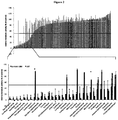
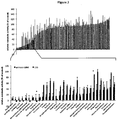
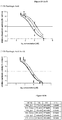
- the compound library was screened at three different concentrations (10 ⁇ M, 1 ⁇ M, 2 nM). The relative metabolic activity was determined after a 5-day incubation with compounds. The (1 ⁇ M)-data set is depicted in Figure 1 . At this concentration, 31 compounds qualified as hits, because they decreased the relative metabolic activity to less than 50% of the DMSO-treated controls ( Figure 1 top; red bars). For reference, we applied 50 ⁇ M (reported plasma peak concentration) and 500 ⁇ M of temozolomide (TMZ, as described in Beier et al., 2008), the current standard chemotherapeutic GBM drug to our cells.
- TMZ temozolomide
- cytochalasin D phorbol myristate acetate, Cantharidin, 2,3-dichloro-5,8-dihydroxynapthoquinone
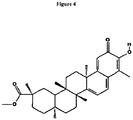
- Pristimerin is a naturally occurring triterpenoid ( Figure 4 ) that can be found in Celastraceae and Hippocrateaceae families (Buffa Filho et al., 2002; Chenag et al., 2003; Niampoka et al., 2005). It can induce anti-inflammatory, anti-oxidant, anti-malarial and insecticidal processes (Sassa et al., 1994, Dirsch et al., 1997; Figueiredo et al., 1998; Avilla et al., 2000; Luo et al., 2005).
- triterpenoids can induce cytoprotective, tumor-differentiating, proliferation-arresting, and apoptotic effects (Suh et al., 1999; Suh et al., 2003; Ji et al., 2006).
- Pristimerin can block NF- ⁇ B signaling in myeloma (Tiedemann et al., 2009; Lu et al., 2010).
- NF- ⁇ B signaling is involved in cell proliferation, inflammation, migration and apoptosis, and constitutive activation of the NF- ⁇ B signaling pathway has been described as a hallmark feature of GBM (Yamamoto et al., 2000; Nozell et al., 2008).
- an involvement in the cellular mechanisms of radiation and chemotherapy resistance has been proposed (Eyler and Rich, 2008). We thus assumed that Pristimerin exerts its anti- GBM activity via an inhibition of the NF- ⁇ B signaling cascade.
- Pristimerin induces apoptosis in GBM primary cells.
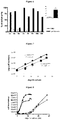
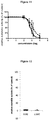
- the peak plasma concentration of pristimerin is not yet known, we investigated a range of concentrations between 70 nM and 10 ⁇ M ( Figure 5 ). Under these conditions, pristimerin is potently cytotoxic at median ICM 50 's (half maximal inhibitory concentration of metabolic activity) of approximately 500 nM ( Figure 5a,b ,d)
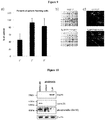
- a single dose of pristimerin decreased the frequency of clonogenic, i.e. neurosphere-forming cells by 30-60% ( Fig. 9a,b ). Depletion of clonogenic cells was never observed at concentrations of ImM. Clonogenic cells were always able to selfrenew and form higher-degree neurospheres that gave rise to immature neurons and astrocytes ( Fig. 9c ). These findings indicate that Pristimerin is not selectively inhibiting GBM cancer stem cells. Pristimerin is rather decreasing the activity of GBM cells with and without stem cell characteristics in a dosage-dependant manner.
- Pristimerin induces apoptosis in GBM cells with and without stem cell characteristics, it inhibits NF- ⁇ B signaling, and it induces the expression of HSp70.
- GAA Gambogig acid amide
- GA Gambogig acid
- TICs tumor-initiating cells
- stem-like, i.e. self-renewing and multipotent cells e.g. Sties and Rowitch, 2008; Zhou et al., 2009.
- frequencies in the range from 0.25 to 1% among culture passage 5-10 pGBMs (see Glas et al., 2010).
- the neurosphere assay (NSA) was applied as recently described (Scheffler et al., 2005; Glas et al., 2010). Heterogeneous pGBM samples (#'s 046, 078, 106) were exposed to the compounds, vital cells were collected at day 5, and processed under non-adherent conditions in the NSA (neurosphere assay, see methods). Quantification and differentiation of primary, secondary and tertiary spheres in this assay indicated no GA-induced alteration. By contrast, a single application of GAA surprisingly revealed a considerably reduced frequency of self-renewing, multipotent cells among pGBMs ( Figure 17 ).
- Plating and differentiation of cells from DMSO-control or the respective compound pre-treated 3° neurospheres revealed GFAP-expressing astrocytes and betaIII tubulin-expressing neuronal phenotypes. These results indicate an unchanged multipotent capacity of surviving cells.
- CD133-positive and -negative cell populations from pGBMs ( Figure 19 ).
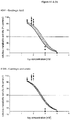
- CD133 + cells are known among glioblastoma samples to represent a minority of tumorigenic stem-like phenotypes (Singh et al., 2004). Comparative evaluation of the inhibitory effects induced by GAA and GA on CD133 + vs. CD133 - pGBM cells confirmed our assumption. Compared to the CD133 - population isolated from the same patient sample, the application of GAA led to a significantly stronger reduction of cell growth and viability among CD133 + cells (triplicate analysis). A similar selective inhibitory effect could not be revealed for GA.
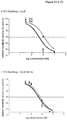
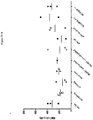
- Glioblastoma samples derived from (i) the tumor center vs. periphery region of the same patient, (ii) primary vs. recurrent disease of the same patient, (iii) MGMT -promoter hypermethylated vs. unmethylated tissue, (iv) p53 wild type vs. p53 mutated samples, as well as from (v) NFKBIA wild type vs. NFKBIA deleted genotypes. GAA appeared to inhibit all of these samples to a similar degree ( Figure 21 ).
- Table 2 List of patients and tissue specimens investigated in this study.
- A Patient denied further treatment;
- B Postoperative complications;
- C Discontinuation of therapy due to clinical deterioration;
- D isolated cells from paired GBM biopsy samples representing centre and periphery of the same, respective brain tumor;
- E isolated cells from GBM biopsy samples representing primary and recurrent disease from the same patient;
- R Tumor resection;
- RT Standard radiotherapy;
- RT/TMZ RT plus continous daily temozolomide (concomitant);
- TMZ Temozolomide (5/28: days 1 to 5 out of a 28-day cycle);
- PFS Progression-free survival;
- OS Overall survival; meth: methylated MGMT promoter; unmet: unmethylated MGMT promoter Patient (case#) Diagnosis Sex Age Histology RPA Class Primary therapy PFS OS MGMT status 021 new m 78 GBM V R, RT/TMZ, 2xTMZ (5/28)
- mice were acquired from Taconic Farm Inc., contractor of the National Institute of Allergy and Infectious Diseases' investigators (Cao et al., 1995).
- IMC50 was defined as the compound concentration that reduced the metabolic activity by 50% compared to control conditions and determined via data analysis in GraphPad Prism 4.0.
- Cells (5x10 4 per well) were grown in 12-well plates, and collected after treatment at times indicated. Cells were re-suspended in phosphate-buffered saline (PBS), fixed with ice-cold methanol and incubated for a minimum of 24 hours at 4°C. Cell pellets were collected by centrifugation and re-suspended in PBS solution, containing 50 ⁇ g/ml propidium iodide and 50 ⁇ g/ml RNase. Following incubation for 30 min at 37°C, cells were analyzed for DNA content using a FACS calibur flow cytometer (BD Bioscience).
- PBS phosphate-buffered saline
- 1x10 5 cells were collected at 5 days following compound application, settled by centrifugation, re-suspended in 100 ⁇ l LIVE/DEAD fixable dead Stain FarRed and incubated for 30 minutes at 4°C. Cells were then fixed in ice-cold 4% (w/v) paraformaldehyde in PBS for 10 minutes and permeabilized with 0.5% Triton X-100 for 5 minutes. The cell suspension was then stained with a FITC-coupled cPARP antibody (BD Bioscience; 1:5 dilution) for 30 minutes at room temperature. To distinguish between living and dead cells, labeling with 1,2 ⁇ g/ml Hoechst 33258 was used. Expression was determined using standard conditions in a LSRII equipped with FACSDiva Software (BD Bioscience). 20.000 cells were counted per measurement.
- the neurosphere assay was performed to estimate the frequency of self-renewing clonogenic cells according to established protocols (Glas et al., 2010; Scheffler et al., 2005). Neurospheres were quantified at 21 days in culture, triturated to a single cell suspension, and re-plated for analysis of the secondary and tertiary neurospheres. Multipotency was determined by plating a representative fraction of 3° neurospheres onto laminin/poly-L-ornithine coated glass coverslips allowing differentiation for 2-3 weeks before fixation in 4% paraformaldehyde (PFA).
- PFA paraformaldehyde
- Immunofluorescence analysis was performed on PFA-fixed samples according to standard protocols (Scheffler et al., 2005) using antibodies against bIII tubulin (Promega; monoclonal mouse, 1:1000) and GFAP (DAKO, polyclonal rabbit, 1:600). Cell nuclei were visualized with DAPI (Sigma).
- FACS fluorescence-activated cell separation
Landscapes
- Health & Medical Sciences (AREA)
- Chemical & Material Sciences (AREA)
- Organic Chemistry (AREA)
- Life Sciences & Earth Sciences (AREA)
- Medicinal Chemistry (AREA)
- General Health & Medical Sciences (AREA)
- Pharmacology & Pharmacy (AREA)
- Animal Behavior & Ethology (AREA)
- Public Health (AREA)
- Veterinary Medicine (AREA)
- Epidemiology (AREA)
- Engineering & Computer Science (AREA)
- Immunology (AREA)
- Molecular Biology (AREA)
- General Chemical & Material Sciences (AREA)
- Urology & Nephrology (AREA)
- Chemical Kinetics & Catalysis (AREA)
- Biomedical Technology (AREA)
- Nuclear Medicine, Radiotherapy & Molecular Imaging (AREA)
- Hematology (AREA)
- Cell Biology (AREA)
- Biotechnology (AREA)
- Microbiology (AREA)
- Bioinformatics & Cheminformatics (AREA)
- Food Science & Technology (AREA)
- Physics & Mathematics (AREA)
- Analytical Chemistry (AREA)
- Biochemistry (AREA)
- General Physics & Mathematics (AREA)
- Pathology (AREA)
- Pharmaceuticals Containing Other Organic And Inorganic Compounds (AREA)
- Oncology (AREA)
- Medicines That Contain Protein Lipid Enzymes And Other Medicines (AREA)
- Nitrogen Condensed Heterocyclic Rings (AREA)
Applications Claiming Priority (2)
| Application Number | Priority Date | Filing Date | Title |
|---|---|---|---|
| US201161497215P | 2011-06-15 | 2011-06-15 | |
| PCT/EP2012/061485 WO2012172069A1 (en) | 2011-06-15 | 2012-06-15 | Glioblastoma inhibiting compounds and their use |
Publications (2)
| Publication Number | Publication Date |
|---|---|
| EP2721035A1 EP2721035A1 (en) | 2014-04-23 |
| EP2721035B1 true EP2721035B1 (en) | 2018-06-13 |
Family
ID=46319762
Family Applications (1)
| Application Number | Title | Priority Date | Filing Date |
|---|---|---|---|
| EP12728260.6A Not-in-force EP2721035B1 (en) | 2011-06-15 | 2012-06-15 | Glioblastoma inhibiting compounds and their use |
Country Status (14)
| Country | Link |
|---|---|
| US (1) | US9573960B2 (enExample) |
| EP (1) | EP2721035B1 (enExample) |
| JP (1) | JP6228113B2 (enExample) |
| CN (1) | CN103764659A (enExample) |
| AU (1) | AU2012268984B2 (enExample) |
| BR (1) | BR112013032360A2 (enExample) |
| CA (1) | CA2838945A1 (enExample) |
| CL (1) | CL2013003563A1 (enExample) |
| IL (1) | IL229767A0 (enExample) |
| MX (1) | MX340816B (enExample) |
| PH (1) | PH12013502530A1 (enExample) |
| RU (1) | RU2014101070A (enExample) |
| WO (1) | WO2012172069A1 (enExample) |
| ZA (1) | ZA201309365B (enExample) |
Families Citing this family (11)
| Publication number | Priority date | Publication date | Assignee | Title |
|---|---|---|---|---|
| WO2014023329A1 (en) * | 2012-08-06 | 2014-02-13 | Life And Brain Gmbh | Niclosamide and its derivatives for use in the treatment of solid tumors |
| CA2986930C (en) | 2015-06-24 | 2023-09-26 | Duke University | Chemical modulators of signaling pathways and therapeutic use |
| CA2993158A1 (en) * | 2015-07-31 | 2017-02-09 | Swedish Health Services | Methods and compositions for characterization of glioblastoma multiforme tumors and cancer stem cells |
| EP3349774A4 (en) * | 2015-09-15 | 2019-03-27 | Swedish Health Services | METHOD AND COMPOSITE SHEETS FOR CHARACTERIZING GLOBALBLASTOMA MULTIFORM TUMORS AND CANCER STEM CELLS THEREOF |
| CN105802928A (zh) * | 2016-03-30 | 2016-07-27 | 苏州偲聚生物材料有限公司 | 用于检测血清中mgmt抗体的多肽,检测器件和检测试剂盒 |
| CN105796549A (zh) * | 2016-04-22 | 2016-07-27 | 中国医学科学院基础医学研究所 | 藤黄酰胺用于制备治疗人神经胶质瘤的药物的用途 |
| CN107475213A (zh) * | 2016-06-08 | 2017-12-15 | 中国科学院苏州纳米技术与纳米仿生研究所 | 用于检测血清中mgmt抗体的多肽,检测器件和检测试剂盒 |
| WO2019178059A1 (en) * | 2018-03-13 | 2019-09-19 | Georgetown University | ENHANCING CHEMOTHERAPY IN MEDULLOBLASTOMA AND GLIOBLASTOMA WITH HIGH BASAL p53 LEVELS |
| CN110433154A (zh) * | 2019-08-12 | 2019-11-12 | 昆明理工大学 | 藤黄酸的新用途 |
| WO2023183463A1 (en) * | 2022-03-23 | 2023-09-28 | University Of Cincinnati | Methods of potentiating temozolomide activity against glioblastoma cells |
| CN117538458B (zh) * | 2024-01-09 | 2024-03-29 | 中国医学科学院北京协和医院 | 同时定量分析14种单糖/二糖的液相色谱串联质谱分析方法 |
Citations (2)
| Publication number | Priority date | Publication date | Assignee | Title |
|---|---|---|---|---|
| WO2000044216A2 (en) * | 1999-02-01 | 2000-08-03 | Cytovia Inc | Gambogic acid, analogs and derivatives as activators of caspases and inducers of apoptosis |
| US20100152181A1 (en) * | 2008-12-16 | 2010-06-17 | Eli Lilly And Company | Amino pyrazole compound |
Family Cites Families (6)
| Publication number | Priority date | Publication date | Assignee | Title |
|---|---|---|---|---|
| EP1151295A4 (en) * | 1999-02-01 | 2005-03-30 | Cytovia Inc | METHOD FOR IDENTIFYING THERAPEUTICALLY EFFECTIVE ANTINEOPLASTIC SUBSTANCES USING CULTURED CELLS WITH INTACT CELL MEMBRANES AND RELATED PRODUCTS THEREOF |
| US6462041B1 (en) | 1999-05-21 | 2002-10-08 | Cytovia, Inc. | Gambogic acid, analogs and derivatives as activators of caspases and inducers of apoptosis |
| JP3904364B2 (ja) | 2000-03-03 | 2007-04-11 | 独立行政法人科学技術振興機構 | 抗マラリア活性を有する新規化合物 |
| EP1300403A1 (en) | 2001-10-02 | 2003-04-09 | Aventis Pharma S.A. | Process for the manufacture of hypoxyxylerone derivatives |
| WO2008148008A1 (en) * | 2007-05-23 | 2008-12-04 | Emory University | High throughput bioassay for identifying selective trka receptor agonists, and gambogic amide, a selective trka agonist with neuroprotective activity |
| CN101289482B (zh) * | 2007-09-29 | 2011-08-31 | 辽宁利锋科技开发有限公司 | 藤黄酸苷衍生物和类似物及其制备方法和用途 |
-
2012
- 2012-06-15 PH PH1/2013/502530A patent/PH12013502530A1/en unknown
- 2012-06-15 CN CN201280028960.8A patent/CN103764659A/zh active Pending
- 2012-06-15 AU AU2012268984A patent/AU2012268984B2/en not_active Expired - Fee Related
- 2012-06-15 CA CA2838945A patent/CA2838945A1/en not_active Abandoned
- 2012-06-15 JP JP2014515214A patent/JP6228113B2/ja not_active Expired - Fee Related
- 2012-06-15 EP EP12728260.6A patent/EP2721035B1/en not_active Not-in-force
- 2012-06-15 BR BR112013032360A patent/BR112013032360A2/pt not_active IP Right Cessation
- 2012-06-15 RU RU2014101070/04A patent/RU2014101070A/ru not_active Application Discontinuation
- 2012-06-15 US US14/126,512 patent/US9573960B2/en not_active Expired - Fee Related
- 2012-06-15 WO PCT/EP2012/061485 patent/WO2012172069A1/en not_active Ceased
- 2012-06-15 MX MX2013014708A patent/MX340816B/es active IP Right Grant
-
2013
- 2013-12-02 IL IL229767A patent/IL229767A0/en unknown
- 2013-12-11 ZA ZA2013/09365A patent/ZA201309365B/en unknown
- 2013-12-12 CL CL2013003563A patent/CL2013003563A1/es unknown
Patent Citations (2)
| Publication number | Priority date | Publication date | Assignee | Title |
|---|---|---|---|---|
| WO2000044216A2 (en) * | 1999-02-01 | 2000-08-03 | Cytovia Inc | Gambogic acid, analogs and derivatives as activators of caspases and inducers of apoptosis |
| US20100152181A1 (en) * | 2008-12-16 | 2010-06-17 | Eli Lilly And Company | Amino pyrazole compound |
Also Published As
| Publication number | Publication date |
|---|---|
| JP6228113B2 (ja) | 2017-11-08 |
| RU2014101070A (ru) | 2015-07-20 |
| MX340816B (es) | 2016-07-26 |
| CL2013003563A1 (es) | 2014-06-06 |
| MX2013014708A (es) | 2014-08-18 |
| US9573960B2 (en) | 2017-02-21 |
| IL229767A0 (en) | 2014-01-30 |
| PH12013502530A1 (en) | 2014-01-27 |
| CA2838945A1 (en) | 2012-12-20 |
| CN103764659A (zh) | 2014-04-30 |
| JP2014517025A (ja) | 2014-07-17 |
| AU2012268984B2 (en) | 2016-07-14 |
| ZA201309365B (en) | 2015-11-25 |
| NZ618170A (en) | 2015-04-24 |
| US20150148390A1 (en) | 2015-05-28 |
| BR112013032360A2 (pt) | 2017-06-13 |
| WO2012172069A1 (en) | 2012-12-20 |
| EP2721035A1 (en) | 2014-04-23 |
Similar Documents
| Publication | Publication Date | Title |
|---|---|---|
| US9573960B2 (en) | Glioblastoma inhibiting compounds and their use | |
| AU2012268984A1 (en) | Glioblastoma inhibiting compounds and their use | |
| US9844522B2 (en) | Niclosamide and its derivatives for use in the treatment of solid tumors | |
| US8507546B2 (en) | Use of inhibitors of scavenger receptor class proteins for the treatment of infectious diseases | |
| NO329994B1 (no) | Deazapuriner, farmasoytiske preparater som omfatter forbindelsene og eventuelt et ytterligere terapeutisk middel, samt anvendelse av forbindelsene til tilvikning av et medikament for behandling av en inflammatorisk eller autoimmun lidelse eller proliferativ lidelse | |
| US8883749B2 (en) | Transcription factor inhibitors and related compositions, formulations and methods | |
| US20180105500A1 (en) | Novel inhibitors of transforming growth factor kinase and methods of use thereof | |
| Byczek-Wyrostek et al. | Simple 2 (5H)-furanone derivatives with selective cytotoxicity towards non-small cell lung cancer cell line A549–Synthesis, structure-activity relationship and biological evaluation | |
| US20240182429A1 (en) | Heterocyclic compound as tyk2 pseudokinase domain inhibitor, synthetic method, and use | |
| EP4397660A1 (en) | Compound as tyk2/jak1 pseudokinase domain inhibitor, and synthesis and use methods | |
| NZ618170B2 (en) | Glioblastoma inhibiting compounds and their use | |
| KR102205656B1 (ko) | 암의 예방 또는 치료용 약학적 조성물 | |
| US12269821B2 (en) | Discovery of novel first in class nature-inspired compounds targeting the mitochondrial function and pharmaceutical composition thereof | |
| US20250333393A1 (en) | Heterocyclic compound as tyk2 inhibitor, and synthesis and use thereof | |
| KR102906581B1 (ko) | 올레아난 신남아미드 유도체 및 이의 제조 방법과 용도 | |
| EP3200796B1 (en) | 4-aminopyrimidine compounds in combination with a chemotherapy agent for treating cancer | |
| KR20260056261A (ko) | Pde 7 조절제 화합물 | |
| KR101524770B1 (ko) | 세포주기 조절을 통한 항암 효과를 보이는 폴리페놀 | |
| JP5597427B2 (ja) | 抗がん剤 | |
| EP3381910B1 (en) | 4-oxo-4,5-dihydrothiazole derivative, preparation method and use thereof | |
| HK1240589A1 (en) | Compound having anti-cancer activity and anti-helicobacter pylori activity, production method therefor, and use of said compound | |
| HK1240496B (en) | 4-aminopyrimidine compounds in combination with a chemotherapy agent for treating cancer | |
| HK1240496A1 (en) | 4-aminopyrimidine compounds in combination with a chemotherapy agent for treating cancer |
Legal Events
| Date | Code | Title | Description |
|---|---|---|---|
| PUAI | Public reference made under article 153(3) epc to a published international application that has entered the european phase |
Free format text: ORIGINAL CODE: 0009012 |
|
| 17P | Request for examination filed |
Effective date: 20140109 |
|
| AK | Designated contracting states |
Kind code of ref document: A1 Designated state(s): AL AT BE BG CH CY CZ DE DK EE ES FI FR GB GR HR HU IE IS IT LI LT LU LV MC MK MT NL NO PL PT RO RS SE SI SK SM TR |
|
| DAX | Request for extension of the european patent (deleted) | ||
| GRAP | Despatch of communication of intention to grant a patent |
Free format text: ORIGINAL CODE: EPIDOSNIGR1 |
|
| INTG | Intention to grant announced |
Effective date: 20170804 |
|
| GRAJ | Information related to disapproval of communication of intention to grant by the applicant or resumption of examination proceedings by the epo deleted |
Free format text: ORIGINAL CODE: EPIDOSDIGR1 |
|
| GRAR | Information related to intention to grant a patent recorded |
Free format text: ORIGINAL CODE: EPIDOSNIGR71 |
|
| GRAS | Grant fee paid |
Free format text: ORIGINAL CODE: EPIDOSNIGR3 |
|
| GRAA | (expected) grant |
Free format text: ORIGINAL CODE: 0009210 |
|
| INTC | Intention to grant announced (deleted) | ||
| INTG | Intention to grant announced |
Effective date: 20180503 |
|
| AK | Designated contracting states |
Kind code of ref document: B1 Designated state(s): AL AT BE BG CH CY CZ DE DK EE ES FI FR GB GR HR HU IE IS IT LI LT LU LV MC MK MT NL NO PL PT RO RS SE SI SK SM TR |
|
| REG | Reference to a national code |
Ref country code: GB Ref legal event code: FG4D |
|
| REG | Reference to a national code |
Ref country code: CH Ref legal event code: EP Ref country code: AT Ref legal event code: REF Ref document number: 1008407 Country of ref document: AT Kind code of ref document: T Effective date: 20180615 |
|
| REG | Reference to a national code |
Ref country code: IE Ref legal event code: FG4D |
|
| REG | Reference to a national code |
Ref country code: DE Ref legal event code: R096 Ref document number: 602012047412 Country of ref document: DE |
|
| REG | Reference to a national code |
Ref country code: FR Ref legal event code: PLFP Year of fee payment: 7 |
|
| REG | Reference to a national code |
Ref country code: NL Ref legal event code: MP Effective date: 20180613 |
|
| REG | Reference to a national code |
Ref country code: LT Ref legal event code: MG4D |
|
| PG25 | Lapsed in a contracting state [announced via postgrant information from national office to epo] |
Ref country code: ES Free format text: LAPSE BECAUSE OF FAILURE TO SUBMIT A TRANSLATION OF THE DESCRIPTION OR TO PAY THE FEE WITHIN THE PRESCRIBED TIME-LIMIT Effective date: 20180613 Ref country code: LT Free format text: LAPSE BECAUSE OF FAILURE TO SUBMIT A TRANSLATION OF THE DESCRIPTION OR TO PAY THE FEE WITHIN THE PRESCRIBED TIME-LIMIT Effective date: 20180613 Ref country code: CY Free format text: LAPSE BECAUSE OF FAILURE TO SUBMIT A TRANSLATION OF THE DESCRIPTION OR TO PAY THE FEE WITHIN THE PRESCRIBED TIME-LIMIT Effective date: 20180613 Ref country code: NO Free format text: LAPSE BECAUSE OF FAILURE TO SUBMIT A TRANSLATION OF THE DESCRIPTION OR TO PAY THE FEE WITHIN THE PRESCRIBED TIME-LIMIT Effective date: 20180913 Ref country code: SE Free format text: LAPSE BECAUSE OF FAILURE TO SUBMIT A TRANSLATION OF THE DESCRIPTION OR TO PAY THE FEE WITHIN THE PRESCRIBED TIME-LIMIT Effective date: 20180613 Ref country code: FI Free format text: LAPSE BECAUSE OF FAILURE TO SUBMIT A TRANSLATION OF THE DESCRIPTION OR TO PAY THE FEE WITHIN THE PRESCRIBED TIME-LIMIT Effective date: 20180613 Ref country code: BG Free format text: LAPSE BECAUSE OF FAILURE TO SUBMIT A TRANSLATION OF THE DESCRIPTION OR TO PAY THE FEE WITHIN THE PRESCRIBED TIME-LIMIT Effective date: 20180913 |
|
| PG25 | Lapsed in a contracting state [announced via postgrant information from national office to epo] |
Ref country code: GR Free format text: LAPSE BECAUSE OF FAILURE TO SUBMIT A TRANSLATION OF THE DESCRIPTION OR TO PAY THE FEE WITHIN THE PRESCRIBED TIME-LIMIT Effective date: 20180914 Ref country code: RS Free format text: LAPSE BECAUSE OF FAILURE TO SUBMIT A TRANSLATION OF THE DESCRIPTION OR TO PAY THE FEE WITHIN THE PRESCRIBED TIME-LIMIT Effective date: 20180613 Ref country code: LV Free format text: LAPSE BECAUSE OF FAILURE TO SUBMIT A TRANSLATION OF THE DESCRIPTION OR TO PAY THE FEE WITHIN THE PRESCRIBED TIME-LIMIT Effective date: 20180613 Ref country code: HR Free format text: LAPSE BECAUSE OF FAILURE TO SUBMIT A TRANSLATION OF THE DESCRIPTION OR TO PAY THE FEE WITHIN THE PRESCRIBED TIME-LIMIT Effective date: 20180613 |
|
| REG | Reference to a national code |
Ref country code: AT Ref legal event code: MK05 Ref document number: 1008407 Country of ref document: AT Kind code of ref document: T Effective date: 20180613 |
|
| PG25 | Lapsed in a contracting state [announced via postgrant information from national office to epo] |
Ref country code: NL Free format text: LAPSE BECAUSE OF FAILURE TO SUBMIT A TRANSLATION OF THE DESCRIPTION OR TO PAY THE FEE WITHIN THE PRESCRIBED TIME-LIMIT Effective date: 20180613 |
|
| PG25 | Lapsed in a contracting state [announced via postgrant information from national office to epo] |
Ref country code: SK Free format text: LAPSE BECAUSE OF FAILURE TO SUBMIT A TRANSLATION OF THE DESCRIPTION OR TO PAY THE FEE WITHIN THE PRESCRIBED TIME-LIMIT Effective date: 20180613 Ref country code: AT Free format text: LAPSE BECAUSE OF FAILURE TO SUBMIT A TRANSLATION OF THE DESCRIPTION OR TO PAY THE FEE WITHIN THE PRESCRIBED TIME-LIMIT Effective date: 20180613 Ref country code: EE Free format text: LAPSE BECAUSE OF FAILURE TO SUBMIT A TRANSLATION OF THE DESCRIPTION OR TO PAY THE FEE WITHIN THE PRESCRIBED TIME-LIMIT Effective date: 20180613 Ref country code: IS Free format text: LAPSE BECAUSE OF FAILURE TO SUBMIT A TRANSLATION OF THE DESCRIPTION OR TO PAY THE FEE WITHIN THE PRESCRIBED TIME-LIMIT Effective date: 20181013 Ref country code: PL Free format text: LAPSE BECAUSE OF FAILURE TO SUBMIT A TRANSLATION OF THE DESCRIPTION OR TO PAY THE FEE WITHIN THE PRESCRIBED TIME-LIMIT Effective date: 20180613 Ref country code: CZ Free format text: LAPSE BECAUSE OF FAILURE TO SUBMIT A TRANSLATION OF THE DESCRIPTION OR TO PAY THE FEE WITHIN THE PRESCRIBED TIME-LIMIT Effective date: 20180613 Ref country code: RO Free format text: LAPSE BECAUSE OF FAILURE TO SUBMIT A TRANSLATION OF THE DESCRIPTION OR TO PAY THE FEE WITHIN THE PRESCRIBED TIME-LIMIT Effective date: 20180613 |
|
| REG | Reference to a national code |
Ref country code: CH Ref legal event code: PL |
|
| PG25 | Lapsed in a contracting state [announced via postgrant information from national office to epo] |
Ref country code: IT Free format text: LAPSE BECAUSE OF FAILURE TO SUBMIT A TRANSLATION OF THE DESCRIPTION OR TO PAY THE FEE WITHIN THE PRESCRIBED TIME-LIMIT Effective date: 20180613 Ref country code: SM Free format text: LAPSE BECAUSE OF FAILURE TO SUBMIT A TRANSLATION OF THE DESCRIPTION OR TO PAY THE FEE WITHIN THE PRESCRIBED TIME-LIMIT Effective date: 20180613 |
|
| REG | Reference to a national code |
Ref country code: BE Ref legal event code: MM Effective date: 20180630 |
|
| REG | Reference to a national code |
Ref country code: DE Ref legal event code: R097 Ref document number: 602012047412 Country of ref document: DE |
|
| REG | Reference to a national code |
Ref country code: IE Ref legal event code: MM4A |
|
| PG25 | Lapsed in a contracting state [announced via postgrant information from national office to epo] |
Ref country code: MC Free format text: LAPSE BECAUSE OF FAILURE TO SUBMIT A TRANSLATION OF THE DESCRIPTION OR TO PAY THE FEE WITHIN THE PRESCRIBED TIME-LIMIT Effective date: 20180613 Ref country code: LU Free format text: LAPSE BECAUSE OF NON-PAYMENT OF DUE FEES Effective date: 20180615 |
|
| PLBE | No opposition filed within time limit |
Free format text: ORIGINAL CODE: 0009261 |
|
| STAA | Information on the status of an ep patent application or granted ep patent |
Free format text: STATUS: NO OPPOSITION FILED WITHIN TIME LIMIT |
|
| PG25 | Lapsed in a contracting state [announced via postgrant information from national office to epo] |
Ref country code: IE Free format text: LAPSE BECAUSE OF NON-PAYMENT OF DUE FEES Effective date: 20180615 Ref country code: LI Free format text: LAPSE BECAUSE OF NON-PAYMENT OF DUE FEES Effective date: 20180630 Ref country code: CH Free format text: LAPSE BECAUSE OF NON-PAYMENT OF DUE FEES Effective date: 20180630 |
|
| 26N | No opposition filed |
Effective date: 20190314 |
|
| PG25 | Lapsed in a contracting state [announced via postgrant information from national office to epo] |
Ref country code: DK Free format text: LAPSE BECAUSE OF FAILURE TO SUBMIT A TRANSLATION OF THE DESCRIPTION OR TO PAY THE FEE WITHIN THE PRESCRIBED TIME-LIMIT Effective date: 20180613 Ref country code: SI Free format text: LAPSE BECAUSE OF FAILURE TO SUBMIT A TRANSLATION OF THE DESCRIPTION OR TO PAY THE FEE WITHIN THE PRESCRIBED TIME-LIMIT Effective date: 20180613 Ref country code: BE Free format text: LAPSE BECAUSE OF NON-PAYMENT OF DUE FEES Effective date: 20180630 |
|
| PGFP | Annual fee paid to national office [announced via postgrant information from national office to epo] |
Ref country code: FR Payment date: 20190626 Year of fee payment: 8 |
|
| PGFP | Annual fee paid to national office [announced via postgrant information from national office to epo] |
Ref country code: DE Payment date: 20190627 Year of fee payment: 8 Ref country code: GB Payment date: 20190624 Year of fee payment: 8 |
|
| REG | Reference to a national code |
Ref country code: DE Ref legal event code: R082 Ref document number: 602012047412 Country of ref document: DE Representative=s name: ZWICKER SCHNAPPAUF & PARTNER PATENTANWAELTE PA, DE |
|
| PG25 | Lapsed in a contracting state [announced via postgrant information from national office to epo] |
Ref country code: AL Free format text: LAPSE BECAUSE OF FAILURE TO SUBMIT A TRANSLATION OF THE DESCRIPTION OR TO PAY THE FEE WITHIN THE PRESCRIBED TIME-LIMIT Effective date: 20180613 |
|
| PG25 | Lapsed in a contracting state [announced via postgrant information from national office to epo] |
Ref country code: MT Free format text: LAPSE BECAUSE OF NON-PAYMENT OF DUE FEES Effective date: 20180615 |
|
| PG25 | Lapsed in a contracting state [announced via postgrant information from national office to epo] |
Ref country code: TR Free format text: LAPSE BECAUSE OF FAILURE TO SUBMIT A TRANSLATION OF THE DESCRIPTION OR TO PAY THE FEE WITHIN THE PRESCRIBED TIME-LIMIT Effective date: 20180613 |
|
| PG25 | Lapsed in a contracting state [announced via postgrant information from national office to epo] |
Ref country code: HU Free format text: LAPSE BECAUSE OF FAILURE TO SUBMIT A TRANSLATION OF THE DESCRIPTION OR TO PAY THE FEE WITHIN THE PRESCRIBED TIME-LIMIT; INVALID AB INITIO Effective date: 20120615 Ref country code: PT Free format text: LAPSE BECAUSE OF FAILURE TO SUBMIT A TRANSLATION OF THE DESCRIPTION OR TO PAY THE FEE WITHIN THE PRESCRIBED TIME-LIMIT Effective date: 20180613 |
|
| PG25 | Lapsed in a contracting state [announced via postgrant information from national office to epo] |
Ref country code: MK Free format text: LAPSE BECAUSE OF NON-PAYMENT OF DUE FEES Effective date: 20180613 |
|
| REG | Reference to a national code |
Ref country code: DE Ref legal event code: R119 Ref document number: 602012047412 Country of ref document: DE |
|
| GBPC | Gb: european patent ceased through non-payment of renewal fee |
Effective date: 20200615 |
|
| PG25 | Lapsed in a contracting state [announced via postgrant information from national office to epo] |
Ref country code: FR Free format text: LAPSE BECAUSE OF NON-PAYMENT OF DUE FEES Effective date: 20200630 Ref country code: GB Free format text: LAPSE BECAUSE OF NON-PAYMENT OF DUE FEES Effective date: 20200615 |
|
| PG25 | Lapsed in a contracting state [announced via postgrant information from national office to epo] |
Ref country code: DE Free format text: LAPSE BECAUSE OF NON-PAYMENT OF DUE FEES Effective date: 20210101 |