EP2689785B1 - Method for generating dry vaccine powder formulation for inranasal delivery - Google Patents
Method for generating dry vaccine powder formulation for inranasal delivery Download PDFInfo
- Publication number
- EP2689785B1 EP2689785B1 EP13189570.8A EP13189570A EP2689785B1 EP 2689785 B1 EP2689785 B1 EP 2689785B1 EP 13189570 A EP13189570 A EP 13189570A EP 2689785 B1 EP2689785 B1 EP 2689785B1
- Authority
- EP
- European Patent Office
- Prior art keywords
- virus
- micro
- vaccine
- degrees
- powder
- Prior art date
- Legal status (The legal status is an assumption and is not a legal conclusion. Google has not performed a legal analysis and makes no representation as to the accuracy of the status listed.)
- Active
Links
Images








Classifications
-
- A—HUMAN NECESSITIES
- A61—MEDICAL OR VETERINARY SCIENCE; HYGIENE
- A61K—PREPARATIONS FOR MEDICAL, DENTAL OR TOILETRY PURPOSES
- A61K9/00—Medicinal preparations characterised by special physical form
- A61K9/0012—Galenical forms characterised by the site of application
- A61K9/0043—Nose
-
- A—HUMAN NECESSITIES
- A61—MEDICAL OR VETERINARY SCIENCE; HYGIENE
- A61K—PREPARATIONS FOR MEDICAL, DENTAL OR TOILETRY PURPOSES
- A61K39/00—Medicinal preparations containing antigens or antibodies
- A61K39/02—Bacterial antigens
- A61K39/05—Actinobacteria, e.g. Actinomyces, Streptomyces, Nocardia, Bifidobacterium, Gardnerella, Corynebacterium; Propionibacterium
-
- A—HUMAN NECESSITIES
- A61—MEDICAL OR VETERINARY SCIENCE; HYGIENE
- A61K—PREPARATIONS FOR MEDICAL, DENTAL OR TOILETRY PURPOSES
- A61K39/00—Medicinal preparations containing antigens or antibodies
- A61K39/0005—Vertebrate antigens
-
- A—HUMAN NECESSITIES
- A61—MEDICAL OR VETERINARY SCIENCE; HYGIENE
- A61K—PREPARATIONS FOR MEDICAL, DENTAL OR TOILETRY PURPOSES
- A61K39/00—Medicinal preparations containing antigens or antibodies
- A61K39/02—Bacterial antigens
- A61K39/08—Clostridium, e.g. Clostridium tetani
-
- A—HUMAN NECESSITIES
- A61—MEDICAL OR VETERINARY SCIENCE; HYGIENE
- A61K—PREPARATIONS FOR MEDICAL, DENTAL OR TOILETRY PURPOSES
- A61K39/00—Medicinal preparations containing antigens or antibodies
- A61K39/12—Viral antigens
-
- A—HUMAN NECESSITIES
- A61—MEDICAL OR VETERINARY SCIENCE; HYGIENE
- A61K—PREPARATIONS FOR MEDICAL, DENTAL OR TOILETRY PURPOSES
- A61K39/00—Medicinal preparations containing antigens or antibodies
- A61K39/12—Viral antigens
- A61K39/145—Orthomyxoviridae, e.g. influenza virus
-
- A—HUMAN NECESSITIES
- A61—MEDICAL OR VETERINARY SCIENCE; HYGIENE
- A61K—PREPARATIONS FOR MEDICAL, DENTAL OR TOILETRY PURPOSES
- A61K47/00—Medicinal preparations characterised by the non-active ingredients used, e.g. carriers or inert additives; Targeting or modifying agents chemically bound to the active ingredient
- A61K47/06—Organic compounds, e.g. natural or synthetic hydrocarbons, polyolefins, mineral oil, petrolatum or ozokerite
- A61K47/26—Carbohydrates, e.g. sugar alcohols, amino sugars, nucleic acids, mono-, di- or oligo-saccharides; Derivatives thereof, e.g. polysorbates, sorbitan fatty acid esters or glycyrrhizin
-
- A—HUMAN NECESSITIES
- A61—MEDICAL OR VETERINARY SCIENCE; HYGIENE
- A61K—PREPARATIONS FOR MEDICAL, DENTAL OR TOILETRY PURPOSES
- A61K47/00—Medicinal preparations characterised by the non-active ingredients used, e.g. carriers or inert additives; Targeting or modifying agents chemically bound to the active ingredient
- A61K47/30—Macromolecular organic or inorganic compounds, e.g. inorganic polyphosphates
- A61K47/36—Polysaccharides; Derivatives thereof, e.g. gums, starch, alginate, dextrin, hyaluronic acid, chitosan, inulin, agar or pectin
- A61K47/38—Cellulose; Derivatives thereof
-
- A—HUMAN NECESSITIES
- A61—MEDICAL OR VETERINARY SCIENCE; HYGIENE
- A61K—PREPARATIONS FOR MEDICAL, DENTAL OR TOILETRY PURPOSES
- A61K9/00—Medicinal preparations characterised by special physical form
- A61K9/14—Particulate form, e.g. powders, Processes for size reducing of pure drugs or the resulting products, Pure drug nanoparticles
- A61K9/19—Particulate form, e.g. powders, Processes for size reducing of pure drugs or the resulting products, Pure drug nanoparticles lyophilised, i.e. freeze-dried, solutions or dispersions
-
- A—HUMAN NECESSITIES
- A61—MEDICAL OR VETERINARY SCIENCE; HYGIENE
- A61P—SPECIFIC THERAPEUTIC ACTIVITY OF CHEMICAL COMPOUNDS OR MEDICINAL PREPARATIONS
- A61P31/00—Antiinfectives, i.e. antibiotics, antiseptics, chemotherapeutics
- A61P31/04—Antibacterial agents
-
- A—HUMAN NECESSITIES
- A61—MEDICAL OR VETERINARY SCIENCE; HYGIENE
- A61P—SPECIFIC THERAPEUTIC ACTIVITY OF CHEMICAL COMPOUNDS OR MEDICINAL PREPARATIONS
- A61P31/00—Antiinfectives, i.e. antibiotics, antiseptics, chemotherapeutics
- A61P31/10—Antimycotics
-
- A—HUMAN NECESSITIES
- A61—MEDICAL OR VETERINARY SCIENCE; HYGIENE
- A61P—SPECIFIC THERAPEUTIC ACTIVITY OF CHEMICAL COMPOUNDS OR MEDICINAL PREPARATIONS
- A61P31/00—Antiinfectives, i.e. antibiotics, antiseptics, chemotherapeutics
- A61P31/12—Antivirals
-
- A—HUMAN NECESSITIES
- A61—MEDICAL OR VETERINARY SCIENCE; HYGIENE
- A61P—SPECIFIC THERAPEUTIC ACTIVITY OF CHEMICAL COMPOUNDS OR MEDICINAL PREPARATIONS
- A61P31/00—Antiinfectives, i.e. antibiotics, antiseptics, chemotherapeutics
- A61P31/12—Antivirals
- A61P31/14—Antivirals for RNA viruses
- A61P31/16—Antivirals for RNA viruses for influenza or rhinoviruses
-
- A—HUMAN NECESSITIES
- A61—MEDICAL OR VETERINARY SCIENCE; HYGIENE
- A61P—SPECIFIC THERAPEUTIC ACTIVITY OF CHEMICAL COMPOUNDS OR MEDICINAL PREPARATIONS
- A61P33/00—Antiparasitic agents
- A61P33/02—Antiprotozoals, e.g. for leishmaniasis, trichomoniasis, toxoplasmosis
-
- A—HUMAN NECESSITIES
- A61—MEDICAL OR VETERINARY SCIENCE; HYGIENE
- A61P—SPECIFIC THERAPEUTIC ACTIVITY OF CHEMICAL COMPOUNDS OR MEDICINAL PREPARATIONS
- A61P37/00—Drugs for immunological or allergic disorders
- A61P37/02—Immunomodulators
- A61P37/04—Immunostimulants
-
- H—ELECTRICITY
- H04—ELECTRIC COMMUNICATION TECHNIQUE
- H04M—TELEPHONIC COMMUNICATION
- H04M3/00—Automatic or semi-automatic exchanges
- H04M3/42—Systems providing special services or facilities to subscribers
- H04M3/50—Centralised arrangements for answering calls; Centralised arrangements for recording messages for absent or busy subscribers ; Centralised arrangements for recording messages
- H04M3/51—Centralised call answering arrangements requiring operator intervention, e.g. call or contact centers for telemarketing
- H04M3/5116—Centralised call answering arrangements requiring operator intervention, e.g. call or contact centers for telemarketing for emergency applications
-
- H—ELECTRICITY
- H04—ELECTRIC COMMUNICATION TECHNIQUE
- H04W—WIRELESS COMMUNICATION NETWORKS
- H04W4/00—Services specially adapted for wireless communication networks; Facilities therefor
- H04W4/90—Services for handling of emergency or hazardous situations, e.g. earthquake and tsunami warning systems [ETWS]
-
- H—ELECTRICITY
- H04—ELECTRIC COMMUNICATION TECHNIQUE
- H04W—WIRELESS COMMUNICATION NETWORKS
- H04W76/00—Connection management
- H04W76/50—Connection management for emergency connections
-
- A—HUMAN NECESSITIES
- A61—MEDICAL OR VETERINARY SCIENCE; HYGIENE
- A61K—PREPARATIONS FOR MEDICAL, DENTAL OR TOILETRY PURPOSES
- A61K39/00—Medicinal preparations containing antigens or antibodies
- A61K2039/51—Medicinal preparations containing antigens or antibodies comprising whole cells, viruses or DNA/RNA
- A61K2039/525—Virus
- A61K2039/5252—Virus inactivated (killed)
-
- A—HUMAN NECESSITIES
- A61—MEDICAL OR VETERINARY SCIENCE; HYGIENE
- A61K—PREPARATIONS FOR MEDICAL, DENTAL OR TOILETRY PURPOSES
- A61K39/00—Medicinal preparations containing antigens or antibodies
- A61K2039/54—Medicinal preparations containing antigens or antibodies characterised by the route of administration
- A61K2039/541—Mucosal route
- A61K2039/543—Mucosal route intranasal
-
- C—CHEMISTRY; METALLURGY
- C12—BIOCHEMISTRY; BEER; SPIRITS; WINE; VINEGAR; MICROBIOLOGY; ENZYMOLOGY; MUTATION OR GENETIC ENGINEERING
- C12N—MICROORGANISMS OR ENZYMES; COMPOSITIONS THEREOF; PROPAGATING, PRESERVING, OR MAINTAINING MICROORGANISMS; MUTATION OR GENETIC ENGINEERING; CULTURE MEDIA
- C12N2760/00—MICROORGANISMS OR ENZYMES; COMPOSITIONS THEREOF; PROPAGATING, PRESERVING, OR MAINTAINING MICROORGANISMS; MUTATION OR GENETIC ENGINEERING; CULTURE MEDIA ssRNA viruses negative-sense
- C12N2760/00011—Details
- C12N2760/16011—Orthomyxoviridae
- C12N2760/16111—Influenzavirus A, i.e. influenza A virus
- C12N2760/16134—Use of virus or viral component as vaccine, e.g. live-attenuated or inactivated virus, VLP, viral protein
-
- H—ELECTRICITY
- H04—ELECTRIC COMMUNICATION TECHNIQUE
- H04W—WIRELESS COMMUNICATION NETWORKS
- H04W76/00—Connection management
- H04W76/10—Connection setup
- H04W76/15—Setup of multiple wireless link connections
-
- H—ELECTRICITY
- H04—ELECTRIC COMMUNICATION TECHNIQUE
- H04W—WIRELESS COMMUNICATION NETWORKS
- H04W8/00—Network data management
- H04W8/18—Processing of user or subscriber data, e.g. subscribed services, user preferences or user profiles; Transfer of user or subscriber data
-
- Y—GENERAL TAGGING OF NEW TECHNOLOGICAL DEVELOPMENTS; GENERAL TAGGING OF CROSS-SECTIONAL TECHNOLOGIES SPANNING OVER SEVERAL SECTIONS OF THE IPC; TECHNICAL SUBJECTS COVERED BY FORMER USPC CROSS-REFERENCE ART COLLECTIONS [XRACs] AND DIGESTS
- Y02—TECHNOLOGIES OR APPLICATIONS FOR MITIGATION OR ADAPTATION AGAINST CLIMATE CHANGE
- Y02A—TECHNOLOGIES FOR ADAPTATION TO CLIMATE CHANGE
- Y02A50/00—TECHNOLOGIES FOR ADAPTATION TO CLIMATE CHANGE in human health protection, e.g. against extreme weather
- Y02A50/30—Against vector-borne diseases, e.g. mosquito-borne, fly-borne, tick-borne or waterborne diseases whose impact is exacerbated by climate change
Definitions
- Influenza vaccines formulated as liquids can be subject to chemical degradation, e.g., aggregation, denaturation, hydrolysis, and oxidation that can result in their inactivation.
- Liquid vaccine formulations can also be sensitive to temperature: high temperatures can increase inactivation, and freezing temperatures can result in ice that can damage antigen in the vaccine.
- liquid vaccines are often stored and distributed in a temperature range between 2 and 8 degrees C. Such storage can be costly, both for long-term storage and transportation of vaccines, and from loss of vaccine due to expiration. Generation of vaccines that are stable at room temperature would result in savings with respect to storage and would facilitate stockpiling. There is a need for means of generating vaccine formulations that are stable at room temperature, such as dry powder vaccines.
- freeze-drying vaccines Several methods of freeze-drying vaccines have been described. For example, lyophilization (freeze-drying) of influenza vaccine solution can be used to generate a vaccine powder. However, the influenza vaccine powder produced by this method can be a hard cake, which does not facilitate consistent and reliable administration. Spray-freeze-drying (SFD) of an influenza vaccine solution can provide fine particles of influenza vaccine powder; however, SFD is a high-cost method. Thus, there is a need for low-cost methods of generating fine powder vaccines with relatively high flowability and relatively low hygroscopicity.
- SFD Spray-freeze-drying
- the mode of administration of a vaccine can play a role in its efficacy.
- One mode of administration nonparental administration (e.g., nasal), can induce and promote mucosal and systemic humoral and cell mediated immune responses.
- Mucosal vaccination can result in induction of secretory IgA (sIgA) responses in the respiratory tract and oropharyngeal region.
- secretory IgA secretory IgA
- mucosal sIgA antibodies are that they can provide cross-protection against antigenically distinct viruses; thus, mucosal sIgA responses have the potential to provide protection against a viral strain that has drifted from the strain used to generate the vaccine (for example, influenza virus H1N1 can drift to H2N1 or H1N2).
- sIgA can help bind a virus or other pathogen at the mucosal surface, preventing access of the pathogen to deeper tissues and/or decreasing the likelihood of full-blown infection.
- novel methods for generating an sIgA inducing vaccine for example, a powder vaccine formulation for nonparental administration.
- WO 2008/042789 discloses vaccine compositions comprising Norovirus antigens and adjuvants.
- the present invention comprises a method for generating an intranasal dry vaccine powder formulation, comprising:
- An antigen in a vaccine powder formulation described herein can be a viral antigen.
- a viral antigen can be live attenuated virus, whole inactivated virus, split-inactivated virus, subunit antigens, virosome, or cold-adapted live influenza virus.
- a viral antigen can be influenza virus; for example, an antigen could H1N1; or H5N1; or a mixture of H1N1, H3N2 and Influenza type B.
- An antigen in a vaccine powder formulation described herein can be a bacterial antigen.
- a bacterial antigen can be killed whole bacteria, attenuated bacteria, toxoids, purified surface protein, or purified recombinant surface protein.
- a bacterial antigen can be tetanus toxoid or diphtheria toxoid.
- An antigen in the dry vaccine powder formulation can also be a protist.
- An antigen could also be protein.
- the saccharide used can be trehalose, mannitol, or lactose.
- the saccharide used can be trehalose.
- the buffer used can be a phosphate buffer.
- a vaccine powder formulation described herein can be stable at room temperature and 60% relative humidity for at least 12 months.
- a method for generating a dry vaccine powder formulation comprising: preparing a liquid formulation comprising an antigen; quick freezing said liquid formulation, wherein the quick freezing does not comprise spray freezing; blending the freeze-dried sample with one or more excipients to generate the dry vaccine powder formulation.
- a viral antigen can be live attenuated virus, whole inactivated virus, split-inactivated virus, subunit antigens, virosome, or cold-adapted live influenza virus.
- a viral antigen can be influenza virus; for example, an antigen could H1N1; or H5N1; or a mixture of H1N1, H3N2 and Influenza type B.
- An antigen in a vaccine powder formulation described herein can be a bacterial antigen.
- a bacterial antigen can be killed whole bacteria, attenuated bacteria, toxoids, purified surface protein, or purified recombinant surface protein.
- a bacterial antigen can be tetanus toxoid or diphtheria toxoid.
- An antigen in the dry vaccine powder formulation can also be a protist.
- An antigen could also be protein.
- the preparation of a liquid formulation can comprise addition of a saccharide, for example trehalose, mannitol, or lactose.
- Preparation of a liquid formulation can also comprise addition of a buffer, such as a phosphate buffer.
- the powder can comprise fine particles.
- the powder can be stable at room temperature and 60% relative humidity for at least 12 months.
- Excipients useful in methods described herein can comprise one or more nasal carriers, such as microcrystalline cellulose and tribasic calcium phosphate.
- An excipient can improve flowability of the powder and/or reduce hygroscopicity of the powder.
- Some vaccine powders produced by a method herein do not comprise an adjuvant.
- Quick freezing can comprise the use of liquid nitrogen.
- Another method disclosed herein is a method of stimulating an sIgA response in a subject to an antigen comprising administering a dry vaccine powder formulation to a subject, wherein the dry powder formulation comprises the antigen and wherein the dry powder formulation is generated by quick freezing a liquid vaccine formulation, wherein the quick freezing does not comprise spray-freezing.
- an IgG response is also stimulated.
- sIgA production can be stimulated at the site of administration and/or at a mucosal site other than the site of administration. Administration can be intranasal.
- An antigen in a vaccine powder formulation described herein can be a viral antigen.
- a viral antigen can be live attenuated virus, whole inactivated virus, split-inactivated virus, subunit antigens, virosome, or cold-adapted live influenza virus.
- a viral antigen can be influenza virus; for example, an antigen could H1N1; or H5N1; or a mixture of H1N1, H3N2 and Influenza type B.
- An antigen in a vaccine powder formulation described herein can be a bacterial antigen.
- a bacterial antigen can be killed whole bacteria, attenuated bacteria, toxoids, purified surface protein, or purified recombinant surface protein.
- a bacterial antigen can be tetanus toxoid or diphtheria toxoid.
- An antigen in the dry vaccine powder formulation can also be a protist.
- An antigen could also be protein.
- the preparation of a liquid formulation can comprise addition of a saccharide, for example trehalose, mannitol or lactose.
- Preparation of a liquid formulation can also comprise addition of a buffer, such as a phosphate buffer.
- the powder can comprise fine particles.
- the powder can be stable at room temperature and 60% relative humidity for at least 12 months.
- Excipients useful in methods described herein can comprise one or more nasal carriers, such as microcrystalline cellulose and tribasic calcium phosphate. An excipient can improve flowability of the powder and/or reduce hygroscopicity of the powder.
- a device for administration of a vaccine powder formulation disclosed herein can be configured for a single use.
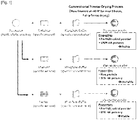
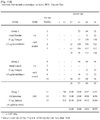
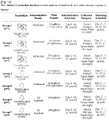
- liquid influenza vaccine formulations with trehalose that are subjected to a conventional freeze-drying process can form a partially caked powder ( Figure 1 ).
- liquid influenza vaccine formulations with mannitol that are subjected to a conventional freeze-drying process can have reduced HA potency ( Figure 1 ).
- Liquid influenza vaccine formulations with lactose that are subjected to a conventional freeze-drying process can form a partially caked powder and can have reduced HA potency ( Figure 1 ).
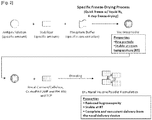
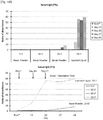
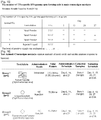
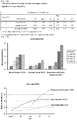
- the present disclosure provides methods comprising a quick freezing step for generating a dry vaccine powder formulation (see e.g., Figures 2 and 3 ) which overcomes the limitations of previous freeze drying methods, resulting in high potency powdered vaccines with high flowability.
- the methods can comprise a step of generating a liquid formulation containing one or more antigens, such as a pathogen or a component thereof (e.g., a whole inactivated influenza virus) with one or more agents (e.g., a saccharide and/or buffer, e.g., phosphate buffer).
- a liquid vaccine formulation can be freeze-dried (e.g., comprising quick freezing in liquid nitrogen) to generate a powder (e.g., a vaccine powder).
- the powder can comprise fine particles and can be stable at room temperature. If the antigen is an influenza virus, the powder can have high HA potency (e.g., at least about 90%, 91%, 92%, 93%, 94%, 95%, 96%, 97%, 98%, 99%, or 100%). After freeze drying, the powder can be blended (e.g., by vortexing) with one or more excipients (e.g., nasal carriers and/or flowability agents) to form a dry vaccine powder formulation.
- excipients e.g., nasal carriers and/or flowability agents
- a dry vaccine powder formulation described herein can be stable at room temperature. This is an advance over liquid influenza vaccines, which are unstable at room temperature and can require expensive storage and distribution under refrigerated conditions (e.g., cold-chain distribution).
- a liquid formulation containing disaccharides for example, trehalose or lactose, is prepared. Such additives generally allow for maintenance of HA potency of a dry influenza vaccine powder formulation.
- the methods described herein can provide a dry vaccine form which does not form hard cakes using these saccharide components. Hard caking can be avoided using the buffers and quick freezing techniques described herein.
- the powders produced from quick frozen and dried antigen preparations can then be combined with one or more excipients, such as a nasal carrier (e.g., microcrystalline cellulose) and/or a flowability agent (e.g., tribasic calcium phosphate).
- a nasal carrier e.g., microcrystalline cellulose
- a flowability agent e.g., tribasic calcium phosphate
- the present formulations can result in dry powder vaccines suitable for intranasal delivery which can be stable at room temperature and under accelerated conditions.
- a dry vaccine powder formulation provided herein can afford complete and consistent delivery from a nasal delivery device and result in stimulation of the recipient's immune response to the antigen/pathogen to which the vaccine is directed
- the methods provided herein can allow for reducing hygroscopicity and improving the flowability of a dry vaccine powder formulation provided herein.
- the methods can include addition of a physiologically acceptable agent (e.g., microcrystalline cellulose) to a powder formulation to reduce hygroscopicity and improve flowability of a dry vaccine powder formulation.
- a physiologically acceptable agent e.g., microcrystalline cellulose
- Methods provided herein can allow for improving the efficacy of a vaccine.
- the methods can comprise steps for generating a dry vaccine powder compositions that can stimulate a local immune response, for example, a mucosal immune response (e.g., involving mucosal sIgA).
- sIgA can provide cross-protection against mutated influenza viruses (e.g., a dry vaccine powder formulation can be used as a pandemic influenza vaccine) and/or viruses which have undergone genetic drift.
- a dry vaccine powder formulation e.g., a dry nasal influenza powder formulation, can induce protection in distal mucosal sites.
- a dry vaccine powder formulation can stimulate a systemic immune response (e.g., producing serum IgG).
- Dry vaccine powder compositions can comprise microcrystalline cellulose. In some embodiments, a dry vaccine powder formulation does not comprise adjuvant.
- a liquid formulation can be first generated.
- the liquid formulation can comprise one or more antigens (e.g., one or more pathogens or components of pathogens), one or more saccharides, one or more buffers, and one or more other components.
- the liquid formulation is subjected to quick freezing (e.g., by immersion in liquid nitrogen) and freeze-drying prior to producing the dry vaccine powder formulation.
- the volume of the liquid formulation can be about 0.1 mL, 1.0 mL, 10 mL, 25 mL, 50 mL, 100 mL, 250 mL, 500 mL, 1 L, 10 L, 50 L, 100 L, 250 L, 500 L, or 1000 L.
- the volume of the liquid formulation can be more than about 0.1 mL, 1.0 mL, 10 mL, 25 mL, 50 mL, 100 mL, 250 mL, 500 mL, 1 L, 10 L, 50 L, 100 L, 250 L, 500 L, or 1000 L.
- the volume of the liquid formulation can be about 0.01 -1 mL, about 1-10 mL, about 10-50 mL, about 50-100 mL, about 1-1000 mL, about 100-1000 mL, about 1-10 L, about 10-50 L, about 50-100 L, about 100-500 L, about 100-1000 L, or about 1-1000 L.
- the amount of dry vaccine produced can be between about 0.05 mg to 500 mg, about 0.0.05 mg to 1 mg, about 1 mg to about 100 mg, or about 100 mg to about 500 mg.
- the methods of generating a dry vaccine powder formulation described herein can be used to produce a vaccine with a live attenuated virus, whole inactivated virus, split virus, subunit antigen, virosome, or cold-adapted live influenza virus.
- Live attenuated vaccines can be derived from serial passage in cultured cells, including, for example, human diploid cells (e.g. fetal lung tissue, other fibroblasts), monkey kidney cells, and chick embryos. Adaptation of a virus to growth in the cultured cells can be accompanied by a gradual loss of virulence for the natural host. Avirulence can be conferred, e.g., by accumulation of point mutations. Genetic engineering can be used to achieve viral attenuation by, e.g., generating temperature sensitive mutants, generating deletion mutants, site-directed mutagenesis, or generating live recombinant viruses.
- Inactivated viruses can be generated, for example, by using ultraviolet light, low pH (e.g., acid, e.g., caprylic acid), pasteurization, solvents/detergents, sodium thiocyanate, formalin, beta-propiolactone, or ethylenimines.
- UV rays can damage DNA through by creating nucleic acid dimers, which can inactivate viruses by preventing the replication of genetic material. Some viruses denature upon exposure to low pH solutions. This method can be particularly effective when employed verses enveloped viruses.
- Pasteurization can inactivate viruses by means of temperature induced denaturation.
- Solvent/detergent inactivation is only effective against viruses enveloped in a lipid coat.
- the detergent used is typically Triton-X 100.
- Sodium thiocyanate can denature the protein coat of viruses, rendering the virus inactive.
- Formalin can chemically modify the surface proteins of the viral coat, which can prevent infection.
- Ethylenimines and beta-propiolactone can act on the nucleic acids of the virus while leaving the protein coat mostly unmodified.
- Inactivation can destroy infectivity of the virus while maintaining its immunogenicity. Multiple applications of inactivated virus can be administered to a subject.
- the methods of generating a dry vaccine powder formulation described herein can be used to produce a vaccine with one or more antigenic proteins (vaccine proteins) from one or more pathogens.
- An antigenic protein can be from any pathogen to which a vaccine is to be produced.
- an antigenic protein can be hemagglutinin (HA) and/or neuraminidase (NA).
- Hemagglutinin is an antigenic glycoprotein and a major surface protein of the influenza A virus. It mediates the biding between an influenza virus and the cell to be infected by binding to sialic acid-containing receptors on the surface of the cell. Viral particles bound to the surface of the cell are engulfed into endosomes.
- HA mediates a fusion of the viral membrane and the endosomal membrane, releasing the viral genome into the cell.
- HA consists of three identical monomers organized into a helical coil.
- a function blocking antibody could inhibit either the cell binding or membrane fusing functions of HA.
- Neuraminidase is another glycoprotein found on the surface of an influenza virus. NAs are enzymes that function by cleaving sialic acid groups from glycoproteins. This cleavage seems to serve two functions: to prevent viral clumping and to release progeny viruses from the surface of a cell.
- a vaccine antigen can be HA1, HA2, HA3, HA4, HA5, HA6, HA7, HA8, HA9, HA10, HA11, HA12, HA13, HA14, HA15, or HA16.
- NA subtypes There are 9 known NA subtypes.
- a vaccine antigen can be NA1, NA2, NA3, NA4, NA5, NA6, NA7, NA8, or NA9.
- a vaccine prepared from a HA and/or NA subtype can be used individually or in any combination. For example, two or more of the various HA and NA antigens can be mixed during manufacture of a dry vaccine powder formulation, or dry powder formulations of individual HA and NA antigens can be combined.
- An antigenic protein can be surface proteins from the pathogen.
- An antigenic protein can be produced recombinantly.
- nucleic acid encoding an antigen of interest can be introduced in a prokaryotic cell (e.g. bacteria), eukaryotic cells (e.g., yeast cells and insect cells), and the protein can be expressed and purified from the cells.
- a prokaryotic cell e.g. bacteria
- eukaryotic cells e.g., yeast cells and insect cells
- nonessential components of a virion can be removed (e.g., using ether and detergents).
- a virosomal vaccine comprises virus-like particles of reconstituted virus envelopes with no genetic material of the native virus.
- Influenza virosomes are vesicles consisting of a unilamellar phospholipid bilayer with intercalated HA and NA proteins. Because they have no genetic material, virosomes are not infectious.
- the concentration of a vaccine protein (e.g., antigen or antigen containing component) in a liquid vaccine formulation can be from about 0.05 mg/mL to 10 mg/ mL, about 0.1 mg/mL to 10 mg/mL, about 0.1 mg/mL to 5 mg/mL, about 0.1 mg/mL to 2.5 mg/mL, about 0.1 mg/mL to 1 mg/mL, about 0.1 mg/mL to 0.5 mg/ML, about 0.5 mg/mL to 1 mg/mL, about 0.05 mg/mL to 1 mg/mL, or about 0.05 mg/mL to 2.5 mg/mL.
- a vaccine protein e.g., antigen or antigen containing component
- the concentration of a vaccine protein (e.g., antigen or antigen containing component) in a liquid vaccine formulation can be about 0.05 mg/mL, 0.1 mg/mL, 0.2 mg/mL, 0.3 mg/mL, 0.4 mg/mL, 0.5 mg/mL, 0.6 mg/mL, 0.7 mg/mL, 0.8 mg/mL, 0.9 mg/mL, 1.0 mg/mL, 1.1 mg/mL, 1.2 mg/mL, 1.3 mg/mL, 1.4 mg/mL, 1.5 mg/mL, 1.6 mg/mL, 1.7 mg/mL, 1.8 mg/mL, 1.9 mg/mL, 2.0 mg/mL, 2.5 mg/mL, 3 mg/mL, 3.5 mg/mL, 4 mg/mL, 4.5 mg/mL, 5 mg/mL, 5.5 mg/mL, 6 mg/mL, 6.5 mg/mL, 7.0 mg/ mL, 8.0 mg/mL, 8.5 mg/m
- the concentration of a vaccine protein (e.g. antigen or antigen-containing component) in a liquid vaccine formulation can be more than about 0.05 mg/mL, 0.1 mg/mL, 0.2 mg/mL, 0.3 mg/mL, 0.4 mg/mL, 0.5 mg/mL, 0.6 mg/mL, 0.7 mg/mL, 0.8 mg/mL, 0.9 mg/mL, 1.0 mg/mL, 1.1 mg/mL, 1.2 mg/mL, 1.3 mg/mL, 1.4 mg/mL, 1.5 mg/mL, 1.6 mg/mL, 1.7 mg/mL, 1.8 mg/mL, 1.9 mg/mL, 2.0 mg/mL, 2.5 mg/mL, 3 mg/mL, 3.5 mg/mL, 4 mg/mL, 4.5 mg/mL, 5 mg/mL, 5.5 mg/mL, 6 mg/mL, 6.5 mg/mL, 7.0 mg/mL, 8.0 mg/mL, 8.5 mg/m
- a dry vaccine powder formulation can be used to prevent and/or treat infection by one or more influenza viruses.
- Influenza viruses belong to the Orthomyxoviridae family of viruses, which includes five genera: Influenzavirus A, Influenzavirus B, Influenzavirus C, Isavirus, and Thogotovirus.
- Dhori virus is a species of the genus Thogotovirus.
- An influenza virus can infect humans and other species.
- Influenza type A viruses can infect humans, birds, pigs, horses, seals and other animals. Wild birds can be natural hosts for these viruses.
- Influenza type A viruses can be divided into subtypes and named on the basis of two proteins on the surface of the virus: hemagglutinin (HA) and neuraminidase (NA).
- HA hemagglutinin
- NA neuraminidase
- an "H7N2 virus” designates an influenza A subtype that has an HA7 protein and an NA2 protein.
- an "H5N1” virus has an HA 5 protein and an NA 1 protein.
- any number of the known HA subtypes (HA1, HA2, HA3, HA4, HA5, HA6, HA7, HA8, HA9, HA10, HA11, HA12, HA13, HA14, HA15, and HA16) can be combined with any number of the known NA subtypes (NA1, NA2, NA3, NA4, NA5, NA6, NA7, NA8, and NA9) to produce a vaccine to prevent or treat an infection.
- the HA and NA subtypes can also be used individually in a vaccine to prevent or treat infection. Different subtype vaccines can be combined at the point of use, either sequentially or simultaneously, to prevent or treat an infection.
- H1N1, H1N2, and H3N2 are currently in general circulation among people. Other subtypes can be found in other animal species.
- H7N7 and H3N8 viruses can cause illness in horses, and H3N8 also has recently been shown to cause illness in dogs (http://www.cdc.gov/flu/avian/gen-info/flu-viruses).
- Antiviral agents can be used to protect high-risk groups (e.g., individuals in a hospital unit, individuals at an institute caring for the elderly, or immuno-suppressed individuals).
- a potential use for an antiviral agent is to limit the spread and severity of the future pandemics whether caused by, e.g. avian H5N1 or another strains of influenza virus (e.g., H1N1).
- Avian influenza A viruses of the subtypes H5 and H7, including H5N1, H7N7, and H7N3 viruses have been associated with high pathogenicity, and human infection with these viruses have ranged from mild (e.g., H7N3, H7N7) to severe and fatal disease (e.g., H7N7, H5N1).
- Influenza B viruses can be found in humans and can also infect seals. Unlike influenza A viruses, these viruses are not classified according to subtype. Influenza B viruses can cause morbidity and mortality among humans, but in general are associated with less severe epidemics than influenza A viruses. Although influenza type B viruses can cause human epidemics, they have not caused pandemics. (http://www.cdc.gov/flu/avian/gen-info/flu-viruses).
- Influenza type C viruses can cause mild illness in humans and do not cause epidemics or pandemics. These viruses can also infect dogs and pigs. These viruses are not classified according to subtype. (http://www.cdc.gov/flu/avian/gen-info/flu-viruses).
- the methods and compositions described herein can be useful for the prevention and/ or treatment of infection by any virus, including, for example, Abelson leukemia virus, Abelson murine leukemia virus, Abelson's virus, Acute laryngotracheobronchitis virus, Sydney River virus, Adeno associated virus group, Adenovirus, African horse sickness virus, African swine fever virus, AIDS virus, Aleutian mink disease parvovirus, Alpharetrovirus, Alphavirus, ALV related virus, Amapari virus, Aphthovirus, Aquareovirus, Arbovirus, Arbovirus C, arbovirus group A, arbovirus group B, Arenavirus group, Argentine hemorrhagic fever virus, Argentine hemorrhagic fever virus, Arterivirus, Astrovirus, Ateline herpesvirus group, Aujezky's disease virus, Aura virus, Ausduk disease virus, Australian bat lyssavirus, Aviadenovirus, avian erythroblastos
- a vaccine described herein can comprise bacterial, fungal, or protist cells or components thereof.
- a vaccine to a bacterial pathogen can comprise a killed bacterium or a purified antigenic determinant thereof. Attenuated bacteria can also be used as an antigen.
- a vaccine to a toxin produced by a cellular pathogen e.g., cholera toxin
- An antigenic peptide from a target pathogen can be purified from a source pathogen and/or produced recombinantly prior to combining with the one or more of the components of the vaccine.
- Conjugate antigens can also be used.
- a conjugate antigen the poorly antigenic polysaccharide outer coat of a bacterial pathogen is attached to toxic protein that can stimulate an immune response.
- vaccines to non-viral pathogens will be designed to produce immune responses (e.g., sIgA production) to pathogens which affect mucosal surfaces, or gain access to the body via mucosal surfaces.
- pathogens include Cryptococcus neoformans, Shigella spp., Salmonella typhi, Sa.
- the present disclosure provides methods for preparing a vaccine which can preserve some or all of a three-dimensional configuration of the antigenic component (e.g., virus, protein).
- the methods provided herein can allow for the production of vaccines in which the antigenic determinants on the pathogen or component thereof are preserved in an intact state.
- retaining three-dimensional structure of a protein in a vaccine can allow for retention of "conformational" epitopes to which an immune response can be triggered.
- "Conformational" epitopes are those which rely upon protein folding and generally are not comprised entirely of amino acids in linear form (e.g., a digested or linearized protein).
- the methods provided herein to produce vaccines can result in retention of antigenic potency (i.e., the ability to induce an immune response), such that the level of immune response in a reaction to a given amount of vaccine is at least about 100%, 99%, 98%, 97%, 96%, 95%, 94%, 93%, 92%, 91%, 90%, 89%, 88%, 87%, 86%, 85%, 84%, 83%, 82%, 81%, 80%, 79%, 78%, 77%, 76%, 75%, 74%, 73%, 72%, 71%, 70%, 69%, 68%, 67%, 66%, 65%, 64%, 63%, 62%, 61%, 60%, 59%, 58%, 57%, 56%, 55%, 54%, 53%, 52%, 51%, or 50% as compared to exposure to the pathogen or other naturally-occurring antigenic source.
- antigenic potency i.e., the ability to induce an immune response
- the methods provided herein can allow for the production of a vaccine in which a particular antigen retains high levels of antigenic capability (e.g., at least about 100%, 99%, 98%, 97%, 96%, 95%, 94%, 93%, 92%, 91%, 90%, 89%, 88%, 87%, 86%, 85%, 84%, 83%, 82%, 81%, 80%, 79%, 78%, 77%, 76%, 75%, 74%, 73%, 72%, 71%, 70%, 69%, 68%, 67%, 66%, 65%, 64%, 63%, 62%, 61%, 60%, 59%, 58%, 57%, 56%, 55%, 54%, 53%, 52%, 51%, or 50%) of the total antigenic protein subjected to the quick freezing methods described herein.
- a particular antigen retains high levels of antigenic capability (e.g., at least about 100%, 99%, 98%, 97%, 96%, 95%, 94%, 93%, 92%
- the antigen shown as an open circle
- a stabilizer trehalose
- a buffer phosphate buffer
- the components are mixed and freeze-dried (e.g., by immersion in liquid nitrogen).
- the dried vaccine component produced comprises fine particles in which the antigen or antigens are still capable of eliciting an immune response and is stable at room temperature.
- the vaccine component can then be combined with a carrier suitable for nasal administration (e.g., microcrystalline cellulose).
- a carrier suitable for nasal administration e.g., microcrystalline cellulose
- Components of a liquid formulation can be chosen to perform certain functions.
- one component can be utilized to provide stability to the antigen for which the vaccine is being developed. Primarily, such components can prevent antigenic degradation during the subsequent freezing process.
- These components can comprise any stabilizing molecule or compound, for example sugars, amino acids and/or polymers.
- One or more such antigenic stabilizing agents can be used in a formulation.
- an antigenic stabilizing agent will be wholly or partially water soluble. Preferred antigenic stabilizers will not produce hard cakes in the processes described herein.
- Exemplary sugars which can be utilized to produce a liquid vaccine formulations include, but are not limited to trehalose, mannitol, sucrose, lactose, inulin, sorbose, melezitose, raffinose, mannitol, xylitol, erythritol, threitol, stachyose, sorbitol, glycerol, fructose, mannose, maltose, arabinose, xylose, ribose, rhamnose, galactose, glucose, L-gluconate, and/or the like.
- Exemplary amino acids which can be utilized include, but are not limited to isoleucine, valine, leucine, arginine, asparagine, glutamine, glycine, histidine, glutamate and lysine.
- An exemplary polymer is polyethylene glycol (PEG), but other polymers that can be utilized can include dextran, human serum albumin (HSA), nonhydrolyzed gelatin, methylcellulose, xanthan gum, carrageenan, collagen, chondroitin sulfate, a sialated polysaccharide, actin, myosin, microtubules, dynein, kinetin, polyvinyl pyrrolidone, hydrolyzed gelatin, and/or the like.
- HSA human serum albumin
- a surfactant can be, e.g., a polyethylene glycol, sorbitan monolaurate (Tween 20), a polyoxyethylenesorbitan monooleate (Tween 80), a block copolymer of polyethylene and polypropylene glycol (Pluronic), and/or the like.
- antigenic stabilizers have been utilized in vaccine preparations
- the use of one or more of these stabilizers in the present methods can result in a frozen vaccine formulation that does not form a hard cake upon drying.
- trehalose is known to provide protection to proteins when frozen, but leads to caking if the substance is not spray frozen (see, e.g., Chefson et al.. J Biotechnol. 2007 Jul 15;130(4):436-40 ).
- trehalose is known to provide protection to proteins when frozen, but leads to caking if the substance is not spray frozen (see, e.g., Chefson et al.. J Biotechnol. 2007 Jul 15;130(4):436-40 ).
- a quick freeze method e.g., exposure to liquid nitrogen.
- Such methods can lead to the production of fine powders in which the protein retains activity (e.g., antigenic capability) without forming a hard cake.
- This is an advance as the grinding of hard cakes is an extra step in the vaccine preparation process and can result in low recovery rate and degradation of the antigenic protein in the hard cake, through heat and/or mechanical forces.
- the ratio of antigen to stabilizer can be, for example, about 1:1, 1:2, 1:3, 1:4, 1:5, 1:6, 1:7, 1:8, 1:9, 1:10, 1:11, 1:12, 1:13, 1:14, 1:15, 1:16, 1:17, 1:18, 1:19, 1:20, 1:21, 1:22, 1:23, 1:24, 1:25, 1:26, 1:27, 1:28, 1:29, 1:30, 1:31, 1:32, 1:33, 1:34, 1:35, 1:36, 1:37, 1:38, 1:39, 1:40, 1:41, 1:42, 1:43, 1:44, 1:45, 1:46, 1:47, 1:48, 1:49, 1:50, 1:51, 1:52, 1:53, 1:54, 1:55, 1:56, 1:57, 1:58, 1:59, 1:60, 1:61, 1:62, 1:63, 1:64, 1:65, 1:66, 1:67, 1:68, 1:69, 1:70,
- the ratio of antigen to stabilizer can be, for example, about 1:110, 1:120, 1:130, 1:140, 1:150, 1:160, 1:170, 1:180, 1:190, 1:200, 1:210, 1:220, 1:230, 1:240, 1:250, 1:260, 1:270, 1:280, 1:290, 1:300, 1:310, 1:320, 1:330, 1:340, 1:350, 1:360, 1:370, 1:380, 1:390, 1:400, 1:410, 1:420, 1:430, 1:440, 1:450, 1:460, 1:470, 1:480, 1:490, 1:500, 1:510, 1:520, 1:530, 1:540, 1:550, 1:560, 1:570, 1:580, 1:590, 1:600, 1:610, 1:620, 1:630, 1:640, 1:650, 1:660, 1:670, 1:680, 1:690, 1:700, 1:710, 1:720,
- a vaccine liquid formulation to be used in the freeze-drying step can comprise one or more pH buffers ( Figure 2 and 3 ).
- the pH buffer can be, e.g., potassium phosphate, sodium phosphate, disodium hydrogenphosphate, potassium dihydrogenphosphate, sodium hydroxide, sodium acetate, histidine, HEPES, ACES, ADA, ADA, disodium salt, ADA monosodium salt, AMPSO, 2-aminoethanol, 2-amino-2-methyl-1,3-propanediol, 2-amino-2-methyl-1-propanol, 3-amino-1-propanesulfonic acid sodium salt, BES, bicine, Bis-Tris, Bis-Tris HCl, Bis-Tris propane, CAPS, CAPSO, CHES, DIPSO, DIPSO sodium salt, glycinamide HCl, glycine, HEPPS, HEPPSO, MES, MOPS, MOPSO, PIPES, TAPS, T
- a buffer can be phosphate buffered saline.
- the pH can be maintained at between about pH 3 to about pH 8, about pH 4 to 8, about pH 5 to 8, about pH 6 to 8, or about pH 6.0, 61, 6.2, 6.3, 6.4, 6.5, 6.6, 6.7, 6.8, 6.9, 7.0, 7.1, 7.2, 7.3, 7.4, 7.5, 7.6, 7.7, 7.8, 7.9, or 8.0.
- a liquid formulation can comprise, consist essentially of, or consist of one or more antigens and one or more buffers.
- a liquid formulation can comprise, consist essentially of, or consist of one or more antigens, one or more stabilizers, and one or more buffers.
- a liquid formulation used to generate a powder formulation by the methods described herein can contain one or more other drugs, bulking agents, and/or sustained release polymers.
- Other drugs useful in the compositions of the invention can include, e.g., aids to penetration, decongestants, bronchiole relaxers, expectorants, analgesics, and the like.
- Bulking agents can include, e.g., lactose, mannitol, and/or hydroxyethyl starch (HES).
- Sustained release semi-permeable polymer matrix of the compositions can include, e.g., polylactides, copolymers of L-glutamic acid and gamma-ethyl-L-glutamate, poly(2-hydroxyethyl methacrylate, or liposomes.
- a vaccine described herein can be made without including an adjuvant.
- the final vaccine can be produced using only the pathogen/antigen, a stabilizer, and a buffer which is then freeze-dried. Following freeze-drying, the vaccine can be combined with a carrier without the need to add an adjuvant prior to producing the final vaccine product.
- the formulation can comprise adjuvant, a substance added to a vaccine to improve the immune response of the vaccine.
- An adjuvant can be added prior to, or after, freeze drying.
- adjuvant examples include mineral salts, e.g., aluminum hydroxide and aluminum or calcium phosphate gels, oil emulsions and surfactant based formulations, e.g., MF59 (microfluidised detergent stabilized oil-in-water emulsion), QS21 (purified saponin), AS02 ([SBAS2] (oil-in-water + MPL + WS-21)), Montanide ISA-51 and ISA-720 (stabilised water-in-oil emulsion); particulate adjuvants, (e.g, virsomes (unilamellar liposomal vehicles incorporating influenza hemagglutinin), AS04 ([SBAS4] Al salt with MPL), ISCOMS (structured complex of saponins and lipids), polylactide co-glycolide (PLG); microbial derivatives (natural and synthetic), e.g., monophosphoryl lipid A (MPL), Detox (MPL + M.
- Phlei cell wall skeleton Phlei cell wall skeleton
- AGP [RC-529] (synthetic acylated monosaccharide), DC_Chol (lipoidal immunostimulators able to self organise into liposomes), OM-174 (lipid A derivative), CpG motifs (synthetic oligonucleotides containing immunostimulatory CpG motifs), modified LT and CT (genetically modified bacterial toxins to provide non-toxic adjuvant effects); endogenous human immunomodulators, e.g., hGM-CSF or hIL-12 (cytokines that can be administered either as protein or plasmid encoded), Immudaptin (C3d tandem array); inert vehicles, such as gold particles; and squalene.
- the liquid formulation and the final dry vaccine powder formulation can have no adjuvant.
- a liquid formulation can be converted to a powder by freeze drying.
- Freeze drying is a process by which material is frozen and subsequently dried by removal of water by sublimation.
- Quick freezing can be accomplished, e.g., by immediate immersion of spray droplets (spray-freeze drying) in liquid nitrogen or a stream of cold gas.
- Quick freezing can also be accomplished by a process that does not comprise a spray-freezing step.
- Quick freezing can be accomplished by contacting a liquid vaccine formulation with liquid nitrogen (-196 degrees C).
- Quick freezing can be accomplished by contacting a liquid vaccine formulation with liquid nitrogen combined with another chemical, e.g., hexane/liquid nitrogen (-94 degrees C), methanol/liquid nitrogen (-98 degrees C), and pentane/liquid nitrogen (-131 degrees C) ( Gordon AJ and Ford RA "The Chemist's Companion. Wiley. New York 1972 ).
- Quick freezing can be accomplished by contacting a liquid vaccine formulation with a dry ice/organic solvent (e.g., ethanol, methanol, ethylene glycol, carbon tetracholride, acetonitrile, isopropyl alcohol, or acetone) bath, e.g., carbon tetrachloride/dry ice (-23 degrees C), acetonitrile/dry ice (-42 degrees C), or acetone or isopropyl alcohol/dry ice bath (-78 degrees C). (Gordon, supra).
- Quick freezing can be accomplished by immersing a liquid vaccine formulation in a slurry of ice and inorganic salt (e.g., NaCl or CaCl 2 ), which can reach -40 degrees C.
- the temperature at which a liquid vaccine formulation can be frozen can be less than about 0 degrees C, -5 degrees C, -10 degrees C, -15 degrees C, -20 degrees C, -25 degrees C, -30 degrees C, -35 degrees C, -40 degrees C, -45 degrees C, -50 degrees C, -55 degrees C, -60 degrees C, -65 degrees C, -70 degrees C, -75 degrees C, -80 degrees C, -85 degrees C, -90 degrees C, -95 degrees C, -100 degrees C, -105 degrees C, -110 degrees C, -115 degrees C, -120 degrees C, -125 degrees C, -130 degrees C, -135 degrees C, -140 degrees C, -145 degrees C, -150 degrees C, -155 degrees C, -160 degrees C, -165 degrees C, -170 degrees C, -175 degrees C, -180 degrees C, -185 degrees C, -90 degrees C, -195 degrees C, -200 degrees C,
- the temperature at which at which a liquid vaccine formulation can be frozen can be about 0 degrees C to -210 degrees C, - 50 degrees C to about -210 degrees C, -100 degrees C to about -210 degrees C, or -150 degrees C to about -200 degrees C.
- the temperature at which a liquid vaccine formulation can be frozen can be about 0 degrees C, -5 degrees C, -10 degrees C, -15 degrees C, -20 degrees C, -25 degrees C, -30 degrees C, -35 degrees C, -40 degrees C, -45 degrees C, -50 degrees C, -55 degrees C, -60 degrees C, -65 degrees C, -70 degrees C, -75 degrees C, -80 degrees C, -85 degrees C, -90 degrees C, -95 degrees C, -100 degrees C, -105 degrees C, -110 degrees C, -115 degrees C, -120 degrees C, -125 degrees C, -130 degrees C, -135 degrees C, -140 degrees C, -145 degrees C, -150 degrees C, -155 degrees C, -160 degrees C, -165 degrees C, -170 degrees C, -175 degrees C, -180 degrees C, -185 degrees C, -190 degrees C, -195 degrees C, -200 degrees C, -205
- an antigen-containing solution can contain carbohydrates.
- an antigen-containing solution can contain a sugar, including, but not limited to trehalose, mannitol, sucrose, lactose or inulin.
- Such sugars are utilized for various purposes, for example to protect proteinaceous components of a solution from losing or decreasing antigenic capability upon freezing.
- the addition of trehalose to a solution can prevent loss of antigenicity of proteins, such as hemagglutinin (HA) of influenza, in liquid formulations containing proteins (e.g., liquid vaccine liquid formulations).
- HA hemagglutinin
- the addition of trehalose and other sugars can result in the formation of a hard cake in vaccine preparations, unless spray freezing is utilized.
- novel methods disclosed herein allow for the use of such sugars in a quick freezing method which does not require spray freezing, and does not result in the formation of a hard cake. This is an advance over prior approaches which require milling of hard cakes, as such treatments can result in the loss of antigenicity of component biological molecules.
- the combinations of buffers and sugars disclosed herein in the antigen-containing solutions allows for such results. Quick freezing of a sugar-containing solution disclosed herein can result in the generation of a powder.
- a liquid vaccine formulation can be exposed to a cold liquid, e.g., liquid nitrogen, for about 30 seconds to 5 min, 1 min to 60 min, 1 min to 50 min, 1 to 40 min, 1 to 30 min, 1 to 20 min, 1 to 10 min, or 1 to 5 min.
- a liquid vaccine formulation can be exposed to the cold liquid, e.g., liquid nitrogen, for about 30 seconds, 1 min, 2 min, 3 min, 4 min, 5 min, 6 min, 7 min, 8 min, 9 min, 10 min, 11 min, 12 min, 13 min, 14 min, 15 min, 16 min, 17 min, 18 min, 19 min, 20 min, 25 min, 30 min, 35 min, 40 min, 45 min, 50 min, 55 min, or 60 min.
- a liquid vaccine formulation can be exposed to the cold liquid, e.g., liquid nitrogen for more than about 30 seconds, 1 min, 2 min, 3 min, 4 min, 5 min, 6 min, 7 min, 8 min, 9 min, 10 min, 11 min, 12 min, 13 min, 14 min, 15 min, 16 min, 17 min, 18 min, 19 min, 20 min, 25 min, 30 min, 35 min, 40 min, 45 min, 50 min, 55 min, or 60 min.
- a liquid vaccine formulation can be exposed to the cold liquid by putting the liquid vaccine formulation in a container and immersing the containing in the cold liquid (e.g., liquid nitrogen).
- a liquid vaccine formulation can be exposed to the cold liquid by directly introducing a liquid vaccine formulation into the cold liquid (e.g., liquid nitrogen).
- a liquid vaccine formulation can be exposed to the cold liquid by pouring the cold liquid (e.g., liquid nitrogen) over the liquid vaccine formulation.
- the frozen formulation can be freeze dried in a freeze-dryer. Freeze drying can occur in one or more steps (e.g., different temperatures at the same pressure). The freeze drying can occur at, for example, at about -210 degrees C, -205 degrees C, -200 degrees C, -195 degrees C, -190 degrees C, -185 degrees C, -180 degrees C, -175 degrees C, -170 degrees C, -165 degrees C, -160 degrees C, -155 degrees C, -150 degrees C, -145 degrees C, -140 degrees C, -135 degrees C, -130 degrees C, -125 degrees C, -120 degrees C, -115 degrees C, -110 degrees C, -105 degrees C, -100 degrees C, -95 degrees C, -90 degrees C, -85 degrees C, -80degrees C, -75 degrees C, -70 degrees C, -65 degrees C, -60 degrees C, -55 degrees C
- Freeze drying can occur at, for example, at more than about -210 degrees C, -205 degrees C, -200 degrees C, -195 degrees C, -190 degrees C, -185 degrees C, -180 degrees C, -175 degrees C, -170 degrees C, -165 degrees C, -160 degrees C, -155 degrees C, -150 degrees C, -145 degrees C, -140 degrees C, -135 degrees C, -130 degrees C, -125 degrees C, -120 degrees C, -115 degrees C, -110 degrees C, -105 degrees C, -100 degrees C, -95 degrees C, -90 degrees C, -85 degrees C, -80degrees C, -75 degrees C, -70 degrees C, -65 degrees C, -60 degrees C, -55 degrees C, -50 degrees C, -45 degrees C, -40 degrees C, -35 degrees C, -30 degrees C, -25 degrees C, -20 degrees C, -15 degrees C, -10 degrees C,
- Freeze drying can occur at, e.g., at about -80degrees C to 30 degrees C, about -50 degrees C to 25 degrees C, or about -40 degrees C to 20 degrees C. Freeze-drying can occur at one temperature, two different temperatures, three different temperatures, four different temperatures, five different temperatures, six different temperatures, seven different temperatures, eight different temperatures, nine different temperatures, or ten different temperatures.
- the freeze-drying can occur at one or more different pressures.
- the pressure can be, for example, about 10 mtorr to 300 mtorr, about 25 mtorr to 300 mtorr, about 50 mtorr to 250 mtorr, or about 50 mtorr to 200 mtorr.
- the freeze-drying can occur at about 10 mtorr, 20 mtorr, 30 mtorr, 40 mtorr, 50 mtorr, 60 mtorr, 70 mtorr, 80 mtorr, 90 mtorr, 100, mtorr, 110 mtorr, 120 mtorr, 130 mtorr, 140 mtorr, 150 mtorr, 160 mtorr, 170 mtorr, 180 mtorr, 190 mtorr, 200 mtorr, 210 mtorr, 220 mtorr, 230 mtorr, 240 mtorr, 250 mtorr, 260 mtorr, 270 mtorr, 280 mtorr, 290 mtorr, or 300 mtorr.
- Freeze-drying can occur at more than about 10 mtorr, 20 mtorr, 30 mtorr, 40 mtorr, 50 mtorr, 60 mtorr, 70 mtorr, 80 mtorr, 90 mtorr, 100, mtorr, 110 mtorr, 120 mtorr, 130 mtorr, 140 mtorr, 150 mtorr, 160 mtorr, 170 mtorr, 180 mtorr, 190 mtorr, 200 mtorr, 210 mtorr, 220 mtorr, 230 mtorr, 240 mtorr, 250 mtorr, 260 mtorr, 270 mtorr, 280 mtorr, 290 mtorr, or 300 mtorr.
- each freeze-drying step can be from about 1 hr to 48 hr, about 1 hr to 36 hr, about 1 hr to 24 hr, about 4 hr to 24 hr, about 6 hr to 24 hr, or about 8 hr to 24 hr.
- each freeze-drying step can be about 1 hr, 2 hr, 3 hr, 4 hr, 5 hr, 6 hr, 7 hr, 8 hr, 9 hr, 10 hr, 11 hr, 12 hr, 13 hr, 14 hr, 15 hr, 16 hr, 17 hr, 18 hr, 19 hr, 20 hr, 21 hr, 22 hr, 23 hr, 24 hr, 25 hr, 26 hr, 27 hr, 28 hr, 29 hr, 30 hr, 31 hr, 32 hr, 33 hr, 34 hr, 35 hr, 36 hr, 37 hr, 38 hr, 39 hr, 40 hr, 41 hr, 42 hr, 43 hr, 44 hr, 45 hr, 46 hr, 47 hr, or 48 hr.
- each freeze-drying step can be more than about 1 hr, 2 hr, 3 hr, 4 hr, 5 hr, 6 hr, 7 hr, 8 hr, 9 hr, 10 hr, 11 hr, 12 hr, 13 hr, 14 hr, 15 hr, 16 hr, 17 hr, 18 hr, 19 hr, 20 hr, 21 hr, 22 hr, 23 hr, 24 hr, 25 hr, 26 hr, 27 hr, 28 hr, 29 hr, 30 hr, 31 hr, 32 hr, 33 hr, 34 hr, 35 hr, 36 hr, 37 hr, 38 hr, 39 hr, 40 hr, 41 hr, 42 hr, 43 hr, 44 hr, 45 hr, 46 hr, 47 hr, or 48 hr.
- One or more drying steps can be utilized in the methods disclosed herein.
- Primary drying of a frozen sample can be performed by any relevant methodology, e.g., by lyophilization.
- Secondary drying can be performed by, e.g., continued freeze drying at a higher temperature in a vacuum chamber, contact exposure to temperature controlled surfaces, or by suspension of particles in a vortex or fluidized bed of temperature/ humidity controlled gas.
- a dried powder particle product can be recovered, e.g., from process containers, or by sizing and settling of particles from process gas streams.
- drying processes include, for example, air drying, desiccation under nitrogen purge (including grinding and sieving), freeze-drying (including milling and sieving), and supercritical fluid drying (SCF).
- the drying process can preserve the three-dimensional structure of an antigen.
- the process can preserve the structure of an influenza HA antigen, providing a high HA potency.
- the powder After freeze drying, the powder can be stored (preserved) at a temperature of about 4 to 25 degrees C.
- the relative humidity of the preservation condition can be about 0% to 70%, about 0% to 60%, about 0% to 50%, about 0% to 40%, about 0% to 30%, about 0% to 20%, about 0% to 10%, or about 0% to 5%.
- the relative humidity of the preservation can be less than about 80%, 75%, 70%, 65%, 60%, 55%, 50%, 45%, 40%, 35%, 30%, 25%, 24%, 23%, 22%, 21%, 60%, 19%, 18%, 17%, 16%, 15%, 14%, 13%, 12%, 11%, 10%, 9%, 8%, 7%, 6%, 5%, 4%, 3%, 2%, or 1%.
- the water content of the powder after freeze drying can be about 12%, 11%, 10%, 9%, 8%, 7%, 6%, 5%, 4%, 3%, 2%, 1%, 0.5%, or 0.1%.
- the water content of the powder after freeze drying can be less than 12 %, 11%, 10%, 9%, 8%, 7%, 6%, 5%, 4%, 3%, 2%, 1%, 0.5%, 0.1%, or 0.01%.
- Average particle diameter size of the powder generated after freeze drying can be about 5 to 100 micro m, about 5 to 60 micro m, or about 5 to 30 micro m. Average particle diameter size of the powder generated after freeze drying can be less than about 10, 15, 20, 25, 30, 35, 40, 45, 50, 55, 60, 65, 70, 75, 80, 85, 90, or 95 micro m.
- a powder produced by the freeze drying methods described herein can be blended with one or more additional components to generate a dry vaccine powder formulation.
- Such components include pharmaceutically acceptable carriers, for example, carriers appropriate for mucosal administration.
- Carriers suitable for mucosal administration can be physiologically acceptable substances such as microcrystalline cellulose.
- Microcrystalline cellulose can be a specific microcrystalline cellulose that has a larger specific surface area. Although any microcrystalline cellulose can be utilized, in some embodiments, the microcrystalline cellulose used to produce the vaccines of the present application can be Ceolus (registered trademark) PH-F20JP or Avicel(registered trademark) PH-105.
- One way of defining powdered particles of a carrier, or the complete vaccine is based on average particle size.
- the average particle size of the microcrystalline cellulose and/ or vaccine particles can be measured by any means known in the art, for example, sifting, sieving or laser diffraction.
- the average particle size of the carrier (e.g., microcrystalline cellulose) and/or vaccine can be, e.g., about 10 micro m, 11 micro m, 12 micro m, 13 micro m, 14 micro m, 15 micro m, 16 micro m, 17 micro m, 18 micro m, 19 micro m, 20 micro m, 21 micro m, 22 micro m, 23 micro m, 24 micro m, 25 micro m, 26 micro m, 27 micro m, 28 micro m, 29 micro m, 30 micro m, 31 micro m, 32 micro m, 33 micro m, 34 micro m, 35 micro m, 36 micro m, 37 micro m, 38 micro m, 39 micro m, 40 micro m, 41 micro m, 42 micro m, 43 micro m, 44 micro m, 45 micro m, 46 micro m, 47 micro m, 48 micro m, 49 micro m, 50 micro m, 51 micro m, 52 micro m, 53 micro m, 54 micro
- microcrystalline cellulose used as a carrier for the vaccine compositions described herein can have an average particle size of 25 micro m, 39 micro m, or 57 micro m, measured by, for example, laser diffraction, sieving or sifting.
- a carrier (e.g., microcrystalline cellulose) and/or vaccine powder can be prepared to be of useful particle size distribution.
- Preparations of carrier and/or vaccine can have a particle size distribution of, for example 10 - 200 micro m, 20 - 200 micro m, 30 - 200 micro m, 40 - 200 micro m, 50 - 200 micro m, 60 - 200 micro m, 70 - 200 micro m, 80 - 200 micro m, 90 - 200 micro m, 100 - 200 micro m, 110 - 200 micro m, 120 - 200 micro m, 130 - 200 micro m, 140 - 200 micro m, 150 - 200 micro m, 160 - 200 micro m, 170 - 200 micro m, 180 - 200 micro m, 190 - 200 micro m, or any included sub-ranges of particle size distribution.
- Powders described herein can have a particle size additional particle size distributions, for example 10 - 100 micro m, 20 - 100 micro m, 30 - 100 micro m, 40 - 100 micro m, 50 - 100 micro m, 60 - 100 micro m, 70 - 100 micro m, 80 - 100 micro m, 90 - 100 micro m, 10 - 50 micro m, 10 - 60 micro M, 20 - 60 micro m, 30 - 70 micro m, 40 - 80 micro m, 50 - 90 micro m, 60 - 100 micro m, 70 - 110 micro m, 80 - 120 micro m, 90 - 130 micro m, 100 - 140 micro m, 110 - 150 micro m, 120 - 160 micro m, 130 - 170 micro m, 140 - 180 micro m, 150 - 190 micro m, 160 - 200 micro m, or any included sub-range of particle sizes.
- the carrier and/or vaccine can have a particle size distribution of, for example, 10 - 50 micro m, 11 - 50 micro m, 12- 50 micro m, 13 - 50 micro m, 14 - 50 micro m, 15 - 50 micro m, 16 - 50 micro m, 17- 50 micro m, 18 - 50 micro m, 19 - 50 micro m, 20 - 50 micro m., 21 - 50 micro m, 22 - 50 micro m, 23 - 50 micro m, 24 - 50 micro m, 25 - 50 micro m, 26 - 50 micro m, 27 - 50 micro m, 28 - 50 micro m, 29 - 50 micro m, 30 - 50 micro m, or any included sub-range of particle sizes.
- the carrier and/or vaccine can have a particle size distribution of 19 - 60 micro m, or a particle size distribution of 19 - 50 micro m.
- microcrystalline cellulose powder, or other carrier compound, useful for the preparation of vaccines described herein can be specified or unspecified, with regards to a particular physical aspect.
- microcrystalline cellulose powder can be specified to have larger particles, which can protect the lungs.
- a microcrystalline cellulose powder can be specified to have smaller particles, which can enhance the immune response.
- Physical characteristics of powders can be specified by sieving or otherwise processed to minimize the presence of particles that are, for example less than about 10 micro m, less than about 20 micro m, less than about 30 micro m, less than about 40 micro m, less than about 50 micro m, less than about 60 micro m, less than about 70 micro m, less than about 80 micro m, less than about 90 micro m, less than about 100 micro m and/or minimize particles that are greater than about 20 micro m, greater than about 30 micro m, greater than about 40 micro m, greater than about 50 micro m, greater than about 60 micro m, greater than about 70 micro m, greater than about 80 micro m, greater than about 90 micro m, greater than about 100 micro m, greater than about 110 micro m, greater than about 120 micro m, greater than about 130 micro m, greater than about 140 micro m, greater than about 150 micro m, greater than about 160 micro m, greater than about 170 micro m, greater than about 180 micro m, greater than about 190 micro
- powder compositions can be prepared such that the specific surface area of the carrier (e.g., microcrystalline cellulose) and/or vaccine is, 1.0 m 2 /g, 1.1 m 2 /g, 1.2 m 2 /g, 1.3 m 2 /g, 1.4 m 2 /g, 1.5 m 2 /g, 1.6 m 2 /g, 1.7 m 2 /g, 1.8 m 2 /g, 1.9 m 2 /g, 2.0 m 2 /g, 2.1 m 2 /g, 2.2 m 2 /g, 2.3 m 2 /g, 2.4 m 2 /g, 2.5 m 2 /g, 2.6 m 2 /g, 2.7 m 2 /g, 2.8 m 2 /g, 2.9 m 2 /g, 3.0 m
- the specific surface are of the powder can be, for example, about 21 m 2 /g, 22 m 2 /g, 23 m 2 /g, 24 m 2 /g, 25 m 2 /g, 26 m 2 /g, 27 m 2 /g, 28 m 2 /g, 29 m 2 /g, 30 m 2 /g, 31 m 2 /g, 32 m 2 /g, 33 m 2 /g, 34 m 2 /g, 35 m 2 /g, 36 m 2 /g, 37 m 2 /g, 38 m 2 /g, 39 m 2 /g, 40 m 2 /g, 41 m 2 /g, 42 m 2 /g, 43 m 2 /g, 44 m 2 /g, 45 m 2 /g, 46 m 2 /g, 47 m 2 /g, 48 m 2 /g, 49 m 2 /g, or 50 m 2 /g
- the specific surface area of a carrier (e.g., microcrystalline cellulose) and/or vaccine powder can be equal to or less than 1.3 m 2 /g, equal to or greater than 1.3 m 2 /g or can be about 2.3 m 2 / g.
- a powder used can have a bulk density range.
- a powder of the present invention can have a bulk density of, for example, 0.10 - 1.00 g/cm 3 , 0.10 - 0.90 g/cm 3 , 0.10 - 0.80 g/cm 3 , 0.10 - 0.70 g/cm 3 , 0.10 - 0.60 g/cm 3 , 0.10 - 0.50 g/cm 3 , 0.10 - 0.40 g/cm 3 , 0.10 - 0.30 g/cm 3 , 0.20 - 1.00 g/ cm 3 , 0.20 - 0.90 g/cm 3 , 0.20 - 0.80 g/cm 3 , 0.20 - 0.70 g/cm 3 , 0.20 - 0.60 g/cm 3 , 0.20 - 0.50 g/cm 3 , 0.
- a carrier e.g., microcrystalline cellulose
- a powder can have a particular bulk density of, for example 0.10 g/cm 3 , 0.11 g/cm 3 , 0.12 g/cm 3 , 0.13 g/cm 3 , 0.14 g/cm 3 , 0.15 g/cm 3 , 0.16 g/cm 3 , 0.17 g/cm 3 , 0.18 g/cm 3 , 0.19 g/cm 3 , 0.20 g/cm 3 , 0.21 g/cm 3 , 0.22 g/cm 3 , 0.23 g/cm 3 , 0.24 g/cm 3 , 0.25 g/cm 3 , 0.26 g/cm 3 , 0.27 g/cm
- a carrier such as microcrystalline cellulose, can comprise about 25% to about 98% of the mass of the dry vaccine powder formulation.
- the carrier can comprise no more than about 98%, 95%, 90%, 85%, 80%, 75%, 70%, 65%, 60%, 55%, 50%, 45%, 40%, 35%, 30%, or 25% of a dry vaccine powder formulation.
- TCP tribasic calcium phosphate
- TCP can comprise about 0.5% to about 5% of the dry vaccine powder formulation.
- TCP can comprise no more than about 0.5%, 0.8%, 0.9%, 1%, 1.2%, 1.4%, 1.6%, 1.8%, 2%, 2.2%, 2.4%, 2.6%, 2.8%, 3%, 4%, or 5% of the dry vaccine powder formulation.
- a carrier can be added by blending, e.g., by vortexing.
- the duration of the blending e.g., vortexing, can be about 30 secs to 120 min, about 30 secs to 2 min, about 30 secs to 7.5 min, about 20 secs to 15 min, about 30 secs to 30 min, about 30 secs to 45 min, about 30 secs to 60 min, about 30 secs to 75 min, about 30 secs to 90 min. about 30 secs to 120 min.
- the duration of the blending, e.g., vortexing can be more than about 30 secs, 1 min, 2 min, 4 min, 8 min, 10 min, 15 min, 20 min, 30 min, 45 min, 60 min, 90 min, or 120 min.
- the duration of the blending, e.g., vortexing can be about 30 secs, 1 min, 5 min, 10 min, 15 min, 30 min, 45 min, 60 min, 75 min, 90 min, or 120 min.
- a dry vaccine formulation comprising freeze dried antigen-containing powder and a carrier
- a carrier e.g., microcrystalline cellulose
- average particle diameter size of a dry powder vaccine formulation containing freeze dried antigen (e.g., influenza) and a carrier (e.g., microcrystalline cellulose) generated by the methods herein can be less than about 10 micro m, 11 micro m, 12 micro m, 13 micro m, 14 micro m, 15 micro m, 16 micro m, 17 micro m, 18 micro m, 19 micro m, 20 micro m, 21 micro m, 22 micro m, 23 micro m, 24 micro m, 25 micro m, 26 micro m, 27 micro m, 28 micro m, 29 micro m, 30 micro m, 31 micro m, 32 micro m, 33 micro m, 34 micro m, 35 micro m, 36 micro m, 37 micro m, 38
- the dry vaccine formulation comprising freeze dried antigen-containing powder and a carrier can have a range of particle sizes, for example 10 - 200 micro m, 20 - 200 micro m, 30 - 200 micro m, 40 - 200 micro m, 50 - 200 micro m, 60 - 200 micro m, 70 - 200 micro m, 80 - 200 micro m, 90 - 200 micro m, 100 - 200 micro m, 110 - 200 micro m, 120 - 200 micro m, 130 - 200 micro m, 140 - 200 micro m, 150 - 200 micro m, 160 - 200 micro m, 170 - 200 micro m, 180 - 200 micro m, 190 - 200 micro m, or any included sub-ranges of particle size.
- the dry vaccine formulation comprising freeze dried antigen-containing powder and a carrier can have a range of particle sizes, for example 10 - 100 micro m, 20 - 100 micro m, 30 - 100 micro m, 40 - 100 micro m, 50 - 100 micro m, 60 - 100 micro m, 70 - 100 micro m, 80 - 100 micro m, 90 - 100 micro m, 10 - 50 micro m, 20 - 60 micro m, 30 - 70 micro m, 40 - 80 micro m, 50 - 90 micro m, 60 - 100 micro m, 70 - 110 micro m, 80 - 120 micro m, 90 - 130 micro m, 100 - 140 micro m, 110 - 150 micro m, 120 - 160 micro m, 130 - 170 micro m, 140 - 180 micro m, 150 - 190 micro m, 160 - 200 micro m, or any included sub-range of particle sizes.
- Dry vaccine formulation comprising freeze dried antigen-containing powder and a carrier can be specified by sieving or otherwise processed to minimize particles that are, for example less than about 10 micro m, less than about 20 micro m, less than about 30 micro m, less than about 40 micro m, less than about 50 micro m, less than about 60 micro m, less than about 70 micro m, less than about 80 micro m, less than about 90 micro m, less than about 100 micro m.
- micro m greater than about 20 micro m, greater than about 30 micro m, greater than about 40 micro m, greater than about 50 micro m, greater than about 60 micro m, greater than about 70 micro m, greater than about 80 micro m, greater than about 90 micro m, greater than about 100 micro m, greater than about 110 micro m, greater than about 120 micro m, greater than about 130 micro m, greater than about 140 micro m, greater than about 150 micro m, greater than about 160 micro m, greater than about 170 micro m, greater than about 180 micro m, greater than about 190 micro m, or greater than about 200 micro m.
- a dry vaccine powder formulation prepared as described herein can be stable at room temperature (25 degrees C and 60% relative humidity) for at least about 1, 2, 3, 4, 5, 6, 7, 8, 9, 10, 11, 12, 13, 14, 15, 16, 17, 18, 19, 20, 21, 22, 23, 24, 25, 26, 27, 28, 29, 30, 31, 32, 33, 34, 35, or 36 months.
- the stability of the dry vaccine powder formulation can also be stable under accelerated conditions (45degrees C and 75% relative humidity) for extended time periods. Under accelerated conditions, a dry vaccine powder formulation can be stable for at least about 1, 2, 3, 4, 5, 6, 7, 8, 9, 10, 11, 12, 13, 14, 15, 16, 17, 18, 19, 20, 21, 22, 23, 24, 25, 26, 27, 28, 29, 30, 31, 32, 33, 34, 35, or 36 months.
- a dry vaccine powder formulation prepared as described herein can be stable at other temperatures (e.g., -20 degrees C to 55 degrees C) and relative humidities (0% to 100%).
- Stability can refer to several aspects of the dry vaccine powder under storage conditions.
- One such aspect is vaccine potency, i.e., retention of antigenicity of the antigenic component of the vaccine.
- This aspect of stability for example, of a dry influenza vaccine powder formulation comprising HA, can be determined by measuring HA antigenicity.
- a vaccine powder is considered stable if it retains greater the 50% antigenicity (compared to initial potency) after a particular time under particular conditions (e.g., 18 months under accelerated conditions).
- stability can refer to the ability of the dry powder to resist uptake of environmental water under storage conditions.
- uptake of water can lead to increased clumping, which, in turn can lead to undesirable properties such as decreased flowability and decreased bioavailability.
- a dry vaccine powder formulation described herein can have low hygroscopicity.
- Hygroscopicity of a dry vaccine powder formulation can be measured over time by weighing the dry vaccine powder formulation. An increase in weight indicates acquisition of water.
- Hygroscopicity can be determined by the amount of water absorbed by the dry vaccine powders of the present invention when the powder is stored in an air-tight container, a non-air tight container or in an open system.
- a device can be configured to deliver a substantial fraction of a single dose of a dry vaccine powder therapeutic formulation into the nostril of a subject.
- a device may be configured to deliver a substantial fraction of an amount of a dry vaccine powder therapeutic formulation residing within the device into the nostril of a subject.
- a dry vaccine powder therapeutic formulation or a substantial fraction thereof may be delivered after a single engagement of the device.
- a powdered therapeutic formulation or a substantial fraction thereof can be delivered after multiple engagements of the device, such as for example 1, 2, 3, 4, 5, 6, 7, 8, 9, or 10 engagements.
- multiple engagements of a device may constitute a single use of a device.
- a substantial fraction of the dry vaccine powder therapeutic formulation delivered by the device encompasses at least 50%, 55%, 60%, 65%, 70%, 75%, 80%, 85%, 90%, 91%, 92%, 93%, 94%, 95%, 96%, 97%, 97.5%, 98%, 98.5%, 99%, 99.5%, 99.9%, 99.95%, or 100% of the amount of dry powdered medicine therapeutic such as the amount in a single dose or the amount residing in the device.
- Nasal applicators appropriate for use with dry vaccine powder formulations generated by the methods of the provided invention are described in pending U.S. Application Serial No. 61/260,367 ,
- the methods and compositions of the provided invention can be used to stimulate a local immune response.
- a local immune response can be in peripheral lymphoid tissue.
- a vaccine dry powder formulation can be administered intranasally to stimulate mucosa-associated lymphoid tissue (MALT), which can play a role in mucosal immunity.
- MALT mucosa-associated lymphoid tissue
- mucosa include buccal mucosa, esophageal mucosa, gastric mucosa, intestinal mucosa, nasal mucosa, olfactory mucosa, oral mucosa, bronchial mucosa, uterine mucosa, endometrium (mucosa of the uterus), and penile mucosa.
- NALT nasopharynx-associated lymphoid tissue
- NALT can play a role in the generation of T helper 1 and T helper 2 cells, and IgA-committed B cells.
- Intranasal immunization can lead to the induction of antigen-specific protective immunity in both the mucosal and systemic immune compartments.
- sIgA secretory IgA
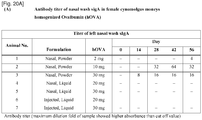
- Figures 6 , 7 , 9 , 11 , 12 and 20 secretory IgA
- sIgA is a dimer or tetramer composed of two or four monomers, a J-chain polypeptide, and a polypeptide chain called secretory component.
- the J-chain polypeptide can facilitate the polymerization of both serum and secretory IgA.
- the secretory component is a 70 kDa polypeptide produced by epithelial cells of mucous membranes and can protect sIgA by making it less susceptible to proteolytic enzymes in mucous secretions.
- sIgA can be produced locally by mucosal plasma cells that are descended from precursors initially stimulated in organized, mucosal lymphoid organs designed for antigen sampling. After an initial trigger, the precursor cells can pass via regional lymph nodes, lymph, and blood to disseminate widely among mucosal sites, thus leading to protection at mucosal sites other than the site of administration (e.g., nasal administration).
- sIgA can bind to an epithelial cell surface receptor, and the complex can pass through the epithelial cell into the secretions where it can serves as a nonphlogistic immunologic barrier to inhibit uptake of antigens.
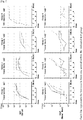
- the dry powder formulations disclosed herein can also stimulate an IgG response ( Figures 6 , 7 , 9 , 11 , 12 , 14 , 17 and 19 ).
- Such stimulation can lead to an additional layer of protection, for example by priming the humoral response to react to a pathogen which eludes or evades the protection provided by the sIgA induced by a vaccine disclosed herein.
- the vaccines disclosed herein can induce both mucosal and humoral antibody responses.
- Example 1 Preparation and testing of whole inactive H1N1 dry vaccine powder for mulation
- Example 1A Preparation of influenza vaccine (H1N1) powders using non-quick freezing techniques
- the frozen composition is then freeze dried in four steps: -40 degrees C, less than140 mtorr for 24 hr; - 30 degrees C, less than130 mtorr for 24 hr; -10 degrees C, less than100 mtorr for 4 hr; and 20C, less than50 mtorr for 4 hr.
- the resulting lyophilized powder contains 29 micro g of influenza vaccine protein per 1 mg of influenza vaccine powder.
- the influenza vaccine powder is combined (blended) with nasal carriers (e.g., microcrystalline cellulose) with specific surface area of greater than 1.3 square meter per gram and tribasic calcium phosphate (TCP) (Ca 3 (PO 4 ) 2 ).
- Influenza vaccine powder (49.3 mg, including 1.44 mg of influenza vaccine protein, is combined with 309.1 mg of Ceolus(registered trademark) PH-F20JP microcrystalline cellulose (mean particle size: 57 micro m; bulk density: 0.23 g/cm3; specific surface area: 2.3 m2/g), 40.0 mg of Ceolus(registered trademark)PH-301 microcrystalline cellulose (mean particle size: 39 micro m; bulk density: 0.41 g/cm 3 ), and 1.6 mg of TCP in a 10 mL glass bottle, and the components are blended using a vortex mixer for one minute.
- the resulting dry influenza vaccine powder formulation contains 90 micro g of influenza vaccine protein per 25 mg of dry influenza vaccine powder formulation.
- trehalose is used as the stabilizer to generate an influenza vaccine powder that is partially caked and stable HA potency.
- mannitol is used as the stabilizer to generate an influenza vaccine powder that comprises fine particles and has unstable HA potency.
- lactose is used as the stabilizer to generate an influenza vaccine powder that is a partially caked and has stable HA potency ( Figure 1 ).
- stability is defined as retaining greater than 50 % HA potency after freeze drying; unstable is equal to, or less than, 50 % HA potency after freeze drying; results are summarized in Table 1. Because the formulations lack both full HA potency and good flowability, such approaches require improvements to produce effective and fully deliverable intranasal vaccines.
- Influenza (H1N1) vaccine powder generated by non-quick freezing technique Antigen stabilizer Total protein of antigen / stabilizer ratio (by weight) Powder Property HA potency Stable, >50%; Unstable, ⁇ 50% Trehalose 1 :21 Cake Stable Mannitol 1 :21 Fine Unstable Lactose 1 :21 Cake Stable
- Example 1B Preparation of a nasal influenza (H1N1) vaccine powder using a quick freezing process
- the mixture is quickly frozen in liquid nitrogen for 10 minutes and an influenza powder is generated by a four step freeze-drying process: -40 degrees C, less than140 mtorr for 24 hr; -30 degrees C, less than130 mtorr for 24 hr; -10 degrees C, less than100 mtorr for 4 hr; and 20C, less than50 mtorr for 4 hr.
- the powder which contains 29 micro g of influenza vaccine protein per 1 mg of influenza vaccine powder, is comprised of fine particles and is stable at room temperature, stability being defined as retaining greater than 50 % HA potency (Table 2).
- influenza vaccine powder is combined (blended) with nasal carriers (e.g., microcrystalline cellulose) with specific surface area of greater than 1.3 square meter per gram and tribasic calcium phosphate (TCP) (Ca 3 (PO 4 ) 2 ).
- nasal carriers e.g., microcrystalline cellulose
- specific surface area of greater than 1.3 square meter per gram and tribasic calcium phosphate (TCP) (Ca 3 (PO 4 ) 2 ).
- Influenza vaccine powder (49.3 mg, including 1.44 mg of influenza vaccine protein and 30.60 mg of trehalose), is combined with 309.1 mg of Ceolus(registered trademark) PH-F20JP microcrystalline cellulose (mean particle size: 57 micro m; bulk density: 0.23 g/cm 3 ; specific surface area: 2.3 m 2 /g), 40.0 mg of Ceolus(registered trademark)PH-301 microcrystalline cellulose (mean particle size: 39 micro m; bulk density: 0.41 g/cm3), and 1.6 mg of TCP in a 10 mL glass bottle, and the components are blended using a vortex mixer for one minute.
- Ceolus(registered trademark) PH-F20JP microcrystalline cellulose (mean particle size: 57 micro m; bulk density: 0.23 g/cm 3 ; specific surface area: 2.3 m 2 /g)
- Ceolus(registered trademark)PH-301 microcrystalline cellulose (mean particle size:
- the resulting dry influenza vaccine powder formulation contains 90 micro g of influenza vaccine protein per 25 mg of dry influenza vaccine powder formulation.
- trehalose was used as the antigen stabilizer resulting in a formulation with stable HA potency and fine particle size.
- lactose was used as the antigen stabilizer, which also produced a stable formulation consisting of fine particle size. Mannitol was not tested as an antigen stabilizer for H1N1 vaccine powders.
- Example 1C Study design and results of nasal influenza vaccine powder formulation
- H1N1 dry powder H1N1 vaccine to elicit an immune response
- the vaccine is prepared using a quick freezing process and blended with microcrystalline cellulose carriers, as explained supra.
- 0.09 mg of influenza vaccine protein H1N1, strain A/Brisbane/59/2007, inactive whole influenza vaccine
- Cynomolgus monkeys have similar anatomy of nasal cavity and similar immune response as humans.
- Group 1 was administered 25 mg of nasal influenza (H1N1) vaccine powder formulation, prepared by the quick freezing process outlined supra, containing 0.09 mg influenza vaccine protein, 1.91 mg trehalose, 19.28 mg Ceolus(registered trademark) PH-F20JP, 2.50 mg Ceolus(registered trademark) PH-301, and 0.10 mg TCP;
- Group 2 was administered 0.1 ml of nasal influenza vaccine solution containing 0.09 mg influenza vaccine protein;
- Group 3 was administered 0.1 ml of nasal influenza vaccine solution containing 0.09 mg influenza vaccine protein, 0.5 microL Tween 80 with 0.02 mg adjuvant alpha-galactosylceramide; and
- Group 4 was administered 0.5 mL of SC influenza vaccine solution containing 0.09 mg influenza vaccine protein.
- Vaccines were administered and samples were collected as described in Figure 4 . Antibody levels were determined by hemagglutination inhibition (HI) and enzyme-linked immunosorbent assay (ELISA).
- Hemagglutination Inhibition (HI) antibody titers in serum and nasal wash samples were determined as follows. Samples were treated with Receptor Destroying Enzyme (RDE, Denka Seiken Co Ltd., Tokyo, Japan) for 15 to 18 hours at 37 degrees C and then heat inactivated for 1 hour at 56 degrees C. Two-fold serial dilution series of the samples were prepared, mixed with H1N1 (strain A/Brisbane/59/2007) HA antigen (Denka Seiken) at a concentration of 4 hemagglutination units per well, and incubated for 1 hour at room temperature. To each well, 50 micro L of a 0.5 % suspension of chicken red blood cells was added and hemagglutination was assessed an hour later. The highest dilution of sample that inhibits hemagglutination is the HI title of the sample.
- RDE Receptor Destroying Enzyme
- FIGS. 5A and B The results of HI testing of samples collected in this study are shown in Figures 5A and B , which contain tables of the HI titers produced by monkeys exposed to the different formulations of the whole inactive H1N1 virus (strain A/Brisbane/59/2007) vaccine.
- the HI titers measured in serum samples are found in 5A; the HI titers measured in nasal wash samples are found in 5B.
- the SC injection vaccine (Group 4) produced the highest HI titers in the serum samples; however, no increase in HI titer was detected in nasal wash samples.
- the whole inactive nasal influenza (H1N1, strain A/Brisbane/59/2007) vaccine powder formulation produced the highest titers in both the serum and nasal wash samples, demonstrating a clear improvement over the liquid formulations. Taken together, these results demonstrate that both serum and nasal wash HI titers were elevated in test group 1.
- Enzyme-linked immunosorbent assay (ELISA) antibody titers in serum and nasal wash samples were determined as follows. ELISA plates were coated with an antigen for 17 hours at 4 degrees C, washed, and blocked in 100 micro L of blocking solution (0.5 % bovine serum albumin in phosphate buffer) for 1 hour at room temperature. After washing, 2-fold serial dilutions of the test samples were made in 0.5% BSA and PBS and the dilutions were added to the wells of the ELISA plate.
- blocking solution 0.5 % bovine serum albumin in phosphate buffer
- HRP horseradish peroxidase
- HRP horseradish peroxidase
- Figure 6A and B are table of sIgA (5B) and IgG (5A) antibody titers produced by monkeys exposed to the different flu vaccine formulations.
- Figure 7 provides a graphical representation of the data and indicating similar results from each animal tested (different animals indicated by different lines).
- SC Flu vaccine solution produced the most IgG among all test articles.
- Nasal influenza (H1N1, strain A/Brisbane/59/2007) vaccine powder formulation produced the most IgG among all nasal preparations.
- Nasal influenza vaccine powder formulation produced the most sIgA among all test articles.
- SC injected influenza vaccine produced the least sIgA among all test articles.
- Nasal influenza vaccine solution with adjuvant produced the least sIgA among all nasal preparations even though added the adjuvant.
- Example 1D HI, IgG and sIgA titers during the recovery period
- FIG. 8 contains a table of HI titers
- Figure 9 contains a table of IgG and sIgA titers. Antibody titer levels were held at high levels in the animal treated with the nasal powder formulation ( Figures 8 and 9 , Group 1).
- Antibody titer levels were held at a lower level in animals treaded with the nasal liquid formulation, without (Group 2) or with (Group 3) the addition of an adjuvant.
- IgG and HI titer levels in animals injected with a liquid formulation (Group 4) decreased remarkably throughout the recovery period; the levels of sIgA antibodies were not significantly raised in animals treated with the injected vaccine formulation.
- Example 1E Survivability/challenge studies.
- the ability of the influenza vaccine to protect animals from subsequent challenge will be determined.
- Nasal challenge of the monkeys vaccinated in the previous experiment is performed 3 weeks after the final immunization.
- the animals are challenged with an embryonated-chicken-egg grown canine influenza (A/Brisbane/59/2007 IVR-148) virus.
- Each animal receives a total of approximately 10 7 TCID 50 of virus in a 2 ml volume.
- the monkeys are challenged with 2 ml of virus-free allantoic fluid.
- three un-vaccinated monkeys are exposed to 10 7 TCID 50 of virus or challenged with 2 ml of virus-free allantoic fluid.
- Animals from each group are monitored daily for body mass, hypothermia, general appearance and clinical symptoms. The monkeys are observed for flu-related clinical signs for 28 days post-challenge. All monkeys are fed with a standard diet and water is available ad libitum. For each group studied, nasal swabs and blood samples are taken at -7 days, 3 days, 7 days, 14 days and 28 days following the initial challenge. Antibody titers (sIgA and IgG) are determined for each animal.
- Example 1F Determining stability and hygroscopicity of a dry vaccine powder formulation.
- a dry, whole inactive H1N1 influenza vaccine powder formulation is generated by the methods of the provided invention.
- the stability of the vaccine powder formulation is tested at 45 degrees C and at 20 degrees C to 25 degrees C.
- the dry vaccine powder formulation to be tested is stored both in sealed bottles and in unsealed containers. Stability is measured by determining HA antigenicity.
- the hygroscopicity of a dry vaccine powder formulation is measured by determining the mass of a sample over time. To determine the effects of different environmental conditions on the hygroscopic stability of dry vaccine powders, 50 mg of vaccine powder is stored under various conditions. Samples of dry vaccine powder are stored under air-tight conditions, in a sealed container and an open container. The samples are weighed at monthly intervals for 6 months and weighed. An increase in weight indicates acquisition of water.
- Vaccine powder formulation stored for longer than 6 months are tested in a nasal delivery device.
- the percent of vaccine powder formulation delivered from the device is determined and compared to the percent of vaccine powder formulation freshly made.
- Example 2 Preparation and testing of whole inactive H5N1 dry vaccine powder for mulation
- Example 2A Preparation of a nasal influenza (H5N1) vaccine powder using a quick freezing process
- This example was performed to determine the optimal antigen stabilizer, and antigen to stabilizer ratio, for use in a quick freezing and drying process to generate a H5N1 nasal vaccine powder.
- the general manufacturing process is outlined in Figures 2 and 3 ; specific details relating to the generation of a H5N1 nasal vaccine formulation are provided infra.
- Four ratios of antigen to stabilizer were tested (1:11, 1:21, 1:49, and 1:101); the numbers cited infra correspond to the 1:49 ratio formulation.
- a 0.526 mg/mL antigen solution containing whole inactive H5N1 virus (strain A/Vietnam/1194/2004, Sinovac Biotech Ltd) is combined with 10.4 mg of a stabilizer (trehalose, mannitol, or lactose) in 0.4 mL phosphate buffer pH 7.2, to yield a final ratio of antigen to stabilizer of 1:49.
- a stabilizer trehalose, mannitol, or lactose
- influenza powder is generated by a four step freeze-drying process: -40 degrees C, less than140 mtorr for 24 hr; -30 degrees C, less than130 mtorr for 36 hr; -10 degrees C, less than100 mtorr for 4 hr; and 20 degrees C, less than50 mtorr for 4 hr.
- the resulting powder contains 11.2 micro g of antigen per 1 mg of powder.
- the influenza vaccine powder is combined (blended) with nasal carriers (e.g., microcrystalline cellulose) with specific surface area of greater than 1.3 square meter per gram and tribasic calcium phosphate (TCP) (Ca 3 (PO 4 ) 2 ).
- Influenza vaccine powder (104 mg, including 1.2 mg of influenza vaccine protein, is combined with 254.4 mg of Ceolus(registered trademark) PH-F20JP microcrystalline cellulose (mean particle size: 57 micro m; bulk density: 0.23 g/cm3; specific surface area: 2.3 m2/g), 40.0 mg of Ceolus (registered trademark)PH-301 microcrystalline cellulose (mean particle size: 39 micro m; bulk density: 0.41 g/cm3), and 1.6 mg of TCP in a 10 mL glass bottle, and the components are blended using a vortex mixer for one minute.
- the resulting dry influenza vaccine powder formulation contains 58.9 micro g of influenza vaccine protein per 20 mg of dry influenza vaccine powder formulation.
- Example 2B Study design and results of nasal influenza vaccine powder formulation
- H5N1 nasal influenza
- H5N1 antigen 30 micro g of H5N1 antigen was administered.
- Group 1 20 mg of nasal vaccine powder in each nostril (30 micro g total antigen);
- Group 2 was administered 0.15 mL nasal flu spray in each nostril (30 micro g total antigen); and
- Group 3 was administered 0.3 mL of liquid vaccine by intramuscular injection (IM).
- Vaccines were administered and samples were collected according to the schedule in Figure 10 . Samples were tested by enzyme-linked immunosorbent assay (ELISA) according to the methods outlined in Example 1.
- ELISA enzyme-linked immunosorbent assay
- Figure 11 provides titers of sIgA (11B) and IgG (11A) produced by monkeys exposed to the different flu vaccine formulations.
- Figure 12 provides a graphical representation of the data with different animals indicated by different lines. Animals vaccinated by injection with a liquid formulation (group 3) produced the highest IgG titers in the study; however, this same group produced levels of sIgA antibodies that were nearly undetectable. Animals vaccinated using a nasal liquid formulation (group 2) produced the lowest levels if IgG antibodies in this experiment; this group also produced low levels of sIgA antibodies.
- Example 2C Test method and results of stability test under stress conditions
- H5N1 influenza vaccine powder in encapsulated form was stored at 60 degrees C and 0% relative humidity and examined at two and three week time points. At two weeks, the powder consisted of fine particles; however, at three weeks, partial aggregation of the powder was observed.
- H5N1 influenza vaccine powder was loaded in a single use delivery device (Shin Nippon Biomedical Laboratory, LTD) and stored with an oxygen and moisture absorbing desiccant (PharmaKeep KC-20, Mitsubishi Gas Chemical Company, Inc.) in an aluminum canister at 60 degrees C and 75% relative humidity for two weeks, after which the powder still consisted of fine particles.
- H5N1 influenza vaccine powder was put in bottles and stored at 60 degrees C and 0% relative humidity and examined for HA potency at two and three week time points. At both times, the HA potency of the H5N1 nasal vaccine powder was stable.
- H5N1 influenza vaccine powder was put in bottles and stored with an oxygen and moisture absorbing desiccant (PharmaKeep KC-20, Mitsubishi Gas Chemical Company, Inc.) at 60 degrees C and 75% relative humidity for two weeks, after which time the HA potency was determined to be stable.
- Table 4 In contrast to the H5N1 nasal powder vaccine, H5N1 nasal spray vaccine, which was stored in a polypropylene microtube, lost all HA potency after two weeks at 60 degrees C. This demonstrates that increased stability at elevated temperature is achieved in the nasal powder formulation.
- Example 3 Preparation and testing of a mixture of 3 HA split inactivated strain dry vaccine powder formulation
- Example 3A Preparation of a Trivalent HA influenza vaccine powder using a quick freezing process
- a >0.09 mg/mL antigen solution containing Trivalent HA influenza (H1N1 A/California/7/2009, H3N2 A/Victoria/210/2009, and B/Brisbane/60/2008 , Denka Seiken Co Ltd) is combined with 6 mg of a stabilizer (trehalose, mannitol, or lactose) in 0.2 mL ultra pure water, to yield a final ratio of antigen to stabilizer of 1:111.
- a stabilizer trehalose, mannitol, or lactose
- influenza powder is generated by a four step freeze-drying process: -40 degrees C, less than140 mtorr for 24 hr; -30 degrees C, less than130 mtorr for 36 hr; -10 degrees C, less than100 mtorr for 4 hr; and 20 degrees C, less than50 mtorr for 4 hr.
- the resulting powder contains >4.6 micro g of antigen per 1 mg of powder.
- the influenza vaccine powder is combined (blended) with nasal carriers (e.g., microcrystalline cellulose) with specific surface area of greater than 1.3 square meter per gram and tribasic calcium phosphate (TCP) (Ca 3 (PO 4 ) 2 ).
- Influenza vaccine powder (97.75 mg, including 0.45 mg of influenza vaccine protein, is combined with 350.2 mg of Ceolus(registered trademark) PH-F20JP microcrystalline cellulose (mean particle size: 57 micro m; bulk density: 0.23 g/cm3; specific surface area: 2.3 m2/g), 50.0 mg of Ceolus (registered trademark)PH-301 microcrystalline cellulose (mean particle size: 39 micro m; bulk density: 0.41 g/cm3), and 2.0 mg of TCP in a 10 mL glass bottle, and the components are blended using a vortex mixer for one minute.
- the resulting dry influenza vaccine powder formulation contains >45 micro g of influenza vaccine protein per 25 mg of dry influenza vaccine powder formulation.
- Preparations using trehalose, mannitol, and lactose at an antigen to stabilizer ratio of 1:26 produced unstable powders consisting of fine particles.
- Both trehalose and lactose containing formulations produced stable powders with fine particle size at antigen to stabilizer ratios of 1:56 and 1:111; at these ratios, use of mannitol as the stabilizer yielded unstable HA potency with fine particle size.
- an antigen to stabilizer ratio of 1:222 both trehalose and lactose containing formulations produced caked powders with stable HA potency; at the same ratio, the mannitol containing formulation produced a stable powder consisting of fine particles.
- Table 5 The results are summarized in Table 5.
- Example 3B Test method and results of stability test under stress conditions
- Trivalent HA influenza vaccine formulation prepared using a quick freezing process and blended with microcrystalline cellulose carriers, is tested under stress conditions and compared to a nasal spray Trivalent HA influenza vaccine formulation.
- Trivalent HA influenza vaccine powder in encapsulated form was stored at 60 degrees C and 0% relative humidity and examined at two and three week time points. At two weeks, the powder consisted of fine particles; however, at three weeks, partial aggregation of the powder was observed.
- Trivalent HA influenza vaccine powder was put in bottles and stored at 60 degrees C and 0% relative humidity and examined for HA potency at two and three week time points. At both times, the HA potency of the Trivalent HA nasal vaccine powder was stable.
- Example 4 Preparation and testing of tetanus toxoid (TTx) dry vaccine powder for mulation
- TTx tetanus toxoid
- Example 4A Preparation of a tetanus toxoid vaccine powder using a quick freezing process
- This experiment was performed to determine the optimal antigen stabilizer, and antigen to stabilizer ratio, for use in a quick freezing and drying process to generate a tetanus toxoid nasal vaccine powder.
- the general manufacturing process is outlined in Figures 2 and 3 ; specific details relating to the generation of a tetanus toxoid nasal vaccine formulation are provided infra.
- Five ratios of antigen to stabilizer were tested (1:26, 1:53, 1:111, 1:231, and 1: greater than 420); the numbers cited infra correspond to the 1:53 ratio formulation.
- tetanus toxoid antigen solution (Denka Seiken Co LTD) is combined with 2.1 mg of a stabilizer (trehalose, mannitol, or lactose) in 0.3 mL ultra pure water, to yield a final ratio of antigen to stabilizer of 1:53.
- a stabilizer trehalose, mannitol, or lactose
- the mixture is quickly frozen in liquid nitrogen for 10 minutes and an antigen powder is generated by a four step freeze-drying process: -40 degrees C, less than140 mtorr for 24 hr; -30 degrees C, less than130 mtorr for 36 hr; -10 degrees C, less than100 mtorr for 4 hr; and 20 degrees C, less than50 mtorr for 4 hr.
- the resulting powder contains less than4.7 micro g of antigen per 1 mg of powder.
- the tetanus toxoid vaccine powder is combined (blended) with nasal carriers (e.g., microcrystalline cellulose) with specific surface area of greater than 1.3 square meter per gram and tribasic calcium phosphate (TCP) (Ca 3 (PO 4 ) 2 ).
- nasal carriers e.g., microcrystalline cellulose
- specific surface area of greater than 1.3 square meter per gram and tribasic calcium phosphate (TCP) (Ca 3 (PO 4 ) 2 ).
- Tetanus toxoid vaccine powder (less than8.54 mg, including less than0.04 mg of antigen protein, is combined with 35.46 mg of Ceolus(registered trademark) PH-F20JP microcrystalline cellulose (mean particle size: 57 micro m; bulk density: 0.23 g/cm3; specific surface area: 2.3 m2/g), 5 mg of Ceolus(registered trademark)PH-301 microcrystalline cellulose (mean particle size: 39 micro m; bulk density: 0.41 g/cm3), and 0.2 mg of TCP in a 10 mL glass bottle, and the components are blended using a vortex mixer for one minute.
- the resulting dry tetanus toxoid vaccine powder formulation contains less than20 micro g of antigen protein per 25 mg of total powder.
- the use of trehalose, mannitol, and lactose produced antigen powders consisting of fine particles at antigen to stabilizer ratios of 1:26, 1:53, 1:105, and 1:210.
- At an antigen to stabilizer ratio of 1: 420 all three stabilizers (trehalose, mannitol, and lactose) produced caked powders.
- Table 7 Tetanus toxoid vaccine powder generated by quick freezing technique.
- Example 4B Study design and results of nasal tetanus toxoid vaccine powder formulation
- Group 1 is administered 25 mg of nasal vaccine powder in each nostril (5 Lf dose);
- Group 2 is administered 25 mg of nasal vaccine powder two times in each nostril (10 Lf dose);
- Group 3 is administered 25 mg of nasal vaccine powder four times in each nostril (20 Lf dose); and,
- Group 4 is administered 2.0 mL liquid vaccine by subcutaneous injection (10 Lf dose).
- Vaccines are administered and samples are collected according to the schedule in Figure 13 . Samples are tested by enzyme-linked immunosorbent assay (ELISA), according to the methods outlined in Example 1, and enzyme-linked immunosorbent spot (ELISpot).
- ELISA enzyme-linked immunosorbent assay
- ELISpot enzyme-linked immunosorbent spot
- the ELISpot assay was performed as follows. Mouse anti-human/monkey interferon-gamma (IFN gamma), monoclonal antibody, unconjugated, clone GZ-4 (15 micro g/ mL, MabTech, Sweden) was added to multiscreen plates (Millipore, USA) and incubated overnight at 4 degrees C. The next day, the plates were blocked with AIM-V (Life Technologies, USA) complete medium. 4X10 5 cells of peripheral blood mononuclear cells (PBMCs) separated from monkey whole blood and 25 mLf of Absorbed Tetanus Toxoid were added, and the plates incubated for 24 hour at 37 degrees C.
- PBMCs peripheral blood mononuclear cells
- the wells were then washed with PBS and 1 micro g/mL mouse anti-human IFN gamma, monoclonal antibody, biotinylated, clone 7-B6-1 (MabTech) was added. After 2 hour incubation at room temperature, the wells were washed with PBS. Strep-tavidine-alkaline phosphatase diluted 1:1000 (MabTech) was added. After 1 hour incubation at room temperature, the wells were washed with PBS. Staining was performed using 5-bromo-4-chloro-3-indolyl phosphate / nitroblue tetrazolium (BCIP/NBT-plus substrate) (Moss, USA). The plates were dried and numbers of spot in each well were evaluated on a scale of - to ++.
- Figure 14A provides the absorbance ratio of serum IgG produced by monkeys exposed to the different flu vaccine formulations; Figure 14B displays those same results in graphical form.
- Figure 15 tabulates the results of ELISpot testing of the serum samples collected. The scoring in Figure 15 is as follows: (-) indicates negative control levels, (+/-) indicates low levels, (+) indicates medium levels, and (++) indicates high levels.
- the injected liquid formulation of the TTx vaccine produced the greatest immune response.
- the 20 Lf dose of the nasal powder induced a detectable increase in IgG antibody titer during the study as measured by ELISA.
- the ELISpot measurements showed that all three doses of TTx Nasal powder vaccine were able to produce a dose-dependent immune response.
- various dry powder formulations of a diphtheria toxoid vaccine are generated and tested.
- a preferred embodiment of the invention is also tested verses a traditional liquid injection formulation of the diphtheria toxoid vaccine.
- the antigen powder produced by the quick freezing and freeze drying process detailed supra was rehydrated into a liquid formulation. This formulation will be referred to as reconstituted powder infra.
- Example 5A Preparation of a diphtheria toxoid vaccine powder using a quick freezing process
- This experiment was performed to determine the optimal antigen stabilizer, and antigen to stabilizer ratio, for use in a quick freezing and drying process to generate a diphtheria toxoid nasal vaccine powder.
- the general manufacturing process is outlined in Figures 2 and 3 ; specific details relating to the generation of a diphtheria toxoid nasal vaccine formulation are provided infra.
- Five ratios of antigen to stabilizer were tested (2.5 Lf: 1.1mg, 2.5 Lf: 2.1 mg, 2.5 Lf: 4.2mg, 2.5 Lf: 8.4 mg and 2.5 Lf: 16.8 mg); the numbers cited infra correspond to the 2.5 Lf: 2.1 mg ratio formulation.
- a 10 mL bottle 0.5 mL of a less than 5 Lf/mL adsorbed diphtheria toxoid antigen solution (DTx, Research Institute for Microbial Disease, Osaka University) is combined with 2.1 mg of a stabilizer (trehalose, mannitol, or lactose) in 0.3 mL ultra pure water, to yield a final ratio of antigen to stabilizer of 2.5 Lf : 2.1 mg.
- DTx Research Institute for Microbial Disease, Osaka University
- the mixture is quickly frozen in liquid nitrogen for 10 minutes and an antigen powder is generated by a four step freeze-drying process: -40 degrees C, less than140 mtorr for 24 hr; -30 degrees C, less than130 mtorr for 36 hr; -10 degrees C, less than100 mtorr for 4 hr; and 20 degrees C, less than50 mtorr for 4 hr.
- the resulting powder contains less than 0.28 Lf of antigen per 1 mg of powder.
- diphtheria toxoid vaccine powder is combined (blended) with nasal carriers (e.g., microcrystalline cellulose) with specific surface area of greater than 1.3 square meter per gram and tribasic calcium phosphate (TCP) (Ca 3 (PO 4 ) 2 ).
- nasal carriers e.g., microcrystalline cellulose
- specific surface area of greater than 1.3 square meter per gram and tribasic calcium phosphate (TCP) (Ca 3 (PO 4 ) 2 ).
- Diphtheria toxoid vaccine powder (1 mg, including less than0.28 Lf of antigen protein), is combined with 35.96 mg of Ceolus(registered trademark) PH-F20JP microcrystalline cellulose (mean particle size: 57 micro m; bulk density: 0.23 g/cm3; specific surface area: 2.3 m2/g), 5 mg of Ceolus(registered trademark)PH-301 microcrystalline cellulose (mean particle size: 39 micro m; bulk density: 0.41 g/cm3), and 0.2 mg of TCP in a 10 mL glass bottle, and the components are blended using a vortex mixer for one minute.
- the resulting dry diphtheria toxoid vaccine powder formulation contains less than1.25 Lf of antigen protein per 25 mg of total powder.
- Table 8 Use of trehalose, mannitol, or lactose generated powders consisting of fine particles at antigen to stabilizer ratios of 2.5 Lf: 1.1mg, 2.5 Lf : 2.1 mg, 2.5 Lf: 4.2mg and 2.5 Lf: 8.4 mg. At an antigen to stabilizer ratio of 2.5 Lf: 16.8 mg, all three stabilizers used generated caked powders using this process.
- Table 8 Diphtheria toxoid vaccine powder generated by quick freezing technique.
- Example 5B Study design and results of nasal diphtheria toxoid vaccine powder formulation
- Figure 17A is a table of the absorbance ratio of serum IgG; 17B is a bar graph (top) and line graph (bottom) of the data in 17A.
- the reconstituted powder formulation and the conventional injected liquid formulations successfully induced an increase in serum IgG levels.
- the nasal powder formulation was also successful in increasing the IgG antibody titer, despite being administered at half the dose of the injected formulations. Taken together, these results indicate that the quick freeze drying methodology disclosed herein preserves diphtheria toxoid vaccine potency in animals.
- a dry powder formulation of ovalbumin (OVA, SIGMA A5503-IG) is generated and tested for the ability to elicit an immune response in cynomolgus monkeys.
- OVA ovalbumin
- SIGMA A5503-IG a dry powder formulation of ovalbumin
- the nasally administered dry vaccine powder formulation is compared to traditional nasal and injected liquid formulations.
- the results demonstrate that nasal administration of an exemplary protein antigen using a formulation describe herein is capable of eliciting an immune response in animals.
- hOVA homogenized ovalbumin
- nasal carriers e.g., microcrystalline cellulose
- TCP tribasic calcium phosphate
- hOVA is provided in powdered form, a quick freeze then freeze dry step was not needed.
- 13.3 mg of hOVA powder is combined with 354.1 mg of Ceolus PH-F20JP, 40 mg Ceolus PH-301, and 1.6 mg of tribasic calcium phosphate (TCP), in a 10 mL bottle, and blended using a vortex mixer for one minute.
- the resulting mixture contains 1 mg antigen per 30 mg powder formulation.
- 66.7 mg of hOVA powder is combined with 291.7 mg of Ceolus PH-F20JP, 40 mg Ceolus PH-301, and 1.6 mg of tribasic calcium phosphate (TCP), in a 10 mL bottle, and blended using a vortex mixer for one minute.
- the resulting mixture contains 5 mg antigen per 30 mg powder formulation.
- 200 mg of hOVA powder is combined with 158.4 mg of Ceolus PH-F20JP, 40 mg Ceolus PH-301, and 1.6 mg of tribasic calcium phosphate (TCP), in a 10 mL bottle, and blended using a vortex mixer for one minute.
- the resulting mixture contains 15 mg antigen per 30 mg powder formulation.
- Example 6B Study design and results of nasal ovalbumin vaccine powder formulation
- Group 1 was administered 30 mg of nasal vaccine powder formulation 1 in each nostril (2 mg dose);
- Group 2 was administered 30 mg of nasal vaccine powder formulation 2 in each nostril (10 mg dose);
- Group 3 was administered 30 mg of nasal vaccine powder formulation 3 in each nostril (30 mg dose);
- Group 4 was administered 0.1 mL of liquid vaccine in each nostril (20 mg dose);
- Group 5 was administered 0.1 mL of liquid vaccine in each nostril (30 mg dose);
- Group 6 was administered 1.0 mL of liquid vaccine by subcutaneous injection (20 mg dose); and, Group 7 was administered 1.0 mL of liquid vaccine by subcutaneous injection (30 mg dose).
- Vaccines were administered and samples were collected according to the schedule in Figure 18 . Samples were tested by enzyme-linked immunosorbent assay (ELISA), according to the methods outlined in Example 1.
- ELISA enzyme-linked immunosorbent assay
- Figure 19 The IgG antibody titers measured in the serum samples collected during this experiment are shown in Figure 19 .
- Figure 19A is a table of IgG antibody titers; 19B is a bar graph (top) and line graph (bottom) representation of the data in 19A.
- the nasal powder formulation and the injected liquid formulation were both capable of eliciting an immune response to similarly high levels; however, the highest titers were detected at an earlier time point in the animals treated with the nasal powder formulation.
- the nasal liquid formulation failed to elicit a detectable immune response as measured by IgG antibody titer.
- the sIgA antibody titers measured in this serum samples collected during this experiment are shown in Figure 20 .
- Figure 20A is a table of sIgA antibody titers; 20B is a bar graph (top) and line graph (bottom) representation of the data in 20A.
- Only the nasal powder formulation was capable of eliciting a detectable immune response as measured by sIgA antibody titer. No increase in sIgA titer was detected in animals vaccinated with either the nasal liquid or injected liquid formulations. Together, these results suggest that a nasal powder formulation described herein is capable of eliciting both mucosal and systemic immunogenicity in animals using an exemplary protein antigen.
Landscapes
- Health & Medical Sciences (AREA)
- Life Sciences & Earth Sciences (AREA)
- Chemical & Material Sciences (AREA)
- Veterinary Medicine (AREA)
- Public Health (AREA)
- Animal Behavior & Ethology (AREA)
- Medicinal Chemistry (AREA)
- General Health & Medical Sciences (AREA)
- Pharmacology & Pharmacy (AREA)
- Epidemiology (AREA)
- Mycology (AREA)
- Immunology (AREA)
- Microbiology (AREA)
- Virology (AREA)
- Engineering & Computer Science (AREA)
- General Chemical & Material Sciences (AREA)
- Chemical Kinetics & Catalysis (AREA)
- Nuclear Medicine, Radiotherapy & Molecular Imaging (AREA)
- Organic Chemistry (AREA)
- Bioinformatics & Cheminformatics (AREA)
- Pulmonology (AREA)
- Otolaryngology (AREA)
- Oncology (AREA)
- Communicable Diseases (AREA)
- Molecular Biology (AREA)
- Signal Processing (AREA)
- Business, Economics & Management (AREA)
- Inorganic Chemistry (AREA)
- Biochemistry (AREA)
- Oil, Petroleum & Natural Gas (AREA)
- Emergency Management (AREA)
- Computer Networks & Wireless Communication (AREA)
- Environmental & Geological Engineering (AREA)
- Tropical Medicine & Parasitology (AREA)
- Marketing (AREA)
- Medicines Containing Antibodies Or Antigens For Use As Internal Diagnostic Agents (AREA)
- Medicinal Preparation (AREA)
Applications Claiming Priority (3)
| Application Number | Priority Date | Filing Date | Title |
|---|---|---|---|
| US32454210P | 2010-04-15 | 2010-04-15 | |
| EP11768642.8A EP2558120A4 (en) | 2010-04-15 | 2011-04-15 | METHOD AND COMPOSITION FOR INTRANASAL ADMINISTRATION |
| PCT/JP2011/002225 WO2011129120A1 (en) | 2010-04-15 | 2011-04-15 | Methods and compositions for intranasal delivery |
Related Parent Applications (1)
| Application Number | Title | Priority Date | Filing Date |
|---|---|---|---|
| EP11768642.8A Division EP2558120A4 (en) | 2010-04-15 | 2011-04-15 | METHOD AND COMPOSITION FOR INTRANASAL ADMINISTRATION |
Publications (2)
| Publication Number | Publication Date |
|---|---|
| EP2689785A1 EP2689785A1 (en) | 2014-01-29 |
| EP2689785B1 true EP2689785B1 (en) | 2021-05-19 |
Family
ID=44798502
Family Applications (2)
| Application Number | Title | Priority Date | Filing Date |
|---|---|---|---|
| EP13189570.8A Active EP2689785B1 (en) | 2010-04-15 | 2011-04-15 | Method for generating dry vaccine powder formulation for inranasal delivery |
| EP11768642.8A Withdrawn EP2558120A4 (en) | 2010-04-15 | 2011-04-15 | METHOD AND COMPOSITION FOR INTRANASAL ADMINISTRATION |
Family Applications After (1)
| Application Number | Title | Priority Date | Filing Date |
|---|---|---|---|
| EP11768642.8A Withdrawn EP2558120A4 (en) | 2010-04-15 | 2011-04-15 | METHOD AND COMPOSITION FOR INTRANASAL ADMINISTRATION |
Country Status (12)
| Country | Link |
|---|---|
| US (2) | US9687536B2 (enExample) |
| EP (2) | EP2689785B1 (enExample) |
| JP (5) | JP5771626B2 (enExample) |
| KR (3) | KR101960102B1 (enExample) |
| CN (3) | CN107260689A (enExample) |
| BR (1) | BR112012026116A2 (enExample) |
| CA (2) | CA2993242C (enExample) |
| CU (1) | CU20120148A7 (enExample) |
| ES (1) | ES2874817T3 (enExample) |
| RU (1) | RU2012144612A (enExample) |
| SG (1) | SG184304A1 (enExample) |
| WO (1) | WO2011129120A1 (enExample) |
Families Citing this family (29)
| Publication number | Priority date | Publication date | Assignee | Title |
|---|---|---|---|---|
| KR101960102B1 (ko) * | 2010-04-15 | 2019-03-19 | 신 니뽄 바이오메디칼 라보라토리즈, 엘티디. | 비강내 전달을 위한 방법 및 조성물 |
| CA2858997C (en) | 2011-12-16 | 2020-03-31 | Indosys Limited | Medicament unit dose cartridge and delivery device |
| TWI690322B (zh) * | 2012-10-02 | 2020-04-11 | 法商傳斯堅公司 | 含病毒的調配物及其使用 |
| WO2014186754A2 (en) * | 2013-05-16 | 2014-11-20 | Board Of Regents The University Of Texas System | Dry solid aluminum adjuvant-containing vaccines and related methods thereof |
| CN104208029B (zh) * | 2013-05-30 | 2017-06-06 | 上海医药工业研究院 | 一种鼻用疫苗组合物粉体制剂及其制备方法 |
| EP3041504B1 (en) | 2013-09-03 | 2021-08-25 | Georgia Tech Research Corporation | Thermally stable vaccine formulations and microneedles |
| EP4008307A1 (en) * | 2013-09-24 | 2022-06-08 | Satsuma Pharmaceuticals, Inc. | Intranasal dhe formulation for the treatment of headache |
| IL310015B1 (en) * | 2013-12-31 | 2025-10-01 | Access To Advanced Health Inst | Single vial formulation |
| EP3127550A1 (en) * | 2015-08-07 | 2017-02-08 | HSC Development GmbH | Stabilizing composition for dry formulation of virus |
| US11311615B2 (en) * | 2015-09-16 | 2022-04-26 | Shin Nippon Biomedical Laboratories, Ltd. | Vaccine compositions |
| GB201610628D0 (en) * | 2016-06-17 | 2016-08-03 | Mihranyan Albert | New compositions |
| AU2017327009A1 (en) * | 2016-09-19 | 2019-04-04 | Vaxess Technologies, Inc. | Vaccine formulations with increased stability |
| US11022115B2 (en) | 2017-06-02 | 2021-06-01 | Purdue Research Foundation | Controlled variable delivery external gear machine |
| JPWO2019021957A1 (ja) * | 2017-07-25 | 2020-07-09 | 第一三共株式会社 | 点鼻用乾燥粉末医薬組成物 |
| GB201713899D0 (en) | 2017-08-30 | 2017-10-11 | Indosys Ltd | Multi-dose medicament delivery device |
| CA3083953A1 (en) | 2017-12-11 | 2019-06-20 | Board Of Regents, The University Of Texas System | Dry adjuvanted immune stimulating compositions and use thereof for mucosal administration |
| AU2019336940B2 (en) * | 2018-09-06 | 2025-09-11 | Bavarian Nordic A/S | Storage improved poxvirus compositions |
| EP3893877A4 (en) | 2018-12-11 | 2022-09-14 | Satsuma Pharmaceuticals, Inc. | COMPOSITIONS, DEVICES AND METHODS FOR TREATMENT OR PREVENTION OF HEADACHE |
| MX2021009837A (es) * | 2019-02-15 | 2021-09-10 | Serum Inst Of India Pvt Ltd | Vacuna de influenza atenuada en vivo composicion y proceso de preparacion de los mismos. |
| EP3698773A1 (en) | 2019-02-21 | 2020-08-26 | Università degli Studi di Parma | Composition and manufacturing of powders containing nanoadjuvants for mucosal vaccination |
| US11621604B2 (en) | 2020-02-16 | 2023-04-04 | Purdue Research Foundation | Integrated electro-hydraulic machine |
| MX2022011539A (es) * | 2020-03-24 | 2022-10-13 | Byung Chul Ahn | Metodo de produccion de una composicion de suero para la prevencion o el tratamiento de enfermedades infecciosas relacionadas con las mucosas en mamiferos jovenes, composicion de suero producida de este modo y uso de la misma. |
| CN113583970B (zh) * | 2021-07-29 | 2023-05-12 | 吉林大学 | 一种用于预防或抗冠状病毒传播、致病的药物及其制备方法 |
| WO2024047351A1 (en) | 2022-09-01 | 2024-03-07 | Therakind Limited | Dry powder medicament delivery device |
| AU2023388890A1 (en) * | 2022-12-07 | 2025-06-26 | Daocheng Zhu | Formulation and use of a fusion protein |
| WO2024228212A1 (en) * | 2023-05-01 | 2024-11-07 | Biovet Private Limited | Bio-lumpivaxin formulations and method of preparation thereof |
| WO2024246607A1 (en) * | 2023-05-31 | 2024-12-05 | Shin Nippon Biomedical Laboratories, Ltd. | Compositions for enhanced mucosal penetration |
| GB202403611D0 (en) | 2024-03-13 | 2024-04-24 | Therakind Ltd | Improved multi-dose medicament delivery device |
| CN118924744A (zh) * | 2024-07-29 | 2024-11-12 | 复旦大学 | 小分子抑制剂ha15在抗乙型肝炎病毒中的应用 |
Family Cites Families (26)
| Publication number | Priority date | Publication date | Assignee | Title |
|---|---|---|---|---|
| WO1994009819A1 (en) * | 1992-11-03 | 1994-05-11 | Secretech, Inc. | Microcrystalline cellulose as an immune adjuvant |
| US20030092145A1 (en) | 2000-08-24 | 2003-05-15 | Vic Jira | Viral vaccine composition, process, and methods of use |
| CN1193745C (zh) * | 2001-02-27 | 2005-03-23 | 国家医药管理局上海医药工业研究院 | 一种鼻用鲑降钙素粉末吸入剂及制备方法 |
| MXPA04004726A (es) | 2001-11-19 | 2004-07-30 | Becton Dickinson Co | Composiciones farmaceuticas en forma particulada. |
| US20040042972A1 (en) | 2002-04-11 | 2004-03-04 | Medimmune Vaccines, Inc. | Spray freeze dry of compositions for intranasal administration |
| DK1701738T3 (en) * | 2003-12-17 | 2015-03-30 | Wyeth Llc | Process for preparing storage-stable RSV compositions |
| US20060292173A1 (en) * | 2004-12-13 | 2006-12-28 | Macadam Donald H | Multibacterial vaccines and uses thereof |
| PT1954308E (pt) | 2005-09-16 | 2011-11-03 | Merial Ltd | Estabilizadores para vacinas liofilizadas |
| RU2008117396A (ru) | 2005-10-04 | 2009-11-10 | Альк-Абелло А/С (Dk) | Твердая вакцинная композиция |
| CN101296705A (zh) * | 2005-10-04 | 2008-10-29 | 阿尔克-阿贝洛有限公司 | 固体疫苗制剂 |
| AU2007215080A1 (en) | 2006-02-13 | 2007-08-23 | Fraunhofer Usa, Inc. | Influenza antigens, vaccine compositions, and related methods |
| JP2009534303A (ja) | 2006-03-24 | 2009-09-24 | ノバルティス ヴァクシンズ アンド ダイアグノスティクス ゲーエムベーハー アンド カンパニー カーゲー | 冷蔵しないインフルエンザワクチンの保存 |
| ITMI20061117A1 (it) * | 2006-06-09 | 2007-12-10 | Michele Bonanomi | Una composizione farmaceutica per la somministrazione sublinguale di vaccini metodo per la sua preparazione e sui usi |
| JP2010502747A (ja) | 2006-09-08 | 2010-01-28 | ベクトン・ディキンソン・アンド・カンパニー | ミョウバン吸着ワクチンの安定粉末製剤 |
| SG10202012986SA (en) * | 2006-09-29 | 2021-01-28 | Ligocyte Pharmaceuticals Inc | Norovirus vaccine formulations |
| EP2116264B1 (en) | 2006-12-26 | 2017-09-27 | Shin Nippon Biomedical Laboratories, Ltd. | Preparation for transnasal application |
| DK2829282T3 (en) * | 2007-03-22 | 2018-01-02 | Univ Colorado Regents | Process for preparing an immunologically active adjuvant-linked dried vaccine composition |
| WO2009006299A2 (en) | 2007-06-29 | 2009-01-08 | Dr. Reddy's Laboratories Ltd. | Multi-particulate systems |
| JP5689687B2 (ja) * | 2008-03-05 | 2015-03-25 | サノフィ・パスツールSanofipasteur | アジュバント含有ワクチン組成物の安定化方法 |
| CN101601860A (zh) * | 2008-06-13 | 2009-12-16 | 中国科学院过程工程研究所 | 疫苗 |
| KR101707569B1 (ko) | 2008-08-01 | 2017-02-16 | 감마 백신즈 피티와이 리미티드 | 인플루엔자 백신 |
| JP2012526726A (ja) * | 2009-05-15 | 2012-11-01 | 株式会社新日本科学 | 薬物動態が改善された鼻腔内用薬学的組成物 |
| WO2011013003A2 (en) * | 2009-07-31 | 2011-02-03 | Shin Nippon Biomedical Laboratories, Ltd. | Intranasal granisetron and nasal applicator |
| JP5491119B2 (ja) | 2009-10-02 | 2014-05-14 | 日東電工株式会社 | 薬物含有微粒子を含む医薬組成物およびその製造方法 |
| KR101960102B1 (ko) | 2010-04-15 | 2019-03-19 | 신 니뽄 바이오메디칼 라보라토리즈, 엘티디. | 비강내 전달을 위한 방법 및 조성물 |
| AU2012244077B2 (en) | 2010-04-15 | 2015-06-18 | Shin Nippon Biomedical Laboratories, Ltd. | Methods and compositions for intranasal delivery |
-
2011
- 2011-04-15 KR KR1020127030060A patent/KR101960102B1/ko active Active
- 2011-04-15 EP EP13189570.8A patent/EP2689785B1/en active Active
- 2011-04-15 SG SG2012071841A patent/SG184304A1/en unknown
- 2011-04-15 CA CA2993242A patent/CA2993242C/en active Active
- 2011-04-15 BR BR112012026116A patent/BR112012026116A2/pt not_active IP Right Cessation
- 2011-04-15 JP JP2012547369A patent/JP5771626B2/ja active Active
- 2011-04-15 EP EP11768642.8A patent/EP2558120A4/en not_active Withdrawn
- 2011-04-15 KR KR1020127025573A patent/KR20130083376A/ko not_active Ceased
- 2011-04-15 CA CA2796593A patent/CA2796593C/en active Active
- 2011-04-15 ES ES13189570T patent/ES2874817T3/es active Active
- 2011-04-15 CN CN201710415508.1A patent/CN107260689A/zh active Pending
- 2011-04-15 CN CN201180027287.1A patent/CN102933230B/zh active Active
- 2011-04-15 US US13/640,623 patent/US9687536B2/en active Active
- 2011-04-15 WO PCT/JP2011/002225 patent/WO2011129120A1/en not_active Ceased
- 2011-04-15 CN CN2013100510480A patent/CN103126996A/zh active Pending
- 2011-04-15 KR KR1020197006392A patent/KR102136036B1/ko not_active Expired - Fee Related
- 2011-04-15 RU RU2012144612/15A patent/RU2012144612A/ru not_active Application Discontinuation
-
2012
- 2012-10-12 CU CU2012000148A patent/CU20120148A7/es unknown
-
2013
- 2013-01-25 JP JP2013011673A patent/JP2013126989A/ja active Pending
- 2013-03-14 US US13/828,337 patent/US10463723B2/en active Active
-
2015
- 2015-09-24 JP JP2015186488A patent/JP2016006119A/ja active Pending
-
2017
- 2017-07-19 JP JP2017139598A patent/JP2017186377A/ja active Pending
-
2019
- 2019-03-05 JP JP2019039165A patent/JP6827488B2/ja active Active
Non-Patent Citations (1)
| Title |
|---|
| None * |
Also Published As
Similar Documents
| Publication | Publication Date | Title |
|---|---|---|
| EP2689785B1 (en) | Method for generating dry vaccine powder formulation for inranasal delivery | |
| US11311615B2 (en) | Vaccine compositions | |
| US12350375B2 (en) | Method for obtaining efficient viral vector-based compositions for vaccination or gene therapy | |
| US20050220854A1 (en) | Apparatus and method for transdermal delivery of influenza vaccine | |
| AU2012244074B2 (en) | Methods and compositions for intranasal delivery | |
| US20200268880A1 (en) | Composition and manufacturing of powders containing nanoadjuvants for mucosal vaccination | |
| US20220325250A1 (en) | Method for obtaining efficient compositions comprising viral vectors for vaccination or gene therapy |
Legal Events
| Date | Code | Title | Description |
|---|---|---|---|
| PUAI | Public reference made under article 153(3) epc to a published international application that has entered the european phase |
Free format text: ORIGINAL CODE: 0009012 |
|
| AC | Divisional application: reference to earlier application |
Ref document number: 2558120 Country of ref document: EP Kind code of ref document: P |
|
| AK | Designated contracting states |
Kind code of ref document: A1 Designated state(s): AL AT BE BG CH CY CZ DE DK EE ES FI FR GB GR HR HU IE IS IT LI LT LU LV MC MK MT NL NO PL PT RO RS SE SI SK SM TR |
|
| 17P | Request for examination filed |
Effective date: 20140725 |
|
| RBV | Designated contracting states (corrected) |
Designated state(s): AL AT BE BG CH CY CZ DE DK EE ES FI FR GB GR HR HU IE IS IT LI LT LU LV MC MK MT NL NO PL PT RO RS SE SI SK SM TR |
|
| STAA | Information on the status of an ep patent application or granted ep patent |
Free format text: STATUS: EXAMINATION IS IN PROGRESS |
|
| 17Q | First examination report despatched |
Effective date: 20170428 |
|
| RAP1 | Party data changed (applicant data changed or rights of an application transferred) |
Owner name: KM BIOLOGICS CO., LTD. Owner name: SHIN NIPPON BIOMEDICAL LABORATORIES, LTD. |
|
| GRAP | Despatch of communication of intention to grant a patent |
Free format text: ORIGINAL CODE: EPIDOSNIGR1 |
|
| STAA | Information on the status of an ep patent application or granted ep patent |
Free format text: STATUS: GRANT OF PATENT IS INTENDED |
|
| INTG | Intention to grant announced |
Effective date: 20201201 |
|
| RIN1 | Information on inventor provided before grant (corrected) |
Inventor name: NAGATA, RYOICHI Inventor name: HARUTA, SHUNJI |
|
| GRAS | Grant fee paid |
Free format text: ORIGINAL CODE: EPIDOSNIGR3 |
|
| GRAA | (expected) grant |
Free format text: ORIGINAL CODE: 0009210 |
|
| STAA | Information on the status of an ep patent application or granted ep patent |
Free format text: STATUS: THE PATENT HAS BEEN GRANTED |
|
| AC | Divisional application: reference to earlier application |
Ref document number: 2558120 Country of ref document: EP Kind code of ref document: P |
|
| AK | Designated contracting states |
Kind code of ref document: B1 Designated state(s): AL AT BE BG CH CY CZ DE DK EE ES FI FR GB GR HR HU IE IS IT LI LT LU LV MC MK MT NL NO PL PT RO RS SE SI SK SM TR |
|
| REG | Reference to a national code |
Ref country code: GB Ref legal event code: FG4D |
|
| REG | Reference to a national code |
Ref country code: CH Ref legal event code: EP |
|
| REG | Reference to a national code |
Ref country code: DE Ref legal event code: R096 Ref document number: 602011070989 Country of ref document: DE |
|
| REG | Reference to a national code |
Ref country code: AT Ref legal event code: REF Ref document number: 1393356 Country of ref document: AT Kind code of ref document: T Effective date: 20210615 |
|
| REG | Reference to a national code |
Ref country code: IE Ref legal event code: FG4D |
|
| REG | Reference to a national code |
Ref country code: LT Ref legal event code: MG9D |
|
| REG | Reference to a national code |
Ref country code: AT Ref legal event code: MK05 Ref document number: 1393356 Country of ref document: AT Kind code of ref document: T Effective date: 20210519 |
|
| REG | Reference to a national code |
Ref country code: NL Ref legal event code: MP Effective date: 20210519 |
|
| PG25 | Lapsed in a contracting state [announced via postgrant information from national office to epo] |
Ref country code: FI Free format text: LAPSE BECAUSE OF FAILURE TO SUBMIT A TRANSLATION OF THE DESCRIPTION OR TO PAY THE FEE WITHIN THE PRESCRIBED TIME-LIMIT Effective date: 20210519 Ref country code: LT Free format text: LAPSE BECAUSE OF FAILURE TO SUBMIT A TRANSLATION OF THE DESCRIPTION OR TO PAY THE FEE WITHIN THE PRESCRIBED TIME-LIMIT Effective date: 20210519 Ref country code: BG Free format text: LAPSE BECAUSE OF FAILURE TO SUBMIT A TRANSLATION OF THE DESCRIPTION OR TO PAY THE FEE WITHIN THE PRESCRIBED TIME-LIMIT Effective date: 20210819 Ref country code: AT Free format text: LAPSE BECAUSE OF FAILURE TO SUBMIT A TRANSLATION OF THE DESCRIPTION OR TO PAY THE FEE WITHIN THE PRESCRIBED TIME-LIMIT Effective date: 20210519 Ref country code: HR Free format text: LAPSE BECAUSE OF FAILURE TO SUBMIT A TRANSLATION OF THE DESCRIPTION OR TO PAY THE FEE WITHIN THE PRESCRIBED TIME-LIMIT Effective date: 20210519 |
|
| REG | Reference to a national code |
Ref country code: ES Ref legal event code: FG2A Ref document number: 2874817 Country of ref document: ES Kind code of ref document: T3 Effective date: 20211105 |
|
| PG25 | Lapsed in a contracting state [announced via postgrant information from national office to epo] |
Ref country code: NO Free format text: LAPSE BECAUSE OF FAILURE TO SUBMIT A TRANSLATION OF THE DESCRIPTION OR TO PAY THE FEE WITHIN THE PRESCRIBED TIME-LIMIT Effective date: 20210819 Ref country code: PT Free format text: LAPSE BECAUSE OF FAILURE TO SUBMIT A TRANSLATION OF THE DESCRIPTION OR TO PAY THE FEE WITHIN THE PRESCRIBED TIME-LIMIT Effective date: 20210920 Ref country code: PL Free format text: LAPSE BECAUSE OF FAILURE TO SUBMIT A TRANSLATION OF THE DESCRIPTION OR TO PAY THE FEE WITHIN THE PRESCRIBED TIME-LIMIT Effective date: 20210519 Ref country code: IS Free format text: LAPSE BECAUSE OF FAILURE TO SUBMIT A TRANSLATION OF THE DESCRIPTION OR TO PAY THE FEE WITHIN THE PRESCRIBED TIME-LIMIT Effective date: 20210919 Ref country code: LV Free format text: LAPSE BECAUSE OF FAILURE TO SUBMIT A TRANSLATION OF THE DESCRIPTION OR TO PAY THE FEE WITHIN THE PRESCRIBED TIME-LIMIT Effective date: 20210519 Ref country code: GR Free format text: LAPSE BECAUSE OF FAILURE TO SUBMIT A TRANSLATION OF THE DESCRIPTION OR TO PAY THE FEE WITHIN THE PRESCRIBED TIME-LIMIT Effective date: 20210820 Ref country code: RS Free format text: LAPSE BECAUSE OF FAILURE TO SUBMIT A TRANSLATION OF THE DESCRIPTION OR TO PAY THE FEE WITHIN THE PRESCRIBED TIME-LIMIT Effective date: 20210519 Ref country code: SE Free format text: LAPSE BECAUSE OF FAILURE TO SUBMIT A TRANSLATION OF THE DESCRIPTION OR TO PAY THE FEE WITHIN THE PRESCRIBED TIME-LIMIT Effective date: 20210519 |
|
| PG25 | Lapsed in a contracting state [announced via postgrant information from national office to epo] |
Ref country code: NL Free format text: LAPSE BECAUSE OF FAILURE TO SUBMIT A TRANSLATION OF THE DESCRIPTION OR TO PAY THE FEE WITHIN THE PRESCRIBED TIME-LIMIT Effective date: 20210519 |
|
| PG25 | Lapsed in a contracting state [announced via postgrant information from national office to epo] |
Ref country code: RO Free format text: LAPSE BECAUSE OF FAILURE TO SUBMIT A TRANSLATION OF THE DESCRIPTION OR TO PAY THE FEE WITHIN THE PRESCRIBED TIME-LIMIT Effective date: 20210519 Ref country code: DK Free format text: LAPSE BECAUSE OF FAILURE TO SUBMIT A TRANSLATION OF THE DESCRIPTION OR TO PAY THE FEE WITHIN THE PRESCRIBED TIME-LIMIT Effective date: 20210519 Ref country code: EE Free format text: LAPSE BECAUSE OF FAILURE TO SUBMIT A TRANSLATION OF THE DESCRIPTION OR TO PAY THE FEE WITHIN THE PRESCRIBED TIME-LIMIT Effective date: 20210519 Ref country code: CZ Free format text: LAPSE BECAUSE OF FAILURE TO SUBMIT A TRANSLATION OF THE DESCRIPTION OR TO PAY THE FEE WITHIN THE PRESCRIBED TIME-LIMIT Effective date: 20210519 Ref country code: SM Free format text: LAPSE BECAUSE OF FAILURE TO SUBMIT A TRANSLATION OF THE DESCRIPTION OR TO PAY THE FEE WITHIN THE PRESCRIBED TIME-LIMIT Effective date: 20210519 Ref country code: SK Free format text: LAPSE BECAUSE OF FAILURE TO SUBMIT A TRANSLATION OF THE DESCRIPTION OR TO PAY THE FEE WITHIN THE PRESCRIBED TIME-LIMIT Effective date: 20210519 |
|
| REG | Reference to a national code |
Ref country code: DE Ref legal event code: R097 Ref document number: 602011070989 Country of ref document: DE |
|
| PLBE | No opposition filed within time limit |
Free format text: ORIGINAL CODE: 0009261 |
|
| STAA | Information on the status of an ep patent application or granted ep patent |
Free format text: STATUS: NO OPPOSITION FILED WITHIN TIME LIMIT |
|
| 26N | No opposition filed |
Effective date: 20220222 |
|
| PG25 | Lapsed in a contracting state [announced via postgrant information from national office to epo] |
Ref country code: IS Free format text: LAPSE BECAUSE OF FAILURE TO SUBMIT A TRANSLATION OF THE DESCRIPTION OR TO PAY THE FEE WITHIN THE PRESCRIBED TIME-LIMIT Effective date: 20210919 Ref country code: AL Free format text: LAPSE BECAUSE OF FAILURE TO SUBMIT A TRANSLATION OF THE DESCRIPTION OR TO PAY THE FEE WITHIN THE PRESCRIBED TIME-LIMIT Effective date: 20210519 |
|
| REG | Reference to a national code |
Ref country code: CH Ref legal event code: PL |
|
| REG | Reference to a national code |
Ref country code: BE Ref legal event code: MM Effective date: 20220430 |
|
| PG25 | Lapsed in a contracting state [announced via postgrant information from national office to epo] |
Ref country code: MC Free format text: LAPSE BECAUSE OF FAILURE TO SUBMIT A TRANSLATION OF THE DESCRIPTION OR TO PAY THE FEE WITHIN THE PRESCRIBED TIME-LIMIT Effective date: 20210519 Ref country code: LU Free format text: LAPSE BECAUSE OF NON-PAYMENT OF DUE FEES Effective date: 20220415 Ref country code: LI Free format text: LAPSE BECAUSE OF NON-PAYMENT OF DUE FEES Effective date: 20220430 Ref country code: CH Free format text: LAPSE BECAUSE OF NON-PAYMENT OF DUE FEES Effective date: 20220430 |
|
| PG25 | Lapsed in a contracting state [announced via postgrant information from national office to epo] |
Ref country code: BE Free format text: LAPSE BECAUSE OF NON-PAYMENT OF DUE FEES Effective date: 20220430 |
|
| PG25 | Lapsed in a contracting state [announced via postgrant information from national office to epo] |
Ref country code: IE Free format text: LAPSE BECAUSE OF NON-PAYMENT OF DUE FEES Effective date: 20220415 |
|
| P01 | Opt-out of the competence of the unified patent court (upc) registered |
Effective date: 20230418 |
|
| PG25 | Lapsed in a contracting state [announced via postgrant information from national office to epo] |
Ref country code: HU Free format text: LAPSE BECAUSE OF FAILURE TO SUBMIT A TRANSLATION OF THE DESCRIPTION OR TO PAY THE FEE WITHIN THE PRESCRIBED TIME-LIMIT; INVALID AB INITIO Effective date: 20110415 |
|
| PG25 | Lapsed in a contracting state [announced via postgrant information from national office to epo] |
Ref country code: MK Free format text: LAPSE BECAUSE OF FAILURE TO SUBMIT A TRANSLATION OF THE DESCRIPTION OR TO PAY THE FEE WITHIN THE PRESCRIBED TIME-LIMIT Effective date: 20210519 Ref country code: CY Free format text: LAPSE BECAUSE OF FAILURE TO SUBMIT A TRANSLATION OF THE DESCRIPTION OR TO PAY THE FEE WITHIN THE PRESCRIBED TIME-LIMIT Effective date: 20210519 |
|
| PG25 | Lapsed in a contracting state [announced via postgrant information from national office to epo] |
Ref country code: TR Free format text: LAPSE BECAUSE OF FAILURE TO SUBMIT A TRANSLATION OF THE DESCRIPTION OR TO PAY THE FEE WITHIN THE PRESCRIBED TIME-LIMIT Effective date: 20210519 |
|
| PG25 | Lapsed in a contracting state [announced via postgrant information from national office to epo] |
Ref country code: MT Free format text: LAPSE BECAUSE OF FAILURE TO SUBMIT A TRANSLATION OF THE DESCRIPTION OR TO PAY THE FEE WITHIN THE PRESCRIBED TIME-LIMIT Effective date: 20210519 |
|
| PGFP | Annual fee paid to national office [announced via postgrant information from national office to epo] |
Ref country code: DE Payment date: 20250422 Year of fee payment: 15 |
|
| PGFP | Annual fee paid to national office [announced via postgrant information from national office to epo] |
Ref country code: GB Payment date: 20250423 Year of fee payment: 15 Ref country code: ES Payment date: 20250529 Year of fee payment: 15 |
|
| PGFP | Annual fee paid to national office [announced via postgrant information from national office to epo] |
Ref country code: IT Payment date: 20250424 Year of fee payment: 15 |
|
| PGFP | Annual fee paid to national office [announced via postgrant information from national office to epo] |
Ref country code: FR Payment date: 20250425 Year of fee payment: 15 |