EP2686334B2 - Ion exchange chromatography with improved selectivity for the separation of polypeptide monomers, aggregates and fragments by modulation of the mobile phase - Google Patents
Ion exchange chromatography with improved selectivity for the separation of polypeptide monomers, aggregates and fragments by modulation of the mobile phase Download PDFInfo
- Publication number
- EP2686334B2 EP2686334B2 EP12708546.2A EP12708546A EP2686334B2 EP 2686334 B2 EP2686334 B2 EP 2686334B2 EP 12708546 A EP12708546 A EP 12708546A EP 2686334 B2 EP2686334 B2 EP 2686334B2
- Authority
- EP
- European Patent Office
- Prior art keywords
- antibody
- fraction
- solution
- poly
- ethylene glycol
- Prior art date
- Legal status (The legal status is an assumption and is not a legal conclusion. Google has not performed a legal analysis and makes no representation as to the accuracy of the status listed.)
- Active
Links
Images



Classifications
-
- C—CHEMISTRY; METALLURGY
- C07—ORGANIC CHEMISTRY
- C07K—PEPTIDES
- C07K1/00—General methods for the preparation of peptides, i.e. processes for the organic chemical preparation of peptides or proteins of any length
- C07K1/14—Extraction; Separation; Purification
- C07K1/16—Extraction; Separation; Purification by chromatography
- C07K1/18—Ion-exchange chromatography
-
- A—HUMAN NECESSITIES
- A61—MEDICAL OR VETERINARY SCIENCE; HYGIENE
- A61K—PREPARATIONS FOR MEDICAL, DENTAL OR TOILETRY PURPOSES
- A61K39/00—Medicinal preparations containing antigens or antibodies
- A61K39/395—Antibodies; Immunoglobulins; Immune serum, e.g. antilymphocytic serum
- A61K39/39591—Stabilisation, fragmentation
-
- B—PERFORMING OPERATIONS; TRANSPORTING
- B01—PHYSICAL OR CHEMICAL PROCESSES OR APPARATUS IN GENERAL
- B01D—SEPARATION
- B01D15/00—Separating processes involving the treatment of liquids with solid sorbents; Apparatus therefor
- B01D15/08—Selective adsorption, e.g. chromatography
- B01D15/26—Selective adsorption, e.g. chromatography characterised by the separation mechanism
- B01D15/36—Selective adsorption, e.g. chromatography characterised by the separation mechanism involving ionic interaction, e.g. ion-exchange, ion-pair, ion-suppression or ion-exclusion
- B01D15/361—Ion-exchange
- B01D15/362—Cation-exchange
-
- C—CHEMISTRY; METALLURGY
- C07—ORGANIC CHEMISTRY
- C07K—PEPTIDES
- C07K16/00—Immunoglobulins [IGs], e.g. monoclonal or polyclonal antibodies
-
- C—CHEMISTRY; METALLURGY
- C07—ORGANIC CHEMISTRY
- C07K—PEPTIDES
- C07K16/00—Immunoglobulins [IGs], e.g. monoclonal or polyclonal antibodies
- C07K16/18—Immunoglobulins [IGs], e.g. monoclonal or polyclonal antibodies against material from animals or humans
- C07K16/22—Immunoglobulins [IGs], e.g. monoclonal or polyclonal antibodies against material from animals or humans against growth factors ; against growth regulators
-
- C—CHEMISTRY; METALLURGY
- C07—ORGANIC CHEMISTRY
- C07K—PEPTIDES
- C07K16/00—Immunoglobulins [IGs], e.g. monoclonal or polyclonal antibodies
- C07K16/18—Immunoglobulins [IGs], e.g. monoclonal or polyclonal antibodies against material from animals or humans
- C07K16/24—Immunoglobulins [IGs], e.g. monoclonal or polyclonal antibodies against material from animals or humans against cytokines, lymphokines or interferons
- C07K16/244—Interleukins [IL]
-
- C—CHEMISTRY; METALLURGY
- C07—ORGANIC CHEMISTRY
- C07K—PEPTIDES
- C07K16/00—Immunoglobulins [IGs], e.g. monoclonal or polyclonal antibodies
- C07K16/18—Immunoglobulins [IGs], e.g. monoclonal or polyclonal antibodies against material from animals or humans
- C07K16/26—Immunoglobulins [IGs], e.g. monoclonal or polyclonal antibodies against material from animals or humans against hormones ; against hormone releasing or inhibiting factors
-
- C—CHEMISTRY; METALLURGY
- C07—ORGANIC CHEMISTRY
- C07K—PEPTIDES
- C07K16/00—Immunoglobulins [IGs], e.g. monoclonal or polyclonal antibodies
- C07K16/18—Immunoglobulins [IGs], e.g. monoclonal or polyclonal antibodies against material from animals or humans
- C07K16/28—Immunoglobulins [IGs], e.g. monoclonal or polyclonal antibodies against material from animals or humans against receptors, cell surface antigens or cell surface determinants
- C07K16/2863—Immunoglobulins [IGs], e.g. monoclonal or polyclonal antibodies against material from animals or humans against receptors, cell surface antigens or cell surface determinants against receptors for growth factors, growth regulators
-
- C—CHEMISTRY; METALLURGY
- C07—ORGANIC CHEMISTRY
- C07K—PEPTIDES
- C07K16/00—Immunoglobulins [IGs], e.g. monoclonal or polyclonal antibodies
- C07K16/18—Immunoglobulins [IGs], e.g. monoclonal or polyclonal antibodies against material from animals or humans
- C07K16/28—Immunoglobulins [IGs], e.g. monoclonal or polyclonal antibodies against material from animals or humans against receptors, cell surface antigens or cell surface determinants
- C07K16/2866—Immunoglobulins [IGs], e.g. monoclonal or polyclonal antibodies against material from animals or humans against receptors, cell surface antigens or cell surface determinants against receptors for cytokines, lymphokines, interferons
-
- C—CHEMISTRY; METALLURGY
- C07—ORGANIC CHEMISTRY
- C07K—PEPTIDES
- C07K2317/00—Immunoglobulins specific features
- C07K2317/30—Immunoglobulins specific features characterized by aspects of specificity or valency
- C07K2317/31—Immunoglobulins specific features characterized by aspects of specificity or valency multispecific
Definitions
- Polypeptides for use in pharmaceutical applications are mainly produced in mammalian cells such as CHO cells, NS0 cells, Sp2/0 cells, COS cells, HEK cells, BHK cells, PER.C6® cells, and the like.
- the downstream processing of immunoglobulins is very complicated. For example, are not only for formulated drugs but also for intermediates in downstream processing (DSP) concentrated solutions required to achieve low volumes for economic handling and application storage.
- the downstream processing of biotechnologically produced immunoglobulins typically comprises three chromatography steps: a first affinity chromatography step using e.g. Protein A, to remove non-immunoglobulin molecules, followed by two ion exchange chromatography steps.
- the purified immunoglobulin is obtained in a low concentration solution requiring a concentration step prior to formulating the antibody into the pharmaceutical formulation.
- Many proteins, including IgG, form dimers, oligomers or higher order aggregates In order to provide a therapeutic protein product with the required purity these molecule species have to be removed by the purification process.
- Gagnon, P. reports in an internet article on validated.com (http://www.validated.com/revalbio/pdffiles/ionslect.pdf) the fine-tuning of selectivity on ion exchangers. In WO 2009/149067 a process for the purification of antibodies is reported.
- the method comprises contacting a solution comprising the polypeptide of interest with a cation-exchange chromatography material wherein the contacting with the chromatography material takes place in the absence of a non-ionic polymer and an additive, and wherein the recovering takes place in the presence of a non-ionic polymer and an additive.
- the ion exchange chromatography material is a cation exchange chromatography material.
- the non-ionic polymer can be selected from the group comprising poly (ethylene glycol) (PEG), poly (propylene glycol) (PPG), PEG-PPG copolymers, and triblock copolymers composed of poly (oxypropylene) (poly (propylene oxide)) flanked by poly (oxyethylene) (poly (ethylene oxide)).
- the non-ionic polymer is poly (ethylene glycol).
- the additive can be selected from the group comprising zwitterions, amino acids, urea, urea derivatives, ampholytes, CHAPSO, natural products, sugars, and polyols.
- the additive is sorbitol.
- the non-ionic polymer can have a concentration of from about 5 % to 15 % by weight and/or the additive has a concentration of from 3 % to 25 % by weight.
- polypeptide is an antibody of class IgG, or IgD, or IgE, or IgA. In another embodiment the polypeptide is an antibody of class IgG, subclass IgG1, or subclass IgG2, or subclass IgG3, or subclass IgG4.
- polypeptide is an antibody.
- polypeptide (antibody) are applied per liter of chromatography material. In one embodiment about 30 g polypeptide (antibody) are applied per liter of chromatography material. In one embodiment about 20 g polypeptide (antibody) are applied per liter of chromatography material.
- One aspect as reported herein is a method for producing an antibody of the IgG class in monomeric form comprising the following steps:
- Another aspect as reported herein is method for producing an antibody of the IgG class preparation with reduced host cell protein content comprising the following steps:
- the method comprises contacting a solution comprising the polypeptide of interest and a cation-exchange chromatography material wherein the contacting with the chromatography material takes place in the absence of a non-ionic polymer and an additive and wherein the recovering takes place in the presence of a non-ionic polymer and an additive.
- Poly (ethylene glycol) is viscous and high viscosities of the running buffers in chromatographic applications lead to certain practical limitations during chromatographic applications.
- a chromatographic separation process can be characterized by the resolution of the individual peaks in the elution chromatogram.
- the resolution value can be calculated according to Kaltenbrunner, O., et al., Biotechnol. Bioeng. 98 (2007) 201-210 , or Grushka, E., Anal. Chem. 44 (1972) 1733 -1738 .
- a “polypeptide” is a polymer of amino acid residues joined by peptide bonds, whether produced naturally or synthetically. Polypeptides of less than about 20 amino acid residues are referred to as "peptides".
- a “protein” is a macromolecule comprising one or more polypeptide chains or at least one polypeptide chain of more than 100 amino acid residues.
- a polypeptide may also comprise non-peptidic components, such as carbohydrate groups. Carbohydrate groups and other non-peptidic substituents may be added to a polypeptide by the cell in which the polypeptide is produced, and will vary with the type of cell. Polypeptides are defined herein in terms of their amino acid backbone structures; substituents such as carbohydrate groups are generally not specified, but may be present nonetheless.
- the term "applying to” denotes a partial step of a purification method in which a solution is brought in contact with a chromatography material. This denotes that either a) the solution is added to a chromatographic device in which the chromatography material is contained, or b) that the chromatography material is added to a solution comprising the polypeptide. In case a) the solution passes through the device allowing for the adsorption of the substances contained in solution to the chromatography material. Depending on the conditions, such as e.g. pH, conductivity, salt concentration, temperature, and/or flow rate, some substances of the solution adsorb to the chromatography material and other substances can be recovered from the flow-through.
- the "flow-through” denotes the solution obtained after the passage of the device, which may either be the applied solution or a buffered solution, which is used to wash the column or to cause elution of substances adsorbed to the chromatography material.
- the device is a column or a cassette.
- the chromatography material can be added, e.g. as a solid, to the solution, e.g. containing the substance of interest to be purified, allowing for an interaction between the chromatography material and the substances in solution. After the interaction the chromatography material is removed, e.g. by filtration, and the substance bound to the chromatography material are also removed therewith from the solution whereas the substances not bound to the chromatography material remain in solution.
- polypeptide (antibody) are adsorbed per liter of chromatography material. In one embodiment about 30 g polypeptide (antibody) are adsorbed per liter of chromatography material. In one embodiment about 20 g polypeptide (antibody) are adsorbed per liter of chromatography material.
- bind-and-elute mode denotes an operation mode of a chromatography step, in which a solution containing a substance of interest to be purified is applied to a chromatography material, whereby the substance of interest binds to the chromatography material.
- the substance of interest is retained on the chromatography material whereas substances not of interest are removed with the flow-through or the supernatant.
- the substance of interest is afterwards recovered from the chromatography material in a second step with an elution solution.
- the method as reported herein is operated in bind-and-elute mode.
- buffered solutions denotes a solution in which changes of pH due to the addition or release of acidic or alkaline substances is leveled by the dissolved buffer substance. Any buffer substance with such properties can be used. Generally pharmaceutically acceptable buffers substances are used.
- the buffered solution is selected from a phosphate buffered solution consisting of phosphoric acid and/or salts thereof, or an acetate buffered solution consisting of acetic acid and salts thereof, or a citrate buffered solution consisting of citric acid and/or salts thereof, or a morpholine buffered solution, or a 2-(N-morpholino) ethanesulfonic buffered solution, or a histidine buffered solution, or a glycine buffered solution, or a tris (hydroxymethyl) aminomethane (TRIS) buffered solution.
- a phosphate buffered solution consisting of phosphoric acid and/or salts thereof
- an acetate buffered solution consisting of acetic acid and salts thereof or a citrate buffered solution consisting of citric acid and/or salts thereof, or a morpholine buffered solution, or a 2-(N-morpholino) ethanesulfonic buffer
- the buffer solution is selected from a phosphate buffered solution, or an acetate buffered solution, or a citrate buffered solution, or a histidine buffered solution.
- the buffered solution may comprise an additional salt, such as e.g. sodium chloride, sodium sulphate, potassium chloride, potassium sulfate, sodium citrate, or potassium citrate.
- continuous elution and “continuous elution method” denote a method wherein the conductivity of a solution causing elution, i.e. the recovery of a bound compound from a chromatography material, is changed, i.e. raised or lowered, continuously, i.e. the concentration is changed by a sequence of small steps each not bigger than a change of 2 %, or of 1 % of the concentration of the substance causing elution.
- continuous elution one or more conditions, for example the pH, the ionic strength, concentration of a salt, and/or the flow of the mobile phase can be changed linearly or exponentially or asymptotically. In one embodiment the change is linear.
- step elution denotes a method wherein e.g. the concentration of a substance causing elution, i.e. the recovery of a bound substance from a chromatography material, is raised or lowered at once, i.e. directly from one value/level to the next value/level.
- concentration of a substance causing elution i.e. the recovery of a bound substance from a chromatography material
- step elution one or more conditions, for example the pH, the ionic strength, concentration of a salt, and/or the flow of a chromatography, can be changed all at once from a first, e.g. starting, value to a second, e.g. final, value.
- the conditions are changed incrementally, i.e. stepwise, in contrast to a linear change.
- ion exchange chromatography material denotes an immobile high molecular weight matrix that carries covalently bound charged substituents used as stationary phase in ion exchange chromatography. For overall charge neutrality not covalently bound counter ions are bound thereto.
- the "ion exchange chromatography material” has the ability to exchange its not covalently bound counter ions for similarly charged ions of the surrounding solution.
- the "ion exchange resin” is referred to as cation exchange resin or as anion exchange resin.
- the "ion exchange resin” is referred to as, e.g. in the case of cation exchange resins, sulfonic acid resin (S), or sulfopropyl resin (SP), or carboxymethyl resin (CM).
- ion exchange materials i.e. stationary phases
- Bio-Rex® e.g. type 70
- Chelex® e.g. type 100
- Macro-Prep® e.g. type CM, High S, 25 S
- AG® e.g. type 50W, MP
- WCX 2 available from Ciphergen
- Dowex® MAC-3 available from Dow chemical company
- Mustang C and Mustang S available from Pall Corporation
- Cellulose CM e.g. type 23, 52
- hyper-D partisphere available from Whatman plc.
- Amberlite® IRC e.g.
- the cation exchange material is a strong cation exchange material such as Macro-Prep® High S or 25S, or MacroCap SP, or Toyopearl® SP 650M, or Source S, or SP Sepharose, or POLYCAT A, or Mono S, or Highscreen SP.
- a substance of interest e.g. an antibody in monomeric form
- a stationary phase when brought in contact with it, e.g. an ion exchange material.
- This does not necessarily denote that 100 % of the substance of interest is bound but essentially 100 % of the substance of interest is bound, i.e. at least 50 % of the substance of interest is bound, in one embodiment at least 75 % of the substance of interest is bound, in another embodiment at least 85 % of the substance of interest is bound, in a further embodiment more than 95 % of the substance of interest is bound to the stationary phase.
- the antibody is a therapeutic antibody.
- therapeutic antibody denotes an antibody which is tested in clinical studies for approval as human therapeutic and which can be administered to an individual for the treatment of a disease.
- the therapeutic antibody is a monoclonal antibody.
- the therapeutic antibody is obtained from a great ape or an animal transformed with a human antibody locus or a human monoclonal antibody or a humanized monoclonal antibody.
- the therapeutic antibody is a human monoclonal antibody.
- the therapeutic antibody is a humanized monoclonal antibody. Therapeutic antibodies are being used widely for the treatment of various diseases such as oncological diseases (e.g.
- antibodies against ALK adhesion related kinase receptor (e.g., Axl), or ERBB receptors (e.g., EGFR, ERBB2, ERBB3, ERBB4), or erythropoietin-producing hepatocellular (EPH) receptors (e.g., EphA1; EphA2, EphA3, EphA4, EphA5, EphA6, EphA7, EphA8, EphB1, EphB2, EphB3, EphB4, EphB5, EphB6), or fibroblast growth factor (FGF) receptors (e.g., FGFR1, FGFR2, FGFR3, FGFR4, FGFR5), or Fgr, or IGF-1R, or Insulin Receptor,
- ALK adhesion related kinase receptor
- ERBB receptors e.g., EGFR, ERBB2, ERBB3, ERBB4
- EPH erythropoietin
- antibody encompasses the various forms of antibody structures including whole antibodies.
- the antibody is in one embodiment a human antibody, a humanized antibody, a chimeric antibody, or a T cell antigen depleted antibody.
- Genetic engineering of antibodies is e.g. described in Morrison, S.L., et al., Proc. Natl. Acad. Sci. USA 81 (1984) 6851-6855 ; US 5,202,238 ; US 5,204,244 ; Riechmann, L., et al., Nature 332 (1988) 323-327 ; Neuberger, M.S., et al., Nature 314 (1985) 268-270 ; Lonberg, N., Nat. Biotechnol.
- antibodies are divided in the classes: IgA, IgD, IgE, and IgG. Some of these classes are further divided into subclasses (isotypes), i.e. IgG in IgG1, IgG2, IgG3, and IgG4, or IgA in IgA1 and IgA2. According to the class to which an antibody belongs are the heavy chain constant regions of antibodies denoted as ⁇ (IgA), ⁇ (IgD), ⁇ (IgE), and ⁇ (IgG), respectively.
- antibody of human IgG1 class for example denotes an antibody in which the amino acid sequence of the constant domains is derived from the amino acid sequence of human IgG1.
- the term includes human antibodies, humanized antibodies, chimeric antibodies, and antibody conjugates.
- the term "complete antibody” denotes an antibody which comprises two light chain polypeptides (light chains) and two heavy chain polypeptides (heavy chains).
- Each of the heavy and light chain polypeptides contains a variable domain (variable region, generally the amino terminal portion) comprising binding regions that are able to interact with an antigen.
- Each of the heavy and light chain polypeptides comprises a constant region (generally the carboxyl terminal portion).
- the variable domain of a light or heavy chain in turn comprises different segments, i.e. four framework regions (FR) and three hypervariable regions (CDR).
- antibody conjugate denotes a polypeptide comprising at least one domain of an antibody heavy or light chain conjugated via a peptide bond to a further polypeptide.
- the further polypeptide can be a non-antibody peptide, such as a hormone, or toxin, or growth receptor, or antifusogenic peptide, or complement factor, or the like.
- a combination of different column chromatography steps can be employed. Generally a protein A affinity chromatography is followed by one or two additional separation steps.
- the final purification step is a so called “polishing step" for the removal of trace impurities and contaminants like aggregated antibodies, residual HCP (host cell protein), DNA (host cell nucleic acid), viruses, or endotoxins.
- antibody in monomeric form denotes an antibody molecule that is not associated with a second antibody molecule, i.e. which is neither covalently nor non-covalently bound to another antibody molecule.
- antibody in aggregated form denotes an antibody molecule which is associated, either covalently or non-covalently, with at least one additional antibody molecule, and which is eluted in a single peak from a size exclusion chromatography column.
- in monomeric form as used herein not necessarily denotes that 100 % of an antibody molecule is present in monomeric form. It denotes that an antibody is essentially in monomeric form, i.e.
- HMW high molecular weight
- elution compound denotes a salt used for recovering of a bound polypeptide from an ion exchange material, whereby the compound increases the conductivity of the buffer/solution. This can be accomplished either by an increased buffer salt concentration or by the addition of other salts, so called elution salts, to the buffered solution.
- Preferred elution salts are sodium citrate, sodium chloride, sodium sulphate, sodium phosphate, potassium chloride, potassium sulfate, potassium phosphate, as well as other salts of citric and phosphoric acid, and any mixture of these components.
- the elution compound is selected from sodium citrate, sodium chloride, potassium chloride, and mixtures thereof.
- Humanized forms of non-human (e.g. rodent) antibodies are chimeric antibodies that contain partial sequences derived from a non-human antibody and from a human antibody.
- humanized antibodies are derived from a human antibody (recipient antibody), in which residues from a hypervariable region are replaced by residues from a hypervariable region of a non-human species (donor antibody), such as mouse, rat, rabbit, sheep, guinea pig, or non-human primate, having the desired specificity and affinity.
- donor antibody such as mouse, rat, rabbit, sheep, guinea pig, or non-human primate, having the desired specificity and affinity.
- donor antibody such as mouse, rat, rabbit, sheep, guinea pig, or non-human primate
- framework region (FR) residues of the human antibody are replaced by corresponding non-human residues.
- humanized antibodies may comprise further modifications, e.g. amino acid residues that are not found in the recipient antibody or in the donor antibody. Such modifications result
- a humanized antibody will comprise substantially all of at least one, and typically two, variable domains, in which all or substantially all of the hypervariable loops correspond to those of a non-human donor antibody and all or substantially all of the FRs are those of a human recipient antibody.
- the humanized antibody optionally will also comprise at least a portion of an antibody constant region, typically that of a human antibody.
- humanized antibodies are typically human antibodies in which some hypervariable region residues and possibly some framework region residues are substituted by residues from analogous sites in rodent or non-human primate antibodies.
- monoclonal antibody refers to an antibody obtained from a population of substantially homogeneous antibodies, i.e. the individual antibodies of the population are identical except for possible naturally occurring mutations that may be present in minor amounts. Monoclonal antibodies are highly specific, being directed against a single antigenic site. Furthermore, in contrast to polyclonal antibody preparations, which include different antibodies directed against different antigenic sites (determinants or epitopes), each monoclonal antibody is directed against a single antigenic site on an antigen. In addition to their specificity, monoclonal antibodies are advantageous in that they may be synthesized uncontaminated by other antibodies.
- the modifier "monoclonal" indicates the character of the antibody as being obtained from a substantially homogeneous population of antibodies and is not to be construed as requiring production of the antibody by any particular method.
- chimeric antibody denotes an antibody comprising a variable domain, i.e. binding region, from a first species and at least a portion of a constant region derived from a different second species.
- Amino acid sequence variants of antibodies can be prepared by introducing appropriate modifications into the nucleotide sequence encoding the antibody chains, or by peptide synthesis. Such modifications include, for example, deletions from, and/or insertions into and/or substitutions of residues within the amino acid sequences of the antibody. Any combination of deletion, insertion, and substitution can be made to arrive at the final construct, provided that the final construct possesses the antigen binding properties as the parent antibody.
- Amino acids may be grouped according to common side-chain properties:
- Non-conservative substitutions will entail exchanging a member of one of these classes for another class.
- mobile phase denotes any mixtures of water and/or aqueous buffer and/or organic solvents being suitable to recover polypeptides from a chromatography column.
- to elute or “eluting”, respectively, in the present context is used as known to the expert skilled in the art and denotes the dissolution, optionally the displacement, of adsorbed substance(s) from solids or adsorbents, which are impregnated with fluids, i.e., the column material to which the substance(s) is/are adsorbed.
- adsorption denotes the accumulation of substances from a liquid, e.g. a mobile phase, at the boundary phase formed between the liquid and a solid phase, wherein the latter is able to adsorb the substances of interest at its surface. This adsorption leads to an accumulation of the adsorbed substances.
- the substance that is able to accumulate the substance of interest at its surface is referred to as adsorbent and the adsorbed material as adsorbate.
- adsorption is usually distinguished from the term “absorption” which beyond the accumulation at a surface also refers to the penetration of the accumulated substances into the interior of the adsorbing solid or fluid.
- adsorption is a physical process in which substances usually molecules adhere to a surface of the adsorbent and thus, are accumulated at the respective surface.
- the forces being responsible for this adherence are considered to be physical forces rather than chemical bonds and thus, adsorption is also known in the art as physical adsorption or physisorption, which does not necessarily exclude chemical bonding of substances to the surface.
- the physical forces involved in the adsorption of substances to a surface are in most cases van der Waals-forces, London forces or dipole/dipole interactions, for example hydrogen bonds, or dipole-induced dipole interactions, wherein these terms are used as either explained herein or as normally used in context with adsorption.
- solvents are used as eluent, i.e., eluting agent in which the substance(s) which are to be eluted are at least sufficiently soluble.
- the non-ionic polymer is a hydrophilic non-ionic polymer.
- the polymer can be selected from non-ionic polyether, such as poly (ethylene glycol), poly (propylene glycol) (PPG), PEG-PPG block copolymers, PEG-PPG copolymers, triblock copolymers composed of poly (oxypropylene) (poly (propylene oxide)) and two poly (oxyethylene) (poly (ethylene oxide)) polymers (Poloxamer, PluronicTM), and other PEG-PPG-PEG triblock polymers.
- non-ionic polyether such as poly (ethylene glycol), poly (propylene glycol) (PPG), PEG-PPG block copolymers, PEG-PPG copolymers, triblock copolymers composed of poly (oxypropylene) (poly (propylene oxide)) and two poly (oxyethylene) (poly (ethylene oxide)) polymers (Poloxamer, PluronicTM), and other PEG-
- the employed non-ionic polymer can be characterized besides its monomeric building block by its molecular weight given in Daltons (Da).
- the term "molecular weight” denotes with respect to polymers the mean molecular weight of the polymer because polymeric compounds are not obtained with a defined molecular weight but in fact they have a molecular weight distribution.
- the molecular weight of a polymer is given in the form "about X Da", whereby "X” denotes the mean value of the molecular weight of the polymer.
- the term “about” indicates that in the polymer preparation, some molecules will have a weight more and some molecules will have a weight less than the indicated mean molecular weight, i.e.
- the term about refers to a molecular weight distribution in which 95 % of the polymer molecules have a molecular weight within +/- 30 % of the indicated molecular weight.
- a molecular weight of 3,500 Da denotes a range of from 2450 kDa to 4,550 Da.
- the polymer molecules have a molecular weight within +/- 20 % of the indicated molecular weight.
- the polymer molecules have a molecular weight within +/- 10 % of the indicated molecular weight.
- the non-ionic polymer can be present in a buffered solution, such as a salt containing buffered solution.
- the solution comprising the polypeptide of interest can be obtained directly from the cultivation supernatant of a cell which comprises a nucleic acid encoding the polypeptide.
- the supernatant can be a clarified or a non-clarified cultivation supernatant.
- one or more non-ionic polymers are present in the solution applied to the chromatography material for recovering the polypeptide, especially the antibody.
- the solution applied to the chromatography material for recovering the antibody in monomeric from comprises one, or two, or three, or four, or five different non-ionic polymers. If more than one non-ionic polymer is present in the solution the sum of the concentrations of all non-ionic polymers present in the solution is preferably within the range as given herein.
- one or more additives are present in the solution applied to the chromatography material for recovering the polypeptide, especially the antibody.
- the solution applied to the chromatography material for recovering the antibody in monomeric from comprises one, or two, or three, or four, or five different additives. If more than one additive is present in the solution the sum of the concentrations of all additives present in the solution is preferably within the range as given herein.
- the solution comprising the polypeptide of interest can be the eluate from a preceding chromatography step.
- the interactions between the polypeptide of interest and the ion exchange chromatography material can be adsorption, i.e. binding of the polypeptide, or a retardation of the polypeptide in relation to other component(s) also present in the solution.
- the adsorption is followed by a step of eluting the adsorbed polypeptide of interest in monomeric form from the ion exchange chromatography material.
- Elution of adsorbed polypeptide can be effected by change of salt conditions, i.e. conductivity, and/or the pH value as compared to the adsorption step.
- the chromatography steps of the method as reported herein are performed in accordance with conventional general operating conditions and well known principles in the field.
- Conventional chromatography columns are conveniently used, the size of which are adapted for each case, as is the starting materials, buffers, matrices, including the functional groups of the ligands, etc.
- the charge of a polypeptide may be changed by changing the pH value of the surrounding solution.
- an ion exchange material may be a strong ion exchange material, which means that it is charged at all pH values, or a weak ion exchange material, which means that it is chargeable by shifting the pH.
- Adding a non-ionic polymer and an additive to the mobile phase in an ion exchange chromatography recovering step as reported herein was unexpectedly shown to increase the yield of the polypeptide in monomeric form, as compared to conventional ion exchange chromatography.
- the ion exchange chromatography is a cation exchange chromatography.
- the concentration of the non-ionic polymer is at least about 5 % by weight and the concentration of the additive is at least 3 % by weight.
- the molecular weight of the non-ionic polymer is chosen in a way that is as low as possible while resulting in combination with the additive in an increased yield of the polypeptide in monomeric form compared to the used of the non-ionic polymer alone.
- the person skilled in the art knows that the addition of any substance, i.e. of the non-ionic polymer and the additive, affects (increases) the viscosity of the resulting solution. Therefore a person skilled in the art will appreciate that due to the physicochemical properties of the non-ionic polymer and the additive an upper limit for the addition of these compounds exists.
- the non-ionic polymer used as in the method as reported herein comprises groups that are rich in oxygen atoms.
- the non-ionic polymer is an aqueous-soluble not-charged linear or branched polymer.
- Such non-ionic polymers can be polyether, such as poly (ethylene glycol) (PEG), poly (propylene glycol) (PPG), PEG-PPG block copolymers, PEG-PPG copolymers, triblock copolymers composed of a central hydrophobic chain of poly (oxypropylene) (poly(propylene oxide)) flanked by two hydrophilic chains of poly (oxyethylene) (poly(ethylene oxide)) (Poloxamer, PluronicTM), and other PEG-PPG-PEG triblock polymers, ethylhydroxyethylcellulose (EHEC) and similar polymers, polymerized allylglycidyl ether, polymerized phenyl glycidyl ether, dextran, star
- any molecular weight non-ionic polymer can be used in the method as reported herein.
- the optimal concentration and ratio of the non-ionic polymer and the additive may vary for every protein and, in most cases, there is a preferable molecular weight of the non-ionic polymer and a preferable ratio of the non-ionic polymer to the additive.
- the non-ionic polymer is poly (ethylene glycol).
- Poly (ethylene glycol) can be used as a general model non-ionic polypeptide for behavior of non-ionic polymers within the method as reported herein.
- poly (ethylene glycol) is used as an example herein it should be kept in mind that the provided information also applies to other non-ionic polymers, including to those specifically listed herein above.
- Poly (ethylene glycol) is available from a number of commercial sources. In one embodiment the poly (ethylene glycol) has a molecular weight in the range of from about 100 Da to about 40,000 Da. In one embodiment the poly (ethylene glycol) has a molecular weight between about 400 Da and about 10,000 Da. In one embodiment the poly (ethylene glycol) has a molecular weight between about 1,000 Da and about 8,000 Da. In other embodiments, a mixture of different sized poly (ethylene glycol)s is utilized.
- the poly (ethylene glycol) has a molecular weight between about 2,450 Da and about 4,550 Da. In one embodiment the poly (ethylene glycol) has a molecular weight between about 2,625 Da and about 4,375 Da. In one embodiment the poly (ethylene glycol) has a molecular weight between about 2,800 Da and about 4,200 Da. In one embodiment the poly (ethylene glycol) has a molecular weight between about 3,150 Da and about 3,850 Da.
- the poly (ethylene glycol) is a linear or branched poly (ethylene glycol).
- Lower molecular weight poly (ethylene glycols) can require a higher mass concentration to be used in order to have a similar effect compared to higher molecular weight poly (ethylene glycol)s.
- a poly (ethylene glycol) of a specified molecular weight can be employed to produce larger polypeptide in monomeric form, such as antibodies and fusion proteins, compared to those concentrations required to effect the same purity of smaller polypeptides.
- an antibody of the class IgA which is mostly present as a dimer, having a molecular weight of about 320 kDa will require a lower concentration of poly (ethylene glycol) compared to an antibody of the class IgG having a molecular weight of about 150 kDa.
- the retention of aggregates, complexes, and other large molecules can generally be increased more compared to that of the monomeric polypeptide.
- poly (ethylene glycol) be required to increase the retention of polypeptides that interact/are adsorbed strongly to the cation exchange chromatography material compared to the required concentration of poly (ethylene glycol) required to increase the adsorption of polypeptides that are normally adsorbed weakly to the cation exchange chromatography material.
- the additive is a substance that can reduce or even prevent precipitation that is induced by the presence of the non-ionic polymer.
- the additive has a conductivity that is sufficiently low to not interfere with a cation exchange chromatography. In another embodiment the additive has no detectable buffering capacity.
- the additive can be a zwitterion, or an amino acid (such as glycine, bicine, tricine, alanine, proline, Betaine), or urea, or an urea derivative (such as alkyl ureas (methyl urea, ethyl urea, etc.)), or alkylene glycols (such as ethylene glycol or propylene glycol), or an ampholyte (such as amino-sulfonic acid based buffers MES, MOPS, HEPES, PIPES and CAPS buffer), or CHAPSO, or a natural product (such as certain alkaloids and Betaines), or a sugar (such as glucose, sucrose, raffinose), or a polyol (such as glycerol, or xylitol, or sorbitol).
- an amino acid such as glycine, bicine, tricine, alanine, proline, Betaine
- urea such as alkyl urea
- the additive can be a polyol.
- the polyol can be glycerol, or xylitol, or sorbitol.
- glycine can be used as additive in the method as reported herein.
- Glycine is a zwitterionic compound, more precisely glycine is an amino acid.
- glycine does not contributes to overall conductivity and, thus, should not interfere in the cation exchange chromatography method. Additionally, glycine does not exhibit a buffering effect in aqueous solution it will also not effect the pH value of the mobile phase.
- Glycine can be used as additive in the method as reported herein in a concentration of from about 50 mM to 5 M. The glycine can have a concentration of from about 100 mM to about 4 M.
- the glycine can have a concentration of from about 250 mM to about 3 M.
- the glycine can have a concentration of from about 500 mM to about 2 M.
- the glycine can have a concentration of about 1 M. If more than one additive is used the concentrations of the individual additives can be lower than those exemplarily given in the paragraph above.
- any additive can be used at a concentration that is higher than the concentration necessary to achieve the intended effect.
- a person skilled in the art can determine the additive concentration range in that the effect is present and that can be tolerated in the method as reported herein.
- the additive When the additive is urea or a urea derivative the additive is present in a concentration up to 6 molar. In one embodiment the additive is present in a concentration below 2 molar.
- the concentration of the non-ionic polymer and the additive in the recovering solution can vary. Generally, any concentration of poly (ethylene glycol) can be used. The concentration of poly (ethylene glycol) is at least about 0.5 % by weight.
- the concentration of the non-ionic polymer can be held constant or it can be changed during the course of the chromatography. This change includes but is not limited to a gradient of increasing or decreasing concentration, or with step-wise changes in concentration.
- the non-ionic polymer can have a concentration of from about 7 % to 13 % by weight and/or the additive can have a concentration of from 3 % to 25 % by weight.
- the non-ionic polymer is poly (ethylene glycol) and the additive is a polyol.
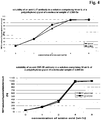
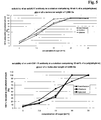
- Figure 3 the solubility of an antibody in a solution comprising poly (ethylene glycol) of a molecular weight of about 3,500 Da at a concentration of 10 % by weight as an example of a non-ionic polymer and different polyols at varying concentration as additive are shown.
- polyol denotes a compound that has at least three hydroxyl groups, i.e. is a triol.
- a non-ionic polymer e.g. poly (ethylene glycol)
- an additive e.g. sorbitol
- anti-CSF-1R antibody [fraction of initial conc.] 15 0 10.1 ⁇ 100% 10.2 ⁇ 100% 15 10 9.01 90.1% 5.15 51.5% 20 0 10.2 ⁇ 100% 10.1 ⁇ 100% 20 10 10.3 ⁇ 100% 10.1 ⁇ 100%
- the HCP (host cell protein) content in the recovered antibody preparation can be reduced compared to methods performed in the absence of this combination.
- the recovery of the monomeric polypeptide varies depending on the combination of the concentration of the non-ionic polymer and the additive.
- chromatographic separation step comprises several sub-steps:
- the cation exchange chromatography material in the column is equilibrated prior to the applying of the solution comprising the polypeptide to the column. This can be accomplished by applying an equilibration buffer to the column to establish a suitable pH value, and/or conductivity, and/or concentration of salt inside or on the cation exchange chromatography material.
- the solution comprising the polypeptide is adjusted to conditions comparable to those to which the cation exchange chromatography column is equilibrated.
- polypeptide of interest is added to the solution and is loaded onto the column.
- polypeptide of interest is added after the column is equilibrated and/or washed.
- equilibrating comprises the applying of a binding buffer before loading of the solution onto the chromatographic material.
- the recovery of the polypeptide in monomeric form in the method as reported herein can be carried out using a linear gradient, a step gradient, or a combination of a linear and a step gradient.
- a linear gradient can be, for example, used to further improve the resolution of the polypeptide in monomeric form from the polypeptide in aggregated form and/or from other contaminants such as host cell protein.
- a step gradient can be used in order to reduce the volume of recovered polypeptide solution. Selection and use of any gradient in the recovery of the polypeptide from the cation exchange chromatography material can easily be made by a person skilled in the art.
- the application of the solution comprising the polypeptide is followed by the application of a buffered wash solution to the chromatography material, often of the same composition as the equilibration buffer.
- the concentration of the non-ionic polymer is held constant during elution while the pH value is changed and/or the concentration of the salt causing elution is increased.
- the concentration of the non-ionic polymer is increased during elution while the pH value is changed and/or the concentration of a salt causing elution is increased.
- the concentration of the non-ionic polymer is decreased during elution while the pH value and/or the concentration of the salt are held constant.
- the cation exchange chromatography material can be cleaned, sanitized, and stored in an appropriate agent.
- the method as reported herein can practiced in combination with one or more other chromatographic steps or methods, such as but not limited to protein A affinity chromatography and other forms of affinity chromatography, hydrophobic interaction chromatography, or other mixed mode chromatography.
- the method as reported herein can be practiced in a packed bed column, a fluidized/expanded bed column containing the cation exchange chromatography material, and/or a batch operation where the cation exchange chromatography material is mixed with the polypeptide preparation for a certain time.
- biologically active polypeptides in monomeric form.
- biologically active polypeptides can be selected from antibodies, antibody variant, antibody conjugates.
- the polypeptide of interest is an antibody, especially a monoclonal antibody.
- the antibody may be from any mammal, such as a mouse, rat, rabbit, guinea pig, sheep, cow, or a transgenic animal with a human immunoglobulin locus, or it may be a humanized, resurfaced, T-cell epitope depleted variant thereof.
- antibody preparation can be used, such as non-purified (crude) or partially purified antibodies from natural, synthetic, or recombinant sources.
- Crude antibody preparations can be obtained from various sources including, but not limited to, plasma, serum, ascites, or milk of an experimental animal, plant extracts, bacterial cell lysates, yeast lysates, or conditioned animal cell culture media.
- Partially purified preparations can be obtained from crude preparations that have been subjected to at least one chromatography, precipitation, other fractionation step, or any combination thereof.
- the precipitation step can include any method, such as salt or poly (ethylene glycol) precipitation. Other fractionation steps such as crystallization or membrane filtration can also be used.
- the antibody is a not-PEGylated antibody.
- a polypeptide can be obtained that is substantially free of aggregates.
- the content of the polypeptide in aggregated form as determined by size exclusion chromatography less than about 5 % based on the total peak area.
- the content of the polypeptide in aggregated form is less than about 1%.
- the amount of the polypeptide in aggregated form is less than about 0.5%.
- the amount of the polypeptide in aggregated form is less than about 0.1 %.
- This bispecific antibody comprises four different antibody chains, i.e. two different light chains and two different heavy chains.
- product-related impurities can be formed.
- One of these product related impurities is the so called antibody"
- an antibody that is missing one light chain displaying a molecular weight of about 125 kDa compared to a weight of about 150 kDa for a complete four chain antibody.
- These kinds of antibody-fragments can generally be formed during the expression of antibodies.
- the ion exchange chromatography material is a cation exchange chromatography material.
- the non-ionic polymer can be selected from the group comprising poly (ethylene glycol) (PEG), poly (propylene glycol) (PPG), PEG-PPG copolymers, and triblock copolymers composed of poly (oxypropylene) (poly (propylene oxide)) flanked by poly (oxyethylene) (poly (ethylene oxide)).
- the non-ionic polymer is poly (ethylene glycol).
- the additive can be selected from the group comprising zwitterions, amino acids, urea, urea derivatives, ampholytes, CHAPSO, natural products, sugars, and polyols.
- the additive is sorbitol.
- the non-ionic polymer can have a concentration of from about 5 % to 15 % by weight and/or the additive can have a concentration of from 3 % to 25 % by weight.
- polypeptide is an antibody of class IgG.
- polypeptide is an antibody of class IgG, subclass IgG1, or subclass IgG2, or subclass IgG3, or subclass IgG4.
- the recovering is by gradient elution.
- Each antibody (anti-IL17 antibody: for sequences see WO 2010/034443 , anti-CSF-1R antibody: for sequences see PCT/EP2010/069090 ; anti-Ang2/VEGF antibody: for sequences see WO 2010/040508 ) was purified in a first step with a protein A affinity chromatography. Elution from the protein A column was carried out under acidic conditions. Afterwards the sample was adjusted to about pH 3.5 with 1 M citric acid and incubated for ⁇ 1 hour. Subsequently the pH was adjusted to 5.0 or 5.5 by adding 1 M TRIS/HCl, pH 8-9 or 1 M TRIS solution (TRIS: tris-hydroxymethyl-amino-methane).
- the sample was depth filtrated.
- the sample is a solution with a protein concentration between 5 mg/ml and 20 mg/ml.
- This material is referred to in the following as conditioned protein A eluate, which is prepared for loading onto a cation exchange chromatography material.
- the anti-Ang2/VEGF antibody was in addition purified by anion exchange chromatography: The pH value of the conditioned protein A eluate was adjusted to 7.5 by the addition of 1M TRIS buffer solution. Subsequently the sample was processed by anion exchange chromatography at pH 7.5 in flow-through mode.
- Example 1 In the first example the method as reported herein has been carried out. Thus, in Example 1 all conditions of the method are given. In the thereafter following examples only the differences are listed. All not mentioned parameters are identical.
- the conditioned protein A eluate was applied to a chromatography column containing the ion exchange chromatography material. After the loading step at a flow rate of 90 cm/h the column was washed with wash solution 1 (1 column volume) and wash solution 2 (3 column volumes).
- wash solution 1 (1 column volume)
- wash solution 2 (3 column volumes).
- the antibody in monomeric form was recovered with a linear gradient elution method, whereby the pH value was kept constant and the conductivity was varied (increased) by the addition of sodium chloride.
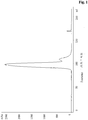
- Figure 1 the elution chromatogram of the cation exchange chromatography of the anti-IL17 antibody on the cation exchange chromatography material is shown.
- the antibody in monomeric form and the antibody in aggregated form are separated.
- the resolution of the monomer peak and the aggregate peak was determined using the program PeakFit (Seasolve Software Inc.) to be 0.78.
- the resolution of the monomer peak and the aggregate peak was determined using the program PeakFit (Seasolve Software Inc.) to be 0.88.
- the resolution of the monomer peak and the aggregate peak was determined using the program PeakFit (Seasolve Software Inc.) to be 0.86.
- the resolution of the monomer peak and the aggregate peak was determined using the program PeakFit (Seasolve Software Inc.) to be 0.77.
- the resolution of the monomer peak and the aggregate peak was determined using the program PeakFit (Seasolve Software Inc.) to be 0.51.
- the resolution of the monomer peak and the aggregate peak was determined using the program PeakFit (Seasolve Software Inc.) to be 0.76.
- the resolution of the monomer peak and the aggregate peak was determined using the program PeakFit (Seasolve Software Inc.) to be 0.51.
- the resolution of the monomer peak and the aggregate peak was determined using the program PeakFit (Seasolve Software Inc.) to be 0.76.
- the resolution of the monomer peak and the aggregate peak was determined using the program PeakFit (Seasolve Software Inc.) to be 0.93.
- the resolution of the monomer peak and the aggregate peak was determined using the program PeakFit (Seasolve Software Inc.) to be 0.77.
- the resolution of the monomer peak and the aggregate peak was determined using the program PeakFit (Seasolve Software Inc.) to be 0.90.
- the resolution of the monomer peak and the aggregate peak was determined using the program PeakFit (Seasolve Software Inc.) to be 0.73.
- the resolution of the monomer peak and the aggregate peak was determined using the program PeakFit (Seasolve Software Inc.) to be 0.84.
- the resolution of the monomer peak and the aggregate peak was determined using the program PeakFit (Seasolve Software Inc.) to be 0.79.
- the resolution of the monomer peak and the aggregate peak was determined using the program PeakFit (Seasolve Software Inc.) to be 0.90.
- the resolution of the monomer peak and the aggregate peak was determined using the program PeakFit (Seasolve Software Inc.) to be 0.85.
- the resolution of the monomer peak and the aggregate peak was determined using the program PeakFit (Seasolve Software Inc.) to be 0.90.
- the resolution of the monomer peak and the aggregate peak was determined using the program PeakFit (Seasolve Software Inc.) to be 0.83.
- the resolution of the monomer peak and the aggregate peak was determined using the program PeakFit (Seasolve Software Inc.) to be 0.97.
- the resolution of the monomer peak and the aggregate peak was determined using the program PeakFit (Seasolve Software Inc.) to be 0.86.
- the resolution of the monomer peak and the aggregate peak was determined using the program PeakFit (Seasolve Software Inc.) to be 0.86.
- the resolution of the monomer peak and the aggregate peak was determined using the program PeakFit (Seasolve Software Inc.) to be 0.57.
- the resolution of the monomer peak and the aggregate peak was determined using the program PeakFit (Seasolve Software Inc.) to be 0.70.
- the conditioned anion exchange eluate was applied to a chromatography column containing the cation exchange chromatography material. After the loading step at a flow rate of 90 cm/h the column was washed with wash solution (3 column volume). The antibody was recovered with a linear gradient elution method, whereby the pH value was varied (increased) from 5.0 to 7.5.
- the 3 ⁇ 4 antibody "co-elutes" with the antibody monomer and two 3 ⁇ 4 antibody peaks are detected.
- the conditioned anion exchange eluate was applied to a chromatography column containing the cation exchange chromatography material. After the loading step at a flow rate of 90 cm/h the column was washed with wash solution (3 column volume). The antibody was recovered with a linear gradient elution method, whereby the pH value was varied (increased) from 5.0 to 7.5.
- the conditioned anion exchange eluate was applied to a chromatography column containing the cation exchange chromatography material. After the loading step at a flow rate of 90 cm/h the column was washed with wash solution (3 column volume). The antibody was recovered with a linear gradient elution method, whereby the pH value was varied (increased) from 5.0 to 7.5.
Landscapes
- Chemical & Material Sciences (AREA)
- Health & Medical Sciences (AREA)
- Organic Chemistry (AREA)
- Life Sciences & Earth Sciences (AREA)
- Medicinal Chemistry (AREA)
- Immunology (AREA)
- General Health & Medical Sciences (AREA)
- Genetics & Genomics (AREA)
- Biophysics (AREA)
- Molecular Biology (AREA)
- Proteomics, Peptides & Aminoacids (AREA)
- Biochemistry (AREA)
- Analytical Chemistry (AREA)
- Microbiology (AREA)
- Bioinformatics & Cheminformatics (AREA)
- Engineering & Computer Science (AREA)
- Mycology (AREA)
- Pharmacology & Pharmacy (AREA)
- Epidemiology (AREA)
- Animal Behavior & Ethology (AREA)
- Public Health (AREA)
- Veterinary Medicine (AREA)
- Chemical Kinetics & Catalysis (AREA)
- Endocrinology (AREA)
- Peptides Or Proteins (AREA)
- Preparation Of Compounds By Using Micro-Organisms (AREA)
Priority Applications (6)
| Application Number | Priority Date | Filing Date | Title |
|---|---|---|---|
| EP17201391.4A EP3318571B1 (en) | 2011-03-16 | 2012-03-14 | Ion exchange chromatography with improved selectivity for the separation of polypeptide monomers, aggregates and fragments by modulation of the mobile phase |
| EP12708546.2A EP2686334B2 (en) | 2011-03-16 | 2012-03-14 | Ion exchange chromatography with improved selectivity for the separation of polypeptide monomers, aggregates and fragments by modulation of the mobile phase |
| SI201231179T SI2686334T2 (sl) | 2011-03-16 | 2012-03-14 | Ionska izmenjevalna kromatografija z izboljšano selektivnostjo za ločevanje polipeptidnih monomerov, agregatov in fragmentov s spremembo mobilne faze |
| PL17201391T PL3318571T3 (pl) | 2011-03-16 | 2012-03-14 | Chromatografia jonowymienna o ulepszonej selektywności do rozdzielania monomerów, agregatów i fragmentów polipeptydowych przez modulację fazy ruchomej |
| PL12708546T PL2686334T5 (pl) | 2011-03-16 | 2012-03-14 | Chromatografia jonowymienna o ulepszonej selektywności do rozdzielania monomerów, agregatów i fragmentów polipeptydowych przez modulację fazy ruchomej |
| HRP20180028TT HRP20180028T4 (hr) | 2011-03-16 | 2012-03-14 | Kromatografija izmjene iona s poboljšanom selektivnošću za odvajanje polipeptidnih monomera, agregata i fragmenata modulacijom pokretne faze |
Applications Claiming Priority (3)
| Application Number | Priority Date | Filing Date | Title |
|---|---|---|---|
| EP11158523 | 2011-03-16 | ||
| PCT/EP2012/054449 WO2012123488A1 (en) | 2011-03-16 | 2012-03-14 | Ion exchange chromatography with improved selectivity for the separation of polypeptide monomers, aggregates and fragments by modulation of the mobile phase |
| EP12708546.2A EP2686334B2 (en) | 2011-03-16 | 2012-03-14 | Ion exchange chromatography with improved selectivity for the separation of polypeptide monomers, aggregates and fragments by modulation of the mobile phase |
Related Child Applications (2)
| Application Number | Title | Priority Date | Filing Date |
|---|---|---|---|
| EP17201391.4A Division EP3318571B1 (en) | 2011-03-16 | 2012-03-14 | Ion exchange chromatography with improved selectivity for the separation of polypeptide monomers, aggregates and fragments by modulation of the mobile phase |
| EP17201391.4A Division-Into EP3318571B1 (en) | 2011-03-16 | 2012-03-14 | Ion exchange chromatography with improved selectivity for the separation of polypeptide monomers, aggregates and fragments by modulation of the mobile phase |
Publications (3)
| Publication Number | Publication Date |
|---|---|
| EP2686334A1 EP2686334A1 (en) | 2014-01-22 |
| EP2686334B1 EP2686334B1 (en) | 2017-11-15 |
| EP2686334B2 true EP2686334B2 (en) | 2020-07-01 |
Family
ID=45819216
Family Applications (2)
| Application Number | Title | Priority Date | Filing Date |
|---|---|---|---|
| EP12708546.2A Active EP2686334B2 (en) | 2011-03-16 | 2012-03-14 | Ion exchange chromatography with improved selectivity for the separation of polypeptide monomers, aggregates and fragments by modulation of the mobile phase |
| EP17201391.4A Active EP3318571B1 (en) | 2011-03-16 | 2012-03-14 | Ion exchange chromatography with improved selectivity for the separation of polypeptide monomers, aggregates and fragments by modulation of the mobile phase |
Family Applications After (1)
| Application Number | Title | Priority Date | Filing Date |
|---|---|---|---|
| EP17201391.4A Active EP3318571B1 (en) | 2011-03-16 | 2012-03-14 | Ion exchange chromatography with improved selectivity for the separation of polypeptide monomers, aggregates and fragments by modulation of the mobile phase |
Country Status (9)
| Country | Link |
|---|---|
| US (3) | US9394337B2 (ja) |
| EP (2) | EP2686334B2 (ja) |
| JP (3) | JP5984854B2 (ja) |
| ES (2) | ES2656167T5 (ja) |
| HR (2) | HRP20180028T4 (ja) |
| PL (2) | PL2686334T5 (ja) |
| SG (1) | SG193378A1 (ja) |
| SI (2) | SI3318571T1 (ja) |
| WO (1) | WO2012123488A1 (ja) |
Families Citing this family (8)
| Publication number | Priority date | Publication date | Assignee | Title |
|---|---|---|---|---|
| ES2656167T5 (es) | 2011-03-16 | 2021-03-26 | Hoffmann La Roche | Cromatografía de intercambio iónico con selectividad mejorada para la separación de monómeros, agregados y fragmentos polipeptídicos mediante la modulación de la fase móvil |
| US9573810B2 (en) * | 2012-07-21 | 2017-02-21 | K-Technologies, Inc. | Processes for the removal and recovery of minor elements in wet-process phosphoric acid |
| KR101838039B1 (ko) | 2013-03-14 | 2018-03-14 | 이엠디 밀리포어 코포레이션 | 단백질 a 기반 크로마토그래피를 이용한 단백질 순도의 증가 방법 |
| GB2516808A (en) * | 2013-05-31 | 2015-02-11 | Innova Biosciences Ltd | Antibody composition and buffer system therefor |
| HK1223108A1 (zh) * | 2013-08-19 | 2017-07-21 | F. Hoffmann-La Roche Ag | 用羟基磷灰石层析分离双特异性抗体和双特异性抗体生产副产物 |
| WO2021064066A1 (en) * | 2019-10-04 | 2021-04-08 | Merck Patent Gmbh | Elution of monoclonal antibodies in protein a affinity chromatography |
| WO2022133262A1 (en) * | 2020-12-20 | 2022-06-23 | Regeneron Pharmaceuticals, Inc. | Methods for identification of scrambled disulfides in biomolecules |
| CN113388026B (zh) * | 2021-08-03 | 2022-09-27 | 江西理工大学 | 一种螺旋藻藻蓝蛋白和藻油的同步提取方法 |
Citations (1)
| Publication number | Priority date | Publication date | Assignee | Title |
|---|---|---|---|---|
| WO2009149067A1 (en) † | 2008-06-03 | 2009-12-10 | Patrys Limited | Process for purification of antibodies |
Family Cites Families (23)
| Publication number | Priority date | Publication date | Assignee | Title |
|---|---|---|---|---|
| US5204244A (en) | 1987-10-27 | 1993-04-20 | Oncogen | Production of chimeric antibodies by homologous recombination |
| US5202238A (en) | 1987-10-27 | 1993-04-13 | Oncogen | Production of chimeric antibodies by homologous recombination |
| US5429746A (en) | 1994-02-22 | 1995-07-04 | Smith Kline Beecham Corporation | Antibody purification |
| EP1500661A1 (en) | 1998-06-01 | 2005-01-26 | Genetech, Inc. | Separation of protein monomers from aggregates by use of ion-exchange chromatography |
| JP4685238B2 (ja) * | 1998-06-09 | 2011-05-18 | ツエー・エス・エル・ベーリング・アクチエンゲゼルシヤフト | 静脈投与用免疫グロブリン及び他の免疫グロブリン生成物の製造法 |
| IL140155A (en) | 1998-06-09 | 2005-12-18 | Statens Seruminstitut | Process for producing immunoglobulins for intravenous administration and other immunoglobulin products |
| DE19836213A1 (de) * | 1998-08-11 | 2000-02-24 | Gerhard Harry Scholz | Verfahren zur Elution von Biomolekülen von Chromatographie-Materialien |
| WO2004013162A2 (en) | 2002-08-06 | 2004-02-12 | Akzo Nobel Nv. | Increased dynamic binding capacity in ion exchange chromatography by addition of polyethylene glycol |
| CN1208346C (zh) | 2003-04-09 | 2005-06-29 | 中国科学院过程工程研究所 | 血红蛋白-人血清白蛋白偶联物制备血液代用品及其制备方法 |
| SE0400886D0 (sv) | 2004-04-02 | 2004-04-02 | Amersham Biosciences Ab | Process of purification |
| KR100554481B1 (ko) * | 2004-06-30 | 2006-03-03 | 씨제이 주식회사 | 반코마이신 염산염의 정제방법 |
| TWI320788B (en) | 2005-05-25 | 2010-02-21 | Hoffmann La Roche | Method for the purification of antibodies |
| EP2049570B1 (en) * | 2006-06-01 | 2016-08-10 | President and Fellows of Harvard College | Purification of a bivalently active antibody using a non-chromatographic method |
| US7691980B2 (en) | 2007-01-09 | 2010-04-06 | Bio-Rad Laboratories, Inc. | Enhanced capacity and purification of antibodies by mixed mode chromatography in the presence of aqueous-soluble nonionic organic polymers |
| JP2010534664A (ja) * | 2007-07-23 | 2010-11-11 | セントコア・オーソ・バイオテツク・インコーポレーテツド | Il−17拮抗薬を用いた線維症関連疾患治療の方法及び組成物 |
| EP2261254A3 (en) * | 2007-12-21 | 2011-04-13 | Amgen, Inc | Anti-amyloid antibodies and uses thereof |
| EP2242762B1 (en) | 2008-01-18 | 2015-12-16 | Bio-Rad Laboratories, Inc. | Enhanced purification of antibodies and antibody fragments by apatite chromatography |
| ES2493042T3 (es) | 2008-09-29 | 2014-09-11 | Roche Glycart Ag | Anticuerpos contra la IL-17 humana y usos de los mismos |
| US8268314B2 (en) | 2008-10-08 | 2012-09-18 | Hoffmann-La Roche Inc. | Bispecific anti-VEGF/anti-ANG-2 antibodies |
| EP3067417B1 (en) | 2009-06-16 | 2018-07-25 | Genzyme Corporation | Improved methods for purification of recombinant aav vectors |
| US8394922B2 (en) * | 2009-08-03 | 2013-03-12 | Medarex, Inc. | Antiproliferative compounds, conjugates thereof, methods therefor, and uses thereof |
| TW201138821A (en) * | 2010-03-26 | 2011-11-16 | Roche Glycart Ag | Bispecific antibodies |
| ES2656167T5 (es) | 2011-03-16 | 2021-03-26 | Hoffmann La Roche | Cromatografía de intercambio iónico con selectividad mejorada para la separación de monómeros, agregados y fragmentos polipeptídicos mediante la modulación de la fase móvil |
-
2012
- 2012-03-14 ES ES12708546T patent/ES2656167T5/es active Active
- 2012-03-14 SI SI201231907T patent/SI3318571T1/sl unknown
- 2012-03-14 WO PCT/EP2012/054449 patent/WO2012123488A1/en not_active Ceased
- 2012-03-14 EP EP12708546.2A patent/EP2686334B2/en active Active
- 2012-03-14 SG SG2013067947A patent/SG193378A1/en unknown
- 2012-03-14 HR HRP20180028TT patent/HRP20180028T4/hr unknown
- 2012-03-14 JP JP2013558420A patent/JP5984854B2/ja active Active
- 2012-03-14 PL PL12708546T patent/PL2686334T5/pl unknown
- 2012-03-14 ES ES17201391T patent/ES2865449T3/es active Active
- 2012-03-14 PL PL17201391T patent/PL3318571T3/pl unknown
- 2012-03-14 SI SI201231179T patent/SI2686334T2/sl unknown
- 2012-03-14 EP EP17201391.4A patent/EP3318571B1/en active Active
-
2013
- 2013-09-12 US US14/025,622 patent/US9394337B2/en active Active
-
2016
- 2016-06-16 US US15/184,883 patent/US10377793B2/en active Active
- 2016-08-02 JP JP2016151624A patent/JP6273326B2/ja active Active
-
2018
- 2018-01-05 JP JP2018000397A patent/JP6523491B2/ja active Active
-
2019
- 2019-06-24 US US16/450,827 patent/US20200148719A1/en not_active Abandoned
-
2021
- 2021-04-13 HR HRP20210588TT patent/HRP20210588T1/hr unknown
Patent Citations (1)
| Publication number | Priority date | Publication date | Assignee | Title |
|---|---|---|---|---|
| WO2009149067A1 (en) † | 2008-06-03 | 2009-12-10 | Patrys Limited | Process for purification of antibodies |
Non-Patent Citations (5)
| Title |
|---|
| BAGBY ET AL.: "OPTIMIZATION OF PROTEIN SOLUBILITY AND STABILITY FOR PROTEIN NUCLEAR MAGNETIC RESONANCE", METHODS IN ENZYMOLOGY, vol. 339, 2001, pages 20 - 41 † |
| GAGNON ET AL.: "Nonionic Polymer Enhancement of Aggregate Removal in Ion Exchange and Hydroxyapatite Chromatography", 12TH ANNUAL WATERSIDE CONFERENCE, 23 April 2007 (2007-04-23) - 25 April 2007 (2007-04-25), Retrieved from the Internet <URL:http://www.validated.com/revalbio/pdffiles/PEG_IEC_MM.pdf> † |
| GAGNON P ET AL.: "Method for obtaining unique selectivities in ion-exchange chromatography by addition of organic polymers to the mobile phase", JOURNAL OF CHROMATOGRAPHY A, vol. 743, 1996, pages 51 - 55 † |
| GEKKO ET AL.: "Preferential Hydration of Bovine Serum Albumin in Polyhydric Alcohol-Water Mixtures", J. BIOCHEM., vol. 90, 1981, pages 39 - 50 † |
| XIE & TIMASHEFF: "Mechanism of the stabilization of ribonuclease A by sorbitol: Preferential hydration is greater for the denatured than for the native protein", PROTEIN SCIENCE, vol. 6, 1997, pages 211 - 221 † |
Also Published As
| Publication number | Publication date |
|---|---|
| JP6273326B2 (ja) | 2018-01-31 |
| HRP20210588T1 (hr) | 2021-05-28 |
| PL2686334T3 (pl) | 2018-03-30 |
| EP3318571A1 (en) | 2018-05-09 |
| US20170107249A1 (en) | 2017-04-20 |
| WO2012123488A1 (en) | 2012-09-20 |
| US20200148719A1 (en) | 2020-05-14 |
| SI2686334T1 (en) | 2018-03-30 |
| JP5984854B2 (ja) | 2016-09-06 |
| JP2014511829A (ja) | 2014-05-19 |
| ES2656167T5 (es) | 2021-03-26 |
| SG193378A1 (en) | 2013-10-30 |
| PL2686334T5 (pl) | 2020-10-19 |
| ES2865449T3 (es) | 2021-10-15 |
| US20140081000A1 (en) | 2014-03-20 |
| JP2017019805A (ja) | 2017-01-26 |
| HRP20180028T4 (hr) | 2020-10-02 |
| JP2018058900A (ja) | 2018-04-12 |
| EP2686334B1 (en) | 2017-11-15 |
| HRP20180028T1 (hr) | 2018-02-09 |
| SI2686334T2 (sl) | 2020-10-30 |
| SI3318571T1 (sl) | 2021-08-31 |
| JP6523491B2 (ja) | 2019-06-05 |
| US9394337B2 (en) | 2016-07-19 |
| PL3318571T3 (pl) | 2021-07-05 |
| EP3318571B1 (en) | 2021-02-17 |
| ES2656167T3 (es) | 2018-02-23 |
| EP2686334A1 (en) | 2014-01-22 |
| US10377793B2 (en) | 2019-08-13 |
Similar Documents
| Publication | Publication Date | Title |
|---|---|---|
| US10377793B2 (en) | Ion exchange chromatography with improved selectivity for the separation of polypeptide monomers, aggregates and fragments by modulation of the mobile phase | |
| KR101921767B1 (ko) | 단백질 정제 | |
| ES2755386T3 (es) | Proceso para la purificación de proteínas que contienen fragmentos Fc | |
| EP2173450B1 (en) | Method for the regeneration of a chromatography column | |
| KR101163297B1 (ko) | Peg-결합된 폴리펩티드의 정제 | |
| RU2586515C2 (ru) | Препарат антитела, обогащенного изоформами и способ его получения | |
| KR20160106721A (ko) | Cys 연결된 항체-약물 접합체의 정제 방법 | |
| KR20190043601A (ko) | 항체를 정제하는 방법 | |
| JP2019504060A (ja) | モノクローナル抗体のアイソフォームを分離するための方法 | |
| JP2016519144A (ja) | 最小限の単量体の分離を伴う組換えポリクローナル多量体の分離 | |
| JP2016504337A (ja) | イオン交換クロマトグラフィーを使用して高マンノースグリコフォームのレベルを制御する方法 | |
| CN110724204B (zh) | Fc融合蛋白的纯化方法 | |
| CN120813598A (zh) | 由同源二聚体抗体形成多特异性抗体的方法及包含由此获得的多特异性抗体的药物产品 | |
| HK1186484B (en) | Isoform enriched antibody preparation and method for obtaining it | |
| AU2012258485A1 (en) | Chromatographic methods |
Legal Events
| Date | Code | Title | Description |
|---|---|---|---|
| PUAI | Public reference made under article 153(3) epc to a published international application that has entered the european phase |
Free format text: ORIGINAL CODE: 0009012 |
|
| 17P | Request for examination filed |
Effective date: 20131016 |
|
| AK | Designated contracting states |
Kind code of ref document: A1 Designated state(s): AL AT BE BG CH CY CZ DE DK EE ES FI FR GB GR HR HU IE IS IT LI LT LU LV MC MK MT NL NO PL PT RO RS SE SI SK SM TR |
|
| DAX | Request for extension of the european patent (deleted) | ||
| 17Q | First examination report despatched |
Effective date: 20150119 |
|
| GRAP | Despatch of communication of intention to grant a patent |
Free format text: ORIGINAL CODE: EPIDOSNIGR1 |
|
| INTG | Intention to grant announced |
Effective date: 20160408 |
|
| GRAJ | Information related to disapproval of communication of intention to grant by the applicant or resumption of examination proceedings by the epo deleted |
Free format text: ORIGINAL CODE: EPIDOSDIGR1 |
|
| INTC | Intention to grant announced (deleted) | ||
| STAA | Information on the status of an ep patent application or granted ep patent |
Free format text: STATUS: EXAMINATION IS IN PROGRESS |
|
| GRAP | Despatch of communication of intention to grant a patent |
Free format text: ORIGINAL CODE: EPIDOSNIGR1 |
|
| STAA | Information on the status of an ep patent application or granted ep patent |
Free format text: STATUS: GRANT OF PATENT IS INTENDED |
|
| INTG | Intention to grant announced |
Effective date: 20170706 |
|
| GRAS | Grant fee paid |
Free format text: ORIGINAL CODE: EPIDOSNIGR3 |
|
| GRAA | (expected) grant |
Free format text: ORIGINAL CODE: 0009210 |
|
| STAA | Information on the status of an ep patent application or granted ep patent |
Free format text: STATUS: THE PATENT HAS BEEN GRANTED |
|
| RIN1 | Information on inventor provided before grant (corrected) |
Inventor name: NEUMANN, SEBASTIAN |
|
| AK | Designated contracting states |
Kind code of ref document: B1 Designated state(s): AL AT BE BG CH CY CZ DE DK EE ES FI FR GB GR HR HU IE IS IT LI LT LU LV MC MK MT NL NO PL PT RO RS SE SI SK SM TR |
|
| REG | Reference to a national code |
Ref country code: CH Ref legal event code: EP Ref country code: GB Ref legal event code: FG4D Ref country code: AT Ref legal event code: REF Ref document number: 946180 Country of ref document: AT Kind code of ref document: T Effective date: 20171115 |
|
| REG | Reference to a national code |
Ref country code: IE Ref legal event code: FG4D |
|
| REG | Reference to a national code |
Ref country code: DE Ref legal event code: R096 Ref document number: 602012039764 Country of ref document: DE |
|
| REG | Reference to a national code |
Ref country code: HR Ref legal event code: TUEP Ref document number: P20180028 Country of ref document: HR |
|
| REG | Reference to a national code |
Ref country code: RO Ref legal event code: EPE |
|
| REG | Reference to a national code |
Ref country code: NL Ref legal event code: FP |
|
| REG | Reference to a national code |
Ref country code: HR Ref legal event code: T1PR Ref document number: P20180028 Country of ref document: HR |
|
| REG | Reference to a national code |
Ref country code: SE Ref legal event code: TRGR |
|
| REG | Reference to a national code |
Ref country code: ES Ref legal event code: FG2A Ref document number: 2656167 Country of ref document: ES Kind code of ref document: T3 Effective date: 20180223 Ref country code: FR Ref legal event code: PLFP Year of fee payment: 7 |
|
| REG | Reference to a national code |
Ref country code: LT Ref legal event code: MG4D |
|
| PG25 | Lapsed in a contracting state [announced via postgrant information from national office to epo] |
Ref country code: FI Free format text: LAPSE BECAUSE OF FAILURE TO SUBMIT A TRANSLATION OF THE DESCRIPTION OR TO PAY THE FEE WITHIN THE PRESCRIBED TIME-LIMIT Effective date: 20171115 Ref country code: LT Free format text: LAPSE BECAUSE OF FAILURE TO SUBMIT A TRANSLATION OF THE DESCRIPTION OR TO PAY THE FEE WITHIN THE PRESCRIBED TIME-LIMIT Effective date: 20171115 Ref country code: NO Free format text: LAPSE BECAUSE OF FAILURE TO SUBMIT A TRANSLATION OF THE DESCRIPTION OR TO PAY THE FEE WITHIN THE PRESCRIBED TIME-LIMIT Effective date: 20180215 |
|
| PG25 | Lapsed in a contracting state [announced via postgrant information from national office to epo] |
Ref country code: LV Free format text: LAPSE BECAUSE OF FAILURE TO SUBMIT A TRANSLATION OF THE DESCRIPTION OR TO PAY THE FEE WITHIN THE PRESCRIBED TIME-LIMIT Effective date: 20171115 Ref country code: RS Free format text: LAPSE BECAUSE OF FAILURE TO SUBMIT A TRANSLATION OF THE DESCRIPTION OR TO PAY THE FEE WITHIN THE PRESCRIBED TIME-LIMIT Effective date: 20171115 Ref country code: BG Free format text: LAPSE BECAUSE OF FAILURE TO SUBMIT A TRANSLATION OF THE DESCRIPTION OR TO PAY THE FEE WITHIN THE PRESCRIBED TIME-LIMIT Effective date: 20180215 |
|
| REG | Reference to a national code |
Ref country code: GR Ref legal event code: EP Ref document number: 20180400117 Country of ref document: GR Effective date: 20180518 |
|
| PG25 | Lapsed in a contracting state [announced via postgrant information from national office to epo] |
Ref country code: EE Free format text: LAPSE BECAUSE OF FAILURE TO SUBMIT A TRANSLATION OF THE DESCRIPTION OR TO PAY THE FEE WITHIN THE PRESCRIBED TIME-LIMIT Effective date: 20171115 Ref country code: DK Free format text: LAPSE BECAUSE OF FAILURE TO SUBMIT A TRANSLATION OF THE DESCRIPTION OR TO PAY THE FEE WITHIN THE PRESCRIBED TIME-LIMIT Effective date: 20171115 Ref country code: SK Free format text: LAPSE BECAUSE OF FAILURE TO SUBMIT A TRANSLATION OF THE DESCRIPTION OR TO PAY THE FEE WITHIN THE PRESCRIBED TIME-LIMIT Effective date: 20171115 Ref country code: CZ Free format text: LAPSE BECAUSE OF FAILURE TO SUBMIT A TRANSLATION OF THE DESCRIPTION OR TO PAY THE FEE WITHIN THE PRESCRIBED TIME-LIMIT Effective date: 20171115 Ref country code: CY Free format text: LAPSE BECAUSE OF FAILURE TO SUBMIT A TRANSLATION OF THE DESCRIPTION OR TO PAY THE FEE WITHIN THE PRESCRIBED TIME-LIMIT Effective date: 20171115 |
|
| REG | Reference to a national code |
Ref country code: DE Ref legal event code: R026 Ref document number: 602012039764 Country of ref document: DE |
|
| PLBI | Opposition filed |
Free format text: ORIGINAL CODE: 0009260 |
|
| PLAX | Notice of opposition and request to file observation + time limit sent |
Free format text: ORIGINAL CODE: EPIDOSNOBS2 |
|
| PG25 | Lapsed in a contracting state [announced via postgrant information from national office to epo] |
Ref country code: SM Free format text: LAPSE BECAUSE OF FAILURE TO SUBMIT A TRANSLATION OF THE DESCRIPTION OR TO PAY THE FEE WITHIN THE PRESCRIBED TIME-LIMIT Effective date: 20171115 |
|
| 26 | Opposition filed |
Opponent name: BAYER INTELLECTUAL PROPERTY GMBH Effective date: 20180815 |
|
| PG25 | Lapsed in a contracting state [announced via postgrant information from national office to epo] |
Ref country code: MC Free format text: LAPSE BECAUSE OF FAILURE TO SUBMIT A TRANSLATION OF THE DESCRIPTION OR TO PAY THE FEE WITHIN THE PRESCRIBED TIME-LIMIT Effective date: 20171115 |
|
| PG25 | Lapsed in a contracting state [announced via postgrant information from national office to epo] |
Ref country code: LU Free format text: LAPSE BECAUSE OF NON-PAYMENT OF DUE FEES Effective date: 20180314 |
|
| PLBB | Reply of patent proprietor to notice(s) of opposition received |
Free format text: ORIGINAL CODE: EPIDOSNOBS3 |
|
| REG | Reference to a national code |
Ref country code: HR Ref legal event code: ODRP Ref document number: P20180028 Country of ref document: HR Payment date: 20190307 Year of fee payment: 8 |
|
| PG25 | Lapsed in a contracting state [announced via postgrant information from national office to epo] |
Ref country code: MT Free format text: LAPSE BECAUSE OF NON-PAYMENT OF DUE FEES Effective date: 20180314 |
|
| REG | Reference to a national code |
Ref country code: HR Ref legal event code: ODRP Ref document number: P20180028 Country of ref document: HR Payment date: 20200310 Year of fee payment: 9 |
|
| PG25 | Lapsed in a contracting state [announced via postgrant information from national office to epo] |
Ref country code: PT Free format text: LAPSE BECAUSE OF FAILURE TO SUBMIT A TRANSLATION OF THE DESCRIPTION OR TO PAY THE FEE WITHIN THE PRESCRIBED TIME-LIMIT Effective date: 20171115 Ref country code: HU Free format text: LAPSE BECAUSE OF FAILURE TO SUBMIT A TRANSLATION OF THE DESCRIPTION OR TO PAY THE FEE WITHIN THE PRESCRIBED TIME-LIMIT; INVALID AB INITIO Effective date: 20120314 |
|
| PUAH | Patent maintained in amended form |
Free format text: ORIGINAL CODE: 0009272 |
|
| STAA | Information on the status of an ep patent application or granted ep patent |
Free format text: STATUS: PATENT MAINTAINED AS AMENDED |
|
| REG | Reference to a national code |
Ref country code: CH Ref legal event code: AELC |
|
| PG25 | Lapsed in a contracting state [announced via postgrant information from national office to epo] |
Ref country code: MK Free format text: LAPSE BECAUSE OF NON-PAYMENT OF DUE FEES Effective date: 20171115 |
|
| 27A | Patent maintained in amended form |
Effective date: 20200701 |
|
| AK | Designated contracting states |
Kind code of ref document: B2 Designated state(s): AL AT BE BG CH CY CZ DE DK EE ES FI FR GB GR HR HU IE IS IT LI LT LU LV MC MK MT NL NO PL PT RO RS SE SI SK SM TR |
|
| REG | Reference to a national code |
Ref country code: DE Ref legal event code: R102 Ref document number: 602012039764 Country of ref document: DE |
|
| PG25 | Lapsed in a contracting state [announced via postgrant information from national office to epo] |
Ref country code: AL Free format text: LAPSE BECAUSE OF FAILURE TO SUBMIT A TRANSLATION OF THE DESCRIPTION OR TO PAY THE FEE WITHIN THE PRESCRIBED TIME-LIMIT Effective date: 20171115 Ref country code: IS Free format text: LAPSE BECAUSE OF FAILURE TO SUBMIT A TRANSLATION OF THE DESCRIPTION OR TO PAY THE FEE WITHIN THE PRESCRIBED TIME-LIMIT Effective date: 20180315 |
|
| REG | Reference to a national code |
Ref country code: NL Ref legal event code: FP |
|
| REG | Reference to a national code |
Ref country code: SE Ref legal event code: RPEO |
|
| REG | Reference to a national code |
Ref country code: HR Ref legal event code: T4IZ Ref document number: P20180028 Country of ref document: HR |
|
| REG | Reference to a national code |
Ref country code: GR Ref legal event code: EP Ref document number: 20200402414 Country of ref document: GR Effective date: 20201014 |
|
| REG | Reference to a national code |
Ref country code: ES Ref legal event code: DC2A Ref document number: 2656167 Country of ref document: ES Kind code of ref document: T5 Effective date: 20210326 |
|
| REG | Reference to a national code |
Ref country code: HR Ref legal event code: ODRP Ref document number: P20180028 Country of ref document: HR Payment date: 20210312 Year of fee payment: 10 |
|
| REG | Reference to a national code |
Ref country code: AT Ref legal event code: UEP Ref document number: 946180 Country of ref document: AT Kind code of ref document: T Effective date: 20200701 Ref country code: AT Ref legal event code: UEP Ref document number: 946180 Country of ref document: AT Kind code of ref document: T Effective date: 20171115 |
|
| REG | Reference to a national code |
Ref country code: HR Ref legal event code: ODRP Ref document number: P20180028 Country of ref document: HR Payment date: 20220308 Year of fee payment: 11 |
|
| REG | Reference to a national code |
Ref country code: HR Ref legal event code: ODRP Ref document number: P20180028 Country of ref document: HR Payment date: 20221230 Year of fee payment: 12 |
|
| REG | Reference to a national code |
Ref country code: HR Ref legal event code: ODRP Ref document number: P20180028 Country of ref document: HR Payment date: 20240228 Year of fee payment: 13 |
|
| PGFP | Annual fee paid to national office [announced via postgrant information from national office to epo] |
Ref country code: NL Payment date: 20250219 Year of fee payment: 14 |
|
| REG | Reference to a national code |
Ref country code: HR Ref legal event code: ODRP Ref document number: P20180028 Country of ref document: HR Payment date: 20250227 Year of fee payment: 14 |
|
| PGFP | Annual fee paid to national office [announced via postgrant information from national office to epo] |
Ref country code: DE Payment date: 20250218 Year of fee payment: 14 Ref country code: HR Payment date: 20250227 Year of fee payment: 14 |
|
| PGFP | Annual fee paid to national office [announced via postgrant information from national office to epo] |
Ref country code: RO Payment date: 20250303 Year of fee payment: 14 |
|
| PGFP | Annual fee paid to national office [announced via postgrant information from national office to epo] |
Ref country code: SE Payment date: 20250218 Year of fee payment: 14 Ref country code: IE Payment date: 20250220 Year of fee payment: 14 |
|
| PGFP | Annual fee paid to national office [announced via postgrant information from national office to epo] |
Ref country code: GR Payment date: 20250220 Year of fee payment: 14 Ref country code: BE Payment date: 20250218 Year of fee payment: 14 Ref country code: AT Payment date: 20250220 Year of fee payment: 14 Ref country code: SI Payment date: 20250225 Year of fee payment: 14 |
|
| PGFP | Annual fee paid to national office [announced via postgrant information from national office to epo] |
Ref country code: FR Payment date: 20250218 Year of fee payment: 14 Ref country code: PL Payment date: 20250225 Year of fee payment: 14 |
|
| PGFP | Annual fee paid to national office [announced via postgrant information from national office to epo] |
Ref country code: IT Payment date: 20250218 Year of fee payment: 14 Ref country code: GB Payment date: 20250221 Year of fee payment: 14 |
|
| PGFP | Annual fee paid to national office [announced via postgrant information from national office to epo] |
Ref country code: TR Payment date: 20250225 Year of fee payment: 14 |
|
| PGFP | Annual fee paid to national office [announced via postgrant information from national office to epo] |
Ref country code: ES Payment date: 20250401 Year of fee payment: 14 |
|
| PGFP | Annual fee paid to national office [announced via postgrant information from national office to epo] |
Ref country code: CH Payment date: 20250401 Year of fee payment: 14 |