EP2658406B1 - Tobacco separation process for extracting tobacco-derived materials, and associated extraction systems - Google Patents
Tobacco separation process for extracting tobacco-derived materials, and associated extraction systems Download PDFInfo
- Publication number
- EP2658406B1 EP2658406B1 EP20110802205 EP11802205A EP2658406B1 EP 2658406 B1 EP2658406 B1 EP 2658406B1 EP 20110802205 EP20110802205 EP 20110802205 EP 11802205 A EP11802205 A EP 11802205A EP 2658406 B1 EP2658406 B1 EP 2658406B1
- Authority
- EP
- European Patent Office
- Prior art keywords
- component
- plant
- liquid
- starch
- tobacco
- Prior art date
- Legal status (The legal status is an assumption and is not a legal conclusion. Google has not performed a legal analysis and makes no representation as to the accuracy of the status listed.)
- Active
Links
Images

Classifications
-
- A—HUMAN NECESSITIES
- A24—TOBACCO; CIGARS; CIGARETTES; SIMULATED SMOKING DEVICES; SMOKERS' REQUISITES
- A24B—MANUFACTURE OR PREPARATION OF TOBACCO FOR SMOKING OR CHEWING; TOBACCO; SNUFF
- A24B15/00—Chemical features or treatment of tobacco; Tobacco substitutes, e.g. in liquid form
- A24B15/10—Chemical features of tobacco products or tobacco substitutes
- A24B15/12—Chemical features of tobacco products or tobacco substitutes of reconstituted tobacco
-
- A—HUMAN NECESSITIES
- A23—FOODS OR FOODSTUFFS; TREATMENT THEREOF, NOT COVERED BY OTHER CLASSES
- A23G—COCOA; COCOA PRODUCTS, e.g. CHOCOLATE; SUBSTITUTES FOR COCOA OR COCOA PRODUCTS; CONFECTIONERY; CHEWING GUM; ICE-CREAM; PREPARATION THEREOF
- A23G3/00—Sweetmeats; Confectionery; Marzipan; Coated or filled products
- A23G3/34—Sweetmeats, confectionery or marzipan; Processes for the preparation thereof
- A23G3/36—Sweetmeats, confectionery or marzipan; Processes for the preparation thereof characterised by the composition containing organic or inorganic compounds
- A23G3/48—Sweetmeats, confectionery or marzipan; Processes for the preparation thereof characterised by the composition containing organic or inorganic compounds containing plants or parts thereof, e.g. fruits, seeds, extracts
-
- A—HUMAN NECESSITIES
- A24—TOBACCO; CIGARS; CIGARETTES; SIMULATED SMOKING DEVICES; SMOKERS' REQUISITES
- A24B—MANUFACTURE OR PREPARATION OF TOBACCO FOR SMOKING OR CHEWING; TOBACCO; SNUFF
- A24B15/00—Chemical features or treatment of tobacco; Tobacco substitutes, e.g. in liquid form
- A24B15/18—Treatment of tobacco products or tobacco substitutes
- A24B15/24—Treatment of tobacco products or tobacco substitutes by extraction; Tobacco extracts
-
- A—HUMAN NECESSITIES
- A24—TOBACCO; CIGARS; CIGARETTES; SIMULATED SMOKING DEVICES; SMOKERS' REQUISITES
- A24B—MANUFACTURE OR PREPARATION OF TOBACCO FOR SMOKING OR CHEWING; TOBACCO; SNUFF
- A24B15/00—Chemical features or treatment of tobacco; Tobacco substitutes, e.g. in liquid form
- A24B15/18—Treatment of tobacco products or tobacco substitutes
- A24B15/28—Treatment of tobacco products or tobacco substitutes by chemical substances
- A24B15/30—Treatment of tobacco products or tobacco substitutes by chemical substances by organic substances
Definitions
- the present disclosure relates to the extraction of components from a plant material, and particularly for the extraction of one or more components of a tobacco plant material.
- the disclosure further relates to plant-derived components useful in various products, particularly products made or derived from tobacco, or that otherwise incorporate tobacco, and are intended for human consumption.
- Cigarettes, cigars, and pipes are popular smoking articles that employ tobacco in various forms. Such smoking articles are employed by heating or burning tobacco to generate aerosol (e.g., smoke) that may be inhaled by the smoker. Tobacco may also be enjoyed in a so-called "smokeless" form. Particularly popular smokeless tobacco products are employed by inserting some form of processed tobacco or tobacco-containing formulation into the mouth of the user. See for example, the types of smokeless tobacco formulations, ingredients, and processing methodologies set forth in US Pat. Nos. 1,376,586 to Schwartz ; 3,696,917 to Levi ; 4,513,756 to Pittman et al. ; 4,528,993 to Sensabaugh, Jr. et al.
- Exemplary smokeless tobacco products that have been marketed include those referred to as CAMEL Snus, CAMEL Orbs, CAMEL Strips and CAMEL Sticks by R. J. Reynolds Tobacco Company; GRIZZLY moist tobacco, KODIAK moist tobacco, LEVI GARRETT loose tobacco and TAYLOR'S PRIDE loose tobacco by American Snuff Company, LLC; KAYAK moist snuff and CHATTANOOGA CHEW chewing tobacco by Swisher International, Inc.; REDMAN chewing tobacco by Pinkerton Tobacco Co.
- a tobacco material employed in the smokeless tobacco composition or product can have the form of an extract.
- the tobacco extract can be employed in a variety of forms.
- the tobacco extract can be isolated in an essentially solvent free form or in a liquid form. Exemplary techniques for extracting components of tobacco are described in US Pat. Nos. 4,144,895 to Fiore ; 4,150,677 to Osborne, Jr. et al. ; 4,267,847 to Reid ; 4,289,147 to Wildman et al. ; 4,351,346 to Brummer et al. ; 4,359,059 to Brummer et al.
- CHONG W. CHANG in "Isolation and Purification of Leaf and Starch Components",PLANT PHYSIOLOGY., vol. 64, 1979, pages 833-836 , discloses a method for extracting starch from cotton leaves, wherein the leaves are mixed with a solvent and homogenized at a defined pH in a Naphosphate buffer, and wherein starch is obtained after separation of the liquid fraction from the solids fraction by filtration and centrifugation steps. The crude starch obtained may then be further purified and separated between amylose and amylopectin fractions.
- a process for extracting components from a plant material such as, for example, a tobacco plant material, for use in a product, particularly a tobacco-related product, such as a smokeless tobacco product, and to provide systems for separating plant-derived components suitable for use in products, such as tobacco-related products.
- the present disclosure relates to a process of extracting at least one target component from a plant material.
- the plant material can comprise a tobacco plant material.
- the invention generally provides a series of process steps, one or more of which may be omitted depending upon the desired product to be extracted.
- a plant material can be homogenized in the presence of an extraction solvent (e.g., at a ratio of about 0.1 L to about 1 L of solvent per kg of plant material) to form a combination of a plant liquid component and a plant pulp component.
- the extraction solvent can comprise a buffer solution.
- the extraction solvent comprises one or more salts of phosphoric acid and can comprise one or more compounds selected from the group consisting, bisulfite containing compounds, metabisulfite containing compounds, Group I and Group II halide salts, and combinations thereof.
- the plant liquid component can be provided with a pH in a defined range (e.g., about 6.5 to about 8.0).
- the plant liquid component can be withdrawn from the plant pulp component, which can be dried and further processed to separate pectin from the plant fiber (e.g., cellulose).
- the plant liquid component can be processed (e.g., by centrifugation) to separate it into a solids fraction and a soluble fraction.
- a solids fraction e.g., by centrifugation
- at least 40% by weight of the solids fraction on a dry weight basis can be a plant-derived starch component.
- the solids fraction can be dried, preferably to a moisture content of less than 10% by weight.
- the dried solids fraction can be milled to achieve a desired particle size, such as about an average particle size of 50 ⁇ m to 1 mm.
- Plant-derived starch (or other component) can be isolated from the solids fraction.
- isolating can comprise combining the plant-derived starch with a suitable solvent liquid mixture, heating the liquid mixture, filtering the liquid mixture to isolate the plant-derived starch, and optionally drying and/or irradiating the plant-derived starch.
- the soluble fraction from the plant liquid component can be further separated into a liquid permeate component and a concentrate component (e.g., by filtration).
- the concentrate component can comprise particles from the soluble fraction having a size of greater than about 0.1 microns.
- the concentrate component can be dried to form a concentrate solids material, which can be milled to form a particulate.
- the concentrate component can comprise one or more plant-derived component selected from the group consisting of insoluble proteins, large proteins, cell debris, and combinations thereof.
- the liquid permeate component can be separated into a retentate component and an ancillary liquid permeate component.
- the retentate component can comprise a soluble proteins component.
- the ancillary liquid permeate component can comprise a component selected from the group consisting of sugars, peptides, alkaloids, and combinations thereof.
- a starch material is extracted and isolated from a plant material, particularly a tobacco plant material
- a starch material can be used to form a binder composition.
- An exemplary binder composition can comprise, based on the total weight thereof: at least 35 dry weight percent of a tobacco-derived starch material according to claim 15; at least 10 dry weight percent of a dietary fiber component; at least 10 dry weight percent of an ash component; and at least 1 dry weight percent of a sugar component.
- the process for extracting a plant-derived component from a plant material comprises the following steps: homogenizing the plant material in the presence of an extraction solvent to form a combination of a plant liquid component and a plant pulp component, wherein the extraction solvent comprises one or more salts of phosphoric acid and one or more antioxidants; withdrawing the plant liquid component from the plant pulp component; separating the liquid plant component into a solids fraction and a soluble fraction; and further processing one or more of the plant pulp component, the solids fraction, and the soluble fraction to isolate the plant-derived component.
- the one or more antioxidants can be selected from the group consisting of thiols, polyphenols, bisulfites, metabisulfites, ascorbic acid, salts of ascorbic acid, uric acid, salts of uric acid, glutathiones, tocopherols, tocotrienols, propyl gallate, and combinations thereof.
- the step of separating the liquid plant component into a solids fraction and a soluble fraction can comprise centrifuging the liquid component. More specifically, the centrifuging can be carried out while the liquid plant component is being continuously fed into the centrifuge. For example, the feed rate of the liquid plant component into the centrifuge can be 5 to 25 L/min.
- centrifuging can be carried out under conditions of 1,000 rpm to 6,000 rpm and/or under conditions of 500 x g to 2,500 x g.
- further processing can comprise drying the solids fraction to a moisture content of less than 10% by weight and milling the dried solids fraction to provide plant-derived starch particles having a defined average particle size (e.g., 50 ⁇ m to 1 mm).
- such process can comprise drying the plant pulp component and extracting therefrom a component selected from the group consisting of pectin, cellulose, and combinations thereof.
- the steps of further processing also can comprise separating the soluble fraction into: a liquid permeate component comprising a component selected from the group consisting of a soluble proteins component, a sugar component, a peptide component, an alkaloid component, and combinations thereof; and a concentrate component comprising a component selected from the group consisting of insoluble proteins, large proteins, cell debris, and combinations thereof.
- the liquid permeate component can be separated into: a retentate component comprising a soluble proteins component; and an ancillary liquid permeate component comprising a component selected from the group consisting of sugars, peptides, alkaloids, and combinations thereof.
- the plant material particularly can be a tobacco plant material.
- the invention provides a system for deriving starch (or other components) from a plant material.
- the system can comprise the following: a homogenizing apparatus configured to break down the plant material so as to form a plant liquid component and a plant pulp component, the homogenizing apparatus further being configured to receive an extraction solvent such that the solvent contacts the plant material during the breaking down thereof; a centrifuge apparatus configured to separate the plant liquid component into a starch-containing solids fraction and a soluble fraction; a drying apparatus configured to dry the starch-containing solids fraction to form a starch-containing solids component having a moisture content of less than 10% by weight; and a milling apparatus configured to mill the starch-containing solids component to form particulate starch having an average particle size of 50 ⁇ m to 1 mm.
- One or more of the components of the system may be characterized as being in fluid communication, such as for facilitating continuous processing of the plant material.
- specific components of the system may be isolated from one another, such as for facilitating batch processing of the plant material.
- Further embodiments of a system according to the invention may be realized for isolating specific further components in light of the additional disclosure provided herein.
- the present disclosure provides processes for isolating, separating, or otherwise extracting various components from a biomass such as a plant material.
- the processes may be tailored to extraction of specific components or may be generalized to extraction of components based on solubilities, compound type, compound chemical properties, compound physical properties, or the like.
- exemplary components for extraction according to processes described herein include, but are not limited to, starches, fibers, pectins, proteins (soluble and insoluble), cell debris, sugars, peptides, alkaloids, and combinations thereof. Such materials maybe referred to herein as a "material of interest.”
- the present disclosure is applicable for large scale production, where the term large scale production refers to processing large quantities of a biomass on a mass production level.
- biomass and related terms such as “biomatter” and “plant source” are understood to refer to any portion of a harvested plant that may be processed to extract, separate, or isolate components of interest therefrom.
- types of plants that may be processed in accordance with the present disclosure to extract components therefrom include tobacco, corn, rice, grains or other plants recognized as including components desirable for extraction.
- processing described herein may be carried out in relation to many types of plants or portions of plants such as seeds, flowers, stalks, stems, roots, tubers, leaves or any further portions of a plant.
- Exemplary tobacco plant materials used in accordance with the present disclosure may be of some form of a plant of the Nicotiana species.
- the selection of the Nicotiana species can vary.
- the tobacco plant material subjected to the extraction process described herein can be in various forms, including mature, cured, or green forms.
- Tobacco plant materials that can be employed include flue-cured or Virginia (e.g., K326), burley, sun-cured (e.g., Indian Kurnool and Oriental tobaccos, including Katerini, Prelip, Komotini, Xanthi and Yambol tobaccos), Maryland, dark, dark-fired, dark air cured (e.g., Passanda, Cubano, Jatin and Bezuki tobaccos), light air cured (e.g., North Wisconsin and Galpao tobaccos), Indian air cured, Red Russian and Rustica tobaccos, as well as various other rare or specialty tobaccos. Descriptions of various types of tobaccos, growing practices and harvesting practices are set forth in Tobacco Production, Chemistry and Technology, Davis et al.
- Nicotiana species include N. tabacum, N. rustica, N. alata, N. arentsii, N. excelsior, N. forgetiana, N.
- N. glutinosa N. gossei, N. kawakamii, N. knightiana, N. langsdorffi, N, otophora, N. setchelli, N. sylvestris, N. tomentosa, N. tomentosiformis, N. undulata, N. x sanderae, N. africana, N. amplexicaulis, N. benavidesii, N. bonariensis, N. debneyi, N. longiflora, N. maritina, N. megalosiphon, N. occidentalis, N. paniculata, N. plumbaginifolia, N. raimondii, N.
- Nicotiana species can be derived using genetic-modification or crossbreeding techniques (e.g., tobacco plants can be genetically engineered or crossbred to increase or decrease production of components, characteristics or attributes). See, for example, the types of genetic modifications of plants set forth in US Pat. Nos. 5,539,093 to Fitzmaurice et al. ; 5,668,295 to Wahab et al. ; 5,705,624 to Fitzmaurice et al. ; 5,844,119 to Weigl ; 6,730,832 to Dominguez et al. ; 7,173,170 to Liu et al. ; 7,208,659 to Colliver et al. and 7,230,160 to Benning et al. ; US Patent Appl. Pub. No. 2006/0236434 to Conkling et al. ; and PCT WO 2008/103935 to Nielsen et al .
- At least a portion of the tobacco plant material of the Nicotiana species can be processed in an immature form. That is, the plant, or at least one portion of that plant, can be harvested before reaching a stage normally regarded as ripe or mature. As such, for example, tobacco can be harvested when the tobacco plant is at the point of a sprout, is commencing leaf formation, is commencing flowering, or the like.
- At least a portion of the tobacco plant material of the Nicotiana species can be processed in a mature form. That is, the plant, or at least one portion of that plant, can be harvested when that plant (or plant portion) reaches a point that is traditionally viewed as being ripe, over-ripe or mature.
- Oriental tobacco plants can be harvested, burley tobacco plants can be harvested, or Virginia tobacco leaves can be harvested or primed by stalk position.
- the plant of the Nicotiana species, or portion thereof can be processed in a green form (e.g., tobacco can be used without being subjected to any curing process).
- tobacco in green form can be frozen, subjected to irradiation, yellowed, dried, cooked (e.g., roasted, fried or boiled), or otherwise subjected to storage or treatment for later use.
- Such tobacco also can be subjected to aging conditions.
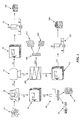
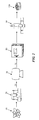
- FIG. 1 An illustration of a set of processing steps that can be carried out to extract one or more plant-derived components according to certain embodiments of the invention is presented in FIG. 1 . These steps may be carried out in relation to any plant material, and particularly a tobacco plant material.
- the specific sequence of steps shown in FIG. 1 should not to be construed as limiting the invention. Any modifications to the present disclosure which are functionally equivalent to the procedures and conditions disclosed herein are within the scope of the instant invention. Further, it should be understood that the various devices and apparatus utilized in the process of the present disclosure may be utilized in a variety of processing operations, not just the steps depicted in FIG. 1 .
- the process illustrated in FIG. 1 can be viewed in some embodiments as comprising a group of processes that individually can be carried out to isolate or extract specific plant components or types of plant components.
- the individual processes are linked by one or more initial steps that are carried out to convert the original plant material into a form wherein the individual plant components are freed from the highly specific structure of the original plant material and are thus made available for extraction or isolation when the appropriate processing conditions are provided.
- the process illustrated in FIG. 1 can be viewed as a single process having multiple process units that can optionally be carried out to extract or isolate the plant material components derivable from specific process steps associated with the specific process unit.
- the ability of the invention to be characterized as a single process and also a group of individual processes is more evident from the further disclosure provided herein.
- the inventive process is non-destructive over a wide spectrum of plant components derivable from the plant material.
- the process can be described as a holistic plant component isolation and extraction process because the individual process steps provide for isolation or extraction of specifically desired plant components in a manner that does not preclude isolation or extraction of any other plant component in the same batch.
- all plant components are made accessible by a single process that can utilize specific steps in an optional manner to isolate and extract one or more of the plant components.
- groups of one or more types of plant components may be isolated in specific process streams, and the present process provides for accessing the groups in one process stream while maintaining the viability of the groups of plant components that can be accessed in the remaining process streams.
- a portion of the plant components can be extracted via a first process stream, and the remaining portion of the plant components can be extracted via one or more further process streams, wherein extraction of the plant components from the first process stream is completely non-destructive in relation to the plant components in any of the further process streams.
- specific plant components of interest can be extracted in a manner that is non-destructive to the remaining plant components, which can be simultaneously extracted in further process streams or which can be removed from the process in a side stream that may be further processed at a later time or placed into commerce.
- the inventive process can be described as providing for extraction of a plant component selected from the group consisting of plant fibers, plant pectin, insoluble proteins, cell debris, starch, soluble proteins, sugars, peptides, and alkaloid, wherein a portion of the plant components are extracted via a first process stream and the remaining portion of the plant components are extracted via one or more further process streams, and wherein extraction of the plant components from the first process stream is completely non-destructive in relation to the plant components in any of the further process streams.
- a plant component selected from the group consisting of plant fibers, plant pectin, insoluble proteins, cell debris, starch, soluble proteins, sugars, peptides, and alkaloid
- the inventive process can comprise the step of homogenizing a plant material 10.
- the terms "homogenize”, “homogenizing”, and “homogenization” as used herein are understood to refer to any type of processing of a plant material that is effective to break down the plant material and release component parts thereof. Specifically, such terms can refer to any processing that is effective to disrupt or break apart plant cell walls and release fluid and other materials contained within the plant cells. Such processing can include the use of an apparatus, such as a grinder, extruder, hammer mill, colloid mill, French press, or the like. Such homogenizing step can be particularly important for unifying the individual steps used to process specific streams containing specific plant components.
- the homogenization step particularly in relation to the extraction solvent that may be used in the process step, can be a key step for initially converting the plant material from its highly structured original state to the processed state wherein all of the plant components are made accessible in a mutually non-destructive manner.
- the invention makes use of a grinder 20, which is effective to homogenize the plant material 10 to form a combination of a plant liquid component, or "green juice", and a plant pulp component.
- green juice refers to liquid extracted from processed biomatter according to the present disclosure. However, it should be understood that the term green juice may refer to any liquid extracted from a plant material or bio-matter regardless of the extracted liquid's color.
- the grinding apparatus 20 may comprise a knives and hammer configuration for disintegrating, mutilating, chopping, pulverizing, or otherwise grinding the plant material 10 to extract the green juice from the remaining plant pulp material. That is, the grinding apparatus 20 ruptures the cell walls of the plant material 10 so as to release the green juice therefrom.
- a representative grinding apparatus is disclosed in U.S. Patent No. 6,906,172 to Bratcher et al. ,.
- a screening arrangement may be provided to separate the green juice from the pulp material.
- a grinder 20 is illustrated, it is understood that any apparatus useful for achieving homogenization of the plant material may be used.
- the homogenizing or grinding step may be performed in the presence of an extraction solvent.
- the plant material may be subjected to a combined grinding and extraction process that subjects the plant material to a grinding action and simultaneously contacts the plant material with the extraction solvent.
- the plant material may be combined with the extraction solvent prior to, during, or after grinding.
- the extraction solvent may comprise a buffer solution that can be particularly useful to maintain or otherwise adjust the pH of the plant liquid component during the homogenizing step to a predetermined constant level. Because of the intimate mixing occurring during homogenization in the presence of the extraction solvent, it is understood that the plant liquid component can comprise not only the liquid components from the plant material but also some amount of the extraction solvent.
- the pH of the plant liquid component may be adjusted so as to maximize the amount of a specific plant component (e.g., protein, starch, sugar, or alkaloid) in the extracted green juice.
- a specific plant component e.g., protein, starch, sugar, or alkaloid
- the pH may be maintained at 6.8 to 7.6, particularly 7.0 to 7.4, and more particularly about 7.2. When isolation of plant components other than starch is desired, significantly different pH ranges may be used.
- the pH may be maintained in the range of 5 to 7, 5.2 to 6.8, or 5.5 to 6.5. In other embodiments, it may be useful to maintain the pH in the range of 8 to 10, 8.2 to 9.8, or 8.5 to 9.5.
- the buffer solution specifically can comprise components useful to achieve such pH ranges.
- the pH may be maintained at a substantially neutral pH. Based upon the present disclosure, different and/or overlapping pH ranges may be useful for maximizing the content of different plant components in the green juice, and such further pH ranges likewise would be encompassed by the present invention in particular embodiments. Of course, the inclusion of such further pH ranges should not be viewed as limiting the scope of the present disclosure in relation to starch extraction in particular.
- the extraction solvent preferably can be combined with the plant material in specific ratios to achieve extraction of the desired components.
- the extraction solvent and the plant material may be combined at a ratio of 0.1 L to 5 L of extraction solvent per 1 kg of biomass.
- the ratio may be 0.1 L to 4 L, 0.1 to 3 L, 0.1 to 2 L, 0.1 to 1 L, 0.2 L to 0.8 L, 0.3 L to 0.7 L, or 0.4 L to 0.6 L of extraction solvent per 1 kg of biomass.
- the process may use at least 0.1 L, at least 0.2 L, at least 0.3 L, or at least 0.4 L of extraction solvent per 1 kg of biomass.
- the process can comprise combining about 0.5 L of extraction solvent per 1kg or biomass.
- the extraction solvent may include a variety of compounds useful to facilitate extraction of one or more specific components from the plant material.
- the extraction solvent may comprise one or more materials selected from the group consisting of detergents, surfactants, antioxidants, amino acids, buffers, protein extraction agents, and combinations thereof.
- Useful detergents may comprise any material effective to compromise, degrade, or otherwise break apart cell membranes.
- Non-limiting exemplary embodiments of useful detergents include sodium dodecyl sulfate, sodium dodecyl sulfate-lauryl, octyl-beta-glucoside, octyl-beta-thioglucopyranoside, sodium cholate, sodium deoxycholate, 3-[(3-cholamidopropyl)dimethylammonio]-1-propanesulfonate (“CHAPS”), 3-[(3-cholamidopropyl)dimethylammonio]-2-hydroxy-1-propanesulfonate (“CHAPSO”), and octophenol ethoxylates, such as the TRITONTM X series of detergents.
- TRITONTM X series of detergents such as the TRITONTM X series of detergents.
- the detergents may be selected from the group consisting of nonionic detergents, zwitterionic detergents, and ionic detergents.
- Nonionic and zwitterionic detergents may be useful when it is desirable to limit protein denaturation upon cell lysis.
- Ionic detergents may be useful when it is desirable to provide strong solubilizing properties and/or denature proteins present in the plant material.
- Useful surfactants can comprise any material effective to participate in compromising, degrading, or otherwise breaking apart cell membranes.
- useful surfactants include, for example, nonionic surfactants, cationic surfactants, anionic surfactants, and amphoteric surfactants.
- Non-limiting examples of specific surfactants that may be useful include fatty acid alkanolamides, polyoxyethylene (“POE") alkyl phenyl ether-based surfactants, POE alkyl ether-based surfactants (such as POE decyl ether, POE lauryl ether, POE tridecyl ether, POE alkylenedecyl ether, POE sorbitan monolaurate, POE sorbitan monooleate, POE sorbitan monostearate, tetraoleic polyoxyethylene sorbitan, POE alkyl amine, and POE acetylene glycol), cetyl trimethyl ammonium bromide, dodecyl trimethyl ammonium chloride, tetradecyl trimethyl ammonium chloride, and cetyl pyridinium chloride.
- POE alkyl phenyl ether-based surfactants such as POE decyl ether, POE lauryl
- Useful antioxidants can comprise any material effective to reduce or prevent oxidation of green juice components during processing.
- useful antioxidants include thiols, polyphenols, bisulfites, metabisulfites, ascorbic acid, salts of ascorbic acid, uric acid, salts of uric acid, glutathione, tocopherols, tocotrienols, propyl gallate, tertiary butylhydroquinone, butylated hydroxyanisole, and butylated hydroxytoluene.
- the extraction solvent comprises one or more salts of phosphoric acid. Such salts of phosphoric acid may be particularly effective as buffer materials.
- the extraction solvent may comprise one or more bisulfite or metabisulfite containing compounds.
- the extraction solvent may comprise one or more Group I or Group II halide salts, which may be particularly useful protein extraction agents.
- the extraction solvent particularly may include an antioxidant compound, such as sodium metabisulfite (Na 2 S 2 O 5 ), sodium bisulfate, or ascorbic acid.
- the extraction solvent functions as a buffer solution, it can be useful for the extraction solvent to include one or more neutralizing agents such as, for example, sodium phosphate.
- the extraction solvent may comprise at least one salt of phosphoric acid and at least one bisulfite or metabisulfite compound.
- the extraction solvent may comprise at least one salt of phosphoric acid, at least one bisulfite or metabisulfite compound, and at least one Group I or Group II halide salt.
- the extraction solvent may comprise one or more compounds selected from the group consisting of dibasic sodium phosphate heptahydrate, monobasic sodium phosphate monohydrate, sodium chloride, potassium chloride, sodium bisulfite, sodium metabisulfite, ascorbic acid, and combinations thereof.
- An exemplary extraction solvent may comprise a solution of about 20 mM sodium phosphate, about 500 mM NaCl, and about 0.125 percent sodium metabisulfite at a pH of about 7.2.
- the extraction solvent can comprise about 3.2 g/L dibasic sodium phosphate heptahydrate, about 1.11 g/L monobasic sodium phosphate monohydrate, about 29.22 g/L sodium chloride, and about 1.25 g/L sodium metabisulfite at a pH of about 7.16.
- the extraction solvent may comprise a phosphate buffered saline (PBS). Any suitable extraction solvent may be used to maintain the pH of the plant liquid component at a predetermined constant level, such as in the ranges described above. Those skilled in the art will appreciate that pH may be adjusted using many suitable acids or bases well known in the art.
- the plant liquid component (e.g., green juice) 25 can be withdrawn or otherwise separated from the plant pulp component 27, which can contain primarily plant fiber (or cellulose) and pectin.
- Pectin is a structural heteropolysaccharide contained in the primary cell walls of terrestrial plants. Pectin may be used in food as a gelling agent, thickening agent and stabilizer in food. It may also be used as a source of dietary fiber.
- the plant pulp component 27 can be dried by directing it into a suitable drying apparatus, such as the oven 30 illustrated in this embodiment.
- a suitable drying apparatus such as the oven 30 illustrated in this embodiment.
- the plant pulp component 27 is dried to a desired level of moisture content such as, for example, less than about 20% by weight, less than about 15% by weight, or less than about 10% by weight.
- the dried plant pulp component 32 can be directed to a suitable apparatus for extracting one or more component therefrom.
- the dried plant pulp component 32 can be directed to a pectin extraction apparatus 40 for extracting a pectin component 50 from the dried plant pulp component 32.
- Such apparatus 40 likewise can be suitable for providing a fiber residue 60 comprising the remaining plant fiber or cellulose material.
- the pectin extraction apparatus 40 can include a suitable vessel for contacting the dried plant pulp component 32 with an extraction buffer.
- the extraction buffer may contain a solution of about 10% acetic acid and about 10 mM ethylenediaminetetraacetic acid (EDTA).
- EDTA ethylenediaminetetraacetic acid
- the extraction buffer may be added to the dried plant pulp component at about a 15:1 buffer:tissue ratio.
- the mixture of the pulp and extraction buffer may be heated and then allowed to cool to room temperature.
- the cooled mixture may then be filtered to remove the fiber residue 60, which may be further dried.
- the extract with the pectin therein may be combined with an alcohol solution, such as 100% ethanol, at a ratio of, for example, 1:1.
- the ethanol extracted material may then be allowed to sit at room temperature so as to form a gelatinous (gel) layer.
- the gel layer may be removed (e.g., scraped off) and strained through an appropriate straining medium, such as, for example, Whatman paper, using a Buchner funnel and a vacuum pump. Residual solids on the straining medium may be washed with, for example, ethanol and then allowed to dry.
- the washed solids may be placed into a glass scintillation vial for drying.
- the resultant pectin material may have a jelly-like appearance prior to drying. As such, the pectin and fiber materials are separated for appropriate use.
- the plant liquid component 25 can be directed to a separating apparatus, such as the centrifuge 70 in the illustrated embodiments.
- the separating apparatus may be a decanter centrifuge (e.g., an Alfa Laval NX-409 decanter), which can be used to extract solid materials from liquids when such components are mixed together in a slurry.
- the plant liquid component 25 may be characterized as being a slurry, suspension, or solution, depending upon the specific embodiment, which can be determined based upon the type of plant material used, the specific extraction solvent used, and the component desired for isolation.
- the plant liquid component 25 can be centrifuged to further separate the material into a soluble liquid fraction 77 and a solids fraction 75 using the decanter centrifuge apparatus 70 or any other suitable centrifuge system, such as, for example, a basket type centrifuge system or a batch type centrifuge system.
- suitable centrifuge systems are described in, for example, U.S. Pat. Nos. 6,817,970 to Berit et al. , 5,899,845 to Kohlstette et al. , 5,267,937 to Zettier et al. , 4,966,576 to Schulz et al. , and 5,865,719 to Droste et al. ,.
- Suitable conditions for centrifugation may be based, for example, upon time interval, feed rate, dwell time for expulsion of solid pellet material, operation speed, and G-force.
- the plant liquid component can be continuously fed into the separating apparatus (e.g., a decanter centrifuge apparatus). More specifically, the plant liquid component can be supplied to the decanter centrifuge apparatus 70 (or similar apparatus) at a feed flow rate of 5 to 25 L/min, 10 to 20 L/min, or 12 to 17 L/min. In one embodiment, the feed rate can be 15 L/min.
- Time interval and dwell time for the centrifugation process can be inversely proportional to the feed flow rate.
- the process can be characterized in that one or both of time interval and dwell time for centrifugation can be increased proportionally to any decrease in feed flow rate. Likewise, one or both of time interval and dwell time for centrifugation can be decreased proportionally to any increase in feed flow rate.
- Operation speed and applied force in the centrifuge process can relate to the bowl size of the apparatus.
- suitable centrifuges may have a bowl size of about 8 inches (20.3 cm) to about 36 inches (91.4 cm), about 10 inches (25.4 cm) to about 30 inches (76.2 cm), or about 12 inches (30.5 cm) to about 24 inches (61 cm).
- the decanter centrifuge apparatus 70 may operate in the range of 1,000 rpm to 6,000 rpm, 2,000 rpm to 6,000 rpm, about 3,000 rpm to 6,000 rpm, 4,000 rpm to 6,000 rpm, about 4,200 rpm to 5,600 rpm, 4,400 rpm to 5,400 rpm, or 4,600 rpm to 5,200 rpm.
- a combination of bowl size and operating speed can be used to achieve an applied force of 750 x g (or 750 time the force of gravity) to 2,500 x g, 1,000 x g to 2,000 x g, or 1,100 x g to 1,900 x g.
- Operation using parameters as described above can be critical to achieving a desired concentration of the desired plant component, such as starch, in the insoluble fraction. For example, operation at an applied force greater than discussed above may result in a decreased purity starch product.
- the recovered solids (insoluble) fraction can be in the form of a semi-solid, a slurry, or a paste.
- the solids content in the plant liquid component 25 again can vary depending upon the factors noted above.
- the solids content of the plant liquid component 25 can be up to 15%, up to 12%, up to 10%, or up to 8%.
- the solids content can be 0.5% to 15%, 1% to 10%, 2% to 8%, or 3% to 6%, based upon the total weight of the plant liquid component 25.
- a filtration system or arrangement may be used to separate the soluble liquid fraction 77 and the solids fraction 75 from the plant liquid component 25 to reduce costs associated with the process by eliminating the decanter centrifuge apparatus 70.
- separation of the soluble and solids fractions also may occur via ceramic microfiltration, such as using a filter size of 0.5 ⁇ m or less, 0.4 ⁇ m or less, 0.3 ⁇ m or less, 0.2 ⁇ m or less, or 0.1 ⁇ m or less.
- a filter size of 0.5 ⁇ m or less, 0.4 ⁇ m or less, 0.3 ⁇ m or less, 0.2 ⁇ m or less, or 0.1 ⁇ m or less.
- a primary material of interest in the solids (insoluble) fraction 75 of the plant liquid component 25 may be a starch component.
- granules, particles, or pellets of the starch component may be suspended in the green juice.
- centrifugation of the green juice as otherwise described above, may be useful to isolate the starch component or other solids in suspension from the green juice.
- the soluble liquid fraction 77 produced in this step can contain soluble proteins, sugars, and other compound that can be recovered if desired through further processing, as further described herein.
- the solids fraction 75 may be dried using, for example, an industrial oven 80, as illustrated.
- the inventive process may make use of a vortex dryer, flash drying technology, spray drying, or any other suitable drying process. Drying in an oven 80 may be carried at a temperature greater than room temperature, such as up to about 90 °C, up to about 80 °C, or up to about 70 °C. In some embodiments, drying may be at a temperature of about 40 °C to about 90 °C, about 50 °C to about 80 °C, or about 60 °C to about 70 °C.
- the solids fraction 75 may be dried to a desired moisture content such as, for example, less than about 20% by weight, less than about 15% by weight, or less than about 10% by weight.
- the dried solids fraction 85 may then be ground, milled or otherwise pulverized using a milling apparatus 90 to provide a powder or granular material 100.
- the composition of the powder or granular material 100 can vary depending upon the plant material used, the extraction solvent used, and the desired component to be isolated. In some embodiments, it may be desirable for the plant material to comprise a tobacco plant material and for the powder or granular material 100 to comprise a component useful as an ingredient in a smokeless tobacco composition or product.
- the plant-derived starch can be a polymer containing a plurality of glucose molecules connected by hydrolysable alpha linkages (i.e., alpha-1,4-glucosidic linkages).
- the number average molecular weight of the starch component can vary, but typically can be up to about 50,000 Da, up to about 40,000 Da, up to about 30,000 Da, or up to about 20,000 Da. In other embodiments, the number average molecular weight of the starch can be about 500 Da to about 30,000 Da, about 1,000 Da to about 20,000 Da, or about 2,000 Da to about 10,000 Da.
- the solids fraction 75 after centrifugation or other separation can comprise at least 40% by weight of starch on a dry weight basis. In further embodiments, at least about 50% by weight, at least about 60% by weight, or at least about 70% by weight of the solids fraction 75 on a dry weight basis is a plant-derived starch component. In yet further embodiments, the solids fraction 75 can comprise 40% to about 95%, about 50% to about 90%, or about 60% to about 85% by weight of a plant-derived starch component on a dry weight basis.
- the dried solids fraction 85 may be milled to achieve a desired particle size.
- the resultant powder or granular material 100 can have an average particle size of less than 1 mm, less than 500 ⁇ m, less than 100 ⁇ m, or less than 50 ⁇ m.
- the powder or granular material 100 can have an average particle size of 1 ⁇ m to 1 mm, 1 ⁇ m to 100 ⁇ m, 5 ⁇ m to 75 ⁇ m, 5 ⁇ m to 50 ⁇ m, 5 ⁇ m to 25 ⁇ m, 10 ⁇ m to 900 ⁇ m, 100 ⁇ m to 750 ⁇ m, or 100 ⁇ m to 500 ⁇ m.
- such wash process can comprise combining the plant derived starch (e.g., the dried solids fraction 85 or the powder or granular material 100 ) with a suitable solvent liquid mixture (e.g., an alcohol, such as 95% ethanol) in a suitable vessel.
- a suitable solvent liquid mixture e.g., an alcohol, such as 95% ethanol
- the mixture then can be optionally agitated and heated, preferably to the boiling point of the mixture, for a suitable period of time (e.g., at least about 10 minutes).
- the heated mixture may be stirred to ensure even heating thereof.
- the heated mixture can be filtered using a filter system (e.g., Buckner funnel filter, vacuum hose, vacuum line, and flask).
- a filter system e.g., Buckner funnel filter, vacuum hose, vacuum line, and flask.
- the washed solids are filtered and collected in the Buckner funnel filter.
- the filtered solids are then subjected to a second wash procedure if desired (repeat wash procedure). After the optional second wash, the filtered solids can be transported to a glass drying dish and placed under a hood for drying - e.g., for about 16 to 24 hours.
- the resultant material can be a substantially pure starch component, which may be irradiated if desired.
- Such starch material may be referred to as a plant-derived starch material, and specifically a tobacco-derived starch material.
- the resultant particulate material may be used as a tobacco-derived binder.
- the invention can provide a tobacco-derived binder that can comprise a tobacco-derived starch material.
- a binder containing tobacco-derived starch material is advantageous because such materials represent a natural product providing useful adhesive properties that enhance product cohesiveness, and also provides compatibility with the other sources of tobacco in the product from an organoleptic standpoint.
- the tobacco-derived binder can be a starch-enriched tobacco extract that contains tobacco-derived starch as the predominant ingredient, and which may contain other tobacco-derived components such as dietary fiber, protein, moisture, ash, and other sugar components.
- the relative amounts of the components forming the tobacco-derived binder may vary.
- the tobacco-derived starch component can comprise at least 25 dry weight percent, at least 30 dry weight percent, at least 35 dry weight percent, at least 40 dry weight percent, of the tobacco-derived binder, based on the total weight of the binder.
- the tobacco-derived starch component can comprise 25 to 75, 30 to 70, 40 to 60, or 45 to 55 dry weight percent, based on the total weight, of the tobacco-derived binder.
- a typical range of the dietary fiber component within the tobacco-derived binder can be at least 10 dry weight percent or, more particularly, 10 to 20 dry weight percent.
- a typical range of the protein component within the tobacco-derived binder is at least 5 dry weight percent or, more particularly, 5 to 15 dry weight percent.
- a typical range of the ash component within the tobacco-derived binder is at least 10 dry weight percent or, more particularly, 10 to 15 dry weight percent.
- a typical range of the sugar component (other than the starch component) within the tobacco-derived binder is at least 1 dry weight percent or, more particularly, 1 to 3 dry weight percent.
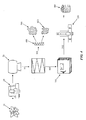
- the decanter centrifuge apparatus 70 separates the liquid component 25 (or green juice) into the solids fraction 75 and the soluble fraction 77, which may be referred to as a liquid phase or supernatant liquid material.
- the soluble fraction 77 may follow a process path in which specific components can be extracted for desired uses.
- the soluble fraction 77 may contain components such as, for example, proteins, peptides, sugars, or alkaloids. In some embodiments, it can be useful to adjust the pH of the soluble fraction 77 to facilitate precipitation of specific components therefrom.
- the pH of the soluble fraction 77 may be adjusted to a value of about 3.5 to about 4.5, about 3.8 to about 4.2, or about 3.9 to about 4.1. In specific embodiments, the pH may be adjusted to be about 4.0.
- the pH of the soluble fraction may be adjusted by addition of a suitable amount of an acidic or basic material, such as hydrochloric acid, phosphoric acid, or sodium hydroxide.
- the filtering apparatus 200 may comprise a ceramic microfiltration system or any other suitable filtration system. In this regard, large molecular weight components may remain in the concentrate component 207 such that the target component of interest can be collected in the concentrates.
- the filtering apparatus may be configured such that only soluble components smaller than a predetermined size pass through the filter as the liquid permeate component 205, while larger molecules may be retained as the concentrate component 207.
- the pore size of the filter may be adjusted for various filtering needs, as desired.
- the filtering apparatus 200 can be configured to retain molecules such that the concentrate component 207 comprises particles having a size of greater than about 0.05 ⁇ m, greater than about 0.08 ⁇ m, greater than about 0.1 ⁇ m, or greater than about 0.2 ⁇ m.
- the filtration system may include various modules for providing multiple stages of filtration.
- the filtration system may operate under parameters such as, for example: a ceramic filter membrane less than about 1000 kDa; a pump flow rate of about 450 liters per minute (LPM) to about 550 LPM, and preferably about 510 LPM; a feed pressure of about 20 psi (138 kPa) to about 50 psi (345 kPa); a permeate pressure of about 1 psi (7 kPa) to about 20 psi (138 kPa); and a permeate flow of about 2 LPM to about 8 LPM.
- LPM liters per minute
- Further filtration means suitable for use in the various embodiments of the invention where filtration is desirable include those disclosed in US Pat. No. 4,941,848 to Clapp et al .
- the concentrate component 207 may be dried using a drying apparatus 210, which can include examples already described herein for drying a material.
- the concentrate component 207 may be dried to a desired moisture content such as, for example, less than 20% by weight, less than 15% by weight, or less than 10% by weight.
- the dried concentrate 212 may then be ground, milled, or otherwise pulverized using a milling apparatus 220 to form a powder or granular form 300, which may be used, for example, as an ingredient in a smokeless tobacco composition or product.
- the dried concentrate 212 (and thus the power or granular form thereof 300 ) may include, for example, an insoluble protein component, a large protein component, a cell debris component, or combinations thereof.
- the dried concentrate 212 may be milled or otherwise ground such that the powder or granular form 300 has an average particle size of less than about 1 mm, less than about 750 ⁇ m, or less than about 500 ⁇ m.
- the liquid permeate 205 material may be further processed to separate the component into a retentate component 500 and an ancillary liquid permeate component 600.
- separation can comprise ultrafiltration, such as using a molecular weight cut-off (MWCO) membrane 400 in the range of 1-500 kDa, and preferably 1 -100kDa.
- MWCO molecular weight cut-off
- Other suitable membrane separation technologies likewise could be employed.
- the ultrafiltration step results in a substantial further reduction in the process volume.
- the retentate component 500 can comprise soluble proteins
- the ancillary liquid permeate component 600 can comprise sugars, peptides, alkaloids, and amino acids. Additional cycles of ultrafiltration may be conducted, if necessary, to improve the purity of the target material of interest.
- the choice of MWCO size and ultrafiltration conditions depends on the size of the target material of interest.
- the ultrafiltration step generally results in a reduction in process volume of about 10- to 30-fold or more and allows diafiltration to further remove undesired molecular species.
- the ultrafiltration system may operate under parameters such as, for example: a feed pressure of about 30 psi (207 kPa) to about 50 psi (345 kPa), and preferably about 40 psi (276 kPa); a retentate pressure of about 5 psi (34 kPa) to about 15 psi (103 kPa), and preferably about 10 psi (69 kPa); and a transmembrane pressure of about 20 psi (138 kPa ) to about 30 psi (207 kPa), and preferably about 25 psi (172 kPa).
- microfiltration and ultrafiltration systems described herein are configured to remove particles larger than a predetermined size, depending upon the biomatter being processed by the processing apparatuses of the present disclosure.
- the filtration steps performed by the filtration systems are dependent upon the biomatter being processed and the filters described herein are not limited to the size restrictions mentioned above. For instance, processing of bioinatter harvested from corn or rice plants will likely require a different permeability requiring a different type of membrane than processing of a tobacco plant material. Examples of ultrafiltration systems and membranes for ultrafiltration systems are disclosed in U.S. Pat Nos. 4,227,999 to Ebner , 6,106,715 to Thalmann et al.
- filters are installable in accordance with the material being processed. Further, in some processing applications of the present disclosure, only one filter may be necessary. In some instances, a plurality of filters may be employed to minimize the possibility of one or the other filters becoming restricted or clogged with matter greater than the determined filtration size.
- a final purification or separation of the various components of the ancillary permeate component may be accomplished by processes such as PEG-precipitation, chromatography, precipitation techniques, centrifugation, resuspension, or clarification.
- proteins or peptides of interest may be purified using standard procedures such as chromatography, salt precipitation, solvent extractions including super critical fluids such as CO 2 and other methods known to those of skill in the art.
- the retentate component 500 may be subjected to further processing, such as PEG precipitation or other types of purification to yield the desired product. Such processing is not necessarily automated.
- the target material of interest after separation from other components of the green juice by one or more cycles of centrifugation and filtration, may further be purified by such procedure as PEG-precipitation or purifying proteins and peptides by such procedures as chromatography, including affinity separation, and/or salt precipitation.
Landscapes
- Chemical & Material Sciences (AREA)
- General Chemical & Material Sciences (AREA)
- Chemical Kinetics & Catalysis (AREA)
- Life Sciences & Earth Sciences (AREA)
- Polymers & Plastics (AREA)
- Food Science & Technology (AREA)
- Engineering & Computer Science (AREA)
- Inorganic Chemistry (AREA)
- Botany (AREA)
- Health & Medical Sciences (AREA)
- General Health & Medical Sciences (AREA)
- Toxicology (AREA)
- Manufacture Of Tobacco Products (AREA)
- Polysaccharides And Polysaccharide Derivatives (AREA)
- Peptides Or Proteins (AREA)
Applications Claiming Priority (3)
| Application Number | Priority Date | Filing Date | Title |
|---|---|---|---|
| US12/957,821 US9775376B2 (en) | 2010-12-01 | 2010-12-01 | Smokeless tobacco pastille and moulding process for forming smokeless tobacco products |
| US13/072,019 US9220295B2 (en) | 2010-12-01 | 2011-03-25 | Tobacco separation process for extracting tobacco-derived materials, and associated extraction systems |
| PCT/US2011/062360 WO2012074985A1 (en) | 2010-12-01 | 2011-11-29 | Tobacco separation process for extracting tobacco-derived materials, and associated extraction systems |
Publications (2)
| Publication Number | Publication Date |
|---|---|
| EP2658406A1 EP2658406A1 (en) | 2013-11-06 |
| EP2658406B1 true EP2658406B1 (en) | 2015-04-29 |
Family
ID=46162490
Family Applications (1)
| Application Number | Title | Priority Date | Filing Date |
|---|---|---|---|
| EP20110802205 Active EP2658406B1 (en) | 2010-12-01 | 2011-11-29 | Tobacco separation process for extracting tobacco-derived materials, and associated extraction systems |
Country Status (5)
| Country | Link |
|---|---|
| US (1) | US9220295B2 (enExample) |
| EP (1) | EP2658406B1 (enExample) |
| JP (1) | JP5931904B2 (enExample) |
| ES (1) | ES2537210T3 (enExample) |
| WO (1) | WO2012074985A1 (enExample) |
Cited By (1)
| Publication number | Priority date | Publication date | Assignee | Title |
|---|---|---|---|---|
| CN108283329A (zh) * | 2018-01-25 | 2018-07-17 | 云南中烟工业有限责任公司 | 一种从烟草废料中提取多酚类化合物的方法和应用 |
Families Citing this family (23)
| Publication number | Priority date | Publication date | Assignee | Title |
|---|---|---|---|---|
| US9458476B2 (en) | 2011-04-18 | 2016-10-04 | R.J. Reynolds Tobacco Company | Method for producing glycerin from tobacco |
| GB201213870D0 (en) * | 2012-08-03 | 2012-09-19 | British American Tobacco Co | Tobacco extract, preparation thereof |
| US9289011B2 (en) | 2013-03-07 | 2016-03-22 | R.J. Reynolds Tobacco Company | Method for producing lutein from tobacco |
| US9661876B2 (en) | 2013-03-14 | 2017-05-30 | R.J. Reynolds Tobacco Company | Sugar-enriched extract derived from tobacco |
| US9301544B2 (en) | 2013-03-14 | 2016-04-05 | R.J. Reynolds Tobacco Company | Protein-enriched tobacco-derived composition |
| US9175052B2 (en) | 2013-05-17 | 2015-11-03 | R.J. Reynolds Tobacco Company | Tobacco-derived protein compositions |
| US20140356295A1 (en) | 2013-06-03 | 2014-12-04 | R.J. Reynolds Tobacco Company | Cosmetic compositions comprising tobacco seed-derived component |
| US10357054B2 (en) * | 2013-10-16 | 2019-07-23 | R.J. Reynolds Tobacco Company | Smokeless tobacco pastille |
| US9265284B2 (en) | 2014-01-17 | 2016-02-23 | R.J. Reynolds Tobacco Company | Process for producing flavorants and related materials |
| SE538741C2 (sv) * | 2014-04-04 | 2016-11-08 | X-International Aps | Tobaksråvara |
| US11080739B2 (en) | 2014-04-25 | 2021-08-03 | R.J. Reynolds Tobacco Company | Data translator |
| US10881133B2 (en) | 2015-04-16 | 2021-01-05 | R.J. Reynolds Tobacco Company | Tobacco-derived cellulosic sugar |
| US11612183B2 (en) | 2015-12-10 | 2023-03-28 | R.J. Reynolds Tobacco Company | Protein-enriched tobacco composition |
| US10499684B2 (en) | 2016-01-28 | 2019-12-10 | R.J. Reynolds Tobacco Company | Tobacco-derived flavorants |
| US11154087B2 (en) | 2016-02-02 | 2021-10-26 | R.J. Reynolds Tobacco Company | Method for preparing flavorful compounds isolated from black liquor and products incorporating the flavorful compounds |
| US20180103680A1 (en) * | 2016-10-18 | 2018-04-19 | Altria Client Services Llc | Methods and systems for improving stability of the pre-vapor formulation of an e-vaping device |
| US11091446B2 (en) | 2017-03-24 | 2021-08-17 | R.J. Reynolds Tobacco Company | Methods of selectively forming substituted pyrazines |
| US10757964B2 (en) | 2017-07-20 | 2020-09-01 | R.J. Reynolds Tobacco Company | Purification of tobacco-derived protein compositions |
| WO2020148704A1 (en) | 2019-01-18 | 2020-07-23 | R. J. Reynolds Tobacco Company | Plant-derived rubisco protein purification |
| US11877590B2 (en) | 2019-03-27 | 2024-01-23 | Fiedler & Lundgren Ab | Smokeless tobacco composition |
| CN111035058B (zh) * | 2019-11-27 | 2022-07-05 | 内蒙古昆明卷烟有限责任公司 | 一种废弃烟蒂中焦油提取物的制备方法及其在卷烟中的应用 |
| JP2023521055A (ja) | 2020-04-09 | 2023-05-23 | アール・ジエイ・レイノルズ・タバコ・カンパニー | ニコチアナ・タバカムにおけるニコチンレベルの調整方法 |
| KR102812120B1 (ko) * | 2022-01-24 | 2025-05-22 | 주식회사 케이티앤지 | 에어로졸 생성 물품 및 이를 수용하는 에어로졸 생성 장치 |
Family Cites Families (131)
| Publication number | Priority date | Publication date | Assignee | Title |
|---|---|---|---|---|
| US1376586A (en) | 1918-04-06 | 1921-05-03 | Schwartz Francis | Tobacco-tablet |
| NL73183C (enExample) * | 1948-05-21 | |||
| US3098492A (en) | 1960-11-25 | 1963-07-23 | Nat Starch Chem Corp | Method of making tobacco product |
| US3696917A (en) | 1970-09-10 | 1972-10-10 | Elaine G Levi | Tobacco pouch closure |
| US3806617A (en) | 1971-11-24 | 1974-04-23 | Y & S Candies Inc | Process for preparing licorice type candy |
| GB1489761A (en) | 1974-03-08 | 1977-10-26 | Amf Inc | Process of treating tobacco |
| GB1550835A (en) | 1975-08-18 | 1979-08-22 | British American Tobacco Co | Treatment of tobacco |
| US4150677A (en) | 1977-01-24 | 1979-04-24 | Philip Morris Incorporated | Treatment of tobacco |
| DE2808022C3 (de) | 1978-02-24 | 1982-02-04 | Heinrich Frings Gmbh & Co Kg, 5300 Bonn | Vorrichtung zur kontinuierlichen Ultrafiltration einer Flüssigkeit |
| US4267847A (en) | 1978-05-12 | 1981-05-19 | British-American Tobacco Company Limited | Tobacco additives |
| US4347324A (en) * | 1979-09-24 | 1982-08-31 | Leaf Proteins, Inc. | Process for isolation of proteins from plant leaves |
| US4268632A (en) * | 1979-09-24 | 1981-05-19 | Leaf Proteins, Inc. | Process for isolation of ribulose 1,5-diphosphate carboxylase from plant leaves |
| US4289147A (en) * | 1979-11-15 | 1981-09-15 | Leaf Proteins, Inc. | Process for obtaining deproteinized tobacco freed of nicotine and green pigment, for use as a smoking product |
| US4589428A (en) * | 1980-02-21 | 1986-05-20 | Philip Morris Incorporated | Tobacco treatment |
| DE3009031C2 (de) | 1980-03-08 | 1983-04-21 | B.A.T. Cigaretten-Fabriken Gmbh, 2000 Hamburg | Verfahren zur Herstellung von Aromastoffen für Rauchprodukte |
| DE3009032C2 (de) | 1980-03-08 | 1983-11-24 | B.A.T. Cigaretten-Fabriken Gmbh, 2000 Hamburg | Verfahren zur Herstellung von Aromastoffen für Rauchprodukte |
| IN158943B (enExample) | 1981-12-07 | 1987-02-21 | Mueller Adam | |
| GB2122892B (en) | 1982-07-02 | 1986-01-29 | Squibb & Sons Inc | Nystantin pastille formulation |
| US4528993A (en) | 1982-08-20 | 1985-07-16 | R. J. Reynolds Tobacco Company | Process for producing moist snuff |
| US4660577A (en) | 1982-08-20 | 1987-04-28 | R.J. Reynolds Tobacco Company | Dry pre-mix for moist snuff |
| US4874000A (en) | 1982-12-30 | 1989-10-17 | Philip Morris Incorporated | Method and apparatus for drying and cooling extruded tobacco-containing material |
| US4989620A (en) | 1982-12-30 | 1991-02-05 | Philip Morris Incorporated | Method and apparatus for coating extruded tobacco-containing material |
| US4513756A (en) | 1983-04-28 | 1985-04-30 | The Pinkerton Tobacco Company | Process of making tobacco pellets |
| JPS6024172A (ja) | 1983-07-21 | 1985-02-06 | 日本たばこ産業株式会社 | たばこ用香料の製造方法 |
| US5092352A (en) | 1983-12-14 | 1992-03-03 | American Brands, Inc. | Chewing tobacco product |
| US4941848A (en) | 1984-01-16 | 1990-07-17 | Stewart Stamping Corp. | Shielded plug jack connector |
| US4624269A (en) | 1984-09-17 | 1986-11-25 | The Pinkerton Tobacco Company | Chewable tobacco based product |
| US4880018A (en) | 1986-02-05 | 1989-11-14 | R. J. Reynolds Tobacco Company | Extruded tobacco materials |
| US4716911A (en) | 1986-04-08 | 1988-01-05 | Genencor, Inc. | Method for protein removal from tobacco |
| DE3619298C1 (de) | 1986-06-07 | 1987-08-13 | Westfalia Separator Ag | Kontinuierlich arbeitende Schleudertrommel |
| US4727889A (en) | 1986-12-22 | 1988-03-01 | R. J. Reynolds Tobacco Company | Tobacco processing |
| US5018540A (en) | 1986-12-29 | 1991-05-28 | Philip Morris Incorporated | Process for removal of basic materials |
| US5005593A (en) | 1988-01-27 | 1991-04-09 | R. J. Reynolds Tobacco Company | Process for providing tobacco extracts |
| US5435325A (en) | 1988-04-21 | 1995-07-25 | R. J. Reynolds Tobacco Company | Process for providing tobacco extracts using a solvent in a supercritical state |
| US4887618A (en) | 1988-05-19 | 1989-12-19 | R. J. Reynolds Tobacco Company | Tobacco processing |
| US4987907A (en) | 1988-06-29 | 1991-01-29 | Helme Tobacco Company | Chewing tobacco composition and process for producing same |
| US4967771A (en) | 1988-12-07 | 1990-11-06 | R. J. Reynolds Tobacco Company | Process for extracting tobacco |
| US4986286A (en) | 1989-05-02 | 1991-01-22 | R. J. Reynolds Tobacco Company | Tobacco treatment process |
| US4941484A (en) | 1989-05-30 | 1990-07-17 | R. J. Reynolds Tobacco Company | Tobacco processing |
| GB8914508D0 (en) | 1989-06-23 | 1989-08-09 | British American Tobacco Co | Improvements relating to the making of smoking articles |
| US5121757A (en) | 1989-12-18 | 1992-06-16 | R. J. Reynolds Tobacco Company | Tobacco treatment process |
| US5060669A (en) | 1989-12-18 | 1991-10-29 | R. J. Reynolds Tobacco Company | Tobacco treatment process |
| US4991599A (en) | 1989-12-20 | 1991-02-12 | Tibbetts Hubert M | Fiberless tobacco product for smoking and chewing |
| DE4004459C2 (de) | 1990-02-14 | 1995-08-31 | Westfalia Separator Ag | Verfahren zum Betreiben einer Zentrifuge mit einer selbstentleerenden Schleudertrommel und Zentrifuge zur Durchführung des Verfahrens |
| US5234008A (en) | 1990-02-23 | 1993-08-10 | R. J. Reynolds Tobacco Company | Tobacco processing |
| US5065775A (en) | 1990-02-23 | 1991-11-19 | R. J. Reynolds Tobacco Company | Tobacco processing |
| US5131414A (en) | 1990-02-23 | 1992-07-21 | R. J. Reynolds Tobacco Company | Tobacco processing |
| US5099862A (en) | 1990-04-05 | 1992-03-31 | R. J. Reynolds Tobacco Company | Tobacco extraction process |
| US5074319A (en) | 1990-04-19 | 1991-12-24 | R. J. Reynolds Tobacco Company | Tobacco extraction process |
| US5668295A (en) | 1990-11-14 | 1997-09-16 | Philip Morris Incorporated | Protein involved in nicotine synthesis, DNA encoding, and use of sense and antisense DNAs corresponding thereto to affect nicotine content in transgenic tobacco cells and plants |
| US5131415A (en) | 1991-04-04 | 1992-07-21 | R. J. Reynolds Tobacco Company | Tobacco extraction process |
| US5197494A (en) | 1991-06-04 | 1993-03-30 | R.J. Reynolds Tobacco Company | Tobacco extraction process |
| US5318050A (en) | 1991-06-04 | 1994-06-07 | R. J. Reynolds Tobacco Company | Tobacco treatment process |
| US5343879A (en) | 1991-06-21 | 1994-09-06 | R. J. Reynolds Tobacco Company | Tobacco treatment process |
| US5360022A (en) | 1991-07-22 | 1994-11-01 | R. J. Reynolds Tobacco Company | Tobacco processing |
| US5148819A (en) | 1991-08-15 | 1992-09-22 | R. J. Reynolds Tobacco Company | Process for extracting tobacco |
| US5243999A (en) | 1991-09-03 | 1993-09-14 | R. J. Reynolds Tobacco Company | Tobacco processing |
| US5230354A (en) | 1991-09-03 | 1993-07-27 | R. J. Reynolds Tobacco Company | Tobacco processing |
| US5301694A (en) | 1991-11-12 | 1994-04-12 | Philip Morris Incorporated | Process for isolating plant extract fractions |
| US5445169A (en) | 1992-08-17 | 1995-08-29 | R. J. Reynolds Tobacco Company | Process for providing a tobacco extract |
| US5387416A (en) | 1993-07-23 | 1995-02-07 | R. J. Reynolds Tobacco Company | Tobacco composition |
| DE4415999A1 (de) | 1994-05-06 | 1995-11-09 | Bolder Arzneimittel Gmbh | Magensäurebindende Kaupastillen |
| US5539093A (en) | 1994-06-16 | 1996-07-23 | Fitzmaurice; Wayne P. | DNA sequences encoding enzymes useful in carotenoid biosynthesis |
| DE4432836C1 (de) | 1994-09-15 | 1995-10-26 | Westfalia Separator Ag | Selbstentleerende Schleudertrommel |
| US5637785A (en) | 1994-12-21 | 1997-06-10 | The Salk Institute For Biological Studies | Genetically modified plants having modulated flower development |
| DE19519693C1 (de) | 1995-05-30 | 1996-08-22 | Westfalia Separator Ag | Verfahren und Vorrichtung zum Füllen einer selbstentleerenden Schleudertrommel |
| US5829453A (en) | 1995-06-09 | 1998-11-03 | R. J. Reynolds Tobacco Company | Low-density tobacco filler and a method of making low-density tobacco filler and smoking articles therefrom |
| US5705624A (en) | 1995-12-27 | 1998-01-06 | Fitzmaurice; Wayne Paul | DNA sequences encoding enzymes useful in phytoene biosynthesis |
| US6120688A (en) | 1997-02-25 | 2000-09-19 | Zenon Environmental, Inc. | Portable reverse osmosis unit for producing drinking water |
| CA2286801C (en) * | 1997-04-16 | 2006-03-14 | Lycored Natural Products Industries Ltd. | A novel process to produce stabilized carnosic acid in high concentration |
| US6037456A (en) * | 1998-03-10 | 2000-03-14 | Biosource Technologies, Inc. | Process for isolating and purifying viruses, soluble proteins and peptides from plant sources |
| US6906172B2 (en) * | 1998-03-10 | 2005-06-14 | Large Scale Biology Corporation | Flexible processing apparatus for isolating and purifying viruses, soluble proteins and peptides from plant sources |
| US6298859B1 (en) | 1998-07-08 | 2001-10-09 | Novozymes A/S | Use of a phenol oxidizing enzyme in the treatment of tobacco |
| US6106715A (en) | 1998-07-21 | 2000-08-22 | Infinitex Corporation | Membrane filtration assembly |
| NZ510358A (en) | 1998-08-11 | 2002-09-27 | Large Scale Biology Corp | Method for recovering proteins from the interstitial fluid of plant tissues |
| US6131584A (en) | 1999-04-15 | 2000-10-17 | Brown & Williamson Tobacco Corporation | Tobacco treatment process |
| US6805134B2 (en) | 1999-04-26 | 2004-10-19 | R. J. Reynolds Tobacco Company | Tobacco processing |
| US6371126B1 (en) | 2000-03-03 | 2002-04-16 | Brown & Williamson Tobacco Corporation | Tobacco recovery system |
| WO2002018607A2 (en) | 2000-08-30 | 2002-03-07 | North Carolina State University | Transgenic plants containing molecular decoys that alter protein content therein |
| AU2002254180B2 (en) | 2001-03-08 | 2008-03-06 | Michigan State University | Lipid metabolism regulators in plants |
| US20040020503A1 (en) | 2001-05-01 | 2004-02-05 | Williams Jonnie R. | Smokeless tobacco product |
| HUP0400094A3 (en) | 2001-05-01 | 2005-03-29 | Regent Court Technologies Llc | Smokeless tobacco product |
| US6668839B2 (en) | 2001-05-01 | 2003-12-30 | Jonnie R. Williams | Smokeless tobacco product |
| US7208659B2 (en) | 2001-05-02 | 2007-04-24 | Conopco Inc. | Process for increasing the flavonoid content of a plant and plants obtainable thereby |
| US6730832B1 (en) | 2001-09-10 | 2004-05-04 | Luis Mayan Dominguez | High threonine producing lines of Nicotiana tobacum and methods for producing |
| US7032601B2 (en) | 2001-09-28 | 2006-04-25 | U.S. Smokeless Tobacco Company | Encapsulated materials |
| US6953040B2 (en) | 2001-09-28 | 2005-10-11 | U.S. Smokeless Tobacco Company | Tobacco mint plant material product |
| US6817970B2 (en) | 2002-06-17 | 2004-11-16 | Large Scale Biology Corporation | Centrifuge for extracting interstitial fluid |
| US6772767B2 (en) | 2002-09-09 | 2004-08-10 | Brown & Williamson Tobacco Corporation | Process for reducing nitrogen containing compounds and lignin in tobacco |
| US7025066B2 (en) | 2002-10-31 | 2006-04-11 | Jerry Wayne Lawson | Method of reducing the sucrose ester concentration of a tobacco mixture |
| SE0301244D0 (sv) | 2003-04-29 | 2003-04-29 | Swedish Match North Europe Ab | Smokeless tobacco product user package |
| US7014039B2 (en) | 2003-06-19 | 2006-03-21 | R.J. Reynolds Tobacco Company | Sliding shell package for smoking articles |
| SE527350C8 (sv) | 2003-08-18 | 2006-03-21 | Gallaher Snus Ab | Lock till snusdosa |
| BRPI0415682A (pt) | 2003-11-03 | 2006-12-19 | Us Smokeless Tobacco Co | tabaco sem fumaça aromatizado e métodos de fabricação |
| BRPI0415741B1 (pt) | 2003-11-07 | 2013-07-23 | composições de tabaco e métodos de fabricação de uma composição de tabaco | |
| US8627828B2 (en) | 2003-11-07 | 2014-01-14 | U.S. Smokeless Tobacco Company Llc | Tobacco compositions |
| EP1729602A1 (en) | 2003-12-22 | 2006-12-13 | U.S. Smokeless Tobacco Company | Conditioning process for tobacco and/or snuff compositions |
| WO2006004480A1 (en) | 2004-07-02 | 2006-01-12 | Radi Medical Systems Ab | Smokeless toabacco product |
| US7337782B2 (en) | 2004-08-18 | 2008-03-04 | R.J. Reynolds Tobacco Company | Process to remove protein and other biomolecules from tobacco extract or slurry |
| EP1781123A1 (en) | 2004-08-23 | 2007-05-09 | U.S. Smokeless Tobacco Company | Nicotiana compositions |
| US7650891B1 (en) | 2004-09-03 | 2010-01-26 | Rosswil Llc Ltd. | Tobacco precursor product |
| US20060288449A1 (en) * | 2004-10-12 | 2006-12-21 | Garger Stephen J | Process for purifying target compounds from plant sources using ceramic filtration |
| US7537110B2 (en) | 2005-06-02 | 2009-05-26 | Philip Morris Usa Inc. | Container for consumer article |
| US7584843B2 (en) | 2005-07-18 | 2009-09-08 | Philip Morris Usa Inc. | Pocket-size hand-held container for consumer items |
| US20070062549A1 (en) | 2005-09-22 | 2007-03-22 | Holton Darrell E Jr | Smokeless tobacco composition |
| US7861728B2 (en) | 2006-02-10 | 2011-01-04 | R.J. Reynolds Tobacco Company | Smokeless tobacco composition having an outer and inner pouch |
| US7819124B2 (en) | 2006-01-31 | 2010-10-26 | U.S. Smokeless Tobacco Company | Tobacco articles and methods |
| US7810507B2 (en) | 2006-02-10 | 2010-10-12 | R. J. Reynolds Tobacco Company | Smokeless tobacco composition |
| SE529886C2 (sv) | 2006-04-28 | 2007-12-18 | Swedish Match North Europe Ab | En ny metod för framställning av en fuktsnuskomposition som inte innehåller tobak |
| US20080029116A1 (en) | 2006-08-01 | 2008-02-07 | John Howard Robinson | Smokeless tobacco |
| US20080173317A1 (en) | 2006-08-01 | 2008-07-24 | John Howard Robinson | Smokeless tobacco |
| US20080029117A1 (en) | 2006-08-01 | 2008-02-07 | John-Paul Mua | Smokeless Tobacco |
| US8251218B2 (en) | 2006-12-12 | 2012-08-28 | Meadwestvaco Corporation | Container with pivoting cover |
| WO2008103935A2 (en) | 2007-02-23 | 2008-08-28 | U.S. Smokeless Tobacco Company | Novel tobacco compositions and methods of making |
| US8186360B2 (en) | 2007-04-04 | 2012-05-29 | R.J. Reynolds Tobacco Company | Cigarette comprising dark air-cured tobacco |
| US8393465B2 (en) | 2007-05-07 | 2013-03-12 | Philip Morris Usa Inc. | Pocket-size hybrid container for consumer items |
| US8940344B2 (en) | 2007-06-08 | 2015-01-27 | Philip Morris Usa Inc. | Capsule clusters for oral consumption |
| US8061362B2 (en) | 2007-07-23 | 2011-11-22 | R. J. Reynolds Tobacco Company | Smokeless tobacco composition |
| US7946295B2 (en) | 2007-07-23 | 2011-05-24 | R. J. Reynolds Tobacco Company | Smokeless tobacco composition |
| USD594154S1 (en) | 2007-11-13 | 2009-06-09 | R.J. Reynolds Tobacco Company | Container with bottom compartment |
| US8336557B2 (en) | 2007-11-28 | 2012-12-25 | Philip Morris Usa Inc. | Smokeless compressed tobacco product for oral consumption |
| US7878324B2 (en) | 2007-11-30 | 2011-02-01 | Philip Morris Usa Inc. | Pocket-size container for consumer items |
| US20090230003A1 (en) | 2008-02-08 | 2009-09-17 | Philip Morris Usa Inc. | Pocket-sized container |
| USD592956S1 (en) | 2008-02-08 | 2009-05-26 | Philip Morris Usa Inc. | Container |
| US8033425B2 (en) | 2008-03-04 | 2011-10-11 | R.J. Reynolds Tobacco Company | Dispensing container |
| US7946450B2 (en) | 2008-04-25 | 2011-05-24 | R.J. Reynolds Tobacco Company | Dispensing container |
| US9248935B2 (en) | 2008-12-01 | 2016-02-02 | R.J. Reynolds Tobacco Company | Dual cavity sliding dispenser |
| US9155772B2 (en) | 2008-12-08 | 2015-10-13 | Philip Morris Usa Inc. | Soft, chewable and orally dissolvable and/or disintegrable products |
| US8377215B2 (en) | 2008-12-18 | 2013-02-19 | Philip Morris Usa Inc. | Moist botanical pouch processing |
| US9167835B2 (en) | 2008-12-30 | 2015-10-27 | Philip Morris Usa Inc. | Dissolvable films impregnated with encapsulated tobacco, tea, coffee, botanicals, and flavors for oral products |
| JP2012526553A (ja) | 2009-05-11 | 2012-11-01 | ユーエス スモークレス タバコ カンパニー リミテッド ライアビリティ カンパニー | 無煙タバコに香味を付けるための方法およびデバイス |
-
2011
- 2011-03-25 US US13/072,019 patent/US9220295B2/en active Active
- 2011-11-29 ES ES11802205.2T patent/ES2537210T3/es active Active
- 2011-11-29 WO PCT/US2011/062360 patent/WO2012074985A1/en not_active Ceased
- 2011-11-29 JP JP2013542097A patent/JP5931904B2/ja active Active
- 2011-11-29 EP EP20110802205 patent/EP2658406B1/en active Active
Cited By (2)
| Publication number | Priority date | Publication date | Assignee | Title |
|---|---|---|---|---|
| CN108283329A (zh) * | 2018-01-25 | 2018-07-17 | 云南中烟工业有限责任公司 | 一种从烟草废料中提取多酚类化合物的方法和应用 |
| CN108283329B (zh) * | 2018-01-25 | 2021-02-02 | 云南中烟工业有限责任公司 | 一种从烟草废料中提取多酚类化合物的方法和应用 |
Also Published As
| Publication number | Publication date |
|---|---|
| US20120141648A1 (en) | 2012-06-07 |
| ES2537210T3 (es) | 2015-06-03 |
| JP5931904B2 (ja) | 2016-06-08 |
| CN103327840A (zh) | 2013-09-25 |
| US9220295B2 (en) | 2015-12-29 |
| EP2658406A1 (en) | 2013-11-06 |
| WO2012074985A1 (en) | 2012-06-07 |
| JP2013544522A (ja) | 2013-12-19 |
Similar Documents
| Publication | Publication Date | Title |
|---|---|---|
| US9220295B2 (en) | Tobacco separation process for extracting tobacco-derived materials, and associated extraction systems | |
| US20190313690A1 (en) | Tobacco-derived syrup composition | |
| EP2967128B1 (en) | Sugar-enriched extract derived from tobacco | |
| EP2667735B1 (en) | Tobacco-derived casing composition | |
| EP2555641B1 (en) | Smokeless tobacco composition comprising tobacco-derived material and non-tobacco plant material | |
| JP6480731B2 (ja) | タバコに由来する成分及び物質 | |
| EP2645885B1 (en) | Smokeless tobacco pastille and moulding process for forming smokeless tobacco products | |
| EP2827727B1 (en) | Method for treating an extracted tobacco pulp and tobacco products made therefrom | |
| EP1781123A1 (en) | Nicotiana compositions | |
| WO2012112644A2 (en) | Plastic from tobacco biomass | |
| CN103997919A (zh) | 包含果胶组分的无烟烟草产品 | |
| US9289011B2 (en) | Method for producing lutein from tobacco | |
| US20220000168A1 (en) | Method for preparing flavorful compounds isolated from black liquor and products incorporating the flavorful compounds | |
| CN103946207A (zh) | 从烟草生产柠檬酸三乙酯的方法 | |
| CN103327840B (zh) | 用于提取烟草衍生材料的烟草分离方法和有关的提取系统 |
Legal Events
| Date | Code | Title | Description |
|---|---|---|---|
| PUAI | Public reference made under article 153(3) epc to a published international application that has entered the european phase |
Free format text: ORIGINAL CODE: 0009012 |
|
| 17P | Request for examination filed |
Effective date: 20130624 |
|
| AK | Designated contracting states |
Kind code of ref document: A1 Designated state(s): AL AT BE BG CH CY CZ DE DK EE ES FI FR GB GR HR HU IE IS IT LI LT LU LV MC MK MT NL NO PL PT RO RS SE SI SK SM TR |
|
| DAX | Request for extension of the european patent (deleted) | ||
| GRAP | Despatch of communication of intention to grant a patent |
Free format text: ORIGINAL CODE: EPIDOSNIGR1 |
|
| RIC1 | Information provided on ipc code assigned before grant |
Ipc: A24B 15/30 20060101ALI20141106BHEP Ipc: A24B 15/12 20060101ALI20141106BHEP Ipc: A24B 15/24 20060101AFI20141106BHEP Ipc: A23G 3/48 20060101ALI20141106BHEP |
|
| INTG | Intention to grant announced |
Effective date: 20141124 |
|
| GRAS | Grant fee paid |
Free format text: ORIGINAL CODE: EPIDOSNIGR3 |
|
| GRAA | (expected) grant |
Free format text: ORIGINAL CODE: 0009210 |
|
| AK | Designated contracting states |
Kind code of ref document: B1 Designated state(s): AL AT BE BG CH CY CZ DE DK EE ES FI FR GB GR HR HU IE IS IT LI LT LU LV MC MK MT NL NO PL PT RO RS SE SI SK SM TR |
|
| REG | Reference to a national code |
Ref country code: GB Ref legal event code: FG4D |
|
| REG | Reference to a national code |
Ref country code: CH Ref legal event code: EP |
|
| REG | Reference to a national code |
Ref country code: AT Ref legal event code: REF Ref document number: 723935 Country of ref document: AT Kind code of ref document: T Effective date: 20150515 Ref country code: CH Ref legal event code: NV Representative=s name: ISLER AND PEDRAZZINI AG, CH |
|
| REG | Reference to a national code |
Ref country code: IE Ref legal event code: FG4D |
|
| REG | Reference to a national code |
Ref country code: ES Ref legal event code: FG2A Ref document number: 2537210 Country of ref document: ES Kind code of ref document: T3 Effective date: 20150603 |
|
| REG | Reference to a national code |
Ref country code: DE Ref legal event code: R096 Ref document number: 602011016157 Country of ref document: DE Effective date: 20150611 |
|
| REG | Reference to a national code |
Ref country code: DE Ref legal event code: R082 Ref document number: 602011016157 Country of ref document: DE Representative=s name: HOEGER, STELLRECHT & PARTNER PATENTANWAELTE MB, DE |
|
| REG | Reference to a national code |
Ref country code: NL Ref legal event code: VDEP Effective date: 20150429 |
|
| REG | Reference to a national code |
Ref country code: AT Ref legal event code: MK05 Ref document number: 723935 Country of ref document: AT Kind code of ref document: T Effective date: 20150429 |
|
| REG | Reference to a national code |
Ref country code: LT Ref legal event code: MG4D |
|
| PG25 | Lapsed in a contracting state [announced via postgrant information from national office to epo] |
Ref country code: NL Free format text: LAPSE BECAUSE OF FAILURE TO SUBMIT A TRANSLATION OF THE DESCRIPTION OR TO PAY THE FEE WITHIN THE PRESCRIBED TIME-LIMIT Effective date: 20150429 |
|
| REG | Reference to a national code |
Ref country code: FR Ref legal event code: PLFP Year of fee payment: 5 |
|
| PG25 | Lapsed in a contracting state [announced via postgrant information from national office to epo] |
Ref country code: PT Free format text: LAPSE BECAUSE OF FAILURE TO SUBMIT A TRANSLATION OF THE DESCRIPTION OR TO PAY THE FEE WITHIN THE PRESCRIBED TIME-LIMIT Effective date: 20150831 Ref country code: HR Free format text: LAPSE BECAUSE OF FAILURE TO SUBMIT A TRANSLATION OF THE DESCRIPTION OR TO PAY THE FEE WITHIN THE PRESCRIBED TIME-LIMIT Effective date: 20150429 Ref country code: LT Free format text: LAPSE BECAUSE OF FAILURE TO SUBMIT A TRANSLATION OF THE DESCRIPTION OR TO PAY THE FEE WITHIN THE PRESCRIBED TIME-LIMIT Effective date: 20150429 Ref country code: NO Free format text: LAPSE BECAUSE OF FAILURE TO SUBMIT A TRANSLATION OF THE DESCRIPTION OR TO PAY THE FEE WITHIN THE PRESCRIBED TIME-LIMIT Effective date: 20150729 Ref country code: FI Free format text: LAPSE BECAUSE OF FAILURE TO SUBMIT A TRANSLATION OF THE DESCRIPTION OR TO PAY THE FEE WITHIN THE PRESCRIBED TIME-LIMIT Effective date: 20150429 |
|
| PG25 | Lapsed in a contracting state [announced via postgrant information from national office to epo] |
Ref country code: LV Free format text: LAPSE BECAUSE OF FAILURE TO SUBMIT A TRANSLATION OF THE DESCRIPTION OR TO PAY THE FEE WITHIN THE PRESCRIBED TIME-LIMIT Effective date: 20150429 Ref country code: RS Free format text: LAPSE BECAUSE OF FAILURE TO SUBMIT A TRANSLATION OF THE DESCRIPTION OR TO PAY THE FEE WITHIN THE PRESCRIBED TIME-LIMIT Effective date: 20150429 Ref country code: GR Free format text: LAPSE BECAUSE OF FAILURE TO SUBMIT A TRANSLATION OF THE DESCRIPTION OR TO PAY THE FEE WITHIN THE PRESCRIBED TIME-LIMIT Effective date: 20150730 Ref country code: IS Free format text: LAPSE BECAUSE OF FAILURE TO SUBMIT A TRANSLATION OF THE DESCRIPTION OR TO PAY THE FEE WITHIN THE PRESCRIBED TIME-LIMIT Effective date: 20150829 Ref country code: AT Free format text: LAPSE BECAUSE OF FAILURE TO SUBMIT A TRANSLATION OF THE DESCRIPTION OR TO PAY THE FEE WITHIN THE PRESCRIBED TIME-LIMIT Effective date: 20150429 |
|
| PG25 | Lapsed in a contracting state [announced via postgrant information from national office to epo] |
Ref country code: DK Free format text: LAPSE BECAUSE OF FAILURE TO SUBMIT A TRANSLATION OF THE DESCRIPTION OR TO PAY THE FEE WITHIN THE PRESCRIBED TIME-LIMIT Effective date: 20150429 Ref country code: EE Free format text: LAPSE BECAUSE OF FAILURE TO SUBMIT A TRANSLATION OF THE DESCRIPTION OR TO PAY THE FEE WITHIN THE PRESCRIBED TIME-LIMIT Effective date: 20150429 |
|
| REG | Reference to a national code |
Ref country code: DE Ref legal event code: R097 Ref document number: 602011016157 Country of ref document: DE |
|
| PG25 | Lapsed in a contracting state [announced via postgrant information from national office to epo] |
Ref country code: RO Free format text: LAPSE BECAUSE OF NON-PAYMENT OF DUE FEES Effective date: 20150429 Ref country code: SK Free format text: LAPSE BECAUSE OF FAILURE TO SUBMIT A TRANSLATION OF THE DESCRIPTION OR TO PAY THE FEE WITHIN THE PRESCRIBED TIME-LIMIT Effective date: 20150429 Ref country code: CZ Free format text: LAPSE BECAUSE OF FAILURE TO SUBMIT A TRANSLATION OF THE DESCRIPTION OR TO PAY THE FEE WITHIN THE PRESCRIBED TIME-LIMIT Effective date: 20150429 Ref country code: PL Free format text: LAPSE BECAUSE OF FAILURE TO SUBMIT A TRANSLATION OF THE DESCRIPTION OR TO PAY THE FEE WITHIN THE PRESCRIBED TIME-LIMIT Effective date: 20150429 |
|
| PLBE | No opposition filed within time limit |
Free format text: ORIGINAL CODE: 0009261 |
|
| STAA | Information on the status of an ep patent application or granted ep patent |
Free format text: STATUS: NO OPPOSITION FILED WITHIN TIME LIMIT |
|
| 26N | No opposition filed |
Effective date: 20160201 |
|
| PG25 | Lapsed in a contracting state [announced via postgrant information from national office to epo] |
Ref country code: SI Free format text: LAPSE BECAUSE OF FAILURE TO SUBMIT A TRANSLATION OF THE DESCRIPTION OR TO PAY THE FEE WITHIN THE PRESCRIBED TIME-LIMIT Effective date: 20150429 |
|
| PG25 | Lapsed in a contracting state [announced via postgrant information from national office to epo] |
Ref country code: LU Free format text: LAPSE BECAUSE OF FAILURE TO SUBMIT A TRANSLATION OF THE DESCRIPTION OR TO PAY THE FEE WITHIN THE PRESCRIBED TIME-LIMIT Effective date: 20151129 Ref country code: MC Free format text: LAPSE BECAUSE OF FAILURE TO SUBMIT A TRANSLATION OF THE DESCRIPTION OR TO PAY THE FEE WITHIN THE PRESCRIBED TIME-LIMIT Effective date: 20150429 |
|
| REG | Reference to a national code |
Ref country code: IE Ref legal event code: MM4A |
|
| PG25 | Lapsed in a contracting state [announced via postgrant information from national office to epo] |
Ref country code: BE Free format text: LAPSE BECAUSE OF FAILURE TO SUBMIT A TRANSLATION OF THE DESCRIPTION OR TO PAY THE FEE WITHIN THE PRESCRIBED TIME-LIMIT Effective date: 20150429 |
|
| REG | Reference to a national code |
Ref country code: FR Ref legal event code: PLFP Year of fee payment: 6 |
|
| PG25 | Lapsed in a contracting state [announced via postgrant information from national office to epo] |
Ref country code: IE Free format text: LAPSE BECAUSE OF NON-PAYMENT OF DUE FEES Effective date: 20151129 |
|
| PG25 | Lapsed in a contracting state [announced via postgrant information from national office to epo] |
Ref country code: HU Free format text: LAPSE BECAUSE OF FAILURE TO SUBMIT A TRANSLATION OF THE DESCRIPTION OR TO PAY THE FEE WITHIN THE PRESCRIBED TIME-LIMIT; INVALID AB INITIO Effective date: 20111129 Ref country code: BG Free format text: LAPSE BECAUSE OF FAILURE TO SUBMIT A TRANSLATION OF THE DESCRIPTION OR TO PAY THE FEE WITHIN THE PRESCRIBED TIME-LIMIT Effective date: 20150429 Ref country code: SM Free format text: LAPSE BECAUSE OF FAILURE TO SUBMIT A TRANSLATION OF THE DESCRIPTION OR TO PAY THE FEE WITHIN THE PRESCRIBED TIME-LIMIT Effective date: 20150429 |
|
| PG25 | Lapsed in a contracting state [announced via postgrant information from national office to epo] |
Ref country code: SE Free format text: LAPSE BECAUSE OF FAILURE TO SUBMIT A TRANSLATION OF THE DESCRIPTION OR TO PAY THE FEE WITHIN THE PRESCRIBED TIME-LIMIT Effective date: 20150429 Ref country code: CY Free format text: LAPSE BECAUSE OF FAILURE TO SUBMIT A TRANSLATION OF THE DESCRIPTION OR TO PAY THE FEE WITHIN THE PRESCRIBED TIME-LIMIT Effective date: 20150429 |
|
| PG25 | Lapsed in a contracting state [announced via postgrant information from national office to epo] |
Ref country code: MT Free format text: LAPSE BECAUSE OF FAILURE TO SUBMIT A TRANSLATION OF THE DESCRIPTION OR TO PAY THE FEE WITHIN THE PRESCRIBED TIME-LIMIT Effective date: 20150429 |
|
| REG | Reference to a national code |
Ref country code: FR Ref legal event code: PLFP Year of fee payment: 7 |
|
| PG25 | Lapsed in a contracting state [announced via postgrant information from national office to epo] |
Ref country code: MK Free format text: LAPSE BECAUSE OF FAILURE TO SUBMIT A TRANSLATION OF THE DESCRIPTION OR TO PAY THE FEE WITHIN THE PRESCRIBED TIME-LIMIT Effective date: 20150429 |
|
| REG | Reference to a national code |
Ref country code: FR Ref legal event code: PLFP Year of fee payment: 8 |
|
| PG25 | Lapsed in a contracting state [announced via postgrant information from national office to epo] |
Ref country code: AL Free format text: LAPSE BECAUSE OF FAILURE TO SUBMIT A TRANSLATION OF THE DESCRIPTION OR TO PAY THE FEE WITHIN THE PRESCRIBED TIME-LIMIT Effective date: 20150429 Ref country code: TR Free format text: LAPSE BECAUSE OF FAILURE TO SUBMIT A TRANSLATION OF THE DESCRIPTION OR TO PAY THE FEE WITHIN THE PRESCRIBED TIME-LIMIT Effective date: 20150429 |
|
| REG | Reference to a national code |
Ref country code: DE Ref legal event code: R082 Ref document number: 602011016157 Country of ref document: DE Representative=s name: HOEGER, STELLRECHT & PARTNER PATENTANWAELTE MB, DE |
|
| P01 | Opt-out of the competence of the unified patent court (upc) registered |
Effective date: 20230504 |
|
| PGFP | Annual fee paid to national office [announced via postgrant information from national office to epo] |
Ref country code: GB Payment date: 20250930 Year of fee payment: 15 |
|
| PGFP | Annual fee paid to national office [announced via postgrant information from national office to epo] |
Ref country code: FR Payment date: 20250930 Year of fee payment: 15 |
|
| REG | Reference to a national code |
Ref country code: CH Ref legal event code: U11 Free format text: ST27 STATUS EVENT CODE: U-0-0-U10-U11 (AS PROVIDED BY THE NATIONAL OFFICE) Effective date: 20251201 |
|
| PGFP | Annual fee paid to national office [announced via postgrant information from national office to epo] |
Ref country code: DE Payment date: 20250930 Year of fee payment: 15 |
|
| PGFP | Annual fee paid to national office [announced via postgrant information from national office to epo] |
Ref country code: IT Payment date: 20251022 Year of fee payment: 15 |
|
| PGFP | Annual fee paid to national office [announced via postgrant information from national office to epo] |
Ref country code: CH Payment date: 20251201 Year of fee payment: 15 |
|
| PGFP | Annual fee paid to national office [announced via postgrant information from national office to epo] |
Ref country code: ES Payment date: 20251211 Year of fee payment: 15 |