EP2655292B1 - Verfahren zur herstellung einer hausgeräteplatte und hausgerätevorrichtung mit einer hausgeräteplatte - Google Patents
Verfahren zur herstellung einer hausgeräteplatte und hausgerätevorrichtung mit einer hausgeräteplatte Download PDFInfo
- Publication number
- EP2655292B1 EP2655292B1 EP11810888.5A EP11810888A EP2655292B1 EP 2655292 B1 EP2655292 B1 EP 2655292B1 EP 11810888 A EP11810888 A EP 11810888A EP 2655292 B1 EP2655292 B1 EP 2655292B1
- Authority
- EP
- European Patent Office
- Prior art keywords
- domestic appliance
- plate
- cordierite
- starting mixture
- mass fraction
- Prior art date
- Legal status (The legal status is an assumption and is not a legal conclusion. Google has not performed a legal analysis and makes no representation as to the accuracy of the status listed.)
- Active
Links
Images

Classifications
-
- C—CHEMISTRY; METALLURGY
- C04—CEMENTS; CONCRETE; ARTIFICIAL STONE; CERAMICS; REFRACTORIES
- C04B—LIME, MAGNESIA; SLAG; CEMENTS; COMPOSITIONS THEREOF, e.g. MORTARS, CONCRETE OR LIKE BUILDING MATERIALS; ARTIFICIAL STONE; CERAMICS; REFRACTORIES; TREATMENT OF NATURAL STONE
- C04B35/00—Shaped ceramic products characterised by their composition; Ceramics compositions; Processing powders of inorganic compounds preparatory to the manufacturing of ceramic products
- C04B35/01—Shaped ceramic products characterised by their composition; Ceramics compositions; Processing powders of inorganic compounds preparatory to the manufacturing of ceramic products based on oxide ceramics
- C04B35/16—Shaped ceramic products characterised by their composition; Ceramics compositions; Processing powders of inorganic compounds preparatory to the manufacturing of ceramic products based on oxide ceramics based on silicates other than clay
- C04B35/18—Shaped ceramic products characterised by their composition; Ceramics compositions; Processing powders of inorganic compounds preparatory to the manufacturing of ceramic products based on oxide ceramics based on silicates other than clay rich in aluminium oxide
- C04B35/195—Alkaline earth aluminosilicates, e.g. cordierite or anorthite
-
- A—HUMAN NECESSITIES
- A47—FURNITURE; DOMESTIC ARTICLES OR APPLIANCES; COFFEE MILLS; SPICE MILLS; SUCTION CLEANERS IN GENERAL
- A47B—TABLES; DESKS; OFFICE FURNITURE; CABINETS; DRAWERS; GENERAL DETAILS OF FURNITURE
- A47B77/00—Kitchen cabinets
- A47B77/04—Provision for particular uses of compartments or other parts ; Compartments moving up and down, revolving parts
- A47B77/08—Provision for particular uses of compartments or other parts ; Compartments moving up and down, revolving parts for incorporating apparatus operated by power, including water power; for incorporating apparatus for cooking, cooling, or laundry purposes
-
- C—CHEMISTRY; METALLURGY
- C04—CEMENTS; CONCRETE; ARTIFICIAL STONE; CERAMICS; REFRACTORIES
- C04B—LIME, MAGNESIA; SLAG; CEMENTS; COMPOSITIONS THEREOF, e.g. MORTARS, CONCRETE OR LIKE BUILDING MATERIALS; ARTIFICIAL STONE; CERAMICS; REFRACTORIES; TREATMENT OF NATURAL STONE
- C04B35/00—Shaped ceramic products characterised by their composition; Ceramics compositions; Processing powders of inorganic compounds preparatory to the manufacturing of ceramic products
-
- C—CHEMISTRY; METALLURGY
- C03—GLASS; MINERAL OR SLAG WOOL
- C03C—CHEMICAL COMPOSITION OF GLASSES, GLAZES OR VITREOUS ENAMELS; SURFACE TREATMENT OF GLASS; SURFACE TREATMENT OF FIBRES OR FILAMENTS MADE FROM GLASS, MINERALS OR SLAGS; JOINING GLASS TO GLASS OR OTHER MATERIALS
- C03C10/00—Devitrified glass ceramics, i.e. glass ceramics having a crystalline phase dispersed in a glassy phase and constituting at least 50% by weight of the total composition
-
- B—PERFORMING OPERATIONS; TRANSPORTING
- B28—WORKING CEMENT, CLAY, OR STONE
- B28B—SHAPING CLAY OR OTHER CERAMIC COMPOSITIONS; SHAPING SLAG; SHAPING MIXTURES CONTAINING CEMENTITIOUS MATERIAL, e.g. PLASTER
- B28B11/00—Apparatus or processes for treating or working the shaped or preshaped articles
- B28B11/24—Apparatus or processes for treating or working the shaped or preshaped articles for curing, setting or hardening
-
- B—PERFORMING OPERATIONS; TRANSPORTING
- B28—WORKING CEMENT, CLAY, OR STONE
- B28B—SHAPING CLAY OR OTHER CERAMIC COMPOSITIONS; SHAPING SLAG; SHAPING MIXTURES CONTAINING CEMENTITIOUS MATERIAL, e.g. PLASTER
- B28B3/00—Producing shaped articles from the material by using presses; Presses specially adapted therefor
- B28B3/20—Producing shaped articles from the material by using presses; Presses specially adapted therefor wherein the material is extruded
-
- C—CHEMISTRY; METALLURGY
- C04—CEMENTS; CONCRETE; ARTIFICIAL STONE; CERAMICS; REFRACTORIES
- C04B—LIME, MAGNESIA; SLAG; CEMENTS; COMPOSITIONS THEREOF, e.g. MORTARS, CONCRETE OR LIKE BUILDING MATERIALS; ARTIFICIAL STONE; CERAMICS; REFRACTORIES; TREATMENT OF NATURAL STONE
- C04B35/00—Shaped ceramic products characterised by their composition; Ceramics compositions; Processing powders of inorganic compounds preparatory to the manufacturing of ceramic products
- C04B35/622—Forming processes; Processing powders of inorganic compounds preparatory to the manufacturing of ceramic products
- C04B35/626—Preparing or treating the powders individually or as batches ; preparing or treating macroscopic reinforcing agents for ceramic products, e.g. fibres; mechanical aspects section B
-
- C—CHEMISTRY; METALLURGY
- C04—CEMENTS; CONCRETE; ARTIFICIAL STONE; CERAMICS; REFRACTORIES
- C04B—LIME, MAGNESIA; SLAG; CEMENTS; COMPOSITIONS THEREOF, e.g. MORTARS, CONCRETE OR LIKE BUILDING MATERIALS; ARTIFICIAL STONE; CERAMICS; REFRACTORIES; TREATMENT OF NATURAL STONE
- C04B35/00—Shaped ceramic products characterised by their composition; Ceramics compositions; Processing powders of inorganic compounds preparatory to the manufacturing of ceramic products
- C04B35/622—Forming processes; Processing powders of inorganic compounds preparatory to the manufacturing of ceramic products
- C04B35/626—Preparing or treating the powders individually or as batches ; preparing or treating macroscopic reinforcing agents for ceramic products, e.g. fibres; mechanical aspects section B
- C04B35/62605—Treating the starting powders individually or as mixtures
- C04B35/6261—Milling
-
- C—CHEMISTRY; METALLURGY
- C04—CEMENTS; CONCRETE; ARTIFICIAL STONE; CERAMICS; REFRACTORIES
- C04B—LIME, MAGNESIA; SLAG; CEMENTS; COMPOSITIONS THEREOF, e.g. MORTARS, CONCRETE OR LIKE BUILDING MATERIALS; ARTIFICIAL STONE; CERAMICS; REFRACTORIES; TREATMENT OF NATURAL STONE
- C04B35/00—Shaped ceramic products characterised by their composition; Ceramics compositions; Processing powders of inorganic compounds preparatory to the manufacturing of ceramic products
- C04B35/622—Forming processes; Processing powders of inorganic compounds preparatory to the manufacturing of ceramic products
- C04B35/626—Preparing or treating the powders individually or as batches ; preparing or treating macroscopic reinforcing agents for ceramic products, e.g. fibres; mechanical aspects section B
- C04B35/62605—Treating the starting powders individually or as mixtures
- C04B35/6261—Milling
- C04B35/6262—Milling of calcined, sintered clinker or ceramics
-
- C—CHEMISTRY; METALLURGY
- C04—CEMENTS; CONCRETE; ARTIFICIAL STONE; CERAMICS; REFRACTORIES
- C04B—LIME, MAGNESIA; SLAG; CEMENTS; COMPOSITIONS THEREOF, e.g. MORTARS, CONCRETE OR LIKE BUILDING MATERIALS; ARTIFICIAL STONE; CERAMICS; REFRACTORIES; TREATMENT OF NATURAL STONE
- C04B35/00—Shaped ceramic products characterised by their composition; Ceramics compositions; Processing powders of inorganic compounds preparatory to the manufacturing of ceramic products
- C04B35/622—Forming processes; Processing powders of inorganic compounds preparatory to the manufacturing of ceramic products
- C04B35/626—Preparing or treating the powders individually or as batches ; preparing or treating macroscopic reinforcing agents for ceramic products, e.g. fibres; mechanical aspects section B
- C04B35/62605—Treating the starting powders individually or as mixtures
- C04B35/62645—Thermal treatment of powders or mixtures thereof other than sintering
- C04B35/62675—Thermal treatment of powders or mixtures thereof other than sintering characterised by the treatment temperature
-
- C—CHEMISTRY; METALLURGY
- C04—CEMENTS; CONCRETE; ARTIFICIAL STONE; CERAMICS; REFRACTORIES
- C04B—LIME, MAGNESIA; SLAG; CEMENTS; COMPOSITIONS THEREOF, e.g. MORTARS, CONCRETE OR LIKE BUILDING MATERIALS; ARTIFICIAL STONE; CERAMICS; REFRACTORIES; TREATMENT OF NATURAL STONE
- C04B38/00—Porous mortars, concrete, artificial stone or ceramic ware; Preparation thereof
-
- C—CHEMISTRY; METALLURGY
- C04—CEMENTS; CONCRETE; ARTIFICIAL STONE; CERAMICS; REFRACTORIES
- C04B—LIME, MAGNESIA; SLAG; CEMENTS; COMPOSITIONS THEREOF, e.g. MORTARS, CONCRETE OR LIKE BUILDING MATERIALS; ARTIFICIAL STONE; CERAMICS; REFRACTORIES; TREATMENT OF NATURAL STONE
- C04B41/00—After-treatment of mortars, concrete, artificial stone or ceramics; Treatment of natural stone
- C04B41/009—After-treatment of mortars, concrete, artificial stone or ceramics; Treatment of natural stone characterised by the material treated
-
- C—CHEMISTRY; METALLURGY
- C04—CEMENTS; CONCRETE; ARTIFICIAL STONE; CERAMICS; REFRACTORIES
- C04B—LIME, MAGNESIA; SLAG; CEMENTS; COMPOSITIONS THEREOF, e.g. MORTARS, CONCRETE OR LIKE BUILDING MATERIALS; ARTIFICIAL STONE; CERAMICS; REFRACTORIES; TREATMENT OF NATURAL STONE
- C04B41/00—After-treatment of mortars, concrete, artificial stone or ceramics; Treatment of natural stone
- C04B41/45—Coating or impregnating, e.g. injection in masonry, partial coating of green or fired ceramics, organic coating compositions for adhering together two concrete elements
- C04B41/52—Multiple coating or impregnating multiple coating or impregnating with the same composition or with compositions only differing in the concentration of the constituents, is classified as single coating or impregnation
-
- C—CHEMISTRY; METALLURGY
- C04—CEMENTS; CONCRETE; ARTIFICIAL STONE; CERAMICS; REFRACTORIES
- C04B—LIME, MAGNESIA; SLAG; CEMENTS; COMPOSITIONS THEREOF, e.g. MORTARS, CONCRETE OR LIKE BUILDING MATERIALS; ARTIFICIAL STONE; CERAMICS; REFRACTORIES; TREATMENT OF NATURAL STONE
- C04B41/00—After-treatment of mortars, concrete, artificial stone or ceramics; Treatment of natural stone
- C04B41/80—After-treatment of mortars, concrete, artificial stone or ceramics; Treatment of natural stone of only ceramics
- C04B41/81—Coating or impregnation
- C04B41/89—Coating or impregnation for obtaining at least two superposed coatings having different compositions
-
- F—MECHANICAL ENGINEERING; LIGHTING; HEATING; WEAPONS; BLASTING
- F24—HEATING; RANGES; VENTILATING
- F24C—DOMESTIC STOVES OR RANGES ; DETAILS OF DOMESTIC STOVES OR RANGES, OF GENERAL APPLICATION
- F24C15/00—Details
- F24C15/10—Tops, e.g. hot plates; Rings
-
- H—ELECTRICITY
- H05—ELECTRIC TECHNIQUES NOT OTHERWISE PROVIDED FOR
- H05B—ELECTRIC HEATING; ELECTRIC LIGHT SOURCES NOT OTHERWISE PROVIDED FOR; CIRCUIT ARRANGEMENTS FOR ELECTRIC LIGHT SOURCES, IN GENERAL
- H05B3/00—Ohmic-resistance heating
- H05B3/68—Heating arrangements specially adapted for cooking plates or analogous hot-plates
- H05B3/74—Non-metallic plates, e.g. vitroceramic, ceramic or glassceramic hobs, also including power or control circuits
-
- C—CHEMISTRY; METALLURGY
- C04—CEMENTS; CONCRETE; ARTIFICIAL STONE; CERAMICS; REFRACTORIES
- C04B—LIME, MAGNESIA; SLAG; CEMENTS; COMPOSITIONS THEREOF, e.g. MORTARS, CONCRETE OR LIKE BUILDING MATERIALS; ARTIFICIAL STONE; CERAMICS; REFRACTORIES; TREATMENT OF NATURAL STONE
- C04B2111/00—Mortars, concrete or artificial stone or mixtures to prepare them, characterised by specific function, property or use
- C04B2111/00474—Uses not provided for elsewhere in C04B2111/00
- C04B2111/00965—Uses not provided for elsewhere in C04B2111/00 for household applications, e.g. use of materials as cooking ware
-
- C—CHEMISTRY; METALLURGY
- C04—CEMENTS; CONCRETE; ARTIFICIAL STONE; CERAMICS; REFRACTORIES
- C04B—LIME, MAGNESIA; SLAG; CEMENTS; COMPOSITIONS THEREOF, e.g. MORTARS, CONCRETE OR LIKE BUILDING MATERIALS; ARTIFICIAL STONE; CERAMICS; REFRACTORIES; TREATMENT OF NATURAL STONE
- C04B2235/00—Aspects relating to ceramic starting mixtures or sintered ceramic products
- C04B2235/02—Composition of constituents of the starting material or of secondary phases of the final product
- C04B2235/30—Constituents and secondary phases not being of a fibrous nature
- C04B2235/32—Metal oxides, mixed metal oxides, or oxide-forming salts thereof, e.g. carbonates, nitrates, (oxy)hydroxides, chlorides
- C04B2235/3205—Alkaline earth oxides or oxide forming salts thereof, e.g. beryllium oxide
- C04B2235/3206—Magnesium oxides or oxide-forming salts thereof
-
- C—CHEMISTRY; METALLURGY
- C04—CEMENTS; CONCRETE; ARTIFICIAL STONE; CERAMICS; REFRACTORIES
- C04B—LIME, MAGNESIA; SLAG; CEMENTS; COMPOSITIONS THEREOF, e.g. MORTARS, CONCRETE OR LIKE BUILDING MATERIALS; ARTIFICIAL STONE; CERAMICS; REFRACTORIES; TREATMENT OF NATURAL STONE
- C04B2235/00—Aspects relating to ceramic starting mixtures or sintered ceramic products
- C04B2235/02—Composition of constituents of the starting material or of secondary phases of the final product
- C04B2235/30—Constituents and secondary phases not being of a fibrous nature
- C04B2235/32—Metal oxides, mixed metal oxides, or oxide-forming salts thereof, e.g. carbonates, nitrates, (oxy)hydroxides, chlorides
- C04B2235/3217—Aluminum oxide or oxide forming salts thereof, e.g. bauxite, alpha-alumina
-
- C—CHEMISTRY; METALLURGY
- C04—CEMENTS; CONCRETE; ARTIFICIAL STONE; CERAMICS; REFRACTORIES
- C04B—LIME, MAGNESIA; SLAG; CEMENTS; COMPOSITIONS THEREOF, e.g. MORTARS, CONCRETE OR LIKE BUILDING MATERIALS; ARTIFICIAL STONE; CERAMICS; REFRACTORIES; TREATMENT OF NATURAL STONE
- C04B2235/00—Aspects relating to ceramic starting mixtures or sintered ceramic products
- C04B2235/02—Composition of constituents of the starting material or of secondary phases of the final product
- C04B2235/30—Constituents and secondary phases not being of a fibrous nature
- C04B2235/32—Metal oxides, mixed metal oxides, or oxide-forming salts thereof, e.g. carbonates, nitrates, (oxy)hydroxides, chlorides
- C04B2235/3231—Refractory metal oxides, their mixed metal oxides, or oxide-forming salts thereof
- C04B2235/3232—Titanium oxides or titanates, e.g. rutile or anatase
- C04B2235/3234—Titanates, not containing zirconia
-
- C—CHEMISTRY; METALLURGY
- C04—CEMENTS; CONCRETE; ARTIFICIAL STONE; CERAMICS; REFRACTORIES
- C04B—LIME, MAGNESIA; SLAG; CEMENTS; COMPOSITIONS THEREOF, e.g. MORTARS, CONCRETE OR LIKE BUILDING MATERIALS; ARTIFICIAL STONE; CERAMICS; REFRACTORIES; TREATMENT OF NATURAL STONE
- C04B2235/00—Aspects relating to ceramic starting mixtures or sintered ceramic products
- C04B2235/02—Composition of constituents of the starting material or of secondary phases of the final product
- C04B2235/30—Constituents and secondary phases not being of a fibrous nature
- C04B2235/34—Non-metal oxides, non-metal mixed oxides, or salts thereof that form the non-metal oxides upon heating, e.g. carbonates, nitrates, (oxy)hydroxides, chlorides
- C04B2235/3418—Silicon oxide, silicic acids or oxide forming salts thereof, e.g. silica sol, fused silica, silica fume, cristobalite, quartz or flint
-
- C—CHEMISTRY; METALLURGY
- C04—CEMENTS; CONCRETE; ARTIFICIAL STONE; CERAMICS; REFRACTORIES
- C04B—LIME, MAGNESIA; SLAG; CEMENTS; COMPOSITIONS THEREOF, e.g. MORTARS, CONCRETE OR LIKE BUILDING MATERIALS; ARTIFICIAL STONE; CERAMICS; REFRACTORIES; TREATMENT OF NATURAL STONE
- C04B2235/00—Aspects relating to ceramic starting mixtures or sintered ceramic products
- C04B2235/02—Composition of constituents of the starting material or of secondary phases of the final product
- C04B2235/30—Constituents and secondary phases not being of a fibrous nature
- C04B2235/34—Non-metal oxides, non-metal mixed oxides, or salts thereof that form the non-metal oxides upon heating, e.g. carbonates, nitrates, (oxy)hydroxides, chlorides
- C04B2235/3427—Silicates other than clay, e.g. water glass
- C04B2235/3436—Alkaline earth metal silicates, e.g. barium silicate
- C04B2235/3445—Magnesium silicates, e.g. forsterite
-
- C—CHEMISTRY; METALLURGY
- C04—CEMENTS; CONCRETE; ARTIFICIAL STONE; CERAMICS; REFRACTORIES
- C04B—LIME, MAGNESIA; SLAG; CEMENTS; COMPOSITIONS THEREOF, e.g. MORTARS, CONCRETE OR LIKE BUILDING MATERIALS; ARTIFICIAL STONE; CERAMICS; REFRACTORIES; TREATMENT OF NATURAL STONE
- C04B2235/00—Aspects relating to ceramic starting mixtures or sintered ceramic products
- C04B2235/02—Composition of constituents of the starting material or of secondary phases of the final product
- C04B2235/30—Constituents and secondary phases not being of a fibrous nature
- C04B2235/34—Non-metal oxides, non-metal mixed oxides, or salts thereof that form the non-metal oxides upon heating, e.g. carbonates, nitrates, (oxy)hydroxides, chlorides
- C04B2235/3427—Silicates other than clay, e.g. water glass
- C04B2235/3463—Alumino-silicates other than clay, e.g. mullite
-
- C—CHEMISTRY; METALLURGY
- C04—CEMENTS; CONCRETE; ARTIFICIAL STONE; CERAMICS; REFRACTORIES
- C04B—LIME, MAGNESIA; SLAG; CEMENTS; COMPOSITIONS THEREOF, e.g. MORTARS, CONCRETE OR LIKE BUILDING MATERIALS; ARTIFICIAL STONE; CERAMICS; REFRACTORIES; TREATMENT OF NATURAL STONE
- C04B2235/00—Aspects relating to ceramic starting mixtures or sintered ceramic products
- C04B2235/02—Composition of constituents of the starting material or of secondary phases of the final product
- C04B2235/30—Constituents and secondary phases not being of a fibrous nature
- C04B2235/34—Non-metal oxides, non-metal mixed oxides, or salts thereof that form the non-metal oxides upon heating, e.g. carbonates, nitrates, (oxy)hydroxides, chlorides
- C04B2235/349—Clays, e.g. bentonites, smectites such as montmorillonite, vermiculites or kaolines, e.g. illite, talc or sepiolite
-
- C—CHEMISTRY; METALLURGY
- C04—CEMENTS; CONCRETE; ARTIFICIAL STONE; CERAMICS; REFRACTORIES
- C04B—LIME, MAGNESIA; SLAG; CEMENTS; COMPOSITIONS THEREOF, e.g. MORTARS, CONCRETE OR LIKE BUILDING MATERIALS; ARTIFICIAL STONE; CERAMICS; REFRACTORIES; TREATMENT OF NATURAL STONE
- C04B2235/00—Aspects relating to ceramic starting mixtures or sintered ceramic products
- C04B2235/02—Composition of constituents of the starting material or of secondary phases of the final product
- C04B2235/50—Constituents or additives of the starting mixture chosen for their shape or used because of their shape or their physical appearance
- C04B2235/54—Particle size related information
- C04B2235/5418—Particle size related information expressed by the size of the particles or aggregates thereof
- C04B2235/5436—Particle size related information expressed by the size of the particles or aggregates thereof micrometer sized, i.e. from 1 to 100 micron
-
- C—CHEMISTRY; METALLURGY
- C04—CEMENTS; CONCRETE; ARTIFICIAL STONE; CERAMICS; REFRACTORIES
- C04B—LIME, MAGNESIA; SLAG; CEMENTS; COMPOSITIONS THEREOF, e.g. MORTARS, CONCRETE OR LIKE BUILDING MATERIALS; ARTIFICIAL STONE; CERAMICS; REFRACTORIES; TREATMENT OF NATURAL STONE
- C04B2235/00—Aspects relating to ceramic starting mixtures or sintered ceramic products
- C04B2235/60—Aspects relating to the preparation, properties or mechanical treatment of green bodies or pre-forms
- C04B2235/602—Making the green bodies or pre-forms by moulding
- C04B2235/6021—Extrusion moulding
-
- C—CHEMISTRY; METALLURGY
- C04—CEMENTS; CONCRETE; ARTIFICIAL STONE; CERAMICS; REFRACTORIES
- C04B—LIME, MAGNESIA; SLAG; CEMENTS; COMPOSITIONS THEREOF, e.g. MORTARS, CONCRETE OR LIKE BUILDING MATERIALS; ARTIFICIAL STONE; CERAMICS; REFRACTORIES; TREATMENT OF NATURAL STONE
- C04B2235/00—Aspects relating to ceramic starting mixtures or sintered ceramic products
- C04B2235/70—Aspects relating to sintered or melt-casted ceramic products
- C04B2235/74—Physical characteristics
- C04B2235/77—Density
-
- C—CHEMISTRY; METALLURGY
- C04—CEMENTS; CONCRETE; ARTIFICIAL STONE; CERAMICS; REFRACTORIES
- C04B—LIME, MAGNESIA; SLAG; CEMENTS; COMPOSITIONS THEREOF, e.g. MORTARS, CONCRETE OR LIKE BUILDING MATERIALS; ARTIFICIAL STONE; CERAMICS; REFRACTORIES; TREATMENT OF NATURAL STONE
- C04B2235/00—Aspects relating to ceramic starting mixtures or sintered ceramic products
- C04B2235/70—Aspects relating to sintered or melt-casted ceramic products
- C04B2235/96—Properties of ceramic products, e.g. mechanical properties such as strength, toughness, wear resistance
- C04B2235/9607—Thermal properties, e.g. thermal expansion coefficient
Definitions
- the invention is based on a method for producing a domestic appliance plate according to the preamble of claim 1.
- the international patent application WO 2009/053271 A1 relates to a plate made of glass or ceramic and a support member, wherein the plate comprises an upper side and an upper side opposite the underside, and wherein in the underside at least one recess for fixing a support member is incorporated.
- the recess is at least partially incorporated by laser processing in the material of the plate.
- the ceramic cover for a stove element has the shape of a flat plate, with a downward, the heating element closely surrounding frame.
- a practical composition comprises about 40% clay, 25% talc, 35% lignite and small amounts of lignite residues and dextrin.
- the German patent DE 102 42 481 C1 relates to a ceramic cooking system with a large, monolithic cooking surface covering the entire cooking hob with individual designated cooking zones. It is envisaged that the cooking surface consists of a low-elongation sintered glass ceramic containing at least 90%, preferably at least 92% of the main crystal phase cordierite.
- the object of the invention is in particular to provide a household appliance plate with a high thermal shock resistance, good thermal insulation and advantageous mechanical properties.
- the object is achieved by a method according to claim 1 and a home appliance device according to claim 6.
- Advantageous embodiments and further developments of the invention can be taken from the subclaims.
- the invention is based on a method for producing a household appliance plate from a starting mixture.
- starting mixture is to be understood in particular as a mixture of starting materials for a product.
- the starting materials are in the form of a powder and / or granules.
- calcined kaolinite is meant, in particular, a material which is formed when kaolinite is fired at at least 1000 ° C.
- the material is dewatered and includes alumina and silica.
- alumina is intended in particular a chemical compound of two Aluminum atoms and three oxygen atoms are understood. Under “pure alumina” should be understood alumina in its pure form.
- a "pure form" of a substance is to be understood as meaning a substance mixture containing the substance, in which the substance comprises a mass fraction of at least 85%, in particular of at least 90% and particularly advantageously of at least 95%.
- magnesium silicate hydrate having a weight percentage in the range of 30% to 50% is used.
- kaolinite is used in the starting mixture with a mass fraction in the range of 10% to 20%.
- calcined kaolinite having a mass fraction in the range of 0% to 12% is used in the starting mixture.
- a home appliance plate can be created with a high thermal shock resistance, good thermal insulation and advantageous mechanical properties.
- a low-cost household appliance plate can be provided, in particular in comparison to a household appliance plate made of a glass ceramic.
- energy can be saved when using the household appliance plate as a hob plate in a hob, in particular in an induction hob, compared to a cooktop plate from a glass ceramic, as a thermal conductivity of the appliance panel according to the invention is lower.
- Ball Clay be used to increase plasticity for the starting mix.
- ball clay is meant in particular a sedimentary plastic clay, the kaolinite with a mass fraction of 20% to 80%, mica with a mass fraction of 10% to 25% and quartz with a mass fraction of 6% to 65%.
- Ball Clay is used with a mass fraction in the range of 10% to 20%.
- cordierite is meant in particular a mineral from the mineral class of silicates.
- High-purity synthetic cordierite is to be understood as meaning artificially produced cordierite which comprises a cordierite crystal phase with a mass fraction of at least 90%, in particular of at least 95%, preferably of at least 98% and particularly advantageously of at least 99.9%.
- a cordierite crystal phase is meant in particular a crystal phase of cordierite, in particular an orthorhombic and / or a pseudohexagonal crystal phase.
- the high-purity synthetic cordierite contains iron with a mass fraction of at most 5%, in particular of not more than 1% and particularly advantageously of not more than 0.1%.
- high purity synthetic cordierite with a mass fraction of at most 15% is used in the starting mixture.
- cordierite chamotte is meant, in particular, an artificially produced material comprising cordierite and aluminum oxide, which comprises aluminum oxide with a mass fraction in the range from 10% to 45%.
- a "colorant” is to be understood in particular a colorant, in particular a dye and preferably a pigment.
- a “dye” is to be understood in particular as a colorant soluble in an application medium.
- a “pigment” is intended to be insoluble in an application medium Colorants are understood.
- cordierite chamotte and / or aluminum titanate with a mass fraction of at most 15% are used in the starting mixture.
- Highly pure synthetic cordierite and / or cordierite chamotte and / or aluminum titanate with a mass fraction of at most 15% are used with particular advantage in the starting mixture.
- colorants in particular pigments, and preferably natural pigments, with a mass fraction of at most 5% are used in the starting mixture.
- a thermal shock resistance and / or a thermal insulation of the household appliance plate can be increased particularly advantageous.
- advantageous optical effects can be achieved.
- a recognition value of a domestic appliance can be increased.
- the starting mixture be kneaded into a homogeneous paste.
- the starting mixture is kneaded with addition of water to a homogeneous paste.
- a home appliance plate can be created with the most homogeneous properties possible.
- the homogeneous paste is extruded to a raw plate.
- the homogeneous paste is pressed through a shaping hole and cut to a desired length so as to take a shape of the green sheet.
- the green sheet is extruded horizontally and with the aid of a vacuum.
- the green sheet is extruded with a thickness of 2 mm to 5 mm.
- the method comprises at least one sintering process.
- a sintering process is in particular a forming process be understood in which components of the raw plate are joined together by heating.
- the green sheet is dried to remove water prior to the sintering process.
- the green sheet is sintered at a temperature near a melting point of cordierite, particularly at a temperature in a range of 1200 ° C to 1400 ° C.
- the sintering process takes place in an oxidizing atmosphere.
- the sintering process takes place during a time of at least 2 hours.
- the sintering process takes place during a time of at most 8 hours.
- a calcination of the raw plate takes place simultaneously with the sintering. As a result, formation of a cordierite crystal phase in the green sheet can be initiated.
- a home appliance device with a household appliance plate according to the invention in particular a cooktop plate is proposed, which is produced by a method according to the invention.
- a "domestic appliance plate” should in particular be understood to mean an assembly which is intended to cover, in an operational state, at least one further structural unit of a domestic appliance, in particular at least one heating unit, and / or a functional space of a domestic appliance, in particular a cooking chamber, preferably to the outside to cover.
- “intended” is intended to be understood in particular specially designed and / or equipped.
- an inexpensive home appliance plate with a high thermal shock resistance, a good thermal insulation and advantageous mechanical properties can be created.
- a household appliance plate can be created with a variety of colors.
- the household appliance plate has a mass fraction of 12% to 16% of magnesium oxide, 30% to 35% of aluminum oxide and 52% to 57% of silicon dioxide. As a result, a high thermal shock resistance, good thermal insulation and advantageous mechanical properties can be made possible.
- the domestic appliance plate consists essentially of a cordierite crystal phase.
- the household appliance plate "consists essentially of a cordierite crystal phase” should be understood in particular that a mass fraction of at least 90%, in particular of at least 95%, preferably of at least 98% and more preferably of at least 99.9 % consists of a crystal phase of cordierite.
- the domestic appliance plate has a density between 1.8 g / cm 3 and 2.4 g / cm 3 .
- the household appliance plate preferably has a density of between 1.9 g / cm 3 and 2.4 g / cm 3 . In this way, a home appliance plate can be created, which is lighter compared to a household appliance plate made of a glass ceramic.
- the household appliance plate has a thermal shock resistance of at least 300 K.
- thermal shock resistance of at least 300 K should be understood in particular that the appliance plate is designed to withstand a short-term temperature fluctuation of at least 300 K and in particular of at least 400 K.
- a "short-term temperature fluctuation” is to be understood in particular as meaning a temperature fluctuation with a duration of at most 2 s, in particular of not more than 1 s, preferably of not more than 0.5 and particularly advantageously of not more than 0.1 s.
- a reliable function of the household appliance plate can be ensured.
- use of the domestic appliance plate as a hob plate can be made possible.
- the domestic appliance device comprises a protective layer which at least partially surrounds the domestic appliance plate.
- a "protective layer” is to be understood in particular as a layer which is intended to protect the household appliance plate before mechanical stress, in particular abrasion, and / or chemical stress, in particular corrosion and / or exposure to solvents and / or cleaning agents.
- the protective layer has a higher mechanical and / or chemical resistance than the domestic appliance plate.
- the protective layer is further provided to compensate for a surface roughness of the appliance plate.
- an "outer surface” is to be understood, in particular, as meaning a surface which is pierced by at least one beam emanating from a center of gravity of the household appliance plate, wherein the beam finally leaves the appliance plate at a puncture point.
- the protective layer is a glass enamel. In this way, an effective protection of the household appliance plate can be provided. Furthermore, a surface of the household appliance plate can be smoothed, whereby the household appliance plate can on the one hand experience a visual appreciation and on the other hand, a cleaning effort can be reduced.
- a domestic appliance in particular an induction hob, with a domestic appliance device according to the invention is proposed.
- the domestic appliance plate can be used in all domestic appliances which appear sensible to the person skilled in the art, but in particular in induction cooking fields, ovens, dishwashers and in refrigerators. Furthermore, a use as a thermoshock resistant kitchen worktop is conceivable.
- Fig. 1 shows a home appliance designed as an induction hob 16 with a domestic appliance device 15 according to the invention.
- the domestic appliance device 15 comprises a domestic appliance plate 10 designed as a hob plate 12.
- the hob plate 12 is held in a frame 22 of the induction hob 16.
- On the hob plate 12 four heating zones 24, 26, 28, 30 are marked by means of a printing 32 in a known manner, which are provided in an operational state of the induction hob 16 for setting up cooking utensils.
- Each of the heating zones 24, 26, 28, 30 is associated below the hob plate 12, an induction heater (not shown).
- the cooktop panel 12 is made of a cordierite-based synthetic aluminum-magnesium silicate.
- the cooktop panel 12 has a mass fraction of 12% to 16% of magnesium oxide, with a mass fraction of 30% to 35% alumina and with a mass fraction of 52% to 57% of silica.
- the cooktop panel 12 consists essentially of a cordierite crystal phase.
- the cooktop panel 12 has a density of 1.8 g / cm 3 to 2.4 g / cm 3 .
- the cooktop panel 12 has a flexural strength of 29 MPa to 69 MPa.
- the cooktop panel 12 has a mean thermal expansion coefficient of 0.46 ⁇ 10 -6 K -1 to 7.61 ⁇ 10 -6 K -1 in a temperature range of 25 ° C to 300 ° C.
- the cooktop panel 12 has a mean thermal expansion coefficient of 2.34 ⁇ 10 -6 K -1 to 6.90 ⁇ 10 -6 K -1 in a temperature range above 300 ° C to 800 ° C.
- the cooktop panel 12 has a thermal shock resistance of at least 400K.
- Fig. 2 shows a portion of the home appliance device 15 in a not to scale sectional view taken along a line II-II in Fig. 1 ,
- the cooktop panel 12 is covered by a protective layer 14 on a side facing the printing 32 of the heating zones 24, 26, 28, 30 and thus on the side intended for erecting cooking utensils.
- the protective layer 14 is a transparent glass enamel 34 known to the person skilled in the art.
- the glass enamel 34 ensures a smooth installation surface for cooking utensils, which is therefore also easy to clean. Furthermore, the glass enamel 34 protects the hob plate 12 from mechanical and / or chemical attack.
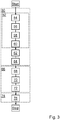
- the cooktop panel 12 is made by a method whose flow chart is shown in FIG Fig. 3 is shown.
- a process section 50 a raw material for the hob plate 12 is produced.
- a process subsection 52 of the method section 50 first high-purity synthetic cordierite is produced in order to provide crystallization nuclei for formation of the cordierite crystal phase for a subsequent sintering process.
- the process subsection 52 begins with a step 54.
- step 54 kaolinite with a mass fraction of 70% to 80%, magnesium hydroxide with a mass fraction of at most 12%, quartz and / or nanosilicates with a mass fraction of 10% to 20% and sodium tripolyphosphate with mixed in a mass fraction of 10% to 20%.
- a grain size of the materials used in step 54 is a maximum of 50 microns and advantageously at most 20 microns.
- a substance mixture prepared in step 54 is ground until a particle size of 1 ⁇ m to 5 ⁇ m is reached.
- a step 58 a calcination of the mixture at 1200 ° C to 1400 ° C. The calcination is carried out for a maximum of 4 hours.
- high-purity synthetic cordierite is obtained, which is ground again in a step 60 to a particle size of 1 ⁇ m to 5 ⁇ m. This concludes the process subsection 52.
- the high-purity synthetic cordierite is added to a starting mixture.
- the starting mixture further comprises magnesium silicate hydrate in a mass fraction of 30% to 50%, kaolinite in a mass fraction of 10% to 20%, calcined kaolinite in a mass fraction of at most 12% and pure alumina in a mass fraction of 10% to 20%.
- the starting mixture also has an increase in plasticity for a later extrusion of Ball Clay with a mass fraction of 10% to 20%.
- the starting mixture cordierite chamotte and aluminum titanate. The high-purity synthetic cordierite, the cordierite chamotte and the aluminum titanate together make up a maximum of 15% by mass of the starting mixture.
- the starting mixture comprises natural pigments, for example copper oxide, for coloring.
- the high-purity synthetic cordierite and / or the cordierite chamotte and / or the aluminum titanate and / or the pigments can be dispensed with in the starting mixture.
- the starting mixture is kneaded in a screw kneading machine until a homogeneous paste is achieved.
- water may be added to increase the plasticity of the paste. This ends the process section 50.
- a raw plate of the hob plate 12 is made from the paste.
- an extrusion is carried out.
- the paste is pressed by means of a screw conveyor through a shaping opening.
- the shaping opening is largely rectangular.
- the shaping opening may also have a shape deviating from a rectangle.
- the shaping opening can be designed in such a way that, during an extrusion, a raw plate is produced which has a fastening flange.
- the extrusion is carried out horizontally. Furthermore, the extrusion is assisted by an evacuation, whereby the paste completely fills the space provided before the shaping opening of an extruder.
- a raw plate with a thickness of 4 mm is produced.
- the green sheet is at room temperature dried in ambient air for a period of 24 h to 48 h.
- the green sheet is dried in a step 72 in a flow oven under air atmosphere at 145 ° C for a period of 36 hours. This ends the method section 66.
- a sintering of the raw plate is carried out.
- the sintering is carried out at a temperature of 1200 ° C to 1400 ° C.
- the sintering is done in ambient air.
- the sintering is carried out for a period of 2 hours to 8 hours.
- a calcination of the raw plate takes place.
- the cordierite crystal phase is formed in the green sheet. This finally gives the hob plate 12.
- the printing 32 is applied to a marking of the heating zones 24, 26, 28, 30 on the hob plate 12.
- the protective layer 14 is applied as a glass enamel 34 on the provided for setting up cooking utensils side of the hob plate 12.
- the entire hob plate 12 can be coated with the protective layer 14.
- the print 32 and / or the glass enamel 34 can also be applied to the dried raw plate before the sintering in step 76, in order then to be thermally treated together with the raw plate.
Landscapes
- Chemical & Material Sciences (AREA)
- Engineering & Computer Science (AREA)
- Ceramic Engineering (AREA)
- Structural Engineering (AREA)
- Manufacturing & Machinery (AREA)
- Materials Engineering (AREA)
- Organic Chemistry (AREA)
- Inorganic Chemistry (AREA)
- Mechanical Engineering (AREA)
- Life Sciences & Earth Sciences (AREA)
- General Engineering & Computer Science (AREA)
- Physics & Mathematics (AREA)
- Thermal Sciences (AREA)
- Combustion & Propulsion (AREA)
- Sustainable Development (AREA)
- Geochemistry & Mineralogy (AREA)
- General Chemical & Material Sciences (AREA)
- Chemical Kinetics & Catalysis (AREA)
- Dispersion Chemistry (AREA)
- Crystallography & Structural Chemistry (AREA)
- Compositions Of Oxide Ceramics (AREA)
- Cookers (AREA)
Description
- Die Erfindung geht aus von einem Verfahren zur Herstellung einer Hausgeräteplatte nach dem Oberbegriff des Anspruchs 1.
- Es ist bei Glaskeramik-Hausgeräteplatten bekannt, diese aus einer Ausgangsmischung herzustellen, welche in einem geschmolzenen Zustand eine Glasschmelze bildet.
- Aus der deutschen Patentschrift
DE 10 2006 035 928 B3 ist bereits ein Keramikstab zum Einsatz in einem Stabthermostat für Kochfelder bekannt, wobei der Keramikstab ein Längen/Durchmesserverhältnis von mehr als 10:1 aufweist. Zudem sind aus der genannten Patentschrift ein Stabthermostat mit einem oder mit dem Keramikstab sowie ein Verfahren zur Herstellung eines oder des Keramikstabs bekannt. Es wird ein Keramikstab zum Einsatz in einem Stabthermostat für Kochfelder vorgeschlagen, wobei der Keramikstab ein Längen / Durchmesserverhältnis von mehr als 10:1 aufweist und wobei der Keramikstab im Querschnitt senkrecht zu seiner Längserstreckung zwei parallele Seitenwände aufweist und/oder liegend gepresst hergestellt wurde. - Die internationale Patentanmeldung
WO 2009/053271 A1 betrifft eine Platte aus Glas oder Keramik und ein Tragbauteil, wobei die Platte eine Oberseite und eine der Oberseite gegenüberliegende Unterseite umfasst, und wobei in die Unterseite wenigstens eine Ausnehmung zur Befestigung eines Tragbauteils eingearbeitet ist. Die Ausnehmung ist zumindest teilweise durch Laserbearbeitung in das Material der Platte eingearbeitet. - Aus der US-Druckschrift
US 4,634,841 ist bereits eine Keramikabdeckung für ein Kochherd-Element bekannt. Die Keramikabdeckung für ein Kochherd-Element weist die Form einer flachen Platte auf, mit einer abwärts gerichteten, das Heizelement eng umschließenden Umrahmung. Eine praktische Zusammensetzung umfasst etwa 40 % Ton, 25 % Talkum, 35 % Lignit und kleine Mengen von Lignitrückständen und Dextrin. - Die deutsche Patentschrift
DE 102 42 481 C1 betrifft ein keramisches Kochsystem mit einer großflächigen, monolitischen, die gesamte Kochmulde abdeckenden Kochfläche mit einzelnen ausgewiesenen Kochzonen. Es ist vorgesehen, dass die Kochfläche aus einer niedrig dehnenden Sinterglaskeramik besteht, die mindestens 90%, vorzugsweise mindestens 92% der Hauptkristallphase Cordierit enthält. - Die Aufgabe der Erfindung besteht insbesondere darin, eine Hausgeräteplatte mit einer hohen Thermoschockbeständigkeit, einer guten Wärmeisolation und vorteilhaften mechanischen Eigenschaften bereitzustellen. Die Aufgabe wird erfindungsgemäß durch ein Verfahren gemäß dem Patentanspruch 1 und eine Hausgerätevorrichtung gemäß dem Patentanspruch 6 gelöst. Vorteilhafte Ausgestaltungen und Weiterbildungen der Erfindung können den Unteransprüchen entnommen werden.
- Die Erfindung geht aus von einem Verfahren zur Herstellung einer Hausgeräteplatte aus einer Ausgangsmischung.
- Es wird vorgeschlagen, dass für die Ausgangsmischung zumindest Magnesiumsilikathydrat, Kaolinit, kalzinierter Kaolinit und reines Aluminiumoxid verwendet werden. Unter einer "Ausgangsmischung" soll insbesondere eine Mischung von Ausgangsstoffen für ein Produkt verstanden werden. Vorzugsweise liegen die Ausgangsstoffe in Form eines Pulvers und/oder eines Granulats vor. Unter "kalziniertem Kaolinit" soll insbesondere ein Material verstanden werden, das bei einem Brennen von Kaolinit bei zumindest 1000°C entsteht. Insbesondere ist das Material entwässert und umfasst Aluminiumoxid und Siliciumdioxid. Unter "Aluminiumoxid" soll insbesondere eine chemische Verbindung aus zwei Aluminiumatomen und drei Sauerstoffatomen verstanden werden. Unter "reinem Aluminiumoxid" soll Aluminiumoxid in seiner Reinform verstanden werden. Unter einer "Reinform" eines Stoffs soll eine den Stoff enthaltende Stoffmischung verstanden werden, bei der der Stoff einen Massenanteil von mindestens 85%, insbesondere von zumindest 90% und besonders vorteilhaft von wenigstens 95% umfasst. Vorzugsweise wird in der Ausgangsmischung Magnesiumsilikathydrat mit einem Massenanteil in einem Bereich von 30% bis 50% verwendet. Vorzugsweise wird in der Ausgangsmischung Kaolinit mit einem Massenanteil in einem Bereich von 10% bis 20% verwendet. Vorzugsweise wird in der Ausgangsmischung kalzinierter Kaolinit mit einem Massenanteil in einem Bereich von 0% bis 12% verwendet. Vorzugsweise wird in der Ausgangsmischung, insbesondere zusätzlich zu dem in den übrigen Ausgangsstoffen der Ausgangsmischung enthaltenen Aluminiumoxid, reines Aluminiumoxid mit einem Massenanteil in einem Bereich von 10% bis 20% verwendet. Durch eine solche Ausgestaltung kann eine Hausgeräteplatte mit einer hohen Thermoschockbeständigkeit, einer guten Wärmeisolation und vorteilhaften mechanischen Eigenschaften geschaffen werden. Des Weiteren kann eine kostengünstige Hausgeräteplatte bereitgestellt werden, insbesondere im Vergleich zu einer Hausgeräteplatte aus einer Glaskeramik. Ferner kann bei Verwendung der Hausgeräteplatte als Kochfeldplatte in einem Kochfeld, insbesondere in einem Induktionskochfeld, im Vergleich zu einer Kochfeldplatte aus einer Glaskeramik Energie eingespart werden, da eine Wärmeleitfähigkeit der erfindungsgemäßen Hausgeräteplatte geringer ist. Hierdurch kann ferner ein zusätzlicher Wärmeeintrag von heißem Gargeschirr auf unterhalb der Kochfeldplatte angeordneten elektronischen Komponenten des Kochfelds reduziert werden, so dass durch einen geringeren Kühlbedarf eine weitere Kostensenkung ermöglicht wird. Durch ein keramisches Aussehen der Hausgeräteplatte können neue Designmöglichkeiten eröffnet werden. Insbesondere kann eine Anpassung des Aussehens an Küchenmöbel vorgenommen werden.
- Ferner wird vorgeschlagen, dass für die Ausgangsmischung zusätzlich Ball Clay zu einer Erhöhung einer Plastizität verwendet wird. Unter "Ball Clay" soll insbesondere ein sedimentärer plastischer Ton verstanden werden, der Kaolinit mit einem Massenanteil von 20% bis 80%, Glimmer mit einem Massenanteil von 10% bis 25% und Quarz mit einem Massenanteil von 6% bis 65% aufweist. Vorzugsweise wird in der Ausgangsmischung Ball Clay mit einem Massenanteil in einem Bereich von 10% bis 20% verwendet. Hierdurch kann eine folgende Extrusion vereinfacht werden.
- Für die Ausgangsmischung wird zusätzlich hochreiner synthetischer Cordierit verwendet. Unter "Cordierit" soll insbesondere ein Mineral aus der Mineralklasse der Silikate verstanden werden. Unter "hochreinem synthetischem Cordierit" soll künstlich hergestellter Cordierit verstanden werden, der mit einem Massenanteil von zumindest 90%, insbesondere von wenigstens 95%, vorzugsweise von mindestens 98% und besonders vorteilhaft von zumindest 99,9% eine Cordierit-Kristallphase umfasst. Unter einer "Cordierit-Kristallphase" soll insbesondere eine Kristallphase des Cordierits verstanden werden, insbesondere eine orthorhombische und/oder eine pseudohexagonale Kristallphase. Vorzugsweise enthält der hochreine synthetische Cordierit Eisen mit einem Massenanteil von höchstens 5%, insbesondere von maximal 1 % und besonders vorteilhaft von höchstens 0,1%. Vorzugsweise wird in der Ausgangsmischung hochreiner synthetischer Cordierit mit einem Massenanteil von höchstens 15% verwendet. Hierdurch können Keime für ein Kristallwachstum einer Cordierit-Kristallphase in die Ausgangsmischung eingebracht werden.
- In einer weiteren Ausgestaltung der Erfindung wird vorgeschlagen, dass für die Ausgangsmischung zusätzlich Cordierit Schamotte und/oder Aluminiumtitanat und/oder Farbmittel verwendet werden. Unter "Cordierit Schamotte" soll insbesondere ein künstlich hergestelltes und Cordierit und Aluminiumoxid umfassendes Material verstanden werden, welches Aluminiumoxid mit einem Massenanteil in einem Bereich von 10% bis 45% aufweist. Unter einem "Farbmittel" soll insbesondere eine farbgebende Substanz verstanden werden, insbesondere ein Farbstoff und vorzugsweise ein Pigment. Unter einem "Farbstoff" soll insbesondere ein in einem Anwendungsmedium lösliches Farbmittel verstanden werden. Unter einem "Pigment" soll insbesondere ein in einem Anwendungsmedium unlösliches Farbmittel verstanden werden. Vorzugsweise werden in der Ausgangsmischung Cordierit Schamotte und/oder Aluminiumtitanat mit einem Massenanteil von höchstens 15% verwendet. Besonders vorteilhaft werden in der Ausgangsmischung hochreiner synthetischer Cordierit und/oder Cordierit Schamotte und/oder Aluminiumtitanat mit einem Massenanteil von höchstens 15% verwendet. Vorzugsweise werden in der Ausgangsmischung Farbmittel, insbesondere Pigmente und vorzugsweise natürliche Pigmente, mit einem Massenanteil von höchstens 5% verwendet. Hierdurch können eine Thermoschockbeständigkeit und/oder eine Wärmeisolation der Hausgeräteplatte besonders vorteilhaft erhöht werden. Durch eine Zugabe von Farbmitteln können vorteilhafte optische Effekte erzielt werden. Insbesondere kann leicht auf spezielle Kundenwünsche hinsichtlich einer Farbgebung eingegangen werden. Des Weiteren kann ein Wiedererkennungswert eines Hausgeräts gesteigert werden.
- Ferner wird vorgeschlagen, dass die Ausgangsmischung zu einer homogenen Paste geknetet wird. Vorzugsweise wird die Ausgangsmischung unter Zugabe von Wasser zu einer homogenen Paste geknetet. Hierdurch kann eine Hausgeräteplatte mit möglichst homogenen Eigenschaften geschaffen werden.
- In einer besonders bevorzugten Ausgestaltung der Erfindung wird vorgeschlagen, dass die homogene Paste zu einer Rohplatte extrudiert wird. Darunter, dass "die homogene Paste zu einer Rohplatte extrudiert wird", soll insbesondere verstanden werden, dass die homogene Paste durch eine formgebende Öffnung gepresst und auf eine gewünschte Länge zugeschnitten wird, um so eine Form der Rohplatte anzunehmen. Vorzugsweise wird die Rohplatte horizontal und mit Unterstützung eines Vakuums extrudiert. Vorzugsweise wird die Rohplatte mit einer Dicke von 2 mm bis 5 mm extrudiert. Hierdurch kann auf eine automatisierbare und zuverlässige Weise eine schnelle Formgebung der Rohplatte erzielt werden.
- Das Verfahren umfasst wenigstens einen Sintervorgang. Unter einem "Sintervorgang" soll insbesondere ein Umformverfahren verstanden werden, bei dem Bestandteile der Rohplatte durch Erwärmung miteinander verbunden werden. Vorzugsweise wird die Rohplatte zu einer Entfernung von Wasser vor dem Sintervorgang getrocknet. Vorzugsweise wird die Rohplatte bei einer Temperatur nahe einem Schmelzpunkt des Cordierits gesintert, insbesondere bei einer Temperatur in einem Bereich von 1200°C bis 1400°C. Vorzugsweise findet der Sintervorgang in einer oxidierenden Atmosphäre statt. Vorzugsweise findet der Sintervorgang während einer Zeit von mindestens 2 h statt. Vorzugsweise findet der Sintervorgang während einer Zeit von höchstens 8 h statt. Vorzugsweise findet gleichzeitig mit der Sinterung auch eine Kalzinierung der Rohplatte statt. Hierdurch kann eine Bildung einer Cordierit-Kristallphase in der Rohplatte initiiert werden.
- Ferner wird eine Hausgerätevorrichtung mit einer erfindungsgemäßen Hausgeräteplatte, insbesondere einer Kochfeldplatte, vorgeschlagen, die durch ein erfindungsgemäßes Verfahren hergestellt ist. Unter einer "Hausgeräteplatte" soll insbesondere eine Baueinheit verstanden werden, die dazu vorgesehen ist, in einem betriebsbereiten Zustand wenigstens eine weitere Baueinheit eines Hausgeräts, insbesondere zumindest eine Heizeinheit, und/oder einen Funktionsraum eines Hausgeräts, insbesondere einen Garraum, abzudecken, vorzugsweise nach außen hin abzudecken. Unter "vorgesehen" soll insbesondere speziell ausgelegt und/oder ausgestattet verstanden werden. Hierdurch kann eine kostengünstige Hausgeräteplatte mit einer hohen Thermoschockbeständigkeit, einer guten Wärmeisolation und vorteilhaften mechanischen Eigenschaften geschaffen werden. Des Weiteren kann eine Hausgeräteplatte mit verschiedensten Farben geschaffen werden.
- In einer bevorzugten Ausgestaltung der Erfindung wird vorgeschlagen, dass die Hausgeräteplatte einen Massenanteil von 12% bis 16% Magnesiumoxid, 30% bis 35% Aluminiumoxid und 52% bis 57% Siliciumdioxid aufweist. Hierdurch können eine hohe Thermoschockbeständigkeit, eine gute Wärmeisolation und vorteilhafte mechanische Eigenschaften ermöglicht werden.
- In einer besonders bevorzugten Ausgestaltung der Erfindung wird vorgeschlagen, dass die Hausgeräteplatte zu einem wesentlichen Teil aus einer Cordierit-Kristallphase besteht. Darunter, dass die Hausgeräteplatte "zu einem wesentlichen Teil aus einer Cordierit-Kristallphase besteht", soll insbesondere verstanden werden, dass ein Massenanteil von wenigstens 90%, insbesondere von mindestens 95%, vorzugsweise von zumindest 98% und besonders vorteilhaft von wenigstens 99,9% aus einer Kristallphase des Cordierits besteht. Hierdurch können eine hohe Thermoschockbeständigkeit, eine gute Wärmeisolation und vorteilhafte mechanische Eigenschaften sichergestellt werden.
- Vorteilhaft weist die Hausgeräteplatte eine Dichte zwischen 1,8 g/cm3 und 2,4 g/cm3 auf. Vorzugsweise weist die Hausgeräteplatte eine Dichte zwischen 1,9 g/cm3 und 2,4 g/cm3 auf. Hierdurch kann eine Hausgeräteplatte geschaffen werden, die im Vergleich zu einer Hausgeräteplatte aus einer Glaskeramik leichter ist.
- Ferner wird vorgeschlagen, dass die Hausgeräteplatte eine Thermoschockbeständigkeit von zumindest 300 K aufweist. Darunter, dass die Hausgeräteplatte eine "Thermoschockbeständigkeit von zumindest 300 K aufweist", soll insbesondere verstanden werden, dass die Hausgeräteplatte dazu ausgelegt ist, einer kurzzeitigen Temperaturschwankung von zumindest 300 K und insbesondere von wenigstens 400 K zu widerstehen. Unter einer "kurzzeitigen Temperaturschwankung" soll insbesondere eine Temperaturschwankung mit einer Zeitdauer von höchstens 2 s, insbesondere von maximal 1 s, vorzugsweise von höchstens 0,5 und besonders vorteilhaft von maximal 0,1 s verstanden werden. Hierdurch kann eine zuverlässige Funktion der Hausgeräteplatte gewährleistet werden. Ferner kann ein Einsatz der Hausgeräteplatte als Kochfeldplatte ermöglicht werden.
- In einer weiteren Ausgestaltung der Erfindung wird vorgeschlagen, dass die Hausgerätevorrichtung eine Schutzschicht umfasst, die die Hausgeräteplatte zumindest teilweise umgibt. Unter einer "Schutzschicht" soll insbesondere eine Schicht verstanden werden, die dazu vorgesehen ist, einen Schutz der Hausgeräteplatte vor mechanischer Belastung, insbesondere einem Abrieb, und/oder chemischer Belastung, insbesondere einer Korrosion und/oder einer Einwirkung von Lösungs- und/oder Reinigungsmitteln, bereitzustellen. Insbesondere verfügt die Schutzschicht über eine höhere mechanische und/oder chemische Beständigkeit als die Hausgeräteplatte. Vorzugsweise ist die Schutzschicht des Weiteren dazu vorgesehen, eine Oberflächenrauigkeit der Hausgeräteplatte auszugleichen. Darunter, dass "eine Schutzschicht die Hausgeräteplatte zumindest teilweise umgibt", soll insbesondere verstanden werden, dass die Schutzschicht zumindest teilweise an einer Außenoberfläche der Hausgeräteplatte angeordnet ist. Unter einer "Außenoberfläche" soll insbesondere eine Oberfläche verstanden werden, die von zumindest einem von einem Schwerpunkt der Hausgeräteplatte ausgehenden Strahl durchstoßen wird, wobei der Strahl an einem Durchstoßungspunkt die Hausgeräteplatte endgültig verlässt. Vorzugsweise ist die Schutzschicht eine Glasemaille. Hierdurch kann ein wirksamer Schutz der Hausgeräteplatte bereitgestellt werden. Ferner kann eine Oberfläche der Hausgeräteplatte geglättet werden, wodurch die Hausgeräteplatte einerseits eine optische Aufwertung erfahren kann und andererseits ein Reinigungsaufwand reduziert werden kann.
- Ferner wird ein Hausgerät, insbesondere ein Induktionskochfeld, mit einer erfindungsgemäßen Hausgerätevorrichtung vorgeschlagen. Generell kann die Hausgeräteplatte in allen dem Fachmann als sinnvoll erscheinenden Hausgeräten eingesetzt werden, insbesondere jedoch in Induktionskochfeldern, Backöfen, Geschirrspülmaschinen und in Kühlschränken. Ferner ist ein Einsatz als thermoschockbeständige Küchenarbeitsplatte denkbar.
- Weitere Vorteile ergeben sich aus der folgenden Zeichnungsbeschreibung. In der Zeichnung ist ein Ausführungsbeispiel der Erfindung dargestellt. Die Zeichnung, die Beschreibung und die Ansprüche enthalten zahlreiche Merkmale in Kombination. Der Fachmann wird die Merkmale zweckmäßigerweise auch einzeln betrachten und zu sinnvollen weiteren Kombinationen zusammenfassen.
- Es zeigen:
- Fig. 1
- ein Induktionskochfeld mit einer eine Kochfeldplatte umfassenden Hausgerätevorrichtung in einer Draufsicht,
- Fig. 2
- die Hausgerätevorrichtung in einer nicht maßstabsgetreuen Schnittdarstellung entlang einer Linie II-II in
Fig. 1 und - Fig. 3
- ein Ablaufdiagramm eines Verfahrens zu einer Herstellung der Kochfeldplatte.
-
Fig. 1 zeigt ein als Induktionskochfeld 16 ausgestaltetes Hausgerät mit einer erfindungsgemäßen Hausgerätevorrichtung 15. Die Hausgerätevorrichtung 15 umfasst eine als Kochfeldplatte 12 ausgeführte Hausgeräteplatte 10. Die Kochfeldplatte 12 ist in einem Rahmen 22 des Induktionskochfelds 16 gehalten. Auf der Kochfeldplatte 12 sind in bekannter Weise vier Heizzonen 24, 26, 28, 30 mittels einer Bedruckung 32 markiert, die in einem betriebsbereiten Zustand des Induktionskochfelds 16 zu einem Aufstellen von Gargeschirr vorgesehen sind. Jeder der Heizzonen 24, 26, 28, 30 ist unterhalb der Kochfeldplatte 12 ein Induktionsheizelement zugeordnet (nicht dargestellt). Die Kochfeldplatte 12 besteht aus einem auf Cordierit basierenden synthetischen Aluminium-Magnesium-Silikat. Die Kochfeldplatte 12 weist mit einem Massenanteil von 12% bis 16% Magnesiumoxid, mit einem Massenanteil von 30% bis 35% Aluminiumoxid und mit einem Massenanteil von 52% bis 57% Siliciumdioxid auf. Die Kochfeldplatte 12 besteht zu einem wesentlichen Teil aus einer Cordierit-Kristallphase. Die Kochfeldplatte 12 weist eine Dichte von 1,8 g/cm3 bis 2,4 g/cm3 auf. Die Kochfeldplatte 12 weist eine Biegefestigkeit von 29 MPa bis 69 MPa auf. Die Kochfeldplatte 12 weist in einem Temperaturbereich von 25°C bis 300°C einen mittleren thermischen Ausdehnungskoeffizienten von 0,46×10⁻⁶ K-1 bis 7,61×10⁻⁶ K-1 auf. Die Kochfeldplatte 12 weist in einem Temperaturbereich oberhalb von 300°C bis 800°C einen mittleren thermischen Ausdehnungskoeffizienten von 2,34×10⁻⁶ K-1 bis 6,90×10⁻⁶ K-1 auf. Die Kochfeldplatte 12 weist eine Thermoschockbeständigkeit von zumindest 400 K auf. -
Fig. 2 zeigt einen Teilbereich der Hausgerätevorrichtung 15 in einer nicht maßstabsgetreuen Schnittdarstellung entlang einer Linie II-II inFig. 1 . Die Kochfeldplatte 12 ist auf einer der Bedruckung 32 der Heizzonen 24, 26, 28, 30 zugewandten Seite und damit auf der zu einem Aufstellen von Gargeschirr vorgesehenen Seite von einer Schutzschicht 14 bedeckt. Die Schutzschicht 14 ist eine dem Fachmann bekannte transparente Glasemaille 34. Die Glasemaille 34 sorgt für eine glatte Aufstellfläche für Gargeschirr, welche damit auch leicht zu reinigen ist. Des Weiteren schützt die Glasemaille 34 die Kochfeldplatte 12 vor einer mechanischen und/oder chemischen Einwirkung. - Die Kochfeldplatte 12 ist mittels eines Verfahrens hergestellt, dessen Ablaufdiagramm in
Fig. 3 dargestellt ist. In einem Verfahrensabschnitt 50 wird eine Rohmasse für die Kochfeldplatte 12 hergestellt. In einem Verfahrensunterabschnitt 52 des Verfahrensabschnitts 50 wird zuerst hochreiner synthetischer Cordierit hergestellt, um für einen späteren Sintervorgang Kristallisationskeime für eine Bildung der Cordierit-Kristallphase bereitzustellen. Der Verfahrensunterabschnitt 52 beginnt mit einem Schritt 54. Im Schritt 54 werden Kaolinit mit einem Massenanteil von 70% bis 80%, Magnesiumhydroxid mit einem Massenanteil von höchstens 12%, Quarz und/oder Nanosilikate mit einem Massenanteil von 10% bis 20% und Natriumtripolyphosphat mit einem Massenanteil von 10% bis 20% vermischt. Dabei ist darauf zu achten, dass ein Massenanteil von Erdalkalimetallen höchstens 1% beträgt, um eine Bildung einer flüssigen Phase bei einer folgenden Kalzinierung zu vermeiden. Eine Korngröße der im Schritt 54 verwendeten Stoffe beträgt maximal 50 µm und vorteilhaft höchstens 20 µm. In einem Schritt 56 wird eine im Schritt 54 vorbereitete Stoffmischung gemahlen, bis eine Korngröße von 1 µm bis 5 µm erreicht ist. Darauf folgt in einem Schritt 58 eine Kalzinierung der Stoffmischung bei 1200°C bis 1400°C. Die Kalzinierung wird während einer Zeitdauer von maximal 4 h durchgeführt. Nach der Kalzinierung erhält man hochreinen synthetischen Cordierit, welcher in einem Schritt 60 erneut bis zu einer Korngröße von 1 µm bis 5 µm gemahlen wird. Hiermit endet der Verfahrensunterabschnitt 52. - In einem Schritt 62 des Verfahrensabschnitts 50 wird der hochreine synthetische Cordierit zu einer Ausgangsmischung hinzugefügt. Die Ausgangsmischung weist ferner Magnesiumsilikathydrat mit einem Massenanteil von 30% bis 50%, Kaolinit mit einem Massenanteil von 10% bis 20%, kalzinierten Kaolinit mit einem Massenanteil von höchstens 12% und reines Aluminiumoxid mit einem Massenanteil von 10% bis 20% auf. Die Ausgangsmischung weist ferner zu einer Erhöhung einer Plastizität für eine spätere Extrusion Ball Clay mit einem Massenanteil von 10% bis 20% auf. Ferner weist die Ausgangsmischung Cordierit Schamotte und Aluminiumtitanat auf. Der hochreine synthetische Cordierit, die Cordierit Schamotte und das Aluminiumtitanat machen zusammen einen Massenanteil von höchstens 15% der Ausgangsmischung aus. Ferner umfasst die Ausgangsmischung natürliche Pigmente, zum Beispiel Kupferoxid, für eine Farbgebung. Alternativ kann in der Ausgangsmischung auch auf den hochreinen synthetischen Cordierit und/oder die Cordierit Schamotte und/oder das Aluminiumtitanat und/oder auf die Pigmente verzichtet werden. In einem Schritt 64 wird die Ausgangsmischung in einer Schneckenknetmaschine geknetet, bis eine homogene Paste erreicht ist. Gegebenenfalls kann Wasser zugegeben werden, um die Plastizität der Paste zu erhöhen. Hiermit endet der Verfahrensabschnitt 50.
- In einem Verfahrensabschnitt 66 wird aus der Paste eine Rohplatte der Kochfeldplatte 12 hergestellt. In einem Schritt 68 des Verfahrensabschnitts 66 wird eine Extrusion vorgenommen. Hierzu wird die Paste mittels eines Schneckenförderers durch eine formgebende Öffnung gepresst. Die formgebende Öffnung ist weitgehend rechteckig. Alternativ kann die formgebende Öffnung auch eine von einem Rechteck abweichende Form aufweisen. Insbesondere kann die formgebende Öffnung derart gestaltet sein, dass bei einer Extrusion eine Rohplatte entsteht, die einen Befestigungsflansch aufweist. Um einer Verformung der Rohplatte entgegen zu wirken, wird die Extrusion horizontal vorgenommen. Des Weiteren wird die Extrusion durch eine Evakuierung unterstützt, wodurch die Paste den ihr zur Verfügung gestellten Raum vor der formgebenden Öffnung eines Extruders vollständig ausfüllt. Durch die Extrusion wird eine Rohplatte mit einer Dicke von 4 mm hergestellt. In einem Schritt 70 wird die Rohplatte bei Raumtemperatur in Umgebungsluft während einer Zeitdauer von 24 h bis 48 h getrocknet. Zu einer restlosen Entfernung von Wasser wird die Rohplatte in einem Schritt 72 in einem Strömungsofen unter Luftatmosphäre bei 145°C während einer Zeitdauer von 36 h getrocknet. Hiermit endet der Verfahrensabschnitt 66.
- In einem Verfahrensabschnitt 74 wird die Kochfeldplatte 12 fertiggestellt. In einem Schritt 76 des Verfahrensabschnitts 74 wird eine Sinterung der Rohplatte vorgenommen. Die Sinterung wird bei einer Temperatur von 1200°C bis 1400°C vorgenommen. Die Sinterung wird in Umgebungsluft vorgenommen. Die Sinterung wird während einer Zeitdauer von 2 h bis 8 h vorgenommen. Gleichzeitig mit der Sinterung findet auch eine Kalzinierung der Rohplatte statt. Während der Sinterung und Kalzinierung wird die Cordierit-Kristallphase in der Rohplatte ausgebildet. Hierdurch erhält man schließlich die Kochfeldplatte 12. Hiermit endet der Verfahrensabschnitt 74 und damit das Verfahren zur Herstellung der Kochfeldplatte 12.
- Abschließend wird mittels eines Siebdruckverfahrens die Bedruckung 32 zu einer Markierung der Heizzonen 24, 26, 28, 30 auf die Kochfeldplatte 12 aufgebracht. Ferner wird die Schutzschicht 14 als Glasemaille 34 auf die zu einem Aufstellen von Gargeschirr vorgesehene Seite der Kochfeldplatte 12 aufgebracht. Alternativ kann auch die komplette Kochfeldplatte 12 mit der Schutzschicht 14 überzogen werden. Alternativ können die Bedruckung 32 und/oder die Glasemaille 34 auch vor der Sinterung im Schritt 76 auf die getrocknete Rohplatte aufgebracht werden, um dann zusammen mit der Rohplatte thermisch behandelt zu werden.
-
- 10
- Hausgeräteplatte
- 12
- Kochfeldplatte
- 14
- Schutzschicht
- 15
- Hausgerätevorrichtung
- 16
- Induktionskochfeld
- 22
- Rahmen
- 24
- Heizzone
- 26
- Heizzone
- 28
- Heizzone
- 30
- Heizzone
- 32
- Bedruckung
- 34
- Glasemaille
- 50
- Verfahrensabschnitt
- 52
- Verfahrensunterabschnitt
- 54
- Schritt
- 56
- Schritt
- 58
- Schritt
- 60
- Schritt
- 62
- Schritt
- 64
- Schritt
- 66
- Verfahrensabschnitt
- 68
- Schritt
- 70
- Schritt
- 72
- Schritt
- 74
- Verfahrensabschnitt
- 76
- Schritt
Claims (12)
- Verfahren zur Herstellung einer Hausgeräteplatte (10) aus einer Ausgangsmischung, mit wenigstens einem Sintervorgang, dadurch gekennzeichnet, dass für die Ausgangsmischung zumindest Magnesiumsilikathydrat, Kaolinit, kalzinierter Kaolinit und reines Aluminiumoxid verwendet werden, wobei für die Ausgangsmischung zusätzlich hochreiner synthetischer Cordierit verwendet wird, wobei reines Aluminiumoxid Aluminiumoxid in seiner Reinform ist, wobei die Reinform eines Stoffs eine den Stoff enthaltende Stoffmischung ist, bei der der Stoff einen Massenanteil von mindestens 85% umfasst, wobei hochreiner synthetischer Cordierit künstlich hergestellter Cordierit ist, der mit einem Massenanteil von zumindest 90% eine Cordierit-Kristallphase umfasst.
- Verfahren nach Anspruch 1, dadurch gekennzeichnet, dass für die Ausgangsmischung zusätzlich Ball Clay mit einem Massenanteil in einem Bereich von 10% bis 20% zu einer Erhöhung einer Plastizität verwendet wird.
- Verfahren nach einem der vorhergehenden Ansprüche, dadurch gekennzeichnet, dass für die Ausgangsmischung zusätzlich Cordierit Schamotte und/oder Aluminiumtitanat und/oder Farbmittel verwendet werden.
- Verfahren nach einem der vorhergehenden Ansprüche, dadurch gekennzeichnet, dass die Ausgangsmischung zu einer homogenen Paste geknetet wird.
- Verfahren nach Anspruch 4, dadurch gekennzeichnet, dass die homogene Paste zu einer Rohplatte extrudiert wird.
- Hausgerätevorrichtung mit einer Hausgeräteplatte (10), insbesondere einer Kochfeldplatte (12), die durch ein Verfahren nach einem der vorhergehenden Ansprüche hergestellt ist.
- Hausgerätevorrichtung nach Anspruch 6, dadurch gekennzeichnet, dass die Hausgeräteplatte (10) einen Massenanteil von 12% bis 16% Magnesiumoxid, 30% bis 35% Aluminiumoxid und 52% bis 57% Siliciumdioxid aufweist.
- Hausgerätevorrichtung nach Anspruch 6 oder 7, dadurch gekennzeichnet, dass die Hausgeräteplatte (10) zu einem wesentlichen Teil aus einer Cordierit-Kristallphase besteht.
- Hausgerätevorrichtung nach einem der Ansprüche 6 bis 8, dadurch gekennzeichnet, dass die Hausgeräteplatte (10) eine Dichte zwischen 1,8 g/cm3 und 2,4 g/cm3 aufweist.
- Hausgerätevorrichtung nach einem der Ansprüche 6 bis 9, dadurch gekennzeichnet, dass die Hausgeräteplatte (10) eine Thermoschockbeständigkeit von zumindest 300 K aufweist.
- Hausgerätevorrichtung nach einem der Ansprüche 6 bis 10, gekennzeichnet durch eine Schutzschicht (14), die die Hausgeräteplatte (10) zumindest teilweise umgibt.
- Hausgerät, insbesondere Induktionskochfeld, mit einer Hausgerätevorrichtung (15) nach einem der Ansprüche 6 bis 11.
Priority Applications (1)
| Application Number | Priority Date | Filing Date | Title |
|---|---|---|---|
| PL11810888T PL2655292T3 (pl) | 2010-12-21 | 2011-12-14 | Sposób wytwarzania panelu urządzenia domowego i zespół urządzenia domowego z panelem urządzenia domowego |
Applications Claiming Priority (2)
| Application Number | Priority Date | Filing Date | Title |
|---|---|---|---|
| ES201031893A ES2385082B1 (es) | 2010-12-21 | 2010-12-21 | Procedimiento para la fabricación de una placa de aparato doméstico, y dispositivo de aparato doméstico con una placa de aparato doméstico. |
| PCT/IB2011/055659 WO2012085763A1 (de) | 2010-12-21 | 2011-12-14 | Verfahren zur herstellung einer hausgeräteplatte und hausgerätevorrichtung mit einer hausgeräteplatte |
Publications (2)
| Publication Number | Publication Date |
|---|---|
| EP2655292A1 EP2655292A1 (de) | 2013-10-30 |
| EP2655292B1 true EP2655292B1 (de) | 2018-02-21 |
Family
ID=45507727
Family Applications (1)
| Application Number | Title | Priority Date | Filing Date |
|---|---|---|---|
| EP11810888.5A Active EP2655292B1 (de) | 2010-12-21 | 2011-12-14 | Verfahren zur herstellung einer hausgeräteplatte und hausgerätevorrichtung mit einer hausgeräteplatte |
Country Status (9)
| Country | Link |
|---|---|
| US (2) | US10080430B2 (de) |
| EP (1) | EP2655292B1 (de) |
| KR (1) | KR20140015277A (de) |
| CN (1) | CN103402947B (de) |
| ES (2) | ES2385082B1 (de) |
| PL (1) | PL2655292T3 (de) |
| RU (1) | RU2013130381A (de) |
| TR (1) | TR201806780T4 (de) |
| WO (1) | WO2012085763A1 (de) |
Families Citing this family (2)
| Publication number | Priority date | Publication date | Assignee | Title |
|---|---|---|---|---|
| EA027611B1 (ru) * | 2015-10-14 | 2017-08-31 | Сергей Викторович ВИНОГРАДОВ | Столешница |
| WO2017065633A1 (ru) * | 2015-10-14 | 2017-04-20 | Сергей Викторович ВИНОГРАДОВ | Столешница |
Citations (2)
| Publication number | Priority date | Publication date | Assignee | Title |
|---|---|---|---|---|
| US4634841A (en) * | 1985-06-18 | 1987-01-06 | Laughrey James C | Cover for cooking stove heating element |
| DE10242481C1 (de) * | 2002-09-13 | 2003-12-04 | Schott Glas | Keramisches Kochsystem und Verfahren zur Herstellung derselben |
Family Cites Families (15)
| Publication number | Priority date | Publication date | Assignee | Title |
|---|---|---|---|---|
| US3379570A (en) * | 1965-10-21 | 1968-04-23 | Mc Donnell Douglas Corp | Battery containing a sintered aluminosilicate separator |
| JPS5885591A (ja) * | 1981-11-16 | 1983-05-21 | 鐘淵化学工業株式会社 | 難燃性紙基材不飽和ポリエステル樹脂銅張り積層板 |
| JPS6033250A (ja) * | 1983-07-28 | 1985-02-20 | 株式会社興人 | セラミツク成形物の製造方法 |
| DE3444407A1 (de) * | 1984-12-05 | 1986-06-05 | Didier-Werke Ag, 6200 Wiesbaden | Keramisches formteil mit gradientenfoermiger porositaet und dessen verwendung zur herstellung von verbundwerkstoff-formteilen |
| US5034356A (en) * | 1989-08-07 | 1991-07-23 | General Electric Company | Ceramic matrix composite |
| FR2653113B1 (fr) * | 1989-10-18 | 1994-03-04 | Ceramiques Composites | Compositions verrieres oxyazotees, leurs precurseurs et leur application a la preparation de compositions vitroceramiques et de materiaux composites. |
| JPH06206772A (ja) * | 1992-11-18 | 1994-07-26 | Toshiba Corp | 窒化アルミニウム焼結体およびセラミック回路基板 |
| US5344799A (en) * | 1992-12-14 | 1994-09-06 | Corning Incorporated | Formable ceramic compositions and method of use therefor |
| MY131652A (en) * | 1993-04-22 | 2007-08-30 | Somar Corp | Laser beam absorbing resin composition, coloring material therefor and laser beam marking method |
| CN2304839Y (zh) | 1997-06-11 | 1999-01-20 | 广州市红日燃具公司 | 一种燃气灶具用的多孔陶瓷片 |
| US6077796A (en) * | 1997-12-02 | 2000-06-20 | Corning Incorporated | Low CTE-low porosity cordierite bodies and method of making same |
| DE102006035928B3 (de) | 2006-07-31 | 2008-02-28 | Sembach Gmbh & Co. Kg | Keramikstab, Stabthermostat mit einem Keramikstab und Verfahren zur Herstellung eines Keramikstabs |
| MY156628A (en) * | 2007-07-04 | 2016-03-15 | Samsung Electronics Co Ltd | Apparatus and method for managing connection identification in a communication system |
| ES2328997B1 (es) | 2007-10-22 | 2010-08-30 | Bsh Electrodomesticos España, S.A. | Campo de coccion con una placa de cubierta de vidrio o ceramica y procedimiento para la fabricacion de una placa de cubierta. |
| JP5128989B2 (ja) | 2008-03-25 | 2013-01-23 | 日本碍子株式会社 | コーディエライトセラミックスの製造方法 |
-
2010
- 2010-12-21 ES ES201031893A patent/ES2385082B1/es not_active Expired - Fee Related
-
2011
- 2011-12-14 KR KR1020137016012A patent/KR20140015277A/ko not_active Withdrawn
- 2011-12-14 PL PL11810888T patent/PL2655292T3/pl unknown
- 2011-12-14 ES ES11810888.5T patent/ES2662126T3/es active Active
- 2011-12-14 RU RU2013130381/03A patent/RU2013130381A/ru not_active Application Discontinuation
- 2011-12-14 CN CN201180062007.0A patent/CN103402947B/zh not_active Expired - Fee Related
- 2011-12-14 EP EP11810888.5A patent/EP2655292B1/de active Active
- 2011-12-14 WO PCT/IB2011/055659 patent/WO2012085763A1/de not_active Ceased
- 2011-12-14 TR TR2018/06780T patent/TR201806780T4/tr unknown
- 2011-12-14 US US13/992,782 patent/US10080430B2/en active Active
-
2018
- 2018-06-26 US US16/018,283 patent/US20180295985A1/en not_active Abandoned
Patent Citations (2)
| Publication number | Priority date | Publication date | Assignee | Title |
|---|---|---|---|---|
| US4634841A (en) * | 1985-06-18 | 1987-01-06 | Laughrey James C | Cover for cooking stove heating element |
| DE10242481C1 (de) * | 2002-09-13 | 2003-12-04 | Schott Glas | Keramisches Kochsystem und Verfahren zur Herstellung derselben |
Also Published As
| Publication number | Publication date |
|---|---|
| TR201806780T4 (tr) | 2018-06-21 |
| CN103402947B (zh) | 2016-08-24 |
| ES2662126T3 (es) | 2018-04-05 |
| ES2385082A1 (es) | 2012-07-18 |
| PL2655292T3 (pl) | 2018-08-31 |
| US20180295985A1 (en) | 2018-10-18 |
| US20130256295A1 (en) | 2013-10-03 |
| EP2655292A1 (de) | 2013-10-30 |
| CN103402947A (zh) | 2013-11-20 |
| US10080430B2 (en) | 2018-09-25 |
| RU2013130381A (ru) | 2015-01-27 |
| WO2012085763A1 (de) | 2012-06-28 |
| KR20140015277A (ko) | 2014-02-06 |
| ES2385082B1 (es) | 2013-05-24 |
Similar Documents
| Publication | Publication Date | Title |
|---|---|---|
| DE102010032113B9 (de) | Transparente oder transparente eingefärbte Lithiumaluminiumsilikat-Glaskeramik mit einstellbarer thermischer Ausdehnung und deren Verwendung | |
| EP1967499B1 (de) | Verfahren zur Herstellung einer beschichteten dreidimensional verformten Scheibe aus Glaskeramik | |
| EP0629589A2 (de) | Verfahren zur Herstellung von natursteinähnlichen, plattenförmigen Bau- und Dekorationsmaterialien | |
| EP2577167A2 (de) | Feuerstätte | |
| EP2379771B1 (de) | Metallische gegenstände mit glasartigen oder glaskeramischen pigmentierten schutzschichten | |
| EP2128528A2 (de) | Backofenmuffel | |
| EP3175179A1 (de) | Isolationsvorrichtung, tür und haushaltsgargerät | |
| WO2012085763A1 (de) | Verfahren zur herstellung einer hausgeräteplatte und hausgerätevorrichtung mit einer hausgeräteplatte | |
| EP0859538B1 (de) | Kochgerät mit Glaskeramikkochfläche mit Schnellkochzone | |
| DE10007923C1 (de) | Garofentür mit Innenscheibe aus Borosilicat-Glas | |
| DE202010000346U1 (de) | Dekorplatte mit mineralischer Deckplatte | |
| DE102008053771B4 (de) | Auskleidung für einen Backofen und Backofen | |
| DE19638241A1 (de) | Backofen mit einer Einrichtung zur pyrolytischen Selbstreinigung | |
| DE102008040636A1 (de) | Glaskeramikplatte, deren betriebliche Unterseite mit einer Beschichtung versehen ist und Verfahren zum Aufbringen der Beschichtung | |
| DE2443590A1 (de) | Halbwegs durchsichtige abschirmplatte fuer hochfrequente elektrische wellen und verfahren zum herstellen der platte | |
| DE19717038A1 (de) | Dekorplatte zur Wärmespeicherung | |
| WO2016207447A1 (de) | Cordierithaltiger keramischer werkstoff, ein verfahren zu dessen herstellung, sowie seine verwendung | |
| DE19801079C2 (de) | Kamin oder Ofen für den Hausbereich | |
| DE102004041007B4 (de) | Kochfeldplatte sowie Kochfeld mit einer solchen Kochfeldplatte | |
| DE10129200A1 (de) | Beschichtung mit anorganischen Schäumen zum thermischen Isolieren von Geräten und Bauteilen | |
| DE102012224035A1 (de) | Gargerät | |
| WO2008052723A2 (de) | Topf zur verwendung auf einem herd und/oder in einem ofen | |
| DE1480445C (de) | Verfahren zur Herstellung einer heizbaren Autoscheibe | |
| DE29717872U1 (de) | Dekorplatte zur Wärmespeicherung | |
| DE102009040927A1 (de) | Kaminofen |
Legal Events
| Date | Code | Title | Description |
|---|---|---|---|
| PUAI | Public reference made under article 153(3) epc to a published international application that has entered the european phase |
Free format text: ORIGINAL CODE: 0009012 |
|
| 17P | Request for examination filed |
Effective date: 20130722 |
|
| AK | Designated contracting states |
Kind code of ref document: A1 Designated state(s): AL AT BE BG CH CY CZ DE DK EE ES FI FR GB GR HR HU IE IS IT LI LT LU LV MC MK MT NL NO PL PT RO RS SE SI SK SM TR |
|
| DAX | Request for extension of the european patent (deleted) | ||
| RAP1 | Party data changed (applicant data changed or rights of an application transferred) |
Owner name: SOCIEDAD ANONIMA MINERA CATALANO-ARAGONESA (SAMCA) Owner name: BSH HAUSGERAETE GMBH |
|
| 17Q | First examination report despatched |
Effective date: 20160308 |
|
| GRAP | Despatch of communication of intention to grant a patent |
Free format text: ORIGINAL CODE: EPIDOSNIGR1 |
|
| RIC1 | Information provided on ipc code assigned before grant |
Ipc: C04B 35/626 20060101ALI20170801BHEP Ipc: C04B 41/00 20060101ALI20170801BHEP Ipc: C04B 111/00 20060101ALN20170801BHEP Ipc: C04B 41/52 20060101ALI20170801BHEP Ipc: C04B 41/89 20060101ALI20170801BHEP Ipc: F24C 15/10 20060101ALI20170801BHEP Ipc: C04B 35/195 20060101AFI20170801BHEP |
|
| INTG | Intention to grant announced |
Effective date: 20170906 |
|
| GRAS | Grant fee paid |
Free format text: ORIGINAL CODE: EPIDOSNIGR3 |
|
| GRAA | (expected) grant |
Free format text: ORIGINAL CODE: 0009210 |
|
| AK | Designated contracting states |
Kind code of ref document: B1 Designated state(s): AL AT BE BG CH CY CZ DE DK EE ES FI FR GB GR HR HU IE IS IT LI LT LU LV MC MK MT NL NO PL PT RO RS SE SI SK SM TR |
|
| REG | Reference to a national code |
Ref country code: GB Ref legal event code: FG4D Free format text: NOT ENGLISH |
|
| REG | Reference to a national code |
Ref country code: CH Ref legal event code: EP |
|
| REG | Reference to a national code |
Ref country code: AT Ref legal event code: REF Ref document number: 971517 Country of ref document: AT Kind code of ref document: T Effective date: 20180315 |
|
| REG | Reference to a national code |
Ref country code: IE Ref legal event code: FG4D Free format text: LANGUAGE OF EP DOCUMENT: GERMAN |
|
| REG | Reference to a national code |
Ref country code: DE Ref legal event code: R096 Ref document number: 502011013797 Country of ref document: DE |
|
| REG | Reference to a national code |
Ref country code: ES Ref legal event code: FG2A Ref document number: 2662126 Country of ref document: ES Kind code of ref document: T3 Effective date: 20180405 |
|
| REG | Reference to a national code |
Ref country code: NL Ref legal event code: FP |
|
| REG | Reference to a national code |
Ref country code: LT Ref legal event code: MG4D |
|
| PG25 | Lapsed in a contracting state [announced via postgrant information from national office to epo] |
Ref country code: HR Free format text: LAPSE BECAUSE OF FAILURE TO SUBMIT A TRANSLATION OF THE DESCRIPTION OR TO PAY THE FEE WITHIN THE PRESCRIBED TIME-LIMIT Effective date: 20180221 Ref country code: FI Free format text: LAPSE BECAUSE OF FAILURE TO SUBMIT A TRANSLATION OF THE DESCRIPTION OR TO PAY THE FEE WITHIN THE PRESCRIBED TIME-LIMIT Effective date: 20180221 Ref country code: LT Free format text: LAPSE BECAUSE OF FAILURE TO SUBMIT A TRANSLATION OF THE DESCRIPTION OR TO PAY THE FEE WITHIN THE PRESCRIBED TIME-LIMIT Effective date: 20180221 Ref country code: CY Free format text: LAPSE BECAUSE OF FAILURE TO SUBMIT A TRANSLATION OF THE DESCRIPTION OR TO PAY THE FEE WITHIN THE PRESCRIBED TIME-LIMIT Effective date: 20180221 Ref country code: NO Free format text: LAPSE BECAUSE OF FAILURE TO SUBMIT A TRANSLATION OF THE DESCRIPTION OR TO PAY THE FEE WITHIN THE PRESCRIBED TIME-LIMIT Effective date: 20180521 |
|
| PG25 | Lapsed in a contracting state [announced via postgrant information from national office to epo] |
Ref country code: GR Free format text: LAPSE BECAUSE OF FAILURE TO SUBMIT A TRANSLATION OF THE DESCRIPTION OR TO PAY THE FEE WITHIN THE PRESCRIBED TIME-LIMIT Effective date: 20180522 Ref country code: LV Free format text: LAPSE BECAUSE OF FAILURE TO SUBMIT A TRANSLATION OF THE DESCRIPTION OR TO PAY THE FEE WITHIN THE PRESCRIBED TIME-LIMIT Effective date: 20180221 Ref country code: SE Free format text: LAPSE BECAUSE OF FAILURE TO SUBMIT A TRANSLATION OF THE DESCRIPTION OR TO PAY THE FEE WITHIN THE PRESCRIBED TIME-LIMIT Effective date: 20180221 Ref country code: RS Free format text: LAPSE BECAUSE OF FAILURE TO SUBMIT A TRANSLATION OF THE DESCRIPTION OR TO PAY THE FEE WITHIN THE PRESCRIBED TIME-LIMIT Effective date: 20180221 Ref country code: BG Free format text: LAPSE BECAUSE OF FAILURE TO SUBMIT A TRANSLATION OF THE DESCRIPTION OR TO PAY THE FEE WITHIN THE PRESCRIBED TIME-LIMIT Effective date: 20180521 |
|
| PG25 | Lapsed in a contracting state [announced via postgrant information from national office to epo] |
Ref country code: MT Free format text: LAPSE BECAUSE OF FAILURE TO SUBMIT A TRANSLATION OF THE DESCRIPTION OR TO PAY THE FEE WITHIN THE PRESCRIBED TIME-LIMIT Effective date: 20180221 |
|
| PG25 | Lapsed in a contracting state [announced via postgrant information from national office to epo] |
Ref country code: AL Free format text: LAPSE BECAUSE OF FAILURE TO SUBMIT A TRANSLATION OF THE DESCRIPTION OR TO PAY THE FEE WITHIN THE PRESCRIBED TIME-LIMIT Effective date: 20180221 Ref country code: RO Free format text: LAPSE BECAUSE OF FAILURE TO SUBMIT A TRANSLATION OF THE DESCRIPTION OR TO PAY THE FEE WITHIN THE PRESCRIBED TIME-LIMIT Effective date: 20180221 Ref country code: EE Free format text: LAPSE BECAUSE OF FAILURE TO SUBMIT A TRANSLATION OF THE DESCRIPTION OR TO PAY THE FEE WITHIN THE PRESCRIBED TIME-LIMIT Effective date: 20180221 |
|
| REG | Reference to a national code |
Ref country code: DE Ref legal event code: R097 Ref document number: 502011013797 Country of ref document: DE |
|
| PG25 | Lapsed in a contracting state [announced via postgrant information from national office to epo] |
Ref country code: CZ Free format text: LAPSE BECAUSE OF FAILURE TO SUBMIT A TRANSLATION OF THE DESCRIPTION OR TO PAY THE FEE WITHIN THE PRESCRIBED TIME-LIMIT Effective date: 20180221 Ref country code: SK Free format text: LAPSE BECAUSE OF FAILURE TO SUBMIT A TRANSLATION OF THE DESCRIPTION OR TO PAY THE FEE WITHIN THE PRESCRIBED TIME-LIMIT Effective date: 20180221 Ref country code: SM Free format text: LAPSE BECAUSE OF FAILURE TO SUBMIT A TRANSLATION OF THE DESCRIPTION OR TO PAY THE FEE WITHIN THE PRESCRIBED TIME-LIMIT Effective date: 20180221 Ref country code: DK Free format text: LAPSE BECAUSE OF FAILURE TO SUBMIT A TRANSLATION OF THE DESCRIPTION OR TO PAY THE FEE WITHIN THE PRESCRIBED TIME-LIMIT Effective date: 20180221 |
|
| PLBE | No opposition filed within time limit |
Free format text: ORIGINAL CODE: 0009261 |
|
| STAA | Information on the status of an ep patent application or granted ep patent |
Free format text: STATUS: NO OPPOSITION FILED WITHIN TIME LIMIT |
|
| 26N | No opposition filed |
Effective date: 20181122 |
|
| PG25 | Lapsed in a contracting state [announced via postgrant information from national office to epo] |
Ref country code: SI Free format text: LAPSE BECAUSE OF FAILURE TO SUBMIT A TRANSLATION OF THE DESCRIPTION OR TO PAY THE FEE WITHIN THE PRESCRIBED TIME-LIMIT Effective date: 20180221 |
|
| REG | Reference to a national code |
Ref country code: CH Ref legal event code: PL |
|
| PG25 | Lapsed in a contracting state [announced via postgrant information from national office to epo] |
Ref country code: MC Free format text: LAPSE BECAUSE OF FAILURE TO SUBMIT A TRANSLATION OF THE DESCRIPTION OR TO PAY THE FEE WITHIN THE PRESCRIBED TIME-LIMIT Effective date: 20180221 Ref country code: LU Free format text: LAPSE BECAUSE OF NON-PAYMENT OF DUE FEES Effective date: 20181214 |
|
| REG | Reference to a national code |
Ref country code: IE Ref legal event code: MM4A |
|
| REG | Reference to a national code |
Ref country code: BE Ref legal event code: MM Effective date: 20181231 |
|
| PG25 | Lapsed in a contracting state [announced via postgrant information from national office to epo] |
Ref country code: IE Free format text: LAPSE BECAUSE OF NON-PAYMENT OF DUE FEES Effective date: 20181214 |
|
| PG25 | Lapsed in a contracting state [announced via postgrant information from national office to epo] |
Ref country code: BE Free format text: LAPSE BECAUSE OF NON-PAYMENT OF DUE FEES Effective date: 20181231 |
|
| PG25 | Lapsed in a contracting state [announced via postgrant information from national office to epo] |
Ref country code: CH Free format text: LAPSE BECAUSE OF NON-PAYMENT OF DUE FEES Effective date: 20181231 Ref country code: LI Free format text: LAPSE BECAUSE OF NON-PAYMENT OF DUE FEES Effective date: 20181231 |
|
| PGFP | Annual fee paid to national office [announced via postgrant information from national office to epo] |
Ref country code: NL Payment date: 20191217 Year of fee payment: 9 |
|
| REG | Reference to a national code |
Ref country code: AT Ref legal event code: MM01 Ref document number: 971517 Country of ref document: AT Kind code of ref document: T Effective date: 20181214 |
|
| PGFP | Annual fee paid to national office [announced via postgrant information from national office to epo] |
Ref country code: IT Payment date: 20191216 Year of fee payment: 9 Ref country code: FR Payment date: 20191218 Year of fee payment: 9 Ref country code: PL Payment date: 20191204 Year of fee payment: 9 |
|
| PG25 | Lapsed in a contracting state [announced via postgrant information from national office to epo] |
Ref country code: AT Free format text: LAPSE BECAUSE OF NON-PAYMENT OF DUE FEES Effective date: 20181214 |
|
| PGFP | Annual fee paid to national office [announced via postgrant information from national office to epo] |
Ref country code: GB Payment date: 20191220 Year of fee payment: 9 Ref country code: ES Payment date: 20200122 Year of fee payment: 9 |
|
| PG25 | Lapsed in a contracting state [announced via postgrant information from national office to epo] |
Ref country code: PT Free format text: LAPSE BECAUSE OF FAILURE TO SUBMIT A TRANSLATION OF THE DESCRIPTION OR TO PAY THE FEE WITHIN THE PRESCRIBED TIME-LIMIT Effective date: 20180221 |
|
| PG25 | Lapsed in a contracting state [announced via postgrant information from national office to epo] |
Ref country code: MK Free format text: LAPSE BECAUSE OF NON-PAYMENT OF DUE FEES Effective date: 20180221 Ref country code: HU Free format text: LAPSE BECAUSE OF FAILURE TO SUBMIT A TRANSLATION OF THE DESCRIPTION OR TO PAY THE FEE WITHIN THE PRESCRIBED TIME-LIMIT; INVALID AB INITIO Effective date: 20111214 |
|
| PG25 | Lapsed in a contracting state [announced via postgrant information from national office to epo] |
Ref country code: IS Free format text: LAPSE BECAUSE OF FAILURE TO SUBMIT A TRANSLATION OF THE DESCRIPTION OR TO PAY THE FEE WITHIN THE PRESCRIBED TIME-LIMIT Effective date: 20180621 |
|
| REG | Reference to a national code |
Ref country code: DE Ref legal event code: R119 Ref document number: 502011013797 Country of ref document: DE |
|
| REG | Reference to a national code |
Ref country code: NL Ref legal event code: MM Effective date: 20210101 |
|
| GBPC | Gb: european patent ceased through non-payment of renewal fee |
Effective date: 20201214 |
|
| PG25 | Lapsed in a contracting state [announced via postgrant information from national office to epo] |
Ref country code: NL Free format text: LAPSE BECAUSE OF NON-PAYMENT OF DUE FEES Effective date: 20210101 |
|
| PG25 | Lapsed in a contracting state [announced via postgrant information from national office to epo] |
Ref country code: FR Free format text: LAPSE BECAUSE OF NON-PAYMENT OF DUE FEES Effective date: 20201231 Ref country code: IT Free format text: LAPSE BECAUSE OF NON-PAYMENT OF DUE FEES Effective date: 20201214 |
|
| PG25 | Lapsed in a contracting state [announced via postgrant information from national office to epo] |
Ref country code: DE Free format text: LAPSE BECAUSE OF NON-PAYMENT OF DUE FEES Effective date: 20210701 Ref country code: GB Free format text: LAPSE BECAUSE OF NON-PAYMENT OF DUE FEES Effective date: 20201214 |
|
| REG | Reference to a national code |
Ref country code: ES Ref legal event code: FD2A Effective date: 20220222 |
|
| PG25 | Lapsed in a contracting state [announced via postgrant information from national office to epo] |
Ref country code: ES Free format text: LAPSE BECAUSE OF NON-PAYMENT OF DUE FEES Effective date: 20201215 |
|
| PG25 | Lapsed in a contracting state [announced via postgrant information from national office to epo] |
Ref country code: TR Free format text: LAPSE BECAUSE OF NON-PAYMENT OF DUE FEES Effective date: 20201214 |
|
| REG | Reference to a national code |
Ref country code: DE Ref legal event code: R073 Ref document number: 502011013797 Country of ref document: DE |
|
| REG | Reference to a national code |
Ref country code: DE Ref legal event code: R074 Ref document number: 502011013797 Country of ref document: DE |
|
| PG25 | Lapsed in a contracting state [announced via postgrant information from national office to epo] |
Ref country code: PL Free format text: LAPSE BECAUSE OF NON-PAYMENT OF DUE FEES Effective date: 20201214 |
|
| PG25 | Lapsed in a contracting state [announced via postgrant information from national office to epo] |
Ref country code: DE Free format text: LAPSE BECAUSE OF NON-PAYMENT OF DUE FEES Effective date: 20210701 |
|
| PGRI | Patent reinstated in contracting state [announced from national office to epo] |
Ref country code: DE Effective date: 20221008 |
|
| P01 | Opt-out of the competence of the unified patent court (upc) registered |
Effective date: 20230530 |
|
| PGFP | Annual fee paid to national office [announced via postgrant information from national office to epo] |
Ref country code: DE Payment date: 20251217 Year of fee payment: 15 |