EP2645998B1 - Verwendung von zytokine-freisetzenden, biodegradierbaren partikeln in hyaluronsäure zur behandlung von knorpeldefekten, insbesondere von osteoarthrose - Google Patents
Verwendung von zytokine-freisetzenden, biodegradierbaren partikeln in hyaluronsäure zur behandlung von knorpeldefekten, insbesondere von osteoarthrose Download PDFInfo
- Publication number
- EP2645998B1 EP2645998B1 EP11794675.6A EP11794675A EP2645998B1 EP 2645998 B1 EP2645998 B1 EP 2645998B1 EP 11794675 A EP11794675 A EP 11794675A EP 2645998 B1 EP2645998 B1 EP 2645998B1
- Authority
- EP
- European Patent Office
- Prior art keywords
- particles
- composition according
- composition
- pharmaceutical composition
- hyaluronic acid
- Prior art date
- Legal status (The legal status is an assumption and is not a legal conclusion. Google has not performed a legal analysis and makes no representation as to the accuracy of the status listed.)
- Active
Links
Images


Classifications
-
- A—HUMAN NECESSITIES
- A61—MEDICAL OR VETERINARY SCIENCE; HYGIENE
- A61K—PREPARATIONS FOR MEDICAL, DENTAL OR TOILETRY PURPOSES
- A61K38/00—Medicinal preparations containing peptides
- A61K38/02—Peptides of undefined number of amino acids; Derivatives thereof
-
- A—HUMAN NECESSITIES
- A61—MEDICAL OR VETERINARY SCIENCE; HYGIENE
- A61K—PREPARATIONS FOR MEDICAL, DENTAL OR TOILETRY PURPOSES
- A61K31/00—Medicinal preparations containing organic active ingredients
- A61K31/70—Carbohydrates; Sugars; Derivatives thereof
- A61K31/715—Polysaccharides, i.e. having more than five saccharide radicals attached to each other by glycosidic linkages; Derivatives thereof, e.g. ethers, esters
- A61K31/726—Glycosaminoglycans, i.e. mucopolysaccharides
- A61K31/728—Hyaluronic acid
-
- A—HUMAN NECESSITIES
- A61—MEDICAL OR VETERINARY SCIENCE; HYGIENE
- A61K—PREPARATIONS FOR MEDICAL, DENTAL OR TOILETRY PURPOSES
- A61K38/00—Medicinal preparations containing peptides
- A61K38/16—Peptides having more than 20 amino acids; Gastrins; Somatostatins; Melanotropins; Derivatives thereof
- A61K38/17—Peptides having more than 20 amino acids; Gastrins; Somatostatins; Melanotropins; Derivatives thereof from animals; from humans
- A61K38/19—Cytokines; Lymphokines; Interferons
- A61K38/195—Chemokines, e.g. RANTES
-
- A—HUMAN NECESSITIES
- A61—MEDICAL OR VETERINARY SCIENCE; HYGIENE
- A61K—PREPARATIONS FOR MEDICAL, DENTAL OR TOILETRY PURPOSES
- A61K38/00—Medicinal preparations containing peptides
- A61K38/16—Peptides having more than 20 amino acids; Gastrins; Somatostatins; Melanotropins; Derivatives thereof
- A61K38/17—Peptides having more than 20 amino acids; Gastrins; Somatostatins; Melanotropins; Derivatives thereof from animals; from humans
- A61K38/36—Blood coagulation or fibrinolysis factors
- A61K38/363—Fibrinogen
-
- A—HUMAN NECESSITIES
- A61—MEDICAL OR VETERINARY SCIENCE; HYGIENE
- A61K—PREPARATIONS FOR MEDICAL, DENTAL OR TOILETRY PURPOSES
- A61K9/00—Medicinal preparations characterised by special physical form
- A61K9/0012—Galenical forms characterised by the site of application
- A61K9/0019—Injectable compositions; Intramuscular, intravenous, arterial, subcutaneous administration; Compositions to be administered through the skin in an invasive manner
-
- A—HUMAN NECESSITIES
- A61—MEDICAL OR VETERINARY SCIENCE; HYGIENE
- A61K—PREPARATIONS FOR MEDICAL, DENTAL OR TOILETRY PURPOSES
- A61K9/00—Medicinal preparations characterised by special physical form
- A61K9/14—Particulate form, e.g. powders, Processes for size reducing of pure drugs or the resulting products, Pure drug nanoparticles
-
- A—HUMAN NECESSITIES
- A61—MEDICAL OR VETERINARY SCIENCE; HYGIENE
- A61K—PREPARATIONS FOR MEDICAL, DENTAL OR TOILETRY PURPOSES
- A61K9/00—Medicinal preparations characterised by special physical form
- A61K9/14—Particulate form, e.g. powders, Processes for size reducing of pure drugs or the resulting products, Pure drug nanoparticles
- A61K9/16—Agglomerates; Granulates; Microbeadlets ; Microspheres; Pellets; Solid products obtained by spray drying, spray freeze drying, spray congealing,(multiple) emulsion solvent evaporation or extraction
- A61K9/1605—Excipients; Inactive ingredients
- A61K9/1629—Organic macromolecular compounds
- A61K9/1641—Organic macromolecular compounds obtained otherwise than by reactions only involving carbon-to-carbon unsaturated bonds, e.g. polyethylene glycol, poloxamers
- A61K9/1647—Polyesters, e.g. poly(lactide-co-glycolide)
-
- A—HUMAN NECESSITIES
- A61—MEDICAL OR VETERINARY SCIENCE; HYGIENE
- A61P—SPECIFIC THERAPEUTIC ACTIVITY OF CHEMICAL COMPOUNDS OR MEDICINAL PREPARATIONS
- A61P19/00—Drugs for skeletal disorders
- A61P19/02—Drugs for skeletal disorders for joint disorders, e.g. arthritis, arthrosis
Definitions
- osteoarthrosis in particular osteoarthritis of the knee and hip joints, is one of the 30 most frequent single diagnoses in inpatient hospital stays. In 2007, about 15 million osteoarthritis patients were being treated. Demographic developments in Germany are expected to increase in future.
- WO 2005/014027 discloses compositions containing hyaluronic acid and CCL 19.
- the object of the present invention is to reduce or avoid one or more disadvantages of the prior art.
- it is an object of the invention to provide new effective ways and means of treating osteoarthrosis.
- the present invention achieves this object by providing a composition which 2 - 50 mg / ml hyaluronic acid, 0.1-500 mg / ml biodegradable particles with an average mean particle diameter of 1 nm - 500 ⁇ m, 1 pg / ml - 10 ⁇ g / ml Cytokines according to claim 1, contains or consists of, wherein the concentration data each refer to the total volume (w / v) of the composition and wherein the cytokines are included in the biodegradable particles.
- the invention is based on the surprising discovery that simultaneous administration of hyaluronic acid and cytokines synergistically stimulates the migration of cells involved in building a healthy joint, such as mesenchymal stem and / or progenitor cells.
- a healthy joint such as mesenchymal stem and / or progenitor cells.
- the positive effect is achieved, inter alia, that the cytokines are formulated so that they are not released at once, but controlled over a longer period. This is achieved in the composition according to the invention in that the cytokines are enclosed in particles, these particles being biodegradable. After application in the body of the patient to be treated, the particles are degraded over time and continuously release cytokines.
- composition according to the invention in particular the gel-like hyaluronic acid in combination with the cytokine-releasing, biodegradable particles, in The joint interior allows a practical and promising extension of the previous treatment options for cartilage defects, eg of traumatic cartilage defects or osteoarthrosis.
- the cytokine-releasing particles in the joint interior can simultaneously and additionally exert a regenerative effect on the damaged cartilage.
- the hyaluronic acid in its capacity as "synovial fluid" and additionally as a chondrogenic factor, retards further degeneration of the cartilage and promotes cartilage regeneration.
- hyaluronic acid-mediated cartilage formation plays a supporting role in the recruitment and colonization of stem and / or progenitor cells.
- the composition of the invention contains hyaluronic acid in a concentration of 2-50 mg / ml based on the total volume (w / v) of the composition.
- the composition according to the invention preferably contains 5 to 30 mg / ml hyaluronic acid, more preferably 10 to 20 mg / ml, most preferably 10 or 20 mg / ml, in each case based on the total volume (w / v) of the composition.
- Hyaluronic acid is usually extracted from tissues or produced biotechnologically, for example by fermentation.
- the half-life of hyaluronic acid after application in tissue depends on the molar mass of hyaluronic acid.
- the composition according to the invention contains hyaluronic acid having an average mean molar mass of at least 200 kDa, preferably from 250 kDa to 7000 kDa, more preferably from 500 kDa to 4000 kDa, most preferably from 1000 kDa to 3000 kDa.
- the composition according to the invention contains biodegradable particles in which the cytokines are enclosed.
- the composition according to the invention comprises the particles in a concentration of 0.1 mg / ml to 500 mg / ml, preferably in a concentration of 1 mg / ml to 300 mg / ml, more preferably from 5 mg / ml to 200 mg / ml, in each case based on the total volume (w / v) of the composition.
- a composition according to the invention containing the biodegradable particles in a concentration of 50 mg / ml is particularly suitable as an injection solution for intra-articular injection into joints to be treated.
- a composition of the present invention containing the biodegradable particles at a concentration of 200 mg / ml is particularly suitable for preparing a paste or a gel for arthroscopic treatment.
- the biodegradable particles have an average mean particle diameter of from 1 nm to 500 .mu.m, preferably from 10 nm to 200 .mu.m, particularly preferably from 100 nm to 50 .mu.m.
- biodegradable is understood to mean particles which, after implantation in a human or animal body or tissue, are degraded over time and finally resorbed and / or excreted.
- the particles of the composition according to the invention may consist of or contain a biocompatible, biodegradable polymer.
- biocompatibility or biocompatibility is meant the ability of a polymer to produce an adequate tissue response in a specific application.
- a polymer is biocompatible if the polymer does not produce intolerable unwanted reactions after implantation in the body or tissue.
- biodegradable polymers or particles are those in which degradation / conversion takes place over a period of time in a physiological environment so that the polymer or the particle does not completely or at least predominantly undergo implantation is available.
- a test medium for testing the degradation behavior of eligible polymers or particles is artificial plasma, as prescribed in EN ISO 10993-15: 2000 for Biodegradationsuntersuchungen (composition NaCl 6.8 g / l, CaCl 2 0.2 g / l, KCl 0.4 g / l, MgSO 4 0.1 g / l, NaHCO 3 2.2 g / l, Na 2 HPO 4 0.166 g / l, NaH 2 PO 4 0.026 g / l).
- the artificial plasma according to EN ISO 10993-15: 2000 corresponds to a blood-like medium and thus represents a possibility to reproducibly reproduce a physiological environment within the meaning of the invention.
- a sample of the polymer or particle to be tested is stored in a sealed sample container with a defined amount of the test medium at 37 ° C.
- the samples are taken and examined in a known manner for signs of degradation.
- Suitable biocompatible and biodegradable polymers include polymers or copolymers containing or consisting of a lactic acid (LA) and / or a glycolic acid (GA) monomer, poly-lactic acid (PLA), poly-glycolic acid (PGA), polylactide co-glycolide (PLGA), polyethylene glycol (PEG), PLGA-PEG, polycaprolactones, polycarbonates, polyamides, polyanhydrides, chitosans, dextrans, cyclodextrins and / or fibrinogen.
- the biodegradable particles particularly preferably contain or consist of PLGA, it being possible for the PLGA polymer to be end-group-modified.
- the PLGA can be used in D, L or D / L configuration.
- the PLGA preferably has a molar mass of from 5 kDa to 100 kDa, particularly preferably 15 kDa.
- the composition of the invention contains 1 pg / ml to 10 ug / ml cytokines, preferably 10 pg / ml to 1 ug / ml cytokines, more preferably 100 pg / ml to 100 ng / ml cytokines, each based on the total volume (w / v) of the composition.
- Cytokines are proteins that have a regulatory function on the growth, migration and / or differentiation of cells. Cytokines include both growth factors and chemokines and differentiation factors.
- cytokines which stimulate and / or activate mesenchymal stem and / or progenitor cells.
- the cytokines CXCL-10, CXCL-12, CCL25 and / or XCL-1 or a mixture containing one, several or all four of these cytokines are used.
- the cytokines CXCL-12 and / or CCL-25 can be used in the composition according to the invention.
- the biodegradable, cytokine-bearing particles can be prepared in a manner known per se. Suitable manufacturing methods result from the choice of the respective materials of which the particles are composed, in particular from the choice of biocompatible, biodegradable polymers.
- Conventional preparation methods include the preparation by means of formulation in emulsion (eg w / o / w, s / o / w or o / w emulsion), wherein usually the cytokine is dissolved in the aqueous phase and is finely dispersed in an organic polymer phase and subsequent solvent evaporation, the preparation by means of phase separation, spray drying or other techniques such as the so-called "supercritical fluid technology”.
- the particles may be characterized by a particularly advantageous release behavior, wherein the release behavior of cytokines from the particles is determined essentially by the size and composition of the particles and the concentration and selection of the cytokines included therein.
- the particles of the composition according to the invention are characterized in that the release of the cytokines from the particles takes place continuously over several days, in particular, the release after a first start phase of 24h to 36h substantially linear.
- the particles of the composition according to the invention are particularly preferably characterized in that the release of the cytokines takes place at a rate of not more than 50% by weight of the cytokines included per 24 hours, very particularly preferably not more than 50% by weight of the entrapped ones Cytokines per 48h.
- the composition of the invention may additionally contain fibrinogen.
- fibrinogen causes the composition to stabilize after implantation in situ and can not be rapidly ablated.
- the contact with blood hardens that Fibrinogen quickly and thus fixes the composition at the desired location in the joint. This is particularly desirable when the composition is applied as a gel or paste arthroscopically in the lesion. This makes it possible to treat small to large-area, locally limited osteoarthritic cartilage defects with the inventive composition in the form of a paste or a gel by means of arthroscopic techniques minimally invasive or to fill.
- the composition according to the invention preferably contains 10 mg / ml to 300 mg / ml fibrinogen, more preferably 70 mg / ml to 110 mg / ml, in each case based on the total volume (w / v) of the composition.
- the components of the composition according to the invention can be dissolved, emulsified or suspended in a solvent.
- the solvent is an aqueous solvent, such as water.
- the solvent is an infusible aqueous solution, for example an isotonic saline solution.
- the infusible aqueous solution, and in particular the isotonic saline solution may be buffered to maintain the pH at a physiologically acceptable level or to produce a physiological pH. Suitable buffers are known to those skilled in the art.
- the present invention also relates to a pharmaceutical composition
- a pharmaceutical composition comprising a composition according to the invention and one or more pharmaceutically acceptable excipients.
- drug is used herein to describe all ingredients other than the composition of the invention.
- excipient will depend largely on the particular mode of administration. In this case, for example, excipients for the formulation can be used and / or stabilizers, preservatives, adjuvants for adjusting the viscosity, antioxidants, dyes, binders, emulsifiers, humectants, solvents, fillers, salts, carbohydrates and / or buffer substances.
- the excipients are preferably salts, carbohydrates and / or buffer substances which are suitable for parenteral administration, in particular for implantation into the body of an individual to be treated.
- the pharmaceutical composition of the invention is prepared for intra-articular injection.
- the concentration of the particles in the pharmaceutical composition may be 50 mg / ml and that of hyaluronic acid 10 mg / ml, in each case based on the total volume (w / v) of the pharmaceutical composition.
- the pharmaceutical composition is preferably present as an injectable aqueous solution, particularly preferably the constituents of the composition according to the invention are dissolved, emulsified or suspended in an isotonic, optionally buffered saline solution.
- the pharmaceutical composition according to the invention is prepared for the arthroscopic treatment.
- the pharmaceutical composition is preferably present for this purpose as a gel or paste.
- the concentration of the particles in the pharmaceutical composition may be 200 mg / ml, that of hyaluronic acid 20 mg / ml, in each case based on the total volume (w / v) of the pharmaceutical composition.
- the pharmaceutical composition may contain 70-110 mg / ml of fibrinogen, based on the total volume (w / v) of the pharmaceutical composition.
- composition according to the invention or the pharmaceutical composition according to the invention can be used for the treatment and / or prophylaxis of cartilage defects, for example traumatic cartilage defects or osteoarthritis, in particular for the treatment and / or prophylaxis of osteoarthritis in joints, for example in knee, ankle, shoulder or shoulder joints. and / or hip joints.
- the composition according to the invention or the pharmaceutical composition according to the invention is preferably used for the treatment and / or prophylaxis of cartilage defects in mammals, in particular in humans and / or livestock or domestic animals.
- the present invention also relates to the composition according to the invention or the pharmaceutical composition according to the invention for use in the treatment and / or prophylaxis of cartilage defects, for example traumatic cartilage defects or osteoarthritis, in particular osteoarthrosis in knee, ankle, shoulder and / or hip joints.
- cartilage defects for example traumatic cartilage defects or osteoarthritis, in particular osteoarthrosis in knee, ankle, shoulder and / or hip joints.
- the present invention also relates to a method for the treatment and / or prophylaxis of cartilage defects, for example of traumatic cartilage defects or Osteoarthrosis wherein an individual in need of such therapy is administered an effective dose of the composition or pharmaceutical composition of the invention.
- the composition or the pharmaceutical composition is preferably administered in an effective dose.
- An "effective dose” is the dose of the composition of the invention which, when administered to an individual, provides a measurable therapeutic effect with respect to the disease in question.
- an effective dose is that dose of the composition of the invention which produces a therapeutic effect with respect to the cartilage defects to be treated.
- the composition of the invention is administered at a dose of 0.1 to 10 ml per joint to be treated, preferably from 1 ml to 3 ml per joint to be treated. In order to achieve a particularly pronounced treatment success, the joint to be treated with the composition according to the invention is treated more than once.
- the treatment of an affected joint is repeated one to three times, so that there may be a total of two to four treatments per joint and treatment cycle.
- the repeats preferably take place at a distance of 4 to 9 days, more preferably at a distance of 7 days.
- the present invention also relates to the use of a composition according to the invention or of a pharmaceutical composition according to the invention for the production of a medicament for the treatment and / or prophylaxis of cartilage defects, for example traumatic cartilage defects or osteoarthritis, in particular osteoarthritis of knee, ankle, shoulder and / or hip joints, wherein the medicament for the administration of 0.1 ml to 10 ml, preferably from 1 ml to 3 ml, the composition per joint to be treated and optionally for 1-3 times repetition of the treatment at intervals of 4 to 9 days ago.
- the treatment of a joint affected by osteoarthrosis with a composition according to the invention or with a pharmaceutical composition according to the invention can in particular be combined with other forms of therapy for the treatment of osteoarthrosis.
- the dosage form of the pharmaceutical composition according to the invention as a paste or gel for the Arthroscopic administration may be administered following arthroscopic treatment including microfracturing and / or pridie drilling.
- the present invention relates to a prefilled syringe filled with an injectable suspension containing or consisting of a composition of the invention or a pharmaceutical composition of the invention.
- This prefilled syringe may be used for the treatment and / or prophylaxis of cartilage defects, for example traumatic cartilage defects or osteoarthrosis, in particular osteoarthritis of knee, ankle, shoulder and / or hip joints.
- Example 1 Preparation of particles with cytokines included therein
- the chemokine-containing aqueous phase (w 1 ) was distributed in the PLGA oil phase (o). This led to the formation of the primary emulsion (w 1 / o).
- the primary emulsion was dispersed in an external aqueous polyvinyl alcohol (PVA) phase (w 2 ). In this case, a secondary emulsion (w 1 / o / w 2 ) was produced, which was then diluted in a second outer aqueous phase.
- PVA polyvinyl alcohol
- chemokine CXCL12
- 50 ⁇ l of the starting concentration in (1) 450 ⁇ l PBS, (2) 450 ⁇ l 10% HSA or (3) in 450 ⁇ l heparin solution was diluted to the final concentration of 10 ng / ⁇ l chemokine solution used in the release approach ( w 1 ).
- the primary emulsion (w 1 / o) was prepared by adding the first aqueous CXCL12 phase (w 1; 10 .mu.l of the Chemokinants (10 ng / ul), is equivalent to 100 ng) to the PLGA oil phase (o; 100 mg polymer in 1 ml of methylene chloride ) generated. The emulsion was vortexed for 3 minutes. For the generation of the double emulsion (w 1 / o / w 2 ), the primary emulsion was dispersed in 2 ml of an outer aqueous 1% PVA phase (w 2 ) by vortexing for 3 minutes.
- the double emulsion was transferred into 20 ml of 0.5% PVA / 0.45 M NaCl in beakers and mixed at 60 g on a magnetic stirrer. During the 4 hour stirring, the organic phase evaporated and the CXCL12 particles hardened. Finally, the particles were distilled three times with 20 ml of distilled water. washed and then dried overnight in a lyophilizer.
- Example 2 The prepared PLGA chemokine particles have a narrow size distribution
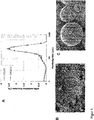
- Chemokine-encapsulating PLGA particles were prepared after the w / o / w double emulsion with solvent evaporation and then characterized comparatively for CXCL12 and CCL25 encapsulating particles.
- the particles have a narrow and reproducible size distribution, only 10% of the particles are smaller than 6 microns and no particle is larger than 50 microns.
- the average mean particle diameter is 21 ⁇ m (see FIG. 1 ).
- the PLGA chemokine particles have a round morphology with a high structural integrity.
- the surface of the particles is smooth, intact and with no visible pores or aggregations.
- Example 3 PLGA chemokine particles degrade in aqueous solutions
- the produced PLGA chemokine particles are biodegradable, PLGA degraded by hydrolytic cleavage of the ester bonds under physiological conditions in an aqueous environment.
- the degradation end products of lactic and glycolic acid are non-toxic in the concentrations occurring and are completely metabolised.
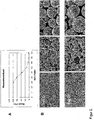
- the degradation of PLGA chemokine particles was determined by mass loss (see FIG. 2A ) and morphological change in the scanning electron microscope (see FIG. 2B ).
- the produced PLGA chemokine degrades particles.
- the mass loss of the particles begins after three weeks of incubation in aqueous solution, after 7 weeks, a mass loss of 84% already occurred and after 9 weeks, only 2% of the mass is available. Morphologically, too, a change in the particles due to the degradation can be observed: while the particles are still beginning to have a round, smooth and smooth surface have a pore-free surface, shows after 28 days of degradation already an increased pore formation on the particle surface and a disintegration of the particles.
- Example 4 PLGA chemokine particles are not phagocytosed by leukocytes
- Phagocytosis of injected chemokine-loaded particles by leukocytes in the body must be ruled out as this can lead to both an inflammatory response and premature elimination of the particulate drug delivery system.
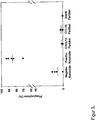
- the PLGA chemokine particles were incubated with heparinized whole blood at 37 ° C and determined the proportion of phagocytosis-active leukocytes. While 85% of the positive control (opsonized bacteria at 37 ° C) is phagocytosed by the leukocytes, the negative control (opsonized bacteria at 4 ° C) and the chemokine particles for CXCL12 and CCL25 are "blank" blank particles (at 37 ° C) hardly phagocytosed (see FIG. 3 ). Presumably the particles with an average mean particle diameter of 21 ⁇ m are too large for phagocytotic uptake by leukocytes.
- the release of encapsulated cytokines from PLGA particles takes place in aqueous solution by diffusion of the active ingredient from the particles and by degradation of the polymer chains with concomitant shortening of the polymer chains and enlargement of the pores on the surface of the particles.
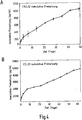
- the cumulative release kinetics from the polymer particles was investigated for the chemokines CXCL12 and CCL25 by enzyme-linked immunosorbant assay (ELISA). The results are in FIG. 4 shown.
- the release of both chemokines from the PLGA particles has an overall nearly linear profile. There is hardly a burst release and then a nearly linear release of the chemokines from the PLGA particles for several weeks. After 50 to 60 days, the particles are almost completely degraded and barely release chemokine.
- HA mesenchymal stem and progenitor cells
- Example 7 Mesenchymal stem and progenitor cells can be attracted by chemokines (chemotaxis)
- Chemokines are chemotactic cytokines that trigger directional migration of cells.
- MSCs mesenchymal stem and progenitor cells
- the MSCs are taken up in diet medium (containing in addition to the standard medium 0.1% fetal calf serum, without additional chemokines) and placed on a pore-penetrated membrane. Below the membrane, the chemokine is present in various concentrations (10 nM - 1000 nM), diet medium (negative control) or expansion medium (positive control, in addition to the standard medium 10% fetal calf serum, without additional chemokines).
- the migrated cells at the membrane underside can be detected and counted. Based on the positive control, the total number of cells capable of migration is determined, the negative control is used to determine the migrated cells without stimulation with chemokines. It was shown that both chemokines CXCL12 (see FIG. 6B ) and CCL25 (see FIG. 6A ) stimulate concentration-dependent migration of MSCs.
- the chemokine CCL25 significantly induces the migration of MSCs from a concentration of 250 nM compared to the negative control. Almost a quarter of the total migratory cells can be recruited from a concentration of 250 nM CCL25.
- the chemokine CXCL12 on the other hand only significantly recruited MSCs at a concentration of 1000 nM. On average, 1/8 of the total migratory cells could be attracted here.
- Example 8 Mesenchymal stem and progenitor cells can be attracted by hyaluronic acid (chemotaxis)
- HA also acts as a chemoattractant on MSCs.
- a chemotaxis assay it could be shown that HA at a concentration of 5 mg / mL significantly stimulates the migration of MSCs compared to the negative control without HA (see FIG. 7 ).
- Example 9 The combination of hyaluronic acid and chemokine synergistically stimulates the migration of mesenchymal stem and progenitor cells
- the chemotactic effect on mesenchymal stem and progenitor cells is greater than the addition of both individual effects (see FIG. 8 ).
- the chemokines CCL25 and CXCL12 recruited about 800 mesenchymal stem and progenitor cells at a concentration of 100 nM.
- Hyaluronic acid attracts about 2000 of these cells at a concentration of 2 mg / mL. If both are administered together at the same concentrations (CCL25 / HA or CXC12 / HA), an average of 3700 MSCs are recruited.
- the combined administration of chemokines and HA thus has a synergistic effect on the migration of mesenchymal stem and progenitor cells.
Landscapes
- Health & Medical Sciences (AREA)
- Life Sciences & Earth Sciences (AREA)
- Medicinal Chemistry (AREA)
- Pharmacology & Pharmacy (AREA)
- Chemical & Material Sciences (AREA)
- Animal Behavior & Ethology (AREA)
- General Health & Medical Sciences (AREA)
- Public Health (AREA)
- Veterinary Medicine (AREA)
- Epidemiology (AREA)
- Engineering & Computer Science (AREA)
- Bioinformatics & Cheminformatics (AREA)
- Immunology (AREA)
- Proteomics, Peptides & Aminoacids (AREA)
- Dermatology (AREA)
- Gastroenterology & Hepatology (AREA)
- Zoology (AREA)
- Molecular Biology (AREA)
- Hematology (AREA)
- Chemical Kinetics & Catalysis (AREA)
- Rheumatology (AREA)
- Physical Education & Sports Medicine (AREA)
- Orthopedic Medicine & Surgery (AREA)
- General Chemical & Material Sciences (AREA)
- Nuclear Medicine, Radiotherapy & Molecular Imaging (AREA)
- Organic Chemistry (AREA)
- Pharmaceuticals Containing Other Organic And Inorganic Compounds (AREA)
- Medicinal Preparation (AREA)
- Biological Depolymerization Polymers (AREA)
Description
- Laut dem Statistischen Bundesamt gehört die Osteoarthrose (OA, Gelenkverschleiß), insbesondere die Osteoarthrose der Knie- und Hüftgelenke, zu den 30 häufigsten Einzeldiagnosen bei stationären Krankenhausaufenthalten. Im Jahr 2007 waren ca. 15 Millionen Arthrosepatienten in Behandlung. Mit der in Deutschland zu erwartenden demographischen Entwicklung ist in der Zukunft mit einem weiter wachsenden Versorgungsbedarf zu rechnen.
- Trotz einiger Behandlungsmöglichkeiten gibt es bis heute keine Therapieform, mit der sich der Krankheitsprozess der Osteoarthrose tatsächlich aufhalten oder sogar umkehren lässt. Für kleine, lokal begrenzte Knorpeldefekte wurden Therapien entwickelt, wie beispielsweise die autologe Chondrozytentransplantation oder die Implantation zellfreier Implantate. Allerdings können diese Therapien eine weitere Knorpeldegeneration nicht aufhalten und eignen sich zudem nicht für den Einsatz bei großflächigeren OA-Defekten. Meist führt die Osteoarthrose früher oder später zum Gelenkersatz. Pro Jahr werden ca. 420 000 Arthrose-Operationen durchgeführt, bei denen eine Totalendoprothese implantiert wird. Die erforderliche ambulante und stationäre Versorgung verursacht sehr hohe Kosten. Nach Berechnungen des statistischen Bundesamtes wurden im Jahr 2002 für die Behandlung von Arthrosen ca. 7 Milliarden Euro aufgewendet. Darüber hinaus führt diese chronischdegenerative Erkrankung zusätzlich zu einem erheblichen volkswirtschaftlichen Aufwand infolge von Berufsunfähigkeit, Frühberentung und Rehabilitationsmaßnahmen von betroffenen Menschen.
- Für fortgeschrittene Osteoarthrose-Defekte gibt es neben der Totalendoprothese und einer Schmerztherapie weitere Behandlungskonzepte, wie beispielsweise die Applikation von Glucosamin/Chondroitin und Ernährungstherapien. Die Wirksamkeit solcher Therapien ist bislang allerdings kaum ausreichend belegt. Lediglich die intra-artikuläre Applikation von Hyaluronsäure (HS oder auch mit HA abgekürzt), die als zusätzliche "Gelenkschmiere" fungieren soll, zeigte in prospektiv kontrollierten Studien einen positiven Effekt. Eine weitere Knorpeldegeneration konnte verzögert werden. Eine Knorpelregeneration konnte nicht belegt werden.
-
WO 2005/014027 offenbart Zusammensetzungen enthaltend Hyaluronsäure und CCL 19. - Es bleibt ein Bedarf an weiteren effektiven Therapieformen zur Behandlung der Osteoarthrose, die ein Aufhalten der Knorpeldegeneration und ggf. sogar eine Regeneration von erkranktem Knorpelgewebe erlaubt und damit die Implantation einer Totalendoprothese verzögert oder sogar überflüssig macht.
- Aufgabe der vorliegenden Erfindung ist es einen oder mehrere Nachteile des Standes der Technik zu vermindern oder zu vermeiden. Insbesondere ist es eine Aufgabe der Erfindung neue effektive Mittel und Wege zur Therapie von Osteoarthrose bereitzustellen.
- Die vorliegende Erfindung löst diese Aufgabe durch Bereitstellung einer Zusammensetzung, die
2 - 50 mg/ml Hyaluronsäure, 0,1 - 500 mg/ml biodegradierbare Partikel mit einem durchschnittlichen mittleren Partikeldurchmesser von 1 nm - 500 µm, 1 pg/ml - 10 µg/ml Zytokine gemäß Anspruch 1, - Die Erfindung beruht auf der überraschenden Erkenntnis, dass eine simultane Verabreichung von Hyaluronsäure und von Zytokinen in synergistischer Weise die Migration von am Aufbau eines gesunden Gelenks beteiligten Zellen stimuliert, wie beispielsweise mesenchymalen Stamm- und/oder Progenitorzellen. Dadurch wird in besonders vorteilhafter Weise die Rekrutierung von gesunden Zellen zur Geweberegeneration in Gelenken mit Knorpeldefekten, beispielsweise in von mit Osteoarthrose befallenen Gelenken oder in Gelenken mit traumatischen Knorpeldefekten, gefördert und verstärkt. Die positive Wirkung wird unter anderem dadurch erreicht, dass die Zytokine derart formuliert vorliegen, so dass diese nicht auf einmal freigesetzt werden, sondern kontrolliert über einen längeren Zeitraum. Dies wird in der erfindungsgemäßen Zusammensetzung dadurch erreicht, dass die Zytokine in Partikeln eingeschlossen vorliegen, wobei diese Partikel biodegradierbar sind. Nach der Applikation im Körper des zu behandelnden Patienten werden die Partikel über die Zeit abgebaut und setzen dabei kontinuierlich Zytokine frei.
- Die Verabreichung der erfindungsgemäßen Zusammensetzung, insbesondere der gelartigen Hyaluronsäure in Kombination mit den Zytokin freisetzenden, biodegradierbaren Partikeln, in den Gelenkinnenraum ermöglicht eine praktische und viel versprechende Erweiterung der bisherigen Behandlungsmöglichkeiten von Knorpeldefekten, z.B. von traumatischen Knorpeldefekten oder Osteoarthrose. Neben der Verzögerung der Knorpeldegeneration durch die Hyaluronsäure, können die Zytokine-freisetzenden Partikel im Gelenksinnenraum zeitgleich und zusätzlich einen regenerativen Effekt auf den beschädigten Knorpel ausüben.
- Nach einer intra-artikulären Verabreichung der erfindungsgemäßen Zusammensetzung verzögert die Hyaluronsäure, in seiner Eigenschaft als "Gelenkschmiere" und zusätzlich als chondrogener Faktor, eine weitere Degeneration des Knorpels und fördert die Knorpelneubildung. Die gleichzeitige, kontrollierte und über mehrere Tage oder sogar Wochen anhaltende, lokale Freisetzung von Zytokinen stimuliert gezielt Stamm- und/oder Progenitorzellen und/oder lockt diese an, so dass sich diese Zelltypen im Bereich der Osteoarthrose bzw. im erkrankten Bereich des Gelenks anreichern. Dabei wird insbesondere ausgenutzt, dass die Hyaluronsäure vermittelte Knorpelneubildung für die Rekrutierung und Ansiedlung von Stamm- und/oder Progenitorzellen eine unterstützende Rolle spielt. Weiterhin konnte gezeigt werden, dass die kombinierte Verabreichung von Hyaluronsäure und Zytokinen eine synergistische Wirkung auf die Rekrutierung von Stamm- und/oder Progenitorzellen hat. So wird durch die Injektion der erfindungsgemäßen Zusammensetzung eine gezielte Anreicherung von körpereigenen Stamm- und/oder Progenitorzellen in dem erkrankten Gelenk erreicht, während durch die Kombination mit der simultanen, lokalen Hyaluronsäure Gabe gleichzeitig ein Fortschreiten der Knorpeldegeneration verzögert als auch eine Regeneration des beschädigten Knorpelgewebes stimuliert wird.
- Die erfindungsgemäße Zusammensetzung enthält Hyaluronsäure in einer Konzentration von 2 - 50 mg/ml bezogen auf das Gesamtvolumen (w/v) der Zusammensetzung. Bevorzugt enthält die erfindungsgemäße Zusammensetzung 5 - 30 mg/ml Hyaluronsäure, besonders bevorzugt 10 - 20 mg/ml, ganz besonders bevorzugt 10 oder 20 mg/ml, jeweils bezogen auf das Gesamtvolumen (w/v) der Zusammensetzung.
- Verfahren zur Gewinnung bzw. Herstellung von Hyaluronsäure sind dem Fachmann bekannt. Hyaluronsäure wird üblicherweise aus Geweben extrahiert oder biotechnologisch, beispielsweise durch Fermentation, hergestellt.
- Die Halbwertszeit von Hyaluronsäure nach der Applikation in Gewebe ist abhängig von der molaren Masse der Hyaluronsäure. Um eine besonders vorteilhafte Halbwertszeit der Hyaluronsäure nach Applikation der erfindungsgemäßen Zusammensetzung zu gewährleisten, enthält die erfindungsgemäße Zusammensetzung Hyaluronsäure mit einer durchschnittlichen mittleren molaren Masse von mindestens 200 kDa, bevorzugt von 250 kDa bis 7000 kDa, besonders bevorzugt von 500 kDa bis 4000 kDa, ganz besonders bevorzugt von 1000 kDa bis 3000 kDa.
- Die erfindungsgemäße Zusammensetzung enthält biodegradierbare Partikel, in denen die Zytokine eingeschlossen vorliegen. Dabei weist die erfindungsgemäße Zusammensetzung die Partikel in einer Konzentration von 0,1 mg/ml bis 500 mg/ml auf, bevorzugt in einer Konzentration von 1 mg/ml bis 300 mg/ml, besonders bevorzugt von 5 mg/ml bis 200 mg/ml, jeweils bezogen auf das Gesamtvolumen (w/v) der Zusammensetzung. Eine erfindungsgemäße Zusammensetzung, die die biodegradierbaren Partikel in einer Konzentration von 50 mg/ml enthält, eignet sich besonders gut als Injektionslösung für die intra-artikuläre Injektion in zu behandelnde Gelenke. Dagegen eignet sich eine erfindungsgemäße Zusammensetzung, die die biodegradierbaren Partikel in einer Konzentration von 200 mg/ml enthält, besonders gut zur Herstellung einer Paste oder eines Gels für die arthroskopische Behandlung.
- Die biodegradierbaren Partikel weisen einen durchschnittlichen mittleren Partikeldurchmesser auf von 1 nm bis 500 µm, bevorzugt von 10 nm bis 200 µm, besonders bevorzugt von 100 nm - 50 µm.
- Unter dem Begriff "biodegradierbar" werden Partikel verstanden, die nach Implantation in einen menschlichen oder tierischen Körper oder Gewebe über die Zeit abgebaut und schließlich resorbiert und/oder ausgeschieden werden. Dazu können die Partikel der erfindungsgemäßen Zusammensetzung aus einem biokompatiblen, biodegradierbaren Polymer bestehen oder dieses enthalten. Unter Biokompatibilität oder Körperverträglichkeit wird die Fähigkeit eines Polymers verstanden, in einer spezifischen Anwendung eine angemessene Gewebereaktion hervorzurufen. Mit anderen Worten, ist ein Polymer dann biokompatibel, wenn das Polymer nach der Implantation im Körper oder Gewebe keine untolerierbaren unerwünschten Reaktionen hervorruft.
- Als biodegradierbar im Sinne der Erfindung werden Polymere oder Partikel bezeichnet, bei denen in physiologischer Umgebung über die Zeit ein Abbau/Umbau stattfindet, so dass das Polymer oder der Partikel nach Implantation ganz oder zumindest überwiegend nicht mehr vorhanden ist. Als Prüfmedium zur Testung des Degradationsverhaltens von in Frage kommenden Polymeren oder Partikeln dient künstliches Plasma, wie es nach EN ISO 10993-15:2000 für Biodegradationsuntersuchungen vorgeschrieben ist (Zusammensetzung NaCl 6,8 g/l, CaCl2 0,2 g/l, KCl 0,4 g/l, MgSO4 0,1 g/l, NaHCO3 2,2 g/l, Na2HPO4 0,126 g/l, NaH2PO4 0,026 g/l). Das künstliche Plasma nach EN ISO 10993-15:2000 entspricht einem blutähnlichen Medium und stellt damit eine Möglichkeit dar, eine physiologische Umgebung im Sinne der Erfindung reproduzierbar nachzustellen. Eine Probe des zu untersuchenden Polymers oder Partikels wird dazu in einem verschlossenen Probenbehälter mit einer definierten Menge des Prüfmediums bei 37 °C gelagert. In zeitlichen Abständen - abgestimmt auf das zu erwartende Degradationsverhalten - von wenigen Stunden bis zu mehreren Monaten werden die Proben entnommen und in bekannter Weise auf Degradationsspuren untersucht.
- Geeignete biokompatible und biodegradierbare Polymere umfassen Polymere oder CoPolymere, die ein Milchsäure- (LA-) und/oder ein Glykolsäure- (GA-) Monomer enthalten oder daraus bestehen, Poly-Milchsäure (PLA), Poly-Glykolsäure (PGA), Polylactid-co-Glycolid (PLGA), Polyethylenglycol (PEG), PLGA-PEG, Polycaprolactone, Polycarbonate, Polyamide, Polyanhydride, Chitosane, Dextrane, Cyclodextrine und/oder Fibrinogen. Besonders bevorzugt enthalten oder bestehen die biodegradierbaren Partikeln aus PLGA, wobei das PLGA-Polymer endgruppenmodifiziert sein kann. Das PLGA kann in D-, L- oder D-/L-Konfiguration verwendet werden. Bevorzugt weist das PLGA eine molare Masse von 5 kDa bis 100 kDa auf, besonders bevorzugt von 15 kDa.
- Eingeschlossen in den biodegradierbaren Partikeln enthält die erfindungsgemäße Zusammensetzung 1 pg/ml bis 10 µg/ml Zytokine, bevorzugt 10 pg/ml bis 1 µg/ml Zytokine, besonders bevorzugt 100 pg/ml bis 100 ng/ml Zytokine, jeweils bezogen auf das Gesamtvolumen (w/v) der Zusammensetzung. Unter Zytokinen werden Proteine verstanden, die eine regulierende Funktion auf das Wachstum, die Migration und/oder die Differenzierung von Zellen ausüben. Zytokine umfassen sowohl Wachstumsfaktoren als auch Chemokine und Differenzierungsfaktoren. Erfindungsgemäß können insbesondere Zytokine eingesetzt werden, die mesenchymale Stamm- und/oder Progenitorzellen stimulieren und/oder aktivieren. Verwendet werden die Zytokine CXCL-10, CXCL-12, CCL25 und/oder XCL-1 bzw. eine Mischung enthaltend eines, mehrere oder alle vier dieser Zytokine. Insbesondere können die Zytokine CXCL-12 und/oder CCL-25 in der erfindungsgemäßen Zusammensetzung verwendet werden.
- Die biodegradierbaren, Zytokin-tragenden Partikel können in an sich bekannter Art und Weise hergestellt werden. Geeignete Herstellverfahren ergeben sich aus der Wahl der jeweiligen Materialien aus denen die Partikel zusammengesetzt sind, insbesondere aus der Wahl der biokompatiblen, biodegradierbaren Polymeren. Übliche Herstellverfahren umfassen die Herstellung mittels Formulierung in Emulsion (z.B. w/o/w-, s/o/w- oder o/w-Emulsion), wobei meist das Zytokin in der wässrigen Phase gelöst vorliegt und in einer organischen Polymerphase fein verteilt wird und anschließender Lösungsmittelverdunstung, die Herstellung mittels Phasenseparation, Sprühtrocknung oder anderer Techniken wie die sogenannte "supercritical fluid technology".
- Die Partikel können sich durch ein besonders vorteilhaftes Freisetzungsverhalten auszeichnen, wobei das Freisetzungsverhalten von Zytokinen aus den Partikeln im Wesentlichen durch die Größe und die Zusammensetzung der Partikel sowie die Konzentration und Auswahl der darin eingeschlossenen Zytokine bestimmt wird. Bevorzugt zeichnen sich die Partikel der erfindungsgemäßen Zusammensetzung dadurch aus, dass die Freisetzung der Zytokine aus den Partikeln kontinuierlich über mehrere Tage hinweg erfolgt, insbesondere kann die Freisetzung nach einer ersten Startphase von 24h bis 36h im Wesentlichen linear erfolgen. Besonders bevorzugt zeichnen sich die Partikel der erfindungsgemäßen Zusammensetzung dadurch aus, dass die Freisetzung der Zytokine mit einer Rate erfolgt von nicht mehr als 50 Gew.-% der eingeschlossenen Zytokine pro 24h, ganz besonders bevorzugt von nicht mehr als 50 Gew.-% der eingeschlossenen Zytokine pro 48h.
- Die erfindungsgemäße Zusammensetzung kann zusätzlich Fibrinogen enthalten. Die Zugabe von Fibrinogen bewirkt, dass die Zusammensetzung nach Implantation am Ort stabilisiert wird und nicht schnell abgetragen werden kann. Durch den Kontakt mit Blut härtet das Fibrinogen schnell aus und fixiert so die Zusammensetzung an dem gewünschten Ort im Gelenk. Dies ist insbesondere dann wünschenswert, wenn die Zusammensetzung als Gel oder Paste arthroskopisch in die Läsion appliziert wird. Dadurch ist es möglich klein- bis großflächige, lokal begrenzte osteoarthrotische Knorpeldefekte mit der erfindungsgemäßen Zusammensetzung in Form einer Paste oder eines Gels mittels arthroskopischer Techniken minimal-invasiv zu behandeln oder aufzufüllen. Bevorzugt enthält die erfindungsgemäße Zusammensetzung 10 mg/ml bis 300 mg/ml Fibrinogen, besonders bevorzugt 70 mg/ml bis 110 mg/ml, jeweils bezogen auf das Gesamtvolumen (w/v) der Zusammensetzung.
- Die Bestandteile der erfindungsgemäßen Zusammensetzung, insbesondere die Hyaluronsäure, und die mit Zytokinen beladenen Partikel, können in einem Lösungsmittel gelöst, emulgiert oder suspendiert vor. Bevorzugt ist das Lösungsmittel ein wässriges Lösungsmittel, wie beispielsweise Wasser. Da die erfindungsgemäße Zusammensetzung sich zur Verwendung als Medikament oder als aktiver Bestandteil eines Medikamentes eignet, ist es besonders vorteilhaft, wenn es sich bei dem Lösungsmittel um eine infundierbare wässrige Lösung handelt, beispielsweise eine isotonische Kochsalzlösung. Die infundierbare wässrige Lösung und insbesondere die isotonische Kochsalzlösung kann gepuffert sein, um den pH-Wert auf einem physiologisch akzeptablen Niveau zu halten bzw. um einen physiologischen pH-Wert herzustellen. Geeignete Puffer sind dem Fachmann bekannt.
- Die vorliegende Erfindung bezieht sich auch auf eine pharmazeutische Zusammensetzung enthaltend eine erfindungsgemäße Zusammensetzung und einen oder mehrere pharmazeutisch verträgliche Hilfsstoffe. Der Begriff "Hitfsstoff" wird hierin zur Beschreibung aller anderen Bestandteile außer der erfindungsgemäßen Zusammensetzung verwendet Die Auswahl des oder der Hilfsstoffe richtet sich weitgehend nach der speziellen Art der Verabreichung. Dabei können beispielsweise Hilfsstoffe für die Formulierung eingesetzt werden und/oder Stabilisatoren, Konservierungsstoffe, Hilfsstoffe zur Einstellung der Viskosität, Antioxidantien, Farbstoffe, Bindemittel, Emulgatoren, Feuchthaltemittel, Lösungsmittel, Füllmittel, Salze, Kohlenhydrate und/oder Puffersubstanzen. Bevorzugt handelt es sich bei den Hilfsstoffen um Salze, Kohlenhydrate und/oder Puffersubstanzen, die zur parenteralen Verabreichung, insbesondere zur Implantation in den Körper eines zu behandelnden Individuums, geeignet sind.
- In einer besonderen Ausführungsform ist die erfindungsgemäße pharmazeutische Zusammensetzung für die intra-artikuläre Injektion hergerichtet. Dazu kann die Konzentration der Partikel in der pharmazeutischen Zusammensetzung 50 mg/ml und die der Hyaluronsäure 10 mg/ml betragen, jeweils bezogen auf das Gesamtvolumen (w/v) der pharmazeutischen Zusammensetzung. Die pharmazeutische Zusammensetzung liegt bevorzugt als injizierbare wässrige Lösung vor, besonders bevorzugt sind die Bestandteile der erfindungsgemäßen Zusammensetzung in einer isotonischen, ggf. gepufferten Kochsalzlösung gelöst, emulgiert oder suspendiert.
- In einer anderen Ausführungsform ist die erfindungsgemäße pharmazeutische Zusammensetzung für die arthroskopische Behandlung hergerichtet. Die pharmazeutische Zusammensetzung liegt hierfür bevorzugt als Gel oder Paste vor. Dazu kann die Konzentration der Partikel in der pharmazeutischen Zusammensetzung 200 mg/ml, die der Hyaluronsäure 20 mg/ml betragen, jeweils bezogen auf das Gesamtvolumen (w/v) der pharmazeutischen Zusammensetzung. Zusätzlich kann die pharmazeutische Zusammensetzung 70 - 110 mg/ml Fibrinogen enthalten, bezogen auf das Gesamtvolumen (w/v) der pharmazeutischen Zusammensetzung.
- Die erfindungsgemäße Zusammensetzung bzw. die erfindungsgemäße pharmazeutische Zusammensetzung kann zur Behandlung und/oder Prophylaxe von Knorpeldefekten, beispielsweise von traumatischen Knorpeldefekten oder Osteoarthrose verwendet werden, insbesondere zur Behandlung und/oder Prophylaxe von Osteoarthrose in Gelenken, beispielsweise in Knie-, Sprung-, Schulter- und/oder Hüftgelenken. Bevorzugt wird die erfindungsgemäße Zusammensetzung bzw. die erfindungsgemäße pharmazeutische Zusammensetzung zur Behandlung und/oder Prophylaxe von Knorpeldefekten bei Säugetieren, insbesondere bei Menschen und/oder Nutz- oder Haustieren verwendet.
- Die vorliegende Erfindung betrifft auch die erfindungsgemäße Zusammensetzung bzw. die erfindungsgemäße pharmazeutische Zusammensetzung zur Verwendung in der Behandlung und/oder Prophylaxe von Knorpeldefekten, beispielsweise von traumatischen Knorpeldefekten oder Osteoarthrose, insbesondere der Osteoarthrose in Knie-, Sprung-, Schulter- und/oder Hüftgelenken.
- Die vorliegende Erfindung bezieht sich auch auf ein Verfahren zur Behandlung und/oder Prophylaxe von Knorpeldefekten, beispielsweise von traumatischen Knorpeldefekten oder Osteoarthrose, wobei einem Individuum, welches einer solchen Therapie bedarf, eine wirksame Dosis der erfindungsgemäßen Zusammensetzung oder der erfindungsgemäßen pharmazeutischen Zusammensetzung verabreicht wird.
- Gemäß vorliegender Erfindung wird die Zusammensetzung bzw. die pharmazeutische Zusammensetzung vorzugsweise in einer wirksamen Dosis verabreicht. Eine "wirksame Dosis" ist die Dosis der erfindungsgemäßen Zusammensetzung, die bei Verabreichung an ein Individuum eine messbare therapeutische Wirkung im Hinblick auf die fragliche Erkrankung bewirkt. Bei der vorliegenden Erfindung ist eine wirksame Dosis diejenige Dosis der erfindungsgemäßen Zusammensetzung, die eine therapeutische Wirkung im Hinblick auf die zu behandelnden Knorpeldefekte hervorbringt. Vorzugsweise wird die erfindungsgemäße Zusammensetzung in einer Dosis von 0,1 bis 10 ml pro zu behandelndem Gelenk verabreicht, bevorzugt von 1 ml bis 3 ml pro zu behandelndem Gelenk. Um einen besonders ausgeprägten Behandlungserfolg zu erzielen, wird das zu behandelnde Gelenk mit der erfindungsgemäßen Zusammensetzung mehr als einmal behandelt. Bevorzugt wird die Behandlung eines betroffenen Gelenks ein- bis dreimal wiederholt, so dass es insgesamt zu zwei bis vier Behandlungen pro Gelenk und Behandlungszyklus kommen kann. Dabei finden die Wiederholungen bevorzugt in einem Abstand von jeweils 4 bis 9 Tagen statt, besonders bevorzugt in einem Abstand von jeweils 7 Tagen.
- Die vorliegende Erfindung bezieht sich auch auf die Verwendung einer erfindungsgemäßen Zusammensetzung bzw. einer erfindungsgemäßen pharmazeutischen Zusammensetzung zur Herstellung eines Medikaments zur Behandlung und/oder Prophylaxe von Knorpeldefekten, beispielsweise von traumatischen Knorpeldefekten oder Osteoarthrose, insbesondere von Osteoarthrose von Knie-, Sprung-, Schulter- und/oder Hüftgelenken, wobei das Medikament zur Verabreichung von 0,1 ml bis 10 ml, bevorzugt von 1 ml bis 3 ml, der Zusammensetzung pro zu behandelndem Gelenk und ggf. zur ein- bis dreimaligen Wiederholung der Behandlung im Abstand von jeweils 4 bis 9 Tagen hergerichtet ist.
- Die Behandlung eines von Osteoarthrose betroffenen Gelenks mit einer erfindungsgemäßen Zusammensetzung bzw. mit einer erfindungsgemäßen pharmazeutischen Zusammensetzung kann insbesondere mit anderen Therapieformen zur Behandlung von Osteoarthrose kombiniert werden. Insbesondere die Darreichungsform der erfindungsgemäßen pharmazeutischen Zusammensetzung als Paste oder Gel für die arthroskopische Verabreichung kann nach einer arthroskopischen Behandlung umfassend eine Mikrofrakturierung und/oder Pridie-Bohrungen verabreicht werden.
- In einer weiteren Ausführungsform bezieht sich die vorliegende Erfindung auf eine vorgefüllte Spritze, die mit einer injizierbaren Suspension gefüllt ist, die eine erfindungsgemäße Zusammensetzung bzw. eine erfindungsgemäße pharmazeutische Zusammensetzung enthält oder daraus besteht. Diese vorgefüllte Spritze kann zur Behandlung und/oder Prophylaxe von Knorpeldefekten, beispielsweise von traumatischen Knorpeldefekten oder Osteoarthrose, insbesondere von Osteoarthrose von Knie-, Sprung-, Schulter- und/oder Hüftgelenken, verwendet werden.
- Im Folgenden wird die Erfindung anhand von Ausführungsbeispielen näher verdeutlicht.
- Es zeigen
- Figur 1.:
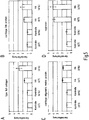
- die Größenverteilung und Morphologie der hergestellten PLGA-Chemokin Partikel, (A) Größenverteilungskurve, (B), (C) repräsentative rasterelektronenmikroskopische Bilder;
- Figur 2:
- die Degradation der PLGA-Chemokin Partikel in wässriger Umgebung: (A) Massenverlust der Partikel über die Zeit, (B) morphologische Veränderungen der Partikel anhand rasterelektronenmikroskopischer Untersuchungen;
- Figur 3:
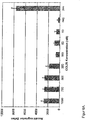
- einen Phagozytose-Assay der Chemokin-beladenen Partikel;
- Figur 4:
- kumulative Freisetzungskinetiken aus den PLGA Partikeln über mehrere Wochen für die Chemokine CXCL12 (A) und CCL25 (B);
- Figur 5:
- die Expressionen verschiedener knorpeltypischer Gene sind hoch reguliert bei der chondrogenen Differenzierung von mesenchymalen Stamm- und Progenitorzellen mit Hyaluronsäure, d = day / Tag; (A) Kollagen Typ II, (B) cartilage link protein, (C) cartilage oligomeric matrix protein, (D) aggrecan;
- Figur 6:
- einen Chemotaxis-Assay mit mesenchymalen Stamm- und Progenitorzellen unter Stimulation mit verschiedenen Konzentrationen CCL25 (A) und CXCL12 (B);
- Figur 7:
- einen Chemotaxis-Assay: Hyaluronsäure stimuliert die Migration von mesenchymalen Stamm- und Progenitorzellen; und
- Figur 8:
- einen Chemotaxis-Assay: Die Kombination von HA (HS) und Chemokinen CCL25 bzw. CXCL12 stimuliert synergistisch die Wanderung von mesenchymalen Stamm- und Progenitorzellen; HS = HA, Hyaluronsäure; (A) Kombination HA mit CCL25, (B) Kombination HA mit CXCL12.
- Für die Verkapselung des Chemokins CXCL12 wurde die Technik der Wasser-in-Öl-in-Wasser (w/o/w) Doppelemulsion mit anschließender Lösungsmittelverdunstung angewendet. Die Herstellung der w/o/w-Emulsion wurde in einem Dreischrittverfahren durchgeführt.
- Im ersten Schritt erfolgte das Verteilen der chemokinhaltigen wässrigen Phase (w1) in der PLGA-Ölphase (o). Das führte zum Entstehen der Primäremulsion (w1/o). Im zweiten Schritt wurde die Primäremulsion in einer äußeren wässrigen Polyvinylalkohol (PVA)-Phase (w2) dispergiert. Dabei wurde eine Sekundäremulsion (w1/o/w2) erzeugt, die anschließend in einer zweiten äußeren wässrigen Phase verdünnt wurde.
- Für die Herstellung der w1-Phase wurden 10 µg Chemokin (CXCL12) in 100 µl Aqua dest. gelöst, um eine Ausgangskonzentration von 100 ng/µl zu erhalten. In den weiteren unterschiedlichen Ansätzen wurden 50 µl von der Ausgangskonzentration in (1) 450 µl PBS, (2) 450 µl 10 % HSA oder (3) in 450 µl Heparinlösung verdünnt, um die im Releaseansatz verwendete Endkonzentration von 10 ng/µl Chemokinlösung (w1) zu erhalten.
- Zur Erzeugung von 1 % PVA und von 0,5 % PVA/0,45 M NaCl als äußere wässrige Phasen (w2-Phasen) wurden entsprechend 1g PVA in 100 ml und 5 g PVA in 1000 ml Aqua dest. unter Rühren und Wärmezufuhr gelöst. Weiterhin wurden zu der 0,5 % PVA drei Tabletten NaCl (entspricht 0,45 M) zugegeben und auch unter Rühren gelöst. Für die Herstellung der organischen Polymerphase (o) wurden 100 mg PLGA in 1 ml Methylenchlorid gelöst.
- Die Primäremulsion (w1/o) wurde durch Zugabe der ersten wässrigen CXCL12 Phase (w1; 10 µl der Chemokinlösung (10 ng/µl), entspricht 100 ng) zu der PLGA-Ölphase (o; 100 mg Polymer in 1 ml Methylenchlorid) erzeugt. Dabei wurde die Emulsion 3 Minuten lang gevortext Für die Erzeugung der Doppelemulsion (w1/o/w2) wurde die Primäremulsion in 2 ml einer äußeren wässrigen 1 %igen PVA-Phase (w2) durch 3-minütiges Vortexen dispergiert. Anschließend wurde die Doppelemulsion in 20 ml 0,5 % PVA/0,45 M NaCl in Bechergläser überführt und bei 60 g auf einem Magnetrührer durchmischt. Während des 4-stündigen Rührens verdampfte die organische Phase und die CXCL12-Partikel härteten aus. Zum Schluss wurden die Partikel dreimal mit 20 ml Aqua dest. gewaschen und anschließend über Nacht in einem Gefriertrockner getrocknet.
- Chemokin-verkapselnde PLGA Partikel wurden nach der w/o/w Doppelemulsion mit Lösemittelverdampfung hergestellt und anschließend vergleichend für CXCL12- und CCL25-verkapselnde Partikel charakterisiert. Die Partikel besitzen eine enge und reproduzierbare Größenverteilung, nur 10% der Partikel sind kleiner als 6 µm und kein Partikel ist größer als 50 µm. Der durchschnittliche mittlere Partikeldurchmesser beträgt 21 µm (siehe
Figur 1 ). - Die PLGA-Chemokin Partikel weisen eine runde Morphologie mit einer hohen strukturellen Integrität auf. Die Oberfläche der Partikel ist glatt, unversehrt und ohne sichtbare Poren oder Aggregationen. Die Partikel besitzen eine negative Oberflächenladung (zeta Potential = - 26,64 mV ± 0,72 mV).
- Die hergestellten PLGA-Chemokin Partikel sind biodegradierbar, PLGA degradiert durch hydrolytische Spaltung der Esterbindungen unter physiologischen Bedingungen in wässriger Umgebung. Die Degradationsendprodukte Milch- und Glycolsäure sind in den auftretenden Konzentrationen nicht toxisch und werden vollständig verstoffwechselt.
Die Degradation der PLGA-Chemokin Partikel wurde anhand des Massenverlustes (sieheFigur 2A ) und morphologischer Veränderung im Rasterelektronenmikroskop (sieheFigur 2B ) untersucht. - In wässrigem Milieu degradieren die hergestellten PLGA-Chemokin Partikel. Der Massenverlust der Partikel beginnt nach drei Wochen Inkubation in wässriger Lösung, nach 7 Wochen ist bereits ein Massenverlust von 84 % erfolgt und nach 9 Wochen ist nur noch 2 % der Masse vorhanden. Auch morphologisch lässt sich eine Veränderung der Partikel durch die Degradation beobachten: Während die Partikel zu Beginn noch eine runde, glatte und porenlose Oberfläche aufweisen, zeigt sich nach 28 Tagen Degradation bereits eine vermehrte Porenbildung an der Partikeloberfläche und ein Zerfall der Partikel.
- Die Phagozytose der injizierten Chemokin-beladenen Partikel durch Leukozyten im Körper muss ausgeschlossen werden, da dies sowohl zu einer Entzündungsreaktion als auch zu einer vorzeitigen Beseitigung des Partikel-Wirkstoff-Freisetzungssystems führen kann.
- In einem Phagozytose-Assay wurden die PLGA-Chemokin Partikel mit heparinisiertem Vollblut bei 37 °C inkubiert und der Anteil der Phagozytose-aktiven Leukozyten bestimmt. Während die Positivkontrolle (opsonisierte Bakterien bei 37 °C) zu ca. 85 % von den Leukozyten phagozytiert wird, werden die Negativkontrolle (opsonisierte Bakterien bei 4 °C) und die Chemokin-Partikel für CXCL12 und CCL25 bzw. "leere" blank-Partikel (bei 37 °C) kaum phagozytiert (siehe
Figur 3 ). Vermutlich sind die Partikel mit einem durchschnittlichen mittleren Partikeldurchmesser von 21 µm für eine phagozytotische Aufnahme durch Leukozyten zu groß. - Die Freisetzung von verkapselten Zytokinen aus PLGA Partikeln erfolgt in wässriger Lösung durch Diffusion des Wirkstoffes aus den Partikeln und infolge Degradation der Polymerketten mit einhergehender Verkürzung der Polymerketten und Vergrößerung der Poren an der Oberfläche der Partikel. Die kumulative Freisetzungskinetik aus den Polymerpartikeln wurde für die Chemokine CXCL12 und CCL25 mittels enzyme-linked immunosorbant assay (ELISA) untersucht. Die Ergebnisse sind in
Figur 4 dargestellt. - Die Freisetzung beider Chemokine aus den PLGA-Partikeln weist ein insgesamt nahezu lineares Profil auf. Es zeigt sich kaum ein burst Release und anschließend eine nahezu lineare Freisetzung der Chemokine aus den PLGA Partikeln für mehrere Wochen. Nach 50 bis 60 Tagen sind die Partikel nahezu vollständig degradiert und setzen kaum noch Chemokin frei.
- Die chondrogene Differenzierung von mesenchymalen Stamm- und Progenitorzellen (MSCs) wird auf Genexpressionsebene durch HA stimuliert. Bei der chondrogenen Differenzierung mit HA sind verschiedene knorpeltypische Markergene (Kollagen Typ 2, cartilage link protein, cartilage oligomeric matrix protein, aggrecan) in ihrer Expression hoch reguliert (siehe
Figur 5 ). - Diese chondro-stimulierende Wirkung von HA auf mesenchymale Stamm- und Progenitorzellen konnte auch auf histologischer Ebene bestätigt werden.
- Nach der 26-tägigen Chondrogenese von mesenchymalen Stamm- und Progenitorzellen mit HA zeigte sich die knorpeltypische Anfärbung von Proteoglykanen nach der Alzianblau Färbung und von Kollagen Typ 2 nach immunhistochemischer Färbung.
- Chemokine sind chemotaktische Zytokine, die eine gerichtete Migration von Zellen auslösen. In einem Migrationsassay wurde die chemotaktische Wirkung der beiden Chemokine CCL25 und CXCL12 auf mesenchymale Stamm- und Progenitorzellen (MSCs) untersucht. Dabei werden die MSCs in Diätmedium (beinhaltet neben dem Standardmedium 0,1 % fötales Kälberserum, ohne zusätzliche Chemokine) aufgenommen und auf eine Poren-durchsetzte Membran gebracht. Unterhalb der Membran befindet sich das Chemokin in verschiedenen Konzentrationen (10 nM - 1000 nM), Diätmedium (Negativkontrolle) bzw. Expansionsmedium (Positivkontrolle, beinhaltet neben dem Standardmedium 10 % fötales Kälberserum, ohne zusätzliche Chemokine). Nach einer Zellmigration können die gewanderten Zellen an der Membranunterseite detektiert und ausgezählt werden. Anhand der Positivkontrolle wird die Gesamtzahl der wanderungsfähigen Zellen bestimmt, die Negativkontrolle dient zur Bestimmung der gewanderten Zellen ohne Stimulation mit Chemokinen.
Es konnte gezeigt werden, dass beide Chemokine CXCL12 (sieheFigur 6B ) und CCL25 (sieheFigur 6A ) konzentrationsabhängig die Wanderung von MSCs stimulieren. - Das Chemokin CCL25 induziert schon ab einer Konzentration von 250 nM signifikant die Migration der MSCs im Vergleich zu der Negativkontrolle. Nahezu ein Viertel der Gesamtwanderungsfähigen Zellen kann ab einer Konzentration von 250 nM CCL25 rekrutiert werden. Das Chemokin CXCL12 rekrutierte dagegen erst bei einer Konzentration von 1000 nM signifikant MSCs. Im Durchschnitt konnte hier 1/8 der gesamten wanderungsfähigen Zellen angelockt werden.
- Neben der chondro-induktiven Wirkung von HA auf MSCs (Beispiel 6) konnte außerdem gezeigt werden, dass HA auch als Chemoattraktant auf MSCs wirkt. In einem Chemotaxis-Assay konnte gezeigt werden, dass HA bei einer Konzentration von 5 mg/mL die Migration von MSCs deutlich stimuliert im Vergleich zur Negativkontrolle ohne HA (siehe
Figur 7 ). - Wird HA und Chemokin in Kombination verabreicht, so ist der chemotaktische Effekt auf mesenchymale Stamm- und Progenitorzellen größer, als die Addition beider Einzeleffekte (siehe
Figur 8 ). - Die Chemokine CCL25 und CXCL12 rekrutieren in einer Konzentration von 100 nM ca. 800 mesenchymale Stamm- und Progenitorzellen. Hyaluronsäure lockt bei einer Konzentration von 2 mg/mL ca. 2000 dieser Zellen an. Wird beides zu gleichen Konzentrationen zusammen verabreicht (CCL25/HA bzw. CXC12/HA), so werden im Durchschnitt 3700 MSCs rekrutiert. Die kombinierte Verabreichung der Chemokine und HA hat demnach einen synergistischen Effekt auf die Migration von mesenchymalen Stamm- und Progenitorzellen.
Claims (14)
- Zusammensetzung enthaltend oder bestehend aus:
2 - 50 mg/ml Hyaluronsäure, 0,1 - 500 mg/ml biodegradierbare Partikeln mit einem durchschnittlichen mittleren Partikeldurchmesser von 1 nm - 500 µm, 1 pg/ml- 10 µg/ml Zytokine, wobei es sich bei den Zytokinen um CXCL10, CXCL12, CCL25 oder XCL1 handelt oder um eine Mischung enthaltend eines oder mehrere davon, - Zusammensetzung nach Anspruch 1, dadurch gekennzeichnet, dass die Zusammensetzung 5- 30 mg/ml Hyaluronsäure enthält.
- Zusammensetzung nach einem der vorhergehenden Ansprüche, dadurch gekennzeichnet, dass die Zusammensetzung 1 - 300 mg/ml Partikel enthält.
- Zusammensetzung nach einem der vorhergehenden Ansprüche, dadurch gekennzeichnet, dass die Partikel eine durchschnittliche mittlere Partikelgröße von 10 nm - 200 µm aufweisen.
- Zusammensetzung nach einem der vorhergehenden Ansprüche, dadurch gekennzeichnet, dass die Zusammensetzung die in den Partikeln eingeschlossenen Zytokine in einer Konzentration von 10 pg/ml - 1 µg/ml enthält.
- Zusammensetzung nach einem der vorhergehenden Ansprüche, dadurch gekennzeichnet, dass die Partikel ein biokompatibles, biodegradierbares Polymer enthalten oder daraus bestehen.
- Zusammensetzung nach Anspruch 6, dadurch gekennzeichnet, dass das biocompatible, biodegradierbare Polymer ausgewält ist aus Polymeren oder Co-Polymeren, die ein PLA- und/oder ein PGA-Monomer enthalten, PLGA, PLGA-REG, Polycaprolactone, Polycarbonate, Polyamide, Polyanhydride, PEG, Chitosane, Dextrane, Cyclodextrine und/oder Fibrinogen.
- Zusammensetzung nach einem der vorhergehenden Ansprüche, dadurch gekennzeichnet, dass die Zusammensetzung zusätzlich ein wässriges Lösungsmittel enthält, beispielsweise Wasser oder eine infundierbare wässrige Lösung, insbesondere isotonische Kochsalzlösung, besonders bevorzugt gepufferte isotonische Kochsalzlösung.
- Zusammensetzung nach einem der vorhergehenden Ansprüche, dadurch gekennzeichnet, dass die Zusammensetzung zusätzlich 10 - 300 mg/ml Fibrinogen enthält.
- Pharmazeutische Zusammensetzung enthaltend eine Zusammensetzung nach einem der Ansprüche 1 bis 9 und mindestens einen pharmazeutisch verträglichen Hilfsstoff. .
- Pharmazeutische Zusammensetzung nach Anspruch 10 für die intra-artikuläre Injektion, dadurch gekennzeichnet, dass die Konzentration der Partikel in der pharmazeutischen Zusammensetzung 50 mg/ml und die der Hyaluronsäure 10 mg/ml beträgt.
- Pharmazeutische Zusammensetzung nach Anspruch 10 für die arthroskopische Behandlung, dadurch gekennzeichnet, dass die Konzentration der Partikel in der pharmazeutischen Zusammensetzung 200 mg/ml, die der Hyaluronsäure 20 mg/ml beträgt und die pharmazeutische Zusammensetzung 70 - 110 mg/ml Fibrinogen enthält.
- Zusammensetzung nach einem der Ansprüche 1 bis 9 oder einer pharmazeutischen Zusammensetzung nach einem der Ansprüche 10 bis 12 zur Verwendung in der Behandlung und/oder Prophylaxe von Knorpeldefekten.
- Verwendung einer pharmazeutischen Zusammensetzung nach einem der Ansprüche 10 bis 12 zur Herstellung eines Medikaments zur Behandlung und/oder Prophylaxe von Knorpeldefekten, wobei das Medikament zur Verabreichung von 0,1 bis 10 ml der pharmazeutischen Zusammensetzung pro zu behandelnde Gelenk und ggf. zur ein-bis dreimaligen Wiederholung der Behandlung im Abstand von jeweils 4 bis 9 Tagen hergerichtet ist.
Applications Claiming Priority (2)
| Application Number | Priority Date | Filing Date | Title |
|---|---|---|---|
| DE102010062288A DE102010062288A1 (de) | 2010-12-01 | 2010-12-01 | Verwendung von Zytokine-freisetzenden, biodegradierbaren Partikeln in Hyaluronsäure zur Behandlung von Knorpeldefekten, insbesondere von Osteoarthrose |
| PCT/EP2011/071412 WO2012072692A2 (de) | 2010-12-01 | 2011-11-30 | Verwendung von zytokine-freisetzenden, biodegradierbaren partikeln in hyaluronsäure zur behandlung von knorpeldefekten, insbesondere von osteoarthrose |
Publications (2)
| Publication Number | Publication Date |
|---|---|
| EP2645998A2 EP2645998A2 (de) | 2013-10-09 |
| EP2645998B1 true EP2645998B1 (de) | 2014-08-20 |
Family
ID=45346435
Family Applications (1)
| Application Number | Title | Priority Date | Filing Date |
|---|---|---|---|
| EP11794675.6A Active EP2645998B1 (de) | 2010-12-01 | 2011-11-30 | Verwendung von zytokine-freisetzenden, biodegradierbaren partikeln in hyaluronsäure zur behandlung von knorpeldefekten, insbesondere von osteoarthrose |
Country Status (4)
| Country | Link |
|---|---|
| US (1) | US9539297B2 (de) |
| EP (1) | EP2645998B1 (de) |
| DE (1) | DE102010062288A1 (de) |
| WO (1) | WO2012072692A2 (de) |
Family Cites Families (11)
| Publication number | Priority date | Publication date | Assignee | Title |
|---|---|---|---|---|
| US5288502A (en) * | 1991-10-16 | 1994-02-22 | The University Of Texas System | Preparation and uses of multi-phase microspheres |
| TW577758B (en) * | 1997-10-27 | 2004-03-01 | Ssp Co Ltd | Intra-articular preparation for the treatment of arthropathy |
| US7582311B1 (en) * | 1999-10-15 | 2009-09-01 | Genentech, Inc. | Injection vehicle for polymer-based formulations |
| US20050227911A1 (en) * | 2001-09-28 | 2005-10-13 | Solubest Ltd. | Hydrophilic dispersions of nanoparticles of inclusion complexes of macromolecules |
| US7166133B2 (en) * | 2002-06-13 | 2007-01-23 | Kensey Nash Corporation | Devices and methods for treating defects in the tissue of a living being |
| DE10333901A1 (de) | 2003-07-21 | 2005-03-10 | Transtissue Technologies Gmbh | Verwendung von Chemokinen zur Rekrutierung von humanen mesenchymalen Vorläuferzellen zur Regeneration von Gelenkdefekten |
| US20090148527A1 (en) * | 2007-12-07 | 2009-06-11 | Robinson Michael R | Intraocular formulation |
| US9205046B2 (en) * | 2005-04-25 | 2015-12-08 | The Governing Council Of The University Of Toronto | Enhanced stability of inverse thermal gelling composite hydrogels |
| DE102007051059B4 (de) * | 2007-10-18 | 2014-04-03 | NMI Naturwissenschaftliches und Medizinisches Institut an der Universität Tübingen | Bioverbundmaterial für die kontrollierte Freisetzung von Wirkstoffen |
| GB0903810D0 (en) * | 2009-03-05 | 2009-04-22 | Regentec Ltd | Delivery system |
| WO2010123900A1 (en) * | 2009-04-20 | 2010-10-28 | Zimmer Orthobiologics, Inc. | Polymeric carrier systems with multiple burst release potential |
-
2010
- 2010-12-01 DE DE102010062288A patent/DE102010062288A1/de not_active Ceased
-
2011
- 2011-11-30 WO PCT/EP2011/071412 patent/WO2012072692A2/de not_active Ceased
- 2011-11-30 EP EP11794675.6A patent/EP2645998B1/de active Active
- 2011-11-30 US US13/990,643 patent/US9539297B2/en not_active Expired - Fee Related
Also Published As
| Publication number | Publication date |
|---|---|
| US20130337074A1 (en) | 2013-12-19 |
| DE102010062288A1 (de) | 2012-06-06 |
| WO2012072692A3 (de) | 2012-08-23 |
| WO2012072692A2 (de) | 2012-06-07 |
| EP2645998A2 (de) | 2013-10-09 |
| US9539297B2 (en) | 2017-01-10 |
Similar Documents
| Publication | Publication Date | Title |
|---|---|---|
| DE69633399T2 (de) | Verlängerte freisetzung von gm-csf | |
| AT397035B (de) | Bioerodierbare pharmazeutische zusammensetzung für anhaltende und kontrollierte polypeptid-wirkstofffreigabe | |
| DE69831421T2 (de) | Zusammensetzungen zur nasalen verabreichung | |
| DE69230670T2 (de) | Zusammensetzungen, die eine blutgerinnselpolymermatrix zur verabreichung von osteogenen proteinen enthalten | |
| DE69714035T2 (de) | Zusammensetzung und Vorrichtung zur Reparatur von Knorpelgewebe in vivo bestehend aus Nanokapseln mit osteoinduktiven und/oder chondroinduktiven Faktoren | |
| DE69219418T2 (de) | Zusammensetzung zur Revitalisierung von Nerbgewebe | |
| DE69819694T2 (de) | Subkutan oder intradermal injizierbares implantat in der plastischen oder wiederherstellenden chirurgie | |
| DE60100740T2 (de) | Verwendung von thrombin-derivierten peptiden zur therapie von kardiovaskuläre krankheiten | |
| DE60117984T2 (de) | Zusammensetzung und verfahren zur reparatur und regenerierung von knorpel und anderen geweben | |
| DE69828252T2 (de) | Zusammensetzung mit verzögerter freisetzung, wobei medikamente in mikropartikel aus hyaluronsäure eingekapselt sind | |
| DE69715862T2 (de) | Verwendung eines k-252a derivats zur behandlung von periphärer oder zentraler nervenerkrankungen und übermässiger cytokinbildung | |
| EP2523672B1 (de) | Verwendung von vanadiumverbindungen für beschleunigte knochenheilung | |
| WO2007082726A2 (de) | Fliessfähige leuprolid-haltige zusammensetzung zur behandlung von entzündungsvermittelten neurodegenerativen erkrankungen | |
| Peredo et al. | Mechano-activated biomolecule release in regenerating load-bearing tissue microenvironments | |
| CN117715625A (zh) | 用于治疗晶体和非晶体相关急性炎症性关节炎的包含秋水仙碱的关节内注射用剂型 | |
| Salehiamin et al. | Simultaneous usage of sulforaphane nanoemulsion and tannic acid in ternary chitosan/gelatin/PEG hydrogel for knee cartilage tissue engineering: In vitro and in vivo study | |
| US20170290954A1 (en) | Compositions and methods for treating spinal cord injury | |
| EP2493453B1 (de) | Therapeutische verwendung von biokompatiblen zusammensetzungen und hieraus polymerisierten materialien zur inhibierung der angiogenese | |
| WO2012065201A1 (de) | Zusammensetzung umfassend ein peptid und ein hemmstoff der viralen neuraminidase | |
| WO2017175229A9 (en) | Polysaccharide compositions and uses thereof | |
| Kang et al. | An injectable thermosensitive pluronic F127 loaded-nanohydroxyapatite/Polydopamine for promoting sciatic nerve repair after crush injury | |
| DE102018126394B4 (de) | Probiotika enthaltendes Depotsystem für dentale Anwendungen | |
| WO2017068043A1 (de) | Vernetztes serumalbumin beinhaltend hyaluronsäure zur behandlung von facettengelenkerkrankungen | |
| EP2645998A2 (de) | Verwendung von zytokine-freisetzenden, biodegradierbaren partikeln in hyaluronsäure zur behandlung von knorpeldefekten, insbesondere von osteoarthrose | |
| EP4031108B1 (de) | Extrudierte depotform mit kontrollierter wirkstofffreisetzung |
Legal Events
| Date | Code | Title | Description |
|---|---|---|---|
| PUAI | Public reference made under article 153(3) epc to a published international application that has entered the european phase |
Free format text: ORIGINAL CODE: 0009012 |
|
| 17P | Request for examination filed |
Effective date: 20130528 |
|
| AK | Designated contracting states |
Kind code of ref document: A2 Designated state(s): AL AT BE BG CH CY CZ DE DK EE ES FI FR GB GR HR HU IE IS IT LI LT LU LV MC MK MT NL NO PL PT RO RS SE SI SK SM TR |
|
| DAX | Request for extension of the european patent (deleted) | ||
| REG | Reference to a national code |
Ref country code: DE Ref legal event code: R079 Ref document number: 502011004146 Country of ref document: DE Free format text: PREVIOUS MAIN CLASS: A61K0009160000 Ipc: A61K0038020000 |
|
| GRAJ | Information related to disapproval of communication of intention to grant by the applicant or resumption of examination proceedings by the epo deleted |
Free format text: ORIGINAL CODE: EPIDOSDIGR1 |
|
| GRAP | Despatch of communication of intention to grant a patent |
Free format text: ORIGINAL CODE: EPIDOSNIGR1 |
|
| GRAP | Despatch of communication of intention to grant a patent |
Free format text: ORIGINAL CODE: EPIDOSNIGR1 |
|
| RIC1 | Information provided on ipc code assigned before grant |
Ipc: A61K 9/14 20060101ALI20140318BHEP Ipc: A61K 9/00 20060101ALI20140318BHEP Ipc: A61K 9/16 20060101ALI20140318BHEP Ipc: A61K 31/728 20060101ALI20140318BHEP Ipc: A61K 38/36 20060101ALI20140318BHEP Ipc: A61K 38/02 20060101AFI20140318BHEP Ipc: A61K 38/19 20060101ALI20140318BHEP |
|
| INTG | Intention to grant announced |
Effective date: 20140401 |
|
| INTG | Intention to grant announced |
Effective date: 20140409 |
|
| GRAS | Grant fee paid |
Free format text: ORIGINAL CODE: EPIDOSNIGR3 |
|
| GRAA | (expected) grant |
Free format text: ORIGINAL CODE: 0009210 |
|
| AK | Designated contracting states |
Kind code of ref document: B1 Designated state(s): AL AT BE BG CH CY CZ DE DK EE ES FI FR GB GR HR HU IE IS IT LI LT LU LV MC MK MT NL NO PL PT RO RS SE SI SK SM TR |
|
| REG | Reference to a national code |
Ref country code: GB Ref legal event code: FG4D Free format text: NOT ENGLISH |
|
| REG | Reference to a national code |
Ref country code: CH Ref legal event code: EP |
|
| REG | Reference to a national code |
Ref country code: AT Ref legal event code: REF Ref document number: 683050 Country of ref document: AT Kind code of ref document: T Effective date: 20140915 |
|
| REG | Reference to a national code |
Ref country code: IE Ref legal event code: FG4D Free format text: LANGUAGE OF EP DOCUMENT: GERMAN |
|
| REG | Reference to a national code |
Ref country code: DE Ref legal event code: R096 Ref document number: 502011004146 Country of ref document: DE Effective date: 20141002 |
|
| REG | Reference to a national code |
Ref country code: CH Ref legal event code: NV Representative=s name: PATENTANWAELTE SCHAAD, BALASS, MENZL AND PARTN, CH |
|
| REG | Reference to a national code |
Ref country code: NL Ref legal event code: VDEP Effective date: 20140820 |
|
| REG | Reference to a national code |
Ref country code: LT Ref legal event code: MG4D |
|
| PG25 | Lapsed in a contracting state [announced via postgrant information from national office to epo] |
Ref country code: ES Free format text: LAPSE BECAUSE OF FAILURE TO SUBMIT A TRANSLATION OF THE DESCRIPTION OR TO PAY THE FEE WITHIN THE PRESCRIBED TIME-LIMIT Effective date: 20140820 Ref country code: BG Free format text: LAPSE BECAUSE OF FAILURE TO SUBMIT A TRANSLATION OF THE DESCRIPTION OR TO PAY THE FEE WITHIN THE PRESCRIBED TIME-LIMIT Effective date: 20141120 Ref country code: NO Free format text: LAPSE BECAUSE OF FAILURE TO SUBMIT A TRANSLATION OF THE DESCRIPTION OR TO PAY THE FEE WITHIN THE PRESCRIBED TIME-LIMIT Effective date: 20141120 Ref country code: SE Free format text: LAPSE BECAUSE OF FAILURE TO SUBMIT A TRANSLATION OF THE DESCRIPTION OR TO PAY THE FEE WITHIN THE PRESCRIBED TIME-LIMIT Effective date: 20140820 Ref country code: LT Free format text: LAPSE BECAUSE OF FAILURE TO SUBMIT A TRANSLATION OF THE DESCRIPTION OR TO PAY THE FEE WITHIN THE PRESCRIBED TIME-LIMIT Effective date: 20140820 Ref country code: FI Free format text: LAPSE BECAUSE OF FAILURE TO SUBMIT A TRANSLATION OF THE DESCRIPTION OR TO PAY THE FEE WITHIN THE PRESCRIBED TIME-LIMIT Effective date: 20140820 Ref country code: PT Free format text: LAPSE BECAUSE OF FAILURE TO SUBMIT A TRANSLATION OF THE DESCRIPTION OR TO PAY THE FEE WITHIN THE PRESCRIBED TIME-LIMIT Effective date: 20141222 Ref country code: GR Free format text: LAPSE BECAUSE OF FAILURE TO SUBMIT A TRANSLATION OF THE DESCRIPTION OR TO PAY THE FEE WITHIN THE PRESCRIBED TIME-LIMIT Effective date: 20141121 |
|
| PG25 | Lapsed in a contracting state [announced via postgrant information from national office to epo] |
Ref country code: IS Free format text: LAPSE BECAUSE OF FAILURE TO SUBMIT A TRANSLATION OF THE DESCRIPTION OR TO PAY THE FEE WITHIN THE PRESCRIBED TIME-LIMIT Effective date: 20141220 Ref country code: RS Free format text: LAPSE BECAUSE OF FAILURE TO SUBMIT A TRANSLATION OF THE DESCRIPTION OR TO PAY THE FEE WITHIN THE PRESCRIBED TIME-LIMIT Effective date: 20140820 Ref country code: HR Free format text: LAPSE BECAUSE OF FAILURE TO SUBMIT A TRANSLATION OF THE DESCRIPTION OR TO PAY THE FEE WITHIN THE PRESCRIBED TIME-LIMIT Effective date: 20140820 Ref country code: LV Free format text: LAPSE BECAUSE OF FAILURE TO SUBMIT A TRANSLATION OF THE DESCRIPTION OR TO PAY THE FEE WITHIN THE PRESCRIBED TIME-LIMIT Effective date: 20140820 |
|
| PG25 | Lapsed in a contracting state [announced via postgrant information from national office to epo] |
Ref country code: NL Free format text: LAPSE BECAUSE OF FAILURE TO SUBMIT A TRANSLATION OF THE DESCRIPTION OR TO PAY THE FEE WITHIN THE PRESCRIBED TIME-LIMIT Effective date: 20140820 |
|
| PG25 | Lapsed in a contracting state [announced via postgrant information from national office to epo] |
Ref country code: EE Free format text: LAPSE BECAUSE OF FAILURE TO SUBMIT A TRANSLATION OF THE DESCRIPTION OR TO PAY THE FEE WITHIN THE PRESCRIBED TIME-LIMIT Effective date: 20140820 Ref country code: DK Free format text: LAPSE BECAUSE OF FAILURE TO SUBMIT A TRANSLATION OF THE DESCRIPTION OR TO PAY THE FEE WITHIN THE PRESCRIBED TIME-LIMIT Effective date: 20140820 Ref country code: SK Free format text: LAPSE BECAUSE OF FAILURE TO SUBMIT A TRANSLATION OF THE DESCRIPTION OR TO PAY THE FEE WITHIN THE PRESCRIBED TIME-LIMIT Effective date: 20140820 Ref country code: RO Free format text: LAPSE BECAUSE OF FAILURE TO SUBMIT A TRANSLATION OF THE DESCRIPTION OR TO PAY THE FEE WITHIN THE PRESCRIBED TIME-LIMIT Effective date: 20140820 Ref country code: CZ Free format text: LAPSE BECAUSE OF FAILURE TO SUBMIT A TRANSLATION OF THE DESCRIPTION OR TO PAY THE FEE WITHIN THE PRESCRIBED TIME-LIMIT Effective date: 20140820 |
|
| REG | Reference to a national code |
Ref country code: DE Ref legal event code: R097 Ref document number: 502011004146 Country of ref document: DE |
|
| PG25 | Lapsed in a contracting state [announced via postgrant information from national office to epo] |
Ref country code: PL Free format text: LAPSE BECAUSE OF FAILURE TO SUBMIT A TRANSLATION OF THE DESCRIPTION OR TO PAY THE FEE WITHIN THE PRESCRIBED TIME-LIMIT Effective date: 20140820 |
|
| PLBE | No opposition filed within time limit |
Free format text: ORIGINAL CODE: 0009261 |
|
| STAA | Information on the status of an ep patent application or granted ep patent |
Free format text: STATUS: NO OPPOSITION FILED WITHIN TIME LIMIT |
|
| PG25 | Lapsed in a contracting state [announced via postgrant information from national office to epo] |
Ref country code: MC Free format text: LAPSE BECAUSE OF FAILURE TO SUBMIT A TRANSLATION OF THE DESCRIPTION OR TO PAY THE FEE WITHIN THE PRESCRIBED TIME-LIMIT Effective date: 20140820 Ref country code: BE Free format text: LAPSE BECAUSE OF NON-PAYMENT OF DUE FEES Effective date: 20141130 Ref country code: LU Free format text: LAPSE BECAUSE OF FAILURE TO SUBMIT A TRANSLATION OF THE DESCRIPTION OR TO PAY THE FEE WITHIN THE PRESCRIBED TIME-LIMIT Effective date: 20141130 |
|
| 26N | No opposition filed |
Effective date: 20150521 |
|
| REG | Reference to a national code |
Ref country code: IE Ref legal event code: MM4A |
|
| PG25 | Lapsed in a contracting state [announced via postgrant information from national office to epo] |
Ref country code: IE Free format text: LAPSE BECAUSE OF NON-PAYMENT OF DUE FEES Effective date: 20141130 |
|
| REG | Reference to a national code |
Ref country code: FR Ref legal event code: PLFP Year of fee payment: 5 |
|
| PG25 | Lapsed in a contracting state [announced via postgrant information from national office to epo] |
Ref country code: SI Free format text: LAPSE BECAUSE OF FAILURE TO SUBMIT A TRANSLATION OF THE DESCRIPTION OR TO PAY THE FEE WITHIN THE PRESCRIBED TIME-LIMIT Effective date: 20140820 |
|
| PG25 | Lapsed in a contracting state [announced via postgrant information from national office to epo] |
Ref country code: SM Free format text: LAPSE BECAUSE OF FAILURE TO SUBMIT A TRANSLATION OF THE DESCRIPTION OR TO PAY THE FEE WITHIN THE PRESCRIBED TIME-LIMIT Effective date: 20140820 |
|
| PG25 | Lapsed in a contracting state [announced via postgrant information from national office to epo] |
Ref country code: CY Free format text: LAPSE BECAUSE OF FAILURE TO SUBMIT A TRANSLATION OF THE DESCRIPTION OR TO PAY THE FEE WITHIN THE PRESCRIBED TIME-LIMIT Effective date: 20140820 |
|
| PG25 | Lapsed in a contracting state [announced via postgrant information from national office to epo] |
Ref country code: HU Free format text: LAPSE BECAUSE OF FAILURE TO SUBMIT A TRANSLATION OF THE DESCRIPTION OR TO PAY THE FEE WITHIN THE PRESCRIBED TIME-LIMIT; INVALID AB INITIO Effective date: 20111130 Ref country code: TR Free format text: LAPSE BECAUSE OF FAILURE TO SUBMIT A TRANSLATION OF THE DESCRIPTION OR TO PAY THE FEE WITHIN THE PRESCRIBED TIME-LIMIT Effective date: 20140820 Ref country code: MT Free format text: LAPSE BECAUSE OF FAILURE TO SUBMIT A TRANSLATION OF THE DESCRIPTION OR TO PAY THE FEE WITHIN THE PRESCRIBED TIME-LIMIT Effective date: 20140820 |
|
| REG | Reference to a national code |
Ref country code: FR Ref legal event code: PLFP Year of fee payment: 6 |
|
| REG | Reference to a national code |
Ref country code: FR Ref legal event code: PLFP Year of fee payment: 7 |
|
| PG25 | Lapsed in a contracting state [announced via postgrant information from national office to epo] |
Ref country code: MK Free format text: LAPSE BECAUSE OF FAILURE TO SUBMIT A TRANSLATION OF THE DESCRIPTION OR TO PAY THE FEE WITHIN THE PRESCRIBED TIME-LIMIT Effective date: 20140820 |
|
| PG25 | Lapsed in a contracting state [announced via postgrant information from national office to epo] |
Ref country code: AL Free format text: LAPSE BECAUSE OF FAILURE TO SUBMIT A TRANSLATION OF THE DESCRIPTION OR TO PAY THE FEE WITHIN THE PRESCRIBED TIME-LIMIT Effective date: 20140820 |
|
| PGFP | Annual fee paid to national office [announced via postgrant information from national office to epo] |
Ref country code: GB Payment date: 20231123 Year of fee payment: 13 |
|
| PGFP | Annual fee paid to national office [announced via postgrant information from national office to epo] |
Ref country code: IT Payment date: 20231130 Year of fee payment: 13 Ref country code: FR Payment date: 20231124 Year of fee payment: 13 Ref country code: CH Payment date: 20231201 Year of fee payment: 13 Ref country code: AT Payment date: 20231117 Year of fee payment: 13 |
|
| REG | Reference to a national code |
Ref country code: CH Ref legal event code: PL |
|
| REG | Reference to a national code |
Ref country code: AT Ref legal event code: MM01 Ref document number: 683050 Country of ref document: AT Kind code of ref document: T Effective date: 20241130 Ref country code: CH Ref legal event code: PL |
|
| GBPC | Gb: european patent ceased through non-payment of renewal fee |
Effective date: 20241130 |
|
| PG25 | Lapsed in a contracting state [announced via postgrant information from national office to epo] |
Ref country code: CH Free format text: LAPSE BECAUSE OF NON-PAYMENT OF DUE FEES Effective date: 20241130 |
|
| PG25 | Lapsed in a contracting state [announced via postgrant information from national office to epo] |
Ref country code: AT Free format text: LAPSE BECAUSE OF NON-PAYMENT OF DUE FEES Effective date: 20241130 |
|
| PG25 | Lapsed in a contracting state [announced via postgrant information from national office to epo] |
Ref country code: IT Free format text: LAPSE BECAUSE OF NON-PAYMENT OF DUE FEES Effective date: 20241130 |
|
| PG25 | Lapsed in a contracting state [announced via postgrant information from national office to epo] |
Ref country code: GB Free format text: LAPSE BECAUSE OF NON-PAYMENT OF DUE FEES Effective date: 20241130 |
|
| PG25 | Lapsed in a contracting state [announced via postgrant information from national office to epo] |
Ref country code: FR Free format text: LAPSE BECAUSE OF NON-PAYMENT OF DUE FEES Effective date: 20241130 |
|
| PGFP | Annual fee paid to national office [announced via postgrant information from national office to epo] |
Ref country code: DE Payment date: 20251118 Year of fee payment: 15 |