EP2632858B1 - Reinigungsverfahren für abwasser aus einem verfahren zur behandlung von edelstahlschlacke - Google Patents
Reinigungsverfahren für abwasser aus einem verfahren zur behandlung von edelstahlschlacke Download PDFInfo
- Publication number
- EP2632858B1 EP2632858B1 EP11776431.6A EP11776431A EP2632858B1 EP 2632858 B1 EP2632858 B1 EP 2632858B1 EP 11776431 A EP11776431 A EP 11776431A EP 2632858 B1 EP2632858 B1 EP 2632858B1
- Authority
- EP
- European Patent Office
- Prior art keywords
- waste water
- precipitate
- chromium
- lowered
- molybdenum
- Prior art date
- Legal status (The legal status is an assumption and is not a legal conclusion. Google has not performed a legal analysis and makes no representation as to the accuracy of the status listed.)
- Active
Links
Images


Classifications
-
- C—CHEMISTRY; METALLURGY
- C02—TREATMENT OF WATER, WASTE WATER, SEWAGE, OR SLUDGE
- C02F—TREATMENT OF WATER, WASTE WATER, SEWAGE, OR SLUDGE
- C02F1/00—Treatment of water, waste water, or sewage
- C02F1/52—Treatment of water, waste water, or sewage by flocculation or precipitation of suspended impurities
-
- C—CHEMISTRY; METALLURGY
- C02—TREATMENT OF WATER, WASTE WATER, SEWAGE, OR SLUDGE
- C02F—TREATMENT OF WATER, WASTE WATER, SEWAGE, OR SLUDGE
- C02F1/00—Treatment of water, waste water, or sewage
- C02F1/52—Treatment of water, waste water, or sewage by flocculation or precipitation of suspended impurities
- C02F1/5236—Treatment of water, waste water, or sewage by flocculation or precipitation of suspended impurities using inorganic agents
- C02F1/5245—Treatment of water, waste water, or sewage by flocculation or precipitation of suspended impurities using inorganic agents using basic salts, e.g. of aluminium and iron
-
- C—CHEMISTRY; METALLURGY
- C02—TREATMENT OF WATER, WASTE WATER, SEWAGE, OR SLUDGE
- C02F—TREATMENT OF WATER, WASTE WATER, SEWAGE, OR SLUDGE
- C02F1/00—Treatment of water, waste water, or sewage
- C02F1/52—Treatment of water, waste water, or sewage by flocculation or precipitation of suspended impurities
- C02F1/5236—Treatment of water, waste water, or sewage by flocculation or precipitation of suspended impurities using inorganic agents
-
- C—CHEMISTRY; METALLURGY
- C02—TREATMENT OF WATER, WASTE WATER, SEWAGE, OR SLUDGE
- C02F—TREATMENT OF WATER, WASTE WATER, SEWAGE, OR SLUDGE
- C02F1/00—Treatment of water, waste water, or sewage
- C02F1/66—Treatment of water, waste water, or sewage by neutralisation; pH adjustment
-
- C—CHEMISTRY; METALLURGY
- C02—TREATMENT OF WATER, WASTE WATER, SEWAGE, OR SLUDGE
- C02F—TREATMENT OF WATER, WASTE WATER, SEWAGE, OR SLUDGE
- C02F1/00—Treatment of water, waste water, or sewage
- C02F1/70—Treatment of water, waste water, or sewage by reduction
- C02F1/705—Reduction by metals
-
- C—CHEMISTRY; METALLURGY
- C02—TREATMENT OF WATER, WASTE WATER, SEWAGE, OR SLUDGE
- C02F—TREATMENT OF WATER, WASTE WATER, SEWAGE, OR SLUDGE
- C02F2101/00—Nature of the contaminant
- C02F2101/10—Inorganic compounds
- C02F2101/20—Heavy metals or heavy metal compounds
-
- C—CHEMISTRY; METALLURGY
- C02—TREATMENT OF WATER, WASTE WATER, SEWAGE, OR SLUDGE
- C02F—TREATMENT OF WATER, WASTE WATER, SEWAGE, OR SLUDGE
- C02F2101/00—Nature of the contaminant
- C02F2101/10—Inorganic compounds
- C02F2101/20—Heavy metals or heavy metal compounds
- C02F2101/22—Chromium or chromium compounds, e.g. chromates
-
- C—CHEMISTRY; METALLURGY
- C02—TREATMENT OF WATER, WASTE WATER, SEWAGE, OR SLUDGE
- C02F—TREATMENT OF WATER, WASTE WATER, SEWAGE, OR SLUDGE
- C02F2103/00—Nature of the water, waste water, sewage or sludge to be treated
- C02F2103/16—Nature of the water, waste water, sewage or sludge to be treated from metallurgical processes, i.e. from the production, refining or treatment of metals, e.g. galvanic wastes
-
- C—CHEMISTRY; METALLURGY
- C02—TREATMENT OF WATER, WASTE WATER, SEWAGE, OR SLUDGE
- C02F—TREATMENT OF WATER, WASTE WATER, SEWAGE, OR SLUDGE
- C02F2301/00—General aspects of water treatment
- C02F2301/08—Multistage treatments, e.g. repetition of the same process step under different conditions
Definitions
- the present invention relates to a method for purifying waste water so that both its chromium and molybdenum content is reduced, the chromium content being reduced to a concentration which is below 0.5 mg/l and the molybdenum content to a concentration which is below 4 mg/l, the waste water being waste water from a stainless steel slag treatment process wherein stainless steel slag is brought into contact with water, in particular to neutralize the free lime contained therein, thereby producing said waste water.
- the thus obtained waste water has an initial pH higher than 10, in particular higher than 11 and more particularly higher than 11.5. It contains chromium, including between 0.5 and 5 mg/l of trivalent chromium (Cr(III)), and further between 0.5 and 10 mg/l of molybdenum.
- the chromium and usually also the molybdenum content has to be reduced in order to be able to discharge the purified waste water.
- a trivalent metal cation is added to the waste water and is allowed to co-precipitate with said chromium and molybdenum by lowering the pH of the waste water to form a precipitate which is at least partially removed from the waste water.
- Stainless steel is made from iron and contains further chromium and, depending on the type of stainless steel, also nickel and often molybdenum.
- a slag is generated which comprises mainly calcium silicates and additionally also heavy metals such as chromium, nickel and molybdenum.
- the slag further comprises stainless steel particles in different sizes and a small amount of free lime.
- the liquid stainless steel slag After being separated from the molten stainless steel, the liquid stainless steel slag is poured into large pits where it is allowed to cool down, partially by spraying water onto the hot steel slag.
- the solidified slag is crushed or even ground into smaller particles from which the stainless steel particles can be removed. This can be done by hand picking, magnetic separation techniques, etc.
- a wet jigging process can also be used to separate crushed slag particles which have a relatively high stainless steel content from those particles which contain less stainless steel particles. This separation process is carried out in a water bath and is based on a difference in the density of the slag particles.
- bituminous concrete asphalt
- a problem with slag aggregates is that they still contain free lime inclusions which may start to swell and thus cause cracks in the asphalt or concrete.
- this problem can be solved by bringing the crushed stainless steel slag particles in contact with water so as to neutralize the free lime present therein. This can be done by submerging the stainless steel slag particles in water but it is preferably done by spraying water over the stainless steel slag.
- the neutralization water is collected and is re-used.
- the stainless steel slag aggregates are treated outdoors.
- a problem in this respect is that by the repeated contact with the stainless steel slag the pH of this process water has raised to a pH value of 11 or even higher (usually higher than 11.5 or even higher than 12) so that a treatment with acid is required to meet the discharge standards (in Belgium the discharge standard for the pH of waste water is that this pH must be within the range of from 6.5 to 9).
- the process water contains heavy metals, in particular chromium and molybdenum, the content of which often exceeds the discharge standards.
- US 7 390 416 discloses a method for removing heavy metals including chromium and molybdenum from waste waters which can have a pH in the range of 6 to 12, but which typically have a pH in the range of 8 to 10.
- aluminium sulphate (alum) is added in a concentration of approximately 0.15 to 1.0 % so that between 8.8 and 58.5 mmoles/l of trivalent aluminium ions are provided in the waste water and so that the pH of the waste water is reduced to a pH of about 3.5 to 6.
- the pH is raised again by the addition of a hydroxyl providing basic solution to a pH value of between 8 and 10 and an iron sulphide complex is added.
- a third step the pH of the waste water is lowered again to about 3.2 to 3.7 by the addition of an acid such as phosphoric, sulphuric or nitric acid and a flocculating agent is added to the waste water in a sufficient amount to precipitate the metals.
- the precipitate sludge is allowed to settle and is separated from the supernatant.
- the pH of the supernatant is then raised again by means of a hydroxyl providing basic solution so that it can be discharged.
- JP 2000-117265 A purification method wherein less pH adjustment steps are used and which requires no sulphide is disclosed in JP 2000-117265 .
- This Japanese patent application only describes the removal efficiencies of molybdenum which can be achieved by means of trivalent iron chloride (FeCl 3 ). In the comparative test results, only a 50% removal of molybdenum could be achieved at a pH of 7 by co-precipitation with 100 mg/l FeCl 3 .
- FeCl 3 was first made to precipitate at a pH of 7 and the obtained sludge (Fe(OH) 3 ) was added to the waste water to achieve a suspended solids content of more than 1000 mg/l, preferably of more than 3000 mg/l (which corresponds to more than 9.3, preferably more than 28 mmol/l of trivalent iron atoms in the waste water) so that the molybdenum can be adsorbed on this Fe(OH) 3 .
- the molybdenum contained in the waste water is then co-precipitated with trivalent iron, and adsorbed onto the Fe(OH) 3 suspended solids, by adding per mg/l molybdenum contained in the waste water between 0.5 and 1 mg/l ferric ions, in the form of FeCl 3 , to the waste water and by adjusting the pH thereof to a pH between 4 and 8.
- about 0.4 mmoles/l of trivalent iron ions were added in the form of FeCl 3 and the pH was adjusted to pH 5 or 7.
- this process was to be repeated three times.
- An object of the present invention is therefore to provide a new method which enables to remove both trivalent chromium and molybdenum with a sufficiently high removal efficiency from highly alkaline waste water without having to provide large amounts of trivalent iron in the waste water, without having to repeat the purification process for several times, without having to add sulphide to the waste water, and without having to lower and raise the pH of the waste water for more than one time.
- the method according to the present invention is characterised in that said trivalent metal cation is trivalent iron which is added in the form of at least one water soluble ferric salt to the waste water so as to provide between 1 and 5 mmoles/l of trivalent iron atoms in said waste water and in that the method comprises the successive steps of:
- no sulphide is therefore added to the waste water.
- no alkaline substance is added to the waste water or only at the most such an amount thereof that the pH of the waste water is raised at the most with one pH unit.
- the additional salt load due to the required lowering and raising of the pH can be kept low due to the fact that the pH is lowered only once and is raised again also only once. Moreover, only a limited amount of the soluble ferric salt has to be added thus also reducing the salt load and moreover the amount of sludge which is generated by the purification process. Keeping the additional salt load low is important in view of the discharge standards, especially since the waste water contains already a quite large amount of chlorides and to a smaller extent of sulphates.
- the acid used to lower the pH of the waste water comprises gaseous carbon dioxide which is contained in a gas which comprises preferably at least 5 wt. %, more preferably at least 10 wt. %, of carbon dioxide.
- This gaseous carbon dioxide reacts quickly with the waste water so that the carbon dioxide can efficiently be captured by the waste water out of the gas wherein it is contained.
- This gas may for example be a flue gas generated by a power plant or it may also be a waste gas produced by a cement kiln wherein cement clinker is made with the use of carbonates. The process according to the invention can thus assist in reducing the greenhouse gas emissions.
- the lowered pH at which the precipitate is formed is higher than 3.6, and preferably higher than 3.7, but lower than 5.3 and preferably lower than 4.8.
- the alkaline substance which is used to raise the pH of the purified water to a pH value of between 6.5 and 9 before discharging the purified water comprises non-purified waste water, which is added in such an amount that the chromium content of the mixture of purified and non-purified waste water remain less than 0.5 mg/l and the molybdenum content of this mixture remains less than 4 mg/l.
- the alkaline substance which is used to raise the pH of the purified water to a pH value of between 6.5 and 9 before discharging the purified water comprises lime, in particular milk of lime.
- the calcium ions added to the waste water may precipitate with the sulphate ions contained in the waste water (originating in particular from the trivalent iron salt (Fe 2 (SO 4 ) 3 ) and/or from the acid (H 2 SO 4 ) used to lower the pH of the waste water) so that they can be used to lower the sulphate content of the waste water.
- the present invention generally relates to a new method for purifying waste water generated during the processing of stainless steel slag.
- Stainless steel contains mainly iron and further at least chromium and optionally other heavy metals such as nickel and molybdenum.
- calcium and magnesium oxides/carbonates f.e. burned lime, calcite, dolomite and magnesite
- This slag acts as a destination for oxidised impurities.
- the slag is poured into pits and is allowed to cool down.
- water is sprayed onto the hot slag.
- different amorphous and crystalline phases are formed, including calcium silicates.
- the crushed stainless steel slag particles can also be further grinded or milled to a very small particle size, in particular to a particle size smaller than 63 ⁇ m so that the grinded stainless steel slag particles can be used as a filler in concrete (in particular self-compacting concrete) or in asphalt. Crushing/grinding of the stainless steel slag enables to recover as much as possible of the valuable stainless steel which is contained in stainless steel slag.
- a preferred density separation technique is the wet jigging technique which is disclosed in EP 1 312 415 . This European patent application is also incorporated herein by reference. In this wet jigging technique, the stainless steel slag particles are made to float in water so that they can be separated based on their density.
- This free lime may be present in the form of small or larger inclusions in the stainless steel slag particles.
- the crushed/grinded stainless steel slag particles are brought in contact with water to neutralize the free lime contained therein. As disclosed in EP 1 146 022 , which is incorporated herein by reference, this can be done by immersing the stainless steel slag particles in a bath of water or by spraying the water onto the stainless steel slag particles.
- the pH of the neutralization water rises and also its heavy metals content.
- the neutralization water is therefore collected in one or more reservoirs and is re-used for the neutralization process. Although part of this water also evaporates, there is a surplus of water during rainy periods. Consequently, part of the neutralization water needs to be discharged. Also the water used in the wet jigging installation needs to be refreshed from time to time and needs thus also to be discharged.
- a problem of discharging these waste waters is their high pH as well as the presence of traces of heavy metals. In particular Cr and Mo levels are often above the legal discharge levels.
- the stainless steel slag neutralization waters contain generally between 0.5 and 5 mg/l of trivalent chromium and between 0.5 and 10 mg/l of molybdenum.
- the waste water also contains a lot of anions such as sulphate and in particular chloride anions, chloride being generally present in an amount of between 200 and 2500 mg/l.
- the salt load of the waste water is thus quite high so that it is not allowed to add much more anions to the waste water. Notwithstanding the fact that by contact with the carbon dioxide contained in the air some carbonates are already formed, the pH of the waste water is still high and is in particular higher than 10, more particularly higher than 11 and often higher than 11.5 or even higher than 12.
- this waste water can be treated effectively so as to reduce the chromium and molybdenum levels considerably. Both levels could be reduced to a value of less than 0.5 mg/l (i.e. less than 0.5 mg Cr/l and less than 0.5 mg Mo/l) in a simple way requiring only a limited amount of trivalent iron as co-precipitant and without requiring more than one pH lowering and raising step so that a too high increase of the salt load can be easily avoided notwithstanding the quite high initial pH of the waste water.
- chromium and molybdenum are made to precipitate by adding trivalent iron to the waste water and by allowing this trivalent iron to co-precipitate with the dissolved chromium and molybdenum by lowering the pH of the waste water.
- the thus produced precipitate is removed at least partially from the waste water before discharging the purified waste water.
- the trivalent iron ions are added to the waste water in the form of at least one water soluble ferric salt.
- This salt may comprise ferric chloride (FeCl 3 ) but in view of the high chloride levels in the waste water, use is preferably made of water soluble ferric sulphate (Fe 2 (SO 4 ) 3 ).
- the trivalent iron is added in a limited amount of between 1 and 5 mmoles Fe/l (i.e. in an amount of 56 to 280 mg Fe/l).
- the amount of trivalent iron added to the waste water by means of the water soluble ferric salt is preferably smaller than 4 mmoles/l and more preferably smaller than 3 mmoles/l. This amount is however preferably larger than 1.5 mmoles/l.
- the pH of the waste water is lowered to a pH value of from 3.5 to 5.7. It has been found that within this pH range both the chromium level and the molybdenum level can be reduced by removing the produced precipitate to a level of less than 0.5 mg/l so that the waste water can be discharged. Even lower levels can be achieved when working within a narrower pH range.
- the lower pH limit is preferably higher than 3.6, and more preferably higher than 3.7, whilst the upper pH limit is preferably lower than 5.3, and more preferably lower than 4.8.
- An even more preferred acid is gaseous carbon dioxide which is a greenhouse gas. Due to the high pH of the waste water, this carbon dioxide is converted quickly in the waste water into carbonate ions. When contained in a gas, which comprises preferably at least 5 wt. %, more preferably at least 10 wt. % of carbon dioxide, the waste water can thus simply be aerated with this gas.
- the produced carbonates either remain in the waste water or they may also form precipitates, in particular with the calcium ions contained in relatively large amounts in the waste water.
- the pH of the waste water is only lowered to achieve the lowered pH value at which the precipitate is allowed to be formed, i.e. the method does not comprise an intermediate step wherein the pH is first raised again, in particular with more than one pH unit, before being lowered to said lowered pH value.
- the pH is also not lowered to more than one pH unit below the pH range at which the precipitate is allowed to be formed.
- the sum of the pH reduction obtained by the addition of the ferric salt (or salts) and the pH reduction obtained by the addition of the acid (or acids) differs by less than one pH unit from the difference between the initial pH of the waste water and the pH at which the precipitate is allowed to be formed.
- the pH of the waste water is preferably not lowered to a pH lower than 3.5.
- ferric salt or salts and the acid or acids were found to be of no importance. Consequently the ferric salt can either be added before the acid, after the acid and/or at the same time as the acid.
- the waste water can be agitated (f.e. stirred) to stimulate the precipitation reactions. Subsequently, the formed precipitates can be allowed to settle.
- a flocculant and/or an anti-foam agent can be added to the waste water.
- Flocculants are known to the skilled person and can e.g. be an organic polymer such as Magnafloc ® .
- Anti-foam agents are known to the skilled person and may comprise mineral oils such as Ciba ® BURST ® 5004, or may comprise a mixture of oxygenated hydrocarbons, amides, esters or fatty acids such as e.g. Ciba ® BURST ® 5005.
- the precipitate After having allowed the precipitate to be formed and preferably also after having allowed this precipitate to settle, it is removed at least partially from the waste water thereby lowering both the chromium and molybdenum content of the waste water, in particular both to a concentration of less than 0.5 mg/l (i.e. less than 0.5 mg Cr/l and less than 0.5 mg Mo/l).
- the pH thereof Before having removed the precipitate from the waste water, the pH thereof is preferably maintained between 3.5 and 6.5 and more preferably between 3.5 and 6.0 in order to prevent the precipitate, or at least some components thereof, from redissolving in the waste water.
- Removing the precipitate from the waste water can be done by allowing it to settle and by removing the settled sludge, by filtering (for example by means of a sand filter) or preferably by a combination thereof.
- the pH of the purified waste water is too low to be discharged, it is first raised to a pH within the range of pH 6.5 and 9. When the heavy metal levels have been sufficiently reduced, this can be done by adding a portion of the highly alkaline non-purified waste water (the non-purified waste water portion should be so small that the final chromium and molybdenum content of the mixture of purified and non-purified waste water remains less than 0.5 mg/l).
- another alkaline substance is used to raise the pH of the purified waste water.
- This alkaline substance preferably comprises lime, in particular milk of lime (obtained by admixing quick lime (CaO) to water).
- the use of lime may have additionally the advantage that the calcium ions introduced in the waste water may cause additional precipitation reactions, such as the formation of calcium carbonates and especially calcium sulphates. These precipitates are preferably filtered out of the purified waste water.
- removing the precipitate from the waste water is done in two steps.
- a portion of the precipitate is removed from the waste water by allowing the precipitate to settle and by separating the settled sludge from the waste water before having added the alkaline substance to increase the pH of the waste water to a value between 6.5 and 9.
- a second step after having added the alkaline substance (so that additional precipitate may have been formed), i.e. after having increased the pH of the waste water to a value between 6.5 and 9, a further portion of said precipitate is removed from the waste water by filtering, preferably by means of a sand filter.
- the waste water may also contain a usually considerably smaller amount of hexavalent chromium. Since Cr(VI) is water soluble, it is preferably reduced to Cr(III) before co-precipitating this Cr(III) by means of the trivalent iron. A reducing agent is thus preferably added to the waste water to reduce Cr(VI) to Cr(III), after which the reduced chromium is allowed to co-precipitate with the trivalent iron.
- the final chromium concentration i.e. the sum of Cr(III) and any Cr(VI) should be smaller than 0.5 mg/l.
- bivalent iron ions As reducing agent, use is preferably made of bivalent iron ions. These are oxidised to trivalent iron which can therefore assist in the co-precipitation of the iron with the heavy metals.
- the term "co-precipitation” is to be understood in a broad sense. It refers indeed to the fact that the chromium and the molybdenum are precipitated simultaneously to the precipitation of the iron, whereby more chromium and molybdenum are precipitated, and embraces thus, but is not necessarily limited to, the chemical phenomenon whereby an element precipitates when it becomes embedded in the solid phase (precipitate) of another element, e.g. through adsorption on the surface of the precipitate, or physical encapsulation or chemical bonding inside the precipitate (occlusion or inclusion).
- the purification method according to the present invention enables to achieve both a high chromium and a high molybdenum removal efficiency.
- the pH at which these heavy metals are allowed to co-precipitate with trivalent iron is preferably selected in such a manner within the pH range of 3.5 and 5.7, and the formed precipitate is removed to such an extent that at least 50%, preferably at least 70% and more preferably at least 90% of the molybdenum contained in the waste water is removed therefrom and/or that at least 50%, preferably at least 60% and more preferably at least 70% of the chromium contained in the waste water is removed therefrom.
- the stainless steel slag neutralization water which was used in the different tests contained 0.88 mg/l Cr 3+ , 5.03 mg/l Mo and no measurable amount of Cr 6+ (below the detection limit of 0.05 mg/l).
- the initial pH of the waste water was 12.68 and the conductivity was 10.75 mS/cm.
- Figure 1 shows the titration of a 50 ml sample of the waste water with 1 M sulphuric acid. Sulphuric acid was preferred above hydrochloric acid so as not to increase the chloride discharge unnecessarily.
- the neutralization curve shows a sharp pH jump from 12 to 2 and an equivalence point around pH 7, which was reached after adding about 1.25 ml of 1 M sulphuric acid. From this curve it was deduced that the increase in sulphate ions caused by neutralization to pH 4 was somewhat more than 2000 mg/l.
- Figures 2 and 3 show the total concentration (non-filtered) and the dissolved concentration (in the filtrate after filtration over a 0.45 ⁇ m filter) at different pH's of resp. Cr and Mo.
- Figure 2 shows that the expected decrease of Cr at pH 8 (precipitation of hydroxides) is rather insignificant.
- Figure 3 shows that the concentration of Mo hardly varied as a function of pH.
- each 100 ml sample was dosed with 100 mg/l Fe(III) as ferric sulphate solution (3.58 g/l). The sample was rapidly stirred for one minute and then slowly stirred for one hour. After precipitation for 0.5 to 1 hour, the final pH was measured and the solution was filtered through a 45 ⁇ m filter.
- Figure 4 shows the pH reduction obtained by the addition of the ferric sulphate as a function of the pH value to which the pH of the waste water was first lowered by means of the sulphuric acid.
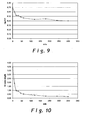
- the concentration of Mo in the filtrate was around 0.1 -0.2 mg/l.
- the pH range wherein a reduction of the Cr concentration could be obtained to a concentration of less than 0.3 mg/l is somewhat narrower, namely within a range of from 3.6 to 4.8, with a minimum Cr concentration of about 0.2 mg/l which could be obtained at a final pH of about 4 (see Figure 6 ).
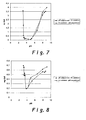
- Figures 7 and 8 show the concentration of Mo and Cr, resp. as a function of pH levels obtained by adding first the ferric sulphate and subsequently the sulphuric acid to adjust the pH to the final pH value. It can be seen that the sequence of the addition of the ferric salt and the acid has substantially no effect on the final Mo and Cr concentrations.
Landscapes
- Chemical & Material Sciences (AREA)
- Life Sciences & Earth Sciences (AREA)
- Hydrology & Water Resources (AREA)
- Engineering & Computer Science (AREA)
- Environmental & Geological Engineering (AREA)
- Water Supply & Treatment (AREA)
- Organic Chemistry (AREA)
- Inorganic Chemistry (AREA)
- Removal Of Specific Substances (AREA)
- Treatment Of Water By Oxidation Or Reduction (AREA)
Claims (20)
- Ein Reinigungsverfahren für Abwasser, um dessen Chrom- und Molybdängehalt zu senken, wodurch der Chromgehalt auf eine Konzentration unter 0,5 mg/l und der Molybdängehalt auf eine Konzentration unter 4 mg/l gesenkt wird, wobei das Abwasser Abwasser aus einem Verfahren zur Behandlung von Edelstahlschlacke ist, wobei Edelstahlschlacke in Kontakt mit Wasser gebracht wird, wodurch das erwähnte Abwasser produziert wird, das einen anfänglichen pH-Wert von mehr als 10, insbesondere mehr als 11 und noch genauer mehr als 11,5 hat, und das Chrom, darunter zwischen 0,5 und 5 mg/l dreiwertiges Chrom (Cr(III)), und ferner zwischen 0,5 und 10 mg/l Molybdän enthält, wobei in diesem Verfahren ein dreiwertiges Kation zum Abwasser hinzugefügt wird und zugelassen wird, dass dieses durch Senkung des pH-Wertes des Abwassers gemeinsam mit dem erwähnten Chrom und Molybdän ausfällt, um einen Niederschlag zu bilden, der zumindest teilweise aus dem Abwasser entfernt wird, bevor das gereinigte Abwasser abgeführt wird,
dadurch gekennzeichnet, dass das erwähnte dreiwertige Metallkation dreiwertiges Eisen ist, das in Form von zumindest einem wasserlöslichen Eisen-III-Salz zum Abwasser hinzugefügt wird, um zwischen 1 und 5 mmol/l dreiwertige Eisenatome im erwähnten Abwasser zu liefern, und dadurch, dass das Verfahren die nachstehend angeführten aufeinanderfolgenden Schritte umfasst:- Senkung des pH-Wertes des Abwassers vom erwähnten ursprünglichen pH-Wert auf einen gesenkten pH-Wert innerhalb einer Bandbreite von 3,5 bis 5,7 durch Hinzufügen des erwähnten Eisen-III-Salzes und zumindest einer Säure zum erwähnten Abwasser, wobei eine erste pH-Senkung durch das Hinzufügen des erwähnten zumindest einen Eisen-III-Salzes erreicht wird, und eine zweite pH-Senkung durch Hinzufügen der erwähnten zumindest einen Säure, wobei die Summe der ersten und der zweiten pH-Senkung gleich ist wie die Differenz zwischen dem erwähnten ursprünglichen pH-Wert und dem erwähnten gesenkten pH-Wert oder sich weniger als eine pH-Einheit davon unterscheidet;- Zulassen, dass sich der erwähnte Niederschlag innerhalb der erwähnten pH-Bandbreite formt;- zumindest teilweises Entfernen des erwähnten Niederschlags aus dem Abwasser;- Hinzufügen einer alkalischen Substanz zum Abwasser, um dessen pH-Wert auf einen Wert zwischen 6,5 und 9 zu erhöhen; und- Abführen des gereinigten Abwassers. - Ein Verfahren nach Anspruch 1, dadurch gekennzeichnet, dass der erwähnte gesenkte pH-Wert höher als 3,6 und vorzugsweise höher als 3,7 ist.
- Ein Verfahren nach Anspruch 1 oder 2, dadurch gekennzeichnet, dass der erwähnte gesenkte pH-Wert niedriger als 5,3 und vorzugsweise niedriger als 4,8 ist.
- Ein Verfahren nach irgendeinem der Ansprüche 1 bis 3, dadurch gekennzeichnet, dass der pH-Wert des Abwassers, nachdem der pH-Wert des Abwassers auf den erwähnten gesenkten pH-Wert gesenkt wurde, zwischen 3,5 und 6,5 gehalten wird, vorzugsweise zwischen 3,5 und 6,0, bis der erwähnte Niederschlag zumindest teilweise aus dem Abwasser entfernt ist.
- Ein Verfahren nach irgendeinem der Ansprüche 1 bis 4, dadurch gekennzeichnet, dass weniger als 4 mmol/l dreiwertige Eisenatome, vorzugsweise weniger als 3 mmol/l dreiwertige Eisenatome durch Hinzufügen des erwähnten wasserlöslichen Eisen-III-Salzes im Abwasser bereitgestellt sind, vorzugsweise mehr als 1,5 mmol/l dreiwertige Eisenatome durch Hinzufügen des erwähnten wasserlöslichen Eisen-III-Salzes im Abwasser bereitgestellt sind.
- Ein Verfahren nach irgendeinem der Ansprüche 1 bis 5, dadurch gekennzeichnet, dass das Abwasser ursprünglich mindestens 4 mg/l Molybdän enthält, wobei der Molybdängehalt durch zumindest teilweises Entfernen des erwähnten Niederschlags aus dem Abwasser auf eine Konzentration von weniger als 4 mg/l gesenkt wird.
- Ein Verfahren nach irgendeinem der Ansprüche 1 bis 5, dadurch gekennzeichnet, dass das Abwasser ursprünglich mindestens 0,5 mg/l Molybdän enthält, wobei der Molybdängehalt durch zumindest teilweises Entfernen des erwähnten Niederschlags aus dem Abwasser auf eine Konzentration von weniger als 0,5 mg/l gesenkt wird.
- Ein Verfahren nach irgendeinem der Ansprüche 1 bis 5, dadurch gekennzeichnet, dass der Chromgehalt des Abwassers durch zumindest teilweises Entfernen des erwähnten Niederschlags aus dem Abwasser auf eine Konzentration von weniger als 0,5 mg/l gesenkt wird.
- Ein Verfahren nach irgendeinem der Ansprüche 1 bis 8, dadurch gekennzeichnet, dass die erwähnte zumindest eine Säure Schwefelsäure oder Phosphorsäure umfasst, vorzugsweise Schwefelsäure.
- Ein Verfahren nach irgendeinem der Ansprüche 1 bis 9, dadurch gekennzeichnet, dass die erwähnte zumindest eine Säure gasförmiges Kohlendioxid umfasst, wobei das erwähnte gasförmige Kohlendioxid in einem Gas enthalten ist, welches vorzugsweise mindestens 5 Gew.%, noch besser mindestens 10 Gew.%, Kohlendioxid enthält.
- Ein Verfahren nach irgendeinem der Ansprüche 1 bis 10, dadurch gekennzeichnet, dass das erwähnte wasserlösliche Eisen-III-Salz Eisen(III)-Sulfat umfasst.
- Ein Verfahren nach irgendeinem der Ansprüche 1 bis 11, dadurch gekennzeichnet, dass das erwähnte Abwasser ferner sechswertiges Chrom enthält, und dadurch, dass ein Reduktionsmittel, insbesondere zweiwertige Eisenionen, zum Abwasser hinzugefügt werden, um zumindest einen Teil des sechswertigen Chroms zu dreiwertigem Chrom zu reduzieren, wobei zugelassen wird, dass das reduzierte Chrom gemeinsam mit dem erwähnten dreiwertigen Eisen ausfällt.
- Ein Verfahren nach irgendeinem der Ansprüche 1 bis 12, dadurch gekennzeichnet, dass die erwähnte alkalische Substanz nichtgereinigtes Abwasser umfasst, welches in einer solchen Menge hinzugefügt wird, dass der Chromgehalt der Mischung von gereinigtem und nichtgereinigtem Abwasser unter 0,5 mg/l bleibt und der Molybdängehalt dieser Mischung unter 4 mg/l bleibt.
- Ein Verfahren nach irgendeinem der Ansprüche 1 bis 13, dadurch gekennzeichnet, dass die erwähnte alkalische Substanz Kalk, insbesondere Kalkmilch umfasst.
- Ein Verfahren nach irgendeinem der Ansprüche 1 bis 14, dadurch gekennzeichnet, dass der erwähnte Niederschlag zumindest teilweise aus dem Abwasser entfernt wird, indem zugelassen wird, dass sich der Niederschlag absetzt, und indem der abgesetzte Schlamm vom Abwasser getrennt wird.
- Ein Verfahren nach irgendeinem der Ansprüche 1 bis 15, dadurch gekennzeichnet, dass der erwähnte Niederschlag zumindest teilweise durch Filtern, vorzugsweise durch einen Sandfilter, aus dem Abwasser entfernt wird.
- Ein Verfahren nach irgendeinem der Ansprüche 1 bis 16, dadurch gekennzeichnet, dass ein Teil des erwähnten Niederschlags aus dem Abwasser entfernt wird, indem zugelassen wird, dass sich der Niederschlag absetzt, und indem der abgesetzte Schlamm vom Abwasser getrennt wird, bevor der pH-Wert des Abwassers durch Hinzufügen der erwähnten alkalischen Substanz auf den erwähnten Wert zwischen 6,5 und 9 erhöht wird, und dadurch, dass, nachdem der pH-Wert des Abwassers auf den erwähnten Wert zwischen 6,5 und 9 erhöht wurde, ein weiterer Teil des erwähnten Niederschlags durch Filtern, vorzugsweise durch einen Sandfilter, aus dem Abwasser entfernt wird.
- Ein Verfahren nach irgendeinem der Ansprüche 1 bis 17, dadurch gekennzeichnet, dass der pH-Wert des Abwassers nicht auf einen Wert unter 3,5 gesenkt wird.
- Ein Verfahren nach irgendeinem der Ansprüche 1 bis 18, dadurch gekennzeichnet, dass kein Sulfid zum Abwasser hinzugefügt wird.
- Ein Verfahren nach irgendeinem der Ansprüche 1 bis 19, dadurch gekennzeichnet, dass vor dem Entfernen des erwähnten Niederschlags aus dem Abwasser keine alkalische Substanz zum Abwasser hinzugefügt wird, oder höchstens in einer solchen Menge davon, dass der pH-Wert des Abwassers um höchstens eine pH-Einheit erhöht wird.
Priority Applications (1)
| Application Number | Priority Date | Filing Date | Title |
|---|---|---|---|
| EP11776431.6A EP2632858B1 (de) | 2010-10-28 | 2011-10-27 | Reinigungsverfahren für abwasser aus einem verfahren zur behandlung von edelstahlschlacke |
Applications Claiming Priority (3)
| Application Number | Priority Date | Filing Date | Title |
|---|---|---|---|
| EP10189163A EP2447219A1 (de) | 2010-10-28 | 2010-10-28 | Verfahren zur Reinigung von Abwasser aus einem Verfahren zur Edelstahlschlackebehandlung |
| EP11776431.6A EP2632858B1 (de) | 2010-10-28 | 2011-10-27 | Reinigungsverfahren für abwasser aus einem verfahren zur behandlung von edelstahlschlacke |
| PCT/EP2011/068912 WO2012055983A1 (en) | 2010-10-28 | 2011-10-27 | Method for purifying waste water from a stainless steel slag treatment process |
Publications (2)
| Publication Number | Publication Date |
|---|---|
| EP2632858A1 EP2632858A1 (de) | 2013-09-04 |
| EP2632858B1 true EP2632858B1 (de) | 2015-06-03 |
Family
ID=43838094
Family Applications (2)
| Application Number | Title | Priority Date | Filing Date |
|---|---|---|---|
| EP10189163A Withdrawn EP2447219A1 (de) | 2010-10-28 | 2010-10-28 | Verfahren zur Reinigung von Abwasser aus einem Verfahren zur Edelstahlschlackebehandlung |
| EP11776431.6A Active EP2632858B1 (de) | 2010-10-28 | 2011-10-27 | Reinigungsverfahren für abwasser aus einem verfahren zur behandlung von edelstahlschlacke |
Family Applications Before (1)
| Application Number | Title | Priority Date | Filing Date |
|---|---|---|---|
| EP10189163A Withdrawn EP2447219A1 (de) | 2010-10-28 | 2010-10-28 | Verfahren zur Reinigung von Abwasser aus einem Verfahren zur Edelstahlschlackebehandlung |
Country Status (9)
| Country | Link |
|---|---|
| US (1) | US20140291252A1 (de) |
| EP (2) | EP2447219A1 (de) |
| KR (1) | KR20130143058A (de) |
| CN (1) | CN103380088B (de) |
| BR (1) | BR112013010392A2 (de) |
| DK (1) | DK2632858T3 (de) |
| ES (1) | ES2542005T3 (de) |
| RU (1) | RU2013124426A (de) |
| WO (1) | WO2012055983A1 (de) |
Families Citing this family (5)
| Publication number | Priority date | Publication date | Assignee | Title |
|---|---|---|---|---|
| CN110818158B (zh) * | 2018-08-10 | 2022-03-18 | 江苏皕成环保科技有限公司 | 一种含重金属废盐酸和污泥的综合处置方法 |
| CN111500803B (zh) * | 2020-05-29 | 2023-05-23 | 中冶建筑研究总院有限公司 | 一种浓盐水回用于钢渣热闷处理装置和处理方法 |
| CN112408714A (zh) * | 2020-11-27 | 2021-02-26 | 湖南湘牛环保实业有限公司 | 一种不锈钢酸洗废水处理工艺 |
| CN116920536B (zh) * | 2023-05-11 | 2024-10-11 | 国电环境保护研究院有限公司 | 燃煤烟气和脱硫废水处理装置 |
| CN118459034B (zh) * | 2024-07-09 | 2024-10-18 | 天津高能时代水处理科技有限公司 | 一种化工废水有机物和钼协同耦合去除方法 |
Family Cites Families (12)
| Publication number | Priority date | Publication date | Assignee | Title |
|---|---|---|---|---|
| US2982608A (en) * | 1956-05-16 | 1961-05-02 | Solvay | Process for purifying aqueous solutions by removing heavy metals, more particularly from brines intended for electrolysis |
| US4219416A (en) * | 1978-06-29 | 1980-08-26 | Dravo Corporation | Process for recovering molybdenum and tungsten from mining wastewater |
| US4612125A (en) * | 1985-06-20 | 1986-09-16 | Cx/Oxytech, Inc. | Method for removing heavy metal from wastewater streams |
| DE4222770A1 (de) * | 1992-07-10 | 1994-01-13 | Bayer Ag | Lichtaktivierbare 1-(2-Nitrobenzyl)-substituierte 1,4-Dihydropyridine |
| BE1010700A5 (nl) | 1996-10-17 | 1998-12-01 | Trading And Recycling Company | Werkwijze voor het verwerken van roestvaste staalslakken. |
| JP3998345B2 (ja) | 1998-10-16 | 2007-10-24 | 富士化水工業株式会社 | モリブデン含有排水の処理方法 |
| EP1312415A1 (de) | 2001-11-16 | 2003-05-21 | Trading and Recycling Company Sint Truiden | Verfahren zum Gewinnen von rostfrei Stahl aus rostfreien Stahlschlacken |
| US7390416B1 (en) | 2004-01-26 | 2008-06-24 | American Airlines, Inc. | Method for the removal of metals, including a co-precipitation of molybdenum, from wastewater |
| CN101269889A (zh) * | 2007-03-23 | 2008-09-24 | 宁波宝新不锈钢有限公司 | 不锈钢酸洗废水液的处理方法 |
| WO2008145189A1 (en) | 2007-05-31 | 2008-12-04 | Recmix Belgium | Process for preparing a filler for asphalt or concrete starting from a slag material |
| CN100567170C (zh) * | 2007-06-22 | 2009-12-09 | 浙江松林环保科技有限公司 | 一种不锈钢酸洗废水中铬盐和镍盐提取方法 |
| EP2407440A1 (de) * | 2010-07-16 | 2012-01-18 | Recoval Belgium | Verfahren zum Recyceln von Abwasser aus einem Verfahren zur Edelstahlschlackebehandlung |
-
2010
- 2010-10-28 EP EP10189163A patent/EP2447219A1/de not_active Withdrawn
-
2011
- 2011-10-27 EP EP11776431.6A patent/EP2632858B1/de active Active
- 2011-10-27 US US13/882,091 patent/US20140291252A1/en not_active Abandoned
- 2011-10-27 CN CN201180059220.6A patent/CN103380088B/zh not_active Expired - Fee Related
- 2011-10-27 ES ES11776431.6T patent/ES2542005T3/es active Active
- 2011-10-27 BR BR112013010392A patent/BR112013010392A2/pt not_active Application Discontinuation
- 2011-10-27 DK DK11776431.6T patent/DK2632858T3/en active
- 2011-10-27 RU RU2013124426/05A patent/RU2013124426A/ru not_active Application Discontinuation
- 2011-10-27 KR KR1020137013068A patent/KR20130143058A/ko not_active Abandoned
- 2011-10-27 WO PCT/EP2011/068912 patent/WO2012055983A1/en not_active Ceased
Also Published As
| Publication number | Publication date |
|---|---|
| BR112013010392A2 (pt) | 2016-08-02 |
| ES2542005T3 (es) | 2015-07-29 |
| DK2632858T3 (en) | 2015-07-13 |
| CN103380088B (zh) | 2014-12-24 |
| RU2013124426A (ru) | 2014-12-10 |
| CN103380088A (zh) | 2013-10-30 |
| EP2447219A1 (de) | 2012-05-02 |
| US20140291252A1 (en) | 2014-10-02 |
| KR20130143058A (ko) | 2013-12-30 |
| WO2012055983A1 (en) | 2012-05-03 |
| EP2632858A1 (de) | 2013-09-04 |
Similar Documents
| Publication | Publication Date | Title |
|---|---|---|
| CN1243665C (zh) | 用于水处理的方法和组合物 | |
| EP2447219A1 (de) | Verfahren zur Reinigung von Abwasser aus einem Verfahren zur Edelstahlschlackebehandlung | |
| JP3896444B2 (ja) | 汚染土壌の無害化処理方法 | |
| CN102603099A (zh) | 酸性高砷废水的耦合处理方法 | |
| JP4515273B2 (ja) | 汚濁排水の凝集分離浄化剤及び浄化方法 | |
| KR101484575B1 (ko) | 황산 폐액 처리 방법 및 그 장치 | |
| JP2009066570A (ja) | セメント系濁水由来クロムの還元処理方法 | |
| JP2006167631A (ja) | リン酸を含むフッ素含有排水の処理方法及び処理装置 | |
| CN1865173B (zh) | 含氟废水处理方法及其处理剂 | |
| EP3325414A2 (de) | Verbessertes abwasserbehandlungsverfahren für die entfernung von sulfat | |
| JP2014050841A (ja) | 水処理方法 | |
| US11427487B2 (en) | Compositions and methods for treatment of mine tailings | |
| JP6699388B2 (ja) | 鉱山廃水の処理方法 | |
| CA3088703A1 (en) | Wastewater treatment system and method for producing sludge for cement manufacturing | |
| JP6818286B1 (ja) | 泥土や土砂に含まれるフッ素及び/又はヒ素の不溶化方法 | |
| CN106477780B (zh) | 一种污水处理除硬同步除氨氮的方法 | |
| JP3794260B2 (ja) | 廃棄物の処理方法 | |
| JPH10113674A (ja) | 金属含有酸性排液の処理剤および処理方法 | |
| JP2014014779A (ja) | 排水処理方法 | |
| JP3733452B2 (ja) | 廃棄物の処理方法 | |
| JP3939970B2 (ja) | 貯炭場排水の処理方法 | |
| JP2004225120A (ja) | 中和澱物の沈降性改善方法 | |
| US12415753B2 (en) | Wastewater treatment system and method for producing sludge for cement manufacturing | |
| JP2012024764A (ja) | セメント系濁水由来クロムの還元処理方法 | |
| JP2005028246A (ja) | 重金属含有排水の処理方法 |
Legal Events
| Date | Code | Title | Description |
|---|---|---|---|
| PUAI | Public reference made under article 153(3) epc to a published international application that has entered the european phase |
Free format text: ORIGINAL CODE: 0009012 |
|
| 17P | Request for examination filed |
Effective date: 20130528 |
|
| AK | Designated contracting states |
Kind code of ref document: A1 Designated state(s): AL AT BE BG CH CY CZ DE DK EE ES FI FR GB GR HR HU IE IS IT LI LT LU LV MC MK MT NL NO PL PT RO RS SE SI SK SM TR |
|
| DAX | Request for extension of the european patent (deleted) | ||
| GRAP | Despatch of communication of intention to grant a patent |
Free format text: ORIGINAL CODE: EPIDOSNIGR1 |
|
| INTG | Intention to grant announced |
Effective date: 20140917 |
|
| GRAS | Grant fee paid |
Free format text: ORIGINAL CODE: EPIDOSNIGR3 |
|
| GRAP | Despatch of communication of intention to grant a patent |
Free format text: ORIGINAL CODE: EPIDOSNIGR1 |
|
| INTG | Intention to grant announced |
Effective date: 20150203 |
|
| GRAA | (expected) grant |
Free format text: ORIGINAL CODE: 0009210 |
|
| AK | Designated contracting states |
Kind code of ref document: B1 Designated state(s): AL AT BE BG CH CY CZ DE DK EE ES FI FR GB GR HR HU IE IS IT LI LT LU LV MC MK MT NL NO PL PT RO RS SE SI SK SM TR |
|
| REG | Reference to a national code |
Ref country code: GB Ref legal event code: FG4D |
|
| REG | Reference to a national code |
Ref country code: CH Ref legal event code: EP |
|
| REG | Reference to a national code |
Ref country code: DK Ref legal event code: T3 Effective date: 20150706 |
|
| REG | Reference to a national code |
Ref country code: AT Ref legal event code: REF Ref document number: 729812 Country of ref document: AT Kind code of ref document: T Effective date: 20150715 Ref country code: IE Ref legal event code: FG4D |
|
| REG | Reference to a national code |
Ref country code: DE Ref legal event code: R096 Ref document number: 602011016961 Country of ref document: DE |
|
| REG | Reference to a national code |
Ref country code: SE Ref legal event code: TRGR |
|
| REG | Reference to a national code |
Ref country code: ES Ref legal event code: FG2A Ref document number: 2542005 Country of ref document: ES Kind code of ref document: T3 Effective date: 20150729 |
|
| REG | Reference to a national code |
Ref country code: NL Ref legal event code: T3 |
|
| PG25 | Lapsed in a contracting state [announced via postgrant information from national office to epo] |
Ref country code: HR Free format text: LAPSE BECAUSE OF FAILURE TO SUBMIT A TRANSLATION OF THE DESCRIPTION OR TO PAY THE FEE WITHIN THE PRESCRIBED TIME-LIMIT Effective date: 20150603 Ref country code: NO Free format text: LAPSE BECAUSE OF FAILURE TO SUBMIT A TRANSLATION OF THE DESCRIPTION OR TO PAY THE FEE WITHIN THE PRESCRIBED TIME-LIMIT Effective date: 20150903 Ref country code: LT Free format text: LAPSE BECAUSE OF FAILURE TO SUBMIT A TRANSLATION OF THE DESCRIPTION OR TO PAY THE FEE WITHIN THE PRESCRIBED TIME-LIMIT Effective date: 20150603 |
|
| REG | Reference to a national code |
Ref country code: LT Ref legal event code: MG4D |
|
| PG25 | Lapsed in a contracting state [announced via postgrant information from national office to epo] |
Ref country code: GR Free format text: LAPSE BECAUSE OF FAILURE TO SUBMIT A TRANSLATION OF THE DESCRIPTION OR TO PAY THE FEE WITHIN THE PRESCRIBED TIME-LIMIT Effective date: 20150904 Ref country code: BG Free format text: LAPSE BECAUSE OF FAILURE TO SUBMIT A TRANSLATION OF THE DESCRIPTION OR TO PAY THE FEE WITHIN THE PRESCRIBED TIME-LIMIT Effective date: 20150903 Ref country code: LV Free format text: LAPSE BECAUSE OF FAILURE TO SUBMIT A TRANSLATION OF THE DESCRIPTION OR TO PAY THE FEE WITHIN THE PRESCRIBED TIME-LIMIT Effective date: 20150603 Ref country code: RS Free format text: LAPSE BECAUSE OF FAILURE TO SUBMIT A TRANSLATION OF THE DESCRIPTION OR TO PAY THE FEE WITHIN THE PRESCRIBED TIME-LIMIT Effective date: 20150603 |
|
| PG25 | Lapsed in a contracting state [announced via postgrant information from national office to epo] |
Ref country code: EE Free format text: LAPSE BECAUSE OF FAILURE TO SUBMIT A TRANSLATION OF THE DESCRIPTION OR TO PAY THE FEE WITHIN THE PRESCRIBED TIME-LIMIT Effective date: 20150603 |
|
| PG25 | Lapsed in a contracting state [announced via postgrant information from national office to epo] |
Ref country code: PL Free format text: LAPSE BECAUSE OF FAILURE TO SUBMIT A TRANSLATION OF THE DESCRIPTION OR TO PAY THE FEE WITHIN THE PRESCRIBED TIME-LIMIT Effective date: 20150603 Ref country code: RO Free format text: LAPSE BECAUSE OF NON-PAYMENT OF DUE FEES Effective date: 20150603 Ref country code: CZ Free format text: LAPSE BECAUSE OF FAILURE TO SUBMIT A TRANSLATION OF THE DESCRIPTION OR TO PAY THE FEE WITHIN THE PRESCRIBED TIME-LIMIT Effective date: 20150603 Ref country code: SK Free format text: LAPSE BECAUSE OF FAILURE TO SUBMIT A TRANSLATION OF THE DESCRIPTION OR TO PAY THE FEE WITHIN THE PRESCRIBED TIME-LIMIT Effective date: 20150603 Ref country code: PT Free format text: LAPSE BECAUSE OF FAILURE TO SUBMIT A TRANSLATION OF THE DESCRIPTION OR TO PAY THE FEE WITHIN THE PRESCRIBED TIME-LIMIT Effective date: 20151006 Ref country code: IS Free format text: LAPSE BECAUSE OF FAILURE TO SUBMIT A TRANSLATION OF THE DESCRIPTION OR TO PAY THE FEE WITHIN THE PRESCRIBED TIME-LIMIT Effective date: 20151003 |
|
| REG | Reference to a national code |
Ref country code: DE Ref legal event code: R097 Ref document number: 602011016961 Country of ref document: DE |
|
| PLBE | No opposition filed within time limit |
Free format text: ORIGINAL CODE: 0009261 |
|
| STAA | Information on the status of an ep patent application or granted ep patent |
Free format text: STATUS: NO OPPOSITION FILED WITHIN TIME LIMIT |
|
| 26N | No opposition filed |
Effective date: 20160304 |
|
| PG25 | Lapsed in a contracting state [announced via postgrant information from national office to epo] |
Ref country code: SI Free format text: LAPSE BECAUSE OF FAILURE TO SUBMIT A TRANSLATION OF THE DESCRIPTION OR TO PAY THE FEE WITHIN THE PRESCRIBED TIME-LIMIT Effective date: 20150603 |
|
| REG | Reference to a national code |
Ref country code: CH Ref legal event code: PL |
|
| PG25 | Lapsed in a contracting state [announced via postgrant information from national office to epo] |
Ref country code: MC Free format text: LAPSE BECAUSE OF FAILURE TO SUBMIT A TRANSLATION OF THE DESCRIPTION OR TO PAY THE FEE WITHIN THE PRESCRIBED TIME-LIMIT Effective date: 20150603 |
|
| REG | Reference to a national code |
Ref country code: IE Ref legal event code: MM4A |
|
| PG25 | Lapsed in a contracting state [announced via postgrant information from national office to epo] |
Ref country code: LI Free format text: LAPSE BECAUSE OF NON-PAYMENT OF DUE FEES Effective date: 20151031 Ref country code: CH Free format text: LAPSE BECAUSE OF NON-PAYMENT OF DUE FEES Effective date: 20151031 |
|
| REG | Reference to a national code |
Ref country code: FR Ref legal event code: PLFP Year of fee payment: 6 |
|
| PG25 | Lapsed in a contracting state [announced via postgrant information from national office to epo] |
Ref country code: IE Free format text: LAPSE BECAUSE OF NON-PAYMENT OF DUE FEES Effective date: 20151027 |
|
| PG25 | Lapsed in a contracting state [announced via postgrant information from national office to epo] |
Ref country code: HU Free format text: LAPSE BECAUSE OF FAILURE TO SUBMIT A TRANSLATION OF THE DESCRIPTION OR TO PAY THE FEE WITHIN THE PRESCRIBED TIME-LIMIT; INVALID AB INITIO Effective date: 20111027 Ref country code: SM Free format text: LAPSE BECAUSE OF FAILURE TO SUBMIT A TRANSLATION OF THE DESCRIPTION OR TO PAY THE FEE WITHIN THE PRESCRIBED TIME-LIMIT Effective date: 20150603 |
|
| REG | Reference to a national code |
Ref country code: AT Ref legal event code: UEP Ref document number: 729812 Country of ref document: AT Kind code of ref document: T Effective date: 20150603 |
|
| PG25 | Lapsed in a contracting state [announced via postgrant information from national office to epo] |
Ref country code: CY Free format text: LAPSE BECAUSE OF FAILURE TO SUBMIT A TRANSLATION OF THE DESCRIPTION OR TO PAY THE FEE WITHIN THE PRESCRIBED TIME-LIMIT Effective date: 20150603 |
|
| PG25 | Lapsed in a contracting state [announced via postgrant information from national office to epo] |
Ref country code: MT Free format text: LAPSE BECAUSE OF FAILURE TO SUBMIT A TRANSLATION OF THE DESCRIPTION OR TO PAY THE FEE WITHIN THE PRESCRIBED TIME-LIMIT Effective date: 20150603 |
|
| REG | Reference to a national code |
Ref country code: FR Ref legal event code: PLFP Year of fee payment: 7 |
|
| REG | Reference to a national code |
Ref country code: NL Ref legal event code: HC Owner name: ORBIX SOLUTIONS; BE Free format text: DETAILS ASSIGNMENT: CHANGE OF OWNER(S), CHANGE OF OWNER(S) NAME; FORMER OWNER NAME: RECOVAL BELGIUM Effective date: 20170913 |
|
| REG | Reference to a national code |
Ref country code: BE Ref legal event code: FP Effective date: 20150825 Ref country code: BE Ref legal event code: HC Owner name: ORBIX SOLUTIONS; BE Free format text: DETAILS ASSIGNMENT: CHANGE OF OWNER(S), CHANGEMENT NOM PROPRIETAIRE; FORMER OWNER NAME: RECOVAL BELGIUM Effective date: 20170904 |
|
| REG | Reference to a national code |
Ref country code: FR Ref legal event code: CD Owner name: ORBIX SOLUTIONS, BE Effective date: 20180103 |
|
| PG25 | Lapsed in a contracting state [announced via postgrant information from national office to epo] |
Ref country code: TR Free format text: LAPSE BECAUSE OF FAILURE TO SUBMIT A TRANSLATION OF THE DESCRIPTION OR TO PAY THE FEE WITHIN THE PRESCRIBED TIME-LIMIT Effective date: 20150603 Ref country code: MK Free format text: LAPSE BECAUSE OF FAILURE TO SUBMIT A TRANSLATION OF THE DESCRIPTION OR TO PAY THE FEE WITHIN THE PRESCRIBED TIME-LIMIT Effective date: 20150603 |
|
| REG | Reference to a national code |
Ref country code: FR Ref legal event code: PLFP Year of fee payment: 8 |
|
| PG25 | Lapsed in a contracting state [announced via postgrant information from national office to epo] |
Ref country code: AL Free format text: LAPSE BECAUSE OF FAILURE TO SUBMIT A TRANSLATION OF THE DESCRIPTION OR TO PAY THE FEE WITHIN THE PRESCRIBED TIME-LIMIT Effective date: 20150603 |
|
| REG | Reference to a national code |
Ref country code: DE Ref legal event code: R081 Ref document number: 602011016961 Country of ref document: DE Owner name: ORBIX SOLUTIONS, BE Free format text: FORMER OWNER: RECOVAL BELGIUM, 6240 FARCIENNES, BE |
|
| REG | Reference to a national code |
Ref country code: ES Ref legal event code: PC2A Owner name: ORBIX SOLUTIONS Effective date: 20190128 |
|
| REG | Reference to a national code |
Ref country code: LU Ref legal event code: HC Owner name: ORBIX SOLUTIONS; BE Free format text: FORMER OWNER: RECOVAL BELGIUM Effective date: 20190116 |
|
| PGFP | Annual fee paid to national office [announced via postgrant information from national office to epo] |
Ref country code: FR Payment date: 20190916 Year of fee payment: 9 Ref country code: NL Payment date: 20190916 Year of fee payment: 9 |
|
| PGFP | Annual fee paid to national office [announced via postgrant information from national office to epo] |
Ref country code: LU Payment date: 20191021 Year of fee payment: 9 |
|
| PGFP | Annual fee paid to national office [announced via postgrant information from national office to epo] |
Ref country code: FI Payment date: 20191022 Year of fee payment: 9 Ref country code: DE Payment date: 20191021 Year of fee payment: 9 Ref country code: SE Payment date: 20191021 Year of fee payment: 9 |
|
| PGFP | Annual fee paid to national office [announced via postgrant information from national office to epo] |
Ref country code: DK Payment date: 20191023 Year of fee payment: 9 Ref country code: IT Payment date: 20191028 Year of fee payment: 9 Ref country code: ES Payment date: 20191122 Year of fee payment: 9 |
|
| PGFP | Annual fee paid to national office [announced via postgrant information from national office to epo] |
Ref country code: AT Payment date: 20191022 Year of fee payment: 9 |
|
| PGFP | Annual fee paid to national office [announced via postgrant information from national office to epo] |
Ref country code: GB Payment date: 20191021 Year of fee payment: 9 |
|
| REG | Reference to a national code |
Ref country code: DE Ref legal event code: R119 Ref document number: 602011016961 Country of ref document: DE |
|
| REG | Reference to a national code |
Ref country code: DK Ref legal event code: EBP Effective date: 20201031 |
|
| REG | Reference to a national code |
Ref country code: FI Ref legal event code: MAE |
|
| REG | Reference to a national code |
Ref country code: SE Ref legal event code: EUG |
|
| REG | Reference to a national code |
Ref country code: NL Ref legal event code: MM Effective date: 20201101 |
|
| REG | Reference to a national code |
Ref country code: AT Ref legal event code: MM01 Ref document number: 729812 Country of ref document: AT Kind code of ref document: T Effective date: 20201027 |
|
| GBPC | Gb: european patent ceased through non-payment of renewal fee |
Effective date: 20201027 |
|
| PG25 | Lapsed in a contracting state [announced via postgrant information from national office to epo] |
Ref country code: LU Free format text: LAPSE BECAUSE OF NON-PAYMENT OF DUE FEES Effective date: 20201027 |
|
| PG25 | Lapsed in a contracting state [announced via postgrant information from national office to epo] |
Ref country code: NL Free format text: LAPSE BECAUSE OF NON-PAYMENT OF DUE FEES Effective date: 20201101 Ref country code: DE Free format text: LAPSE BECAUSE OF NON-PAYMENT OF DUE FEES Effective date: 20210501 Ref country code: FR Free format text: LAPSE BECAUSE OF NON-PAYMENT OF DUE FEES Effective date: 20201031 Ref country code: FI Free format text: LAPSE BECAUSE OF NON-PAYMENT OF DUE FEES Effective date: 20201027 |
|
| PG25 | Lapsed in a contracting state [announced via postgrant information from national office to epo] |
Ref country code: AT Free format text: LAPSE BECAUSE OF NON-PAYMENT OF DUE FEES Effective date: 20201027 Ref country code: SE Free format text: LAPSE BECAUSE OF NON-PAYMENT OF DUE FEES Effective date: 20201028 Ref country code: GB Free format text: LAPSE BECAUSE OF NON-PAYMENT OF DUE FEES Effective date: 20201027 |
|
| PG25 | Lapsed in a contracting state [announced via postgrant information from national office to epo] |
Ref country code: IT Free format text: LAPSE BECAUSE OF NON-PAYMENT OF DUE FEES Effective date: 20201027 |
|
| PG25 | Lapsed in a contracting state [announced via postgrant information from national office to epo] |
Ref country code: DK Free format text: LAPSE BECAUSE OF NON-PAYMENT OF DUE FEES Effective date: 20201031 |
|
| REG | Reference to a national code |
Ref country code: ES Ref legal event code: FD2A Effective date: 20220128 |
|
| PG25 | Lapsed in a contracting state [announced via postgrant information from national office to epo] |
Ref country code: ES Free format text: LAPSE BECAUSE OF NON-PAYMENT OF DUE FEES Effective date: 20201028 |
|
| P01 | Opt-out of the competence of the unified patent court (upc) registered |
Effective date: 20230527 |
|
| PGFP | Annual fee paid to national office [announced via postgrant information from national office to epo] |
Ref country code: BE Payment date: 20250915 Year of fee payment: 15 |